

Submitted:
11 April 2026
Posted:
14 April 2026
You are already at the latest version
Abstract
Background:Advances in oncology have led to the development of novel targeted therapies with demonstrated efficacy in clinical trials; however, their real-world economic impact prior to and after market introduction remains insufficiently characterized [1,2]. Cancer-related healthcare costs vary significantly depending on disease stage, time since diagnosis, tumor type, and therapeutic approach[3–6], making inter-hospital comparisons challenging due to heterogeneity in patient populations and information systems [7]. Therefore, integrating cost analysis with clinically meaningful patient stratification is essential to improve resource allocation and outcome evaluation[8–12]. Methods: A multicentre working group comprising four tertiary hospitals in Madrid (Spain) was established to develop and validate a novel classification system for adult oncohematological patients. A standardized methodology was designed to stratify patients into homogeneous groups (PATONCO categories) based on tumor location, therapeutic objective, and clinically relevant biomarkers. A cost indicator was defined as the average cost per patient per month for each PATONCO category. Data were extracted from pharmacy dispensing systems and analyzed using descriptive and inferential statistics, including Kruskal–Wallis and post hoc Dunn tests. Results: A total of 3,659 patients were included (3,168 oncology; 491 hematology), distributed across 62 programmes (54 oncology; 8 hematology). The PATONCOS tool enabled the identification and validation of a cost indicator (average cost/patient/month per category), allowing inter-hospital comparison. Significant differences in costs were observed across most high-prevalence categories, reflecting variability in therapeutic strategies and adoption of innovative treatments. The model demonstrated its capacity to detect intra-group homogeneity and inter-group variability, improving the identification of high-cost patient subgroups and supporting benchmarking across centres. Conclusions: The PATONCOS tool provides a novel, clinically oriented stratification methodology that integrates pharmacotherapy, biomarkers, and disease stage with economic evaluation. This approach enables more accurate comparisons of oncology treatment costs between institutions and supports data-driven decision-making in resource allocation. Its implementation may contribute to more sustainable healthcare systems by aligning clinical practice with economic outcomes.
Keywords:
patient stratification
; oncology
; hematology
; healthcare costs
; pharmacoeconomics
; biomarkers
; targeted therapy
; cost analysis
; resource allocation
; real-world data
; clinical decision-making
; oncology pharmacotherapy
; benchmarking
; precision medicine
; healthcare management
1. Introduction
Cancer remains one of the leading causes of morbidity and mortality worldwide. The International Agency for Research on Cancer estimated approximately 19.3 million new cases in 2020, with projections reaching 30.2 million annually by 2040 [13]. In parallel with this growing burden, rapid scientific progress in oncology has led to significant advances in diagnostic tools and the development of novel targeted therapies [14]. Many of these therapies have improved clinical outcomes and, in some cases, reduced toxicity profiles, although their economic impact remains insufficiently characterized [8,9,10,11,12,15].
Despite demonstrated efficacy in clinical trials, the real-world impact of new oncological therapies—particularly in economic terms—is rarely evaluated before market introduction, and post-marketing analyzes are complex and heterogeneous [1,2]. Healthcare costs in oncology vary substantially depending on tumor type, disease stage, and time since diagnosis [3,4], with particularly high costs observed at diagnosis and throughout the patient’s lifetime [5,6]. However, due to the complexity of healthcare information systems and variability in clinical practice, it remains difficult to accurately quantify and compare cancer-related costs between institutions, even within the same geographical region [7].
To address this challenge, organizations such as the American Society of Clinical Oncology (ASCO) and the European Society for Medical Oncology (ESMO) have developed frameworks to evaluate the cost–benefit relationship of oncological therapies [16,17]. Nevertheless, these approaches are primarily treatment-centered and do not fully account for patient-level heterogeneity, limiting their applicability for comparing real-world outcomes across institutions.
Hospital pharmacy services routinely manage large volumes of data related to pharmacological treatments and associated costs in oncohematological patients. Integrating this information with clinically meaningful patient stratification could facilitate both economic evaluation and outcome assessment. In this context, reducing clinical variability and standardizing therapeutic approaches is essential to ensure the efficient and sustainable use of healthcare resources[3]. Therefore, there is an urgent need to develop methodologies that combine patient stratification with cost analysis to support long-term planning and benchmarking [4,9,12,18].
Classification criteria play a critical role in defining homogeneous patient cohorts and ensuring comparability between studies[19]. Current cancer classification systems are primarily based on histopathological criteria, such as the International Classification of Diseases for Oncology (ICD-O), which focuses on disease coding but does not adequately capture clinical or economic heterogeneity[2,3,12,14]. More advanced classifications, such as the WHO Blue Books and the American Joint Committee on Cancer (AJCC) staging system, incorporate molecular features and biomarkers, highlighting their increasing relevance in oncology[20]. However, these systems remain insufficient for stratifying patients according to therapeutic approaches and associated costs.
The development of a clinically and economically meaningful classification system for oncology patients represents both a significant challenge and an opportunity for healthcare systems.
In this context, the aim of the PATONCOS tool is to establish a novel working methodology based on the stratification of homogeneous oncohematological patient groups, integrating clinical characteristics and therapeutic determinants in order to enable cost comparisons and evaluations of therapeutic approaches across medical centers, ultimately identifying opportunities for improvement in clinical practice and resource allocation.
2. Materials and Methods
2.1. Study Design and Settings
A multicenter observational study was conducted through a collaborative working group composed of hospital pharmacists specialized in oncology from four tertiary hospitals in Madrid (Spain): Puerta de Hierro University Hospital, Fuenlabrada University Hospital, Infanta Cristina University Hospital, and Henares University Hospital. These centers were selected based on a shared regional context, similar pharmacy software for chemotherapy prescriptions, experience in health economics, and comparable clinical workflows.
The combined catchment area covered a population of over 1,085,000 inhabitants. The working group was established in December 2018, with monthly meetings held to develop, validate, and refine the methodology.
The study protocol was submitted to the Research Ethics Committee of the Puerta de Hierro Hospital Foundation (Majadahonda, Madrid) for registration and validation.
2.2. Development of the PATONCO Classification System
A standardized work procedure was designed to unify the classification of adult oncohematological patients across participating centers. The classification system (PATONCO categories) was developed based on variables that determine therapeutic decision-making, including tumor location, therapeutic objective (adjuvant, neoadjuvant, or metastatic), and the presence of clinically relevant biomarkers.
Selected biomarkers included ALK, EGFR, BRCA, PIK3CA, KRAS, NRAS, HER2, and hormone receptors (HR). Biomarkers without a direct impact on therapeutic decision-making, such as Ki-67, were excluded. In hematological malignancies, clinical conditions influencing treatment strategies—such as eligibility for hematopoietic transplantation—were also incorporated.
Baseline characteristics for each cancer type, including diagnostic criteria, pathological features, molecular alterations, and treatment options, were defined to ensure standardization. The classification system was validated through multidisciplinary collaboration with oncologists and hematologists.
2.3. Implementation and Data Collection
The PATONCO classification was integrated into the pharmacy prescription software of each participating center, enabling the automatic classification of all oncohematological patients with electronic prescriptions. This allowed systematic data extraction and inter-center comparability.
The implementation phase took place between May and September 2019, during which discrepancies and potential errors were identified and resolved through working group meetings. Patients enrolled in clinical trials were excluded to avoid potential bias.
A structured database was developed as part of a big data architecture. Monthly data extraction included patient identification, PATONCO category, treatment, dosage form, unit dose, and cost. The database was updated continuously and closed annually to allow for longitudinal comparisons.
The operational workflow of the PATONCOS tool, including patient selection, data collection, classification, cost calculation, and subsequent economic analysis, is illustrated in Figure 2.
2.4. Cost Definition and Economic Indicator
Cost analysis was based exclusively on direct pharmaceutical costs corresponding to marketed medicinal products, according to the Spanish Agency for Medicines and Health Products. Supportive therapies, indirect costs, and intangible costs were excluded.
A key economic indicator was defined as the average cost per patient per month for each PATONCO category. This indicator was calculated as the mean monthly cost of pharmacological treatment per patient within each category. Calculations were standardized using Microsoft Access, including the estimation of patient numbers and standard deviation.
For benchmarking purposes, procurement prices were monitored at 6, 12, and 18 months to minimize inter-hospital variability.
2.5. Statistical Analysis
Statistical analysis was performed using IBM SPSS Statistics version 25.
A descriptive analysis of monthly cumulative consumption was conducted for each hospital and PATONCO category, including measures of central tendency (mean and median) and dispersion (standard deviation, minimum, and maximum), as well as normality testing.
Comparisons of average cost per patient per month across the four hospitals were performed using the Kruskal–Wallis test, given the non-normal distribution of variables. When statistically significant differences were identified, post hoc pairwise comparisons were conducted using Dunn’s test with Holm correction for multiple testing.
Statistical significance was set at p < 0.05, with high statistical significance defined as p<0.01.
2.6. Study Period and Benchmarking
Once the classification system and methodology were fully established, economic benchmarking was performed using data collected in 2022. The comparison system remained operational throughout the study period, including during the COVID-19 pandemic.
At the time of analysis, the hematology component was partially developed, including multiple myeloma and Hodgkin and non-Hodgkin lymphoma.
3. Results
3.1. PATONCOS Tool Development
The main outcome of this multicentre project was the development of the PATONCOS tool, a structured working instrument based on a novel classification system for oncohaematological patients. This tool enables the differentiation of patients according to therapeutic approach and associated economic impact.
The primary objective of the PATONCOS tool was the identification and validation of a cost element—defined as the average cost per patient per month within each PATONCO category—to facilitate the comparison of clinical and economic variability across centers. The development of the tool was supported by a collaborative working group and implemented through a standardized methodology integrated into routine clinical practice.
3.2. PATONCO Classification System
The PATONCOS classification system was defined based on tumor location, therapeutic objectives (adjuvant, neoadjuvant, or metastatic), and the presence of clinically relevant biomarkers that influence treatment decisions. Selected biomarkers included EGFR, HER2, NRAS, KRAS, BRCA, ALK, PIK3CA mutations, and hormone receptors.
Additional clinical conditions affecting therapeutic strategies were incorporated, particularly in hematological patients (e.g., eligibility for hematopoietic transplantation). A standardized nomenclature was established to ensure consistency and facilitate systematic analysis.
A total of 62 programs were identified according to diagnostic frequency and economic impact, including 54 oncology and 8 hematology categories (A representative subset of PATONCO categories is shown in Table 1 to illustrate the classification framework. The complete list of categories is provided in Supplementary Table S1). The classification system was designed as a dynamic structure, allowing updates according to the introduction of new therapies, biomarkers, and treatment indications.
3.3. Study Population
A total of 3,659 patients were included in the analysis: 3,168 in oncology categories and 491 in hematology categories. Among these, 2,846 patients belonged to categories with more than 50 patients and were included in detailed comparative analyzes (2,436 oncology; 410 hematology).
The most prevalent PATONCOS categories were:
- Metastatic breast cancer HER2(−) HR(+)
- Metastatic non-squamous non-small cell lung cancer ALK(−) EGFR(−)
- Adjuvant colon cancer
- Metastatic colorectal cancer KRAS/NRAS mutated
- Metastatic colorectal cancer KRAS/NRAS wild-type
- Castration-resistant metastatic prostate cancer
- Multiple myeloma transplant candidate
Each of these categories included between 153 and 285 patients, representing the groups with the highest clinical and economic impact.
3.4. Cost Indicator and Inter-Hospital Comparison
The PATONCOS tool enabled the calculation of the average cost per patient per month for each PATONCO category, allowing direct comparison between hospitals.
Significant differences in cost were observed across most high-prevalence categories. Among the 25 categories with more than 50 patients, only two did not show statistically significant differences between hospitals. These findings reflect variability in therapeutic strategies, drug selection, and the adoption of innovative treatments.
The comparative analysis for 2022 (Table 2) includes the average cost per patient per month for each hospital and PATONCO category, as well as the mean deviation between centers. Higher patient volumes were observed in Hospital 1 and Hospital 3 compared to Hospitals 2 and 4.
3.5. Drivers of Cost Variability
Differences in cost between hospitals were primarily associated with variability in pharmacological treatment selection within the same PATONCO categories.
In metastatic breast cancer HER2(−) HR(+), variability was related to the use of everolimus, alpelisib, and the differential distribution of cyclin-dependent kinase inhibitors (ribociclib, abemaciclib, palbociclib).
In metastatic non-small cell lung cancer, the differences were mainly associated with the use of immunotherapies such as ipilimumab, nivolumab, and atezolizumab.
In adjuvant colon cancer, variability was linked to the use of pembrolizumab, regorafenib, and trifluridine/tipiracil.
In metastatic colorectal cancer, cost differences were driven by the use of trifluridine/tipiracil, aflibercept, and differences in prescribing anti-EGFR therapies such as panitumumab and cetuximab.
In castration-resistant metastatic prostate cancer, differences were associated with access to olaparib, enzalutamide, and the uptake of generic drugs.
In multiple myeloma transplant candidates, variability was related to the use of carfilzomib and access to daratumumab as first-line therapy.
These findings highlight that differences in therapeutic choices within homogeneous patient groups translate into measurable economic variability.
3.6. Budget Impact Distribution
Beyond individual cost indicators, the PATONCOS tool also enabled the analysis of the distribution of total healthcare expenditure by combining the average cost per patient per month with the number of patients in each category. The budget impact model highlights the substantial economic weight of high-prevalence categories, particularly metastatic lung and breast cancer, reinforcing the relevance of patient stratification for resource allocation. (Table 3).
This approach provides a more realistic representation of budget impact, reflecting both treatment costs and patient volumes, and supporting more accurate financial planning and resource allocation. The weighted monthly economic impact by PATONCO category is illustrated in Figure 5, highlighting the categories with the greatest contribution to the overall budget burden.
4. Discussion
To our knowledge, this study represents the first attempt to classify oncohaematological patients by integrating tumor location, disease stage, and clinically relevant biomarkers with an economic indicator to enable inter-center comparison. This approach provides a novel framework for understanding the economic impact of cancer treatment in real-world clinical practice.
The distribution of tumor types in our study is consistent with previously reported epidemiological patterns, with breast, colorectal, prostate, and lung cancers being the most prevalent [9,21,22,23,24,25]. Similarly, the distribution of patients across categories aligns with prior real-world data [9,26], supporting the external validity of the classification system.
The PATONCOS tool allows for the analysis of economic resource allocation among patients receiving different therapeutic strategies within homogeneous groups defined by tumor characteristics and biomarkers. Unlike traditional classification systems, this methodology enables dynamic patient stratification according to disease progression and therapeutic changes. The continuous updating of pharmacy dispensing data provides a real-time mechanism for identifying shifts in treatment patterns and associated costs.
This adaptability is particularly relevant in the current context of rapid therapeutic innovation in oncology and hematology. The system is designed to evolve in response to new drugs, emerging biomarkers, and changing treatment indications, ensuring that classification remains clinically meaningful and economically relevant over time.
Existing frameworks, such as the ESMO-Magnitude of Clinical Benefit Scale (ESMO-MCBS), focus primarily on evaluating the clinical benefit of therapies rather than patient-level stratification[27]. While valuable, these approaches do not allow direct comparison of similar patient groups across institutions, limiting their utility for benchmarking. Other economic studies have analyzed costs by tumor type or treatment phase, but they often include heterogeneous patient populations or incorporate non-pharmacological costs, making comparisons difficult[28,29].
The rapid acceptance and implementation of the PATONCO classification by oncology and hematology teams across participating centers highlights its feasibility and clinical applicability. Its integration into routine clinical workflows demonstrates that it can be adopted without significant disruption, even in complex healthcare environments. Notably, the tool remained operational during the COVID-19 pandemic, indicating robustness and low dependency on additional resources.
One of the main strengths of this approach is its ability to identify variability in pharmacological treatment within homogeneous patient groups. Differences in drug selection, access to innovative therapies, and prescribing patterns were reflected in measurable cost differences between hospitals. This variability may be partially influenced by hospital volume, although our data do not allow definitive conclusions in this regard[3].
Previous studies have typically evaluated the annual cost per patient based on aggregated expenditure divided by the total number of treated patients, without accounting for clinical heterogeneity [9]. In contrast, the PATONCOS methodology introduces a more granular approach by analyzing cost per patient per month within clinically defined subgroups. This allows for more precise identification of cost drivers, particularly in the context of targeted therapies, immunotherapy, and novel hormonal agents.
The increasing economic burden of oncology treatments is well documented and is largely driven by the introduction of targeted therapies, including anti-HER2 and anti-EGFR agents, tyrosine kinase inhibiTOR, mTOR inhibitors, and cyclin-dependent kinase inhibitors[9,23]. Our findings are consistent with these observations and further demonstrate how differences in the adoption of these therapies contribute to inter-hospital variability.
In prostate cancer and multiple myeloma, similar trends have been reported, with significant cost increases associated with new therapeutic agents such as enzalutamide, abiraterone, carfilzomib, and daratumumab[4,6,30]. However, previous analyzes often included broader healthcare costs or different methodological approaches, limiting direct comparison with our results.
The PATONCOS tool also enables the evaluation of budget impact by combining cost per patient per month with patient volume, providing a more realistic representation of healthcare expenditure. This dual perspective is essential for decision-making processes related to resource allocation and planning. The implementation workflow (Figure 2) enabled systematic and reproducible data collection across centers.
Despite its strengths, this study has several limitations. The classification system requires continuous updating to reflect ongoing therapeutic innovation and disease progression. Additionally, the hematology component of the analysis is still partially developed, and future work should expand its scope. The incorporation of artificial intelligence and advanced data analytics may further enhance the scalability and automation of this methodology.
Future research should focus on integrating clinical outcomes, such as survival and quality of life, with economic indicators. This would allow for a more comprehensive assessment of value in oncology care and further strengthen the role of tools such as PATONCOS in healthcare decision-making.
Overall, this study supports the need for new methodologies that align clinical stratification with economic evaluation. By enabling real-time, patient-centered cost analysis, the PATONCOS tool provides a practical framework for improving transparency, reducing variability, and promoting more efficient and sustainable use of healthcare resources.
5. Conclusions
This study presents a novel approach for the classification of oncohematological patients that integrates clinical characteristics, therapeutic determinants, and economic evaluation within a unified framework.
The PATONCOS tool enables the comparison of treatment costs across institutions using a standardized and clinically meaningful stratification system. By introducing the average cost per patient per month as a robust economic indicator, this methodology facilitates the identification of variability in therapeutic strategies and supports benchmarking between centers.
This approach contributes to a better understanding of the economic burden of cancer from the perspectives of patients, healthcare professionals, and health systems. Furthermore, it provides a practical tool for improving resource allocation and promoting more efficient and sustainable healthcare management.
The implementation of this methodology represents a step forward in aligning clinical decision-making with economic evaluation in oncology and hematology, particularly in the context of rapid therapeutic innovation.
6. Future directions
Future research should focus on evaluating clinically meaningful outcomes, including overall survival, quality of life, end-of-life toxicity, and the use of chemotherapy in the last 30 days of life, stratified according to the current PATONCOS classification. This approach would enable a more comprehensive assessment of the relationship between healthcare resource utilization and patient outcomes.
The implementation of the PATONCOS tool across all healthcare facilities within a defined region would provide a detailed and structured overview of expenditure in one of the most economically impactful areas of healthcare systems. Prioritizing the most prevalent conditions and those associated with the highest economic burden may facilitate the identification of targeted strategies aimed at optimizing resource allocation and improving efficiency.
In this context, the PATONCOS framework has the potential to bridge the gap between the generation of high-quality scientific evidence, its translation into routine clinical practice, and its integration into healthcare budgeting processes. Expanding the use of this tool to additional centers, including national and international cohorts, would enhance the external validity of the classification system and improve the homogeneity of patient groups, allowing robust evaluation of its generalizability and scalability.
Furthermore, the incorporation of advanced information technologies, including artificial intelligence–based systems, could support automated patient classification and continuous updating of stratification criteria. The development of automated pre-assignment checklists and real-time alerts linked to changes in electronic health record data may reduce variability in patient classification and ensure dynamic reassessment throughout the clinical course.
Finally, the integration of clinical outcomes—such as overall survival, progression-free survival, and patient-reported outcomes—with economic data represents a key step toward value-based healthcare. Linking cost indicators with outcome measures would enable a more comprehensive evaluation of treatment effectiveness and support more informed, patient-centered decision-making in resource allocation.
Author Contributions
Conceptualization, R.M-D., A.M-O., B.M-G., G.B-S., L.D-T., M.M.M., A.S.G., AB. F. R., J.L.F., B.C.G. and M.G.G., methodology, , R.M.D., A.M.O., B.M.G., G.B.S., L.D.T., M.M.M., A.S.G., AB. F. R., J.L.F., B.C.G. and M.G-G., formal analysis, R.M.D., A.M.O.; investigation, R.M.D., A.M.O., B.M.G., G.B.S., L.D.T., M.M.M., A.S.G., AB. F. R., J.L.F., B.C.G. and M.G.G.; data curation, R.M.D., A.M.O. and F.G-S; writing—original draft preparation, R.M.D., A.M.O.; writing—review and editing, R.M.D., MA.A.G, F.G and A.L.H., supervision, MI.V.M. and MA.C.H.; Founding, F.G-S; project administration R.M.D., MI.V.M. and MA.C.H. All authors have read and agreed to the published version of the manuscript.
Funding
The APC was funded by IDIPHISA (Instituto de Investigación Sanitaria Puerta de Hierro Segovia - Arana.
Institutional Review Board Statement
The study protocol was submitted and approved by the Research Ethics Committee of the Puerta de Hierro Hospital Foundation (Majadahonda, Madrid) for registration and validation (date of approval: January 13, 2020).
Informed Consent Statement
Patient consent was waived due to the retrospective design and use of anonymized clinical data, in ac-cordance with Spanish legislation and institutional requirements.
Data Availability Statement
The data underlying this article are not publicly available due to patient privacy and institutional re-strictions. Aggregated anonymized data may be made available from the corresponding author upon reasonable request and with permission of Hospital Universitario Infanta Cristina
Acknowledgments
We dedicate this article of working group to Federico Tutau who passed away in November 2023 and who will always be the soul of the group. During the preparation of this manuscript, Perplexity Pro (Perplexity AI, version current as of December 2025) was used to improve the English language and readability of the text. The authors reviewed and edited the output and take full responsibility for the final content of the publication.
Conflicts of Interest
The authors declare no conflicts of interest.
Abbreviations
The following abbreviations are used in this manuscript:
| ACC | Adjuvant Colon Cancer |
| AJCC | American Joint Committee on Cancer |
| ASCO | American Society of Clinical Oncology |
| CRMPC | Castrate Resistant Metastasic Prostate Cancer |
| ESMO | European Society for Medical Oncology |
| ESMO-MCBS | European Society for Medical Oncology- Magnitude of Clinical Benefit Scale |
| GEJ | Gastric and gastresophageal Junction |
| ICD-O | International Classification of Disease for Oncology |
| MBC-RH | Metastasic Breast Cancer Postive Hormonal receptor |
| MCC-KNM | Metastasic Colorectal Cancer Kras Nras Mutate |
| MCC-KNN | Metastasic Colorectal Cancer Kras Nras Native |
| MMTC | Multiple Myeloma Transplant Candidate |
| MNSCLC | Metastasic Non Small Cell Lung Cancer No Squamous |
| NSCLC | Non Small Cell Lung Cancer |
| RH | Hormonal Receptor |
| TDABC | Time Driven Activity-Based Costing |
References
- Del Paggio, J.C.; Azariah, B.; Sullivan, R.; Hopman, W.M.; James, F.V.; Roshni, S.; et al. Do Contemporary Randomized Controlled Trials Meet ESMO Thresholds for Meaningful Clinical Benefit? Annals of Oncology 2017, 28, 157–162. [Google Scholar] [CrossRef] [PubMed]
- Grumberg, V.; Cotté, F.E.; Giroux-Leprieur, E.; Gaudin, A.F.; Lebbé, C.; Borget, I. Clinical benefit of anti-PD-(L)1 immunotherapies in advanced cancer in France: a population-based estimate from 2014 to 2021. ESMO Open 2024, 9, 102240. [Google Scholar] [CrossRef] [PubMed]
- Capri, S.; Russo, A. Cost of breast cancer based on real-world a cancer registry study in Italy. BMC Health Services Research 2017, 17, 84. [Google Scholar] [CrossRef] [PubMed]
- Vargas Alves, R.J.; Beck da Silva Etges, A.P.; Tiscoski, K.A.; de Lara, L.R.; de Medeiros Zelmanowicz, A.; Polanczyk, C.A. The cost of metastatic prostate cancer using time-driven activity-based costing. International Journal of Technology Assessment in Health Care 2021, 37, e60. [Google Scholar] [CrossRef]
- Tew, M.; Clarke, P.; Thursky, K.; Dalziel, K. Incorporating Future Medical Costs: Impact on Cost-Effectiveness Analysis in Cancer Patients. PharmacoEconomics 2019, 37, 931–941. [Google Scholar] [CrossRef]
- Hari, P.; Latremouille-Viau, D.; Lin, P.; Guerin, A.; Sasane, M. Clinical and economic burden of Medicare beneficiaries with multiple myeloma and renal impairment: An observational study. Medicine 2024, 103, e38609. [Google Scholar] [CrossRef]
- Freitag, A.; Sarri, G.; Ta, A.; Gurskyte, L.; Cherepanov, D.; Hernandez, L.G. A Systematic Review of Modeling Approaches to Evaluate Treatments for Relapsed Refractory Multiple Myeloma: Critical Review and Considerations for Future Health Economic Models. PharmacoEconomics 2024, 42, 955–1002. [Google Scholar] [CrossRef]
- Jönsson, B.; Walter, E. Cost of Cancer: Healthcare Expenditures and Economic Impact. In Regulatory and Economic Aspects in Oncology; Walter, E., Ed.; Springer International Publishing: Cham, 2019; pp. 7–23. [Google Scholar] [CrossRef]
- Carreras, M.J.; Tomás-Guillén, E.; Farriols, A.; Renedo-Miró, B.; Valdivia, C.; Vidal, J.; et al. Use of Drugs in Clinical Practice and the Associated Cost of Cancer Treatment in Adult Patients with Solid Tumors: A 10-Year Retrospective Cohort Study. Current Oncology 2023, 30, 7984–8004. [Google Scholar] [CrossRef]
- Harfouche, A.; Silva, S.; Faria, J.; Araújo, R.; Gouveia, A.; Lacerda, M.; et al. Breast Cancer: Value-Based Healthcare, Costs and Financing. Acta Médica Portuguesa 2017, 30, 762–768. [Google Scholar] [CrossRef]
- Desai, A.P.; Scheckel, C.J.; Soderberg, L.C.; Jensen, C.J.; Orme, J.J.; Tella, S.H.; et al. Economic Cost and Sustainability of Oral Therapies in Precision Oncology. JCO Oncology Practice 2022, 18, 1247–1254. [Google Scholar] [CrossRef]
- Datta, S.S.; Sharma, V.; Mukherjee, A.; Agrawal, S.; Sirohi, B.; Gyawali, B. What constitutes meaningful benefit of cancer drugs in the context of LMICs? A mixed-methods study of oncologists’ perceptions on endpoints, benefit, price, and value of cancer drugs. ESMO Open 2024, 9, 103976. [Google Scholar] [CrossRef] [PubMed]
- Sociedad Española de Oncología Médica. Cifras del cáncer en España 2021. Internet. 2021. Available online: https://seom.org/images/Cifras_del_cancer_en_Espnaha_2021.pdf.
- Mariotto, A.B.; Yabroff, K.R.; Shao, Y.C.; Feuer, E.J.; Brown, M.L. Projections of the cost of cancer care in the United States: 2010–2020. Journal of the National Cancer Institute 2011, 103, 117–128. [Google Scholar] [CrossRef] [PubMed]
- Bhimani, J.; Philipps, L.; Simpson, L.; Lythgoe, M.; Soultati, A.; Webb, A.; Savage, P. The impact of new cancer drug therapies on site specialised cancer treatment activity in a UK cancer network 2014–2018. Journal of Oncology Pharmacy Practice 2020, 26, 93–98. [Google Scholar] [CrossRef]
- Schnipper, L.E.; Davidson, N.E.; Wollins, D.S.; Blayney, D.W.; Dicker, A.P.; Ganz, P.A.; et al. Updating the American Society of Clinical Oncology Value Framework: Revisions and Reflections in Response to Comments Received. Journal of Clinical Oncology 2016, 34, 2925–2934. [Google Scholar] [CrossRef]
- Cherny, N.I.; Sullivan, R.; Dafni, U.; Kerst, J.M.; Sobrero, A.; Zielinski, C.; et al. A standardised, generic, validated approach to stratify the magnitude of clinical benefit that can be anticipated from anti-cancer therapies: the European Society for Medical Oncology Magnitude of Clinical Benefit Scale (ESMO-MCBS). Annals of Oncology 2015, 26, 1547–1573. [Google Scholar] [CrossRef]
- Warren, J.L.; Brown, M.L.; Fay, M.P.; Schussler, N.; Potosky, A.L.; Riley, G.F. Costs of Treatment for Elderly Women With Early-Stage Breast Cancer in Fee-for-Service Settings. Journal of Clinical Oncology 2002, 20, 307–316. [Google Scholar] [CrossRef]
- Tan, P.H.; Ellis, I.; Allison, K.; Brogi, E.; Fox, S.B.; Lakhani, S.; et al. The 2019 World Health Organization classification of tumours of the breast. Histopathology 2020, 77, 181–185. [Google Scholar] [CrossRef]
- Cardoso, F.; Senkus, E.; Costa, A.; Papadopoulos, E.; Aapro, M.; André, F.; et al. ESO-ESMO International Consensus Guidelines for Advanced Breast Cancer (ABC 4). Annals of Oncology 2018, 29, 1634–1657. [Google Scholar] [CrossRef] [PubMed]
- Garrido, C.; Grávalos, C. Memoria del Registro de Tumores de Madrid (RTMAD). Año 2020. Informe técnico Acceso en línea. 2021. [Google Scholar]
- Siegel, R.L.; Miller, K.D.; Fuchs, H.E.; Jemal, A. Cancer Statistics, 2021. CA: A Cancer Journal for Clinicians 2021, 71, 7–33. [Google Scholar] [CrossRef]
- Buja, A.; Pasello, G.; De Luca, G.; Bortolami, A.; Zorzi, M.; Rea, F.; et al. Non–Small-Cell Lung Cancer: Real-World Cost Consequence Analysis. JCO Oncology Practice 2021, 17, e1085–e1093. [Google Scholar] [CrossRef] [PubMed]
- Korytowsky, B.; Radtchenko, J.; Nwokeji, E.D.; Tuell, K.W.; Kish, J.K.; Feinberg, B.A. Understanding total cost of care in advanced non-small cell lung cancer pre- and postapproval of immuno-oncology therapies. The American Journal of Managed Care 2018, 24, S439–S447. [Google Scholar] [PubMed]
- Siegel, R.L.; Giaquinto, A.N.; Jemal, A. Cancer statistics, 2024. CA: A Cancer Journal for Clinicians 2024, 74, 12–49. [Google Scholar] [CrossRef]
- Braal, C.L.; Jongbloed, E.M.; Wilting, S.M.; Mathijssen, R.H.J.; Koolen, S.L.W.; Jager, A. Inhibiting CDK4/6 in Breast Cancer with Palbociclib, Ribociclib, and Abemaciclib: Similarities and Differences. Drugs 2021, 81, 317–331. [Google Scholar] [CrossRef]
- ESMO. ESMO-Magnitude of Clinical Benefit Scale. Internet. Citado. 2021.
- Khan, S.A.; Hernandez-Villafuerte, K.; Hernandez, D.; Schlander, M. Estimation of the stage-wise costs of breast cancer in Germany using a modeling approach. Frontiers in Public Health 2022, 10, 946544. [Google Scholar] [CrossRef]
- Hassett, M.J.; Li, H.; Burstein, H.J.; Punglia, R.S. Neoadjuvant treatment strategies for HER2-positive breast cancer: cost-effectiveness and quality of life outcomes. Breast Cancer Research and Treatment 2020, 181, 43–51. [Google Scholar] [CrossRef]
- Seefat, M.R.; Cucchi, D.G.J.; Groen, K.; Donker, M.L.; van der Hem, K.G.; Westerman, M.; et al. Treatment sequences and drug costs from diagnosis to death in multiple myeloma. European Journal of Haematology 2024, 112, 360–366. [Google Scholar] [CrossRef] [PubMed]
Figure 1.
Conceptual framework of the PATONCOS tool. The model integrates clinical parameters (tumour type, disease stage, and treatment intent), biomarker data, and economic indicators to stratify patients into homogeneous groups (PATONCO categories). This stratification enables cost analysis and clinical insights, supporting benchmarking and resource allocation across healthcare systems.
Figure 1.
Conceptual framework of the PATONCOS tool. The model integrates clinical parameters (tumour type, disease stage, and treatment intent), biomarker data, and economic indicators to stratify patients into homogeneous groups (PATONCO categories). This stratification enables cost analysis and clinical insights, supporting benchmarking and resource allocation across healthcare systems.
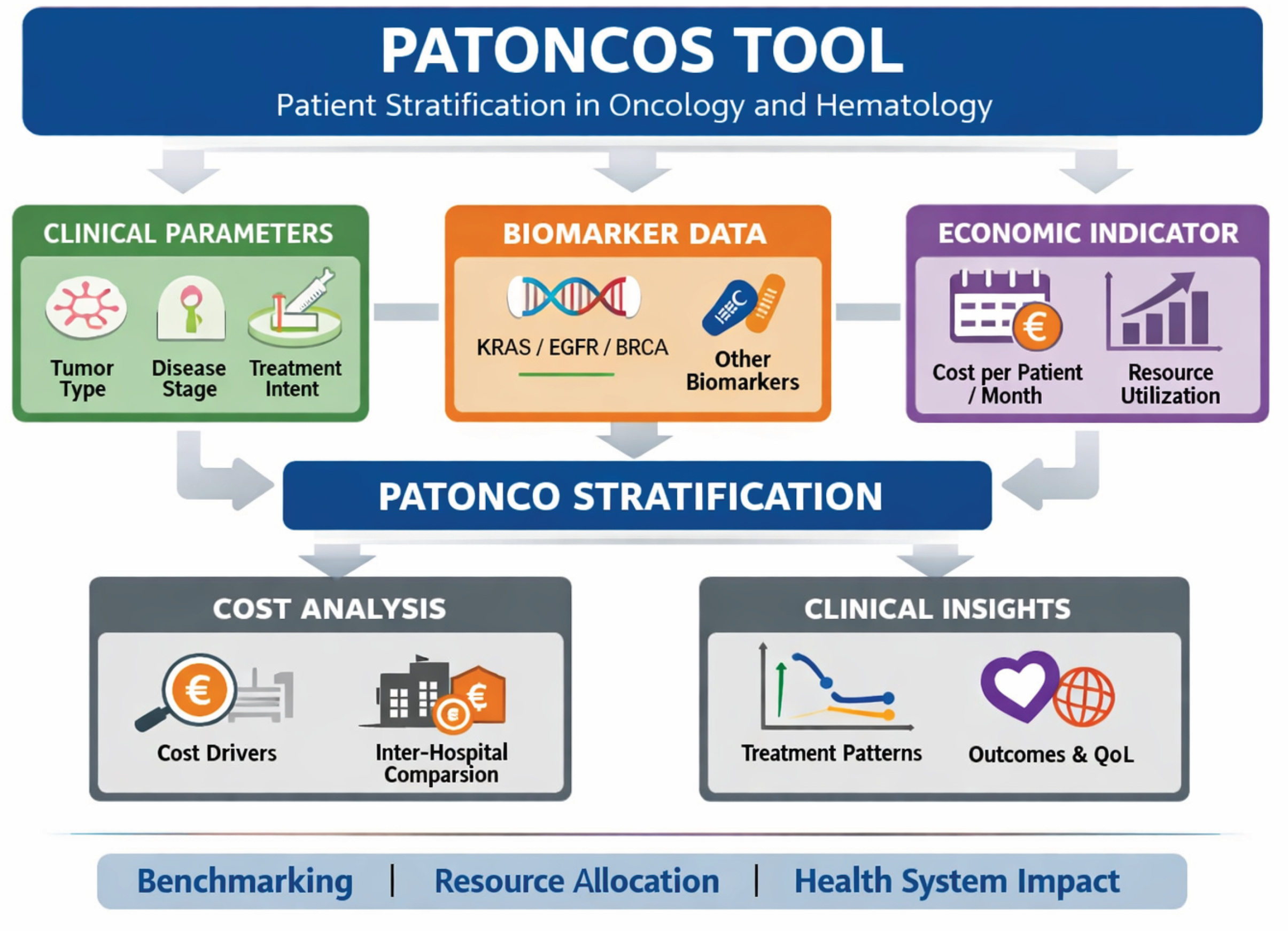
Figure 2.
Workflow of the PATONCOS tool implementation. The process includes patient cohort selection, data collection, classification into PATONCO categories based on clinical and biomarker variables, cost calculation, and subsequent health economic analysis. This structured approach enables identification of cost drivers, inter-hospital variability, and benchmarking across centres
Figure 2.
Workflow of the PATONCOS tool implementation. The process includes patient cohort selection, data collection, classification into PATONCO categories based on clinical and biomarker variables, cost calculation, and subsequent health economic analysis. This structured approach enables identification of cost drivers, inter-hospital variability, and benchmarking across centres
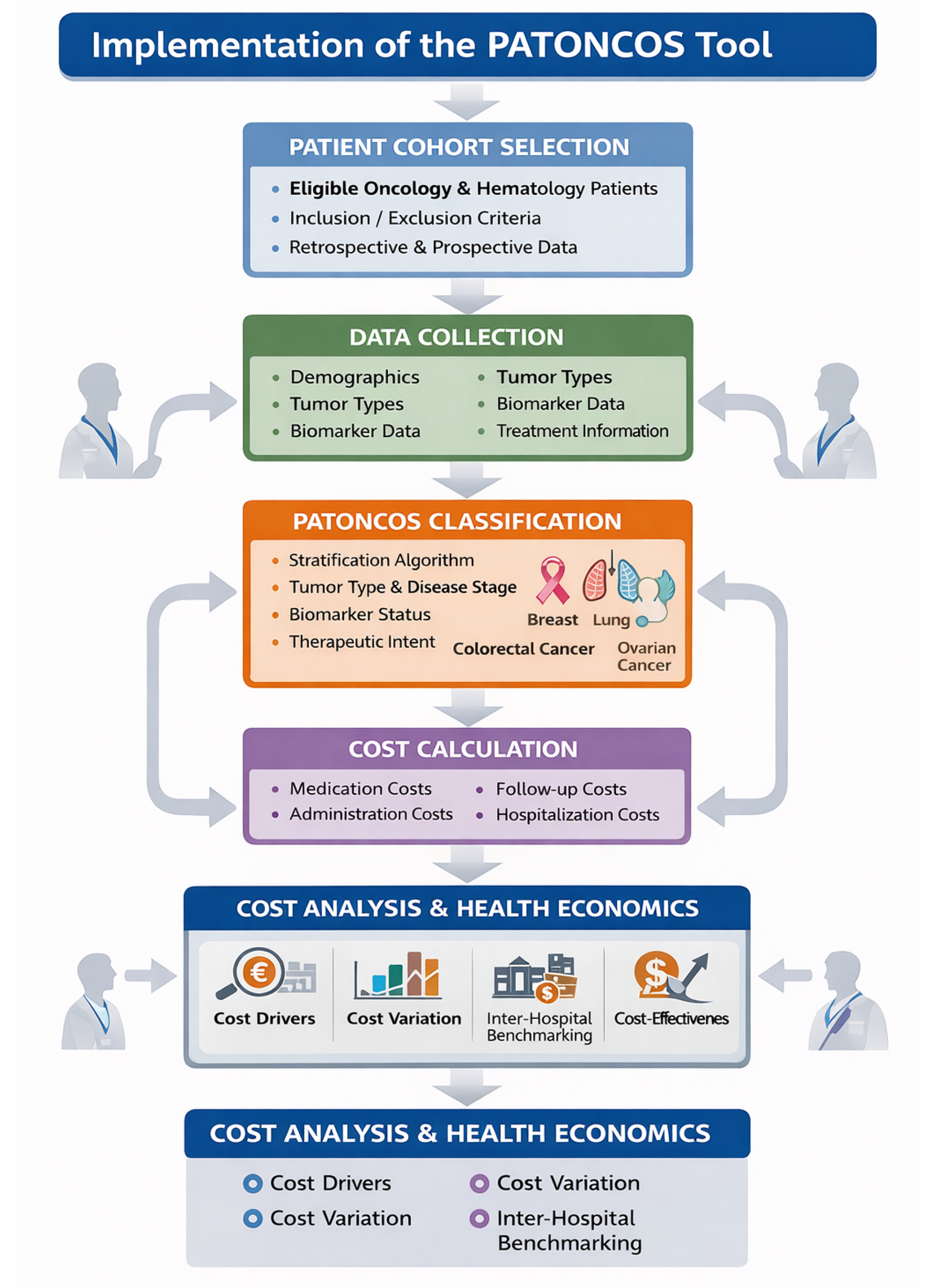
Figure 3.
Elements of PATONCOS tool
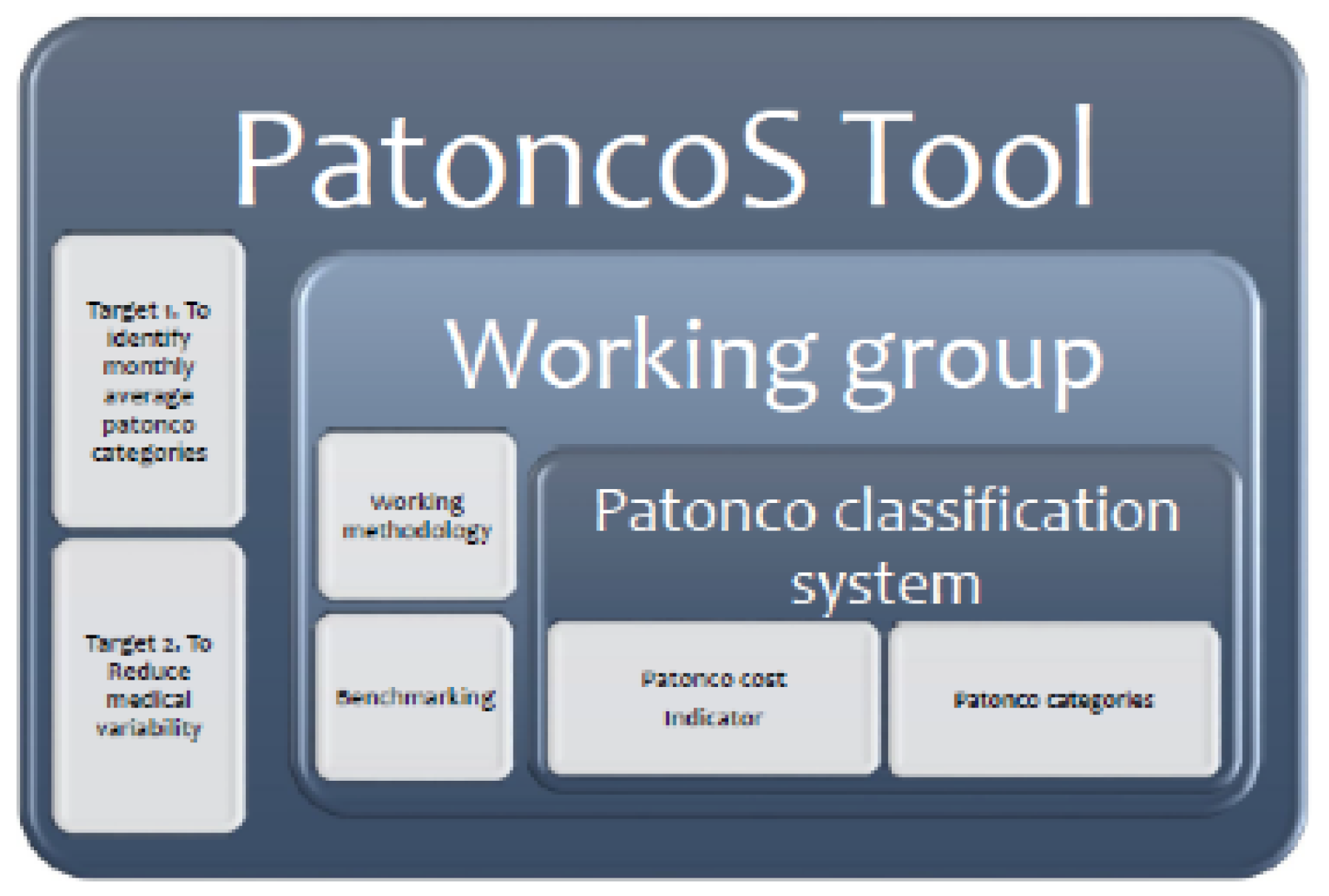
Figure 4.
Working methodology flow
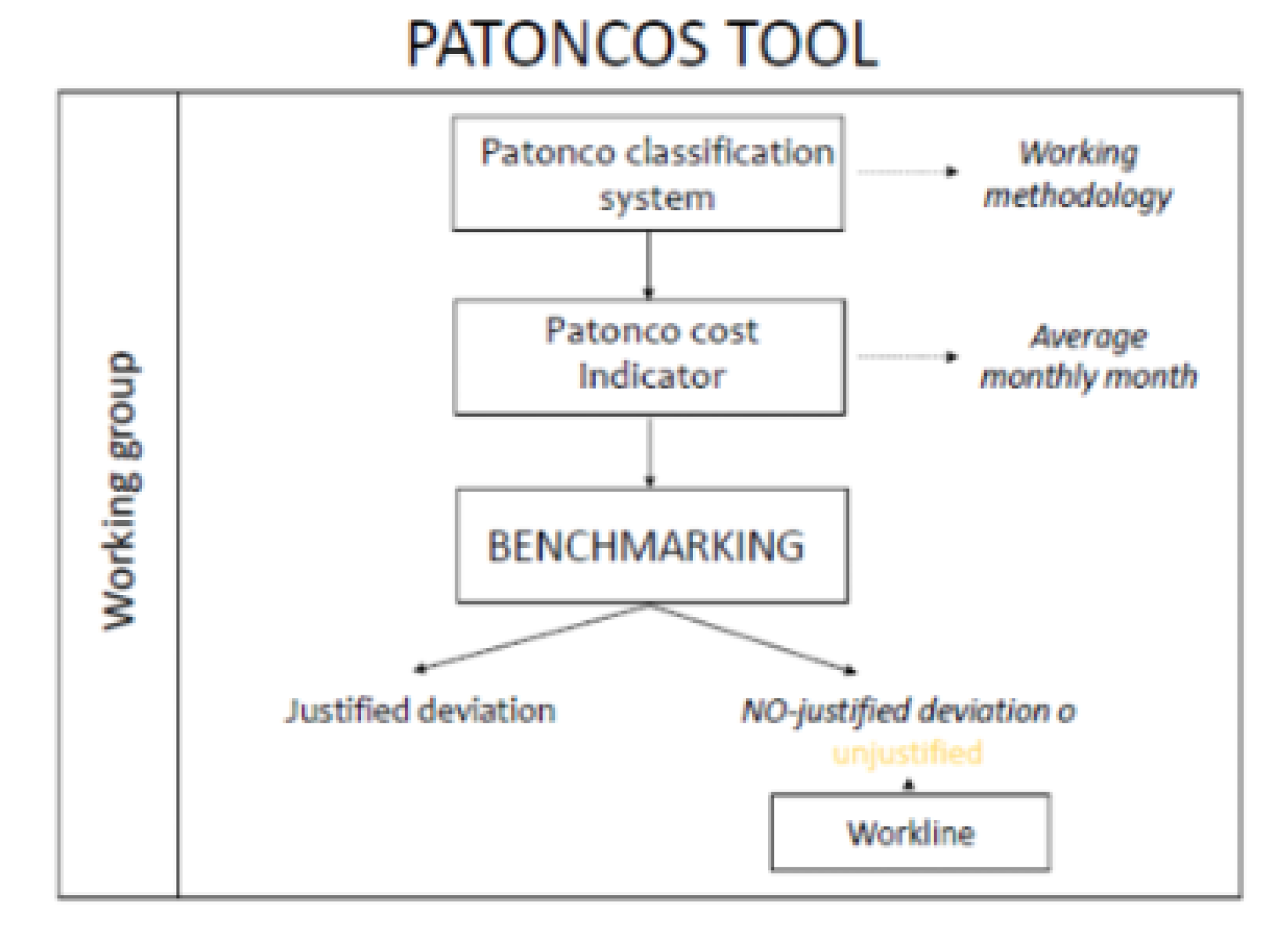
Figure 5.
Weighted monthly economic impact by PATONCO category. The figure shows the relative budget burden of each category based on the average monthly cost per patient and the number of patients included in each group.
Figure 5.
Weighted monthly economic impact by PATONCO category. The figure shows the relative budget burden of each category based on the average monthly cost per patient and the number of patients included in each group.
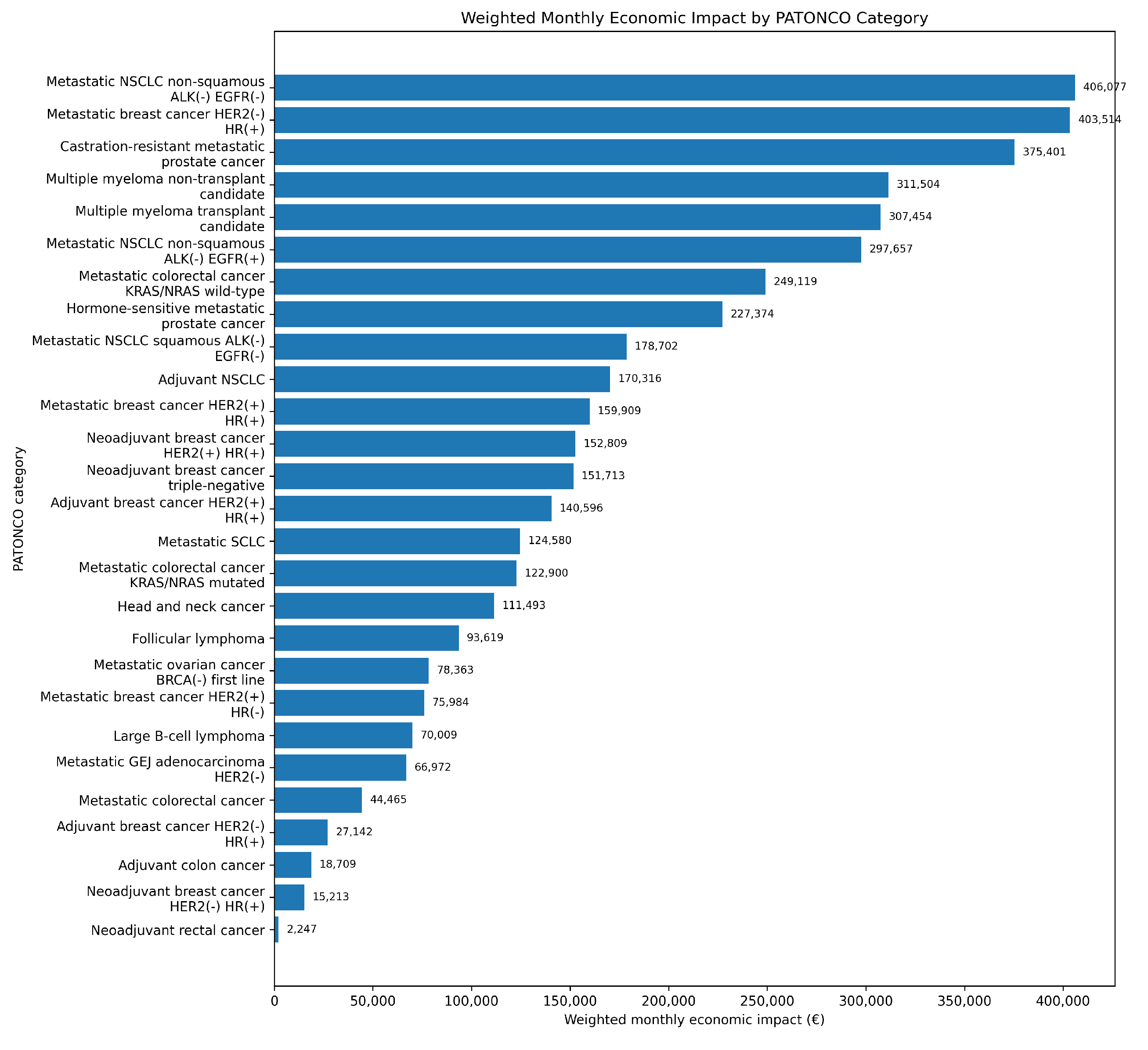

Table 1.
Representative PATONCO categories according to tumour type, therapeutic intent, and biomarker status
Table 1.
Representative PATONCO categories according to tumour type, therapeutic intent, and biomarker status
| Tumour Type | Representative PATONCO Categories |
|---|---|
| Breast cancer | Adjuvant HER2(+) HR(-); Adjuvant HER2(-) HR(+); Metastatic HER2(-) HR(+); Metastatic triple-negative |
| Colorectal cancer | Adjuvant colon cancer; Metastatic KRAS/NRAS mutated; Metastatic KRAS/NRAS wild-type |
| Lung cancer (NSCLC) | Adjuvant NSCLC; Metastatic non-squamous ALK(-)/EGFR(-); Metastatic ALK(+)/EGFR(+) |
| Ovarian cancer | Adjuvant ovarian cancer; Metastatic BRCA(+) first line; Platinum-resistant second line |
| Prostate cancer | Hormone-sensitive metastatic; Castration-resistant metastatic |
| Melanoma | Adjuvant melanoma; Metastatic BRAF(+); Metastatic BRAF(-) |
| Gastroesophageal cancer (GEJ) | Adjuvant adenocarcinoma; Metastatic HER2(+); Metastatic HER2(-) |
| Haematological malignancies | Hodgkin lymphoma; Large B-cell lymphoma; Multiple myeloma (transplant candidate) |
Table 2.
Average monthly cost per patient in the most representative PATONCO categories across participating hospitals.
Table 2.
Average monthly cost per patient in the most representative PATONCO categories across participating hospitals.
| PATONCO Category | H1 | H2 | H3 | H4 | Dispensed | Patients | H | p |
|---|---|---|---|---|---|---|---|---|
| MBC HER2(-) HR(+) | 1546.76 (1198.78) | 1192.50 (865.80) | 1497.64 (1233.16) | 1426.45 (861.11) | 2079 | 285 | 21.63** | .000 |
| MNSCLC ALK(-) EGFR(-) | 1851.02 (1773.10) | 2327.83 (1626.00) | 1832.98 (1584.21) | 1797.35 (1592.73) | 1130 | 208 | 25.29** | .000 |
| Adjuvant colon cancer | 60.43 (61.49) | 117.08 (568.66) | 151.57 (546.73) | 62.73 (32.37) | 655 | 191 | 126.60** | .000 |
| MCRC KRAS/NRAS mutated | 972.40 (997.52) | 791.77 (717.42) | 502.62 (698.64) | 542.36 (713.52) | 999 | 175 | 94.04** | .000 |
| MCRC KRAS/NRAS wild-type | 1632.86 (1067.64) | 1650.30 (1311.47) | 1058.25 (1313.52) | 1520.21 (1201.89) | 1209 | 170 | 92.61** | .000 |
| Castration-resistant metastatic | ||||||||
| prostate cancer | 2387.42 (2030.45) | 1915.45 (1944.07) | 2962.25 (2228.91) | 1780.68 (1311.32) | 940 | 166 | 52.37** | .000 |
| Multiple myeloma | ||||||||
| (transplant candidate) | 2009.50 (2958.81) | 1106.19 (2286.92) | 2613.81 (3965.06) | 3272.27 (4932.95) | 1012 | 153 | 11.56** | .009 |
| Adjuvant breast cancer | ||||||||
| HER2(-) HR(+) | 238.04 (566.73) | 41.90 (45.75) | 465.41 (883.28) | 182.58 (492.69) | 457 | 117 | 71.04** | .000 |
| Hormone-sensitive metastatic | ||||||||
| prostate cancer | 2265.70 (2062.00) | 2621.13 (1940.00) | 2763.11 (2145.70) | 1354.96 (971.46) | 498 | 101 | 40.22** | .000 |
| Metastatic small cell lung cancer | 1163.57 (1296.99) | 1283.81 (1243.63) | 715.06 (875.21) | 1253.02 (1272.92) | 353 | 101 | 18.45** | .000 |
Table 3.
Budget impact model based on average monthly cost per patient and number of patients across PATONCO categories.
Table 3.
Budget impact model based on average monthly cost per patient and number of patients across PATONCO categories.
| PATONCO Category | H1 | H2 | H3 | H4 | Avg (€) | Dispensed | Patients | H | Impact (€) |
|---|---|---|---|---|---|---|---|---|---|
| MNSCLC ALK(-) EGFR(-) | 1851.02 | 2327.83 | 1832.98 | 1797.35 | 1952.30 | 1130 | 208 | 25.29** | 406077.36 |
| MBC HER2(-) HR(+) | 1546.76 | 1192.50 | 1497.64 | 1426.45 | 1415.84 | 2079 | 285 | 21.63** | 403513.69 |
| CR metastatic prostate cancer | 2387.42 | 1915.45 | 2962.25 | 1780.68 | 2261.45 | 940 | 166 | 52.37** | 375400.70 |
| MM non-transplant | 4002.05 | 2238.41 | 2219.96 | 2664.74 | 2781.29 | 815 | 112 | 61.33** | 311504.48 |
| MM transplant candidate | 2009.50 | 1106.19 | 2613.81 | 3272.27 | 2009.50 | 1012 | 153 | 11.56** | 307453.50 |
| MNSCLC ALK(-) EGFR(+) | 4507.12 | 3501.82 | 3749.08 | 4117.00 | 3968.76 | 424 | 75 | 8.35* | 297656.63 |
| MCRC KRAS/NRAS wt | 1632.86 | 1650.30 | 1058.25 | 1520.21 | 1465.41 | 1209 | 170 | 92.61** | 249118.85 |
| HS metastatic prostate cancer | 2265.70 | 2621.13 | 2763.11 | 1354.96 | 2251.23 | 498 | 101 | 40.22** | 227373.73 |
| NSCLC squamous | 2055.38 | 2218.76 | 1532.76 | 1562.25 | 1842.29 | 392 | 97 | 20.71** | 178701.89 |
| Adjuvant NSCLC | 1313.05 | 286.05 | 1045.29 | 2163.33 | 1507.22 | 377 | 113 | 8.06* | 170316.24 |
| MBC HER2(+) HR(+) | 2685.88 | 2425.44 | 2495.37 | 2233.89 | 2460.15 | 625 | 65 | 7.19NS | 159909.43 |
| Neoadjuvant breast HER2(+) | 2649.06 | 2208.15 | 1896.48 | 3266.54 | 2505.06 | 320 | 61 | 8.25* | 152808.51 |
| Neoadjuvant breast TN | 2446.99 | 58.35 | 101.94 | 423.67 | 2446.99 | 295 | 62 | 141.47** | 151713.38 |
| Adjuvant breast HER2(+) | 2143.24 | 1670.44 | 1766.15 | 1449.95 | 1757.45 | 510 | 80 | 28.42** | 140595.60 |
| Metastatic SCLC | 1163.57 | 1283.81 | 715.06 | 1253.02 | 1233.47 | 353 | 101 | 18.45** | 124580.13 |
Disclaimer/Publisher’s Note: The statements, opinions and data contained in all publications are solely those of the individual author(s) and contributor(s) and not of MDPI and/or the editor(s). MDPI and/or the editor(s) disclaim responsibility for any injury to people or property resulting from any ideas, methods, instructions or products referred to in the content. |
© 2026 by the authors. Licensee MDPI, Basel, Switzerland. This article is an open access article distributed under the terms and conditions of the Creative Commons Attribution (CC BY) license (http://creativecommons.org/licenses/by/4.0/).
Copyright: This open access article is published under a Creative Commons CC BY 4.0 license, which permit the free download, distribution, and reuse, provided that the author and preprint are cited in any reuse.


