

Submitted:
11 April 2026
Posted:
13 April 2026
You are already at the latest version
Abstract
The growing global concern for environmental sustainability has increased consumer interest in green cosmetics formulated with natural ingredients. However, this interest does not consistently translate into purchasing behaviour, highlighting a persistent attitude–behaviour gap. Drawing on the Attitude–Behaviour–Context (ABC) theory, this study examines how structural and economic constraints shape green cosmetics consumption in South Africa and Zimbabwe. A qualitative, exploratory design was employed, using semi-structured interviews with twelve female consumers (n = 12) across South Africa and Zimbabwe. Thematic analysis revealed that although consumers expressed positive attitudes driven by perceived health and natural benefits, these did not consistently result in sustained purchasing behaviour. Instead, contextual barriers, including high prices, limited product availability, and restricted access to retail and e-commerce infrastructure, significantly constrained consumption. Notable cross-country differences emerged. South African consumers demonstrated relatively stronger brand loyalty, supported by online access and retailer reward programmes, whereas Zimbabwean consumers were more likely to switch brands, rely on informal purchasing channels, revert to conventional products, or use home remedies. The findings underscore the dominant role of contextual factors in shaping behaviour in emerging markets. This study extends the ABC theory by demonstrating that structural constraints can override positive attitudes while offering practical insights for improving accessibility, pricing, and distribution to support sustainable consumption.
Keywords:
sustainable consumption
; attitude–behaviour gap
; green cosmetics
; emerging markets
; consumer behaviour
; Attitude–Behaviour–Context theory
; sustainability transitions
; product availability
; price sensitivity
; informal markets
; Africa
1. Introduction
Over the past decade, there has been a significant increase in consumer interest regarding green products. Sheth and Parvatiyar (2021:150) posit that the rapid deterioration of the environment has fostered the emergence of green marketing, with consumers increasingly demanding sustainable production practices and environmentally friendly innovations (Szaban & Stefańska, 2023:443). The global shift toward sustainable consumption has intensified in recent years, propelled by heightened environmental awareness and the widespread availability of green products. However, despite stated concerns regarding the detrimental impact of modern consumerism on the environment and the growing accessibility of green products in the marketplace, consumers are not consistently procuring green products as anticipated (Dropulić & Krupka, 2020:109). The persistent difference between consumers' green attitudes and their actual purchasing behaviour highlights this inconsistency, which is commonly termed the attitude–behaviour gap.
A significant discrepancy between consumer attitudes and actual purchasing behaviour regarding green products has been identified globally, presenting a complex array of challenges and opportunities for manufacturers, marketers, and academics (Sharma, 2021:1228). While prior research has predominantly concentrated on the psychological determinants of green consumption, less scholarly attention has been directed towards the role of contextual constraints that impede the translation of pro-environmental intentions into corresponding behaviour. This limitation is particularly salient in emerging economies, where structural factors such as restricted product availability, underdeveloped retail infrastructure, and economic instability may substantially disrupt sustainable consumption patterns. For consumers inclined towards green products, the attitude-behaviour gap is exacerbated by the paucity of environmentally friendly options, which multiple studies have noted as a factor discouraging their selection (Piscopo, 2025). Given the imperative to bridge the gap between consumer demands and perceptions of green products, environmental concerns have emerged as a critical issue for the current generation (Sukumaran & Majhi, 2025).
The Attitude–Behaviour–Context (ABC) theory offers a valuable framework for comprehending this disparity, suggesting that consumer behaviour is influenced not solely by individual attitudes but also by contextual variables such as economic circumstances, product accessibility, and market infrastructure. Although consumers may possess positive attitudes toward green products, contextual impediments can prevent the translation of these attitudes into tangible purchasing decisions (Rivaroli et al., 2020; Sadiq et al., 2023).
This study addresses this gap by examining the consumption of green cosmetics in South Africa and Zimbabwe. These two nations offer a valuable comparative context due to shared socio-cultural characteristics and increasing exposure to green marketing, alongside notable divergences in economic stability, purchasing power, retail infrastructure, and product availability. Although green consumption is expanding across sub-Saharan Africa (Traoré et al., 2023:13), the development of the green cosmetics sector exhibits variation across countries. In Zimbabwe, the industry confronts substantial obstacles, with numerous enterprises failing due to limited insight into the green consumer and the competitive landscape (Muchenje, 2024). Conversely, in South Africa, businesses have increasingly adopted sustainability marketing practices and demonstrate greater awareness of environmental issues (Maziriri, 2020:3).
This study, guided by the Attitude-Behaviour-Context (ABC) framework, focuses on key determinants of green cosmetics consumption, specifically examining product content, price, and brand loyalty. The research investigates how both attitudinal and contextual factors influence purchasing behaviour. By adopting this approach, the study extends beyond intention-based explanations, contributing to sustainability literature by demonstrating that the limited adoption of green consumption in emerging markets is not exclusively a function of consumer attitudes, but also a consequence of structural and economic barriers. By highlighting the significance of price sensitivity, distribution limitations, and informal purchasing systems, this research offers novel insights into the challenges inherent in achieving sustainable consumption transitions within resource-constrained environments.
2. Literature Review
2.1. Attitude Toward Green Cosmetics
Consumer purchasing behaviour is inherently diverse, stemming from variations in individual tastes, attitudes towards products, and the distinct desires and requirements associated with various consumer segments (Toha & Supriyanto, 2023:8). This underscores the critical function of consumer attitudes in shaping purchasing decisions. The attitude a consumer develops towards a specific brand or product significantly influences their decision-making process regarding a potential purchase (Kansal, 2021:1303). Asih et al. (2020:3371) demonstrate a clear direct and indirect relationship between attitudes and intentions to purchase green products, driven by heightened consumer awareness of environmental preservation and a notable increase in environmental concern. However, instances of inconsistency between attitudes and behavioural intentions frequently occur, with consumers often rationalizing their inaction by citing opposing social and moral norms. This phenomenon reflects the attitude-behaviour gap, which is intrinsically linked to psychological and personal factors that either promote or impede sustainable activity (Jung et al., 2020:2). To effectively mitigate environmentally harmful behaviour and successfully bridge this attitude-behaviour gap, marketers and public policymakers must cultivate a deeper understanding of the attitude-behaviour nexus (Dwivedi et al., 2025). While existing research has explored the significance of attitudes, there remains a limited understanding of how these attitudes interact with contextual constraints to influence actual green cosmetics consumption. Consequently, this study addresses this research gap by investigating the mechanisms through which consumer attitudes successfully translate, or conversely fail to translate, into purchasing behaviour within the emerging markets of South Africa and Zimbabwe.
2.2. Product Availability
A hurdle that affects the discrepancy between consumers' optimistic views and their actual purchasing behaviour is the restricted supply of green products (Carrión Bósquez et al., 2023:541). Weissmann and Hock (2022:280) observe that the availability of green products influences both the intention to purchase and the actual acquisition of those products, whereas a scarcity of green products is negatively correlated with both desire and actual purchase. Gebrewahid (2021:15) posits that consumers lack the motivation to seek out low-involvement products; consequently, any out-of-stock situation prompts consumers to switch to alternative brands. To effectively capture consumers' attention, Ansu-Mensah (2021:4) asserts that green products must demonstrate comparable quality and be readily accessible. For consumers inclined towards green products, the attitude-behaviour gap is intensified by the limited availability of environmentally friendly products, which multiple studies have identified as a deterrent to their selection (Sharma et al., 2025). Adrita (2020:314) suggests that ensuring green products are readily available across numerous retail outlets enhances product awareness and mitigates the issues associated with product unavailability. While product availability is acknowledged as a pivotal factor, empirical research examining the interaction between availability and consumer attitudes in influencing the actual purchasing behaviour of green cosmetics in emerging markets remains limited. This study addresses this gap by examining how access to green products shapes the translation of positive attitudes into purchasing decisions in South Africa and Zimbabwe.
2.3. Product Price
Consumers take cost into account when making purchases from a business, because their perception of a product is influenced by its price (Baidun et al., 2022:72). However, Alamsyah et al. (2020:2433) indicate that consumers select a product based on several factors; the process of product selection has ceased to be determined solely by price, but rather by the value offered by the product. Consumers seeking greater perceived value may expect more benefits and will be more willing to pay a higher price (Pandey et al., 2020:523). According to Szaban et al. (2025), the current attitude gap in purchasing green products widens when individual consumers believe that the high cost of green cosmetic products outweighs ethical reasons. Although some studies have shown that consumers are willing to pay more for green products, Ewe and Tjiptono (2023:235) note that minimal research has examined how consumers react to different pricing strategies for promoting eco-friendly goods. Pardeshi et al (2024) show that consumers' purchasing intentions and behaviours are unaffected by small price increases. Mabkhot (2024) notes that issues with pricing and the failure of green products to meet performance expectations are typically the root of the discrepancy between consumer attitudes and purchasing behaviour. Sun and Wang (2020:871) found that the high prices of adopting green products may well hamper consumers' ability and motivation to buy environmentally friendly goods; thus, price sensitivity can have a detrimental impact on the purchase of green products. While pricing is recognized as an important contextual factor, few studies have examined how price interacts with consumer attitudes to influence actual green cosmetics purchasing in emerging markets. This study addresses this gap by exploring the role of price in shaping the translation of positive attitudes into purchasing behaviour in South Africa and Zimbabwe.
2.4. Theoretical Framework: ABC Theory
This study employs the Attitude–Behaviour–Context (ABC) theory to develop a conceptual framework that elucidates the relationship between environmental and health attitudes, contextual constraints, and sustainable consumption behaviour. The ABC theory posits that although attitudes function as a primary determinant of pro-environmental intentions, contextual factors critically influence whether these intentions are successfully translated into observable behaviour. Drawing upon the extant literature, this research concentrates on three central constructs: environmental and health attitudes (A), structural access and economic constraints (C), and sustainable consumption behaviour (B). Environmental and health attitudes encompass consumers’ favourable perceptions regarding natural ingredients and their awareness of the inherent risks associated with conventional cosmetic products. Conversely, contextual factors incorporate price sensitivity, product availability, retail and online infrastructure, and broader economic conditions, such as currency instability, particularly within the Zimbabwean market.
As depicted in Figure 1, the framework hypothesizes that while positive attitudes stimulate purchase intentions, contextual constraints possess the capacity to impede or supersede these intentions, thereby instigating an attitude–behaviour gap. In response to these limitations, consumers may implement adaptive behavioural strategies, including but not limited to brand switching, reliance on informal distribution channels such as "runners," and the utilization of home remedies. These adaptive responses not only illustrate how consumers navigate structural deficiencies but also exert influence over subsequent attitudes and consumption patterns over time. Consequently, this framework offers a structured analytical lens for examining green cosmetics consumption in South Africa and Zimbabwe, underscoring how contextual disparities between the two markets shape distinct consumer behaviours.
The conceptual framework, as depicted in Figure 1, demonstrates the interplay between environmental and health attitudes and contextual constraints in shaping sustainable consumption behaviour. Furthermore, it incorporates the function of adaptive responses, such as brand switching, utilisation of informal purchasing channels, and adoption of home remedies, as mechanisms employed by consumers to overcome structural barriers. This framework served to guide the analysis and interpretation of the study’s findings.
3. Methodology
This study employed a qualitative, exploratory research methodology to examine the sustainability impediments influencing the consumption of green cosmetics. A qualitative approach was deemed appropriate for comprehensively capturing the intricacy of consumer attitudes and the contextual constraints underpinning the attitude–behaviour gap. Guided by the Attitude–Behaviour–Context (ABC) theory, the study utilised an inductive methodology to generate insights specific to the context and contribute to the advancement of theory within emerging markets.
Purposive sampling was utilised to recruit a sample of twelve female consumers, aged 18 years and older, who had procured green cosmetics within the preceding six months. The sample comprised six participants from Johannesburg (South Africa) and six from Harare (Zimbabwe). While numerically limited, this sample size aligns with established standards for qualitative research, wherein data saturation can be achieved within relatively homogenous groups (Guest, Bunce, & Johnson, 2006). In this particular study, saturation was attained, as no novel themes emerged, and recurring patterns were observed consistently across participants in both contextual settings.
Data acquisition was conducted through semi-structured interviews via Microsoft Teams and Zoom between May and July 2024, with each interview lasting approximately 15–20 minutes. The interview protocol concentrated on consumer attitudes, product composition, pricing, and brand-related behaviours. The interviews were subsequently transcribed and subjected to thematic analysis, adhering to the methodology delineated by Braun and Clarke (2006), which encompassed familiarisation with the data, coding, the development of themes, and interpretation.
To ensure methodological rigour, the study incorporated triangulation, field notes, and peer debriefing, thereby enhancing the credibility and trustworthiness of the findings. Ethical considerations, including the provision of informed consent, assurance of confidentiality, voluntary participation, and the right of participants to withdraw, were meticulously observed. Formal ethical approval was secured from the university’s institutional ethics committee.
4. Results and Discussion
4.1. Theme 1: Environmental and Health Attitudes
Consumer choice is a matter that involves personal drivers and motivations as well as fundamental behavioural patterns that can be construed as a manifestation of the consumer's decision (Wertenbroch et al., 2020:430). The findings revealed that product content significantly shaped consumer attitudes toward green cosmetics in both South Africa and Zimbabwe. Participants reported purchasing cosmetics containing natural ingredients because they believed these products improved skin health and enhanced skin glow.
Participant 2 in South Africa “…green cosmetics that contain organic and natural ingredients provide my skin with important nourishment.” Similarly, Participant 4 in Zimbabwe “…The ingredients that are in the product are natural, which makes my skin glow.”
These findings indicate that the perceived benefits of a product remain a principal determinant of green cosmetic consumption, which corresponds with previous research demonstrating consumers' increasing preference for products that are safe, pure, and advantageous to their health (Khan et al., 2021:1470). Nevertheless, distinctions were observed in the motivations underpinning green cosmetic purchases between the two countries. South African participants exhibited a heightened awareness of potentially deleterious ingredients in conventional cosmetics, correlating their purchasing decisions with apprehension regarding allergic reactions, dermal irritation, and long-term physiological consequences.
Participant 1 in South Africa “l don’t want to use chemicals or products that have harsh chemicals on my hair.…” In addition, Participant 3 in South Africa “…with green cosmetics, l trust them a lot versus all these other cosmetics.” While Participant 1 in Zimbabwe stated that “… the natural hair movement started, they were advocating for natural hair products.…”
This finding suggests that health-related awareness is the primary driver of adoption in South Africa, while trend-driven motivations shape attitudes in Zimbabwe. These results align with Moeliono et al. (2020:932), who emphasize that environmentally conscious movements and advocacy campaigns have enhanced consumer engagement with green products, especially in contexts characterized by strong social influence. Kiyak et al. (2023) and Thakkar (2021:60) further assert that the evolving consumer behaviour toward green products reflects the broader global transition toward environmental protection and green marketing.
These findings demonstrate, from the perspective of ABC theory, that attitudes specifically, concerns regarding personal health and environmental safety interact with contextual and social factors, such as prevailing social trends, advocacy campaigns, and structural market characteristics, to ultimately influence actual purchasing behaviour (B). In the South African context, the correlation between positive attitudes and behaviour is reinforced by detailed knowledge of product content, whereas in Zimbabwe, social trends serve as a contextual driver that shapes attitudes even in the absence of comprehensive ingredient knowledge.
These findings highlight systemic barriers to sustainable consumption, as positive attitudes alone do not ensure green cosmetic adoption. This suggests that the integration of sustainability is curtailed more by infrastructural limitations than by attitudinal deficits, particularly within Zimbabwe, where restricted product knowledge, limited availability, and prevailing social norms collectively shape consumer behaviour. Moreover, the continued preference for conventional products reflects structural lock-in phenomena, wherein established purchasing routines, societal trends, and constrained distribution channels prevent consumers from fully translating their pro-environmental attitudes into action. Consequently, this emphasizes the necessity of addressing both psychological and contextual factors to narrow the attitude–behaviour discrepancy in emerging markets.
4.2. Theme 2: Economic Constraints
Economic and structural factors were identified as pivotal determinants influencing the consumption of green cosmetics in both South Africa and Zimbabwe. The research revealed comparable findings across the South African and Zimbabwean markets, where consumers articulated concerns regarding affordability, noting that green cosmetics carry a higher price point than conventional alternatives. Participants indicated that the premium pricing of green cosmetics significantly impacted their purchase decisions, frequently leading them to opt for more economical, conventional alternatives.
Participant 1 South Africa “..that the price tends to be higher, because they’re made out of natural resources or natural materials.…” While Participant 2 in Zimbabwe “…I end up switching to the normal products that are easily available or that are cheaper.”
These findings suggest that budgetary constraints frequently impede consumers from translating favourable attitudes toward green cosmetics into actual purchases, thereby illustrating how economic limitations contribute to the attitude–behaviour gap in emerging markets. These barriers are particularly exacerbated in Zimbabwe due to the nation's dual-currency system, high inflation rates, and volatile exchange rates, which significantly increase the perceived premium price of imported green cosmetics. Even marginal price disparities are amplified, establishing systemic barriers to sustainable consumption that transcend individual consumer attitudes. This implies that the adoption of sustainability is constrained by structural and economic factors rather than solely by consumer disposition, reflecting a structural lock-in effect wherein conventional products remain the default option due to prevailing affordability and accessibility limitations. Notwithstanding these impediments, divergences were observed in how consumers assessed the trade-off between costs and perceived benefits. Certain South African participants demonstrated a propensity to incur a premium cost if the product delivered long-term value.
Participant 6 South Africa “…for me, I always look at how long this product lasts me? So, if it ranges between three to six months or even a year, l don’t mind purchasing it”. In contrast, Participant 6 Zimbabwe mentions “…earning in "Zim dollars" but needing to purchase green cosmetics in "US dollars"…” On the other hand, Participant 5 in Zimbabwe “…and that it is expensive. But luckily, I only need to buy the product four times a year so I can buy in bulk and it's not something I have to constantly buy every week......”
These findings suggest that contextual constraints, as conceptualied within the ABC theory, moderate the influence of consumer attitudes on actual purchasing behaviour. Specifically, in South Africa, positive consumer attitudes toward green products are more likely to translate into purchases due to manageable price constraints. Conversely, in Zimbabwe, pronounced economic instability and systemic structural barriers significantly impede the adoption of green cosmetics.
These results are consistent with existing literature that underscores the role of economic and structural factors in shaping sustainable consumption. Gelderman et al. (2021:2070) posit that consumers are prepared to incur higher costs provided the perceived value justifies the expenditure. Similarly, Alamsyah et al. (2020:2433) contend that product selection is increasingly driven by perceived value rather than solely by price, while Damian-Okoro (2025:122) highlights that potential long-term cost savings can serve as an incentive for consumers to overcome immediate financial constraints.
Collectively, this evidence indicates that economic and structural constraints are pivotal to the sustained use of conventional products, illustrating a structural lock-in effect where issues such as affordability, inflation, and exchange rate volatility prevent consumers from consistently acting in alignment with their positive attitudes. Therefore, this study highlights the systemic barriers to sustainable consumption and emphasises the necessity of considering contextual factors alongside consumer attitudes when addressing the attitude–behaviour gap in emerging markets.
4.3. Theme 3: Structural Access and Distribution Channels
Structural factors, particularly access to retail and distribution channels, emerged as critical determinants influencing green cosmetic consumption. In digitally enabled markets, online platforms enhance product accessibility, allowing consumers to search for, compare, and purchase products conveniently (Antczak, 2024). Consumer loyalty is often reinforced through repeat purchases facilitated by ease of access (Ahmad, 2025; Almursyid et al., 2024).In the South African context, participants reported actively utilising online platforms to access green cosmetic products when they were unavailable in physical stores.
Participant 4 stated: “…I would consider purchasing online. As long as I get the product...”
This finding indicates that the online retail infrastructure functions as a critical facilitator of sustainable consumption, assisting in the conversion of favourable attitudes into tangible purchasing behaviour. Based on the Attitude-Behaviour-Context (ABC) theory, the accessibility of digital platforms constitutes a contextual enabler (C) that reinforces the connection between attitudes (A) and behaviour (B). Furthermore, retail loyalty programmes provided an additional reinforcement of this behaviour.
Participant 1 from South Africa explained: “…I buy at Dis-Chem and Clicks because… I have club cards… so it’s nice to shop there to have the points…”
These findings suggest that established retail infrastructures and incentive mechanisms foster consistent purchasing behaviour and nascent brand loyalty, which is consistent with Chhabra (2017:456), who asserts that loyalty programs stimulate repeat purchases through the anticipation of future rewards. Conversely, Zimbabwean consumers encountered substantial restrictions in utilizing both online and formal retail channels. E-commerce was broadly viewed as untrustworthy due to fraudulent activities, limited payment systems, and inadequate internet accessibility.
Participant 1 from Zimbabwe noted: “…I'm not a fan of online shopping… there are a lot of scams out there, so I prefer runners…”
In support of this, Tshuma et al. (2023) reported that approximately 50% of Zimbabweans experience poverty, with internet penetration at roughly 60%, thereby limiting engagement in online commerce. A notable finding was the reliance on "runners”, which emerged as a distinct and informal distribution channel. Rather than merely a temporary solution, the runner system constitutes a localized, trust-based mechanism that enables consumers to acquire products that are otherwise inaccessible through formal or digital retail channels. This illustrates how consumers adapt to infrastructural deficiencies by establishing alternative access pathways. These findings underscore systemic barriers to sustainable consumption, as restricted access to reliable retail and digital infrastructure constrains consumers' capacity to consistently purchase green cosmetics. This suggests that the adoption of sustainability is limited by access to distribution channels, rather than by attitude alone, particularly in environments with constrained resources. While these structural disparities influence how consumers access green cosmetics, they also carry significant implications for consumer loyalty and purchasing consistency. When access to preferred products is restricted, consumers are compelled to modify their purchasing behaviour, resulting in brand switching, product substitution, or alternative consumption practices.
4.4. Theme 4: Brand Loyalty, Switching Behaviour, and Adaptive Consumption Strategies
Building on the structural access constraints discussed above, the findings on brand loyalty revealed fluid and context-dependent patterns among consumers in both South Africa and Zimbabwe. A majority of participants indicated that they were not loyal to a single cosmetic brand, but instead switched between brands depending on availability and accessibility.
Participant 2 from South Africa stated: “I would switch to another brand. I would not go to different stores to look for a specific green cosmetic product…” Similarly, Participant 2 from Zimbabwe noted: “I switch on to another product that used to work for me…”
These findings suggest that brand switching should not be interpreted exclusively as a lack of loyalty, but rather as an adaptive response to structural constraints, particularly inconsistent product availability. This observation is consistent with Trivedi and Pal (2023:127), who contend that barriers such as limited availability impede consumers from consistently purchasing green products, notwithstanding positive attitudes. Similarly, Lee and Hung (2024) and Lee and Kim (2024) underscore that consumers are often unwilling to expend additional effort to procure products, thereby reinforcing the criticality of accessibility.
From an Attitude-Behaviour-Context (ABC) theory perspective, this illustrates how contextual constraints, specifically limited availability and access, override attitudes, resulting in switching behaviour. As Gebrewahid (2021:38) asserts, consistent product availability is fundamental to cultivating stable brand loyalty. A significant differentiation emerged between the two countries regarding consumers' responses to product shortages. While South African consumers generally alternated between available green brands or postponed purchases, Zimbabwean consumers exhibited more adaptive consumption strategies, including reverting to conventional products or formulating home-made remedies utilising natural ingredients.
Participant 3 from Zimbabwe explained: “…I also sometimes when push comes to shove, I do my own home remedy cosmetics…”
This behaviour reveals an important insight: when formal market systems prove inadequate in fulfilling consumer needs, consumers do not abandon their sustainability values but instead modify their consumption practices. In this context, loyalty appears to transfer from specific brands to the functional advantages offered by natural ingredients, suggesting the presence of category-level loyalty rather than brand-level loyalty. These findings underscore systemic impediments to sustainable consumption, as inconsistent supply and restricted access impede the establishment of stable brand loyalty. The sustained use of conventional products and the emergence of domestic remedies reflect structural lock-in effects, where consumers are compelled to depend on readily available or self-produced alternatives when their preferred green products are unobtainable. Furthermore, the findings align with Ansu-Mensah (2021:4) and Roy et al. (2021:900), who assert that businesses must guarantee product quality, availability, and value to maintain consumer engagement. Without consistent access, even consumers possessing strong pro-environmental attitudes may withdraw from specific brands. From a practical standpoint, these results suggest that green marketers must prioritise consistent supply and accessibility while simultaneously acknowledging and integrating informal and local consumption practices. Leveraging existing behaviours, such as the utilisation of natural ingredients, may present opportunities to bridge the gap between informal and formal green cosmetic markets in emerging economies.
4.5. Summary of Finding
Table 1 below presents a summary of the key themes identified in the study, highlighting the comparative findings between South Africa and Zimbabwe. Furthermore, the table illustrates the alignment of each theme with the Attitude–Behaviour–Context (ABC) framework, thereby demonstrating the influence of attitudes, economic constraints, and structural factors on sustainable consumption behaviour.
5. Conclusion, Recommendations and Limitations
5.1. Conclusion
This study investigated the transition from green purchase intentions to actual consumption behaviour by examining the attitude–behaviour gap in green cosmetics consumption within the emerging markets of South Africa and Zimbabwe. The findings revealed that although consumers in both nations expressed favourable attitudes towards green cosmetics and acknowledged the benefits associated with natural ingredients, these intentions did not consistently translate into purchasing behaviour. Instead, consumer decisions were significantly influenced by contextual factors such as product accessibility, retail infrastructure limitations, pricing constraints, and deficiencies in distribution channel access.
Furthermore, the research identified substantial contextual divergences between the two countries. South African consumers demonstrated a heightened awareness of potentially harmful ingredients in conventional cosmetics and exhibited comparatively stronger brand loyalty, a tendency supported by better access to online retail platforms and established loyalty programmes. Conversely, Zimbabwean consumers contended with significant structural impediments, including limited product availability, restricted access to e-commerce, and persistent economic instability. Consequently, they were more inclined to switch brands, revert to conventional products, or adopt alternative consumption practices, such as the use of home-made remedies. This pattern reflects a stronger prioritisation of the functional benefits derived from natural ingredients over adherence to specific brands.
This study offers several significant contributions to the existing literature. Firstly, it expands the Attitude–Behaviour–Context (ABC) theory by empirically demonstrating that within high-constraint emerging markets, contextual variables, such as economic instability, underdeveloped infrastructure, and restricted product access, do not merely moderate consumer behaviour but possess the capacity to dominate and supersede positive consumer attitudes. Second, this study introduces informal distribution systems, specifically the utilisation of “runners”, as a crucial yet insufficiently explored contextual mechanism that facilitates consumption in environments where formal retail and digital channels remain nascent. Thirdly, the findings underscore currency instability and exchange rate volatility as substantial behavioural constraints that intensify price sensitivity, thereby further exacerbating the attitude–behaviour gap. Finally, the study challenges the prevailing tendency to treat African markets as monolithic by revealing distinct contextual asymmetries between South Africa and Zimbabwe concerning infrastructure, economic conditions, and consumer behaviour. From a practical standpoint, the results suggest that initiatives aimed at fostering sustainable consumption must transcend the sole focus on influencing consumer attitudes and instead address structural impediments related to affordability, accessibility, and distribution. Green cosmetic brands seeking market entry into emerging economies are advised to prioritize consistent product availability, implement flexible pricing strategies, and integrate both formal and informal distribution channels to effectively penetrate the consumer base. In conclusion, the study unequivocally demonstrates that the progression from sustainable intentions to actual behaviour is not solely contingent upon consumer willingness but is profoundly rooted in the structural realities of the market, thereby emphasizing the necessity of aligning sustainability strategies with the contextual conditions that shape consumer behaviour in emerging economies.
5.2. Managerial Implications
The findings indicate the necessity for green cosmetic marketers to implement context-specific strategies that accurately reflect the structural realities of each market. In the South African context, characterized by elevated consumer awareness and comparatively robust purchasing power, marketers should prioritize the emphasis of product quality, health benefits, and ingredient transparency. Concurrently, leveraging digital platforms and loyalty programmes is advisable to reinforce repeat purchases and cultivate brand loyalty. Conversely, the Zimbabwean market mandates a fundamentally distinct approach, primarily due to prevailing economic and infrastructural limitations. Given the significant impact of currency instability and exchange rate volatility, marketers should prioritize affordability strategies. These include, but are not limited to, the introduction of smaller packaging formats, flexible pricing models, and value-based positioning, all designed to mitigate the perceived financial burden on consumers. Crucially, firms must acknowledge the functional role of informal distribution systems, particularly the utilisation of "runners”, perceiving this as a viable strategy for market entry and distribution, rather than a constraint. Integrating or establishing partnerships with such informal networks has the potential to enhance product accessibility in environments where formal retail and e-commerce infrastructure remains underdeveloped. Furthermore, the notable prevalence of home remedies suggests that consumers value natural ingredients but may experience inconsistent access to formal green products. Marketers can effectively respond to this dynamic by developing locally pertinent, simplified formulations that align with existing consumer practices, thereby bridging the divide between informal and formal green consumption.
5.3. Policy Implications
The findings highlight the need for policy interventions that address structural barriers to sustainable consumption, particularly in emerging economies. Governments should implement financial support mechanisms, such as tax incentives, subsidies, or reduced import duties on green cosmetic products, to mitigate the impact of high prices and improve affordability. In the Zimbabwean context, currency instability and exchange rate volatility emerged as critical barriers, significantly increasing the cost of green cosmetics. Policymakers should therefore prioritise macroeconomic stability and pricing regulation mechanisms, as these are essential for enabling sustainable consumption. Furthermore, governments should invest in strengthening retail and digital infrastructure, including improving access to secure e-commerce platforms and payment systems, to reduce reliance on informal channels and enhance consumer trust in online transactions. However, given the persistence of informal systems, policies should also acknowledge and support hybrid distribution models that incorporate both formal and informal channels. Public education campaigns are also necessary to promote safe and informed consumption practices, particularly in contexts where consumers resort to home-made remedies. Such initiatives should emphasise the importance of product safety, certification, and environmental benefits, while supporting the growth of local green cosmetic industries.
5.4. Theoretical Contributions
This study yields several significant contributions to the existing literature by extending the application of the Attitude–Behaviour–Context (ABC) theory within high-constraint emerging markets. Firstly, the findings establish that contextual factors, such as economic instability, inadequate infrastructure, and restricted product availability, do not merely moderate behaviour but can, in fact, supersede positive consumer attitudes, thereby augmenting the attitude–behaviour gap. Secondly, the research introduces informal distribution systems, specifically the utilization of "runners," as a crucial yet insufficiently explored contextual dimension within the ABC framework. This advances existing theory by emphasizing how alternative, trust-based networks can facilitate consumption in the absence of formal market mechanisms. Thirdly, the investigation identifies currency instability and exchange rate volatility as principal behavioural constraints, thereby contributing to the literature by framing macroeconomic conditions as central determinants of sustainable consumption outcomes. Finally, the study challenges the propensity to treat African markets as monolithic by demonstrating contextual asymmetry within the region. The comparative analysis encompassing South Africa and Zimbabwe elucidates how disparities in economic conditions, infrastructural development, and market maturity shape distinct consumption patterns, consequently fostering a more nuanced comprehension of green consumer behaviour in emerging markets.
5.5. Practical Contributions
From a practical perspective, this study yields actionable insights for stakeholders seeking to promote sustainable consumption within emerging economies. The findings underscore that consumer inclination alone is insufficient to catalyze green consumption, necessitating the remediation of practical barriers such as pricing, availability, and access. The identification of currency instability as a sustainability impediment emphasizes the importance of aligning pricing strategies with local economic realities. Concurrently, the recognition of informal distribution systems ("runners") as alternative market channels presents new opportunities for firms to expand their reach in underserved areas. Furthermore, the emergence of home remedies as an adaptive consumption behavior suggests that consumers are actively engaging with sustainability, albeit outside conventional market frameworks. This insight offers a strategic opportunity for businesses to innovate by formally incorporating locally relevant, natural solutions into their product offerings. Overall, the study provides a contextually grounded comprehension of the attitude–behaviour gap, establishing a foundation for developing more effective marketing strategies, policy interventions, and business models that are congruent with the specific realities of emerging markets.
5.6. Limitations and Future Research
This study is limited by its exclusion of government influence and policy factors, which may play a significant role in shaping green cosmetics consumption but were not explicitly examined. Additionally, the relatively small sample size and the use of purposive sampling limit the generalisability of the findings. The sample was also characterised by environmentally conscious participants, which may introduce bias and restrict insights into broader consumer groups. Future research should incorporate larger and more diverse samples, including consumers with varying levels of environmental awareness, to enhance generalisability. Further studies could also examine the role of government policies, institutional frameworks, and regulatory environments in shaping green consumption. Additionally, mixed-method and longitudinal approaches could provide deeper insights into how consumer attitudes and behaviours evolve. Comparative studies across additional emerging markets would further enrich understanding of contextual differences in sustainable consumption.
References
- Adrita, U.W. Consumers' Actual Purchase Behaviour Towards Green Product: A Study On Bangladesh. International Journal Of Business Innovation And Research 2020, 21, 311–323. [Google Scholar] [CrossRef]
- Ahmad, N.R. Consumer Loyalty in Pakistan’s E-Commerce Market: A Qualitative Study of Repeat Buyers on E-Commerce Platforms like Daraz and OLX. International Journal of Social Sciences Bulletin 2025, 3, 84–93. [Google Scholar]
- Alamsyah, D.; Othman, N.; Mohammed, H. The Awareness Of Environmentally Friendly Products: The Impact Of Green Advertising And Green Brand Image. Management Science Letters 2020, 10, 1961–1968. [Google Scholar] [CrossRef]
- Almursyid, M.Z.; Surahman, A.; Rahman, F. Analysis of consumer behavior in repeat purchases of a product. International Journal of Management and Business Economics 2024, 2, 94–97. [Google Scholar] [CrossRef]
- Amra, F. Cosmeceutical (Skincare) Sub-Sector Report. 2022. Available online: https://www.tikzn.co.za/resources/docs/research/Cosmetics%20Market%20(002).pdf (accessed on 17 May 2024).
- Ansu-Mensah, P. Green Product Awareness Effect On Green Purchase Intentions Of University Students’: An Emerging Market’s Perspective. Future Business Journal. 2021, 7, 1–13. [Google Scholar] [CrossRef]
- Antczak, B. The influence of digital marketing and social media marketing on consumer buying behavior. Journal of modern science 2024, 56, 310–335. [Google Scholar] [CrossRef]
- Awewomom, J.; Dzeble, F.; Takyi, Y.D.; Ashie, W.B.; Ettey, E.N.Y.O.; Afua, P.E.; Sackey, L.N.; Opoku, F.; Akoto, O. Addressing global environmental pollution using environmental control techniques: a focus on environmental policy and preventive environmental management. Discover Environment 2024, 2024(2), 8–20. [Google Scholar] [CrossRef]
- Baidun, A.; Prananta, R.; Harahap, M.A.K.; Yusuf, M. Effect Of Customer Satisfaction, Marketing Mix, And Price In Astana Anyar Market Bandung. Al-Kharaj: Journal Of Islamic Economic And Business 2022, 4, 70–80. [Google Scholar] [CrossRef]
- Carrión Bósquez, N.G.; Arias-Bolzmann, L.G.; Martínez Quiroz, A.K. The Influence Of Price And Availability On University Millennials’ Organic Food Product Purchase Intention. British Food Journal. 2023, 125, 536–550. [Google Scholar] [CrossRef]
- Chandramouli, A. Strategies And Impact Of Customer Loyalty Programs In The Technology Sector: A Comprehensive Analysis. Journal Of Technological Innovations 2020, 1, 1–12. [Google Scholar]
- Chhabra, S. An Empirical Analysis Of The Effect Of A Retailers Loyalty Programme On Their Customers’ Loyalty. Global Business Review 2017, 18, 445–464. [Google Scholar] [CrossRef]
- Damian-Okoro, I.R.P. Consumer Attitudes Towards Sustainability And Eco-Friendly Products In Nigeria. Indian International Journal Of Research In Accounting, Marketing And Management 2025, 10, 118–137. [Google Scholar]
- Dropulić, B.; Krupka, Z. Are Consumers Always Greener On The Other Side Of The Fence? Factors That Influence Green Purchase Intentions–The Context Of Croatian And Swedish Consumers. Market-Tržište 2020, 32, 99–113. [Google Scholar] [CrossRef]
- Dwivedi, S.; Gupta, A.; Sayal, A. Evolution of consumer perceptions and intentions in the green cosmetics market: a thematic and trend analysis. Frontiers in Sustainability 2025, 6, 1617779. [Google Scholar] [CrossRef]
- Ewe, S.Y.; Tjiptono, F. Green Behavior Among Gen Z Consumers In An Emerging Market: Eco-Friendly Versus Non-Eco-Friendly Products. Young Consumers 2023, 24, 234–252. [Google Scholar] [CrossRef]
- Fletcher, C. The Environmental And Health Impacts Of The Cosmetic Industry. 2023. Available online: https://earth.org/environmental-impacts-cosmetic-industry/#:~:text=Unfortunately%2C%20things%20like%20excessive%20packaging,120%20billion%20units%20each%20year (accessed on 26 April 2023).
- Gebashe, F.C.; Naidoo, D.; Amoo, S.O.; Masondo, N.A. Cosmeceuticals: A Newly Expanding Industry In South Africa. Cosmetics 2022, 9, 77–99. [Google Scholar] [CrossRef]
- Gebrewahid, F. Factors Influencing Consumer Buying Decision Towards Fast Moving Consumer Goods (FMCG), In The Case Of Laundry Detergents In In Addis Ababa. PhD. Thesis, St. Mary’s University, London, 2021. [Google Scholar]
- Gelderman, C.J.; Schijns, J.; Lambrechts, W.; Vijgen, S. Green Marketing As An Environmental Practice: The Impact On Green Satisfaction And Green Loyalty In A Business- To-Business Context. Business Strategy And The Environment 2021, 30, 2061–2076. [Google Scholar] [CrossRef]
- Gore, T. Cosmetics Trends Find A New Home In Zimbabwe. 2019. Available online: https://www.herald.co.zw/cosmetics-trend-find-new-home-in-zim/ (accessed on 25 April 2023).
- Kiyak, D.; Grigoliene, R. Analysis of the Conceptual Frameworks of Green Marketing. Sustainability 2023, 15, 15630. [Google Scholar] [CrossRef]
- Khan, N.; Sarwar, A.; Tan, B.C. Determinants Of Purchase Intention Of Halal Cosmetic Products Among Generation Y Consumers. Journal Of Islamic Marketing 2021, 12, 1461–1476. [Google Scholar] [CrossRef]
- Lee, C.W.; Hung, H.H. The impact of education on consumers’ eco-friendly shopping habits towards sustainable purchases: evidence from Indonesia and Taiwan. Sustainability 2024, 16, 1–30. [Google Scholar] [CrossRef]
- Lee, D.C.; Kim, J. Feeling younger and acting greener: The impact of subjective age on sustainable consumption. Psychology & Marketing 2024, 41, 2310–2328. [Google Scholar] [CrossRef]
- Lokhande, M.J.S.; Kale, C.S. Consumer Buying Behaviour towards Online and Offline Purchasing. 2025, 1, 1–16. [Google Scholar]
- Mabkhot, H. Factors affecting millennials’ green purchase behavior: Evidence from Saudi Arabia. Heliyon 2024, 10, e25639. [Google Scholar] [CrossRef]
- Maziriri, E.T. Green Packaging And Green Advertising As Precursors Of Competitive Advantage And Business Performance Among Manufacturing Small And Medium Enterprises In South Africa. Cogent Business & Management 2020, 7, 1–21. [Google Scholar] [CrossRef]
- Moeliono, N.; Fakhri, M.; Sari, D.; Kurnia, B.; Anindita, D.A. Green Brand Awareness Factors On The Body Shop Product. In Proceedings of the International Conference On Industrial Engineering And Operations Management; 2020; pp. 932–938. [Google Scholar]
- Muchenje, A. Effects of declining income and improving education standards on Green Consumerism in Zimbabwe's FMCG Sector. PhD. Thesis, Dublin Business School, Dublin, 2024. [Google Scholar]
- Nalbant, K.G.; Aydın, S. Development And Transformation In Digital Marketing And Branding With Artificial Intelligence And Digital Technologies Dynamics In The Metaverse Universe. Journal Of Metaverse 2023, 3, 9–18. [Google Scholar] [CrossRef]
- Oloveze, A.O.; Ogbonna, C.; Ahaiwe, E.; Ugwu, P.A. From Offline Shopping To Online Shopping In Nigeria: Evidence From African Emerging Economy. IIM Ranchi Journal Of Management Studies 2022, 1, 55–68. [Google Scholar] [CrossRef]
- Pandey, N.; Tripathi, A.; Jain, D.; Roy, S. Does Price Tolerance Depend Upon The Type Of Product In E-Retailing? Role Of Customer Satisfaction, Trust, Loyalty, And Perceived Value. Journal Of Strategic Marketing 2020, 28, 522–541. [Google Scholar] [CrossRef]
- Pardeshi, V.; Pardeshi, H.; Khanna, V.T. Impact of environmental knowledge, past sustainable behavior and social influence on sustainable apparel purchase intention with price consciousness as moderating variable. NMIMS Management Review 2024, 32, 185–196. [Google Scholar] [CrossRef]
- Piscopo, P. Exploring millennials consumer behaviours, attitudes, and barriers of sustainability in Malta. Master’s Thesis, University of Malta, 2025. [Google Scholar]
- Rivaroli, S.; Baldi, B.; Spadoni, R. Consumers’ Perception Of Food Product Craftsmanship: A Review Of Evidence. Food Quality And Preference 2020, 79, 1–11. [Google Scholar] [CrossRef]
- Roy, G.; Debnath, R.; Mitra, P.S.; Shrivastava, A.K. Analytical Study Of Low-Income Consumers’ Purchase Behaviour For Developing Marketing Strategy. International Journal Of System Assurance Engineering And Management 2021, 12, 895–909. [Google Scholar] [CrossRef]
- Sadiq, M.; Adil, M.; Paul, J. Organic Food Consumption And Contextual Factors: An Attitude–Behavior–Context Perspective. Business Strategy And The Environment 2023, 32, 3383–3397. [Google Scholar] [CrossRef]
- Sharma, A.P. Consumers’ Purchase Behaviour And Green Marketing: A Synthesis, Review And Agenda. International Journal Of Consumer Studies 2021, 45, 1217–1238. [Google Scholar] [CrossRef]
- Sharma, L.; Trivedi, M.; Bagdi, H.; Bulsara, H.P. The influence of product availability and social media on green food product purchase intention. Asia-Pacific Journal of Business Administration 2025, 17, 814–839. [Google Scholar] [CrossRef]
- Sheth, J.N.; Parvatiyar, A. Sustainable Marketing: Market-Driving, Not Market-Driven. Journal Of Macromarketing 2021, 41, 150–165. [Google Scholar] [CrossRef]
- Sibanda, B. Sustainability Of Small Businesses In Zimbabwe During The First 5 Years. PhD. Thesis, Walden University, Minnesota, 2021. [Google Scholar]
Figure 1.
Attitude-Behaviour-Context Framework for Sustainable Consumption in Emerging Markets.
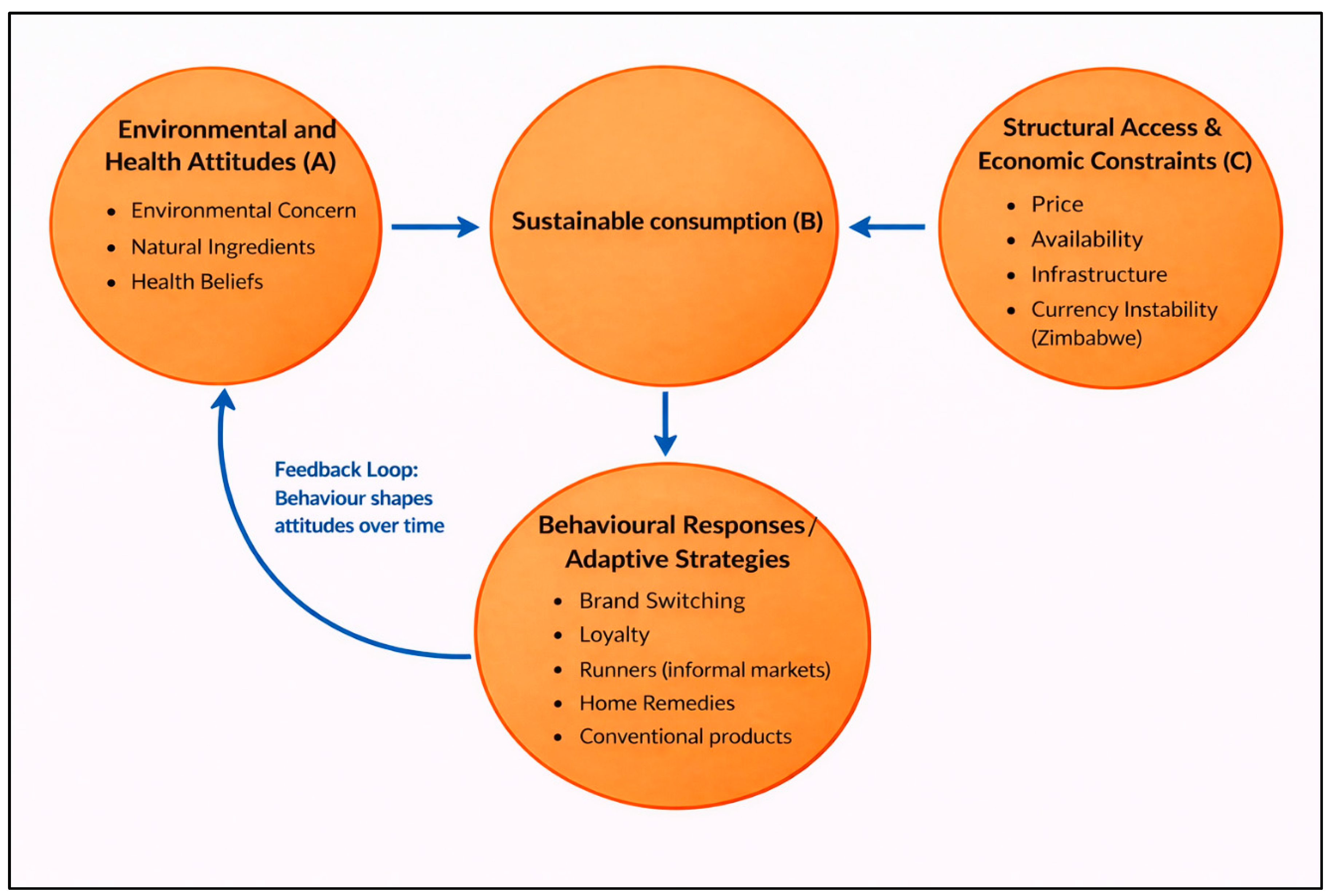

Table 1.
Thematic Summary and ABC Framework Alignment of Green Cosmetics Consumption in South Africa and Zimbabwe.
Table 1.
Thematic Summary and ABC Framework Alignment of Green Cosmetics Consumption in South Africa and Zimbabwe.
| Theme | Key Insights | South Africa | Zimbabwe | ABC Theory Link |
| 1. Environmental and Health Attitudes | Consumers associate green cosmetics with natural ingredients, skin health, and safety | High awareness of harmful ingredients; health-driven motivations and stronger product trust | Adoption influenced by social trends and the natural hair movement rather than detailed ingredient knowledge | Attitudes (A) drive purchase intentions |
| 2. Economic Constraints | Price sensitivity influences purchasing decisions and limits green product adoption | Some willingness to pay premium prices when value (e.g. longevity) is perceived | High price sensitivity due to lower purchasing power and currency instability; premium prices act as a major barrier | Context (C) constrains behaviour |
| 3. Structural Access and Distribution Channels | Access to products is shaped by retail infrastructure and purchasing channels | Access to formal retail (e.g. online platforms, major stores); use of loyalty programmes | Limited e-commerce access; reliance on informal distribution systems such as “runners” due to trust and infrastructure limitations | Context (C) shapes access to behaviour |
| 4. Brand Loyalty, Switching and Adaptive Behaviour | Consumers adjust behaviour when faced with constraints | Moderate loyalty; switching occurs mainly due to availability; some persistence in searching for preferred brands | Frequent brand switching; reversion to conventional products; use of home remedies as substitutes | Behaviour (B) reflects adaptation and feeds back to attitudes |
Disclaimer/Publisher’s Note: The statements, opinions and data contained in all publications are solely those of the individual author(s) and contributor(s) and not of MDPI and/or the editor(s). MDPI and/or the editor(s) disclaim responsibility for any injury to people or property resulting from any ideas, methods, instructions or products referred to in the content. |
© 2026 by the authors. Licensee MDPI, Basel, Switzerland. This article is an open access article distributed under the terms and conditions of the Creative Commons Attribution (CC BY) license (http://creativecommons.org/licenses/by/4.0/).
Copyright: This open access article is published under a Creative Commons CC BY 4.0 license, which permit the free download, distribution, and reuse, provided that the author and preprint are cited in any reuse.


