

Submitted:
10 April 2026
Posted:
13 April 2026
You are already at the latest version
Abstract
Life Cycle Assessment (LCA) is extensively employed to support sustainability evaluation in waste management and manufacturing systems; however, outcomes are highly sensitive to methodological decisions, particularly end-of-life (EoL) allocation approaches. This study examines how different allocation methods—primarily cut-off and substitution approaches—affect the interpretation of energy performance and decarbonisation potential in plastic waste management and injection moulding systems. The analysis applies cut-off logic to open-loop scenarios to establish a baseline impact, while substitution-based modelling is utilised for semi-closed and fully closed-loop configurations to quantify environmental credits and avoided burdens. A dual framework is adopted: first, a literature review examines methodological sensitivities in EoL modelling, focusing on allocation logic and system boundaries; second, a quantitative case study assesses open-loop, semi-closed, and fully closed-loop injection moulding scenarios for polyethylene (PE) products using LCA and hot-spot analysis. The results demonstrate that allocation choices can significantly influence calculated energy savings and greenhouse gas reduction potentials, sometimes reversing the relative ranking of configurations. Substitution-based approaches tend to report higher decarbonisation benefits by crediting avoided primary production, whereas cut-off approaches provide more conservative estimates. In the case study, increased internal material and water looping lead to measurable reductions in energy demand, although trade-offs across impact categories persist. These findings highlight that circular economy (CE) evaluations are strongly shaped by methodological assumptions, with direct implications for energy policy and decarbonisation pathways. The study emphasises the need for transparent allocation decisions and robust frameworks to ensure reliable decision-making in the transition toward low-carbon and energy-efficient systems.
Keywords:
energy efficiency
; decarbonisation pathways
; life cycle assessment
; end-of-life allocation
; plastic waste management
; injection moulding
; circular economy
1. Introduction
1.1. Global Waste Management Challenges and the Importance of Life Cycle Thinking
Municipal solid waste (MSW) management has become an increasingly important sustainability challenge, requiring robust analytical tools to support environmentally informed decision-making. Life Cycle Assessment (LCA) is widely recognised as an essential, comprehensive methodological tool for evaluating the environmental impacts of waste management systems and treatment options.
Global municipal solid waste generation reached approximately 2.1–2.3 billion tonnes per year in 2023 [1], and is expected to increase further as urbanisation, economic development, and population growth continue [2]. While waste collection rates are high in developed regions, significant disparities persist globally, particularly in low-income areas. Current waste management practices remain dominated by landfilling and incineration, while a substantial fraction of waste is still improperly managed [1]. These trends highlight the increasing pressure on waste management systems and the need for sustainable solutions.
Waste management is a significant contributor to global greenhouse gas emissions. According to Priyanka et al. [3], solid waste management accounted for approximately 1.6 billion tonnes of CO₂-eq. emissions in 2016, with projections indicating further increases unless effective interventions are implemented. In this context, LCA provides a systematic framework for comparing waste management options and for understanding how methodological assumptions—particularly those related to end-of-life (EoL) modelling—can influence the interpretation of environmental performance.
1.2. Life Cycle Assessment in Manufacturing Systems: The Case of Injection Moulding
LCA is extensively applied in manufacturing systems, where resource and energy consumption are primary drivers of environmental impact. Injection moulding, as one of the most widely used polymer processing technologies, accounts for a substantial portion of industrial plastic production [4].
The environmental impacts of injection moulding are closely linked to material use, energy consumption, and the generation of production scrap. LCA enables the identification of environmental hotspots and supports process optimisation by evaluating emissions to air, water, and soil, as well as material and energy resource use across the entire life cycle [5]. Previous studies have demonstrated the relevance of LCA for assessing injection moulding systems, particularly due to their high throughput and material intensity [6].
Nevertheless, comparative analyses of alternative manufacturing configurations—especially those involving varying degrees of internal material looping, such as semi-closed and closed-loop systems—remain limited. This gap underscores the necessity for integrated approaches that evaluate material and energy efficiency alongside environmental performance within manufacturing systems.
1.3. Circular Economy, Waste Hierarchy, and Policy Context
The proliferating application of LCA is closely associated with the transition toward a circular economy (CE) and sustainable development. The traditional linear model—characterised by extraction, production, use, and disposal—is widely regarded as unsustainable due to resource depletion and environmental pressures [7].
The circular economy seeks to preserve the value of products, materials, and resources while minimising waste generation and reducing dependence on primary raw materials [8,9]. Life cycle thinking is central to this transition, as it enables the assessment of environmental trade-offs across interconnected systems. LCA offers a quantitative foundation for informed decision-making [10].
Although awareness of circular strategies is increasing, prevailing production and consumption patterns continue to impede their implementation. Economic growth frequently supersedes waste prevention [11,12,13].
The circular economy is commonly structured through the 9R hierarchy, which prioritises strategies from Refuse (R0) to Recycle (R8). Higher-priority strategies, such as prevention and reduction, are still not widely implemented in practice [14,15]. However, recycling and energy recovery remain critical in practical applications, including injection moulding systems [16].
At the policy level, global and regional frameworks—such as the United Nations Sustainable Development Goals (SDGs) and the European Green Deal—provide strategic direction for sustainability transitions [17,18]. Additionally, the European Sustainability Reporting Standards (ESRS), particularly ESRS E5, emphasise resource use and CE practices [19]. In this context, LCA is increasingly employed as a decision-support tool for evaluating circular strategies.
1.4. Methodological Challenges in LCA: End-of-Life Modelling and Allocation Approaches
Although LCA is a well-established methodology for environmental assessment [20], its results remain highly sensitive to modelling choices, particularly at the EoL. The allocation of environmental burdens and benefits—especially regarding recycling and energy recovery—is pivotal in shaping the overall outcomes of a study [21,22].
Various allocation approaches, including the cut-off and substitution methods, can yield divergent interpretations of environmental performance. The cut-off approach offers a conservative representation by excluding credits for avoided production. In contrast, the substitution approach accounts for avoided impacts but relies on assumptions regarding displaced products and systems.
These methodological discrepancies are especially significant when assessing circular economy performance, as they directly influence how recycling and recovery processes are quantified. Consequently, LCA outcomes may be as much a function of methodological assumptions as technological performance.
Hot-spot analysis is frequently coupled with LCA to identify processes that contribute most significantly to environmental impact [23]. This method is particularly relevant for injection moulding, where energy consumption and material use are primary drivers of environmental performance [24]. Integrating LCA with hot-spot analysis facilitates a more granular understanding of system performance and supports robust scenario-based evaluation [25].
In summary, these considerations underscore the necessity for transparent, well-defined methodological choices when evaluating environmental performance and circular economy strategies.
1.5. Decarbonization Pathways and the Role of LCA in Policy Decision-Making
The transition towards low-carbon energy systems is a central challenge in contemporary sustainability policy, requiring robust analytical frameworks to inform decision-making across interconnected sectors. In the European Union, ambitious climate targets for 2030 and 2050 have heightened the demand for reliable assessment tools under conditions of uncertainty. Decarbonisation pathways involve complex interactions among energy production, material use, and industrial processes, necessitating systemic transformation across multiple sectors [26]. Life Cycle Assessment is critical in this context, as it quantifies energy use and greenhouse gas (GHG) emissions while identifying trade-offs between recycling, energy recovery, and primary production [27].
The application of LCA in policy contexts faces significant methodological challenges. End-of-life modelling introduces considerable uncertainty, as allocation choices—such as cut-off and substitution approaches—directly affect how avoided energy use and displaced production are accounted for [21]. These decisions can lead to divergent conclusions regarding the performance of waste management systems [28]. This issue is particularly pronounced in plastic recycling, where the role of waste-to-energy (WtE) technologies remains contested. Although WtE can recover energy and reduce landfill reliance [29], recycling is frequently associated with greater long-term resource efficiency, presenting a persistent policy dilemma [30]. Additionally, the benefits of energy recovery depend heavily on the carbon intensity of the displaced energy system, complicating long-term assessments as renewable energy penetration increases [31].
This study contributes by analysing how EoL allocation methods influence the interpretation of energy-related results and their implications for decarbonisation pathways. These methodological sensitivities are not merely technical but have direct implications for policy-making; without explicit allocation choices, LCA-based assessments may yield contradictory conclusions, potentially biasing decisions toward specific technologies. As energy systems decarbonise, this issue becomes increasingly critical, as the relative advantages of WtE pathways may diminish alongside the transition to low-carbon electricity grids. Therefore, a transparent and critically informed application of LCA is pivotal to ensure that sustainability assessments offer a robust foundation for energy policy design and decarbonisation pathway planning. In this context, the study systematically investigates how allocation choices shape policy-relevant interpretations of LCA results.
1.6. Aim, Research Gap, and Scope of the Study
Although LCA is increasingly applied in waste management and manufacturing systems, comparative analyses of allocation approaches and their implications for interpreting CE performance remain limited. Specifically, the integrated assessment of end-of-life modelling and manufacturing-stage loop closure within a unified framework remains underexplored.
Accordingly, this study addresses the following research question: How do divergent allocation approaches influence the interpretation of environmental performance and CE compatibility in both waste management and manufacturing systems?
To address this question, the study synthesises a conceptual analysis of allocation methods with a quantitative case study of injection moulding systems. This integrated approach enables a rigorous evaluation of how modelling assumptions—specifically regarding the treatment of avoided burdens—shape the interpretation of environmental impacts.
The study aims to demonstrate that LCA outcomes for both end-of-life and manufacturing systems are profoundly influenced by allocation choices, which can fundamentally alter the perceived environmental viability of circular strategies. By bridging conceptual analysis with a manufacturing case study, the research underscores that observed environmental benefits are not merely a function of technological configurations but are significantly determined by underlying methodological assumptions.
2. Methodology
2.1. Overall Study Design and Methodological Framework
This research adopts a conceptual, narrative literature review approach, complemented by targeted environmental assessments focused on the EoL stage from a LCA perspective. In contrast to conventional LCA studies, the primary objective is to critically analyse and synthesise methodological approaches to EoL modelling. Particular emphasis is placed on allocation logic and its implications for interpreting the circular economy, rather than solely conducting a quantitative life cycle impact assessment (LCIA) using LCA software.
The literature review was structured to identify and synthesise research addressing methodological challenges in modelling the EoL stage of municipal solid waste management within LCA frameworks. The review targets peer-reviewed publications (2009–2025) sourced from Scopus and Web of Science, with a specific focus on allocation logic, system boundary definitions, and their implications for CE interpretation. Inclusion criteria required that studies explicitly analyse EoL treatment options or discuss methodological aspects of LCA modelling that influence the environmental evaluation of waste management systems.
The selected literature was subjected to a qualitative thematic analysis to identify recurring methodological patterns, modelling assumptions, and sources of uncertainty that influence the environmental ranking of EoL technologies. The review protocol was designed to ensure that the analysed literature directly supports the central objective: clarifying how methodological choices in EoL modelling influence the environmental interpretation of waste management within LCA and CE contexts.
To provide an empirical foundation for the conceptual findings, the study incorporates a quantitative LCA case study. This illustrates how different allocation logics are reflected in actual manufacturing systems.
Figure 1 presents the conceptual framework, illustrating the integration of the narrative review and the quantitative case study phases.
The EoL treatment technologies considered in the review include landfilling (with and without landfill gas recovery), incineration (with and without energy recovery), material recycling, composting, anaerobic digestion, and selected emerging treatment options.
2.2. Goal, Scope Definition, and System Boundary
The LCA was conducted in accordance with ISO 14040 and ISO 14044 standards [32,33]. The scope is restricted to the EoL phase of municipal solid waste (MSW) systems, utilising a functional unit (FU) of 1 tonne of waste. This FU facilitates a rigorous comparison among alternative EoL treatment options. The system boundary is delineated by focusing on EoL-related processes, including waste collection at the treatment facility gate, processing and recovery operations, and final disposal.
Defining precise system boundaries during the quantitative LCA phase is essential for the effective comparison of different treatment pathways. Initially, a cradle-to-gate system boundary is applied, focusing on the injection moulding manufacturing stage. This boundary encompasses raw material extraction and manufacturing processes utilising compressed air (7 bar, 100 Nm³) and the EU-28 energy mix (55 MJ). Transportation and the use phase are excluded from the analysis to maintain focus on manufacturing-stage impacts.
As illustrated in Figure 2, the study demarcates a restrictive internal boundary (cut-off) and an expanded external boundary (substitution). This distinction enables the quantification of environmental credits associated with various recycling loops, including open-loop, semi-closed, and fully closed-loop configurations.
The internal boundary (dashed grey line) represents the cut-off approach, encompassing the linear lifecycle from raw material acquisition to end-of-life. The external boundary (dashed green line) represents the substitution approach (system expansion), incorporating avoided burdens and environmental credits from open-loop, semi-closed, and fully closed-loop recycling loops.
In addition to the EoL-focused system, a separate manufacturing system is defined for the case study, applying a cradle-to-gate boundary.
2.3. Allocation Logic and Methodological Perspectives
Allocation constitutes a critical methodological choice in EoL-focused Life Cycle Assessments. The literature demonstrates that allocation logic can fundamentally reshape the environmental ranking of treatment options, especially regarding energy recovery pathways.
The review differentiates between attributional and consequential LCA frameworks, acknowledging that each addresses distinct research questions and decision-making contexts. Within attributional LCA, two primary EoL allocation methods are examined:
The cut-off approach establishes the system boundary at the entry point of EoL treatment, assigning all upstream burdens to the primary system [34,35]. Although this method avoids speculative assumptions, it is prone to underestimating the environmental benefits of recycling.
In contrast, the substitution approach expands system boundaries to incorporate credits from displaced primary production [36,37]. While this aligns with CE principles, it introduces uncertainty regarding market dynamics and material quality. The literature indicates that neither method is inherently superior; rather, the selection is a value-laden, normative decision reflecting specific research objectives. Failure to justify the chosen method poses a risk of erroneous policy applications.
Figure 3 summarises these allocation approaches.
Numerous industrial sectors now favour the substitution approach, as it more comprehensively addresses circularity. However, these methodological discrepancies result in substantial variations in outcomes, as demonstrated in the subsequent case study.
2.4. Manufacturing Scenario Design
This study examines the manufacturing stage of a polyethylene product, assuming high-density polyethylene (HDPE) granulate is produced within the European Union and processed at a local injection moulding facility. Input flows include HDPE granulate, electricity from the EU-28 energy mix, compressed air (7 bar), and tap water for cooling. The LCA utilises a conventional thermoplastic injection moulding process, reflecting standard industrial practices for the high-volume production of polyethylene products.
Three manufacturing scenarios were modelled to represent distinct technological configurations commonly applied in industrial systems. All scenarios assume identical machinery, production output, processing conditions, and product quality requirements to ensure comparability. The study evaluates the following configurations:
- Scenario 1 (Open-loop): Represents a linear system where all outputs exit the system boundaries without internal recovery.
- Scenario 2 (Semi-closed-loop): Introduces water recirculation while maintaining linear material flows.
- Scenario 3 (Fully closed-loop): Integrates both water and material recycling within the production gate.
These scenarios provide a practical basis for interpreting allocation approaches, as open-loop configurations correspond to cut-off logic, while closed-loop systems are more closely aligned with substitution-based modelling.
In the second stage, the study expands the system boundary to assess end-of-life options, including landfilling and incineration (with and without energy recovery). In the baseline case, plastic scrap is incinerated conventionally, with an energy conversion efficiency of 13.1% for electricity and 30.2% for thermal energy. The developed manufacturing scenarios align with the 9R circular economy framework, specifically focusing on R2 (Reduce) and R8 (Recycle). These strategies are operationalised through the recirculation of process water and production scrap, thereby reducing the demand for virgin HDPE granulate and freshwater. These measures aim to optimise energy consumption and minimise wastewater discharge, providing the foundation for the subsequent quantitative assessment.
2.5. Life Cycle Inventory (LCI)
The functional unit is defined as 28.5 kg of polyethylene (PE) product, corresponding to approximately 100 bottles (300 mL each), representing the output of a single production shift. In the baseline scenario (Scenario 1), 30 kg of virgin HDPE granulate (density: 0.95 g/cm³) is utilised as input, of which 5% (1.5 kg) is generated as technological scrap. For this FU, 220 kg of cooling water is required, which is discharged as wastewater in the linear configuration.
LCI data collection utilised product-specific input values and mass-based allocation. Modelling was performed utilising Sphera LCA for Experts (GaBi) software [38], incorporating the GaBi Professional database (version 10.6) for the EU-27 region. Scenario-specific inventory data were adjusted to reflect variations in material demand, freshwater consumption, wastewater generation, and waste treatment pathways resulting from the looping strategies described in Section 2.4.
2.6. Life Cycle Impact Assessment (LCIA)
The environmental impacts of the three scenarios were evaluated utilising the CML 2001/2016 method, covering eight impact categories to establish a comprehensive environmental profile. Normalisation and weighting were applied in accordance with the CML 2016 (World) and LCIA Survey 2012 factors, specifically omitting biogenic carbon to focus exclusively on fossil-based emissions.
For the end-of-life analysis of manufacturing scrap, the Climate Change (GWP 100 years) indicator was specifically assessed. While multiple LCIA methods—including IPCC AR6 and ReCiPe 2016—were cross-referenced to validate the reliability of the findings, the reported results primarily reflect the IPCC AR6 characterisation factors for carbon footprint estimation. All assumptions regarding process efficiencies, scrap rates, and energy intensity reflect average industrial conditions rather than best- or worst-case scenarios, ensuring that the findings remain representative of current industrial standards.
3. Results
This section presents the environmental performance of the three injection moulding scenarios defined in Section 2.4. The results are evaluated through the lens of two distinct allocation boundaries—Cut-off and Substitution—to elucidate how methodological choices influence the perceived sustainability of circular configurations.
3.1. Comparative Evaluation of Cut-Off and Substitution Approaches
The quantitative application of the cut-off approach (defined in Section 2.3) demonstrated its computational simplicity, yet also revealed a fundamental inability to account for material quality retention. In the context of injection moulding, the primary characteristics of this approach are:
- System Boundaries: End-of-life activities are situated outside the system boundary of the waste-producing system.
- Burden Allocation: Waste inputs are considered free of any upstream virgin-material burden, allowing waste flows to cross the system boundary without inheriting historical impacts.
- Recycling Paradigm: No credits are awarded for recycling at the end of life; while this simplifies the inventory, it lacks the capacity to incentivise high-quality recycling or to penalise downcycling.
In contrast, the quantitative analysis indicates that the substitution approach serves as a more dynamic framework for evaluating circularity. Its core characteristics include:
- Technical Substitutability: This approach evaluates the displacement potential of recycled HDPE scrap. A 1:1 substitution factor was assumed for in-process scrap (Scenario 3), reflecting high-quality material retention.
- Environmental Crediting: Unlike the cut-off method, this logic assigns environmental credits for avoided primary production, thereby directly incentivising the closed-loop strategies (R8) identified in the 9R framework.
- Aries and Burdens: The waste-generating system bears a proportionate share of the upstream primary burden, in exchange for which it accounts for the "net scrap" environmental benefit.
- Applicability: Although more complex to model—requiring distinct primary and secondary LCI datasets—it offers a more realistic representation of the decarbonisation potential in the plastics industry, where material quality significantly dictates life cycle outcomes.
Table 1 provides a comparative summary of these approaches based on the study’s findings and conclusions.
While these allocation approaches define how environmental burdens and credits are assigned, their implications become particularly visible when applied to real waste management systems and technologies.
3.2. End-of-Life Treatment Options and Their Interpretation in LCA
Municipal solid waste management systems employ a range of EoL treatment options that differ significantly in their technological maturity and associated environmental burdens. While the waste hierarchy prioritises prevention and recycling, landfilling and incineration remain prevalent globally due to economic and infrastructural constraints. Landfilling is primarily associated with long-term greenhouse gas (GHG) emissions, whereas incineration and WtE systems focus on volume reduction and energy recovery. However, the environmental profile of these technologies is heavily contingent upon assumptions regarding energy substitution, plant efficiency, and the carbon intensity of local electricity grids.
Beyond conventional approaches, emerging alternatives such as gasification and anaerobic digestion present potential pathways for sustainable energy recovery, although their comparative efficacy remains a subject of ongoing research [39,40,41].
The evaluation of MSW management systems necessitates rigorous modelling of material quality, substitution ratios, and avoided production processes. A frequent limitation in existing literature is the prevalence of aggregated impact results, which often lack transparency regarding underlying modelling assumptions. Consequently, comparable waste treatment methods may appear environmentally superior or inferior based on methodological decisions rather than inherent technological performance.
Table 2 provides a comparative overview of the principal EoL treatment options and illustrates how allocation logic influences their interpretation. As demonstrated in the subsequent analysis, methodological choices—rather than the technologies themselves—fundamentally dictate the perceived environmental performance and circularity of waste management systems.
The comparison in Table 2 shows that allocation choices can enhance or diminish the perceived contribution of EoL options to circular economy objectives. Transparent reporting of these assumptions is essential for informed decision-making and for aligning waste management strategies with the SDGs [42,43].
Comparative analyses of waste management systems highlight the potential for low-emission, energy-efficient models [44,45,46]. Among the technologies evaluated, landfilling and incineration are especially sensitive to modelling assumptions. Landfilling serves as a critical baseline for demonstrating how allocation-related uncertainties can alter the environmental ranking of waste treatment pathways.
3.3. Case Analysis of Landfilling in the Context of LCA and Allocation
Landfilling remains an indispensable component of global waste management, serving as a residual sink even in advanced systems with high recovery rates [47,48,49]. Identifying optimal practices necessitates comparative analyses to determine potential corrective actions [50]. Within the framework of LCA, landfilling is conceptualised as a transitional technology, and its environmental profile is critically sensitive to modelling assumptions [51].
A central challenge in landfill LCA is the quantification of greenhouse gas emissions, with a particular focus on methane [52,53,54]. Due to its significant short-term global warming potential, methane constitutes a pivotal variable in climate impact assessments [55,56]. Methodological decisions regarding the time horizon—specifically the selection of GWP100 versus GWP20—can fundamentally alter the comparative ranking of waste management strategies [57,58].
Furthermore, landfills pose protracted risks, including leachate-induced groundwater contamination ([59,60], land occupation, and biodiversity loss [61,62]. These environmental liabilities and post-closure management obligations are frequently difficult to represent comprehensively within conventional, static LCA frameworks [63,64].
Contemporary urban planning increasingly envisages former landfill sites as potential locations for solar energy facilities or public infrastructure [65,66]. Consequently, evaluating landfill performance exclusively through environmental indicators may overlook broader implications for land-use planning. Integrated assessment approaches are therefore required to balance environmental performance with long-term land occupation and spatial transformation.
While this section outlines the complexities of landfilling in waste management, the subsequent case study illustrates how these allocation-related uncertainties directly influence the perceived decarbonisation pathways of manufacturing systems.
3.4. Integration of Allocation Approaches with Manufacturing LCA Results
This section integrates manufacturing life cycle inventory data into the environmental impact assessment. The analysis is conducted based on a functional unit of 28.5 kg polyethylene (PE) product across the three defined scenarios, with a focus on how internal recycling loops mitigate overall environmental burdens.
Figure 4 presents the distribution of eight environmental impact categories, as determined by the CML 2016 LCIA method.
The results indicate that Scenario 1 (Baseline) exhibits the most pronounced impact across all categories, most notably regarding human toxicity (~97%) and marine ecotoxicity (~85%). This predominance is primarily attributable to the continuous demand for virgin high-density polyethylene (HDPE) granulate and the energy-intensive nature of manufacturing processes lacking material recovery.
Conversely, the adoption of a semi-closed-loop system (Scenario 2) results in notable reductions in categories associated with water consumption and disposal; for instance, its contribution to freshwater ecotoxicity decreases to 31%. The most substantial improvements are observed in Scenario 3 (fully closed-loop), which recirculates both cooling water and plastic scrap, thereby achieving the lowest environmental footprint across the board. Reductions in abiotic fossil depletion and global warming potential (GWP) are particularly significant for decarbonisation objectives, as they directly represent the avoided impacts of primary material production.
Normalisation and weighting results confirm that transitioning from a linear system (Scenario 1) to a fully closed-loop configuration (Scenario 3) not only enhances resource efficiency but also significantly ameliorates toxicological impacts on the environment.
Detailed analysis of Figure 4 reveals that Scenario 1 dominates across all categories, specifically in human toxicity (~97%) and marine ecotoxicity (~85%). In freshwater ecotoxicity, Scenario 1 accounts for approximately 58%, compared to Scenario 2 (~22%) and Scenario 3 (~20%). For eutrophication potential, Scenario 1 represents roughly 68%, while Scenarios 2 and 3 account for 17% and 15%, respectively.
Global warming potential demonstrates a narrower variance, with Scenario 1 and Scenario 2 each contributing approximately 35%, while Scenario 3 accounts for about 30%. For acidification potential, Scenario 1 represents 35%, Scenario 2 33%, and Scenario 3 approximately 32%. Elemental abiotic depletion follows a similar trend, with Scenarios 1 and 2 at roughly 35%, and Scenario 3 at 30%. In the case of fossil abiotic depletion, Scenario 1 contributes around 35%, while Scenarios 2 and 3 each account for 33–35%, reflecting a relatively balanced distribution across the models.
3.5. Analysis of Resource Efficiency and Energy Demand
To provide empirical context for the environmental impacts, this study first examines energy consumption and physical resource flows across the three scenarios. Production energy demand remains nearly identical in Scenarios 1 and 2; however, Scenario 3 demonstrates a measurable decrease, stemming from the reduced processing requirements of virgin material.
Figure 5 compares total material consumption and freshwater emissions, expressed as cumulative mass, across the scenarios. This comparison is significant as it connects environmental performance to specific physical quantities, rendering the findings highly actionable for industrial applications. Quantifying material consumption and freshwater emissions enables a tangible assessment of the resource-efficiency benefits associated with circular strategies.
According to Figure 5, Scenario 1 yields the highest values for both indicators, with material consumption at approximately 52.3 kg and freshwater emissions at 53.1 kg. This configuration represents the least efficient use of resources and, consequently, the greatest environmental burden. Scenario 2 exhibits a clear improvement: material consumption decreases to approximately 52 kg, while freshwater emissions are reduced to 52.7 kg. These findings suggest that implementing water looping alone yields measurable reductions in both resource intensity and aquatic emissions.
Scenario 3 demonstrates the most favourable performance, underscoring the systemic advantage of simultaneous water and material looping. Under this configuration, material consumption reaches its minimum at approximately 50.7 kg, and freshwater emissions are reduced to 51.5 kg, representing the most sustainable pathway within the investigated manufacturing framework.
3.6. Carbon Footprint of End-of-Life Pathways
In the final stage of the quantitative analysis, EoL options for manufacturing scrap were assessed under the baseline scenario. The carbon footprints of landfilling and incineration (both with and without energy recovery) were calculated utilising four distinct LCIA methods to mitigate methodological bias. Table 3 presents these results per 1 kg of plastic waste.
The results demonstrate that landfilling produces lower direct (gross) CO₂-equivalent emissions than incineration across all examined LCIA methods, with landfilling values remaining remarkably low (~0.03 kg CO₂-eq./kg). This outcome is primarily attributable to the immediate oxidation of carbon during incineration, whereas landfilling sequesters a substantial portion of the carbon content in the short- to medium-term. Additionally, gross emissions exhibit minimal variance between incineration scenarios (~2.5 kg CO₂-eq./kg), irrespective of energy recovery.
However, a paradigmatic shift occurs when the substitution (avoided burden) approach is applied. Quantitative analysis reveals that incineration with energy recovery can reduce the gross carbon footprint by approximately 38–39%, resulting in a net impact ranging from 1.53 to 1.55 kg CO₂-eq./kg across the four LCIA methods. While this does not reach a negative absolute value in this specific manufacturing context, the generated heat and electricity displace fossil-fuel-based energy demand in the broader system, rendering energy recovery significantly more favourable than conventional incineration. Under conditions of high-efficiency recovery, incineration's environmental competitiveness is substantially enhanced.
Therefore, the environmental assessment of waste incineration is critically contingent upon the efficiency of energy utilisation. The data confirms that the avoided burden from thermal energy production (displacing natural gas) provides a consistently greater emission-reduction credit (averaging -0.57 kg CO₂-eq.) than electricity generation (averaging -0.38 kg CO₂-eq.). This highlights that thermal recovery is nearly 1.5 times more effective in mitigating climate impacts than electricity displacement in the current EU-28 energy mix.
These findings underscore that the decarbonisation potential of plastic waste management is a function of both technological efficiency and the selected methodological allocation logic. In transitional energy systems, maximising heat recovery is the most effective strategy to reduce the net carbon footprint of plastic scrap, while the definition of allocation boundaries determines whether these systemic benefits are captured in the final LCA results.
4. Discussion
The results confirm that allocation logic is a key determinant in the interpretation of LCA outcomes, influencing both the magnitude and relative ranking of environmental impacts. This effect extends beyond municipal solid waste management to manufacturing processes, suggesting that methodological decisions can induce systematic bias into conclusions regarding circular economy performance.
4.1. Interpretation of Looping Strategies and Environmental Hotspots
In the open-loop configuration (Scenario 1), environmental pressures are concentrated within a limited number of dominant impact categories, most notably human toxicity and marine ecotoxicity. This indicates that environmental burdens are unevenly distributed and are intrinsically linked to specific technological hotspots within the manufacturing process. The normalised and weighted results facilitate a more robust interpretation of injection moulding’s environmental performance within a broader systemic context.
Comparative analysis indicates that Scenario 1 contributes the most across all categories, particularly in human toxicity (~97%) and marine ecotoxicity (~85%). This confirms that linear, open-loop systems tend to aggregate environmental burdens in specific toxicological categories. Interestingly, Scenario 2 presents a distinct trade-off: while it achieves significant reductions in human and marine ecotoxicity through water recirculation, it exhibits slightly higher abiotic fossil depletion and global warming potential compared to the baseline. This suggests that internal utility loops (such as water) may increase energy intensity even while mitigating direct aquatic emissions.
A similar, yet more pronounced trend is observed in Scenario 3. The results indicate that circular interventions necessitate navigating specific trade-offs across impact categories. While Scenario 2 effectively addresses aquatic toxicity, Scenario 3 is indispensable for achieving substantial reductions in fossil resource depletion and climate change. This underscores that material looping is the fundamental lever for decarbonisation in the injection moulding industry.
Although the volume of recycled plastic scrap is relatively modest at the examined scale, these findings suggest that the environmental benefits of closed-loop systems are driven by the holistic optimisation of resource flows rather than merely the quantity of secondary material. As demonstrated in Figure 5 and Figure 6, increasing the degree of looping reduces absolute environmental burdens and fosters a more balanced environmental impact profile.
4.2. Linking Manufacturing Results with Allocation Approaches
The observed differences between open-loop and closed-loop manufacturing systems can be elucidated through the allocation frameworks employed in LCA. The open-loop configuration (Scenario 1) embodies the logic of the cut-off approach, where waste is excluded from the system boundaries and no environmental credits are awarded, thereby focusing exclusively on the immediate production burden.
In contrast, the fully closed-loop configuration (Scenario 3) aligns with substitution-based logic, where recycled materials displace primary production, thus generating environmental benefits by avoiding the associated burdens. This correspondence demonstrates that the perceived advantages of circularity are not merely a function of technological efficiency, but are fundamentally dictated by the chosen methodological framework. Substitution-based logic is pivotal for recognising the avoided primary production that characterises the transition toward a circular economy.
4.3. Implications for Circular Manufacturing and Sustainability Assessment
The progression from linear to semi-closed and fully closed-loop scenarios demonstrates that water and material recirculation yield a more balanced environmental profile by targeting specific hotspots. The findings reveal a clear functional specialisation among circular strategies: water recirculation primarily mitigates toxicological impacts, whereas material looping is indispensable for reducing contributions to climate change and fossil resource depletion. This multidimensional improvement suggests that circular strategies should be integrated as systemic structural shifts rather than superficial process enhancements.
A key finding of this study is the quantifiable benefit of incremental circularity. While Scenario 3 offers the most favourable systemic performance, Scenario 2 confirms that implementing even a single looping mechanism, such as water recirculation, yields significant environmental gains. This underscores that incremental steps toward circularity are operationally viable and should not be overlooked in favour of idealistic, fully closed-loop models.
Furthermore, the concurrent reduction in resource consumption and emissions reinforces a core tenet of the circular economy: enhanced resource efficiency is intrinsically linked to improved environmental performance. Despite the modest scale of technological scrap recycled per shift, the results suggest that scaling these solutions to industrial levels could lead to substantial cumulative reductions in a facility’s overall environmental footprint. Finally, the evaluation of end-of-life options confirms that manufacturing-level efficiency must be synergistically coupled with effective waste management, where energy recovery serves as a vital decarbonisation lever through energy substitution.
4.4. Integration with Previous Research and Broader Implications
Although the findings align with the energy-intensity results reported by Elduque et al. [24] and Cheung et al. [6] regarding the injection moulding process, this study transcends the limitations of isolated manufacturing models by integrating end-of-life allocation logic. In contrast to earlier research that primarily addresses process-level energy optimisation, the integrated approach presented here demonstrates that the perceived environmental benefits of manufacturing improvements are inextricably linked to, and may be substantially reconfigured by, the selected EoL modelling framework.
Consistent with previous results [67], the present analysis confirms that manufacturing-stage improvements can yield measurable reductions in global warming potential without necessitating changes to product design. However, while previous studies have largely focused on individual measures—such as energy efficiency or material substitution—this work provides a comparative taxonomy of varying degrees of loop closure within a single, coherent production system.
Furthermore, the observed reductions in toxicity-related impacts stemming from water recirculation align with recent LCA studies on process water management in polymer processing. By evaluating manufacturing-stage looping and EoL options in tandem, this study extends the scope of prior research, which has typically treated these aspects as disparate entities [9].
From a broader methodological perspective, these findings indicate that allocation choices play a decisive role in shaping the interpretation of circular economy performance. The conceptual analysis demonstrates that substitution-based approaches accentuate the advantages of recycling and energy recovery, whereas cut-off approaches yield more conservative, "burden-free" estimates.
Consequently, this study provides a more integrated, system-oriented perspective on closed-loop injection moulding than most existing analyses, while highlighting the imperative for transparent, context-sensitive interpretation of LCA results in circular economy applications.
4.5. Implications for Energy Policy and Decarbonization Pathways
The results of this study indicate that methodological choices in LCA—particularly EoL allocation approaches—have significant implications that extend beyond academic consistency, directly defining the perceived efficacy of energy policy and decarbonisation planning. Although LCA is widely employed to support sustainability assessments, the findings demonstrate that allocation logic can substantially alter calculated energy savings and greenhouse gas reduction potentials.
From a policy perspective, this represents a critical source of uncertainty; the absence of methodological harmonisation can result in polarised strategic trajectories for identical industrial systems [68,69]. Decision-makers increasingly rely on LCA-based indicators to evaluate recycling, waste-to-energy (WtE), and circular manufacturing. However, if allocation choices lack transparency, studies may yield conflicting conclusions for the same system, leading to fragmented policy implementation.
Specifically, substitution-based approaches tend to favour recycling and energy recovery by crediting avoided primary production, whereas cut-off approaches yield more conservative estimates. Consequently, the choice of allocation method can introduce an implicit bias into policy recommendations for waste management strategies.
This is particularly relevant during the energy transition, where WtE technologies are frequently integrated into low-carbon strategies due to their ability to recover energy from residual waste and mitigate landfill emissions.
However, the long-term decarbonisation benefits of WtE are critically contingent upon the carbon intensity of the energy system it displaces [70,71]. As national electricity grids transition toward renewable sources (grid decarbonisation), the relative advantage of energy recovery may diminish, thereby altering the comparative performance of recycling versus incineration pathways. This identifies a fundamental policy dilemma: while recycling ensures greater resource efficiency, energy recovery provides immediate outputs that support short-term stability.
The case study on injection moulding systems demonstrates that internal process optimisation—such as material and water looping—can measurably reduce energy demand. This underscores the importance of integrating process-level improvements with system-level policy. Nevertheless, the interpretation of these benefits remains intrinsically tied to the underlying allocation logic.
In summary, the findings indicate that LCA is not a value-neutral arbiter but rather a modelling framework whose outcomes depend on explicit normative assumptions. For energy policy and decarbonisation pathway assessment, it is imperative that methodological choices are clearly communicated and, where feasible, harmonised across industrial sectors to provide a reliable basis for long-term strategic decisions.
5. Conclusions
This study examined the influence of End-of-Life allocation methods on the interpretation of environmental and energy performance in plastic waste management and injection moulding systems. By combining a conceptual analysis with a manufacturing case study, the results demonstrate that allocation choices—specifically the cut-off and substitution approaches—play a decisive role in shaping outcomes. The key conclusions are as follows:
- Methodological Sensitivity: Methodological assumptions significantly alter the perceived effectiveness of decarbonization strategies. Substitution-based approaches report higher energy savings by including avoided primary production, whereas cut-off approaches provide more conservative estimates. In certain scenarios, these choices can reverse the environmental ranking of waste treatment pathways.
- Manufacturing Circularity: Transitioning from linear (Scenario 1) to fully closed-loop (Scenario 3) manufacturing significantly improves resource efficiency. The systemic integration of both water and material looping reduces material consumption by approximately 3% and mitigates critical toxicological impacts (human and marine ecotoxicity) by 85–97%.
- Methodological Robustness: The consistency between the IPCC AR6 and EF 3.1 results (yielding an identical net carbon footprint of ~1.548 kg CO₂-eq./kg) validates the reliability of the underlying inventory data. While the ReCiPe 2016 method provided a slightly lower net value (1.534 kg CO₂-eq./kg) due to its specific characterisation of substitution credits, the overall trends remain stable across all examined frameworks.
- The Landfill Paradox: Within a climate-focused LCA framework, landfilling functions as a superior carbon sink (0.029–0.030 kg CO₂-eq./kg) compared to incineration. Despite high-efficiency energy recovery reducing the gross impact of incineration by 38–39%, the resulting net carbon footprint (~1.54 kg CO₂-eq./kg) remains orders of magnitude higher than that of landfill disposal. This underscores that while incineration is technically more "circular" due to energy recovery, its immediate climate impact is substantially greater.
- Energy Recovery Hierarchy: The analysis confirms that the displacement of thermal energy is nearly 1.5 times more effective in reducing the net carbon footprint than electricity generation. In transitional energy systems, maximising heat recovery provides a more significant environmental credit than electricity displacement within the current EU-28 energy mix.
- Policy Implications: As LCA-based indicators increasingly support energy policy and circular economy transitions, the choice of allocation can implicitly bias technology prioritisation (e.g., recycling vs. waste-to-energy). Transparent frameworks are essential to ensure policy decisions reflect actual system performance rather than modelling artefacts.
- Manufacturing Optimisation: The case study confirms that process-level improvements, such as simultaneous material and water looping, measurably reduce energy demand and emissions. However, the magnitude of these benefits is highly sensitive to the chosen allocation logic.
- Future Requirements: Transitioning toward low-carbon systems requires aligning sustainability assessments with policy-making. This necessitates improved transparency in communicating assumptions about energy substitution and accounting for the dynamic nature of energy grids.
Future research should focus on harmonising allocation approaches and integrating dynamic energy system modelling to provide a reliable basis for long-term decarbonisation targets.
6. Limitations
A central concept in this study is "apparent circular economy compatibility," defined as the extent to which waste management options appear sustainable according to LCA-based indicators. It is crucial to underscore that the presence of avoided burdens (substitution credits) does not inherently indicate higher levels of material circularity. These results primarily reflect methodological choices regarding displaced technologies and system boundaries, rather than direct measurements of circular material flows. Therefore, apparent circular economy compatibility should be interpreted as an analytical outcome of the applied modelling framework, rather than as a definitive indicator of systemic circularity.
The specific limitations of this research are acknowledged as follows:
- Methodological Focus: The analysis of municipal waste management relies on a qualitative synthesis of existing literature rather than new numerical life cycle impact assessment calculations. Consequently, the findings primarily highlight methodological sensitivities rather than offering universally generalisable quantitative data.
- Modelling Assumptions: Market dynamics, technological heterogeneity, and material quality degradation (downcycling) were not explicitly modelled. The injection moulding scenarios are based on average industrial conditions and do not account for site-specific operational variations or the complexities of post-consumer waste streams.
- Grid Decarbonisation and Energy Mix: The study utilises current energy mix datasets. As national energy grids transition toward higher shares of renewable energy (grid decarbonisation), the environmental credits calculated through substitution-based approaches are expected to decrease, as the 'avoided' energy becomes inherently less carbon-intensive. Therefore, the choice between cut-off and substitution methods will become increasingly critical in future decarbonisation assessments, as the relative advantage of energy recovery may diminish compared to material recycling.
These limitations underscore the necessity for dynamic LCA models in future research to adequately account for evolving energy infrastructures. Future research directions should include scenario-based numerical studies that integrate both manufacturing and end-of-life systems within a unified, dynamic modelling framework. Additionally, incorporating regional datasets, advanced LCA software tools, and real industrial case studies would further enhance the robustness and applicability of results in supporting long-term decarbonisation targets.
Author Contributions
Original draft preparation, conceptualisation, methodology, supervision, diagrams, resources, review, writing and editing, V.M.; resources, writing and editing, K. SZ.; data curation, investigation, visualisation, J.L.A. All authors have read and agreed to the published version of the manuscript.
Data Availability Statement
Not applicable.
Conflicts of Interest
The authors declare no conflict of interest.
References
- United Nations Environment Programme (UNEP) Global Waste Management Outlook 2024: Beyond an Age of Waste – Turning Rubbish into a Resource; Nairobi, 2024.
- World Bank What a Waste 2.0: A Global Snapshot of Solid Waste Management to 2050; Washington, 2018.
- Priyanka, E.B.; Vijayshanthy, S.; Thangavel, S.; Anand, R.; Bhavana, G.B.; Khan, B.; Jeyanthi, K.; Ambikapathy, A. Prediction of Waste Generation Forecast and Emission Potential on the Erode City Solid Waste Dump Yards Based on Machine Learning Approach. Sci. Rep. 2025, 15, 37021. [CrossRef]
- RECYCLING magazine February 21 2017,.
- Sánchez-Burgos, M.A.; Conradi-Galnares, E.; Dragatogiannis, D. Life Cycle Assessment (LCA) Methodology. In Life Cycle Analysis Based on Nanoparticles Applied to the Construction Industry; Springer Nature Switzerland: Cham, 2025; pp. 43–58.
- Cheung, W.M.; Leong, J.T.; Vichare, P. Incorporating Lean Thinking and Life Cycle Assessment to Reduce Environmental Impacts of Plastic Injection Moulded Products. J. Clean. Prod. 2017, 167, 759–775. [CrossRef]
- Scheel, C.; Aguiñaga, E.; Bello, B. Decoupling Economic Development from the Consumption of Finite Resources Using Circular Economy. A Model for Developing Countries. Sustainability 2020, 12, 1291. [CrossRef]
- Szita, K. THE APPLICATION OF LIFE CYCLE ASSESSMENT IN CIRCULAR ECONOMY. Hungarian Agricultural Engineering 2017, 5–9. [CrossRef]
- Civancik-Uslu, D.; Puig, R.; Ferrer, L.; Fullana-i-Palmer, P. Influence of End-of-Life Allocation, Credits and Other Methodological Issues in LCA of Compounds: An in-Company Circular Economy Case Study on Packaging. J. Clean. Prod. 2019, 212, 925–940. [CrossRef]
- Valdivia, S.; Backes, J.G.; Traverso, M.; Sonnemann, G.; Cucurachi, S.; Guinée, J.B.; Schaubroeck, T.; Finkbeiner, M.; Leroy-Parmentier, N.; Ugaya, C.; et al. Principles for the Application of Life Cycle Sustainability Assessment. Int. J. Life Cycle Assess. 2021, 26, 1900–1905. [CrossRef]
- OECD The Circular Economy in Cities and Regions of the European Union. 2026, 1–175.
- Chenavaz, R.Y.; Dimitrov, S. From Waste to Wealth: Policies to Promote the Circular Economy. J. Clean. Prod. 2024, 443, 141086. [CrossRef]
- Srijuntrapun, P.; Ket-um, P.; Attavanich, W. Socio-Demographic Drivers of Household Food Waste Management Practices in Thailand. PLoS One 2025, 20, e0321054. [CrossRef]
- Sakai, S.; Yano, J.; Hirai, Y.; Asari, M.; Yanagawa, R.; Matsuda, T.; Yoshida, H.; Yamada, T.; Kajiwara, N.; Suzuki, G.; et al. Waste Prevention for Sustainable Resource and Waste Management. J. Mater. Cycles Waste Manag. 2017, 19, 1295–1313. [CrossRef]
- Hsieh, T.-M.; Chen, K.-Y. Developmental Trajectories of Electric Vehicle Research in a Circular Economy: Main Path Analysis. Sustainability 2024, 16, 8162. [CrossRef]
- Meng, F.; McKechnie, J.; Turner, T.A.; Pickering, S.J. Energy and Environmental Assessment and Reuse of Fluidised Bed Recycled Carbon Fibres. Compos. Part A Appl. Sci. Manuf. 2017, 100, 206–214. [CrossRef]
- Bojarska, J.; Złoty, P.; Wolf, W.M. Life Cycle Assessment as Tool for Realization of Sustainable Development Goals - towards Sustainable Future of the World: Mini Review. Acta Innovations 2021, 49–61. [CrossRef]
- Rivas, S.; Urraca, R.; Bertoldi, P.; Thiel, C. Towards the EU Green Deal: Local Key Factors to Achieve Ambitious 2030 Climate Targets. J. Clean. Prod. 2021, 320, 128878. [CrossRef]
- European Commission European Sustainability Reporting Standards (ESRS) E5: Resource Use and Circular Economy; 2023.
- Laca, A.; Herrero, M.; Díaz, M. Life Cycle Assessment in Biotechnology. In Comprehensive Biotechnology; Elsevier, 2011; pp. 839–851.
- Guinée, J.B.; Heijungs, R.; Huppes, G.; Zamagni, A.; Masoni, P.; Buonamici, R.; Ekvall, T.; Rydberg, T. Life Cycle Assessment: Past, Present, and Future. Environ. Sci. Technol. 2011, 45, 90–96. [CrossRef]
- Finnveden, G.; Hauschild, M.Z.; Ekvall, T.; Guinée, J.; Heijungs, R.; Hellweg, S.; Koehler, A.; Pennington, D.; Suh, S. Recent Developments in Life Cycle Assessment. J. Environ. Manage. 2009, 91, 1–21. [CrossRef]
- Cornago, S.; Tan, Y.S.; Ramakrishna, S.; Choong Low, J.S. Temporal Hotspot Identification Using Dynamic Life Cycle Inventory: Which Are the Critical Time-Spans within the Product Life Cycle? Procedia CIRP 2022, 105, 249–254. [CrossRef]
- Elduque, A.; Elduque, D.; Javierre, C.; Fernández, Á.; Santolaria, J. Environmental Impact Analysis of the Injection Molding Process: Analysis of the Processing of High-Density Polyethylene Parts. J. Clean. Prod. 2015, 108, 80–89. [CrossRef]
- Benitez, A.; Wulf, C.; Steubing, B.; Geldermann, J. Scenario-Based LCA for Assessing the Future Environmental Impacts of Wind Offshore Energy: An Exemplary Analysis for a 9.5-MW Wind Turbine in Germany. Energy Sustain. Soc. 2024, 14, 49. [CrossRef]
- Sovacool, B.K.; Schmid, P.; Stirling, A.; Walter, G.; MacKerron, G. Differences in Carbon Emissions Reduction between Countries Pursuing Renewable Electricity versus Nuclear Power. Nat. Energy 2020, 5, 928–935. [CrossRef]
- Heijungs, Reinout.; Suh, Sangwon. The Computational Structure of Life Cycle Assessment; Kluwer Academic Publishers, 2002; ISBN 1402006721.
- Ekvall, T.; Finnveden, G. Allocation in ISO 14041—a Critical Review. J. Clean. Prod. 2001, 9, 197–208. [CrossRef]
- Liu, J.; Cheng, W.-L.; Nian, Y.-L. The Stratigraphic and Operating Parameters Influence on Economic Analysis for Enhanced Geothermal Double Wells Utilization System. Energy 2018, 159, 264–276. [CrossRef]
- Villalba, G.; Ayres, L.; Ayres, R.U. A Proposal for Emission Calculations for Chemical Processes, Part I. Resour. Conserv. Recycl. 2006, 48, 280–299. [CrossRef]
- Hertwich, E.G.; Gibon, T.; Bouman, E.A.; Arvesen, A.; Suh, S.; Heath, G.A.; Bergesen, J.D.; Ramirez, A.; Vega, M.I.; Shi, L. Integrated Life-Cycle Assessment of Electricity-Supply Scenarios Confirms Global Environmental Benefit of Low-Carbon Technologies. Proceedings of the National Academy of Sciences 2015, 112, 6277–6282. [CrossRef]
- ISO 14040:2006; Environmental Management—Life Cycle Assessment—Principles and Framework; Geneva, Switzerland, 2006.
- ISO 14044:2006; Environmental Management—Life Cycle Assessment—Requirements and Guidelines. ISO: Geneva, Swit-Zerland, 2006. Available Online: https://www.Iso.Org/Standard/38498.Html (Accessed on 6 June 2019)..
- Bamber, N.; Turner, I.; Arulnathan, V.; Li, Y.; Zargar Ershadi, S.; Smart, A.; Pelletier, N. Comparing Sources and Analysis of Uncertainty in Consequential and Attributional Life Cycle Assessment: Review of Current Practice and Recommendations. Int. J. Life Cycle Assess. 2020, 25, 168–180. [CrossRef]
- Wang, X.; Huang, B.; Wang, Y.; Liu, J.; Long, Y.; Daigo, I. The Impact of Allocation Methods on Carbon Benefits - a Case Study of Construction Waste Recycling. Resour. Conserv. Recycl. 2023, 199, 107269. [CrossRef]
- Husmann, J.; Ali, A.-R.; Cerdas, F.; Herrmann, C. The Influence of Stakeholder Perspectives on the End-of-Life Allocation in the Life Cycle Assessment of Lithium-Ion Batteries. Frontiers in Sustainability 2023, 4. [CrossRef]
- Clasen, A.P.; Agostinho, F.; Almeida, C.M.V.B.; Liu, G.; Giannetti, B.F. Advancing towards Circular Economy: Environmental Benefits of an Innovative Biorefinery for Municipal Solid Waste Management. Sustain. Prod. Consum. 2024, 46, 571–581. [CrossRef]
- SPHERA Life Cycle Assessment (LCA) Software Available online: https://sphera.com/solutions/product-stewardship/life-cycle-assessment-software-and-data/ (accessed on 18 May 2025).
- Panepinto, D.; Tedesco, V.; Brizio, E.; Genon, G. Environmental Performances and Energy Efficiency for MSW Gasification Treatment. Waste Biomass Valorization 2015, 6, 123–135. [CrossRef]
- Mazzi, A.; Sciarrone, M.; Raga, R. Environmental Performance of Semi-Aerobic Landfill by Means of Life Cycle Assessment Modeling. Energies (Basel). 2022, 15, 6306. [CrossRef]
- Norouzi, O.; Dutta, A. The Current Status and Future Potential of Biogas Production from Canada’s Organic Fraction Municipal Solid Waste. Energies (Basel). 2022, 15, 475. [CrossRef]
- Koda, E.; Miszkowska, A.; Sieczka, A. Levels of Organic Pollution Indicators in Groundwater at the Old Landfill and Waste Management Site. Applied Sciences 2017, 7, 638. [CrossRef]
- Hoang, N.H.; Fogarassy, C. Sustainability Evaluation of Municipal Solid Waste Management System for Hanoi (Vietnam)—Why to Choose the ‘Waste-to-Energy’ Concept. Sustainability 2020, 12, 1085. [CrossRef]
- Bałdowska-Witos, P. Wpływ Produkcji Butelek z Tworzyw Sztucznych Na Środowisko Naturalne. Cz. I. Zastosowanie Metody Oceny ReCiPe 2016 w Celu Identyfikacji Problemów Środowiskowych. PRZEMYSŁ CHEMICZNY 2019, 1, 160–165. [CrossRef]
- Bałdowska-Witos, P. Wpływ Produkcji Butelek z Tworzyw Sztucznych Na Środowisko Naturalne. Cz. II1). Analiza Niepewności Danych w Ocenie Cyklu Życia Polimerowych Butelek Do Napojów z PET i PLA z Wykorzystaniem Techniki Monte Carlo. PRZEMYSŁ CHEMICZNY 2019, 1, 166–170. [CrossRef]
- Taşkın, A.; Demir, N. Life Cycle Environmental and Energy Impact Assessment of Sustainable Urban Municipal Solid Waste Collection and Transportation Strategies. Sustain. Cities Soc. 2020, 61, 102339. [CrossRef]
- Rasmussen, E.A.; Czaja, A.; Cuthbert, F.J.; Tan, G.S.; Lemey, P.; Nelson, M.I.; Culhane, M.R. Influenza A Viruses in Gulls in Landfills and Freshwater Habitats in Minnesota, United States. Front. Genet. 2023, 14. [CrossRef]
- Silva, T.A. da; Andrade, I.D.S.; Araújo, E.C.; Corrêa, T.; Pellegrinetti Mendes, A.C.; Ribeiro, F.N.D.; Andrade, M. de F.; Landulfo, E. Landfill Methane Emission: A Case Study Using Inversion Methods, Satellite and CRDS-Based Observations. Front. Earth Sci. (Lausanne). 2025, 13. [CrossRef]
- Tang, C.; Du, K.; Guan, G.; Gai, X.; Li, G.; Li, Q.; Wang, L.; Guo, H.; Sun, W.; Gao, C.; et al. Investigation into the Microscopic Mechanism Underlying Formation Damage Induced by the Reinjection of Oil-Bearing Wastewater. Front. Earth Sci. (Lausanne). 2025, 13. [CrossRef]
- Ghisellini, P.; Cialani, C.; Ulgiati, S. A Review on Circular Economy: The Expected Transition to a Balanced Interplay of Environmental and Economic Systems. J. Clean. Prod. 2016, 114, 11–32. [CrossRef]
- Huang, L.; Levintal, E.; Erikson, C.B.; Coyotl, A.; Horwath, W.R.; Dahlke, H.E.; Mazza Rodrigues, J.L. Molecular and Dual-Isotopic Profiling of the Microbial Controls on Nitrogen Leaching in Agricultural Soils under Managed Aquifer Recharge. Environ. Sci. Technol. 2023, 57, 11084–11095. [CrossRef]
- Bian, R.; Xin, D.; Chai, X. A Simulation Model for Estimating Methane Oxidation and Emission from Landfill Cover Soils. Waste Management 2018, 77, 426–434. [CrossRef]
- da Silva, L.F.; Resnitzkyd, M.H.C.; Santibanez Gonzalez, E.D.R.; de Melo Conti, D.; da Costa, P.R. Management of Plastic Waste and a Circular Economy at the End of the Supply Chain: A Systematic Literature Review. Energies (Basel). 2022, 15, 976. [CrossRef]
- Mannheim, V. Perspective: Comparison of End-of-Life Scenarios of Municipal Solid Waste from Viewpoint of Life Cycle Assessment. Front. Built Environ. 2022, 8. [CrossRef]
- EEA Leachate Pollution from Landfills (Signal); 2024.
- US EPA Basic Information about Landfill Gas Available online: https://www.epa.gov/lmop/basic-information-about-landfill-gas (accessed on 12 January 2026).
- Wang, Y.; Levis, J.W.; Barlaz, M.A. An Assessment of the Dynamic Global Warming Impact Associated with Long-Term Emissions from Landfills. Environ. Sci. Technol. 2020, 54, 1304–1313. [CrossRef]
- Ijeoma, M.W.; Chukwu, B.N.; Yakubu, R.O.; Chen, H.; Carbajales-Dale, M. A Comparative and Prospective Life Cycle Assessment of Agricultural Fruit Wastes Disposal: A Case Study. Int. J. Life Cycle Assess. 2025. [CrossRef]
- Qasim, M.; Xiao, H.; He, K.; Noman, A.; Liu, F.; Chen, M.-Y.; Hussain, D.; Jamal, Z.A.; Li, F. Impact of Landfill Garbage on Insect Ecology and Human Health. Acta Trop. 2020, 211, 105630. [CrossRef]
- Wang, X.-G.; He, W.; Zeng, X.-J.; Cao, X.; Liu, Q.-Y.; He, X.-S. Molecular Response of Dissolved Organic Matter in Aquifer to Landfill Leachate Leakage. ACS ES&T Water 2024, 4, 3931–3942. [CrossRef]
- Turner, D.A.; Beaven, R.P.; Woodman, N.D. Evaluating Landfill Aftercare Strategies: A Life Cycle Assessment Approach. Waste Management 2017, 63, 417–431. [CrossRef]
- Hoang Tran, L.; Murayama, T.; Enomoto, C.; Nishikizawa, S. Impact of Odor from a Landfill Site on Surrounding Areas: A Case Study in Ho Chi Minh City, Vietnam. Environ. Nat. Resour. J. 2020, 18, 322–332. [CrossRef]
- Wang, Y.; Levis, J.W.; Barlaz, M.A. Life-Cycle Assessment of a Regulatory Compliant U.S. Municipal Solid Waste Landfill. Environ. Sci. Technol. 2021, 55, 13583–13592. [CrossRef]
- Sarkar, S.; Patil, S.; Endait, M. Assessment of Leachate Potential Contamination of Municipal Landfill Using Leachate Pollution Index and Multivariate Statistical Analysis Based on Seasonal Variations. Discover Civil Engineering 2024, 1, 51. [CrossRef]
- US EPA Best Practices for Siting Solar Photovoltaics on Municipal Solid Waste Landfills; 2022.
- Li, J.; Liu, K. Sustainable Space Transformation Design Strategies for Post-Landfill Closure. Sustainability 2024, 16, 3463. [CrossRef]
- Mannheim, V. Life Cycle Assessment Model of Plastic Products: Comparing Environmental Impacts for Different Scenarios in the Production Stage. Polymers (Basel). 2021, 13, 777. [CrossRef]
- Suh, S.; Weidema, B.; Schmidt, J.H.; Heijungs, R. Generalized Make and Use Framework for Allocation in Life Cycle Assessment. J. Ind. Ecol. 2010, 14, 335–353. [CrossRef]
- Schrijvers, D.L.; Loubet, P.; Sonnemann, G. Critical Review of Guidelines against a Systematic Framework with Regard to Consistency on Allocation Procedures for Recycling in LCA. Int. J. Life Cycle Assess. 2016, 21, 994–1008. [CrossRef]
- Kumar, S.; Palange, R.; De Blasio, C. Advancements in Gasification Technologies: Insights into Modeling Studies, Power-to-X Applications and Sustainability Assessments. Sustain. Energy Fuels 2025, 9, 4793–4831. [CrossRef]
- Laurent, A.; Bakas, I.; Clavreul, J.; Bernstad, A.; Niero, M.; Gentil, E.; Hauschild, M.Z.; Christensen, T.H. Review of LCA Studies of Solid Waste Management Systems – Part I: Lessons Learned and Perspectives. Waste Management 2014, 34, 573–588. [CrossRef]
Figure 1.
Conceptual framework of the research methodology, illustrating the integration of narrative review (Phase 1), quantitative LCA modelling (Phase 2), and the comparative analysis of allocation-driven decarbonization outcomes (Phase 3).
Figure 1.
Conceptual framework of the research methodology, illustrating the integration of narrative review (Phase 1), quantitative LCA modelling (Phase 2), and the comparative analysis of allocation-driven decarbonization outcomes (Phase 3).
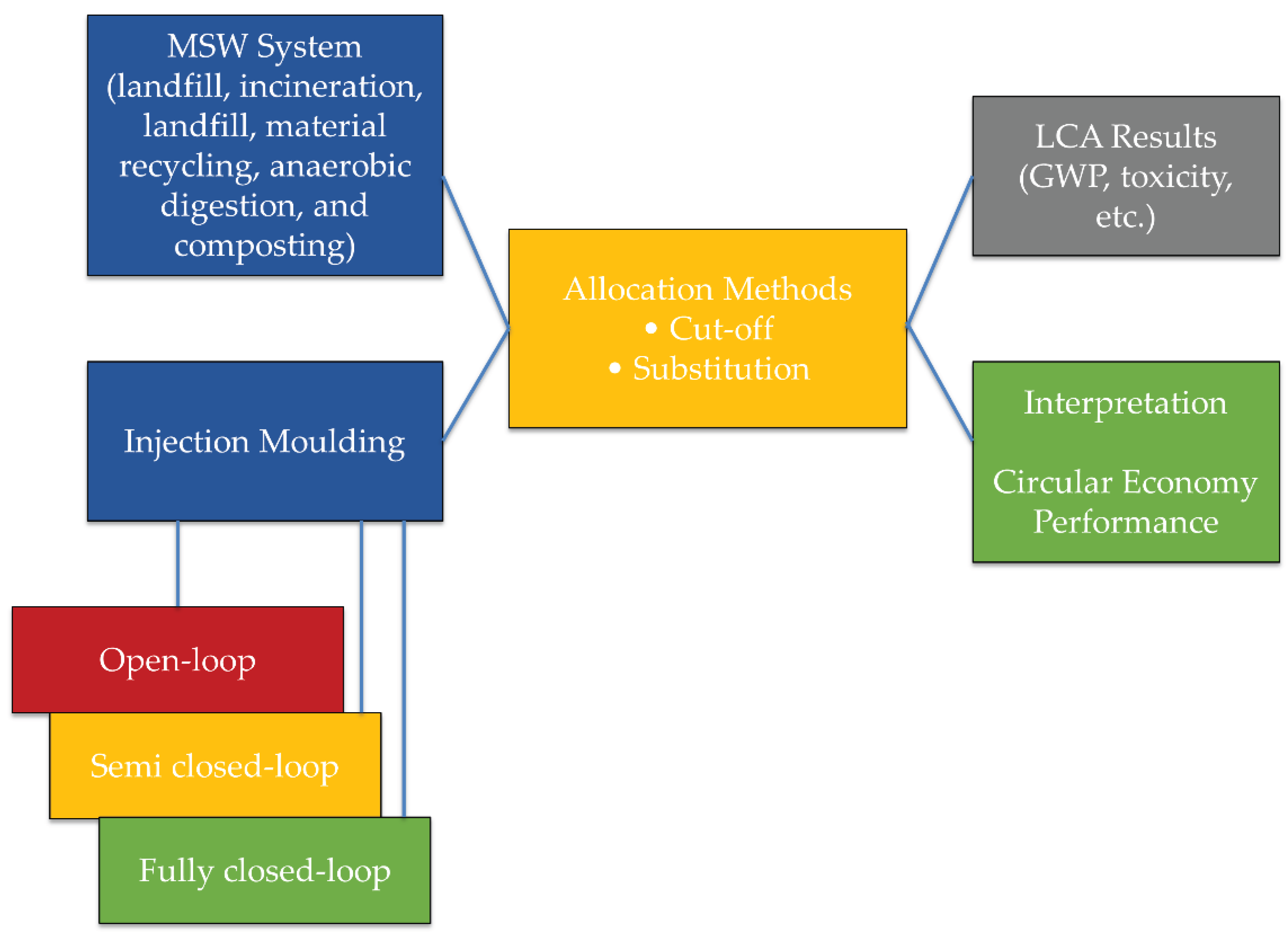
Figure 2.
Definition of system boundaries and allocation pathways for the investigated scenarios.
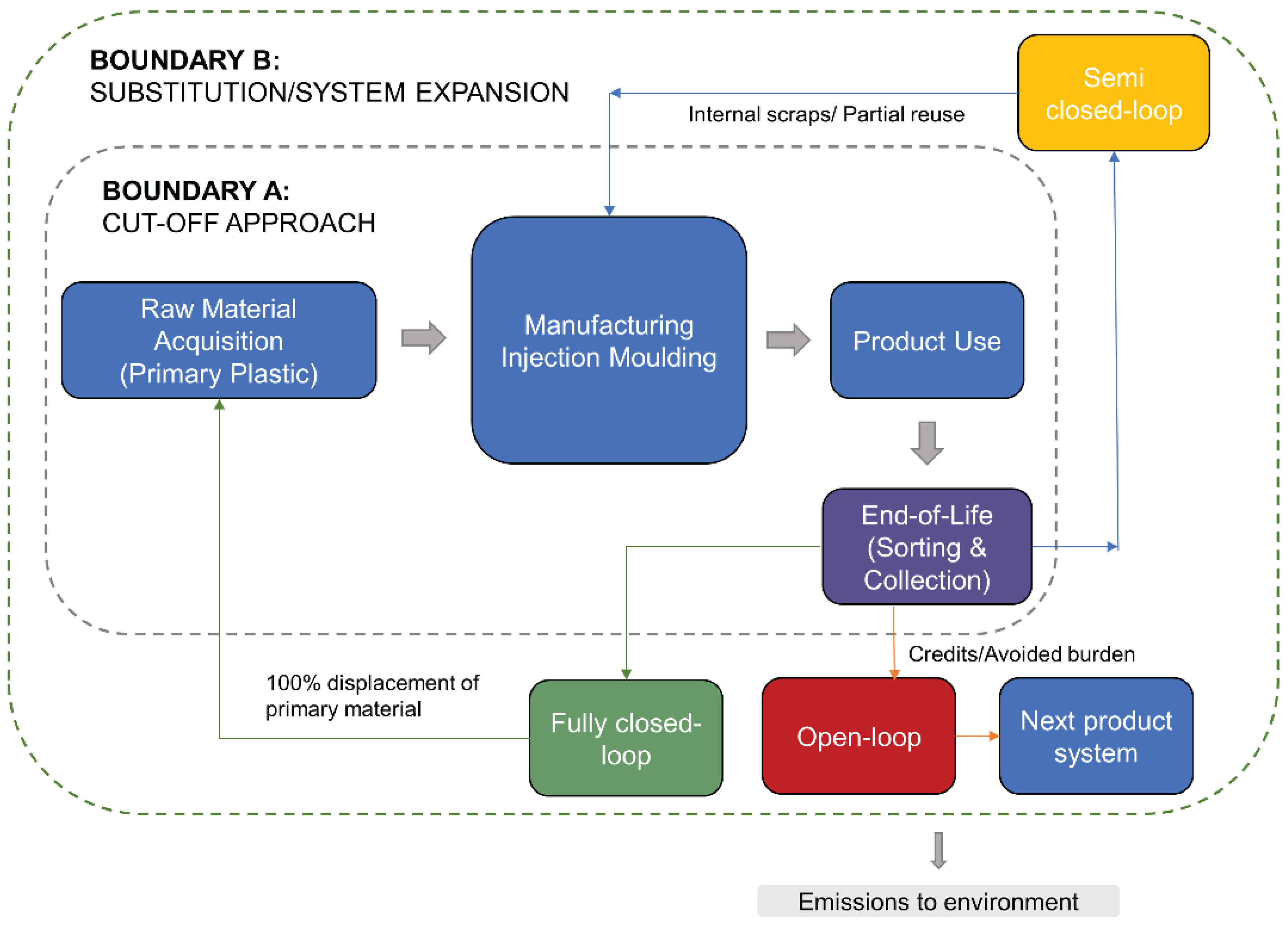
Figure 3.
Conceptual representation of allocation approaches and their effects on system boundaries and environmental crediting.
Figure 3.
Conceptual representation of allocation approaches and their effects on system boundaries and environmental crediting.
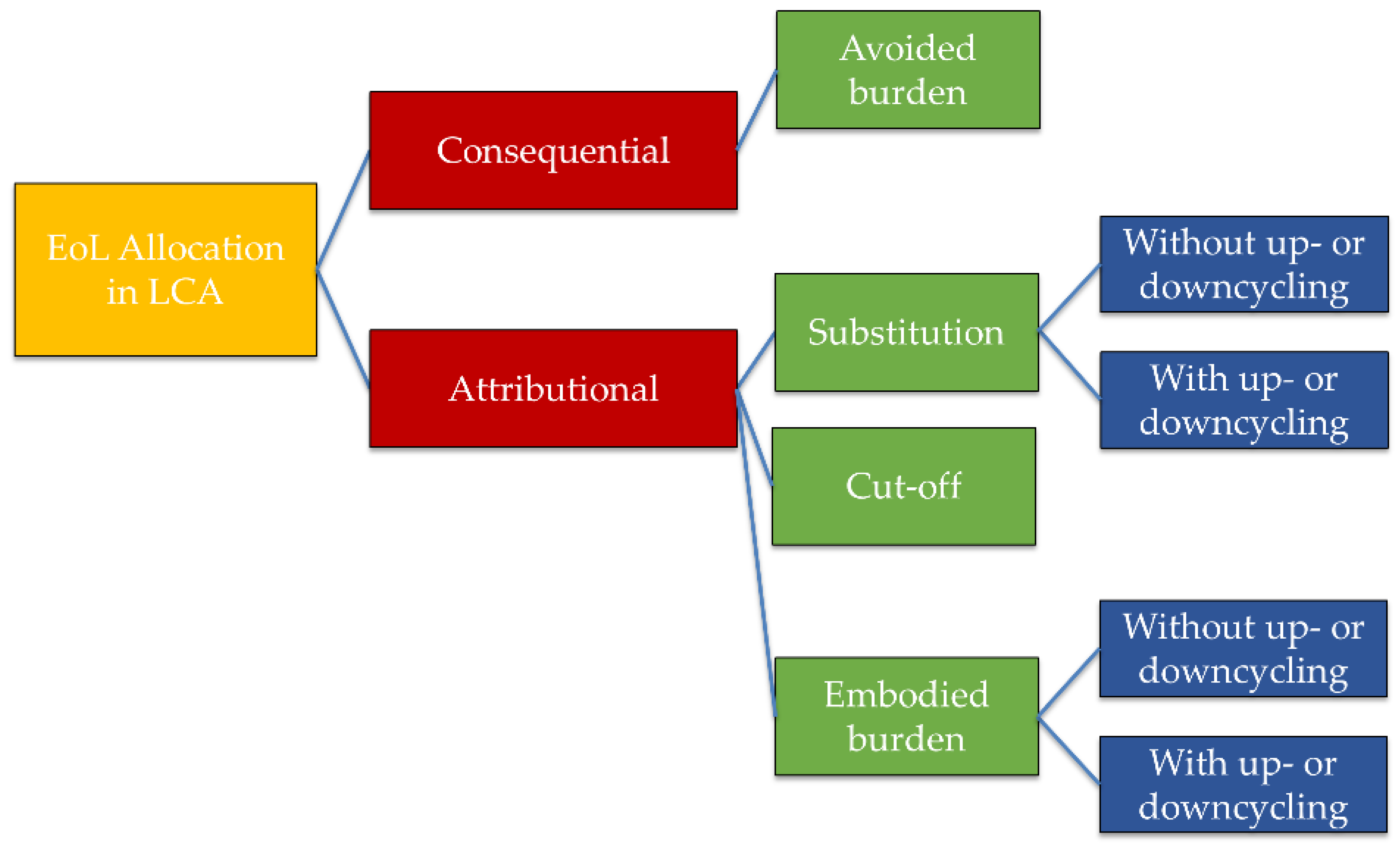
Figure 4.
Percentage distribution of environmental impacts for the evaluated scenarios following normalisation and weighting.
Figure 4.
Percentage distribution of environmental impacts for the evaluated scenarios following normalisation and weighting.
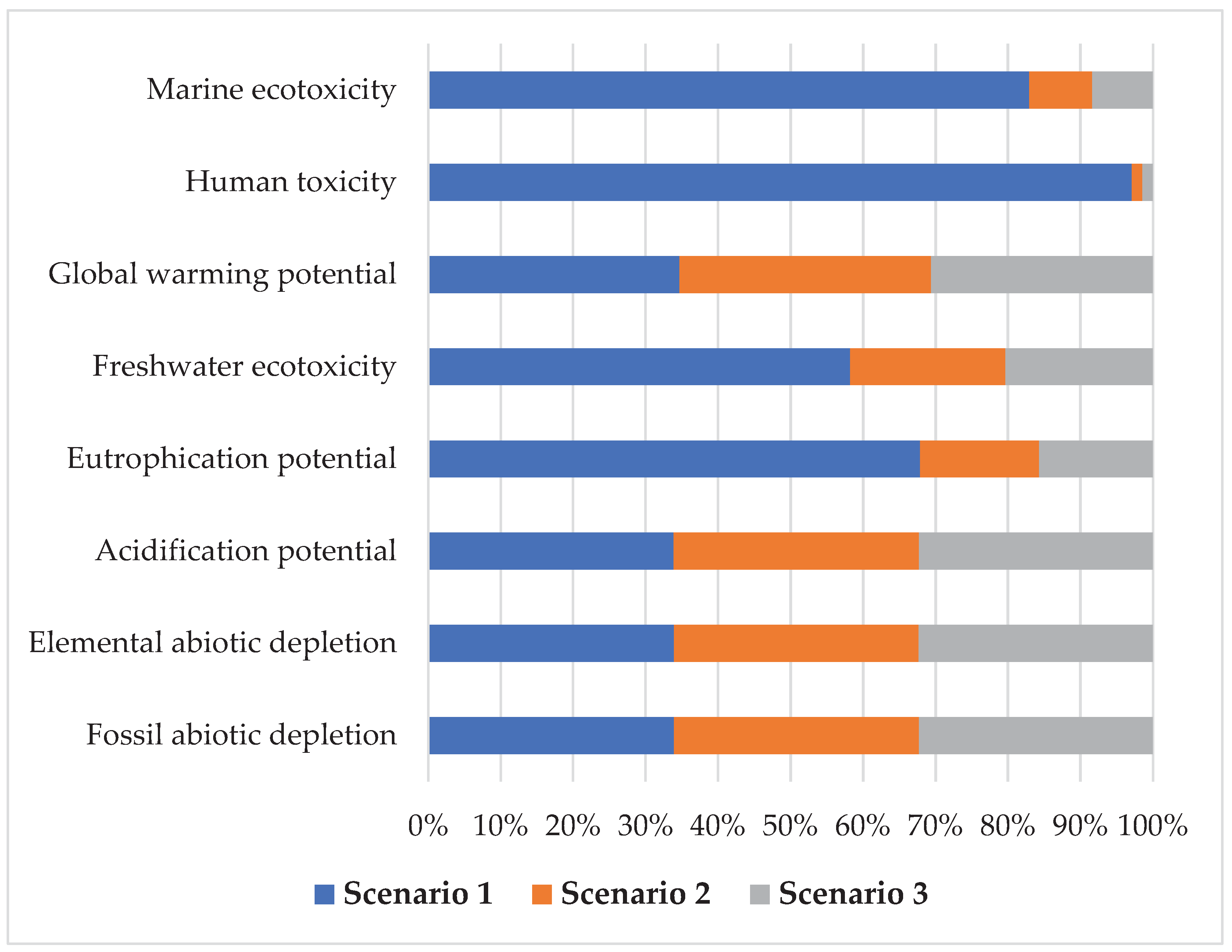
Figure 5.
Cumulative material consumption and freshwater emissions for the examined manufacturing scenarios [g].
Figure 5.
Cumulative material consumption and freshwater emissions for the examined manufacturing scenarios [g].
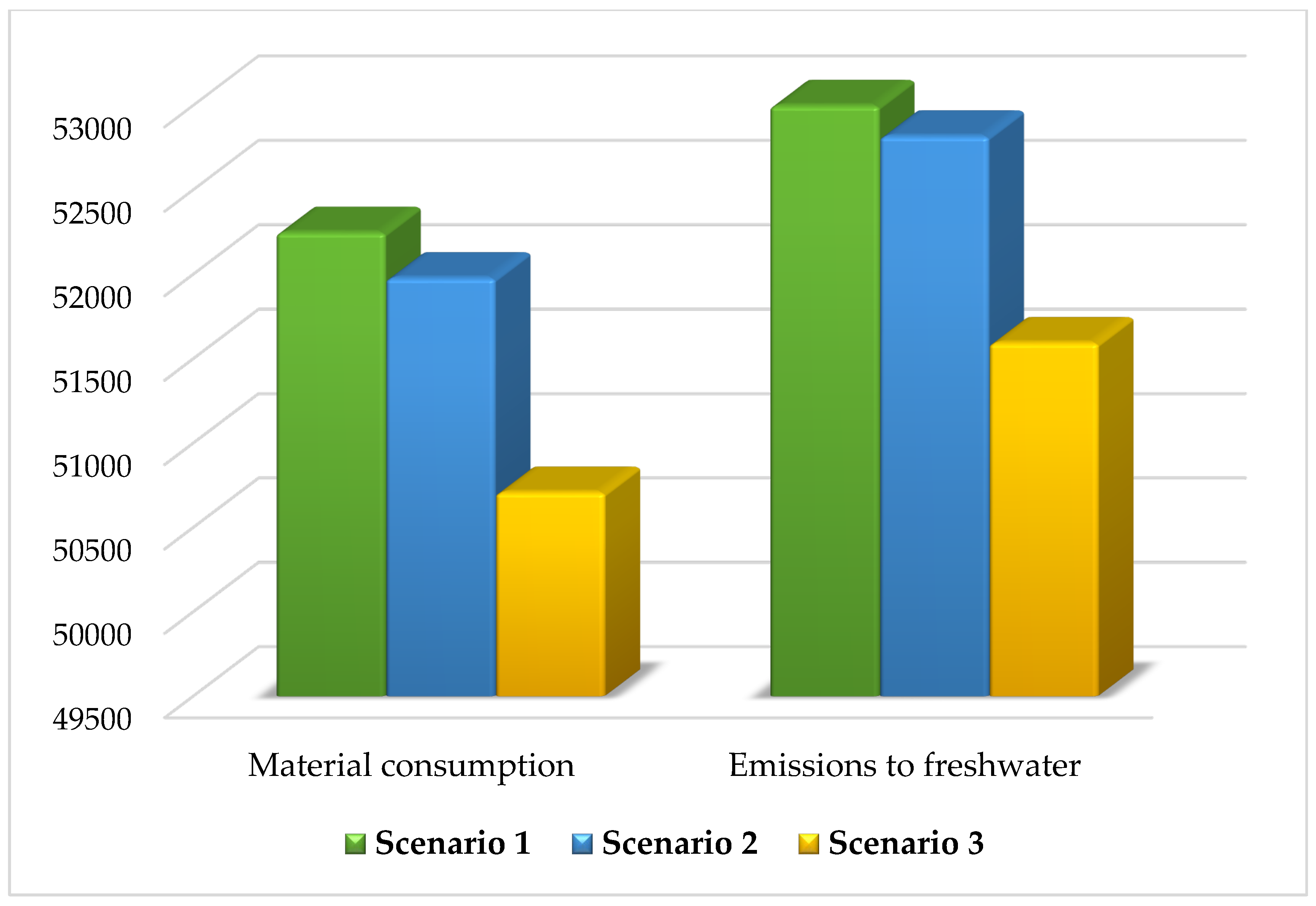

Table 1.
Summary comparison between the cut-off and the substitution approach.
| Aspect | Cut-off approach | Substitution approach | |
|---|---|---|---|
| Description | Recyclable materials don’t receive "credit" for replacing raw materials; their benefits are realized in the next life cycle, not the current one. | Recyclable materials receive "credit„. | |
| Environmental Impact | The product exhibits higher attributed emissions because we don't consider the benefits of recycling. | The product's environmental performance improves by considering the benefits of the Circular Economy. | |
| CE supporting | Ignores the benefits of recycling. |
Recognizes the eevironmental benefits of recycling. | |
Table 2.
Comparative overview of end-of-life treatment options, allocation approaches and circular economy implications.
Table 2.
Comparative overview of end-of-life treatment options, allocation approaches and circular economy implications.
| EoL treatment | Typical allocation approach | Apparent CE compatibility | Key methodological bias or risk |
|---|---|---|---|
| Landfilling | Cut-off | Low | Methane impacts are diluted by long time horizons; there is no incentive to recover it. |
| Landfilling with gas recovery | Substitution | Medium | Over-crediting energy recovery under optimistic capture assumptions. |
| Incineration without energy recovery | Cut-off | Low | Burdens fully assigned; ignores potential system-level transitions. |
| Incineration with energy recovery | Substitution | Medium–High | Strong sensitivity to energy mix and substitution factors. |
| Material recycling I. | Substitution | High | One-to-one substitution assumptions are often unrealistic (downcycling). |
| Material recycling II. | Cut-off | Medium | Underestimates the benefits of improved material recovery. |
| Anaerobic digestion | Substitution | Medium–High | Dependent on digestate use and biogas substitution pathways. |
| Composting | Cut-off | Medium | Limited recognition of soil amendment benefits. |
Table 3.
Carbon footprints of EoL options using different LCIA methods [kg CO₂-eq./kg waste].
| Applied LCIA method | Landfill | Incineration | Incineration with energy recovery |
|---|---|---|---|
|
IPCC AR6 excl. biogenic carbon, inc. Land Use (LUC) Climate Change total |
0.0296 | 2.495 |
Carbon footprint of generated thermal energy (Thermal Credit): -0.5673 Carbon footprint of generated electricity (Electric Credit): -0.3801 Net Impact: 1.5476 |
|
CML 2016 Global Warming Potential (GWP) for 100 years |
0.0293 | 2.493 |
Thermal Credit -0.5640 Electric Credit -0.3783 Net Impact: 1.5507 |
|
EF 3.1 Climate Change total |
0.0296 | 2.495 |
Thermal Credit -0.5673 Electric Credit -0.3801 Net Impact: 1.5476 |
|
ReCiPe 2016 Climate Change, default, excl. biogenic carbon |
0.0301 | 2.4985 |
Thermal Credit -0.5787 Electric Credit -0.3858 Net Impact: 1.5340 |
Note: Negative values represent environmental credits from avoided primary energy production (substitution approach).
Disclaimer/Publisher’s Note: The statements, opinions and data contained in all publications are solely those of the individual author(s) and contributor(s) and not of MDPI and/or the editor(s). MDPI and/or the editor(s) disclaim responsibility for any injury to people or property resulting from any ideas, methods, instructions or products referred to in the content. |
© 2026 by the authors. Licensee MDPI, Basel, Switzerland. This article is an open access article distributed under the terms and conditions of the Creative Commons Attribution (CC BY) license (http://creativecommons.org/licenses/by/4.0/).
Copyright: This open access article is published under a Creative Commons CC BY 4.0 license, which permit the free download, distribution, and reuse, provided that the author and preprint are cited in any reuse.


