

Submitted:
10 April 2026
Posted:
13 April 2026
You are already at the latest version
Abstract
The Muški bunar old-growth forest on Mount Psunj represents one of the rare preserved mixed ecosystems of sessile oak (Quercus petraea) and European beech (Fagus sylvatica) in Southeastern Europe, providing an important reference for understanding natural forest dynamics. This study aimed to analyse stand structure, age distribution, growth dynamics, and disturbance regime based on repeated field surveys conducted in 1979 and 2021. The results revealed pronounced structural heterogeneity, a wide range of tree sizes and ages, and clear interspecific differences. European beech dominates smaller and medium diameter and age classes, whereas sessile oak is primarily present in older and larger diameter classes. A very high growing stock (1155.81 m³ ha⁻¹) indicates exceptional stand productivity, with maximum cambial ages of 295 years for oak and 253 years for beech. Basal area increment analysis showed that even old trees maintain substantial growth. Although both species exhibit positive long-term growth trends, recent decades show divergence, with increasing growth in beech and stagnation or decline in oak. Stand dynamics are mainly driven by low-intensity disturbances, while recent windthrows have further increased structural heterogeneity and regeneration. These findings highlight the importance of old-growth forests as reference systems for close-to-nature forest management.
Keywords:
old-growth forest
; Fagus sylvatica
; Quercus petraea
; stand structure
; natural disturbances
; age structure
; basal area increment
; dendroecology
; canopy gaps
; windthrow
1. Introduction
Understanding the natural dynamics and structure of old-growth forest ecosystems is becoming increasingly important in the context of global change, as well as for the development of more resilient forest ecosystems in the future. Primary and old-growth forests represent key reference ecosystems for understanding the functioning and long-term development of forests in Europe [1,2]. Despite strong anthropogenic pressures that have reduced the extent of primary forests throughout history, the remaining preserved fragments provide unique insights into natural dynamics and processes that determine their structure, stability, and resilience [2].
Old-growth forest stands are characterized by high structural heterogeneity, including a wide range of tree dimensions, multilayered canopy structure, and large amounts of deadwood [3]. Such heterogeneity results from long-term interactions among natural disturbances, species-specific ecological traits and environmental conditions [4,5]. The dynamics of canopy gap formation, particularly those caused by wind disturbances, represent a key mechanism shaping the spatial and temporal variability of old-growth forest structure [6,7]. Although these processes are generally well understood, differing views still exist regarding their relative importance and influence on stand development [5,8]. Studies in the Dinaric and Carpathian regions confirm that the combined effects of natural disturbances, competition, and mortality ultimately result in structurally heterogeneous stands [9,10].
In mixed forests of European beech (Fagus sylvatica L.) and sessile oak (Quercus petraea (Matt.) Liebl.) stand structure is further shaped by differences in species-specific ecological traits. European beech is one of the most widespread tree species in temperate Europe and often forms monospecific stands in montane vegetation zones as well as mixed stands with silver fir (Abies alba Mill.) in the Dinaric region, where species coexistence mechanisms and ecological requirements are well understood and have supported the development of close-to-nature forest management concepts [9,11,12,13]. In contrast, such models are less well developed for mixed beech–oak stands occurring under more continental and drier conditions. Previous research in beech–oak old-growth forests indicates pronounced structural complexity and specific regeneration patterns driven primarily by differences in species light requirements. Numerous studies have shown that these stands are characterized by heterogeneous diameter and age structures, high variability in tree dimensions, and marked spatial heterogeneity driven by canopy gap dynamics [5,8,14]. In such forests, beech regenerates continuously in smaller canopy gaps, whereas sessile oak regeneration is limited to larger and more intense disturbances, resulting in its dominance in older age classes [8]. Gap size and distribution play a crucial role in determining species composition and long-term stand dynamics, with smaller disturbances favouring beech and larger disturbances enabling oak persistence. Although such patterns are well documented in Carpathian old-growth forests, their applicability to continental beech–oak forests in Southeastern Europe remains insufficiently understood. Furthermore, the rarity of preserved old-growth stands of this forest type significantly limits opportunities for systematic research [2,8]. In this context, analysing structural characteristics, age structure, and temporal changes in such stands is particularly important for understanding their developmental processes. Long-term inventories of old-growth forest structure provide insights into growth, mortality, and regeneration dynamics, offering a rare opportunity to reconstruct stand development under conditions without direct anthropogenic influence. Therefore, the aim of this study was to quantify changes in structural characteristics of a sessile oak and European beech old-growth stand using data from two inventories (1979 and 2021). In addition, age structure, growth dynamics, and the natural disturbance regime were analysed.
In accordance with this objective, the following hypotheses were formulated: (H1) during the period between the two inventories, stand structure significantly changed, with increases in tree dimensions, basal area, and growing stock as a result of natural stand development; (H2) the age structure reflects a multi-cohort developmental dynamic, with European beech represented across a wider range of age classes and showing continuous regeneration, whereas sessile oak is predominantly concentrated in older age classes.
2. Materials and Methods
2.1. Study Area
The study was conducted in the Muški bunar old-growth forest reserve (45.3490975° N, 17.2899176° E), located in the southwestern part of the Psunj mountain massif (western Croatia), at elevations ranging from 680 to 807 m a.s.l. The reserve represents a remnant of formerly more widespread mixed forests of sessile oak (Quercus petraea) and European beech (Fagus sylvatica) and covers an area of 46 ha. The forest consists of two spatially and ecologically distinct units. The upper northeastern part (approximately 24 ha), characterized by a gently levelled plateau, is dominated by a pure beech stand, classified as the association Cephalanthero longifoliae–Fagetum ass. nov. [15]. In contrast, the lower southwestern part (approximately 22 ha), characterized by convex hilltops and steep slopes, is occupied by a mixed beech–sessile oak stand, which can be interpreted as a subassociation with sessile oak [16]. According to historical records, the area has not been subject to direct anthropogenic influence. It was excluded from regular forest management in 1929 and designated as a special forest vegetation reserve in 1963.
2.2. Climatic and Site Characteristics
The reserve area is characterized by a humid temperate climate with a slight sub-Mediterranean influence. The mean annual temperature is approximately 7 °C, and the total annual precipitation is about 1125 mm. The geological substrate consists of acidic silicate rocks (schists), while soils are predominantly shallow and skeletal on steep slopes, and deeper dystric brown soils and Luvisols on gentler terrain. Mixed beech–oak stands develop on drier and shallower soils, whereas pure beech stands occur on deeper and more mesic microsites.
2.3. Sampling and Field Measurements
Initial research in the reserve was conducted in 1979 within the framework of the Man and the Biosphere (MAB) project [16]. During the 1990s, the area was located within occupied territory and classified as a mine-suspected area, which restricted access until complete demining in 2017 and significantly limited research activities. Field investigations resumed in 2021, when twelve circular sample plots (1000 m²; radius 17.81 m) were established, covering a total area of 1.2 ha (approximately 2.6% of the reserve). The plots were systematically distributed to ensure representative coverage of the study area (Figure 1b). Within each plot, diameter at breast height (DBH, cm) and tree height (m) were measured for all trees with DBH ≥ 10 cm. Standing dead trees and downed deadwood with diameters > 10 cm were also recorded and classified into five standard decay classes. Deadwood was not assessed during the 1979 inventory; therefore, no comparative data are available for this component. For dendroecological analyses, two increment cores per tree were extracted from all sampled trees using a Haglöf Pressler increment borer (4.9 mm diameter) at 1 m above ground level. In total, 230 trees were sampled, including 184 European beech (Fagus sylvatica) and 46 sessile oak (Quercus petraea). The samples were stored in plastic straws in the field and processed in the laboratory following standard dendrochronological procedures [17]. Core samples were prepared using a Core-Microtome to enable precise measurement of tree-ring widths.
2.4. Tree-Ring Width Measurement
Tree-ring widths (TRW) were measured using CooRecorder 9.6 (Cybis Elektronik & Data AB, Sweden, https://www.cybis.se) on digital images acquired with the ATRICS (Advanced Tree Ring Image Capturing System) [18]. The system was equipped with a motorized measurement stage (Isel MS200HT), a stereomicroscope (Zeiss Stemi 305), and a digital camera (Infinity Lumenera 1). For each sample, tree age was estimated using the “distance to pith” tool implemented in CooRecorder. Samples with estimated missing segments corresponding to ≥10 rings were excluded from age-related analyses. As increment cores were extracted at 1.3 m above ground level, the estimated age represents tree age at sampling height rather than total biological age. To minimize potential bias associated with age estimation, trees were grouped into 10-year age classes. Cross-dating and synchronization of tree-ring series were performed using visual inspection and statistical analysis in TSAP-Win™ (Rinntech, Germany, http://www.rinntech.de). Dating accuracy was assessed using Student’s t-values based on correlation coefficients [19] and the Gleichläufigkeit (GLK) coefficient [20]. Quality control of cross-dating was further verified using COFECHA [21]. Finally, successfully dated individual series were averaged at the tree level to obtain mean tree-ring width series (TRWₜ).
2.5. Data Analysis and Processing
Stand structural attributes, particularly tree volume, were calculated using Schumacher–Hall equations with locally calibrated coefficients for sessile oak (Quercus petraea) and European beech (Fagus sylvatica). Calculations were performed consistently with the methodology applied in the 1979 inventory [16], ensuring comparability between the two datasets. Comparison of results between the two inventories required careful consideration of differences in sampling design. The 1979 inventory was conducted on four plots of 1 ha each, whereas the recent study was based on a larger number of smaller plots (12 plots of 1000 m²). Such differences may influence the estimation of stand structural attributes, particularly in old-growth forests characterized by pronounced spatial heterogeneity and the presence of rare but structurally important elements, such as large-diameter trees. Larger plots have a higher probability of capturing such elements and better integrate spatial variability, whereas smaller plots may result in higher variance and potential underestimation of extreme values. However, the increased number of plots in the recent inventory partially compensates for this limitation through improved spatial coverage and representativeness, which is particularly important in structurally complex stands. Importantly, comparable measurement criteria and volume estimation models were applied in both inventories, ensuring methodological consistency and enabling interpretation of temporal changes. The results can therefore be considered a reliable basis for analysing long-term structural dynamics, while acknowledging the limitations associated with sampling design.
2.6. Growth Release Analysis
Growth release dynamics were analysed using tree-ring width series from all plots, excluding two plots located within the 1999 windthrow area, resulting in a total of 197 samples. For each tree, the percentage growth change (%GC) in radial increment was calculated following the method described in [22], based on comparisons of mean growth over consecutive 10-year periods. Percentage growth change (%GC) was defined as the ratio between the preceding 10-year mean radial increment (M1), excluding the target year, and the subsequent 10-year mean (M2), including the target year. Thresholds for detecting growth releases were set at ≥25% for moderate releases and >50% for major releases. The proportion of trees exhibiting a growth release was analysed over time to assess disturbance dynamics. All analyses were conducted using the R package TRADER [23].
2.7. Basal Area Increment (BAI)
Long-term growth trends were analysed using time series of annual basal area increment (BAI). BAI was calculated using the bai.out function from the R package dplR [24], based on diameter at breast height (DBH) and tree-ring width (TRW) series. Individual BAI series were aggregated into species-specific chronologies to enable a comparative analysis of growth patterns between European beech (Fagus sylvatica) and sessile oak (Quercus petraea). Basal area increment, expressed in mm² represents the annual increase in the cross-sectional area of a tree stem and is therefore considered one of the most reliable indicators of long-term tree growth.
2.8. Canopy Gap Analysis
Canopy gap analysis was performed using a canopy height model (CHM) derived from airborne laser scanning (ALS) data acquired within the national project “Multi-sensor Airborne Survey of the Republic of Croatia for Disaster Risk Reduction” (KK.05.2.1.10.0001). The CHM, with a spatial resolution of 1 m (Figure 6a), was generated from the ALS point cloud by deriving a digital terrain model (DTM) and a digital surface model (DSM), from which canopy heights were calculated. Canopy gaps were identified using the R package ForestGapR [25], which enables automated detection and analysis of forest gaps based on CHM data. A canopy height threshold of 15 m was applied to delineate gaps. In CHM-based studies, threshold values for gap definition vary depending on ecological context and stand structure, typically ranging from a few meters up to approximately 20 m [26].
3. Results
3.1. Structural Characteristics of the Muški Bunar Old-Growth Forest
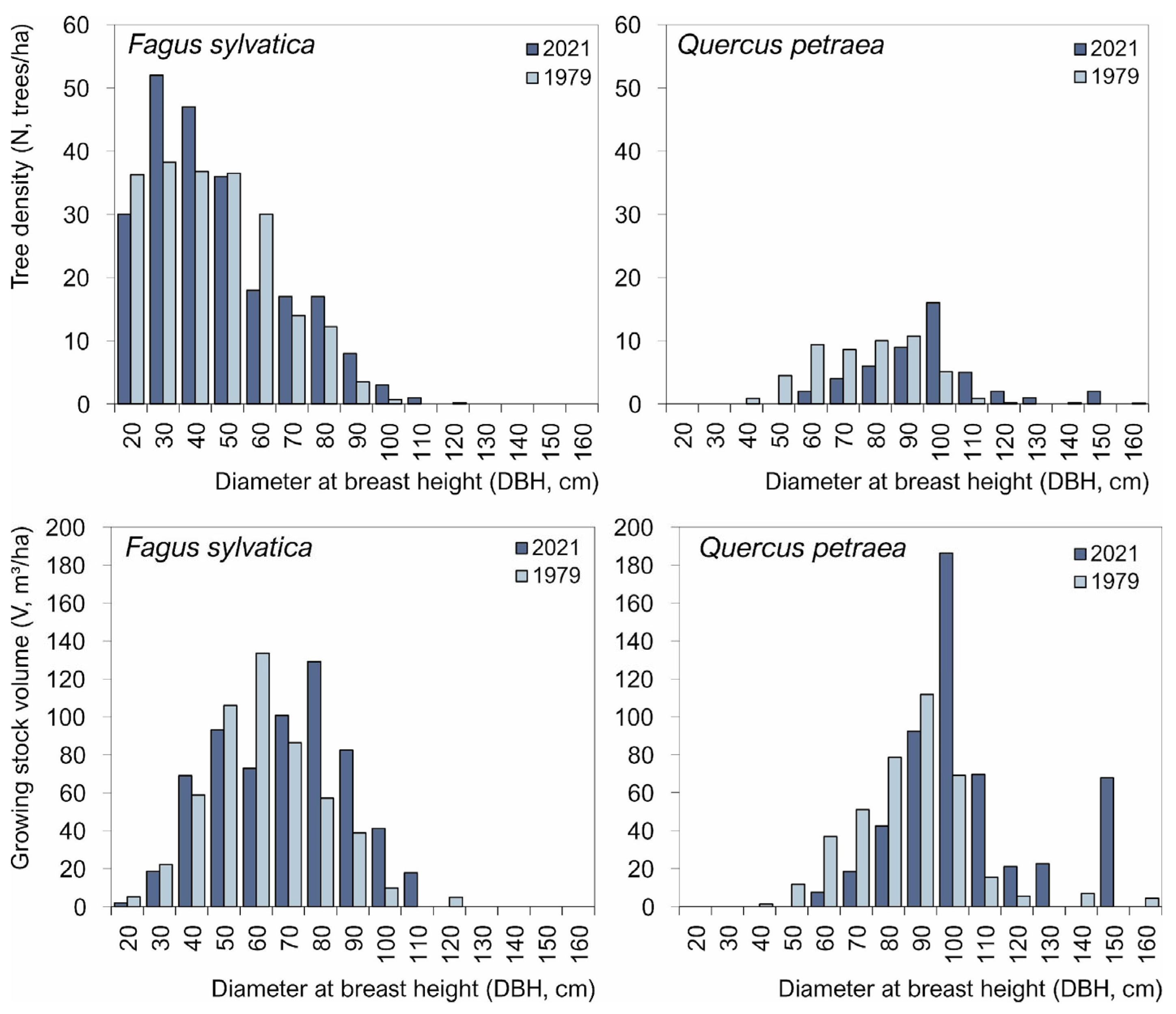
Comparison of stand structural characteristics between the 1979 and 2021 inventories indicates pronounced changes in stand structure. Over the 42-year period, total tree density slightly increased from 258 to 276 trees ha⁻¹, primarily due to an increase in European beech (Fagus sylvatica), while the number of sessile oak (Quercus petraea) trees slightly decreased. At the same time, a substantial increase in basal area and stand volume was observed. Basal area increased from 51.66 to 66.84 m² ha⁻¹, while total volume rose from 911.44 to 1155.81 m³ ha⁻¹. At the species level, European beech increased its share in the stand, with tree density rising from 208 to 229 trees ha⁻¹ and volume from 518.20 to 627.23 m³ ha⁻¹. Basal area of beech also increased from 30.11 to 36.28 m² ha⁻¹. In contrast, sessile oak exhibited a different pattern, with a slight decrease in tree density (from 50 to 47 trees ha⁻¹), but an increase in basal area (from 22.42 to 30.56 m² ha⁻¹) and volume (from 393.24 to 528.58 m³ ha⁻¹). The maximum diameter at breast height recorded in 2021 was 106 cm for beech and 150 cm for oak, while maximum tree heights reached 44 m and 40.2 m, respectively. For a given diameter, beech attained greater heights than oak, trees exceeding 70 cm DBH frequently surpassed 40 m in height, whereas oak trees of similar diameter were generally shorter. The average volume of deadwood recorded in 2021 was 101.36 m³ ha⁻¹, of which 52.45 m³ ha⁻¹ was attributed to sessile oak and 48.91 m³ ha⁻¹ to European beech. Comparison of tree density distributions across diameter classes indicates clear differences between sessile oak (Quercus petraea) and European beech (Fagus sylvatica) over the observed period. European beech was predominantly represented in smaller and medium diameter classes (20–50 cm), with an increase in the number of trees in these classes recorded in 2021. In contrast, sessile oak was mainly concentrated in larger diameter classes (70–110 cm and above), with an increase in the number of trees in the largest diameter classes (>100 cm), indicating ageing of the existing population.
Figure 2.
Distribution of stand density and growing stock volume across diameter classes (10 cm) by tree species for the entire reserve comparing the 1979 and 2021 inventories.
Figure 2.
Distribution of stand density and growing stock volume across diameter classes (10 cm) by tree species for the entire reserve comparing the 1979 and 2021 inventories.
In the part of the reserve dominated by pure beech stands, tree density decreased from 231 to 203 trees ha⁻¹. Basal area increased from 43.45 to 46.00 m² ha⁻¹, while stand volume rose from 778.05 to 823.39 m³ ha⁻¹ between 1979 and 2021. In the mixed beech–oak stand, changes were more pronounced. Tree density decreased from 282 to 227 trees ha⁻¹, whereas basal area increased from 65.30 to 71.88 m² ha⁻¹ and volume from 1035.55 to 1230.32 m³ ha⁻¹. Considering species structure in 2021, European beech (Fagus sylvatica) dominated in terms of tree density (153 trees ha⁻¹) but contributed less to total growing stock (404.77 m³ ha⁻¹) and basal area (23.40 m² ha⁻¹). In contrast, sessile oak (Quercus petraea), although less abundant (73 trees ha⁻¹), accounted for the majority of basal area (48.48 m² ha⁻¹) and volume (825.55 m³ ha⁻¹). The diameter distribution of beech in 1979 exhibited a unimodal pattern, with the highest number of trees in the 50–70 cm classes, whereas in 2021 it showed a more extended and partially multimodal distribution (Figure 3a). In the mixed stand, diameter distributions displayed a pronounced asymmetric and irregular (multimodal) pattern. Beech was primarily represented in smaller diameter classes, while sessile oak occurred mainly in medium and larger classes, resulting in an overall bimodal distribution at the stand level. Over the observed period, a decline in the number of beech trees in lower diameter classes, particularly in the 10–20 cm range, was recorded (Figure 3b).
Compared to 1979, a decrease in tree density was recorded for both species (European beech from 202 to 153 trees ha⁻¹ and sessile oak from 94 to 73 trees ha⁻¹), accompanied by an increase in volume, particularly in sessile oak (from 776.25 to 825.55 m³ ha⁻¹). The volume of beech also increased (from 268.53 to 404.77 m³ ha⁻¹). In both stands, the majority of growing stock was concentrated in medium and larger diameter classes, with a clear shift toward larger diameters observed over the study period. In the pure beech stand (Figure 4a), the dominant classes were 61–80 cm, whereas in the mixed stand the highest volume was recorded in classes above 80 cm, particularly 81–100 cm (Figure 4b).
3.2. Age Structure
Analysis of age structure based on a sample of 197 trees revealed pronounced differences in age-class distributions between European beech (Fagus sylvatica) and sessile oak (Quercus petraea). The age of sessile oak ranged from 87 to a maximum of 295 years, with a mean age of 252 years. In contrast, the maximum recorded age of beech was 254 years, with a mean age of 126 years. Age distribution patterns indicate the dominance of beech across most age classes. Beech was represented across the entire age range, from the youngest classes (10–30 years) to individuals older than 200 years. The highest number of beech trees was recorded in intermediate age classes, approximately between 110 and 150 years. In older age classes (150–220 years), the number of beech trees declined, although their presence remained continuous, with a smaller number of individuals also recorded above 220 years. In contrast, sessile oak was poorly represented in younger and intermediate age classes, with only a few individuals present. A greater number of oak trees occurred in older age classes, particularly above 220 years. The highest concentration of sessile oak was recorded in the age range between 250 and 270 years.
Age structure differed clearly between the pure beech stand (Figure 5b) and the mixed beech–oak stand (Figure 5c). In the pure beech stand, the age distribution exhibited a continuous range, with the highest representation of trees recorded in intermediate age classes, approximately between 110 and 170 years. European beech (Fagus sylvatica) was present across nearly the entire age range, from younger to older individuals, indicating the continuous presence of multiple generations.
In the mixed beech–oak stand, age structure was more distinctly differentiated between species. European beech (Fagus sylvatica) dominated in younger and intermediate age classes (100–160 years), whereas sessile oak (Quercus petraea) was concentrated in older age classes, most commonly between 220 and 280 years. This pattern reflects a clear separation of age cohorts between the two species. Multiple generations were present in both stands. In beech, at least two to three cohorts could be distinguished, with intermediate age classes (110–170 years) representing the most abundant portion of the population. The age distribution of beech indicates its presence across a wide range of age classes, whereas sessile oak was largely confined to older age classes. Overall, the age structure reflects a complex distribution of tree ages and the coexistence of multiple generations within both stands.
3.3. Canopy Gap Analysis
Canopy gap analysis in the Muški bunar old-growth forest was conducted over an area of 36 ha, excluding the section affected by the 1999 windthrow (Figure 6a). A total of 195 canopy gaps were identified, covering 21,105 m², which corresponds to approximately 5.9% canopy openness and an average of 5.4 gaps ha⁻¹ (Figure 6b). The mean gap size was 108.2 m², with a median of 59 m² and a modal value of 29 m². Gap sizes ranged from 25 m² to 1716 m², with a high standard deviation (176.6 m²) and coefficient of variation (163%) (Figure 6d).
Figure 6.
Canopy height model (CHM) of the Muški bunar old-growth forest in 2021 (a), detected canopy gaps excluding areas affected by the 1999 windthrow (b), spatial extent of windthrow disturbances in 1999 (orange) and 2023 (yellow) (c) and distribution of canopy gap sizes (d).
Figure 6.
Canopy height model (CHM) of the Muški bunar old-growth forest in 2021 (a), detected canopy gaps excluding areas affected by the 1999 windthrow (b), spatial extent of windthrow disturbances in 1999 (orange) and 2023 (yellow) (c) and distribution of canopy gap sizes (d).
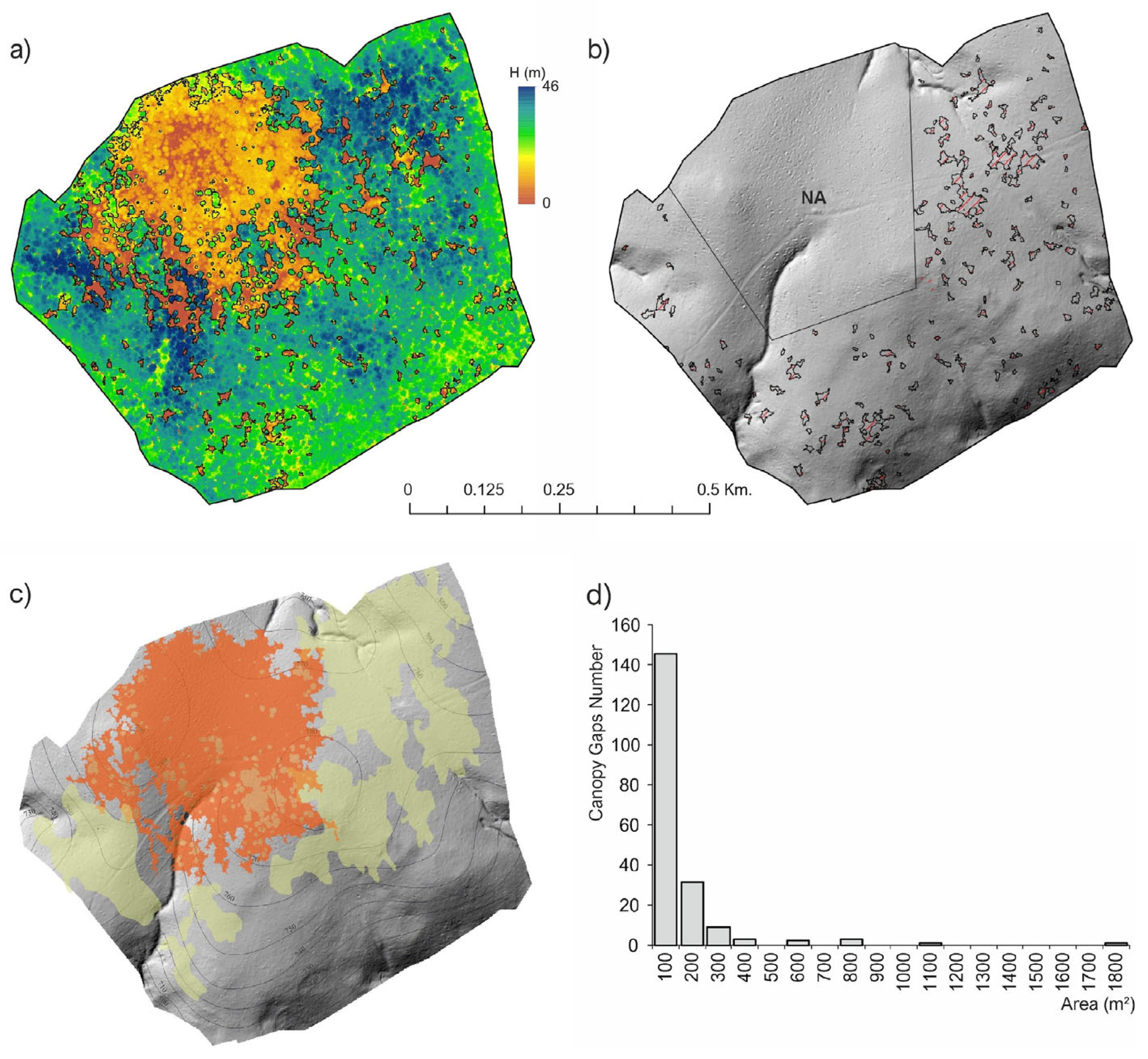
In addition to the dominance of small canopy gaps (Figure 6), two high-intensity disturbance events were recorded in the reserve, namely windthrows in 1999 and 2023. On 21 June 1999, a severe storm affected the western Psunj massif, causing substantial damage to surrounding forest stands as well as within the reserve. Approximately 5760 m³ of timber was damaged over an area of 9.6 ha. The reserve was affected again by a storm event on 19 July 2023 (Figure 7), during which an estimated 11,520 m³ of timber was damaged over an area of up to 14.4 ha. Both disturbance events primarily impacted the part of the reserve dominated by European beech (Fagus sylvatica), while the mixed beech–oak stand remained largely unaffected. Prior to these events, no disturbances of such magnitude had been recorded in the reserve.
In the area affected by the 1999 windthrow, a very dense young stand dominated by European beech (Fagus sylvatica L.) was recorded 23 years after the disturbance. The stand successfully regenerated through natural regeneration, with a beech density of 1120 trees ha⁻¹, a mean diameter at breast height of 14.0 cm (Figure 8a), and an average tree height of approximately 10 m. In addition to beech, several other tree and shrub species were recorded within the windthrow area, including sycamore maple (Acer pseudoplatanus L.), silver birch (Betula pendula Roth), wild cherry (Prunus avium (L.) L.), wild pear (Pyrus pyraster (L.) Burgsd.), goat willow (Salix caprea L.), and elder (Sambucus nigra L.). A total of 1340 individuals ha⁻¹ were recorded, with beech accounting for the dominant share of 82.8%, while the remaining species were represented in lower proportions: elder 7.5%, wild cherry 4.5%, goat willow 3.7%, and sycamore maple, silver birch, and wild pear each accounting for 0.7%. The remaining species collectively accounted for approximately 17.2% of the total number of individuals, indicating the presence of accompanying and pioneer species in the early stage of stand development following disturbance.
Figure 8a shows the distribution of the number of trees across diameter classes at the level of the entire reserve, including areas affected by windthrow, while Figure 8b presents the age distribution of the same trees. A higher proportion of beech is observed in the lower diameter classes, corresponding to the increased representation of younger age classes in Figure 8b. In the medium and larger diameter classes, both beech and sessile oak are represented, which corresponds to the distribution of older age classes (Figure 8b).
3.4. Growth Release Dynamics
Growth release analysis revealed pronounced differences in disturbance responses between beech (Figure 9a) and sessile oak (Figure 9c). European beech exhibited a substantially higher number of growth release events (308 moderate and 399 major) compared to sessile oak (100 moderate and 65 major). The temporal distribution of growth releases in beech indicates a continuous disturbance regime particularly pronounced during the 20th century with frequent and prolonged periods of increased growth approximately between 1930 and 2000. In contrast to beech, sessile oak shows a markedly different pattern characterized by strong growth release events in the 19th century, especially between 1838 and 1845. Outside this period, no significant release events were detected. Comparison with the distribution of tree establishment years shows that no regeneration of sessile oak occurred following the period of intensive growth (1838–1845), as evidenced by the absence of younger age classes (Figure 9d). In contrast, younger cohorts of European beech appeared during and after this period. The increased frequency of growth releases in beech at the end of the 20th century coincides with known high-intensity disturbance events (e.g., the 1999 windthrow) (Figure 9b).
3.5. Basal Area Increment
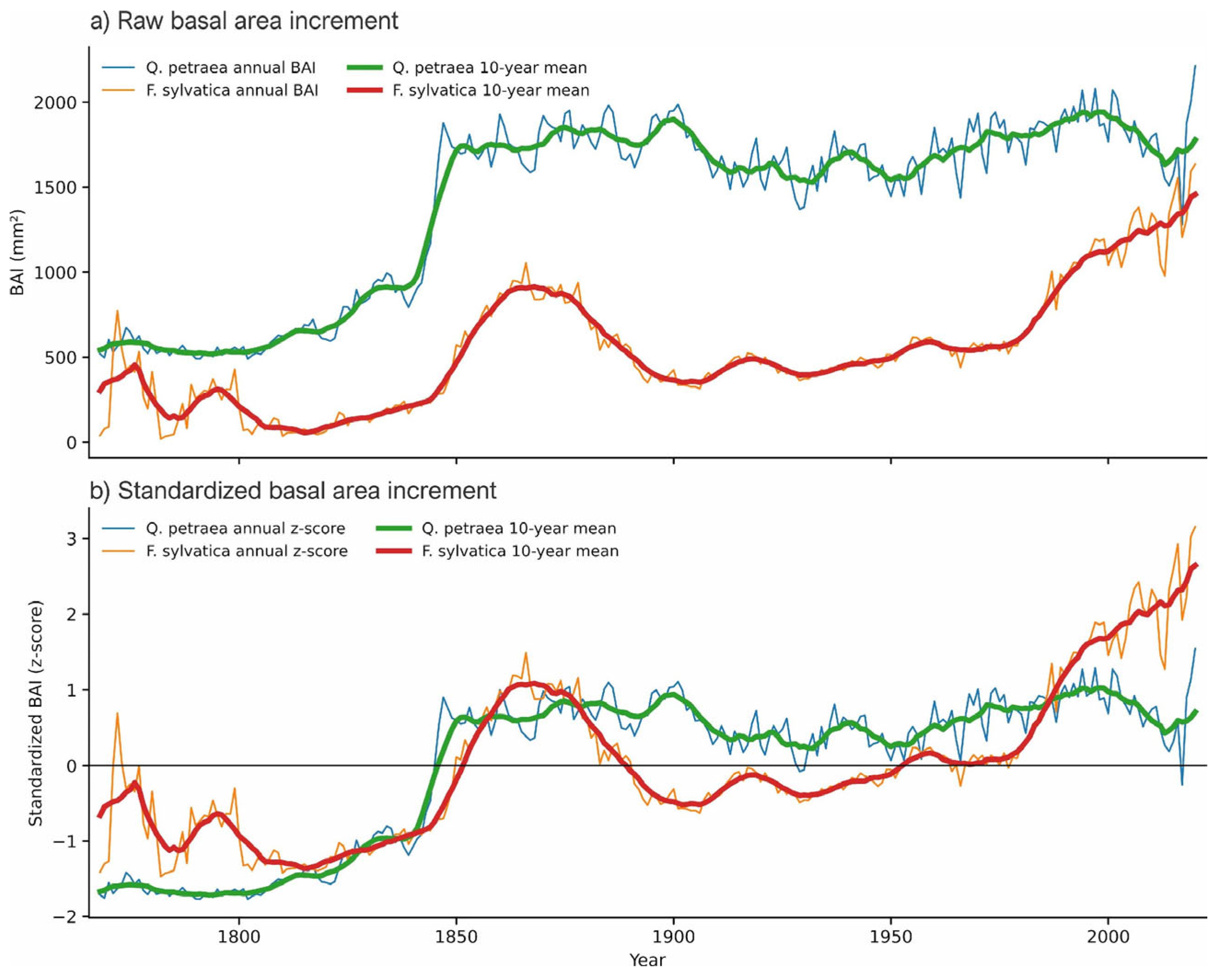
A total of 151 tree-ring width series of European beech (Fagus sylvatica) and 46 series of sessile oak (Quercus petraea) were analysed. The mean series length was 136 years for beech and 237 years for oak. The oldest beech series began in 1768, whereas the oldest oak series dated back to 1727. Mean ring width was 1.254 mm for beech and 1.385 mm for oak. Mean sensitivity was 0.280 for beech and 0.194 for oak. First-order autocorrelation values were similar for both species, amounting to 0.719 for beech and 0.740 for oak. Analysis of basal area increment (BAI) chronologies revealed significant differences in long-term growth patterns between the two species. The oak chronology began earlier and showed a gradual increase in growth from the 18th century to the mid-19th century, after which BAI stabilized at relatively high values (1500–2000 mm²) with moderate interannual variability. In contrast, the beech chronology began later (1768) and exhibited greater temporal variability. Following initially lower values, beech showed a marked increase in growth from the mid-19th century onward, with a continued rise throughout the 20th century. Prior to 1980, both species exhibited statistically significant positive growth trends, slightly more pronounced in oak (β = +6.92 mm² year⁻¹, p < 0.001) than in beech (β = +1.83 mm² year⁻¹, p < 0.001). After the 1980s, a divergence in growth trends became evident. In sessile oak, a negative trend was observed (β = −3.29 mm² year⁻¹), although not statistically significant (p = 0.146). In contrast, beech exhibited a strong and statistically significant increase in growth (β = +18.47 mm² year⁻¹, p < 0.001), which became even more pronounced after 2000 (β = +19.08 mm² year⁻¹, p = 0.002). This pattern is reflected in a continuous increase in beech BAI since the 1980s, reaching the highest values in recent decades (>1500 mm²), whereas oak showed a declining trend over the same period (Figure 10a). Comparison of standardized chronologies (z-scores) indicated that both species share similar long-term variability patterns, suggesting a partially common influence of climatic factors on growth. However, the recent divergence—characterized by decreasing growth in oak and increasing growth in beech—indicates species-specific responses to changing environmental conditions (Figure 10b). Overall, both species maintained relatively high BAI values, with beech showing a pronounced increase in recent decades, while oak exhibited a generally stable growth pattern over most of the study period, followed by a decline in the last ~20 years.
4. Discussion
The results of this study indicate that the Muški bunar old-growth forest represents a structurally complex and dynamic forest ecosystem, with changes observed between 1979 and 2021 consistent with general patterns of temperate old-growth forest development [1,3,4]. The increase in basal area and stand volume, accompanied by relatively minor changes in tree density, suggests a continued accumulation of biomass over the study period. Such a pattern is consistent with the conceptual framework of old-growth forest ecosystems, in which structural development is driven by the interaction of growth, mortality, and disturbance processes, rather than by the sequential replacement of cohorts typical of even-aged managed stands [6,27].
The observed increase in stand volume and basal area further supports current understanding of the role of old-growth forests in biomass and carbon accumulation. Contrary to earlier assumptions of biomass stabilization in later developmental stages, recent studies indicate that old-growth forests can maintain high rates of biomass accumulation over extended periods [28]. In this context, the Muški bunar forest corresponds to the pattern of productive yet structurally complex ecosystems [3,29]. This pattern is further supported by basal area increment (BAI) analysis, which shows that both species maintain relatively high growth rates even at advanced ages. However, a pronounced divergence between species has emerged in recent decades. While sessile oak (Quercus petraea) exhibited a significant positive growth trend in earlier periods, it has shown stagnation and a negative trend in recent decades, particularly after 2000. In contrast, European beech (Fagus sylvatica) displays a continuous increase in growth, becoming especially pronounced after the 1980s and persisting in recent years. This divergence suggests shifts in competitive relationships between species, as well as potentially different responses to recent environmental and climatic changes. The sustained increase in beech growth may be associated with its higher plasticity and ability to exploit closed-canopy conditions, whereas the decline in oak growth indicates greater sensitivity to environmental stress, despite its generally higher drought tolerance.
At the same time, the results clearly show that stand development does not proceed equally for both species. European beech increases its abundance in smaller and medium diameter classes, whereas sessile oak is concentrated in older and larger diameter classes. This contrast reflects their fundamental ecological strategies: beech, as a highly shade-tolerant species, is capable of continuous regeneration under closed canopy conditions [30,31], whereas oak requires larger canopy openings and more favourable light conditions for successful regeneration [32].
The obtained results are fully comparable with findings from Carpathian old-growth beech–oak forests, which are characterized by high structural diversity, pronounced spatial heterogeneity, and irregular diameter distributions [33]. Furthermore, these studies have shown that European beech (Fagus sylvatica) exhibits continuous regeneration within small canopy gaps, whereas sessile oak (Quercus petraea) is associated with older age classes, likely linked to higher-intensity disturbance events [8,10,30]. The structure of the Muški bunar forest, with beech dominating younger and intermediate classes and oak represented primarily by older individuals, confirms this pattern, particularly when considering age structure. Beech is present across nearly the entire age range, indicating a multi-cohort structure and continuous regeneration. In contrast, sessile oak is almost exclusively confined to older age classes. Such findings are consistent with studies of old-growth and primary forests in Europe, where uneven-aged structure does not necessarily result in a classical reverse J-shaped diameter distribution [9,34].
Natural disturbance regime plays a key role in shaping such stand structure [6]. In the Muški bunar forest, small canopy gaps dominate, which is consistent with general patterns observed in temperate old-growth forests [4,5]. However, this disturbance regime has different implications for individual species. Small- and medium-scale disturbances favour European beech (Fagus sylvatica), whereas successful regeneration of sessile oak (Quercus petraea) requires larger and more open canopy gaps. These findings are directly comparable with studies of canopy gaps in Carpathian forests, where gap size has been shown to determine regeneration mechanisms and seedling survival of beech and oak [8,35]. Recent studies on sessile oak regeneration further confirm that its successful establishment is associated with larger disturbances, reduced competition, and specific microsite conditions [36].
Dendroecological analysis provides further support for the observed stand dynamics. European beech (Fagus sylvatica L.) exhibits a continuous sequence of growth release events over extended periods, indicating its ability to respond to relatively small fluctuations in light availability and to exploit minor canopy disturbances [7]. In contrast, sessile oak (Quercus petraea (Matt.) Liebl.) displays a distinctly episodic pattern, with growth releases concentrated in earlier periods. Notably, the pronounced growth release events observed in sessile oak during the mid-19th century were not followed by successful regeneration, as evidenced by the absence of younger age classes. Instead, this period coincides with the establishment of younger cohorts of European beech, suggesting that disturbance events, although sufficient to stimulate radial growth of residual oak trees, did not create conditions conducive to oak regeneration.
This pattern may be associated with historical forest use, as forests in the study area during the first half of the 19th century were subject to intensive exploitation for construction, military demands, and timber export. Such disturbances likely created canopy openings that initially promoted the growth of remaining oak trees, while simultaneously favouring the establishment and competitive advantage of the more shade-tolerant European beech. Consequently, these findings indicate a decoupling between disturbance-induced growth response and regeneration success in sessile oak. This divergence in response dynamics highlights fundamental differences in life-history strategies between the two species and their linkage to disturbance regimes [5]. While European beech is capable of continuous regeneration under a wide range of light conditions, sessile oak appears to depend on specific disturbance characteristics, including sufficient light availability and reduced competition, for successful recruitment. As a result, even relatively strong disturbances may not necessarily ensure oak regeneration if these conditions are not met.,
Comparison with Dinaric old-growth forests further highlights the specific characteristics of the Muški bunar forest. Studies in the Dinaric region show that mixed beech–fir stands maintain complex structures through the continuous regeneration of both species [9,13]. However, unlike silver fir (Abies alba), sessile oak (Quercus petraea) lacks the ability to persist under prolonged shade conditions, resulting in fundamentally different stand dynamics. This confirms that close-to-nature forest management models developed for Dinaric forests cannot be directly applied to beech–oak systems without adaptation [12]. The results also support general concepts of structural complexity in old-growth forests as a combination of shared and site-specific characteristics [3]. The Muški bunar forest exhibits key attributes of old-growth systems, including high growing stock, the presence of large trees, and pronounced spatial heterogeneity, while simultaneously differing in species-specific internal dynamics. This combination of general and specific features highlights the importance of regional studies for understanding European old-growth forests [2].
In the broader context of climate change, these results gain particular importance. An increase in the frequency and intensity of disturbances is expected in most European forests [37]. Ecosystem resilience depends on the diversity of species responses, particularly their capacity for acclimation [38]. Interactions among species may have a stabilizing effect under stress conditions [39], but only if both species remain demographically viable. Nevertheless, the results should be interpreted considering certain methodological limitations. Differences in sampling design between the two inventories may influence the estimation of structural attributes, particularly in heterogeneous stands. In addition, dendroecological analysis is constrained by sample size and uncertainties associated with age estimation. Despite these limitations, the consistency among structural, age-related, and dendroecological results supports the robustness of the conclusions.
5. Conclusions
The Muški bunar old-growth forest represents a structurally complex and dynamic mixed stand characterized by pronounced heterogeneity in tree size and age, as well as high growing stock. The results confirm the first hypothesis, as increases in tree dimensions, basal area, and stand volume were observed between 1979 and 2021, indicating continuous natural development and biomass accumulation. The second hypothesis is also supported, as the age structure reflects a multi-cohort dynamic, with continuous regeneration of European beech (Fagus sylvatica) and the concentration of sessile oak (Quercus petraea) in older age classes. Stand dynamics are primarily driven by low-intensity disturbances that favour beech, whereas the regeneration of sessile oak is likely associated with less frequent, high-intensity disturbances. Recent growth trends indicate a divergence between species, with beech showing increasing growth rates and oak exhibiting stagnation or decline. Overall, the results suggest that the stability of these ecosystems does not arise from equilibrium among species, but rather from their dynamic coexistence shaped by disturbance regimes and environmental conditions.
Author Contributions
Conceptualization and methodology, S.M. and L.M.; validation, S.M., D.T., M.O. and I.A.; field work, D.T., M.O., K.A. and L.M.; data curation and formal analysis, S.M. and M.O.; writing-original draft preparation, D.T. and M.O.; writing-review and editing, S.M. and I.A.; visualization, D.T. and M.O.; supervision, S.M. and I.A. All authors have read and agreed to the published version of the manuscript.
Funding
This research was funded by the Croatian Science Foundation (HRZZ) project DOK-2025-02 (BIOMONITORING Dendronetwork).
Data Availability Statement
The data presented in this study are available on request from the corresponding author.
Acknowledgments
The authors, Stjepan Mikac (SM) and Laura Miketin (LM), acknowledge the support of the Croatian Science Foundation (HRZZ) through the project “Project for Career Development of Young Researchers – Training of New Doctoral Students” (DOK-2025-02), within the framework of the BIOMONITORING_Dendronetwork project.
Conflicts of Interest
The authors declare no conflicts of interest.
References
- Peterken, G.F. Natural Woodland: Ecology and Conservation in Northern Temperate Regions; Cambridge University Press: Cambridge, UK, 1996. [Google Scholar]
- Sabatini, F.M.; Burrascano, S.; Keeton, W.S.; Levers, C.; Lindner, M.; Pötzschner, F.; Verkerk, P.J.; Bauhus, J.; Buchwald, E.; Chaskovsky, O.; Debaive, N.; Horváth, F.; Garbarino, M.; Grigoriadis, N.; Lombardi, F.; Duarte, I.M.; Meyer, P.; Midteng, R.; Mikac, S.; Mikoláš, M.; Motta, R.; Mozgeris, G.; Nunes, L.; Panayotov, M.; Ódor, P.; Ruete, A.; Simovski, B.; Stillhard, J.; Svoboda, M.; Szwagrzyk, J.; Tikkanen, O.-P.; Volosyanchuk, R.; Vrška, T.; Zlatanov, T.; Kuemmerle, T. Where are Europe’s last primary forests? Divers. Distrib. 2018, 24, 1426–1439. [Google Scholar] [CrossRef]
- Burrascano, S.; Keeton, W.S.; Sabatini, F.M.; Blasi, C. Commonality and variability in the structural attributes of moist temperate old-growth forests: A global review. For. Ecol. Manag. 2013, 291, 458–479. [Google Scholar] [CrossRef]
- Franklin, J.F.; Spies, T.A.; Van Pelt, R.; Carey, A.B.; Thornburgh, D.A.; Berg, D.R.; Lindenmayer, D.B.; Harmon, M.E.; Keeton, W.S.; Shaw, D.C.; Bible, K.; Chen, J. Disturbances and structural development of natural forest ecosystems with silvicultural implications, using Douglas-fir forests as an example. For. Ecol. Manag. 2002, 155, 399–423. [Google Scholar] [CrossRef]
- Nagel, T.A.; Svoboda, M.; Kobal, M. Disturbance, life history traits, and dynamics in an old-growth forest landscape of southeastern Europe. Ecol. Appl. 2014, 24, 663–679. [Google Scholar] [CrossRef]
- Pickett, S.T.A.; White, P.S. The Ecology of Natural Disturbance and Patch Dynamics; Academic Press: Orlando, FL, USA, 1985. [Google Scholar]
- Nagel, T.A.; Svoboda, M.; Diaci, J. Regeneration patterns after intermediate wind disturbance in an old-growth Fagus–Abies forest in southeastern Slovenia. For. Ecol. Manag. 2006, 226, 268–278. [Google Scholar] [CrossRef]
- Petritan, A.M.; Nuske, R.S.; Petritan, I.C.; Tudose, N.C. Gap disturbance patterns in an old-growth sessile oak (Quercus petraea L.)–European beech (Fagus sylvatica L.) forest remnant in the Carpathian Mountains, Romania. For. Ecol. Manag. 2013, 308, 67–75. [Google Scholar] [CrossRef]
- Diaci, J.; Rozenbergar, D.; Anić, I.; Mikac, S.; Saniga, M.; Kucbel, S.; Visnjic, C.; Ballian, D. Structural dynamics and synchronous silver fir decline in mixed old-growth mountain forests in Eastern and Southeastern Europe. Forestry 2011, 84, 479–491. [Google Scholar] [CrossRef]
- Petritan, I.C.; Marzano, R.; Petritan, A.M.; Lingua, E. Overstory succession in a mixed Quercus petraea–Fagus sylvatica old-growth forest revealed through the spatial pattern of competition and mortality. For. Ecol. Manag. 2014, 326, 132–141. [Google Scholar] [CrossRef]
- Bauhus, J.; Puettmann, K.J.; Messier, C. Silviculture for old-growth attributes. For. Ecol. Manag. 2009, 258, 525–537. [Google Scholar] [CrossRef]
- O’Hara, K.L. Multiaged Silviculture: Managing for Complex Forest Stand Structures; Oxford University Press: Oxford, UK, 2014. [Google Scholar]
- Keren, S.; Diaci, J.; Motta, R.; Govedar, Z. Stand structural complexity of mixed old-growth and adjacent selection forests in the Dinaric Mountains of Bosnia and Herzegovina. For. Ecol. Manag. 2017, 400, 531–541. [Google Scholar] [CrossRef]
- Petritan, A.M.; Bouriaud, O.; Frank, D.C.; Petritan, I.C. Dendroecological reconstruction of disturbance history of an old-growth mixed sessile oak–beech forest. J. Veg. Sci. 2016, 27, 1125–1135. [Google Scholar] [CrossRef]
- Vukelić, J.; Baričević, D.; Šapić, I. Submontansko-subpanonske bukove šume sjeverne Hrvatske. Šumarski list 2012, 136, 445–459. [Google Scholar]
- Matić, S.; Prpić, B.; Rauš, Đ.; Vranković, A.; Seletković, Z. Ekološko-uzgojne osobine specijalnih rezervata šumske vegetacije Prašnik i Muški bunar u Slavoniji. In Drugi kongres ekologa Jugoslavije; Rauš, Đ., Ed.; Savez društava ekologa Jugoslavije: Zagreb, Croatia, 1979; pp. 767–823. [Google Scholar]
- Phipps, R.L. Collecting, preparing, crossdating, and measuring tree increment cores; U.S. Geological Survey: Reston, VA, USA, 1985. [Google Scholar]
- Levanič, T. ATRICS—A new system for image acquisition in dendrochronology. Tree-Ring Res. 2008, 63, 117–122. [Google Scholar] [CrossRef]
- Baillie, M.G.L.; Pilcher, J.R. A simple cross-dating program for tree-ring research. Tree-Ring Bull. 1973, 33, 7–14. [Google Scholar]
- Schweingruber, F.H. Tree Rings: Basics and Applications of Dendrochronology; Kluwer Academic Publishers: Dordrecht, The Netherlands, 1988. [Google Scholar]
- Holmes, R.L. Computer-assisted quality control in tree-ring dating and measurement. Tree-Ring Bull. 1983, 43, 69–78. [Google Scholar]
- Nowacki, G.J.; Abrams, M.D. Radial-growth averaging criteria for reconstructing disturbance histories from presettlement-origin oaks. Ecol. Monogr. 1997, 67, 225–249. [Google Scholar] [CrossRef]
- Altman, J.; Fibich, P.; Dolezal, J.; Aakala, T. TRADER: A package for tree ring analysis of disturbance events in R. Dendrochronologia 2014, 32, 107–112. [Google Scholar] [CrossRef]
- Bunn, A.G. A Dendrochronology Program Library in R (dplR). Dendrochronologia 2008, 26, 115–124. [Google Scholar] [CrossRef]
- Silva, C.A.; Valbuena, R.; Pinagé, E.R.; et al. ForestGapR: An R Package for Forest Gap Analysis from Canopy Height Models. Methods in Ecology and Evolution 2019, 10, 1347–1356. [Google Scholar] [CrossRef]
- Solano, F.; Modica, G.; Praticò, S.; Box, O.F.; Piovesan, G. Unveiling the Complex Canopy Spatial Structure of a Mediterranean Old-Growth Beech (Fagus sylvatica L.) Forest from UAV Observations. Ecological Indicators 2022, 138, 108807. [Google Scholar] [CrossRef]
- Emborg, J.; Christensen, M.; Heilmann-Clausen, J. The structural dynamics of a near-natural temperate deciduous forest. For. Ecol. Manag. 2000, 126, 173–189. [Google Scholar] [CrossRef]
- Martin-Benito, D.; Pederson, N.; Férriz, M.; Gea-Izquierdo, G. Old forests and old carbon: A case study on the stand dynamics and longevity of aboveground carbon. Sci. Total Environ. 2020, 728, 138–145. [Google Scholar] [CrossRef]
- Pretzsch, H. Forest Dynamics, Growth and Yield; Springer: Berlin, Germany, 2009. [Google Scholar] [CrossRef]
- Ellenberg, H.; Leuschner, C. Vegetation Ecology of Central Europe, 6th ed.; Springer: Cham, Switzerland, 2017. [Google Scholar]
- Mölder, A.; Bernhardt-Römermann, M.; Schmidt, W. Herb-layer diversity in deciduous forests: Raised by tree richness or beaten by beech? For. Ecol. Manag. 2008, 256, 272–281. [Google Scholar] [CrossRef]
- Johnson, P.S.; Shifley, S.R.; Rogers, R. The Ecology and Silviculture of Oaks, 2nd ed.; CABI: Wallingford, UK, 2009. [Google Scholar]
- Petritan, A.M.; Biris, I.A.; Merce, O.; Turcu, D.O.; Petritan, I.C. Structure and diversity of a natural temperate sessile oak (Quercus petraea L.)–European beech (Fagus sylvatica L.) forest. For. Ecol. Manag. 2012, 280, 140–149. [Google Scholar] [CrossRef]
- Westphal, C.; Tremer, N.; von Oheimb, G.; Hansen, J.; von Gadow, K.; Härdtle, W. Is the reverse J-shaped diameter distribution universally applicable in European virgin beech forests? For. Ecol. Manag. 2006, 223, 75–83. [Google Scholar] [CrossRef]
- Jaloviar, P.; Sedmáková, D.; Pittner, J.; et al. Gap structure and regeneration in the mixed old-growth forests of National Nature Reserve Sitno, Slovakia. Forests 2020, 11, 81. [Google Scholar] [CrossRef]
- Petritan, A.M.; Toiu, F.L.; Tudose, N.C.; et al. Patterns of sessile oak regeneration and its main drivers in an old-growth sessile oak–European beech forest. Eur. J. For. Res. 2025, 144, 1395–1408. [Google Scholar] [CrossRef]
- Seidl, R.; Thom, D.; Kautz, M.; et al. Forest disturbances under climate change. Nat. Clim. Chang. 2017, 7, 395–402. [Google Scholar] [CrossRef]
- Mori, A.S.; Furukawa, T.; Sasaki, T. Response diversity determines the resilience of ecosystems to environmental change. Biol. Rev. 2013, 88, 349–364. [Google Scholar] [CrossRef] [PubMed]
- Pretzsch, H.; Schütze, G.; Uhl, E. Resistance of European tree species to drought stress in mixed versus pure forests: Evidence of stress release by inter-specific facilitation. Plant Biol. 2013, 15, 483–495. [Google Scholar] [CrossRef]
Figure 1.
Study area of the Muški bunar old-growth forest. (a) Geographic location in Croatia, (b) spatial distribution of sampling plots, (c) mixed sessile oak–beech stand and (d) beech-dominated stand.
Figure 1.
Study area of the Muški bunar old-growth forest. (a) Geographic location in Croatia, (b) spatial distribution of sampling plots, (c) mixed sessile oak–beech stand and (d) beech-dominated stand.
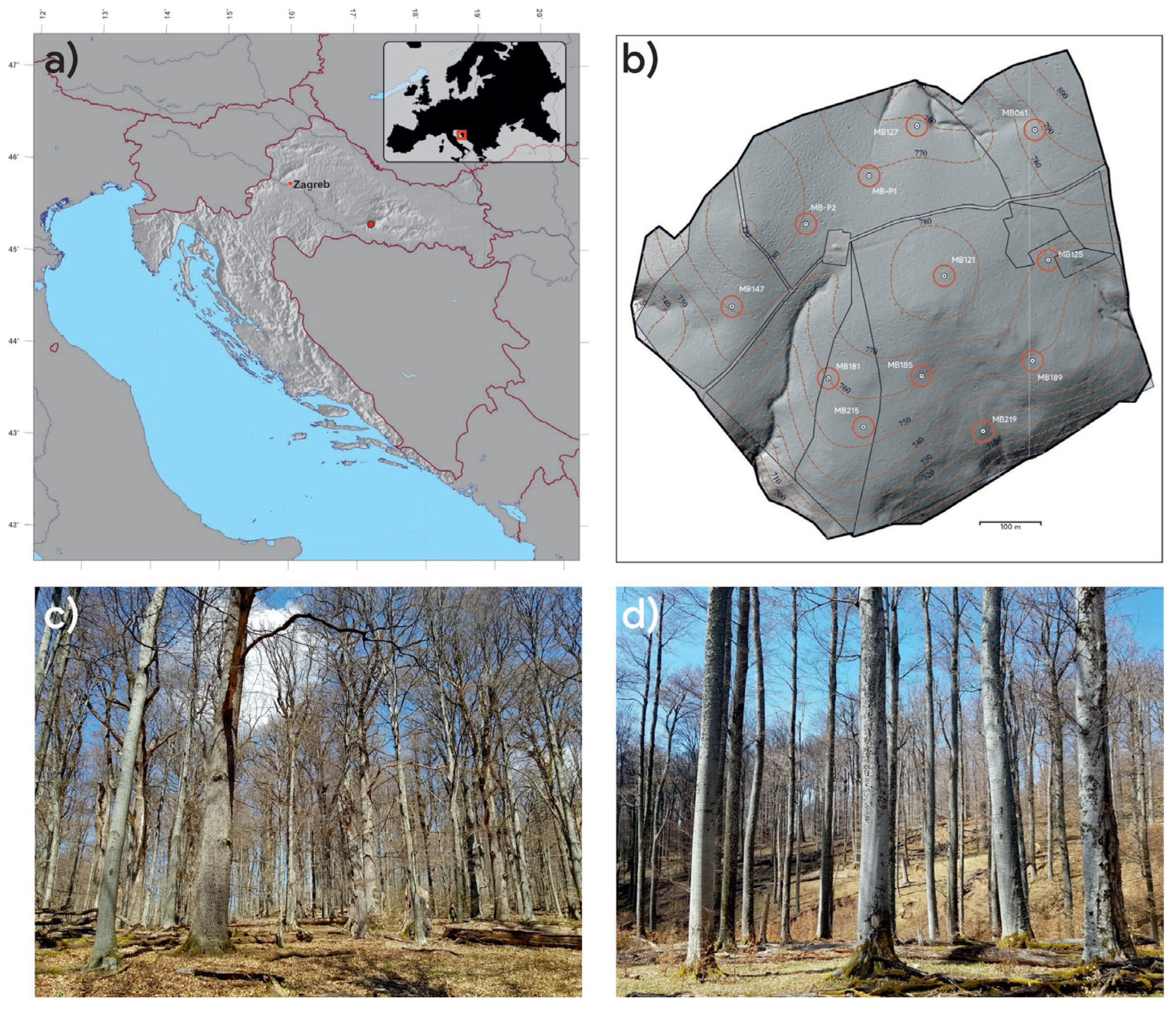
Figure 3.
Tree density distribution across diameter classes by species in (a) pure beech stand and (b) mixed sessile oak–beech stand based on data from the 1979 and 2021 inventories.
Figure 3.
Tree density distribution across diameter classes by species in (a) pure beech stand and (b) mixed sessile oak–beech stand based on data from the 1979 and 2021 inventories.
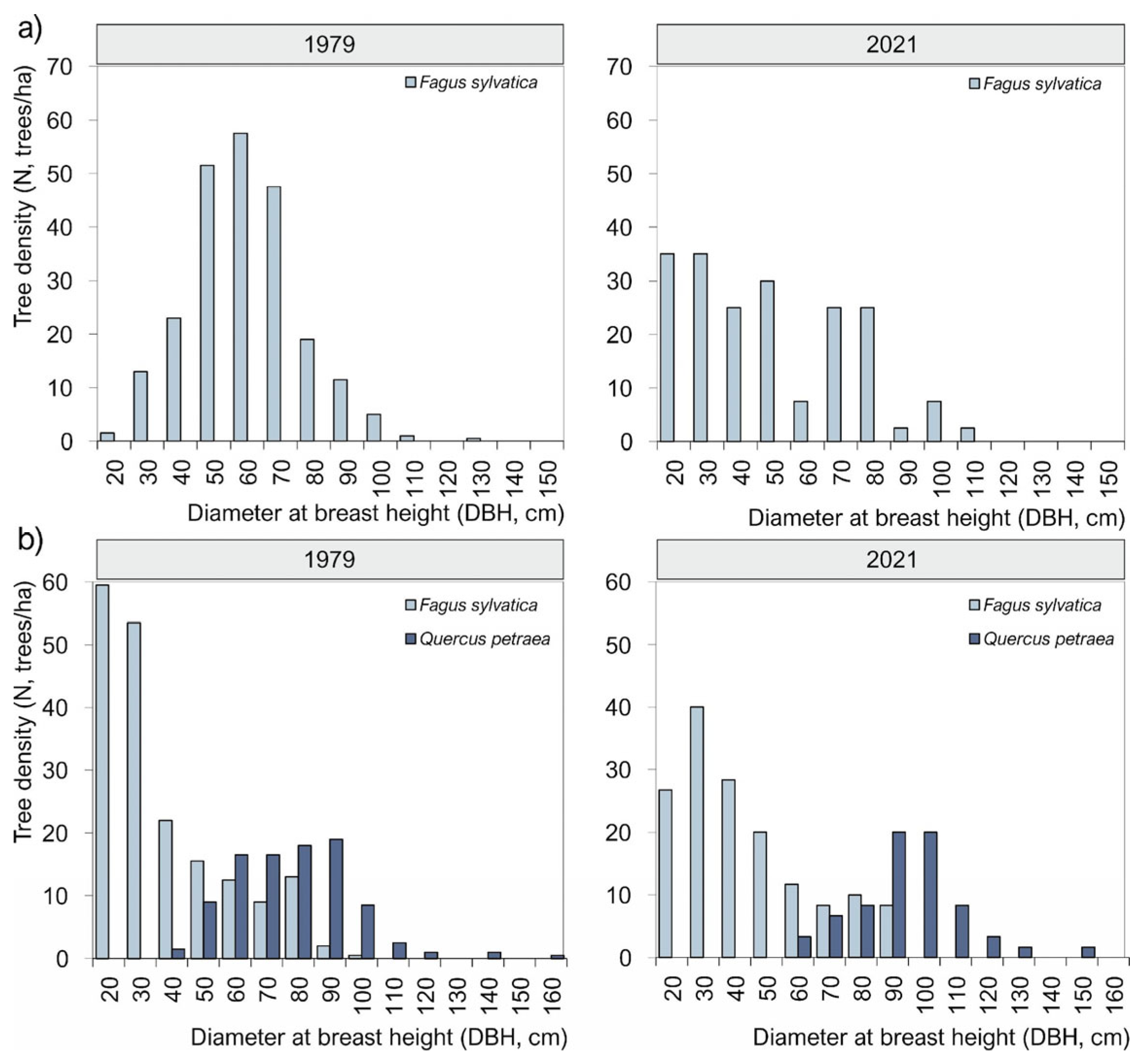
Figure 4.
Distribution of growing stock volume across diameter classes by species in (a) pure beech stand and (b) mixed sessile oak–beech stand for the 1979 and 2021 inventories.
Figure 4.
Distribution of growing stock volume across diameter classes by species in (a) pure beech stand and (b) mixed sessile oak–beech stand for the 1979 and 2021 inventories.
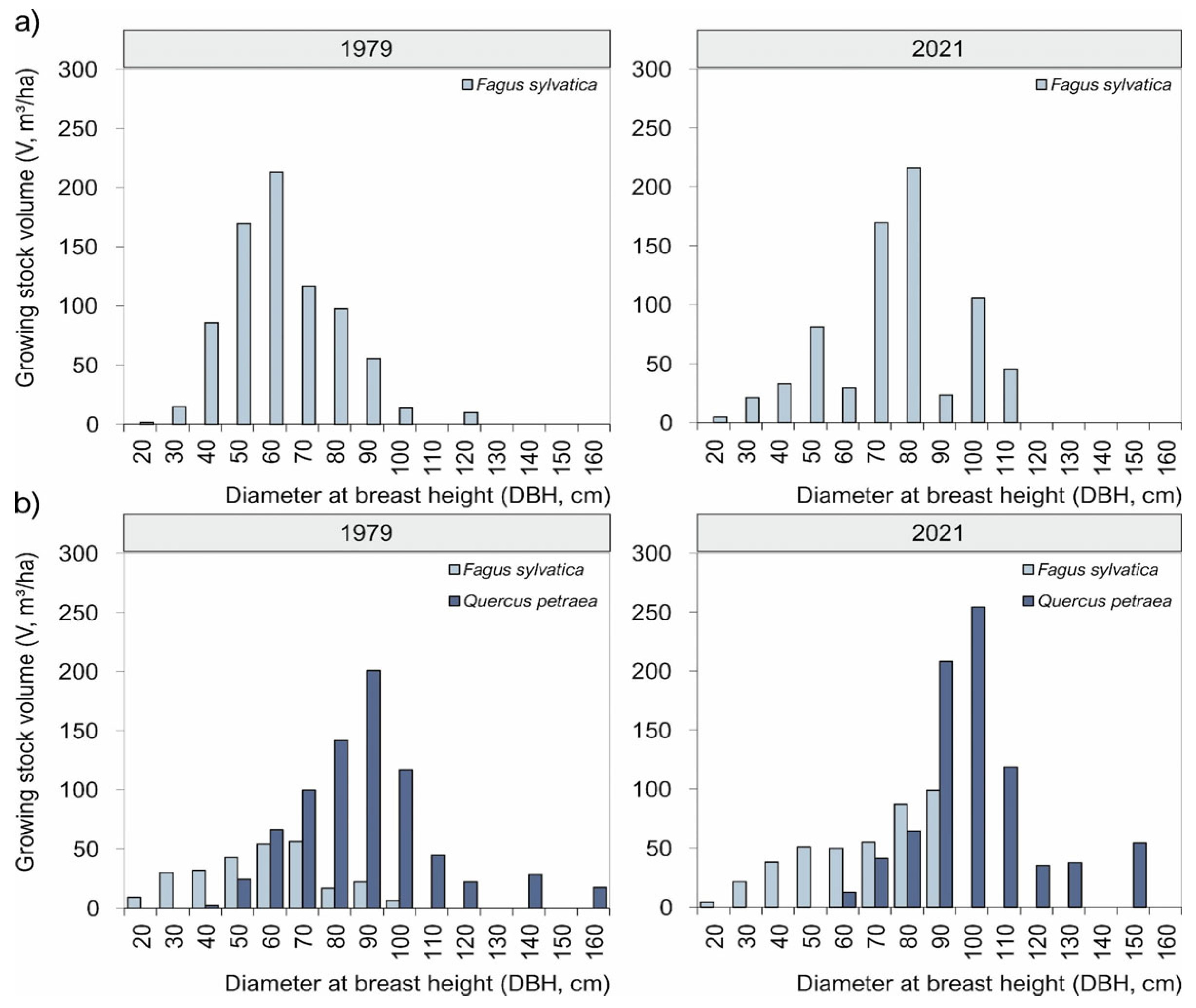
Figure 5.
Distribution of tree age classes (10-year intervals) for (a) the entire reserve, (b) pure beech stand and (c) mixed sessile oak–beech stand.
Figure 5.
Distribution of tree age classes (10-year intervals) for (a) the entire reserve, (b) pure beech stand and (c) mixed sessile oak–beech stand.
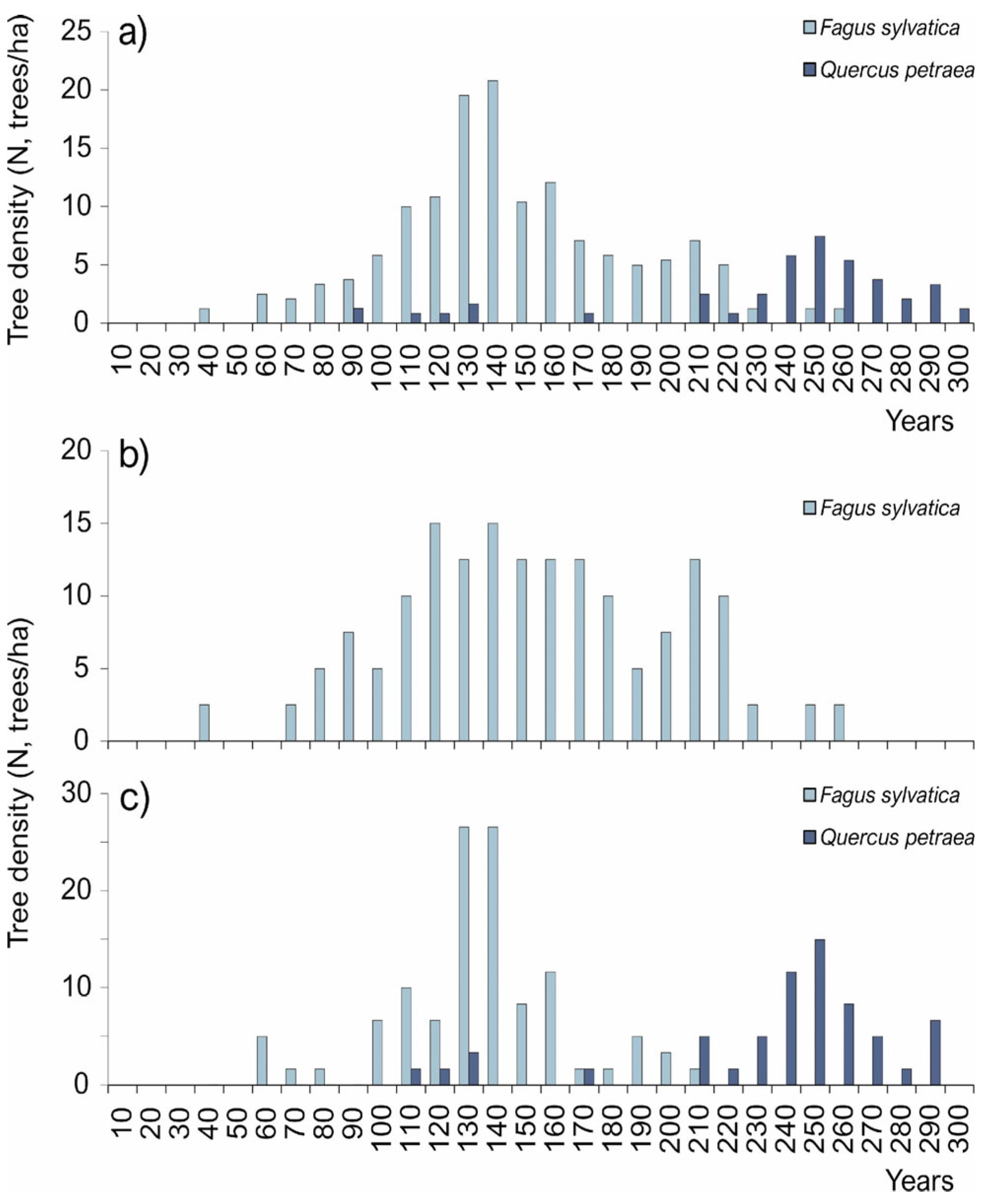
Figure 7.
Windthrow disturbance events in Muški bunar 2023 (photo: S. Mikac).
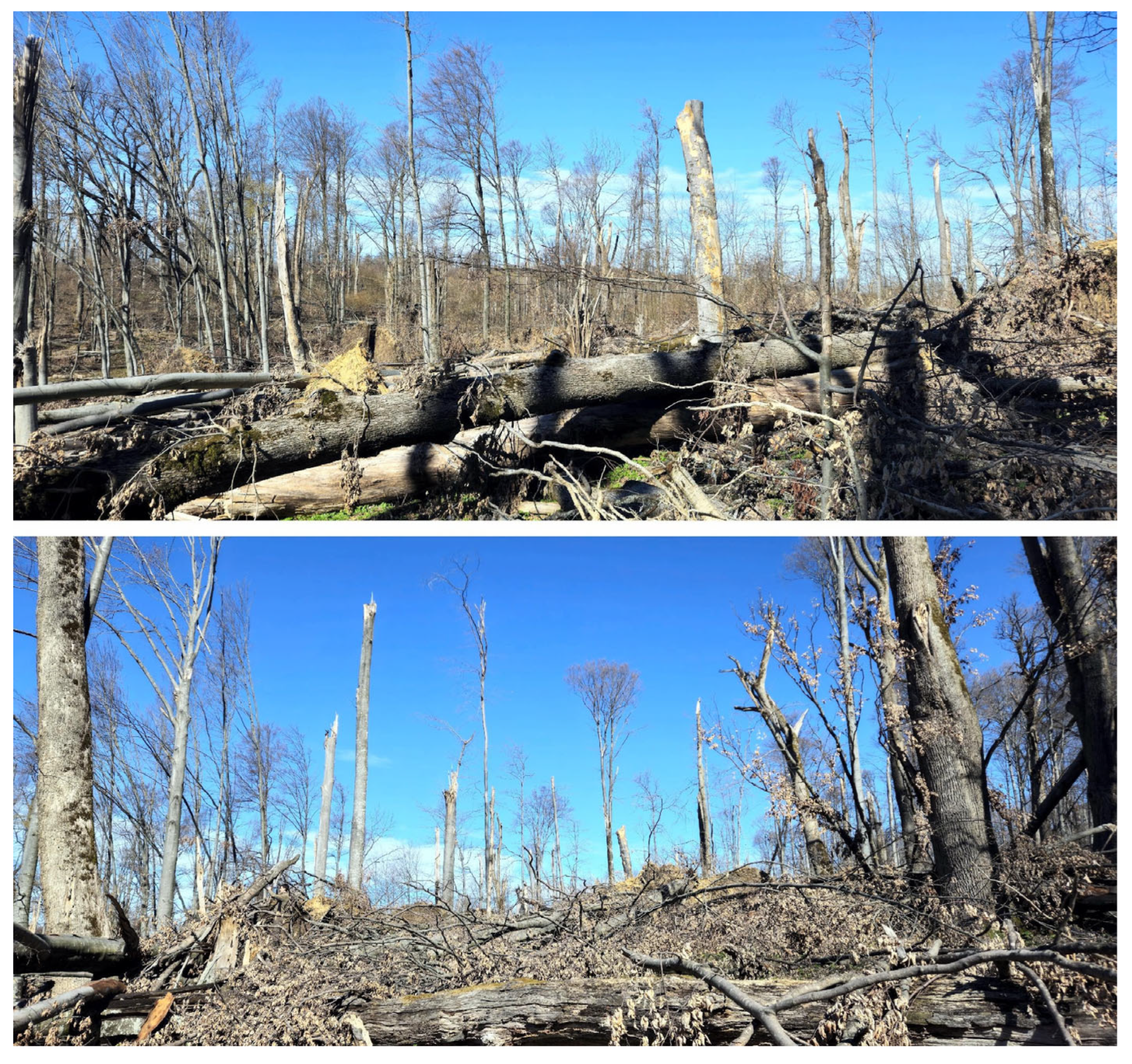
Figure 8.
Distribution of the number of trees across diameter classes and tree species for the entire reserve (a) and distribution of the number of trees across age classes (b) including the area affected by the 1999 windthrow. For better visualization and to highlight the shapes of the distributions selected parts of the graphs are enlarged.
Figure 8.
Distribution of the number of trees across diameter classes and tree species for the entire reserve (a) and distribution of the number of trees across age classes (b) including the area affected by the 1999 windthrow. For better visualization and to highlight the shapes of the distributions selected parts of the graphs are enlarged.
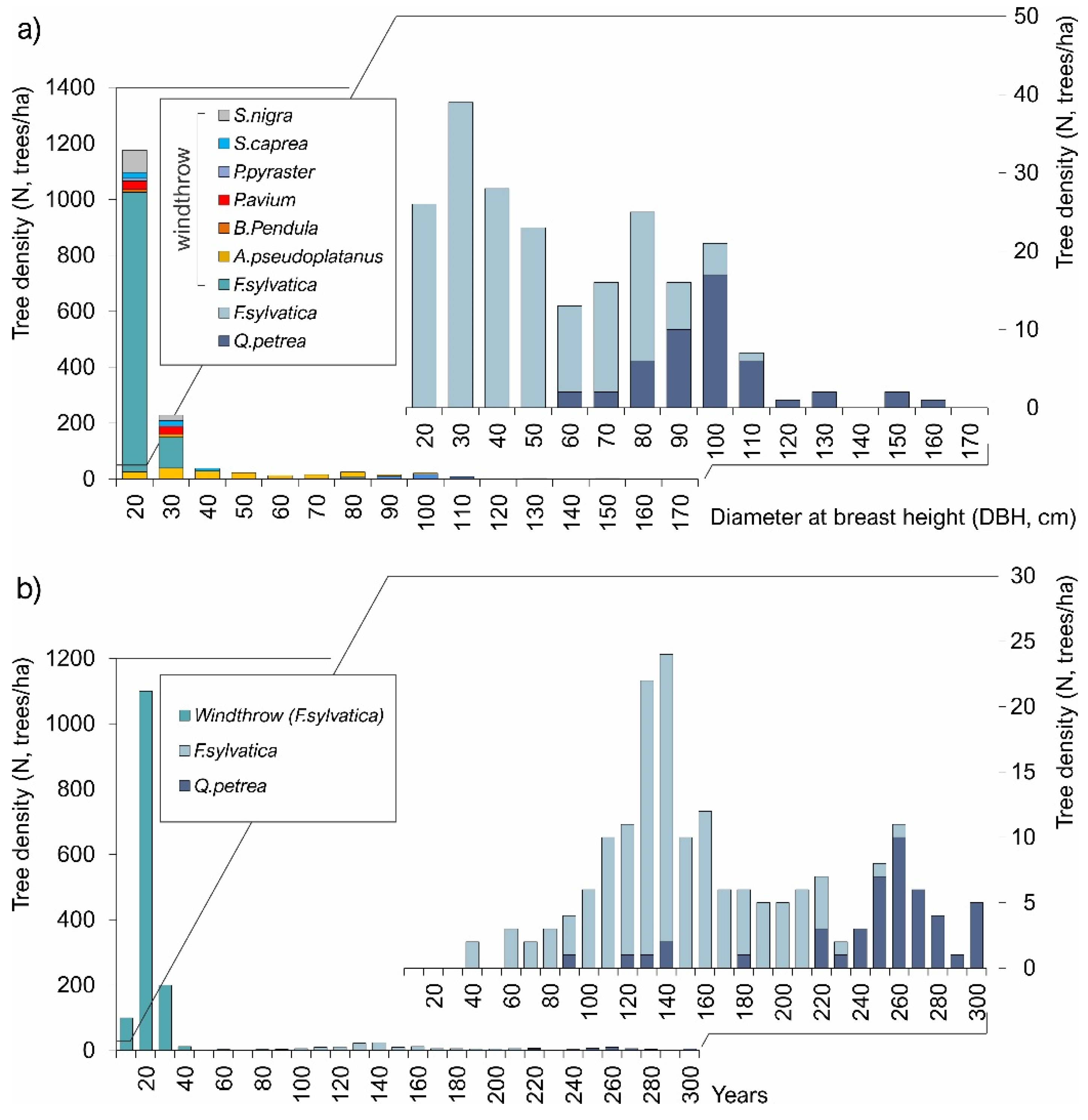
Figure 9.
Disturbance chronology with moderate (yellow) and major releases (black bars) shown at annual resolution for beech (a) and sessile oak (c) together with the distribution of tree numbers by year of establishment for beech (b) and sessile oak (d). Grey shaded areas indicate periods of increased disturbance intensity.
Figure 9.
Disturbance chronology with moderate (yellow) and major releases (black bars) shown at annual resolution for beech (a) and sessile oak (c) together with the distribution of tree numbers by year of establishment for beech (b) and sessile oak (d). Grey shaded areas indicate periods of increased disturbance intensity.
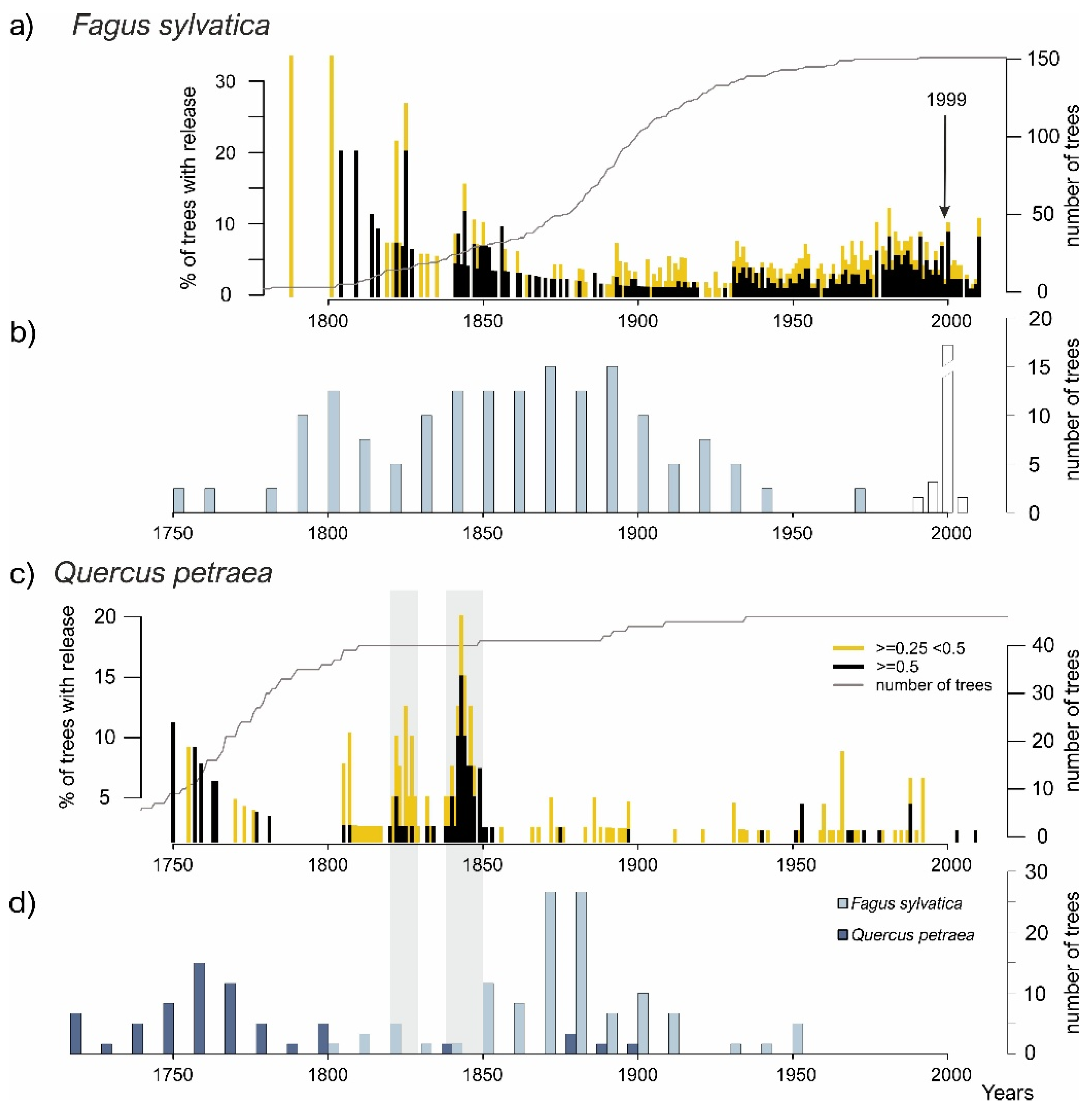
Figure 10.
Comparison of basal area increment (BAI) chronologies of Quercus petraea and Fagus sylvatica during the common period. (a) Raw annual BAI values with 10-year moving means and (b) Standardized BAI series (z-scores) with 10-year moving means.
Figure 10.
Comparison of basal area increment (BAI) chronologies of Quercus petraea and Fagus sylvatica during the common period. (a) Raw annual BAI values with 10-year moving means and (b) Standardized BAI series (z-scores) with 10-year moving means.
Disclaimer/Publisher’s Note: The statements, opinions and data contained in all publications are solely those of the individual author(s) and contributor(s) and not of MDPI and/or the editor(s). MDPI and/or the editor(s) disclaim responsibility for any injury to people or property resulting from any ideas, methods, instructions or products referred to in the content. |
© 2026 by the authors. Licensee MDPI, Basel, Switzerland. This article is an open access article distributed under the terms and conditions of the Creative Commons Attribution (CC BY) license (http://creativecommons.org/licenses/by/4.0/).
Copyright: This open access article is published under a Creative Commons CC BY 4.0 license, which permit the free download, distribution, and reuse, provided that the author and preprint are cited in any reuse.


