

Submitted:
09 April 2026
Posted:
13 April 2026
You are already at the latest version
Abstract
Tropical wetlands are highly sensitive to climatic and anthropogenic disturbances, and the composition of their plant communities can reflect the capacity of these ecosystems to respond to environmental perturbations. This study evaluated the relationship between aquatic macrophyte richness, community structure, and habitat vulnerability to climate change in aquatic ecosystems located in the San Luis rural district, Barrancabermeja mu-nicipality (Santander, Colombia). Macrophyte communities were characterized at 47 monitoring sites distributed across six mesohabitats: floodplain depressions, swamp la-goons, wetlands, artificial ponds (jagüeyes), naturalized ponds, and stream riparian zones. A total of 63 species belonging to 30 families and 51 genera were recorded. The re-lationships among species richness, abundance, and mesohabitat types were assessed using multivariate analyses and statistical models, including principal component anal-ysis (PCA) and generalized linear models. Results revealed clear differences in vegetation community structure among mesohabitats and dominance patterns associated with an-thropogenic disturbance. Ecosystems with higher macrophyte diversity and greater rep-resentation of native species exhibited lower levels of climatic vulnerability, whereas hab-itats dominated by eutrophication-tolerant species and subjected to greater anthropogenic pressure showed higher susceptibility. These findings highlight the ecological importance of aquatic macrophytes as indicators of environmental change and as key functional components contributing to the resilience of tropical wetlands under climate change.
Keywords:
aquatic macrophytes
; climate vulnerability
; tropical wetlands
; aquatic mesohabitats
; productive activities
1. Introduction
Aquatic ecosystems are essential for environmental, social, and economic well-being, providing numerous ecosystem services such as water cycle regulation, pollutant purification, flood control, and habitat provision for a vast biodiversity. Among these ecosystems, wetlands occupy a prominent position due to their high biological productivity and their capacity to store carbon, mitigate climate change, and maintain biodiversity [1]. However, these ecosystems are highly vulnerable to alterations caused by climate change. The ecological vulnerability of wetlands is determined by both natural and anthropogenic factors, with changes in climate patterns—such as increasing temperatures, irregular precipitation, and the intensification of extreme climatic events—being the main drivers of change in these habitats [2].
Ecological vulnerability is a key concept for understanding the ability of ecosystems to resist and adapt to external disturbances. According to the Intergovernmental Panel on Climate Change (IPCC) (2014), ecosystem vulnerability to climate change depends on its exposure to climatic variations, its sensitivity to these changes, and its adaptive capacity. Wetlands, due to their exposure to significant climatic variability, are particularly sensitive to alterations in precipitation patterns, temperature fluctuations, and the increase in extreme climatic events such as droughts and storms [3]. In addition, these ecosystems are subject to interactions between biotic and abiotic factors that affect their balance, including agricultural use, urbanization, and industrial activities [4]. Alterations in hydrological regimes, water temperature, and soil quality lead to changes in species structure and composition, which in turn affect the ecosystem services provided by wetlands.
Climate change is fundamentally altering the functioning of wetlands. Rising temperatures lead to accelerated evaporation, reducing water levels in many wetlands and affecting habitat availability for aquatic species [5]. At the same time, changes in precipitation patterns alter hydrological dynamics, causing some wetlands to flood more frequently while others experience prolonged drought periods [6]. These changes directly impact wetland flora and fauna, modifying species composition and biodiversity [7]. In this context, aquatic plants are of particular interest due to their capacity to reflect environmental conditions within these ecosystems.
Aquatic plants play a central role in wetlands, not only as a fundamental component of biodiversity but also as key indicators of ecosystem health. Aquatic macrophytes, which include both floating and submerged plants, are essential for structuring aquatic habitats and contribute significantly to water quality improvement and sediment stabilization [8]. Their presence, diversity, and abundance reflect ecological conditions in wetlands, as these species respond rapidly to changes in temperature, hydrological regimes, and water quality [5,6].
Moreover, aquatic plants directly influence the capacity of wetlands to mitigate the effects of climate change. For example, emergent plants help reduce erosion and enhance the ability of wetlands to store carbon, acting as carbon sinks [4]. Conversely, invasive species can alter the structure and functioning of these ecosystems, reducing their adaptive capacity to climate change and increasing their vulnerability [9]. In this context, aquatic plant richness not only reflects the biological diversity of wetlands but also their resilience to climate-related pressures. A greater number of native species increases the likelihood that wetlands can effectively adapt to climatic variability and maintain their functionality over time [5,8].
Aquatic plant diversity is also fundamental for the well-being of animal species that depend on these habitats. Aquatic plants provide shelter, food, and breeding habitats for many species of invertebrates, fish, and aquatic birds, which are essential for maintaining trophic stability in wetlands [7]. Therefore, any change in the composition and structure of aquatic vegetation may trigger cascading effects on overall ecosystem health.
Bioindicators are organisms whose presence, absence, or changes in behavior, physiology, or community composition allow the assessment of environmental quality and ecosystem alterations [10]. Their sensitivity to physicochemical, biological, and hydrological variations enables them to integrate the cumulative effects of environmental conditions over time, providing a more holistic view of ecosystem status [11]. This represents an advantage over physicochemical parameters, which only provide information corresponding to the specific moment of sampling [12]. In wetlands, bioindicator species—such as aquatic plants—can reveal not only the level of environmental disturbance but also the resilience or vulnerability of habitats to anthropogenic pressures and climate change [7].
The Climate Change Vulnerability Index (CCVI), developed by NatureServe, is a tool designed to estimate the degree of vulnerability of plant and animal species to climate change. This index integrates available information on exposure, sensitivity, and adaptive capacity of each species, allowing the projection of their relative vulnerability. Its applications include species prioritization in State Wildlife Action Plans and the development of Species Status Assessments.
Regarding the study area, Figure 1 shows the zones included in this research. The Santa Lucía Research Center, belonging to the Instituto Universitario de la Paz (UNIPAZ), is located in a tropical forest where land use is distributed as follows: 27.9% agricultural activities, 3.7% educational infrastructure, 63.5% conservation, and 4.9% wetland ecosystems. Although educational infrastructure represents only 3.7% of the area, it generates impacts on aquatic ecosystems due to academic activities and the operation of a pig production unit. In the San Ignacio property, land use corresponds to 90% conservation and 10% agricultural activities. In contrast, the El Sábalo swamp includes land uses such as livestock farming, oil palm cultivation, aquaculture production, and conservation areas.
This research focuses on analyzing the implications of aquatic plant richness on wetland vulnerability to climate change, using the San Luis rural area as a case study. In this region, the interaction between local climatic conditions, landscape characteristics, and aquatic plant species may provide valuable insights into how these ecosystems respond to environmental changes and how aquatic vegetation may help mitigate or amplify such effects [3]. Specifically, the study focuses on the vulnerability index of these wetlands, analyzing how the diversity and abundance of aquatic plant species can serve as indicators of wetland health and their capacity to adapt to climate change.
This work also highlights the importance of conservation and restoration strategies for aquatic vegetation as key tools to improve wetland resilience to climate change. Restoring and protecting aquatic plant communities can not only enhance biodiversity but also strengthen essential ecosystem services that these habitats provide to human communities and local fauna [1]. Through a vegetation-based approach, this study aims to provide recommendations for sustainable wetland management policies in the context of ongoing climate change.
2. Materials and Methods
Type and research approach.
The study was conducted using a field-based ecological research design with a quantitative approach, aimed at evaluating the relationship between aquatic macrophyte richness and habitat vulnerability to climate change. The main variables considered were species richness and the Climate Change Vulnerability Index (CCVI). This approach allowed for the statistical analysis of the relationship between macrophyte diversity and the levels of ecological vulnerability of the aquatic ecosystems studied.
Área de Estudio y Fases de la Investigación.
The study was conducted in the San Luis rural district, located in the municipality of Barrancabermeja, Santander department, in northeastern Colombia. This area lies within the middle basin of the Magdalena River, specifically in the San Silvestre swamp sub-basin, one of the most important lacustrine systems in the region.
The area is characterized by the presence of diverse aquatic ecosystems associated with wetland complexes, swamp lagoons, and lotic systems linked to streams and flood-prone areas. These ecosystems are part of the hydrological dynamics of the middle Magdalena River valley, where seasonal flooding processes and hydrological connectivity play a fundamental role in the structure and functioning of wetlands.
The region has a warm humid climate typical of lowland tropical zones, with mean annual temperatures close to 27–28 °C and annual precipitation exceeding 2,500 mm, mainly concentrated in two rainy seasons. These climatic conditions favor a high diversity of aquatic ecosystems and marked hydrological variability.
Sampling was conducted in three representative sectors of the study area: the Santa Lucía Research Center—UNIPAZ, El Sábalo swamp, and the San Ignacio property, where different types of mesohabitats associated with natural and artificial aquatic ecosystems were identified (Figure 1).
A total of 47 sampling points were established and distributed across six types of mesohabitats: floodplain depressions, swamp lagoon, wetland, artificial ponds, naturalized ponds, and stream riparian zones. These environments present different levels of anthropogenic intervention, mainly associated with productive activities such as livestock farming, agriculture, and fish farming, which influence the ecological dynamics and vulnerability of aquatic ecosystems to climate change.
Research Design
The research was carried out in four methodological phases:
(1) preliminary literature review,
(2) socio-productive diagnosis and land-use analysis,
(3) characterization of aquatic plant communities and ecosystem sampling, and
(4) assessment of climate change vulnerability.
Phase 1. Preliminary Literature Review: The first phase consisted of conducting a literature review of secondary sources in order to obtain relevant information on aquatic ecosystems, aquatic vegetation, and vulnerability assessment methodologies. Studies addressing sampling protocols in aquatic ecosystems, species classification, and methodologies for assessing climate change vulnerability in wetlands were included.
The collected information was organized into a data matrix, which was used to identify key variables for the characterization of aquatic ecosystems and their susceptibility to the effects of climate change, following the methodological guidelines for the formulation of environmental management plans [13].
The following search equations were used:
“aquatic plants” OR macrophytes OR “aquatic vegetation” (1)
“species richness” OR biodiversity OR “species diversity” (2)
“climate change vulnerability” OR “habitat vulnerability” (3)
“climate change impact” (4)
Phase 2. Socio-productive Diagnosis and Land Use Analysis: The socio-productive diagnosis focused on the economic activities and land use in the three case studies: Santa Lucía Research Center, El Sábalo wetland, and San Ignacio property. In this phase, data were collected on productive activities and their impacts on aquatic ecosystems through documentary review and direct observation; the latter was carried out during free transect walks [14] and recorded in field notebooks. This made it possible to contextualize the relationship between human practices and climate vulnerability risks.
Information on productive activities such as intensive agriculture, livestock farming, and fishing was used to assess how these land uses may increase the vulnerability of aquatic ecosystems to climatic alterations.
Phase 3. Characterization of Aquatic Plant Communities and Ecosystem Sampling. Free surveys and adapted transects [14] were conducted to characterize aquatic vegetation in three key ecosystems: the Santa Lucía—UNIPAZ property, El Sábalo wetland, and the floodable area of San Silvestre wetland.
Sampling was carried out using quadrant sampling techniques and manual sweeping, aiming to capture the greatest possible diversity of plant species, following the guidelines established by IDEAM [15]. In this phase, environmental characteristics were also recorded, including physicochemical properties such as temperature, pH, and turbidity, which are fundamental factors for analyzing ecological vulnerability to climate change.
To evaluate the relationship between plant species and environmental changes, aquatic vegetation monitoring methods were applied according to the characteristics of each ecosystem and seasonal variability. This approach made it possible to establish a database reflecting the current conditions of wetlands and their exposure to climate change.
Phase 4. Climate Change Vulnerability Assessment. The climate change vulnerability analysis was the central component of the research. For this purpose, the vulnerability assessment method proposed by [16] was adapted, as it is particularly suitable for tropical Andean ecosystems.
This approach allowed the evaluation of exposure, sensitivity, and adaptive capacity of aquatic ecosystems in San Luis village in response to the impacts of climate change. For the vulnerability analysis, three criteria were considered:
- Relationship Between Macrophyte Richness and the Evaluated Mesohabitats. The richness of macrophytes was evaluated across the different mesohabitats within the study area. Six mesohabitats were classified based on their vegetation composition and the ecosystems present: flooded lowlands, swamp, wetland, ponds, naturalized ponds, and the riparian zone of streams.
- Relationship Between Macrophyte Richness and the Vulnerability Status of Habitats to Climate Change. The climate change vulnerability model [16] was used to assess the impact of anthropogenic activities and climatic variations on aquatic ecosystems. Vulnerability was associated with vegetation composition, type of productive activity, and environmental conditions of each mesohabitat.
- Principal Component Analysis (PCA). A Principal Component Analysis (PCA) was performed to evaluate the relationship between macrophyte composition and the productive activities present in the region. This multivariate analysis allowed the identification of patterns in the presence and abundance of macrophyte species and their association with different land uses and productive activities, such as livestock farming, agriculture, and aquaculture. Additionally, the PCA facilitated the identification of ecological gradients related to anthropogenic pressures affecting aquatic ecosystems in the study area.
- Statistical Analysis of Richness Patterns. To quantitatively assess differences in macrophyte richness among mesohabitats and its relationship with vulnerability levels, inferential statistical analyses were conducted. A Generalized Linear Model (GLM) with a Poisson distribution was applied to evaluate the effect of mesohabitat type and vulnerability on species richness. Additionally, a non-parametric Kruskal–Wallis test was performed to assess differences in richness among mesohabitats due to the non-normal distribution of the data. These analyses provided a robust statistical framework to support the ecological patterns observed in the study.
Statistical Analysis
Differences in macrophyte species richness among the different mesohabitats were evaluated using a Generalized Linear Model (GLM), considering mesohabitat type and vulnerability category as explanatory variables. Additionally, a non-parametric Kruskal–Wallis test was applied to assess differences in species richness among mesohabitats, as the data did not fully meet the normality assumptions required for parametric analyses.
To evaluate patterns of ecological dominance across sampling sites, a model was fitted relating the number of recorded individuals to mesohabitat type. Furthermore, a dominance index was calculated based on the ratio between the total number of individuals and the number of species recorded at each sampling point (individuals per species).
Finally, a Principal Component Analysis (PCA) was performed to explore the relationships among macrophyte species richness, individual abundance, and productive activities present in the study area. This multivariate approach allowed the identification of potential ecological gradients associated with anthropogenic pressures on aquatic ecosystems. All statistical analyses were conducted using the R statistical software (R Core Team), with the significance level set at p < 0.05.
3. Results
The main results of the research are presented below according to the methodological stages established in the study.
3.1. Characterization of Monitoring Sites
The characterization of the three study cases located in the San Luis rural area resulted in the identification of 63 plant species distributed across 47 monitoring sites. The recorded species correspond to different growth forms typical of aquatic macrophytes, including rooted floating, free-floating, emergent–amphibious, and emergent–submerged plants, while strictly submerged species were not recorded during the sampling period.
The evaluated aquatic ecosystems showed variability in their structural and hydrological characteristics, including both temporary and permanent habitats of natural and anthropogenic origin. The identified habitat types included flooded lowlands, streams, swamps (ciénagas), jagüeyes (artificial ponds), and drainage systems.
The ecological characterization of these ecosystems was based on field observations, considering the composition of aquatic vegetation, environmental conditions, and the structural characteristics of habitats present at each monitoring site.
3.2. Species Composition
The families with the highest frequency of occurrence were Cyperaceae, Poaceae, and Salviniaceae. The most representative species in terms of occurrence frequency, arranged from highest to lowest, were Urochloa plantaginea, Salvinia minima, and Cyperus odoratus.
The habitat with the highest plant richness corresponded to flooded lowlands, whereas the naturalized jagüey showed the lowest richness. The taxonomic composition of the aquatic plant species recorded in the San Luis rural area comprised 30 families, 20 orders, and 51 genera, with Cyperaceae being the dominant family, Poales the most represented order, and Cyperus the most frequent genus. According to the growth habit of the recorded species, 64% corresponded to emergent–amphibious plants, 14% to free-floating species, 11% to rooted emergent species, and 11% to rooted floating species.
Regarding conservation status according to the IUCN (International Union for Conservation of Nature), six species were classified as Least Concern, while the remaining 58 species have an unknown conservation status. According to the Catalogue of Plants and Lichens of Colombia [17], 19 species are categorized as Least Concern, whereas 45 species have not yet been evaluated.
It is important to highlight that this research identified 20 species with potential use for phytoremediation, 23 species with medicinal uses, three species used in agriculture and livestock production, five species associated with erosion control, one species used for handicrafts, seven species with ornamental value, one species used for water purification, and one species reported as a biological regulator.
Among the 63 species included in the vegetation inventory, Solanum pseudolulo is reported as endemic to Colombia and Ecuador. Urochloa decumbens and Pueraria phaseoloides are considered established species, while Pteridium arachnoideum and Andropogon bicornis are classified as cryptogenic species. Among the remaining species, seven are introduced and 52 are native.

Table 1.
Aquatic macrophyte species recorded in the six mesohabitats of the San Luis rural area (Barrancabermeja, Colombia), including their origin, conservation status, growth habit, and potential ecological uses.
Table 1.
Aquatic macrophyte species recorded in the six mesohabitats of the San Luis rural area (Barrancabermeja, Colombia), including their origin, conservation status, growth habit, and potential ecological uses.
| Family | Genus | Common name | Scientific name |
|---|---|---|---|
| Poaceae | Brachiaria | Canutillo | Brachiaria plantaginea (Link) Hitchc. |
| Salviniaceae | Salvinia | Lenteja De Agua | Salvinia minima Baker |
| Cyperaceae | Cyperus | Coquito | Cyperus odoratus L. |
| Pontederiaceae | Eichhornia | Tarulla | Eichhornia crassipes Solms |
| Onagraceae | Ludwigia | Palito De Agua | Ludwigia decurrens Walter |
| Marantaceae | Thalia | Bocachica | Thalia geniculata L. |
| Cyperaceae | Cyperus | Coquito | Cyperus diffusus Vahl |
| Marantaceae | Calathea | Bijao | Calathea lutea |
| Malvaceae | Sida | Escobillo | Sida acuta Burm.f. |
| Blechnaceae | Telmatoblechnum | Helecho | Telmatoblechnum serrulatum (L.C.Rich.) |
| Solanaceae | Solanum | Lulo De Perro | Solanum pseudolulo Heiser |
| Heliconiaceae | Heliconia | Heliconia | Heliconia psittacorum L.f. |
| Alismataceae | Limnocharis | Buchon | Limnocharis flava Buchenau |
| Araceae | Colocasia | Oreja De Elefante | Colocasia esculenta (L.) Schott |
| Cyperaceae | Rhynchospora | Ciperacea | Rhynchospora corymbosa (L.) Britton |
| Pontederiaceae | Heteranthera | Oreja De Ratón | Heteranthera reniformis Ruiz & Pav. |
| Nymphaeaceae | Nymphaea | Ninfa De Agua | Nymphaea alba L. |
| Commelinaceae | Commelina | Hierba De Pollo | Commelina diffusa Burm.f. |
| Cyperaceae | Cyperus | Zacate De Estrella | Cyperus luzulae (L.) Retz. |
| Cyperaceae | Eleocharis | Junco | Eleocharis palustris (L.) Roem. & Schult |
| Cyperaceae | Fimbristylis | Ciperacea | Fimbristylis quinquangularis (M.Vahl) Kunth |
| Osmundaceae | Osmundastrum | Helecho Marrano | Osmundastrum cinnamomeum (L.) C.Presl |
| Lentibuliriaceae | Utricularia | Perrito De Agua | Utricularia gibba L. |
| Plantaginaceae | Bacopa | Abánico De Agua | Bacopa egensis (Poepp.) Pennell |
| Alismataceae | Sagittaria | Lirio De Agua | Sagittaria guayanensis Kunth |
| Poaceae | Pennisetum Purpureum | Pasto Elefante | Pennisetum purpureum Schumach. |
| Rubiaceae | Isertia | Tabaquillo | Isertia haenkeana DC. |
| Lycopodiaceae | Lycopodium | Colchon De Pobre | Lycopodium clavatum L. |
| Marantaceae | Ischnosiphon | Ischnosiphon arouma Körn. | |
| Heliconiaceae | Heliconia | Heliconia | Heliconia brachyantha L.Andersson |
| Araceae | Anthurium | Anturio | Anthurium Schott |
| Fabaceae | Pueraria | Pueraria phaseoloides Benth. | |
| Heliconiaceae | Heliconia | Heliconia | Heliconia latispatha Benth. |
| Araceae | Dieffenbachia | Galatea | Dieffenbachia Schott |
| Poaceae | Rottboellia | Rottboellia exaltata (L.) L.f. | |
| Onagraceae | Ludwigia | Palito De Agua | Ludwigia erecta (L.) H.Hara |
| Urticaceae | Cecropia | Guarumo | Cecropia peltata L. |
| Euphorbiaceae | Croton | Croton hirtus L’Hér. | |
| Dennstaedtiaceae | Pteridium | Helecho Marrano | Pteridium aquilinum (L.) Kuhn |
| Cucurbitaceae | Momordica | Balsamina | Momordica charantia L. |
| Cyperaceae | Scleria | Scleria melaleuca Rchb. ex Schltdl. & Cham. | |
| Menyanthaceae | Nymphoides | Lirio De Agua | Nymphoides indica (L.) Griseb. |
| Marsileaceae | Marsilea | Helecho Trebol | Marsilea polycarpa Hook. & Grev. |
| Fabaceae | Chamaecrista | Guajito | Chamaecrista nictitans Moench |
| Convolvulaceae | Ipomoea | Campanilla | Ipomoea cairica (L.) Sweet |
| Vitaceae | Cissus | Cissus erosa Rich. | |
| Asteraceae | Emilia | Pincel | Emilia sonchifolia (L.) DC. |
| Fabaceae | Vigna | Vigna longifolia (Benth.) Verdc. | |
| Onagraceae | Ludwigia | Rosita De Agua | Ludwigia helminthorrhiza (Mart.) H.Hara |
| Cyperaceae | Eleocharis | Junco | Eleocharis elegans Roem. & Schult. |
| Cyperaceae | Cyperus | Junco | Cyperus blepharoleptos Steud. |
| Pteridaceae | Ceratopteris | Helecho De Agua | Ceratopteris pteridoides (Hook.) Hieron. |
| Lentibuliriaceae | Utricularia | Perrito De Agua | Utricularia foliosa L. |
| Poaceae | Panicum | Pasto Espiga | Panicum maximum Jacq. |
| Cyperaceae | Fuirena | Junco | Fuirena umbellata Rottb. |
| Cyperaceae | Eleocharis | Junco | Eleocharis geniculata (L.) Roem. & Schult. |
| Malvaceae | Hibiscus | Hibisco | Hibiscus furcellatus Desr. |
| Malvaceae | Hibiscus | Hibisco | Hibiscus sororius L. |
| Poaceae | Andropogon | Cola De Zorro | Andropogon bicornis L. |
| Nymphaeaceae | Nymphaea | Ninfa De Agua | Nymphaea ampla DC. |
| Fabaceae | Senna | Senna obtusifolia (L.) H.S.Irwin & Barneby | |
| Cyperaceae | Schoenoplectus | Totora | Schoenoplectus californicus (C.A.Mey.)Soják |
| Poaceae | Luziola | Pasto Acuático | Luziola subintegra Swallen |
3.3. Macrophyte Species Richness Across Different Mesohabitats
During the analysis of macrophyte richness in the mesohabitats evaluated in the San Luis rural area, several key species were identified that structure the vegetation and determine the ecological dynamics of aquatic ecosystems. For this analysis, the different ecosystems present in the study area were considered and classified into six mesohabitats: floodable lowlands, swamp, wetland, artificial pond, naturalized pond, and stream riparian zone.
The results showed that the mesohabitat with the highest macrophyte richness was the floodable lowlands (see Figure 2). In these environments, emergent species with high tolerance to periodic flooding predominated. Likewise, the presence of productive activities such as livestock farming and agriculture may promote nutrient inputs into the soil, which are utilized by these species to effectively colonize and reproduce in these ecosystems [18].
The ponds and swamp mesohabitats presented similar levels of macrophyte richness, although lower than those recorded in floodable lowlands. In ponds, the input of organic matter derived from wastewater discharges favors the establishment of species tolerant to high nutrient concentrations, among which the floating macrophyte Salvinia minima stands out [19].
In the stream riparian mesohabitat, the sampling point with the highest richness was P8. In these lotic systems, current dynamics limit the establishment of macrophytes within the main channel; however, in riparian sectors where water velocity decreases, it is possible to observe floating macrophyte communities and amphibious species associated with sediment accumulation zones or structural refuge. At this site, a greater concentration of species was recorded, mainly associated with herbaceous vegetation present along the riverbank. The absence of arboreal cover and riparian protection measures, together with steep slopes, favors the establishment of terrestrial and amphibious plants.
In the wetland mesohabitat, the sampling point with the highest richness was P43, where the species Eleocharis geniculata stood out as dominant, being distributed across a large portion of the ecosystem with individuals exceeding two meters in height. Permanent moisture conditions favor the development of this species, while other herbaceous plants adapted to saturated soils, such as Vigna longifolia, establish in the lower stratum [20].
The most representative species in each mesohabitat and their distribution are described below:
3.3.1. Floodable Lowlands
In the floodable lowlands, characterized by temporarily saturated soils and by the influence of nutrients derived from agricultural and livestock activities, species such as Urochloa plantaginea (emergent grass) were recorded, particularly abundant in areas used for grazing. This species shows a high capacity for adaptation to humid soils rich in organic matter, which favors its establishment in zones subjected to livestock trampling and in areas where surface runoff contributes nutrients to the soil.
Emergent and amphibious species such as Cyperus luzulae, Andropogon bicornis, and Ludwigia erecta were also observed, all of which are adapted to periods of temporary flooding and to seasonal variations in water availability throughout the year. These species are commonly found in sectors where hydrological dynamics interact with productive activities, reflecting environments with a certain degree of anthropogenic disturbance. Nevertheless, the presence of diverse plant communities in these environments may contribute to sediment stabilization and the maintenance of ecological processes that enhance ecosystem resilience to climatic variability.
3.3.2. Swamps
Swamps exhibit a diversity of aquatic species adapted to conditions of high humidity, fine sediments, and low water flow velocity. Among the most representative species is Salvinia minima, a free-floating macrophyte that can proliferate in sectors with high nutrient availability and moderate eutrophication conditions.
Likewise, the presence of Pontederia crassipes was recorded, a floating species commonly found in water bodies with high levels of organic matter and nutrient input. These species are mainly distributed in areas receiving discharges or organic inputs derived from surrounding productive activities, which favor their growth and expansion across the water surface.
Despite this anthropogenic pressure, the presence of floating and emergent macrophytes contributes to sediment and nutrient retention processes, which may generate a certain ecological buffering capacity against environmental changes.
3.3.3. Naturalized Ponds
Naturalized ponds, although of anthropogenic origin, have developed their own aquatic plant communities over time. In these ecosystems, species such as Nymphaea novogranatensis were recorded, a rooted floating macrophyte that develops in relatively calm waters and whose presence may indicate ecosystem naturalization processes.
The aquatic plant Utricularia gibba, a floating species that typically establishes in shallow environments with high availability of dissolved nutrients, was also observed. Additionally, emergent species such as Thalia geniculata and Cyperus odoratus were identified, associated with sectors characterized by saturated soils and flood-prone edges.
The joint presence of these species suggests that, although these systems were originally constructed for productive purposes, they can gradually develop vegetation structures that promote the partial recovery of ecological functions typical of wetland ecosystems.
3.3.4. Stream Riparian Zones
In the riparian zones of streams, where sectors with riparian vegetation and lower levels of direct disturbance are maintained, a plant composition dominated by species adapted to humid environments and to the flooding dynamics of the channel margins was recorded.
Among these, Ludwigia decurrens, Eleocharis elegans, and Rhynchospora corymbosa stand out, emergent species that develop in saturated soils close to the watercourse. Herbaceous and amphibious species such as Commelina diffusa were also identified, colonizing areas where current velocity decreases and sediments accumulate.
These riparian plant communities play an important role in stabilizing stream banks, retaining sediments, and regulating hydrological flows, thereby contributing to the reduction of extreme hydrological events associated with climatic variability.
3.4. Frequency of Occurrence of Macrophytes
The frequency index allowed the identification of the species with the highest occurrence across the sampling points. One notable example is the grass Urochloa plantaginea, which is commonly introduced for livestock production to establish grazing areas. Due to its high adaptability, this species can develop successfully in a wide variety of soil types. Its strong reproductive capacity also demonstrates its invasive potential, enabling it to expand into other non-productive areas and establish populations in ecosystems far from the site of introduction.
Another species with high adaptability in aquatic ecosystems is Salvinia minima. This floating plant can tolerate high levels of organic load and heavy metals, allowing it to develop in flood-prone areas where moisture conditions remain relatively permanent, as it does not tolerate complete desiccation. Its floating habit enables it to move across aquatic ecosystems, facilitating its establishment in new areas [19].
Finally, the species Ludwigia decurrens and Cyperus luzulae are emergent plants capable of tolerating temporary flooding periods. Due to their ecological plasticity, they are frequently associated with areas influenced by productive activities. In this study, these species were commonly found in zones with livestock and agricultural use, although they can also occur in ecosystems affected by wastewater discharges [21] (see Figure 3).
Overall, the frequency patterns observed suggest that macrophyte communities in the study area are strongly influenced by anthropogenic activities and nutrient inputs, which favor the establishment of highly adaptable and disturbance-tolerant species.
3.5. Relationship Between Species Richness and the Climate Change Vulnerability Index
The macrophyte richness recorded across the different mesohabitats showed a relationship with the climate change vulnerability indices estimated using the vulnerability model proposed by NatureServe [16]. This model considers both exposure to climatic changes and the influence of non-climatic stressors affecting the ecological integrity of ecosystems. In this analysis, species richness values were integrated with the results obtained from the two vulnerability modules, allowing the identification of patterns between plant community composition and the ecological status of the evaluated habitats.
The results suggest that macrophyte composition reflects different levels of disturbance and ecological resilience in the studied aquatic ecosystems. In this context, the recorded species can be grouped into three main functional categories: species indicative of anthropogenic disturbance, species tolerant to eutrophication conditions, and species associated with ecosystems with greater ecological stability.
3.5.1. Species Indicative of Anthropogenic Disturbance
Floodplain mesohabitats and some artificial ponds showed relatively high vulnerability values, mainly associated with the influence of productive activities such as livestock grazing, agriculture, and wastewater discharge. In these environments, frequent occurrences of opportunistic species such as Urochloa plantaginea and Andropogon bicornis were recorded, both grasses adapted to humid soils subjected to livestock trampling. Similarly, species such as Cyperus odoratus, Ludwigia erecta, and Rottboellia exaltata were more frequently observed in areas influenced by grazing or agricultural drainage. The dominance of these species suggests processes of vegetation structure simplification associated with anthropogenic disturbances, which may reduce the ecosystem’s capacity to respond to environmental perturbations and increase its vulnerability to climate change.
3.5.2. Species Tolerant to Eutrophication and Organic Enrichment
In some aquatic ecosystems, particularly artificial ponds and sectors of El Sábalo wetland influenced by wastewater discharge or agricultural runoff, species adapted to high nutrient availability were recorded. Among these, Salvinia minima and Pontederia crassipes stand out as floating macrophytes capable of proliferating in environments with elevated organic loads. Additionally, emergent species such as Commelina diffusa, Heteranthera reniformis, and Ludwigia decurrens were associated with ecosystems receiving organic matter inputs derived from productive activities or agricultural drainage. These species reflect conditions of moderate eutrophication, where aquatic vegetation may play an important role in nutrient and sediment retention.
3.5.3. Species Indicative of Ecosystems with Greater Ecological Stability
In contrast, ecosystems associated with stream riparian zones, some sectors of El Sábalo wetland, and areas with greater vegetation cover presented relatively lower levels of vulnerability. In these environments, species associated with more stable hydrological conditions were recorded, such as Eleocharis elegans, Rhynchospora corymbosa, and Thalia geniculata, which typically develop in saturated soils and along the margins of water bodies with lower disturbance levels. Similarly, species such as Nymphaea novogranatensis, Utricularia gibba, and Bacopa egensis, mainly recorded in ecosystems with lower anthropogenic intervention, may be considered indicators of relatively well-conserved aquatic environments. The presence of these more diverse and structurally complex plant communities contributes to sediment stabilization, regulation of hydrological flows, and maintenance of ecological processes that enhance ecosystem resilience to climatic variability.
These patterns suggest that macrophyte richness and composition may function as ecological indicators of the vulnerability status of aquatic ecosystems. Habitats dominated by opportunistic species associated with anthropogenic disturbances tend to exhibit higher levels of vulnerability, whereas those with greater diversity of native species and more complex vegetation structures show greater resilience to the effects of climate change.
Figure 4.
Relationship between macrophyte species richness and habitat vulnerability to climate change.
Figure 4.
Relationship between macrophyte species richness and habitat vulnerability to climate change.

3.6. Principal Component Analysis (PCA)
Principal Component Analysis (PCA) was conducted to evaluate the relationship between the presence of macrophyte species, mesohabitats, and productive activities recorded at the sampling points. This analysis allowed the identification of ecological gradients associated with anthropogenic pressures present in the aquatic ecosystems of the San Luis rural area.
The results revealed clustering patterns that reflect how certain productive activities influence the distribution and frequency of specific plant species. Figure 5 shows the ordination obtained from the PCA and the main associations observed among species, sampling points, and productive activities.
In areas influenced by livestock activities, an association was observed between several herbaceous species and grasses adapted to disturbed environments, including Urochloa plantaginea, Sida acuta, Rottboellia exaltata, Ludwigia erecta, Cyperus odoratus, Cyperus luzulae, Andropogon bicornis, and Panicum maximum. These species are mainly distributed in flood-prone lowlands and grazing areas, where moisture availability, soil compaction, and nutrient inputs favor their establishment.
At sampling points located in ecosystems associated with oil palm cultivation, species such as Marsilea polycarpa, Thalia geniculata, and Isertia haenkeana were recorded. These species develop in humid environments or near agricultural drainage systems where hydrological conditions allow their establishment.
In environments influenced by domestic wastewater discharges, aquaculture effluents, or runoff from productive activities, an association was observed with species tolerant to high concentrations of organic matter. These include Commelina diffusa, Telmatoblechnum serrulatum, Heteranthera reniformis, Sagittaria guayanensis, Ludwigia decurrens, Eleocharis palustris, Rhynchospora corymbosa and Heliconia latispatha. These species commonly develop in ecosystems with saturated hydrological conditions and elevated nutrient levels.
In zones with direct influence from pig farming activities, associations were also recorded with species such as Calathea lutea, Scleria melaleuca, Pennisetum purpureum, Colocasia esculenta, Momordica charantia, Pueraria phaseoloides, and Heliconia psittacorum. These species tend to establish in humid ecosystems or areas with accumulation of organic matter.
At sampling points located in areas designated for conservation or vegetation management, characteristic species of aquatic environments with lower anthropogenic disturbance were recorded, including Nymphaea novogranatensis, Bacopa egensis, Utricularia gibba, Limnobium laevigatum, and Luziola subintegra. The presence of these species suggests relatively stable ecological conditions with lower direct influence from productive activities.
Overall, the PCA results indicate that the distribution of macrophyte communities in the aquatic ecosystems of the San Luis rural area is closely related to the productive activities occurring in the surrounding landscape, which generate ecological disturbance gradients that influence the composition and structure of aquatic macrophyte communities.
Additionally, the PCA ordination suggests that the first principal component (PC1) represents a gradient associated with anthropogenic disturbance, separating sampling sites influenced by productive activities such as livestock, agriculture, and wastewater inputs from those located in more conserved environments. In contrast, the second principal component (PC2) appears to reflect hydrological variability and habitat conditions, distinguishing species associated with permanently saturated environments from those adapted to periodically flooded or disturbed habitats. These gradients highlight how both land-use practices and hydrological conditions shape the structure of macrophyte communities in the aquatic ecosystems of the San Luis rural area.
3.7. Influence of Productive Activities on Macrophyte Richness
To evaluate the influence of productive activities on macrophyte richness, statistical analyses were performed using a Generalized Linear Model (GLM) and the Kruskal–Wallis test. These analyses aimed to explore whether the type of productive activity recorded at the sampling sites influenced the richness patterns of aquatic macrophytes.
The GLM was used to assess the relationship between macrophyte richness and the different productive activities identified in the study area, including livestock farming, agriculture, wastewater discharge, and conservation-related uses. This approach allowed the identification of potential trends associated with variations in species richness across sampling points. However, the model did not reveal a statistically significant effect of productive activities on macrophyte richness (GLM, p > 0.05), suggesting that these factors alone do not directly explain richness patterns in the study area.
Complementarily, a Kruskal–Wallis test previously applied to mesohabitat types revealed significant differences in macrophyte richness among ecological environments (p < 0.05), supporting the existence of spatial heterogeneity in species distribution. Given that productive activities are closely associated with specific mesohabitats, these results provide indirect evidence of the influence of anthropogenic activities on macrophyte richness.
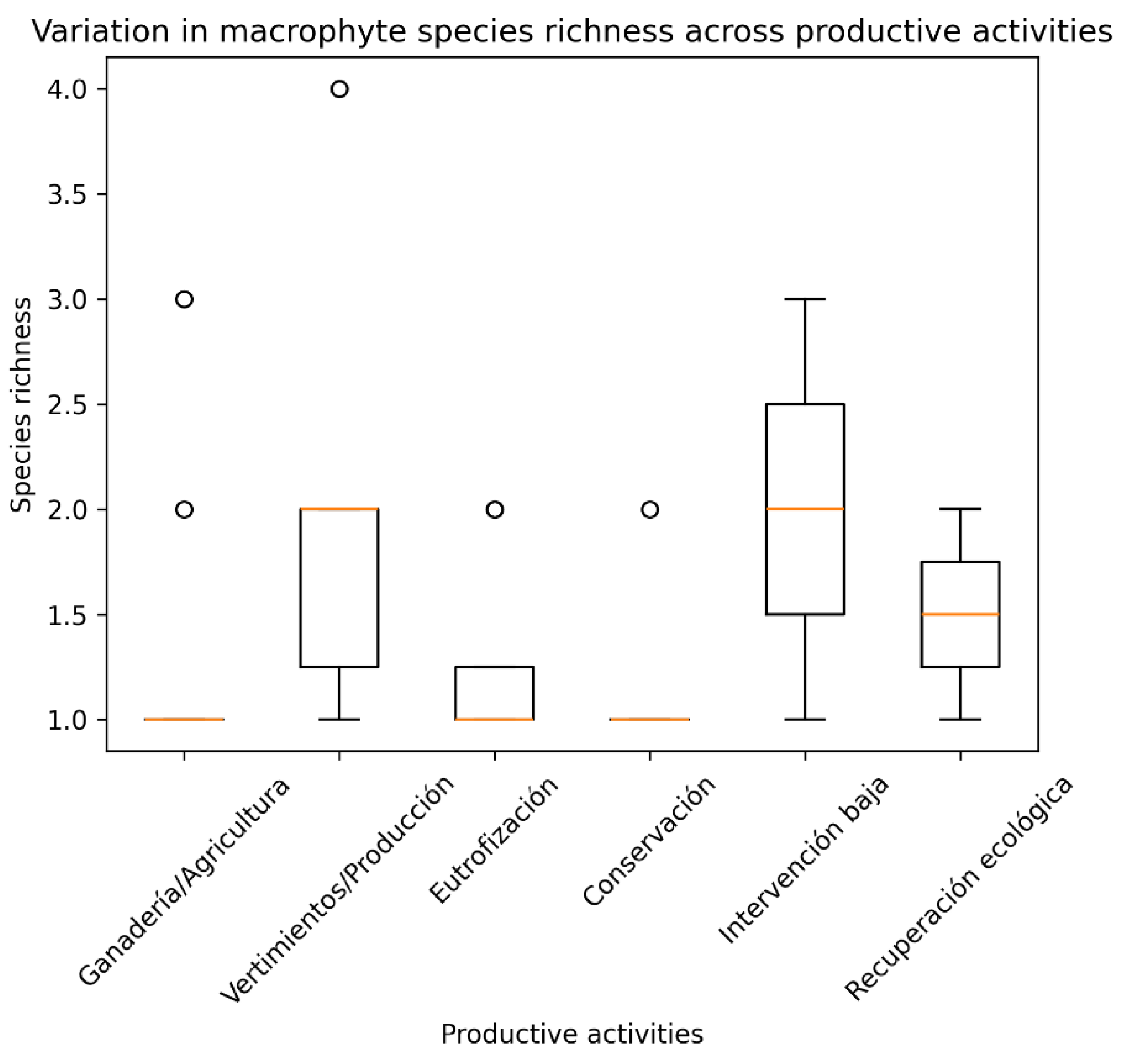
Sites influenced by livestock and agricultural activities tended to show greater variability in macrophyte richness, which may be associated with increased nutrient inputs and habitat disturbance that favor opportunistic or tolerant species. In contrast, sites with lower levels of anthropogenic influence generally exhibited more homogeneous richness values, often associated with species adapted to more stable ecological conditions.
Overall, these results highlight that while productive activities contribute to shaping macrophyte community patterns, their effect on species richness is likely mediated by habitat characteristics rather than acting as a direct driver.
Figure 6.
Variation in macrophyte species richness among sampling sites associated with different productive activities.
Figure 6.
Variation in macrophyte species richness among sampling sites associated with different productive activities.
3.8. Macrophyte Richness Across Mesohabitats and Vulnerability Levels
Macrophyte richness across the 47 sampling points ranged from one to four species per site, with a mean of 1.34 species (± 0.67 SD), indicating generally low local diversity within the aquatic ecosystems of the San Luis rural area.
Differences in richness among mesohabitats were evaluated using the Kruskal–Wallis test due to the non-normal distribution of the data. The analysis revealed significant differences among mesohabitats (H = 11.96, p = 0.035), indicating that species richness varies according to habitat type. Mesohabitats such as flood-prone lowlands, swamps, wetlands, artificial ponds (jagüey), naturalized ponds, and riparian zones therefore support different levels of macrophyte diversity.
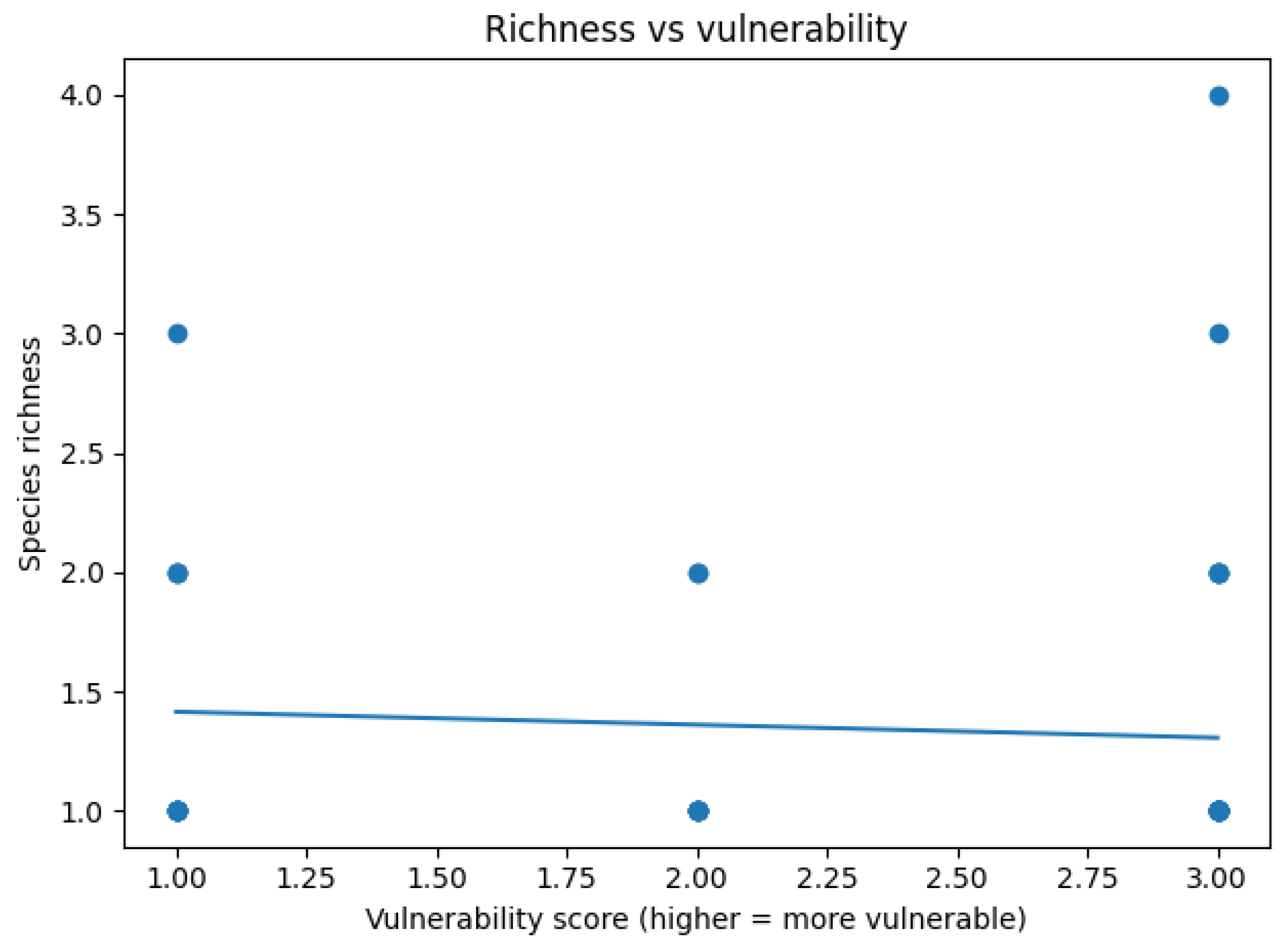
The relationship between species richness and ecosystem vulnerability was assessed using correlation analyses. Both Spearman (ρ = −0.118, p = 0.428) and Pearson (r = −0.069, p = 0.646) tests indicated no significant association between richness and vulnerability levels, suggesting that species richness alone does not adequately reflect ecosystem vulnerability within the study area.
To further evaluate the influence of environmental variables, a Generalized Linear Model (GLM) with a Poisson distribution was fitted using richness as the response variable and mesohabitat type and vulnerability as predictors. The model indicated that vulnerability was not a significant predictor of species richness (β = −0.063, p = 0.574). Model diagnostics showed no evidence of overdispersion (dispersion statistic = 0.25), confirming that the Poisson model provided an adequate fit for the data.
Overall, these results indicate that while macrophyte richness varies significantly across mesohabitats, it is not directly explained by vulnerability levels. This pattern suggests that aquatic plant communities in the study area are likely dominated by disturbance-tolerant or opportunistic species capable of persisting under a wide range of environmental conditions, including those associated with higher vulnerability.
These findings reinforce that habitat type, rather than vulnerability level, is the primary driver of macrophyte richness patterns in the study area.
Figure 7.
Relationship between macrophyte species richness and habitat vulnerability scores. Each point represents a sampling site. The line indicates the linear trend between both variables.
Figure 7.
Relationship between macrophyte species richness and habitat vulnerability scores. Each point represents a sampling site. The line indicates the linear trend between both variables.
4. Discussion
The results obtained in this study highlight a close relationship between the composition of aquatic macrophytes and the ecological conditions of the evaluated ecosystems, as well as the influence of productive activities occurring within the landscape. Some of the most representative species recorded in the evaluated mesohabitats, such as Urochloa plantaginea, Salvinia minima, and Nymphaea novogranatensis, showed distribution patterns that reflect both their adaptation to specific habitat conditions and the influence of anthropogenic activities developed in the study area.
Statistical analyses revealed that macrophyte species richness differed significantly among mesohabitats (Kruskal–Wallis test, p < 0.05), indicating considerable ecological heterogeneity within the aquatic ecosystems of the San Luis rural area. This result suggests that factors such as hydrological conditions, nutrient availability, and the degree of anthropogenic disturbance play a key role in shaping macrophyte communities. In particular, flood-prone lowlands exhibited relatively higher species richness, likely due to the combination of periodically saturated soils and nutrient inputs derived from agricultural and livestock activities.
The relationship between aquatic plant diversity and ecosystem resilience has been widely documented in the literature. Several studies suggest that greater macrophyte diversity is associated with a higher capacity of ecosystems to recover from environmental disturbances, including the impacts of climate change [22,23]. In the present study, ecosystems with a higher presence of native species and more complex vegetation structures, such as riparian zones of streams and some sectors of El Sábalo swamp, exhibited relatively more stable ecological conditions. These findings are consistent with those reported by Strayer [23], who indicates that aquatic ecosystems with diverse and structurally complex plant communities are better able to buffer variations in hydrological regimes and climatic conditions.
In contrast, mesohabitats more strongly influenced by human activities, such as flood-prone lowlands and some artificial ponds used for productive activities or receiving wastewater inputs, showed a higher presence of opportunistic species associated with disturbed environments, including Urochloa plantaginea, Andropogon bicornis, Cyperus odoratus, and Salvinia minima. These species exhibit a high capacity to adapt to disturbance conditions such as soil compaction caused by livestock, increased nutrient inputs, or altered hydrological regimes. The predominance of these species suggests processes of structural simplification of vegetation, which may reduce ecosystem resilience and increase vulnerability to environmental disturbances and climate change scenarios.
The influence of productive activities is also reflected in the distribution patterns of macrophytes identified through the principal component analysis (PCA). In flood-prone areas used for grazing, an association was observed between herbaceous species and grasses adapted to humid and disturbed environments, such as Urochloa plantaginea, Rottboellia exaltata, Sida acuta, and Panicum maximum. This pattern is consistent with findings reported by Jansen [24], who indicate that nutrient inputs derived from agricultural activities favor the proliferation of species tolerant to eutrophic conditions, thereby modifying plant community composition.
Similarly, in some sectors of El Sábalo swamp and ecosystems associated with artificial ponds, floating species such as Salvinia minima and Pontederia crassipes were recorded. These species often proliferate in environments with high levels of nutrients or organic matter. Previous studies have indicated that eutrophication processes derived from agricultural runoff or domestic wastewater discharges can promote the growth of floating macrophytes, thereby altering the ecological dynamics of aquatic systems [25].
However, correlation analyses conducted in this study indicated that macrophyte richness was not significantly related to habitat vulnerability to climate change (Spearman ρ = −0.118, p > 0.05). Consistently, the generalized linear model (GLM) with Poisson distribution showed that vulnerability was not a significant predictor of species richness. These results suggest that species richness alone may not accurately reflect the ecological vulnerability of aquatic ecosystems, since disturbed environments may still maintain several species tolerant to eutrophic or disturbed conditions.
This pattern has been previously described in tropical wetlands, where communities dominated by opportunistic species can persist under disturbed conditions without necessarily indicating high ecological integrity. In such cases, species composition may represent a more robust indicator of ecosystem ecological status than total species richness.
Conversely, ecosystems with lower anthropogenic intervention supported species associated with more stable hydrological conditions, such as Nymphaea novogranatensis, Bacopa egensis, Utricularia gibba, and Limnobium laevigatum. These species were mainly observed in environments with greater vegetation cover and lower pressure from productive activities, suggesting that they may function as indicators of relatively conserved ecological conditions.
Additionally, several species recorded in the inventory may play an important role in phytoremediation processes within the studied aquatic ecosystems. Many macrophytes present in the San Luis rural area have been documented for their capacity to absorb nutrients, retain sediments, and remove contaminants from aquatic environments. Among these species are Pontederia crassipes, Salvinia minima, Limnobium laevigatum, Bacopa egensis, and Utricularia gibba, which have been widely studied for their capacity to remove nitrogen, phosphorus, heavy metals, and organic matter from eutrophic aquatic systems [27,28].
In this context, the conservation and sustainable management of aquatic ecosystems in the San Luis rural area require an integrated approach that considers both the protection of areas with higher ecological integrity and the implementation of more sustainable productive practices in surrounding zones. The restoration of riparian vegetation, reduction of wastewater inputs, and improved management of agricultural and livestock activities may significantly contribute to enhancing ecosystem resilience to climate change impacts. These findings are consistent with patterns reported in tropical wetlands, where species richness alone is not always a reliable indicator of ecological condition.
5. Conclusions
The results of this study highlight the complex relationship between macrophyte richness, community composition, and ecosystem vulnerability to climate change in tropical aquatic systems.
Mesohabitats with higher diversity of native species and more structurally complex vegetation, such as riparian zones, conserved wetlands, and some sectors of El Sábalo swamp, exhibited greater ecological stability and adaptive capacity to variations in hydrological regimes and environmental conditions. In contrast, mesohabitats more strongly affected by human activities, including flood-prone lowlands and artificial ponds (jagüey) used for productive purposes or receiving wastewater inputs, showed simplified vegetation structures, which may increase their vulnerability under climate change scenarios.
In these disturbed environments, a higher occurrence of opportunistic and disturbance-tolerant species was observed, including Urochloa plantaginea, Salvinia minima, Cyperus odoratus, and Andropogon bicornis. These species exhibit high adaptability to eutrophic conditions and altered hydrological regimes, facilitating their expansion in ecosystems influenced by productive activities. However, their dominance is often associated with reduced diversity and simplified community structure, potentially limiting the capacity of aquatic ecosystems to respond effectively to extreme environmental changes.
The statistical analyses further support these patterns. Significant differences in species richness among mesohabitats indicate strong spatial heterogeneity in ecological conditions, while the lack of a significant relationship between richness and vulnerability (as indicated by correlation analyses and GLM results) suggests that species richness alone is not a reliable predictor of ecosystem vulnerability. Instead, community composition and species functional traits appear to play a more critical role in determining ecosystem responses to environmental stressors.
The PCA results revealed that productive activities such as livestock farming, agriculture, aquaculture, and pig farming significantly influence the composition of aquatic vegetation. In areas affected by wastewater discharges or runoff from productive systems, a higher presence of species tolerant to elevated organic matter was observed, including Commelina diffusa, Ludwigia decurrens, Rhynchospora corymbosa, and Heliconia psittacorum. These conditions favor fast-growing and highly tolerant species, reflecting the direct impact of anthropogenic pressures on aquatic plant communities.
Conversely, ecosystems with lower anthropogenic disturbance supported species associated with more stable environmental conditions, such as Nymphaea novogranatensis, Bacopa egensis, Utricularia gibba, Limnobium laevigatum, and Luziola subintegra. These species may serve as indicators of relatively conserved ecological conditions and contribute to key ecosystem functions, including sediment stabilization, hydrological regulation, and habitat provision for aquatic organisms.
Overall, the findings indicate that macrophyte richness and community composition are valuable ecological indicators of ecosystem condition and vulnerability to climate change. The conservation of native vegetation cover, protection of riparian zones, and implementation of sustainable land-use practices are essential to enhance ecosystem resilience. In this context, ecological restoration strategies, improved wastewater management, and the adoption of sustainable agricultural practices should be prioritized to reduce the vulnerability of wetlands and aquatic ecosystems in the Middle Magdalena region under future climate change scenarios.
Overall, this study highlights that macrophyte composition, rather than species richness alone, is a more robust indicator of ecological vulnerability in tropical aquatic ecosystems.
Author Contributions
Conceptualization, Jesús Quintero Cardozo, Alejandro Zuluaga and Oscar Orlando Porras; methodology, Jesús Quintero Cardozo; investigation, Juan Lozano, Armando Aguilar and Jesús Quintero Cardozo; formal analysis, Alejandro Zuluaga; writing—original draft preparation, Jesús Quintero Cardozo; writing—review and editing, Efraín Carvajal, Kelly Cristina Torres and Oscar Orlando Porras; supervision, Kelly Cristina Torres; project administration, Kelly Cristina Torres; funding acquisition, Oscar Orlando Porras. All authors have read and agreed to the published version of the manuscript.
Funding
This research was funded by the Ministry of Science, Technology and Innovation of Colombia with resources from the General System of Royalties, the Government of Santander, and the Instituto Universitario de la Paz (UNIPAZ).
Data Availability Statement
The data supporting the findings of this study are subject to restrictions imposed by the project funders. According to these conditions, the data are not publicly available and can only be disclosed through scientific publications derived from this research.
Acknowledgments
The authors would like to thank the Instituto Universitario de la Paz (UNIPAZ), the Ministry of Science, Technology and Innovation of Colombia (MINCIENCIAS), and the Government of Santander for funding the project “Design of sustainable production systems as a strategy for the conservation of degraded rural landscapes in Barrancabermeja, Santander”, from which this research was derived, strengthening knowledge on the importance of aquatic plants in Colombia. The authors also acknowledge the research group on conservation and use of biodiversity BIOCON for their academic and scientific support.:
Abbreviations
The following abbreviations are used in this manuscript:
| MDPI | Multidisciplinary Digital Publishing Institute |
| DOAJ | Directory of open access journals |
| TLA | Three letter acronym |
| LD | Linear dichroism |
| MINCIENCIAS | Ministry of Science, Technology and Innovation of Colombia |
| UNIPAZ | University Institute of Peace |
| BIOCON | Research Group on Conservation and Use of Biodiversity |
References
- Zedler, J. B.; Kercher, S. Wetland resources: Status, trends, ecosystem services, and restorability. Annual Review of Environmental Resources 2005, 30, 39–74. [Google Scholar] [CrossRef]
- IPCC. Climate Change 2014: Impacts, Adaptation, and Vulnerability; Cambridge University Press, 2014. [Google Scholar]
- Acreman, M.; Arthington, A. H.; Colloff, M. J.; Couch, C.; Crossman, N. D.; Dyer, F.; Overton, I.; Pollino, C. A.; Stewardson, M. J.; Young, W. Environmental flows for natural, hybrid, and novel riverine ecosystems in a changing world. Frontiers in Ecology and the Environment 2014, 12, 466–473. [Google Scholar] [CrossRef]
- Duarte, C. M.; Holmer, M.; Olsen, Y.; Soto, D. Will the oceans help to fight global warming? Frontiers in Ecology and the Environment 2008, 6, 504–508. [Google Scholar]
- Alahuhta, J. M. L. H. P. Wetland plants as indicators of ecological status: Implications of climate change. Hydrobiologia 2017, 804, 57–68. [Google Scholar]
- Weigel, B.; L. P. A. M. & J. P. The role of aquatic plants in the vulnerability of wetland ecosystems to climate change. Ecological Indicators 2020, 110, 105933. [Google Scholar]
- Mitsch, W. J.; Gosselink, J. G. Wetlands, 5th ed.; Wiley, 2015. [Google Scholar]
- Brix, H. Functions of macrophytes in constructed wetlands. Water Science and Technology 1994, 29, 1–16. [Google Scholar] [CrossRef]
- Richardson, D. M.; Pyšek, P. Plant invasions: Merging the concepts of species invasiveness and community invasibility. Progress in Physical Geography 2006, 30, 409–431. [Google Scholar] [CrossRef]
- Gamboa, M.; Reyes, R.; Arrivillaga, J. Macroinvertebrados bentónicos como bioindicadores de salud ambiental. Boletín de malariología y salud ambiental 2008, 48, 109–120. [Google Scholar]
- Cairns, J.; McCormick, P. V.; Niederlehner, B. R. A proposed framework for developing indicators of ecosystem health. Hydrobiologia 1993, 263, 1–44. [Google Scholar] [CrossRef]
- Bonada, N.; Prat, N.; Resh, V. H.; Statzner, B. Developments in aquatic insect biomonitoring: A comparative analysis of recent approaches. Annual Review of Entomology 2006, 51, 495–523. [Google Scholar] [CrossRef]
- Ministerio De Ambiente Y Desarrollo Sostenible. Guía metodológica para la formulación de los planes de manejo ambiental de microcuencas—PMAM. 2018. Available online: http://www.andi.com.co/Uploads/GUÍA%20PMA%20de%20Microcuenca.pdf.
- Lasso, C. Descripción Metodológica Para La Evaluación Biológica En Los Complejos De Humedales. Instituto de Investigación de Recursos Biológicos Alexander von Humboldt. 2015. Available online: http://repository.humboldt.org.co/bitstream/handle/20.500.11761/9591/2211%20Descripci%C3%B3n%20metodologica%20Bd_Humedales_PazAriporo.pdf?sequence=1&isAllowed=y.
- Instituto de Hidrología; Meteorología y Estudios Ambientales (IDEAM). Protocolo para el monitoreo de la vegetación acuática y ribereña en humedales continentales de Colombia; IDEAM, 2021. [Google Scholar]
- NatureServe. Guidelines for using the Climate Change Vulnerability Index (CCVI). NatureServe. 2011. Available online: https://www.natureserve.org/sites/default/files/2024-10/CCVI_Guidelines_4.0_USGS%20approved.pdf.
- Bernal, R.; Gradstein, S.R.; Celis, M. (Eds.) Catálogo de Plantas y Líquenes de Colombia. v1.1. Universidad Nacional de Colombia. Dataset/Checklist. 2020. [Google Scholar] [CrossRef]
- Mora Marín, M. A.; Ríos Pescador, L.; Ríos Ramos, L.; Almario Charry, J. L. Impacto de la actividad ganadera sobre el suelo en Colombia. Ingeniería Y Región 2017, 17, 1–12. [Google Scholar] [CrossRef]
- Carrillo, G. A. C. Evaluación de Salvinia minima Baker como potencial… [Tesis de maestría, Centro de Investigación Científica de Yucatán, A. C.]. Repositorio Institucional CICY. 2017. Available online: https://cicy.repositorioinstitucional.mx/jspui/bitstream/1003/433/1/PCB_RN_M_Tesis_2017_Carrillo_%20Gerardo.pdf.
- Beyra, Ángela; Reyes Artiles, G. Revisión taxonómica de los géneros Phaseolus y Vigna (Leguminosae-Papilionoideae) en Cuba. Anales Del Jardín Botánico De Madrid 2004, 61, 135–154. [Google Scholar] [CrossRef]
- Sanclemente, Maria Angélica; Peña, Enrique Javier. Crecimiento y eficiencia fotosintética de ludwigia decurrens walter (onagraceae) bajo diferentes concentraciones de nitrógeno. Acta Biológica Colombiana 2008, 13, 175–186. Available online: http://www.scielo.org.co/scielo.php?script=sci_arttext&pid=S0120-548X2008000100012&lng=en&tlng=es.
- Barton, D. R.; de Senerpont Domis, L. N.; Hillebrand, H.; Bendor, R. Aquatic plant diversity and its role in ecosystem resilience. Hydrobiologia 2019, 831, 45–58. [Google Scholar]
- Strayer, D. L.; Eviner, V. T.; Jeschke, J. M.; Pace, M. L. Understanding the role of biodiversity in ecosystem function: The relationship between aquatic plant diversity and ecosystem resilience. Ecology Letters 2003, 6, 612–620. [Google Scholar] [CrossRef]
- Jansen, M. A.; Pol, D. D.; Wijgergangs, M. Effects of grazing and agriculture on aquatic macrophyte diversity in temperate wetlands. Environmental Management 2012, 50, 447–455. [Google Scholar]
- Gómez, C.; González, L.; Sánchez, E. Impacto de la eutrofización en ecosistemas acuáticos tropicales. Revista de Biología Tropical 2014, 62, 1–14. [Google Scholar]
- Vilà, M.; Garcı́a-Berthou, E.; Chave, J. Impacts of invasive species on ecosystem functioning. Ecology 2011, 92, 1708–1717. [Google Scholar]
- Mishra, V. K.; Tripathi, B. D. Concurrent removal and accumulation of heavy metals by three aquatic macrophytes. Bioresource Technology 2008, 99, 7091–7097. [Google Scholar] [CrossRef]
- Carvalho, P. N.; Basto, M. C. P.; Almeida, C. M. R.; Brix, H. A review of plant–pharmaceutical interactions: from uptake and effects in plants to phytoremediation in constructed wetlands. Environmental Science and Pollution Research 2013, 21, 11729–11763. [Google Scholar] [CrossRef]
- Gray, J. S. [Rev. of B.A. Markert, A.M. Breure, H.G. Zechmeister, Review of Bioindicators and Biomonitors: Principles, Concepts and Applications, 2003]. Marine Pollution Bulletin 2005, 50, 360–361. [Google Scholar] [CrossRef]
Figure 1.
Study areas.

Figure 2.
Relationship between macrophyte richness and the different mesohabitats evaluated.

Figure 3.
Species with the highest frequency of occurrence across the evaluated mesohabitats.

Figure 5.
Principal Component Analysis (PCA) showing the relationship between macrophyte species and anthropogenic activities across mesohabitats.
Figure 5.
Principal Component Analysis (PCA) showing the relationship between macrophyte species and anthropogenic activities across mesohabitats.

Disclaimer/Publisher’s Note: The statements, opinions and data contained in all publications are solely those of the individual author(s) and contributor(s) and not of MDPI and/or the editor(s). MDPI and/or the editor(s) disclaim responsibility for any injury to people or property resulting from any ideas, methods, instructions or products referred to in the content. |
© 2026 by the authors. Licensee MDPI, Basel, Switzerland. This article is an open access article distributed under the terms and conditions of the Creative Commons Attribution (CC BY) license (http://creativecommons.org/licenses/by/4.0/).
Copyright: This open access article is published under a Creative Commons CC BY 4.0 license, which permit the free download, distribution, and reuse, provided that the author and preprint are cited in any reuse.


