

Submitted:
09 April 2026
Posted:
13 April 2026
You are already at the latest version
Abstract
Background: Highly active antiretroviral therapy (HAART) has transformed HIV into a manageable chronic condition but is associated with dyslipidemia, increasing cardiovascular disease (CVD) risk. Data on lipid profile alterations in rural South Africa primary healthcare settings remain limited despite high HIV burdens. The purpose of the study was to determine the prevalence of lipid profile alterations among adult HIV patients receiving HAART at rural Eastern Cape primary healthcare facilities. Methods: Retrospective cross-sectional analysis of clinical and laboratory records from 370 adults (>18 years) on HAART at five OR Tambo District health care facilities (2020 – 2024) Lipid parameters (Total cholesterol {TC} LDL Cholesterol< HDL cholesterol, Tri-glycerides {TG} from National Health Laboratory Services (NHLS) data base were assessed NCRP ATP III thresholds. Prevalence was calculated with SPSS v29.0; overall dyslipidemia defines as any abnormality. Results: High prevalence of lipid alterations was observed: hypercholesterolemia 53.8 % (199/370). Overall dyslipidemia affected 80.8 % (299/370) of patients, confirming substantial metabolic burden in this rural cohort. Conclusion: Over 80% of rural HAART patients exhibited dyslipidemia predominantly elevated LDL-cholesterol, LDL+C (61.4%) and triglycerides (60.5%) Findings underscore urgent need for routine lipid screening, regimen optimization toward integrase strand transfer inhibitors. (INSTIs) and NCD-HIV integration in South Africa’s primary healthcare system to mitigate CVD risk.
Keywords:
HIV
; HAART
; dyslipidaemia
; lipid profile
; primary healthcare
; Eastern Cape
; South Africa
1. Introduction
Human immunodeficiency Virus (HIV) infection remains one of the most significant global public health challenges, with an estimated 40.8 million [37.0-45.6 million] people living with HIV worldwide as of 2024, of whom 1.4 million [1.1-1.8] are children (0-14 years old) and 39.4 million adults (15+ years old) [1]. In sub-Saharan Africa, which bears approximately 65% of the global HIV burden, South Africa stands has the highest number of infections, with about over 8.0 million people living with HIV representing about 12.7% of the total population [2]. The Eastern Cape Province, including East London, exemplified this regional strain, where HIV prevalence among adults aged 15-49 years hovers around 20-25%, driven by factors such as socioeconomic disparities, limited healthcare access, and high rates of undiagnosed cases [3].
The advent of Highly Active Antiretroviral Therapy (HAART), now more commonly referred to as Antiretrovirals Therapy (ART), has revolutionized HIV management since it is introduction in mid-1990s. HAART regimens , typically comprising combinations of nucleotide reverse transcriptase inhibitors (NRTIs), non-nucleoside reverse transcriptase inhibitors (NNRTIs), protease inhibitors (Pi’s) and integrase strand transfer inhibitors (INSTIs), suppress viral replication, restore immune function, and transform HIV from a fatal disease into a manageable chronic condition [4]. In South Africa, nationwide ART rollout began in 2004 under the public health system, achieving remarking scale-up by 2025, over 5.5 million people were on treatment, with viral suppression rates exceeding 90% in adherent populations. Primary Healthcare Facilities (PHCFs) serve as the frontline for this delivery, particularly in resource-limited settings, where task-shifting to nurses and community health workers has decentralized care and improved retention [5].
Despite these successes, HAART is associated with metabolic complications, notably alterations in lipid profiles collectively termed dyslipidaemia. Lipid profile alterations encompass elevated total cholesterol (TC), low-density lipoprotein cholesterol (LDL-C), triglycerides (TG), and reduced high-density lipoprotein cholesterol (HDL-C), which collectively heighten cardiovascular disease (CVD) risk [6]. HIV itself contributes to dyslipidaemia: for example, the HIV accessory protein Vpr can inhibit intracellular peroxisome-proliferator-activated receptor gamma (PPAR-y), leading to free fatty acid (FFA) overaccumulation and lipotoxicity [5]. HIV Nef protein was identified to impair cholesterol efflux from infected macrophages by affecting ATP-binding cassette transporter protein A1 (ABCA1) function, which ultimately leads to circulating high-density lipoprotein cholesterol (HDL-C) deficiency.[5] Additionally, HIV Tat protein promotes the up-regulation of cholesterol biosynthesis genes, leading to elevated free cholesterol cholesteryl esters levels. through chronic inflammation, immune activation, and opportunistic infections, but HAART exacerbates this via direct drug effects. Protease inhibitors (e.g., Lopinavir/ ritonavir) inhibit lipolysis and promote lipogenesis, leading to hypertriglyceridemia and low HDL-C. NNRTIs like efavirenz increase TC and LDL-C, while some NRTIs (e.g., stavudine, zidovudine) induce mitochondrial toxicity, fat redistribution (lipoatrophy), and insulin resistance. Newer regimens with dolutegravir-based INSTIs show improved profiles but still pose risks, particularly in polypharmacy scenarios common in PHCFs [7].
2. Materials and Methods
2.1. Study Design
This is a retrospective cross-sectional analytical study which utilized previously collected clinical and laboratory data from adult HIV-positive patients receiving Highly Active Antiretroviral Therapy (HAART) at selected rural primary healthcare facilities in the Eastern Cape province, South Africa, conducted under the Research Capacity Development initiative (RCDI) of the South African Medical Research Council (SAMRC)
2.2. Study Setting
Data were sourced from institutional clinical records and the National Health Laboratory Service (NHLS) database at five rural primary healthcare facilities in the OR Tambo District Municipality, Eastern Cape. These facilities provide comprehensive HIV care, including routine monitoring and laboratory investigations, serving predominantly rural communities with high HIV burdens (prevalence- 25% among adults aged 15-49%) [14]. The region features limited healthcare resources and high rates of comorbidities like tuberculosis, making it ideal for examining HAART-associated metabolic complications. Map of OR Tambo showing the five sub-municipalities [14].
2.3. Study Population
The study population was part of the primary Research Capacity Development Initiative South African Research Council (RCDI SAMRC, No (MRC-RFA-CC 01-2014) study that focused on black Africans in rural and urban selected healthcare facilities in O.R Tambo District Municipality, Eastern Cape.
2.4. Inclusion Criteria
- Adults aged ≤ 18 years old
- Individuals without HIV diagnosis or not on HAART.
2.5. Excluding Criteria
- Adults aged ≥ 18 years diagnosed with HIV and receiving HAART at the selected facilities.
2.6. Sampling Size and Sampling Strategy
2.6.1. Sampling Strategy
A complete enumeration (Census) approach was used, including all eligible patients from the secondary dataset meeting inclusion criteria.
2.6.2. Sample Size Calculation
Sample size was calculated using formula for estimating population proportion:
N = Z 2 P(1-p)
d2
where Z= 1.96 (95% confident level), P-0.75 (expected dyslipidaemia prevalence based on prior studies: 70-80%), and d=0.05 (precision). This yielded n=289, adjusted to 318 for a 10% non-response rate. Complete data were available for 370 participants, all included to enhance statistical power.
2.7. Statistical Analysis
Analysis was performed using SPSS version 29.0. Descriptive statistics included frequencies/ percentages for categorical variables and means± standard deviations for continuous variables. For HAART regimen comparisons, one-way ANOVA assessed mean lipid level differences (post-hoc Tukey test for pairwise comparisons).
2.7. Patients Records Review for Clinical Data Collection
Clinical data were collected through retrospective review of patient’s medical records at selected rural primary healthcare facilities in the Eastern Cape province. Trained research assistants extracted information from paper-based and/ or electronic patient files, ART registers, and laboratory result sheets using a standardized data collection form aligned with the study variables. The form captured demographic characteristics (age, sex, education), HIV-related factors (date of diagnosis, CD4 count, viral load, WHO clinical stage), HAART details (regimen type, start date, duration on treatment), comorbidities (Hypertension, diabetes), and lipid-related data (total cholesterol, LDL-C, HDL-C, triglyceride, and date of lipid profile). To minimize bias and errors, a pilot review of 10-20 records was conducted to refine form, and double-data entry and regular checks were performed to ensure accuracy and completeness of the extracted information.
2.8. Specimen Collection, Storage, Transport, and Handling
Data were retrospectively extracted from clinical records and NHLS testing. Venous blood was collected into serum separator tubes, allowing to clot, centrifuged, and analysed on automated clinical chemistry analyzers (Roche Cobas) per manufacturer protocols. Parameters included TC, TG, HDL-C (direct assay), and LDL-C (calculated via Friedewald equation: LDL-C=TC-HDL-C – TG/2.2, valid if TG < 4.5 mmol/L. all labs were NHLS-accredited with internal quality controls and external proficiency testing. Dyslipidaemia thresholds followed NCEP ATP III guidelines: TC ≥ 5.3 mmol/L, TG ≥ 1.7 mmol/L, HDL-C < 1.0 mmol/L (men)/ < 1.3 mmol/l (women), LDL-C ≥ 3.4 mmol/L.
2.9. Laboratory Procedure (Serum Lipid Profile)
Lipid profile parameters were measured using serum samples obtained from fasting blood draws, as serum is generally preferred over plasma for lipid assays to avoid potential interferences from anticoagulants of lipids by interfering with enzymatic or colorimetric reactions, leading to inaccurate reporting of total cholesterol (TC), low-density lipoprotein cholesterol (LDL-C), high-density lipoprotein cholesterol (HDL-C), and triglycerides (TG). To minimize such interference, samples were allowed to clot fully before centrifugation, and serum was separated promptly for analysis.
Lipid parameters were analyzed using standard enzymatic colorimetric methods on an automated clinical chemistry analyzer (e.g., Abbot ARCHITECT, Cobas, or similar), as routinely performed in clinical laboratories. Total cholesterol and triglycerides were measured via enzymatic reactions involving cholesterol esterase/ cholesterol oxidase and glycerol-3-phosphate oxidase/ peroxidase systems, respectively, producing a colored product whose absorbance is proportional to the analyte concentration, HDL-C was measured after selective precipitation of apolipoprotein-B containing lipoproteins, while LDL-C was either directly assayed using homogenous enzymatic methods or calculated using the Friedewald equation where triglyceride levels were below the recommended threshold. Assays were calibrated daily using manufacturer-recommended calibrators, and internal quality-control samples were run with each batch to ensure accuracy and precision of the lipid profile results.
2.8. Ethical Considerations and Data Protection
Ethical approval was granted by Walter Sisulu University Faculty Research Ethics Committee (protocol: WSU HREC 461/2025), Data were anonymized (no personal identifiers retained), stored on password-protected laptop in Microsoft Excel, then exported to SPSS. Access was limited to the principal investigator and supervisors, ensuring confidentiality per POPIA and Helsinki Declaration Principles.
3. Results
Figure 3.
1: Shows the distribution of participants according to HAART regimen. Majority participants were receiving TDF/3TC (38.1%, n=141) and TDF/FTC (37.8%, n=140). A smaller proportion were on ABC/3TC/DTG (15.1%, n=56), while the least represented regimen was AZT (8.9%, n=33).
Figure 3.
1: Shows the distribution of participants according to HAART regimen. Majority participants were receiving TDF/3TC (38.1%, n=141) and TDF/FTC (37.8%, n=140). A smaller proportion were on ABC/3TC/DTG (15.1%, n=56), while the least represented regimen was AZT (8.9%, n=33).
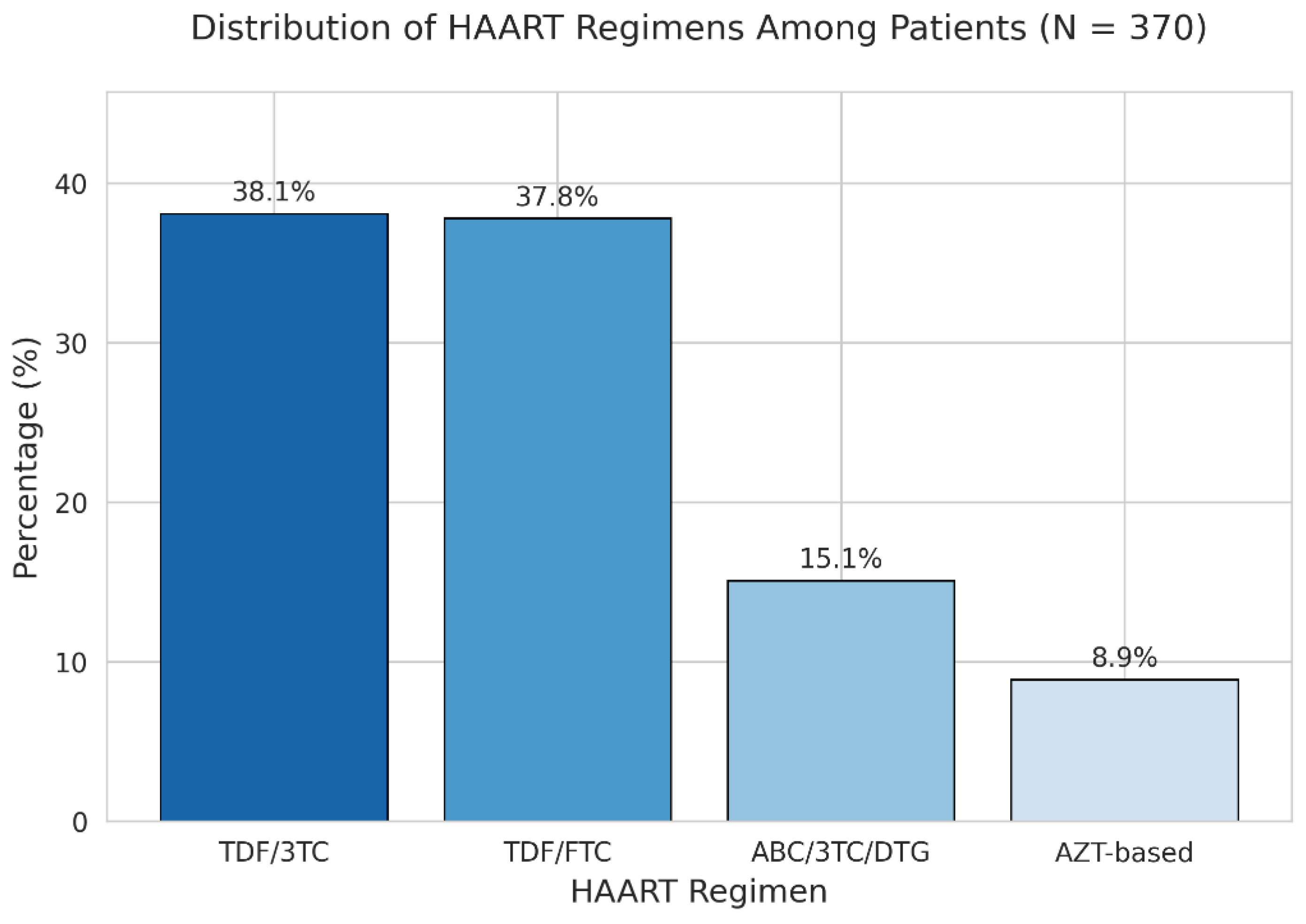
Figure 3.
2: Age category distribution among 370 adults HIV-positive patients receiving HAART at selected Eastern Cape primary healthcare facilities. Age categories: 1=18-29 years (23.0%), 2=30-39 years (16.8%), 3= 40-49 years (20.3%), 4= 50-59 years (21.9%), 5= ≥60 years (18.1%). The largest proportion of patients were in the 18-29 years (23.0%) and 50-59 years (21.9%) age groups.
Figure 3.
2: Age category distribution among 370 adults HIV-positive patients receiving HAART at selected Eastern Cape primary healthcare facilities. Age categories: 1=18-29 years (23.0%), 2=30-39 years (16.8%), 3= 40-49 years (20.3%), 4= 50-59 years (21.9%), 5= ≥60 years (18.1%). The largest proportion of patients were in the 18-29 years (23.0%) and 50-59 years (21.9%) age groups.
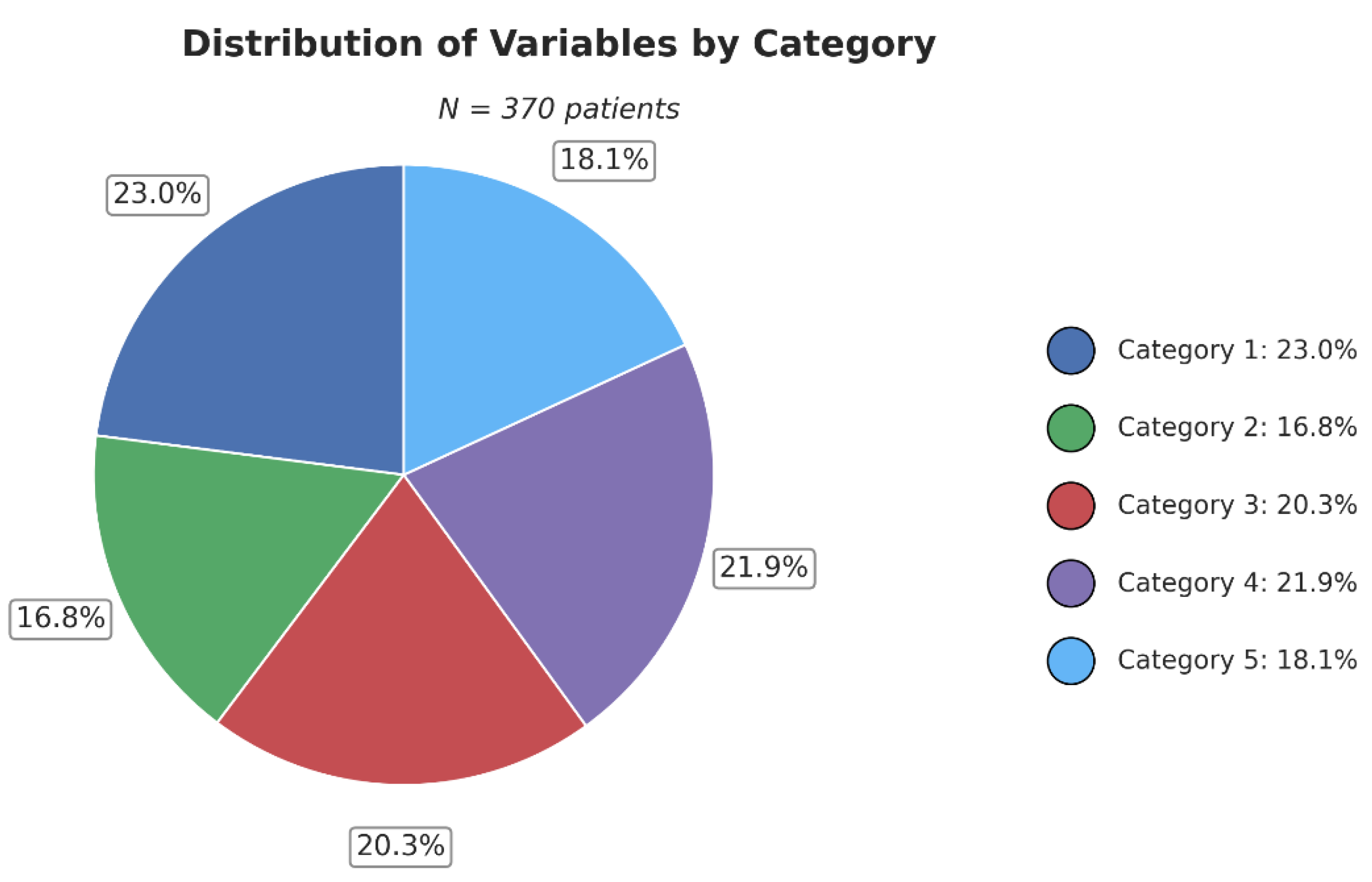
Figure 3.
3: Age distribution of participants (n=370). The largest proportion fell within 18-29 years ( 23.0%, n=85), followed by 50-59 years (21.9%, n=81) and 40-49 years (23.3%, n=75), with 60-69 years (18.1%, n=67) and 30-39 years (16.8%, n=62) completing the distribution across five age categories.
Figure 3.
3: Age distribution of participants (n=370). The largest proportion fell within 18-29 years ( 23.0%, n=85), followed by 50-59 years (21.9%, n=81) and 40-49 years (23.3%, n=75), with 60-69 years (18.1%, n=67) and 30-39 years (16.8%, n=62) completing the distribution across five age categories.
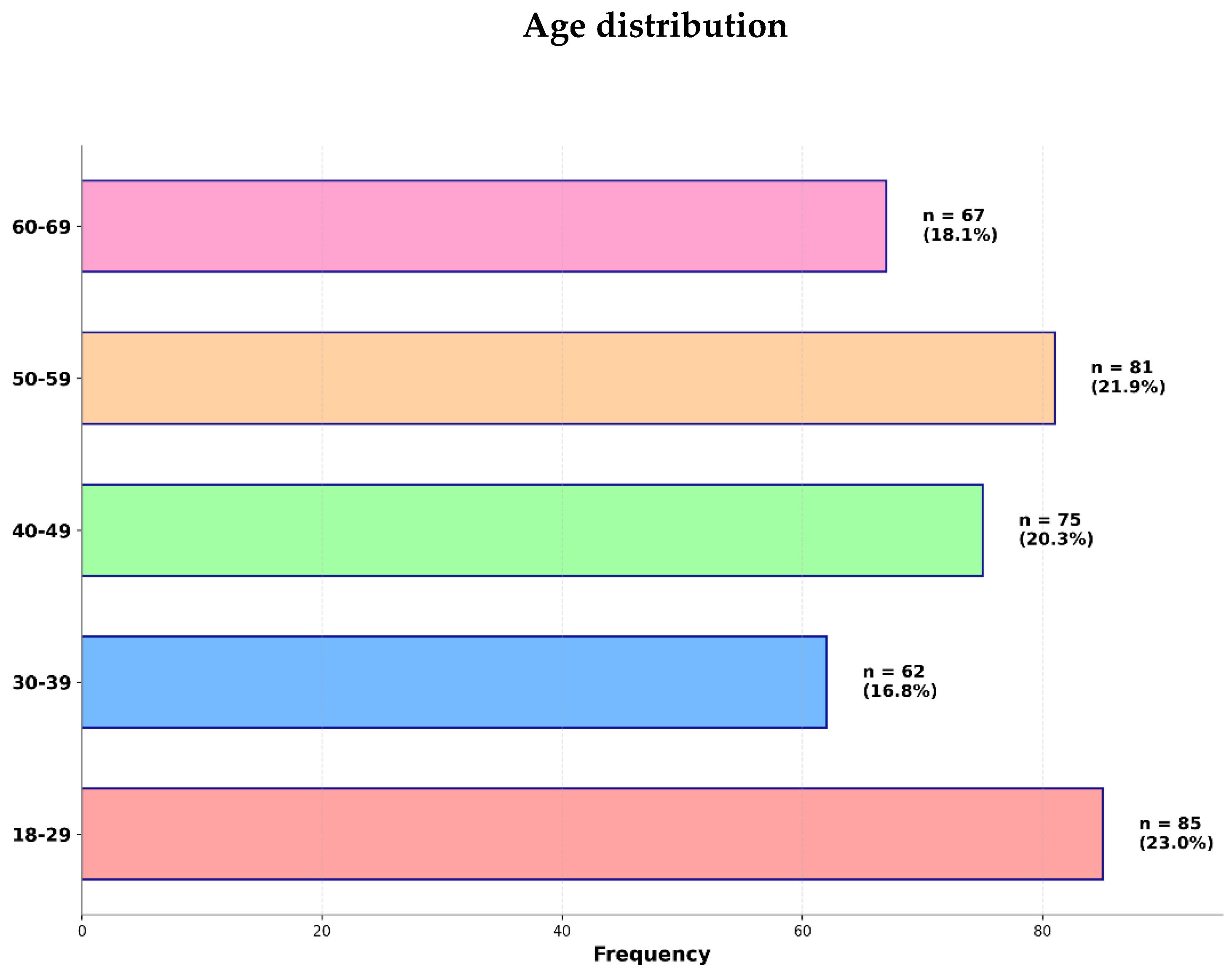
Figure 3.
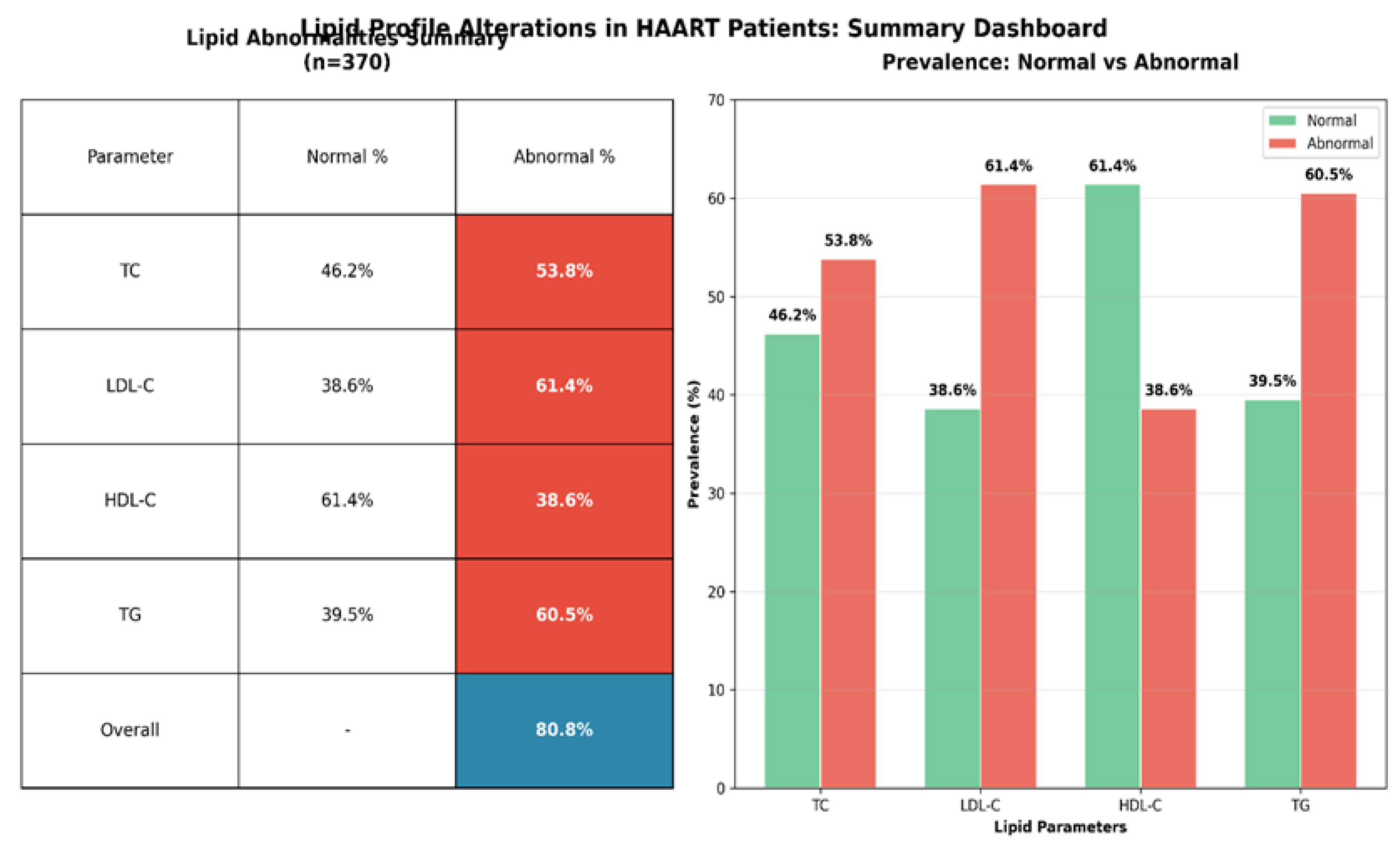
4: Bar chart showing prevalence of individual lipid abnormalities. This figure summarizes lipid profile alterations among 370 HAART patients. Hypercholesteremia affected 53.8% (n=199), elevated LDL-C 61.4% (n=227), low HDL-C 38.6% (n=143), and hypertriglyceridemia 60.5% (n=224). Overall, 80.8% exhibit at least one lipid abnormality, confirming high dyslipidaemia burden in this rural cohort.
Figure 3.
4: Bar chart showing prevalence of individual lipid abnormalities. This figure summarizes lipid profile alterations among 370 HAART patients. Hypercholesteremia affected 53.8% (n=199), elevated LDL-C 61.4% (n=227), low HDL-C 38.6% (n=143), and hypertriglyceridemia 60.5% (n=224). Overall, 80.8% exhibit at least one lipid abnormality, confirming high dyslipidaemia burden in this rural cohort.
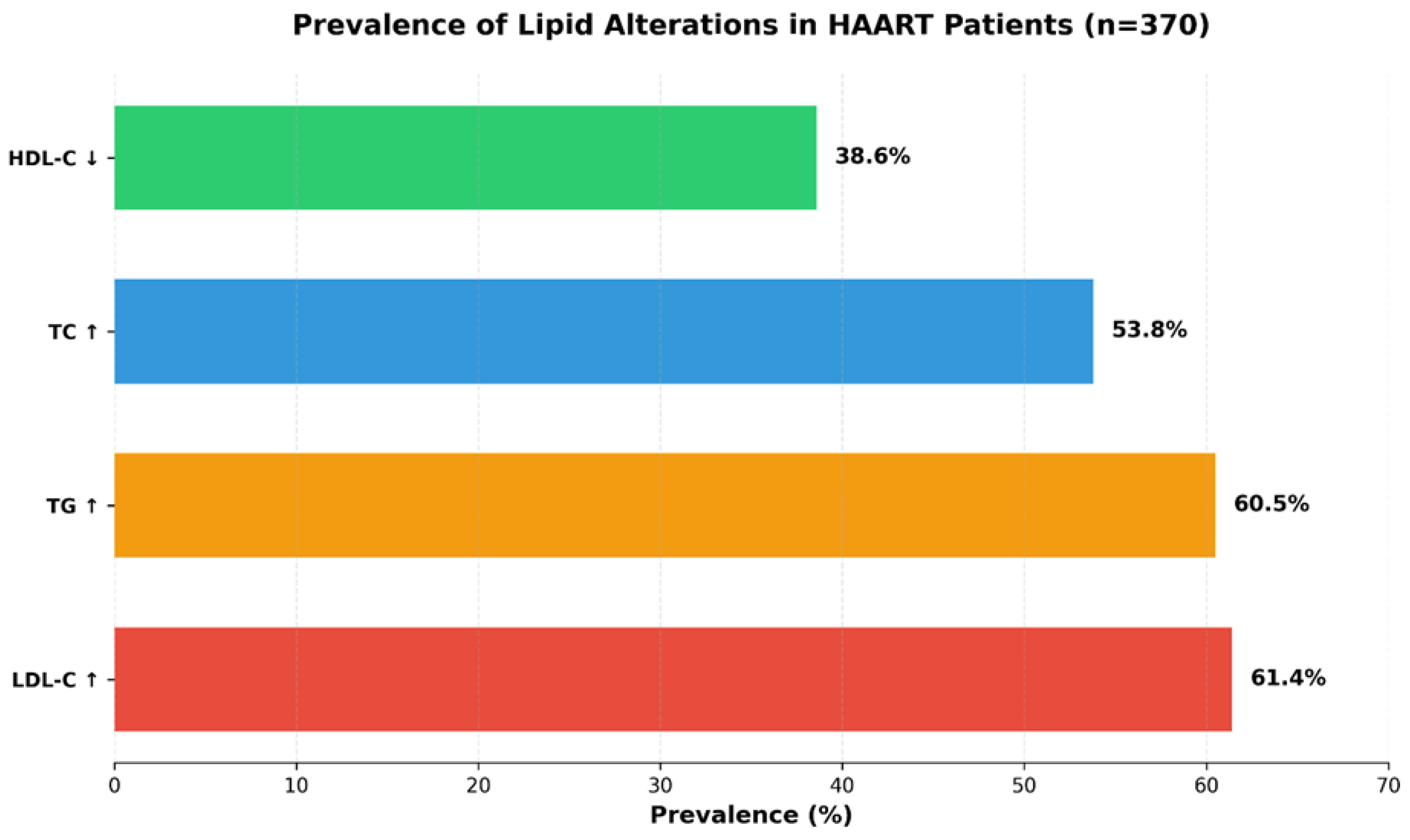
Figure 3.
5: Dual-panel visualization of lipid abnormalities among 370 adult patients receiving HAART at rural Eastern Cape primary health care facilities. Left panel: summary table showing prevalence of normal vs abnormal parameters (red highlighting indicates abnormal rates). Right Panel: Grouped bar chart comparing normal (green) versus abnormal (red) prevalence across four lipid parameters. TC=total cholesterol; LDL-C= low density lipoprotein cholesterol; HDL-C= high-density lipoprotein cholesterol; TG=triglycerides. Data derived from National Health Laboratory Service (NHLS) records, 2020-2-24. Overall dyslipidaemia prevalence: 80.8% (any abnormal parameter).
Figure 3.
5: Dual-panel visualization of lipid abnormalities among 370 adult patients receiving HAART at rural Eastern Cape primary health care facilities. Left panel: summary table showing prevalence of normal vs abnormal parameters (red highlighting indicates abnormal rates). Right Panel: Grouped bar chart comparing normal (green) versus abnormal (red) prevalence across four lipid parameters. TC=total cholesterol; LDL-C= low density lipoprotein cholesterol; HDL-C= high-density lipoprotein cholesterol; TG=triglycerides. Data derived from National Health Laboratory Service (NHLS) records, 2020-2-24. Overall dyslipidaemia prevalence: 80.8% (any abnormal parameter).
4. Discussion
The study revealed a high prevalence of lipid profile alterations among HIV patients on HAART in rural Eastern Cape primary Healthcare facilities, with 53.8% exhibiting hypercholesterolemia (TC abnormal), 61.4% elevated LDL-C, 38.6% low HDL-C, and 60.5% hypertriglyceridemia [15]. Overall dyslipidaemia affected over 80% of participants when considering any abnormality, aligning with the dual metabolic burden expected in long-term HAART recipient [16].
4.1. Comparison with Existing Literature
These findings corroborate regional and global patterns. A 2023 South African meta-analysis reported hypercholesterolemia (50-60%) and hypertriglyceridemia (55-65%) rates comparable to this study, particularly among NNRTI AND PI-based prevalent in public sector rollout [17]. The Soweto HIV cohort similarly documented 54% dyslipidaemia after 2 years of ART, while Western Cape studies noted 62% hypertriglyceridemia mirroring the 60.5% TG elevated here. Higher LDL-C prevalence (61.4%) than some Arican cohorts (40-50%) may reflect longer HAART exposure or dietary factors in rural OR Tambo, where access to lipid-friendly foods is limited [18].
Low HDL-C at 38.6% appears lower than expected (typically 40-50%), possibly due to Low HDL-C at 38.6% appears lower than expected (typically 40-50%), possibly due to gender distribution (72.4%, n=268; 27.6% male, n=102 (Figure 3.3), as females typically exhibit higher baseline HDL-C levels, or dolutegravir-based regimens showing HDL sparing effects in recent trials. Gender distribution (females often have higher baseline HDL) or dolutegravir-based regimens showing HDL-sparing effects in recent trials. Rural PHC settings amplify these risks: suboptimal monitoring (only 10-20% receive annual lipids per guidelines) and comorbidities like TB exacerbate dyslipidaemia via inflammation [19].
4.2. Clinical and Public Health Implications
In Eastern Cape, were CVD mortality rivals HIV, these silent epidemic demands NCD-HIV integration. Rural facilities face unique barriers in frequent phlebotomy, nurse shortages, competing TB/HIV priorities yet handle 80% of ART delivery [20]. High prevalence underscores urgency for point-of-care lipid testing and first-line regimen shifts to INSTIs like dolutegravir/lamivudine/tenofovir, which show 20-30% lower dyslipidaemia rates [21].
4.3. Strengths
This study provides robust, facility-level data on HAART-associated dyslipidaemia in rural Eastern Cape primary healthcare, a setting underrepresented in literature dominated by urban/ tertiary cohorts. The census approach (n=370) exceeded calculated sample size, enhancing precision and generalizability within OR Tambo District. Retrospective use of NHLS-accredited lab data ensured high-quality, standardized lipid measurements with establishing quality controls.
4.4. Limitations
Reliance on secondary data precluded adjustment for unrecorded confounders like diet, smoking, exercise, or family history, potentially influencing lipid profiles. Cross-sectional design limits causality inference between HAART regimens/ duration and dyslipidaemia longitudinal effects remain unclear. Missing data risk exists despite complete inclusion of eligible records, and generalizability beyond rural Eastern Cape PHHCFs may be limited due to regional socioeconomic/demographic factors.
5. Conclusions
Lipid alterations affect over 80% of rural HAART patients in Eastern Cape PHCFs, with hypertriglyceridemia (60.5%) and elevated LDL-C (61.4%) predominant. Routine screening regimen optimization, and lifestyle interventions are essential to mitigate CVD risk in this high-burden settings. Findings support policy for metabolic monitoring in national HIV programs, aligning with South Africa’s 2024-2029 strategic Plan. Future prospective studies should explore longitudinal trends and intervention efficacy.
Author Contributions
Conceptualization, E.B.K and T.A.; methodology, E.B.K.; formal analysis, M.M and O.L.A.; investigation, E.B.K.; resources, T.A.; data curation, L.M.F.; writing—original draft preparation, E.B.K. and O.L.A.; writing—review and editing, T.A.; visualization, E.B..K. and O.L.A.; supervision, T.A.; project administration, E.B.K.; funding acquisition, T.A. All authors have read and agreed to the published version of the manuscript.
Funding
This research received no specific grant from any funding agency in public, commercial, or non-profit sectors.
Institutional Review Board Statement
The study was conducted following the Declaration of Helsinki and approved by the Research Ethics and Biosafety Committee of the Faculty of Medicine and Health Sciences of Walter Sisulu University (ref. no. HREC 461/2025) and Eastern Cape Department of Health (ref. No. EC_202601_019).
Informed Consent Statement
Informed consent was obtained from all subjects involved in the study.
Data Availability Statement
Data can be requested from the corresponding author.
Acknowledgments
I sincerely thank you supervisor, Professor T. Apalata and Dr Oluwakemi Laguda-Akingba, for their invaluable guidance and support throughout my research. I also appreciate Professor EV Blanco-Blanco for his mentorship and insightful contributions. Special thanks to Dr Pulido for expert advice and constructive feedback. Lastly, I acknowledge the support and resources provided by Walter Sisulu University, which facilitated this work.
Conflicts of Interest
The authors declare no conflicts of interest.
References
- World Health Organization. HIV statistics, globally and by WHO region, 2023 (No. WHO/UCN/HHS/SIA/2023.01); World Health Organization, 2023. [Google Scholar]
- Phaswana-Mafuya, N.; Seager, J.; Peltzer, K.; Jooste, S.; Mkhonto, S. Social determinants of HIV in the Eastern Cape; Eastern Cape Socio-Economic Consultative Council, 2010. [Google Scholar]
- Huibers, M. HIV-infection in sub-Saharan Africa. Details not provided.
- Bradshaw, D.; Msemburi, W.; Dorrington, R.; Pillay-van Wyk, V.; Laubscher, R.; Groenewald, P. and South African National Burden of Disease Study team, 2016. HIV/AIDS in South Africa: how many people died from the disease between 1997 and 2010? Aids 30(5), 771–778. [CrossRef] [PubMed]
- Das, S.; Grant, L.; Fernandes, G. Task shifting healthcare services in the post-COVID world: a scoping review. PLOS Glob Public Health 2023, 3(12), e0001712. [Google Scholar] [CrossRef] [PubMed]
- Syengo, S.M. Lipid profiles, cardiovascular disease risk and dyslipidemia in HIV-positive patients on HAART at Machakos Level Five Hospital, Machakos County, Kenya. dissertation, Kenyatta University, 2023. [Google Scholar]
- Bari, R. Dyslipidemia in human immunodeficiency virus. In Manual of Lipidology; 2025; p. 297. [Google Scholar]
- Zeleke, T.M.; Liben, F.E.; Tesfaye, T.S.; Munea, A.L.; Kumsa, F.A. Prevalence and associated factors of dyslipidemia among adults with coexisting chronic disease in Ethiopia: a systematic review and meta-analysis. PLoS One 2025, 20(4), e0320119. [Google Scholar] [CrossRef] [PubMed]
- Nyabera, R.A.O. Risk factors associated with cardiovascular disease among people living with human immunodeficiency virus in Nairobi City County, Kenya. dissertation, Kenyatta University, 2022. [Google Scholar]
- Dudley, L.D. Continuity of care for tuberculosis patients between hospital and primary health care services in South Africa. dissertation, Stellenbosch University, 2020. [Google Scholar]
- Oyetunji, I.O. Nutritional and health status of HIV-positive adults stable on HAART attending a healthcare facility in Cape Town, South Africa. dissertation, 2022. [Google Scholar]
- Hopkins, K.L. Curbing the non-communicable disease epidemic: an evaluation of integrating rapid testing for NCD risk factors and navigated linkage to care into a standard HIV testing service platform for adults in Soweto, South Africa. dissertation, University of the Witwatersrand, 2021. [Google Scholar]
- Chilufya, M.M. The burden of non-communicable diseases among people living with HIV and the extent, cost and framework development of integrated HIV and non-communicable diseases care at primary health care facilities in Southern Africa. dissertation, University of Pretoria, 2024. [Google Scholar]
- World Health Organization. Operations manual for delivery of HIV prevention, care and treatment at primary health centres in high-prevalence, resource-constrained settings; WHO: Geneva, 2008. [Google Scholar]
- Mashao, M.M. The effect of highly active antiretroviral treatment on glucose and lipid metabolism in human immunodeficiency virus positive patients at clinics in the Polokwane Local Municipality, Limpopo Province, South Africa. dissertation, University of Limpopo, 2016. [Google Scholar]
- Mugisha, N.; Ghanem, L.; Komi, O.A.; Noureddine, R.; Shariff, S.; Wojtara, M.; Nanehkeran, M.M.; Uwishema, O. Addressing cardiometabolic challenges in HIV: insights, impact, and best practices for optimal management—a narrative review. Health Sci Rep. 2025, 8(4), e70727. [Google Scholar] [CrossRef] [PubMed]
- Songtaweesin, W.N.; Saisaengjan, C.; Soponphan, J.; Deeklum, P.; Nadsasarn, R.; Pitikawinwong, L.; Phasomsap, C.; Puthanakit, T. Outcomes of dolutegravir-based antiretroviral therapy in Thai youth aged 18 to 24 years living with HIV in Bangkok: a retrospective cohort study. J Med Assoc Thai 2023, 106(10). [Google Scholar]
- Nonterah, E.A. The effects of HIV and ART on serum lipids among adults in Agincourt in 2015. master’s thesis, University of the Witwatersrand, 2017. [Google Scholar]
- Hamada, Y. Research to understand multimorbidity in households affected by tuberculosis [dissertation]. University College London, 2025. [Google Scholar]
- Hopkins, K.L. Curbing the non-communicable disease epidemic: an evaluation of integrating rapid testing for NCD risk factors and navigated linkage to care into a standard HIV testing service platform for adults in Soweto, South Africa. dissertation, University of the Witwatersrand, 2021. [Google Scholar]
- Kiyimba, T.; Matthys, C.; Van Der Schueren, B.; Ogwok, P. Optimizing the cardiometabolic health of Ugandans living with HIV: unravelling the role of polyphenol-rich indigenous fruits and vegetables. 2024. [Google Scholar]
Disclaimer/Publisher’s Note: The statements, opinions and data contained in all publications are solely those of the individual author(s) and contributor(s) and not of MDPI and/or the editor(s). MDPI and/or the editor(s) disclaim responsibility for any injury to people or property resulting from any ideas, methods, instructions or products referred to in the content. |
© 2026 by the authors. Licensee MDPI, Basel, Switzerland. This article is an open access article distributed under the terms and conditions of the Creative Commons Attribution (CC BY) license (http://creativecommons.org/licenses/by/4.0/).
Copyright: This open access article is published under a Creative Commons CC BY 4.0 license, which permit the free download, distribution, and reuse, provided that the author and preprint are cited in any reuse.


