

Submitted:
10 April 2026
Posted:
10 April 2026
You are already at the latest version
Abstract
Several lipid-management guidelines now favor non-fasting lipid measurements for cardiovascular risk assessment. In parallel, this review evaluated the potential clinical utility of non-fasting glucose measures for disease diagnosis and risk prediction. Postprandial plasma glucose measured 4–7.9 hours after a meal (PPG4–7.9h) shows relative stability within this window and appears to be a promising marker for diagnosing diabetes and predicting mortality from cardiovascular disease (CVD) and cancer. Similarly, 2-hour plasma glucose during an oral glucose tolerance test performed 4–7.9 hours after a meal (2-h PGOGTT4–7.9h) demonstrates diagnostic and prognostic value, particularly for diabetes and cardiovascular mortality. Notably, the diagnostic and predictive performance of these non-fasting measures is not inferior to that of traditional fasting glucose assessments. Mechanistically, postprandial hyperglycemia may contribute to CVD through increased oxidative stress and inflammation, endothelial dysfunction, and promotion of atherogenesis and thrombogenesis. It may also increase cancer risk via oxidative stress, inflammation, and insulin-mediated cellular proliferation. In addition, it may enhance lipogenesis to form membrane lipids supporting tumor growth. Further research is required to establish the clinical applicability, optimal thresholds, and generalizability of these non-fasting glucose measures.
Keywords:
diabetes
; type 2 diabetes
; prediabetes
; postprandial
; nonfasting
; diagnosis
; mortality
; lipid
; fatty acid
1. Introduction
Type 2 diabetes mellitus (T2DM) is a complex, chronic metabolic disorder characterized by persistent hyperglycemia resulting from a combination of insulin resistance and relative insulin deficiency [1,2]. T2DM accounts for approximately 90–95% of all diabetes cases worldwide and represents a substantial and growing global health burden [3,4,5]. The global prevalence of T2DM has increased markedly over recent decades, driven by population ageing, urbanization, sedentary lifestyle, and rising rates of overweight and obesity [5,6,7].
Chronic hyperglycemia in T2DM is associated with long-term microvascular complications, including retinopathy, nephropathy, and neuropathy, as well as macrovascular complications such as coronary heart disease, stroke, and peripheral arterial disease [8,9,10,11,12]. In addition, T2DM is associated with an increased risk of cancer incidence [13,14,15] and cancer-related mortality [16,17,18,19].
Globally, an estimated 240 million individuals (44.7%) with diabetes remained undiagnosed in 2021 [20]. Current diagnostic criteria predominantly rely on measurements of glycated hemoglobin (HbA1c), fasting plasma glucose, or 2-hour (2-h) plasma glucose following an oral glucose tolerance test (OGTT). Recently, 1-h plasma glucose following an OGTT after fasting has been recognized as a diagnostic criterion [21]. However, these approaches have some limitations. HbA1c lacks sensitivity for detecting acute hyperglycemia in newly diagnosed diabetes [22] and identifies only a minority of total diabetes cases (approximately 30%) [23]. In addition, fasting plasma glucose testing and OGTT require fasting, which may be inconvenient and potentially hazardous for vulnerable individuals, particularly those at risk of hypoglycemia while awaiting blood collection [24].
In contrast, several lipid-management guidelines now recommend non-fasting lipid measurements over fasting tests for cardiovascular risk assessment [24,25,26,27]. These non-fasting assessments include total cholesterol, high-density lipoprotein (HDL) cholesterol, low-density lipoprotein (LDL) cholesterol, and triglycerides. This paradigm shift reflects evidence that non-fasting tests are more convenient and acceptable to patients and are comparable or superior to fasting measurements in predicting cardiovascular disease (CVD) risk [24] and mortality [28].
In line with this shift, it may be clinically valuable to explore the potential utility of non-fasting postprandial plasma glucose (PPG), defined as glucose measured within <8 h of fasting according to the American Diabetes Association [3,4]. In this review, we first describe temporal patterns of non-fasting PPG and then focus on emerging evidence highlighting the clinical significance of the postprandial window 4–7.9 h after a meal. During this interval, PPG (PPG4–7.9h) and 2-h plasma glucose measured during OGTT (2-h PGOGTT4–7.9h) appear to have relevance for diabetes diagnosis and for predicting mortality from CVD and cancer. Finally, we examine the molecular mechanisms through which postprandial hyperglycemia may contribute to increased cardiovascular and cancer risk.
2. Plasma Glucose with a Postprandial Time of Less Than 4 h
2.1. Plasma Glucose Returns to Baseline Within 4 h After a Meal
Postprandial glucose excursions reflect the balance between the rate of exogenous glucose appearance from ingested nutrients and the efficiency of glucose disposal by metabolically active tissues, primarily skeletal muscle and adipose tissue [29,30]. The shape of the postprandial glucose curve therefore represents the dynamic interplay between intestinal glucose absorption, insulin secretion, peripheral insulin sensitivity, and suppression of endogenous glucose production over time [31]. In the early postprandial phase, glucose levels are largely determined by the rate of gastric emptying and intestinal carbohydrate absorption [32,33].
In healthy individuals, PPG rises following meal ingestion, typically peaking within 0.5–1 h, and subsequently declines over the next 2–3 h [3,34]. PPG levels generally return to baseline approximately 4 h post-meal (Figure 1) [34].
Eichenlaub et al. [35] examined PPG dynamics in healthy individuals following consumption of three identical meals. Participants consumed either a standard diet or a high-carbohydrate diet (Figure 2). PPG levels returned to baseline within 3 h after the standard diet, whereas normalization occurred within 4 h following the high-carbohydrate diet. These findings suggest that plasma glucose generally reaches a homeostatic state approximately 4 h after meal intake in healthy individuals, regardless of meal timing or macronutrient composition. Supporting this concept, a large population-based study of 34,907 US adults from the general population demonstrated that PPG attained a relatively stable level 4 h post-meal [36].
2.2. PPG Within 4 h After a Meal for Risk Prediction
Non-fasting plasma glucose has been proposed as a marker for risk prediction [37]. Several studies have reported that elevated PPG levels measured 1 or 2 h after breakfast [38,39,40,41] or 2 h after lunch [42] are associated with an increased risk of all-cause mortality. Similarly, higher PPG levels at 1 or 2 h after breakfast [38,39] or 2 h after lunch [42,43] have been linked to an elevated risk of CVD events.
Despite these associations, PPG measurements obtained 1 or 2 h after a meal have limited practicality for large-scale screening and routine clinical use. First, dietary variation in meal composition and quantity can alter PPG levels by more than 20 mg/dL, introducing substantial measurement variability [35]. Second, accurate timing of blood sampling at exactly 1 or 2 h after a meal is difficult to achieve in real-world settings, and even modest deviations (e.g., ±0.5 h [41]) may lead to clinically meaningful differences, given the rapid fluctuations in glucose concentration during the early postprandial period [35]. Third, interindividual differences in digestion and metabolism, combined with the absence of a universally accepted meal protocol for routine testing [44], further limit the interpretability and utility of PPG measured at 1 or 2 h post-meal. Consistent with these limitations, PPG measured at variable times within 0–3.9 hours after a meal was not associated with cardiovascular or cancer mortality in US adults from the general population [36,45].
3. PPG Levels Are Stable Between 4 and 7.9 h After a Meal
Postprandial glucose concentrations 4 h after meal ingestion are increasingly influenced by peripheral insulin sensitivity and hepatic glucose output, including both gluconeogenesis and glycogenolysis. Although in most individuals, intestinal glucose absorption is largely complete within 4 h, delayed gastric emptying can prolong carbohydrate delivery to the intestine and extend the contribution of exogenous glucose to circulating levels in a subset of individuals [32,46].
Postprandial plasma glucose levels measured between 4 and 7.9 h (PPG4–7.9h) exhibit relative stability during this interval (Figure 3) [45,47,48]. Consequently, this late postprandial, non-fasting time window may offer a distinct and practical opportunity for glucose assessment and cardiometabolic risk stratification.
4. Clinical Significance of PPG4-7.9h
4.1. PPG4-7.9h for Diabetes Diagnosis
The diagnostic utility of PPG4–7.9h remains to be fully established. A recent study evaluated whether estimated PPG4–7.9h could be used for diabetes diagnosis [47]. In that study, two participant groups were analyzed. Group 1 (n = 4420) had measured PPG4–7.9h values, whereas Group 2 (n = 8422) lacked PPG4–7.9h measurements but had complete data for traditional diabetes diagnostic tests [47]. Using data from Group 1, a multiple linear regression model was developed to estimate PPG4–7.9h, achieving an accuracy within 11 mg/dL in 80% of participants. This model was subsequently applied to Group 2 to generate estimated PPG4–7.9h values for each individual. Receiver operating characteristic analysis demonstrated that estimated PPG4–7.9h identified diabetes with an overall accuracy of 87.3%, a sensitivity of 75.1%, a specificity of 84.1%, and an optimal cutoff value of 102.5 mg/dL (Figure 4) [47]. This performance falls within the “excellent” diagnostic accuracy range of 80–90% [49,50].
By comparison, the diagnostic accuracy of HbA1c for diabetes has been reported to be approximately 65% [51], and an HbA1c threshold ≥6.5% yields sensitivities ranging from 35% to 50% [52,53]. Similarly, a fasting plasma glucose threshold ≥126 mg/dL detects OGTT-diagnosed diabetes with sensitivities between 40% and 70% [54,55,56]. Importantly, PPG4–7.9h is a non-fasting measure, offering greater convenience than fasting tests, and its measurement is less costly than HbA1c testing [57,58]. Collectively, these findings suggest that establishing PPG4–7.9h as an additional diagnostic marker for diabetes may have meaningful clinical relevance [47].
Notably, the optimal cutoff value of 102.5 mg/dL for estimated PPG4–7.9h is substantially lower than the current fasting plasma glucose threshold of 126 mg/dL used for diabetes diagnosis [3,59]. This finding is consistent with prior reports. For example, Peter et al. [60] observed mean PPG4–7.9h (measured 4 h post-meal) and fasting plasma glucose concentrations of 102 mg/dL and 127 mg/dL, respectively, in individuals with mild type 2 diabetes. Similarly, Avignon et al. [61] reported corresponding values of 104 mg/dL for PPG4–7.9h and 133 mg/dL for fasting plasma glucose in patients with mild type 2 diabetes, with PPG4–7.9h assessed 5 h after lunch. Collectively, these data indicate that the proposed PPG4–7.9h cutoff of 102.5 mg/dL aligns closely with the reported range of 102–104 mg/dL observed in individuals with early-stage type 2 diabetes [60,61].
The physiological basis for the higher fasting plasma glucose levels relative to PPG4–7.9h remains incompletely understood. However, this difference may be partially attributable to the “dawn phenomenon” [62], characterized by a transient early-morning rise in glucose levels driven by increased hepatic glycogenolysis and gluconeogenesis in individuals with diabetes [63].
4.2. PPG4–7.9h for Mortality Risk Prediction From CVD and Diabetes
The prognostic value of PPG4–7.9h for mortality risk was evaluated in 4896 US adults [48]. Higher PPG4–7.9h levels were positively associated with mortality from hypertension, diabetes, and CVD (Figure 5). Importantly, the associations with hypertension- and CVD-related mortality remained significant after adjustment for HbA1c. In contrast, the association between PPG4–7.9h and diabetes-related mortality was attenuated after adjustment for HbA1c (Figure 5).
Notably, similar associations were observed among participants without a prior diagnosis of myocardial infarction or stroke, supporting the hypothesis that elevated PPG4–7.9h may contribute to the development of incident CVD rather than merely reflecting established pathology.
4.3. PPG4-7.9h for Mortality Risk Prediction From Cancer
The prognostic value of PPG4–7.9h for cancer mortality was evaluated in 4648 US adults from the general population [45]. Higher PPG4–7.9h levels were significantly associated with an increased multivariable-adjusted risk of cancer mortality, with a 1-natural-log-unit increase corresponding to a hazard ratio of 2.00 (95% confidence interval, 1.09–3.67). In contrast, fasting plasma glucose, PPG measured within 0–3.9 h after a meal, HbA1c, and insulin were not associated with cancer mortality in this cohort [45]. Notably, the association between PPG4–7.9h and cancer mortality remained robust after additional adjustment for HbA1c, indicating superior predictive capacity of PPG4–7.9h for cancer mortality.
The same study also identified PPG4–7.9h thresholds for cancer risk stratification according to HbA1c categories (<5.7%, 5.7–6.4%, ≥6.5%). The corresponding PPG4–7.9h categories were defined as <94 mg/dL (normal), 94–100 mg/dL (borderline high), and ≥101 mg/dL (high) [45]. Compared with individuals with normal PPG4–7.9h, those with high PPG4–7.9h (≥101 mg/dL) exhibited a 41% higher risk of cancer mortality [45].
Moreover, elevated PPG4–7.9h appeared to be related to the development of new cancers. Among participants without a prior cancer diagnosis, high PPG4–7.9h was associated with a 45% higher risk of cancer mortality relative to normal PPG4–7.9h. In contrast, among the 413 participants with a prior cancer diagnosis, PPG4–7.9h was associated with a non-significant increase in cancer mortality (high vs. normal PPG4–7.9h: hazard ratio, 1.64; 95% confidence interval, 0.88–3.07; p = 0.12) [45], likely reflecting limited statistical power due to small sample size.
5. Two-hour Plasma Glucose During OGTT Performed Between 4 and 7.9 h After a Meal (2-h PGOGTT@4–7.9h)
5.1. 2-h PGOGTT@4–7.9h for Diabetes Diagnosis
An OGTT is typically performed after at least 8 h of fasting. A recent study examined the potential clinical utility of 2-h plasma glucose during an OGTT performed 4–7.9 h postprandially (termed 2-h PGOGTT@4–7.9h ), in a cohort of 2347 US adults [64]. In that study, 2-h PGOGTT@4–7.9h exhibited a linear association with HbA1c and was positively associated with an increased adjusted risk of HbA1c-defined diabetes [64]. Receiver operating characteristic curve analysis demonstrated that 2-h PGOGTT@4–7.9h predicted HbA1c-diagnosed diabetes with an accuracy of 92% and an optimal cutoff value of 206.8 mg/dL (Figure 6), comparable to the performance of fasting 2-h OGTT glucose (accuracy = 95%, optimal cutoff = 203.6 mg/dL) [64]. Notably, diabetes was defined solely by HbA1c in this analysis. Therefore, further studies incorporating comprehensive diagnostic criteria are warranted to determine whether 2-h PGOGTT@4–7.9h can be reliably used for diabetes diagnosis.
5.2. 2-h PGOGTT@4–7.9h for Prediabetes Risk
Based on the American Diabetes Association Criteria, individuals with an HbA1c level between 5.7% and 6.4% can be defined as prediabetes. A one–square-root increase in 2-h PGOGTT@4–7.9h was associated with a 13% higher adjusted risk of prediabetes defined by HbA1c [64]. When analyzed as a dichotomous variable using a cutoff of 140 mg/dL, individuals with 2-h PGOGTT@4–7.9h ≥140 mg/dL had a 29% higher adjusted risk of prediabetes compared with those with values <140 mg/dL [64]. Collectively, these findings suggest that 2-h PGOGTT@4–7.9h may be a useful marker for identifying individuals at elevated risk of prediabetes.
5.3. 2-h PGOGTT@4– 7.9h for Mortality Risk Prediction
A one–square-root increase in 2-h PGOGTT@4–7.9h was associated with a 6%, 46%, and 7% higher risk of mortality from all causes, diabetes, and CVD, respectively (Table 1) [64]. The associations between 2-h PGOGTT@4–7.9h and both all-cause and diabetes-related mortality remained significant after adjustment for HbA1c. In contrast, the association with CVD mortality was attenuated after adjustment for HbA1c. No significant association was observed between 2-h PGOGTT@4–7.9h and cancer mortality (Table 1).
Notably, the predictive performance of 2-h PGOGTT@4–7.9h for CVD mortality was comparable to that of fasting 2-h OGTT glucose (Table 1). Moreover, 2-h PGOGTT@4–7.9h appeared to be a stronger predictor of diabetes-related mortality than its fasting counterpart (hazard ratio, 1.46 vs. 1.29; Table 1) [64], highlighting its potential clinical value as a non-fasting prognostic marker.
6. Mechanisms Linking Postprandial Hyperglycemia to Cardiovascular Disease
6.1. Postprandial Hyperglycemia Induces Changes in Glucose Metabolism
Postprandial hyperglycemia enhances glycolytic flux and induces excessive mitochondrial superoxide production [65]. The resulting increase in reactive oxygen species (ROS) inhibits glyceraldehyde-3-phosphate dehydrogenase (GAPDH), thereby diverting glucose metabolites into alternative pathogenic pathways (Figure 7). These include: (1) the diacylglycerol (DAG) pathway, in which dihydroxyacetone phosphate is metabolized to generate increased levels of DAG, a key second-messenger molecule that activates protein kinase C signaling [66,67,68,69,70,71]; (2) the polyol pathway, in which glucose is reduced to sorbitol at the expense of reduced nicotinamide adenine dinucleotide phosphate (NADPH)—a critical cofactor for glutathione (GSH) recycling—thereby impairing cellular antioxidant defenses [72]. Flux through this pathway also promotes formation of the reactive carbonyl 3-deoxyglucosone [73,74], which contributes to the generation of advanced glycation end products (AGEs) [75,76]; (3) the methylglyoxal pathway, in which dihydroxyacetone phosphate is converted to methylglyoxal by methylglyoxal synthase [77,78], leading to AGE formation; and (4) the hexosamine biosynthetic pathway, which produces uridine diphosphate N-acetylglucosamine (UDP-GlcNAc) [65,79]. UDP-GlcNAc serves as a substrate for protein O-GlcNAcylation, a post-translational modification that modulates cell signaling and gene transcription [80].
In parallel, hyperglycemia suppresses the pentose phosphate pathway (PPP). Hyperglycemia-induced oxidative stress inhibits glucose-6-phosphate dehydrogenase, the rate-limiting enzyme of the PPP [81,82]. As the PPP is a major source of cellular NADPH, its inhibition further compromises redox homeostasis and antioxidant capacity under hyperglycemic conditions (Figure 7).
6.2. Mechanisms Underlying Postprandial Hyperglycemia-Induced Increase in CVD Risks
PPG excursions contribute to CVD through mechanisms involving enhanced oxidative stress, inflammation, endothelial dysfunction, accelerated atherogenesis, and pro-thrombotic changes.
6.2.1. Postprandial Hyperglycemia Increases Oxidative Stress
Postprandial hyperglycemia promotes mitochondrial superoxide overproduction, thereby increasing oxidative stress [65,84]. Concurrently, hyperglycemia activates several metabolic pathways that generate reactive carbonyl species. Activation of the polyol pathway and the methylglyoxal pathway results in the overproduction of 3-deoxyglucosone [73,74] and methylglyoxal, respectively, both of which are highly reactive carbonyl compounds. In addition, postprandial hyperglycemia facilitates the formation of glyoxal through glucose auto-oxidation, contributing further to the cellular reactive carbonyl burden [85]. These reactive carbonyls readily modify intracellular and extracellular proteins by reacting with amino groups, leading to the formation of AGEs [75,76]. Subsequent engagement of AGEs with their cognate receptors (RAGEs) amplifies oxidative stress and triggers pro-inflammatory signaling cascades [76].
Postprandial hyperglycemia also disrupts cellular antioxidant defenses by reducing intracellular GSH levels (Figure 8), the cell’s primary endogenous antioxidant. GSH directly neutralizes ROS and reactive nitrogen species (RNS)—including superoxide, hydrogen peroxide, hydroxyl radicals, nitric oxide, and peroxynitrite—via its redox-active thiol group [86,87]. The pentose phosphate pathway (PPP; Figure 7) plays a critical role in maintaining redox homeostasis as the principal source of nicotinamide adenine dinucleotide phosphate (NADPH) [88]. Hyperglycemia suppresses PPP activity, thereby reducing NADPH production [81,82]. Simultaneously, increased flux through the polyol pathway further depletes NADPH due to its high reductive demand. The resulting NADPH deficiency compromises the capacity of glutathione reductase to regenerate reduced GSH from oxidized glutathione (GSSG) [89]. Consequently, intracellular GSH levels decline (Figure 8), leading to impaired antioxidant capacity and redox imbalance [90]. This failure of antioxidant defenses permits excessive accumulation of ROS, such as superoxide and hydrogen peroxide, thereby exacerbating cellular oxidative damage.
6.2.2. Postprandial Hyperglycemia Leads to Activation of Inflammatory Pathways
Postprandial hyperglycemia increases inflammation in humans, as indicated by an increase in high-sensitivity C-reactive protein [91,92]. Hyperglycemia increases superoxide production, which activates nuclear factor-κB (NF-κB) [93], a transcriptional factor, in endothelial and mononuclear cells [94,95], upregulating adhesion molecules such as monocyte chemoattractant protein 1 (MCP-1), vascular cell adhesion protein 1 (VCAM-1), and intercellular adhesion molecule 1 (ICAM-1) [96,97]. In addition, NF-κB increases the transcription of inflammatory mediators [e.g., interleukin-1 (IL-1), IL-6, and tumor necrosis factor-α (TNF-α)] and increases their circulating concentrations [98,99].
6.2.3. Postprandial Hyperglycemia Leads to Endothelial Dysfunction
Spikes of postprandial glucose can induce endothelial dysfunction in both healthy [104,105] and diabetic individuals [106]. The high glucose-induced endothelial dysfunction is due to increased ROS production, as endothelial dysfunction is prevented by ROS scavengers such as GSH [104], superoxide dismutase, and catalase [107,108]. Acute glucose excursion-induced endothelial dysfunction may involve a reduced availability of nitric oxide (NO), as this dysfunction could be alleviated by arginine [109]. Therefore, the underlying mechanism for hyperglycemia-induced endothelial dysfunction is largely derived from an increase in ROS production and a decrease in cellular antioxidant capacity.
6.2.4. Postprandial Hyperglycemia Promotes Atherogenesis
Postprandial hyperglycemia leads to endothelial dysfunction, and the latter contributes to atherosclerosis [66,110]. It also promotes LDL oxidation [104,111,112], resulting from excessive ROS production [106,111]. Oxidized LDL is a major driver of atherosclerosis [113]. Postprandial hyperglycemia increases the production of reactive carbonyl species via the polyol pathway [73,74] and the methylglyoxal pathway [77,78]. The increase in reactive carbonyl species results in the production of AGEs, and the latter bind to RAGEs and amplify oxidative stress and inflammation, thus promoting atherosclerosis [114]. Postprandial hyperglycemia may predict atherosclerosis better than its fasting counterpart or HbA1c [115].
6.2.5. Postprandial Hyperglycemia Enhances Thrombotic Events
Postprandial hyperglycemia leads to a prothrombotic state, which has been reviewed previously [116]. In summary, postprandial hyperglycemia can result in platelet hypersensitivity, enhanced levels of pro-coagulation mediators (e.g., tissue factor and thrombin), and decreased fibrinolysis [116]. Therefore, postprandial hyperglycemia could lead to the development of fibrinolysis-resistant clots and increase the risk of CVD. Postprandial hyperglycemia may be a stronger predictor of thrombotic events than fasting plasma glucose [96].
7. Mechanisms Linking Postprandial Hyperglycemia to Cancer
Diabetes is associated with high mortality in patients with various cancers [16,17,18,19]. Cancer incidence is increasing in people with diabetes [13,14,15]. It has been reported that PPG is a better predictor of cancer mortality than fasting glucose or HbA1c [45], highlighting the danger of post-meal spikes. The mechanisms underlying hyperglycemia-associated increase in cancer risk are not well understood, but it may result from an increase in oxidative stress, circulating insulin, and lipogenesis [117].
7.1. Postprandial Hyperglycemia Increases ROS Production and Inflammation
Postprandial hyperglycemia increases ROS production via mitochondria, which results in DNA damage, contributing to cancer formation [15,118]. Hyperglycemia can increase the formation of AGEs, and the latter increase cancer risk [119]. AGEs bind to RAGEs, leading to activation of NADPH oxidase. Activated NADPH oxidase promotes ROS production [120], causing DNA damage and mutation, and promoting tumorigenesis [121,122]. In addition, activation of NADPH oxidase leads to activation of transcriptional factor NF-κB, which increases gene expression of proinflammatory cytokines and chemokines such as IL-6, TNF-α, and MCP-1 [121,123,124], and forms a chronic inflammatory microenvironment to facilitate cancer cell proliferation (Figure 9).
7.2. Postprandial Hyperglycemia Promotes Cancer Proliferation Through Increased Circulating Insulin
Postprandial hyperglycemia leads to an increase in circulating insulin, which acts via insulin receptors to directly promote tumor growth [125]. Activation of the insulin receptor leads to the activation of the phosphatidylinositol 3-kinase/protein kinase B/ mammalian target of rapamycin (PI3K/AKT/ mTOR) pathway, leading to cancer cell proliferation [126,127,128]. Activation of the insulin receptor can also activate Ras/MAPK (mitogen-activated protein kinase) cascade and promote cancer cell proliferation [129]. Moreover, high insulin can increase the levels of insulin-like growth factor-1, and the latter can also activate Ras/MAPK cascade to promote cancer cell proliferation [130].
7.3. Postprandial Hyperglycemia Drives Lipogenesis to Support Cancer Cell Proliferation
Excess postprandial glucose is converted into fatty acids and triglycerides [83]. High triglycerides are positively associated with diabetes incidence and mortality [131,132,133]. In addition, higher mortality risks for certain cancers, such as gastric cancer [18]. In addition, increased fatty acid formation promotes the formation of membrane lipids such as phospholipids and glycolipids (Figure 10). Thus, postprandial hyperglycemia may be a significant driver of cancer progression by providing necessary components for cell membrane formation, which are critical for the uncontrolled growth of cancer cells. Postprandial hyperglycemia can enhance lipogenesis via transcriptional regulation, which has been reviewed recently and summarized in Figure 11 [83]. Importantly, hyperglycemia can activate two transcriptional factors—sterol regulatory element-binding protein (SREBP) and carbohydrate response element-binding protein (ChREBP)—to enhance expression of genes involved in fatty acid synthesis, including acetyl-CoA carboxylase, ATP citrate lyase, fatty acid synthase [127,128].
8. Future Research
More research needs to be conducted to diagnose, prevent, and treat diabetes and diabetes associated complications [134,135,136]. The true diagnostic performance of PPG4–7.9h and 2-h PGOGTT@4–7.9h remains uncertain. To date, the diagnostic accuracy of PPG4–7.9h has been evaluated using estimated rather than directly measured values, while the performance of 2-h PGOGTT@4–7.9h has been examined using HbA1c-defined diabetes as the reference standard. Consequently, definitive conclusions regarding their diagnostic validity cannot yet be drawn. Future investigations should employ more rigorous study designs, ideally incorporating cohorts in which each participant undergoes comprehensive assessment with all established diabetes diagnostic tests alongside these two non-fasting glucose measures. In addition, further research is required to determine whether PPG4–7.9h and 2-h PGOGTT@4–7.9h can reliably identify individuals at high risk of prediabetes.
Both PPG4–7.9h and 2-h PGOGTT@4–7.9h have demonstrated associations with cardiovascular mortality risk in US adults. However, the generalizability of these findings to other populations remains unknown and this warrants investigation. Moreover, whether these non-fasting glucose measures can predict incident CVD and cancer has yet to be established and should be addressed in future prospective studies.
9. Conclusions
Recent evidence indicates that the postprandial interval of 4–7.9 hours may represent a critical window for diabetes diagnosis and for stratifying risk of CVD and cancer. Nevertheless, these observations require confirmation in studies employing more rigorous designs and encompassing diverse populations. Notably, several clinical guidelines have shifted from fasting lipid measurements toward non-fasting testing paradigms [24,25,26,27,137]. In this context, evaluating the clinical utility of non-fasting glucose measures—specifically PPG4–7.9h and 2-h PGOGTT@4–7.9h—has substantial translational relevance.
Author Contributions
Conceptualization, Y.W.; data curation, Y.W., D.S, T.W., and E.M.O.; writing—original draft preparation Y.W., D.S, T.W., and E.M.O.; writing—review and editing, Y.W., D.S, T.W., and E.M.O.; visualization, Y.W.; funding acquisition, Y.W. All authors have read and agreed to the published version of the manuscript.
Funding
This research was funded by the National Health and Medical Research Council of Australia, grant number 1062671.
Institutional Review Board Statement
Not applicable.
Informed Consent Statement
Not applicable.
Data Availability Statement
Not applicable.
Conflicts of Interest
The authors declare no conflicts of interest.
Abbreviations
The following abbreviations are used in this manuscript:
| 2-h PGOGTT@4–7.9h | 2-hour plasma glucose during an OGTT performed between 4 and 7.9 hours after a meal |
| ACC | acetyl-CoA carboxylase |
| ACL | ATP citrate lyase |
| AGE | advanced glycation end product |
| AGM1 | phosphoacetylglucosamine mutase |
| CI | confidence interval |
| CVD | cardiovascular disease |
| DAG | diacyl glycerol |
| FAS | fatty acid synthase |
| GSH | reduced glutathione |
| GSSG | glutathione disulfide |
| GAPDH | glyceraldehyde-3-phosphate dehydrogenase |
| GFAT | glutamine:fructose-6-phosphate aminotransferase |
| GNA1 | GlcN-6P acetyltransferase |
| h | hour |
| HbA1c | hemoglobin A1c |
| HDL | high-density lipoprotein |
| HR | hazard ratio |
| ICAM-1 | intercellular adhesion molecule 1 |
| IL | interleukin |
| LDL | low-density lipoprotein |
| LPA | lysophosphatidic acid |
| MAPK | mitogen-activated protein kinase |
| MCP-1 | monocyte chemoattractant protein-1 |
| mTOR | mammalian target of rapamycin |
| NADP+ | oxidized nicotinamide adenine dinucleotide phosphate |
| NADPH | reduced nicotinamide adenine dinucleotide phosphate |
| NF-κB | nuclear factor-κB |
| O2● | superoxide |
| NO | nitric oxide |
| OGTT | oral glucose tolerance test |
| P | phosphate |
| PA | phosphatidic acid |
| PEP | phosphoenopyruvate |
| PK | pyruvate kinase |
| PPG | postprandial plasma glucose |
| PPG4-7.9h | postprandial plasma glucose measured 4–7.9 hours after a meal |
| PPP | pentose phosphate pathway |
| RAGE | receptor for advanced glycation end-product |
| ROS | reactive oxygen species |
| T2DM | type 2 diabetes mellites |
| TCA | tricarboxylic acid |
| TNF-α | tumor necrosis factor-alpha |
| UAP1 | UDP-GlcNAc pyrophosphorylase |
| UDP-GlcNAc | uridine diphosphate N-acetylglucosamine |
| VCAM-1 | vascular cell adhesion protein 1 |
References
- Galicia-Garcia, U.; Benito-Vicente, A.; Jebari, S.; Larrea-Sebal, A.; Siddiqi, H.; Uribe, K.B.; Ostolaza, H.; Martín, C. Pathophysiology of Type 2 Diabetes Mellitus. Int. J. Mol. Sci. 2020, 21, 6275. [CrossRef]
- Hameed, I.; Masoodi, S.R.; Mir, S.A.; Nabi, M.; Ghazanfar, K.; Ganai, B.A. Type 2 diabetes mellitus: From a metabolic disorder to an inflammatory condition. World J. Diabetes 2015, 6, 598-612. [CrossRef]
- ElSayed, N.A.; Aleppo, G.; Aroda, V.R.; Bannuru, R.R.; Brown, F.M.; Bruemmer, D.; Collins, B.S.; Gaglia, J.L.; Hilliard, M.E.; Isaacs, D.; et al. 2. Classification and Diagnosis of Diabetes: Standards of Care in Diabetes—2023. Diabetes Care 2023, 46, S19-S40. [CrossRef]
- American Diabetes Association Professional Practice Committee for Diabetes. 2. Diagnosis and Classification of Diabetes: Standards of Care in Diabetes—2026. Diabetes Care 2026, 49, S27-S49. [CrossRef]
- Duncan, B.B.; Magliano, D.J.; Boyko, E.J. IDF diabetes atlas 11th edition 2025: global prevalence and projections for 2050. 2026, 41, 7-9.
- NCD Risk Factor Collaboration. Worldwide trends in diabetes since 1980: a pooled analysis of 751 population-based studies with 4.4 million participants. Lancet 2016, 387, 1513-1530. [CrossRef]
- Hu, F.B. Globalization of diabetes: the role of diet, lifestyle, and genes. Diabetes Care 2011, 34, 1249-1257. [CrossRef]
- Singhal, A.; Saxena, D.; Ahada, R.S.; Kurian, N.M.; Singh, A.P.; Garg, N.; Bhatia, E.; Yadav, S.C. Micro-and macrovascular complications in early-onset type 2 diabetes in Indians: prevalence and predictors in a prospective cross-sectional study. Endocrine Connections 2025, 14, e250226. [CrossRef]
- Dunn, T.J.; Tan, X.; Harton, J.; Kim, S.; Xie, L.; Gamble, C.; Rotroff, D. Macrovascular and microvascular complications in US Medicare enrollees with type 2 diabetes with and without atherosclerotic cardiovascular disease. Diabetes, Obesity and Metabolism 2025, 27, 4137-4147.
- Low Wang, C.C.; Hess, C.N.; Hiatt, W.R.; Goldfine, A.B. Clinical update: cardiovascular disease in diabetes mellitus: atherosclerotic cardiovascular disease and heart failure in type 2 diabetes mellitus–mechanisms, management, and clinical considerations. Circulation 2016, 133, 2459-2502.
- Qian, T.; Sun, H.; Xu, Q.; Hou, X.; Hu, W.; Zhang, G.; Drummond, G.R.; Sobey, C.G.; Charchar, F.J.; Golledge, J.; et al. Hyperuricemia is independently associated with hypertension in men under 60 years in a general Chinese population. J. Hum. Hypertens. 2021, 35, 1020-1028, doi:doi:10.1038/s41371-020-00455-7.
- Jackman, K.A.; Brait, V.H.; Wang, Y.; Maghzal, G.J.; Ball, H.J.; McKenzie, G.; De Silva, T.M.; Stocker, R.; Sobey, C.G. Vascular expression, activity and function of indoleamine 2,3-dioxygenase-1 following cerebral ischaemia-reperfusion in mice. Naunyn Schmiedebergs Arch. Pharmacol. 2011, 383, 471-481. [CrossRef]
- Zaccardi, F.; Ling, S.; Gillies, C.; Brown, K.; Davies, M.J.; Khunti, K. Trajectories of type 2 diabetes and cancer in 330 000 individuals with prediabetes: 20-year observational study in England. The Lancet Diabetes & Endocrinology 2026, 14, 41-49. [CrossRef]
- Safadi, H.; Balogh, Á.; Lám, J.; Nagy, A.; Belicza, É. Associations between diabetes and cancer: A 10-year national population-based retrospective cohort study. Diabetes Res. Clin. Pract. 2024, 211, 111665. [CrossRef]
- Rey-Reñones, C.; Baena-Díez, J.M.; Aguilar-Palacio, I.; Miquel, C.; Grau, M. Type 2 Diabetes Mellitus and Cancer: Epidemiology, Physiopathology and Prevention. Biomedicines 2021, 9, 1429. [CrossRef]
- Erickson, K.; Patterson, R.E.; Flatt, S.W.; Natarajan, L.; Parker, B.A.; Heath, D.D.; Laughlin, G.A.; Saquib, N.; Rock, C.L.; Pierce, J.P. Clinically defined type 2 diabetes mellitus and prognosis in early-stage breast cancer. J. Clin. Oncol. 2011, 29, 54-60. [CrossRef]
- Hosokawa, T.; Kurosaki, M.; Tsuchiya, K.; Matsuda, S.; Muraoka, M.; Suzuki, Y.; Tamaki, N.; Yasui, Y.; Nakata, T.; Nishimura, T.; et al. Hyperglycemia is a significant prognostic factor of hepatocellular carcinoma after curative therapy. World J. Gastroenterol. 2013, 19, 249-257. [CrossRef]
- Hu, D.; Peng, F.; Lin, X.; Chen, G.; Zhang, H.; Liang, B.; Ji, K.; Lin, J.; Chen, L.F.; Zheng, X.; et al. Preoperative Metabolic Syndrome Is Predictive of Significant Gastric Cancer Mortality after Gastrectomy: The Fujian Prospective Investigation of Cancer (FIESTA) Study. EBioMedicine 2017, 15, 73-80. [CrossRef]
- Okamura, A.; Watanabe, M.; Imamura, Y.; Hayami, M.; Yamashita, K.; Kurogochi, T.; Mine, S. Glycemic Status and Prognosis of Patients with Squamous Cell Carcinoma of the Esophagus. World J. Surg. 2017, 41, 2591-2597. [CrossRef]
- Ogurtsova, K.; Guariguata, L.; Barengo, N.C.; Ruiz, P.L.-D.; Sacre, J.W.; Karuranga, S.; Sun, H.; Boyko, E.J.; Magliano, D.J. IDF diabetes Atlas: Global estimates of undiagnosed diabetes in adults for 2021. Diabetes Res. Clin. Pract. 2022, 183, 109118. [CrossRef]
- Bergman, M.; Manco, M.; Satman, I.; Chan, J.; Schmidt, M.I.; Sesti, G.; Vanessa Fiorentino, T.; Abdul-Ghani, M.; Jagannathan, R.; Kumar Thyparambil Aravindakshan, P.; et al. International Diabetes Federation Position Statement on the 1-hour post-load plasma glucose for the diagnosis of intermediate hyperglycaemia and type 2 diabetes. Diabetes Res. Clin. Pract. 2024, 209, 111589. [CrossRef]
- The Royal Australian College of General Practitioners. General practice management of type 2 diabetes: 2016–18. East Melbourne, Vic: RACGP, 2016. Available from https://www.diabetesaustralia.com.au/wp-content/uploads/General-Practice-Management-of-Type-2-Diabetes-2016-18.pdf.
- Cowie, C.C.; Rust, K.F.; Byrd-Holt, D.D.; Gregg, E.W.; Ford, E.S.; Geiss, L.S.; Bainbridge, K.E.; Fradkin, J.E. Prevalence of diabetes and high risk for diabetes using A1C criteria in the U.S. population in 1988-2006. Diabetes Care 2010, 33, 562-568. [CrossRef]
- Darras, P.; Mattman, A.; Francis, G.A. Nonfasting lipid testing: the new standard for cardiovascular risk assessment. CMAJ 2018, 190, E1317-E1318. [CrossRef]
- Mach, F.; Baigent, C.; Catapano, A.L.; Koskinas, K.C.; Casula, M.; Badimon, L.; Chapman, M.J.; De Backer, G.G.; Delgado, V.; Ference, B.A.; et al. 2019 ESC/EAS Guidelines for the management of dyslipidaemias: lipid modification to reduce cardiovascular risk: The Task Force for the management of dyslipidaemias of the European Society of Cardiology (ESC) and European Atherosclerosis Society (EAS). Eur. Heart J. 2019, 41, 111-188. [CrossRef]
- Pearson, G.J.; Thanassoulis, G.; Anderson, T.J.; Barry, A.R.; Couture, P.; Dayan, N.; Francis, G.A.; Genest, J.; Grégoire, J.; Grover, S.A.; et al. 2021 Canadian Cardiovascular Society Guidelines for the Management of Dyslipidemia for the Prevention of Cardiovascular Disease in the Adult. Can. J. Cardiol. 2021, 37, 1129-1150. [CrossRef]
- Grundy, S.M.; Stone, N.J.; Bailey, A.L.; Beam, C.; Birtcher, K.K.; Blumenthal, R.S.; Braun, L.T.; de Ferranti, S.; Faiella-Tommasino, J.; Forman, D.E.; et al. 2018 AHA/ACC/AACVPR/AAPA/ABC/ACPM/ADA/AGS/APhA/ASPC/NLA/PCNA Guideline on the Management of Blood Cholesterol. J. Am. Coll. Cardiol. 2019, 73, e285-e350. [CrossRef]
- Fang, Y.; Wang, Y. Fasting status modifies the association between triglyceride and all-cause mortality: A cohort study. Health Sci Rep 2022, 5, e642. [CrossRef]
- Fiamoncini, J.; Newman, J.; Brennan, L. Editorial: Postprandial physiology. Front Nutr 2022, 9, 1107480. [CrossRef]
- Smith, J.A.B.; Murach, K.A.; Dyar, K.A.; Zierath, J.R. Exercise metabolism and adaptation in skeletal muscle. Nat. Rev. Mol. Cell Biol. 2023, 24, 607-632. [CrossRef]
- Lewis, G.F.; Carpentier, A.C.; Pereira, S.; Hahn, M.; Giacca, A. Direct and indirect control of hepatic glucose production by insulin. Cell Metab. 2021, 33, 709-720. [CrossRef]
- Jalleh, R.J.; Jones, K.L.; Rayner, C.K.; Marathe, C.S.; Wu, T.; Horowitz, M. Normal and disordered gastric emptying in diabetes: recent insights into (patho)physiology, management and impact on glycaemic control. Diabetologia 2022, 65, 1981-1993. [CrossRef]
- Xiang, C.; Sun, Y.; Luo, Y.; Xie, C.; Huang, W.; Sun, Z.; Jones, K.L.; Horowitz, M.; Rayner, C.K.; Ma, J.; et al. Gastric emptying of a glucose drink is predictive of the glycaemic response to oral glucose and mixed meals, but unrelated to antecedent glycaemic control, in type 2 diabetes. Nutr. Diabetes 2024, 14, 13. [CrossRef]
- Woerle, H.J.; Szoke, E.; Meyer, C.; Dostou, J.M.; Wittlin, S.D.; Gosmanov, N.R.; Welle, S.L.; Gerich, J.E. Mechanisms for abnormal postprandial glucose metabolism in type 2 diabetes. Am. J. Physiol. Endocrinol. Metab. 2006, 290, E67-e77. [CrossRef]
- Eichenlaub, M.M.; Khovanova, N.A.; Gannon, M.C.; Nuttall, F.Q.; Hattersley, J.G. A Glucose-Only Model to Extract Physiological Information from Postprandial Glucose Profiles in Subjects with Normal Glucose Tolerance. J. Diabetes Sci. Technol. 2022, 16, 1532-1540. [CrossRef]
- Wang, Y.; Fang, Y. Late non-fasting plasma glucose predicts cardiovascular mortality independent of hemoglobin A1c. Sci. Rep. 2022, 12, 7778. [CrossRef]
- Knuiman, M.W.; Welborn, T.A.; Whittall, D.E. An analysis of excess mortality rates for persons with non-insulin-dependent diabetes mellitus in Western Australia using the Cox proportional hazards regression model. Am. J. Epidemiol. 1992, 135, 638-648. [CrossRef]
- Hanefeld, M.; Fischer, S.; Julius, U.; Schulze, J.; Schwanebeck, U.; Schmechel, H.; Ziegelasch, H.J.; Lindner, J. Risk factors for myocardial infarction and death in newly detected NIDDM: the Diabetes Intervention Study, 11-year follow-up. Diabetologia 1996, 39, 1577-1583. [CrossRef]
- Takao, T.; Suka, M.; Yanagisawa, H.; Iwamoto, Y. Impact of postprandial hyperglycemia at clinic visits on the incidence of cardiovascular events and all-cause mortality in patients with type 2 diabetes. J Diabetes Investig 2017, 8, 600-608. [CrossRef]
- Takao, T.; Suka, M.; Yanagisawa, H.; Kasuga, M. Thresholds for postprandial hyperglycemia and hypertriglyceridemia associated with increased mortality risk in type 2 diabetes patients: A real-world longitudinal study. J Diabetes Investig 2021, 12, 886-893. [CrossRef]
- Takao, T.; Takahashi, K.; Suka, M.; Suzuki, N.; Yanagisawa, H. Association between postprandial hyperglycemia at clinic visits and all-cause and cancer mortality in patients with type 2 diabetes: A long-term historical cohort study in Japan. Diabetes Res. Clin. Pract. 2019, 148, 152-159. [CrossRef]
- Cavalot, F.; Pagliarino, A.; Valle, M.; Di Martino, L.; Bonomo, K.; Massucco, P.; Anfossi, G.; Trovati, M. Postprandial blood glucose predicts cardiovascular events and all-cause mortality in type 2 diabetes in a 14-year follow-up: lessons from the San Luigi Gonzaga Diabetes Study. Diabetes Care 2011, 34, 2237-2243. [CrossRef]
- Cavalot, F.; Petrelli, A.; Traversa, M.; Bonomo, K.; Fiora, E.; Conti, M.; Anfossi, G.; Costa, G.; Trovati, M. Postprandial blood glucose is a stronger predictor of cardiovascular events than fasting blood glucose in type 2 diabetes mellitus, particularly in women: lessons from the San Luigi Gonzaga Diabetes Study. J. Clin. Endocrinol. Metab. 2006, 91, 813-819. [CrossRef]
- American Diabetes Association Professional Practice Committee. 6. Glycemic Goals and Hypoglycemia: Standards of Care in Diabetes-2025. Diabetes Care 2025, 48, S128-s145. [CrossRef]
- Wang, Y.; Fang, Y.; Habenicht, A.J.R.; Golledge, J.; Giovannucci, E.L.; Ceriello, A. Postprandial Plasma Glucose With a Fasting Time of 4-7.9 h Is Positively Associated With Cancer Mortality in US Adults. Diabetes Metab. Res. Rev. 2024, 40, e70008. [CrossRef]
- Jones, K.L.; Horowitz, M.; Wishart, M.J.; Maddox, A.F.; Harding, P.E.; Chatterton, B.E. Relationships between gastric emptying, intragastric meal distribution and blood glucose concentrations in diabetes mellitus. J. Nucl. Med. 1995, 36, 2220-2228.
- Wang, Y.; Fang, Y.; Aberson, C.L.; Charchar, F.J.; Ceriello, A. Postprandial Plasma Glucose between 4 and 7.9 h May Be a Potential Diagnostic Marker for Diabetes. Biomedicines 2024, 12, 1313.
- Wang, Y. Postprandial Plasma Glucose Measured from Blood Taken between 4 and 7.9 h Is Positively Associated with Mortality from Hypertension and Cardiovascular Disease. J. Cardiovasc. Dev. Dis. 2024, 11, 53. [CrossRef]
- Mandrekar, J.N. Receiver Operating Characteristic Curve in Diagnostic Test Assessment. J. Thorac. Oncol. 2010, 5, 1315-1316. [CrossRef]
- Wang, Y.; Fang, Y. Postabsorptive homeostasis model assessment for insulin resistance is a reliable biomarker for cardiovascular disease mortality and all-cause mortality. Diabetes Epidemiology and Management 2021, 6, 100045. [CrossRef]
- Zhou, X.; Pang, Z.; Gao, W.; Wang, S.; Zhang, L.; Ning, F.; Qiao, Q. Performance of an A1C and fasting capillary blood glucose test for screening newly diagnosed diabetes and pre-diabetes defined by an oral glucose tolerance test in Qingdao, China. Diabetes Care 2010, 33, 545-550. [CrossRef]
- Pajunen, P.; Peltonen, M.; Eriksson, J.G.; Ilanne-Parikka, P.; Aunola, S.; Keinänen-Kiukaanniemi, S.; Uusitupa, M.; Tuomilehto, J.; Lindström, J. HbA(1c) in diagnosing and predicting Type 2 diabetes in impaired glucose tolerance: the Finnish Diabetes Prevention Study. Diabet. Med. 2011, 28, 36-42. [CrossRef]
- Christensen, D.L.; Witte, D.R.; Kaduka, L.; Jørgensen, M.E.; Borch-Johnsen, K.; Mohan, V.; Shaw, J.E.; Tabák, A.G.; Vistisen, D. Moving to an A1C-based diagnosis of diabetes has a different impact on prevalence in different ethnic groups. Diabetes Care 2010, 33, 580-582. [CrossRef]
- Sato, Y.; Ohfusa, H.; Katakura, M.; Komatsu, M.; Yamada, S.; Yamauchi, K.; Ichikawa, K.; Aizawa, T.; Hashizume, K. A problem with the diagnosis of diabetes mellitus based on fasting plasma glucose. Diabet. Med. 2002, 19, 82-83. [CrossRef]
- Gatling, W.; Begley, J.P. Diagnosing diabetes mellitus in clinical practice: is fasting plasma glucose a good initial test? Practical Diabetes International 2001, 18, 89-93. [CrossRef]
- Huang, J.; Ou, H.Y.; Karnchanasorn, R.; Samoa, R.; Chuang, L.M.; Chiu, K.C.; Feng, W. Clinical implication of fasting and post-challenged plasma glucose in diagnosis of diabetes mellitus. Endocrine 2015, 48, 511-518. [CrossRef]
- Tonelli, M.; Pottie, K. Diabetes guidelines. CMAJ 2013, 185, 238. [CrossRef]
- Robinson, C.A.; Sohal, P. Diabetes guidelines. CMAJ 2013, 185, 237-238. [CrossRef]
- American Diabetes Association. 2. Classification and Diagnosis of Diabetes: Standards of Medical Care in Diabetes—2021. Diabetes Care 2021, 44, S15-S33. [CrossRef]
- Peter, R.; Dunseath, G.; Luzio, S.D.; Chudleigh, R.; Roy Choudhury, S.; Owens, D.R. Daytime variability of postprandial glucose tolerance and pancreatic B-cell function using 12-h profiles in persons with Type 2 diabetes. Diabet. Med. 2010, 27, 266-273. [CrossRef]
- Avignon, A.; Radauceanu, A.; Monnier, L. Nonfasting plasma glucose is a better marker of diabetic control than fasting plasma glucose in type 2 diabetes. Diabetes Care 1997, 20, 1822-1826. [CrossRef]
- Monnier, L.; Colette, C.; Dejager, S.; Owens, D. The dawn phenomenon in type 2 diabetes: how to assess it in clinical practice? Diabetes Metab. 2015, 41, 132-137. [CrossRef]
- O’Neal, T.B.; Luther, E.E. Dawn Phenomenon. In StatPearls; StatPearls Publishing: Treasure Island (FL), 2022.
- Wang, Y.; Fang, Y.; Yang, G.; Prattichizzo, F.; Ceriello, A. Postprandial 2-h glucose tolerance is associated with diabetes diagnosis, diabetes mortality, and cardiovascular mortality. Sci. Rep. 2025, 15, 43853. [CrossRef]
- Du, X.L.; Edelstein, D.; Rossetti, L.; Fantus, I.G.; Goldberg, H.; Ziyadeh, F.; Wu, J.; Brownlee, M. Hyperglycemia-induced mitochondrial superoxide overproduction activates the hexosamine pathway and induces plasminogen activator inhibitor-1 expression by increasing Sp1 glycosylation. Proc. Natl. Acad. Sci. U. S. A. 2000, 97, 12222-12226. [CrossRef]
- Brownlee, M. Biochemistry and molecular cell biology of diabetic complications. Nature 2001, 414, 813-820. [CrossRef]
- Zhou, H.; Huo, Y.; Yang, N.; Taotao, W. Phosphatidic acid: from biophysical properties to diverse functions. The FEBS Journal 2023, 291, 1870-1885. [CrossRef]
- Meier, M.; King, G. Protein kinase C activation its pharmacological inhibition in vascular disease. Vascular medicine (London, England) 2000, 5, 173-185. [CrossRef]
- Wang, L.; Yang, T.; Pan, Y.; Shi, L.; Jin, Y.; Huang, X. The Metabolism of Reactive Oxygen Species and Their Effects on Lipid Biosynthesis of Microalgae. Int. J. Mol. Sci. 2023, 24, 11041.
- Gomez-Larrauri, A.; Benito-Vicente, A.; Uribe, K.B.; Martin, C.; Gomez-Muñoz, A. Regulation of Cell Proliferation and Migration by Extracellular Phosphatidic Acid. Biomedicines 2026, 14, 616.
- Bond, P. Phosphatidic acid: biosynthesis, pharmacokinetics, mechanisms of action and effect on strength and body composition in resistance-trained individuals. Nutr. Metab. (Lond.) 2017, 14, 12. [CrossRef]
- Khare, K.; Mendonca, T.; Rodrigues, G.; Kamath, M.; Hegde, A.; Nayak, S.; Kamath, A.; Kamath, S. Aldose reductase and glutathione in senile cataract nucleus of diabetics and non-diabetics. Int. Ophthalmol. 2023, 43, 3673-3680. [CrossRef]
- Santos, H.O.; Penha-Silva, N. Translating the advanced glycation end products (AGEs) knowledge into real-world nutrition strategies. Eur. J. Clin. Nutr. 2022, 76, 922-928. [CrossRef]
- Ramasamy, R.; Goldberg, I.J. Aldose Reductase and Cardiovascular Diseases, Creating Human-Like Diabetic Complications in an Experimental Model. Circ. Res. 2010, 106, 1449-1458. [CrossRef]
- Thornalley, P.J. The glyoxalase system: new developments towards functional characterization of a metabolic pathway fundamental to biological life. Biochem. J. 1990, 269, 1-11. [CrossRef]
- Li, Y.; Peng, Y.; Shen, Y.; Zhang, Y.; Liu, L.; Yang, X. Dietary polyphenols: regulate the advanced glycation end products-RAGE axis and the microbiota-gut-brain axis to prevent neurodegenerative diseases. Crit. Rev. Food Sci. Nutr. 2022, 63, 1-27. [CrossRef]
- Vašková, J.; Kováčová, G.; Pudelský, J.; Palenčár, D.; Mičková, H. Methylglyoxal Formation—Metabolic Routes and Consequences. Antioxidants 2025, 14, 212.
- Yanagi, K.; Komatsu, T.; Fujikawa, Y.; Kojima, H.; Okabe, T.; Nagano, T.; Ueno, T.; Hanaoka, K.; Urano, Y. Development of pathway-oriented screening to identify compounds to control 2-methylglyoxal metabolism in tumor cells. Communications Chemistry 2023, 6, 68. [CrossRef]
- Raimi, O.; Hurtado-Guerrero, R.; Borodkin, V.; Ferenbach, A.; Urbaniak, M.; Ferguson, M.; van Aalten, D. A mechanism-inspired UDP- N -acetylglucosamine pyrophosphorylase inhibitor. RSC Chemical Biology 2020, 1. [CrossRef]
- Dong, H.; Liu, Z.; Wen, H. Protein O-GlcNAcylation Regulates Innate Immune Cell Function. Front. Immunol. 2022, 13, 805018. [CrossRef]
- Caturano, A.; D’Angelo, M.; Mormone, A.; Russo, V.; Mollica, M.P.; Salvatore, T.; Galiero, R.; Rinaldi, L.; Vetrano, E.; Marfella, R.; et al. Oxidative Stress in Type 2 Diabetes: Impacts from Pathogenesis to Lifestyle Modifications. Curr. Issues Mol. Biol. 2023, 45, 6651-6666. [CrossRef]
- Zhang, Z.; Liew, C.W.; Handy, D.E.; Zhang, Y.; Leopold, J.A.; Hu, J.; Guo, L.; Kulkarni, R.N.; Loscalzo, J.; Stanton, R.C. High glucose inhibits glucose-6-phosphate dehydrogenase, leading to increased oxidative stress and beta-cell apoptosis. FASEB J. 2010, 24, 1497-1505. [CrossRef]
- Wang, Y. Triglycerides, Glucose Metabolism, and Type 2 Diabetes. Int. J. Mol. Sci. 2025, 26, 9910. [CrossRef]
- Goycheva, P.; Petkova-Parlapanska, K.; Georgieva, E.; Karamalakova, Y.; Nikolova, G. Biomarkers of Oxidative Stress in Diabetes Mellitus with Diabetic Nephropathy Complications. Int. J. Mol. Sci. 2023, 24, 13541. [CrossRef]
- Wells-Knecht, K.J.; Zyzak, D.V.; Litchfield, J.E.; Thorpe, S.R.; Baynes, J.W. Mechanism of autoxidative glycosylation: identification of glyoxal and arabinose as intermediates in the autoxidative modification of proteins by glucose. Biochemistry 1995, 34, 3702-3709. [CrossRef]
- Aoyama, K. Glutathione in the Brain. Int. J. Mol. Sci. 2021, 22, 5010. [CrossRef]
- Labarrere, C.A.; Kassab, G.S. Glutathione: A Samsonian life-sustaining small molecule that protects against oxidative stress, ageing and damaging inflammation. Frontiers in Nutrition 2022, 9, 1007816. [CrossRef]
- Ge, T.; Yang, J.; Zhou, S.; Wang, Y.; Li, Y.; Tong, X. The Role of the Pentose Phosphate Pathway in Diabetes and Cancer. Front. Endocrinol. (Lausanne) 2020, 11, 365. [CrossRef]
- Gansemer, E.R.; McCommis, K.S.; Martino, M.; King-McAlpin, A.Q.; Potthoff, M.J.; Finck, B.N.; Taylor, E.B.; Rutkowski, D.T. NADPH and Glutathione Redox Link TCA Cycle Activity to Endoplasmic Reticulum Homeostasis. iScience 2020, 23, 101116. [CrossRef]
- Silvestrini, A.; Meucci, E.; Ricerca, B.M.; Mancini, A. Total Antioxidant Capacity: Biochemical Aspects and Clinical Significance. Int. J. Mol. Sci. 2023, 24. [CrossRef]
- Beisswenger, P.J.; Brown, W.V.; Ceriello, A.; Le, N.A.; Goldberg, R.B.; Cooke, J.P.; Robbins, D.C.; Sarwat, S.; Yuan, H.; Jones, C.A.; et al. Meal-induced increases in C-reactive protein, interleukin-6 and tumour necrosis factor α are attenuated by prandial + basal insulin in patients with Type 2 diabetes. Diabet. Med. 2011, 28, 1088-1095. [CrossRef]
- Ridker, P.M. High-sensitivity C-reactive protein, inflammation, and cardiovascular risk: from concept to clinical practice to clinical benefit. Am. Heart J. 2004, 148, S19-26. [CrossRef]
- Clark, R.A.; Valente, A.J. Nuclear factor kappa B activation by NADPH oxidases. Mech. Ageing Dev. 2004, 125, 799-810. [CrossRef]
- El-Osta, A.; Brasacchio, D.; Yao, D.; Pocai, A.; Jones, P.L.; Roeder, R.G.; Cooper, M.E.; Brownlee, M. Transient high glucose causes persistent epigenetic changes and altered gene expression during subsequent normoglycemia. J. Exp. Med. 2008, 205, 2409-2417. [CrossRef]
- Ceriello, A.; Motz, E. Is oxidative stress the pathogenic mechanism underlying insulin resistance, diabetes, and cardiovascular disease? The common soil hypothesis revisited. Arterioscler. Thromb. Vasc. Biol. 2004, 24, 816-823. [CrossRef]
- Node, K.; Inoue, T. Postprandial hyperglycemia as an etiological factor in vascular failure. Cardiovasc. Diabetol. 2009, 8, 23. [CrossRef]
- Turina, M.; Fry, D.E.; Polk, H.C., Jr. Acute hyperglycemia and the innate immune system: Clinical, cellular, and molecular aspects. Crit. Care Med. 2005, 33, 1624-1633. [CrossRef]
- Sasso, E.; Baticic, L.; Sotosek, V. Postprandial Dysmetabolism and Its Medical Implications. Life (Basel) 2023, 13, 2317. [CrossRef]
- Esposito, K.; Nappo, F.; Marfella, R.; Giugliano, G.; Giugliano, F.; Ciotola, M.; Quagliaro, L.; Ceriello, A.; Giugliano, D. Inflammatory cytokine concentrations are acutely increased by hyperglycemia in humans: role of oxidative stress. Circulation 2002, 106, 2067-2072. [CrossRef]
- Noh, H.; King, G.L. The role of protein kinase C activation in diabetic nephropathy. Kidney Int. 2007, 72, S49-S53. [CrossRef]
- Zhang, M.; Zhou, M.; Cai, X.; Zhou, Y.; Jiang, X.; Luo, Y.; Hu, Y.; Qiu, R.; Wu, Y.; Zhang, Y.; et al. VEGF promotes diabetic retinopathy by upregulating the PKC/ET/NF-κB/ICAM-1 signaling pathway. Eur. J. Histochem. 2022, 66, 3522. [CrossRef]
- Huang, X.; He, D.; Ming, J.; He, Y.; Zhou, C.; Ren, H.; He, X.; Wang, C.; Jin, J.; Ji, L.; et al. High-density lipoprotein of patients with breast cancer complicated with type 2 diabetes mellitus promotes cancer cells adhesion to vascular endothelium via ICAM-1 and VCAM-1 upregulation. Breast Cancer Res. Treat. 2016, 155, 441-455. [CrossRef]
- Chuah, Y.K.; Basir, R.; Talib, H.; Tie, T.H.; Nordin, N. Receptor for advanced glycation end products and its involvement in inflammatory diseases. Int J Inflam 2013, 2013, 403460. [CrossRef]
- Diwadkar, V.A.; Anderson, J.W.; Bridges, S.R.; Gowri, M.S.; Oelgten, P.R. Postprandial low-density lipoproteins in type 2 diabetes are oxidized more extensively than fasting diabetes and control samples. Proc. Soc. Exp. Biol. Med. 1999, 222, 178-184. [CrossRef]
- Williams, S.B.; Goldfine, A.B.; Timimi, F.K.; Ting, H.H.; Roddy, M.-A.; Simonson, D.C.; Creager, M.A. Acute Hyperglycemia Attenuates Endothelium-Dependent Vasodilation in Humans In Vivo. Circulation 1998, 97, 1695-1701. [CrossRef]
- Kawano, H.; Motoyama, T.; Hirashima, O.; Hirai, N.; Miyao, Y.; Sakamoto, T.; Kugiyama, K.; Ogawa, H.; Yasue, H. Hyperglycemia rapidly suppresses flow-mediated endothelium-dependent vasodilation of brachial artery. J. Am. Coll. Cardiol. 1999, 34, 146-154. [CrossRef]
- Tesfamariam, B. Free radicals in diabetic endothelial cell dysfunction. Free Radic. Biol. Med. 1994, 16, 383-391. [CrossRef]
- Tesfamariam, B.; Cohen, R.A. Free radicals mediate endothelial cell dysfunction caused by elevated glucose. Am. J. Physiol. 1992, 263, H321-326. [CrossRef]
- Giugliano, D.; Marfella, R.; Coppola, L.; Verrazzo, G.; Acampora, R.; Giunta, R.; Nappo, F.; Lucarelli, C.; D’Onofrio, F. Vascular effects of acute hyperglycemia in humans are reversed by L-arginine. Evidence for reduced availability of nitric oxide during hyperglycemia. Circulation 1997, 95, 1783-1790. [CrossRef]
- Liu, Z.; Lu, J.; Sha, W.; Lei, T. Comprehensive treatment of diabetic endothelial dysfunction based on pathophysiological mechanism. Front Med (Lausanne) 2025, 12, 1509884. [CrossRef]
- Ceriello, A.; Bortolotti, N.; Motz, E.; Pieri, C.; Marra, M.; Tonutti, L.; Lizzio, S.; Feletto, F.; Catone, B.; Taboga, C. Meal-induced oxidative stress and low-density lipoprotein oxidation in diabetes: the possible role of hyperglycemia. Metabolism 1999, 48, 1503-1508. [CrossRef]
- Ceriello, A. Postprandial hyperglycemia and diabetes complications: is it time to treat? Diabetes 2005, 54, 1-7. [CrossRef]
- Hong, C.G.; Florida, E.; Li, H.; Parel, P.M.; Mehta, N.N.; Sorokin, A.V. Oxidized low-density lipoprotein associates with cardiovascular disease by a vicious cycle of atherosclerosis and inflammation: A systematic review and meta-analysis. Frontiers in Cardiovascular Medicine 2023, 9, 1023651. [CrossRef]
- Goldin, A.; Beckman, J.A.; Schmidt, A.M.; Creager, M.A. Advanced Glycation End Products. Circulation 2006, 114, 597-605. [CrossRef]
- Temelkova-Kurktschiev, T.S.; Koehler, C.; Henkel, E.; Leonhardt, W.; Fuecker, K.; Hanefeld, M. Postchallenge plasma glucose and glycemic spikes are more strongly associated with atherosclerosis than fasting glucose or HbA1c level. Diabetes Care 2000, 23, 1830-1834. [CrossRef]
- Li, X.; Weber, N.C.; Cohn, D.M.; Hollmann, M.W.; DeVries, J.H.; Hermanides, J.; Preckel, B. Effects of Hyperglycemia and Diabetes Mellitus on Coagulation and Hemostasis. J Clin Med 2021, 10, 2419. [CrossRef]
- Cignarelli, A.; Genchi, V.A.; Caruso, I.; Natalicchio, A.; Perrini, S.; Laviola, L.; Giorgino, F. Diabetes and cancer: Pathophysiological fundamentals of a ‘dangerous affair’. Diabetes Res. Clin. Pract. 2018, 143, 378-388. [CrossRef]
- Duan, W.; Shen, X.; Lei, J.; Xu, Q.; Yu, Y.; Li, R.; Wu, E.; Ma, Q. Hyperglycemia, a neglected factor during cancer progression. Biomed Res Int 2014, 2014, 461917. [CrossRef]
- Pascual-Morena, C.; Garrido-Miguel, M.; Martínez-García, I.; Lucerón-Lucas-Torres, M.; Rodríguez-Gutiérrez, E.; Berlanga-Macías, C.; Fernández-Bravo-Rodrigo, J.; Patiño-Cardona, S. Association of Dietary Advanced Glycation End Products with Overall and Site-Specific Cancer Risk and Mortality: A Systematic Review and Meta-Analysis. Nutrients 2025, 17, 1638.
- Wautier, M.P.; Chappey, O.; Corda, S.; Stern, D.M.; Schmidt, A.M.; Wautier, J.L. Activation of NADPH oxidase by AGE links oxidant stress to altered gene expression via RAGE. Am. J. Physiol. Endocrinol. Metab. 2001, 280, E685-694. [CrossRef]
- Schröter, D.; Höhn, A. Role of Advanced Glycation End Products in Carcinogenesis and their Therapeutic Implications. Curr. Pharm. Des. 2018, 24, 5245-5251. [CrossRef]
- Turner, D.P. The Role of Advanced Glycation End-Products in Cancer Disparity. Adv. Cancer Res. 2017, 133, 1-22. [CrossRef]
- Wautier, J.L.; Wautier, M.P. Cellular and Molecular Aspects of Blood Cell-Endothelium Interactions in Vascular Disorders. Int. J. Mol. Sci. 2020, 21, 5315. [CrossRef]
- Liu, T.; Zhang, L.; Joo, D.; Sun, S.-C. NF-κB signaling in inflammation. Signal Transduction and Targeted Therapy 2017, 2, 17023. [CrossRef]
- Zhang, Y.-Y.; Li, Y.-J.; Xue, C.-D.; Li, S.; Gao, Z.-N.; Qin, K.-R. Effects of T2DM on cancer progression: pivotal precipitating factors and underlying mechanisms. Front. Endocrinol. (Lausanne) 2024, 15, 1396022. [CrossRef]
- Jiang, M.; Zhang, K.; Zhang, Z.; Zeng, X.; Huang, Z.; Qin, P.; Xie, Z.; Cai, X.; Ashrafizadeh, M.; Tian, Y.; et al. PI3K/AKT/mTOR Axis in Cancer: From Pathogenesis to Treatment. MedComm (2020) 2025, 6, e70295. [CrossRef]
- Ray, A.; Alalem, M.; Ray, B.K. Insulin signaling network in cancer. Indian J. Biochem. Biophys. 2014, 51, 493-498.
- Peng, Y.; Wang, Y.; Zhou, C.; Mei, W.; Zeng, C. PI3K/Akt/mTOR Pathway and Its Role in Cancer Therapeutics: Are We Making Headway? Front. Oncol. 2022, 12, 819128. [CrossRef]
- Sarkar, P.L.; Lee, W.; Williams, E.D.; Lubik, A.A.; Stylianou, N.; Shokoohmand, A.; Lehman, M.L.; Hollier, B.G.; Gunter, J.H.; Nelson, C.C. Insulin Enhances Migration and Invasion in Prostate Cancer Cells by Up-Regulation of FOXC2. Front. Endocrinol. (Lausanne) 2019, 10, 481. [CrossRef]
- Cai, W.; Ma, Y.; Song, L.; Cao, N.; Gao, J.; Zhou, S.; Tang, X. IGF-1R down regulates the sensitivity of hepatocellular carcinoma to sorafenib through the PI3K / akt and RAS / raf / ERK signaling pathways. BMC Cancer 2023, 23, 87. [CrossRef]
- Wang, Y.; Liu, H.; Ma, S.; Qian, T.; Sun, H.; Xu, Q.; Hou, X.; Hu, W.; Zhang, G.; Jelinic, M.; et al. Normal triglyceride levels are positively associated with plasma glucose levels and type 2 diabetes diagnosis in Chinese adults. Explor Endocr Metab Dis 2026, 3, 101459. [CrossRef]
- Wang, Y. Higher fasting triglyceride predicts higher risks of diabetes mortality in US adults. Lipids Health Dis. 2021, 20, 181. [CrossRef]
- Wang, Y.; Fang, Y.; Magliano, D.J.; Charchar, F.J.; Sobey, C.G.; Drummond, G.R.; Golledge, J. Fasting triglycerides are positively associated with cardiovascular mortality risk in people with diabetes. Cardiovasc. Res. 2023, 119, 826–834. [CrossRef]
- Wang, Y.; Magliano, D.J. Special Issue: “New Trends in Diabetes, Hypertension, and Cardiovascular Diseases”. Int. J. Mol. Sci. 2024, 25, 2711.
- Wang, Y.; Magliano, D.J. Special Issue: “New Trends in Diabetes, Hypertension, and Cardiovascular Diseases—2nd Edition”. Int. J. Mol. Sci. 2025, 26, 449.
- Wang, Y.; Magliano, D.J. Special Issue “New Trends in Diabetes, Hypertension and Cardiovascular Diseases: 3rd Edition”. Int. J. Mol. Sci. 2025, 26, 10536.
- Wang, Y.; Fang, Y.; Zhang, X.; Wu, N.-Q. Non-Fasting Plasma Triglycerides Are Positively Associated with Diabetes Mortality in a Representative US Adult Population. Targets 2024, 2, 93-103. [CrossRef]
Figure 1.
Postprandial plasma glucose (PPG) response in healthy individuals. Fifteen healthy participants consumed a standardized breakfast beginning at 10:00 AM, which was ingested within 5 minutes. The meal consisted of a cheese omelet and a dextrose-containing beverage, providing an average of 84 g glucose, 10 g fat, and 26 g protein. The data was derived from [34].
Figure 1.
Postprandial plasma glucose (PPG) response in healthy individuals. Fifteen healthy participants consumed a standardized breakfast beginning at 10:00 AM, which was ingested within 5 minutes. The meal consisted of a cheese omelet and a dextrose-containing beverage, providing an average of 84 g glucose, 10 g fat, and 26 g protein. The data was derived from [34].
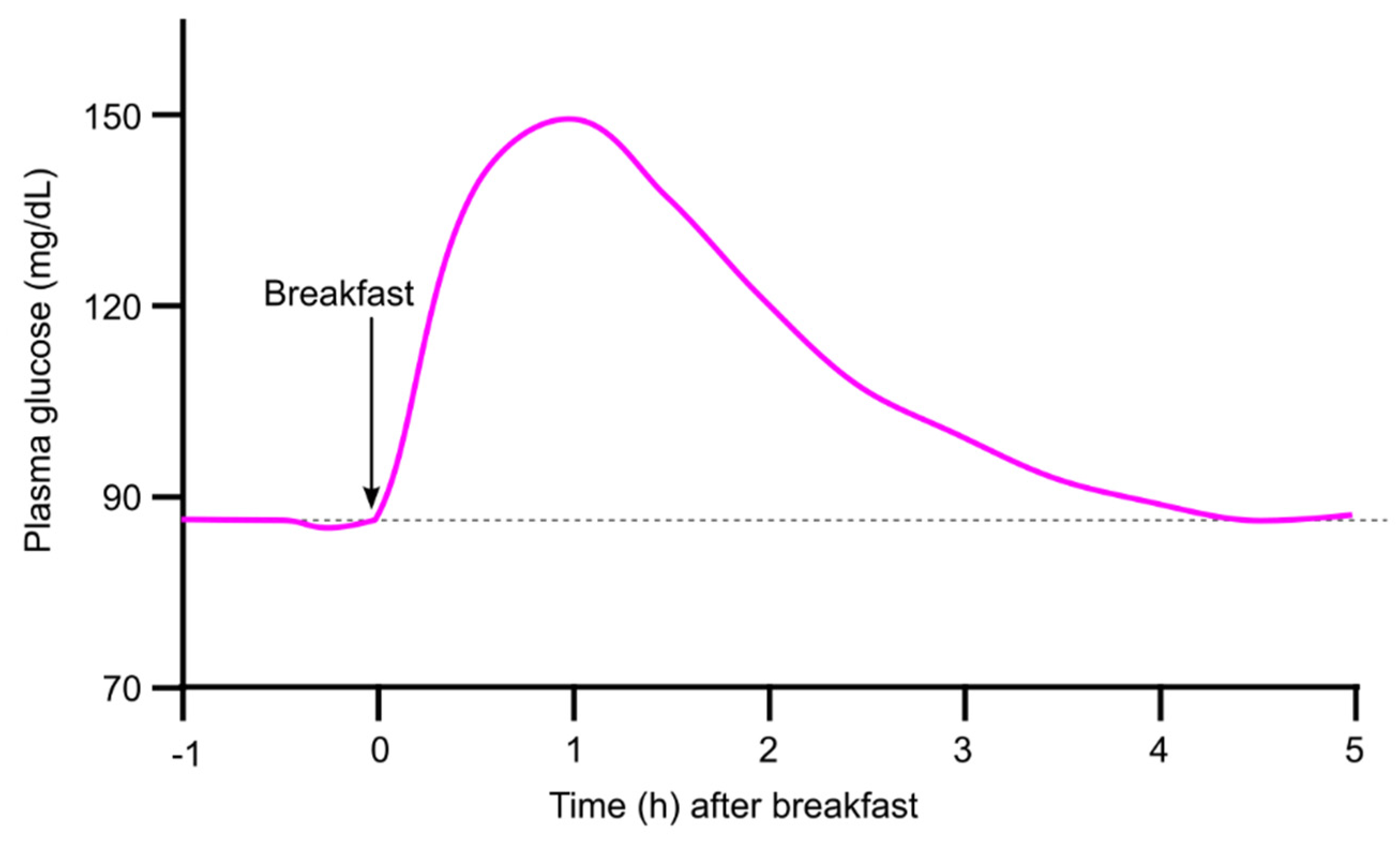
Figure 2.
Postprandial glucose responses in healthy individuals following three identical meals. Participants consumed the same standardized meal for breakfast, lunch, and dinner, with meals separated by 4 h. Upper panel: Twelve participants consumed a standard diet with a macronutrient composition of 40% carbohydrate, 49% fat, and 11% protein. Lower panel: Ten participants consumed a high-carbohydrate diet with a macronutrient composition of 63% carbohydrate, 27% fat, and 10% protein. The figure is modified from [35], which was published under the terms of the Creative Commons CC BY 4.0 DEED (https://creativecommons.org/licenses/by/4.0/, accessed on 1 March 2026).
Figure 2.
Postprandial glucose responses in healthy individuals following three identical meals. Participants consumed the same standardized meal for breakfast, lunch, and dinner, with meals separated by 4 h. Upper panel: Twelve participants consumed a standard diet with a macronutrient composition of 40% carbohydrate, 49% fat, and 11% protein. Lower panel: Ten participants consumed a high-carbohydrate diet with a macronutrient composition of 63% carbohydrate, 27% fat, and 10% protein. The figure is modified from [35], which was published under the terms of the Creative Commons CC BY 4.0 DEED (https://creativecommons.org/licenses/by/4.0/, accessed on 1 March 2026).
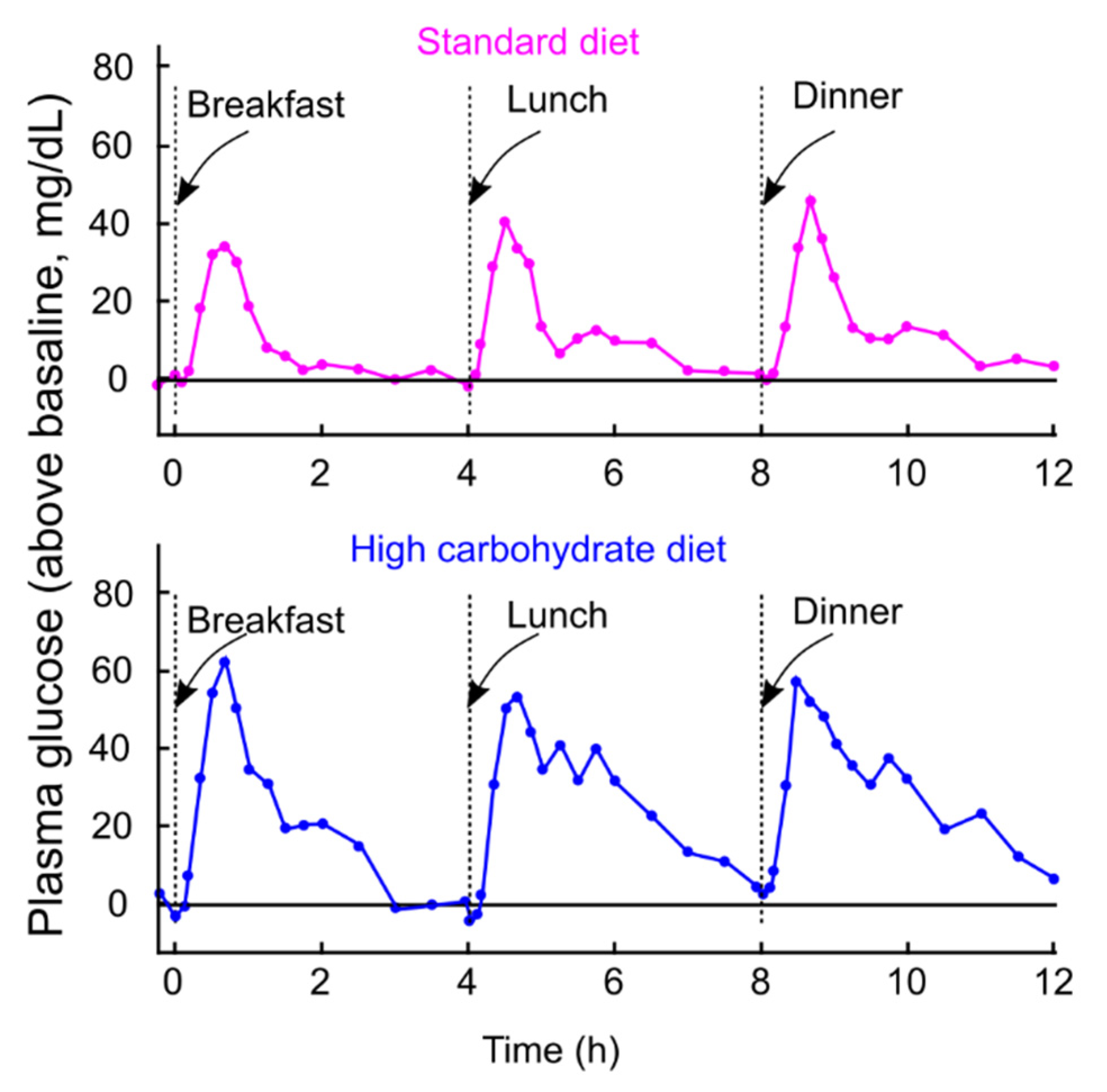
Figure 3.
Hourly average of PPG4-7.9h. PPG4-7.9h, postprandial plasma glucose measured 4–7.9 h after a meal. The figure is from [48], which was published under the terms of the Creative Commons CC BY 4.0 DEED (https://creativecommons.org/licenses/by/4.0/, accessed on 1 March 2026).
Figure 3.
Hourly average of PPG4-7.9h. PPG4-7.9h, postprandial plasma glucose measured 4–7.9 h after a meal. The figure is from [48], which was published under the terms of the Creative Commons CC BY 4.0 DEED (https://creativecommons.org/licenses/by/4.0/, accessed on 1 March 2026).
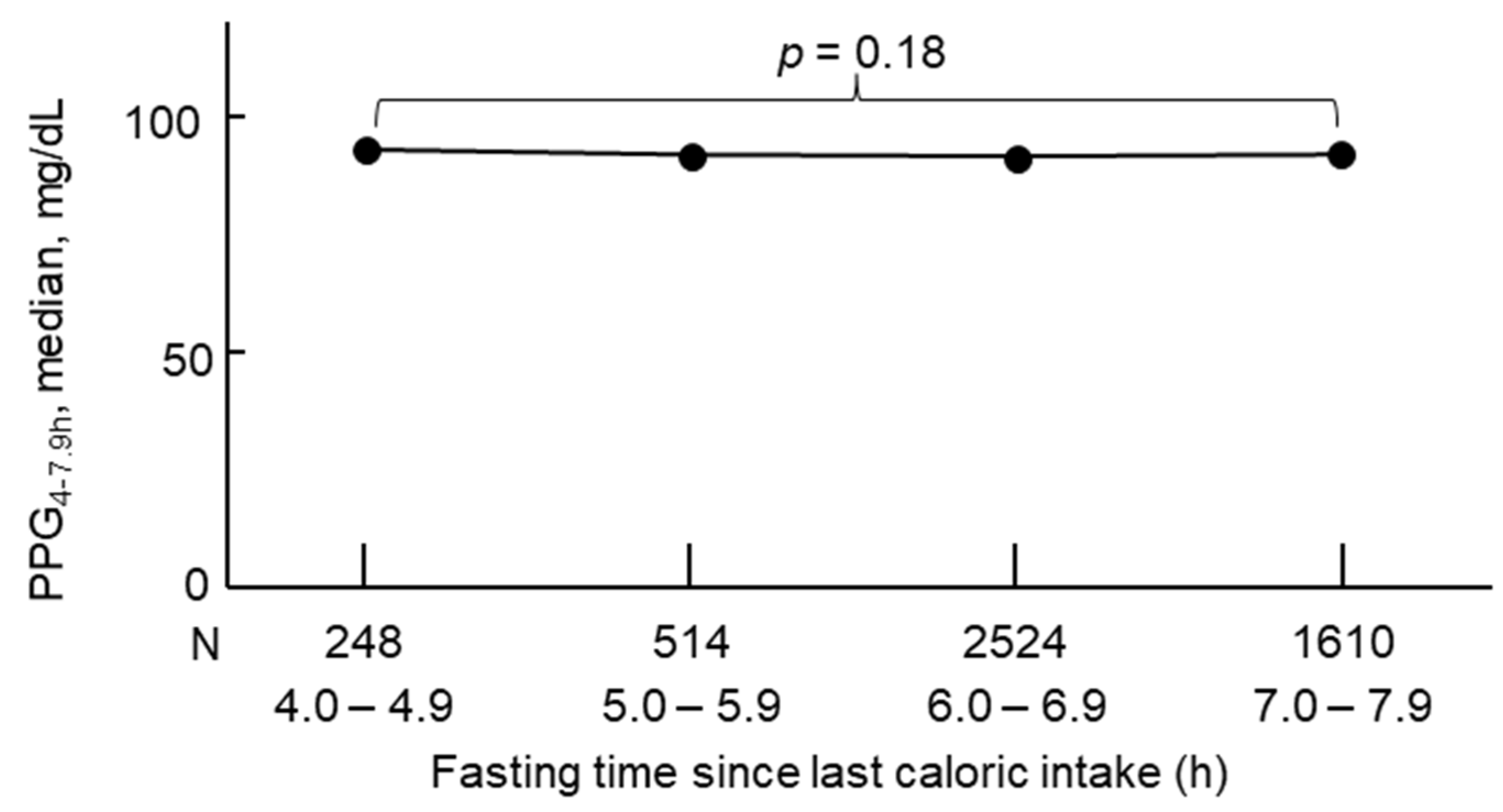
Figure 4.
The predictive value of estimated PPG4–7.9h for diabetes. PPG4–7.9h, postprandial plasma glucose measured 4–7.9 h after meal consumption. The figure is from [47], which was published under the terms of the Creative Commons CC BY 4.0 DEED (https://creativecommons.org/licenses/by/4.0/, accessed on 1 March 2026).
Figure 4.
The predictive value of estimated PPG4–7.9h for diabetes. PPG4–7.9h, postprandial plasma glucose measured 4–7.9 h after meal consumption. The figure is from [47], which was published under the terms of the Creative Commons CC BY 4.0 DEED (https://creativecommons.org/licenses/by/4.0/, accessed on 1 March 2026).
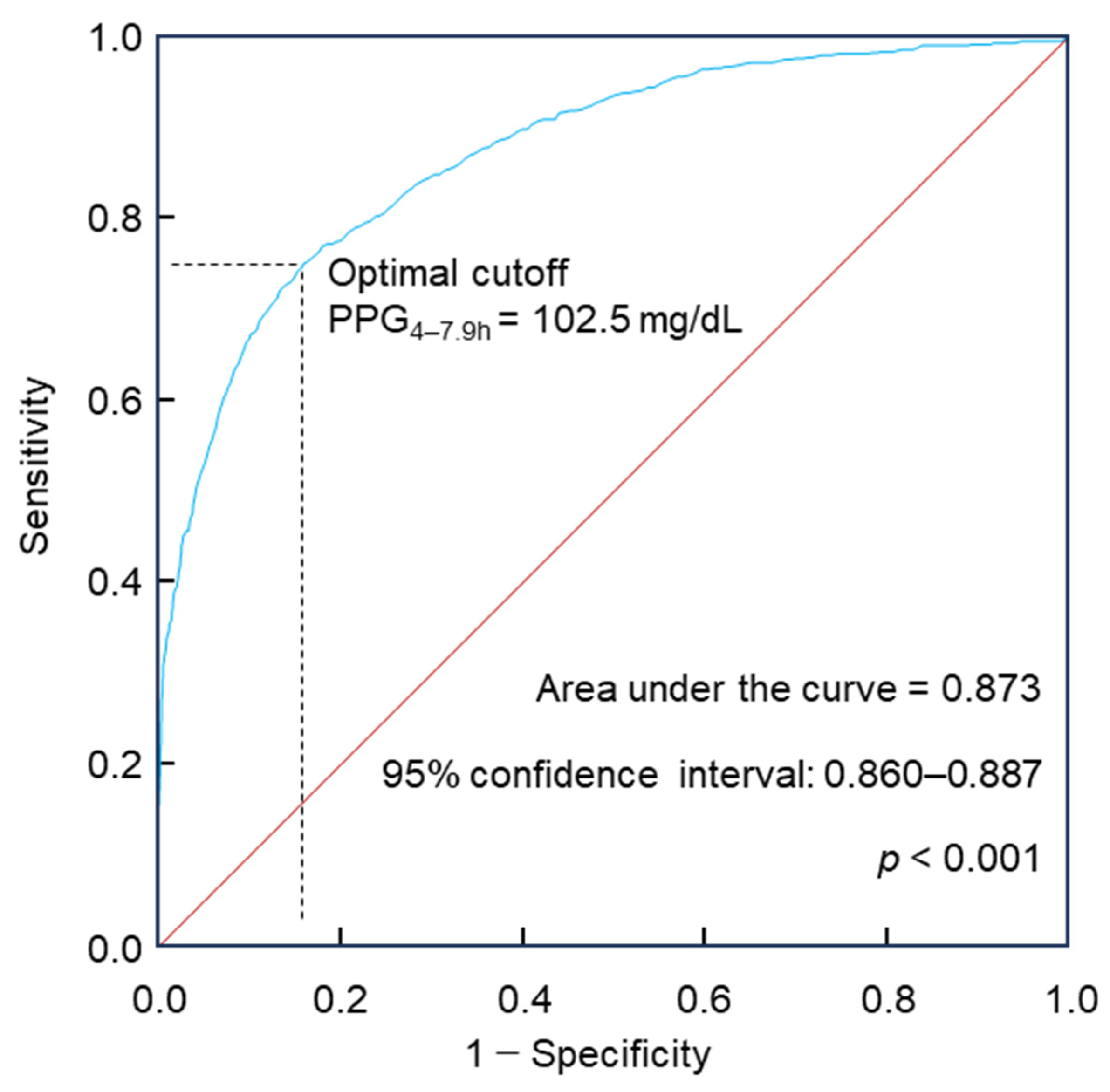
Figure 5.
A one-natural-log-unit increase in PPG4-7.9h-associated mortality risk in 4896 participants. HbA1c, hemoglobin A1c; PPG4-7.9h, postprandial plasma glucose measured 4–7.9 h after a meal. The image is from [48], which was published under the terms of the Creative Commons CC BY 4.0 DEED (https://creativecommons.org/licenses/by/4.0/, accessed on 1 March 2026).
Figure 5.
A one-natural-log-unit increase in PPG4-7.9h-associated mortality risk in 4896 participants. HbA1c, hemoglobin A1c; PPG4-7.9h, postprandial plasma glucose measured 4–7.9 h after a meal. The image is from [48], which was published under the terms of the Creative Commons CC BY 4.0 DEED (https://creativecommons.org/licenses/by/4.0/, accessed on 1 March 2026).
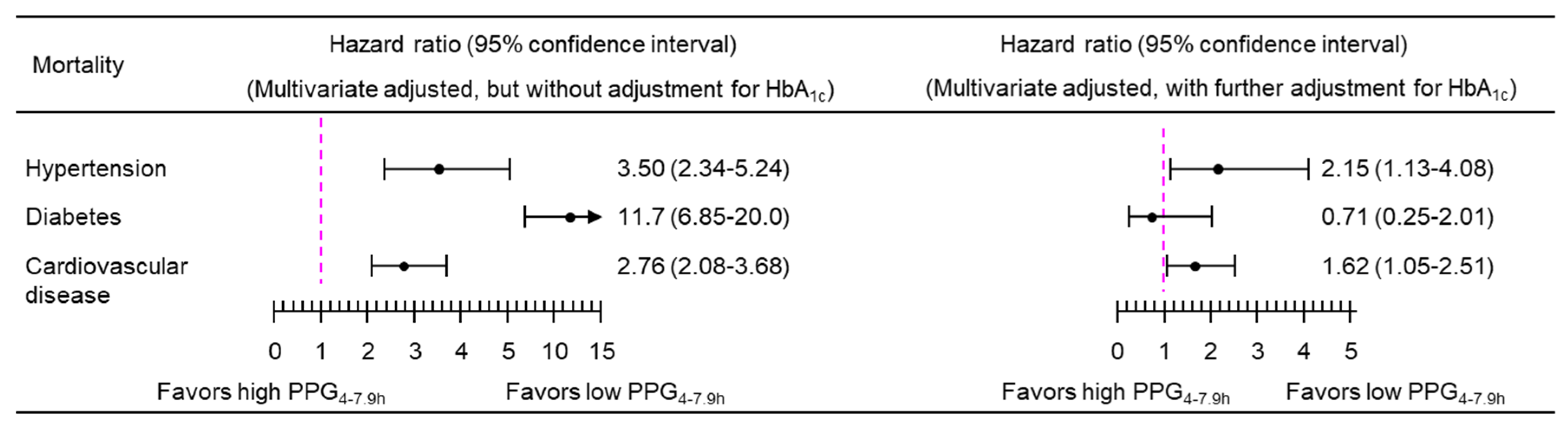
Figure 6.
The predictive value of 2-h PGOGTT@4–7.9h for diabetes (defined as hemoglobin A1c ≥ 6.5%). The sensitivity was 84.8%, and the specificity was 86.1%, with an optimal cutoff of 206.8 mg/dL. 2-h PGOGTT@4–7.9h, 2-h plasma glucose during an OGTT performed between 4 and 7.9 h after meal consumption. The image is from [64], which was published under the terms of the Creative Commons CC BY 4.0 DEED (https://creativecommons.org/licenses/by/4.0/, accessed on 19 January 2025).
Figure 6.
The predictive value of 2-h PGOGTT@4–7.9h for diabetes (defined as hemoglobin A1c ≥ 6.5%). The sensitivity was 84.8%, and the specificity was 86.1%, with an optimal cutoff of 206.8 mg/dL. 2-h PGOGTT@4–7.9h, 2-h plasma glucose during an OGTT performed between 4 and 7.9 h after meal consumption. The image is from [64], which was published under the terms of the Creative Commons CC BY 4.0 DEED (https://creativecommons.org/licenses/by/4.0/, accessed on 19 January 2025).
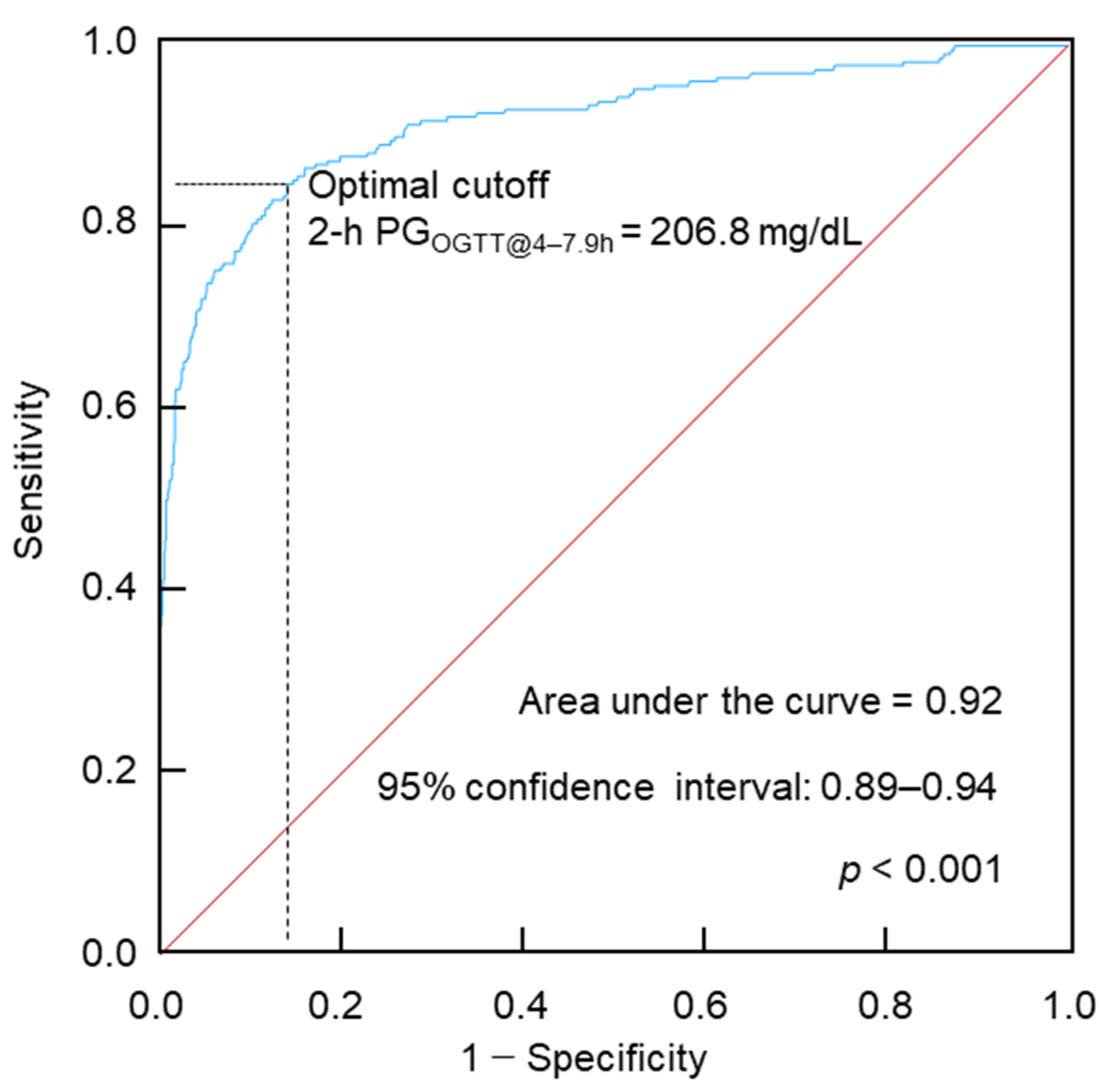
Figure 7.
Glucose metabolism and alteration under postprandial hyperglycemia. Under normal conditions, most of the glucose undergoes glycolysis to produce pyruvate (left side of the figure), and the latter then enters mitochondria for the citric acid cycle reaction and ATP production. Under postprandial hyperglycemia, excess superoxide is generated in mitochondria, which then inhibits the enzyme GAPDH, decreasing glycolysis. Consequently, glucose metabolism is diverted to other pathways, including the polyol pathway, the hexosamine pathway, the methylglyoxal pathway, and the DAG pathway. In addition, increasing oxidative stress under the hyperglycemic condition inhibits glucose-6-phosphate dehydrogenase, and thus inhibits the pentose phosphate pathway, leading to decreased production of NADPH. Fuchsia colored arrows represent altered metabolism pathways due to hyperglycemia. Double-headed arrows indicate reversible reactions. Blue text represents enzymes for each reaction. AGEs, advanced glycation end products; AGM1, phosphoacetylglucosamine mutase; DAG, diacyl glycerol; GAPDH, glyceraldehyde-3-phosphate dehydrogenase; GFAT, glutamine:fructose-6-phosphate aminotransferase; GNA1, glucosamine-6-phosphate acetyltransferase; LPA, lysophosphatidic acid; NADP+, oxidized nicotinamide adenine dinucleotide phosphate; NADPH, reduced nicotinamide adenine dinucleotide phosphate; P, phosphate; PA, phosphatidic acid; PPP, pentose phosphate pathway; UAP1, UDP-GlcNAc pyrophosphorylase; UDP-GlcNAc, uridine diphosphate N-acetylglucosamine. The image is adapted from [83], which was published under the terms of the Creative Commons CC BY 4.0 DEED (https://creativecommons.org/licenses/by/4.0/, accessed on 1 March 2026.
Figure 7.
Glucose metabolism and alteration under postprandial hyperglycemia. Under normal conditions, most of the glucose undergoes glycolysis to produce pyruvate (left side of the figure), and the latter then enters mitochondria for the citric acid cycle reaction and ATP production. Under postprandial hyperglycemia, excess superoxide is generated in mitochondria, which then inhibits the enzyme GAPDH, decreasing glycolysis. Consequently, glucose metabolism is diverted to other pathways, including the polyol pathway, the hexosamine pathway, the methylglyoxal pathway, and the DAG pathway. In addition, increasing oxidative stress under the hyperglycemic condition inhibits glucose-6-phosphate dehydrogenase, and thus inhibits the pentose phosphate pathway, leading to decreased production of NADPH. Fuchsia colored arrows represent altered metabolism pathways due to hyperglycemia. Double-headed arrows indicate reversible reactions. Blue text represents enzymes for each reaction. AGEs, advanced glycation end products; AGM1, phosphoacetylglucosamine mutase; DAG, diacyl glycerol; GAPDH, glyceraldehyde-3-phosphate dehydrogenase; GFAT, glutamine:fructose-6-phosphate aminotransferase; GNA1, glucosamine-6-phosphate acetyltransferase; LPA, lysophosphatidic acid; NADP+, oxidized nicotinamide adenine dinucleotide phosphate; NADPH, reduced nicotinamide adenine dinucleotide phosphate; P, phosphate; PA, phosphatidic acid; PPP, pentose phosphate pathway; UAP1, UDP-GlcNAc pyrophosphorylase; UDP-GlcNAc, uridine diphosphate N-acetylglucosamine. The image is adapted from [83], which was published under the terms of the Creative Commons CC BY 4.0 DEED (https://creativecommons.org/licenses/by/4.0/, accessed on 1 March 2026.
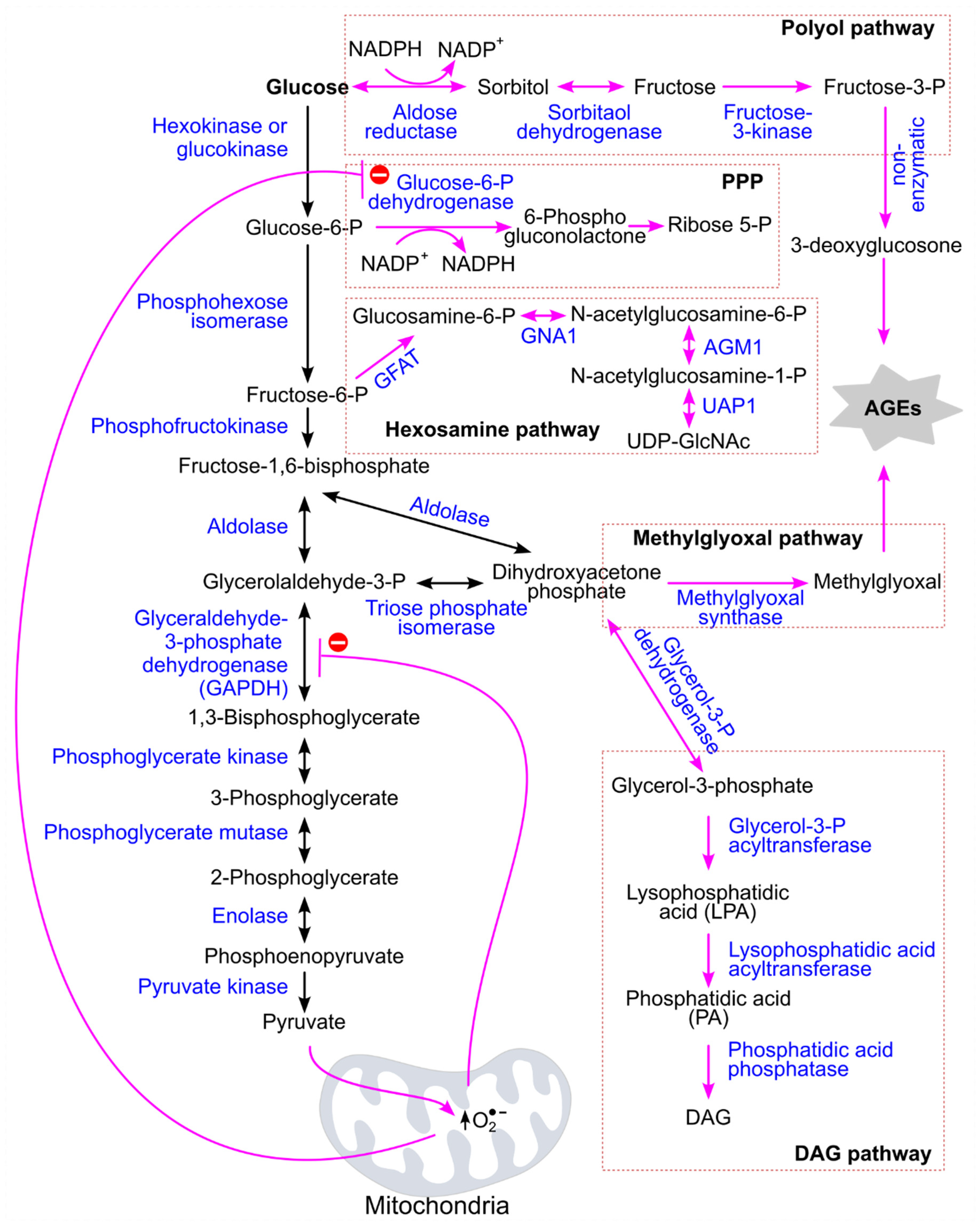
Figure 8.
Postprandial hyperglycemia decreases cellular antioxidant capacity. Postprandial hyperglycemia inhibits the pentose phosphate pathway and consequently decreases NADPH production. In addition, it increases the polyol pathway and thus increases NADPH consumption. Therefore, postprandial hyperglycemia leads to NADPH deficiency, consequently decreasing cellular levels of GSH and cellular antioxidant capacity. Blue text represents enzymes for each reaction. GSH, reduced glutathione; GSSG, glutathione disulfide; NADP+, oxidized nicotinamide adenine dinucleotide phosphate; NADPH, reduced nicotinamide adenine dinucleotide phosphate; O2●-, superoxide; P, phosphate; PPP, pentose phosphate pathway.
Figure 8.
Postprandial hyperglycemia decreases cellular antioxidant capacity. Postprandial hyperglycemia inhibits the pentose phosphate pathway and consequently decreases NADPH production. In addition, it increases the polyol pathway and thus increases NADPH consumption. Therefore, postprandial hyperglycemia leads to NADPH deficiency, consequently decreasing cellular levels of GSH and cellular antioxidant capacity. Blue text represents enzymes for each reaction. GSH, reduced glutathione; GSSG, glutathione disulfide; NADP+, oxidized nicotinamide adenine dinucleotide phosphate; NADPH, reduced nicotinamide adenine dinucleotide phosphate; O2●-, superoxide; P, phosphate; PPP, pentose phosphate pathway.
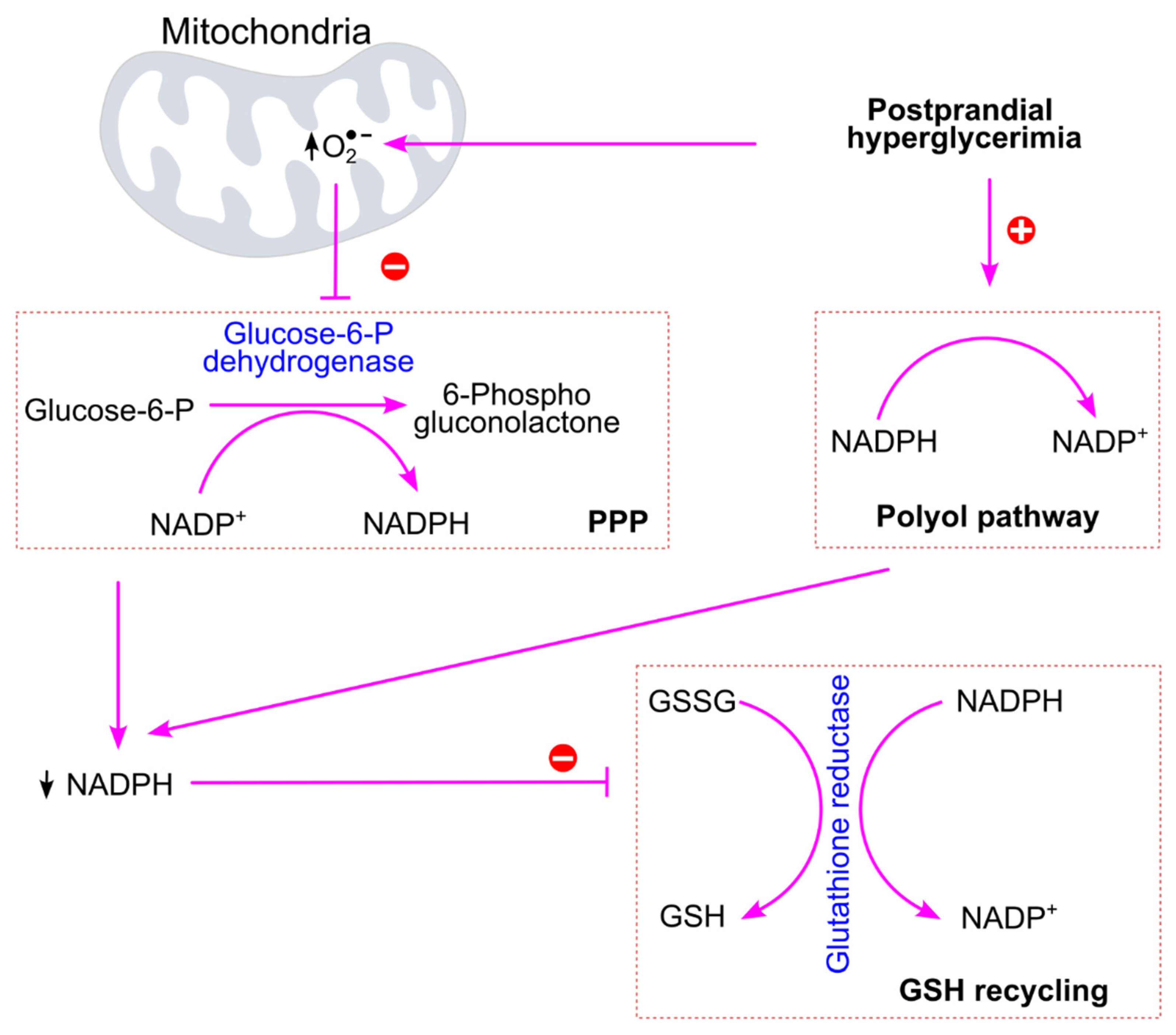
Figure 9.
Postprandial hyperglycemia promotes cancer formation via increasing ROS production. ↑, increase; AGE, advanced glycation end product; IL, interleukin; MCP-1, monocyte chemoattractant protein-1; NADPH, reduced nicotinamide adenine dinucleotide phosphate; NF-κB, nuclear factor-κB; O2●-, superoxide; RAGE, receptor for advanced glycation end-product; ROS, reactive oxygen species; TNF-α, tumor necrosis factor-alpha.
Figure 9.
Postprandial hyperglycemia promotes cancer formation via increasing ROS production. ↑, increase; AGE, advanced glycation end product; IL, interleukin; MCP-1, monocyte chemoattractant protein-1; NADPH, reduced nicotinamide adenine dinucleotide phosphate; NF-κB, nuclear factor-κB; O2●-, superoxide; RAGE, receptor for advanced glycation end-product; ROS, reactive oxygen species; TNF-α, tumor necrosis factor-alpha.
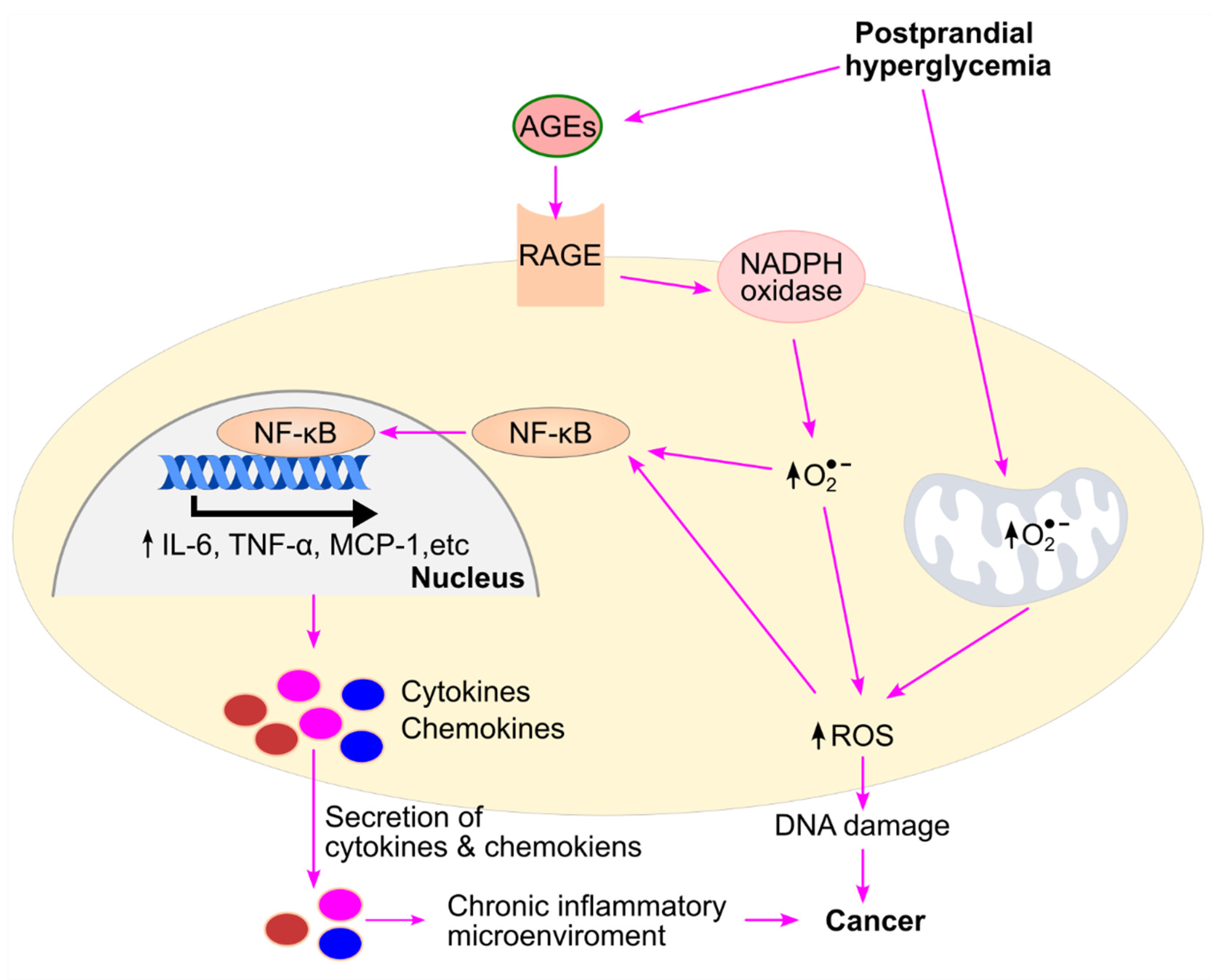
Figure 10.
Cellular conversion of excess glucose to membrane lipids. ACC, acetyl-CoA carboxylase; FAS, fatty acid synthase; NADPH, reduced nicotinamide adenine dinucleotide phosphate; TCA, tricarboxylic acid. Blue text represents enzymes. The image is adapted from [83], which was published under the terms of the Creative Commons CC BY 4.0 DEED (https://creativecommons.org/licenses/by/4.0/, accessed on 1 March 2026.
Figure 10.
Cellular conversion of excess glucose to membrane lipids. ACC, acetyl-CoA carboxylase; FAS, fatty acid synthase; NADPH, reduced nicotinamide adenine dinucleotide phosphate; TCA, tricarboxylic acid. Blue text represents enzymes. The image is adapted from [83], which was published under the terms of the Creative Commons CC BY 4.0 DEED (https://creativecommons.org/licenses/by/4.0/, accessed on 1 March 2026.
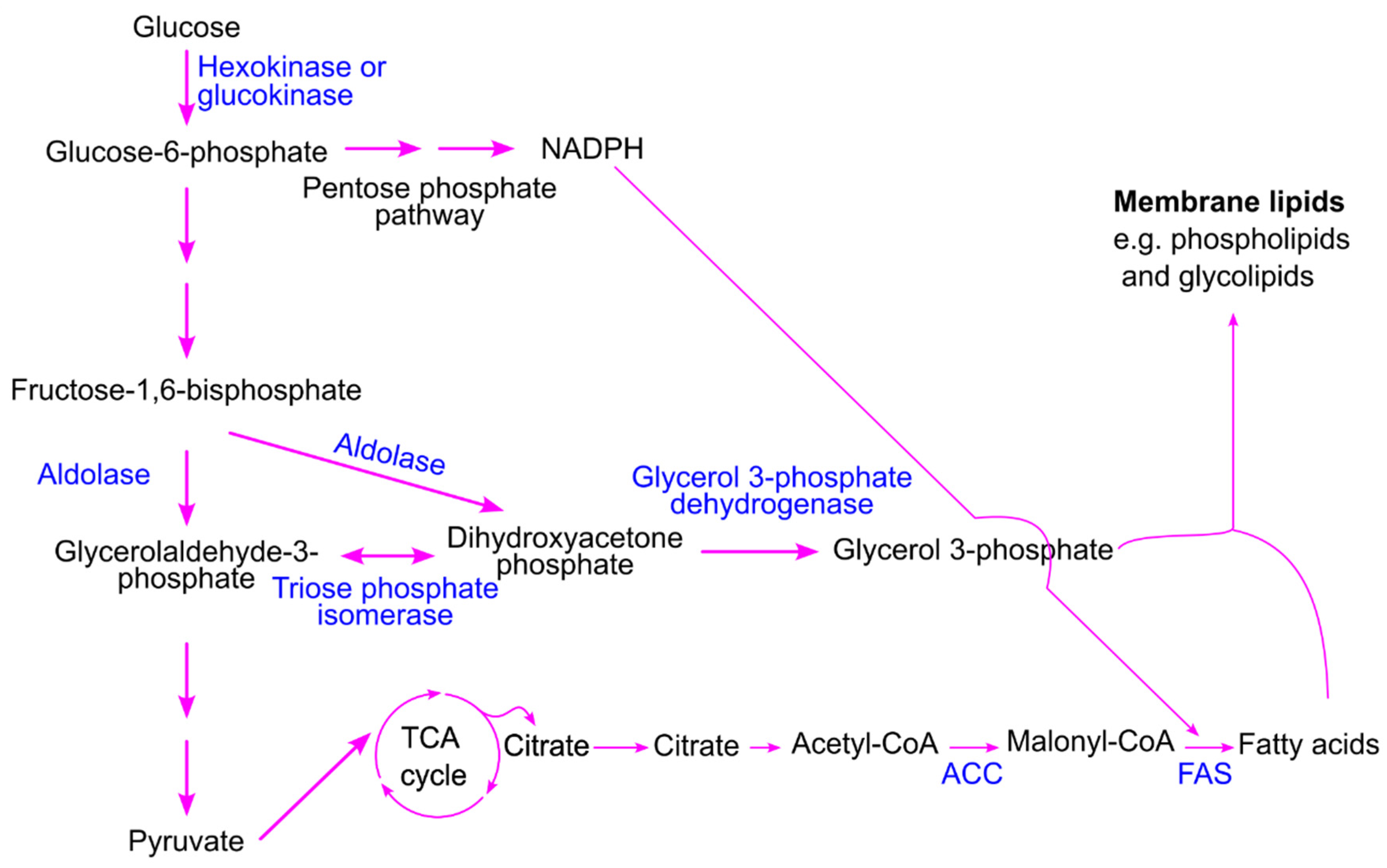
Figure 11.
Chronic high postprandial glucose levels promote membrane lipid synthesis via transcriptional regulation. Elevated glucose stimulates the expression of genes involved in lipid synthesis by activating two transcriptional factors: carbohydrate response element binding protein (ChREBP) and sterol regulatory element binding protein (SREBP). ↑, increase; ACC, acetyl-CoA carboxylase; ACL, ATP citrate lyase; FAS, fatty acid synthase; mTOR, mammalian target of rapamycin; P, phosphate; PEP, phosphoenopyruvate; PK, pyruvate kinase. Blue text represents enzymes. The image is adapted from [83], which was published under the terms of the Creative Commons CC BY 4.0 DEED (https://creativecommons.org/licenses/by/4.0/, accessed on 1 March 2026.
Figure 11.
Chronic high postprandial glucose levels promote membrane lipid synthesis via transcriptional regulation. Elevated glucose stimulates the expression of genes involved in lipid synthesis by activating two transcriptional factors: carbohydrate response element binding protein (ChREBP) and sterol regulatory element binding protein (SREBP). ↑, increase; ACC, acetyl-CoA carboxylase; ACL, ATP citrate lyase; FAS, fatty acid synthase; mTOR, mammalian target of rapamycin; P, phosphate; PEP, phosphoenopyruvate; PK, pyruvate kinase. Blue text represents enzymes. The image is adapted from [83], which was published under the terms of the Creative Commons CC BY 4.0 DEED (https://creativecommons.org/licenses/by/4.0/, accessed on 1 March 2026.
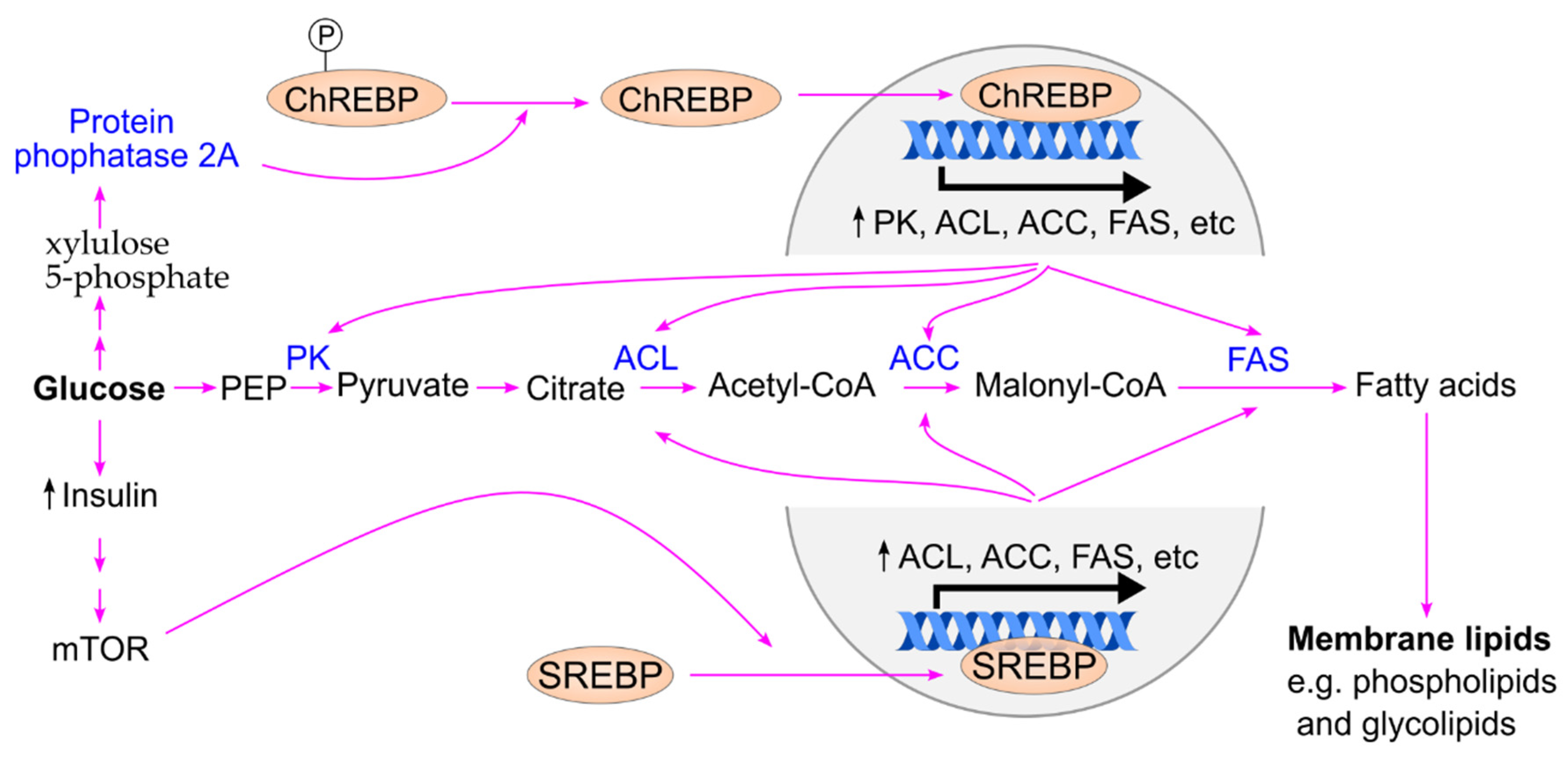

Table 1.
Association between 2-h plasma glucose during OGTT1 with mortality, with or without adjustment for HbA1c.
Table 1.
Association between 2-h plasma glucose during OGTT1 with mortality, with or without adjustment for HbA1c.
| Mortality | Multivariate adjusted, without adjustment for HbA1c |
Multivariate adjusted, with further adjustment for HbA1c |
||||
| Hazard ratio | 95% CI | p | Hazard ratio | 95% CI | p | |
| 2-h PGOGTT@4–7.9h | ||||||
| All-cause mortality | 1.06 | 1.04–1.08 | <0.001 | 1.04 | 1.02–1.07 | 0.003 |
| Diabetes mortality | 1.46 | 1.33–1.61 | <0.001 | 1.39 | 1.17–1.65 | <0.001 |
| CVD mortality | 1.07 | 1.03–1.11 | <0.001 | 1.03 | 0.98–1.08 | 0.26 |
| Cancer mortality | 1.00 | 0.95–1.05 | 1.00 | 1.02 | 0.96–1.07 | 0.58 |
| 2-h PG during OGTT after fasting | ||||||
| All-cause mortality | 1.06 | 1.04–1.07 | <0.001 | 1.04 | 1.02–1.06 | <0.001 |
| Diabetes mortality | 1.29 | 1.21–1.38 | <0.001 | 1.26 | 1.12–1.43 | <0.001 |
| CVD mortality | 1.06 | 1.03–1.09 | <0.001 | 1.01 | 0.97–1.04 | 0.77 |
| Cancer mortality | 1.00 | 0.97–1.04 | 0.80 | 1.00 | 0.96–1.05 | 0.85 |
1, square root transformed. 2-h PGOGTT@4–7.9h, 2-h plasma glucose during an OGTT between 4 and 7.9 h after a meal; CI, confidence interval; HbA1c, hemoglobin A1c; OGTT, oral glucose tolerance test; PG, plasma glucose. The table is from [64], which was published under the terms of the Creative Commons CC BY 4.0 DEED (https://creativecommons.org/licenses/by/4.0/, accessed on 19 January 2025).
Disclaimer/Publisher’s Note: The statements, opinions and data contained in all publications are solely those of the individual author(s) and contributor(s) and not of MDPI and/or the editor(s). MDPI and/or the editor(s) disclaim responsibility for any injury to people or property resulting from any ideas, methods, instructions or products referred to in the content. |
© 2026 by the authors. Licensee MDPI, Basel, Switzerland. This article is an open access article distributed under the terms and conditions of the Creative Commons Attribution (CC BY) license (http://creativecommons.org/licenses/by/4.0/).
Copyright: This open access article is published under a Creative Commons CC BY 4.0 license, which permit the free download, distribution, and reuse, provided that the author and preprint are cited in any reuse.


