

Submitted:
10 April 2026
Posted:
10 April 2026
You are already at the latest version
Abstract
Hard ceramic coatings are essential for extending the operational limits of metal components in the extreme thermal and mechanical conditions of the aerospace and defense sectors. While considerable research exists on individual synthesis and characterization methods, a critical knowledge gap persists in bridging experimental fabrication with predictive computational modeling, a gap that limits the rational design of next-generation coating systems. This review addresses this gap by critically synthesizing the lifecycle of aerospace coatings from atomic-scale design to industrial deployment. Unlike prior reviews that focus on either fabrication or individual coating chemistries in isolation, this work uniquely integrates Integrated Computational Materials Engineering (ICME) with emerging machine learning (ML) strategies to provide a unified design-to-deployment framework. The principal ceramic material systems, Tungsten Carbide (WC), Boron Nitride (BN), Boron Carbide (B₄C), Silicon Carbide (SiC), Alumina (Al₂O₃), and Zirconia (ZrO₂) are discussed within the context of their specific roles in protecting aerospace-grade alloys. A central contribution is the multiscale computational framework, spanning Density Functional Theory (DFT), Molecular Dynamics (MD), mesoscale modelling, Finite Element Analysis (FEA), and ML-driven inverse design, which collectively accelerate the prediction of thermal breakdown, multi-axial stress responses, and coating lifetime. By relating these advances to gas turbine engines, airframes, and supersonic and hypersonic aviation systems, this review offers a clear research roadmap. Future research should prioritize the development of ultra-high-temperature ceramics (UHTCs), multifunctional self-healing coatings, and data-driven approaches to surface engineering. The goal is to move the field beyond traditional trial-and-error methods toward a more predictive framework based on fundamental physics and accelerated by machine learning techniques.
Keywords:
hard ceramic coatings
; fabrication and characterization
; aerospace alloys
; Integrated Computational Materials Engineering (ICME)
; machine learning
; multiscale modelling
1. Introduction
1.1. Background
The aviation industry is in a phase of transformative changes impelled by hard ceramic coatings, including improved durability and operating conditions with demanding material requirements. Modern aircraft require higher speeds, greater fuel efficiency, and extended operational ranges, which expose components to extreme environments, such as those encountered during hypersonic flight and high-temperature turbine operation. For these conditions, coatings must retain structural integrity, thermal resilience, and wear resistance far beyond those of conventional materials, and thus, ceramic coatings constitute a very important part in meeting the growing demands on performance in aerospace applications. Innovation in materials and manufacturing is continuously enhancing aerospace alloys and coating technology. New materials have entered or are entering service, such as advanced nickel-based superalloys, titanium aluminides, and high-performance metal-matrix composites; these bring many new benefits but also new challenges. Several manufacturing developments, such as additive manufacturing, thermal spray technologies, and multilayered functional coatings, provide for tailored properties and microstructural control that also include improved environmental performance. The advantages of titanium alloys include desirable specific mechanical properties, good fatigue life and ductility, and high corrosion resistance and biocompatibility, further Ion-plasma treatment forms TiAl₃ layered structures on Ti6Al4V[1]. Fiber-reinforced composite (FRC) materials have achieved high popularity in different industrial sectors, such as aerospace, marine, and the energy industry, due to their excellent mechanical performance, lightweight property, high strength, and corrosion resistance. [2]. Further, technologies such as additive manufacturing (3D printing), along with thermal spray technologies, including cold spray and suspension plasma spray, have opened up new opportunities for the development of novel multilayered and functionally graded coatings and new microstructures and properties. Altun et al. (2025), studied Autonomous process optimization and in-situ monitoring for additive ceramic coating deposition routes that directly benefit from AI-driven optimization and intelligent control mechanisms for 3D printing processes, such as real-time parameter adjustment, predictive material behavior, and early defect detection. Thermal spraying, laser cladding, cold spray, and new supersonic laser deposition (SLD) routes are technologies for light alloys in aviation. The ceramic coating applications in the energy, biomedical, aerospace, and machining industries support the main idea that multifunctional ceramic coatings are revolutionary, enabling materials for thermal management systems and next-generation aerospace structures. [3,4,5]. These technologies offer superior precision and control over the coating structure than previously attainable, permitting the generation of coatings having preselected performance characteristics impossible to achieve up to that time. The deposition of complex coating systems featuring steep compositional gradients and microstructural attributes allows for new opportunities for performance optimization.
Recent progress in characterization techniques and computational modelling has been widely leveraged to design coating behaviour using artificial intelligence and Machine Learning (ML) techniques, in order to exploit their potential for high-speed processing of large amounts of data to achieve efficient design of coating performance in aerospace applications. This offers significant opportunities for optimizing coating properties, especially when coupled with experimental approaches. Machine learning techniques have particularly promising potential. While great progress has been made in developing and reviewing coating technologies for aerospace alloys, many of these interdisciplinary reviews are already in need of revision, particularly in order to assist researchers and industry practitioners, such as materials scientists, surface engineers, and mechanical/ aerospace engineers, in identifying knowledge deficiencies and selecting appropriate currently available and future solutions for next-generation aircraft. A comprehensive review of current challenges facing high-temperature environmental barrier coating technologies for aero-engines, balancing thermal insulation, oxidation resistance, CMAS−affected damage and mechanical properties, is provided by Liu et al. (2023), who observed that the current turbine inlet temperature of over 1300 °C is already pushing the frontiers of coatings’ development, and future targets are for temperatures exceeding 1700 °C, well in excess of capabilities offered by current YSZ-based sol–gel or vacuum plasma duplex coatings. However, ceramic coatings are likely to continue playing a critical role in the development of future aerospace technologies and environmental sustainability.
1.2. Objective
1. This review classifies and assesses major hard ceramic coatings like WC, BN, B⁴C, SiC, alumina, and zirconia, focusing on their interaction with key aerospace alloys such as titanium, nickel superalloys, and aluminum. It compares common fabrication routes like classic PVD and CVD, advanced thermal spray and sol-gel techniques, and emerging AM with a view to coating quality, process efficiency, and compatibility with various substrates. The review also summarizes the main characterization techniques used for assessing hardness, adhesion, wear behavior, thermal stability, and corrosion resistance, and interprets how such measurements underpin material development and enhance predictive performance.
2. The imaging and analytical tools reviewed, including SEM, TEM, AFM, and XRD, provide a clear perspective on how each method enables improvement of microstructure clarity, determination of defects, and observation of failure mechanisms. Additionally, the discussion moves forward toward computational and data-driven approaches through which FEM, DFT, MD, and machine learning models accelerate coating discovery and guide optimization of material behavior.
3. Finally, the review identifies major aerospace applications of ceramic coatings, ranging from turbine blades and thermal barriers to landing gear and protective surfaces, to significant uses in defense, energy, and transportation. It concludes with an outlook on future challenges and opportunities, including ultra-high-temperature ceramics, additive manufacturing advances, coating systems with multiple functionalities, and technologies that will form next-generation aerospace platforms.
1.3. Novelty of This Work
A large number of reviews are available on emerging ceramic coatings for aerospace applications, and the field is fast evolving. The vast majority of the available reviews, however, focused on specific materials or a limited range of coating systems and deposition techniques, and lack comprehensive linkages on the connection between service environment, degradation, and coating design strategy. This review, therefore, offers a unique breadth of systems and frameworks for connecting aerospace service environments, degradation mechanisms, and coating design strategies from a materials perspective. It collates materials, fabrication, characterization, and modeling approaches, including recent advances in machine learning applications in coating research and development. Importantly, this review will present an ICME-informed multiscale modeling framework, employing DFT, MD, mesoscale models, FEA, and ML that have not been covered in depth previously in the hard ceramic coatings research for aerospace applications. The review further offers a bridge to existing technologies and specific requirements in emerging aerospace operating environments.
2. Types of Hard Ceramic Coatings
Ceramic coatings of high hardness are produced from different classes of materials and have varied structures and chemistries. Based on their chemical composition and crystal structure, the principal material classes consist of oxides, nitrides, carbides, and borides. Each of these materials classes possesses several distinct chemical and physical properties, and several have found uses in the development of coatings for various applications. With respect to aerospace coatings, the coatings can be classified based on the dominant aerospace service environment, the predominant mechanism of degradation mechanism, and the coating design strategy. WC-based carbide coatings are typically used in all conditions where severe erosion and wear are a concern, such as landing gear components, compressor blades, access door seal areas, hydraulic actuator components, and similar parts where abrasion resistance is required and lifetime can be extended by using hard, sharp WC grains that have high hardness (up to 2800 HV) and sufficient fracture toughness. These coatings can also be used as an interlayer for stacked-layer duplex coating, namely the outer layer. On the other hand, ZrO₂-based coatings are mainly used as thermal barrier coatings (TBCs) in high-temperature environments such as turbine blade airface for gas turbines, in which low thermal conductivity (~2.0 W/m·K for APS-deposited YSZ) and high phase stability at elevated temperature are both required. SiC-based coatings can be further used for high-temperature oxidation resistance, such as C/C composites and CMCs. Thick, high-temperature oxidation-resistant coatings can be formed and these coatings consist of a self-healing SiO₂ passivation layer formed at a temperature higher than 1200 °C. These material types should be comprehensively understood in order to select the most suitable coating material for specific applications. The decision should be made based on specific performance requirements, including wear resistance, corrosion resistance, CTE-mismatch-controlled thermal insulation, and high-temperature stability. Oxide-based ceramic matrix composites (CMCs) reinforced by Al₂O₃ or mullite fibers are still emerging materials for developing structural applications under high-temperature environments that cannot be achieved with conventional metallic materials [7,8].
2.1. Oxide Coatings
The ceramic coatings formed from oxides have great significance due to their chemical inertness, excellent high-temperature resistance, environmental corrosion resistance, and electrical insulation. These materials are frequently employed in applications demanding thermal insulation or protection against aggressive chemical environments. A summary of the oxide coating is given in Table 1.
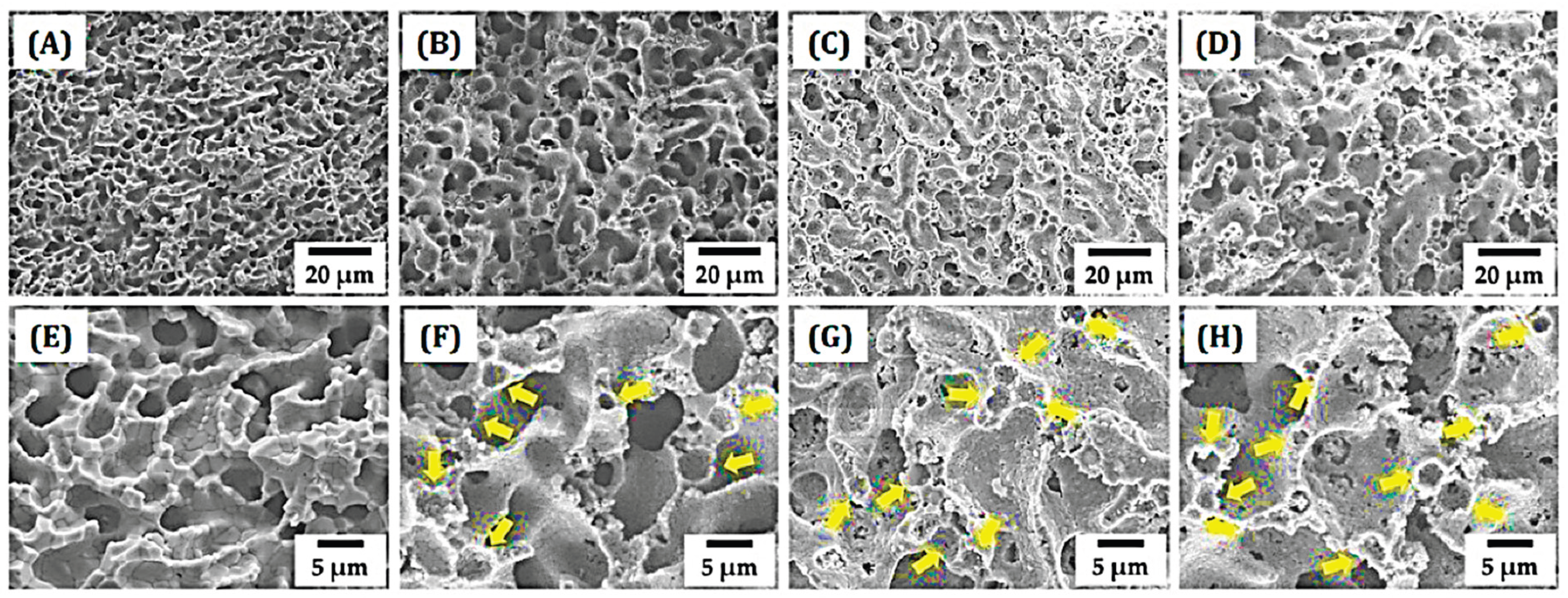
- Alumina (Al₂O₃): Aluminum oxide is a widely adopted and cost-effective engineering ceramic. Its properties include high hardness (~31 GPa for the α-phase), excellent wear resistance, superior dielectric characteristics, and stability at elevated temperatures in oxygen-rich environments. Al₂O₃ coatings can be deposited using thermal spray (plasma spraying), PVD, or sol-gel techniques. In aviation, they are utilized for wear-resistant components, electrical insulation, and as constituents of thermal barrier systems. Quantitative tribological testing and wear-mechanism analysis of WC–ZrO₂–Al₂O₃ ceramic composites elucidate the mechanisms by which carbide–oxide hybrid systems attain low friction coefficients (~0.51) and enhanced wear resistance, thereby justifying their application in high-stress aerospace sliding and erosion environments [9,10]. A multi-scale conceptualization of alumina-based ceramic-coated steel, presented in Figure 1A–H, shows representative FE-SEM images of sintered samples illustrating dual-scale porous structures with engineering of customized porosity (45–71 vol%) through freeze-casting with PMMA porogens [11]. This approach is directly applicable to next-generation porous thermal-barrier and functionally-graded ceramic coatings.
Figure 1.
Representative FE-SEM micrographs showing dual-scale porous structures formed with varying PMMA contents: 0 vol% (A, E), 20 vol% (B, F), 30 vol% (C, G), and 40 vol% (D, H). The yellow arrows highlight the pores generated by the thermal removal of PMMA microspheres [11].
Figure 1.
Representative FE-SEM micrographs showing dual-scale porous structures formed with varying PMMA contents: 0 vol% (A, E), 20 vol% (B, F), 30 vol% (C, G), and 40 vol% (D, H). The yellow arrows highlight the pores generated by the thermal removal of PMMA microspheres [11].
Zirconia (ZrO₂): Zirconium dioxide is recognized for its superior fracture toughness, low thermal conductivity, and chemical inertness, particularly when stabilized in its tetragonal phase (e.g., Yttria-Stabilized Zirconia-YSZ), where the tribological testing of YSZ/NiCrAlY coatings at 21–650 °C and resistance to CMAS attack, provides direct performance metrics and degradation data for turbine thermal-barrier systems. [9,12]. To prevent damage and the risk of catastrophic failure, these metallic stationary components are safeguarded with porous ceramic thermal barrier coatings (TBCs) made from ZrO₂ (7-8 wt.% Y₂O₃, also known as YSZ), which are applied using air plasma spray (APS) technology. [13]. The microstructure of a ZrO₂ coating, typically exhibiting a porous and columnar structure, is highly beneficial for its thermal insulation properties in high-temperature environments. Figure 2 shows an example of a ZrO₂ coating. The clusters are around 0.5 to 1 µm in size and comprise sub-micron particles. Based on these engineering ceramics, the latest developments in coatings produced using sol-gel processes incorporate silane-based organics and contain sub-micron particles of ZrO₂ to provide highly hydrophobic surfaces, have high-wear resistance, and provide a special visual appearance (multifunctional ceramic-based surfaces). [14].
Titania (TiO₂): Ceramic coatings based on nitride ceramics are very hard, resistant to wear, and chemically inert; some are even conductive or semiconductors. This family of materials has many applications as hardened cutting tools and as diffusion barriers for metals. Among different material systems readily available in powder form, titanium is one of the main candidates for the reactive-deposition process, as its wear resistance and temperature capabilities, without surface modification, are inadequate for many applications. [15]. Deposition methods include sol-gel, PVD, and thermal spray. While used in wear-resistant, anti-corrosion, self-cleaning, and biomedical applications, TiO₂ is less commonly employed as a primary hard coating in aerospace compared to Al₂O₃ or ZrO₂ due to the latter’s superior performance in high-load scenarios. [9,16].
Chromia (Cr₂O₃): Chromium oxide coatings are distinguished by their excellent wear resistance, resistance to corrosion, and stability at elevated temperatures. They form dense and strongly bonded layers. Cr₂O₃ coatings, often applied via plasma spraying, are used to protect components such as pump seals and shafts from wear and degradation.
2.2. Nitride Coatings
Nitride ceramic coatings are known for their outstanding hardness, wear resistance, chemical inertness, and, in some cases, electrical conductivity or semiconducting properties. They have numerous applications in cutting tools and diffusion barriers in metallic systems. Titanium Nitride (TiN): TiN can be identified by its golden color and represents a popular hard material coating due to its hardness, wear resistance, low friction coefficient, and high chemical inertness. TiN typically exhibits a hardness range of 1,800 to 2,500 HV. TiN deposition processes mainly encompass PVD and CVD techniques and have applications in cutting tools and molds; it prevents material transfer in aerospace and bearing/gear surfaces; it prevents material transfer. TiN possesses high hardness values; it prevents wear and possesses low friction coefficients. TiN prevents material transfers, and it provides high hardness values. They have been applied to protect piston rings, molds, and chemical-exposed parts.
Titanium Aluminum Nitride (TiAlN): TiAlN coatings have shown better wear and high-temperature oxidation resistance compared to TiN coatings described in other references [36,37].
Chromium Nitride (CrN): In contrast to TiN coatings, CrN coatings have greater toughness and resistance to corrosion and thermal oxidation. They have lower friction coefficients in dry friction. The deposition of CrN coatings can be carried out via PVD and applied to protect components from wear, corrosion, and heat. The Ti and Al contents can be adjusted to control the coating’s characteristics of CrN [10,38].
Silicon Nitride (Si₃N₄): In particular, silicon nitride ceramic materials have high strength, toughness, and excellent wear resistance characteristics over a wide temperature range. They have applications in bearings, cutting tools, and engine parts of vehicles. While the deposition of dense Si₃N₄ coatings can be challenging, CVD and reactive sputtering are employed for this purpose.
Boron Nitride (BN): Boron nitride exists in several polymorphic forms. Hexagonal BN (h-BN), with its graphite-like layered structure, functions effectively as a solid lubricant at high temperatures. Cubic BN (c-BN) coatings are highly prized for their extreme hardness and high thermal conductivity, although the aggressive deposition processes required for c-BN can limit its application range [39]. The unique nanostructured morphology of boron nitride (BN) nanocomposite coatings, particularly when synthesized in its cubic form, results in ultrahard or superhard properties. While bulk is the second hardest material after diamond, nano-structuring it can push its hardness to nearly match or even exceed diamond in specific conditions [40]. The incorporation of ideal amounts of Si, Cr, BN, W, Ag, and Cu into ternary and quaternary coatings, as well as unique multilayer designs, considerably increases the tribological performance of the coatings.

Table 1.
Summary of key properties, particularly hardness, of the oxide and nitrides ceramic coatings.
Table 1.
Summary of key properties, particularly hardness, of the oxide and nitrides ceramic coatings.
| Coating Materials | Measured Hardness (GPa or HV) | Essential Property | Reference Source |
|---|---|---|---|
| Alumina (Al₂O₃) | 15–20 GP and 31.0 ± 0.9 GPa (α-phase) | Offers exceptional hardness, strong abrasion resistance, and reliable performance at elevated temperatures; commonly applied in high-wear parts and heat-shielding layers. Standard -alumina is 15–20 GPa. 30–31 GPa is an exceptionally high value achieved only through high-pressure work hardening. | [17,18] |
| Zirconia (ZrO₂) | 13 GPa (Pure ZrO₂) | Provides notably high fracture toughness (such as 8.5 - 10 MP√m for 1.5 mol% YSZ), retains heat poorly, and shows excellent chemical stability, making it well-suited for thermal barrier coating applications. Standard values for pure or stabilized zirconia typically range from 12–16 GPa. | [19,20,21] |
| Titania (TiO₂) | Up to 1292 ± 357 HV0.01 | Rutile titania can reach local hardness levels around 11–13 GPa (~1100–1300 HV). Recognized for its photocatalytic behavior and its ability to resist corrosion and surface scratching, not typically used as the main hard coating in heavy-duty aerospace environments. | [22,23] |
| Chromia (Cr₂O₃) | Higher than Al₂O₃ | In bulk form, (~18–20 GPa) is generally softer than high-purity (~20–25 GPa). However, it can reach 1500–2000 HV in specialized coatings. | [24,25] |
| Titanium Nitride (TiN) | 18–22 GPa (monolithic PVD); up to 30–35 GPa in nanostructured or multilayer systems | Monolithic PVD TiN is typically 18–22 GPa. Nanostructured systems can exceed 30 GPa due to grain refinement. Characterized by very high hardness, strong wear performance, low friction, and robust chemical resistance, commonly recognized by its distinctive gold appearance. Standard monolithic TiN films deposited by PVD exhibit hardness in the 18–22 GPa range; values approaching 35–40 GPa are reported exclusively for nanocomposite or multilayer architectures and should not be attributed to conventional TiN. |
[26,27] |
| Chromium Nitride (CrN) | 10–18 GPa (monolithic PVD CrN); up to 25–38 GPa in multilayer CrN/CrAlN systems |
Monolithic CrN is relatively soft (10–18 GPa), but CrN/CrAlN multilayer systems reach 25–38 GPa. |
[28,29] |
| Titanium Aluminum Nitride (TiAlN) | 17.5 GPa to 46.39 GPa | Standard TiAlN is ~28–32 GPa. Specialized TiAlSiN or nanolayered versions can reach the “superhard” range above 40 GPa. | [30,31] |
| Silicon Nitride (Si₃N₄) | 39.2 GPa (In Composite with extreme case) | Standard is 14–16 GPa. A value of ~35–39 GPa refers to the rare cubic spinel phase synthesized under ultra-high pressure. | [32,33] |
| Boron Nitride (BN) | Second hardest material (c-BN) | Cubic Boron Nitride (c-BN) is universally recognized as the second hardest material after diamond. | [34,35] |
2.3. Carbide Coatings
Carbide ceramic coatings are extremely hard, have good wear resistance, exhibit high thermal stability, and are therefore most suitable for application on those areas that experience heavy abrasion, erosion, or sliding wear. They function well under high mechanical loading conditions.
Tungsten Carbide (WC): Composite tungsten carbide with a metallic binder, such as cobalt (WC-Co), is a reference for wear-resistant coatings. [41]. WC-Co coatings have high hardness (12-20 GPa) and fracture toughness, which gives them excellent abrasion and erosion resistance. They are widely used in aerospace for landing gear components, hydraulic rods, engine components, and other components with high friction and impact conditions. WC-Co coatings are usually deposited with thermal spray methods, typically HVOF, creating dense coatings with minimal decarburization, as indicated in Figure 3. Varying formulations with varying binder levels and other carbides (e.g., Cr) are used to maximize and tailor properties to specific uses [42].
Silicon Carbide (SiC): SiC-based coatings are the primary solution for high-temperature oxidation resistance, particularly for protecting C/C composites and CMCs at temperatures above 1200 °C. The mechanism of protection involves the formation of a continuous, self-healing SiO₂ passivation layer upon oxidation, which prevents further oxygen ingress and can sustain protection for over 150 hours at temperatures exceeding 1770 K [78]. It’s a ceramic material whose bonding nature is covalent; it possesses high strength and hardness (25-35 GPa). The use of silicon carbide coatings becomes essential in protecting carbon-carbon composites from degradation in hypersonic vehicles’ leading edges, rocket nozzles, or reentry vehicles, which can have temperatures above 1500 °C. The silicon carbide coatings protect such materials from oxidation; if not, they would result in material degradation due to oxidation. SiC coating can be deposited by CVD, PVD, and thermal spray methods. Its high thermal conductivity also makes it suitable for heat management applications. [16].
Boron Carbide (B₄C): Boron carbide is one of the hardest known materials, with hardness values ranging from 30 to 50 GPa. Its low density and strong neutron absorption capability make it highly useful in nuclear-related applications. In aerospace, B₄C coatings are explored for ultra-hard, wear-resistant applications where extreme abrasion resistance is paramount, such as in specialized bearings or protective layers. [43,44]. Deposition is challenging but can be achieved by PVD (sputtering) and CVD techniques. A boron carbide (B₄C) microstructure is shown in Figure 4.
Chromium Carbide (CrC): Chromium carbide coatings, often with a nickel-chromium binder (CrC-NiCr), provide excellent wear and erosion resistance, particularly at elevated temperatures. [45]. They are a common alternative to WC-Co in applications where higher operating temperatures or better corrosion resistance are required. CrC-NiCr coatings are typically deposited by HVOF and are used in turbine engine components, exhaust systems, and other hot-section parts. [46].
2.4. Boride Coatings
Boride ceramic coatings are known for their outstanding or extremely high hardness, high melting points, and good electrical conductivity. They are often considered for extreme wear and high-temperature applications.
Titanium Diboride (TiB₂): TiB₂ is a very hard ceramic (25-35 GPa) with high electrical conductivity, good corrosion resistance, and a high melting point. TiB₂ coatings are explored for wear-resistant applications, particularly in corrosive environments, and as diffusion barriers. They can be deposited by PVD (sputtering) and CVD techniques. Its properties make it suitable for tooling and specialized aerospace components.
Zirconium Diboride (ZrB₂): ZrB₂ is an ultra-high temperature ceramic (UHTC) with an extremely high melting point (>3000 °C), remarkable strength at elevated temperature, and strong oxidation resistance. The zirconium was observed in whole areas of the obtained aluminide coatings regardless of its doping during the aluminizing process [47,48]. ZrB₂-based coatings are critical for protecting components in hypersonic flight vehicles and reentry systems, where temperatures can reach extreme levels. They are typically applied as part of multi-layered environmental barrier coatings (EBCs) to protect ceramic matrix composites (CMCs) and other high-temperature materials. Deposition methods include PVD and plasma spraying. The combined addition of Zr and BN produced a Ti-Zr alloy matrix with BN particles and an in-situ phase-reinforced microstructure with 450% higher hardness (from 318 ± 26 HV0.1/15 to 1424 ± 361 HV0.5/15), a stabilized sliding COF within 50 m of reciprocating wear testing, and a 9x lower final wear rate in comparison to LENS™-deposited titanium.
Table 2.
Summary of key properties, particularly hardness, of the carbide’s ceramic coatings.
| Material Coating | Hardness (GPa or HV) | Key Property | Source Citation |
|---|---|---|---|
| Tungsten Carbide (WC-Co/WC-CoCr) | 2800 HV (Max) | Demonstrates strong hardness and resistance to wear, with its performance varying based on the binder percentage and the manufacturing technique used. | [49,50] |
| Silicon Carbide (SiC) | 22.6 GPa (Max) | Excellent thermal conductivity (120+ W/m·K) is a standout feature. Offers notable hardness, outstanding resistance to corrosive environments, and efficient heat conduction, which supports its use in elevated-temperature conditions. | [51,52] |
| Boron Carbide (B₄C) | 30 GPa (Bulk) / 47 GPa (Coating). | Shows extremely high hardness, a very light weight (5.2 g/cm³), and a strong ability to absorb neutrons. | [53,54,55] |
| Chromium Carbide (CrC-NiCr) | 900 HV0.3 to 1500 HV | Delivers strong resistance to wear and erosion even at high temperatures, while the NiCr binder enhances its protection against corrosion. | [56,57,58] |
| Titanium Diboride (TiB₂) | 24.17 GPa to 27 GPa (Bulk) | Melting point of 2900 C°, exceptional hardness, and outstanding electrical conductivity. | [59,60,61] |
| Zirconium Diboride (ZrB₂) | 22 GPa is bulk; 37 GPa represents nanolayered or doped thin films. | An ultra-high-temperature ceramic featuring an exceptionally high melting point (3245 C°) and strong resistance to oxidation at elevated temperatures. | [62,63,64] |
2.5. Design Considerations for Hard Ceramic Coatings on Alloys
The successful application of hard ceramic coatings to aerospace metal alloys is a complicated task that requires careful attention to numerous interlinked variables of design. The critical requirements in such applications go beyond the mere selection of materials to be used; they further encompass the complex interplay between coating material type, material characteristics of substrate metal, nature of operational service environment, service requirement, and performance expectation. A comprehensive and coordinated effort towards design requirements is critical to ensure adequate reliability and performance of the overall system.
The development process of aerospace coatings is complex and interlinked and may require contributions from materials researchers, mechanical engineers, and aerodynamic engineers. The development starts from thoroughly understanding the service environment of the component in terms of temperature exposure, associated mechanical loading (whether static loading, dynamic loading, or cyclic loading), exposure to corrosive materials, and the possibility of erosive/abrasive actions. All these require distinct characteristics of the coating material. For example, a turbine blade operating in the hot section of an aircraft engine needs a coating with good thermal barrier property, oxidation resistance, and creep resistance. On the other hand, parts like landing gear require coating with a high hardness value and wear resistance to atmospheric exposure and to deicing agents. [8,65].
The selection of proper fabrication techniques is essential to ensure reliable ceramic coating systems. Several industrial techniques have been developed to apply ceramic coatings to aerospace materials. These techniques have their own advantages and limitations depending on their suitability for particular situations. The main techniques used for ceramic coating deposition processes, such as physical vapor deposition (PVD), chemical vapor deposition (CVD), atmospheric plasma spraying (APS), and HVOF spraying, have major effects on microstructure characteristics and residual stresses in ceramic coatings. Coating thickness values represent one of the simplest physical characteristics of surfaces and serve as standard dimensions to measure quality consistency in coating layers. [46,66].
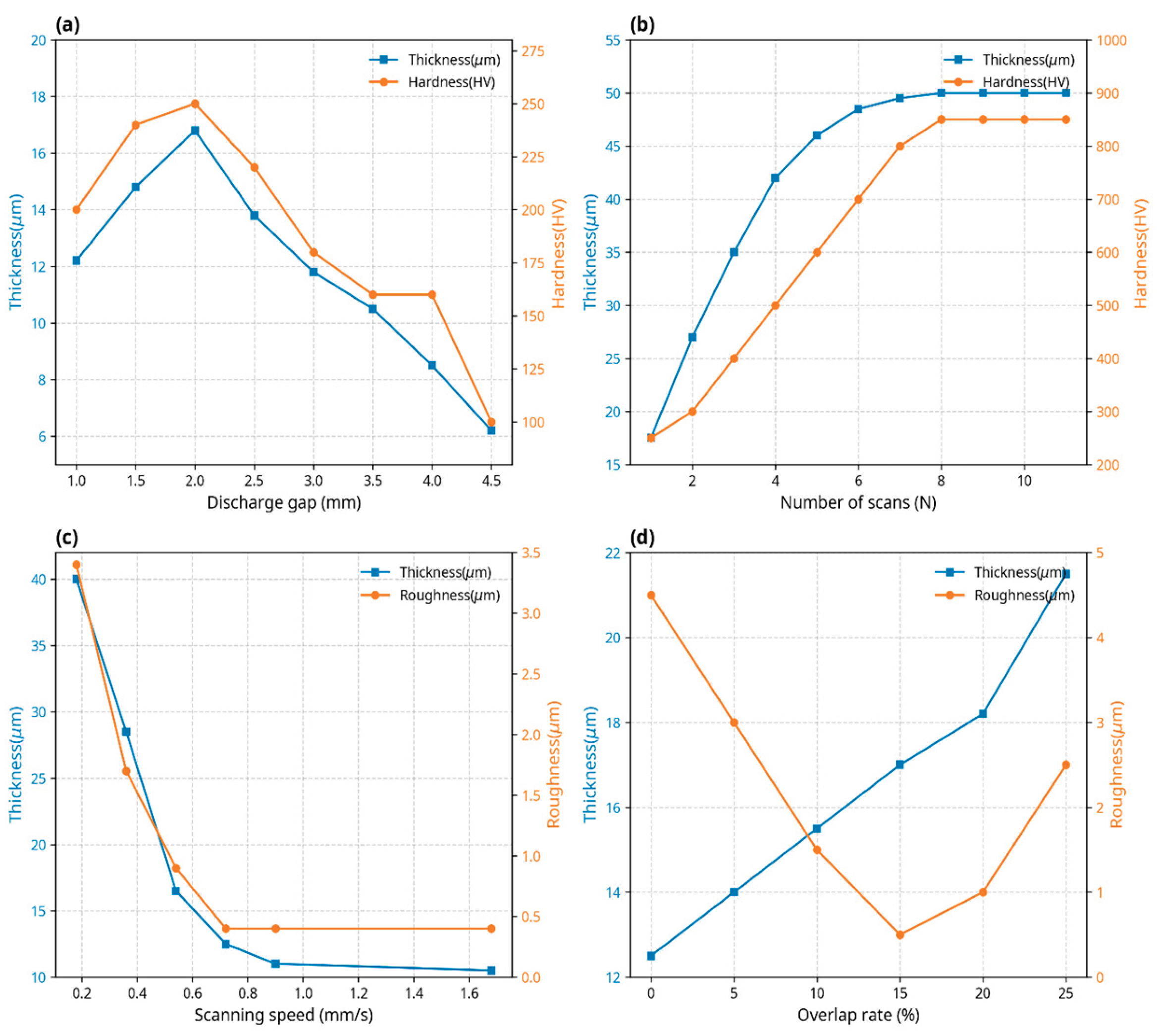
Plasma electrolytic oxidation (PEO) and spark plasma electrolytic oxidation (SPEO) have been explored as new techniques for surface engineering of lightweight Al alloys for aerospace applications. In these techniques, micro-arc discharges occur on the surface of the substrate, creating a ceramic surface layer metallurgically bonded to the substrate. SPEO provides a finer microstructure and even coating compared to PEO because it provides better control over micro-arc discharges. The hardness, porosity, and corrosion resistance of PEO can be controlled depending on the composition of the electrolyte. Selection of PEO and SPEO coatings would depend on their hardness value, roughness, coating thickness, and the material type of the component according to requirements[67,68]. A recent study by Xu et al. (2025) on scanning PEO (SPEO) of 2024 aluminum alloy demonstrated that optimizing scanning parameters, including discharge gap, scanning frequency, and overlap rate, substantially enhances coating hardness, roughness, and electrochemical corrosion resistance, achieving performance comparable to conventional full-surface PEO while enabling localized deposition on large aerospace components. Mechanical properties of SPEO and PEO coatings have been presented graphically in Figure 5.
2.6. Significance of Selecting Appropriate Coating and Substrates
In aerospace engineering, careful selection of materials for coating and other base materials significantly contributes to coating designs applied in aerospace engineering. The criteria applied for such selection would be dictated systematically by detailed knowledge of application requirements related to performance criteria and characteristics of particular materials to be selected. The requirements of ceramic materials would be applied to ensure materials cover criteria needed for application in aerospace engineering, such as extreme hardness (tungsten carbide (WC), silicon carbide (SiC), boron carbide (B⁴C)), excellent wear resistance and low friction coefficient, strong resistance to corrosion (alumina (Al₂O₃), chromium nitride (CrN), zirconium oxide (ZrO₂)), and thermal insulation (yttria-stabilized zirconia (YSZ)) [4,9,16,36,69,70].
The coating material selection task is mainly dependent on the major modes of failure that can be encountered in service conditions. In particular, component performance in the high-temperature area of gas turbines, such as turbines and vanes, operates under very high temperatures and requires coating materials with special thermal insulation capabilities and high-temperature oxidation resistance, and creep stability. [71]. At the other extreme, would-be landing gear parts involve mainly strong mechanical loading and exposure to aggressive chemical materials such as deicing fluids and seawater, which require coatings with strong resistance to wear and corrosion. [8,72]. The summary of different coatings according to environmental conditions is given in Table 3.
Further, the compatibility of the coating with the metal substrate below it is as important as choosing the material for the coating itself. The thermal conductivities of materials and ceramic coatings are shown in Figure 6, and these play a very important role in material selection methods, particularly thermal barriers in aerospace materials, which require minimal heat to be transferred to the substrate material at high temperatures. [81]. Incompatibility in composition and behavior between the coating material and metal substrate may significantly hamper performance associated with the coated system as a whole.
Chemical Compatibility and Interfacial Reactions: The interface between the coating layers must sustain elevated temperatures to resist degradation of intermetallic bonds and harmful phase formations. Detrimental interfacial reactions, such as diffusion between coating layers and substrate materials, can produce intermetallic compounds and voids, significantly reduce adhesive forces and cause coating defects. In nickel superalloy TBC systems, high temperatures may cause brittle intermediate layers between the coating and substrate. To counter such issues, bond coatings, mainly MCrAlY alloys (where M = Ni, Co, or Fe) are commonly applied. These layers increase adhesive forces between ceramic and metal layers, act as diffusion barriers to prevent elemental intermixing, and protect the metal from oxidation. Adhesive bonding between the coating and substrate represents one of the key factors affecting the durability and reliability of coating systems (Figure 7).
3. Hard Ceramic Coating Techniques
The fabrication of hard ceramic coatings for aerospace alloys encompasses a spectrum of processes, which are best understood within a structured classification framework. In order to understand and compare the various options available, a well-defined classification framework is essential. In this section, the common coating fabrication routes are categorized into four main groups: (i) Physical Vapor Deposition (PVD), (ii) Chemical Vapor Deposition (CVD), (iii) thermal Spray. In addition, other techniques like sol-gel and electrophoretic deposition are also briefly discussed. These techniques significantly determine the microstructure, strength, adhesive properties, and performance of coatings in aerospace service [97].
3.1. Physical Vapor Deposition Techniques
The PVD generally refers to a family of vacuum coating methods (see Figure 8) whereby a material from a target (also referred to as source material) is vaporized and then deposited as a thin film onto a substrate surface. [98]. The methods have been widely applied in aerospace and other high-performance applications for their ability to provide dense, pure, and adhesive layers as desired. The processes also typically occur at lower substrate material degradation temperatures to avoid damage to the substrate material via undesirable phase transformation changes.
Sputtering: A very common PVD process in which high-energy ions from an inert gas (argon) bombard a target material, resulting in the ejection of target atoms. Magnetron sputtering, the most widely used variant for hard ceramic coatings, employs a magnetic field to increase ionisation efficiency, enabling deposition of TiN, CrN, TiAlN, and other nitride coatings at substrate temperatures below 500 °C. This low processing temperature is critical for temperature-sensitive aerospace substrates such as aluminum alloys and titanium components [10].
Cathodic Arc Evaporation (CAE): In CAE, a high-current, low-voltage arc is struck on the surface of a solid cathode (target), generating a highly ionised plasma that deposits with high adhesion. The high ion energy in CAE produces coatings with high compressive residual stresses, improving coating hardness and fatigue performance. CAE is widely used for TiAlN and CrAlN coatings on aerospace cutting tools and compressor blades [99].
Electron Beam PVD (EB-PVD): EB-PVD is particularly important in the aerospace TBC context because it produces the characteristic columnar microstructure of TBC topcoats. Columnar architecture provides strain compliance during thermal cycling, significantly improving spallation resistance compared to APS-deposited TBCs. EB-PVD, YSZ and TBCs are the standard for rotating turbine blades in aircraft gas turbines [100]. The high energies possessed by these ions as they strike other surfaces to form coatings result in several desirable material properties. The compressive stress in the coating are also caused by the bombardment of high-energy ions. AIP is efficient in depositing the nitride and carbide films of materials like TiN, CrN, TiAlN, and ZrN. CrN coatings provide strong wear resistance on their own, and when used as a transition layer beneath a DLC coating, they enhance both the overall thickness and bonding strength of the multilayer system. This improvement is largely due to the better chemical compatibility they create for the DLC layer [101]. These films are widely used in the aerospace field due to their wear- and corrosion-resistant properties [8,13,70]. The high ionization rate of the AIP makes it an efficient method in the coating of critical components.
3.2. Chemical Vapor Deposition (CVD) Techniques
Chemical Vapour Deposition (CVD) involves the chemical reaction of gaseous precursors on or near a heated substrate surface to form a solid coating [99]. CVD produces coatings with excellent conformal coverage on complex geometries and strong covalent bonding to the substrate, properties particularly advantageous for SiC, Si₃N₄, and TiN coatings on turbine components and cutting inserts.
Thermal CVD (TCVD) operates at high substrate temperatures (800–1100 °C), which limits its application to high-melting-point substrates such as nickel superalloys and tungsten carbide inserts. It produces dense, well-adhered coatings with excellent hardness and wear resistance.
Plasma-Enhanced CVD (PECVD) uses a plasma to activate precursor reactions at significantly lower substrate temperatures (200–500 °C), enabling deposition on temperature-sensitive alloys, including titanium and aluminum. PECVD is widely used for DLC (diamond-like carbon) and Si-containing ceramic coatings.
Atmospheric Pressure CVD (APCVD) allows large-area deposition without the vacuum infrastructure required for conventional CVD, reducing equipment costs while maintaining reasonable coating quality [10]. Different parameters follow, while CVD Techniques, as presents in Figure 10.
Figure 9.
Chemical Vapor Deposition (CVD) Process Diagram.
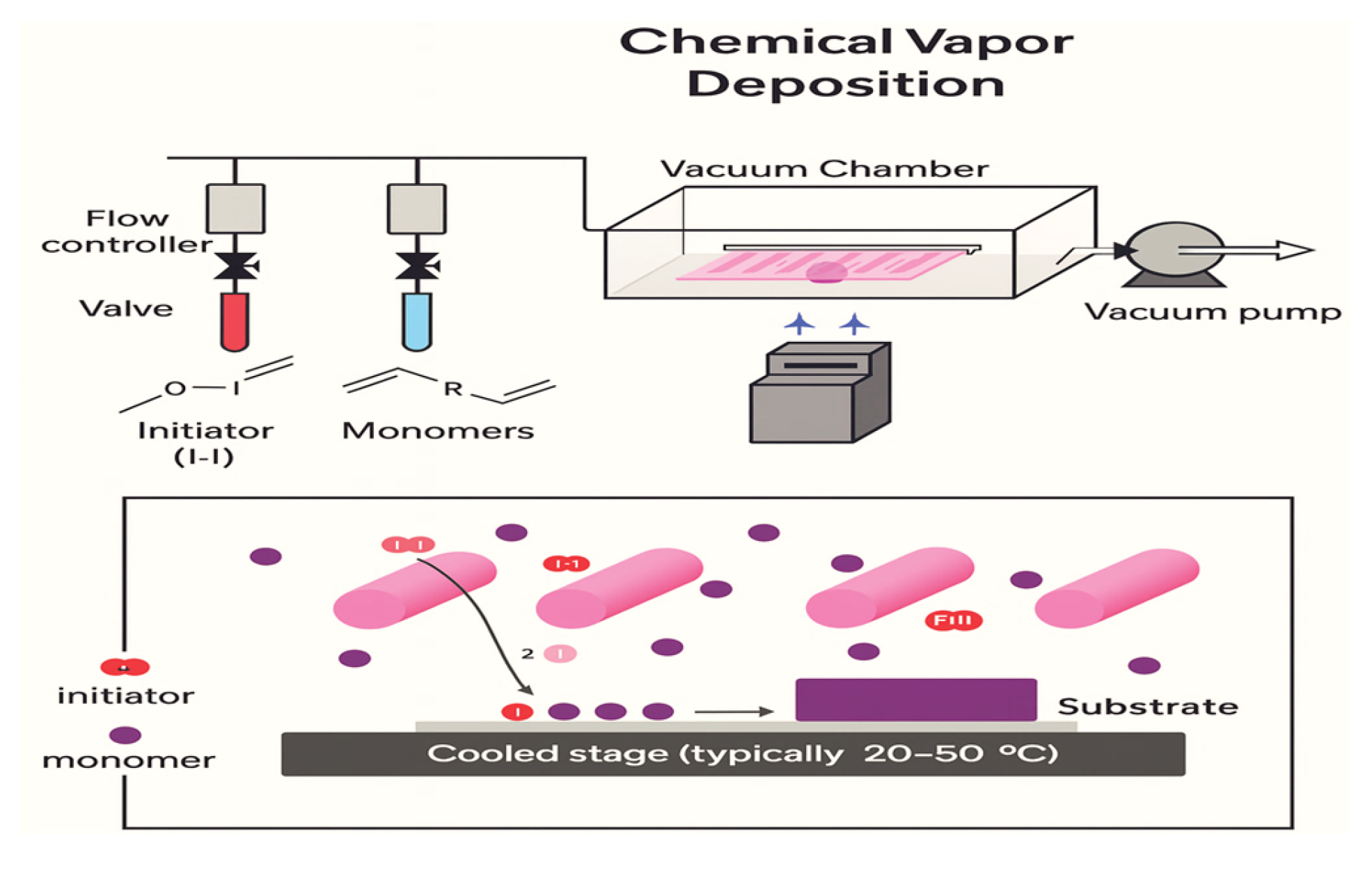
Figure 10.
Coating Thickness and Hardness vs. Scanning Parameters [67].
Figure 10.
Coating Thickness and Hardness vs. Scanning Parameters [67].
3.3. Thermal Spray Techniques
Thermal spray techniques encompass a family of processes in which feedstock material (powder, wire, or suspension) is heated to a molten or semi-molten state and propelled at high velocity onto a substrate surface, forming a coating upon impact and solidification. The principal thermal spray processes relevant to aerospace ceramic coatings are described below, consolidated from earlier sections to eliminate redundancy, as shown in Figure 11. The particles are typically heated to a molten or semi-molten state and accelerated to high velocities, striking the substrate and quickly solidifying to form a layered structure. The method has numerous applications in the aerospace sector.
Variants of Thermal Spray
Atmospheric Plasma Spray (APS): In APS, a high-temperature plasma jet (generated by passing a gas such as Ar/H₂ or Ar/He through an electric arc) melts the feedstock powder and propels it toward the substrate. APS is the standard process for depositing YSZ TBCs on turbine engine hot-section components. The resulting microstructure is lamellar (splat-on-splat), with approximately 5–15% porosity, which contributes to the desirable low thermal conductivity of the TBC (~1.0–2.0 W/m·K)[106,107]. APS is also widely used for Al₂O₃ and Cr₂O₃ wear-resistant oxide coatings [105].
High-velocity oxygen fuel spraying process: In HVOF systems, a fuel gas such as propylene, hydrogen, or kerosene is burned with oxygen inside a combustion chamber, producing a high-temperature gas stream that exits at very high velocity [108], as shown in Figure 12. The powdered feedstock is introduced into the jet, where it is heated and propelled to supersonic speeds (around 500–1000 m/s) [46].Due to the high particle velocity and comparatively lower particle temperatures than in APS, HVOF produces extremely dense coatings with minimal porosity (<1–2%) and strong adhesion to the substrate. HVOF is the primary industrial process for WC-Co cermet coatings used for wear and erosion resistance in landing gear components, hydraulic rods, and other aerospace parts requiring exceptional hardness and toughness. HVOF thermal spray WC-Co-Cr has been validated as a technically superior and environmentally compliant replacement for hard chromium electroplating on all new-design aircraft landing gear, including the Boeing 787, Airbus A380, and F-35, by the US-Canadian Hard Chrome Alternatives Team (HCAT). Figure 12 illustrates the HVOF process schematically.
Wire Arc Spray (WAS): Two consumable wires carrying opposite electrical charges are fed into a spray gun, where an electric arc forms between them, melting their ends. The molten metal is atomized by a high-speed air jet and directed towards the substrate. WAS is a cost-effective method for depositing metallic coatings with high deposition rates; however, it typically produces coatings with higher porosity and oxidation levels compared to plasma or HVOF spray, making it less suitable for critical ceramic applications unless post-processing is applied [46].
Flame Spray (FS): Flame spray is among the earliest thermal spray techniques, in which a fuel gas–oxygen mixture is combusted to melt the feedstock. While cost-effective, flame spray produces coatings with higher porosity and lower bond strength compared to HVOF or plasma spray, and is used primarily for less demanding applications or sacrificial corrosion protection.
Thermal Barrier Coatings (TBCs): Modern turbofan engines (GE9X, CFM RISE, RISE program) operate at 1700–1800 K with ceramic thermal barrier coatings (TBCs), [109]. Thermal barrier coatings (TBCs), typically made of yttria-stabilized zirconia (YSZ) and deposited using the atmospheric plasma spray (APS) process, are applied to high-temperature components of gas turbine engines such as blades, vanes, and combustors [54,106,107], as shown in Figure 13. Such coatings protect the components from high temperatures. This allows the engines to operate at higher temperatures. Such coatings allow for a notable temperature difference in the coating. This improves the life span of the components, as indicated in Figure 13 below.
Wear- and Erosion-Resistant Coatings: HVOF-sprayed WC-Co cermets, CrC-NiCr cermets, and other cermets are common in landing gear parts, engine compressor blades, hydraulic actuation systems, and flap tracks. Cermets are used for abrasive wear resistance, fretting corrosion resistance, and solid particle erosion. Such coatings work very effectively in increasing the life of components exposed to frictional impact [46].
Corrosion Protection: Coatings of aluminum, zinc, or their alloys through thermal spray methods may provide sacrificial corrosion protection to the framework structures and other parts operating in adverse atmospheric conditions or in saltwater [8].
Component Repair and Restoration: Thermal spraying, especially cold spraying, also appears in the repair of worn-out aerospace parts. It provides an effective means of repairing instead of purchasing new parts. Such processes do not affect the microstructure of the substrate.
Processes of thermal spraying represent effective methods for enhancing the surface properties of various components for the aerospace industry. To a certain extent, it is now an effective and economic approach for the production of thick coatings through the usage of different materials [110]. Thus, the selection of the spraying process is related to the specific performance of the coating, the sort of material, the shape, and the cost-effectiveness.
3.4. Other Spray Techniques
In thermal spray processes, the feedstock material in the form of powder or wires is heated to the molten state or partially molten state and then propelled towards the substrate at high speed to form the coating instantly on the substrate, as shown in Figure 15. These techniques are highly versatile, capable of depositing thick layers (microns to millimeters) of ceramics, metals, and polymers at high deposition rates.
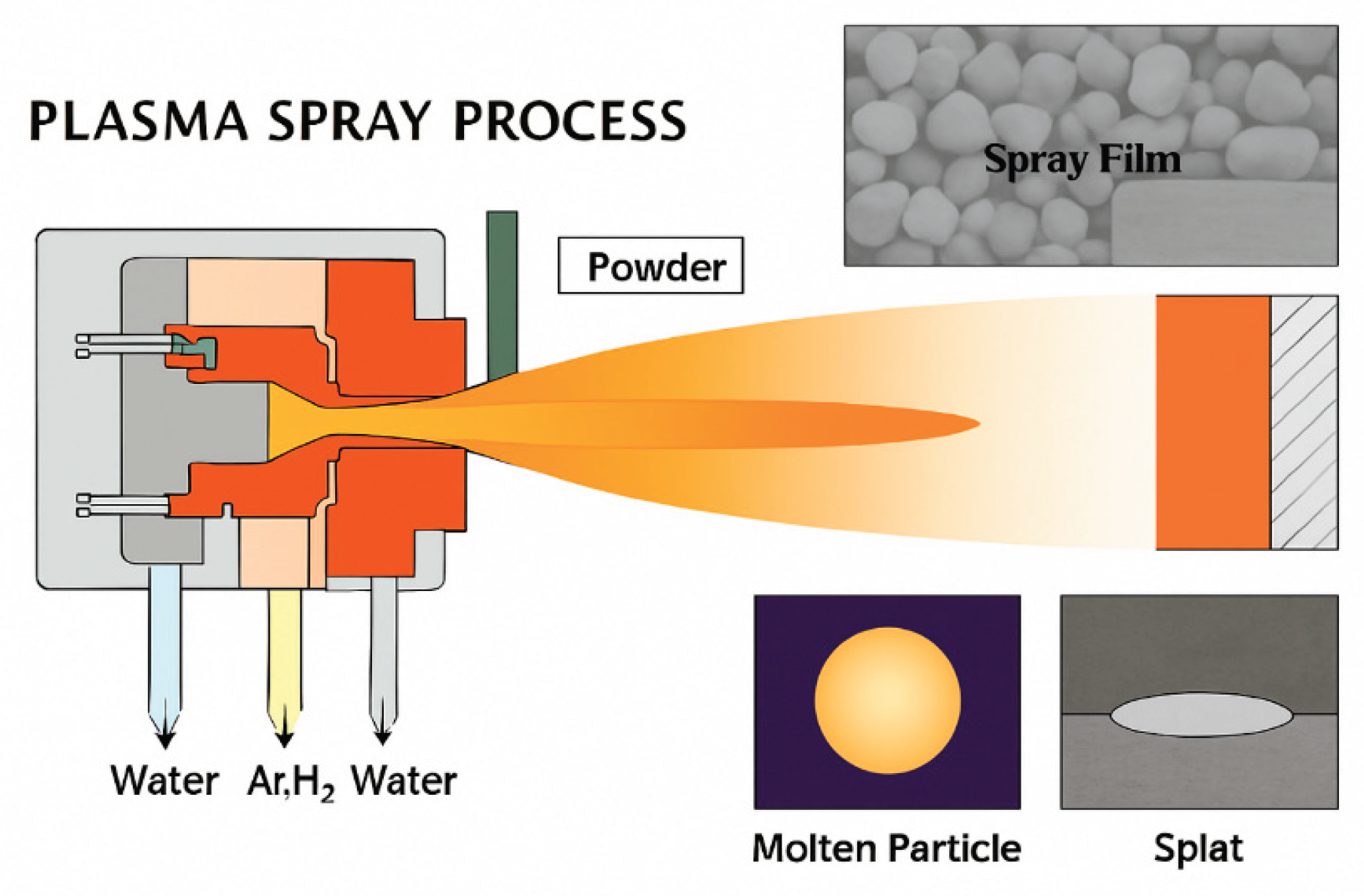
- Plasma Spraying: In plasma spraying, a high-temperature plasma jet usually formed using argon with small amounts of hydrogen or helium melts the feedstock powder, which is subsequently propelled toward the substrate at high velocity, as shown in Figure 14. The process has several variations, such as Atmospheric Plasma Spray (APS), Vacuum Plasma Spray (VPS), and Low-Pressure Plasma Spray (LPPS). APS is commonly used for thermal barrier coatings (e.g., YSZ) and wear-resistant oxide coatings (for example, aluminum oxide (Al₂O₃) [10,111] and chromium oxide (Cr₂O₃)). VPS and LPPS operate in controlled atmospheres, producing denser, more uniform coatings with reduced oxidation, ideal for reactive materials requiring high purity. Plasma-sprayed SiC coatings often exhibit a characteristic lamellar microstructure with varying porosity, influencing their thermal and mechanical performance.
Figure 14.
plasma-sprayed Process.
High velocity oxygen fuel coating process: High velocity oxygen fuel utilizes the combustion of a fuel-oxygen mixture to generate a supersonic gas stream that propels and heats the feedstock powder. This produces coatings that are highly dense, strongly bonded, and exhibit very low porosity. HVOF is primarily utilized for depositing hard carbide ceramics to provide superior wear and erosion resistance [46].
Detonation Gun (D-Gun) Spraying: This process uses controlled detonations of a gas mixture to accelerate powder particles to very high velocities. D-Gun coatings are famous for their excellent durability and high strength of mechanical strength. This technique is often specified for applications requiring highly robust and reliable anti-corrosion coatings.
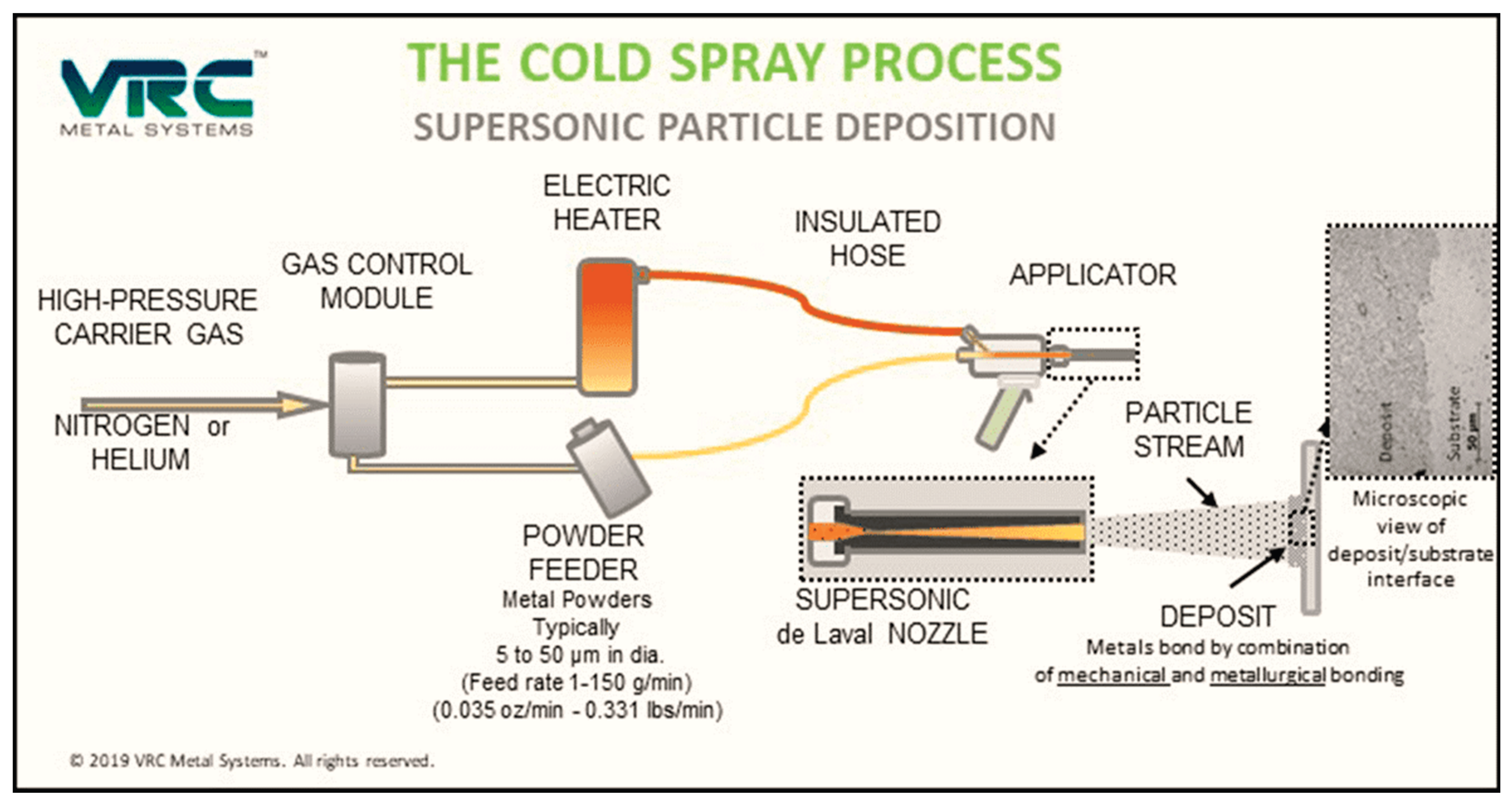
Cold Spray: In contrast to other thermal spray techniques, cold spray is a solid-state coating process in which powder particles are propelled to supersonic speeds by a high-velocity gas stream and adhere to the substrate through kinetic energy rather than melting, as illustrated in Figure 15. This process saves the coating from the low temperature in terms of thermal stresses, oxidation reactions, and phase transition. Despite being used mainly on metallic coatings, research is in progress for its adaptability in ceramic-metal composites and pure ceramic materials.
Figure 15.
Illustration of the cold spray process, a solid-state coating deposition technique, depicting supersonic particle deposition.
Figure 15.
Illustration of the cold spray process, a solid-state coating deposition technique, depicting supersonic particle deposition.
3.5. Sol-Gel Process
The sol-gel process is an adaptable chemical process for the production of ceramic and glass materials from molecular precursors (metal alkoxides/metal salts) in liquid solutions. The process also involves the formation of a colloidal solution (sol) through hydrolysis reactions and polycondensation reactions, followed by the transition of the sol to the formation of the ‘gel-like’ structures. These ‘gel’ structures are then deposited on the substrate through processes such as dip coating, spin coating, or spraying the gel on the substrate. Afterward, the coating goes through the process of drying (followed by thermal processing) through calcination/sintering procedures for the formation of the densified coating [112]. Various other advantages come along with the sol-gel process in the production of coatings. These sol-gel processes involve low processing temperatures for coating complex component shapes. Additionally, the process uses low-cost equipment. Moreover, the process allows controlled nanostructured coatings. However, the ‘Ceramic Sol-Gel’ coating process improved the corrosion resistance along with the thermal properties. At the same time, the process is much cheaper [113].
3.6. Other and Emerging Fabrication Techniques
Laser Metal Deposition (LMD) / Laser Cladding: LMD utilizes a high-energy laser beam to generate a molten pool on the surface of the substrate, into which a feedstock material (powder or wire) is fed and fused. Upon solidification, a metallurgically bonded coating is formed [114]. Beyond metallic coatings, LMD is also employed for creating dense, strongly bonded ceramic and metal-matrix composite coatings. The mechanical property values of the laser-pyrolyzed Al/ZrO₂ composite coatings on the aluminum substrate are very encouraging. Silver-doped zirconium oxide (ZrO₂-Ag) coatings are a type of advanced ceramic nanocomposite with promising potential for biomedical applications [115]. Incorporating Ag nanoparticles has been found to improve the structural integrity, surface properties, and long-term functional durability of ZrO₂-based coatings [116]. The HV values for the laser-treated and the substrate samples are 19.2 ± 4.8 GPa (0.01) and 0.50 ± 0.01 GPa (0.01), respectively. Precision regulation of coating thickness/properties is made possible by the process-treated [117].
Electrophoretic Deposition (EPD): Electrophoretic deposition (EPD) is a colloidal process in which negatively charged ceramic particles dispersed in a liquid migrate toward a negatively charged electrode in the presence of an electric field. Using an electric field allows for the uniform deposition of ceramic coatings on complex-shaped components in an economic process. However, the process of sintering must be followed to make the deposited layer dense. Various types of ceramic materials, like Al₂O₃ and ZrO₂ can be deposited by the process of EPD [9,10,36].
Additive Manufacturing (AM) of Coatings: Despite its common link to the production of massive components, additive manufacturing (AM), in the form of directed energy deposition (DED), as well as binder jetting, is currently being researched for the direct production of thick coatings or customized interfaces on alloy substrates. Such production allows for unlimited freedom in terms of designing the components. Selecting the production process is one of the most important aspects because every process possesses its own combination of potential and limitations [117]. Present research efforts are being made to improve existing processes by employing various methodologies to produce hard ceramic coatings in the aerospace industry that are durable and more economical.
4. Testing and Characterization Techniques
Assessing the performance and integrity of hard ceramic coatings on aerospace alloys necessitates a comprehensive suite of advanced testing and characterization tools. These are crucial for elucidating microstructural features, elemental composition, phase identification, interfacial bonding, and functional behavior under simulated or actual service conditions. The insights gained from these analyses are vital for quality assurance, performance validation, failure analysis, and the iterative improvement of coating designs. Testing methodologies primarily focus on functional performance, while characterization techniques delve into the intrinsic properties and composition of the material.
4.1. Testing Methodologies
Various types of tests are also performed in order to determine the ability of the coating system in different situations. These types of tests might involve mechanical properties testing, thermal performance testing, and corrosion resistance testing [8].
-
Mechanical Property Tests:
- ◦
- Microhardness techniques, including Vickers and Knoop indentation, as well as nanoindentation methods, are widely employed to evaluate the hardness of coating materials. Fracture toughness ( , MPa ) is determined using a corrected Vickers indentation approach.
The equation previously reported in this manuscript ( ) was found to be dimensionally inconsistent. It has therefore been replaced with the well-established relation proposed by . R. Anstis et al. (1981), which is applicable to Palmqvist-type crack systems:
where:
- fracture toughness (MPa )
- Young’s modulus of the coating material (GPa)
- Vickers hardness (GPa)
- applied indentation load (N)
- half-length of the radial crack measured from the center of the indentation to the crack tip (m)
Nanoindentation is especially useful for thin films, enabling the determination of the coating’s hardness and elastic modulus by the application of definite loads measured by certain displacements, as indicated in Figure 16. Such analysis also allows the determination of the coating hardness variations along the coating layer thickness and its boundary layer [66,118].
Thermal Performance Tests: Thermal Shock and Thermal Barrier Efficiency: Thermal shock tests involve subjecting samples to rapid temperature cycling to evaluate their resistance to cracking or spallation, as depicted in Figure 17. Further, we can predict the thermal fatigue life of thermal barrier coatings (TBCs) by focusing on the stresses at the interface between the top ceramic layer and the thermally grown oxide (TGO). It builds a finite-element (or master–slave) model to simulate the evolving strain and stress through thermal cycles, explicitly accounting for growth of the TGO, temperature gradients, and material properties (elasticity, plasticity, and creep) of each layer. As the TGO thickens, the model computes local strain ranges (both shear and axial) at critical “risk” points along the TC/TGO interface. These strain ranges are then fed into a fatigue-life formula (often phenomenological) that relates cyclic damage accumulation to the TGO thickness and the strain amplitude. By calibrating this relation with experimental data, the model can predict when the TBC will fail due to crack initiation at the interface, giving a cycle-life estimate based on interfacial stress rather than purely external loading, as depicted in Figure 18.
Oxidation and Hot Corrosion Testing: These types of tests involve subjecting the samples to high temperatures in the presence of either air or corrosive environments. Other types of corrosion tests involve spraying the samples with corrosive materials. This test exhibits very taxing conditions in order to test the materials for their resistance to corrosion in the long term.
Corrosion Resistance Tests: Electrochemical Tests: Various techniques, such as potentiodynamic polarization methods and electrochemical impedance spectroscopy, are used in the assessment of the corrosion resistance of the material in the different electrolyte solutions [100]. Through potentiodynamic polarization analysis, corrosion rates and mechanisms are evaluated. EIS is used to assess the barrier effect of the coating described in Figure 19.
Salt Spray Testing: Such standards as ASTM B117 involve salt spray testing the samples in a corrosive salt fog atmosphere to determine the corrosion resistance of the coating by simulating exposure to either a marine atmosphere or de-icing salt.
4.2. Characterization Techniques
Characterization techniques provide in-depth details regarding the coating process of the microstructure and the surface morphology. The operational stability can be assessed through wear resistance testing, optical profilometry, wear quantification, and coefficient of friction measurements [119]. Additionally, they provide chemical composition and the various phases in terms of different length scales, ranging from the macro level to the nano level. Such techniques provide an in-depth analysis of the structure, outlook, and chemical components, as well as the different phases from the larger scale to the nanoscale.
Scanning Electron Microscopy (SEM): Scanning Electron Microscopy (SEM) is used extensively for the examination of the surface morphology, cross-sectional image, and microstructure of the coating, as indicated in Figure 20. It allows the observation of the indicative details like the boundaries of grains, pores, cracks, & thickness of the layer [1,120]. SEM can also conduct analysis for the chemical composition if connected to EDS/EDX.
Analysis Through X-ray Diffraction (XRD): X-ray diffraction is very effective for crystalline phase analysis, crystal structure determination, estimation of the average grain size, and measurement of the residual stresses in the coating, as performed in Figure 21. XRD calculates the Psi-method for the residual stress analysis of XRD for the determination of the critical geometrical parameters: the incident angle (Omega), the diffraction angle (Theta), and the off-axis angle (Psi). XRD works on the principle of detecting the change in lattice parameters based on the tilt of the Psi angle to determine the residual stress (sigma) in the polycrystalline material by illuminating the grain planes at different angles to the surface normal. Grazing Incidence XRD is used for analyzing thin films to increase the coating XRD peak over the substrate peak [121].
Electron Spectroscopy for Chemical Analysis: X-ray Photoelectron Spectroscopy (XPS) or ESCA yields details on the elemental composition and chemical bonding state of the surface atoms in the coating. Additionally, depth profiling analysis through the coating thickness can also be achieved by ion sputtering [120].
- ◦
- Raman Spectroscopy: This non-destructive analysis method offers views on the vibrational states of molecules. It is used for the determination of phases, crystalline structures, and the stress state in the coatings.
- ◦
- Auger Electron Spectroscopy (AES): It also provides high spatial resolution elemental analysis capabilities for the characterization of interfaces through methods such as depth profiling.
- ◦
- Mass Spectroscopy by using Secondary Ions (SIMS): SIMS is a very sensitive technique for detection/analysis of elemental & isotopic composition. Trace elements can also be detected. Dynamic SIMS allows very good resolution in the depth analysis.
- ◦
- Optical Emission Spectroscopy Using Glow Discharge (GDOES): By means of GDOS analysis, coating thickness profiles along with their composition can now be quickly measured.
Selecting the appropriate methods for its testing and characterization is also based on the coating material selection, the substrate used for the coating, and the intended application, among other aspects. It may also require the use of various methods for its analysis.
5. Computational Modeling and Machine Learning in Hard Coatings
Modeling, simulation, optimization, and performance estimation of hard ceramic coatings are increasingly aided by the use of advanced computational models and machine learning (ML). Machine learning techniques paired with high-throughput experimental work are very effective in hastening the process of multi-component material composition design. The combined use of Machine Learning and high-throughput experimental work is highly effective in speeding up the material design of multi-component compositions. These technologies provide the rapid discovery of new coating compositions. Machine learning algorithms are ideal for hastening the process of analysis for accelerated convergence [7]. This synergy was successful in achieving a 30% improvement in the efficiency of thermal insulation properties, a 40% enhancement in scratch resistance, and a 50% improvement in corrosion resistance compared to the existing model.
5.1. Computational Modeling Techniques
Computations of materials properties can be done by different methods based on the scale, from atomic to the macroscopic scale. Machine Learning (ML) regression models like Categorical Boosting (CatBoost), Decision Tree (DT), Polynomial Regression (PR), Stacking Regression (SR), Extreme Gradient Boosting Regression (XGBoost), and Bagging Regression (BR) were employed to predict the values of density and hardness of ceramic coating by input parameters.
Density Functional Theory (DFT): Density Functional Theory (DFT) is a quantum mechanical method for analyzing the ground-state electron configuration of multi-electron systems. DFT is very helpful in calculating the inherent properties of ceramic materials, such as lattice constants, elastic properties, electron band structures, and the formation energy of different phases. Additionally, DFT analysis may also provide insight into surface energies, the process of precursor molecule adsorption in CVD processes, and coating-substrate interface stability at the atomic scale. DFT computations may also determine the favorable crystal structure for the deposited layer in the CVD process. DFT analysis may also provide insight into different types of defects in the lattice structure of the ceramic material. This composite Figure 22 integrates multi-scale analysis of high-temperature material behavior, combining microstructural evidence from SEM (a) with quantitative interdiffusion kinetics (b) and atomic-scale modeling (c). Panel (a) shows the formation of interdiffusion zones (IDZ) after thermal exposure. Panel (b) presents concentration profiles and derived activation energies (Ea) for key elements (Al, Ni, Cr). Panel (c) utilizes Density Functional Theory (DFT) to visualize the minimum energy pathways (MEP) and calculate the activation energy barriers for Al, Ni, and Cr migration across the interface, correlating macroscopic diffusion with fundamental atomic transport mechanisms [122].
- Molecular Dynamics (MD): MD simulation tracks the behavior of atoms in the system through the numerical solution of the equations of motion proposed by Newton. Such analysis is particularly effective in the analysis of dynamic processes such as atomic diffusion in solids during the cooling process. MD simulation analysis is also applicable in the simulation of the effect of energetic particles during the process of PVD/thermal spraying. Additionally, the process of PVD coating holds temperatures below 500 °C. Also, the coating thickness is the thickness of the material deposited on the substrate. Such processes are particularly applicable in the finishing procedure [123]. MD simulation analysis bridges the nanosecond to microsecond gap in the simulation of the behavior of many atoms. Such analysis is particularly applicable in predicting the behavior of materials under various stresses. Additionally, atomic interaction analysis is applicable in the simulation of MD analysis. Consequently, the simulation analysis results in the determination of the stress-strain relation. Such relations are applicable in the simulation of real processes by the use of FE analysis. Additionally, parameter selection for simulation analysis is improved by the use of the AI algorithm. Additionally, the simulation analysis indicated a 30% improvement in the efficiency of thermal insulation. Additionally, the simulation analysis improved the process by 40% in terms of resistance to scratching. Finally, the simulation analysis indicated an enhancement of 50% in corrosion resistance compared to the conventional model.
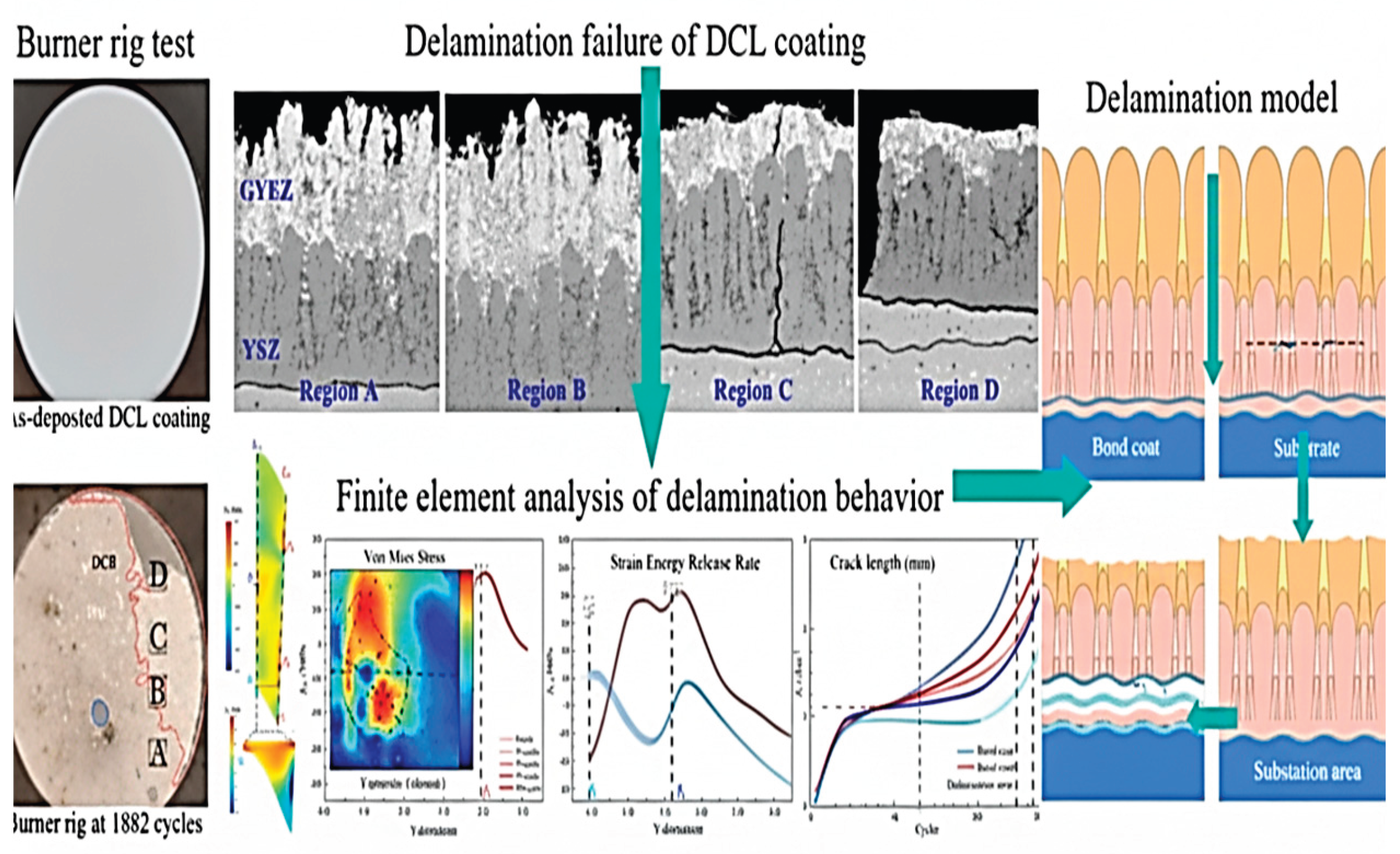
- Finite Element Method (FEM): Finite Element Method or Finite Element Analysis (FEA) is a numerical method for finding an approximate solution for various boundary value problems defined by partial differential equations. Results obtained from such FEA models can predict critical fracture conditions for interfacial bond coat/substrate failure. A study combines molecular dynamics (MD) and finite element analysis (FEA) to capture behavior across different scales, using AI to refine parameters and accelerate the design process. Results showed significant improvements in performance, including a 30% increase in thermal insulation, a 40% increase in scratch resistance, and a 50% increase in corrosion resistance, and validated the model against experimental data. In materials science and engineering, FEM is extensively used for macroscopic stress analysis, thermal stress prediction, and fracture mechanics simulations in coated systems. For hard ceramic coatings on aerospace alloys, FEM can simulate how stress is distributed in the coating and substrate as a result of differences in thermal expansion, external mechanical loads, or stresses that remain in the material after the coating deposition process. It provides an integrated analysis of the delamination failure in a Dense Columnar Layer (DCL) coating, linking experimental observation with mechanical modeling. The top section presents microstructural evidence of failure progression from a burner rig test, showing crack initiation and propagation across regions A-D. The bottom section details the Finite Element Analysis (FEA) of delamination behavior, including Von Mises stress and Strain Energy Release Rate plots, which provide quantitative criteria for failure prediction. The conceptual delamination model on the right schematically describes (Figure 23) the process of interfacial failure due to the generation of the degraded zone between the bond coat layer and the substrate [124].
Figure 23.
FEM Integrated Computational Model for Thermal Spray Splat Impact and Deposition Stress [124].
Figure 23.
FEM Integrated Computational Model for Thermal Spray Splat Impact and Deposition Stress [124].
Mesh refinement reduced FEM simulation error margins from 10% to under 2%, confirming the model’s reliability [26]. It can predict areas of high stress concentration where delamination or cracking is likely to occur, guiding design modifications to improve coating integrity and reliability. FEM is also used to simulate the response of coated components to impact, fatigue, and creep, providing critical data for structural integrity assessments. The simulation results showed (Figure 24) that deposition stress developed during the simultaneous spreading and solidification of the droplet. It presents the complete modeling framework used to simulate thermal spray splat formation and residual stress development, starting with the input parameters that define the grooved substrate geometry, particle size distribution, droplet temperature, and impact velocity. It then shows the finite element setup used to capture the droplet’s impact and spreading behavior. The thermal response follows, including the evolution of the solidified volume fraction, the cooling rate along a defined path, and the temperature field within the splat and substrate. The final section summarizes the stress prediction, comparing simulated and experimental deposition stresses, tracking the progression of isotropic and Von Mises stresses, and displaying the final tensile stress, maximum principal stress, and strain distributions that characterize the mechanical state of the solidified splat [125].
5.2. Machine Learning in Coating Design and Optimization
Artificial intelligence (AI) and machine learning (ML) technologies are quickly transforming the area of materials science, enabling the acceleration of the discovery, design, and optimization process of ceramic coatings at an unprecedented level [2,126]. ML algorithms are also able to improve their performance over time through the means outlined in the previous point in order to provide highly accurate solutions to the complex engineering tasks by offering insights for their solutions. They seem to provide solutions that may not always be achieved through the solutions outlined in the previous points [127]. Additionally, it is also able to undertake the end-to-end discovery of novel materials possessing high-potential advanced properties through model inference, surrogate optimization, and even within the context of data scarcity through active learning. By utilizing vast amounts of data from experimental outcomes, computational simulation studies, and scientific literature, ML algorithms seem to provide the ability for the detection of complex links within the given data in order to predict the behavior of materials. Additionally, it also seems to provide the ability for the determination of the processing parameters of novel material compositions by analyzing the data set. The normal process flow for ML-assisted materials design is outlined in the flowchart illustration in Figure 25. This process flow starts from the data-gathering process. This process includes the determination of the target property values along with the values for various parameters like material composition and processing parameters, along with structural and compositional descriptors.
Accelerated Materials Discovery: ML algorithms, especially supervised learning algorithms, could also be trained on existing databases of ceramic compositions and their properties to effectively predict the properties of new compositions that have never been tried. High-throughput analysis for new coating candidates significantly accelerates the experimental process. Reverse design techniques that seek the use of ML algorithms in the determination of the composition of materials that exhibit specific properties are also in vogue. ML algorithms might provide the composition needed for the effective doping of YSZ in order to exploit its thermal stability. New multi-component ceramic materials with enhanced hardness and toughness might also be developed.
- Process Optimization: ML methods for the optimization of parameters for different methods of coating layer deposition (PVD, CVD, and thermal spraying) make it possible to determine the process parameters (such as temperature, pressure, gas flow rate, and power) for obtaining coatings with the required properties (such as hardness, adhesion strength, and microstructure). This resulted in the enhancement of the coating quality, a decrease in production costs, and an improvement in the efficiency of the process. Reinforcement learning methods are particularly attractive for online process control.
- Performance Prediction and Lifetime Estimation: ML algorithms can also predict the future behavior of ceramic coatings in terms of their performance levels and life span. ML algorithms can predict the expected levels of degradation on the coatings by being trained on accelerated aging test data, fatigue tests, and operational data. Predicting the future levels of degradation on the coatings by ML algorithms is extremely useful in the maintenance of aerospace components.
- Microstructure-Property Relationships: It is very important to understand the intricate interplay between the microstructure of the coatings and their macro-properties. Machine learning techniques like the neural network approach can recognize the intricate relationships between the micro-properties of the coating material, like the size of the grains, porosity levels, and phase distribution, and the related material properties, like hardness, toughness, and wear resistance [126].
- Digital Twins for Coatings: The concept of a digital twin is the creation of a virtual representation of a physical object (like a coated aerospace component) that is constantly updated based on live information gathered by sensors and computational models. In the case of ceramic coatings, a digital twin may combine computational models (DFT, MD, FEM) and ML algorithms to obtain the state of the coating, its performance, and its degradation in real-time. This would facilitate the proactive maintenance and the optimization of the operational parameters and give a comprehensive perspective of the whole lifecycle of the coating and maintenance, including the production process to the end service. The digital twin would be a living model that would continually learn and adjust to provide unmatched degrees of understanding and command of coated components.
Combining computational modeling and machine learning will revolutionize the creation and investigation of hard ceramic coatings, permit quicker innovation periods, stronger designs, and credible operation in the challenging aerospace milieu. Such tools not only shorten the development process but also give a more profound understanding of more complex relationships between material composition, processing, microstructure, and performance in general. The ongoing innovation of these varieties of ceramic coating materials, as well as the improvement in the deposition technologies, offers this vast arsenal to the engineers and scientists to develop and deploy the most specialized of surface solutions to the hardest/most challenging aerospace applications. The selection process must be deeply informed by the science of coating material as well as the needs of the environment where the material is going to be used.
6. Applications of Hard Ceramic Coatings in Aerospace
The exceptional characteristics of hard ceramic coatings render them essential for numerous applications across the aerospace sector. The parts of a gas turbine work in a hostile setting where the temperature of operation ranges between the ambient temperature and almost the melting point of materials, which initiates diverse degradation on parts. Certain components that lose the dimensional tolerance with use necessitate repair and refurbishment of the same, when replacement of the component can be done at a low cost. [72]. Erosion of fly ash and sand particles damages compressor blades, which causes engine failure at an early stage. The following sections detail the principal applications of hard ceramic coatings in key aerospace systems.
6.1. Gas Turbine Engines
The basic components of a turbojet engine include (i) an air intake, (ii) a compressor or fan, (iii) a combustion chamber, (iv) a turbine, and (v) an exhaust nozzle (Figure 26). The engine works by drawing in air, compressing it, mixing it with fuel, and burning the mixture in the combustion chamber. The resulting hot gases are expelled through the exhaust nozzle, producing the thrust that propels the aircraft. To increase engine efficiency will require enhancing aerodynamic designs of compressors and turbines, the formulation of more efficient cooling systems of the turbine blades, and the further evolution of alloy and coating technology, as well as the manufacturing technology. The upgrades are useful in raising power output, improving fuel efficiency, lowering CO₂ and NO₈ emissions, and decreasing noise levels. [128]. One of the most challenging parts is the turbine engine and combustion chamber materials, which are known for very high-temperature components, and further erosion of fly ash and sand particles damages compressor blades, which causes engine failure at an early stage. [72].
- Thermal Barrier Coatings (TBCs): As mentioned above, the most important use of the ceramic coating in gas turbines is YSZ-based TBCs. TBCs are used on the turbine blades, vanes, combustors, and afterburner liners; TBCs offer thermal insulation that enables the engines to work at high temperatures. This increases the thermodynamic efficiency and fuel efficiency and reduces the level of emissions [106]. The low thermal conductivity of the YSZ topcoat makes a considerable temperature difference that safeguards the underneath superalloy elements against the entire heat of the combustion gases. Development of next-generation TBCs with lower thermal conductivity and higher durability is one of the main objectives of current research.
- Fatigue and Erosion Resistant Coatings: Components in the compressor and turbine sections are susceptible to wear and erosion from ingested particles (e.g., sand, dust) and high-velocity gas streams. Hard coatings such as aluminum alloys, TiN, TiAlN, and CrC-NiCr are applied to compressor blades and vanes to protect against solid particle erosion, maintaining aerodynamic efficiency and preventing premature fatigue. The experimental data (Figure 27) for alloys like 2024 and 7075 demonstrate a strong dependence on the testing frequency above one hertz. In contrast, literature data and the low-frequency region show a constant, frequency-independent coefficient. The 2024 alloy exhibits the highest coefficient at high frequencies, indicating a distinct dynamic thermal response. In the hot section, wear-resistant coatings are used on seals, shrouds, and other components that experience rubbing or fretting wear at high temperatures [129]. Appropriate addition of Si and B to the TiAlN and CrAlN coatings promotes the formation of a lubricating layer consisting of SiO₂ and B₂O₃/B(OH)₃, which provides lower friction and wear resistance at high temperature [130].
- Corrosion Protection: The high-temperature section of gas turbines operates in corrosive conditions, particularly from sulfur and other impurities in the fuel [72]. MCrAlY bond coats, which are an integral part of TBC systems, also provide excellent oxidation and corrosion resistance. The best thin corrosion protection coating, made by anodizing at 20 V and 1 °C and sealing and coating with amorphous Al₂O₃ nanolaminate, exhibits no signs of corrosion after a 1000 h ISO 9227 salt spray test and demonstrates a maximum surface hardness and Tests of the mechanical properties of the coatings showed that the microhardness of the Al₂O₃ coatings significantly improved as their thickness was increased in the range of 250–1100 μm. [65]. Moreover, corrosion-resistant ceramic coatings are specifically applied to parts in both the hot and cold sections to safeguard them from environmental damage.
6.2. Airframe and Structural Components
Airframe components are exposed to a variety of environmental and mechanical challenges, including corrosion, wear, and fatigue. Hard ceramic coatings are applied to improve the strength and service life of these essential components.
Wear Protection: Aluminum alloys, which are widely used in airframe construction, are vulnerable to corrosion, especially in saltwater or marine conditions. Hard ceramic surfaces, like Al₂O₃-based or Cr₂O₃-based, may be excellent barrier protection against wear, as shown in Figure 28. The combination of silicon carbide substrate and aluminum oxide (SiC-5 wt.% Al₂O₃) is used as the wear protection coating, and AlNi alloy represents the bond coat, which is formed by the flame spraying method on the mild steel substrate [25]. Surface energy spectrum shows that the Al₂O₃ coating has a strong ability to hinder element diffusion. [131]. Alloy 33 and Inconel 718 show the lowest weight loss, indicating superior performance under the test conditions. The materials 16Mo3 and Inconel 625 show intermediate loss, while Stellite 6 exhibits the highest weight loss. This test establishes a clear hierarchy of material resistance, with Alloy 33 and Inconel 718 being the most resistant, as shown in Figure 28. These coatings are often used as environmentally friendly alternatives to traditional chromate conversion coatings [5,23].
- Fretting Resistance: Many airframe components, such as flap tracks, door hinges, and control surface bearings, are subject to sliding wear and fretting. Hard, low-friction coatings like Micro-Arc Oxidation Coating are applied to these components to reduce wear, prevent seizure, and extend service life. These coatings can significantly reduce maintenance requirements and improve the reliability of mechanical systems [36,104,116,132]. The effects of graphene on the wear and corrosion resistance of micro-arc oxidation coating on a titanium alloy are shown in Figure 29.
Lightning Strike Protection: Composite airframe structures are susceptible to damage from lightning strikes. Electrically conductive ceramic coatings, such as those containing TiB₂, can be integrated into the surface of composite components to dissipate the electrical energy from a lightning strike, preventing damage to the underlying structure. This is a critical safety feature for modern aircraft with extensive use of composite materials.
6.3. Landing Gear Systems
Landing gear components are subjected to extreme mechanical loads, impact, wear, and corrosion. The best thin corrosion protection coating, made by anodizing at 20 V and 1 °C and sealing and coating with amorphous Al₂O₃/TiO₂ nanolaminate, exhibits no signs of corrosion after a 1000 h ISO 9227 salt spray test and demonstrates a maximum surface hardness of 5.5 GPa. Coatings that are hard-ceramic are essential for the reliable functioning and security of these crucial systems. Wear and Abrasion Resistance: Landing gear hydraulic actuators and sliding components are likely to wear and abrade severely. HVOF-sprayed WC-Co coatings are the industry standard for protecting these components. The high hardness and toughness of WC-Co provide exceptional resistance to abrasive wear from dirt and debris, as well as adhesive wear from sliding contact. These coatings have largely replaced hard chromium plating due to their superior performance and environmental benefits.
- Corrosion Protection: Landing gear components are exposed to harsh environmental conditions, including de-icing fluids and saltwater. Corrosion-resistant coatings, such as aluminum alloy, are applied to protect against corrosion and stress corrosion cracking. The best thin corrosion protection coating, made by anodizing at 20 V and 1 °C and sealing and coating with amorphous Al₂O₃/TiO₂ nanolaminate, exhibits no signs of corrosion after a 1000 h ISO 9227 salt spray test and demonstrates a maximum surface hardness of 5.5 GPa. The adhesion strength and anti-corrosion performance of ceramic coating on laser-textured aluminum alloy with respect to time are illustrated in Figure 30. The strength increases significantly from the untreated substrate up to a treatment time of 30 minutes, where it reaches its maximum value. Extending the treatment time to 60 minutes causes the adhesion strength to decrease. This highlights that 30 minutes is the optimal treatment time for achieving the best possible bond strength. A balance of wear and corrosion resistance is essential to preserve the structural strength of landing gear components [133].
6.4. Hypersonic and Re-Entry Vehicles
The extreme temperatures and oxidizing environments encountered during hypersonic flight and atmospheric reentry present the most severe challenges for materials. Ultra-High Temperature Ceramics (UHTCs) and their protective coatings are now considered as the main promising materials for future space applications. Several studies have been devoted to the synthesis and tribological performance evaluation of ceramic oxide layers deposited on a large number of Al and Ti alloys obtained through the MAO process.
- Leading Edges and Nose Cones: The leading edges of wings and control surfaces, as well as the nose cone of a hypersonic vehicle, experience the highest aerodynamic heating. UHTC coatings, such as ZrB₂ and HfB₂, often combined with SiC, are used to protect the underlying carbon-carbon (C-C) or ceramic matrix composite (CMC) structures. These finishes offer oxidation resistance up to greater than 2000 °C, avoiding the swift disintegration of the structural material.
- Thermal Protection Systems (TPS): Hypersonic vehicles had large areas that needed thermal protection systems to ensure the internal structure and systems were insulated against the excessive heat. These TPS include ceramic coating, which forms the outermost level of protection against the intense temperature of the surroundings. Future hypersonic vehicles are largely concerned with the development of strong, trusted, and reusable TPS.
The different applications of hard ceramic coatings indicate their importance in the field. Table 4 provides information about specific aerospace components, coating materials to be used on them, and the reason for their functional choice.
7. Future Trends and Challenges
Hard ceramic coatings in the field of aerospace technology are continuing to develop vigorously because of the relentless pursuit of higher performance capabilities, better efficiency, and greater safety. Major competition in the massive market between the leading automobile industry giants and the aerospace industry giants is the primary force behind the rapid developments in the field. [5,13]. The future for the field will emerge through the success of various key areas outlined in the sections that follow.
7.1. Advanced Material Systems
New material systems are in the vanguard of future innovations in the field of ceramic coatings.
- Ultra-High Temperature Ceramics (UHTCs) and Environmental Barrier Coatings (EBCs): The vision for hypersonic flight and improved gas turbine engines requires the demonstration of the ability to operate in temperatures in excess of 2000 °C. Among UHTCs, diborides (ZrB₂ & HfB₂) & carbides (TaC & HfC) play very important roles in such usage [72]. Formulation of reliable EBCs from the aforementioned materials is one of the most important technological tasks. EBC must ensure erosion resistance in addition to thermal & oxidation resistance. EBC must also ensure stability in phases & must exhibit good substrate adhesion during the ultra-intensive thermal cycles [48].
- High-Entropy Ceramics (HECs): High-entropy ceramics, an area being developed from the concept of high-entropy alloys, hold immense opportunities in the design of different coatings [143]. Present literature on the performance of the ceramic phase-reinforced high entropy alloy composite coatings is mostly concerned with room temperature mechanical properties, frictional properties, and electrochemical corrosion properties [144]. By combining different primary elements, HECs have the ability to exhibit different properties like high hardness and high toughness, along with improved thermal stability. However, the issue emanates from the analysis of the intricate phase behavior along with the structural-property correlation in multi-component materials [145,146].
- Nanostructured and Nanocomposite Coatings: Nanoscale-level control of the coating materials also holds immense promise for improvement in coating performance. Nanocomposite coatings consisting of nanophase materials dispersed in a ceramic matrix might exhibit remarkable hardness and toughness due to the operations of the grain boundary reinforcement mechanism and the crack deflection mechanism. These nanostructured coatings, having remarkable properties like ease of processing and availability of surface-active functionalities, could pose immense promise for their further processing into CD/polymer nanocomposites [146]. The problem lies in the ability to scale up the manufacturing process of the nanostructured coatings to ensure uniform nanoparticle distribution in the coating and an effective interface between the matrix material and the reinforcement phase. [147].
7.2. Multifunctional and Smart Coatings
Nowadays, the increasing emphasis on the use of integrated components and system-level optimization is also encouraging developments in the area of multifunctional intelligent coatings. Sensing and Health-Monitoring Coatings: Incorporation of the capabilities for sensing in the coating may ensure the generation of real-time information regarding the condition of aerospace components. Such coatings may be developed for the measurement of temperature-related variations in color or resistance, along with the detection of corrosion. However, the challenge for obtaining “smart” coatings lies in the combination of the integrated components (phosphors and piezoelectric materials) within the coating in such a way that the protective functions also work effectively. Thus, the task is to make the coating self-healing and self-sensing, along with having the ability to provide many more advantages for the achievement of the long-term anticorrosion properties. [148]. Anti-Icing and Hydrophobic/Oleophobic Coatings: The accumulation of ice on the surfaces of aircraft poses serious safety risks. However, the production of long-lasting anti-icing coatings for such aircraft is of immense importance. These may involve passive methods like the use of superhydrophobic coatings that prevent the attachment of water to the surfaces. Active methods will involve the use of the coatings in order to remove the ice from the surface. The challenge would be in the durability of the anti-icing coatings.
7.3. Advanced Manufacturing and Processing
Manufacturing innovations play an important role in the ability of new material structures to realize their potential.
- Additive Manufacturing (AM) of Coatings: Additive manufacturing technologies such as Directed Energy Deposition (DED) and Binder Jetting provide unmatched flexibility in the generation of complex coating designs, functionally graded materials, and cooling channels. However, the challenge is how to harness the technology for the production of ceramic materials, especially because of their high processing temperature and brittle properties. New developments in ceramic materials for AM production and improving process parameters for regulating their properties are core research aspects [117].
- Suspension and Solution Precursor Plasma Spray (SPS/SPPS): Such modern thermal spray processes employ the use of liquid feedstocks (suspensions/solutions), in contrast to powder processing. This allows the coating of very fine-grained/nanostructured materials [147]. SPS & SPPS are also amenable to the production of coatings possessing novel morphologies like vertically cracked TBC coatings. However, the complexity lies in the ability to manage the process of interaction between the liquid feedstock & the plasma jet.
- Hybrid Coating Systems: Mixing various methods of coating deposition to provide a hybrid coating system allows the strengths of each process to be realized. Thus, for instance, the wearing resistance of the coating could be improved through the application of the PVD topcoat on the bond coat developed by the thermal spray process. However, the major challenge involved in the process would lie in the adhesion levels between the various components.
8. Conclusions
The significance of hard ceramic coatings for the improvement of metallic alloys’ performance in aerospace and defense environments is equally emphasized in this review. This article also focuses on the comprehensive analysis of the various types of ceramic materials available in the market, the advanced processes for their production, the advanced analysis techniques for their characterization, and the dramatic contribution of computational analysis in the accelerated process of coating design. Critical aspects involved in coating selection and substrate selection in terms of coefficient of thermal expansion (CTE) incompatibilities and chemical incompatibilities place considerable complexity in the choice of coating systems. A thorough analysis of the various types of oxide coatings/nitride coatings/carbide coatings, along with their properties, indicates the importance of the materials selection process in terms of the needed functionality. Additionally, the discussion on future developments in the areas of advanced manufacturing processes, nanotechnology concepts, and sustainability aspects, along with the data analysis approach for their use in coating process improvement, indicates that the field possesses promise for immense future innovations. Needless to say, the future generations of aerospace and defense technologies in terms of unmanned aerial vehicles (UAVs) and hypersonic technologies, along with the emphasis on sustainable aviation technologies, ensure the importance of research on intelligent, multifunctional, benign, and environmentally friendlier coatings in the field of hard ceramic coatings.
References
- Nikolaev, A.; et al. TEM Study of a Layered Composite Structure Produced by Ion-Plasma Treatment of Aluminum Coating on the Ti-6Al-4V Alloy. Journal of Composites Science 2023, 7, 271. [Google Scholar] [CrossRef]
- Hamzat, A.K.; et al. Fiber-reinforced composites for aerospace, energy, and marine applications: an insight into failure mechanisms under chemical, thermal, oxidative, and mechanical load conditions. Advanced Composites and Hybrid Materials 2025, 8, 152. [Google Scholar] [CrossRef]
- Altun, F.; et al. AI-Driven Innovations in 3D Printing: Optimization, Automation, and Intelligent Control. Journal of Manufacturing and Materials Processing 2025, 9, 329. [Google Scholar] [CrossRef]
- Li, N.; et al. Research Progress of Coating Preparation on Light Alloys in the Aviation Field: A Review. Materials 2022, 15, 8535. [Google Scholar] [CrossRef]
- Chate, G.R.; et al. 1 - Ceramic material coatings: emerging future applications, in Advanced Ceramic Coatings for Emerging Applications, R.K. Gupta, et al., Editors. 2023, Elsevier. p. 3-17.
- Zhang, Z.; et al. SiC whisker toughened WC-Al2O3-ZrO2 binderless cemented carbides via fast-hot-pressed sintering and DFT calculations. Ceramics International 2024, 50, 27749–27757. [Google Scholar]
- Ma, Y.; et al. The mastery of details in the workflow of materials machine learning. npj Computational Materials 2024, 10, 141. [Google Scholar] [CrossRef]
- Zhu, H.; Li, J. Advancements in corrosion protection for aerospace aluminum alloys through surface treatment. International Journal of Electrochemical Science 2024, 19, 100487. [Google Scholar] [CrossRef]
- Sun, N.; et al. Tribological properties and wear resistance mechanism of WC-ZrO2-Al2O3 ceramics. Journal of Alloys and Compounds 2023, 960, 171069. [Google Scholar] [CrossRef]
- Pham, P.V. Atmospheric Pressure Chemical Vapor Deposition of Graphene, in Chemical Vapor Deposition for Nanotechnology, P. Mandracci, Editor. 2019, IntechOpen: London.
- Lee, H.; et al. Dual-Scale Porosity Alumina Structures Using Ceramic/Camphene Suspensions Containing Polymer Microspheres. Materials 2022, 15, 3875. [Google Scholar] [PubMed]
- Buitkenov, D.; et al. The Study of Tribological Characteristics of YSZ/NiCrAlY Coatings and Their Resistance to CMAS at High Temperatures. Applied Sciences 2025, 15, 8109. [Google Scholar]
- Lima, R.S. Perspectives on Thermal Gradients in Porous ZrO2-7–8 wt.% Y2O3 (YSZ) Thermal Barrier Coatings (TBCs) Manufactured by Air Plasma Spray (APS). Coatings 2020, 10, 812. [Google Scholar]
- Lopez de Armentia, S.; et al. Development of Silane-Based Coatings with Zirconia Nanoparticles Combining Wetting, Tribological, and Aesthetical Properties. Coatings 2018, 8, 368. [Google Scholar] [CrossRef]
- Traxel, K.D.; Bandyopadhyay, A. Reactive-deposition-based additive manufacturing of Ti-Zr-BN composites. Additive Manufacturing 2018, 24, 353–363. [Google Scholar] [CrossRef]
- Zhu, D. and I.B. NASA Glenn Research Center, Aerospace ceramic materials: thermal, environmental barrier coatings, and SiC/SiC ceramic matrix composites for turbine engine applications. NASA/TM ; 2018-219884. 2018, Cleveland, Ohio: National Aeronautics and Space Administration, Glenn Research Center.
- Konstantiniuk, F.; et al. Fracture Properties of α– and ĸ–Al2O3 Hard Coatings Deposited by Chemical Vapor Deposition. Coatings 2021, 11, 1359. [Google Scholar] [CrossRef]
- Michalak, M.; et al. Wear Behavior Analysis of Al2O3 Coatings Manufactured by APS and HVOF Spraying Processes Using Powder and Suspension Feedstocks. Coatings 2021, 11, 879. [Google Scholar] [CrossRef]
- Jaworska, L.; et al. Thermal Barrier Coating on Diamond Particles for the SPS Sintering of the Diamond–ZrO2 Composite. Materials 2025, 18, 869. [Google Scholar] [CrossRef] [PubMed]
- Kern, F.; Osswald, B. Mechanical Properties of an Extremely Tough 1.5 mol% Yttria-Stabilized Zirconia Material. Ceramics 2024, 7, 1066–1084. [Google Scholar] [CrossRef]
- Kulyk, V.; et al. The Effect of Sintering Temperature on Phase-Related Peculiarities of the Microstructure, Flexural Strength, and Fracture Toughness of Fine-Grained ZrO2–Y2O3–Al2O3–CoO–CeO2–Fe2O3 Ceramics. Crystals 2024, 14, 175. [Google Scholar] [CrossRef]
- Ksiazek, M.; Boron, L.; Tchorz, A. Study on the Microstructure, Mechanical Properties, and Erosive Wear Behavior of HVOF Sprayed Al2O3-15 wt.%TiO2 Coating with NiAl Interlayer on Al-Si Cast Alloy. Materials 2020, 13, 4122. [Google Scholar] [CrossRef]
- Iesalnieks, M.; et al. Photocatalytic Activity of TiO2 Coatings Obtained at Room Temperature on a Polymethyl Methacrylate Substrate. International Journal of Molecular Sciences 2022, 23, 12936. [Google Scholar] [CrossRef]
- Gevorkyan, E.; et al. Activated Sintering of Cr2O3-Based Composites by Hot Pressing. Materials 2022, 15, 5960. [Google Scholar] [CrossRef]
- Liu, T.; et al. Corrosion Resistance of Cr2O3, ZrO2, and Mn3O4 Oxide Films to Lead–Bismuth Eutectic: A Comparative Study. Materials 2024, 17, 5694. [Google Scholar] [CrossRef]
- Ma, R.; et al. Construction and Characterization of TiN/Si3N4 Composite Insulation Layer in TiN/Si3N4/Ni80Cr20 Thin Film Cutting Force Sensor. Micromachines 2021, 12, 1476. [Google Scholar] [CrossRef] [PubMed]
- Qiao, H.; et al. Low-Friction Coatings Grown on Cemented Carbides by Modulating the Sputtering Process Parameters of TiN Targets. Coatings 2025, 15, 329. [Google Scholar] [CrossRef]
- Dobrocky, D.; et al. Possibilities of Using the Duplex System Plasma Nitriding + CrN Coating for Special Components. Coatings 2022, 12, 1953. [Google Scholar] [CrossRef]
- Bai, H.; et al. Comparison of CrN Coatings Prepared Using High-Power Impulse Magnetron Sputtering and Direct Current Magnetron Sputtering. Materials 2023, 16, 6303. [Google Scholar] [CrossRef]
- Zhang, Z.; et al. Tribological Behaviors of Super-Hard TiAlN Coatings Deposited by Filtered Cathode Vacuum Arc Deposition. Materials 2022, 15, 2236. [Google Scholar] [CrossRef]
- Cao, H.; et al. Mechanical and Electrochemical Properties of Titanium Aluminum Nitride Coatings with Different Nitrogen Flow Rates on CrMnSi Steel by Filter Cathode Vacuum Arc Technology. Coatings 2025, 15, 379. [Google Scholar] [CrossRef]
- Mitchell, D.J.; Mecholsky, J.J. Improving the damage tolerance of Si3N4 by forming laminate composites with refractory metals. Journal of Composite Materials 2022, 56, 2525–2550. [Google Scholar] [CrossRef]
- Wang, Z.-H.; et al. Vat Photopolymerization-Based Additive Manufacturing of Si3N4 Ceramic Structures: Printing Optimization, Debinding/Sintering, and Applications. Materials 2025, 18, 1556. [Google Scholar] [CrossRef] [PubMed]
- Bhalerao, V.Y.; Lakade, S.S. Enhancement of Tribological Properties of Cubic and Hexagonal Boron Nitride Nanoparticles Impregnated on Bearing Steel via Vacuum Heat Treatment Method. Coatings 2022, 12, 1940. [Google Scholar] [CrossRef]
- Shu, D.; et al. Boron Nitride/Carbon Fiber High-Oriented Thermal Conductivity Material with Leaves–Branches Structure. Materials 2024, 17, 2183. [Google Scholar] [CrossRef]
- Kedia, S.; Soundharraj, P.; Nilaya, J.P. Effect of zirconia coating on Ti6Al4V at elevated substrate temperature on its wear, corrosion, and hemocompatibility properties. Ceramics International 2024, 50, 27102–27110. [Google Scholar] [CrossRef]
- Nishi, T.; et al. Improved adhesion of TiN coatings on Al2O3–carbide composites by DFT calculations and experimental arc-PVD synthesis. Journal of the American Ceramic Society 2022, 105, 4859–4869. [Google Scholar] [CrossRef]
- Wang, J.; et al. Microstructure and high-temperature oxidation resistance of Ti-6Al-4V alloy with in-situ SiC-SiO2 nano-composite coating by LPDS technique. Ceramics International 2024, 50, 46288–46299. [Google Scholar] [CrossRef]
- Klatt, E.; et al. Fabrication and Properties of SiBNC/SiC Composites. 2010. 106-112.
- Zhang, Y.-L.; et al. Si–Mo–Cr coating for C/SiC coated carbon/carbon composites against oxidation. Surface Engineering 2012, 28, 544–547. [Google Scholar] [CrossRef]
- Feng, M.; et al. Microstructure and Wear Resistance of Ti6Al4V Titanium Alloy Laser-Clad Ni60/WC Composite Coating. Materials 2024, 17, 264. [Google Scholar] [CrossRef]
- Wang, Q.; et al. Effect of Cobalt and Chromium Content on Microstructure and Properties of WC-Co-Cr Coatings Prepared by High-Velocity Oxy-Fuel Spraying. Materials 2023, 16, 7003. [Google Scholar] [CrossRef]
- Cheng, J.; et al. High temperature tribological properties of a nickel-alloy-based solid-lubricating composite: Effect of surface tribo-chemistry, counterpart and mechanical properties. Wear 2017, 386–387, 39–48. [Google Scholar] [CrossRef]
- Chkhartishvili, L.; et al. Advanced Boron Carbide Matrix Nanocomposites Obtained from Liquid-Charge: Focused Review. Condensed Matter 2023, 8, 37. [Google Scholar] [CrossRef]
- Chan, J.S.; Le Ferrand, H. Assessment of nacre-like ceramics in replacement of Ni superalloys in aircraft engines. Sustainable Materials and Technologies 2022, 31, e00363. [Google Scholar] [CrossRef]
- Barwinska, I.; et al. Thermal Barrier Coatings for High-Temperature Performance of Nickel-Based Superalloys: A Synthetic Review. Coatings 2023, 13, 769. [Google Scholar] [CrossRef]
- Kuroda, S.; et al. Warm Spraying- A Novel Coating Process Based on High-Velocity Impact of Solid Particles. Science and Technology of Advanced Materials 2008, 9, 033002. [Google Scholar] [CrossRef] [PubMed]
- Rishad, S.M.A.; Islam, M.A.; Mondal, D. Innovative fabrication pathways for ultra-high temperature ceramic matrix composites: Progress, properties enhancements and future perspectives. Open Ceramics 2025, 23, 100817. [Google Scholar] [CrossRef]
- Guan, X.; et al. Mechanism of Hardness Evolution in WC-Co Cemented Carbide Subjected to Liquid-Phase Laser Ablation. Coatings 2025, 15, 901. [Google Scholar] [CrossRef]
- Kim, G.; et al. Microstructural Evolution, Hardness and Wear Resistance of WC-Co-Ni Composite Coatings Fabricated by Laser Cladding. Materials 2024, 17, 2116. [Google Scholar] [CrossRef]
- Ivzhenko, V.; et al. Improvement of Microstructure and Mechanical Properties of SiC–VC System Obtained by Electroconsolidation. Materials 2025, 18, 4331. [Google Scholar] [CrossRef] [PubMed]
- Qi, Y.; et al. A Comparison of the Tribological Properties of SiC Coatings Prepared via Atmospheric Plasma Spraying and Chemical Vapor Deposition for Carbon/Carbon Composites. Lubricants 2024, 12, 301. [Google Scholar] [CrossRef]
- Rico-Cano, A.D.; et al. Corrosion Behavior and Microhardness of a New B4C Ceramic Doped with 3% Volume High-Entropy Alloy in an Aggressive Environment. Metals 2025, 15, 79. [Google Scholar] [CrossRef]
- Okulov, A.; et al. Mechanical and Structural Characterization of Laser-Cladded Medium-Entropy FeNiCr-B4C Coatings. Materials 2023, 16, 5479. [Google Scholar] [CrossRef]
- Çağlar, S. Enhancing Structural, Mechanical, and Radiation-Shielding Properties of Al-B4C Hybrid Composites. Sustainability 2025, 17, 7249. [Google Scholar]
- He, B.; et al. Comparative Study of HVOF Cr3C2–NiCr Coating with Different Bonding Layer on the Interactive Behavior of Fatigue and Corrosion. Coatings 2022, 12, 307. [Google Scholar] [CrossRef]
- Wang, L.; et al. A Comparative Study on the High-Temperature Oxidation Behavior and Mechanisms of Micro/Nanoparticle Composite-Modified Chromium Carbide Metal Ceramic Coatings. Coatings 2025, 15, 826. [Google Scholar]
- Kurbanbekov, S.; et al. Research on the Structural–Phase and Physical–Mechanical Characteristics of the Cr3C2-NiCr Composite Coating Deposited by the HVOF Method on E110 Zirconium Alloy. Coatings 2024, 14, 1030. [Google Scholar]
- Chen, X.; et al. Microstructure and Microhardness of Ni/Al-TiB2 Composite Coatings Prepared by Cold Spraying Combined with Postannealing Treatment. Coatings 2019, 9, 565. [Google Scholar]
- Yu, J.; et al. Tribological Properties of Hard TiB2 Thin Films Prepared at Low Temperatures Using HiPIMS. Coatings 2024, 14, 492. [Google Scholar] [CrossRef]
- Li, Y.; et al. A Novel Superhard, Wear-Resistant, and Highly Conductive Cu-MoSi2 Coating Fabricated by High-Speed Laser Cladding Technique. Materials 2024, 17, 20. [Google Scholar]
- Yakut, R.; Ortakaya, R. Investigation of the Effect of Additional Zirconium Diboride (ZrB2) in Spherical Graphite Cast Iron on Mechanical Properties. Coatings 2023, 13, 1385. [Google Scholar] [CrossRef]
- Kiryukhantsev-Korneev, P.; et al. Structure and Properties of Zr-Mo-Si-B-(N) Hard Coatings Obtained by d.c. Magnetron Sputtering of ZrB2-MoSi2 Target. Materials 2021, 14, 1932. [Google Scholar] [CrossRef]
- Zhang, T.; et al. Modulation Effect of Hardness on the Friction Coefficient and Its Mechanism Analysis of ZrB2/Mo Multilayers Synthesized by Magnetron Sputtering. Crystals 2021, 11, 69. [Google Scholar] [CrossRef]
- Yadav, M.; et al. Study of Al-based composites reinforced with Al2O3 and WC: mechanical and surface properties. Journal of Adhesion Science and Technology 2025, 39, 3405–3430. [Google Scholar] [CrossRef]
- Alias, R.; et al. 1 - Characterization methods and characterization of the coatings, in Advanced Ceramic Coatings, R.K. Gupta; et al. Editors. 2023, Elsevier. p. 1-25.
- Xu, X.; et al. Characterization of the ceramic coating formed on 2024 Al alloy by scanning plasma electrolytic oxidation. Scientific Reports 2025, 15, 8044. [Google Scholar] [CrossRef] [PubMed]
- Sikdar, S.; et al. Plasma Electrolytic Oxidation (PEO) Process-Processing, Properties, and Applications. Nanomaterials 2021, 11. [Google Scholar] [CrossRef]
- Wu, J.; et al. Improving the Wear and Corrosion Resistance of Aeronautical Component Material by Laser Shock Processing: A Review. Materials 2023, 16, 4124. [Google Scholar] [CrossRef]
- Miller, R.A. Thermal barrier coatings for aircraft engines: history and directions. Journal of Thermal Spray Technology 1997, 6, 35–42. [Google Scholar] [CrossRef]
- Golla, B.R.; et al. Review on ultra-high temperature boride ceramics. Progress in Materials Science 2020, 111, 100651. [Google Scholar] [CrossRef]
- Rajendran, R. Gas turbine coatings – An overview. Engineering Failure Analysis 2012, 26, 355–369. [Google Scholar] [CrossRef]
- Du, Y.; et al. Effect of Al2O3 Content on High-Temperature Oxidation Resistance of Ti3SiC2/Al2O3. Coatings 2022, 12, 1641. [Google Scholar] [CrossRef]
- Gariboldi, E.; Spigarelli, S. Creep and High-Temperature Deformation of Metals and Alloys. Metals 2019, 9, 1087. [Google Scholar] [CrossRef]
- Parchovianský, M.; et al. Phase Evaluation, Mechanical Properties and Thermal Behavior of Hot-Pressed LC-YSZ Composites for TBC Applications. Materials 2022, 15. [Google Scholar] [CrossRef]
- Eko, A.J. A Short Review of Yttria-Stabilized Zirconia (YSZ) for Thermal Barrier Coatings: Recent Progress. Journal of Engineering Research and Reports 2024, 26, 316–325. [Google Scholar] [CrossRef]
- Steinbrück, M.; et al. Oxidation of Silicon Carbide Composites for Nuclear Applications at Very High Temperatures in Steam. Coatings 2022, 12, 875. [Google Scholar] [CrossRef]
- Abbas, I.; et al. Effect of MoSi2-Si3N4/SiC Multi-Layer Coating on the Oxidation Resistance of Carbon/Carbon Composites above 1770 K. Journal of Composites Science 2020, 4, 86. [Google Scholar] [CrossRef]
- Šnajdar, M.; Ćorić, D.; Sakoman, M. Comparative Study of Multilayer Hard Coatings Deposited on WC-Co Hardmetals. Coatings 2024, 14, 674. [Google Scholar] [CrossRef]
- Jiang, H.; et al. The Effect of High-Velocity Air-Fuel WC-12Co Coatings on the Wear and Corrosion Resistance of TC18 Titanium Alloy. Coatings 2023, 13, 755. [Google Scholar] [CrossRef]
- Junior, A.P.; et al. Laser Texturing of Tungsten Carbide (WC-Co): Effects on Adhesion and Stress Relief in CVD Diamond Films. Surfaces 2025, 8, 54. [Google Scholar] [CrossRef]
- Luo, Y.; et al. Impact Abrasive Wear Resistance of CrN and CrAlN Coatings. Coatings 2022, 12, 427. [Google Scholar] [CrossRef]
- Yan, N.; et al. Preparation and Performance of a Cr/CrN/TiAlCN Composite Coating on a GCr15 Bearing Steel Surface. Coatings 2024, 14, 782. [Google Scholar] [CrossRef]
- Sousa, V.F.C.; et al. Characteristics and Wear Mechanisms of TiAlN-Based Coatings for Machining Applications: A Comprehensive Review. Metals 2021, 11, 260. [Google Scholar] [CrossRef]
- Mori, T.; et al. Oxidation resistance and hardness of TiAlSiN/CrAlYN multilayer films deposited by the arc ion plating method. Surface and Coatings Technology 2012, 213, 216–220. [Google Scholar] [CrossRef]
- Tillmann, W.; et al. Tribomechanical Behaviour of TiAlN and CrAlN Coatings Deposited onto AISI H11 with Different Pre-Treatments. Coatings 2019, 9, 519. [Google Scholar] [CrossRef]
- Li, W.; et al. Corrosion Behavior of SiO2-Al2O3 Glass Composite Coating on TC4 in Marine Environment. Coatings 2022, 12, 1503. [Google Scholar]
- Alparone, G.P.; et al. Al2O3 Coatings for Protection of Stainless Steel 316L against Corrosion in Zn-Al and Zn-Al-Mg. Coatings 2024, 14, 606. [Google Scholar] [CrossRef]
- Han, X.; et al. Corrosion Resistance and In Vitro Biological Properties of TiO2 on MAO-Coated AZ31 Magnesium Alloy via ALD. Coatings 2024, 14, 1198. [Google Scholar] [CrossRef]
- Moldabayeva, G.Z.; et al. Study of the Effectiveness of Corrosion Resistance Growth by Application of Layered AlN–TiO2 Coatings. Coatings 2024, 14, 373. [Google Scholar] [CrossRef]
- Carneiro, E.; et al. Corrosion Resistance in Artificial Perspiration of Cr-Based Decorative Coatings. Nanomaterials 2023, 13, 2346. [Google Scholar] [CrossRef]
- Li, R.; et al. The Potential Effect on the Performance of CrN/Cr-Coated SS316L Bipolar Plates and Their Durability in Simulated Cathodic HT-PEFC Environments. Energies 2023, 16, 7528. [Google Scholar] [CrossRef]
- Ratov, B.; et al. Wear Resistance of the Refractory WC–Co Diamond-Reinforced Composite with Zirconia Additive. Materials 2025, 18, 1965. [Google Scholar] [CrossRef]
- Zhong, L.; et al. Erosion Resistance of Valve Core Surface Combined with WC-10Co-4Cr Coating Process under Different Pretreatments. Materials 2022, 15, 8140. [Google Scholar] [CrossRef] [PubMed]
- Guo, H.; et al. Erosion behavior of CrN, CrAlN, and CrAlN/CrN multilayer coatings deposited on Ti6Al4V. Surface and Coatings Technology 2022, 437, 128284. [Google Scholar] [CrossRef]
- Li, H.; et al. Erosion Performance of TiAlSiN Coatings Prepared by High-Power Pulsed Magnetron Sputtering. Metals 2023, 13, 1306. [Google Scholar] [CrossRef]
- Zanurin, A.; et al. Research progress of sol-gel ceramic coating: A review. Materials Today: Proceedings 2022, 48, 1849–1854. [Google Scholar] [CrossRef]
- Yaqoob, S.; et al. Performance Evaluation of PVD and CVD Multilayer-Coated Tools in Machining High-Strength Steel. Coatings 2024, 14, 865. [Google Scholar] [CrossRef]
- Tsao, T.-K.; et al. High Temperature Oxidation and Corrosion Properties of High Entropy Superalloys. Entropy 2016, 18, 62. [Google Scholar] [CrossRef]
- Zhou, L.; et al. Additive Manufacturing: A Comprehensive Review. Sensors 2024, 24, 2668. [Google Scholar] [CrossRef] [PubMed]
- Zhang, S.; et al. Tribological Properties of CrN/DLC and CrN Coatings under Different Testing Conditions. Coatings 2024, 14, 1002. [Google Scholar] [CrossRef]
- Padture, N.P.; Gell, M.; Jordan, E.H. Thermal Barrier Coatings for Gas-Turbine Engine Applications. Science 2002, 296, 280–284. [Google Scholar] [CrossRef]
- Zhang, J.; et al. Research progress in chemical vapor deposition for high-temperature anti-oxidation/ablation coatings on thermal structural composites. Composites Part B: Engineering 2025, 291, 112015. [Google Scholar] [CrossRef]
- Wang, Y.; et al. Microstructure and mechanical properties of ultrasonically assisted laser-cladding Al2O3–ZrO2 ceramic coating. Materials Research Express 2019, 6, 106563. [Google Scholar] [CrossRef]
- Zhang, J.; et al. Deposition of Iridium Coating on Pure Tungsten and High-Temperature Oxidation Behavior at 1300 K. Coatings 2022, 12, 1761. [Google Scholar] [CrossRef]
- Mohandas, N.K.; et al. Hydrogen Embrittlement of Inconel 718 Manufactured by Laser Powder Bed Fusion Using Sustainable Feedstock: Effect of Heat Treatment and Microstructural Anisotropy. Metals 2023, 13, 418. [Google Scholar] [CrossRef]
- Gurrappa, I.; Rao, A.S. Thermal barrier coatings for enhanced efficiency of gas turbine engines. Surface and Coatings Technology 2006, 201, 3016–3029. [Google Scholar] [CrossRef]
- Li, S.; et al. Microstructure and Wear Resistance of Plasma-Sprayed Al2O3-TiO2-CeO2/YSZ Composite Coatings. Coatings 2025, 15, 1164. [Google Scholar] [CrossRef]
- Bogdan, M.; Peter, I. A Comprehensive Understanding of Thermal Barrier Coatings (TBCs): Applications, Materials, Coating Design and Failure Mechanisms. Metals 2024, 14, 575. [Google Scholar] [CrossRef]
- Tejero-Martin, D.; et al. Beyond Traditional Coatings: A Review on Thermal-Sprayed Functional and Smart Coatings. Journal of Thermal Spray Technology 2019, 28, 598–644. [Google Scholar] [CrossRef]
- Horcher, A.; et al. Advanced ceramic coatings on aluminum by laser treatment of filled organosilazane-based composites. Ceramics International 2022, 48, 23284–23292. [Google Scholar] [CrossRef]
- Kumari, S.; et al. A comprehensive review on various techniques used for synthesizing nanoparticles. Journal of Materials Research and Technology 2023, 27, 1739–1763. [Google Scholar] [CrossRef]
- Figueira, R.B.; et al. Hybrid Sol-Gel Coatings: Smart and Green Materials for Corrosion Mitigation. Coatings 2016, 6, 12. [Google Scholar] [CrossRef]
- Taurino, R.; et al. Laser additive manufacturing of Al2O3 and ZrO2-based eutectic ceramic oxide: An overview. Journal of the European Ceramic Society 2025, 45, 117133. [Google Scholar] [CrossRef]
- Liu, B.; et al. Research Progress of Self-Healing Thermal Barrier Coatings: A Review. Coatings 2022, 12, 1724. [Google Scholar] [CrossRef]
- Aperador, W.; Orozco-Hernández, G. Improvement in the Corrosion and Wear Resistance of ZrO2-Ag Coatings on 316LVM Stainless Steel Under Tribocorrosive Conditions. Coatings 2025, 15, 862. [Google Scholar] [CrossRef]
- Mahmood, M.A.; et al. Laser Coatings via State-of-the-Art Additive Manufacturing: A Review. Coatings 2021, 11, 296. [Google Scholar] [CrossRef]
- Fan, W.; et al. Mechanical Properties and Durability of Sc2O3-Y2O3 Co-Stabilized ZrO2 Thermal Barrier Materials for High Temperature Application. Coatings 2022, 12, 155. [Google Scholar] [CrossRef]
- Seitov, B.; et al. Review of Physical and Mechanical Properties, Morphology, and Phase Structure in Cr3C2-NiCr Composite Coatings Sprayed by HVOF Method. Coatings 2025, 15, 479. [Google Scholar] [CrossRef]
- Wei, T.; Yan, F.; Tian, J. Characterization and wear- and corrosion-resistance of microarc oxidation ceramic coatings on aluminum alloy. Journal of Alloys and Compounds 2005, 389, 169–176. [Google Scholar] [CrossRef]
- Luo, Q.; Yang, S. Uncertainty of the X-ray Diffraction (XRD) sin2 ψ Technique in Measuring Residual Stresses of Physical Vapor Deposition (PVD) Hard Coatings. Coatings 2017, 7, 128. [Google Scholar] [CrossRef]
- Zhang, J.; et al. DFT-assisting experimental insights into interfacial inter-diffusion of TBCs with Cr2AlC as the bond coat. Acta Materialia 2025, 288, 120823. [Google Scholar] [CrossRef]
- Łach, Ł. Recent Advances in Laser Surface Hardening: Techniques, Modeling Approaches, and Industrial Applications. Crystals 2024, 14, 726. [Google Scholar] [CrossRef]
- Li, J.; et al. The failure behavior analysis based on finite element simulation of PS-PVD (Gd0.9Yb0.1)2Zr2O7/YSZ coatings during burner rig tests. Materials & Design 2023, 231, 112013. [Google Scholar]
- Jia, D.; et al. Splat deposition stress formation mechanism of droplets impacting onto texture. International Journal of Mechanical Sciences 2024, 266, 109002. [Google Scholar] [CrossRef]
- Xu, K.; et al. Data-Driven Materials Research and Development for Functional Coatings. Advanced Science 2024, 11, 2405262. [Google Scholar] [CrossRef]
- Hamzat, A.K.; et al. Development of robust machine learning models for predicting flexural strengths of fiber-reinforced polymeric composites. Hybrid Advances 2025, 8, 100385. [Google Scholar] [CrossRef]
- Grilli, M.L.; et al. Critical Raw Materials Saving by Protective Coatings under Extreme Conditions: A Review of Last Trends in Alloys and Coatings for Aerospace Engine Applications. Materials 2021, 14, 1656. [Google Scholar] [CrossRef]
- Rojas, J.I.; Crespo, D. Onset Frequency of Fatigue Effects in Pure Aluminum and 7075 (AlZnMg) and 2024 (AlCuMg) Alloys. Metals 2016, 6, 50. [Google Scholar] [CrossRef]
- Devarajan, D.K.; Rangasamy, B.; Mosas, K.K.A. State-of-the-Art Developments in Advanced Hard Ceramic Coatings Using PVD Techniques for High-Temperature Tribological Applications. Ceramics 2023, 6, 301–329. [Google Scholar] [CrossRef]
- Ji, X.J.; et al. Influence of rare earth elements additions in YSZ ceramic coatings of thermal barrier coatings on lattice distortion. Hangkong Xuebao/Acta Aeronautica et Astronautica Sinica 2007, 28, 196–200. [Google Scholar]
- Zhang, R.; et al. Effects of Graphene on the Wear and Corrosion Resistance of Micro-Arc Oxidation Coating on a Titanium Alloy. Metals 2022, 12, 70. [Google Scholar] [CrossRef]
- Fan, C.; et al. Adhesion Strength and Anti-Corrosion Performance of Ceramic Coating on Laser-Textured Aluminum Alloy. Coatings 2023, 13, 2098. [Google Scholar] [CrossRef]
- Zeng, J.; et al. Comparison of Microstructure, Mechanical Properties, and Wear Properties of Cold Sprayed and HVOF WC-10Co4Cr Coatings on 4340 Steel Substrates. Coatings 2025, 15, 1227. [Google Scholar] [CrossRef]
- Granata, M.; di Confiengo, G.G.; Bellucci, F. High-Pressure Cold Spray Coatings for Aircraft Brakes Application. Metals 2022, 12, 1558. [Google Scholar] [CrossRef]
- Ułanowicz, L.; Dudziński, A. Heat-Resistant Protective Coatings Applied to Aircraft Turbine Blades by Supersonic Thermal Spraying and Diffusion-Aluminizing. Coatings 2024, 14, 1554. [Google Scholar] [CrossRef]
- Boissonnet, G.; et al. Development of Thermal Barrier Coating Systems from Al Microparticles—Part II: Characterisation of Mechanical and Thermal Transport Properties. Coatings 2022, 12, 106. [Google Scholar] [CrossRef]
- Tranca, D.E.; et al. Structural and Mechanical Properties of CrN Thin Films Deposited on Si Substrate by Using Magnetron Techniques. Coatings 2023, 13, 219. [Google Scholar] [CrossRef]
- Karadimas, G.; Salonitis, K. Ceramic Matrix Composites for Aero Engine Applications—A Review. Applied Sciences 2023, 13, 3017. [Google Scholar] [CrossRef]
- Liu, F.; et al. ZrSi2-SiC/SiC Gradient Coating of Micro-Structure and Anti-Oxidation Property on C/C Composites Prepared by SAPS. Coatings 2022, 12, 1377. [Google Scholar] [CrossRef]
- Bonu, V.; Barshilia, H.C. High-Temperature Solid Particle Erosion of Aerospace Components: Its Mitigation Using Advanced Nanostructured Coating Technologies. Coatings 2022, 12, 1979. [Google Scholar] [CrossRef]
- Tekumalla, S.; et al. Enhancing Properties of Aerospace Alloy Elektron 21 Using Boron Carbide Nanoparticles as Reinforcement. Applied Sciences 2019, 9, 5470. [Google Scholar] [CrossRef]
- Wang, W.; et al. High-entropy oxide ceramics as structural and barrier-coating materials. Review of Materials Research 2025, 1, 100067. [Google Scholar] [CrossRef]
- Kristiani, A.; et al. Sol-gel synthesis of zirconia-based nanoparticles from the side product of tin mining. E3S Web Conf. 2024, 543, 02013. [Google Scholar] [CrossRef]
- Loehman, R.E.; Loehman, R. Characterization of Ceramics. 2010: Momentum Press.
- Khanna, A. High Temperature Oxidation and Corrosion. 2002.
- Merisalu, M.; et al. Nanostructured Coating for Aluminum Alloys Used in Aerospace Applications. Journal of The Electrochemical Society 2022, 169, 071503. [Google Scholar] [CrossRef]
- Tao, Q.; Wang, Y.; Zheng, Y. Fatigue Behaviour and Life Prediction of YSZ Thermal Barrier Coatings at Elevated Temperature under Cyclic Loads. Coatings 2024, 14, 960. [Google Scholar] [CrossRef]
Figure 2.
Agglomerations of about 0.5 and 1 µm, made up of smaller particles [14].
Figure 2.
Agglomerations of about 0.5 and 1 µm, made up of smaller particles [14].
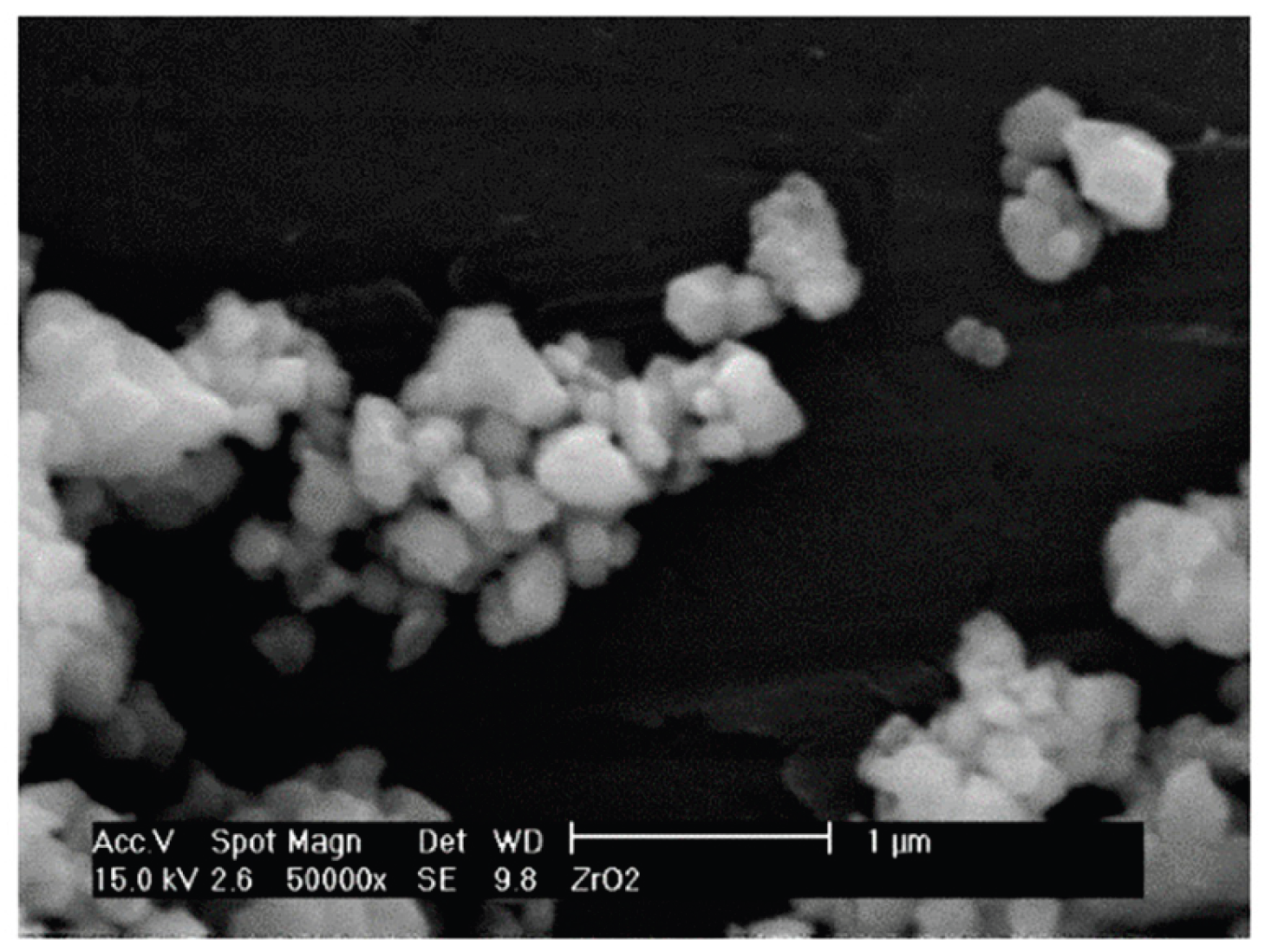
Figure 3.
WC-CoCr microstructure with Cr-rich regions [42].
Figure 3.
WC-CoCr microstructure with Cr-rich regions [42].
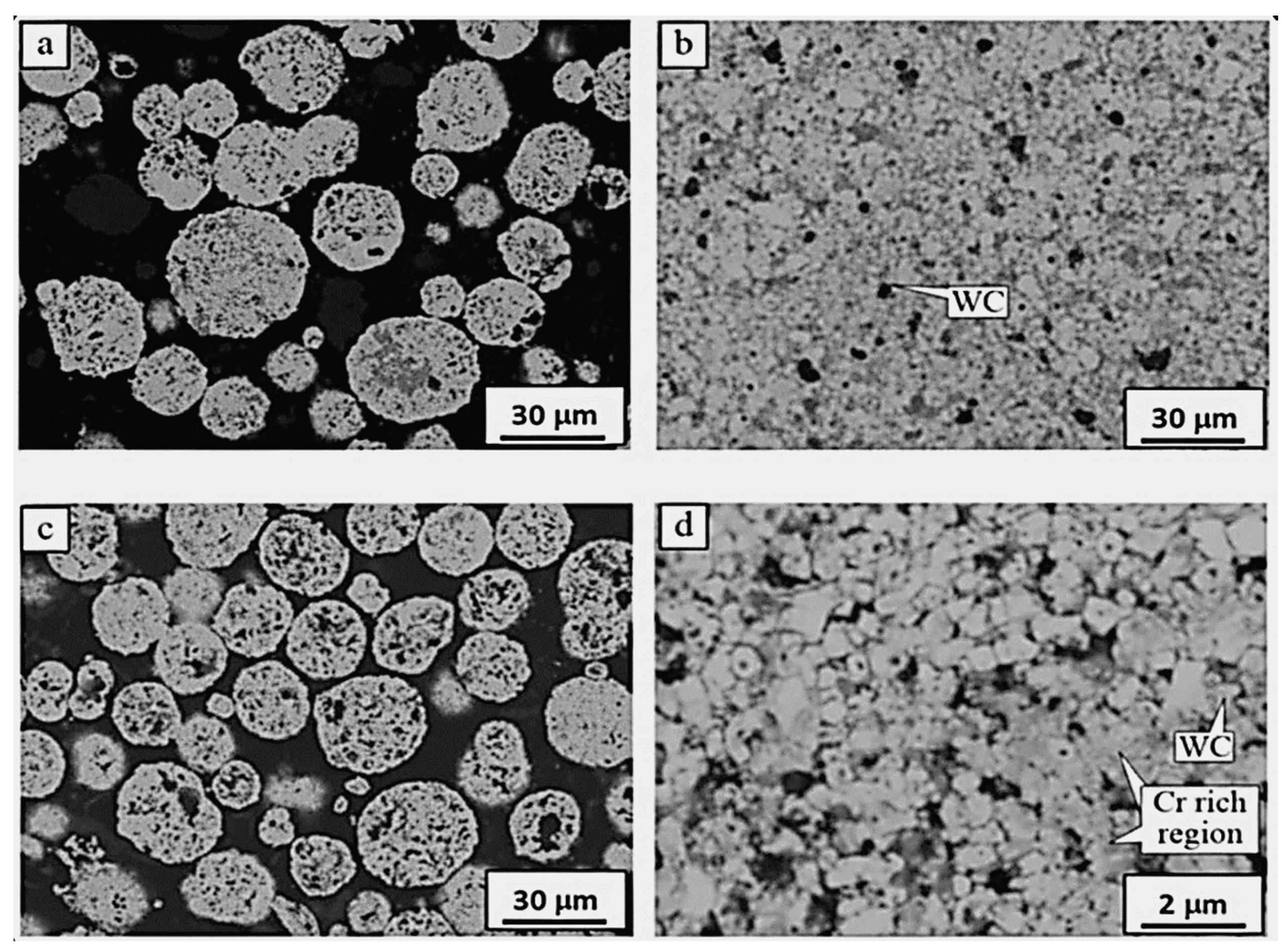
Figure 4.
Boron Carbide (B4C) Microstructure [44].
Figure 4.
Boron Carbide (B4C) Microstructure [44].
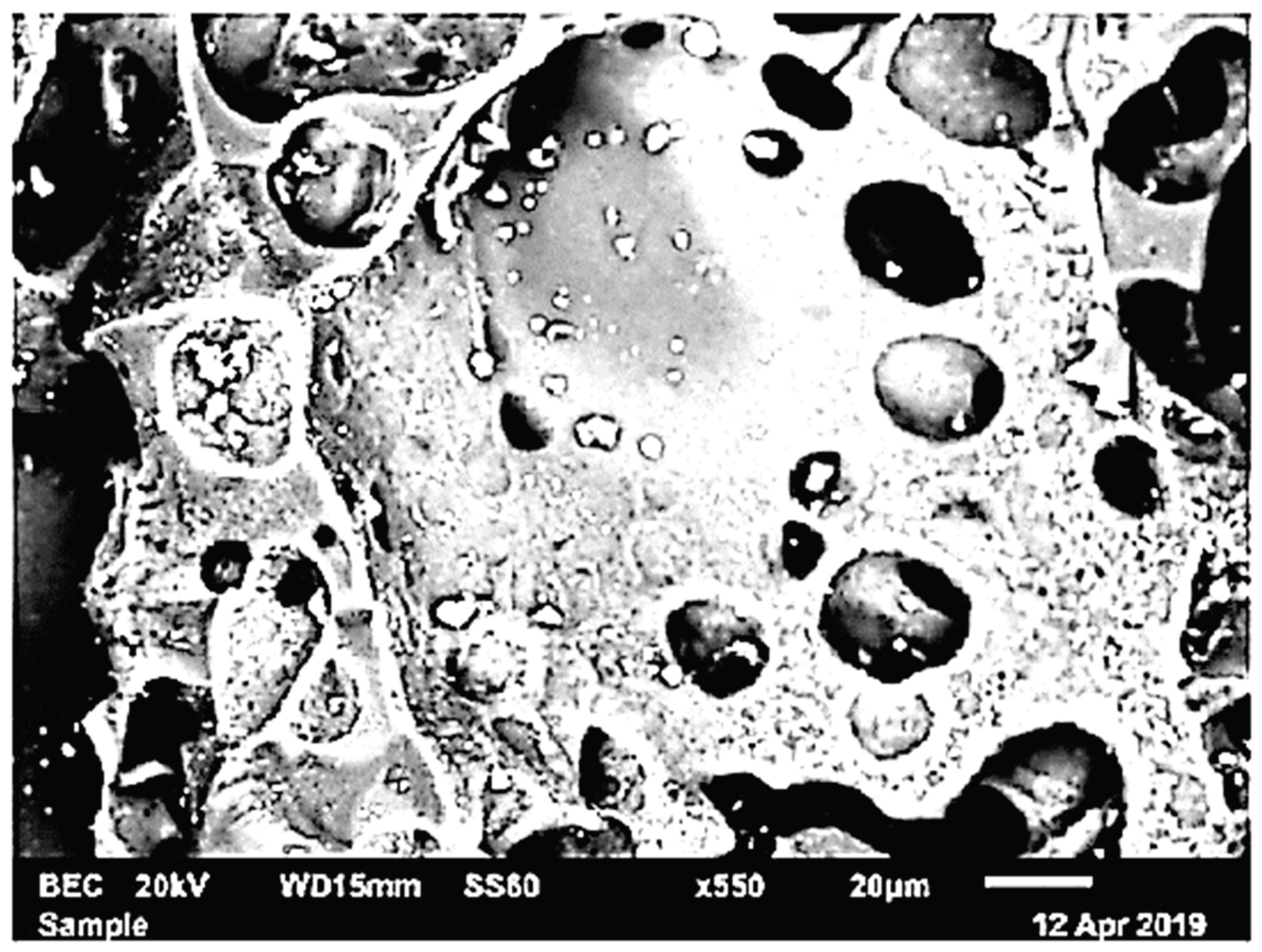
Figure 5.
Hardness comparison of SPEO and PEO ceramic coating materials, illustrating the superior mechanical properties of aluminum alloys [68].
Figure 5.
Hardness comparison of SPEO and PEO ceramic coating materials, illustrating the superior mechanical properties of aluminum alloys [68].
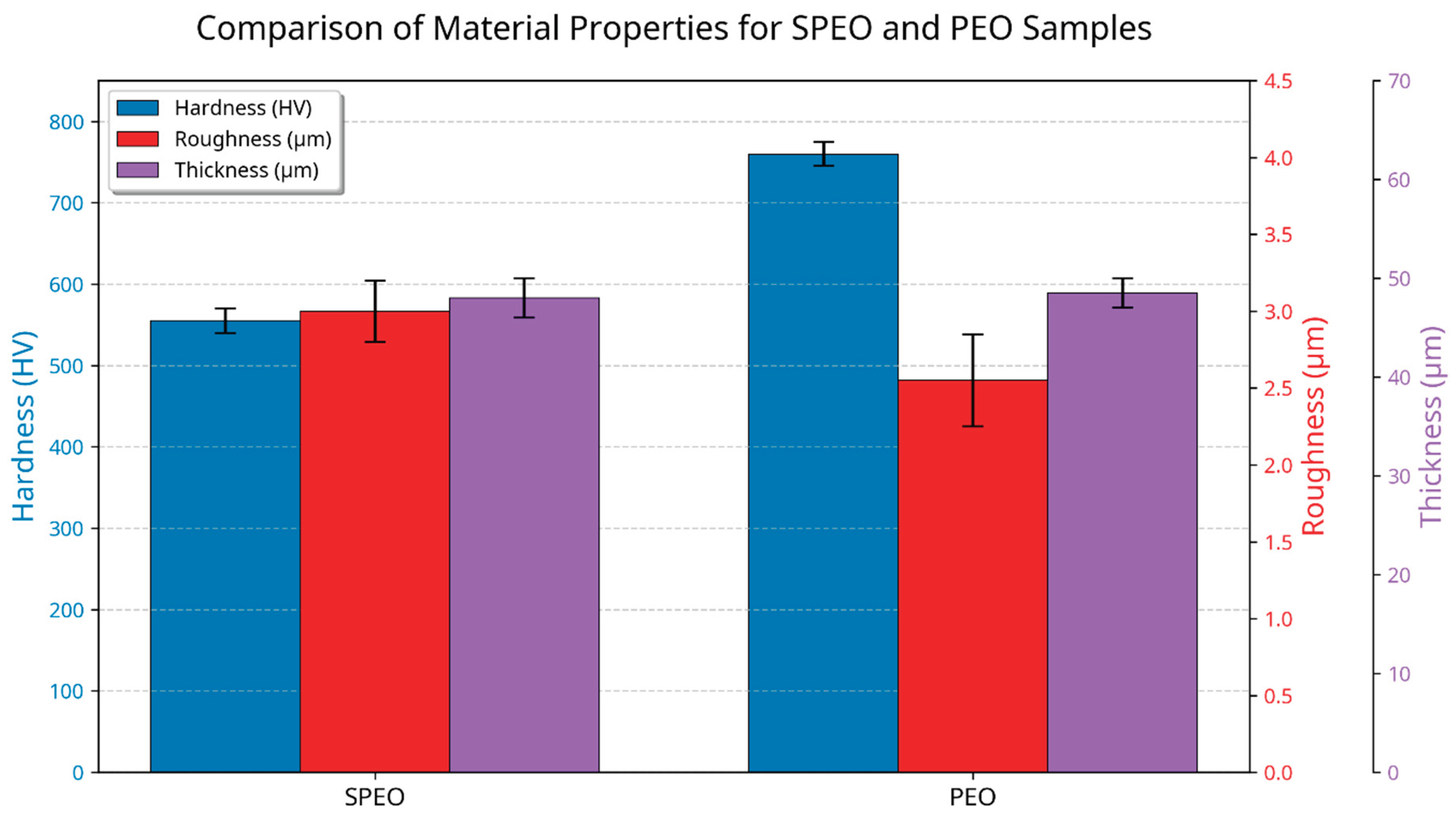
Figure 6.
Thermal Conductivity of Ceramic Materials and Thermal Conductivity of Materials.
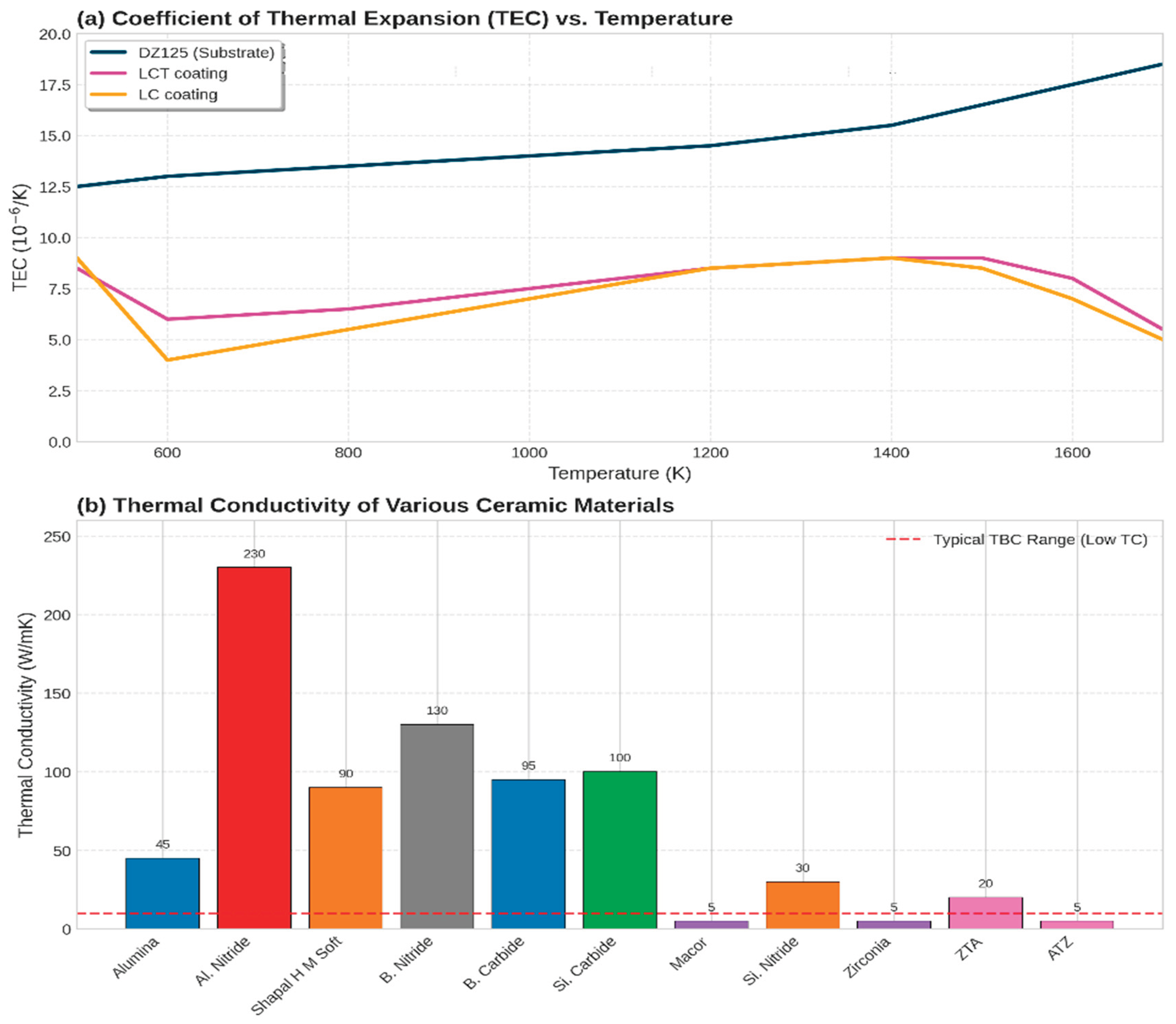
Figure 7.
This figure illustrates the complex fluid-surface interactions that influence coating performance in liquid-rich environments. (a) Droplet impacting an unstructured surface. (b) Droplet falling onto AGAS. (c) Cross-sectional view of the three-phase contact line on the unstructured surface. (d) Cross-sectional view of the three-phase contact line when the droplet interacts with AGAS.
Figure 7.
This figure illustrates the complex fluid-surface interactions that influence coating performance in liquid-rich environments. (a) Droplet impacting an unstructured surface. (b) Droplet falling onto AGAS. (c) Cross-sectional view of the three-phase contact line on the unstructured surface. (d) Cross-sectional view of the three-phase contact line when the droplet interacts with AGAS.
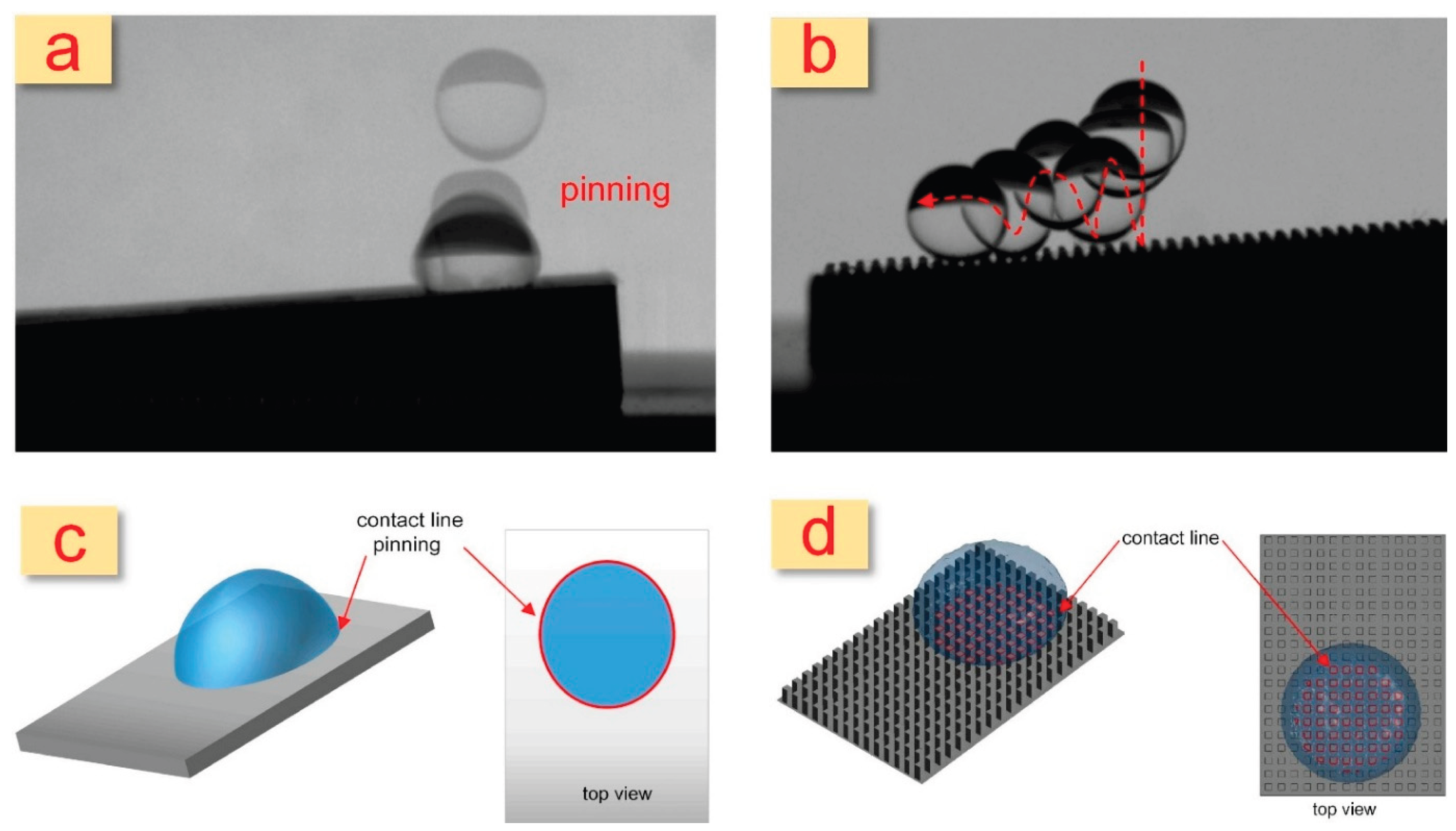
Figure 8.
Physical Vapor Deposition process.
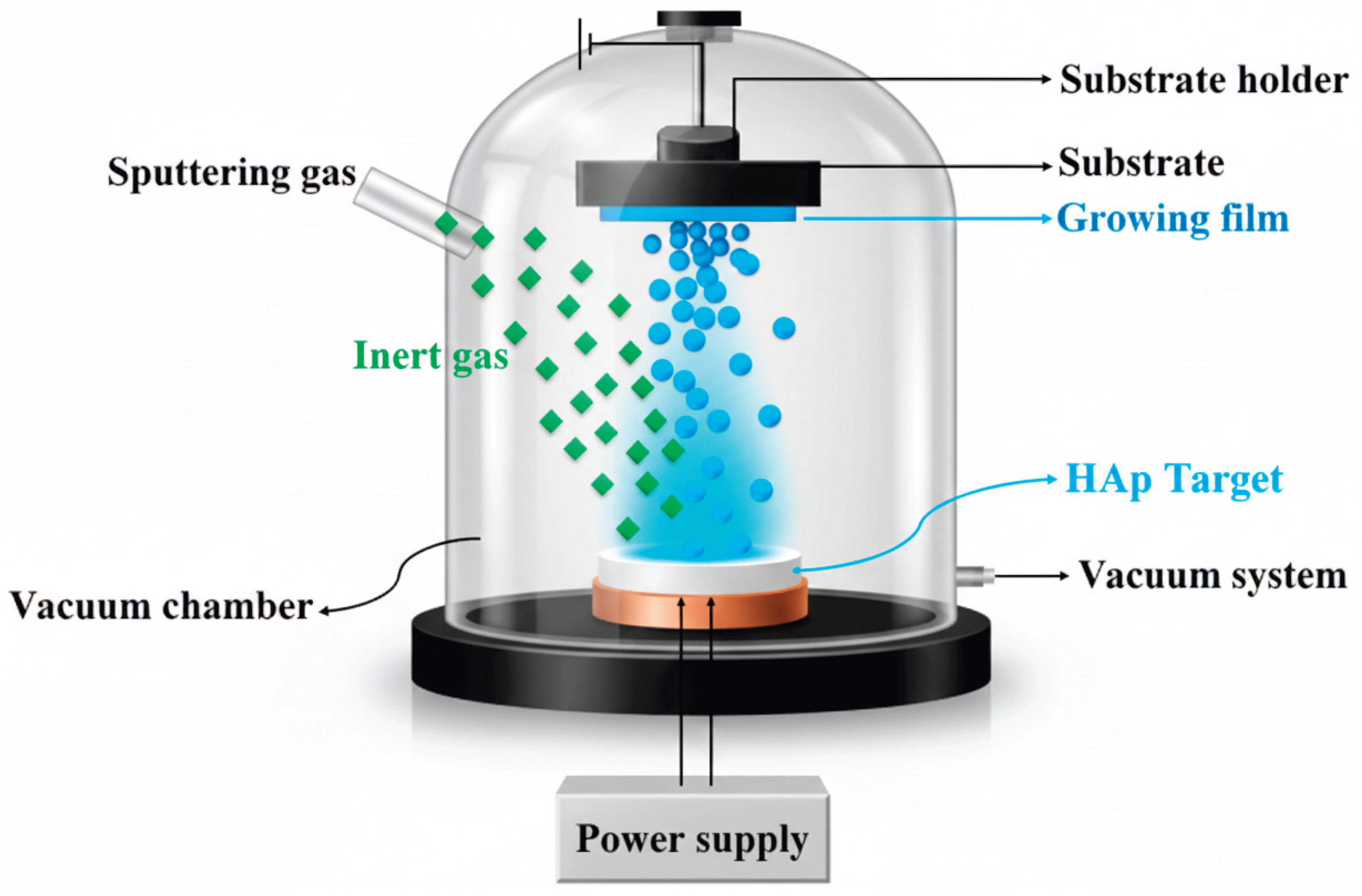
Figure 11.
Overview of the thermal spray process, highlighting the spray gun, feedstock material, and the resulting coating plume.
Figure 11.
Overview of the thermal spray process, highlighting the spray gun, feedstock material, and the resulting coating plume.
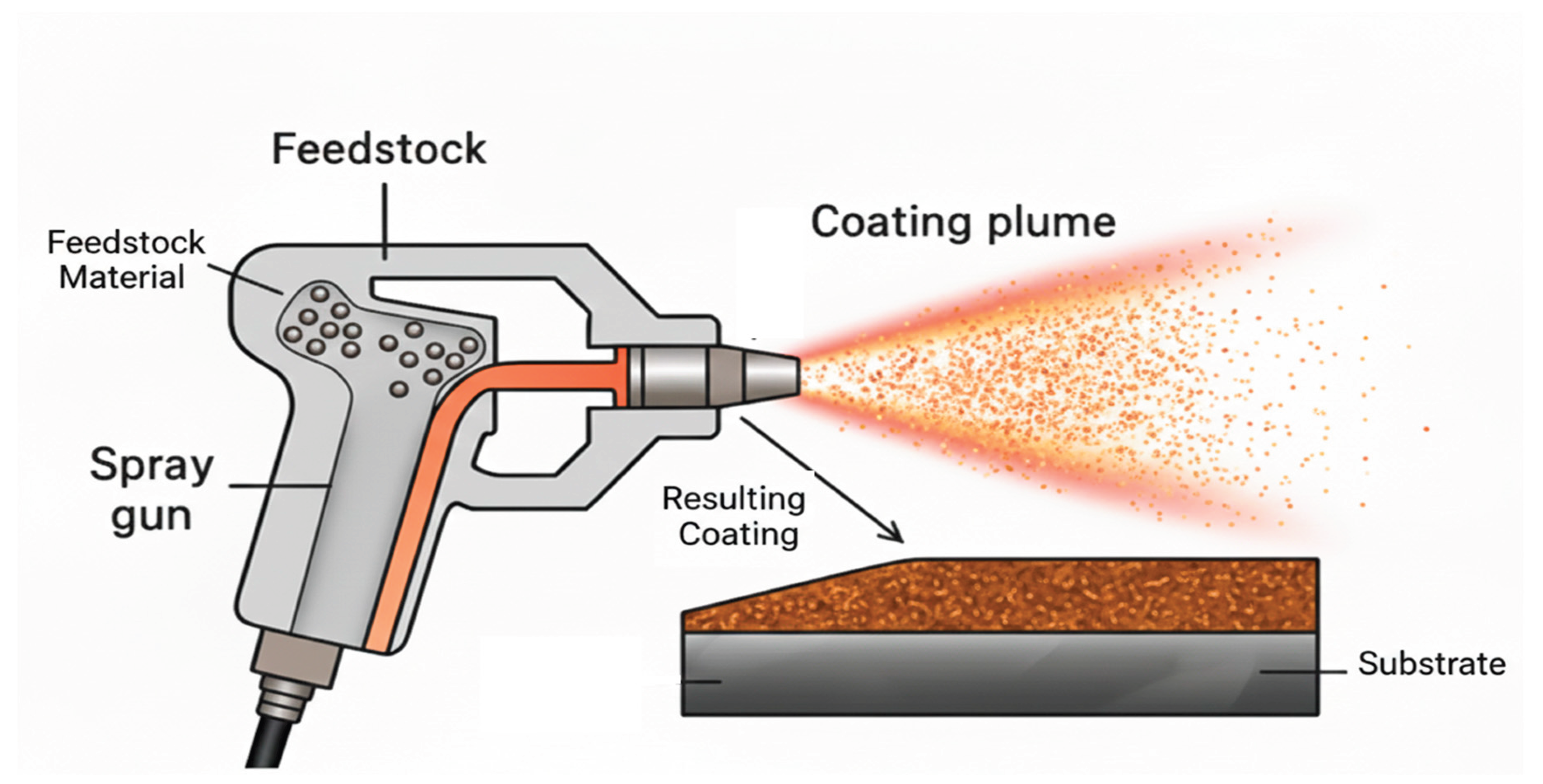
Figure 12.
HVOF thermal spraying method.
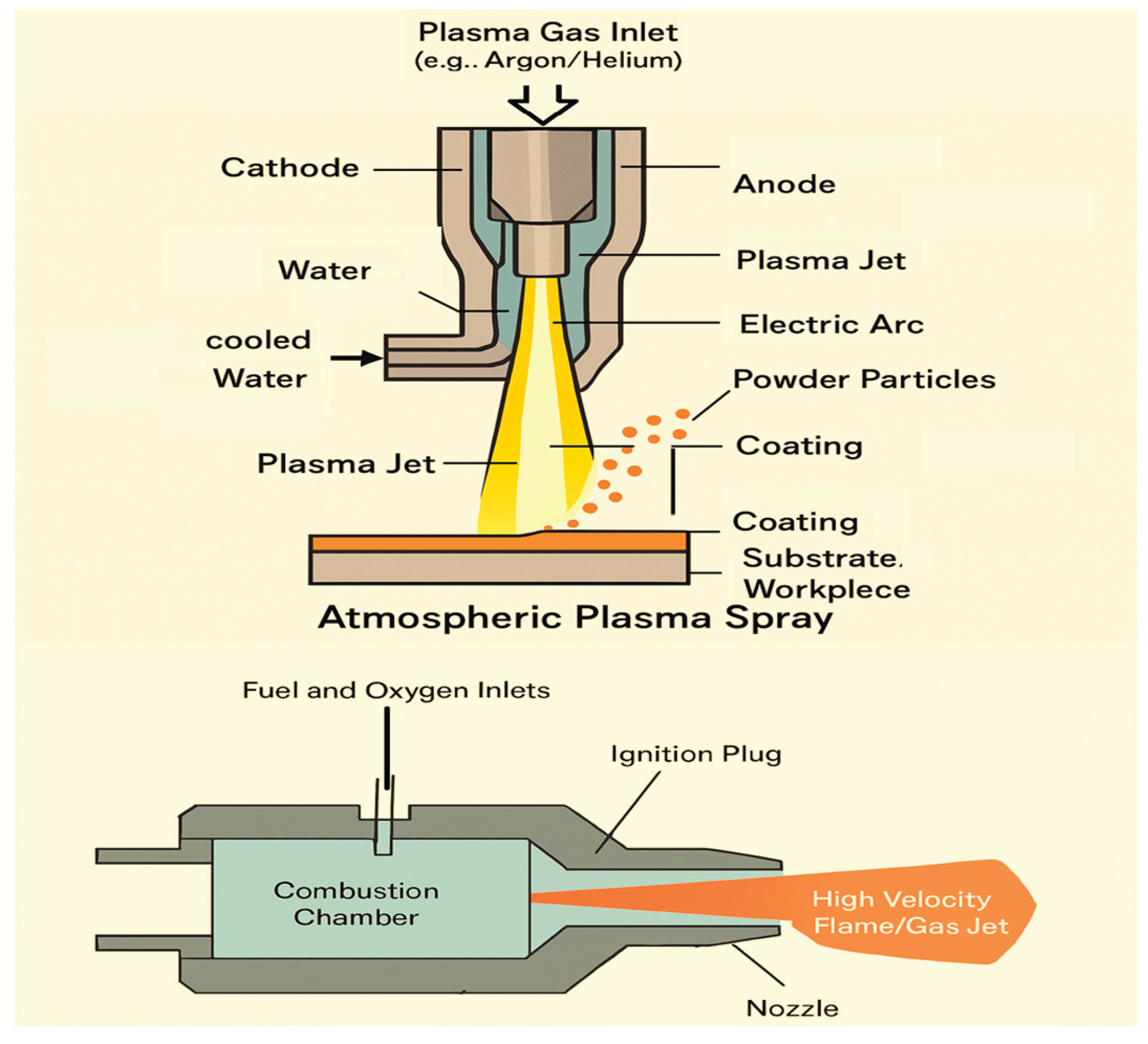
Figure 13.
This figure shows a detailed view of a turbine blade, illustrating the multi- layered thermal barrier coating (TBC) system applied to protect it from high temperatures.
Figure 13.
This figure shows a detailed view of a turbine blade, illustrating the multi- layered thermal barrier coating (TBC) system applied to protect it from high temperatures.
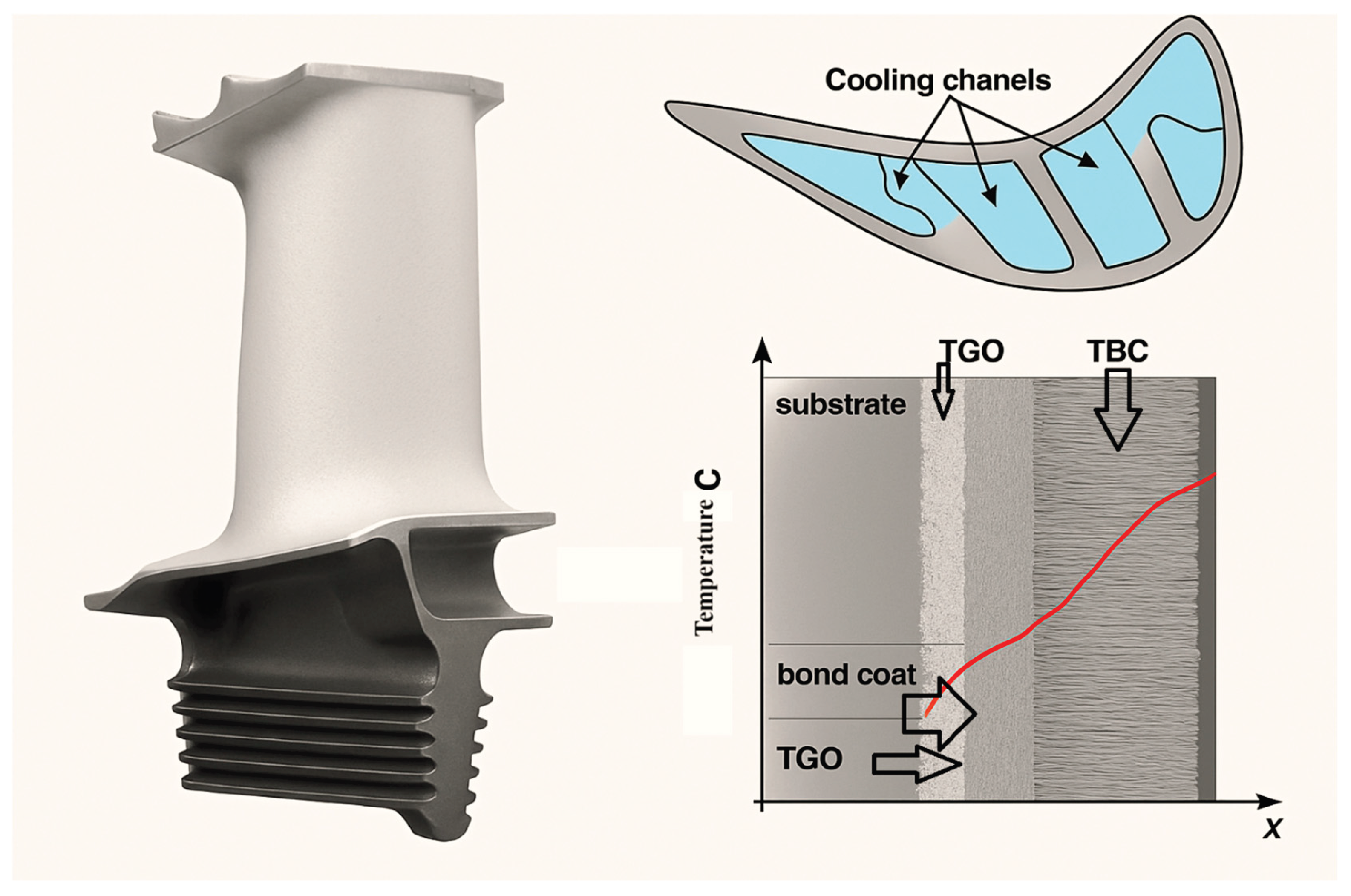
Figure 16.
A typical force–penetration curve from a nano experiment is utilized to assess the hardness and elastic modulus of thin films.
Figure 16.
A typical force–penetration curve from a nano experiment is utilized to assess the hardness and elastic modulus of thin films.
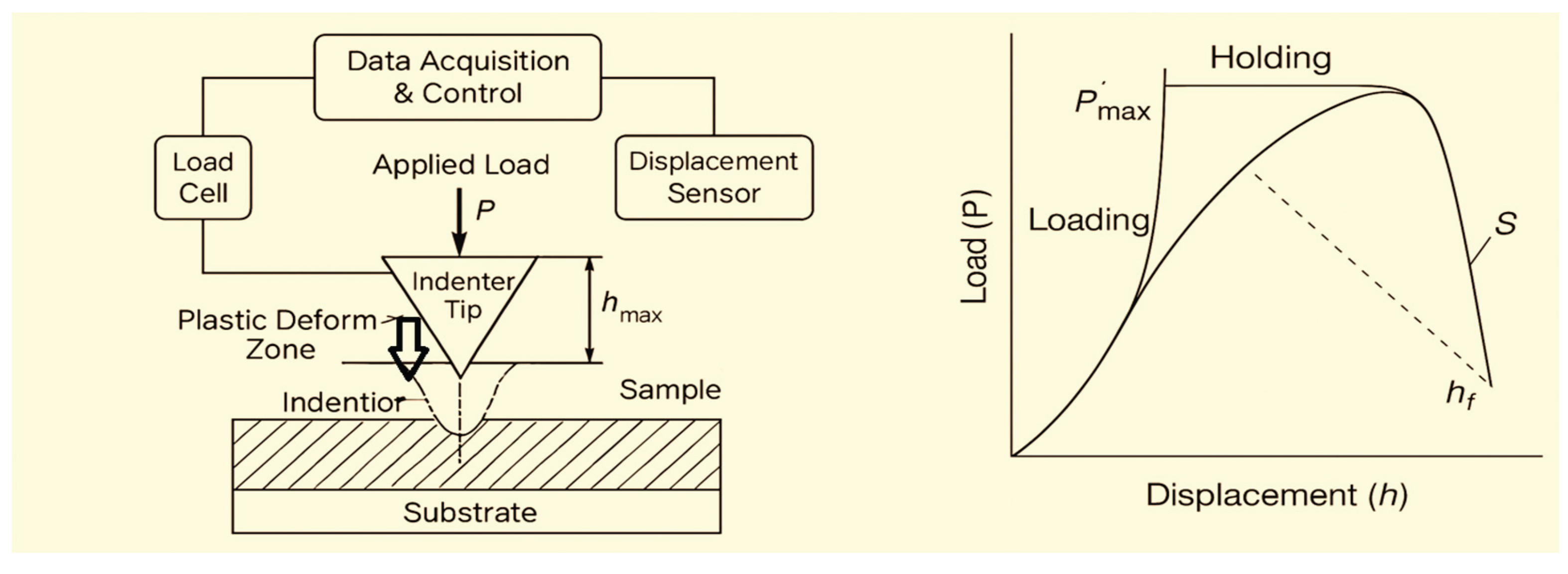
Figure 17.
Thermal Shock Test Machine.
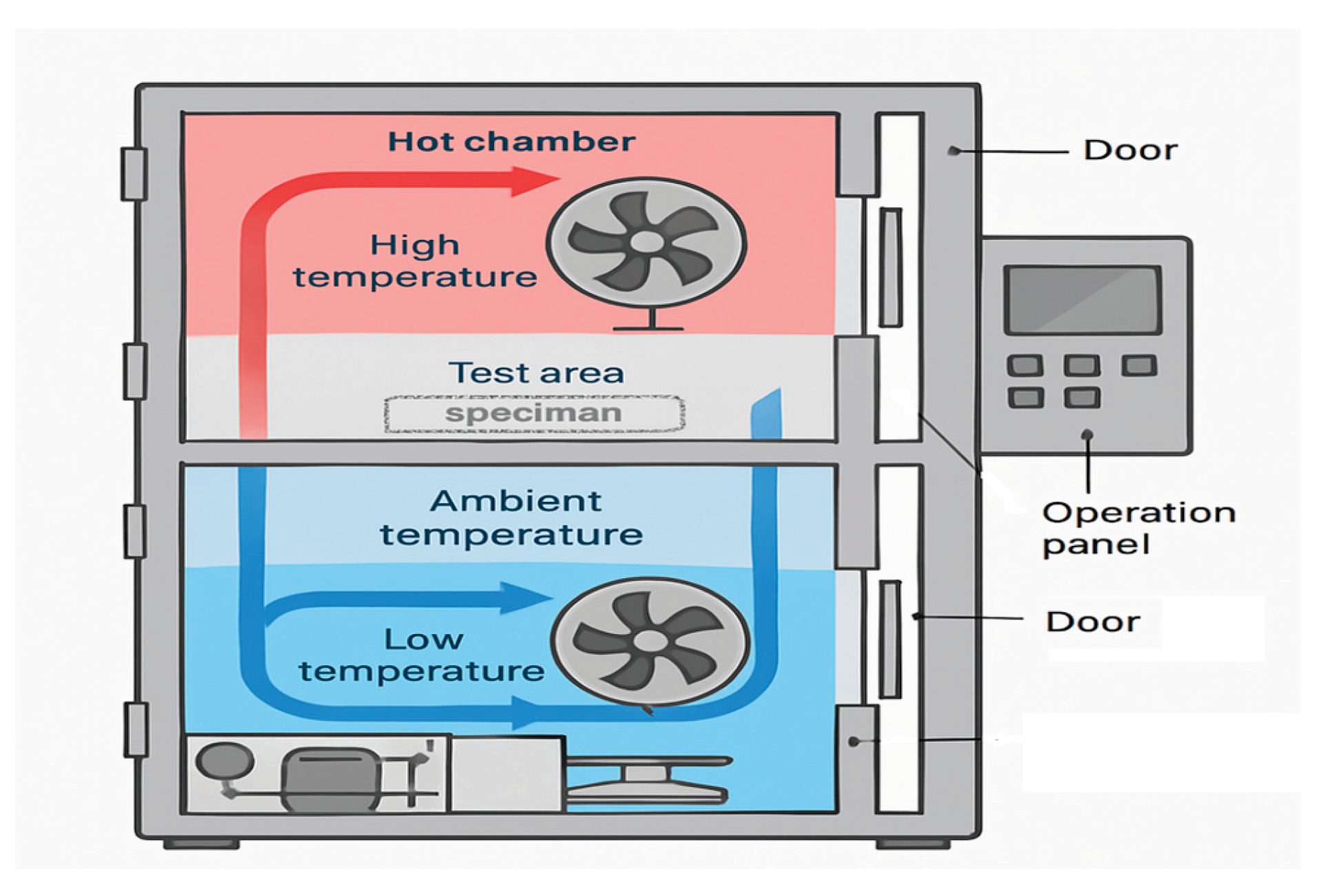
Figure 18.
Method for Predicting Thermal Fatigue Life of Thermal Barrier Coatings Using TGO Interface Stress.
Figure 18.
Method for Predicting Thermal Fatigue Life of Thermal Barrier Coatings Using TGO Interface Stress.
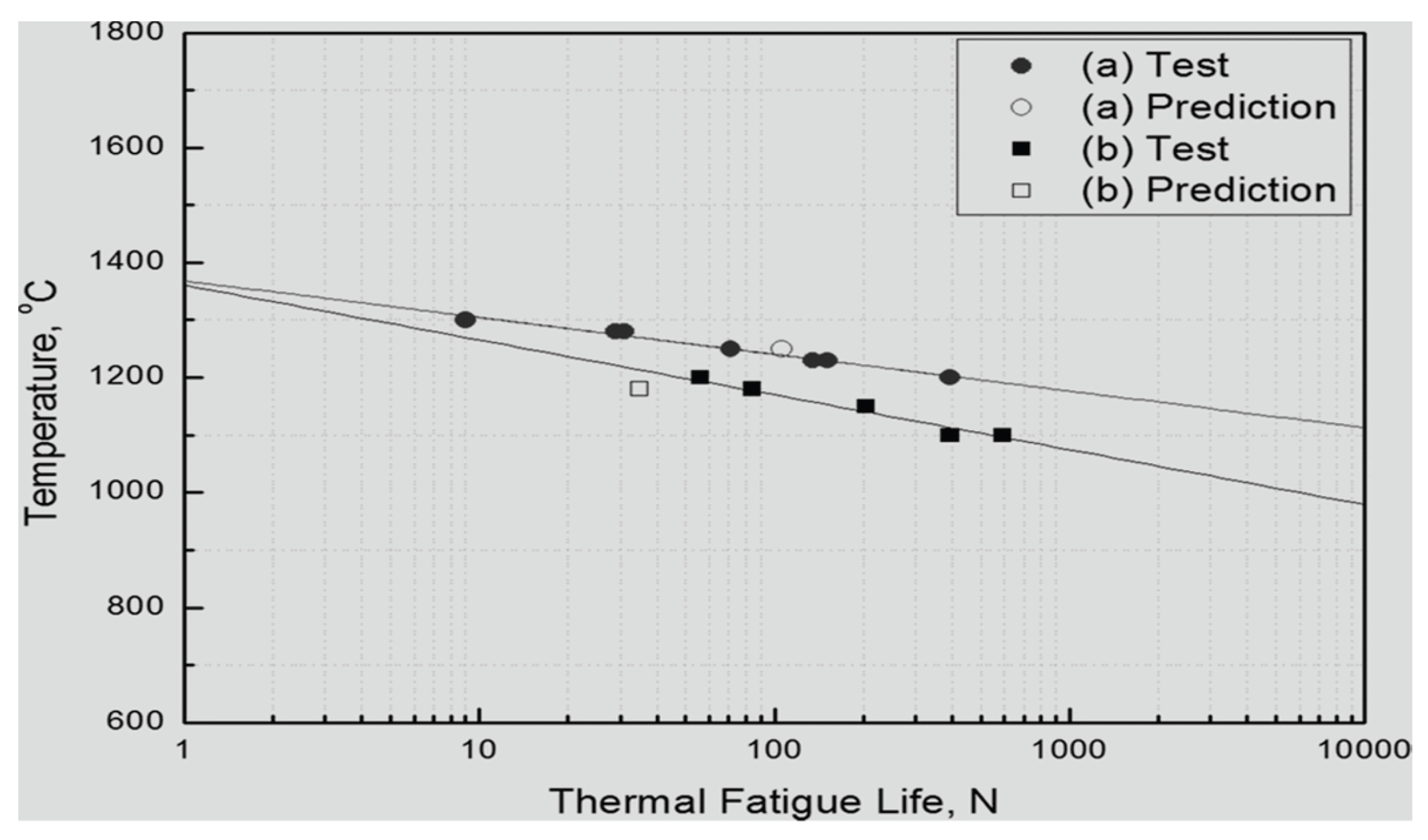
Figure 19.
Standard Electrochemical Impedance Spectroscopy (EIS) and Illustration of the testing set-up used for potentiodynamic.
Figure 19.
Standard Electrochemical Impedance Spectroscopy (EIS) and Illustration of the testing set-up used for potentiodynamic.
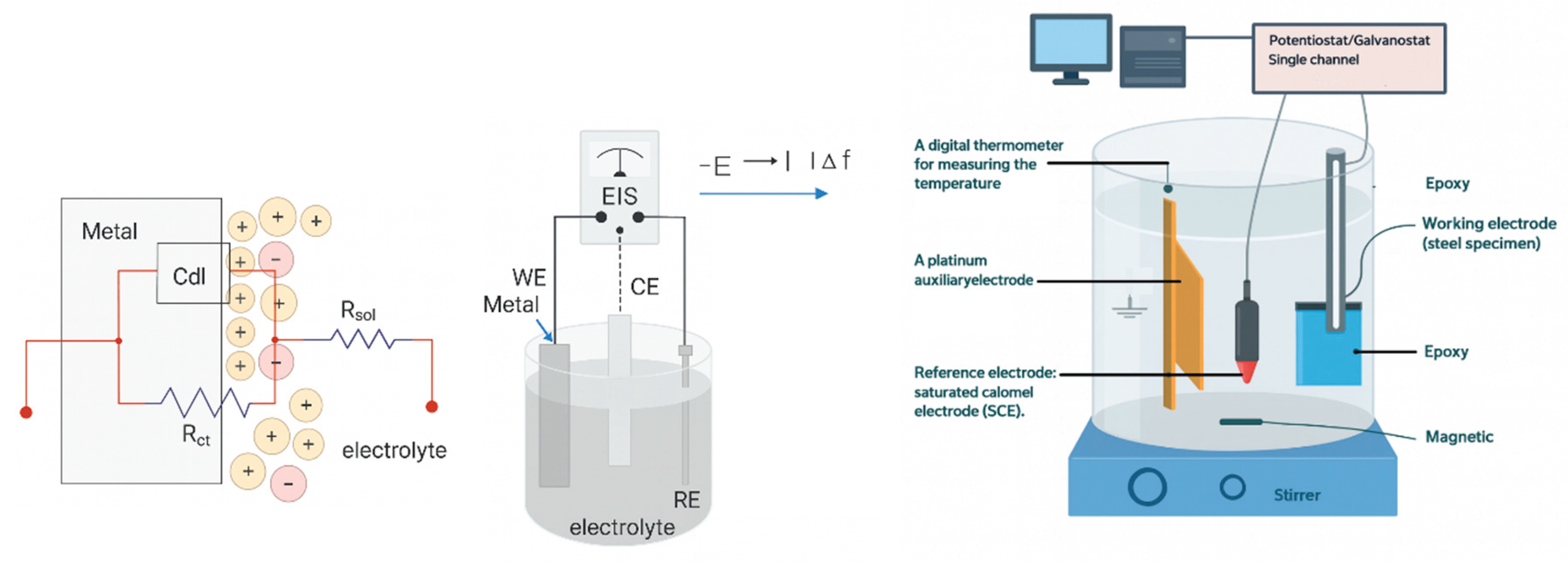
Figure 20.
SEM Image and its capability to reveal fine grain structures and interfaces [1].
Figure 20.
SEM Image and its capability to reveal fine grain structures and interfaces [1].
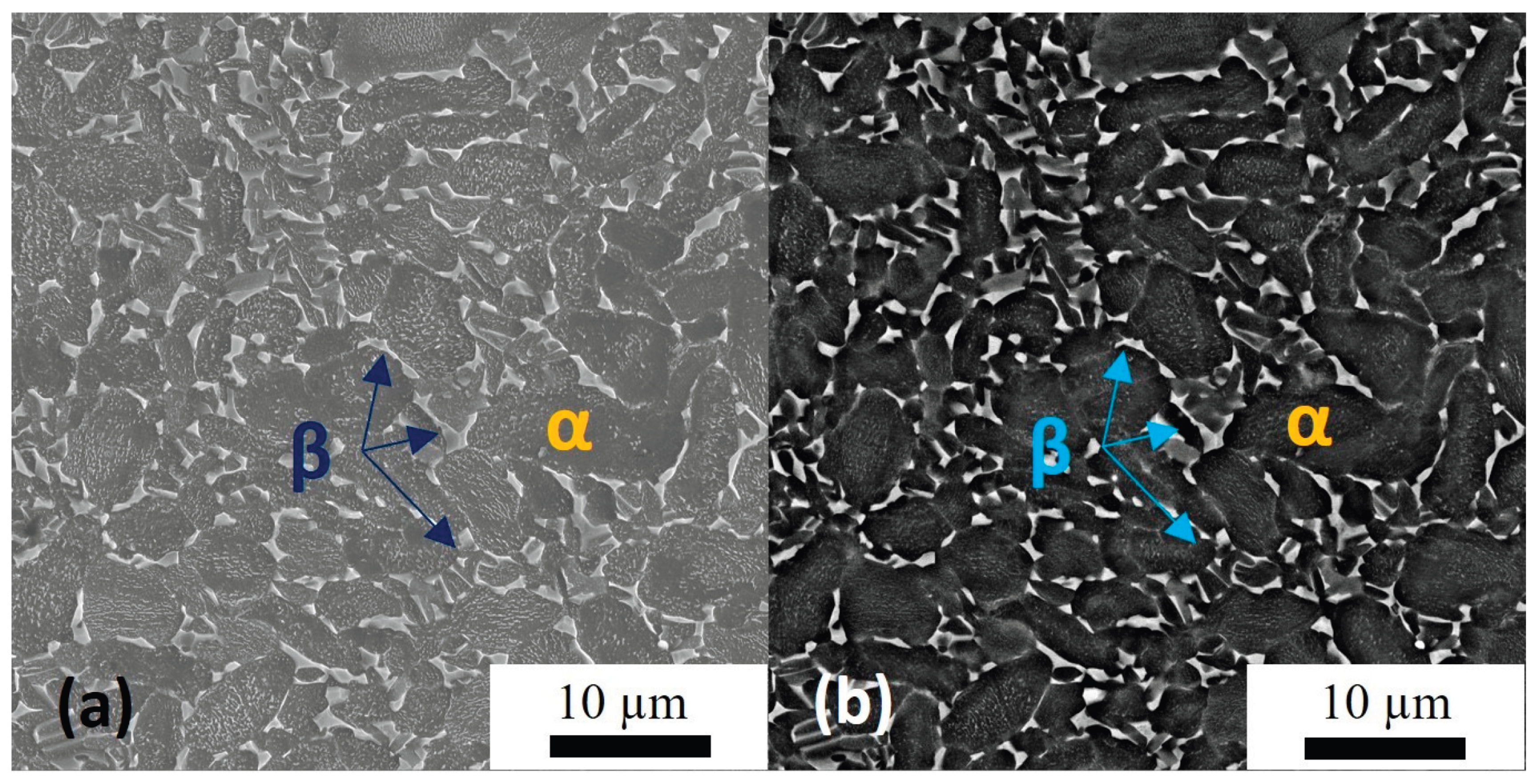
Figure 21.
Illustrating X-ray Diffraction (XRD) [121].
Figure 21.
Illustrating X-ray Diffraction (XRD) [121].
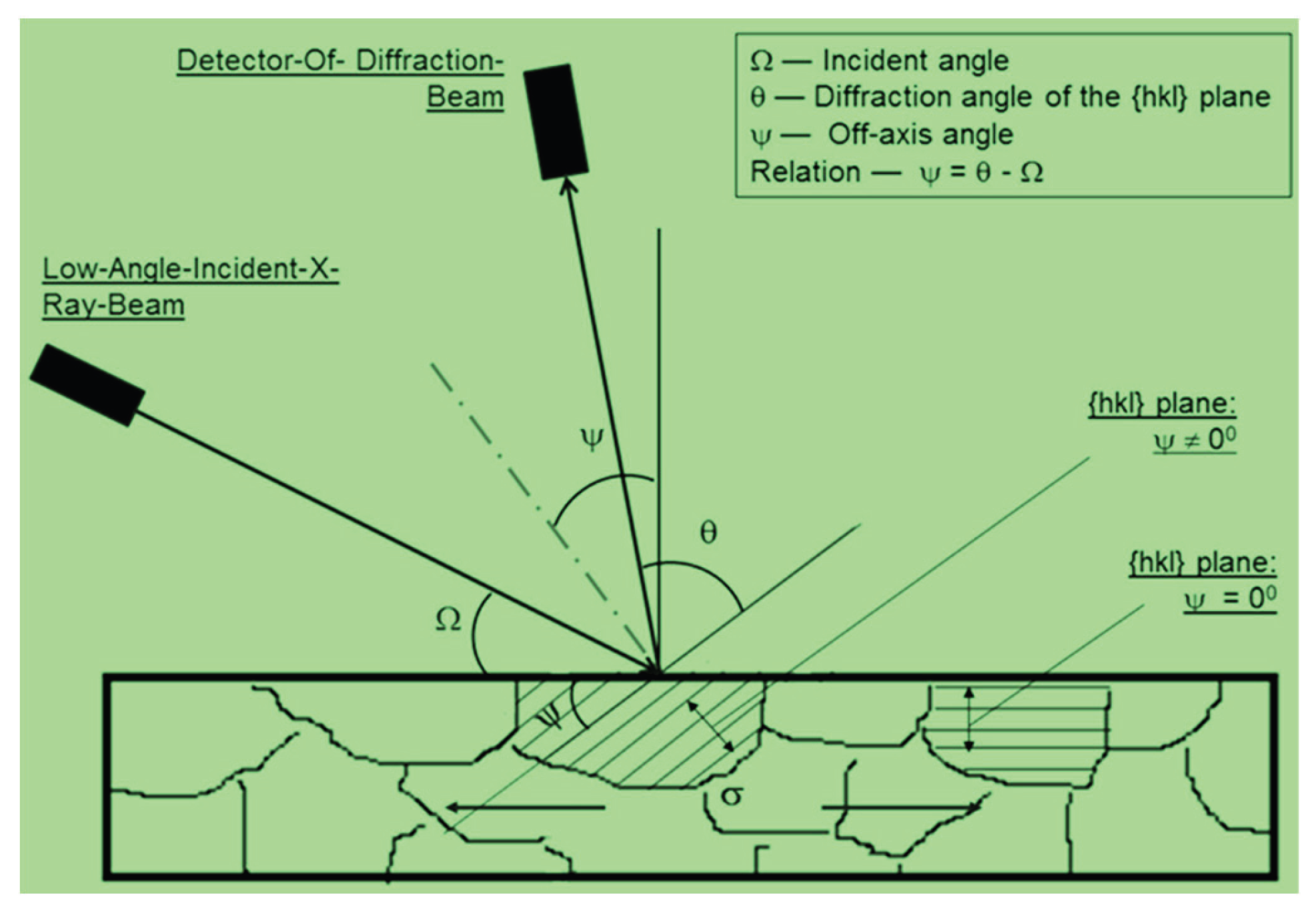
Figure 22.
Multi-scale analysis combining SEM microstructural evidence (a), quantitative interdiffusion kinetics (b), and DFT atomic-scale modelling of diffusion barriers (c)[122].
Figure 22.
Multi-scale analysis combining SEM microstructural evidence (a), quantitative interdiffusion kinetics (b), and DFT atomic-scale modelling of diffusion barriers (c)[122].
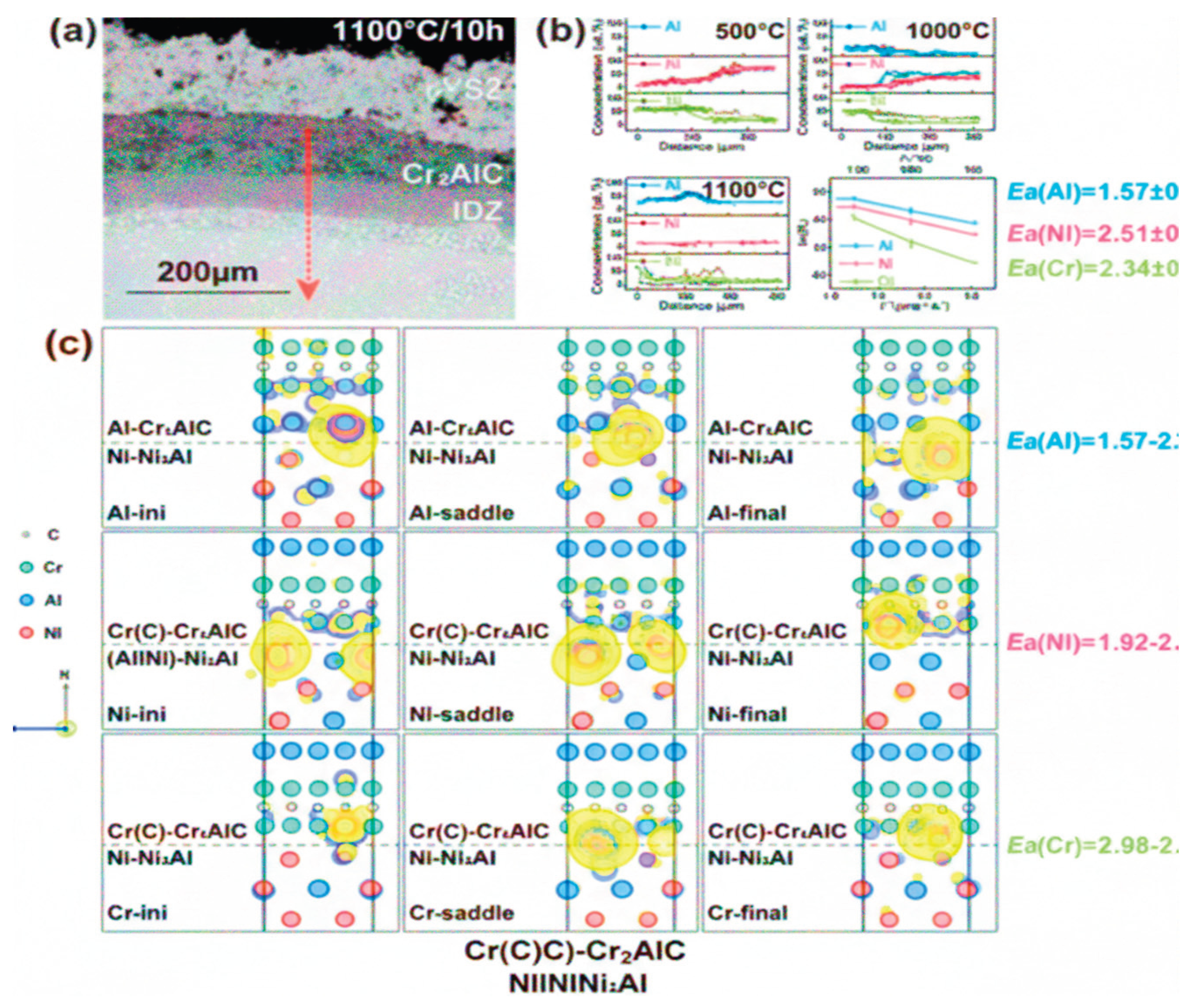
Figure 24.
FEM simulation of stress distribution within a ceramic coating system at the interface[125].
Figure 24.
FEM simulation of stress distribution within a ceramic coating system at the interface[125].
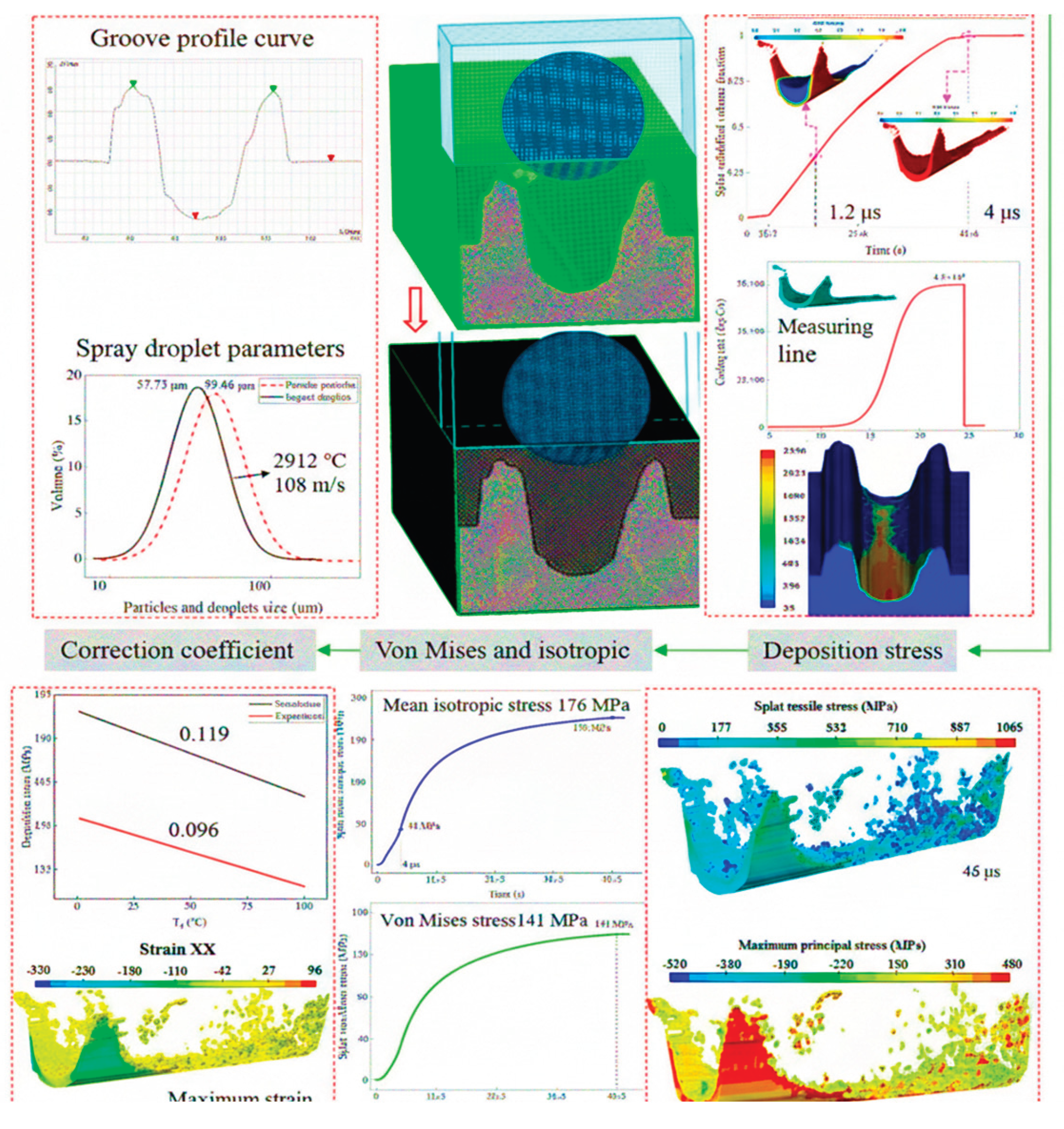
Figure 25.
Comprehensive workflow for materials machine learning, from dataset construction and feature selection to model evaluation and application.
Figure 25.
Comprehensive workflow for materials machine learning, from dataset construction and feature selection to model evaluation and application.
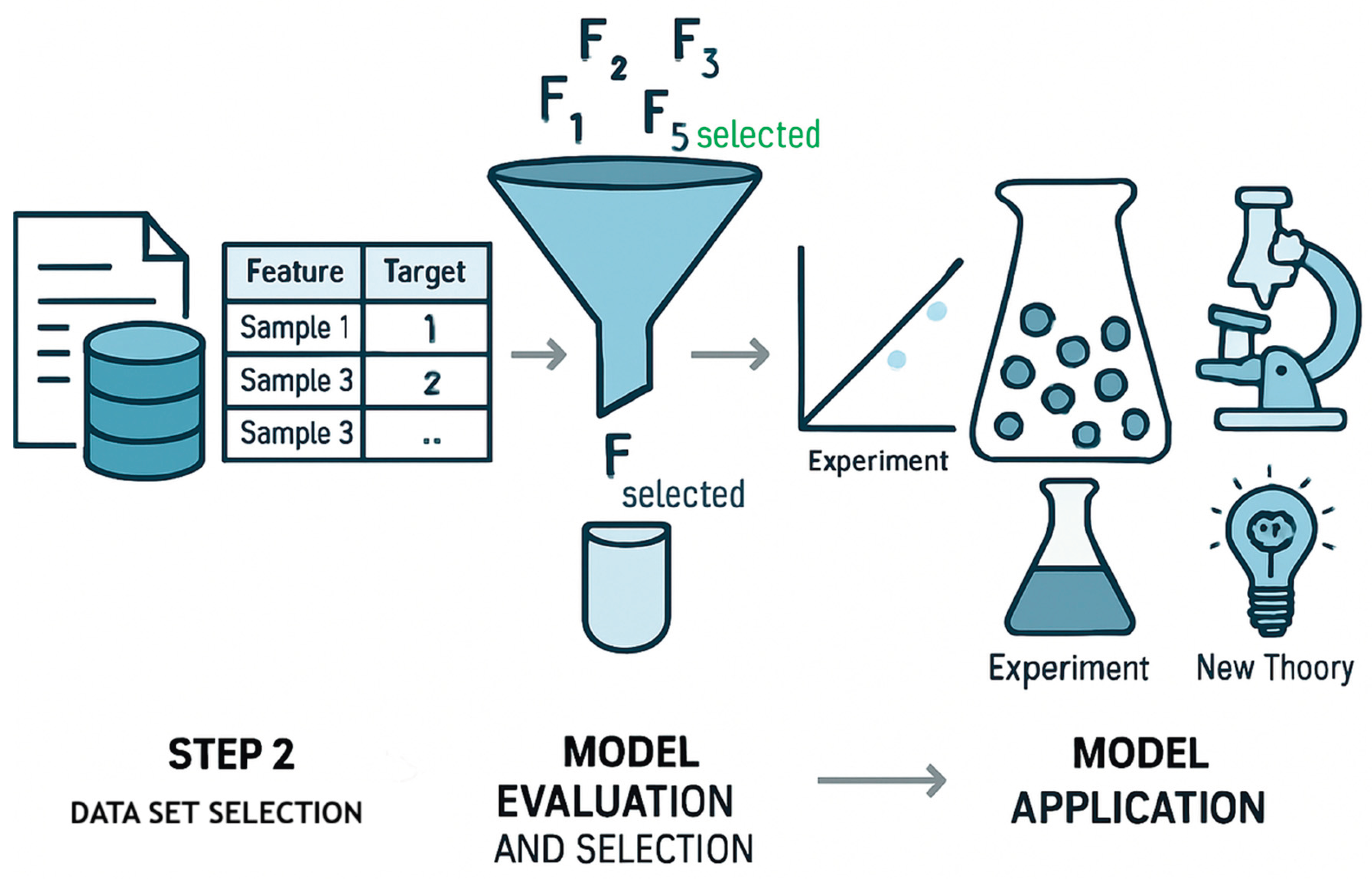
Figure 26.
Schematic of a turbojet engine.
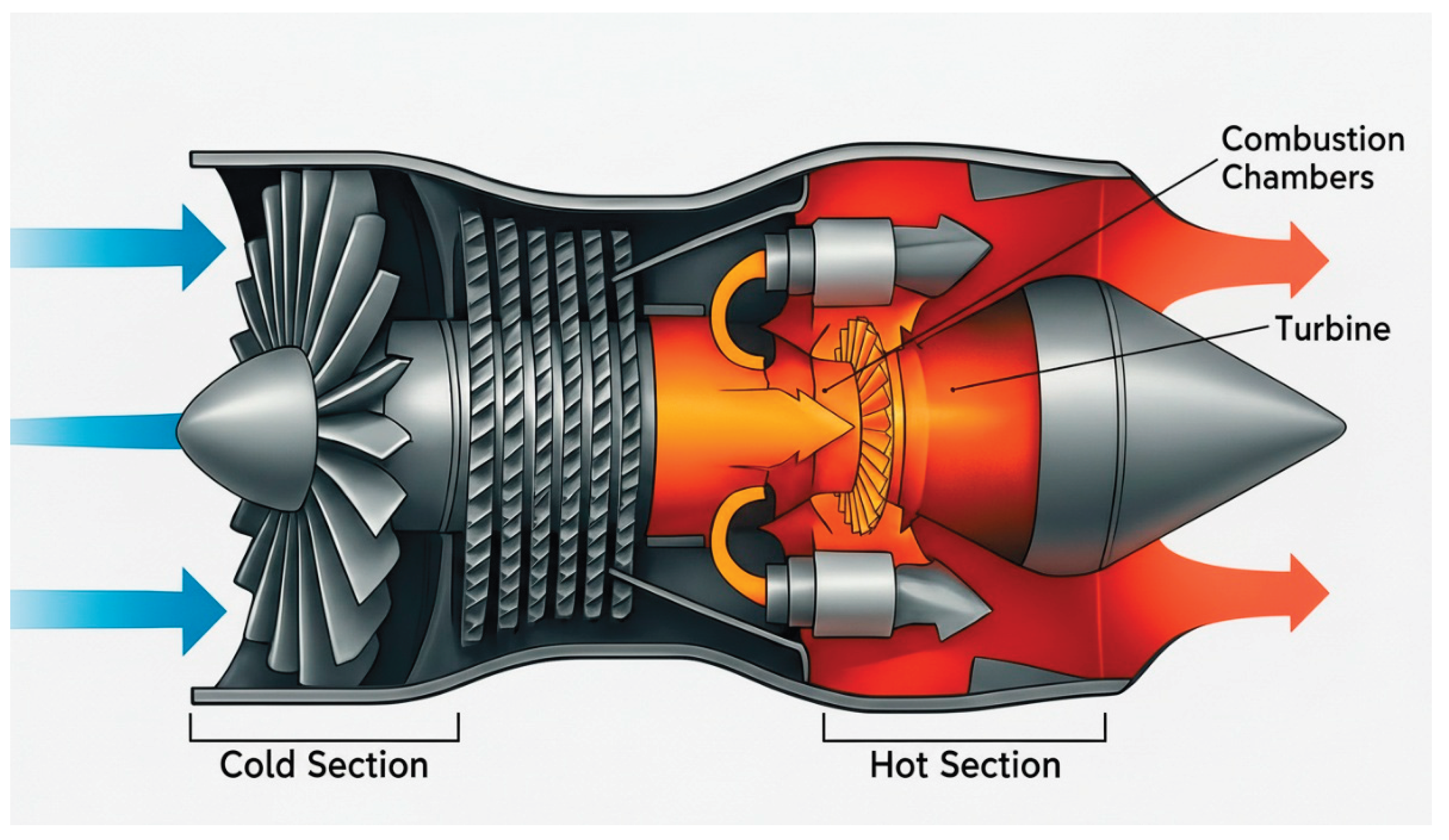
Figure 27.
Fatigue Life, to illustrate the viscoelastic response and onset frequency of fatigue effects in pure aluminum alloys [129].
Figure 27.
Fatigue Life, to illustrate the viscoelastic response and onset frequency of fatigue effects in pure aluminum alloys [129].
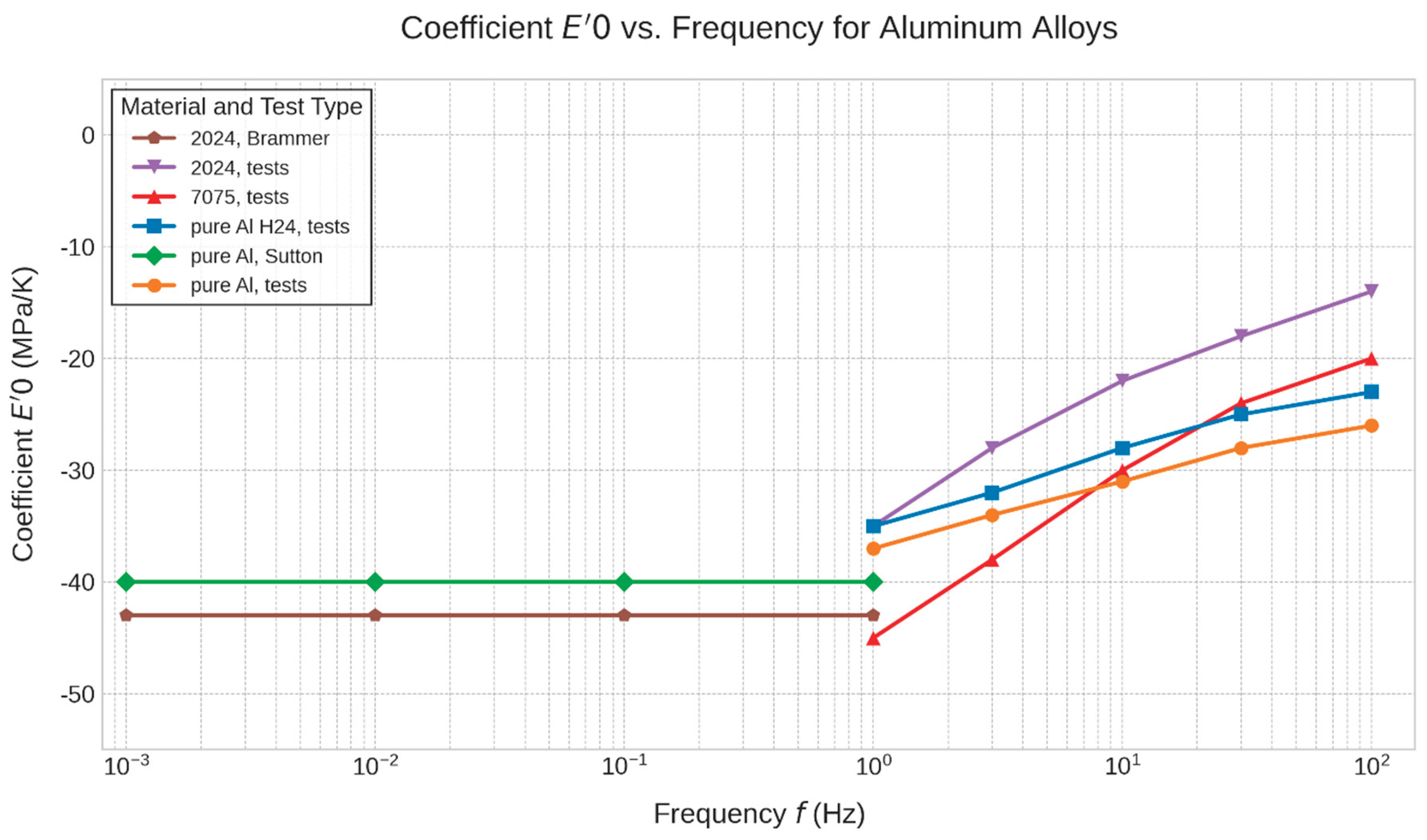
Figure 28.
The wear performance of different high-alloy protective coatings in aerospace applications.
Figure 28.
The wear performance of different high-alloy protective coatings in aerospace applications.
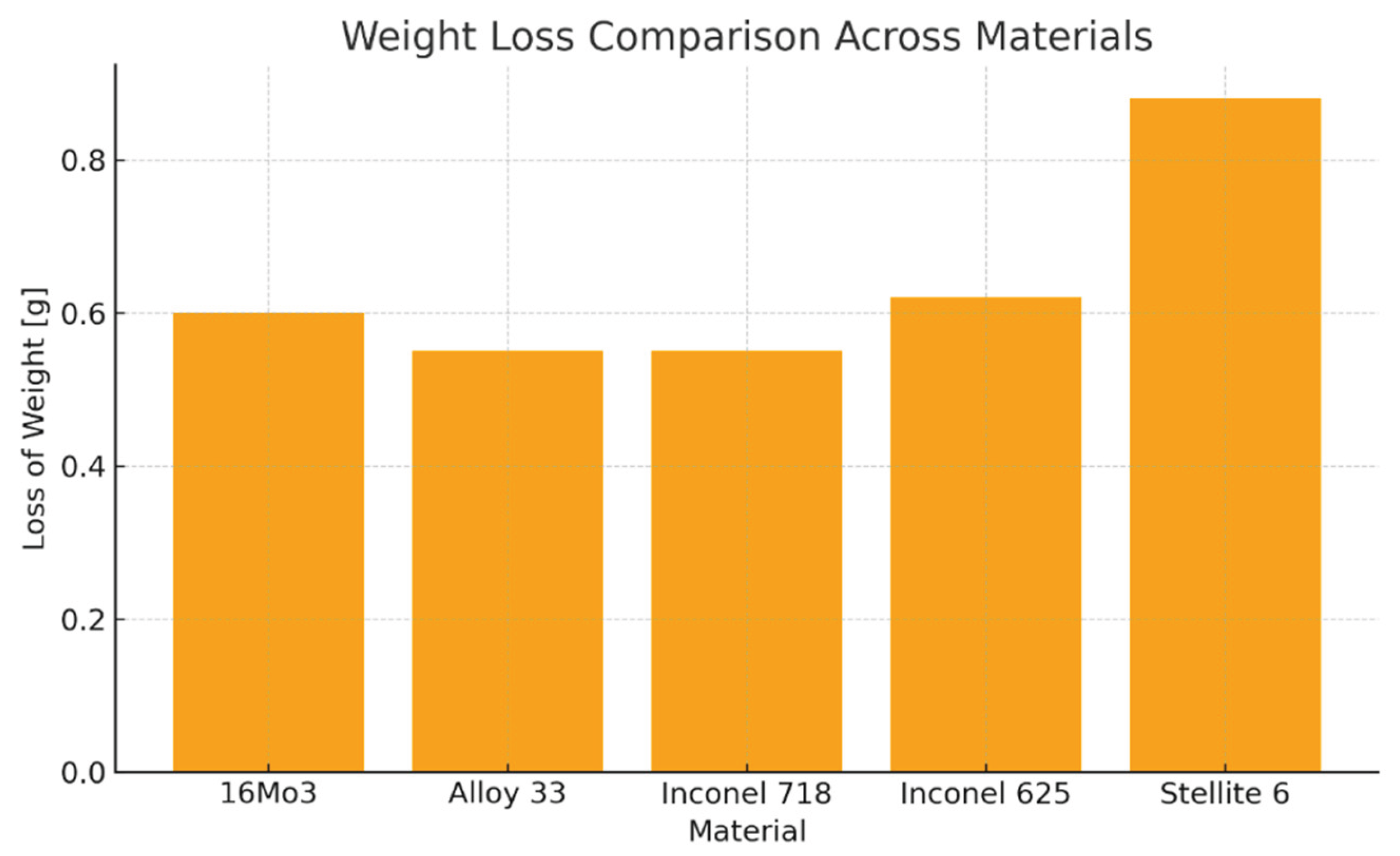
Figure 29.
Effects of Graphene on the Wear and Corrosion Resistance of Micro-Arc Oxidation Coating [132].
Figure 29.
Effects of Graphene on the Wear and Corrosion Resistance of Micro-Arc Oxidation Coating [132].
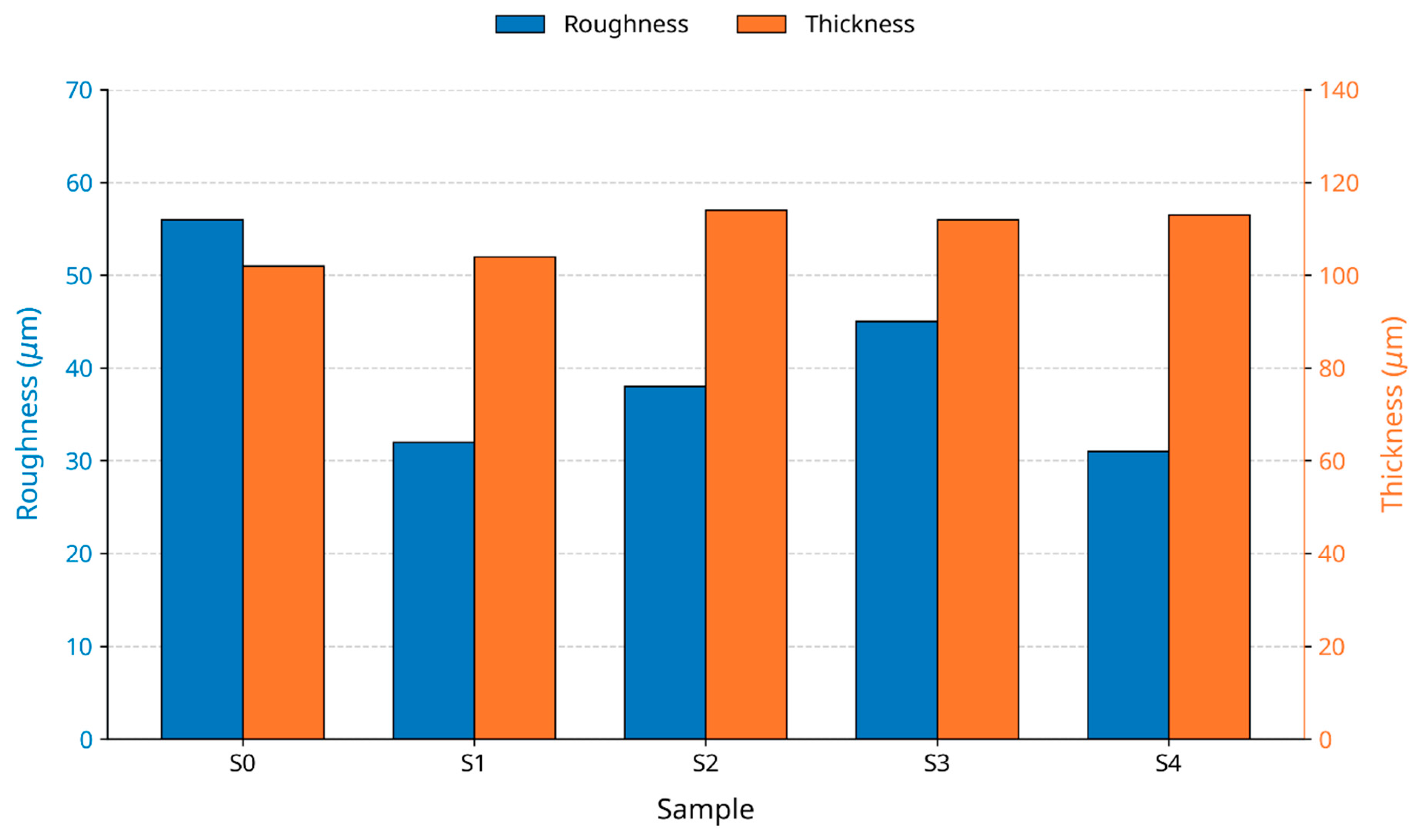
Figure 30.
illustrates how treatment time affects the bonding strength of ceramic coatings on laser-textured aluminum alloys, which is critical for coating [133].
Figure 30.
illustrates how treatment time affects the bonding strength of ceramic coatings on laser-textured aluminum alloys, which is critical for coating [133].
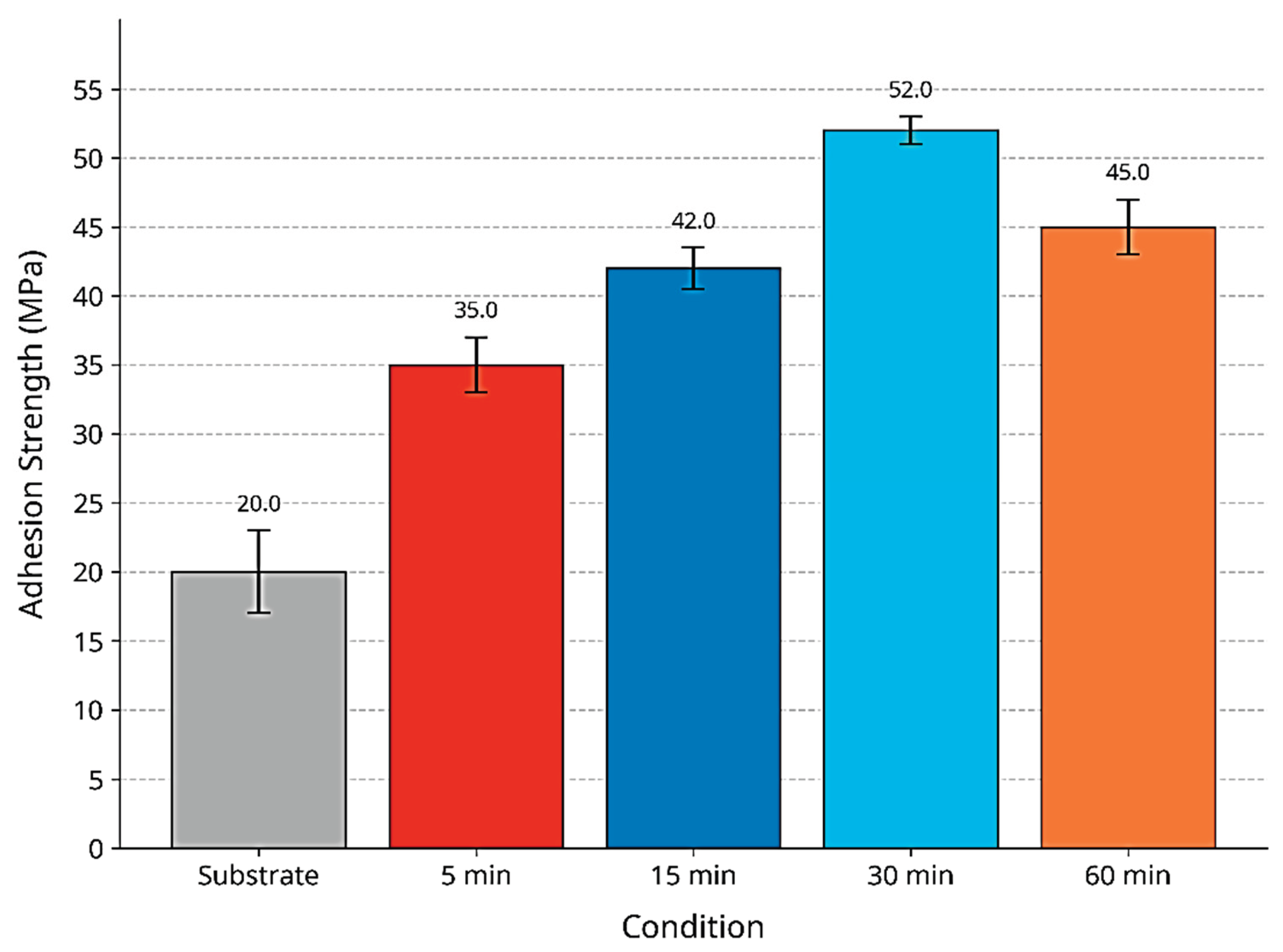
Table 3.
Summary of different coatings according to environmental conditions.
| Environmental Condition | Required Coating Property | Example Coating Material | Performance |
|---|---|---|---|
| High Temperature | Thermal, Oxidation, and Creep Stability | Al₂O₃ | Shows outstanding stability and resistance to oxidation at elevated temperatures, remaining intact without decomposing even under strong oxidative conditions. The incorporation of Al²O³ particles can greatly enhance the creep resistance of MCrA/Y bond coatings [73,74]. |
| ZrO₂-based TBCs | Provides strong thermal insulation, minimizing heat transfer to the substrate [75]. Yttria-stabilized zirconia is commonly used as a TBC due to its stable t’-phase and good mechanical durability [76]. | ||
| SiC | Provides strong high-temperature mechanical performance, low density, and notable resistance to oxidation [77]. SiC-based coatings can shield carbon/carbon composites from oxidation for up to 150 hours at temperatures exceeding 1770 K [78]. | ||
| Mechanical Loading | High Hardness, Strength, and Adhesion | WC-Co | Shows high hardness along with strong wear resistance [79]. The WC-Co binder system further enhances wear performance [80]. Adhesion remains critical, and methods such as laser texturing are applied to improve it [81]. |
| CrN | Monolithic CrN: ~10–18 GPa; CrN/CrAlN multilayer systems: ~25 GPa [82]. In Cr/CrN/TiAICN coatings, the use of a transition layer resulted in roughly double the hardness and better adhesion [83]. | ||
| TiAlN | Recognized for outstanding wear performance and strong mechanical characteristics [84]. Hardness values vary from about 17.5GPa to nearly 37.1 GPa [85]. Adhesion can be enhanced by adjusting residual stress levels [86]. | ||
| Corrosive Environment | High Corrosion Resistance | Al₂O₃ | Delivers effective corrosion resistance, including in media such as artificial seawater [87]. Al²O³ coatings can provide markedly better corrosion protection than untreated substrates [88]. |
| TiO₂ | TiO₂ coatings enhance corrosion resistance by sealing micropores [89]. Multilayer AIN-Tio² systems have been demonstrated to improve both corrosion and wear performance [90]. | ||
| Cr-based Coatings | Cr-based coating (such as Cr, Cro, and Cran) demonstrates strong corrosion resistance in harsh environments, including artificial perspiration [91]. Steel coated with CrN/Cr shows notably improved corrosion performance [92]. | ||
| Erosion and Abrasion | High Resilience and Toughness | WC-Co | Shows strong resistance to erosion and abrasion [93]. Techniques such as surface texturing and HVOF spraying can significantly enhance erosion performance [94]. |
| Dense Nitride/Carbide | CrN/CrAlN multilayer coatings with high fracture toughness provide superior erosion resistance [95]. TiAISiN coatings can deliver erosion performance up to 15 times greater than that of the underlying substrate [96]. |
Table 4.
Summary of coating materials with their applications in the aerospace field.
| Aerospace Component | Coating Material | Functional Purpose |
|---|---|---|
| Turbine Blades and Vanes | YSZ (Yttria-Stabilized Zirconia) | To serve as a thermal barrier coating (TBC) to shield the superalloy beneath from extremely high temperatures reaching up to a 2700C° melting point, thereby prolonging the component’s operational lifespan [12,13,46]. |
| Aircraft Brakes | WC (Tungsten Carbide) | To deliver strong wear resistance and high microhardness in high-pressure cold spray processes, supporting long-lasting performance and dependable operation under intense braking loads [134,135]. |
| Aircraft Engine Components (General) | Al2O3 (Alúmina) | It acts as a heat-resistant protective layer and generates the essential thermally grown oxide (TGO) within TBC systems, providing oxidation protection[136,137,138]. |
| High-Temperature Structural Parts | SiC (Silicon Carbide) | To offer robust resistance to oxidation and creep at elevated temperatures, supporting its application in CMC materials for modern aerospace engine designs [139,140] |
| C/C Composites (e.g., Nose Cones, Leading Edges) | SiC (Silicon Carbide) | To serve as an oxidation-resistant coating that shields carbon composites from thermal deterioration [140]. |
| Aerospace Alloys (as reinforcement) | B4C (Boron Carbide) | To functions as a reinforcement within MMCs, boosting overall mechanical performance and enhancing the alloy’s ability to withstand high-temperature erosion from solid particles [141,142]. |
| Tools and Moving Parts (General) | CrN (Chromium Nitride) | To offer superior wear-reduction capabilities through its robust tribological behavior, elevated hardness, and thermal stability, protecting essential moving components [101,118]. |
| Gas Turbine Components (General) | ZrO2 (Zirconia) | Serves as a foundational material for thermal barrier coatings due to its very high melting temperature and low thermal conductivity [46,115,116]. |
Disclaimer/Publisher’s Note: The statements, opinions and data contained in all publications are solely those of the individual author(s) and contributor(s) and not of MDPI and/or the editor(s). MDPI and/or the editor(s) disclaim responsibility for any injury to people or property resulting from any ideas, methods, instructions or products referred to in the content. |
© 2026 by the authors. Licensee MDPI, Basel, Switzerland. This article is an open access article distributed under the terms and conditions of the Creative Commons Attribution (CC BY) license (http://creativecommons.org/licenses/by/4.0/).
Copyright: This open access article is published under a Creative Commons CC BY 4.0 license, which permit the free download, distribution, and reuse, provided that the author and preprint are cited in any reuse.


