
Submitted:
09 April 2026
Posted:
10 April 2026
You are already at the latest version
Abstract
This study addresses the need for reliable calibration of finite element (FE) models of historical masonry structures, whose dynamic behavior is often poorly represented without experimental validation. The objective is to calibrate a numerical model of the San Pedro Apóstol Church (Uchumayo, Peru) using ambient vibration data. An experimental campaign was conducted using a TROMINO® seismograph, and modal parameters were identified through signal processing techniques. A parametric grid-based calibration approach was implemented to systematically adjust the mechanical properties and reduce discrepancies between numerical and experimental responses.
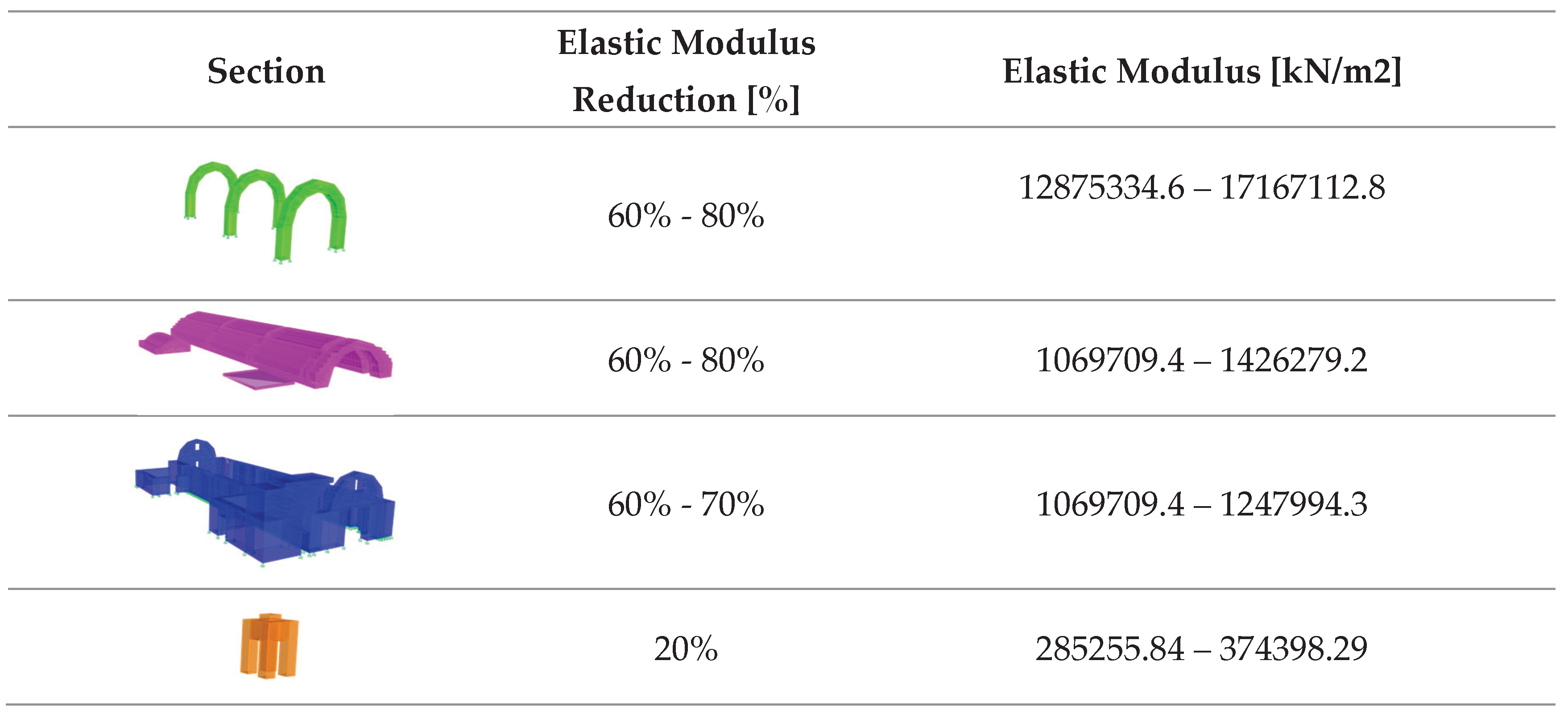
The results show that calibration required a significant reduction of the elastic modulus depending on the structural component, ranging from 60%–80% in concrete rings, 60%–80% in the nave vault, 60%–70% in masonry walls, and 20% in the tower. The comparison between numerical and experimental modal periods indicates a satisfactory agreement for the first modes, while higher modes exhibit larger discrepancies, consistent with the expected sensitivity to local effects and modeling assumptions.
The study demonstrates that systematic model updating based on ambient vibration testing provides a practical and reliable approach for representing the dynamic behavior of heritage structures and supports their seismic assessment and conservation.
Keywords:
experimental studies
; ambient vibration
; operational modal analysis
; finite element model updating
; structural modelling
; masonry structures
1. Introduction
Historical masonry churches are highly vulnerable to seismic actions due to material heterogeneity, structural complexity, and accumulated damage over time [4]. Reliable numerical models are therefore essential for structural assessment and conservation; however, uncalibrated finite element (FE) models often fail to reproduce the actual dynamic behavior of heritage structures [1]. In this context, the integration of ambient vibration testing and numerical modeling has become a widely accepted approach, extensively applied in international case studies [2,3,4,5] as well as in local contexts [6].
Previous studies have shown that discrepancies between numerical models and experimental responses are strongly associated with uncertainties in material properties and boundary conditions [1,7]. Among these, the elastic modulus has been identified as one of the most influential parameters governing the dynamic behavior of masonry structures, directly affecting natural frequencies and global structural response [8]. Experimental–numerical investigations on real structures have also demonstrated that model calibration significantly improves the agreement between predicted and measured responses [9].
Despite advances in operational modal analysis and ambient vibration techniques, the calibration of FE models is still often carried out using simplified or non-systematic procedures, particularly in seismic regions such as Peru, where the application of experimentally validated models remains limited [9]. This limitation reduces the reliability of structural assessments and highlights the need for practical and reproducible calibration strategies.
This study addresses this gap through the calibration of a finite element model of the San Pedro Apóstol Church in Uchumayo, Peru, a representative colonial masonry structure. The proposed approach combines ambient vibration measurements with a structured parametric grid-based updating strategy to reduce discrepancies between experimental and numerical responses [1].
The main objective is to obtain a calibrated FE model capable of accurately reproducing the dynamic behavior of the structure. The study focuses on the influence of mechanical property variations on modal parameters and the resulting improvement in the agreement between numerical and experimental modal responses. The results contribute to improving methodologies for seismic assessment and conservation of historical masonry structures.
2. Materials and Methods
2.1. Description of the Structure
The case study corresponds to the San Pedro Apóstol Church, located in the district of Uchumayo, approximately 21 km from the city of Arequipa, Peru (Figure 1). The structure is a representative example of colonial masonry architecture, primarily constructed with sillar (volcanic ignimbrite), a material widely used in the region due to its availability and workability.
Structurally, the church consists of a main nave covered by a barrel vault, thick load-bearing masonry walls, and a front tower, forming a complex three-dimensional system. Additional elements such as reinforced concrete rings and diaphragm components contribute to the global stiffness and structural continuity. The presence of adjacent constructions may also influence the boundary conditions and dynamic response, as reported in similar heritage structures [10].
From a mechanical perspective, historical masonry exhibits significant material heterogeneity and uncertainty due to aging, degradation, and construction techniques. These characteristics affect the effective stiffness of the structure and, consequently, its dynamic behavior. In particular, variations in stiffness-related parameters, such as the elastic modulus, can lead to significant discrepancies in the predicted modal response [7,8].
For the purposes of this study, the structural geometry was defined based on field observations and available architectural information, ensuring consistency with the actual configuration of the building. A three-dimensional finite element model was developed to represent the global structural behavior, including the interaction between the nave, tower, and main structural components.
2.2. Ambient Vibration Measurements
Ambient vibration measurements were conducted to identify the dynamic properties of the structure under operational conditions. The tests were performed using a TROMINO® seismograph, a high-sensitivity instrument suitable for non-invasive dynamic characterization of existing masonry structures [11].
The acquisition setup was defined to capture the expected modal response of the church within a frequency range of 3 to 50 Hz. A minimum recording duration of 10 minutes was adopted at each measurement point to ensure signal stability and statistical reliability.
Five measurement locations were selected based on structural and functional criteria to capture the global dynamic behavior of the system (Figure 2). These included the top and base of the tower, the concrete ring, the vault roof, and a reference point at floor level. The tower top was selected to capture the maximum response, while the base was used to assess transfer effects. The concrete ring was included due to its role as a strengthening element, and the vault roof was instrumented to represent the response of the main structural body. The floor-level point was used as a reference for relative comparisons and transfer function analysis.
The recorded signals were processed to estimate the modal properties of the structure, providing the experimental basis for the calibration of the numerical model.
2.3. Signal Processing and Modal Identification
The recorded ambient vibration signals were processed to extract the main modal properties of the structure. The raw records were first cleaned and filtered to remove noise and retain the frequency content associated with the structural response. The analysis was focused on the frequency range between 3 and 50 Hz, consistent with the expected range of the dominant modes.
The signals were analyzed in the frequency domain using spectral techniques (Figure 3). The identification of the fundamental response was based on the Horizontal-to-Vertical Spectral Ratio (HVSR), obtained from the relationship between the horizontal and vertical components of the recorded motion. The natural frequencies were identified from the dominant and stable peaks of the spectral response, following the consistency criteria established in the SESAME guidelines [12].
Once the fundamental frequency f was identified, the associated period was calculated as T=1/f. Higher modes were identified based on secondary peaks observed consistently across measurement points. These modal parameters were used as the experimental reference for the calibration of the numerical model.
2.4. Numerical Model
A three-dimensional finite element model was developed to represent the global dynamic behavior of the church, including the nave, tower, and main structural components (Figure 4). The model was implemented in SAP2000 (Computers and Structures Inc.) [13].
All structural components were modeled using solid finite elements in order to capture the three-dimensional response of the masonry system. This approach was adopted due to the geometric complexity of the structure, including thick masonry walls, vaulted elements, and irregular connections between structural components, which cannot be adequately represented using simplified shell or frame idealizations [7,8].
The use of solid elements allows a more realistic representation of stiffness distribution and load transfer within the structure, particularly in historical masonry buildings where material heterogeneity and construction irregularities strongly influence the global dynamic response [14].
A macro-modeling strategy was adopted, in which the masonry was represented as an equivalent homogeneous continuum. This approach is commonly used in the analysis of historical masonry structures due to its balance between computational efficiency and ability to reproduce global structural behavior [7,8,14].
The initial mechanical properties of the materials were defined based on available references and engineering assumptions, and were subsequently adjusted during the calibration process to improve agreement with the experimental results.
2.5. Model Updating Procedure
A parametric model updating procedure was implemented to reduce discrepancies between the numerical and experimental dynamic responses of the structure. The calibration focused on adjusting the mechanical properties of the main structural components governing the global stiffness of the system.
The selected parameters correspond to the elastic modulus of key structural elements, including masonry walls, the nave vault, concrete rings, and the tower. These parameters were identified as the most influential in controlling the dynamic response, particularly the natural frequencies, as widely reported in studies on historical masonry structures [15,16,17,18].
To systematically explore the parameter space, a discrete parametric grid-based approach was adopted. The elastic modulus of each component was varied within predefined bounds established from engineering judgment, preliminary analyses, and literature values. The combination of these parameters generated a set of numerical models, each representing a different stiffness configuration of the structure.
Preliminary analyses showed that, particularly in the undamaged condition, the structural response remained excessively stiff. For this reason, the upper bound of the calibration range was limited to 80% of the undamaged material properties. Additionally, values as low as 5% were considered physically unrealistic and were therefore excluded, adopting 10% as the lower bound. Based on these considerations, the parameter space was finally defined between 10% and 80%, using uniform increments of 10%. For four calibration variables, this discretization results in a total of 4096 possible parameter combinations. Considering an average computational cost of approximately 12 minutes per simulation, the total execution time would be on the order of 34 days of continuous processing, highlighting the high computational demand of a full factorial exploration.
The agreement between numerical and experimental modal properties was quantified using a normalized root mean square error (RMSE), defined in relative terms to account for differences in scale between modal periods:
where and correspond to the numerical and experimental modal periods, respectively, and n is the number of modes considered.
This formulation allows a consistent comparison across modes by normalizing the error with respect to the experimental values, thus providing a dimensionless measure of discrepancy. The optimal parameter set was defined as the one minimizing the normalized RMSE, ensuring the best agreement between numerical predictions and experimental observations. In this sense, finite element model updating based on experimentally identified dynamic properties has been recognized as an effective strategy for reducing uncertainties in historical masonry structures, while recent studies on historical churches confirm the importance of focusing on a limited number of parameters governing the global structural response [19,20].
3. Results
3.1. Identified Experimental Modal Periods
The experimental modal properties were identified from the spectral analysis of the recorded signals at the selected measurement points. The identified frequencies and corresponding periods are summarized in Table 1.
The results show that the dominant dynamic response of the structure is concentrated in the low-frequency range, with consistent peaks observed primarily in the tower measurements. The first representative periods range approximately between 0.190 s and 0.134 s, corresponding to frequencies between 5.3 Hz and 7.4 Hz. These values were consistently identified at both the top and base of the tower, indicating that these modes are associated with the global behavior of the structure associated with the global behavior of the structure, as commonly observed in masonry systems where slender elements dominate the low-frequency response.
In contrast, the nave and concrete ring exhibit fewer identifiable low-order responses, with dominant peaks appearing at higher frequencies. This behavior suggests a higher local stiffness and a lower contribution of these elements to the fundamental global modes. The variability observed across measurement points reflects the complex dynamic interaction between structural components and highlights the importance of multi-point measurements for accurate modal identification which is consistent with the expected dynamic response of masonry structures dominated by low-frequency global modes and component interaction effects.
Furthermore, the identification of the dominant peaks considered the structural location of each measurement point, since the dynamic response depends on the component being monitored (Figure 5). Therefore, the numerical model was used as a reference framework to interpret whether the measured peaks were associated with global modes or with more localized structural responses.
The representative experimental modal periods and frequencies obtained from the spectral analysis are summarized in Table 2.
The identified modal distribution reflects the structural configuration of the church, composed of a relatively stiff nave and a slender tower. The first three modes (0.188 s, 0.175 s, and 0.135 s) are attributed to the dynamic response of the tower, which behaves as a flexible appendage connected to a stiffer main body. Due to its slenderness and reduced lateral stiffness, the tower dominates the low-frequency range of the structural response, as commonly reported in similar heritage structures.
Conversely, the higher-frequency modes (0.092 s, 0.078 s, and 0.073 s) are associated with the nave and the global structural response. The increased stiffness and mass of the nave result in shorter vibration periods, consistent with the expected dynamic behavior of masonry structures with heterogeneous stiffness distribution.
3.2. Numerical Model Calibration
The calibration process was carried out by adjusting the main mechanical properties of the structural components to reduce discrepancies between experimental and numerical modal periods. The elastic modulus of the principal elements was selected as the calibration parameter due to its dominant influence on the global dynamic response.
The initial material properties adopted in the numerical model are summarized in Table 3. These values correspond to reference elastic moduli typically assigned to masonry and concrete elements under undamaged conditions. However, due to material degradation, construction characteristics, and interaction effects, these initial values are expected to overestimate the actual stiffness of historical structures.
To account for these uncertainties, a parametric analysis was conducted by varying the elastic modulus of the main structural components within predefined bounds. The selected ranges were defined based on engineering judgment and literature values, aiming to capture the expected stiffness degradation of the structure. A discrete set of parameter combinations was generated, each representing a different stiffness configuration of the numerical model.
The agreement between numerical and experimental modal periods was evaluated using the normalized root mean square error (RMSE), as defined in Section 2.5. This metric was used to quantify the relative discrepancy between numerical predictions and experimental results, allowing a consistent comparison across multiple modes.
The calibration results indicate that a significant reduction in stiffness was required to achieve agreement with the experimental data. The optimal parameter set corresponds to reductions of approximately 65%–75% in the concrete rings, 63%–72% in the nave vault, and 60%–75% in the masonry walls, while the tower exhibited lower reductions between 16% and 21%. These results reveal a non-uniform distribution of stiffness within the structure and highlight the influence of structural configuration and condition on the dynamic response.
The largest effective stiffness reduction was observed in the tower, indicating that this element governs the most degraded portion of the structural response. This observation is consistent with the visible damage documented in the structure and with the known dynamic behavior of masonry towers, which often behave as appendage-like elements connected to more massive and stiffer bodies (Figure 6). Due to their slenderness and dynamic sensitivity, these elements tend to amplify vibrations and concentrate deformation demands, which is reflected in the calibration process through a greater adjustment of the elastic modulus.
3.3. Comparison Between Experimental and Numerical Results
The calibrated numerical model was evaluated by comparing the computed modal periods with the experimentally identified values. The comparison was performed using the representative modes defined in Section 3.1, corresponding to the global dynamic behavior of the structure.
The results show a satisfactory agreement between numerical and experimental modal periods, particularly for the first modes associated with the tower response. The discrepancies remain within acceptable limits for historical masonry structures, considering the uncertainties associated with material properties and modeling assumptions.
The normalized root mean square error (RMSE), defined in Section 2.5, was used as the main indicator of agreement between both datasets. The obtained values confirm that the calibrated model adequately reproduces the experimental dynamic response.
It is observed that the first modes are captured with higher accuracy, while higher modes exhibit larger deviations. This behavior is consistent with the increased sensitivity of higher modes to local effects, boundary conditions, and modeling simplifications.
As described in the previous section, the calibration process involved the evaluation of multiple numerical models representing different stiffness configurations. Figure 7 illustrates the trend of modal periods obtained from the numerical analyses in comparison with the experimental values. For clarity, only representative cases are shown, while the complete dataset was used for the computation of the normalized RMSE and the identification of the optimal parameter set (Table 4).
The comparison between experimental and numerical modal periods using the best-performing models shows a good agreement for the first three modes, with relative errors below 10%. The best overall result corresponds to Combination 1, while the second-best result corresponds to Combination 2, according to the RMSE ranking presented in Table 4. Modes 1,2,5 and 6 exhibits the closest agreement, with a deviation of approximately 2%, while Modes 3 and 4 show higher discrepancies (close to 11%). These results confirm that the calibrated model is capable of reproducing the dominant dynamic behavior of the structure.
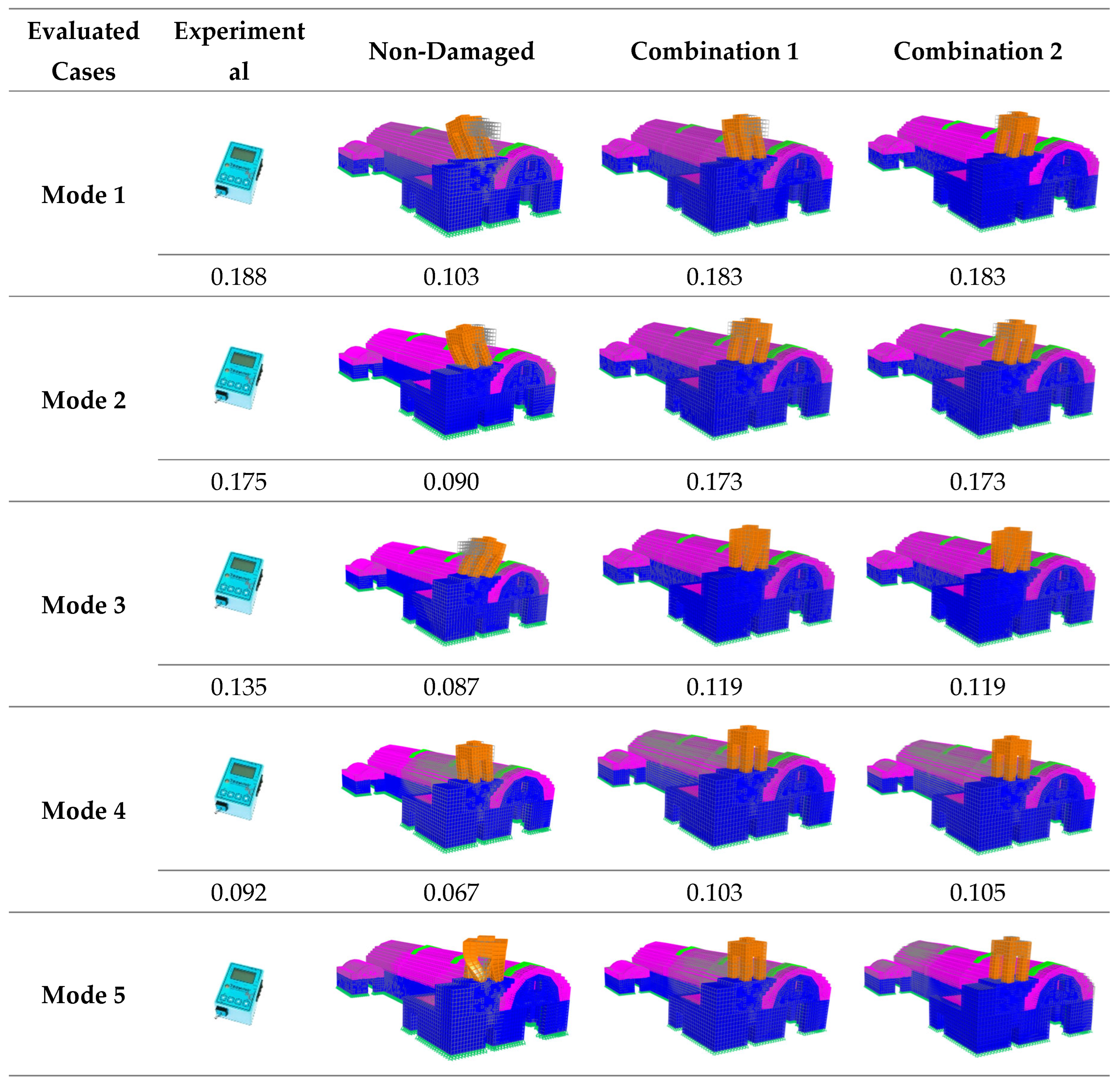
The comparison of modal responses is further illustrated in Table 5, where both modal periods and mode shapes are evaluated for the uncalibrated model and the two best calibrated cases, referred to as Combination 1 and Combination 2. The results indicate that the initial uncalibrated model does not adequately represent the structural behavior, as several modes show inconsistent participation between the tower and the nave.
In contrast, the calibrated models achieve a significantly improved agreement in both modal periods and modal distribution. The modal patterns align with the expected structural behavior, with the first modes primarily associated with the tower and the subsequent modes corresponding to the nave. This consistency reinforces the reliability of the calibrated model and its ability to capture both global and component-level dynamic responses.
4. Discussion
First, the results confirm that the initial numerical model significantly overestimates the structural stiffness, as evidenced by the shorter modal periods obtained prior to calibration. After calibration, the numerical results show a good agreement with the experimental data, with relative normalized RMSE values on the order of 8–9%, indicating that the updated model adequately captures the global dynamic response.
The magnitude and distribution of stiffness reductions required during calibration reveal a heterogeneous structural condition. The calibrated model required reductions of approximately 60%–80% in the concrete rings, 60%–80% in the nave vault, and 60%–70% in the masonry walls, while the tower exhibited lower reductions 20% (Table 6). These results indicate that the effective stiffness of the structure is significantly lower than the reference undamaged condition and reflect the combined effects of material degradation, microcracking, and construction irregularities, which are characteristic of historical masonry structures.
The modal distribution provides a physically consistent interpretation of the structural behavior. The first three modes, with periods approximately between 0.188 s and 0.135 s, are primarily governed by the tower, while higher modes (approximately between 0.092 s and 0.073 s) involve the nave and the global structural system. This separation reflects the contrast between the slender and more flexible tower and the stiffer and more massive nave, confirming that the dynamic response is strongly influenced by the geometric configuration and stiffness distribution of the structure.
The calibration results highlight that a reduced set of parameters controlling global stiffness is sufficient to reproduce the dominant dynamic behavior of the structure. This is consistent with previous studies on finite element model updating of historical masonry structures, which emphasize the importance of accurately representing stiffness-related properties to achieve reliable numerical predictions [19,20].
Finally, some limitations of the study should be acknowledged. The use of a macro-modeling approach allows capturing the global dynamic behavior but does not explicitly represent local damage mechanisms. In addition, simplified boundary conditions may influence the accuracy of higher modes. Despite these limitations, the calibrated model provides a reliable basis for global dynamic interpretation and seismic assessment of the structure.
5. Conclusions
This study presented the calibration of a finite element model of a historical masonry church based on ambient vibration measurements. The proposed approach, based on a structured parametric calibration of stiffness-related properties, enabled an improved representation of the structural dynamic behavior. The main conclusions are as follows:
- The use of nominal mechanical properties in the initial numerical model leads to a significant overestimation of structural stiffness, confirming that uncalibrated models are not suitable for reliable dynamic assessment of historical masonry structures.
- The calibration process required substantial and non-uniform reductions in the elastic modulus of the main structural components, demonstrating that the effective stiffness of the structure is governed by material degradation and structural configuration rather than nominal material properties.
- The identified modal behavior shows that the tower dominates the low-frequency response, while the nave governs the higher modes, highlighting the influence of geometric configuration and stiffness distribution on the global dynamic response.
- The results confirm that the adjustment of a reduced set of parameters controlling global stiffness is sufficient to reproduce the dominant dynamic behavior of the structure, supporting the use of practical and reproducible calibration strategies.
- The calibrated model achieves a satisfactory agreement with the experimental results and provides a physically consistent representation of the structural behavior, making it suitable for seismic assessment and conservation-oriented analyses.
- Despite the reduction of the parameter space to a physically consistent range, the full factorial exploration still involves a considerable computational cost. This highlights the need for more efficient sampling strategies, such as Latin Hypercube Sampling (LHS), which allow an adequate representation of the parameter space with a significantly reduced number of simulations.
Abbreviations
The following abbreviations are used in this manuscript:
| FE | Finite Element |
| FEM | Finite Element Method |
| OMA | Operational Modal Analysis |
| HVSR | Horizontal-to-Vertical Spectral Ratio |
| FWHM | Full Width at Half Maximum |
| RMSE | Root Mean Square Error |
References
- Girardi, M.; Padovani, C.; Pellegrini, D.; Porcelli, M.; Robol, L. Finite Element Model Updating for Structural Applications. J. Comput. Appl. Math. 2020, 370, 112675. [Google Scholar] [CrossRef]
- Reynders, E. System Identification Methods for (Operational) Modal Analysis: Review and Comparison. Arch. Comput. Methods Eng. 2012, 19, 51–124. [Google Scholar] [CrossRef]
- McKay, M.D.; Beckman, R.J.; Conover, W.J. A Comparison of Three Methods for Selecting Values of Input Variables in the Analysis of Output from a Computer Code. Technometrics 1979, 21, 239–245. [Google Scholar] [PubMed]
- Elmenshawi, A.; Sorour, M.; Mufti, A.; Jaeger, L. Damping Mechanisms and Damping Ratios in Vibrating Unreinforced Stone Masonry. Eng. Struct. 2010, 32, 3269–3278. [Google Scholar] [CrossRef]
- Ewins, D.J. Modal Testing: Theory, Practice and Application, 2nd ed.; Research Studies Press: Baldock, UK, 2000. [Google Scholar]
- Aguilar, R.; Ramos, D.; Torrealva, C.; Chacara, C. Experimental Modal Identification of an Earthen Residential Building. In Proceedings of the ISISE Conference, University of Minho, Portugal, 2013. [Google Scholar]
- Roca, P.; Cervera, M.; Gariup, G.; Pelà, L. Structural Analysis of Masonry Historical Constructions: Classical and Advanced Approaches. Arch. Comput. Methods Eng. 2010, 17, 299–325. [Google Scholar] [CrossRef]
- Chopra, A.K. Dynamics of Structures: Theory and Applications to Earthquake Engineering; Editorial Mexicana: Mexico City, Mexico, 2017. [Google Scholar]
- Torres, W.; Almazán, J.; Sandoval, C.; Boroschek, R. Operational Modal Analysis and FE Model Updating of the Metropolitan Cathedral of Santiago. Eng. Struct. 2017, 143, 169–188. [Google Scholar] [CrossRef]
- Sunara, M.; Banović, I.; Buzov, A.; Grgić, N. Modal and Structural Identification of Historic Bell Tower in Čuntić, Croatia Using Ambient Vibration Testing. Appl. Sci. 2023, 13, 11494. [Google Scholar] [CrossRef]
- Imposa, G.; Grassi, S.; Barontini, A.; Morreale, G.; Russo, S.; Lourenço, P.; Imposa, S. Extended Tromograph Surveys for a Full Experimental Characterisation of the San Giorgio Cathedral in Ragusa (Italy). Sensors 2023, 23, 889. [Google Scholar] [CrossRef] [PubMed]
- SESAME. Guidelines for the Implementation of the H/V Spectral Ratio Technique on Ambient Vibrations: Measurements, Processing and Interpretation; European Research Project SESAME, 2004. [Google Scholar]
- Castellaro, S.; Perricone, L.; Isani, S. Dynamic Characterization of the Eiffel Tower. Eng. Struct. 2016, 126, 628–640. [Google Scholar] [CrossRef]
- Lourenço, P.B. Computations on Historic Masonry Structures. Prog. Struct. Eng. Mater. 2002, 4, 301–319. [Google Scholar] [CrossRef]
- Ali, B.; Castro, J.; Omi, S.; Nazimi, K. Exploration and Characterization of Dynamic Properties for Cultural Heritage Conservation: A Case Study for Historical Stone Masonry Buildings in Zanzibar. Buildings 2024, 14, 981. [Google Scholar] [CrossRef]
- Dilena, M.; Dell’Oste, M.F.; Gubana, A.; Morassi, A.; Puntel, E. Dynamic Testing in Support of the Seismic Assessment of a Century Old Masonry Building Complex. Buildings 2022, 12, 805. [Google Scholar] [CrossRef]
- Carpio, Y.; Simbor, E.; Villareal, G. Caracterización Dinámica del Edificio “María Nieves y Bustamante” de la Universidad Católica San Pablo de Arequipa y su Subsuelo a través del Uso de Sismógrafos. Mem. Investig. Ing. 2023, 25, 27–52. [Google Scholar] [CrossRef]
- Asteris, P.; Plevris, V.; Sarhosis, V.; Papaloizou, L.; Mohebkhah, A.; Komodromos, P. Numerical Modeling of Historic Masonry Structures. In Handbook of Research on Seismic Assessment and Rehabilitation of Historic Structures; IGI Global: Hershey, PA, USA, 2015; pp. 213–256. [Google Scholar]
- Altunişik, A.C.; Okur, F.Y.; Genç, A.F.; Günaydin, M.; Adanur, S. Automated Model Updating of Historical Masonry Structures Based on Ambient Vibration Measurements. Journal of Performance of Constructed Facilities 2018, 32(1), 04017126. [Google Scholar] [CrossRef]
- Longarini, N.; Crespi, P.; Zucca, M.; Scamardo, M. Numerical Evaluation of the Equivalent Damping Ratio Due to Dissipative Roof Structure in the Retrofit of Historical Churches. Applied Sciences 2025, 15(6), 3286. [Google Scholar] [CrossRef]
Figure 1.
General view of the San Pedro Apostol Church (Uchumayo, Peru), showing the main façade and tower.
Figure 1.
General view of the San Pedro Apostol Church (Uchumayo, Peru), showing the main façade and tower.
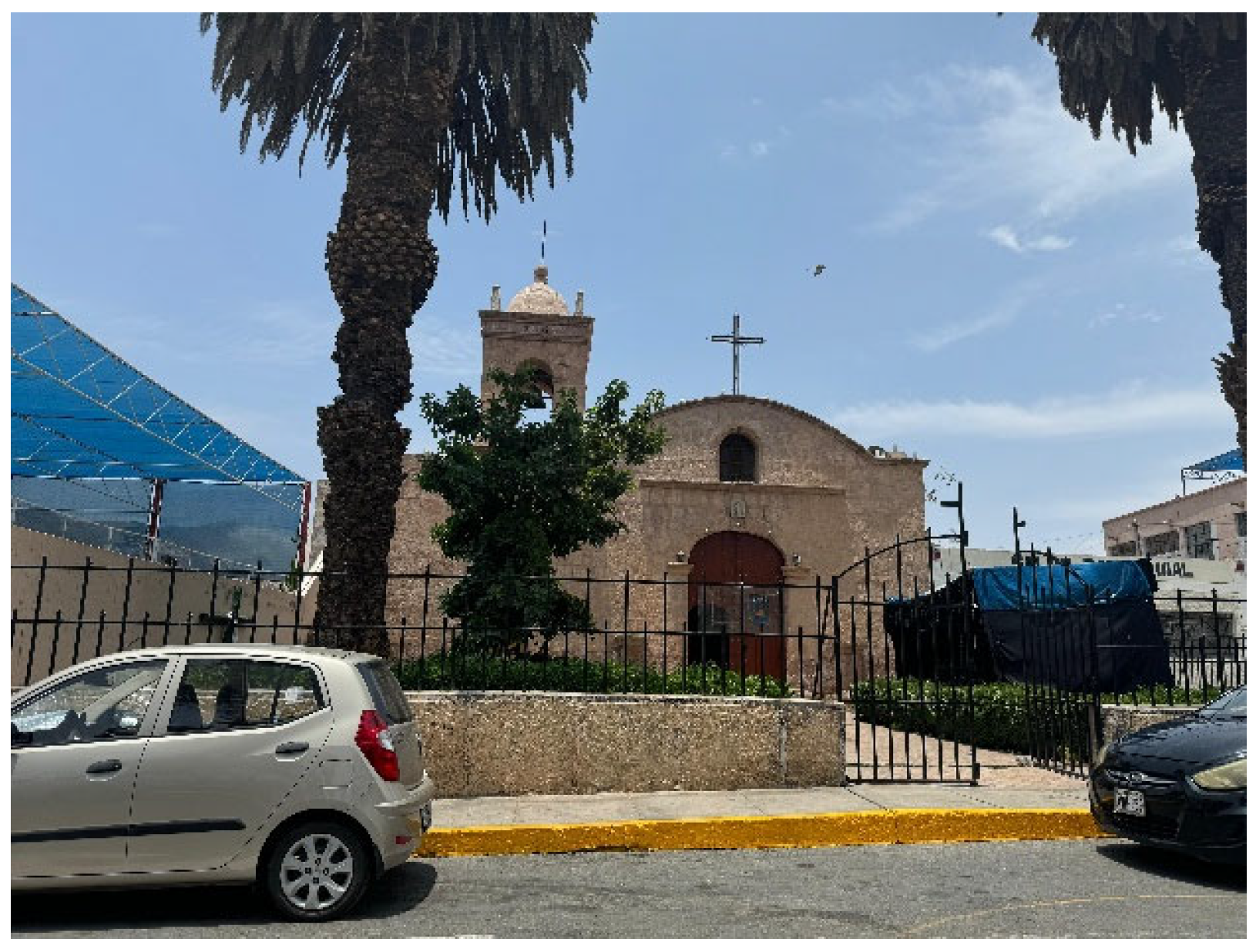
Figure 2.
Ambient vibration measurements using a TROMINO® seismograph at different locations of the church (tower and roof).
Figure 2.
Ambient vibration measurements using a TROMINO® seismograph at different locations of the church (tower and roof).
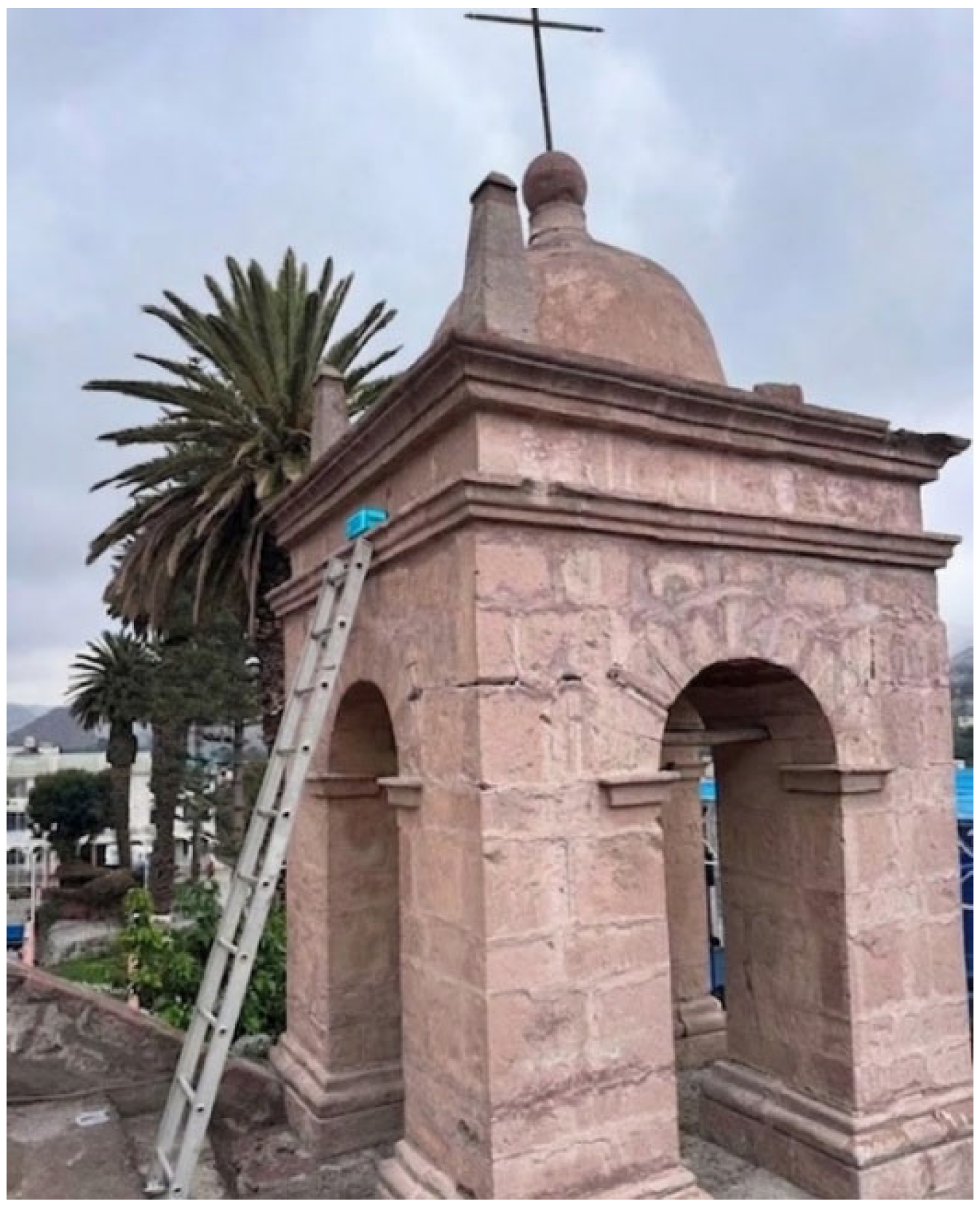
Figure 3.
Spectral response amplitudes derived from ambient vibration data at the tower top, showing dominant frequency peaks.
Figure 3.
Spectral response amplitudes derived from ambient vibration data at the tower top, showing dominant frequency peaks.
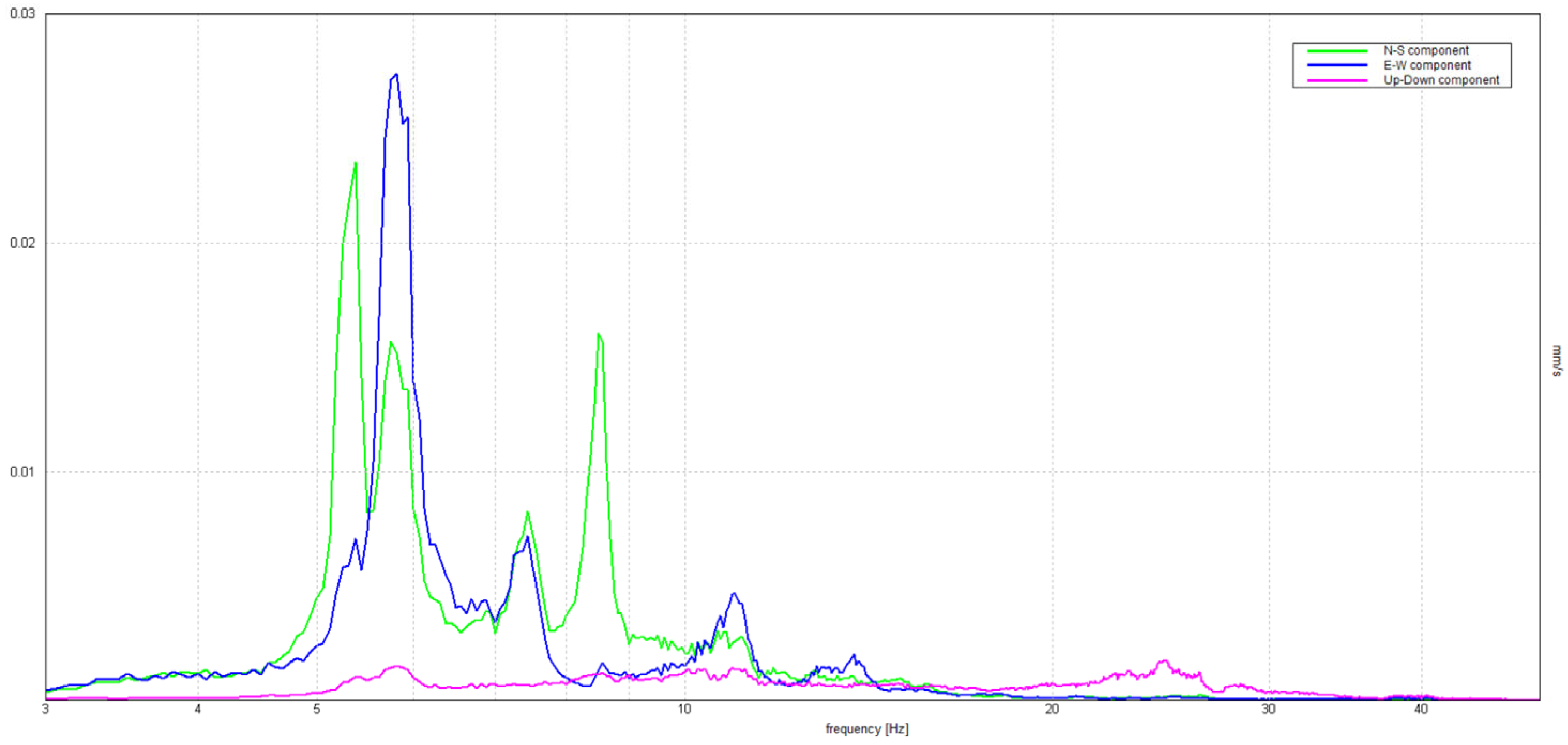
Figure 4.
Three-dimensional finite element model of the church developed for dynamic analysis.
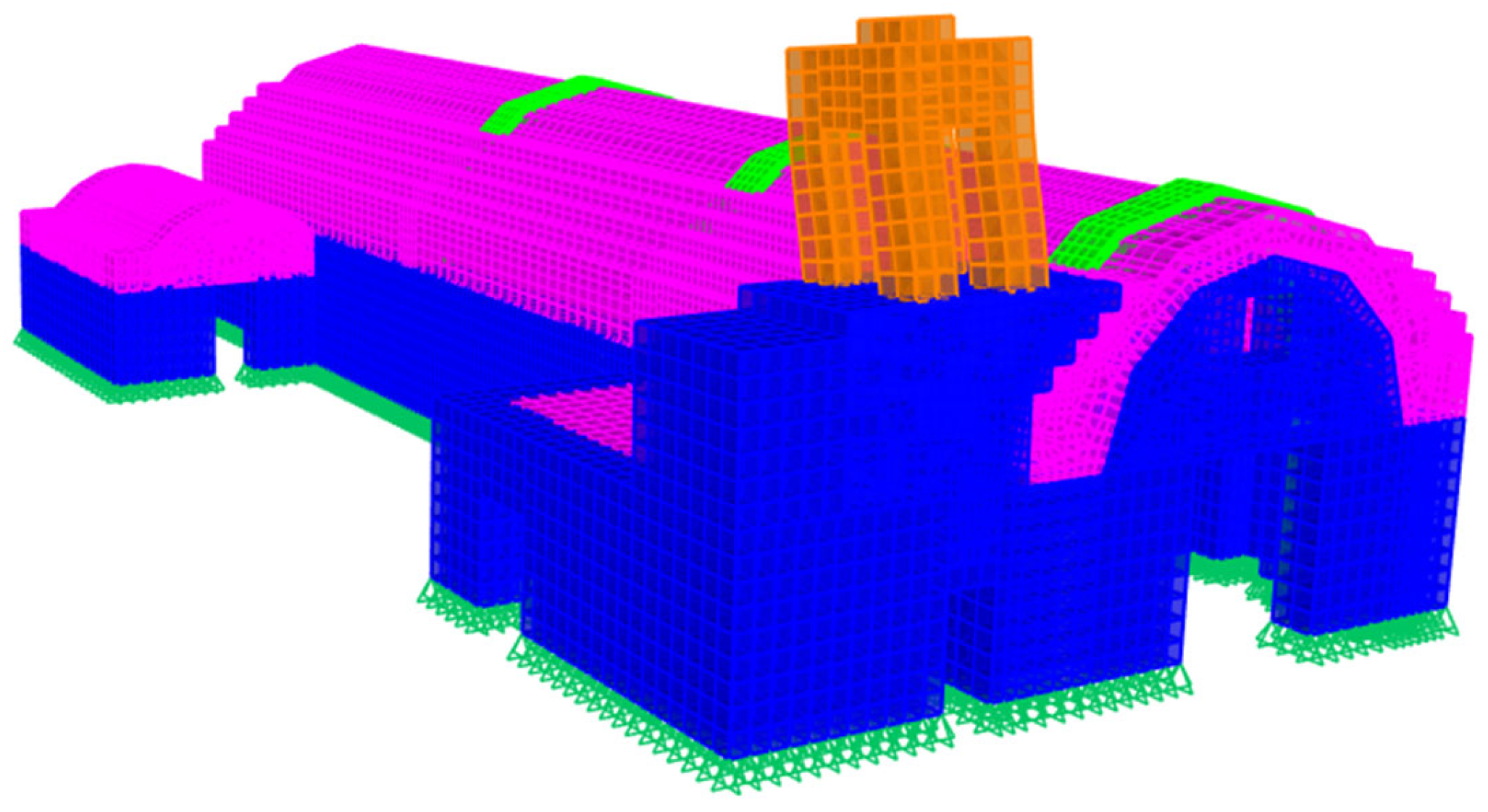
Figure 5.
Location of measurement points on the finite element model of the church.
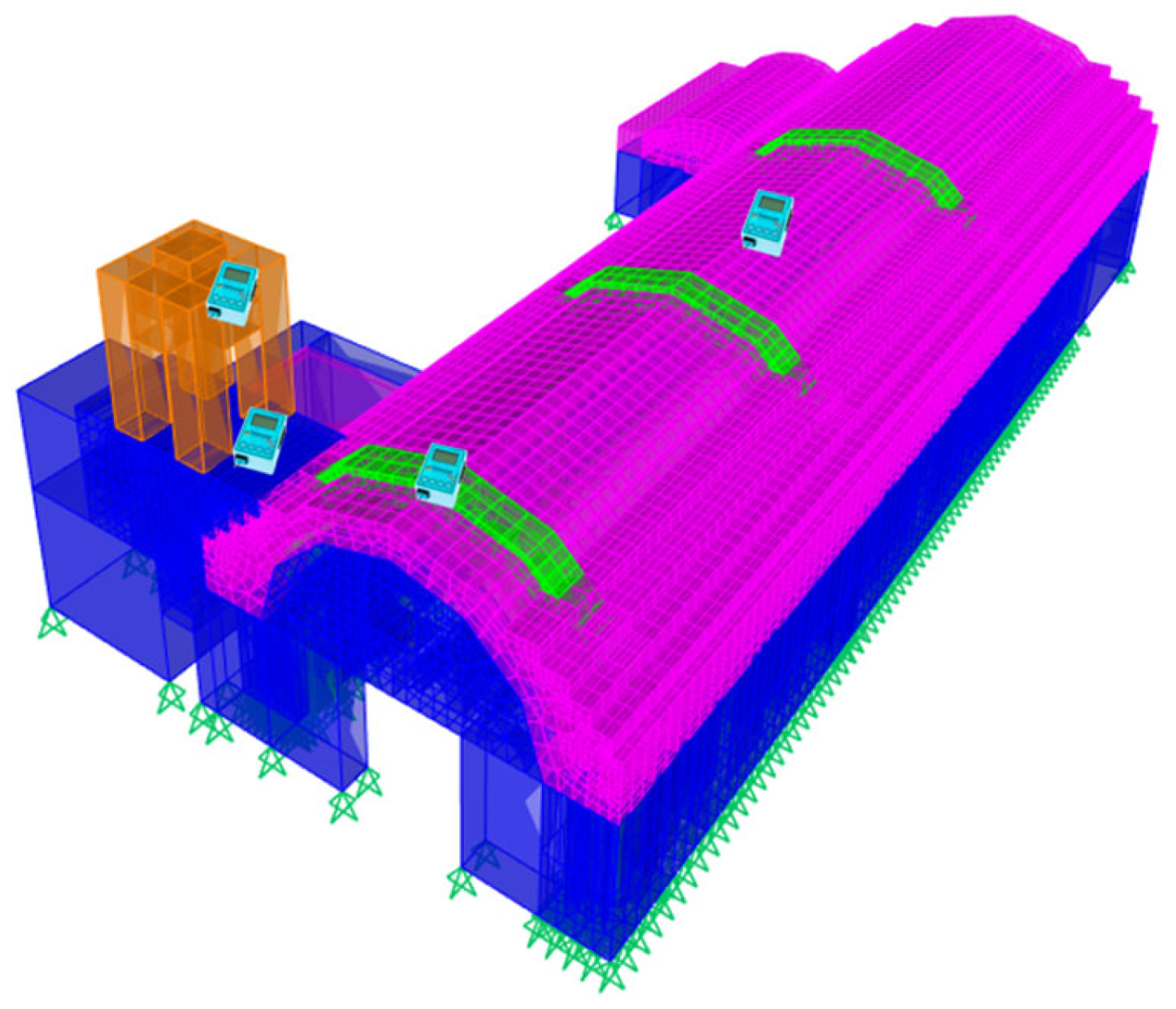
Figure 6.
Visible cracking and surface deterioration in the tower, consistent with its reduced effective stiffness.
Figure 6.
Visible cracking and surface deterioration in the tower, consistent with its reduced effective stiffness.
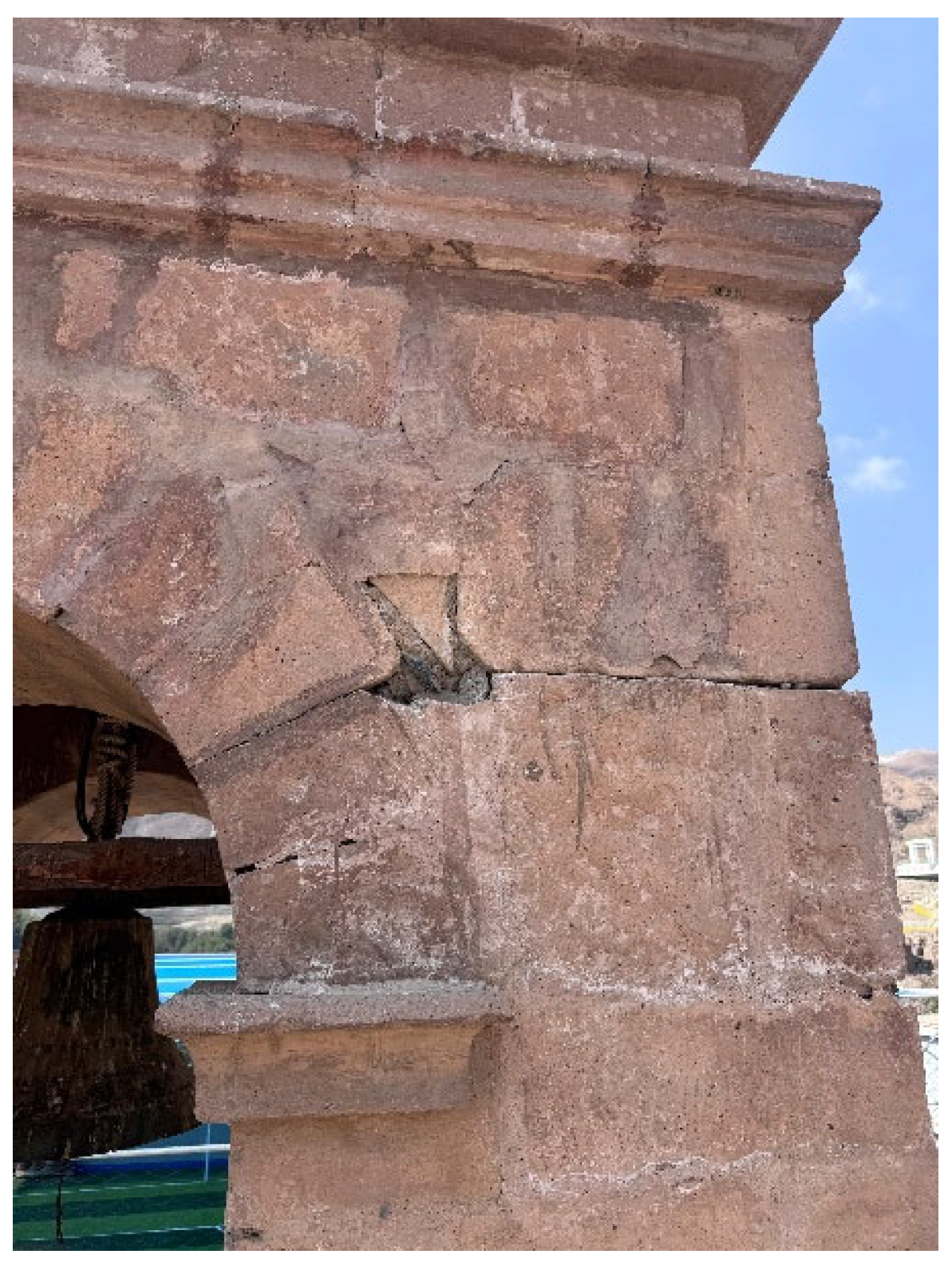
Figure 7.
Comparison of modal period trends obtained from simulations and experimental results.
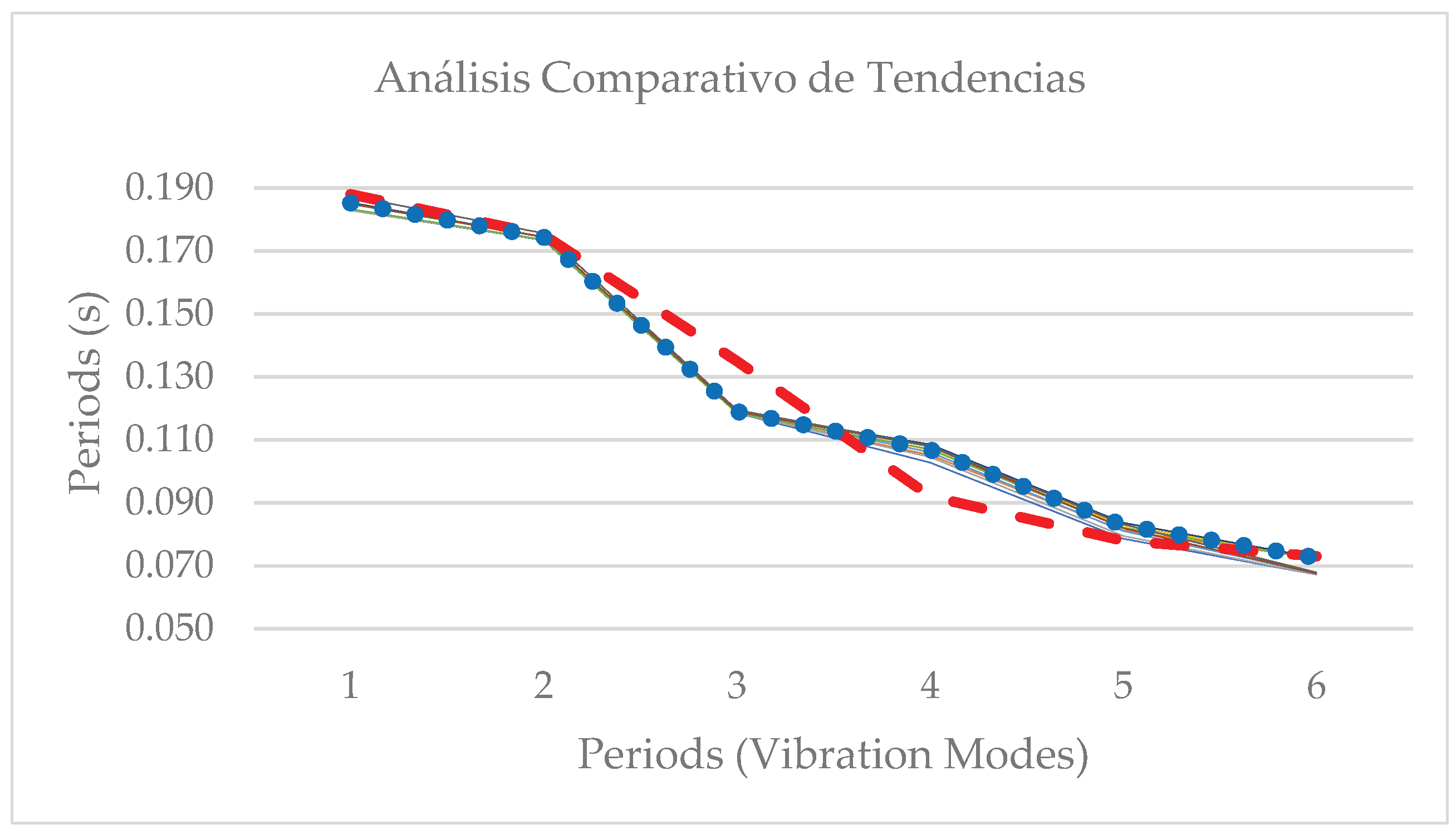

Table 1.
Identified experimental frequencies and periods at each measurement point.
| Measurement Point | Data | Mode 1 | Mode 2 | Mode 3 | Mode 4 | Mode 5 | Mode 6 |
| Tower Top | Frequency (Hz) | 5.362 | 5.765 | 7.415 | 8.514 | 10.933 | N.I.1 — |
| Period (s) | 0.186 | 0.173 | 0.135 | 0.117 | 0.091 | ||
| Tower Base | Frequency (Hz) | 5.277 | 5.689 | 7.391 | N.I.1 — |
10.969 | 12.762 |
| Period (s) | 0.190 | 0.176 | 0.135 | 0.091 | 0.078 | ||
| Nave Roof | Frequency (Hz) | N.I.1 | N.I.1 | 7.391 | N.I.1 — |
10.772 | 12.888 |
| Period (s) | 0.135 | 0.093 | 0.078 | ||||
| Beam (Concrete Ring) | Frequency (Hz) | N.I.1 — |
5.730 | 7.445 | N.I.1 — |
11.029 | 12.933 |
| Period (s) | 0.175 | 0.134 | 0.091 | 0.077 |
1 Note: “Not identified” indicates that no clear spectral peak was detected at the corresponding measurement point.
Table 2.
Representative experimental modal periods and frequencies.
| Period (s) | 0.188 | 0.175 | 0.135 | 0.092 | 0.078 | 0.073 |
| Frequency (Hz) | 5.320 | 5.728 | 7.411 | 10.926 | 12.861 | 13.732 |
Modes 1–3: Tower-dominated response. Modes 4–6: Nave / global structural response.
Table 3.
Initial material properties assumed for the undamaged condition.
| Material | Elastic Modulus (kN/m²) | Reference |
| Concrete Ring | 21,458,891 | Concrete f'c = 210 kgf/cm² |
| Ignimbrite Masonry walls | 1,782,849 | 18180 kgf/cm² |
| Ignimbrite Roof (vault) | 1,782,849 | 18180 kgf/cm² |
| Ignimbrite Tower | 1,782,849 | 18180 kgf/cm² |
Table 4.
Representative cases, calibrated parameter values, numerical modal periods, and RMSE results.
Table 4.
Representative cases, calibrated parameter values, numerical modal periods, and RMSE results.
| C. Ring | I. Masonry walls | I. Roof (vault) | I. Tower | T1 [s] |
T2 [s] |
T3 [s] |
T4 [s] |
T5 [s] |
T6 [s] |
RMSE (%) |
| 70% | 80% | 70% | 20% | 0.183 | 0.173 | 0.119 | 0.103 | 0.079 | 0.067 | 7.7% |
| 70% | 80% | 60% | 20% | 0.183 | 0.173 | 0.119 | 0.105 | 0.081 | 0.072 | 8.0% |
| 60% | 80% | 70% | 20% | 0.183 | 0.173 | 0.119 | 0.105 | 0.079 | 0.067 | 8.3% |
| 80% | 70% | 60% | 20% | 0.185 | 0.174 | 0.119 | 0.107 | 0.083 | 0.073 | 8.6% |
| 70% | 70% | 70% | 20% | 0.185 | 0.174 | 0.119 | 0.106 | 0.081 | 0.068 | 8.7% |
| 60% | 80% | 60% | 20% | 0.183 | 0.174 | 0.119 | 0.107 | 0.082 | 0.072 | 8.7% |
| 70% | 70% | 60% | 20% | 0.185 | 0.174 | 0.119 | 0.109 | 0.084 | 0.073 | 9.3% |
| 60% | 70% | 70% | 20% | 0.185 | 0.174 | 0.119 | 0.108 | 0.082 | 0.068 | 9.4% |
| 80% | 60% | 70% | 20% | 0.187 | 0.176 | 0.120 | 0.108 | 0.083 | 0.068 | 9.4% |
Table 5.
Comparison of experimental and numerical mode shapes and modal periods in seconds for the uncalibrated model and the two best calibrated cases, denoted as Combination 1 and Combination 2.
Table 5.
Comparison of experimental and numerical mode shapes and modal periods in seconds for the uncalibrated model and the two best calibrated cases, denoted as Combination 1 and Combination 2.
 |
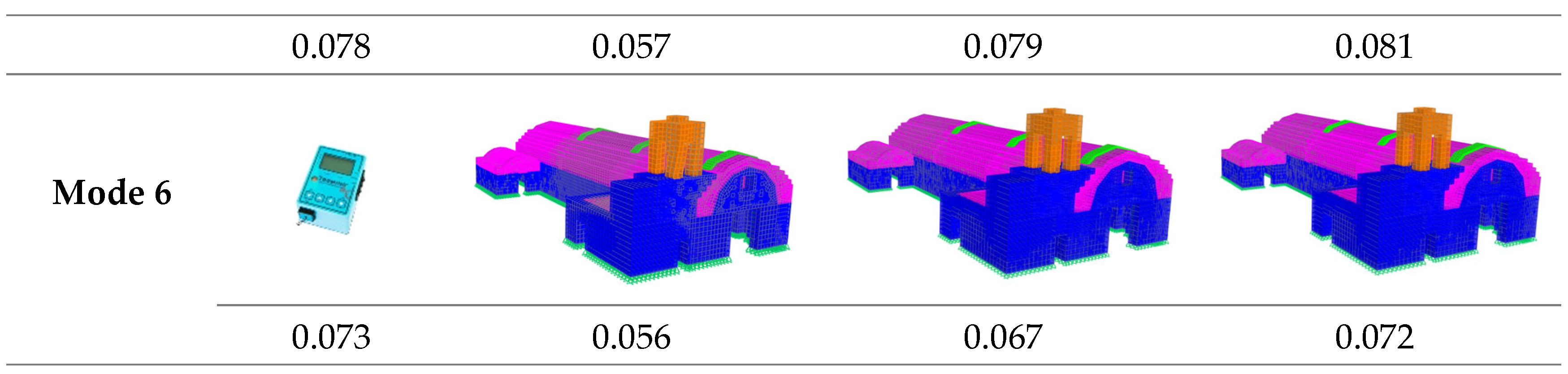 |
Table 6.
Calibrated elastic modulus reduction ranges for the main structural components.
 |
Disclaimer/Publisher’s Note: The statements, opinions and data contained in all publications are solely those of the individual author(s) and contributor(s) and not of MDPI and/or the editor(s). MDPI and/or the editor(s) disclaim responsibility for any injury to people or property resulting from any ideas, methods, instructions or products referred to in the content. |
© 2026 by the authors. Licensee MDPI, Basel, Switzerland. This article is an open access article distributed under the terms and conditions of the Creative Commons Attribution (CC BY) license (http://creativecommons.org/licenses/by/4.0/).
Copyright: This open access article is published under a Creative Commons CC BY 4.0 license, which permit the free download, distribution, and reuse, provided that the author and preprint are cited in any reuse.


