
Submitted:
08 April 2026
Posted:
09 April 2026
You are already at the latest version
Abstract
Background/Objectives: Since the 2010s, Korea has implemented policies to promote physical education for female students. This study aimed to examine changes in self-rated health among Korean men and women in their 20s and 30s over the past 15 years. Methods: This study used data from the Korea Community Health Survey conducted by the Korea Disease Control and Prevention Agency from 2010 to 2024. The study population comprised adults aged 20–39 years selected through a two-stage sampling process—probability proportional to size sampling followed by systematic sampling. The data were analyzed using frequency analysis, descriptive statistics, correlation analysis, independent samples t-test, and two-way analysis of variance. Results: First, self-rated health was highest among men in their 20s, followed by women in their 20s, men in their 30s, and women in their 30s across all years. Second, self-rated health showed a positive correlation with year, indicating higher levels in more recent surveys. It also showed a correlation with age, with younger individuals reporting higher levels of self-rated health. Third, men consistently reported higher self-rated health across all years compared with women. Fourth, individuals in their 20s consistently reported higher self-rated health than those in their 30s. Fifth, the difference between men and women remained relatively consistent over the 15-year period. Conclusions: The findings did not show a clear improvement in women’s self-rated health or a substantial reduction in the gender gap. These results suggest the need for a systematic redesign of policies promoting physical education for female students in Korea.
Keywords:
CHS
; Korea community health survey
; self-rated health
; physical education
; female students
; national policy
1. Introduction
Physical activity plays an important role in maintaining and improving individual health. Engaging in physical activity during childhood and adolescence contributes to not only students’ physical growth but also their holistic development. Consequently, many countries continue to encourage physical activity among primary and secondary school students through policy initiatives and have incorporated it into the national curricula. However, a decline in students’ physical activity levels has been observed, particularly among female students.
In Korea, the low participation in physical activity by female students gained increased attention in the late 1990s with the introduction of coeducational classes under Article 17 of the Framework Act on Education, which promotes gender-equal education [1]. In the mid-2000s, the School Physical Education Innovation Plan led to the operationalization of school sports clubs, marking the beginning of efforts to increase female students’ participation in physical activity. Policies specifically aimed at promoting physical education for female students began to be implemented more actively in the early 2010s, when the explicit objective of promoting girls’ physical education was included in the Major Tasks of School Physical Education Plan and the School Physical Education Promotion Act.
Despite these efforts, concerns about female students’ avoidance of physical activity and inadequate participation in physical education remain prevalent in schools. Research examining the physical activity levels and health perception of women who left school after the implementation of these policies is warranted. A major indicator of an individual’s health status and quality of life is self-rated health [2]. Given that quality of life and health status are closely associated with participation in and adequate levels of physical activity, self-rated health can be useful in assessing whether female students who have left school maintain healthy lifestyles through physical activity.
In recent years, self-rated health has frequently been examined in relation to physical activity. Wang et al. investigated the relationship between self-rated health and physical activity, focusing on vigorous physical activity [3]. Using the World Health Organization data of adolescents across 36 countries, they found a positive correlation between self-rated health and vigorous physical activity. Among Danish adults, Ibsen et al. showed that engaging in a wider variety of physical activities was associated with better self-rated health [4]. Another study reported a positive association between self-rated health and physical fitness among adolescents [5]. While these studies demonstrate the relationship between self-rated health and physical activity or fitness, research examining whether policies specifically aimed at promoting physical education for female students have produced long-term effects remains scarce.
Therefore, this study aimed to analyze changes in self-rated health among Korean men and women in their 20s and 30s over the past 15 years using data from the Korea Community Health Survey (2010–2024). Although some improvements in women’s self-rated health were observed in certain years, the gender gap remained relatively consistent over time., suggesting limited impact of the national policies promoting physical education for female students.
2. Materials and Methods
2.1. Study Design
This study utilized data from the Korea Community Health Survey conducted from 2010 to 2024 by the Korea Disease Control and Prevention Agency in collaboration with public health centers nationwide. The survey has been conducted annually since 2008 to establish and evaluate regional public health plans, standardize survey implementation systems, and produce regional health statistics. The raw data are publicly available through the official website (https://chs.kdca.go.kr). In this study, the 15-year changes in self-rated health were examined using data from the Korea Community Health Survey.
2.2. Participants
The target population comprised adults aged ≥20 years captured in the Korean resident registration system. For sampling, a two-stage design was employed. First, probability proportional to size systematic sampling was used to select sample points, considering the number of households by housing type at each sampling location. Second, systematic sampling was conducted based on the number of households within each selected sample point. The number of surveys and characteristics of the study participants are presented in Table 1.
2.3. Survey Methods and Measures
The annual survey periods and resampling rates used for data verification and quality control are presented in Table 2. The survey was conducted during the same period each year, except for 2015, 2023, and 2024. Data were collected using computer-assisted personal interviewing. Trained interviewers visited households and conducted face-to-face interviews with respondents.
To ensure data verification and quality control, some respondents were resampled and contacted by telephone for follow-up verification. Any discrepancies identified during the verification process were reported to the Korea Disease Control and Prevention Agency, and the survey data were continuously monitored and managed. The resampling rates were 5% in 2010, 10% between 2011 and 2019, and 13% since 2019.
Because the raw data of the Korea Community Health Survey did not contain personally identifiable information, such as home addresses, telephone numbers, or social security numbers, ethical approval was not required. According to Article 2, Paragraph 2 of the Enforcement Rule of the Bioethics and Safety Act in Korea, the Korea Community Health Survey is not classified as research involving human subjects and is therefore exempt from Institutional Review Board review.
According to the Korea Disease Control and Prevention Agency [6], self-rated health was assessed using the question, “How would you rate your usual health status?” The response categories were: (1) very good, (2) good, (3) fair, (4) poor, and (5) very poor. For analysis, the responses were reverse-coded, with very good coded as 5, good as 4, fair as 3, poor as 2, and very poor as 1. The frequency distribution of self-rated health by age group and sex across years is presented in Table 3.

Table 2.
Survey period and resampling rate by year.
| Year | Survey Period | Resampling Rate |
|---|---|---|
| 2010 | 2010.08.16 – 2010.10.31 | 5% |
| 2011 | 2011.08.16 – 2011.10.31 | 10% |
| 2012 | 2012.08.06 – 2021.10.31 | 10% |
| 2013 | 2013.08.16 – 2013.10.31 | 10% |
| 2014 | 2014.08.16 – 2014.10.31 | 10% |
| 2015 | 2015.08.31 – 2015.11.08 | 10% |
| 2016 | 2016.08.16 – 2016.10.31 | 10% |
| 2017 | 2017.08.16 – 2017.10.31 | 10% |
| 2018 | 2018.08.16 – 2018.10.31 | 10% |
| 2019 | 2019.08.16 – 2019.10.31 | 13% |
| 2020 | 2020.08.16 – 2020.10.31 | 13% |
| 2021 | 2021.08.16 – 2021.10.31 | 13% |
| 2022 | 2022.08.16 – 2022.10.31 | 13% |
| 2023 | 2023.05.16 – 2023.07.31 | 13% |
| 2024 | 2024.05.16 – 2024.07.31 | 13% |
Table 3.
Frequency distribution of self-rated health.
| Year | Age group | Sex | Frequency (%) | ||||||
|---|---|---|---|---|---|---|---|---|---|
| Very good | Good | Fair | Poor | Very poor | Refused | Don't know | |||
| 2010 | 20–29 | male | 2,554 (21.3) | 6,260 (52.1) | 2,810 (23.4) | 337 (2.8) | 37 (0.3) | 1 (0.0) | 5 (0.0) |
| female | 1,734 (12.6) | 6,845 (49.6) | 4,654 (33.7) | 548 (4.0) | 22 (0.2) | 0 (0.0) | 4 (0.0) | ||
| 30–39 | male | 1,742 (9.2) | 9,039 (47.7) | 7,161 (37.8) | 909 (4.8) | 87 (0.5) | 0 (0.0) | 14 (0.1) | |
| female | 1,318 (6.2) | 9,436 (44.5) | 9,251 (43.7) | 1,085 (5.1) | 87 (0.4) | 0 (0.0) | 6 (0.0) | ||
| 2011 | 20–29 | male | 2,198 (20.5) | 5,434 (50.8) | 2,724 (25.5) | 316 (3.0) | 23 (0.2) | 1 (0.0) | 6 (0.1) |
| female | 1,404 (10.9) | 6,107 (47.5) | 4,765 (37.1) | 552 (4.3) | 21 (0.2) | 0 (0.0) | 2 (0.0) | ||
| 30–39 | male | 1,473 (8.4) | 8,076 (46.0) | 7,085 (40.4) | 822 (4.7) | 83 (0.5) | 0 (0.0) | 1 (0.0) | |
| female | 1,171 (5.7) | 8,813 (43.0) | 9,277 (45.3) | 1,128 (5.5) | 85 (0.4) | 1 (0.0) | 3 (0.0) | ||
| 2012 | 20–29 | male | 2,039 (19.4) | 5,269 (50.1) | 2,835 (27.0) | 347 (3.3) | 27 (0.3) | 0 (0.0) | 1 (0.0) |
| female | 1,340 (10.9) | 5,753 (46.8) | 4,606 (37.5) | 565 (4.6) | 32 (0.3) | 0 (0.0) | 0 (0.0) | ||
| 30–39 | male | 1,405 (8.4) | 7,415 (44.2) | 7,067 (42.1) | 824 (4.9) | 70 (0.4) | 0 (0.0) | 1 (0.0) | |
| female | 1,154 (5.8) | 8,258 (41.6) | 9,292 (46.8) | 1,078 (5.4) | 64 (0.3) | 0 (0.0) | 1 (0.0) | ||
| 2013 | 20–29 | male | 2,148 (21.1) | 4,927 (48.3) | 2,765 (27.1) | 335 (3.3) | 26 (0.3) | 0 (0.0) | 0 (0.0) |
| female | 1,310 (11.0) | 5,507 (46.1) | 4,597 (38.5) | 495 (4.1) | 24 (0.2) | 0 (0.0) | 1 (0.0) | ||
| 30–39 | male | 1,402 (8.8) | 7,114 (44.5) | 6,676 (41.8) | 706 (4.4) | 72 (0.5) | 0 (0.0) | 0 (0.0) | |
| female | 1,183 (6.4) | 7,620 (41.2) | 8,639 (46.7) | 973 (5.3) | 85 (0.5) | 0 (0.0) | 1 (0.0) | ||
| 2014 | 20–29 | male | 2,317 (21.6) | 5,006 (46.7) | 3,005 (28.0) | 357 (3.3) | 40 (0.4) | 0 (0.0) | 0 (0.0) |
| female | 1,346 (11.1) | 5,389 (44.3) | 4,786 (39.3) | 607 (5.0) | 34 (0.3) | 0 (0.0) | 1 (0.0) | ||
| 30–39 | male | 1,456 (9.0) | 6,845 (42.2) | 7,021 (43.3) | 821 (5.1) | 86 (0.5) | 0 (0.0) | 0 (0.0) | |
| female | 1,104 (6.0) | 7,084 (38.8) | 8,956 (49.1) | 1,017 (5.6) | 87 (0.5) | 0 (0.0) | 0 (0.0) | ||
| 2015 | 20–29 | male | 2,336 (22.5) | 4,799 (46.3) | 2,821 (27.2) | 371 (3.6) | 33 (0.3) | 0 (0.0) | 1 (0.0) |
| female | 1,438 (12.2) | 5,244 (44.6) | 4,479 (38.1) | 569 (4.8) | 33 (0.3) | 0 (0.0) | 0 (0.0) | ||
| 30–39 | male | 1,510 (9.9) | 6,474 (42.4) | 6,494 (42.5) | 733 (4.8) | 74 (0.5) | 0 (0.0) | 1 (0.0) | |
| female | 1,179 (6.9) | 6,787 (39.5) | 8,179 (47.6) | 964 (5.6) | 65 (0.4) | 0 (0.0) | 0 (0.0) | ||
| 2016 | 20–29 | male | 2,289 (21.2) | 5,090 (47.1) | 3,020 (27.9) | 379 (3.5) | 39 (0.4) | 0 (0.0) | 0 (0.0) |
| female | 1,388 (11.6) | 5,271 (44.0) | 4,680 (39.1) | 608 (5.1) | 29 (0.2) | 0 (0.0) | 2 (0.0) | ||
| 30–39 | male | 1,398 (9.5) | 6,310 (42.7) | 6,306 (42.7) | 708 (4.8) | 56 (0.4) | 0 (0.0) | 1 (0.0) | |
| female | 1,020 (6.1) | 6,601 (39.7) | 7,970 (48.0) | 941 (5.7) | 78 (0.5) | 0 (0.0) | 1 (0.0) | ||
| 2017 | 20–29 | male | 2,092 (20.2) | 4,860 (47.0) | 2,980 (28.8) | 371 (3.6) | 36 (0.3) | 0 (0.0) | 1 (0.0) |
| female | 1,328 (11.5) | 5,095 (44.2) | 4,486 (38.9) | 602 (5.2) | 25 (0.2) | 0 (0.0) | 0 (0.0) | ||
| 30–39 | male | 1,346 (9.6) | 6,135 (43.8) | 5,759 (41.1) | 716 (5.1) | 52 (0.4) | 0 (0.0) | 1 (0.0) | |
| female | 1,023 (6.4) | 6,466 (40.7) | 7,499 (47.2) | 832 (5.2) | 58 (0.4) | 0 (0.0) | 0 (0.0) | ||
| 2018 | 20–29 | male | 1,774 (17.4) | 4,570 (44.8) | 3,284 (32.2) | 539 (5.3) | 39 (0.4) | 0 (0.0) | 1 (0.0) |
| female | 1,242 (11.3) | 4,480 (40.8) | 4,534 (41.3) | 684 (6.2) | 30 (0.3) | 0 (0.0) | 1 (0.0) | ||
| 30–39 | male | 1,124 (8.5) | 5,227 (39.4) | 6,027 (45.4) | 833 (6.3) | 64 (0.5) | 0 (0.0) | 1 (0.0) | |
| female | 928 (6.2) | 5,540 (37.0) | 7,369 (49.3) | 1,062 (7.1) | 60 (0.4) | 0 (0.0) | 0 (0.0) | ||
| 2019 | 20–29 | male | 1,704 (16.7) | 4,643 (45.6) | 3,317 (32.6) | 480 (4.7) | 37 (0.4) | 1 (0.0) | 1 (0.0) |
| female | 1.010 (9.2) | 4,732 (43.0) | 4,521 (41.1) | 703 (6.4) | 33 (0.3) | 0 (0.0) | 1 (0.0) | ||
| 30–39 | male | 969 (7.7) | 5,129 (40.7) | 5,687 (45.1) | 764 (6.1) | 48 (0.4) | 0 (0.0) | 0 (0.0) | |
| female | 794 (5.6) | 5,285 (37.4) | 7,022 (49.7) | 950 (6.7) | 63 (0.4) | 0 (0.0) | 1 (0.0) | ||
| 2020 | 20–29 | male | 3,391 (29.4) | 5,310 (46.0) | 2,468 (21.4) | 345 (3.0) | 31 (0.3) | 0 (0.0) | 0 (0.0) |
| female | 2,399 (19.8) | 5,609 (46.3) | 3,606 (29.8) | 463 (3.8) | 27 (0.2) | 0 (0.0) | 0 (0.0) | ||
| 30–39 | male | 2,139 (17.6) | 5,685 (46.8) | 3,881 (32.0) | 399 (3.3) | 42 (0.3) | 0 (0.0) | 0 (0.0) | |
| female | 1,675 (12.7) | 6,038 (45.9) | 4,845 (36.9) | 544 (4.2) | 34 (0.3) | 1 (0.0) | 0 (0.0) | ||
| 2021 | 20–29 | male | 2,290 (20.7) | 5,106 (46.2) | 3,180 (28.8) | 448 (4.1) | 26 (0.2) | 0 (0.0) | 0 (0.0) |
| female | 1,363 (11.7) | 5,238 (45.1) | 4,288 (36.9) | 698 (6.0) | 32 (0.3) | 0 (0.0) | 0 (0.0) | ||
| 30–39 | male | 1,410 (11.3) | 5,622 (38.3) | 4,770 (38.3) | 604 (4.9) | 36 (0.3) | 0 (0.0) | 0 (0.0) | |
| female | 1,030 (7.7) | 5,577 (42.0) | 5,705 (429) | 916 (6.9) | 61 (0.5) | 0 (0.0) | 2 (0.0) | ||
| 2022 | 20–29 | male | 2,354 (22.4) | 4,968 (47.3) | 2,783 (26.5) | 378 (3.6) | 27 (0.3) | 0 (0.0) | 1 (0.0) |
| female | 1,551 (14.6) | 5,102 (48.0) | 3,480 (32.8) | 466 (4.4) | 20 (0.2) | 0 (0.0) | 0 (0.0) | ||
| 30–39 | male | 1,619 (13.2) | 5,741 (46.9) | 4,279 (35.0) | 559 (4.6) | 37 (0.3) | 0 (0.0) | 0 (0.0) | |
| female | 1,071 (8.5) | 5,718 (45.5) | 5,095 (40.5) | 640 (5.1) | 47 (0.4) | 0 (0.0) | 0 (0.0) | ||
| 2023 | 20–29 | male | 2,060 (20.8) | 4,712 (47.7) | 2,723 (27.5) | 360 (3.6) | 29 (0.3) | 0 (0.0) | 0 (0.0) |
| female | 1,288 (12.9) | 4,829 (48.2) | 3,482 (34.8) | 392 (3.9) | 22 (0.2) | 0 (0.0) | 0 (0.0) | ||
| 30–39 | male | 1,434 (12.1) | 5,392 (45.6) | 4,379 (37.1) | 563 (4.8) | 43 (0.4) | 0 (0.0) | 1 (0.0) | |
| female | 997 (8.0) | 5,652 (45.1) | 5,169 (41.3) | 666 (5.3) | 43 (0.3) | 0 (0.0) | 0 (0.0) | ||
| 2024 | 20–29 | male | 2,232 (23.3) | 4,491 (47.0) | 2,458 (25.7) | 359 (3.8) | 24 (0.3) | 0 (0.0) | 0 (0.0) |
| female | 1,399 (14.2) | 4,766 (48.5) | 3,254 (33.1) | 382 (3.9) | 30 (0.3) | 0 (0.0) | 0 (0.0) | ||
| 30–39 | male | 1,541 (12.9) | 5,391 (45.1) | 4,299 (36.0) | 665 (5.6) | 47 (0.4) | 0 (0.0) | 0 (0.0) | |
| female | 1,025 (8.2) | 5,522 (44.4) | 5,105 (41.0) | 744 (6.0) | 52 (0.4) | 0 (0.0) | 0 (0.0) | ||
Data were subjected to frequency analysis.
2.4. Data Analysis
To examine changes in self-rated health among Korean men and women in their 20s and 30s over a 15-year period, statistical analyses were conducted using IBM SPSS Statistics for Windows, Version 31.0 (IBM Corp., Armonk, NY, USA). The analyses included frequency analysis, descriptive statistics, correlation analysis, independent samples t-tests, and two-way analysis of variance. The level of statistical significance was set at p < 0.05 for all analyses. This study was conducted in accordance with the STROBE guidelines.
3. Results
3.1. Descriptive Statistics
The results of the descriptive analysis of self-rated health over the 15-year period, categorized by age group (20s and 30s) and sex, are presented in Table 4. Across all years, the groups reporting higher levels of self-rated health were ranked in the following order: men in their 20s, women in their 20s, men in their 30s, and women in their 30s. Examining the years with the highest and lowest mean scores for each age group and sex, men in their 20s showed the highest mean score in 2020 (mean = 4.01, standard deviation = 0.807) and the lowest in 2018 (mean = 3.73, standard deviation = 0.819). Women in their 20s recorded the highest mean score in 2020 (mean = 3.82, standard deviation = 0.797) and the lowest in 2019 (mean = 3.54, standard deviation = 0.760). Men in their 30s had the highest mean score in 2020 (mean = 3.78, standard deviation = 0.781) and the lowest in both 2018 (standard deviation = 0.757) and 2019 (standard deviation = 0.740), with a mean of 3.49. Women in their 30s showed the highest mean score in 2020 (mean = 3.67, standard deviation = 0.760) and the lowest in 2019 (mean = 3.41, standard deviation = 0.718).
3.2. Correlation Analysis
Pearson’s correlation analysis was conducted to examine the relationships among the main variables of this study—year, age, and self-rated health (Table 5). The analysis was performed separately for men and women to explore potential gender differences. When both sexes were analyzed together, self-rated health showed a significant positive correlation with year (r = 0.032, p < 0.001), tending to be higher in more recent survey years. In contrast, age (r = −0.152, p < 0.001) showed a significant negative correlation with self-rated health, decreasing as age increased. The correlation between year and age was not presented because it reflects a simple characteristic related to the timing of the statistical survey.
Among men, self-rated health showed a significant positive correlation with year (r = 0.029, p < 0.001) (Table 6), increasing in more recent survey years. In contrast, age (r = −0.190, p < 0.001) was negatively correlated with self-rated health, decreasing as age increased. Similarly, among women, self-rated health showed a significant positive correlation with year (r = 0.032, p < 0.001) (Table 7), increasing in more recent survey years. In contrast, age (r = −0.120, p < 0.001) showed a significant negative correlation with self-rated health, decreasing as age increased. Numerically, women showed a stronger positive correlation with year than men and a weaker negative correlation with age.
3.3. Differences in Self-Rated Health by Sex
To examine whether self-rated health differed by sex across years, an independent samples t-test was conducted. The results showed significant differences by sex in all years from 2010 to 2024, with men consistently reporting higher levels of self-rated health than women (Table 8). The years with the largest mean differences were 2021 (mean difference = 0.17), 2014 (mean difference = 0.16), and 2016 (mean difference = 0.16). In contrast, the years with the smallest mean differences were 2018 (mean difference = 0.12), 2023 (mean difference = 0.12), 2010 (mean difference = 0.13), 2019 (mean difference = 0.13), and 2022 (mean difference = 0.13).
3.4. Differences in Self-Rated Health by Age Group
To examine whether self-rated health differed by age group (20s and 30s) across years, an independent samples t-test was conducted. The results showed significant differences by age group in all years from 2010 to 2024, with individuals in their 20s consistently reporting higher levels of self-rated health than those in their 30s (Table 9). The years with the largest mean differences were 2010 (mean difference = 0.25), 2011 (mean difference = 0.24), 2014 (mean difference = 0.24), and 2015 (mean difference = 0.24). In contrast, the years with the smallest mean differences were 2021 (mean difference = 0.16), 2023 (mean difference = 0.17), and 2022 (mean difference = 0.18).
3.5. Differences and Changes in Self-Rated Health by Sex and Year
To examine the main effects of year and sex, as well as the interaction effect between year and sex on self-rated health, a two-way analysis of variance was conducted. The results showed significant main effects of both year (F = 413.300, p < 0.001) and sex (F = 6820.258, p < 0.001) on self-rated health. In addition, the interaction effect between year and sex was also significant (F = 4.296, p < 0.001) (Table 10).
4. Discussion
This study analyzed changes in self-rated health among Korean men and women in their 20s and 30s over a 15-year period using data from the Korea Community Health Survey (2010–2024). Through this analysis, the study sought to evaluate the outcomes of policies promoting physical education for female students. Self-rated health was consistently higher among men and younger individuals. Although overall levels improved over time, gender differences remained largely unchanged. Improvements among women were modest, particularly in recent years. These findings suggest that long-standing policies promoting physical education for female students have had a limited impact on reducing gender disparities in health outcomes.
4.1. Differences in Self-Rated Health by Age and Sex
Across the 15-year period, the groups that consistently reported higher levels of self-rated health followed the order of men in their 20s, women in their 20s, men in their 30s, and women in their 30s. A similar pattern was observed in mean differences in self-rated health by age group and sex. Hamplová, Klusáček, and Mráček identified several factors influencing self-rated health, including socioeconomic characteristics (i.e., marital status, education level, economic activity, and household income), biomarkers (i.e., C-reactive protein, blood glucose, triglycerides, low-density lipoprotein, and high-density lipoprotein), number of medical conditions and current medications, mental health, body mass index, and health behaviors (i.e., smoking and alcohol consumption) [7]. Idler and Benyamini analyzed 27 studies published in the United States and international journals and reported that self-rated health tends to decrease with increasing age [8]. Further, Dore and Idler demonstrated a significant interaction between self-rated health and age, indicating that self-rated health becomes a stronger predictor of mortality as age increases [9].
Another study examined the effects of objective income and perceived economic resources on self-rated health and reported that men generally exhibit higher levels of self-rated health than women [10]. However, women who perceived improvements in their economic situation reported better self-rated health. Meanwhile, a study by Lin et al., which analyzed self-rated health among middle-aged and older adults, reported similar self-reported health status across different age- and sex-stratified subgroups [11]. The present findings are consistent with most previous reports suggesting that age and sex contribute to meaningful variations in self-rated health.
4.2. Changes in Self-Rated Health by Year
An examination of the years with the highest and lowest mean values of self-rated health across age groups and sexes revealed that 2020 showed the highest values in all groups, while 2018 and 2019 had the lowest values. Several studies have reported that self-rated health increased across various population groups during the coronavirus 2019 pandemic. For example, a comparative study of Dutch populations before and after the coronavirus disease 2019 pandemic revealed that self-rated health remained stable or even increased in some groups following the onset of the pandemic in 2020 [12]. Several explanations for this phenomenon include the health comparison effect, increased health-related behaviors, and increased rest resulting from stay-at-home lifestyles. Similarly, Oshio et al., studying Japanese populations with social characteristics similar to those of Koreans, reported overall improvements in self-rated health and identified social interaction as an important factor [13]. They suggested that increased social interaction among previously socially isolated individuals during the pandemic may have contributed to improved self-rated health
However, other studies reported declines in self-rated health during the pandemic. Lüdecke and von dem Knesebeck found that self-rated health decreased among older adults and women in Europe, suggesting that health inequalities among vulnerable groups may have intensified during the pandemic [14]. These studies identify changes in social interaction as an important mechanism explaining both improvements and declines in self-rated health.
Examining the 15-year trend in the present study, self-rated health showed relatively little change before the coronavirus disease 2019 pandemic, declined slightly immediately before the pandemic, and then gradually improved afterward. This pattern is also supported by the correlation analysis conducted in this study, which showed a positive correlation between year and self-rated health, indicating higher levels of self-rated health in recent surveys.
Kwon and Schafer also found that self-rated health among Chinese populations improved steadily over a 22-year period, attributing this trend to improvements in health awareness resulting from economic and social development [15]. Similarly, Nehme et al. reported that self-rated health remained high and even improved in some groups in Switzerland between 2021 and 2023 [16]. They attributed positive self-rated health evaluations to healthy lifestyles and strong social support systems. Based on these findings, we can infer that improvements in health awareness, as well as social and economic development, may have also contributed to improvements in self-rated health among Koreans.
4.3. Effects of Policies Promoting Physical Education for Female Students
In terms of mean differences in self-rated health between men and women, men consistently reported higher levels of self-rated health across all years. However, years with smaller gender differences appeared more frequently in recent surveys. This trend may indicate improvements in women’s health status and may partially reflect the effects of policies promoting physical activity among female students. Schaap et al., in a study of older adults in the Netherlands, reported that although women generally had lower self-rated health than men, the gender difference was not statistically significant [17]. Meanwhile, gender differences in self-rated health were observed among Chinese populations, in which economic stability and moderate alcohol consumption were associated with higher self-rated health among men, whereas health insurance coverage and healthy lifestyle choices were more influential factors for women [18]. Etherington emphasized the importance of cohort effects in self-rated health research, arguing that traditional gender differences may not appear consistently across different age cohorts [19]. In contrast, the present study considered cohort effects by dividing the sample into age groups (20s and 30s) and by examining trends over a long-term observation period of 15 years.
Several studies have also examined the effectiveness of school-based programs designed to promote physical activity among female students. Harrington et al. implemented the “Girls Active” program in secondary schools in the United Kingdom and reported significant improvements in moderate-to-vigorous physical activity after 7 months [20]. However, after 14 months, no significant difference was observed between the intervention and control groups. Similarly, Pate et al. reported that the Lifestyle Education for Activity Program increased participation in vigorous physical activity among female high school students in the United States [21]. In contrast, Okely et al. found no significant differences in physical activity levels between the intervention and control groups after implementing the “Girls in Sport” program in Australian secondary schools [22].
The correlation analysis in this study showed that year was positively associated with self-rated health, indicating that more recent surveys reported higher levels of self-rated health. When men and women were analyzed separately, women showed greater improvements in self-rated health in recent years and appeared to be less affected by age compared with men. This trend may also reflect the influence of policies promoting physical activity among female students. Webber et al. implemented a community-based program aimed at promoting physical activity among middle school girls in the United States and reported modest improvements in physical activity levels, emphasizing the important role of community involvement [23].
Overall, although some improvements in women’s self-rated health were observed in certain years, the gender gap remained relatively consistent over time, suggesting that substantial changes have not occurred. In other words, despite Korea’s long-standing national policies promoting physical education for female students, only partial improvements were observed. For future policy development, school-based programs promoting physical activity among female students may need to be expanded to broader community contexts.
4.4. Limitations
Several limitations should be acknowledged. First, although the study used a large sample size, the study population was limited to Korea, which restricts the generalizability of the findings to other countries. Future research should include comparative studies across multiple countries. Second, the study period was limited to approximately 15 years, corresponding to the period during which policies promoting physical education for female students were implemented and the period for which relevant statistical data were available. Future studies should consider expanding both the observation period and the age range of participants. Third, the study relied on large-scale survey data, which may limit the ability to capture individual contextual factors. Qualitative research methods may therefore provide deeper insights in future studies. Fourth, although this study aimed to examine the outcomes and implications of policies promoting physical education for female students, the analysis was limited by the scope of available variables. Future research should incorporate a wider range of variables and perspectives to allow for more comprehensive analyses.
5. Conclusions
This study analyzed 15 years of self-rated health trends among Korean adults in their 20s and 30s to explore the outcomes of policies promoting physical education for female students. Although no clear improvement in women’s self-rated health or substantial reduction in the gender gap was identified, the findings reveal some improvements in self-rated health among women in their 20s and 30s and slight reductions in gender differences, especially in recent surveys. Therefore, educational policies promoting physical education for female students in Korea may require a systematic redesign.
Funding
This research received no external funding.
Institutional Review Board Statement
Because the raw data of the Korea Community Health Survey did not contain private identifying information such as home addresses, telephone numbers, or social security numbers, ethical approval was not required. According to Article 2, Paragraph 2 of the Enforcement Rule of the Bioethics and Safety Act in Korea, the Korea Community Health Survey is not classified as research involving human subjects and is therefore exempt from Institutional Review Board (IRB) review.
Informed Consent Statement
Not Applicable.
Data Availability Statement
The data used in this study are available from the Korea Disease Control and Prevention Agency (KDCA) through the Korea Community Health Survey upon reasonable request.
Acknowledgments
None.
Conflicts of Interest
The author declares no conflicts of interest.
References
- Jin, Y.K.; Lee, H.S. Changes and Development Subject of Physical Education Policy for Activating Girls Physical Activities in School. Journal of Korean Association of Physical Education and Sport for Girls and Women 2016, 30, 89–103. [Google Scholar] [CrossRef]
- Reinwarth, A.C.; Wicke, F.S.; Hettich, N.; Ernst, M.; Otten, D.; Brähler, E.; Wild, P.S.; Muenzel, T.; Koenig, J.; Lackner, K.J.; et al. Self-Rated Physical Health Predicts Mortality in Aging Persons Beyond Objective Health Risks. Sci Rep. 2023, 13, 19531. [Google Scholar] [CrossRef] [PubMed]
- Wang, Y.; She, W.; Chi, G.; Wang, J. Vigorous Physical Activity and Self-Rated Health During Adolescence: A Cross-Sectional Survey. Front Public Health 2022, 10, 961361. [Google Scholar] [CrossRef] [PubMed]
- Ibsen, B.; Elmose-Østerlund, K.; Høyer-Kruse, J. Associations of Types of Physical Activity with Self-Rated Physical and Mental Health. Prev Med Rep. 2023, 37, 102557. [Google Scholar] [CrossRef]
- Kochman, M.; Kielar, A.; Kasprzak, M.; Maruszczak, K.; Kasperek, W. The Relationship Between Self-Rated Health and Physical Fitness in Polish Youth. Healthcare 2023, 12, 24. [Google Scholar] [CrossRef]
- Korea Disease Control and Prevention Agency. Korea community health survey guidelines for using raw data. 2023. [Google Scholar]
- Hamplová, D.; Klusáček, J.; Mráček, T. Assessment of Self-Rated Health: The Relative Importance of Physiological, Mental, and Socioeconomic Factors. PLoS One 2022, 17, e0267115. [Google Scholar] [CrossRef]
- Idler, E.L.; Benyamini, Y. Self-Rated Health and Mortality: A Review of Twenty-Seven Community Studies. J Health Soc Behav. 1997, 38, 21–37. [Google Scholar] [CrossRef]
- Dore, E.C.; Idler, E. Self-Rated Health Predicts Mortality--But It Depends on Your Age. Soc Sci Med. 2024, 362, 117439. [Google Scholar] [CrossRef]
- Cialani, C.; Mortazavi, R. The Effect of Objective Income and Perceived Economic Resources on Self-Rated Health. Int J Equity Health 2020, 19, 196. [Google Scholar] [CrossRef]
- Lin, M.H.; Chen, L.J.; Huang, S.T.; Meng, L.C.; Lee, W.J.; Peng, L.N.; Hsiao, F.Y.; Chen, L.K. Age and Sex Differences in Associations Between Self-Reported Health, Physical Function, Mental Function and Mortality. Arch Gerontol Geriatr. 2022, 98, 104537. [Google Scholar] [CrossRef]
- Van De Weijer, M.P.; de Vries, L.P.; Pelt, D.H.; Ligthart, L.; Willemsen, G.; Boomsma, D.I.; De Geus, E.; Bartels, M. Self-Rated Health When Population Health is Challenged by the COVID-19 Pandemic; A Longitudinal Study. Soc Sci Med. 2022, 306, 115156. [Google Scholar] [CrossRef]
- Oshio, T.; Kimura, H.; Nakazawa, S.; Kuwahara, S. Evolutions of Self-Rated Health and Social Interactions During the COVID-19 Pandemic Affected by Pre-Pandemic Conditions: Evidence From a Four-Wave Survey. Int J Environ Res Public Health 2023, 20, 4594. [Google Scholar] [CrossRef]
- Lüdecke, D.; Von Dem Knesebeck, O. Worsened Self-Rated Health in the Course of the COVID-19 Pandemic Among Older Adults in Europe. Eur J Public Health 2023, 33, 1148–1154. [Google Scholar] [CrossRef]
- Kwon, S.; Schafer, M.H. Improving but Unequal: Temporal Trends in Chinese Self-Rated Health, 1990–2012. SSM Popul Health 2016, 2, 77–83. [Google Scholar] [CrossRef] [PubMed]
- Nehme, M.; Schrempft, S.; Baysson, H.; Pullen, N.; Rouzinov, S.; Stringhini, S.; Guessous, I. Associations Between Healthy Behaviors and Persistently Favorable Self-Rated Health in a Longitudinal Population-Based Study in Switzerland. J Gen Intern Med. 2024, 39, 1828–1838. [Google Scholar] [CrossRef] [PubMed]
- Schaap, L.A.; Sialino, L.D.; van Oostrom, S.H.; Picavet, H.S.J.; Verschuren, W.M.; Visser, M.; Wijnhoven, H.A. Self-Rated Health among Older Adults: Longitudinal Analyses Examining Sex Differences Across Different Birth Cohorts and Educational Levels. Gerontology 2024, 70, 962–969. [Google Scholar] [CrossRef] [PubMed]
- Li, W.; Xu, Z.; Tang, W. Gender Differences in Self-Rated Health Among Older Adults in the Chinese Workforce. Front Public Health 2024, 12, 1450045. [Google Scholar] [CrossRef]
- Etherington, C. Re-Evaluating Gender Differences in Self-Rated Health: The Importance of Cohort. J Women Aging 2017, 29, 150–162. [Google Scholar] [CrossRef]
- Harrington, D.M.; Davies, M.J.; Bodicoat, D.H.; Charles, J.M.; Chudasama, Y.V.; Gorely, T.; Khunti, K.; Plekhanova, T.; Rowlands, A.V.; Sherar, L.B.; et al. Effectiveness of the ‘Girls Active’ School-Based Physical Activity Programme: A Cluster Randomised Controlled Trial. Int J Behav Nutr Phys Act. 2018, 15, 40. [Google Scholar] [CrossRef]
- Pate, R.R.; Saunders, R.; Dishman, R.K.; Addy, C.; Dowda, M.; Ward, D. S. Long-Term Effects of a Physical Activity Intervention in High School Girls. Am J Prev Med. 2007, 33, 276–280. [Google Scholar] [CrossRef]
- Okely, A.D.; Lubans, D.R.; Morgan, P.J.; Cotton, W.; Peralta, L.; Miller, J.; Batterham, M.; Janssen, X. Promoting Physical Activity Among Adolescent Girls: The Girls in Sport Group Randomized Trial. Int J Behav Nutr Phys Act. 2017, 14, 81. [Google Scholar] [CrossRef]
- Webber, L.S.; Catellier, D.J.; Lytle, L.A.; Murray, D.M.; Pratt, C.A.; Young, D.R.; Elder, J.P.; Lohman, T.G.; Stevens, J.; Jobe, J.B. Promoting Physical Activity in Middle School Girls: Trial of Activity for Adolescent Girls. Am J Prev Med. 2008, 34, 173–184. [Google Scholar] [CrossRef]
Figure 1.
Trends in self-rated health by sex and year.
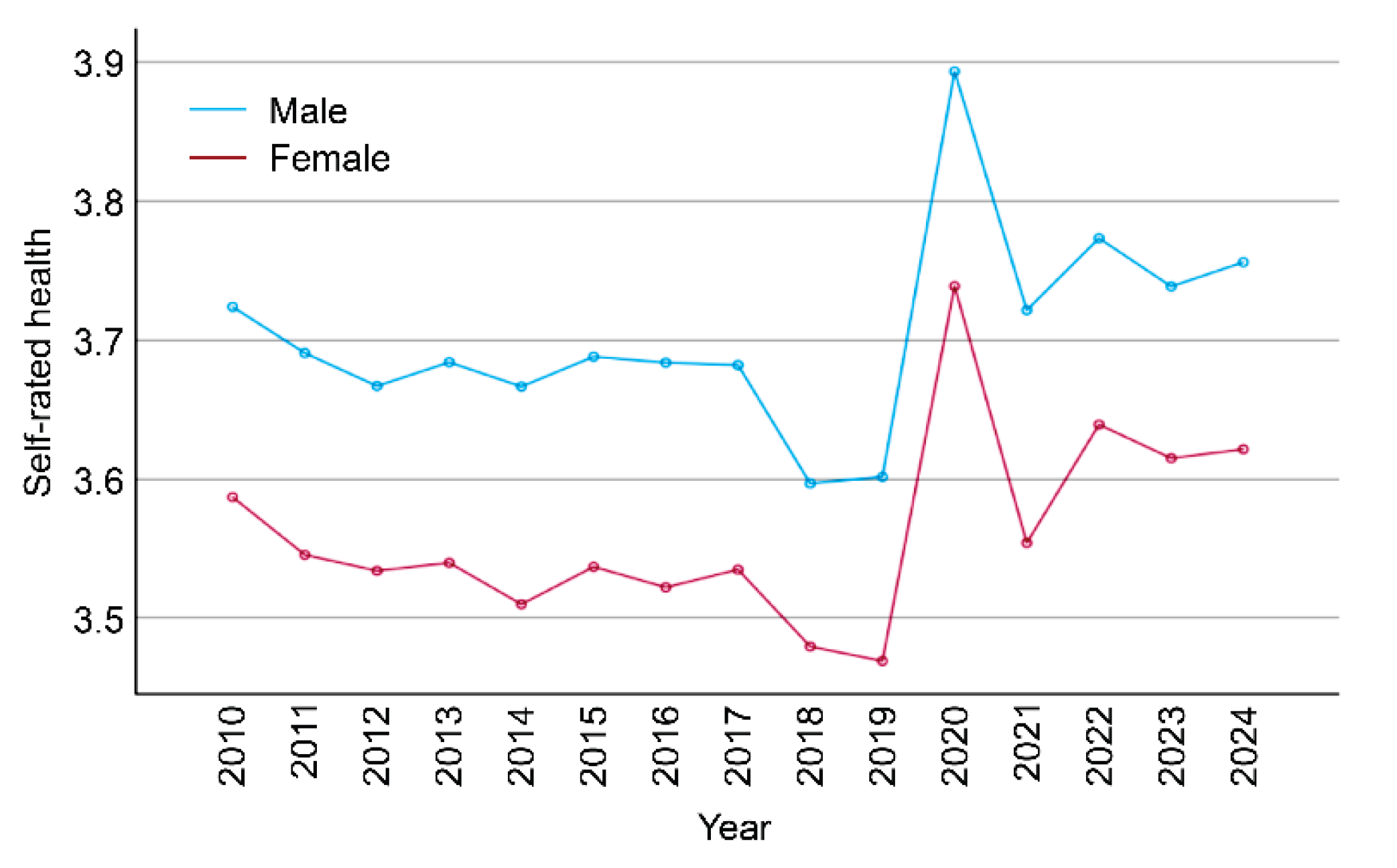
Table 1.
General characteristics of the participants.
| Year | Age group (years) | Sex (%) | Total | |
|---|---|---|---|---|
| male | Female | |||
| 2010 | 20–29 | 12,004 (18.2) | 13,807 (20.9) | 25,811 (39.1) |
| 30–39 | 18,952 (28.7) | 21,183 (32.1) | 40,135 (60.9) | |
| Total | 30,956 (46.9) | 34,990 (53.1) | 65,946 (100.0) | |
| 2011 | 20–29 | 10,702 (17.4) | 12,851 (20.9) | 23,553 (38.3) |
| 30–39 | 17,540 (28.5) | 20,478 (33.3) | 38,018 (61.7) | |
| Total | 28,242 (45.9) | 33,329 (54.1) | 61,571 (100.0) | |
| 2012 | 20–29 | 10,518 (17.7) | 12,296 (20.7) | 22,814 (38.4) |
| 30–39 | 16,782 (28.2) | 19,847 (33.4) | 36,629 (61.6) | |
| Total | 27,300 (45.9) | 32,143 (54.1) | 59,443 (100.0) | |
| 2013 | 20–29 | 10,201 (18.0) | 11,934 (21.1) | 22,135 (39.1) |
| 30–39 | 15,970 (28.2) | 18,501 (32.7) | 34,471 (60.9) | |
| Total | 26,171 (46.2) | 30,435 (53.8) | 56,606 (100.0) | |
| 2014 | 20–29 | 10,725 (18.7) | 12,163 (21.2) | 22,888 (39.9) |
| 30–39 | 16,229 (28.3) | 18,248 (31.8) | 34,477 (60.1) | |
| Total | 26,954 (47.0) | 30,411 (53.0) | 57,365 (100.0) | |
| 2015 | 20–29 | 10,361 (19.0) | 11,763 (21.6) | 22,124 (40.6) |
| 30–39 | 15,286 (28.0) | 17,174 (31.5) | 32,460 (59.4) | |
| Total | 25,647 (47.0) | 28,937 (53.0) | 54,584 (100.0) | |
| 2016 | 20–29 | 10,814 (20.0) | 11,978 (22.1) | 22,792 (42.1) |
| 30–39 | 14,779 (27.3) | 16,611 (30.7) | 31,390 (57.9) | |
| Total | 25,593 (47.2) | 28,589 (52.8) | 54,182 (100.0) | |
| 2017 | 20–29 | 10,340 (20.0) | 11,536 (22.3) | 21,876 (42.3) |
| 30–39 | 14,009 (27.1) | 15,878 (30.7) | 29,887 (57.7) | |
| Total | 24,349 (47.0) | 27,414 (53.0) | 51,763 (100.0) | |
| 2018 | 20–29 | 10,207 (20.7) | 10,971 (22.2) | 21,178 (42.9) |
| 30–39 | 13,276 (26.9) | 14,959 (30.3) | 28,235 (57.1) | |
| Total | 23,483 (47.5) | 25,930 (52.5) | 49,413 (100.0) | |
| 2019 | 20–29 | 10,183 (21.3) | 11,000 (23.0) | 21,183 (44.3) |
| 30–39 | 12,597 (26.3) | 14,115 (29.4) | 26,712 (55.7) | |
| Total | 22,780 (47.6) | 25,115 (52.4) | 47,895 (100.0) | |
| 2020 | 20–29 | 11,545 (23.6) | 12,104 (24.7) | 23,649 (48.3) |
| 30–39 | 12,146 (24.8) | 13,147 (26.9) | 25,293 (51.7) | |
| Total | 23,691 (48.4) | 25,251 (51.6) | 48,942 (100.0) | |
| 2021 | 20–29 | 11,050 (22.8) | 11,619 (24.0) | 22,669 (46.8) |
| 30–39 | 12,442 (25.7) | 13,291 (27.5) | 25,733 (53.2) | |
| Total | 23,492 (48.5) | 24,910 (51.5) | 48,402 (100.0) | |
| 2022 | 20–29 | 10,511 (22.9) | 10,619 (23.1) | 21,130 (46.0) |
| 30–39 | 12,235 (26.6) | 12,571 (27.4) | 24,806 (54.0) | |
| Total | 22,746 (49.5) | 23,190 (50.5) | 45,936 (100.0) | |
| 2023 | 20–29 | 9,884 (22.4) | 10,013 (22.6) | 19,897 (45.0) |
| 30–39 | 11,812 (26.7) | 12,527 (28.3) | 24,339 (55.0) | |
| Total | 21,696 (49.0) | 22,540 (51.0) | 44,236 (100.0) | |
| 2024 | 20–29 | 9,564 (21.9) | 9,831 (22.4) | 19,395 (44.3) |
| 30–39 | 11,943 (27.3) | 12,448 (28.4) | 24,391 (55.7) | |
| Total | 21,507 (49.1) | 22,279 (50.9) | 43,786 (100.0) | |
Data were subjected to frequency analysis.
Table 4.
Descriptive statistics of self-rated health.
| Year | Age group | Sex | M | SD | Skewness | Kurtosis |
|---|---|---|---|---|---|---|
| 2010 | 20–29 | male | 3.91 | 0.761 | -0.403 | 0.150 |
| female | 3.70 | 0.741 | -0.147 | -0.138 | ||
| 30–39 | male | 3.60 | 0.739 | -0.205 | 0.147 | |
| female | 3.51 | 0.708 | -0.118 | 0.148 | ||
| 2011 | 20–29 | male | 3.89 | 0.765 | -0.315 | -0.085 |
| female | 3.65 | 0.737 | -0.080 | -0.162 | ||
| 30–39 | male | 3.57 | 0.731 | -0.147 | 0.150 | |
| female | 3.48 | 0.707 | -0.093 | 0.141 | ||
| 2012 | 20–29 | male | 3.85 | 0.772 | -0.301 | -0.084 |
| female | 3.63 | 0.747 | -0.106 | 0.098 | ||
| 30–39 | male | 3.55 | 0.734 | -0.075 | 0.064 | |
| female | 3.47 | 0.702 | -0.006 | 0.072 | ||
| 2013 | 20–29 | male | 3.87 | 0.786 | -0.291 | -0.195 |
| female | 3.64 | 0.739 | -0.040 | -0.166 | ||
| 30–39 | male | 3.57 | 0.732 | -0.075 | 0.098 | |
| female | 3.48 | 0.714 | -0.018 | 0.160 | ||
| 2014 | 20–29 | male | 3.86 | 0.802 | -0.300 | -0.180 |
| female | 3.61 | 0.759 | -0.050 | -0.158 | ||
| 30–39 | male | 3.54 | 0.749 | -0.046 | 0.080 | |
| female | 3.44 | 0.713 | 0.040 | 0.191 | ||
| 2015 | 20–29 | male | 3.87 | 0.808 | -0.315 | -0.237 |
| female | 3.64 | 0.768 | -0.066 | -0.193 | ||
| 30–39 | male | 3.56 | 0.754 | -0.030 | 0.016 | |
| female | 3.47 | 0.722 | 0.058 | 0.068 | ||
| 2016 | 20–29 | male | 3.85 | 0.800 | -0.303 | -0.166 |
| female | 3.62 | 0.764 | -0.039 | -0.215 | ||
| 30–39 | male | 3.56 | 0.744 | -0.007 | -0.031 | |
| female | 3.45 | 0.716 | 0.008 | 0.164 | ||
| 2017 | 20–29 | male | 3.83 | 0.798 | -0.277 | -0.184 |
| female | 3.62 | 0.764 | -0.042 | -0.231 | ||
| 30–39 | male | 3.57 | 0.749 | -0.057 | -0.041 | |
| female | 3.48 | 0.711 | 0.031 | 0.092 | ||
| 2018 | 20–29 | male | 3.73 | 0.819 | -0.221 | -0.260 |
| female | 3.57 | 0.783 | 0.010 | -0.261 | ||
| 30–39 | male | 3.49 | 0.757 | 0.016 | 0.001 | |
| female | 3.42 | 0.730 | 0.071 | 0.065 | ||
| 2019 | 20–29 | male | 3.74 | 0.803 | -0.203 | -0.218 |
| female | 3.54 | 0.760 | -0.606 | -0.133 | ||
| 30–39 | male | 3.49 | 0.740 | 0.004 | -0.006 | |
| female | 3.41 | 0.718 | 0.044 | 0.139 | ||
| 2020 | 20–29 | male | 4.01 | 0.807 | -0.486 | -0.133 |
| female | 3.82 | 0.797 | -0.219 | -0.330 | ||
| 30–39 | male | 3.78 | 0.781 | -0.183 | -0.188 | |
| female | 3.67 | 0.760 | -0.079 | -0.183 | ||
| 2021 | 20–29 | male | 3.83 | 0.806 | -0.257 | -0.321 |
| female | 3.62 | 0.779 | -0.126 | -0.196 | ||
| 30–39 | male | 3.62 | 0.759 | -0.079 | -0.138 | |
| female | 3.50 | 0.755 | -0.088 | -0.009 | ||
| 2022 | 20–29 | male | 3.88 | 0.801 | -0.320 | -0.234 |
| female | 3.72 | 0.769 | -0.166 | -0.214 | ||
| 30–39 | male | 3.68 | 0.769 | -0.152 | -0.131 | |
| female | 3.57 | 0.735 | -0.114 | 0.038 | ||
| 2023 | 20–29 | male | 3.85 | 0.796 | -0.300 | -0.188 |
| female | 3.70 | 0.749 | -0.125 | -0.141 | ||
| 30–39 | male | 3.64 | 0.768 | -0.123 | -0.096 | |
| female | 3.55 | 0.730 | -0.103 | 0.022 | ||
| 2024 | 20–29 | male | 3.89 | 0.807 | -0.347 | -0.240 |
| female | 3.72 | 0.762 | -0.184 | -0.082 | ||
| 30–39 | male | 3.65 | 0.789 | -0.159 | -0.141 | |
| female | 3.54 | 0.747 | -0.125 | 0.020 |
Data were subjected to descriptive statistics.
Table 5.
Correlation analysis of year, age, and self-rated health.
| Variable | Year | Age | Self-Rated Health |
|---|---|---|---|
| Year | 1.000 | - | - |
| Age | - | 1.000 | - |
| Self-Rated Health | 0.032*** | -0.152*** | 1.000 |
*p<0.05, **p<0.01, ***p<0.001. Data were subjected to correlation analysis.
Table 6.
Correlation analysis of year, age, and self-rated health (Men).
| Variable | Year | Age | Self-Rated Health |
|---|---|---|---|
| Year | 1.000 | - | - |
| Age | - | 1.000 | - |
| Self-Rated Health | 0.029*** | -0.190*** | 1.000 |
*p<0.05, **p<0.01, ***p<0.001. Data were subjected to correlation analysis.
Table 7.
Correlation analysis of year, age, and self-rated health (Women).
| Variable | Year | Age | Self-Rated Health |
|---|---|---|---|
| Year | 1.000 | - | - |
| Age | - | 1.000 | - |
| Self-Rated Health | 0.032*** | -0.120*** | 1.000 |
*p<0.05, **p<0.01, ***p<0.001. Data were subjected to correlation analysis.
Table 8.
Differences in self-rated health by sex.
| Year | Sex | M | SD | MD | T |
|---|---|---|---|---|---|
| 2010 | male | 3.72 | 0.763 | 0.13 | 23.577*** |
| female | 3.59 | 0.727 | |||
| 2011 | male | 3.69 | 0.759 | 0.14 | 24.266*** |
| female | 3.55 | 0.723 | |||
| 2012 | male | 3.67 | 0.763 | 0.14 | 21.772*** |
| female | 3.53 | 0.724 | |||
| 2013 | male | 3.68 | 0.768 | 0.14 | 22.929*** |
| female | 3.54 | 0.728 | |||
| 2014 | male | 3.67 | 0.786 | 0.16 | 24.642*** |
| female | 3.51 | 0.736 | |||
| 2015 | male | 3.69 | 0.791 | 0.15 | 22.984*** |
| female | 3.54 | 0.746 | |||
| 2016 | male | 3.68 | 0.782 | 0.16 | 24.707*** |
| female | 3.52 | 0.741 | |||
| 2017 | male | 3.68 | 0.781 | 0.15 | 22.059*** |
| female | 3.53 | 0.737 | |||
| 2018 | male | 3.60 | 0.794 | 0.12 | 16.812*** |
| female | 3.48 | 0.757 | |||
| 2019 | male | 3.60 | 0.778 | 0.13 | 19.101*** |
| female | 3.47 | 0.740 | |||
| 2020 | male | 3.89 | 0.802 | 0.15 | 21.583*** |
| female | 3.74 | 0.781 | |||
| 2021 | male | 3.72 | 0.788 | 0.17 | 23.666*** |
| female | 3.55 | 0.769 | |||
| 2022 | male | 3.77 | 0.790 | 0.13 | 18.609*** |
| female | 3.64 | 0.755 | |||
| 2023 | male | 3.74 | 0.788 | 0.12 | 16.995*** |
| female | 3.62 | 0.742 | |||
| 2024 | male | 3.76 | 0.806 | 0.14 | 17.997*** |
| female | 3.62 | 0.759 |
*p < 0.05, **p < 0.01, ***p < 0.001. Data were analyzed using the independent t-test. M, mean; MD, mean difference; SD, standard deviation.
Table 9.
Differences in self-rated health by age group.
| Year | Age Group | M | SD | MD | T |
|---|---|---|---|---|---|
| 2010 | 20–29 | 3.80 | 0.758 | 0.25 | 41.909*** |
| 30–39 | 3.55 | 0.725 | |||
| 2011 | 20–29 | 3.76 | 0.759 | 0.24 | 38.121*** |
| 30–39 | 3.52 | 0.720 | |||
| 2012 | 20–29 | 3.73 | 0.766 | 0.22 | 36.341*** |
| 30–39 | 3.51 | 0.718 | |||
| 2013 | 20–29 | 3.74 | 0.770 | 0.22 | 34.758*** |
| 30–39 | 3.52 | 0.724 | |||
| 2014 | 20–29 | 3.73 | 0.789 | 0.24 | 36.740*** |
| 30–39 | 3.49 | 0.732 | |||
| 2015 | 20–29 | 3.75 | 0.796 | 0.24 | 35.100*** |
| 30–39 | 3.51 | 0.739 | |||
| 2016 | 20–29 | 3.73 | 0.791 | 0.23 | 33.988*** |
| 30–39 | 3.50 | 0.731 | |||
| 2017 | 20–29 | 3.72 | 0.788 | 0.20 | 29.264*** |
| 30–39 | 3.52 | 0.731 | |||
| 2018 | 20–29 | 3.65 | 0.805 | 0.20 | 28.137*** |
| 30–39 | 3.45 | 0.744 | |||
| 2019 | 20–29 | 3.64 | 0.787 | 0.19 | 26.904*** |
| 30–39 | 3.45 | 0.730 | |||
| 2020 | 20–29 | 3.91 | 0.808 | 0.19 | 26.727*** |
| 30–39 | 3.72 | 0.772 | |||
| 2021 | 20–29 | 3.72 | 0.799 | 0.16 | 23.217*** |
| 30–39 | 3.56 | 0.760 | |||
| 2022 | 20–29 | 3.80 | 0.789 | 0.18 | 24.706*** |
| 30–39 | 3.62 | 0.754 | |||
| 2023 | 20–29 | 3.77 | 0.776 | 0.17 | 24.320*** |
| 30–39 | 3.60 | 0.750 | |||
| 2024 | 20–29 | 3.81 | 0.789 | 0.22 | 28.852*** |
| 30–39 | 3.59 | 0.769 |
*p < 0.05, **p < 0.01, ***p < 0.001. Data were analyzed using the independent t-test. M, mean; MD, mean difference; SD, standard deviation.
Table 10.
Effects of sex and year on self-rated health.
| Source | SS | Df | MS | F |
|---|---|---|---|---|
| Year | 3355.300 | 14 | 239.664 | 413.300*** |
| Sex | 3954.929 | 1 | 3954.929 | 6820.258*** |
| Year × Sex | 34.876 | 14 | 2.491 | 4.296*** |
| Error | 458087.609 | 789970 | 0.580 |
*p<0.05, **p<0.01, ***p<0.001. Data were analyzed using two-way analysis of variance (ANOVA).
Table 11.
Estimated means of self-rated health by year.
| Sex | Year | M | SE |
|---|---|---|---|
| male | 2010 | 3.724e | 0.004 |
| 2011 | 3.691d | 0.005 | |
| 2012 | 3.667b | 0.005 | |
| 2013 | 3.684c | 0.005 | |
| 2014 | 3.667b | 0.005 | |
| 2015 | 3.688c | 0.005 | |
| 2016 | 3.684c | 0.005 | |
| 2017 | 3.682c | 0.005 | |
| 2018 | 3.597a | 0.005 | |
| 2019 | 3.602a | 0.005 | |
| 2020 | 3.893g | 0.005 | |
| 2021 | 3.722e | 0.005 | |
| 2022 | 3.773f | 0.005 | |
| 2023 | 3.739e | 0.005 | |
| 2024 | 3.756f | 0.005 | |
| female | 2010 | 3.587f | 0.004 |
| 2011 | 3.546e | 0.004 | |
| 2012 | 3.534d | 0.004 | |
| 2013 | 3.540d | 0.004 | |
| 2014 | 3.510b | 0.004 | |
| 2015 | 3.537d | 0.004 | |
| 2016 | 3.522c | 0.005 | |
| 2017 | 3.535d | 0.005 | |
| 2018 | 3.480a | 0.005 | |
| 2019 | 3.469a | 0.005 | |
| 2020 | 3.739h | 0.005 | |
| 2021 | 3.554e | 0.005 | |
| 2022 | 3.639g | 0.005 | |
| 2023 | 3.615g | 0.005 | |
| 2024 | 3.621g | 0.005 |
Bonferroni: a<b<c<d<e<f<g<h.
Disclaimer/Publisher’s Note: The statements, opinions and data contained in all publications are solely those of the individual author(s) and contributor(s) and not of MDPI and/or the editor(s). MDPI and/or the editor(s) disclaim responsibility for any injury to people or property resulting from any ideas, methods, instructions or products referred to in the content. |
© 2026 by the author. Licensee MDPI, Basel, Switzerland. This article is an open access article distributed under the terms and conditions of the Creative Commons Attribution (CC BY) license.
Copyright: This open access article is published under a Creative Commons CC BY 4.0 license, which permit the free download, distribution, and reuse, provided that the author and preprint are cited in any reuse.


