

Submitted:
07 April 2026
Posted:
09 April 2026
You are already at the latest version
Abstract
Kynurenine pathway (KP) of trytophan metabolism is emerging as a key regulator of immune response, neuroinflammation, and neurodegenration. Tryptophan derived metabolites influence multiple processes including excitotoxicty, oxidative stress, mitochondrial dysfunction, and protein aggregation which are underlying mechanisms in major neurological disorders. The dysregulation of the KP leads to an imbalance between neuroprotective metabolites such as kynurenic acid and neurotoxic metabolites including quinolinic acid and 3-hydroxykyrunine, contributing to neuronal dysfunction and disease progression. This imbalance is associated with chronic proteinopathies such as Alzeihmer‘s disease and Parkinson‘s disease, where persistent neuroinflammation and excitotoxicty sustain the activation of KP and subsequent neurodegenaration. Importantly, KP activation is not only limited to chronic conditions but also occurs in acute neurological insults such as heatstroke, where impaired thermoregulation contributes to systemic inflammatory responses, oxidative stress, and disruption of the blood-brain barrier. Consequently, this facilitates the influx of peripheral kyrunine into the brain and its conversion into neuroactive metabolites, linking peripheral immune activation and neuronal injury. These findings highlight KP as mechanistic bridge between acute and chronic neuropathological processes. In addition, the KP involvement in NAD⁺ production links immune activation and cellular energy metabolism, subsequently increasing neuronal vulnerability, particularly under stress. Emerging evidence further support the potential of KP metabolites as diagnostic biomarkers for disease progression and severity, as well as possible therapeutic targets. Targeting key enzymes within the KP may offer novel strategies to reduce neurotoxicity, and restore metabolic balance which subsequently improves clinical outcomes.
Keywords:
kynurenine pathway
; heat stroke
; neurodegeneration
1. Introduction
The kynurenine pathway (KP), initiated through the oxidative degradation of tryptophan, has been the subject of investigation since the early twentieth century. Metabolites of tryptophan (TRP) exert diverse biological effects, including the modulation of excitotoxic neurotransmission, oxidative stress, neurotransmitter transport, neuroinflammatory responses, protein aggregation, microtubule dynamics, and gut microbiota homeostasis. Beyond the central nervous system (CNS), the KP also contributes to allergic reactions, immune regulation, mitochondrial function, and cellular bioenergetics through its role in maintaining cellular redox balance. More recently, the KP has emerged as a critical regulator of both central and peripheral immune and inflammatory processes. Its metabolites can suppress the proliferation of intracellular pathogens, promote maternal immune tolerance, and regulate apoptosis, thereby influencing cell cycle progression [1]. Dysregulation of the KP is strongly associated with the development of neurological and neurodegenerative disorders. These shared mechanisms highlight the relevance of KP-related processes not only in chronic neurodegenerative diseases but also in acute syndromes, where rapid neuroinflammation and excitotoxic stress contribute to neuronal damage.
Proteinopathies, characterized by the abnormal aggregation of specific proteins in the brain, underlie the majority of neurodegenerative diseases. This group includes conditions such as Alzheimer’s disease (AD), Parkinson’s disease (PD), and amyotrophic lateral sclerosis (ALS). These disorders are typically associated with chronic neuroinflammation, involving activation of resident brain immune cells and infiltration of peripheral immune cells into the CNS [2]. Prolonged or chronic stimuli drive a sustained inflammatory state, leading to progressive neuronal damage [3]. Neuroinflammation is characterized by the release of a broad spectrum of cellular and molecular mediators, including pro-inflammatory cytokines, chemokines and complement components which contribute to immune activation. In the CNS, microglia and astrocytes serve as the primary source of pro-inflammatory molecules [4] such as interleukin-1β (IL-1β), interleukin-6 (IL-6), and tumor necrosis factor-α (TNF-α) [5].
Neuroinflammation is the immune-mediated inflammatory response that occurs following injury or exposure to pathological stimuli. CNS insults rapidly activate immune mechanisms, particularly through the recruitment and activation of resident glial cells. Acute neurological conditions, such as heatstroke, are accompanied by inflammatory responses and disruption of the blood–brain barrier (BBB) [6]. Heatstroke is characterized by a systemic inflammatory response involving elevated pro-inflammatory cytokines, which correlate with disease severity and contribute to multiorgan dysfunction [7]. These processes converge on shared pathological pathways, including mitochondrial dysfunction, inflammatory activation, and impairment of protein degradation systems. Notably, activation of the kynurenine pathway during heat stress further links metabolic and inflammatory responses to excitotoxicity and protein aggregation. Together, these overlapping mechanisms suggest that heatstroke may not only mimic key features of proteinopathies but also contribute to their initiation or progression under certain conditions.
Overall, the study of tryptophan metabolism and the mechanisms by which its metabolites regulate inflammation and neurodegeneration remains a highly promising field. It offers significant potential for the development of novel therapeutic strategies targeting neurodegenerative diseases, cognitive disorders, and acute neurological conditions such as heatstroke.
2. Tryptophan Metabolism
The essential amino acid L-tryptophan (TRP) is a precursor of many important biologically active molecules. The human body cannot synthesize TRP, so it must be obtained from the diet. However, some types of gut microorganisms, such as Enterococcus, Escherichia, Candida, or Streptococcus, are capable of expressing the enzyme tryptophan synthase, which serves as a catalyst in the biosynthesis of TRP from serine and indole-3-glycerol phosphate [8].
From a chemical perspective, the structure of TRP is based on an indole (a bicyclic ring composed of pyrrole and benzene), connected to the α-carbon by a single -CH2 group. The presence of the indole ring is responsible for the hydrophobic properties of TRP. In addition, it contains 11 carbon atoms, the highest among all amino acids.
After absorption, TRP is transformed into a series of small bioactive molecules, all of which influence numerous cellular metabolic pathways and physiological responses (regulation of immune, gut, endocrine, cardiovascular, and neurological functions). Changes in their concentrations are therefore often associated with various diseases and syndromes, including neurodegenerative disorders such as AD and PD [9].
In humans, up to 90% of TRP circulates in the blood in a free (unbound) form, while the remaining 10% is bound to albumin [10]. Most TRP undergoes various reactions (such as oxidation, hydroxylation, deamination, decarboxylation, or transamination), and it is catabolized/metabolized via three pathways: the kynurenine pathway (occurring mainly in the liver: 90%, and in the brain and gut: 10%), the serotonin pathway (occurring mainly in the gastrointestinal tract: 90%, and in the nervous system: 10%), and the indole pathway (mediated by gut microbes and occurring in the intestine). An illustration of these three TRP metabolic pathways is shown in Figure 1. The remaining absorbed TRP is used for protein synthesis [8].
TRP and its metabolites have emerged as potential biomarkers for the diagnosis and monitoring of both chronic neurodegenerative diseases, including AD and PD, and acute neurological syndromes such as heatstroke. In the context of heatstroke, alterations in TRP metabolism may reflect acute neuroinflammation, excitotoxic stress, and blood–brain barrier (BBB) dysfunction, providing insight into the severity of neuronal injury. Alterations in TRP metabolism reflect ongoing neuroinflammatory processes and excitotoxic stress, providing insight into disease severity and progression. Measurement of TRP and its metabolites in blood or CSF may help in early diagnosis and ongoing monitoring of neurodegenerative and neurological diseases.
2.1. Kynurenine Pathway
The kynurenine pathway (KP) is the dominant catabolic pathway of TRP [11]. Generally around 90–95% of absorbed TRP enters the KP and is transformed into the unstable N-formylkynurenine via indoleamine 2,3-dioxygenase (IDO1) or tryptophan 2,3-dioxygenase, which is subsequently converted into the aryl hydrocarbon receptor (AhR) ligand—KYN—in a reaction catalyzed by N-formylkynurenine formamidase [12]. KYN can then be metabolized either into KA (in astrocytes) via kynurenine aminotransferases or into 3-OH KYN (in microglia) via kynurenine monooxygenase (KMO). 3-OH KYN is further converted either into XA or into 3-OH AA, which can also be formed directly from KYN through AA. Through a series of enzymatic reactions, additional intermediates such as PA and QA are generated, with the final product of this pathway being NAD+, a molecule crucial for energy metabolism. This pathway is also linked to the production of NA, a precursor of NAD+ [13].
TRP is actively transported across the blood–brain barrier (BBB) via large neutral amino acid (LNAA) transporters, primarily LAT1 (L-type amino acid transporter 1). During inflammatory conditions, enhanced degradation of TRP through the KP increases the availability of peripheral kynurenine, which can also cross the BBB and enter the CNS. It has been estimated that up to 60% of brain KYN is derived from peripheral sources [14]. Under physiological conditions, LAT-1 transporter is nearly saturated; however, in AD, alterations in the TRP/LAT-1 ratio may influence TRP availability in the brain [15].
Because energy demands are significantly increased during neuroimmune responses, the KP represents a key regulatory mechanism of the immune system in the brain [16]. In addition to KYN, other TRP metabolites, such as KA, AA, and 3-OH AA, are endogenous ligands for AhR, which in turn regulates immune cell functions [17]. Intermediates of this pathway represent important molecules often associated not only with neurological disorders [10] and neurodegenerative diseases, such as Huntington’s disease [18], Parkinson’s disease [19] or AD [20], but also with cardiovascular diseases [21] and cancer [22].
Some metabolites generated in the KP are neuroactive, in part through their effects on N-methyl-D-aspartate (NMDA) receptor signaling. For example, KA (an NMDA antagonist) and PA are neuroprotective molecules, whereas QA (an NMDA agonist), 3-OH AA, and 3-OH KYN are neurotoxic [23]. Neuropathy is accompanied by elevated QA levels, suggesting that QA plays a significant role in neurological diseases. In addition to QA, increased peripheral plasma levels of KYN, 3-OH AA, XA, and TRP have been observed in AD compared to healthy controls. Moreover, plasma levels of PA and KYN indirectly correlate with phosphorylated tau levels in CSF [24]. Changes in TRP metabolism have been shown to have various effects on the potential neurotoxicity of Aβ and α-synuclein or tau protein aggregates [25]. Metabolic disturbances in the KP can be reflected by an increased KYN/TRP ratio, which may also indicate a higher risk of CNS disorders, suggesting that this ratio could serve as a useful biomarker [20].
2.2. Serotonin Pathway
A small portion (approximately 5% of TRP) enters the serotonin pathway (SP), where it is first converted into 5-OH TRP, which is then transformed into the neurotransmitter 5-HT (serotonin) [13]. These reactions are catalyzed by tryptophan hydroxylase and 5-hydroxytryptophan decarboxylase. Acetylation of 5-HT catalyzed by arylalkylamine N-acetyltransferase produces N-acetylserotonin (NAS), which is a precursor of melatonin (MEL, the main endogenous regulator of circadian rhythms). The final metabolite in this part of the SP is AFMK, which can be formed either enzymatically or via MEL oxidation [26].
5-HT can also be catabolized into FHKA by IDO1, into MES by indolethylamine N-methyltransferase, or by monoamine oxidase into HIAa, which is subsequently converted by aldehyde dehydrogenase into the major metabolite 5-OH IAA [17]. 5-OH IAA is associated with dementia with Lewy bodies (DLB) and AD [27]. It has been shown that 5-OH IAA, together with homovanillic acid (a dopamine metabolite), may serve as potential biomarkers to distinguish DLB from AD [27].
Alongside other neurotransmitter systems (cholinergic, dopaminergic), the serotonergic system is also involved in AD progression. In AD, not only is a decrease in 5-HT receptors observed in various brain regions (cortex and hippocampus), but also a reduction in 5-HT and 5-OH IAA levels. Therefore, therapies based on selective serotonin reuptake inhibitors have proven effective in this pathway. These drugs increase 5-HT concentrations in the CSF and improve cognitive function and memory in patients with AD [28].
2.3. Indole Pathway
This route of TRP degradation is primarily mediated by gut microorganisms, which produce indole-based metabolites through the indole pathway (IP) [29]. Examples of such indole metabolites include IPA, I3AA, and I3LA. These metabolites can cross the BBB into the brain. They act as AhR ligands with neuroprotective properties and participate in the modulation and regulation of various processes (e.g., modulation of the inflammatory response, regulation of CNS inflammation) [30].
In addition, these indoles may provide protection against oxidative stress, which is associated with AD. For example, IPA has antioxidant effects and can reduce Aβ aggregation. Not only IPA but also other metabolites such as TRM, I3AA, and I3LA may potentially inhibit Aβ aggregation and slow AD progression. Neuroprotective effects have also been demonstrated for I3AA, which activates AhR in microglia and astrocytes, leading to reduced neuroinflammation in AD. Serum and CSF levels of I3AA were lower in AD patients compared to non-AD individuals. Despite these findings, further research is needed on the impact of IP metabolites on AD progression [31,32].
TRP and its metabolites have emerged as potential biomarkers for the diagnosis and monitoring of neurodegenerative disease progression, including AD and PD. Alterations in TRP metabolism, particularly along the KP, reflect ongoing neuroinflammatory processes and excitotoxic stress, providing insight into disease severity and progression. Measurement of TRP and its metabolites in blood or CSF may help in early diagnosis and ongoing monitoring of neurodegenerative diseases.
3. The Neuromodulatory Roles of Kynurenines
Acute or chronic stress, infections, inflammatory responses, and the accumulation of toxins disrupt homeostasis in the KP, leading to dysregulation of the pathway and altered production of neuroactive metabolites [33,34]. Nevertheless, the factors that determine whether brain kynurenine metabolism shifts toward neuroprotective or excitotoxic metabolites remain poorly understood.
Pro-inflammatory cytokines play a key role in regulating the activity of indoleamine 2,3-dioxygenase (IDO), leading to its activation and a subsequent shift in TRP metabolism toward the KP. IDO expression is induced by pro-inflammatory cytokines, including IL-1β, IL-6, and TNF-α; chemokine ligands such as C-C motif chemokine ligand 1 and 5 (CCL1 and CCL5); and small signaling molecules, including prostaglandins, nitric oxide (NO), and reactive oxygen species (ROS) [35,36]. The production of ROS, increased TNF-α, and cytokine secretion further promote interferon-gamma (IFN-γ) production, which in turn stimulates IDO activity in astrocytes, microglia, and other inflammatory cells [37]. Activation of IDO results in decreased TRP availability and increased levels of tryptophan catabolites [38]. The KP generates several neuroactive and potentially neurotoxic metabolites, including QA, XA, 3-HAA, 3-HK, and PA. These metabolites exhibit pro-oxidant properties, contributing to the generation of reactive oxygen and nitrogen species, such as superoxide radicals and peroxides, and may also promote copper-dependent protein cross-linking, ultimately leading to cellular damage [39,40].
The neuroactive effects of kynurenine metabolites are mediated primarily by two mechanisms: modulation of cellular receptor activity and regulation of redox processes within neurons and glial cells. Kynurenine 3-monooxygenase (KMO) is a key enzyme in the KP and a major determinant of tryptophan metabolism. Pharmacological inhibition of KMO does not significantly alter brain QA levels, and even complete genetic deletion reduces QA in the brain by only ~20% [41]. Nonetheless, KMO inhibition using JM6 reversed spatial memory deficits and anxiety-like behaviors in mice [42], and in a mouse model of AD, KMO inhibition prevented synapse loss and improved spatial memory. Similarly, downregulation of KMO expression alleviated pathological phenotypes in a Drosophila model, including motor deficits and other neurodegenerative changes [43].
These findings highlight how alterations in KMO activity shift the balance of downstream kynurenine metabolites, such as KYNA, 3-HK, and QA, toward either neuroprotective or excitotoxic route. Understanding how the KP flux is regulated under physiological and pathological conditions is therefore critical for identifying therapeutic strategies to mitigate excitotoxicity while enhancing neuroprotection.
3.1. Quinolinic Acid
QA exerts neurotoxic effects and contributes to neuronal and glial dysfunction through multiple, interconnected mechanisms. Notably, QA acts as an agonist of NMDA receptors containing NR2A and NR2B subunits promoting Ca2+ influx, activation of proteases, and the generation of ROS and nitrogen species, including superoxide (O2−) and NO, which contribute to neurotoxicity [44]. In addition, QA can chelate Fe2+ ions, leading to lipid peroxidation [45,46]. Furthermore, QA disrupts actin cytoskeleton dynamics in neurons and astrocytes, impairing intracellular protein transport necessary for maintaining synaptic homeostasis [47].
Beyond its direct excitotoxic action as an NMDA receptor agonist on neurons, QA activates glial cells and increases the production of chemokines such as monocyte chemoattractant protein-1 (MCP-1), as well as the expression of corresponding chemokine receptors, in a manner similar to pro-inflammatory cytokines including TNF-α, IL-1, and IFN-γ [48]. Excessive QA also contribute indirectly to pathological post-translational modifications of tau protein by altering gene expression and reducing the activity of serine/threonine phosphatases in primary cultures of human neurons [49]. In human neurons and astrocytes, QA enhances the activity of inducible nitric oxide synthase (iNOS) and neuronal nitric oxide synthase (nNOS), resulting in cytotoxic and excitotoxic effects and triggering an energy crisis through NAD+ depletion. The NAD+ depletion activates the NAD+-dependent nuclear DNA repair enzyme poly(ADP-ribose) polymerase-1 (PARP-1), which, while attempting to restore energy homeostasis, can exacerbate cytotoxic damage when overactivated due to impaired energy levels and oxidative stress. Importantly, inhibition of iNOS and nNOS prevents these effects, highlighting the central role of NO in QA-mediated excitotoxicity [50].
In addition to activating NMDA receptors, QA stimulates the expression of several immunologically active and pro-inflammatory cytokines, including interleukin-8 (IL-8), CCL5, and macrophage inflammatory protein-1 (MIP-1), as well as multiple C-C and C-X-C chemokine receptors, such as CCR3, CCR5, CXCR4, and CXCR6 [51]. These chemokines promote leukocyte recruitment across the BBB. In parallel, QA enhances glial cell proliferation while continuing to stimulate NMDA receptors, further contributing to neuroinflammatory and excitotoxic processes [52].
3.2. Kynurenic Acid
KYNA acts as an NMDA receptor antagonist and can protect neurons against QA-induced excitotoxicity. In the brain, KYNA is synthesized de novo in astrocytes by KAT II following uptake of kynurenine via the LAT-1 [53]. In addition to KAT-mediated synthesis, KYNA can be produced via alternative mechanisms, including conversion of D-kynurenine by D-amino acid oxidase and non-enzymatic reactions involving ROS [54].
KYNA exerts diverse neuromodulatory effects, influencing glutamatergic, cholinergic, GABAergic, and dopaminergic neurotransmission [55].
At low concentrations, it prevents excitotoxic neuronal damage, although the exact CNS levels required for neuroprotection remain unclear. Dysregulation of kynurenine 3-monooxygenase activity can lead to significantly elevated KYNA levels, as observed in patients with AD compared to controls [56].
KYNA also modulates oxidative stress by attenuating activation of nuclear factor erythroid 2-related factor 2 (Nrf2), a key regulator of cellular antioxidant defense, thereby reducing the impact of ROS, lipid peroxidation, protein damage, and mitochondrial respiratory dysfunction induced by QA [57].
Although generally considered neuroprotective, excessive accumulation of KYNA above physiological levels can impair glutamatergic signaling and contribute to cognitive decline [58]. This is partly due to its antagonistic action on α7-nicotinic acetylcholine receptors (α7nACh-R) and its regulatory effects on other acetylcholine receptor subtypes. Moreover, KYNA functions as an agonist of the AhR and the G-protein-coupled receptor GPR35, mobilizing intracellular calcium (Ca2+) and stimulating inositol phosphate production [59].
3.3. 3-Hydroxykynurenine
3-hydroxykynurenine, exhibits both antioxidant and pro-oxidant properties depending on its concentration. Lower concentrations are associated with strong pro-oxidant activity and neurotoxicity [60], whereas higher concentrations confer resistance to oxidative stress [61]. 3-HK can stimulate glutathione transferase, superoxide dismutase, and Nrf2, which are critical for antioxidant regulation. Therefore, changes in 3-HK concentration can modulate antioxidant systems and activate cellular redox sensors during inflammation. The generation of free radicals also enhances excitotoxic effects during the combined action of 3-HK and QA.
3.4. Xanthurenic and Picolinic Acid
The roles of XA and PA are less well characterized, though they exhibit antioxidant and immunomodulatory effects via agonistic interactions with metabotropic glutamate receptors (mGluR2 and mGluR3). XA is produced through the transamination of 3-HK catalyzed by KAT II and has recently been shown to possess neurotransmitter activity in the nervous system [62].
PA promotes macrophage activation by upregulating IFN-dependent nitric oxide synthase and inducing MIP-1 expression. Intracranial, but not subcutaneous, administration of PA lowers seizure thresholds in mice, although the precise mechanism remains unclear [63]. PA can modulate glutamatergic neurotransmission depending on its concentration and the presence of other agonists such as kainates [64], and may exert anti-inflammatory and neuroprotective effects relevant to neuroinflammatory and neurodegenerative conditions.
4. Proteinopathies
A relatively large group of neurodegenerative diseases consists of proteinopathies including tauopathies, synucleinopathies, and amyloidoses [65].
Proteinopathies represent a group of disorders associated with conformational changes in proteins. As a result of these conformational changes (misfolding of proteins), their function is altered, often leading to the formation of oligomers that can subsequently aggregate into pathological structures. A very important fact is that aggregated forms of misfolded proteins have the ability to induce the conversion of correctly folded proteins [66]. The individual stages of proper and improper protein folding are illustrated in Figure 2.
Proteins most commonly fold in the cytoplasm; however, this process can also occur in mitochondria or the endoplasmic reticulum, which contains molecular chaperones. When intracellular proteins fail to fold efficiently, the cell activates the so-called “protein quality control system,” which can induce either refolding of the proteins or their degradation via molecular chaperones and proteasomes. If an imbalance occurs between correctly and misfolded proteins, misfolded proteins can aggregate, forming structures that are implicated in various human diseases [67].
The accumulation of misfolded proteins occurs either intracellularly (e.g., tau protein, α-synuclein) or extracellularly (e.g., amyloid-β) and can take on various histopathological forms. They may result from increased translation of specific mediator ribonucleic acids (mRNAs), transcriptional activation, or reduced protein degradation rates due to impairment of the proteasomal or lysosomal pathways [68].
4.1. Tauopathies
Tauopathies represent a biochemically and morphologically heterogeneous group of neurodegenerative diseases. A characteristic feature of this group is the deposition—the formation of insoluble aggregates of abnormal (hyperphosphorylated) tau protein in the brain, primarily in neurons, glial cells, and the extracellular space. Tau protein, associated with microtubules (microtubule-associated protein tau; MAPT), binds to tubulin and promotes its polymerization and stabilization into microtubules [69].
Since tau protein was originally identified as a microtubule-associated protein, it is assumed that neurodegeneration results from the loss of tau’s ability to bind microtubules, which may occur due to hyperphosphorylation. Hyperphosphorylation is mediated by activated kinases capable of transferring phosphate groups to tau protein. Phosphorylated tau detaches from microtubules, aggregates, and forms neurofibrillary tangles (NFTs). Destabilized microtubules lose their signaling functions, which in some cases may lead to apoptosis [70].
Currently, more than 26 tauopathies are known [71], and several classification schemes exist. In diseases where tau protein accumulation is the primary feature, these are referred to as primary tauopathies. Conversely, in conditions such as trauma or autoimmune disorders, where tau accumulation plays a secondary role, these are called secondary tauopathies [72].
Another classification is based on the predominant tau isoforms present in aggregates: 3R tauopathies, 4R tauopathies, and 3R/4R tauopathies (with roughly equal 3R/4R ratios). A distinct group of tauopathies is known as “geographically isolated tauopathies,” which include, for example, nodding syndrome of northern Uganda, Guadeloupean parkinsonism, amyotrophic lateral sclerosis in the western Pacific, and the Parkinsonism-dementia complex. The etiopathogenesis of these disorders is not yet fully understood, although multiple studies have highlighted the influence of environmental factors [73].
4.2. Amyloidoses
The origin of this group of diseases is the amyloid precursor protein (APP), which is encoded by a gene located on chromosome 21 [74]. APP is a transmembrane protein with three domains: intracellular, membrane-bound, and extracellular. It is synthesized in the endoplasmic reticulum and subsequently transported to the Golgi apparatus, where it matures before being delivered to the plasma membrane [75].
Under normal conditions, APP can be cleaved via two pathways: non-amyloidogenic and amyloidogenic. In the first pathway, APP is processed by α-secretase to generate a soluble fragment (sAPPα), which remains in the extracellular space, and an 83-amino-acid C-terminal fragment, which remains in the membrane. Subsequent cleavage by γ-secretase produces the non-amyloidogenic extracellular fragment (p3) and the APP intracellular domain (AICD).
In the second pathway, APP is cleaved by β- and γ-secretases. In the first step, β-secretase generates a C-terminal fragment, which is then cleaved by γ-secretase in the second step to produce an insoluble peptide known as amyloid-β (Aβ). Aβ aggregates and forms Aβ plaques [76]. The major final forms of Aβ are 38 amino acids (Aβ-38), 40 amino acids (Aβ-40), and 42 amino acids (Aβ-42) [77], with Aβ42 considered the most neurotoxic [78].
Neuronal damage occurs when an immune response is triggered, leading to inflammation. Additionally, deposition of Aβ plaques on blood vessels can result in angiopathy. The inflammatory response induced by Aβ and disruption of the BBB leads to the release of pro-inflammatory cytokines and chemokines. The cytokines secreted by brain immune cells can attract blood-derived immune cells that can infiltrate the brain due to increased permeability of the BBB [79].
All three of these processes occur extracellularly, in contrast to tau pathology, which occurs intracellularly. The combination of these two pathological processes leads to the most well-known and prevalent amyloidosis: Alzheimer’s disease.
4.3. Synucleinopathies
Synucleinopathies are a group of progressive neurodegenerative disorders characterized by the abnormal accumulation of misfolded α-synuclein protein, leading to neuronal death. Major types include Parkinson’s disease, Dementia with Lewy bodies (DLB), and Multiple system atrophy (MSA), which cause motor, cognitive, and autonomic dysfunction. Clinically, they are characterized by a chronic and progressive decline in motor, cognitive, behavioural, and autonomic functions, depending on the distribution of the lesions. In PD and DLB, the protein is primarily found in Lewy bodies (LBs) within neurons, whereas in MSA, it is predominantly observed in glial cytoplasmic inclusions (GCIs) [80]. Neuron-derived α-synuclein activates microglia. It was shown that α-synuclein inclusions trigger microglial activation with increased expression of inflammation-related genes. Different α-synuclein conformations induce distinct inflammatory responses, including cytokine and chemokine production via TLR signaling [81].
5. Changes of the Kynurenine Pathway in Selected Neurological Conditions
5.1. Parkinson’s Disease
Parkinson’s disease is a neurodegenerative disorder characterized by the loss of dopaminergic neurons in the substantia nigra pars compacta (SNpc) and the accumulation of misfolded α-synuclein in Lewy bodies throughout the brainstem and other regions. Striatal dopamine loss drives both the classic motor symptoms and non-motor features of PD, with non-motor signs often appearing before motor symptoms [82]. The motor features include resting tremor, limb rigidity, bradykinesia, and postural and gait instability.
The pathogenesis of PD is associated with disruptions in the ubiquitin-proteasome pathway, mitochondrial dysfunction, oxidative stress, and apoptosis [83].
The first evidence associating the KP in PD pathogenesis came from studies using 1-methyl-4-phenyl-1,2,3,6-tetrahydropyridine (MPTP). This lipophilic compound, initially identified in 1983 as a contaminant in street heroin, rapidly induced PD in young users. [84]. It selectively induces nigral degeneration and PD-like behavior in rodents and primates, making it a valuable research tool [85]. MPTP toxicity arises from glial conversion to pyridinium metabolite (MPP+), which inhibits neuronal mitochondrial respiratory chain and generates free radicals [86]. In vivo studies demonstrated that MPTP reduces KYNA synthesis and decreases the density of KAT I–positive neurons in the substantia nigra of mice, representing a chronic change associated with persistent dopaminergic degeneration [87] However, KYNA pretreatment protects neurons and preserving mitochondrial function in cells exposed to MPP+ [88].
Moreover, disruptions in glutamate signaling, as shown in various animal models, can reduce the neuroprotective metabolite KYNA and contribute to PD development. Supporting this, in rodent 6-OHDA models of PD, treatment with L-KYN and probenecid elevates KYNA and dopamine levels, decreases glial activation and neuronal degeneration, and improves motor function, likely by preventing glutamate-induced excitotoxicity through NMDA receptor inhibition [89,90].
Excitotoxicity, oxidative stress, and inflammatory changes disrupt the KP, promoting the activation of its excitotoxic branches. This results in a significant decrease in the neuroprotective metabolite KYNA and an increase in the neurotoxic metabolite QA, which further exacerbates excitotoxicity and inflammatory response, contributing to the onset and progression of PD [91]. Low endogenous KYNA levels directly impair the brain’s capacity to protect against QA- and glutamate-induced excitotoxicity through NMDA receptors [92]. The pathway also enhances the production of 3-HK, a strong inducer of neurotoxic free radicals, which play a important role in PD pathogenesis. It was shown that high concentration of 3-HK can cause cell death by producing free radicals in PD [93].
Alterations in KP metabolites have been detected in the brain tissue, plasma, and CSF of patients with PD. Compared to healthy controls, these patients exhibit a reduced KYNA/KYN ratio, elevated levels of QA and an increased QA/KYNA ratio. Overall, metabolomic studies indicate a shift in the kynurenine pathway toward enhanced production of the neurotoxic metabolite QA and reduced synthesis of the neuroprotective metabolite KYNA [94].
Postmortem studies reported significanty decreased KYNA and KYN levels in frontal cortex, putamen, cerebellum and substantia nigra, while the concentration of the neurotoxin 3-HK in the striatum and SNpc was significantly increased and without change in TRP/KYN and KYN/KYNA ratios, in the brains of PD patients [95].
The disturbances of KYN pathway metabolites were measured as potential biomarkers in plasma as well as CSF [96,97]. An increase in KYN/TRP ratio, depletion of plasma TRP level, and increase in KYN and KYNA were reported in serum samples of PD patients [98]. Increase in serum KYNA was also observed among patients without dyskinesia, but not in dyskinetic PD patients [96]. In contrast, the deficiency of KYNA was revealed in a metabolomic study performed on a larger cohort of PD patients. Findings included lower plasma KYNA/KYN ratio, higher QA level, and increased QA/KYNA ratio. PD subjects had increased levels of 3-HK and decreased amounts of 3-HAA acid in plasma [99].
In PD patients was found increased neuroexcitatory QA/KYNA ratio in both plasma and CSF of PD participants associated with peripheral and inflammation and vitamin B6 deficiency [94]. Similarly, lower KYNA, higher QA, and an elevated QA/PA ratio in CSF, as well as high 3-HK in plasma, were detected. Furthermore, elevated QA levels were associated with CSF tau, soluble TREM2 (sTREM2), and the severity of both motor and non-motor symptoms in PD. In addition, patient subgroups characterized by distinct KP profiles exhibited differences in clinical manifestations of the disease.
Also the treament may affect tryptophan metabolism via the KP. Altered levels of kynurenine metabolites can affect glutamatergic transmission and may play a role in the development of L-DOPA-induced dyskinesia [97]. Compared to patients with healthy controls, individuals with PD exhibit a lower KYNA/KYN ratio, along with higher QA levels and an increased QA/KYNA ratio. Moreover, patients at an advanced stage of PD show further reductions in KYNA and the KYNA/KYN ratio, as well as elevations in QA levels and the QA/KYNA ratio, relative to those at an early stage and to healthy controls. In contrast, within advanced PD, KYNA and QA levels, as well as the KYNA/KYN and QA/KYNA ratios, do not differ significantly between patients with and without psychiatric symptoms, dementia, or levodopa-induced dyskinesia [99].
The most pronounced statistically significant differences between the PD and control groups were identified for KYN levels in CSF, as well as for 3-HK and 5-HT in blood serum. These findings enabled the identification of distinct correlation patterns between CSF and serum metabolites, which may serve as a basis for the differential diagnosis of synucleinopathies [25].
KYNA analogues have been shown to suppress glutamatergic activity while also modulating NMDA receptor function, highlighting their therapeutic potential in PD. Improvement in motor symptoms has been observed in PD patients treated with zonisamide, a sulfonamide antiepileptic drug, although its precise mechanism of action remains unclear. Notably, zonisamide has been reported to enhance astroglial release of KP metabolites, including KYNA, providing further evidence for the involvement of KYNA in PD therapy [100]. The neuroimmunophilin ligand FK506 is used as an immunosuppressive agent in PD treatment. In addition to increasing KYNA production in the cortex, FK506 attenuates KYNA inhibition induced by 3-nitropropionic acid and MPP+ [101]. Studies indicate that treatment with this ligand can promote the survival of dopaminergic neurons in a dose-dependent manner. Furthermore, FK506 significantly reduces the infiltration and activation of cytotoxic T cells, as well as various subtypes of macrophages and microglia [102]. These findings suggest that FK506 possesses anti-inflammatory properties and contributes to the reduction of neurodegeneration [103].
5.2. Alzheimer’s Disease
AD is currently the most prevalent cause of dementia worldwide. AD pathology is characterized by the presence of amyloid-β plaques and neurofibrillary tangles in the brains of affected individuals. Despite extensive research, the underlying mechanisms of AD pathology remain incompletely understood.
Alterations in the KP in AD arise from a complex interplay of inflammatory, metabolic, and neurodegenerative processes. A major driver is chronic neuroinflammation, where activated microglia and astrocytes release pro-inflammatory cytokines such as IL-1β, IL-6, TNF-α, and IFN-γ, which induce IDO1 and shift TRP metabolism toward KYN production [40,104]. This is further exacerbated by amyloid-β accumulation and tau pathology, which amplify inflammatory signaling and create a feed-forward loop promoting KP activation [105,106]. Dysregulation of key enzymes, including increased IDO1, tryptophan 2,3-dioxygenase (TDO), and KMO, drives metabolism toward neurotoxic metabolites such as 3-HK and QA, while potentially reducing the formation of the neuroprotective KYNA. Oxidative stress and mitochondrial dysfunction further modulate KP activity and contribute to redox imbalance and impaired energy metabolism. Aging also plays a significant role, as it is associated with increased baseline inflammation and enhanced KP activation [107]. In addition, peripheral immune activation and systemic conditions such as obesity or insulin resistance elevate circulating KYN levels, which can cross the BBB and influence central metabolism, particularly in the context of BBB disruption commonly observed in AD [108]. Altered TRP availability and competition with other large neutral amino acids, as well as gut microbiota dysbiosis, further modulate KP dynamics [109,110]. Together, these factors lead to an imbalance between neuroprotective and neurotoxic kynurenine metabolites, contributing to excitotoxicity, neuroinflammation, synaptic dysfunction, and ultimately cognitive decline in AD.
Alterations in the KP in Alzheimer’s disease remain complex, heterogeneous, and not entirely consistent across studies. Nevertheless, both peripheral and central levels of KP metabolites have been associated with disease severity and cognitive decline. Specifically, KYN (plasma, serum, and CSF), KYNA (serum, urine, CSF), TRP (plasma, serum, urine), the KYN/TRP ratio (plasma, serum, urine, CSF), and QA (plasma, CSF) have all been reported to correlate with cognitive impairment. Notably, positive correlations have been observed between cognitive performance and KYNA levels, whereas QA shows inverse associations, supporting the concept of a neuroprotective–neurotoxic balance within the KP. In contrast, some metabolites such as KYN, 3-HK, and AA exhibit only modest or non-significant changes [111].
A recent meta-analysis further highlighted compartment-specific alterations, showing decreased TRP levels exclusively in peripheral blood and an increased KYN/TRP ratio only in the periphery of AD patients. In the CSF, 3-HK levels were reduced and displayed greater variability in cognitively normal individuals compared to AD patients, KYNA was also decreased peripherally. Interestingly, no consistent differences were observed for KYN or QA between AD and control groups [112]. These findings suggest that KP dysregulation in AD may differ between central and peripheral compartments, reflecting complex regulatory mechanisms.
Consistent with this, analyses of peripheral blood from AD patients revealed dysregulated levels of multiple KP metabolites, including KYN, 3-HK, KYNA, and QA, further implicating KP imbalance in AD pathophysiology. Moreover, studies measuring TRP, KYN, QA, and the KYN/TRP ratio in both plasma and CSF demonstrated significant correlations with core AD biomarkers such as amyloid-β and tau, linking KP metabolism directly to neurodegenerative processes [113]. In addition, clinical studies across cognitively normal, mild cognitive impairment, and AD populations have shown that an increased KYN/TRP ratio correlates with pro-inflammatory cytokines (IL-1ra, IL-12p40, IL-18) and memory performance, whereas an elevated KYN/5-HT ratio is associated with broader neuropsychiatric disturbances, including negative affect, executive dysfunction, and global cognitive decline [114].
Metabolomic analyses provide further support, demonstrating significantly reduced serum TRP, KYN, and XA levels in AD patients, with XA positively correlating with cognitive scores such as the Mini-Mental State Examination (MMSE), reinforcing the link between KP metabolites and cognitive status [115]. However, findings regarding KYNA remain inconsistent. While decreased brain KYNA levels have been reported in transgenic AD mouse models, human studies show conflicting results, with some reporting increased, unchanged, or even decreased KYNA levels depending on the brain region and biological matrix examined. For example, postmortem analyses revealed region-specific alterations, with elevated KYNA in the putamen and caudate nucleus but not in cortical areas [116], whereas other studies reported reduced KYNA levels in AD brain tissue.
Age-related changes in KP metabolism may further contribute to these discrepancies. Aging itself has been associated with increased levels of KYN, KYNA, and QA in both serum and CSF, independent of disease status. Interestingly, although KYNA concentrations were found to be reduced in the CSF of AD patients, estimates of KYN transport into the brain did not differ between patients and controls. Additionally, serum KYN levels negatively correlated with AD severity, while strong correlations were observed between peripheral and central concentrations of KYN and QA, suggesting systemic contributions to central KP alterations [117].
Overall, these findings support a significant, yet complex involvement of the KP in AD pathogenesis, highlighting both neurotoxic and neuroprotective mechanisms. This dual role makes the KP an attractive target for therapeutic intervention. Accordingly, various strategies have been explored to either enhance endogenous KYNA levels or reduce the production of neurotoxic metabolites such as QA. In animal models of AD, such approaches have shown promise in slowing disease progression [118]. To overcome the limited stability and bioavailability of endogenous metabolites, several KYNA and L-KYN analogues have been developed, including 7-chlorokynurenic acid (7-Cl-KYNA), L-4-chlorokynurenine (4-Cl-L-KYN), and other derivatives designed to improve pharmacokinetic properties [119]. Notably, 4-Cl-L-KYN can cross the blood–brain barrier and inhibit QA-mediated toxicity at the glycine site of NMDA receptors [120]. Furthermore, recent experimental work demonstrated that chronic administration of the KYNA analogue KYNA-1 modulates tau pathology and reduces neuroinflammation in a rat model of tauopathy [118].
Taken together, the growing body of evidence suggests that KP dysregulation is intricately linked to neuroinflammation, metabolic imbalance, and neurodegeneration in AD, and may represent a promising avenue for the development of novel diagnostic biomarkers and therapeutic strategies.
5.3. Heatstroke
Heatstroke is a life threatening condition characterised by the elevation of core body temperature above 40° celsius with the manifestation of central nervous system (CNS) disorder [121]. It represents the most severe form of heat-related illnesses (HRI) and is associated with systemic inflammation, oxidative stress, and metabolic dysregulation. Emerging evidence suggests that the kynurenine pathway (KP), the primary route of tryptophan degradation plays a significant role in mediating these pathophysiological processes [122].
Physical exertion or exposure to elevated temperatures leads to an increase in metabolic rate and elevation in core body temperature, failure of the body’s thermoregulatory mechanisms leads to systemic inflammatory response syndrome and multiple organ failure [123]. This response is characterized by the elevation of pro-inflammatory cytokines, including interferon-gamma IFN-γ, interleukin-1β, interleukin-6, and tumor necrosis factor -α [124]. These cytokines act as potent inducers of IDO, resulting in the degradation of tryptophan in KP and the subsequent release of KYN and active downstream metabolites, including KYNA, PIC, and QUIN. Consequently, circulating tryptophan levels decline with a subsequent increase in kynurenine, promoting regulatory T cell expansion, and the kynurenine-to-tryptophan ratio can serve as a functional indicator of pathway activation and systemic immune engagement [125] (Figure 3).
The KP and the accumulation of kynurenine metabolites play a central role in heatstroke pathology. An increase in body temperature raises peripheral levels of several KP metabolites. These levels return to baseline after cessation of the stimulus, indicating that KP enzymes are adaptable to physiological stress [122]. Heatstroke further promotes the disruption of the blood-brain barrier facilitating the permeability of kynurenine which are metabolised into the neuroactive compounds linking peripheral metabolic changes to central nervous system dysfunction [121].
6. Conclusions
In conclusion, the overlap of mechanisms underlying heat stroke and proteinopathies highlights a shared vulnerability of the central nervous system to proteotoxic, inflammatory, and metabolic stress. Acute hyperthermia induces processes—such as protein misfolding, oxidative damage, and neuroinflammation—that closely mirror those observed in chronic neurodegenerative disorders, including Alzheimer’s disease and Parkinson’s disease. The involvement of the KP further supports a link between systemic stress responses and neurodegenerative cascades. These insights suggest that heatstroke may act not only as an acute neurological insult but also as a potential modifier or accelerator of proteinopathic processes, warranting further investigation into its long-term neurological consequences and therapeutic targeting of shared pathways.
Acknowledgments
This work was supported by EU NextGenerationEU through the Recovery and Resilience Plan for Slovakia under the project No. 09I03-03-V03- 00086.
Conflicts of Interest
The authors claim no competing interests.
Abbreviations
| AA | Anthralinic acid |
| Aβ | Amyloid Beta |
| AD | Alzheimer’s disease |
| AhR | Aryl hydrocarbon receptor |
| ALS | Amyotrophic lateral sclerosis |
| AFMK | N-acetyl-N-formyl-5-methoxykynurenamine |
| BBB | Blood-brain barrier |
| CCL1 | C-C motif chemokine ligand 1 |
| CCL5 | C-C motif chemokine ligand 5 |
| CCR3 | Chemokine receptor 3 |
| CCR5 | Chemokine receptor 5 |
| CNS | Central nervous system |
| CSF | Cerebralspinal fluid |
| CXCR4 | C-X-C chemokine receptors 4 |
| CXCR6 | C-X-C chemokine receptors 6 |
| DLB | Dementia with Lewy bodies |
| IDO (IDO1) | Indoleamine 2,3-dioxygenase |
| IFN-γ | Interferon-gamma |
| IL-1β | Interleukin-1β |
| IL-6 | Interleukin-6 |
| IL-8 | Interleukin-8 |
| KAT | Kynurenine aminotransferase |
| KMO | Kynurenine 3-monooxygenase |
| KP | Kynurenine pathway |
| KYN | Kynurenine |
| KYNA | Kynurenine acid |
| LAT1 | L-type amino acid transporter 1 |
| LNAA | Large neutral amino acid |
| MCP-1 | Monocyte chemoattractant protein-1 |
| MEL | Melatonin |
| MIP-1 | Macrophage inflammatory protein-1 |
| MSA | Multiple system atrophy |
| NA | Nicotinic acid |
| NAD+ | Nicotinamide adenine dinucleotide |
| NAS | N-acetylserotonin |
| NMDA | N-methyl-D-aspartate |
| NO | Nitric Oxide |
| nNOS | Neuronal nitric oxide synthase |
| iNOS | Inducible nitric oxide synthase |
| PA | Picolinic acid |
| PARP-1 | Poly(ADP-ribose) polymerase-1 |
| PD | Parkinson’s disease |
| QA | Quinolinic acid |
| ROS | Reactive oxygen species |
| SNpc | Substantia nigra pars compacta |
| SP | Serotonin pathway |
| TDO | Tryptophan 2,3-dioxygenase |
References
- Fallarino, F.; Grohmann, U.; Hwang, K.W.; Orabona, C.; Vacca, C.; Bianchi, R.; Belladonna, M.L.; Fioretti, M.C.; Alegre, M.L.; Puccetti, P. Modulation of tryptophan catabolism by regulatory T cells. Nat Immunol 2003, 4, 1206–1212. [Google Scholar] [CrossRef]
- Starhof, C.; Winge, K.; Heegaard, N.H.H.; Skogstrand, K.; Friis, S.; Hejl, A. Cerebrospinal fluid pro-inflammatory cytokines differentiate parkinsonian syndromes. J Neuroinflammation 2018, 15, 305. [Google Scholar] [CrossRef]
- Streit, W.J.; Mrak, R.E.; Griffin, W.S. Microglia and neuroinflammation: a pathological perspective. J Neuroinflammation 2004, 1, 14. [Google Scholar] [CrossRef]
- Perry, V.H.; Teeling, J. Microglia and macrophages of the central nervous system: the contribution of microglia priming and systemic inflammation to chronic neurodegeneration. Semin Immunopathol 2013, 35, 601–612. [Google Scholar] [CrossRef]
- Liu, Y.Z.; Wang, Y.X.; Jiang, C.L. Inflammation: The Common Pathway of Stress-Related Diseases. Front Hum Neurosci 2017, 11, 316. [Google Scholar] [CrossRef] [PubMed]
- Li, P.; Liu, X.; Luo, X.; Luo, Z.; He, G.; Yang, X. Activation of the liver X receptor alpha protects the blood-brain barrier against heatstroke-induced injury. Int J Hyperthermia 2025, 42, 2559022. [Google Scholar] [CrossRef] [PubMed]
- Li, F.; Deng, J.; He, Q.; Zhong, Y. ZBP1 and heatstroke. Front Immunol 2023, 14, 1091766. [Google Scholar] [CrossRef]
- Roth, W.; Zadeh, K.; Vekariya, R.; Ge, Y.; Mohamadzadeh, M. Tryptophan Metabolism and Gut-Brain Homeostasis. Int J Mol Sci 2021, 22. [Google Scholar] [CrossRef] [PubMed]
- Palego, L.; Betti, L.; Rossi, A.; Giannaccini, G. Tryptophan Biochemistry: Structural, Nutritional, Metabolic, and Medical Aspects in Humans. J Amino Acids 2016, 2016, 8952520. [Google Scholar] [CrossRef]
- Lovelace, M.D.; Varney, B.; Sundaram, G.; Lennon, M.J.; Lim, C.K.; Jacobs, K.; Guillemin, G.J.; Brew, B.J. Recent evidence for an expanded role of the kynurenine pathway of tryptophan metabolism in neurological diseases. Neuropharmacology 2017, 112, 373–388. [Google Scholar] [CrossRef]
- Savonije, K.; Weaver, D.F. The Role of Tryptophan Metabolism in Alzheimer’s Disease. Brain Sci 2023, 13. [Google Scholar] [CrossRef]
- Atsumi, M.; Mawatari, K.I.; Morooka, A.; Yasuda, M.; Fukuuchi, T.; Yamaoka, N.; Kaneko, K.; Nakagomi, K.; Oku, N. Simultaneous Determination of Kynurenine and Kynurenic Acid by High-Performance Liquid Chromatography Photoirradiation System Using a Mobile Phase Containing 18-crown-6. Int J Tryptophan Res 2019, 12, 1178646919834551. [Google Scholar] [CrossRef]
- Davidson, M.; Rashidi, N.; Nurgali, K.; Apostolopoulos, V. The Role of Tryptophan Metabolites in Neuropsychiatric Disorders. Int J Mol Sci 2022, 23. [Google Scholar] [CrossRef]
- Gal, E.M.; Sherman, A.D. L-kynurenine: its synthesis and possible regulatory function in brain. Neurochem Res 1980, 5, 223–239. [Google Scholar] [CrossRef] [PubMed]
- Xie, L.; Wu, Q.; Li, K.; Khan, M.A.S.; Zhang, A.; Sinha, B.; Li, S.; Chang, S.L.; Brody, D.L.; Grinstaff, M.W.; et al. Tryptophan Metabolism in Alzheimer’s Disease with the Involvement of Microglia and Astrocyte Crosstalk and Gut-Brain Axis. Aging Dis 2024, 15, 2168–2190. [Google Scholar] [CrossRef]
- Routy, J.P.; Routy, B.; Graziani, G.M.; Mehraj, V. The Kynurenine Pathway Is a Double-Edged Sword in Immune-Privileged Sites and in Cancer: Implications for Immunotherapy. Int J Tryptophan Res 2016, 9, 67–77. [Google Scholar] [CrossRef] [PubMed]
- Hajsl, M.; Hlavackova, A.; Broulikova, K.; Sramek, M.; Maly, M.; Dyr, J.E.; Suttnar, J. Tryptophan Metabolism, Inflammation, and Oxidative Stress in Patients with Neurovascular Disease. Metabolites 2020, 10. [Google Scholar] [CrossRef] [PubMed]
- Rodrigues, F.B.; Byrne, L.M.; Lowe, A.J.; Tortelli, R.; Heins, M.; Flik, G.; Johnson, E.B.; De Vita, E.; Scahill, R.I.; Giorgini, F.; et al. Kynurenine pathway metabolites in cerebrospinal fluid and blood as potential biomarkers in Huntington’s disease. J Neurochem 2021, 158, 539–553. [Google Scholar] [CrossRef]
- Zhang, J.; Zheng, M.; Shi, W. Parkinson’s disease: an integrative bioinformatics and machine learning analysis reveals tryptophan metabolism-associated gene biomarkers. BMC Neurol 2025, 25, 487. [Google Scholar] [CrossRef]
- Liang, Y.; Xie, S.; He, Y.; Xu, M.; Qiao, X.; Zhu, Y.; Wu, W. Kynurenine Pathway Metabolites as Biomarkers in Alzheimer’s Disease. Dis Markers 2022, 2022, 9484217. [Google Scholar] [CrossRef]
- Song, P.; Ramprasath, T.; Wang, H.; Zou, M.H. Abnormal kynurenine pathway of tryptophan catabolism in cardiovascular diseases. Cell Mol Life Sci 2017, 74, 2899–2916. [Google Scholar] [CrossRef]
- Platten, M.; Nollen, E.A.A.; Rohrig, U.F.; Fallarino, F.; Opitz, C.A. Tryptophan metabolism as a common therapeutic target in cancer, neurodegeneration and beyond. Nat Rev Drug Discov 2019, 18, 379–401. [Google Scholar] [CrossRef]
- Dehhaghi, M.; Panahi, H.K.S.; Kavyani, B.; Heng, B.; Tan, V.; Braidy, N.; Guillemin, G.J. The Role of Kynurenine Pathway and NAD(+) Metabolism in Myalgic Encephalomyelitis/Chronic Fatigue Syndrome. Aging Dis 2022, 13, 698–711. [Google Scholar] [CrossRef]
- Jacobs, K.R.; Lim, C.K.; Blennow, K.; Zetterberg, H.; Chatterjee, P.; Martins, R.N.; Brew, B.J.; Guillemin, G.J.; Lovejoy, D.B. Correlation between plasma and CSF concentrations of kynurenine pathway metabolites in Alzheimer’s disease and relationship to amyloid-beta and tau. Neurobiol Aging 2019, 80, 11–20. [Google Scholar] [CrossRef]
- Kaleta, M.; Henykova, E.; Mensikova, K.; Friedecky, D.; Kvasnicka, A.; Klicova, K.; Konickova, D.; Strnad, M.; Kanovsky, P.; Novak, O. Patients with Neurodegenerative Proteinopathies Exhibit Altered Tryptophan Metabolism in the Serum and Cerebrospinal Fluid. ACS Chem Neurosci 2024, 15, 582–592. [Google Scholar] [CrossRef]
- Mondanelli, G.; Volpi, C. The double life of serotonin metabolites: in the mood for joining neuronal and immune systems. Curr Opin Immunol 2021, 70, 1–6. [Google Scholar] [CrossRef]
- Morimoto, S.; Takao, M.; Hatsuta, H.; Nishina, Y.; Komiya, T.; Sengoku, R.; Nakano, Y.; Uchino, A.; Sumikura, H.; Saito, Y.; et al. Homovanillic acid and 5-hydroxyindole acetic acid as biomarkers for dementia with Lewy bodies and coincident Alzheimer’s disease: An autopsy-confirmed study. PLoS One 2017, 12, e0171524. [Google Scholar] [CrossRef] [PubMed]
- Rodriguez, J.J.; Noristani, H.N.; Verkhratsky, A. The serotonergic system in ageing and Alzheimer’s disease. Prog Neurobiol 2012, 99, 15–41. [Google Scholar] [CrossRef] [PubMed]
- Lefevre, A.; Mavel, S.; Nadal-Desbarats, L.; Galineau, L.; Attucci, S.; Dufour, D.; Sokol, H.; Emond, P. Validation of a global quantitative analysis methodology of tryptophan metabolites in mice using LC-MS. Talanta 2019, 195, 593–598. [Google Scholar] [CrossRef] [PubMed]
- Wong, C.B.; Tanaka, A.; Kuhara, T.; Xiao, J.Z. Potential Effects of Indole-3-Lactic Acid, a Metabolite of Human Bifidobacteria, on NGF-induced Neurite Outgrowth in PC12 Cells. Microorganisms 2020, 8. [Google Scholar] [CrossRef]
- Konopelski, P.; Mogilnicka, I. Biological Effects of Indole-3-Propionic Acid, a Gut Microbiota-Derived Metabolite, and Its Precursor Tryptophan in Mammals’ Health and Disease. Int J Mol Sci 2022, 23. [Google Scholar] [CrossRef]
- Zhou, Y.; Chen, Y.; He, H.; Peng, M.; Zeng, M.; Sun, H. The role of the indoles in microbiota-gut-brain axis and potential therapeutic targets: A focus on human neurological and neuropsychiatric diseases. Neuropharmacology 2023, 239, 109690. [Google Scholar] [CrossRef]
- Leng, F.; Edison, P. Neuroinflammation and microglial activation in Alzheimer disease: where do we go from here? Nat Rev Neurol 2021, 17, 157–172. [Google Scholar] [CrossRef]
- Jiang, X.; Xu, L.; Tang, L.; Liu, F.; Chen, Z.; Zhang, J.; Chen, L.; Pang, C.; Yu, X. Role of the indoleamine-2,3-dioxygenase/kynurenine pathway of tryptophan metabolism in behavioral alterations in a hepatic encephalopathy rat model. J Neuroinflammation 2018, 15, 3. [Google Scholar] [CrossRef]
- DiSabato, D.J.; Quan, N.; Godbout, J.P. Neuroinflammation: the devil is in the details. J Neurochem 2016, 139 Suppl 2, 136–153. [Google Scholar] [CrossRef]
- Taylor, M.W.; Feng, G.S. Relationship between interferon-gamma, indoleamine 2,3-dioxygenase, and tryptophan catabolism. FASEB J 1991, 5, 2516–2522. [Google Scholar] [CrossRef]
- Schwarcz, R.; Stone, T.W. The kynurenine pathway and the brain: Challenges, controversies and promises. Neuropharmacology 2017, 112, 237–247. [Google Scholar] [CrossRef] [PubMed]
- Maes, M. Depression is an inflammatory disease, but cell-mediated immune activation is the key component of depression. Prog Neuropsychopharmacol Biol Psychiatry 2011, 35, 664–675. [Google Scholar] [CrossRef] [PubMed]
- Braidy, N.; Grant, R.; Brew, B.J.; Adams, S.; Jayasena, T.; Guillemin, G.J. Effects of Kynurenine Pathway Metabolites on Intracellular NAD Synthesis and Cell Death in Human Primary Astrocytes and Neurons. Int J Tryptophan Res 2009, 2, 61–69. [Google Scholar] [CrossRef] [PubMed]
- Stone, T.W.; Clanchy, F.I.L.; Huang, Y.S.; Chiang, N.Y.; Darlington, L.G.; Williams, R.O. An integrated cytokine and kynurenine network as the basis of neuroimmune communication. Front Neurosci 2022, 16, 1002004. [Google Scholar] [CrossRef]
- Giorgini, F.; Huang, S.Y.; Sathyasaikumar, K.V.; Notarangelo, F.M.; Thomas, M.A.; Tararina, M.; Wu, H.Q.; Schwarcz, R.; Muchowski, P.J. Targeted deletion of kynurenine 3-monooxygenase in mice: a new tool for studying kynurenine pathway metabolism in periphery and brain. J Biol Chem 2013, 288, 36554–36566. [Google Scholar] [CrossRef] [PubMed]
- Zwilling, D.; Huang, S.Y.; Sathyasaikumar, K.V.; Notarangelo, F.M.; Guidetti, P.; Wu, H.Q.; Lee, J.; Truong, J.; Andrews-Zwilling, Y.; Hsieh, E.W.; et al. Kynurenine 3-monooxygenase inhibition in blood ameliorates neurodegeneration. Cell 2011, 145, 863–874. [Google Scholar] [CrossRef]
- Campesan, S.; Green, E.W.; Breda, C.; Sathyasaikumar, K.V.; Muchowski, P.J.; Schwarcz, R.; Kyriacou, C.P.; Giorgini, F. The kynurenine pathway modulates neurodegeneration in a Drosophila model of Huntington’s disease. Curr Biol 2011, 21, 961–966. [Google Scholar] [CrossRef]
- de Carvalho, L.P.; Bochet, P.; Rossier, J. The endogenous agonist quinolinic acid and the non endogenous homoquinolinic acid discriminate between NMDAR2 receptor subunits. Neurochem Int 1996, 28, 445–452. [Google Scholar] [CrossRef]
- Guidetti, P.; Hoffman, G.E.; Melendez-Ferro, M.; Albuquerque, E.X.; Schwarcz, R. Astrocytic localization of kynurenine aminotransferase II in the rat brain visualized by immunocytochemistry. Glia 2007, 55, 78–92. [Google Scholar] [CrossRef]
- Chen, Y.; Brew, B.J.; Guillemin, G.J. Characterization of the kynurenine pathway in NSC-34 cell line: implications for amyotrophic lateral sclerosis. J Neurochem 2011, 118, 816–825. [Google Scholar] [CrossRef] [PubMed]
- Pierozan, P.; Ferreira, F.; de Lima, B.O.; Pessoa-Pureur, R. Quinolinic acid induces disrupts cytoskeletal homeostasis in striatal neurons. Protective role of astrocyte-neuron interaction. J Neurosci Res 2015, 93, 268–284. [Google Scholar] [CrossRef]
- Guillemin, G.J.; Croitoru-Lamoury, J.; Dormont, D.; Armati, P.J.; Brew, B.J. Quinolinic acid upregulates chemokine production and chemokine receptor expression in astrocytes. Glia 2003, 41, 371–381. [Google Scholar] [CrossRef]
- Rahman, A.; Ting, K.; Cullen, K.M.; Braidy, N.; Brew, B.J.; Guillemin, G.J. The excitotoxin quinolinic acid induces tau phosphorylation in human neurons. PLoS One 2009, 4, e6344. [Google Scholar] [CrossRef]
- Maddison, D.C.; Giorgini, F. The kynurenine pathway and neurodegenerative disease. Semin Cell Dev Biol 2015, 40, 134–141. [Google Scholar] [CrossRef] [PubMed]
- Guillemin, G.J.; Wang, L.; Brew, B.J. Quinolinic acid selectively induces apoptosis of human astrocytes: potential role in AIDS dementia complex. J Neuroinflammation 2005, 2, 16. [Google Scholar] [CrossRef] [PubMed]
- Huang, Y.S.; Ogbechi, J.; Clanchy, F.I.; Williams, R.O.; Stone, T.W. IDO and Kynurenine Metabolites in Peripheral and CNS Disorders. Front Immunol 2020, 11, 388. [Google Scholar] [CrossRef]
- Kiss, C.; Ceresoli-Borroni, G.; Guidetti, P.; Zielke, C.L.; Zielke, H.R.; Schwarcz, R. Kynurenate production by cultured human astrocytes. J Neural Transm (Vienna) 2003, 110, 1–14. [Google Scholar] [CrossRef]
- Blanco Ayala, T.; Lugo Huitron, R.; Carmona Aparicio, L.; Ramirez Ortega, D.; Gonzalez Esquivel, D.; Pedraza Chaverri, J.; Perez de la Cruz, G.; Rios, C.; Schwarcz, R.; Perez de la Cruz, V. Alternative kynurenic acid synthesis routes studied in the rat cerebellum. Front Cell Neurosci 2015, 9, 178. [Google Scholar] [CrossRef]
- Flores-Barrera, E.; Thomases, D.R. Kynurenic acid and cognitive function. Neuropsychopharmacology 2017. [Google Scholar]
- Gonzalez-Sanchez, M.; Jimenez, J.; Narvaez, A.; Antequera, D.; Llamas-Velasco, S.; Martin, A.H.; Arjona, J.A.M.; Munain, A.L.; Bisa, A.L.; Marco, M.P.; et al. Kynurenic Acid Levels are Increased in the CSF of Alzheimer’s Disease Patients. Biomolecules 2020, 10. [Google Scholar] [CrossRef]
- Pierozan, P.; Biasibetti-Brendler, H. Kynurenic acid and oxidative stress modulation. Neurotoxicity Research 2018. [Google Scholar]
- Kozak, R.; Campbell, B.M.; Strick, C.A.; Horner, W.; Hoffmann, W.E.; Kiss, T.; Chapin, D.S.; McGinnis, D.; Abbott, A.L.; Roberts, B.M.; et al. Reduction of brain kynurenic acid improves cognitive function. J Neurosci 2014, 34, 10592–10602. [Google Scholar] [CrossRef] [PubMed]
- DiNatale, B.C.; Murray, I.A.; Schroeder, J.C.; Flaveny, C.A.; Lahoti, T.S.; Laurenzana, E.M.; Omiecinski, C.J.; Perdew, G.H. Kynurenic acid is a potent endogenous aryl hydrocarbon receptor ligand that synergistically induces interleukin-6 in the presence of inflammatory signaling. Toxicol Sci 2010, 115, 89–97. [Google Scholar] [CrossRef]
- Reyes-Ocampo, J.; Lugo-Huitron, R. Kynurenines and neurodegeneration. In Oxidative Medicine and Cellular Longevity; 2014. [Google Scholar]
- Leipnitz, G.; Schumacher, C. Protective effects of kynurenine metabolites. In Neurochemistry International; 2007. [Google Scholar]
- Sathyasaikumar, K.V.; Tararina, M.; Wu, H.Q.; Neale, S.A.; Weisz, F.; Salt, T.E.; Schwarcz, R. Xanthurenic Acid Formation from 3-Hydroxykynurenine in the Mammalian Brain: Neurochemical Characterization and Physiological Effects. Neuroscience 2017, 367, 85–97. [Google Scholar] [CrossRef] [PubMed]
- Cioczek-Czuczwar, A.; Czuczwar, P.; Turski, W.A.; Parada-Turska, J. Influence of picolinic acid on seizure susceptibility in mice. Pharmacological Reports 2017, 69, 77–80. [Google Scholar] [CrossRef]
- Vrooman, B.M.; Jhamandas, K. Picolinic acid and glutamatergic neurotransmission. Brain Research 1993. [Google Scholar]
- Delacourte, A. Tauopathies: recent insights into old diseases. Folia Neuropathol 2005, 43, 244–257. [Google Scholar]
- Engelender, S.; Stefanis, L.; Oddo, S.; Bellucci, A. Can We Treat Neurodegenerative Proteinopathies by Enhancing Protein Degradation? Mov Disord 2022, 37, 1346–1359. [Google Scholar] [CrossRef]
- Biswas, P. Theoretical and computational advances in protein misfolding. Adv Protein Chem Struct Biol 2019, 118, 1–31. [Google Scholar] [CrossRef] [PubMed]
- Kulichikhin, K.Y.; Malikova, O.A.; Zobnina, A.E.; Zalutskaya, N.M.; Rubel, A.A. Interaction of Proteins Involved in Neuronal Proteinopathies. Life (Basel) 2023, 13. [Google Scholar] [CrossRef]
- Lee, G.; Leugers, C.J. Tau and tauopathies. Prog Mol Biol Transl Sci 2012, 107, 263–293. [Google Scholar] [CrossRef] [PubMed]
- Ashrafian, H.; Zadeh, E.H.; Khan, R.H. Review on Alzheimer’s disease: Inhibition of amyloid beta and tau tangle formation. Int J Biol Macromol 2021, 167, 382–394. [Google Scholar] [CrossRef]
- Sexton, C.; Snyder, H.; Beher, D.; Boxer, A.L.; Brannelly, P.; Brion, J.P.; Buee, L.; Cacace, A.M.; Chetelat, G.; Citron, M.; et al. Current directions in tau research: Highlights from Tau 2020. Alzheimers Dement 2022, 18, 988–1007. [Google Scholar] [CrossRef] [PubMed]
- Kovacs, G.G. Tauopathies. Handb Clin Neurol 2017, 145, 355–368. [Google Scholar] [CrossRef]
- Zhang, Y.; Wu, K.M.; Yang, L.; Dong, Q.; Yu, J.T. Tauopathies: new perspectives and challenges. Mol Neurodegener 2022, 17, 28. [Google Scholar] [CrossRef]
- Pandey, P.; Sliker, B.; Peters, H.L.; Tuli, A.; Herskovitz, J.; Smits, K.; Purohit, A.; Singh, R.K.; Dong, J.; Batra, S.K.; et al. Amyloid precursor protein and amyloid precursor-like protein 2 in cancer. Oncotarget 2016, 7, 19430–19444. [Google Scholar] [CrossRef]
- Chen, G.F.; Xu, T.H.; Yan, Y.; Zhou, Y.R.; Jiang, Y.; Melcher, K.; Xu, H.E. Amyloid beta: structure, biology and structure-based therapeutic development. Acta Pharmacol Sin 2017, 38, 1205–1235. [Google Scholar] [CrossRef]
- Jeremic, D.; Jimenez-Diaz, L.; Navarro-Lopez, J.D. Past, present and future of therapeutic strategies against amyloid-beta peptides in Alzheimer’s disease: a systematic review. Ageing Res Rev 2021, 72, 101496. [Google Scholar] [CrossRef] [PubMed]
- Yiannopoulou, K.G.; Papageorgiou, S.G. Current and Future Treatments in Alzheimer Disease: An Update. J Cent Nerv Syst Dis 2020, 12, 1179573520907397. [Google Scholar] [CrossRef] [PubMed]
- Abeysinghe, A.; Deshapriya, R.; Udawatte, C. Alzheimer’s disease; a review of the pathophysiological basis and therapeutic interventions. Life Sci 2020, 256, 117996. [Google Scholar] [CrossRef] [PubMed]
- Gireud-Goss, M.; Mack, A.F.; McCullough, L.D.; Urayama, A. Cerebral Amyloid Angiopathy and Blood-Brain Barrier Dysfunction. Neuroscientist 2021, 27, 668–684. [Google Scholar] [CrossRef]
- Yang, W.; Yu, S. Synucleinopathies: common features and hippocampal manifestations. Cell Mol Life Sci 2017, 74, 1485–1501. [Google Scholar] [CrossRef]
- Stoll, A.C.; Kemp, C.J.; Patterson, J.R.; Kubik, M.; Kuhn, N.; Benskey, M.; Duffy, M.F.; Luk, K.C.; Sortwell, C.E. Alpha-synuclein inclusion responsive microglia are resistant to CSF1R inhibition. J Neuroinflammation 2024, 21, 108. [Google Scholar] [CrossRef]
- Yang, Z.; Xie, Y.; Dou, K.; Yang, L.; Xie, A. Associations of striatal dopamine transporter binding with motor and non-motor symptoms in early Parkinson’s disease. Clin Transl Sci 2023, 16, 1021–1038. [Google Scholar] [CrossRef]
- Dexter, D.T.; Jenner, P. Parkinson disease: from pathology to molecular disease mechanisms. Free Radic Biol Med 2013, 62, 132–144. [Google Scholar] [CrossRef]
- Langston, J.W.; Ballard, P.; Tetrud, J.W.; Irwin, I. Chronic Parkinsonism in Humans Due to a Product of Meperidine-Analog Synthesis. Science 1983, 219, 979–980. [Google Scholar] [CrossRef]
- Langston, J.W. The MPTP Story. J Parkinsons Dis 2017, 7, S11–S19. [Google Scholar] [CrossRef] [PubMed]
- Schildknecht, S.; Di Monte, D.A.; Pape, R.; Tieu, K.; Leist, M. Tipping Points and Endogenous Determinants of Nigrostriatal Degeneration by MPTP. Trends Pharmacol Sci 2017, 38, 541–555. [Google Scholar] [CrossRef] [PubMed]
- Knyihár-Csillik, E.; Chadaide, Z.; Mihály, A.; Krisztin-Péva, B.; Fenyő, R.; Vécsei, L. Effect of 6-hydroxydopamine treatment on kynurenine aminotransferase-I immunoreactivity. Acta Neuropathologica 2006, 112, 127–137. [Google Scholar] [CrossRef] [PubMed]
- Lee, D.Y.; Lee, K.S.; Lee, H.J.; Noh, Y.H.; Kim, D.H.; Lee, J.Y.; Cho, S.H.; Yoon, O.J.; Lee, W.B.; Kim, K.Y.; et al. Kynurenic acid attenuates MPP(+)-induced dopaminergic neuronal cell death via a Bax-mediated mitochondrial pathway. Eur J Cell Biol 2008, 87, 389–397. [Google Scholar] [CrossRef]
- Zhang, Z.; Zhang, S.; Fu, P.; Zhang, Z.; Lin, K.; Ko, J.K.; Yung, K.K. Roles of Glutamate Receptors in Parkinson’s Disease. Int J Mol Sci 2019, 20. [Google Scholar] [CrossRef]
- Silva-Adaya, D.; Perez-De La Cruz, V.; Villeda-Hernandez, J.; Carrillo-Mora, P.; Gonzalez-Herrera, I.G.; Garcia, E.; Colin-Barenque, L.; Pedraza-Chaverri, J.; Santamaria, A. Protective effect of L-kynurenine and probenecid on 6-hydroxydopamine-induced striatal toxicity in rats: implications of modulating kynurenate as a protective strategy. Neurotoxicol Teratol 2011, 33, 303–312. [Google Scholar] [CrossRef]
- Lim, C.K.; Fernandez-Gomez, F.J.; Braidy, N.; Estrada, C.; Costa, C.; Costa, S.; Bessede, A.; Fernandez-Villalba, E.; Zinger, A.; Herrero, M.T.; et al. Involvement of the kynurenine pathway in the pathogenesis of Parkinson’s disease. Prog Neurobiol 2017, 155, 76–95. [Google Scholar] [CrossRef]
- Beal, M.F.; Matson, W.R.; Storey, E.; Milbury, P.; Ryan, E.A.; Ogawa, T.; Bird, E.D. Kynurenic acid concentrations are reduced in Huntington’s disease cerebral cortex. J Neurol Sci 1992, 108, 80–87. [Google Scholar] [CrossRef]
- Okuda, S.; Nishiyama, N.; Saito, H.; Katsuki, H. 3-hydroxykynurenine, an endogenous oxidative stress generator, causes neuronal cell death with apoptotic features and region selectivity. Journal of Neurochemistry 1998, 70, 299–307. [Google Scholar] [CrossRef] [PubMed]
- Wilson, E.N.; Umans, J.; Swarovski, M.S.; Minhas, P.S.; Mendiola, J.H.; Midttun, O.; Ulvik, A.; Shahid-Besanti, M.; Linortner, P.; Mhatre, S.D.; et al. Parkinson’s disease is characterized by vitamin B6-dependent inflammatory kynurenine pathway dysfunction. NPJ Parkinsons Dis 2025, 11, 96. [Google Scholar] [CrossRef]
- Ogawa, T.; Matson, W.R.; Beal, M.F.; Myers, R.H.; Bird, E.D.; Milbury, P.; Saso, S. Kynurenine pathway abnormalities in Parkinson’s disease. Neurology 1992, 42, 1702–1706. [Google Scholar] [CrossRef]
- Chang, K.H.; Cheng, M.L.; Tang, H.Y.; Huang, C.Y.; Wu, Y.R.; Chen, C.M. Alternations of Metabolic Profile and Kynurenine Metabolism in the Plasma of Parkinson’s Disease. Mol Neurobiol 2018, 55, 6319–6328. [Google Scholar] [CrossRef]
- Havelund, J.F.; Andersen, A.D.; Binzer, M.; Blaabjerg, M.; Heegaard, N.H.H.; Stenager, E.; Faergeman, N.J.; Gramsbergen, J.B. Changes in kynurenine pathway metabolism in Parkinson patients with L-DOPA-induced dyskinesia. J Neurochem 2017, 142, 756–766. [Google Scholar] [CrossRef]
- Oxenkrug, G.; van der Hart, M.; Roeser, J.; Summergrad, P. Peripheral tryptophan-kynurenine metabolism in Parkinson’s disease. Endocrinology Diabetes and Metabolism Journal 2017, 1. [Google Scholar]
- Heilman, P.L.; Wang, E.W.; Lewis, M.M.; Krzyzanowski, S.; Capan, C.D.; Burmeister, A.R.; Du, G.; Escobar Galvis, M.L.; Brundin, P.; Huang, X.; et al. Tryptophan Metabolites Are Associated With Symptoms and Nigral Pathology in Parkinson’s Disease. Mov Disord 2020, 35, 2028–2037. [Google Scholar] [CrossRef] [PubMed]
- Fukuyama, K.; Tanahashi, S.; Hoshikawa, M.; Shinagawa, R.; Okada, M. Zonisamide regulates basal ganglia transmission via astroglial kynurenine pathway. Neuropharmacology 2014, 76 Pt A, 137–145. [Google Scholar] [CrossRef]
- Luchowski, P.; Luchowska, E.; Turski, W.A.; Urbanska, E.M. 1-Methyl-4-phenylpyridinium and 3-nitropropionic acid diminish cortical synthesis of kynurenic acid via interference with kynurenine aminotransferases in rats. Neurosci Lett 2002, 330, 49–52. [Google Scholar] [CrossRef]
- Liu, G.; Fan, G.; Guo, G.; Kang, W.; Wang, D.; Xu, B.; Zhao, J. FK506 Attenuates the Inflammation in Rat Spinal Cord Injury by Inhibiting the Activation of NF-kappaB in Microglia Cells. Cell Mol Neurobiol 2017, 37, 843–855. [Google Scholar] [CrossRef]
- Kou, Y.; Jin, Z.; Yuan, Y.; Ma, B.; Xie, W.; Han, N. FK506 contributes to peripheral nerve regeneration by inhibiting neuroinflammatory responses and promoting neuron survival. Neural Regen Res 2025, 20, 2108–2115. [Google Scholar] [CrossRef]
- Campbell, B.M.; Charych, E.; Lee, A.W.; Moller, T. Kynurenines in CNS disease: regulation by inflammatory cytokines. Front Neurosci 2014, 8, 12. [Google Scholar] [CrossRef] [PubMed]
- Duan, Z.; Zhang, S.; Liang, H.; Xing, Z.; Guo, L.; Shi, L.; Du, L.; Kuang, C.; Takikawa, O.; Yang, Q. Amyloid beta neurotoxicity is IDO1-Kyn-AhR dependent and blocked by IDO1 inhibitor. Signal Transduct Target Ther 2020, 5, 96. [Google Scholar] [CrossRef] [PubMed]
- Novoa, C.; Salazar, P.; Cisternas, P.; Gherardelli, C.; Vera-Salazar, R.; Zolezzi, J.M.; Inestrosa, N.C. Inflammation context in Alzheimer’s disease, a relationship intricate to define. Biol Res 2022, 55, 39. [Google Scholar] [CrossRef] [PubMed]
- Dugue, P.A.; Hodge, A.M.; Ulvik, A.; Ueland, P.M.; Midttun, O.; Rinaldi, S.; MacInnis, R.J.; Li, S.X.; Meyer, K.; Navionis, A.S.; et al. Association of Markers of Inflammation, the Kynurenine Pathway and B Vitamins with Age and Mortality, and a Signature of Inflammaging. J Gerontol A Biol Sci Med Sci 2022, 77, 826–836. [Google Scholar] [CrossRef]
- Huang, T.; Song, J.; Gao, J.; Cheng, J.; Xie, H.; Zhang, L.; Wang, Y.H.; Gao, Z.; Wang, Y.; Wang, X.; et al. Adipocyte-derived kynurenine promotes obesity and insulin resistance by activating the AhR/STAT3/IL-6 signaling. Nat Commun 2022, 13, 3489. [Google Scholar] [CrossRef]
- Sun, P.; Wang, M.; Liu, Y.X.; Li, L.; Chai, X.; Zheng, W.; Chen, S.; Zhu, X.; Zhao, S. High-fat diet-disturbed gut microbiota-colonocyte interactions contribute to dysregulating peripheral tryptophan-kynurenine metabolism. Microbiome 2023, 11, 154. [Google Scholar] [CrossRef] [PubMed]
- Eriksson, T.; Lidberg, L. Decreased plasma ratio of tryptophan to competing large neutral amino acids in human immunodeficiency virus type 1 infected subjects: possible implications for development of neuro-psychiatric disorders. J Neural Transm (Vienna) 1996, 103, 157–164. [Google Scholar] [CrossRef]
- Gulaj, E.; Pawlak, K.; Bien, B.; Pawlak, D. Kynurenine and its metabolites in Alzheimer’s disease patients. Adv Med Sci 2010, 55, 204–211. [Google Scholar] [CrossRef]
- Fernandes, B.S.; Inam, M.E.; Enduru, N.; Quevedo, J.; Zhao, Z. The kynurenine pathway in Alzheimer’s disease: a meta-analysis of central and peripheral levels. Braz J Psychiatry 2023, 45, 286–297. [Google Scholar] [CrossRef]
- Bakker, L.; Kohler, S.; Eussen, S.; Choe, K.; van den Hove, D.L.A.; Kenis, G.; Rutten, B.P.F.; Ulvik, A.; Ueland, P.M.; Verhey, F.R.J.; et al. Correlations between kynurenines in plasma and CSF, and their relation to markers of Alzheimer’s disease pathology. Brain Behav Immun 2023, 111, 312–319. [Google Scholar] [CrossRef] [PubMed]
- Willette, A.A.; Pappas, C.; Hoth, N.; Wang, Q.; Klinedinst, B.; Willette, S.A.; Larsen, B.; Pollpeter, A.; Li, T.; Le, S.; et al. Inflammation, negative affect, and amyloid burden in Alzheimer’s disease: Insights from the kynurenine pathway. Brain Behav Immun 2021, 95, 216–225. [Google Scholar] [CrossRef]
- Whiley, L.; Chappell, K.E.; D’Hondt, E.; Lewis, M.R.; Jimenez, B.; Snowden, S.G.; Soininen, H.; Kloszewska, I.; Mecocci, P.; Tsolaki, M.; et al. Metabolic phenotyping reveals a reduction in the bioavailability of serotonin and kynurenine pathway metabolites in both the urine and serum of individuals living with Alzheimer’s disease. Alzheimers Res Ther 2021, 13, 20. [Google Scholar] [CrossRef]
- Baran, H.; Jellinger, K.; Deecke, L. Kynurenine metabolism in Alzheimer’s disease. J Neural Transm (Vienna) 1999, 106, 165–181. [Google Scholar] [CrossRef]
- Sorgdrager, F.J.H.; Vermeiren, Y.; Van Faassen, M.; van der Ley, C.; Nollen, E.A.A.; Kema, I.P.; De Deyn, P.P. Age- and disease-specific changes of the kynurenine pathway in Parkinson’s and Alzheimer’s disease. J Neurochem 2019, 151, 656–668. [Google Scholar] [CrossRef]
- Majerova, P.; Olesova, D.; Golisova, G.; Buralova, M.; Michalicova, A.; Vegh, J.; Piestansky, J.; Bhide, M.; Hanes, J.; Kovac, A. Analog of kynurenic acid decreases tau pathology by modulating astrogliosis in rat model for tauopathy. Biomed Pharmacother 2022, 152, 113257. [Google Scholar] [CrossRef]
- Patel, W.; Rimmer, L.; Smith, M.; Moss, L.; Smith, M.A.; Snodgrass, H.R.; Pirmohamed, M.; Alfirevic, A.; Dickens, D. Probenecid Increases the Concentration of 7-Chlorokynurenic Acid Derived from the Prodrug 4-Chlorokynurenine within the Prefrontal Cortex. Mol Pharm 2021, 18, 113–123. [Google Scholar] [CrossRef]
- Hokari, M.; Wu, H.Q.; Schwarcz, R.; Smith, Q.R. Facilitated brain uptake of 4-chlorokynurenine and conversion to 7-chlorokynurenic acid. Neuroreport 1996, 8, 15–18. [Google Scholar] [CrossRef] [PubMed]
- Yoneda, K.; Hosomi, S.; Ito, H.; Togami, Y.; Oda, S.; Matsumoto, H.; Shimazaki, J.; Ogura, H.; Oda, J. How can heatstroke damage the brain? A mini review. Front Neurosci 2024, 18, 1437216. [Google Scholar] [CrossRef] [PubMed]
- Louvrou, V.; Eimantas, N.; Juskeviciute, E.; Solianik, R.; Brazaitis, M.; Engberg, G.; Erhardt, S. Effects of Heat Exposure on Kynurenine Pathway Metabolism-Comparison Between Exertional and Exogenous Heating of the Human Body. Acta Physiol (Oxf) 2025, 241, e70123. [Google Scholar] [CrossRef] [PubMed]
- Epstein, Y.; Yanovich, R. Heatstroke. N Engl J Med 2019, 380, 2449–2459. [Google Scholar] [CrossRef] [PubMed]
- Leon, L.R.; Helwig, B.G. Heat stroke: role of the systemic inflammatory response. J Appl Physiol (1985) 2010, 109, 1980–1988. [Google Scholar] [CrossRef] [PubMed]
- Chen, A.Y.; Zhao, Y.J.; Wang, Y.Y.; Wei, W.; Hu, W.; Chang, Y. Involvement of the tryptophan-kynurenine pathway in the pathogenesis of autoimmune diseases. Exp Gerontol 2025, 209, 112837. [Google Scholar] [CrossRef] [PubMed]
Figure 1.
Tryptophan metabolism (I: indole pathway; K: kynurenine pathway; S: serotonin pathway) 3-OH AA: 3-hydroxyanthranilic acid; 3-OH KYN: 3-hydroxykynurenine; 5-HT: serotonin; 5-OH IAA: 5-hydroxyindole-3-acetic acid; 5-OH TRP: 5-hydroxytryptophan; AA: anthranilic acid; ACMSA: 2-amino-3-carboxymuconate semialdehyde; AFMK: N-acetyl-N-formyl-5-methoxykynurenamine; CA: cinnabarinic acid; FHKA: formyl-5-hydroxykynurenamine; HIAa: 5-hydroxyindole-3-acetaldehyde; I3AA: indole-3-acetic acid; I3LA: indole-3-lactic acid; IA: indoleacrylic acid; IAAld: indole-3-acetaldehyde; IAM: indole-3-acetamide; ICA: indole-3-carboxaldehyde; IPA: indole-3-propionic acid; IPYA: indole-3-pyruvate; KA: kynurenic acid; KYN: kynurenine; MEL: melatonin; MES: N-methylserotonin; NA: nicotinic acid; NAD+: nicotinamide adenine dinucleotide; NAMN: nicotinamide mononucleotide; NAS: N-acetylserotonin; PA: picolinic acid; QA: quinolinic acid; TRM: tryptamine; TRP: tryptophan; XA: xanthurenic acid (created using ChemDraw Professional 16.0.1.).
Figure 1.
Tryptophan metabolism (I: indole pathway; K: kynurenine pathway; S: serotonin pathway) 3-OH AA: 3-hydroxyanthranilic acid; 3-OH KYN: 3-hydroxykynurenine; 5-HT: serotonin; 5-OH IAA: 5-hydroxyindole-3-acetic acid; 5-OH TRP: 5-hydroxytryptophan; AA: anthranilic acid; ACMSA: 2-amino-3-carboxymuconate semialdehyde; AFMK: N-acetyl-N-formyl-5-methoxykynurenamine; CA: cinnabarinic acid; FHKA: formyl-5-hydroxykynurenamine; HIAa: 5-hydroxyindole-3-acetaldehyde; I3AA: indole-3-acetic acid; I3LA: indole-3-lactic acid; IA: indoleacrylic acid; IAAld: indole-3-acetaldehyde; IAM: indole-3-acetamide; ICA: indole-3-carboxaldehyde; IPA: indole-3-propionic acid; IPYA: indole-3-pyruvate; KA: kynurenic acid; KYN: kynurenine; MEL: melatonin; MES: N-methylserotonin; NA: nicotinic acid; NAD+: nicotinamide adenine dinucleotide; NAMN: nicotinamide mononucleotide; NAS: N-acetylserotonin; PA: picolinic acid; QA: quinolinic acid; TRM: tryptamine; TRP: tryptophan; XA: xanthurenic acid (created using ChemDraw Professional 16.0.1.).
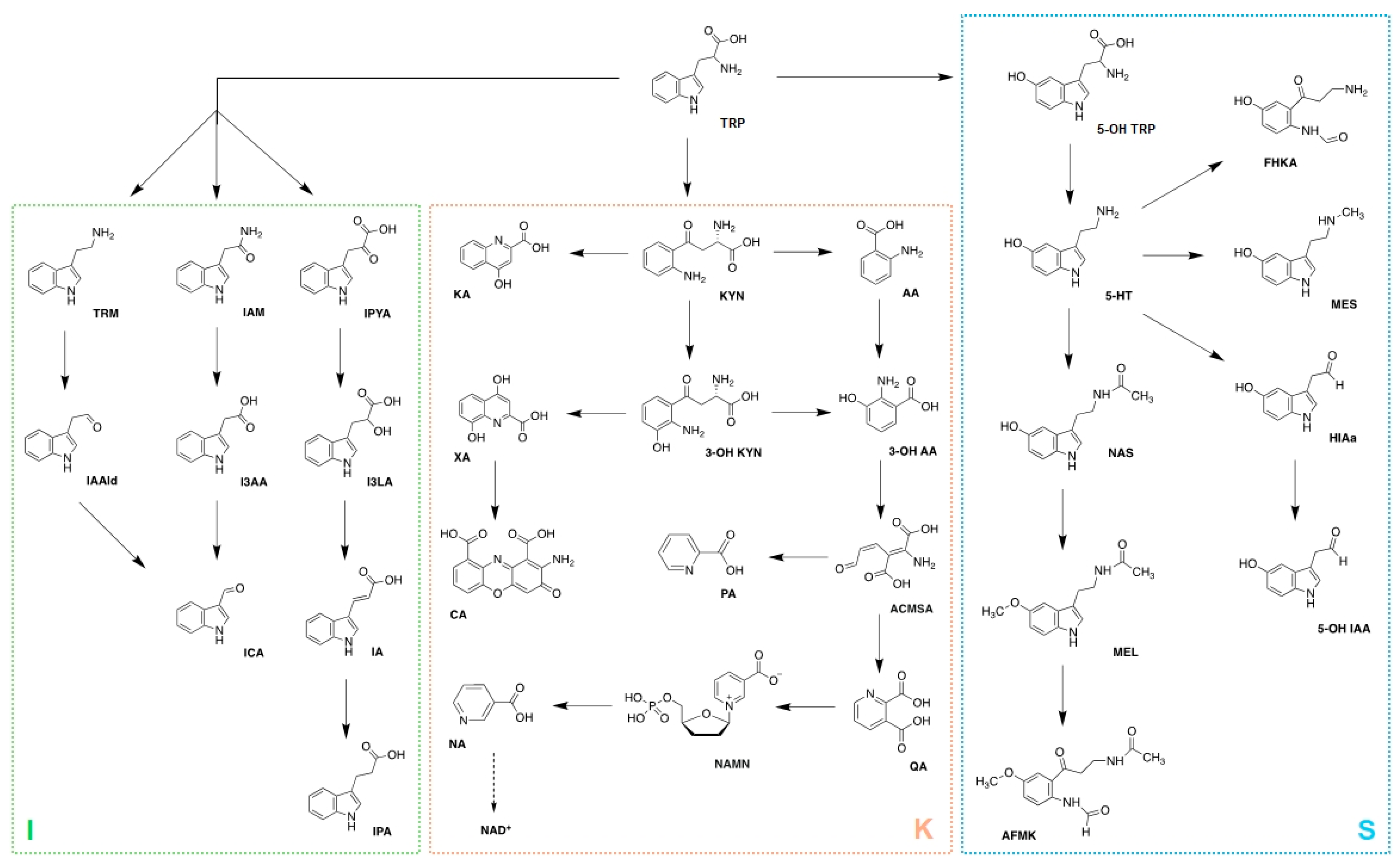
Figure 2.
Schematic representation of the different stages of correct and incorrect protein folding.
Figure 2.
Schematic representation of the different stages of correct and incorrect protein folding.
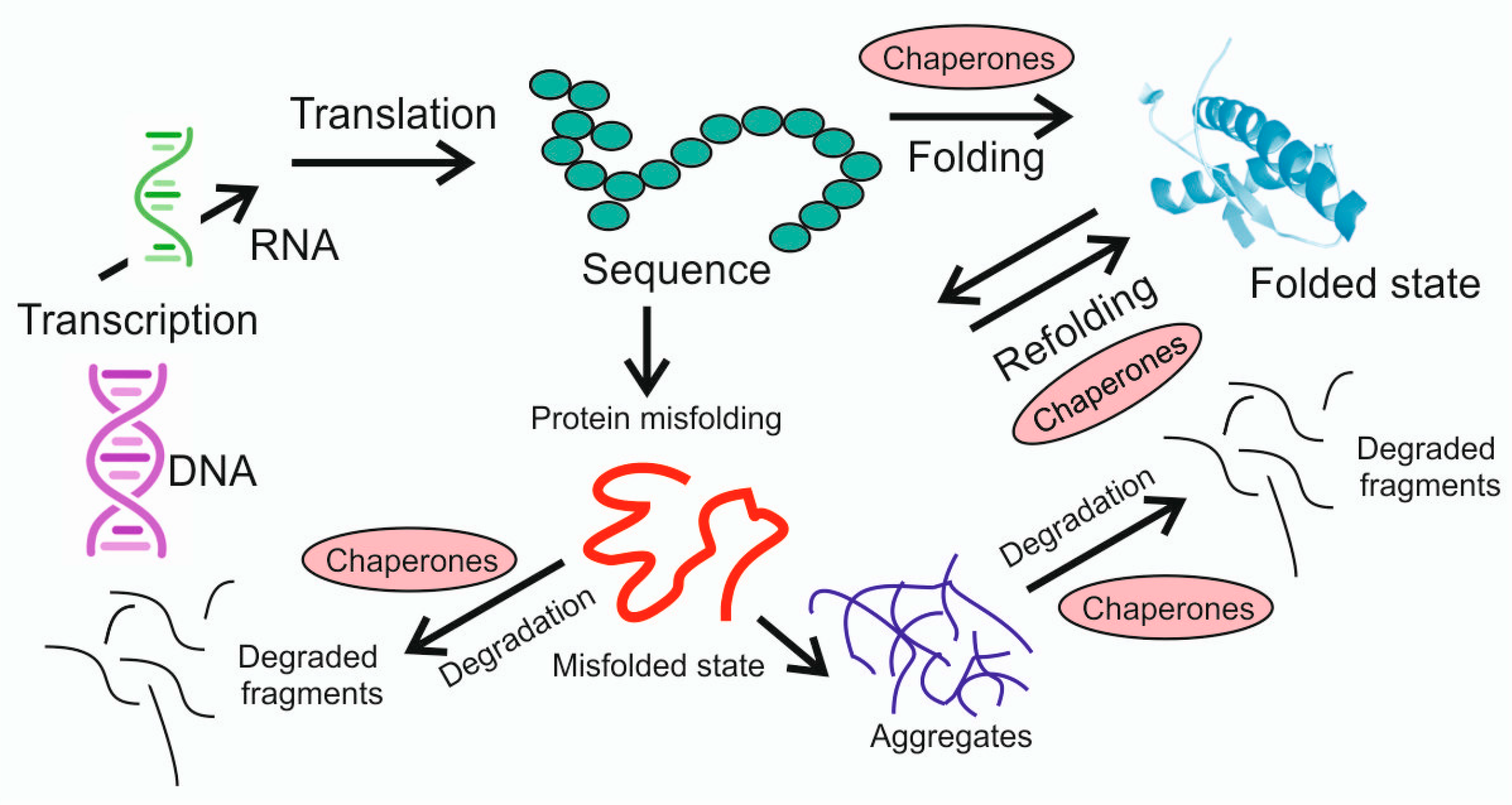
Figure 3.
The role of tryptophan-kynurenine pathway in heatstroke.
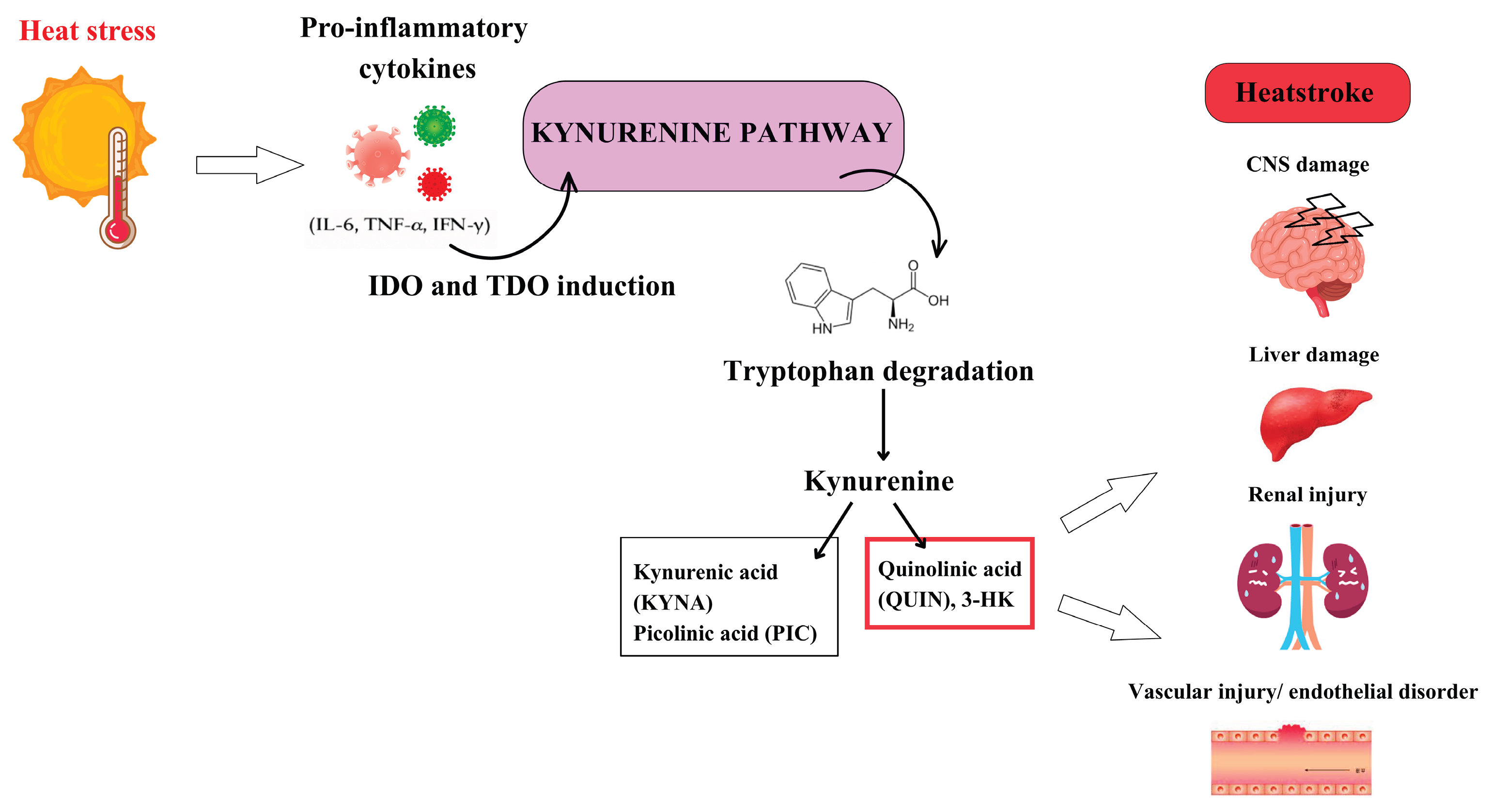
Disclaimer/Publisher’s Note: The statements, opinions and data contained in all publications are solely those of the individual author(s) and contributor(s) and not of MDPI and/or the editor(s). MDPI and/or the editor(s) disclaim responsibility for any injury to people or property resulting from any ideas, methods, instructions or products referred to in the content. |
© 2026 by the authors. Licensee MDPI, Basel, Switzerland. This article is an open access article distributed under the terms and conditions of the Creative Commons Attribution (CC BY) license (http://creativecommons.org/licenses/by/4.0/).
Copyright: This open access article is published under a Creative Commons CC BY 4.0 license, which permit the free download, distribution, and reuse, provided that the author and preprint are cited in any reuse.


