Submitted:
07 April 2026
Posted:
09 April 2026
You are already at the latest version
Abstract
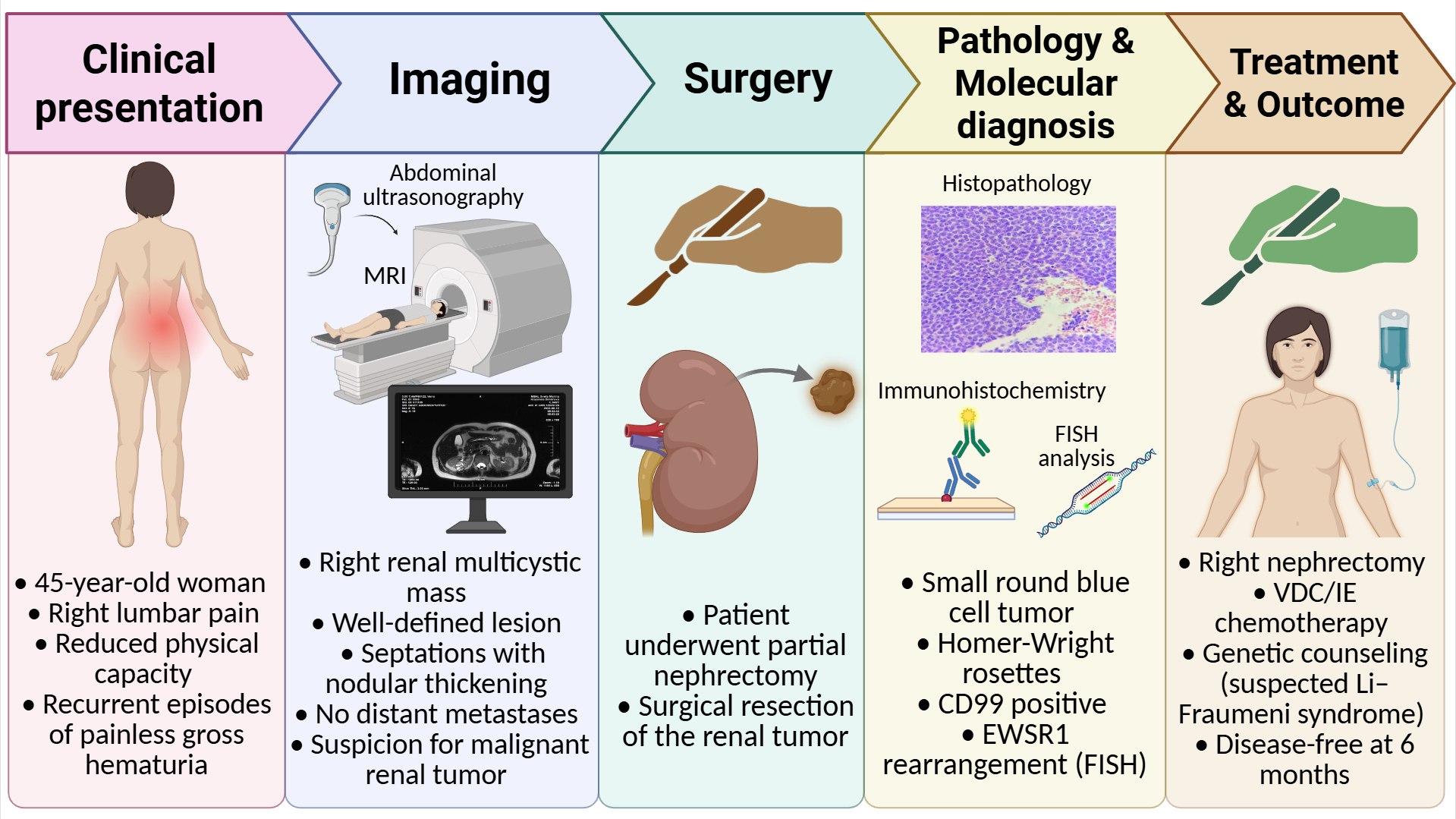
Background: Primary renal Ewing sarcoma (ES) is an exceptionally rare and aggressive malignancy, posing significant diagnostic and therapeutic challenges in adults. Clinical presentation is often nonspecific, frequently resulting in delayed diagnosis and early metastatic dissemination. Methods: We report a case of a 45-year-old woman presenting with right lumbar pain and hematuria. Imaging included ultrasound and magnetic resonance imaging, revealing a well-demarcated multicystic lesion of the right kidney. Partial nephrectomy was performed, followed by histopathology, immunohistochemistry, and molecular analysis using fluorescence in situ hybridization to confirm ES breakpoint region 1 (EWSR1) rearrangement. Subsequent management included right nephrectomy and systemic chemotherapy following the vincristine, doxorubicin, cyclophosphamide/ifosfamide, etoposide (VDC/IE) protocol. Results: Histopathology demonstrated sheets of small round cells with Homer-Wright rosettes and strong membranous CD99 expression. Molecular testing confirmed EWSR1 rearrangement. The patient tolerated surgery and chemotherapy well, with no evidence of recurrence or metastasis at six-month follow-up. The case highlights the critical role of integrated imaging, histopathology, immunophenotyping, and molecular diagnostics in establishing the diagnosis of primary renal ES. Conclusion: Primary renal ES in adults requires a high index of suspicion, multidisciplinary evaluation, and personalized therapeutic strategies. Surgical resection combined with systemic chemotherapy can achieve disease control. Early recognition, molecular confirmation, and interdisciplinary coordination are essential to optimize outcomes in this rare malignancy.