

Submitted:
05 April 2026
Posted:
07 April 2026
You are already at the latest version
Abstract
Urban regeneration has become a central focus in global urban studies, increasingly linked to the dual imperatives of sustainability and urban resilience. Chinese urban villages (Chengzhongcun) and Spanish Suelo Urbano no Consolidado (SUNC, Unconsolidated Urban Land) areas represent two contrasting forms of urban socio-spatial systems engulfed by urban expansion—both characterized by dense, historically rooted morphologies and incomplete infrastructure. While Chinese urban villages retain collective land ownership and self-built structures, SUNC areas preserve working-class housing typologies and community social structures within a sophisticated legal framework. As China shifts from a demolition–reconstruction model toward more sustainable regeneration approaches, this study compares Beijing's Cuigezhuang with Málaga's El Perchel through spatial analysis and stakeholder surveys. The research evaluates how differing planning systems foster or constrain sustainable development alongside social, spatial, and institutional resilience in regeneration processes. Findings demonstrate that Spain's incremental, participatory approach—anchored in Planes Especiales de Reforma Interior (PERI, Special Plans for Inner Urban Renewal) and land readjustment (equidistribution) mechanisms—significantly outperforms China's state-led demolition-based model in supporting long-term sustainability, heritage integrity, community cohesion, and spatial continuity. Spain's legally embedded participation and in situ rehabilitation strategies offer transferable lessons for China's evolving sustainable and resilience-oriented regeneration paradigm.
Keywords:
urban resilience
; urban villages
; SUNC
; heritage preservation
; participatory governance
; urban regeneration
1. Introduction
The global discourse on urban regeneration has undergone a paradigmatic shift, moving decisively away from large-scale, tabula rasa redevelopment toward more nuanced, integrative approaches that embed social, cultural, and ecological considerations within the transformation of the urban fabric [1]. Within this emerging framework, settlements characterized by informality, partial integration, or “in-between” institutional status constitute both critical challenges and strategic opportunities for sustainable urban transformation. Chinese urban villages (Chengzhongcun) and Spanish Suelo Urbano no Consolidado (SUNC, Unconsolidated Urban Land) areas exemplify two distinct yet analytically comparable manifestations of such conditions, both subsumed by rapid urban expansion while retaining differentiated socio-spatial identities shaped by dense, historically embedded morphologies and persistent deficiencies in formal service provision [2].
Chinese urban villages represent a singular socio-spatial formation arising from the intersection of China’s dual rural–urban land regime and the constraints imposed by the hukou (household registration) system during a period of accelerated urbanization [3]. As metropolitan expansion engulfed formerly rural settlements, collective land ownership structures persisted, giving rise to high-density, self-built environments that predominantly accommodate migrant populations. By contrast, SUNC areas in Spain refer to land formally classified as urban within statutory planning frameworks but remaining unconsolidated due to infrastructural deficits. These areas frequently encompass historic working-class neighborhoods, where durable social fabrics are embedded within robust legal and institutional mechanisms—notably the Planes Especiales de Reforma Interior (PERI, Special Plans for Inner Urban Renewal) and land readjustment (equidistribution) cost-sharing systems [4].
A significant policy reorientation is currently underway in China. The 2023–2025 national policy framework signals a decisive transition from the dominant demolition–reconstruction paradigm toward models of “urban regeneration” (chengshi gengxin) and “micro-regeneration” (weigengxin), reflecting an increasing recognition of urban villages as repositories of intangible cultural heritage, social capital, and endogenous economic dynamism [5]. This shift underscores the need for systematic international comparison and policy learning. In this regard, Spain’s extensive experience in the regeneration of SUNC areas—characterized by legally institutionalized participatory processes, incremental and adaptive interventions, sensitivity to heritage values, and in situ rehabilitation—provides a salient reference point and a repertoire of potentially transferable practices [6].
Against this backdrop, the present study advances a systematic comparative analysis of regeneration paradigms applied to Chinese urban villages and Spanish SUNC contexts. Through a structured juxtaposition of China’s state-led, demolition-based approach and Spain’s decentralized, process-oriented model, complemented by a cross-case examination of Cuigezhuang (Beijing) and El Perchel (Málaga), the study elucidates key mechanisms and governance logics that inform more inclusive, culturally attuned, and sustainable pathways for urban regeneration within China’s evolving policy landscape.
1.1. Urban Villages in China: The Legacy and Challenges of the Demolish-and-Rebuild Model
Chinese urban villages exemplify the interplay between institutional architecture and urban expansion. The dual-track land system—distinguishing state-owned urban land from collectively owned rural land—combined with hukou population controls, allowed engulfed villages to retain collective land ownership while losing their agricultural function [7]. Leveraging these collective land-use rights, villagers constructed dense, multi-story “handshake buildings” (woshou lou) to accommodate low-income migrants excluded from formal housing markets [8]. These informal rental networks provide essential affordable housing and livelihoods, functioning as “transitional communities” that are integral to urban economies despite substandard conditions [1].
For decades, the dominant policy response was large-scale demolition, driven by municipal land finance imperatives and the pursuit of modern urban imagery [9]. This approach produced profound socio-cultural externalities: forced displacement disrupted social networks, while “talent-oriented” redevelopment systematically marginalized low-income migrants through selective eligibility—a phenomenon termed “displaceability” in recent scholarship [1]. Organic street patterns and vernacular architecture were replaced by car-oriented superblocks and standardized high-rises, eroding place identity and severing historical continuity [10]. Historical buildings, ancestral halls, and intangible cultural practices were demolished, weakening urban memory. This pervasive perception stigmatized urban villages as “cancers,” justifying prolonged expropriation [11].
Traditional buildings and public spaces encode urban memory, encompassing cultural knowledge, collective emotions, craftsmanship, religious symbols, and social interaction spaces—collectively forming the city’s cultural genome (Figure 1). Their demolition irreversibly disrupts historical continuity and community identity.
Beijing illustrates these dynamics. Urban villages emerged as rural settlements were enveloped by metropolitan expansion, preserving collective land status and village committees while clustering along transportation arteries—creating interwoven urban-rural landscapes (Figure 2).
Demolition—justified by urban planning objectives, city image enhancement, and improved living environments—peaked between 2009 and 2012, radiating from the city center to peripheral areas (Figure 3) and slowed after 2013. The 2017 demolition of Shu Village displaced 100,000 migrants, deprived villagers of rental income, and erased collective memory (courtyards, alleys, and ancient trees), without addressing residents’ marginal urban status [12].
This pattern has been replicated nationwide. Hangzhou’s removal of 178 villages displaced 675,000 migrants, with one-third considering permanent exit due to unaffordability. Rental shortages forced migrants into commodity housing or remote suburbs, increasing labor costs and reducing urban competitiveness [13]. In Guangzhou, Liede Village retained ancestral halls but fragmented social networks, undermining traditional fishing village culture [14]. Xian Village experienced governance failures, with government financial withdrawal enabling developer-led corruption and resulting in planning deadlock [15]. Shipai Village saw demolition of clan, temple, and military heritage, with repurposed structures neglecting traditional culture, thereby eroding historical value and social cohesion [16].

Table 1.
Summary of urban village demolition cases and impacts.
| Project | City | Regneration Model | Core Strategy | Spatial Intervention Characteristics |
| Shu Village | Beijing, China | Large-scale demolition and relocation | Government-led clearance of "urban cancer" to improve city image and planning efficiency | Complete physical removal; original village texture erased; replaced with high-rise commodity housing |
| Liede Village | Guangzhou, China | Partial heritage retention + relocation | Developer-driven redevelopment with selective preservation of ancestral halls | Ancestral buildings retained as symbolic relics; surrounding residential fabric demolished; community networks dispersed |
| Xian Village | Guangzhou, China | Unregulated developer-led redevelopment | Government withdrawal due to financial burden; private redevelopment without oversight | No coherent planning; chaotic construction; loss of public space and community infrastructure |
| Shipai Village | Guangzhou, China | Cultural erasure through redevelopment | Full demolition of traditional buildings with new functional assignments | Historic structures (clan halls, temples, military sites) replaced or repurposed; traditional cultural continuity broken |
| 178 Urban Villages | Hangzhou, China | Mass demolition for urban Regneration | City-wide campaign to eliminate informal settlements and upgrade urban form | Widespread clearance; replacement with formal housing; significant displacement of low-income migrants |
These cases collectively demonstrate that the demolition model generates profound social exclusion and gentrification. Redeveloped neighborhoods, while physically improved, experience substantial differences between the indigenous villagers and newly moved-in tenants regarding status, values, norms, identities, customs, and lifestyles [17]. Neighborhood cohesion declines after redevelopment, with neighborhood attachment becoming more influenced by residential satisfaction but less by neighborly contacts, and community participation becoming less influenced by neighborly interaction [17]. Most critically, the model traps migrant youth in cycles of declining social mobility—when urban villages are demolished, migrant families lose small businesses and social connections accumulated over years, forcing children to drop out of school and work construction jobs rather than pursuing education and upward mobility [18].
1.2. Spanish SUNC: Progressive and Heritage-Centered Regeneration
Suelo Urbano no Consolidado (SUNC) represents a formal legal category within Spanish urban planning law, distinct from purely informal settlements. As established under the Ley de Suelo y Rehabilitación Urbana (Royal Decree Legislative 7/2015), SUNC denotes parcels legally classified as "urban" in municipal plans but lacking necessary infrastructure and services for full consolidation [4]. This formal status is crucial—SUNC areas exist within the institutional framework, and their transformation is governed by sophisticated legal instruments, most notably the Planes Especiales (Special Plans) and Planes Especiales de Reforma Interior (PERI).
The development of SUNC requires executing an urban transformation action that completes pending urbanization before construction can begin, involving land readjustment, urbanization works, and the equitable distribution of costs and benefits among landowners. While owners of consolidated urban land may build directly, SUNC landowners must fulfill more burdensome obligations: ceding approximately 10% of land to municipalities, completing urbanization works (streets, parks, utilities), and processing development planning through PERIs that mandate detailed morphological analysis and legally guaranteed public participation [4]. This legal framework ensures that regeneration is inherently incremental, rehabilitation-oriented, and context-sensitive.
The heritage dimension is central to SUNC regeneration rather than incidental. Identified historical elements—whether building ensembles, archaeological remains, or vernacular typologies—frequently trigger automatic legal protection under robust national and regional heritage laws [19]. This legal status fundamentally shapes redevelopment, prioritizing conservation, restoration, and adaptive reuse over demolition. Research on Lorca's Barrios Altos participatory regeneration demonstrates how sensitive heritage and topographic concerns were integrated early into Nature-based Solutions planning, directly influencing design adaptations to ensure accessibility while preserving archaeological assets [6]. The process emphasized "multifunctional spaces" hosting cultural, educational, and recreational uses—embedding social and cultural aspirations into final designs [6].
The regeneration of Spanish SUNC areas encompasses diverse neighborhood contexts, each demonstrating distinct approaches to balancing heritage conservation with social continuity. El Perchel in Málaga represents a centrally located neighborhood renowned for its corralones, distinctive 19th-century collective courtyard housing blocks that historically fostered intense social interaction and community cohesion. Regeneration efforts here concentrate on rehabilitating this unique architectural heritage while upgrading infrastructure, with explicit goals of retaining core resident populations and reinforcing existing social fabric. (Figure 4 Left) The annual "Corralones Week" celebration demonstrates how heritage conservation can be integrated with community continuity, transforming these spaces into living cultural assets rather than museumified relics [20,21].
Other cases illustrate different dimensions of the SUNC approach. Lavapiés in Madrid, designated an "Area for Priority Rehabilitation" in 1997, experienced organic, community-driven Regneration where social mobilization through the Red de Colectivos de Lavapiés successfully critiqued tourism-oriented development and advocated for alternative city models, maintaining physical scale and fine-grained texture while accommodating diverse populations despite pressures from middle-class consumption and the city's tourist industry [22]. El Raval in Barcelona exemplifies "protective rehabilitation" within the historic core, where public investment improved public spaces, facilities, and housing conditions in situ to enhance livability for existing residents without triggering displacement [23]. Palma-Palmilla in Malaga preserves traditional street patterns and retrofits high-rise buildings with sustainable features like shading and greenery through a SUNC-respecting regeneration approach (Figure 4 Middle). The Cañada Real in Madrid, while representing an extreme peripheral informal settlement rather than classic central SUNC, highlights challenges of legal integration and social inclusion for marginalized populations, with residents mobilizing for recognition "as a neighbourhood like any other in Madrid" [24,25] (Figure 4 Right). The following is a table about SUNC Cases in Spanish Cities:
Table 2.
Urban Village Redevelopment SUNC Cases in Spanish Cities.
| Project | City | Regneration Model | Core Strategy | Spatial Intervention Characteristics |
| El Perchel | Málaga, Spain | Heritage-led community regeneration | Rehabilitates historic corralones (19th-century courtyard housing) while upgrading infrastructure to retain residents and strengthen social ties | Preserves original building typology and spatial layout; integrates modern utilities without altering social configuration |
| Palma-Palmilla | Málaga, Spain | Sustainable retrofit + layout retention | Maintains traditional street patterns; retrofits high-rise buildings with shading, insulation, and greenery | Minimal intervention; retains building mass and arrangement; emphasizes eco-technical upgrades |
| Lavapiés | Madrid, Spain | Community-driven organic Regneration | Grassroots mobilization via Red de Colectivos de Lavapiés resists tourism-led development and advocates for alternative urban models | Preserves original building scale and fine-grained urban texture; supports diverse populations |
| Cañada Real | Madrid, Spain | Peri-urban informal settlement regularization | Residents mobilize for legal recognition and social inclusion, demanding equal status as a formal neighborhood | Little physical transformation; focus on institutional integration and basic service access |
| El Raval | Barcelona, Spain | Protective in-situ rehabilitation | Public investment improves public spaces, facilities, and housing to enhance livability without displacement | Incremental upgrades with minimal structural change; focuses on resident well-being |
2. Comparison of urban villages in China and SUNC in Spain
2.1. Comparison of Land and spatial Characteristics of Urban Villages in China and SUNC Areas in Spain
Chinese urban villages and Spanish SUNC areas share significant similarities in their formation backgrounds and core functions. Both represent historical settlements engulfed by rapid urban expansion, forming distinct enclaves within the modern urban fabric. They serve crucial functions in providing affordable housing for low-income urban populations—urban villages accommodate large numbers of migrant workers, while SUNC areas house local low-income residents and immigrants, both acting as urban "buffer zones" and "social safety valves." In terms of heritage, both retain rich traditional cultural elements: urban villages preserve intangible cultural heritage such as ancestral halls, temples, and traditional crafts, while SUNC areas conserve material and immaterial heritage including corralones courtyard housing, historic street patterns, and even agricultural irrigation systems. However, both face similar development tensions: how to improve infrastructure and living conditions while maintaining cultural identity, community structure, and housing affordability.
Despite these similarities, the two diverge significantly in specific characteristics, including physical form, land status, residents, economy, heritage, and social fabric, as shown in Table 3:
Physically, urban villages are characterized by high-density "handshake buildings" with minimal spacing between structures, narrow lanes, and severely deficient public services, presenting an organic yet chaotic spatial morphology. In contrast, SUNC areas maintain intact historical fabric with moderate density and well-preserved urban spatial structure; although infrastructure remains incomplete, traditional street scales and spatial patterns remain clearly discernible.
In terms of land tenure, urban villages occupy a unique legal grey zone. Under the urban-rural dual land system, collectively-owned village land surrounded by urban expansion was never converted to state ownership, creating a special status that is "legally ambiguous but factually existent." SUNC areas, conversely, possess clear legal designation as formally "urban but unconsolidated" land (Suelo Urbano no Consolidado), subject to Spanish Land Law (RDL 7/2015), with transformation required through Special Plans (PERI), providing clear legal pathways.
Resident composition differs markedly. Urban villages exhibit high social stratification and mobility: original villagers as collective land owners form distinct social layers from large populations of migrant renters, with extremely high tenant turnover and poor community stability. SUNC areas comprise long-term stable indigenous residents supplemented by low-income local residents and immigrants, with community social networks accumulated over years that demonstrate strong cohesion and continuity.
Economic models diverge substantially. Urban villages rely on informal rental markets where original villagers obtain rental income through intensive self-built construction, forming a spontaneous "rent-for-livelihood" economy. SUNC areas display more diverse economic forms, gradually transitioning from traditional handicrafts and small commerce to formal urban economies, with land value fairly distributed among owners through the equitable distribution of costs and benefits mechanism.
Regarding heritage status, urban villages prioritize intangible cultural heritage such as ancestral halls, temples, and traditional crafts, with inadequate physical heritage protection and frequent demolition threats to historic buildings. SUNC areas achieve integrated protection of material and immaterial heritage, with corralones courtyard housing, archaeological sites, and even agricultural irrigation systems (such as the San Jerónimo case in Seville) receiving legal recognition and protection, with heritage treated as central to community identity.
2.2. Comparative analysis of Policy Mechanisms and Regeneration Models of Urban Villages in China and SUNC Areas in Spain
While Chinese urban villages and Spanish SUNC areas share similar positions as urban enclaves formed by expansion and face common tensions between development and preservation, their approaches to land policy, community protection, regeneration strategies, and spatial design diverge fundamentally. These differences reflect distinct institutional frameworks, governance logics, and value orientations that shape outcomes for residents and urban fabrics. The following analysis examines four key dimensions—land policy, community fabric preservation, regeneration strategies, and spatial design—to illuminate how Spain's legally embedded participatory model offers critical lessons for China's evolving urban regeneration paradigm (Table 4).
Land policy dimensions reveal institutional divergence. Chinese urban village redevelopment relies on forced expropriation mechanisms, with municipal governments requisitioning collective land in the name of "public interest," driven by land finance logic toward demolition and reconstruction, lacks unified national legislation, has ambiguous property rights, and features highly discretionary policy implementation. Spain has established comprehensive legal frameworks: RDL 7/2015 mandates that SUNC land must undergo transformation through PERI plans, the equitable distribution of costs and benefits mechanism ensures all owners fairly share the costs and benefits of urbanization, owners must cede approximately 10% of land to municipalities for public facilities while obtaining clear development rights guarantees, with the entire process legally binding.
Community protection dimensions show particularly striking differences. Chinese transformation models cause large-scale population displacement: original villagers are relocated to distant resettlement housing, losing original social networks and rental income sources; migrant renters are completely excluded, with "displaceability" becoming an institutionalized dilemma, systematically marginalizing low-income groups in urban regeneration, with the concept of the "right to the city" entirely absent. Spanish SUNC policy places community continuity at its core, with residents remaining in place during transformation, strengthening community cohesion through statutory participation procedures, the collective lifestyle represented by corralones receiving living protection in cases such as Málaga, with the "right to the city" legally confirmed to ensure residents enjoy public facilities and community services without displacement.
Regeneration strategy dimensions demonstrate fundamentally different governance logics. China adopts state-led, top-down, single-phase comprehensive demolition models, with municipal governments and developers forming alliances of interest, communities as passive recipients lacking substantive voice, heritage often treated as development obstacles or commercial assets, with anti-displacement mechanisms completely absent. Spain practices multi-level collaborative governance, with municipal governments, landowners, and community residents forming partnership relationships, transformation implemented through multi-phased incremental approaches, heritage treated as legal constraints rather than negotiable objects, protective rehabilitation becoming a core strategy, as demonstrated by the Matadero Madrid case where historic buildings achieve functional transformation through minimal intervention, with the entire process sustainable over decades and continuously adaptive.
Spatial design dimensions reveal significantly different value orientations. Chinese practice adopts tabula rasa reconstruction, with historical fabric replaced by superblocks, standardized high-rise residential towers becoming dominant forms, car-oriented and enclosed spatial designs, public space privatized or completely eliminated, architectural language singular and repetitive, agricultural landscapes thoroughly erased. Spain emphasizes fine-grained historical morphology protection, implementing minimal, reversible design interventions, adaptive reuse respecting original building envelopes, pedestrian-priority networks strengthened, public space not only preserved but expanded, architectural responses demonstrating diverse authorship and site specificity, agricultural heritage such as Seville's traditional irrigation systems integrated as urban cultural landscapes rather than eliminated.
As China advances its regeneration-oriented urban transformation toward the 2030 goals of "livable, resilient and economically vibrant cities" [26], the Spanish SUNC experience offers critical lessons across three key dimensions. First, Spain's Planes Especiales demonstrate how legally mandated participation—moving "beyond conventional consultation towards active co-creation" [6]—can maintain community continuity while upgrading physical conditions, highlighting the need for China's emerging participatory micro-regeneration to strengthen legal frameworks to avoid instrumentalization. Second, the Spanish emphasis on rehabilitation over demolition and on integrating tangible heritage with intangible social practices provides models for China to avoid the "cultural hollowing" [27] threatening traditional villages, as seen in the corralones of El Perchel where heritage-led regeneration enhances rather than erases community identity. Third, and most critically, Spanish SUNC policy explicitly prioritizes retaining existing residents and social structures, offering a stark contrast to the "displaceability" inherent in current Chinese urban regeneration and underscoring the importance of preserving social ecosystems to avoid creating suburban "ghettos" [28], thereby ensuring sustainable urbanization.
3. Comparison of Case Studies on the Preservation and Revitalization of Beijing’s Cuigezhuang and Málaga’s El Perchel
The selection of Beijing's Cuigezhuang and Málaga's El Perchel as comparative case studies is grounded in their functional equivalence as urban enclaves formed by rapid metropolitan expansion, despite divergent institutional contexts. Both represent historically evolved settlements that have retained distinct morphological and social characteristics while being engulfed by modern urban fabric: Cuigezhuang as a former agricultural village retaining collective land ownership within Beijing's metropolitan area, and El Perchel as a 19th-century working-class neighborhood formally designated as SUNC within Málaga's urban core [29,30].
Three critical similarities justify this comparison. First, both cases embody the tension between heritage preservation and urban modernization: Cuigezhuang retains vernacular courtyard structures and lineage-based social organization, while El Perchel preserves the corralones—distinctive collective courtyard housing blocks that constitute both architectural heritage and living social infrastructure [31]. Second, both have experienced parallel policy trajectories, evolving from demolition-threatened status toward tentative regeneration approaches: Cuigezhuang's recent "micro-regeneration" rhetoric and El Perchel's PERI process both represent shifts away from tabula rasa redevelopment [3]. Third, both serve critical housing functions for marginalized populations—migrant workers in Cuigezhuang and low-income residents and immigrants in El Perchel—making their regeneration outcomes consequential for urban social equity [1].
The comparison is particularly illuminating because these similar starting points have produced divergent outcomes due to institutional differences: China's state-led, developer-driven model versus Spain's legally embedded participatory framework with mandatory heritage protection and equitable distribution of costs and benefits mechanisms [6]. The intangible dimensions of heritage—collective memory, festival traditions, and neighborhood identity—are equally central to both cases, yet their treatment differs fundamentally: Cuigezhuang's living culture faces "hollowing" through displacement, while El Perchel's corralones culture is legally protected as integral to regeneration mandates [32] (Figure 5).
3.1. Beijing's Cuigezhuang Urban Village
3.1.1. Location and History
Cuigezhuang is located in the northeast suburbs of Beijing, within the Chaoyang District, approximately 15 km from the city center (Figure 6). Historically an agricultural village, it was gradually engulfed by urban expansion during the 1990s and 2000s as Beijing's metropolitan area expanded outward. The village retained its collective land ownership status under China's urban-rural dual land system, becoming a typical "urban village" or chengzhongcun—physically surrounded by urban development but legally and socially distinct from the formal city [33].
3.1.2. Spatial Characteristics and Morphology
Cuigezhuang exhibits classic urban village morphology: extremely high-density "handshake buildings" with minimal setbacks, narrow lanes often less than 2 meters wide, and organic, irregular street patterns. The built environment is characterized by self-constructed multi-story structures, typically 3–5 stories, built by villagers to maximize rental income from the massive influx of migrant workers [34]. Public space is virtually non-existent, with narrow interstitial spaces serving multiple functions of circulation, social interaction, and service provision (Figure 7).
3.1.3. The changes in The Texture Of Architectural Space
By 2025, the spatial texture of this region has undergone a significant structural reconstruction, and its evolution process has shown a strong feature of "brutal intervention". During this period, a large number of existing built environments (including traditional courtyards, low-rise and multi-story building complexes, and industrial relics) were systematically demolished, replaced by a series of large-scale buildings that lacked harmony in scale and style with the surrounding context. These newly built projects generally demonstrate the fragmentation of the existing street and alley network, the disruption of the original spatial scale, and the dissolution of regional cultural symbols (Figure 8). For instance, high-density large-scale commercial complexes form a sharp visual conflict with the surrounding low-rise houses, and the modernist style of glass curtain walls and steel structures completely replaces traditional local elements such as pitched roofs and grey bricks. This leads to a break in the continuity of the spatial narrative. This "bulldozer" renewal model is essentially a forced reshaping of local texture by the logic of spatial production driven by capital. It not only weakens the sense of place identity but also gradually leads to the loss of diversity and organic qualities in urban space, reflecting the short-sighted and dehumanized tendencies of spatial governance in the rapid urbanization process.
As shown in Figure 9, due to top-down government intervention, the most critical spatial pathology in Cuigezhuang is the profound dissonance between the original village’s traditional morphology and the newly inserted Heli Xidi Town development, resulting in a fragmented urban fabric marked by abrupt transitions and incompatible scales. This "urban village" (dushi cunzhuang) project aims to transform the area into a cultural-tourism destination while preserving the historic settlement—yet this dual objective has instead intensified spatial and social divisions [9]. Key contradictions include: the Vertical-Horizontal Dialectic, where the east’s low-rise, horizontally continuous traditional courtyard (grey brick walls, pitched grey-tile roofs) contrasts with the west’s monumental vertical architecture (4-story cultural museum, 3-story commercial blocks with flat roofs and curtain-wall facades), disrupting the horizontal rhythm [35]; the Architectural Fault Line, characterized by a lack of transitional zone, as traditional courtyard housing directly abuts modern commercial structures, creating an unmodulated edge that exemplifies Kevin Lynch’s "edge discontinuity" [36]; Binary Urbanism and Social Stratification, where the west’s sanitized, pseudo-vernacular, pedestrian-oriented layout caters to middle-class tourists, while the original eastern village remains functionally isolated by a major road and limited access, reinforcing socio-spatial binaries and restricting equitable access to public space; and Cultural Displacement without Physical Erasure, where the original village’s cultural and spatial integrity is undermined by the new development, reducing it to a backdrop for commodified heritage consumption despite physical preservation, reflecting a disruption of the "social logic of space" as conceptualized by Hillier and Hanson [37].
3.1.4. Micro-Mobility Chaos and Surface Parking Disorder
Within the original village fabric, vehicular-pedestrian conflict has reached critical intensity. The narrow laneways (typically 2.5–4 meters in width) were designed for pedestrian and non-motorised circulation but now accommodate unregulated mixed traffic: electric scooters, bicycles, private automobiles, and service vehicles compete for limited surface area. Parking entropy is ubiquitous—vehicles occupy pedestrian pathways, courtyard entrances, and residual open spaces, creating circulation blockage and accessibility failure [38].
The surface parking regime exhibits complete spatial anarchy: no designated parking bays, no traffic calming measures, no pedestrian priority zones. Motorcycles and electric scooters are parked in masse along building frontages, reducing effective pedestrian width to less than 1 meter (Figure 10). Automobiles are squeezed into impromptu spaces between structures, frequently obstructing fire lanes and emergency access. This parking saturation (estimated at 340 vehicles per hectare) represents a space syntax failure—the original pedestrian-dominant spatial network has been colonised by motorised mobility, destroying fine-grained permeability [14].
Beyond spatial dissonance, Cuigezhuang faces physical deterioration, social fragmentation, and economic vulnerability. Buildings present safety risks; overcrowding creates fire hazards; the original villager population has declined while 30,000 transient migrants occupy rental stock; villagers depend on rental income threatened by demolition plans [16]. Municipal planning has oscillated between demolition and tentative preservation. The Heli Xidi project represents a shift toward "micro-regeneration" rhetoric, but in practice reproduces gentrification through displacement. Participation mechanisms are instrumental: villagers are consulted on compensation but excluded from meaningful spatial decisions [2].
3.2. Málaga's El Perchel
3.2.1. Location and History
El Perchel is centrally located in Málaga, Andalusia, immediately adjacent to the city's historic center and main railway station. Historically a working-class neighborhood developed during the 19th-century industrial expansion, it grew around railway infrastructure and port activities, attracting workers from surrounding rural areas. The area was formally designated as urban land in municipal plans but remained unconsolidated (SUNC) for decades due to complex land ownership patterns and insufficient infrastructure investment [22] (Figure 11).
3.2.2. The Corralones: Spatial Morphology and Living Heritage
El Perchel is defined by the corralones—distinctive collective courtyard housing blocks that constitute both its physical fabric and social infrastructure. These 19th-century structures typically feature two-story buildings arranged around shared central courtyards, with external corridors providing access to individual dwellings. The spatial organization creates graduated privacy hierarchies: private rooms, semi-private corridors, communal courtyard, and public street—each supporting distinct social practices [21] (Figure 12).
The typical corralón interior presents a multi-household courtyard surrounded by dwellings on multiple levels, connected by open staircases and walkways. The central courtyard serves as a collective outdoor room—a space for children's play, elderly gathering, clothes drying, and informal social exchange. Vegetation is integral: potted plants, climbing vines, and small trees create green intimacy, softening brick and plaster surfaces while marking seasonal change. This botanical domestication of shared space constitutes an important dimension of residents' place attachment and territorial identity [19].
The corralones culture extends beyond physical form to encompass intangible heritage: the Holy Week (Semana Santa) processions that traverse the neighborhood, maritime traditions linked to Málaga's port history, and the annual Corralones Week festival when residents open their courtyards to visitors, performing traditional music and dance. This heritage is living and performed rather than museumified—the built environment actively supports cultural reproduction [37]. There are some plots of Suelo Urbano no Consolidado (SUNC) in this area. Although they are in an underdeveloped state, the original spatial texture is relatively well-preserved, the street and lane veins are clear, the architectural layout extends naturally in accordance with the terrain, and integrates closely with the surrounding environment (Figure 13).
3.2.3. SUNC Legal Framework and PERI Implementation
El Perchel's regeneration operates within Spain's distinctive SUNC (Suelo Urbano No Consolidado) legal framework, which mandates specific procedures fundamentally different from China's discretionary planning. Under Real Decreto Legislativo 7/2015, SUNC land must undergo transformation through PERI (Plan Especial de Reforma Interior) plans that require: (1) mandatory public participation with legally binding status; (2) equidistribución—equitable distribution of urbanization costs and benefits among all landowners; (3) 10% land cession to the municipality for public facilities; and (4) heritage impact assessment with protective measures [4].
The Málaga City Council initiated the PERI El Perchel in the early 2000s, establishing a participatory process that included landowners, residents, heritage professionals, and the Asociación de Vecinos (neighbors' association). Critically, the framework prioritized in situ rehabilitation: residents remained during transformation, avoiding the displacement that characterizes Chinese urban village regeneration. The equitable distribution of costs and benefits mechanism ensured that infrastructure costs (street paving, utilities, public spaces) were fairly shared, with landowners receiving proportional development rights [39].
A significant regulatory evolution demonstrates the framework's adaptive capacity: the 2026 interior renovation projects in South Perchel will require developers to integrate spaces that allow for the maintenance of traditional community activities. This amendment to the PERI responds to earlier gentrification pressures, legally mandating that physical transformation must accommodate social reproduction—new construction must include communal courtyards or equivalent gathering spaces, ensuring that the corralones culture persists despite architectural regeneration [40].
3.2.4. Spatial Harmony and Morphological Coherence
Unlike Cuigezhuang's stark fragmentation, El Perchel exhibits remarkable spatial coherence and social integration. The street network follows a fine-grained, pedestrian-oriented pattern with blocks of moderate size (50–100 meters), creating intimate public spaces at multiple scales. Building heights are uniform (2–3 stories), maintaining human-scale streetscapes and visual continuity [38]. Figure 14 maps El Perchel's 1985–95 regeneration plan, color-coding seven intervention types: comprehensive rehabilitation (yellow), selective renovation (green), new construction (orange), facilities (blue), demolition (red), conservation (brown), and public space (purple). This parcel-level approach, established under RD726/93, tailors intervention intensity to existing urban fabric—contrasting with the wholesale demolition typical of Chinese urban village redevelopment.
The neighborhood maintains permeable boundaries and multiple connection points to the broader city—no hard boundaries or controlled access. The area transitions gradually into adjacent neighborhoods, with street networks ensuring pedestrian connectivity. Public space is distributed and accessible: the courtyard system provides semi-private commons for residents, while streets and small plazas serve as public gathering spaces [41].
Recent regeneration has enhanced rather than replaced this structure. New interventions are subordinate to existing fabric in scale and materiality, avoiding the morphological clash seen in Cuigezhuang. The result is spatial harmony—contemporary needs (improved sanitation, thermal performance) are met without destroying the fine-grained urbanism that supports community life [42].
3.2.5. Heritage Protection and Living Culture
El Perchel's heritage protection operates at multiple levels. The corralones are recognized as architectural heritage under Ley 12/2015 de Patrimonio Cultural de Andalucía, requiring restoration rather than demolition. But protection extends to intangible dimensions: the PERI mandates that regeneration must preserve neighborhood identity and support traditional festivities [19].
The Corralones Week celebration exemplifies this integrated approach: physical rehabilitation of courtyards enables cultural performance, which reinforces community cohesion, which in turn motivates continued heritage stewardship. This virtuous cycle contrasts sharply with Cuigezhuang's vicious cycle of displacement and cultural erosion [25] (Figure 15).
3.2.6. Existing Challenges and Adaptive Responses
Despite its demonstrable successes, El Perchel continues to face mounting gentrification pressures, driven by its strategic central location and distinctive architectural character, which increasingly attract tourism-oriented investment and speculative capital [23]. However, unlike many comparable historic neighborhoods, the institutional framework has effectively mitigated the emergence of a “dual-city” or “two worlds” condition. Specifically, the combined implementation of social housing requirements and rent regulation mechanisms has sustained a degree of socio-economic diversity, while the 2026 community space mandate explicitly restricts development practices that would undermine existing social infrastructure.
This regulatory evolution illustrates the adaptive capacity of the Spanish planning system: rather than merely preserving built heritage, it actively safeguards the socio-spatial conditions necessary for the reproduction of community life. In this sense, El Perchel demonstrates a shift from static conservation toward dynamic, socially embedded heritage governance.
3.3. Spatial Evaluation: GIS and Architectural Space Analysis
Through ArcGIS analysis comparing population heat maps, texture integrity, accessibility of public spaces, and distribution of commercial services in the two regions, it can be concluded that El Perchel in Spain has done a better job in protection and renewal (Figure 16).
The GIS heat maps reveal a significant spatial fragmentation among cultural tourists, shopping and dining visitors, and local residents: cultural tourists cluster in the core scenic area (yellow high-heat zones), shopping and dining crowds gather along main roads and commercial streets (orange sub-high-heat zones), while local residents are squeezed into marginal and low-density internal areas (blue/green low-heat zones), with almost no overlap in their activity ranges. This fragmentation is reflected in: spatial and path separation, where commercial and residential areas are physically divided by arterial roads with only two controlled crossing points, forming parallel "tourist-commercial" and "resident-living" paths lacking effective interaction nodes; functional and public space conflicts, as boundary zones exhibit problematic functional mixing with villagers' service facilities displaced by tourist-oriented businesses, and informal commercial activities encroaching on the sanitized tourist environment, coupled with a lack of public spaces shared by all three groups, exacerbating social estrangement; and cultural integration failure, where government-planned "cultural activities" are staged performances for tourist consumption rather than genuine community events, with no platform for meaningful cross-group communication, solidifying the "parallel living" state of the three groups.
3.4. Population Satisfaction Evaluation: AHP and Likert Scale Methods and Results
This study employed the Analytical Hierarchy Process (AHP), developed by Thomas L. Saaty, to generate a pairwise comparison matrix for seven selected factors [29]. The assigned weights are: heritage integrity (0.228), community cohesion (0.195), spatial continuity (0.167), economic vitality (0.143), service accessibility (0.124), environmental comfort (0.086), and participatory governance (0.057). The Consistency Ratio is 0.04, below the 0.10 threshold [30]. The field investigation of this study included 600 questionnaires (300 at each site) and 68 semi-structured interviews, following the Likert five-point scale method, as shown in Table 5 and Table 6.
Table 5.
5-point Likert Scale Measuring Seven Factors.
| Factors | Indicators (22) | Sample Survey Item (5-point Likert) |
| Heritage Integrity | Historic building survival rate; Authentic repair ratio; Street continuity | Many historic buildings are still intact; Repairs kept original look; Old streets' path, width remain unbroken |
| Community Cohesion | Neighbor interaction frequency; Trust level; Collective activity participation | I know most neighbors by name; Residents help each other; Community events are well-attended |
| Spatial Continuity | Path connectivity; Public space accessibility; Visual permeability | It's easy to walk anywhere; Public spaces are nearby and usable; Streets have good sight-lines |
| Economic Vitality | Income stability; Employment opportunities; Business diversity | My family income is stable; Young people find jobs here; Various shops serve daily needs |
| Service Accessibility | Distance to healthcare; Education facilities; Commercial services | Clinic/hospital is within walking distance; Schools are accessible; Daily shopping is convenient |
| Environmental Comfort | Air quality; Noise level; Sanitation condition | Air quality is acceptable; Nights are relatively quiet; Streets are clean and maintained |
| Participatory Governance | Information transparency; Decision involvement; Government responsiveness | I know about planning changes; My opinions are heard; Government responds to complaints |
Table 6.
Pairwise Comparison Matrix.
| Criterion | Heritage Integrity | Community Cohesion | Spatial Continuity | Economic Vitality | Service Accessibility | Environmental Comfort | Participatory Governance | Weight |
| Heritage Integrity | 1 | 2 | 2 | 3 | 3 | 4 | 4 | 0.228 |
| Community Cohesion | 1/2 | 1 | 2 | 2 | 3 | 3 | 4 | 0.195 |
| Spatial Continuity | 1/2 | 1/2 | 1 | 2 | 2 | 3 | 3 | 0.167 |
| Economic Vitality | 1/3 | 1/2 | 1/2 | 1 | 2 | 2 | 3 | 0.143 |
| Service Accessibility | 1/3 | 1/3 | 1/2 | 1/2 | 1 | 2 | 2 | 0.124 |
| Environmental Comfort | 1/4 | 1/3 | 1/3 | 1/2 | 1/2 | 1 | 2 | 0.086 |
| Participatory Governance | 1/4 | 1/4 | 1/3 | 1/3 |
Table 7.
Performance Metrics: Cuigezhuang and El Perchel (Likert-5, mean ± SD).
| Criterion | Cuigezhuang | El Perchel | t-Value | p-Value |
| Heritage Integrity | 2.34 ± 0.78 | 4.12 ± 0.62 | 18.45 | <0.001 |
| Community Cohesion | 2.18 ± 0.82 | 3.89 ± 0.71 | 16.32 | <0.001 |
| Spatial Continuity | 2.45 ± 0.75 | 3.76 ± 0.68 | 13.28 | <0.001 |
| Economic Vitality | 2.89 ± 0.88 | 3.24 ± 0.79 | 2.87 | 0.004 |
| Service Accessibility | 2.56 ± 0.81 | 3.67 ± 0.72 | 10.95 | <0.001 |
| Environmental Comfort | 2.12 ± 0.85 | 3.45 ± 0.74 | 12.47 | <0.001 |
| Participatory Governance | 1.89 ± 0.79 | 3.78 ± 0.81 | 17.63 | <0.001 |
| Weighted Overall Score | 2.31 | 3.72 | — | — |
Results demonstrate that El Perchel significantly outperforms Cuigezhuang across all seven dimensions, with particularly pronounced differences in heritage integrity (1.78), community cohesion (1.71), participatory governance (1.89), and spatial continuity (1.31). The spatial scale and morphological coherence of El Perchel—reflected in its superior spatial continuity score—emerge as critical factors enabling community retention and cultural reproduction.
The spatial continuity differential is particularly significant: El Perchel's fine-grained, pedestrian-oriented morphology with distributed public space enables everyday encounters that sustain community cohesion, while Cuigezhuang's fragmentation—exacerbated by the Heli Xidi insertion—destroys these micro-publics. The "two worlds" phenomenon in Cuigezhuang is reflected in stark divergences between stakeholder groups: original villagers score heritage integrity higher (3.12) than migrants (1.89), while Heli Xidi visitors score all dimensions below 2.0 in the original village area. In El Perchel, scores are uniform across resident types (range of 3.65–4.05), indicating successful social integration.
Service accessibility represents the narrowest gap (1.11), reflecting Cuigezhuang's dense informal commercial provision—though this "advantage" is offset by poor environmental comfort (1.33) due to overcrowding and infrastructural deficiencies. The spatial scale of El Perchel—human-scale streetscapes, moderate building heights, permeable boundaries—generates superior environmental comfort and community cohesion despite comparable service access.
4. Conclusions
This comparative analysis of Beijing's Cuigezhuang urban village and Málaga's El Perchel SUNC area reveals two distinct paradigms for navigating the preservation and revitalization of informal urban settlements under the pressures of modernization and market expansion. While differing profoundly in their governance foundations, socio-economic contexts, and historical pathways, both cases converge on a central, unresolved tension: how to sustain living cultural landscapes in the face of developmental demands, moving beyond static preservation or demolition toward dynamic, community-centered sustainability.
Cuigezhuang exemplifies a model constrained by top-down, project-based, and administrative-unit-focused governance. Its remarkable informal urban fabric, once a vital socio-economic ecosystem providing affordable housing and livelihoods for migrant populations, has been fragmented by the Heli Xidi insertion and threatened by demolition-reconstruction logic. Protection efforts, often isolated within village boundaries and led by government mandates, have produced severe spatial dissonance: the "two worlds" phenomenon of traditional courtyard housing juxtaposed with monumental contemporary architecture, generating morphological clash, parking entropy, and social estrangement. The result is a risk of "scenographic collage," where authentic community life is displaced by performative tourism, and the intrinsic link between spatial form and social meaning is severed. The core challenge in the Chinese context is to overcome institutional fragmentation and empower community agency within a historically state-led framework.
Conversely, El Perchel operates within a community-embedded, legally structured Spanish SUNC model. Here, protection is anchored in the holistic framework of Planes Especiales de Reforma Interior (PERI) and integrated within the equidistribución mechanism, fostering equitable cost-sharing and community continuity. The corralones—collective courtyard housing with central green spaces—embody both tangible and intangible heritage, supported by the annual Corralones Week festival and legally mandated community space requirements in 2026 renovations. The local economy retains micro-entrepreneurial activities, which help reinforce place-based identity. However, this success generates its own pressures: gentrification and tourism threaten to transform lived communities into curated stage sets. The challenge is to manage development scale to safeguard residential integrity. The comparative matrix in Table 8 synthesizes the key divergences and evaluates the potential for cross-contextual learning.
Based on this analysis, an integrated policy package is proposed to translate instructive lessons from the Spanish SUNC experience into actionable strategies for the Chinese context, focusing on systemic integration rather than isolated projects.
From Demolition to Incremental Rehabilitation: Legally embed "micro-regeneration" as the default approach, with demolition-reconstruction as a last resort. Establish "Urban Village Conservation Areas" with binding heritage impact assessments, mirroring the PERI framework's mandatory protection requirements.
From State-Led to Collaborative Governance: Transform Village Committees into "Urban Village Stewardship Cooperatives" with formal roles in regeneration planning. Introduce equitable distribution-style mechanisms where landowners share urbanization costs and benefits proportionally, with municipal provision of public infrastructure.
From Displacement to in Situ Retention: Mandate in situ rehabilitation with social housing requirements and rent controls to prevent gentrification. Legally guarantee the "right to the city"—access to public goods and community facilities without displacement—for existing residents.
From Spatial Fragmentation to Morphological Coherence: Prohibit "two worlds" developments that sever new insertions from existing fabric. Require new construction to respect existing scale, height, and permeability patterns, with parking provision integrated rather than surface-dominant.
From Staged Authenticity to Embedded Living Culture: Shift focus from facade repair to "Intangible Heritage Activation Platforms." Empower villagers and migrants to develop cultural programming around traditional practices, supported by digital tools for storytelling and cooperative enterprise.
In summary, this comparative study demonstrates that the sustainable future of urban villages lies not in choosing between demolition and preservation, but in orchestrating their interaction through integrated governance, community agency, and morphological coherence. The Spanish SUNC case offers not a blueprint for duplication, but a proof of concept for the viability of alternative models centered on legal empowerment and social continuity. For China, the path forward involves leveraging its formidable capacity for strategic planning to overcome fragmentation, fostering a new synthesis where the grassroots vitality embedded in villages like Cuigezhuang can inform a genuinely sustainable and inclusive form of urban regeneration.
Author Contributions
Data curation, Investigation, Conceptualization, Writing-original draft, Formal analysis, Project administration, Investigation, Y.S.; Investigation, Conceptualization, Investigation, Methodology, Supervision, Writing—review & editing, J.-M.A.-M. All authors have read and agreed to the published version of the manuscript.
Funding
This research received no external funding.
Data Availability Statement
The original contributions presented in the study are included in the article, further inquiries can be directed to the corresponding author/s.
Conflicts of Interest
The authors declare no conflict of interest.
References
- Gao, X.; Hu, W. State-led gentrification in China’s urban villages. Geogr. Res. 2025, 64, e70039. [CrossRef]
- Wang, Y.; Wu, F.; Zhang, F. Participatory micro-regeneration: Governing urban redevelopment in Qinghe, Beijing. Urban Geogr. 2025, 46, 21–42. [CrossRef]
- Liu, J.; Li, G. Comprehensive benefit evaluation on urban village micro-transformation based on extension matter-element model. Int. J. Constr. Manag. 2021, 21, 524–537. [CrossRef]
- Fuster Arquitectos. Qué es suelo urbano no consolidado y cómo afecta al valor de tu propiedad. 2024. Available online: https://www.fusterarquitectos.es/blog/urbanismo/suelo-urbano-no-consolidado/ (accessed on 3 April 2026).
- CGTN. China issues new rules to boost urban regeneration. 2026. Available online: https://news.cgtn.com/news/2026-01-30/China-issues-new-rules-to-boost-urban-Regneration-1KlUFFigBI4/share_amp.html (accessed on 3 April 2026).
- Latinopoulos, D.; Pelaez-Sanchez, S.; Briega Martos, P.; Berruezo, E.; Outón, P. Transforming public space with nature-based solutions: Lessons from participatory regeneration in Lorca, Spain. Land 2025, 14, 2066. [CrossRef]
- Ye, L.; Peng, X.; Aniche, L.Q.; Scholten, P.H.T.; Ensenado, E.M. Urban regeneration as policy innovation in China: From growth stimulation to sustainable development. Public Adm. Dev. 2021, 41, 23–33. [CrossRef]
- Wu, F. Governing urban redevelopment: A case study of Yongqingfang in Guangzhou, China. Cities 2022, 120, 103420. [CrossRef]
- He, S. State-embedded gentrification in China. Cities 2024, 145, 104708. [CrossRef]
- Huang, L.; Zheng, W.; Hong, J.; Liu, Y.; Liu, G. Paths and strategies for sustainable urban regeneration at the neighbourhood level: A framework for decision-making. Sustain. Cities Soc. 2020, 55, 102074. [CrossRef]
- Zhang, Y.; Li, X.; Liu, Y.; Wang, J. Review and prospect of urban village regeneration research in China. Urban Plan. Forum 2022, (1), 12–20.
- Wang, Y.P. Urban villages, their redevelopment and implications for inequality and integration. In Urban Inequality and Segregation in Europe and China; Springer: Cham, Switzerland, 2020; pp. 117–140.
- Jin, X.; Chen, L.; Zhou, J.; Zhou, Q.; Wang, S. To stay or to leave? Migrant workers’ decisions during urban village redevelopment in Hangzhou, China. Front. Public Health 2021, 9, 782251. [CrossRef]
- Wang, M.; Zhang, F.; Wu, F. “Micro-regeneration”: Toward small-scale, heritage-oriented, and participatory redevelopment in China. J. Urban Aff. 2022, 44, 623–641. [CrossRef]
- Wu, F.; Li, L.-H.; Han, S.Y. Social sustainability and redevelopment of urban villages in China: A case study of Guangzhou. Sustainability 2018, 10, 2116. https://www.mdpi.com/2071-1050/10/7/2116.
- Politecnico di Torino. A case study of Shipai Village in Guangzhou. Master’s Thesis, Politecnico di Torino, 2024. Available online: https://webthesis.biblio.polito.it/34398/1/tesi.pdf (accessed on 3 April 2026).
- Liu, Y.; Wu, F.; Liu, Y.; Li, Z. Changing neighbourhood cohesion under the impact of urban redevelopment: A case study of Guangzhou, China. Urban Geogr. 2017, 38, 716–738. [CrossRef]
- Li, M. How China’s urban demolition policy traps migrant youths. Sixth Tone 2018. Available online: https://www.sixthtone.com/news/1002775/how-chinas-urban-demolition-policy-traps-migrant-youths (accessed on 3 April 2026).
- COACTFE. Circulares técnicas sobre rehabilitación y regeneración urbana. 2023. Available online: http://www.coactfe.org/Adjuntos/COACTFE/Documentos/AdjuntosPublicos/Web-Repositorio/Circulares/2023/C97_CyTET.pdf (accessed on 3 April 2026).
- Costa del Sol Málaga. History and Art: El Perchel; n.d. Available online: https://static.costadelsolmalaga.org/visita/subidas/archivos/7/7/arc_25377.pdf (accessed on 3 April 2026).
- Málaga Web. Corralones Week in Trinidad and Perchel; 2020. Available online: https://www.malagaweb.com/blog/events/andalusian-patios-malaga/ (accessed on 3 April 2026).
- Díaz Orueta, F. Urban regeneration projects and social mobilization. Cities 2007, 24, 183–193. [CrossRef]
- Simon Rojo, J. Strategies for housing regeneration in city centres. ENHR 2007 International Conference “Sustainable Urban Areas”, Rotterdam, The Netherlands, 25–28 June 2007; Universidad Politécnica de Madrid: Madrid, Spain. Available online: https://oa.upm.es/6670/1/W07_paper_SimonRojo.pdf (accessed on 3 April 2026).
- European Court of Human Rights. Case of López Ribalda and Others v. Spain (Cañada Real); 2023. Available online: https://www.eviction.eu/what-is-a-community-distinguishing-the-right-of-individuals-to-housing-v-the-right-of-communities-to-housing-in-the-case-law-of-the-ecthr/ (accessed on 3 April 2026).
- Jiménez Rodríguez, I. Barrio en construcción: An Urban Political Ecology of Place-Making and Displacement in la Cañada Real Galiana (Madrid); Erasmus University Rotterdam: Rotterdam, The Netherlands, 2022. Available online: https://thesis.eur.nl/pub/65334/InA-s_Holanda_JimA-nez_RodrA-guez_-_Barrio_en_construcciA3n_An_Urban_Political_Ecology_of_Place-Making_and_Displacement_in_la_CaA-ada_Real_Galiana_-Madrid-.pdf (accessed on 3 April 2026).
- Right to the city and community facility planning for elderly: The case of urban regeneration district in Hong Kong. Land Use Policy 2025, 139, 107034.
- Zhang, Y.; et al. Characteristics and influencing factors on the hollowing of traditional villages. Sustainability 2021, 13, 8657079. Available online: https://pmc.ncbi.nlm.nih.gov/articles/PMC8657079/ (accessed on 3 April 2026).
- The Massive Death of China’s Urban Villages. Métropolitiques; 2025. Available online: https://metropolitiques.eu/The-Massive-Death-of-China-s-Urban.html (accessed on 3 April 2026).
- Saaty, T.L. The Analytical Hierarchy Process; McGraw-Hill: New York, NY, USA, 1980.
- Creswell, J.W. Research Design: Qualitative, Quantitative, and Mixed Methods Approaches; SAGE: Thousand Oaks, CA, USA, 2014.
- Kitchin, R.; Tate, N.J. Conducting Research in Human Geography: Theory, Methodology and Practice; Routledge: London, UK, 2014.
- Smith, L. Uses of Heritage; Routledge: London, UK, 2006.
- Liu, Y.; He, S.; Wu, F.; Webster, C. Urban villages under China’s rapid urbanization: Unregulated assets and transitional neighbourhoods. Habitat Int. 2010, 34, 135–144. [CrossRef]
- Wang, Y.P.; Wang, Y.; Wu, J. Urbanization and informal development in China: Urban villages in Shenzhen. Int. J. Urban Reg. Res. 2009, 33, 957–973. [CrossRef]
- Lynch, K. The Image of the City; MIT Press: Cambridge, MA, USA, 1960.
- Lynch, K. Good City Form; MIT Press: Cambridge, MA, USA, 1981.
- Gehl, J. Life Between Buildings: Using Public Space; Island Press: Washington, DC, USA, 2011.
- Hillier, B.; Hanson, J. The Social Logic of Space; Cambridge University Press: Cambridge, UK, 1984.
- García Gómez de Mercado, F. La distribución equitativa de beneficios y cargas: Examen particular del suelo urbano no consolidado. Rev. Juríd. Castilla León 2005, 6, 121–140.
- López Abogados. Diferencia entre suelo urbano consolidado y suelo urbano no consolidado. 2025. Available online: https://lopezabogados.org/diferencia-entre-suelo-urbano-consolidado-y-suelo-urbano-no-consolidado/ (accessed on 3 April 2026).
- Whyte, W.H. The Social Life of Small Urban Spaces; Project for Public Spaces: New York, NY, USA, 1980.
- Carmona, M.; Heath, T.; Oc, T.; Tiesdell, S. Public Places, Urban Spaces: The Dimensions of Urban Design; Architectural Press: Oxford, UK, 2003.
Figure 1.
General temple in Gaobei Village and Clan Hall in Shibei Village, Guangzhou (left 1 and 2); Shibalidian Village, Beijing, and Cangqian Village, Hangzhou (right 1 and 2).
Figure 1.
General temple in Gaobei Village and Clan Hall in Shibei Village, Guangzhou (left 1 and 2); Shibalidian Village, Beijing, and Cangqian Village, Hangzhou (right 1 and 2).
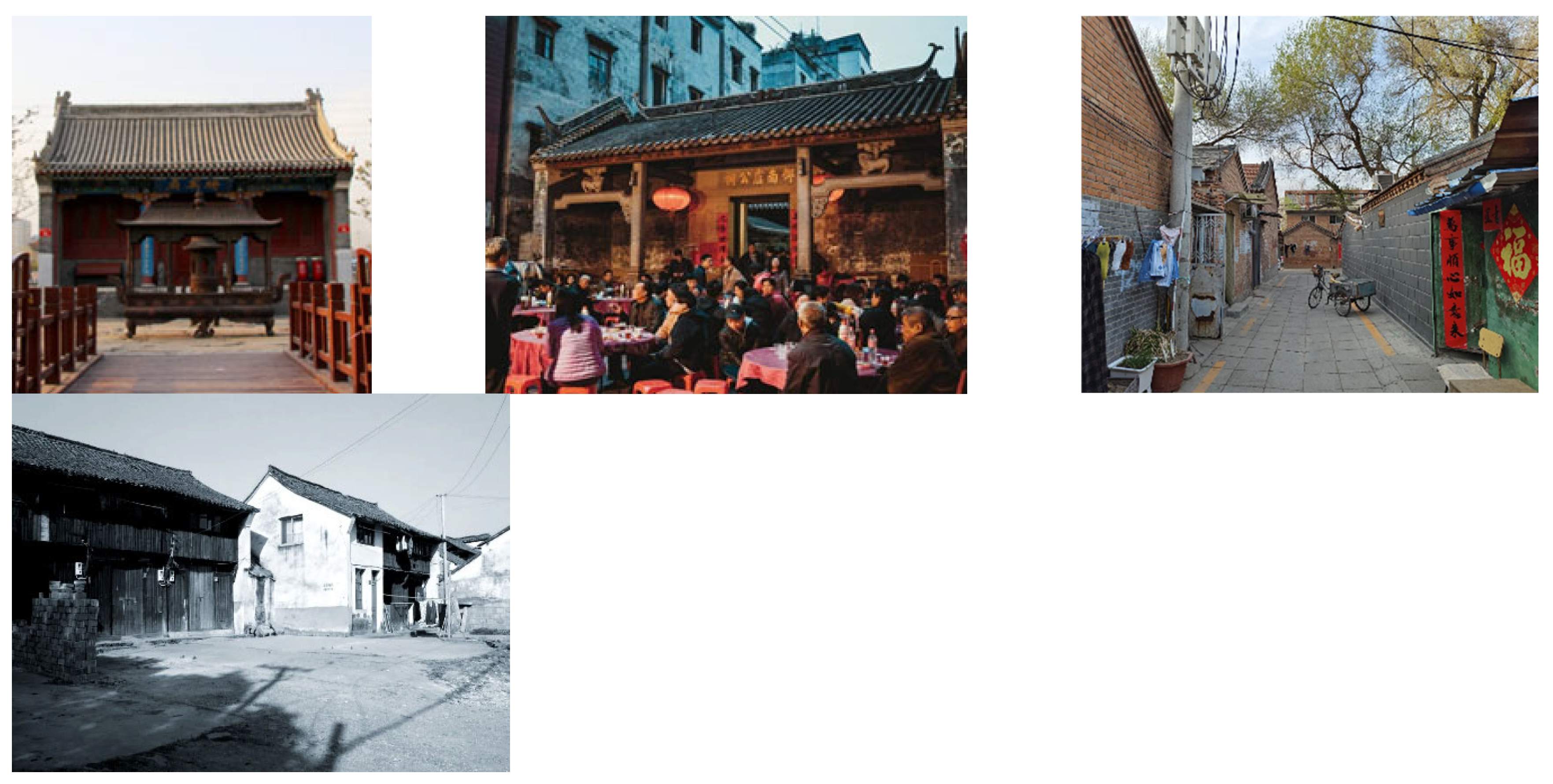
Figure 2.
Urban sprawl and existing villages in Beijing (left) and density-distribution map of urban villages in Beijing (right).
Figure 2.
Urban sprawl and existing villages in Beijing (left) and density-distribution map of urban villages in Beijing (right).
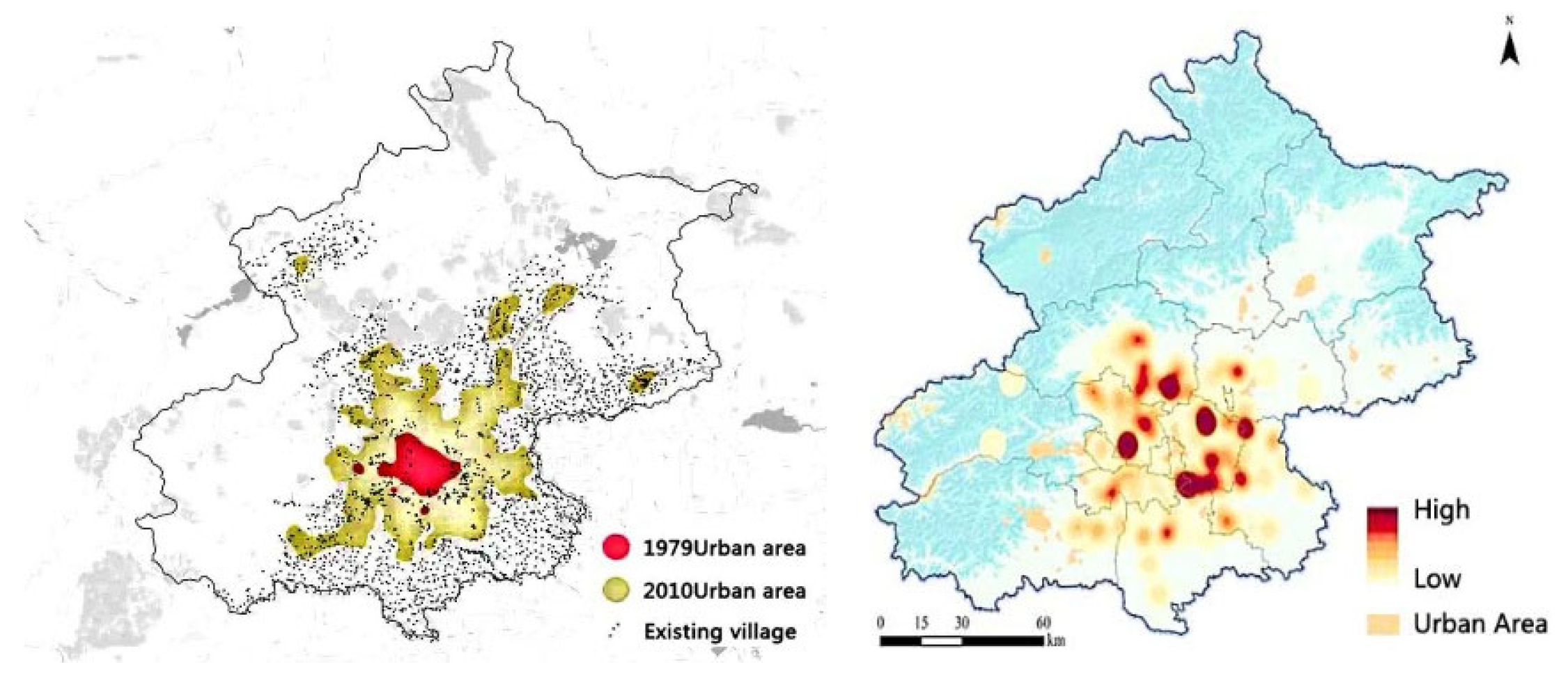
Figure 3.
Demolition of Chinese old towns and urban villages (Source: Baidu.com).
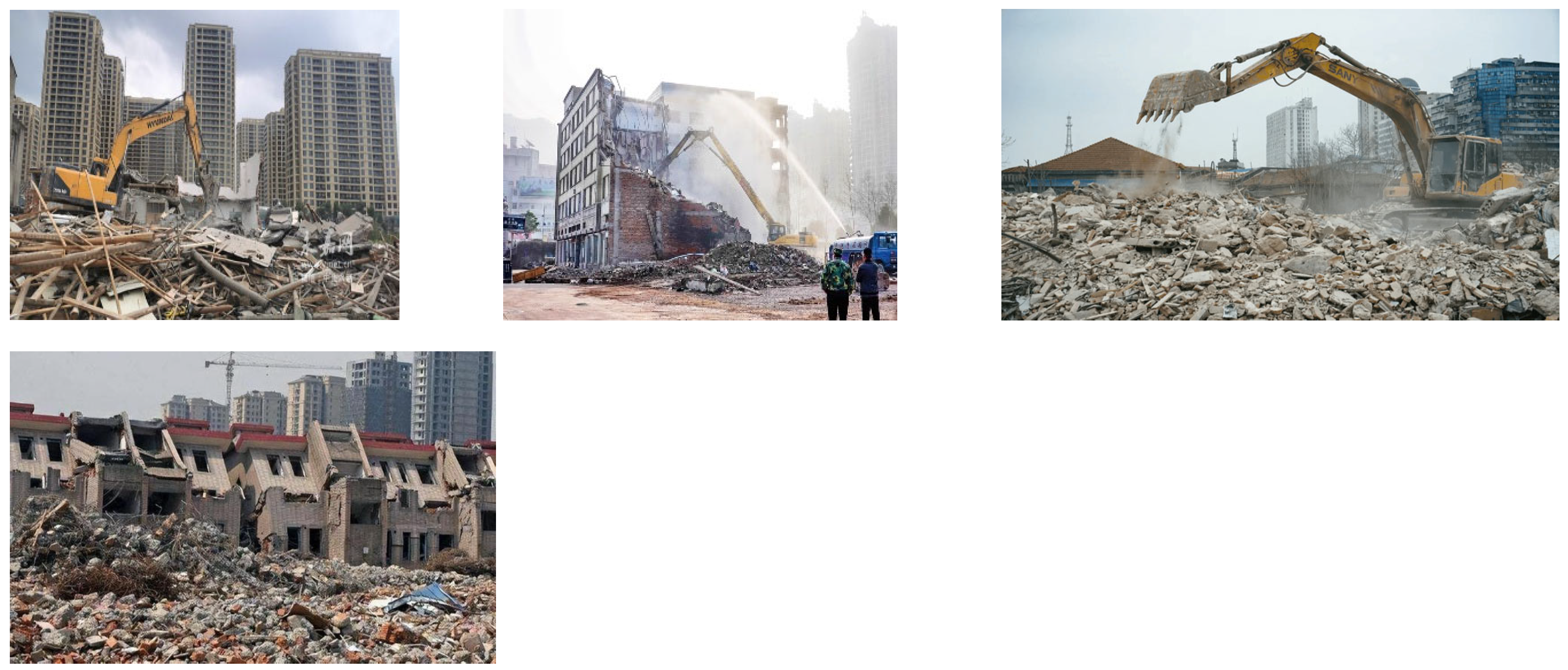
Figure 4.
Spanish SUNC: El Perchel corralones in Malaga (left), Palma-Palmilla (middle) in Malaga, and Cañada Real in Madrid (right). (Image source: Author)
Figure 4.
Spanish SUNC: El Perchel corralones in Malaga (left), Palma-Palmilla (middle) in Malaga, and Cañada Real in Madrid (right). (Image source: Author)
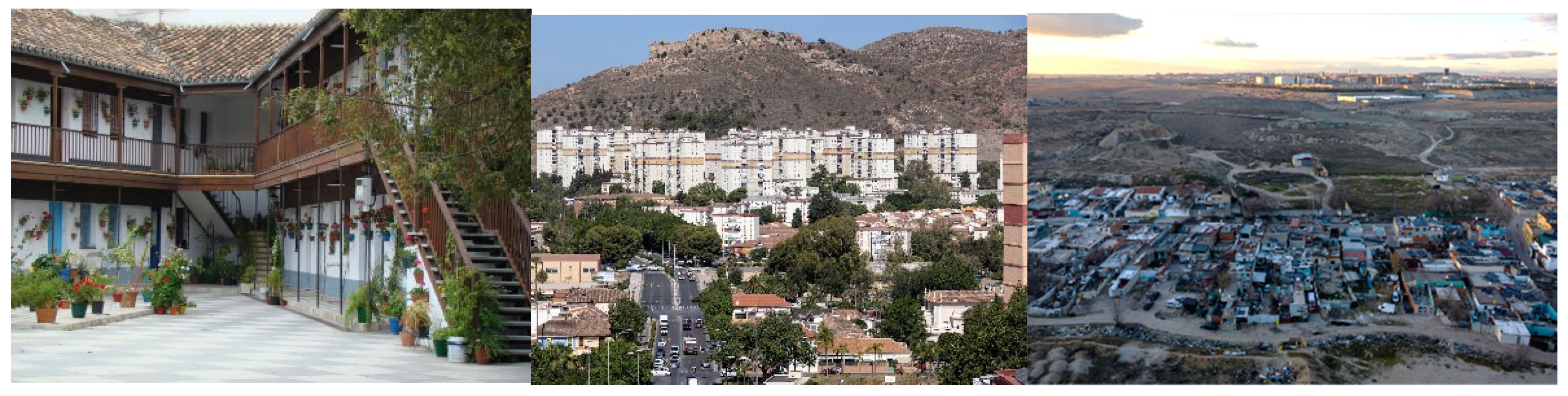
Figure 5.
A quadrangle courtyard is located in Cuigezhuang, Beijing (left), and El Perchel corralones in Malaga (right) (Image source: Author).
Figure 5.
A quadrangle courtyard is located in Cuigezhuang, Beijing (left), and El Perchel corralones in Malaga (right) (Image source: Author).
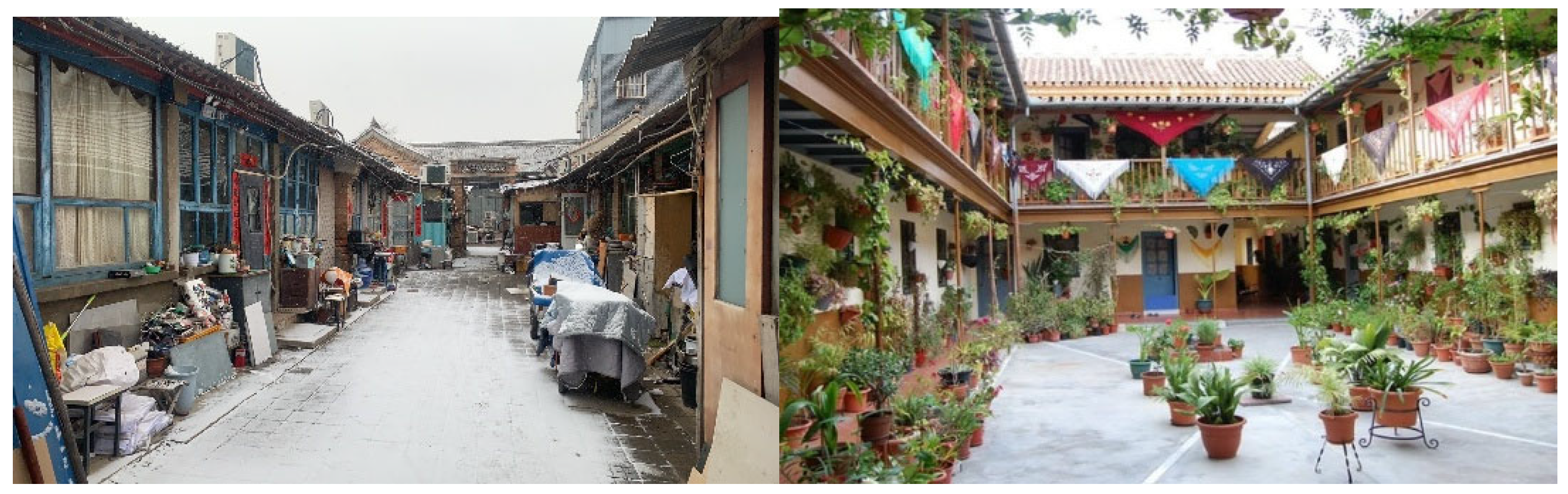
Figure 6.
Location Map of Cuigezhuang Urban Village (Image source: Author).
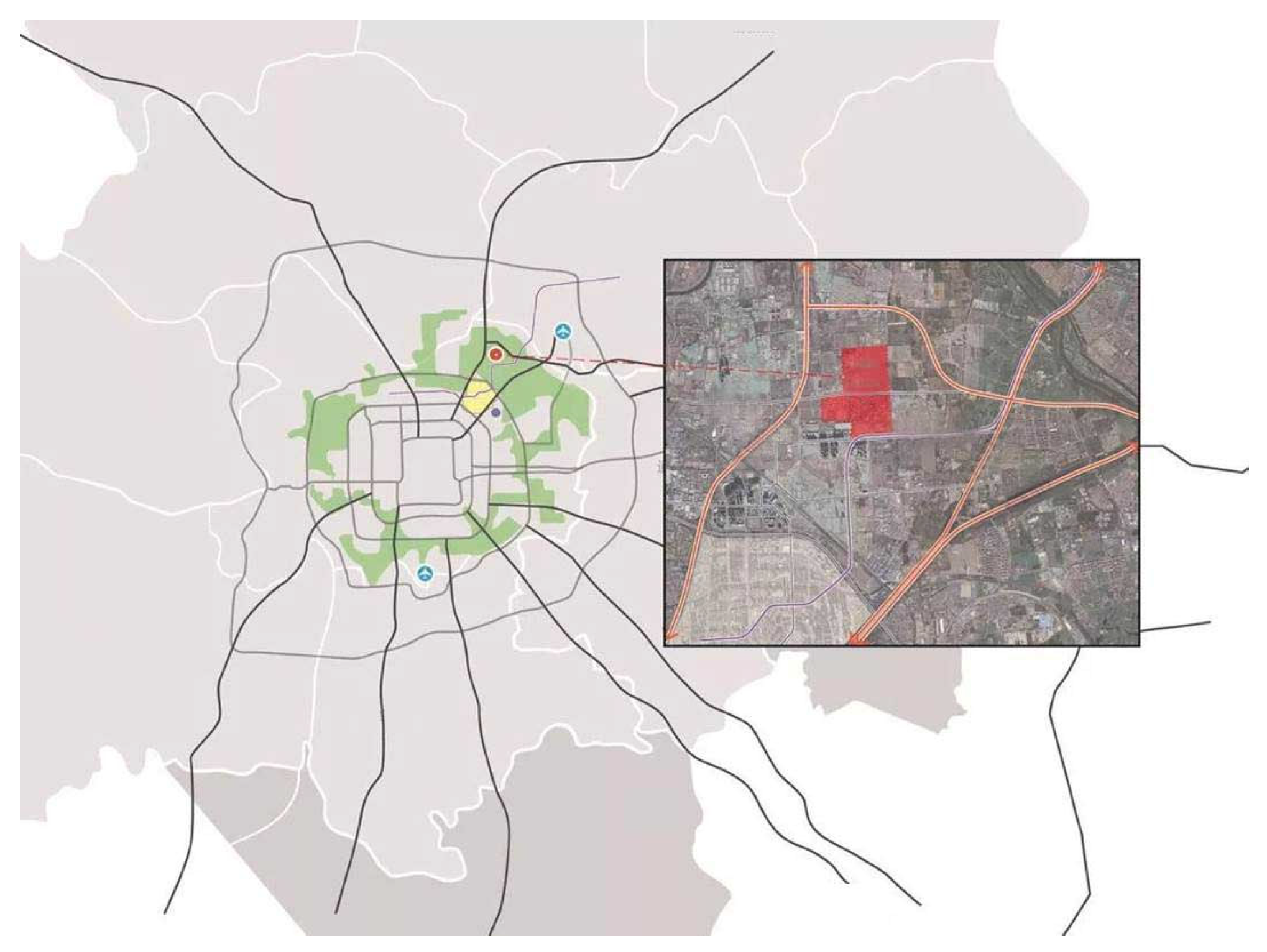
Figure 7.
Photos of Cuigezhuang Urban Village (Image source: Author).

Figure 8.
Spatial texture changes from 2015 to 2025 of Cuigezhuang Urban Village (Image source: Author).
Figure 8.
Spatial texture changes from 2015 to 2025 of Cuigezhuang Urban Village (Image source: Author).
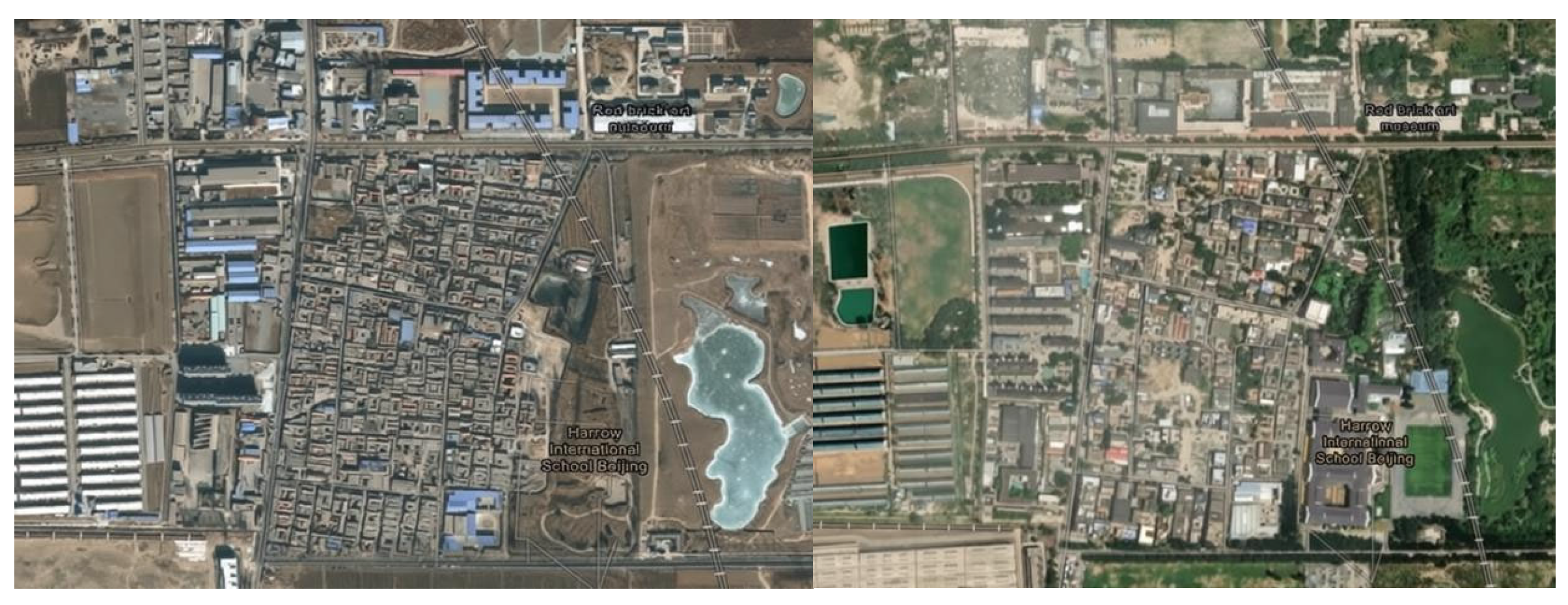
Figure 9.
The intersection of traditional villages and modern cities (Image source: Author).
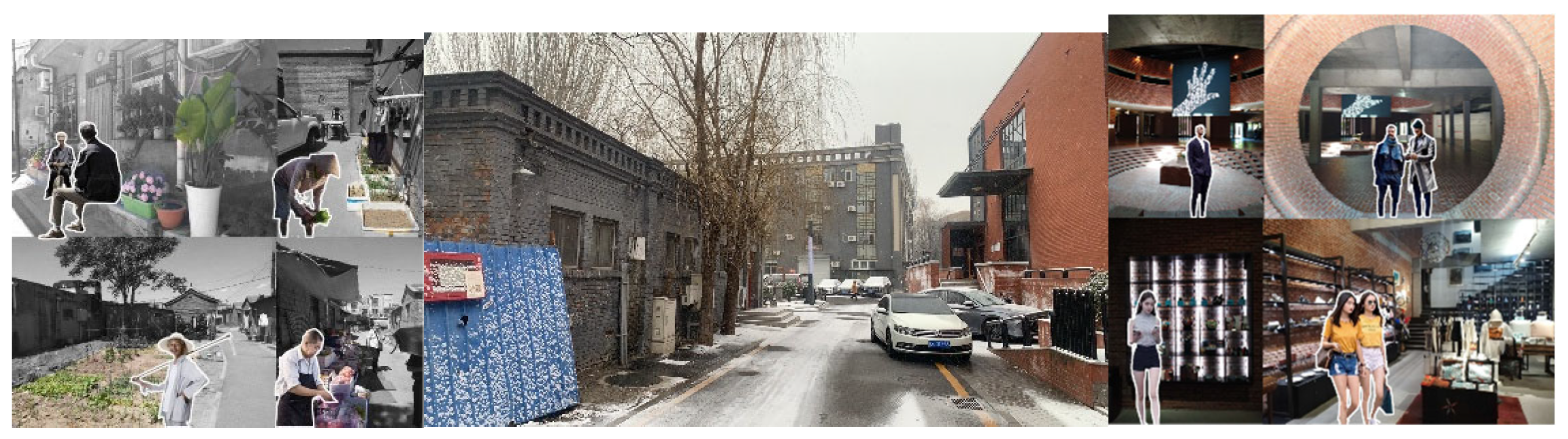
Figure 10.
The photo shows the occupation of sidewalks (left), the occupation of landscape walls (middle), and illegal parking (right) in the urban village (Image source: Author).
Figure 10.
The photo shows the occupation of sidewalks (left), the occupation of landscape walls (middle), and illegal parking (right) in the urban village (Image source: Author).
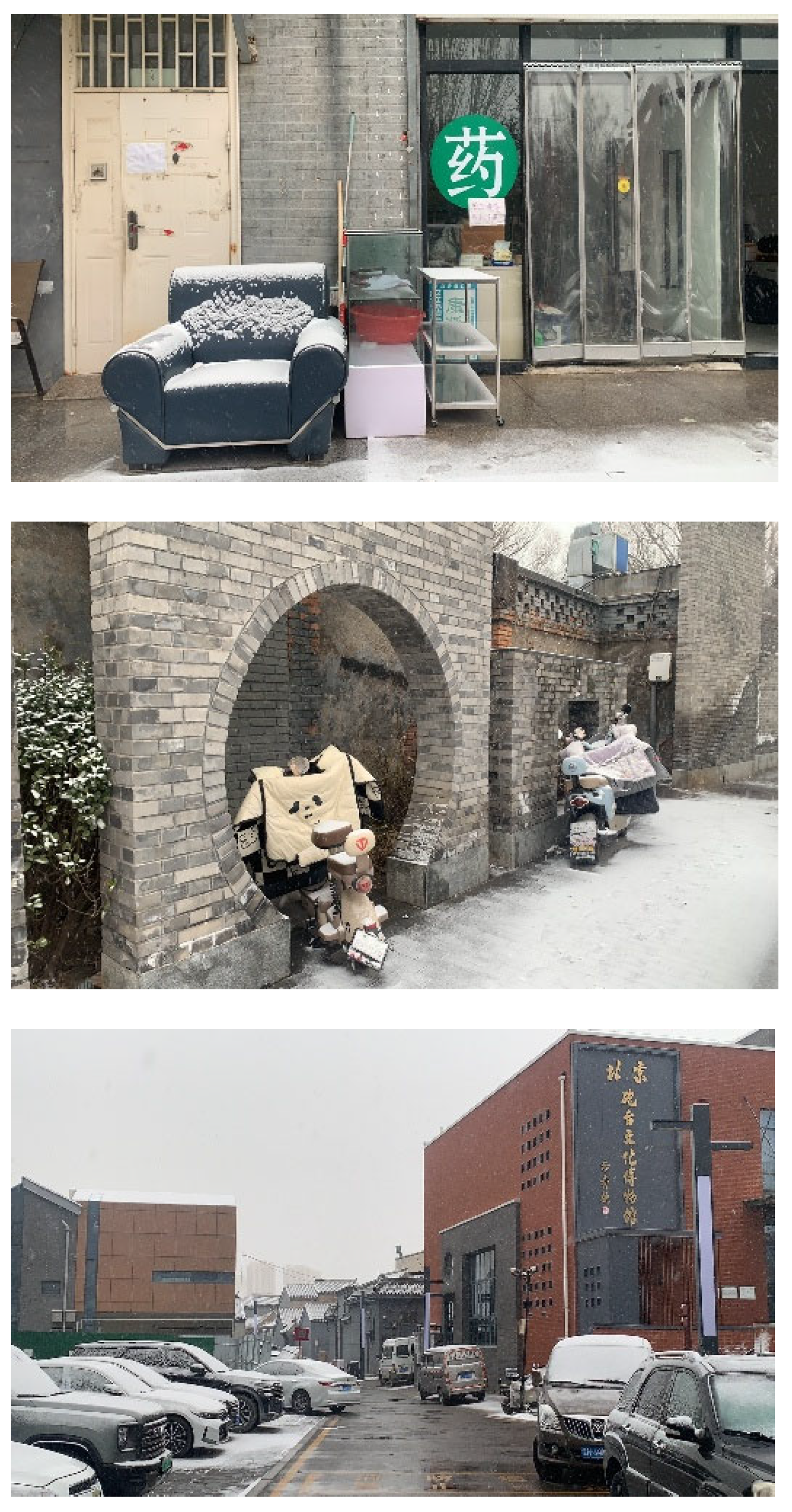
Figure 11.
Location Map of El Perchel in Malaga (Image source: Author).
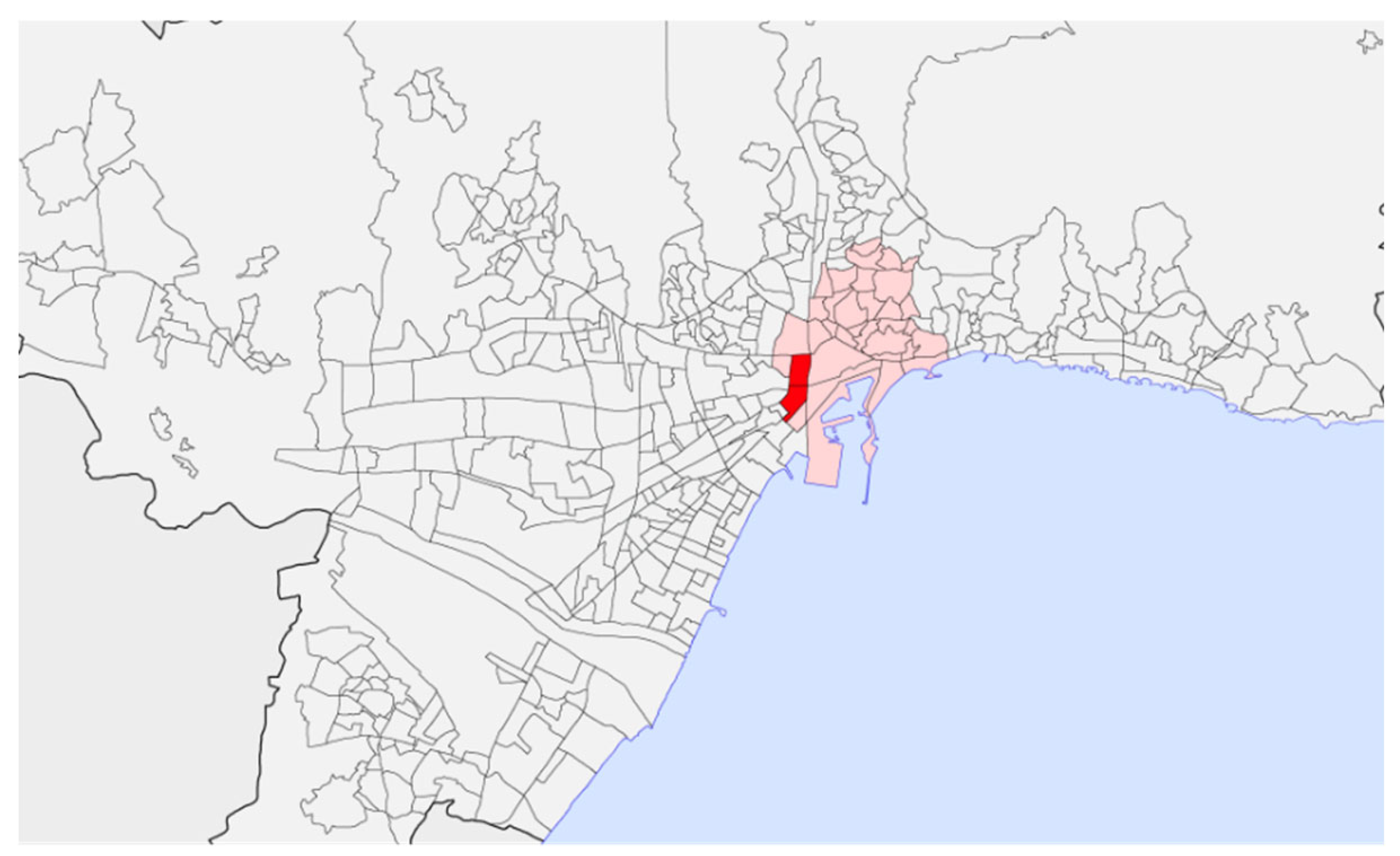
Figure 12.
Corralón de Santa Sofía (Left 1, 2) and SUNC area (Right 1, 2) in Perchel (Image source: Author).
Figure 12.
Corralón de Santa Sofía (Left 1, 2) and SUNC area (Right 1, 2) in Perchel (Image source: Author).
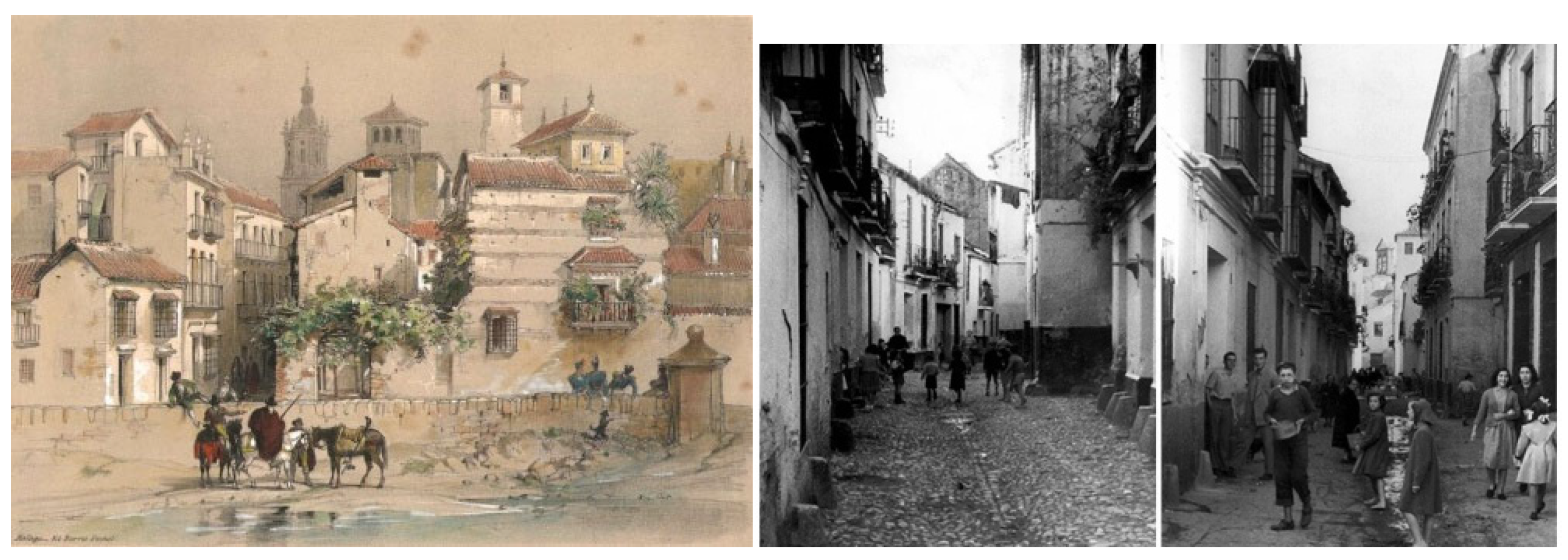
Figure 13.
Corralón de Santa Sofía (Left 1, 2) and SUNC area (Right 1, 2) in Perchel (Image source: Author).
Figure 13.
Corralón de Santa Sofía (Left 1, 2) and SUNC area (Right 1, 2) in Perchel (Image source: Author).
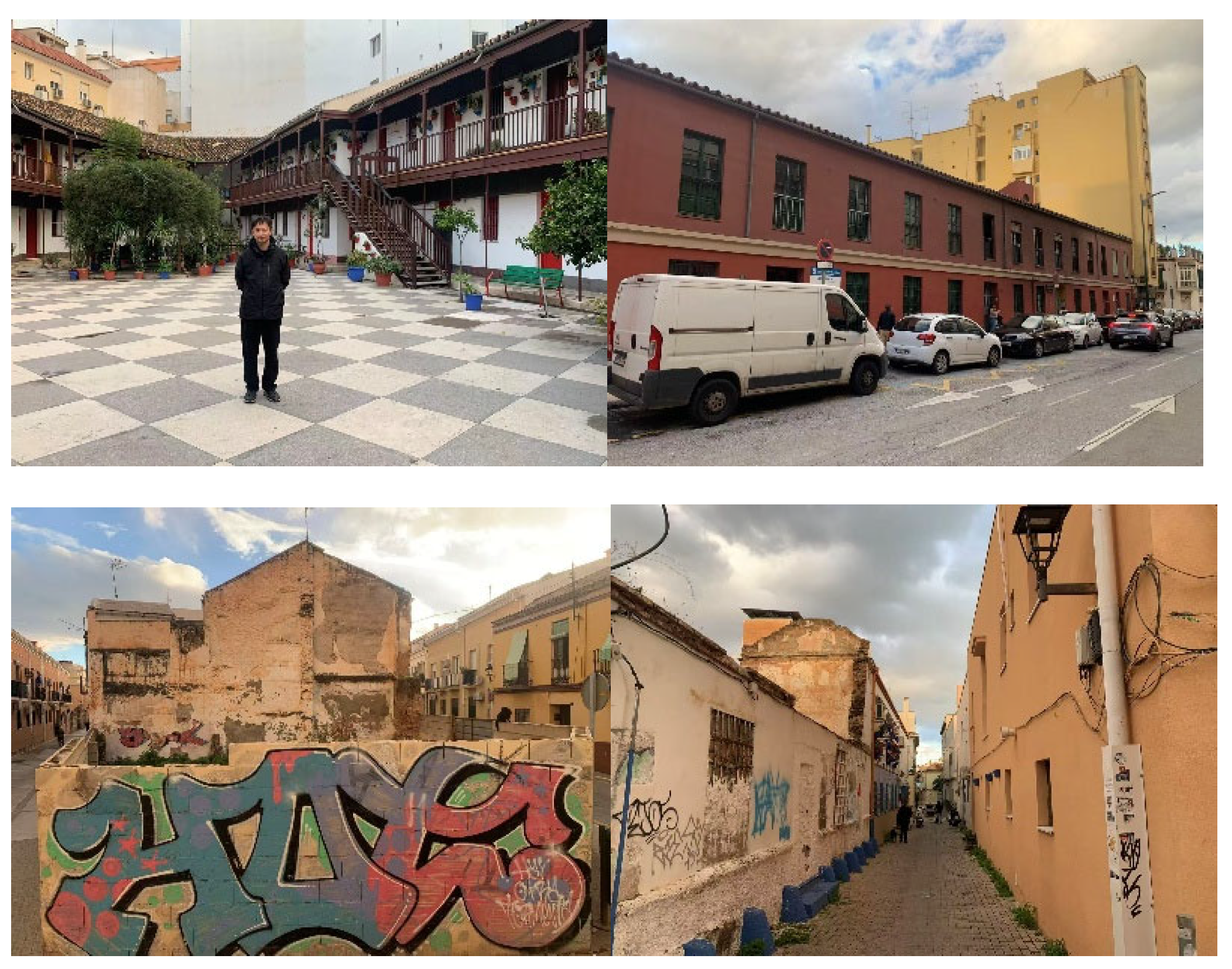
Figure 14.
El Perchel's 1985–95 regeneration plan (Image source: Rehabilitación de los barrios de Trinidad y Perchel).
Figure 14.
El Perchel's 1985–95 regeneration plan (Image source: Rehabilitación de los barrios de Trinidad y Perchel).
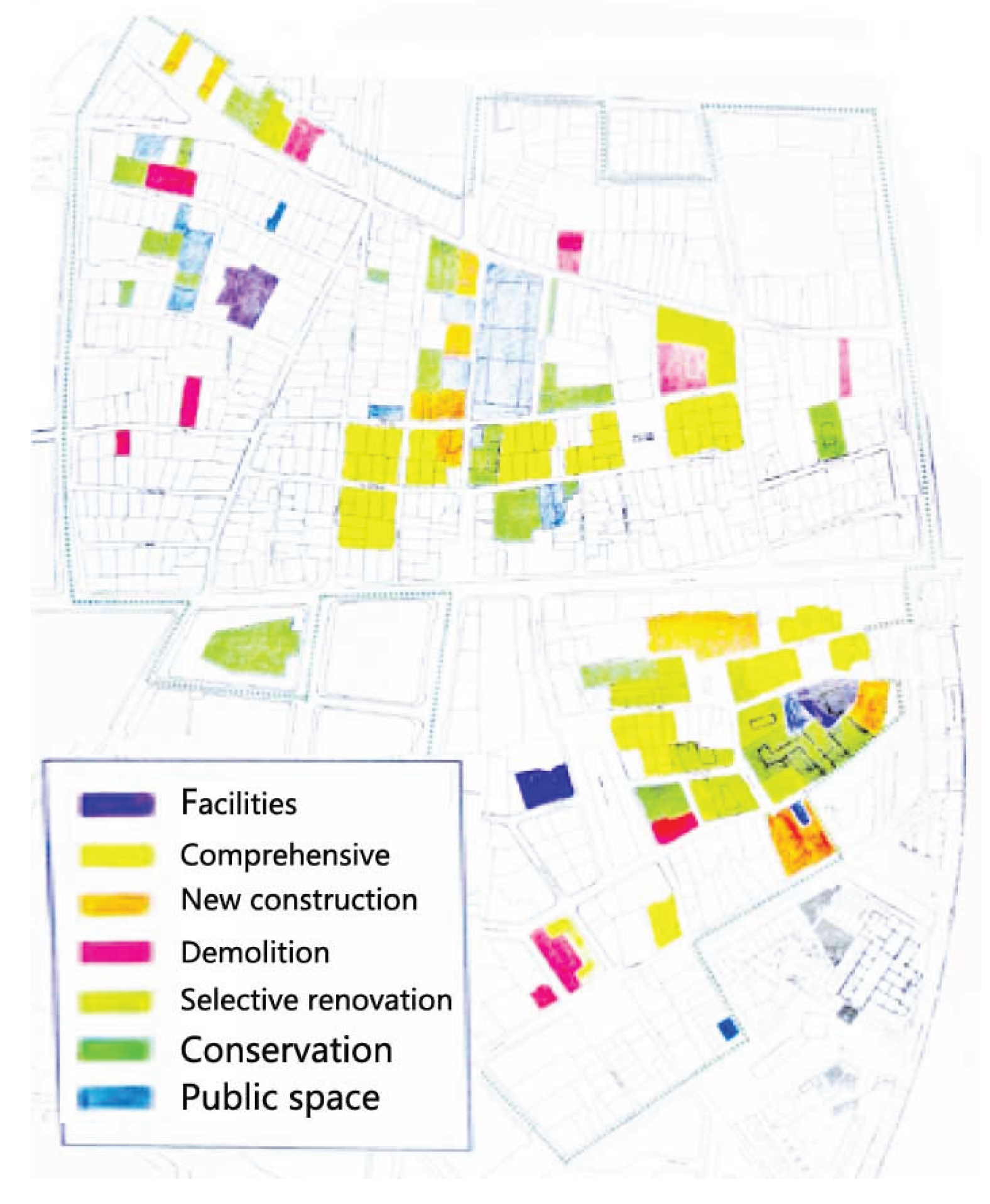
Figure 15.
Planting courtyard (left), Calle Puente (middle), and Corralón de Santa Sofía (right) of El Perchel in Malaga (Image source: Author).
Figure 15.
Planting courtyard (left), Calle Puente (middle), and Corralón de Santa Sofía (right) of El Perchel in Malaga (Image source: Author).
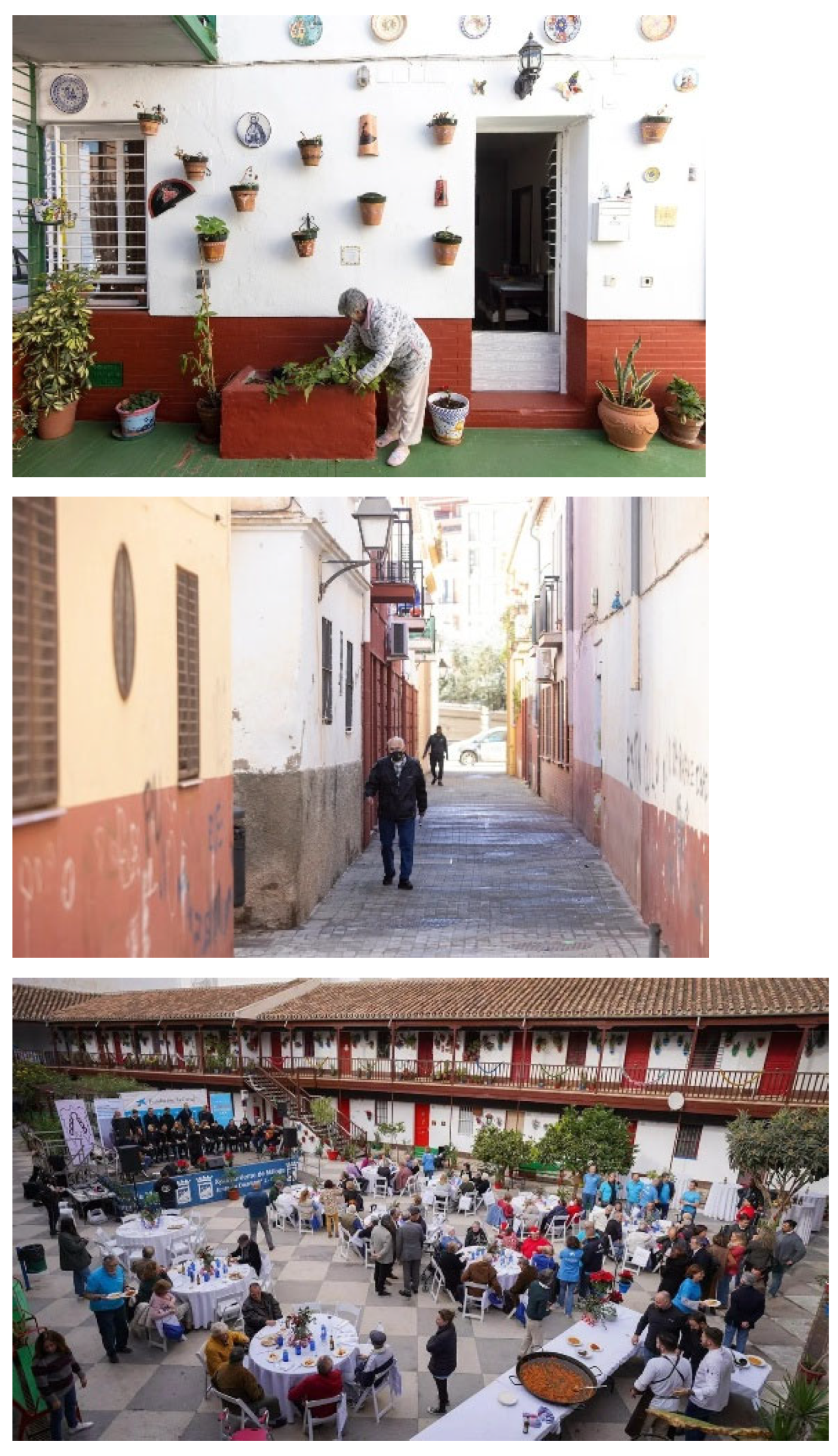
Figure 16.
Population aggregation heat map in Cuigezhuang Urban Village: Cultural tourists (Left), local residents (Middle), shopping and dining visitors (Right) (Image source: Author).
Figure 16.
Population aggregation heat map in Cuigezhuang Urban Village: Cultural tourists (Left), local residents (Middle), shopping and dining visitors (Right) (Image source: Author).
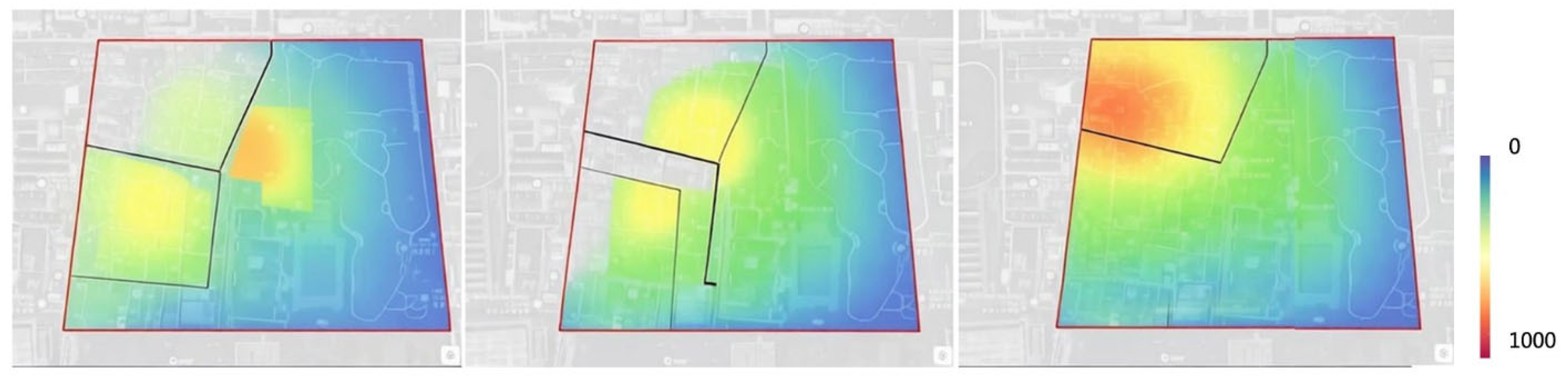
Table 3.
Comparative analysis of characteristics of urban villages in China and SUNC areas in Spain.
Table 3.
Comparative analysis of characteristics of urban villages in China and SUNC areas in Spain.
| Dimension | Chinese Urban Village | Spanish SUNC Area |
| Physical | High-density "handshake buildings," narrow lanes, deficient infrastructure | Historic fabric intact, moderate density, incomplete infrastructure |
| Land Status | Collective ownership, legal grey zone | Private ownership, legally urban but unconsolidated |
| Residents | Original villagers (landowners) + migrant renters | Original residents (owners/tenants) + low-income groups |
| Economy | Informal rental market, self-built construction | Mixed, transitioning to formal urban economy |
| Heritage | Ancestral halls, temples, intangible practices; physical fabric vulnerable | Corralones, archaeological sites, agricultural systems (e.g., irrigation); legally protected |
| Social Fabric | Stratified, unstable, high turnover | Cohesive, stable networks, long-term residence |
Table 4.
Comparative analysis of policy mechanisms and regeneration models of urban villages in China and SUNC areas in Spain.
Table 4.
Comparative analysis of policy mechanisms and regeneration models of urban villages in China and SUNC areas in Spain.
| Dimension | Chinese Urban Village | Spanish SUNC Area |
| Land Policy | Collective ownership; forced expropriation; municipal land finance; no national law | Private ownership; RDL 7/2015; PERI plans; equidistribución cost-sharing; 10% land cession; mandatory participation |
| Community Fabric | Villagers displaced; migrants expelled; networks severed; "displaceability"; no "right to the city" | Residents retained in situ; cohesion strengthened; corralones preserved; "right to the city" legally protected |
| Regeneration Strategy | State-led; top-down; single-phase demolition; heritage as asset; no anti-displacement measures | Multi-level governance; incremental; heritage as legal constraint; protective rehabilitation central |
| Spatial Design | Tabula rasa superblocks; standardized high-rises; car-oriented; public space eliminated; agriculture erased | Fine-grained morphology; minimal reversible interventions; pedestrian-priority; public space enhanced; agricultural heritage integrated |
Sources: Spain: Real Decreto Legislativo 7/2015, de 30 de octubre, por el que se aprueba el texto refundido de la Ley de Suelo y Rehabilitación Urbana; Ley 12/2015, de 24 de junio, de Patrimonio Cultural de Andalucía; Municipal Urban Planning Regulations (PERI).
Table 8.
A Comparative Assessment of Regeneration Frameworks: Cuigezhuang (China) and El Perchel (Spain).
Table 8.
A Comparative Assessment of Regeneration Frameworks: Cuigezhuang (China) and El Perchel (Spain).
| Dimension | Chinese Urban Village | Spanish SUNC Area | Transferability | Barriers and Enablers |
| Governance & Planning Scale | Top-down, state-led; fragmented by municipal boundaries and land finance imperatives | Multi-level with PERI integration; landscape-scale thinking through equidistribución | ★★★ | Barrier: Deeply entrenched land finance dependence. Enabler: Emerging "micro-regeneration" policy discourse. |
| Economic Model & Capital | Municipal land sales and external corporate investment; risk of displacement and informal rental market destruction | Community cost-sharing through equidistribución; diversified value capture among landowners | ★★★★ | Barrier: Lack of mechanisms for local benefit-sharing. Enabler: Collective land system could support cooperative models. |
| Community Participation | Government-led consultation; villagers and migrants passive recipients or displaced | Legally mandated participation; Asociación de Vecinos with formal decision-making role | ★★★ | Barrier: Weak tradition of formal community self-governance. Enabler: Existing village committees could be transformed. |
| Cultural Heritage Approach | Focus on physical monuments or commodified facades; living culture threatened by displacement | Integrated tangible-intangible protection; corralones culture embedded in daily life and legally protected | ★★★★ | Barrier: Regulatory focus on material fabric and economic returns. Enabler: Strong indigenous cultural assets and growing authenticity demand. |
| Spatial Morphology | Extreme fragmentation; "two worlds" of traditional and contemporary; parking entropy; loss of fine-grained permeability | Morphological coherence; human-scale continuity; graduated spatial hierarchies; pedestrian-priority networks | ★★★★★ | Barrier: Standardized superblock redevelopment models. Enabler: Traditional urban villages already possess fine-grained fabric. |
| Anti-Displacement Measures | Absent; "displaceability" institutionalized; forced relocation to distant resettlement | Central to PERI framework; in situ rehabilitation; "right to the city" legally embedded | ★★★ | Barrier: Short-term efficiency and revenue maximization. Enabler: Social stability concerns rising on policy agenda. |
| Environmental Integration | Agricultural function completely lost; green space virtually absent; NDVI 0.12 | Agricultural heritage preserved (e.g., irrigation systems); courtyard vegetation; NDVI 0.28 | ★★★★ | Barrier: Urban-rural dualism erasing agricultural identity. Enabler: Ecological civilization discourse supports green infrastructure. |
Note:★★ Fragile base, high institutional barriers; arduous early gains.★★★ Enablers present, yet sustained capacity building required.★★★★ Pilots ready; rapid policy uptake feasible.★★★★★ Strong convergence, immediate applicability.
Disclaimer/Publisher’s Note: The statements, opinions and data contained in all publications are solely those of the individual author(s) and contributor(s) and not of MDPI and/or the editor(s). MDPI and/or the editor(s) disclaim responsibility for any injury to people or property resulting from any ideas, methods, instructions or products referred to in the content. |
© 2026 by the authors. Licensee MDPI, Basel, Switzerland. This article is an open access article distributed under the terms and conditions of the Creative Commons Attribution (CC BY) license (http://creativecommons.org/licenses/by/4.0/).
Copyright: This open access article is published under a Creative Commons CC BY 4.0 license, which permit the free download, distribution, and reuse, provided that the author and preprint are cited in any reuse.


