
Submitted:
03 April 2026
Posted:
07 April 2026
You are already at the latest version
Abstract
In this work, the activity of vanadium-doped and undoped phosphomolybdic acids, H3+n PMo12-nVnO40 (n = 0, 1, 2 and 3), was evaluated in the acetalization reaction of furfural with alkyl alcohols. The main focus was to verify how vanadium charge impact catalytic activity of phosphomolybdic acid, and to try to link these effects to changes in their structural properties. The main reaction parameters such as catalyst charge, catalyst concentration, temperature, time, type of alcohol, type of aldehyde, vanadium charge, and H+ ion charge were studied. Various Brønsted acids (sulfuric, p-toluenesulfonic, undoped and doped phosphomolybdic acids) were evaluated in condensation reactions of furfural with methyl alcohol. Notably, H4PMo11V1O40 was the most active and selective catalyst toward the formation of methyl acetal furfural. The water has a leveling effect over the strength of these acids. Nonetheless, under reaction conditions, the presence vanadium impacted the strength of phosphomolybdic acids, allowing distinguish what is the strongest; vanadium monosubstituted phosphomolybdic acid. The superior performance of H4PMo11V1O40 was attributed to its additional acidity, resulting from the presence of very strong (H+) and Lewis and Brønsted acid sites, due to the substitution of Mo6+ by V5+ in its structure.
Keywords:
phosphomolybdic acids
; furfural
; acetals
; bioadditives
1. Introduction
The use of renewable raw materials for the production of biofuels and fine chemicals can be a viable alternative to reduce dependence on fossil reserves. The development of alternative technology based on sustainable resources can reduce the emission of greenhouse gases and minimize the environmental impact of fuels burn, and diminish the damage to human health [1,2]. In this sense, lignocellulosic biomass represents an important option to produce chemicals and renewable origin fuels. In addition to being converted into energy, biomass also can be converted to high-added value chemicals, which are used in the manufacture of flavors, fertilizers, food additives, fuel additives, solvents, drugs, plastics, and a series of other products with diverse applications [3,4].
Furfural obtained from lignocellulosic material is recognized as a versatile platform molecule. Its synthesis occurs through acid dehydration of C5-C6 carbohydrates which are present in the hemicellulose. [5,6] Its chemical structure makes the molecule highly reactive, due to the presence of an aldehyde group and the α, β unsaturation of the furan ring. These specificities contribute to furfural being used as a starting material for the synthesis of more than 80 types of chemicals with high-added value and liquid fuels [7,8,9].
Among the various furfural-derived compounds, acetals have been highlighted as an additive in fossil fuel and biofuel, acting as antiknocks, increasing the octane number and reducing the emission rates of toxic gases derived from the combustion process [10,11,12]. Acetalization of aldehydes with alcohols provides an efficient synthetic route to produce fuel additives, which has been carried out in the presence of liquid Brønsted acid catalysts (i.e., HCl, H2SO4). However, although inexpensive and efficient, these catalysts are highly corrosive, difficult to handle, and require neutralization steps which results in a large generation of residues and effluents [13,14,15].
Solid catalysts may answer this demand since they are less corrosive, easily recoverable from the reaction medium, and avoid neutralization steps. There is a plethora of solid catalysts that have been used in acetalization reactions: transition metal salts, metal complexes, metal solid-supported, ionic liquid anchored metal [16,17,18,19,20].
Keggin heteropolyacids (HPAs) are also a versatile class of polyoxometalates which can be used as catalysts in several organic transformations such as oxidation, epoxidation, etherification, and oxidative esterification [21,22,23,24,25,26]. Similarly, they have been used also in ketalization and or acetalization reactions [27,28,29,30]. The most used Keggin HPAs catalysts have general formulae HnP(Si)W(Mo)12O40 (n = 3, 4). Due to the presence of H+ and W6+ or Mo6+ cations, they have redox and acid properties. Moreover, they have been used either in homogeneous conditions because are soluble in polar solvents, or heterogeneous phase as solid-supported catalyst or insoluble salts [30,31]. The structure of HPAs can be easily modified, for instance, by removing MO units (M = W, Mo) generating lacunar catalysts, which may still be doped with transition metal cations [32,33]. Another strategy to improve the performance of HPAs is to replace their protons with metal cations and or exchange the addenda atoms (i.e., Mo, W) with V atoms [29,34]. Particularly, when vanadium cations are present in the Keggin anion, both the acidity strength and redox potential of HPAs are enhanced [35,36,37,38].
In this work, the objective was to evaluate how the substitution of molybdenum atoms with vanadium impacts the catalytic activity of phosphomolybdic acids in the acetalization reactions of furfural with alkyl alcohol. To do it, the reactions were carried out under different conditions (catalyst load, temperature, time), and various alkyl alcohols. Different Brønsted acid catalysts were evaluated in furfural condensation reaction with methyl alcohol.
2. Materials and Methods
All chemicals were purchased from commercial sources. Furfural and alkyl alcohols were all from Sigma-Aldrich (99 %). Hydrate H3PMo12O40 (99 %) and other synthesis precursors MoO3 (99.5%), H3PO4 (85%), NaVO3 (98%), HCl (37%), Na2HPO4 (≥ 98%), Na2MO4 (≥ 98%) were also from Sigma-Aldrich.
2.1. Synthesis of the H4PMo11VO40
The H4PMo11VO40 acid was synthesized according to the literature [36,37]. Typically, MoO3 (15.8 g) and V2O5 (1 3 to 0.9 g) were dissolved in 350 mL of deionized water and heated to boiling. After, 1.2 g of 85% H3PO4 was added to the solution, which was maintained at 363 K and refluxed for 6 h. A clear solution was obtained cooling to room temperature. The H4PMo11V1O40 solid acid was obtained after water evaporation, it was recrystallized and then dried at 373 K/ 5 h.
2.2. Synthesis of H5PMo10V2O40
The H5PMo10V2O40 acid was synthesized according to adaptations from the literature. [38,40,41,42,43] Aqueous solutions were mixed in the following proportions: 100.0 mL of NaVO3 (1.5 g), 100.0 mL of MoO3 (3.7 g) under heating and stirring. 0.5 mL of H3PO4 was added after the system temperature reached 353 K. After 2 h, 5.0 mL of HCl were added dropwise to the solution. The mixture was kept at 363 K for 5 h. The solid H5PMo10VO40 acid was obtained after evaporation of the solvent, crystallization, and drying at 373 K/ 6.0 h.
2.3. Synthesis of H6PMo9V3O40
The H6PMo9V3O40 acid was synthesized following the literature adaptations [36,38]. Aqueous solutions were prepared at 343 K and mixed in the following proportions: 50.0 mL of Na2HPO4 (0.71 g), 100.0 mL of NaVO3 (3.66 g). Afterwards, 0.5 mL of HCl and 100.0 mL of aqueous solution of Na2MoO4 2∙H2O (5.45 g) were added to the previous mixture. A further 8.5 mL of HCl was done and the solution stirred and heated to 363 K/ 6 h. The solid acid H6PMo9V3O40 was obtained after evaporation of the solvent, crystallized and dried at 383 K for 6.0 h.
2.4. Characterization of the Catalysts
Our research group synthesized and characterized vanadium-doped phosphomolybdic acids in recent works [36,37,39]. Besides the acid strength, which was evaluated using potentiometric titration curves, other analyses such as infrared and UV-Vis spectroscopies, X-ray diffraction, thermal analysis, scan electronic microscopy, energy dispersive x-rays spectroscopy analyses were also performed. Thus, we consider it unnecessary to reproduce those data here, except where they are essential to justify experimental results.
2.5. Identification of The Main Reaction Products
The identification of main reaction products were performed using a Shimadzu GC-2010 gas chromatograph coupled to an MS-QP 2010 mass spectrometer (e.i. 70 eV, m/z scan range 50-450).
2.6. Catalytic Tests
Catalytic runs were carried out in a three-necked glass reactor (25.0 mL), with a sampling septum, in a thermostatically controlled bath, under magnetic stirring and coupled to a reflux condenser. Typically, furfural (2.77 mmol) was dissolved in methyl alcohol solution (10 mL), magnetically stirred (10.0 mL), and kept at 298 K. The addition of vanadium-doped phosphomolybdic acid catalyst (0.013 mol %) started the reaction.
The reaction progress was monitored for 2.0 h, periodically collecting aliquots and analyzing them in a GC instrument (Shimadzu 2010, FID), equipped with a 20 M Carbowax capillary column (30.0 m x 0.25 mm x 0.25 mm). The temperature program used in the gas chromatography analyses was 353 K (3 min), heating rate (10 K min-1) up to 513 K. The injector and detector temperatures were 523 K and 553 K, respectively. To calculate the conversion (Equation (1)), a standard curve using furfural was constructed, establishing the relation between GC peak areas and their concentration.
% conversion = (A0 - Ai)/A0 x 100 (Equation (1))
where (A0) and (Ai) are the initial and instantaneous areas of furfural GC peaks, respectively.
To calculate the reaction selectivity, an analytical curve (area of GC peak versus concentration) was built for furfural. The same was done with alkyl acetals of furfural. Thus, it was possible determining the response factor of products used it to correct the GC peak area of product and calculate the products selectivity using the Equation (2).
Ap = product GC peak area x (r.f.) = furfural GC peak area
% selectivity = [Ap/(A0 - Ai)] x 100 (Equation (2)),
Where Ap is the product GC peak corrected area.
3. Results and Discussion
3.1. Effect of Vanadium Doping on the Conversion and Selectivity of the Furfural Acetalization Reaction with Methyl Alcohol Catalyzed by Phosphomolybdic Acid
Initially, the reactions were carried with undoped and vanadium-doped phosphomolybdic acids following conditions reported in literature [13] Kinetic curves are displayed in Figure 1. Reaction blank was carried at the same conditions, but without catalyst. Phosphomolybdic acids were used at the same concentration (0.013 mol %).
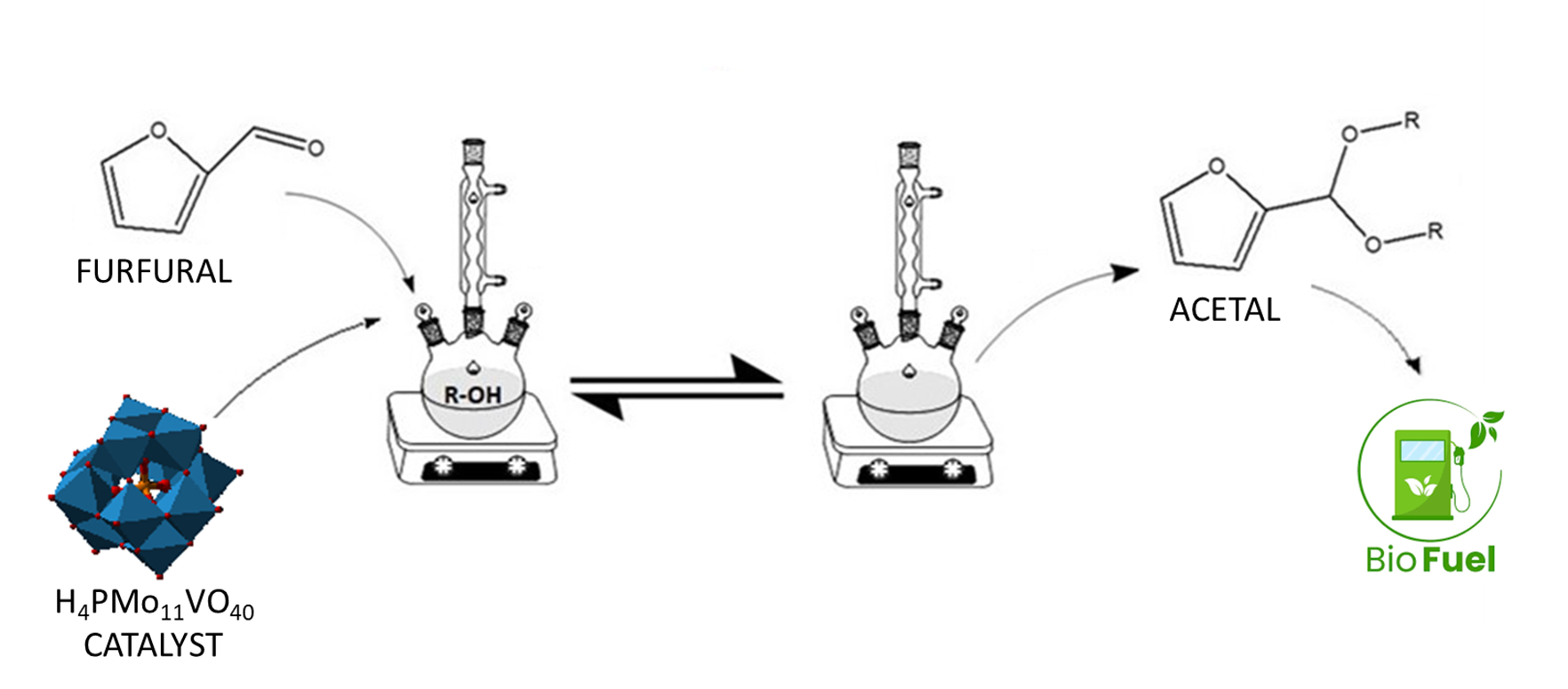
Scheme 1.
Acetalization of furfural with alkyl alcohol.

The acetalization of furfural with alkyl alcohol is a reversible reaction, which should be favored by the reactants excess (Scheme 1). Figure 1 shows that even with an alcohol excess, only a poor conversion was achieved after 2 h of reaction. Conversely, in the presence of an acid catalyst the reaction became faster and furfural was converted to acetal, reaching almost 90 % conversion within the first hour of reaction catalyzed by the H4PMo11VO40. No hemi-acetal, a reaction intermediate was detected.
Figure 1.
Brønsted acid-catalyzed furfural acetalization with methyl alcohol at room temperaturea. aReaction conditions: furfural (5.5 mmol); reaction volume (10 mL); catalyst (0.013 mol%); temperature (298 K).
Figure 1.
Brønsted acid-catalyzed furfural acetalization with methyl alcohol at room temperaturea. aReaction conditions: furfural (5.5 mmol); reaction volume (10 mL); catalyst (0.013 mol%); temperature (298 K).
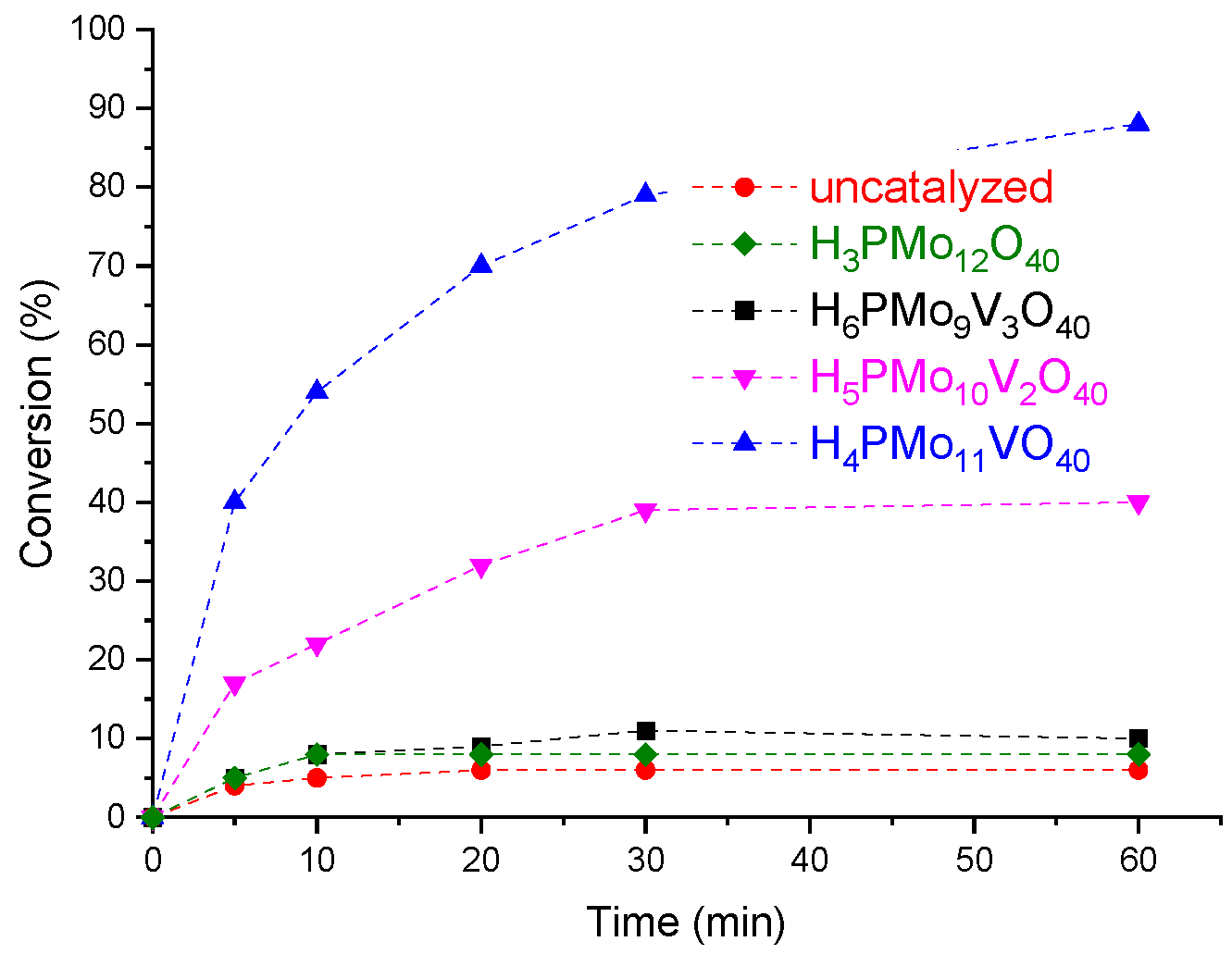
The reaction was very fast, the stabilization of the conversion toward single product formed occurred in just 30 minutes after the start of the reaction. The efficiency of phosphomolybdic acid catalysts obeyed the following trends: H4PMo11VO40 > H5PMo10V2O40 > H6PMo9V3O40 > H3PMo12O40. In all of catalyzed reactions, dimethyl furfural acetal was the only detected product. No product was detected in blank reaction. However, checking the mass balance of reaction, comparing the consumed furfural GC peak area and the dimethyl furfural acetal GC peak corrected area, we have found that in the absence of catalyst or in the H3PMo12O40-catalyzed reactions, furfural condensation products (humins) were formed, since the reaction became brown (Figure 2).
Remarkably, the H4PMo11VO40 was the most efficient catalyst, achieving the highest conversion after 30 min reaction. Indeed, the substitution of one molybdenum mol with vanadium increased noticeably the activity of phosphomolybdic acid (H3PMo12O40). Previously, we have found that phosphomolybdic acid was an efficient catalyst in furfural acetalization reaction with methyl alcohol only when used at concentrations equal higher than 0.5 mol % [16]. Herein the reactions were carried out with a concentration of 0.013 mol %, a catalyst load around fifty times lower (Figure 1).
Despite the beneficial effect of vanadium doping, its increase led to the decrease in conversion. Moreover, the usage of more than 2 mol vanadium / anion had no positive effect on their catalytic activity. The titration curves can help us the true reason (Figure 3). This technique allows to evaluate the acidity strength of catalysts, according to the value of the initial electrode potential; Ei > 100 mV (very strong sites), 0 < Ei < 100 mV (strong sites), -100 < Ei < 0 (weak sites) and Ei < -100 mV (very weak sites) [43]. The order of acidity obtained was as follows: H4PMo11VO40 > H3PMo12O40 > H5PMo10V2O40 > H6PMo9V3O40.
In a previous work, we have found that the acidity properties of these catalysts were useful to explain their activity [37]. These findings were corroborated by the literature as we will describe. Serwicka et al. demonstrated that an increase in vanadium doping weakens the Brønsted acidity strength of phosphomolybdic acid catalysts [44]. Moreover, Vilabrille et al. reported that the exchanges of Mo6+ with V5+ weakens the P–Oa bond and its interaction with the di-hydronium cations H5O2+, modifying the charge of the terminal oxygen atom and consequently, favoring releasing of the new proton, making it more acid [45]. Our group demonstrated this effect using infrared spectroscopy to show the displacement of vibration bands of these bonds [36].
This effect occurs mainly on the H4PMo11VO40, that is an acid stronger than H3PMo12O40. However, a vanadium load higher than one mol per catalyst mol promotes an increase in negative charge of heteropolyanion, which difficult the exit of new protons of di-and trisubstituted vanadium phosphomolybdic acids, leading to a decline in their acidity strength [36,44,45,46]. These explanations support the activity of vanadium catalyst. Nonetheless, the lower activity of H3PMo12O40 compared to the di-and tri-substituted acids require an additional commentary. We think that it is evidence that although the presence of two or three vanadium mols/ heteropolyanion weaken their acidity strength (Figure 3), it still has a beneficial effect sufficient to do them acid catalysts more efficient than pristine heteropolyacid. It suggests that vanadium may also act as a catalytic site to polarize the carbonyl group of the furfural, contributing to do easier its nucleophilic attack by the alkyl alcohol.
3.2. Assessment the Activity of other Brønsted acid Catalysts
In Figure 1, since all the catalysts were used at 0.013 mol% load, the H+ concentrations were thus different for each catalyst, depending on the its composition. Thus, we decided to check the activity of other Brønsted acid catalysts evaluating their performance in the acetalization of furfural at equal H+ loads, which was fixed at 0.20 mol %. To do it, doped or undoped phosphomolybdic acids, p-toluenesulfonic, and sulfuric acids were selected (Figure 4).
It is noteworthy that the reaction selectivity remained the same with dimethyl acetal furfural as only reaction product, notwithstanding the temperature.
Using the same H+ concentration, molybdenum heteropolyacids and p-toluenesulfonic acids had a very similar catalytic behavior within the studied period according to following trend: H4PMo11VO40 > H3PMo12O40 > p-toluenesulfonic > H2SO4 acids. It is evidence of positive effect played by the vanadium doping. The lowest activity was observed in the presence of sulfuric acid catalyst. It can be consequence of water in the concentrated sulfuric acid solution (98 wt. %), which can shift the reaction equilibrium toward reactants. Independent of Brønsted acid catalyst, no humins formation was verified.
3.3. Impacts of H4PMo11VO40 Catalyst Load on The Reaction Conversions of Condensation of Furfural with Methyl Alcohol
After to select the most active catalyst, we have investigated the effect of its load on the reaction conversion (Figure 5). The conversion rate increased progressively with the use of higher catalyst concentrations, reaching a maximum with 0.050 mol% of catalyst in the first thirty minutes of the reaction. Regardless the catalyst load, no humins were formed and the furfural was exclusively converted into dimethyl acetal furfural.
Considering the initial concentration of furfural, the catalyst load and the final conversion reached after 30 min of reaction, we can calculate the turnover number in each run (Table 1).
The high TON are undeniable probe of high catalytic activity of H4PMo11VO40 catalyst in acetalization reactions of furfural with methyl alcohol. While the proportion substrate/ catalyst was to times higher, in the range of 2000 to 8000, the TON reached was proportionally being duplicated. Nonetheless, when the proportion substrate/ catalyst increased from 8000 to 16000, the TON achieved decreased from 6400 to 4000 (Table 1).
3.4. Influence of Furfural Load on the H4PMo11VO40-Catalyzed Condensation Reactions With Methyl Alcohol
To investigate the influence of variation in substrate concentration, various runs were performed keeping constant all the other reaction variables (Figure 6).
A decrease in furfural concentration led to an increase in the excess of methyl alcohol. In all the previous reactions (Figure 1 to 5), an initial proportion of 45: 1 between furfural and methyl alcohol was used. Herein, the furfural load was progressively diminished (considering 5.5 mmol as initial load), assuring that a pseudo-zero order in relation to the methyl alcohol concentration can be ascribed. Nonetheless, the Figure 6 show that the reaction conversions were positively impacted by the increase in furfural concentration. Nonetheless, the first-order dependence in relation to furfural concentration it can not be assigned, since two molecules of alcohol are required to convert one furfural molecule (Scheme 1). So, the dependence is lower than one.
3.5. Effects of Temperature on the H4PMo11VO40-Catalyzed Condensation Reactions of Furfural with Methyl Alcohol
To evaluate the temperature effects and to do them more visible, the reactions were performed using a lower catalyst load. Kinetic curves are displayed in Figure 7. Although omitted, the reaction selectivity remained constant keeping dimethyl acetal furfural as only reaction product, notwithstanding the temperature.
In reversible processes, depending on the exothermal or endothermal character of reactions, an increase in temperature can shift the reaction equilibrium toward the reactants or products, respectively. Figure 6 show that acetalization reactions of furfural with methyl alcohol are endothermic processes. Moreover, the reaction rates become gradually greater due to increase in number of effective collisions. Indeed, the reactions were accelerated by the increase in temperature.
The profile of kinetic curves was very similar, always achieving a high conversion after the five first minutes of reaction. In addition, regardless the temperature, all the curves had a slight increase after this period. It is possible that the large amount of water generated in the reaction beginning has been an effect that compromised the catalyst activity. Comparing the reactions performed at 298 K with 0.0063 mol % of catalyst (Figure 5) with that showed in Figure 6 (0.0095 mol %), it is possible see that once more an increase in catalyst load had a beneficial effect on the reaction conversion.
3.6. Effects of Alkyl Alcohol on the H4PMo11VO40-Catalyzed Condensation Reactions of Furfural
In condensation reactions of aldehydes with alcohols the environment surround of both functional groups (hydroxyl and carbonyl groups) can be essential to govern the reaction efficiency. The reactivity of various alkyl alcohols with furfural was assessed using H4PMo11VO40 as the catalyst (Figure 8).
The hydroxyl group of alcohol is responsible by the nucleophilic attack on the carbonyl group of the furfural. So, it is expected that the reactivity obeys the following tendency: primary > secondary > tertiary, due to the steric hindrance on these hydroxyl groups. Herein, secondary alcohols were almost unreactive, thus, tertiary ones were not tested.
After evaluate the conversion of the furfural acetalization reactions with the primary alcohols (methyl, ethyl, propyl, and butyl alcohols) it is possible to conclude that an increase in carbon chain size led to a decrease in conversion. Therefore, besides the steric hindrance, another effect should also impact the alcohol reactivity. The presence of methyl group straightly linked to the hydroxyl group trigger an electron donating effect. This explains the highest conversion achieved in reaction with methyl alcohol.
On the other hand, ethyl and propyl alcohols, which have their terminal methyl groups longer than hydroxyl group were less reactive. The lowest conversion reached in condensation reaction of furfural with butyl alcohol was noticeably lower than ethyl or propyl ones. The high hydrophobicity triggered by the methylene groups can diminish the affinity of hydroxyl group by the carbonyl group of the furfural, making difficult its nucleophilic attack.
3.7. Influence of Aldehyde on the H4PMo11VO40-Catalyzed Condensation Reactions with Methyl Alcohol
Figure 9 present the structural formula of biomass derivatives aldehydes investigated in condensation reactions with methyl alcohol using H4PMo11VO40 catalyst.
Among the two aromatic aldehydes tested, the furfural was much more reactive than benzaldehyde, which basically not reacted with methyl alcohol (Figure 10). The presence of oxygen atom in the aromatic ring should have an electron withdraw effect that make the carbon carbonylic carbon more electron deficient, favoring its nucleophilic attack by the hydroxyl group of alcohol.
On the other hand, citral was the second more active aldehyde, reacting faster than β-citronellal. The presence of allylic double bond should have an electron withdrawn effect over the carbonylic carbon. Possibly, it contributes to facilitate its attack by the hydroxyl group of methyl alcohol, enhancing the condensation reaction. Glutaraldehyde has two terminal CHO groups, which don’t undergo any electronic effect, and were almost unreactive.
5. Conclusions
A series of vanadium-doped phosphomolybdic acids, H3+n PMo12-nVnO40 (n = 0, 1, 2 and 3), was synthesized and evaluated as catalysts in the acetalization reaction of furfural with alkyl alcohols. Among them, H4PMo11V1O40 was the most active and selective catalyst toward the formation of methyl acetal furfural. The H4PMo11V1O40 catalyst was also more efficient than sulfuric, -p-toluenesulfonic, and undoped phosphomolybdic acids. The main focus was to verify how vanadium charge impact catalytic activity of phosphomolybdic acid, and to try to link these effects to changes in their structural properties. Effects of the main reaction parameters such as catalyst charge, catalyst concentration, temperature, time, type of alcohol, type of aldehyde, vanadium charge, and H+ ion charge were studied. The presence vanadium impacted the strength of phosphomolybdic acids, allowing distinguish what is the strongest; H4PMo11V1O40. Its superior performance was attributed to its additional acidity, resulting from the presence of very strong Bronsted (H+) and Lewis acid sites, due to the substitution of Mo6+ by V5+ in its structure. Primary alcohols (C1 to C4) were also successfully condensed with furfural. Terpene aldehydes (citral and β-citronellal) were also converted to methyl acetals.
Author Contributions
Conceptualization, M.J.S.; methodology, M.J.S., R.L.T., and C.J.A.R.; formal analysis, R.L.T., and C.J.A.R.; investigation, R.L.T. and C.J.A.R.; resources, M.J.S. and C.J.A.R.; data curation, C.J.A.R.; writing—original draft preparation, M.J.S., writing—review and editing, M.J.S.; supervision, M.J.S.; project administration, M.J.S.; funding acquisition M.J.S. All authors have read and agreed to the published version of the manuscript.
Acknowledgments
This study was financed in part by the Coordenação de Aperfeiçoamento de Pessoal de Nível Superior - Brasil (CAPES) - Finance Code 001. The authors are grateful for the financial support from CNPq and FAPEMIG (Brazil).
Conflicts of Interest
Declare conflicts of interest or state “The authors declare no conflicts of interest.”.
References
- Malode, S. J.; Prabhu, K. P.; Mascarenhas, R. J.; Shetti, N. P.; Aminabhavi, T. M. Recent advances and viability in biofuel production. Energy Convers. Manag., 2020, 10,100070-. [CrossRef]
- Agarwal, A.; Rana, M.; Park, J-H. Advancement in technologies for the depolymerization of lignin, Fuel Process. Technol., 2018, 181, 115-132. [CrossRef]
- Liguori, F.; Moreno-Marrodan, C.; Barbaro, P. Biomass-derived chemical substitutes for bisphenol A: Recent advancements in catalytic synthesis. Chem. Soc. Rev., 2020, 49, 6329-6363. [CrossRef]
- Katahira, R.; Mittal, A.; Mckinney, K.; Chen, X.; Tucker, M. P.; Johnson, D. K.; Beckham, G. T. Base-Catalyzed Depolymerization of Biorefinery Lignins. ACS Sustainable Chem. Eng., 2016, 3, 1474-1486. [CrossRef]
- Xu, C.; Paone, E.; Rodríguez-Padrón, D.; Lugue, R.; Mauriello, F. Recent catalytic routes for the preparation and the upgrading of biomass derived furfural and 5-hydroxymethylfurfural. Chem. Soc. Rev., 2020, 49, 4273-4306. [CrossRef]
- Aldureid, A.; Montané, D.; Liorca, J.; Medina, F. Ni-Mg/Al Mixed Oxides Prepared from Layered Double Hydroxides as Catalysts for the Conversion of Furfural to Tetrahydrofurfuryl Alcohol. Chem., 2023, 5, 571-588. [CrossRef]
- Hoang, A. T.; Pham, V. V.; 2-Methylfuran (MF) as a potential biofuel: A thorough review on the production pathway from biomass, combustion progress, and application in engines. Renew. Sust. Energy Rev., 2021, 148, 111265. [CrossRef]
- Zhao, Y.; Lu, K.; Xu, H.; Zhu, L.; Wang, S. A critical review of recent advances in the production of furfural and 5-hydroxymethylfurfural from lignocellulosic biomass through homogeneous catalytic hydrothermal conversion. Renew. Sust. Energy Rev., 2021, 139, 110706. [CrossRef]
- da Silva, M.J., Lopes, N.P.G.; Bruziquesi, C.G.O. Furfural acetalization over Keggin heteropolyacid salts at room temperature: Effect of cesium doping. Reac. Kinet. Mech. Cat., 2021, 133, 913-931. [CrossRef]
- Rubio-Cabellera, J. M.; Saravanamurugan, S.; Maireles-Torres, P.; Riisager, A. Acetalization of furfural with zeolites under benign reaction conditions. Catal Today, 2014, 234, 233-236. [CrossRef]
- da Silva, M. J.; Chaves, D. M.; Júlio, A. A.; Rodrigues, F. A.; Bruziquesi, C. G. Sn(II)-Exchanged Keggin Silicotungstic Acid-Catalyzed Etherification of Glycerol and Ethylene Glycol with Alkyl Alcohols. Ind. Eng. Chem. Res., 2020, 59, 9858-9868. [CrossRef]
- Raut, S. U.; Bhagat, P. R. Efficient photocatalytic acetalization of furfural to biofuel components using carboxyl-functionalized porphyrin photocatalyst, under visible light irradiations. Biomass Conv. Bioref., 2021. [CrossRef]
- Morone, A.; Apte, M.; Pandey, R.A. Levulinic acid production from renewable waste resources: Bottlenecks, potential remedies, advancements and applications. Renew Sustain Energy Rev 2015, 51, 548–65.
- Ratthiwal, J.; Lazaro, N.; Reyes, A. A. R.; Osman, S. M.; Reubroycharoen, P.; Luque, R. Batch and continuous-flow room temperature furfural acetalization with ethanol over aluminophosphate (APAl) catalysts for biofuels production. Fuel, 2023, 332, 126049. [CrossRef]
- Appaturi, J. N.; Ramalingam, R. J.; Al-Lohedan, H. A.; Khoerunnisa, F.; Ling, T. C.; Ng, E-P. Selective synthesis of dioxolane biofuel additive via acetalization of glycerol and furfural enhanced by MCM-41-alanine bifunctional catalyst. Fuel, 2021, 288, 119573. [CrossRef]
- Teixeira, M.G.; Natalino, R.; da Silva, M. J. A kinetic study of heteropolyacid-catalyzed furfural acetalization with methanol at room temperature via ultraviolet spectroscopy. Catal. Today, 2020, 344, 143-149. [CrossRef]
- Silveira, C. C.; Mendes, S. R.; Ziembowicz, F. I.; Lenardão, E. J.; Perin, G. The use of anhydrous CeCl3 as a recyclable and selective catalyst for the acetalization of aldehydes and ketones. J. Braz. Chem. Soc. 2010, 21, 371-374.
- Kanai, S.; Nagahara, I.; Kita, Y.; Kamata, K.; Hara, M. A bifunctional cerium phosphate catalyst for chemoselective acetalization. Chem. Sci. 2017, 8, 3146-3153. [CrossRef]
- da Silva, M.J.; Teixeira, M.G.; Natalino, R., Highly selective synthesis under benign reaction conditions of furfural dialkyl acetal using SnCl2 as a recyclable catalyst, N. J. Chem. 2019, 43, 8606-8612. [CrossRef]
- Song, H.; Jin, F.; Liu, Q.; Liu, H. Zeolite-catalyzed acetalization reaction of furfural with alcohol under solvent-free conditions. Mol. Catal., 2021, 513, 111752. [CrossRef]
- da Silva, M.J.; Chaves, D. M.; Ferreira, S. O.; da Silva, R. C.; Filho, J. B. G.; Bruziquesi, C. G. O.; Al-Rabiah, A. A. Impacts of Sn(II) doping on the Keggin heteropolyacid-catalyzed etherification of glycerol with tert-butyl alcohol, Chem. Eng. Sci., 2022, 247, 116913. [CrossRef]
- da Silva, M.J.; Julio, A.A.; Ferreira, S.O.; da Silva, R.C.; Chaves, D.M., Tin(II) phosphotungstate heteropoly salt: An efficient solid catalyst to synthesize bioadditives ethers from glycerol, Fuel, 2019, 254, 115606-115617. [CrossRef]
- da Silva, M. J.; Temóteo, R.L. Trivalent metal cation exchanged-phosphotungstic acid salts: Efficient catalysts for the oxidation of geraniol with hydrogen peroxide. Catal. Lett., 2026 156, 84 – 98.
- Ribeiro, C. J. A.; Pereira, M. M.; Kozhevnikova, E. F.; Kozhevnikov, I. V.; Gusevskaya, E. V.; Kelly Rocha, K. A. S. Heteropoly acid catalysts in upgrading of biorenewables: Synthesis of para-menthenic fragrance compounds from α-pinene oxide, Catal. Today, 2020, 344, 166-170. [CrossRef]
- da Silva, M. J.; Teixeira, M. G. Assessment on the double role of the transition metal salts on the acetalization of furfural: Lewis and Brønsted acid catalysts. Mol. Catal., 2018, 40-47. [CrossRef]
- Vilanculo, C. B.; da Silva, M.J. Na3+xPMo12-xVxO40-catalyzed one-pot oxidative esterification of benzaldehyde with hydrogen peroxide. RSC Adv., 2021, 11, 34979 – 34987.
- Fendg. C.; Li, Q.; Wu, P.; Liu, B.; Hu, H.; Xue, G. Phosphotungstic Acid Supported on Magnetic Mesoporous Tantalum Pentoxide Microspheres: Efficient Heterogeneous Catalysts for Acetalization of Benzaldehyde with Ethylene Glycol. Catal. Lett., 2020, 150, 1204-1217. [CrossRef]
- Castanheiro, J. E.; Vital, J.; Fonseca, I. M.; Ramos, A. M. Glycerol conversion into biofuel additives by acetalization with pentanal over heteropolyacids immobilized on zeolites. Catal. Today, 2020, 346, 76-80. [CrossRef]
- da Silva, M. J.; Lopes, N. P. G.; Rodrigues, A. A. Biodiesel Additives Synthesis Using Solid Heteropolyacid Catalysts. Energies 2023, 16, 1332. [CrossRef]
- da Silva, M. J.; Rodrigues, A. A.; Lopes, N. P. G. Cesium Heteropolyacid Salts: Synthesis, Characterization and Activity of the Solid and Versatile Heterogeneous Catalysts. Chemistry 2023, 5, 662-690. [CrossRef]
- da Silva, M. J.; Liberto N. A., Soluble and Solid Supported Keggin Heteropolyacids as Catalysts in Reactions for Biodiesel Production: Challenges and Recent Advances, Curr. Org. Chem., 2016, 20 (12), 2016,1263 – 1283. [CrossRef]
- Vilanculo, C.B.; da Silva, M.J.; Teixeira, M.G.; Villarreal, J.A. One-pot synthesis at room temperature of epoxides and linalool derivative pyrans in monolacunary Na7PW11O39-catalyzed oxidation reactions by hydrogen peroxide, RSC Adv., 2020, 10, 7691–7697. [CrossRef]
- da Silva, M.J.; Andrade,P.H.S.; Sampaio, V.F.C.; Transition metal-substituted potassium silicotungstate salts as catalysts for oxidation of terpene alcohols with hydrogen peroxide, Catal. Lett., 2021, 151, 2094–2106 . [CrossRef]
- Rodrigues, A.A.; da Silva, M.J.; Ferreira, S.O.; da Silva, R.C.; Silva, T.A.; de Araújo, E.N.D.; Assessment of the metal exchanged phosphomolybdic acid salt-catalyzed nerol oxidation reactions with hydrogen peroxide, Mol. Catal. 2023, 545 113221-113235. [CrossRef]
- da Silva, M. J.; Ribeiro, C. J. A.; Rodrigues, A. A. H4PMo11VO40-catalyzed β-citronellal condensation reactions. Catal. Lett. 2023. [CrossRef]
- Vilanculo, C.B.; da Silva, M.J; Rodrigues, A.A.; Ferreira, S.O.; da Silva, R.C.; Vanadium-doped sodium phosphomolybdate salts as catalysts in the terpene alcohols oxidation with hydrogen peroxide, RSC Adv., 2021, 11, 24072–24085. [CrossRef]
- Barteau, K. P.; Lyons, J. E.; Song, I. K.; Barteau, M. A. UV–visible spectroscopy as a probe of heteropolyacid redox properties: Application to liquid phase oxidations. Top. Catal., 2006, 41, 55-62. [CrossRef]
- Vilanculo, C. B.; da Silva, M.J. How the content of protons and vanadium affects the activity of H3+nPMo12-nVnO40 (n = 0, 1, 2, or 3) catalysts on the oxidative esterification of benzaldehyde with hydrogen peroxide. Catal. Lett., 2022, 153, 2045–2056. [CrossRef]
- Jing F.; Katryniok B.; Dumeignil F.; Bordes-Richard E. Catalytic selective oxidation of isobutane to methacrylic acid on supported (NH4)3HPMo11VO40 catalysts. J Catal. 2014, 309, 121–135.
- Tsigdinos, G. A., Hallada, C. Molybdovanadophosphoric acids and their salts. I. Investigation of methods of preparation and characterization. J. Inorg. Chem., 1968, 7, 437-441. [CrossRef]
- Vilanculo, C. B.; da Silva, M. J. Na4PMo11VO40-Catalyzed one-pot oxidative esterification of benzaldehyde with hydrogen peroxide. RSC Adv., 2021, 11, 34979-34987. [CrossRef]
- Rao, K. T.V.; Rao, P. S. N.; Nagaraju, P.; Prasad, P. S. S.; Lingaiah, N., Room temperature selective oxidation of toluene over vanadium substituted polyoxometalate catalysts, J. Mol. Catal., A, 2009, 303, 84-89. [CrossRef]
- Timofeeva, M.N., Maksimov, G.M. & Likholobov, V.A. Acidity of solutions of heteropoly acids with various structures and compositions. Kinet. Catal., 2001, 42, 30-34. [CrossRef]
- Serwicka, E.M., Bruckman, K., Haber, J., Paukshtis, E.A., Yurchenko, E.N. Appl Catal A, 1991, 73:153–163. [CrossRef]
- Villabrille, P., Romanelli, G., Vázquez, P., Cáceres. C., Appl Catal A 2004, A 270:101–111. [CrossRef]
Figure 2.
Conversion and selectivity of furfural condensation reaction with methyl alcohol.
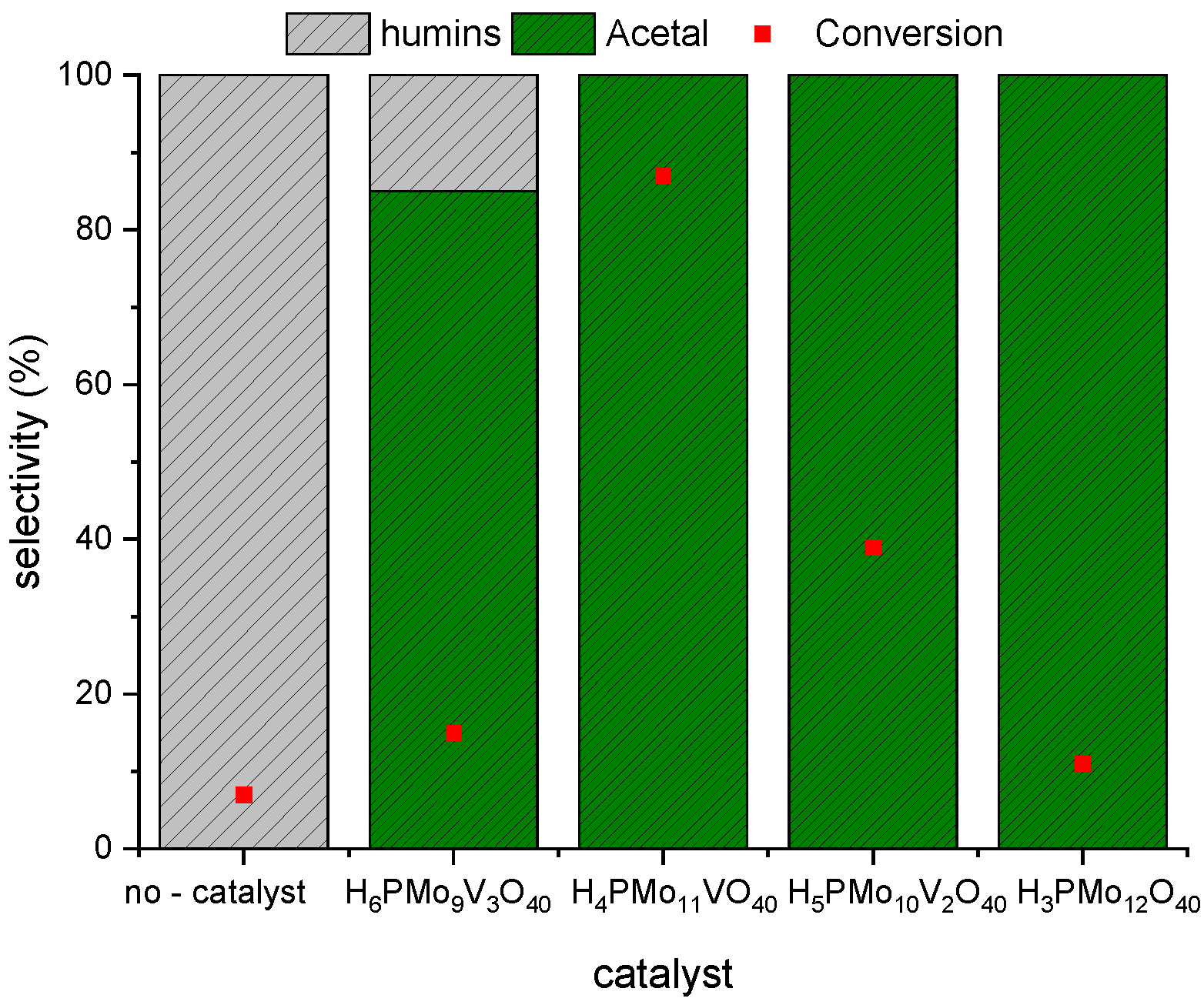
Figure 3.
Potentiometric titration curves of phosphomolybdic (insert), and vanadium doped phosphomolybdic acids with n-butyl amine (adapted from ref.37).
Figure 3.
Potentiometric titration curves of phosphomolybdic (insert), and vanadium doped phosphomolybdic acids with n-butyl amine (adapted from ref.37).
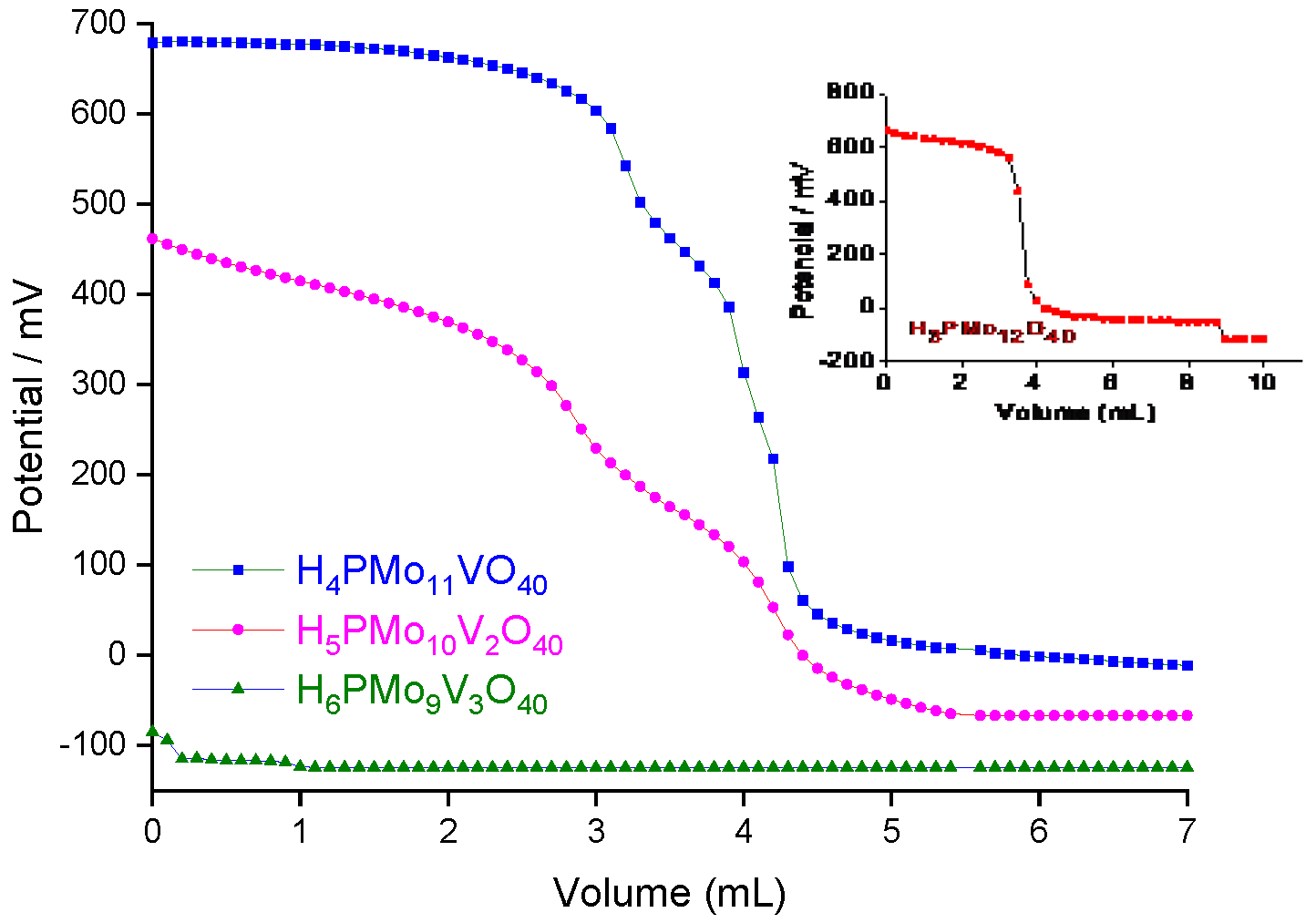
Figure 4.
Brønsted acid-catalyzed furfural acetalization with methyl alcohol at room temperaturea. aReaction conditions: furfural (5.5 mmol); reaction volume (10 mL); catalyst (0.20 mol% of H+); temperature (298 K).
Figure 4.
Brønsted acid-catalyzed furfural acetalization with methyl alcohol at room temperaturea. aReaction conditions: furfural (5.5 mmol); reaction volume (10 mL); catalyst (0.20 mol% of H+); temperature (298 K).
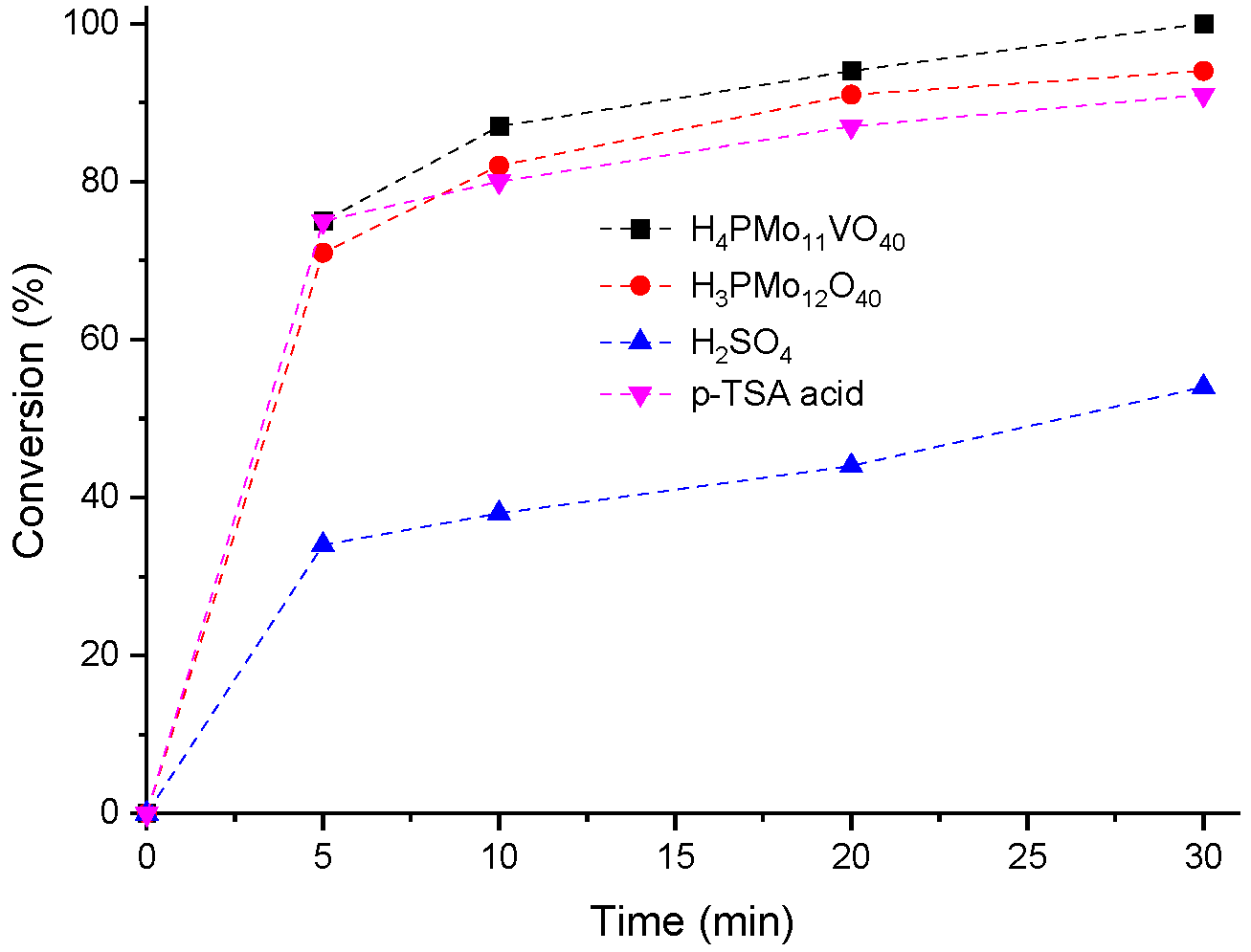
Figure 5.
Effects of H4PMo11VO40 catalyst load in the kinetic curves acetalization reactions of furfural with methyl alcohola. aReaction conditions: furfural (5.5 mmol); reaction volume (10 mL); catalyst (variable); temperature (298 K).
Figure 5.
Effects of H4PMo11VO40 catalyst load in the kinetic curves acetalization reactions of furfural with methyl alcohola. aReaction conditions: furfural (5.5 mmol); reaction volume (10 mL); catalyst (variable); temperature (298 K).
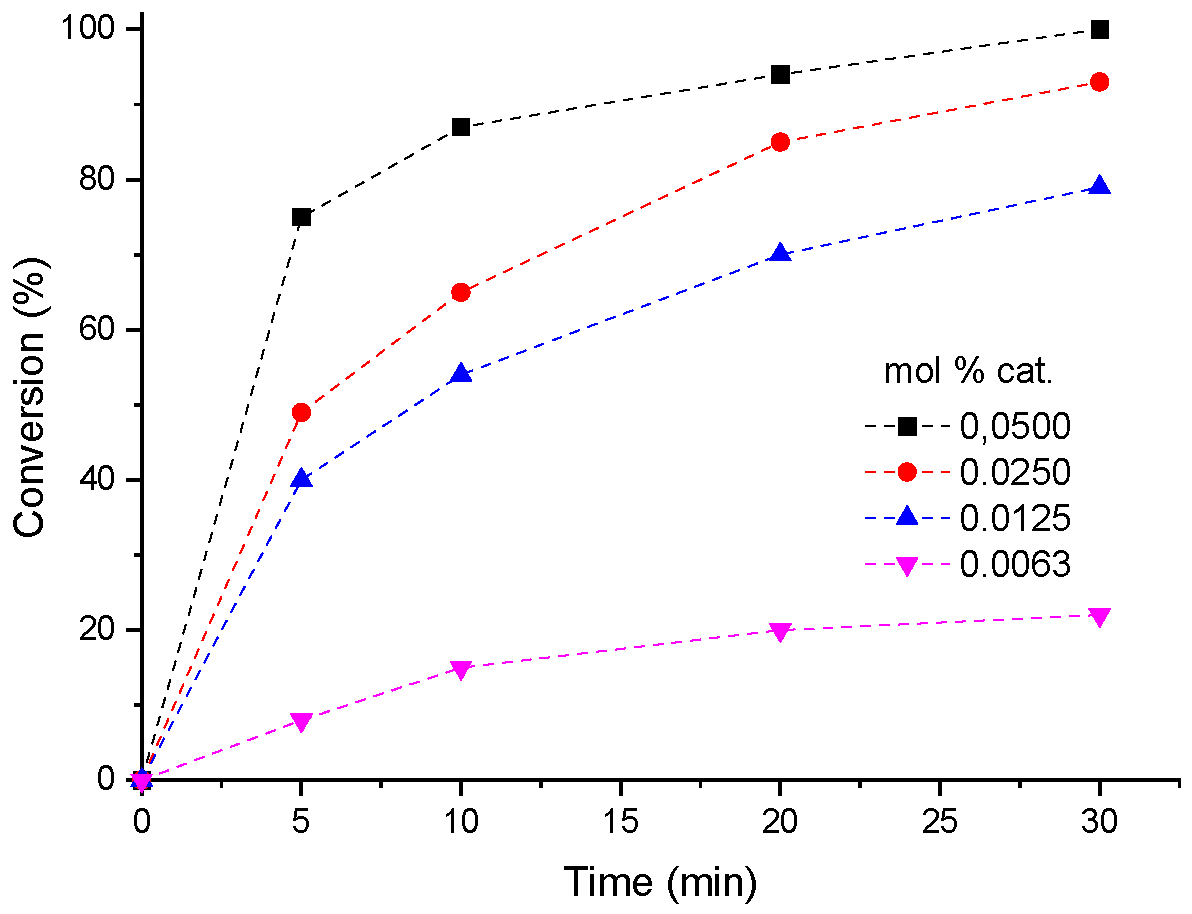
Figure 6.
Effects of furfural load on the kinetic curves acetalization reactions with methyl alcohola. aReaction conditions: furfural (variable); reaction volume (10 mL; 247 mmol); catalyst (0.013 mol %); temperature (298 K).
Figure 6.
Effects of furfural load on the kinetic curves acetalization reactions with methyl alcohola. aReaction conditions: furfural (variable); reaction volume (10 mL; 247 mmol); catalyst (0.013 mol %); temperature (298 K).
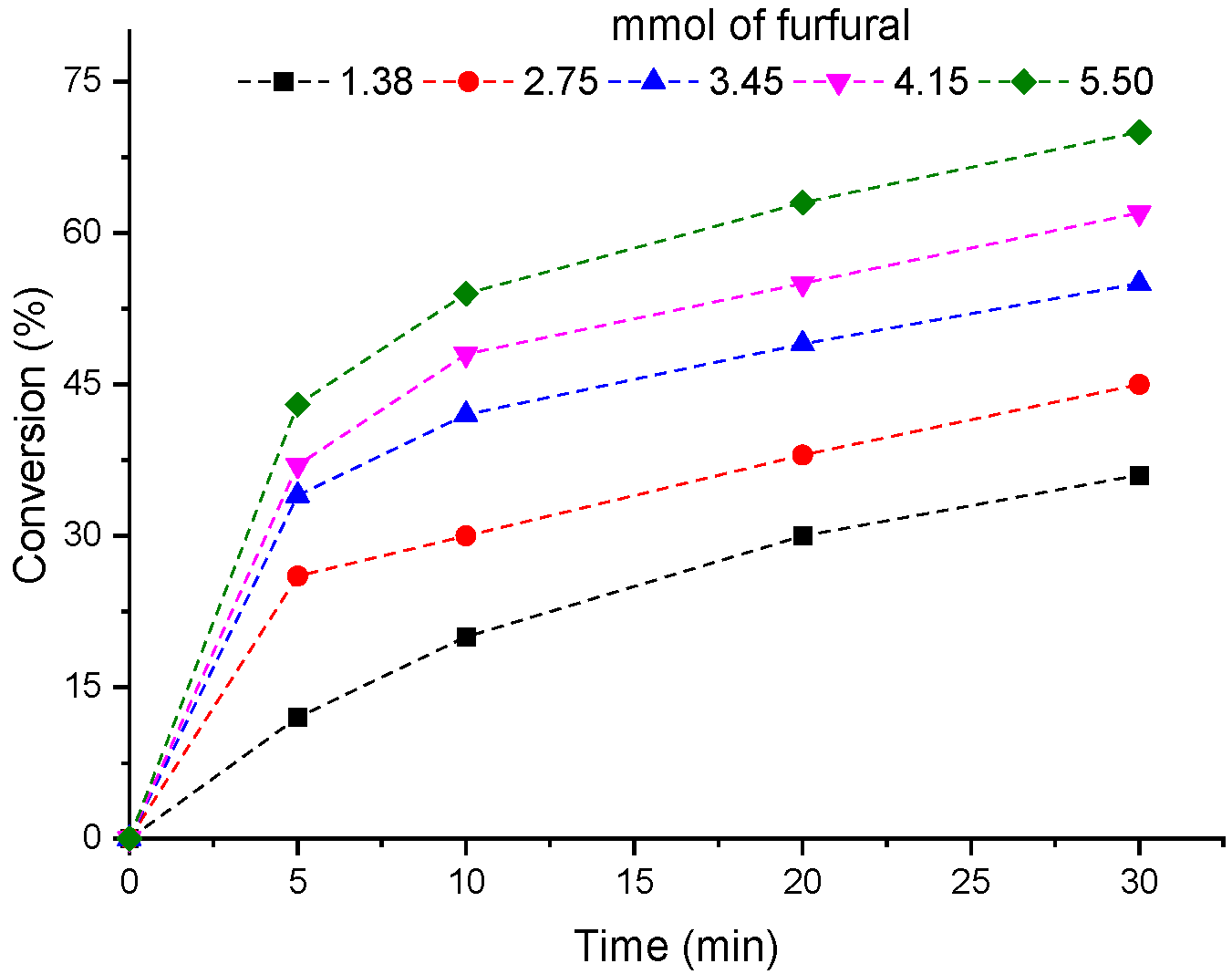
Figure 7.
Effects of temperature on the kinetic curves H4PMo11VO40-catalyzed reactions of furfural with methyl alcohola. aReaction conditions: furfural (5.5 mmol); reaction volume (10 mL); catalyst (0.0095 mol %); temperature (variable).
Figure 7.
Effects of temperature on the kinetic curves H4PMo11VO40-catalyzed reactions of furfural with methyl alcohola. aReaction conditions: furfural (5.5 mmol); reaction volume (10 mL); catalyst (0.0095 mol %); temperature (variable).
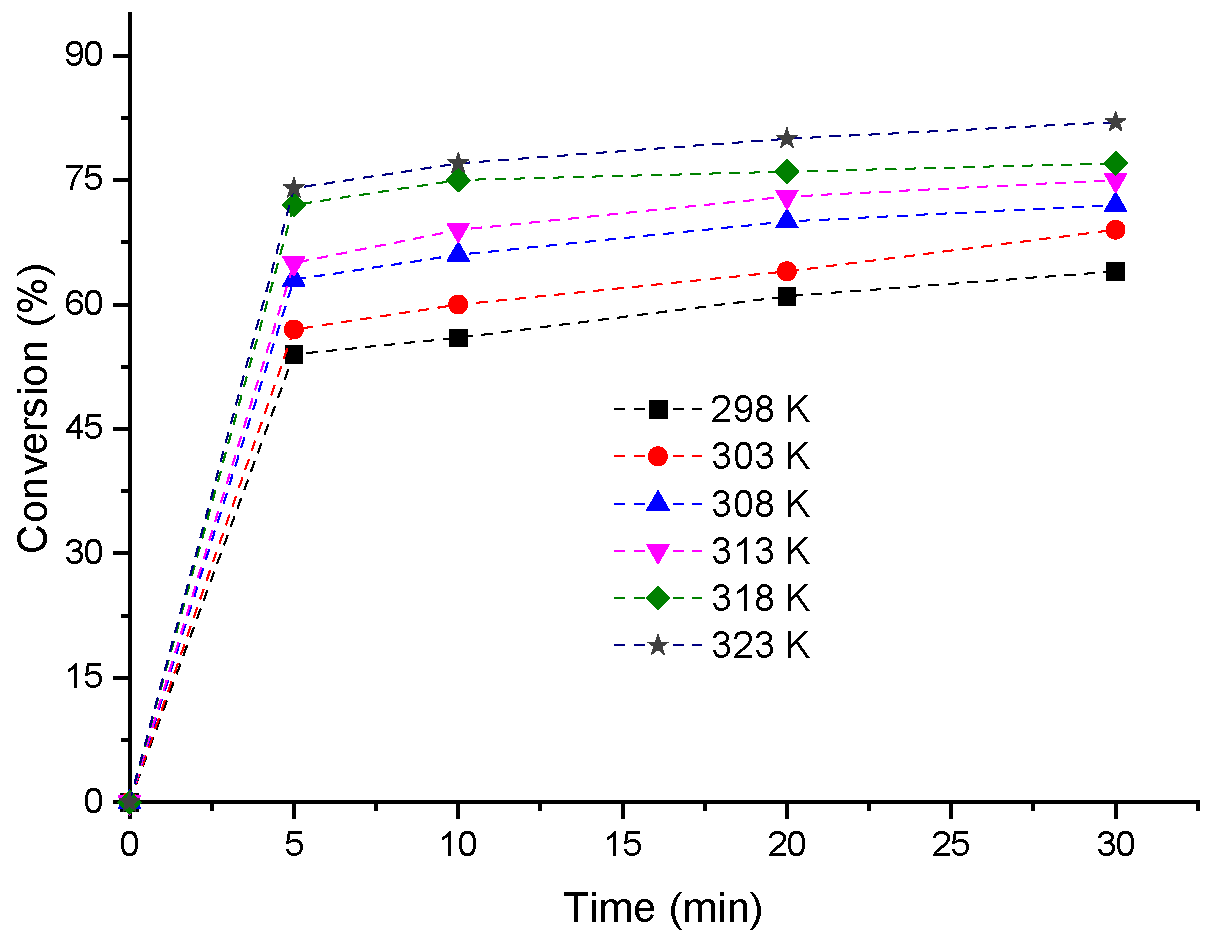
Figure 8.
Influence of alkyl alcohol on kinetic curves of the H4PMo11VO40 -catalyzed acetalization reactions of furfurala. aReaction conditions: furfural (5.5 mmol); reaction volume (10 mL); catalyst (0.050 mol %); temperature (298 K).
Figure 8.
Influence of alkyl alcohol on kinetic curves of the H4PMo11VO40 -catalyzed acetalization reactions of furfurala. aReaction conditions: furfural (5.5 mmol); reaction volume (10 mL); catalyst (0.050 mol %); temperature (298 K).
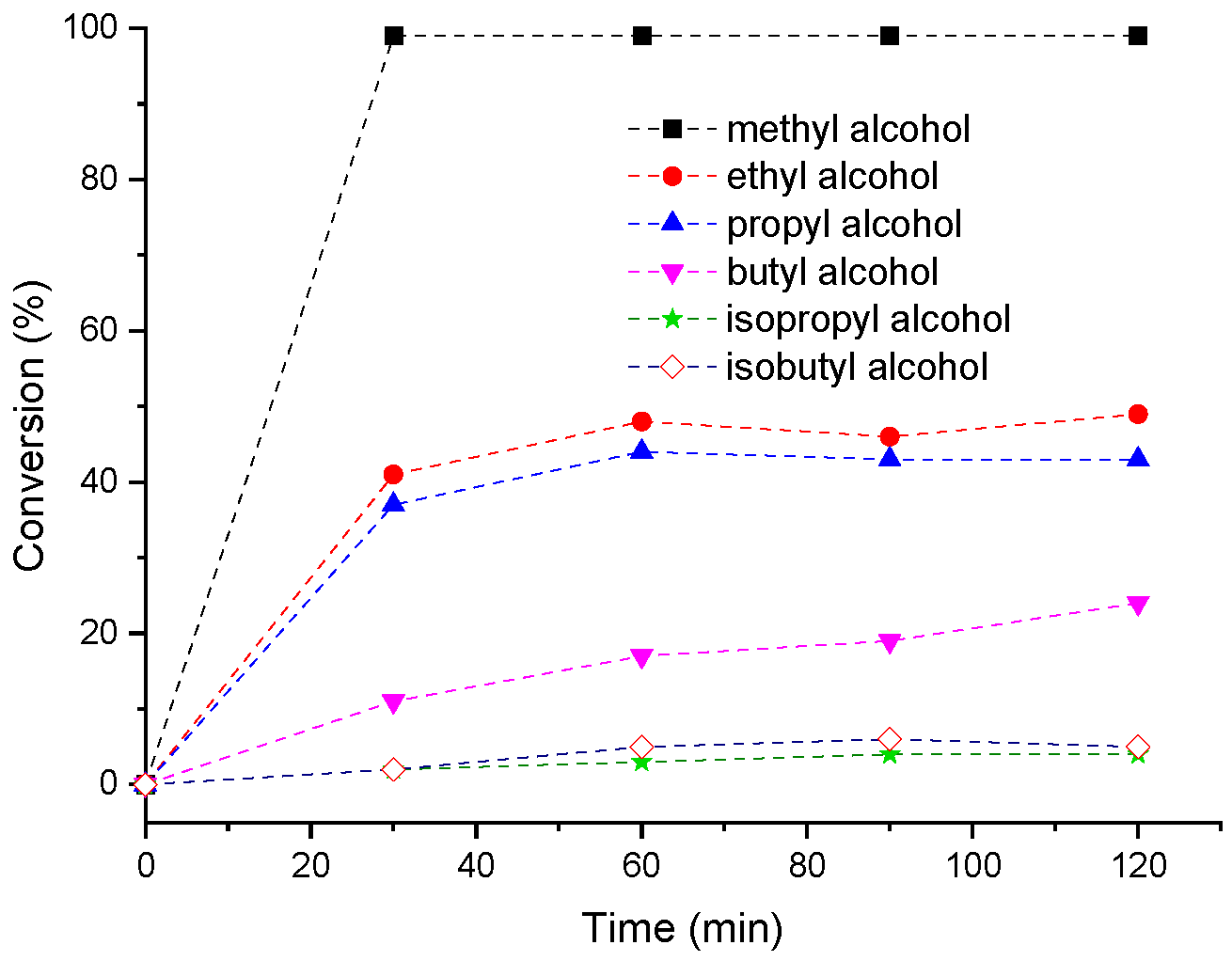
Figure 9.
Structural formula of biomass derivative aldehydes.
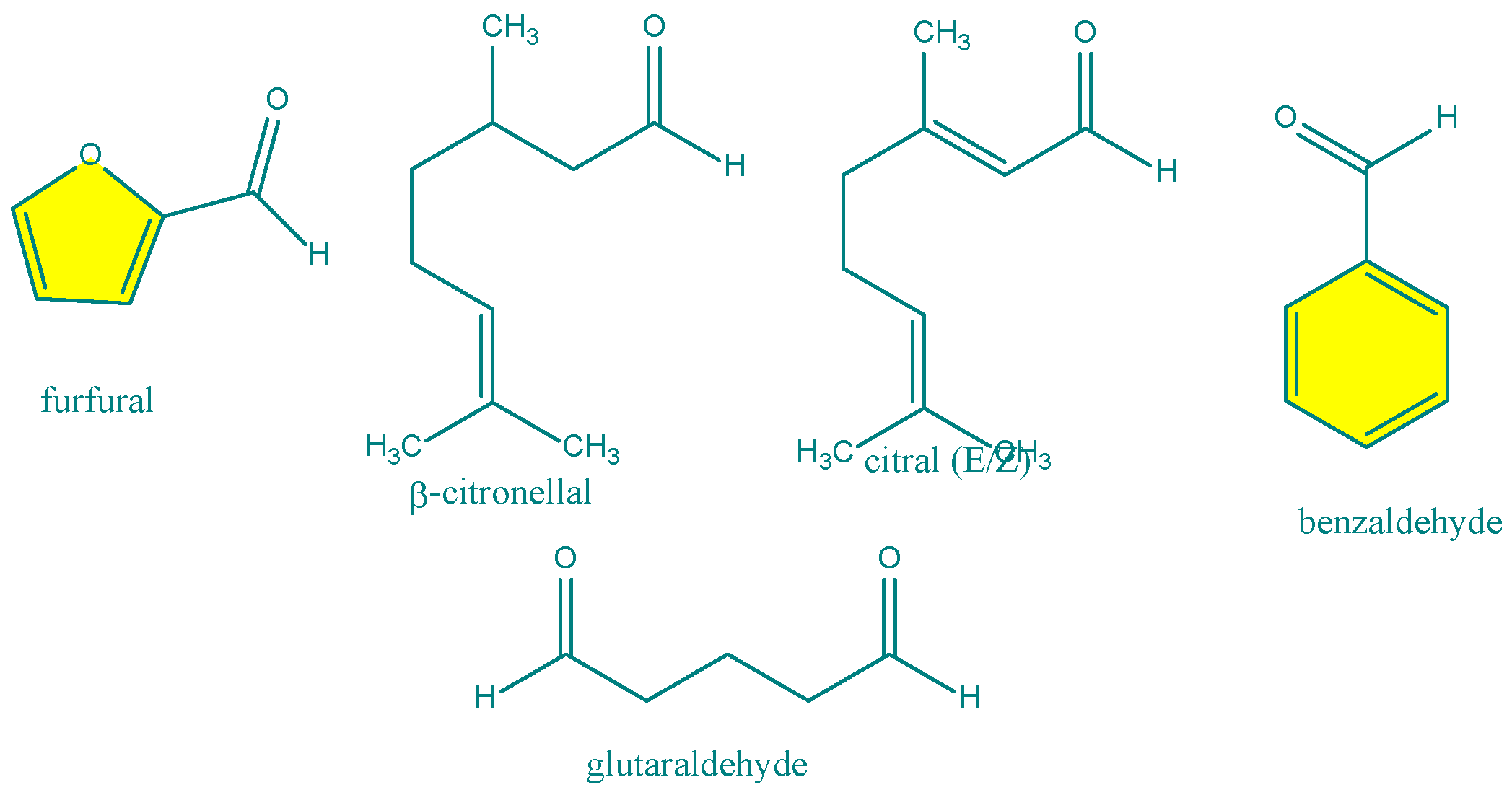
Figure 10.
Kinetic curves of H4PMo11VO40-catalyzed condensation reactions of methyl alcohol with aldehydesa aReaction conditions: aldehyde (5.5 mmol); reaction volume (10 mL); catalyst (0.050 mol %); temperature (298 K).
Figure 10.
Kinetic curves of H4PMo11VO40-catalyzed condensation reactions of methyl alcohol with aldehydesa aReaction conditions: aldehyde (5.5 mmol); reaction volume (10 mL); catalyst (0.050 mol %); temperature (298 K).
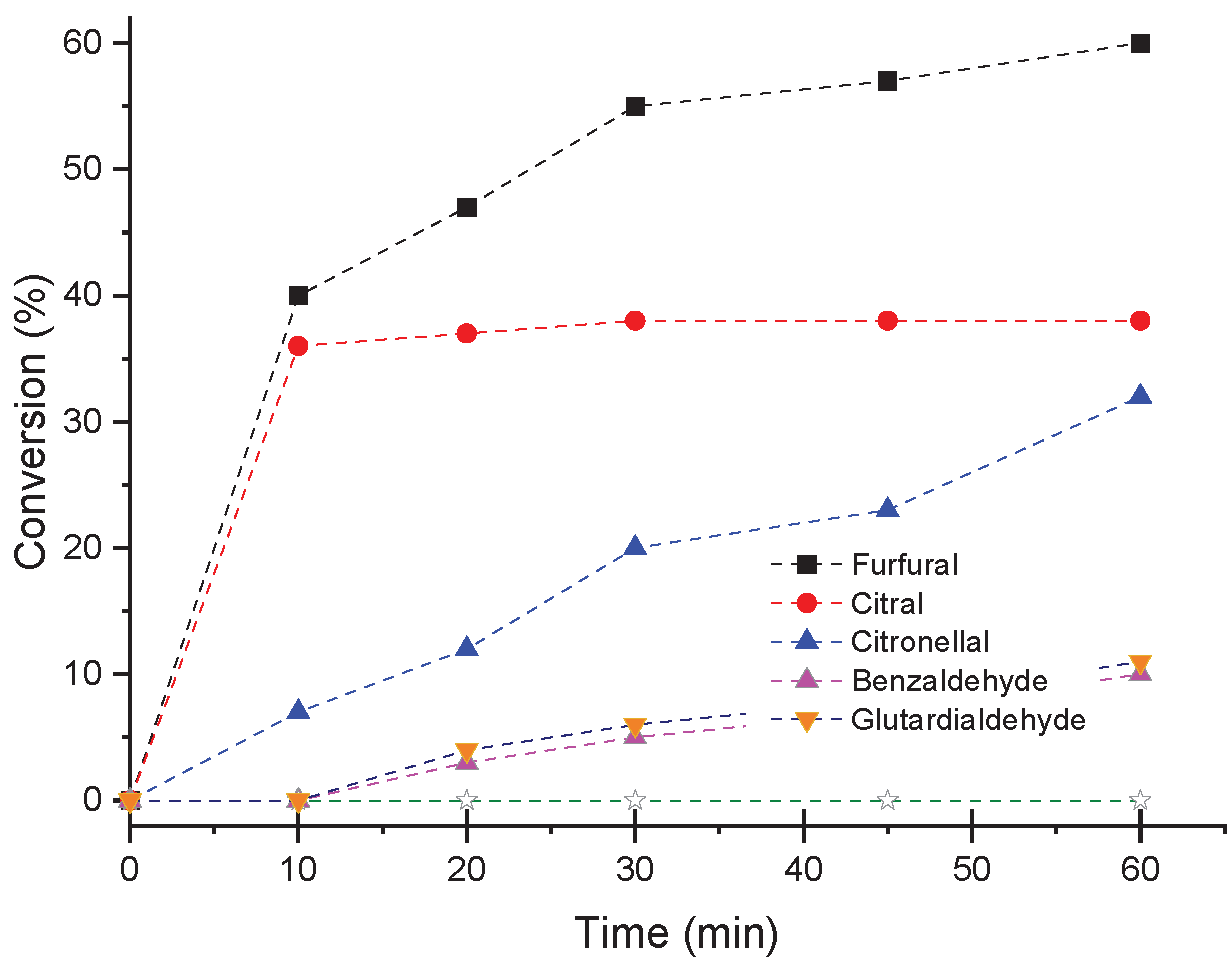

Table 1.
Turnover number achieved by the H4PMo11VO40 catalyst in acetalization reactions of furfural with methyl alcohola.
Table 1.
Turnover number achieved by the H4PMo11VO40 catalyst in acetalization reactions of furfural with methyl alcohola.
| Entry | Load (mol %) | mmol catalyst x 103- | converted mmol furfural |
TON |
|---|---|---|---|---|
| 1 | 0.0500 | 2.750 x 10⁻³ | 5.50 | 2014 |
| 2 | 0.0250 | 1.375 x 10⁻³ | 5.06 | 3680 |
| 3 | 0.0125 | 6.875x 10⁻⁴ | 4.40 | 6400 |
| 4 | 0.0063 | 3.437x 10⁻⁴ | 1.37 | 4000 |
aReaction conditions: furfural (5.5 mmol); reaction volume (10 mL); catalyst (variable); temperature (298 K).
Disclaimer/Publisher’s Note: The statements, opinions and data contained in all publications are solely those of the individual author(s) and contributor(s) and not of MDPI and/or the editor(s). MDPI and/or the editor(s) disclaim responsibility for any injury to people or property resulting from any ideas, methods, instructions or products referred to in the content. |
© 2026 by the authors. Licensee MDPI, Basel, Switzerland. This article is an open access article distributed under the terms and conditions of the Creative Commons Attribution (CC BY) license (http://creativecommons.org/licenses/by/4.0/).
Copyright: This open access article is published under a Creative Commons CC BY 4.0 license, which permit the free download, distribution, and reuse, provided that the author and preprint are cited in any reuse.


