
Submitted:
02 April 2026
Posted:
03 April 2026
You are already at the latest version
Abstract
Background/Objectives: Maternal mortality remains an important indicator of health inequities, reflecting social, regional, and racial inequalities, as well as the responsiveness of health systems. This study aimed to analyze and compare maternal mortality between Brazil and Portugal from 2020 to 2023. Methods: This is a binational ecological and observational study based on secondary data from official records of live births and maternal deaths in both countries. Maternal mortality rates were calculated per 100,000 live births and stratified by sociodemographic and regional variables. Poisson regression models offset by the logarithm of live births were used to estimate adjusted incidence ratios (IRR) and 95% confidence intervals. Analyses were conducted using R and Stata software. Results: Brazil presented rates between 55 and 62 per 100,000 live births, while Portugal maintained lower values, ranging from 8 to 20 per 100,000. In Brazil, higher risks were observed among Black and Indigenous women, residents of the North and Northeast regions, and in age groups above 30 years. Direct and indirect causes showed similar proportions, with an increase in indirect causes during the pandemic. In Portugal, mortality showed low magnitude, but annual fluctuation was attributed to the small number of events and the limitation of microdata. Conclusions: The study highlights strong structural and racial inequalities in Brazilian maternal mortality, contrasting with the lower magnitude and greater stability observed in Portugal. This reinforces the need for intersectoral actions, strengthening the obstetric network, and continuous surveillance to reduce preventable deaths and promote equity in maternal care.
Keywords:
mortality
; maternal mortality
; health inequalities
; women's health
; health information system
1. Introduction
Maternal mortality remains a summary indicator of the quality of health systems and social inequalities, reflecting not only acute clinical events associated with pregnancy, childbirth and the postpartum period, but also structural determinants such as access to prenatal care, the structure of referral networks and the socioeconomic characteristics of the populations. In distinct contexts such as Brazil and Portugal, comparative analysis of maternal mortality allows the identification of both clinical factors (obstetric hemorrhage, gestational hypertension, infections and indirect causes) and organizational and equity aspects that influence the risk of maternal death, offering a basis for interventions driven by public policies [1].
In Brazil, despite advances in certain regions and periods, maternal mortality shows signs of instability and marked inequality among population subgroups. Time series analyses and studies on maternal deaths covering up to 2021–2022 recorded punctual increases associated with health crises and highlighted important subnational variations, for example, persistent regional differences and peaks attributable to the impact of the COVID-19 pandemic, in addition to the persistence of direct obstetric causes such as hypertension, hemorrhage, and infection. This evidence indicates that, in Brazil, the sustained reduction of maternal mortality depends both on clinical interventions (better management of obstetric emergencies) and on structural measures that address racial and territorial inequalities [2,3].
Racial and ethnic inequalities emerge as one of the most consistent vectors of vulnerability in the Brazilian context: recent studies show that black women have substantially higher maternal mortality rates than white women, with prevalence ratios that practically double the risk in some analyzed series. This pattern suggests both differential exposure to social determinants of health and possible biases in access to and quality of care during prenatal, childbirth, and postpartum periods, aspects that require investigating specific pathways (e.g., delays in seeking and receiving care, underreporting, and problems in the surveillance of causes of death) [1].
On the other hand, Portugal, like many European countries, presents overall maternal mortality indicators that are much lower than those of Brazil in terms of the ratio per 100,000 live births; however, this does not mean an absence of challenges. Recent Portuguese studies focus on determinants such as maternal health literacy, childbirth experience, organization of care (including childbirth practices and place of birth), and barriers to access for subgroups (immigrants, rural populations), areas that, even in contexts of universal health systems, can generate avoidable risks. Recent literature on Portugal has emphasized the importance of the quality of perinatal care, obstetric safety, and strengthening communication between professionals and pregnant women as critical components to prevent complications that, although rare, can lead to fatal outcomes [4,5].
Comparing Brazil and Portugal requires attention to definitional differences, data sources, and the role of modeled estimates versus administrative records. While national sources (e.g., civil registration systems and mortality databases) provide recorded counts and have allowed detailed analyses in both countries, international bodies and agencies frequently produce modeled estimates to allow comparisons between countries; these estimates can sometimes diverge from national series, especially in years with few absolute events, requiring methodological transparency when interpreting trends and binational comparisons. Thus, comparative studies should explicitly state sources (records vs. estimates), codes used for classifying causes (e.g., O00–O95; O98–O99), and decisions about denominators (live births) to ensure reproducibility [3,6].
Beyond the immediate clinical causes, recent evidence highlights contextual factors that may explain some of the differences between the two countries: organization of maternal health services (capacity for high-risk obstetric care and referral networks), primary care policies and vaccination coverage in pregnant populations (e.g., vaccines that reduce risks from emerging infections), sociodemographic conditions (educational level, poverty), and the presence of care practices that increase risks (e.g., high cesarean section rates in certain contexts). Studies investigating the impacts of the pandemic have shown temporary increases in maternal mortality associated with service overload and specific forms of indirect morbidity, reinforcing that exogenous events exacerbate pre-existing weaknesses in systems [3,7].
From a methodological point of view, the low absolute frequency of maternal deaths in countries with smaller populations or in specific regions makes it essential to use analytical strategies that minimize statistical volatility: multi-year moving averages, aggregated analyses by region or period, and the use of age-standardized measures. Furthermore, the investigation of the causes of maternal death benefits from the combination of quantitative approaches (analysis of records and time series, modeling) with qualitative assessments and maternal death audits when available, which allow the identification of failures in care processes and gaps in surveillance. Compared to binational approaches, integrating these approaches helps to differentiate universal clinical problems from local weaknesses in the health system [8].
Recent literature supports the view that effective interventions to reduce maternal mortality combine clinical actions (protocols for hemorrhage and pre-eclampsia, improved access to emergency obstetric care) with equity policies (reducing barriers to quality prenatal care, programs for vulnerable populations) and continuous monitoring and auditing efforts. In a comparative and translational study between distinct realities, it is possible to identify adaptable good practices, for example, strengthening referral networks, training teams, and communication strategies for at-risk populations that can inform policies in both countries, always considering contextual differences and the need for robust and up-to-date data to track the impact of interventions [3,7,8].
Despite normative and programmatic advances in Brazil and Portugal, a significant gap persists in contemporary literature: the absence of in-depth comparative studies that simultaneously analyze the patterns and causes of maternal mortality in both countries, considering clinical, structural, and social determinants within the same methodological framework. Although Brazil has implemented structuring policies such as the Stork Network (Rede Cegonha), aimed at organizing maternal and child care pathways, improving obstetric care, and reducing inequalities in access, and more recent initiatives such as the Alyne Network (Rede Alyne), focused on racial equity and reducing preventable maternal deaths among Black women, there is still a scarcity of analyses that assess how these models interact with international experiences and which elements are adaptable, transferable, or contrasting in the European context. Similarly, Portugal has invested in improving perinatal care and monitoring serious obstetric events, but there is little systematized knowledge comparing its results and determinants with those of middle-income countries like Brazil, especially in the post-pandemic period, when both health systems suffered strains that impacted maternal mortality.
This gap becomes even more relevant in light of the global goals of the Sustainable Development Goals (SDGs), particularly SDG 3.1, which proposes to significantly reduce maternal mortality by 2030. Both Brazil and Portugal face specific challenges in approaching this goal, whether due to the persistence of internal inequalities (territorial, racial, socioeconomic) in Brazil, or the need to maintain low rates with pressured systems, demographic changes, and variations in access in Portugal. Thus, conducting a robust comparative study, integrating recent epidemiological evidence, maternal care policies, and structural determinants, is justified not only by the scientific gap but also by its potential to inform public policies, strengthen equity actions, and contribute to the international agenda for reducing preventable maternal deaths. Thus, the objective of the study was to comparatively analyze maternal mortality in Brazil and Portugal between 2020 and 2023.
2. Materials and Methods
2.1. Type of Study
This is an analytical population-based observational study, of the ecological/time series type combined with registry analyses, reported according to the recommendations of Strengthening the Reporting of Observational Studies in Epidemiology (STROBE). The choice of a population-based design allows for the estimation of national and subnational rates, reduces selection biases, and maximizes the detection of temporal and spatial patterns in rare outcomes such as maternal mortality [9].
2.2. Study Location
The study area encompasses the entire territory of Brazil and Portugal, using both the national level and subnational strata as units of analysis.
2.3. Study Population
The study population includes all women of reproductive age who are listed in death records as maternal deaths according to the international definition (deaths during pregnancy, childbirth, or up to 42 days after the end of pregnancy due to pregnancy-related causes). For Brazil, microdata from the Sistema de Informação de Mortalidade (SIM) (http://tabnet.datasus.gov.br/cgi/tabcgi.exe?sim/cnv/mat10uf.def) and the Sistema de Informações sobre Nascidos Vivos (SINASC) (http://tabnet.datasus.gov.br/cgi/tabcgi.exe?sinasc/cnv/nvuf.def) were used to extract records classified by codes; for Portugal, datasets from the Instituto Nacional de Estatística (INE) (https://www.ine.pt/xportal/xmain?xpid=INE&xpgid=ine_main) and Pordata from the Francisco Manuel dos Santos Foundation (https://www.pordata.pt/pt) were used.
2.4. Data Collection and Study Variables
Data collection was carried out through access to and download of official databases: (i) SIM microdata, and (ii) INE and PORDATA databases (maternal mortality indicators). The Brazilian variables included in the study were extracted directly from the SIM and SINASC microdata, both made available by the Ministry of Health. From these databases, it was possible to characterize in detail the sociodemographic and epidemiological profile of women who died as mothers, allowing the inclusion of essential individual variables for adjusted modeling. For the primary outcome, maternal death, the categories defined according to ICD-10 (O00–O95; O98–O99) were considered, stratified into direct, indirect, or unspecified obstetric maternal death. The explanatory variables included: race/color (white, black, yellow, brown, indigenous, and unknown), age group grouped according to epidemiological patterns (10–14, 15–19, 20–29, 30–39, 40–49, 50–59 years); region of residence (North, Northeast, Southeast, South, and Midwest); education (none, 1–3 years, 4–7 years, 8–11 years, ≥12 years, unknown); and marital status (single, married, widowed, legally separated, other, unknown).
In contrast to the Brazilian scenario, the methodological stage concerning the Portuguese data presented substantial limitations stemming from the way national databases provide information on maternal mortality. The INE and the secondary database PORDATA provide only aggregated indicators, mainly the annual maternal mortality rate (MMR) per 100,000 live births, accompanied by the absolute number of deaths and live births. Unlike Brazil, anonymized microdata that would allow for the stratification of deaths according to individual maternal characteristics, such as race/ethnicity, education, marital status, or age group, are not available. Similarly, it is not possible to classify the causes of death by ICD-10 categories or to differentiate direct and indirect obstetric deaths at the individual level. Consequently, it is not possible to replicate for Portugal the same adjusted multivariate models developed for Brazil, such as Poisson regressions with individual covariates, multilevel models, or interaction assessments. The estimates for Portugal were based on aggregated annual data and the application of time trend models adjusted only for the denominator (live births), acknowledging the greater statistical imprecision resulting from the small number of events and the impossibility of controlling for confounding.
This methodological asymmetry between the database individual microdata in Brazil versus aggregated data in Portugal, restricts comparability at more detailed levels, especially regarding the assessment of sociodemographic inequalities. Even so, the integration of the two sources allows for the identification of national trends, differences in the magnitude of maternal mortality between contexts, and potential structural determinants, while respecting the particularities of each country’s information systems. Discussing these limitations is fundamental for the proper interpretation of the results and reinforces the need for greater openness and detail in Portuguese databases, in order to allow for more comprehensive and comparable analyses in international studies.
2.5. Data Analysis
Statistical analysis was conducted in descriptive and analytical stages, adapted to the specific data of each country. Initially, descriptive statistics were performed on the sociodemographic and epidemiological variables of Brazilian women who died as mothers, presented in absolute and relative frequencies, according to race/color, age group, region of residence, education level, and marital status (Table 1). Maternal mortality rates were calculated per 100,000 live births and stratified by geographic region, allowing the identification of persistent regional disparities (Figure 1). Subsequently, deaths were classified according to type (direct, indirect, unspecified), period (pregnancy, childbirth, puerperium), and underlying cause (ICD-10: O00–O99), summarized in Table 2 and Figure 2, to characterize the epidemiological profile of the causes of maternal mortality in Brazil.
To assess the factors associated with maternal mortality, Poisson regression models with an offset for the logarithm of the number of live births were applied, estimating adjusted incidence ratios (IRR) and 95% confidence intervals, considering race, age group, and region of residence as explanatory variables (Table 3). These results were also graphically represented by means of a forest plot (Figure 3), highlighting the higher risks among Black and Indigenous women, those in older age groups, and those residing in the North and Northeast regions.
For the Portuguese case, given the unavailability of individual microdata, the analysis was restricted to aggregated annual data on deaths and live births between 2020 and 2023. Annual maternal mortality rates (per 100,000 live births) were estimated, and the temporal trend was modeled using Poisson regression adjusted for the denominator (live births), indicating a non-significant decreasing trend during the period (Table 4). The binational comparison was presented through a time series of maternal mortality rates (Figure 4), showing consistently higher levels in Brazil compared to Portugal, as well as the fluctuation observed in the Portuguese context during the first year of the pandemic.
All tests considered a significance level of 5% (p <0.05). The analyses were performed using R software (versions 4.2–4.3; tidyverse, MASS, ggplot2 packages) and Stata 17, ensuring reproducibility and control of model dispersion.
2.6. Ethical Aspects
This study did not require review by a Research Ethics Committee, as it exclusively used secondary databases, in the public domain and without nominal identification, as stipulated in the ethical regulations in force in Brazil and Portugal. In the Brazilian context, the study falls under CNS Resolution No. 510/2016, which waives ethical evaluation for research that uses publicly accessible information, duly anonymized and without the possibility of direct or indirect identification of individuals. Similarly, in Portugal, the use of data made available by the INE (National Institute of Statistics), also anonymized and publicly accessible, does not require submission to ethics committees or additional regulatory bodies. All procedures respected the principles of confidentiality, privacy, and responsible use of information, ensuring the methodological and ethical integrity of the research.
3. Results
The analyzed sample of Brazilian women totaled 7,690 women, predominantly of mixed race (52.5%), followed by white (31.7%), while indigenous (1.8%), Asian (0.3%), and unknown records (1.8%) represented minority proportions. Regarding age range, the highest concentration was observed in the 30-39 age group (45.2%), followed by 20-29 years (37.5%); extreme age groups showed low frequency, such as 10-14 years (0.5%) and 50-59 years (0.2%). As for regional distribution, the highest proportion of records occurred in the Northeast (30.5%) and Southeast (34.7%), while the North region accounted for 14.9%, the South for 10.6%, and the Central-West for 9.4%. Regarding education, almost half of the women had between 8 and 11 years of schooling (47.5%), followed by those with 12 or more years of schooling (15.2%). A total of 12% had their education classified as unknown, and only 1.7% had no formal education. Regarding marital status, the predominant condition was single (46.5%), followed by married (30%), while categories such as widow (0.4%) and legally separated (2.2%) showed low representation; 6.7% of the records were unknown (Table 1).
Regional analysis indicates persistent inequalities in maternal mortality across Brazil. The North and Northeast regions showed the highest rates (80.4 and 66.7 per 100,000 live births, respectively), while the South and Southeast presented the lowest, reflecting the influence of structural and socioeconomic disparities on maternal health outcomes.
Analysis of 7,690 maternal deaths revealed a well-defined pattern in the distribution of type, period, and causes of death. It was observed that the majority of deaths were classified as direct obstetric maternal deaths (50.6%), followed by indirect obstetric deaths (46.5%), while only 2.8% remained unspecified. Regarding the period of death, it was found that most deaths occurred in the postpartum period up to 42 days, representing 62% of all cases, followed by events during pregnancy, childbirth, or abortion (26.7%). Only a small proportion occurred in the late postpartum period (1.6%) or outside the pregnancy-puerperal cycle (1.8%). Inconsistent or missing records accounted for less than 8% of cases.
Regarding specific obstetric causes (ICD O00–O99), the main causes of death were other obstetric conditions not classified elsewhere, which accounted for 47.8% of deaths, followed by hypertensive disorders of pregnancy, childbirth and the puerperium (16.2%) and complications of labor (11.8%). Causes associated with the puerperium contributed to 9.5% of deaths, while pregnancies that ended in abortion accounted for 6.3%. Rare causes, such as complications directly classified as “childbirth” or behavioral syndromes/physical factors, accounted for less than 0.1%. According to the ICD-10 chapters, it was found that almost all maternal deaths (99.97%) were classified in chapter XV—Pregnancy, childbirth and the puerperium, confirming the obstetric nature of the events. Only two cases (0.03%) were recorded in Chapter V—Mental and Behavioral Disorders (Table 2).
Most maternal deaths were due to direct obstetric causes (50.6%), followed by indirect causes (46.5%), with only 2.8% unspecified. The nearly balanced distribution underscores the relevance of both clinical and systemic determinants in the persistence of maternal mortality in Brazil.
The mixed-race category was used as a reference. It was observed that Black and Indigenous women presented substantially higher risks of maternal death, with IRRs of 1.636 and 1.644, respectively, both statistically significant (p <0.001). These values reflect a mortality incidence almost 65% higher than that of mixed-race women. In contrast, white women presented a risk similar to the reference, while the yellow category showed a significantly lower risk, although with a low count of events.
Maternal mortality increased sharply with advancing maternal age. Compared to the 20–29 year old group (reference), women aged 30–39 years had an IRR of 1.714 and women aged 40–49 years had an IRR of 2.716, both highly significant differences. These findings indicate that the incidence of maternal death may be up to 2.7 times higher at advanced maternal ages. Younger groups (10–14 and 15–19 years) showed lower IRRs, although the magnitude and interpretation of these values require caution, as they may reflect different exposure patterns or underreporting. Taking the Southeast region as a reference, regions with greater social vulnerability exhibited increased risks of maternal mortality. The North (IRR= 1.458) and Northeast (IRR= 1.207) regions showed significantly higher rates, confirming persistent regional inequalities. The South region presented a lower risk (IRR= 0.824), while the Central-West region exhibited a slightly higher risk (IRR= 1.162). These patterns reinforce the intersection between maternal mortality and geographic, socioeconomic, and health service access determinants (Table 3).
The forest plot demonstrates significantly higher risks of maternal mortality among black and indigenous women, older maternal age groups, and residents of the North and Northeast regions. These results highlight the intersection of racial, demographic, and geographic inequities in maternal health.
Analysis of maternal mortality in Portugal between 2020 and 2023 shows an absolute decrease in the rate, although without statistical significance. In 2020, a year marked by the initial impact of the COVID-19 pandemic, the maternal mortality rate reached 20.1 deaths per 100,000 live births, the highest value in the series. In that year, it is estimated that approximately 17 maternal deaths occurred, with a wide confidence interval (95% CI: 10.5–29.7), reflecting greater statistical variability. In 2021, a significant reduction was observed, with a MMR of 8.8 per 100,000 live births (7 deaths). In 2022, there was a moderate increase to 13.1, followed again by a decrease in 2023, which recorded 10.5 deaths per 100,000 live births (9 deaths), with a confidence interval between 3.5 and 17.5.
The application of a Poisson regression model offset by the number of live births indicated an annual decreasing trend of approximately 14.2% (IRR = 0.8576); however, this trend did not reach statistical significance (p= 0.138), suggesting that, although maternal mortality fluctuated and globally decreased during the period, this variation can be attributed to the small absolute number of events and the natural variability of the estimates. Overall, the findings indicate that Portugal maintains relatively low levels of maternal mortality, with annual fluctuations reflecting both the small number of deaths and cyclical impacts, such as those observed in 2020. The lack of statistical significance in the trend reinforces the need for longer series or stratified data for a more robust assessment of temporal variations (Table 4).
The temporal series shows that Brazil maintained substantially higher maternal mortality rates compared with Portugal throughout 2020–2023. While Brazil’s rates remained stable around 55–62 deaths per 100,000 live births, Portugal exhibited low and fluctuating rates, with a transient peak in 2020 associated with the first pandemic year.
4. Discussion
4.1. Overview and Summary of the Findings
This binational observational study identified a contrasting and multifaceted picture of maternal mortality between Brazil and Portugal. Descriptively, Brazil presented persistently high rates, around 55–62 deaths per 100,000 live births in the analyzed period, while Portugal exhibited lower and fluctuating levels (8–20/100,000). This difference in magnitude between the countries is consistent with national analyses that point to a high and persistent level of maternal mortality in Brazil, especially in recent series that incorporate the pandemic period [1].
The observation of a predominance of direct obstetric deaths, with a substantial contribution from indirect causes, echoes global findings that document hemorrhage, hypertension, and increasingly, indirect causes (chronic diseases and infections) as relevant contributors to the burden of maternal mortality. Reviews and studies of global trends reinforce that, although hemorrhage still represents the largest single share, indirect causes have gained ground in the composition of maternal deaths, especially in contexts where pre-existing chronic conditions and infectious exposures (including COVID-19) overlap [10].
The heterogeneity observed by race, age, and region in the Brazilian population, with significantly higher IRRs among Black and Indigenous women, substantial risks in older age groups, and higher rates in the North and Northeast regions, is consistent with national studies that detail racial and territorial inequalities. Silva et al. (2024) describe MMRs almost double among Black women compared to white women in recent national series, highlighting that race remains a central determinant of maternal vulnerability in Brazil. These findings point to structural determinants (institutional racism, inequality in access to quality obstetric care, differences in the distribution of high-complexity services) and to multiple causal pathways that go beyond individual clinical factors [1].
The role of the COVID-19 pandemic is clearly evident in the temporal patterns of their study, with peaks in the early years of the pandemic and greater annual variability, and is supported by time series analyses that estimated increases/excesses in maternal mortality in Brazil during 2020–2021. Part of the increase observed in these years may reflect excesses directly attributable to COVID-19 and, in parallel, indirect effects (hospital overload, disruption of prenatal routines, delays in access to emergency obstetric care), which explains both the absolute increase and the regional variability. These findings are consistent with specific analyses of the pandemic period for Brazil [2].
From a methodological and interpretative point of view, two observations are central to explaining the consistency of their results with the literature: (1) rare events (maternal mortality) generate high statistical volatility, hence the usefulness of moving averages, age standardization and counting models with under/over dispersion checks; and (2) differences in the availability of microdata between Brazil (national microdata) and Portugal (aggregated series) limit the depth of binational inferences. The methodological literature and recent comparative studies highlight that modeled estimates and administrative data may diverge, especially in countries with few annual events, reinforcing the need for interpretative caution in direct comparisons [11,12].
Immediate implications from this synthesis: the findings of this study not only confirm pre-existing structural inequalities in Brazil, but also emphasize the need for multilevel policies that combine clinical interventions (management of hemorrhage, hypertension and obstetric emergencies), measures to control chronic diseases in the reproductive population, anti-racist strategies and strengthening of referral/counter-referral networks, especially in regions with less availability of high-complexity services. This recommendation is consistent with the literature that points to integrated actions as the most promising way to reduce maternal mortality in contexts of high inequality [13].
4.2. Direct and Indirect Impact of the COVID-19 Pandemic
The COVID-19 pandemic impacted maternal mortality in two ways: (a) direct impact: SARS-CoV-2 infection in pregnant and postpartum women, which in many cases progressed to respiratory failure and death; and (b) indirect impact: interruption or degradation of access to reproductive health services (prenatal care, transportation to referral centers, emergency obstetric care), in addition to hospital overload that competed for resources and professionals. These mechanisms explain both the absolute increase and the greater regional variability observed in their study (peaks in 2020–2021 and differences between states/regions). Surveillance studies and time series in Brazilian contexts point to an excess of maternal deaths coinciding with periods of high transmission and system overload, corroborating the interpretation of direct and indirect effects on maternal mortality [14].
Hospital data and cohorts of pregnant women confirm that the clinical severity of COVID-19 in pregnancy was elevated at various points during the pandemic: infected pregnant women had higher rates of Intensive Care Unit (ICU) admission, need for mechanical ventilation, and death when compared to non-pregnant women of reproductive age, especially in the presence of comorbidities. Systematic reviews and multicenter studies highlight that, although much morbidity occurred among pregnant women with risk factors, there was also a considerable number of deaths in women without pre-existing comorbidities, suggesting failures in early recognition and adequate management. These findings support the hypothesis that some of the direct deaths from COVID-19 are attributable both to the severity of the disease and to gaps in obstetric care during the crisis [15].
National studies detailing pandemic waves in Brazil show abrupt increases in maternal deaths during epidemic peaks, with an accumulation of deaths in 2021 associated with more transmissible variants and periods of low vaccination coverage among pregnant women at that time. Brazilian clinical reports recorded hundreds of maternal deaths related to COVID-19 in 2020–2021 and documented differences in severity between regions, possibly linked to the unequal distribution of critical care beds and human resources [16,17].
In addition to deaths directly attributable to the infection, indirect effects were widespread: reduced prenatal visits, postponement of elective procedures, and logistical barriers to transporting pregnant women with signs of severity. Reviews on the impact of the pandemic on maternal services suggest a drop in demand for and supply of care, which translates into late diagnoses (pre-eclampsia, infections, hemorrhages) and worse obstetric outcomes. In scenarios with fragile services, this reduction in access can, in isolation, increase maternal mortality even when SARS-CoV-2 infection is not very prevalent [18].
The literature also draws attention to contextual and equity determinants that amplified the impact of the pandemic on more vulnerable women, rural populations, black women, women with lower education levels, and women residing in regions with low density of specialized care. Qualitative investigations and case analyses in Brazil have described a lack of support, delays in care, and signs of “obstetric racism” during the pandemic, factors that increase the risk of death even when the initial pathology did not seem inevitably fatal [19].
4.3. Racial Inequalities and the Persistence of Institutional Racism
The findings of this study, with an IRR of 1.64 for Black and Indigenous women compared to mixed-race women (Table 3), confirm a consistent and alarming pattern of racial inequality in maternal mortality in Brazil. Maternal mortality among Black women has been systematically higher than among white and mixed-race women, with sharp peaks during the pandemic period, when the combination of social vulnerabilities and system overload amplified adverse outcomes [1].
Mechanisms that explain this excess risk are multi-interconnected. Reviews on racial disparities in maternal health point to the role of structural racism (unequal distribution of resources, lower investments in infrastructure in neighborhoods and regions predominantly inhabited by Black populations), implicit bias, and lack of cultural competence among professionals, which together result in lower quality of care, diagnostic delays, and undertreatment of risk signs [20].
In terms of lived experiences, investigations into “obstetric racism” and obstetric violence demonstrate that Black women frequently report disrespectful care, failure to recognize symptoms, and less clinical listening, factors that increase the risk of adverse outcomes [21]. Maternal mortality rates are much higher than those of the non-Indigenous population, and particular barriers are highlighted: long distances to referral maternity hospitals, transportation difficulties, insufficient care network, and cultural communication problems between teams and traditional midwives. These logistical and cultural barriers explain why, in their data set and in related studies, Indigenous women present pronounced excess risks [22].
Racial inequalities interact with socioeconomic and territorial determinants: regions with less access to highly complex services and greater distances to referral centers (North and Northeast in their study) concentrate a higher proportion of deaths among Black and Indigenous women. The conjunction of race, poverty, and fragility of the network explains a substantial part of the regional variation in maternal mortality in Brazil, reinforcing that purely clinical policies are insufficient without structural transformations [23].
From a methodological and surveillance point of view, their results reinforce the urgent need for continuous monitoring with disaggregation by race, inclusion of socioeconomic variables, and qualitative investigation of preventable deaths. Only with data that cross-reference individual information, care context, and care trajectories will it be possible to identify breaking points (delays in seeking care, transportation, and attention) and design interventions that address institutional racism in clinical practice [24].
4.4. Maternal Age: Increasing Risks with Advancing Age
The findings of the present study, showing a progressive increase in the risk of maternal death with age (IRR ≈1.71 for 30–39 years and IRR ≈2.72 for 40–49 years, with extreme risk in the few observations of 50–59 years), are consistent with multiple recent evidence documenting a nearly linear relationship between advancing maternal age and worse maternal outcome. Although most pregnancies in older women have a favorable outcome, the likelihood of serious complications and maternal death increases with age, particularly from 35–40 years onwards, due to the accumulation of comorbidities and greater susceptibility to acute obstetric conditions [25].
The mechanisms that explain this risk gradient are multifactorial. Older women have a higher prevalence of chronic hypertension, diabetes, cardiovascular disease, and obesity, factors that increase the risk of severe pre-eclampsia, thromboembolic events, peripartum heart failure, and hemorrhagic complications, causes frequently associated with maternal death. Furthermore, age-related obstetric changes (e.g., placenta previa, placenta accreta, more frequent obstetric procedures such as cesarean section) increase the likelihood of postpartum hemorrhage and the need for major interventions, contributing to the excess mortality observed in the older age groups [26].
Another relevant aspect is the interaction between age and access to quality care. In contexts with inequality in the provision of services (as evidenced regionally in the study), older women may accumulate biomedical vulnerabilities and barriers to timely care, amplifying the risk of death. In low- and middle-income countries, studies have shown that age extremes (adolescents and elderly women) present different degrees of risk that strongly depend on the ability of the health system to detect and manage complications early; that is, age alone is a risk marker that is modulated by system factors, organization of care, and comorbidities [27].
The results point to two priority actions. First, age-based risk stratification should be routinely incorporated into prenatal protocols, with more intensive surveillance (blood pressure monitoring, diabetes screening, cardiological evaluation when indicated) and birth planning in centers with obstetric support/maternal ICU for women ≥35–40 years with comorbidities. Second, public health interventions aimed at reducing chronic risk factors in the reproductive population (control of hypertension, diabetes and obesity, access to planned contraception and preconception counseling) can reduce susceptibility to serious outcomes in late pregnancies. Recent literature corroborates that such combined strategies can mitigate the increased risk observed in older age groups and decrease maternal mortality attributable to reproductive aging [25,26].
4.5. Regional Inequality and the Organization of the Health System
The findings of this study point to markedly higher maternal mortality rates in the North and Northeast regions compared to the South and Southeast, reflecting structural inequalities in the supply and organization of maternal care services in Brazil. The excess maternal deaths during the pandemic demonstrated heterogeneous regional trajectories and confirmed that regions with lower density of high-complexity services and lower response capacity suffered proportionally greater increases in maternal mortality. This suggests that pre-existing weaknesses in the care network (insufficient obstetric/ICU beds, lack of specialized professionals and weak referral routes) amplified the impact of shocks such as COVID-19 [14].
The issue of geographic access is central to understanding the regional pattern. Recent studies that mapped hospital accessibility and distances traveled by pregnant women show that, in many municipalities in the North and rural areas, women need to travel long distances to access deliveries in hospitals with obstetric support and neonatal/maternal ICU, a plausible determinant of delays in care and worse outcomes. Geospatial evidence indicates that centralization policies without logistical support (transport, bed regulation, reception) increase the risk for women who live far from referral centers [28,29].
Beyond the geographic component, there is evidence that administrative organization and primary care programs directly influence maternal indicators. Recent evaluations of national programs indicate that changes in funding, the arrangement of primary care teams, and coordination between levels (primary care → intermediate → high complexity) impact the coverage and quality of prenatal care, risk screening, and timely referral [30]. The literature also documents that surveillance capacity and the use of administrative databases affect the detection and response to regional patterns. Regions with fragmented information systems or underreporting tend to underestimate the problem until a shock exposes the fragility of the network; on the other hand, better screening and monitoring (e.g., SIH–SIM–SINASC integration, surveillance panels) allow for the identification of critical points and the prioritization of interventions [23,31].
4.6. Profile of Causes: Balance Between Direct and Indirect Causes
In the present study, near-parity was observed between direct (50.6%) and indirect (46.5%) obstetric deaths, a pattern that requires careful interpretation in light of classifications, temporal changes (pandemic), and surveillance particularities. Conceptually, direct causes are those resulting from obstetric complications (hemorrhage, hypertension, puerperal infection, childbirth complications), while indirect causes refer to pre-existing or acquired conditions during pregnancy that are aggravated by gestation (heart disease, diabetes, anemia, chronic infections, COVID-19) [32].
Compared with surveillance series and reports, the relative proportion of direct vs. indirect causes varies considerably by context and period. Reviews of maternal death reports indicate that in many countries most deaths continue to be attributed to direct causes (hemorrhage, hypertension, infections), with a high average direct proportion in surveillance series (e.g., 70% direct in compilations of reports from 22 countries). However, recent studies also document a proportional increase in indirect causes in several regions, especially those with greater epidemiological development and during the pandemic, when comorbidities and non-obstetric infections (including COVID-19) became prominent among the causes of maternal death [33,34].
Two main explanations help to understand why their study recorded such a high proportion of indirect causes. First, the impact of the COVID-19 pandemic abruptly increased deaths from indirect causes in 2020–2021: systemic SARS-CoV-2 infections, decompensation of chronic diseases, and disruptions in care (delays in diagnosis/treatment) increased the proportion of deaths classified as indirect in many contexts. Second, differences in the quality of classification and the availability of clinical information (for example, in locations with complete microdata it is more feasible to accurately identify indirect causes) may alter the observed proportions between direct and indirect causes. These factors have already been documented in analyses showing an increased contribution of chronic diseases and aggravated conditions to the composition of maternal deaths in recent series [35,36].
From a clinical-programmatic point of view, the observed profile implies complementary responses: maintaining and improving interventions directed at direct causes (management protocols for obstetric hemorrhage, safety bundles for pre-eclampsia, control of puerperal infections) and simultaneously strengthening actions on indirect causes (detection and management of cardiovascular diseases, diabetes, anemia, screening and treatment of chronic infections; pre-conception integration and primary care) [37].
4.7. Portugal: Variability, Smaller Magnitude, and Data Limitations
The findings of the present study consistently lower, but fluctuating, Portuguese rates (8–20/100,000)—should be interpreted in the context of a small absolute number of events, high sampling variability, and limitations in the availability of microdata. In countries with few annual maternal deaths, small absolute variations (for example, a difference of 5–15 deaths from one year to another) produce large changes in rates per 100,000 live births and wide confidence intervals, reducing the accuracy of temporal inferences and making it difficult to detect real trends without longer series [38].
In addition, the literature on comparative surveillance in European countries shows that differences in notification systems and classification methodologies (including underreporting and variations in the reclassification of causes) compromise direct comparisons between countries over time. Reliable monitoring of maternal mortality in low-frequency settings depends on additional procedures, e.g., clinical case reviews (maternal death reviews), linking death records and hospital records, and the use of multiple data sources, practices which, when inconsistent, lead to volatile and possibly biased estimates [39].
More recently, assessments that included the pandemic period highlighted a slight increase in 2020 followed by fluctuations in subsequent years, reflecting both the direct impact of COVID-19 and temporary changes in access to prenatal care and obstetric management. However, the interpretation of these signals in Portugal is limited by the lack of publicly available individualized microdata (e.g., detailed sociodemographic variables, causes coded by ICD-10 at the individual level), which prevents stratified analysis by age, origin, or comorbidities, analyses that in Brazil allowed the identification of disparities by race and region [40].
In short, the observations on Portugal in the present work, of low magnitude but with year-to-year variations, are consistent with the literature that warns of the inherent imprecision of short series with few deaths, the need for clinical review procedures and greater availability of microdata to allow stratifications and equity investigations. Practical recommendations include: (1) promoting the publication and controlled access to anonymized microdata when possible; (2) consolidating maternal death review programs; (3) monitor vulnerable subgroups (immigrants, racialized populations) through mixed studies; and (4) interpret annual trends with caution, preferring analyses in longer series or multi-year aggregations to reduce statistical volatility [38,39,40].
4.8. Limitations, Implications, and Contributions to Clinical Practice
This study presents some methodological limitations that deserve consideration in the interpretation of the results. Firstly, it is an ecological analysis based on secondary data, which implies possible underreporting and limitations inherent in the quality of administrative records of maternal mortality, especially during periods of healthcare system overload, such as during the COVID-19 pandemic. The absence of individualized microdata in Portugal and the variability in the completeness of information by region and cause category may have influenced the accuracy of the estimates and hindered more refined analyses of associated factors. Furthermore, as this is an observational study, it is not possible to establish causality, only associations between sociodemographic and regional characteristics and outcomes. Another point to highlight is the possibility of misclassification between direct and indirect causes, a limitation widely reported in studies based on administrative records, which can lead to the underestimation of certain groups of causes or the masking of real trends. Even so, the use of robust age standardization methods, temporal trend modeling, and multilevel analysis reduces confounding bias and strengthens the internal validity of the comparisons.
Despite these limitations, the findings offer relevant implications for clinical practice and public policy planning. The identification of regional, racial, and age inequalities points to the need for a differentiated approach to obstetric care, with protocols that recognize the increased risk among Black, Indigenous, and older women. Clinical practice can benefit from the incorporation of active surveillance strategies during prenatal care, rigorous screening for comorbidities, and personalized birth plans according to risk profile. Strengthening primary health care, with effective articulation with secondary and tertiary levels, is essential to ensure that pregnant women with risk factors have rapid access to referral units and high-complexity care when necessary.
From a public health perspective, the results reinforce the importance of intersectoral policies that address the social determinants of maternal mortality, especially in more vulnerable regions. Expanding access to quality services, reducing geographical barriers, providing continuous training for healthcare teams, and implementing maternal death review programs are fundamental measures to improve surveillance and reduce preventable deaths. Furthermore, the findings contribute to the comparative literature between Brazil and Portugal by demonstrating that, although the epidemiological contexts and health systems are distinct, common challenges persist in monitoring maternal mortality and ensuring equity in obstetric care. Finally, this study contributes to the advancement of clinical practice by providing evidence that the integration of epidemiological surveillance and healthcare is crucial to reducing risks, improving maternal safety, and promoting reproductive justice in both countries analyzed.
5. Conclusions
In summary, the findings reinforce that reducing maternal mortality requires multi-strategic and intersectoral actions: strengthening primary care, expanding obstetric capacity in the most underserved regions, training teams sensitive to racial and socioeconomic inequalities, and adopting evidence-based maternal safety protocols. Effectively addressing preventable deaths therefore depends on the integration of public policies, health surveillance, and clinical practices centered on equity and reproductive rights.
Author Contributions
Conceptualization, G.G.S.; methodology, G.G.S.; software, J.M.N.C.; validation, G.G.S., M.A.P.S., M.J.J.G., J.M.N.C. and A.C.R.F.D.; formal analysis, G.G.S., M.A.P.S. and B.F.R.; investigation, G.G.S., M.A.P.S., M.J.J.G., J.M.N.C., M.L.S.B., C.O., B.F.R., E.T.C. and K.R.A.F.; resources, C.O., E.T.C. and K.R.A.F.; data curation, G.G.S., B.F.R. and E.T.C.; writing—original draft preparation, G.G.S., M.A.P.S. and B.F.R.; writing—review and editing, M.A.P.S., M.J.J.G., J.M.N.C., A.C.R.F.D., M.L.S.B., C.O., E.T.C. and K.R.A.F.; visualization, B.F.R. and J.M.N.C.; supervision, G.G.S., M.A.P.S. and C.O.; project administration, G.G.S. and C.O.; funding acquisition, M.A.P.S. All authors have read and agreed to the published version of the manuscript.
Funding
This research received no external funding.
Institutional Review Board Statement
Not applicable.
Informed Consent Statement
Not applicable.
Data Availability Statement
From the Sistema de Informação de Mortalidade (SIM) (http://tabnet.datasus.gov.br/cgi/tabcgi.exe?sim/cnv/mat10uf.def), Sistema de Informações sobre Nascidos Vivos (SINASC) (http://tabnet.datasus.gov.br/cgi/tabcgi.exe?sinasc/cnv/nvuf.def), Instituto Nacional de Estatística (INE) (https://www.ine.pt/xportal/xmain?xpid=INE&xpgid=ine_main) and Pordata from the Francisco Manuel dos Santos Foundation (https://www.pordata.pt/pt).
Conflicts of Interest
The authors declare no conflicts of interest.
Guidelines and Standards Statement
This manuscript was drafted against the Strengthening the Reporting of Observational Studies in Epidemiology (STROBE) [9].
Use of Artificial Intelligence
Not applicable.
Abbreviations
| ICU | Intensive Care Unit |
| INE | Instituto Nacional de Estatística |
| SDGs | Sustainable Development Goals |
| SIM | Sistema de Informação de Mortalidade |
| SINASC | Sistema de Informações sobre Nascidos Vivos |
| STROBE | Strengthening the Reporting of Observational Studies in Epidemiology |
References
- Silva, AD; Guida, JPS; Santos, DS; Santiago, SM; Surita, FG. Racial disparities and maternal mortality in Brazil: findings from a national database. Rev Saude Publica 2024, 58, 25. [Google Scholar] [CrossRef] [PubMed]
- Cambou, MC; David, H; Moucheraud, C; Nielsen-Saines, K; Comulada, WS; Macinko, J. Time series analysis of comprehensive maternal deaths in Brazil during the COVID-19 pandemic. Sci Rep. 2024, 14(1), 23960. [Google Scholar] [CrossRef] [PubMed]
- Carvalho-Sauer, R; Costa, MDCN; Teixeira, MG; Flores-Ortiz, R; Leal, JTFM; Saavedra, R; Paixao, ES. Maternal and perinatal health indicators in Brazil over a decade: assessing the impact of the COVID-19 pandemic and SARS-CoV-2 vaccination through interrupted time series analysis. Lancet Reg Health Am 2024, 35, 100774. [Google Scholar] [CrossRef]
- Ferreira, N; Ferreira, M; Santos, E; Ferreira, S; de Arriaga, MT; Costa, A. Health literacy and its determinants among pregnant women in Portugal. BMC Public Health 2025, 25(1), 2963. [Google Scholar] [CrossRef]
- Tavares, M; Alexandre-Sousa, P; Victória, A; Loureiro, S; Santos, AP; Mendes, J. Experience of Labour and Childbirth in a Sample of Portuguese Women: A Cross-Sectional Study. Healthcare (Basel) 2024, 12(21), 2125. [Google Scholar] [CrossRef] [PubMed]
- Lee, S; Kim, S; Lee, H; Park, J; Son, Y; López Sánchez, GF; Pizzol, D; Lee, J; Lee, YJ; Lee, H; Kim, HJ; Smith, L; Woo, S; Yon, DK. Global, Regional, and National Trends in Maternal Mortality Ratio Across 37 High Income Countries From 1990 to 2021, With Projections up to 2050: A Comprehensive Analysis From the WHO Mortality Database. J Korean Med Sci. 2025, 40(21), e85. [Google Scholar] [CrossRef]
- Barros, FC; Gunier, RB; Rego, A; Sentilhes, L; Rauch, S; Gandino, S; Teji, JS; et al. Maternal vaccination against COVID-19 and neonatal outcomes during Omicron: INTERCOVID-2022 study. Am J Obstet Gynecol 2024, 231(4), 460.e1–460.e17. [Google Scholar] [CrossRef]
- Oliveira, IMGD; Fonseca, EPD; França, FMG; Cortellazzi, KL; Pardi, V; Pereira, AC; Tagliaferro, EPDS. Age and Type of Delivery as Risk Indicators for Maternal Mortality. Rev Bras Ginecol Obstet 2023, 45(3), 134–141. [Google Scholar] [CrossRef]
- von Elm, E; Altman, DG; Egger, M; Pocock, SJ; Gøtzsche, PC; Vandenbroucke, JP; STROBE Initiative. The Strengthening the Reporting of Observational Studies in Epidemiology (STROBE) statement: guidelines for reporting observational studies. J Clin Epidemiol. 2008, 61(4), 344–9. [Google Scholar] [CrossRef]
- Cresswell, JA; Alexander, M; Chong, MYC; Link, HM; Pejchinovska, M; Gazeley, U; Ahmed, SMA; Chou, D; Moller, AB; Simpson, D; Alkema, L; Villanueva, G; Sguassero, Y; Tunçalp, Ö; Long, Q; Xiao, S; Say, L. Global and regional causes of maternal deaths 2009-20: a WHO systematic analysis. Lancet Glob Health 2025, 13(4), e626–e634. [Google Scholar] [CrossRef]
- Lee, S; Kim, S; Lee, H; Park, J; Son, Y; López Sánchez, GF; Pizzol, D; Lee, J; Lee, YJ; Lee, H; Kim, HJ; Smith, L; Woo, S; Yon, DK. Global, Regional, and National Trends in Maternal Mortality Ratio Across 37 High Income Countries From 1990 to 2021, With Projections up to 2050: A Comprehensive Analysis From the WHO Mortality Database. J Korean Med Sci. 2025, 40(21), e85. [Google Scholar] [CrossRef] [PubMed]
- Ward, ZJ; Atun, R; King, G; Sequeira Dmello, B; Goldie, SJ. Assessing differences in country-level estimates of maternal mortality: a comparison of GMatH, UN, and GBD model results for 2020. EClinicalMedicine 2025, 88, 103505. [Google Scholar] [CrossRef]
- Souza, JP; Day, LT; Rezende-Gomes, AC; Zhang, J; Mori, R; Baguiya, A; Jayaratne, K; Osoti, A; Vogel, JP; Campbell, O; Mugerwa, KY; Lumbiganon, P; Tunçalp, Ö; Cresswell, J; Say, L; Moran, AC; Oladapo, OT. A global analysis of the determinants of maternal health and transitions in maternal mortality. Lancet Glob Health 2024, 12(2), e306–e316. [Google Scholar] [CrossRef] [PubMed]
- Orellana, JDY; Leventhal, DGP; Flores-Quispe, MDP; Marrero, L; Jacques, N; Morón-Duarte, LS; Boschi-Pinto, C. Impact of the COVID-19 pandemic on excess maternal deaths in Brazil: A two-year assessment. PLoS One 2024, 19(4), e0298822. [Google Scholar] [CrossRef]
- La Verde, M; Riemma, G; Torella, M; Cianci, S; Savoia, F; Licciardi, F; Scida, S; Morlando, M; Colacurci, N; De Franciscis, P. Maternal death related to COVID-19: A systematic review and meta-analysis focused on maternal co-morbidities and clinical characteristics. Int J Gynaecol Obstet. 2021, 154(2), 212–219. [Google Scholar] [CrossRef] [PubMed]
- Cañedo, MC; Lopes, TIB; Rossato, L; Nunes, IB; Faccin, ID; Salomé, TM; Simionatto, S. Impact of COVID-19 pandemic in the Brazilian maternal mortality ratio: A comparative analysis of Neural Networks Autoregression, Holt-Winters exponential smoothing, and Autoregressive Integrated Moving Average models. PLoS One 2024, 19(1), e0296064. [Google Scholar] [CrossRef]
- Scheler, CA; Discacciati, MG; Vale, DB; Lajos, GJ; Surita, FG; Teixeira, JC. Maternal Deaths from COVID-19 in Brazil: Increase during the Second Wave of the Pandemic. Rev Bras Ginecol Obstet [Internet] 2022J, 44(6), 567–72. [Google Scholar] [CrossRef]
- Kassa, ZY; Scarf, V; Turkmani, S; Fox, D. Impact of COVID-19 on Maternal Health Service Uptake and Perinatal Outcomes in Sub-Saharan Africa: A Systematic Review. Int J Environ Res Public Health 2024, 21(9), 1188. [Google Scholar] [CrossRef]
- Diniz, D; Brito, L; Rondon, G. Maternal mortality and the lack of women-centered care in Brazil during COVID-19: Preliminary findings of a qualitative study. Lancet Reg Health Am 2022, 10, 100239. [Google Scholar] [CrossRef]
- Montalmant, KE; Ettinger, AK. The Racial Disparities in Maternal Mortality and Impact of Structural Racism and Implicit Racial Bias on Pregnant Black Women: A Review of the Literature. J Racial Ethn Health Disparities 2024, 11(6), 3658–3677. [Google Scholar] [CrossRef]
- Santana, AT; Couto, TM; Lima, KTRDS; Oliveira, PS; Bomfim, ANA; Almeida, LCG; Rusmando, LCS. Obstetric racism, a debate under construction in Brazil: perceptions of black women on obstetric violence. Cien Saude Colet Portuguese, English. 2024, 29(9), e09952023. [Google Scholar] [CrossRef]
- Ferreira, GAT; Cherchiglia, ML; Valk, M; Pilecco, FB. Mortality trends among Indigenous women of reproductive age in Brazil: a time series analysis. Lancet Reg Health Am 2025, 48, 101183. [Google Scholar] [CrossRef] [PubMed]
- Tenorio, DS; de Matos Brasil, AG; Nogueira, BG; Rolim Lima, NN; Araújo, JEB; Rolim Neto, ML. High maternal mortality rates in Brazil: Inequalities and the struggle for justice. Lancet Reg Health Am 2022, 14, 100343. [Google Scholar] [CrossRef] [PubMed]
- Hailu, EM; Maddali, SR; Snowden, JM; Carmichael, SL; Mujahid, MS. Structural racism and adverse maternal health outcomes: A systematic review. Health Place 2022, 78, 102923. [Google Scholar] [CrossRef]
- Tanaka, H; Hasegawa, J; Katsuragi, S; Tanaka, K; Arakaki, T; Nakamura, M; Hayata, E; Nakata, M; Murakoshi, T; Sekizawa, A; Ishiwata, I; Ikeda, T. High maternal mortality rate associated with advanced maternal age in Japan. Sci Rep. 2023, 13(1), 12918. [Google Scholar] [CrossRef]
- Hochler, H; Lipschuetz, M; Suissa-Cohen, Y; Weiss, A; Sela, HY; Yagel, S; Rosenbloom, JI; Grisaru-Granovsky, S; Rottenstreich, M. The Impact of Advanced Maternal Age on Pregnancy Outcomes: A Retrospective Multicenter Study. J Clin Med. 2023, 12(17), 5696. [Google Scholar] [CrossRef] [PubMed]
- Nyongesa, P; Ekhaguere, OA; Marete, I; Tenge, C; Kemoi, M; Bann, CM; Bucher, SL; Patel, AB; Hibberd, PL; Naqvi, F; Saleem, S; Goldenberg, RL; Goudar, SS; Derman, RJ; Krebs, NF; Garces, A; Chomba, E; Carlo, WA; Mwenechanya, M; Lokangaka, A; Tshefu, AK; Bauserman, M; Koso-Thomas, M; Moore, JL; McClure, EM; Liechty, EA; Esamai, F. Maternal age extremes and adverse pregnancy outcomes in low-resourced settings. Front Glob Womens Health 2023, 4, 1201037. [Google Scholar] [CrossRef]
- Pinho Neto, V; Machado, C; Lima, F; Roman, S; Dutra, G. Inequalities in the geographic access to delivery services in Brazil. BMC Health Serv Res. 2024, 24(1), 1598. [Google Scholar] [CrossRef]
- Albuquerque, PC; Almeida, LM; Sá, LMA; Silva, LL; Melo, TF; Camargo, KR; et al. Geographic accessibility to hospital childbirths in Brazil: a national spatial-temporal analysis. Lancet Reg Health Am. 2025, 43, 100303. [Google Scholar]
- Domingues, RMSM; Rodrigues, AS; Dias, MAB; Saraceni, V; Francisco, RPV; Pinheiro, RS; Coeli, CM. Maternal health surveillance panel: a tool for expanding epidemiological surveillance of women’s health and its determinants. Rev Bras Epidemiol 2024, 27, e240009. [Google Scholar] [CrossRef]
- Ranzani, OT; Marinho, MF; Bierrenbach, AL. Usefulness of the Hospital Information System for maternal mortality surveillance in Brazil. Rev Bras Epidemiol 2023, 26, e230007. [Google Scholar] [CrossRef] [PubMed]
- Alipour, J; Payandeh, A; Karimi, A. Prevalence of maternal mortality causes based on ICD-MM: a systematic review and meta-analysis. BMC Pregnancy Childbirth 2023, 23(1), 821. [Google Scholar] [CrossRef] [PubMed]
- Muriithi, FG; Ameh, CA; Gakuo, RW; Williams, CR; Devall, A; Coomarasamy, A; Fawcus, S. Variability in the Causes and Delay Factors Contributing to Maternal Mortality: Evidence From Maternal Death Surveillance Reports of 22 African Countries. BJOG 2025. [Google Scholar] [CrossRef]
- Jiang, J; Qin, L; Wang, B. Long-term dynamic burden and attributable risk analysis of indirect maternal mortality over the past 30 years: an observational study and insights for perioperative management in the next decade. Int J Surg 2025, 111(9), 5783–5795. [Google Scholar] [CrossRef]
- Sabr, Y; Lisonkova, S; Mayer, C; Joseph, KS. Temporal Changes in the Contribution of Chronic Disease to Maternal Mortality in the United States. Paediatr Perinat Epidemiol 2025, 39(6), 527–539. [Google Scholar] [CrossRef]
- Wu, N; Ye, E; Ba, Y; Caikai, S; Ba, B; Li, L; Zhu, Q. The global burden of maternal disorders attributable to iron deficiency related sub-disorders in 204 countries and territories: an analysis for the Global Burden of Disease study. Front Public Health 2024, 12, 1406549. [Google Scholar] [CrossRef]
- Ekwuazi, EK; Chigbu, CO; Ngene, NC. Reducing maternal mortality in low- and middle-income countries. Case Rep Womens Health 2023, 39, e00542. [Google Scholar] [CrossRef]
- Gomes, MC; Ventura, MT; Nunes, RS. How many maternal deaths are there in Portugal? J Matern Fetal Neonatal Med. 2012, 25(10), 1975–9. [Google Scholar] [CrossRef]
- Bouvier-Colle, MH; Mohangoo, AD; Gissler, M; Novak-Antolic, Z; Vutuc, C; Szamotulska, K; Zeitlin, J; Euro-Peristat Scientific Committee. What about the mothers? An analysis of maternal mortality and morbidity in perinatal health surveillance systems in Europe. BJOG 2012, 119(7), 880–9; discussion 890. [Google Scholar] [CrossRef]
- Peppe, MV; Costa, FBPD; Pedrilio, LS; Prado, CAC; Baraldi, ACP; Stefanello, J. Analysis of the influence of the COVID-19 pandemic on maternal mortality trends, 2011-2021. Rev Lat Am Enfermagem 2025, 33, e4668. [Google Scholar] [CrossRef] [PubMed]
Figure 1.
Maternal mortality rate by region, Brazil (2020–2023).
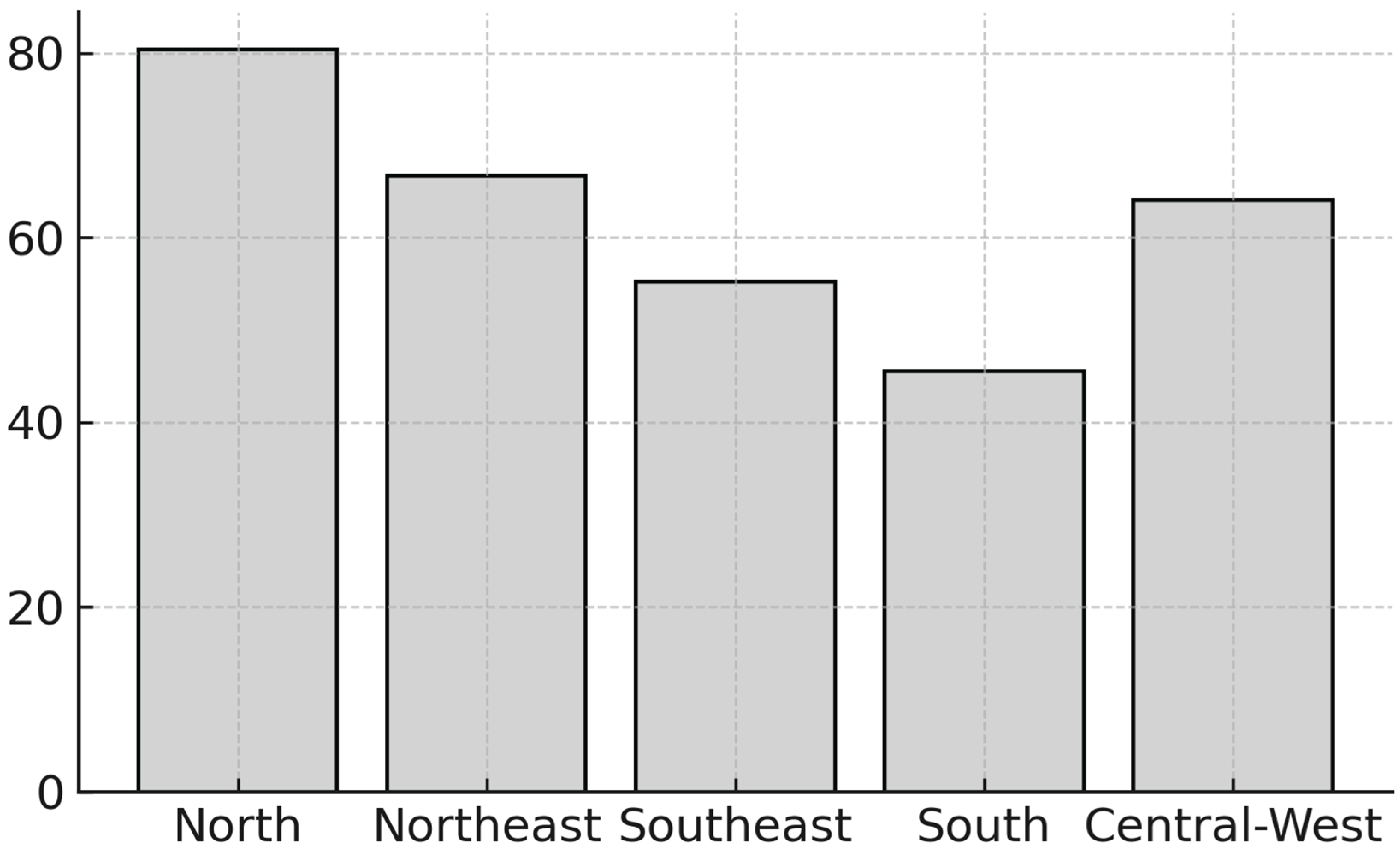
Figure 2.
Proportional distribution of maternal death causes (Brazil, 2020–2023).
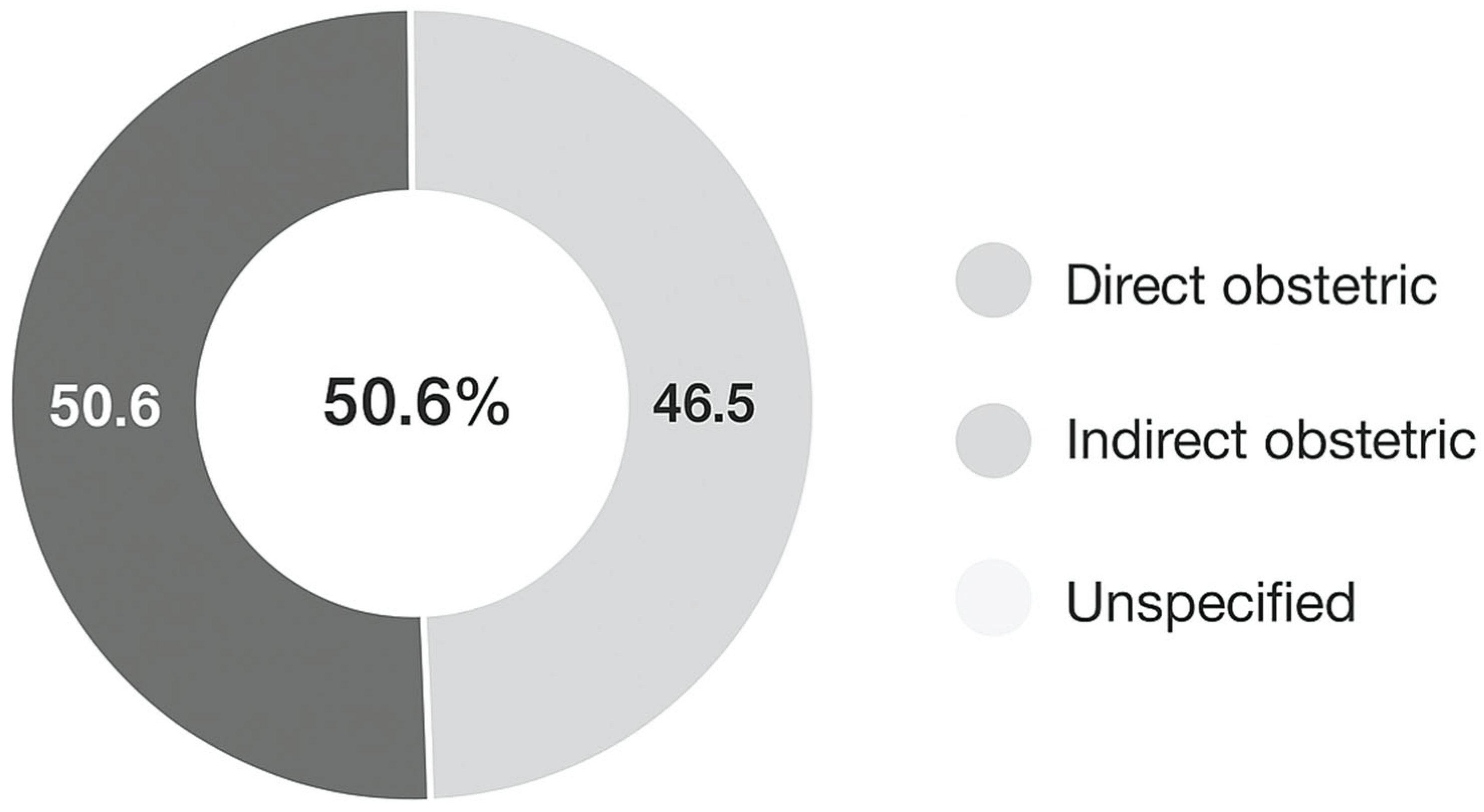
Figure 3.
Forest plot of adjusted incidence rate ratios (IRR) and 95% confidence intervals (Brazil, 2020–2023).
Figure 3.
Forest plot of adjusted incidence rate ratios (IRR) and 95% confidence intervals (Brazil, 2020–2023).
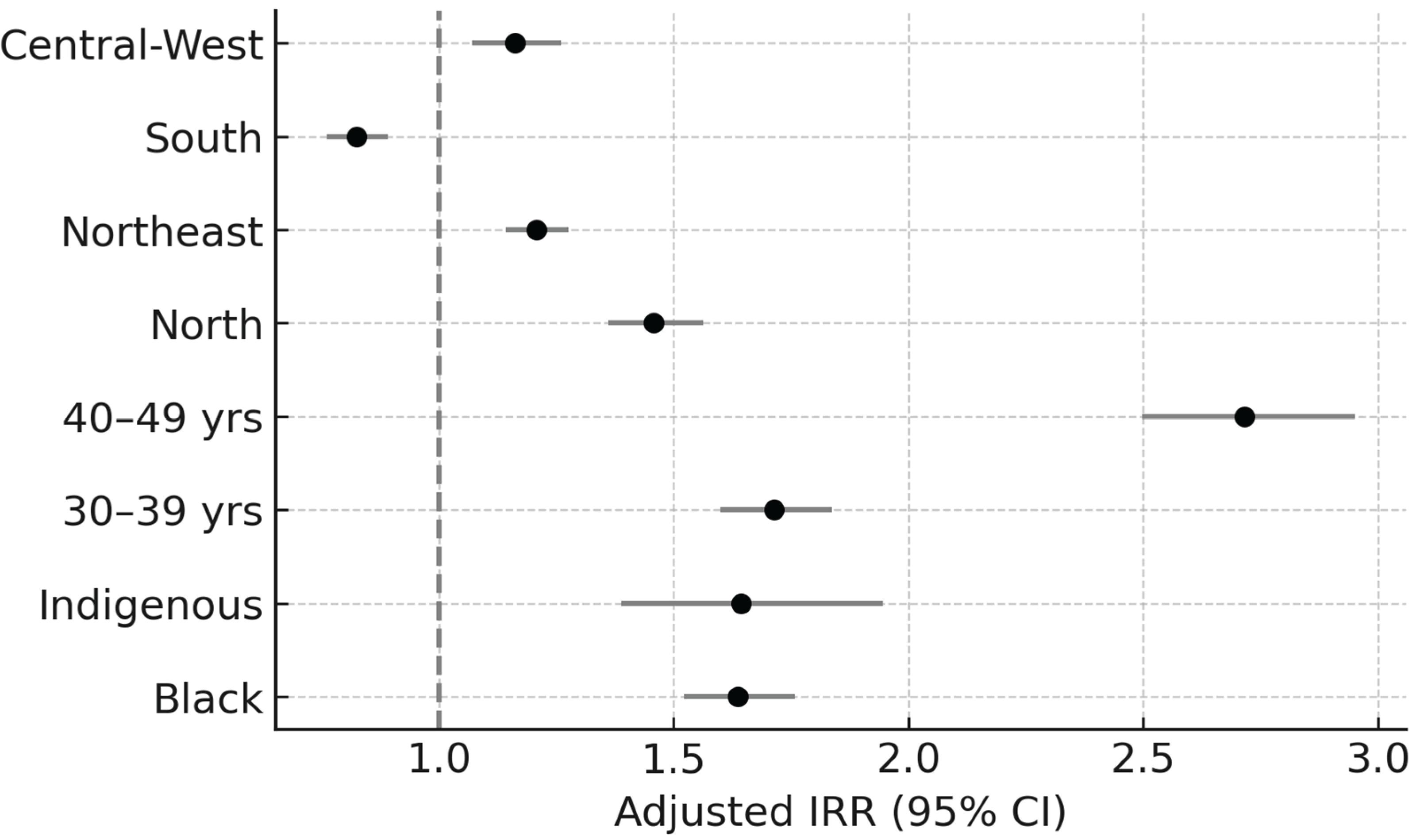
Figure 4.
Temporal trend of maternal mortality rate (Brazil × Portugal, 2020–2023).
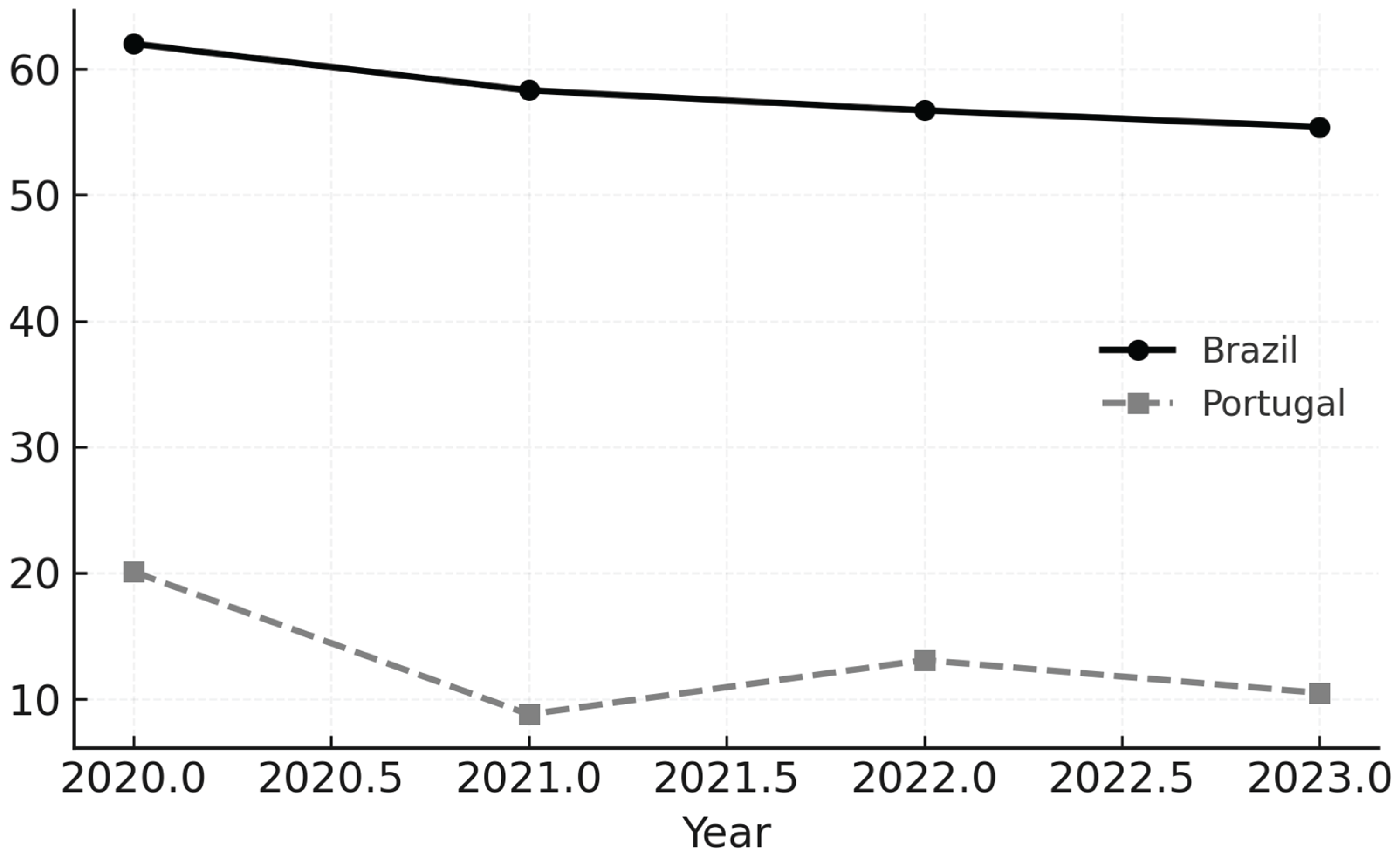

Table 1.
Absolute and relative distribution of sociodemographic profile characteristics of Brazilian women included in the study (n=7,690). Brazil 2020-2023.
Table 1.
Absolute and relative distribution of sociodemographic profile characteristics of Brazilian women included in the study (n=7,690). Brazil 2020-2023.
| Variable/Category | n | % |
|---|---|---|
| Race | ||
| White | 2.436 | 31.7% |
| Black | 917 | 11.9% |
| Yellow | 21 | 0.3% |
| Brown | 4.036 | 52.5% |
| Indigenous | 139 | 1.8% |
| Unknown | 141 | 1.8% |
| Age range | ||
| 10–14 years | 37 | 0.5% |
| 15–19 years | 600 | 7.8% |
| 20–29 years | 2.880 | 37.5% |
| 30–39 years | 3.473 | 45.2% |
| 40–49 years | 686 | 8.9% |
| 50–59 years | 14 | 0.2% |
| Region of residence | ||
| North | 1.143 | 14.9% |
| North East | 2.343 | 30.5% |
| Southeast | 2.666 | 34.7% |
| South | 813 | 10.6% |
| Central-West | 725 | 9.4% |
| Education | ||
| None | 134 | 1.7% |
| 1–3 years | 435 | 5.7% |
| 4–7 years | 1.380 | 17.9% |
| 8–11 years | 3.650 | 47.5% |
| ≥ 12 years | 1.169 | 15.2% |
| Ignored | 922 | 12% |
| Marital status | ||
| Single | 3578 | 46.5% |
| Married | 2.309 | 30% |
| Widow | 34 | 0.4% |
| Legally separated | 166 | 2.2% |
| Other | 1.089 | 14.2% |
| Ignored | 514 | 6.7% |
Table 2.
Classification of maternal deaths according to type, period and cause (n=7,690). Brazil 2020–2023.
Table 2.
Classification of maternal deaths according to type, period and cause (n=7,690). Brazil 2020–2023.
| Variable/Category | n | % | 95% CI |
|---|---|---|---|
| Type of maternal death | |||
| Direct obstetric | 3.892 | 50.6% | 49.4– 51.8 |
| Indirect obstetric | 3.579 | 46.5% | 45.3–47.7 |
| Unspecified | 218 | 2.8% | 2.5–3.2 |
| Time of death | |||
| Pregnancy/childbirth/abortion | 2.054 | 26.7% | 25.6–27.8 |
| Postpartum up to 42 days | 4.768 | 62% | 60.9–63.1 |
| Postpartum 43 days–<1 year | 122 | 1.6% | 1.3–1.9 |
| Not during pregnancy/postpartum | 138 | 1.8% | 1.5–2.1 |
| Inconsistent period | 3 | 0.04% | 0.01–0.11 |
| Not informed/ignored | 605 | 7.9% | 7.3–8.5 |
| Specific obstetric causes (ICD O00–O99) | |||
| Behavioral syndromes | 2 | 0.03% | 0.004–0.11 |
| Pregnancy that ends in abortion | 488 | 6.3% | 5.8–6.9 |
| Hypertensive disorders | 1.245 | 16.2% | 15.4–17 |
| Other pregnancy disorders | 276 | 3.6% | 3.2–4 |
| Fetal/amniotic complications | 361 | 4.7% | 4.2–5.2 |
| Labor complications | 905 | 11.8% | 11.1–12.6 |
| Childbirth | 1 | 0.01% | 0.0002–0.07 |
| Postpartum complications | 730 | 9.5% | 8.9–10.2 |
| Other obstetric conditions | 3.682 | 47.8% | 46.6–49 |
| ICD-10 Chapters | |||
| V—Mental/behavioral disorders | 2 | 0.03% | 0.004—0.11 |
| XV—Pregnancy, childbirth and the postpartum period | 7.688 | 99.97% | 99.94–99.99 |
Table 3.
Maternal mortality by race, age group, and region. (n=7,690). Brazil 2020-2023.
| Deaths | Live births (5 years) | Rate 100,000 |
IRR | 95% CI | p-value | |
|---|---|---|---|---|---|---|
| Race | ||||||
| Brown (ref) | 4.036 | 706,8200 | 57,10 | 1,00 | — | — |
| White | 2.436 | 420,0250 | 58,01 | 1,016 | 0,966–1,068 | 0,544 |
| Black | 917 | 981,625 | 93,45 | 1,636 | 1,523–1,758 | <0,001 |
| Yellow | 21 | 59,780 | 35,12 | 0,615 | 0,401–0,945 | 0,026 |
| Indigenous | 139 | 148,115 | 93,85 | 1,644 | 1,388–1,946 | <0,001 |
| Ignored | 141 | 229,910 | 61,33 | 1,074 | 0,908–1,270 | 0,404 |
| Age range | ||||||
| 20–29 (ref) | 2.880 | 623,5505 | 46,19 | 1,00 | — | — |
| 10–14 | 37 | 69,695 | 53,07 | 0,707 | 0,517–0,967 | 0,030 |
| 15–19 | 600 | 144,6700 | 41,49 | 0,552 | 0,515–0,592 | <0,001 |
| 30–39 | 3.473 | 438,6710 | 79,19 | 1,714 | 1,599–1,837 | <0,001 |
| 40–49 | 686 | 547,100 | 125,39 | 2,716 | 2,498–2,951 | <0,001 |
| 50–59 | 14 | 1915 | 730,87 | 16,015 | 9,362–26,760 | <0,001 |
| Region of residence | ||||||
| Southeast (ref) | 2.666 | 483,0800 | 55,20 | 1,00 | — | — |
| North | 1.143 | 142,0985 | 80,45 | 1,458 | 1,360–1,562 | <0,001 |
| North East | 2.343 | 351,7240 | 66,66 | 1,207 | 1,142–1,276 | <0,001 |
| South | 813 | 178,8060 | 45,47 | 0,824 | 0,762–0,891 | <0,001 |
| Central-West | 725 | 113,0795 | 64,12 | 1,162 | 1,070–1,261 | 0,00034 |
Table 4.
Maternal mortality rate per 100,000 live births. Portugal (2020-2023).
| Year | Live births | Deaths | TMM | 95% CI |
|---|---|---|---|---|
| 2020 | 84.371 | 16.96 | 20.1 | 10.5–29.7 |
| 2021 | 79.294 | 6.98 | 8.8 | 2.27–15.3 |
| 2022 | 82.632 | 10.82 | 13.1 | 5.30–20.9 |
| 2023 | 83.295 | 8.75 | 10.5 | 3.54–17.5 |
Disclaimer/Publisher’s Note: The statements, opinions and data contained in all publications are solely those of the individual author(s) and contributor(s) and not of MDPI and/or the editor(s). MDPI and/or the editor(s) disclaim responsibility for any injury to people or property resulting from any ideas, methods, instructions or products referred to in the content. |
© 2026 by the authors. Licensee MDPI, Basel, Switzerland. This article is an open access article distributed under the terms and conditions of the Creative Commons Attribution (CC BY) license (http://creativecommons.org/licenses/by/4.0/).
Copyright: This open access article is published under a Creative Commons CC BY 4.0 license, which permit the free download, distribution, and reuse, provided that the author and preprint are cited in any reuse.


