

Submitted:
01 April 2026
Posted:
02 April 2026
You are already at the latest version
Abstract
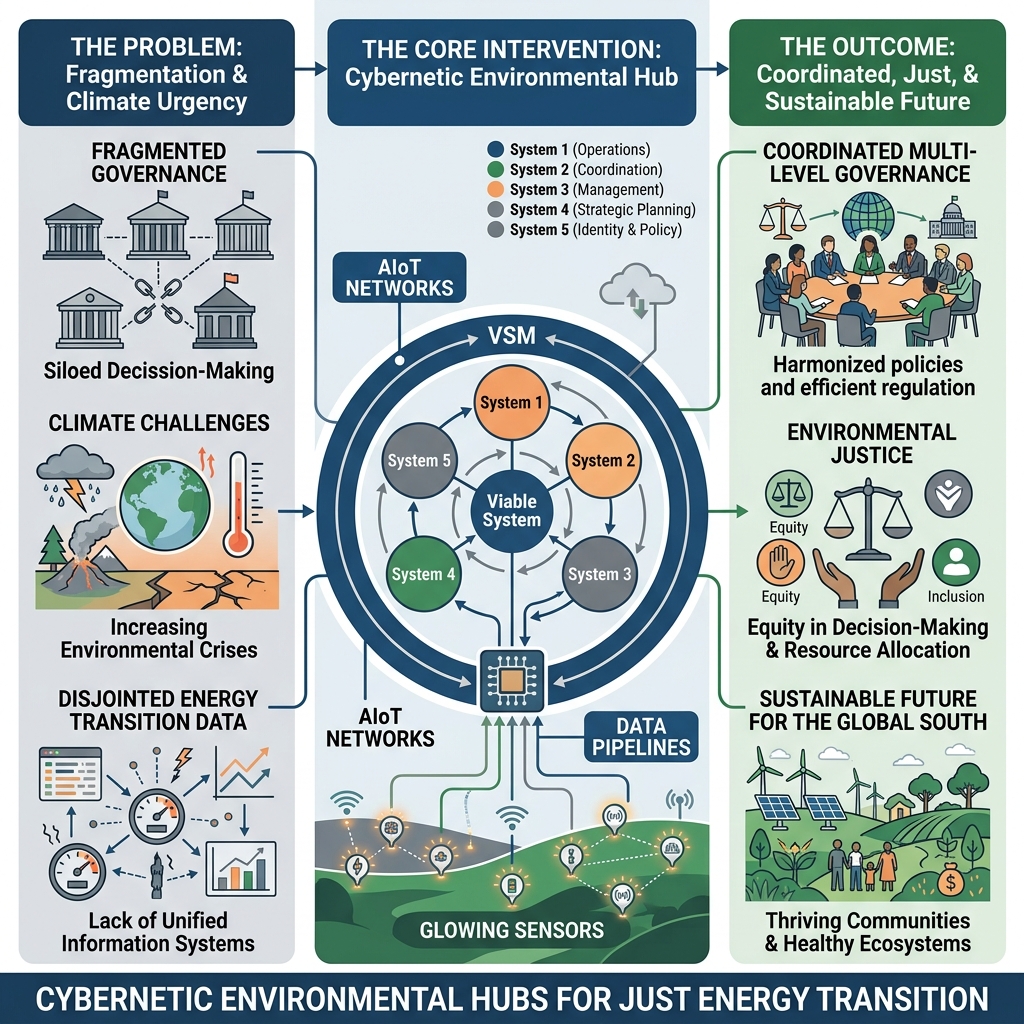
Just energy transitions in the Global South unfold under conditions of institutional fragmentation, fiscal constraints, and high socio-ecological turbulence, making governance capacity a critical bottleneck for effective decarbonization and climate justice. This study proposes the Cybernetic Environmental Hub (CEH) framework, which extends the Viable System Model (VSM) to sustainability governance by integrating AIoT-enabled environmental monitoring, Early Warning Systems, decentralized data governance, and justice-centered institutional design. Methodologically, the research adopts a hybrid conceptual–empirical approach combining theoretical development with participatory territorial diagnostics. Empirical validation is illustrated through a case study in the Caribbean Mining Corridor, where socio-ecological challenges were collected through participatory innovation workshops, thematically coded, and mapped onto the five VSM subsystems to identify systemic “variety gaps.” The analysis demonstrates that fragmented operational initiatives coexist with weak meta-systemic coordination, limiting adaptive capacity in energy transition processes. The CEH architecture addresses these deficiencies by embedding AIoT sensing, federated learning, blockchain-based coordination, and Early Warning Systems within recursive governance structures. Additionally, the study introduces a Territorial Governance Maturity Model (H1–H3) to diagnose systemic learning capacities and transition readiness across technological, institutional, data governance, and justice dimensions. The findings suggest that cybernetic environmental hubs can function as socio-technical infrastructures enabling coordinated, adaptive, and justice-centered energy transitions in the Global South.
Keywords:
cybernetic environmental hubs
; Viable System Model (VSM)
; just energy transition
; AIoT environmental monitoring
; early warning systems
; climate justice governance
; open environmental data governance
; Global South
1. Introduction: Governing Just Energy Transitions in the Global South
Just energy transitions (JETs) in the Global South are not merely technology substitution processes; they are structural transformations unfolding under conditions of severe fiscal constraint, deep socio-economic inequality, and acute climate vulnerability [1,2]. In such contexts, the dominant bottleneck is increasingly governance capacity—the ability of institutions and multi-actor coalitions to coordinate across fragmented mandates and territorial scales [3,4]. Consequently, the literature converges on the urgent need for systemic architectures capable of steering these transitions while absorbing the high levels of environmental and social complexity inherent to emerging regions [5].
Figure 1 illustrates the systemic governance challenges that characterize energy transitions in the Global South.
The justice dimension of these transitions is a central, non-negotiable concern. Traditional governance approaches often treat climate justice as an ex-post compensatory mechanism rather than a foundational structural design condition [6]. Recent critiques emphasize that without profound structural redesign, transitions risk reproducing extractive patterns of dependency and neo-colonial resource exploitation [7,8]. True just energy transitions, therefore, demand governance models that embed equity, procedural inclusion, and social protection directly into their operational and decision-making architecture [9].
Despite these imperatives, existing governance models frequently exhibit significant structural limitations. Contemporary approaches, such as polycentric and network governance, offer valuable descriptive lenses but often fail to provide normative guidance for institutional redesign under high socio-ecological complexity [10]. Furthermore, they tend to lack the necessary mechanisms for integrating continuous socio-technical feedback loops and resolving cross-level coordination conflicts [11,12]. Thus, there remains an unaddressed need for architectures that successfully balance local autonomy with overarching systemic cohesion [13].
This theoretical fragmentation is compounded by a technological silo effect. Advanced digital tools, such as Artificial Intelligence of Things (AIoT), Early Warning Systems (EWS), and digital twins, are frequently deployed as isolated engineering solutions, disconnected from the very institutional decision-making structures they are meant to inform [14]. At the same time, high-profile multi-level financing mechanisms like Just Energy Transition Partnerships (JETPs) suffer from coordination overload and prohibitive transaction costs [15,16]. Without transparent, decentralized open environmental data governance—supported by technologies like federated learning and blockchain—distributed sensing does not translate into distributed governance capacity [17,18]. The structural research gap is clear: the literature provides the theoretical and technological components (governance frameworks, cybernetic principles, AIoT sensing, and justice ideals), but lacks a unified, operational design to integrate them.
This article makes four main contributions to the literature on sustainability governance and energy transitions. First, it introduces the concept of Cybernetic Environmental Hubs, conceptualized as socio-technical infrastructures for coordinating environmental monitoring, data governance, and energy transition processes. Second, it extends the Viable System Model (VSM) to the field of sustainability governance by operationalizing recursive environmental governance across territorial scales. Third, it develops a diagnostic analytical framework that maps territorial governance challenges into VSM subsystems and proposes a territorial governance maturity model. Fourth, it provides policy-relevant insights by demonstrating how environmental hubs can support institutional coordination and adaptive governance in energy transition processes.
To achieve this, the study is guided by three interrelated research questions (RQs) and associated propositions (Ps):
-
RQ1: How can the Viable System Model (VSM) enhance governance coordination in regional energy transitions?P1: Cybernetic structuring enhances institutional coherence. Institutional behavior is shaped by structural architecture. By deploying VSM-based mechanisms, institutions can balance operational autonomy with systemic cohesion, mitigating fragmentation while aligning multiple actors toward shared decarbonization and justice objectives [10].
-
RQ2: How can AIoT and Early Warning Systems be structurally embedded in governance systems?P2: AIoT integration increases adaptive capacity. Embedding digital infrastructures—AIoT sensors, blockchain, and federated learning—within the intelligence (System 4) and coordination layers of governance amplifies predictive foresight and real-time response, allowing systems to manage complexity securely and transparently [19,20].
-
RQ3: How can territorial maturity be assessed systemically?P3: Territorial maturity is path-dependent and systemically emergent. A territory’s capacity to execute just transitions is not externally installable; it emerges from historical, recursive institutional learning. Maturity evolves as territories move from operational reactivity to deep cybernetic reflexivity [12,21].
Through this hybrid conceptual–empirical design, the article transitions organizational cybernetics from a diagnostic tool into an institutional engineering framework capable of operationalizing justice and viability.
The analytical structure of the article is summarized in Figure 2.
2. Literature Review and Theoretical Positioning
2.1. The Viable System Model and Cybernetic Governance
Organizational Cybernetics provides the theoretical foundation for maintaining systemic viability under extreme complexity. Beer (1981) establishes the Viable System Model (VSM) as a formal framework derived from neurophysiology, defining the necessary and sufficient structural conditions for an organization to maintain an independent existence within a dynamic environment [22]. Subsequent studies have expanded this perspective, demonstrating how the VSM’s five interacting subsystems—operations, coordination, control, intelligence, and identity—function cohesively to absorb internal and external perturbations [23,24]. Therefore, the literature converges on the premise that the VSM offers a mathematically grounded architecture for diagnosing and designing resilient institutional structures [25].
The core regulatory mechanism underpinning the VSM is the Law of Requisite Variety. Ashby (1956) establishes that “only variety can absorb variety,” meaning a governance system must possess internal complexity equal to or greater than the environmental turbulence it attempts to manage [26]. Other authors have expanded this principle to socio-ecological systems, showing that rigid, hierarchical command-and-control frameworks systematically fail because their internal variety is insufficient to match rapidly changing climate and social dynamics [27,28]. Consequently, maintaining systemic viability requires decentralized architectures that maximize operational autonomy while enabling continuous structural adaptation [29].
Recent applications of the VSM have transitioned from corporate management toward sustainability and common-pool resource governance. Espinosa (2022) establishes the framework’s relevance for empowering self-governing communities to manage complex socio-ecological transitions from the bottom up [30]. Empirical studies corroborate this by demonstrating that cybernetic principles provide the structural scaffolding necessary for sustainable organizational renewal and effective resource optimization under severe ecological constraints [21,31]. Therefore, the VSM provides not only a descriptive lens but an emancipatory and normative design methodology for grassroots sustainability initiatives [32].
A fundamental strength of the VSM is its recursive, fractal logic for multi-level governance. Espinosa and Duque (2018) note that every viable system contains and is contained within other viable systems, allowing the exact same functional architecture to operate from local indigenous cooperatives to national policy platforms [33]. This recursive design enables precise multiscale diagnostics and clear interface definitions, preventing the center–periphery power imbalances common in traditional planning [28,34]. Thus, recursive cybernetic structuring balances necessary local operational autonomy with indispensable meta-systemic cohesion, making it an optimal blueprint for large-scale climate interventions [10].
2.2. Complexity Governance and Framework Comparison
Despite the robustness of cybernetic principles, contemporary environmental governance often relies on parallel theoretical approaches that describe complexity but struggle to structurally manage it. Ison et al. (2014) established that adaptive governance enhances resilience through iterative learning-by-doing, yet it often lacks a formalized multi-level institutional design capacity [11]. Transition Management and Polycentric Governance similarly highlight the importance of niche innovation and distributed decision-making, though they frequently face high transaction costs or technocratic biases that obscure socio-political trade-offs [12]. Consequently, to operationalize these descriptive insights, a cybernetic synthesis is required to guarantee structural coordination, continuous feedback, and adaptive intelligence across governance layers [13].
Figure 3 compares the main governance frameworks discussed in the literature and highlights the analytical gap addressed by this study.
2.3. Just Energy Transition Governance
In the Global South, the imperative for robust governance architecture is magnified by the financial, political, and historical complexities of energy transitions. The Presidential Climate Commission (2022) established the Just Energy Transition Investment Plan (JET-IP) framework, emphasizing that systemic shifts require more than technological substitution; they demand comprehensive socio-economic redesign and restorative justice [16]. Similar mechanisms deployed internationally reveal that coordinating multiple domestic, international, and financial actors generates massive administrative friction and coordination overload [35,36]. Thus, the literature converges on the reality that without a cohesive multi-level architecture, transition partnerships risk becoming fragmented mechanisms rather than transformative ecosystems [37].
Beyond coordination, these frameworks frequently treat justice as a peripheral outcome rather than a structural baseline. Fakir (2023) highlights that the reliance on loans rather than grants in transition financing threatens to deepen debt burdens in emerging economies, shifting the transition’s costs onto vulnerable populations [4]. Other critical analyses have found similar patterns, warning that top-down, opaque financing mechanisms can marginalize local voices and fail to deliver procedural or distributive equity [2,3]. Ultimately, without profound structural redesign, dominant transition agendas risk reproducing extractive patterns and neo-colonial dependencies under the guise of climate action [7].
2.4. Digital Governance and AIoT
To overcome these structural and informational bottlenecks, modern governance frameworks must seamlessly integrate advanced digital infrastructures. Liu (2026) establishes that Artificial Intelligence of Things (AIoT) and Early Warning Systems (EWS) function as crucial “variety amplifiers,” enabling local units to process high-frequency environmental data and trigger immediate algedonic feedback [14]. Studies have expanded this perspective by demonstrating that edge computing and distributed sensor networks allow real-time anomaly detection and autonomous operational management without overwhelming central authorities [17,38]. Therefore, embedding AIoT sensing directly into regulatory loops transforms technological platforms from passive IT tools into essential components of cybernetic adaptation [39].
Finally, the integration of these technologies demands rigorous and equitable open data governance architectures. McMahan et al. (2017) established the foundation of Federated Learning (FL), enabling machine learning models to be trained across decentralized devices without exchanging raw data [40]. Researchers have recently combined FL with blockchain-based smart contracts to ensure secure cross-domain collaboration, data sovereignty, and transparent incentive allocation, fundamentally preventing digital extractivism [18,20]. Thus, the literature confirms that coupling FAIR data principles with privacy-preserving, decentralized architectures provides the necessary trust and accountability mechanisms for resilient, justice-centered environmental governance [41].
3. Conceptual Development: The Viable Environmental Hub Model
3.1. Defining Environmental Hubs as Cybernetic Systems
Environmental Hubs are frequently conceptualized as technological clusters or coordination spaces for renewable energy deployment; however, this interpretation remains incomplete. Rooted in the neurocybernetic foundations established by Beer [22], this study reconceptualizes them as territorially embedded viable systems—recursive, adaptive, and normatively anchored governance architectures capable of sustaining just energy transitions. Subsequent studies have expanded this perspective, demonstrating that addressing complex socio-ecological turbulence requires fractal structures capable of simultaneously absorbing environmental variety and preserving systemic identity [27,28]. Therefore, the literature converges on the premise that true sustainability requires empowering local actors to manage their own environmental complexity while maintaining structural coupling with broader regional and national regimes [30].
We define Cybernetic Environmental Hubs (CEHs) as institutional–technical organs that transcend rigid hierarchical governance by integrating organizational cybernetics with advanced data infrastructures [42]. Rather than relying on centralized control, these hubs function as distributed regulatory architectures designed to amplify variety, coordinate decentralized actors, and steer regime-level socio-technical transitions [12,13]. Consequently, to operationalize these capabilities, a CEH acts as a meta-systemic organization that balances local operational autonomy with global ecological cohesion [10]. Figure 4 presents the conceptual architecture of the Cybernetic Environmental Hub.
3.2. Formal Application of VSM (Systems 1–5 Mapping)
Methodologically, the CEH is operationalized through a direct mapping of the five VSM subsystems (S1–S5) onto the socio-technical components of the Hub, ensuring functional completeness.
System 1 (S1): AIoT Operational Nodes — Responsible Autonomy. System 1 comprises the autonomous operational units responsible for primary activities, such as renewable energy generation, microgrid management, watershed stewardship, or territorial monitoring [24]. In the CEH architecture, S1 units are implemented as AIoT-enabled operational nodes utilizing edge computing. Edge AIoT enables local data processing and decision-making without continuous hierarchical intervention, thereby maximizing procedural autonomy and absorbing local environmental complexity in real time [38]. This design respects Ashby’s Law of Requisite Variety by ensuring that operational complexity is managed at the level where it emerges [26].
System 2 (S2): Coordination Mechanisms — Anti-Oscillation and Equity. System 2 manages interdependencies among operational nodes, preventing oscillatory behavior and resolving shared resource conflicts [22]. In energy systems, this includes load balancing, frequency regulation, and dispute resolution over shared infrastructure. Technologically, S2 is supported by blockchain-based coordination protocols and smart contracts that transparently regulate energy exchange and resource allocation [20]. These mechanisms embed equity directly into the coordination logic by ensuring auditable, rule-based interactions among decentralized nodes [18].
System 3 (S3): Control and Compliance — Optimization and Data Sovereignty. System 3 ensures internal cohesion and real-time optimization, providing “here and now” governance [24]. Within CEHs, S3 supervises performance metrics, ensures compliance with sustainability thresholds, and allocates resources dynamically. Crucially, Federated Learning (FL) operationalizes S3 by enabling distributed model training across local devices without transferring raw data to central servers [17]. This protects privacy, prevents data extraction, and reinforces physical–social data sovereignty in Global South contexts, ensuring that S3 functions as both an optimization engine and a sovereignty safeguard [18].
System 4 (S4): Intelligence — Early Warning Systems and Climate Risk Analytics. System 4 represents the forward-looking intelligence function responsible for environmental scanning, scenario modeling, and long-term adaptation [21]. Within CEHs, S4 integrates AIoT sensors as Early Warning Systems (EWS) that monitor essential sustainability variables (EVS), such as grid stability, emissions thresholds, and socio-economic risk indicators [19]. When EVS thresholds are breached, these systems generate algedonic signals—immediate alerts that bypass bureaucratic inertia and trigger rapid adaptation pathways [14]. System 4 thereby transforms governance from reactive crisis management into proactive, predictive resilience planning.
System 5 (S5): Policy and Identity — Just Transition Ethos. System 5 defines the ultimate purpose and normative identity of the CEH, arbitrating the dynamic balance between current operations (S3) and future adaptation (S4) [30]. In this model, S5 embeds distributive, procedural, and restorative justice as non-negotiable pillars of governance. Normative commitments—such as the protection of vulnerable communities, ecological remediation, and the prevention of neo-colonial resource exploitation—filter all strategic decisions [7]. Open data governance frameworks further ensure transparency and accountability, anchoring the CEH in a justice-centered identity that prevents the transition from being co-opted by entrenched power asymmetries [43].
3.3. Recursive Architecture and Core Conceptual Integration
A fundamental property of the CEH model is its fractal recursivity, which allows the exact same S1–S5 functional architecture to operate consistently across multiple governance levels. This means that a local community microgrid (local S1) can be structurally aligned with provincial energy coordination (regional S2/S3) and national climate policy (national S5), while retaining its self-governance capacity [33]. This recursive design enables precise multiscale diagnostics and prevents the center–periphery power imbalances common in traditional top-down planning [28]. By nesting these viable systems, the framework ensures that normative justice commitments and adaptive intelligence flow seamlessly throughout the entire socio-ecological hierarchy [14]. The recursive governance logic across territorial scales is illustrated in Figure 5.
The structural coupling visualized in the CEH framework demonstrates how digital infrastructures are not mere technological add-ons but essential organs of the viable system. AIoT devices are positioned at the edge as the sensory–nervous tissue, acting as variety multipliers by processing local data and generating algedonic feedback pathways [14]. At the infrastructural layer, Federated Learning and Blockchain operate as a decentralized trust matrix, resolving the tension between transparency and privacy, and preventing data colonialism [17,20]. At the systemic core lies the S3–S4–S5 homeostat of justice and adaptation, ensuring that strategic adaptation does not sacrifice equity, and that operational stability does not inhibit structural transformation [12,43]. By structurally coupling AIoT sensing, decentralized trust infrastructures, recursive governance design, and justice-centered identity, the Viable Environmental Hub model establishes the necessary and sufficient conditions for sustainable, legitimate, and adaptive just energy transitions.
4. Socio-Technical Architecture
The socio-technical architecture of the Cybernetic Environmental Hub (CEH) operationalizes the conceptual model developed in Section 3 by structurally coupling AIoT-enabled sensing, Early Warning Systems (EWS), decentralized trust infrastructures, and open environmental data governance. Rather than functioning as a mere digital overlay, this architecture constitutes the distributed nervous system of the Hub—amplifying requisite variety, enabling adaptive feedback, and embedding climate justice directly within the technical infrastructure.
Ning et al. (2024) establish the foundational role of decentralized data architectures in overcoming informational bottlenecks and enabling secure coordination across distributed environments [17]. Subsequent empirical studies demonstrate that integrating edge computing with Industrial Internet of Things (IIoT) infrastructures maximizes procedural autonomy by allowing operational nodes to process high-frequency environmental data locally without relying on continuous central intervention [38]. Therefore, distributed analytics ensure that sensing infrastructures remain structurally resilient, agile, and immune to the centralized points of failure common in traditional top-down environmental monitoring [39].
This AIoT monitoring layer forms the foundational operational substrate (System 1) of the CEH. It includes environmental sensors, smart meters, distributed renewable generation monitors, and socio-economic risk indicators deployed across territorial nodes. Rather than functioning as passive data collectors, these components operate as decentralized variety multipliers. By performing inference and anomaly detection at the edge, the system absorbs thousands of micro-perturbations—such as voltage fluctuations, localized pollution spikes, or demand variability—without overwhelming the higher meta-systemic governance layers.
The technological architecture supporting environmental hubs is presented in Figure 6. Data integrity at the origin is a critical design condition; sensor data must be cryptographically certified before transmission to prevent tampering, falsification, or poisoning attacks in distributed energy networks, ensuring that environmental monitoring remains both trustworthy and resilient [38].
The integration of Early Warning Systems (EWS) functionally connects this operational monitoring (System 1) directly with anticipatory intelligence (System 4) through structured risk feedback loops. Liu (2026) establishes that within a cybernetic framework, EWS function as algedonic signals—signals of extreme systemic stress that bypass bureaucratic inertia to trigger immediate regulatory responses [14]. When AIoT sensors detect that essential sustainability variables (EVS), such as grid stability limits, air quality thresholds, or water stress indices, cross critical boundaries, these algedonic pathways are automatically activated.
This integration is further enhanced by digital twins, which allow institutions to simulate climate risk scenarios and regional infrastructure stress-tests in real time [19]. Consequently, the dynamic interaction between real-time risk sensing and predictive modeling forms a “Homeostat of Adaptation” that transforms governance from reactive crisis management into proactive resilience planning [30].
The final layer of the socio-technical architecture addresses the governance of environmental data. This is precisely where climate justice becomes materially encoded into the governance infrastructure, resolving the persistent tension between the need for global transparency and the imperative of local data sovereignty. Figure 7 illustrates the data governance infrastructure enabling distributed environmental monitoring.
McMahan et al. (2017) established the methodological foundation of Federated Learning (FL), which enables advanced machine learning models to be trained collectively across decentralized nodes without ever transferring raw data to centralized servers [40]. Within the CEH architecture, FL preserves community sovereignty over sensitive “physical-social” data—preventing data extractivism and digital colonialism in the Global South—by sharing only encrypted model gradients [20]. Furthermore, blockchain technology provides an immutable trust layer that guarantees transparency in climate finance flows and automates fair compensation schemes.
Smart contracts can implement transparent reward distribution based on measurable community contributions, such as surplus renewable energy generation or participatory data collection, effectively eliminating predatory intermediation [18]. Thus, integrating privacy-preserving FL with blockchain-based cryptographic accountability guarantees that distributive and procedural justice are embedded as structural technical constraints rather than contingent political choices [41].
Finally, while FL protects sensitive community data, aggregated insights and macro-level environmental metrics must be governed under open frameworks to ensure institutional legitimacy. The CEH architecture mandates that non-sensitive datasets comply with FAIR principles (Findable, Accessible, Interoperable, and Reusable) through a community-based Spatial Data Infrastructure (SDI) [14]. The SDI ensures that climate data and governance dashboards remain publicly accessible, fostering citizen science co-creation and providing independent oversight of transition policies.
In summary, this layered socio-technical stack ensures that the CEH is not a disparate assemblage of IT tools, but a structurally integrated cybernetic system. The base layer provides edge-processed operational autonomy (System 1); the blockchain and FL layer ensures secure coordination and data sovereignty (Systems 2/3); the EWS and digital twin layer delivers predictive risk intelligence (System 4); and the FAIR SDI layer guarantees justice-centered transparency (System 5). By embedding justice, resilience, and sovereignty into the technical substrate, the architecture ensures that Environmental Hubs possess the requisite variety to govern just energy transitions effectively.
5. Methodological Validation
Fathi et al. (2025) establish the methodological framework for validating cybernetic governance models through real-world socio-ecological diagnostics [19]. Empirical studies corroborate this by demonstrating that systemic validation requires moving beyond conceptual modeling to the formal structural mapping of organizational pathologies [44]. Consequently, the methodological design of this study applies a hybrid conceptual–empirical approach to translate the theoretical propositions of the Cybernetic Environmental Hub (CEH) into territorial diagnostic processes [31]. Crucially, the empirical application detailed in this section functions as an illustrative validation of the architectural design rather than a statistical generalization, proving that cybernetic mapping can operationalize complex sustainability challenges into actionable institutional engineering.
The research design follows a rigorous sequential methodology integrating participatory data collection with formal cybernetic mapping. The methodological workflow adopted in this study is summarized in Figure 8. The process begins with case study selection, followed by the participatory elicitation of socio-ecological challenges. These narrative challenges undergo qualitative thematic coding and are subsequently clustered into systemic archetypes. Finally, these archetypes are analytically mapped onto the Viable System Model (VSM) functional subsystems, allowing researchers to diagnose “variety gaps” and propose targeted socio-technical interventions. This workflow ensures that theoretical abstractions remain deeply anchored in territorial realities.
Jain and Bustami (2025) establish that evaluating energy transition governance requires confronting the structural constraints, fiscal limitations, and high-complexity environments typical of the Global South [1]. Subsequent studies have expanded this perspective, showing that extractive regions—such as the Caribbean Mining Corridor selected for this study—exhibit profound socio-ecological fragmentation, multi-level coordination deficits, and historical power asymmetries that undermine cooperative transition initiatives [2]. In this territory, traditional community-based authorities frequently operate through informal horizontal arrangements that coexist uneasily with formal state bureaucracies. Furthermore, socio-ecological challenges transcend political-administrative boundaries, creating an ecological–institutional mismatch. Therefore, the literature converges on the premise that such highly turbulent territories, where the “system in focus” must be defined by actual ecosystem boundaries rather than rigid bureaucratic jurisdictions, represent the optimal empirical testing ground for recursive governance redesign [3].
Espinosa (2022) establishes that self-transformation methodologies must be anchored in participatory, bottom-up diagnostics to accurately capture the operational reality of marginalized communities [30]. The empirical dataset for this validation, the Banco de Retos I+D+i, operationalizes this principle as a participatory repository of territorial challenges compiled through extensive community workshops and collaborative innovation processes. Other authors have found similar results in comparable contexts, noting that structured social learning spaces act as vital platforms for co-producing knowledge and articulating complex socio-ecological dysfunctions that top-down technocratic audits frequently overlook [11]. Consequently, the qualitative narratives from the Banco de Retos were subjected to thematic coding into specific “diagnostic points” (D1, D2, …, Dn) and subsequent cluster analysis. This approach translated fragmented community grievances into systemic indicators, revealing underlying organizational archetypes [12].
The core of the validation process consisted of mapping these clustered challenges to the five VSM subsystems (S1–S5), thereby transforming descriptive territorial complexity into prescriptive design insights. Figure 9 shows how territorial governance challenges were mapped into the subsystems of the Viable System Model. This analytical translation process allows structural vulnerabilities to be systematically categorized and matched with CEH technological mitigations. For instance, localized challenges regarding overloaded community leaders and highly fragmented renewable initiatives were mapped to System 1 (Operations) and System 2 (Coordination). These clusters revealed severe anti-oscillation deficits, which the CEH framework mitigates through edge AIoT automation tools and blockchain-enabled coordination protocols [45].
Similarly, missing audit mechanisms and limited institutional monitoring capacity were diagnosed as System 3 (Control) failures, highlighting the need for Federated Learning architectures and transparent, FAIR-compliant data dashboards [44]. Furthermore, reactive climate responses and the absence of anticipatory planning were identified as System 4 (Intelligence) bottlenecks, directly justifying the integration of AIoT-based Early Warning Systems (EWS) and digital twins [19]. Finally, conflicting transition narratives and the lack of a shared vision of climate justice pointed directly to normative identity fractures within System 5 (Policy and Identity), demonstrating the necessity of a justice-centered governance framework [10].
This diagnostic mapping revealed a persistent structural asymmetry typical of Global South settings: strong informal operational dynamism (S1) coexisting with profoundly fragile, reactive meta-systemic coordination (S2–S4). By structurally aligning participatory diagnostics with the functional requirements of the VSM, the CEH model transitions from a theoretical proposition into an evidence-informed instrument for institutional engineering. The Caribbean Mining Corridor thus serves not only as a contextual backdrop but as rigorous empirical proof of the framework’s capability to diagnose and architecturally resolve complex territorial dysfunctions.
6. Territorial Maturity Model (H1–H3)
The Territorial Maturity Model (H1–H3) extends the Cybernetic Environmental Hub (CEH) framework by introducing a diagnostic instrument to assess the evolutionary stage of socio-ecological governance systems. Orr and Burch (2025) establish that territorial maturity is not a linear metric of technological adoption, but rather the progressive development of systemic learning capacities and transformative reflexivity [12]. Subsequent studies expand this perspective, showing that true maturity reflects the extent to which a territory can actively absorb environmental variety and coordinate institutional complexity from the bottom up [14,30]. Therefore, systemic maturity requires a cybernetic evolution—moving from reactive, single-loop survival toward proactive reinvention and structurally embedded justice [21].
To operationalize this diagnostic capacity, the model defines three evolutionary stages: H1 (Fragmented Governance), H2 (Coordinated Governance), and H3 (Cybernetic Governance). The proposed territorial governance maturity model is illustrated in Figure 10. Lederer et al. (2025) note that at the H1 (Operational) level, systems exhibit single-loop learning, relying heavily on informal arrangements and reactive adaptation where System 1 units are highly dynamic but meta-systemic coordination remains weak [10]. Double-loop learning emerges at the H2 (Optimization) stage, where coordination mechanisms (System 2) and strategic foresight (System 4) become formalized, significantly reducing transaction costs and improving resource allocation [12,30]. Ultimately, H3 (Reinvention) represents the attainment of ecological reflexivity, where the territory achieves a dynamic homeostasis between operational autonomy and a justice-centered identity (System 5), establishing the necessary and sufficient conditions for long-term viability [19].
6.1. Territorial Maturity Assessment Matrix
This maturity progression is mapped across four critical dimensions: Technological, Institutional, Data Governance, and Justice Integration. Ning et al. (2024) establish that technological and data governance must evolve from passive extraction toward decentralized, privacy-preserving infrastructures such as Federated Learning [17]. This technological evolution must be strictly matched by institutional and normative shifts, ensuring that blockchain-enabled smart contracts distribute systemic incentives transparently and equitably [18,20]. Consequently, progression toward H3 requires that distributive and procedural justice transition from being contingent political compensations to becoming structurally encoded features of the governance architecture [43].

Table 1.
Territorial Maturity Assessment Matrix.
| Dimension | H1 – Operational | H2 – Optimization | H3 – Reinvention |
|---|---|---|---|
| Technological | Isolated sensors; basic data collection; information silos [45]. | Integrated EWS; predictive analytics; digital twins for crisis modeling [19]. | Autonomous cyber-physical orchestration; Edge AI processing algedonic signals in real time [14]. |
| Institutional | Fragmented governance; hierarchical or informal arrangements [10]. | Polycentric coordination; formal anti-oscillatory mechanisms (System 2) [30]. | Emancipatory cybernetic governance; recursive autonomy with global cohesion [13,43]. |
| Data Governance | Passive data extraction; centralized repositories controlled externally [19]. | Adoption of FAIR principles; community Spatial Data Infrastructure (SDI) [14]. | Federated Learning + Blockchain ensuring data sovereignty and just incentive allocation [17,20]. |
| Justice | Just transition framed as a peripheral compensation mechanism [15]. | Procedural inclusion; participation of affected groups in rule formation [10]. | Structural and distributive justice embedded as systemic identity (System 5) [7,18]. |
6.2. Positioning the Case: Empirical Evaluation
Applying this assessment matrix to the Caribbean Mining Corridor reveals a structural bottleneck typical of Global South settings. Figure 11 positions the case study within the proposed territorial governance maturity model. Pérez-Matamoros et al. (2025) demonstrate that such resource-dependent territories often exhibit robust System 1 dynamism, characterized by strong informal trust-based networks and localized renewable initiatives, placing their baseline functionality at the H1 level [45]. However, these grassroots operations face severe meta-systemic fragilities, particularly the absence of structured coordination (System 2) and anticipatory intelligence (System 4), which stymies natural progression to H2 optimization [19,30]. Therefore, introducing the CEH architecture—with its AIoT variety amplifiers and decentralized trust protocols—acts as a cybernetic catalyst, enabling the territory to bypass traditional bureaucratic stagnation and leapfrog directly toward H3 systemic reinvention [14].
By embedding technological infrastructure within a recursive governance and justice-centered identity framework, this maturity model proves that advancing the energy transition is not merely a matter of rapid digitalization, but of structural viability and emancipatory transformation in the Global South.
7. Comparative Governance Analysis
This section positions the Cybernetic Environmental Hub (CEH) model within the broader landscape of energy and climate governance frameworks. Rather than rejecting existing approaches—such as Polycentric Governance (PG), Multi-Level Governance (MLG), Adaptive Governance, or Transition Management (TM)—the Viable System Model (VSM)-based CEH reframes and structurally integrates their strengths within a prescriptive cybernetic architecture. Lederer et al. (2025) establish that while PG and MLG have significantly advanced our understanding of distributed authority and network-based coordination, they frequently encounter high transaction costs and risks of ineffective fragmentation at macro-scales [10]. Subsequent studies have expanded this perspective, showing that global climate governance often suffers from “theoretical fragmentation,” where coordination becomes dependent on voluntary alignment rather than structural design [14]. Other authors note that Adaptive Governance and TM, while fostering resilience and niche innovation, frequently lack the formal multi-level architecture needed to restructure entire institutional regimes [12]. Therefore, the literature converges on the necessity for an integrated framework that moves beyond descriptive coordination toward normative systemic viability.
The primary added value of the CEH lies in shifting from descriptive sustainability toward mathematically grounded systemic viability. Figure 3 synthesizes the differences between the proposed framework and existing governance approaches. Unlike conventional models, the CEH explicitly integrates high-speed systemic feedback, continuous digital monitoring, and adaptive governance into a unified architecture, addressing the critical gaps identified in the literature. By structurally coupling AIoT, predictive intelligence, and decentralized trust mechanisms, it provides the institutional “plumbing” required to translate normative ideals—such as climate justice and participatory legitimacy—into structurally embedded governance mechanisms [13].
A fundamental distinction of the CEH is its approach to structural coherence. The VSM differs from descriptive frameworks by providing a prescriptive structural skeleton that guarantees coordination (Systems 2 and 3) without sacrificing local operational autonomy [10]. Unlike rigid command-and-control hierarchies or loosely coupled informal networks, the VSM’s fractal recursivity ensures that policy coherence translates fluidly from global agreements to regional authorities and down to community microgrids [45]. Structural coherence is therefore engineered rather than assumed.
Furthermore, conventional governance systems typically operate through linear planning cycles and delayed evaluation mechanisms, rendering their crisis responses bureaucratically slow and reactive. The VSM, by contrast, is intrinsically designed around high-speed feedback loops. The institutionalization of algedonic signals—early warning alarms that bypass traditional hierarchies—allows operational disturbances (such as grid instability or water supply shocks) to directly activate strategic response mechanisms [22]. The continuous adaptation homeostat linking internal control (System 3) and strategic intelligence (System 4) enables rural communities to transition from reactive crisis management to proactive, agile governance [30]. Feedback is not episodic but structural.
The integration of climate justice represents another critical divergence. In many contemporary climate finance mechanisms, including Just Energy Transition Partnerships (JETPs), justice is frequently treated as a peripheral outcome or compensatory add-on, often prioritizing loans over grants and limiting distributive equity [1,15]. In contrast, the VSM embeds justice as a structural condition of viability within System 5, which defines the system’s identity, purpose, and normative commitments [14]. To address critiques of classical cybernetics regarding power blindness, the CEH design incorporates a “power-aware VSM,” actively diagnosing visible, hidden, and invisible power asymmetries in energy transition decision-making [43]. Justice thus becomes an institutionalized design dimension rather than a political afterthought.
Finally, many governance frameworks treat digital technologies as external instruments rather than integral structural components. The CEH framework provides a precise architectural blueprint for embedding AIoT, Edge AI, Federated Learning, and Blockchain as functional organs of the governance system [19]. The formalization of an Intelligence function (System 4) distinguishes the VSM from descriptive frameworks by integrating predictive analytics and digital twins, enabling anticipatory adaptation rather than retrospective evaluation [14]. Moreover, the structural integration of Federated Learning and blockchain-based smart contracts ensures data sovereignty, privacy, and fair incentive schemes, actively preventing digital extractivism in the Global South [17,20]. Digitalization, under the VSM, becomes systemic rather than cosmetic.
In summary, the VSM does not compete with Polycentric or Multi-Level Governance; rather, it renders them operational. By providing the cybernetic architecture necessary to integrate structural coherence, high-speed feedback loops, justice-centered identity, and predictive digital intelligence, the CEH model advances beyond descriptive coordination networks toward a fully viable socio-technical governance architecture. In doing so, it establishes the necessary and sufficient conditions for just energy transitions in the Global South.
8. Governance Redesign Implications
Ison et al. (2014) establish that addressing wicked socio-ecological problems requires moving beyond static policy reform toward the systemic institutionalization of social learning and adaptive governance [11]. Subsequent studies expand this perspective by demonstrating that such transformative capacities demand a structural reconfiguration of historical institutional layering, particularly in territories constrained by entrenched power dynamics [12]. Consequently, the Cybernetic Environmental Hub (CEH) model implies not merely an incremental adjustment, but a fundamental redesign of governance architectures in the Global South, shifting them from bureaucratic, reactive paradigms toward cybernetic, justice-embedded systems capable of sustaining long-term viability [13].
8.1. Institutional Reconfiguration: Adjusting Systems 2–4
The most persistent weaknesses in climate and energy governance in the Global South are not operational (System 1), but meta-systemic. Local communities often demonstrate strong collaborative initiative, yet their coordination, monitoring, and anticipatory intelligence remain fragile or entirely informal [45].
To overcome these limitations, the CEH framework necessitates a formal reconfiguration of Systems 2, 3, and 4. Figure 12 illustrates how environmental hubs can restructure governance architectures. At the coordination level (System 2), redesign requires transitioning from hierarchical intervention to agile, continuous feedback protocols that proactively manage shared resources—such as microgrids and water basins—damping oscillations before they escalate into crises [30].
Similarly, oversight mechanisms (System 3) must be fundamentally transformed. Rather than functioning as external audit bureaucracies focused on punitive compliance, System 3 must evolve into an internal optimization organ. This requires embedding direct, sporadic verification channels (System 3*) capable of validating operational cohesion and fostering collective learning without suppressing local autonomy [45]. Furthermore, institutionalizing systemic reflexivity demands a robust predictive intelligence layer (System 4). Strategic planning must shift from static, donor-driven policy cycles toward continuous environmental scanning and digital twin modeling, enabling institutions to anticipate climate risks and adapt proactively [14]. This dynamic interplay between internal optimization and external foresight solidifies the “Homeostat of Adaptation,” transitioning institutions from reactive bureaucracies into learning systems capable of strategic self-transformation [21,22].
8.2. Digital Infrastructure as Governance Backbone
In this redesigned architecture, digital infrastructure functions not as a peripheral support tool, but as the structural backbone of organizational cybernetics. The integration of AIoT, big data, and edge computing constitutes an exercise in “variety engineering.” By acting as structural amplifiers and attenuators, edge devices enable local operational units to process vast amounts of environmental complexity, thus acquiring the requisite variety needed to operate autonomously under high turbulence [42].
To address profound institutional distrust and prevent digital extractivism, the CEH embeds Federated Learning (FL) and blockchain as non-negotiable pillars of its data governance redesign. FL guarantees physical-social data sovereignty by keeping raw datasets localized within communities, while blockchain-based smart contracts automate transparent incentive allocation and resource distribution [17,18]. By guaranteeing auditable and tamper-proof transactions, this cryptographic infrastructure strengthens procedural and distributive justice, ensuring that marginalized communities receive equitable compensation for their contributions to the energy grid or data commons [20]. Furthermore, automating Early Warning Systems (EWS) into algedonic signals ensures that when essential sustainability variables (EVS) are breached, critical alerts bypass bureaucratic bottlenecks to activate immediate, coordinated responses [19]. Trust and agility are thus engineered into the infrastructure rather than assumed.
8.3. Scaling Environmental Hubs in the Global South
Finally, the structural reconfiguration proposed by the CEH model redefines how governance scales. Unlike conventional “one-size-fits-all” development models, CEHs scale fractally through the recursive principles of the VSM. The exact same functional design (Systems 1–5) operates consistently at the level of a local energy cooperative, a regional innovation ecosystem, or a national transition platform, preserving lower-level autonomy while ensuring higher-level cohesion [10].
This fractal scalability provides the institutional “plumbing” desperately needed by macro-scale financing frameworks, such as Just Energy Transition Partnerships (JETPs), which frequently suffer from opaque financial flows and high transaction costs [1,15]. By embedding auditable blockchain-based allocation mechanisms and structured coordination layers at meso and micro levels, CEHs drastically reduce political fragmentation. Climate finance thus becomes transparent, traceable, and distributively accountable, directly addressing the core vulnerabilities of contemporary multi-level transition initiatives [3]. By deploying CEHs, Global South territories can leapfrog traditional, slow bureaucratic modernization pathways, fostering endogenous development trajectories rooted in local identity and ecological stewardship [5,12]. Ultimately, this redesign transforms climate governance from fragmented administration into a viable, digitally integrated architecture capable of sustaining structural justice under profound socio-ecological turbulence.
9. Theoretical Contributions
This article advances theoretical debates at the intersection of organizational cybernetics, sustainability governance, energy transition theory, and climate justice. Lederer et al. (2025) establish that evaluating and governing profound socio-ecological shifts requires frameworks that move beyond descriptive complexity toward normative, prescriptive institutional redesign [10]. Subsequent studies expand this perspective, demonstrating that a cybernetic approach transforms the analysis of transitions from evolutionary narratives into exact institutional engineering [12,21]. Consequently, by conceptualizing the Cybernetic Environmental Hub (CEH) as a viable socio-technical architecture, this framework contributes to the literature across four theoretical domains, transitioning organizational cybernetics into an emancipatory governance standard for the Global South [30].
9.1. Advancing the VSM in Sustainability Governance
Traditionally, the Viable System Model (VSM) has been applied primarily within corporate and organizational contexts. Espinosa (2022) establishes the theoretical extension of organizational cybernetics to the governance of socio-ecological systems and common-pool resources [30]. This article enriches that extension by integrating a “power-aware VSM,” demonstrating how cybernetics must diagnose visible, hidden, and invisible power structures to prevent the co-optation of environmental governance [43]. Furthermore, whereas contemporary climate governance literature often suffers from theoretical fragmentation, the CEH model articulates deductive first-principle rules that guarantee structural viability under extreme complexity [14]. Therefore, by embedding adaptive coordination into the metasystem, the CEH provides the structural architecture necessary to balance local community autonomy with global ecological coherence [45].
9.2. Integrating Cybernetics with Energy Transition Theory
Energy transition scholarship has significantly advanced the understanding of niche innovation and regime destabilization, yet it often remains largely descriptive. Orr and Burch (2025) note that frameworks such as Transition Management effectively nurture innovation but lack the prescriptive mechanics to restructure entire institutional regimes [12]. To address this, the CEH model specifies exactly how Systems 1 through 5 must be reconfigured to absorb the variety introduced by climate and technological disruptions, treating digital infrastructures (AIoT, edge computing) as intrinsic variety amplifiers [10,19]. By reconceptualizing Early Warning Systems (EWS) as algedonic signals that bypass slow hierarchies to induce proactive metasystemic learning, this framework firmly embeds anticipatory adaptation directly into transition theory [14].
9.3. Embedding Climate Justice Structurally
Perhaps the most significant theoretical contribution of this article is the structural embedding of climate justice within the cybernetic governance architecture. Csanadi and Helmeci (2025) highlight that in many international climate finance mechanisms, such as Just Energy Transition Partnerships (JETPs), justice remains peripheral—an outcome to be negotiated rather than a structural prerequisite [15]. In contrast, the CEH model hardcodes justice within System 5, elevating distributive and restorative equity from policy rhetoric to cybernetic necessity [7]. This is further operationalized through the concept of algorithmic distributive justice: integrating Federated Learning and blockchain-based smart contracts protects data sovereignty and mitigates risks of digital colonialism in the Global South [17,18]. Thus, justice is no longer external to governance but is deeply embedded in the socio-technical code of the system [20].
9.4. Proposing Maturity-Based Territorial Modeling
Finally, the article introduces a methodological and theoretical innovation through the Territorial Maturity Model (H1–H3). Orr and Burch (2025) establish that territorial evolution must be defined by systemic reflexivity and internal variety management, rather than relying exclusively on economic output or technology penetration [12]. Building on cybernetic learning theory, this model conceptualizes development as a progression from single-loop operational adjustments to deep institutional reinvention [21,33]. The Territorial Maturity Assessment Matrix provides a novel heuristic tool for diagnosing “variety gaps” across technological, institutional, and justice dimensions. In doing so, it bridges theoretical abstraction with actionable diagnostics, reframing regional development as a recursive path-dependent trajectory [14].
Collectively, these theoretical contributions reposition organizational cybernetics as a foundational, prescriptive science for sustainability governance in the Anthropocene, capable of guiding just energy transitions in structurally fragile yet innovation-rich territories of the Global South.
10. Policy Implications
Jain and Bustami (2025) establish that public policy for energy transitions must shift from regulating isolated actor behavior through hierarchical command-and-control to engineering the systemic conditions that enable socio-technical viability [1]. Subsequent evaluations of multi-level financing mechanisms expand this perspective, demonstrating that successful policy implementation requires structurally empowering local communities rather than merely imposing top-down decarbonization targets [2,15]. Consequently, the literature converges on the premise that achieving structural justice necessitates translating theoretical transition goals into actionable, digitally supported, and participatory governance mandates [4].
The Cybernetic Environmental Hub (CEH) framework operationalizes this paradigm shift by providing specific guidelines for policymakers, state agencies, and international financiers. To prevent speculative policy recommendations, this framework deliberately defines the concrete actors, legal instruments, and technological mechanisms required to enact systemic governance. The policy implementation architecture derived from the model is presented in Figure 13. This architecture organizes policy interventions into four actionable domains: digital infrastructure investments, participatory governance design, open data mandates, and transition monitoring systems.
10.1. Digital Infrastructure Investments
Climate finance, particularly through Just Energy Transition Partnerships (JETPs), has traditionally prioritized heavy generation infrastructure. The CEH model suggests reorienting a significant portion of these funds toward the cyber-physical nervous system required for community autonomy [16]. Policy agendas should explicitly finance “variety amplifiers,” such as edge AIoT networks and municipal digital twins, so local operational units can autonomously manage renewable intermittency and climate volatility [14]. Governments should also incentivize decentralized trust infrastructures via regulatory sandboxes that permit blockchain smart contracts for transparent resource distribution and lower transaction costs [17,20].
10.2. Participatory Governance Design
Just transitions cannot be imposed hierarchically; public policy must institutionalize co-creation to prevent elite capture. State agencies should formally finance “social learning spaces” and Living Labs, shifting from technocratic solution imposition to continuous socio-ecological co-production [11]. Crucially, energy transition regulations must mandate the adoption of “power-aware” governance principles. This requires systematic audits of invisible power asymmetries to ensure marginalized communities exercise genuine influence over System 5 (identity and purpose) [43]. Additionally, ministries must promulgate legal frameworks that grant formal operational autonomy (System 1) to community-based structures, such as rural energy cooperatives, preventing bureaucratic suffocation [30,45].
10.3. Open Data Mandates
Policy must resolve the inherent tension between global transparency and local data sovereignty. Governments should mandate that macro-level environmental datasets comply strictly with FAIR principles (Findable, Accessible, Interoperable, Reusable), strengthening regional Spatial Data Infrastructures (SDI) to enable citizen science and enhance institutional legitimacy [14]. Simultaneously, national innovation policies must require privacy-by-design architectures, such as Federated Learning, to prevent digital extractivism. This ensures that raw physical-social data remains localized within communities [18]. Financial regulations should further enable smart contracts to guarantee equitable, immutable compensation for communities contributing critical environmental data or surplus renewable energy to the grid [20].
10.4. Transition Monitoring Systems
Traditional monitoring relies on retrospective reporting, whereas the CEH framework requires real-time, cybernetic oversight. Policy guidelines must transform Early Warning Systems (EWS) into legally mandated “algedonic signals”—automated alerts that bypass bureaucratic delays to trigger inter-institutional emergency responses when essential sustainability variables are breached [19]. Furthermore, monitoring mechanisms for Nationally Determined Contributions (NDCs) must expand beyond carbon mitigation metrics to include mandatory indicators for distributive justice, labor protection, and social resilience [46]. Finally, state planning agencies should adopt the proposed H1–H3 territorial maturity model to continuously diagnose systemic reflexivity. By diagnosing variety gaps, institutions can tailor digital investments and capacity-building to the specific evolutionary trajectory of each territory, abandoning technocratic one-size-fits-all solutions [12,21].
Ultimately, the CEH framework demands a regulatory paradigm shift: public policy must transition from reactive supervision to proactive systemic engineering, aligning climate governance with the autonomy, viability, and structural justice required for successful energy transitions in the Global South.
11. Limitations
While the Cybernetic Environmental Hub (CEH) framework advances a structurally integrated model for just energy transition governance, its empirical and methodological boundaries must be acknowledged. These limitations do not undermine the conceptual contribution of the architecture; rather, they delineate a rigorous agenda for future testing.
First, the empirical validation of the CEH model is currently grounded in a single territorial context—the Caribbean Mining Corridor. Fathi et al. (2025) note that a broader limitation in contemporary Viable System Model (VSM) research is the scarcity of extensive longitudinal field validation [19]. Other scholars similarly emphasize that applying cybernetic frameworks to highly specific socio-ecological governance systems allows only for cautious extrapolation [47]. Therefore, while this case provides a high-complexity setting for testing cybernetic redesign, replication across diverse geographies is required to confirm the framework’s structural resilience and scalability.
Second, the methodological core relies on participatory datasets, presenting inherent constraints. Espinosa (2022) establishes that translating abstract cybernetic constructs—such as recursion and requisite variety—into accessible language for rural or indigenous communities presents significant facilitation challenges [30]. Subsequent studies expand on this, warning that without advanced ethnographic heuristics, participatory coding risks overlooking subtle traditional self-organizing mechanisms [33]. Consequently, the qualitative nature of the Banco de Retos I+D+i introduces potential interpretive bias, highlighting the need to triangulate these narratives with quantitative environmental performance metrics in future iterations [19].
Finally, the generalization of the CEH model faces structural institutional barriers. Liu (2026) argues that comparative multiscale validation is necessary before cybernetic frameworks can transition from descriptive proposals to normative governance standards [14]. Furthermore, territorial transformation is inherently path-dependent; adaptive capacity evolves historically through institutional layering and socio-political contingencies [12]. Thus, the CEH framework cannot function as a simple “plug-and-play” solution, particularly given the low systems literacy and organizational resistance frequently found in Global South bureaucracies [19]. Its implementation requires deep institutional adaptation aligned with pre-existing power structures and local socio-ecological dynamics.
12. Future Research
Fathi et al. (2025) establish that advancing the Viable System Model (VSM) from a diagnostic tool into a precision institutional engineering discipline requires moving beyond qualitative single-case applications [19]. Subsequent studies have expanded this perspective, demonstrating that evaluating territorial transformative capacities demands longitudinal testing across diverse socio-ecological contexts [12]. Therefore, the literature converges on the necessity of advancing from descriptive institutional frameworks toward robust, cyber-physical governance simulation and quantitative cross-regional validation [10].
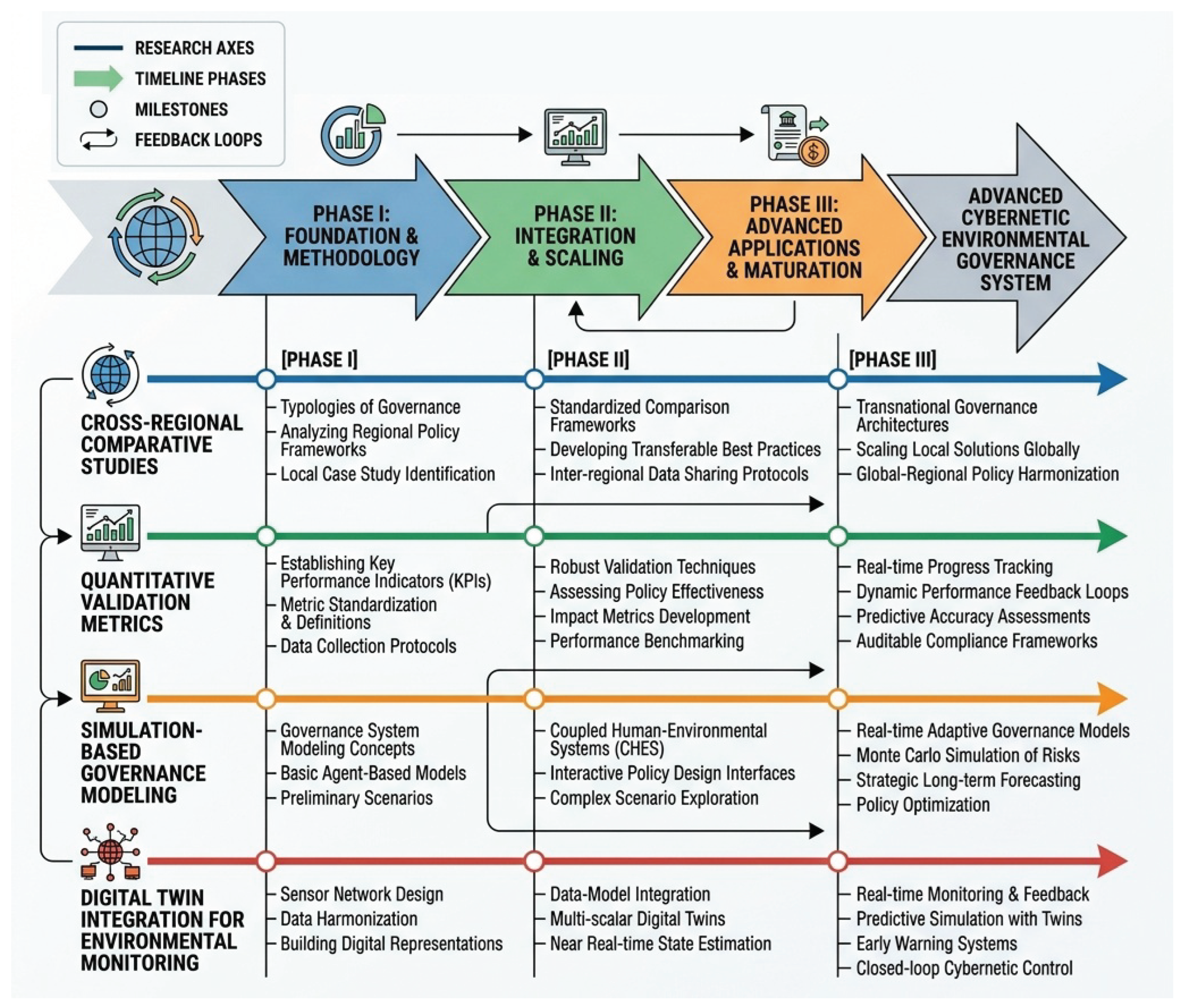
To realize this transition, future research must converge along four complementary trajectories: cross-regional comparison, quantitative testing, computational simulation, and digital twin integration. Figure 14 outlines a research roadmap for advancing cybernetic environmental governance.
First, cross-regional comparative studies are necessary to assess the prescriptive robustness of the Cybernetic Environmental Hub (CEH) architecture under differentiated political regimes, environmental turbulence, and digital infrastructure baselines [47]. Second, future scholarship must develop quantitative validation metrics—combining advanced data science with systemic diagnostics—to objectively measure viability indicators such as transaction cost reduction, variance in resource allocation conflicts, and response times to environmental shocks [19].
Third, simulation-based governance modeling, utilizing System Dynamics (SD) and Agent-Based Modeling (ABM), is required to stress-test recursive coordination structures. Simulating climate shocks and energy price volatility computationally allows researchers to evaluate the adaptive capacity of System 3 and System 4 without exposing physical communities to real-world risks [19]. Finally, integrating digital twins into governance architecture represents the technological frontier. Acting as continuous sensory-analytical engines, digital twins will enable the real-time anticipatory optimization of distributed renewable systems [14].
By pursuing this roadmap, future research can consolidate organizational cybernetics not merely as a diagnostic framework, but as a foundational, scalable engineering science capable of constructing viable, justice-centered socio-technical systems across the Global South.
Author Contributions
Conceptualization, J.A.T.; methodology, J.A.T.; formal analysis, M.E.I.M.; investigation, J.A.T.; resources, J.A.T.; data curation, M.E.I.M.; writing—original draft preparation, J.A.T.; writing—review and editing, C.E.P.C.; visualization, J.A.T.; supervision, J.A.T.; project administration, J.A.T. All authors have read and agreed to the published version of the manuscript.
Funding
This research was funded by the Sistema General de Regalías (SGR) of Colombia, within the framework of MinCiencias Call 31, through the project BPIN 2023000100072, titled “Implementación de una plataforma de datos abiertos basada en AIoT para el análisis y gestión de riesgos ambientales y climáticos en el corredor minero de los municipios La Jagua de Ibirico, Albania y Algarrobo”.
References
- Jain, G.; Bustami, G. Realizing the Potential of Just Energy Transition Partnerships in the Current Geopolitical Environment. 2025. [Google Scholar]
- Simpson, N.P.; Jacobs, M.; Gilmour, A. Taking Stock of Just Energy Transition Partnerships. ODI Policy Brief, 2023. [Google Scholar]
- Karg, A.; Gupta, J.; Chen, Y. Just Energy Transition Partnership: An Inclusive Climate Finance Approach? Energy Research & Social Science 2025, 125, 104103. [Google Scholar] [CrossRef]
- Fakir, S. South Africa’s Just Energy Transition Partnership: A Novel Approach Transforming the International Landscape on Delivering NDC Financial Goals at Scale. South African Journal of International Affairs 2023, 30, 297–312. [Google Scholar] [CrossRef]
- Tamasiga, P. Challenges and Opportunities for Just Energy Transition Partnerships in Africa. Megatrends Afrika Policy Brief, 2024. [Google Scholar]
- Barry, N.; Healy, J. Politicizing energy justice and energy system transitions: Fossil fuel divestment and a "just transition. Energy Policy 2017, 108, 451–459. [Google Scholar] [CrossRef]
- Lenferna, A. South Africa’s Unjust Climate Reparations: A Critique of the Just Energy Transition Partnership. Review of African Political Economy 2023, 50, 491–501. [Google Scholar] [CrossRef]
- Sovacool, B.; Baker, L. The political economy of technological capabilities and global production networks in South Africa’s wind and solar photovoltaic (PV) industries. Political Geography 2017, 1–12. [Google Scholar]
- International Labour Organization. Guidelines for a just transition towards environmentally sustainable economies and societies for all. International Labour Organization, Technical report. Geneva, 2015. [Google Scholar]
- Lederer, B.; Walker, J.; van der Winden, E. Climate Change and Three Models of Governance to Deal with it: Polycentricity, Experimentalist, and the Viable System Model. Systemic Practice and Action Research 2025, 38, 89–107. [Google Scholar] [CrossRef]
- Ison, R.; Collins, K.; Wallis, P.J. Institutionalising social learning: Towards systemic and adaptive governance. Environmental Science & Policy 2014, 53. [Google Scholar] [CrossRef]
- Orr, C.J.; Burch, S. Transformative capacities for navigating system change: a framework for sustainability research and practice. Sustainability Science 2025, 20, 975–992. [Google Scholar] [CrossRef] [PubMed]
- Hilton, J. Building a Governance Reference Model for a Specific Enterprise: Addressing Social Challenges Through Structured Solution. Systems 2025, 13, 788. [Google Scholar] [CrossRef]
- Liu, A.Y. A First-Principles Framework for Climate Governance: Core Functions from Cybernetic Theory. Terawatt Times 2026, 1.0. [Google Scholar]
- Csanadi, A.; Helmeci, D. The Just Energy Transition Partnership Crossroads, 2025.
- Presidential Climate Commission. South Africa’s Just Energy Transition Investment Plan (JET-IP) 2023-2027. Technical report. 2022. [Google Scholar]
- Ning, W.; Zhu, Y.; Song, C.; Li, H.; Zhu, L.; Xie, J.; Chen, T.; Xu, T.; Xu, X.; Gao, J. Blockchain-Based Federated Learning: A Survey and New Perspectives. Applied Sciences 2024, 14, 9459. [Google Scholar] [CrossRef]
- Li, Q.; Xia, D.; Tian, Y.; Zhou, Q. A secure cross-domain federated learning scheme based on blockchain fair payment. PeerJ Computer Science 2026, 12, e3589. [Google Scholar] [CrossRef]
- Fathi, M.R.; Birami, S.; Payvar, A.; Doorafshan, S.A. A Systematic Review of the Viable System Model: Applications, Insights, and Future Directions. Journal of Systems Thinking in Practice 2025, 4, 109–145. [Google Scholar] [CrossRef]
- Tiang, J.J.; Tran-Huy, H.; Hoang-Thu, T.; Qaddara, I.; Choi, B.J.; Alsheri, A.H.; Liu, H. A Novel Approach for Fair Incentive Social Physical Data Based on Blockchain-Federated Learning. Frontiers in Physics 2026. [Google Scholar] [CrossRef]
- Schwaninger, M. Organizing for sustainability: a cybernetic concept for sustainable renewal. Kybernetes 2015, 44, 935–954. [Google Scholar] [CrossRef]
- Beer, S. Brain of the Firm, 2nd ed.; John Wiley & Sons: Chichester, 1981. [Google Scholar]
- Beer, S. The Heart of Enterprise; John Wiley & Sons: Chichester, 1979. [Google Scholar]
- Beer, S. Diagnosing the System for Organisations; John Wiley & Sons: Chichester, 1985. [Google Scholar]
- Beer, S. The Viable System Model: Its Provenance, Development, Methodology and Pathology. Journal of the Operational Research Society 1984, 35, 7–25. [Google Scholar] [CrossRef]
- Ashby, W.R. An Introduction to Cybernetics; Chapman & Hall: London, 1956. [Google Scholar]
- Espinosa, A.; Walker, J. A Complexity Approach to Sustainability: Theory and Application, 2nd ed.; World Scientific Press: Singapore, 2017. [Google Scholar]
- Schwaninger, M. Intelligent Organizations: Powerful Models for Systemic Management, 2nd ed.; Springer: Berlin, 2009. [Google Scholar]
- Hoverstadt, P. The Fractal Organization: Creating sustainable organizations with the Viable System Model; John Wiley & Sons: Chichester, 2008. [Google Scholar]
- Espinosa, A. Sustainable Self-Governance in Businesses and Society: The Viable System Model in Action; Routledge: London, 2022. [Google Scholar]
- Panagiotakopoulos, P.; Espinosa, A.; Walker, J. Sustainability management: insights from the Viable System Model. Journal of Cleaner Production 2016, 113, 792–806. [Google Scholar] [CrossRef]
- Espinosa, A.; Walker, J. Complexity management in practice: A Viable System Model intervention in an Irish eco-community. European Journal of Operational Research 2013, 225, 118–129. [Google Scholar] [CrossRef]
- Espinosa, A.; Duque, C. Complexity management and multi-scale governance: A case study in an Amazonian indigenous association. European Journal of Operational Research 2018, 268, 1006–1020. [Google Scholar] [CrossRef]
- Espejo, R.; Reyes, A. Organizational Systems: Managing Complexity with the Viable System Model; Springer: Berlin, 2011. [Google Scholar]
- Just Energy Transition Partnership Indonesia. Comprehensive Investment and Policy Plan (CIPP). Technical report; Just Energy Transition Partnership Indonesia, 2023. [Google Scholar]
- Socialist Republic of Viet Nam. Resource Mobilisation Plan: Implementing Viet Nam’s Just Energy Transition Partnership (JETP); Technical report; Socialist Republic of Viet Nam, 2023. [Google Scholar]
- Benoit, P.; Prasetiyo, A. Indonesia’s Just Energy Transition Partnerships: A Way to Mobilize Capital for Climate and Development. In Zero Carbon Analytics; 2023. [Google Scholar]
- Zhang, W.; Lu, Q.; Yu, Q.; Li, Z.; Liu, Y.; Lo, S.; Chen, S.; Xu, X.; Zhu, L. Blockchain-Based Federated Learning for Device Failure Detection in Industrial IoT. IEEE Internet of Things Journal 2021, 8, 5926–5937. [Google Scholar] [CrossRef]
- Zhang, C.; Xu, Y.; Elahi, H.; Zhang, D.; Tan, Y.; Chen, J.; Zhang, Y. A Blockchain-based Model Migration Approach for Secure and Sustainable Federated Learning in IoT Systems. IEEE Internet of Things Journal 2023, 10, 6574–6585. [Google Scholar] [CrossRef]
- McMahan, B.; Moore, E.; Ramage, D.; Hampson, S.; Arcas, B. Communication-efficient learning of deep networks from decentralized data. In Proceedings of the Proceedings of the Artificial Intelligence and Statistics, 2017; pp. 1273–1282. [Google Scholar]
- Kumar, R.; Khan, A.; Kumar, J.; Zakria; Golilarz, N.; Zhang, S.; Ting, Y.; Zheng, C.; Wang, W. Blockchain-Federated-Learning and Deep Learning Models for COVID-19 Detection Using CT Imaging. IEEE Sensors Journal 2021, 21, 16301–16314. [Google Scholar] [CrossRef]
- Espejo, R. Cybersyn, big data, variety engineering and governance. AI & Society 2022, 37, 1163–1177. [Google Scholar] [CrossRef]
- Zeini, N.T. The Viable System Model Through a Power-Relations Lens. Systems Research and Behavioral Science, 2026. [Google Scholar]
- Schwaninger, M.; Scheef, C. A Test of the Viable System Model: Theoretical Claim vs. Empirical Evidence. Cybernetics and Systems 2016, 47, 544–569. [Google Scholar] [CrossRef]
- Pérez-Matamoros, Z.; Tejeida-Padilla, R.; Badillo-Piña, I.; Berdeja-Rocha, E.M. Integrating the Viable System Model and Agile Governance for Sustainable Water Management in Rural Tourism Communities. Preprints.org 2025. [Google Scholar] [CrossRef]
- Wang, J.; Robins, N.; Chan, T.; Curran, B. Submission to the Work Programme on Just Transition pathways referred to in the relevant paragraphs of decision 1/CMA.4. Technical report. Grantham Research Institute on Climate Change and the Environment, LSE, 2023. [Google Scholar]
- Alves, J.M.; Schwaninger, M. Water Governance for Sustainability: What Do We Need for a Viable Future? In Shaping Collaborative Ecosystems for Tomorrow; Perko, I., Espejo, R., Reyes, A., Eds.; Emerald Publishing Limited, 2025; pp. 269–287. [Google Scholar] [CrossRef]
Figure 1.
Systemic governance challenges in just energy transitions in the Global South.
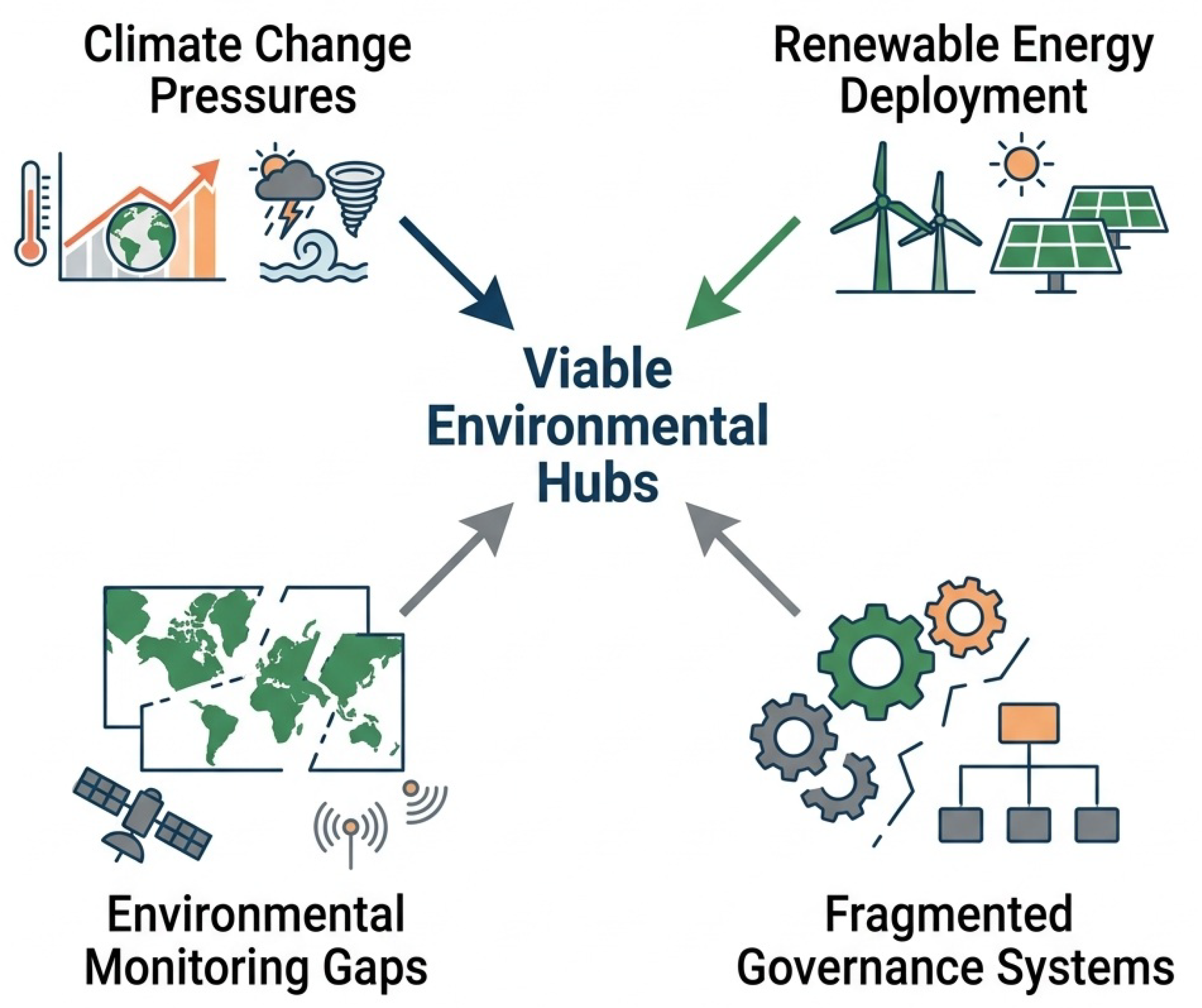
Figure 2.
Analytical structure of the article.
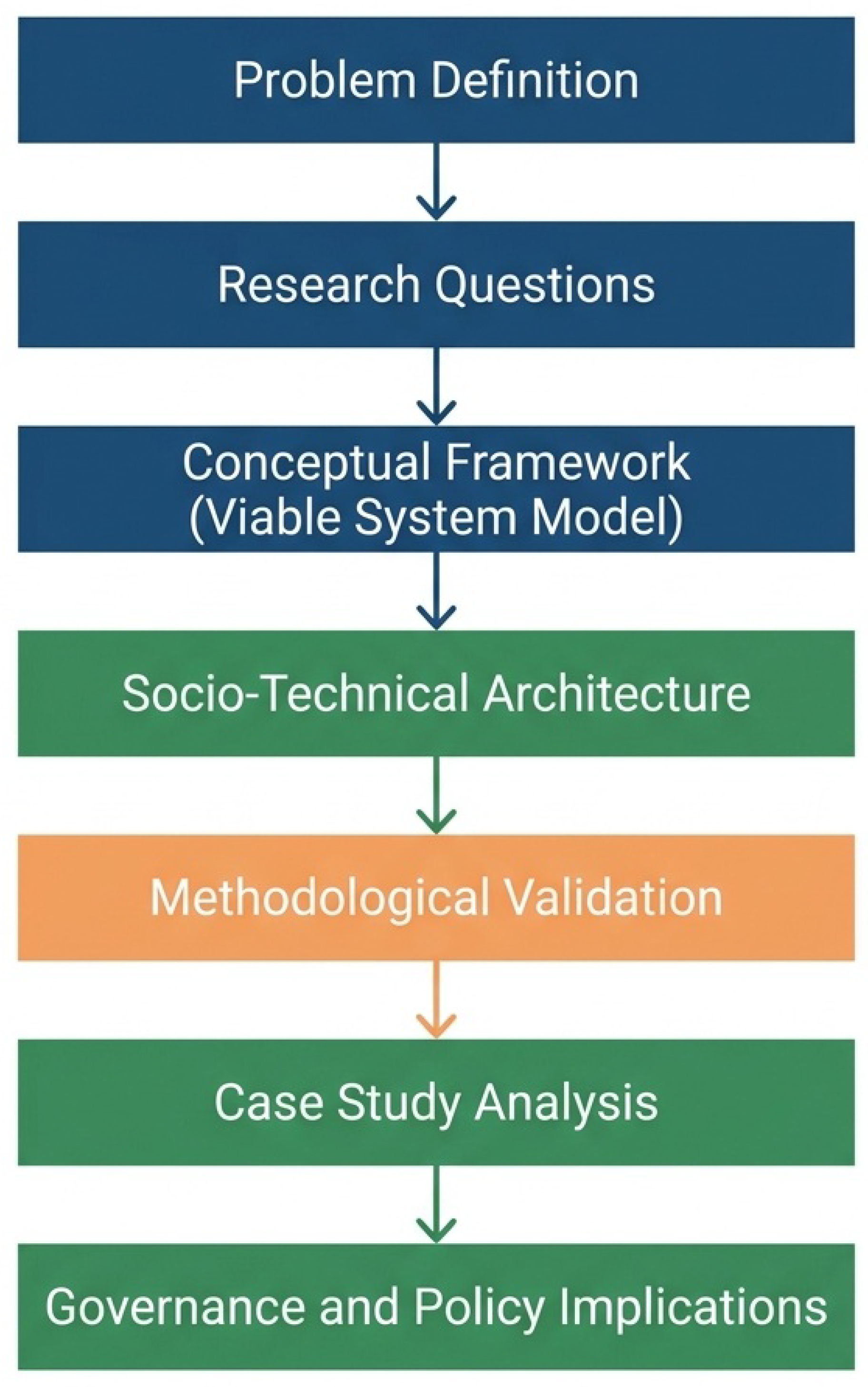
Figure 3.
Comparative view of governance frameworks and their structural capabilities.
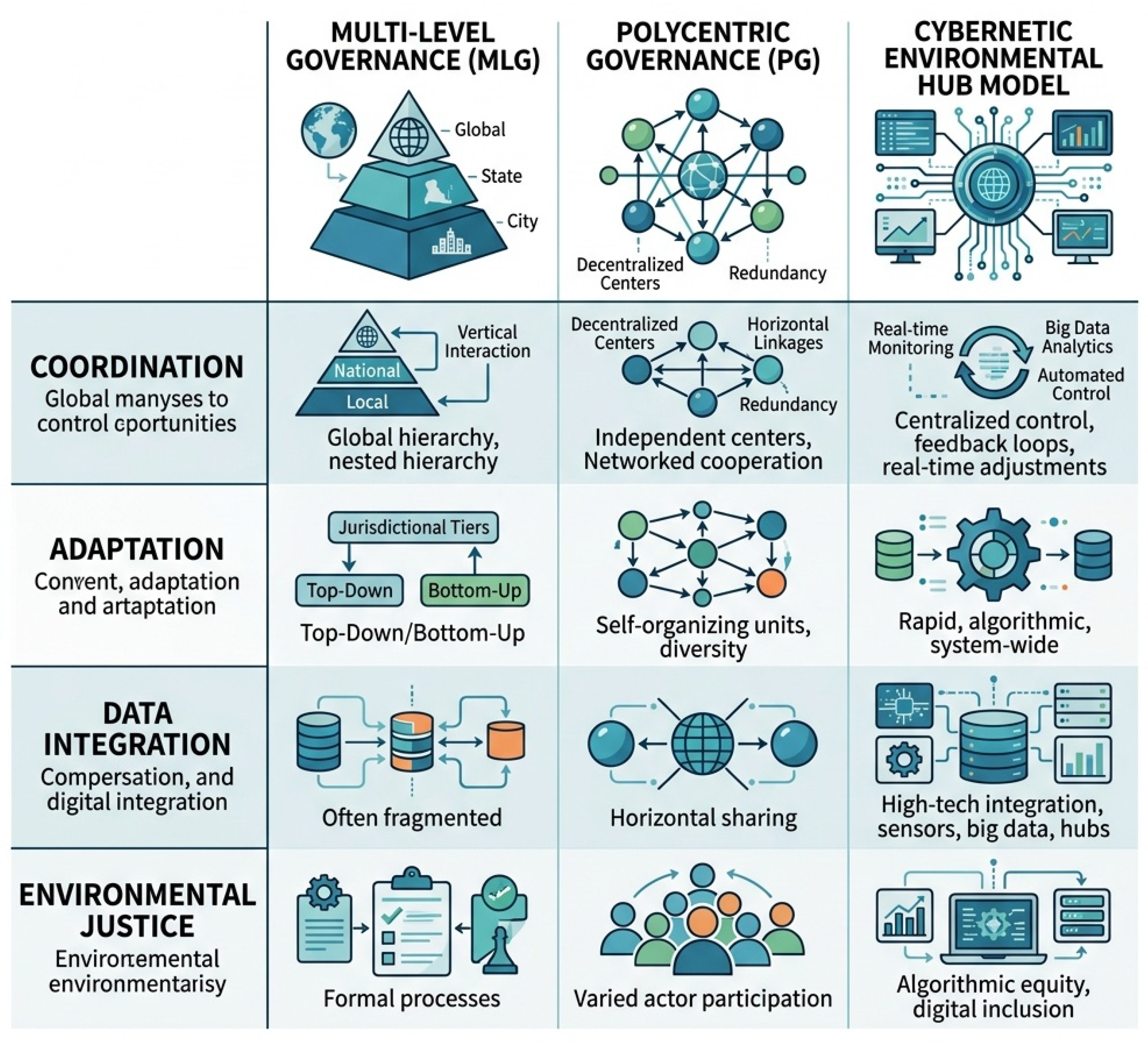
Figure 4.
Conceptual architecture of the Cybernetic Environmental Hub (CEH).
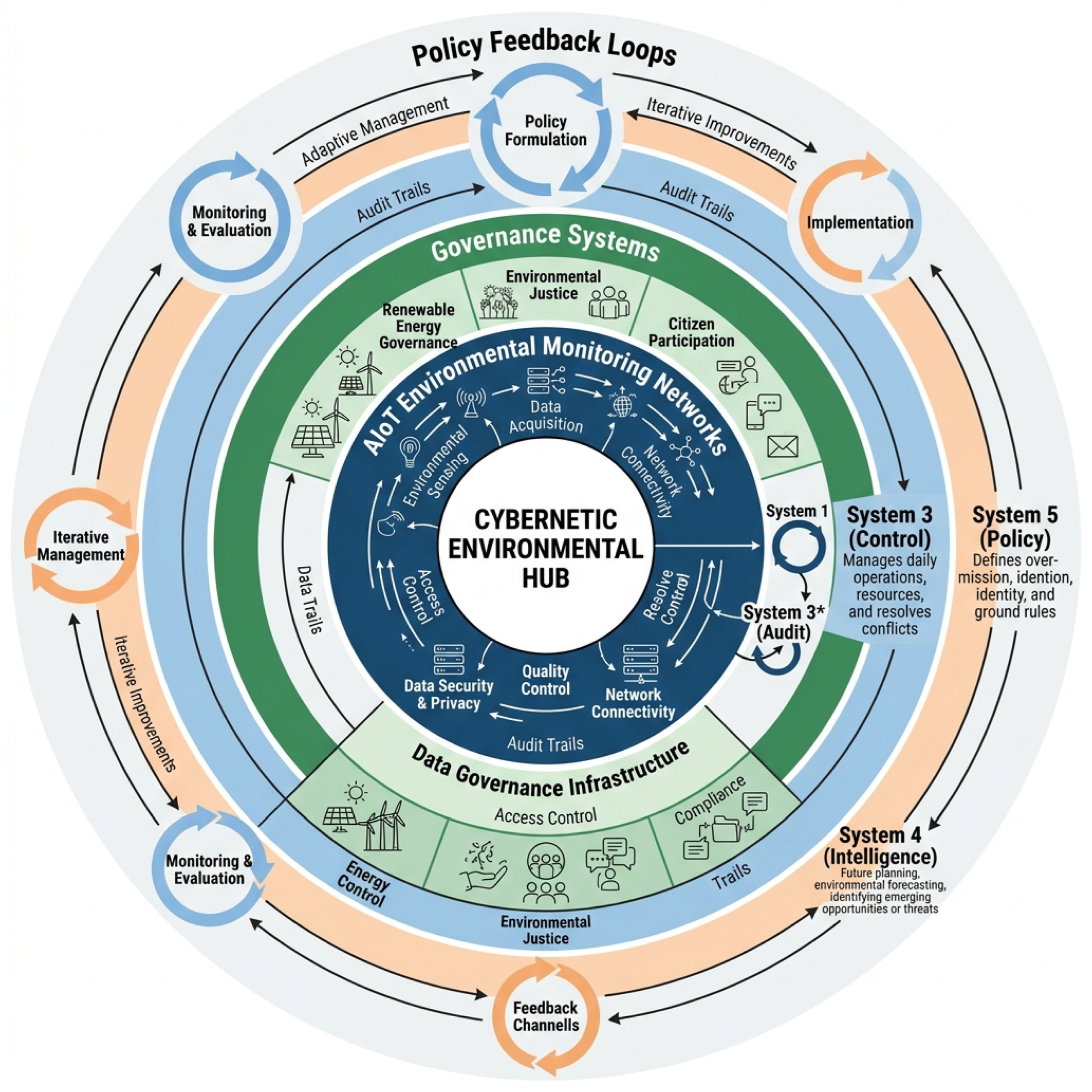
Figure 5.
Recursive governance logic across territorial scales in the CEH model.
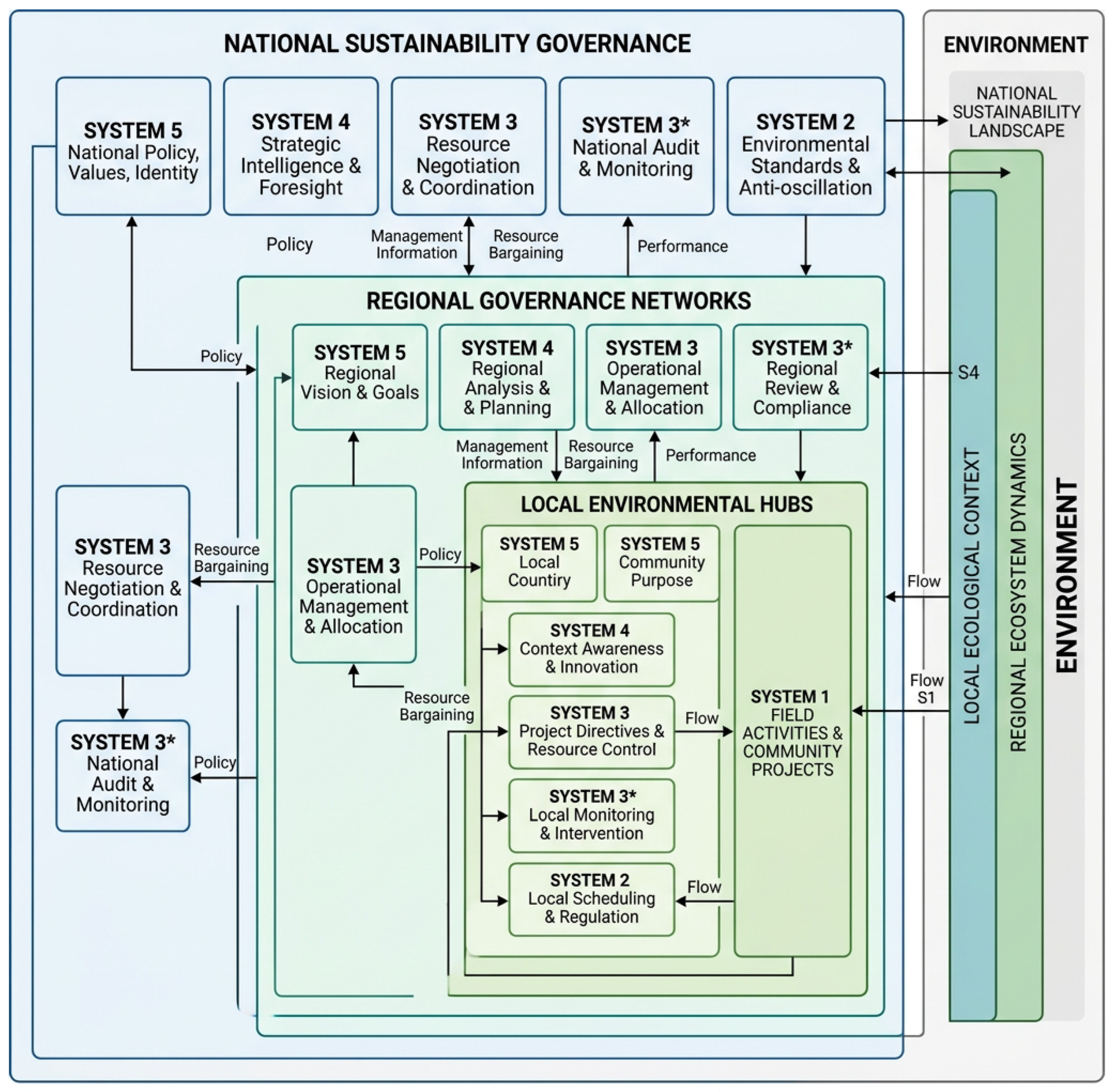
Figure 6.
Socio-technical technology stack of the Cybernetic Environmental Hub.
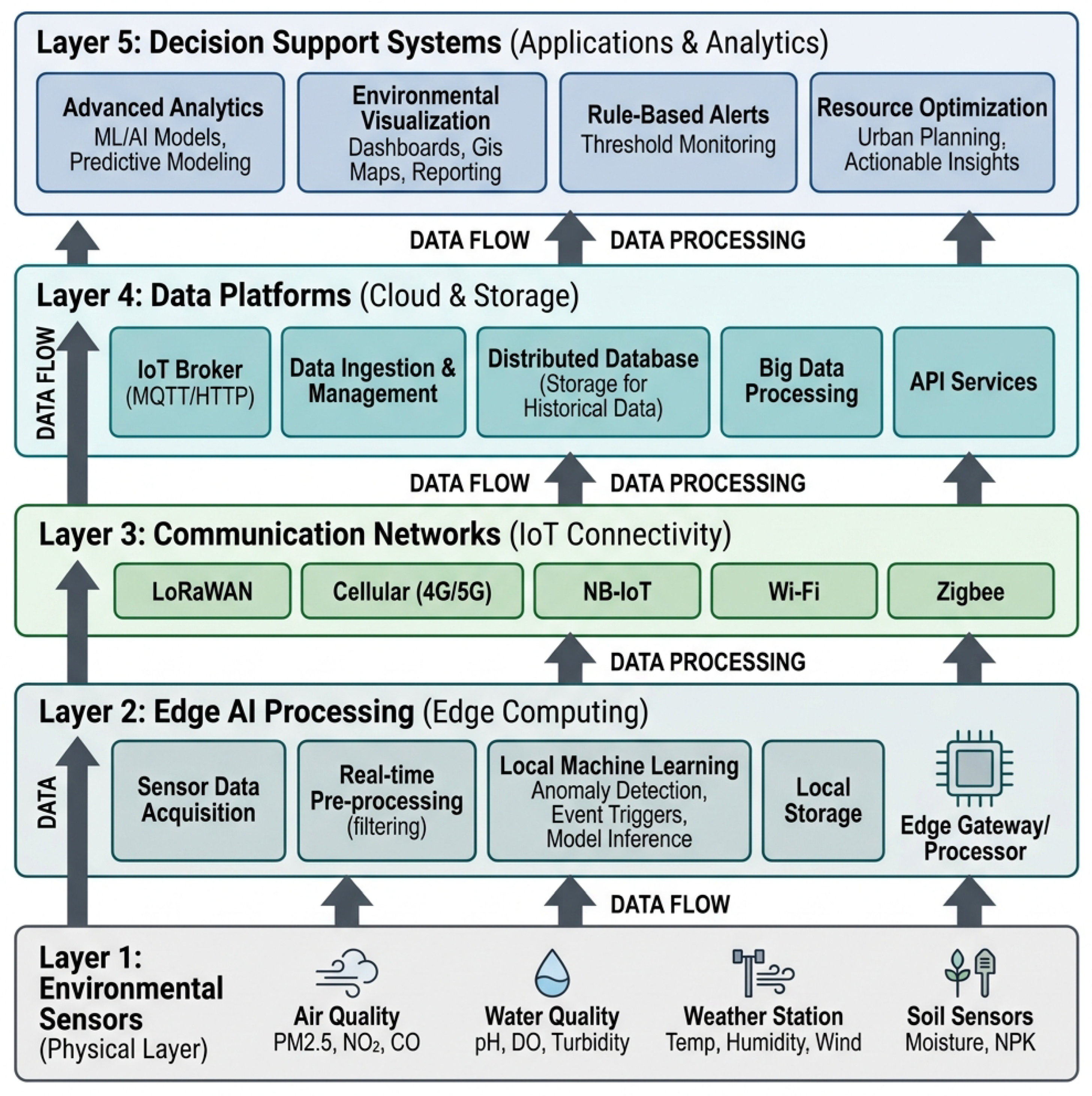
Figure 7.
Data governance infrastructure for distributed CEH environmental monitoring.
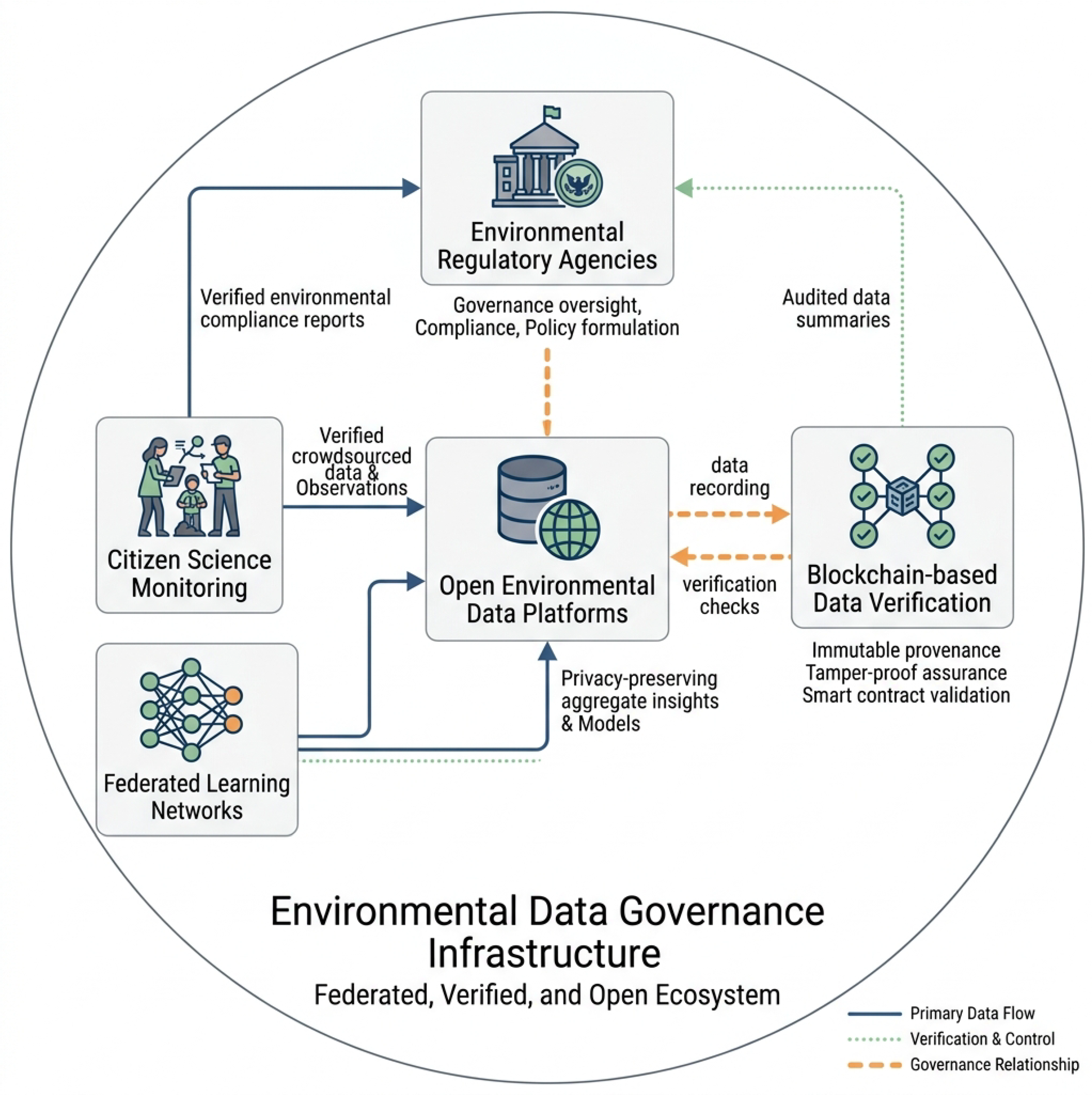
Figure 8.
Sequential methodological workflow for participatory cybernetic validation.
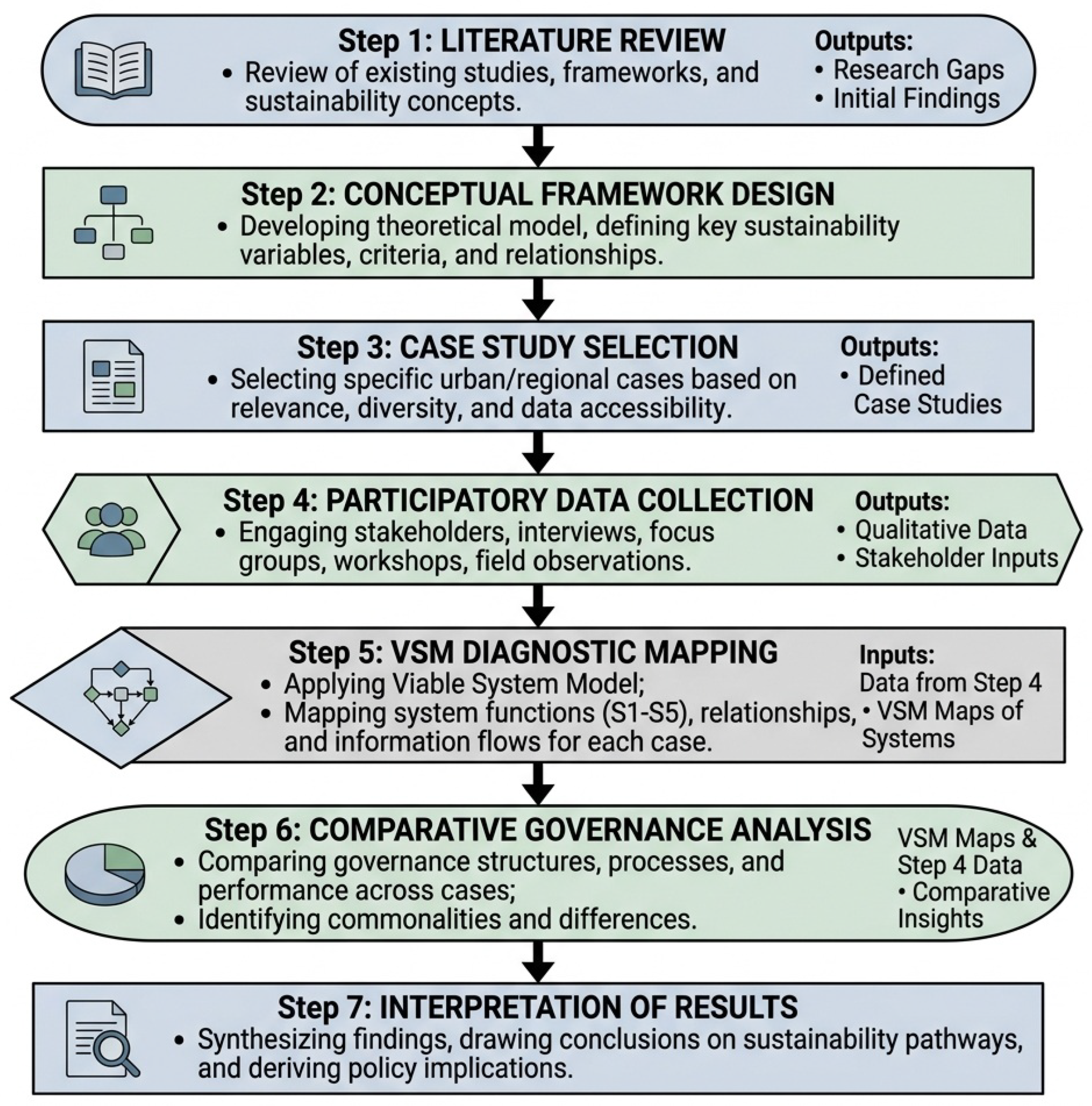
Figure 9.
Diagnostic mapping of territorial governance challenges to VSM subsystems.
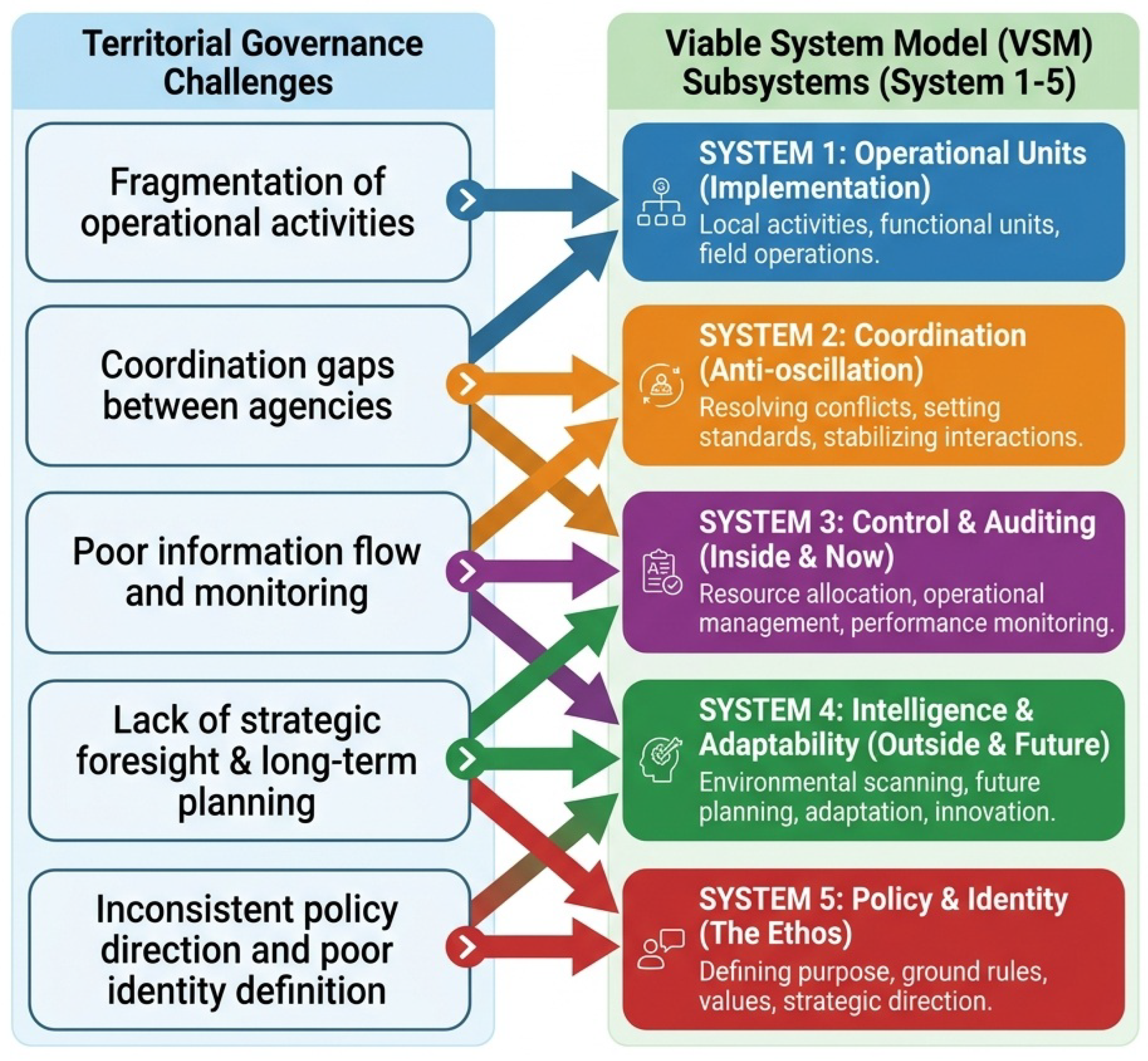
Figure 10.
Territorial governance maturity model (H1–H3).
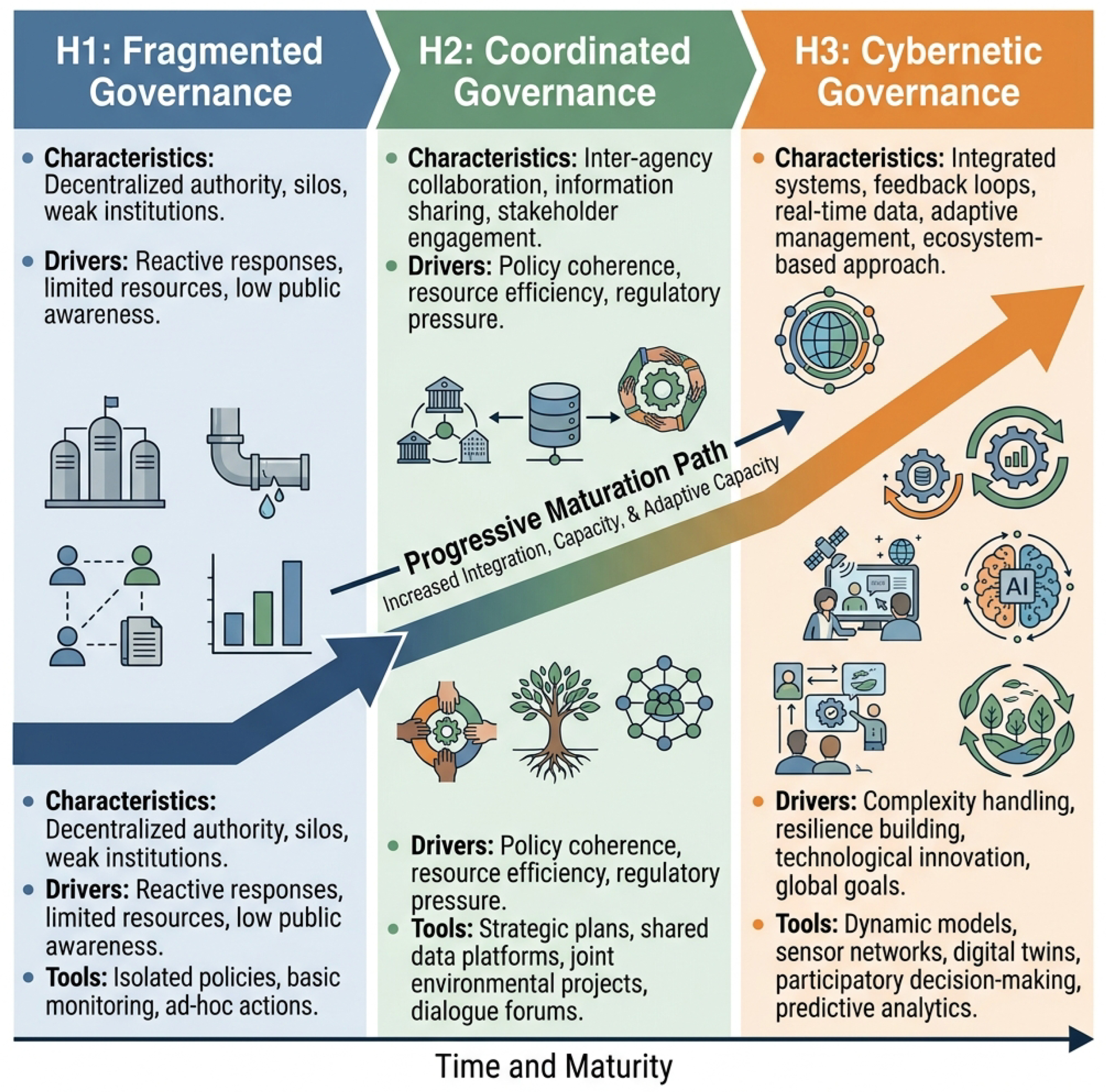
Figure 11.
Case positioning within the territorial maturity model.
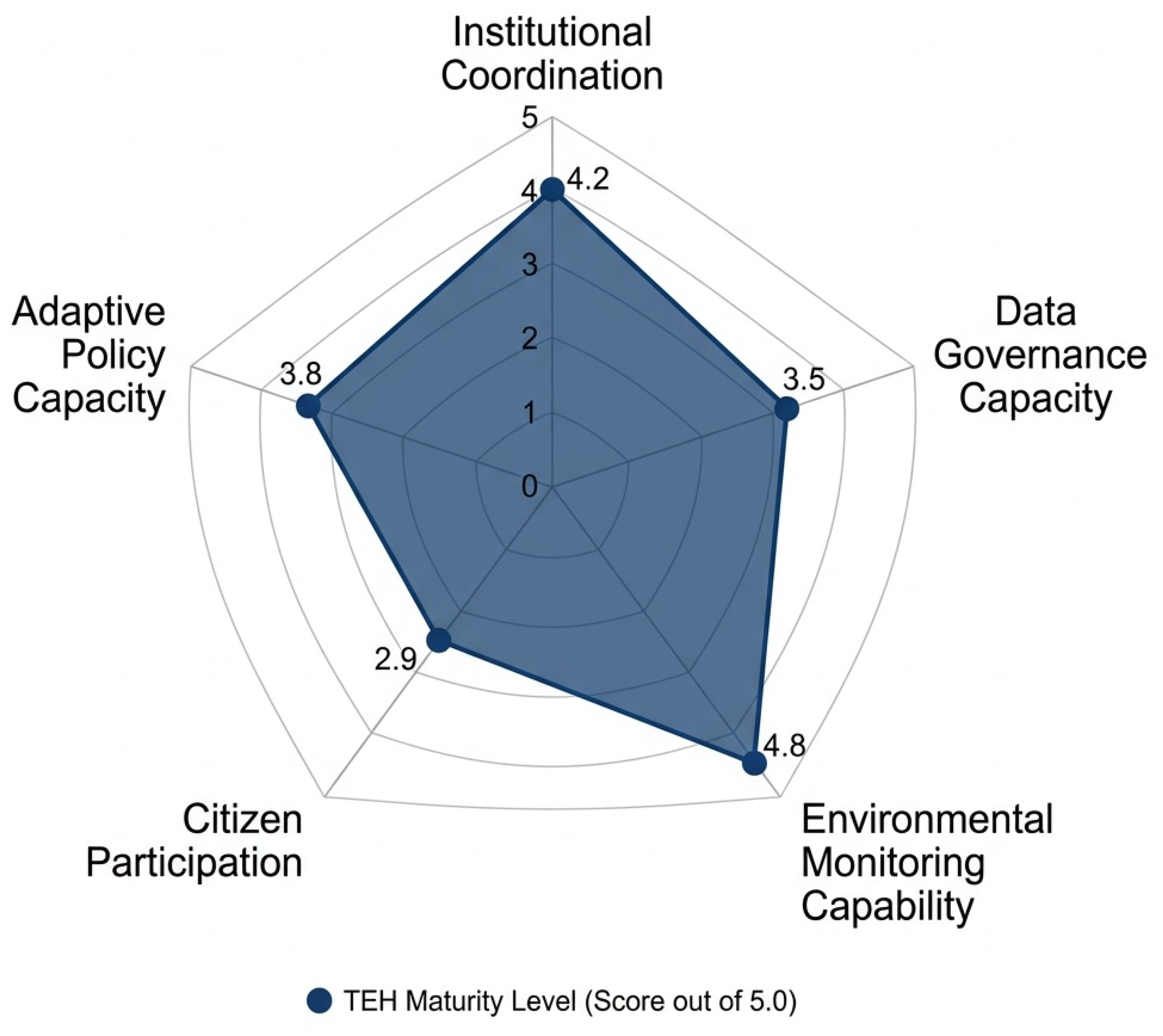
Figure 12.
Governance redesign pathways for Cybernetic Environmental Hubs across Systems 2–4.
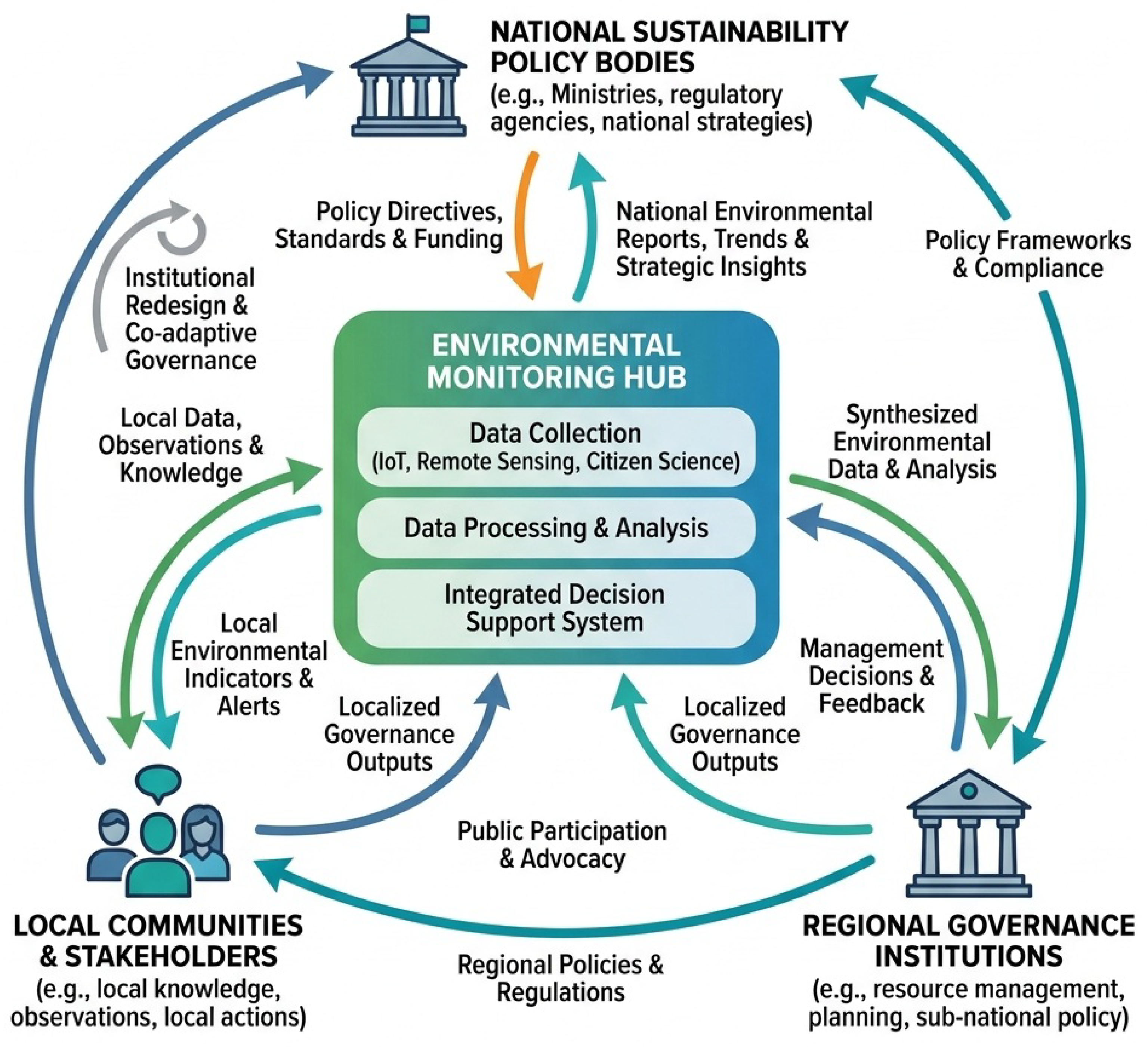
Figure 13.
Policy implementation architecture for Cybernetic Environmental Hubs.
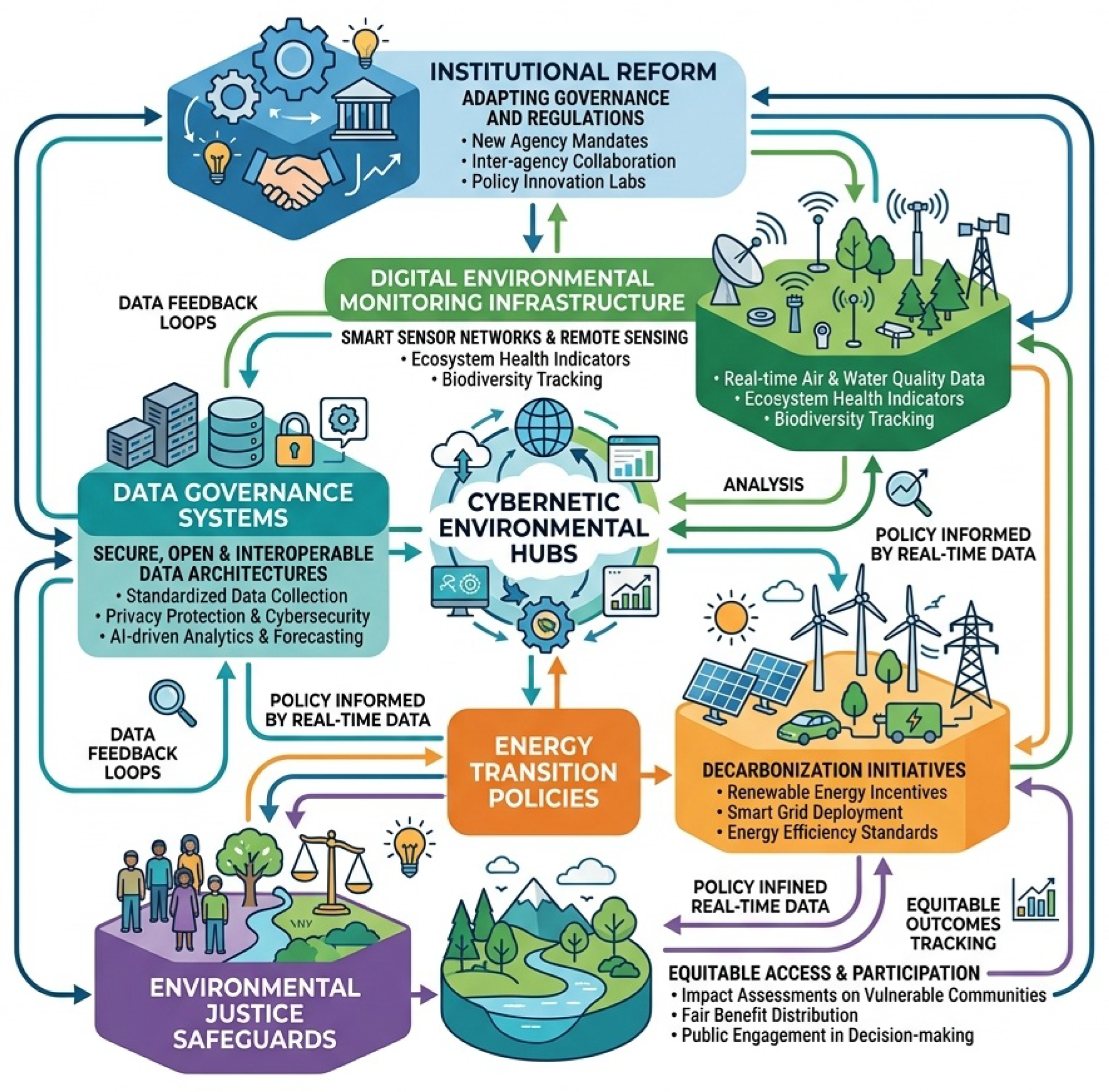
Figure 14.
Research roadmap for advancing cybernetic environmental governance.
Disclaimer/Publisher’s Note: The statements, opinions and data contained in all publications are solely those of the individual author(s) and contributor(s) and not of MDPI and/or the editor(s). MDPI and/or the editor(s) disclaim responsibility for any injury to people or property resulting from any ideas, methods, instructions or products referred to in the content. |
© 2026 by the authors. Licensee MDPI, Basel, Switzerland. This article is an open access article distributed under the terms and conditions of the Creative Commons Attribution (CC BY) license (http://creativecommons.org/licenses/by/4.0/).
Copyright: This open access article is published under a Creative Commons CC BY 4.0 license, which permit the free download, distribution, and reuse, provided that the author and preprint are cited in any reuse.


