

Submitted:
30 March 2026
Posted:
31 March 2026
You are already at the latest version
Abstract
In the contemporary food landscape, consumers increasingly seek snacks that combine convenience, sensory pleasure and demonstrable nutritional benefits. This trend aligns with global priorities regarding sustainability and food waste reduction, driving the industry to move away from ultra-processed formulations towards functional, eco-responsible alternatives. Within this context, the valorisation of plant-based by-products is a vital strategy for the circular economy. This study focuses on broccoli stalks (Brassica oleracea var. italica), an under-exploited biomass rich in dietary fibre, protein and phenolic compounds, all recognised for their antioxidant and anti-inflammatory properties. An innovative snack prototype was developed by incorporating freeze-dried broccoli stalk powder, resulting in an enhanced nutritional profile: high fibre (33.73 g/100 g) and protein (24.30 g/100 g), with moderate energy density (295.33 kcal/100 g). Results demonstrated microbiological and bioactive stability over four months, with no significant losses in total phenolic content, antioxidant capacity, or α-glucosidase inhibitory activity. These findings substantiate the product’s classification as a functional snack. This research underscores the dual significance of broccoli stalk valorisation: mitigating agri-food waste and promoting public health through the transition towards more circular, sustainable and resilient food models.

Keywords:
by-product
; broccoli stalk powder
; freeze-drying
; functional snack
; circular economy
1. Introduction
Food processing industries generate substantial volumes of by-products, including fruit and vegetable pomace, cereal bran, soybean dregs, sugarcane bagasse, whey, and animal-derived residues such as bones and skins [1,2,3,4]. Traditionally regarded as low-value waste streams, these materials are increasingly recognised as promising resources within the framework of sustainable food systems and circular bioeconomy strategies [5,6]. Their valorisation enables the development of value-added food products and innovative food packaging solutions, thereby reducing environmental burdens while enhancing resource efficiency [5,6]. Among these by-products, residues specifically from fruit and vegetable processing, such as peels, pulps, pomace, and seeds, have attracted particular attention due to their high concentrations of bioactive compounds, notably phenolic compounds [7]. These constituents are associated with well-documented antioxidant, antidiabetic and antimicrobial activities, conferring both technological functionality (e.g., natural preservation) and potential health benefits related to the prevention and management of chronic diseases [8,9,10,11]. Consequently, current innovations in sustainable food production increasingly focus on incorporating such residues into value-added formulations, including extruded products, functional snacks, and bakery items [11,12,13]. Brassica oleracea var. italica (broccoli), a member of the Brassicaceae family closely related to cabbage, cauliflower, kale, turnip, mustard, and Brussels sprouts, is widely recognised for its dense nutritional profile and abundance of bioactive phytochemicals [14,15,16,17]. Broccoli contains glucosinolates, phenolic compounds, vitamin C and flavonoids, which exhibit antioxidant, anti-inflammatory, and chemo-preventive properties [18]. In this context, broccoli waste upcycling has emerged as a promising strategy, particularly through the utilisation of stalks and leaves that are commonly discarded during industrial processing [19]. The broccoli stalk represents approximately 47% of the total plant biomass and has historically been underutilised, despite its substantial nutritional value [19]. Its compositional profile indicates a high content of dietary fibre, with insoluble fibre predominating [20,21]. Additionally, broccoli stalks are low in fat and sugars and provide essential vitamins, minerals, and significant levels of bioactive phytochemicals, including glucosinolates (notably glucoraphanin), flavonoids, and phenolic acids [15,16,22,23]. Upon hydrolysis by the endogenous enzyme myrosinase, glucosinolates are converted into isothiocyanates, compounds linked to cardioprotective and neuroprotective effects [24,25]. Appropriate processing and stabilisation techniques are therefore critical to preserve these bioactive constituents and maximise their functional potential [19]. The incorporation of stabilised broccoli stalk powder into food matrices represents a viable strategy for developing functional products with enhanced nutritional and bioactive profiles, including soup, bakery products, pasta, and other formulations [14,26,27,28,29,30,31]. In this context, the present study aims to develop and characterise a freeze-dried snack formulated with broccoli stalk powder, integrating principles of nutritional enhancement and sustainable innovation within the agri-food system. The study comprehensively evaluates the product’s nutritional composition, namely total, soluble, and insoluble dietary fibre, together with in vitro protein digestibility, bioactive potential (antioxidant and antidiabetic capacities), total phenolic content, physicochemical properties, microbiological safety, and shelf-life stability over a four-month storage period.
2. Materials and Methods
2.1. Production and Storage Conditions of the Broccoli Stalk Snack
The broccoli stalk snack was formulated using the ingredients and proportions listed in Table 1. The main ingredient, freeze-dried broccoli stalk powder (Alitec, Portugal), was obtained via lyophilization in an Industrial Freeze Dryer Coolvacuum, Model Lyobiotic 10FD (Spain), by freezing at -37ºC, followed by primary drying from -40ºC to 35ºC under a vacuum of 1–0.15 mbar for 43 hours and secondary drying at 37–40ºC under 0.025 mbar for 7 hours, totaling a 50-hour cycle. The formulation was completed by adding cooked chickpeas (purchased in bulk, Portugal), aquafaba (from chickpea cooking, Portugal), onion (Sonae MC, Portugal), extra virgin olive oil (Oliveira da Serra, Portugal), sliced jalapeño peppers (Mexifoods, Mexico), nutritional yeast flakes with vitamin D (Engevita, UK), samphire (Qampo, Portugal), sun-dried tomato in oil (Ponti, Italy), fresh tomato (Sonae MC, Portugal), Parmigiano Reggiano cheese (Parmareggio, Italy), and garlic powder and herbs (Margão, Portugal).
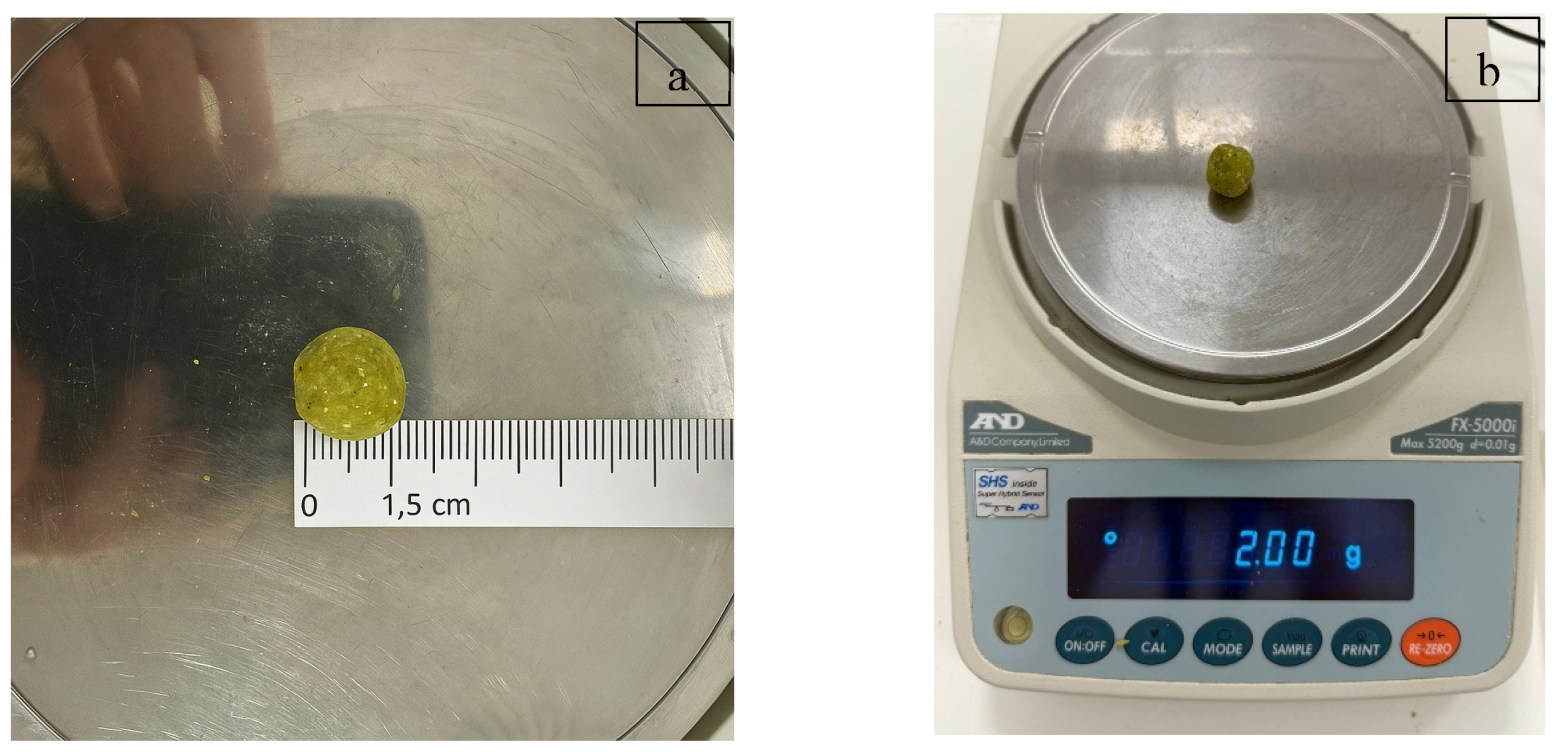
For the snack preparation, the cooked chickpeas were first blended in a Thermomix® (Vorwerk & Co. KG, Wuppertal, Germany) for 10 minutes. Subsequently, all other ingredients were individually weighed and sequentially incorporated into the mixture, with each addition followed by 2 minutes of blending. Three batches of this formulation were prepared and shaped into spherical portions with approximately 1.5 cm in diameter and weighing around 2 g each, yielding 300 units per batch. The portions were then frozen prior to freeze-drying. The freeze-drying process was carried out using a Coolvacuum lyophilizer, model Lyobiotic 10FD, lasted a total of 50 hours. Initial freezing was performed at -37ºC, followed by a primary drying phase at -40ºC to 35ºC under vacuum conditions between 1 and 0.15 mbar for 43 hours. A secondary drying phase was then conducted at 37ºC to 40ºC under a vacuum of 0.025 mbar for 7 hours. The resulting freeze-dried snacks were stored at room temperature (18-22 °C) in sealed multilayer laminated bags (PA/PE/MET/MET; 20x30 cm; 90 µm) until further analysis. The developed snack underwent comprehensive characterization including nutritional composition (moisture, total fats, total protein, ash, total carbohydrates, total dietary fibre and sugars), physicochemical parameters (water activity, pH, texture and colour), microbiological quality, total phenolic content, biological properties (antioxidant and antidiabetic activities), as well as in vitro protein digestibility and total and insoluble fibre content.
Figure 1.
(a) Snack prototype unit (spherical shape) with a diameter of approximately 1.5 cm (measured using a ruler) and (b) a weight of 2.0 g (measured on an analytical balance).
Figure 1.
(a) Snack prototype unit (spherical shape) with a diameter of approximately 1.5 cm (measured using a ruler) and (b) a weight of 2.0 g (measured on an analytical balance).
2.2. Nutritional Composition Analysis
The proximate composition of the broccoli stalk powders and the formulated snack was determined following the AOAC official methods (“AOAC (2000) Official Methods of Analysis. 17th Edition, 2000)to evaluate their nutritional profiles. The parameters assessed included moisture content (oven drying at 105 °C), ash content (incineration in a muffle furnace at 550 °C), crude protein (Kjeldahl method, N × 6.25), total fat (Soxhlet method), total sugars (Munson and Walker technique), dietary fibre (enzymatic–gravimetric method), and total carbohydrates (calculated by difference). The gross energy value was estimated using Atwater conversion factors. All determinations were performed in triplicate.
2.3. Physicochemical Characterization of the Broccoli Stalk Powders and Snack
2.3.1. Water Activity (aW)
Water activity of broccoli stalk snack was quantified using a water activity meter (LabMaster-aw neo, Lachen, Switzerland). Measurements were carried out at 0, 1, 2, and 4 months of storage for the snack. All measurements were conducted in triplicate, and results were expressed as mean values± standard deviation (SD).
2.3.2. pH Determination
The pH of snack was determined by homogenizing a single-serving portion of the snack in phosphate-buffered saline (PBS, Sigma-Aldrich, St. Louis, MO, USA) at 1:9 (w/v) ratio, followed by immersion of the electrode probe of a calibrated pH meter (Basic 20, Crison Instruments, Barcelona, Spain) into the suspension. All measurements were conducted in triplicate, and results were expressed as mean values± SD.
2.3.3. Texture Analysis
Textural properties of the developed snack were analysed using a texture analyser (Stable Micro Systems TA.XT.plus, Godalming, UK) equipped with a 30 kg load cell and a five-blade Kramer shear cell probe, operating at a test speed of 5 mm/s. Hardness and crispiness were the main parameters assessed. All samples were analysed in triplicate and results were expressed as mean values± SD.
2.3.4. Colour Measurement
Colour parameters for snack were determined using a colorimeter (Chroma Meter CR-400, Konica Minolta, Osaka, Japan). The instrument provided L (lightness), a* (red green), and b* (yellow–blue) coordinates. Colour differences (ΔE*) between samples at different storage times were calculated using the following equation:
where ΔL*, Δa* and Δb* represent the differences in L*, a* and b* values between two timepoints. Perceptible colour variation was considered when ΔE* > 1–3 (Bodart et al., 2008).
2.4. Microbiological Quality Assessment
Microbiological analyses were performed on three randomly selected snack portions at 0, 1, 2, and 4 months of storage. For the analysis, 0.5 g of each snack sample was diluted in 4.5 mL of sterile PBS and homogenized using a vortex. Afterwards, serial decimal dilutions were prepared, and aliquots were plated in triplicate on the following solid media: plate count agar (PCA, Biokar diagnostics, Allone, France) for enumerating total aerobic mesophilic microorganisms, potato dextrose agar (PDA; Biokar diagnostics) for counting yeasts and moulds, and violet-red bile glucose agar (VRBGA; Biokar diagnostics) for Enterobacteriaceae enumeration. PCA and PDA plates were inoculated with 0.1 mL of decimal dilution using the spread plate method, while VRBGA plates were inoculated with 1 mL of decimal dilution using the pour plate technique. Incubation was carried out under aerobic conditions as follows: PCA at 30 °C for 2–5 days, PDA at 22 °C for 5 days, and VRBGA at 37 °C for 24 h. After incubation, colony-forming units (CFU) were counted, and results were expressed as colony-forming units per gram (CFU/g) of snack.
2.5. Extract Preparation for Total Phenolic Content, Antioxidant and Antidiabetic, Activities Determination
The broccoli snack extracts were prepared in triplicate according to the method described by [34] with minor changes. Initially, 20 mL of 80% chilled ethanol were added to 50 mL centrifuge tube containing 2 g of broccoli snack. The solution was homogenized by agitation in an orbital shaker (Innova 42, Hamburg, Germany) for 20 minutes at 200 rpm at a temperature of 30 °C, followed by sonication (Bath sonicator, Bandelin, Berlin, Germany) for 10 minutes. Subsequently, the sample was subjected to centrifugation at 3850×g for 5 minutes and the supernatant was collected in a new 50 mL centrifuge tube. Then, residues/pellets were re-extracted by adding 10 mL of 80% ethanol and supernatants from first and second extraction were combined. Afterwards, the extracts were filtered using a paper filter to eliminate possible particles in suspension and they were concentrated using a speed vacuum evaporator at 40 °C. Lastly, the final volume of each extract was adjusted to 5 mL using deionized water and the extracts were stored at -20º C until analysis.
2.6. Total Phenolic Content (TPC) Determination
The total phenolic content of the broccoli stalk snack (at 0 and 4 months of storage) was determined using the Folin–Ciocalteu colorimetric method [35], with minor adjustments. Briefly, 30 µL of sample (or appropriate dilution) was combined with 100 µL of Folin–Ciocalteu reagent (20% v/v) and 100 µL of anhydrous sodium carbonate solution (7.4% m/v) in a 96-well microplate. A standard curve of gallic acid (0.025–0.200 mg/mL) was created to express the results as milligrams gallic acid equivalents per gram of sample (mg GAE/g). After 30 minutes of incubation in the dark at room temperature, absorbance was measured at 750 nm using a multi-detection plate reader (Synergy H1, VT, USA) operated using the Gen5 software. All measurements were conducted in triplicate.
2.7. Antioxidant Activity Determination
The antioxidant capacity of the broccoli stalk snack (at 0 and 4 months of storage) was evaluated using the 2,2-azinobis-(3-ethylbenzothiazoline-6-sulphonic acid (ABTS) scavenging assay described by [36] with slight modifications. Briefly, a mixture of 20 µL of sample (or appropriate dilution), Trolox standard, or solvent and 180 µL of ABTS working solution was added to each well of a 96-well microplate. After incubation for 5 minutes, absorbance at 734 nm was measured using a multi-detection plate reader (Synergy H1, VT, USA) operated using the Gen5 software. A calibration curve of Trolox (25-175 μM) was prepared to allow the expression of the results as μmol of Trolox equivalents per gram of sample (μmol TE/g). All assays were performed in triplicate.
2.8. Antidiabetic Activity Determination
The antidiabetic activity of snack (at 0 and 4 months of storage) was evaluated using the α-glucosidase inhibitory activity assay described by [37] with minor modifications. Briefly, 50 µL of sample and 100 µL of phosphate buffer (0.1 M, pH 6.9) containing α-glucosidase (1 U/mL) were pre-incubated at 25 °C for 10 minutes in a 96-well microplate. Then 50 µL of 5 mM p-nitrophenyl-α-D-glucopyranoside solution in phosphate buffer (0.1 M, pH 6.9) was added. Absorbance at 405 nm was measured before and after 5 minutes of incubation at 25 °C. Furthermore, a negative control containing 50 μL of buffer solution in place of the sample and a positive control containing 50 μL of acarbose at a concentration of 10 mg/mL were included in each experiment. All assays were performed in triplicate. Inhibitory activity was expressed as percentage inhibition of α-glucosidase enzyme, calculated using the formula:
2.9. In Vitro Protein Digestibility
In vitro protein digestibility of the snack was determined according to [38,39], with adaptations. Samples containing 16 mg of nitrogen were digested with pepsin (1.5 mg in 15 mL of 0.1 M HCl), at 37 °C, 150 rpm for 3 hours. After neutralization with 2 M NaOH, pancreatin at 4 mg in 7.5 mL phosphate buffer (pH 8.0) were added, followed by 1 mL of toluene to prevent microbial growth and the solution was incubated for 24 hours at 37 °C, 150 rpm. Following enzyme inactivation with 10 mL of trichloroacetic acid (at 10%, w/v), the undigested proteins were precipitated, and the samples were centrifuged at 5000 × g for 20 minutes at room temperature. Nitrogen content in the supernatant was quantified by the Kjeldahl method. Protein digestibility (%) was calculated using the formula:
2.10. Total and Insoluble Dietary Fibre
Total and insoluble dietary fibre contents for the snack formulation were quantified following AOAC Official Method 991.43 [40], employing the Megazyme assay kit (K-TDFR-200A 04/17). Approximately 1 g of snack sample was suspended in 40 mL of MES–TRIS buffer (pH 8.2) and sequentially digested with heat-stable α-amylase (98–100 °C, 30 min), protease (60 °C, 30 min), and amyloglucosidase (60 °C, 30 min). Total dietary fibre was obtained by precipitation with 95% ethanol (60 °C, 4:1 ratio) and held at room temperature for 60 min before filtration and washing. Insoluble fibre was determined using the same protocol up to the amyloglucosidase step, followed by filtration and drying. Residues were oven-dried (103 °C, overnight), weighed, and corrected for protein and ash content. Soluble dietary fibre was obtained by difference between total and insoluble fractions. All determinations were carried out in sextuplicate.
2.11. Statistical Analysis
All statistical analyses were performed using IBM® SPSS® Statistics version 27. Data normality was assessed using the Shapiro–Wilk test (n < 50). For analyses involving repeated measurements of the same samples over time, in the case of the snack, data were treated as paired samples or repeated measures. When comparing two timepoints, differences within each subject were analysed using a paired t-test (for normally distributed data) or a Wilcoxon signed-rank test (for non-normally distributed data). For comparisons involving more than two timepoints, a repeated measures ANOVA (for normally distributed data) or a Friedman test (for non-normally distributed data) was conducted. When performing repeated measures ANOVA, Mauchly’s test was used to assess the sphericity assumption. If sphericity was violated, corrections were applied using the Greenhouse–Geisser test (ε < 0.75) or the Huynh–Feldt test (ε > 0.75), where ε represents the Greenhouse–Geisser epsilon value. In all cases, the significance level was set at p < 0.05.
3. Results and Discussion
The formulation of the broccoli stalk powder snack aimed to obtain a health-oriented product, which was subsequently subjected to systematic evaluation of its nutritional, physicochemical, microbiological and bioactive properties. A storage study was performed over a period of four months with the objective of assessing the stability and quality of the product over time.
3.1. Nutritional Analysis of Broccoli Stalk Snacks
Broccoli-derived ingredients are well-documented sources of bioactive compounds, minerals, fibre and glucosinolate derivatives, which contribute to both nutritional value and potential health-promoting effects [15,19]. The developed snack incorporated 32% freeze-dried broccoli powder and showed the nutritional composition described in Table 2. This composition illustrates a low-moisture, moderate-energy snack with notably high protein and dietary fibre content, while the substantial ash fraction highlights the mineral contribution of broccoli stalks, known to be rich in calcium and iron [20].
According to the European Regulation (EC) No 1924/2006 on nutrition and health claims, the developed snack meets the criteria to be labelled “high in protein”, since proteins contribute 32.9% of its total energy value, exceeding the 20% threshold established by the regulation. It also fulfils the requirements for the claim “high in fibre”, providing more than 6 g of dietary fibre per 100 g of product (European Parliament and Council of the European Union, 2006).
3.2. In Vitro Protein Digestibility of Broccoli Stalk Snack
Protein is an essential macronutrient in the human diet. It is a source of nitrogen and essential amino acids. However, the biological use of dietary protein is dependent on its digestibility and the absorption of amino acids and di- and tripeptides in the gastrointestinal tract [42,43]. It is well established that broccoli stalks constitute a valuable source of protein [44]. Furthermore, in vitro intestinal digestibility studies on broccoli stalks (or related broccoli waste streams) demonstrate digestibility values in the order of ~82.7% for crude protein in stems [45]. In this study, the broccoli stalk snack displayed a protein digestibility of 84.71 ± 4.08%, consistent with previous reports [45].
3.3. Total, Soluble and Insoluble Dietary Fibre Contents of Broccoli Stalk Snack
Despite ongoing debate, dietary fibres are still classified as soluble or insoluble according to their water solubility (Buttriss & Stokes, 2008; Jia et al., 2020). Soluble dietary fibres (SDF) are known to lower blood cholesterol levels, slow glucose absorption, enhance satiety, and are easily fermented [48,49,50]. In contrast, insoluble dietary fibres (IDF) play a critical role in gastrointestinal health, metabolic regulation, and chronic disease prevention. Broccoli stalks are rich in structural polysaccharides such as cellulose, hemicellulose and lignin, which constitute the primary components of insoluble dietary fibre [15]. Despite their physiological benefits, IDFs exhibit low fermentability and limited bioavailability, which constrain their full potential in human nutrition and food technology [51].
As shown in Figure 2, the developed snack exhibited a high total dietary fibre (TDF) content (35.48 ± 0.91%), with the majority consisting of IDF (31.74 ± 0.71%) and a smaller proportion of SDF (3.75 ± 0.84%). The TDF content obtained from proximate analysis (33.73 ± 0.78%) (table X) did not differ significantly from the values obtained using the Megazyme assay kit (p > 0.05), confirming the reliability and consistency of the analytical measurements.
Given that the snack’s main ingredient is the broccoli stalk powder, the high insoluble fibre content was expected. Moreover, the total fibre content of the snack exceeds values typically reported for comparable vegetable-based products and meets, as already seen in the nutritional profile analysis, the European Regulation (EC) No. 1924/2006 requirements for the nutrition claim “high in fibre” [41]. Despite their well-documented benefits, insoluble fibres pose specific challenges regarding digestibility. These fibres resist hydrolysis by human digestive enzymes and are only partially fermented in the hindgut by specific microbial populations [52]. Moreover, their inherent physical properties can reduce microbial accessibility, potentially limiting their functional contribution in food applications (Iriondo-DeHond et al., 2019; Tian et al., 2024). Nevertheless, emerging research indicates that insoluble fibres can still exert important biological effects. They have been shown to modulate gut immunity, strengthen intestinal integrity, promote mucosal proliferation, and support the adhesion and activity of beneficial bacteria while contributing to the reduction of pathogens, thereby contributing to improved host health [55,56]. IDF supports intestinal immunity and integrity, while its binding to phenolic compounds can reduce their accumulation and promote their contaminant elimination [57,58]. Recent studies also show that phenolic compounds can associate with cellulose and other plant cell wall components, a mechanism that facilitates their delivery to the colon, where they can be metabolised by colonic bacteria [57]. Therefore, the fibre composition of this snack may provide additional biofunctional benefits that extend beyond its traditional bulking effect.
3.4. Microbiological Quality of Broccoli Stalk Snack During Storage
Ensuring microbiological safety is a critical concern for snack foods, particularly in the growing market for ready-to-eat products (Berezhanskiy et al., 2025). Although dry foods are often perceived as safe, microbial growth can occur depending on raw material quality, drying method, and storage conditions (Alp & Bulantekin, 2021). The stability of the formulated snack was assessed over a 4-month storage period at 18–22 °C, with the formulated snack samples maintained in sealed multilayer laminated bags (PA/PE/MET/MET; 20 × 30 cm; 90 µm).
As shown in Table 3, counts of total aerobic mesophiles, yeasts and moulds, and Enterobacteriaceae remained consistently low throughout the four-month storage period. According to the guideline of the Instituto Nacional de Saúde Doutor Ricardo Jorge (INSA), aerobic mesophile loads tend to increase during storage, and values exceeding 10⁴ CFU/g may be classified as unsatisfactory depending on the food group. In this study, aerobic mesophiles remained below 10⁴ CFU/g, confirming the microbiological suitability of the snack for this parameter. INSA guideline also indicates that yeast levels above 10⁶ CFU/g may lead to flavour alterations and spoilage; however, the snack consistently showed values far below this threshold. Furthermore, Enterobacteriaceae counts were maintained below 10³ CFU/g, which may be acceptable according to INSA, as values above 103 CFU/g may be categorized as unsatisfactory, depending on the food group (Instituto Nacional de Saúde Doutor Ricardo Jorge., 2019). Overall, these results demonstrate that the developed snack exhibited good microbiological quality throughout storage, consistent with expectations for a low-moisture, shelf-stable product.
3.5. pH Evolution of Broccoli Stalk Snack During Storage
Experimental studies have shown that the pH of a food matrix can significantly affect microbial growth, enzymatic activity and chemical stability, thereby influencing product shelf life [61,62]. It is known that foods with inherently low pH (< 4.5) are microbiologically more stable and not readily spoiled by bacteria [63]. In contrast, when pH values are higher, it becomes essential to monitor this parameter closely, as even small increases can create conditions that favour microbial proliferation and accelerate spoilage processes.
As presented in Figure 3, the pH of the broccoli stalk snack showed a gradual decline throughout the four-month storage period. The pH decreased from 6.39 ± 0.04 at the production day to 5.90 ± 0.02 at month 4, with statistical analysis confirming a significant difference between the initial and final timepoints (p < 0.05). The overall reduction of approximately 0.5 pH units suggests a mild acidification process during storage. This trend is consistent with processes described in vegetable-based products, where gradual accumulation of organic acids may occur due to residual metabolic reactions or slow chemical degradation of carbohydrates and organic compounds [64,65]. Despite the relatively high initial pH, typically considered less favourable from a microbiological safety perspective, the low water activity of this snack does not provide conditions that support microbial growth. This is consistent with the microbiological results obtained, which remained within acceptable limits throughout storage. Taken together, assessing pH alongside water activity and microbial counts provides a more reliable evaluation of overall product stability and safety.
3.6. Water Activity Evolution of Broccoli Stalk Snack During Storage
It has been demonstrated that the growth of most microorganisms can be effectively inhibited by lowering pH and water activity [66]. Water activity exerts a profound influence on the rate of chemical reactions and microbial growth in foods [67]. It is evident that low water activity values, which are generally below 0.60 in snack products, have a significant impact on the proliferation of bacteria, yeasts and molds. This, in turn, has a crucial effect on the prevention of microbiological spoilage and the extension of product shelf life [68,69]. As showed in Figure 4, the broccoli stalk snack initially exhibited a low water activity (0.2119 ± 0.0339), which increased slightly over the course of storage. Nevertheless, water activity remained well below the critical thresholds for microbial growth throughout the entire storage period, which are generally considered to be above 0.91 for most bacteria and 0.60 for yeasts and molds [70,71]. The consistently low water activity values corroborate the microbiological data (see Section 3.2.4), reinforcing that the product did not provide suitable conditions for the survival or proliferation of spoilage or pathogenic microorganisms.
3.7. Texture Parameters Evolution of Broccoli Stalk Snack During Storage
Texture is a key quality attribute in snack foods, with hardness and crispness particularly influencing initial bite perception and overall consumer acceptance (Baingana, 2024; Bulgaru et al., 2022; Heidenreich et al., 2004; Szczesniak, 1971).
As can be seen in Table 4, instrumental analysis of hardness (kg) and crispness (kg.sec) was conducted over four months of storage. Hardness increased slightly from 11.33 ± 1.90 kg at production to 14.72 ± 2.43 kg at four months, but no statistical differences were found in this texture parameter throughout storage (p > 0.05). A minor decrease in hardness at month one (10.99 ± 2.49 kg) was followed by progressive increases at months two and four. This trend aligns with literature on low-moisture snacks, where gradual protein–starch interactions, moisture redistribution, and matrix densification contribute to firmer textures over time (Heidenreich et al., 2004; Seymour & Ann, 1988). Crispness also did not change significantly during storage (p > 0.05)., indicating that the snack retained its characteristic crisp texture, highly associated with freshness and consumer appeal [78,79].
3.8. Colour Analysis of Broccoli Stalk Snack During Storage
Colour is a critical quality attribute in vegetable-based snacks, as it reflects the retention of bioactive compounds [80,81,82] and plays a key role in attracting consumer attention and influencing purchasing decisions.
To gain a comprehensive understanding of colour stability, both the interior and the exterior of the snack were evaluated. As shown in Table X, the exterior initially exhibited minor colour variation, with ΔE values of 1.27 at one month and a slight reduction to 0.46 when comparing the month 2 to initial timepoint (production day). Between months one and two, external ΔE remained low (1.27), confirming visual stability during the first two months. However, a marked shift occurred after extended storage, with external ΔE increasing abruptly to values above 23 by the fourth month, clearly surpassing perceptibility and acceptability limits and indicating substantial surface degradation or pigment alteration [83,84]. In turn, the interior layer showed a slightly higher ΔE at one month (2.75), remaining relatively stable between months one and two (1.08). Although internal ΔE also increased by month four, the magnitude of change was lower than for the exterior, suggesting slower chromatic alteration. This contrast demonstrates that the outer surface is far more susceptible to storage-related deterioration, undergoing a sharp transition from stability to severe discolouration after the second month, whereas the inner layer shows a slower and less intense progression of colour alteration, likely due to limited exposure to oxygen, light and other environmental stressors [85].

Table 5.
Evolution of ΔE values of interior and exterior broccoli stalk snack over 4-month storage at 18-22ºC.
Table 5.
Evolution of ΔE values of interior and exterior broccoli stalk snack over 4-month storage at 18-22ºC.
| Months Comparison | External ΔE | Internal ΔE |
|---|---|---|
| 1 – 0 month | 1.27 | 2.75 |
| 2 – 0 month | 0.46 | 2.68 |
| 2 – 1 month | 1.27 | 1.08 |
| 4 – 0 month | 23.08 | 14.27 |
| 4 – 1 month | 23.90 | 11.59 |
| 4 – 2 month | 23.47 | 12.19 |
3.9. In Chemico Functional Characterisation of Broccoli Stalk Snack During Storage
3.9.1. Total Phenolic Content
Phenolic compounds, owing to their diverse biological activities, are increasingly regarded as highly valuable bioactive compounds in the development of functional foods and nutraceuticals to support health and prevent chronic diseases [86]. Consequently, assessing their stability during storage is essential to determine the potential health benefits of the final product.
As can be seen in Figure 5, the broccoli-stalk snack exhibited at production a total phenolic content of 2.121 ± 0.076 mg GAE/g, which remained statistically unchanged after four months of storage (1.932 ± 0.321 mg GAE/g; p > 0.05). This indicates that phenolic compounds were relatively stable within the snack matrix, consistent with previous reports suggesting that freeze-drying can provide protection against phenolic degradation [87,88]. Retention of phenolic compounds in the broccoli-stalk snack is nutritionally significant, as these compounds are associated with a range of benefits, including antioxidant, anti-inflammatory, and anticancer effects [18], thereby enhancing the snack’s potential as a functional food product.
3.9.2. Antioxidant Capacity
Antioxidant properties are a critical attribute to consider when seeking to improve the nutritional quality of food products [89]. Antioxidant compounds, including phenolics, reduce oxidative stress by neutralizing reactive oxygen species [90]. In the context of vegetable-based, freeze-dried snacks, evaluating antioxidant stability during processing and storage is crucial to support the product’s functional potential.
As shown in Figure 6, the broccoli stalk snack exhibited an initial antioxidant activity of 6.088 ± 0.707 µmol Trolox equivalent/g, which declined to 3.805 ± 0.617 µmol Trolox equivalent/g after four months of storage, representing an overall reduction of approximately 37%. Phenolic compounds are recognised as the principal contributors to the radical-scavenging activity of plant-derived matrices [91]; consequently, the stability of total phenolic content observed throughout storage would generally be expected to correspond to a similar stability in antioxidant capacity. In the present study, both parameters exhibited a moderate, even though statistically non-significant, decline, suggesting that minor oxidative degradation of phenolic constituents may have occurred during storage. Nevertheless, the maintained phenolic content and antioxidant activity indicate that freeze-drying effectively preserved the structural integrity and functionality of bioactive compounds throughout the 4-month storage period. This observation is consistent with experimental reports that, while freeze-drying better preserves phenolics and antioxidant capacity than many other dehydration methods, prolonged storage may still induce oxidative modification of phenolic compounds [92,93].
3.9.3. Antidiabetic Activity of Broccoli Stalk Snack During Storage
The World Health Organization defines diabetes as “a chronic, metabolic disease characterised by elevated levels of blood glucose (or blood sugar), which leads over time to serious damage to the heart, blood vessels, eyes, kidneys and nerves” (WHO, 2023). Dietary intake of plant-derived bioactive compounds, particularly phenolic compounds, has been associated with beneficial effects on glucose homeostasis and the management of type 2 diabetes, primarily through mechanisms involving the modulation of carbohydrate metabolism, enhancement of insulin action, and inhibition of key digestive enzymes such as α-glucosidase [95,96]. In this context, the potential antidiabetic activity of the developed freeze-dried broccoli-stalk-based snack was evaluated through its ability to inhibit α-glucosidase. This enzymatic inhibition represents a key biochemical mechanism that delays carbohydrate hydrolysis and attenuates postprandial glycaemic responses, constituting an established therapeutic strategy for managing blood glucose levels [96].
As shown in Figure 7, the broccoli stalk snack exhibited high α-glucosidase inhibitory activity at production (73.95 ± 8.16%) and maintained similar levels after four months of storage (79.40 ± 2.87%). In fact, no statistically significant difference was observed between timepoints (p > 0.05), indicating stable inhibitory potency over time.
The α-glucosidase inhibitory activity observed can be primarily attributed to the snack’s high content of bioactive compounds, including sulforaphane, flavonoids, polyphenols, and glucosinolates [97]. Evidence from in vitro, in vivo, and human studies further supports the antidiabetic potential of broccoli, highlighting their capacity to modulate carbohydrate metabolism, oxidative stress, and insulin sensitivity [98,99]. The sustained α-glucosidase inhibitory activity observed during storage may result from several complementary mechanisms. The freeze-drying process helps preserve the structural integrity and bioactivity of phenolic compounds, indirectly stabilizing the snack’s antidiabetic properties [92,93]. This is consistent with the maintenance of phenolic content and antioxidant activity throughout four months of storage, suggesting that the key bioactive compounds remained functionally active over time. Overall, these results indicate that freeze-drying is an effective technique for producing a stable, functional snack with preserved antidiabetic potential.
4. Conclusion
This study demonstrated the feasibility of valorising broccoli stalks as a powder, providing a sustainable ingredient for the development of functional, nutrient-rich snacks. Incorporating freeze-dried broccoli stalk powder into the snack formulation highlighted its technological and functional potential. The resulting product exhibited an improved nutritional profile, being high in dietary fibre (33.73 g/100 g) and protein (24.30 g/100 g), with moderate levels of sugars (8.63 g/100 g) and energy density (295.33 kcal/100 g). Throughout the four-month storage period, the snack maintained stability in both microbiological and textural parameters. Importantly, its total phenolic content, antioxidant activity, and α-glucosidase inhibitory capacity were largely preserved, confirming the product’s status as a stable, health-oriented functional snack. These findings underscore the potential of transforming vegetable by-products into value-added snack products, contributing to the reduction of agri-food waste and the development of sustainable, health-promoting foods in line with circular economy principles.
Author Contributions
Conceptualization, A.M.G. and D.M.; methodology, I.S., R.V., S.S., SM. G-T., T.O., M.A. and D.M.; statistical analysis, M.D.; investigation, I.S., R.V., S.S., SM. G-T., T.O., M.A., and D.M.; resources, A.M.G., T.O. and M. A.; writing—original draft preparation, I. S.; writing—review and editing, R.V., D.M. and A.M.G.; supervision, D. M. and A.M.G.; project administration, A.M.G.; funding acquisition, A.M.G. All authors have read and agreed to the published version of the manuscript.
Funding
This research was funded by the Program for Recovery and Resilience (PRR) under the framework of Agenda VIIAFOOD - Platform for Valorization, Industrialization and Commercial Innovation for the Agri-Food sector. This work is also funded by national funds through the FCT – Fundação para a Ciência e Tecnologia, within the scope of UID/50016/2025 and LA/P/0076/2020 (https://doi.org/10.54499/LA/P/0076/2020). DM was funded by the FCT contract (2023.15056.TENURE.045). RV was funded by FCT PhD grant (10.54499/2023.00447.BD). M.D. was funded by FCT PhD grant https://doi.org/10.54499/2023.04395.BDANA.
Institutional Review Board Statement
Not applicable.
Informed Consent Statement
Not applicable.
Data Availability Statement
The original contributions presented in this study are included in the article. Further inquiries can be directed to the corresponding author.
Acknowledgments
The authors are grateful to ALITEC - Alimentos Tecnológicos SA., which provided the broccoli stalk powder for carrying out the experiments.
Conflicts of Interest
The authors declare no conflicts of interest.
References
- Rashwan, A.K.; Bai, H.; Osman, A.I.; Eltohamy, K.M.; Chen, Z.; Younis, H.A.; Al-Fatesh, A.; Rooney, D.W.; Yap, P.-S. Recycling Food and Agriculture By-Products to Mitigate Climate Change: A Review. Environ. Chem. Lett. 2023, 21, 3351–3375. [Google Scholar] [CrossRef]
- Jiang, H.; Zhang, N.; Xie, L.; Li, G.; Chen, L.; Liao, Z. A Comprehensive Review of the Rehydration of Instant Powders: Mechanisms, Influencing Factors, and Improvement Strategies. Foods 2025, 14, 2883. [Google Scholar] [CrossRef]
- Socas-Rodríguez, B.; Álvarez-Rivera, G.; Valdés, A.; Ibáñez, E.; Cifuentes, A. Food By-Products and Food Wastes: Are They Safe Enough for Their Valorization? Trends Food Sci. Technol. 2021, 114, 133–147. [Google Scholar] [CrossRef]
- Wibisono, D.A.S.; Saw, C.-Y.; Wu, T.-Y.; Chau, C.-F. Advancing Industrial Food Byproduct Management: Strategies, Technologies, and Progress in Waste Reduction. Processes 2025, 13, 84. [Google Scholar] [CrossRef]
- Kumar Gupta, R.; AE Ali, E.; Abd El Gawad, F.; Mecheal Daood, V.; Sabry, H.; Karunanithi, S.; Prakash Srivastav, P. Valorization of Fruits and Vegetables Waste Byproducts for Development of Sustainable Food Packaging Applications. Waste Management Bulletin 2024, 2, 21–40. [Google Scholar] [CrossRef]
- Liu, Z.; de Souza, T.S.P.; Holland, B.; Dunshea, F.; Barrow, C.; Suleria, H.A.R. Valorization of Food Waste to Produce Value-Added Products Based on Its Bioactive Compounds. Processes 2023, 11, 840. [Google Scholar] [CrossRef]
- Ramzan, K.; Zehra, S.H.; Balciunaitiene, A.; Viskelis, P.; Viskelis, J. Valorization of Fruit and Vegetable Waste: An Approach to Focusing on Extraction of Natural Pigments. Foods 2025, 14, 1402. [Google Scholar] [CrossRef] [PubMed]
- Galante, M.; Brassesco, M.E.; Maragoni Santos, C.; Beres, C.; Fai, A.E.C.; Cabezudo, I. Grape Pomace as a Natural Source of Antimicrobial Agents for Food Preservation. Front. Nutr. 2025, 12. [Google Scholar] [CrossRef]
- Gorjanović, S.; Micić, D.; Pastor, F.; Tosti, T.; Kalušević, A.; Ristić, S.; Zlatanović, S. Evaluation of Apple Pomace Flour Obtained Industrially by Dehydration as a Source of Biomolecules with Antioxidant, Antidiabetic and Antiobesity Effects. Antioxidants 2020, 9, 413. [Google Scholar] [CrossRef]
- Karwacka, M.; Galus, S.; Janowicz, M. Development and Physicochemical Characteristics of Multicomponent Freeze-Dried Snacks Obtained with Blackcurrant Pomace Powder and Calcium Ions as Structuring Agents. J. Food Sci. Technol. 2024, 61, 1363–1373. [Google Scholar] [CrossRef] [PubMed]
- Nakov, G.; Brandolini, A.; Hidalgo, A.; Ivanova, N.; Stamatovska, V.; Dimov, I. Effect of Grape Pomace Powder Addition on Chemical, Nutritional and Technological Properties of Cakes. LWT 2020, 134, 109950. [Google Scholar] [CrossRef]
- Arisut, B.A.; Ormanli, E.; Tavman, S.; Kumcuoglu, S. Production of Functional Fruit Snacks and Determination of Quality Characteristics. Food Sci. Nutr. 2025, 13. [Google Scholar] [CrossRef]
- Soja, J.; Oniszczuk, T.; Vaskina, I.; Combrzyński, M.; Wójtowicz, A. Integration of Plant Pomace into Extruded Products: Analysis of Process Conditions, Post-Production Waste Properties and Biogas Potential. Energies (Basel) 2024, 17, 6476. [Google Scholar] [CrossRef]
- García-Lorca, N.; Salas-Millán, J.Á.; Aguayo, E. Up-Cycling Broccoli Stalks into Fresh-Cut Sticks: Postharvest Strategies for Quality and Shelf-Life Enhancement. Foods 2025, 14, 2476. [Google Scholar] [CrossRef]
- Gudiño, I.; Casquete, R.; Martín, A.; Wu, Y.; Benito, M.J. Comprehensive Analysis of Bioactive Compounds, Functional Properties, and Applications of Broccoli By-Products. Foods 2024, 13, 3918. [Google Scholar] [CrossRef]
- Quizhpe, J.; Ayuso, P.; Rosell, M. de los Á.; Peñalver, R.; Nieto, G. Brassica Oleracea Var Italica and Their By-Products as Source of Bioactive Compounds and Food Applications in Bakery Products. Foods 2024, 13, 3513. [Google Scholar] [CrossRef]
- Jaiswal, A.K. (Ed.) Nutritional Composition and Antioxidant Properties of Fruits and Vegetables; Academic Press, 2020. [Google Scholar]
- Syed, R.U.; Moni, S.S.; Bin Break, M.K.; Khojali, W.M.A.; Jafar, M.; Alshammari, M.D.; Abdelsalam, K.; Taymour, S.; Alreshidi, K.S.M.; Elhassan Taha, M.M.; et al. Broccoli: A Multi-Faceted Vegetable for Health: An In-Depth Review of Its Nutritional Attributes, Antimicrobial Abilities, and Anti-Inflammatory Properties. Antibiotics 2023, 12, 1157. [Google Scholar] [CrossRef]
- Wang, Q.; Zhao, Y.; Zhang, W.; Deng, J.; Yang, H. Valorization of Broccoli Waste: Unlocking Its Potential as a Functional Food Ingredient for Sustainable Nutrition. J. Adv. Res. 2025. [Google Scholar] [CrossRef] [PubMed]
- Núñez-Gómez, V.; González-Barrio, R.; Baenas, N.; Moreno, D.A.; Periago, M.J. Dietary-Fibre-Rich Fractions Isolated from Broccoli Stalks as a Potential Functional Ingredient with Phenolic Compounds and Glucosinolates. Int. J. Mol. Sci. 2022, 23, 13309. [Google Scholar] [CrossRef] [PubMed]
- Schäfer, J.; Stanojlovic, L.; Trierweiler, B.; Bunzel, M. Storage Related Changes of Cell Wall Based Dietary Fiber Components of Broccoli ( Brassica Oleracea Var. Italica ) Stems. Food Research International 2017, 93, 43–51. [Google Scholar] [CrossRef] [PubMed]
- Gudiño, I.; Martín, A.; Casquete, R.; Prieto, M.H.; Ayuso, M.C.; Córdoba, M.G. Evaluation of Broccoli (Brassica Oleracea Var. Italica) Crop by-Products as Sources of Bioactive Compounds. Sci. Hortic. 2022, 304, 111284. [Google Scholar] [CrossRef]
- Thomas, M.; Badr, A.; Desjardins, Y.; Gosselin, A.; Angers, P. Characterization of Industrial Broccoli Discards (Brassica Oleracea Var. Italica) for Their Glucosinolate, Polyphenol and Flavonoid Contents Using UPLC MS/MS and Spectrophotometric Methods. Food Chem. 2018, 245, 1204–1211. [Google Scholar] [CrossRef]
- Andrés, C.M.C.; Pérez de la Lastra, J.M.; Munguira, E.B.; Juan, C.A.; Pérez-Lebeña, E. The Multifaceted Health Benefits of Broccoli—A Review of Glucosinolates, Phenolics and Antimicrobial Peptides. Molecules 2025, 30, 2262. [Google Scholar] [CrossRef]
- Kamal, R.M.; Abdull Razis, A.F.; Mohd Sukri, N.S.; Perimal, E.K.; Ahmad, H.; Patrick, R.; Djedaini-Pilard, F.; Mazzon, E.; Rigaud, S. Beneficial Health Effects of Glucosinolates-Derived Isothiocyanates on Cardiovascular and Neurodegenerative Diseases. Molecules 2022, 27, 624. [Google Scholar] [CrossRef]
- Alvarez-Jubete, L.; Valverde, J.; Kehoe, K.; Reilly, K.; Rai, D.K.; Barry-Ryan, C. Development of a Novel Functional Soup Rich in Bioactive Sulforaphane Using Broccoli (Brassica Oleracea L. Ssp. Italica) Florets and Byproducts. Food Bioproc. Tech. 2014, 7, 1310–1321. [Google Scholar] [CrossRef]
- Drabińska, N.; Nogueira, M.; Szmatowicz, B. Valorisation of Broccoli By-Products: Technological, Sensory and Flavour Properties of Durum Pasta Fortified with Broccoli Leaf Powder. Molecules 2022, 27, 4672. [Google Scholar] [CrossRef]
- Lee, J.-H.; Lee, H.-Y. Effect of Broccoli Powder on Consumer Perception and Sensory Characteristics of Cookies. Prev. Nutr. Food Sci. 2010, 15, 335–339. [Google Scholar] [CrossRef]
- Nogueira, M.S. The Valorisation of Broccoli By-Products to Design a New Functional Pasta. Master’s thesis, Universidade Católica Portuguesa, 2022. [Google Scholar]
- Pérez, P.; Hashemi, S.; Cano-Lamadrid, M.; Martínez-Zamora, L.; Gómez, P.A.; Artés-Hernández, F. Effect of Ultrasound and High Hydrostatic Pressure Processing on Quality and Bioactive Compounds during the Shelf Life of a Broccoli and Carrot By-Products Beverage. Foods 2023, 12, 3808. [Google Scholar] [CrossRef] [PubMed]
- Ying, D.; Sanguansri, L.; Cheng, L.; Augustin, M.A. Nutrient-Dense Shelf-Stable Vegetable Powders and Extruded Snacks Made from Carrots and Broccoli. Foods 2021, 10, 2298. [Google Scholar] [CrossRef] [PubMed]
- AOAC. Official Methods of Analysis, 17th ed.; Methods 925.10, 65.17, 974.24, 992.16; The Association of Official Analytical Chemists: Gaithersburg, MD, USA, 2000. [Google Scholar]
- Bodart, M.; de Peñaranda, R.; Deneyer, A.; Flamant, G. Photometry and Colorimetry Characterisation of Materials in Daylighting Evaluation Tools. Build. Environ. 2008, 43, 2046–2058. [Google Scholar] [CrossRef]
- Van Hung, P.; Hatcher, D.W.; Barker, W. Phenolic Acid Composition of Sprouted Wheats by Ultra-Performance Liquid Chromatography (UPLC) and Their Antioxidant Activities. Food Chem. 2011, 126, 1896–1901. [Google Scholar] [CrossRef]
- Coscueta, E.R.; Pellegrini Malpiedi, L.; Nerli, B.B. Micellar Systems of Aliphatic Alcohol Ethoxylates as a Sustainable Alternative to Extract Soybean Isoflavones. Food Chem. 2018, 264, 135–141. [Google Scholar] [CrossRef]
- Gonçalves, B.; Falco, V.; Moutinho-Pereira, J.; Bacelar, E.; Peixoto, F.; Correia, C. Effects of Elevated CO 2 on Grapevine (Vitis Vinifera L.): Volatile Composition, Phenolic Content, and in Vitro Antioxidant Activity of Red Wine. J. Agric. Food Chem. 2009, 57, 265–273. [Google Scholar] [CrossRef] [PubMed]
- Kwon, Y.-I.; Apostolidis, E.; Shetty, K. Inhibitory potential of wine and tea against α-amylase and α-glucosidase for management of hyperglycemia linked to type 2 diabetes. J. Food Biochem. 2008, 32, 15–31. [Google Scholar] [CrossRef]
- Arte, E.; Rizzello, C.G.; Verni, M.; Nordlund, E.; Katina, K.; Coda, R. Impact of Enzymatic and Microbial Bioprocessing on Protein Modification and Nutritional Properties of Wheat Bran. J. Agric. Food Chem. 2015, 63, 8685–8693. [Google Scholar] [CrossRef] [PubMed]
- Elmaki, H.B.; Babiker, E.E.; El Tinay, A.H. Changes in Chemical Composition, Grain Malting, Starch and Tannin Contents and Protein Digestibility during Germination of Sorghum Cultivars. Food Chem. 1999, 64, 331–336. [Google Scholar] [CrossRef]
- Lee, S.C.; Prosky, L.; Vries, J.W. De Determination of Total, Soluble, and Insoluble Dietary Fiber in Foods—Enzymatic-Gravimetric Method, MES-TRIS Buffer: Collaborative Study. J. AOAC Int. 1992, 75, 395–416. [Google Scholar] [CrossRef]
- European Parliament and Council of the European Union Regulation (EC) No 1924/2006 of the European Parliament and of the Council of 20 December 2006 on Nutrition and Health Claims Made on Foods. Official Journal of the European Union 2006, 9–25.
- Wu, G. Dietary Protein Intake and Human Health. Food Funct. 2016, 7, 1251–1265. [Google Scholar] [CrossRef]
- Santos-Sánchez, G.; Miralles, B.; Brodkorb, A.; Dupont, D.; Egger, L.; Recio, I. Current Advances for in Vitro Protein Digestibility. Front. Nutr. 2024, 11. [Google Scholar] [CrossRef]
- Hernández-Jiménez, M.O.; Rojas-Avelizapa, N.G. Ecological Extraction of Protein from Broccoli (Brassica Oleracea Var. Italica) Stem Residues. Revista Internacional de Contaminación Ambiental 2025, 41. [Google Scholar] [CrossRef]
- de Evan, T.; Marcos, C.N.; Ranilla, M.J.; Carro, M.D. In Vitro and In Situ Evaluation of Broccoli Wastes as Potential Feed for Ruminants. Animals 2020, 10, 1989. [Google Scholar] [CrossRef]
- Jia, F.; Liu, X.; Gong, Z.; Cui, W.; Wang, Y.; Wang, W. Extraction, Modification, and Property Characterization of Dietary Fiber from Agrocybe Cylindracea. Food Sci. Nutr. 2020, 8, 6131–6143. [Google Scholar] [CrossRef]
- Buttriss, J.L.; Stokes, C.S. Dietary Fibre and Health: An Overview. Nutr. Bull. 2008, 33, 186–200. [Google Scholar] [CrossRef]
- Widaningrum; Flanagan, B.M.; Williams, B.A.; Sonni, F.; Mikkelsen, D.; Gidley, M.J. Fruit and Vegetable Insoluble Dietary Fibre in Vitro Fermentation Characteristics Depend on Cell Wall Type. Bioactive Carbohydrates and Dietary Fibre 2020, 23, 100223. [Google Scholar] [CrossRef]
- Tang, W.; Lin, X.; Walayat, N.; Liu, J.; Zhao, P. Dietary Fiber Modification: Structure, Physicochemical Properties, Bioactivities, and Application—a Review. Crit. Rev. Food Sci. Nutr. 2024, 64, 7895–7915. [Google Scholar] [CrossRef] [PubMed]
- Foschia, M.; Peressini, D.; Sensidoni, A.; Brennan, C.S. The Effects of Dietary Fibre Addition on the Quality of Common Cereal Products. J. Cereal Sci. 2013, 58, 216–227. [Google Scholar] [CrossRef]
- Maino, M.-L.; Alina Marc, R.; Carmen Mureșan, C. Dietary Fibers and Fermentation: Improving Digestibility through Biotechnological Approaches. 2025. [Google Scholar] [CrossRef]
- Ghonimy, A.; Zhang, D.; Farouk, M.; Wang, Q. The Impact of Carnitine on Dietary Fiber and Gut Bacteria Metabolism and Their Mutual Interaction in Monogastrics. Int. J. Mol. Sci. 2018, 19, 1008. [Google Scholar] [CrossRef] [PubMed]
- Iriondo-DeHond, A.; Rios, M.B.; Herrera, T.; Rodriguez-Bertos, A.; Nuñez, F.; San Andres, M.I.; Sanchez-Fortun, S.; del Castillo, M.D. Coffee Silverskin Extract: Nutritional Value, Safety and Effect on Key Biological Functions. Nutrients 2019, 11, 2693. [Google Scholar] [CrossRef]
- Tian, X.; Liu, J.; Wu, N.; Tan, B. Effect of Steam Explosion Treatment on Structural and Physicochemical Properties, and Potential Application of Soluble Dietary Fiber from Grain and Oil Processing By-products: A Review. Cereal Chem. 2024, 101, 437–449. [Google Scholar] [CrossRef]
- Nakajima, A.; Sasaki, T.; Itoh, K.; Kitahara, T.; Takema, Y.; Hiramatsu, K.; Ishikawa, D.; Shibuya, T.; Kobayashi, O.; Osada, T.; et al. A Soluble Fiber Diet Increases Bacteroides Fragilis Group Abundance and Immunoglobulin A Production in the Gut. Appl. Environ. Microbiol. 2020, 86. [Google Scholar] [CrossRef] [PubMed]
- Vitaglione, P.; Mennella, I.; Ferracane, R.; Goldsmith, F.; Guice, J.; Page, R.; Raggio, A.M.; Coulon, D.; Martin, R.; Keenan, M. Gut Fermentation Induced by a Resistant Starch Rich Whole Grain Diet Explains Serum Concentration of Dihydroferulic Acid and Hippuric Acid in a Model of ZDF Rats. J. Funct. Foods 2019, 53, 286–291. [Google Scholar] [CrossRef]
- Padayachee, A.; Day, L.; Howell, K.; Gidley, M.J. Complexity and Health Functionality of Plant Cell Wall Fibers from Fruits and Vegetables. Crit. Rev. Food Sci. Nutr. 2017, 57, 59–81. [Google Scholar] [CrossRef]
- Baky, M.H.; Salah, M.; Ezzelarab, N.; Shao, P.; Elshahed, M.S.; Farag, M.A. Insoluble Dietary Fibers: Structure, Metabolism, Interactions with Human Microbiome, and Role in Gut Homeostasis. Crit. Rev. Food Sci. Nutr. 2024, 64, 1954–1968. [Google Scholar] [CrossRef] [PubMed]
- Alp, D.; Bulantekin, Ö. The Microbiological Quality of Various Foods Dried by Applying Different Drying Methods: A Review. European Food Research and Technology 2021, 247, 1333–1343. [Google Scholar] [CrossRef]
- Instituto Nacional de Saúde Doutor Ricardo Jorge. Valores-Guia: Orientações Para Investigação Laboratorial de Surtos de Toxinfeção Alimentar. 2019. Available online: https://www.insa.min-saude.pt/wp-content/uploads/2019/12/INSA_Valores-guia.pdf.
- El Hosry, L.; Elias, V.; Chamoun, V.; Halawi, M.; Cayot, P.; Nehme, A.; Bou-Maroun, E. Maillard Reaction: Mechanism, Influencing Parameters, Advantages, Disadvantages, and Food Industrial Applications: A Review. Foods 2025, 14, 1881. [Google Scholar] [CrossRef]
- Musyoka, J.N.; Abong’, G.O.; Mbogo, D.M.; Fuchs, R.; Low, J.; Heck, S.; Muzhingi, T. Effects of Acidification and Preservatives on Microbial Growth during Storage of Orange Fleshed Sweet Potato Puree. Int. J. Food Sci. 2018, 2018, 1–11. [Google Scholar] [CrossRef]
- Hamad, S.H. Factors Affecting the Growth of Microorganisms in Food. In Progress in Food Preservation; Wiley, 2012; pp. 405–427. [Google Scholar]
- Lima, V.; Pinto, C.A.; Saraiva, J.A. The Dependence of Microbial Inactivation by Emergent Nonthermal Processing Technologies on PH and Water Activity. Innovative Food Science & Emerging Technologies 2023, 89, 103460. [Google Scholar] [CrossRef]
- Sionek, B.; Szydłowska, A.; Trząskowska, M.; Kołożyn-Krajewska, D. The Impact of Physicochemical Conditions on Lactic Acid Bacteria Survival in Food Products. Fermentation 2024, 10, 298. [Google Scholar] [CrossRef]
- Tianli, Y.; Jiangbo, Z.; Yahong, Y. Spoilage by Alicyclobacillus Bacteria in Juice and Beverage Products: Chemical, Physical, and Combined Control Methods. Compr. Rev. Food Sci. Food Saf. 2014, 13, 771–797. [Google Scholar] [CrossRef]
- Katz, E.E.; Labuza, T.P. Effect of Water Activity on the Sensory Crispness and Mechanical Deformation of Snack Food Products. J. Food Sci. 1981, 46, 403–409. [Google Scholar] [CrossRef]
- Azeredo, H.M.C.; Brito, E.S.; Moreira, G.E.G.; Farias, V.L.; Bruno, L.M. Effect of Drying and Storage Time on the Physico-chemical Properties of Mango Leathers. Int. J. Food Sci. Technol. 2006, 41, 635–638. [Google Scholar] [CrossRef]
- Fontana, A.J.D. Minimum Water Activity Limits for Growth of Microorganisms. In Water Activity in Foods; Wiley, 2020; pp. 571–572. [Google Scholar]
- Allen, L. Quality Control: Water Activity Considerations for Beyond-Use Dates. Int. J. Pharm. Compd. 2018, 22. [Google Scholar]
- Larry, R. Beuchat Microbial Stability as Affected by Water Activity. Cereal Foods World 1981, 26. [Google Scholar]
- Bulgaru, V.; Popescu, L.; Netreba, N.; Ghendov-Mosanu, A.; Sturza, R. Assessment of Quality Indices and Their Influence on the Texture Profile in the Dry-Aging Process of Beef. Foods 2022, 11, 1526. [Google Scholar] [CrossRef]
- Baingana, M. Food Texture Perception and Its Influence on Consumer Preferences. Journal of Food Sciences 2024, 5, 43–55. [Google Scholar] [CrossRef]
- Heidenreich, S.; Jaros, D.; Rohm, H.; Ziems, A. Relationship Between Water Activity and Crispness of Extruded Rice Crisps. J. Texture Stud. 2004, 35, 621–633. [Google Scholar] [CrossRef]
- Szczesniak, A.S.; Kahn, E.L. Consumer Awareness of and Attitudes to Food Texture: I: Adults. Journal of Texture Studies 1971, 2, 280–295. [Google Scholar] [CrossRef]
- Seymour, S.K.; Ann, D.D.H. Crispness and crunchiness of selected low moisture foods. J. Texture Stud. 1988, 19, 79–95. [Google Scholar] [CrossRef]
- Heidenreich, S.; Jaros, D.; Rohm, H.; Ziems, A. Relationship between water activity and crispness of extruded rice crisps. J. Texture Stud. 2004, 35, 621–633. [Google Scholar] [CrossRef]
- Paula, A.M.; Conti-Silva, A.C. Texture Profile and Correlation between Sensory and Instrumental Analyses on Extruded Snacks. J. Food Eng. 2014, 121, 9–14. [Google Scholar] [CrossRef]
- Jeltema, M.; Beckley, J.; Vahalik, J. Model for Understanding Consumer Textural Food Choice. Food Sci. Nutr. 2015, 3, 202–212. [Google Scholar] [CrossRef]
- Pérez-Gálvez, A.; Viera, I.; Roca, M. Carotenoids and Chlorophylls as Antioxidants. Antioxidants 2020, 9, 505. [Google Scholar] [CrossRef]
- Cömert, E.D.; Mogol, B.A.; Gökmen, V. Relationship between Color and Antioxidant Capacity of Fruits and Vegetables. Curr. Res. Food Sci. 2020, 2, 1–10. [Google Scholar] [CrossRef] [PubMed]
- Clydesdale, F.M. Color perception and food quality. J. Food Qual. 1991, 14, 61–74. [Google Scholar] [CrossRef]
- Lindsey, D.T.; Wee, A.G. Perceptibility and Acceptability of CIELAB Color Differences in Computer-Simulated Teeth. J. Dent. 2007, 35, 593–599. [Google Scholar] [CrossRef]
- da Silva, V.D.; Dias, C.; Osório, L.B.; Matje, P.R.B.; de Menezes, L.M.; Lima, E.M.S. de Color Changes of Esthetic Elastomeric Ligatures Evaluated with the Commission Internationale d’Éclairage Color System. Eur. J. Dent. 2018, 12, 428–433. [Google Scholar] [CrossRef]
- Navneet Kaur, P.A.H.R. Implications of the Drying Techniques for an Effective Preservation of Broccoli. International Journal of Food Science and Nutrition 2018, 3. [Google Scholar]
- Sorrenti, V.; Burò, I.; Consoli, V.; Vanella, L. Recent Advances in Health Benefits of Bioactive Compounds from Food Wastes and By-Products: Biochemical Aspects. Int. J. Mol. Sci. 2023, 24, 2019. [Google Scholar] [CrossRef] [PubMed]
- Ferreira, S.S.; Monteiro, F.; Passos, C.P.; Silva, A.M.S.; Wessel, D.F.; Coimbra, M.A.; Cardoso, S.M. Blanching Impact on Pigments, Glucosinolates, and Phenolics of Dehydrated Broccoli by-Products. Food Research International 2020, 132, 109055. [Google Scholar] [CrossRef]
- Kittibunchakul, S.; Temviriyanukul, P.; Chaikham, P.; Kemsawasd, V. Effects of Freeze Drying and Convective Hot-Air Drying on Predominant Bioactive Compounds, Antioxidant Potential and Safe Consumption of Maoberry Fruits. LWT 2023, 184, 114992. [Google Scholar] [CrossRef]
- Singh, B.; Singh, J.P.; Kaur, A.; Singh, N. Phenolic Composition and Antioxidant Potential of Grain Legume Seeds: A Review. Food Research International 2017, 101, 1–16. [Google Scholar] [CrossRef]
- Mrázková, M.; Sumczynski, D.; Orsavová, J. Influence of Storage Conditions on Stability of Phenolic Compounds and Antioxidant Activity Values in Nutraceutical Mixtures with Edible Flowers as New Dietary Supplements. Antioxidants 2023, 12, 962. [Google Scholar] [CrossRef]
- Olajuyigbe, O.O.; Afolayan, A.J. Phenolic Content and Antioxidant Property of the Bark Extracts of Ziziphus Mucronata Willd. Subsp. Mucronata Willd. BMC Complement. Altern. Med. 2011, 11, 130. [Google Scholar] [CrossRef]
- Saifullah, M.; McCullum, R.; McCluskey, A.; Vuong, Q. Effects of Different Drying Methods on Extractable Phenolic Compounds and Antioxidant Properties from Lemon Myrtle Dried Leaves. Heliyon 2019, 5, e03044. [Google Scholar] [CrossRef]
- Wojdyło, A.; Figiel, A.; Oszmiański, J. Effect of Drying Methods with the Application of Vacuum Microwaves on the Bioactive Compounds, Color, and Antioxidant Activity of Strawberry Fruits. J. Agric. Food Chem. 2009, 57, 1337–1343. [Google Scholar] [CrossRef]
- Report of the WHO Discussion Group for People Living with Diabetes: Virtual Meeting; World Health Organization, 2023.
- Bahadoran, Z.; Mirmiran, P.; Azizi, F. Dietary Polyphenols as Potential Nutraceuticals in Management of Diabetes: A Review. J. Diabetes Metab. Disord. 2013, 12, 43. [Google Scholar] [CrossRef]
- Tundis, R.; Loizzo, M.R.; Menichini, F. Natural Products as α-Amylase and α-Glucosidase Inhibitors and Their Hypoglycaemic Potential in the Treatment of Diabetes: An Update. Mini-Reviews in Medicinal Chemistry 2010, 10, 315–331. [Google Scholar] [CrossRef] [PubMed]
- Chairunnisa, A. Haryoto Literature Review: Antidiabetic Activities and Phytochemical Screening of Broccoli Plants (Brassica Oleracea L. Var. Italica). 2022. [Google Scholar]
- Tian, S.; Lei, Y.; Zhao, F.; Che, J.; Wu, Y.; Lei, P.; Kang, Y.E.; Shan, Y. Improving Insulin Resistance by Sulforaphane via Activating the Bacteroides and Lactobacillus SCFAs–GPR–GLP1 Signal Axis. Food Funct. 2024, 15, 8644–8660. [Google Scholar] [CrossRef]
- Bahadoran, Z.; Tohidi, M.; Nazeri, P.; Mehran, M.; Azizi, F.; Mirmiran, P. Effect of Broccoli Sprouts on Insulin Resistance in Type 2 Diabetic Patients: A Randomized Double-Blind Clinical Trial. Int. J. Food Sci. Nutr. 2012, 63, 767–771. [Google Scholar] [CrossRef] [PubMed]
Figure 2.
Total (TDF), Soluble (SDF) and Insoluble Dietary Fibre (IDF) (%) in the formulated snack.
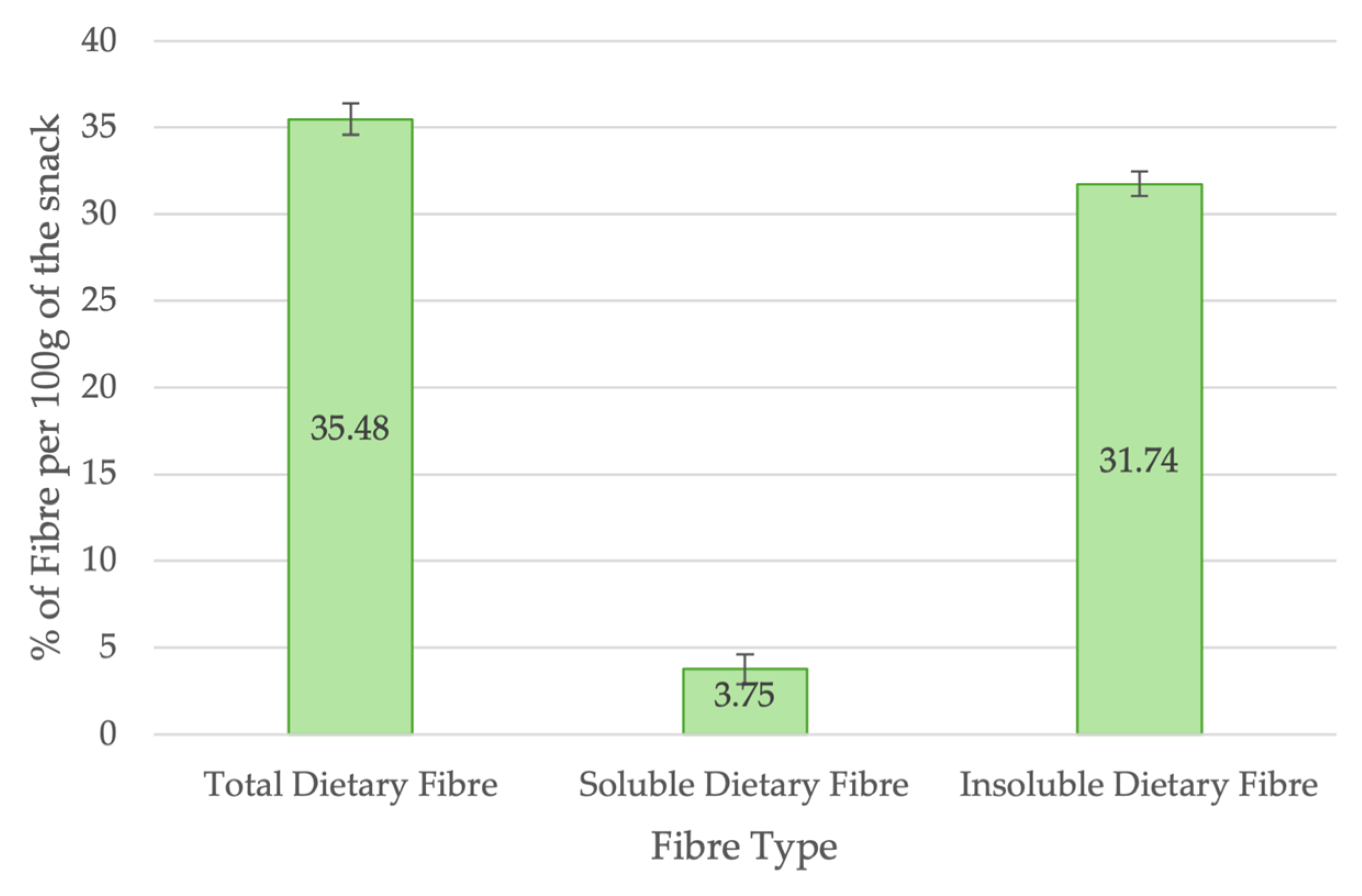
Figure 3.
Evolution of pH values of the Broccoli stalk snack during 4-month storage at 18-22ºC. Note: a,b - different letters represent significant differences (p < 0.05).
Figure 3.
Evolution of pH values of the Broccoli stalk snack during 4-month storage at 18-22ºC. Note: a,b - different letters represent significant differences (p < 0.05).
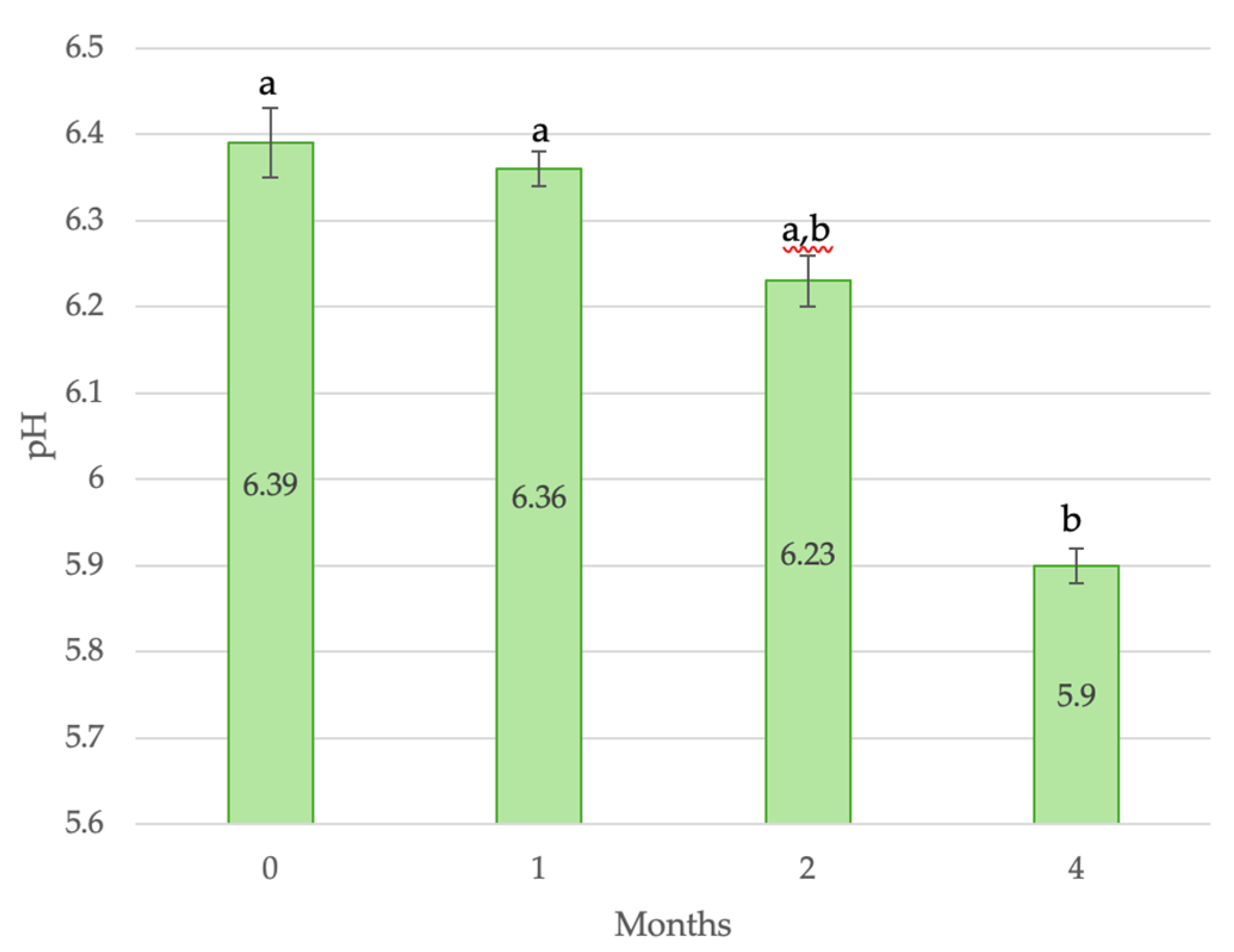
Figure 4.
Water activity evolution of the broccoli stalk snack during 4-month storage at 18-22ºC.
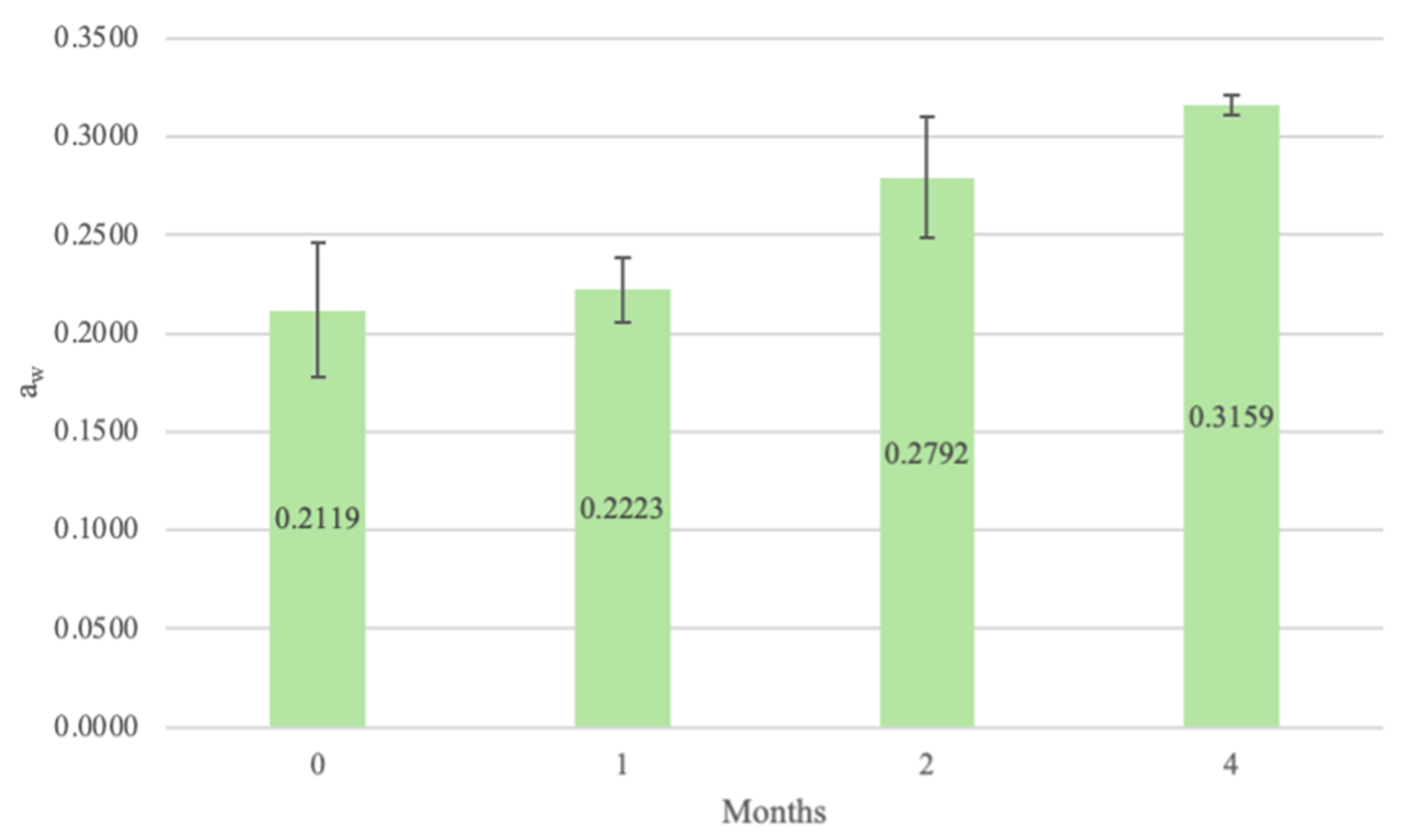
Figure 5.
Total phenolic content (in mg GAE/g) of the broccoli stalk snack at production and after 4 months of storage at 18-22ºC.
Figure 5.
Total phenolic content (in mg GAE/g) of the broccoli stalk snack at production and after 4 months of storage at 18-22ºC.
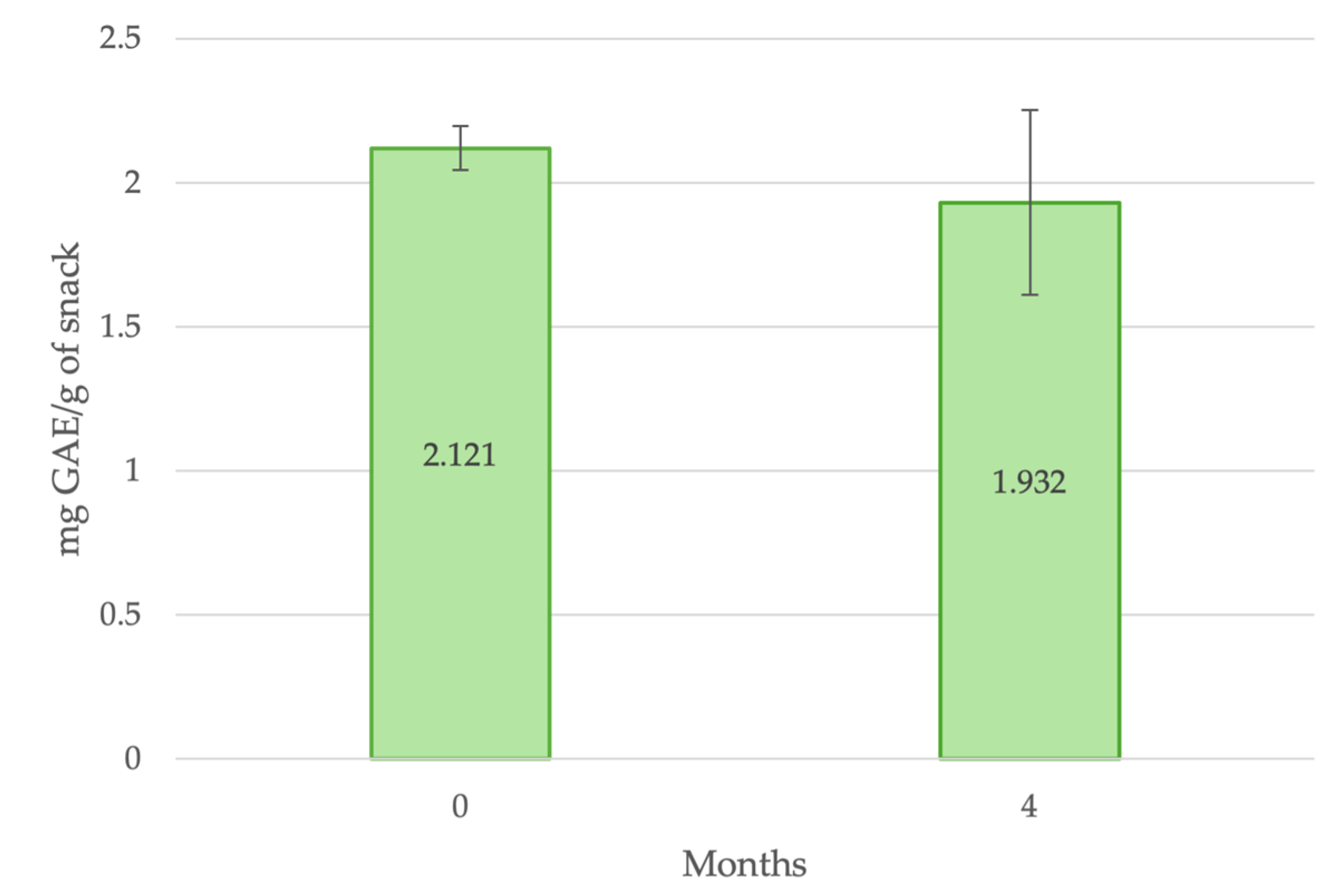
Figure 6.
Antioxidant Activity (in µmol Trolox equivalent/g) of the broccoli stalk snack at production and after 4 months of storage at 18-22ºC.
Figure 6.
Antioxidant Activity (in µmol Trolox equivalent/g) of the broccoli stalk snack at production and after 4 months of storage at 18-22ºC.
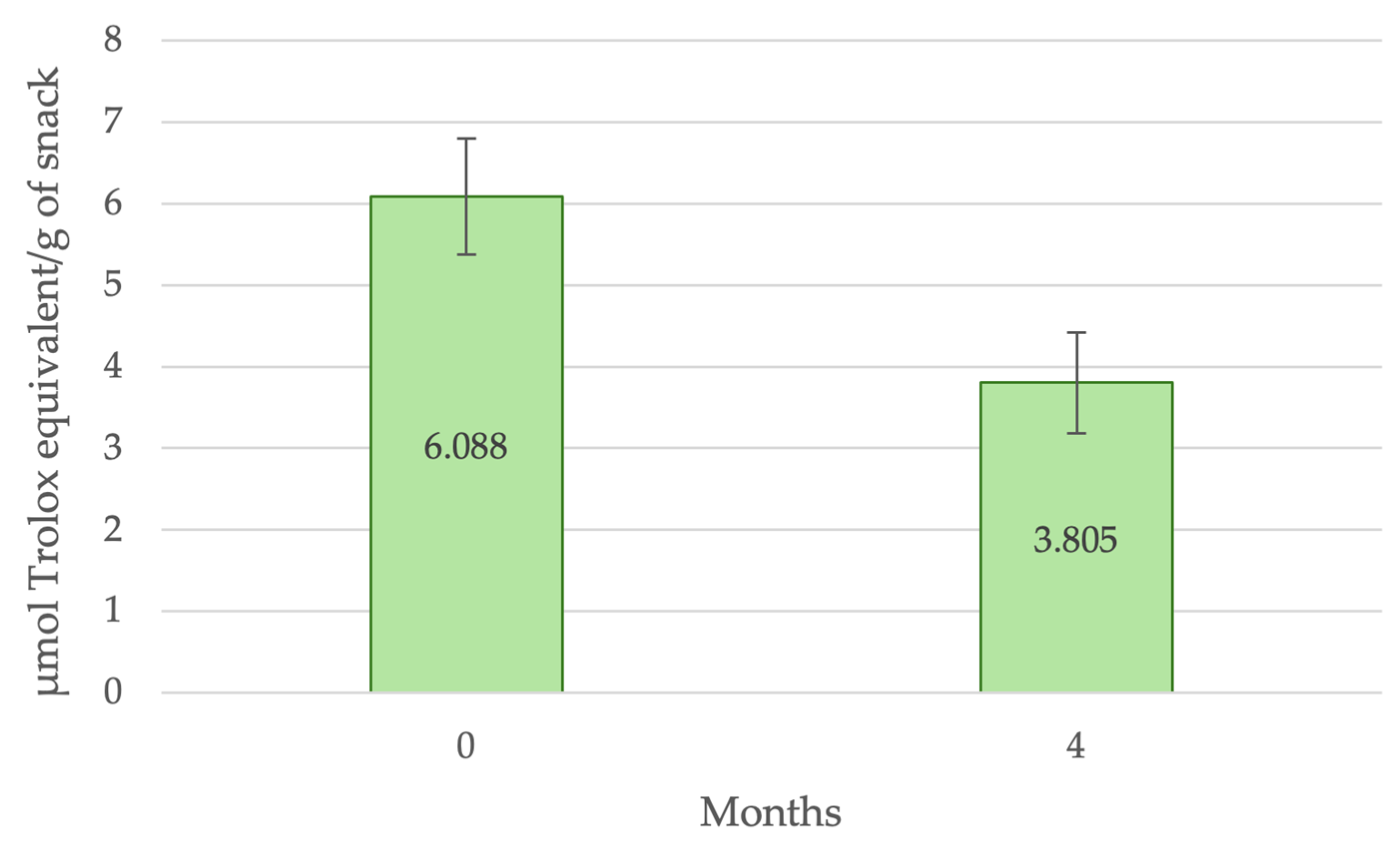
Figure 7.
Antidiabetic Activity expressed in percentage (%) of α-glucosidase inhibition, of the broccoli stalk snack at production and after 4 months of storage.
Figure 7.
Antidiabetic Activity expressed in percentage (%) of α-glucosidase inhibition, of the broccoli stalk snack at production and after 4 months of storage.
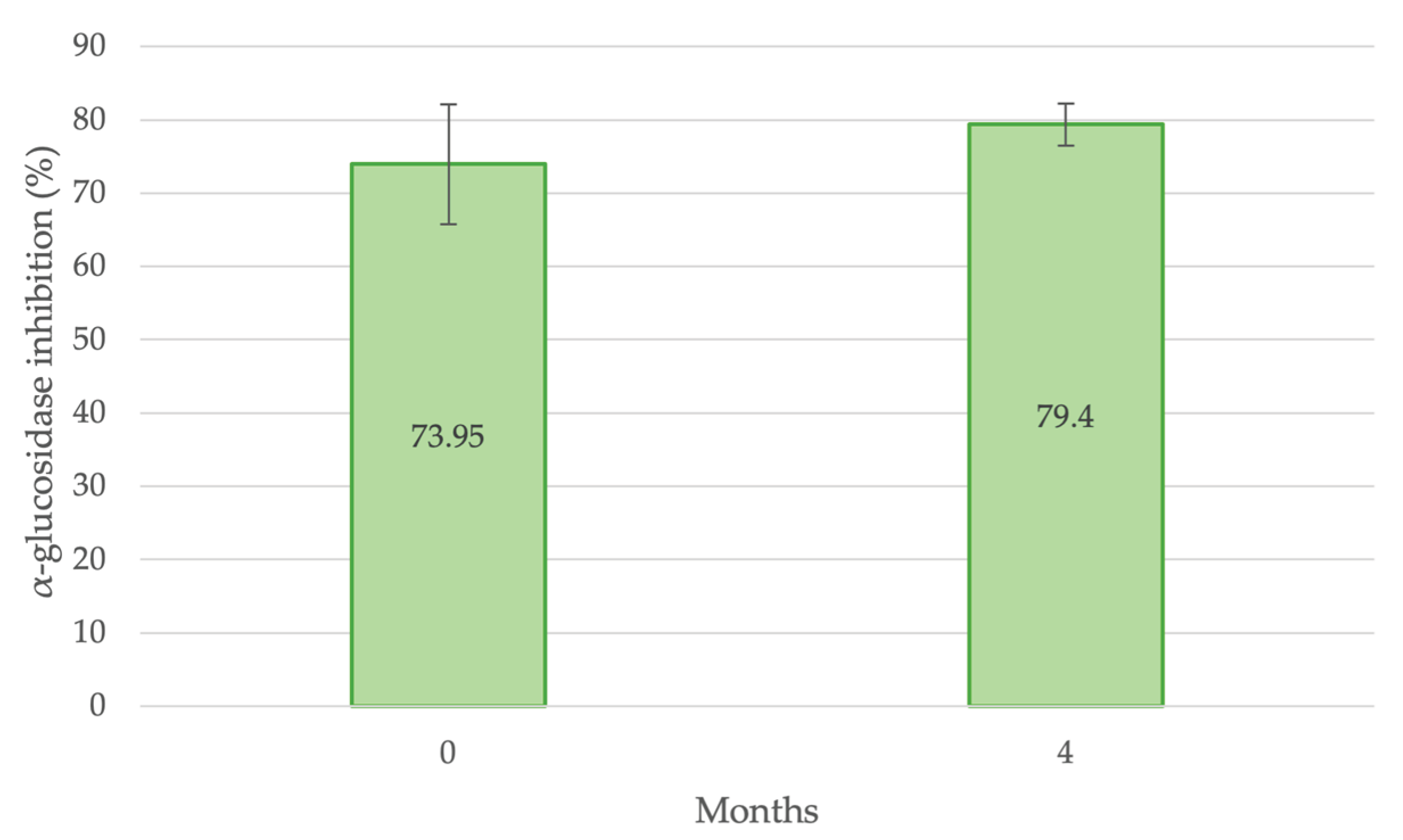
Table 1.
Ingredients for Snack Formulation.
| Ingredient | Mass (g) | Percentage (in dry mass) (%) * |
|---|---|---|
| Freeze-Dried Broccoli Stalk Powder | 550.0 | 32.2 |
| Cooked Chickpeas | 500.0 | 29.3 |
| Aquafaba | 230.0 | 13.5 |
| Onion | 110.0 | 6.4 |
| Olive Oil | 17.0 | 1.0 |
| Jalapeño | 7.0 | 0.4 |
| Nutritional Yeast | 103.0 | 6.0 |
| Samphire | 4.5 | 0.3 |
| Dried Tomato | 83.0 | 4.9 |
| Fresh Tomato | 41.3 | 1.4 |
| Cheese Powder | 62.0 | 3.6 |
| Garlic Power and Herbs | 5.4 | 0.3 |
| Total (Solids) | 1713.2 | 100 |
| *Note: In addition to the solid ingredients listed above, approximately 1 litre of water was added during the formulation process to achieve the desired consistency. | ||
Table 2.
Nutritional Composition of the broccoli stalk snack expressed per 100g of product.
| Nutritional Parameter | |
|---|---|
| Energy (kJ/100g) | 1231 ± 16.52 |
| Energy (kcal/100g) | 295.33 ± 3.79 |
| Moisture (g/100g) | 3.83 ± 0.12 |
| Total Fat (g/100g) | 6.77 ± 0.45 |
| Protein (g/100g) | 24.30± 0.92 |
| Ashes (g/100g) | 13.87 ± 0.15 |
| Total Sugars (g/100g) | 8.63 ± 0.25 |
| Fibre (g/100g) | 33.73 ± 0.78 |
| Total Carbohydrates (g/100g) | 51.23 ± 1.10 |
| Digestible Carbohydrates (g/100g) | 17.50 ± 0.46* |
*Note: The results are expressed as mean ± Standard Deviation.
Table 3.
Evolution of the Microbiological profile of the developed snack during 4-month storage at 18-22ºC, expressed as colony-forming units per gram of snack (CFU/g).
Table 3.
Evolution of the Microbiological profile of the developed snack during 4-month storage at 18-22ºC, expressed as colony-forming units per gram of snack (CFU/g).
| Microbiological Parameter | Storage Time (Months) | |||
|---|---|---|---|---|
| Production day | Month 1 | Month 2 | Month 4 | |
| Total aerobic mesophilic microorganisms | < 104 CFU/g | < 104 CFU/g | < 10⁴ CFU/g | < 10⁴ CFU/g |
| Yeasts and moulds | < 10⁴ CFU/g | < 10⁴ CFU/g | < 10⁴ CFU/g | < 10⁴ CFU/g |
| Enterobacteriaceae | < 10³ CFU/g | < 10³ CFU/g | < 10³ CFU/g | < 10³ CFU/g |
Table 4.
Evolution of texture parameters (hardness and crispness) of the broccoli stalk snack during a 4-month storage at 18-22ºC.
Table 4.
Evolution of texture parameters (hardness and crispness) of the broccoli stalk snack during a 4-month storage at 18-22ºC.
| Storage Time (months) | Hardness (kg) | Crispness (kg.sec) |
|---|---|---|
| Production Day (0) | 11.33 ± 1.90 | 43.75 ± 4.11 |
| Month 1 | 10.99 ± 2.49 | 40.64 ± 6.97 |
| Month 2 | 12.23 ± 2.22 | 41.81 ± 3.64 |
| Month 4 | 14.72 ± 2.43 | 45.54 ± 5.00 |
Disclaimer/Publisher’s Note: The statements, opinions and data contained in all publications are solely those of the individual author(s) and contributor(s) and not of MDPI and/or the editor(s). MDPI and/or the editor(s) disclaim responsibility for any injury to people or property resulting from any ideas, methods, instructions or products referred to in the content. |
© 2026 by the authors. Licensee MDPI, Basel, Switzerland. This article is an open access article distributed under the terms and conditions of the Creative Commons Attribution (CC BY) license.
Copyright: This open access article is published under a Creative Commons CC BY 4.0 license, which permit the free download, distribution, and reuse, provided that the author and preprint are cited in any reuse.