

Submitted:
27 March 2026
Posted:
30 March 2026
You are already at the latest version
Abstract
Phenylketonuria (PKU) is an autosomal recessive disorder characterised by an inborn error of phenylalanine (Phe) metabolism. Such errors are attributed to pathogenic gene variants causing phenylalanine hydroxylase (PAH) deficiency, impairing the hydroxylation of phenylalanine to tyrosine in the Phe metabolic pathway. This defect leads to plasma Phe concentrations above the normal range. If untreated, hyperphenylalaninemia can adversely affect brain function, leading to severe intellectual disability and seizures. Since 1969, the newborn dried blood spot test has remained the main method of early screening and diagnosis for PKU. The primary therapeutic management is a lifelong phenylalanine-restricted diet with the aim to decrease plasma Phe levels. The recommended diet consists of avoidance of high-protein foods such as meat, fish, eggs and nuts, and can be supplemented with high protein medical formulas which are low in phenylalanine. Sapropterin, a synthetic version of the cofactor tetrahydrobiopterin, can also be used as a treatment option in patients with a milder phenotype. This oral medication aims to increase PAH activity, subsequently reducing blood Phe concentrations. Novel gene-editing techniques are now being explored as potential curative strategies for PKU, with preclinical studies showing promising results in correcting pathogenic phenylalanine hydroxylase variants. This non-systematic review synthesises current literature on the management of PKU, with a focus on dietary interventions and recommendations.
Keywords:
adherence
; CRISPR
; diet
; hyperphenylalanaemia
; pegvaliase
; phenylalanine hydroxylase
; phenylketonuria
; sapropterin dihydrochloride
1. Background
Phenylketonuria is an autosomal recessive disorder characterised by an inborn error of phenylalanine metabolism. PKU was first described by Asbjørn Følling in 1934 in two siblings with severe intellectual disability [1]. The siblings were reported to have an unusual “musty” odour in their urine, which Følling later found contained phenylpyruvic acid. This abnormal finding reflected a defect in phenylalanine metabolism, a term that was eventually coined as phenylketonuria.
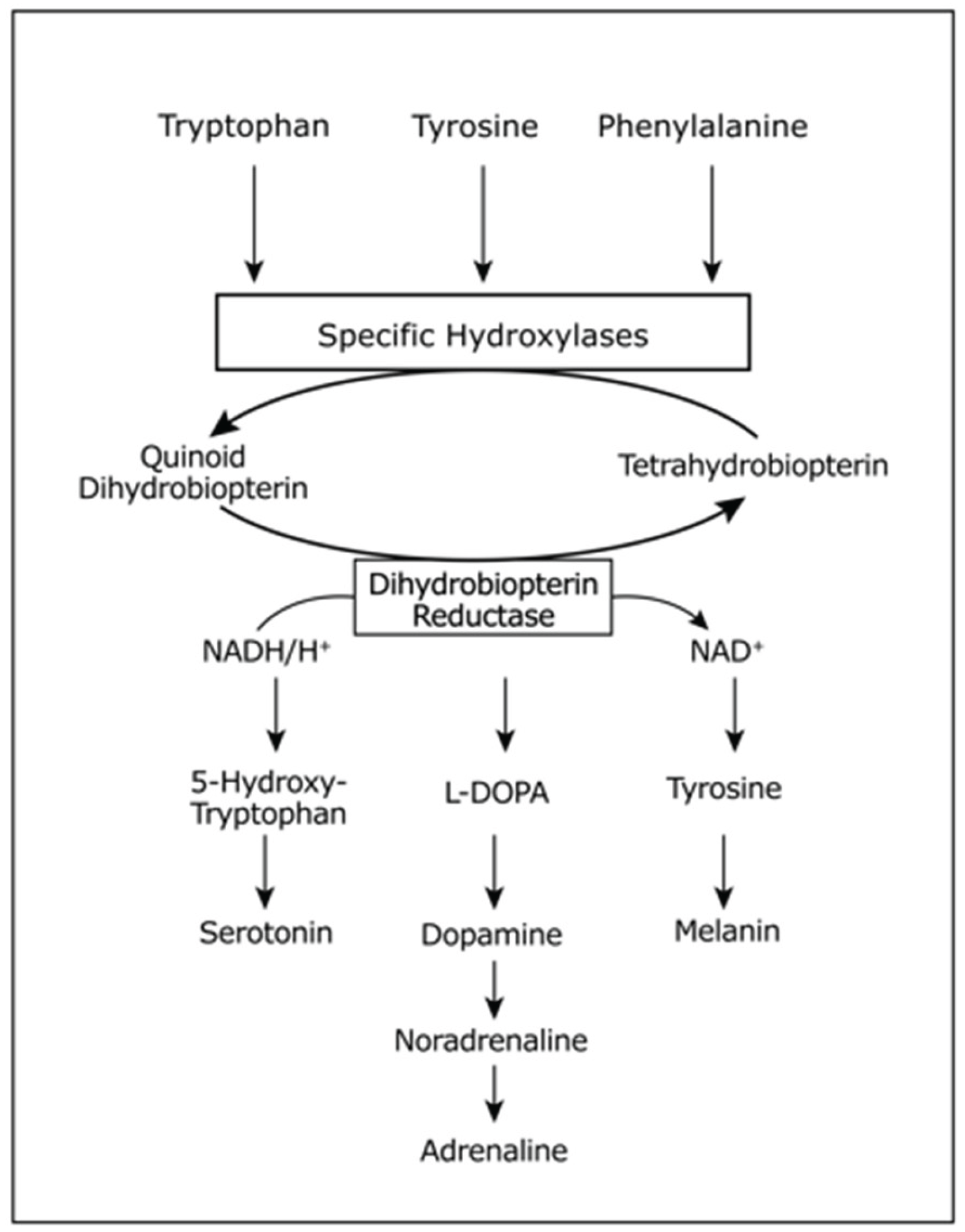
When metabolised, Phe is hydroxylated to form tyrosine by the enzyme phenylalanine hydroxylase [2]. In PKU, mutations in the PAH gene render the enzyme ineffective and thus lead to hyperphenylalaninemia HPA [2]. As shown in Figure 1, the Phe metabolic pathway requires the presence of co-factor tetrahydrobiopterin BH4. To facilitate this hydroxylation reaction, BH4 is oxidised to quinonoid dihydrobiopterin qBH2, undergoing continuous recycling back to BH4 via the dihydropterin reductase enzyme. Tyrosine can then be metabolised to melanin, dopamine, noradrenaline and adrenaline.
Historically, PKU has been classified into classical, moderate and mild, phenotypes which was defined by pre-treatment levels of Phe [3]. Such levels are > 1200 μmol/L in classical PKU, 600–1200 μmol/L in moderate PKU and < 600 μmol/L in mild PKU [3]. In the recent first revision of European PKU Guidelines [4], an amended classification has been suggested which considers availability of new treatments such as co-factor BH4 therapy. Individuals with PAH deficiency may now be recognised as a) not requiring treatment (Phe <360 μmol/L); b) requiring treatment, co-factor responsive, or c) requiring treatment, co-factor unresponsive [4].
In 1961, Robert Guthrie developed a test that could detect elevated Phe levels in the blood [5]. This has now been adopted globally as the primary screening method for PKU, termed the newborn blood spot screening programme. It is partially due to this early detection programme that those with PKU now experience improved neurocognitive and educational outcomes [6]. Management for PKU was first proposed in 1953 by Horst Bickel who treated a 4 year old girl with PKU by restricting dietary Phe intake [7]. Bickel observed a subsequent reduction in plasma Phe and disappearance of the characteristic “musty” urinary odour. Dietary Phe restriction still remains the cornerstone of management in PKU and aims to effectively reduce Phe levels to within target range [6,8].
Phe target ranges are classified by European PKU guidelines as within 120-360 µmol/l for children up to the age of 12, and 120-600 µmol/l for children above this age [6,9]. Maintaining adequate metabolic control is crucial due to the potential impact of raised Phe concentrations. Hyperphenylalaninemia has been shown to worsen neurological outcomes [9,10,11], a factor which has been reflected in the literature as lower IQ [11] and poorer memory and processing skills [12]. This risk increases in children and adolescents due to the sensitivity of the developing brain to permanent injury [9]. To mitigate such risks, dietary management is recommended to be lifelong and begin as early as possible [13,14,15]. The National PKU Collaborative Study during 1967-1983 provided evidence in supporting this recommendation. The study followed 211 newborn infants to evaluate the importance of early and consistent treatment of PKU [13] by providing longitudinal follow up. Early initiation of treatment and lower Phe levels during childhood were correlated with better cognitive outcomes and academic performance at age 12 [14], highlighting the importance of prompt recognition and treatment of PKU in children in long term outcomes [13,16,17].
Dietary management is characterised by consumption of low-Phe foods with supplementation of medical formulas acting as protein substitutes [6]. Medical formulas include Phe-free L-amino acid supplements and glycomacropeptide (GMP) based substitutes [6,18] and are imperative in maintaining adequate growth and preventing protein deficiency [6]. The use of supplementary large neutral amino acids (LNAAs) which inhibit Phe absorption in the gut [19] have also been trialled alongside dietary management. Though these have shown evidence of reducing Phe levels [19], they are not recommended for children below 12 years of age [16].
Whilst lifelong dietary measures remain the mainstay management in PKU, pharmacological therapies such as Sapropterin dihydrochloride, a synthetic form of BH4 enzyme, have been developed to improve metabolic control in BH4-responsive individuals [20]. Sapropterin has been shown to decrease blood Phe levels in paediatric populations [21] and has now received approval for treatment in those under 4 years old [22]. More recently, Pegvaliase, an enzyme substitution therapy, has altered the treatment landscape in PKU and offers the potential to reduce dietary Phe restriction in a proportion of patients.
This narrative literature review aims to provide an overview of the management of PKU in the paediatric population such as dietary Phe restriction, protein substitutes/medical formulas and natural protein intake. Furthermore, the review will aim to discuss the barrier of dietary adherence and explore emerging therapies.
2. Breastfeeding and Management in Infancy
As recommended by European PKU guidelines, dietary management of PKU should begin by the age of 10 days old in infants with blood Phe levels above 360 μmol/L, as early treatment is associated with improved neurological outcomes [6,14]. Although the literature is generally consistent regarding treatment initiation in infants with blood Phe levels >600 μmol/L, evidence surrounding treatment at Phe levels between 360 and 600 μmol/L is variable [24,25]. Thus, treatment is recommended within this range during the first 12 years of life. Continuation of treatment is dependent on blood Phe levels beyond this age. If blood Phe levels remain below 600 μmol/L, it is possible that these patients may no longer require treatment [4].
Phe requirements during infancy are fulfilled with breast milk or standard infant formula [26] supplemented by Phe-free formula [6,27]. Breastfeeding is well-evidenced in PKU [28] and is a preferrable source of Phe due to factors such as increased mother-infant bonding, greater convenience and content of polyunsaturated fatty acids [6,29]. Protein content in human breast milk is variable, ranging from around 14-16g/L at birth to 7-8g/L after 6 months [30]. This variability means that monitoring of Phe levels in infants who are breastfeeding is of particular importance [31]. Thus, though breast feeding is beneficial, intake in infants with PKU is reduced in comparison to normal infants due to the risk of adverse impact on metabolic control [32].
A variety of methods can be used in infant feeding, with the most frequently used method by European centres being to breast feed after a set-amount of Phe-free formula has been given to the infant [28]. Another approach is interchanging feeds with both Phe-free formula and breast milk. Both methods have been shown to be nutritionally adequate, though there are few studies comparing the methods and their longitudinal impact on metabolic control and growth outcomes [28]. As feeding an infant with PKU can be challenging, support for mothers during breast-feeding and weaning is recommended [29].
Weaning usually occurs between 17-26 weeks [28,29], with this time frame being associated with better acceptance and less food refusal compared to early or delayed weaning [33]. Though weaning in PKU can present with challenges [32,33], the process should largely reflect infants of those healthy controls. Weaning foods are commonly low-protein foods containing Phe of ≤75 mg/100g, and can be mixed with milk, cream or butter to increase their energy content [29]. As in normal weaning practices, the food is given as a semi-solid puree and is often comprised of low-Phe fruits and vegetables [29]. Over time, measured natural protein foods such as baby cereal, yoghurt, and baby rice can be introduced followed by finger foods such as soft fruits and low protein toast as part of the exchange system [29]. In the process of reducing Phe-free formula during weaning, there is a reduction in energy intake [32]. Thus, it is recommended that a more concentrated second-stage protein substitute should be introduced from 6 months of age [29] to maintain protein intake.
3. Dietary Phenylalanine Restriction
Lifelong dietary management in PKU aims to prevent the build-up of plasma Phe whilst ensuring adequate nutrient intake [29] for growth and tissue repair [6]. Phe is an essential amino acid forming protein [34], thus, high-protein food items are restricted to maintain Phe levels within the normal range [6,29]. Restricted food products include meat, nuts, soya, aspartame and cheese [6,29].
In PKU, consumption of natural protein is decreased to approximately 25% or less compared to the general population [29], with the majority dietary protein coming from Phe-free L-amino acid supplements [35]. Total protein intake should ideally exceed the recommendations given for the general population [6] and should be based on ideal body weight rather than actual body weight [29,35,36].
Phe tolerance generally decreases with age in those with PKU [6,36], from 55mg/kg/day in infancy up to 3 months [6] to 14mg/kg/day at 10 years of age [35,37]. Establishing tolerance ranges ensures avoidance of unnecessary restriction of natural protein [35,37] and consequently reduces the risk of diminished growth and osteopenia [38]. Thus, a higher Phe tolerance may not only increase variability within the diet but provide nutritional advantages [29]. However, it should be noted that tolerance is individual and dependent on factors such as PKU severity, dietary adherence, growth and catabolic state [29].
There are multiple systems used to calculate allocated Phe intake, such as the Phe exchange system, where foods are counted as “exchanges” and represent a fixed amount of Phe e.g., 50, 25 or 20mg [29]. Alternatively, 1g of natural protein, representing one exchange, is calculated as 50mg of Phe [29,36]. In these methods there is also the inclusion of “exchange-free” foods, referring to foods that are permitted without restriction [16]. These include most foods containing ≤0.5mg/100g [29,39] such as vegetable oils, sugar, honey and jam [39]. Furthermore, fruit and vegetables containing less than 75 mg/100 g may also be permitted [29,39]. The literature has demonstrated that consumption of exchange-free foods does not negatively impact blood Phe control [40,41,42] and can also provide beneficial fibre [40]. Another approach is the precise calculation of Phe content in foods with the aid of paper lists or apps [29]. Usage of systems differs depending on geographical location. For example, a 50mg Phe exchange system is implemented in the UK, with the United States and Australia using a 15mg Phe exchange system [43]. Availability of studies comparing the outcomes of different dietary systems in PKU remains scarce, and lack of standardisation in prescribing practices may make it difficult to directly compare growth outcomes across paediatric populations.
European PKU guidelines recommend life-long monitoring and follow up of Phe levels and treatment adherence through home blood sampling and outpatient hospital visits [6]. Follow up remains important in PKU and aims to support patients and prevent long-term complications the condition [6]. Thus, attendance of follow-up may be associated with improved metabolic control [44], with the contrary posing a possible risk of elevated mean Phe levels [15]

Table 1.
Phe content of selected foods based on edible portions sourced from the UK. Values modified from Weetch et. al 2006 [45].
Table 1.
Phe content of selected foods based on edible portions sourced from the UK. Values modified from Weetch et. al 2006 [45].
| Food Group | Food Item | Phenylalanine Content Per Edible Portion (mg/100g) |
| Vegetables | Runner bean Aubergine Beetroot White cabbage Carrot Cassava Celery Chestnut Courgette Onion Green pepper Sweet potato Leek Mange tout Mushroom Pak choi Jacket potato (baked, skin left on) Garden pea Petit pois Spinach Spring greens Sweet corn |
Below 50 50-75 Over 100 |
| Fruit | Apple Fig raw Guava Mango Kiwi Orange Peach Banana Dried sultanas |
Below 50 50-75 |
4. Protein Substitutes and Formula Composition
Phe-free L-amino acid (AA)-based substitutes are an integral part of dietary management in PKU, providing the majority of protein intake particularly in those with classical PKU [35,46]. AA-based substitutes act as a primary source of substrates needed for tissue growth and other important metabolic processes [47] and can be in the form of liquids or powders which can be mixed to form a semi-solid paste [40]. This is particularly important, as those with PKU cannot obtain sufficient amino acids from natural dietary protein. Prescribed amounts of AA-substitutes vary across Europe, for example, infants may be prescribed around 2-3g/kg/day, compared to those 1-10 years old being prescribed around 1.5-2g/kg/day. This may decrease to 1g/kg/day for children over the age of 10 [6].
Over the years, advances to AA-based substitutes have been made to optimise both nutrition and taste, with many modern formulas containing all essential amino acids, apart from phenylalanine, vitamins and minerals [47]. In contrast, original formulas often contained insufficient nutrients such as long-chain polyunsaturated fatty acids [48]. Adequate intake of protein substitutes is essential for maintaining Phe levels within range, with poor consumption being linked to poor metabolic control [16]. Furthermore, a diet already low in protein may result in nutritional deficiencies if not adequately supplemented with a protein substitute [16].
Compared to natural protein, AA-based substitutes are rapidly absorbed and lead to lower nitrogen retention [6]. It is due to these utilisation differences that European PKU guidelines recommend a 40% increase in prescribed intake of AA-based substitutes [6]. In a study by Huemer et al. [49], it was found that increasing recommended daily protein intake in children aged 2 months to 15 years by a mean value of 24% did not significantly impact height, weight or BMI in comparison to controls. This study supports the hypothesis that protein quantity is not the only factor which effects growth outcomes in children with PKU, but protein quality and timing of intake [29,49]. For example, an even administration of Phe may promote improved protein utilisation, leading to better absorption and enhanced muscle protein building [46].
As well as AA-based substitutes, caseinglycomacropeptide (CGMP)-based substitutes can be used as an alternative [6,18]. GMP is a peptide originating from whey protein [50] and is naturally low in Phe [46]. When supplemented with AAs, CGMP can form the base of a protein substitute which is used to provide a palatable alternative to AA-based substitutes a primary protein source [51]. It has been shown that CGMP-based substitutes may provide more scope for dietary protein to be provided from intact sources such as GMP, fruits and vegetables, with synthetic AAs making up a smaller portion [16]. For example, in the traditional low-Phe diet using AA-based substitutes, these supplements provide roughly 80% of protein from synthetic sources, compared to around 30% in diets incorporating substitutes based on CGMP [16]. Furthermore, CGMP-based substitutes may decrease the absorption rate of AAs [18] and improve protein retention in comparison to AA-based substitutes [52].
Despite these potential advantages, CGMP must be supplemented with AAs to become a complete protein source and is not completely Phe-free [16]. Although a study by Ney et al. [52] did not find that CGMP-based substitutes increase plasma Phe levels in adults and adolescents, the Phe content of CGMP-formulas may negatively impact blood Phe levels and metabolic control in children [16,46]. Thus, careful consideration should be applied when prescribing in children under 12 years old [46]. In addition, sufficient energy intake in those under 4 years of age should also be ensured, with calorie content of CGMP-based substitutes varying depending on the brand [16]. These potential limitations alongside lack of strong evidence on CGMP-formulas highlight gaps in current knowledge and practice. As such, European PKU guidelines do not provide practical recommendations on the use of CGMP [6,29]. Some evidence suggests CGMP supplementation may have beneficial effects on appetite regulation and satiety signalling [52,53], alongside improved taste and nitrogen retention [29]. Other literature reports no significant difference in satiety and acceptability in comparison to AA-formulas [54,55]. Overall, although CGMP-based formulas show promise in potentially allowing more dietary flexibility, further research is needed in paediatric populations to evaluate its overall efficacy and use.
5. Natural Protein and Low Protein Specialty Foods
Though the majority of protein intake comes from AA-based substitutes in dietary management of PKU, natural protein intake in the form of “free foods” and low-protein specialty foods are also included in dietary management in PKU. Although parameters of protein intake are recommended, it is not uncommon that patients exceed recommended levels [20,56]. In a study by Macdonald et al. in 1996 [20], it was first shown that increasing natural protein intake by 40% in children did not negatively affect Phe levels or metabolic control long term. Given the difficulty in adherence associated with the PKU diet, this may suggest that strict emphasis on exact protein intake may not be beneficial to maintaining Phe levels within range. These findings are supported by Pinto et al. [56], who found that, when increasing natural protein intake by 40% over a 6-month period, blood Phe levels were not adversely affected.
Special low protein foods (SLPFs) are formulated to be low in Phe and provide over >30% of energy intake in children aged 5-16 years old [40,57]. Examples include bread, pasta, biscuits and egg replacers [29]. SLPFs contain around 43-100% less protein than normal comparisons, however the nutritional composition of these foods is highly variable [58]. Although the exact micronutrient profile of SLPFs is not clear, some evidence suggests higher levels of lipid and carbohydrates [59] and lower fibre content in comparison to normal food products [40]. As adherence to diet can be challenging in PKU, SLPFs are encouraged due to added variety, satiety [29], taste and acceptability [59]. Increasing the range of these foods may also further improve dietary adherence, especially in the teenage population [57,60].
Whilst maintaining adequate protein intake is essential for growth [6], access to various protein sources may be a barrier for those with PKU. As access and cost of SLPFs vary geographically [29,59,61,62], this may influence adherence and provide challenges in maintaining blood Phe levels [57,61]. In the UK, SLPFs are part of the national prescribing system and thus prescribed to children with PKU who are aged under 16 years old free of charge [61]. Though this provides greater access for those of a lower socioeconomic background, challenges remain. For example, Wood et al. (2021) found that SLPFs were under-prescribed, with some patients reporting prescriptions being refused or containing items deemed ‘too luxury’. Whilst increased availability and reasonable cost is favourable, careful monitoring is important as the nutritional composition of SLPFs differ nutritionally from their standard counterparts [57].
6. Micronutrient Requirements
As there are no PKU-specific micronutrient reference values, optimal intake of micronutrients within dietary management is not precisely defined [63]. Nutritional requirements should theoretically be met by intake of protein substitutes, as these are supplemented with the correct long chain fatty acids, vitamins and minerals to meet dietary needs [29]. However, although children with PKU may have sufficient intake of micronutrients, they often do not achieve optimal micronutrient status [64]. Dietary non-adherence may contribute to deficiencies in micronutrients such as calcium and phosphate, a factor which may increase bone age and lower bone mineral density in children and adolescents [11,65]. Furthermore, metabolic determinants impacting absorption/excretion and the nutrient bioavailability in Phe-free formulas may also play a role in deficiencies [66]. Though deficiencies in Vitamin D, selenium, zinc, calcium or vitamin B12 may be present in a small population of children and adolescents with PKU [11,66], most present with generally adequate micronutrient status when there is good dietary adherence and regular clinical monitoring [11,66,67].
The presence of small sample sizes and variation in formula types and treatment protocols diminishes the quality of data which exists on dietary intake in PKU [66]. Even if deficiencies are identified, it is challenging to decipher if this is attributed to diet, effects of disease or compliance [11].
7. Dietary Adherence
It is well established that treatment adherence is challenging in PKU [6,16], often negatively impacting metabolic control and blood Phe levels. Though there is not a specific measurement for compliance [15,68], there are signs which may suggest someone with PKU may be struggling to adhere to treatment during childhood. For example, poor engagement with clinicians, irregular submission of blood Phe samples and suboptimal Phe control [6]. There are many potential risk factors for non-adherence such as parental denial or misunderstanding of PKU, lower intake of Phe-free formulas and elevated plasma Phe concentrations [15]. Though it is generally accepted that metabolic control may decrease with age [15,44,69], data regarding the relationship between age and adherence shows some variation. Some studies provide evidence that Phe control may improve in adolescence [44,60,68], later deteriorating with the transition into adulthood. In a multicentre study by Alex Pinto and colleagues, it was found that Phe control was better in children below 6 years of age compared to those between 6-12 years old [44]. In teenage participants aged 13-18 years old, Phe levels increased again. This finding is consistent with a study by Ahring et al. which found that Phe levels improved during adolescence [60], before declining after the age of 16 years.
Empowerment of those caring for children with PKU is fundamental [69,70] as caregivers play a significant role in the monitoring of PKU treatment [6]. Some evidence suggests that stricter management such as meticulous Phe measurement of all foods may not significantly impact blood Phe control [6], highlighting the potential for flexibility in clinical management approaches. This knowledge may reduce the burden placed on children with PKU and caregivers, in turn harnessing a stronger motivation and attitude towards dietary restriction.
European PKU guidelines acknowledge that attitudes and behaviours, as opposed to knowledge alone, may improve adherence [6]. This is supported by Zamani et al. (2021), where the use of behavioural interventions targeting behavioural attitudes, motivation and social support was successful in reducing blood Phe levels in the paediatric population [70]. Methods in which this can be achieved include behavioural interventions for parents of children with PKU which focus on social support, dietary management skills, e.g. reading of food labels and self-monitoring [70]. Thus, continued research into age-specific behavioural interventions for children may be beneficial in improving metabolic control [70]. Measuring adherence accurately and consistently remains a challenge [15,68]. This difficulty in quantification may hinder the strength of conclusions and links between studies.
8. Adjunct and Emerging Therapies
8.1. Sapropterin
Sapropterin dihydrochloride, a synthetic form of the tetrahydrobiopterin (BH4) cofactor, is the first approved pharmacological therapy for the management of PKU [71]. The treatment was approved for individuals aged 4 years and over in the United States by the U.S Food and Drug Administration in 2007 [72]. After demonstrating sustained efficacy and tolerability in children under 4 years old, sapropterin has more recently been expanded for use in this age group in Europe [6,22,73].
BH4 is an essential co-substrate in the conversion of Phe to tyrosine by the PAH enzyme [71] (see Figure 1). Thus, treatment with BH4 enables optimisation of enzymatic activity. Individuals with preserved PAH activity are thought to gain the greatest clinical benefit from such treatment, with responsiveness most common in mild PKU but occasionally observed in classical PKU [6,74].
To determine responsiveness to BH4 treatment, it is recommended that patients undergo a BH4 loading test is before treatment initiation [6]. The loading test involves administration of a 20 mg/kg/day dose of BH4 for a minimum duration of 48 hours [75]. According to European PKU guidelines, BH4 responsiveness is defined as >30% reduction in blood Phe levels or possession of two BH4-responsive gene variants. As Sapropterin facilitates lowering of Phe levels, it allows for less restriction of Phe within the diet [22,71,74,76] and reduction of protein intake from synthetic substitutes [76]. This is beneficial to both paediatric patients and caregivers given the burden of dietary adherence, underscoring the role of Sapropterin in allowing both dietary variation and improving quality of life [75].
Due to limited data on the safety of BH4 use in pregnancy, European Summary of Product Characteristics administer caution when considering use during pregnancy [77]. European PKU guidelines suggest that BH4 treatment should only be considered in PKU patients who are known to respond to BH4 and where dietary control has not been sufficient in maintaining Phe control [6]. American guidelines also permit the use of BH4 for those who are responsive as an adjunct to dietary management in women who are pregnant or breastfeeding [8,78]. However, the presence of limited data on it’s use in such circumstances is acknowledged.
Pharmacological management options such as Sapropterin provide an opportunity to increase dietary flexibility and thus improve quality of life in children with PKU. In line with this, those with dietary treatment supplemented with Sapropterin have been shown to have significantly decreased Phe levels compared to those with dietary treatment alone [44]. Longitudinal data have demonstrated preserved intellectual functioning, stable growth and adequate control of Phe levels in BH-4 responsive children who began treatment between the ages of 0-6 years old [79]. However, many children with non-BH4-responsive PKU are unable benefit from its advantages, highlighting a limitation of this option. This is significant as it is often children with more severe types of PKU that are most vulnerable to the condition’s neurodevelopmental and metabolic consequences such as slower growth rates [80,81,82].
Though a promising advancement in the management options for PKU, most patients using Sapropterin will still require dietary restrictions and regular monitoring of Phe levels, thus it is not a complete solution to many of the barriers in the treatment of PKU in children.
8.2. Pegvaliase
Pegvaliase is an enzyme substitution therapy for PKU and is administered via subcutaneous self-injection. The medication consists of a phenylalanine ammonia lyase (PAL) enzyme conjugated with polyethylene glycol, which functions by converting Phe to ammonia and trans-cinnamic acid [83]. Initially, a weekly dose of 2.5 mg should be administered, with the maintenance regime consisting of 20-60 mg injections daily [83]. This therapeautic strategy may offer the potential for those with PKU to discontinue restrictive dietary practices [84,85] whilst maintaining blood Phe levels within range.
In 2018, Pegvaliase was approved in America for use in adults aged 18 years and over by the U.S. Food and Drug Administration (FDA). Later in 2019, this therapy was authorised by the European Medicines Agency (EMA) for individuals aged above 16 years in Europe [83]. It is indicated in individuals with Phe concentrations >600micromol/L and is supported with monitoring of dietary protein, phenylalanine intake and blood Phe concentrations [83,86].
Phase 3 trials evaluating the efficacy of Pegvaliase have demonstrated significantly lowered Phe levels in adult participants [86]. Furthermore, long-term follow up in an open-label extension study demonstrated sustained reduction of Phe levels and the adequate safety profile [84]. The ongoing phase 3 PEGASUS trial beginning in June 2022 has enrolled 55 participants aged 12-17 years to evaluate Pegvaliase treatment vs dietary treatment alone [87]. According to sponsor-reported preliminary data announced in September 2025, a statistically significant decrease in blood Phe levels was observed in participants [88]. The extension phase of the PEGASUS trial is ongoing, and peer-reviewed publication of full trial data is awaited.
Although findings from the PEGASUS trial suggest potential benefit of Pegvalise for those aged 12-17 years, this management is option is not yet approved for those under 16 years old [89]. It is also only licensed for those with uncontrolled Phe levels >600micromol/L on current management [83]. With current evidence being restricted to adults, there is insufficient knowledge regarding safety and effectiveness in younger populations.
When effective, Pegvalise remains an invasive therapy and has been associated with potential adverse effects. Although uncommon, Pegvalise carries a potential risk of anaphylaxis and hypersensitivity reactions [90,91]. In safety data analysing all Pegvalise clinical trials, anaphylaxis was noted in 9% 26/285 of patients [90]. Physician concerns and uncertainty surrounding these effects have been discussed as a potential barrier for the use of this treatment option [90].
8.3. Genetic Approaches
Genetic approaches including messenger ribonucleic acid (mRNA) therapy, gene addition and gene editing have been investigated in pre-clinical research as a promising treatment strategy in PKU. These methods aim to restore function of the PAH allele or integrate a PAH expression cassette into the genome [89,92].
In PKU research, gene addition approaches have utilised vectors to administer a functional PAH gene into the liver of PAH-deficient mice [93], with the most clinically effective vectors currently remaining recombinant adeno-associated virus rAAV vectors [89,92,94]. This method has demonstrated successful reduction of Phe levels in murine models [94,95,96]. More recently, two clinical trials by the biotechnology companies Biomarin and Homology Medicines have evaluated rAAV gene addition in adults with PAH deficiency [92]. Despite beginning enrolment, the Homology Medicines trial has since been discontinued [97]. A phase I/II clinical trial by Biomarin is currently active and has recruited adults aged 15 years and over [98]. However, data regarding trial results are not yet available.
Limitations of gene addition methods include the requirement of high vector doses and the potential of long-term efficacy due hepatocyte turnover [92]. This turnover may precipitate depletion of vector genomes with anti-AAV immunity, potentially limiting re-administration [92]. This is a particular concern in children who have increased cell turnover rates, thus long-term stability of expression is currently uncertain [92]. Alongside this, potential drawbacks also include high manufacturing costs and a theoretical risk of hepatocellular carcinoma (HCC) [92,99]. Although some evidence has suggested an association between rAAV vector delivery and the formation of HCC, this is currently not observed in large animals and humans and is thus deemed a theoretical risk by the American Society of Gene & Cell Therapy and the FDA [99]. However, this risk should be considered when thinking about human application.
In contrast, mRNA therapy involves the administration of wild-type PAH mRNA into the bloodstream which is then translated into PAH in hepatocytes [100]. This method of gene therapy has been shown to restore PAH activity in Pahenu2 mice [100,101]. Although this method has been observed to successfully reduce Phe levels, this required repeat doses every 3-5 days.
A potential advantage of mRNA therapy is the direct delivery of mRNA into the hepatocyte cytoplasm, allowing for immediate translation and mitigating the risk of potentially harmful genomic integration [101]. This risk can be associated with DNA based gene therapy, viral AAV vectors and genome editing techniques [101]. However, limitations of mRNA therapy include the short half-life of mRNA, potential immune activation, and possible entrapment of mRNA inside endosomes [92]. Although success in pre-clinical trials demonstrates proof of principle, optimisation of mRNA stability through mRNA technology may be required to develop this approach and ensure viability in humans. As of recently, there are no actively ongoing clinical trials evaluating the use of mRNA-based gene therapy for PKU. Though only in pre-clinical stages, this demonstrates promising potential for clinical application [92].
Genome editing strategies have emerged as a possible solution in restoring hepatic phenylalanine hydroxylase activity. In contrast to gene addition approaches, gene editing alters the DNA itself and may offer a more permanent option for PKU treatment, specifically in paediatric populations [89,92]. By principle, gene editing maintains PAH expression despite genomic replication. Two methods include gene correction and gene insertion.
Gene correction methods involve the direct repair of pathogenic PAH variants, using approaches such as homology-directed repair (HDR), prime editing and base editing using CRISPR/Cas9 technology [102,103]. HDR approaches aim to correct the PAH gene mutation via inducing a double-strand DNA break nearby [103] which is then repaired via homology-directed repair mechanisms. However, evidence of this approach in PKU murine models (Pahenu2 mice) has shown failure to maintain a clinically effective number of gene-editing hepatocytes [103]. Thus, despite evidence showing potential in long-term therapeutic effect, PAH function has still only been partially restored, and therapeutic effects were highly variable [103].
Base editors are molecular tools that enable targeted single-nucleotide changes in DNA without creation of double-strand DNA breaks [104]. Some studies have shown base editing strategies to be effective in restoring blood Phe levels in mice [104,105]. As opposed to HDR approaches, base editing and prime editing techniques may be of higher specificity and facilitate single-base modifications in non-dividing cells [92]. Gene correction proposes certain strengths such as allowing for the preservation of PAH regulatory control and its efficacy on dominant-negative mutations of the PAH gene [92]. However, disadvantages include the specificity of these approaches for a particular mutation, thus being a potential barrier to the scalability due to the mutational heterogeneity of PKU [92].
Gene insertion is characterised by the integration of a functional PAH expression cassette into the hepatocyte genome, typically containing a PAH complementary DNA (cDNA) sequence [92]. This method has demonstrated pre-clinical success in murine models [92,106]. Using an rAAV-mediated homologous recombination strategy, Chen et. al 2020 demonstrated a ~6% insertion of human PAH cDNA into PAH alleles in humanised liver murine models [106]. Gene insertion methods may have the potential of broader applicability in comparison to gene correction, as they involve permanent insertion of a functional DNA sequence regardless of the pathogenic gene variant [92].
9. Conclusions
Despite recent advancements in the management of PKU in paediatric populations, lifelong dietary management remains the cornerstone of treatment. Although early dietary management is associated with improved outcomes for individuals with PKU, treatment adherence remains a central challenge. While pharmacological therapies such as Pegvaliase and Sapropterin offer the opportunity for dietary flexibility, they are not without their limitations. For example, Sapropterin may only be effective in those who are BH4-responsive and Pegvaliase is not yet approved for children under 16 years old. Thus, a non-dietary therapeutic strategy which is universally applicable to the paediatric population is not yet available.
Somatic gene therapy offers the potential of a more permanent treatment option for PKU, with pre-clinical data demonstrating restoration of PAH function in murine models. However, barriers such as inappropriate immune activation and high rates of hepatocyte turnover diminish clinical efficacy. Despite current challenges, further research into PAH genetic approaches may expand options for long-term treatment, thus improving the quality of life for individuals with PKU.
Author Contributions
Original draft preparation, H.J.; writing—review and editing, H.J.,E.M.S; supervision, E.M.S.
Funding
This research received no external funding.
Institutional Review Board Statement
Not applicable.
Informed Consent Statement
Not applicable.
Data Availability Statement
Not applicable.
Conflicts of Interest
The authors declare no conflicts of interest.
Abbreviations
The following abbreviations are used in this manuscript:
| AA-based substitute | L-amino acid-based substitute | |
| BH4 | Tetrahydropterin | |
| cDNA | Complementary DNA | |
| CGMP-based substitute | Caseinglycomacropeptide-based substitute | |
| EMA | European Medicines Agency | |
| FDA | Food and Drug Administration | |
| HCC | Hepatocellular carcinoma | |
| HDR | Homology directed repair | |
| HPA | Hyperphenylalaninemia | |
| LNAA | Large neutral amino acid | |
| mRNA | Messenger ribonucleic acid | |
| PAH | Phenylalanine hydroxylase | |
| PAL | Phenylalanine ammonia lyase | |
| Phe | Phenylalanine | |
| PKU | Phenylketonuria | |
| qBH2 | Quinonoid dihydrobiopterin | |
| rAAV | Recombinant adeno-associated virus | |
| SLPF | Special low protein food | |
| PKU | Phenylketonuria | |
| HPA | Hyperphenylalaninemia | |
| Phe | Phenylalanine | |
| PAH | Phenylalanine hydroxylase | |
References
- Følling, I. The Discovery of Phenylketonuria. Acta Paediatr Suppl 1994, 407, 4–10. [Google Scholar] [CrossRef]
- Blau, N.; van Spronsen, F.J.; Levy, H.L. Phenylketonuria. Lancet 2010, 376, 1417–1427. [Google Scholar] [CrossRef]
- Blau, N.; Hennermann, J.B.; Langenbeck, U.; Lichter-Konecki, U. Diagnosis, Classification, and Genetics of Phenylketonuria and Tetrahydrobiopterin (BH4) Deficiencies. Mol Genet Metab 2011, 104 Suppl, S2–9. [Google Scholar] [CrossRef] [PubMed]
- van Wegberg, A.M.J.; MacDonald, A.; Ahring, K.; Bélanger-Quintana, A.; Beblo, S.; Blau, N.; Bosch, A.M.; Burlina, A.; Campistol, J.; Coşkun, T.; et al. European Guidelines on Diagnosis and Treatment of Phenylketonuria: First Revision. Mol Genet Metab 2025, 145, 109125. [Google Scholar] [CrossRef]
- Guthrie, R.; Susi, A. A SIMPLE PHENYLALANINE METHOD FOR DETECTING PHENYLKETONURIA IN LARGE POPULATIONS OF NEWBORN INFANTS. Pediatrics 1963, 32, 338–343. [Google Scholar] [CrossRef]
- Van Wegberg, A.M.J.; MacDonald, A.; Ahring, K.; Bélanger-Quintana, A.; Blau, N.; Bosch, A.M.; Burlina, A.; Campistol, J.; Feillet, F.; Giżewska, M.; et al. The Complete European Guidelines on Phenylketonuria: Diagnosis and Treatment. Orphanet J Rare Dis 2017, 12, 162. [Google Scholar] [CrossRef]
- Bickel, H.; Gerrard, J.; Hickmans, E.M. Influence of Phenylalanine Intake on Phenylketonuria. Lancet 1953, 265, 812–813. [Google Scholar] [CrossRef]
- Smith, W.E.; Berry, S.A.; Bloom, K.; Brown, C.; Burton, B.K.; Demarest, O.M.; Jenkins, G.P.; Malinowski, J.; McBride, K.L.; Mroczkowski, H.J.; et al. Phenylalanine Hydroxylase Deficiency Diagnosis and Management: A 2023 Evidence-Based Clinical Guideline of the American College of Medical Genetics and Genomics (ACMG). Genet Med 2025, 27, 101289. [Google Scholar] [CrossRef] [PubMed]
- National Institute for Health and Care Excellence Sapropterin for Treating Hyperphenylalaninaemia in Phenylketonuria. Available online: https://www.nice.org.uk/guidance/ta729 (accessed on 13 March 2026).
- Vieira, T.A.; Nalin, T.; Krug, B.C.; Bittar, C.M.; Netto, C.B.O.; Schwartz, I.V.D. Adherence to Treatment of Phenylketonuria: A Study in Southern Brazilian Patients. Journal of Inborn Errors of Metabolism and Screening 2015, 3, 232640981557986. [Google Scholar] [CrossRef]
- Demirdas, S.; van Spronsen, F.J.; Hollak, C.E.M.; van der Lee, J.H.; Bisschop, P.H.; Vaz, F.M.; Ter Horst, N.M.; Rubio-Gozalbo, M.E.; Bosch, A.M. Micronutrients, Essential Fatty Acids and Bone Health in Phenylketonuria. Ann Nutr Metab 2017, 70, 111–121. [Google Scholar] [CrossRef]
- Antenor-Dorsey, J.A.V.; Hershey, T.; Rutlin, J.; Shimony, J.S.; McKinstry, R.C.; Grange, D.K.; Christ, S.E.; White, D.A. White Matter Integrity and Executive Abilities in Individuals with Phenylketonuria. Mol Genet Metab 2013, 109, 125–131. [Google Scholar] [CrossRef]
- Koch, R.; Burton, B.; Hoganson, G.; Peterson, R.; Rhead, W.; Rouse, B.; Scott, R.; Wolff, J.; Stern, A.M.; Guttler, F.; et al. Phenylketonuria in Adulthood: A Collaborative Study. J Inherit Metab Dis 2002, 25, 333–346. [Google Scholar] [CrossRef]
- Azen, C.G.; Koch, R.; Friedman, E.G.; Berlow, S.; Coldwell, J.; Krause, W.; Matalon, R.; McCabe, E.; O’Flynn, M.; Peterson, R. Intellectual Development in 12-Year-Old Children Treated for Phenylketonuria. Am J Dis Child 1991, 145, 35–39. [Google Scholar] [CrossRef]
- García, M.I.; Araya, G.; Coo, S.; Waisbren, S.E.; de la Parra, A. Treatment Adherence during Childhood in Individuals with Phenylketonuria: Early Signs of Treatment Discontinuation. Mol Genet Metab Rep 2017, 11, 54–58. [Google Scholar] [CrossRef]
- van Calcar, S.C.; Ney, D.M. Food Products Made with Glycomacropeptide, a Low-Phenylalanine Whey Protein, Provide a New Alternative to Amino Acid-Based Medical Foods for Nutrition Management of Phenylketonuria. J Acad Nutr Diet 2012, 112, 1201–1210. [Google Scholar] [CrossRef] [PubMed]
- Abdelmoneim, Z.; Eltaher, H.; Hussein, M.A.; Hashish, M.E. Neurodevelopmental Assessment of Early Treated Children with Phenylketonuria: Insights from Griffith III Scales. Eur J Pediatr 2025, 184, 554. [Google Scholar] [CrossRef] [PubMed]
- Daly, A.; Evans, S.; Pinto, A.; Jackson, R.; Ashmore, C.; Rocha, J.C.; MacDonald, A. Preliminary Investigation to Review If a Glycomacropeptide Compared to L-Amino Acid Protein Substitute Alters the Pre- and Postprandial Amino Acid Profile in Children with Phenylketonuria. Nutrients 2020, 12, 2443. [Google Scholar] [CrossRef] [PubMed]
- Concolino, D.; Mascaro, I.; Moricca, M.T.; Bonapace, G.; Matalon, K.; Trapasso, J.; Radhakrishnan, G.; Ferrara, C.; Matalon, R.; Strisciuglio, P. Long-Term Treatment of Phenylketonuria with a New Medical Food Containing Large Neutral Amino Acids. Eur J Clin Nutr 2017, 71, 51–55. [Google Scholar] [CrossRef]
- MacDonald, A.; Rylance, G.; Hall, S.K.; Asplin, D.; Booth, I.W. Factors Affecting the Variation in Plasma Phenylalanine in Patients with Phenylketonuria on Diet. Arch Dis Child 1996, 74, 412–417. [Google Scholar] [CrossRef]
- Muntau, A.C.; Burlina, A.; Eyskens, F.; Freisinger, P.; De Laet, C.; Leuzzi, V.; Rutsch, F.; Sivri, H.S.; Vijay, S.; Bal, M.O.; et al. Efficacy, Safety and Population Pharmacokinetics of Sapropterin in PKU Patients <4 Years: Results from the SPARK Open-Label, Multicentre, Randomized Phase IIIb Trial. Orphanet J Rare Dis 2017, 12, 47. [Google Scholar] [CrossRef]
- Shintaku, H.; Ohura, T. Sapropterin Is Safe and Effective in Patients Less than 4-Years-Old with BH4-Responsive Phenylalanine Hydrolase Deficiency. J Pediatr 2014, 165, 1241–1244. [Google Scholar] [CrossRef]
- Strehle, E.-M. Isokratische Hochleistungsflüssig-chromatographie zur vereinfachten Analytik von Pterinen im Urin bei Kindern mit Hyperphenylalaninämie; Reihe Medizin; Shaker: Aachen, 1993; ISBN 978-3-86111-507-6. [Google Scholar]
- Gassió, R.; Artuch, R.; Vilaseca, M.A.; Fusté, E.; Boix, C.; Sans, A.; Campistol, J. Cognitive Functions in Classic Phenylketonuria and Mild Hyperphenylalaninaemia: Experience in a Paediatric Population. Dev Med Child Neurol 2005, 47, 443–448. [Google Scholar] [CrossRef]
- Waisbren, S.E.; Noel, K.; Fahrbach, K.; Cella, C.; Frame, D.; Dorenbaum, A.; Levy, H. Phenylalanine Blood Levels and Clinical Outcomes in Phenylketonuria: A Systematic Literature Review and Meta-Analysis. Mol Genet Metab 2007, 92, 63–70. [Google Scholar] [CrossRef]
- Pinto, A.; Adams, S.; Ahring, K.; Allen, H.; Almeida, M.F.; Garcia-Arenas, D.; Arslan, N.; Assoun, M.; Atik Altınok, Y.; Barrio-Carreras, D.; et al. Weaning Practices in Phenylketonuria Vary between Health Professionals in Europe. Mol Genet Metab Rep 2019, 18, 39–44. [Google Scholar] [CrossRef] [PubMed]
- Burgaç, E.; Çiçek Türköz, E.; Barutçu, A.; Bulut, F.D.; Kor, D.; Kartal, T.; Uzunoğlu, S.; Kara, E.; Köseci, B.; Kaplan, İ.; et al. Feeding Models in Classical Phenylketonuria: Do They Make a Difference in Infant Sleep? Nutrients 2025, 17, 3022. [Google Scholar] [CrossRef]
- Pinto, A.; Adams, S.; Ahring, K.; Allen, H.; Almeida, M.F.; Garcia-Arenas, D.; Arslan, N.; Assoun, M.; Atik Altınok, Y.; Barrio-Carreras, D.; et al. Early Feeding Practices in Infants with Phenylketonuria across Europe. Mol Genet Metab Rep 2018, 16, 82–89. [Google Scholar] [CrossRef]
- MacDonald, A.; van Wegberg, A.M.J.; Ahring, K.; Beblo, S.; Bélanger-Quintana, A.; Burlina, A.; Campistol, J.; Coşkun, T.; Feillet, F.; Giżewska, M.; et al. PKU Dietary Handbook to Accompany PKU Guidelines. Orphanet J Rare Dis 2020, 15, 171. [Google Scholar] [CrossRef] [PubMed]
- Kim, S.Y.; Yi, D.Y. Components of Human Breast Milk: From Macronutrient to Microbiome and microRNA. Clin Exp Pediatr 2020, 63, 301–309. [Google Scholar] [CrossRef] [PubMed]
- Kalvala, J.; Chong, L.; Chadborn, N.; Ojha, S. Breast Feeding in Infants Diagnosed with Phenylketonuria (PKU): A Scoping Review. bmjpo 2023, 7, e002066. [Google Scholar] [CrossRef]
- Evans, S.; Daly, A.; Wildgoose, J.; Cochrane, B.; Chahal, S.; Ashmore, C.; Loveridge, N.; MacDonald, A. How Does Feeding Development and Progression onto Solid Foods in PKU Compare with Non-PKU Children During Weaning? Nutrients 2019, 11, 529. [Google Scholar] [CrossRef]
- Evans, S.; Daly, A.; MacDonald, J.; Pinto, A.; MacDonald, A. Fifteen Years of Using a Second Stage Protein Substitute for Weaning in Phenylketonuria: A Retrospective Study. J Hum Nutr Diet 2018, 31, 349–356. [Google Scholar] [CrossRef]
- Eagle, H.; Piez, K.A.; Fleischman, R. The Utilization of Phenylalanine and Tyrosine for Protein Synthesis by Human Cells in Tissue Culture. J Biol Chem 1957, 228, 847–861. [Google Scholar] [CrossRef]
- Pinto, A.; Ahring, K.; Almeida, M.F.; Ashmore, C.; Bélanger-Quintana, A.; Burlina, A.; Coşkun, T.; Daly, A.; Van Dam, E.; Dursun, A.; et al. Longitudinal Dietary Intake Data in Patients with Phenylketonuria from Europe: The Impact of Age and Phenylketonuria Severity. Nutrients 2024, 16, 2909. [Google Scholar] [CrossRef]
- Nulmans, I.; Lequeue, S.; Desmet, L.; Neuckermans, J.; De Kock, J. Current State of the Treatment Landscape of Phenylketonuria. Orphanet J Rare Dis 2025, 20, 281. [Google Scholar] [CrossRef]
- van Spronsen, F.J.; van Rijn, M.; Dorgelo, B.; Hoeksma, M.; Bosch, A.M.; Mulder, M.F.; de Klerk, J.B.C.; de Koning, T.; Rubio-Gozalbo, M.E.; de Vries, M.; et al. Phenylalanine Tolerance Can Already Reliably Be Assessed at the Age of 2 Years in Patients with PKU. J Inherit Metab Dis 2009, 32, 27–31. [Google Scholar] [CrossRef]
- Rocha, J.C.; MacDonald, A. Treatment Options and Dietary Supplements for Patients with Phenylketonuria. Expert Opinion on Orphan Drugs 2018, 6, 667–681. [Google Scholar] [CrossRef]
- Evans, S.; Adam, S.; Adams, S.; Allen, H.; Ashmore, C.; Bailey, S.; Banks, J.; Churchill, H.; Cochrane, B.; Cook, J.; et al. Uniformity of Food Protein Interpretation Amongst Dietitians for Patients with Phenylketonuria (PKU): 2020 UK National Consensus Statements. Nutrients 2020, 12, 2205. [Google Scholar] [CrossRef]
- Daly, A.; Evans, S.; Pinto, A.; Ashmore, C.; Rocha, J.C.; MacDonald, A. A 3 Year Longitudinal Prospective Review Examining the Dietary Profile and Contribution Made by Special Low Protein Foods to Energy and Macronutrient Intake in Children with Phenylketonuria. Nutrients 2020, 12, 3153. [Google Scholar] [CrossRef] [PubMed]
- MacDonald, A.; Rylance, G.; Davies, P.; Asplin, D.; Hall, S.K.; Booth, I.W. Free Use of Fruits and Vegetables in Phenylketonuria. J Inherit Metab Dis 2003, 26, 327–338. [Google Scholar] [CrossRef] [PubMed]
- Zimmermann, M.; Jacobs, P.; Fingerhut, R.; Torresani, T.; Thöny, B.; Blau, N.; Baumgartner, M.R.; Rohrbach, M. Positive Effect of a Simplified Diet on Blood Phenylalanine Control in Different Phenylketonuria Variants, Characterized by Newborn BH4 Loading Test and PAH Analysis. Mol Genet Metab 2012, 106, 264–268. [Google Scholar] [CrossRef]
- MacDonald, A. Diet and Compliance in Phenylketonuria. Eur J Pediatr 2000, 159 Suppl 2, S136–141. [Google Scholar] [CrossRef]
- Pinto, A.; Ahring, K.; Almeida, M.F.; Ashmore, C.; Bélanger-Quintana, A.; Burlina, A.; Coşkun, T.; Daly, A.; van Dam, E.; Dursun, A.; et al. Blood Phenylalanine Levels in Patients with Phenylketonuria from Europe between 2012 and 2018: Is It a Changing Landscape? Nutrients 2024, 16, 2064. [Google Scholar] [CrossRef] [PubMed]
- Weetch, E.; Macdonald, A. The Determination of Phenylalanine Content of Foods Suitable for Phenylketonuria. J Hum Nutr Diet 2006, 19, 229–236. [Google Scholar] [CrossRef]
- Daly, A.; Evans, S.; Chahal, S.; Santra, S.; Pinto, A.; Gingell, C.; Rocha, J.C.; van Spronsen, F.; Jackson, R.; MacDonald, A. The Effect of Glycomacropeptide versus Amino Acids on Phenylalanine and Tyrosine Variability over 24 Hours in Children with PKU: A Randomized Controlled Trial. Nutrients 2019, 11, 520. [Google Scholar] [CrossRef]
- Daly, A.; Evans, S.; Pinto, A.; Ashmore, C.; MacDonald, A. Protein Substitutes in PKU; Their Historical Evolution. Nutrients 2021, 13, 484. [Google Scholar] [CrossRef]
- Hoeksma, M.; Van Rijn, M.; Verkerk, P.H.; Bosch, A.M.; Mulder, M.F.; de Klerk, J.B.C.; de Koning, T.J.; Rubio-Gozalbo, E.; de Vries, M.; Sauer, P.J.J.; et al. The Intake of Total Protein, Natural Protein and Protein Substitute and Growth of Height and Head Circumference in Dutch Infants with Phenylketonuria. J Inherit Metab Dis 2005, 28, 845–854. [Google Scholar] [CrossRef]
- Huemer, M.; Huemer, C.; Möslinger, D.; Huter, D.; Stöckler-Ipsiroglu, S. Growth and Body Composition in Children with Classical Phenylketonuria: Results in 34 Patients and Review of the Literature. J Inherit Metab Dis 2007, 30, 694–699. [Google Scholar] [CrossRef] [PubMed]
- Ebrahimi, A.; Andishmand, H.; Huo, C.; Amjadi, S.; Khezri, S.; Hamishehkar, H.; Mahmoudzadeh, M.; Kim, K.H. Glycomacropeptide: A Comprehensive Understanding of Its Major Biological Characteristics and Purification Methodologies. Compr Rev Food Sci Food Saf 2024, 23, e13370. [Google Scholar] [CrossRef] [PubMed]
- van Calcar, S.C.; MacLeod, E.L.; Gleason, S.T.; Etzel, M.R.; Clayton, M.K.; Wolff, J.A.; Ney, D.M. Improved Nutritional Management of Phenylketonuria by Using a Diet Containing Glycomacropeptide Compared with Amino Acids. Am J Clin Nutr 2009, 89, 1068–1077. [Google Scholar] [CrossRef]
- Ney, D.M.; Stroup, B.M.; Clayton, M.K.; Murali, S.G.; Rice, G.M.; Rohr, F.; Levy, H.L. Glycomacropeptide for Nutritional Management of Phenylketonuria: A Randomized, Controlled, Crossover Trial. Am J Clin Nutr 2016, 104, 334–345. [Google Scholar] [CrossRef]
- Green, B. Methodological Considerations and Implications for Appetite and Feeding Behaviour Research in PKU; Current Knowledge, Practical Application and Future Perspectives. Rare 2025, 3, 100060. [Google Scholar] [CrossRef]
- Pinto, A.; Daly, A.; Newby, C.; Robotham, A.; Heales, S.; Eaton, S.; Aitkenhead, H.; Gilmour, K.; Jackson, R.; Ashmore, C.; et al. The Effects of Casein Glycomacropeptide on General Health Status in Children with PKU: A Randomized Crossover Trial. Mol Genet Metab 2024, 143, 108607. [Google Scholar] [CrossRef]
- Daly, A.; Evans, S.; Pinto, A.; Jackson, R.; Ashmore, C.; Rocha, J.C.; MacDonald, A. The Impact of the Use of Glycomacropeptide on Satiety and Dietary Intake in Phenylketonuria. Nutrients 2020, 12, 2704. [Google Scholar] [CrossRef]
- Pinto, A.; Daly, A.; Rocha, J.C.; Ashmore, C.; Evans, S.; Ilgaz, F.; Hickson, M.; MacDonald, A. Natural Protein Intake in Children with Phenylketonuria: Prescription vs. Actual Intakes. Nutrients 2023, 15, 4903. [Google Scholar] [CrossRef]
- Smith, I.; Beasley, M.G.; Ades, A.E. Intelligence and Quality of Dietary Treatment in Phenylketonuria. Archives of Disease in Childhood 1990, 65, 472–478. [Google Scholar] [CrossRef]
- Wood, G.; Evans, S.; Pointon-Bell, K.; Rocha, J.C.; MacDonald, A. Special Low Protein Foods in the UK: An Examination of Their Macronutrient Composition in Comparison to Regular Foods. Nutrients 2020, 12, 1893. [Google Scholar] [CrossRef] [PubMed]
- Pena, M.J.; Almeida, M.F.; van Dam, E.; Ahring, K.; Bélanger-Quintana, A.; Dokoupil, K.; Gokmen-Ozel, H.; Lammardo, A.M.; MacDonald, A.; Robert, M.; et al. Special Low Protein Foods for Phenylketonuria: Availability in Europe and an Examination of Their Nutritional Profile. Orphanet J Rare Dis 2015, 10, 162. [Google Scholar] [CrossRef]
- Ahring, K.; Bélanger-Quintana, A.; Dokoupil, K.; Gokmen-Ozel, H.; Lammardo, A.M.; MacDonald, A.; Motzfeldt, K.; Nowacka, M.; Robert, M.; van Rijn, M. Blood Phenylalanine Control in Phenylketonuria: A Survey of 10 European Centres. Eur J Clin Nutr 2011, 65, 275–278. [Google Scholar] [CrossRef]
- Wood, G.; Pinto, A.; Evans, S.; Daly, A.; Adams, S.; Costelloe, S.; Gribben, J.; Ellerton, C.; Emm, A.; Firman, S.; et al. Special Low Protein Foods Prescribed in England for PKU Patients: An Analysis of Prescribing Patterns and Cost. Nutrients 2021, 13, 3977. [Google Scholar] [CrossRef] [PubMed]
- Belanger-Quintana, A.; Dokoupil, K.; Gokmen-Ozel, H.; Lammardo, A.M.; MacDonald, A.; Motzfeldt, K.; Nowacka, M.; Robert, M.; van Rijn, M.; Ahring, K. Diet in Phenylketonuria: A Snapshot of Special Dietary Costs and Reimbursement Systems in 10 International Centers. Mol Genet Metab 2012, 105, 390–394. [Google Scholar] [CrossRef] [PubMed]
- Lammardo, A.M.; Robert, M.; Rocha, J.C.; van Rijn, M.; Ahring, K.; Bélanger-Quintana, A.; MacDonald, A.; Dokoupil, K.; Ozel, H.G.; Goyens, P.; et al. Main Issues in Micronutrient Supplementation in Phenylketonuria. Mol Genet Metab 2013, 110 Suppl, S1–5. [Google Scholar] [CrossRef]
- Evans, S.; Daly, A.; MacDonald, J.; Preece, M.A.; Santra, S.; Vijay, S.; Chakrapani, A.; MacDonald, A. The Micronutrient Status of Patients with Phenylketonuria on Dietary Treatment: An Ongoing Challenge. Ann Nutr Metab 2014, 65, 42–48. [Google Scholar] [CrossRef]
- Mendes, A.B.; Martins, F.F.; Cruz, W.M.S.; Da Silva, L.E.; Abadesso, C.B.M.; Boaventura, G.T. Bone Development in Children and Adolescents with PKU. J of Inher Metab Disea 2012, 35, 425–430. [Google Scholar] [CrossRef]
- de Almeida, B.N. de F.; Laufer, J.A.; Mezzomo, T.R.; Shimada, N.C.; Furtado, I.H.F.; Dias, M.R.M.G.; Pereira, R.M. Nutritional and Metabolic Parameters of Children and Adolescents with Phenylketonuria. Clin Nutr ESPEN 2020, 37, 44–49. [Google Scholar] [CrossRef]
- Ahmadzadeh, M.; Sohrab, G.; Alaei, M.; Eini-Zinab, H.; Mohammadpour-Ahranjani, B.; Rastgoo, S.; Namkhah, Z. Growth and Nutritional Status of Phenylketonuric Children and Adolescents. BMC Pediatr 2022, 22, 664. [Google Scholar] [CrossRef] [PubMed]
- Nogueira, Z.D.; Boa-Sorte, N.; Leite, M.E. de Q.; Toralles, M.B.P.; Amorim, T. METABOLIC CONTROL AND BODY COMPOSITION OF CHILDREN AND ADOLESCENTS WITH PHENYLKETONURIA. Rev Paul Pediatr 2021, 39, e2020095. [Google Scholar] [CrossRef] [PubMed]
- Medford, E.; Hare, D.J.; Carpenter, K.; Rust, S.; Jones, S.; Wittkowski, A. Treatment Adherence and Psychological Wellbeing in Maternal Carers of Children with Phenylketonuria (PKU). JIMD Rep 2017, 37, 107–114. [Google Scholar] [CrossRef] [PubMed]
- Zamani, R.; Karimi-Shahanjarini, A.; Tapak, L.; Moeini, B. Improving Phenylalanine and Micronutrients Status of Children with Phenylketonuria: A Pilot Randomized Study. Orphanet J Rare Dis 2021, 16, 475. [Google Scholar] [CrossRef]
- Blau, N. Sapropterin Dihydrochloride for Phenylketonuria and Tetrahydrobiopterin Deficiency. Expert Rev Endocrinol Metab 2010, 5, 483–494. [Google Scholar] [CrossRef]
- U.S. Food and Drug Administration Supplement Approval Letter: NDA 022181/S-017, BioMarin Pharmaceutical, Inc. for Kuvan 2019.
- Muntau, A.C.; Burlina, A.; Eyskens, F.; Freisinger, P.; Leuzzi, V.; Sivri, H.S.; Gramer, G.; Pazdírková, R.; Cleary, M.; Lotz-Havla, A.S.; et al. Long-Term Efficacy and Safety of Sapropterin in Patients Who Initiated Sapropterin at <4 Years of Age with Phenylketonuria: Results of the 3-Year Extension of the SPARK Open-Label, Multicentre, Randomised Phase IIIb Trial. Orphanet J Rare Dis 2021, 16, 341. [Google Scholar] [CrossRef]
- Fiege, B.; Blau, N. Assessment of Tetrahydrobiopterin (BH4) Responsiveness in Phenylketonuria. J Pediatr 2007, 150, 627–630. [Google Scholar] [CrossRef]
- Lo Bianco, M.; Leonardi, R.; Migliore, A.; Moliteo, E.; Sciacca, M.; Rinella, S.; Pappalardo, M.G.; La Spina, L.; Messina, M.; Iacobacci, R.; et al. Sapropterin Dihydrochloride Responsiveness in Phenylketonuria: A Case Series Exploring Gaps in Comprehensive Patient Monitoring. Nutrients 2025, 17, 2892. [Google Scholar] [CrossRef] [PubMed]
- Tosi, M.; Daly, A.; Ashmore, C.; Pinto, A.; Vijay, S.; Verduci, E.; Evans, S.; MacDonald, A. Improving Sapropterin Administration Efficacy in PKU: Clinical Practice Case Studies. Mol Genet Metab Rep 2025, 45, 101252. [Google Scholar] [CrossRef]
- European Medicines Agency. Kuvan : EPAR - Product Information; European Medicines Agency, 2009. [Google Scholar]
- Management of Women With Phenylalanine Hydroxylase Deficiency (Phenylketonuria): ACOG Committee Opinion, Number 802. Obstet Gynecol 2020, 135, e167–e170. [CrossRef]
- Waisbren, S.; Burton, B.K.; Feigenbaum, A.; Konczal, L.L.; Lilienstein, J.; McCandless, S.E.; Rowell, R.; Sanchez-Valle, A.; Whitehall, K.B.; Longo, N. Long-Term Preservation of Intellectual Functioning in Sapropterin-Treated Infants and Young Children with Phenylketonuria: A Seven-Year Analysis. Mol Genet Metab 2021, 132, 119–127. [Google Scholar] [CrossRef]
- Zerjav Tansek, M.; Bertoncel, A.; Sebez, B.; Zibert, J.; Groselj, U.; Battelino, T.; Avbelj Stefanija, M. Anthropometry and Bone Mineral Density in Treated and Untreated Hyperphenylalaninemia. Endocr Connect 2020, 9, 649–657. [Google Scholar] [CrossRef]
- Ilgaz, F.; Pinto, A.; Gökmen-Özel, H.; Rocha, J.C.; van Dam, E.; Ahring, K.; Bélanger-Quintana, A.; Dokoupil, K.; Karabulut, E.; MacDonald, A. Long-Term Growth in Phenylketonuria: A Systematic Review and Meta-Analysis. Nutrients 2019, 11, 2070. [Google Scholar] [CrossRef]
- Bugi, M.-A.; Jugănaru, I.; Simina, I.-E.; Nicoară, D.-M.; Cristun, L.-I.; Brad, G.-F.; Huțanu, D.; Isac, R.; Kozma, K.; Cîrnatu, D.; et al. Evaluating Therapy and Growth in Children with Phenylketonuria: A Retrospective Longitudinal Study from Two Romanian Centers. Medicina (Kaunas) 2024, 60, 1185. [Google Scholar] [CrossRef]
- European Medicines Agency. Palynziq: EPAR - Public Assessment Report; European Medicines Agency, 2019. [Google Scholar]
- Harding, C.O.; Longo, N.; Northrup, H.; Sacharow, S.; Singh, R.; Thomas, J.A.; Vockley, J.; Zori, R.T.; Bulloch Whitehall, K.; Lilienstein, J.; et al. Pegvaliase for the Treatment of Phenylketonuria: Final Results of a Long-Term Phase 3 Clinical Trial Program. Mol Genet Metab Rep 2024, 39, 101084. [Google Scholar] [CrossRef] [PubMed]
- Cunningham, A.; Rohr, F.; Splett, P.; Mofidi, S.; Bausell, H.; Stembridge, A.; Kenneson, A.; Singh, R.H. Nutrition Management of PKU with Pegvaliase Therapy: Update of the Web-Based PKU Nutrition Management Guideline Recommendations. Orphanet J Rare Dis 2023, 18, 155. [Google Scholar] [CrossRef] [PubMed]
- Hydery, T.; Coppenrath, V.A. A Comprehensive Review of Pegvaliase, an Enzyme Substitution Therapy for the Treatment of Phenylketonuria. Drug Target Insights 2019, 13, 1177392819857089. [Google Scholar] [CrossRef]
- BioMarin Pharmaceutical Study to Evaluate the Safety and Efficacy of Pegvaliase in Adolescents (Ages 12–17) with Phenylketonuria. Available online: https://clinicaltrials.biomarin.com/clinical-trial/study-to-evaluate-the-safety-and-efficacy-of-pegvaliase-in-adolescents-ages-12-17-with-phenylketonuria/ (accessed on 13 March 2026).
- BioMarin Pharmaceutical BioMarin Announces Positive Pivotal Phase 3 Data for PALYNZIQ® (Pegvaliase-Pqpz) in Adolescents with Phenylketonuria at 15th International Congress of Inborn Errors of Metabolism (accessed on 13 March 2026).
- Grisch-Chan, H.M.; Schwank, G.; Harding, C.O.; Thöny, B. State-of-the-Art 2019 on Gene Therapy for Phenylketonuria. Hum Gene Ther 2019, 30, 1274–1283. [Google Scholar] [CrossRef]
- Longo, N.; Dimmock, D.; Levy, H.; Viau, K.; Bausell, H.; Bilder, D.A.; Burton, B.; Gross, C.; Northrup, H.; Rohr, F.; et al. Evidence- and Consensus-Based Recommendations for the Use of Pegvaliase in Adults with Phenylketonuria. Genet Med 2019, 21, 1851–1867. [Google Scholar] [CrossRef] [PubMed]
- Thomas, J.; Levy, H.; Amato, S.; Vockley, J.; Zori, R.; Dimmock, D.; Harding, C.O.; Bilder, D.A.; Weng, H.H.; Olbertz, J.; et al. Pegvaliase for the Treatment of Phenylketonuria: Results of a Long-Term Phase 3 Clinical Trial Program (PRISM). Mol Genet Metab 2018, 124, 27–38. [Google Scholar] [CrossRef]
- Martinez, M.; Harding, C.O.; Schwank, G.; Thöny, B. State-of-the-Art 2023 on Gene Therapy for Phenylketonuria. J Inherit Metab Dis 2024, 47, 80–92. [Google Scholar] [CrossRef]
- Fang, B.; Eisensmith, R.C.; Li, X.H.; Finegold, M.J.; Shedlovsky, A.; Dove, W.; Woo, S.L. Gene Therapy for Phenylketonuria: Phenotypic Correction in a Genetically Deficient Mouse Model by Adenovirus-Mediated Hepatic Gene Transfer. Gene Ther 1994, 1, 247–254. [Google Scholar] [PubMed]
- Harding, C.O.; Gillingham, M.B.; Hamman, K.; Clark, H.; Goebel-Daghighi, E.; Bird, A.; Koeberl, D.D. Complete Correction of Hyperphenylalaninemia Following Liver-Directed, Recombinant AAV2/8 Vector-Mediated Gene Therapy in Murine Phenylketonuria. Gene Ther 2006, 13, 457–462. [Google Scholar] [CrossRef] [PubMed]
- Ding, Z.; Georgiev, P.; Thöny, B. Administration-Route and Gender-Independent Long-Term Therapeutic Correction of Phenylketonuria (PKU) in a Mouse Model by Recombinant Adeno-Associated Virus 8 Pseudotyped Vector-Mediated Gene Transfer. Gene Ther 2006, 13, 587–593. [Google Scholar] [CrossRef]
- Ding, Z.; Harding, C.O.; Rebuffat, A.; Elzaouk, L.; Wolff, J.A.; Thöny, B. Correction of Murine PKU Following AAV-Mediated Intramuscular Expression of a Complete Phenylalanine Hydroxylating System. Mol Ther 2008, 16, 673–681. [Google Scholar] [CrossRef]
- Homology Medicines Gene Therapy Clinical Study in Adult PKU (pheNIX). Available online: https://clinicaltrials.gov/study/NCT03952156?tab=study (accessed on 13 March 2026).
- BioMarin Pharmaceutical AAV Gene Therapy for Subjects with PKU. Available online: https://clinicaltrials.gov/study/NCT04480567?tab=history&a=6#version-content-panel (accessed on 13 March 2026).
- Sabatino, D.E.; Bushman, F.D.; Chandler, R.J.; Crystal, R.G.; Davidson, B.L.; Dolmetsch, R.; Eggan, K.C.; Gao, G.; Gil-Farina, I.; Kay, M.A.; et al. Evaluating the State of the Science for Adeno-Associated Virus Integration: An Integrated Perspective. Mol Ther 2022, 30, 2646–2663. [Google Scholar] [CrossRef]
- Cacicedo, M.L.; Weinl-Tenbruck, C.; Frank, D.; Limeres, M.J.; Wirsching, S.; Hilbert, K.; Pasha Famian, M.A.; Horscroft, N.; Hennermann, J.B.; Zepp, F.; et al. Phenylalanine Hydroxylase mRNA Rescues the Phenylketonuria Phenotype in Mice. Front Bioeng Biotechnol 2022, 10, 993298. [Google Scholar] [CrossRef]
- Perez-Garcia, C.G.; Diaz-Trelles, R.; Vega, J.B.; Bao, Y.; Sablad, M.; Limphong, P.; Chikamatsu, S.; Yu, H.; Taylor, W.; Karmali, P.P.; et al. Development of an mRNA Replacement Therapy for Phenylketonuria. Mol Ther Nucleic Acids 2022, 28, 87–98. [Google Scholar] [CrossRef] [PubMed]
- Delbreil, P.; Dhondt, S.; Kenaan El Rahbani, R.M.; Banquy, X.; Mitchell, J.J.; Brambilla, D. Current Advances and Material Innovations in the Search for Novel Treatments of Phenylketonuria. Adv Healthc Mater 2024, 13, e2401353. [Google Scholar] [CrossRef] [PubMed]
- Richards, D.Y.; Winn, S.R.; Dudley, S.; Nygaard, S.; Mighell, T.L.; Grompe, M.; Harding, C.O. AAV-Mediated CRISPR/Cas9 Gene Editing in Murine Phenylketonuria. Mol Ther Methods Clin Dev 2020, 17, 234–245. [Google Scholar] [CrossRef] [PubMed]
- Villiger, L.; Grisch-Chan, H.M.; Lindsay, H.; Ringnalda, F.; Pogliano, C.B.; Allegri, G.; Fingerhut, R.; Häberle, J.; Matos, J.; Robinson, M.D.; et al. Treatment of a Metabolic Liver Disease by in Vivo Genome Base Editing in Adult Mice. Nat Med 2018, 24, 1519–1525. [Google Scholar] [CrossRef]
- Zhou, L.; Su, J.; Long, J.; Tao, R.; Tang, W.; Qin, F.; Liu, N.; Wang, Y.; Jiao, Y.; Hu, Y.; et al. A Universal Strategy for AAV Delivery of Base Editors to Correct Genetic Point Mutations in Neonatal PKU Mice. Mol Ther Methods Clin Dev 2022, 24, 230–240. [Google Scholar] [CrossRef]
- Chen, H.-M.; Resendes, R.; Ghodssi, A.; Sookiasian, D.; Tian, M.; Dollive, S.; Adamson-Small, L.; Avila, N.; Tazearslan, C.; Thompson, J.F.; et al. Molecular Characterization of Precise in Vivo Targeted Gene Integration in Human Cells Using AAVHSC15. PLoS One 2020, 15, e0233373. [Google Scholar] [CrossRef]
Figure 1.
Pathways of phenylalanine, tyrosine and tryptophan hydroxylation and their downstream products [23].
Figure 1.
Pathways of phenylalanine, tyrosine and tryptophan hydroxylation and their downstream products [23].
Disclaimer/Publisher’s Note: The statements, opinions and data contained in all publications are solely those of the individual author(s) and contributor(s) and not of MDPI and/or the editor(s). MDPI and/or the editor(s) disclaim responsibility for any injury to people or property resulting from any ideas, methods, instructions or products referred to in the content. |
© 2026 by the authors. Licensee MDPI, Basel, Switzerland. This article is an open access article distributed under the terms and conditions of the Creative Commons Attribution (CC BY) license (http://creativecommons.org/licenses/by/4.0/).
Copyright: This open access article is published under a Creative Commons CC BY 4.0 license, which permit the free download, distribution, and reuse, provided that the author and preprint are cited in any reuse.