Preprint
Communication

This version is not peer-reviewed.

A Minimal Synthetic IAA Pathway in Escherichia coli Using Avocado Seed Hydrolysate: A Sustainable and Didactic Platform for Synthetic Biology

A peer-reviewed version of this preprint was published in:
SynBio 2026, 4(2), 8. https://doi.org/10.3390/synbio4020008

Submitted:

26 March 2026

Posted:

27 March 2026

You are already at the latest version

Abstract

Indole-3-acetic acid (IAA) is the main natural auxin and a key regulator of plant growth. However, most commercial auxins are synthetically produced from non-renewable resources. Here, we present a minimal synthetic biology platform for microbial IAA production that also serves as a teaching model for genetic circuit design and bioprocess development. We developed codon-optimized versions of the iaaM and iaaH genes, which encode tryptophan 2-monooxygenase and indole-3-acetamide hydrolase, and assembled them into a compact expression cassette in Escherichia coli TOP10. Correct expression of both enzymes was confirmed by SDS-PAGE. The engineered strain was cultivated in a low-cost medium made from avocado seed hydrolysate, an agro-industrial waste, supplemented with tryptophan as a precursor. IAA levels of about 300 µg/mL were measured after 48 hours using the Salkowski assay and HPLC, with the medium costing five times less locally than traditional LB. The supernatants containing biosynthetic IAA induced strong root formation in tobacco leaf explants, confirming biological activity. Since this workflow follows the Design–Build–Test–Learn (DBTL) cycle: Design (pathway selection and codon optimization), Build (plasmid assembly), Test (protein expression, metabolite quantification, plant bioassays), and Learn (medium and process optimization), it provides a sustainable production method and an accessible educational platform for synthetic biology.

Keywords: 
;  ;  ;  ;  ;  ;  ;  

1. Introduction

The rapid increase in the global population and the intensification of agriculture have raised serious concerns about food security and environmental sustainability [1]. Achieving a stable food supply without worsening soil degradation, biodiversity loss, and greenhouse gas emissions requires more sustainable methods for producing agricultural inputs. In this context, phytohormones such as auxins play a key role, as they regulate important aspects of plant growth, development, and stress responses, and are widely used as plant growth regulators in agriculture and horticulture [2].
Synthetic biology provides a complementary and increasingly effective method for microbial production of valuable agricultural compounds [3]. Applying rational design principles to engineer metabolic circuits allows for the development of sustainable, scalable, and traceable processes to produce molecules that improve crop productivity, even in challenging conditions like drought or nutrient shortages [4].
Indole-3-acetic acid (IAA) is the main natural auxin in plants and a key regulator of cell division and elongation, apical dominance, organ formation, gravitropism, and nutrient uptake [5]. The worldwide market for plant growth regulators, including synthetic auxin analogues, has grown steadily in recent years due to increasing demand for tools to improve crop performance [6]. However, the industrial production of IAA and its analogues primarily depends on chemical processes from non-renewable feedstocks, which produce hazardous by-products and face regulatory and environmental limitations [7]. Regulatory restrictions on chemically produced phytohormones in several regions have heightened interest in microbial production as a sustainable alternative [8]. In the context of tightening regulations on synthetic auxins and the growing market for biobased plant growth regulators, microbially produced IAA from renewable substrates represents an attractive alternative that is compatible with emerging sustainable-use policies.
Indeed, microorganisms are attractive hosts for phytohormone production because of their genetic tractability, rapid growth, and suitability for large-scale cultivation. The indole-3-acetamide (IAM) pathway—comprising two enzymatic steps catalyzed by tryptophan 2-monooxygenase (IaaM) and indole-3-acetamide hydrolase (IaaH)—is the most common Trp-dependent route for IAA biosynthesis in plant-associated bacteria [5] and has been successfully recreated in heterologous hosts. Notably, Wu et al. (2021) achieved IAA titers of up to 7.10 g/L in E. coli MG1655 through whole-cell catalysis of the IAM pathway using 10 g/L of external L-tryptophan as substrate [9]; the indole-3-pyruvic acid (IPyA) pathway in E. coli DH5α expressing ipdC, aspC, and iad1 produced approximately 1.1 g/L IAA with 2 g/L Trp in LB medium after 48 hours [10]; and de novo IAA biosynthesis from glucose without adding external Trp reachedp about 0.7 g/L by overexpressing both the Trp biosynthetic pathway and downstream IAA-forming enzymes [11]. A summary of key studies is shown in Table 1. The didactic accessibility column qualitatively scores how easily each platform can be implemented in standard teaching laboratories, based on circuit complexity, strain requirements, and media components. Although these platforms can reach high titers, they generally require significant metabolic engineering, high Trp doses, specialized expression strains, or complex media—limitations that greatly hinder their use in teaching laboratories or resource-limited settings. Therefore, a simple, modular design that maintains the essential enzymatic pathway of auxin biosynthesis while being accessible for teaching and prototype development is needed. Incorporating agro-industrial residues as low-cost culture substrates also supports a circular bioeconomy approach [12].
Beyond its utility as a minimal auxin module, an IAM-based two-gene cassette also provides a convenient readout to probe L-tryptophan overproduction in engineered strains, since IAA titers can directly reflect flux through the Trp pool in chassis optimized for aromatic amino acid biosynthesis [13]. In this sense, the IAM construct can serve as a simple reporter module to evaluate L-tryptophan overproduction strategies in E. coli, complementing recent efforts that apply metabolic engineering and fed-batch process optimization to achieve high L-Trp titers.
We present a straightforward synthetic pathway for producing IAA in E. coli using an inexpensive culture medium made from avocado seed waste [18]. We designed and assembled improved versions of the iaaM and iaaH genes, which encode enzymes required for IAA production, and combined them into a compact package compatible with a common vector. The resulting construct allows IAA synthesis from tryptophan with just two enzymatic steps, and its expression can be easily confirmed by standard laboratory methods. Avocado seed hydrolysate supports the engineered strain's growth and IAA production while reducing the cost of the growth medium by more than five times compared to regular LB, linking synthetic biology with circular bioeconomy concepts.
Along with measuring IAA through colorimetric and chromatographic methods, we demonstrate its effectiveness in a tobacco leaf rooting test, where it consistently promotes root growth at levels higher than those in commercial IAA. The entire process follows the Design–Build–Test–Learn (DBTL) cycle used in synthetic biology: the Design phase involves selecting pathways and optimizing codons; the Build phase includes cloning and assembling the pIAAMHs expression vector; the Test phase comprises analyzing protein expression, measuring metabolites, and validating function in plant tissue; and the Learn phase focuses on understanding how the medium influences the process, the indolic compounds produced, and any challenges that need to be addressed in future designs. Each stage relies solely on widely available strains, vectors, and analytical methods, making the platform directly applicable to teaching labs with limited infrastructure. This work offers a sustainable method for producing microbial IAA and a teaching framework based on the DBTL cycle that can be adapted to various educational and research settings [19].
Figure 1 illustrates the conceptual workflow (left) that outlines the engineering approach within the synthetic biology framework. On the right is the experimental approach used in this study to replicate the conceptual model. Since each step in this workflow relies on standard molecular biology and analytical techniques, the system is particularly well-suited as a hands-on training platform for synthetic biology.

2. Results

2.1. Assembly of the Genetic Circuit for IAA Synthesis in E. coli

2.1.1. Design to Complete the Metabolic Pathway for IAA Synthesis from Tryptophan Precursor in E. coli

The genetic circuit for IAA production was designed to consider the various pathways in organisms that use tryptophan as a common precursor for IAA synthesis. We chose the pathway with the fewest enzymatic steps to simplify construction. The selected method involves two key enzymes: tryptophan 2-monooxygenase (encoded by iaaM) and indole-3-acetamide hydrolase (encoded by iaaH). This way, the regulatory circuit was arranged to reflect the natural order of enzymatic reactions, with iaaM preceding iaaH. The nucleotide sequences of these genes were based on those of Pseudomonas savastanoi [19].

2.1.2. Construction of the Plasmid pIAAMHs

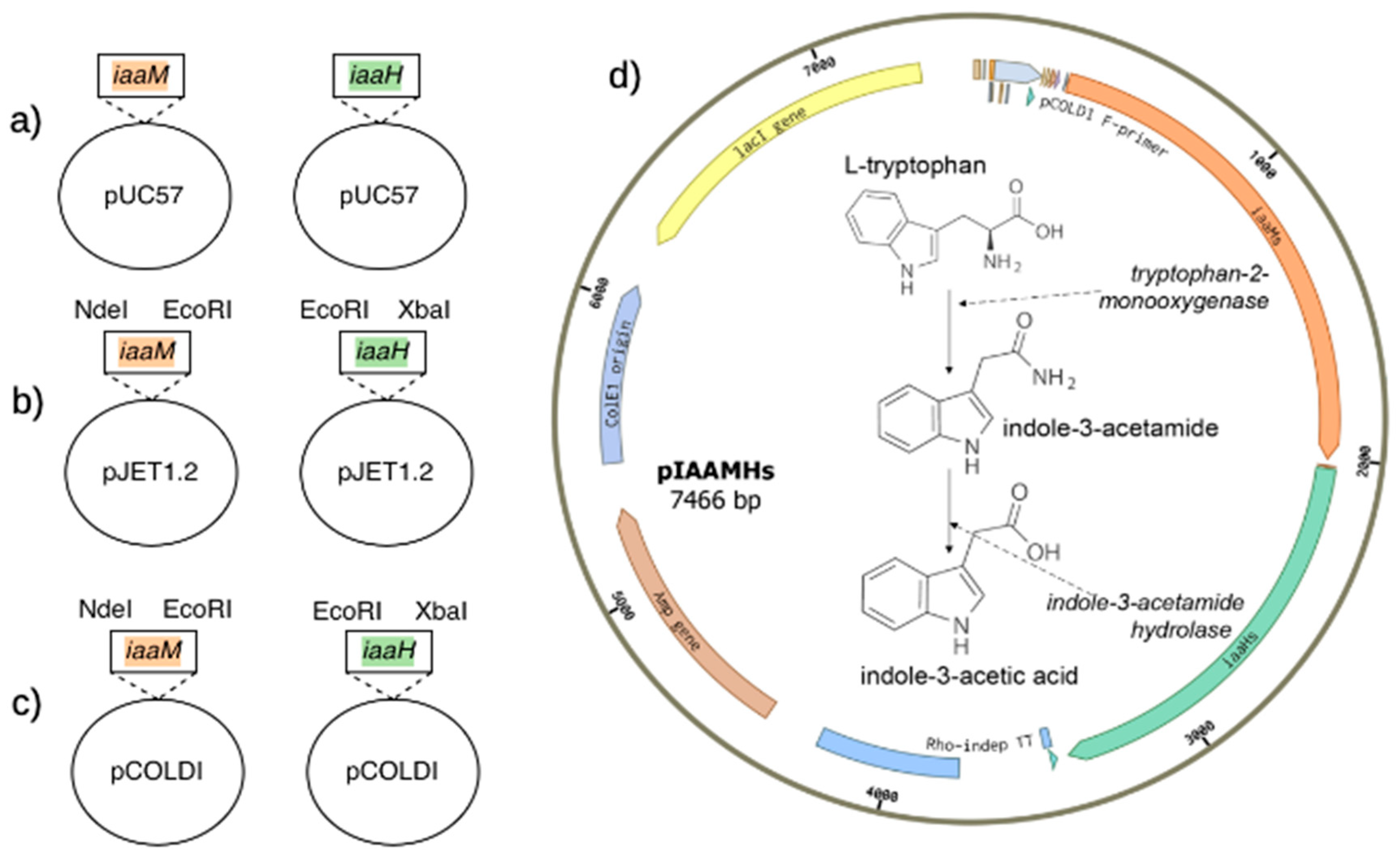
Each gene was modified for proper function in E. coli and included the standard Shine-Dalgarno sequence from the BioBricks collection, located 6 base pairs before the start codon (ATG), along with a double stop codon. The synthetic genes were inserted into the pUC57 vector at the EcoRV restriction site, which has blunt ends. Primers with NdeI and EcoRI restriction sites were designed for the iaaMs gene, and primers with EcoRI and XbaI sites were made for the iaaHs gene (the 's' stands for synthetic) to distinguish it from the original DNA. The primers were designed to ensure correct insertion into the pCOLD™ I expression vector. Using these primers, the genes were amplified from pUC57 with a high-fidelity DNA polymerase. After verifying the sizes of the amplified products by gel electrophoresis, the bands were excised and purified using the Zymoclean Gel Recovery Kit, then inserted into the open pJET1.2 cloning vector at a 3:1 vector-to-insert ratio. The pJET1.2 vector is commercially available and open (linear) with blunt ends at the center of its multiple cloning sites, making it suitable for cloning PCR products and further manipulation. Next, the pJET1.2 vectors containing the respective genes were cut with the corresponding restriction enzymes, and each gene was cloned into the pCOLD I expression vector—first separately to confirm proper protein expression (see below), and then together using the EcoRI restriction site as a common intermediate to ligate both genes. This placed the two genes between the promoter and the transcriptional terminator of pCOLD I. The final construct was verified by DNA sequencing. The resulting genetic circuit plasmid, shown in Figure 2, was named pIAAMHs (“s” for synthetic genes). It was introduced into the E. coli TOP10 strain for subsequent experiments.

2.2. Verification of Correct Protein Expression for IAA Synthesis in E. coli

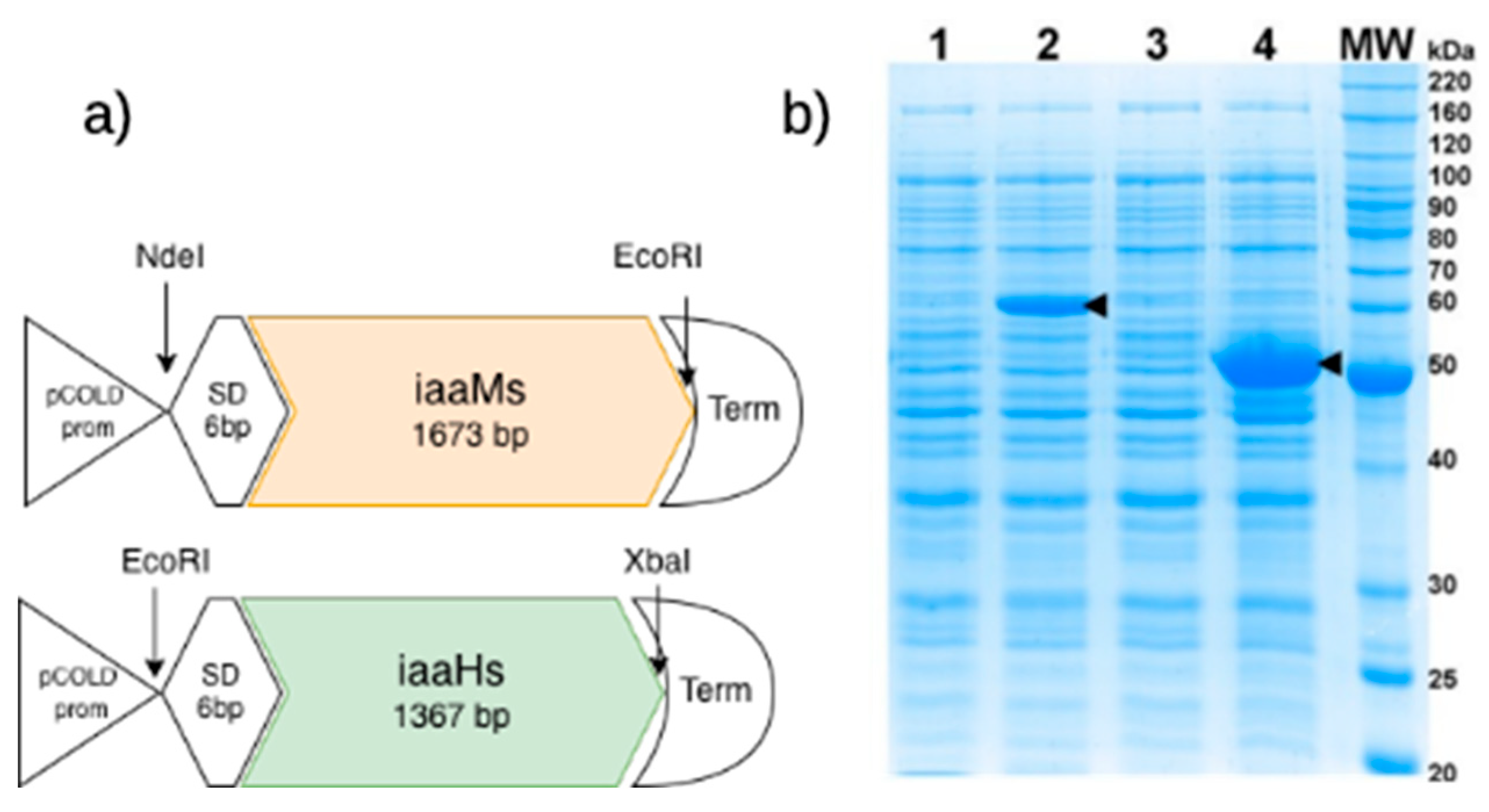
Before the final assembly of the genetic circuit in pIAAMHs, we performed a thorough assessment to ensure each synthetic gene functions properly. Our main goal was to verify the expression of each protein individually. This step was crucial to confirm that the genetic constructs were properly designed and inserted into the pCOLD I plasmid, so that their transcription is driven by the plasmid promoter and their translation occurs within the correct open reading frame, using the designed translation initiation sequence based on the Shine-Dalgarno. TOP10 E. coli cultures, each containing pCOLD I plasmids with the iaaM and iaaH synthetic genes, were induced and left overnight to produce the proteins. The cellular pellets were separated, heat-disrupted in Laemmli buffer, clarified, and the supernatant was run on a polyacrylamide gel, as shown in Figure 3. The results confirm that both proteins were expressed at the expected sizes, providing important evidence of successful protein production.

2.3. IAA Production in Escherichia coli

IAA production was assessed using the pIAAMHs construct in ASH medium (avocado seed hydrolysate). This medium was employed to evaluate IAA production in a low-cost culture medium and to integrate avocado agroindustrial waste into a circular economy. An E. coli TOP10 strain carrying the empty pCOLD I vector, which lacks the genes necessary for IAA synthesis, served as a negative control. Cultures were grown in 125 mL baffled Erlenmeyer flasks with a working volume of 25 mL. The cultivation conditions included constant agitation at 150 rpm, 0.5 g/L of L-tryptophan as an IAA precursor, and 25 μL of IPTG (0.1 mM final concentration). The inducing conditions are detailed in the Methods section.
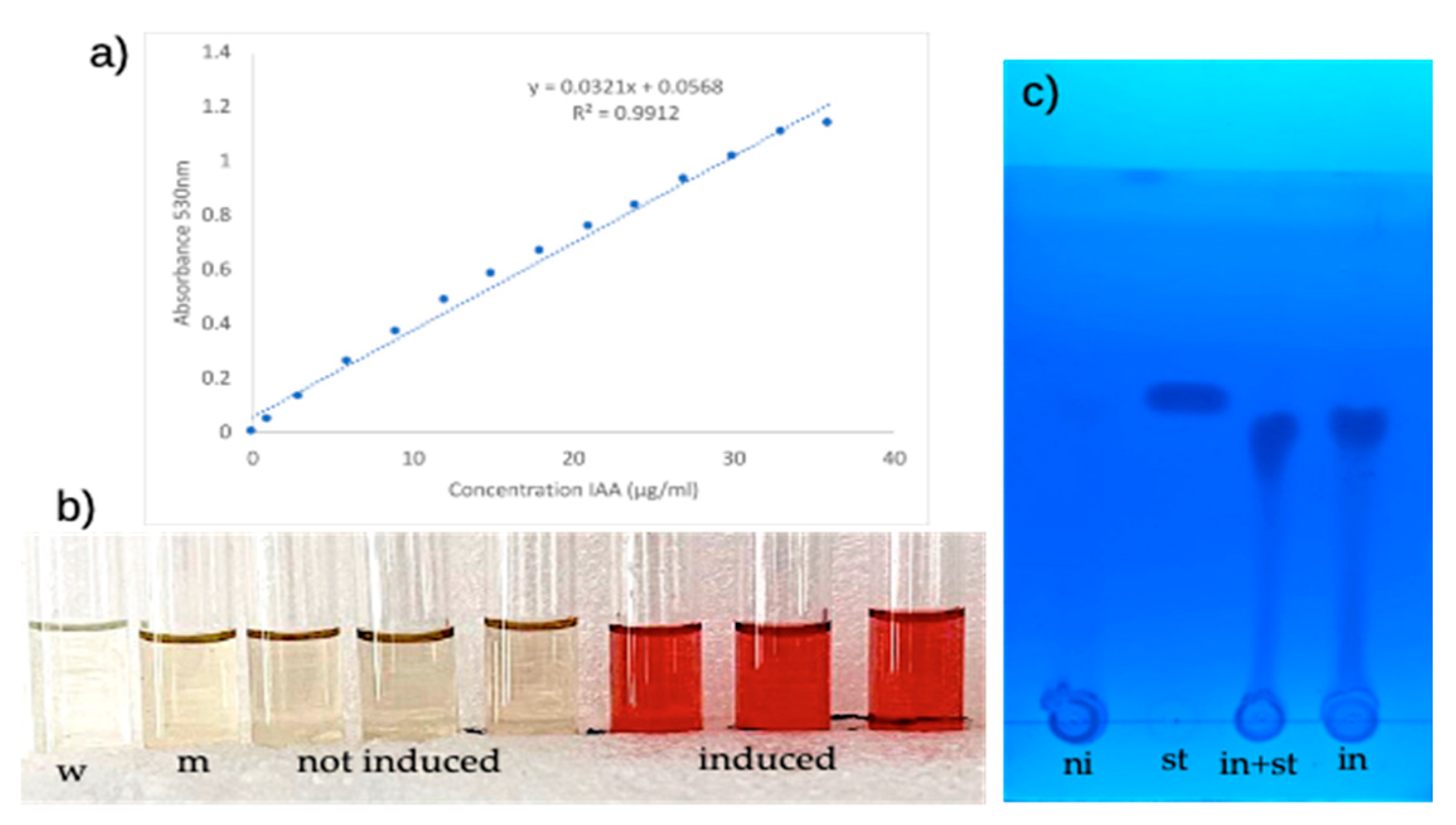
IAA synthesis commenced 4 hours after induction in the ASH medium (not shown) and peaked at 48 hours. IAA production was tracked using the Salkowski assay and thin-layer chromatography (TLC). Figure 4 presents a typical standard curve prepared with sigma IAA and the Salkowski reagent. The figure also illustrates the visual results of the Salkowski reaction with water, medium, non-induced, and induced samples at 48 hours of culture. In Figure 4c, a TLC plate is shown with the non-induced (ni) and induced (in) pIAAMHs, the IAA standard (st), and the mixture of st + in. The medium appears to reduce IAA migration in the samples; the same effect is observed when the commercial standard IAA is mixed with E. coli-produced IAA, as in the in + st sample, which runs like the supernatant of the induced culture (in). The Salkowski reaction results indicate that the TOP10 E. coli strain harboring the induced pIAAMHs plasmid produces 302.629 ± 3.044 µg/mL of IAA 48 hours after induction.
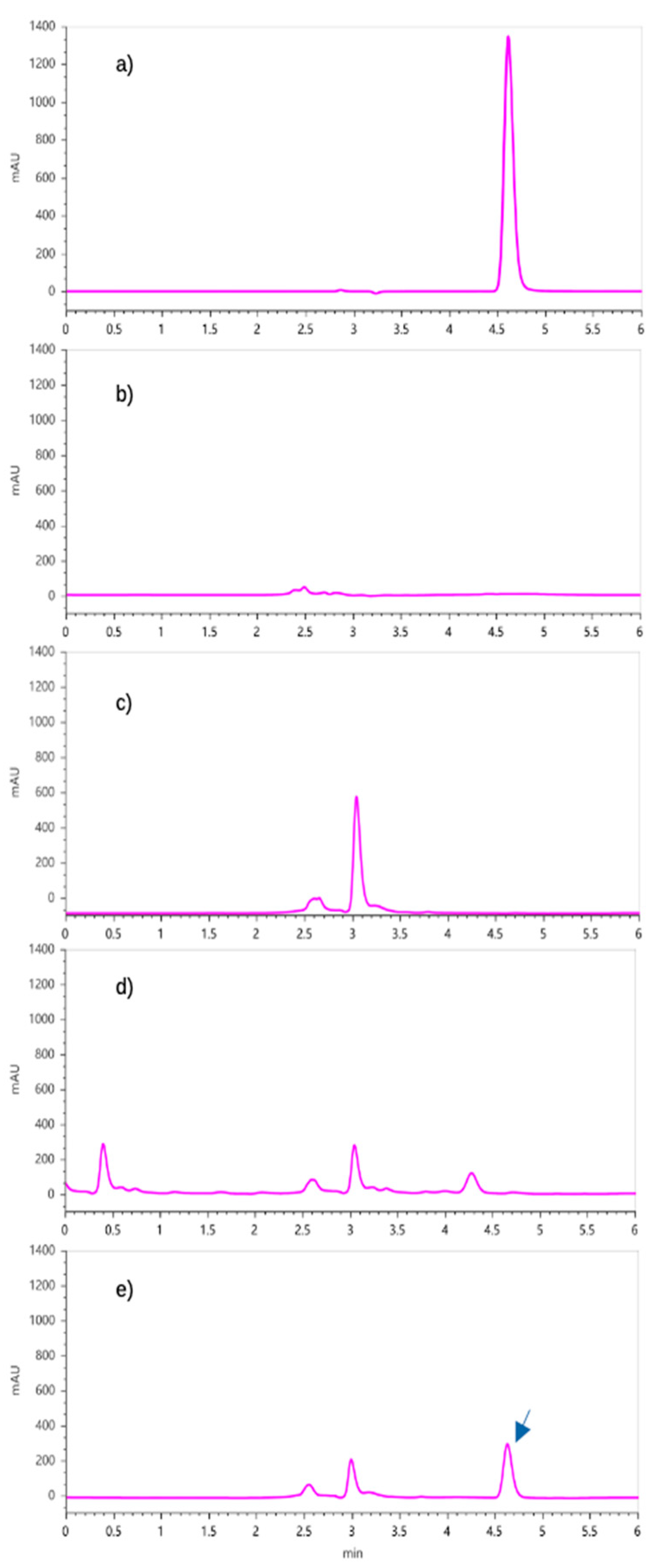
To quantify IAA production more accurately, we used an HPLC system (Figure 5). 1 mL of each culture was centrifuged, the supernatant was filtered through a 0.22 µm filter, and 1 µL was injected into the HPLC system. Controls included the ASH medium, the TOP10 strain alone, and the strain with the uninduced pIAAMHs plasmid. Only the induced construct (Figure 5e) produced measurable IAA. A calibration curve (not shown) indicated that the TOP10 E. coli strain carrying the induced pIAAMHs plasmid produces 313.471 ± 4.064 µg/mL of IAA at 48 hours after induction. This production is comparable to that calculated using the Salkowski method.
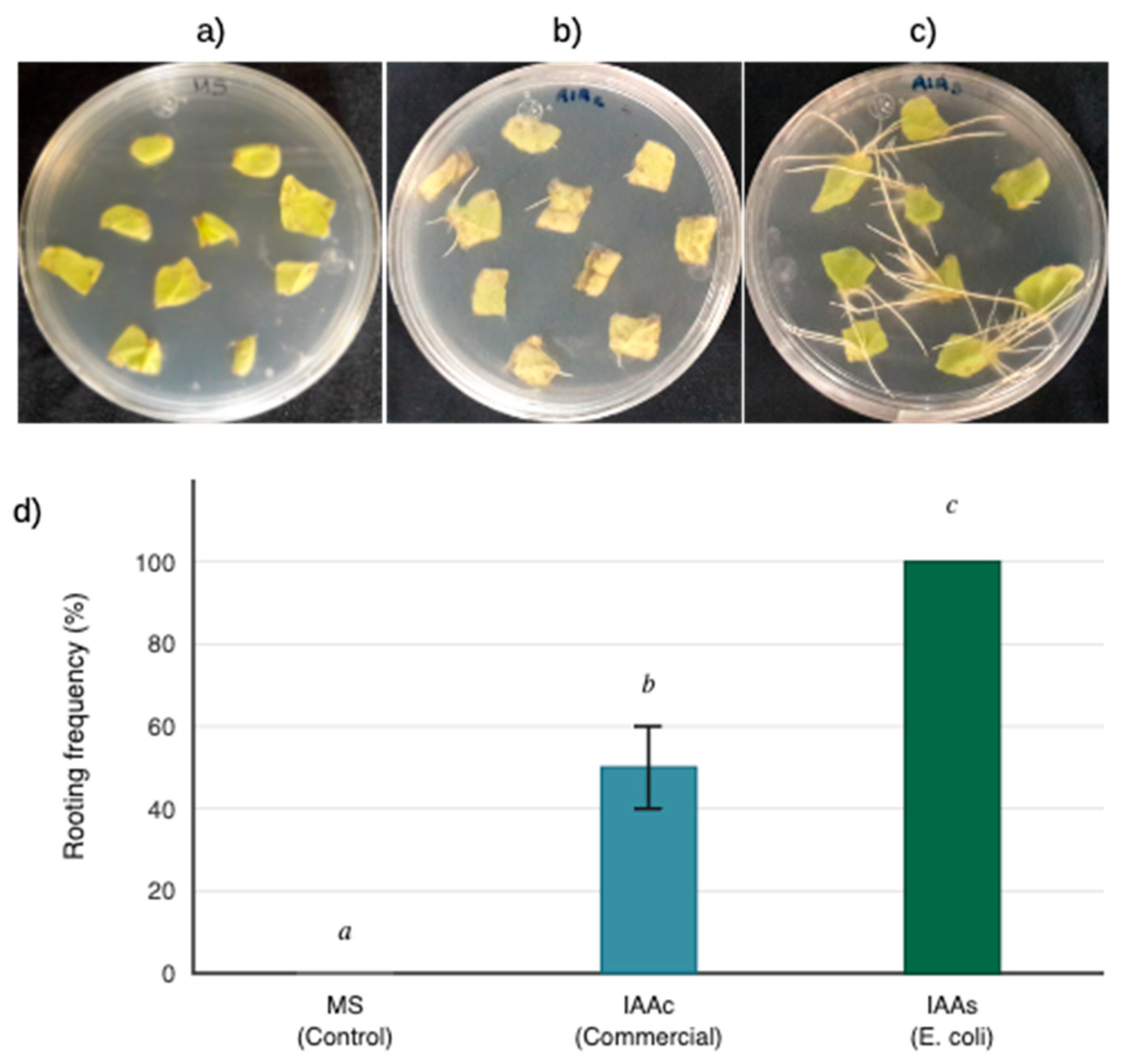
Finally, to test the biological activity of the synthesized IAA, we used tobacco leaf fragments. For this experiment, we used mid-aged leaves, cut them into pieces about 0.25×0.5 cm, and placed the abaxial side on Petri dishes containing solid MS medium with IAA, as shown in Figure 6. After 28 days, IAA treatment resulted in the emergence of roots from the leaf fragments. This effect was observed in approximately 50% of leaf fragments exposed to synthetic IAA, but in 100% of leaf fragments exposed to the same amount of IAA produced by E. coli. In four replicated plates (n=40), the Kruskal-Wallis + pair comparisons analysis indicates that the three treatments are different.

3. Discussion

This work demonstrates that a functional two-step IAA biosynthetic pathway can be successfully implemented in a standard E. coli cloning strain using a compact synthetic construct encoding iaaM and iaaH. Codon optimization for the E. coli K-12 codon usage and the inclusion of a consensus Shine-Dalgarno sequence resulted in a compact expression module with strong protein production under pCOLD I control, as shown by SDS-PAGE at the expected molecular weights for IaaM (~62 kDa) and IaaH (~45 kDa). The IAA titer of approximately 303 µg/mL obtained in ASH medium with 0.5 g/L external L-tryptophan corresponds to a molar yield of about 60.6 µg IAA per mg of L-Trp supplied (Table 1). Although this titer is significantly lower than those reported in high-yield platforms that use extensive metabolic rewiring, standard LB medium, or high-density Trp loading (Table 1), it is achieved with a two-gene minimal construct in a non-optimized cloning strain and still lies above the range of physiologically active auxin concentrations typically effective at nanomolar to low-micromolar levels in planta and in agronomic applications [22], meaning that the culture supernatant could be diluted approximately 100–200-fold to reach agronomically active concentrations (1–3 µM), based on measured titer values [5,23].
Beyond its use as a minimal auxin module, the pIAAMHs construct also provides a convenient readout of intracellular L-tryptophan availability, and we have already used this genetic system as a probe in computational and experimental studies to understand and optimize bacterial tryptophan production. Thus, the pIAAMHs cassette not only enables sustainable IAA production but also serves as a practical reporter module for evaluating L-tryptophan overproduction strategies in E. coli, as illustrated by our recent work on algorithm-guided optimization of Trp-producing strains [24].
The genetic circuit is based on BioBrick-compatible part design principles, and the pCOLD I expression vector was chosen as the final chassis due to its proven structural stability over a long operational history, in our hands for over ten years. It is also worth noting that a recent reconstruction of the same IAM pathway using SUMO-tagged IaaM and IaaH in E. coli Lemo21(DE3) produced only ~1.2 mg/L IAA from endogenous tryptophan without exogenous Trp supplementation [14], underscoring that tryptophan availability is the primary bottleneck in minimal IAM systems and that the ~303 µg/mL titer obtained here with 0.5 g/L L-Trp in ASH represents a practically relevant production level for a two-gene, single-vector construct. A known limitation of this vector is its requirement for cold-shock induction (temperature downshift combined with IPTG), which limits direct scalability in continuous fermentation systems. This issue is discussed in the DBTL learning phase below.
Cultivating the pIAAMHs construct in ASH medium demonstrated that agro-industrial residues can support both bacterial growth and IAA production at measurable and biologically relevant levels (~303 µg/mL Salkowski; 313 µg/mL HPLC at 48 hours). Analysis of cell-associated IAA after biomass sonication confirmed that most IAA is secreted into the culture supernatant, which makes downstream recovery easier. The ASH-based medium is estimated to be 5 times cheaper than traditional LB and is locally available, offering a significant economic benefit for pilot-scale or industrial production. This also supports the circular bioeconomy approach by using avocado seed waste as a fermentation substrate in several studies, as we have done [18,25,26,27,28]. However, the requirement for additional L-tryptophan supplementation partially offsets this advantage, as discussed below in the limitations section. The variable composition of ASH—especially its complex sugar and nitrogen content—creates a chromatographic background that complicates baseline separation during HPLC analysis (Figure 5b-d), as discussed further in the Limitations section. This variability presents a challenge for the Learn phase of the DBTL cycle, as it requires students to assess substrate quality, optimize chromatographic methods, and understand the impact on process reproducibility. On the other hand, the ASH medium, although complex by its vegetal origin it is not as rich in amino acids as LB, so IAA production and quantification are cleaner in ASH and are observed either with Salkowski reactions (Figure 4), as in the HPLC profiles (Figure 5), where the strain with the construction but not induced does not produce IAA at a detectable level.
The biosynthetic IAA produced by the pIAAMHs construct in ASH medium showed strong biological activity in the tobacco leaf explant rooting test. Importantly, supernatant from non-induced pIAAMHs cultures did not promote root growth (0% rooting, n = 40), confirming that the auxin-like activity depends strictly on circuit induction and IAA production in these conditions. At a concentration of 7.5 µM, the biosynthetic IAA caused root formation in 100% of leaf fragments, with at least one root, compared to about 50% with an equivalent amount of commercial IAA (Kruskal-Wallis, p < 0.05, n = 40, four replicate plates). The higher rooting success of the biosynthetic mixture versus the pure standard at the same IAA level suggests that other auxin-related compounds may be present in the crude supernatant. HPLC analysis (Figure 5c–e) detected a compound at ~4.3 min in non-induced cultures, which disappears with circuit induction alongside IAA build-up at 4.7 min (Figure 5e). This likely represents a metabolic precursor or shunt product of the IAM pathway—probably indole-3-acetamide (IAM), the direct product of IaaM before hydrolysis by IaaH. Identifying this compound using LC-MS/MS is necessary, as it may contribute to the increased plant response and be relevant to the development of crude IAA-based biological inputs for agricultural use. Notably, Menon et al. (2022) detected both IAM and IAA by LC-MS in E. coli cultures co-expressing iaaM and iaaH, confirming that incomplete hydrolysis by IaaH is a consistent feature of this pathway in heterologous hosts [14]. This precedent strengthens the interpretation that the 4.3 min peak likely corresponds to IAM and supports the use of LC-MS/MS as the definitive analytical tool.
Beyond its technical outcomes, the system presented here serves as a complete and pedagogically coherent training platform that maps directly onto the DBTL engineering cycle of synthetic biology [29,30]. This alignment is especially valuable because, as recent studies of synthetic biology education have shown, executing a full DBTL cycle within a single course allows students to achieve higher cognitive levels of application, analysis, and synthesis—far beyond what passive instruction alone can provide [31]. The platform is intentionally designed to be adaptable across different academic levels: undergraduate students in introductory biotechnology or molecular biology courses can engage with the Build and Test phases (cloning, SDS-PAGE, Salkowski assay), while graduate students and advanced researchers can expand their work into the Learn phase by optimizing induction conditions, substrate makeup, or genetic circuit design. A structured overview of the proposed learning modules for both levels is provided in Table 2. Using only widely available biological components—such as standard cloning strains (TOP10), a commercially available expression vector (pCOLD I), colorimetric and chromatographic assays (Salkowski, TLC, HPLC), and tobacco explants as a scalable plant model—ensures that the protocol can be easily transferred to teaching labs in institutions with limited infrastructure. Additionally, including avocado seed hydrolysate in the culture medium introduces a practical circular bioeconomy element that can serve as a discussion point for sustainable biotechnology in coursework. This platform could therefore act as a model for research-based courses that connect rational genetic circuit design with the sustainable biosynthesis of important plant hormones. The broad applicability of synthetic biology circuits for phytohormone biosynthesis is further illustrated by the recent engineering of E. coli Nissle 1917 to produce IAA in response to inflammatory signals via an inducible IPyA pathway with RiboJ-insulated genetic circuits [16], demonstrating that the IAM and IPyA circuit architectures explored in Table 1 extend across chassis and application domains. Comparing these circuit designs — IAM versus IPyA, inducible versus constitutive, agricultural versus biomedical context — constitutes a natural extension of Module M1 for advanced students.
Several limitations of the current work also identify productive paths for future development within the DBTL framework. First, IAA accumulation in ASH medium requires supplementation with 0.5 g/L external L-tryptophan; by contrast, LB alone supports ~80 µg/mL IAA without added Trp (data not shown), while ASH supplemented with 0.5 g/L Trp achieves ~303–313 µg/mL and valorizes avocado seed waste within a circular bioeconomy framework. This reliance makes ASH less cost-effective than LB when tryptophan costs are factored in; future design iterations should consider overexpressing tryptophan biosynthesis, as in the study by Guo et al. [11], or using alternative Trp-rich agro-industrial substrates to enable autonomous precursor production; the multiplex metabolic engineering strategies recently reviewed by Nsanzabera and Liu (2025) provide a practical framework for prioritizing which precursor supply interventions are most impactful in E. coli IAA platforms [32]. Second, the cold-shock induction mechanism of pCOLD I limits scalability: while suitable for educational purposes and effective at improving protein solubility at 16°C, this system would need to be replaced with a constitutive or heat-insensitive promoter in larger-scale applications. Replacing pCOLD I with an equivalent constitutive or IPTG-inducible promoter at 37°C is a natural next step in the design process; the continuous-flow chemo-enzymatic approach demonstrated by Mapinta et al. (2025), which achieved gram-scale IAA synthesis using purified TMO (functionally equivalent to IaaM) under mild conditions, illustrates an alternative scalability strategy that bypasses induction constraints entirely and could serve as an advanced comparison case in module M6 [17]. Third, IAA was measured at only one time point (48 hours post-induction); a kinetic profile of production would enhance understanding of productivity dynamics and help determine optimal harvest timing. Fourth, the chromatographic peaks at 4.3 minutes (non-induced) and their disappearance after induction have not been verified by mass spectrometry; LC-MS/MS analysis would clarify whether these peaks correspond to indole-3-acetamide (IAM), indole-3-acetaldehyde, or other intermediates in the pathway and would strengthen the interpretation that the crude preparation has superior plant bioactivity. Further experimentation can include testing skimmed milk [33] or lactose [34] as replacements for the IPTG in induction. From an educational standpoint, framing each of these limitations as explicit iterative design challenges—with specific experimental modules assignable to student teams—would significantly increase the platform’s educational value, particularly by enabling multiple cycles of hypothesis-driven circuit redesign within the same analytical framework.
The modular design of pIAAMHs is ideal for iterative redesign. Promoter variants, alternative ribosome-binding site sequences, orthologous iaaM/iaaH genes from other phytopathogenic or PGPR bacteria, or different chassis organisms can each be tested as separate DBTL cycles using the same analytical workflow. This modular approach—where student teams independently modify one circuit parameter and compare results with the reference pIAAMHs system—serves as the primary way to incorporate this platform into advanced synthetic biology or biotechnology courses at both the undergraduate and graduate levels. Thus, while our two-gene system is not designed to compete with state-of-the-art multiplexed IAA platforms in terms of volumetric productivity, it occupies a distinct niche as a didactically accessible, waste-based prototype that can serve both as a teaching tool and as a screening cassette for tryptophan-overproducing strains.

4. Materials and Methods

4.1. Bacterial Strains and Media

For DNA cloning, plasmid transformation, gene expression, and indole acetic acid (IAA) production, we consistently used Escherichia coli TOP10 (Thermo Scientific, Waltham, MA, USA). The strain was maintained and cultured in Lysogeny Broth (LB) medium, with carbenicillin (Cb) added at 100 μg/mL when necessary. All molecular biology techniques, including PCR, ligation, vector cloning, and other relevant protocols, were carried out according to the protocols outlined in Current Molecular Biology Protocols [35]. The production medium was based on avocado seed hydrolysate, as described in a previously published work [18]. This sustainable approach aims to utilize natural resources efficiently to produce IAA, aligning with the broader goals of environmentally friendly and economically viable processes.

4.2. Gene Synthesis

The synthetic gene sequences used in this study were purchased from Gene Script Biotech Co. (NJ, USA). Each of the two genes was designed to include a Shine-Dalgarno sequence to promote effective translation initiation, and their codon usage was tailored for the Escherichia coli K12 strain. Two nonsense stop codons were placed at the ends of each gene to ensure proper termination of translation. The supplementary materials provide detailed information on the specific gene sequences used in this study for reference. These design features were implemented to maximize translational efficiency and metabolic compatibility with the E. coli K-12 expression machinery. Table 3 lists the primers used to clone the synthetic genes.

4.3. Bacterial Culture for Protein Expression

Before preparing the final plasmid to produce indole acetic acid (IAA), it was verified that each protein was properly expressed from the pCOLD I expression vector (Takara Bio Inc., Kusatsu, JP). A single colony, selected for its resistance to carbenicillin and with confirmed genetic circuitry for each gene, was grown overnight in 5 mL of LB medium in 50 mL conical tubes at 37 °C with continuous stirring (150 rpm) until the OD reached 0.6-0.7 at 595 nm. Afterwards, the cultures were cooled on ice for 20 minutes, induced with 100 μM isopropyl β-D-1-thiogalactopyranoside (IPTG), and incubated at 16 °C for 2 hours, then shifted to 37 °C for a total of 48 hours. The induction process followed the instructions in the pCOLD I manual [36] to ensure effective expression of the target genes and successful IAA production.

4.4. Protein Electrophoresis

E. coli colonies were grown overnight at 37 °C with agitation at 150 rpm in 50 mL conical tubes containing 5 mL of LB medium supplemented with carbenicillin. To prepare samples for protein electrophoresis, 1 mL from both induced and uninduced cultures was collected. The cells were centrifuged at 10000 rpm for 1 min, and the pellets were resuspended in 100 μL of 2X Laemmli buffer. The suspension was then heated at 95 °C for 10 minutes to denature the proteins. Afterward, the samples were quickly cooled on ice for 5 minutes, centrifuged at 10,000 rpm for 1 minute, and 10 μL of each supernatant was loaded onto a 10% SDS-PAGE gel. The gels were run until the dye front of the marker reached the end, then stained with Coomassie Brilliant Blue (Bio-Rad, Hercules, CA, USA) and destained to visualize the separated proteins.

4.5. Bacterial Culture for IAA Production

E. coli colonies were pre-cultured overnight at 37 °C and 150 rpm in 50 mL conical tubes with 5 mL of LB medium containing carbenicillin. This culture was then used to inoculate 25 mL of fresh ASH medium (10% v/v) in 125 mL shake flasks. The ASH medium was prepared from a concentrated solution to achieve a final reduced-sugar concentration of 16 g/L, as measured with a Brix meter (Sper Scientific 300058 refractometer, Shenzhen, China). Additionally, the ASH solution was supplemented with M9 salts: Na2HPO4 · 7H2O (7 g/L), KH2PO4 (3 g/L), NaCl (0.5 g/L), and NH4Cl (1 g/L). Cultures were grown in an orbital shaker at 37°C and 150 rpm until reaching an OD of approximately 0.6, then induced with 100 μM IPTG and supplemented with 0.5 g/L tryptophan as an IAA biosynthetic precursor. The cultures were then incubated at 16 °C for 2 hours, shifted to 37 °C, and continued for an additional 46 hours (total of 48 hours post-induction) before biomass collection.

4.6. Qualitative Identification of Produced IAA

The qualitative determination of IAA from E. coli cell-free cultures was performed using thin-layer chromatography. 50 mL of supernatant was adjusted to pH 3 with 10N HCl. After extracting the sample with twice its volume of ethyl acetate, vigorously mixing, and separating the layers in a separatory funnel, the organic phase was concentrated using a rotavapor. The concentrated extract was then resuspended in 1 mL of ethanol and filtered through a 0.25 μm filter. The silica gel layer was eluted with a mobile phase composed of 60% ethyl acetate and 40% chloroform (v/v). Chromatograms were visualized under UV light at 355 nm, and the retention factor (Rf) of IAA was determined relative to a synthetic IAA standard (Sigma Co., Burlington, MA, USA).

4.7. HPLC Quantification of IAA

The system includes a quaternary liquid chromatograph (Wayeal LC3210, Anhui Wanyi Science and Technology Co., CN) equipped with a fluorescence detector and an autosampler. Chromatographic separation was conducted at 40 °C in a temperature-controlled chamber on a C18 column (4.6 x 250 mm, 5 μm, 120 Å). The mobile phase consisted of 80:20 acetonitrile to water at a flow rate of 1 mL/min, with an injection volume of 1 μL. The detector's excitation and emission wavelengths were set at 280 nm and 350 nm, respectively.

4.8. In Vitro Rooting Activity of IAA

Supernatants from bacterial cultures were diluted to achieve different levels of indole acetic acid (IAA), as shown in Figure 6. These diluted supernatants were mixed with warm Murashige and Skoog (MS) medium, then poured into Petri dishes to solidify and create a suitable environment for testing IAA activity. To assess the effect of IAA on plant growth, small squares (approximately 0.25×0.5 cm) of tobacco leaves from one-month-old plants (Nicotiana tabacum cv. Xanthi) were carefully excised and aseptically placed onto the prepared Petri dishes. The dishes were incubated in a growth chamber under a 16/8 light/dark photoperiod, with 54 µmol m⁻² s⁻¹ provided by Sylvania fluorescent white lamps (28°C, RH 35%). This setup allowed observation of potential physiological responses and growth patterns in tobacco leaves exposed to different IAA concentrations in the supernatant. The results of these plant bioassays were vital in determining the effectiveness and influence of the produced IAA on plant growth and development.

5. Conclusions

This study establishes a minimal two-gene synthetic pathway for IAA biosynthesis in E. coli TOP10 cultivated in avocado seed hydrolysate, integrating auxin production with agro-industrial waste valorization within a circular bioeconomy framework. The biosynthetic IAA reached a titer of approximately 303 µg/mL at 48 hours after induction, with a molar yield of about 60.6 µg/mg L-Trp, and maintained full biological activity, as shown by its superior root-promoting effect on tobacco leaf explants compared to a commercial IAA standard at the same molar concentration. The root-inducing activity depended strictly on circuit induction, confirmed by the lack of rooting in non-induced culture supernatants, validating the specificity of the genetic construct. The entire workflow—from in silico gene design and codon optimization through modular cloning, protein expression verification, metabolite measurement, and plant bioassay—represents a self-contained implementation of the Design–Build–Test–Learn (DBTL) engineering cycle and offers a structured, accessible training platform for synthetic biology applicable at both undergraduate and postgraduate levels. The platform’s main limitations—such as reliance on external Trp, the cold-shock induction requirement of pCOLD I, and the variability of ASH composition—are identified as explicit challenges for future iterative cycles, emphasizing the iterative and self-correcting nature of DBTL-based engineering education. Therefore, this work provides both a sustainable microbial production prototype for a key agricultural plant hormone and a scalable pedagogical framework for training the next generation of synthetic biologists.

Data Availability

The data supporting the results of this study are openly available at https://gitlab.com/amalib/iaa-dbtl.

Supplementary Materials

The following supporting information can be downloaded at https://gitlab.com/amalib/iaa-dbtl: pIAAMHs plasmid, iaaM, and iaaH DNA synthetic sequences in .gb format.

Author Contributions

Conceptualization, A.L.H.-O. and A.M.-A.; methodology, A.L.H.-O. and L.C.A.-R.; software, A.M.-A.; validation, A.L.H-O.; formal analysis, A.L.H-O. and L.C.A.-R.; investigation, A.L.H.-O. and A.M.-A.; resources, A.L.H.-O. and A.M.-A.; writing—original draft preparation, A.M.-A.; writing—review and editing, A.L.H.-O. and A.M.-A.; visualization, A.M.-A.; supervision, A.L.H.-O.; project administration, A.L.H.-O and A.M.-A; funding acquisition, A.M.-A. All authors have read and agreed to the published version of the manuscript.

Funding

This research was funded by a collaboration between Evogenia S.A. de C.V. and the Guanajuato State Government through the IDEA GTO (formerly Finnovateg) program, grant number CFINN0177-2016. Additional support for co-author L.C.A.-R. was provided by the 'Jóvenes Construyendo el Futuro' program from the Mexican Ministry of Labor and Social Welfare (STPS). The funders had no role in the design of the study; in the collection, analyses, or interpretation of data; in the writing of the manuscript, or in the decision to publish the results.

Institutional Review Board Statement

Not applicable.

Acknowledgments

The authors thank Daniel Diaz from Agroenzymes S.A de C.V. for the initial discussion on phytohormone synthesis by synthetic biology. Several pre- and post-graduate students also work on this theme in the group, particularly Melissa Chico Quevedo, who repeated the last IAA production experiments in the ASH medium; Fabiola Meza May, who helps with rooting experiments; and Olivia Tzintzun Camacho, José Alberto Camas Reyes, Francisco Javier Zarate Ortega, and Mario Alberto Pantoja Alonso, who conducted academic experimentation with the theme.

Conflicts of Interest

The authors A.L.H.-O. and A.M.-A. are founders and shareholders of Evogenia S.A. de C.V., the company that provided partial funding for this study. The authors declare that this research was conducted in the absence of any commercial or financial relationships that could be construed as a potential conflict of interest.

References

  1. Islam, S. Agriculture, Food Security, and Sustainability: A Review. Explor Foods Foodomics. 2025, 3, 101082. [Google Scholar] [CrossRef]
  2. Wang, L.; Garland, G.M.; Ge, T.; Guo, S.; Kebede, E.A.; He, C.; Hijri, M.; Plaza-Bonilla, D.; Stringer, L.C.; Davis, K.F.; et al. Integrated Strategies for Enhancing Agrifood Productivity, Lowering Greenhouse Gas Emissions, and Improving Soil Health. The Innovation 2025, 6, 101006. [Google Scholar] [CrossRef]
  3. Clauer, P.; Nou, A. X.; Toth, T.; Yu, Q.; Chemla, Y.; Boo, A.; Voigt, C. Synthetic Biology of Plants and Microbes for Agriculture, Environment, and Future Applications. Chemical Reviews 2026, 126(2), 895–1109. [Google Scholar] [CrossRef]
  4. Han, S.-W.; Yoshikuni, Y. Microbiome Engineering for Sustainable Agriculture: Using Synthetic Biology to Enhance Nitrogen Metabolism in Plant-Associated Microbes. Current Opinion in Microbiology 2022, 68, 102172. [Google Scholar] [CrossRef] [PubMed]
  5. Spaepen, S.; Vanderleyden, J.; Remans, R. Indole-3-Acetic Acid in Microbial and Microorganism-Plant Signaling. FEMS Microbiol Rev 2007, 31, 425–448. [Google Scholar] [CrossRef]
  6. Straits Research. Plant Growth Regulators Market Size, Share & Growth Report 2033. Available online: https://straitsresearch.com/report/plant-growth-regulators-market (accessed on 18 March 2026).
  7. Lyubushkina, I.V.; Kirichenko, K.A.; Polyakova, M.S.; Polyanskaya, I.V.; Zabanova, N.S.; Korsukova, A.V.; Pobezhimova, T.P.; Dudareva, L.V.; Rikhvanov, E.G.; Grabelnych, O.I. Synthetic Auxins Toxicity: Effects on Growth and Fatty Acid Composition in Etiolated and Green Spring Wheat Seedlings. Molecules 2025, 30. [Google Scholar] [CrossRef] [PubMed]
  8. European Commission. Proposal for a Regulation on the Sustainable Use of Plant Protection Products (SUR). Available online: https://www.pan-europe.info/eu-legislation/eu-pesticide-reduction-sustainable-use-regulation-sur (accessed on 18 March 2026).
  9. Wu, H.; Yang, J.; Shen, P.; Li, Q.; Wu, W.; Jiang, X.; Qin, L.; Huang, J.; Cao, X.; Qi, F. High-Level Production of Indole-3-Acetic Acid in the Metabolically Engineered Escherichia Coli. J. Agric. Food Chem. 2021, 69, 1916–1924. [Google Scholar] [CrossRef] [PubMed]
  10. Romasi, E.F.; Lee, J. Development of Indole-3-Acetic Acid-Producing Escherichia Coli by Functional Expression of IpdC, AspC, and Iad1. J Microbiol Biotechnol 2013, 23, 1726–1736. [Google Scholar] [CrossRef]
  11. Guo, D.; Kong, S.; Chu, X.; Li, X.; Pan, H. De Novo Biosynthesis of Indole-3-Acetic Acid in Engineered Escherichia Coli. J. Agric. Food Chem. 2019, 67, 8186–8190. [Google Scholar] [CrossRef]
  12. Cuadrado-Osorio, P.D.; Ramírez-Mejía, J.M.; Mejía-Avellaneda, L.F.; Mesa, L.; Bautista, E.J. Agro-Industrial Residues for Microbial Bioproducts: A Key Booster for Bioeconomy. Bioresource Technology Reports 2022, 20, 101232. [Google Scholar] [CrossRef]
  13. Liu, S.; Xu, J.-Z.; Zhang, W.-G. Advances and Prospects in Metabolic Engineering of Escherichia Coli for L-Tryptophan Production. World J Microbiol Biotechnol 2022, 38, 22. [Google Scholar] [CrossRef]
  14. Menon, N.; Richmond, D.; Rahman, M.R.; Menon, B.R.K. Versatile and Facile One-Pot Biosynthesis for Amides and Carboxylic Acids in E. Coli by Engineering Auxin Pathways of Plant Microbiomes. ACS Catal. 2022, 12, 2309–2319. [Google Scholar] [CrossRef]
  15. iGEM Registry of Standard Biological Parts. BBa_K515100: Auxin Biosynthesis Cassette (iaaM/iaaH). Available online: https://parts.igem.org/Part:BBa_K515100:Design (accessed on 21 March 2026).
  16. Woo, S.-G.; Kim, S.K.; Lee, S.-G.; Lee, D.-H. Engineering Probiotic Escherichia Coli for Inflammation-Responsive Indoleacetic Acid Production Using RiboJ-Enhanced Genetic Circuits. J Biol Eng 2025, 19, 10. [Google Scholar] [CrossRef]
  17. Mapinta, S.; Kongjaroon, S.; Trisrivirat, D.; Kesornpun, C.; Wu, J.; Chaiyen, P.; Weeranoppanant, N. Continuous-Flow Chemo-Enzymatic Gram-Scale Synthesis of Indole-3-Acetic Acid. Green Chem. 2025, 27, 793–803. [Google Scholar] [CrossRef]
  18. Tzintzun-Camacho, O.; Sánchez-Segura, L.; Minchaca-Acosta, A.Z.; Rosales-Colunga, L.M.; Hernández-Orihuela, A.; Martínez-Antonio, A. Development of Bacterial Culture Medium from Avocado Seed Waste. Revista Mexicana de Ingeniería Química 2016, 15, 831–842. Available online: https://www.redalyc.org/pdf/620/62048168014.pdf. [CrossRef]
  19. Carbonell, P.; Jervis, A.J.; Robinson, C.J.; Yan, C.; Dunstan, M.; Swainston, N.; Vinaixa, M.; Hollywood, K.A.; Currin, A.; Rattray, N.J.W.; et al. An Automated Design-Build-Test-Learn Pipeline for Enhanced Microbial Production of Fine Chemicals. Commun Biol 2018, 1, 66. [Google Scholar] [CrossRef] [PubMed]
  20. Rodríguez-Palenzuela, P.; Matas, I.M.; Murillo, J.; López-Solanilla, E.; Bardaji, L.; Pérez-Martínez, I.; Rodríguez-Moskera, M.E.; Penyalver, R.; López, M.M.; Quesada, J.M.; et al. Annotation and Overview of the Pseudomonas Savastanoi Pv. Savastanoi NCPPB 3335 Draft Genome Reveals the Virulence Gene Complement of a Tumour-Inducing Pathogen of Woody Hosts. Environmental Microbiology 2010, 12, 1604–1620. [Google Scholar] [CrossRef]
  21. Davies, K. From the Bench to Benchling. GEN Edge 2020, 2, genedge.2.1.52. [Google Scholar] [CrossRef]
  22. Pacheco-Villalobos, D.; Díaz-Moreno, S.M.; van der Schuren, A.; Tamaki, T.; Kang, Y.H.; Gujas, B.; Novak, O.; Jaspert, N.; Li, Z.; Wolf, S.; et al. The Effects of High Steady State Auxin Levels on Root Cell Elongation in Brachypodium[OPEN]. Plant Cell 2016, 28, 1009–1024. [Google Scholar] [CrossRef]
  23. Indole-3-Acetic Acid (IAA) 98% TC Plant Growth Regulator. Available online: https://www.pomais.com/product/indole-3-acetic-acid-iaa-98-tc/ (accessed on 19 March 2026).
  24. Ramos-Valdovinos, M.A.; Salas-Navarrete, P.C.; Amores, G.R.; Hernández-Orihuela, A.L.; Martínez-Antonio, A. Qualitative Perturbation Analysis and Machine Learning: Elucidating Bacterial Optimization of Tryptophan Production. Algorithms 2024, 17. [Google Scholar] [CrossRef]
  25. Martínez-Moreno, F. Avocado Seed Hydrolysate as an Alternative Growth Medium for Fungi Hidrolizado de Semilla de Aguacate Como Medio de Cultivo Alternativo Para Hongos. 2021, 20, 569–580. Available online: https://rmiq.org/iqfvp/Numbers/V20/No2/Bio1951.pdf.
  26. Palmerín-Carreño, D.M.; Hernández-Orihuela, A.L.; Martínez-Antonio, A. Production of D-Lactate from Avocado Seed Hydrolysates by Metabolically Engineered Escherichia Coli JU15. Fermentation 2019, 5. [Google Scholar] [CrossRef]
  27. Sierra-Ibarra, E.; Leal-Reyes, L.J.; Huerta-Beristain, G.; Hernández-Orihuela, A.L.; Gosset, G.; Martínez-Antonio, A.; Martinez, A. Limited Oxygen Conditions as an Approach to Scale-up and Improve d and l-Lactic Acid Production in Mineral Media and Avocado Seed Hydrolysates with Metabolically Engineered Escherichia Coli. Bioprocess Biosyst Eng 2021, 44, 379–389. [Google Scholar] [CrossRef]
  28. Espinel-Ríos, S.; Palmerín-Carreño, D.M.; Hernández-Orihuela, A.L.; Martínez-Antonio, A. A Plackett-Burman Design for Substituting MRS Medium Components with Avocado Seed Hydrolysate for Growth and Lactic Acid Production by Lactobacillus Sp. Revista Mexicana de Ingeniería Química 2019, 18, 131–141. Available online: https://rmiq.org/iqfvp/Numbers/V18/No1/Bio108.pdf. [CrossRef]
  29. Johnson, K.C.; Sabel, J.L.; Cole, J.; Pruett, C.L.; Plymale, R.; Reyna, N.S. From Genetics to Biotechnology: Synthetic Biology as a Flexible Course-Embedded Research Experience. Biochem Mol Biol Educ 2022, 50, 580–591. [Google Scholar] [CrossRef]
  30. Beach, D.L.; Alvarez, C.J. Biotechnology by Design: An Introductory Level, Project-Based, Synthetic Biology Laboratory Program for Undergraduate Students. J Microbiol Biol Educ 2015, 16, 237–246. [Google Scholar] [CrossRef] [PubMed]
  31. Smith, R.W.; Garcia-Morales, L.; Martins dos Santos, V.A.P.; Saccenti, E. Research-Driven Education: An Introductory Course to Systems and Synthetic Biology. Front. Syst. Biol. 2022, 2. Erratum in Front. Syst. Biol. 2022, 2,1114700. [Google Scholar] [CrossRef]
  32. Nsanzabera, F.; Liu, B. Multiplex Metabolic Engineering for Enhanced Indole-3-Acetic Acid Production via Optimized Biosynthetic Pathways in E. Coli. Process Biochemistry 2025, 157, 147–161. [Google Scholar] [CrossRef]
  33. Khani, M.-H.; Bagheri, M. Skimmed Milk as an Alternative for IPTG in Induction of Recombinant Protein Expression. Protein Expr Purif 2020, 170, 105593. [Google Scholar] [CrossRef]
  34. Briand, L.; Marcion, G.; Kriznik, A.; Heydel, J.M.; Artur, Y.; Garrido, C.; Seigneuric, R.; Neiers, F. A Self-Inducible Heterologous Protein Expression System in Escherichia Coli. Sci Rep 2016, 6, 33037. [Google Scholar] [CrossRef]
  35. Current Protocols in Molecular Biology - National Library of Medicine Institution. Available online: https://catalog.nlm.nih.gov/discovery/fulldisplay/alma996618043406676/01NLM_INST:01NLM_INST (accessed on 19 March 2026).
  36. Addgene: Vector Database - pCOLD-I. Available online: https://www.addgene.org/vector-database/2261/ (accessed on 19 March 2026).
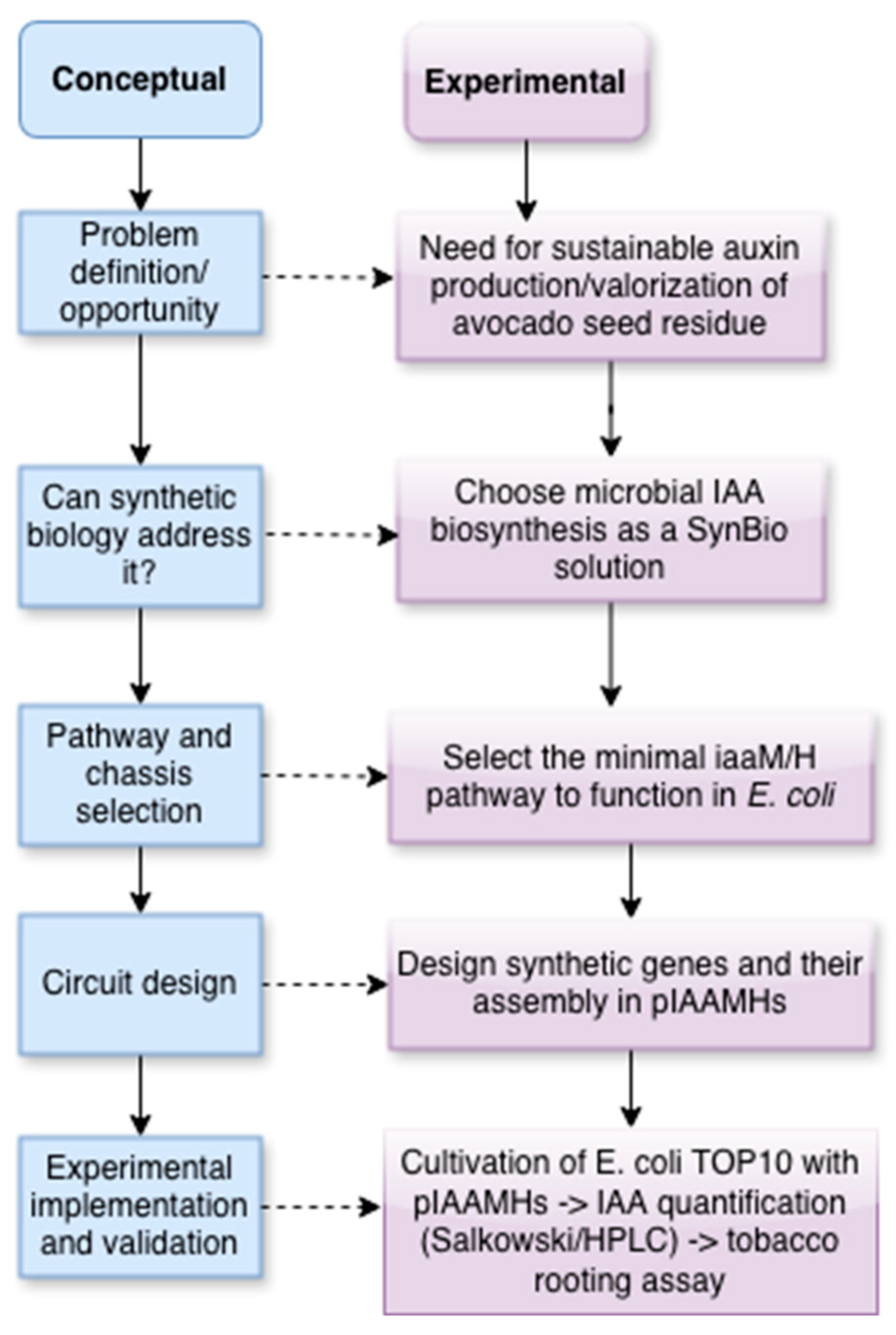
Figure 1. Conceptual and experimental workflow for engineering IAA-producing E. coli from avocado seed waste. The diagram maps each stage of the study onto the Design–Build–Test–Learn (DBTL) engineering cycle. Left panel (Conceptual layer): the four DBTL phases and their logical dependencies. Right panel (Experimental layer): the related lab activities—Design, selecting pathways using computer models and optimizing codons; Build, creating and assembling pIAAMHs; Test, analyzing protein expression, measuring metabolites, and conducting plant tests; Learn, determining media choices and process issues that will guide the next round. Vertical arrows connect each DBTL phase to its experimental implementation, and horizontal arrows indicate the linear progression from problem definition to plant-based validation.
Preprints 205191 g001
Figure 2. Construction of the genetic circuit to produce IAA from tryptophan in E. coli. First, the synthesized genes were received in the pUC57 vector (a). Then, genes were amplified with newly designed primers, and the PCR products were cloned into pJET1.2 (b). After restriction enzyme digestion, the genes were individually cloned into the pCOLD I vector (c). Finally, the gene circuit was assembled in pCOLD I to create the pIAAMHs vector (d). Data and the final plasmid figure were generated in Benchling software [21].
Preprints 205191 g002
Figure 3. Confirmation of protein expression for IAA synthesis. Individual genetic constructs with genes for iaaM (monooxygenase) and iaaH (hydrolase) proteins in E. coli (a). Induced (lanes 2 for IAAM and 4 for IAAH) and uninduced (lanes 1 and 3) cultures (b). Arrows indicate the recombinant proteins (enzymes) compared to the MW markers.
Preprints 205191 g003
Figure 4. Identification of IAA production in E. coli. a) Salkowski standard curve; b) measuring IAA production using the Salkowski method; w, water control; m, medium control; not induced and induced cultures of TOP10 pIAAMHs at 48 hours (repeated three times). TLC of samples was revealed with a UV 355 nm lamp (ni, not induced; st, sigma IAA standard; in, induced; in+st, the mixture of standard plus induced samples).
Preprints 205191 g004
Figure 5. HPLC analysis of IAA production in E. coli. a) Standard IAA; b) ASH medium; c) E. coli TOP10 culture in ASH; d) TOP10 with pIAAMHs at 48 hours, not induced; e) TOP10 with pIAAMHs at 48 hours, induced. The IAA peak, indicated by an arrow in e), is comparable to the standard in a).
Preprints 205191 g005
Figure 6. Biological activity of the IAA produced in E. coli. a) Tobacco leaf fragments in MS medium; b) Tobacco leaf fragments in MS medium with 7.5 µM of standard IAA; c) Tobacco leaf fragments in MS medium with 7.5 µM of synthesized IAA in E. coli. Photographs are taken 28 days after incubation begins. d) The same results are shown in a graph based on experiments with quadruplicate samples (n=40).
Preprints 205191 g006
Table 1. Key studies on IAA production in engineered Escherichia coli. IAM, indole-3-acetamide pathway; IPyA, indole-3-pyruvic acid pathway; de novo, pathway from glucose without added tryptophan. Yield shown as μg IAA per mg of L-Trp supplied (when applicable). ND, not determined; —, not applicable.
Reference Strain Pathway Key genes Medium Trp added (g/L) IAA titer Δ Yield (μg/mg Trp) Didactic accessibility
[10] DH5α IPyA ipdC, aspC, iad1 LB + 2 g/L Trp 2.0 ~1.1 mg/mL ~550 Low (3-gene, specialized promoters)
[9] MG1655MIA-6 IAM iaaM, iaaH (heterologous) Whole cell + 10 g/L Trp 10.0 7.10 mg/mL ~710 Low (extensive rewiring, metabolic engineering)
[14] Lemo21(DE3) IAM iaaM, iaaH (plant microbiome) M9 + no Trp added 0 ~1.2 µg /mL Moderate (2-gene, SUMO-fusion, biocatalytic focus)
[11] BL21(DE3) IPyA ipdC, trpABCDE, aldH Glucose (de novo) 0 ~0.7 mg/mL Low (full Trp pathway + de novo)
[15] DH5α IAM iaaM, iaaH (BioBrick) LB + Trp ND ~55 μM (~9.6 µg /mL) ND Moderate (BioBrick format, LB-based)
[16] E. coli Nissle 1917 IPyA aspC, ipdC, iad1 + RiboJ LB + IPTG ND µg/mL range ND Moderate (3-gene, specialized chassis, biosensor integration)
[17] Cell-free (TMO enzyme) IAM (chemo-enzymatic) TMO (iaaM homolog) + acid hydrolysis Continuous flow, L-Trp feed ND 11.16 mg/mL/ day 48.50 % Low (requires purified enzyme, flow reactor)
This work TOP10 IAM iaaMs, iaaHs (codon-optimized) ASH + M9 salts + 0.5 g/L Trp 0.5 ~303 μg/mL ~60.6 High (2-gene, standard strain, low-cost medium, full DBTL)
Δ Some titer units are modified from the original authors and reported as mg/mL; it is numerically equivalent to g/L.
Table 2. Proposed pedagogical modules for the pIAAMHs DBTL platform, designed for scalable use across undergraduate (UG) and postgraduate (PG) levels. DBTL, Design–Build–Test–Learn cycle; RBS, ribosome-binding site; IAM, indole-3-acetamide; LC-MS, liquid chromatography–mass spectrometry.
Module DBTL phase Key activities Learning objectives Level Estimated sessions
M1: Circuit design and codon optimization Design Pathway selection (IAM vs. IPyA); sequence retrieval from NCBI; codon optimization using online tools (e.g., Benchling, IDT); Shine-Dalgarno design; primer design with restriction sites Apply rational design principles to a heterologous metabolic pathway; understand codon usage bias and its effect on translation; design oligonucleotides for directional cloning UG/PG 2–3 (dry lab)
M2: Modular cloning and plasmid assembly Build PCR amplification of synthetic genes; agarose gel verification; restriction digestion and ligation; transformation into TOP10; colony selection and Sanger sequencing verification Execute a complete multi-step cloning workflow; interpret gel electrophoresis results; apply troubleshooting logic to cloning failures; understand vector-insert compatibility UG/PG 4–6 (wet lab)
M3: Protein expression verification Test Bacterial growth and IPTG/cold-shock induction; cell lysis in Laemmli buffer; SDS-PAGE and Coomassie staining; molecular weight estimation from gel Verify recombinant protein production; interpret SDS-PAGE results; compare induced vs. uninduced expression profiles; understand induction conditions and their limitations UG/PG 2–3 (wet lab)
M4: IAA production and quantification Test Shake-flask cultivation in ASH medium; Salkowski colorimetric assay and standard curve; TLC with Rf determination; HPLC fluorescence quantification Apply colorimetric and chromatographic methods for metabolite quantification; calculate production titers and conversion yields; compare analytical methods for accuracy and sensitivity UG/PG 3–4 (wet lab)
M5: Biological validation Test Tobacco leaf explant preparation and aseptic inoculation; MS medium preparation with IAA dilution series; incubation and rooting scoring; statistical analysis (Kruskal–Wallis) Design and execute a plant bioassay with appropriate controls; apply non-parametric statistics to bioassay data; interpret auxin dose-response in tissue culture UG/PG 4–5 (wet lab + observation period)
M6: Circuit redesign — promoter/RBS variants Learn → Design Comparative promoter analysis (constitutive vs. cold-shock); design of alternative RBS sequences; cloning of variant constructs; repeat M3–M4 with new design Formulate and test design hypotheses; understand how regulatory elements affect expression; compare performance of multiple circuit variants; practice iterative engineering logic PG 4–6 (dry + wet lab)
M7: Substrate optimization and metabolome analysis Learn → Design Comparison of ASH batches and alternative agro-industrial substrates; time-course IAA quantification; LC-MS/MS identification of co-produced indolic compounds Understand the effect of medium composition on microbial metabolism; apply mass spectrometry for compound identification; discuss circular bioeconomy implications PG 4–5 (wet lab + instrument access)
Table 3. Primers used in this study to clone the synthetic iaaM and iaaH genes into the pCOLD I expression vector.
Primer name 5´-3´ DNA sequences * descriptions
iaaMrbsF TCTCATATGCGTCGAGATATAAGGAGATATACATG Forward primer with the NdeI restriction site
iaaMR GGAATTCGATGGTTAATAGCGATACGATACGAT Reverse primer with EcoRI restriction site
iaaHrbsF CCGGAATTCGATACCCAATAAGGAGATATACATG Forward primer with the EcoRI restriction site
iaaHR TGCGTCTAGATATTGGGTCTTAGGTGGTATGCGG Reverse primer with XbaI for restriction site
*Underlined are the enzymes' restriction sites, in bold is the RBS (ribosome binding site or Shine-Dalgarno sequence), and the beginning protein coding sequences are in italics.
Disclaimer/Publisher’s Note: The statements, opinions and data contained in all publications are solely those of the individual author(s) and contributor(s) and not of MDPI and/or the editor(s). MDPI and/or the editor(s) disclaim responsibility for any injury to people or property resulting from any ideas, methods, instructions or products referred to in the content.
Copyright: This open access article is published under a Creative Commons CC BY 4.0 license, which permit the free download, distribution, and reuse, provided that the author and preprint are cited in any reuse.
Prerpints.org logo

Preprints.org is a free preprint server supported by MDPI in Basel, Switzerland.

Subscribe

Disclaimer

Terms of Use

Privacy Policy

Privacy Settings

© 2026 MDPI (Basel, Switzerland) unless otherwise stated