
Submitted:
25 March 2026
Posted:
26 March 2026
You are already at the latest version
Abstract
We performed a proteomic analysis of the secretome of two stem cell types currently used in topical skin care product that has proven benefits as evidenced by a double-blinded, randomized, vehicle- controlled clinical trial. Our analysis was of the whole secretome, not just constituent parts such as exosomes and/or ectosomes, given the complete secretome compared to only its parts has been found to be more beneficial to reducing inflammation and eliciting a regenerative state in tissues. While many protein types were common to the two cell types, adipose mesenchymal stem cells, fibroblasts, significant differences were found between the two, providing evidence for the mechanisms of actions of each. The proteome we analyzed in the combination secretome of the two cell types provides at least 16 major therapeutic pathways comprised of 100s of signaling mechanisms to provide many benefits to various skin conditions when topically applied.
Keywords:
proteomics
; stem cells
; secretome
; fibroblasts
; mesenchymal stem cells
1. Introduction
The hoopla of gene therapies using CRISPR is over. 1) (Regaldo, 2026), and associating genetic variants with a skin disease often leads the clinician astray 2, 3) (Spierings et al., 2017; Joyner and Paneth, 2019). Indeed, normal skin has more genetic “cancer causing” mutations than many types of cancer cells and a similar number to cancerous skin. 4) (Martincorena et al., 2015). Genetics is not a major cause of most diseases, including hereditable diseases. 5) (Rappaport, 2016). The discovery of so-called monogenic diseases, i.e., one mutation causes one disease, was most often wrong because those studies were only looking at people with the disorder where one sees gene variants that are common in people with the disorder. But what you can’t see in these early studies was whether healthy people also carry the same variants. They did, as ascertained by newer studies that include genetic analysis of non-diseased individuals. 6) (West et al., 2025).
The “missing heritability” associated with genetics may be largely explained by epigenetics. 7) (Trerotola et al., 2015), underpinned by environmental influences on proteins, microproteins, peptides, lipids, and RNA, especially ncRNA. Tissue-specific protein repertoires consisting of both endogenous tissue-produced proteins and proteins that are commonly produced in many different cells and tissues as part of the mix of all molecule types, largely orchestrate both the tissue-specific and the basic cellular functions performed in different organs and organ systems. 8) (Malmstrom et al., 2025).
Further, proteins themselves can be inherited, some of which themselves are epigenetic regulators (Zhang et al., 2022); this field is in its infancy (Eroglu et al., 2024). As scientists have written, “Lamark has arisen from his grave” (Wang et al., 2017), meaning heredity can derive from non-genetic and genetic mechanisms that are dependent on environmental influences. The influence of proteins on health and disease can be complex, rapidly acting, long lasting (Dall’Agnese et al., 2025), even transgenerational (especially as epigenetic regulatory agents), and profound (Alberts et al., 2022). For example, chaperones such as Hsp90 (found in the secretome we analyzed) play an important role in chromatin remodeling and can mediate (Treroltola et al., 2015) and preserve (Akanaz et al., 2019) epigenetic transgenerational variation. And collagen, with a half-life of 15 years in the skin, is constantly damaged by oxidation and advanced glycation end products leading to cumulative damage (Henrotin et al., 2009). The accumulation of damaged collagen and collagen fragments can lead to senescence and epigenetic changes in surrounding cells, inducing “fibroblast collapse” (Fisher et al., 2008); the very cells needed to replicate themselves and produce collagen for regeneration of the skin. For example, down regulation of just a small subset of the matrisome , Yap/Taz, within only one cell type in the skin, fibroblasts, revealed substantial downregulation of matrisome (Hynes and Naba, 2012) genes, including type I (Col1a1, Col1a2) and type III (Col1a3) collagens, which together comprise more than 90% of the skin’s collagen content (Alexandre et al., 2026). The secretome we analyzed has antioxidants to protect collagen, heat shock proteins to repair it, and matrix proteins to rebuild it. Understanding the proteomics of health and disease, including of the skin, is highly valuable in understanding the causes, prevention, treatment, and potential cure of diseases (Cruchaga, 2025).
1.1. The Journey of Molecules From Donor Cell to Target Cell
Because secretory proteins are essential for signal transduction from one cell to other cells and tissues to coordinate biological activities, they are broadly and intricately involved in many aspects of biological regulation. Conventional protein secretion is dependent on the specific cleavage of signal sequences, but other proteins are secreted by different processes, called unconventional protein secretion. Among the mechanisms of unconventional secretion (Meldolesi, 2022), some are based on two families of extracellular vesicles (EVs), expressed by all types of cells: the exosomes (before secretion called intraluminal vesicles) and ectosomes (average diameters ∼70 and ∼250 nm, respectively). Extracellular vesicles are so stable that they can be assayed in people’s blood as a biomarker for health status (Morales-Sanfrutos et al., 2026) and are being used for the delivery of drugs (Tenchov et al., 2022. It is important to note we describe exosomes that are part of the secretome, extracellular vesicles, and not the “Exosome Complex” (Kilchert et al., 2016) that is an intracellular condensate and not a type of extracellular vesicle. All of the secreted proteins collectively, regardless of the mechanism by which they are released, is called the protein secretome. All of the secreted molecules, including proteins, lipids, and ncRNA, is called the secretome.
The journey of molecules from the donor cell to the target cell in the exosomal fraction have been found to penetrate the epidermis and have beneficial effects in the dermis (Kim et al., 2017). As a superb drug delivery device (Tenchov et al., 2022), what makes exosomes and ectosomes able to penetrate barriers such as the epidermis and the blood-brain barrier involves a number of mechanisms (Saint-Pol et al., 2020), including proteases and glycosidases on the outer surface of the exosome or ectosome that allow the EVs to penetrate through matrix barriers (Sanderson et al., 2019). Molecules in the soluble fraction may attach to the EVs as part of the “coronal layer” surrounding the EV and thereby penetrate barriers, or penetrate barriers by their close approximation to the opening in the matrix performed by the exosomal proteases and glycosidases (Hallal et al., 2022).
Exosomes and ectosomes are readily internalized by cells through fusion and endocytosis processes and can enhance their internalization by inducing filopodia and tunneling nanotubes in their target cells (McAtee et al., 2026; Mentor and Fisher, 2022), and surfing on the filopodia to enter the target cell (Heusermann et al., 2016). Unhealthy cells, such as senescent cells, increase their filopodia numbers (Stanulis-Praeger, 1986) thus facilitating exosome and ectosome uptake in the unhealthy cell. Filopodia and tunneling nanotubes are an actin-based protrusion of the target cell from the cell’s cytoskeleton where exosome interactions may have profound effects on the target cell’s plasma membrane ion channel activity (Maguire et al., 1998); indeed, actin filamentous tubules can carry ionic signals on their surface throughout the cell (Moshin et al., 2025). Further, filopodia formation by exosomes and the resulting mechanical changes in the cell may alter signaling to the nucleus of the cell through mechanical forces (Maniotis et al., 1997) and may therefore change epigenetics through a process of mechanical-epigenetic coupling (Yang et al., 2025).
1.2. A Systems Therapeutic Approach Using Whole Secretome from Two Stem Cell Types
The adipose mesenchymal stem whole cell secretome is optimal for therapeutic benefit when compared to just using exosomes alone (Mitchell et al., 2019), Using the whole secretome or its constituent, reductionist parts, such as only exosomes, are often used to formulate topical skin care products given the secretome from these cells have numerous benefits to the skin, acting as senomorphics (Guo et al., 2020) epigenetic regulators (Dasgupta et al., 2024), skin longevity promoters (Li et al., 2019), anti-inflammatories (Heo and Kim, 2022), anti-fibrotics (Li et al., 2016) anti-scar (Wang et al., 2017), and wound healing agents (Silveira et al., 2022), for example. The secretome from adipose mesenchymal stem cells has been found to be superior compared to other stem cell types, such as bone marrow mesenchymal stem cells and umbilical cord mesenchymal stem cells, for use in formulating skin care products (Maguire and Maguire, 2025). And considering platelet extracts for skin care, beyond their established role in clotting, platelets contribute to immune-mediated tissue damage in inflammatory and infectious diseases (Kusch et al., 2026).
Likewise, the complete secretome versus only the use of constituent parts, such as exosomes, has been found to impart greater benefit in reducing inflammation and generating a regenerative state in various tissues (Maguire and Maguire, 2025). In this manner, we used fresh exosomes, not isolated and therefore damaged exosomes (Yakubovich et al., 2022; Noguchi et al., 2019) that have been found to poorly deliver their cargo to recipient cells (Bonsergent et al., 2021). Further, the complete secretome from these cells has been demonstrated to be safe in a variety of human and animal studies (Maguire and Friedman, 2020).
Adipose mesenchymal stem cells are located in the skin’s hypodermis and reticular dermis, within the so-called dermal white adipose tissue (Driskell et al., 2014; Li et al., 2024) and release hundreds of types of molecules, including proteins, microproteins (Bonilauri et al., 2021), peptides, noncoding RNA (the best evidence indicates mRNA and DNA are not present in the secretome), and lipids, that target multiple pathways when simultaneously released from the stem cell. To be clear, peptides are fundamentally different from microproteins in that they are synthesized as larger precursor protein molecules and are post-translationally processed and cleaved by proteases to generate their active peptide product. Microproteins are different, being made by short open reading frames (sORFs). All of these molecule types can potentially work synergistically at the same target, in time and in space, especially when the molecule types are packaged together into exosomes and ectosomes that brings a collection of molecules to the target at the same time, thus producing a systems-level effect (Maguire, 2014; Maguire, 2019). Fibroblasts are located throughout the dermis, and release many beneficial signaling molecules, some of which are cargo in exosomes that have been found to be internalized by surrounding acceptor cells (Marcu et al., 2020). For example, EVs derived from adipose tissue and fibroblasts contain eNAMPT, important for NAD+ biosynthesis, that are internalized by neurons and have been found to increase the activity of aged mice and extend their lifespan (Yoshida et al., 2019).
Shin et al. (2021) found that in the secretome 75% of the proteins are located in the soluble fraction, not in the exosomes, providing key evidence for one reason why the whole secretome is of more therapeutic benefit than just the isolated exosomes. Alaniz et al. (2023) have found the set of molecules present in ADSC secretome is consistent across donors. Thus, this systems-level therapeutic effect can be achieved with ADSC secretome from all donor tissue, another hallmark in the superiority of ADSC over other stem cell types for therapeutic development (Zhang et al., 2020; Dong et al., 2023; Suchanecka et al., 2025).
As a first step in analyzing the key components of the secretome from ADSCs, we focus on the proteomics in this study, realizing that ncRNA omics and lipidomic studies will be required in the future for a more thorough understanding of the mechanisms underlying the therapeutic benefit of ADSC and FB secretomes to skin care. Our analysis allowed us to detect and characterize only proteins, therefore smaller microproteins and peptides were not included in this study.
We focus on ADSC and FB secretome and although the ADSC has been relatively well characterized, FB secretome too has many clinical benefits to the skin (Mehta et al., 2023; Cheng et al., 2024). In this study we use the same secretome, processed and handled in the same manner as used in the product, NeoGenesis Recovery, for analysis. NeoGenesis Recovery has been reported to provide clinical benefit to the skin following dermatological procedures, such as microneedling (Ngyuen et al., 2026), radiation therapy (Traub et al., 2021), and LASER resurfacing (Maguire et al., 2021). For example, as shown in Figure 1 from Ngyuen et al. (2026), erythema and inflammation were significantly (statistically and clinically) reduced compared to vehicle-control following microneedling for the duration of the study; 30 days following the procedure.
2. Methods
All cells were cultured under hypoxic conditions given that exosomes derived from adipose mesenchymal stem cells cultured under hypoxic conditions are optimized for tissue regeneration (Wu et al., 2021) that can, for example, mediate the transfer of microRNAs (miRNAs) to senescent cells and improve cellular function (Mas-Bargues et al., 2020), and prevent frailty, improve health span, and decrease epigenetic age in old mice (Sanz-Ros et al., 2022).
2.1. Proteomic analysis
Protein digestion was performed using a standardized protocol, and peptide concentration was measured by a fluorometric assay. The proteomic analysis was conducted on the whole conditioned media (CM) collected from ADSCs and FBs, doing so separately for each cell type.
Samples were subjected to the TMTpro™ MS3 workflow (Li et al., 2020) provided by Proteome Sciences USA (San Diego, CA) under an ISO9001:2015 certificate and Good Clinical Laboratory Practice certification (ISBN 9781904610007). Dried peptides were resolubilized and loaded onto an online reversed phase column eluting directly into an Orbitrap Ascend™ Tribrid™ mass spectrometer for the unbiased relative quantification of total protein levels in different sample types. Separation of each fraction occurred over a 120 min linear gradient with FAIMS compensation voltages (CVs). Acquired spectra were searched against a data of human protein sequences.
3. Results
An analysis of the top 20 up-regulated proteins (Table 1A) across the cells revealed that the largest number of detectable Proteins were involved in 1. collagen fibril organization, and 2. skin development. An analysis of the top 20 Pathways (Table 1B) involved in the proteome were 1. Extracellular matrix organization, and 2. IGF regulation, essential for promoting fibroblast function, collagen production, and cell proliferation, and maintaining firm, youthful, and healthy skin (Noordam et al., 2013). “Chylomicron clearance” was one of the most enriched terms in the reactome pathways. Chylomicrons are large particles that transport dietary fat that can accumulate in the skin, leading to clinical manifestations known as eruptive xanthomas, particularly in conditions of severe hypertriglyceridemia. These fatty skin deposits, often yellow or orange in color, are caused by excess lipids not processed by normal metabolism and being deposited in the dermis (Cabodevilla et al., 2021).
3.1. ADSC Secretome
The most significantly up-regulated proteins in the secretome of ADSCs relative to FBs, were “collagen fibril organization”, “cartilage development” and “skin development” related proteins. Note that cartilage related proteins are important for the organization of the skin’s collagen network (Agarwal et al., 2012). The role of fibers and their organization have been underappreciated, difficult to discern, and involved in every disease of the body (Georgiadis et al., 2025). This is particularly true of the skin where the fiber network regulates the many functions underlying the skin’s homeostasis (Adamo et al., 2021). Enriched proteins in ADSC relative to FB included myokines, such as FNDC1, that are important for immunomodulation (Lu et al., 2024) and angiogenesis (Qi et al., 2022); IGFBP-3 is highly expressed in normal skin acting as a growth inhibitor in basal keratinocytes, and absence of IGFBP-3 in the tips of rete pegs may contribute to epidermal hyper-proliferation in the psoriatic lesion (Wraight et al., 1997); and EDIL3 that acts as an endogenous inhibitor of leuco-endothelial adhesion to restrict the recruitment of inflammatory cells and can impede the progression of inflammation by inhibiting ICAM-1 receptor binding on DC cells to LFA-1 on T cells (Choi et al., 2008; Wang et al., 2021). The most significantly up-regulated proteins in ADSC relative to FBs were, “collagen fibril organization,” including Collagen types 1,2,3. The most enriched reactome pathways were: “Collagen chain trimerization”, “Collagen biosynthesis and modifying enzymes” and “NCAM signaling.”
Other proteins upregulated in the secretome of ADSCs include SPOCK1 (also called testican-1), a protein associated with mitochondria and involved in maintaining normal extracellular matrix function (Vancza et al., 2022). Further, testican-1 is involved in blood-brain barrier function (O’Brown et al., 2023), something that may also be important to blood-skin barrier function given the tight-junctions found in skin blood vessels (Lopez-Ojeda et al., 2022).
Dermatopontin (DPT) is a small, widely distributed extracellular matrix (ECM) protein, also known as TRAMP (tyrosine-rich acidic matrix protein), crucial for tissue structure, cell adhesion, and wound healing, particularly by interacting with collagen and regulating TGF-beta. It helps assemble collagen fibrils, modifies their structure, and influences cell behavior. Decreased expression of dermatopontin is associated with the pathogenesis of fibrosis in hypertrophic scar and systemic sclerosis (Kuroda et al., 1999) through a dysregulation of the macrophage niche (Vollmers et al., 2024).

Table 2.
Upregulated proteins in ADSCs relative to FBs are shaded in red, whereas downregulated proteins are shaded in blue.
Table 2.
Upregulated proteins in ADSCs relative to FBs are shaded in red, whereas downregulated proteins are shaded in blue.
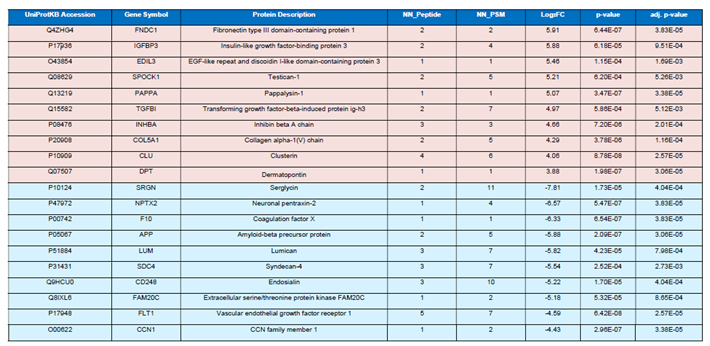 |
Pappalysin-1 is a metalloproteinase that upregulates cellular growth through its action on IGF. The insulin-like growth factors (IGFs) circulate bound to high-affinity IGF-binding proteins (IGFBPs). IGFBP4, bound to IGF, can be cleaved by the proteinase pregnancy associated plasma protein-A (PAPP-A) to release IGF that can then activate its receptor, IGF1R (Barrios et al., 2021).
TGFβ-1secreted from ADSCs has been found to be highly immunomodulating, exceeding the suppressive effect of BMSCs by secreting more anti-inflammatory IL-6 and transforming growth factor-β1,TGF-β1(Ceccarelli et al., 2020)
3.2. Fibroblast Secretome
The most upregulated proteins in fibroblasts included: Serglycin, which has been found to facilitate tissue regeneration by increasing angiogenesis-related cell subtypes for endothelial tip cell sprouting, inhibiting the endothelial-to-mesenchymal transition (EndoMT) population, and facilitating the differentiation of progenitor cells (Zhang et al., 2023); Neuronal pentraxin 3 (PTX3) interacts with extracellular matrix components, cross-linking HA chains and participating in tissue remodeling. PTX3 also induces functional synapse formation (Fossati et al., 2019); Coagulation factor X and its activated form, FXa, acts as a signaling molecule that promotes fibroblast activation and tissue repair (Uniprot); Amyloid-beta precursor protein (APP) plays a role in skin homeostasis, especially within the epidermis. It is primarily expressed in the basal cell layer, where its soluble form (sAPP) acts as a growth factor, regulating keratinocyte proliferation, differentiation, and migration. APP also has potential antimicrobial functions and may help with cell attachment (Medline Plus); Lumican is an ECM matrikine that regulates multiple cellular activities and also has anti-MMP activity, anti-tumor activity, and promotes wound healing (Uniprot); Syndecan-4 (SDC-4) is important for fibroblast motility promoting migration into the fibrin-rich provisional matrix. This is essential for granulation tissue formation and ECM deposition (Lin et al., 2005). SDC-4 also maintains vascular integrity and barrier function (Park et al., 2025); Endosialin increases α-SMA expression and collagen production in granulation tissues during the proliferative and remodeling phases of wound healing, and regulates wound healing through PDGF-BB–mediated signaling pathways in fibroblasts (Hong et al., 2019); Extracellular serine/threonine protein kinase FAM20C (Fam20C) is a kinase involved in a broad range of biological processes, including lipid homeostasis, endopeptidase inhibitor activity, wound healing, and cell adhesion and migration (Tagliabracci et al., 2015); Vascular endothelial growth factor receptor 1 (VEGFR1) in exosomes plays a significant role in mediating intercellular communication for angiogenesis in tissue repair (Han et al., 2019); CCN-1 directly and indirectly regulates the processes of inflammation, angiogenesis, matrix remodeling, and cell-ECM interaction during wound repair. It reduces inflammation, inducing IL-6 (Choi et al., 2015) and promotes an M2 macrophage phenotype (Aliyu et al., 2022).
3.3. Immune Modulating Proteins
A reduction in inflammation was one of the key attributes NeoGenesis Recovery provided to wounded skin in the double-blinded, vehicle-controlled clinical study of skin that was wounded by microneedling (Ngyuen et al. (2026). Upon recognizing molecular patterns associated with pathogens or tissue damage, innate immune cells, such as macrophages, initiate inflammation with the release of inflammatory mediators. In contrast to specific recognition of antigens by adaptive immunity, innate immune cells evolved pattern recognition receptors (PRRs) to recognize a wide range of pathogen-associated molecular patterns (PAMPs), molecular microbial signatures, and damage-associated molecular patterns (DAMPs) released by injured or dying cells. As an example, macrophage M1 phenotypes initiate inflammation by releasing pro-inflammatory mediators like cytokines and chemokines such as TNF-alpha, IL-1beta, and IL-6 and chemokines such as CCL2, CCL5, CXCL10, and MIP-1β. ADSC secretome has been found to modulate M1 macrophages to an anti-inflammatory, pro-regenerative phenotype (Heo and Kim, 2022). IL-10 and TSG-6 are key anti-inflammatory factors expressed in M2 macrophages (Wang et al., 2018). The secretome we analyzed either contains many immune modulating, anti-inflammatory, proregenerative molecules or cause their upregulation.
3.4. Examples of Released Proteins
ADAMTS-like protein 4: expression of ADAMTSL proteins is frequently observed in the context of physiological tissue remodeling and during regeneration and repair after injury (Taye et al., 2024).
ADP-ribosylation factor-like protein 3: ARL3 is essential for building cilia, hair-like structures on cells crucial for sensory perception and signaling, and delivering cargo like lipids and proteins to the cilia supporting their function (NLM).
S-adenosylmethionine synthase isoform type-2: important for producing S-adenosylmethionine (SAMe), which is a vital molecule for skin health, acting as a methyl donor in cell processes, supporting antioxidant glutathione production, and involved in collagen/elastin synthesis, with research exploring its potential in wound healing, anti-aging, and melanoma treatment (Kim et al., 2017).
Alipoprotein 1: anti-stress proteins (Dassati et al., 2014). It is a potent antioxidant that reduces lipid hydroperoxides.
1,4-alpha-glucan-branching enzyme (GBE1): crucial in the skin (and all tissues) for creating branched glycogen, making it soluble and usable for energy storage, with its deficiency causing severe disorders (Froese et al., 2015).
Alpha-mannosidase 2: is a crucial enzyme for breaking down complex sugars (oligosaccharides) in various body tissues, including the skin. Deficiency causes alpha-mannosidosis, leading to the accumulation of these sugars, causing cellular damage (NIH-GARD).
Angiopoietin-related protein 4 (ANGPTL4): is a secreted pleiotropic protein that acts as a critical regulator of skin wound healing, angiogenesis, and keratinocyte function. It is upregulated in the epidermis during injury, accelerating re-epithelialization by enhancing cell migration, promoting angiogenesis, and reducing scar-associated collagen (Goh et al., 2010).
Arginase-1: involved in metabolism and helps reduce inflammation by suppressing T cell and natural killer (NK) cell proliferation and cytokine secretion (Uniprot)
Basement membrane-specific heparan sulfate proteoglycan core protein, also known as Perlecan (HSPG2), is a massive, crucial component of basement membranes (BMs) that provides structural integrity, maintains filtration barriers (like in kidneys), and regulates cell signaling, adhesion, angiogenesis, and development by anchoring cells and binding growth factors (Kallunki and Tryggvason, 1992).
Bone morphogenetic protein 1 (BMP1): an extracellular metalloproteinase that plays many roles in regulating the formation of extracellular matrix (Hopkins et al., 2007). Broad epidermal activation of BMP is required for the development of rete ridge networks organized around underlying dermal papillae; the space beneath the inter-ridge epidermis is occupied by ‘dermal pockets’, a prominently vascularized region of the papillary dermis (Thompson et al., 2026). Rete ridges increase the contact between the epidermis and the dermis, where fibers, blood vessels, and nutrients fill the tougher dermis and support the more superficial epidermis. Because these ridges create extra contact between the layers, skin can better endure the stretching, pulling, and rubbing it continually experiences. When rete ridges flatten as we age, the dermis and epidermis do not contact as tightly, and as a result, the skin becomes thinner, sags more easily, and is more prone to bruises and tears.
Calmodulin-like protein 5: is a calcium-binding protein heavily expressed in the differentiating epidermis, specifically within the stratum granulosum and lower stratum corneum. It is essential for keratinocyte differentiation, lipid barrier formation, and acts as a senescence-suppressing factor, and functions in the terminal maturation of the epidermis, helping maintain skin barrier integrity (NLM).
Carbohydrate sulfotransferase 14 (CHST14/D4ST1): is an enzyme critical for biosynthesizing dermatan sulfate (DS) in the skin’s extracellular matrix that is essential for collagen fibril assembly. Deficiency in CHST14 leads to near-total loss of skin DS, causing musculocontractural Ehlers-Danlos syndrome (mcEDS), characterized by skin hyperextensibility, extreme fragility, and easy bruising (Kosho, 2015).
Cartilage Acidic Protein 1 (CRTAC1): functions as a modulator of dermal fibroblast activity, promoting increased cell viability, proliferation, and metabolic activity. It plays a role in skin regeneration and wound healing by enhancing fibroblast migration and aiding in the restoration of tissue integrity (Felix et al., 2021).
Caspase-7: important in inflammation acting as a crucial “death facilitator” in normal processes like immune clearance to remove inflammatory immune cells (Nozaki et al., 2022).
Caspase-14 (CASP14): is a unique enzyme in the caspase family, primarily expressed in skin keratinocytes, playing a crucial role in epidermal differentiation and skin barrier formation, rather than typical apoptosis. It’s vital for processing filaggrin, maintaining hydration, and protecting against UV damage, functioning in cornification, a specialized cell death for skin barrier creation. Its expression and activity are linked to skin health, with dysregulation implicated in various cancers and skin diseases (Denecker et al., 2008).
Catalase: An antioxidant that Catalyzes the degradation of hydrogen peroxide (H2O2) generated by peroxisomal oxidases to water and oxygen, thereby protecting cells from the toxic effects of hydrogen peroxide. The bacterium called Enterococcus faecalis (E. faecalis) can actively interfere with wound healing. Tan et al. (2026) found that blocking the key biological effect of the bacterium, which is rather than just relying on toxins it releases reactive oxygen species (ROS) that disrupts the normal healing behavior of human skin cells (triggering an unfolded protein response in epithelial cells, catalase can help skin cells recover and close the wound.
Catenin beta-1 (or beta-catenin, encoded by the CTNNB1 gene) is a vital protein for linking cells (cell adhesion) at adherens junctions and acting as a key signal transducer in the Wnt signaling pathway, controlling cell growth, differentiation, and tissue renewal (Medline Plus).
CD109: is a GPI (Glycosylphosphatidylinositol)-anchored surface glycoprotein highly expressed in skin keratinocytes, fibroblasts, and squamous cell carcinomas, acting as a crucial negative regulator of TGF-β signaling. It modulates immune responses, reduces inflammation, and regulates epidermal proliferation, with its deficiency leading to skin hyperplasia and increased susceptibility to psoriasis-like inflammation (Murakami, 2025).
Cellular retinoic acid-binding protein 1: (Crbp1) is a protein that chaperones retinol, facilitating its conversion into other forms such as retinal and all-trans-retinoic acid (ATRA), and delivers ATRA to nuclear receptors, thus playing a crucial role in the metabolism and specific actions of retinoids within cells (Napoli and Yoo, 2020).
Cellular retinoic acid-binding protein 2: (CRABP2) is a crucial cytosolic protein that binds all-trans-retinoic acid (a form of vitamin A), regulating its transport and delivery to nuclear receptors to control gene expression, cell growth, differentiation, apoptosis, regulating inflammation and autoimmunity, and playing vital roles in skin health (Takazawa et al., 2019).
Centromere protein S: Required for the normal activation of the FA pathway, leading to monoubiquitination of the FANCI-FANCD2 complex in response to DNA damage and prevention of chromosomal breakage (Uniprot).
Charged multivesicular body protein 5 (CHMP5): is a key component of the ESCRT-III complex that regulates endosomal sorting, receptor degradation, and, in many contexts, apoptosis and cell survival. It is essential for late endosome/multivesicular body (MVB) function, likely playing a crucial role in skin homeostasis by managing protein trafficking and degradation (Shim et al., 2006).
Chondroitin sulfate proteoglycan 4 (CSPG4): acts as a cell-surface transmembrane proteoglycan in normal human skin, primarily localized on dermal papilla keratinocytes and outer root sheath hair follicles, where it supports cell adhesion, growth, and development. It plays a key role in mediating signaling pathways, acting as an extracellular reservoir for growth factors to support tissue maintenance and repair (Gunnarsson et al., 2017).
Coiled-coil domain-containing protein 80 (CCDC80): is a secreted extracellular matrix (ECM) protein involved in cell-substrate adhesion, fatty acid metabolism regulation, and tissue development. It is widely distributed, including skin tissue, and is known for its role in maintaining normal dermal structures (NLM).
Collagen alpha-1(XII) chain: is a FACIT collagen (Fibril-Associated Collagens with Interrupted Triple helices) that acts as a molecular bridge, associating with type I collagen fibrils to regulate skin tensile strength, structure, and matrix organization. It is crucial for skin homeostasis and repair, with deficiencies linked to lax skin, joint hypermobility, and abnormal healing (NLM).
Collagen and calcium-binding EGF domain-containing protein 1 (CCBE1): is a secreted extracellular matrix protein essential for lymphangiogenesis, primarily driving the maturation and migration of lymphatic vessels (Roukens et al., 2015).
CSF-1 (colony-stimulating factor 1): promotes skin capillary longevity (Mesa et al., 2025). CSF-1 induces M2 macrophage activation. This activation leads to the secretion of high amounts of IL-10 and low levels of IL-12, thus reducing inflammation (Jones and Ricardo, 2013; Trus et al., 2020).
Corneodesmosin (CDSN): is a secreted, glycine/serine-rich glycoprotein essential for skin barrier integrity, primarily acting as an adhesive molecule in corneodesmosomes of the upper epidermis. It binds corneocytes together, and its sequential proteolysis is necessary for skin desquamation (Garrod and Chidgey, 2008).
Cullin-2: As part of the proteasome system, CUL2 participates in the turnover of proteins, which is crucial for maintaining proper keratinocyte differentiation and skin barrier function (Cai et al., 2016).
DDX42 (DEAD-box helicase 42): is an ATP-dependent RNA helicase that regulates RNA metabolism, splicing, and innate immunity, with potential implications in skin cell homeostasis. It acts as an intrinsic antiviral inhibitor against viruses such as HIV-1 and SARS-CoV-2 and engages in cell survival and stress responses (Bonaventure et al., 2022).
Decorin (DCN): Neill et al. (2012) have written, “decorin can be considered a “guardian from the matrix” because of its innate ability to oppose pro-tumorigenic cues.” Decorin directly binds and down-regulates several receptor tyrosine kinases that are often overexpressed in cancer cells. The decorin interactome is a powerful antitumorigenic signal that potently represses and attenuates tumor cell proliferation, survival, migration, and angiogenesis. Kang et al. (2025) identified DCN as an essential paracrine factor mediating the antifibrotic effect of ADSCs.
Dermatopontin: an extracellular matrix protein. Decreased expression of dermatopontin is associated with the pathogenesis of fibrosis in hypertrophic scar and systemic sclerosis (Kuroda et al., 1999).
Dermcidin: An anti-microbial peptide with broad actions against pathogens (Uniprot).
Dermokine: a skin-specific, secreted glycoprotein primarily located in the upper epidermis that plays a critical role in maintaining the skin barrier. Dermokine has also been found to modulate ERK signaling and influence cell-cell adhesion in keratinocytes, impacting wound edge repair (Naso et al., 2007).
Desmocollin 1 (DSC1): is a crucial cell adhesion protein in desmosomes, linking epithelial cells together for tissue strength, especially in skin’s outer layers, and connecting to the cell’s internal skeleton (intermediate filaments). As part of the cadherin family, DSC1 works with desmogleins (like Dsg1) to maintain skin barrier function (Uniprot).
Desmocollin-3 (Dsc3): is a transmembrane glycoprotein and calcium-dependent adhesion molecule (100–110 kDa) that serves as a key component of desmosomes, anchoring intermediate filaments to the plasma membrane in stratified epithelia. It maintains epidermal integrity and hair follicle anchorage (NLM).
Desmoglein-1 (Dsg1): is a crucial cell adhesion protein in the epidermis, forming part of desmosomes that link skin cells (keratinocytes) for structural integrity, especially in upper skin layers, also playing roles in cell differentiation and signaling (Hammers and Stanley, 2013).
Dickkopf-3: Dkk3 (hrDkk3) was highly protective against oxidative stress in a variety of cultured cell types (Busceti et al., 2018) and is atheroprotective (Yu et al., 2017).
Disks large homolog 1 (Dlg1): is a critical scaffolding protein in the skin’s epidermis, essential for maintaining epithelial cell polarity, adherens junction integrity, and gap junctional intercellular communication by stabilizing Connexin 43 (Cx43) at the plasma membrane. It forms part of the Scribble complex and acts as a tumor suppressor, regulating keratinocyte proliferation (Scott et al., 2023).
DNA helicase MCM8: usually works in a MCM8/9 complex to repair double-stranded breaks (Lee et al., 2015). It is a AAA+ ATPase protein essential for DNA repair via homologous recombination and maintaining genomic integrity. It acts as a heterohexameric helicase to stabilize and restart stalled replication forks (Griffin et al., 2022).
DNAJC3 (DnaJ homolog subfamily C member 3: is a human protein-coding gene that acts as an essential endoplasmic reticulum (ER) co-chaperone for HSPA8/HSC70. It plays a critical role in the unfolded protein response (UPR) by preventing protein aggregation and inhibiting EIF2AK2/PKR, thereby regulating protein synthesis during ER stress (UniProt).
Drebrin: is an actin-binding protein found in human skin, particularly concentrated in hair follicles and eccrine sweat glands (Peitsch et al., 2005).
Dual specificity mitogen-activated protein kinase kinase 2: Involved in post-translational modifications of proteins, enabling proteins to function normally (Juyoux et al., 2025).
Echinoderm microtubule-associated protein-like 4 (EML4): is a crucial protein that maintains skin homeostasis by stabilizing microtubules, which are essential for cellular structure, division, and function. It regulates keratinocyte migration and proliferation, which are critical processes for re-epithelialization and wound healing in the skin. EML4 also organizes the mitotic spindle, ensuring proper cell division
EGF-containing fibulin-like extracellular matrix protein 2: is necessary for elastic fiber formation in skin and blood vessels (McLaughlin et al., 2006).
EMILIN-1 (Elastin Microfibril Interfacer-1): is a cysteine-rich extracellular matrix glycoprotein, encoded by the EMILIN1 gene, that acts as a structural component of elastic fibers and a key regulator of tissue homeostasis. It also plays a role in tumor suppression (NLM).
EMILIN-2: is an extracellular matrix (ECM) glycoprotein, part of the FEBS Press elastin-fibrillin microfibril system, crucial for maintaining skin architecture and structural integrity. It is primarily deposited in the reticular dermis, perivascular regions, and around hair follicles (Schiavinato et al., 2016).
Endothelial cell-specific molecule 1 (ESM-1); is a 50 kDa soluble proteoglycan secreted primarily by vascular endothelial cells, acting as a key regulator of angiogenesis, cell adhesion, and inflammation. In normal skin, it helps maintain vascular homeostasis
Epiplakin (EPPK1): is a large cytoplasmic protein in the plakin family, crucial for cytoskeleton organization, especially connecting keratin intermediate filaments in epithelial tissues like skin and hair. Links to keratin networks under stress, protecting them from damage (Goto et al., 2006).
Endoplasmic reticulum (ER) chaperone BiP (Binding immunoglobulin Protein): also known as GRP78, is a crucial Hsp70 family protein that manages protein folding, assembly, and quality control in the ER lumen, helping new proteins fold correctly, maintaining calcium homeostasis, and sensing ER stress to activate the Unfolded Protein Response (UPR). Working with co-chaperones like ERdjs, BiP ensures proteins are correctly processed or targeted for degradation, playing a vital role in overall ER function and cellular survival, especially under stress (Probe et al., 2019).
Endoplasmic reticulum mannosyl-oligosaccharide 1,2-alpha-mannosidase: Involved in glycoprotein quality control targeting of misfolded glycoproteins for degradation (Uniprot).
Envoplakin (EVPL): is a vital structural protein in the epidermis acting as a linker between intermediate filaments (like keratins) and cellular junctions (desmosomes) and serving as a precursor for the protective cornified envelope (CE) that forms the skin’s outer barrier. It is significant in autoimmune conditions like paraneoplastic pemphigus (PNP), where antibodies target it, making it a diagnostic marker (NLM).
Epiplakin: Epiplakin is important linker protein important for maintaining keratin organization; expression is lost in psoriatic skin lesions (Kühtreiber et al., 2025)
Ethylmalonyl-CoA Decarboxylase: an enzyme Involved in metabolite proofreading, for example, it corrects a side activity of acetyl-CoA carboxylase, the production of ethylmalonyl-CoA, a potentially toxic metabolite formed at a low rate from butyryl-CoA by acetyl-CoA carboxylase and propionyl-CoA carboxylase, two major enzymes of lipid metabolism, and suggest that its dysfunction may be involved in the development of certain forms of ethylmalonic aciduria (Linster et al., 2011).
E3 ubiquitin-protein ligase ARIH1: Important for clearance of dysfunctional proteins (Purser et al., 2023).
Eukaryotic initiation factor 4A-III: crucial for mRNA quality control (NLM)
Eukaryotic translation initiation factor 4 gamma 1 (eIF4G1): is a crucial scaffolding protein that builds the eIF4F complex, essential for cap-dependent mRNA translation by linking mRNA to ribosomes, regulating protein synthesis (NLM).
Eukaryotic translation initiation factor 6 (eIF6): is a vital protein regulating ribosome assembly and protein synthesis, preventing premature joining of 60S and 40S ribosomal subunits in the cytoplasm while promoting 60S maturation in the nucleus, acting as a crucial link between ribosome biogenesis and translation, and playing roles in cell growth, metabolism (Miluzio et al., 2009).
Eukaryotic translation initiation factor 2-alpha kinase 3 (EIF2AK3): is a type I transmembrane protein located in the endoplasmic reticulum (ER) that acts as a sensor for ER stress, facilitating the translation of specific stress-response proteins like ATF4 that helps manage cellular stress (Baird et al., 2012).
Extracellular matrix protein 1: interacts with a variety of extracellular and structural proteins, contributing to the maintenance of skin integrity and homeostasis (NLM).
Extracellular serine/threonine protein kinase FAM20C (Fam20C): generates the majority of the extracellular phosphoproteome. The secreted phosphoproteome in skin consists of extracellular proteins modified by phosphorylation dependent on the kinase Fam20C that play crucial roles in maintaining epidermal homeostasis, promoting wound healing, and regulating cell-cell communication. These proteins are vital for extracellular matrix (ECM) remodeling, mediating cell adhesion and migration (Tagliabracci et al., 2015).
Extracellular sulfatase Sulf-2 (SULF2): an enzyme that acts on the extracellular matrix. Its primary function is to remove specific sulfate groups (6-O-sulfates) from heparan sulfate proteoglycans (HSPGs) on cellular surfaces. By modifying these structures, SULF2 mobilizes growth factors (such as Wnt proteins and FGF) that are normally tethered to the matrix, allowing them to bind their receptors and activate signaling pathways involved in tissue repair (El Masri et al., 2017).
FAS-associated factor 1 (FAF1): acts as a scaffold protein that regulates apoptosis, reducing NF-kappaB activity (Park et al., 2004) and therefore reducing senescence, and protein degradation, essential for maintaining skin homeostasis and cellular turnover. It facilitates the Fas death-inducing signaling complex and helps regulate keratinocyte apoptosis and immune responses, contributing to proper skin cell turnover and damage management (Menges et al., 2009).
Fatty acid-binding protein 5 (FABP5): acts as an intracellular chaperone, binding and transporting hydrophobic fatty acids like DHA and retinoic acid to specific cellular locations, playing key roles in lipid metabolism, signaling, and transport across the blood-brain barrier (BBB). Its normal functions include delivering lipids for membrane synthesis, activating nuclear receptors (PPARβ/δ) for gene regulation (like cell growth/survival), modulating inflammation, and facilitating crucial nutrient transport (Pan et al., 2015; Figueroa et al., 2016).
FERM, ARHGEF and pleckstrin domain-containing protein 1: synaptogenic protein Farp1 links postsynaptic cytoskeletal dynamics and transsynaptic organization, supporting neuronal function.
FNDC1: promotes cardiotoxin (CTX)-induced muscle regeneration in adult mice. Furthermore, recombinant FNDC1 treatment ameliorated pathological muscle phenotypes in the mdx mouse model of Duchenne muscular dystrophy. Mechanistically, FNDC1 bound to the integrin α5β1 and activated the downstream FAK/PI3K/AKT/mTOR pathway to promote myogenic differentiation (Zhang et al., 2025).
Fibrillin-2: is a crucial extracellular matrix protein that forms microfibrils, acting as a scaffold for elastic fiber assembly during development and providing structural support and elasticity to connective tissues like skin, blood vessels, and ligaments. Fibrillin-2 forms microfibril scaffolds for elastic fibers in the skin, providing elasticity and strength, and regulating growth factors like TGF-β (Brinkman et al.
Fibroblast growth factor 2 (FGF2): Fibroblast growth factor-2 (FGF2) has multiple roles in cutaneous wound healing but its natural low stability typically prevents the development of its use in skin repair therapies. Petit et al. (2022) found that FGF2 binds the outer surface of dermal fibroblast (DF)-derived extracellular vesicles (EVs) and this association protects FGF2 from fast degradation allowing it to have pleiotropic effects in wound healing.
Fibulin-2 (FBLN2) is a secreted extracellular matrix (ECM) glycoprotein that acts as a crucial scaffold, bridging various ECM components like fibronectin, collagen, and elastin, vital for tissue structure and critical for basement membrane integrity (Ibrahim et al., 2018)
Filaggrin-2 (FLG2): is a 248 kDa crucial for maintaining epidermal barrier function, hydration, and terminal differentiation of keratinocytes. Expressed in the upper epidermis, it produces natural moisturizing factors, protects against infections, and its deficiency is linked to conditions like atopic dermatitis and peeling skin syndrome (Panderies et al., 2015).
Four-jointed box protein 1 (FJX1): it is part of the Fat-Dachsous-Four-jointed (Ft-Ds-Fj) signaling pathway that is critical for planar cell polarity (PCP), which regulates tissue homeostasis and structure (Buttler and Wallingford, 2017).
14-3-3 protein sigma: 14-3-3 protein sigma (also called Stratifin or SFN) is a crucial cell cycle regulator and tumor suppressor, acting as an adaptor protein that binds to other proteins (like p53) to control cell division, promote DNA repair (G2/M checkpoint), and trigger apoptosis, often lost in cancers (Yang et al., 2003).
Galectin-1: Galectin-1 (Gal-1) exerts immune-regulatory and anti-inflammatory actions in acute and chronic inflammation. Its release into the extracellular milieu often correlates with the peak of inflammation, suggesting that it may serve a pro-resolving function. Gal-1 inhibits neutrophil recruitment and induces surface exposure of phosphatidylserine (PS), an “eat me” signal on the surface of neutrophils and reduces neutrophil numbers during inflammation (Law et al., 2020) and polarizes macrophage into an anti-inflammatory type (Yaseen et al., 2020). Further, Gal-1 controls T cell and B cell compartments by modulating receptor clustering and signaling that serves as a negative-regulatory checkpoint to reprogram cellular activation, differentiation, and survival (Sundblad et al., 2017).
Galectin-3: In normal adult human skin Gal 3 is expressed in the cytoplasm of keratinocytes in the basal and particularly in the supra-basal layers, in hair follicles, sweat and sebaceous glands, in the extracellular matrix of the dermis, in proliferating fibroblasts, Langerhans cells, mast cells, and melanocytes. Loss of Galectin-3 expression may play a role in the genesis of epithelial skin cancer. This is supporting evidence that Galectin-3 can exert tumor-suppressive effects (Mollenhauer et al., 2003; Pasmatzi et al., 2019).
Gamma-glutamyl hydrolase (GGH): is a lysosomal enzyme that plays a critical role in folate homeostasis by breaking down (hydrolyzing) polyglutamylated folate into monoglutamate forms. This process reduces intracellular folate retention, allowing it to be exported from the cell, and maintains the balance between different folate forms. Folates play in purine and pyrimidine nucleotide biosynthesis to supply precursors for DNA repair and synthesis (Williams et al., 2012).
Gasdermin-A: important for tight junction formation and stratum corneum maturation and homeostasis (Huang et al., 2023).
Glutaredoxin-1 (Grx1) is a crucial, small protein that maintains cellular redox balance by using glutathione to reduce protein disulfide bonds and regulate protein function through reversible glutathionylation, protecting cells from oxidative stress (Sun et al., 2017).
Glutathione S-transferase omega-1 (GSTO1): functions to protect cells from oxidative stress and toxic compounds by regulating protein function through glutathionylation/deglutathionylation, playing roles in detoxification, immunity, cancer survival, and metabolism by removing glutathione from proteins, controlling redox signaling, and influencing inflammation pathways like NF-κB, acting as a critical cellular regulator of protein activity and stress response (Board and Anders, 2007).
Glypican-1: GPC-1 in skin is significantly decreased with the age and regulates cellular growth through modulation of FGF2 (Perrot et al., 2019).
Growth arrest-specific protein 6: protein GAS6 skewed wound healing towards the regenerative phenotype, leading to faster healing and less severe scarring (Griffen et al., 2025).
Growth Factor Receptor-Bound Protein 2 (GRB2), is a crucial signaling adaptor protein that plays a pivotal role in intracellular signal transduction pathways. It is particularly important piece RTK signaling, which is integral for cellular processes such as cell growth, differentiation, and survival, as well as in the transduction of other important physiological and molecular pathways with crucial role for cell homeostasis (Malagrino et al., 2024).
Guanylate-binding protein 6 (GBP6) is an interferon-induced GTPase expressed in human skin, where it acts as a mediator of innate immunity against pathogens. Studies indicate GBP6 is present at relatively high levels in normal human skin tissue, playing a potential role in surveillance and anti-microbial defense (Kirby et al., 2023).
Heparan sulfate glucosamine 3-O-sulfotransferase 3A1: is a Golgi-resident enzyme that adds a specific 3-O-sulfate group to heparan sulfate (HS) chains. It is part of the mechanism creating the specialized HS structural diversity necessary for cellular regulation, tissue development, and maintaining extracellular matrix (ECM) integrity in tissues like the skin (Uniprot).
HDF2: essential for DNA repair, telomere maintenance, and gene silencing (Uniprot).
Heat shock protein beta-1: HSPB1 is a small HSP that helps protect cells that are under stress from factors such as infection, inflammation, exposure to toxins, elevated temperature, injury, and disease. Heat shock proteins block signals that lead cells to self-destruct (undergo apoptosis). In addition, they appear to be involved in cell movement, stabilizing the cell’s structural framework (the cytoskeleton), folding and stabilizing newly produced proteins, and repairing damaged proteins. Heat shock proteins also play a role in the tensing of muscle fibers, muscle contraction (Medline Plus). HSPB1 also stimulates the production of IL-10 in monocytes and thus can suppress the immune response. Extracellular HSPB1 inhibits the differentiation of monocytes towards macrophages and dendritic cells and blocks their maturation. In addition, extracellular HSPB1 was found to induce T-cell anergy and to secrete anti-inflammatory mediators (Kolinski et al., 2016).
Heat shock 70 kDa protein: HSP70, which has been linked to proper folding and transport of newly synthesized proteins, anti-inflammatory processes, and protection against photodamage. HSP70 and HSP90, act as molecular chaperones that influence macrophage polarization by stabilizing signaling molecules, such as STAT6, and transcription factors that promote the anti-inflammatory, tissue-repairing M2 phenotype. HSPs are involved in the epigenetic control of M1 to M2 switching, with elevated expression often associated with the M2-type activation in tissue regeneration. Heat shock proteins found in the secretome help facilitate this, for example, by maintaining and biasing T-cells towards the anti-inflammatory Treg subtype (Kolinski et al., 2016).
Heat Shock Protein 90: The molecular chaperone heat shock protein 90 (Hsp90) facilitates metastable protein maturation, stabilization of aggregation-prone proteins, quality control of misfolded proteins, and assists in keeping proteins in activation-competent conformations (Zuehlke et al., 2018). Involved in epigenetic regulation through actions on chromatin; Hsp90 has a strong effect on the histone code via stabilization of KDM4B, which demethylases H3K9 (Trerotola et al., 2015).
Hepatoma-derived growth factor-related protein-3: a neurotrophic and neurite outgrowth-promoting factor that protects and rescues neurons (Abouzied et al., 2010).
Heterogeneous nuclear ribonucleoprotein U (HNRNPU): is a crucial RNA-binding protein essential for proper skin development, influencing epidermal stem cell maintenance, differentiation, and formation of structures like hair follicles, with recent research highlighting its role in preventing premature skin cell aging and ensuring skin barrier integrity (Hong et al., 2025).
Histone-binding protein RBBP7: RBBP7, often working with RBBP4, ensures accurate histone modifications, such as managing histone acetylation levels, which is crucial for processes like meiosis, development, and in tissue remodeling (Xiao et al., 2022).
Hornerin (HRNR): is localized in the stratum granulosum and stratum corneum and forms high molecular weight multimeric HRNR fragment complexes. HRNR contributes to the cornified envelope and HRNR fragments have antimicrobial and protective functions in healthy skin. The full-length HRNR protein is auto-processed by an unknown mechanism into multiple novel fragments with antimicrobial activity to gram-negative bacteria and fungi. A reduction in HRNR expression is associated with epidermal barrier defects, which have been observed in patients with atopic dermatitis, a common chronic inflammatory skin disease (Garrels et al., 2017).
Hydroperoxide isomerase ALOXE3: ALOXE3 is a non-heme iron-containing enzyme, primarily expressed in the skin, that acts as a hydroperoxide isomerase to maintain the skin barrier. Working downstream of ALOX12B, it converts fatty acid hydroperoxides (like 12R-HPETE) into epoxyalcohols, crucial for cementing lipids to proteins in the epidermis. Mutations cause autosomal recessive congenital ichthyosis (Yu et al., 2003).
Hypoxia up-regulated protein 1 (HYOU1): is a molecular chaperone located in the endoplasmic reticulum (ER) that maintains cellular homeostasis under stress. It acts as a critical cytoprotective protein, upregulated in hypoxic and ER-stressed cells, facilitating protein folding and mediating the unfolded protein response. HYOU1 also mediates hypoxia-induced TGF-beta3 expression, a potent anti-scarring cytokine (Scheid et al., 2002).
Insulin-like growth factor-binding protein 3 (GFBP-3): plays a crucial role in skin health by binding to IGFs, regulating their activity, and influencing skin cell (keratinocyte) proliferation, differentiation, and survival, acting as a key modulator of epidermal homeostasis, with roles in wound healing (Edmundson et al., 1999).
Integrin Alpha 4: ECM protein that helps bind cells to matrix (Gailit et al., 1993).
Inter-alpha-trypsin inhibitor heavy chain H4 (ITIH4): is a glycoprotein, part of the inter-alpha inhibitor family, involved in regulating inflammation and stabilizing the extracellular matrix (ECM). In skin, ITIH4 promotes collagen synthesis (COL1A1) and fibroblast migration, playing a crucial role in wound healing and tissue repair (Bost et al., 1998).
Keratin 17 (KRT17) is a Type I cytoskeletal protein crucial for skin structure, especially in appendages like hair follicles, nails, and sebaceous glands, forming strong intermediate filaments with keratin 6 to provide resilience against friction. It increases barrier function and is important for normal hair follicle function (Pang et al., 2022).
Keratin, type II cytoskeletal 73 (KRT73) is a basic-neutral protein encoded by the KRT73 gene in humans (located on chromosome 12q13) and mice. As an intermediate filament protein, it plays a key role in the structural integrity of the inner root sheath (IRS) of hair follicles. It is also known as cytokeratin-73 or K6irs3 (Uniprot).
Keratinocyte proline-rich protein (KPRP or hKPRP) is a marker of terminal keratinocyte differentiation in human stratified squamous epithelia. It is primarily expressed in the upper granular layers of the skin, contributing to cornified cell envelope formation and skin barrier integrity (Suga et al., 2019).
Kinesin-like protein KIF13A: a microtubule-based motor critical for intracellular transport, particularly in skin melanocytes, where it facilitates melanosome maturation and pigmentation. It acts by transporting melanogenic enzymes from recycling endosomes to peripheral maturing melanosomes, cooperating with the AP-1 complex to maintain skin pigmentation. Melanosomes are specialized, membrane-bound organelles (\( ~500\text{nm}\) ) found in melanocytes, retinal pigment epithelial (RPE) cells, and lower vertebrate melanophores, responsible for the synthesis, storage, and transport of melanin. They provide vital photoprotection against UV radiation and determine skin, hair, and eye pigmentation. Defects in their biogenesis lead to disorders like albinism, while their dysfunction is linked to melanoma progression (Wiriyasermkul et al., 2020).
Lactadherin: (MFG-E8) is a glycoprotein crucial for skin health, specifically in promoting cutaneous wound healing, angiogenesis (blood vessel formation), and tissue remodeling. It supports healing by regulating the migration of fibroblasts and pericytes into wound areas. Additionally, it aids in clearing apoptotic cells, which helps reduce inflammation (Uchiyama et al., 2014).
Latent-transforming growth factor beta-binding protein 1: connective tissue structure protein that serves as a force bearing element and scaffold for elastin deposition in the dermis, but also as an important repository for latent TGF-β in the skin (Raghunath et al., 1998).
Lumican: Chakravarti et al. (1998) established a crucial role for lumican in the regulation of collagen assembly into fibrils in various connective tissues, including the skin.
Lysal Oxidase Type 1: is essential to the biogenesis of connective tissue, encoding an extracellular copper-dependent amine oxidase that catalyzes the first step in the formation of crosslinks in collagen and elastin (NLM)
Lysyl oxidase homolog 2 (LOXL2): is a copper-dependent amine oxidase enzyme that catalyzes the cross-linking of collagen and elastin in the extracellular matrix, playing a critical role in tissue remodeling.
Lysyl Oxidase Homolog 3 (LOXL3) is a copper-dependent enzyme crucial for forming stable connective tissues by catalyzing cross-links in collagen and elastin, and it also has unique roles, including modifying fibronectin and regulating immune cell differentiation via STAT3 (Lee et al., 2006), and Is required for ordered collagen fibrillogenesis (Herchenhan et al., 2015).
Mannosyl-oligosaccharide 1,2-alpha-mannosidase IA: MAN1A1 regulates sugar molecules in the body, acting as a specific pair of “scissors” in the cell’s sugar-processing factory (Golgi). When skin cancer develops, for example, these scissors are often missing or less active, causing a buildup of specific sugar chains that can make cancer cells grow and spread faster (Chatterjee et al., 2021).
Matrix metalloproteinase-19 (MMP-19) is a secreted enzyme constitutively expressed in healthy human skin, specifically within basal keratinocytes, hair follicles, and sweat glands, where it functions in tissue remodeling and cell migration. It maintains normal skin homeostasis by degrading extracellular matrix (ECM) components like collagen IV and collagen I, playing a key role in wound healing (Sadowski et al., 2003).
Matrix-remodeling-associated protein 5 (MXRA5), is an adhesion proteoglycan involved in extracellular matrix (ECM) remodeling, cell-cell adhesion, and anti-inflammatory and anti-fibrotic processes (Poveda et al., 2017).
Metalloproteinase inhibitor 1: TIMP-1 has been implicated in a number of biological processes, including growth factor activity, tissue remodeling, inhibition of angiogenesis, changes in cell morphology (Gomez et al., 1997).
Meteorin-like protein (Metrnl, or Meteorin): is a secreted immunoregulatory protein expressed in skin and barrier tissues, acting as a crucial mediator for maintaining normal skin homeostasis. It promotes wound healing by stimulating angiogenesis and epithelialization, while also serving as an anti-inflammatory modulator that suppresses allergic skin inflammation, such as in atopic dermatitis (Ushach et al., 2015).
Microtubule-actin cross-linking factor 1 (MACF1) is a large, versatile cytoskeletal protein expressed in skin, where it crucial for organizing actin and microtubule networks, influencing cell migration, adhesion, and epidermal tissue integrity. MACF1a1 (ACF7) is highly expressed in skin tissue, while multiple isoforms help regulate skin stem cell dynamics and F-actin organization (Goryunov and Liem, 2016).
NAD(P)H-hydrate epimerase: Encoded by the NAXE gene, formerly APOA1BP. Damage and repair of metabolites has become an emerging field of research. Aberrant metabolites can arise either spontaneously or by enzymatic side reactions and can result in neutral or harmful species. To prevent toxic effects on the cell, damage-control systems have developed that either remove or recycle the aberrant metabolite, such as metabolite NADHX and NADPHX (Kremer et al., 2016). Deficiencies in this enzyme lead to inflammation and erosive plaques in the skin (Abdulkarim et al., 2025). Detoxification of endogenous and exogenous metabolites in the skin decreases oxidative stress in the skin that may then reduce insulin resistance (Liu et al., 2012).
N6-Methyl-AMP deaminase: enzyme necessary for clearing RNA degradation products (Chen et al., 2018).
Neuron-derived neurotrophic factor (NDNF): A neurotrophin involved in the maintenance of nerves in the CNS and periphery, including the skin. Neurotrophins also protect cell types other than neurons in the skin (Botchkarev et al., 2006).
Sorting nexin-6 (SNX6): Regulation of protein sorting and prevention of amyloid β-peptide (Aβ) accumulation (Okada et al., 2010).
Nidogen-2 (NID2): is a crucial, widely expressed basement membrane (BM) protein in the skin that supports structural integrity and promotes the development of a functional skin-organotypic basement membrane. It acts as a key component in the dermal-epidermal junction (Bechtel et al., 2012).
Olfactomedin-2 (OLFM2) is a pleiotropic, secreted glycoprotein emerging as a regulator of energy homeostasis. The expression of OLFM2 is inversely associated with obesity. OLFM2 levels increase during adipogenesis and are suppressed in inflamed adipocytes (Lluch et al., 2025).
Pappalysin-1 (PAPP-A): is a zinc-dependent metalloproteinase found in human skin, particularly in the epidermis, sebaceous glands, and hair follicles, where it plays a role in wound healing and tissue remodeling. It regulates IGF-1 bioavailability by cleaving IGFBPs, promoting growth and repair (Chen et al., 2003).
Patatin-like phospholipase domain-containing protein 2 (PNPLA2): is critical for lipase activity and lipid degradation in various tissues, including skin cells, making it vital for maintaining normal lipid metabolism and preventing fat accumulation in the epidermis and therefore preventing barrier disruption (Janssen et al., 2013).
PD-L1 Ligands: Important anti-inflammatory ligands that control T-cell mediated inflammation. This is important for driving the anagen phase of the hair follicle where immunoprivilege is critical (Severino et al., 2025).
Peroxidasin: creates sulfilimine cross-links that are essential for growth factor-induced cell proliferation and survival in endothelial cells, an event essential to basement membrane integrity (Lee et al., 2020).
Peroxiredoxin-2: (Prx II) in the skin is a crucial antioxidant enzyme that protects cells from oxidative stress by reducing peroxides, regulating cell proliferation, differentiation, and apoptosis, and plays a key role in skin health, wound healing, aging. Han et al. (2005) have found that Prx II may function as an enzymatic antioxidant to prevent cellular senescence and skin aging.
Peroxiredoxin 6 (PRDX6) is a vital, multifunctional antioxidant enzyme found in all human tissues, especially abundant in the lungs, acting as a first line of defense against oxidative stress by neutralizing harmful peroxides, including those in cell membranes. It uniquely possesses both glutathione peroxidase (reducing hydroperoxides) and phospholipase A2 (repairing oxidized lipids) activities, playing crucial roles in cell survival, lung health, lipid metabolism, and signaling pathways, with its deficiency linked to various diseases like diabetes, cataracts, and cancer (Fisher, 2011).
Peroxisomal biogenesis factor 19: Important for the biogenesis of peroxisomes that are involved in lipid metabolism (Wanders et al., 2023). Peroxisomes also counteract the compromising effects of ROS by antioxidant enzymes. Among these are peroxisomal catalase, glutathione peroxidase, peroxiredoxin I and Pmp20p to degrade hydrogen peroxide and CuZnSOD and MnSOD to detoxify superoxide anions and provide benefit to aging cells (Manivannan et al., 2012).
Phospholipid hydroperoxide glutathione peroxidase 4: (GPX4) is a vital antioxidant enzyme protecting cells from lipid peroxidation and oxidative stress, uniquely reducing lipid hydroperoxides directly, and is crucial for preventing ferroptosis (a form of cell death) and ensuring functions like sperm development and neuronal survival. As a selenoprotein, it works in the cytosol, mitochondria, and nucleus, existing in different isoforms, and its dysfunction links to cancer, aging, and neurodegenerative diseases (Borchert et al., 2006).
Pigment epithelium-derived factor: (PEDF) is a multifunctional protein crucial in skin, acting as a potent anti-angiogenic agent (inhibiting new blood vessel formation), regulating wound healing by promoting vessel regression and collagen maturation, and influencing melanocyte function, with lower levels potentially linked to melanoma and altered levels seen in conditions like diabetes and psoriasis (Michalzyck et al., 2018)
Plakophilin 1 (PKP1): is an important plaque component of desmosomes, major intercellular adhesive junctions that function as anchorage points for intermediate filaments. PKP1 is a novel tumor suppressor (Haase et al., 2019).
Plectin is a massive (500 kDa) cytolinker protein essential for maintaining skin mechanical stability by connecting intermediate filaments (keratin) to hemidesmosomes, which anchor basal keratinocytes to the basement membrane. Mutations in the PLEC gene cause severe, inherited skin blistering disorders, such as epidermolysis bullosa simplex with muscular dystrophy (EBS-MD), and contribute to skin fragility (Kiritsi et al., 2021).
Plexin-B3: Controls cellular migration, invasiveness, and colony formation in three-dimensional culture, thus normalizing cellular motility (Saxana et al., 2021).
Polycomb repressive complex 1 (PRC1): a critical chromatin regulator, is essential for skin epithelium morphogenesis and stem cell specification, and controls skin development through regulation of silent and active genes (Cohen et al., 2018).
Polypeptide N-acetylgalactosaminyltransferase 2 (GALNT2): is an enzyme that initiates mucin-type O-glycosylation, a critical post-translational modification, and is widely expressed in tissues, including basal keratinocytes in the skin. It is involved in glycoprotein folding and stability, playing a role in regulating skin barrier functions (Mercanoglu et al., 2024).
Polypeptide N-acetylgalactosaminyltransferase 10: involved in glycosylation of proteins that expand the structural diversity of the proteome, affecting protein folding, stability, processing, trafficking, immune recognition, and biological activity (Nielson et al., 2022).
POF1B (Premature Ovarian Failure 1B): is an actin-binding protein predominantly expressed in epithelial tissues, with its highest expression in the epidermis, oropharyngeal, and gastrointestinal tracts. It plays a crucial role in skin structural integrity by localizing to desmosomes in the granular layers of the epidermis, regulating cell adhesion, and strengthening the cytoskeleton (Crespi et al., 2015).
Procollagen-lysine,2-oxoglutarate 5-dioxygenase 1: Predicted to enable several functions, including L-ascorbic acid binding activity; ferrous iron binding activity; and procollagen-lysine 5-dioxygenase activity. Predicted to be involved in collagen fibril organization; epidermis development; and peptidyl-lysine hydroxylation. Located in collagen-containing extracellular matrix (NLM).
Prolifin-1: PFN1 helps build the skin’s structure, influences immune responses (like suppressing inflammation in psoriasis), and its dysfunction links to skin issues and cancer progression (Mok et al., 2022).
Prolyl 3-hydroxylase 1: localized to the endoplasmic reticulum and required for proper collagen synthesis and assembly (NLM).
Protein-glutamine gamma-glutamyltransferase E (TGase E), also known as Transglutaminase 3 (TGM3), is a crucial skin enzyme that forms strong protein cross-links (isopeptide bonds) in terminally differentiating skin cells (keratinocytes) and hair, providing structural integrity, particularly in the protective cornified envelope (NLM).
Protein OS-9: is crucial for maintaining cellular health by clearing damaged or misfolded proteins (Ward et al., 2018).
Protein scribble homolog: The SCRIB protein critical for skin epidermal development, polarity, and adhesion. As a tumor suppressor, it localizes to the basolateral membrane of skin cells, where it controls cell proliferation, differentiation, and barrier function. Loss of SCRIB leads to skin tissue disorganization and increased susceptibility to tumor progression (Pearson et al., 2015).
Protein SET: is a versatile, multifunctional protein (encoded by the SET gene) involved in critical cellular processes like transcription, DNA repair, cell cycle, and apoptosis (Yau et al., 2024).
Protein subunits for collagen, laminin, fibronectin, keratin: key components of the skin extracellular matrix in the dermis and epidermis.
Protocadherin gamma-C3: Important for skin innervation and reinnervation following injury (Lon et al., 2023)
26S proteasome non-ATPase regulatory subunit 8: Essential for proteasome activity and decreases with age. impaired proteasome may inhibit clearance of aberrant proteins and disrupt cell cycle control (Ishii et al., 2018).
Proteasome subunit beta type-6: essential for the regulated turnover of proteins and for the removal of misfolded proteins (Uniprot).
RNA polymerase-associated protein LEO1: is a crucial regulator of transcription elongation, chromatin modification, and DNA repair. In human cells, including fibroblasts relevant to skin biology, LEO1 is essential for maintaining proper gene expression, aiding in the recovery of RNA synthesis after DNA damage (Tiwari et al., 2021).
Protein-tyrosine sulfotransferase: facilitating the proper secretion and localization of collagen (Kim et al., 2010).
Retinoblastoma-binding protein 5 (RBBP5): acts as a tumor suppressor in skin, specifically inhibiting melanoma progression by enhancing H3K4 methylation (Yang et al., 2023).
Samaphorin 7A: contributes to T-cell downmodulation and reduction of T cell hyperresponsiveness. These results demonstrate an important role of Sema7A in limiting inflammation and autoimmune responses (Czopik et al., 2006).
SERPINB12: is a member of the clade B/intracellular serpin family that functions as a wide-tissue inhibitor of trypsin-like serine proteinases, such as granzyme A and hepsin. It protects cells from protease-mediated damage and is involved in regulating protein catabolic processes. It acts as a protective mechanism for skin barrier integrity by inhibiting trypsin-like peptidases and granzyme A (Niehaus et al., 2015).
Serine/threonine-protein kinase WNK1: is expressed in human skin, specifically localizing to the basal layers of the epidermis and in sweat ducts, where it plays a role in regulating ion homeostasis, potentially through WNK-SPAK/OSR1 signaling. It responds to hyperosmotic stress (such as dehydration or sweat production) by promoting ion influx to maintain cell volume (Uniprot).
SPRR-1A (Cornifin-A): cells expressing Sprr1a exhibit significant protection from senescence-inducing factors (Hong et al., 2023).
Stress-70 protein, mitochondrial OS: Mitochondrial chaperone that plays a key role in mitochondrial protein import, folding, and assembly. Plays an essential role in the protein quality control system, the correct folding of proteins, the re-folding of misfolded proteins, and the targeting of proteins for subsequent degradation.
Sushi, von Willebrand factor type A, EGF and pentraxin domain-containing protein 1: plays a critical role in epidermal differentiation (Samuelov et al., 2017).
Ras-related protein Rab-2A (Rab2A) is a crucial small GTPase protein regulating membrane traffic, primarily between the ER and Golgi, and involved in autophagy, the clearance of cellular debris (Sugawara et al., 2014).
Regulator of nonsense transcripts 1: Eliminates the production of nonsense-containing mRNAs (Uniprot).
Reticulocalbin-1 (RCN1): is a calcium-binding protein located in the endoplasmic reticulum (ER) that acts as a key regulator of calcium homeostasis, secretory cargo sorting, and ER stress management. In normal skin, it supports cellular functions like keratinocyte differentiation and is associated with healthy tissue, while its downregulation can impair skin cell viability. RCN1 is critical for maintaining endothelial function and promoting healing of ulcers (Weng et al., 2025).
Reticulocalbin-3: Has anti-fibrotic activity by negatively regulating the secretion of type I and type III collagens (Martínez-Martínez et al., 2017).
Sec1 family domain-containing protein 1 (\( SCFD1\) ) is a protein that is highly expressed in various human tissues and is essential for collagen trafficking in extracellular matrix formation (Uniprot).
Secretogranin 2: SgII counteracts nitric oxide toxicity (Li et al., 2008)
Serine protease HTRA1: acts as a crucial regulator of skin homeostasis by modulating extracellular matrix (ECM) remodeling, cell proliferation, and wound healing. It is widely expressed in normal human tissues, including the epidermis, where it regulates keratinocyte differentiation and degrades ECM components like fibronectin, contributing to tissue structural integrity. Recognizes and degrades misfolded proteins, acting as a chaperone and protease (De Luca et al., 2003).
Serpin H1 (SERPINH1), also known as Heat Shock Protein 47 (HSP47), is a crucial chaperone protein in the endoplasmic reticulum (ER) that specifically binds to and helps fold procollagen, ensuring its proper assembly and secretion (Widmer et al., 2012).
SRSF protein kinase 2 (SRPK2) is a serine/threonine kinase that phosphorylates Serine/Arginine-rich splicing factors (SRSFs) and other proteins, regulating crucial cellular processes like alternative splicing, transcription, and DNA repair (NLM).
Structural maintenance of chromosomes protein 5 (SMC5): is a key component of the highly conserved SMC5/6 complex, which is essential for maintaining genome stability, DNA repair, and chromosome organization. It functions as a tumor suppressor and acts in DNA damage repair, particularly in homologous recombination and replication fork stability (NLM). This protein may also be involved in reducing senescence (Meng et al., 2018).
Sulfiredoxin-1 (SRXN1): is an antioxidant protein that protects skin cells from oxidative damage by reducing over-oxidized peroxiredoxins (Prxs), restoring their activity. It is heavily involved in regulating skin cell survival, particularly under stress (Kim et al., 2025).
SUN domain-containing ossification factor (SUCO): is a transmembrane protein that regulates type I collagen synthesis, and connective tissue maintenance, as it participates in regulating structural collagen (NLM).
Thiroredoxin: involved in cellular redox homeostasis, the dynamic, essential balance between oxidizing agents (reactive oxygen species, ROS) and antioxidants, maintaining an optimal environment for cellular signaling, metabolism, and survival (Liyanage et al., 2019).
Transaldolase: Involved in glycolysis and protecting against oxidative stress. Deficiency (TALDOD) significantly impacts the skin, causing characteristic features like thin, loose, and wrinkled skin (cutis laxa), prominent blood vessels, spider angiomas, and multiple hemangiomas (Tylki-Szymanska et al., 2014).
T-complex protein 1 subunit beta (TRiC/CCT): is required for the folding of many essential proteins. As a multifunctional protein, TRiC/CCT associates with numerous proteins to execute diverse functions. TRiC/CCT plays a critical role in regulating the cell cycle, transcription and translation initiation, cellular immortality, epigenetic changes, T-cell immunity, autophagy and signal transduction (Zeng et al., 2024).
Triosephosphate isomerase (TPI or TIM): A crucial enzyme in glycolysis, catalyzing the reversible conversion between dihydroxyacetone phosphate (DHAP) and glyceraldehyde-3-phosphate (G3P) to ensure efficient energy production from sugar, preventing metabolic waste. A highly efficient enzyme that facilitates the continuation of the glycolytic pathway, and its deficiency leads to severe metabolic disorders, particularly hemolytic anemia and neurological problems, highlighting its vital role in cellular energy and function (Roland et al., 2013).
Tyrosine-protein kinase CSK: inhibits SFKs (like Src) by phosphorylating a specific tyrosine residue, preventing them from becoming overly active, which is vital for preventing uncontrolled cell growth (cancer) and maintaining normal cell function (Okada, 2012).
U6 snRNA-associated Sm-like protein: is a critical component of the LSm2-8 complex, which is essential for pre-mRNA splicing, U6 small nuclear RNA (snRNA) stability, and nuclear localization. It acts as an RNA chaperone in processing and splicing, leading to mRNA maturation (Uniprot).
UV excision repair protein RAD23 homolog A (RAD23A): is a crucial protein in the nucleotide excision repair (NER) pathway, responsible for fixing damaged DNA, especially from UV light, by acting as a shuttle, linking damaged DNA repair machinery (like XPC) to the proteasome for degradation of damaged components, and has roles in general protein quality control and viral defense pathways (NLM).
Vascular Endothelial Growth Factor C (VEGF-C): is crucial in the skin for promoting lymphangiogenesis (new lymphatic vessel formation), improving lymphatic drainage, aiding wound healing, and regulating inflammation (Hagura et al. 2014; Schwager et al., 2018).
Vimentin: An intermediate filament that participates in wound healing and multiple cellular activities supporting growth, proliferation, migration, cell survival, and stress resilience (Coelho et al., 2024).
Xylosyltransferase 1 (XT-I): is a critical enzyme that catalyzes the initial, rate-limiting step in proteoglycan biosynthesis within the extracellular matrix (ECM), essential for maintaining normal skin structure, fibroblast function, and structural integrity. It acts as a key biomarker for myofibroblast differentiation and is involved in tissue remodeling and wound healing (Kleine et al., 2024).
Zinc-alpha-2-glycoprotein (ZAG) is a protein that has potential roles in skin health, including anti-aging effects like improving density and elasticity and reducing wrinkles. It is also involved in regulating the skin barrier function and has been studied for its potential benefits in conditions like atopic dermatitis, where it can help restore the barrier, and for its effects on scar tissue, where it may help prevent excessive collagen buildup. Additionally, ZAG levels have been shown to be lower in patients with vitiligo (Lee et al., 2024).
Zinc finger FYVE domain-containing protein 26: Involved in skin autophagy, crucial for cellular “cleanup” process that removes damaged components, promoting skin health, repair, and defense against aging, UV damage, and infections; it’s vital for skin regeneration, maintaining barrier function, regulating pigmentation, and healing wounds, but its decline with age can lead to issues like wrinkles, spots, and disease susceptibility (Eckart et al., 2019).
Xylosyltransferase 2 (\( XYLT2\) ) is a key enzyme in skin, initiating glycosaminoglycan biosynthesis for proteoglycans and contributing to Notch signaling, essential for tissue homeostasis. Its deficiency causes multisystem disorders, including skin lesions and papules (Uniprot).
4. Discussion
4.1. Functional Attributes of the ADSC - FB Combinatorial Secretome
Our analysis of the secretome from ADSCs and FBs used in our topical skin care product, NeoGenesis Recovery, revealed a rich spectrum of proteins involved in, 1. Reducing inflammation and biasing the immune system to a regenerative state (immune modulators), 2. Preventing and reducing cellular senescence (senomorphics), 3. Protecting and repairing other proteins, and when needed, shuffling damaged proteins for lysosomal recycling (Chaperones and heat shock proteins), 4. Cellular debris removal (autophagy), 5, lymphangiogenesis (new lymphatic vessel formation), improving lymphatic drainage, aiding wound healing, and regulating inflammation, 6. DNA repair, 7. Antioxidants, 8. Facilitating normal metabolism, 9. Reducing errors during RNA production, 10. Protecting mitochondrial function, 11. Epigenetic regulators, 12. Growth factors, 13. Normalizing metabolite structure and function, 14. Maintaining vascular homeostasis, and 15. Rebuilding normal extracellular matrix, dermal ECM and basement membrane, without fibrosis, 16. Inhibiting advanced glycation end-products (AGEs).
Recent data and their resulting molecular models suggest that secreted extracellular vesicles exhibit substantial variability, with each vesicle carrying a unique combination of proteins by incorporating a ubiquitination protein sorting process (Morales-Sanfrutos et al., 2026). Furthering the complication of defining the secretome beyond the soluble fraction and EVs, recent studies have discovered new non-membranous vesicle types, nanoparticles, exomeres and supermeres, that carry protein cargo (Jeppesen et al., 2023). Exomeres and supermeres, and their cargo, have yet to be defined in most cells, including ADSCs and FBs. While this study sought to measure proteins in the complete secretome, we have likely missed a number of proteins that may be smaller and/or associated with and unseparated from vesicles and nanoparticles and therefore immeasurable with the mass-spec technology used in the present study. Nonetheless, we found many types of proteins in the secretomes that mechanistically underly the benefits observed in the clinical trial using the same set of molecules discovered in this proteomic study.
That DNA mutations are a major driver of aging has been found to be false (Yang et al., 2023). Many old cell types have few mutations (De Majo et al., 2021; Kaya et al., 2015), mice and humans with higher mutation rates have little to no evidence of premature aging (Robinson et al., 2021), and mammals can be cloned from aged somatic or gamete cells to produce offspring with normal lifespans (Burgstaller and Brem, 2017). Rather, damage to proteins, sometimes called “proteostasis collapse” (Taylor and Dillin, 2011) and a loss of epigenetic information has been found to be a major cause of aging (Kennedy et al., 1997; Sinclair et al., 1997; Yang et al., 2023; Sagy et al., 2025).
Maintenance of life, so-called longevity, requires renewal of proteins, and the renewal of cells maintains functional organs that make up healthy organisms. In this hierarchy the lifetime of proteins is generally much shorter than the lifetime of cells and organisms, therefore maintenance of protein activities underlies maintenance of life. Phenotypic change is largely due to altered protein activity that can be affected directly at the protein level by physiological and non-physiological modifications, such as oxidation. The vast array of proteins measured in our study translates to a therapeutic product that can substantially return to the skin that vast number of proteins to facilitate proteostasis of the skin, even in aged and diseased skin states. For example, lysosomal dysfunction is a central driver of stem cell aging, and reversing lysosomal dysfunction restores a youthful state in aged hematopoietic stem cells (Arif et al., 2025). The proteins found in the secretome analyzed in this paper help to regulate lysosomal function through a process of protein quality control and elimination of protein waste (Amm et al., 2014).
The epigenetic changes associated with longevity can be regulated by proteins and ncRNA (Yu et al., 2025), many of which are found in the secretome of stem cells (Zhao et al., 2023). Further, aging is associated with the damage accumulated by cells and tissue matrix, especially their proteins, where, for example, long-lived collagen proteins in the skin with a half-life of about 15 years (Lynch et al., 2022) can accumulate much damage. Secretome from mesenchymal stem cells and FBs characterized in this study likely helps to prevent and repair this collagen damage (Maguire and Maguire, 2025).
The human proteome can be beneficially modified by a number of factors, including exercise (Walzik et al., 2026) and diet (Rangel-Zuniga et al., 2015). Protecting the proteome is an important means of achieving and maintaining skin health (Dreno et al., 2024). Proteomic analysis of enhanced wound healing has revealed key temporal pathways and some of their underlying proteins involving immunity, keratinization, muscle system process, and ECM reorganization) mediated by biomaterials that affect tissue structure and underly wound healing (Suarez-Arnedo et al., 2025). For example, Suarez-Arnedo et al. (2025) found upregulation of many collagen proteins, including Col141a1, Col1a1, Col1a2, Col2a1, Col5a2, Col3a1, Col5a1, Col11a1. Col1a1 and Col1a2 together represent Collagen I (NCBI), an essential component of the skin that maintains skin structure and integrity and accounts for up to 80% of the total collagen present in skin.
Many skin diseases involve non-druggable targets, where so called “molecular glues” or “protein degraders” can utilize the proteasome to clear dysfunctional proteins underlying the disease that no contain no binding pockets. These PROTACS are currently being developed for topical use (Gioiello et al., 2025). Our study found a number of proteins (molecular glues) involved in proteasome function and the clearance of dysfunctional proteins; thus, this may be one of the many therapeutic mechanisms contained within the whole secretome of stem cells. Many inflammatory diseases, such as fibrosis, may benefit from these proteasome actions (Meiners et al., 2018) found in the secretome.
ECM and collagen components were predominant in the current, initial proteomic analysis of the ADSC-FB secretome, suggesting that the ECM components in the ADSC-FB secretome are an important part of the molecules underlying the significant clinical benefits observed in several studies (Ngyuen et al., 2026; Traub et al., 2021; Maguire et al., 2021). The extracellular matrix (ECM), such as the dermal matrix and basement membrane, are dynamic structures that surround and anchor cellular components in tissues. In addition to functioning as a dynamic structural scaffold for cellular components, ECM also regulates through many signaling mechanisms diverse biological functions, including cell adhesion, proliferation, differentiation, inflammation, migration, cell-cell interactions, and intracellular signaling events. Clearly, the diverse set of molecules related to ECM structure and signaling in our secretome analysis reveals the whole secretome to be an ECM proteostasis. Further, as Mina Bissell has taught us, without the ECM cells lose their normal function (Leslie, 2006), have an increased probability of becoming cancerous (Bissell, 2007), which was further postulated to underly many diseases as a primary or early event in disease etiology (Maguire, 2018).
4.2. Skin Longevity- Protection From Senescence - Senomorphics
Senescence is a cellular process in which the cell cycle becomes arrested, thereby inhibiting cell division, proliferation, and growth. Cellular stresses, such as DNA damage, telomere shortening, and oxidative stress, can trigger cellular senescence (Ajoolabady et al., 2025). One type of senotherapeutic are the Senomorphics; molecules that promote skin longevity by suppressing senescence in cells, including the harmful, pro-inflammatory Senescence-Associated Secretory Phenotype (SASP) of aged cells, without killing the senescent cells. However, senolytics destroy these cells and that’s not what the senomorphics on our secretome are performing. Senomorphics target signaling pathways such as mTOR and NF-κB to reduce wrinkles and photoaging.
The secretome we analyzed contains a combination of known senomorphics, including: 1. Calmodulin-like protein 5; 2. FAS-associated factor 1 (FAF1); 3. Peroxiredoxin-2; 4. SPRR-1A (Cornifin-A); and 5. Structural maintenance of chromosomes protein 5 (SMC5). Further, because DNA damage is a causative factor in senescence, the following DNA repair molecules are also senomorphic: 1. DNA helicase MCM8; 2. 14-3-3 protein sigma; 3. Gamma-glutamyl hydrolase (GGH); 4. HDF2; 5. Protein SET; 6. RNA polymerase-associated protein LEO1; 7. SRSF protein kinase 2 (SRPK2); 8. Structural maintenance of; 9. chromosomes protein 5 (SMC5); and 10. UV excision repair protein RAD23 homolog A (RAD23A.
It is important to note that, although the cytokines, including chemokines, component of the SASP is mostly regarded as a transient phenomenon that ends with the elimination or rescue of the senescent cell, the more stable and localized modifications to the ECM brought on by the inflammatory SASP components add potential long-term consequences to long-lived proteins, such as collagen, in the ECM. That is, the ECM, which is characterized by very slow turnover (half-life = 15yrs), provides, after SASP modification, a surface that distorts immune responses, tissue regeneration and differentiation of resident cells and thus may contribute to an aging phenotype and reduce longevity (Jelleschitz et al., 2026).
Additionally, the secretome we assayed contain FGF2, similar to aFGF, which has been found to rescue skin fibroblasts from senescence (Wang et al., 2026). Collectively, this group of molecules in the secretome we assayed likely play an important role in the secretome from ADSCs ameliorating human skin fibroblast senescence (Zhang et al., 2026).
Further, because oxidative stress is an inducer of premature senescence, much research finding beneficial effects of antioxidants (AOs) has been performed both in vitro and in vivo, with the notable exception that high amounts of synthetic antioxidants can induce premature senescence (Kornienko et al., 2019). Our analysis found many natural antioxidants in the secretome, including: 1. Thiroredoxin; 2. Transaldolase; 3. Alipoprotein 1; 4. Dickkopf-3; 5. Glutaredoxin-1 (Grx1); 6. Glutathione S-transferase omega-1 (GSTO1); 7. Peroxiredoxin-2; 8. Peroxiredoxin 6 (PRDX6); 9. Phospholipid hydroperoxide glutathione peroxidase 4; and 10. Catalase. Therefore, working together, collectively these molecules provide an antioxidant cascade, also referred to as an “antioxidant network” or “redox hub,” whereby a system of antioxidants work together synergistically to neutralize free radicals and regenerate each other, making the combined effect greater than the sum of their individual actions. Mechanistically, when one antioxidant neutralizes a free radical, it becomes oxidized itself and the cascade allows for this spent (oxidized) antioxidant to be restored (reduced) to its active form by another antioxidant, ensuring continuous protection.
As one can see, a number of molecule types are used collectively in the secretome to deliver a systems therapeutic (Maguire, 2014) in a senomorphic approach to prevent and rescue cells and tissues, including rescue of the dermal matrix from senescence (Jelleschitz et al., 2026), thus enhancing skin longevity at the cellular and tissue levels.
4.3. Inhibiting Advanced Glycation End-Products (AGEs)
Advanced glycation end products (AGEs) are formed through the nonenzymatic reaction of reducing sugars with the side-chain amino groups of lysine or arginine in proteins, followed by further glycoxidation reactions under oxidative stress conditions. AGEs also bind to receptors, called RAGE, activating the RAGE pathway that plays an integral role in skin homeostasis and is implicated in a variety of dermatological conditions, particularly those associated with immune dysregulation, such as psoriasis and atopic dermatitis (Radziszewski et al., 2024). Acting through a combination of heat shock proteins to protect protein stability, antioxidants that neutralize free radicals thus inhibiting the formation of AGEs, and proteins that regulate metabolism and breakdown sugars, the secretome we analyzed can inhibit AGEs and their detrimental effects in the skin, whether it is the formation of AGEs or their activation of RAGE (Dubey et al., 2019).
4.4. Autoimmune and Inflammatory Skin Diseases
Pathogens, such as bacteria, viruses, and fungi, trigger inflammation to fight infection. inflammation as a protective immune response can also be triggered by cellular or tissue damage that the immune systems sense as a pathogen, and can then induce acute or chronic, local, or systemic inflammation. Chronic low-grade inflammation is associated with aging and a wide range of skin diseases. Autoimmune diseases arise from the breakdown of immunological tolerance, leading to aberrant activation of autoreactive T and B lymphocytes against self-antigens (Theofilopoulos et al., 2017). These conditions result from complex interactions between environmental exposures, immune dysregulation, epigenetic mechanisms, and to a small degree, genetic susceptibility. Epigenetic alterations can either amplify or suppress inflammatory responses by modulating transcriptional programs in immune cells. In order to be reprogrammed from inflammatory to anti-inflammatory subtypes, the process of epigenetic regulation of immune cells must remain intact; heat shock proteins found in the secretome help facilitate this, for example, by maintaining and biasing T-cells towards the anti-inflammatory Treg subtype (Kolinski et al., 2016).
Likewise, heat shock proteins (HSPs), including HSP70 and HSP90, function as molecular chaperones that influence macrophage polarization by stabilizing signaling molecules, such as STAT6, and transcription factors that promote the anti-inflammatory, tissue-repairing M2 phenotype. HSPs engage in the epigenetic control of M1 to M2 switching, with elevated expression often associated with the M2-type activation in tissue regeneration.
Recent studies find bidirectional communication between the brain and immune system (Oh et al., 2025), including the skin (Tan et al., 2026), in aging and associated diseases, such as chronic stress, atherosclerosis, infection, and skin cancers. Proteomic analysis indicates that a dysregulated proteome in the brain and immune system are the most significant predictors of healthspan and longevity and associated diseases (Oh et al., 2015). Thus, restoring a normal proteome in the skin is an important therapeutic strategy, especially given the skin’s rich innate and adaptive immune systems, rich lymphatic pathways (Johnson, 2021), and its peripheral nerve-based bidirectional communication with brain means that immune dysregulation will affect the brain and nervous system. Furthermore, inflammation localized in the skin is not only signaled to the CNS, but inflammation, cytokines (Parenteau et al., 2025) and possibly immune cells, will be found in the blood as a result, thus signaling the inflammation systemically. Therefore, topical application of a normal complement of proteins from ADSCs and FBs helps to reduce inflammation (Ngyuen et al., 2026) through partial restoration of the skin’s proteome, likely renormalizing immune function and bidirectional signaling with the CNS and positively contributing to healthspan and longevity.
4.5. Heat Shock, Chaperone Proteins, and Immune Modulators Protect During Skin Inflammation
Inflammation, particularly chronic inflammation, triggers protein misfolding and aggregation by inducing cellular stress, reactive oxygen species (ROS), and nitric oxide (NO) production, which overwhelm the cellular proteostasis network (chaperones, UPR, and degradation systems). This process results in toxic protein aggregates that can spread in a prion-like manner, causing cellular damage and contributing to degenerative diseases (Lipton et al., 2007). Multiple misfolded proteins, including α-synuclein, tau, and Aβ, are deposited not only in the brain but also in skin tissue (Zhu et al., 2025).
ADSC-derived secretome can inhibit scar formation by affecting angiogenesis-related and antifibrotic pathways that reduce inflammation and promote macrophage polarization, wound angiogenesis, cell proliferation, and cell migration, and by inhibiting excessive extracellular matrix production.
Although the secretome analyzed here was used in clinical studies of 30 days duration, the long-term benefit of these molecules has been demonstrated in numerous studies. The long-term benefits can reflect T-cell, B-cell, and macrophage biasing by the secretome. The mechanisms can be manyfold, including the possibility that the secretome may bias pathogenic IgE-fated memory B cells that retain functional plasticity (Brutton et al., 2026) and may respond favorably to the ADSC-FB secretome.
4.6. Growth Factors and Oncogenesis
Some have expressed concern that the topical use of growth factors may induce oncogenesis (Berlanga-Acosta et al., 2009). Oncogenesis, or carcinogenesis, is biologically complex and heterogeneious wherein normal cells transform into cancer cells through a combination of mechanisms, including epigenetic, genetic, and matrix/microenvironment dysfunction, leading to uncontrolled proliferation (Pradeu et al., 2023). Rebuilding the matrix as our secretome does, has been found to induce tumor reversion; that is, a cancerous cell that is returned to a normal matrix reverts back to a normal, non-cancerous cells (Kenny and Bissell, 2003). Second, not all growth factors induce proliferation (mitogenic), but can be involved in differentiation, migration, survival, or growth in size, and even tumor suppression, e.g., TGF-β (Seoane and Gomis, 2017). The secretome we analyzed contains many tumor suppressive proteins, repairs DNA mutations, and rebuilds the matrix and renormalizes the microenvironment to reduce inflammation; thus, all of these factors that are drivers of oncogenesis (Bhat and Bissell, 2014) are renormalized by the secretome herein studied. The secretome in this study has been found not to be oncogenic (Maguire and Friedman, 2020) and a number of studies have found ADSC secretome to inhibit cancer (e.g., Nadesh et al., 2021).
4.7. Proteins Present in Other Studies of ADSC and FB But Not Measured in Our Analysis
There are a number of reasons why some proteins were undetectable in our analysis. Highly glycosylated proteins are harder to detect and analyze in mass spectrometry (MS) due to several key factors. The attached carbohydrates introduce significant challenges related to their physical properties, structural complexity, and behavior during the MS workflow
IL-10 is a small protein, and after enzymatic digestion for MS analysis, it produces very few peptides. This makes it difficult to detect, especially when using a data-dependent acquisition (DDA) method, which selects only the most intense peptides for fragmentation and identification.
TSG-6: Our proteomic analysis of the secretome missed detecting TSG-6 because a significant portion of this protein is not free-floating but instead associated with extracellular vesicles (EVs). Our standard secretome analysis methods, which primarily focus on the soluble fraction of secreted proteins, can easily miss EV-associated cargo. Further, TSG-6 is a glycoprotein, which is highly glycosylated (Kim et al., 2016) and therefore hard to detect in our analysis.
5. Conclusions
The secretome from ADSCs and FBs used in the topical skincare product NeoGenesis Recovery contain hundreds of proteins that have been found to reduce both acute and chronic skin inflammation (Nguyen et al., 2026) through a systems-therapeutic strategy centered on “proteome renormalization” using the proteins identified in our analysis. This systems therapeutic approach engages at least 16 major pathways, encompassing hundreds of mechanistic interactions, to: (1) reduce inflammation and bias immune responses toward regeneration (immune modulators); (2) prevent and attenuate cellular senescence (senomorphics); (3) protect and repair proteins and target damaged proteins for lysosomal recycling (chaperones and heat shock proteins); (4) clear cellular debris (autophagy); (5) promote lymphangiogenesis and improve lymphatic drainage, thereby aiding wound healing and regulating inflammation; (6) support DNA repair; (7) provide antioxidant defenses; (8) sustain normal cellular metabolism; (9) reduce errors during RNA synthesis; (10) preserve mitochondrial function; (11) modulate epigenetic regulation; (12) deliver a normal mix and levels of many growth factors; (13) normalize metabolite structure and function; (14) maintain vascular homeostasis; (15) rebuild healthy extracellular matrix, including dermal ECM and basement membrane, without inducing fibrosis, and 16. Inhibiting advanced glycation end-products (AGEs). Future studies will need to be multiomic to analyze the therapeutic contributions of microproteins, peptides, lipids, and ncRNA that were not included in the present study.
References
- Ragaldo, A. A new CRISPR startup is betting regulators will ease up on gene-editing. MIT Tech Review, Jan. 9; 2026. [Google Scholar]
- Spierings, EWJ; et al. Pitfall of modern genetics: recurrent erysipelas masquerading as autoinflammatory disease. The Netherlands J. Med. 2017, 75, 247. [Google Scholar]
- Joyner, MJ; Paneth, N. Promises, promises, and precision medicine. J Clin Invest. 2019, 129(3), 946–948. [Google Scholar] [CrossRef] [PubMed]
- Martincorena, I; et al. High burden and pervasive positive selection of somatic mutations in normal human skin. Science 2015, 348, 880–886. [Google Scholar] [CrossRef] [PubMed]
- Rappaport, SM. Genetic Factors Are Not the Major Causes of Chronic Diseases. PLoS ONE 2016, 11(4), e0154387. [Google Scholar] [CrossRef] [PubMed]
- West, CE; et al. Medullary Thyroid Cancer Risk and Mortality in Carriers of Incidentally Identified MEN2A RET Variants. JAMA Netw Open 2025, 8(6), e2517937. [Google Scholar] [CrossRef]
- Trerotola, M; Relli, V; Simeone, P; Alberti, S. Epigenetic inheritance and the missing heritability. Hum Genomics 2015, 9(1), 17. [Google Scholar] [CrossRef]
- Malmström, E; et al. Human proteome distribution atlas for tissue-specific plasma proteome dynamics. Cell 2025, 188(Issue 10), 2810–2822.e16. [Google Scholar] [CrossRef]
- Abdulkarim, B.; Mittal, S.; Vahidnezhad, H.; Davis, D.M.; Camilleri, M.J.; Mohandesi, N.A. Cutaneous Manifestations of NAXD or NAXE Deficiency: A Literature Review for the Dermatologist. Pediatric Dermatology 2025, 42, 233–239. [Google Scholar] [CrossRef]
- Abouzied, MM; El-Tahir, HM; Gieselmann, V; Franken, S. Hepatoma-derived growth factor-related protein-3: a new neurotrophic and neurite outgrowth-promoting factor for cortical neurons. J Neurosci Res. 2010, 88(16), 3610–20. [Google Scholar] [CrossRef]
- Adamo, CS; Zuk, AV; Sengle, G. The fibrillin microfibril/elastic fibre network: A critical extracellular supramolecular scaffold to balance skin homoeostasis. Exp Dermatol 2021, 30(1), 25–37. [Google Scholar] [CrossRef]
- Agarwal, P; Zwolanek, D; Keene, DR; Schulz, JN; Blumbach, K; Heinegård, D; Zaucke, F; Paulsson, M; Krieg, T; Koch, M; Eckes, B. Collagen XII and XIV, new partners of cartilage oligomeric matrix protein in the skin extracellular matrix suprastructure. J Biol Chem. 2012, 287(27), 22549–59. [Google Scholar] [CrossRef]
- Alaniz, L; et al. Therapeutic Consistency of ADSC Secretomes for Wound Healing, Scar Modulation, and Autoimmune Disease. Plast Reconstr Surg Glob Open 2023, 11((10) Suppl, 135. [Google Scholar] [CrossRef]
- Alberts, B; et al. General Principles of Cell Communication; Molecular Biology of the Cell, 2022. [Google Scholar]
- Alexandre; Kim, AJ; Hansen, KC; McCabe, M; Kim, JY; Qin, Z; Zhang, Z; He, T; Guo, C; Voorhees, JJ; Fisher, GJ; Quan, T. Fibroblast-specific Deletion of Yap/Taz Impairs Mouse Postnatal Dermal Development by Suppressing Collagen Production and Deposition. bioRxiv [Preprint], 2026.
- Ajoolabady, A.; Pratico, D.; Bahijri, S.; et al. Hallmarks of cellular senescence: biology, mechanisms, regulations. Exp Mol Med 2025, 57, 1482–1491. [Google Scholar] [CrossRef] [PubMed]
- Amm, I; et al. Protein quality control and elimination of protein waste: The role of the ubiquitin–proteasome system. Biochimica et Biophysica Acta (BBA) - Molecular Cell Research 2014, 1843(Issue 1), 182–196. [Google Scholar] [CrossRef] [PubMed]
- Arif, T; et al. Reversing lysosomal dysfunction restores youthful state in aged hematopoietic stem cells. Cell Stem Cell 2025, 32(Issue 12), 1904–1922.e7. [Google Scholar] [CrossRef]
- Azkanaz, M; Rodríguez López, A; de Boer, B; Huiting, W; Angrand, PO; Vellenga, E; Kampinga, HH; Bergink, S; Martens, JH; Schuringa, JJ; van den Boom, V. Protein quality control in the nucleolus safeguards recovery of epigenetic regulators after heat shock. Elife 2019, 8, e45205. [Google Scholar] [CrossRef]
- Baird, TD; et al. Eukaryotic Initiation Factor 2 Phosphorylation and Translational Control in Metabolism. Advances in Nutrition 2012, 3(Issue 3), Pages 307–321. [Google Scholar] [CrossRef]
- Barrios, V.; Chowen, J. A.; Martín-Rivada, Á.; Guerra-Cantera, S.; Pozo, J.; Yakar, S.; Rosenfeld, R. G.; Pérez-Jurado, L. A.; Suárez, J.; Argente, J. Pregnancy-Associated Plasma Protein (PAPP)-A2 in Physiology and Disease. Cells 2021, 10(12), 3576. [Google Scholar] [CrossRef]
- Bechtel, M; Keller, MV; Bloch, W; Sasaki, T; Boukamp, P; Zaucke, F; Paulsson, M; Nischt, R. Different domains in nidogen-1 and nidogen-2 drive basement membrane formation in skin organotypic cocultures. FASEB J. 2012, 26(9), 3637–48. [Google Scholar] [CrossRef]
- Berlanga-Acosta, J; et al. Epidermal growth factor in clinical practice - a review of its biological actions, clinical indications and safety implications. Int Wound J. 2009, 6(5), 331–46. [Google Scholar] [CrossRef]
- Bhat, R; Bissell, MJ. Of plasticity and specificity: dialectics of the microenvironment and macroenvironment and the organ phenotype. Wiley Interdiscip Rev Dev Biol. 2014, 3(2), 147–63. [Google Scholar] [CrossRef] [PubMed]
- Bissell, MJ. Architecture Is the Message: The role of extracellular matrix and 3-D structure in tissue-specific gene expression and breast cancer. Pezcoller Found J. 2007, 16(29), 2–17. [Google Scholar] [PubMed]
- Board, PG; Anders, MW. Glutathione transferase omega 1 catalyzes the reduction of S-(phenacyl)glutathiones to acetophenones. Chem Res Toxicol. 2007, 20(1), 149–54. [Google Scholar] [CrossRef] [PubMed]
- Bonaventure, B; et al. The DEAD box RNA helicase DDX42 is an intrinsic inhibitor of positive-strand RNA viruses. EMBO Rep. 2022, 23(11), e54061. [Google Scholar] [CrossRef]
- Bonilauri, B.; Holetz, F.B.; Dallagiovanna, B.; Long Non-Coding RNAs Associated with Ribosomes in Human Adipose-Derived Stem Cells: From RNAs to Microproteins; Bonsergent, E; Grisard, E; Buchrieser, J; Schwartz, O; Théry, C; Lavieu, G. Quantitative characterization of extracellular vesicle uptake and content delivery within mammalian cells. Biomolecules;Nat Commun. 2021, 11 12(1), 1673 1864. [Google Scholar]
- Borchert, A; Wang, CC; Ufer, C; Schiebel, H; Savaskan, NE; Kuhn, H. The role of phospholipid hydroperoxide glutathione peroxidase isoforms in murine embryogenesis. J Biol Chem. 2006, 281(28), 19655–64. [Google Scholar] [CrossRef]
- Bost, F; Diarra-Mehrpour, M; Martin, JP. Inter-alpha-trypsin inhibitor proteoglycan family--a group of proteins binding and stabilizing the extracellular matrix. Eur J Biochem. 1998, 252(3), 339–46. [Google Scholar] [CrossRef]
- Botchkarev, VA; et al. Neurotrophins in Skin Biology and Pathology. Journal of Investigative Dermatology 2006, 126(Issue 8), 1719–1727. [Google Scholar] [CrossRef]
- Brinckmann, J; Hunzelmann, Nico; Kahle, Birgit; Rohwedel, Jürgen; Kramer, Jan; Gibson, Mark A; Hubmacher, Dirk; Reinhardt, Dieter P. Enhanced fibrillin-2 expression is a general feature of wound healing and sclerosis: potential alteration of cell attachment and storage of TGF-β. Laboratory Investigation 2010, 90(Issue 5), 739–752. [Google Scholar] [CrossRef]
- Brutton, K; et al. Pathogenic IgE-fated memory B cell responses retain functional plasticity. Science Immunology 2026, Vol 11(Issue 115), eady2268. [Google Scholar] [CrossRef]
- Burgstaller, JP; Brem, G. Aging of Cloned Animals: A Mini-Review. Gerontology 2017, 63(5), 417–425. [Google Scholar] [CrossRef]
- Busceti, et al. Dickkopf-3 Causes Neuroprotection by Inducing Vascular Endothelial Growth Factor; Frontiers in Cellular Neuroscience, 2018; pp. 12–2018. [Google Scholar]
- Butler, MT; Wallingford, JB. Planar cell polarity in development and disease. Nat Rev Mol Cell Biol. 2017, 18(6), 375–388. [Google Scholar] [CrossRef]
- Cabodevilla, AG; Tang, S; Lee, S; Mullick, AE; Aleman, JO; Hussain, MM; Sessa, WC; Abumrad, NA; Goldberg, IJ. Eruptive xanthoma model reveals endothelial cells internalize and metabolize chylomicrons, leading to extravascular triglyceride accumulation. J Clin Invest. 2021, 131(12). [Google Scholar] [CrossRef] [PubMed]
- Cai, W; Yang, H. The structure and regulation of Cullin 2 based E3 ubiquitin ligases and their biological functions. Cell Div. 2016, 11, 7. [Google Scholar] [CrossRef] [PubMed]
- Ceccarelli, S; et al. Immunomodulatory Effect of Adipose-Derived Stem Cells: The Cutting Edge of Clinical Application. Front Cell Dev Biol. 2020, 8, 236. [Google Scholar] [CrossRef] [PubMed]
- Chatterjee, S; Ugonotti, J; Lee, LY; Everest-Dass, A; Kawahara, R; Thaysen-Andersen, M. Trends in oligomannosylation and α1,2-mannosidase expression in human cancers. Oncotarget 2021, 12(21), 2188–2205. [Google Scholar] [CrossRef]
- Cheadle, L; Biederer, T. The novel synaptogenic protein Farp1 links postsynaptic cytoskeletal dynamics and transsynaptic organization. J Cell Biol 2012, 199(6), 985–1001. [Google Scholar] [CrossRef]
- Chen, BK; Leiferman, KM; Pittelkow, MR; Overgaard, MT; Oxvig, C; Conover, CA. Localization and regulation of pregnancy-associated plasma protein a expression in healing human skin. J Clin Endocrinol Metab. 2003, 88(9), 4465–71. [Google Scholar] [CrossRef]
- Chen, M; Urs, MJ; Sánchez-González, I; Olayioye, MA; Herde, M; Witte, CP. m6A RNA Degradation Products Are Catabolized by an Evolutionarily Conserved N6-Methyl-AMP Deaminase in Plant and Mammalian Cells. Plant Cell. 2018, 30(7), 1511–1522. [Google Scholar] [CrossRef]
- Cheng, T; et al. Regenerative Skincare Technologies Derived From Human Fibroblasts: Growth Factors and Exosomes for Transformative Outcomes. Dermatol Surg. 2024, 50(11S), S139–S144. [Google Scholar] [CrossRef]
- Choi, EY; Chavakis, E; Czabanka, MA; Langer, HF; Fraemohs, L; Economopoulou, M; Kundu, RK; Orlandi, A; Zheng, YY; Prieto, DA; Ballantyne, CM; Constant, SL; Aird, WC; Papayannopoulou, T; Gahmberg, CG; Udey, MC; Vajkoczy, P; Quertermous, T; Dimmeler, S; Weber, C; Chavakis, T. Del-1, an endogenous leukocyte-endothelial adhesion inhibitor, limits inflammatory cell recruitment. Science 2008, 322(5904), 1101–4. [Google Scholar] [CrossRef] [PubMed]
- Coelho-Rato, LS; et al. Vimentin at the core of wound healing. Trends in Cell Biology 2024, 34(Issue 3), Pages 239–254. [Google Scholar] [CrossRef] [PubMed]
- Cohen, I; Zhao, D; Bar, C; Valdes, VJ; Dauber-Decker, KL; Nguyen, MB; Nakayama, M; Rendl, M; Bickmore, WA; Koseki, H; Zheng, D; Ezhkova, E. PRC1 Fine-tunes Gene Repression and Activation to Safeguard Skin Development and Stem Cell Specification. Cell Stem Cell. 2018, 22(5), 726–739.e7. [Google Scholar] [CrossRef] [PubMed]
- Crespi, A; Bertoni, A; Ferrari, I; Padovano, V; Della Mina, P; Berti, E; Villa, A; Pietrini, G. POF1B localizes to desmosomes and regulates cell adhesion in human intestinal and keratinocyte cell lines. J Invest Dermatol 2015, 135(1), 192–201. [Google Scholar] [CrossRef]
- Cruchaga, C. Advancing proteomic analysis for understanding disease biology and biomarker discovery. Cell 2025, 188(Issue 11), 2829–2831. [Google Scholar] [CrossRef]
- Dasgupta, N; Arnold, R; Equey, A; Gandhi, A; Adams, PD. The role of the dynamic epigenetic landscape in senescence: orchestrating SASP expression. NPJ Aging 2024, 10(1), 48. [Google Scholar] [CrossRef]
- Czopik, AK; et al. Semaphorin 7A Is a Negative Regulator of T Cell Responses. Immunity 2006, 24(Issue 5), 591–600. [Google Scholar] [CrossRef]
- Dall’Agnese, A; et al. Proteolethargy is a pathogenic mechanism in chronic disease. Cell 2025, 188(Issue 1), 207–221.e30. [Google Scholar] [CrossRef]
- Dassati, S; et al. Apolipoprotein D takes center stage in the stress response of the aging and degenerative brain. Neurobiology of Aging 2014, 35(Issue 7), Pages 1632–1642. [Google Scholar] [CrossRef]
- De Luca, A; De Falco, M; Severino, A; Campioni, M; Santini, D; Baldi, F; Paggi, MG; Baldi, A. Distribution of the serine protease HtrA1 in normal human tissues. J Histochem Cytochem. 2003, 51(10), 1279–84. [Google Scholar] [CrossRef]
- De Majo, F; Martens, L; Hegenbarth, JC; Rühle, F; Hamczyk, MR; Nevado, RM; Andrés, V; Hilbold, E; Bär, C; Thum, T; de Boer, M; Duncker, DJ; Schroen, B; Armand, AS; Stoll, M; De Windt, LJ. Genomic instability in the naturally and prematurely aged myocardium. Proc Natl Acad Sci U S A 2021, 118(36), e2022974118. [Google Scholar] [CrossRef] [PubMed]
- Denecker, G; Ovaere, P; Vandenabeele, P; Declercq, W. Caspase-14 reveals its secrets. J Cell Biol. 2008, 180(3), 451–8. [Google Scholar] [CrossRef] [PubMed]
- Dong, L; et al. Adipose stem cells in tissue regeneration and repair: From bench to bedside. Regenerative Therapy 2023, 24, 547–560. [Google Scholar] [CrossRef] [PubMed]
- Dréno, B; Benoit, I; Perrier, E; Radman, M. Beyond the genome: protecting the proteome may be the key to preventing skin aging. Eur J Dermatol 2024, 34(4), 355–360. [Google Scholar] [CrossRef]
- Driskell, RR; Clavel, C; Rendl, M; Watt, FM. Hair follicle dermal papilla cells at a glance. J Cell Sci. 2011, 124 Pt 8, 1179–82. [Google Scholar] [CrossRef]
- Driskell, R.R.; Jahoda, C.A.B.; Chuong, C.-M.; Watt, F.M.; Horsley, V. Defining dermal adipose tissue. Exp Dermatol 2014, 23, 629–631. [Google Scholar] [CrossRef]
- Dubey, NK; Wei, HJ; Yu, SH; Williams, DF; Wang, JR; Deng, YH; Tsai, FC; Wang, PD; Deng, WP. Adipose-derived Stem Cells Attenuates Diabetic Osteoarthritis via Inhibition of Glycation-mediated Inflammatory Cascade. Aging Dis. 2019, 10(3), 483–496. [Google Scholar] [CrossRef]
- Eckhart, L; Tschachler, E; Gruber, F. Autophagic Control of Skin Aging. Front Cell Dev Biol. 2019, 30;7, 143. [Google Scholar] [CrossRef]
- Edmondson, SR; Murashita, MM; Russo, VC; Wraight, CJ; Werther, GA. Expression of insulin-like growth factor binding protein-3 (IGFBP-3) in human keratinocytes is regulated by EGF and TGFbeta1. J Cell Physiol. 1999, 179(2), 201–7. [Google Scholar] [CrossRef]
- El Masri, R; Seffouh, A; Lortat-Jacob, H; Vivès, RR. The “in and out” of glucosamine 6-O-sulfation: the 6th sense of heparan sulfate. Glycoconj J 2017, 34(3), 285–298. [Google Scholar] [CrossRef]
- Eroglu, M.; Zocher, A.; McAuley, J.; et al. Noncanonical inheritance of phenotypic information by protein amyloids. Nat Cell Biol 2024, 26, 1712–1724. [Google Scholar] [CrossRef] [PubMed]
- Felix, RC; et al. (2021) Cartilage Acidic Protein a Novel Therapeutic Factor to Improve Skin Damage Repair? Mar. Drugs 2021, 19(10), 541. [Google Scholar]
- Figueroa, JD; Serrano-Illan, M; Licero, J; Cordero, K; Miranda, JD; De Leon, M. Fatty Acid Binding Protein 5 Modulates Docosahexaenoic Acid-Induced Recovery in Rats Undergoing Spinal Cord Injury. J Neurotrauma 2016, 33(15), 1436–49. [Google Scholar] [CrossRef] [PubMed]
- Fisher, GJ; Varani, J; Voorhees, JJ. Looking older: fibroblast collapse and therapeutic implications. Arch Dermatol 2008, 144(5), 666–72. [Google Scholar] [CrossRef]
- Fisher, AB. Peroxiredoxin 6: a bifunctional enzyme with glutathione peroxidase and phospholipase A₂ activities. Antioxid Redox Signal. 2011, 15(3), 831–44. [Google Scholar] [CrossRef]
- Fossati, G; et al. Pentraxin 3 regulates synaptic function by inducing AMPA receptor clustering via ECM remodeling and β1-integrin. EMBO J 2019, 38(1), e99529. [Google Scholar] [CrossRef]
- Froese, DS; Michaeli, A; McCorvie, TJ; Krojer, T; Sasi, M; Melaev, E; Goldblum, A; Zatsepin, M; Lossos, A; Álvarez, R; Escribá, PV; Minassian, BA; von Delft, F; Kakhlon, O; Yue, WW. Structural basis of glycogen branching enzyme deficiency and pharmacologic rescue by rational peptide design. Hum Mol Genet. 2015, 24(20), 5667–76. [Google Scholar] [CrossRef]
- Gailit, J; Pierschbacher, M; Clark, RA. Expression of functional alpha 4 beta 1 integrin by human dermal fibroblasts. J Invest Dermatol 1993, 100(3), 323–8. [Google Scholar] [CrossRef]
- Garrels, F; et al. Expression and Regulation of S100 Fused-Type Protein Hornerin at the Ocular Surface and Lacrimal Apparatus. Investigative Ophthalmology & Visual Science 2017, Vol.58, 5968–5977. [Google Scholar] [CrossRef]
- Garrod, D; Chidgey, M. Desmosome structure, composition and function; Biochimica et Biophysica Acta (BBA) – Biomembranes, 2008; Volume 1778, Issue 3, pp. Pages 572–587. [Google Scholar]
- Georgiadis, M.; auf der Heiden, F.; Abbasi, H.; et al. Micron-resolution fiber mapping in histology independent of sample preparation. Nat Commun 2025, 16, 9572. [Google Scholar] [CrossRef]
- Gioiello, L; et al. Expanding the Scope of PROTACs: Opportunities and Challenges in Topical Delivery. Journal of Medicinal Chemistry 2025, 68(22), 23676–23689. [Google Scholar] [CrossRef]
- Griffin, WC; McKinzey, DR; Klinzing, KN; Baratam, R; Eliyapura, A; Trakselis, MA. A multi-functional role for the MCM8/9 helicase complex in maintaining fork integrity during replication stress. Nat Commun. 2022, 13(1), 5090. [Google Scholar] [CrossRef] [PubMed]
- Griffin, MF; et al. Growth arrest specific–6 and angiotoxin receptor–like signaling drive oral regenerative wound repair. Sci. Transl. Med. 2025, 17, eadk2101. [Google Scholar] [CrossRef] [PubMed]
- Goh, YY; Pal, M; Chong, HC; Zhu, P; Tan, MJ; Punugu, L; Tan, CK; Huang, RL; Sze, SK; Tang, MBY; Ding, JL; Kersten, S; Tan, NS. Angiopoietin-like 4 interacts with matrix proteins to modulate wound healing. J Biol Chem. 2010, 285(43), 32999–33009. [Google Scholar] [CrossRef] [PubMed]
- Gomez, DE; Alonso, DF; Yoshiji, H; Thorgeirsson, UP. Tissue inhibitors of metalloproteinases: structure, regulation and biological functions. Eur J Cell Biol. 1997, 74(2), 111–22. [Google Scholar]
- Goryunov, D; Liem, RKH. Microtubule-Actin Cross-Linking Factor 1: Domains, Interaction Partners, and Tissue-Specific Functions; Methods in Enzymology, 2016; Volume 569, pp. Pages 331–353. [Google Scholar]
- Goto, M; Sumiyoshi, H; Sakai, T; Fässler, R; Ohashi, S; Adachi, E; Yoshioka, H; Fujiwara, S. Elimination of epiplakin by gene targeting results in acceleration of keratinocyte migration in mice. Mol Cell Biol. 2006, 26(2), 548–58. [Google Scholar] [CrossRef]
- Gunnarsson, AP; et al. Isolating subpopulations of human epidermal basal cells based on polyclonal serum against trypsin-resistant CSPG4 epitopes. Experimental Cell Research 2017, 350(Issue 2), 368–379. [Google Scholar] [CrossRef]
- Guo, S; Wang, T; Zhang, S; Chen, P; Cao, Z; Lian, W; Guo, J; Kang, Y. Adipose-derived stem cell-conditioned medium protects fibroblasts at different senescent degrees from UVB irradiation damages. Mol Cell Biochem. 2020, 463(1-2), 67–78. [Google Scholar] [CrossRef]
- Haase, D; et al. Plakophilin 1 is methylated and has a tumor suppressive activity in human lung cancer. Experimental and Molecular Pathology 2019, 108, 73–79. [Google Scholar] [CrossRef]
- Hagura, A; Asai, J; Maruyama, K; Takenaka, H; Kinoshita, S; Katoh, N. The VEGF-C/VEGFR3 signaling pathway contributes to resolving chronic skin inflammation by activating lymphatic vessel function. J Dermatol Sci. 2014, 73(2), 135–41. [Google Scholar] [CrossRef]
- Hallal, S; Tűzesi, Á; Grau, GE; Buckland, ME; Alexander, KL. Understanding the extracellular vesicle surface for clinical molecular biology. J Extracell Vesicles 2022, 11(10), e12260. [Google Scholar] [CrossRef]
- Hammers, CM; Stanley, JR. Desmoglein-1, differentiation, and disease. J Clin Invest. 2013, 123(4), 1419–22. [Google Scholar] [CrossRef] [PubMed]
- Han, YH; et al. Inhibitory role of peroxiredoxin II (Prx II) on cellular senescence. EBS Letters 2005, 579, 4897–4902. [Google Scholar] [CrossRef] [PubMed]
- Han, KY; Chang, JH; Azar, DT. MMP14-Containing Exosomes Cleave VEGFR1 and Promote VEGFA-Induced Migration and Proliferation of Vascular Endothelial Cells. Invest Ophthalmol Vis Sci. 2019, 60(6), 2321–2329. [Google Scholar] [CrossRef] [PubMed]
- Henrotin, Y; Deberg, M; Mathy-Hartert, M; Deby-Dupont, G. Biochemical biomarkers of oxidative collagen damage. Adv Clin Chem. 2009, 49, 31–55. [Google Scholar]
- Heo, J.S.; Kim, S. Human adipose mesenchymal stem cells modulate inflammation and angiogenesis through exosomes. Sci Rep 2022, 12, 2776. [Google Scholar] [CrossRef]
- Herchenhan, A; et al. Lysyl Oxidase Activity Is Required for Ordered Collagen Fibrillogenesis by Tendon Cells. JBC 2015, 290(Issue 26), Pages 16440–16450. [Google Scholar] [CrossRef]
- Hong, YK; et al. Tumor Endothelial Marker 1 (TEM1/Endosialin/CD248) Enhances Wound Healing by Interacting with Platelet-Derived Growth Factor Receptors. Journal of Investigative Dermatology 2019, 139(Issue 10), Pages 2204–2214.e7. [Google Scholar] [CrossRef]
- Hong, JY; et al. Sprr1 and miR-130b contribute to the senescence-like phenotype in aging. bioRxiv 2023. 10.25.563779. [Google Scholar]
- Hong, SP; et al. Hnrnpu Is Essential for Proper Murine Skin Development. Journal of Investigative Dermatology 2025, 145(Issue 4), Pages 965–968.e4. [Google Scholar] [CrossRef]
- Hopkins, DR; et al. The bone morphogenetic protein 1/Tolloid-like metalloproteinases. Matrix Biology 2007, 26(Issue 7), Pages 508–523. [Google Scholar] [CrossRef]
- Huang, LY; Li, ST; Lin, SC; Kao, CH; Hong, CH; Lee, CH; Yang, LT. Gasdermin A Is Required for Epidermal Cornification during Skin Barrier Regeneration and in an Atopic Dermatitis-Like Model. J Invest Dermatol 2023, 143(9), 1735–1745.e11. [Google Scholar] [CrossRef] [PubMed]
- Hynes, RO; Naba, A. Overview of the matrisome--an inventory of extracellular matrix constituents and functions. Cold Spring Harb Perspect Biol. 2012, 4(1), a004903. [Google Scholar] [CrossRef] [PubMed]
- Ibrahim, A.M.; Sabet, S.; El-Ghor, A.A.; et al. Fibulin-2 is required for basement membrane integrity of mammary epithelium. Sci Rep 2018, 8, 14139. [Google Scholar] [CrossRef] [PubMed]
- Janssen, MC; van Engelen, B; Kapusta, L; Lammens, M; van Dijk, M; Fischer, J; van der Graaf, M; Wevers, RA; Fahrleitner, M; Zimmermann, R; Morava, E. Symptomatic lipid storage in carriers for the PNPLA2 gene. Eur J Hum Genet. 2013, 21(8), 807–15. [Google Scholar] [CrossRef]
- Jelleschitz, S; et al. (2026) Modification of the dermal matrix by senescence associated lipids and its functional consequence. Redox Biology 2026, 91, 104069. [Google Scholar] [CrossRef]
- Jeppesen, DK; Zhang, Q; Franklin, JL; Coffey, RJ. Extracellular vesicles and nanoparticles: emerging complexities. Trends Cell Biol. 2023, 33(8), 667–681. [Google Scholar] [CrossRef]
- Johnson, Louise A. In Sickness and in Health: The Immunological Roles of the Lymphatic System. International Journal of Molecular Sciences 2021, 22(no. 9), 4458. [Google Scholar] [CrossRef]
- Jones, CV; Ricardo, SD. Macrophages and CSF-1: implications for development and beyond. Organogenesis 2013, 9(4), 249–60. [Google Scholar] [CrossRef]
- Ishii, MA; Miyachi, KJ; Cheng, B; Sun, BK. Aging-Associated Decline of Epidermal PSMD8 Contributes to Impaired Skin Function. J Invest Dermatol 2018, 138(4), 976–978. [Google Scholar] [CrossRef]
- Juyoux, P; von Velsen, J; Pellegrini, E; Bowler, MW. Dual-specificity mitogen-activated protein kinase kinases can use ADP to phosphorylate MAP kinases invitro. J Biol Chem. 2025, 301(9), 110578. [Google Scholar] [CrossRef] [PubMed]
- Kallunki, P; Tryggvason, K. Human basement membrane heparan sulfate proteoglycan core protein: a 467-kD protein containing multiple domains resembling elements of the low density lipoprotein receptor, laminin, neural cell adhesion molecules, and epidermal growth factor. J Cell Biol. 1992, 116(2), 559–71. [Google Scholar] [CrossRef] [PubMed]
- Kang, L; Li, Z; Li, F; Li, Z; Wang, L; Li, T; Xiang, J; Tseng, S; Yu, N; Huang, J; Long, X. Transcriptome and Proteome Analysis Identify Decorin as a Principal Antifibrotic Component Trapping TGF-β1 Within Adipose-Derived Stem Cell Secretome. Stem Cells Int. 2025, 2025, 1416567. [Google Scholar] [CrossRef] [PubMed]
- Kaya, A; Lobanov, AV; Gladyshev, VN. Evidence that mutation accumulation does not cause aging in Saccharomyces cerevisiae. Aging Cell. 2015, 14(3), 366–71. [Google Scholar] [CrossRef]
- Kennedy, BK; Gotta, M; Sinclair, DA; Mills, K; McNabb, DS; Murthy, M; Pak, SM; Laroche, T; Gasser, SM; Guarente, L. Redistribution of silencing proteins from telomeres to the nucleolus is associated with extension of life span in S. cerevisiae. Cell. 1997, 89(3), 381–91. [Google Scholar] [CrossRef]
- Kenny, PA; Bissell, MJ. Tumor reversion: correction of malignant behavior by microenvironmental cues. Int J Cancer 2003, 107(5), 688–95. [Google Scholar] [CrossRef]
- Kilchert, C.; Wittmann, S.; Vasiljeva, L. The regulation and functions of the nuclear RNA exosome complex. Nat Rev Mol Cell Biol 2016, 17, 227–239. [Google Scholar] [CrossRef]
- Kim, TH; et al. Tyrosylprotein Sulfotransferase Regulates Collagen Secretion in Caenorhabditis elegans. Molecules and Cells 2010, 29(Issue 4), Pages 413–418. [Google Scholar] [CrossRef]
- Kim, DK; et al. Scalable Production of a Multifunctional Protein (TSG-6) That Aggregates with Itself and the CHO Cells That Synthesize It. PLoS One 2016, 11(1), e0147553. [Google Scholar] [CrossRef]
- Kim, YJ; Yoo, SM; Park, HH; Lim, HJ; Kim, YL; Lee, S; Seo, KW; Kang, KS. Exosomes derived from human umbilical cord blood mesenchymal stem cells stimulates rejuvenation of human skin. Biochem Biophys Res Commun. 2017, 493(2), 1102–1108. [Google Scholar] [CrossRef]
- Kim, KT; Kim, JS; Kim, MH; Park, JH; Lee, JY; Lee, W; Min, KK; Song, MG; Choi, CY; Kim, WS; Oh, HK; Kim, DD. Effect of Enhancers on in vitro and in vivo Skin Permeation and Deposition of S-Methyl-L-Methionine. Biomol Ther (Seoul) 2017, 25(4), 434–440. [Google Scholar] [CrossRef]
- Kim, JW.; Ke, M.; Whitfield, D.; et al. Redox regulation by sulfiredoxin-1: bridging cysteine oxidation and liver disease therapeutics. Exp Mol Med 2025, 57, 2226–2233. [Google Scholar] [CrossRef]
- Kirkby, Max; et al. Guanylate-binding proteins: mechanisms of pattern recognition and antimicrobial functions. Trends in Biochemical Sciences 2023, 48(Issue 10), 883–893. [Google Scholar] [CrossRef]
- Kiritsi, D; Tsakiris, L; Schauer, F. Plectin in Skin Fragility Disorders. Cells 2021, 10(10), 2738. [Google Scholar] [CrossRef] [PubMed]
- Kleine, A; Kühle, M; Ly, TD; Schmidt, V; Faust-Hinse, I; Knabbe, C; Fischer, B. Xylosyltransferase-Deficiency in Human Dermal Fibroblasts Induces Compensatory Myofibroblast Differentiation and Long-Term ECM Reduction. Biomedicines 2024, 12(3), 572. [Google Scholar] [CrossRef] [PubMed]
- Koliński, T; Marek-Trzonkowska, N; Trzonkowski, P; Siebert, J. Heat shock proteins (HSPs) in the homeostasis of regulatory T cells (Tregs). Cent Eur J Immunol. 2016, 41(3), 317–323. [Google Scholar] [CrossRef] [PubMed]
- Kornienko, J.S.; Smirnova, I.S.; Pugovkina, N.A.; et al. High doses of synthetic antioxidants induce premature senescence in cultivated mesenchymal stem cells. Sci Rep 2019, 9, 1296. [Google Scholar] [CrossRef]
- Kosho, T. CHST14/D4ST1 deficiency: New form of Ehlers–Danlos syndrome. Pediatrics International 2015, 58, 88–99. [Google Scholar] [CrossRef]
- Kremer, JS; et al. NAXE Mutations Disrupt the Cellular NAD(P)HX Repair System and Cause a Lethal Neurometabolic Disorder of Early Childhood. The American Journal of Human Genetics 2016, 99(Issue 4), 894–902. [Google Scholar] [CrossRef]
- Kuroda, K; Okamoto, O; Shinkai, H. Dermatopontin expression is decreased in hypertrophic scar and systemic sclerosis skin fibroblasts and is regulated by transforming growth factor-beta1, interleukin-4, and matrix collagen. J Invest Dermatol 1999, 112(5), 706–10. [Google Scholar] [CrossRef]
- Kühtreiber, H; et al. (2025) Epiplakin expression is lost in psoriatic skin lesions and is downregulated by IFN-γ in ex vivo skin cultures. In Front. Cell Dev. Biol.; Sec. Molecular and Cellular Pathology, 16 July 2025; pp. 13–2025. [Google Scholar]
- Kusch, C; et al. Platelet-derived integrin- and tetraspanin-enriched tethers exacerbate severe inflammation. Science 2026, 391, eadu 2825. [Google Scholar] [CrossRef]
- Law, HL; Wright, RD; Iqbal, AJ; Norling, LV; Cooper, D. A Pro-resolving Role for Galectin-1 in Acute Inflammation. Front Pharmacol. 2020, 11, 274. [Google Scholar] [CrossRef]
- Lee, JE; et al. A Tissue-specific Variant of the Human Lysyl Oxidase-like Protein 3 (LOXL3) Functions as an Amine Oxidase with Substrate Specificity. Journal of Biological Chemistry 2006, 281(Issue 49), 37282–37290. [Google Scholar] [CrossRef] [PubMed]
- Lee, SG; Ham, S; Lee, J; Jang, Y; Suk, J; Lee, YI; Lee, JH. Evaluation of the anti-aging effects of Zinc-α2-glycoprotein peptide in clinical and in vitro study. Skin Res Technol 2024, 30(3), e13609. [Google Scholar] [CrossRef] [PubMed]
- Leslie, M. ECM determines fate. J Cell Biol. 2006, 173(1), 6–7. [Google Scholar] [CrossRef]
- Li, L.; Hung, A.; Porter, A. Secretogranin II: a key AP-1-regulated protein that mediates neuronal differentiation and protection from nitric oxide-induced apoptosis of neuroblastoma cells. Cell Death Differ 2008, 15, 879–888. [Google Scholar] [CrossRef]
- Lipton, SA; Gu, Z; Nakamura, T. Inflammatory mediators leading to protein misfolding and uncompetitive/fast off-rate drug therapy for neurodegenerative disorders. Int Rev Neurobiol. 2007, 82, 1–27. [Google Scholar]
- Lee, KY; Im, JS; Shibata, E; Park, J; Handa, N; Kowalczykowski, SC; Dutta, A. MCM8-9 complex promotes resection of double-strand break ends by MRE11-RAD50-NBS1 complex. Nat Commun. 2015, 28;6, 7744. [Google Scholar] [CrossRef]
- Lee, S-W; Kim, H-K; Naidansuren, P; et al. Peroxidasin is essential for endothelial cell survival and growth signaling by sulfilimine crosslink-dependent matrix assembly. The FASEB Journal. 2020, 34, 10228–10241. [Google Scholar] [CrossRef]
- Li, Y; Zhang, W; Gao, J; Liu, J; Wang, H; Li, J; Yang, X; He, T; Guan, H; Zheng, Z; Han, S; Dong, M; Han, J; Shi, J; Hu, D. Adipose tissue-derived stem cells suppress hypertrophic scar fibrosis via the p38/MAPK signaling pathway. Stem Cell Res Ther. 2016, 7(1), 102. [Google Scholar] [CrossRef]
- Li, L; Ngo, HTT; Hwang, E; Wei, X; Liu, Y; Liu, J; Yi, TH. Conditioned Medium from Human Adipose-Derived Mesenchymal Stem Cell Culture Prevents UVB-Induced Skin Aging in Human Keratinocytes and Dermal Fibroblasts. Int J Mol Sci. 2019, 21(1), 49. [Google Scholar] [CrossRef] [PubMed]
- Li, J.; Van Vranken, J.G.; Pontano Vaites, L.; et al. TMTpro reagents: a set of isobaric labeling mass tags enables simultaneous proteome-wide measurements across 16 samples. Nat Methods 2020, 17, 399–404. [Google Scholar] [CrossRef] [PubMed]
- Li, Y; et al. Insights into the unique roles of dermal white adipose tissue (dWAT) in wound healing. Front. Physiol. Sec. Skin Physiology 2024, 15, 1346612. [Google Scholar] [CrossRef] [PubMed]
- Lin, F; Ren, XD; Doris, G; Clark, RA. Three-dimensional migration of human adult dermal fibroblasts from collagen lattices into fibrin/fibronectin gels requires syndecan-4 proteoglycan. J Invest Dermatol 2005, 124(5), 906–13. [Google Scholar] [CrossRef]
- Linster, CL; Noël, G; Stroobant, V; Vertommen, D; Vincent, MF; Bommer, GT; Veiga-da-Cunha, M; Van Schaftingen, E. Ethylmalonyl-CoA decarboxylase, a new enzyme involved in metabolite proofreading. J Biol Chem. 2011, 286(50), 42992–3003. [Google Scholar] [CrossRef]
- Liu, XX; Sun, CB; Yang, TT; Li, D; Li, CY; Tian, YJ; Guo, M; Cao, Y; Zhou, SS. Decreased skin-mediated detoxification contributes to oxidative stress and insulin resistance. Exp Diabetes Res. 2012, 2012, 128694. [Google Scholar] [CrossRef]
- Liyanage, DS; Omeka, WKM; Yang, H; Godahewa, GI; Kwon, H; Nam, BH; Lee, J. Identification of thioredoxin domain-containing protein 17 from big-belly seahorse Hippocampus abdominalis: Molecular insights, immune responses, and functional characterization. Fish Shellfish Immunol. 2019, 86, 301–310. [Google Scholar] [CrossRef]
- Long, RM; et al. The Role of Protocadherin γ in Adult Sensory Neurons and Skin Reinnervation. The Journal of Neuroscience 2023, 43(49), 8348–8366. [Google Scholar] [CrossRef]
- Lopez-Ojeda, W; et al. Anatomy, Skin (Integument); Stat Pearls, 2022. [Google Scholar]
- Lu, Z.; Wang, Z.; Zhang, X.-A.; Ning, K. Myokines May Be the Answer to the Beneficial Immunomodulation of Tailored Exercise—A Narrative Review. Biomolecules 2024, 14(10), 1205. [Google Scholar] [CrossRef]
- Lluch, A.; Latorre, J.; Espadas, I.; et al. Defective Olfactomedin-2 connects adipocyte dysfunction to obesity. Nat Commun 2025, 16, 7154. [Google Scholar] [CrossRef]
- Lynch, B.; Pageon, H.; Le Blay, H.; et al. A mechanistic view on the aging human skin through ex vivo layer-by-layer analysis of mechanics and microstructure of facial and mammary dermis. Sci Rep 2022, 12, 849. [Google Scholar] [CrossRef] [PubMed]
- Maguire, G; Connaughton, V; Prat, AG; Jackson, GR, Jr.; Cantiello, HF. Actin cytoskeleton regulates ion channel activity in retinal neurons. Neuroreport 1998, 9(4), 665–70. [Google Scholar] [CrossRef] [PubMed]
- Maguire, G. Systems biology approach to developing “systems therapeutics”. ACS Med Chem Lett. 2014, 5, 453–455. [Google Scholar] [CrossRef] [PubMed]
- Maguire, G. Neurodegenerative diseases are a function of matrix breakdown: how to rebuild extracellular matrix and intracellular matrix. Neural Regeneration Research 2018, 13, 1185–1186. [Google Scholar] [CrossRef]
- Maguire, G. Physiological renormalization using systems therapeutics. Future Sci OA 2019, 6, FSO428. [Google Scholar] [CrossRef]
- Maguire, et al. Case Studies in Physiological Renormalization of Skin in Traumatic, Irradiation, Autoimmune, and Aging Conditions using S2RM Stem Cell Released Molecules Enhances Healing and Reduces Pain. JOJ Dermatology and Cosmetics, 2021.
- Maguire, G; Friedman, P. The safety of a therapeutic product composed of a combination of stem cell released molecules from adipose mesenchymal stem cells and fibroblasts. Future Sci OA 2020, 6(7), FSO592. [Google Scholar] [CrossRef]
- Maguire, M; Maguire, G. Stem Cell Secretome for Skincare: Of Cell Types, Exosomes, Extracellular Vesicles, and Soluble Fractions. 2025. Available online: www.PrePrints.org.
- Malagrinò, F; Puglisi, E; Pagano, L; Travaglini-Allocatelli, C; Toto, A. GRB2: A dynamic adaptor protein orchestrating cellular signaling in health and disease. Biochem Biophys Rep. 2024, 29;39, 101803. [Google Scholar] [CrossRef]
- Maniotis, AJ; Chen, CS; Ingber, DE. Demonstration of mechanical connections between integrins, cytoskeletal filaments, and nucleoplasm that stabilize nuclear structure. Proc Natl Acad Sci U S A 1997, 94(3), 849–54. [Google Scholar] [CrossRef]
- Manivannan, S; Scheckhuber, CQ; Veenhuis, M; van der Klei, IJ. The impact of peroxisomes on cellular aging and death. Front Oncol. 2012, 2, 50. [Google Scholar] [CrossRef]
- Marcu, IC; Eberhard, N; Yerly, A; Balmer, V; Hemphill, A; Mogel, H; Gaschen, V; Stoffel, MH; Bluteau, J. Isolation of Human Small Extracellular Vesicles and Tracking of their Uptake by Retinal Pigment Epithelial Cells In Vitro. Int J Mol Sci. 2020, 21(11), 3799. [Google Scholar] [CrossRef]
- Martínez-Martínez, E.; Ibarrola, J.; Fernández-Celis, A.; et al. Differential Proteomics Identifies Reticulocalbin-3 as a Novel Negative Mediator of Collagen Production in Human Cardiac Fibroblasts. Sci Rep 2017, 7, 12192. [Google Scholar] [CrossRef] [PubMed]
- Mas-Bargues, C; Sanz-Ros, J; Román-Domínguez, A; Gimeno-Mallench, L; Inglés, M; Viña, J; Borrás, C. Extracellular Vesicles from Healthy Cells Improves Cell Function and Stemness in Premature Senescent Stem Cells by miR-302b and HIF-1α Activation. Biomolecules 2020, 10(6), 957. [Google Scholar] [CrossRef] [PubMed]
- McAtee, C; et al. Secreted exosomes induce filopodia formation. eLife 2026, 13, RP101673. [Google Scholar] [CrossRef] [PubMed]
- McLaughlin, PJ; Chen, Q; Horiguchi, M; Starcher, BC; Stanton, JB; Broekelmann, TJ; Marmorstein, AD; McKay, B; Mecham, R; Nakamura, T; Marmorstein, LY. Targeted disruption of fibulin-4 abolishes elastogenesis and causes perinatal lethality in mice. Mol Cell Biol. 2006, 26(5), 1700–9. [Google Scholar] [CrossRef]
- Mehta, RC; Kadoya, K; Maitra, P; et al. Fibroblast-derived growth factors and exosomes as cosmeceuticals. Dermatol Rev. 2023, 4, 250–259. [Google Scholar] [CrossRef]
- Meiners, S; Evankovich, J; Mallampalli, RK. The ubiquitin proteasome system as a potential therapeutic target for systemic sclerosis. Transl Res. 2018, 198, 17–28. [Google Scholar] [CrossRef]
- Meldolesi, J. Unconventional Protein Secretion Dependent on Two Extracellular Vesicles: Exosomes and Ectosomes. Front Cell Dev Biol. 2022, 10, 877344. [Google Scholar] [CrossRef]
- Meng, Q; Gao, J; Zhu, H; He, H; Lu, Z; Hong, M; Zhou, H. The proteomic study of serially passaged human skin fibroblast cells uncovers down-regulation of the chromosome condensin complex proteins involved in replicative senescence. Biochem Biophys Res Commun. 2018, 505(4), 1112–1120. [Google Scholar] [CrossRef]
- Menges, CW; Altomare, DA; Testa, JR. FAS-associated factor 1 (FAF1): diverse functions and implications for oncogenesis. Cell Cycle 2009, 8(16), 2528–34. [Google Scholar] [CrossRef]
- Mentor, S; Fisher, D. Exosomes form tunneling nanotubes (TUNTs) in the blood-brain barrier: a nano-anatomical perspective of barrier genesis. Front. Mol. Neurosci. 2022, 15, 938315. [Google Scholar] [CrossRef]
- Mercanoglu, B.; Waschkowski, SA.; Neuburg, E.; et al. GalNT2-mediated O-glycosylation affects pancreas development and function in mice. Sci Rep 2024, 14, 29760. [Google Scholar] [CrossRef] [PubMed]
- Mesa, K.R.; O’Connor, K.A.; Ng, C.; et al. Niche-specific dermal macrophage loss promotes skin capillary ageing. Nature, 2025.
- Michalczyk, E.R.; Chen, L.; Fine, D.; et al. Pigment Epithelium-Derived Factor (PEDF) as a Regulator of Wound Angiogenesis. Sci Rep 2018, 8, 11142. [Google Scholar] [CrossRef] [PubMed]
- Mitchell, R; Mellows, B; Sheard, J; Antonioli, M; Kretz, O; Chambers, D; Zeuner, MT; Tomkins, JE; Denecke, B; Musante, L; Joch, B; Debacq-Chainiaux, F; Holthofer, H; Ray, S; Huber, TB; Dengjel, J; De Coppi, P; Widera, D; Patel, K. Secretome of adipose-derived mesenchymal stem cells promotes skeletal muscle regeneration through synergistic action of extracellular vesicle cargo and soluble proteins. Stem Cell Res Ther. 2019, 10(1), 116. [Google Scholar] [CrossRef] [PubMed]
- Miluzio, A; Beugnet, A; Volta, V; Biffo, S. Eukaryotic initiation factor 6 mediates a continuum between 60S ribosome biogenesis and translation. EMBO Rep. 2009, 10(5), 459–65. [Google Scholar] [CrossRef]
- Mok, BR; Kim, AR; Baek, SH; Ahn, JH; Seok, SH; Shin, JU; Kim, DH. PFN1 Prevents Psoriasis Pathogenesis through IκBζ Regulation. J Invest Dermatol 2022, 142(9), 2455–2463.e9. [Google Scholar] [CrossRef]
- Mollenhauer, J.; Deichmann, M.; Helmke, B.; Müller, H.; Kollender, G.; Holmskov, U.; Ligtenberg, T.; Krebs, I.; Wiemann, S.; Bantel-Schaal, U.; Madsen, J.; Bikker, F.; Klauck, S.M.; Otto, H.F.; Moldenhauer, G.; Poustka, A. Frequent downregulation of DMBT1 and galectin-3 in epithelial skin cancer†. Int. J. Cancer 2003, 105, 149–157. [Google Scholar] [CrossRef]
- Morales-Sanfrutos, J.; Etxeberria-Ugartemendia, J.; Barroso-Gomila, O.; et al. Defining the reference proteomes for small extracellular vesicles and non-vesicular components. Nat Cell Biol, 2026.
- Mohsin, M; Cantiello, HF; Cantero, MDR; Marucho, M. Electrical oscillations in microtubules. Sci Rep. 2025, 15(1), 41106. [Google Scholar] [CrossRef]
- Murakami, Y. Biosynthesis of GPI anchored proteins, its deficiencies and treatment. J Hum Genet. 2025.
- Nadesh, R; Menon, KN; Biswas, L; Mony, U; Subramania Iyer, K; Vijayaraghavan, S; Nambiar, A; Nair, S. Adipose derived mesenchymal stem cell secretome formulation as a biotherapeutic to inhibit growth of drug resistant triple negative breast cancer. Sci Rep. 2021, 11(1), 23435. [Google Scholar] [CrossRef]
- Napoli, JL; Yoo, HS. Chapter Three - Retinoid metabolism and functions mediated by retinoid binding-proteins; Methods in Enzymology, 2020; Volume 637, pp. Pages 55–75. [Google Scholar]
- Naso, MF; et al. Dermokine: An Extensively Differentially Spliced Gene Expressed in Epithelial Cells. Journal of Investigative Dermatology 2007, 127(Issue 7), Pages 1622–1631. [Google Scholar] [CrossRef]
- Neill, T; Schaefer, L; Iozzo, RV. Decorin: a guardian from the matrix. Am J Pathol. 2012, 181(2), 380–7. [Google Scholar] [CrossRef]
- Ngyeun, N; et al. Split-Face, Randomized Controlled Study Evaluating a Post-Microneedling Recovery Serum. Presented at Integrative Dermatology Symposium 2025, Tuscon, AZ, and Submitted for publication; 2026. [Google Scholar]
- Niehaus, JZ; Good, M; Jackson, LE; Ozolek, JA; Silverman, GA; Luke, CJ. Human SERPINB12 Is an Abundant Intracellular Serpin Expressed in Most Surface and Glandular Epithelia. Journal of Histochemistry & Cytochemistry 2015, 63(11), 854–865. [Google Scholar] [CrossRef] [PubMed]
- Nielsen, M.I.; de Haan, N.; Kightlinger, W.; et al. Global mapping of GalNAc-T isoform-specificities and O-glycosylation site-occupancy in a tissue-forming human cell line. Nat Commun 2022, 13, 6257. [Google Scholar] [CrossRef] [PubMed]
- Noguchi, K; et al. Effects of Lyophilization of Arginine-rich Cell-penetrating Peptide-modified Extracellular Vesicles on Intracellular Delivery. ANTICANCER RESEARCH 2019, 39, 6701–6709. [Google Scholar] [CrossRef] [PubMed]
- Noordam, R; Gunn, DA; Tomlin, CC; Maier, AB; Griffiths, T; Catt, SD; Ogden, S; Slagboom, PE; Westendorp, RG; Griffiths, CE; van Heemst, D; de Craen, AJ. Leiden Longevity Study group. Serum insulin-like growth factor 1 and facial ageing: high levels associate with reduced skin wrinkling in a cross-sectional study. Br J Dermatol 2013, 168(3), 533–8. [Google Scholar] [CrossRef]
- Nozaki, K; Maltez, VI; Rayamajhi, M; Tubbs, AL; Mitchell, JE; Lacey, CA; Harvest, CK; Li, L; Nash, WT; Larson, HN; McGlaughon, BD; Moorman, NJ; Brown, MG; Whitmire, JK; Miao, EA. Caspase-7 activates ASM to repair gasdermin and perforin pores. Nature 2022, 606(7916), 960–967. [Google Scholar] [CrossRef]
- O’Brown, NM; et al. The secreted neuronal signal Spock1 promotes blood-brain barrier development. Developmental Cell 2023, 58(Issue 17), Pages 1534–1547.e6. [Google Scholar] [CrossRef]
- Oh, H.SH.; Le Guen, Y.; Rappoport, N.; et al. Plasma proteomics links brain and immune system aging with healthspan and longevity. Nat Med 2025, 31, 2703–2711. [Google Scholar] [CrossRef]
- Okada, H; Zhang, W; Peterhoff, C; Hwang, JC; Nixon, RA; Ryu, SH; Kim, TW. Proteomic identification of sorting nexin 6 as a negative regulator of BACE1-mediated APP processing. FASEB J. 2010, 24(8), 2783–94. [Google Scholar] [CrossRef]
- Okada, M. Regulation of the SRC family kinases by Csk. Int J Biol Sci. 2012, 8(10), 1385–97. [Google Scholar] [CrossRef]
- Pan, Y; et al. Fatty Acid-Binding Protein 5 Facilitates the Blood–Brain Barrier Transport of Docosahexaenoic Acid. Molecular PharmaceuticsVol 2015, 12/(Issue 12). [Google Scholar] [CrossRef]
- Pendaries, V.; Le Lamer, M.; Cau, L.; et al. In a three-dimensional reconstructed human epidermis filaggrin-2 is essential for proper cornification. Cell Death Dis 2015, 6, e1656. [Google Scholar] [CrossRef]
- Pang, B; et al. Keratin 17 Is Required for Lipid Metabolism in Keratinocytes and Benefits Epidermal Permeability Barrier Homeostasis. Front. Cell Dev. Biol.;Sec. Stem Cell Research 2022, 9–2021. [Google Scholar] [CrossRef] [PubMed]
- Parenteau, TR; Celli, A; Zhang, J; Gonzalez, J; Meyer, JM; Abegaze, B; Piper, ML; Elias, PM; Abuabara, K; Grunfeld, C; Man, MQ; Scharschmidt, TC; Mauro, TM. Epidermal Penetration Increases with Age and May Contribute to Systemic Inflammation. J Invest Dermatol 2025, 145(6), 1512–1516.e4. [Google Scholar] [CrossRef] [PubMed]
- Park, MY; Jang, HD; Lee, SY; Lee, KJ; Kim, E. Fas-associated factor-1 inhibits nuclear factor-kappaB (NF-kappaB) activity by interfering with nuclear translocation of the RelA (p65) subunit of NF-kappaB. J Biol Chem. 2004, 279(4), 2544–9. [Google Scholar] [CrossRef] [PubMed]
- Park, E; Kim, HG; Un, Y; Oh, ES. Spatial and Functional Roles of Syndecans in Skin Wound Healing. Int J Mol Sci. 2025, 26(21), 10571. [Google Scholar] [CrossRef]
- Pearson, H.B.; McGlinn, E.; Phesse, T.J.; et al. The polarity protein Scrib mediates epidermal development and exerts a tumor suppressive function during skin carcinogenesis. Mol Cancer 2015, 14, 169. [Google Scholar] [CrossRef]
- Peitsch, WK; Hofmann, I; Bulkescher, J; Hergt, M; Spring, H; Bleyl, U; Goerdt, S; Franke, WW. Drebrin, an actin-binding, cell-type characteristic protein: induction and localization in epithelial skin tumors and cultured keratinocytes. J Invest Dermatol 2005, 125(4), 761–74. [Google Scholar] [CrossRef]
- Parenteau, TR; Celli, A; Zhang, J; Gonzalez, J; Meyer, JM; Abegaze, B; Piper, ML; Elias, PM; Abuabara, K; Grunfeld, C; Man, MQ; Scharschmidt, TC; Mauro, TM. Epidermal Penetration Increases with Age and May Contribute to Systemic Inflammation. J Invest Dermatol 2025, 145(6), 1512–1516.e4. [Google Scholar] [CrossRef]
- Perrot, G; Colin-Pierre, C; Ramont, L; Proult, I; Garbar, C; Bardey, V; Jeanmaire, C; Mine, S; Danoux, L; Berthélémy, N; Maquart, FX; Wegrowski, Y; Brézillon, S. Decreased expression of GPC1 in human skin keratinocytes and epidermis during ageing. Exp Gerontol. 2019, 126, 110693. [Google Scholar] [CrossRef]
- Pasmatzi, E; et al. Galectin 3: an extraordinary multifunctional protein in dermatology. Current knowledge and perspectives. Anais Brasileiros de Dermatologia 2019, Vol. 94.(Issue 3), Pages 348–354. [Google Scholar] [CrossRef]
- Petit, I.; Levy, A.; Estrach, S.; et al. Fibroblast growth factor-2 bound to specific dermal fibroblast-derived extracellular vesicles is protected from degradation. Sci Rep 2022, 12, 22131. [Google Scholar] [CrossRef] [PubMed]
- Pobre, KFR; Poet, GJ; Hendershot, LM. The endoplasmic reticulum (ER) chaperone BiP is a master regulator of ER functions: Getting by with a little help from ERdj friends. J Biol Chem. 2018, 294(6), 2098–2108. [Google Scholar] [CrossRef] [PubMed]
- Poveda, J; Sanz, AB; Fernandez-Fernandez, B; Carrasco, S; Ruiz-Ortega, M; Cannata-Ortiz, P; Ortiz, A; Sanchez-Niño, MD. MXRA5 is a TGF-β1-regulated human protein with anti-inflammatory and anti-fibrotic properties. J Cell Mol Med. 2017, 21(1), 154–164. [Google Scholar] [CrossRef] [PubMed]
- Pradeu, T; et al. philosophy and science to advance cancer research. Biol Rev Camb Philos Soc. 2023, 98(5), 1668–1686. [Google Scholar] [CrossRef]
- Purser, Nicholas; Tripathi-Giesgen, Ishita; Li, Jerry; Scott, Daniel C.; Horn-Ghetko, Daniel; Baek, Kheewoong; Schulman, Brenda A.; Alpi, Arno F.; Kleiger, Gary. Catalysis of non-canonical protein ubiquitylation by the ARIH1 ubiquitin ligase. Biochem J 2023, 480(22), 1817–1831. [Google Scholar] [CrossRef]
- Qi, C; et al. The role of exercise-induced myokines in promoting angiogenesis; Front. Physiol., Sec. Exercise Physiology, 2022; Volume 13. [Google Scholar]
- Radziszewski, M; Galus, R; Łuszczyński, K; Winiarski, S; Wąsowski, D; Malejczyk, J; Włodarski, P; Ścieżyńska, A. The RAGE Pathway in Skin Pathology Development: A Comprehensive Review of Its Role and Therapeutic Potential. Int J Mol Sci. 2024, 25(24), 13570. [Google Scholar] [CrossRef]
- Raghunath, M. The Cutaneous Microfibrillar Apparatus Contains Latent Transforming Growth Factor-β Binding Protein-1 (LTBP-1) and is a Repository for Latent TGF-β1. Journal of Investigative Dermatology 1998, 111, 559–564. [Google Scholar] [CrossRef]
- Rangel-Zúñiga, O.A.; Camargo, A.; Marin, C.; et al. Proteome from patients with metabolic syndrome is regulated by quantity and quality of dietary lipids. BMC Genomics 2015, 16, 509. [Google Scholar] [CrossRef]
- Robinson, PS; Coorens, THH; Palles, C; Mitchell, E; Abascal, F; Olafsson, S; Lee, BCH; Lawson, ARJ; Lee-Six, H; Moore, L; Sanders, MA; Hewinson, J; Martin, L; Pinna, CMA; Galavotti, S; Rahbari, R; Campbell, PJ; Martincorena, I; Tomlinson, I; Stratton, MR. Increased somatic mutation burdens in normal human cells due to defective DNA polymerases. Nat Genet. 2021, 53(10), 1434–1442. [Google Scholar] [CrossRef]
- Roland, BP; Stuchul, KA; Larsen, SB; Amrich, CG; Vandemark, AP; Celotto, AM; Palladino, MJ. Evidence of a triosephosphate isomerase non-catalytic function crucial to behavior and longevity. J Cell Sci. 2013, 126 Pt 14, 3151–8. [Google Scholar]
- Roukens, MG; Peterson-Maduro, J; Padberg, Y; Jeltsch, M; Leppänen, VM; Bos, FL; Alitalo, K; Schulte-Merker, S; Schulte, D. Functional Dissection of the CCBE1 Protein: A Crucial Requirement for the Collagen Repeat Domain. Circ Res. 2015, 116(10), 1660–9. [Google Scholar] [CrossRef]
- Sadowski, Thorsten; et al. Matrix Metalloproteinase-19 Expression in Normal and Diseased Skin: Dysregulation by Epidermal Proliferation. Journal of Investigative Dermatology 2003, 121(Issue 5), 989–996. [Google Scholar] [CrossRef]
- Sagy, N.; Chang, C.; Gal, M.; et al. Epigenetic information loss is a common feature of multiple diseases and aging. GeroScience, 2025.
- Saint-Pol, Julien; Gosselet, Fabien; Duban-Deweer, Sophie; Pottiez, Gwënaël; Karamanos, Yannis. Targeting and Crossing the Blood-Brain Barrier with Extracellular Vesicles. Cells 2020, 9(no. 4), 851. [Google Scholar] [CrossRef] [PubMed]
- Samuelov, L; et al. SVEP1 plays a crucial role in epidermal differentiation. Exp. Dermatol 2017, 26, 423–430. [Google Scholar] [CrossRef] [PubMed]
- Sanderson, RD; Bandari, SK; Vlodavsky, I. Proteases and glycosidases on the surface of exosomes: Newly discovered mechanisms for extracellular remodeling. Matrix Biol. 2019, 75-76, 160–169. [Google Scholar] [CrossRef] [PubMed]
- Sanz-Ros, J; Romero-García, N; Mas-Bargues, C; Monleón, D; Gordevicius, J; Brooke, RT; Dromant, M; Díaz, A; Derevyanko, A; Guío-Carrión, A; Román-Domínguez, A; Inglés, M; Blasco, MA; Horvath, S; Viña, J; Borrás, C. Small extracellular vesicles from young adipose-derived stem cells prevent frailty, improve health span, and decrease epigenetic age in old mice. Sci Adv. 2022, 8(42). [Google Scholar] [CrossRef]
- Saxena, S; et al. “Plexin-B3 Regulates Cellular Motility, Invasiveness, and Metastasis in Pancreatic Cancer”. Cancers 2021, 13(no. 4), 818. [Google Scholar] [CrossRef]
- Scheid, A; Wenger, RH; Schäffer, L; Camenisch, I; Distler, O; Ferenc, A; Cristina, H; Ryan, HE; Johnson, RS; Wagner, KF; Stauffer, UG; Bauer, C; Gassmann, M; Meuli, M. Physiologically low oxygen concentrations in fetal skin regulate hypoxia-inducible factor 1 and transforming growth factor-beta3. FASEB J. 2002, 16(3), 411–3. [Google Scholar] [CrossRef]
- Schiavinato, A; et al. Targeting of EMILIN-1 and EMILIN-2 to Fibrillin Microfibrils Facilitates their Incorporation into the Extracellular Matrix. Journal of Investigative Dermatology 2016, 136. [Google Scholar] [CrossRef]
- Schwager, S; Renner, S; Hemmerle, T; Karaman, S; Proulx, ST; Fetz, R; Golding-Ochsenbein, AM; Probst, P; Halin, C; Neri, D; Detmar, M. Antibody-mediated delivery of VEGF-C potently reduces chronic skin inflammation. JCI Insight 2018, 3(23), e124850. [Google Scholar] [CrossRef]
- Scott, H; et al. The human discs large protein 1 interacts with and maintains connexin 43 at the plasma membrane in keratinocytes. J Cell Sci 2023, 136(11), jcs259984. [Google Scholar] [CrossRef]
- Seoane, J; Gomis, RR. TGF-β Family Signaling in Tumor Suppression and Cancer Progression. Cold Spring Harb Perspect Biol. 2017, 9(12), a022277. [Google Scholar] [CrossRef] [PubMed]
- Severino, et al. The multi-faceted role of gut microbiota in Alopecia areata. Biomedicines 2025, 13, 1379. [Google Scholar] [CrossRef] [PubMed]
- Shim, JH; Xiao, C; Hayden, MS; Lee, KY; Trombetta, ES; Pypaert, M; Nara, A; Yoshimori, T; Wilm, B; Erdjument-Bromage, H; Tempst, P; Hogan, BL; Mellman, I; Ghosh, S. CHMP5 is essential for late endosome function and down-regulation of receptor signaling during mouse embryogenesis. J Cell Biol. 2006, 172(7), 1045–56. [Google Scholar] [CrossRef] [PubMed]
- Silveira, BM; Ribeiro, TO; Freitas, RS; Carreira, ACO; Gonçalves, MS; Sogayar, M; et al. Secretome from human adipose-derived mesenchymal stem cells promotes blood vessel formation and pericyte coverage in experimental skin repair. PLoS ONE 2022, 17(12), e0277863. [Google Scholar] [CrossRef]
- Sinclair, DA; Guarente, L. Extrachromosomal rDNA circles--a cause of aging in yeast. Cell. 1997, 91(7), 1033–42. [Google Scholar] [CrossRef]
- Shin, S; et al. Comparative Proteomic Analysis of the Mesenchymal Stem Cells Secretome from Adipose, Bone Marrow, Placenta and Wharton’s Jelly. Int J Mol Sci. 2021, 22, 845. [Google Scholar] [CrossRef]
- Stanulis-Praeger, BM. Filopodia number increases with age and quiescence in populations of normal WI-38 cells, and is correlated with drug-induced changes in proliferation in both normal and transformed populations. Mechanisms of Ageing and Development 1986, 33(Issue 3), Pages 221–235. [Google Scholar] [CrossRef]
- Suarez-Arnedo, A; Caston, Eleanor L.P.; Liu, Yining; Baia, Hongxia; Muddiman, David; Segura, Tatiana. Comparative proteomic analysis of skin wound healing responses to biomaterial treatments identifies key pathways which govern differential regenerative outcomes. bioRxiv. 2025. Available online: 2025.05.19.654672.
- Suga, H; Oka, T; Sugaya, M; Sato, Y; Ishii, T; Nishida, H; Ishikawa, S; Fukayama, M; Sato, S. Keratinocyte Proline-Rich Protein Deficiency in Atopic Dermatitis Leads to Barrier Disruption. J Invest Dermatol 2019, 139(9), 1867–1875.e7. [Google Scholar] [CrossRef]
- Suchanecka, M; et al. Adipose derived stem cells – Sources, differentiation capacity and a new target for reconstructive and regenerative medicine. Biomedicine & Pharmacotherapy 2025, 186, 118036. [Google Scholar] [CrossRef]
- Sugawara, T.; Kano, F.; Murata, M. Rab2A is a pivotal switch protein that promotes either secretion or ER-associated degradation of (pro)insulin in insulin-secreting cells. Sci Rep 2014, 4, 6952. [Google Scholar] [CrossRef] [PubMed]
- Sun, J; Wei, X; Lu, Y; Cui, M; Li, F; Lu, J; Liu, Y; Zhang, X. Glutaredoxin 1 (GRX1) inhibits oxidative stress and apoptosis of chondrocytes by regulating CREB/HO-1 in osteoarthritis. Mol Immunol 2017, 90, 211–218. [Google Scholar] [CrossRef] [PubMed]
- Sundblad, V; Morosi, LG; Geffner, JR; Rabinovich, GA. Galectin-1: A Jack-of-All-Trades in the Resolution of Acute and Chronic Inflammation. J Immunol. 2017, 199(11), 3721–3730. [Google Scholar] [CrossRef] [PubMed]
- Tagliabracci, VS; Wiley, SE; Guo, X; Kinch, LN; Durrant, E; Wen, J; Xiao, J; Cui, J; Nguyen, KB; Engel, JL; Coon, JJ; Grishin, N; Pinna, LA; Pagliarini, DJ; Dixon, JE. A Single Kinase Generates the Majority of the Secreted Phosphoproteome. Cell. 2015, 161(7), 1619–32. [Google Scholar] [CrossRef]
- Takazawa, I; et al. Cellular retinoic acid binding protein 2 (CRABP2) serves as a critical regulator in immune regulation and inflammation. The Journal of Immunology 2019, 202(Issue 1_) Supplement, 124.3. [Google Scholar] [CrossRef]
- Tan, AMZ; et al. Enterococcus faecalis redox metabolism activates the unfolded protein response to impair wound healing. Sci. Adv. 2026, 12, eaeb5297. [Google Scholar] [CrossRef]
- Tan, CC; et al. The brain-skin connection: A narrative review of neuroendocrine and immune pathways; JAAD International, 2026; Volume 24, pp. 112–123. [Google Scholar]
- Taye, N; et al. Secreted ADAMTS-like proteins as regulators of connective tissue function. American Journal of Physiology-Cell Physiology 2024, 326:3, C756–C767. [Google Scholar] [CrossRef]
- Taylor, RC; Dillin, A. Aging as an event of proteostasis collapse. Cold Spring Harb Perspect Biol. 2011, 3(5), a004440. [Google Scholar] [CrossRef]
- Tenchov, R; et al. Exosomes─Nature’s Lipid Nanoparticles, a Rising Star in Drug Delivery and Diagnostics. ACS NanoVol 2022, 16/(Issue 11). [Google Scholar] [CrossRef]
- Theofilopoulos, AN; Kono, DH; Baccala, R. The multiple pathways to autoimmunity. Nat Immunol. 2017, 18(7), 716–724. [Google Scholar] [CrossRef]
- Thompson, S.M.; Yaple, V.S.; Searle, G.H.; et al. Rete ridges form via evolutionarily distinct mechanisms in mammalian skin. Nature, 2026.
- Tiwari, V; Kulikowicz, T; Wilson, DM, 3rd; Bohr, VA. LEO1 is a partner for Cockayne syndrome protein B (CSB) in response to transcription-blocking DNA damage. Nucleic Acids Res. 2021, 49(11), 6331–6346. [Google Scholar] [CrossRef] [PubMed]
- Traub, M; Vendetti, P; McGee, S; Maguire, G. Remediation of Mild, Acute Radiation Dermatitis Using a Stem Cell-Based Topical: A Real-World Case Report. Integr Med (Encinitas) 2021, 20(6), 30–34. [Google Scholar] [PubMed]
- Trus, E; et al. Who’s in charge here? Macrophage colony stimulating factor and granulocyte macrophage colony stimulating factor: Competing factors in macrophage polarization. Cytokine 2020, 127, 154939. [Google Scholar] [CrossRef] [PubMed]
- Tylki-Szymanska, A.; Wamelink, M.M.C.; Stradomska, T.J.; et al. Clinical and molecular characteristics of two transaldolase-deficient patients. Eur J Pediatr 2014, 173, 1679–1682. [Google Scholar] [CrossRef]
- Uchiyama, A; et al. MFG-E8 Regulates Angiogenesis in Cutaneous Wound Healing. The American Journal of Pathology 2014, 184(Issue 7), Pages 1981–1990. [Google Scholar] [CrossRef]
- Ushach, I; Burkhardt, AM; Martinez, C; Hevezi, PA; Gerber, PA; Buhren, BA; Schrumpf, H; Valle-Rios, R; Vazquez, MI; Homey, B; Zlotnik, A. METEORIN-LIKE is a cytokine associated with barrier tissues and alternatively activated macrophages. Clin Immunol. 2015, 156(2), 119–27. [Google Scholar] [CrossRef]
- Váncza, L; Tátrai, Péter; Reszegi, Andrea; Baghy, Kornélia; Kovalszky, Ilona. SPOCK1 with unexpected function. The start of a new career. American Journal of Physiology-Cell Physiology 2022, 322:4, C688–C693. [Google Scholar] [CrossRef]
- Vollmers, AC; et al. Dermatopontin-expressing fibroblasts mediate an essential skin macrophage niche. bioRxrv 2024. [Google Scholar] [CrossRef]
- Walzik, D.; Joisten, N.; Metcalfe, A.J.; et al. Acute exercise rewires the proteomic landscape of human immune cells. Nat Commun, 2026.
- Wanders, RJA; et al. The physiological functions of human peroxisomes. Physiological Reviews 2023, 103:1, 957–1024. [Google Scholar] [CrossRef]
- Wang, L.; Hu, L.; Zhou, X.; et al. Exosomes secreted by human adipose mesenchymal stem cells promote scarless cutaneous repair by regulating extracellular matrix remodelling. Sci Rep 2017, 7, 13321. [Google Scholar] [CrossRef]
- Wang, SK; Xie, J; Green, LA; McCready, RA; Motaganahalli, RL; Fajardo, A; Babbey, CC; Murphy, MP. TSG-6 is highly expressed in human abdominal aortic aneurysms. J Surg Res. 2017, 220, 311–319. [Google Scholar] [CrossRef] [PubMed]
- Wang, Y; Liu, H; Sun, Z. Lamarck rises from his grave: parental environment-induced epigenetic inheritance in model organisms and humans. Biol Rev Camb Philos Soc. 2017, 92(4), 2084–2111. [Google Scholar] [CrossRef] [PubMed]
- Wang, H; et al. Stromal cell–derived DEL-1 inhibits Tfh cell activation and inflammatory arthritis. J Clin Invest. 2021, 131(19), e150578. [Google Scholar] [CrossRef] [PubMed]
- Wang, X; Lu, M; Jia, S; Zhang, J; Wang, X; Qi, Y; Shi, N; Jiao, Y; Zhao, J; Wang, X; Zhang, J; Jiang, D. (2026) aFGF rescues high glucose-induced senescent fibroblasts and improves diabetic wound healing by regulating SIRT1/STAT3 pathway. Sci Rep. 9 Feb 2026.
- Ward, BK; Rea, SL; Magno, AL; Pedersen, B; Brown, SJ; Mullin, S; Arulpragasam, A; Ingley, E; Conigrave, AD; Ratajczak, T. The endoplasmic reticulum-associated protein, OS-9, behaves as a lectin in targeting the immature calcium-sensing receptor. J Cell Physiol. 2018, 233(1), 38–56. [Google Scholar] [CrossRef]
- Weng, Z.; Ren, X.; Lin, W.; et al. RCN1 downregulation-driven endoplasmic reticulum stress impairs endothelial function and diabetic foot ulcer healing. Cell. Mol. Life Sci. 2025, 82, 318. [Google Scholar] [CrossRef]
- Widmer, C; et al. Molecular basis for the action of the collagen-specific chaperone Hsp47/SERPINH1 and its structure-specific client recognition. Proc. Natl. Acad. Sci. U.S.A 2012, 109(33), 13243–13247. [Google Scholar] [CrossRef]
- Wiriyasermkul, P; et al. Membrane transport proteins in melanosomes: Regulation of ions for pigmentation. Biochimica et Biophysica Acta (BBA) – Biomembranes 2020, 1862(Issue 12), 183318. [Google Scholar] [CrossRef]
- Wraight, CJ; Edmondson, SR; Fortune, DW; Varigos, G; Werther, GA. Expression of insulin-like growth factor binding protein-3 (IGFBP-3) in the psoriatic lesion. J Invest Dermatol 1997, 108(4), 452–6. [Google Scholar] [CrossRef]
- Williams, JD; Jacobson, EL; Kim, H; Kim, M; Jacobson, MK. Folate in skin cancer prevention. Subcell Biochem. 2012, 56, 181–97. [Google Scholar]
- Wu, SH; Liao, YT; Hsueh, KK; Huang, HK; Chen, TM; Chiang, ER; Hsu, SH; Tseng, TC; Wang, JP. Adipose-Derived Mesenchymal Stem Cells From a Hypoxic Culture Improve Neuronal Differentiation and Nerve Repair. Front Cell Dev Biol. 2021, 9, 658099. [Google Scholar] [CrossRef]
- Xiao, L; Dang, Y; Hu, B; Luo, L; Zhao, P; Wang, S; Zhang, K. Overlapping functions of RBBP4 and RBBP7 in regulating cell proliferation and histone H3.3 deposition during mouse preimplantation development. Epigenetics 2022, 17(10), 1205–1218. [Google Scholar] [CrossRef]
- Yakubovich, EI; Polischouk, AG; Evtushenko, VI. Principles and Problems of Exosome Isolation from Biological Fluids. Biochem (Mosc) Suppl Ser A Membr Cell Biol. 2022, 16(2), 115–126. [Google Scholar] [CrossRef] [PubMed]
- Yang, HY; Wen, YY; Chen, CH; Lozano, G; Lee, MH. 14-3-3 sigma positively regulates p53 and suppresses tumor growth. Mol Cell Biol. 2003, 23(20), 7096–107. [Google Scholar] [CrossRef] [PubMed]
- Yang, Z; et al. Retinoblastoma-Binding Protein 5 Regulates H3K4 Methylation Modification to Inhibit the Proliferation of Melanoma Cells by Inactivating the Wnt/β-Catenin and Epithelial-Mesenchymal Transition Pathways. J. Oncology, 2023.
- Yang, et al. Loss of epigenetic information as a cause of mammalian aging. Cell 2023, 186(Issue 2), 305–326.e27. [Google Scholar] [CrossRef] [PubMed]
- Yang, S; Liu, H; Chen, B; Kou, H; Lai, L; Zhang, X; Xu, Y; Sun, Y. Mechanical signal-chromatin interactions: molecular networks from nuclear membrane force transmission to epigenetic regulation. Front Med (Lausanne) 2025, 12, 1631645. [Google Scholar] [CrossRef]
- Yaseen, H; et al. Galectin-1 Facilitates Macrophage Reprogramming and Resolution of Inflammation Through IFN-β. Front. Pharmacol.;Sec. Inflammation Pharmacology 2020, 11–2020. [Google Scholar] [CrossRef]
- Yao, Han; Zhang, Meng; Wang, Donglai. The next decade of SET: from an oncoprotein to beyond. Journal of Molecular Cell Biology 2024, 16(Issue 1), mjad082. [Google Scholar] [CrossRef]
- Yoshida, M; et al. Extracellular Vesicle-Contained eNAMPT Delays Aging and Extends Lifespan in Mice; Cell Metabolism, 2019; Volume 30, Issue 2, pp. Pages 329–342.e5. [Google Scholar]
- Yu, Z; et al. The lipoxygenase gene ALOXE3 implicated in skin differentiation encodes a hydroperoxide isomerase. Proc. Natl. Acad. Sci. U.S.A 2003, 100(16), 9162–9167. [Google Scholar] [CrossRef]
- Yu, B; Kiechl, S; Qi, D; Wang, X; Song, Y; Weger, S; Mayr, A; Le Bras, A; Karamariti, E; Zhang, Z; Barco Barrantes, ID; Niehrs, C; Schett, G; Hu, Y; Wang, W; Willeit, J; Qu, A; Xu, Q. A Cytokine-Like Protein Dickkopf-Related Protein 3 Is Atheroprotective. Circulation 2017, 136(11), 1022–1036. [Google Scholar] [CrossRef]
- Yu, H; Feng, T; Zhang, C; Jiao, Z; Fan, W; Jiang, R; Kong, D; Li, F. Epigenetic pharmacology in aging: from mechanisms to therapies for age-related disorders. Front Pharmacol 2025, 16, 1699296. [Google Scholar] [CrossRef]
- Zeng, C; Han, S; Pan, Y; Huang, Z; Zhang, B; Zhang, B. Revisiting the chaperonin T-complex protein-1 ring complex in human health and disease: A proteostasis modulator and beyond. Clin Transl Med. 2024, 14, e1592. [Google Scholar] [CrossRef]
- Zhang, Siyi; et al. Degradation and inhibition of epigenetic regulatory protein BRD4 exacerbate Alzheimer’s disease-related neuropathology in cell models. Journal of Biological Chemistry 2022, 298(Issue 4), 101794. [Google Scholar] [CrossRef] [PubMed]
- Zhu, W; Sun, HL; Wang, YJ; Lei, X; Bu, XL. Skin biopsy: an emerging tool for the diagnosis of protein misfolding diseases of the central nervous system. Mol Neurodegener. 2025, 20(1), 79. [Google Scholar] [CrossRef] [PubMed]
- Zuehlke, AD; et al. Heat shock protein 90: its inhibition and function. Philos Trans R Soc Lond B Biol Sci 2018, 373(1738), 20160527. [Google Scholar] [CrossRef] [PubMed]
- Zhang, J; Liu, Y; Chen, Y; Yuan, L; Liu, H; Wang, J; Liu, Q; Zhang, Y. Adipose-Derived Stem Cells: Current Applications and Future Directions in the Regeneration of Multiple Tissues. Stem Cells Int. 2020, 2020, 8810813. [Google Scholar] [CrossRef]
- Zhang, S; et al. Decellularised spinal cord matrix manipulates glial niche into repairing phase via serglycin-mediated signalling pathway. Cell Prolif. 2023, 56(9), e13429. [Google Scholar] [CrossRef]
- Zhang, RX; et al. FNDC1 is a myokine that promotes myogenesis and muscle regeneration. EMBO J. 2025, 44(1), 30–53. [Google Scholar] [CrossRef]
- Zhang, YC; Wang, MS; Wang, B; Wang, CY; Qin, YJ. Exosomes from APCs ameliorate human skin fibroblast senescence via p53/p21 signaling pathway. Tissue Cell 2026, 100, 103363. [Google Scholar] [CrossRef]
- Zhao, Z; Zhang, L; Ocansey, DKW; Wang, B; Mao, F. The role of mesenchymal stem cell-derived exosome in epigenetic modifications in inflammatory diseases. Front Immunol. 2023, 14, 1166536. [Google Scholar] [CrossRef]
Figure 1.
From Ngyuen et al. (2026). NeoGenesis Recovery, containing the same ADSC and FB secretome as used in this study, significantly (statistically and clinically) reduces erythema and inflammation for the duration of a 30-day study.
Figure 1.
From Ngyuen et al. (2026). NeoGenesis Recovery, containing the same ADSC and FB secretome as used in this study, significantly (statistically and clinically) reduces erythema and inflammation for the duration of a 30-day study.
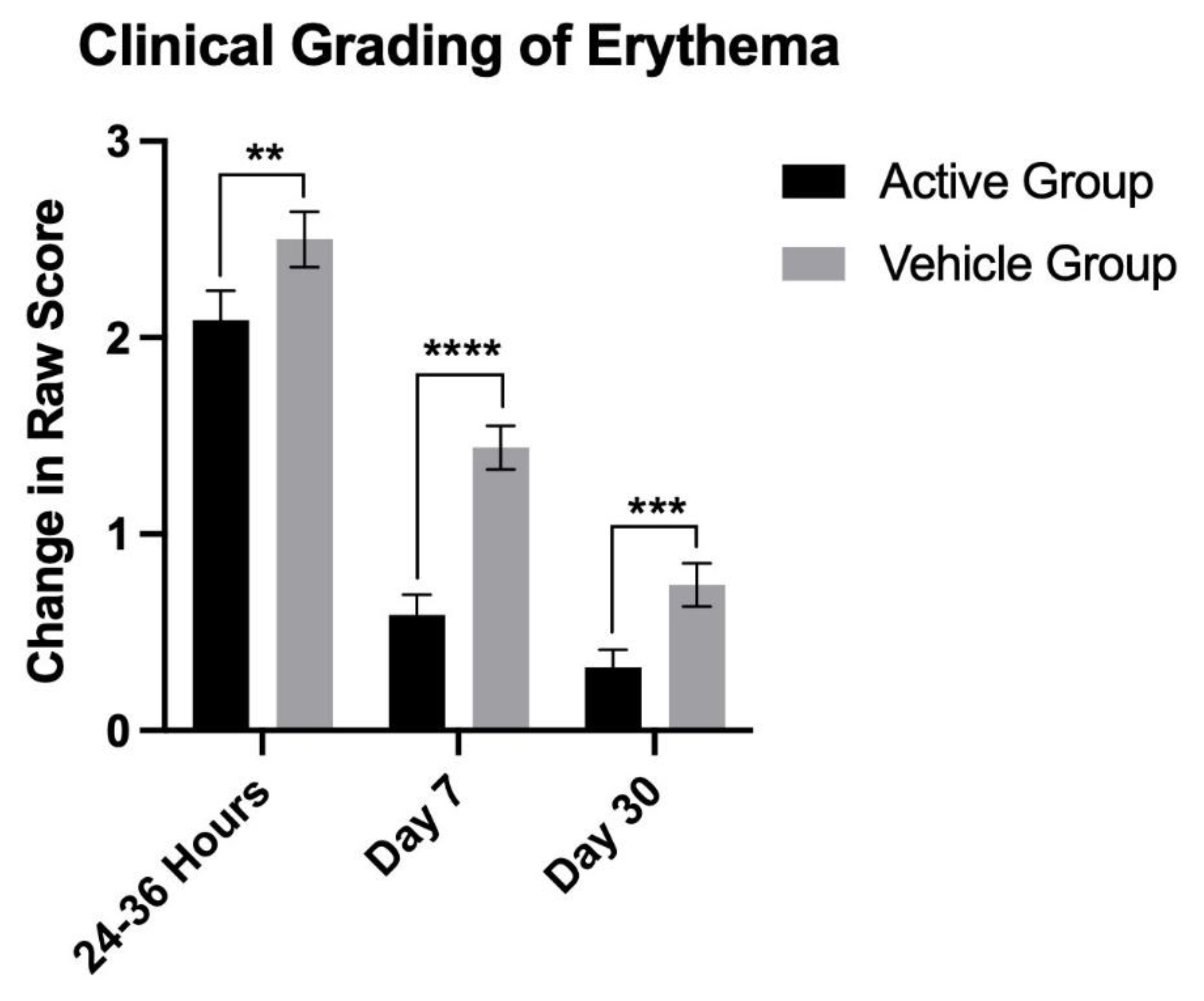
Table 1.
Up-regulated protein level (A) Biological Processes and (B) Pathway Enrichment (Summary). Top 20 significantly enriched terms. Corresponding number of genes and adj. p-values are reported. Terms were sorted by adj. p-value.
Table 1.
Up-regulated protein level (A) Biological Processes and (B) Pathway Enrichment (Summary). Top 20 significantly enriched terms. Corresponding number of genes and adj. p-values are reported. Terms were sorted by adj. p-value.
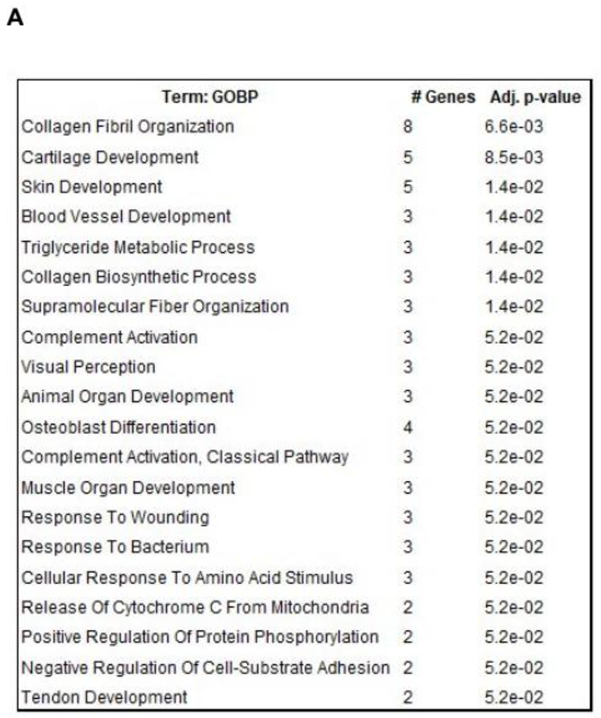 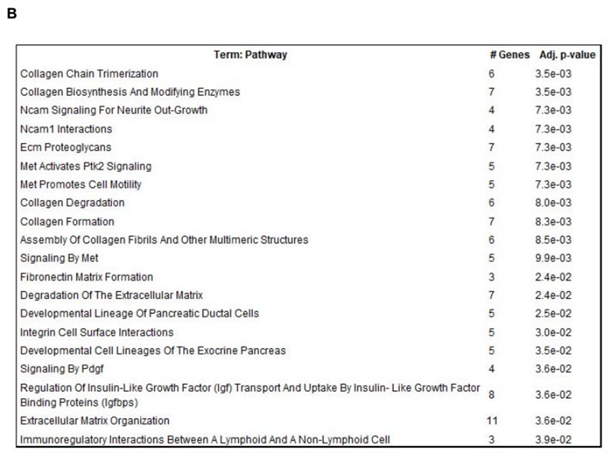
|
Disclaimer/Publisher’s Note: The statements, opinions and data contained in all publications are solely those of the individual author(s) and contributor(s) and not of MDPI and/or the editor(s). MDPI and/or the editor(s) disclaim responsibility for any injury to people or property resulting from any ideas, methods, instructions or products referred to in the content. |
© 2026 by the authors. Licensee MDPI, Basel, Switzerland. This article is an open access article distributed under the terms and conditions of the Creative Commons Attribution (CC BY) license (http://creativecommons.org/licenses/by/4.0/).
Copyright: This open access article is published under a Creative Commons CC BY 4.0 license, which permit the free download, distribution, and reuse, provided that the author and preprint are cited in any reuse.


