

Submitted:
25 March 2026
Posted:
26 March 2026
You are already at the latest version
Abstract
Background: Transitional age youth aged 18-25 years are more likely to engage in risky behaviors, displaying significantly higher alcohol and illicit drug use levels than adolescents and older adults. College students are particularly vulnerable at this critical life juncture as transitioning to adulthood may impact emotional health and well-being, contributing to anxiety, depression, and feelings of hopelessness, all of which are linked to increased risk of substance use and disorders. In 2018, we launched the MAPme Project to pilot a multi-site, longitudinal, college-based study intending to increase the foundational understanding of substance use and behavior development in diverse groups of young adults.
Objective: To characterize the design and status of the MAPme Project, a prospective longitudinal study centered on substance use and emotional wellness during and beyond college.
Participants: The pilot cohort comprised 301 college freshmen who completed online assessments at baseline (Wave 1).
Methods: We provide descriptive information on the pilot cohort, along with preliminary associations of pre- and early collegiate substance use outcomes, psychopathology, sleep patterns, and personality traits.
Results: Approximately 64% of participants reported use of a substance in the 90 days leading up to college. Alcohol and cannabis were the most prevalent substances used with males consuming more alcohol than females (t-value=-2.66, p=0.01). Females reported greater levels of daily stressors and mood symptoms. Other health and personality characteristics and observed associations between psychosocial risk and protective factors are described. Prior studies demonstrate the ability to test research hypotheses in the social, health, and clinical areas of psychology with robust statistical power.
Conclusions: Substance use and emotional well-being vary considerably upon entry into college/university. The MAPme Project encourages the engagement of students to address challenges associated with lack of awareness, inclusivity, and acceptance of scientific research. Overcoming barriers of inclusivity and empowering the community is key to the successful adoption and implementation of campus health and community-oriented research programs and systematically enhancing research training. Students and faculty interested in bringing MAPme to their campus community should or outreach page at https://scholarblogs.emory.edu/mapme/participant-requirements/ and sign-up page at https://forms.gle/puC7T2zS91td3rA98.
Keywords:
alcohol
; community health
; health education
; mental health
; other drugs
Introduction
Transitional age youth aged 18-25 years are more likely to engage in risky behaviors, displaying significantly higher alcohol and illicit drug use levels than adolescents and older adults (Kirst et al., 2014; White et al., 2005). The most common substances used by this group are tobacco, cannabis, and alcohol, with the latter being the most prevalent and misused (Claros & Sharma, 2012). Among young adults, those that attend college are more likely to drink excessively than their non-college counterparts (Bingham et al., 2005). Evidence suggests that 47% of all college students will meet the minimal criteria for cannabis or alcohol use disorder at some point within their first three years of college (Caldeira et al., 2009). These statistics are especially concerning considering that problematic alcohol and other substance use is associated with numerous negative health and psychosocial consequences, including a higher risk of automobile accidents, injuries, unwanted sexual encounters, poor academic performance, and legal issues (Jackson et al., 2020; Martens et al., 2005).
As with many other chronic diseases, susceptibility to heavy/frequent/high-intensity substance use (SU) and/or substance use disorders (SUDs) depends on many factors, including developmental, genetic, environmental, and sociocultural influences (Chen & Jacobson, 2012; Dodge et al., 2009; Tarter et al., 1999). College students are particularly vulnerable at this critical life juncture (Schulenberg et al., 2004). Many individuals experience numerous life changes within a short time window, including new living arrangements, social networks, unsupervised freedoms, academic stressors, and peer pressures (Borsari et al., 2007). These transitions have the potential to impact emotional health and well-being, contributing to anxiety, depression, and feelings of hopelessness, all of which are linked to increased risk of SUDs (Kroshus et al., 2021). Although using substances may serve as a coping mechanism to alleviate some of the symptoms associated with mental health issues (e.g.,(Walukevich-Dienst et al., 2023)), it is essential to note that SUDs generally progress in several stages along a continuum, and not always in a linear fashion. These stages include binge/intoxication, withdrawal/negative affect, and preoccupation/anticipation (Koob & Volkow, 2010); clinically, individual may meet mild, moderate, or severe substance use disorder diagnosis upon manifesting 2-3, 4-5, 6+ DSM-5 physiological and/or psychosocial symptoms (Association, 2013). While many students who use substances in college are likely to discontinue heavy use after graduation, a minority of individuals with greater vulnerability will go on to become adults with problematic substance use (Schulte & Hser, 2014). There is continued interest in the interplay of the many underlying factors that contribute to the progression of SUDs. Moreover, diverse sampling pools that explore different biological (i.e., genetics and race), psychological (i.e., attitudes/beliefs, expectations, motivations), and sociocultural (i.e., customs, values, lifestyle) aspects are needed to elucidate the etiology of SUD development fully (Chartier & Caetano, 2010).
Historically, much of SUD research on college campuses has centered on individuals of European ancestry (D’Amico et al., 2014) and at a singular institution. The lack of racial and ethnic diversity in research studies has significantly affected the predictive power, transferability, and generalizability of findings to underrepresented groups (Sirugo et al., 2019). Similarly, poor coverage of the different cultures across college campuses have limited inferences about college student health behaviors to effects that, while important, provide a narrow view of the many pathways to substance use and disorders. The next phase for college SU and SUD research requires study designs that overcome barriers and promote facilitators to aggressively recruit underrepresented individuals in large enough quantities to address sensitive questions that not only serve the genetic architecture but also provide some insight into the environmental, societal, and cultural influences that could contribute to differences across groups.
To date, most SUD research on college students has also focused on individual risk-behaviors, using cross-sectional designs, often at just one college or university (Haardörfer et al., 2021). While these studies have been informative, expanding to include multiple campus sites, along with a longitudinal perspective, allows for the exploration of more complex comparative analyses that include systematic, environmental, and socioeconomic influences over time (Morales et al., 2020). The longitudinal model also provides more validity regarding the direction of the causality of SUD development. Often cross-sectional studies only capture the ‘ ‘participant’s quantity and frequency of use in a short window period, without appreciating how SUDs develop as a consequence of repeated exposures to substances, which affect reward triggers, expectations, attitudes about the drug, motivational learning and subsequently habitual use. Over time, neurobiological functions associated with decision-making, emotional stability, and voluntary behavioral control are disrupted, potentially leading to the side problematic use and physiologic dependence. By implementing a longitudinal model, which explores multidimensional aspects of SUDs, we will have a more in-depth understanding of the individual and social risk factors that lead to SUDs development, from which investigators and clinicians can characterize risk more holistically. Overcoming these barriers will help to improve on the development of time-sensitive interventions, targeting issues regarding emotional health, and gene by environmental risks, for young adults with a high probability of developing SUD symptoms.
In 2018, the Behavioral Genetics of Addiction Laboratory at Emory University launched the MAPme Project, to pilot a multi-site, longitudinal, college-based study intending to increase the foundational understanding of SU development in diverse young adults. MAPme follows students throughout their collegiate career and beyond while assessing their demographic, sociocultural, behavioral, genetic, and psychopathological domains and their shared relationship with substance use and disorders. MAPme’s pilot cohort began at Emory University’s two undergraduate campuses. Its third pilot site at Kennesaw State University (KSU) commenced in fall 2021 through 2022. MAPme takes a proactive approach to ensure diverse sampling by applying a targeted recruitment strategy that oversamples select underrepresented groups to be nationally representative. The main objective of MAPme is to establish a campus-community-centered biorepository with extensive behavioral, genomic, and cognitive information on participants from several institutions, starting in the metro Atlanta area. The long-term goal is for the biorepository to serve a resource to (1) foster collaboration among interdisciplinary investigators to encourage innovative psychological research initiatives centered on student mental health and well-being, (2) engage historically excluded student populations as researchers, and (3) educate the greater campus communities on relevant topics related to SU and emotional wellness at this life stage. MAPme also leverages study data and research evidence in the broader field to empower students to make informed health decisions while providing transparency about the research process. Achieving these goals will improve engagement in psychological science and enhance the participation of multiple sociodemographic groups in psychological research.
Although MAPme’s pilot cohort was relatively small, we have learned a great deal about the intricacies associated with coordinating a multi-site research and education platform. We have leveraged the same strategies as other large behavioral genetics studies, such as Spit for Science (Dick et al., 2014) and Genes for Good (Brieger et al., 2019), and incorporated a community engagement program to optimize retention, engagement, and transparency in science. Here we describe (1) the conceptual framework and ongoing progress of MAPme, (2) community/student engagement activities, and (3) current ways to disseminate these research practices.
The MAPme Conceptual Model
We based MAPme’s conceptual model on the Theory of Triadic Influence (TTI) to address the multidimensionality of SUD progression in young adults (Flay & Petraitis, 1994) and its relation to other health behaviors. As such, the model allows for the examination of several proximal and distal causes of health behaviors related to substance use in this population (Flay & Petraitis, 1994). The TTI integrates three principal influencers of health behaviors: sociocultural factors, interpersonal relationships, and the immediate social environment (Flay & Petraitis, 1994) . Our longitudinal model, presented in Figure 1, illustrates many influencers related to the development of SUD at different time points across young adulthood, particularly life during and immediately after college (ages 18-26). Each stage of our model considers those generally static characteristics to the individual, including biological factors such as sex, genetic predisposition, personality, and race/ethnicity. It also incorporates other foundational cultural, sociodemographic, intrapersonal (inherited) factors and personal experiences that may influence their behavior at baseline. Next, we capture data on external environmental influences at several points along the student journey—before entering college, the college years, and those years immediately following. The objective is to assess the impact of the microenvironment, which include social norms and peer pressures that may affect health behaviors, along with the broader macro-environment, such as that of the campus community that may perpetuate use through normative values or beliefs, campus climate, and expectations (Figure 1). By crafting this model with a longitudinal design, we can examine the valuable connections between feedback loops and the participant’s behaviors related to their experiences with various substances. Considering that SUD develops along a continuum, we can assess how their understanding of the drug(s), peer networks, cognitive abilities, and self-concepts evolves as they advance to more regular, compulsive, and possibly even problematic use. Alternatively, we can examine those factors that protect individuals from initiating SUD at all or from progressing down the continuum.
Methods
Program Assessments
The baseline MAPme cohort used a longitudinal design to collect a wide range of information on individuals to provide insight into the factors that affect substance use development and emotional wellness in young adults (Figure 2). To capture this information, we have modified and leveraged several questionnaires in the domains of cognition, psychopathology, substance use, demographics, personality, health behaviors, and sociocultural data. Behavioral data are collected using the Research Electronic Data Capture (REDCap) web-based application tool, a user-friendly interface to collect and store data. Below we discuss baseline assessments that were captured at Wave 1. A complete list of the questionnaires included in subsequent waves can be found in Figure 2, which contains a link to embedded text files of specific assessments.
Sociodemographic Information
The sociodemographic questionnaire collects information on age, race/ethnicity, sex, marital status, annual family income, family structure (i.e., whether they were raised primarily by parents or extended relatives), and the population of their hometown.
Substance Use
Alcohol Use Disorders Identification Test(AUDIT)
The AUDIT is a simple 10 question diagnostic tool that helps identify individuals at the highest risk of harmful alcohol use (Babor et al., 1989; Fleming et al., 1991). Three questions focus on the amount and frequency of drinking, four centers of problems associated with drinking, and 3 centers on alcohol dependence. AUDIT can be separated into two parts, AUDIT-C, which classifies risk based on frequency and quantity of use and the AUDIT-P, which ranks risks relative to problematic behaviors over the past year. The AUDIT-C is comprised of 3 questions and is scored on a scale of 0-12. A score of 4 or more is considered positive for men, optimal for identifying hazardous drinking or active alcohol use disorders. In women, a score of 3 or more is considered positive.
Alcohol, Smoking, and Substance Involvement Screening Test (ASSIST)
The ASSIST comprises 8 questions to characterize problematic use in to low, moderate, to high-risk categories. A score of 0-3 indicates low risk, 4-26 moderate risk, and 27+ high risk (Group, 2002).
Obsessive Compulsive Drinking Scale (OCDS)
The OCDS is a 14-item assessment that measures alcohol cravings (Anton et al., 1995). Each item on the assessment is scored from 0 to 4. The questions on the OCDS has since been modified for cannabis and tobacco use.
Compulsive Drug Use:
Compulsive drug use was measured using a total of 135 number of questions adapted from the Obsessive-Compulsive Drinking Scale (OCDS) (Anton et al., 1995), the Alcohol Craving Questionnaire (ACQ) (Raabe et al., 2005), the Impaired Control (IC) (Heather et al., 1993), and the Alcohol Use Questionnaire (AUQ) (Bohn et al., 1995). Compulsive use is measured among individuals who use alcohol, cannabis and tobacco.
E-Cigarette Use:
The electronic consumption survey consisted of 8 questions (Pearson et al., 2018). It gathered information on several aspects, including lifetime e-cigarette use, frequency of use, previous daily usage, perceived harm, preferred flavor, nicotine content, and primary reasons for use.
WHO ASSIST V3.0:
The WHO ASSIST V3.0 assessment includes 8 questions about participants’ experiences with alcohol, tobacco products, and other substances over the past three months. If participants answered “yes,” they were then asked to specify the frequency of use, with options ranging from “never,” “once or twice,” “monthly,” “weekly,” to “daily or almost daily.”
Personality:
Big Five Inventory
Common personality elements are assessed using the Big Five Inventory (BFI). The BFI is a 44-item questionnaire that measures five common personality qualities (John & Srivastava, 1999). These qualities include openness (curious versus cautious), conscientiousness (organized versus disorganized), extraversion (extrovert versus introvert), agreeableness (friendly versus argumentative), and neuroticism (nervous versus confident).
Urgency, Premeditation (lack of), Perseverance (lack of), Sensation Seeking, Positive Urgency, Impulsive Behavior Scale (UPPS-P)
Participant impulsive behaviors are assessed using the 59-item UPPS-P scale (Lynam et al., 2006), UPPS measures five aspects of impulsive personality traits, including negative urgency, tendency to act rashly when in a negative mood; positive urgency, tendency to act rashly when in a positive mood; lack of premeditation, tendency to respond without thinking about the consequences; sensation seeking, probability of seeking out exhilarating experiences; and lack of perseverance, difficulties focusing on a particular task for some, specified, time.
Psychopathology:
General Anxiety Self-Report Scale (GAD-7)
Participant anxiety is assessed using the GAD-7 scale (Spitzer et al., 2006). Participants are asked over the last two weeks, prior to taking the assessment, if they had 0 (not at all), 1 (several days), 2 (more than half days), 3 (nearly every day) experienced symptoms associated with anxiety.
Perceived Stress Scale (PSS)
Participants’ self-reported perception of stress is measured using the Perceived Stress Scale (Cohen, 1988); a 14-item test that asks an individual to rate on a scale from 0 (never)-4(very often) how they deal with certain situations or external triggers within the last month.
Patient Health Questionnaire (PHQ-9)
Depressive symptoms are measured using the PHQ-9, a nine-item scale that scores the items of the DSM-IV on a Likert scale from 0 (not at all)-3 (nearly every day) (Kroenke et al., 2001). While the PHQ-9 is not a screening/diagnostic tool for depression, it is used to assess the severity of depression and can be used as a pre-screen to identify at-risk individuals.
Sleep Quality
The Pittsburg Sleep Quality Index (PQSI)
Sleep Quality is measured using select items from the PQSI, which differentiates “poor” from “good” sleep quality by measuring seven areas (components): subjective sleep quality, sleep latency, sleep duration, habitual sleep efficiency, sleep disturbances, use of sleeping medications, and daytime dysfunction over the last month (Buysse et al., 1989).
Participant Recruitment and Program Structure
Our baseline cohort targeted students enrolled as freshmen at both the Emory University and Oxford campuses in the 2018 fall semester. Students were deemed eligible to participate if they were first-time freshmen at the start of recruitment and were 18 years of age or older; freshman status was independently verified using a double-blind approach. In the two weeks leading up to the beginning of the semester, students were actively recruited via two mechanisms. Firstly, study coordinators posted flyers in approved, heavily trafficked sites across the campus, including on-campus freshman dormitories. Secondly, a group of more senior undergraduate student ambassadors, volunteering on the project, hosted activities around campus and virtually to promote the study. They also visited classrooms in person and online to disseminate program flyers and related information. Prospective participants were incentivized by the opportunity to receive a $15 gift card for completion of the study assessments at each wave. Advertising booths were also set up at different locations around campus to promote the study. If recruited at the events hosted by the undergraduate ambassadors, students also had a chance to receive a free MAPme T-shirt, cup, phone wallet, and/or water bottle.
All interested students were provided a flyer that contained a QR code or website link that allowed them to access the study assessments. Upon visiting the project website, students were immediately presented with an electronic consent form. After completing the consent form, the participants were subsequently led through a series of surveys that focus on risky health behaviors, personality characteristics, emotional wellness, sociodemographic information, substance use, personal experiences, family history, and cognition. After completing the surveys at Wave 1, students were then given the option to visit the BGA laboratory in-person and opt-in to provide a saliva sample for DNA extraction; participants who consented to provide DNA received an additional $5 gift card at the time of compensation.
The aforementioned student advertising and recruitment strategy is the standard protocol for launching MAPme at new sites. The DNA component is not a requirement for participation in MAPme, and students who choose to opt out are still compensated for the assessments. To encourage consented students to continue participating in the subsequent waves, they are re-contacted via email reminders and recruitment materials at tabling events on campus. Participation is also promoted via a raffle draw where participants at each site have a chance to receive a gift card at each wave of assessment. To ensure that we capture pertinent information on students at various time points throughout the year, we created a comprehensive testing schedule to include all essential questionnaires at each wave without overburdening the participants. The pilot cohort has completed a total of seven assessments at the time of this publication, and strategic planning for subsequent waves and new cohorts and sites is ongoing.
Saliva Collection and DNA Extraction
Pilot cohort participants that consented to DNA collection were provided an Oragene Discover OGR-500 Kit (DNA Genotek, Ottawa, Canada) and instructed to perform the swab technique to obtain ~2 ml of saliva. The swab was then placed in a 50-mL capped polypropylene tube containing lysis buffer (500 mL of 1 M Tris-HCl; 200 mM disodium ethylenediaminetetraacetic acid (EDTA), pH 8.0; 500 mL of 10% sodium docecyl sulfate; and 100 mL of 5 M sodium chloride). Participants were subsequently instructed to rinse their mouths with 10 mL of distilled water, and this was then added to the polypropylene tube. Tubes were stored at 4 °C until the DNA was extracted. Within one hour of collection, samples were labeled (de-identified), refrigerated, and prepared for shipment for DNA isolation at the VA Medical Center.
Genomic DNA was isolated from buccal cells using a modification of published methods (Ferguson et al., 2004; Freeman et al., 1997; Lench et al., 1988; Meulenbelt et al., 1995; Spitz et al., 1996). Briefly, Proteinase K solution (100 mL of 20 mg/mL) and sodium chloride (100 mL of 5 M) were added to each of the tubes. The tubes were incubated at 65 °C for 60 minutes. Residual lysis buffer was removed from the saturated swabs by centrifugation for 5 minutes at 1000 rpm, and the collected buffer was added back to the original 50-mL collection tube. An equal volume of 100% isopropyl alcohol was then added to each tube to precipitate the DNA, which was collected by centrifugation at 3500 g for 10 min at room temperature. The liquid was decanted, and the DNA pellet was washed with 1 mL of fresh 50% isopropyl alcohol. After drying at 65 °C, the pellet was re-suspended in 1 mL of 20 mM Tris-EDTA, pH 8.0. The yield of DNA was quantified by absorbance at 260 nm (1 optical density unit (O.D.) = 50 mg/mL), and an aliquot was diluted to a concentration of ≤ 20 ng/mL for a working sample. DNA samples are currently stored for future sequencing analysis.
Engaging, Educating, and Empowering a Community Using Research
In addition to the defined scientific objectives of MAPme, the program also serves as an educational research hub at the University—engaging undergraduate and graduate students to participate as student ambassadors and empowering them to be thoughtful research advocates, respectively. While college students represent a unique subset of the 18-25-year-old demographic that is at risk for using substances, many regard as an opportunistic population because of a willingness to meet the expectations of faculty/investigators who hold a position of authority at an institution (Peterson & Merunka, 2014). To overcome this potential confound we made study participation voluntary, provided monetary compensation, and allowed individuals the opportunity to opt-out at any time during or after data collection. As such, MAPme incurs the same challenges as random and stratified sampling. To keep participants aware and engaged with the study, we actively create and offer programming (e.g., speaker seminars) within the broader community under study, regardless of whether the student has participated. In doing so, the entire campus benefits from access to education and research resources. For instance, we employ graduate student RAs who gain hands-on experience by working closely with doctoral researchers to co-lead and support various aspects of the program. Graduate students lead four critical components of the program, including the 1) Quantitative Core, which assists with describing the data and performing advanced quantitative data analyses, 2) REDCAP Assessments Core, which develops online survey and oversees participant compensation, 3) the Education & Outreach Core that is responsible for carrying out community engagement and outreach activities, and 4) The Media Core that develops content for our websites and social media platforms to disseminate activities and findings to MAPme participants and the general public. Each graduate student is assigned 1-3 undergraduate student ambassador(s), who work together to develop a comprehensive strategic plan to complete essential program objectives every semester. Undergraduate students develop practical skills in hypothesis generation, data analysis, computational methodologies, recruitment, and health outreach. The MAPme data are also utilized in two research-focused psychology courses for undergraduates (PSYCH 180) and graduates (PSYCH 720P). Students in these courses can generate and test hypotheses while building up their knowledge of the biological and sociocultural bases that impact college substance use.
All MAPme trainees and ambassadors are encouraged to develop and participate in the programmatic outreach and engagement efforts. Thus far, we have implemented a bi-annual seminar series to spotlight prominent community-based behavioral and genetic studies and scientists advancing the research. For example, principal investigators with the All of Us research program (Sankar & Parker, 2017) and Spit for Science (Dick et al., 2014) have led informational discussions with students on campus to inform them of their research efforts and ask clarifying questions. Additionally, we host bi-monthly tabling events on campus to provide students with information about MAPme sponsored social engagements such as study breaks, general wellness activities, and informative discussions/forums.
Data Analyses
Below we report basic demographic information and statistical data of select variables of interest for the pilot cohort. Total and group sample means, the prevalence for specific outcomes of interest, and summary scores for select behavioral assessments were performed. We estimated measures of dispersion (i.e., standard deviation) for these descriptive statistics where appropriate. Tetrachoric correlations were used to determine the inter-correlation of each of the substance use variables. In addition, we highlight recently published papers led by undergraduate and graduate trainees who tested hypotheses using these data in a laboratory (Catherman et al., 2023; Martin et al., 2021) and classroom (Brown et al., 2020) setting.
Results
Demographics
In total, the pilot cohort recruited 305 first-year Emory University students in Wave 1 of the study. This group comprised 6.4% of incoming freshmen (N=1964, n=1,431 at the Atlanta campus, and n=533 at Oxford) during a record year of enrollment at the university. Of those that reported on sex (N=301), 70% (n=212) were female. The majority (57%; n=171) of the MAPme participants come from suburban environments (57%; n=171), followed by those from urban communities (38%; n=114), then rural environments having the least representation at (5%; N=15). A total of 272 participants (89%) consented to provide a saliva sample for DNA extraction.
Patterns of Substance Use
Determination of drug use was based on self-report data obtained using the Alcohol, Smoking and Substance Involvement Screening Test (ASSIST)29. Approximately 64% (N=193) of individuals reported using any substance (i.e., alcohol, tobacco, cannabis, cocaine, etc.) one or more times in their lifetime (see Table 1). There were no significant gender differences in substance initiation. In this cohort, alcohol was the most prevalent substance used (66% [N=189]) followed by cannabis (28% [N=83] and cigarettes (26% [N=77]). The rest of the substances were reported at low rates; in descending order, sedatives were reported at 12%, amphetamines at 9%, hallucinogens at 8%, cocaine at 4%, opioids at 3% and inhalants at 2% (Table 1). The correlations of various substances are reported in Table 2. As expected, “Ever use” of alcohol was most closely associated with use of cannabis and cigarette smoking.
Table 3 summarizes student involvement with substances. Based on the ASSIST scale, among students who endorsed alcohol use, most were at low risk of problems. While both men and women similarly report a low risk of alcohol-related problems, there was a significantly higher risk among men. The remaining substances were reported at too low rates on the ASSIST for meaningful statistical differentiation. According to the AUDIT scale, males and females had similar total scores, but males consumed more on average. Males also consumed and/or binged alcohol more frequently, as reported by the AUDIT-C (μmales=4.42; μfemales=3.19; p-value=0.010). Regarding compulsive drinking, on average, student craving for alcohol fell within the “minimal social drinking” range (μ=5.92), whereas individuals using cannabis exceed the threshold of 7 or higher indicating that these individuals were dependent.
Stress and Psychopathology
When examining participants’ degree of stress levels using the Perceived Stress Scale, both male and female students reported moderate stress levels; however, females reported significantly higher stress levels than males (Table 4). Depression symptoms, as examined via the PHSQ-9, were reported only minimally by male students; however, females reported significantly higher (mild) levels during this same period (μmales=4.06; μfemales=5.69; P-value=0.019). These patterns are consistent with anxiety as well, with males reporting only minimal levels of anxiety, and females, significantly higher, mild levels (μmales=4.23; μfemales=5.94; P-Value 0.008) in the GAD assessment (Spitzer et al., 2006).
Sleep Patterns
Table 5 describes patterns and quality of sleep reported by the participating freshmen. On average, students reported μ=7.95 (standard deviation (SD)=2.17) hours of sleep on weekdays (μmales=7.87 (2.32)); μfemales=8.01(2.05)), with slightly more sleep reported on weekends (8.62(3.00); (μmales=8.33 (2.95); μfemales=8.79 (2.97)). Majority (75.6%) report having good (64.7%) to very good (10.9%) sleep quality, with the remaining reporting poor (19.8%) to very poor (4.6%) quality sleep.
Impulsivity and Personality
Table 6 describes the personality facets of incoming freshmen using the UPPS (Lynam et al., 2006) impulsivity scale and the BFI (John & Srivastava, 1999). When assessing the UPPS scale results, we found significantly higher scores for both lack of premeditation subscale (μmales=1.92; μfemales=1.81; P-value=0.039) and sensation seeking subscale (μmales=2.93; μfemales=2.64; P-value <0.001) among males, indicating more impulsive behavior through the two pathways. On the BFI assessment, males had a higher average score in extraversion than females (μmales=3.42; μfemales=3.09; P-value=0.004), indicating that males were more likely to be extroverted. On the contrary, males had a lower average score in Neuroticism than females (μmales=2.85; μfemales=3.31; P-value <0.001), indicating that males tend to have more stable emotions.
Past Empirical Findings
Examinations of pilot data from studies have led to three research studies that have informed how temperament, personality, and behavior characteristics of studies relate to their mood, sleep behaviors, and substance use. Using data gathered during the first year of college, Catherman et al. (2023), demonstrated that neurotic tendencies was a direct indicator of both depressed mood and poor sleep quality with evidence to suggest that sleep and mood directly impacted each other over time. In a separate study, focused on behavioral reports at the start of college, Martin et al., (2023) compared the associations between personality traits and stress with alcohol use/misuse. Findings demonstrated that associations between daily stressors and alcohol involvement was influenced by a student’s tendency to experience mood swings, anxiety, irritability, and sadness. Specifically, among students who displayed a high number of depression-like neurotic tendencies, experiencing more daily stressors was associated with greater alcohol use/misuse. On the contrary, students who were low on these depression-like neurotic tendencies, used/misused alcohol less often as their level of daily stressor increased. Lastly, Brown et al. (Brown et al., 2020), as part of a graduate course on the “Behavioral Effects of Drugs”, leveraged MAPme data to examine whether temperament and behavioral characteristics of students mediated familial effects on drug use. The lead authors showed that a family history of internalizing, drinking, and illicit substance use, as well as teen personality and temperament are associated with drinking and alcohol problems, both in the 90-days prior and during college.
Discussion
MAPme is a college-based study established to analyze distal and proximal factors that lead to substance use and related disorders. We have developed a comprehensive set of behavioral, psychological, and cognitive assessments to capture a wide range of information from young adults. To date, students in the pilot cohort have completed surveys and engaged with student representatives for four academic and two post-college years. MAPme participant’s rates of substance use are comparable or slightly lower in all drug categories relative to findings from other cohort studies of entering freshmen (Bono et al., 2017; Dick et al., 2014). Larger sample sizes and further examination of our cohort’s socioeconomic background, cultural dynamics, and family history are needed to begin to explain some of the reasons behind these use rates. When examining the inter-correlations between alcohol and the other substances, we found that alcohol initiation most correlated with marijuana and cigarettes initiation. These findings are consistent with the literature, as these are the most comorbid substances in this population since the decline in smoking in the early 2000s (White et al., 2015).
Analysis of the baseline cohort confirmed that students differ in a multiplicity of dimensions in the time leading up to and during the first year of college. When examining alcohol consumption, assessing the AUDIT-C, most students were at low risk of harmful consumption. Males, however, had higher AUDIT-Consumption scores. Similarly for depression, stress, and anxiety rates in students, the level of problem severity were generally mild; however, there were significant sex differences noted in each category—women reporting higher levels in all three. Our findings support the literature, as many studies suggest that the female sex may be more vulnerable to chronic stress, resulting in increased mood deficits relative to their male counterparts. Therefore, it will be imperative to understand these differences in pathophysiology over time, particularly as it relates to substance use development in this population.
Most of the freshman students surveyed reported having good to very good sleep duration throughout the week, with the highest rates of sleep occurring on the weekend. It will be important however, to reassess these students each year, as studies suggest that as student’s classification increases from freshman, sophomore, junior, to senior, their reported sleep duration decreases significantly (Raley et al., 2016). The decrease in sleep quality has significant implications, as poor sleep is associated with drug use, smoking, and substance abuse. Therefore, our team will continue to monitor sleep patterns as the students’ progress through college.
There were some sex differences noted in personality facets among our cohort. Specifically, males reported more impulsive behaviors indicated by significantly higher rates of lack of premeditation and sensation seeking behaviors; these observations are consistent with past literature (Weafer & de Wit, 2014; Weisberg et al., 2011). Considering that impulsivity is an important risk factor for problematic substance use and substance use disorders later in life, it will be important to see if these differences in use begin to manifest later in the college experience in males (Mitchell & Potenza, 2015). Females, on the other hand, reported higher levels of neuroticism than their male counterparts. Individuals with higher levels of neuroticism have been found to be more likely to smoke cigarettes and misuse alcohol over the life course, so gaining a greater understanding of these differences will be key in understanding how personality predicts substance-use behaviors in young adulthood (Turiano et al., 2012). From the earliest studies of MAPme it is evident that several theoretical explanations for individual differences in personality, stress, emotionality, and substance use are supported. Support for the genetic/biological basis of substance use implies that these transmissible effects are not behavior specific and may manifest in the form of emotional, temperament, or substance use behaviors. This is aligned with recent findings on the hierarchical taxonomy of psychopathology which suggest that genetic effect on mental health behaviors mirror the same correlational structure observed among their behavioral counterparts with evidence for higher order dimensions (Kotov et al., 2017; Waldman et al., 2020). Relatedly, although support for the self-medication hypothesis is mixed, the Brown et al.’s cross-sectional study suggests that a challenge to testing this theory may stem from substance use behaviors being driven by multiple liabilities that may express themselves in similar forms due to unknown reasons not explicitly modeled in prior (e.g. multiformity models; Neale & Kendler, 1995).
Programmatic Observations
In addition to surveying students, we are taking additional strides to build rapport with the undergraduate community. As such, we have developed several programmatic efforts that go above and beyond basic recruitment. These activities include annual seminars, tabling events on campus, a psychology course that allows students to review MAPme data, a website (https://scholarblogs.emory.edu/mapme/) and social media accounts to disseminate information, and summative data sharing with campus administrators to facilitate compliance with federal guidelines for campus drinking policies. These combined efforts enable the team to interact with other students, faculty, and staff, who may or may not participate in the study, educate them, and obtain direct feedback about the program. The MAPme Project also empowers graduate and undergraduate students as research assistants and ambassadors by providing them the opportunity to get hands-on research experience for consecutive years. Evidence suggests that students who become involved in on-campus research experience numerous direct benefits. In many cases, they are exposed to broader research experiences that can be explored in the classroom and gain an avenue to learn more about scientific career paths early on to aid decision-making post-college. Ultimately, these interactions increase the likelihood of a student going on to pursue a scientific career45.
Considerations and Limitations
We note several areas of planning and implementation that may be of interest to others interested in developing similar studies on their college campus. First, because the original MAPme cohort employed a longitudinal cohort design, we limited recruitment at baseline to the first six weeks of the semester. A consequence of limiting recruitment to a small window was the ascertainment of a smaller sample size. However, it is difficult to ascertain how much larger the cohort might have been with an extended period. Spit for Science, by comparison, allowed students to join at any point throughout college. Second, as the MAPme cohort has continued to be assessed, we have observed varying levels of participation across subsequent waves. The variable retention rates are consistent with most longitudinal studies but underscore the importance of continuous participant engagement, allowing students to join at later time points. To overcome these challenges future cohorts of MAPme (described below) adopt a pseudo-longitudinal design. Third, many of the assessments are limited to self-reports, which may be prone to biases and false reporting. However, we attempt to mitigate this concern by using multiple assessments and screening for erroneous lifetime responses across assessment waves (when the data are available). Lastly, the pilot cohort reflected the demography of the target institution (44.5% Caucasian (non-Hispanic), 14.5% Asian, 10% Black, 7% Hispanic or Latino, 3% Two or More Races, 0.1% American Indian or Alaska Native, and 0.08% Native Hawaiian or Other Pacific Islanders). While preliminary results are informative, underrepresented groups’ poor representation will widen the disparities gap in psychiatric and medical research.
Future Directions
In the spring of 2021, the MAPme Study expanded to a nationwide platform focusing firstly on southeastern colleges and universities in the USA, such as KSU. As a publicly funded state institution located in proximity to metro Atlanta, KSU is one of the top 50 largest public schools in the nation and has a diverse student population. During our pilot testing, we encouraged the participation of underrepresented groups in MAPme, by thoughtfully implementing a weighted recruitment strategy to oversample groups historically underrepresented in research. We began by building community partnerships with university deans, campus administrators, and organizations. At KSU, we worked closely with campus faculty and staff to coordinate recruitment efforts and plan new educational events on campus. We also implemented focus groups to better understand the barriers and facilitators to participation in genetically informed research on substance use/misuse and health behaviors in college-aged youth.
Additionally, to make participation as seamless as possible for students and further diversify data collection methods to include observational and performance measures, we built a mobile research vehicle to meet participants where they live and go to school. The research van (Figure 3) serves as a base of operations for student engagement and disseminating recruitment and educational materials. The van can transport a team of three researchers and comes equipped with iPads for data collection, a Wi-Fi hotspot, and refrigerated cooling to facilitate the in-person collection of saliva kits. These additional tools facilitated greater access to students, and student engagement, and helped to stem attrition due to the COVID-19 pandemic, which saw elevated rates of emotional distress (Zimmermann et al., 2021), uncertainty (Huang et al., 2023), and drinking among college students (Jackson et al., 2021; Mohr et al., 2021). Our student engagement efforts also highlighted, the need to shift from passive longitudinal strategy to a more active pseudo-longitudinal design that (1) meets students where they are on campus (i.e., the classroom), (2) emphasizes the importance of engagement in research through research credits in courses, (3) allows for more flexible participation (i.e., across classes), compensates students in multiple ways that are most salient to them (participant-centered reports, research credit), and builds partnerships with faculty (consortium membership and data sharing). Details on how to become a part of MAPme are available here: https://scholarblogs.emory.edu/mapme/participant-requirements/. Interested parties/faculty can complete our form to request to be added to our multi-campus panel: https://forms.gle/puC7T2zS91td3rA98.
To bring MAPme to your college or university, please visit the MAPme website or complete the collaboration form available here. Participants can engage with MAPme through various activities, including data sharing, reporting results, joint publications, and more. By filling out the collaboration form, you can help us align our efforts with your specific interests. Faculty and/or administrators can bring MAPme into their classrooms by filling out the MAPme Faculty Information Form, which collects essential details about the course where the survey will be presented. Local IRB approval may be required.
We will carry out further analysis on the data from the subsequent waves of the survey to investigate how the substance use varied among our participants. Additionally, we will be reporting the changes in the pattern of substance use upon graduation and leaving college.
Conclusions
Forming a multi-site community-driven research and education program is challenging; still, the benefits (i.e., cultivating a more educated and engaged at-risk population, increased research training opportunities for undergraduate and graduate students) outweigh the risks. Prospectively engaging college students transcends opportunistic sampling. Our efforts will provide much-needed answers to trends in mental health and wellness nationwide, as well as emerging challenges in translating barriers to inclusion of at-risk individuals and diverse student representation at all levels of the research process.
Funding
This work was supported in part by a grant from the Giles Robertson Foundation in the Department of Psychology at Emory University. Drs. Palmer, Benca-Bachman, and Barfield were supported by a grant from the National Institute on Drug Abuse (R01DA042742).
Credit Roles
The current manuscript was written in parts by all of the coauthors. WLB and RHCP generated the original draft, which was edited by all of the coauthors. JO, DN, CEB, and HD executed the study protocol, collected, and prepared data for analysis. YX undertook the descriptive analyses and generated tables. RHP and JW edited the final version for publication.
Data Availability
Data are available upon request to the senior author as they are already a part of a repository. Please visit: MAPme – Behavioral Genetics of Addiction Laboratory or contact Rohan.Palmer@Emory.edu.
Human Ethics and Consent to Participate declarations
This study was conducted in accordance with the ethical standards of the Institutional Review Board (IRB) of Emory University (IRB: 00096137) and the 1964 Declaration of Helsinki and its later amendments. Informed consent was obtained from all individual participants included in the study.
Consent to Publish
All participants have consented to the submission of the manuscript to the journal for publication.
Acknowledgments
We are grateful to all the MAPme Project participants and the undergraduate research ambassadors (Ayushi Agarwal, Anjali Agarwal, Maia Amellio, Samantha Cassidy, Caroline Catherman, Skyra Loche, Sri Ponnazhagan, James Swanson, and Keland Yip) and graduate research assistants (Lauren Bertin, Kathleen Martin, Natalia Jaume-Feliciosi, Haley Hershey, Sijian Fang, and Vincente Cordero). We are also grateful to Dr. John McGeary of the Providence VA Medical Center for his assistance with DNA collection and processing for storage.
Conflicts of Interest
The authors have no conflicts to declare.
References
- Anton, R. F.; Moak, D. H.; Latham, P. The Obsessive Compulsive Drinking Scale: a self-rated instrument for the quantification of thoughts about alcohol and drinking behavior. Alcohol Clin Exp Res 1995, 19(1), 92–99. [Google Scholar] [CrossRef]
- Association, A. P. Diagnostic and statistical manual of mental disorders, 5th ed.; CautionaryStatement, 2013. [Google Scholar] [CrossRef]
- Babor, T.; de la Fuente, J.; Saunders, J.; Grant, M. WHO/MNH/ DAT 89.4; AUDIT, The Alcohol Use Disorders Identification Test: Guidelines for use in primary health care. 1989.
- Bingham, C. R.; Shope, J. T.; Tang, X. Drinking behavior from high school to young adulthood: differences by college education. Alcohol Clin Exp Res 2005, 29(12), 2170–2180. [Google Scholar] [CrossRef]
- Bohn, M. J.; Krahn, D. D.; Staehler, B. A. Development and Initial Validation of a Measure of Drinking Urges in Abstinent Alcoholics. Alcoholism: Clinical and Experimental Research 1995, 19(3), 600–606. [Google Scholar] [CrossRef] [PubMed]
- Bono, R. S.; Barnes, A. J.; Dick, D. M.; Kendler, K. S. Drinking, Cigarette Smoking, and Employment Among American College Freshmen at a Four-Year University. Subst Use Misuse 2017, 52(2), 182–193. [Google Scholar] [CrossRef] [PubMed]
- Borsari, B.; Murphy, J. G.; Barnett, N. P. Predictors of alcohol use during the first year of college: implications for prevention. Addict Behav 2007, 32(10), 2062–2086. [Google Scholar] [CrossRef]
- Brieger, K.; Zajac, G. J. M.; Pandit, A.; Foerster, J. R.; Li, K. W.; Annis, A. C.; Schmidt, E. M.; Clark, C. P.; McMorrow, K.; Zhou, W.; Yang, J.; Kwong, A. M.; Boughton, A. P.; Wu, J.; Scheller, C.; Parikh, T.; de la Vega, A.; Brazel, D. M.; Frieser, M.; Abecasis, G. R. Genes for Good: Engaging the Public in Genetics Research via Social Media. The American Journal of Human Genetics 2019, 105(1), 65–77. [Google Scholar] [CrossRef]
- Brown, A. L.; España, R. A.; Benca-Bachman, C. E.; Welsh, J. W.; Palmer, R. H. Adolescent Behavioral Characteristics Mediate Familial Effects on Alcohol Use and Problems in College-Bound Students. Substance Abuse: Research and Treatment 2020, 14, 1178221820970925. [Google Scholar] [CrossRef]
- Buysse, D. J.; Reynolds, C. F., 3rd; Monk, T. H.; Berman, S. R.; Kupfer, D. J. The Pittsburgh Sleep Quality Index: a new instrument for psychiatric practice and research. Psychiatry Res 1989, 28(2), 193–213. [Google Scholar] [CrossRef] [PubMed]
- Caldeira, K. M.; Kasperski, S. J.; Sharma, E.; Vincent, K. B.; O’Grady, K. E.; Wish, E. D.; Arria, A. M. College students rarely seek help despite serious substance use problems. J Subst Abuse Treat 2009, 37(4), 368–378. [Google Scholar] [CrossRef]
- Catherman, C.; Cassidy, S.; Benca-Bachman, C. E.; Barber, J. M.; Palmer, R. H. C. Associations between neuroticism, subjective sleep quality, and depressive symptoms across the first year of college. J Am Coll Health 2023, 71(2), 381–388. [Google Scholar] [CrossRef]
- Chartier, K.; Caetano, R. Ethnicity and health disparities in alcohol research. Alcohol Res Health 2010, 33(1-2), 152–160. [Google Scholar]
- Chen, P.; Jacobson, K. C. Developmental trajectories of substance use from early adolescence to young adulthood: gender and racial/ethnic differences. J Adolesc Health 2012, 50(2), 154–163. [Google Scholar] [CrossRef]
- Claros, E.; Sharma, M. The relationship between emotional intelligence and abuse of alcohol, marijuana, and tobacco among college students. Journal of Alcohol and Drug Education 2012, 8–37. [Google Scholar]
- Cohen, S. Perceived stress in a probability sample of the United States; 1988. [Google Scholar]
- D’Amico, E. J.; Tucker, J. S.; Shih, R. A.; Miles, J. N. Does diversity matter? The need for longitudinal research on adolescent alcohol and drug use trajectories. Subst Use Misuse 2014, 49(8), 1069–1073. [Google Scholar] [CrossRef]
- Dick, D.; Nasim, A.; Edwards, A. C.; Salvatore, J.; Cho, S. B.; Adkins, A.; Meyers, J.; Yan, J.; Cooke, M.; Clifford, J.; Goyal, N.; Halberstadt, L.; Ailstock, K.; Neale, Z.; Opalesky, J.; Hancock, L.; Donovan, K. K.; Sun, C.; Riley, B.; Kendler, K. S. Spit for Science: launching a longitudinal study of genetic and environmental influences on substance use and emotional health at a large US university [Original Research]. Frontiers in Genetics 2014, 5–2014. [Google Scholar] [CrossRef]
- Dodge, K. A.; Malone, P. S.; Lansford, J. E.; Miller, S.; Pettit, G. S.; Bates, J. E. A dynamic cascade model of the development of substance-use onset. Monogr Soc Res Child Dev 2009, 74(3), vii–119. [Google Scholar] [CrossRef]
- Ferguson, L.; Yonge, O.; Myrick, F. Students’ Involvement in Faculty Research: Ethical and Methodological Issues. International Journal of Qualitative Methods 2004, 3, 56–68. [Google Scholar] [CrossRef]
- Flay, B.; Petraitis, J. The Theory of Triadic Influence: A New Theory of Health Behavior With Implications for Preventive Interventions. Advances in Medical Sociology 1994, 4, 19–44. [Google Scholar]
- Fleming, M. F.; Barry, K. L.; MacDonald, R. The alcohol use disorders identification test (AUDIT) in a college sample. Int J Addict 1991, 26(11), 1173–1185. [Google Scholar] [CrossRef] [PubMed]
- Freeman, B.; Powell, J.; Ball, D.; Hill, L.; Craig, I.; Plomin, R. DNA by mail: an inexpensive and noninvasive method for collecting DNA samples from widely dispersed populations. Behav Genet 1997, 27(3), 251–257. [Google Scholar] [CrossRef] [PubMed]
- Group, W. A. W. The Alcohol, Smoking and Substance Involvement Screening Test (ASSIST): development, reliability and feasibility. Addiction 2002, 97(9), 1183–1194. [Google Scholar] [CrossRef]
- Haardörfer, R.; Windle, M.; Fairman, R. T.; Berg, C. J. Longitudinal changes in alcohol use and binge-drinking among young-adult college students: Analyses of predictors across system levels. Addictive Behaviors 2021, 112, 106619. [Google Scholar] [CrossRef]
- Heather, N.; Tebbutt, J. S.; Mattick, R. P.; Zamir, R. Development of a scale for measuring impaired control over alcohol consumption: a preliminary report. Journal of Studies on Alcohol 1993, 54(6), 700–709. [Google Scholar] [CrossRef] [PubMed]
- Huang, A.; Liu, L.; Wang, X.; Chen, J.; Liang, S.; Peng, X.; Li, J.; Luo, C.; Fan, F.; Zhao, J. Intolerance of uncertainty and anxiety among college students during the re-emergence of COVID-19: Mediation effects of cognitive emotion regulation and moderation effects of family function. J Affect Disord 2023, 327, 378–384. [Google Scholar] [CrossRef] [PubMed]
- Jackson, K. M.; Merrill, J. E.; Stevens, A. K.; Hayes, K. L.; White, H. R. Changes in Alcohol Use and Drinking Context due to the COVID-19 Pandemic: A Multimethod Study of College Student Drinkers. Alcohol Clin Exp Res 2021, 45(4), 752–764. [Google Scholar] [CrossRef] [PubMed]
- Jackson, K. M.; Sokolovsky, A. W.; Gunn, R. L.; White, H. R. Consequences of alcohol and marijuana use among college students: Prevalence rates and attributions to substance-specific versus simultaneous use. Psychol Addict Behav 2020, 34(2), 370–381. [Google Scholar] [CrossRef]
- John, O. P.; Srivastava, S. The Big-Five trait taxonomy: History, measurement, and theoretical perspectives; 1999. [Google Scholar]
- Kirst, M.; Mecredy, G.; Borland, T.; Chaiton, M. Predictors of substance use among young adults transitioning away from high school: a narrative review. Subst Use Misuse 2014, 49(13), 1795–1807. [Google Scholar] [CrossRef]
- Koob, G. F.; Volkow, N. D. Neurocircuitry of addiction [Research Support, N.I.H. Extramural 2010. [Google Scholar]
- Review. Neuropsychopharmacology 35(1), 217–238. [CrossRef]
- Kotov, R.; Krueger, R. F.; Watson, D.; Achenbach, T. M.; Althoff, R. R.; Bagby, R. M.; Brown, T. A.; Carpenter, W. T.; Caspi, A.; Clark, L. A.; Eaton, N. R.; Forbes, M. K.; Forbush, K. T.; Goldberg, D.; Hasin, D.; Hyman, S. E.; Ivanova, M. Y.; Lynam, D. R.; Markon, K.; Zimmerman, M. The Hierarchical Taxonomy of Psychopathology (HiTOP): A dimensional alternative to traditional nosologies. J Abnorm Psychol 2017, 126(4), 454–477. [Google Scholar] [CrossRef]
- Kroenke, K.; Spitzer, R. L.; Williams, J. B. The PHQ-9: validity of a brief depression severity measure. J Gen Intern Med 2001, 16(9), 606–613. [Google Scholar] [CrossRef]
- Kroshus, E.; Hawrilenko, M.; Browning, A. Stress, self-compassion, and well-being during the transition to college. Soc Sci Med 2021, 269, 113514. [Google Scholar] [CrossRef] [PubMed]
- Lench, N.; Stanier, P.; Williamson, R. Simple Non-Invasive Method to Obtain DNA for Gene Analysis. The Lancet 1988, 331(8599), 1356–1358. [Google Scholar] [CrossRef]
- Lynam, D. R.; Smith, G. T.; Whiteside, S. P.; Cyders, M. A. The UPPS-P: Assessing five personality pathways to impulsive behavior. West Lafayette, IN: Purdue University 2006, 10. [Google Scholar]
- Martens, M. P.; T.; B. N.; M.; Dude, D. B.; K. Measuring Negative Consequences of College Student Substance Use: A Psychometric Evaluation of the Core Alcohol and Drug Survey. Measurement and Evaluation in Counseling and Development 2005, 38(3), 164–175. [Google Scholar] [CrossRef]
- Martin, K. P.; Benca-Bachman, C. E.; Palmer, R. H. C. Risk for alcohol use/misuse among entering college students: The role of personality and stress. Addictive Behaviors Reports 2021, 13, 100330. [Google Scholar] [CrossRef]
- Meulenbelt, I.; Droog, S.; Trommelen, G. J.; Boomsma, D. I.; Slagboom, P. E. High-yield noninvasive human genomic DNA isolation method for genetic studies in geographically dispersed families and populations. Am J Hum Genet 1995, 57(5), 1252–1254. [Google Scholar]
- Mitchell, M. R.; Potenza, M. N. Importance of sex differences in impulse control and addictions. Front Psychiatry 2015, 6, 24. [Google Scholar] [CrossRef]
- Mohr, C. D.; Umemoto, S. K.; Rounds, T. W.; Bouleh, P.; Arpin, S. N. Drinking to Cope in the COVID-19 Era: An Investigation Among College Students. J Stud Alcohol Drugs 2021, 82(2), 178–187. [Google Scholar] [CrossRef] [PubMed]
- Morales, A. M.; Jones, S. A.; Kliamovich, D.; Harman, G.; Nagel, B. J. Identifying Early Risk Factors for Addiction Later in Life: a Review of Prospective Longitudinal Studies. Current Addiction Reports 2020, 7(1), 89–98. [Google Scholar] [CrossRef] [PubMed]
- Neale, M. C.; Kendler, K. S. Models of comorbidity for multifactorial disorders. Am J Hum Genet 1995, 57(4), 935–953. [Google Scholar] [PubMed]
- Pearson, J. L.; Hitchman, S. C.; Brose, L. S.; Bauld, L.; Glasser, A. M.; Villanti, A. C.; McNeill, A.; Abrams, D. B.; Cohen, J. E. Recommended core items to assess e-cigarette use in population-based surveys. Tobacco Control 2018, 27(3), 341–346. [Google Scholar] [CrossRef] [PubMed]
- Peterson, R.; Merunka, D. Convenience samples of college students and research reproducibility. Journal of Business Research 2014, 67, 1035–1041. [Google Scholar] [CrossRef]
- Raabe, A.; Grüsser, S. M.; Wessa, M.; Podschus, J.; Flor, H. The assessment of craving: psychometric properties, factor structure and a revised version of the Alcohol Craving Questionnaire (ACQ). Addiction 2005, 100(2), 227–234. [Google Scholar] [CrossRef]
- Raley, H.; Naber, J.; Cross, S.; Perlow, M. The Impact of Duration of Sleep on Academic Performance in University Students. Madridge Journal of Nursing 2016, 1, 11–18. [Google Scholar] [CrossRef]
- Sankar, P. L.; Parker, L. S. The Precision Medicine Initiative’s All of Us Research Program: an agenda for research on its ethical, legal, and social issues. Genet Med 2017, 19(7), 743–750. [Google Scholar] [CrossRef]
- Schulenberg, J. E.; Sameroff, A. J.; Cicchetti, D. The transition to adulthood as a critical juncture in the course of psychopathology and mental health. Dev Psychopathol 2004, 16(4), 799–806. [Google Scholar] [CrossRef]
- Schulte, M. T.; Hser, Y. I. Substance Use and Associated Health Conditions throughout the Lifespan. Public Health Rev 2014, 35(2). [Google Scholar] [CrossRef]
- Sirugo, G.; Williams, S. M.; Tishkoff, S. A. The Missing Diversity in Human Genetic Studies. Cell 2019, 177(1), 26–31. [Google Scholar] [CrossRef] [PubMed]
- Spitz, E.; Moutier, R.; Reed, T.; Busnel, M. C.; Marchaland, C.; Roubertoux, P. L.; Carlier, M. Comparative diagnoses of twin zygosity by SSLP variant analysis, questionnaire, and dermatoglyphic analysis. Behav Genet 1996, 26(1), 55–63. [Google Scholar] [CrossRef]
- Spitzer, R. L.; Kroenke, K.; Williams, J. B.; Löwe, B. A brief measure for assessing generalized anxiety disorder: the GAD-7. Arch Intern Med 2006, 166(10), 1092–1097. [Google Scholar] [CrossRef]
- Tarter, R.; Vanyukov, M.; Giancola, P.; Dawes, M.; Blackson, T.; Mezzich, A.; Clark, D. B. Etiology of early age onset substance use disorder: a maturational perspective. Dev Psychopathol 1999, 11(4), 657–683. [Google Scholar] [CrossRef]
- Turiano, N. A.; Whiteman, S. D.; Hampson, S. E.; Roberts, B. W.; Mroczek, D. K. Personality and Substance Use in Midlife: Conscientiousness as a Moderator and the Effects of Trait Change. J Res Pers 2012, 46(3), 295–305. [Google Scholar] [CrossRef]
- Waldman, I. D.; Poore, H. E.; Luningham, J. M.; Yang, J. Testing structural models of psychopathology at the genomic level. World Psychiatry 2020, 19(3), 350–359. [Google Scholar] [CrossRef]
- Walukevich-Dienst, K.; Calhoun, B. H.; Fairlie, A. M.; Cadigan, J. M.; Patrick, M. E.; Lee, C. M. Using substances to cope with social anxiety: Associations with use and consequences in daily life. Psychol Addict Behav 2023, 37(4), 581–591. [Google Scholar] [CrossRef]
- Weafer, J.; de Wit, H. Sex differences in impulsive action and impulsive choice. Addictive Behaviors 2014, 39(11), 1573–1579. [Google Scholar] [CrossRef]
- Weisberg, Y. J.; DeYoung, C. G.; Hirsh, J. B. Gender Differences in Personality across the Ten Aspects of the Big Five [Original Research]. Frontiers in Psychology 2011, volume 2–2011. [Google Scholar] [CrossRef]
- White, H. R.; Labouvie, E. W.; Papadaratsakis, V. Changes in Substance use during the Transition to Adulthood: A Comparison of College Students and Their Noncollege Age Peers. Journal of Drug Issues 2005, 35(2), 281–306. [Google Scholar] [CrossRef]
- White, J.; Walton, D.; Walker, N. Exploring comorbid use of marijuana, tobacco, and alcohol among 14 to 15-year-olds: findings from a national survey on adolescent substance use. BMC Public Health 2015, 15, 233. [Google Scholar] [CrossRef] [PubMed]
- Zimmermann, M.; Bledsoe, C.; Papa, A. Initial impact of the COVID-19 pandemic on college student mental health: A longitudinal examination of risk and protective factors. Psychiatry Res 2021, 305, 114254. [Google Scholar] [CrossRef]
Figure 1.
The MAPme Conceptual Model. Based on the TTI, MAPme explores both proximal and distal factors associated with substance use development including biology, cultural environments, and social situations.
Figure 1.
The MAPme Conceptual Model. Based on the TTI, MAPme explores both proximal and distal factors associated with substance use development including biology, cultural environments, and social situations.
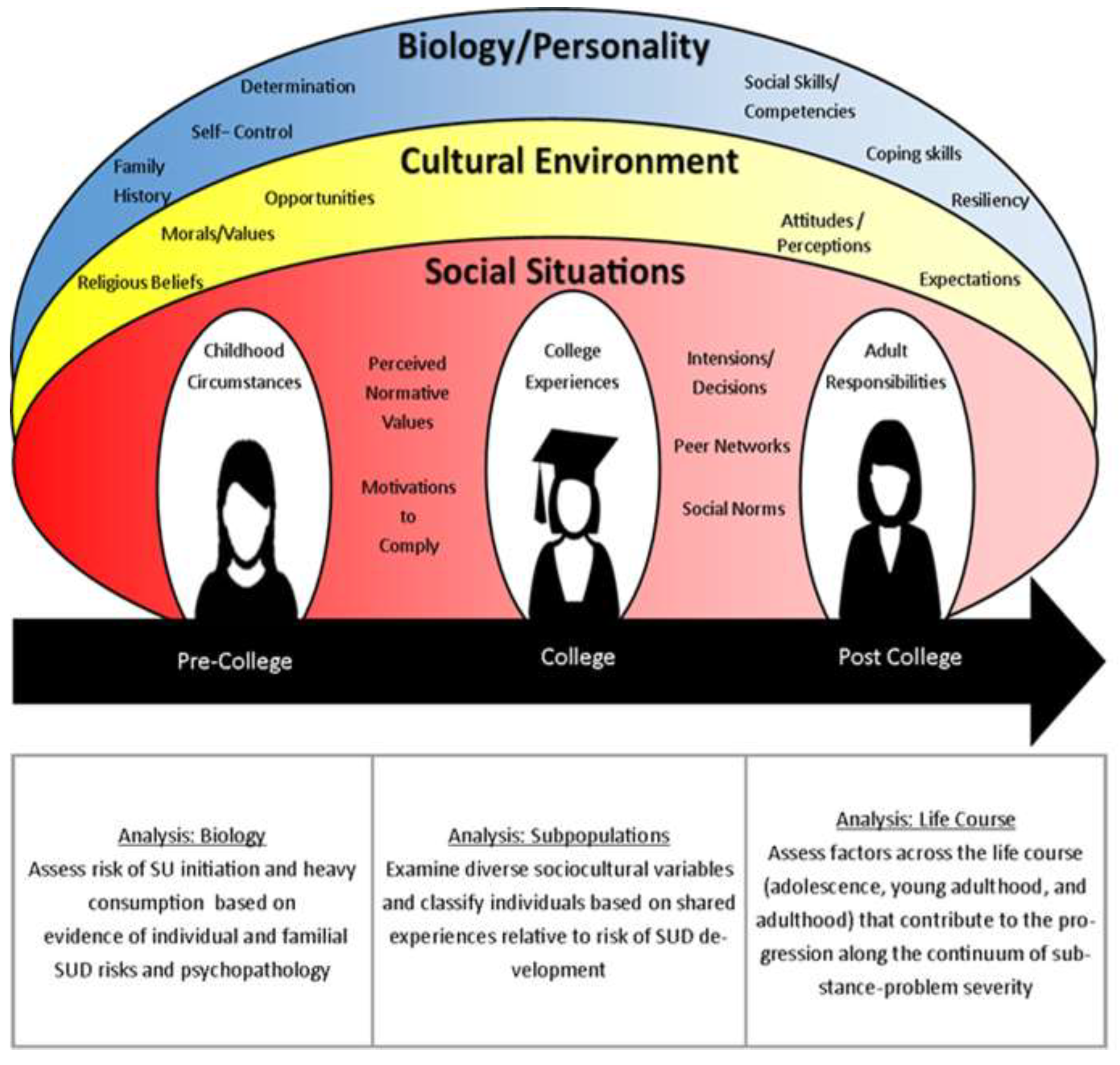
Figure 2.
MAPme Assessments. Radial chart detailing set of MAPme assessments. Students complete assessments each semester via REDCap. Click on the dot above each assessment to view the corresponding survey items.
Figure 2.
MAPme Assessments. Radial chart detailing set of MAPme assessments. Students complete assessments each semester via REDCap. Click on the dot above each assessment to view the corresponding survey items.
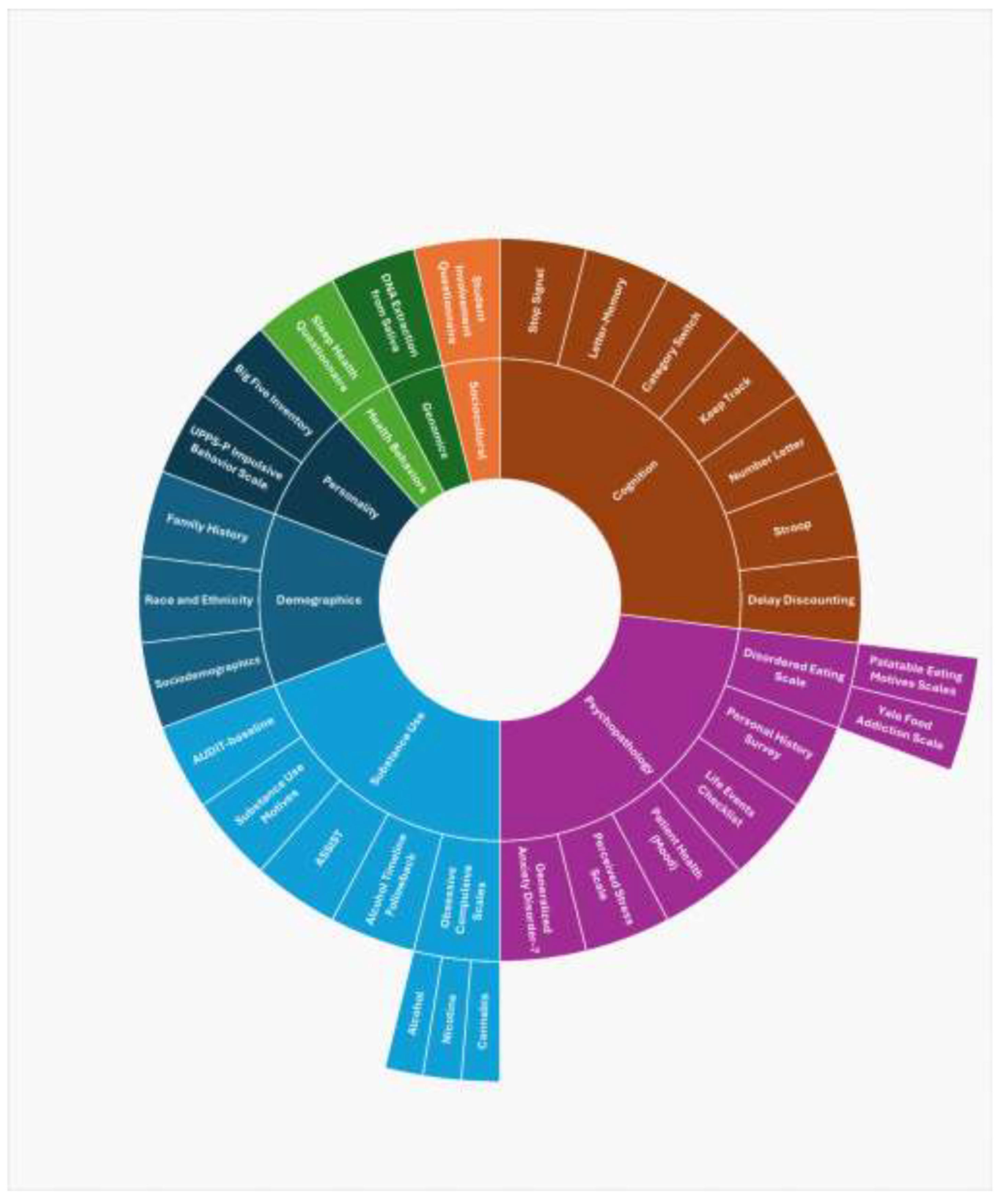
Figure 3.
The MAPme Van. Photograph depicting the MAPme Van used to transport recruitment and engagement tools, as well as members of the research team to events.
Figure 3.
The MAPme Van. Photograph depicting the MAPme Van used to transport recruitment and engagement tools, as well as members of the research team to events.
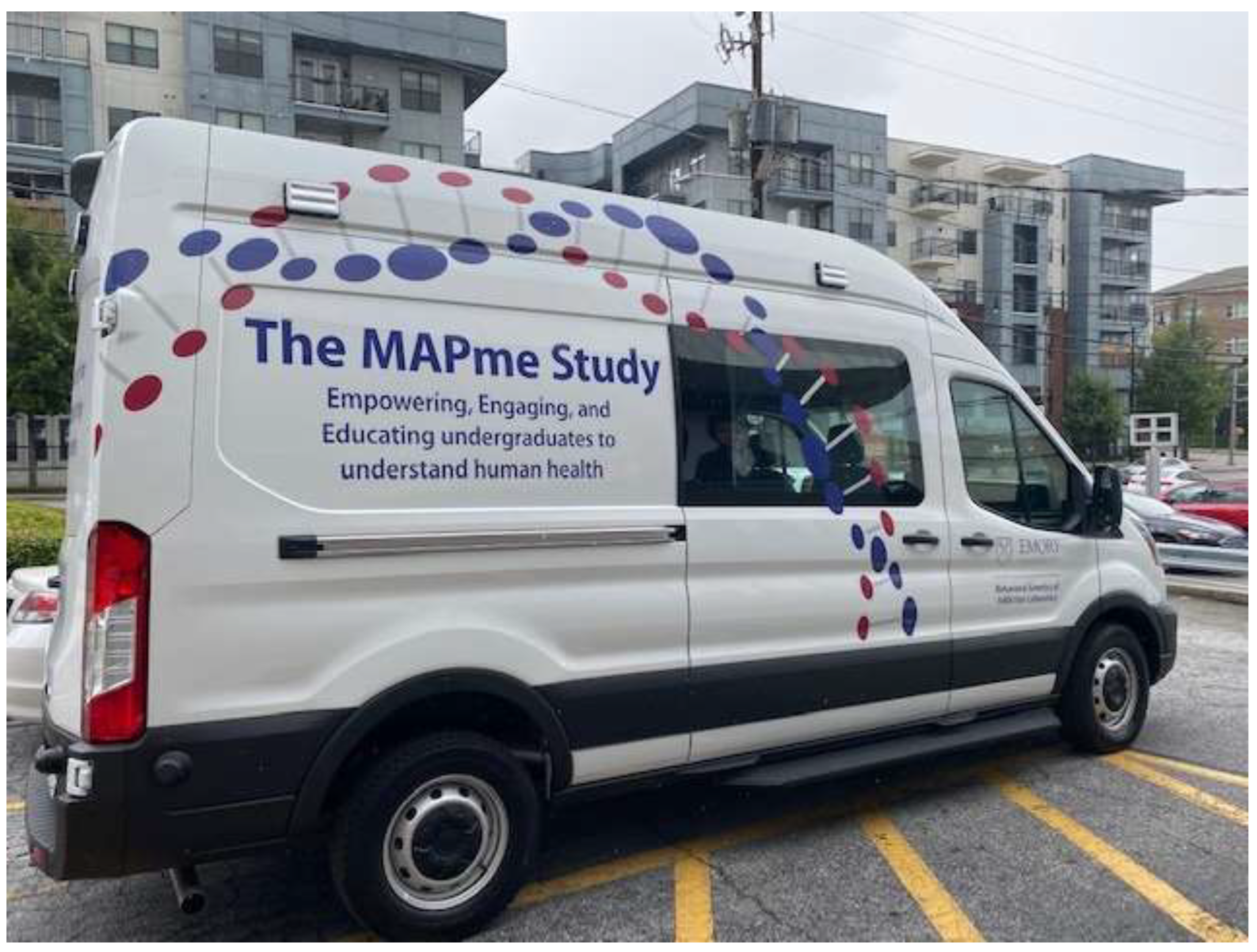

Table 1.
Ever Use statistics of the MAPme study population, stratified by gender.
| Baseline characteristic | Total (N=301) | Male (N=89) | Female (N=212) | ta/ b | p | |||
| Ma/N b | SDa/%b | Ma/N b | SDa/%b | Ma/N b | SDa/%b | |||
| Age (yrs) a | 18.58 | 0.39 | 18.65 | 0.38 | 18.55 | 0.39 | -2.19 | 0.030 |
| Emory Main Campus | 193 | 0.64 | 62 | 0.70 | 131 | 0.62 | 1.36 | 0.243 |
| Ever use — Any substance | 194 | 0.65 | 52 | 0.59 | 142 | 0.67 | 1.49 | 0.222 |
| Ever use — Alcohol | 189 | 0.63 | 50 | 0.57 | 139 | 0.66 | 1.82 | 0.177 |
| Ever use — Cigarettes | 77 | 0.26 | 22 | 0.25 | 55 | 0.26 | 0.01 | 0.938 |
| Ever use — Cannabis | 83 | 0.28 | 26 | 0.3 | 57 | 0.27 | 0.11 | 0.744 |
| Ever use — Cocaine | 4 | 0.01 | 2 | 0.02 | 2 | 0.01 | 2.41 | 0.584 |
| Ever use — Amphetamine | 9 | 0.03 | 3 | 0.03 | 6 | 0.03 | 1.20 | 0.727 |
| Ever use — Inhalants | 2 | 0.01 | 0 | 0.00 | 2 | 0.01 | 0.00 | 1.000 |
| Ever use — Sedatives | 12 | 0.04 | 4 | 0.04 | 8 | 0.04 | 1.20 | 0.754 |
| Ever use — Hallucinogens | 8 | 0.03 | 4 | 0.04 | 4 | 0.02 | 2.44 | 0.242 |
| Ever use — Opioids | 3 | 0.01 | 2 | 0.02 | 1 | 0.00 | 4.82 | 0.210 |
Note. The total number of participants did not sum up to 303 as two participants put “prefer not to answer” to the gender question.aContinuous variables were displayed as mean (SD). The Student’s t-test was applied for continuous variables.b Categorical variables were displayed as N (%). The Chi-square or Fisher’s exact test (for cells having counts less than 5) was applied for categorical variables.
Table 2.
Correlations for Ever Use Variables.
| Variable | 1 | 2 | 3 | 4 |
| 1. Ever use—alcohol a | — | |||
| 2. Ever use—cigarettes a | 0.41** | — | ||
| 3. Ever use—cannabis a | 0.44** | 0.60** | — | |
| 5. Ever use — Other substance b | 0.19 | 0.25 | 0.31 | — |
Note. Tetrachoric correlations were applied to assess the intercorrelation between substance use variables a All variables were ever use over a lifetime. b Other substances included Cocaine, Amphetamine, Inhalants, Sedatives, Hallucinogens, and Opioids. *p. **p.
Table 3.
Levels of Involvement in Substance Use Behaviors in MAPme-Pilot Cohort at Baseline.
| Behavior | Overall (mean/SD) and range | By Gender | |||
| Males | Females | t-value | p-value | ||
| Assist Total Score | |||||
| Alcohol | 5.47 (4.36) | 6.78 (4.40) | 4.99 (4.26) | -2.35 | 0.021 |
| Tobacco | 5.03 (5.77) | 5.78 (6.65) | 4.71 (5.39) | -0.60 | 0.552 |
| Cannabis | 6.27 (5.94) | 7.60 (7.99) | 5.70 (4.78) | -0.99 | 0.331 |
| AUDIT | |||||
| AUDIT Total Score | 4.81 (4.26) | 5.68 (4.14) | 4.54 (4.29) | -1.52 | 0.134 |
| AUDIT-C Score | 3.50 (2.38) | 4.42 (2.75) | 3.19 (2.16) | -2.66 | 0.010 |
| AUDIT-P Score | 0.97 (2.05) | 0.81 (1.77) | 1.03 (2.15) | 0.67 | 0.507 |
| OCDS Total Score | |||||
| Alcohol | 5.92 (4.17) | 5.27 (2.87) | 6.36 (4.88) | 0.859 | 0.396 |
| Tobacco | 13.20 (14.52) | 13.67 (17.62) | 12.50 (14.85) | -0.08 | 0.942 |
| Cannabis | 10.11 (6.50) | 13.29 (6.87) | 8.09 (5.65) | -1.67 | 0.123 |
Table 4.
Psychopathology in MAPme-pilot cohort at baseline.
| Behavior | Overall | By Gender | |||
| Males | Females | t-value | p-value | ||
| Depressed Mood | |||||
| PSS Total Score | 25.88 (5.39) | 24.81 (5.54) | 26.28 (5.29) | 2.08 | 0.038 |
| PHQ-9 Score | 5.24 (5.67) | 4.06 (5.15) | 5.69 (5.82) | 2.37 | 0.019 |
| Anxiety | |||||
| GAD Total Score | 5.45 (5.14) | 4.23 (4.89) | 5.94 (5.17) | 2.69 | 0.008 |
Table 5.
Sleep Patterns in MAPme-pilot cohort at baseline.
| Behavior | Overall | by gender | |||
| Males | Females | t-value/ | p-value | ||
| Sleep (Hours per day) | |||||
| Sleep Duration for a Typical Weekday* | 7.95 (2.17) | 7.87 (2.32) | 8.01 (2.05) | 0.51 | 0.595 |
| Sleep Duration for a Typical Weekend* | 8.62 (3.00) | 8.33 (2.95) | 8.79 (2.97) | 1.23 | 0.221 |
| Sleep Quality (n) | 1.44 | 0.696 | |||
| Very Good | 33 (10.9%) | 12 (13.5%) | 21 (9.9%) | ||
| Good | 196 (64.7%) | 55 (61.8%) | 139 (65.6%) | ||
| Poor | 60 (19.8%) | 19 (21.3%) | 41 (19.3%) | ||
| Very Poor | 14 (4.6%) | 3 (3.4%) | 11 (5.2%) | ||
Table 6.
Personality Scales in MAPme-pilot cohort at baseline.
| Behavior | Overall | by gender | |||
| Males | Females | t-value | p-value | ||
| UPPS-P | |||||
| Premeditation | 1.84 (0.43) | 1.92 (0.44) | 1.81 (0.43) | -2.05 | 0.039 |
| Urgency | 2.21 (0.59) | 2.15 (0.63) | 2.23 (0.57) | 1.03 | 0.281 |
| Sensation seeking | 2.73 (0.59) | 2.93 (0.57) | 2.64 (0.58) | -3.94 | <0.001 |
| Perseverance | 1.94 (0.50) | 1.97 (0.54) | 1.92 (0.48) | -0.65 | 0.495 |
| BFI | |||||
| Extraversion | 3.18 (0.90) | 3.42 (0.97) | 3.09 (0.86) | -2.78 | 0.004 |
| Agreeableness | 3.86 (0.67) | 3.76 (0.67) | 3.91 (0.67) | 1.79 | 0.074 |
| Conscientiousness | 3.62 (0.63) | 3.51 (0.69) | 3.67 (0.60) | 1.88 | 0.062 |
| Negative Emotionality | 3.17 (0.80) | 2.85 (0.83) | 3.31 (0.76) | 4.45 | <0.001 |
| Open-Mindedness | 3.66 (0.57) | 3.63 (0.56) | 3.67 (0.57) | 0.583 | 0.564 |
Disclaimer/Publisher’s Note: The statements, opinions and data contained in all publications are solely those of the individual author(s) and contributor(s) and not of MDPI and/or the editor(s). MDPI and/or the editor(s) disclaim responsibility for any injury to people or property resulting from any ideas, methods, instructions or products referred to in the content. |
© 2026 by the authors. Licensee MDPI, Basel, Switzerland. This article is an open access article distributed under the terms and conditions of the Creative Commons Attribution (CC BY) license (http://creativecommons.org/licenses/by/4.0/).
Copyright: This open access article is published under a Creative Commons CC BY 4.0 license, which permit the free download, distribution, and reuse, provided that the author and preprint are cited in any reuse.


