
Submitted:
10 April 2026
Posted:
13 April 2026
Read the latest preprint version here
Abstract
This study proposes a mechanobiological model explaining how the multilayered retroperitoneal fascia forms through the interplay of local and systemic tension fields. The classical peritoneal fusion hypothesis (Toldt, 1879) cannot account for the regular lamellar architecture observed in this region, nor for the 10-week temporal lag between early visceral fixation (gestational week 10) and definitive fascial lamination (gestational week 20). We hypothesize that early local tension at gestational weeks 10–12 forms the inner layer of the renal fascia, while a "systemic tension field"—driven by axial skeletal ossification, pelvic expansion, and exponential volumetric growth, converging near gestational week 20—establishes a fetal-scale tensegrity network. This systemic tension triggers orthogonal Poisson effect compression, poroelastic fluid exudation, and lysyl oxidase (LOX)-mediated cross-linking, the integration of which generates the multilayered outer fascial layers. To provide empirical grounding for this theoretical framework, we identified a cohort of adults with pure renal absence (empty renal fossa; n = 3) from 5,509 consecutive CT scans. Despite the absence of a sustained, expanding renal mass (due to true agenesis or severe involution), continuous outer fascial layers were unambiguously preserved in all cases, demonstrating that their formation is tension-driven rather than organ-dependent. This natural "subtraction experiment" resolves a long-standing discrepancy between classical gross anatomy and modern cross-sectional imaging, supporting a mechanobiological origin for retroperitoneal fascial lamination.
Keywords:
fascia
; retroperitoneal space
; mechanobiology
; Poisson effect
; tensegrity
; embryology
; poroelasticity
; lysyl oxidase
; renal agenesis
1. Introduction
The developmental mechanisms underlying the complex fascial layers of the retroperitoneal space have been debated since the late nineteenth century. Historically, the retroperitoneal fascia has been classified on the basis of the classical peritoneal fusion hypothesis (Toldt, 1879) and independent fixation-apparatus models (Zuckerkandl, 1883; Gerota, 1895). Hayes (1950) subsequently introduced the concept of "migration fasciae," proposing that mechanical stress generated by visceral growth induces focal mesenchymal condensation.
Although Gerota's original illustration (1895) depicted the renal fascia as a bilaminar structure, the embryological significance of this arrangement went unrecognized for nearly a century. Only with the advent of modern cross-sectional imaging did Raptopoulos et al. (1986) systematically demonstrated the bilayered nature of the posterior renal fascia. Subsequently, in a companion anatomical study, Marks et al. (1986) noted that this radiological configuration bore a striking resemblance to Gerota's classical depiction, praising the accuracy of the century-old drawings.
These compartmentalized descriptive models leave several critical developmental questions unresolved:
- Structural inadequacy: Simple mesothelial apposition (fusion) alone cannot account for the highly organized multilayered (lamellar) architecture consistently observed in high-resolution micro-anatomical studies.
- Temporal paradox: A pronounced 10-week lag exists between early visceral fixation (gestational week 10) and definitive fascial lamination (gestational week 20) in the posterior pancreatic and renal fascial regions (Cho et al., 2009).
- Clinical contradiction: Classical gross anatomy suggested that the renal fascia is entirely absent when the kidney is missing (Tobin, 1944), whereas modern cross-sectional imaging clearly demonstrates a bilayered posterior renal fascia in the normal state (Raptopoulos et al., 1986). The behavior of connective tissue meshwork in the absence of the principal organ remains an unresolved question.
Central to the theoretical framework of this study is the Poisson effect—the physical phenomenon whereby stretching a material along one axis produces proportional compression along the orthogonal axes. Integrating fetal histology, biomechanics, and a natural subtraction experiment, this study aims to resolve a 150-year-old anatomical paradox. We hypothesize that a systemic tension field converging near gestational week 20—driven by volumetric growth and musculoskeletal rigidification—constitutes the principal mechanobiological stimulus that sculpts the outer layer of the posterior renal fascia through Poisson effect orthogonal compression and poroelastic consolidation, ultimately integrating the retroperitoneum into a whole-body tensegrity structure.
2. Methods: Conceptual and Analytical Approach
This section describes the conceptual and analytical framework adopted; primary experimental data were not generated.
To elucidate the physical determinants of fascial morphogenesis, we employed a theoretical approach integrating diverse embryological data with clinical imaging examples. First, classical and contemporary high-resolution fetal histological literature was re-evaluated along a rigorously aligned timeline to identify synchronization events in fascial emergence. Second, fundamental principles of solid and fluid mechanics—specifically the square-cube law (which necessitates the systemic mechanical phase transition), along with hoop stress, the Poisson effect, and biphasic poroelasticity (Mow et al., 1980)—were applied to undifferentiated three-dimensional mesenchymal meshwork. Third, to demonstrate whether fascial lamination is strictly organ-dependent or driven by a broader systemic tension field, we conducted a retrospective radiological review of 5,509 consecutive abdominal CT scans. After explicit exclusion of patients with a history of renal surgery, a pure cohort of three adults with "natural renal absence" (congenital agenesis or severe dysplasia/involution) was identified. By analyzing fascial architecture in the absence of the local tension source (the kidney), this cohort served as a biomechanical subtraction experiment to interrogate the physical autonomy of the residual fascial plane.
Generative AI tools (Gemini, Google; Copilot, Microsoft; Claude, Anthropic) were used in the preparation of this manuscript to assist with English readability and structural organization of theoretical arguments. All content was thoroughly reviewed, edited, and verified by the author, who bears full intellectual responsibility for the final manuscript.
3. Results
3.1. Radiological Subtraction Experiment (Adult Renal Absence)
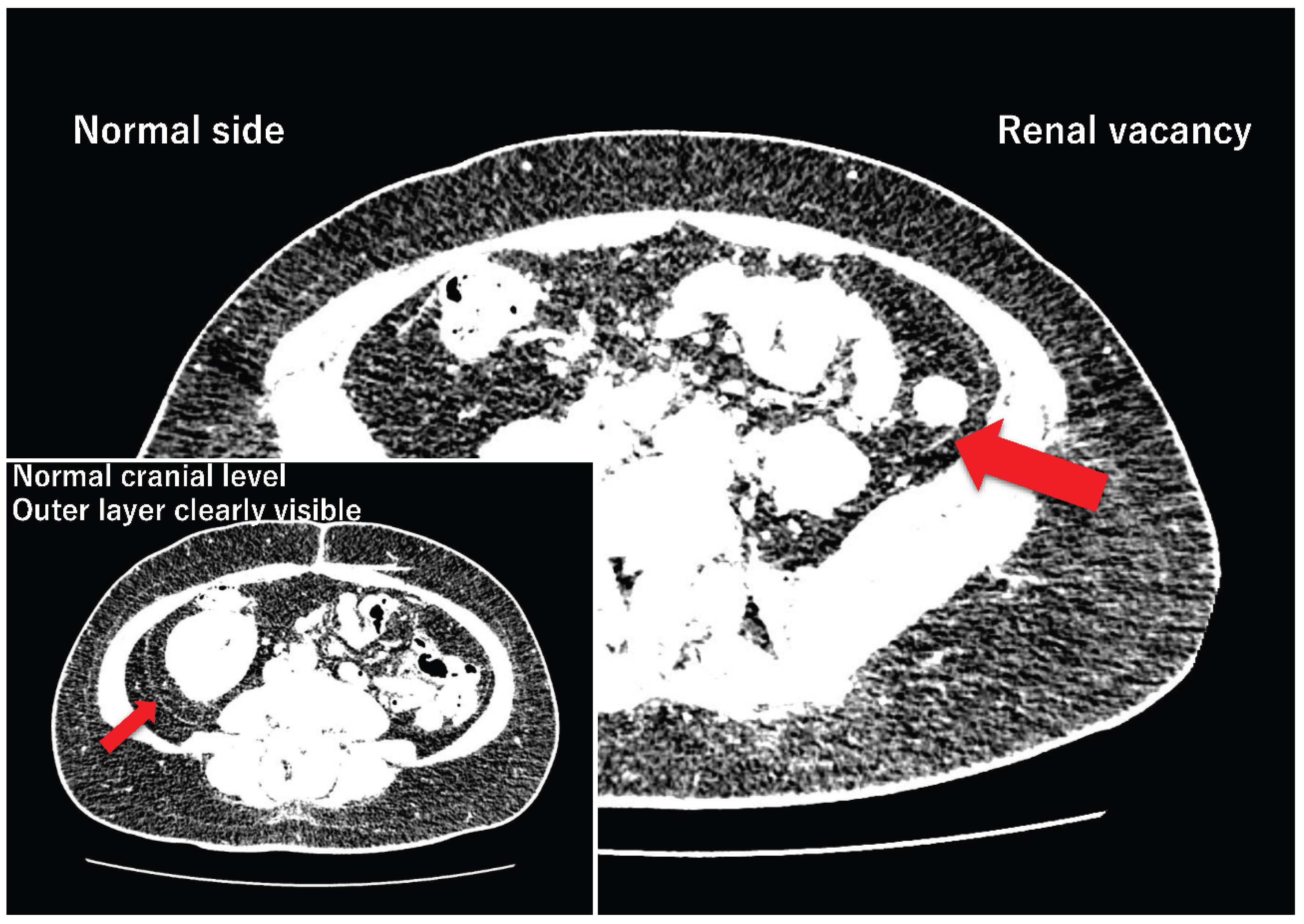
To empirically test the systemic Poisson effect-driven model, we analyzed a natural subtraction experiment comprising adults with renal absence. From 5,509 CT scans, three rare cases of pure renal absence were identified: Cases 1 and 3 represented true unilateral renal agenesis with a "pancake" adrenal configuration, and Case 2 showed severe renal dysplasia/involution retaining only a 2-cm dysplastic remnant. While true unilateral agenesis (Cases 1 and 3) provides an absolute developmental subtraction of the localized tension generator, severe involution (Case 2) represents a failure to sustain an expanding mass, even if transiently present during early gestation. Crucially, across all three functional subtraction scenarios, continuous fascial planes were unambiguously preserved (Figure 5) despite the developmental failure to provide a sustained, localized expanding "core."
Quantitative measurement using 3D Slicer demonstrated that the residual fascial plane (mean thickness approximately 1.52 mm, compared with 1.85 mm for the normal bilaminar composite) continuously tethered the peritoneal sac to the posterior abdominal wall. This uniform reduction in thickness is interpreted as reflecting subtraction of the organ-dependent "inner layer" during development, with the tension-driven "outer layer" remaining intact. This structural autonomy provides strong evidence that macroscopic fascial lamination is not solely a product of local visceral growth but is ultimately governed by the systemic tension field.
3.2. Temporal Integration of Fetal Fascial Development
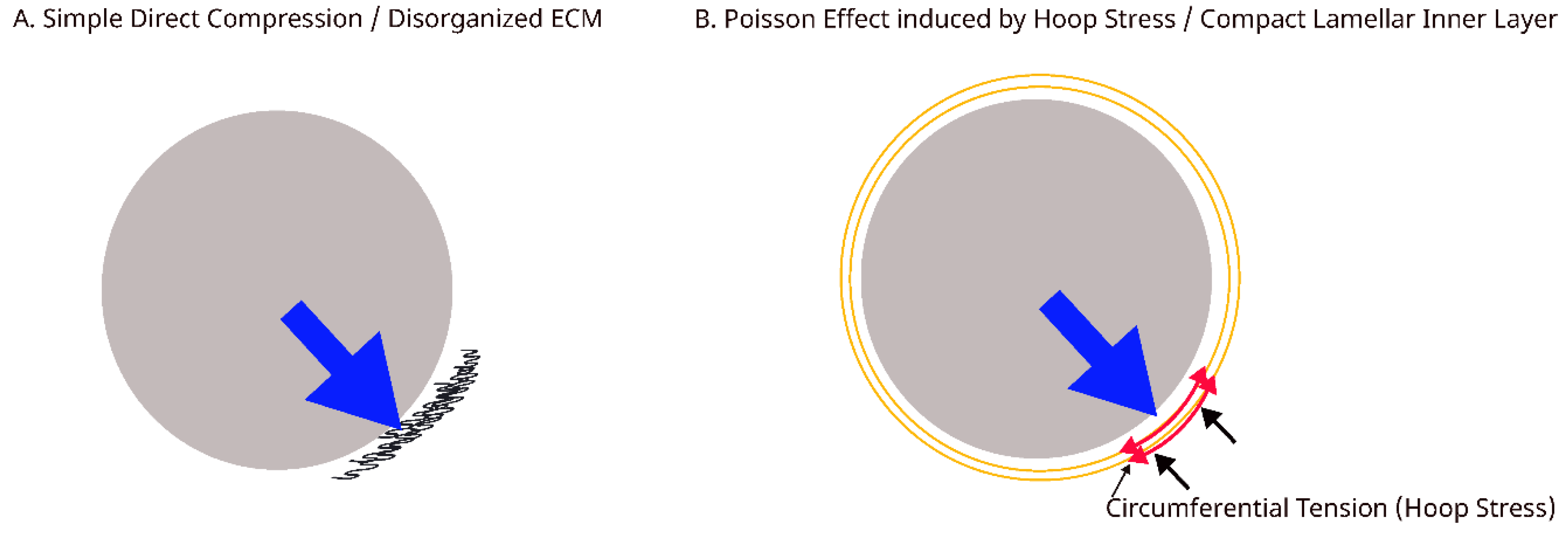
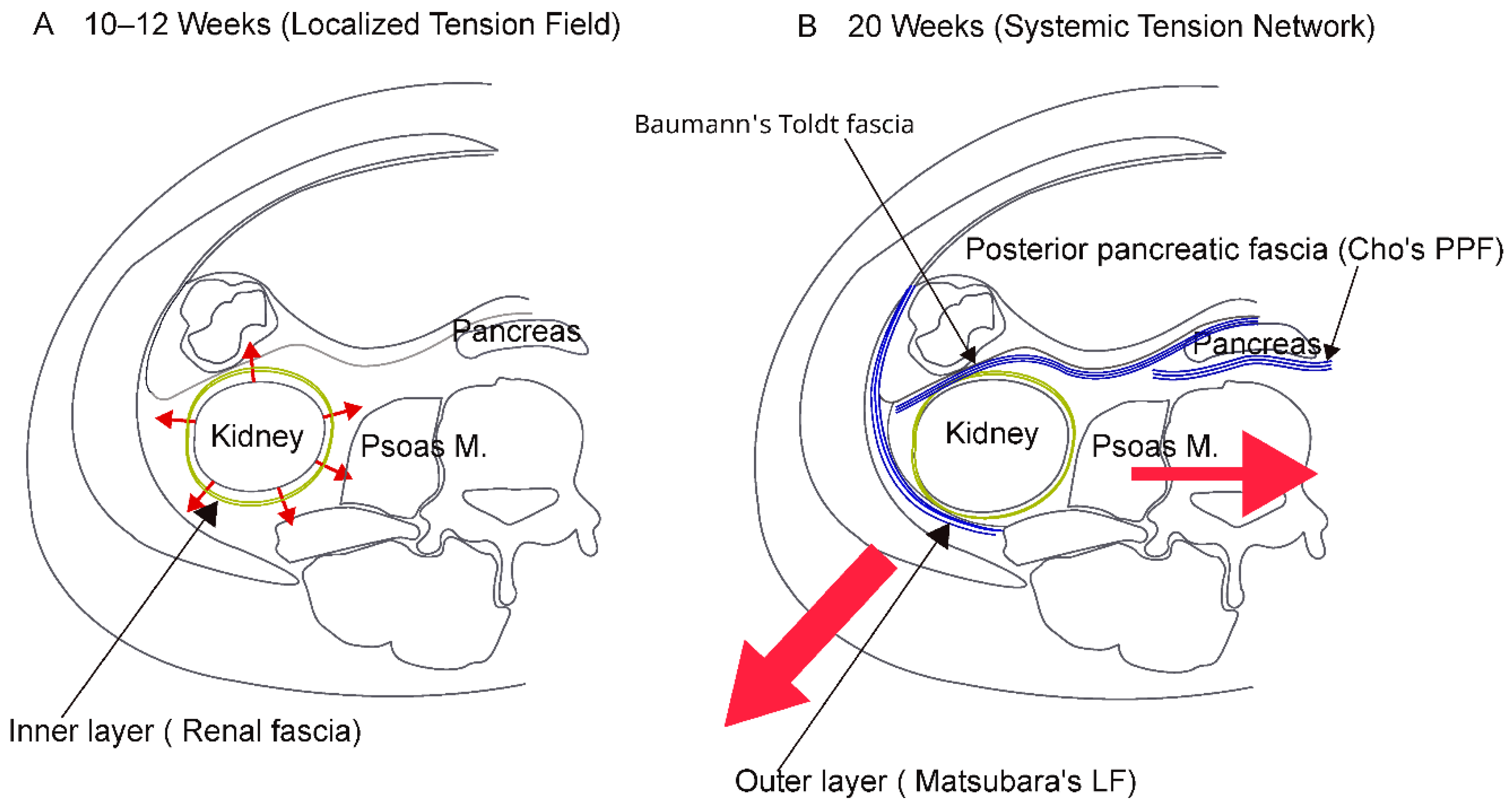
Histological studies indicate that the inner layer of the renal fascia first appears circumferentially around the developing kidney at gestational weeks 10–12 (Matsubara et al., 2009; Figure 2). This early local formation is biomechanically attributable to hoop stress—circumferential tension generated within the surrounding envelope by the radial growth of the expanding kidney (Fung, 1990)—which in turn induces local Poisson effect compression.
Figure 1.
Theoretical comparison of mechanical tissue deformation: direct compression versus the Poisson effect. (A) Simple direct compression / disorganized ECM: classical models propose that multidirectional or local compressive forces (e.g., visceral expansion) act directly on undifferentiated mesenchymal meshwork. Physically, this merely crushes the extracellular matrix (ECM) in a disorganized manner and does not produce aligned fascial sheets. (B) Hoop stress-induced Poisson effect / dense lamellar architecture: in the present model, circumferential tension (hoop stress) develops as an internal mass expands against an inextensible envelope. This sustained multiaxial tension forces obligate orthogonal compression (Poisson effect) within the intervening tissue. This highly directional compaction actively aligns and condenses the ECM into the organized, dense lamellar architecture that characterizes the true retroperitoneal fascia.
Figure 1.
Theoretical comparison of mechanical tissue deformation: direct compression versus the Poisson effect. (A) Simple direct compression / disorganized ECM: classical models propose that multidirectional or local compressive forces (e.g., visceral expansion) act directly on undifferentiated mesenchymal meshwork. Physically, this merely crushes the extracellular matrix (ECM) in a disorganized manner and does not produce aligned fascial sheets. (B) Hoop stress-induced Poisson effect / dense lamellar architecture: in the present model, circumferential tension (hoop stress) develops as an internal mass expands against an inextensible envelope. This sustained multiaxial tension forces obligate orthogonal compression (Poisson effect) within the intervening tissue. This highly directional compaction actively aligns and condenses the ECM into the organized, dense lamellar architecture that characterizes the true retroperitoneal fascia.
By contrast, comparative integration revealed a striking synchrony in the broader systemic maturation of the retroperitoneal fascia. Baumann (1945) documented establishment of the Toldt fascia at approximately gestational weeks 18–20. Cho et al. (2009) identified a critical inflection point beginning at gestational week 20, at which the posterior pancreatic fascia transitions to a distinct lamellar architecture. Matsubara et al. (2009) similarly confirmed that the multilayered structure of the outer posterior renal fascia becomes histologically definitive around the same week-20 threshold. This temporal convergence identifies gestational week 20 as the critical biomechanical threshold for macroscopic fascial lamination.
Figure 2.
Spatiotemporal and biomechanical asymmetry in the development of the posterior renal fascia. This diagram illustrates the chronological discordance in fascial appearance: the inner layer of the renal fascia forms early (weeks 10–12) under local hoop stress generated by the expanding kidney, whereas the multilayered outer layer is established considerably later (near week 20) as a direct consequence of systemic biomechanical convergence and completion of the macroscopic tension network.
Figure 2.
Spatiotemporal and biomechanical asymmetry in the development of the posterior renal fascia. This diagram illustrates the chronological discordance in fascial appearance: the inner layer of the renal fascia forms early (weeks 10–12) under local hoop stress generated by the expanding kidney, whereas the multilayered outer layer is established considerably later (near week 20) as a direct consequence of systemic biomechanical convergence and completion of the macroscopic tension network.
4. Theoretical Integration and Discussion
4.1. Mechanobiological Interpretation of the Week-20 Inflection Point
Formation of distinct fascial layers can be understood through continuous mechanobiological tissue remodeling. Soft biological tissues dynamically restructure their internal architecture in response to sustained mechanical loading (Humphrey, 2003). As the multiaxial tension field generated by somatic growth stretches the undifferentiated mesenchyme, it inevitably produces a strong orthogonal compressive force—the Poisson effect (Lakes, 1991). Crucially, the highly ordered alignment of collagen fibers along the principal tension vectors (Provenzano & Vanderby, 2006) is itself powerfully driven by this orthogonal spatial constraint.
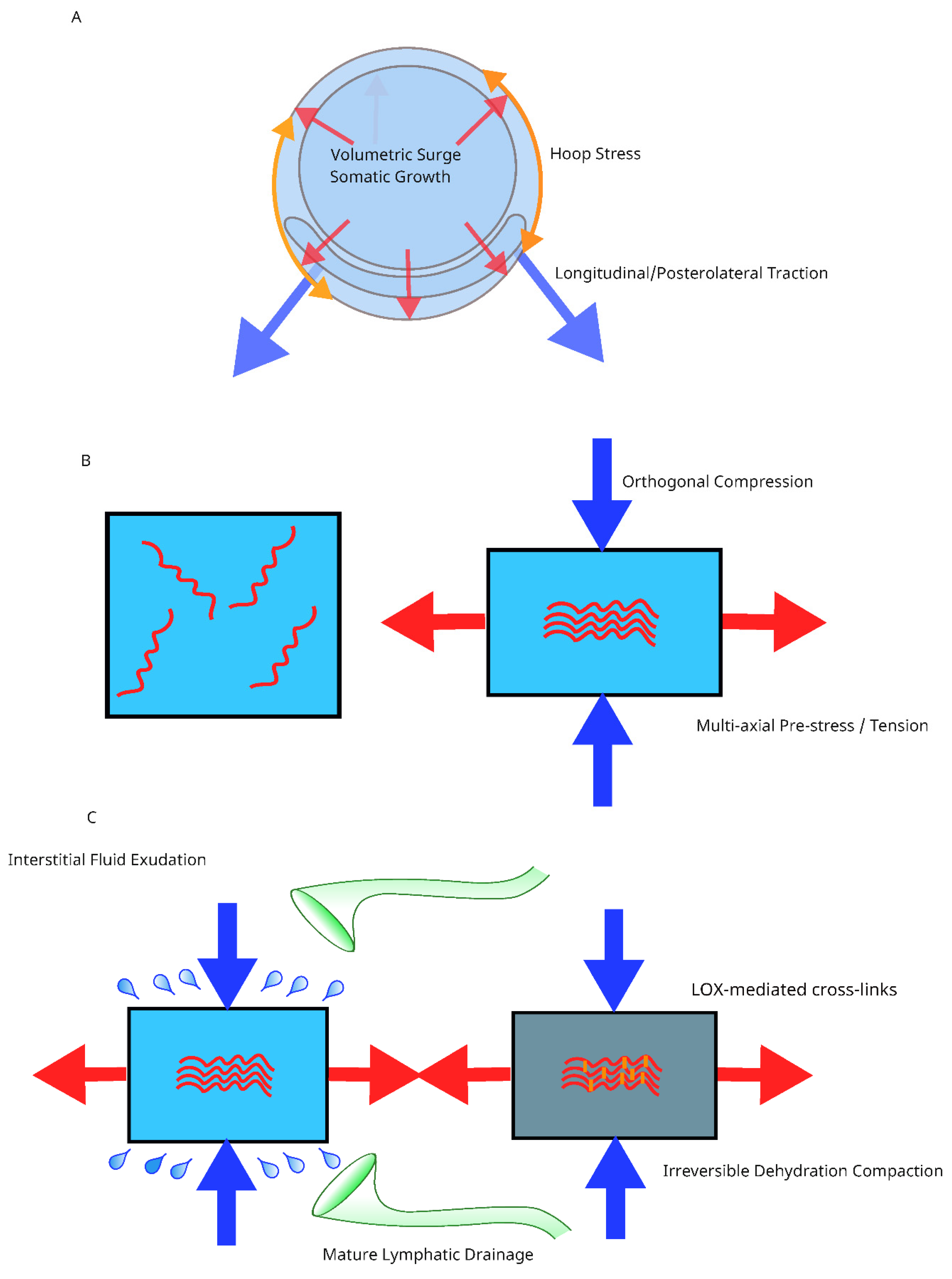
In the highly hydrated fetal tissue, this Poisson-effect compression not only forces the disorganized fibers into a planar alignment but also drives the exudation of interstitial fluid. According to the principles of biphasic poroelasticity (Mow et al., 1980), this process separates and compacts the fibrous network into the distinctive multilaminated cleavage planes characteristic of the retroperitoneum. Although mature adipose tissue is not yet present at gestational week 20, the retroperitoneal mesenchyme—derived from the dorsal mesentery and retaining its mesenchymal, GAG-rich characteristics (Matsubara et al., 2009)—contains preadipocytic, highly hydrated, GAG-rich stromal cells (Carlson, 2014; Chau et al., 2014; Han et al., 2011; Coffey & O'Leary, 2016). Their poroelastic behavior likely contributes to the fluid-supported phase of the emerging tensegrity system, modulating local stiffness and facilitating Poisson-effect–driven lamination. Finally, lysyl oxidase (LOX) catalyzes covalent cross-linking between these densely packed fibers (Kagan & Li, 2003), ensuring irreversible stabilization of the resulting distinct layers (Figure 3).
The synchronized clarification of multiple retroperitoneal fasciae near gestational week 20 strongly suggests a shared mechanobiological determinant. Within this framework, the Poisson effect operates as a unifying principle. The stabilizing kidney generates early local tension, forming the inner renal fascial layer at weeks 10–12. As the overall body framework integrates near week 20, multiaxial tension induces orthogonal Poisson compression, generating the multilayered outer posterior renal fascia. This 10-week lag indicates that early fixation incorporates the viscera into the developing tension network, while definitive lamination occurs only once the systemic tension field reaches a critical threshold.
Figure 3.
Mechanobiological model showing how the week-20 systemic tension field generates orthogonal Poisson effect compression to drive lamellar separation. (A) Macroscopic tension convergence: at approximately week 20, the fetal trunk experiences a characteristic convergence of mechanical forces. Rapid visceral volumetric growth (red arrows) encounters resistance from the inextensible keratinized epidermis (hoop stress; orange arrows), while the iliac flare provides powerful posterolateral anchors (blue arrows), creating a high-pressure mechanical field within the extraperitoneal space. (B) Geometric transformation via the Poisson effect: under multiaxial tension, the hydrated loose mesenchyme undergoes a geometric shift. Longitudinal and circumferential stretching induces orthogonal compression (blue arrows), flattening the tissue. This Poisson effect packs disordered collagen fibers into dense, lamellar planar arrangements. (C) Irreversible fixation through poroelastic consolidation and cross-linking: mechanical compression expels interstitial fluid from the ECM (exudation; blue droplets). Functional maturation of the lymphatic system at this stage (green) ensures permanent removal of this fluid, producing poroelastic consolidation. LOX-mediated covalent cross-linking then chemically stabilizes the closely apposed collagen fibers. This transition from a transient fluid state to a definitive solid layer completes the formation of the adult-type fascia.
Figure 3.
Mechanobiological model showing how the week-20 systemic tension field generates orthogonal Poisson effect compression to drive lamellar separation. (A) Macroscopic tension convergence: at approximately week 20, the fetal trunk experiences a characteristic convergence of mechanical forces. Rapid visceral volumetric growth (red arrows) encounters resistance from the inextensible keratinized epidermis (hoop stress; orange arrows), while the iliac flare provides powerful posterolateral anchors (blue arrows), creating a high-pressure mechanical field within the extraperitoneal space. (B) Geometric transformation via the Poisson effect: under multiaxial tension, the hydrated loose mesenchyme undergoes a geometric shift. Longitudinal and circumferential stretching induces orthogonal compression (blue arrows), flattening the tissue. This Poisson effect packs disordered collagen fibers into dense, lamellar planar arrangements. (C) Irreversible fixation through poroelastic consolidation and cross-linking: mechanical compression expels interstitial fluid from the ECM (exudation; blue droplets). Functional maturation of the lymphatic system at this stage (green) ensures permanent removal of this fluid, producing poroelastic consolidation. LOX-mediated covalent cross-linking then chemically stabilizes the closely apposed collagen fibers. This transition from a transient fluid state to a definitive solid layer completes the formation of the adult-type fascia.
4.2. Systemic Tension Field and Poisson Effect-Driven Lamination
Confined between stiffening skeletal anchors and an inextensible cutaneous envelope, the retroperitoneal mesenchyme experiences a sharp rise in multiaxial tension. In accordance with the physics of the Poisson ratio, this stretching forces orthogonal compression within the tissue, directly driving the abrupt lamination of the outer posterior renal fascia.
This biomechanical convergence represents a systemic phase transition that extends well beyond the retroperitoneum. Notably, the perineurial tight junctions of the human sciatic nerve undergo marked structural compaction around gestational weeks 21–22 (Pummi et al., 2004)—a timing that cannot be explained by local nerve growth alone. This synchronized maturation strongly suggests a system-wide mechanical transition consistent with the proposed week-20 tension field. Because the perineurium is a tension-sensitive multilayered connective tissue sheath, its maturation timeline provides an independent indicator of a systemic mechanical transition in fetal development.
This static tension network is powerfully amplified by a biomechanical positive-feedback loop driven by fetal movement. Before gestational week 15, the highly compliant fetal skeleton cannot efficiently transmit muscular force (Nowlan, 2015). However, as the vertebral column ossifies (Bagnall et al., 1977) and the iliac flare expands toward week 20 (Baumgart et al., 2018), these stiffened structures provide the mechanical anchors essential for efficient muscular contraction. Consequently, global fetal body movements—particularly coordinated kicks—increase dramatically in both frequency and transmitted force after week 20 (de Vries et al., 1982; Patrick et al., 1982). These changes generate rhythmic, dynamic traction on the retroperitoneal mesenchyme. Dynamic tension spikes are thought to synergize with static volumetric expansion to actively align fibroblasts and accelerate the poroelastic fluid exudation required for definitive fascial lamination.
4.3. Terminology and Clinical Relevance
To avoid terminological ambiguity, the posterior structure is defined throughout this paper as the "outer layer of the posterior renal fascia," and the lateroconal fascia is treated as its continuous anterior extension (Figure 4). Historically, Congdon et al. (1941) defined the lateroconal fascia as the lateral fusion site of the anterior and posterior renal fasciae, whereas Matsubara (2009) used the term to encompass both the outer layer of the posterior renal fascia and its anterior extension.
Figure 4.
Conceptual and terminological mapping of the retroperitoneal fascia. This schematic provides a terminological map to resolve historical inconsistencies, highlighting the evolution from the macroscopic definition of Congdon (1941) (the historical "migration fascia") to the microscopic reappraisal of Matsubara (2009). To avoid terminological ambiguity, the posterior structure is defined herein as the "outer layer of the posterior renal fascia," and the lateroconal fascia is treated as its continuous anterior extension.
Figure 4.
Conceptual and terminological mapping of the retroperitoneal fascia. This schematic provides a terminological map to resolve historical inconsistencies, highlighting the evolution from the macroscopic definition of Congdon (1941) (the historical "migration fascia") to the microscopic reappraisal of Matsubara (2009). To avoid terminological ambiguity, the posterior structure is defined herein as the "outer layer of the posterior renal fascia," and the lateroconal fascia is treated as its continuous anterior extension.
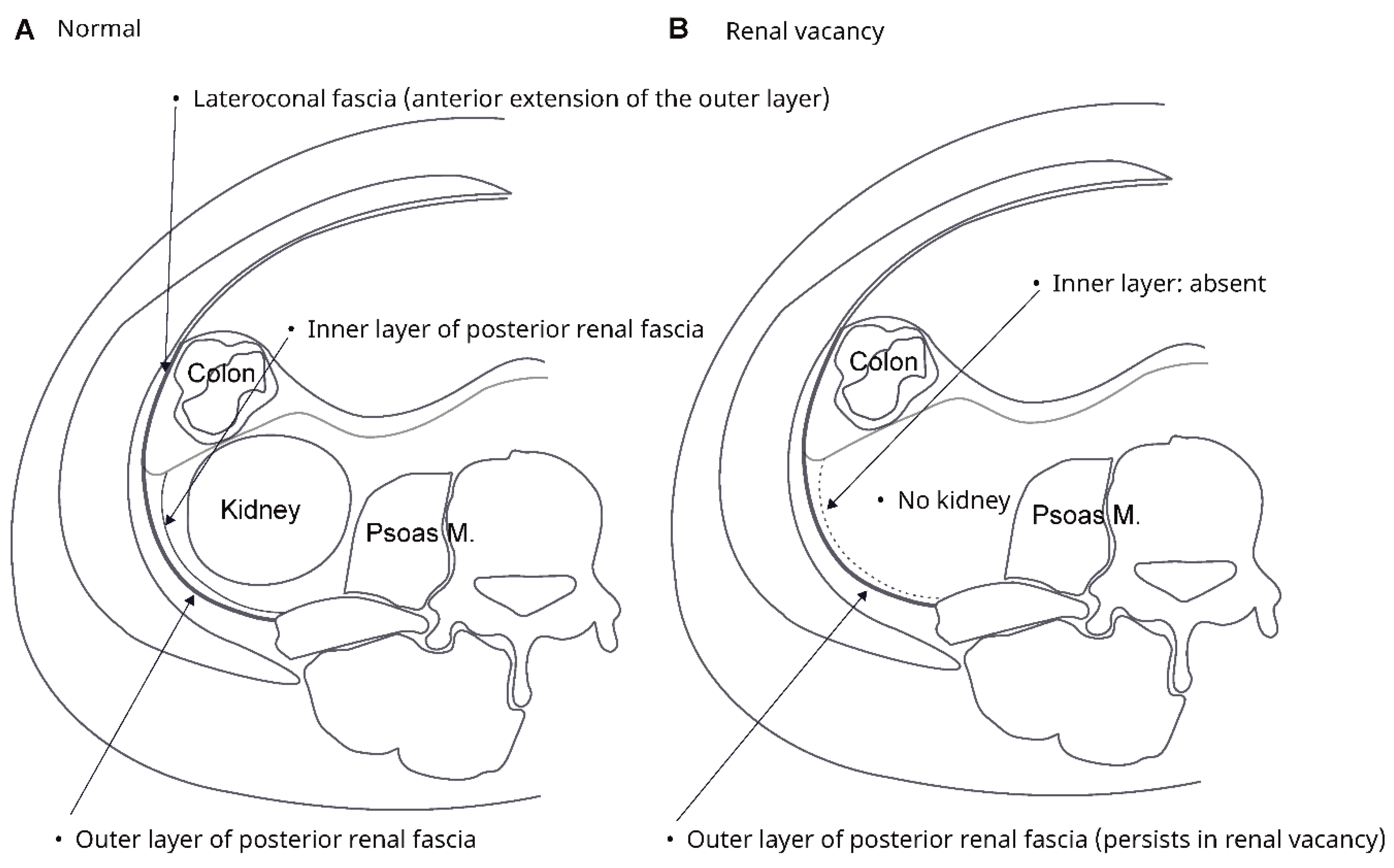
Figure 5.
Radiological validation by the renal absence subtraction experiment: persistence of the outer fascial layer in the absence of a local renal mass. Axial unenhanced CT images (Case 1: left renal agenesis) demonstrating preservation of the outer fascial layer when no organ-derived local mass is present. The main image shows a single axial slice for bilateral comparison. On the right side of the image (patient's left; renal fossa empty), a continuous outer fascial plane is unambiguously preserved despite the developmental absence of the organ-derived "inner layer" (with a proportionate reduction in total fascial thickness to approximately 1.5 mm). This plane continuously tethers the descending colon and peritoneal sac to the posterior abdominal wall, providing strong evidence of its autonomous formation through the systemic tension network. On the left side of the image (patient's right; normal anatomy), the posterior renal fascia is not visualized at this particular slice level. Inset (lower left): axial CT slice at a more cranial level on the normal right side, clearly demonstrating the thicker bilaminar posterior renal fascia for comparison. CT images are displayed with soft-tissue window settings (W: 250, L: 150). This radiological subtraction experiment isolates the tension-derived outer layer by removing the organ-dependent inner layer from the developmental equation.
Figure 5.
Radiological validation by the renal absence subtraction experiment: persistence of the outer fascial layer in the absence of a local renal mass. Axial unenhanced CT images (Case 1: left renal agenesis) demonstrating preservation of the outer fascial layer when no organ-derived local mass is present. The main image shows a single axial slice for bilateral comparison. On the right side of the image (patient's left; renal fossa empty), a continuous outer fascial plane is unambiguously preserved despite the developmental absence of the organ-derived "inner layer" (with a proportionate reduction in total fascial thickness to approximately 1.5 mm). This plane continuously tethers the descending colon and peritoneal sac to the posterior abdominal wall, providing strong evidence of its autonomous formation through the systemic tension network. On the left side of the image (patient's right; normal anatomy), the posterior renal fascia is not visualized at this particular slice level. Inset (lower left): axial CT slice at a more cranial level on the normal right side, clearly demonstrating the thicker bilaminar posterior renal fascia for comparison. CT images are displayed with soft-tissue window settings (W: 250, L: 150). This radiological subtraction experiment isolates the tension-derived outer layer by removing the organ-dependent inner layer from the developmental equation.
Clinically, this mechanobiological framework provides a principled explanation for the avascular dissection planes exploited in oncological surgery. Kinugasa et al. (2008) elegantly demonstrated that optimal retroperitoneal dissection should proceed along specific multilayered fascial boundaries dictated by embryological architecture. The present model reveals that these empirically established surgical planes correspond precisely to the tension-aligned laminae generated by poroelastic consolidation. Recognizing these planes as mechanically derived structures rather than mere fusion vestiges provides a rigorous anatomical and scientific basis for standardizing embryologically sound surgical dissection. Indeed, pathological high-pressure fluid accumulation acts as a hydraulic separator, re-infiltrating the ECM and reopening the orthogonal cleavage planes originally established by the Poisson effect—a clinical phenomenon initially suggested through radiological observations (Feldberg, 1983), experimentally demonstrated (Raptopoulos et al., 1986), subsequently conceptualized as interfascial planes (Molmenti et al., 1996), and later systematized for clinical diagnostics (Ishikawa et al., 2006).
4.4. Resolution of the Historical Controversy Regarding the Bilaminar Renal Fascia
Gerota's original illustration (1895) depicted the renal fascia as a bilaminar structure, yet the embryological and functional significance of this arrangement went unrecognized for nearly a century. A renewed appreciation emerged only in the mid-1980s, when Raptopoulos et al. (1986) performed systematic imaging evaluation and demonstrated that the posterior renal fascia comprises two layers rather than a single sheet. Subsequently, in a companion anatomical study, Marks et al. (1986) reported a striking correspondence between these imaging findings and Gerota's original depiction, praising the anatomical accuracy of the century-old drawings. This unexpected concordance prompted a fundamental reconsideration of the anatomical complexity of this region and ultimately established a modern imaging-based framework that classical gross anatomy had failed to capture.
Classical anatomical studies—most prominently that of Tobin (1944)—concluded that renal agenesis may be associated with complete absence of the renal fascia, reinforcing the long-held assumption that fascial formation depends strictly on the presence of the kidney. Subsequent fetal studies further clarified that the two layers arise from distinct developmental mechanisms (Matsubara et al., 2009), suggesting that the outer layer may not simply represent passive elongation of the inner, organ-dependent layer.
The radiological cohort of renal absence cases assembled in this study (n = 3) provides a decisive subtraction experiment for directly testing this historical controversy. When the kidney—the presumed source of local radial tension—is absent from the developmental equation, the inner layer predictably fails to form. Nevertheless, a continuous outer fascial layer was preserved into adulthood in all cases. This finding reconciles the long-standing discrepancy between classical anatomy and modern imaging: the inner layer is organ-dependent, whereas the outer layer is a tension-derived, system-generated structure that forms independently of the kidney's presence. By isolating the outer layer in its naturally "subtracted" state, these data reveal its functional autonomy and identify it as a product of the systemic tension field converging near gestational week 20.
4.5. The Square-Cube Law and the Emergence of a Fetal Tensegrity System
Before gestational week 15, the fetal trunk behaves as a pressure-driven structure. Viscera and fluid are enclosed within a compliant body wall, and internal pressure distributes nearly isotropically, allowing overall shape to be maintained without specialized fascial planes to bear load.
As fetal size increases, however, the square-cube law imposes a fundamental mechanical constraint. Approximating the fetal trunk as a sphere of radius r, the surface-area-to-volume ratio is 3/r. The inverse—the internal mechanical load borne per unit area of the outer envelope—therefore scales as r/3. Based on standard fetal growth curves (Hadlock et al., 1991), this internal load approximately triples between gestational weeks 12 and 20.
As r/3 rises, the simple strategy of a compliant "hydrostatic bag" becomes mechanically untenable. To prevent mechanical failure of the boundary, the fetal epidermis undergoes progressive keratinization and stratification by gestational weeks 18–20 (Hardman et al., 1999), transforming the previously compliant body wall into an inextensible cutaneous envelope. This rigidified outer boundary actively resists the surging internal volume, generating profound systemic hoop stress.
Simultaneously, the internal anchors of the system gain stiffness. Vertebral ossification (Bagnall et al., 1977), lateral expansion of the iliac wings (Baumgart et al., 2018), and outward migration of the abdominal wall create rigid boundaries between which the retroperitoneal mesenchyme is stretched. The stress field consequently becomes anisotropic, with forces preferentially transmitted between the stiffening axial skeleton and the expanding abdominal wall.
In this configuration, the retroperitoneal mesenchyme functions as a transient fluid support strut. Rich in glycosaminoglycans and interstitial fluid, this tissue initially resists deformation through fluid incompressibility. As multiaxial tension rises near gestational week 20, however, Poisson effect orthogonal compression forces fluid from the tissue into the maturing lymphatic system (Bekker et al., 2005; Mow et al., 1980). Once this poroelastic exudation occurs, the tissue can no longer rely on fluid support. The remaining collagen framework collapses and consolidates into tension-bearing fibrous laminae.
Near gestational week 20, therefore, the fetal trunk undergoes a mechanical regime shift:
from a pressure-driven, isotropic, fluid-supported continuum
to a tension-driven, anisotropic, fiber-supported network.
This transition represents the emergence of a fetal-scale tensegrity-like structural system (Ingber, 2003). The ossifying vertebral column, the laterally expanding iliac wings, and the inextensible cutaneous envelope function as discrete compression-bearing elements, while the retroperitoneal mesenchyme and fascial continuum form a continuous tension network. Within this architecture, Poisson effect orthogonal compression constitutes a local expression of these global compression struts. The interplay of tension and compression elements generates a mechanically integrated framework analogous to a tensegrity structure, enabling efficient force transmission and stabilizing the layered retroperitoneal fascia that emerges in the second trimester. The outer layer of the posterior renal fascia represents one of the clearest anatomical manifestations of this transition: its formation reflects not the presence of the kidney, but rather the rise in internal load driven by r/3 and the emergence of the system-wide tension network.
Embryological Prerequisites Derived from Pelvic Morphogenesis
Building on this structural remodeling, a recent embryological study by Senevirathne et al. (2025) provides an indispensable upstream framework for interpreting the present mechanobiological model. Their work demonstrates that the human ilium acquires its characteristically broad, laterally flared geometry through two key developmental innovations: ectopic reorientation of the iliac growth plate and a laterally biased heterochronic ossification sequence. These morphogenetic changes, absent in other primates, establish the fundamental geometric prerequisites for the lateral traction vectors that become mechanically relevant in the second trimester.
Integrating these findings with the temporal data of Verbruggen and Nowlan (2017)—who showed that the most rapid phase of iliac expansion occurs precisely in the second trimester—reveals a coherent developmental hierarchy. The genetic and cellular mechanisms described by Senevirathne et al. specify pelvic shape and material distribution, while the present model identifies the moment at which this genetically specified geometry becomes mechanically integrated into the systemic tension network: approximately gestational week 20. From this perspective, the week-20 convergence represents the point at which "structure enables function": the stiffened vertebrae and expanded iliac flare begin efficiently transmitting fetal movement forces, amplifying both static volumetric tension and dynamic traction. The findings of Senevirathne et al. are therefore not in competition with the present mechanobiological model; rather, they provide its indispensable morphogenetic foundation, clarifying why Poisson effect-driven retroperitoneal fascial lamination emerges only after the pelvis has acquired its human-specific geometry.
4.6. Lymphatic Maturation, Poroelastic Consolidation, and Cross-Linking
Although the Poisson effect specifies orthogonal compression, irreversible fixation requires fluid evacuation and enzymatic stabilization. The fetal lymphatic system acquires functional whole-body drainage capacity between gestational weeks 14 and 16 (Bekker et al., 2005). When Poisson compression occurs near week 20, mature lymphatic vessels facilitate poroelastic fluid exudation, bringing dispersed collagen fibers into extreme physical proximity. This proximity constitutes the spatial prerequisite for LOX-mediated covalent cross-linking (Kagan & Li, 2003), chemically stabilizing the lamellar architecture and accounting for the irreversibility of fascial consolidation.
4.7. Implications for Comparative Anatomy
Although the Poisson effect is universal in mammalian soft tissue, the highly specialized multilayered structure of the human retroperitoneum appears intrinsically linked to hominin bipedalism. Quadrupedal mammals lack the characteristic iliac flare required for upright posture, suggesting that this specific lateral traction vector constitutes a geometric prerequisite for human-type fascial lamination. A detailed comparative biomechanical analysis, however, lies beyond the scope of this study.
4.8. Limitations and Future Directions
Although the present mechanobiological model is consistent with histological observations and supported by the cross-sectional radiological subtraction experiment described here, it remains a theoretical integration. Empirical validation—including direct in vivo quantification of retroperitoneal tissue stiffness and tension vectors using high-resolution fetal MRI or ultrasound elastography—will be essential to demonstrate the proposed tension network.
5. Conclusion
In conclusion, the systemic tension field converging near gestational week 20 constitutes the principal mechanobiological stimulus that sculpts the outer layer of the posterior renal fascia through Poisson effect orthogonal compression. The natural subtraction experiment conducted in adults with renal absence provides compelling evidence of this structural autonomy and definitively resolves a 150-year-old anatomical discrepancy regarding retroperitoneal fascial formation.
By identifying the week-20 systemic tension field as the mechanobiological trigger of fascial lamination, this study offers a unifying framework integrating fetal biomechanics, developmental anatomy, and clinical imaging.
Tables

Table 1.
Chronological integration of retroperitoneal fascial development and associated mechanobiological events.
Table 1.
Chronological integration of retroperitoneal fascial development and associated mechanobiological events.
| Gestational Age | Anatomical / Biomechanical Event | Mechanobiological Significance | Key References |
|---|---|---|---|
| Weeks 10–12 | • Early pancreatic fixation to the posterior wall • Circumferential appearance of the inner renal fascial layer • Morphogenetic blueprint of iliac flare geometry established via cartilaginous migration | Local tension and spatial vector priming: viscera are asynchronously integrated into the nascent tension network. Pelvic cartilage establishes future posterolateral traction vectors but remains too compliant to generate systemic tension. | Cho et al. (2009); Matsubara et al. (2009); Senevirathne et al. (2025) |
| Weeks 14–16 | • Functional maturation of the fetal lymphatic system (connection to terminal veins) | Physiological preparation: systemic drainage capacity required for poroelastic fluid exudation during subsequent Poisson effect compression is established. | Berger (1999); Bekker et al. (2005) |
| Weeks 18–20 | • Progressive vertebral ossification • Epidermal keratinization and completion of the inextensible cutaneous envelope • Onset of exponential volumetric growth (square-cube law) | Dynamic priming and the square-cube law: the vertebral column stiffens into a central pillar; volumetric growth outpaces surface area, generating immense outward pressure that collides with the maturing epidermis to produce powerful whole-body hoop stress. | Bagnall et al. (1977); Singh & Archana (2008); Hadlock et al. (1991) |
| ~Week 20 (temporal nexus) | • Trunk stiffening: cumulative 3D pelvic expansion and ossification reach a mechanical threshold • Fascial lamination: multilayered architecture of the Toldt fascia, posterior pancreatic fascia, and outer posterior renal fascia simultaneously becomes definitive | Temporal and mechanical trigger with Poisson effect: once anchors stiffen into rigid levers, growth forces are transmitted rather than dissipated. The resulting tension spike induces orthogonal compression (Poisson effect), forcing fluid exudation and subsequent LOX cross-linking that completes fascial lamination. | Baumann (1945); Cho et al. (2009); Matsubara et al. (2009); Verbruggen & Nowlan (2017); (present model) |
Table 2.
System-wide manifestations of the biomechanical convergence near gestational week 20.
| Anatomical System | Event at ~Week 20 | Biomechanical Significance | Key References |
|---|---|---|---|
| Skeletal system | Vertebral ossification | Rigid central pillar for tension transmission | Bagnall et al. (1977) |
| Iliac flare expansion/ossification | Establishment of lateral levers for systemic tension | Baumgart et al. (2018); Senevirathne et al. (2025) | |
| Cutaneous envelope | Epidermal keratinization | Inextensible shell generating whole-body hoop stress | Hardman et al. (1999) |
| Trunk growth | Exponential volumetric increase | Square-cube law drives systemic tension | Hadlock et al. (1991) |
| Musculoskeletal movement | Intensification of fetal kicking and gross body movement | Dynamic tension spikes actively align fibroblasts and accelerate poroelastic consolidation | Nowlan (2015); de Vries et al. (1982); Patrick et al. (1982) |
| Respiratory physiology | Surge in fetal breathing movements (FBM) | Rhythmic loading reinforces tension network | Nowlan (2015) |
| Increasing thoracic rigidity | Thorax becomes a stable mechanical frame | Bagnall et al. (1977); Verbruggen & Nowlan (2017) | |
| Onset of surfactant production | Alveolar stabilization → stable FBM | Avery & Fletcher (1974); Clements (1957) | |
| Lymphatic system | Maturation of whole-body drainage capacity | Facilitates irreversible poroelastic consolidation | Bekker et al. (2005) |
| Fascial structures | Lamination of the Toldt fascia | Reflects systemic tension threshold | Baumann (1945) |
| Lamination of the posterior pancreatic fascia | Occurs after the 10-week lag | Cho et al. (2009) | |
| Lamination of the outer posterior renal fascia | Multiaxial tension + Poisson effect compression | Matsubara et al. (2009) | |
| Peripheral nervous system | Compaction of the sciatic nerve sheath | Pelvic traction induces Poisson compression | Pummi et al. (2004) |
Table 3.
Clinical characteristics and quantitative radiological findings of the renal absence cohort (n = 3). Cases were extracted from a primary screen of 5,509 consecutive abdominal CT scans after strict exclusion of patients with a history of renal surgery.
Table 3.
Clinical characteristics and quantitative radiological findings of the renal absence cohort (n = 3). Cases were extracted from a primary screen of 5,509 consecutive abdominal CT scans after strict exclusion of patients with a history of renal surgery.
| Case | Age/Sex | Radiological Diagnosis | Adrenal Morphology | Fascial Thickness: Affected Side | Fascial Thickness: Normal Side | Difference (Δ) |
|---|---|---|---|---|---|---|
| 1 | 53F | True left renal agenesis | "Pancake" (recumbent) | 1.49 mm | 1.88 mm | −0.39 mm |
| 2 | 47F | Severe left renal dysplasia/involution (renal remnant) | Normal | 1.46 mm | 1.82 mm | −0.36 mm |
| 3 | 89M | True left renal agenesis | "Pancake" (recumbent) | 1.62 mm | Excluded* | N/A |
| Mean | 1.52 mm | 1.85 mm | −0.38 mm |
*The contralateral side of Case 3 was excluded from the mean calculation owing to local contralateral inflammation affecting the fascial plane.
Data Availability
The radiological data supporting the findings of this study are restricted to protect patient privacy, but are available from the corresponding author upon reasonable request. All other information is based on previously published literature.
Acknowledgments
The author thanks the colleagues of the Department of Urology at Gakkentoshi Hospital for providing a supportive clinical environment that continually inspires anatomical inquiry. Sincere gratitude is also extended to the radiology staff of Gakkentoshi Hospital for their outstanding technical assistance in the systematic extraction of clinical imaging data. The author further acknowledges the foundational contributions of classical anatomists, whose meticulous observations continue to guide modern reinterpretation.
Ethics Statement
This retrospective study received approval from the Institutional Review Board (IRB) of Gakkentoshi Hospital (approval number: GT-R6-07-12-1). Written informed consent was waived given the retrospective nature of the study, and an opt-out mechanism was made available through the hospital's official website in accordance with national ethical guidelines.
Conflicts of Interest Statement
The author declares no conflicts of interest.
References
- Avery, ME; Fletcher, BD. The Lung and Its Disorders in the Newborn Infant, 3rd ed.; WB Saunders: Philadelphia, 1974. [Google Scholar]
- Bagnall, KM; Harris, PF; Jones, PR. The appearance of ossification centers in the human fetal spine. J Anat 1977, 124, 791–802. [Google Scholar]
- Baumann, JA. Développement et anatomie de la loge rénale chez l'homme. Acta Anat (Basel) 1945, 1, 15–65. [Google Scholar] [CrossRef]
- Baumgart, M; Wiśniewski, M; Grzonkowska, M; et al. Quantitative anatomy of the ilium's primary ossification center in the human fetus. Surg Radiol Anat 2018, 40, 1047–1054. [Google Scholar] [CrossRef] [PubMed]
- Bekker, MN; van den Akker, NM; de Ruiter, MC; Gittenberger-de Groot, AC. The human fetal lymphatic system: a morphological study. Anat Embryol (Berl) 2005, 210, 167–175. [Google Scholar]
- Berger, G. First-trimester nuchal translucency and the fetal lymphatic system. Ultrasound Obstet Gynecol 1999, 13, 12–17. [Google Scholar]
- Carlson, BM. Human Embryology and Developmental Biology, 5th ed.; Elsevier: Philadelphia, 2014. [Google Scholar]
- Chau, YY; Bandiera, R; Serrels, A; et al. Visceral adipose tissue formation depends on mesothelial cells. Development 2014, 141, 2752–2762. [Google Scholar]
- Cho, BH; Kimura, W; Iioka, T; Hirai, I; Koyama, T; Furuya, T; et al. Development of the posterior pancreatic fascia in human fetuses. J Hepatobiliary Pancreat Surg 2009, 16, 824–831. [Google Scholar] [CrossRef]
- Clements, JA. Surface tension of lung extracts. Proc Soc Exp Biol Med 1957, 95, 170–172. [Google Scholar] [CrossRef]
- Coffey, JC; O'Leary, DP. The mesentery: structure, function, and role in disease. Nat Rev Gastroenterol Hepatol 2016, 13, 477–486. [Google Scholar] [CrossRef]
- Congdon, ED; Edson, JN. The cone of renal fascia in the adult white male. Anat Rec 1941, 80, 289–313. [Google Scholar] [CrossRef]
- de Vries, JI; Visser, GH; Prechtl, HF. The emergence of fetal behaviour. I. Qualitative aspects. Early Hum Dev 1982, 7, 301–322. [Google Scholar] [CrossRef] [PubMed]
- Feldberg, MAM. Computed Tomography of the Retroperitoneum: An Anatomical and Pathological Atlas with Emphasis on the Fascial Planes; Martinus Nijhoff: Boston, 1983. [Google Scholar]
- Fung, YC. Biomechanics: Motion, Flow, Stress, and Growth; Springer-Verlag: New York, 1990. [Google Scholar]
- Gerota, D. Beiträge zur Kenntniss des Befestigungsapparates der Niere. Arch Anat Entwicklungsgesch 1895, 265–285. [Google Scholar]
- Hadlock, FP; Harrist, RB; Martinez-Poyer, J. In utero analysis of fetal growth: a sonographic weight standard. Radiology 1991, 181, 129–133. [Google Scholar] [CrossRef] [PubMed]
- Hardman, MJ; Sisi, P; Banbury, DN; Byrne, C. Barrier formation in the human fetus is patterned. J Invest Dermatol 1999, 113, 1106–1113. [Google Scholar] [CrossRef]
- Han, J; Lee, JE; Jin, J; et al. The origin and development of mesenteric adipose tissue. Cell Metab 2011, 13, 376–388. [Google Scholar]
- Hayes, MA. Abdominopelvic fasciae. Am J Anat 1950, 87, 119–161. [Google Scholar] [CrossRef]
- Humphrey, JD. Continuum biomechanics of soft biological tissues. Proc Math Phys Eng Sci 2003, 459, 3–46. [Google Scholar] [CrossRef]
- Ingber, DE. Tensegrity I: cell structure and hierarchical systems biology. J Cell Sci 2003, 116, 1157–1173. [Google Scholar] [CrossRef]
- Ishikawa, K; Idoguchi, K; Tanaka, H; et al. Classification of acute pancreatitis based on retroperitoneal extension: application of the concept of interfascial planes. Eur J Radiol 2006, 60, 445–452. [Google Scholar] [CrossRef]
- Kagan, HM; Li, W. Lysyl oxidase: properties, specificity, and biological roles inside and outside of the cell. J Cell Biochem 2003, 88, 660–672. [Google Scholar] [CrossRef] [PubMed]
- Kinugasa, Y; et al. Development of the human hypogastric nerve sheath with special reference to the topohistology between the nerve sheath and other prevertebral fascial structures. Clin Anat 2008, 21, 558–567. [Google Scholar] [CrossRef]
- Lakes, R. Deformation mechanisms in negative Poisson's ratio materials: structural aspects. J Mater Sci 1991, 26, 2287–2292. [Google Scholar] [CrossRef]
- Marks, SC, Jr.; Raptopoulos, V; Kleinman, P; Snyder, M. The anatomical basis for retrorenal extensions of pancreatic effusions: the role of the renal fasciae. Surg Radiol Anat 1986, 8, 89–97. [Google Scholar] [CrossRef]
- Matsubara, A; Kinugasa, Y; Murakami, G; Suzuki, D; Fujimiya, M; Sugihara, K. Development of the lateroconal fascia in human fetuses. Cells Tissues Organs 2009, 190, 286–296. [Google Scholar] [CrossRef]
- Molmenti, EP; Balfe, DM; Kanterman, RY; Bennett, HF. Anatomy of the retroperitoneum: observations of the distribution of pathologic fluid collections. Radiology 1996, 200, 95–103. [Google Scholar] [CrossRef]
- Mow, VC; Kuei, SC; Lai, WM; Armstrong, CG. Biphasic creep and stress relaxation of articular cartilage in compression: theory and experiments. J Biomech Eng 1980, 102, 73–84. [Google Scholar] [CrossRef]
- Nowlan, NC. Biomechanics of fetal movement. Eur Cell Mater 2015, 29, 1–21. [Google Scholar] [CrossRef]
- Patrick, J; Campbell, K; Carmichael, L; Natale, R; Richardson, B. Patterns of gross fetal body movements over 24-hour observation intervals during the last 10 weeks of pregnancy. Am J Obstet Gynecol 1982, 142, 363–371. [Google Scholar] [CrossRef] [PubMed]
- Provenzano, PP; Vanderby, R. Collagen fibril morphology and organization: implications for force transmission in ligament and tendon. Matrix Biol 2006, 25, 71–84. [Google Scholar] [CrossRef] [PubMed]
- Pummi, K; Heape, AM; Grenell, S; Peltonen, J; Peltonen, S. Tight junction proteins ZO-1, occludin, and claudins in developing and adult human perineurium. J Histochem Cytochem 2004, 52, 1037–1046. [Google Scholar] [CrossRef]
- Raptopoulos, V; Kleinman, PK; Marks, S; Snyder, M; Silverman, PM. Renal fascial pathway: posterior extension of pancreatic effusions within the anterior pararenal space. Radiology 1986, 158, 367–374. [Google Scholar] [CrossRef]
- Senevirathne, G; Fernandopulle, SC; Richard, D; Capellini, TD; et al. The evolution of hominin bipedalism in two steps. Nature 2025, 645, 952–963. [Google Scholar] [CrossRef] [PubMed]
- Singh, G; Archana, G. Unraveling the mystery of vernix caseosa. Indian J Dermatol 2008, 53, 54–60. [Google Scholar] [CrossRef] [PubMed]
- Tobin, CE. The renal fascia and its relation to the transversalis fascia. Anat Rec 1944, 89, 295–311. [Google Scholar] [CrossRef]
- Toldt, C. Bau und Wachsthumsveränderungen der Gekröse des menschlichen Darmkanales. Denkschr Akad Wiss Wien 1879, 41, 1–56. [Google Scholar]
- Verbruggen, SW; Nowlan, NC. Ontogeny of the human pelvis. Anat Rec (Hoboken) 2017, 300, 643–652. [Google Scholar] [CrossRef] [PubMed]
- Zuckerkandl, E. Ueber den Fixationsapparat der Nieren. Med Jahrb 1883, 1883, 59–67. [Google Scholar]
Disclaimer/Publisher’s Note: The statements, opinions and data contained in all publications are solely those of the individual author(s) and contributor(s) and not of MDPI and/or the editor(s). MDPI and/or the editor(s) disclaim responsibility for any injury to people or property resulting from any ideas, methods, instructions or products referred to in the content. |
© 2026 by the author. Licensee MDPI, Basel, Switzerland. This article is an open access article distributed under the terms and conditions of the Creative Commons Attribution (CC BY) license.
Copyright: This open access article is published under a Creative Commons CC BY 4.0 license, which permit the free download, distribution, and reuse, provided that the author and preprint are cited in any reuse.


