

Submitted:
21 March 2026
Posted:
24 March 2026
You are already at the latest version
Abstract
Congenital atlantoaxial instability (AAI) occurs more often in young, small-breed dogs. It usually results from malformations in the craniocervical junction. These malformations cause atlantoaxial subluxation or dislocation and compress the cervical spinal cord. As a result, dogs can have varying levels of neurological problems. Surgery is commonly used to realign the vertebrae. However, outcomes after surgery vary widely, and complications are common. Magnetic resonance imaging (MRI) helps identify abnormalities in the vertebral canal, spinal cord damage, and other brain diseases. These findings can affect the dog’s prognosis. This retrospective study assessed MRI findings and their association with surgical outcomes in 20 dogs with AAI. Older age and certain MRI results—such as severe ventral spinal cord compression and syringomyelia—were linked to worse recovery. Many MRI abnormalities were found, but not all predicted poor outcomes. These results show the importance of a thorough MRI before surgery. They also suggest that younger age and not having syringomyelia are good signs for recovery after AAI surgery.
Keywords:
atlantoaxial instability
; AAI
; magnetic resonance imaging
; dogs
; small breed
; surgical outcome
1. Introduction
Congenital atlantoaxial joint instability is overrepresented in young, small dog breeds, including the Yorkshire Terrier, Toy Poodle, Pomeranian, Chihuahua, and Pekingese[1,2,3]. The groups of disorders resulting from congenital malformations affect the region extending from the occipital bone to the craniocervical vertebrae (craniocervical junction abnormality), including occipitoatlantoaxial malformation, dens abnormality, and atlantooccipital overlapping. Instability of the atlantoaxial joint results in dislocation or subluxation, leading to compression and contusion of the cervical spinal cord, which causes varying degrees of neurological dysfunction [2,4,5,6,7]. Surgical treatment is indicated for subluxation reduction and joint stabilization, particularly in patients with neurological deficit or neck pain unresponsive to medical treatment [7,8,9].
The diagnosis of the neck is made via plain radiographs, computed tomography (CT), or magnetic resonance imaging (MRI). The cervical plain radiographs include dorsal displacement of the axis into the vertebral canal, the increased angulation between the dorsal laminae of C1 and C2, the increased distance between the arch of C1 and the spinous process of C2, and hypoplasia, aplasia, or dorsal angulation of the dens [3,7]. Lateral radiography of the C1-C2 joint in neck flexion may confirm instability; however, it can worsen neurological signs and cause fatal spinal cord compression [3,7,10]. Although CT scans provide detail of bony structure and fracture as well as the development of 3-dimensional reconstruction for surgical planning, it does not provide information about soft tissue structure, craniocervical junction, and spinal cords, such as ligamentous structure, presence of hemorrhage, syringomyelia, abnormal intramedullary intensity, and inform concurrent neurological disease which may be associated with prognostic information that the MR image can provide [2,7,11]. Clinical outcomes in dogs undergoing surgery for atlantoaxial instability (AAI) are highly variable, and the condition is associated with a relatively high rate of postoperative complications [8,12,13]. These uncertainties can complicate clinical decision-making for both veterinarians and pet owners. Magnetic resonance imaging (MRI) of the vertebral column provides essential information for diagnosis, evaluation of spinal cord damage, and detection of concurrent diseases. However, in the veterinary literature, only a limited number of studies have described MRI findings in dogs with atlantoaxial instability [11]. Furthermore, few studies have investigated whether the severity and type of MRI abnormalities correlate with postoperative neurological improvement following surgical stabilization.
The aim of this study was to describe MRI characteristics in dogs with atlantoaxial subluxation and evaluate the relationship between MRI abnormalities and surgical outcomes by comparing preoperative and postoperative neurological grades in small-breed dogs.
2. Materials and Methods
2.1. Case Selection
A retrospective review of surgical records of atlantoaxial instability in dogs at Kasetsart University Veterinary Teaching Hospital from January 2017 to December 2025 was conducted. There were no age, sex, or breed restrictions. Inclusion criteria for the study required a complete clinical history, neurological examination (pre- and postoperative), and preoperative magnetic resonance imaging. Dogs with a diagnosis of atlantoaxial instability were graded using the modified Frankel scoring system from 1 to 5 [14]. Neurological status was determined as follows: Grade 1: Spinal hyperaesthesia, no neurological dysfunction; Grade 2: Ambulatory paraparesis; Grade 3: Non-ambulatory paraparesis; Grade 4: Paraplegic, with intact pain perception in either pelvic limb and/or tail; Grade 5: Paraplegic, with absent pain perception in both pelvic limbs and tail.
The dogs without postoperative follow-up, those that died postoperatively, or dogs with musculoskeletal conditions that interfere with accurate neurological evaluation were excluded from the study.
2.2. Data Collection
2.2.1. Preoperative Imaging
The diagnosis of atlantoaxial instability was confirmed by magnetic resonance imaging (MRI) using a 1.5-Tesla scanner (Siemens Magnetom Essenza, Germany). MRI was performed under general anesthesia induced with intravenous propofol (4–6 mg/kg), and the dogs were positioned in dorsal recumbency. All dogs underwent MRI examination, including T1- and T2-weighted sagittal images and transverse images of the craniocervical junction. Post-contrast T1-weighted images with fat suppression were obtained following intravenous administration of a paramagnetic contrast medium (gadoteridol, 0.5 mmol/mL) at a dose of 0.1 mmol/kg. All MRI studies were reviewed by a board-certified veterinary radiologist.
Cases were classified by head position during diagnostic imaging as extended (angle < 25°) or flexed (angle > 25°). The angle of head position measures the interaction of two lines, including the first line drawn from the tuberculum sellae to basion and the other extending from the cranial to the caudodorsal margin of the vertebral body of the axis [15]. The abnormal characteristics of the MR image were assessed, including lateral ventricular enlargement, dorsal compression of the atlantoaxial band, cerebellar compression, spinal cord compression, ventral compression index, presence of syringomyelia, and Chiari-like malformation.
2.2.2. MRI Imaging
2.2.2.1. The Lateral Ventricular Enlargement
The lateral ventricular enlargement is diagnosed when the ventricle/brain ratio exceeds 15% on the transverse MR image. The V/B ratio is calculated from the height of the ventricle as V and the distance from the dorsal ventricular surface to the pituitary as B2 (Figure 1).
Dogs with clinically significant hydrocephalus had a significant ventricle/brain-index greater than 0.6, which can differentiate internal hydrocephalus from ventriculomegaly. The ventricle/brain index is calculated by dividing the greatest continuous distance between the inner edges of the lateral ventricles by the maximum width of the brain parenchyma in the same image on a dorsal T2 image[16], Figure 1.
In cases of asymmetric lateral ventricles, the asymmetry ratio was used for classification as follows: mild (1–2:1), moderate (2–3:1), and severe (>3:1) [17].
2.2.2.2. Dorsal Compression of the Atlantoaxial Band/Dural Fibrous Band
The atlantoaxial band, located at the atlantoaxial junction, is associated with Chiari-like malformations and other craniocervical malformations, and clinical improvement has been observed after surgical removal. These bands are visible as hypointense, marginated tissue at the dorsal atlantoaxial junction on T2W MR images, causing spinal compression [18].
2.2.2.3. Spinal Cord Compression
2.2.2.4. Ventral Compression Index
2.2.2.5. Syringomyelia
Syringomyelia refers to fluid penetrating the lining of the central canal, resulting in focal fluid collection within the spinal cord outside the central canal [18]. The grading of syringomyelia using the British Veterinary Association/ Kennel Club CM and SM Health Scheme [19] determined the grading as follows: grade 0 = normal, grade 1: Central canal dilation (CCD) less than 2mm in diameter, grade 2: Syringomyelia (central canal dilation which has an internal diameter of 2mm or greater), or separate syrinx, or pre-syrinx with or without central canal dilation.
2.2.2.6. Chiari-like Malformation
Anomalies in dogs similar to Chiari type 1 malformation in humans, characterized by relatively reduced caudal fossa volume, resulting in overcrowding of the neural structure[18].The grading of Chiari-like malformation using British Veterinary Association/ Kennel Club CM and SM Health Scheme [19] that determined the grading as follows: grade 0 = no Chiari malformation, grade 1: cerebellum indented (not rounded), grade 2: cerebellum impacted into, or herniated through the opening at the rear of the skull (the foramen magnum)
2.2.2.7. Cerebellar Compression
On the MR image, poor visualization of bone structure results in compression of the caudal cerebellum, as seen on cerebellar compression evaluation. The CC index, according to Marino et al. [6] was calculated by dividing the distance from the outer margin of the subarachnoid space to the point of maximal neural compression (CL) by the diameter of a circle placed over the widest part of the cerebellum, and was multiplied by 100 (Figure 4).
2.2.3. Anesthesia and Surgical Technique
Preanesthetic medication varied according to the individual patient; however, the standard protocol consisted of intravenous diazepam (0.2 mg/kg), followed by an intravenous bolus of propofol (4–6 mg/kg) for induction. Anesthesia was maintained with isoflurane in oxygen and a continuous rate infusion (CRI) of morphine–lidocaine–ketamine (0.24 mg/kg/hr, 50 µg/kg/min, and 0.6 mg/kg/hr, respectively).
All surgeries were performed by a single board-certified neurosurgeon. Ventral stabilization was performed in all cases. Screws measuring 1.5–2.0 mm in diameter were placed, with two screws inserted perpendicularly into the pedicle of the atlas. In the axis (C2), the cranial screw was oriented to achieve appropriate vertebral alignment. Nylon sutures were applied caudally to facilitate realignment. Polymethyl methacrylate (PMMA) was molded using a 5–10 mm circular syringe mold, which was removed after polymerization. Routine closure was performed in layers, including the sternohyoid muscle, subcutaneous tissue, and skin. Additional intraoperative findings were recorded.
2.2.4. Post-Operative Management and Follow-Up
All dogs were admitted to the intensive care unit of Kasetsart University Veterinary Teaching Hospital at least one day after surgery. The postoperative management included opioid analgesia (duration based on pain score assessment) and infection prophylaxis. Dogs were discharged upon achieving a satisfactory physical examination. Follow-up neurological examinations were recorded and categorized into three-time intervals: less than one week, one to four weeks, and four to ten weeks postoperatively.
2.3. Statistical Analysis
Statistical analyses were performed using IBM SPSS Statistics, Version 31.0 (IBM Corp., Armonk, NY, USA). Parametric or nonparametric tests were applied as appropriate. A paired t-test compared the percentages of sagittal and transverse spinal cord compression. Associations were assessed using Spearman’s rank correlation and ordinal logistic regression. ROC curve analysis evaluated the predictive ability of age, with the optimal cutoff determined using Youden’s index. A planned secondary analysis was performed to compare VCI values between survivors and non-survivors, including dogs excluded from the final outcome analysis due to perioperative death, using the Mann–Whitney U test. A two-tailed P-value < 0.05 was considered statistically significant.
3. Results
3.1. Animals
This retrospective study evaluated the association between preoperative magnetic resonance imaging (MRI) findings and surgical outcomes in dogs with atlantoaxial instability (AAI). Of the 28 dogs initially identified, 7 were excluded (5 due to postoperative deaths and 2 due to loss to follow-up), and 1 was excluded due to incomplete records, leaving 20 dogs for final analysis.
The study population consisted predominantly of toy breeds, with Chihuahuas and Pomeranians representing the majority of cases (Table 1) , consistent with the known breed predisposition for AAI. The median age was 2.8 years (range, 6 months–10 years), and the median body weight was 2.11 kg (range, 1.3–4.3 kg). There were 7 females and 13 males. Increasing age was significantly associated with poorer postoperative neurological outcomes at all evaluated time points (immediate postoperative period and at 1, 4, and 8 weeks). Receiver operating characteristic (ROC) curve analysis demonstrated good discriminatory ability of age for predicting postoperative neurological improvement (AUC = 0.843). The optimal cutoff value was 47.5 months, based on the highest Youden’s index (0.765), yielding a sensitivity of 100% and a specificity of 76.5%.
Preoperatively, grade 3 was the most common neurological grade (n = 11), followed by grade 2 (n = 6), grade 1 (n = 2), and grade 4 (n = 1). Postoperatively, neurological grades were 0 (n = 11), 1 (n = 3), 2 (n = 3), and 3 (n = 3) Figure 5. Spearman’s correlation revealed no significant association between preoperative neurological severity and the magnitude of improvement. However, ordinal logistic regression showed that dogs with severe preoperative grades (3–4) had significantly worse short-term outcomes (within 7 days and at 4 weeks) than those with mild grades (1–2).
3.2. MRI Findings
3.2.1. Mechanical Spinal Cord Compression Parameters
Sixteen dogs were positioned with the head in extension (head position angle < 25°), whereas four dogs were positioned in flexion (angle > 25°) during MRI acquisition. The mean ± standard deviation of the ventral compression index (VCI) was 0.58 ± 0.20 in the extended position and 0.40 ± 0.18 in the flexed position. No statistically significant difference in VCI was observed between head positions (p = .138), suggesting that head positioning had minimal influence on VCI measurements in this cohort. The VCI did not appear to be associated with sex or breed in this sample. A moderate positive correlation was identified between VCI and preoperative neurological severity (Spearman’s ρ = 0.450, P = 0.047), indicating that increased ventral spinal cord compression was associated with more severe neurological deficits prior to surgical intervention. However, VCI was not significantly associated with postoperative neurological grade (Spearman’s ρ = 0.073, P = 0.759) or the magnitude of neurological improvement (Spearman’s ρ = 0.149, P = 0.529). These findings suggest that although the ventral compression index (VCI) reflects the severity of preoperative spinal cord compression, it was not significantly associated with postoperative neurological recovery in the study cohort. Notably, dogs that died during the perioperative period—although excluded from the final outcome analysis—had significantly higher VCI values than survivors (Mann–Whitney U = 8.00, Z = –2.015, p = 0.044; exact p = 0.046).
The mean percentage of spinal cord compression was 37.58% on sagittal images and 35.36% on transverse images, with no significant difference between the two measurements (paired t-test: t = 1.066, df = 19, p = 0.300). No significant correlation was identified between sagittal spinal cord compression and change in neurological grade (Spearman’s ρ = 0.062, p = 0.794), nor between transverse spinal cord compression and change in neurological grade (Spearman’s ρ = 0.135, p = 0.569).In contrast, preoperative sagittal spinal cord compression was significantly negatively correlated with neurological grade at 8 weeks postoperatively (Spearman’s ρ = –0.530, p = 0.017).
Atlantoaxial bands were identified on preoperative MRI in five dogs. Dogs with dorsal spinal cord compression associated with atlantoaxial bands tended to have higher preoperative and postoperative neurological grades; however, these differences were not statistically significant (Mann–Whitney U = 20.0, exact P = 0.142 for preoperative grades; exact P = 0.266 for postoperative grades). Additionally, no significant difference in neurological improvement—defined as the change between preoperative and postoperative neurological grades—was observed between dogs with and without dorsal spinal cord compression/atlantoaxial bands (Mann–Whitney U = 31.0, exact P = 0.61).
3.2.2. Ventricular Parameters
Lateral ventricular enlargement was identified in 15 dogs. The mean ventricle-to-brain (V/B) ratio was 22.11 ± 5.2, and the mean ventricular index was 70.2 ± 9.2. Neither the ventricular-to-brain ratio nor the ventricular index was significantly associated with preoperative neurological severity (r = –0.125, p = 0.599; r = –0.403, p = 0.078, respectively) or postoperative neurological status (r = 0.007, p = 0.977; r = –0.330, p = 0.156, respectively), nor with the degree of neurological improvement.
In most cases, ventricular enlargement was symmetrical. Only one dog demonstrated moderate asymmetric ventriculomegaly, with an asymmetry ratio of 2.87:1.
3.2.3. Craniocervical Structural Abnormalities
Eleven dogs presented with cerebellar compression. The Mann–Whitney U test demonstrated no significant difference in preoperative paretic severity between dogs with and without cerebellar compression (U = 34.50, Z = –1.27, p = 0.205). However, dogs with cerebellar compression exhibited significantly greater postoperative neurological improvement than those without compression (U = 21.00, Z = –2.24, p = 0.025).
Dogs without Chiari-like malformation tended to have slightly higher preoperative neurological grades; however, this difference was not statistically significant. In this cohort, the presence of Chiari-like malformation was not significantly associated with postoperative neurological status or neurological improvement.
3.2.4. Intramedullary Pathology
Syringomyelia was identified in two dogs and classified as SM1. The presence of syringomyelia was not associated with preoperative neurological grade. Postoperative neurological grades were higher in dogs with syringomyelia compared with dogs without syringomyelia (Mann–Whitney U = 1.0, exact P = 0.021). Fisher’s exact test demonstrated an association between grade change (improved vs not improved) and syringomyelia status (P = 0.016).
4. Discussion
In the present study, increasing age was significantly associated with poorer postoperative neurological outcomes at all evaluated time points, including the immediate postoperative period and at 1, 4, and 8 weeks. Receiver operating characteristic (ROC) curve analysis demonstrated good discriminatory ability of age in predicting postoperative neurological improvement (AUC = 0.843), with an optimal cutoff value of 47.5 months. These findings suggest that older dogs are less likely to experience favorable neurological recovery following surgical stabilization. Previous studies in canine spinal cord injury have similarly reported that younger age is associated with improved surgical success and long-term outcomes, with some reports identifying age below 24 months [4,8] as a favorable prognostic indicator. The poorer outcomes observed in older dogs may be related to chronic spinal cord changes. In chronic spinal cord injury, such as that associated with intervertebral disc extrusion (IVDE), progressive demyelination, white and gray matter loss, cyst formation, and extensive gliosis have been described. In severe cases, pan-myelomalacia with complete loss of organotypic architecture may occur [20]. Although atlantoaxial instability (AAI) is generally regarded as a congenital condition, older dogs may have been exposed to prolonged or intermittent spinal cord compression before surgical stabilization. Chronic compression may result in cumulative intramedullary damage, reduced axonal integrity, and decreased potential for neurological recovery. Therefore, the significant association between older age and poorer postoperative neurological outcomes observed in the present study may reflect the cumulative effects of chronic spinal cord pathology rather than age as an independent biological factor. This interpretation supports the importance of early surgical intervention before irreversible intramedullary damage occurs.
Emerging evidence suggests that cerebrospinal fluid (CSF) flow follows a bidirectional pattern coupled to the cardiac cycle. In addition, ventilation also contributes to CSF movement through changes in intrathoracic and intra-abdominal pressure [21]. When the spinal subarachnoid space is compressed, the systolic pressure wave creates a high-pressure compartment cranial to the obstruction and a lower-pressure compartment caudal to the obstruction. In cases of complete obstruction, the systolic pressure wave is transmitted through the spinal cord parenchyma caudal to the obstruction, and part of the wave is reflected cranially. This repeated transmission and reflection of pressure waves results in cyclic mechanical stress and accumulation of extracellular fluid within the spinal cord [18]. Over time, this process may result in irreversible spinal cord damage. The present study demonstrated that dogs with varying degrees of spinal cord compression secondary to atlantoaxial instability exhibited variable clinical manifestations, ranging from cervical pain to non-ambulatory tetraparesis. MRI-derived parameters of spinal cord compression—including the ventral compression index (VCI), the percentage of spinal cord compression, and the presence of atlantoaxial bands—were evaluated for clinical relevance. Although the underlying pathologies differ, similar observations have been reported in dogs with cervical and thoracolumbar intervertebral disc disease. Bach et al.[22] and Penning et al. [23] likewise found no significant association between preoperative neurological grade and the extent of spinal cord compression. Collectively, these findings indicate that neurological dysfunction may not be determined solely by the magnitude of static compression. Rather, in conditions such as atlantoaxial instability, spinal cord injury may reflect the combined effects of dynamic (concussive) and compressive forces, in addition to secondary injury mechanisms. Additionally, our study found no correlation between MRI-derived spinal cord compression parameters and improvement in postoperative neurological grade. Similarly, another study investigating cervical spinal disease reported no association between the degree of spinal cord compression and surgical outcome [22].
In the present study, no significant association was observed between preoperative neurological severity and the magnitude of long-term postoperative improvement. However, ordinal logistic regression revealed that dogs with severe preoperative grades (Grades 3–4) had significantly poorer short-term outcomes at 7 days and 4 weeks compared to those with mild grades (Grades 1–2). These findings are consistent with reports on cervical intervertebral disc extrusion, where ambulatory dogs achieved faster initial recovery than non-ambulatory dogs, despite no significant difference in complete recovery rates by day 30 [22]. Furthermore, our results align with Takahashi et al. (2018) [24], who reported that preoperative neurological grades did not differ significantly between dogs with successful and unsuccessful clinical outcomes after ventral fixation for atlantoaxial instability. Taken together, these findings suggest that preoperative neurological severity influences the rate of recovery rather than the ultimate clinical outcome, as even severely affected dogs were capable of substantial improvement following surgical stabilization. From a pathophysiological standpoint, spinal cord injury reflects not only static compression but also secondary injury mechanisms. Mechanical trauma disrupts the blood–spinal cord barrier, leading to edema, impaired perfusion, inflammation, and expansion of tissue damage. Axonal dysfunction may result from demyelination or supraspinal disconnection, while glial scar formation further limits regeneration [25]. Consequently, severe preoperative grades likely represent greater functional impairment related to contusion and secondary cascades rather than compression alone. Although decompression relieves mechanical pressure, neurological recovery depends on the resolution of these secondary processes, which may explain the slower early recovery observed in severely affected dogs.
Syringomyelia is thought to result from obstruction or impairment of the normal pulsatile flow of CSF within the subarachnoid space. In this retrospective study, only two dogs were diagnosed with grade 1 syringomyelia (SM). Nevertheless, dogs with syringomyelia had significantly higher postoperative neurological grades than dogs without syringomyelia. Dogs without neurological improvement had a higher prevalence of syringomyelia than those that showed clinical improvement. Furthermore, the presence of syringomyelia was associated with less neurological improvement following surgery.
This study has several limitations. First, its retrospective design may have introduced selection bias and limited control over data completeness and follow-up consistency. Second, the relatively small sample size, particularly in subgroups such as dogs with syringomyelia, may have reduced statistical power and increased the risk of type II error. Third, follow-up duration was limited to short- and intermediate-term time points (up to 8 weeks), precluding assessment of long-term neurological outcomes. Fourth, MRI measurements were obtained solely from preoperative imaging, and dynamic or postoperative changes were not evaluated. Additionally, head positioning during MRI acquisition may have influenced certain parameters, such as the compression index measurement. Future prospective studies with larger populations and standardized long-term follow-up are warranted to validate these findings.
5. Conclusions
In summary, increasing age and specific MRI findings—particularly severe ventral spinal cord compression and the presence of syringomyelia—were associated with less favorable outcomes following surgical stabilization for atlantoaxial instability (AAI). Although multiple MRI abnormalities were identified, not all were prognostically significant. These findings underscore the importance of comprehensive preoperative assessment and suggest that younger age and the absence of syringomyelia may serve as favorable prognostic indicators in dogs undergoing surgical management of AAI.
This retrospective study was limited by a relatively small sample size, which may affect statistical power and generalizability. Further prospective studies with larger populations and longer follow-up periods are warranted to better clarify the prognostic value of preoperative imaging findings and their association with long-term surgical outcomes.
Author Contributions
Conceptualization, W.T. and W.A.; Data curation, C.P., W.B., K.K and P.L.; Formal analysis, C.P.; Investigation, C.P. and W.A.; Methodology, C.P., W.B., K.K., W.T. and W.A.; Resources, W.T. and W.A.; Software, C.P. and W.A.; Validation, K.K., W.T. and W.A.; Writing—original draft, C.P.; Writing—review and editing, C.P, K.K., W.T. and W.A. All authors have read and agreed to the published version of the manuscript.
Funding
This research received no external funding.
Institutional Review Board Statement
Ethical review and approval were waived for this study by the Institutional Animal Care and Use Committee of Kasetsart University, as this was a retrospective review of existing clinical records with no experimental interventions or novel treatments performed on animals.
Informed Consent Statement
Written informed consent was obtained from the owners of the animals.
Data Availability Statement
The data presented in this study are available within this article. The. raw data supporting this study are available from the corresponding author upon reasonable request.
Acknowledgments
The authors are grateful for the support of the veterinary practitioners at. Kasetsart University Veterinary Teaching Hospital who collaborated in this study.
Conflicts of Interest
The authors declare no conflicts of interest.
Abbreviations
The following abbreviations are used in this manuscript:
| AAI | Atlantoaxial instability |
| CCD | Central canal dilation |
| CC index | Cerebellar compression index |
| CSF | Cerebrospinal fluid |
| DADI | Dorsal atlantodental interval |
| MRI | Magnetic resonance imaging |
| SM | Syringomyelia |
| VADI | Ventral atlantodental interval |
| VCI | Ventral compression index |
| V/B ratio | Ventricle/brain ratio |
References
- Havig, M.E.; Cornell, K.K.; Hawthorne, J.C.; et al. Evaluation of Nonsurgical Treatment of Atlantoaxial Subluxation in Dogs- 19 Cases (1992–2001). JAVMA 2005, 227. [Google Scholar] [CrossRef] [PubMed]
- Itoh, H.; Itamoto, T.; Tani, K.; Sunahara, H.; Nemoto, Y.; Nakaichi, M.; Iseri, T.; Horikirizono, H.; Itamoto, K. Relationship between Clinical Parameters and Malformations in Dogs Diagnosed with Atlanto-Axial Instability. PLoS One 2024, 19. [Google Scholar] [CrossRef]
- Cummings, K. R.; Vilaplana Grosso, F.; Moore, G. E.; Rochat, M.; Thomovsky, S. A.; Bentley, R. T. Objective Measurements of the Atlantoaxial Joint on Radiographs Performed without Flexion Can Increase the Confidence of Diagnosis of Atlantoaxial Instability in Toy Breed Dogs. Veterinary Radiology and Ultrasound 2018, 59(6), 667–676. [Google Scholar] [CrossRef] [PubMed]
- Beaver, D. P.; Ellison, G. W.; Lewis, D. D.; Goring, R. L.; Kubilis, P. S.; Barchard, C. Risk Factors Affecting the Outcome of Surgery for Atlantoaxial Subluxation in Dogs: 46 Cases (1978-1998). J. Am. Vet. Med. Assoc. 2000, 216(7), 1104–1109. [Google Scholar] [CrossRef] [PubMed]
- Takahashi, F.; Kouno, S.; Yamaguchi, S.; Hara, Y. Evaluation of Atlantooccipital Overlapping and Cerebral Ventricle Size in Dogs with Atlantoaxial Instability. Journal of Veterinary Medical Science 2019, 81(2), 229–236. [Google Scholar] [CrossRef] [PubMed]
- Marino, D.J.; Loughin, C.A.; Dewey, C.W.; Marino, L.J.; Sackman, J.J.; Lesser, M.L.; Akerman, M.B. Morphometric Features of the Craniocervical Region in Dogs with Suspected Chiari-Like Malformation Determined by Combined Use of Magnetic Resonance Imaging and Computed Tomography. Am. J. Vet. Res. 2012, 73, 105–111. [Google Scholar] [CrossRef] [PubMed]
- Slanina, M. C. Atlantoaxial Instability. In Veterinary Clinics of North America—Small Animal Practice; W.B. Saunders March 1, 2016; pp. pp 265–275. [Google Scholar] [CrossRef]
- Tobias, K.M.; Johnston, S.A. Veterinary Surgery: Small Animal, 2nd ed.; Elsevier: St. Louis, MO, USA, 2017. [Google Scholar]
- Olby, N. J..; Platt, S. R. BSAVA Manual of Canine and Feline Neurology; British Small Animal Veterinary Association, 2014. [Google Scholar]
- Geary, J. C.; Oliver, J. E.; Hoerleins, B. F. Atlanto Axial Subluxation in the Canine*; Pergamon Press Ltd., 1967; Vol. 8. [Google Scholar] [CrossRef]
- Bray, K. Y.; Platt, S. R.; Kent, M.; Olby, N. J.; Early, P. J.; Mariani, C. L.; Muñana, K. R.; Holmes, S. P. Magnetic Resonance Imaging Characteristics of Atlanto-Axial Subluxation in 42 Dogs: Analysis of Joint Cavity Size, Subluxation Distance, and Craniocervical Junction Anomalies. Open Vet. J. 2023, 13(9), 1091–1098. [Google Scholar] [CrossRef] [PubMed]
- Vilkovysky, I. F.; Rusnak, I. A.; Yagnikov, S. A.; Sakhno, N. V.; Seleznev, S. B. Analysis of Surgical Correction of Atlantoaxial Instability in Dogs. RUDN Journal of Agronomy and Animal Industries 2023, 18(2), 241–249. [Google Scholar] [CrossRef]
- Barillaro, G.; Tabbì, M.; Minniti, S.; Iannelli, N. M.; Macrì, F.; Interlandi, C. Treatment of Canine Atlantoaxial Subluxation with a Modified Cervical Distraction–Stabilization Technique and Clinical Outcomes. Animals (Basel). 2025, 15(5), 716. [Google Scholar] [CrossRef] [PubMed]
- Martin, S.; Liebel, F. X.; Fadda, A.; Lazzerini, K.; Harcourt-Brown, T. Same-Day Surgery May Reduce the Risk of Losing Pain Perception in Dogs with Thoracolumbar Disc Extrusion. Journal of Small Animal Practice 2020, 61(7), 442–448. [Google Scholar] [CrossRef] [PubMed]
- Planchamp, B.; Forterre, F.; Vidondo, B.; Hernandez-Guerra, A. M.; Plessas, I. N.; Schmidt, M. J.; Waschk, M. A.; Precht, C. Determination of Cutoff Values on Computed Tomography and Magnetic Resonance Images for the Diagnosis of Atlantoaxial Instability in Small-Breed Dogs. Veterinary Surgery 2022, 51(4), 620–630. [Google Scholar] [CrossRef] [PubMed]
- Laubner, S.; Ondreka, N.; Failing, K.; Kramer, M.; Schmidt, M. J. Magnetic Resonance Imaging Signs of High Intraventricular Pressure—Comparison of Findings in Dogs with Clinically Relevant Internal Hydrocephalus and Asymptomatic Dogs with Ventriculomegaly. BMC Vet. Res. 2015, 11(1). [Google Scholar] [CrossRef] [PubMed]
- Pivetta, M.; De Risio, L.; Newton, R.; Dennis, R. Prevalence of Lateral Ventricle Asymmetry in Brain Mri Studies of Neurologically Normal Dogs and Dogs with Idiopathic Epilepsy. Veterinary Radiology and Ultrasound 2013, 54(5), 516–521. [Google Scholar] [CrossRef] [PubMed]
- Mai, W. Diagnostic MRI in Dogs and Cats; Mai, W., Ed.; CRC Press: Boca Raton; CRC Press, 2018. [Google Scholar] [CrossRef]
- CM/SM Screening Scheme; The Kennel Club: London, UK; Available online: https://www.thekennelclub.org.uk/health-and-dog-care/health/getting-started-with-health-testing-and-screening/cmsm-screening-scheme/ (accessed on 18 March 2026).
- Spitzbarth, I.; Moore, S. A.; Stein, V. M.; Levine, J. M.; Olby, N. J.; Gjessing, K. M.; Davidson, R. M.; Lewis, M. J.; Jeffery, N. D.; da Costa, R. C.; Nout-Lomas, Y. S.; Fenn, J.; Granger, N.; Tipold, A.; Lim, J. H.; Volk, H. Current Insights Into the Pathology of Canine Intervertebral Disc Extrusion-Induced Spinal Cord Injury. In Frontiers in Veterinary Science; Frontiers Media S.A, 27 October 2020. [Google Scholar] [CrossRef]
- Jones, R.; Cirovic, S.; Rusbridge, C. A Review of Cerebrospinal Fluid Circulation with Respect to Chiari-like Malformation and Syringomyelia in Brachycephalic Dogs. In Fluids and Barriers of the CNS; BioMed Central Ltd, 1 March 2025. [Google Scholar] [CrossRef]
- Bach, F. S.; Mai, W.; Weber, L. F. S.; Villanova Junior, J. A.; Bianchi de Oliveira, L.; Montiani-Ferreira, F. Association between Spinal Cord Compression Ratio in Magnetic Resonance Imaging, Initial Neurological Status, and Recovery after Ventral Slot in 57 Dogs with Cervical Disc Extrusion. Front. Vet. Sci. 2023, 9. [Google Scholar] [CrossRef] [PubMed]
- Penning, V.; Platt, S. R.; Dennis, R.; Cappello, R.; Adams, V. Association of Spinal Cord Compression Seen on Magnetic Resonance Imaging with Clinical Outcome in 67 Dogs with Thoracolumbar Intervertebral Disc Extrusion. J. Small Anim. Pract. 2006, 47(11), 644–650. [Google Scholar] [CrossRef]
- Takahashi, F.; Hakozaki, T.; Kouno, S.; Suzuki, S.; Sato, A.; Kanno, N.; Harada, Y.; Yamaguchi, S.; Hara, Y. Atlantooccipital Overlapping and Its Effect on Outcomes after Ventral Fixation in Dogs with Atlantoaxial Instability. Journal of Veterinary Medical Science. Japanese Society of Veterinary Science 2018, pp 526–531. [Google Scholar] [CrossRef] [PubMed]
- Šulla, I.; Balik, V.; Ledecký, V. SPINAL CORD INJURIES IN DOGS PART I: A REVIEW OF BASIC KNOWLEDGE. [CrossRef]
Figure 1.
Method for measurement of the lateral ventricle enlargement with the (A) ventricle/brain ratio on the transverse MR image, (B) ventricle/brain on the dorsal MR image.
Figure 1.
Method for measurement of the lateral ventricle enlargement with the (A) ventricle/brain ratio on the transverse MR image, (B) ventricle/brain on the dorsal MR image.
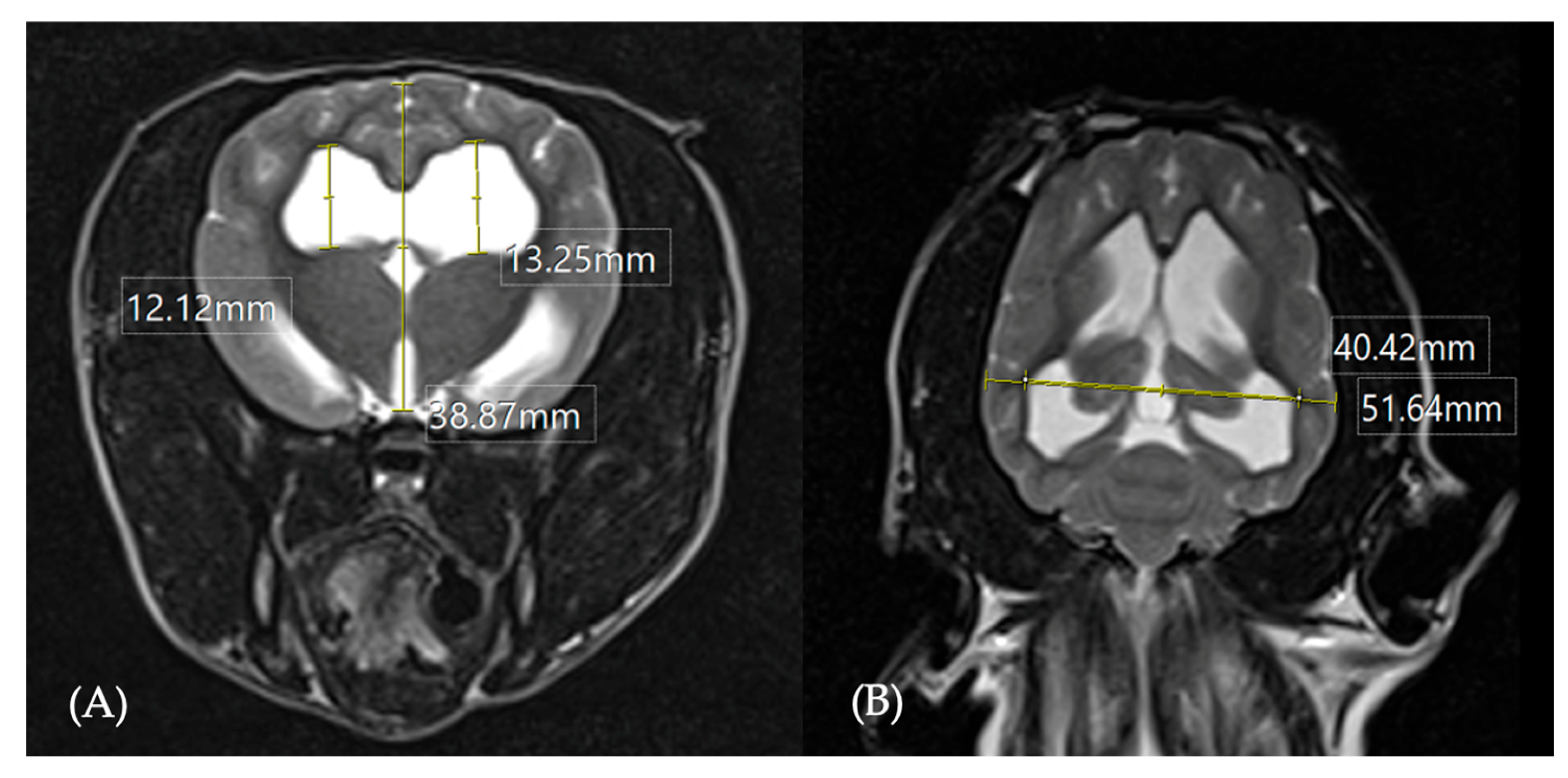
Figure 2.
Method for measurement of the spinal cord compression. At the level of the dens, (A) the measurement of spinal cord diameter on a transverse MR image, (B) on a sagittal MR image. At the midpoint of the C2 vertebral body, (C) the measurement of spinal cord diameter on a transverse MR image, (D) on a sagittal MR image.
Figure 2.
Method for measurement of the spinal cord compression. At the level of the dens, (A) the measurement of spinal cord diameter on a transverse MR image, (B) on a sagittal MR image. At the midpoint of the C2 vertebral body, (C) the measurement of spinal cord diameter on a transverse MR image, (D) on a sagittal MR image.
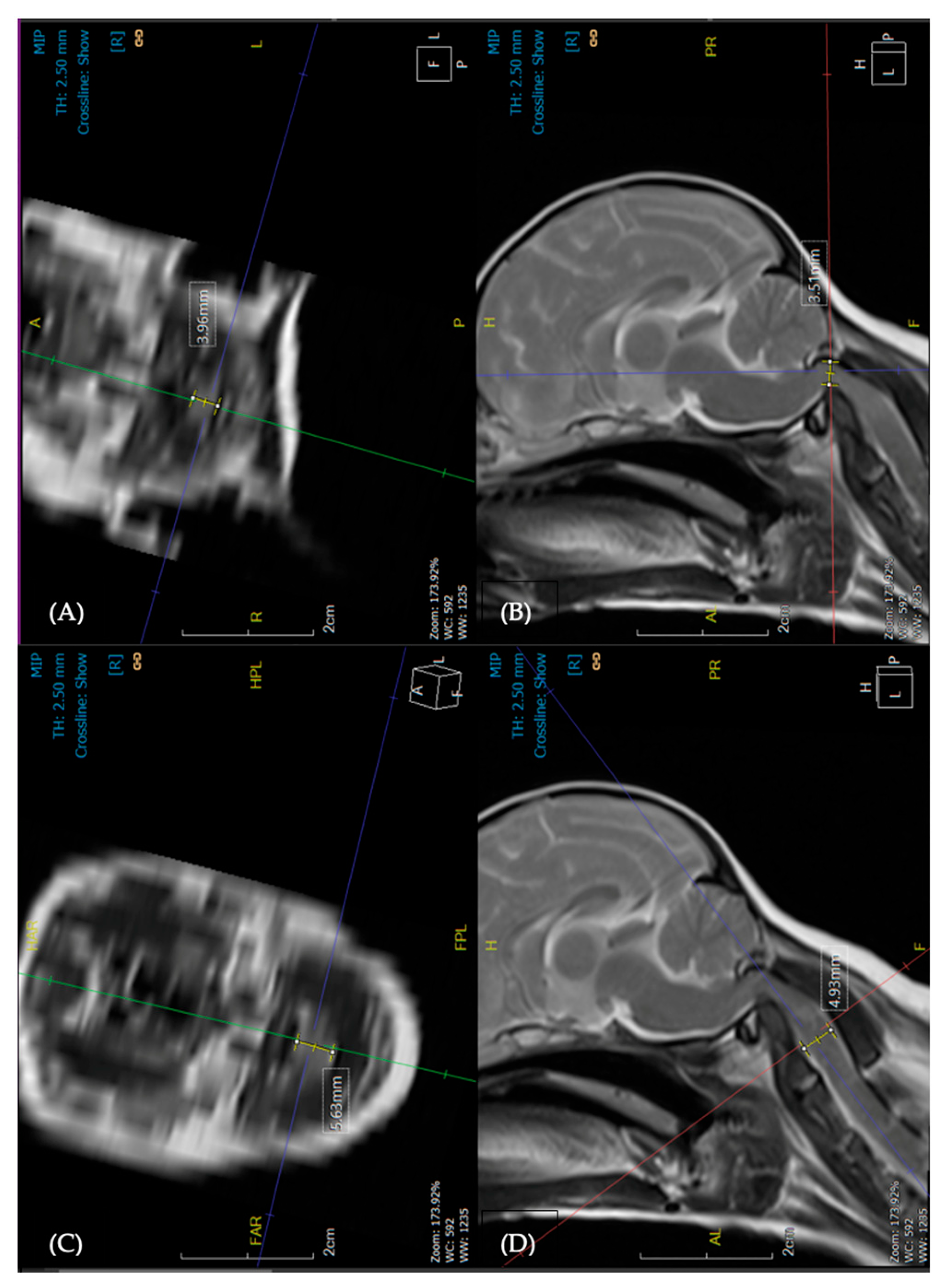
Figure 3.
Method for measurement of the ventral compression index.
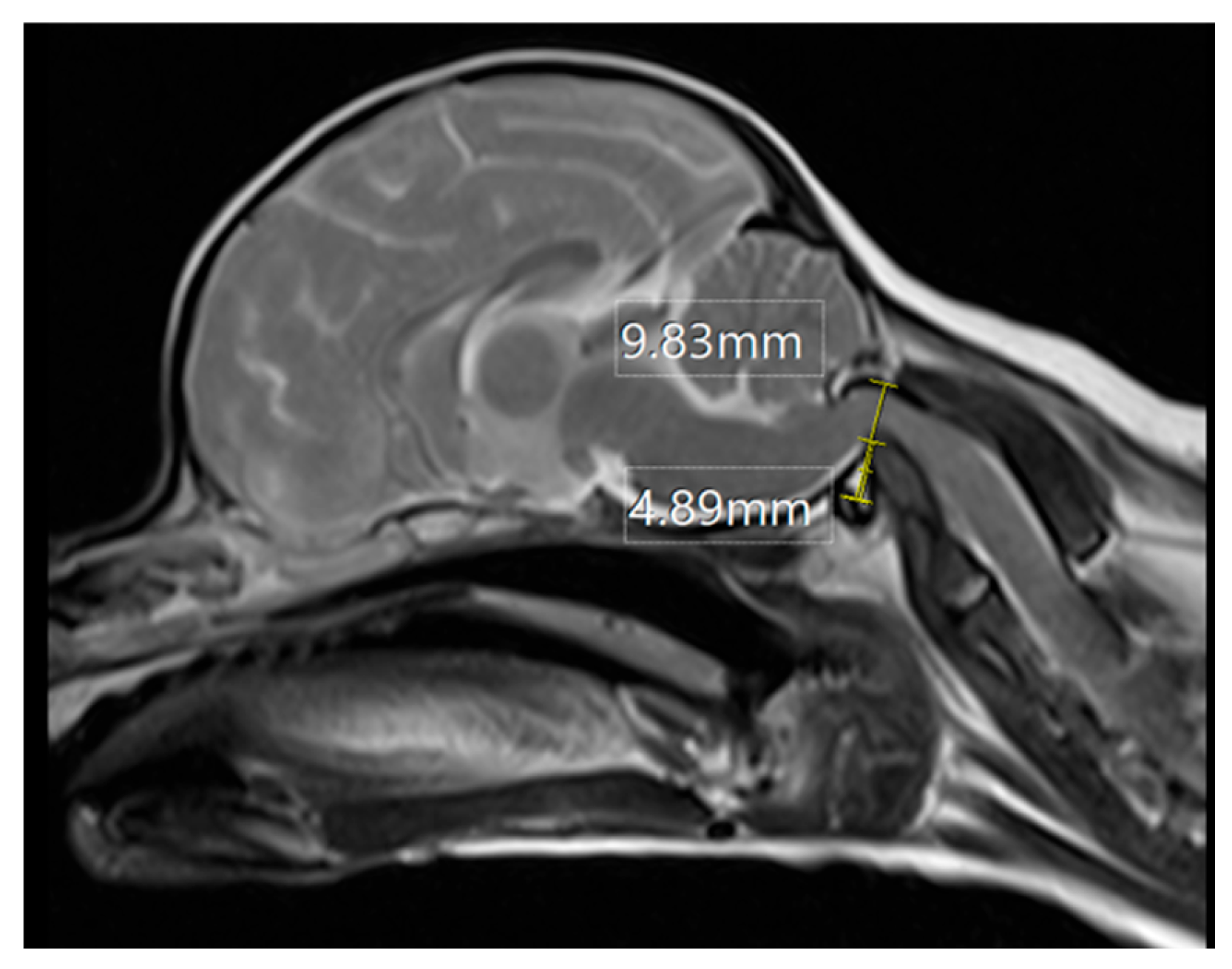
Figure 4.
Method for measurement of the cerebellar compression.
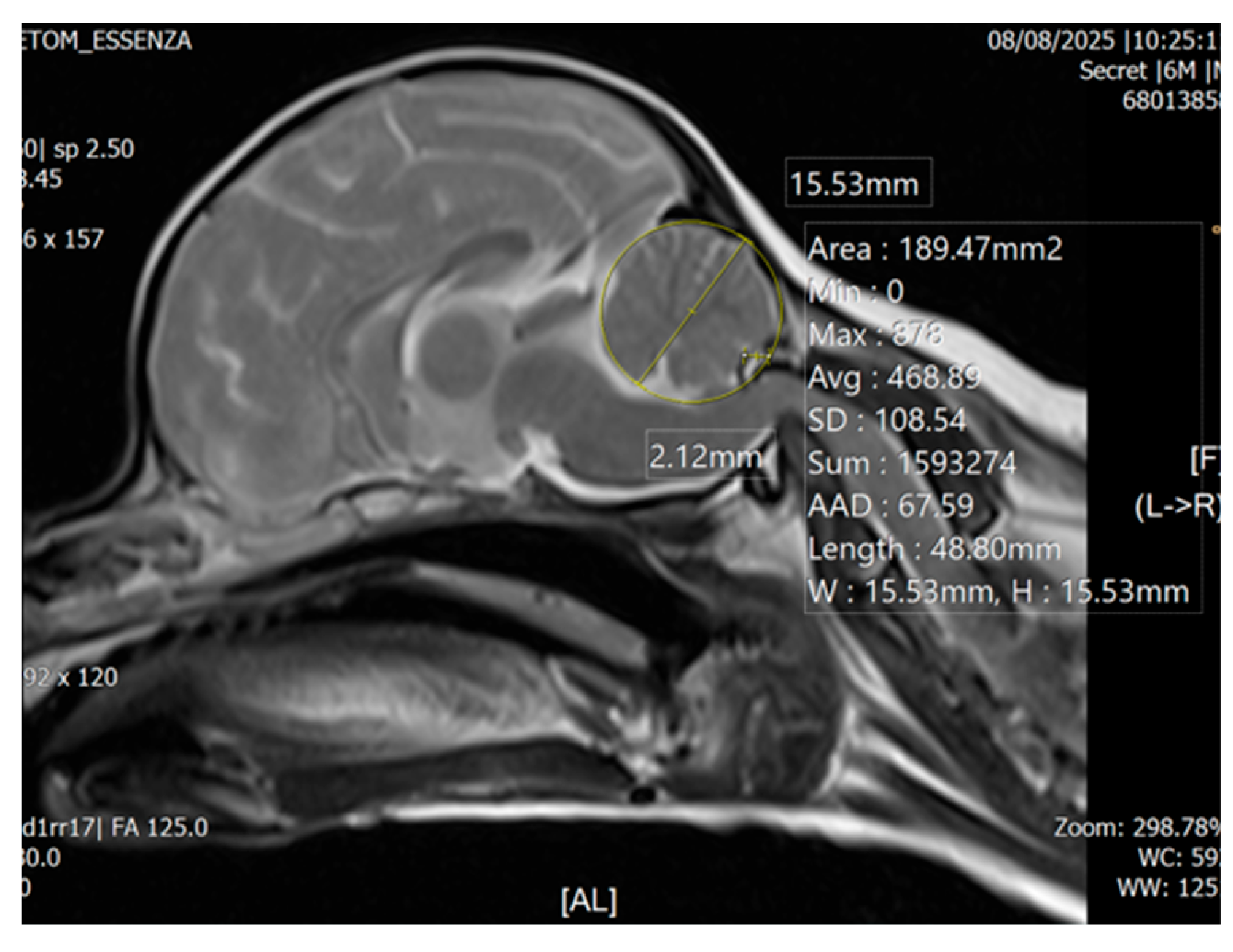
Figure 5.
Distribution of neurological grades before and after surgical stabilization in 20 dogs with atlantoaxial instability (AAI).
Figure 5.
Distribution of neurological grades before and after surgical stabilization in 20 dogs with atlantoaxial instability (AAI).
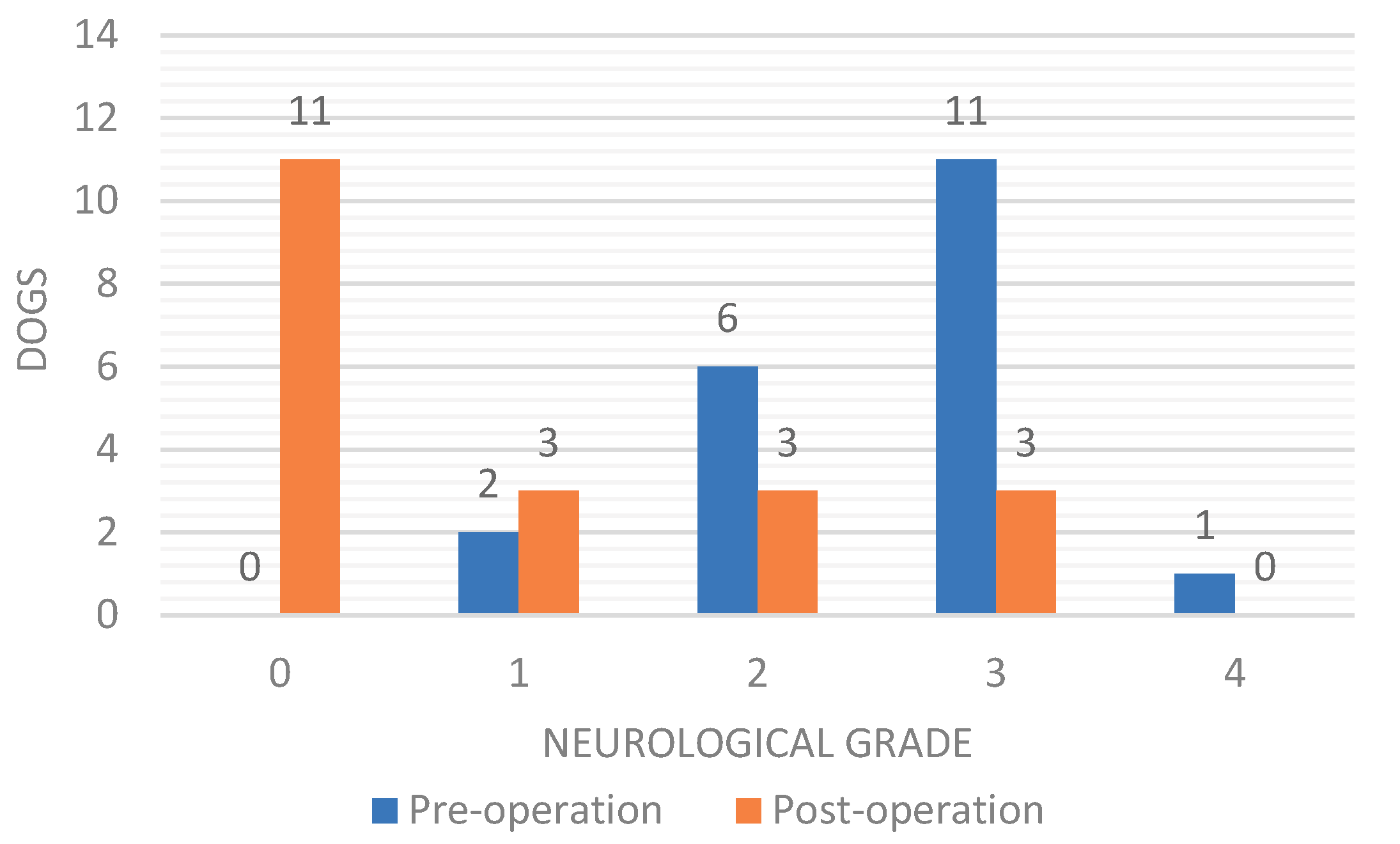

Table 1.
Signalment of twenty dogs undergoing surgery for atlantoaxial instability.
| Age (years) | 2.8 (6 mth – 10 yr) |
|---|---|
| Bodyweight (kg) | 2.11 ( 1.3 – 4.3 ) |
| Gender | |
| Female | 7 |
| Male | 13 |
| Breed | |
| Chihuahua | 11 (55%) |
| Pomeranian | 7 (35%) |
| Shih tzu | 1 (5%) |
| Maltese | 1 (5%) |
Disclaimer/Publisher’s Note: The statements, opinions and data contained in all publications are solely those of the individual author(s) and contributor(s) and not of MDPI and/or the editor(s). MDPI and/or the editor(s) disclaim responsibility for any injury to people or property resulting from any ideas, methods, instructions or products referred to in the content. |
© 2026 by the authors. Licensee MDPI, Basel, Switzerland. This article is an open access article distributed under the terms and conditions of the Creative Commons Attribution (CC BY) license.
Copyright: This open access article is published under a Creative Commons CC BY 4.0 license, which permit the free download, distribution, and reuse, provided that the author and preprint are cited in any reuse.


