

Submitted:
21 March 2026
Posted:
24 March 2026
You are already at the latest version
Abstract
In rangeland systems, natural nutrient restriction (NR) elevates risk for small-for-gestational-age (SGA) lambs, yet some NR ewes deliver Non-SGA offspring. We evaluated whether fetal biometry and Doppler indices could differentiate those fetal growth trajectories. Ninety-five single-pregnant Corriedale ewes were assigned from gestational day (GD) 70 to term to NR grazing (n=72) or supplemented Controls (n=23) groups. Fetal biparietal diameter (BPD), femur length (FL), thoracic height (TH), and umbilical cord diameter (UCD) were assessed at GD80, GD95, GD110, and GD125. Resistance (RI) and pulsatility (PI) indices were recorded for the umbilical (UA), cotyledonary (CA), and uterine (UtA) arteries at GD80, GD95, GD110, GD125, and GD140. Within NR, offspring were stratified by birth-weight (BW) quartiles to define SGA (lowest quartile, n=18) and Non-SGA (highest quartile, n=18) groups. Prenatal biometry did not differ among groups. At birth, BW differed (p < 0.05) among Control (4.95 ± 0.10 kg), Non-SGA (5.33 ± 0.06 kg), and SGA (3.79 ± 0.11 kg), and BPD and FL were smaller in SGA vs Control and Non-SGA. UA-RI at GD125 was higher in SGA vs Non-SGA (p < 0.005). UtA-RI and UtA-PI were lower in mothers of SGA lambs at GD110 and GD125 (p < 0.05). CA indices did not differ. UA-RI at GD125 was associated with BW (R2 = 0.15; p < 0.001). Associations between BW and UtA-RI and UtA-PI at GD 110 and 125 explained little variance (R2 ≤ 0.08). Distinct uteroplacental and umbilical Doppler signatures differentiated SGA from Non-SGA trajectories before measurable divergence in fetal growth. Although UA-RI at GD125 demonstrates prenatal predictive promise, its accuracy as standalone indicator remains modest.
Keywords:
maternal undernutrition
; small for gestational age
; fetal biometry
; resistance index
; pulsatility index
1. Introduction
Pasture-based animal operations, and particularly rangeland systems, often face difficulties in meeting the nutritional requirements of animals because of insufficient forage quantity and quality. Worldwide, this scenario is likely to worsen as a consequence of climate change and its effects on agroclimatic conditions [1]. Variations in rainy and drought periods, temperature modifications, and increase in desertification are expected to have a negative impact on forage availability in several areas of the world [2,3]. These conditions negatively affect forage quality and quantity, leading to naturally-occurring animal undernutrition. This situation becomes more critical during periods of increased nutritional requirements, such as gestation [4], when nutritional requirements of dams are augmented to support fetal and placental growth [4].
Traditionally, it has been described that gestational undernutrition leads to a reduction in fetal growth and birth weight, producing neonates that are small for gestational age (SGA) [5,6,7]. In humans, this classification refers to neonates that are below the 10th percentile, or below two standard deviations, for the expected birth weight or fetal length, at a given gestational age [8]. In animal models different selection criteria have been used to define SGA animals, all of them finally referring to offspring that are smaller than expected for the species at a specific gestational age or at term [9]. Extensive research has been conducted in the field, and several studies have used sheep as a model of maternal nutrient restriction (NR) and SGA offspring because of its value for both agricultural and biomedical research [10]. Insights from those models indicate that SGA offspring is at a higher risk of developing metabolic diseases in postnatal life [11,12,13,14]. From an animal production perspective, this condition negatively affects the systems sustainability because of increased mortality [15], altered growth performance, carcass composition, and potential detrimental effects in reproductive parameters such as puberty onset, expected fertility, and ovulation rate [16,17,18].
Most of the available studies using animal models of NR have considered fetuses from NR females as a single experimental group [7,14,19]. However, previous research in sheep NR has demonstrated the appearance of a broad range in the distribution of fetal weights within the NR groups. This has allowed for the distinction of SGA offspring, and lambs presenting normal birth weight, regardless of being born to ewes that suffered the same gestational NR [20,21,22]. For example, using a sheep model of 50% NR from gestational day (GD) 35 to 135, Sandoval et al. [21] measured fetal weights at GD135, and divided the dataset of NR fetuses into quartiles. The mean fetal weight of fetuses within the upper quartile (Non-SGA) did not differ from fetuses of control-fed (100% NRC, CNTR group) animals. In contrast, the weight of fetuses within the lower quartile (SGA) was lower than both NR (Non-SGA) and CNTR fetuses. The occurrence of Non-SGA and SGA offspring in NR pregnancies has been observed by other authors in different species [23], and also in a paradoxical model of overnourished adolescent sheep [24]. In previous observations in ovine flocks from rangeland systems in Patagonia, we have also identified the appearance of SGA and Non-SGA offspring born to ewes that were subject of a natural nutrient-restriction imposed by harsh environmental conditions.
Available data from the described models suggests a differential metabolic programming between Non-SGA and SGA offspring which may determine differential postnatal health and performance [25]. Additionally, as neonatal survival is directly associated with birth weight [26] it could be anticipated that Non-SGA offspring will exhibit reduced mortality, regardless of being born to NR ewes. restriction. This is particularly relevant for ovine rangeland systems placed in harsh environments, such as southern Patagonia. In these areas, environmental temperatures are low, even below zero, during the lambing season, which may become even more challenging during cold waves, rain or snow storms [27]. As these are extensive systems, parturition occurs in grazing paddocks, usually without cover for the animals or possibilities to provide particular care to the neonates. As a consequence, neonatal mortality is high, which affects weaning percentage and the economical sustainability of these systems. From this perspective, the possibility of identifying the SGA and Non-SGA developmental trajectories prenatally could provide valuable information for farmers. For example, they could apply specific and strategic nutritional interventions just for compromised pregnancies, thus optimizing the cost of nutritional supplementation in rangeland systems, and eventually reducing lamb mortality.
Literature derived from human SGA pregnancies indicates Doppler ultrasound exploration of placental and umbilical vessels as a reliable, and non-invasive tool for the prenatal detection of this condition [28]. Specifically, it is reported that two indicators, the pulsatility (PI) and resistance (RI) indices are increased in SGA pregnancies, particularly in the umbilical artery [29]. These indices are directly correlated with one another, and present an inverse correlation with tissue perfusion [30] and blood flow [31]. Thus, increased PI and RI in SGA pregnancies are ultimately indicating an altered perfusion and blood flow throughout the placenta, hence limiting nutrient and oxygen delivery for the fetuses, thus limiting intrauterine growth and development [32]. Once this limitation in fetal growth becomes manifest, it has been prenatally assessed via B-mode ultrasound fetal biometry. Indicators such as biparietal diameter, umbilical girth, femoral and tibial length, are correlated with lamb birth weight, presenting a value as eventual predictors of this condition [33].
The aforementioned techniques represent a potential non-invasive alternative for the prenatal identification of SGA pregnancies that could be applied under field conditions in rangeland ovine systems. However, most of the available literature has demonstrated the utility of Doppler ultrasound assessment in humans, but it remains unknown if the alterations leading to SGA offspring as a consequence of maternal NR will cause the same alterations in Doppler indicators in an ovine pregnancy. It is also unknown if Doppler indices and B-mode fetal biometry could be useful for a prenatal differentiation between Non-SGA and SGA developmental trajectories in pregnancies from naturally nutrient-restricted dams. Hence, our objective was to evaluate whether fetal biometry and Doppler ultrasonography could be used to anticipate the appearance of Non-SGA and SGA fetuses in single-bearing ewes under natural nutrient-restricted conditions.
2. Materials and Methods
All animal procedures were evaluated and approved by the Institutional Animal Care and Use Committee of INIA (n° 01/2022). The studies were conducted in the sheep research unit of INIA Kampenaike, Magallanes Region, Chilean Patagonia (Lat 52° 36’; Lon 70° 56´).
2.1. Animal Management
A total of 120 Corriedale multiparous sheep of similar age (~ 5 years) and average body condition score of 2.5 points ( 1 – 5 scale) were selected. All females received two injections of prostaglandin F2α (PGF2α) 11 days apart to synchronize estrus. Females detected in estrus were artificially inseminated using fresh semen from the same male in order to reduce genetic variability, and avoid the male effect over birth weight. Ultrasound pregnancy diagnosis was performed at gestational day (GD) 70. Only singleton pregnancies (n=95) were selected for this study. Animals grazed in natural pasture, in the same paddock, under the typical conditions of extensive ovine systems in Magallanes (stocking rate 0.9 ewes per hectare (ha), dry matter ~520 kg/ha, crude protein (CP) 3.2%, metabolizable energy (ME) 1.6 Mcal/kg,) from estrus synchronization to GD 140. At GD 140, ewes were placed in individual pens for lambing control in a 24/7 regime. Animals had ad libitum access to water throughout the experiment.
2.2. Treatments and Experimental Groups
Selected ewes were randomly assigned to either a nutrient-restricted (NR, n=72) or a control (Control, n=23) group. The NR group was maintained in a grazing paddock, which based on forage nutritional analysis provided 54% CP and 73% ME of the National Research Council (NRC, 2007) requirements [34]. The Control group was maintained grazing in the same paddock, but received a daily concentrate supplementation (Suralim® Núcleo Punta Arenas, 22% CP, 2.85 Mcal/Kg ME) from GD 70 to GD 140, in amount sufficient to provide 100% of CP requirements according to NRC (2007) recommendations [34]. A mobile pen was placed within the grazing paddock so that the Control group received the supplementation separately from the NR group without being removed from the paddock. The concentrate rations were adjusted according to maternal weights and gestational stage. From GD 140 to parturition, all animals were fed in their individual pens, receiving a daily ration composed of meadow hay (6.85% CP, 2.13 Mcal/Kg ME, 950 gr/day) and alfalfa hay (22.65% CP, 2.39 Mcal/Kg ME, 100 gr/day) which was provided divided into two administrations per day. Water was provided ad libitum for all animals.. Maternal weight (MW) was recorded at GD 70, 90, 110, 125, and 140. Lamb birth weight (BW) was recorded at parturition. Animals born to NR ewes were separated into quartiles according to BW as previously described [20,21,25]. Briefly, lambs within the highest quartile were classified as Non-SGA group (n=18), and their mothers as mNon-SGA group (n=18). Lambs within the lowest quartile formed the SGA group (n=18), and their mothers formed the mSGA group (n=18). All animals within the control group (dams, n=23; lambs, n=23) were considered for analysis as quartile division was not applied to this group.
2.3. Prenatal Evaluations - Fetal Biometry
Biparietal diameter (BPD), femoral length (FL), thorax height (TH), and umbilical cord diameter (UCD) were evaluated at GD 80, 95, 110, and 125 by B-mode ultrasound, using a SonoScape ProVet E2V2 (SonoScape, Medical Corp., Shenzen, China) ultrasound machine, and a 5 MHz transabdominal microconvex probe. Ewes were shorn in the abdominal area before scanning to improve contact between skin and the probe. All ultrasound examinations and imaging were performed by the same trained operator, in order to avoid personnel-related variations. Images were stored and subsequently measured using ImageJ (Wayne Rasband, National Institutes of Health, USA). Each measurement was performed as described in previous studies [35,36,37]. Briefly, BPD was measured by placing the calipers on the outer edge of one parietotemporal bone and the inner edge of the opposite. FL was measured along the length of the ossified femoral diaphysis. TH was measured as the distance from the sternum to the vertebral column at mid-heart level on a transverse thoracic section. UCD was measured on a transverse section, away from its fetal insertion to standardize the measurement procedure.
2.4. Prenatal Evaluations - Doppler Ultrasonography
Resistance (RI) and pulsatility (PI) indices were evaluated in umbilical (UA-RI and UA-PI), cotyledonary (CA-RI and CA-PI), and uterine (UtA-RI and UtA-PI) arteries at GD 80, 95, 110, 125, and 140 via Doppler color ultrasonography using the aforementioned equipment. The same trained operator performed all evaluations to avoid personnel-related variation. Assessment of UA was performed through the transabdominal examination from a longitudinal section of free loop of the umbilical cord using 5 MHz microconvex transducer and 12° insonation angle [38]. Doppler ultrasound indicators for CA, and UtA were assessed using a 9 MHz transrectal transducer with 12° insonation angle [38], and ewes standing in the chute in every examination. Due to impossibility of marking the specific placentome that was evaluated at each GD, we could only standardize the assessment to CA by measuring Doppler parameters in the same location of the selected placentome each time. UtA assessment was performed ipsilateral to the fetus. Each Doppler examination provided curves with peak systolic velocity (PSV) and end diastolic velocity (EDV), from which the ultrasound unit automatically derived RI and PI.
2.5. Postnatal Measurements
Immediately after lambing, offspring were weighed, individually identified, and neonatal BPD, FL, and TH were measured using a caliper. As mentioned previously, only lambs from NR group were divided into quartiles based on BW to form the Non-SGA and SGA groups. Therefore, measurements were obtained from all animals in the study, but further analyses considered only Control (n=23), Non-SGA (n=18) and SGA (n=18) groups, and their mothers (mControl, mNon-SGA and mSGA, respectively).
2.6. Data Analyses
All results were analyzed using JMP® (SAS Institute Inc., Cary, NC, USA). Data was evaluated for normality using Shapiro-Wilks test. Comparison between groups for postnatal data was performed via one-way ANOVA followed by Tukey’s test as post hoc analysis. A generalized linear mixed-effects model was used for comparison between groups in data collected multiple times during gestation. The effect of group, time and their interaction were considered in the model. Fetal sex was not included in the model as its effect was not significant. A linear regression analysis was performed for all the prenatal variables that showed significant differences between groups in the previous analysis. Regressions were conducted using the entire dataset instead of the extreme quartiles for each variable, and a linear model was fitted to evaluate if any of them could be suitable as prenatal predictors of lamb BW. Statistical significance was defined for p-value ≤ 0.05, while 0.05 < p-value < 0.1 was considered statistical tendency. Results are presented as mean ± standard error of the mean (SEM).
3. Results
3.1. Lambs Birth Weight
The mean BW was higher in lambs born to Control (4.95 ± 0.1) compared to those born to NR (4.56 ± 0.08) ewes (p<0.05) (Figure 1a). Once quartile separation was applied on NR lambs, all groups differed from each other (p < 0.05). The Non-SGA group was the heaviest (5.33 ± 0.06), followed by Control (4.95 ± 0.1), and SGA (3.79 ± 0.11) (Figure 1b).
3.2. Maternal Weight Across Pregnancy
Maternal weight did not differ between groups at GD 70, 90, and 110. However, at GD 125 the mSGA group weighed less than mControl (47.68 ± 1.37 vs 56.9 ± 1.22, respectively) (p < 0.05), while mNon-SGA (51.34 ± 1.41) did not differ from either group (p > 0.05). All groups differed at GD 140, with mean weights of 64.2 ± 1.55, 57.8 ± 1.63, and 50.88 ± 1.92 for mControl, mNon-SGA, and mSGA, respectively (p < 0.05) (Figure 2).
3.3. Fetal and Newborn Biometry
All fetal ultrasound measurements showed a consistent increase as pregnancy progressed (p < 0.0001) (Figure 3). There were no differences between groups for either BPD (Figure 3a), FL (Figure 3b), TH (Figure 3c), or UCD (Figure 3d) at any gestational age (p>0.05).
Postpartum BPD was significantly smaller for SGA group (5.52 ± 0.09) compared to both Control (5.9 ± 0.07) and Non-SGA groups (6.02 ± 0.08) (p<0.001) (Figure 3a-birth). The same pattern was observed for FL, with the SGA group (10.14 ± 0.09) being significantly smaller than both, Control (11.46 ± 0.17), and Non-SGA (11.32 ± 0.11) groups (p<0.001) (Figure 2b-birth). Postpartum TH did not differ among groups (p > 0.05) (Figure 3c-birth).
3.4. Doppler Color Ultrasonography
3.4.1. Umbilical Artery Doppler
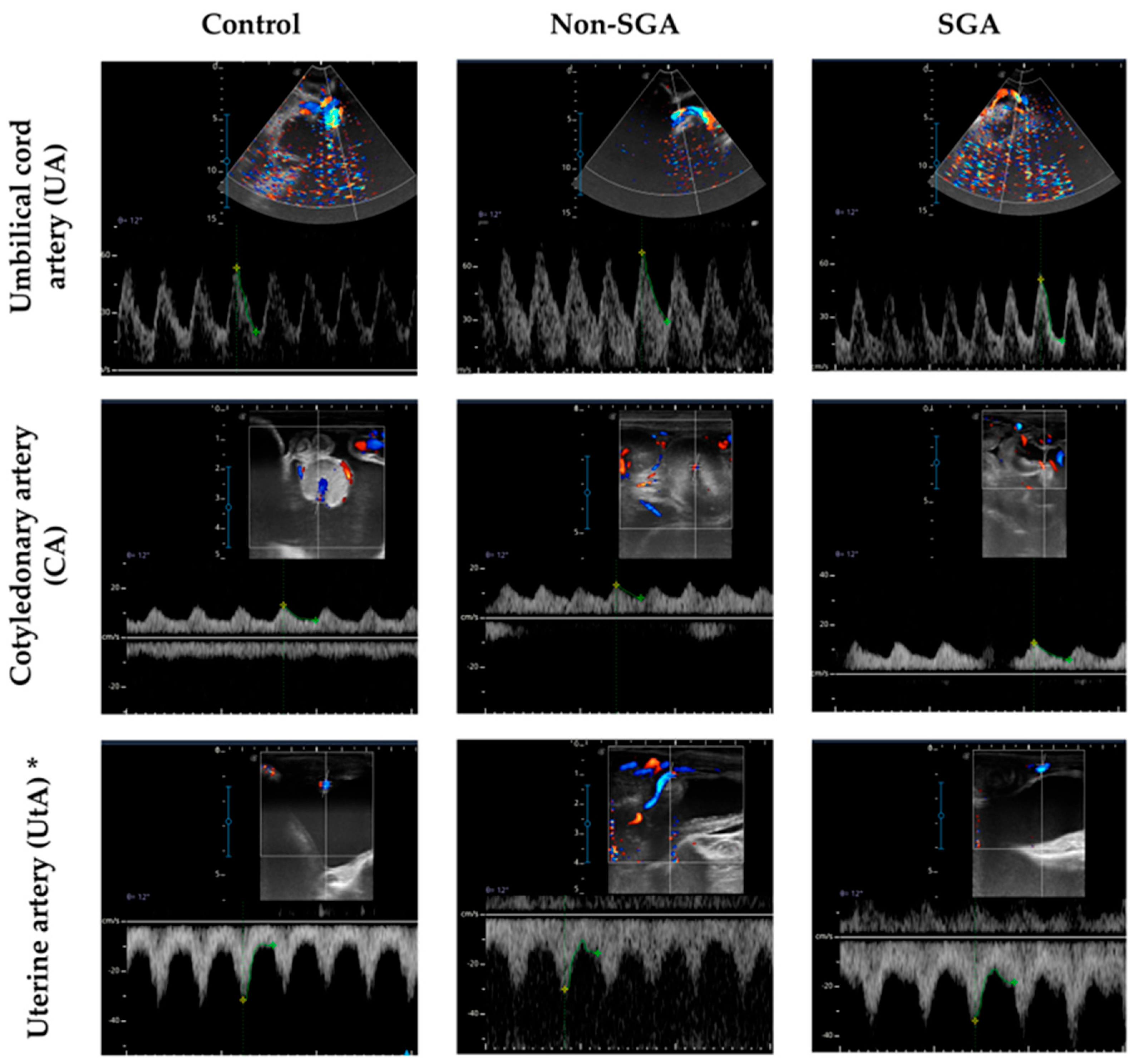
Both RI and PI were significantly reduced over time, in accordance with gestational progression (Figure 4). Results for RI at GD 125 showed significant differences between SGA (0.68 ± 0.01) and Non-SGA (0.61 ± 0.01) groups (p < 0.01), and a tendency for differences between Control (0.62 ± 0.01) and Non-SGA groups (p < 0.1) (Figure 4a). No differences were found for PI (p > 0.05) at any gestational age (Figure 4b). Representative images in Figure 7.
3.4.2. Cotyledonary Artery Doppler
Both RI and PI were significantly reduced throughout gestation (Figure 5). No differences were found among groups at any gestational age (p > 0.05).
3.4.3. Uterine Artery Doppler
Both UtA-RI and UtA-PI were significantly reduced throughout gestation (p < 0.0001) (Figure 6). Measurements for RI at GD 110 were lower for mSGA group (0.55 ± 0.02) compared to both, mNon-SGA (0.65 ± 0.03) and mControl (0.68 ± 0.02) (p < 0.001) (Figure 6a). At GD 125, the mSGA group (0.45±0.01) differ significantly from mControl (0.57 ± 0.02), while mNon-SGA (0.52 ± 0.01) was intermediate between groups (p < 0.05) (Figure 6a).
Similar results were found for PI at GD 110, where values were lower in mSGA (1.00 ± 0.07) than Control (1.31 ± 0.07) group, while mNon-SGA (1.17 ± 0.08) was intermediate (p < 0.05). Measurements of PI at GD 125 showed lower values for mSGA group (0.69 ± 0.02) than mControl (0.98 ± 0.04) (p<0.001), while mNon-SGA (0.84 ± 0.03) was intermediate between groups (Figure 6b).
Figure 6.
Uterine artery resistance index (UtA-RI) (a) and pulsatility index (UtA-PI) (b) for mControl (n=23), mNon-SGA (n=23), and mSGA (n=25) groups during gestation. * indicates significant differences (p < 0.05). (*) Measurements were obtained from mControl, mNon-SGA and mSGA groups, respectively.
Figure 6.
Uterine artery resistance index (UtA-RI) (a) and pulsatility index (UtA-PI) (b) for mControl (n=23), mNon-SGA (n=23), and mSGA (n=25) groups during gestation. * indicates significant differences (p < 0.05). (*) Measurements were obtained from mControl, mNon-SGA and mSGA groups, respectively.
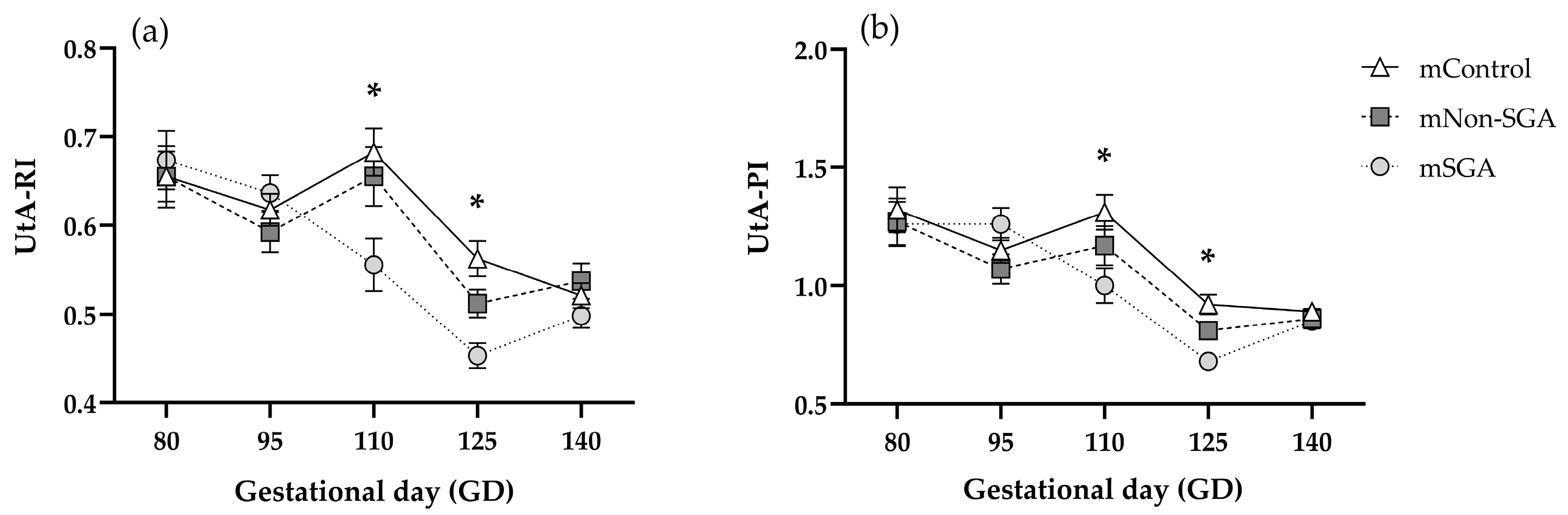
Figure 7.
Representative images of Doppler evaluation on umbilical cord artery (UA), cotyledonary artery (CA) and uterine artery (UtA) for Control, Non-SGA, and SGA groups at gestational day (GD) 125.
Figure 7.
Representative images of Doppler evaluation on umbilical cord artery (UA), cotyledonary artery (CA) and uterine artery (UtA) for Control, Non-SGA, and SGA groups at gestational day (GD) 125.
3.5 Linear Regression between prenatal significant variables and birth weight
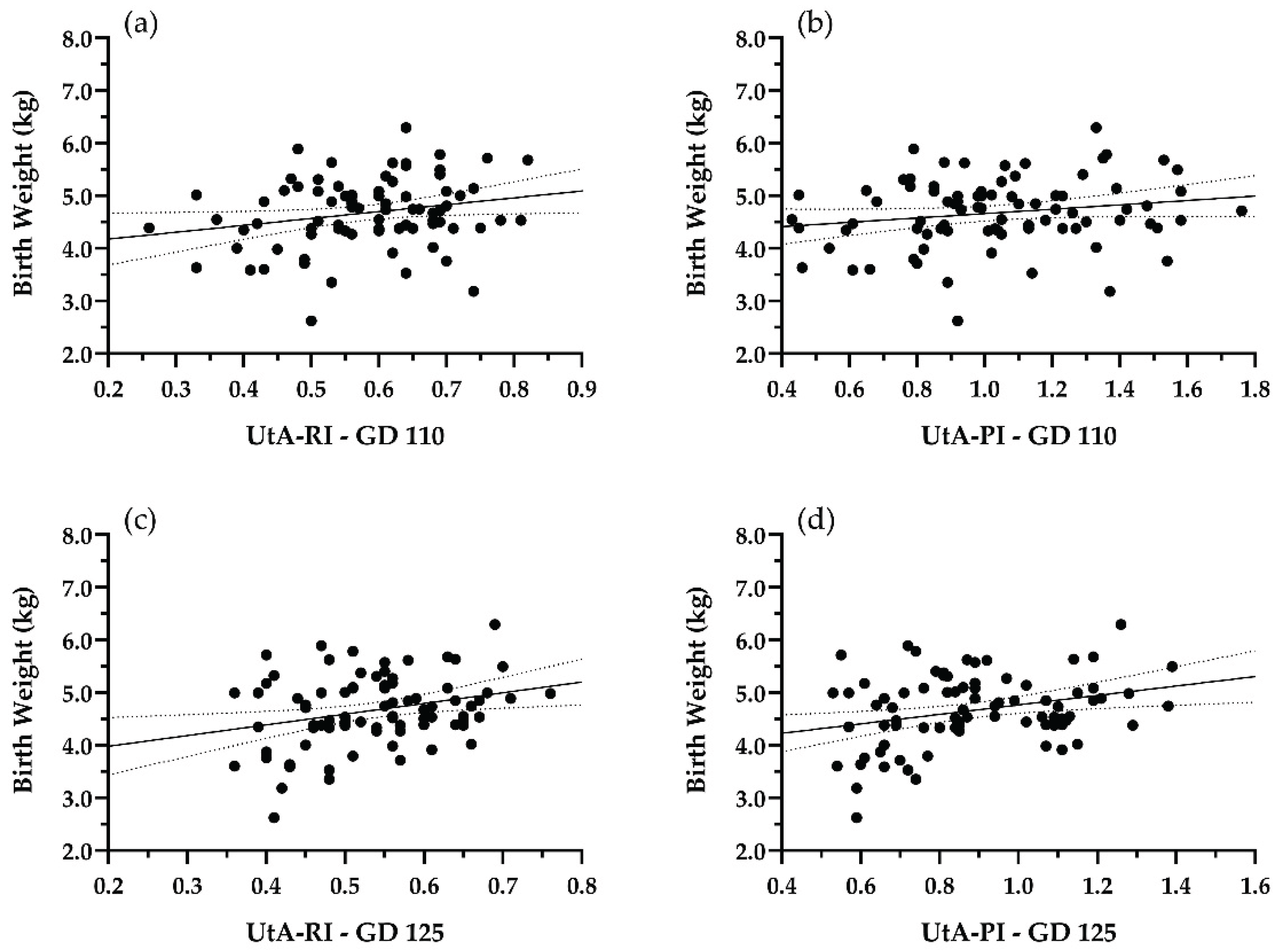
We selected the entire dataset of UA-RI at GD 125, and both UtA-RI and UtA-PI at GD 110 and 125 to perform a correlation analysis, as those variables presented significant differences between groups in the previous analysis. A linear regression model was run between each of the mentioned variables and BW. The model for UA-RI GD125 and lamb BW was significant (p < 0.001), with a determination coefficient (R²) of 0.15 (Figure 8). At GD 110, results for UtA-RI were significant with p < 0.05, and R² of 0.05 (Figure 9a), and results for UtA-PI presented an R² of 0.03 (Figure 9b), with linear regression that was not significant (p > 0.05). Finally, results for UtA-RI and UtA-PI at GD125 were significant, with p < 0.05 and R² of 0.07 and 0.08 respectively (Figure 9c and Figure 9d).
4. Discussion
The present study aimed to evaluate whether fetal B-mode biometry and Doppler color ultrasonography could be used to prenatally differentiate Non-SGA and SGA gestations, under conditions of natural nutrient restriction. Major findings indicate that, under the evaluated conditions, differential responses to maternal NR, leading to divergent fetal developmental trajectories (SGA vs Non-SGA) are found. However, these differential trajectories were not detectable prenatally via ultrasound biometry, but were associated with differential responses in placental vascular resistance.
The appearance of SGA and Non-SGA developmental trajectories in response to maternal NR in the sheep has been previously reported [21,22,25,39]. Those studies applied a model of 50% NR, artificially imposed according to NRC requirements for most of the pregnancy, and evaluated fetal weight at GD 125 or 135. Our current model studied the same phenomenon, but under natural nutrient-restriction imposed by environmental hardship, and using animals from a region where sheep flocks have been exposed to nutritional hardship for several generations. This may explain the fact that NR pregnancies under a Non-SGA developmental trajectory led to a higher BW than the observed in the Control group, which may be indicative of exceptional adaptations within the Non-SGA group. The latter is reinforced by the fact that MW shows divergent trajectories at GD 125, where mSGA ewes were lighter than mControl animals, and at GD 140, where all groups differed with mSGA being lighter than both, mControl and mNon-SGA. This indicates that females within the mNon-SGA group are somehow less affected by the same level of NR than mSGA ewes. We consider this may be evidence of a differential maternal adaptation allowing the mNon-SGA ewes to better cope with nutritional hardship. This is supported by previous research that found increased plasma non-esterified fatty acids (NEFAs) in NR ewes leading to Non-SGA versus SGA offspring, indicating a differential lipid metabolism adaptation to NR [40]. The particular metabolic differences that underpin these maternal adaptations in our model are of high interest and are currently being investigated, but are beyond the scope of the present work.
Previous studies have provided relevant insights into differential placental adaptations that allow for enhanced nutrient delivery towards the fetus in Non-SGA versus SGA pregnancies. For example, adaptive pregnancies that maintained fetal growth exhibited preserved placentome size and exchange surface, and a selective upregulation of amino acid transporters [20]. Reduced immune activation and selective upregulation of membrane receptor signaling in Non-SGA placentas has also been reported [22]. However, knowledge about non-invasive prenatal markers for an early detection of SGA and Non-SGA pregnancies is still lacking. We evaluated fetal ultrasound biometry as a non-invasive tool that may be suitable for these purposes. In agreement with previous reports [41], all biometric measurements increased throughout gestation. However, no differences between groups were found at either GD 80, 95, 110, or 125 for BPD, FL, TH, and UCD. By contrast, results from a model of fetal growth restriction induced by overfeeding adolescent ewes, indicated a reduced fetal abdominal circumference and femoral length, renal volume and tibial length, and biparietal diameter from GD 98, 105, and 112 in advance, respectively [33]. This study also found a variety of fetal weights within the overnourished group, and separated them into restricted (FGR) versus Non-restricted (Non-FGR). Interestingly, they found that femoral length, tibial length, renal volume, and biparietal diameter were smaller in FGR versus Non-FGR groups when evaluated via ultrasound biometry at GD 126. Another model of intrauterine growth restriction, induced by surgical umbilical artery ligation in sheep, also found a reduction in biometrical measurements (crown-rump length, abdominal circumference, femur length, and tibial length) at GD 127 [42]. These results differ from our data, likely due to the different models used to induce impairment of fetal development. The severity of placental insufficiency imposed by surgical intervention or the overfeeding model may impact fetal growth earlier than our current model of NR. Regardless, most accelerated fetal growth occurs in the last third of gestation [43], and previous authors have stated that by GD 121 the ovine fetus has reached about 70% of total growth [33], revealing the relevance of the last 26 days of gestation in fetal growth. Given that we observed reduced newborn weight, biparietal diameter, and femoral length in the SGA group, we conclude that the physical differences in our model became manifest at some point between GD 125 and birth, which is consistent with the period of most accelerated fetal growth.
Results from placental Doppler exploration indicate that RI and PI in UA, CA, and UtA showed a progressive decrease throughout gestation, regardless of the experimental group. This agrees with previous literature from different mammalian species, which indicates that the reduction of RI and PI indices during pregnancy reflect an essential physiological adaptation to enhance blood flow towards fetal-placental tissues [30,44,45,46,47,48]. In regard to the prenatal differentiation of SGA and Non-SGA developmental trajectories based on Doppler ultrasound indices, we found that RI and PI did not differ between groups for CA. We acknowledge that a potential limitation of the CA assessment of was the inability to consistently evaluate the same placentome across time points, which may have contributed to increased variability in the dataset unintended variability in this dataset. To our knowledge, there are not non-invasive methods currently available to enable consistent evaluation of the same placentome over time, which we recognize as an important limitation and a key area for future methodological improvement.
Results for UA indicate an increase of RI in the SGA group compared to Non-SGA and Control at GD 125. The latter has been previously reported in literature in other species. For example, in humans, Doppler exploration is widely performed to assess placental function and developmental trajectories, and increases in RI and PI in umbilical artery are recognized as prenatal indicators of intrauterine growth restriction [28]. Studies performed in pregnant cattle under 60% NR during the first 140 GD led to an increase in RI in the umbilical artery of fetuses within the restricted group compared to control-fed animals [44]. Similarly, previous reports from SGA developmental trajectories in a model of overnourished adolescent ewe, have also associated increases in RI and PI indices with impaired intrauterine growth [33]. Interestingly, these authors also demonstrated that alterations in umbilical artery Doppler indices were evident before the onset of significant growth restriction. This implies that placental hemodynamic alterations can be considered among the subjacent causes that leads to SGA offspring, and as an early indicator of an impaired developmental trajectory. This point is concordant with our current observations as we did not find differences in fetal biometry between SGA, Non-SGA, or Control groups at GD 80 to 125, but BW, BPD and FL were significantly reduced in the SGA group at birth. This indicates that the differential developmental trajectories became manifest between GD 125 and birth, just after observing differences in UA-RI between SGA and Non-SGA groups; suggesting that differential placental vascular responses preceded the actual deterioration in fetal growth seen within our NR group.
Interestingly, previous research in near-term fetal sheep demonstrated that UA diastolic and mean velocities and PI, and as a consequence RI, closely track directly measured placental blood flow and resistance [29], demonstrating that increased PI and RI correlates with reduced placental blood flow. In the context of our model, this could indicate that maternal NR lead to placental insufficiency in SGA pregnancies, impairing placental blood flow and nutrient delivery to the fetuses, thus explaining the impaired fetal growth. In fact, previous studies by our group in Magellan Patagonia described that, in sheep, maternal undernutrition generates placental insufficiency and fetal hypoxemia and oxidative stress, leading to low birth weight, both in singleton and twin pregnancies [49,50]. Furthermore, the study of Acharya et al [29] also demonstrated that UA Doppler primarily reflects downstream placental vascular load rather than fetal cardiac performance. Hence, it is most likely that a major differential adaptive response leading to SGA or Non-SGA developmental trajectories lies primarily on a particular placental vascular adaptation that mitigate placental insufficiency in the Non-SGA group.
To our knowledge, this is the first report indicating that differential developmental trajectories can be prenatally differentiated throughout umbilical Doppler evaluation in a model of natural maternal nutrient restriction in sheep. The underlying causes leading to this differential response remain to be investigated. Nevertheless, previous literature indicates that the fetal-placental responses to blood flow are locally regulated as those vessels are not under the regulation of autonomous nervous system [51,52]. Key factors that act as local vasodilators are the mechanical effect of blood flow, fluid shear stress, and endothelial vasoactive mediators [52]. Nitric oxide is a potent vasodilator produced by the enzyme endothelial nitric oxide synthase (eNOS), and it is a major local vasodilator in fetal-placental tissues [53,54]. The major source for nitric oxide synthesis in endothelial cells is the amino acid arginine [54]. Previous research performed in a model of maternal NR in sheep, where SGA and Non-SGA fetuses were also identified, indicates a reduction in the total content of arginine in the amniotic fluid of SGA placentas compared to Non-SGA [20]. It is feasible that this also occurs in our current model. This could be an underlying cause for an impaired endothelial capacity to synthetize NO due to a scarcity of its precursor in the SGA group. This would affect local vascular relaxation, hence increasing resistance to blood flow and, accordingly, rising the RI index as we have seen in this study. The opposite would occur within the Non-SGA group, which may present an enhanced placental blood flow that would allow for improved delivery of nutrients towards the fetus, despite nutrient restriction. These specific adaptations are of particular interest and remain to be investigated in our model.
Conversely, results for UtA-RI and UtA-PI showed an opposite response as the SGA group presented a lower RI and PI in GD 110 and 125, compared to Non-SGA and Control groups. To our knowledge, previous literature exploring hemodynamic responses of UtA via Doppler ultrasound are currently lacking in ovine models of maternal NR. However, insights from human studies indicate that elevated UtA-RI and UtA-PI are associated with fetal growth restriction, even recognizing this parameter as a predictive tool for the generation of SGA offspring [55,56]. Increases in RI or PI in the uterine artery would lead to higher resistance to blood flow towards the uterus and placenta, finally limiting the perfusion of fetal-placental tissues, and impairing fetal growth [57]. Nevertheless, these studies are mostly associated with pathological conditions such as pre-eclampsia and eclampsia, which lead to SGA offspring but due to mechanisms that may not be comparable to those exerted by NR. Another study performed in cattle evaluated the impact of a 70% maternal NR during late gestation on UtA Doppler indices, and birth weight. No effect of maternal NR was found on either UtA-RI or UtA-PI, and birth weight was also unaffected [58]. To our knowledge, the aforementioned study is the closest to our current work, however major differences regarding the species, the severity of NR, and the pregnancy stage in which it was applied would explain why those results are not concordant with our findings.
We suggest that the decreased UtA-RI and UtA-PI observed within the SGA group are indicative of a maternal compensation attempt to face nutritional hardship by adjusting vascular resistance of this vessel. This mechanism would have as ultimate goal to increase blood flow towards utero-placental structures, in an effort to protect fetal perfusion, nutrient delivery, and growth. However, according to our data, this maternal compensatory mechanism does not succeed since UA responds in the opposite manner. This contradiction could be associated with the fact that maternal vasculature depends on local vasomotor signals, and autonomic innervation for a systemic regulation of blood vessel resistance, while umbilical vessels are primarily dependent on local secretion of vasoactive substances [52], which as explained before, may be severely disturbed by undernutrition and amino acid scarcity. The underlying mechanisms leading to the differential maternal response to NR observed in this model most likely go beyond what has been studied in the present work, and warrant further investigation.
Furthermore, we run a linear regression analysis to evaluate if the Doppler indices that presented significant differences between groups could be used as prenatal predictors of birth weight. Overall, the regressions between UtA-RI and PI, at both GD110 and 125, presented an extremely low R2, indicating that these variables alone explain very little of the BW variation that we observed before applying the quartile division of the data. Results for UA-RI at GD125 presented R2 = 0.15, indicating that this variable alone explains about 15% of the BW variation that we observed. The relatively low R² value suggests that, while UA-RI at GD 125 shows potential as a prenatal indicator, its modest explanatory power limits its use as a standalone predictor of birth weight or SGA versus Non-SGA developmental trajectories, warranting further validation and integration with additional biomarkers.
5. Conclusions
In a naturally nutrient-restricted rangeland context, pregnancies diverged into SGA and Non-SGA developmental trajectories that were not distinguishable by routine prenatal B-mode ultrasound fetal biometry (biparietal diameter, femur length, thorax height, and umbilical cord diameter). By contrast, Doppler color assessment of uterine and fetal vessels revealed a differentiated hemodynamic pattern, with higher umbilical artery resistance in SGA than in Non-SGA lambs, which was manifest before evident alterations in fetal growth were detected. Dams that produced SGA offspring exhibited lower UtA-RI and UtA-PI, consistent with a maternal compensatory response. However, this was not mirrored within the fetoplacental circulation. Together, these findings support UA-RI at GD 125 as a potential prenatal non-invasive indicator to differentiate between SGA and Non-SGA developmental paths, however; its accuracy as standalone indicator remains modest. Our results also highlight a biologically plausible dissociation between maternal and fetoplacental vascular responses to nutritional hardship. The latter, together with other metabolic and functional maternal and placental adaptations, are currently under investigation and will provide relevant new insights regarding the causes of the observed divergent fetal developmental trajectories.
Author Contributions
Conceptualization, C.S.; M.A.; C.U.; M.R.; F.S.; V.H.P.; Methodology, C,S.; M.A.; C.U.; M.R.; Investigation, C.S.; M.A.; C.U.; M.R.; F.S; Formal analysis; C.S.; F.S.; M.A; Writing-original draft preparation, C.S.; M.A.; C.U.; Writing- review and editing, C.S.; M.A.; C.U.; M.R.; V.H.P., F.S.; Visualization. C.S.; M.A.; C.U.; Supervision, C.S., C.U.; M.R.; Project administration and funding acquisition, C.S.
Funding
This research was funded by Agencia Nacional de Investigación y Desarrollo (ANID), grant number “Fondecyt Iniciación 11220188”.
Institutional Review Board Statement
The animal study protocol was approved by the Institutional Review Board of Instituto de Investigaciones Agropecuarias (INIA) (protocol code 01/2022 date of approval January of 2022).”.
Informed Consent Statement
Not Applicable.
Data Availability Statement
Data is available by request to the correspondence author of the manuscript.
Acknowledgments
We thank Raúl Lira and Salvador Reyes from INIA for their help with animal handling.
Conflicts of Interest
The authors declare no conflicts of interest.
Abbreviations
The following abbreviations are used in this manuscript:
| NR | Nutrient Restriction |
| SGA | Small for Gestational Age offspring |
| Non-SGA | Non-Small for Gestational Age offspring |
| GD | Gestational Day |
| RI | Resistance Index |
| PI | Pulsatility Index |
| UA | Umbilical Artery |
| CA | Cotyledonary Artery |
| UtA | Uterine Artery |
| BPD | Biparietal Diameter |
| FL | Femoral Length |
| TH | Thoracic Height |
| UCD | Umbilical Cord Diameter |
References
- Walther G, Post E, Convey P, Menzel A, Parmesan C, Beebee TJC, et al. Ecological responses to recent climate change. Nature 2002;416:389–95. [CrossRef]
- Howden SM, Crimp SJ, Stokes CJ. Climate change and Australian livestock systems: Impacts, research and policy issues. Aust J Exp Agric 2008;48:780–8. [CrossRef]
- Nardone A, Ronchi B, Lacetera N, Ranieri MS, Bernabucci U. Effects of climate changes on animal production and sustainability of livestock systems. Livest Sci 2010;130:57–69. [CrossRef]
- Bauman DE, Bruce Currie W. Partitioning of Nutrients During Pregnancy and Lactation: A Review of Mechanisms Involving Homeostasis and Homeorhesis. J Dairy Sci 1980;63:1514–29. [CrossRef]
- Satterfield MC, Bazer FW, Spencer TE, Wu G. Sildenafil Citrate Treatment Enhances Amino Acid Availability in the Conceptus and Fetal Growth in an Ovine Model of Intrauterine Growth Restriction. J Nutr 2010;140:251–8. [CrossRef]
- Lassala A, Bazer FW, Cudd TA, Datta S, Keisler DH, Satterfield MC, et al. Parenteral Administration of L-Arginine Prevents Fetal Growth Restriction in Undernourished Ewes. J Nutr 2010;140:1242–8. [CrossRef]
- Kwon H, Ford SP, Bazer FW, Spencer TE, Nathanielsz PW, Nijland MJ, et al. Maternal Nutrient Restriction Reduces Concentrations of Amino Acids and Polyamines in Ovine Maternal and Fetal Plasma and Fetal Fluids1. Biol Reprod 2004;71:901–8. [CrossRef]
- Hokken-Koelega ACS, van der Steen M, Boguszewski MCS, Cianfarani S, Dahlgren J, Horikawa R, et al. International Consensus Guideline on Small for Gestational Age: Etiology and Management From Infancy to Early Adulthood. Endocr Rev 2023;44:539–65. [CrossRef]
- Goldenberg RL, Cliver SP. Small for Gestational Age and Intrauterine Growth Restriction: Definitions and Standards. Clin Obstet Gynecol 1997;40:704–14. [CrossRef]
- Swanson AM, David AL. Animal models of fetal growth restriction: Considerations for translational medicine. Placenta 2015;36:623–30. [CrossRef]
- De Blasio MJ, Gatford KL, Robinson JS, Owens JA. Placental restriction of fetal growth reduces size at birth and alters postnatal growth, feeding activity, and adiposity in the young lamb. Am J Physiol Integr Comp Physiol 2007;292:R875–86. [CrossRef]
- Ozanne SE, Hales CN. The long-term consequences of intra-uterine protein malnutrition for glucose metabolism. Proc. Nutr. Soc., 1999. [CrossRef]
- Gardner DS, Tingey K, Van Bon BWM, Ozanne SE, Wilson V, Dandrea J, et al. Programming of glucose-insulin metabolism in adult sheep after maternal undernutrition. Am J Physiol - Regul Integr Comp Physiol 2005;289:947–54. [CrossRef]
- Zhu MJ, Ford SP, Means WJ, Hess BW, Nathanielsz PW, Du M. Maternal nutrient restriction affects properties of skeletal muscle in offspring. J Physiol 2006;575:241–50. [CrossRef]
- Christley RM, Morgan KL, Parkin TDH, French NP. Factors related to the risk of neonatal mortality, birth-weight and serum immunoglobulin concentration in lambs in the UK. Prev Vet Med 2003;57:209–26. [CrossRef]
- Long NM, Nijland MJ, Nathanielsz PW, Ford SP. The effect of early to mid-gestational nutrient restriction on female offspring fertility and hypothalamic-pituitary-adrenal axis response to stress. J Anim Sci 2010;88:2029–37. [CrossRef]
- Kotsampasi B, Chadio S, Papadomichelakis G, Deligeorgis S, Kalogiannis D, Menegatos I, et al. Effects of maternal undernutrition on the hypothalamic-pituitary-gonadal axis function in female sheep offspring. Reprod Domest Anim 2009;44:677–84. [CrossRef]
- Rae MT, Rhind SM, Kyle CE, Miller DW, Brooks AN. Maternal undernutrition alters triiodothyronine concentrations and pituitary response to GnRH in fetal sheep. J Endocrinol 2002;173:449–55. [CrossRef]
- Fahey AJ, Brameld JM, Parr T, Buttery PJ. The effect of maternal undernutrition before muscle differentiation on the muscle fiber development of the newborn lamb. J Anim Sci 2005;83:2564–71.
- Edwards AK, McKnight SM, Askelson K, McKnight JR, Dunlap KA, Satterfield MC. Adaptive responses to maternal nutrient restriction alter placental transport in ewes. Placenta 2020;96:1–9. [CrossRef]
- Sandoval C, Lambo CA, Beason K, Dunlap KA, Satterfield MC. Effect of maternal nutrient restriction on skeletal muscle mass and associated molecular pathways in SGA and Non-SGA sheep fetuses. Domest Anim Endocrinol 2020;72. [CrossRef]
- Edwards AK, Dunlap KA, Spencer TE, Satterfield MC. Identification of pathways associated with placental adaptation to maternal nutrient restriction in sheep. Genes (Basel) 2020;11:1–17. [CrossRef]
- Long NM, Vonnahme KA, Hess BW, Nathanielsz PW, Ford SP. Effects of early gestational undernutrition on fetal growth, organ development, and placentomal composition in the bovine1. J Anim Sci 2009;87:1950–9. [CrossRef]
- Wallace JM. Competition for nutrients in pregnant adolescents: Consequences for maternal, conceptus and offspring endocrine systems. J Endocrinol 2019;242:T1–19. [CrossRef]
- Sandoval C, Askelson K, Lambo CA, Dunlap KA, Satterfield MC. Effect of maternal nutrient restriction on expression of glucose transporters (SLC2A4 and SLC2A1) and insulin signaling in skeletal muscle of SGA and Non-SGA sheep fetuses. Domest Anim Endocrinol 2021;74. [CrossRef]
- Wilson CS, Cherry NL, Taylor JB. Lamb survivability: a new approach to an old problem. Front Anim Sci 2025;6:1–19. [CrossRef]
- Soto-Rogel P, Aravena JC, Meier WJH, Gross P, Pérez C, González-Reyes Á, et al. Impact of extreme weather events on aboveground net primary productivity and sheep production in the magellan region, southernmost chilean patagonia. Geosci 2020;10:1–17. [CrossRef]
- Novac M V, Iliescu DG, Tudorache S, Manolea M, Meetescu RE, Vrabie S, et al. Ultrasound Evaluation of Fetal Biometry and Doppler Parameters in the Third Trimester of Pregnancy Suspected of Intrauterine Growth Restriction. Curr Heal Sci J 2018;44:23–8. [CrossRef]
- Acharya G, Erkinaro T, Mäkikallio K, Lappalainen T, Rasanen J. Relationships among Doppler-derived umbilical artery absolute velocities, cardiac function, and placental volume blood flow and resistance in fetal sheep. Am J Physiol - Hear Circ Physiol 2004;286:1266–72. [CrossRef]
- Elmetwally M, Rohn K, Meinecke-tillmann S. Theriogenology Noninvasive color Doppler sonography of uterine blood fl ow throughout pregnancy in sheep and goats. Theriogenology 2016;85:1070-1079.e1. [CrossRef]
- Acharya G, Sitras V, Erkinaro T, Mäkikallio K, Kavasmaa T, Päkkilä M, et al. Experimental validation of uterine artery volume blood flow measurement by Doppler ultrasonography in pregnant sheep. Ultrasound Obstet Gynecol 2007;29:401–6. [CrossRef]
- Gaccioli F, Lager S, Powell TL, Jansson T. Placental transport in response to altered maternal nutrition. J Dev Orig Health Dis 2013;4:101–15. [CrossRef]
- Carr DJ, Aitken RP, Milne JS, David AL, Wallace JM. Fetoplacental biometry and umbilical artery Doppler velocimetry in the overnourished adolescent model of fetal growth restriction. Am J Obstet Gynecol 2012;207:141.e6-141.e15. [CrossRef]
- National Research Council (NRC). Nutrient requirements of smal ruminants: Sheep, goats, cervids, and new world camelids. Washington, DC: The National Academies Press 2007. [CrossRef]
- Barbera A, Jones OW, Zerbe GO, Hobbins JC, Battaglia FC, Meschia G. Early ultrasonographic detection of fetal growth retardation in an ovine model of placental insufficiency. Am J Obstet Gynecol 1995;173:1071–4. [CrossRef]
- Parraguez VH, Atlagich M, Díaz R, Bruzzone ME, Behn C, Raggi LA. Effect of hypobaric hypoxia on lamb intrauterine growth: Comparison between high- and low-attitude native ewes. Reprod Fertil Dev 2005;17:497–505. [CrossRef]
- Carr DJ, Aitken RP, Milne JS, David AL, Wallace JM. Ultrasonographic Assessment of Growth and Estimation of Birthweight in Late Gestation Fetal Sheep. Ultrasound Med Biol 2011;37:1588–95. [CrossRef]
- Petridis IG, Barbagianni MS, Ioannidi KS, Samaras E, Fthenakis GC, Vloumidi EI. Doppler ultrasonographic examination in sheep. Small Rumin Res 2017;152:22–32. [CrossRef]
- Steinhauser CB, Lambo CA, Askelson K, Burns GW, Behura SK, Spencer TE, et al. Placental transcriptome adaptations to maternal nutrient restriction in sheep. Int J Mol Sci 2021;22. [CrossRef]
- Steinhauser CB, Askelson K, Lambo CA, Hobbs KC, Bazer FW, Satterfield MC. Lipid metabolism is altered in maternal, placental, and fetal tissues of ewes with small for gestational age fetuses. Biol Reprod 2021;104:170–80. [CrossRef]
- Ardakani MS, Toosi BK, Azizzadeh M, Rajabioun M. Estimation of gestational age using ultrasonography in Baluchi sheep. Vet Res Forum 2022;13:257–63. [CrossRef]
- Sutherland AE, White TA, Rock CR, Piscopo BR, Dudink I, Inocencio IM, et al. Phenotype of early-onset fetal growth restriction in sheep. Front Endocrinol (Lausanne) 2024;15:1–12. [CrossRef]
- Pillai SM, Jones AK, Hoffman ML, Mcfadden KK, Reed SA, Zinn SA, et al. Fetal and organ development at gestational days 45, 90, 135 and at birth of lambs exposed to under- or over-nutrition during gestation. Transl Anim Sci 2017:16–25. [CrossRef]
- Camacho LE, Lemley CO, Prezotto LD, Bauer ML, Freetly HC, Swanson KC, et al. Theriogenology Effects of maternal nutrient restriction followed by realimentation during midgestation on uterine blood fl ow in beef cows. Theriogenology 2014;81:1248-1256.e3. [CrossRef]
- Travassos R, Covre C, Buss L, Barros A De, Raquel C, Bartholazzi A, et al. Theriogenology Transrectal Doppler sonography of uterine blood fl ow in ewes during pregnancy. Theriogenology 2017;91:55–61. [CrossRef]
- Brzozowska A, Stankiewicz T, Błaszczyk B, Chundekkad P, Udała J. Ultrasound parameters of early pregnancy and Doppler indices of blood vessels in the placenta and umbilical cord throughout the pregnancy period in sheep. BMC Vet Res 2022:1–16. [CrossRef]
- Troisi A, Cardinali L, Orlandi R, Menchetti L, Robiteau G, Polisca A. Doppler evaluation of umbilical artery during normal gestation in sheep. Reprod Domest Anim 2018;53:1517–22. [CrossRef]
- Almeida Lima Veiga G, Souza Ramos Angrimani D, Garcia Silva LC, Machado Regazzi F, Lúcio CF, Infantosi Vannucchi C. Hemodynamics of the uterine and umbilical arteries during the perinatal period in ewes. Anim Reprod Sci 2018;198:210–9. [CrossRef]
- Sales F, Peralta OA, Narbona E, McCoard S, De los Reyes M, González-Bulnes A, et al. Hypoxia and oxidative stress are associated with reduced fetal growth in twin and undernourished sheep pregnancies. Animals 2018;8:1–13. [CrossRef]
- Sales F, Peralta OA, Narbona E, Mccoard S, González-Bulnes A, Parraguez VH. Rapid Communication: Maternal melatonin implants improve fetal oxygen supply and body weight at term in sheep pregnancies. J Anim Sci 2019;97:839–45. [CrossRef]
- Tropea T, Wareing M, Greenwood SL, Feelisch M, Sibley CP, Cottrell EC. Nitric Oxide Nitrite mediated vasorelaxation in human chorionic plate vessels is enhanced by hypoxia and dependent on the NO-sGC-cGMP pathway. Nitric Oxide 2018;80:82–8. [CrossRef]
- Morley LC, Debant M, Walker JJ, Beech DJ, Simpson NAB. Placental blood flow sensing and regulation in fetal growth restriction. Placenta 2021;113:23–8. [CrossRef]
- Gardner DS, Powlson AS, Giussani DA. An in vivo nitric oxide clamp to investigate the influence of nitric oxide on continuous umbilical blood flow during acute hypoxaemia in the sheep fetus. J Physiol 2001;537:587–96. [CrossRef]
- Wu G, Bazer FW, Davis TA, Kim SW, Li P, Marc Rhoads J, et al. Arginine metabolism and nutrition in growth, health and disease. Amino Acids 2009;37:153–68. [CrossRef]
- Tian Y, Yang X. A Review of Roles of Uterine Artery Doppler in Pregnancy Complications. Front Med 2022;9:1–14. [CrossRef]
- Kumari P, Rani V, Jha SK. European Journal of Cardiovascular Medicine ( EJCM ) First-Trimester Uterine Artery Doppler Resistance Index As A Predictor Of Intrauterine Growth Restriction And Pre-Eclampsia 2025:357–61.
- Bao SH, Chigirin N, Hoch V, Ahmed H, Frempong ST, Zhang M, et al. Uterine Radial Artery Resistance Index Predicts Reproductive Outcome in Women with Recurrent Pregnancy Losses and Thrombophilia. Biomed Res Int 2019;2019:1–11. [CrossRef]
- Redifer CA, Wichman LG, Rathert-Williams AR, Meyer AM. Effects of late gestational nutrient restriction on uterine artery blood flow, placental size, and cotyledonary mRNA expression in primiparous beef females. J Anim Sci 2024;102. [CrossRef]
Figure 1.
(a) Birth Weight (BW) for Control (n=23) and nutrient-restricted (NR) (n=72) lambs. Animals within the NR group were divided into quartiles based on BW. Highest quartile (dark grey circles) formed Non-SGA group (n=18). Lowest quartile (light grey circles) formed SGA group (n=18). (b) Mean BW for Control, Non-SGA, and SGA group. Bars with different letters are significantly different (p < 0.05).
Figure 1.
(a) Birth Weight (BW) for Control (n=23) and nutrient-restricted (NR) (n=72) lambs. Animals within the NR group were divided into quartiles based on BW. Highest quartile (dark grey circles) formed Non-SGA group (n=18). Lowest quartile (light grey circles) formed SGA group (n=18). (b) Mean BW for Control, Non-SGA, and SGA group. Bars with different letters are significantly different (p < 0.05).
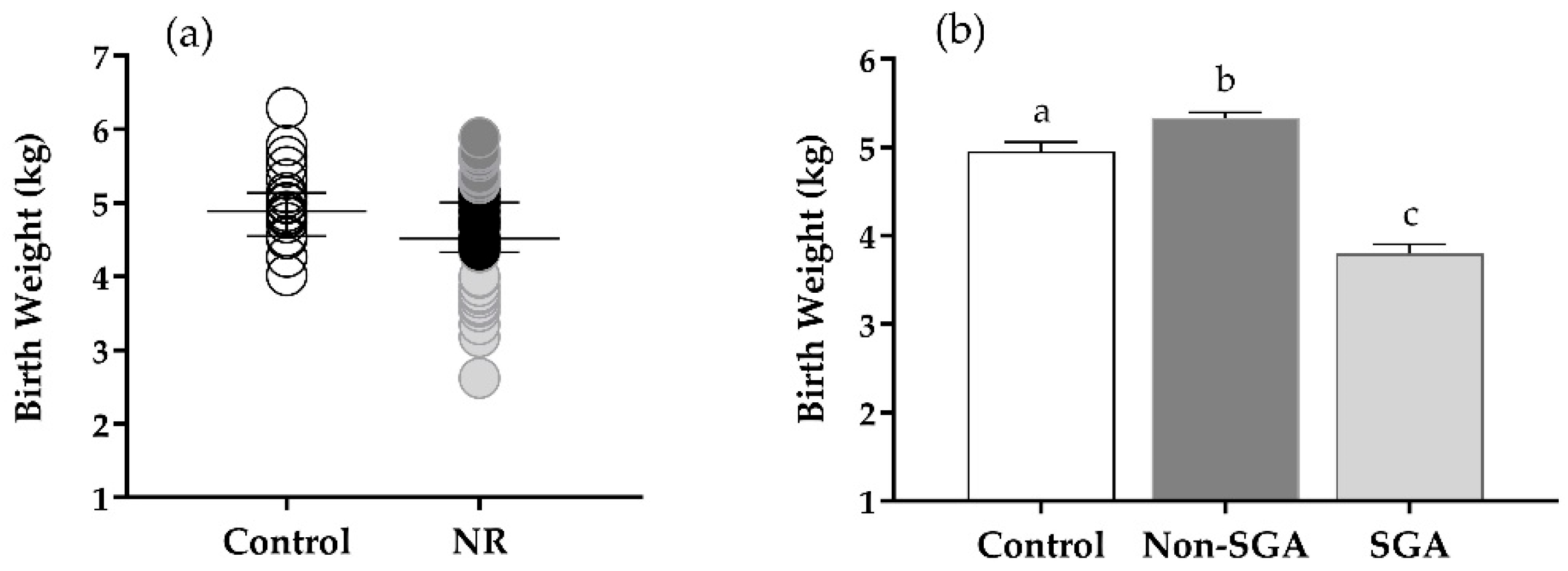
Figure 2.
Maternal weight (MW) through gestation in mControl (n=23), mNon-SGA (n=18), and mSGA (n=18) groups. * indicates significant differences between mSGA and mControl at GD125, and among all groups at GD 140 (p < 0.05).
Figure 2.
Maternal weight (MW) through gestation in mControl (n=23), mNon-SGA (n=18), and mSGA (n=18) groups. * indicates significant differences between mSGA and mControl at GD125, and among all groups at GD 140 (p < 0.05).
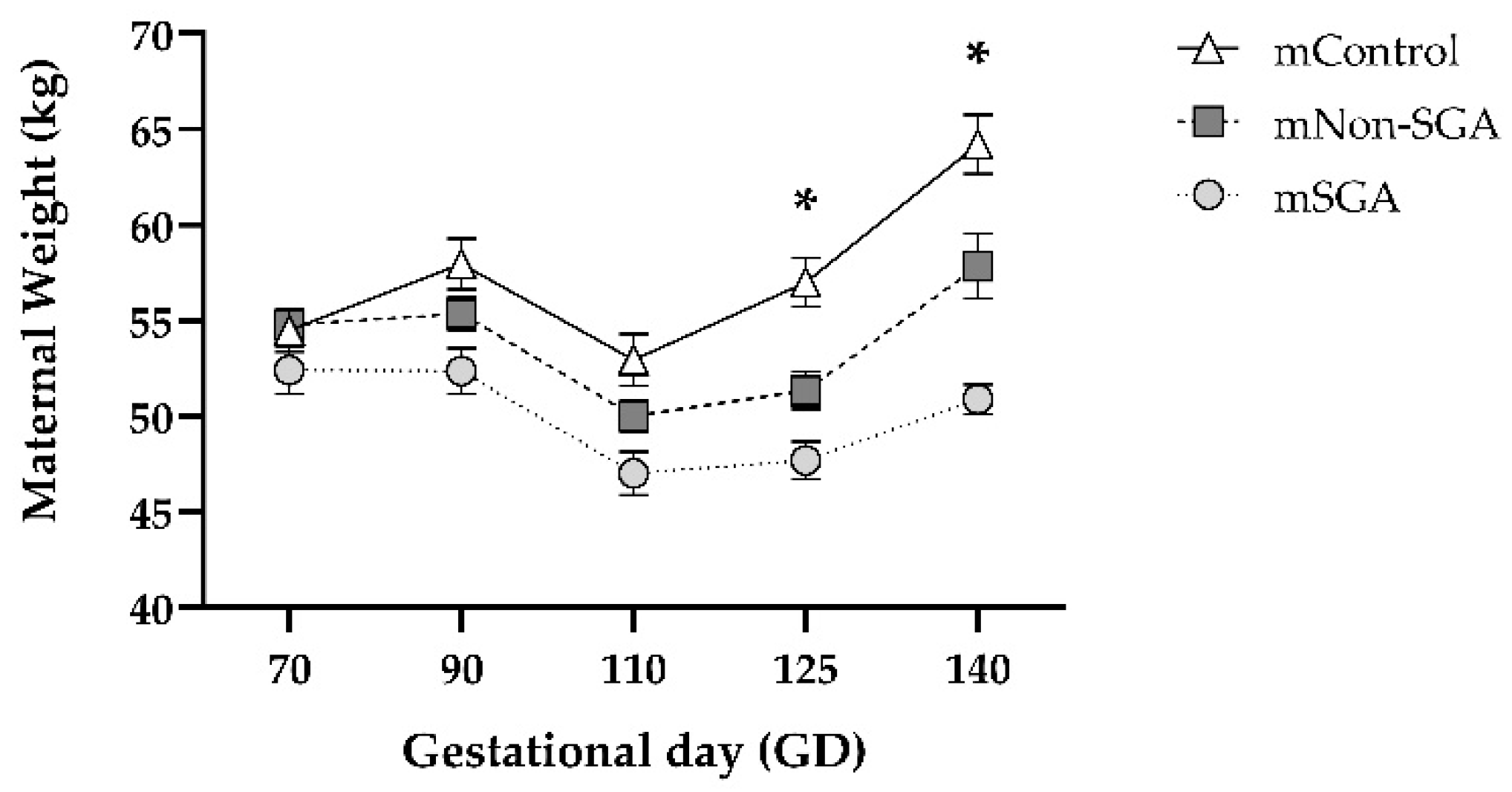
Figure 3.
Fetal and postpartum biometry of (a) biparietal diameter (BPD), (b) femur length (FL) and (c) thorax height (TH), and (d) umbilical cord diameter (UCD) for Control (n=23), Non-SGA (n=18), and SGA (n=18) groups. Gestational measurements were obtained by B-mode ultrasound, whereas postpartum data were collected using a manual caliper. UCD was not measured at birth. * indicates significant differences (p < 0.05).
Figure 3.
Fetal and postpartum biometry of (a) biparietal diameter (BPD), (b) femur length (FL) and (c) thorax height (TH), and (d) umbilical cord diameter (UCD) for Control (n=23), Non-SGA (n=18), and SGA (n=18) groups. Gestational measurements were obtained by B-mode ultrasound, whereas postpartum data were collected using a manual caliper. UCD was not measured at birth. * indicates significant differences (p < 0.05).
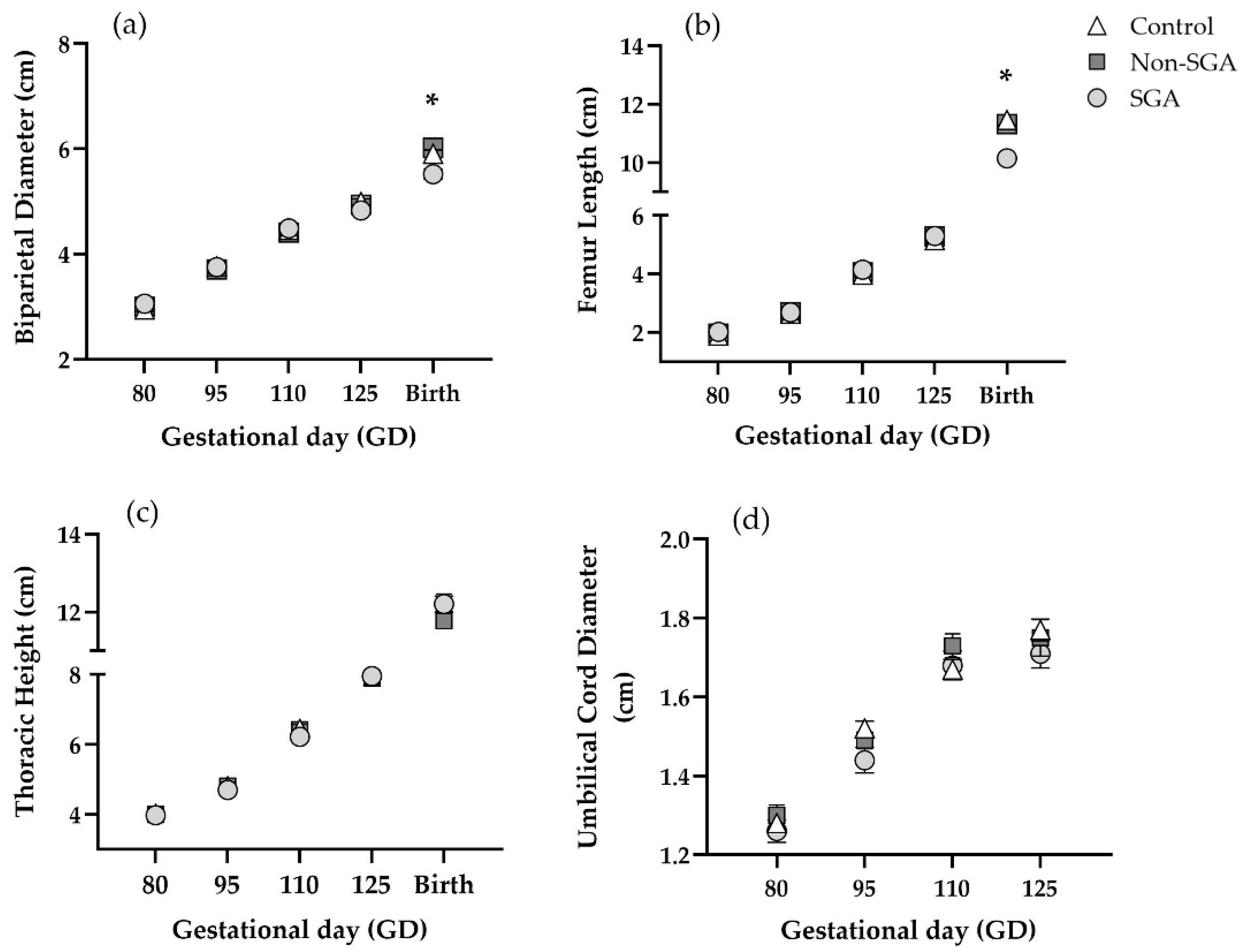
Figure 4.
Umbilical artery resistance index (UA-RI) (a) and pulsatility index (UA-PI) (b) in Control (n=23), Non-SGA (n=18), and SGA (n=18) groups throughout pregnancy. * indicates significant differences (p < 0.05).
Figure 4.
Umbilical artery resistance index (UA-RI) (a) and pulsatility index (UA-PI) (b) in Control (n=23), Non-SGA (n=18), and SGA (n=18) groups throughout pregnancy. * indicates significant differences (p < 0.05).
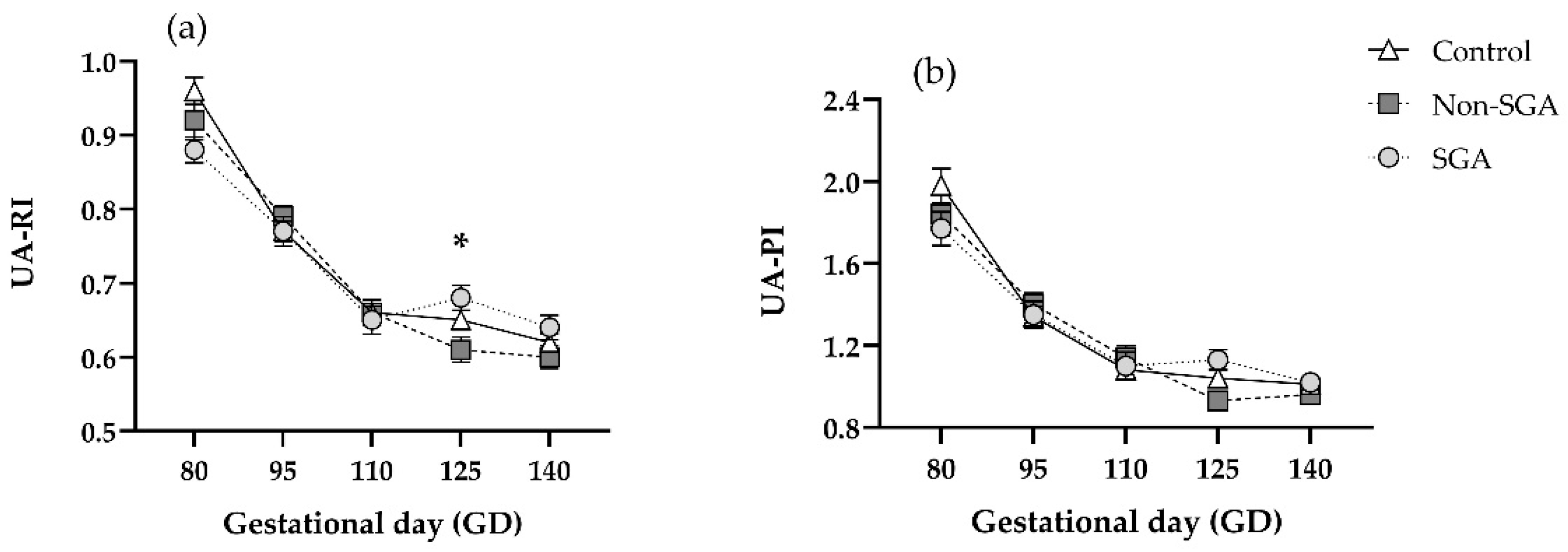
Figure 5.
Cotyledonary artery resistance index (CA-RI) (a) and pulsatility index (CA-PI) (b) in Control (n=23), Non-SGA (n=23), and SGA (n=23) groups. No differences were observed at any gestational age (p>0.05).
Figure 5.
Cotyledonary artery resistance index (CA-RI) (a) and pulsatility index (CA-PI) (b) in Control (n=23), Non-SGA (n=23), and SGA (n=23) groups. No differences were observed at any gestational age (p>0.05).
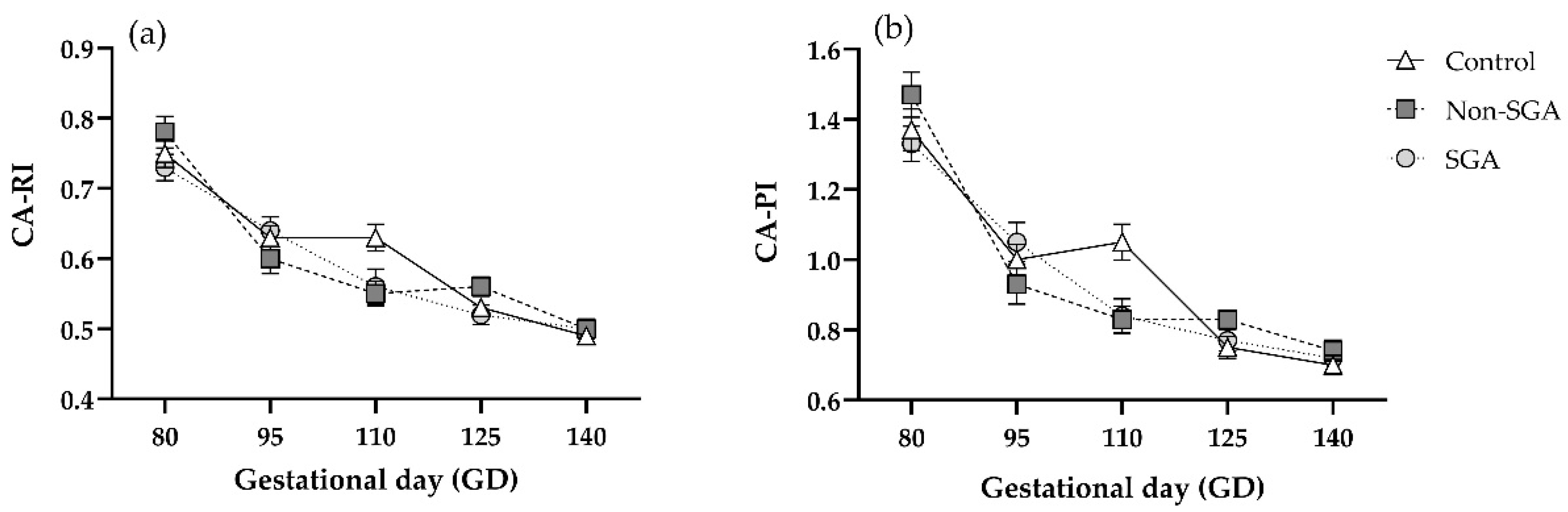
Figure 8.
Linear regression between lamb birth weight (BW) and umbilical artery resistance index (UA-RI) at GD 125 (R²=0.15 , p < 0.001).
Figure 8.
Linear regression between lamb birth weight (BW) and umbilical artery resistance index (UA-RI) at GD 125 (R²=0.15 , p < 0.001).
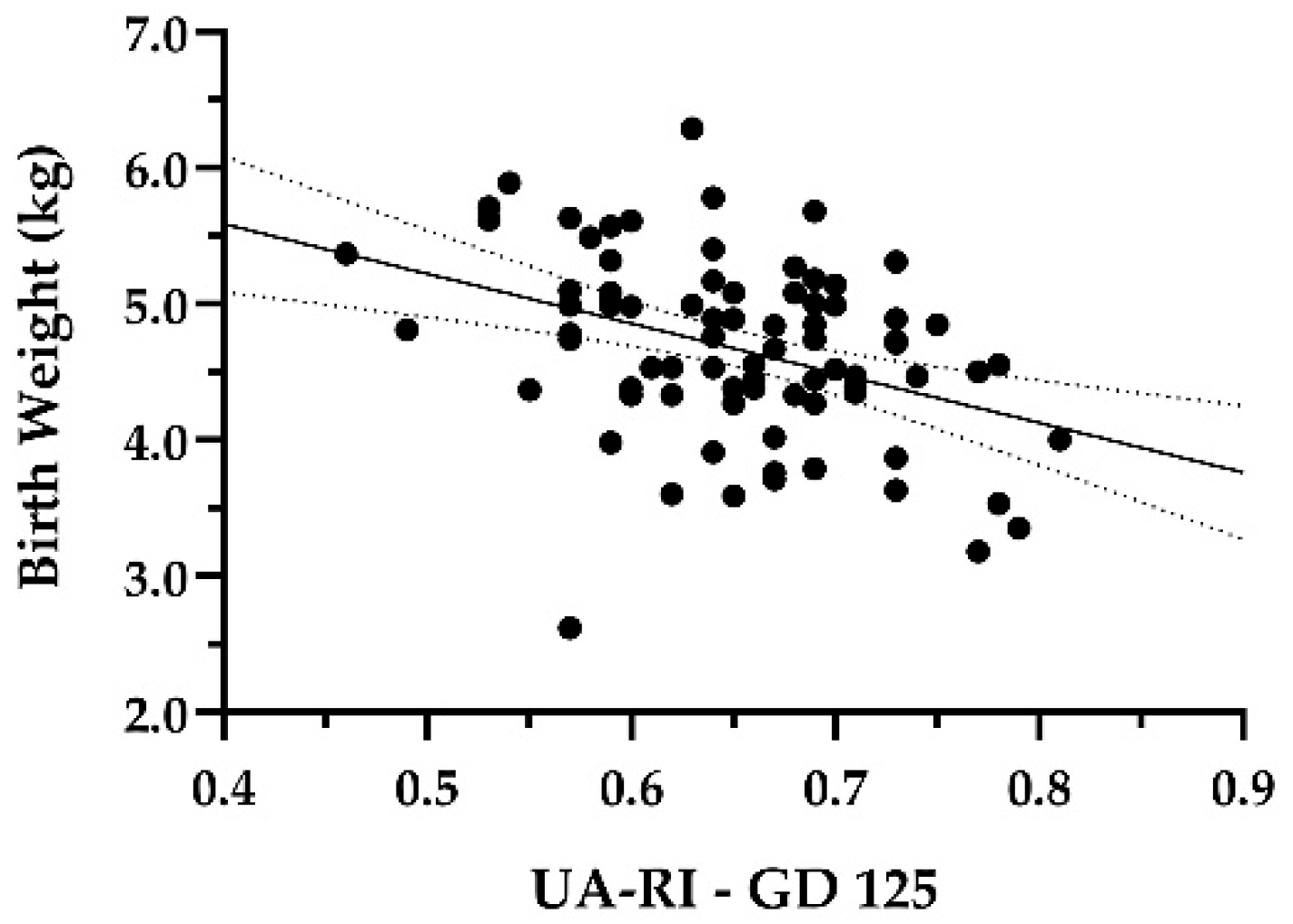
Figure 9.
Linear regressions between (a) lamb birth weight (BW) and uterine artery resistance index at GD 110 (UtA-RI – GD 110) (R²=0.05, p < 0.05); (b) lamb birth weight (BW) and uterine artery pulsatility index at GD 110 (UtA-PI - 110) (R²=0.03, p > 0.05); (c) lamb birth weight (BW) and uterine artery resistance index at GD 125 (UtA-RI – GD125) (R²=0.07, p < 0.05); and (d) lamb birth weight (BW) and uterine artery pulsatility at GD 125 (UtA-PI – GD125) (R²=0.08, p < 0.05).
Figure 9.
Linear regressions between (a) lamb birth weight (BW) and uterine artery resistance index at GD 110 (UtA-RI – GD 110) (R²=0.05, p < 0.05); (b) lamb birth weight (BW) and uterine artery pulsatility index at GD 110 (UtA-PI - 110) (R²=0.03, p > 0.05); (c) lamb birth weight (BW) and uterine artery resistance index at GD 125 (UtA-RI – GD125) (R²=0.07, p < 0.05); and (d) lamb birth weight (BW) and uterine artery pulsatility at GD 125 (UtA-PI – GD125) (R²=0.08, p < 0.05).
Disclaimer/Publisher’s Note: The statements, opinions and data contained in all publications are solely those of the individual author(s) and contributor(s) and not of MDPI and/or the editor(s). MDPI and/or the editor(s) disclaim responsibility for any injury to people or property resulting from any ideas, methods, instructions or products referred to in the content. |
© 2026 by the authors. Licensee MDPI, Basel, Switzerland. This article is an open access article distributed under the terms and conditions of the Creative Commons Attribution (CC BY) license (http://creativecommons.org/licenses/by/4.0/).
Copyright: This open access article is published under a Creative Commons CC BY 4.0 license, which permit the free download, distribution, and reuse, provided that the author and preprint are cited in any reuse.


