

Submitted:
20 March 2026
Posted:
24 March 2026
You are already at the latest version
Abstract
Climate change is a global pressing concern that has affected all sectors, including the operations for Small and Medium Entreprises (SMEs) in developing countries, including Malawi. This has negatively affected the economies of scale, and exacerbated the SMEs’ growth. Nonetheless, renewable efficient energy (REE) systems, including solar and biogas, could help in building resilience to sustain their performance. In line with this, the study examined the factors that enhance the adoption of the renewable efficient energies, and constructed their resilience indices. Our study was grounded in the Diffusion of Innovation Theory and the Sustainable Livelihoods Framework. These theories guided the selection of variables to estimate a Multinomial Endogenous Switching Regression (MESR) econometric model, alongside estimating the absorptive, adaptive and transformative individual indices for 699 SMEs, using the 2019 Malawi Household Integrated Survey. The results from the MESR suggests that factors, such as access to credit, being male, access to education, access to capital sources, large profit share, bridging social capital and location among others, have a positive effect in influencing the adoption of renewable efficient systems. We simulated the adoption results, and found that SMEs who adopts REE increase their resilience by 87,3% and through the subsidy policy effect vulnerable SMEs who later adopts REE would shift their resilience by 0.169. Furthermore, the study found that transformative capacity plays the most important role in building long-term resilience for the SMEs. The study calls for polices, including establishing urban centers where SMEs can access information regarding REE and improving access to formal safety nets and capital sources beyond loan provisions.
Keywords:
small and medium enterprises
; renewable energy
; climate resilience
; endogenous switching regression
; Malawi
1. Introduction
Different global development agendas, including the Sustainable Development Goals (SDGs), recognizes the dual role of Small and Medium Enterprises (SMEs) in both contributing to and mitigating environmental challenges. Specifically, SDG 7 (Affordable and Clean Energy) and SDG 13 (Climate Action) emphasizes the transition to sustainable energy systems to combat climate change. Furthermore, SDG 8 (Decent Work and Economic Growth) documents SMEs as engines for employment, innovation and sustainable economic development., particularly in developing economies [1], including Malawi. Notably in Malawi, SMEs form the backbone of the national economy, constituting the vast majority of businesses and serving as a primary source of livelihood. It is argued that SMEs contribute to household incomes and are sources of job creation, particularly for the large youth population entering the labour market.
It is within this context that the Malawian government has implemented various policies aimed at supporting the SME sector. The 2017 to 2022 Malawi Growth and Development Strategy (MGDS) III and the National Export Strategy (2021-2026) have identified SME development as a priority for economic transformation. Specifically, the government has established the Small and Medium Enterprises Development Institute (SMEDI) to provide business development services and has created a regulatory environment that facilitates SMEs formalisation and growth. It’s worth mentioning that many micro and small enterprises engaged in agricultural production, agro-processing, and trade operating within the informal sector [2]. This includes smallholder farmers who sell surplus produce, as well as enterprises involved in value addition activities. Climate change is among the most global challenging issues with an ongoing need to fighting against climate change as well as building resilience to its impact [3].Globally, the urgency of addressing climate change has been emphasized by bodies like the Intergovernmental Panel on Climate Change (IPCC) and through international agreements such as the Paris Agreement. Empirical evidence suggests that the primary driver of climate change is the reliance on fossil fuels for energy, leading to high greenhouse gas emissions. In response, there is a global push for decarbonization through the adoption of renewable and efficient energy systems, including solar photovoltaic (PV) systems, hydroelectric power, biomass, and energy-efficient appliances like LED lighting. This energy transition is seen as essential for mitigating the long-term effects of climate change.
The vulnerability based on a continuum of climate change effects, such as erratic rainfall patterns, rising temperatures, and an increased frequency of extreme weather events like droughts and floods directly disrupt their operations, supply chains, and productivity. Consequently, building the climate resilience of these SMEs, including their ability to anticipate, absorb, and recover from climate-related shocks, has become an urgent national priority. In this context, the adoption of renewable and efficient energy presents a significant opportunity to enhance SME resilience in Malawi. For instance, for an urban SME in Malawi, access to reliable solar power can ensure business continuity during grid outages caused by storms, power refrigerators for perishable goods, and reduce operational costs associated with expensive and polluting diesel generators. Similarly, energy-efficient appliances can lower electricity bills, and increasing the capital for business investment.
Despite the benefits of these energy systems, there is a dearth of empirical evidence on the actual impact of these energy systems on SME climate resilience in the Malawian context. This study seeks to fill this gap by providing evidence from Malawi’s main urban centres. The study makes a significant contribution across different areas. Specifically, the findings will enhance the understanding of SME owners on how adopting clean energy can safeguard their businesses. For scholars, it will contribute to the growing body of literature on climate resilience and sustainable development in Sub-Saharan Africa. Lastly, for Malawian policymakers and development agencies, this research will provide information regarding the design and targeting of policies and programs that promote renewable energy adoption as a strategic tool for strengthening the climate resilience of SMEs and ensuring their long-term contribution to the nation’s economy.
2. Theoretical Frameworks
2.1. The Diffusion of Innovation Theory (DIT)
This study considers the renewable and efficient energy systems as a new technological innovation that is adopted by the SMEs at different rates. Following ref [4], the rates are dependent on a range of social, individual and organisational factors or constructs, including location, time, cost, causal effect and the required action, among others. The Diffusion of Innovation theory, developed by ref [5] argues that the adoption and diffusion of a technological innovation happens in five categories, and these are innovators, early adopters, early majority, late majority and laggards. Furthermore, Rogers develops an S-Curve to highlight that the diffusion of technological innovation is based on relative advantage, compatibility, complexity, trialability, and observability of it.
It’s worth mentioning that Malawi’s SMEs are characterised by risk-takers, who are willing to initiate the investment in energy-efficient systems to increase their resilience. The willingness is unevenly distributed in rural or urban centres, where the latter comprises of owners aiming at reducing the omission of particulate matter and, let alone, reducing the operation costs of their businesses by using scalable and reliable power. Considering that most SMEs in Malawi are risk averse [6], the adoption of climate-resilient energy systems depends on whether the systems work reliably in Malawi’s context before investing in their enterprises. We retaliate that most Malawi’s SMEs are distributed in the informal sector, mostly driven by economic necessity or peer pressure [2]. Thus, their adoption happens after a majority has already adopted. These owners are likely to only adopt a proven technology once its costs have decreased, financing options are readily available, and its adoption has become a clear norm for business competitiveness and resilience in their community. Lastly, the study recognises that access to information is a barrier to some SMEs. Compounded by their resistance to change, other SMEs cannot adopt any renewable energy system.
2.2. The DFID Sustainable Livelihoods Framework
This study also leverages a modified version of the Sustainable Livelihoods Framework (SLF) [7] (Figure 1), to understand the drivers of adoption and how they interact to achieve the welfare effect with regard to climate change. The SLF provides a people-centric development lens to analyze how individuals and enterprises use their assets to pursue different livelihood strategies, ultimately achieving desired outcomes, particularly in the face of shocks and stressors like climate change [8].
The SLF is premised on the ideology that a livelihood is dependent on the available SME’s assets (asset pentagon). Notably, these assets do not operate in isolation to enhance sustainable and resilient livelihoods. In our context, an SME is climate resilient after adopting a renewable and efficient energy system based on a continuum of assets, including human capital (education level, age, access to information, and access to extension services), social capital (bonding social capital, bridging social capital and access to informal safety nets), natural capital (soil quality, land size, total livestock unit (TLU)), physical capital (asset ownership, improved infrastructure and market availability) and financial capital (cash savings, income level, access to credit and access to formal safety nets).
3. Materials and Methods
3.1. Data Source and Study Area
This research used secondary data extracted from 2019 Malawi Integrated Household Survey (IHS). This comprehensive survey is part of the World Bank’s living standards measurement, which captures social, economic, and environmental indicators, including poverty, income inequality, and climate change. The dataset also contains the enterprises which are conducted by the households which were considered as the SMEs in this study. Malawi has 28 districts, and IHS uses a two-stage stratified sampling technique to select 18468 Enumeration Areas (EA) with an average household size of 215 per EA [9].
In this study, we purposively selected 3 districts, which are the main cities in Malawi. Figure 2 indicates the study areas. The data is openly available at https://doi.org/10.48529/mpyk-ds48 . By utilising a large dataset platform, the resilience findings of this study will be used to explore and/or complement other findings in their methodological and analytical contexts.
3.2. Analytical Tools and Methods
3.2.1. Resilience Capacity Index (RCI)
Resilience index will be used to estimate SMEs resilience indices in the first objective opted due to the method’s flexibility and multidimensional assessment. In literature, numerous methods of measuring resilience have been developed by different authors [10] and policy institutions like FAO and USAID. Ref [11] developed the Resilience Index Analysis and Measurement (RIMA) which measures resilience from four dimension and vis are: access to basic services, assets, social safety nets and adaptive capacity. Later in 2018, TANGO International modified the FAO (2016) four resilience dimensions into three dimensions namely absorptive, adaptive and transformative capacities. In this study, we adopt the TANGO approach to resilience, which captures the ability of different SMEs to withstand shocks from three dimensions. It’s worth noting that the RCI was constructed as a latent variable with dimensions containing multiple socio-economic indicators. Table 1 illustrates the categorisation of the latent variable, along with its indicators.
We provide the specific definitions of the resilience constructs. Firstly, absorptive capacity is an ex-ante shock-coping mechanism. Specifically, it aims at minimising the SMEs’ exposure to shocks and minimising its impacts when they occur. Results from other scholars [10,12,13] suggest that social capital, cash savings and asset accumulation are critical to improve SMEs’ resilience. Secondly, adaptive capacity refers to the systematic ability of an SME to cope up with the shock when it occurs. Different authors [14,15] have emphasized that the ability to adapt is dependent on factors such as their level of infrastructure development, access to information, bridging social capital and other socio-economic indicators such as education level. Lastly, transformative capacity is a systematic approach to recover from a shock occurrence, and get back to improved well-being [16,17]. From an SME perspective, this implies leveraging government structures/mechanisms, local and international markets, access to credit and different extension services
Mathematically, the index is expressed as follows in relation to the dimensions in equation 1:
𝐶𝑅𝐼𝑖 = 𝑤𝐴𝐶𝐴𝐶𝑖 + 𝑤𝐴𝐵𝐶𝐴𝐵𝐶𝑖 + 𝑤𝑇𝐶𝑇𝐶𝑖 + 𝑒𝑖
ACi, ABCi, TCi are adaptive capacity, absorptive capacity and transformative capacity, respectively for itℎ SME. wAC to wTC are the weights for the dimensions and ei is the error term. Further, the resilience capacity index is then estimated using a data reduction strategy called Factor Analysis, together with Kaiser’s rule of eigenvalue greater than one. It’s worth mentioning that factor analysis is conducted on each dimension. The overall RCI is then re-scaled using the min-max procedure as indicated in equation 2;
To assess the factor that influence the adoption of renewable and efficient energy, a binary outlook has to be employed with a clear view between adopters and non-adopters [33]. Therefore, a probit model (equation 3) was expressed as follows according to ref [34]:
REEi∗ is the latent variable indexing SME’s adoption of renewable and efficient energy systems and equals 1 if the SME adopts a particular system and 0 otherwise; Xi is a vector of both socioeconomic and institutional factors; β are parameters to be estimated; and εi is the stochastic error term.
We recognise that probit coefficients are not directly interpretable. Thus, marginal effects were computed for quantitative explanation. The marginal effects were computed using equation
where ϕ is the standard normal density function.
3.2.3. Assessing the Impact of REE on Climate Resilience Among SMEs’ Business Continuity
The study uses a Multinomial Endogenous Switching Regression(MESR) model to evaluate the impacts of renewable and efficient energy systems on climate resilience for SMEs’ business continuity. The model is opted as a better approach to look at the effect of an intervention by comparing outcome variables between samples of intervention, while accounting for selection bias [35]. The model has two stages, such that the first stage is a selection model using multinomial logistic regression, and Inverse Mill ratio (IMR) is also estimated to be used in the next stage. Equation 5 shows how the Multinomial logistic regression is expressed in the study:
Equation 5 is the probability of an ith SME given a number of covariates (хi) adopting a renewable and efficient energy system (REE), assuming εi shows non-normality of the values.
The second stage of the MESR model is the regime stage, where the relationship between the outcome variable and exogenous variable is estimated for each REE regime. IMR predicted in the first stage is incorporated to correct for bias and inconsistent estimates and the expression is presented as follows (equation 6):
with regime 1 as a benchmark for no adoption. σm denotes the covariance between the eim and εim while λ1 is the Inverse Mills Ratio (IMR). The estimations calculated then provide the treatment effects that help in estimating of the impact of REE by comparing the expected value of the outcome variables between the adopters and non-adopters. ATE is calculated in two ways. An Average Treatment Effect on the Treated (equation 7) and an Average Treatment Effect on the Untreated (equation 8).
The expressions are respectively presented as follows;
𝐴𝑇𝑇 = 𝐸 = ( Ү𝑖1| 𝑈 = 𝑀; 𝑋𝑖𝑚; 𝜆𝑖𝑚) − 𝐸 = ( Ү𝑖𝑚| 𝑈 = 𝑀; 𝑋𝑖𝑚; 𝜆𝑖𝑚)
𝐴𝑇𝑈 = 𝐸 = ( Ү𝑖𝑚| 𝑈 = 1; 𝑋𝑖1; 𝜆𝑖1) − 𝐸 = ( Ү𝑖1| 𝑈 = 1; 𝑋𝑖1; 𝜆𝑖1)
Further the study simulates a policy treatment effect under the same resilience impact by understanding the change that would be present if removal financial barriers would have an effect on SMEs outcomes. The model is further specified in equation 9;
PTE = P(U=1)*{𝐸 = ( Ү𝑖𝑚| 𝑈 = 1; 𝑋𝑖1; 𝜆𝑖1) − 𝐸 = ( Ү𝑖1| 𝑈 = 1; 𝑋𝑖1; 𝜆𝑖1)}
From the equation, P(U=1) is the population of the untreated, weighting the effect by eligible group for aggregate policy relevance. From the study those excluded from formal credits are prioritized from the untreated group.
4. Results and Discussion
4.1. Descriptive Statistics
Table 2 presents the descriptive statistics for SMEs in Malawi’s main urban areas, with 699 observations across the variables. Table 2 reports that most SMEs benefit from improved infrastructure (84%) and increased business asset ownership (96%). The improvement underscores the significance in benefits for sectors such as the energy sector as well as asset ownership highlighting a reduction in income disparity. However, bonding social capital is low with only 1% of the SMEs acknowledging it, constraining resilience during shocks. Regarding cash savings, 37% of the SMEs have them, indicating limited liquid buffers. Bridging social capital is also scarce (5%) hindering growth that would be ensured via external resources, access to information stands at 17% and livestock ownership is minimal (13%) among the SMEs. Notably, males dominate as owners at 54% compared to females at 46%, and access to education is prevalent for 32% of the SMEs owners. Table 2 also show that access to credit is done by 46% of the SMEs, 18% have access to extension services, 5% receive formal safety nets and soil quality is good for 56% while poor for 44% of the SMEs. Lastly, informal safety nets are rare, and are received by 7% of the SMEs.
4.2. Dimensions for the Resilience Index
a. Absorptive Capacity
In this study, the absorptive capacity latent variable dimension was measured using indicators such as bonding social capital, asset ownership, cash savings, access to informal safety nets, soil quality, total livestock unit and income level by the owners of the SMEs. Notably, most of the uniqueness values presented in Table 3 are <0.6 indicating a high shared variance to the total variance in the latent variation. Regarding factor analysis, the study conducted a Bartlett’s test of Sphericity and a KMO to validate the variable’s factor analysis. The significance of the Bartlett’s test of sphericity (p < 0.000) confirms that the variables were suitable for factor analysis. Again, the KMO measure for sampling was 0.5257 which is greater than an accepted threshold value of 0.5 [35].
Notes:
1. Bartlett test of sphericity: χ2 = 42.17; p-value = 0.0000
1. KMO measure of sampling adequacy = 0.5257
1. Determinant of the correlation matrix = 0.6366
It’s imperative to note that most of the factor loading among the variables are positive, with soil quality and cash savings having the highest and second highest factors, respectively. Only access to informal safety nets have a negative loading. This suggests that as the SMEs access to informal safety nets decreases, their resilience to shocks also decreases. The findings presented in Table 3 are consistent with literature [36,37] regarding absorbing shocks for maintaining SME’s resilience.
After performing factor analysis, the study used the rotate command in Stata 17 to obtain the orthogonal varimax rotation of the factors [38]. This was done to determine the determinant of the correlation matrix and extract the weights to be used when estimating the absorptive capacity index which are specified in
- Adaptive Capacity
The second latent variable was adaptive capacity. In this study, it was measured using bridging social capital, access to information, availability of improved factors, and social economic indicators for the SME owner such as age, gender and education level. The results for adaptive capacity are presented in Table 4. Specifically, Table 4 indicates that the variable’s uniqueness values are below 0.6 suggesting a good contribution to the total variance in the latent variable. Again, the factor loadings for most indicators were positive excluding gender and education access of the SME owner. The negative loadings on gender suggest that the ability to be resilient to climatic shocks decreases with female owners. Similarly, the resilience capacity decreases with limited education capacity. Our findings are in line with other scholars [39,40] who have argued that entrepreneurship activities conducted by women are more susceptible to vulnerability, particularly due to differences in resource endowments.
- Bartlett test of sphericity: χ2 = 42.74; p – value = 0.0002
- KMO measure of sampling adequacy = 0.5428
- Determinant of the correlation matrix = 0.9340
It’s worth mentioning that the variables were ideal for factor analysis as indicated by the significance of the Bartlett’s test of sphericity (p < 0.05). Furthermore, the KMO value of 0.5428 (above the accepted threshold of > 0.5) indicates that, as far as much could be done on the variables, they are suitable for factor analysis. Using the orthogonal varimax rotation technique, the study determined the coefficient of the correlation matrix and the weights to be used when computing the adaptive capacity index. Again, two factors were retained, and this is indicated in equation 11
- Transformative Capacity
The third latent variable was transformative capacity. This was measured by indicators that potentially, can bring back the well-being of an SME after a shock occurrence. Indicators such as market availability, access to extension services, access to credit, land size and access to formal safety nets (government, private sector and NGOs) were used. The findings are presented in Table 5. Notably, the uniqueness values presented in Table 5 are below 0.6. This indicates that all variables have a significant contribution to the overall variance in the latent variable. Regarding the factor loadings, the variable with highest factor loadings was land size indicating the significance of land to improve resilience to the climatic shocks. Our findings support previous research findings [21] on the significance of structured business property to withstand and enable SMEs to bounce back to good wellbeing.
Notes:
- Bartlett test of sphericity: χ2 = 49.57; p – value = 0.0000
- KMO measure of sampling adequacy = 0.5226
- Determinant of the correlation matrix = 0.8791
It’s worth mentioning that the indicators were assessed if they are valid for factor analysis using the Bartlett test of sphericity and KMO measure of sampling adequacy. Both assessment tools positively ascertained the variables validity as indicated in Table 5. Specifically, the sphericity test was significant, and the KMO was 0.5226, which is above the accepted value of 0.5. The study also rotated the factor loadings to determine the weights for the transformative capacity index and the coefficient of the correlation matrix. The weights are indicated in equation 12 and the coefficient of the correlation matrix is presented in Table 5
- Overall Resilience Capacity
In this study, the overall resilience capacity for the SME’s was computed through the aggregation process. Specifically, factor analysis was conducted on each of the individual indices which included the Bartlett’s test of sphericity and the KMO measure of sampling adequacy. As presented in Table 6, the variables were correlated, and suitable for factor analysis. Again, the determinant of correlation matrix was found to be 0.9294 suggesting no multicollinearity problems. Notably, the uniqueness values presented in the table indicate that transformative capacity explains over 90% of the variance in the overall SME’s resilience capacity. This finding has policy recommendations related to provision and availability of markets, increased access to credit and increased access to extension services.
Notes:
- Bartlett test of Sphericity: χ2= 8.01, p – value = 0.0459
- KMO sampling measure of adequacy = 0.5147
- Determinant of correlation matrix = 0.9294
Our findings are consistent with the Resilience Networks Framework developed by Folke, (2016) and Folke et al., (2010). The developers indicate that transformative capacity is a bounce forward determiner in environments where climatic shocks re-occur periodically, as it is the case in Malawi. Again, the transformative capacity is a long-term systematic strategy for the SME’s to be able to absorb, adapt and efficiently become resilient to future shocks and avoid lock-in, similarly echoed by Esposito (2025) and Kahveci et al. (2025)
4.3. Factors Influencing Adoption of Renewable Efficient Energy
Worthy to note that, the study uses both CMP and the standard probit command in its analytical framework. Much as the analytical specification is the same, the standard probit command mostly stuck in non-concave regions, where the data has lower variation or has multiple dummy variables. Alternatively, the CMP is a fix that essentially samples the normal distribution, and flexible towards the data limitations. In detail, the study has 13 dummies and also with some variables i.e., safety nets, social capital which has low variation. Nonetheless, for transparency, the study reports both CMP and standard probit command (Table 7).
Credit access (ME = 0.022, p-value=0.010) increases the adoption of REE. Credit access, which improves the financial assets of an SME, enables the procurement of costly renewable energy technologies. The findings are consistent with other scholars [43,44]. Being a female reduces the adoption of REE (ME=0.127; p-value = 0.000)) than males due to heterogeneities in resource constraints, similarly echoed by Acevedo-Duque et al. (2021). Furthermore, education exposure (ME = 0.006, p-value =0.000), age (ME = 0.001, p-value = 0.000), being an SME manager (ME = 0.031, p-value =0.000), asset ownership (ME =0.021, p-value=0.000), increase in profit share (ME=0.022, p-value = 0.000) as well as access to capital sources (ME = 0.024, p-value = 0.000) are likely to significantly influence the adoption of REE. Education years, age increase and managing an SME are underscored by increase in knowledge regarding to efficiency and cost effectiveness. Access to capital sources, increase in profit shares and asset ownership influences adoption of REE as households can source finances for upfront cost on REE and use the assets as collateral. Further studies [18,45] concur with finding on the cost, management and education. Access to information (ME = 0.057, p-value = 0.000), extension services (ME=0.033, p-value =0.000), having a proper operating place (ME =0.004, p-value = 0.000) and ability to have bridging social capital (ME=0.182, p-value = 0.000) also influences the adoption of REE. By accessing information SMEs are aware of the benefits and technologies in clean energy and for a proper operating place, reliable infrastructure would ensure proper installation of efficient systems in the enterprises. With extension services and bridged social capital SMEs are supported and trained towards REE. Similar findings concur with the positive effect of access to information and social capital on the adoption of clean energy which also highlight the imperativeness of promoting such factors [46,47,48].
Contrary, adoption of REE is negatively influenced by an increase in household size (ME = -0.002, p-value = 0.000), informal safety nets (ME= -0.130, p-value = 0.000), and not having bonding social capital (ME = -0.247, p-value = 0.010). Just like most of the SSA countries, informal safety nets are inefficient, fragmented and low valued. The findings are similar to others [49] despite an addition of a political and social resistance factors. Again, household size increases strain household budgets and influences households to opt for affordable alternatives over clean energy systems. The choice are further influenced by groups tied with norms against the REE systems hence creating a resistance [49]. Lastly, lack of bonding social capital makes the SMEs owners hardly exposed to the available REEs. This study argues that exposure, compounded with peer interaction influences the adoption of efficient renewable energies. Table 7 summarizes the magnitude of the adoption factors in the study.
4.4. Impact of REE on Climate Resilience Among SMEs’ Business Continuity
Instrument Validity
To address potential endogeneity and self-selection bias, we employed two instrumental variables: social-based accessibility (through gifts) and market-based accessibility (through loans). These instruments are theoretically sound as they facilitate the adoption of REE systems (Relevance) but do not independently enhance household resilience outside of the technology’s specific benefits (Exclusion Restriction). Such is the case, whereby only the usage of these REE systems is highly dependent on accessing them in the first place [50]. And it is only through this usage that resilience is affected. The statistical validity is supported by the highly significant coefficients for both instruments in the selection model (p-value < 0.01) and the LR test of independent equations (p -value= 0.046), confirming the appropriateness of the Endogenous Switching Regression framework to provide unbiased estimates. Table 8 presents the selection variables
- Treatment Effects
Table 9 shows that on average adopting REE systems likely increases climate resilience among SMEs (0.117). However, for the non-adopters, their resilience is likely to fall (-0.474). Heterogeneity Treatment Effect further shows an effect rising sharply in ATT and ATU, hence strengthening the targeting of adopters in policy recommendations. The findings, therefore, imply that the adoption of Renewable Efficient Energy has a significant positive impact on climate resilience and SME business continuity. The findings concur with similar findings, where the study stresses a significant cost saving and a market in a stronger position despite climatic barriers present [51]. Ref [52] further concurs with the findings that sustainable energy systems leverages a stable source of energy in developing economies apart from mitigating climate change.
- Policy Simulations
A policy simulation was conducted by setting market-based loan access to 1 for all households. This policy simulation tests whether removing financial barriers can improve household outcomes, specifically for those historically excluded from formal credit. These mostly include subsidies.
The shift in expected resilience from the baseline (-0.126) to the policy scenario (-0.114) resulted in a significant, but marginal improvement (0.012), further questioning the effectiveness of universal subsidies. This also elaborates that much of financial innovation is seen as a quick solution; the adoption of Sustainable Energy goes beyond monetary incentives concurred with previous finding on group norms and human dispositions, after all, unsustainable energy is mostly associated with economic endowments.
Nonetheless, the finding does not fully obsolete the relevance of these subsidies. Alternatively, targeted subsidy response supports the notion using a Vulnerability Relevant Treatment Effect (VRTE), which measures how the policy reduces the “Resilience Gap” for those who are most at risk (below the 25% quintile). Despite low general impact, the significant change in the Vulnerability Gap (-0.030) indicates that the policy doesn’t move the needle much for the average household. However, for the vulnerable SMEs who later choose to adopt sustainable energy, there is a shift in their resilience by 0.169.

Table 10.
Policy simulation results.
| Indicator | Mean Value | t-statistic | p-value |
| Policy-Relevant Treatment Effect (PRTE) | |||
| Expected Resilience (Baseline) | -0.1264 | ||
| Expected Resilience (Policy) | -0.1145 | ||
| Change in Resilience | 0.0119* | 1.651 | 0.070 |
| Vulnerability-Relevant Treatment Effect (VRTE) | |||
| Vulnerability Gap (Baseline) | 0.0587 | ||
| Vulnerability Gap (Policy) | 0.0888 | ||
| Change in Gap | -0.0301*** | -12.72 | 0.000 |
| VRTE Score | 0.1693 |
5. Conclusion and Recommendations
The SME’s study sought to understand the impacts of climate change on renewable efficient energy systems among SMEs in the three cities of Malawi. The findings show that adopting such energy systems has a positive and significant effect on business continuity and the ability to cope with climate-related shocks. Specifically, the study found that SMEs that use renewable energy are better able to maintain their operations for a long time and recover from climate change and its related disruptions.
Using the Diffusion of Innovation Theory and the Sustainable Livelihoods Framework, the study constructed the resilience indices for adaptive, absorptive and transformative capacity to determine the SME’s stronghold resilience area. Furthermore, the theories determined the choice of variables used to estimate a Multinomial Endogenous Switching Regression model. The results indicate that transformative capacity plays the most important role in building long-term resilience. Again, factors like education, access to information, and social capital also influence the SMEs decision to adopt clean energy. Interestingly, while access to finance is important, the policy simulation showed that financial support alone may not lead to widespread adoption. Social norms, lack of information, and resistance to change remain significant barriers. Therefore, promoting renewable energy among SMEs in Malawi requires more than just subsidies or loans. It needs a broader approach that includes education, awareness, and community engagement.
Recommendations
The study recommends the following ;
Prioritizing REE interventions that enhance both information access and relational capital among SMEs. Many small business owners in Malawi are not fully aware of the benefits of clean energy or how to access it. Others rely on their social networks to learn about new technologies and make decisions. Therefore, policies should focus on building knowledge and strengthening relationships among business owners. This can be done through information centres in urban areas where SME owners can visit and learn about different types of renewable energy systems, their costs, and their long-term benefits.
Develop improved formal and accessible capital sources inform of credits and subsidies to enhance the adoption of REE. Many SMEs in Malawi, especially those in the informal sector, face difficulties in obtaining loans from banks and other financial institutions. This is often due to a lack of collateral, limited credit history, or the high interest rates charged by lenders. Therefore, there is a need for more accessible and flexible financial products tailored to SMEs growth and development.
Funding
This research received no external funding.
Data Availability Statement
The data that support the findings of this study is openly available at the World Bank website at https://doi.org/10.48529/mpyk-ds48.
Conflicts of Interest
The authors declare no conflict of interest.
References
- United Nations, “Final list of proposed SDG,” Rep. Inter-Agency Expert Gr. Sustain. Dev. Goal Indic., p. Annex IV, 2016.
- International Fund for Agricultural Development, “Malawi Transforming Agriculture through Diversification and Entrepreneurship Programme Supervision Report,” no. 08, 2024.
- G. A. Sabola, “Climate change impacts on agricultural trade and food security in emerging economies: Case of Southern Africa,” Discov. Agric., vol. 2, no. 1, p. 12, 2024.
- M. Meryeme et al., “Determinants of Technological Innovation Adoption : An Overview of Modern Theories To cite this version : HAL Id : hal-04962090 Determinants of Technological Innovation Adoption : An Overview of Modern Theories .,” African Sci. J., vol. 3, no. 28, pp. 616–634, 2025, [Online]. Available: www.africanscientificjournal.com.
- E. M. Rogers, A. Singhal, and M. M. Quinlan, “Diffusion of innovations,” in An integrated approach to communication theory and research, Routledge, 2014, pp. 432–448.
- S. Nanthuru, P. Liu, N. Guihua, and V. Mkonya, “An Assessment of Risk Management Practices of SME Taxpayers in Malawi and their Impact on Tax Compliance,” Int. J. Manag. Sci. Bus. Adm., vol. 4, pp. 7–17, Jan. 2018. [CrossRef]
- DFID, “Sustainable Livelihoods Guidance Sheets. Department for International Develoment.,” 2000, [Online]. Available: artment for International Develoment.%0Awww.livelihood.org/info/info_guidancesheets.htm.
- S. Nkhoma, L. A. Kapito, and M. Mainje, “Determinants of climate change adaptation strategies’ adoption among maize farming households. Evidence from Malawi,” Front. Clim., vol. 8, p. 1743868, 2026.
- National Statistical Office, “MALAWI POPULATION AND HOUSING CENSUS REPORT-2018 2018 Malawi Population and Housing Main Report,” no. May, 2019, [Online]. Available: http://www.nsomalawi.mw/images/stories/data_on_line/demography/census_2018/2018 Malawi Population and Housing Census Main Report.pdf.
- L. C. Smith and T. R. Frankenberger, “Does resilience capacity reduce the negative impact of shocks on household food security? Evidence from the 2014 floods in Northern Bangladesh,” World Dev., vol. 102, pp. 358–376, 2018.
- FAO, “Resilience Index Measurement and Analysis (RIMA) | Agrifood Economics | Food and Agriculture Organization of the United Nations.” Accessed: Mar. 19, 2026. [Online]. Available: https://www.fao.org/agrifood-economics/areas-of-work/rima/en/.
- F. Salignac, J. Hanoteau, and I. Ramia, “Financial resilience: a way forward towards economic development in developing countries,” Soc. Indic. Res., vol. 160, no. 1, pp. 1–33, 2022.
- E. Carmen et al., “Building community resilience in a context of climate change: The role of social capital,” Ambio, vol. 51, no. 6, pp. 1371–1387, 2022.
- S. Dressel, M. Johansson, G. Ericsson, and C. Sandström, “Perceived adaptive capacity within a multi-level governance setting: The role of bonding, bridging, and linking social capital,” Environ. Sci. \& Policy, vol. 104, pp. 88–97, 2020.
- J. Östh, M. Dolciotti, A. Reggiani, and P. Nijkamp, “Social capital, resilience and accessibility in urban systems: a study on Sweden,” Networks Spat. Econ., vol. 18, no. 2, pp. 313–336, 2018.
- B. Doppelt, Transformational resilience: How building human resilience to climate disruption can safeguard society and increase wellbeing. Routledge, 2017.
- E. Giovannini, P. Benczur, F. Campolongo, J. Cariboni, A. R. Manca, and others, Time for transformative resilience: the COVID-19 emergency. 2020.
- O. Fatoki, “The impact of entrepreneurial resilience on the success of small and medium enterprises in South Africa,” Sustainability, vol. 10, no. 7, p. 2527, 2018.
- O. Ogunjobi, E. E. Aniebonam, R. Faisal, and A. T. Durojaiye, “Expanding Access to Capital: Role of Structured Finance in Stimulating SME Growth and Economic Resilience in the United States,” Int. Res. J., vol. 11, no. 12, pp. 803–811, 2025.
- D. A. Neher et al., “Resilient Soils for Resilient Farms: An Integrative Approach to Assess, Promote, and Value Soil Health for Small- and Medium-Size Farms,” Phytobiomes J., vol. 6, no. 3, pp. 201–206, 2022. [CrossRef]
- A. Skouloudis, T. Tsalis, I. Nikolaou, K. Evangelinos, and W. Leal Filho, “Small & Medium-Sized Enterprises, Organizational Resilience Capacity and Flash Floods: Insights from a Literature Review,” Sustainability, vol. 12, no. 18, 2020. [CrossRef]
- L. Gwaka and J. Dubihlela, “The Resilience of Smallholder Livestock Farmers in Sub-Saharan Africa and the Risks Imbedded in Rural Livestock Systems,” Agriculture, vol. 10, no. 7, 2020. [CrossRef]
- F. Ceci, F. Masciarelli, and S. Poledrini, “How social capital affects innovation in a cultural network: Exploring the role of bonding and bridging social capital,” Eur. J. Innov. Manag., vol. 23, no. 5, pp. 895–918, 2020.
- V. Kumar, R. Sindhwani, A. Behl, A. Kaur, and V. Pereira, “Modelling and analysing the enablers of digital resilience for small and medium enterprises,” J. Enterp. Inf. Manag., vol. 37, no. 5, pp. 1677–1708, 2024.
- M. T. I. Khan, S. Anwar, and Z. Batool, “The role of infrastructure, socio-economic development, and food security to mitigate the loss of natural disasters,” Environ. Sci. Pollut. Res., vol. 29, no. 35, pp. 52412–52437, 2022.
- Á. Acevedo-Duque et al., “Resilience, Leadership and Female Entrepreneurship within the Context of SMEs: Evidence from Latin America,” Sustainability, vol. 13, no. 15. 2021. [CrossRef]
- P. Kotsios, “Business resilience skills for SMEs,” J. Innov. Entrep., vol. 12, no. 1, 2023. [CrossRef]
- G. Halkos and A. Skouloudis, “Investigating resilience barriers of small and medium-sized enterprises to flash floods: a quantile regression of determining factors,” Clim. Dev., vol. 12, no. 1, pp. 57–66, Jan. 2020. [CrossRef]
- A. Gunasekaran, B. K. Rai, and M. Griffin, “Resilience and competitiveness of small and medium size enterprises: an empirical research,” Int. J. Prod. Res., vol. 49, no. 18, pp. 5489–5509, 2011.
- K. Davis, S. C. Babu, and S. Blom, “Building the resilience of smallholders,” 2020 Conf. Br., pp. 127–135, 2014.
- Olufemi, B. Peter, and A.-T. Bukola, “Determinants of Resilience Practices among Small Business Owners in Lagos State, Nigeria,” Sch. J. Econ. Bus. Manag., vol. 11, no. 12, pp. 383–395, 2024.
- Skouloudis, W. Leal Filho, G. Deligiannakis, P. Vouros, I. Nikolaou, and K. Evangelinos, “Coping with floods: impacts, preparedness and resilience capacity of Greek micro-, small- and medium-sized enterprises in flood-affected areas,” Int. J. Clim. Chang. Strateg. Manag., vol. 15, no. 1, pp. 81–103, 2023. [CrossRef]
- W. Greene, H, Econometric Analysis, 8th ed. New York: Pearson Education, 2018.
- J. Wooldridge, Introductory Econometrics: A modern approach, 5th ed. South - Western, Cengage Learning, 2013.
- B.K. Nkansah, “On the Kaiser-Meier-Olkin’s Measure of Sampling Adequacy,” Math. Theory Model., vol. 8, no. 7, pp. 52–76, 2018, [Online]. Available: www.iiste.org.
- Q. Bernier and R. S. Meinzen-Dick, Networks for resilience: The role of social capital. International Food Policy Research Institute, 2014.
- H. J. P. Odoch, R. Namono, and G. Wofuma, “Enhancing financial resilience of women-owned SMEs in the aftermath of COVID-19 pandemic: the antecedent role of social capital,” Vilakshan-XIMB J. Manag., vol. 22, no. 1, pp. 14–27, 2025.
- H. F. Kaiser, “The Varimax Criterion for Analytic Rotation in Factor Analysis,” Psychometrika, vol. 23, no. 3, pp. 187–200, 1958, doi: DOI: 10.1007/BF02289233.
- B. Assibi, “Existentially challenged women entrepreneurs: Resilience to Shocks Affecting Informal Small-Scale Agrifood Businesses in Benin,” 2024.
- 40. Carranza and E. Carranza, Female entrepreneurs: How and why are they different? World Bank Washington, DC, 2018.
- D. Esposito, “A Ladder of Urban Resilience: An Evolutionary Framework for Transformative Governance of Communities Facing Chronic Crises,” Sustainability, vol. 17, no. 13, p. 6010, 2025.
- E. Kahveci, Z. B. Avunduk, T. Daim, and S. Zaim, “The role of flexibility, digitalization, and crisis response strategy for SMEs: Case of COVID-19,” J. Small Bus. Manag., vol. 63, no. 3, pp. 1198–1235, 2025.
- D. Purkayastha, “Managing Credit Risk and Improving Access to Finance in Green Energy Projects,” Handb. Green Financ., pp. 105–123, 2019. [CrossRef]
- R. Zaman, N. Atawnah, D. Banigidadmath, M. Nadeem, and J. Liu, “Do companies’ green credentials enhance trade credit provisions? Global evidence,” J. Int. Financ. Mark. Institutions Money, vol. 103, p. 102204, 2025. [CrossRef]
- S. Sanusi, N. A. Hamid, S. Norizan, S. T. Urus, and E. D. Lestari, “Determinants of Business Resilience Framework for Small Businesses: Moderating Effects of Financial Literacy,” Rev. Econ. Financ., vol. 21, no. January, pp. 55–65, 2023. [CrossRef]
- K. Bakhsh, A. Sadiqa, M. A. Yasin, S. Haider, and R. Ali, “Exploring the nexus between households’ choice of cooking fuels, sanitation facilities and access to information in Pakistan,” J. Clean. Prod., 2020, [Online]. Available: https://api.semanticscholar.org/CorpusID:213643785.
- C. Liao, J. T. Erbaugh, A. C. Kelly, and A. Agrawal, “Clean energy transitions and human well-being outcomes in Lower and Middle Income Countries: A systematic review,” Renew. Sustain. Energy Rev., vol. 145, p. 111063, 2021. [CrossRef]
- Soni and A. Chatterjee, “Not just income: The enabling role of institutional confidence and social capital in household energy transitions in India,” Energy Res. Soc. Sci., vol. 98, p. 103020, 2023. [CrossRef]
- Y. Kang et al., “Land access, livelihoods, and dietary diversity in a fragile setting in northern Uganda,” Front. Sustain. Food Syst., vol. 7, no. April, pp. 1–10, 2023. [CrossRef]
- B. Diouf and E. Miezan, “Unlocking the Technology Potential for Universal Access to Clean Energy in Developing Countries,” Energies, vol. 17, no. 6, 2024. [CrossRef]
- J. Mbawa and C. Bwalya, “Assessing the Effectiveness of Renewable Energy Integration on Business Growth : A Case Study of SMEs in Lusaka Business Centre,” vol. 6, no. 1, pp. 2188–2200, 2026.
- D. Apfel and C. Herbes, “What Drives Senegalese SMEs to Adopt Renewable Energy Technologies? Applying an Extended UTAUT2 Model to a Developing Economy,” Sustainability, 2021, [Online]. Available: https://api.semanticscholar.org/CorpusID:238682900.
Figure 1.
Sustainable Livelihoods Framework. Source: Own construction.
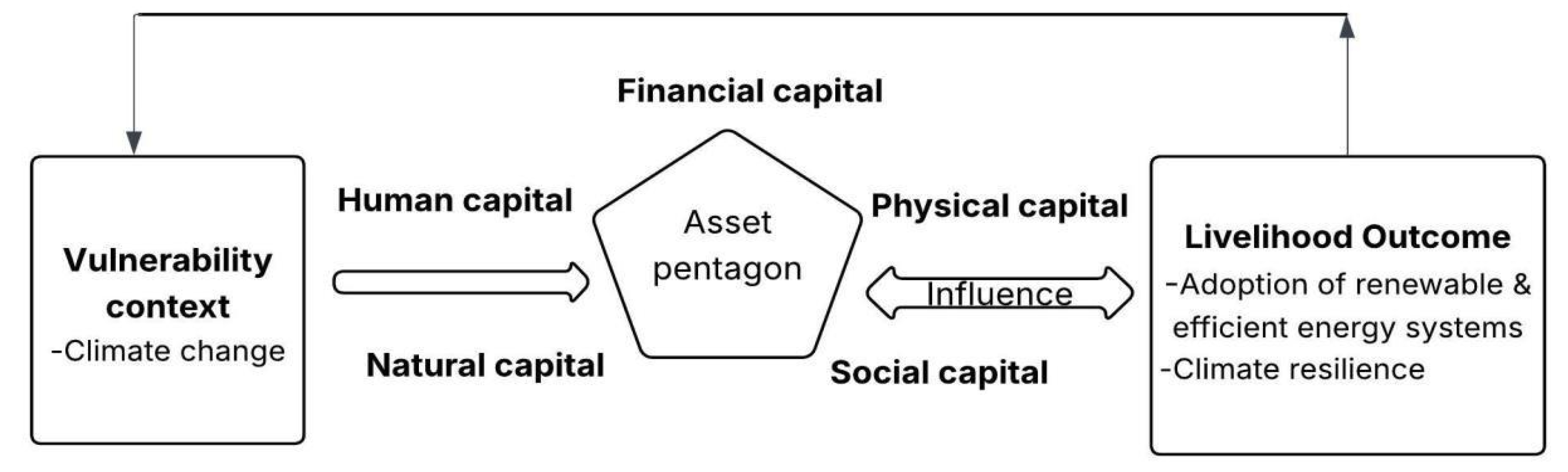
Figure 2.
Study areas. Source: Own construction.
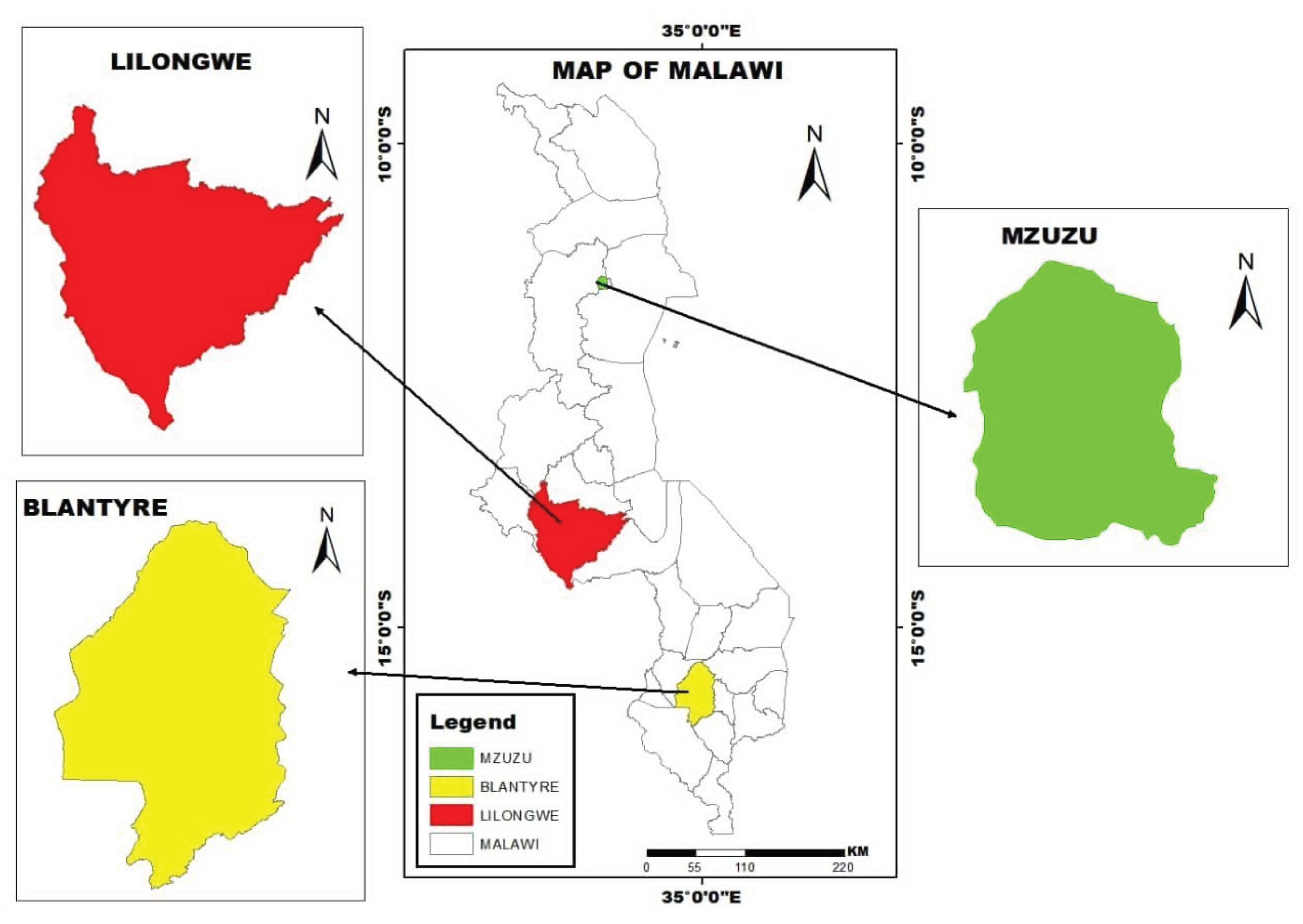
Table 1.
Detailed categorisation of the constructs for RCI.
| Dimension |
Indicator |
Measurement | Expected Influence on resilience |
Reference | |
| Absorptive capacity |
Bonding social capital |
0=No, 1=Yes |
+ | [15] | |
| Asset ownership | 0=No, 1=Yes | + | [18] | ||
| Cash savings | 0=No, 1=Yes | + | [10] |
||
| Access to safety nets |
0=No, 1=Yes | + | [19] | ||
| Soil quality | 0=poor, 1=good | + | [20,21] | ||
| Livestock ownership | 0=No, 1=Yes | + | [22] |
||
| Income level | Continuous | + | [19] | ||
| Adaptive capacity |
Bridging social capital |
0=No, 1=Yes | + | [15,23] | |
| Access information | to | 0=No, 1=Yes | + | [24] | |
| Improved infrastructure |
0=No, 1=Yes | + | [25] | ||
| Gender | 0=Male, 1=Female |
+ | [26] |
||
| Education | 0=No, 1=Yes | + | [27] |
||
| Age | Continuous | + | [28] | ||
| Transformative capacity |
Market availability |
0=No, 1=Yes | + | [29] |
|
| Access extension services |
to |
0=No, 1=Yes | + | [30] |
|
| Access to credit | 0=No, 1=Yes | + | [19,31] | ||
| Land size | 0=No, 1=Yes | + | [32] | ||
| Access to formal safety nets | 0=No, 1=Yes | + | [19] |
||
Source: Author’s compilation.
Table 2.
Descriptive statistics for the study variables.
| Variable | Frequency (n = 699 ) | Percent (% ) |
| Improved infrastructure | ||
| No | 112 | 16.02 |
| Yes | 587 | 83.98 |
| Asset ownership | ||
| no | 31 | 4.43 |
| yes | 668 | 95.57 |
| Bonding social capital | ||
| no | 689 | 98.57 |
| yes | 10 | 1.43 |
| Bridging social capital | ||
| no | 666 | 95.28 |
| yes | 33 | 4.72 |
| Access to information | ||
| no | 578 | 82.69 |
| yes | 121 | 17.31 |
| Access to formal safety nets | ||
| no | 663 | 94.85 |
| yes | 36 | 5.15 |
| Access to credit | ||
| No | 375 | 53.65 |
| Yes | 324 | 46.35 |
| Access to extension service | ||
| no | 575 | 82.26 |
| yes | 124 | 17.74 |
| Livestock ownership | ||
| no | 613 | 87.70 |
| yes | 86 | 12.30 |
| Cash savings | ||
| no | 437 | 62.52 |
| yes | 262 | 37.48 |
| Soil quality | ||
| good | 389 | 55.65 |
| poor | 310 | 44.35 |
| Gender | ||
| female | 323 | 46.21 |
| male | 376 | 53.79 |
| Education | ||
| no | 474 | 67.81 |
| yes | 225 | 32.19 |
| Informal safety nets | ||
| No | 651 | 93.13 |
| Yes | 48 | 6.87 |
Table 3.
Factor loadings for absorptive capacity.
| Variable | Factor1 | Factor2 | Uniqueness |
| Bonding social capital | 0.3723 | 0.1363 | 0.3061 |
| Asset ownership | 0.1065 | 0.2130 | 0.4807 |
| Cash savings | 0.5951 | -0.5953 | 0.2915 |
| Access to informal safety nets | -0.3440 | 0.5149 | 0.6166 |
| Soil quality | 0.7524 | -0.0465 | 0.4317 |
| Total livestock unit | 0.3552 | 0.5907 | 0.5249 |
| Income level | 0.5409 | 0.6592 | 0.2729 |
Source: Author’s Construction.
Table 4.
Factor loadings for adaptive capacity.
| Variable | Factor1 | Factor2 | Uniqueness |
| Bridging social capital | 0.0431 | 0.7560 | 0.4266 |
| Access to information | 0.6271 | -0.1367 | 0.5881 |
| Improved infrastructure | 0.5521 | 0.2041 | 0.5635 |
| Age | 0.6945 | 0.0002 | 0.5177 |
| Gender | -0.0651 | 0.6828 | 0.5295 |
| Education level | -0.0230 | 0.2619 | 0.3909 |
Source: Author construction.
Table 5.
Factor loadings for transformative capacity.
| Variable | Factor1 | Factor2 | Uniqueness |
| Market availability | 0.0930 | 0.5552 | 0.5831 |
| Access to extension services | 0.3552 | 0.5686 | 0.5506 |
| Access to credit | 0.7048 | -0.1891 | 0.4676 |
| Land size | -0.7382 | -0.1182 | 0.4411 |
| Access to formal safety nets | 0.2320 | -0.7002 | 0.4559 |
Source: Author’s construction.
Table 6.
Factor loadings for overall resilience capacity.
| Variable | Factor 1 | Factor 2 | Uniqueness |
| Absorptive capacity | 0.8150 | 0.0435 | 0.3338 |
| Adaptive capacity | 0.7084 | -0.4854 | 0.2626 |
| Transformative capacity | 0.3487 | 0.8847 | 0.0958 |
Source: Author’s construction.
Table 7.
Factors Influencing adoption of renewable efficient energy.
| Coefficient (CMP) | Marginal effect (CMP) | Marginal effect (Probit) | |
| Credit access (yes) | 0.080** | 0.037** | 0.022** |
| (0.010) | (0.001) | (0.010) | |
| Gender (female) | -0.459** | -0.211*** | -0.127*** |
| (0.010) | (0.000) | (0.000) | |
| Education (yes) | 0.022*** | 0.010*** | 0.006*** |
| (0.000) | (0.000) | (0.000) | |
| Household size | -0.007*** | -0.003*** | -0.002*** |
| (0.000) | (0.000) | (0.000) | |
| SME manager (yes) | 0.112** | 0.052** | 0.031*** |
| (0.010) | (0.010) | (0.000) | |
| Profit share | 0.081*** | 0.037*** | 0.022*** |
| (0.000) | (0.000) | (0.000) | |
| Access to capital source (yes) | 0.086*** | 0.040*** | 0.024*** |
| (0.000) | (0.000) | (0.000) | |
| Location (urban) | 0.015*** | 0.007*** | 0.004*** |
| (0.000) | (0.000) | (0.000) | |
| Age | 0.003*** | 0.001*** | 0.001*** |
| (0.000) | (0.000) | (0.000) | |
| Asset ownership (yes) | 0.075** | 0.035** | 0.021*** |
| (0.010) | (0.010) | (0.000) | |
| Bonding social capital (no) | -0.895** | -0.412** | -0.247** |
| (0.030) | (0.020) | (0.010) | |
| Bridging social capital (yes) | 0.658** | 0.303** | 0.182*** |
| (0.020) | (0.010) | (0.000) | |
| Access to information (yes) | 0.207** | 0.095*** | 0.057*** |
| (0.010) | (0.000) | (0.000) | |
| Access to safety nets (yes) | 0.097** | 0.044** | 0.027*** |
| (0.020) | (0.010) | (0.000) | |
| Access to extension service (yes) | 0.121** | 0.056*** | 0.033*** |
| (0.010) | (0.000) | (0.000) | |
| Informal safety nets (yes) | -0.471** | -0.217** | -0.130*** |
| (0.010) | (0.010) | (0.000) | |
| _cons | -0.714*** | ||
| (0.03) | |||
| Wald chi | 15272.637 | ||
| Prob > chi2 | 0.000 |
p-values in parentheses. * p < 0.10, ** p < 0.05, *** p < 0.01.
Table 8.
Selection Variables.
| Variables | Adopters (Resilience_1) | Non-Adopters (Resilience_0) | Selection (Energy Choice) |
| Socio-Economic Factors | |||
| Gender (Head) | 0.075 (0.187) | -0.071 (0.086) | -0.539*** (0.154) |
| Age (Head) | 0.002 (0.004) | 0.002 (0.002) | 0.000 (0.004) |
| Household Size | -0.021 (0.027) | -0.013 (0.013) | -0.004 (0.028) |
| Asset Ownership | -0.605* (0.361) | -0.514*** (0.132) | 0.337 (0.300) |
| Income Level | 0.000 (0.000) | 0.000 *** (0.000) | 0.000 (0.000) |
| Education (Years) | 0.018 (0.017) | 0.017* (0.009) | 0.015 (0.018) |
| Social Capital & Support | |||
| Bonding Social Capital | 3.139*** (0.509) | 3.628*** (0.260) | -0.052 (0.489) |
| Bridging Social Capital | 2.629*** (0.274) | 2.079*** (0.160) | 0.357 (0.289) |
| Access To Safety Nets | 0.276 (0.267) | 0.173 (0.132) | 0.069 (0.304) |
| Instrumental Variables | |||
| Social-Based Accessibility (Gifts) | -1.092*** (0.409) | ||
| Market-Based Accessibility (Loans) | -1.386*** (0.340) | ||
| Constant | 0.072 (0.538) | -0.341 (0.234) | -1.153** (0.527) |
| Observations | 699 | ||
| Log Likelihood | -1018.99 | ||
| Lr Test (Indep. Eq.) | χ2=3.97 (p=0.046) |
Table 9.
Average treatment effects.
| Group | Decision Stage | Adopting (Actual/CF) | Non-Adopting (Actual/CF) | Treatment Effect |
| Adopters | (a) | -0.017 | -0.134 | 0.117* (ATT) |
| Non-Adopters | (b) | -0.445 | 0.029 | -0.474* (ATU) |
| Heterogeneity | 0.428* | -0.163* | 0.591* (TH) |
Disclaimer/Publisher’s Note: The statements, opinions and data contained in all publications are solely those of the individual author(s) and contributor(s) and not of MDPI and/or the editor(s). MDPI and/or the editor(s) disclaim responsibility for any injury to people or property resulting from any ideas, methods, instructions or products referred to in the content. |
© 2026 by the authors. Licensee MDPI, Basel, Switzerland. This article is an open access article distributed under the terms and conditions of the Creative Commons Attribution (CC BY) license (http://creativecommons.org/licenses/by/4.0/).
Copyright: This open access article is published under a Creative Commons CC BY 4.0 license, which permit the free download, distribution, and reuse, provided that the author and preprint are cited in any reuse.


