Preprint
Article

This version is not peer-reviewed.

A Preliminary Study on the Benefits of Bicarbonate Natural Mineral Water from Source ‘F3 Păltiniș’ on Dyspeptic Symptoms and Digestion

Submitted:

02 May 2026

Posted:

04 May 2026

You are already at the latest version

Abstract

Background: The intake of mineral water for therapeutic purposes (crenotherapy) in digestive system disorders is a long-established practice, even though there are still few controlled clinical studies confirming the effect of natural mineral water rich in bicarbonate. Objective: To verify whether the daily intake of Aqua 3 bicarbonate natural mineral water is able to improve digestion in a population of patients with functional dyspepsia and gastroesophageal reflux disease symptoms. Methods: Patients had a diagnosis of functional dyspepsia formulated in accordance with the Rome IV criteria and were subjected to three periods of 2 weeks: tap water (wash-out), bicarbonate natural mineral water, and oligomineral water. The mineral water bottles had their labels removed. Primary efficacy endpoint: improvement in the PAGI-SYM total. Secondary endpoints: improvements in the PAGI-SYM subscales, in the use of antacids, and in the self-assessment of efficacy on digestion. Results: The PAGI-SYM total score and the six subscales significantly decreased after bicarbonate mineral water intake, while they significantly increased after oligomineral water supplementation. The antacid use was significantly different comparing the decrease after oligomineral water versus the increase after oligomineral water. In addition, the score of the subjective assessment of effectiveness of the patient’s digestion was significantly better after the intake of bicarbonate than after oligomineral water. Conclusions: In line with the evidence reported in the literature, the findings of this study provide additional support for recommending natural bicarbonate mineral water as a symptomatic treatment for functional dyspepsia and gastroesophageal reflux disease. The intake of Aqua 3 bicarbonate mineral water proved to be a simple, safe, and natural intervention capable of improving digestive symptoms in patients with functional dyspepsia and reflux-related disorders, while promoting the digestive process.

Keywords: 
;  ;  ;  ;  ;  ;  ;  

1. Introduction

1.1. Natural Mineral Waters

Since ancient times, humans have understood that waters flowing from particular sources not only quench thirst but also possess healing virtues. The first edict in the world on the exploitation of underground water resources and groundwater dates back to May 1605. It was signed by Henry IV of France, who pioneered the creation of "managers of mineral baths and fountains" in each province of the kingdom, attributing to the First Court Doctor the function of choosing and coordinating the new "Ministers" of mineral waters.[1]
Natural mineral waters are defined as those that, originating from an underground aquifer or deposit, come from one or more natural or drilled springs and have particular hygienic characteristics and properties that are favorable to health. Natural mineral waters are distinguished from ordinary drinking water for their original purity and conservation, their mineral content and/or other constituents, and their effects. Mineral waters represent a unique reality, distinct from all other types of water, and for this reason they are regulated by specific European regulations.[2,3]
The composition, temperature, and other essential characteristics of natural mineral waters must remain constant at the source, within natural variations, even after any changes in flow rate. Compared to common tap water, mineral water must possess specific characteristics: it must be originally and microbiologically pure; it must come from springs or underground aquifers; it must have the characteristic, constant content of mineral salts and trace elements; it must receive special recognition by the Ministry of Health; and it must be bottled near the source. Furthermore, it cannot undergo any sanitizing treatment. Natural mineral water is considered to be that which is offered for use as it flows from the source; that is, the purity at the source, in a chemical and bacteriological sense, is kept unaltered until consumption. Most mineral waters have a meteoric origin and therefore follow the hydrogeological cycle, re-emerging to the surface after a variable underground path. During their underground journey, the waters mineralize, coming into contact with rocks, and acquire peculiar, different, and source-specific characteristics. The different types of soil crossed also account for their different gaseous components, free or in solution. Carbon dioxide can, for example, have an atmospheric, calcareous, or volcanic origin, while hydrogen sulfide can have a volcanic, organic, or sulfur deposit origin. These processes occur in accordance with dissolution mechanisms (gases and salts) and chemical attack (hydration, protolysis, oxide reduction, and ion exchange). Finally, in the subsoil, by virtue of the geothermal gradient and the heating produced by volcanic phenomena or by mixing with gases or liquid layers of deep origin, the waters usually have a higher temperature than that detectable at the point of origin.

1.2. Classification of Natural Mineral Waters

The fixed residue is the best-known parameter that allows for distinguishing between mineral waters (Table 1). This quantitative classification, however, only concerns the quantity of minerals contained in a liter of water and not the type. The legislation currently in force reports another classification method, which is based on the presence of the predominant and qualifying chemical elements, on the basis of which it is possible to predict, at least theoretically, the biological, dietary, and medicinal effects of a mineral water. Based on the types and quantity of mineral salts present, we can thus distinguish mineral waters according to the classification shown in Table 2.

1.3. Mineral Water and Digestion

Good hydration is essential for maintaining the body’s water balance, although needs may vary from person to person. However, the worldwide population consumes far less than the recommended allowance for water intake.[4,5,6] Water is also considered a key element in promoting regular intestinal function. Drinking during meals promotes gastric digestion and emptying and results, at the liver level, in an increase in the flow of bile and bile acids, facilitating digestion and in particular the assimilation of fatty acids. In contact with water, the fibers tend to swell and, by pressing on the walls of the intestine, stimulate contractions and promote the speed of transit by softening the walls of the colon, eliminating constipation and preventing diverticula. Thus, the so-called “mineral waters”, thanks to their particular chemical composition, seem to actively intervene in different phases of the digestive process.
The study of the possible therapeutic role of mineral water constitutes a real science, called “medical hydrology” (or “thermal medicine”), a medical discipline that studies i) the structural characteristics of the means of thermal care; ii) the manner of their application; iii) their biological and pharmacological actions; iv) their therapeutic effects. The digestive tract is one of the most investigated areas in the hydrological field but, although the data currently available suggest that crenotherapy with mineral water can constitute a useful complement to the medical treatment of functional digestive symptoms, solid scientific evidence on the mechanisms underlying the favorable effects of these waters on gastrointestinal functions is still lacking.[7,8]
The mechanism of action of mineral waters must be found in the different phases of the digestive act: gastric digestion, fractional emptying of the stomach, introduction of acidic chyme into the duodenum, stimulus to release gastrointestinal hormones, hepato–bilio–pancreatic secretory intervention, hydrolysis of food and absorption, bilio–duodenal contractile correlation, transport movements at the colon level, and evacuation. The different biological effects of mineral waters are linked to their quantitatively and qualitatively different compositions of dissolved minerals, which explains why different mineral waters carry out different actions. For example, we have long known the influences of Na+, K+, Ca2+, and Mg2+ on variations in the membrane potential of myocells: Ca2+ ions stimulate the secretion of gastrin,[9] functionally collaborate with second messengers (intracellular cyclic nucleotides), stimulate the secretion of gastric and duodenal HCO3-,[10] and stimulate pancreatic exocrine secretion.[11] Some of these activities are antagonized by Mg2+, which, in turn, favors the opening of the sphincter of Oddi for probable stimulus to release CCK. The release of CCK is stimulated by SO42- anions, active in addition in the secretion of H2O and HCO3- from the enterocytes of the intestinal lumen via activation of intracellular AMPc. The HCO3- anion exerts a buffering action on gastric acid secretion. We therefore understand the reasons for researchers' efforts to identify the influences of mineral waters on exocrine and endocrine digestive secretions, motility, and, to a lesser extent, endoluminal digestion and absorption of nutrients. In particular, waters rich in bicarbonates are those that have been shown to promote digestion, mitigate gastric hyperacidity, improve intestinal transit, and help in resolving functional disorders such as the dyspeptic disorders.[12,13,14,15,16,17,18,19] Specifically, it has been found that mineral waters characterized by a high concentration of bicarbonate and calcium ions are able to modulate the secretion of peptide hormones at the level of the gastrointestinal system[13,20] with secretion of endogenous gastrin and the activation of the serotonin system.[21] It is also known that gastric secretion is controlled through nervous pathways and humoral factors; among the latter, a prominent role is played by gastrin.[22] Knowledge of changes in plasma gastrin after intake of mineral waters can therefore be key in interpreting the mechanisms of action of these waters on some functions of the digestive tract.[13,16,23,24]

1.4. Functional Gastrointestinal Disorders and Impaired Digestion

Functional gastrointestinal disorders affect approximately one-third of the population and are one of the most common reasons for medical consultations, including over 50% of gastroenterology consultations.[25,26] These disorders are characterized by persistent and recurrent gastrointestinal (GI) symptoms and occur as a result of abnormal functioning of the GI tract. They generally involve a combination of chronic or recurrent symptoms in the absence of obvious anatomical or biochemical alterations and significantly impact the quality of life of those affected. These symptoms can manifest in different parts of the digestive tract and include abdominal pain, bloating, diarrhea, constipation, nausea, and vomiting. Dyspepsia (from the Greek "dys", meaning difficult, and "pepsis", meaning digestion) is a common symptom in the general population suggestive of gastroduodenal disorders. When occurring in the absence of a recognizable underlying disease, dyspepsia is defined as functional dyspepsia (FD), according to the Rome IV criteria, is an umbrella term referring to a patient who fulfills diagnostic criteria for postprandial distress syndrome (PDS) and/or epigastric pain syndrome (EPS). PDS applies to patients complaining of bothersome postprandial fullness and/or early satiation, while EPS patients complain of bothersome epigastric pain or burning, and the two can co-exist in the same patient. The term ‘bothersome’ implies that symptoms need to be severe enough to somewhat impact usual activities, and criteria must be fulfilled in the last 3 months before diagnosis.[27] Epigastric bloating, heartburn, excessive belching, nausea and/or vomiting, and digestive symptoms modified by bowel movements can also be present but are not dyspeptic symptoms. Conventional pharmacological treatment in these patients is often ineffective or only partially effective. However, numerous scientific studies have demonstrated that mineral waters, particularly those rich in bicarbonates and calcium, can help improve symptoms associated with functional dyspepsia by modulating the motor and secretory activity of the gastrointestinal tract. These studies suggest that these waters may be beneficial for the treatment of some functional digestive tract disorders, primarily functional dyspepsia and digestive disorders related to gastroesophageal reflux disease (GERD).[12,28,29]

1.5. Aim of the Study

This preliminary study aimed to verify whether the intake of ≥1.5 L/day of bicarbonate mineral water for 2 weeks is able to positively influence GERD symptoms and promote digestive activity in subjects affected by FD and GERD symptoms.
The study cohort primarily consisted of patients with functional dyspepsia (comprising both PDS and EPS subtypes), a significant proportion of whom presented with mild non-erosive reflux symptoms. This phenotype reflects a common clinical overlap between these disorders. In the absence of formal GERD confirmation via endoscopy or pH-monitoring, these individuals were categorized as 'FD with overlapping reflux symptoms'. The choice to include subjects with FD and GERD is linked to the exploratory objective of the study, aimed at evaluating the pro-digestive effect of bicarbonate water in mild dyspeptic disorders.

2. Materials and Methods

2.1. Study Design

In order to prevent inclusion of patients with dyspeptic symptoms secondary to insufficient water intake, a wash-out period with a minimum intake of 1,500 mL of tap water was required before entering the study. After inclusion, each patient received 24 liters (1,500 mL/day supplementation for 16 days) of a bicarbonate water (Aqua 3, Carpathian Springs S.A., Vatra Dornei, Romania) in unmarked bottles. At the end of this two-week period, patients had to return any remaining bottles (if any) in order to receive the second test supply, comprising a similar number of unmarked bottles of a commercially available oligomineral water (Table 3).
Both the bicarbonate and oligomineral water intake involved drinking 250 mL in the morning upon waking and the remaining amount during meals and spread over the course of the day.
A validated symptom questionnaire (PAGI-SYM)[30,31,32] was administered in the presence of a physician at entry (T0, baseline), at the end of the wash-out period (T1), and at the end of the first (T2, after bicarbonate mineral water) and second (T3, after oligomineral water) two-week study periods. T0 represents the baseline assessment conducted prior to any water administration (i.e., before wash out period with tap water). This baseline measurement was established to ensure standardized initial conditions across all study participants. The wash-out period was included in order to avoid any possible bias due to the effect of increased hydration; the first two-week study period after the wash-out (T2) allowed us to collect data on the effectiveness of the intake of bicarbonate mineral water; the second two-week study period (T3) was included to evaluate whether the effect of bicarbonate mineral water is maintained after its suspension. Since there are no data available in the literature on the effect of mineral water on PAGI-SYM questionnaire responses, we conducted this preliminary study in order to collect the data needed for the scheduling of a final randomized cross-over controlled trial comparing bicarbonate mineral to oligomineral water. As this study was a non-controlled study, we intentionally avoided applying a cross-over experimental design. Consequently, the primary objective of this pilot study was to establish key clinical parameters to inform the design and power calculations of future randomized controlled trials.
Finally, all patients were asked to maintain their usual eating and lifestyle habits for the duration of the study, and to limit their daily intake of mineral water to the delivered study supply. Nutritional supplements, probiotics, and digestive therapies in general were not allowed; only on-demand antacids were allowed, and their intake was monitored during the study.

2.2. Inclusion Criteria

To meet the inclusion criteria, participants had to be aged 18 years or older and affected by FD, as defined by the Rome IV criteria for FD,[27] and they had to have not taken antibiotic, probiotic, prebiotic, and symbiotic medications or any pump inhibitors for at least 2 weeks before enrollment in order to avoid interference with gastric acid secretion, H₂ receptor blockers and prokinetics were permitted only for occasional use.
The participants agreed to participate in this study and signed an informed consent form.

2.3. Exclusion Criteria

The exclusion criteria excluded patients with comorbid organic, metabolic, systemic, or mental disorders; patients who had undergone previous major surgeries; patients who had participated in other clinical trials within the past 6 months; and patients with reverse osmosis or other water purification systems at home. Subjects requiring regular or scheduled administration of H₂ receptor blockers and prokinetics were excluded from the study.

2.4. Patients

Fifty FD patients were enrolled, where the diagnosis of FD had been formulated in accordance with the Rome IV criteria on the basis of their symptoms and the absence of documentable organic alterations on physical examination and excluded by upper GI endoscopy.[27]
All patients were Caucasian, and baseline demographic and clinical characteristics are shown in Table 4. Most patients had a normal weight (23, 46.0%) or were overweight (22, 44.0%), while only 4 (8.0%) were obese. Only one patient was underweight (2.0%). The 20 symptoms of the PAGI-SYM questionnaire at baseline are shown in Figure 1. All patients had both PDS (bothersome postprandial fullness and/or early satiety) and EPS (bothersome epigastric pain or burning).

2.5. Endpoints

The primary endpoint of the study was to evaluate the effectiveness of the intake of ≥1.5 L/day of bicarbonate mineral water for two weeks in reducing the symptoms of GERD and promoting digestive activity as measured by a significant reduction in PAGI-SYM total score.
As secondary endpoints, we evaluated the effect of bicarbonate mineral water on i) the subscales of the PAGI-SYM questionnaire; ii) the use of antacid drugs .
In addition, as supplementary descriptive items, we also evaluated: i) whether the effect of bicarbonate mineral water intake was maintained after the replacement of the intake with oligomineral water (third two-week period), and ii) the patients’ self-assessment of digestive efficacy, alongside their overall treatment satisfaction.

2.6. Assessment of Upper Gastrointestinal Disorders: Symptom Severity Index (PAGI-SYM)

The PAGI-SYM is intended to cover the main symptom groupings for the upper GI disorders GERD, dyspepsia, and gastroparesis and is designed for application in clinical trials and other studies. The content and items of the PAGI-SYM were constructed based on an extensive review of the published medical literature, previously developed GI symptom scales, semi-structured interviews with patients, and interviews and meetings with experienced gastroenterologists. Subject interviews about GI symptoms and their effect on health-related quality of life were conducted in six countries (France, Germany, Italy, Poland, Sweden, and the United States). The items were developed to be linguistically and culturally appropriate for multinational studies.
The final PAGI-SYM questionnaire contains 20 items and 6 subscales covering heartburn/regurgitation (7 items), nausea/vomiting (3 items), postprandial fullness/early satiety (4 items), bloating (2 items), upper abdominal pain (2 items), and lower abdominal pain (2 items). The scores of the items vary from 0 to 5: 0, “none” or “absent”; 1, “very mild”; 2, “mild”; 3, “moderate”; 4, “severe”; and 5, “very severe”. The PAGI-SYM subscale scores are calculated by taking the mean of the items in each subscale, while the total score is calculated by taking the mean of the subscales; thus, subscale and total scores also vary from 0 to 5.[30,31,32]

2.7. Antacid Intake

During the study, the use of antacids on demand was allowed and recorded, and this represents another secondary endpoint of the study.

2.8. Patient Satisfaction

In addition to completing the PAGI-SYM questionnaire, at the end of each of the three treatment periods, patients were also asked to express an opinion on their satisfaction with the treatments using a 4-point Likert rating scale: “poor”, “moderate”, “good”, and “very good”.
Finally, a 1-to-10 scale was used to assess the patients’ subjective opinion of their own digestive effectiveness. These opinions were recorded after the two periods of supplementation with bicarbonate natural mineral water and oligomineral water.

2.9. Safety

Safety was assessed by recording the occurrence of adverse events.

2.10. Statistical Methods

2.10.1. Sample Size Calculation

In order to evaluate the sample size of the present pilot study, we hypothesized that we would be able to detect an improvement in dyspepsia and GERD symptoms similar to the changes observed after follow-up in a subset of subjects reporting symptom relief in the population studied for the evaluation of the responsiveness of the PAGI-SYM questionnaire.[30] When considering a median change of the 6 subscales in subjects with both dyspepsia and GERD symptom relief (-0.54) with a median SD of 1.13,[30] a sample size of 48 pairs is needed to be able to reject the null hypothesis with a probability (power) equal to 90% and a type I error of 5% according to the PS Power and Sample Size Calculations package (Version 3.1.2; Department of Statistics, Vanderbilt University, Nashville, TN, USA).[33,34] Thus, we rounded this value and enrolled 50 subjects.

2.10.2. Statistical Analysis

The mean and standard deviation were reported as descriptive statistics for continuous variables, and absolute and relative frequencies were reported for discrete variables. Non-parametric statistics were used in order to analyze the data. Fisher’s exact and Mann–Whitney U tests were used to compare drop-out patients with participant patients according to dichotomous and ordinal variables, respectively. In the evaluation of the effects of the wash-out period and the two natural mineral water administrations, as well as in their comparison, the Wilcoxon matched-pairs test was used to analyze ordinal variables, while McNemar and marginal homogeneity tests were used to analyze dichotomous responses and their modification, respectively. All data were managed and analyzed using the IBM SPSS Statistics (Ver. 23 for Windows, IBM Co., Armonk, NY, USA) package. Two-tailed P values of less than 0.05 were considered statistically significant.

2.11. Ethical Issues

The study protocol was approved by the Institutional Review Board of the “Water Resource Association” (Bologna, Italy). Because treatment consisted of the simple administration of tap and mineral waters only and included no medical drugs or similar treatments, approval from an official ethics committee was not required.
The study protocol conformed to the ethics of the World Medical Association Declaration of Helsinki “Ethical principles for medical research involving human subjects”, adopted by the 18th WMA General Assembly, Helsinki, Finland, June 1964, and amended by the 75th WMA General Assembly, Helsinki, Finland, October 2024.
Only patients who voluntarily signed an informed consent form were included, and patients were allowed to discontinue participation at any time during the trial.

3. Results

3.1. Patients

Out of the 50 patients admitted to the study, there were 5 drop-outs (10.0%) (2 men and 3 women): 2 did not follow the instructions for the water intake and did not perform the initial wash-out with tap water correctly and 3 did not attend the visit after the wash-out period. Therefore, 45 subjects (90.0%) completed the study. No significant differences were found between drop-out patients and those who completed the study in terms of gender (P=1.000), age (P=0.571), weight (P=0.264), height (P=0.332), BMI (P=0.528), weight status classes (P=0.531), or use of antacid drugs (P=0.276). Drop-out patients had generally non-significantly higher basal PAGI-SYM subscale scores (P ranging from 0.056 to 0.334), but their heartburn/regurgitation subscale scores were significantly higher (P=0.026) and their total PAGI-SYM scores resulted near to the significance level (P=0.050).

3.2. Protocol Deviations and Compliance

There were no missing data in the compilation of the PAGI-SYM items; therefore, there was no need to apply the half-scale rule for missing data in calculating the subscales.[31] For few items containing dual responses (n=12, 0.33% of total entries), the more severe score was selected to maintain a conservative clinical approach. Sensitivity analysis demonstrated that this approach did not significantly alter the findings, as mean score deviations were confined to the second decimal level.
The length of the water intake period was within the accepted range (14±1 day) in 95.6% of cases, while it was 16 days in 6 cases (4.4%, 1 during the wash-out (0.7%), 5 during the bicarbonate water period (3.7%), and 0 during the oligomineral water period). Thus, the length of the water intake period was significantly shorter during the wash-out (13.7±0.7 days) than during both the bicarbonate water (14.4±0.7 days; P<0.001) and oligomineral water (14.0±0.1; P=0.002) periods and longer during the bicarbonate period than the oligomineral water period (P=0.001).

3.3. The PAGI-SYM Severity Index

The results for the PAGI-SYM severity index are shown in Table 5. At baseline, bloating, postprandial fullness/early satiety, and heartburn/regurgitation had the highest mean scores, ranging between 1.75 and 2.16, while nausea/vomiting and lower abdominal pain had the lowest ones (0.77 and 0.96, respectively). The mean total score was 1.47.
A highly significant decrease in the bloating subscale (P<0.001) was found after the wash-out period, while nausea/vomiting and lower abdominal pain significantly increased (P=0.026 and P=0.040, respectively). The decrease in the total score during the wash-out did not reach statistical significance (P=0.084).
All six subscales, as well as the total score, significantly decreased (P<0.001) after bicarbonate mineral water intake and significantly increased after oligomineral water supplementation (P<0.001 for all scores except bloating with P=0.001). Therefore, the comparison between the effects of the mineral waters showed significantly lower values for the bicarbonate (P<0.001) for all subscales, as well as a lower total score.

3.4. Use of Antacid Drugs

Antacid use was reported by 3 out of the 50 patients at baseline (6.0%, 1 drop-out). In the 45 patients that completed the study, antacid use significantly (P<0.001) increased from baseline (2 patients, 4.4%) to the end of the wash-out period (15 patients, 33.3%) but had declined by the time of the visit after the bicarbonate mineral water intake (6 patients, 13.3%) (Table 6). The increase in the use of antacid drugs observed during the wash-out period was significant (P<0.001), as was the decrease observed after the bicarbonate mineral water intake (P=0.004). On the other hand, an increase in antacid use was found during the oligomineral water intake period, but it did not reach the significance level (P=0.070). The difference between the decrease in antacid use observed during the bicarbonate mineral water period (9 patients suspended antacids, 20.0%) and the increase observed during the oligomineral water period (7 patients needed new antacid administration, 15.6%, while only 1 patient suspended antacid administration, 2.2%) was significant (P=0.005).

3.5. Patient Satisfaction and Safety

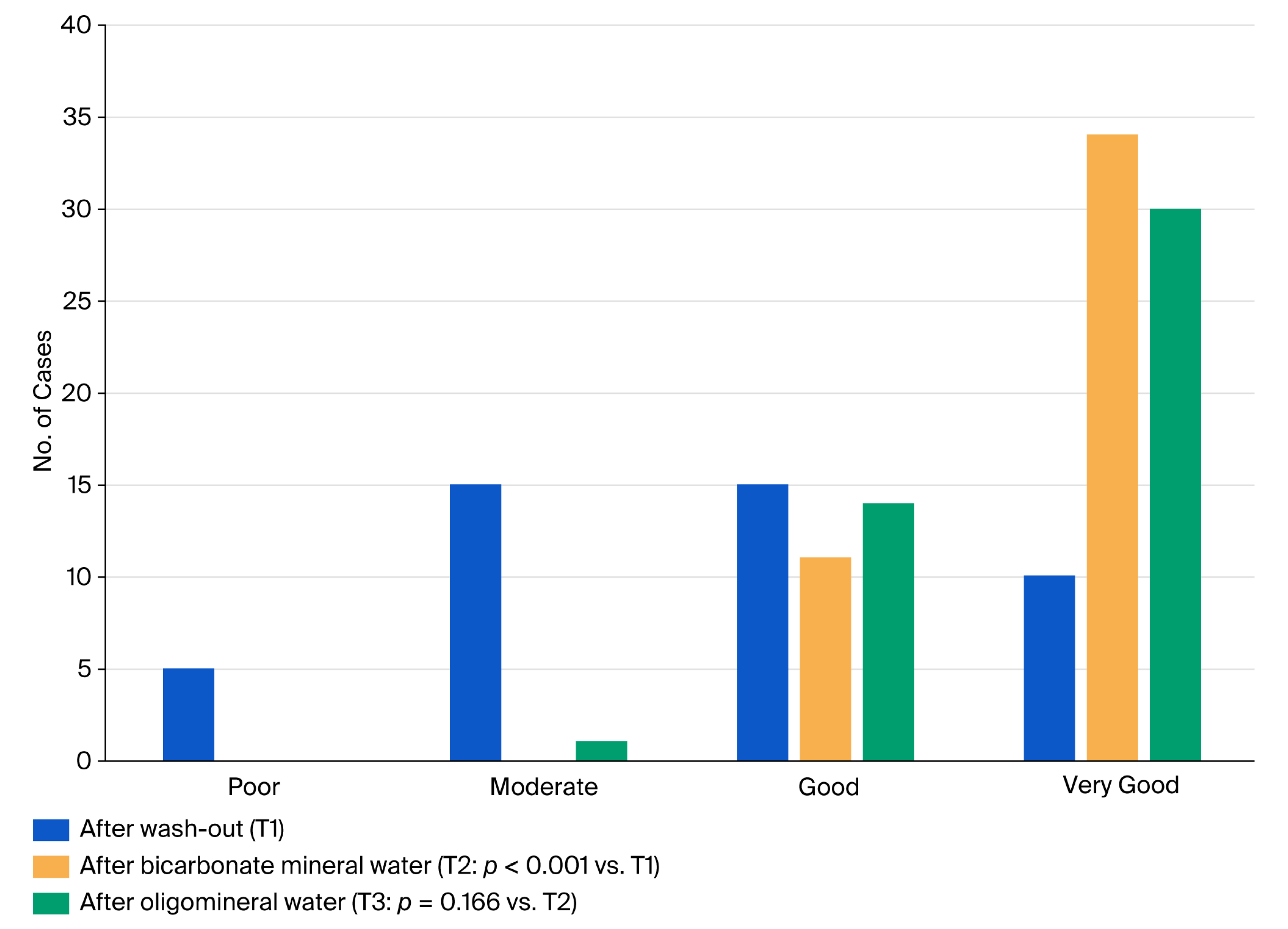
The patients’ opinions on their satisfaction with the treatments are shown in Figure 2. As far as the wash-out period is concerned, 25 patients (55.6%) had a positive opinion of the treatment (very good: 10, 22.2%; good: 15, 33.3%), 15 patients (33.3%) rated it as moderate, and 5 patients (11.1%) rated it as poor. The patient satisfaction was significantly higher (P<0.001) for the bicarbonate mineral water period compared to the wash-out period (all patients had a positive opinion: very good: 34, 75.6%; good: 11, 24.4%), while after the oligomineral water period (44 patients had a positive opinion, 97.8%; very good: 30, 66.7%; good: 14, 31.1%; moderate: 1, 2.2%) the comparison with bicarbonate mineral water was not statistically significant (P=0.166).
The results of the scale assessing the patients’ subjective assessment of the effectiveness of their digestion are shown in Table 7. The consumption of bicarbonate natural mineral water showed a significant (P<0.001) better score (7.2±2.2) in comparison to the oligomineral water intake (4.6±2.0).
As far as safety is concerned, all three water regimens were well tolerated, and no patients declared any adverse effects.

4. Discussion

This first phase of the study investigated whether a two-week intake of a bicarbonate natural mineral water (Aqua 3) could improve upper gastrointestinal symptoms in patients with FD and gastroesophageal reflux-related complaints and aid digestion. The results showed a significant reduction in all PAGI-SYM subscale scores and in the total symptom score after consumption of the bicarbonate water. A reduction of more than 0.50 points in the mean PAGI-SYM subscale scores is established as clinically meaningful.[35] In the present study, the mean reduction ranged from 0.6 to 0.9 points, thereby exceeding the minimal clinically important difference (MCID) threshold across several domains. This improvement was associated with a concomitant decrease in the use of antacid medications and a marked improvement in patients’ subjective perception of their own digestive effectiveness. Importantly, these beneficial effects were not maintained after switching to an oligomineral water when patients’ symptoms significantly worsened. During the bicarbonate water intervention, the proportion of patients who suspended antacid medication decreased by 20%, whereas no significant variations were observed during the oligomineral water period. Similarly, patient satisfaction was significantly higher following bicarbonate mineral water treatment compared to the wash-out period; however, no significant changes were observed during the subsequent oligomineral water period. Together, these findings suggest that the bicarbonate mineral water exerts specific symptomatic benefits that cannot be attributed solely to increased hydration or fluctuations in symptom severity over time.
The mechanisms underlying the observed effects are likely multifactorial and consistent with previous physiological and clinical research on bicarbonate-rich waters. Several clinical and experimental trials support the use of bicarbonate water as a natural functional intervention for wellness and digestive physiology. Natural bicarbonate mineral water, rich in HCO₃⁻, calcium and magnesium ions, exerts direct and indirect physiological effects on the digestive system, particularly the stomach, duodenum and bilio-pancreatic pathways.[13,21,28] Its role in improving digestion and controlling dyspeptic symptoms is based on three main mechanisms, which have been extensively documented in the clinical literature.
First: gastric acid neutralization and intragastric pH increase. The intake of bicarbonate waters quickly neutralizes excess gastric acidity, acting as a natural buffer. Bicarbonate ions react with hydrochloric acid to form CO₂ and H₂O, resulting in a rise in gastric pH and temporary reduction of acid secretion[18] have shown that a high fixed-residue bicarbonate-calcic water leads to a significant increase in gastric pH within 15 minutes of ingestion, with reduced symptoms of pirosis and postprandial discomfort. This effect supports the traditional use of bicarbonate water in people with acid-related dyspepsia or mild gastroesophageal reflux.
Second: modulation of gastric emptying and biliopancreatic secretion. Bicarbonate water can promote a cholecystokinetic and choleretic action, improving fat digestion and facilitating gastric emptying. There are numerous studies that report that the ingestion of bicarbonate-calcium water physiologically stimulates the emptying of the gallbladder through the release of cholecystokinin (CCK) and the secretion of bile and pancreatic juice rich in bicarbonate. This results in greater bile fluidity and better duodenogastric coordination, reducing the sense of fullness and slow digestion typical of postprandial functional dyspepsia. This effect is consistent with the data from Italian studies conducted at thermal centers, in which the gallbladder effusion fraction increases by 50-70% within 45 min after intake.[15,16,36,37,38,39,40,41]
Third: buffering effect on acid reflux and weakly acidic reflux. In addition to direct neutralization, bicarbonate water has a prolonged buffering effect on acid and weakly protonated reflows, often responsible for persistent symptoms even under treatment with proton pump inhibitors. Several scientific contributions have shown that regular intake of bicarbonate-calcium water reduces the frequency of acid reflows and esophageal sensitivity at pH less than 4, highlighting an improvement in digestive comfort and a decrease in the need for antacid medications.[19,42]
Our findings align with these mechanisms, given that the most responsive symptom dimensions in our cohort were postprandial fullness, epigastric distress, and heartburn/regurgitation (domains that are biologically sensitive to changes in gastric acid, gastric motility, and duodenal buffering).
In fact, mineral waters, due to their composition of ions and macro- and microelements, can stimulate the release of or modulate the activity of some neurohumoral regulators of the digestive process.[43,44,45] Of particular interest are the effects of Ca2+ on the liberation of gastrin from antral G cells,[9] exocrine pancreatic secretion,[46,47,48] gastroduodenal bicarbonate secretion, and the activity of intracellular cyclic nucleotides (cAMP and cGMP), on which the responses of functional effectors to exogenous or endogenous stimuli depend.[10,49,50,51] Mg2+ generally exerts antagonistic actions against Ca2+, has a relaxing effect on the sphincter of Oddi, and stimulates intestinal peristaltic motility.[52,53] SO42- anions stimulate the release of CCK from GEP endocrine cells and the secretion of H2O and bicarbonates from enterocytes. The HCO3- anion performs a neutralizing action on gastric secretion.[53,54] Na+, K+, Ca2+, and Mg2+ influence, in relation to their respective concentrations, the membrane potential of the myocells of the enteric wall, with possible implications for both postprandial and interdigestive motility. The therapeutic effect exerted by mineral waters in some diseases and disorders of the digestive system is the result of i) quantitative and/or qualitative modifications of some basic digestive functions (motility, secretion, etc.); ii) actions aimed at counteracting and reducing pathological phenomena (inflammation and/or degenerative processes, etc.); iii) general non-specific effects, such as the restoration of the hydro–electrolyte balance and compensation for any acid–base homeostasis imbalances.
A highly relevant aspect of our study is the wash-out period, which allowed us to control for symptoms potentially related to insufficient hydration, a condition known to worsen dyspeptic symptoms in predisposed individuals. Although some improvement in bloating was observed during wash-out, no significant reduction in the overall PAGI-SYM score occurred, supporting the idea that hydration alone cannot explain the benefits observed with bicarbonate water. This methodological choice strengthens the internal validity of the study and contributes to the interpretation of the subsequent treatment effects.
The decision not to adopt a randomized cross-over design was deliberate (despite its methodological advantages) because no prior data existed on the behavior of the PAGI-SYM score after mineral water intake and a cross-over design would have risked introducing significant carry-over effects, especially given the hypotheses concerning the prolonged physiological effects of bicarbonate waters on gastric secretion and motility. In this preliminary phase, the sequential design provided essential information to support the planning of a definitive randomized cross-over controlled trial. Nevertheless, the lack of randomization and the fixed treatment sequence (bicarbonate followed by oligomineral water) represent inherent limitations, as they preclude formal causal inference. Consequently, the reported associations remain exploratory and should be interpreted as hypothesis-generating rather than to verify cause effect relationships. Furthermore, it should be noted that the oligomineral water phase served as a physiological follow-up period rather than a true control arm; it was designed as an observational time point to assess the persistence or regression of effects, rather than as a comparative intervention. It is possible that the second intervention (oligomineral water) suffered from a “floor effect”, as patients entered this phase with substantially reduced symptoms after the bicarbonate period, thus introducing a potential bias in the comparison between bicarbonate and oligomineral waters. Although symptom worsening was nonetheless observed, a fully randomized cross-over design is required to rule out all these sequence biases.
This preliminary, short-term study was designed to document immediate symptomatic responses over a two-week period. However, the long-term persistence of clinical improvements and medium-term safety profiles remain to be established in controlled trials of longer duration (e.g., 8–12 weeks). Nevertheless, the consistency of our findings with existing literature on the regular consumption of bicarbonate waters[13,14,15,16,17,18,19,21,22,23,24,29,42] reinforces the positive effects of this intervention.
The drop-out rate was low, and most non-compliant subjects failed to complete the wash-out phase, preventing assessment of whether baseline severity differed between completers and non-completers. Nonetheless, compliance among study completers was excellent, and there were no missing data for PAGI-SYM scoring.
The absence of objective physiological measurements (such as gastric emptying studies, pH impedance monitoring, or hormone assays) also limits mechanistic interpretation. These parameters will be incorporated into the next phase of the project as prespecified objective endpoints. This future phase will also account for potential confounding variables, which remained outside the scope of the present analysis given its design as a preliminary, non-comparative study. Consequently, the current findings are limited in their ability to establish definitive causal relationships. Finally, as the self-assessment measures employed in this study were exploratory and ad hoc, future research will implement validated instruments, such as the PAGI-QoL and GSRS, to facilitate broader comparability of the results.

5. Conclusions

Consistent with existing literature[13,14,15,16,17,18,19,21,22,23,24,29,42], our findings suggest that natural bicarbonate mineral water may offer significant digestive benefits. While these results require confirmation through long-term controlled trials, they provide additional evidence to support the use of bicarbonate water in managing functional dyspepsia (FD) and GERD symptoms by enhancing digestive processes. The intake of Aqua 3 bicarbonate mineral water proved to be a simple, safe, and natural intervention capable of improving digestive symptoms in patients with functional dyspepsia and reflux-related disorders while promoting the digestive process. The concurrent improvement in perceived digestive effectiveness and reduction in antacid use further reinforce its clinical relevance.
Given the chronic and fluctuating nature of functional dyspepsia and the limited effectiveness of available pharmacological therapies, the possibility of alleviating symptoms through a well-tolerated natural mineral water represents an option of significant clinical and public health interest, potentially reducing the economic burden on healthcare resources.
The recommendation to prescribe mineral water as an adjunctive treatment during the initial phase of therapy, or even as the sole agent for maintenance therapy, should be considered in patients with functional dyspepsia and/or GERD.

Author Contributions

Conceptualization, A.Z. and F.P.; methodology, A.Z. and F.P.; formal analysis, A.M.M.L.; investigation, A.Z., F.P., and A.A.I.; data curation, A.M.M.L.; writing original draft preparation, A.Z., F.P., G.Z., and A.M.M.L.; writing review and editing, A.Z., F.P., G.Z., and A.M.M.L.
All: authors have read and agreed to the published version of the manuscript.

Funding

The authors received no honoraria or incentives from Carpathian Springs SA, nor was any other external funding received for this study.

Institutional Review Board Statement

This study was conducted in accordance with the Declaration of Helsinki. The protocol study was approved by the Institutional Review Board of the “Water Resource Association” (Bologna, Italy; code DS-1a/2025) on 10 January 2026.

Data Availability Statement

The original contributions presented in this study are included in the article. Further inquiries can be directed to the corresponding author.

Acknowledgments

The authors thank Carpathian Springs S.A. (Vatra Dornei, Romania) for providing the water necessary for conducting this study.

Conflicts of Interest

Carpathian Springs SA provided the water used in this study but had no role in the study design, data collection, analysis, interpretation, manuscript preparation, or the decision to submit the paper for publication. The authors declare no other conflicts of interest.

Abbreviations

EPS Epigastric pain syndrome
FD Functional dyspepsia
GERD Gastroesophageal reflux disease
GI Gastrointestinal
PDS Postprandial distress syndrome

References

  1. Raynal, C. La vente des eaux minérales par les pharmaciens. Rev. Hist. Pharm. 2004, 344, 587–606. [Google Scholar] [CrossRef]
  2. European Parliament. Directive 2009/54/EC of the European Parliament and of the Council of 18 June 2009 on the exploitation and marketing of natural mineral waters. Available online: https://eur-lex.europa.eu/eli/dir/2009/54/oj/eng.
  3. European Parliament. Directive 2001/83/EC of the European Parliament and of the Council of 6 November 2001 on the Community code relating to medicinal products for human use. Available online: https://eur-lex.europa.eu/eli/dir/2001/83/oj/eng.
  4. Zhixian, S.; Theng, M.; Zhang, M.; Rangan, A. Water and beverage consumption: analysis of the Australian 2011-2012 National Nutrition and Physical Activity Survey. Nutrients 2016, 8, 678. [Google Scholar]
  5. Drewnoski, A.; Rhem, C.D.; Constant, F. Water and beverage consumption among adults in the United States: cross-sectional study using data from NHANES 20. BMC Public Health 2013, 13, 1068. [Google Scholar]
  6. Gibson, S.; Shirreffs, S.M. Beverage consumption habits "24/7" among British adults: association with total water intake and energy intake. Nutr. J. 2013, 12, 9. [Google Scholar] [CrossRef]
  7. Petraccia, L.; Liberati, G.; Masciullo, S.G.; Grassi, M.; Fraioli, A. Water, mineral waters and health. Clin. Nutr. 2006, 25, 377–85. [Google Scholar] [CrossRef]
  8. D’Souza, A.; Zink, K.; Langhorst, J.; Widner, W.; Stuopp, C.; Keill, T. How effective is drinking natural mineral water against heartburn from functional dyspepsia, gastroesophageal reflux disease, or other causes? A systematic review of clinical intervention studies. Complement Med. Res. 2024, 31, 253–65. [Google Scholar] [CrossRef]
  9. Hearty, R.F.; Maico, D.G.; McGuigan, E.J. Role of calcium in antral gastrin release. Gastroenterology 1981, 80, 491–7. [Google Scholar] [CrossRef]
  10. Flemstrom, G.; Garner, A. Stimulation of gastric acid and bicarbonate secretions by calcium in guinea pig stomach and amphibian isolated mucosa. Acta Physiol. Scand. 1980, 110, 419–26. [Google Scholar] [CrossRef] [PubMed]
  11. Layer, P.; Hotz, J.; Schmitz-Moormann, H.P.; Goebell, H. Effects of experimental chronic hypercalcemia on exocrine pancreatic enzyme secretion by intravenous calcium infusion in rats: inhibition by atropine. Gastroenterology 1979, 76, 1181. [Google Scholar]
  12. Pace, F.; Morselli Labate, A.M.; Abu Issa, A.; Zanasi. A bicarbonate natural mineral water from source “Paltinis 2” facilitates digestion. A pilot study. Gastroint Disord. 2025, 7:47. [Google Scholar] [CrossRef]
  13. Bertoni, M.; Olivieri, F.; Manghetti, M.; Boccolini, E.; Bellomini, M.G.; Blandizzi, C.; et al. Effects of a bicarbonate-alkaline mineral water on gastric functions and functional dyspepsia: a preclinical and clinical study. Pharmacol. Res. 2002, 46, 525–31. [Google Scholar] [CrossRef]
  14. Labenz, J.; Anschütz, M.; Walstab, J.; Wedemeyer, R.S.; Wolters, H.; Schug, B. Heartburn relief with bicarbonate-rich mineral water: results of the randomised, placebo-controlled phase-III trial STOMACH STILL. BMJ Open Gastroenterol. 2023, 10(1), e001048. [Google Scholar] [CrossRef]
  15. Quattrini, S.; Pampaloni, B.; Brandi, M.L. Natural mineral waters: chemical characteristics and health effects. Clin. Cases Min. Bone Metab. 2016, 13, 173–80. [Google Scholar] [CrossRef]
  16. Cuomo, R.; Grasso, R.; Sarnelli, G.; Capuano, G.; Nicolai, E.; Nardone, G.; et al. Effects of carbonated water on functional dyspepsia and constipation. Eur. J. Gastroenterol. Hepatol. 2002, 14, 991–9. [Google Scholar] [CrossRef] [PubMed]
  17. Lee, D.; Hong, J.H. The fundamental role of bicarbonate transporters and associated carbonic anhydrase enzymes in maintaining ion and pH homeostasis in non-secretory organs. Int. J. Mol. Sci. 2020, 21, 900–8. [Google Scholar] [CrossRef]
  18. Grassi, M.; Fraioli, A.; Pappalardo, G.; Messina, B.; Belardinelli, L.; Guadalaxara, A. Alkalizing activity of a calcium-bicarbonate-containing water, evaluated for pH, in patients with gastroesophageal reflux. Clin. Ter. 1993, 143, 131–6. [Google Scholar] [PubMed]
  19. Bortolotti, M.; Turba, E.; Mari, C.; Lopilato, C.; Porrazzo, G.; Scalabrino, A.; Miglioli, M. Changes caused by mineral water on gastrointestinal motility in patients with chronic idiopathic dyspepsia. Minerva Med. 1999, 90, 187–94. [Google Scholar]
  20. Barclay, G.; Maxwell, V.; Grossman, M.I.; et al. Effects of graded amounts of intragastric calcium on acid secretion, gastrin release, and gastric emptying in normal and duodenal ulcer subjects. Dig. Dis. Sci. 1983, 28, 385–91. [Google Scholar] [CrossRef]
  21. Fornai, M.; Antonioli, L.; Colucci, R.; Tuccori, M.; Awwad, O.; Serra, M.; et al. Role of crenotherapy with mineral waters in the treatment of functional disorders of digestive tract. Gazz. Med. Ital. 2012, 171, 213–26. [Google Scholar]
  22. Walsh, J.H.; Sleisenger, M.H.; Fordtran, J.S. Gastrointestinal peptide hormones. In Gastrointestinal disease (patophysiology, diagnosis, management); Saunders: PhiladeIphia, 1983; p. 54. [Google Scholar]
  23. Gasbarrini, G.; Candelli, M.; Graziosetto, R.G.; Coccheri, S.; Di Iorio, F.; Nappi, G. Evaluation of thermal water in patients with functional dispepsia and irritable bowel sindrome accompanying constipation. World J. Gastroenterol. 2006, 12, 2556–62. [Google Scholar] [CrossRef] [PubMed]
  24. Fornai, M.; Colucci, R.; Antonioli, L.; Ghisu, N.; Tuccori, M.; Gori, G.; et al. Effects of a bicarbonate-alkaline mineral water on digestive motility in experimental models of functional and inflammatory gastrointestinal disorders. Exp. Clin. Pharm. 2008, 30, 261–9. [Google Scholar] [CrossRef]
  25. Kurata, J.H.; Nogawa, An; Everhart, J.E. A prospective study of dyspepsia in primary care. Dig. Dis. Sci. 2002, 47, 797–803. [Google Scholar] [CrossRef]
  26. Chuah, K.H.; Cheong, S.Y.; Lim, S.Z.; Mahadeva, S. Functional dyspepsia leads to more healthcare utilization in secondary care compared with other functional gastrointestinal disorders. J. Dig. Dis. 2022, 23, 111–7. [Google Scholar] [CrossRef] [PubMed]
  27. Stanghellini, V.; Chan, F.K.; Hasler, W.L.; Malagelada, J.R.; Suzuki, H.; Tack, J.; et al. Gastroduodenal disorders. Gastroenterology 2016, 150, 1380–92. [Google Scholar] [CrossRef] [PubMed]
  28. Dragomiretska, N.V.; Iliescu, M.G.; Mazilu, L.; Micu, S.I.; Suceveanu, A.P.; Voinea, F.; et al. Application of mineral waters in the complex treatment of patients with gastroesophageal reflux disease. Minerva Gastroenterol. Dietol. 2020, 66, 225–7. [Google Scholar] [CrossRef] [PubMed]
  29. Domitrescu, M.; Iliescu, M.G.; Mazilu, L.; Micu, S.I.; Suceveanu, A.P.; Voinea, F.; et al. Benefits of crenotherapy in digestive tract pathology (Review). Exp. Ther. Med. 2021, 23, 122. [Google Scholar] [CrossRef]
  30. Revicki, D.A.; Rentz, A.M.; Tack, J.; Stanghellini, V.; Talley, N.J.; Kahrilas, P.; et al. Responsiveness and interpretation of a symptom severity index specific to upper gastrointestinal disorders. Clin. Gastroenterol. Hepatol. 2004, 2, 769–77. [Google Scholar] [CrossRef]
  31. Rentz, A.M.; Kahrilas, P.; Stanghellini, V.; Tack, J.; Talley, N.J.; de la Loge, C.; et al. Development and psychometric evaluation of the patient assessment of upper gastrointestinal symptom severity index (PAGI-SYM) in patients with upper gastrointestinal disorders. Qual. Life Res. 2004, 13, 1737–49. [Google Scholar] [CrossRef]
  32. Kindt, S.; Dubois, D.; Van Oudenhove, L.; Caenepeel, P.; Arts, J.; Bisschops, R.; Tack, J. Relationship between symptom pattern, assessed by the PAGI-SYM questionnaire, and gastric sensorimotor dysfunction in functional dyspepsia. Neurogastroenterol. Motil. 2009, 21, 1183–e105. [Google Scholar] [CrossRef]
  33. Dupont, W.D. Power calculations for matched case-control studies. Biometrics 1988, 44, 1157–68. [Google Scholar] [CrossRef] [PubMed]
  34. Dupont, W.D.; Plummer, W.D. Power and sample size calculations: A review and computer program. Control Clin. Trials 1990, 11, 116–28. [Google Scholar] [CrossRef]
  35. Revicki, D.A.; Rentz, A.M.; Tack, J.; Stanghellini, V.; Talley, N.J.; Kahrilas, P.; et al. Responsiveness and interpretation of a symptom severity index specific to upper gastrointestinal disorders. Clin. Gastroenterol. Hepatol. 2004, 2, 769–77. [Google Scholar] [CrossRef] [PubMed]
  36. Bellini, M.; Spataro, M.; Costa, F.; Tumino, E.; Ciapparrone, G.; Flandoli, F.; et al. Gallbladder motility following intake of mineral bicarbonate-alkaline water. Ultrasonographic assessment. Minerva Med. 1995, 86, 75–80. [Google Scholar] [PubMed]
  37. Foschi, M.; Arena, U. Effects of drinking Tettuccio di Montecatini mineral waters on gallbladder emptying and functioning hepatic mass. Clin. Ter. 1990, 135, 115–20. [Google Scholar] [PubMed]
  38. Fraioli, A.; Mennuni, G.; Petraccia, L.; Fontana, M.; Nocchi, S.; Grassi, M. Sulphate-bicarbonate mineral waters in the treatment of biliary and digestive tract diseases. Clin. Ter. 2010, 161, 163–8. [Google Scholar] [PubMed]
  39. Albertini, M.C.; Dachà, M.; Teodori, L.; Conti, M.E. Drinking mineral waters: biochemical effects and health implications - the state-of-the-art. Int. J. Env. Health 2007, 1, 153–69. [Google Scholar] [CrossRef]
  40. Coiro, V.; Volpi, R.; Vescovi, P.P. Choleretic and cholagogic effect of sulphuric sulfate water from the springs of Tabiano in cholestasis in alcohol related liver diseases. Clin. Ter. 1997, 148, 15–22. [Google Scholar] [PubMed]
  41. Grossi, F.; Fontana, M.; Conti, R.; Mastroianni, S.; Lazzari, S.; Messini, F.; et al. Motility of the gastric antrum and the gallbladder following oral administration of sulfate-bicarbonate. Clin. Ter. 1996, 147, 321–6. [Google Scholar] [PubMed]
  42. Koufman, J.A.; Johnston, N. Potential benefits of pH 8.8 alkaline drinking water as an adjunct in the treatment of reflux disease. Ann. Otol. Rhinol. Laryngol. 2012, 121, 431–4. [Google Scholar] [CrossRef]
  43. Grassi, M.; Fraioli, A. Gastroenteropancreatic endocrine system and crenotherapy with mineral waters. Clin. Ter. 1988, 127, 379–84. [Google Scholar]
  44. Maltinti, G.; Polloni, A.; Marchi, S.; Costa, F.; Bellini, M.; Guglielmini, R. Influenza degli ioni sull’assetto enterormonale. Clin. Term. 1988, 41, 129. [Google Scholar]
  45. Kuznetsov, B.G. Gastroenteropancreatic endocrine system and its role in the mechanism of action of potable mineral waters (a review of the literature). Vopr. Kurortol. Fizioter. Lech. Fiz. Kult. 1981, 3, 63–7. [Google Scholar]
  46. Layer, P.; Holtz, J.; Schmitz-Moormann, H.P.; et al. Effects of experimental chronic hypercalcemia on feline exocrine pancreatic secretion. Gastroenterolpgy 1982, 82, 309–16. [Google Scholar] [CrossRef]
  47. Hotz, J.; Goebell, H.; Ziegler, R. Interactions of calcium, magnesium and atropine on exocrine pancreatic secretion in man. Eur. J. Clin. Invest 1978, 8, 303–7. [Google Scholar] [CrossRef]
  48. Inoue, K.; Fried, G.M.; Wiener, I.; T Sakamoto, T.; P Lilja, P.; Greeley, G.H., Jr.; et al. Effect of divalent cations on gastrointestinal hormone release and exocrine pancreatic secretion in dogs. Am. J. Physiol. 1985, 248 1 Pt 1, G28–34. [Google Scholar] [CrossRef] [PubMed]
  49. Flemstrom, G. Effect of catecholamines, Ca++ and gastrin on gastric HCO3 secretion. Acta Physiol. Scand. (Suppl. Gastric Jon Transport). 1978, 81:90. [Google Scholar]
  50. Grassi, M.; Messina, B.; Fraioli, A. La secrezione di bicarbonato a livello gastroduodenale. Aspetti di fi siopatologia digestiva e di terapia. Clin. Ter. 1985, 115, 113–7. [Google Scholar]
  51. Schwartz, C.J.; Kimberg, D.V.; Sheerin, H.E.; Field, M.; Said, S.I. Vasoactive intestinal peptide stimulation of adenylate cyclase and active electrolyte secretion in intestinal mucosa. J. Clin. Invest 1974, 54, 536–44. [Google Scholar] [CrossRef]
  52. Christiansen, J.; Rehfeld, J.F.; Kirkegaard, P. Interaction of calcium, magnesium, and gastrin on gastric acid secretion. Gastroenterology 1979, 76, 57–61. [Google Scholar] [CrossRef] [PubMed]
  53. Inoue, K.; Wiener, I.; Fagan, C.J.; Watson, L.C.; Thompson, J.C. Correlation between gallbladder size and release of CCK after oral magnesium sulphate in man. Ann. Surg. 1983, 197, 412–5. [Google Scholar] [CrossRef]
  54. Kivilaakso, E. Contribution of ambient HCO3 to mucosal protection on intracellular pH in isolated amphibian gastric mucosa. Gastroenterology 1983, 85, 1284–9. [Google Scholar] [CrossRef]
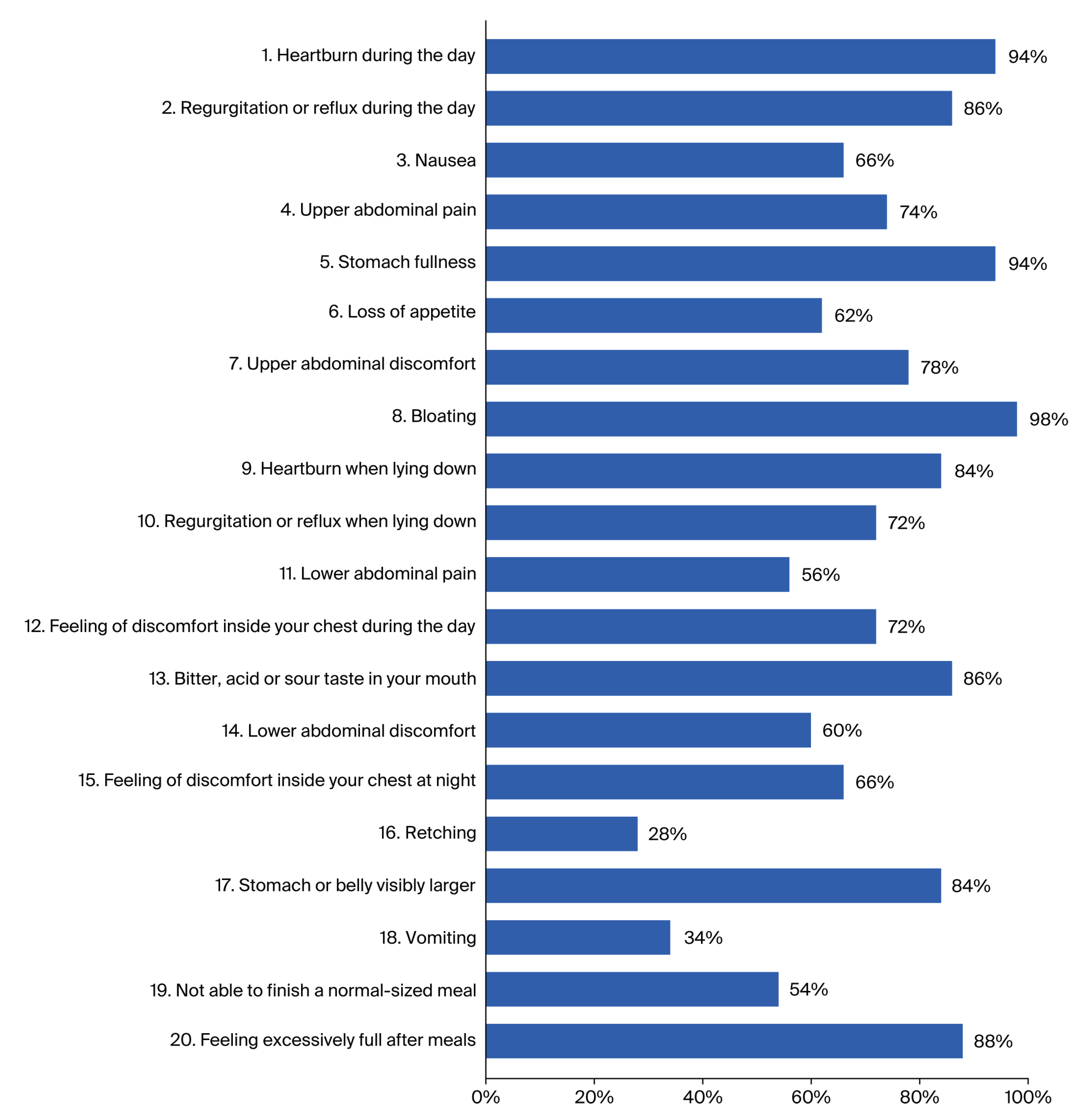
Figure 1. Presence of the 20 symptoms of the PAGI-SYM questionnaire at baseline in the 50 patients admitted to the study.
Preprints 211546 g001
Figure 2. Patients’ satisfaction with the treatment. Data were analyzed by means of the Wilcoxon matched-pairs test.
Preprints 211546 g002
Table 1. Classification of natural mineral waters based on fixed residue at 180°C.
Fixed residue at 180°C Definition
≤50 mg/L Very-low-mineral-content water (or light mineral water)
50–500 mg/L Low-mineral-content water
500–1,500 mg/L Medium-mineral-content water
>1,500 mg/L Rich-mineral-content water
Table 2. Classification by dominant ions.
Ion Concentration
Bicarbonate (HCO3-) >600 mg/L
Sulfate (SO42-) >200 mg/L
Chloride (Cl-) >200 mg/L
Calcium (Ca2+) >150 mg/L
Magnesium (Mg2+) >50 mg/L
Fluoride (F-) >1 mg/L
Ferrous (Fe2+) >1 mg/L
Sodium (Na+) >200 mg/L
Table 3. Main chemical–physical characteristics of tap water from the Bergamo aqueduct (wash-out), bicarbonate mineral water (Aqua 3), and oligomineral water (maintenance).
Bergamo aqueduct
tap water
(wash-out)
Bicarbonate mineral
water
(Aqua 3)
Oligomineral
water
(maintenance)
Fixed residual at 180°C 218.0 mg/L 672.1 mg/L 132.9 mg/L
pH at source 8.0 UpH 6.1 UpH 7.8 UpH
Free C02 at source N/a 821.1 mg/L 3.5 mg/L
Bicarbonates (HCO3-) 222.0 mg/L 781.1 mg/L 134.0 mgL
Sulfates 20.0 mg/L 7.8 mg/L 1.8 mg/L
Potassium 0.80 mg/L 3.89 mg/L 0.73 mg/L
Sodium 6.5mg/L 73.0 mg/L 3.9 mg/L
Calcium 50.0mg/L 158.1 mg/L 35.2 mg/L
Magnesium 14.0 mg/L 34.4 mg/L 5.3 mg/L
Fluorides 0.06 mg/L 0.06 mg/L 0.05 mg/L
Chlorides 3.0 mg/L 6.7 mg/L 1.3 mg/L
Silica N/a N/a 16.4 mg/L
Nitrates (NO3-) 5.0 mg/L <0.06 mg/L 3.9 mg/L
Nitrogens N/a <0.02 mg/L N/a
N/a: not available.
Table 4. Baseline clinical characteristics of the study population (n=50).
Basal
Gender
- Males
- Females

21 (42.0%)
29 (58.0%)
Age (years)
- Mean±SD
- Range

52.8±14.9
28 - 80
Weight (kg)
- Mean±SD
- Range

71.6±12.7
47 - 98
Height (cm)
- Mean±SD
- Range

168±11
149 - 191
BMI (kg/m2)
- Mean±SD
- Range

25.2±3.2
17.9 – 32.4
Weight status classes
Underweight (BMI<18.5 kg/m2)
Normal weight (BMI between 18.5 and <25 kg/m2)
Overweight (BMI between 25 and <30 kg/m2)
Obese (BMI 30 kg/m2 and above)

1 (2.0%)
23 (46.0%)
22 (44.0%)
4 (8.0%)
Use of antacid drugs 3 (6.0%)
Table 5. Results of the PAGI-SYM severity index.
Subscales of PAGI-SYM severity index PAGI-SYM
total score
Heartburn/
regurgitation
Nausea/
vomiting
Postprandial fullness/early satiety Bloating Upper
abdominal pain
Lower
abdominal pain
Basal (T0)
Mean±SD 1.75±0.79 0.77±0.99 1.83±1.05 2.16±1.03 1.36±1.07 0.96±1.03 1.47±0.76
After wash-out (T1)
Mean±SD 1.69±0.75 0.85±0.99 1.77±0.99 1.90±0.87 1.29±1.03 1.07±0.97 1.43±0.71
Effect (Difference vs. T0) -0.06±0.23 0.08±0.24 -0.06±0.31 -0.26±0.39 -0.07±0.31 0.11±0.35 -0.04±0.15
(95% CI) -0.13 to 0.01 0.01 to 0.15 -0.15 to 0.03 -0.37 to -10.14 -0.16 to 0.03 0.01 to 0.22 -0.09 to 0.00
P valuea 0.116 0.026 0.164 <0.001 0.157 0.040 0.084
After bicarbonate mineral water (T2)
Mean±SD 1.00±0.78 0.42±0.66 1.01±0.68 1.07±0.77 0.72±0.70 0.56±0.77 0.80±0.62
Effect (Difference vs. T1) -0.69±0.55 -0.43±0.61 -0.76±0.69 -0.83±0.65 -0.57±0.64 -0.51±0.69 -0.63±0.48
(95% CI) -0.86 to -0.53 -0.61 to -0.25 -0.97 to -0.55 -1.03 to -0.64 -0.76 to -0.37 -0.72 to -0.30 -0.78 to -0.49
P valuea P<0.001 P<0.001 P<0.001 P<0.001 P<0.001 P<0.001 P<0.001
After oligomineral water (T3)
Mean±SD 1.44±0.70 0.79±0.86 1.51±0.73 1.47±0.97 1.24±0.97 0.97±0.89 1.24±0.69
Effect (Difference vs. T2) 0.45±0.50 0.36±0.57 0.50±0.47 0.40±0.81 0.52±0.83 0.41±0.71 0.44±0.50
(95% CI) 0.30 to 0.60 0.19 to 0.53 0.36 to 0.64 0.16 to 0.64 0.27 to 0.77 0.20 to 0.62 0.29 to 0.59
P valuea P<0.001 P<0.001 P<0.001 0.001 P<0.001 P<0.001 P<0.001
Bicarbonate vs. oligomineral water
Difference of the effects -1.14±0.99 -0.79±1.09 -1.26±1.06 -1.23±1.26 -1.09±1.33 -0.92±1.34 -1.07±0.93
(95% CI) -1.44 to -0.84 -1.12 to -0.46 -1.58 to -0.94 -1.61 to -0.85 -1.49 to -0.69 -1.33 to -0.52 -1.35 to -0.79
P valueb P<0.001 P<0.001 P<0.001 P<0.001 P<0.001 P<0.001 P<0.001
a Changes observed vs. the previous visit (Wilcoxon matched-pair test).b Comparison between changes observed after bicarbonate mineral water intake and those observed after oligomineral water intake (Wilcoxon matched-pair test).
Table 6. Use of antacid drugs.
No. of
patients
P vs.
previous
visita
Changes vs. previous visit
Suspension Unchanged New
assumption
Basal (T0) 2 (4.4%) - - - -
After wash-out (T1) 15 (33.3%) <0.001 - 32 (71.1%) 13 (28.9%)
After bicarbonate mineral water (T2) 6 (13.3%) 0.004 9 (20.0%) 36 (80.0%) - b
After oligomineral water (T3) 12 (26.7%) 0.070 1 (2.2%) 37 (82.2%) 7 (15.6%) b
a McNemar test. b Comparison of changes observed during the bicarbonate mineral water period versus the oligomineral water period: P=0.005 (marginal homogeneity test).
Table 7. Patients’ subjective assessment of the efficiency of their digestion (scale 1-10).
Mean±SD Range
After bicarbonate mineral water (T2) 7.2±2.2 a 2-10
After oligomineral water (T3) 4.6±2.0 a 1-9
a Comparison between bicarbonate mineral water and oligomineral water: P<0.001 (Wilcoxon matched-pair test).
Disclaimer/Publisher’s Note: The statements, opinions and data contained in all publications are solely those of the individual author(s) and contributor(s) and not of MDPI and/or the editor(s). MDPI and/or the editor(s) disclaim responsibility for any injury to people or property resulting from any ideas, methods, instructions or products referred to in the content.
Copyright: This open access article is published under a Creative Commons CC BY 4.0 license, which permit the free download, distribution, and reuse, provided that the author and preprint are cited in any reuse.
Prerpints.org logo

Preprints.org is a free preprint server supported by MDPI in Basel, Switzerland.

Subscribe

Disclaimer

Terms of Use

Privacy Policy

Privacy Settings

© 2026 MDPI (Basel, Switzerland) unless otherwise stated