
Submitted:
19 March 2026
Posted:
23 March 2026
You are already at the latest version
Abstract
Consumer demand for sustainable solutions to protect against hair damage is growing, yet quantitative studies linking molecular interactions to mechanical strengthening and structural changes remain limited. Here, we investigated the effectiveness of biotechnologically obtained Saccharomyces Lysate as an active ingredient for hair care. Molecular modeling was used to explore the interactions between peptides in the lysate with keratin and suggested a network of intermolecular interactions at multiple sites of the proteins. Based on these observations, the strength and structural integrity of hair fibers treated with Saccharomyces Lysate were assessed using tensile measurements. We observed an improvement in the strength of hair tresses, with an increased Young’s Modulus compared to hair tresses treated only with water along with a significantly increased break stress. To visualize the hair fibers and their surface roughness after treatment with the lysate, we employed micro-computed tomography (µ-CT) offering high-resolution visualization of hair fibers. We introduce this method to qualitatively highlight the surface appearance following the application of a cosmetic product and complemented it with combing-force measurements. Our results demonstrate the potential of this complex mixture of small peptides to strengthen hair integrity and we propose a hypothesis for its mode of action on the molecular level.
Keywords:
Saccharomyces Lysate
; tensile test
; micro-computed tomography
; hair repair
; hair integrity
; keratin
; peptides
; hair care
1. Introduction
In all hair types, the hair shaft comprises two components that affect hair structure and appearance, the cuticle and cortex. Large and thick hairs also have a third component called the medulla, which is the innermost layer of the hair shaft [1]. The cuticle is the outermost layer, comprising 6–8 layers of flat overlapping cells that each have a layered structure of amorphous proteins and is involved in hair surface formation [2]. The cortex is the major site of keratinization, an essential process which gives the hair shaft its rigidity via the presence of cortical cells rich in keratin filaments. There are two types of keratin fibers in hair: type I, characterized by its acidic amino acid residues, and type II, which features a high proportion of basic amino acid residues. When a type I fiber and a type II fiber are arranged in an -helical conformation, a dimer is formed based on ionic forces, hydrogen bonds, van der Waals interactions, hydrophobic interactions, and disulfide bonds. These dimers coil together in an antiparallel direction to form tetramers called intermediate filaments (IF). They are oriented parallel to the long axis of the hair shaft and are embedded in an amorphous matrix with a high content of sulfur proteins called intermediate filament associated proteins (IFAP) [3,4,5].
The overall behavior of keratin fibers is commonly attributed to the presence of these different molecular interactions. The action of physicochemical agents used during various cosmetic treatments is considered to be the result of an interaction with these forces. Hair damage can affect these interactions, for example by altering the relative balance of disulfide and hydrogen bonds as well as the contribution of hydrophobic interactions changing the perceived hair behavior [6,7,8]. Damaged hair is a primary concern for hair care consumers and can be caused by a combination of physical, chemical, and environmental factors: Physical damage can be caused by the mechanical stresses of frequent brushing, combing, or aggressive styling, which can cause cuticle abrasion and breakage. Heat exposure from the use of hair dryers, straighteners, or curling irons at high temperatures, which weaken keratin and dehydrate hair fibers, is also a cause of physical damage. Chemical treatments such as hair coloring and bleaching are another significant reason for hair damage. These processes break down the hair’s natural pigment and alter the hair structure, making it porous and fragile [9]. Perming and relaxing chemicals also disrupt disulfide bonds in keratin, reducing elasticity and strength, while harsh shampoos strip natural oils, leaving hair dry and prone to breakage [10]. In many countries, these potentially damaging treatments are part of regular hair care routines linked to new beauty trends. Yet at the same time, today’s consumers want hair that feels truly restored – strong, resilient and radiant – for minimal effort [8,11,12].
Recently, several categories of products have emerged claiming to be bond builders. This term can be defined as a ingredient in a formulation that is able to penetrate into the hair to improve or restore its internal structure. Such products typically aim to repair the hair via cross-linking keratin fibers on a molecular level to increase macroscopic tensile strength and smoothen the hair. They are frequently associated with terms such as bond repair or hair repair [13,14,15]. Proteins, peptides, as well as small molecules have been studied as functional ingredients for hair products in this area [11,16,17]. Common metrics to quantify the effectiveness of such products include Young’s Modulus, breaking force as well as combing force measurements [11,16,17]. Fluorescence microscopy was used to demonstrate that these materials can penetrate hair depending on their molecular weight [18]. An analysis of peptide interactions with keratin proteins found differences in the binding affinity based on their chemical nature. The results point to the formation of hydrophobic interactions and disulfide bonds between small peptides and human hair keratins as the main driving forces for the interactions [19]. These investigations have been done on keratin extracted from non-damaged human hair. However, chemical bleaching is a very aggressive procedure for human hair, known to cause irreversible damage to both its internal protein structure and external cuticle layers. The underlying damage results from oxidative degradation of amino acids and disruption of disulfide bonds leading to irreversible oxidized cysteine groups. Several compounds based on amino acids or peptides have been tested for their properties to restore the strength of hair. Their mode of action is explained by re-establishing disulfide bonds with smaller organic acids, amino acids, or peptides [7,20].
Despite frequently used claims of hair bond repair in the cosmetic industry, scientific studies linking molecular interactions to mechanical and structural hair properties remain limited. Our work contributes to closing this gap by examining a complex mixture of peptides in Saccharomyces Lysate using molecular simulations, tensile testing, combing force measurements, and 3D imaging. The results suggest a strengthening effect in bleached hair. In addition, we demonstrate the potential of µ-CT as a visualization tool to support the assessment of hair surface condition in response to cosmetic treatment.
2. Materials and Methods
2.1. Peptide Analysis and Molecular Modeling
To understand the composition of Saccharomyces Lysate, we conducted a detailed peptide analysis with UPLC/HR-MS, Vanquish Horizon, Orbitrap Exploris 240 (Thermo Scientific). The peak identity check by MS was done with Positive ESI in ddMS2 mode (AcquireX with background exclusion).
Molecular modeling comprises computational methods and theoretical techniques such as molecular mechanics, quantum mechanics used to simulate, visualize, and predict the physical structures, properties, and behaviors of molecules [21]. Here, from the peptides identified in the lysate, we selected those containing at least one cysteine residue and showing a quantifiable chromatographic area for analysis on the molecular level. The atomic structure of the keratin heterodimer consisting of K35 and K85 was obtained from the literature [22]. The protein structure was treated with the default settings of the protein preparation module in the Schrödinger Small-Molecule Drug Discovery Suite [23]. The peptide sequences were built as three-dimensional molecular models in extended conformation. The structures were protonated at physiological pH and optimized using the PROPKA algorithm and the OPLS4 force field in LigPrep protocol before they were docked to the complete model of keratin using the Glide SP [24] docking protocol.
2.2. Tensile Testing
Tensile measurements on human hair assess the strength, elasticity, and structural integrity of hair fibers and are one of the most fundamental mechanical tests in hair fiber science. Tensile strength is the maximum force a hair fiber can withstand before breaking. It reflects the integrity of the cortex (the main load-bearing structure), the degree of chemical damage (bleaching, dyeing, perming), and any loss of structural proteins. The higher tensile strength is, the healthier and less damaged hair is while lower tensile strength is a sign of weakened fibers. Human hair behaves like a composite elastic material. Tensile testing produces a stress–strain curve, comprising the elastic region, where hair stretches and returns to original length, the plastic region, where permanent deformation begins, and the break point. Tensile tests are extremely sensitive to chemical modifications. Bleaching, for example, drastically reduces tensile strength and modulus, oxidative dyes cause moderate weakening, and perming/relaxing changes disulfide bond structure. In this way, tensile measurements act as a quantitative damage indicator [25,26,27].
For this test, virgin, brown, European Hair (20cm long, colour 6/0, Mischung 745 from Kerling) was used. The hair was bleached twice with a commercial bleaching product, Wella Blondor Powder/ 9% Welloxon, used in a ratio of 1:2 in accordance with the product description. The mixture was homogeneously applied to dry tresses of hair that had not been washed beforehand. The hair tresses were covered with aluminum foil for 45 minutes and rinsed off afterwards with 39°C tap water until the water was clear. The hair tresses were then kept for 50 minutes in demineralized water to remove all chemicals and stop chemical reactions. Afterwards, the hair tresses were lightly dried with paper towels and left to dry overnight in a climate-controlled room at 20 °C / 60% relative humidity. Bleaching was then carried out for a second time following the same procedure.
Different test solutions were prepared by diluting the test substances in demineralized water at different concentrations. The test solutions were applied directly onto the dried hair tresses at an amount of 0.12 g/g hair. Again, the hair tresses were dried overnight in a climate-controlled room at 20 °C / 60% relative humidity. The following samples were tested: demineralized water (placebo), 1% active ingredient (Aqua, Glycerin, Saccharomyces Lysate, Valine, Threonine, Glutamic Acid, 1,2-Hexanediol, Caprylyl Glycol, Glycine, Disodium Succinate) in aqueous solution, 1% Hydrolyzed Keratin in aqueous solution, and a commercial leave-on hair mask, used as is (Aqua, Alcohol denat., Propylene Glycol, Cetearyl Alcohol, Dicaprylyl Ether, Cetyl Esters, Behentrimonium Chloride, Polysorbate 20, SH-oligopeptide-78, Hydrolysed Wheat Protein, Hydrolysed Wheat Starch, Isopropyl Alcohol, Tocopherol, Phenoxyethanol, Potassium Sorbate, Citric Acid, Fragrance (Parfum), Geraniol, Linalool, Hexyl Cinnamal, Benzyl Alcohol).
Tensile testing was conducted at the “Normec – Schrader Institute” in Germany with 50 hair fibers for each sample. The test was performed at 22 °C and 55% relative humidity. To determine the tensile strength of hair samples, the cross-sectional areas of the 50 single hairs per sample were analyzed. Afterwards these hairs were extended until they broke. To compare the hair samples, the test parameters used were Young’s Modulus of elastic phase and break stress.
2.3. Micro-Computed Tomography Investigation
Micro-computed tomography (µ-CT) is a high-resolution 3D X-ray imaging technique, akin to hospital CT scans but designed for smaller samples with much finer detail. In radiography, X-ray microtomography (high-resolution X-ray tomography) uses X-rays to create cross-sections of a physical object that can be used to recreate a virtual model (3D model) without destroying the original object. The prefix micro is used to indicate that the pixel sizes of the cross-sections are in the micrometer range.
µ-CT operates by transmitting a micro-focused X-ray beam through a specimen and measuring the spatially varying attenuation of the radiation as it exits the material. As the sample is rotated incrementally over 180° or 360°, a series of two-dimensional projection images are acquired, each representing the attenuation pattern from a different angle. These projections contain the integrated X-ray absorption information along the beam paths. After acquisition, the complete set of projections is processed using mathematical reconstruction algorithms, to compute the three-dimensional distribution of X-ray attenuation coefficients. The result is a volumetric dataset composed of voxels whose gray values are proportional to local attenuation, thereby enabling visualization and quantitative analysis of the internal microstructure at micrometer-scale resolution without physically sectioning the material. Unlike scanning electron microscopy (SEM), µ-CT shows not only a small part of one single hair but a full bundle of hair. Although the overall resolution of µ-CT is lower than the one of SEM, it provides an overview of hair condition with a 3D visualization of the full bundle of hair in a single picture [28,29].
For this test, European, bleached hair (Nr. 814010-E-D from Kerling) was used. The hair was bleached with a commercial bleaching product, Wella Blondor Powder/ 9% Welloxon, used in a ratio of 1:2 in accordance with the product description. The mixture was homogeneously applied to dry tresses of hair that had not been washed beforehand. The hair tresses were covered with aluminum foil for 45 minutes and rinsed off afterwards with 39 °C tap water until the water was clear. The hair tresses were then kept for 50 minutes in demineralized water to remove all chemicals and stop chemical reactions. Afterwards, the hair tresses were lightly dried with paper towels and left to dry overnight in a climate-controlled room at 20 °C / 60% relative humidity. Next, the hair tresses were soaked in the aqueous solution of Saccharomyces Lysate (as is) for 15 minutes and were left to dry overnight at 20 °C/60% humidity.
These treated hair fibers were imaged using µ-CT. For this, approximately 100 to 150 hair fibers were selected for each measurement and embedded in resin glue at the outer ends. This was done to prevent any movement of the hair during the scans. The µ-CT system used for this study was a SkyScan 2214 (Bruker, USA), performed at RJL Micro & Analytic GmbH in Germany. The SkyScan 2214 system is equipped with a high-performance nano focus tube with acceleration voltages ranging from 20 to 160 kV and a maximum tube power of 16 W, which produces a cone-shaped X-ray beam that images the samples onto a fully digital detector. The CT system can scan objects with dimensions of up to 400 mm (H) × 300 mm (W), and voxel-resolutions down to 60 nm. For high-resolution scans, the minimum spot size of the source can be reduced to below 500 nm. The following parameters were used during the scans: voltage of 70 kV, current of 150 μA, voxel size of 0.35 μm, rotation of 360° in 0.17° steps, X-ray exposure time of 4950 ms, frame averaging of 3, and scan time of 10 h.
2.4. Combing Force Measurement: Shampoo/tonic Treatment
Combing force measurements on human hair are a standard analytical method in cosmetic science and hair fiber research. They show how much mechanical resistance hair presents when it is combed and provide insights into the condition, surface properties, and manageability of the hair. Because combing-force measurements quantify how easy or difficult it is to comb hair, they are a reflection of damage level, friction, and the performance of hair care treatments. For example, bleaching, styling, or UV radiation can cause the hair surface to become rougher due to more lifted or broken cuticles. Combing force is directly related to friction between hair fibers, with higher forces indicating rougher, higher-friction surfaces and lower forces indicating smoother, more aligned cuticles. In wet hair the adhesion of water molecules to the hair surface leads to more fiber-fiber contact and with that to an increased surface roughness. Wet combing forces are therefore generally higher than dry combing forces, but both values give a strong indication of a formulation’s potential to protect hair. In addition, high combing forces correlate with an increased likelihood of fiber breakage, more split ends, and greater hair loss during grooming. So, the measurements also help predicting damage during real life combing [30,31,32]..
For this test, European, bleached hair (colour 10/0, 20cm from Kerling), 3 tresses per test sample, were used. The hair was bleached with a commercial bleaching product, Wella Blondor Powder/ 9% Welloxon, used in a ratio of 1:2 in accordance with the product description. The mixture was homogeneously applied to dry tresses of hair that had not been washed beforehand. The hair tresses were covered with aluminum foil for 45 minutes and rinsed off afterwards with 39 °C tap water until the water was clear. The hair tresses were then kept for 50 minutes in demineralized water to remove all chemicals and stop chemical reactions. Afterwards, the hair tresses were lightly dried with paper towels and left to dry overnight in a climate-controlled room at 20 °C / 60% relative humidity.
In a second step, the hair tresses were treated with the test materials included in a shampoo formulation and a tonic formulation (Table 1 and Table 2).
The following samples were tested: demineralized water (placebo formulation), a 1% active ingredient solution (Aqua, Glycerin, Saccharomyces Lysate, Valine, Threonine, Glutamic Acid, 1,2-Hexanediol, Caprylyl Glycol, Glycine, Disodium Succinate), and 1% Hydrolyzed Keratin in aqueous solution.
The hair tresses were washed with their respective test shampoos at an amount of 0.12 g shampoo/g hair for 30 seconds with gentle movement between the fingertips. Then, they were rinsed off for 30 seconds with 37 °C tap water. This procedure was repeated once more. Next, the test tonic was applied to the wet hair at an amount of 0.12 g tonic/g hair and the hair tresses were placed in the climate chamber for 4 hours at 40 °C / 60% relative humidity. The full process of treating twice with shampoo and once with tonic was repeated 4 times (4 cycles). After the last treatment with the test tonic, the hair tresses were dried slightly with paper towels and combing force measurements with wet hair were taken immediately. After the combing force measurement with wet hair, the hair tresses were dried in a climate chamber at 20 °C / 60% relative humidity overnight and combing force measurements with dry hair were then taken.
Combing force measurements were taken using an INSTRON 5542 texture analyzer equipped with a pneumatic clamp and the INSTRON Bluehill 2 software. For combing force measurement, a special rack with an 80 mm dust comb with 10 teeth/cm was applied to the machine. The hair swatch was fixed in the pneumatic clamp and pulled through the comb at a velocity of 500 cm/min. The routine was adjusted to 10 measurement cycles. Combing force measurements with Instron were taken in a climate chamber at 20 °C / 60% humidity.
2.5. Statistical Analysis
For wet and dry combing data, linear mixed-effects models were fitted using the lmer function from the lmerTest package [33]. The models included product and measurement cycle as fixed effects and hair tress as a random intercept to account for repeated measurements on the same tresses. For dry combing, tests were performed on two different days, therefore, the test date was also included as a fixed effect.
Estimated marginal means (EMMs) for each product were obtained using the em-means package. Pairwise comparisons between products were performed with Tukey adjustment to control for multiple testing. Model assumptions, including homoscedasticity, normality of residuals, and the distribution of random effects, were assessed using diagnostic plots (residuals versus fitted values, Q–Q plots, and random-effects diagnostics). No violation of the model assumptions was detected. Model-based, 95% confidence intervals were computed for EMMs, and compact letter displays were generated to visualize overlapping and distinct treatment means.
For Young’s Modulus and break stress, products were compared using pairwise Wilcoxon rank-sum (Mann–Whitney U) tests. To account for multiple pairwise comparisons, p-values were adjusted using the Bonferroni correction. This non-parametric approach was selected due to the potentially non-Gaussian distribution of the tensile measurements. All statistical tests were two-sided, and a significance level of 5% was used. All statistical analyses in this work were conducted in R.
3. Results
3.1. Peptide Analysis and Molecular Modeling
Saccharomyces Lysate is an aqueous solution with an overall protein content of 0.8% and a clear to light yellow color. It is obtained biotechnologically from Saccharomyces cerevisiae yeast cultures. Its INCI is Aqua, Glycerin, Caprylyl Glycol, 1,2-Hexanediol, Saccharomyces Lysate, Valine, Threonine, Glutamic acid, Glycine, Disodium Succinate . The natural origin content of the product is 98% according to ISO16128. Peptide analysis was performed with a UPLC/HR-MS system. Characterization and quantification using proteomics revealed 725 different peptides of different chain lengths, all with a molecular weight below 2570 Dalton. The number of peptides per peptide length is given in Table 3.
From the peptides identified in the lysate, 19 peptides containing at least one cysteine residue were selected. The peptides selected for modeling have a molecular weight between 807 and 1315 Dalton and a length between 7 and 12 amino acids. Computational modeling was used to explore the mode of action of these peptides at molecular level. Molecular docking was used to predict their binding orientation to a keratin heterodimer in crystallized form.
In the simulation we identified two major findings. As we had chosen only peptides with a cysteine residue, we expected the docking simulation to predict that these peptides preferably attach to areas of the keratin with free cysteine residues. However, this was not the case and no direct interaction between cysteine residues was observed . On the other hand, the simulations showed three specific hotspots where the peptides could potentially associate with the keratin fibers. The peptides underwent various molecular interactions such as hydrogen bonds, salt bridges, aromatic interactions, and van der Waals contacts (Figure 1a). Together, the predictions suggests the formation of a network of intermolecular interactions (Figure 1b).
3.2. Tensile Test
Two parameters were measured to describe hair strength in our study: Young’s Modulus and break stress. Young’s Modulus (elastic modulus) measures the stiffness of the hair fiber — how much it resists deformation under stress in the elastic region (before permanent deformation). The typical range for human hair is between 2–6 GPa (gigapascals), depending on factors such as moisture, hair type, and treatment. The higher the modulus, the stiffer the hair. Break stress (ultimate tensile strength) also includes break extension and is the maximum stress a hair can withstand before breaking. For healthy human hair, the typical range is between 0.15–0.25 GPa. These endpoints give insight into the health of the cuticle and cortex and the structural damage of the keratin. In our tensile test study, the results for the test substances were compared to untreated bleached hair and to bleached hair treated with demineralized water only (placebo) as shown in Figure 2.
The aqueous solution of 1% Saccharomyces Lysate increased the strength of the hair tresses in the elastic region with a Young’s Modulus 7% higher than for hair tresses treated with water only. Break stress increased significantly, with a 22% higher value compared to the placebo. Notably, the optimized finished market leave-on mask, which was tested as is, showed a much lower impact on break stress. This result shows that a mixture of peptides, such as those in the Saccharomyces Lysate solution, can improve the strength of hair in a statistically significant way.
3.3. µ-CT
The use of µ-CT in this study to visualize hair fibers and differences on the surface following treatments was intended as proof of concept for the method. Figure 3a shows hair that was purchased as standardized bleached hair and in Figure 3b this hair was treated again with commercially available bleaching agents. The images qualitatively highlight that the surface of the additionally bleached hair fibers is damaged in comparison to the initial hair tresses and has rough areas.
Following treatment with Saccharomyces Lysate these hair fibers look noticeably smoother on the surface (Figure 4).
In addition to the above visualization, calculations were carried out on the 3D dataset of the images, to examine potential changes in the hair’s surface roughness upon treatment. To that end, the 3D datasets were loaded into Bruker’s CTAnalyser software and manipulated using the tool’s erosion/dilation algorithm. The erosion step removes pixels/voxels from the edges of selected objects, effectively shrinking each object’s boundary inward. In contrast, dilation adds pixels/voxels to the edges, expanding the objects outward by a layer. In the current case, erosion was used to treat all datasets until a visually smooth surface was derived.
The roughness ratio shown in Table 4 is the ratio between the eroded and original datasets. The data shows that the additional bleaching step increased the surface area/roughness of the hair fibers. After treatment with Saccharomyces Lysate, the increase in surface damage appeared to be reduced by more than 50%. This effect could also be visualized using random cross-sections from the recorded data cubes as shown in Figure 5. The outer surface of the hair fibers of the tress treated with Saccharomyces Lysate is less tattered compared to the bleached hair with no further treatment. The surface smoothing properties of Saccharomyces Lysate are visibly demonstrated when comparing the surface roughness of the various hair fibers to each other.
3.4. Combing Force Measurement
Our results show that after 4 treatments with a shampoo and tonic containing 1% Saccharomyces Lysate, the combing force on wet hair was significantly reduced by 22% compared to the placebo (Figure 6). Additionally, on dry hair, a significant reduction in combing force of 18% was observed. 1% Hydrolysed Keratin also showed a reduction in combing force although the effect slightly less pronounced than that observed for to 1% Saccharomyces Lysate.
4. Discussion
4.1. Mechanical Hair Damage and Compensatory Strengthening Mechanisms
The weight of hair fibers consists of 65–95 % proteins, and up to 32% water depending on the humidity, with the rest accounting for lipids, pigments, and other components. Chemically, therefore, the properties of human hair are dominated by -keratin. It has been demonstrated that the tensile properties of hair are mostly produced by the cortex, not the cuticle [13,34,35]. This is why products that address hair damage including Saccharomyces Lysate mainly target keratin proteins in the cortex [20,36]. In our work, we focused on damage in bleached hair. During the bleaching process the disulfide bonds are split and oxidized by hydrogen peroxide. Because the oxidation of the sulfur groups to cysteic acid is an irreversible process, hair repair products can not restore oxidized disulfide bonds. The bleaching process also changes the overall conditions in the keratin matrix and hydrogen bonds play a greater role in this environment [37,38]. Overall, this means that other modes of action are required to restrengthen the weakened hair fibers.
Wortmann et al. concluded from their DSC investigations that the thermal stability of helical structures, i.e. the denaturation temperature, is controlled by the amount and the cross-linked density of the surrounding non-helical matrix material [39]. Furthermore, in the literature, the models for the mechanics of -keratin fibers mention the contributions of hydrogen bonds, ionic interactions, and disulfide bonds. When looking at the role of the matrix on fiber elasticity, the contributions of various forces mainly relate to Young’s Modulus of the matrix. Although all models mention the three types of interactions as dictating fiber mechanical behavior, there is no direct assay to quantify them [6]. Breakspear et al. reported that when tensile tests were conducted under wet conditions, Young’s Modulus appeared to be dependent entirely on disulfide bonds, but under dry conditions this dependence was less pronounced or other bonds contributed under these conditions. Further, it has been estimated that in keratin fibers there is an approximate ratio of nine hydrogen bonds to one disulfide bond. This ratio means that hydrogen bonds may have a significant effect on the mechanical behavior of hair fibers [6].
4.2. Molecular and Structural Basis of the Observed Effects
Based on the observed improvement in mechanical properties, combing behavior, and macroscopic smoothing, Saccharomyces Lysate appears to have a strengthening and conditioning effect on bleached hair fibers. Because there are many peptides present in the lysate, it is likely that several contribute to the observed benefits.
Several computational models have already been developed to perform molecular simulations either to describe the influence of hydrogen bonds on the interaction between keratin fibers or to predict the binding affinity of peptides [36,40,41]. Modeling enables the study of atomic-level interactions and has been used here to investigate the potential interactions of the peptides present in Saccharomyces Lysate with keratin [21,22]. Penetration of the peptides to the hair cortex is a prerequisite for interactions with keratin. Different techniques have been used to analyze the penetration of actives into hair fibers [18,42]. According to E. Malinauskyte et al. peptides can penetrate the cortex of hair fibers up to a molecular weight of 2570 Dalton. The peptides we analytically characterized in our study fall within the molecular weight range reported to be compatible with penetrating the amorphous matrix of hair fibers [18].
Hence, our proposed molecular hypothesis could explain how a compensatory effect takes place which leads to the measured effects on the hair fiber. Along with the molecular interactions such as hydrogen bonds, ionic and hydrophobic interactions, the displacement of water molecules from the matrix through peptide binding could possibly increase the strength of the hair [13,43]. This is supported by the tensile measurements for the complex peptide mixture of Saccharomyces Lysate in our study. The results of the molecular analysis may also be relevant to the IFAP region, which is not accessible to structural modeling. However, to substantiate the proposed mode of action, future work will be needed to provide analytical evidence of the penetration of peptides from Saccharomyces Lysate into the cortex and the binding events to keratin proteins.
4.3. Surface Smoothing, Functional Performance, and Methodological Implications
For consumers, ease of combing wet and dry hair after washing is an important parameter and they tend to correlate ease of combing with smooth and healthy hair [31]. Although Hydrolysed Keratin was the gold standard for hair repair, it has become less desirable for consumers as it is derived from animals [44,45]. Since Saccharomyces Lysate is produced biotechnologically, it offers an attractive alternative for significantly improving combability in wet and dry conditions as shown in our data, which also gives consumers a tangible feeling of repaired hair [46]. This consumer benefit is largely dependent on the surface properties of hair, especially its smoothness [32], which can be assessed with imaging techniques such as µ-CT offering high-resolution 3D visualization. Previously, the method has been used to produce high resolution 3D images of low curled, medium curled and high curled hair fibers in their natural form [47]. We have applied this technique for the first time, to the best of our knowledge, to visualize hair fibers before and after treatment with a cosmetic active ingredient for hair care. As proof of concept for the method, we used µ-CT to visualize hair fibers and differences in surface roughness. The use of µ-CT was intended as a qualitative method for visualization. Based on the images taken, we determined that the hair fibers appeared notably smoother on the surface after treatment with Saccharomyces Lysate and the calculation of the surface roughness supported the result in accordance with our combing force measurements on bleached hair. Consequently, µ-CT provides non-destructive 3D visualization of the hair and could offer additional options to analyze internal and external hair structures. We were thus able to show that µ-CT is a promising method suitable for testing the performance of new hair care products.
5. Conclusions
Hair damage caused by physical, chemical, and environmental stressors is an ongoing concern for many consumers. In this study we highlight the effectiveness of a biotechnologically derived hydrolysate as an active ingredient for improving hair integrity. By combining molecular modeling with tensile strength tests, combing-force measurements, and µ-CT, we provide a comprehensive assessment linking molecular interactions to macroscopic hair behavior. Tensile measurements presented an improved strength compared to placebo, indicating a compensatory strengthening in chemically damaged hair. Although our simulations support a plausible molecular hypothesis, direct experimental evidence of peptide penetration and binding to the cortex will be required to fully substantiate this mode of action. Qualitative µ-CT imaging revealed a visibly smoother hair surface after treatment and a semi-quantitative analysis supported the reduction of surface roughness that we measured in separate combing measurements. Albeit µ-CT was applied primarily as a proof-of-concept visualization technique, the results highlight its potential as a non-destructive tool for three-dimensional evaluation of hair surface condition in response to hair care products. The combined experimental and computational work presented here contributes to a more mechanistic understanding of peptide-based hair care products and provides a foundation for future studies.
Author Contributions
Conceptualization, C.M.; methodology, C.M., A.F., F.O., S.K., T.D.; formal analysis, C.M., A.F., F.O., S.K.; writing—original draft preparation, C.M., A.F., F.O., S.K.; writing—review and editing, C.M., A.F.; visualization, C.M., A.F., F.O., S.K.; supervision, C.M.; All authors have read and agreed to the published version of the manuscript.
Funding
This research received no external funding.
Data Availability Statement
Data beyond the information within the article are provided under reasonable request to the corresponding author if not under intellectual property rights restrictions.
Conflicts of Interest
Christine Mendrok-Edinger, André Fischer, Francesco Ortelli, and Sven Kreisig were working for dsm-firmenich during their contribution to the manuscript. The authors declare no other competing interests.
References
- James, W.D.; Andrews, G.E.; Berger, T.G.; Elston, D.M. Andrews’ diseases of the skin : clinical dermatology, 10. ed ed.; Saunders, Elsevier: Philadelphia, Pa., 2006. Section: 961 Seiten : zahlreiche Illustrationen, Diagramme.
- Robbins, C. The Chemical and Physical Behavior of Human Hair; 2002. [Google Scholar] [CrossRef]
- Yang, F.C.; Zhang, Y.; Rheinstädter, M.C. The structure of people’s hair. PeerJ 2014, 2, e619. [Google Scholar] [CrossRef]
- Essendoubi, M.; Meunier, M.; Scandolera, A.; Gobinet, C.; Manfait, M.; Lambert, C.; Auriol, D.; Reynaud, R.; Piot, O. Conformation changes in human hair keratin observed using confocal Raman spectroscopy after active ingredient application. International Journal of Cosmetic Science 2019, 41, 203–212. [Google Scholar] [CrossRef]
- Popescu, C.; Höcker, H. Hair—the most sophisticated biological composite material. Chemical Society Reviews 2007, 36, 1282–1291. [Google Scholar] [CrossRef]
- Breakspear, S.; Nöcker, B.; Popescu, C. Chemical bonds and hair behaviour—A review. International Journal of Cosmetic Science 2024, 46, 806–814. [Google Scholar] [CrossRef] [PubMed]
- Camargo Junior, F.B.; Goshiyama, A.M.; Oliveira, G.F.D.; Rossan, M.R.; Princival, C.R.; Katekawa, E.; Magalhães, W.; Zito, R.D.; Kakuda, L.; Maia Campos, P.M. Protective and Restorative Effects of a Bio-Based Crosslinking Complex on Chemically Damaged Hair. Cosmetics 2026, 13, 3. [Google Scholar] [CrossRef]
- Fernandes, C.; Medronho, B.; Alves, L.; Rasteiro, M.G. On Hair Care Physicochemistry: From Structure and Degradation to Novel Biobased Conditioning Agents. Polymers 2023, 15, 608. [Google Scholar] [CrossRef] [PubMed]
- Hessefort, Y.; Holland, B.; Cloud, R. True porosity measurement of hair: A new way to study hair damage mechanisms. Journal of cosmetic science 2008, 59, 303–15. [Google Scholar] [PubMed]
- Alessandrini, A.; Piraccini, B.M. Essential of Hair Care Cosmetics. Cosmetics 2016, 3, 34. [Google Scholar] [CrossRef]
- El Khatib, S.; Hammoudi Halat, D.; Khaled, S.; Malki, A.; Alameddine, B. Novel Compounds for Hair Repair: Chemical Characterization and In Vitro Analysis of Thiol Cross-Linking Agents. Pharmaceuticals 2025, 18, 632. [Google Scholar] [CrossRef]
- Cruz, C.F.; Costa, C.; Gomes, A.C.; Matamá, T.; Cavaco-Paulo, A. Human Hair and the Impact of Cosmetic Procedures: A Review on Cleansing and Shape-Modulating Cosmetics. Cosmetics 2016, 3, 26. [Google Scholar] [CrossRef]
- Yu, Y.; Yang, W.; Wang, B.; Meyers, M.A. Structure and mechanical behavior of human hair. Materials Science and Engineering: C 2017, 73, 152–163. [Google Scholar] [CrossRef] [PubMed]
- Cornwell, P.; Marsh, J. How Bond Builders ‘Repair’ Hair. In Cosmetics & Toiletries; 2023. [Google Scholar]
- Grabenhofer, R.; Labrecque, B.; Marsh, J. Dove and P&G Experts on the Hair Bonding Buzz—Plus 3 Main Types. Cosmetics & Toiletries 2024. [Google Scholar]
- Basit, A.; asghar, F.; Sadaf, S.; Akhtar, M.W. Health improvement of human hair and their reshaping using recombinant keratin K31. Biotechnology Reports 2018, 20, e00288. [Google Scholar] [CrossRef] [PubMed]
- Fan, J.; Wu, L.; Wang, J.; Bian, X.; Chen, C.; Chang, K. Performance and Mechanism of Hydrolyzed Keratin for Hair Photoaging Prevention. Molecules 2025, 30, 1182. [Google Scholar] [CrossRef]
- Malinauskyte, E.; Shrestha, R.; Cornwell, P.A.; Gourion-Arsiquaud, S.; Hindley, M. Penetration of different molecular weight hydrolysed keratins into hair fibres and their effects on the physical properties of textured hair. International Journal of Cosmetic Science 2021, 43, 26–37. [Google Scholar] [CrossRef]
- Cruz, C.F.; Azoia, N.G.; Matamá, T.; Cavaco-Paulo, A. Peptide—protein interactions within human hair keratins. International Journal of Biological Macromolecules 2017, 101, 805–814. [Google Scholar] [CrossRef]
- Bifulco, G.; Rastrelli, F.; Rastrelli, G. Bioactive peptides for hair restructuring and hair plex. PERSONAL CARE MAGAZINE 2023.
- Genheden, S.; Reymer, A.; Saenz-Méndez, P.; Eriksson, L.A. Computational Chemistry and Molecular Modelling Basics. In Computational Tools for Chemical Biology; Martín-Santamaría, S., Ed.; The Royal Society of Chemistry, 2017; p. p. 0. [Google Scholar] [CrossRef]
- Hafner, R.; Wolfgramm, N.; Klein, P.; Urbassek, H.M. Adsorption of Diclofenac and PFBS on a Hair Keratin Dimer. The Journal of Physical Chemistry B 2024, 128, 45–55. [Google Scholar] [CrossRef]
- Schrödinger Maestro Small-Molecule Drug Discovery Suite, 2024.
- Friesner, R.A.; Banks, J.L.; Murphy, R.B.; Halgren, T.A.; Klicic, J.J.; Mainz, D.T.; Repasky, M.P.; Knoll, E.H.; Shelley, M.; Perry, J.K.; et al. Glide: A New Approach for Rapid, Accurate Docking and Scoring. 1. Method and Assessment of Docking Accuracy. Journal of Medicinal Chemistry 2004, 47, 1739–1749. [Google Scholar] [CrossRef]
- Daniels, G.; Nicholson, S.; Grant-Ross, P.; Tamburic, S. An ex vivo comparison of the tensile strengthening properties of protein derivatives on damaged hair. IFSCC Magazine, 2016. [Google Scholar]
- Junior, C.M.; Vieira, M.H.; Cacoci, E.S.; Abelan, U.S.; Sarruf, F.D.; Lima, C.C.; Chin, C.M. Comparative Assessments of New Hair-Straightening Cosmetic Formulations on Wavy Type 2 Hair. Cosmetics 2024, 11, 222. [Google Scholar] [CrossRef]
- Wortmann, F.J.; Quadflieg, J.M.; Wortmann, G. Comparing hair tensile testing in the wet and the dry state: Possibilities and limitations for detecting changes of hair properties due to chemical and physical treatments. International Journal of Cosmetic Science 2022, 44, 421–430. [Google Scholar] [CrossRef]
- Badea, C.T. Chapter 4 - Principles of Micro X-ray Computed Tomography. In Molecular Imaging (Second Edition); Ross, B.D., Gambhir, S.S., Eds.; Academic Press, 2021; pp. 47–64. [Google Scholar] [CrossRef]
- Keklikoglou, K.; Arvanitidis, C.; Chatzigeorgiou, G.; Chatzinikolaou, E.; Karagiannidis, E.; Koletsa, T.; Magoulas, A.; Makris, K.; Mavrothalassitis, G.; Papanagnou, E.D.; et al. Micro-CT for Biological and Biomedical Studies: A Comparison of Imaging Techniques. Journal of Imaging 2021, 7, 172. [Google Scholar] [CrossRef]
- Davies, T.; Wortmann, G.; Wortmann, F.J. Cyclic combing of untreated and bleached human hair: Analysis of the time-dependent breakage of hair through recording the formation of fibre fragments. International Journal of Cosmetic Science 2025, n/a. [Google Scholar] [CrossRef]
- Konno, S.; Asanuma, K.; Nonomura, Y. Tactile sensation and attractiveness of hair bundles in the combing process. Scientific Reports 2025, 15, 24036. [Google Scholar] [CrossRef] [PubMed]
- Song, S.H.; Son, S.K. Hair Detangling Evaluation Method Using Section Detangling Rate. Cosmetics 2025, 12, 82. [Google Scholar] [CrossRef]
- Kuznetsova, A.; Brockhoff, P.; Christensen, R. lmerTest Package: Tests in Linear Mixed Effects Models. Journal of Statistical Software 2017, 82. [Google Scholar] [CrossRef]
- Velasco, M.; Dias, T.; Freitas, A.; Vieira, N.; Pinto, C.; Kaneko, T.; Baby, A. Hair fiber characteristics and methods to evaluate hair physical and mechanical properties. BRAZILIAN JOURNAL OF PHARMACEUTICAL SCIENCES 2009, 45, 153–162. [Google Scholar] [CrossRef]
- Kreplak, L.; Doucet, J.; Briki, F. Unraveling double stranded α-helical coiled coils: An x-ray diffraction study on hard α-keratin fibers. Biopolymers 2001, 58, 526–533. [Google Scholar] [CrossRef]
- Azoia, N.G.; Fernandes, M.M.; Micaêlo, N.M.; Soares, C.M.; Cavaco-Paulo, A. Molecular modeling of hair keratin/peptide complex: Using MM-PBSA calculations to describe experimental binding results. Proteins: Structure, Function, and Bioinformatics 2012, 80, 1409–1417. [Google Scholar] [CrossRef]
- Watanabe, K.; Nagami, K.; Suzuta, K.; Maeda, T.; Ito, L. Cysteic Acid Formation Behaviors in Bleached Hair of Southeast Asian Characterized by Infrared Spectroscopy. Advances in Life Sciences 2015, 5, 85–89. [Google Scholar]
- Gillece, T.; Senak, L.; McMullen, R. Characterization of bleached hair Vibrational spectroscopy, thermal analysis, and determination of equivalent damage factor. Journal of Cosmetic Science 2022, 72, 519. [Google Scholar]
- Wortmann, F.; Sendelbach, G.; Popescu, C. Fundamental DSC investigations of α-keratinous materials as basis for the interpretation of specific effects of chemical, cosmetic treatments on human hair. Journal of cosmetic science 2007, 58, 311–7. [Google Scholar]
- Antunes, E.; Cruz, C.F.; Azoia, N.G.; Cavaco-Paulo, A. Insights on the mechanical behavior of keratin fibrils. International Journal of Biological Macromolecules 2016, 89, 477–483. [Google Scholar] [CrossRef]
- Carvalho, J.; Rita, A.; Rodrigues, O.; Ferreira, T.; Costa, A.; Tinoco, A. Peptide-keratin interactions for enhanced hair properties. Cell Reports Physical Science 2025, 6. [Google Scholar] [CrossRef]
- Lourenço, C.B.; Fava, A.L.M.; dos Santos, E.M.; de Macedo, L.M.; Tundisi, L.L.; Ataide, J.A.; Mazzola, P.G. Brief descriptions of the principles of prominent methods used to study the penetration of materials into human hair and a review of examples of their use. International Journal of Cosmetic Science 2021, 43, 113–122. [Google Scholar] [CrossRef] [PubMed]
- Milczarek, P.; Zielinski, M.; Garcia, M.L. The mechanism and stability of thermal transitions in hair keratin. Colloid and Polymer Science 1992, 270, 1106–1115. [Google Scholar] [CrossRef]
- Cristiano, L.; Guagni, M. Zooceuticals and Cosmetic Ingredients Derived from Animals. Cosmetics 2022, 9, 13. [Google Scholar] [CrossRef]
- Mokrejš, P.; Pavlačková, J.; Janáčová, D.; Huťťa, M. Hydration and Barrier Properties of Emulsions with the Addition of Keratin Hydrolysate. Cosmetics 2018, 5, 64. [Google Scholar] [CrossRef]
- Ajayi, O.; Davies, A.; Amin, S. Impact of Processing Conditions on Rheology, Tribology and Wet Lubrication Performance of a Novel Amino Lipid Hair Conditioner. Cosmetics 2021, 8, 77. [Google Scholar] [CrossRef]
- Berg, C.v.d.; Khumalo, N.P.; Ngoepe, M.N. Quantifying whole human hair scalp fibres of varying curl: A micro-computed tomographic study. Journal of Microscopy 2025, 297, 227–251. [Google Scholar] [CrossRef]
Figure 1.
(a) Decapeptide with the sequence Glu-Val-Thr-Gly-Val-Leu-Lys-Thr-Pro-Cys attached to keratin with hydrogen bonds are shown as yellow dashed lines. (b) Docking poses of all 19 peptides are attached to keratin showing the preferred interaction sites and the resulting network of interactions.
Figure 1.
(a) Decapeptide with the sequence Glu-Val-Thr-Gly-Val-Leu-Lys-Thr-Pro-Cys attached to keratin with hydrogen bonds are shown as yellow dashed lines. (b) Docking poses of all 19 peptides are attached to keratin showing the preferred interaction sites and the resulting network of interactions.
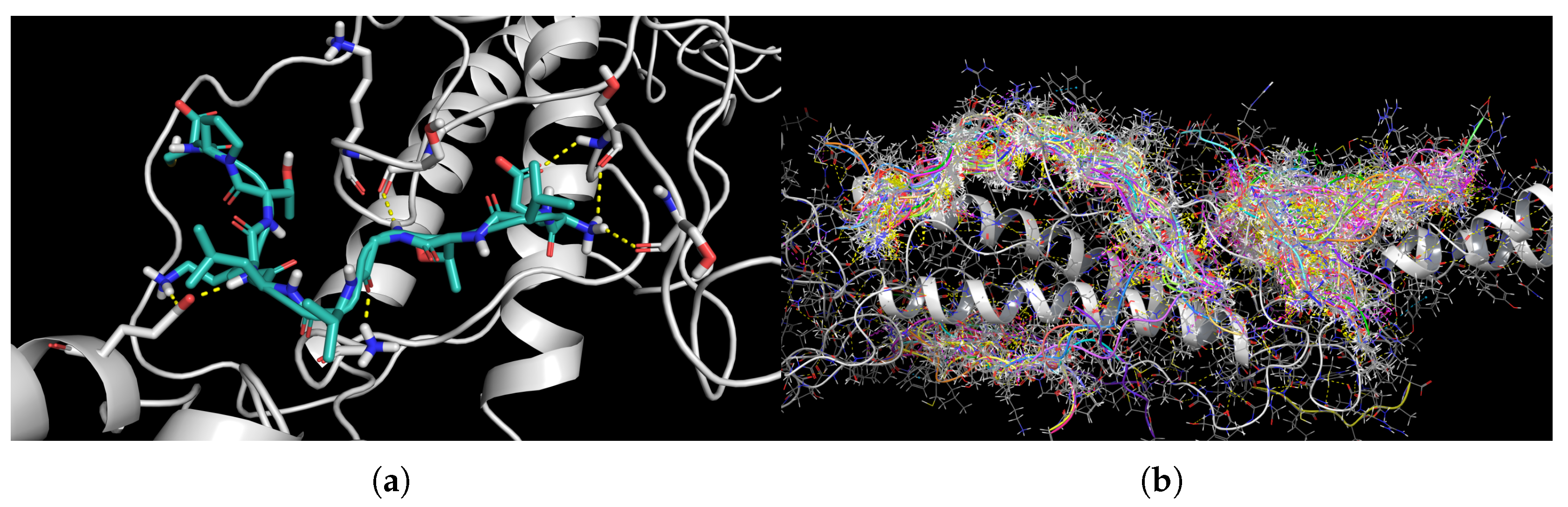
Figure 2.
Tensile test on bleached hair tresses with (a) Young’s Modulus and (b) break stress are shown. Bars show means ± IQR. Letters indicate CLD groupings (groups sharing a letter are not significantly different, alpha = 0.05). Selected pairwise comparisons are shown with brackets: * p < 0.05, ** p < 0.01, *** p < 0.001.
Figure 2.
Tensile test on bleached hair tresses with (a) Young’s Modulus and (b) break stress are shown. Bars show means ± IQR. Letters indicate CLD groupings (groups sharing a letter are not significantly different, alpha = 0.05). Selected pairwise comparisons are shown with brackets: * p < 0.05, ** p < 0.01, *** p < 0.001.
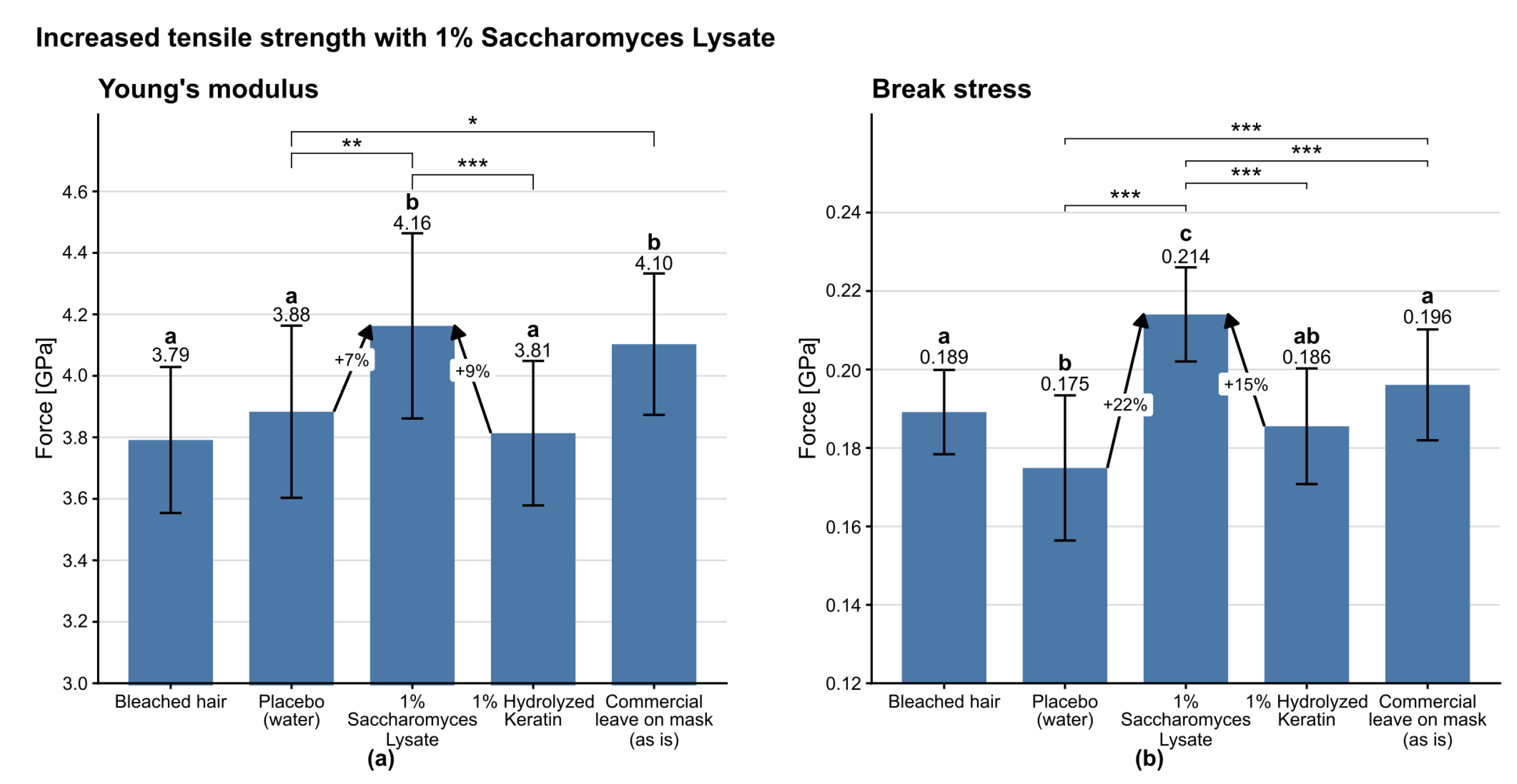
Figure 3.
µ-CT image of European, bleached hair (Nr. 814010-E-D from Kerling) with (a) no further treatment and (b) bleached again once with commercial bleaching product.
Figure 3.
µ-CT image of European, bleached hair (Nr. 814010-E-D from Kerling) with (a) no further treatment and (b) bleached again once with commercial bleaching product.
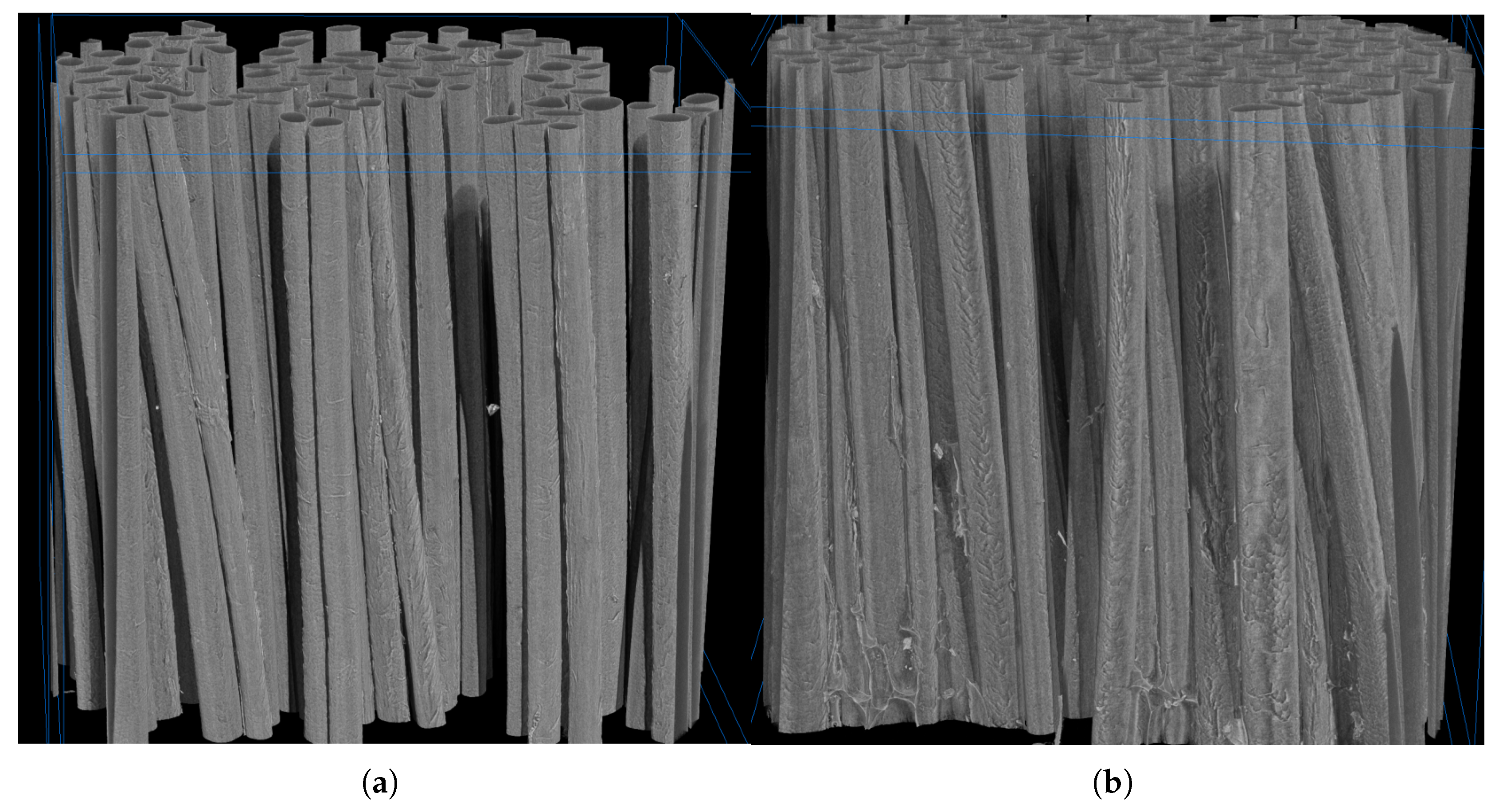
Figure 4.
(a) Front view and (b) diagonal view of µ-CT image of European bleached hair that was bleached again once with a commercial bleaching product and afterwards soaked in aqueous solution of Saccharomyces Lysate (as is) for 15 minutes before leaving to dry overnight at 20 °C/60% humidity.
Figure 4.
(a) Front view and (b) diagonal view of µ-CT image of European bleached hair that was bleached again once with a commercial bleaching product and afterwards soaked in aqueous solution of Saccharomyces Lysate (as is) for 15 minutes before leaving to dry overnight at 20 °C/60% humidity.
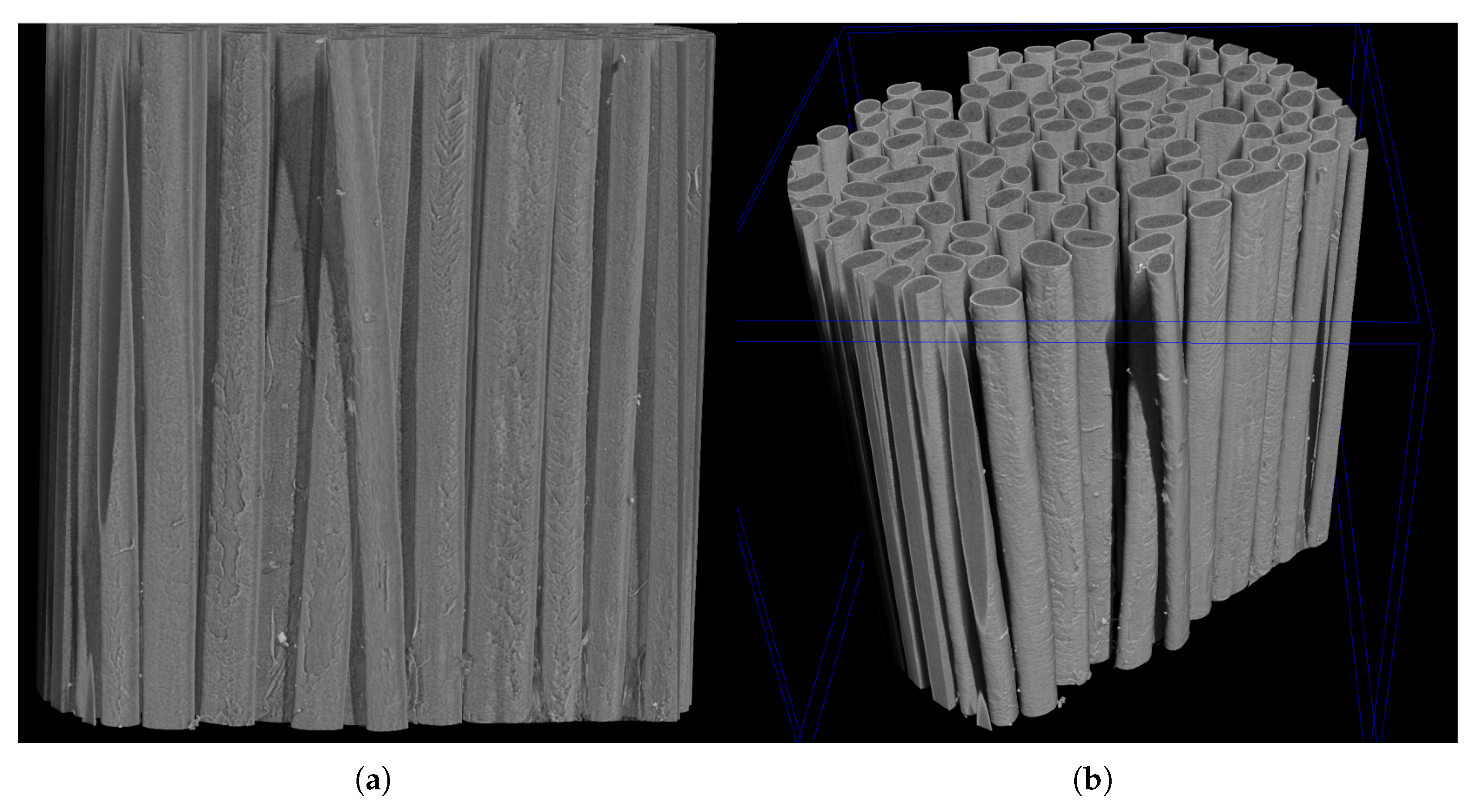
Figure 5.
µ-CT cross-section comparison of European bleached hair that was bleached again once with a commercial bleaching product with (a) no further treatment (b) treated with Saccharomyces Lysate.
Figure 5.
µ-CT cross-section comparison of European bleached hair that was bleached again once with a commercial bleaching product with (a) no further treatment (b) treated with Saccharomyces Lysate.
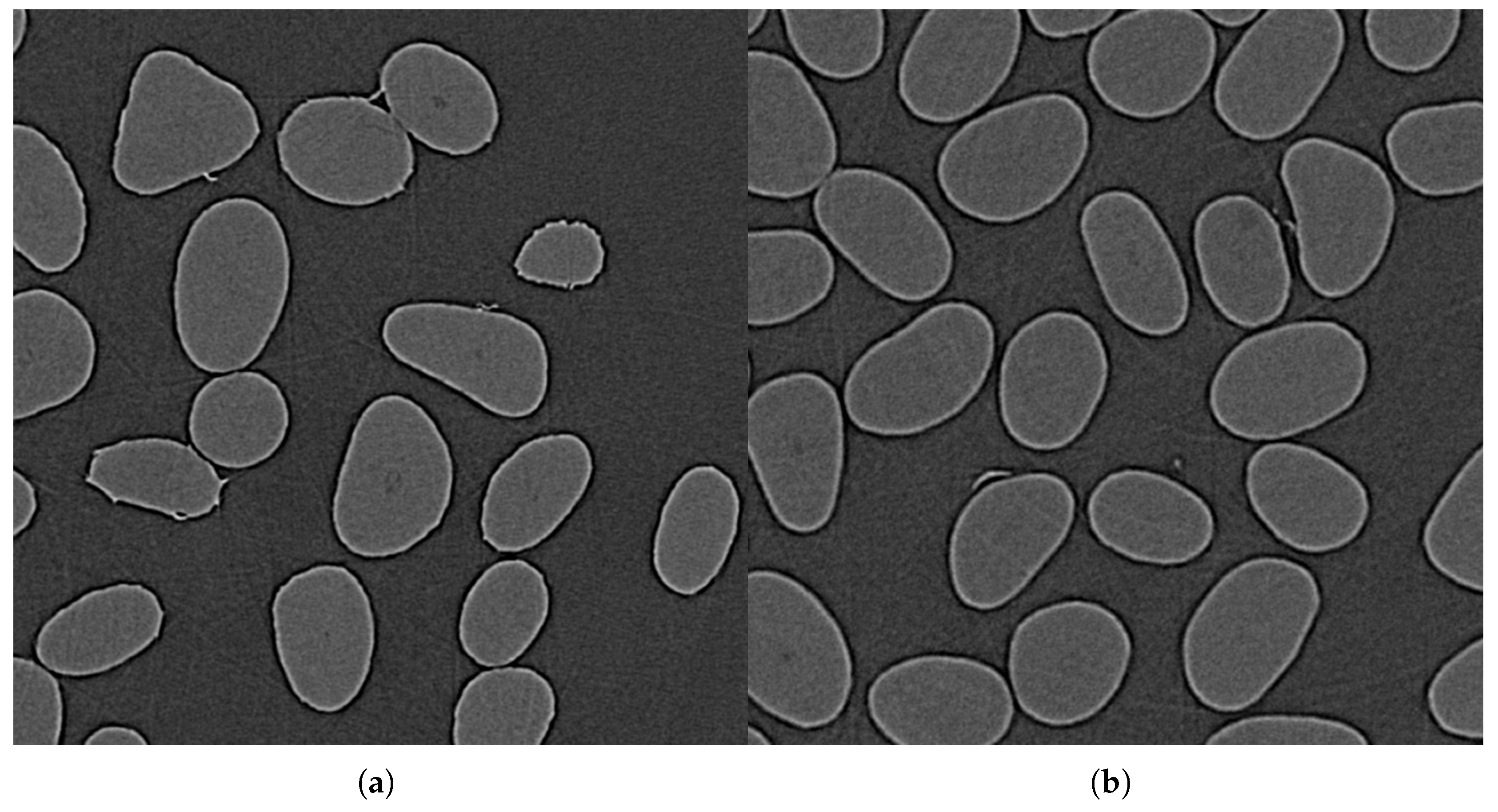
Figure 6.
Results of combing force measurements with (a) wet combing and (b) dry combing. Bars show means and 95% confidence intervals. Letters indicate CLD groupings (groups sharing a letter are not significantly different, alpha = 0.05). Pairwise comparisons are shown with brackets: * p < 0.05, ** p < 0.01, *** p < 0.001.
Figure 6.
Results of combing force measurements with (a) wet combing and (b) dry combing. Bars show means and 95% confidence intervals. Letters indicate CLD groupings (groups sharing a letter are not significantly different, alpha = 0.05). Pairwise comparisons are shown with brackets: * p < 0.05, ** p < 0.01, *** p < 0.001.
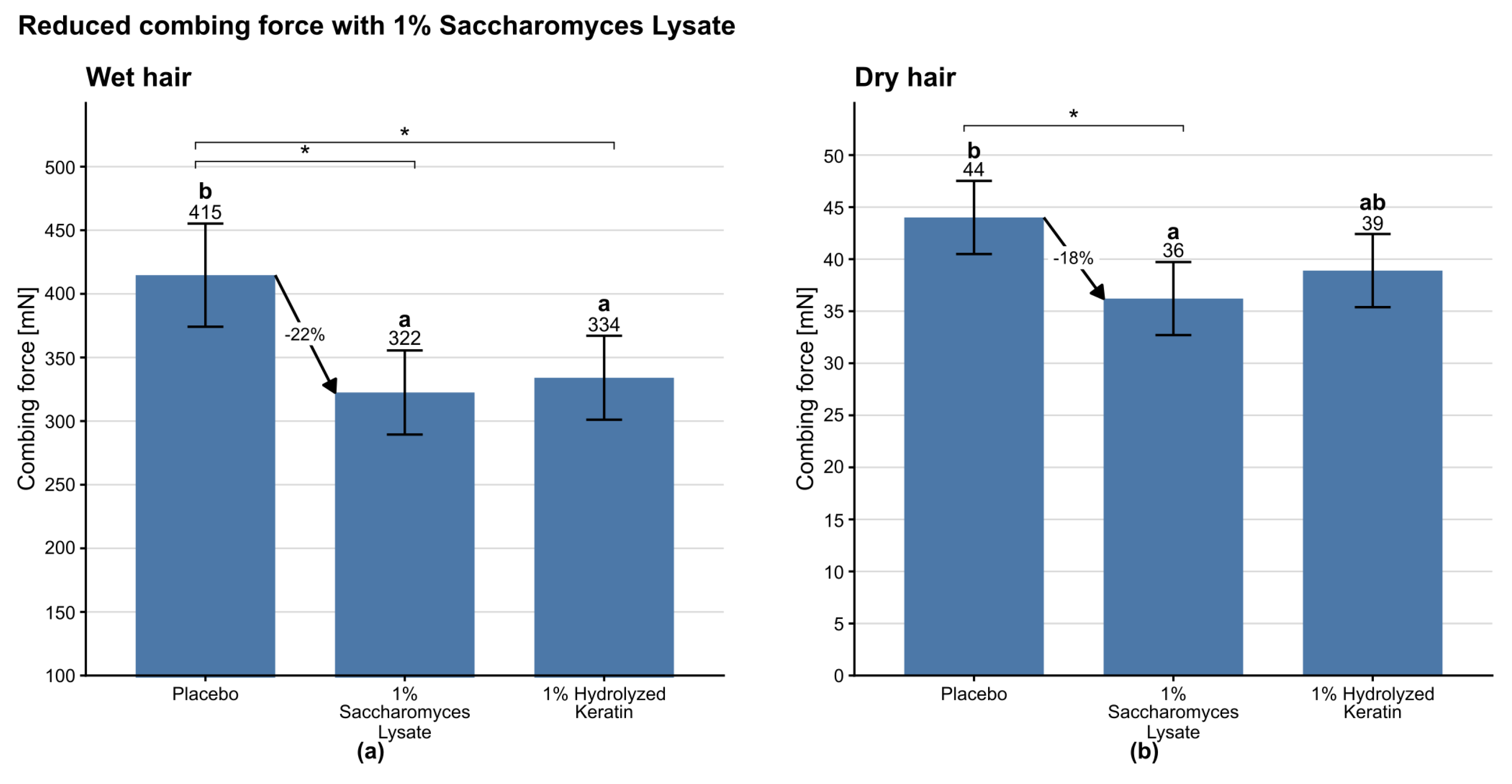

Table 1.
Test shampoo formulations.
| INCI | 1a) weight-% | 1b) weight-% | 1c) weight-% |
|---|---|---|---|
| Aqua | 57.65 | 56.65 | 56.65 |
| Aqua, Polyquaternium-10, Sodium Acetate, Sodium Chloride, Isopropyl Alcohol | 0.10 | 0.10 | 0.10 |
| Aqua, Sodium Laureth Sulfate | 35.00 | 35.00 | 35.00 |
| Aqua, Cocamidopropyl Betaine | 5.00 | 5.00 | 5.00 |
| Sodium Benzoate | 0.50 | 0.50 | 0.50 |
| Lactic Acid, Aqua | 0.25 | 0.25 | 0.25 |
| Sodium Chloride | 1.50 | 1.50 | 1.50 |
| Aqua, Saccharomyces Lysate, Valine, Threonine, Glutamic Acid, Glycine, Glycerin, Disodium Succinate, 1,2-Hexandiol, Caprylyl Glycol | – | 1.00 | – |
| Hydrolyzed Keratin | – | – | 1.00 |
Table 2.
Test tonic formulations.
| INCI | 2a) weight-% | 2b) weight-% | 2c) weight-% |
|---|---|---|---|
| Aqua | 64.85 | 63.85 | 63.85 |
| Pentylene Glycol | 5.00 | 5.00 | 5.00 |
| Polyquaternium-37 | 0.15 | 0.15 | 0.15 |
| Alcohol | 30.0 | 30.0 | 30.0 |
| Aqua, Saccharomyces Lysate, Valine, Threonine, Glutamic Acid, Glycine, Glycerin, Disodium Succinate, 1,2-Hexandiol, Caprylyl Glycol | – | 1.00 | – |
| Hydrolyzed Keratin | – | – | 1.00 |
Table 3.
Number of peptides of different lengths.
| Peptide length | No. of peptides |
|---|---|
| Di-, tripeptides | 76 |
| Tetrapeptides | 88 |
| Penta-, hexapeptides | 156 |
| > Heptapeptides | 405 |
Table 4.
Surface enlargement calculated via µ-CT analysis.
| Tress no. | Treatment | Roughness ratio | Surface enlargement by hair damage |
|---|---|---|---|
| Hair tress 1 | European bleached hair | 0.9900 | 1.00% |
| Hair tress 2 | European bleached hair, 1x bleached | 0.9652 | 3.48% |
| Hair tress 3 | European bleached hair, 1x bleached and treated with Saccharomyces Lysate | 0.9863 | 1.37% |
Values are not intended as statistically validated roughness measurements.
Disclaimer/Publisher’s Note: The statements, opinions and data contained in all publications are solely those of the individual author(s) and contributor(s) and not of MDPI and/or the editor(s). MDPI and/or the editor(s) disclaim responsibility for any injury to people or property resulting from any ideas, methods, instructions or products referred to in the content. |
© 2026 by the authors. Licensee MDPI, Basel, Switzerland. This article is an open access article distributed under the terms and conditions of the Creative Commons Attribution (CC BY) license (http://creativecommons.org/licenses/by/4.0/).
Copyright: This open access article is published under a Creative Commons CC BY 4.0 license, which permit the free download, distribution, and reuse, provided that the author and preprint are cited in any reuse.


