

Submitted:
20 March 2026
Posted:
23 March 2026
You are already at the latest version
Abstract
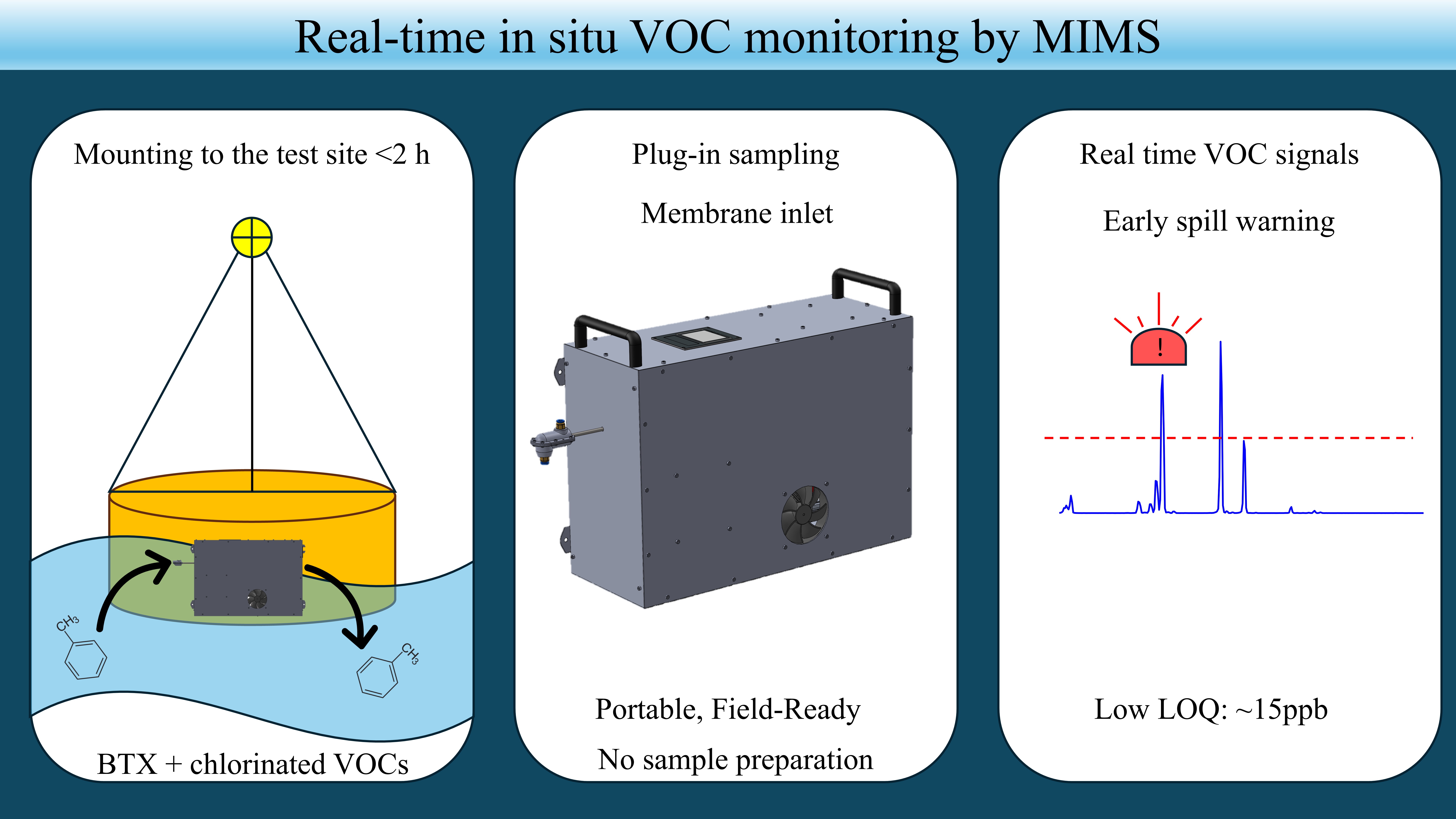
This study addresses the need for rapid, in situ detection of volatile organic compounds associated with oil contamination in aquatic environments. Membrane inlet mass spectrometry (MIMS) offers a direct and continuous monitoring approach without the need for chromatographic separation, making it suitable for real-time environmental analysis. In this work, a portable MIMS system was deployed at multiple pilot sites, including a fixed buoy platform, to evaluate its capability for detecting selected hydrocarbon target compounds under field conditions. Measurements were conducted over extended periods, and mass spectral data were continuously recorded and analyzed. Across all monitoring campaigns, no signals corresponding to the target analytes were observed above the established limits of detection. These findings demonstrate the robustness of the applied MIMS configuration for continuous environmental monitoring and confirm its suitability for detecting trace-level pollutants when present. The results also highlight the importance of field validation under realistic conditions, providing a basis for further optimization and broader application of MIMS in environmental surveillance.
Keywords:
MIMS
; portable mass spectrometry
; hydrocarbons
; VOC’s
; Mediterranean Sea
1. Introduction
The Mediterranean basin is one of the most popular regions of the world with population density among the highest globally. This trend is expected to continue, according to the current projections [1,2]. Its geographical and cultural importance is best described by its own name which derives from Latin meaning “in the middle of the lands” of Europe, Asia and Africa [2]. There is no doubt that this region has historically been, and will remain, of great importance to human societies. A concentrated population generates various socio-economic demands, which, in modern times, translate into intensive trafficking. Given that approximately 80% of global trade and 75% of Europe’s traded goods relies on maritime shipping [2,3]. Such extensive sea trafficking represents a great source of pollution and threats to surrounding marine ecosystems. The highest amount of pollution, approximately 45%, comes from the operational oil discharges, which are followed by physical and chemical leaching and about 8-10% from oil-spill accidents. The operational discharges are continuous and only regulations and proper surveillance system can impact them [4]. However, the later mentioned oil spill accidents are not continuous and depending on the amount of the spillage, these can pose significant harm to surrounding areas. Studies show that 48% of all oil in the sea originates from fuels, while 29% is crude oil [5]. The 2025 report by the European Environment Agency and European Maritime Safety Agency identified the North Sea and Mediterranean Sea as regions at high risk of oil-spills and illegal operational discharges due to intense maritime traffic [3]. Within the Mediterranean basin, major port cities are the most affected, especially those in the eastern part, as this region represents a transit center between Middle East and Russian oil producers and Western European consumers [6]. Therefore, Cyprus, which was selected as the pilot spot for this study is a representative and relevant choice for the oil spill monitoring.
Since the first serious tanker accident, in 1967, in the English Channel when almost 120,000 tons of oil was spilled into the marine environment, the public awareness on such cause of pollution emerged [7]. Hence, high effort is directed toward prevention and early detection of accidents. Currently, there are databases [8,9] about accidental oil spill events that relay information from local authorities, media and remote sensing of satellite images. All these are helpful in locating accidents, but determination of the sources remains a challenge. Additionally, these databases are not unique globally, thus there is a lack in standardization [6]. New monitoring technologies that could provide fast and reliable information on oil-spill events are highly desirable.
Currently, both operational and accidental oil spills are monitored mainly using SAR (spaceborne synthetic aperture radar) and optical sensors such as multispectral and hyperspectral imaging as well as active sensors such as ultraviolet and infrared lasers [4,5,10]. These are mainly suitable for spatial detection and large-scale monitoring. However, they suffer from limitations in differentiating real oil from look-alikes such as natural surface films of biological origin. [4]. There are some attempts to introduce sensors that could provide more precise and accurate oil detection such as UV-induced fluorescence sensors which could distinguish different oil types [10]. However, without direct composition determination, the accuracy of current approaches remains questionable.
Oil-spill events release large quantities of volatile hydrocarbons such as n-alkanes, branched alkanes, cyclic alkanes, alkyl-benzenes and polycyclic aromatic hydrocarbons (PAHs) [11]. Volatile organic compounds (VOCs) rapidly evaporate during the first hours to days following spill accident and represent the dominant early-stage environmental exposure pathway [12]. During one model evaluation [13] demonstrated that within the first 30h upon oil spill accident, evaporation is dominated by hydrocarbons containing fewer than 13 carbon atoms, followed by these with higher number of carbon atoms. This is consistent with reports showing that oil-spill accidents predominantly release mono-aromatic compounds such as benzene, toluene, ethylbenzene and xylenes also known as BTEX as well as light alkanes and cycloalkanes, naphthalene and up to C4-alkylated naphthalenes [14,15,16]. These VOCs not only pose severe harm on marine organisms [17] but also are evaporating into the atmosphere [2,12,13] and can cause harmful effect on both the environment and people. They are known to be carcinogenic, neurotoxic, genotoxic, causing cardiovascular diseases (CVD) and issues with reproductive system amongst others [18,19]. Therefore, BTEXs are excellent choice for early indicators of oil-spill accidents, providing answers to the source of the accident.
Membrane inlet mass spectrometry (MIMS) technique holds a great potential to be used in different areas of volatolomics [14]. This technique is specific due to its very simple principle of sampling as it relies on the process of pervaporation and selective adsorption, diffusion and desorption of VOCs through a membrane [20,21]. This enables a direct sampling of gaseous and liquid matrices without sample preparation [22]. Additionally, it enables both real time/online monitoring of selected ions or a range of ions in range m/z 1-300, and offline analysis. Compared to other analytical approaches commonly used in VOCs analysis—gas chromatography with mass spectrometry (GC-MS), proton-transfer-reaction mass spectrometry (PTR-MS) or selected-ion-flow-tube mass spectrometry SIFT-MS, MIMS provides similar sensitivity which indicates suitability for the measurement of VOCs in water [14]. In oil analysis various GC-MS approaches are used and remain benchmark for comprehensive chemical characterization [11]. However, when analyzing target compounds as indicators of oil presence, MIMS provides similar analytical performance, but within significantly shorter analysis times, continuous monitoring, and does not require laboratory conditions. This provides on-site decision making, which poses great potential for rapid response and mitigation during marine pollution events [14,23]. Moreover, MIMS has already been successfully employed for environmental VOC monitoring in air and water, online detection of hydrocarbons [24], crude oil in water [25], organic compounds in nuclear waste [26] and dissolved gases in the ocean [27]. In the review of Chua et al. (2016) many applications of MIMS in underwater research are presented confirming its robustness for long-term deployment and remote monitoring scenarios [28].
Therefore, this study aimed to develop and validate potential field-deployment of MIMS sensor for continuous in-situ detection of fuel-derived VOCs in marine waters. After laboratory calibration and determination of analytical performance the system was evaluated at three locations in Cyprus (two marinas and an offshore buoy), including a controlled gasoline-spike validation.
2. Results
2.1. Results from the Pilot Locations
Across all three pilot locations, none of the investigated target compounds (BTX and selected chlorinated hydrocarbons) were detected at quantifiable levels. Signal intensities corresponding to characteristic m/z values for each compound remained below the established limits of detection (LOD) throughout the monitoring periods. Representative m/z intensities obtained at Larnaca Marina are shown in Figure 1. As illustrated, no distinct peaks attributable to the target analytes were observed during the monitored interval of 1000 s. These findings indicate the absence of detectable contamination by the investigated compounds under the prevailing environmental conditions and within the sensitivity limits of the current system configuration. The results therefore suggest that no recent fuel-related contamination occurred during the deployment period. Same results were acquired in the St. Raphael marina and the offshore buoy as well. Target compounds were either not present or either below the LOD.
2.2. Field Evaluation of Detection Performance
As no target compounds were detected at the three pilot sites, to verify proper sensor functionality, membrane permeability or some other potential issues, a controlled test was conducted on-site. Without previous cleaning or maintenance of the sensor, membrane or sampling interface, the sensor was placed in a 30 L bucket containing seawater taken from the marina and 10ml of unleaded gasoline was added. Under these controlled conditions, the sensor immediately detected the expected compounds. Clear spikes in signal intensities were observed for benzene, toluene and xylenes. The signal observed at m/z values corresponding to 1,2-dichloroethane is most likely attributable to overlapping mass fragments originating from gasoline components, highlighting the limitations associated with the absence of chromatographic separation. These observations underscore the reduced compound discrimination capability of direct MIMS analysis compared to GC-MS systems incorporating chromatographic resolution. Nevertheless, the pronounced responses recorded for the remaining target compounds confirm correct instrument operation and demonstrate the capability of the system to detect VOCs when present at measurable concentrations. Figure 2 represents the signal profiles recorded during the controlled experiment.
3. Discussion
The absence of measurable BTX and chlorinated solvent concentrations observed in this study is consistent with previously reported background levels of dissolved monoaromatic hydrocarbons in marine environments. Studies conducted in Mediterranean coastal waters and other marine systems indicate that, outside of acute pollution events[29,30], these compounds are typically present at very low concentrations, often at trace or sub-µg L⁻¹ levels [31]. The present findings therefore align with established baseline conditions and suggest that no detectable contamination occurred during the monitoring period. The application of membrane inlet mass spectrometry (MIMS) demonstrated several advantages for environmental monitoring. Its rapid response time and high sensitivity toward dissolved gases and volatile organic compounds enable near real-time detection, which is particularly important for early identification of contamination events involving BTX compounds [21]. Compared to conventional grab sampling followed by laboratory-based GC–MS analysis, MIMS significantly reduces the time between sampling and detection, thereby improving the potential for timely response and mitigation. Furthermore, the suitability of MIMS for continuous, in situ monitoring has been demonstrated in marine environments [32]. Its compact design and minimal sample preparation requirements facilitate deployment on automated platforms such as buoys, flow-through systems, and research vessels. In addition, the reduced influence of high-salinity matrices enhances its applicability in marine and groundwater systems [22]. These characteristics support the integration of MIMS into sensor networks and digital monitoring infrastructures, enabling high-frequency environmental surveillance.
Overall, the results confirm that MIMS is a robust and effective tool for monitoring trace-level contaminants in aquatic environments, with strong potential for application in early-warning systems and environmental risk management.
4. Materials and Methods
4.1. Chemicals and Reagents
Benzene, toluene, xylenes (mixed isomers), 1,2-dichloroethane, and tetrachloroethylene were selected as target volatile organic compounds (VOCs). Analytical-grade standards were obtained from Sigma-Aldrich, Germany. Working standard solutions were prepared by serial dilution with ethanol. Stock solutions of the VOCs in ethanol were then used to spike the water for the final concentrations necessary for the creation of calibration curves. All solutions were prepared in sealed glass vials to minimize volatilization losses and were freshly prepared prior to analysis unless otherwise stated. HPLC grade ethanol was used for dilution. The details of the compounds are presented in Table 1, along with their molecular weights and target ions.
4.2. Instrumentation
Mass spectrometric measurements were performed using a quadrupole mass spectrometer PrismaPro QMG 250 M3 (Pfeiffer Vacuum, Germany). The instrument is equipped with an open ion source, a quadrupole mass analyzer and a Faraday/electron multiplier detector, allowing detection over a mass range of m/z 1–300. Ionization was achieved by electron ionization (EI) at 70 eV. Filament is made of tungsten coated with yttrium-trioxide. The filament current was set to 2,000 µA. Mass spectra were acquired in selected ion monitoring (SIM) mode. The analyzer was operated under high-vacuum conditions maintained by a turbomolecular pump (HiPace 80) backed by a diaphragm pump (MVP 030-3DC), achieving a base pressure of approximately 4x10⁻⁶ Torr during operation, monitored by digital cathode pressure gauge (MPT 200). Regarding auxiliary hardware, a submersible 12V DC bilge pump was used, both during laboratory test and at the pilots in Cyprus. Data acquisition and instrument control were performed using PV MassSpec control software (V.23.06, Pfeiffer Vacuum). Vacuum pumps were acquired from Pfeiffer Vacuum, Germany and the vacuum chamber was custom built by UltraHighVacuum, UK. Operating conditions for the mass spectrometer are 5–50 °C. Mass spectrometer, vacuum system and support components were fitted inside aluminium enclosure. The integrated system is named oil sensor with dimensions of 25 x 45 x 60cm (height x width x length) and weight of 35kg. Figure 3 illustrates the system layout inside the enclosure and fully assembled prototype.
4.3. Membrane Inlet and Sampling Interface
The mass spectrometer was interfaced with a membrane inlet sampling system designed for direct introduction of dissolved VOCs from aqueous samples. The membrane interface consisted of a polydimethylsiloxane (PDMS) membrane mounted within a custom-fabricated stainless-steel housing as well as 3D printed enclosure (Figure 4), fabricated from high-temperature photopolymer resin (Form 3, Formlabs), that enabled sample water circulation around the membrane housing. The membrane acted as a semi-permeable barrier allowing selective diffusion of VOCs into the vacuum system while preventing water entering the vacuum chamber. The effective membrane area was approximately 33 mm² with a thickness of 127 µm. The membrane was supported on a porous disk to ensure mechanical stability under differential pressure conditions. The vacuum side of the membrane was directly connected to the ion source region of the quadrupole mass spectrometer. A continuous sample flow was maintained across the membrane surface using a submersible pump at a controlled flow rate of 2L min⁻¹. Initial lab tests showed highest sensitivity at 2 L min-1, where precise flow control via the voltage regulator was added to the system. The membrane interface was operated at a controlled temperature of 25 °C in lab tests to approximate the temperature of the sea on the test sites to maintain reproducible permeability and signal stability. All the parts were constructed from chemically inert materials (e.g., PTFE hoses and stainless-steel housing) to reduce adsorption effects and cross-contamination. The sampling interface was designed to minimize dead volume and response time during measurements. Sampling at the marina sites was performed at a depth of approximately 20 cm below the water surface using a 4 m sampling hose. In contrast, sampling at the offshore buoy site was conducted at a greater depth due to restricted physical access from the buoy structure to the sea surface.
4.4. Calibration and Analytical Performance Evaluation
Calibration experiments were performed using aqueous standard solutions of benzene, toluene, xylene, 1,2-dichloroethane, and tetrachloroethylene prepared at multiple concentration levels within relevant working ranges. For each analyte, calibration curves were established by plotting the integrated ion signal intensities of selected characteristic m/z values against the corresponding nominal concentrations. Quantification was carried out by extracting compound-specific ions and directly reading concentration from the calibration curve. Linearity was evaluated using linear regression analysis to obtain calibration coefficients and correlation parameters. Limits of detection (LOD) and limits of quantification (LOQ) were determined based on signal-to-noise criteria (S/N = 3 for LOD and S/N = 10 for LOQ), calculated from ten consecutive measurements of the lowest calibration level. All data processing and regression analyses were performed using in-house developed software at the BioSense Institute.
Membrane inlet mass spectrometry (MIMS) has been reported to exhibit linear response for VOCs across environmentally relevant concentration ranges, supporting its applicability for quantitative analysis. Correlation coefficients (R² > 0.99) have been described for aromatic hydrocarbons and related VOCs in previous studies, calibration curves were made using same methodology [33]. In the present study, strong linearity was observed for all investigated compounds, together with low limits of detection and quantification. The obtained analytical performance is consistent with previously reported MIMS-based determinations of dissolved VOCs. Figure 5 represents calibration curves for benzene and toluene, while Figure 6 shows calibration curves for xylenes, 1,2-dichloroethane and tetrachloroethylene.
Calibration curves exhibited linear behavior over the concentration range of 10–250 µg L⁻¹. Similar linear relationships were obtained for all the compounds (Table 2).
4.5. System Performance and Signal Stability
Baseline stability of the system was evaluated in laboratory, under continuous operation using ultrapure water as matrix. The water background signal was characterized by dominant contributions at m/z 18 corresponding to water vapor fragment and it was monitored over a period of 20 minutes (Figure 7a). Stable baseline conditions were observed, with signal fluctuations remaining within ±20% of the mean intensity. No significant spontaneous signal spikes were detected during steady-state operation. Vacuum chamber pressure was monitored over period of 10 hours (Figure 7b). The relative stability of these background ions confirms effective sealing of the membrane interface and stable vacuum conditions.
Membrane equilibration behavior was assessed by monitoring signal response following initial immersion in aqueous samples. A stable signal plateau was typically achieved within approximately 1-5 minutes after immersion. Equilibration time is dependable on the analyte type and concentration which directly influences gas diffusion across the PDMS membrane. After equilibration, signal intensity remained stable under constant flow conditions as can be seen on Figure 8 for the trial of highly volatile benzene.
4.5. Field Deployment—Pilot Experiments
Field validation of the developed system was conducted at two marinas and one offshore buoy along Cyprus’s Mediterranean coast: Larnaca Marina, St. Raphael Marina, and a buoy ~2 km offshore from Limassol. Sites were chosen to cover different levels of oil pollution pressure, including areas influenced by routine vessel activity and areas with greater spill potential, ensuring that the seawater samples represented conditions relevant to the sensor’s application. At each marina location, measurements were performed over a period of approximately 2 h under continuous flow conditions. The offshore buoy deployment was conducted over a 2-day period, duration of acquisition was approximately 2 hours each day in order to evaluate extended operational stability and system performance under open-sea conditions. Sampling was performed by continuous intake of surface seawater directly to the membrane inlet system, maintaining identical instrumental settings as used during laboratory calibration. The sampling strategy aimed to capture spatial and temporal variability in VOC concentrations across semi-enclosed marina environments and open coastal waters. Environmental conditions during the deployments were typical for Cyprus in late September, characterized by relatively stable meteorological conditions and moderate sea temperatures (25-27 °C). Instrument was mounted to the buoy for two consecutive days. Process of sensor installation is represented on Figure 9.
5. Conclusions
In this work, a compact membrane inlet mass spectrometry (MIMS) system was developed and validated for in situ monitoring of volatile organic compounds in marine environments. Laboratory calibration experiments demonstrated linear responses for BTX and selected chlorinated hydrocarbons with high correlation coefficients and limits of detection in the low µg L⁻¹ (ppb-level) range, suitable for early detection of fuel and oil-related contamination. Field deployments at three locations in Cyprus (two marinas and one offshore buoy) confirmed stable operation of the instrument under real marine environmental conditions, with continuous acquisition of background mass spectra and stable baselines. Although no BTX or chlorinated hydrocarbons were observed above the method detection limits during routine monitoring, a controlled gasoline-spike experiment at the St. Raphael Marina site produced clear responses for the target compounds, confirming the system’s capability to detect pollution events when they occur. Unlike gas chromatography-mass spectrometry (GC-MS), the presented MIMS configuration does not incorporate chromatographic separation, which may limit compound discrimination with overlapping mass fragments. However, the absence of a chromatographic column enables rapid response times and continuous in-situ monitoring, representing a deliberate trade-off between selectivity and temporal resolution. Overall, the results indicate that the developed MIMS sensor is a promising tool for real-time surveillance of fuel-derived pollutants in coastal waters and marinas and provides a basis for future work on long-term deployments, enhanced selectivity strategies, and integration into broader marine monitoring networks and regulatory frameworks.
Supplementary Materials
The following supporting information can be downloaded at the website of this paper posted on Preprints.org, Dataset S1–S5: raw instrument data (.dat files) used to generate graphs in Figure 1; Dataset S6–S9: raw instrument data (.dat files) used to generate graphs in Figure 2; Dataset S10-S11: data used to generate calibration curves in Figure 5; Dataset S12–S14: data used to generate calibration curves in Figure 6; Dataset S15–S16: raw data used to generate graphs in Figure 7; Dataset S17: raw data used to generate graph in Figure 8.
Author Contributions
Conceptualization, D.V., B.B.; methodology, D.V., D.I., software, D.V., M.A.; validation, D.V., M.A.; formal analysis, D.V, M.A.; investigation, M.A., D.I.; resources, B.B., L.H.; data curation, D.V., M.A., writing—original draft preparation, D.V.; writing—review and editing, B.B., E.C., and L.H.; visualization, D.V., D.I.; supervision, B.B., project administration, B.B., E.C and L.H.; funding acquisition, B.B., L.H. All authors have read and agreed to the published version of the manuscript.
Funding
This research has been funded by the European Union, under grant agreement: 101112824 (https://doi.org/10.3030/101112824). Views and opinions expressed are, however, those of the authors only and do not necessarily reflect those of the European Union or CINEA Agency. Neither the European Union nor the granting authority can be held responsible for them. Authors Djordje Vujić, Boris Brkić, Milena Aleksić and Daria Ilić also acknowledge the financial support of the Ministry of Education, Science and Technological Development of the Republic of Serbia (grant no: 451-03-33/2026-03/200358).
Institutional Review Board Statement
Not applicable.
Informed Consent Statement
Not applicable.
Data Availability Statement
The original contributions presented in this study are included in the article. Further inquiries can be directed to the corresponding author.
Acknowledgments
The authors acknowledge the Cyprus Marine and Maritime Institute for logistical support during field deployment in Cyprus and Stelios Panagiotou for technical assistance at the test sites. The authors also thank Professor Aleksandra Tubić (University of Novi Sad, Faculty of Sciences) for valuable advice on environmental protection and recent research directions.
Conflicts of Interest
The authors declare no conflicts of interest.
Abbreviations
The following abbreviations are used in this manuscript:
| BTX | Benzene, Toluene, Xylene |
| CVD | Cardiovascular disease |
| EI | Electron ionization |
| GC-MS | Gass chromatography—mass spectrometry |
| HPLC | High performance liquid chromatography |
| LOD | Limit of detection |
| LOQ | Limit of quantification |
| MIMS | Membrane Inlet Mass Spectrometry |
| PDMS | Polydimethylsiloxane |
| PTR-MS | Proton-transfer-reaction mass spectrometry |
| PTFE | Polytetrafluoroethylene |
| SIM | Selected ion monitoring |
| S/N | Signal-to-noise |
| VOC | Volatile organic compounds |
References
- Mediterranean Region. In Climate Change 2022—Impacts, Adaptation and Vulnerability: Working Group II Contribution to the Sixth Assessment Report of the Intergovernmental Panel on Climate Change; Intergovernmental Panel on Climate Change (IPCC), Ed.; Cambridge University Press: Cambridge, 2023; pp. 2233–2272 ISBN 978-1-009-32583-7.
- Toscano, D. The Impact of Shipping on Air Quality in the Port Cities of the Mediterranean Area: A Review. Atmosphere 2023, 14, 1180. [Google Scholar] [CrossRef]
- European Environment Agency. European Maritime Safety Agency European Maritime Transport Environmental Report 2025; Publications Office of the European Union: Luxembourg, 2025. [Google Scholar]
- Xie, M.; Li, Y.; Zhang, Z.; Fu, Q.; Jiang, H. Remote Sensing of the Oil Spills Caused by Ships: A Review. Marine Pollution Bulletin 2025, 214, 117754. [Google Scholar] [CrossRef]
- Jha, M.N.; Levy, J.; Gao, Y. Advances in Remote Sensing for Oil Spill Disaster Management: State-of-the-Art Sensors Technology for Oil Spill Surveillance. Sensors 2008, 8, 236–255. [Google Scholar] [CrossRef]
- Polinov, S.; Bookman, R.; Levin, N. Spatial and Temporal Assessment of Oil Spills in the Mediterranean Sea. Marine Pollution Bulletin 2021, 167, 112338. [Google Scholar] [CrossRef]
- Boviatsis, M.; Alexopoulos, A.B.; Vlachos, G.P. Evaluation of the Response to Emerging Environmental Threats, Focusing on Carbon Dioxide (CO2), Volatile Organic Compounds (VOCs), and Scrubber Wash Water (SOx). Euro-Mediterranean Journal for Environmental Integration 2022, 7, 391–398. [Google Scholar] [CrossRef]
- Databases & Data Centre—EMSA—European Maritime Safety Agency. Available online: https://www.emsa.europa.eu/we-do/digitalisation/465-databases.html (accessed on 26 February 2026).
- Oil Tanker Spill Statistics 2025—ITOPF. Available online: https://www.itopf.org/knowledge-resources/data-statistics/oil-tanker-spill-statistics-2025/ (accessed on 26 February 2026).
- Hou, Y.; Li, Y.; Liu, B.; Liu, Y.; Wang, T. Design and Implementation of a Coastal-Mounted Sensor for Oil Film Detection on Seawater. Sensors 2017, 18, 70. [Google Scholar] [CrossRef]
- Worton, D.R.; Zhang, H.; Isaacman-VanWertz, G.; Chan, A.W.H.; Wilson, K.R.; Goldstein, A.H. Comprehensive Chemical Characterization of Hydrocarbons in NIST Standard Reference Material 2779 Gulf of Mexico Crude Oil. Environ. Sci. Technol. 2015, 49, 13130–13138. [Google Scholar] [CrossRef] [PubMed]
- Gros, J.; Nabi, D.; Würz, B.; Wick, L.Y.; Brussaard, C.P.D.; Huisman, J.; Van Der Meer, J.R.; Reddy, C.M.; Arey, J.S. First Day of an Oil Spill on the Open Sea: Early Mass Transfers of Hydrocarbons to Air and Water. Environ. Sci. Technol. 2014, 48, 9400–9411. [Google Scholar] [CrossRef]
- Drozd, G.T.; Worton, D.R.; Aeppli, C.; Reddy, C.M.; Zhang, H.; Variano, E.; Goldstein, A.H. Modeling Comprehensive Chemical Composition of Weathered Oil Following a Marine Spill to Predict Ozone and Potential Secondary Aerosol Formation and Constrain Transport Pathways. Journal of Geophysical Research: Oceans 2015, 120, 7300–7315. [Google Scholar] [CrossRef]
- Giannoukos, S.; Agapiou, A.; Brkić, B.; Taylor, S. Volatolomics: A Broad Area of Experimentation. Journal of Chromatography B 2019, 1105, 136–147. [Google Scholar] [CrossRef]
- Li, X.D. and Y. Sources and Fates of BTEX in the General Environment and Its Distribution in Coastal Cities of China. Journal of Environmental Science and Public Health, 2017; 1, pp. 86–106. [CrossRef]
- Shukla, D.; Czech, H.; Kokkola, T.; Bauer, M.; Paul, A.; Etzien, U.; Ihalainen, M.; Fang, Z.; Hartikainen, A.; Gawlitta, N.; et al. Emission Speciation of Volatile and Intermediate Volatility Organic Compounds from a Marine Engine: Effect of Engine Load, Fuel Type and Photochemical Aging. Environmental Science: Atmospheres 2025, 5, 973–986. [Google Scholar] [CrossRef]
- Yuewen, D.; Adzigbli, L. Assessing the Impact of Oil Spills on Marine Organisms. J Oceanogr Mar Res 2018, 6, 179. [Google Scholar] [CrossRef]
- Acharya, S.M.; Chakraborty, R.; Tringe, S.G. Emerging Trends in Biological Treatment of Wastewater From Unconventional Oil and Gas Extraction. Front. Microbiol. 2020, 11, 569019. [Google Scholar] [CrossRef] [PubMed]
- Patel, O.P.; Edwards, J.K.; Kucharska-Newton, A.M.; Whitsel, E.A.; Christenbury, K.; Jackson, W.B.; Lawrence, K.G.; Stewart, P.A.; Stenzel, M.R.; Sandler, D.P.; et al. Association of Oil Spill-Related Volatile Organic Compound Exposure with CVD-Related Biomarkers in the Gulf Long-Term Follow-up Study. Ann Work Expo Health 2026, 70, wxaf091. [Google Scholar] [CrossRef]
- Davey, N.G.; Krogh, E.T.; Gill, C.G. Membrane-Introduction Mass Spectrometry (MIMS). TrAC Trends in Analytical Chemistry 2011, 30, 1477–1485. [Google Scholar] [CrossRef]
- Johnson, R.C.; Cooks, R.G.; Allen, T.M.; Cisper, M.E.; Hemberger, P.H. Membrane Introduction Mass Spectrometry: Trends and Applications. Mass Spectrom. Rev. 2000, 19, 1–37. [Google Scholar] [CrossRef]
- Ketola, R.A.; Kotiaho, T.; Cisper, M.E.; Allen, T.M. Environmental Applications of Membrane Introduction Mass Spectrometry. Journal of Mass Spectrometry 2002, 37, 457–476. [Google Scholar] [CrossRef]
- Jakšić, M.; Simeon, A.; Vujić, D.; Giannoukos, S.; Brkić, B. Membrane Inlet Mass Spectrometry Method for Food Intake Impact Assessment on Specific Volatile Organic Compounds in Exhaled Breath. Analytical and Bioanalytical Chemistry 2022, 414, 1–15. [Google Scholar] [CrossRef] [PubMed]
- Giannoukos, S.; Brkić, B.; Taylor, S. Analysis of Chlorinated Hydrocarbons in Gas Phase Using a Portable Membrane Inlet Mass Spectrometer. Anal. Methods 2016, 8, 6607–6615. [Google Scholar] [CrossRef]
- Brkić, B.; France, N.; Taylor, S. Oil-in-Water Monitoring Using Membrane Inlet Mass Spectrometry. Anal. Chem. 2011, 83, 6230–6236. [Google Scholar] [CrossRef] [PubMed]
- Brkić, B.; Giannoukos, S.; Taylor, S.; Lee, D.F. Mobile Mass Spectrometry for Water Quality Monitoring of Organic Species Present in Nuclear Waste Ponds. Anal. Methods 2018, 10, 5827–5833. [Google Scholar] [CrossRef]
- Tortell, P.D. Dissolved Gas Measurements in Oceanic Waters Made by Membrane Inlet Mass Spectrometry. Limnology and Oceanography: Methods 2005, 3, 24–37. [Google Scholar] [CrossRef]
- Chua, E.J.; Savidge, W.; Short, R.T.; Cardenas-Valencia, A.M.; Fulweiler, R.W. A Review of the Emerging Field of Underwater Mass Spectrometry. Front. Mar. Sci. 2016, 3. [Google Scholar] [CrossRef]
- Astrahan, P. Monocyclic Aromatic Hydrocarbons (Phthalates and BTEX) and Aliphatic Components in the SE Mediterranean Costal Sea-Surface Microlayer (SML): Origins and Phase Distribution Analysis. Marine Chemistry 2018, 205, 56–69. [Google Scholar] [CrossRef]
- Rocco, M.; Dunne, E.; Peltola, M.; Barr, N.; Williams, J.; Colomb, A.; Safi, K.; Saint-Macary, A.; Marriner, A.; Deppeler, S.; et al. Oceanic Phytoplankton Are a Potentially Important Source of Benzenoids to the Remote Marine Atmosphere. Commun Earth Environ 2021, 2, 175. [Google Scholar] [CrossRef]
- Chary, N.S.; Fernandez-Alba, A.R. Determination of Volatile Organic Compounds in Drinking and Environmental Waters. TrAC Trends in Analytical Chemistry 2012, 32, 60–75. [Google Scholar] [CrossRef]
- Camilli, R.; Duryea, A.N. Characterizing Spatial and Temporal Variability of Dissolved Gases in Aquatic Environments with in Situ Mass Spectrometry. Environ. Sci. Technol. 2009, 43, 5014–5021. [Google Scholar] [CrossRef] [PubMed]
- Kartalovic, B.; Vujić, D.; Ilić, D.; Brkić, B. Development and Validation of Portable Membrane Inlet Mass Spectrometry Method for Measurements of Monoaromatic Hydrocarbons from the River Canal. Analytical Methods 2024, 16. [Google Scholar] [CrossRef]
Figure 1.
Test results from Larnaca Marina.
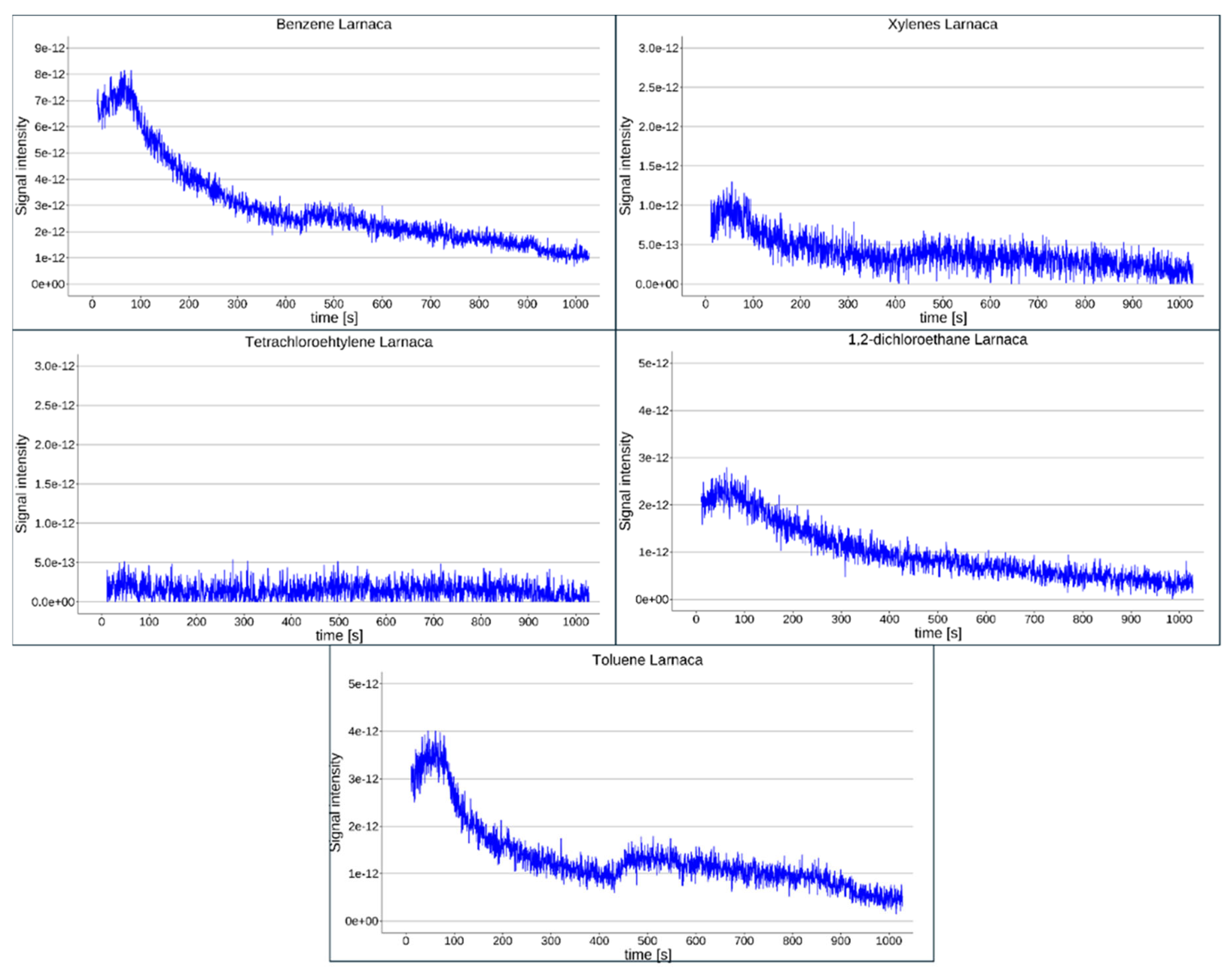
Figure 2.
Signal for target compounds during the controlled experiment.
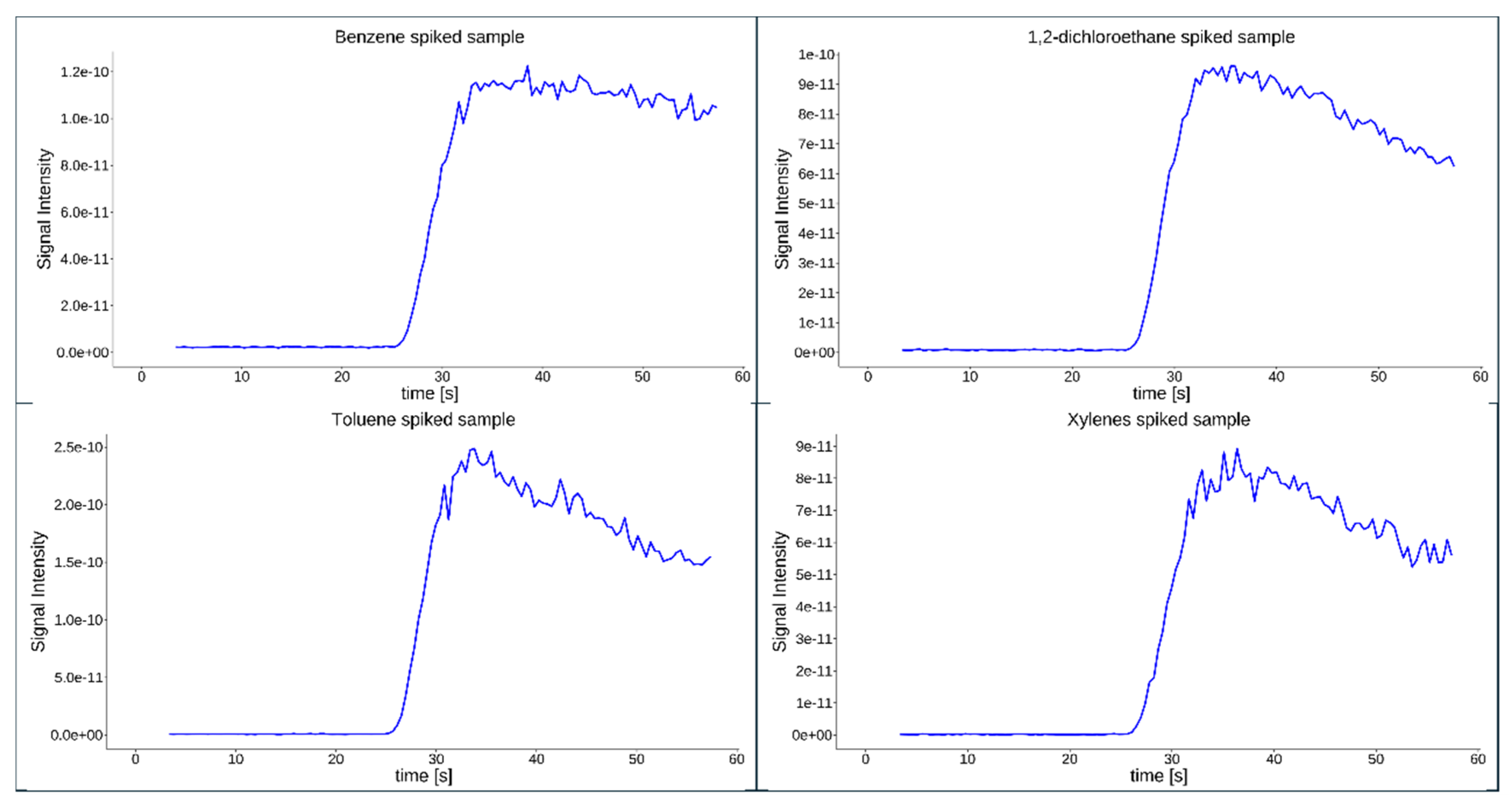
Figure 3.
Schematic diagram (a). Fully assembled prototype of the oil system (b).
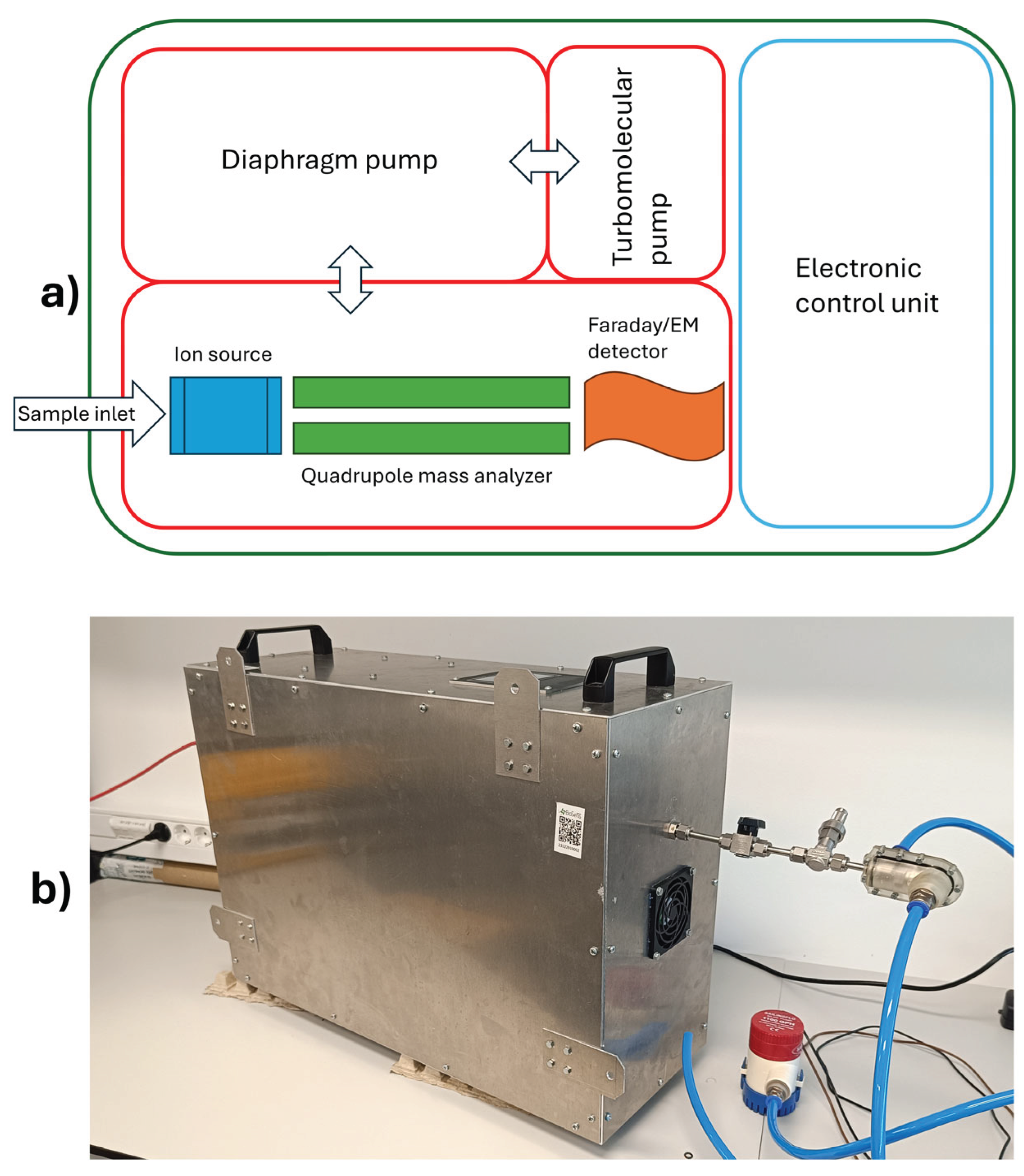
Figure 4.
Sampling interface cross-section (a). Photograph of the sampling interface (b).
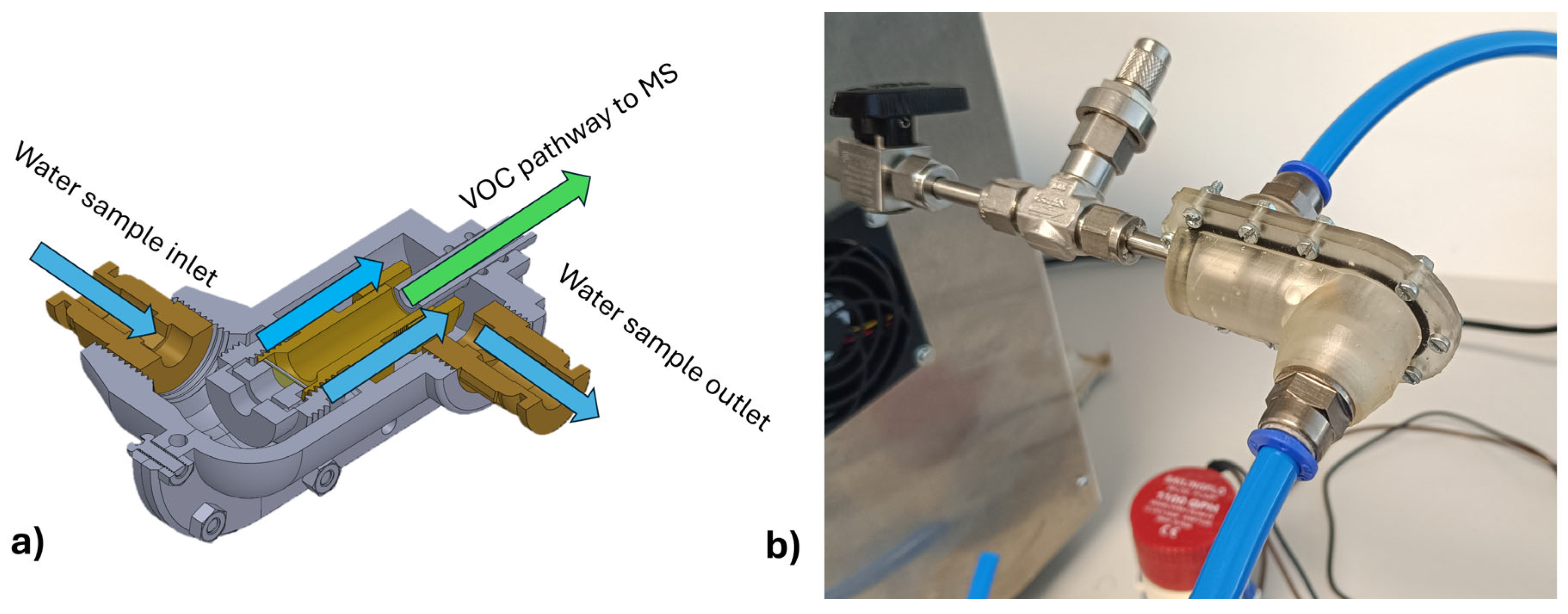
Figure 5.
Calibration curves of benzene and toluene.
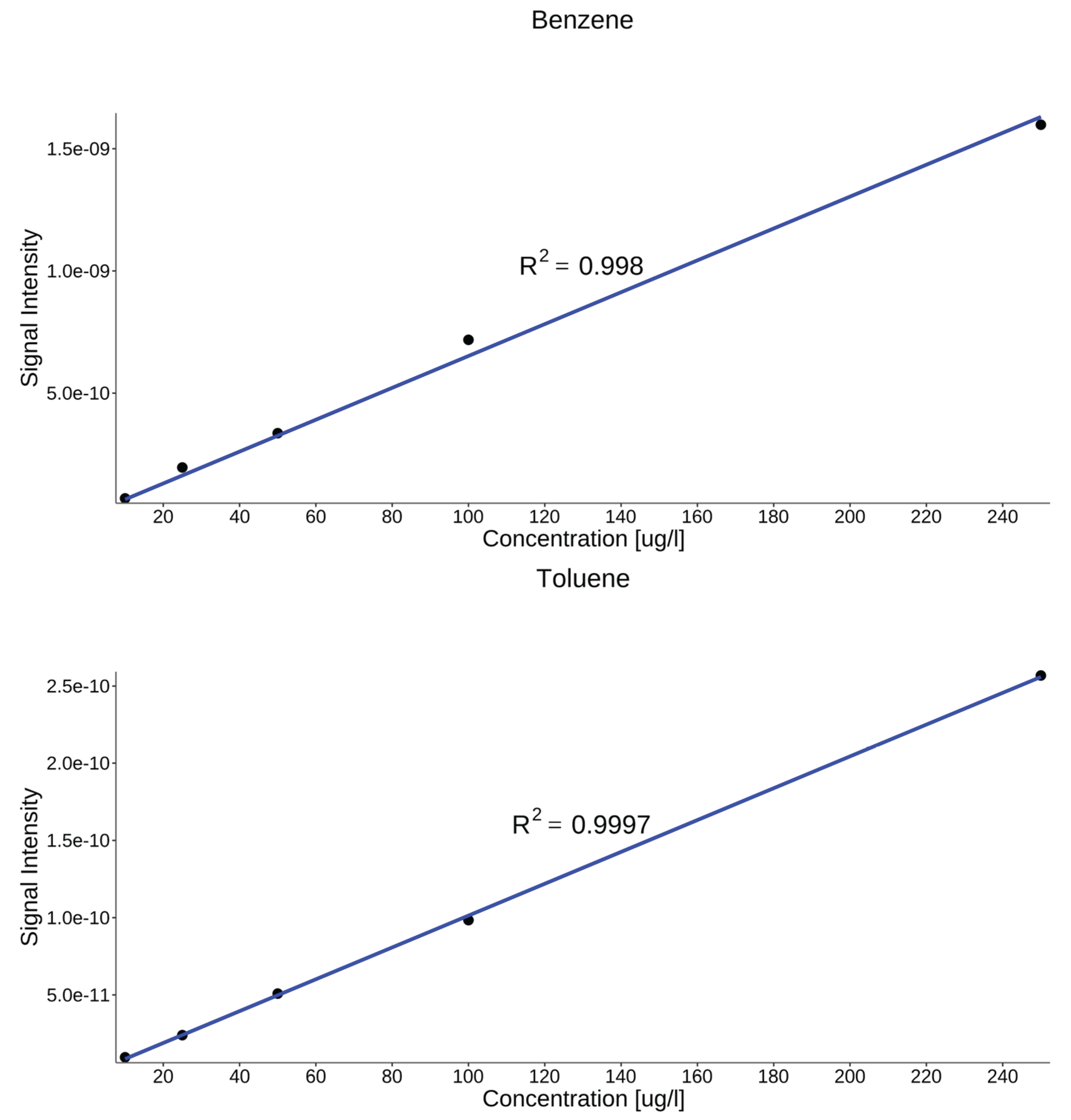
Figure 6.
Calibration curves of 1,2-dichloroethane, tetrachlorethylene and xylenes.
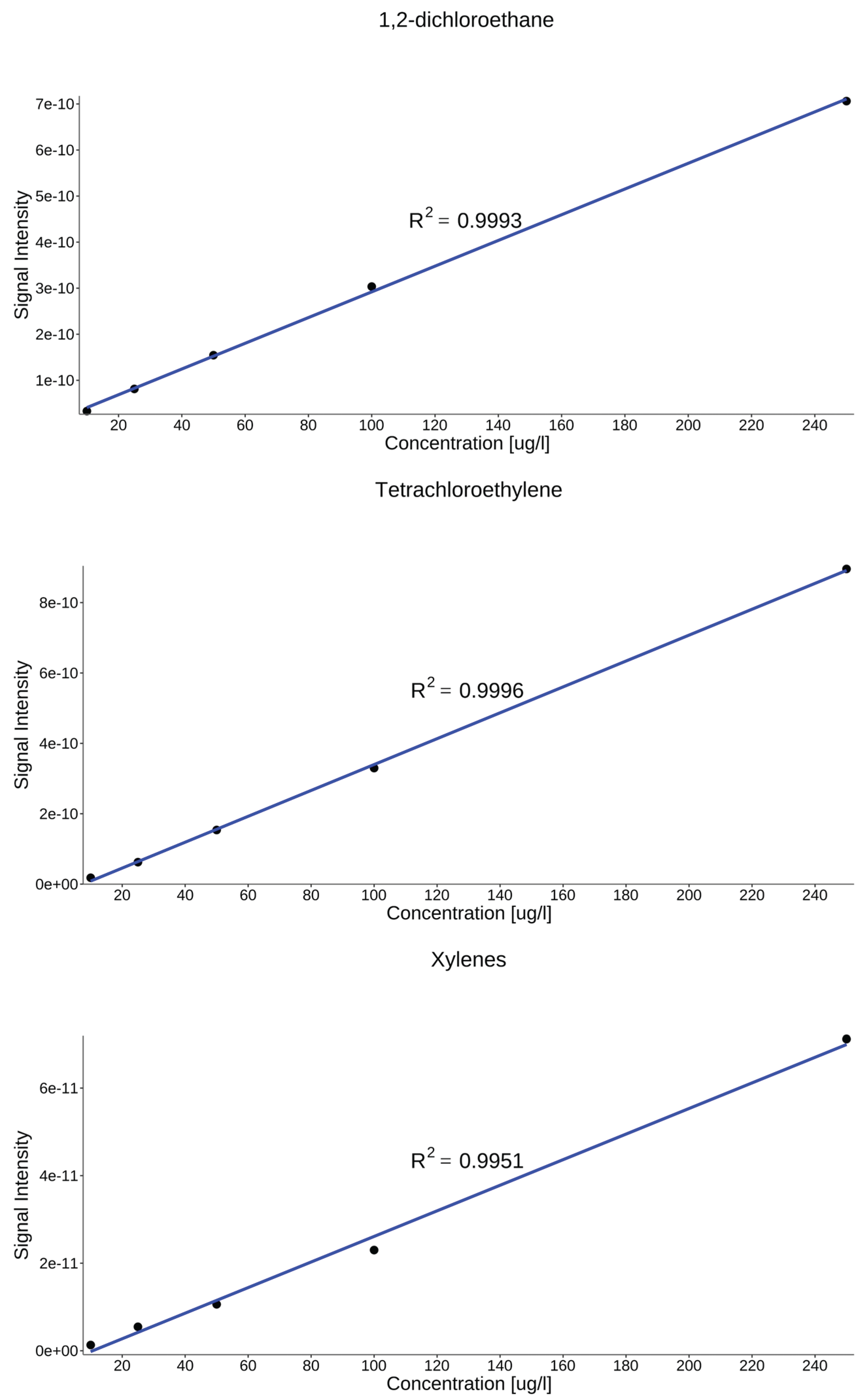
Figure 7.
Water (a) and vacuum (b) stability tests.
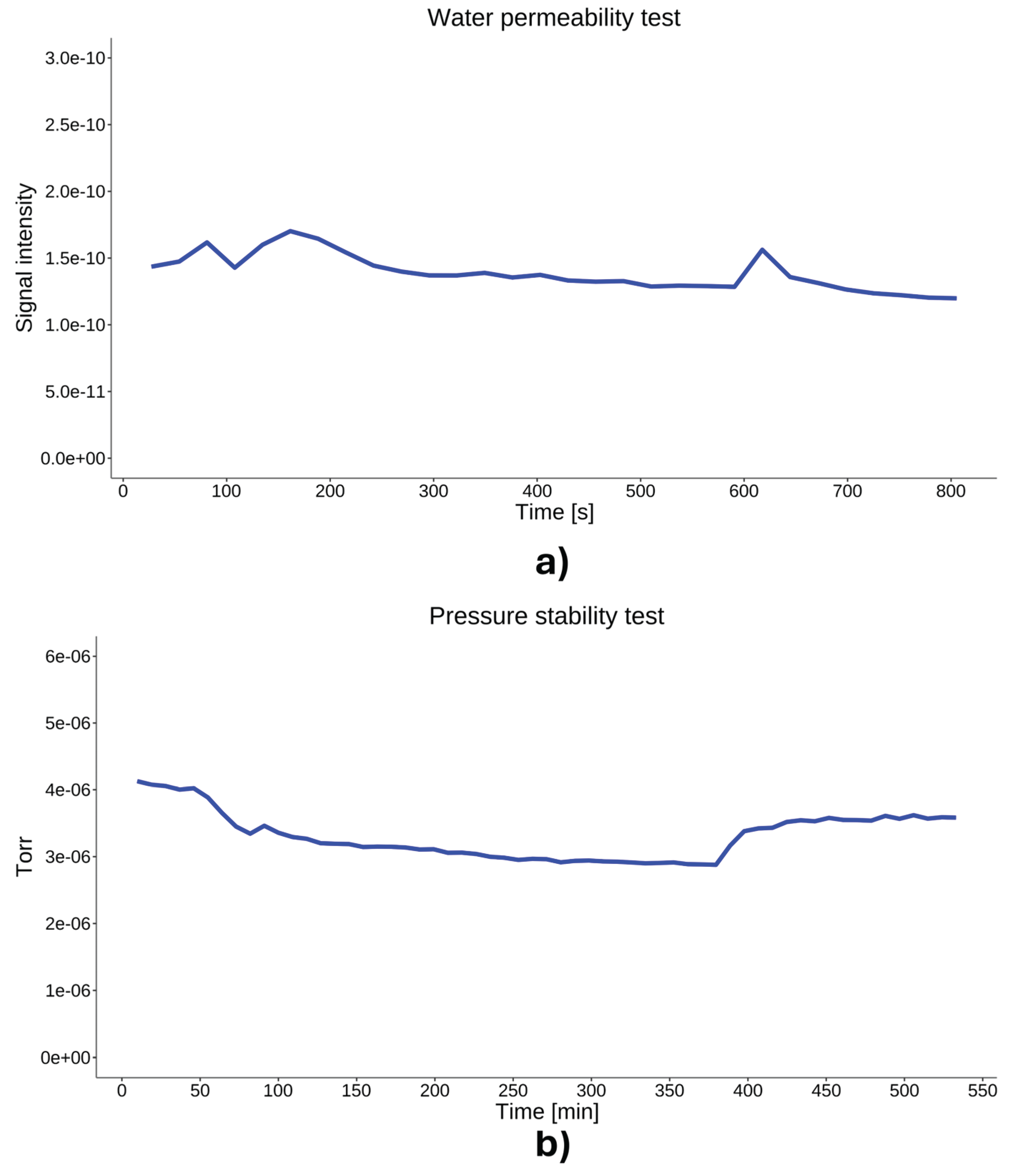
Figure 8.
Membrane equilibration test for benzene.
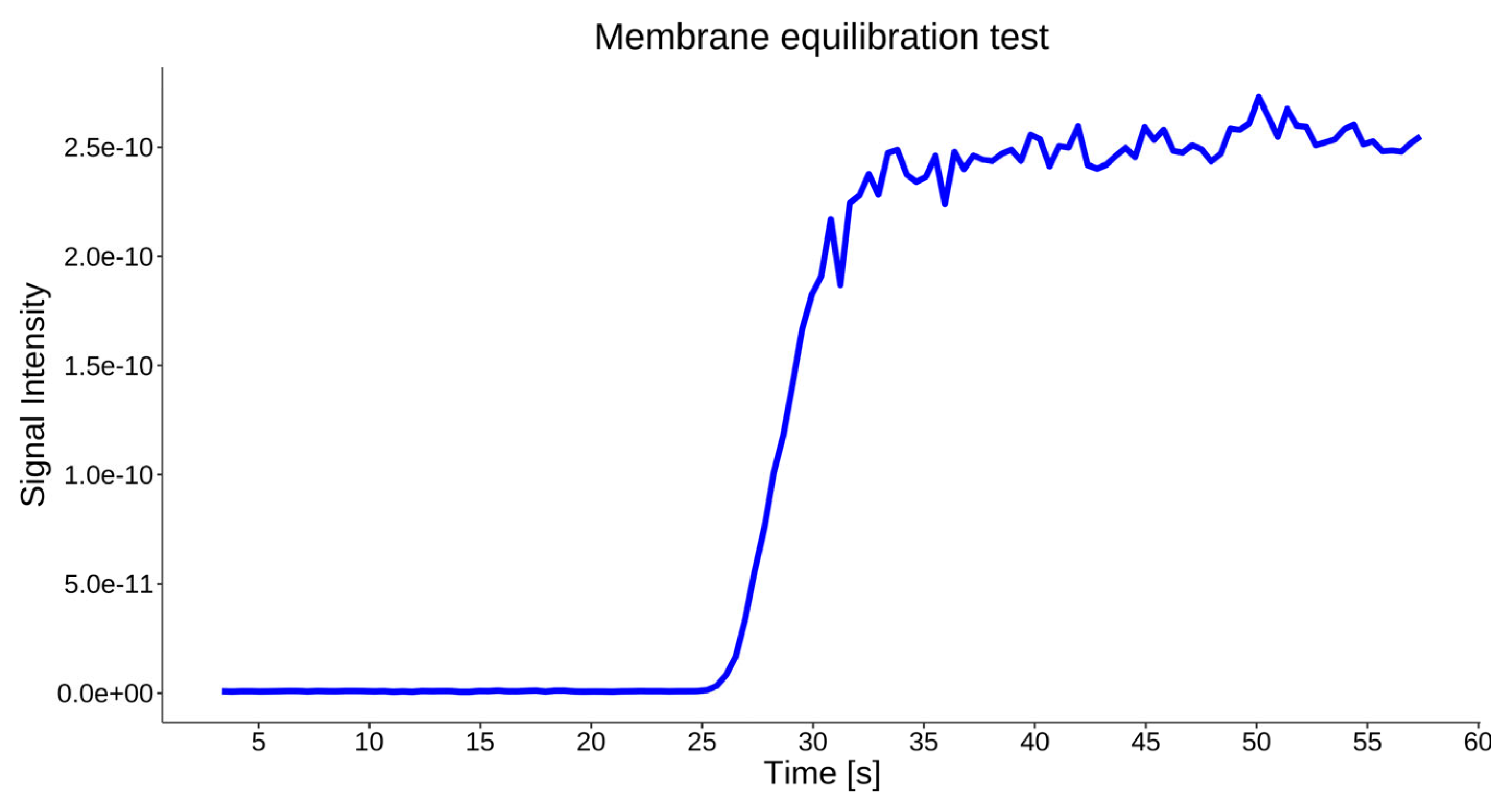
Figure 9.
Installation of the oil sensor system to the buoy.
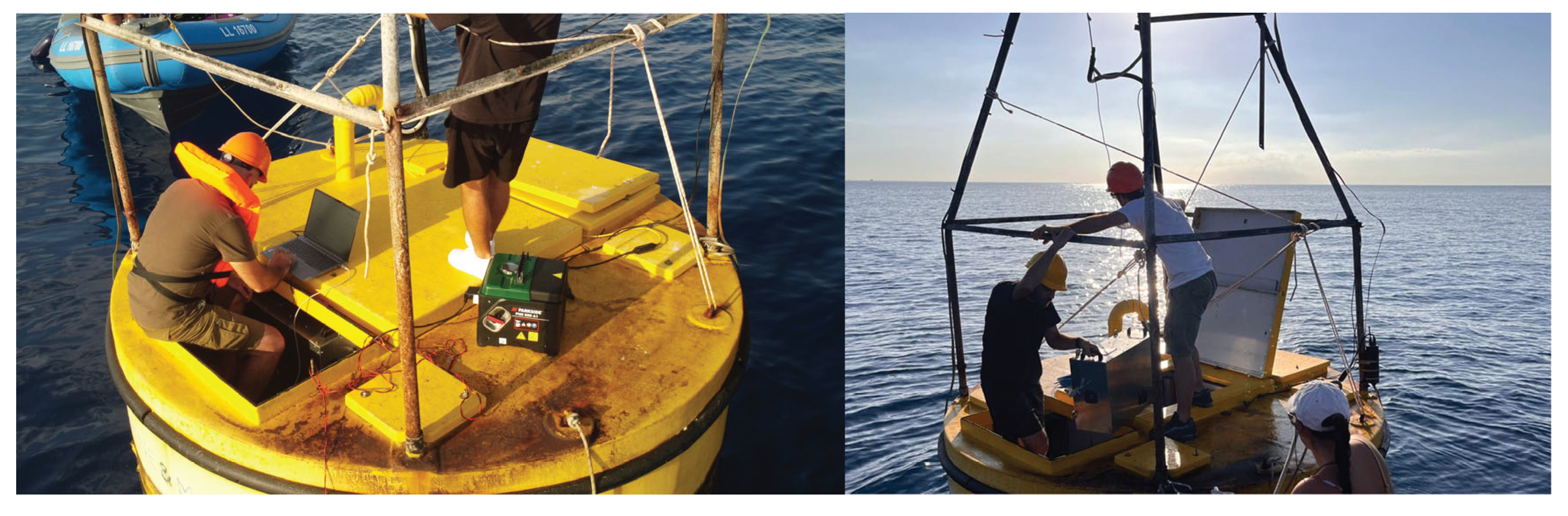

Table 1.
List of target compounds.
| Compound | CAS number | Molecular weight (g mol-1) |
Target ion (m/z) |
|---|---|---|---|
| Benzene | 71-43-2 | 78.11 | 78,77 |
| Toluene | 108-88-3 | 92.14 | 91,92 |
| Xylenes | 1330-20-7 | 106.1 | 105, 106 |
| 1,2-dichloroethane | 107-06-2 | 98.96 | 62, 64 |
| Tetrachloroethylene | 127-18-4 | 165.8 | 166, 164 |
Table 2.
LOD, LOQ, linearity and equations for target compounds.
| Compound | LODa | LOQa | Equation | R2 |
|---|---|---|---|---|
| Benzene | 4.90 | 16.3 | 0.998 | |
| Toluene | 7.50 | 24.8 | 0.999 | |
| Xylenes | 7.50 | 24.8 | 0.995 | |
| Tetrachloroethylene | 3.50 | 11.6 | 0.999 | |
| 1,2-dichloroethane | 4.30 | 14.4 | 0.999 | |
| aconcentration in µg L⁻¹ | ||||
Disclaimer/Publisher’s Note: The statements, opinions and data contained in all publications are solely those of the individual author(s) and contributor(s) and not of MDPI and/or the editor(s). MDPI and/or the editor(s) disclaim responsibility for any injury to people or property resulting from any ideas, methods, instructions or products referred to in the content. |
© 2026 by the authors. Licensee MDPI, Basel, Switzerland. This article is an open access article distributed under the terms and conditions of the Creative Commons Attribution (CC BY) license (http://creativecommons.org/licenses/by/4.0/).
Copyright: This open access article is published under a Creative Commons CC BY 4.0 license, which permit the free download, distribution, and reuse, provided that the author and preprint are cited in any reuse.


