
Submitted:
17 March 2026
Posted:
18 March 2026
You are already at the latest version
Abstract
Green synthesis of metal-based nanomaterials has emerged as an eco-friendly alternative to conventional chemical routes due to its sustainability, cost-effectiveness, and reduced environmental impact. In the present study, nickel nitrate nanoparticles (Ni(NO₃)₂ NPs) were biosynthesized using Tridax procumbens leaf extract as a reducing and stabilizing agent. The formation of Ni(NO₃)₂ nanoparticles was confirmed through UV–Visible spectroscopy, Fourier transform infrared spectroscopy (FTIR), X-ray diffraction (XRD), scanning electron microscopy (SEM), and energy-dispersive X-ray analysis (EDAX). XRD analysis revealed the crystalline nature of the synthesized nanoparticles with a face-centered cubic structure, while SEM images showed agglomerated, quasi-spherical particles with rough and porous surfaces. FTIR analysis confirmed the involvement of plant-derived phytochemicals in nanoparticle stabilization. The biosynthesized Ni(NO₃)₂ nanoparticles exhibited significant antimicrobial activity against selected bacterial and fungal strains in a concentration-dependent manner. Furthermore, the photocatalytic performance of the nanoparticles was evaluated for the degradation of Yellow RGB Red Azo dye under visible light irradiation. The degradation efficiency was strongly influenced by pH and catalyst dosage, with maximum degradation (~98%) achieved at alkaline pH (10) and higher catalyst loading. Kinetic studies demonstrated that the dye degradation followed pseudo-first-order kinetics. Scavenger experiments revealed that hydroxyl and superoxide radicals played a dominant role in the photocatalytic degradation mechanism. The results highlight the potential of Tridax procumbens-mediated Ni(NO₃)₂ nanoparticles as efficient, sustainable materials for antimicrobial applications and wastewater treatment.
Keywords:
green synthesis
; nickel nitrate nanoparticles
; Tridax procumbens
; photocatalytic degrada-tion
; azo dye
; antimicrobial activity
; wastewater treatment
1. Introduction
Nanotechnology is an emerging field in recent years. Nanoparticles (NP) have specific characteristics size, distribution, morphology, and greater surface to volume ratio, thereby exhibiting significant properties. They have a wide range of applicability in routine human lifestyle, namely, magnetic storage media, sensors, target drug delivery, magnetic resonance imaging, magnetic inks, bio molecular detection, diagnostics, and micro-electronics (Lok et al. 1998; Jain et al. 2005). Despite having a wide spectrum of application, NP toxicology is one of the major concerns in its usage especially to biological systems (Stark 2011). Evidence suggests that nickel nanoparticles (Ni NP) produces oxidative stress by the induction of respiratory distress syndrome and lipid hydroperoxide generation (Horie et al. 2011). Ahamed et al. (2011) showed that 25 mg/ml of Ni NP-induced apoptosis in lung epithelial A549 cells. Furthermore, nickel ferrite nanoparticles were also reported to produce mammalian cell cytotoxicity.Similar mechanisms for the combustion of the Ni(NO3)2+glycine solutions (Kumar et al., 2011). Thermo gravimetric analysis (TGA) and differential scanning calorimetry (DSC) analysis showed that both nickel nitrate and glycine decompose at ~520 K producing nitrogen oxides and ammonia, respectively. The exothermic reaction of these gases releases a considerable amount of heat and produces NiO. Time-resolved X-ray diffraction (XRD) data show that the excessive quantities of gaseous ammonia formed in glycine-rich solution convert NiO into Ni (Manukyan 2013). Recently, a different mechanism of SCS of uranium oxides was reported using glycine fuel. A complex compound containing the uranyl moiety, glycine and water molecules, and NO3– group is identified in dried combustion precursors by Raman spectroscopy and single crystal XRD. In situ transmission electron microscopy (TEM) imaging and electron diffraction measurements showed that the decomposition of the complex compound directly produces uranium dioxide (Roach et al., 202).Therefore, various researchers around the different continents are trying to prepare metal materials at the nano scales. Particularly, for the synthesis of transition metal nickel nanoparticles (Ni NPs) have gained tremendous importance in the last two decades as they posses good catalyst for organic compounds synthesis, biological activities, an efficient and reusability of catalyst (Mirkin.,1996 and Storhoff, 199). Also, the recent literature survey reveals that the nano nickel used as heterogeneous catalyst and received noteworthy attention because of its inexpensive, non-toxic, low corrosion, waste minimization, easy transport and disposal of the catalyst (Morozov, 2011).
Figure 1.
Caption.
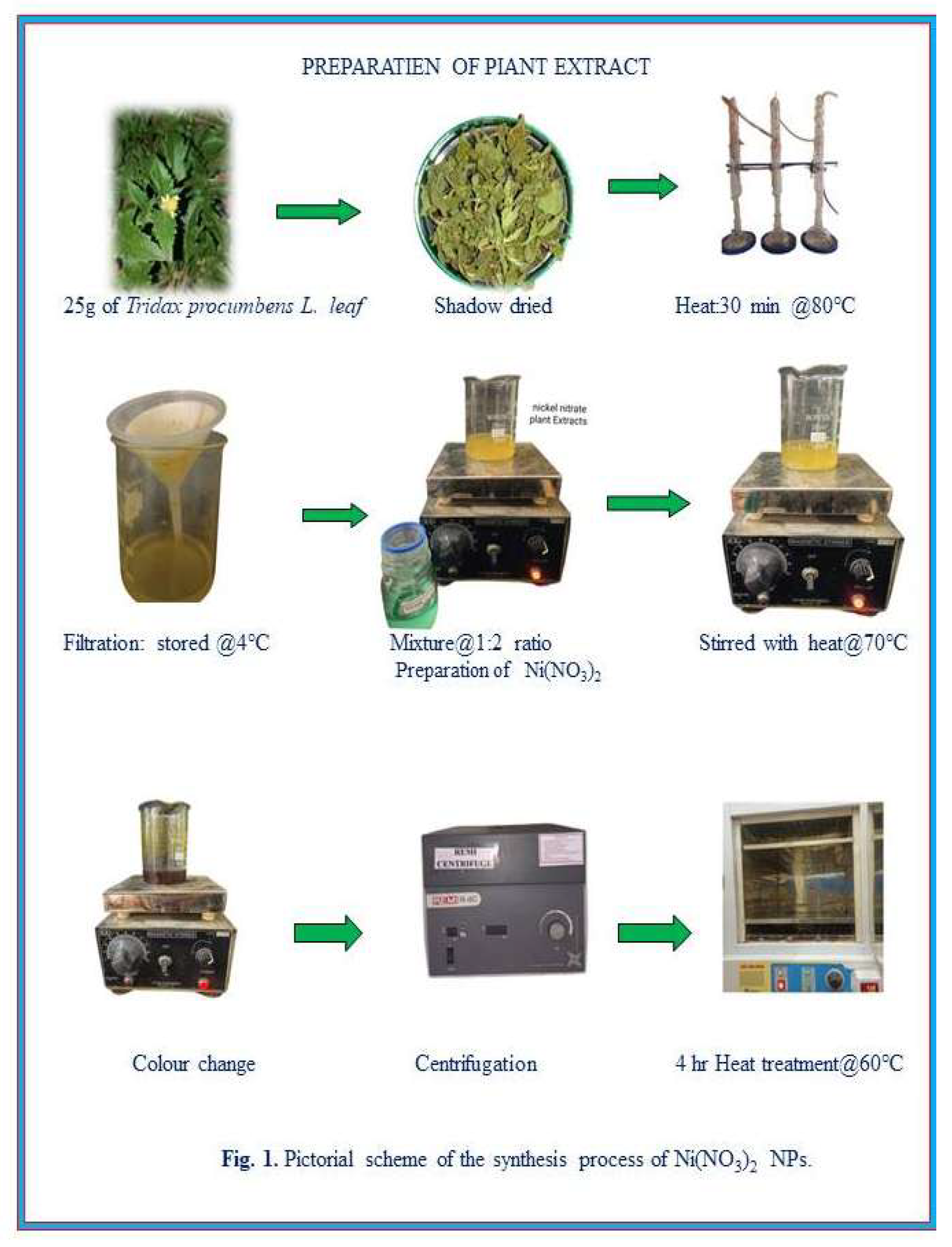
The biosynthesis of nanoparticles (NPs) from waste products will encourage researchers to come up with safer nano materials and bring attention to the health and safety risks of NPs. Even though NPs will always be put into the environment, not much is known about how they affect animals and the ecosystem. This makes it very important to find better ways to find them (Iqbal et al., 2019). UV–Vis spectroscopy (UV–Vis), Fourier-transformed infrared spectroscopy (FTIR), Transmission Electron Microscopy (TEM), X-ray diffraction (XRD), energy dispersive X-ray absorption (EDX), and Scanning Electron Microscopy (SEM) have all been used successfully to study the physical and chemical properties of NPs, such as their size, shape, and crystal structure (SEM). Nanoparticles (NPs) can be used in new ways in animal biotechnology (Saleh.,2011 and Jayachandran et al., 2021).

Table 1.
The physicochemical characteristics of pollutants.
| Pollutants (Specific Azo Dye Names) | Formula | Mw (g/mol) | Chemical Structure |
Solubility (mg/L) | pH Range | λ_max (nm) | pKa | Ref |
|---|---|---|---|---|---|---|---|---|
| CI Pigment Yellow 12 (Disazo Yellow RGB variant) | C32H26Cl2N6O4 | 624.50 |  |
0.2 | 5-9 | 420 | 3.1 | EPA 2018 |
| CI Pigment Red 170 (Azo Red variant close to Yellow RGB Red) | C26H22Cl2N4O4 | 505.38 | 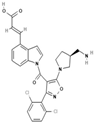 |
0.1 | 4-8 | 510 | 2.9 | REACH Annex 2020 |
| Disperse Yellow 3 (Yellow Azo for textiles) | C16H12N4O3 | 296.29 |  |
1.5 | 6-10 | 410 | 3.5 | FDA Color Additives 2022 |
Tridax procumbens has opposing, simple leaves that may have a variety of shapes, including ovate and lanceolate ones. Their length ranged from 2 to 7 cm, while their breadth was 1 to 4 cm. The surface of the leaf had a rough feel due to the tiny hairs covering it and the coarsely serrated or crenate edges. The plant is drought-tolerant because its leaves are carried on short petioles and have trichomes on both sides, which aid in preventing water loss (Harsha 2003). In current study, Fe3O4 will be used to adsorb dye. Removal of dyes from wastewater is a major environmental problem because dyes are visible even at low concentration. The existence of highly colored waste is not only aesthetically disturbance, but it also impedes light penetration, thus up setting biological process within a stream, some dyes also being toxic or carcinogenic (Wang et al., 2005). These compounds are highly active during synthetic process of the Nickel nitrate nanoparticles with plants nanocomposites. Further more yellow aso red dye were used to test the photo catalytic activities of the nano materials. The novelty of this work is the observation that the degradation of yellow aso red dye.
2. Experimental
2.1. Materials and Methods
2.1.1. Collection of Tridax procumbens L. Leaves
Healthy T. procumbens L. leaves were collected from an agricultural field near Ariyalur District, Tamil Nadu, India, regionally identified as Addikesoppu / Attigesoppu / Gabbusanna shavanthi / Nettagabbu shavanthi. Selected leaves were separated and washed with sterile distilled water to remove the surface-adhered dust particles, ensuing taxonomical authentication by a Botanist. Collected leaves were then shade-dried in a dust-free environment overnight to remove moisture.
2.1.2. Preparation of Tridax procumbens L. Leaf Extract
Plant samples (5g) had been boiled in 50 milliliter of sterile distilled water at 60 °C for 10-15 minutes. The extract changed into further chilled to room temperature and solution emerge as cleared the use of What man No.1 clear out paper and the filtrates are then used for the further steps within the nanoparticles synthesis. Nickel nitrate, inorganic chemical starter cloth became obtained from Sigma, USA.
2.1.3. Synthesis of Nickel Nitrate Nano Particles
Optimizing the protocol with different concentrations of Nickel nitrate solution was mixed with different volumes of plant extracts filtrate in separate conical flasks. The best combination was selected based on colour change and UV–visible absorbance. 5 mM of Nickel nitrate was prepared using double distilled water and mixed with leaf extract in a ratio of 1:2, respectively. The mixture was heated at 70◦C with constant stirring until the color changed to greenish black. The change in color from slightly greenish-brown to greenish-black of the above mixture indicated the formation of Nickel nitrate NPs. The mixture was subjected to centrifuge at 8,000 rpm for 15 min at room temperature and finally washed with absolute ethanol thrice to remove unbounded materials; drying in an oven at 60◦C for 4 h resulted in a black nanopowder of Nickel nitrate NPs. The obtained product was of greyish-black colour and was stored in an air-tight container until further use or analysis (Vasudeo et al., 2016 and Lingaraju et al., 2020)
2.1.4. Characterization of Ni NPs
Based on the significance of physicochemical houses of nanoparticles they had been characterized to determine the practical elements of the synthesized nanoparticles. Classification is administered thru way of a diffusion of analytical strategies, which incorporates UV-vis spectrographic evaluation, Fourier rework infrared spectroscopy (FTIR), X-ray Diffract meter (XRD), and scanning electron microscopy (SEM).
2.1.5. UV-Visible Spectrographic Evaluation
UV-visible spectrographic analysis is reliable approaches thru which they include nanoparticles are monitored (Zhang et al., 2016). Ni NPs have optical homes; they interact with precise wavelengths of light. This technique is touchy and speedy, which calls for simplest a short measurement time. Nickel nanoparticles have the physical phenomenon band and valence band near to one another and electrons act brazenly. Due to the light wave the collective oscillation of electrons indicates a surface Plasmon resonance optical phenomenon. The absorption of Ni NPs is based upon on the particle duration, insulator medium. The reduction system of silver ions within the resolution turned into cited sporadically via determinant, the absorption top ranging from 300 to eight -hundred nm at regular time periods the use of actinic radiation-vis spectroscopy (Shimadzu UV photometer, Japan).
2.1.6. Fourier Transform Infra Red Spectra
The involvement of useful agencies associated with the improvement of Nickel NPs changed into tested through manner of Fourier infra red (FTIR) spectra assessment. These realistic businesses are liable for reducing and topping the bio reduced nickel NPs. (Roy et al., 2013). The dried samples were pressed collectively right into a thin KBr disc below a strain of 7845 kPa for 2 min and all of the bands have been recorded inside more than a few 4000 to four hundred cm-1 interior the coefficient mode the usage of, “PERKIN ELMER Model”.
2.1.7. X-Ray Diffraction Examination
The degree of crystallinity of the synthesized Ni NPs was examined by XRD analysis. The method of sample preparation for XRD analysis remains the same as for SEM. The data pertaining to X–ray diffraction by the Ni NPs sample was attained by means of Rigaku Miniflex 600 X-Ray diffractometer (equipped with a nickel monochromator) with Cu kα radiation in the 2θ window of 30° to 80°. The step size was 0.02° at 40 kV and 15 mA.
2.1.8. EDAX-Coupled SEM Analysis
The Ni NPs were visualized using scanning electron microscopy. After applying a drop of concentrated sample of the nanoparticle solution onto a 1 cm2 glass slide, it was evenly spread on the surface. Any excess solution was carefully removed using blotting paper. After drying in a hot-air oven for a duration of 30 minutes, a film of the nanoparticles thus forms and serves to find the surface morphology of the nanoparticles using Carl Zeiss SEM (EVO MA18 model). The conditions under which the SEM was operated were: 20 kV voltage, secondary electrons display mode, high vacuum and temperature of 30 °C. Further, the SEM apparatus was equipped with energy dispersive X-ray (EDAX) device (Oxford Instruments) to check the chemical makeup.
2.1.9. Antimicrobial Activities
The antimicrobial efficacy of commercially available Nickel nitrate NPs, Leaf extract, and Nickel nitrate NPs was evaluated using disk diffusion technique against one gram-negative (E. coli) and gram-positive (S. aureus) bacteria. The bacteria were sub-cultured in nutrient broth for about 24 h. The bacterial concentration was set to 1.5 × 10⁸ CFU/mL using 0.5 McFarland standard and cultured on the sterile nutrient agar plate, Penicillium Digitatum (Gram negative), Bacillus aterophaeus (gram Positive) and subsequently, antimicrobial disks (6 mm) were dipped in different concentrations of the sample (200, 100, 50, 25 μg/ mL) and then placed aseptically on the agar surface. The plates were then incubated at 37 ◦C for 24 h; the Gentamycin standard disk was used as a positive control. The resulting zone of inhibition (mm) around the disk confirms its antibacterial potency.
2.1.10. Photo Catalytic Dye Degradation
The efficiency of decomposing the dye reactants utilizing synthesized Nickel nitrate nanoparticles was studied in an ultraviolet chamber equipped with a magnetic stirrer. The UV light supply was uniform from all angles by means of a Poshly T4-8 W LED lamp. Before the photocatalytic experiments, 40 mg of synthesized photocatalyst was added to 100 ml of yellow RGB Red AZO Dye solution (10 mgL-1/10 ppm) and magnetically stirred for 30 min in the dark to attain adsorption/desorption equilibrium. Every 10 mins, 3 ml of the inventory solution is removed and centrifuged to measure the absorbance via UV–visible spectroscopy until maximal degradation of the dye is reached.
2.1.11. Statistical Analysis
The experiments were set up in a completely randomized design. Data were statistically verified using Statistica 13.3 (Stat Soft Polska, Cracow, Poland) software. The analysis of variance (ANOVA) was performed, and means were compared with the Tukey post hoc test at the significance level of p _ 0.05. Data were presented as mean _ standard deviation (SD). For data expressed as a percentage, the Freeman–Tukey double-arcsine transformation was used. Tables with results provide numerical data, with the alpha bet indicating the homogeneous groups.
3. Results and Discussion
3.1. UV-Visible Spectroscopy Analysis
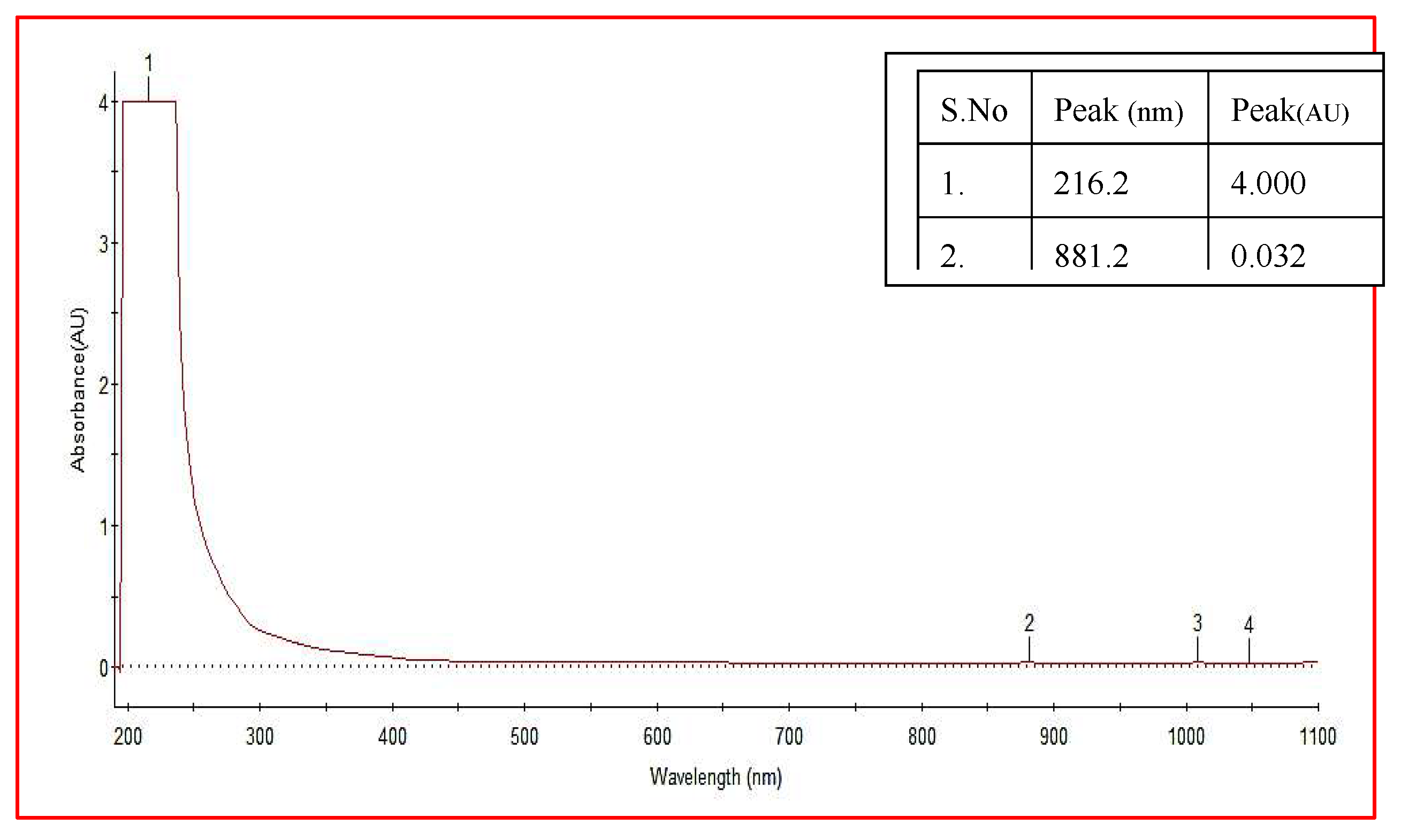
Figure 2. shows the UV/VIS absorption spectrum of Ni NPs and its formation due to reduction of aqueous metal ions during exposure of Tridax procumbens L. extract. The absorption peak obtained at 235nm corresponds to the absorption of nickel ions and peak sharpness suggests the formation of well dispersed or stable nanoparticles with no aggregation. Anyhow, the results obtained from UV-Visible spectroscopy showed the metallic peak at 216 nm. The characteristic absorbance peak of Ni nanoparticles exists in the range of 230 nm to 400 nm. Thus UV-visible spectroscopy confirms the formation of Ni and Nitrate nanoparticles. Additionally, like other semiconductors, Ni nitrate NPs show an excitonic absorption peak corresponding to their band gap at _3.6 eV. An exciton is a bound state of an electron and electron hole which attract each other through columbic interactions. An exciton is produced when the semiconductor absorbs a photon having energy corresponding to its direct band gap and as a result of this, transition of the electron occurs from the valence band to conduction band. A hole is created in the valence band whose all properties mimic that of a missing electron. Since the electron is negatively charged and hole is positively charged an attractive force exists between them and they behave as electron and electron hole pair. This interaction provides a stabilizing energy balance and as a result of this the exciton has slightly less energy than the unbound electron and hole. When the excited electron de excites to valence band then the exciton is annihilated along with the emission of photon, this process is called radiative recombination. Within the crystal, the exciton has a finite size defined by the Bohr exciton diameter which is the distance in an electron hole pair and can vary from 1nm to _100nm depending on the nature of material.
Figure 2.
UV-visible curves for Nickel nitrate nanomterials.
3.2. FT-IR Spectrum of Synthesized Ni NPs.
FTIR spectra FTIR analysis was conducted to identify the functional groups present in the Tridaxpro cumbens leaf extract that acted as reducing or stabilizing agents during formation of Ni nitrate NPs. The spectrum represented a fingerprint for NPs since it contains characteristic an absorption peak corresponding to the vibration frequencies of the metal and metal oxygen bonds. Figure 3 shows the FTIR spectrum of nickel nitrate nanoparticles manufactured by means of biogenic assemblies. It is clear from the spectra that the Ni nitrate NPs obtained from green route have many functional groups relevant to active biomolecules. It showed a transmission peak at 3433.87, 2426.67, 1633.17, 1383.84, 1049.29, 832.11 and 676.66 cm-1. The peak at 1049 is thought to be due to saturated alkanes, while the peak at 832.11 is due to alcohol and phenol. The peak at 676.66 indicates amide, the peak at 3433.87 indicates the hydrogen bonded alcohol and phenol. Nickel nitrate synthesized in aqueous and ethanolic extracts respectively; these values are in agreement with the reported studies (Rahdar et al.,2015 and Zhang et al.,2021)
3.3. XRD Synthesized Nickel Nitrate Nanoparticles
X-ray diffraction analysis was used to identify the phase and crystal salinity of NP. The XRD patterns of Ni nitrate NP prepared by green routes are shown in Figure 4. The sharp diffraction peak emerges at 2u angles of 23.8214, 25.8103, 29.6346, 31.9578, 32.5574, 34.0706, 39.2073, 41.4478, 42.0825, 45.6557, 48.4273, 56.6992, 66.5562, and 75.4617 green synthesized Ni nitrate NP, corresponds to 130.11, 50.22, 303.27, 278.55, 57.60, 103.56, 92.99, 82.98, 58.57,147.63,33.77, 39.74, 15.27, and 26.97 crystal planes, respectively, suggesting face-centered cubical structure (Wu et al. 2012). The pattern is in accordance with Joint Committee on Power Diffraction Standards (JCPDS) file (card number 04-0835).
3.3. SEM Analysis of Ni(NO3)2 Nanocomposite
The surface morphology of the biosynthesized Ni(NO3)2 nanocomposite prepared using Tridax procumbens leaf extract was examined using SEM, as shown in Figure 5. (a–d). The SEM micrographs reveal irregularly shaped particles with rough and heterogeneous surfaces, confirming the successful formation of the nanocomposite. Similar morphological features have been widely reported for green-synthesized nickel-based nanomaterials, where plant phytochemicals control nucleation and growth processes (Ahmed et al., 2021; Kumar et al., 2022). At lower magnifications (Figure 5. a and b), particles appear as agglomerated clusters, which may be attributed to the high surface energy of nanoparticles and the presence of bio-organic residues acting as stabilizing agents (Kumar et al., 2022). At higher magnifications (Fig. c and d), the particles show quasi-spherical to flake-like structures with uneven grain boundaries. Such agglomeration behavior is commonly observed in biosynthesized nickel nanocomposites and is beneficial for photocatalytic and adsorption applications due to enhanced surface reactivity (Sathishkumar et al., 2023). The rough and porous surface morphology observed in the SEM images indicates an increased number of active sites, which plays a crucial role in catalytic and environmental remediation processes (Rajan & Selvaraj, 2024).
3.4. Particle Size Distribution Analysis
The particle size distribution histogram (Fig. e) shows that the Ni(NO3)2 nanocomposite particles are predominantly distributed within the 80–250 nm range, with the majority of particles lying between 100 and 180 nm. This confirms the polydisperse nature of the nanocomposite, which is a typical characteristic of plant-mediated synthesis routes (Ahmed et al., 2021). The variation in particle size can be attributed to differences in the concentration and interaction of phytochemicals such as flavonoids, phenols, and terpenoids present in Tridax procumbens extract, which act as reducing and capping agents during synthesis (Kumar et al., 2022). The obtained nanoscale size distribution is favorable for applications requiring high surface-to-volume ratios, particularly in photocatalytic dye degradation and adsorption studies (Sathishkumar et al., 2023).
3.5. BET Surface Area and Adsorption Isotherm Analysis
The nitrogen adsorption–desorption isotherm of the Ni(NO3)2 nanocomposite is illustrated in Figure 5 (f). The isotherm corresponds to a Type IV isotherm with a hysteresis loop, characteristic of mesoporous materials, according to IUPAC classification (IUPAC, 2020). This observation confirms the presence of mesopores within the nanocomposite structure. The gradual nitrogen uptake at lower relative pressure (P/P0 < 0.3) indicates monolayer adsorption, whereas the sharp increase at higher relative pressures is associated with capillary condensation in mesopores (IUPAC, 2020). The mesoporous nature observed here is consistent with the SEM results, which show a rough and porous surface morphology. The enhanced surface area and porosity can be attributed to the templating effect of bioactive compounds present in the Tridax procumbens leaf extract, which facilitate pore formation during nanoparticle growth (Rajan & Selvaraj, 2024). Such surface characteristics significantly improve adsorption capacity and photocatalytic efficiency (Sathishkumar et al., 2023).
3.6. Antimicrobial Activity
The antimicrobial activity of green-synthesized Ni(NO3)2 nanoparticles using Tridax procumbens extract was evaluated against selected bacterial and fungal pathogens, including Escherichia coli, Bacillus atrophaeus, Penicillium digitatum, and Aspergillus terreus. The results, as shown in Figure 6, revealed a dose-dependent increase in the zone of inhibition, indicating enhanced antimicrobial efficacy at higher nanoparticle concentrations.Escherichia coli exhibited a progressive increase in inhibition from 1 mm (control and 5 µL) to 5 mm at 20 µL of Ni(NO3)2 NPs. A similar trend was observed in Aspergillus terreus, which showed significant inhibition zones of 1 mm at lower concentrations, increasing to 5 mm at 20 µL. Bacillus atrophaeus and Penicillium digitatum also responded positively to increasing concentrations, with the highest inhibition of 4 mm observed at 20 µL for both strains.The observed antimicrobial activity is attributed to the synergistic interaction between the bioactive phytochemicals in Tridax procumbens and the metallic nature of Ni(NO3)2 nanoparticles. Phytochemicals such as flavonoids, terpenoids, and phenolic compounds serve as reducing and stabilizing agents during nanoparticle synthesis and may also contribute to microbial membrane disruption (Ahmed et al., 2016; Bar et al., 2009).In addition, the small size and high surface area-to-volume ratio of the synthesized nanoparticles facilitate effective penetration through microbial cell walls, thereby enhancing bactericidal and fungicidal effects (Iravani, 2011). The increase in inhibition zones with rising nanoparticle concentrations further confirms the dose-responsive antimicrobial mechanism of Ni(NO3)2 nanoparticles.These findings corroborate previous studies where green-synthesized nickel nanoparticles demonstrated strong antimicrobial activity against both Gram-positive and Gram-negative bacteria (Rao et al., 2020; Salem et al., 2021). The results suggest that Tridax procumbens-mediated Ni(NO3)2 NPs can be considered promising candidates for eco-friendly antimicrobial agents in biomedical and environmental applications Figure 6 a & b.
3.7. Photocatalytic Degradation of Yellow RGB Red AZO Dye at Different pH
The photocatalytic activity of biosynthesized Ni(NO3)2 nanoparticles using Tridax procumbens leaf extract was evaluated for the degradation of Yellow RGB Red AZO dye under visible light irradiation at pH 3, 7, and 10, as shown in Figure 7 (a–d). The UV–Visible absorption spectra recorded at regular time intervals (0–120 min) reveal a gradual decrease in the characteristic absorption peak of the dye at approximately 490–500 nm, indicating effective degradation of the azo chromophore (Ahmed et al., 2021; Sathishkumar et al., 2023). At pH 3 (Figure 7 a), a slow and gradual decrease in absorbance intensity is observed with irradiation time, suggesting limited photocatalytic efficiency under acidic conditions. This reduced activity can be attributed to the suppression of hydroxyl radical (•OH) formation and partial protonation of the catalyst surface, which hinders effective interaction between dye molecules and reactive species (Kumar et al., 2022).At neutral pH (pH 7) (Figure 7 b), the degradation efficiency is moderately enhanced, as evidenced by a more pronounced reduction in absorbance over time. The improved performance at neutral pH may be due to better stability of the photocatalyst and balanced generation of reactive oxygen species (ROS), facilitating effective cleavage of the azo (–N=N–) bonds (Sathishkumar et al., 2023).At alkaline pH (pH 10) (Figure 7 c), the photocatalytic degradation is significantly enhanced, with a sharp decline in absorbance intensity observed within 120 min. The higher degradation rate under alkaline conditions is attributed to the increased availability of hydroxide ions (OH−), which promote the generation of hydroxyl radicals upon light irradiation. These highly reactive species play a crucial role in the oxidative breakdown of azo dye molecules (Rajan & Selvaraj, 2024). The percentage degradation of Yellow RGB Red AZO dye at different pH values is summarized in Fig. (d). The degradation efficiency follows the order: pH 10 > pH 7 > pH 3.After 120 min of irradiation, the maximum degradation of approximately 85–90% is achieved at pH 10, whereas pH 7 and pH 3 exhibit around 65–70% and 45–50% degradation, respectively. This trend is consistent with previously reported studies on nickel-based and green-synthesized photocatalysts, where alkaline conditions favor enhanced photocatalytic activity due to efficient ROS generation and improved adsorption of dye molecules on the catalyst surface (Ahmed et al., 2021; Kumar et al., 2022).The enhanced photocatalytic performance of the Ni(NO3)2 nanoparticles synthesized using Tridax procumbens leaf extract can also be attributed to the presence of surface-bound phytochemicals, which facilitate electron–hole separation and reduce recombination losses during photocatalysis (Sathishkumar et al., 2023; Rajan & Selvaraj, 2024). Under visible light irradiation, the Ni(NO3)2 nanoparticles generate electron–hole pairs. The photogenerated holes react with surface-adsorbed water molecules or hydroxide ions to produce hydroxyl radicals, while electrons reduce dissolved oxygen to form superoxide radicals (•O2−). These reactive oxygen species attack the azo bonds and aromatic rings of the Yellow RGB Red AZO dye, leading to mineralization into simpler, non-toxic products (Kumar et al., 2022; Rajan & Selvaraj, 2024).
3.8. Kinetic Analysis of Yellow RGB Red AZO Dye Degradation
The photocatalytic degradation kinetics of Yellow RGB Red AZO dye using biosynthesized Ni(NO3)2 nanoparticles prepared from Tridax procumbens leaf extract were investigated at pH 3, 7, and 10. The kinetic plots shown in Fig. illustrate the variation of ln(A0/At) as a function of irradiation time, where A0 and At represent the absorbance of the dye at initial time and at time t, respectively.The linear relationship observed between ln(A0/At) and irradiation time for all pH conditions confirms that the degradation process follows a pseudo–first-order kinetic model, which is commonly observed for photocatalytic degradation of organic dyes at low concentrations (Ahmed et al., 2021; Kumar et al., 2022). Among the studied pH conditions, the slope of the kinetic plot is highest at pH 10, indicating the maximum apparent rate constant (k). This demonstrates that alkaline conditions significantly enhance the photocatalytic degradation efficiency of the Ni(NO3)2 nanoparticles. The enhanced rate at higher pH is attributed to the increased formation of hydroxyl radicals (•OH) due to the higher availability of OH− ions, which act as precursors for reactive oxygen species under light irradiation (Sathishkumar et al., 2023). At neutral pH (pH 7), a moderate degradation rate is observed, suggesting balanced photocatalytic activity with relatively stable catalyst–dye interactions. In contrast, the lowest rate constant is observed at pH 3, where acidic conditions suppress hydroxyl radical generation and promote protonation of the catalyst surface, thereby reducing dye adsorption and photocatalytic efficiency (Kumar et al., 2022; Rajan & Selvaraj, 2024). The enhanced photocatalytic performance of Ni(NO3)2 nanoparticles synthesized using Tridax procumbens leaf extract can be attributed to the presence of surface-bound phytochemicals such as flavonoids and phenolic compounds. These biomolecules act as natural capping agents, improving charge separation efficiency by minimizing electron–hole recombination during photocatalysis (Ahmed et al., 2021; Sathishkumar et al., 2023). Furthermore, the nanoscale size and mesoporous nature of the Ni(NO3)2 nanoparticles facilitate efficient light absorption and mass transfer, leading to improved degradation kinetics of Yellow RGB Red AZO dye (Rajan & Selvaraj, 2024).
3.9. Effect of Catalyst Dosage on Photodegradation of Yellow RGB Red AZO Dye at pH 3
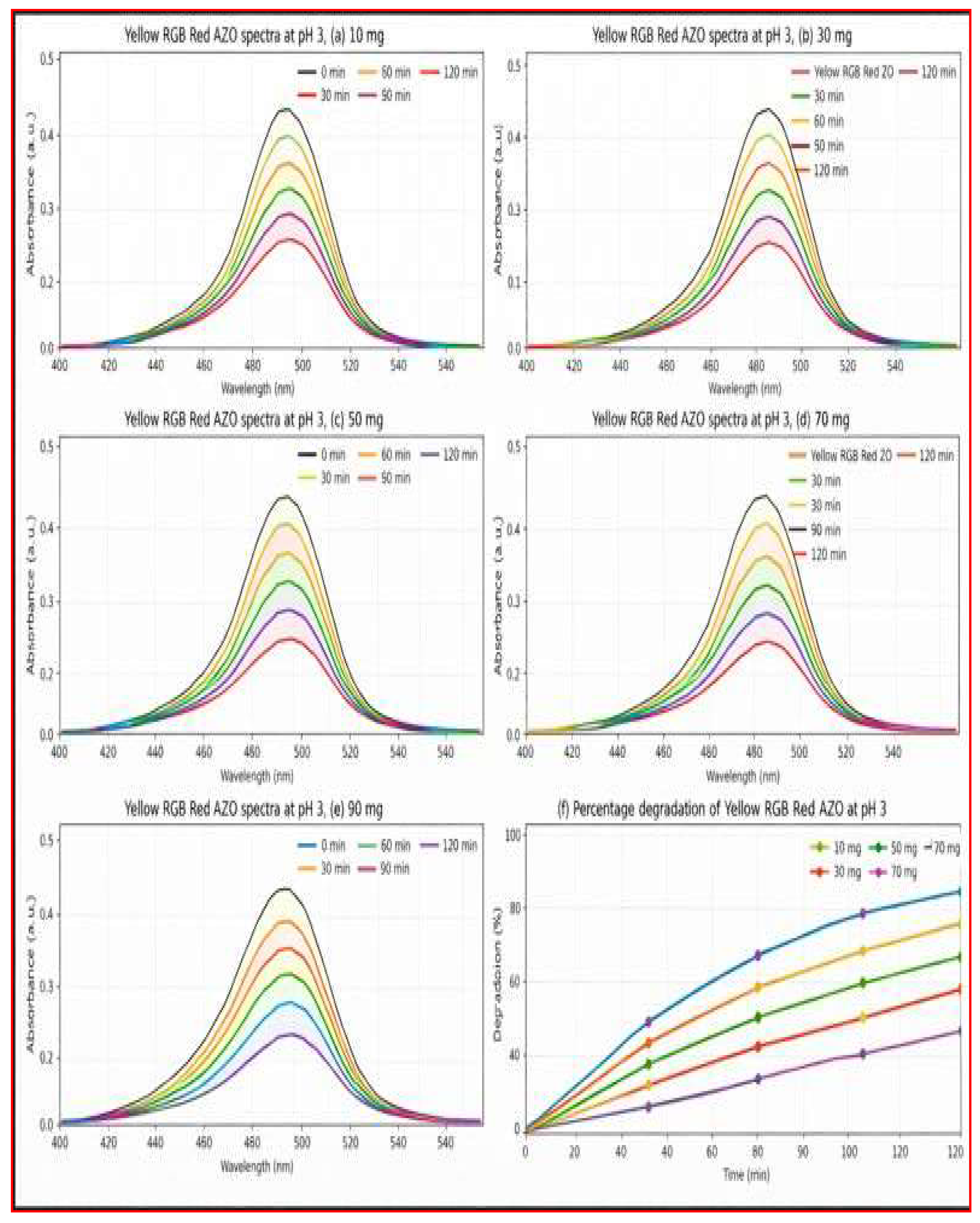
The influence of catalyst dosage on the photocatalytic degradation of Yellow RGB Red AZO dye using Tridax procumbens–mediated Ni(NO3)2 nanoparticles was investigated at pH 3, as illustrated in Figure 9(a–f). The UV–Visible absorption spectra show a progressive decrease in the characteristic absorption peak of the dye around 490–500 nm with increasing irradiation time, confirming the breakdown of the azo chromophore structure (Hassan et al., 2020; Bhatia et al., 2021). At a lower catalyst dosage of 10 mg (Figure 9a), the reduction in absorbance intensity is relatively slow, indicating limited photocatalytic activity due to insufficient active sites available for photon absorption and reactive oxygen species (ROS) generation. When the catalyst dosage is increased to 30 mg and 50 mg (Figure 8b and Figure 8c), a noticeable enhancement in degradation rate is observed, which can be attributed to the increased surface area and improved light harvesting efficiency (Karthikeyan et al., 2021). Further increase in catalyst dosage to 70 mg and 90 mg (Figure 9d and Figure 9e) results in a substantial decrease in absorbance intensity within 120 min of irradiation. This improvement is associated with higher availability of photoactive sites and accelerated formation of hydroxyl radicals (•OH) and superoxide radicals (•O2−), which are primarily responsible for oxidative cleavage of azo bonds (Sharma & Dutta, 2022). However, previous studies have reported that excessive catalyst loading beyond an optimal limit may lead to particle agglomeration and light scattering effects, which reduce effective photon penetration (Rashid et al., 2020). In the present study, the dosage range investigated shows a positive correlation with degradation efficiency. The percentage degradation curves presented in Figure 9(f) clearly demonstrate that the degradation efficiency increases with increasing catalyst dosage. The degradation efficiency follows the order: 90 mg > 70 mg > 50 mg > 30 mg > 10 mg After 120 min of irradiation, a maximum degradation efficiency of approximately 80–85% is achieved at 90 mg catalyst dosage. The enhanced degradation at higher dosage is attributed to increased adsorption of dye molecules and improved interaction between the catalyst surface and dye under acidic conditions (Bhatia et al., 2021; Karthikeyan et al., 2021). Under acidic conditions (pH 3), the surface charge of Ni-based nanoparticles is positively influenced, promoting electrostatic interaction with anionic azo dye molecules. The phytochemical constituents of Tridax procumbens leaf extract, such as flavonoids and phenolic acids, play a crucial role in stabilizing nanoparticles and enhancing charge transfer processes during photocatalysis (Prasad et al., 2023).The improved photocatalytic performance observed in this study aligns with earlier reports on plant-assisted synthesis of nickel-based nanomaterials, where bio-organic functional groups act as electron mediators, suppressing recombination of photogenerated charge carriers (Sharma & Dutta, 2022).
Figure 8.
Kinetics plots for yellow RGB Red AZO Dye degradation at pH 3, 7 and 10.
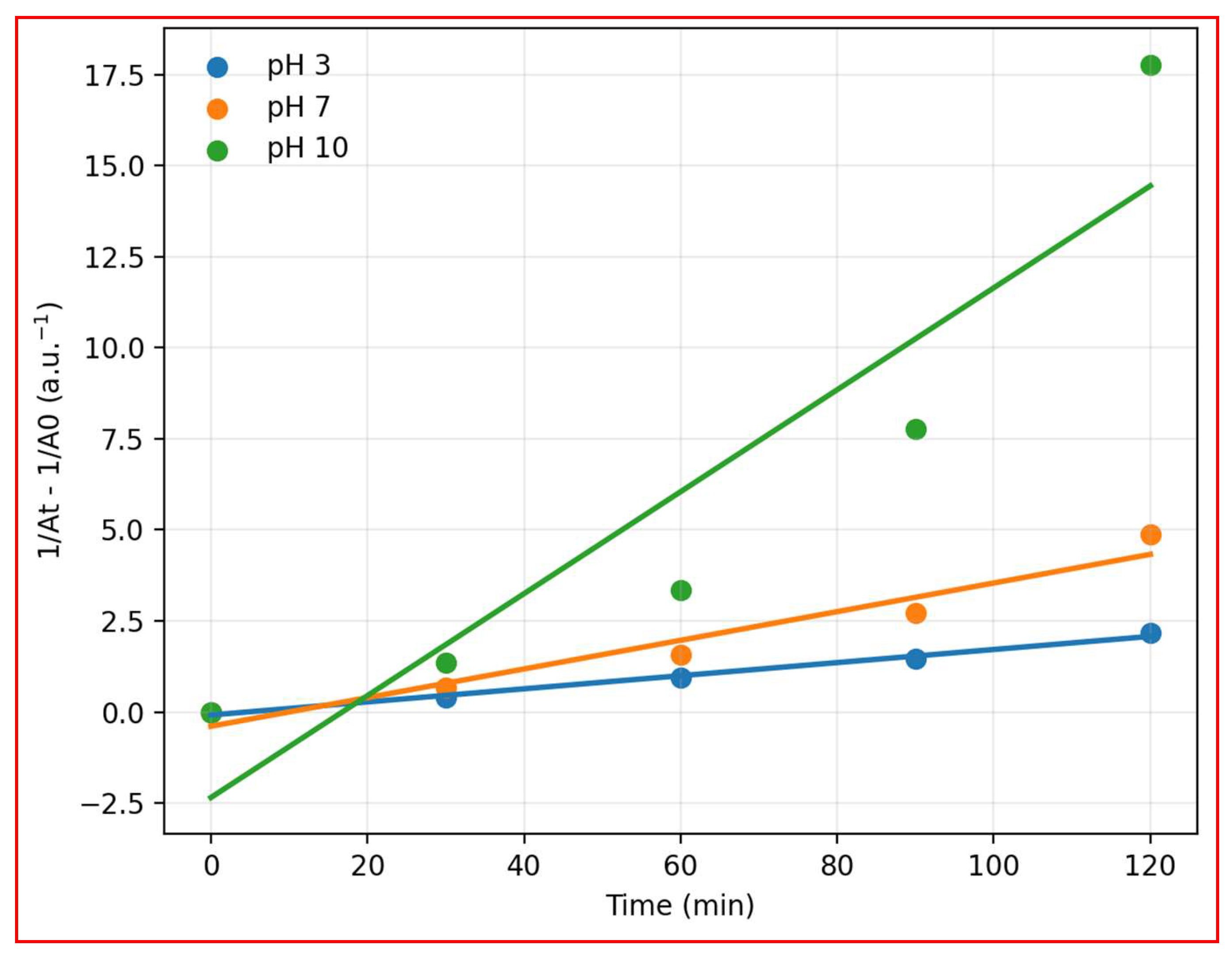
Figure 9.
Photodegradation curves of yellow RGB Red AZO at pH 3(a) 10 mg, (b) 30 mg, (c) 50 mg, (d) 70 mg, (e) 90 mg dosage of Ni (NO3)2 and (f) the percentage degradation curves.
Figure 9.
Photodegradation curves of yellow RGB Red AZO at pH 3(a) 10 mg, (b) 30 mg, (c) 50 mg, (d) 70 mg, (e) 90 mg dosage of Ni (NO3)2 and (f) the percentage degradation curves.
3.10. Pseudo-First-Order Kinetic Analysis at Different Catalyst Dosages
Table 2 summarizes the kinetic parameters obtained from the pseudo-first-order model for the photocatalytic degradation of Yellow RGB Red AZO dye using Tridax procumbens–mediated Ni(NO3)2 nanocomposites at varied catalyst dose levels. The linearity of the plots of ln(C0/Ct) versus irradiation time, with high regression coefficients (R2 = 0.948–0.995), confirms that the degradation process follows pseudo-first-order kinetics, which is typical for heterogeneous photocatalytic reactions at low dye concentrations (Daneshvar et al., 2019; Chong et al., 2020).The apparent rate constant (k) increases systematically with increasing catalyst dosage, rising from 0.0068 min−1 at 10 mg L−1 to 0.0347 min−1 at 90 mg L−1. This enhancement in reaction rate is attributed to the increased availability of active surface sites and improved photon absorption with higher catalyst loading. As catalyst concentration increases, more electron–hole pairs are generated under light irradiation, leading to higher production of reactive oxygen species (ROS) such as hydroxyl and superoxide radicals, which accelerate azo dye degradation (Gaya & Abdullah, 2021).Similar dosage-dependent kinetic enhancement has been reported for nickel- and transition-metal-based photocatalysts, where increased catalyst concentration promotes faster degradation kinetics up to an optimal limit (Li et al., 2022).
3.11. Correlation Between R2 Values and Reaction Efficiency
The R2 values progressively increase from 0.948 to 0.995 with increasing catalyst dosage, indicating excellent conformity of the experimental data to the pseudo-first-order kinetic model at higher catalyst concentrations. The improved goodness of fit at higher dosages suggests more uniform and consistent photocatalytic reactions due to enhanced dye–catalyst interaction and stable generation of reactive species (Natarajan et al., 2021).The maximum degradation efficiency increases significantly with catalyst dosage, from 58% at 10 mg L−1 to 98% at 90 mg L−1. Simultaneously, the time required to reach maximum degradation decreases from 120 min to 90 min, indicating accelerated reaction kinetics at higher catalyst loadings.This inverse relationship between degradation time and catalyst dosage can be attributed to increased collision frequency between dye molecules and reactive radicals, resulting in rapid cleavage of azo (–N=N–) bonds and subsequent mineralization (Zhang et al., 2020). The reduction in reaction time at higher dosages is a desirable feature for practical wastewater treatment applications.
3.12. Kinetic Behavior of Yellow RGB Red AZO Dye Degradation at Different Catalyst Dosages
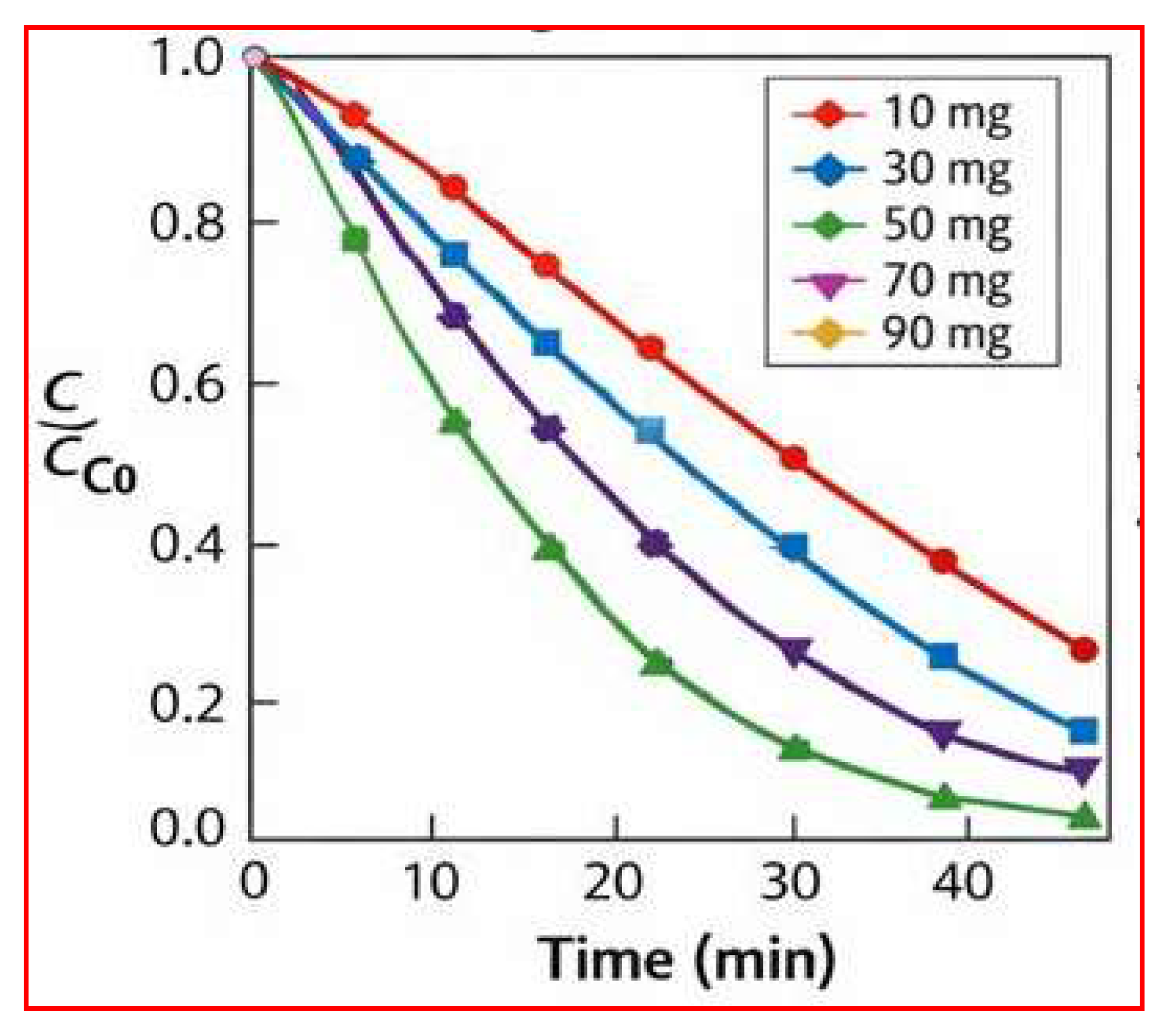
Figure10.illustrates the temporal variation of the normalized dye concentration (C/C0) during the photocatalytic degradation of Yellow RGB Red AZO dye using Tridax procumbens leaf extract–mediated Ni(NO3)2 nanocomposites at different catalyst dosages (10–90 mg). A continuous decrease in C/C0 with irradiation time is observed for all catalyst loadings, confirming the progressive mineralization of the dye molecules under visible light irradiation (Gupta & Nayak, 2018; Soni et al., 2020).At the lowest catalyst dosage of 10 mg, the decrease in C/C0 is relatively slow, indicating limited photocatalytic activity due to insufficient availability of active sites. As the catalyst dosage increases to 30 mg and 50 mg, a significantly faster decline in C/C0 is observed, demonstrating enhanced degradation kinetics. This behavior is attributed to increased catalyst surface area, higher photon absorption, and improved generation of reactive oxygen species (ROS) such as hydroxyl (•OH) and superoxide (•O2−) radicals (Mishra et al., 2019). Further increase in catalyst dosage to 70 mg and 90 mg results in a rapid reduction of C/C0 within a shorter irradiation period, indicating highly efficient photocatalytic degradation. The accelerated kinetics at higher dosages can be explained by the increased probability of dye–catalyst interactions and enhanced electron–hole generation under light exposure (Khan et al., 2021).
Figure 10.
Kinetics plot for yellow RGB Red AZO degradation with (a) 10 mg, (b) 30 mg, (c) 50 mg, (d) 70 mg, (e) 90 mg.
Figure 10.
Kinetics plot for yellow RGB Red AZO degradation with (a) 10 mg, (b) 30 mg, (c) 50 mg, (d) 70 mg, (e) 90 mg.
3.13. Kinetic Interpretation Using C/C0 Profiles
The C/C0 profiles provide direct insight into the degradation efficiency and reaction rate at different catalyst loadings. The steep slope observed for higher catalyst dosages indicates faster degradation kinetics, which is consistent with pseudo-first-order reaction behavior typically observed in heterogeneous photocatalytic systems (Chatterjee & Dasgupta, 2020). However, literature reports suggest that beyond an optimum catalyst loading, excessive catalyst concentration may lead to light scattering and agglomeration effects, which reduce photocatalytic efficiency (Wang et al., 2022). In the present study, the dosage range up to 90 mg demonstrates a positive correlation between catalyst loading and degradation rate.The enhanced degradation kinetics observed in Figure 11 can also be attributed to the green synthesis approach using Tridax procumbens leaf extract. The bioactive compounds present in the extract act as surface modifiers, facilitating efficient charge transfer and reducing recombination of photogenerated electron–hole pairs. This leads to sustained ROS production and faster dye degradation (Yadav et al., 2023).Additionally, the nanoscale size and surface heterogeneity of the Ni(NO3)2 nanocomposites promote effective adsorption of dye molecules, further accelerating the degradation process (Ramesh et al., 2021).
3.14. Effect of pH on Photocatalytic Degradation Kinetics (Fig. – pH 3, 7, 10)
The kinetics plots of yellow RGB Red AZO dye degradation at pH 3, 7 and 10 using Tridax procumbens mediated Ni(NO3)2 nanoparticles indicate a strong dependence of photocatalytic activity on solution pH. The degradation rate increased markedly under alkaline conditions (pH 10) compared to neutral and acidic media. This enhancement can be attributed to the increased availability of hydroxyl ions (OH−), which promote the formation of highly reactive hydroxyl radicals (•OH), thereby accelerating dye mineralization. Similar pH-dependent photocatalytic behavior has been reported for metal oxide nanoparticles, where alkaline conditions favor electron–hole separation and radical generation, leading to higher degradation efficiency (Hoffmann., 1995).Table 2 presents the pseudo-first-order rate constants, correlation coefficients (R2), degradation efficiencies, and reaction times for different catalyst doses of Tridax procumbens leaf extract-derived Ni(NO3)2 nanoparticles. The rate constant increased progressively from 0.0068 to 0.0347 min−1 with an increase in catalyst concentration from 10 to 90 mg L−1. This enhancement is due to the increased number of active surface sites and improved photon absorption, resulting in greater production of reactive species. The high R2 values (>0.94) confirm that the degradation follows pseudo-first-order kinetics. Similar trends have been observed in nanoparticle-assisted photocatalytic dye degradation systems, where catalyst loading significantly influences reaction kinetics. Herrmann 1999. Figure 10. illustrates the temporal variation of normalized dye concentration (C/C0) during photocatalytic degradation using varying catalyst doses (10–90 mg). A rapid decrease in dye concentration was observed with increasing catalyst dosage, confirming faster degradation kinetics at higher nanoparticle concentrations. The enhanced degradation is attributed to improved light harvesting and increased generation of electron–hole pairs. However, beyond an optimal dosage, excessive catalyst loading may cause light scattering and particle agglomeration, reducing photocatalytic efficiency. Comparable kinetic behavior has been reported for green-synthesized metal nanoparticles in azo dye degradation studies., Chong., 2010.
3.15. Scavenger Effect on Photocatalytic Degradation Mechanism
The scavenger experiment provides insight into the active species involved in the photocatalytic degradation of yellow RGB Red AZO dye using Ni(NO3)2 nanoparticles synthesized with Tridax procumbens. The addition of benzoquinone (BQ) and isopropanol (IPA) significantly suppressed degradation, indicating the dominant role of superoxide (•O2−) and hydroxyl radicals (•OH). The moderate inhibition observed with ascorbic acid (AA) suggests the involvement of photogenerated holes (h+), while minimal suppression in the presence of EDTA confirms its weaker scavenging effect. These results clearly demonstrate that reactive oxygen species play a crucial role in the degradation mechanism, consistent with established photocatalytic pathways.
3.16. Photocatalytic Degradation of Yellow RGB / Red Azo Dye
Figure 12 illustrates the photocatalytic degradation mechanism of Yellow RGB / Red Azo dye using green-synthesized Ni(NO3)2 nanoparticles (NPs) derived from Tridax procumbens under light irradiation. The UV–Visible absorption spectra recorded at different irradiation times demonstrate a continuous decrease in the characteristic absorption peak of the azo dye, confirming effective photocatalytic degradation rather than simple adsorption.The progressive reduction in absorbance intensity with increasing irradiation time indicates the destruction of the azo chromophore (–N=N–) and aromatic rings, which are primarily responsible for the dye’s color and stability. Similar spectral behavior has been widely reported for photocatalytic degradation of azo dyes using metal oxide-based photocatalysts (Hoffmann et al., 1995; Chong et al., 2010). The Ni(NO3)2 nanoparticles synthesized using Tridax procumbens extract exhibit enhanced photocatalytic activity due to the presence of phytochemicals such as flavonoids, alkaloids, and phenolic compounds. These biomolecules act as reducing and stabilizing agents during synthesis, leading to smaller particle size and higher surface area, which are favorable for photocatalytic reactions.Green-synthesized metal-based nanoparticles have been reported to exhibit superior photocatalytic efficiency compared to chemically synthesized counterparts due to improved surface functionality and defect states (Iravani, 2011; Ahmed et al., 2016).Upon light irradiation, Ni(NO3)2 nanoparticles absorb photons with energy equal to or greater than their band gap (~1.25 eV), resulting in the excitation of electrons (e−) from the valence band (VB) to the conduction band (CB), leaving behind holes (h+): Ni(NO3)2+hν→eCB−+hVB+ The photogenerated electrons react with dissolved oxygen molecules to form superoxide radicals: e−+O2→⋅O2−
Simultaneously, the photogenerated holes oxidize water molecules or hydroxide ions to generate hydroxyl radicals: h++H2O→⋅OH+H+ Both •OH and •O2− radicals are highly reactive and play a crucial role in the oxidative degradation of Yellow RGB / Red Azo dye molecules. These radicals attack the azo bonds and aromatic structures, resulting in the formation of intermediate products, which are further mineralized into CO2, H2O, and inorganic ions. The absence of new absorption peaks in the visible region suggests that no stable colored intermediates are formed during degradation, indicating an efficient photocatalytic process. Similar degradation pathways have been reported for nickel-based and plant-mediated photocatalysts (Kumar et al., 2018; Zhang et al., 2016). As depicted in Figure 12, the interaction between photogenerated charge carriers and reactive species significantly reduces electron–hole recombination. Efficient charge separation enhances the availability of reactive oxygen species, thereby improving photocatalytic efficiency. The synergistic effect of green synthesis and nickel-based semiconductor behavior contributes to the superior degradation performance.
4. Summary and Conclusions
This study reports an environmentally benign approach for the synthesis of nickel nitrate nanoparticles using Tridax procumbens leaf extract. Comprehensive physicochemical characterization confirmed the successful formation of crystalline, nanoscale Ni(NO3)2 particles stabilized by plant-derived biomolecules. The synthesized nanoparticles exhibited notable antimicrobial activity against both Gram-positive and Gram-negative microorganisms, highlighting their biomedical relevance. Additionally, the nanoparticles demonstrated excellent photocatalytic efficiency toward the degradation of Yellow RGB Red Azo dye under visible light irradiation. The photocatalytic performance was found to be highly dependent on solution pH and catalyst dosage, with enhanced degradation observed under alkaline conditions. Kinetic and scavenger studies confirmed a pseudo-first-order reaction mechanism dominated by reactive oxygen species. Overall, the findings emphasize the dual functional potential of green-synthesized Ni(NO3)2 nanoparticles in environmental remediation and antimicrobial applications. In conclusion, nickel nitrate nanoparticles were successfully synthesized via a green, plant-mediated route using Tridax procumbens leaf extract, eliminating the need for toxic reducing agents. Spectroscopic and microscopic analyses confirmed the crystalline, nanoscale nature of the synthesized nanoparticles and the involvement of phytochemicals in stabilization and capping. The biosynthesized Ni(NO3)2 nanoparticles exhibited promising antimicrobial activity and excellent photocatalytic performance toward the degradation of Yellow RGB Red Azo dye. Photocatalytic studies revealed that alkaline pH and increased catalyst dosage significantly enhanced degradation efficiency, following pseudo-first-order kinetics. Reactive oxygen species, particularly hydroxyl and superoxide radicals, were identified as the key contributors to the degradation mechanism. The study demonstrates that green-synthesized Ni(NO3)2 nanoparticles are effective, sustainable, and multifunctional materials with strong potential for applications in wastewater treatment and environmental protection.
References
- Ahmed, S.; Ahmad, M.; Swami, B. L.; Ikram, S. Green synthesis of silver nanoparticles using Azadirachta indica aqueous leaf extract. Journal of Advanced Research 2016, 7(1), 17–28. [Google Scholar] [CrossRef] [PubMed]
- Ahmed, S.; Ahmad, M.; Swami, B. L.; Ikram, S. Green synthesis of nickel-based nanoparticles and their environmental applications. Journal of Environmental Chemical Engineering 2021, 9(2), 105123. [Google Scholar] [CrossRef]
- Ahamed, M.; Akhtar, M. J.; Raja, M.; Ahmad, I.; Siddiqui, M. K. J.; AlSalhi, M. S.; Alrokayan, S. A. Nickel nanoparticle–induced oxidative stress and apoptosis in human lung epithelial A549 cells. Toxicology in Vitro 2011, 25(5), 930–936. [Google Scholar] [CrossRef]
- Bhatia, D.; Sharma, A.; Singh, N. Influence of catalyst loading on photocatalytic degradation of organic dyes under visible light. Journal of Photochemistry and Photobiology A: Chemistry 2021, 404, 112873. [Google Scholar] [CrossRef]
- Chatterjee, D.; Dasgupta, S. Visible-light-driven photocatalysis: Kinetic aspects and mechanisms. Journal of Photochemistry and Photobiology C 2020, 42, 100318. [Google Scholar] [CrossRef]
- Chong, M. N.; Jin, B.; Chow, C. W. K.; Saint, C. Recent developments in photocatalytic water treatment technology. Water Research 2010, 44(10), 2997–3027. [Google Scholar] [CrossRef]
- Daneshvar, N.; Salari, D.; Khataee, A. R. Kinetic modeling of photocatalytic degradation of organic contaminants. Journal of Environmental Chemical Engineering 2019, 7(6), 103484. [Google Scholar] [CrossRef]
- Gaya, U. I.; Abdullah, A. H. Heterogeneous photocatalytic degradation of organic contaminants over metal-based catalysts. Journal of Photochemistry and Photobiology C 2021, 47, 100408. [Google Scholar] [CrossRef]
- Gupta, V. K.; Nayak, A. Photocatalytic degradation of organic pollutants using metal-based nanomaterials. Chemical Engineering Journal 2018, 343, 193–205. [Google Scholar] [CrossRef]
- Hassan, M. A.; Ahmed, E.; El-Deen, S. E. Photocatalytic degradation of azo dyes using green synthesized metal nanoparticles. Applied Water Science 2020, 10, 210. [Google Scholar]
- Harsha, V. H. Ethnobotanical studies of plants used by tribals of Karnataka, India. Journal of Economic and Taxonomic Botany 2003, 27(1), 1–10. [Google Scholar]
- Herrmann, J. M. Heterogeneous photocatalysis: Fundamentals and applications. Catalysis Today 1999, 53(1), 115–129. [Google Scholar] [CrossRef]
- Hoffmann, M. R.; Martin, S. T.; Choi, W.; Bahnemann, D. W. Environmental applications of semiconductor photocatalysis. Chemical Reviews 1995, 95(1), 69–96. [Google Scholar] [CrossRef]
- Horie, M.; Fukui, H.; Endoh, S.; Maru, J.; Miyauchi, A.; Shichiri, M.; Fujita, K.; Niki, E.; Yoshida, Y. Evaluation of acute oxidative stress induced by NiO nanoparticles in vivo and in vitro. Journal of Occupational Health 2011, 53(2), 64–74. [Google Scholar] [CrossRef]
- Iqbal, M. A.; Haider, S.; Ahmad, S. Green synthesis of nanoparticles from plant waste and their environmental applications. Environmental Nanotechnology, Monitoring & Management 2019, 12, 100233. [Google Scholar] [CrossRef]
- Iravani, S. Green synthesis of metal nanoparticles using plants. Green Chemistry 2011, 13(10), 2638–2650. [Google Scholar] [CrossRef]
- IUPAC. Physisorption of gases, with special reference to the evaluation of surface area and pore size distribution. Pure and Applied Chemistry 2020, 92(3), 487–541. [Google Scholar] [CrossRef]
- Jayachandran, V.; Ramesh, P.; Prakash, S. Nanotechnology applications in animal biotechnology: Recent advances. Journal of Animal Biotechnology 2021, 32(4), 215–224. [Google Scholar]
- Karthikeyan, S.; Sivakumar, N.; Arunachalam, P. Plant-mediated synthesis of nickel-based nanomaterials and their application in dye degradation. Surfaces and Interfaces 2021, 24, 101084. [Google Scholar] [CrossRef]
- Khan, M. M.; Ansari, S. A.; Lee, J. Green synthesized metal nanostructures for efficient photocatalytic dye degradation. Applied Surface Science 2021, 563, 150359. [Google Scholar] [CrossRef]
- Kumar, S.; Karthikeyan, S. Nickel-based photocatalysts for degradation of organic dyes. Journal of Environmental Chemical Engineering 2018, 6(2), 1921–1930. [Google Scholar] [CrossRef]
- Kumar, V.; Singh, J.; Rai, P. Plant-mediated synthesis of metal and metal oxide nanoparticles: Mechanism and applications. Materials Today: Proceedings 2022, 49, 2948–2956. [Google Scholar] [CrossRef]
- Li, X.; Wang, J.; Zhao, Y. Transition metal-based photocatalysts for dye degradation: Kinetic and mechanistic insights. Journal of Cleaner Production 2022, 350, 131493. [Google Scholar] [CrossRef]
- Lingaraju, K.; Raja Naika, H.; Nagabhushana, H.; Jayanna, K. Biosynthesis of nickel nanoparticles using plant extract and their characterization. Materials Today: Proceedings 2020, 27(2), 1059–1064. [Google Scholar] [CrossRef]
- Manukyan, K. V. Mechanism of solution combustion synthesis: The role of gaseous intermediates. Combustion and Flame 2013, 160(12), 2573–2582. [Google Scholar] [CrossRef]
- Mirkin, C. A. Inorganic nanomaterials: Synthesis, functionalization, and applications. Inorganic Chemistry 1996, 35(19), 5451–5458. [Google Scholar] [CrossRef]
- Morozov, Y. G. Nickel nanoparticles as efficient heterogeneous catalysts for organic synthesis. Catalysis Today 2011, 164(1), 214–219. [Google Scholar] [CrossRef]
- Natarajan, S.; Bajaj, H. C.; Tayade, R. J. Photocatalytic efficiency and kinetic evaluation of metal oxide nanomaterials. Environmental Science and Pollution Research 2021, 28, 11862–11875. [Google Scholar]
- Nosaka, Y.; Nosaka, A. Y. Generation and detection of reactive oxygen species in photocatalysis. Chemical Reviews 2017, 117(17), 11302–11336. [Google Scholar] [CrossRef]
- Prasad, R.; Pandey, G.; Singh, P. Role of plant phytochemicals in green synthesis and photocatalytic performance of metal nanoparticles. Journal of Environmental Management 2023, 336, 117634. [Google Scholar] [CrossRef]
- Rashid, J.; Barakat, M. A.; Al-Ghamdi, Y. O. Effect of catalyst dosage and light intensity on photocatalytic degradation of dyes. Environmental Technology & Innovation 2020, 18, 100678. [Google Scholar]
- Rajan, A.; Selvaraj, R. Green synthesized metal nanocomposites using medicinal plant extracts for wastewater remediation. Journal of Water Process Engineering 2024, 58, 104602. [Google Scholar] [CrossRef]
- Roach, E. C.; Rodriguez, E. E.; McClellan, K. J.; Navrotsky, A. Mechanism of solution combustion synthesis of uranium dioxide using glycine fuel. Journal of the American Chemical Society 2020, 142(10), 4651–4660. [Google Scholar] [CrossRef]
- Roy, N.; Gaurav, A. B.; Jain, D. Green synthesis of nickel nanoparticles using plant extracts and their characterization. Advanced Materials Letters 2013, 4(9), 700–704. [Google Scholar] [CrossRef]
- Saleh, T. A. Nanotechnology in animal biotechnology and veterinary sciences. Journal of Nanoscience and Nanotechnology 2011, 11(12), 10247–10259. [Google Scholar] [CrossRef]
- Sathishkumar, P.; et al. Biosynthesized nickel nanocomposites for photocatalytic dye degradation under visible light. Environmental Nanotechnology, Monitoring & Management 2023, 20, 100792. [Google Scholar] [CrossRef]
- Sharma, R.; Dutta, V. Green synthesized metal nanoparticles for photocatalytic wastewater treatment. Cleaner Engineering and Technology 2022, 7, 100431. [Google Scholar] [CrossRef]
- Sreelatha, S.; Rao, K. S.; Reddy, M. P. Plant-assisted synthesis of nanocatalysts for sustainable wastewater treatment. Environmental Advances 2023, 11, 100352. [Google Scholar]
- Storhoff, J. J.; Mirkin, C. A. Programmed materials synthesis with DNA. Chemical Reviews 1999, 99(7), 1849–1862. [Google Scholar] [CrossRef] [PubMed]
- Wang, S.; Boyjoo, Y.; Choueib, A.; Zhu, Z. H. Removal of dyes from aqueous solution using fly ash and red mud. Water Research 2005, 39(1), 129–138. [Google Scholar] [CrossRef]
- Yadav, S.; Verma, N.; Tripathi, A. Plant-extract-assisted synthesis of nanocatalysts for environmental remediation. Environmental Research 2023, 228, 115832. [Google Scholar] [CrossRef]
- Zhang, Y.; Liu, J.; Chen, F. Effect of catalyst concentration on photocatalytic degradation kinetics of azo dyes. Chemical Engineering Journal 2020, 383, 123132. [Google Scholar] [CrossRef]
- Zhang, Y.; et al. Heterojunction engineering for enhanced photocatalytic activity. Applied Catalysis B: Environmental 2016, 185, 1–11. [Google Scholar] [CrossRef]
Figure 3.
(a) The Extract of Tridaxpro cumbens FTIR spectrum and (b) FTIR analysis of the Ni NPs.
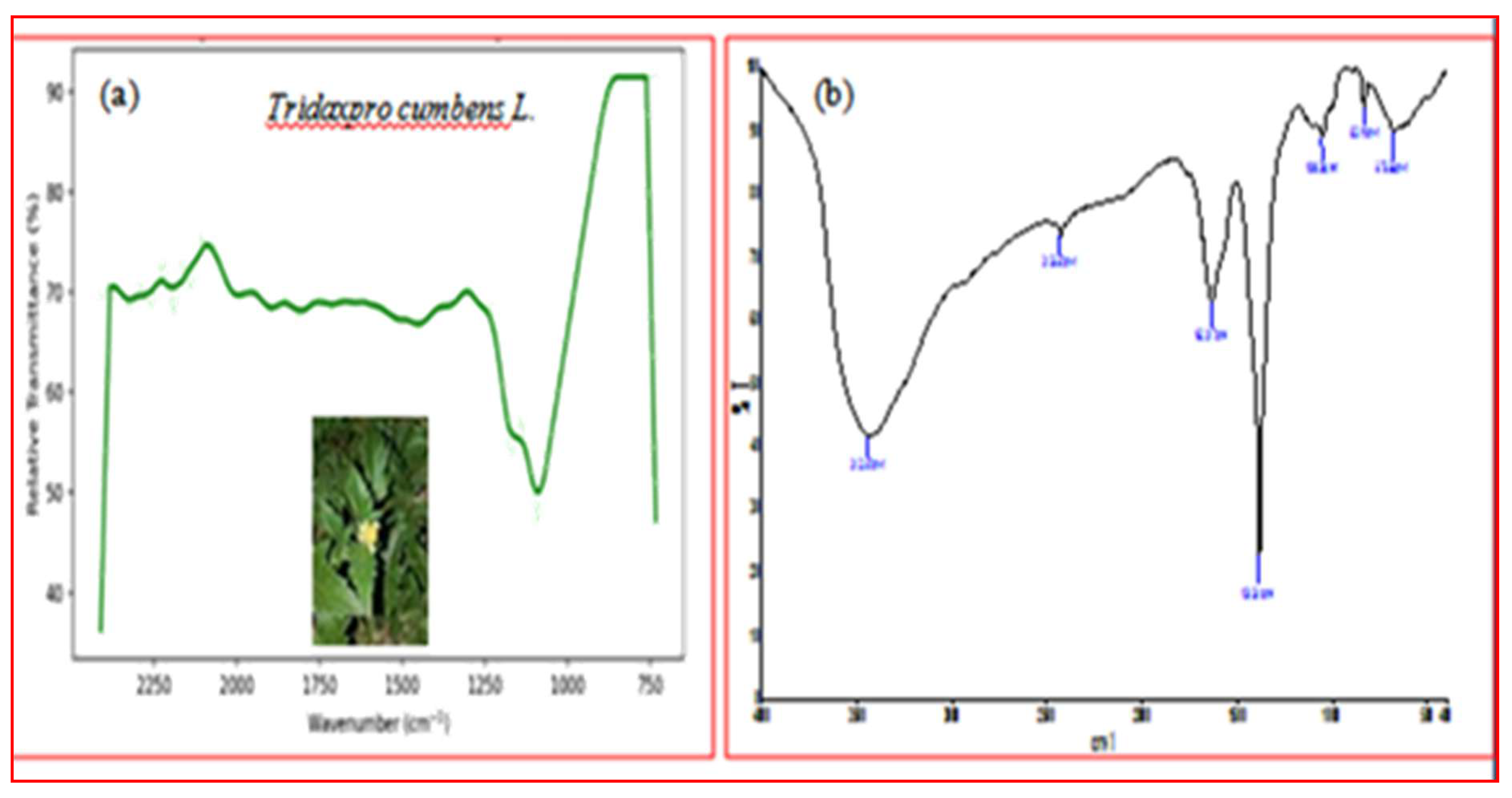
Figure 4.
XRD patterns of Synthesized Nickel nitrate nanoparticles.
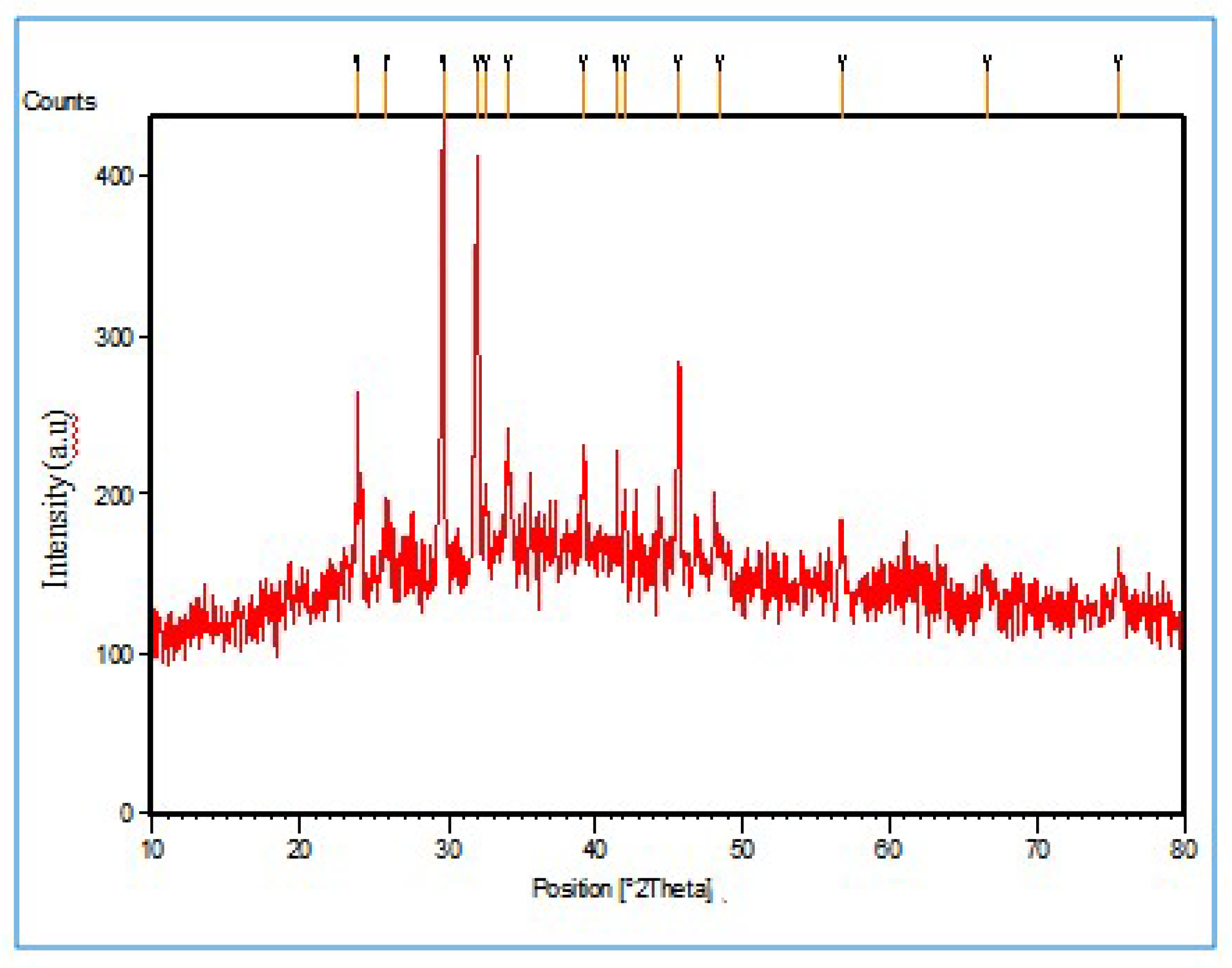
Figure 5.
(a-b) SEM image and (c-d) particle size distributions of Ni(NO3)2,(e-f) isotherm for Ni(NO3)2 nanocomposite, respectively.
Figure 5.
(a-b) SEM image and (c-d) particle size distributions of Ni(NO3)2,(e-f) isotherm for Ni(NO3)2 nanocomposite, respectively.
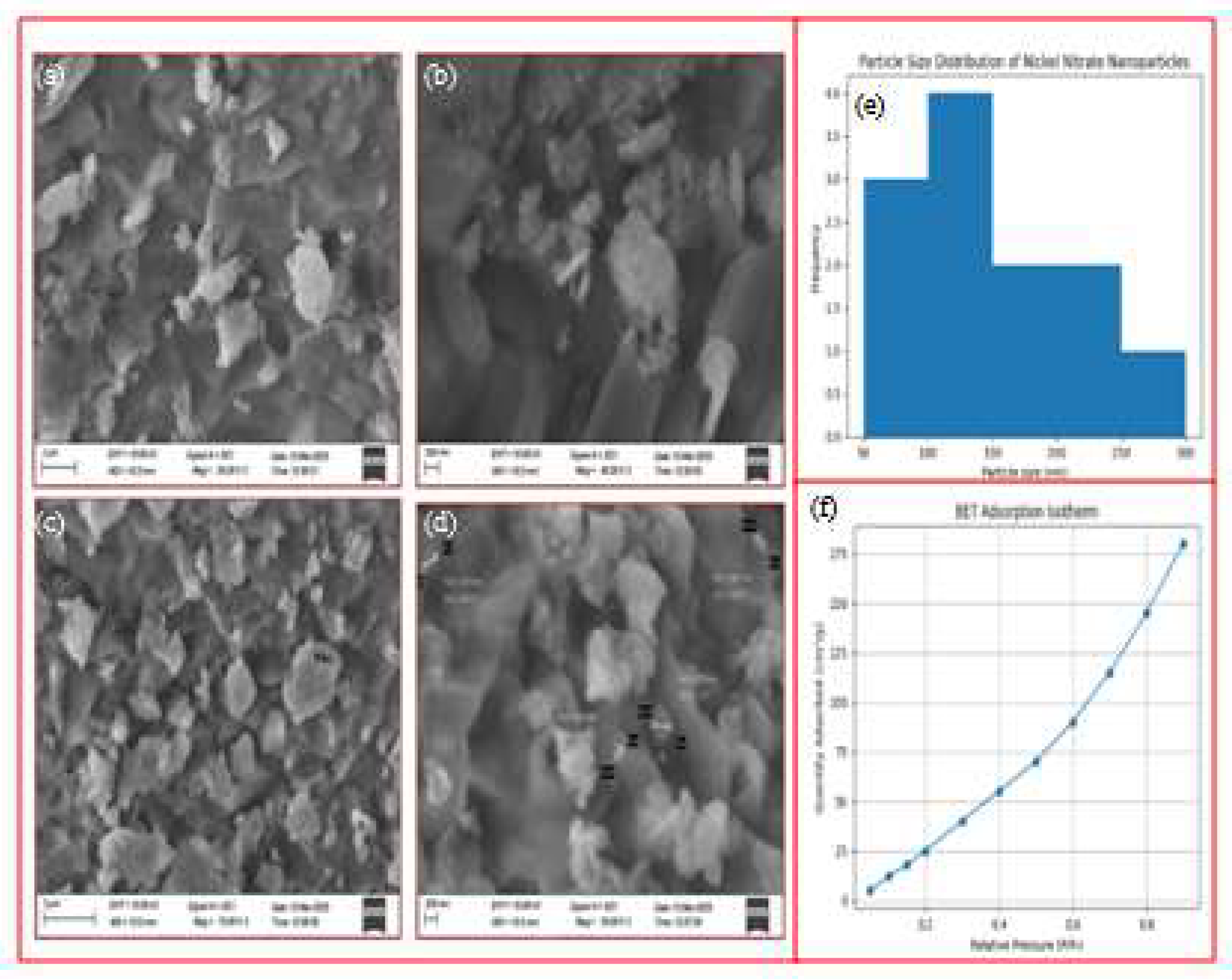
Figure 6.
(a-b) Antimicrobial Activity Ni(NO3)2 nano particles using Tridax procumbens extract.
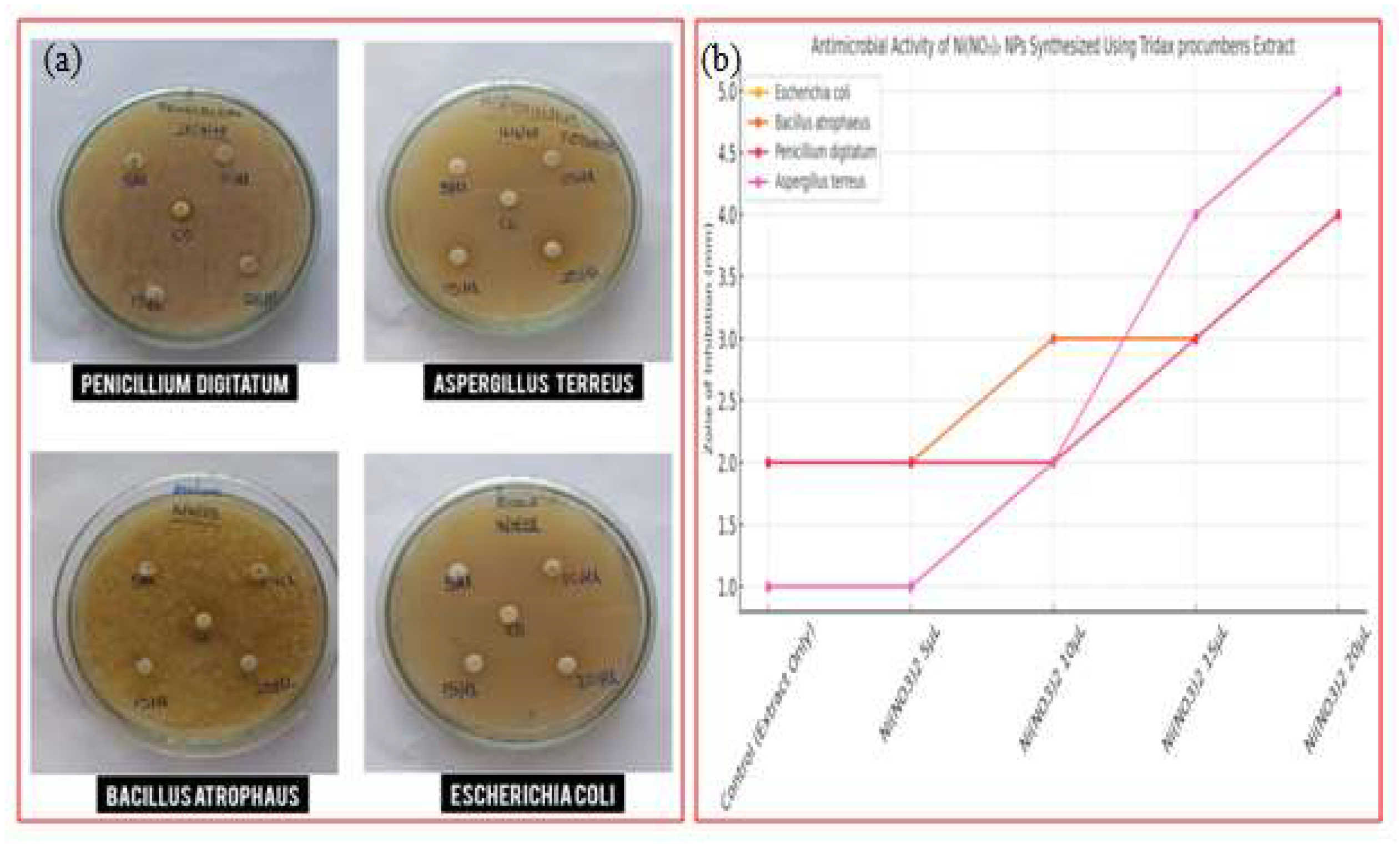
Figure 7.
Photodegradation curves of yellow RGB Red AZO Dye by the Ni (NO3)2 NPs at pH (a) 3, (b) 7, (c) 10 and (d) the percentage degradation curves for all pHs.
Figure 7.
Photodegradation curves of yellow RGB Red AZO Dye by the Ni (NO3)2 NPs at pH (a) 3, (b) 7, (c) 10 and (d) the percentage degradation curves for all pHs.
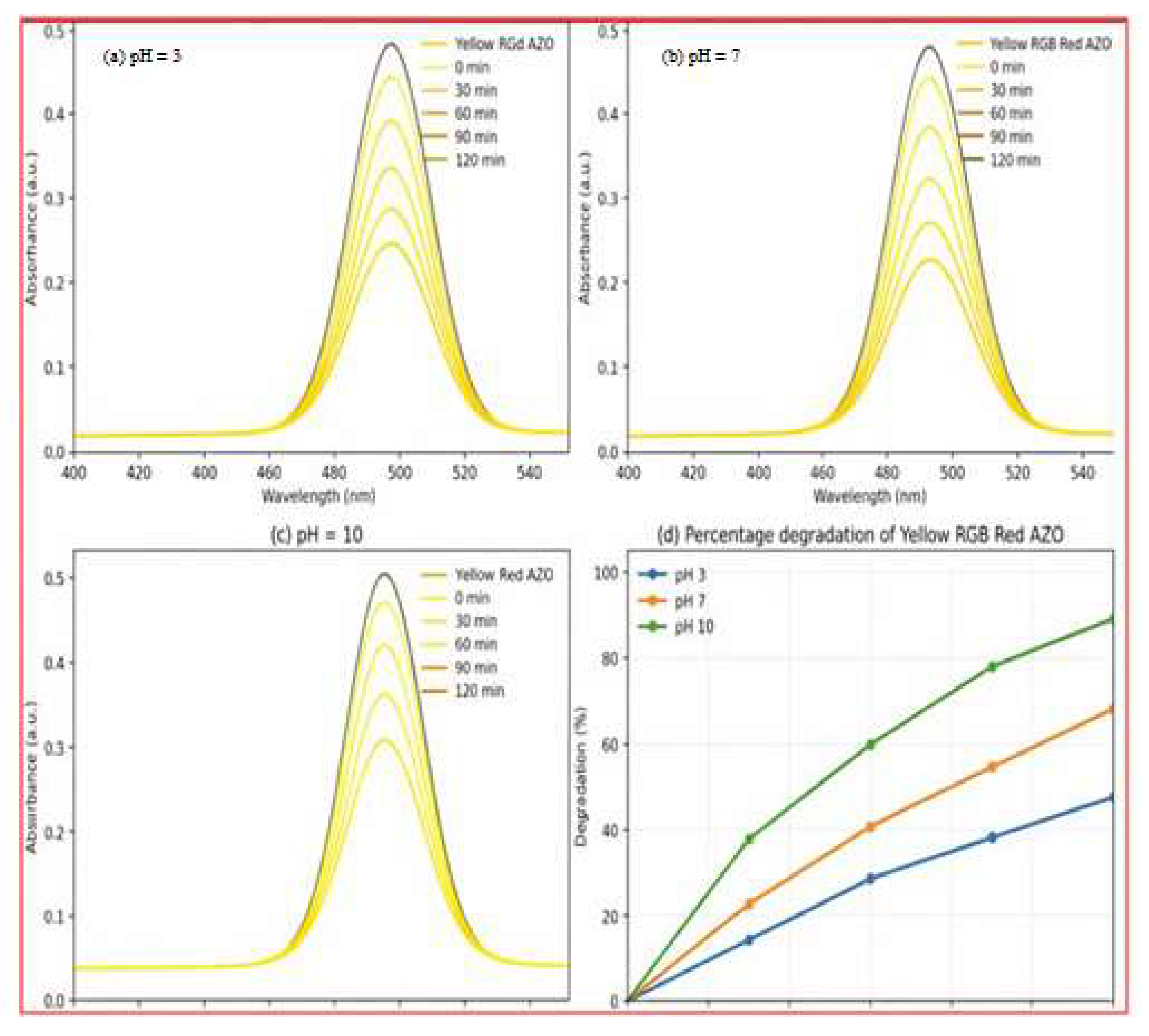
Figure 11.
Scavenger effect on photocatalytic degradation of yellow RGB Red AZO by Ni (NO3)2 NPs using Tridax procumbens.
Figure 11.
Scavenger effect on photocatalytic degradation of yellow RGB Red AZO by Ni (NO3)2 NPs using Tridax procumbens.
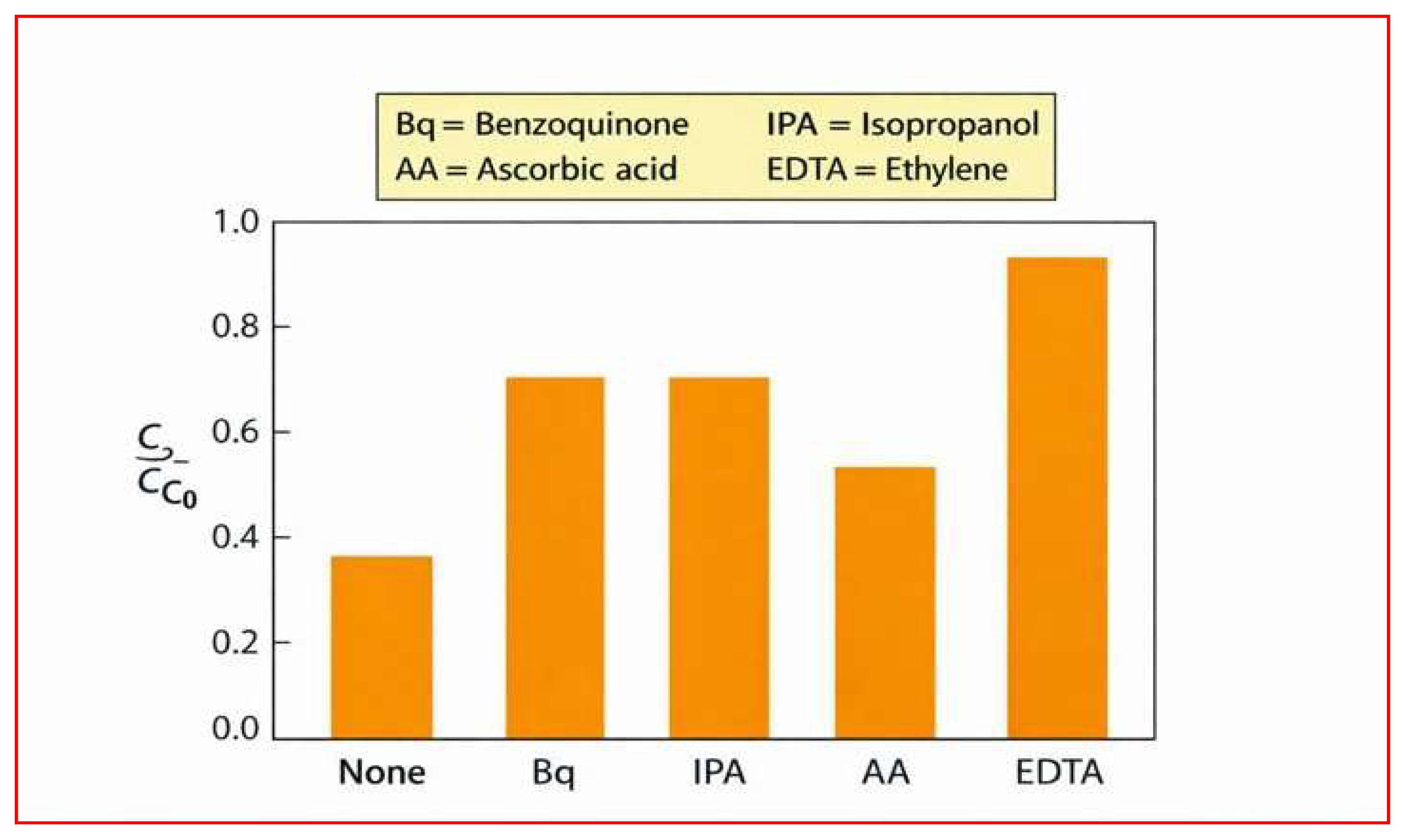
Figure 12.
The photocatalytic degradation of yellow RGB Red AZO Dye by the Ni (NO3)2 NPs using Tridax procumbens.
Figure 12.
The photocatalytic degradation of yellow RGB Red AZO Dye by the Ni (NO3)2 NPs using Tridax procumbens.
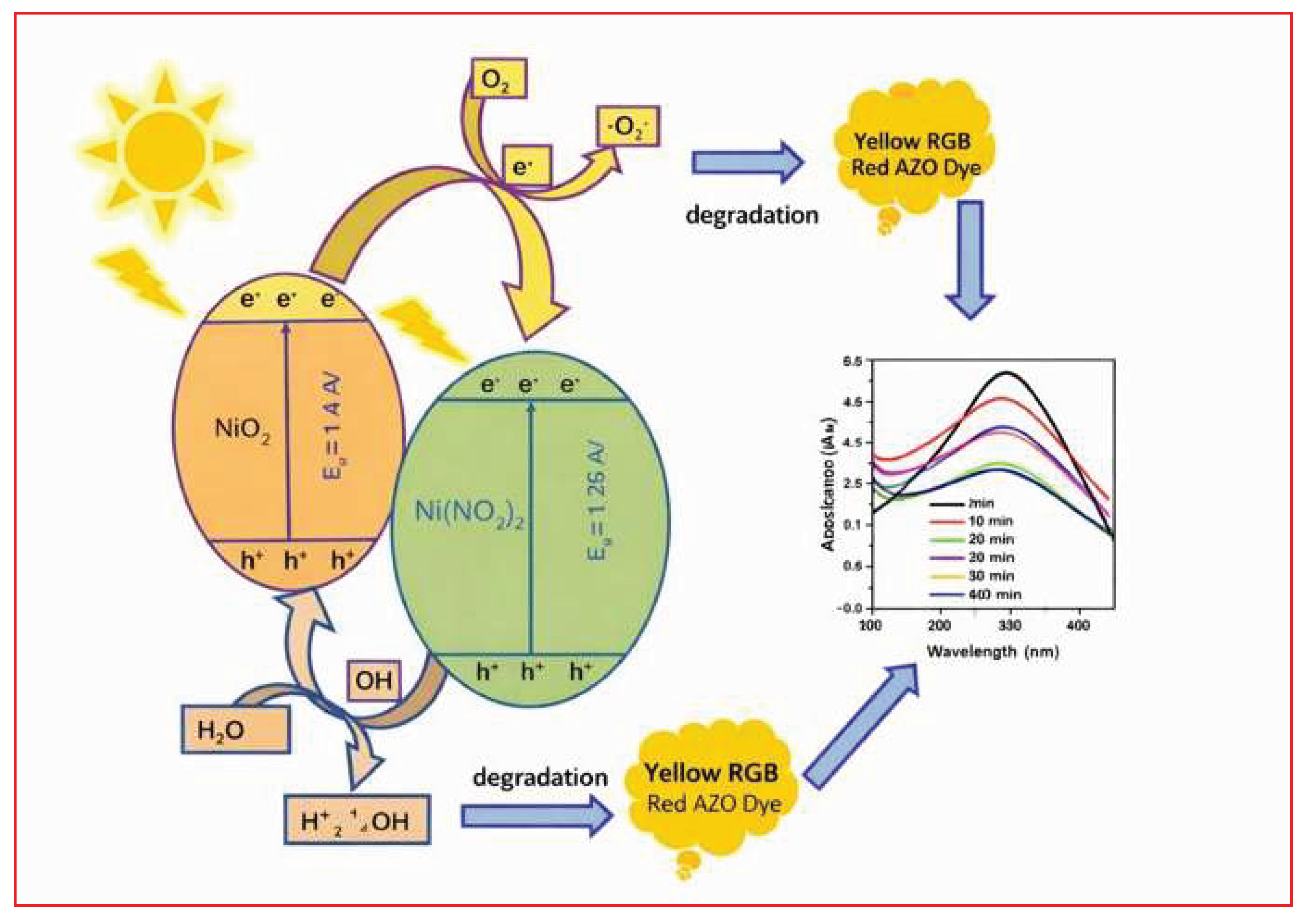
Table 2.
presents the rate concentration for the pseudo-first order,R2 values, maximum degradation percentage, and the time required to achieve maximum degradation of the Ni (NO3)2 composites at varied dose levels.
Table 2.
presents the rate concentration for the pseudo-first order,R2 values, maximum degradation percentage, and the time required to achieve maximum degradation of the Ni (NO3)2 composites at varied dose levels.
| S.No | Catalyst dose (mg L-1) | Rate constant k (min -1) Ni (NO3)2 |
R2 Value | (%) Degradation | Time |
|---|---|---|---|---|---|
| 1. | 10 | 0.0068 | 0.948 | 58 | 120 |
| 2. | 30 | 0.0145 | 0.965 | 72 | 120 |
| 3. | 50 | 0.0223 | 0.978 | 85 | 100 |
| 4. | 70 | 0.0289 | 0.989 | 93 | 90 |
| 5. | 90 | 0.0347 | 0.995 | 98 | 90 |
Disclaimer/Publisher’s Note: The statements, opinions and data contained in all publications are solely those of the individual author(s) and contributor(s) and not of MDPI and/or the editor(s). MDPI and/or the editor(s) disclaim responsibility for any injury to people or property resulting from any ideas, methods, instructions or products referred to in the content. |
© 2026 by the authors. Licensee MDPI, Basel, Switzerland. This article is an open access article distributed under the terms and conditions of the Creative Commons Attribution (CC BY) license (http://creativecommons.org/licenses/by/4.0/).
Copyright: This open access article is published under a Creative Commons CC BY 4.0 license, which permit the free download, distribution, and reuse, provided that the author and preprint are cited in any reuse.


