

Submitted:
14 April 2026
Posted:
16 April 2026
You are already at the latest version
Abstract
Aircraft flyover measurements are used to record the acoustic pressure signals generated by large civil aircraft as they fly over a large-scale microphone array deployed on the ground, thereby obtaining the spatial distribution of aircraft airframe noise and providing technical support for aircraft noise reduction. Aircraft flyover measurements have been widely applied in the research and development of numerous large civil aircraft in Europe and North America since the 1990s. In recent years, aircraft flyover measurements have also been extensively adopted in China, particularly with the rapid development of C919, China's large civil aircraft. Computer vision techniques have also been applied to microphone position calibration and aircraft trajectory determination in measurements, which has effectively improved measurement efficiency and accuracy. This paper presents an integrated procedure for aircraft flyover measurements of large civil aircraft in China, including microphone array design, installation, and calibration, noise acquisition system setup and data acquisition, aircraft trajectory determination, and data processing.
Keywords:
aircraft flyover measurements
; microphone array
; large civil aircraft
; computer vision
; aircraft trajectory determination
; sound source localization
1. Introduction
With the development of the civil aviation industry, the impacts of aircraft noise on communities surrounding airports and on public health have become increasingly prominent. In response, the International Civil Aviation Organization (ICAO) and national civil aviation authorities have successively established explicit noise limits for aircraft through airworthiness regulations [1,2]. Effective aircraft noise control generally requires a clear understanding of the spatial distribution of airframe noise sources. Aircraft flyover measurements use a large-scale microphone array deployed on the ground to record the sound pressure signals generated as a large civil aircraft passes overhead, thereby allowing the spatial distribution of airframe noise sources to be identified and providing technical support for aircraft noise reduction.
The widespread application of aircraft flyover measurements in the aviation field can be traced back to the pioneering work of Michel’s team at the German Aerospace Center (DLR) in the 1990s [3,4,5]. They were the first to apply large-aperture microphone arrays to outdoor aircraft flyover measurements, achieving spatial localization of the major noise sources under real flight conditions. Since then, aircraft flyover measurements have been widely used in the development of mainstream aircraft types in Europe and North America, and dedicated testing frameworks and analysis methods have gradually been developed for different aircraft configurations. From 2001 to 2005, under the Quiet Technology Demonstrator (QTD) program, the National Aeronautics and Space Administration (NASA) and Boeing conducted multiple aircraft flyover measurement campaigns on the B777 [6,7]. By combining far-field ground microphones with large-aperture phased microphone arrays, they identified and compared the noise contributions of key components such as the landing gear and high-lift system. In 2002, DLR and French Aerospace Lab (ONERA) jointly conducted multiple aircraft flyover measurements on the A340 using a 16 m × 16 m nested array [8]. The results showed that aircraft flyover measurements could identify the locations of the dominant noise sources with relatively good stability, whereas the estimated source strengths were strongly affected by test conditions and showed relatively weak consistency. In 2004, DLR performed dedicated aircraft flyover measurements on the A319 for the validation of airframe noise prediction methods and the establishment of a noise database, providing foundational data support for subsequent noise-reduction studies [9]. In 2012, Bombardier Aerospace and the acoustics group at the Université de Sherbrooke conducted a five-day aircraft flyover measurement campaign [10]. By deploying a large-aperture microphone array and two high-definition cameras, they recorded the noise and trajectory data from multiple CRJ200 flyovers, thereby verifying the repeatability of a synchronized noise-and-trajectory acquisition method under real airport operating conditions. In 2018, NASA performed research on the B737MAX and systematically described the experimental procedures of aircraft flyover measurements, extending its application to full-scale flight validation of noise-reduction components [11]. From 2018 to 2022, DLR carried out a series of aircraft flyover measurements using its research aircraft ATRA (an Airbus A320-232) [12,13]. During these campaigns, measurement procedure was further optimized through new aircraft trajectory determination methods and the adoption of a large multi-arm spiral array. In 2020, NASA and Boeing conducted aircraft flyover measurements on the B787. The study provided a systematic description of engineering aspects including array deployment, microphone position calibration, and the synchronized acquisition of acoustic measurements and aircraft trajectory data [14].
In China, aircraft flyover measurements were initiated during the development of the C909 regional aircraft (formerly ARJ21), laying an important practical and technical foundation for subsequent research. From 2012 to 2013, Chen Tao et al. conducted aircraft flyover measurements on the C909 under various flight conditions and analyzed the corresponding microphone array data [15,16,17]. Their work characterized the noise contributions of key components, especially the landing gear and high-lift systems, under different operating conditions, and provided important support for later noise-reduction design and engineering flight-test validation.
In recent years, the development of the Commercial Aircraft Corporation of China (COMAC) C919 large civil aircraft has made rapid progress. The aircraft completed its maiden flight on May 5, 2017, received its Type Certificate from the Civil Aviation Administration of China (CAAC) on Sept. 29, 2022, was first delivered on Dec. 9, 2022, and successfully entered commercial service with its first commercial flight on May 28, 2023. Aircraft flyover measurements were widely applied during the development of the C919. At present, no regulation specifically dedicated to research-oriented aircraft flyover measurements for source localization has been identified in China.
The objective of this study is to establish and validate an integrated procedure for aircraft flyover measurements of large civil aircraft in China. The contribution of this work lies in integrating the four main stages of microphone array design, installation, and calibration; noise acquisition system setup and data acquisition; aircraft trajectory determination; and data processing into a unified workflow for real outdoor aircraft flyover measurements. Within this workflow, the latest computer vision methods and moving-source beamforming algorithms are used to improve measurement efficiency and practical applicability.
This paper is organized as follows. Section 2 outlines the overall procedure of aircraft flyover measurements. Section 3 presents the design, installation, and calibration of the microphone array. Section 4 describes the setup of the noise acquisition system and the acquisition of flyover noise data. Section 5 introduces the method for aircraft trajectory determination. Section 6 presents the data processing procedure and its application to sound source localization. Finally, conclusions are given in Section 8.
2. Overall Procedure of Aircraft Flyover Measurements
In practical full-scale flyover tests, the overall procedure of aircraft flyover measurements for domestically developed large civil aircraft can be divided into four main stages, as illustrated in Figure 1, including microphone array design, installation, and calibration, noise acquisition system setup and data acquisition, aircraft trajectory determination, and data processing.
The first stage involves microphone array design, off-site assembly, on-site deployment, microphone sensitivity calibration and position calibration, thereby providing reliable array inputs for subsequent sound source localization. After the array preparation is completed, a flyover noise acquisition system is established to synchronously record multi-channel array noise data during the aircraft flyover. Meanwhile, aircraft trajectory information is obtained using a dual-camera system combined with advanced computer vision algorithms. Finally, the acquired noise data, array coordinates, and trajectory information are integrated for data processing and sound source localization. The technical details of each stage are presented in the following sections.
3. Microphone Array Design, Installation and Calibration
3.1. Microphone Array Design
The microphone array used for aircraft flyover measurements must support broadband source localization. At low frequencies, spatial resolution is governed primarily by array aperture, which calls for a large aperture. At mid- and high-frequency ranges, accurate source localization and reliable beamforming require a higher spatial sampling density and a more uniform planar sensor distribution [18]. In practice, the number of available acquisition channels and the constraints of field deployment make it difficult for a single array geometry to satisfy these competing requirements across the full frequency range. For this reason, a nested array consisting of an inner subarray and an outer subarray was adopted in this study [19]. The overall array layout is shown in Figure 2.
The inner subarray is intended to provide the spatial sampling density required for source localization at mid- and high-frequency ranges. It therefore adopts a multi-arm spiral geometry [18], with an effective aperture of 2 m. The subarray comprises seven spiral arms, each carrying 16 microphones, giving a total of 112 channels. The outer subarray is introduced to increase the effective aperture and thus improve source discrimination at low frequencies. To simplify field deployment of the large array, the outer subarray is arranged as a straight-arm layout, with each arm extending outward along the directions defined by the inner subarray. Based on the resolution requirement at the lowest frequency of interest, the effective aperture of the outer subarray is set to 14.5 m. Each arm contains 16 microphones, again giving a total of 112 channels.
By combining an inner multi-arm spiral subarray with an outer straight-arm subarray, the proposed array achieves broadband source localization while remaining practical for large-scale field deployment.
3.2. Off-Site Array Assembly
Preparation of the large microphone array was divided into two stages: off-site assembly and on-site deployment. This approach improved deployment efficiency and reduced installation errors associated with complex on-site operations. The off-site stage includes equipment installation, microphone mounting and cabling, and marking the positions of individual modules. This enables transportable array modules to be prepared in advance and to deploy them rapidly at the test site, thereby reducing the effort required for on-site setup during flyover measurements.
The inner subarray is constructed as an integrated unit on a circular platform 2.2 m in diameter. The platform consists of a thick wooden base overlaid with an aluminum plate of the same size to provide sufficient structural rigidity and to reduce the influence of changing ground conditions on measurement consistency. After the origin and coordinate axes are established, the planar coordinate system and microphone locations are marked on the platform surface, followed by microphone installation, cabling, and fastening. The assembled inner subarray is shown in Figure 3. This integrated design helps maintain positional stability of the microphones during transportation and field deployment.
The outer subarray is constructed as a modular straight-arm layout. To facilitate transportation and rapid field deployment, each arm is divided into three independent modules. Every module consists of a wooden base of a specified length, overlaid with a standardized aluminum plate used as the reflecting surface, with the plate center taken as the microphone location. Once the microphones are installed, cabling and fixation are completed for each module, and the corresponding deployment positions are marked in advance. The assembled outer subarray is shown in Figure 4. This modular design helps streamline on-site deployment of the large microphone array.
3.3. On-Site Array Deployment
After the test window has been established, on-site deployment of the array is carried out, including module placement, cable connection, and channel verification. The inner platform is positioned first, with its geometric center aligned with the center of the measurement area. The outer modules are then arranged in the predefined order so that they extend outward along the tangential directions defined by the arms of the inner subarray, forming the full nested array. A final channel check is carried out to confirm normal acquisition on all microphone channels, correct channel numbering and mapping, and reliable cable connections. The deployed array is shown in Figure 5.
3.4. Microphone Sensitivity Calibration
Each microphone channel was calibrated individually using a standard acoustic calibrator to ensure a consistent amplitude response across the array. The channel responses were recorded under identical excitation conditions, and the resulting sensitivity correction factors were used for subsequent amplitude correction.
3.5. Microphone Position Calibration
Errors in microphone position calibration can degrade array phase coherence and thereby bias source localization. Direct measurement of individual microphone positions using high-precision surveying equipment can provide accurate coordinates, but the procedure is labor-intensive, time-consuming, and difficult to implement efficiently under field conditions. This makes it impractical for the rapid deployment of large outdoor arrays. To address this limitation, a computer-vision-based method was developed for microphone position calibration. The procedure includes array image acquisition, distortion correction and perspective rectification, reflector detection and image localization, and microphone coordinate estimation.
The inner subarray is constructed as an integrated unit, and its geometry is therefore relatively stable. Position calibration is accordingly applied only to the microphones in the outer subarray. The overall procedure is shown in Figure 6. A high-resolution camera is first used to capture an image of the full array. The image is then corrected for lens distortion and rectified by perspective transformation to obtain a uniformly scaled plan view. The reflector plates are identified based on their color and shape, and their centers are taken as the image coordinates of the microphones. These image coordinates are then mapped to the planar array coordinate system to determine the calibrated positions of all microphones in the outer subarray.
The proposed calibration method was assessed by comparison with reference coordinates obtained from high-precision surveying of the microphones in the outer subarray. The mean error between the surveyed coordinates and the vision-based calibration results was 0.076 m, which is approximately 0.52% of the array aperture. According to previous studies [20], positional errors at this level are not expected to significantly affect source localization performance in aircraft flyover measurements. In view of the much greater operational complexity and time required for direct measurement—typically several to tens of times greater than that of the proposed method—the computer-vision-based approach is better suited to large-scale field applications.
4. Noise Acquisition System Setup and Data Acquisition
4.1. Noise Acquisition System Setup
The acoustic measurement system comprises microphones, a data acquisition unit, and a host computer. The array is equipped with 224 PCB 130F22 microphones for multichannel pressure recording. These microphones provide adequate frequency response over the frequency range of interest. Data acquisition is implemented on a National Instruments (NI) PXIe platform consisting of a PXIe-8880 controller, fourteen PXIe-4497 modules, and an 18-slot PXIe-1085 chassis. Together, these components provide synchronized acquisition across 224 channels and support high-speed data transfer.
4.2. Flyover Noise Data Acquisition
Noise acquisition system is started shortly before the aircraft approaches the array and continuously records all microphone channels synchronously. Global Positioning System (GPS) pulse signals are used for triggering, and absolute timestamps are recorded simultaneously, allowing the noise data to remain time-aligned across channels and allowing direct temporal alignment with the reconstructed trajectory. The flyover noise data acquisition process is shown in Figure 7.
5. Aircraft Trajectory Determination
The aircraft position and velocity during the flyover are key inputs to sound source localization in aircraft flyover measurements, and their accuracy directly affects the reliability of the resulting acoustic images. Early studies proposed a dual-camera-based method for determining the aircraft trajectory and demonstrated its feasibility [10]. However, limited by the algorithms available at the time, most of these studies relied on conventional target detection methods. With recent advances in computer vision, more sophisticated visual techniques can now be incorporated into trajectory determination. Building on these earlier efforts, this study proposes a trajectory determination method based on a dual-camera system and instance segmentation. The overall procedure includes image acquisition system setup, camera calibration and image correction, image-based aircraft localization using instance segmentation, three-dimensional coordinate estimation, and trajectory reconstruction.
5.1. Image Acquisition System Setup
In the proposed approach, two ground-based industrial cameras are employed to form a dual-view observation system for synchronized image acquisition during the aircraft flyover. The image acquisition system comprises two cameras, a network switch, and a host computer. Both cameras are connected to the same switch via Ethernet, while the switch is connected to the host computer to enable synchronized image acquisition and data storage. Basler acA1300-60gc industrial cameras equipped with C23-0824-5M-P lenses are employed in the image acquisition system. This configuration satisfies the basic requirements for imaging a high-speed target in a flyover scenario for three reasons. First, the cameras provide a maximum frame rate of 60 fps, meeting the temporal resolution requirement for trajectory reconstruction during the flyover. Second, the global shutter effectively eliminates rolling distortion and reduces motion blur associated with high-speed target motion. Third, each image frame is assigned a hardware timestamp, enabling unified temporal alignment among the image sequence, the GPS timing reference, and the noise acquisition system. The host computer is also equipped with a GPS timing module to obtain absolute time information and trigger signals, thereby providing a common temporal reference for synchronizing the trajectory and acoustic data.
To maintain spatial consistency between the reconstructed aircraft trajectory and the array-based sound source localization results, trajectory determination is carried out in the same planar coordinate system used for the microphone array. A three-dimensional coordinate system is then established by defining the plane of the inner subarray as the reference plane, with , as illustrated in Figure 8. In the present study, Camera 1 and Camera 2 are positioned approximately at and , respectively. Their optical axes are adjusted so that the cameras provide a stable overlapping field of view above the array, covering the primary observation region during the aircraft flyover.
5.2. Camera Calibration
Because of lens characteristics and manufacturing tolerances, the actual imaging process generally deviates from the ideal pinhole camera model and introduces image distortion. Camera calibration is therefore performed in advance, and the acquired images are subsequently corrected using the calibrated camera parameters. The basic principle is as follows:
Let the homogeneous coordinates of a spatial point in the world coordinate system be defined as
where X, Y, and Z are the coordinates of the point in the world coordinate system. Let the corresponding homogeneous image coordinates be denoted by
where u and v are the pixel coordinates of the projected point on the image plane. Under the ideal pinhole imaging model, their relationship can be written as
where is the intrinsic parameter matrix of the camera, containing the focal lengths and principal point coordinates. and are the rotation matrix and translation vector in the extrinsic parameters, respectively, which describe the orientation and position of the camera relative to the reference coordinate system. To account for lens distortion, radial and tangential distortion terms are further introduced based on the normalized image-plane coordinates . Let
the radial distortion can be expressed as
where , , and are the radial distortion coefficients. The tangential distortion can be written as
where and are the tangential distortion coefficients. By combining radial and tangential distortion, the distorted normalized coordinates are obtained as
The normalized coordinates can then be mapped to the pixel coordinate system through the intrinsic matrix , yielding
where and are the effective focal lengths in the pixel coordinate system, and denotes the principal point.
Based on the imaging and distortion model described above, camera calibration was carried out using Zhang’s planar checkerboard method [21]. First, a checkerboard calibration target with known geometric dimensions was imaged from multiple viewing angles to obtain calibration images under different poses. The checkerboard corner points were then detected in each image, and the correspondence between their pixel coordinates and the physical coordinates on the calibration target was established. Finally, the intrinsic parameters, extrinsic parameters, and distortion coefficients were estimated by nonlinear optimization with reprojection error minimization as the objective. Representative calibration images and the corresponding corner detection results are shown in Figure 9.
After the intrinsic matrix and distortion coefficients were obtained, the raw aircraft images were corrected according to the distortion model described above.
5.3. Image-Plane Localization Using Instance Segmentation
Conventional target detection methods typically represent the target by a bounding box and take its center as the target position. In aircraft flyover measurement scenarios, however, the predicted bounding box is often unstable due to variations in viewing angle, aircraft attitude, and aircraft configuration. Consequently, the estimated position may deviate from the representative image position of the aircraft, which in turn degrades the accuracy of subsequent trajectory determination. To overcome this limitation, an instance segmentation method is adopted in this study to extract the aircraft mask, from which the aircraft position in the image plane is determined.
5.3.1. YOLO11 Model
You Only Look Once (YOLO) is employed for aircraft detection and mask extraction [22]. The architecture of YOLO11 is shown in Figure 10. As a single-stage network integrating detection and segmentation, YOLO11 consists of three main components: a backbone, a neck, and a head. The backbone comprises multiple convolutional layers and C3k2 modules for progressively extracting semantic features at different levels. An SPPF (Spatial Pyramid Pooling Fast) module is used to enlarge the receptive field and enhance multi-scale feature representation, while a C2PSA (Cross Stage Partial with Pyramid Squeeze Attention) module is introduced in the high-level feature extraction stage to strengthen the representation of key target regions. The neck performs multi-scale feature fusion through upsampling and feature concatenation, thereby improving the recognition of small targets and targets with scale variations. The head incorporates a segmentation branch and outputs detection and segmentation features at multiple scales, ultimately generating target categories and pixel-level masks for instance-level aircraft recognition and mask extraction. The model maintains detection accuracy while preserving inference efficiency and provides the required region information for subsequent aircraft contour extraction and image-plane localization.
5.3.2. Image Localization
Figure 11 shows the image-plane localization procedure at a given instant using instance segmentation. The raw images from Camera 1 and Camera 2 are first processed by the YOLO11 model to identify the aircraft and extract the corresponding masks. The geometric centroid of each mask is then computed and used as the aircraft position in the image plane for the two cameras at that instant.
Compared with conventional tracking or detection methods based on bounding-box outputs, the instance-segmentation-based strategy provides pixel-level aircraft masks rather than coarse rectangular regions. In aircraft flyover measurements, the apparent aircraft shape, scale, and attitude vary continuously during the observation interval, which may cause the center of a predicted bounding box to deviate from a representative geometric image position of the aircraft. By contrast, the centroid extracted from the segmented mask is less sensitive to such shape and scale variations and therefore provides a more stable image-plane position for subsequent dual-view triangulation. This improvement in image-plane localization further enhances the robustness of the reconstructed trajectory under real outdoor measurement conditions.
5.4. 3D Coordinate Estimation and Trajectory Reconstruction
To obtain the continuous spatial position of the aircraft during the flyover, three-dimensional coordinate estimation and trajectory reconstruction are performed based on the observations from two cameras. First, the image-plane coordinates of the aircraft in the two views are combined with the camera extrinsic parameters to estimate the three-dimensional aircraft coordinates in the unified coordinate system through triangulation. Specifically, the target pixel in each view is back-projected, together with the corresponding camera parameters, to form two spatial rays in the common array coordinate system. Under ideal conditions, the intersection of the two rays gives the three-dimensional position of the aircraft. In practice, however, the two rays generally do not intersect exactly because of image-plane localization errors, camera calibration errors, and other uncertainties. Therefore, the closest points on the two rays are determined using the shortest-distance criterion, and their midpoint is taken as the estimated aircraft position. Repeating this procedure for each frame yields a discrete sequence of three-dimensional aircraft coordinates in the unified coordinate system.
Interpolation and smoothing are further applied to the discrete coordinate sequence to reconstruct a continuous flight trajectory. This process reduces frame-to-frame localization jitter and suppresses occasional outliers introduced during image acquisition, thereby improving the continuity and smoothness of the reconstructed trajectory and making it more consistent with the actual aircraft motion.
Figure 12 illustrates the three-dimensional coordinate estimation process and the resulting trajectory reconstruction in the unified coordinate system. The dashed lines indicate the corresponding rays, and the blue curve shows the reconstructed aircraft trajectory. The reconstructed trajectory is continuous and smooth over the observation interval and provides a continuous estimate of the aircraft motion in the unified coordinate system.
5.5. Error Analysis
The accuracy of the reconstructed aircraft trajectory was quantitatively evaluated using onboard flight data, in which height and velocity were adopted as independent references. Figure 13 and Figure 14 present visual comparisons between the reconstructed results and the onboard reference data. For comparison, the corresponding results obtained using the bounding-box-based localization method are also included in the same figures. Although both methods generally capture temporal variations in height and velocity that are consistent with the reference data, the instance-segmentation-based method exhibits clearly smaller errors in both velocity and height estimation than the bounding-box-based method.
A further quantitative statistical analysis was conducted, and Table 1 summarizes and compares the trajectory-reconstruction errors obtained using the segmentation-based and bounding-box-based image-localization strategies. For the segmentation-based method, the RMSE and MAPE are 0.95 m and 0.65% for height estimation, and 2.19 m/s and 2.35% for velocity estimation, respectively. These results indicate that the reconstructed trajectory achieves meter-level accuracy and remains sufficiently stable for the subsequent sound source localization analysis in the present study. The comparison also suggests that the pixel-level mask centroid provides more reliable image-plane observations for triangulation-based trajectory reconstruction than the bounding-box-based alternative.
6. Data Processing
6.1. The MCB-GT Algorithm
The Mode Composition Beamforming for General Trajectory (MCB-GT) algorithm proposed by Zhang is adopted for sound source localization in aircraft flyover measurements [23]. This algorithm extends the Mode Composition Beamforming (MCB) principle from rotating-source localization to the localization of sources undergoing general motion [24]. A frequency-domain mode representation of the sound field generated by a generally moving source is established, on the basis of which the MCB-GT algorithm is formulated. Compared with conventional beamforming methods based on fixed propagation-delay phase compensation, MCB-GT can more appropriately characterize the Doppler effect induced by source motion and the time-varying propagation geometry during flyover, thereby improving the applicability of beamforming to moving sound sources.
Assume that the array consists of M microphones, and let the position of the m-th microphone be denoted by (). Let denote the position vector of the s-th scan point, and be the target angular frequency. Then, at the shifted frequency , the received spectrum at the array microphones can be written as
where is the spectrum of the equivalent source at the scan point and angular frequency , is the free-field Green’s function, is the instantaneous propagation distance from the source trajectory to the microphone, and denotes the Fourier transform evaluated at the frequency shift .
For a microphone signal containing N sampled points over a sampling duration T, the frequency resolution is . Let denote the shifted mode order. The microphone signal in the time domain can then be written as the superposition of a series of discrete modes:
where is the transfer function of the -th shifted mode, defined as
which further gives
Accordingly, the transfer function of each shifted mode can be calculated directly from the microphone position calibration results and the aircraft trajectory determination results.
Based on the principle of mode composition localization, the beamforming output of MCB-GT can be expressed as
where denotes the beamforming output at the s-th scan grid point and imaging angular frequency , denotes the total number of modes, and denotes complex conjugation. A larger value of generally leads to more accurate localization, but also increases the computational cost. To balance computational efficiency and shifted-mode coverage, can be selected according to the maximum aircraft speed relative to the array, denoted by , within the sampling window, generally satisfying
where is a coefficient greater than 1, with a recommended value of 1.2, and denotes the rounding operation.
Overall, the MCB-GT algorithm exploits the shifted mode information associated with moving sound sources and provides a signal-processing framework for sound source localization in aircraft flyover measurements, thereby laying the foundation for subsequent high-resolution source identification.
6.2. Sound Source Localization Results
The practical applicability of the proposed flyover noise measurement procedure was demonstrated by applying the MCB-GT algorithm described above to flyover test data acquired during the approach of a large civil aircraft and performing sound source localization imaging. For comparison, conventional beamforming was used as a reference method, with all algorithm parameters kept identical to those used for MCB-GT. The conventional approach specifically employed a Doppler-corrected frequency-domain beamforming method for moving sound sources [25].
Figure 15 presents a direct comparison of the sound source localization results obtained by conventional beamforming and MCB-GT for the one-third-octave bands centered at 1.6 kHz and 2.5 kHz. All maps are shown using the same color scale, with the aircraft geometric outline superimposed as a spatial reference. In both frequency bands, the dominant noise sources are mainly distributed around the landing gear, engines, and flaps, which is consistent with the typical source distribution characteristics of aircraft flyover noise during the approach phase. These results demonstrate that the proposed procedure can provide effective and physically interpretable sound source localization results and is therefore suitable for aircraft flyover measurements of large civil aircraft.
Across both frequency bands, MCB-GT is able to clearly distinguish the flap noise, the three landing-gear noise sources, and the engine noise, whereas conventional beamforming fails to resolve the engine sources. This result shows that MCB-GT performs better under high-speed flyover conditions. Focusing on the nose landing-gear noise, MCB-GT exhibits a well-defined circular distribution and high localization accuracy. In contrast, conventional beamforming produces elongated distributions along the flight direction and shows significant localization bias. This discrepancy arises because traditional beamforming, during Doppler compensation, models the aircraft as a point source; consequently, when the sound source deviates from the array center, the localization performance deteriorates markedly. Therefore, the MCB-GT method is more appropriate for sound source localization in high-speed and geometrically complex scenarios such as aircraft flyover measurements.
7. Discussions
7.1. Array-Design Considerations
The microphone array design balances localization performance and field-deployment efficiency. Although spiral arrays generally provide better imaging performance, they are less convenient for modular deployment in large outdoor measurements. For this reason, the inner subarray adopted a spiral layout to maintain good localization capability at mid and high frequencies, whereas the outer subarray employed a straight-arm layout to facilitate transportation, assembly, and repeated installation in practical aircraft flyover measurements.
7.2. Benefits of Computer-Vision Integration
Computer-vision-based techniques improve the efficiency of aircraft flyover measurements while maintaining the geometric accuracy required for sound source localization. In the present procedure, vision-based methods support both rapid microphone coordinate calibration and aircraft trajectory reconstruction, thereby reducing manual effort and improving the automation of large-scale field measurements. In particular, as shown by the comparison between the segmentation-based and bounding-box-based localization strategies, instance segmentation provides more stable image-plane positions for subsequent triangulation and therefore improves the reliability of trajectory reconstruction.
7.3. Methodological Limitations and Future Work
Several practical factors may still affect the reliability of the proposed procedure. First, the installation condition of ground-board-mounted microphones is likely to affect sound source localization results. Different installation conditions may influence signal consistency across microphones and further affect the reliability of source localization [26]. Existing studies have mainly focused on the quantitative effects of such factors on sound pressure level measurements, whereas their influence on sound source localization has not yet been sufficiently investigated. In addition, outdoor environmental conditions may also affect acoustic propagation and optical trajectory determination. During the present test, the recorded field conditions included southeasterly wind, a wind speed of 2.08 m/s, a temperature of 20.2 °C, a relative humidity of 48.6%RH, and an atmospheric pressure of 102.43 kPa. Under these conditions, the proposed procedure remained stable in the present measurements. Nevertheless, under more challenging outdoor conditions, environmental effects on acoustic propagation may become more significant, and corresponding propagation corrections should be further considered in future studies.
Second, the comparative results presented in this study show that MCB-GT achieves better performance than the conventional method for moving sound source localization. This advantage is attributable to its better consistency with the physical characteristics of aircraft flyover. Compared with the conventional strategy of Doppler correction followed by beamforming, MCB-GT can more directly account for the time-varying propagation geometry and Doppler effect caused by aircraft motion. It is therefore theoretically more suitable for moving sound source localization in aircraft flyover measurements. However, its performance still depends on parameter settings such as the modal number, and its compatibility with deconvolution-based methods has not yet been systematically discussed. These issues will be further investigated in future work.
8. Conclusions
An integrated procedure for aircraft flyover measurements of large civil aircraft was established and validated under real outdoor test conditions. The results show that the proposed workflow can achieve microphone-position calibration, synchronized noise acquisition, trajectory reconstruction, and moving-source localization in a unified measurement framework.
Three main findings were obtained. First, in Microphone Array Design, Installation and Calibration, the computer-vision-based microphone calibration method achieved a mean position error of 0.076 m, corresponding to only 0.52% of the array aperture, indicating that it is sufficiently accurate for large-scale outdoor array deployment. Second, in Aircraft Trajectory Determination, the instance-segmentation-based method achieved meter-level reconstruction accuracy, with an RMSE of 0.95 m for height and 2.19 m/s for velocity, and yielded lower errors than the traditional method. Third, in Data Processing, MCB-GT showed clear advantages over conventional beamforming in the present flyover case, producing clearer separation of the engine and landing-gear source regions and more physically interpretable source localization results.
These results demonstrate the practical applicability of the proposed procedure in real aircraft flyover measurements. They also show that combining computer-vision-based geometric calibration and trajectory reconstruction with MCB-GT-based moving-source localization is an effective approach for large civil aircraft noise-source studies. This work provides a useful methodological reference for future aircraft flyover measurements and sound source localization research.
Author Contributions
Conceptualization, H.D. and W.M.; methodology, H.D. and C.W.L.; software, H.D. and C.W.L.; validation, H.D.; formal analysis, H.D.; investigation, Y.Z.; resources, C.W.L. and Y.Z.; data curation, H.D., C.W.L. and Y.Z.; writing—original draft preparation, H.D.; writing—review and editing, H.D.; visualization, C.W.L.; supervision, W.M.; project administration, W.M.; funding acquisition, W.M. All authors have read and agreed to the published version of the manuscript.
Funding
This research was funded by the National Natural Science Foundation of China, grant number W2442003.
Conflicts of Interest
The authors declare that they have no conflicts of interest.
Abbreviations
The following abbreviations are used in this article:
| ICAO | International Civil Aviation Organization |
| DLR | German Aerospace Center |
| ONERA | French Aerospace Lab |
| NASA | National Aeronautics and Space Administration |
| QTD | Quiet Technology Demonstrator |
| CAAC | Civil Aviation Administration of China |
| COMAC | Commercial Aircraft Corporation of China |
| GPS | Global Positioning System |
| NI | National Instruments |
| YOLO | You Only Look Once |
| SPPF | Spatial Pyramid Pooling Fast |
| C2PSA | Cross Stage Partial with Pyramid Squeeze Attention |
| MCB-GT | Mode Composition Beamforming for General Trajectory |
| MCB | Mode Composition Beamforming |
| RMSE | Root Mean Square Error |
| MAPE | Mean Absolute Percentage Error |
References
- International Civil Aviation Organization (ICAO). Annex 16 to the Convention on International Civil Aviation, Volume I—Aircraft Noise (Environmental Protection); ICAO: Montreal, QC, Canada, 2017. [Google Scholar]
- Electronic Code of Federal Regulations (e-CFR). 14 CFR Part 36—Noise Standards: Aircraft Type and Airworthiness Certification. Available online. 2026. (accessed on 3 March 2026).
- Michel, U.; Helbig, J.; Barsikow, B.; Hellmig, M.; Schuettpelz, M. Flyover noise measurements on landing aircraft with a microphone array. In Proceedings of the 4th AIAA/CEAS Aeroacoustics Conference, Toulouse, France, 2–4 June 1998; 1998. [Google Scholar] [CrossRef]
- Michel, U.; Qiao, W. Directivity of landing-gear noise based on flyover measurements. In Proceedings of the 5th AIAA/CEAS Aeroacoustics Conference and Exhibit, AIAA Paper 1999-1956. Bellevue, WA, USA, 10–12 May 1999; 1999. [Google Scholar] [CrossRef]
- Qiao, W.; Michel, U. Experimental study of airframe noise with improved data reduction method of microphone array measurements. Acta Aeronautica et Astronautica Sinica (in Chinese). 2008, 29, 527–533. [Google Scholar] [CrossRef]
- Stoker, R.; Guo, Y.; Streett, C.; Burnside, N. Airframe noise source locations of a 777 aircraft in flight and comparisons with past model-scale tests. In Proceedings of the Proceedings of the 9th AIAA/CEAS Aeroacoustics Conference and Exhibit, Hilton Head, SC, USA, 2003. 12–14 May 2003. [Google Scholar]
- Elkoby, R.; Brusniak, L.; Stoker, R.; Khorrami, M.R.; Abeysinghe, A.; Moe, J.W. Airframe noise test results from the QTD II flight test program. In Proceedings of the Proceedings of the 13th AIAA/CEAS Aeroacoustics Conference, Rome, Italy, 2007. 21–23 May 2007. [Google Scholar]
- Piet, J.F.; Michel, U.; B"ohning, P. Localization of the acoustic sources of the A340 with a large phased microphone array during flight tests. In Proceedings of the Proceedings of the 8th AIAA/CEAS Aeroacoustics Conference and Exhibit, Breckenridge, CO, USA, 2002. 17–19 June 2002. [Google Scholar]
- Guérin, S.; Michel, U.; Siller, H.; Finke, U.; Saueressig, G. Airbus A319 database from dedicated flyover measurements to investigate noise abatement procedures. In Proceedings of the Proceedings of the 11th AIAA/CEAS Aeroacoustics Conference, Monterey, CA, USA, 2005. 23–25 May 2005. [Google Scholar]
- Blais, J.F.; Camier, C.; Patenaude-Dufour, M.; Lesage, J.; Gauthier, P.A.; Berry, A. Fly-over aircraft noise measurement campaign at Montreal-Trudeau airport using a microphone array. Proceedings of Meetings on Acoustics 2013, 19, 055084. [Google Scholar] [CrossRef]
- Wong, J.W.; Nesbitt, E.H.; Jones, M.G.; Nark, D.M. Flight test methodology for NASA advanced inlet liner on 737MAX-7 test bed (Quiet Technology Demonstrator 3). In Proceedings of the Proceedings of the 25th AIAA/CEAS Aeroacoustics Conference, AIAA Paper 2019-2763. Delft, The Netherlands, 2019. 20–23 May 2019. [Google Scholar] [CrossRef]
- Siller, H.A.; Schumacher, T.; Hage, W. Low noise ATRA—Phased array measurements of jet noise in flight. In Proceedings of the Proceedings of the AIAA AVIATION 2021 FORUM, AIAA Paper 2021-2160. Virtual, 2021. 2–6 August 2021. [Google Scholar] [CrossRef]
- Lincke, D.; Schumacher, T.; Pieren, R. Evaluation of microphone array methods for aircraft flyover measurements: Development of a virtual test environment. In Proceedings of the Fortschritte der Akustik—DAGA 2022, Stuttgart, Germany, 2022; pp. 781–783. [Google Scholar]
- Czech, M.J.; Thomas, R.H.; Guo, Y.; June, J.C.; Clark, I.A.; Shoemaker, C.M. Propulsion airframe aeroacoustics and aircraft system noise flight test on the ecoDemonstrator 2020—Boeing 787 testbed aircraft. In Proceedings of the Proceedings of the 28th AIAA/CEAS Aeroacoustics Conference, AIAA Paper 2022-2994. Southampton, UK, 2022. 14–17 June 2022. [Google Scholar]
- Chen, T.; Hou, H.; Chen, Z.; Wang, Y.; Li, X. ARJ aircraft noise measurement from fly-over test. Acta Metrologica Sinica (in Chinese). 2012, 33, 437–440. [Google Scholar] [CrossRef]
- Chen, T.; Hou, H.; Chen, Z. ARJ aircraft landing gear noise characteristics from fly-over measuring. Journal of Vibration and Shock (in Chinese). 2012, 31, 83–86. [Google Scholar]
- Chen, T.; Hou, H.; Chen, Z.; Wang, Y.; Li, X. Landing gear noise identification in the ARJ21 aircraft during landing stage. Acta Acustica (in Chinese). 2013, 38, 615–623. [Google Scholar] [CrossRef]
- Underbrink, J.R. Aeroacoustic phased array testing in low speed wind tunnels. In Aeroacoustic Measurements; Mueller, T.J., Ed.; Springer: Berlin/Heidelberg, Germany, 2002; pp. 98–217. [Google Scholar]
- Underbrink, J.R. Pletharrays for aeroacoustic phased array applications. International Journal of Aeroacoustics 2017, 16, 202–229. [Google Scholar] [CrossRef]
- Tao, S.; Lee, C.W.; Ma, W. Sound source localization errors caused by installation deviations of large-scale microphone arrays. Aerospace Systems 2025. [Google Scholar] [CrossRef]
- Zhang, Z. A flexible new technique for camera calibration. IEEE Transactions on Pattern Analysis and Machine Intelligence 2000, 22, 1330–1334. [Google Scholar] [CrossRef]
- Ultralytics. YOLO11. Available online. 2026. (accessed on 3 March 2026).
- Zhang, C. Key Theoretical Research on Array Imaging Method for Moving Sound Source Localization. PhD thesis, (in Chinese). Shanghai Jiao Tong University, Shanghai, China, 2025. [Google Scholar]
- Zhang, C.; Ma, W. Frequency-domain expression of sound pressure field radiated by monopole source with general moving trajectory. Journal of Sound and Vibration 2024, 570, 118137. [Google Scholar] [CrossRef]
- Camargo, H.E. A Frequency Domain Beamforming Method to Locate Moving Sources of Sound. PhD thesis, Virginia Polytechnic Institute and State University, Blacksburg, VA, 2010. [Google Scholar]
- Go, S.T.; Kingan, M.J.; Schmid, G.; Hall, A. On the use of ground-board mounted microphones for outdoor noise measurements. Journal of Sound and Vibration 2024, 584, 118432. [Google Scholar] [CrossRef]
Figure 1.
Overall procedure of aircraft flyover measurements.
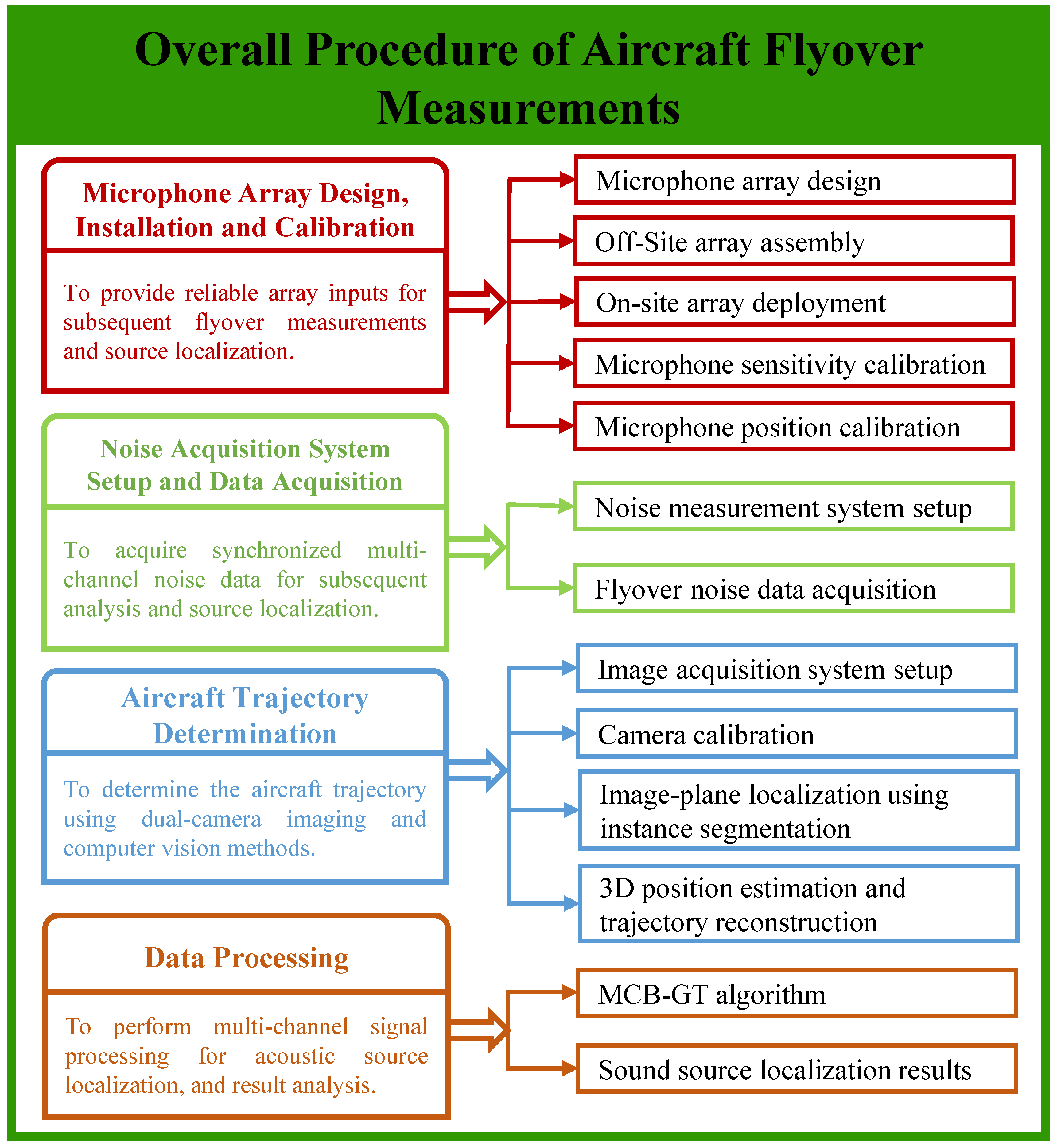
Figure 2.
Microphone array design.
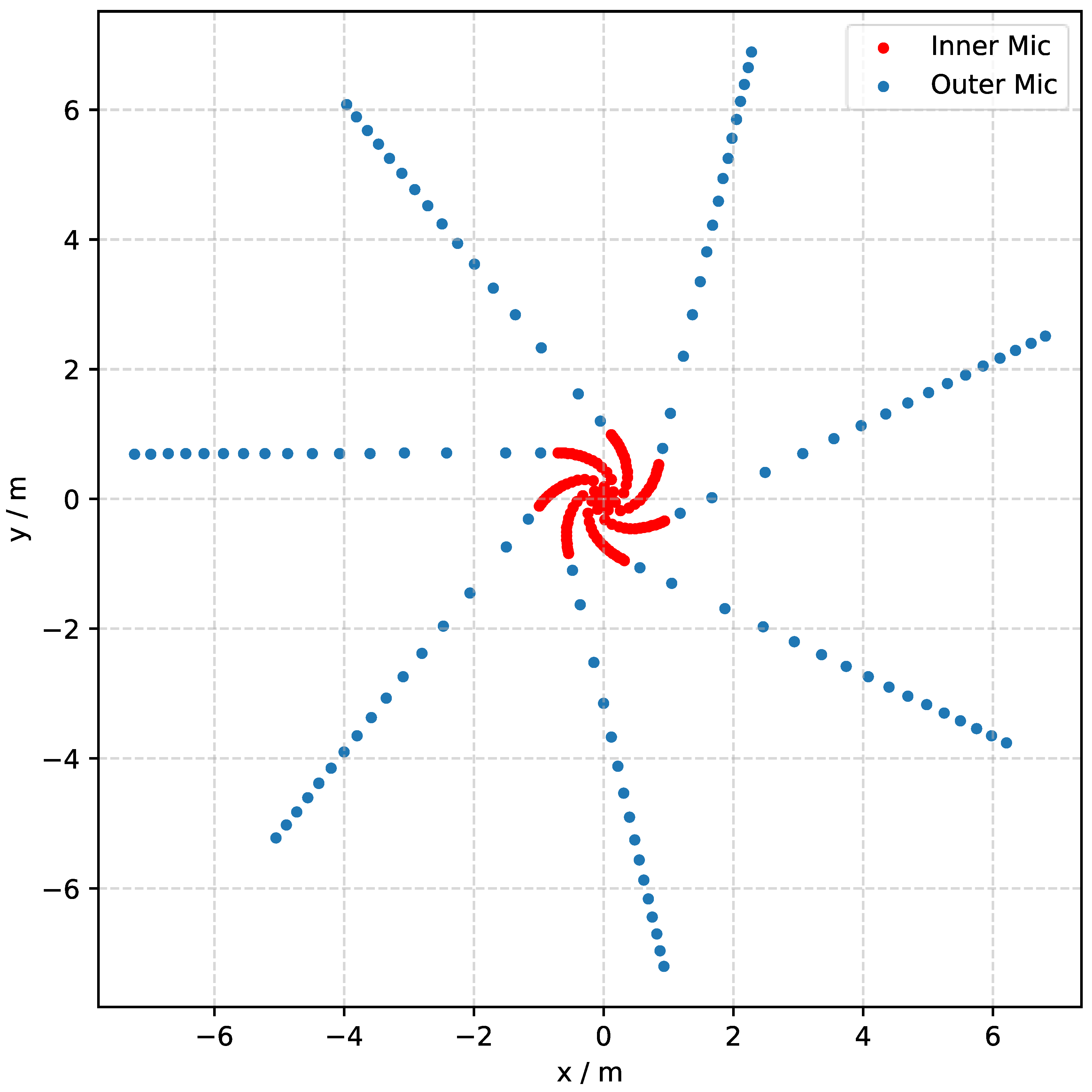
Figure 3.
Assembled configuration of the inner subarray.
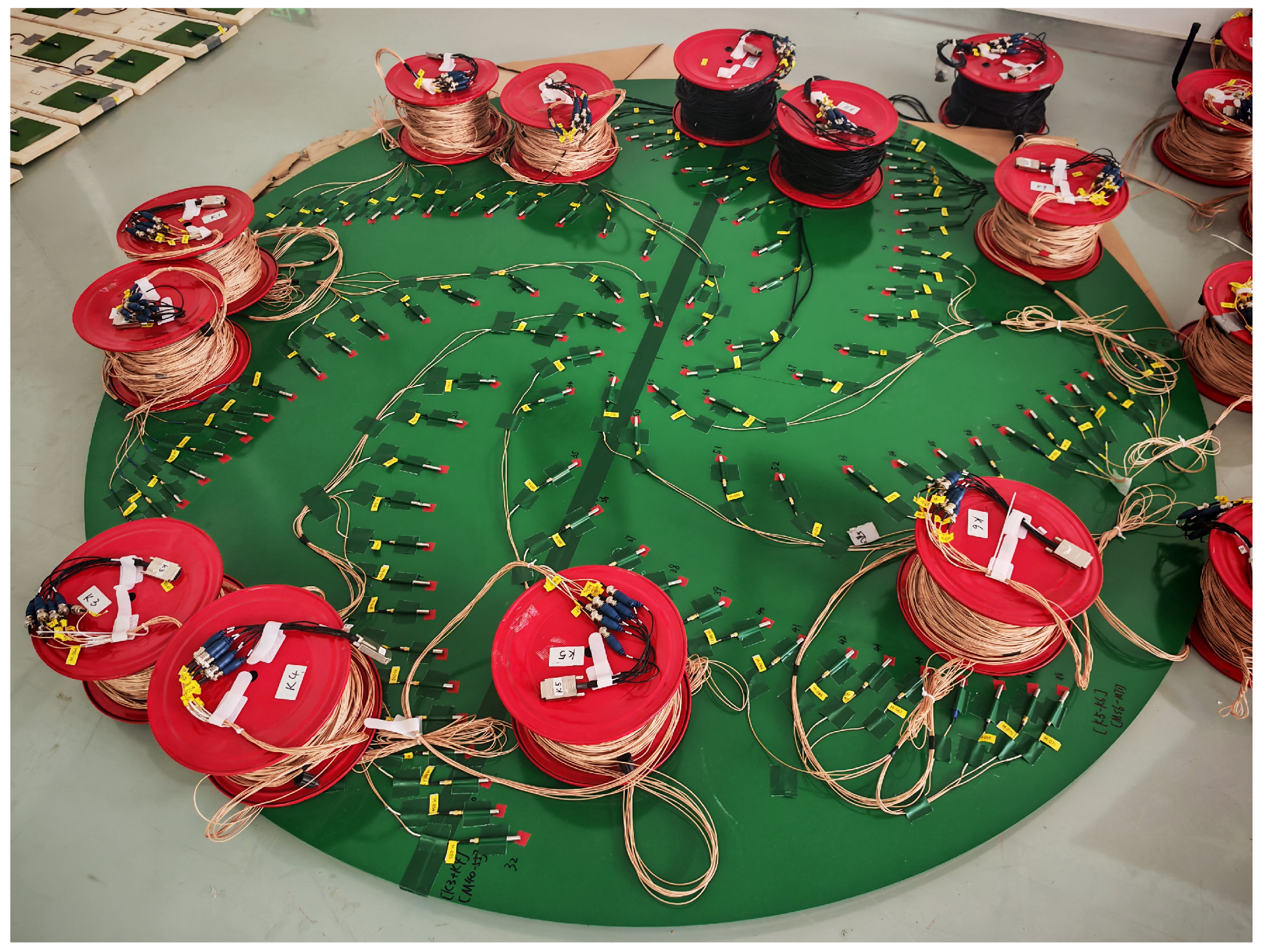
Figure 4.
Assembled configuration of the outer subarray.
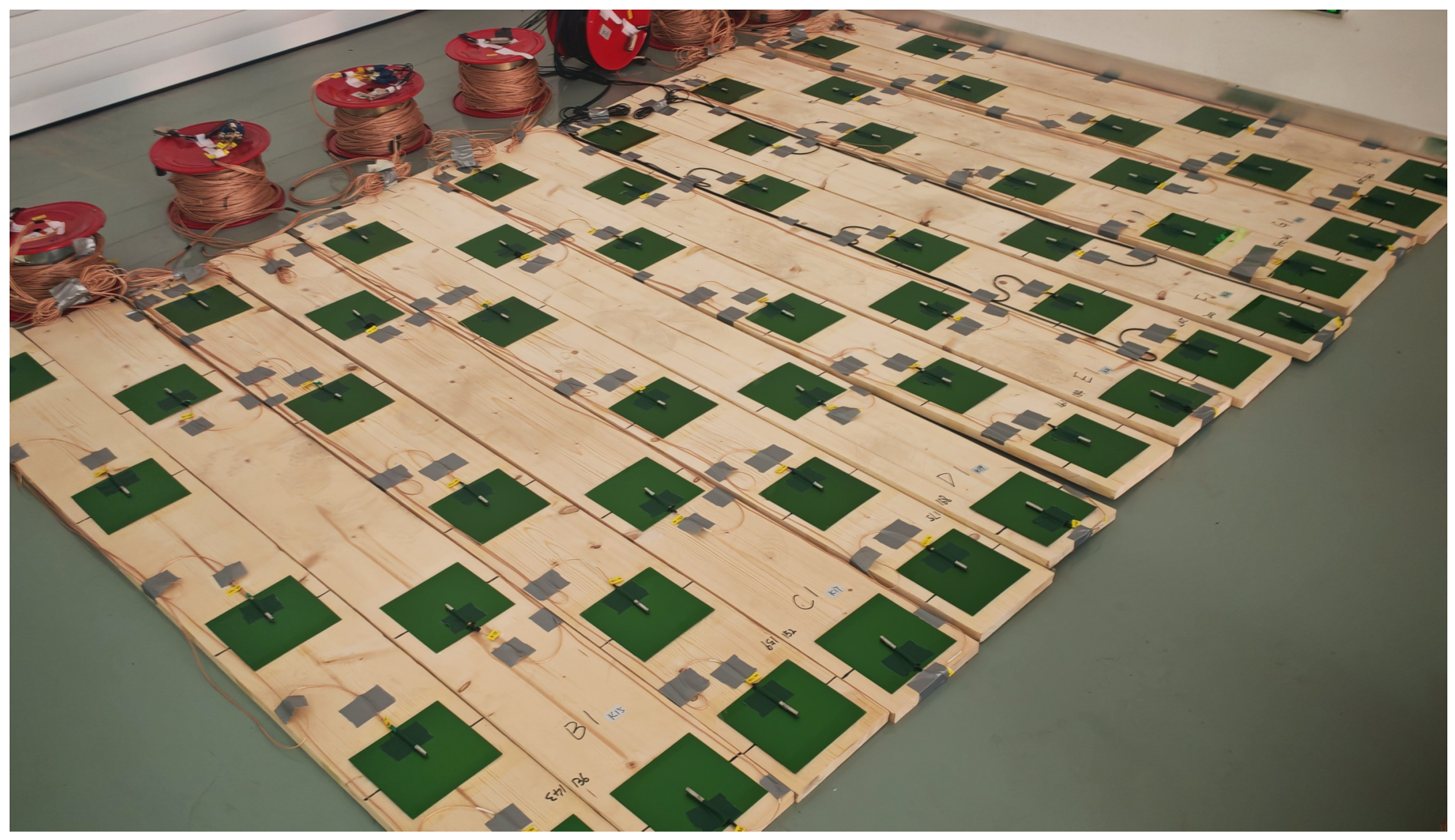
Figure 5.
On-site deployment of the array.
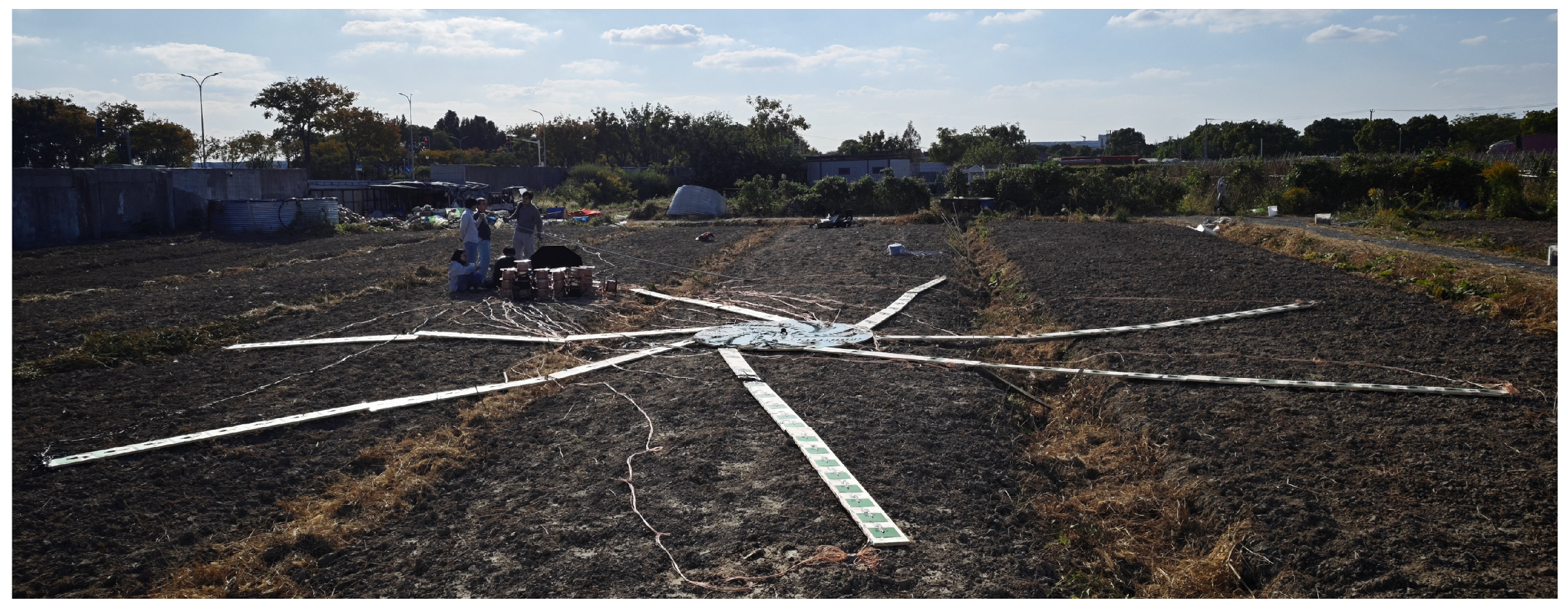
Figure 6.
Procedure of Microphones Position Calibration for the outer subarray.
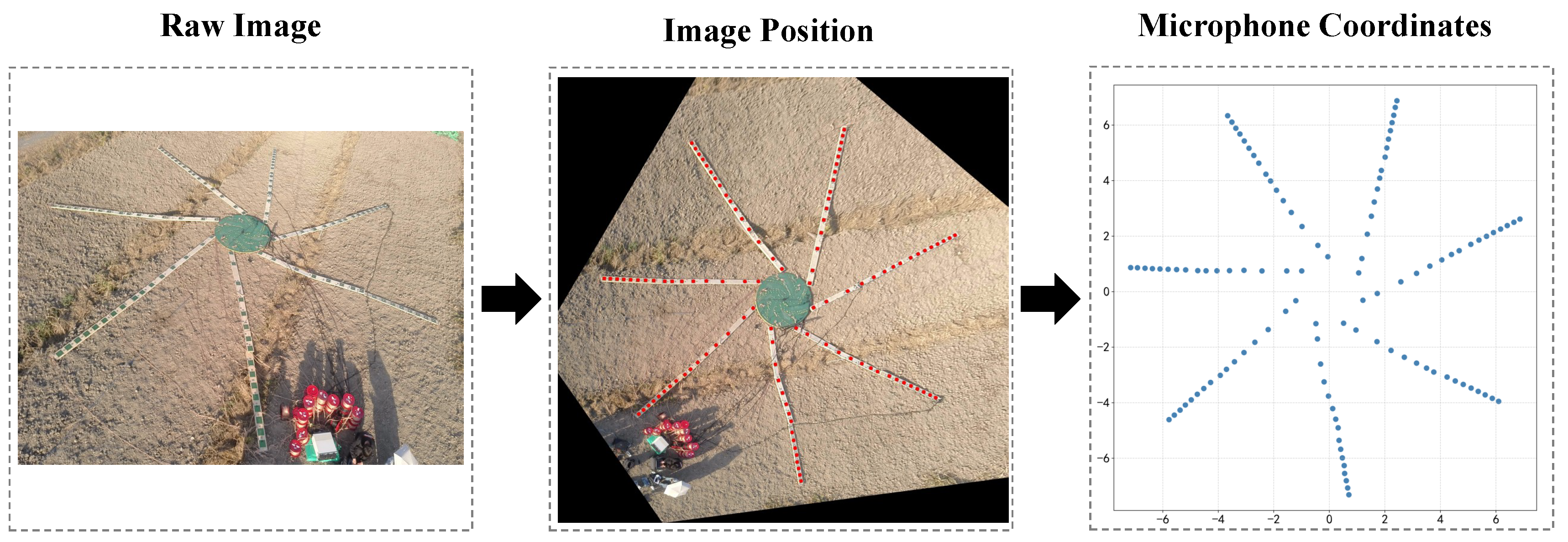
Figure 7.
Flyover Noise Data Acquisition.
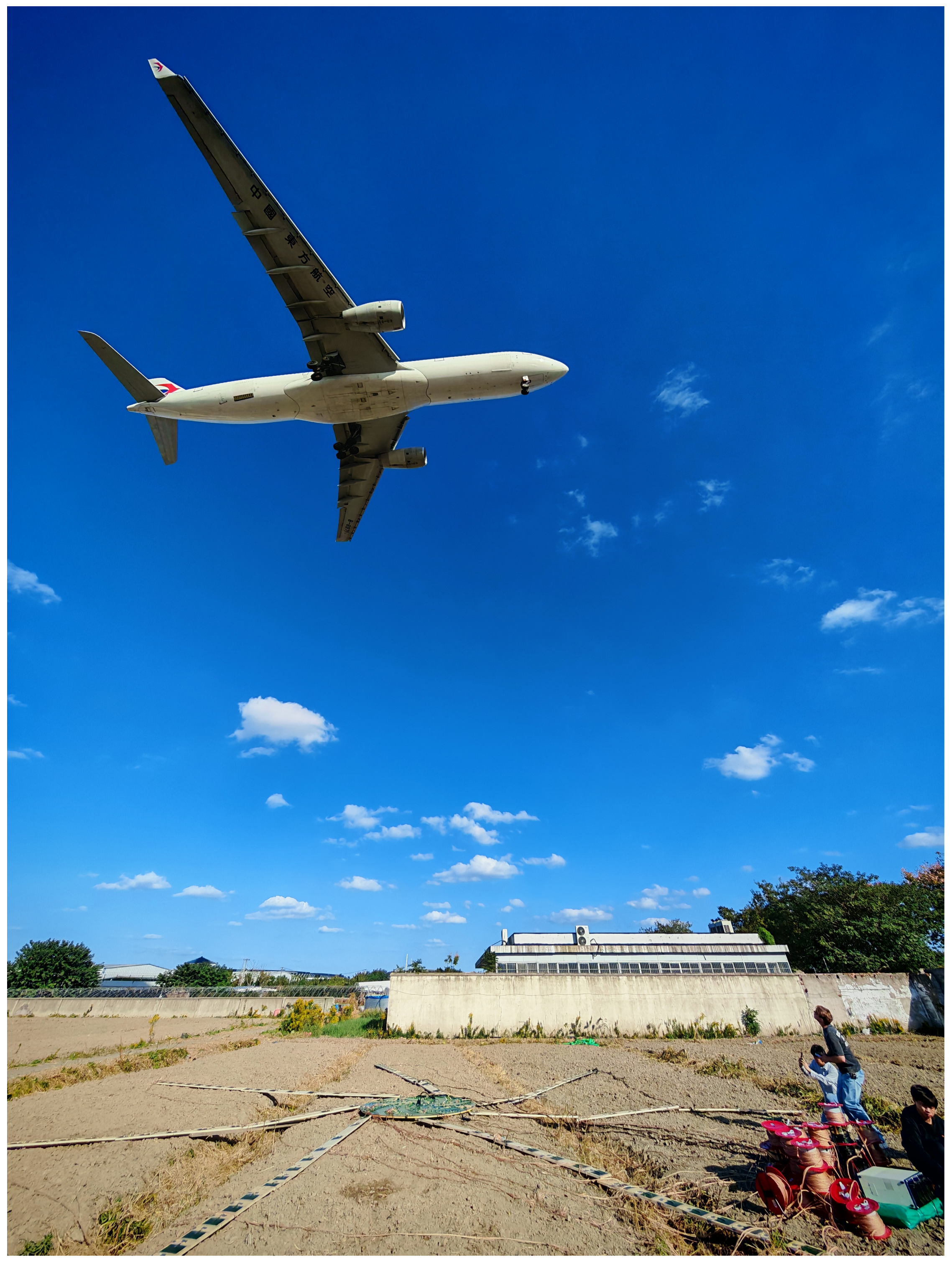
Figure 8.
Schematic of the coordinate system.
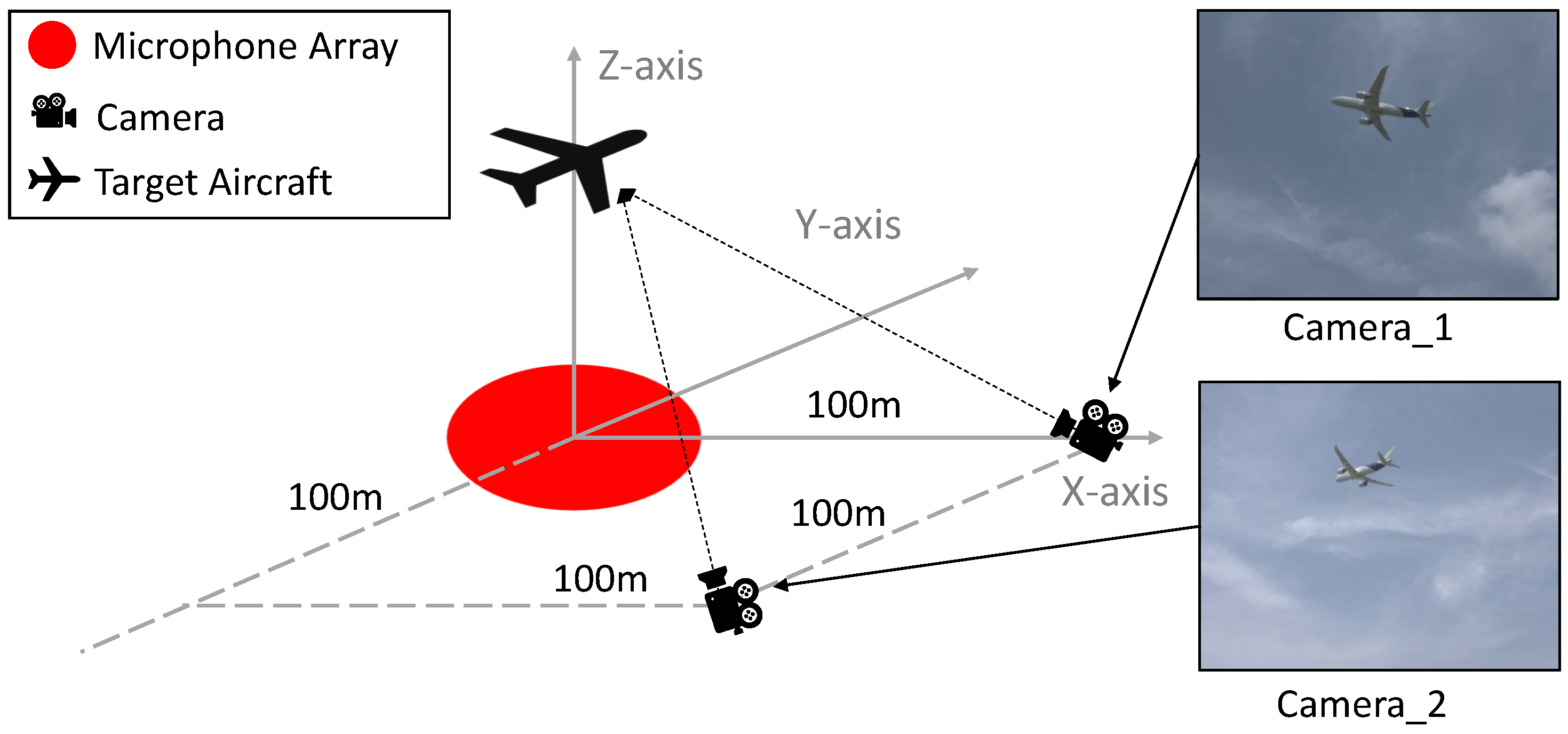
Figure 9.
Calibration images and corner extraction results.

Figure 10.
YOLO11 model architecture.
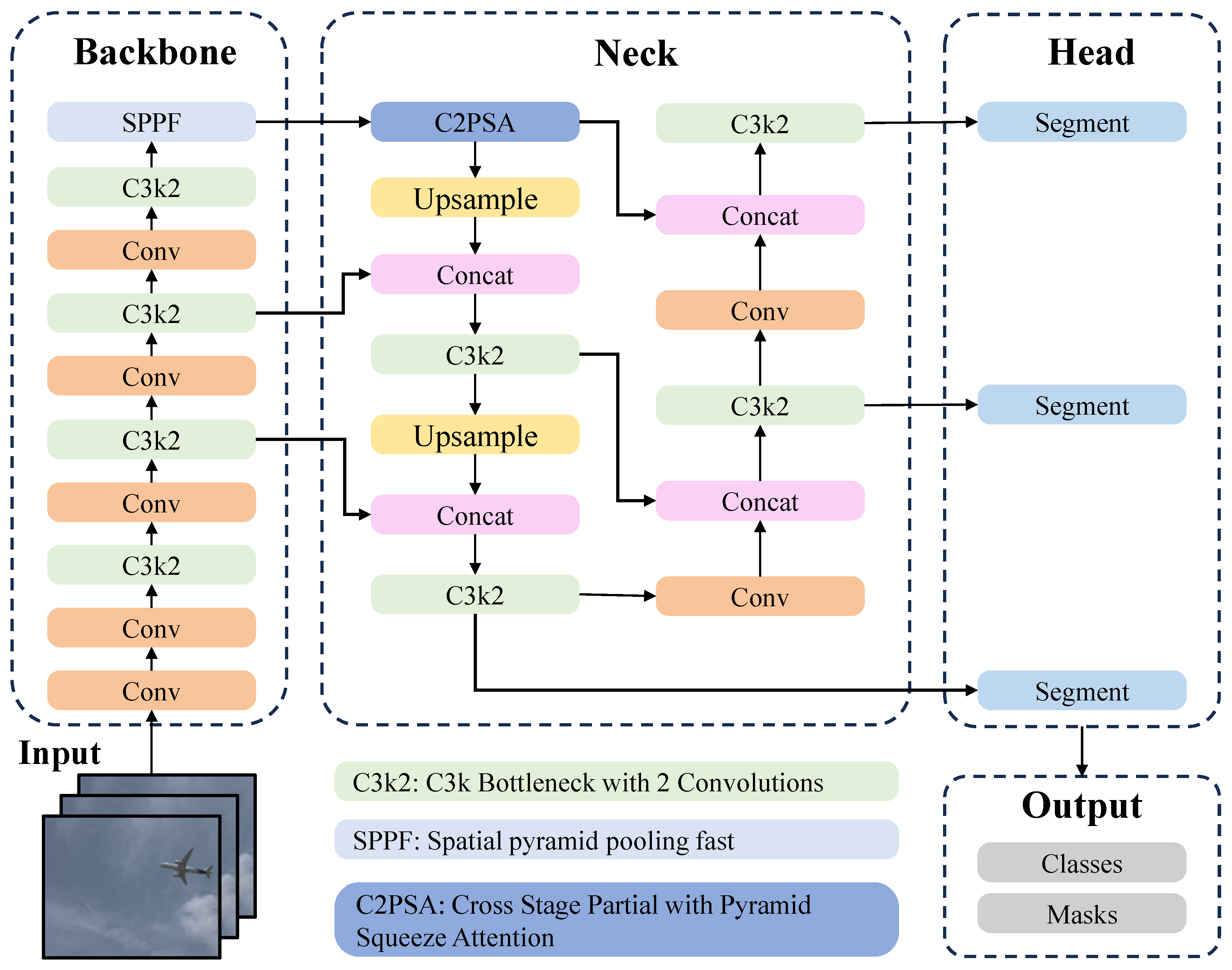
Figure 11.
Image-plane localization procedure using instance segmentation.
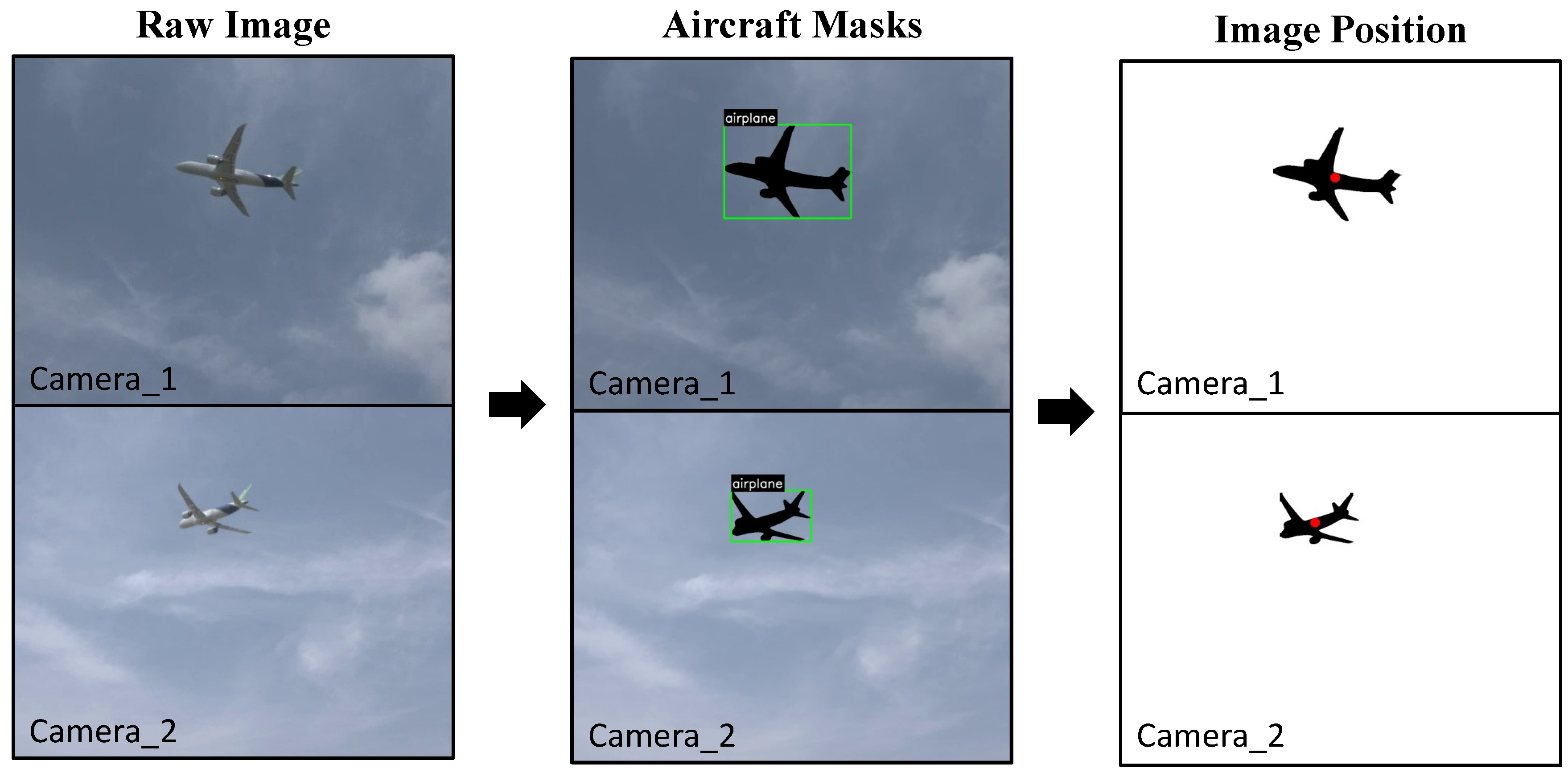
Figure 12.
3D coordinate estimation and trajectory reconstruction results.
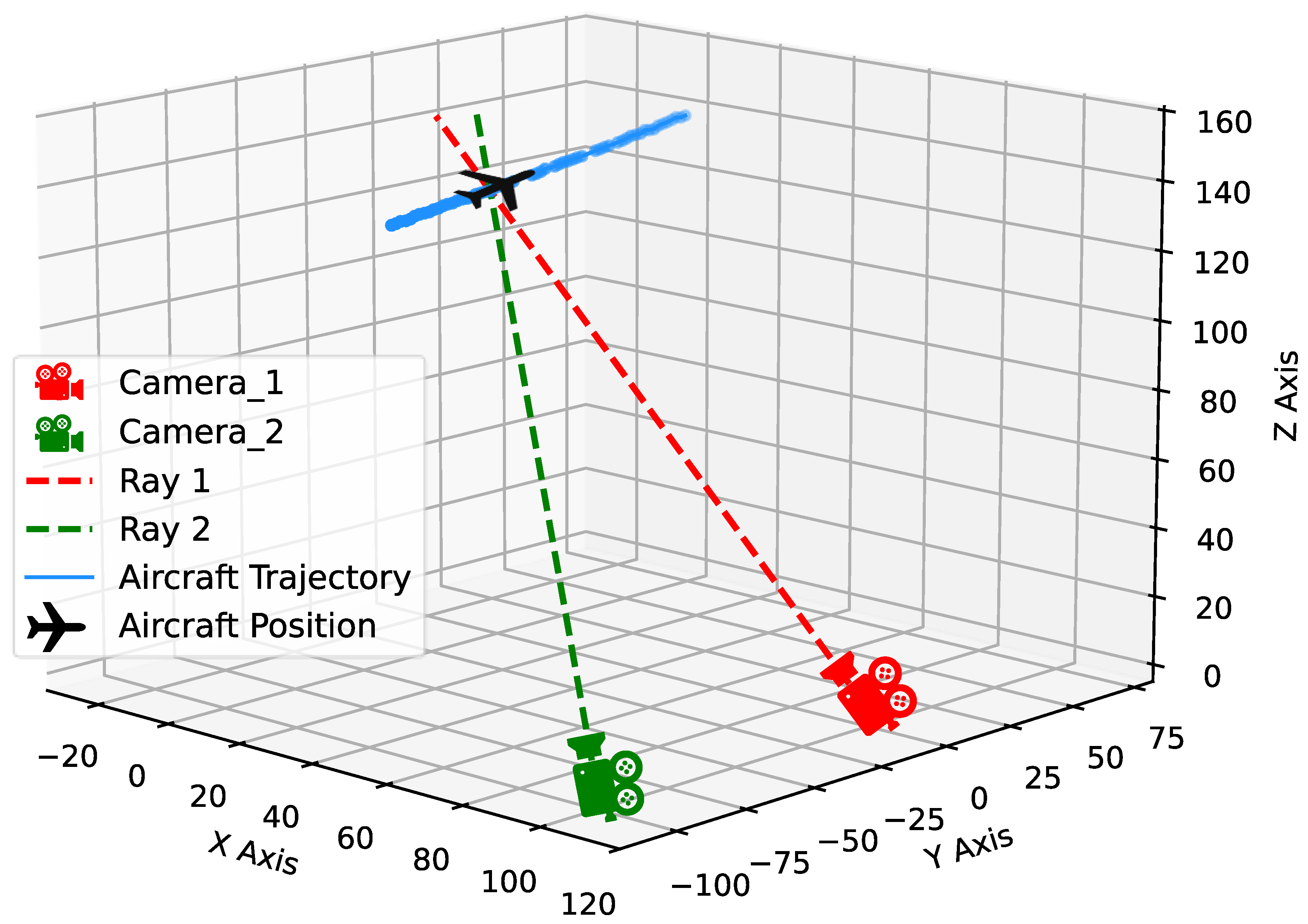
Figure 13.
Comparison of reconstructed and reference height.
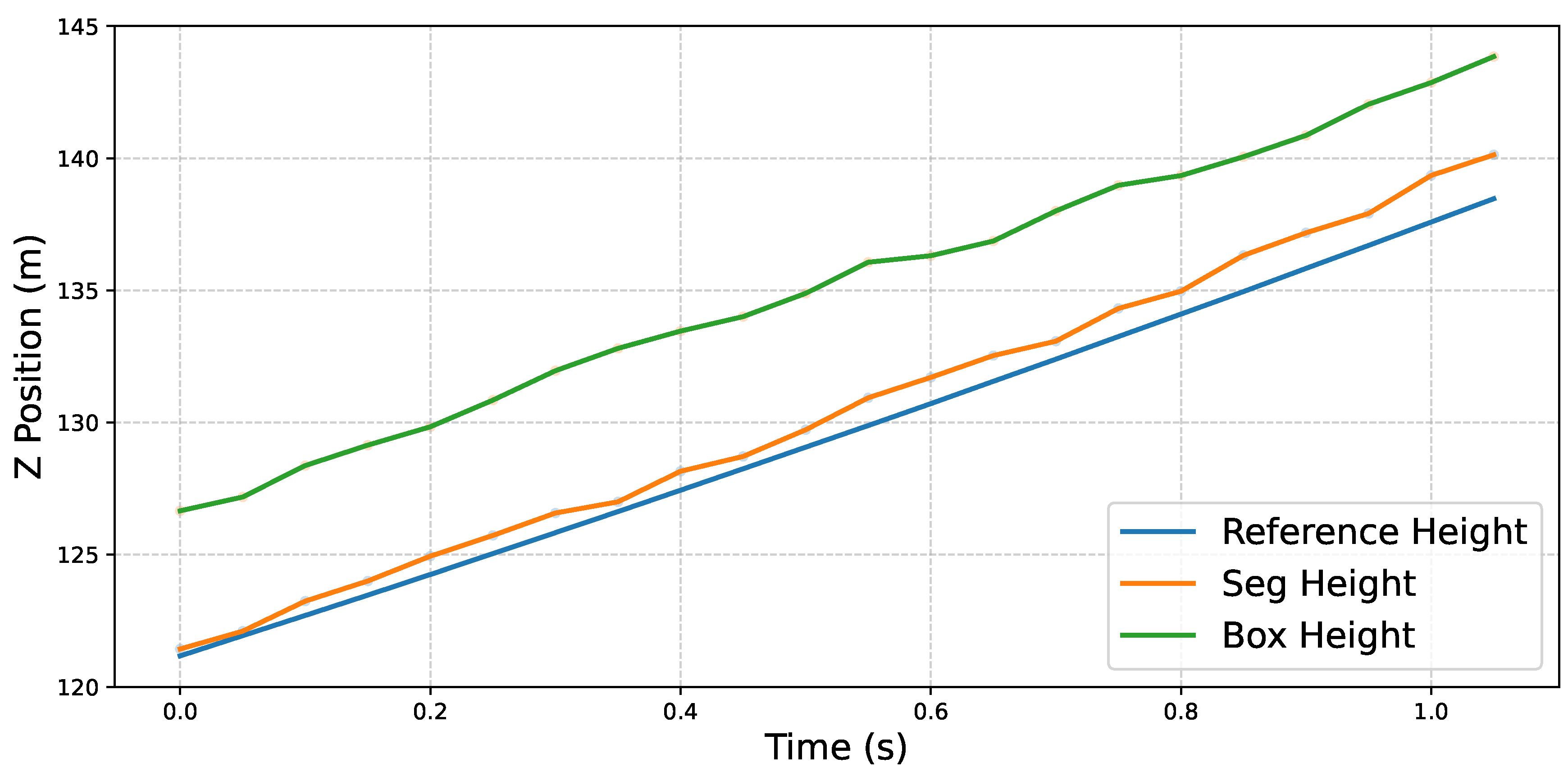
Figure 14.
Comparison of reconstructed and reference velocity.
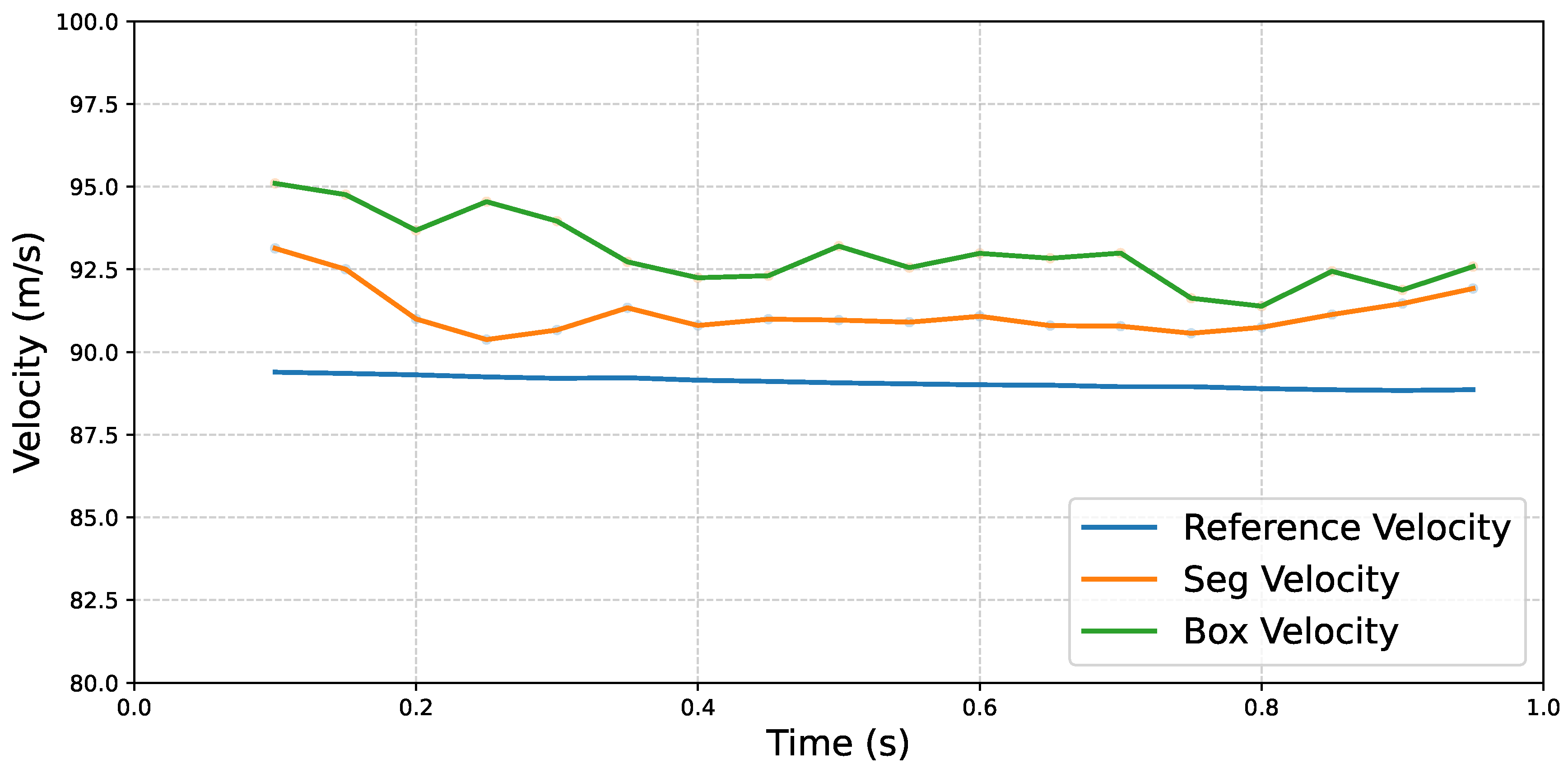
Figure 15.
Comparison of sound source localization results between conventional beamforming and MCB-GT.
Figure 15.
Comparison of sound source localization results between conventional beamforming and MCB-GT.
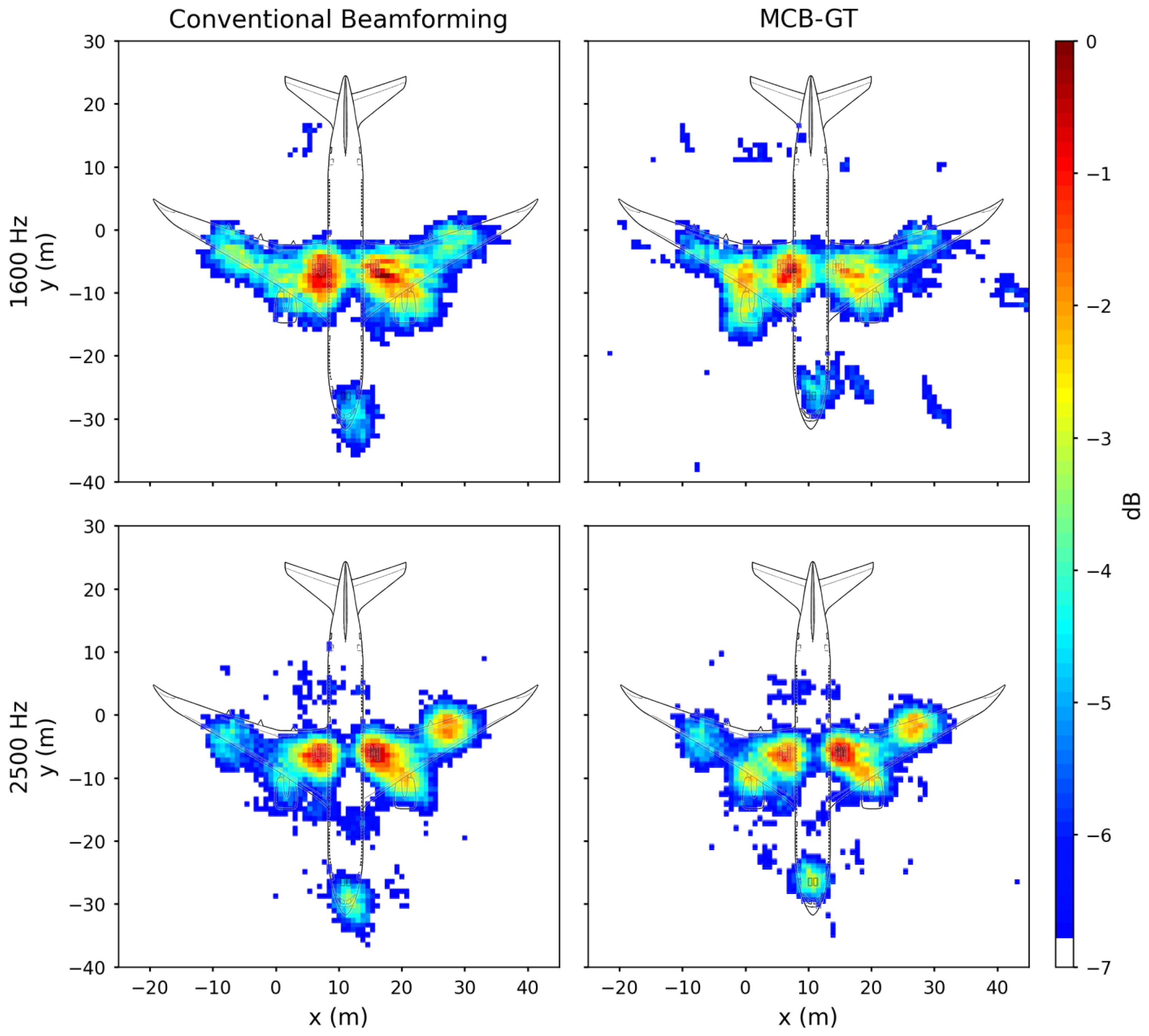

Table 1.
Error comparison between Seg and Box methods.
| Method | Vel. RMSE (m/s) | Vel. MAPE (%) | Height RMSE (m) | Height MAPE (%) |
|---|---|---|---|---|
| Seg | 2.1908 | 2.352 | 0.9508 | 0.650 |
| Box | 4.0087 | 4.386 | 5.6083 | 4.331 |
Disclaimer/Publisher’s Note: The statements, opinions and data contained in all publications are solely those of the individual author(s) and contributor(s) and not of MDPI and/or the editor(s). MDPI and/or the editor(s) disclaim responsibility for any injury to people or property resulting from any ideas, methods, instructions or products referred to in the content. |
© 2026 by the authors. Licensee MDPI, Basel, Switzerland. This article is an open access article distributed under the terms and conditions of the Creative Commons Attribution (CC BY) license (http://creativecommons.org/licenses/by/4.0/).
Copyright: This open access article is published under a Creative Commons CC BY 4.0 license, which permit the free download, distribution, and reuse, provided that the author and preprint are cited in any reuse.


