
Submitted:
16 March 2026
Posted:
17 March 2026
You are already at the latest version
Abstract
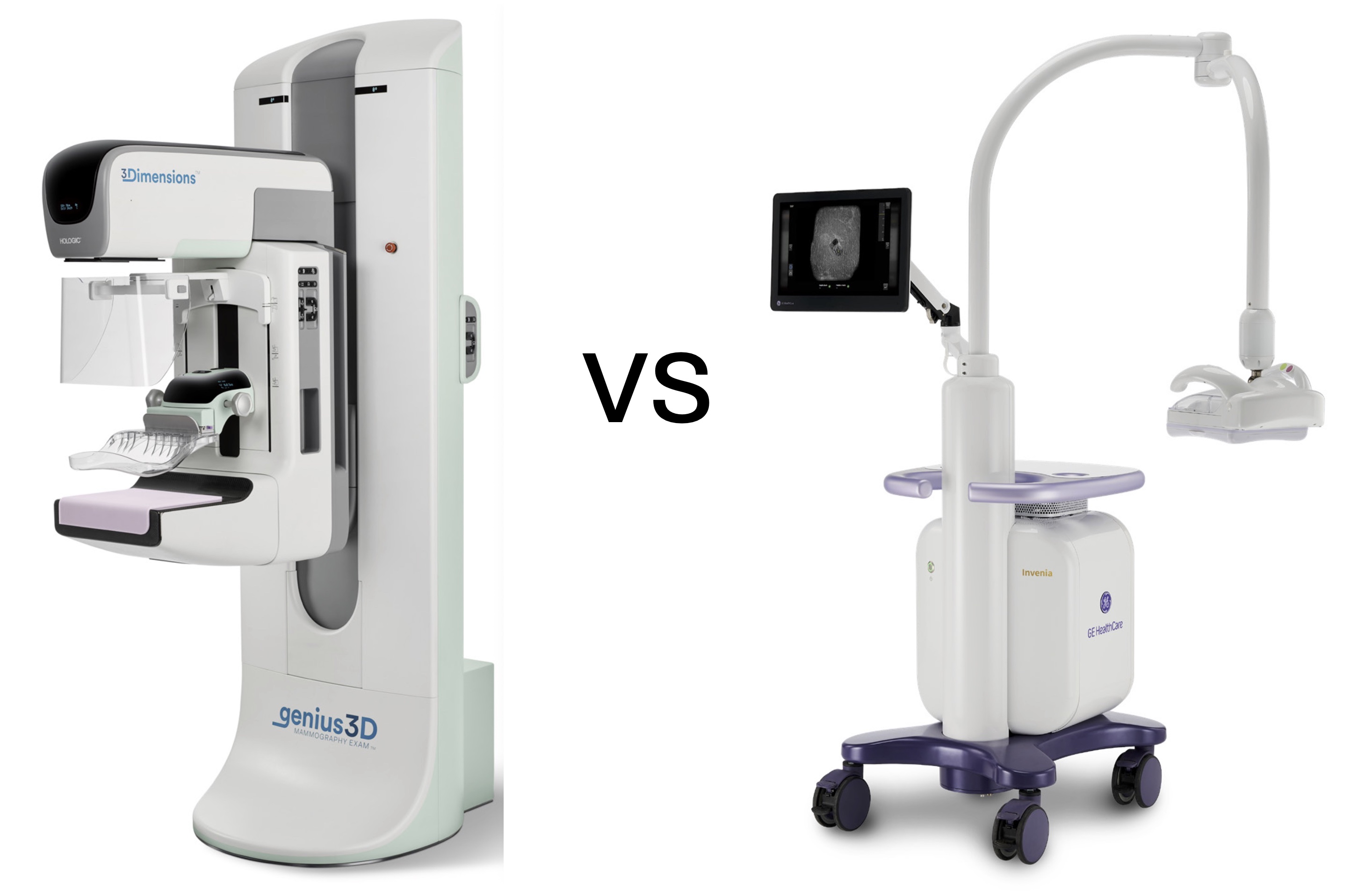
Background: For the past four decades, mammography – an X-ray of the breast – has served as the gold standard for the early detection of breast cancer. Within the past 15 years, two other imaging modalities have emerged, receiving regulatory approval from the FDA, and challenging 2D mammography. These are digital breast tomosynthesis (DBT), often referred to as 3D mammography, and automated breast ultrasound (ABUS) which produces 3D images of the whole breast. Since ABUS has three distinct advantages over DBT – ultrasound waves are safe, there is no painful breast compression, and ultrasound can penetrate dense breast tissue to reveal cancers not seen by DBT – this leads to the question: Which of the two modalities performs best for early detection of breast cancer? Methods: First, to provide historical context, the development, testing, patenting and FDA approval of the two modalities were reviewed. Next, employing publicly available databases such as PubMed and Google Scholar, a search was conducted to identify articles in which both DBT and ABUS images were gathered and independently compared for various clinical measures, including sensitivity, specificity, and accuracy. Results: Based on 7 published articles in which 5,550 women were examined, ABUS was equal to or better than DBT for sensitivity, and often outperformed DBT for the other measures. Importantly, ABUS was better than DBT in detecting more invasive cancers and for women with dense breasts. Conclusions: Although the FDA has mandated that ABUS may only be used as an adjunct to DBT, for women younger than 40, and especially those with a family history of breast cancer, ABUS should ideally be applied first.
Keywords:
breast cancer
; screening
; dense breast tissue
; digital breast tomosynthesis
; DBT
; automated breast ultrasound
; ABUS
Copyright: This open access article is published under a Creative Commons CC BY 4.0 license, which permit the free download, distribution, and reuse, provided that the author and preprint are cited in any reuse.


