
Submitted:
14 March 2026
Posted:
17 March 2026
You are already at the latest version
Abstract
This study focused on the development and characterization of bioactive polymeric patches based on agar–chitosan and gellan–chitosan matrices, with and without naringin, aiming to identify formulations with optimal physicochemical and biological performance. FTIR spectroscopy, thermogravimetric (TGA), and differential scanning calorimetry (DSC) analyses confirmed effective crosslinking, stable incorporation of the bioactive compound, and high thermal stability of the patches. Antimicrobial testing against Staphylococcus aureus ATCC 33591 demonstrated that naringin-loaded agar–chitosan films, particularly those with lower chitosan and glutaraldehyde content, exhibited significant activity (MIC = 12.5 mg/mL; inhibition zone 27.67 ± 0.58 mm). Biocompatibility studies, including local skin irritation in rabbits and 28-day topical application in mice, showed no adverse effects. Anti-inflammatory evaluation using the λ-carrageenan-induced paw edema model indicated modest activity of naringin under acute conditions. Overall, agar–chitosan films offered tunable properties and reproducible bioactive incorporation, while gellan–chitosan films provided mechanically robust matrices suitable for further optimization. The results highlight the potential of agar–chitosan patches as biocompatible, structurally stable, and antimicrobial platforms for topical and transdermal delivery of bioactive flavonoids.
Keywords:
chitosan
; gellan gum
; agar
; naringin
; composite film
; biopolymer film
; wound healing
; drug delivery
; transdermal patch
; biomedical applications
1. Introduction
The skin is the largest organ of the human body and serves as a critical barrier against environmental threats, including microbial invasion, mechanical injury, and chemical exposure. Disruption of skin integrity initiates a complex healing process involving hemostasis, inflammation, proliferation, and remodeling. Impaired wound healing, particularly in chronic and non-healing wounds, presents a substantial clinical challenge due to the risk of infection, prolonged inflammation, and delayed tissue regeneration. Conventional dressings such as gauze primarily offer physical coverage but often fail to maintain a moist healing environment, support cellular activity, or protect against microbial contamination, which are essential for efficient tissue repair [1,2,3].
Chitosan is a linear natural polysaccharide derived from the deacetylation of chitin, a structural component of crustacean exoskeletons and fungal cell walls. It consists of randomly arranged D-glucosamine and N-acetyl-D-glucosamine units linked by β-(1→4) glycosidic bonds. Due to its biocompatibility, biodegradability, and low toxicity, chitosan has garnered significant attention in biomedical applications. In wound care, it is extensively investigated because of its intrinsic antibacterial properties, hemostatic activity, and ability to stimulate fibroblast proliferation and extracellular matrix synthesis. Chitosan can be processed into various material forms, such as hydrogels, films, membranes, and nanocomposites, enabling diverse wound dressing designs. However, its restricted mechanical strength, pH-dependent solubility, and relatively rapid degradation limit its standalone use, prompting the development of composite systems with enhanced structural and functional characteristics [4,5,6,7,8,9].
Blending chitosan with other natural polysaccharides such as gellan gum or agar is a promising strategy to overcome these limitations. Gellan gum, an anionic microbial polysaccharide, forms robust hydrogels with well-defined gelation behavior, while agar contributes structural stability and water retention when incorporated into composite matrices. Polysaccharide composites combining chitosan with gellan or agar have demonstrated improved mechanical integrity, moisture management, and biocompatibility, offering potential advantages over single-component systems for wound care applications [10]. Nonetheless, comparative studies systematically evaluating the influence of distinct polysaccharide partners on the physicochemical and structural properties of chitosan-based composites remain limited, highlighting the need for further investigation.
In addition to material composition, the functionality of wound dressings can be enhanced through the incorporation of bioactive compounds. Flavonoids such as naringin, commonly found in citrus fruits, exhibit antioxidant, anti-inflammatory, and antimicrobial activities that may support tissue repair and collagen synthesis in wound environments. However, the poor aqueous solubility and rapid metabolic clearance of naringin hinder its direct therapeutic use, necessitating encapsulation or controlled release from polymer matrices to sustain local bioavailability [11,12,13,14].
Building upon our previous work on chitosan–polysaccharide composite films [15], in the present study we focus on the comparative development and characterization of gellan–chitosan and agar–chitosan films loaded with naringin, with an emphasis on structure–property relationships and potential wound healing functionality.
2. Materials and Methods
2.1. Materials
Agar, gellan gum, and chitosan were used as polysaccharide components in this study. Agar, (Sigma-Aldrich, Cat. No. 01916, Agar powder, CAS 9002-18-0, Darmstadt, Germany). Gellan gum, GelriteR (Sigma-Aldrich, Cat. No. G1910, CAS 71010-52-1, Darmstadt, Germany). Chitosan (Sigma-Aldrich, Cat. No. 448869, low molecular weight chitosan, CAS 9012-76-4, Darmstadt, Germany). Sodium benzoate (Sigma-Aldrich, CAS No.: 532-32-1, Darmstadt, Germany). Naringin – (Dr. Ehrenstorfer (DRE-C15495000), CAS 10236-47-2, LGC, Great Britain). Mueller–Hinton broth (HiMedia Laboratories, India); Mueller–Hinton agar (HiMedia Laboratories, India); sodium chloride, analytical grade (Mikhailovsky Plant of Chemical Reagents, Russia); ethanol, 96% (Talgar Spirit, Kazakhstan); purified water.
2.2. Preparation of Polymer Films
Two series of polysaccharide-based films were prepared, namely gellan gum–chitosan (G1) and agar–chitosan (A1) films. In both formulations, glutaraldehyde was added as a chemical crosslinking agent primarily associated with the chitosan component, while gellan gum or agar served as modifying polysaccharide constituents contributing to film formation and network organization [16,17]. Sodium benzoate was added as a preservative to prevent microbial spoilage of the biodegradable films, and naringin was incorporated as a bioactive compound.
2.2.1. Preparation of Gellan–Chitosan Films
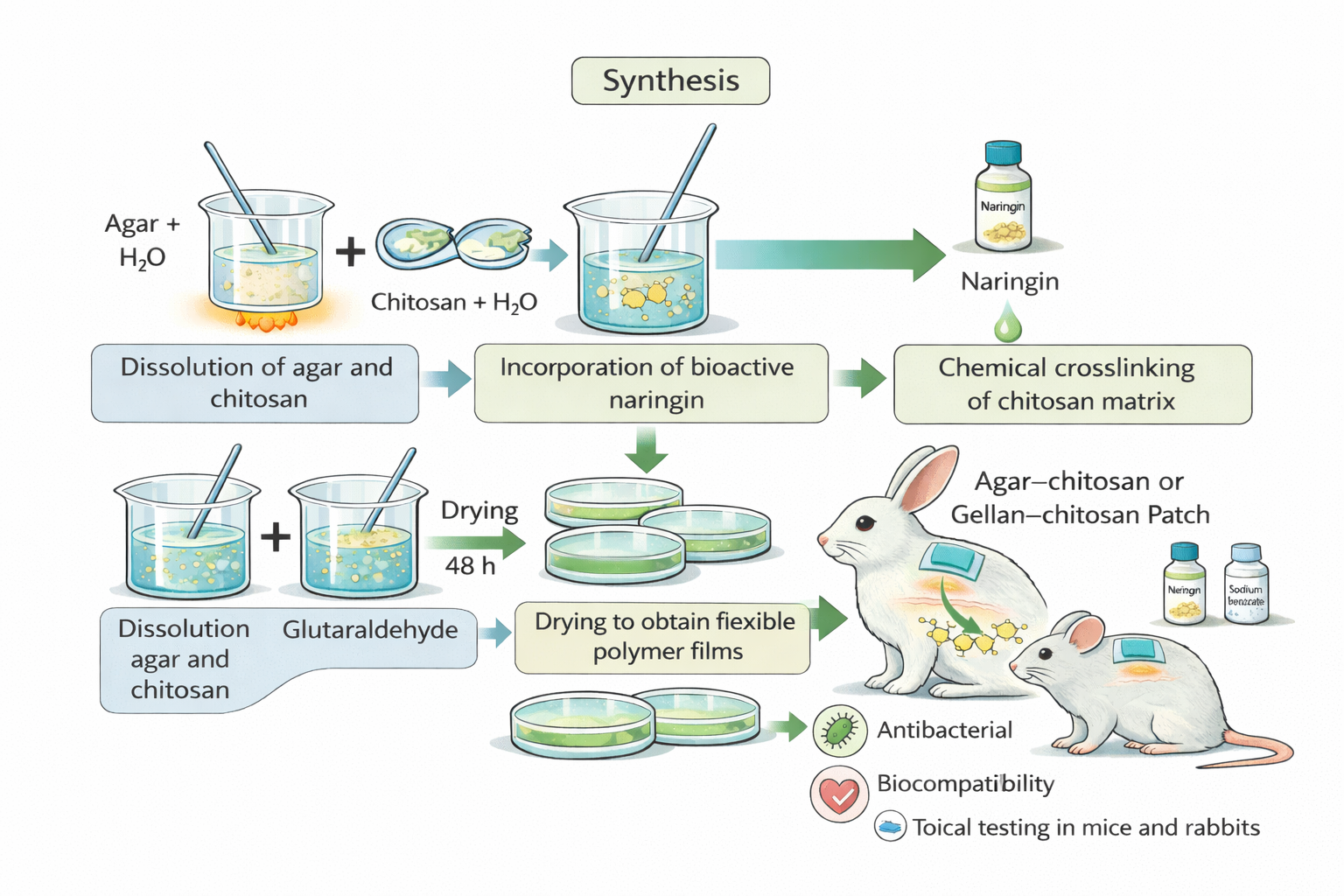
Gellan gum (1.0 g) was dissolved in 50 mL of distilled water under continuous magnetic stirring until a homogeneous solution was obtained. In parallel, chitosan (0.5 g) was dissolved in 50 mL of distilled water under identical stirring conditions. The two polysaccharide solutions were combined and stirred to ensure uniform mixing. Subsequently, sodium benzoate (0.25 g in 5 mL), and, when required, naringin (0.25 g in 25 mL) were added sequentially under continuous stirring. Crosslinking of the polymer matrix was initiated by the addition of glutaraldehyde (5 mL) to the reaction mixture. Stirring was maintained until a visually uniform composition was achieved. The resulting solution was cast into Petri dishes and allowed to dry at room temperature for 48 h to obtain polymer films. For films without naringin, the procedure was identical, except that the naringin solution was omitted.
The synthesized hydrogels were subsequently exposed to further ionic cross-linking in 0.1 M NaCl and 0.05 M CaCl2 solutions for 30 minutes to improve their structural integrity. Upon completion, all specimens were meticulously rinsed in distilled water to eliminate unbound reagent remnants.
2.2.2. Preparation of Agar–Chitosan Films
One gram of agar was dissolved in 50 mL of distilled water under continuous magnetic stirring until fully solubilized. Chitosan was separately dissolved in 50 mL of distilled water under identical conditions. Two agar–chitosan formulations were prepared: Sample A contained higher chitosan (0.5 g) and glutaraldehyde (5 mL), while Sample B contained lower chitosan (0.25 g) and glutaraldehyde (2.5 mL). The concentrations of agar, naringin (0.25 g in 25 mL for bioactive films), and sodium benzoate (0.25 g in 5 mL) were chosen based on preliminary experiments to achieve homogeneous film formation, adequate bioactive loading, and reproducible structural integrity, in line with common practices in the preparation of polysaccharide composite films [18]. Sodium benzoate served as a preservative to prevent microbial spoilage, and naringin was incorporated as a bioactive compound.
The agar and chitosan solutions were combined and thoroughly mixed, followed by the sequential addition of sodium benzoate and, for bioactive films, naringin prior to crosslinking. Glutaraldehyde was then added at the designated concentration for each sample, and the mixture was agitated until a uniform polymer composition was obtained. The resulting solutions were cast into Petri plates and allowed to dry at ambient temperature for 48 hours, yielding flexible polymer films. Films without naringin were prepared using the same procedure, omitting the flavonoid. No additional crosslinking with inorganic salts was required, as the hydrogels exhibited sufficient structural stability. All samples were carefully washed with distilled water to remove unbound residues.
2.3. Thermal Analysis
The thermal properties of the primary polymeric components, the bioactive additive, and a representative polymer patch were evaluated using thermogravimetric analysis (TG) and differential scanning calorimetry (DSC). The samples analyzed included pure agar, gellan gum, chitosan, naringin, and an agar–chitosan–glutaraldehyde patch, selected to assess both the intrinsic thermal behavior of the constituents and the effect of crosslinking on the polymer network. Approximately 5–10 mg of each sample was placed in an aluminum crucible and heated from room temperature to 600 °C at a rate of 20 °C/min under a nitrogen atmosphere. TG curves were used to quantify weight loss and decomposition stages, while DSC curves were employed to identify thermal transitions such as moisture loss, glass transitions, and melting events
2.4. In Vivo Skin Irritation Assessment
Local skin reactions were monitored over 72 hours following patch application, with assessments recorded at 2, 4, 6, 24, 48, and 72 hours, in accordance with OECD TG 404 guidelines. Sterile water (1.0 mL) served as a negative control. The naringin-containing patches were cut into 1 × 1 cm sections using sterile scissors and applied to the skin every 2 hours during the 72-hour period. Rabbits were individually housed under controlled conditions (22 ± 3 °C, 50–60% relative humidity, 12-hour light/dark cycle) with free access to water and feed. All animals were experimentally naive and, as they were housed on-site without prior transport, no acclimatization period was required.
2.5. In Vivo Anti-Inflammatory Activity
The anti-inflammatory activity of diclofenac and naringin was evaluated using the λ-carrageenan-induced paw edema model in laboratory rats (n = 25). Animals were randomly divided into two groups: a control group receiving diclofenac as a reference non-steroidal anti-inflammatory drug (NSAID), and an experimental group treated with naringin. Inflammation was induced by subcutaneous injection of a 1% λ-carrageenan solution into the plantar surface of the hind paw. Paw thickness was measured at 1, 2, 3, 4, and 5 hours post-injection using a digital caliper, providing a quantitative assessment of edema progression. This design allowed for direct comparison of the anti-inflammatory efficacy of the tested compounds under reproducible inflammatory conditions.
2.6. In Vitro Antimicrobial Activity of Synthesized Wound-Healing Patches
The antimicrobial activity of the synthesized wound-healing patches was investigated using the agar diffusion assay. Petri dishes were uniformly inoculated with a suspension of Staphylococcus aureus ATCC 33591, prepared at a concentration of 1.5 × 10⁸ CFU/mL. Sterile cotton swabs were immersed in the bacterial suspension, gently pressed against the tube walls to remove excess liquid, and streaked across the agar surface in three directions, rotating the plate by 60° between streaks to ensure even distribution of the bacteria. Sterile cylindrical tools were used to create wells in the agar corresponding to the locations of the patches. Each well was filled with 150 µL of the test sample. All assays were performed in triplicate to ensure reproducibility. The inoculated plates were then incubated at 37 ± 1 °C for 18–24 hours to allow bacterial growth and to evaluate the inhibitory effect of the patches. Following incubation, the zones of inhibition around each well were measured to assess the antimicrobial efficacy of the synthesized materials.
3. Results and Discussion
3.1. Visual Evaluation of Polymeric Patches
The formation of homogeneous and mechanically stable polymer films is essential for transdermal biopolymer patches, as proper gelation and crosslinking determine their physicochemical properties, drug-loading capacity, and biomedical functionality [19,20]. Two polysaccharide-based composite systems were prepared: gellan gum–chitosan (G1) and agar–chitosan (A1), including samples loaded with the bioactive compound naringin (Table 1). Glutaraldehyde was used to chemically stabilize the chitosan component, while gellan gum and agar contributed to network formation through intermolecular interactions and, in the case of gellan, ion-mediated gelation. In the gellan–chitosan system, these conditions yielded a homogeneous and continuous film with consistent thickness and a smooth surface, indicating successful gelation and spatial crosslinking of the polymer network. This observation is consistent with previous findings that gellan gum forms mechanically stable hydrogel matrices when combined with cationic polysaccharides such as chitosan, due to electrostatic interactions and hydrogen bonding between carboxyl and amino functional groups [21,22,23,24].
Conversely, the agar–chitosan system initially failed to form a cohesive film, remaining largely liquid and structurally unstable. This behavior is attributed to the thermo-reversible nature of agar gelation, which requires careful control of temperature and polymer concentration for effective network formation. By adjusting the synthesis conditions, including increasing temperature and maintaining continuous agitation, the mixture achieved improved homogeneity. Under these modified conditions, the agar–chitosan system produced a uniform and mechanically stable film without phase separation or residual fluidity. These findings indicate that regulated thermal processing enhances gelation and promotes intermolecular interactions in agar-based composites, consistent with previous studies on polysaccharide films [25,26,27]. The resulting structural integrity allows for subsequent physicochemical characterization and supports potential biomedical applications, such as wound dressings and drug delivery (Figure 1).
Comparative analysis reveals that gellan–chitosan composites exhibit superior film-forming capabilities under conventional conditions, whereas agar–chitosan films require optimized thermal treatment to achieve comparable structural stability. The formation of homogeneous and mechanically resilient films is essential for consistent functional performance, including swelling behavior, controlled release, and adhesion properties.
3.2. Infrared Spectroscopic Evaluation of Polysaccharide-Based Composite Films
Fourier-transform infrared (FTIR) spectroscopy was used to probe the chemical structures and intermolecular interactions in the prepared chitosan/polysaccharide composite films, both with and without naringin incorporation. The spectra revealed distinct vibrational features corresponding to chitosan and the polysaccharide components (gellan gum or agar), as well as features attributable to the flavonoid naringin, thereby providing a molecular-level view of network formation and additive integration (Figure 2).
Across all samples, a broad absorption band centered between approximately 3300 and 3350 cm⁻¹ was observed, arising from overlapping O–H and N–H stretching vibrations. In pure chitosan, this broad feature reflects extensive hydrogen bonding involving hydroxyl and amino functionalities along the polymer backbone, while in gellan and agar it corresponds to dense hydroxyl networks inherent to polysaccharide structures. Notably, composites loaded with naringin exhibited a subtle red shift of this band accompanied by increased broadening compared to the neat polymer matrices. This behaviour is consistent with the formation of additional hydrogen bonds between the polymer network and the multiple hydroxyl groups of naringin, indicating strong intermolecular interactions that likely contribute to enhanced stabilization of the composite matrix.
In the 2885–2930 cm⁻¹ region, weak to moderate absorptions attributed to aliphatic C–H stretching were present in all films, arising from glucosamine units of chitosan and saccharide rings of gellan or agar. Small differences in band intensity among the composites suggest variations in local polymer packing and hydrophobic environments resulting from polymer blending and cross interactions, reflecting subtle conformational differences in the composite networks.
Characteristic bands associated with chitosan’s amide I and amide II vibrations were observed near 1640–1655 cm⁻¹ and 1540–1555 cm⁻¹, respectively. The amide I band is dominated by C=O stretching of residual acetyl groups, whereas the amide II band arises from combined N–H bending and C–N stretching. In naringin-loaded composites, the amide I band exhibited a slight shift to higher wavenumbers relative to the unloaded films, which suggests changes in the local electronic environment of the chitosan backbone. This shift is indicative of hydrogen-bonding interactions between amide functionalities of chitosan and the flavonoid, leading to modifications in the polymer microenvironment upon additive incorporation. Such behaviour is consistent with earlier reports for polymer–flavonoid systems, where additive binding alters band positions and intensities associated with backbone motifs [28,29].
The region between 1020 and 1080 cm⁻¹, dominated by C–O–C and C–O stretching vibrations of glycosidic linkages, exhibited prominent bands in all composite spectra. Compared to the neat polymer films, composite systems displayed increased intensity and slight sharpening of these absorptions, particularly in the chitosan/gellan composites. This trend suggests an enhancement in network ordering and stabilization, potentially arising from synergistic hydrogen bonding and ionic interactions between the cationic chitosan and anionic gellan gum chains. The observed spectral changes in this region support the formation of a more cohesive and well-organized polysaccharide network upon blending.
In the fingerprint region below 1000 cm⁻¹, several bands corresponding to saccharide ring vibrations and C–H bending modes were evident. Peaks near 930–950 cm⁻¹ and 720–770 cm⁻¹ are attributable to ring deformations and out-of-plane C–H bends of polysaccharide units. Importantly, the naringin-containing composites exhibited additional weak absorptions in the vicinity of 1515–1450 cm⁻¹, which can be assigned to aromatic skeletal vibrations and C–O stretching modes of the flavonoid. These features provide clear evidence of successful naringin incorporation within the polymer matrix and suggest a predominately non-covalent mode of interaction, governed by hydrogen bonding and physical entrapment rather than chemical modification.
Taken together, the FTIR findings confirm that the principal backbone structures of chitosan and the polysaccharide components are preserved in the composite films, while the introduction of naringin results in defined spectral shifts and intensity changes indicative of specific intermolecular interactions. The observed modifications in O–H/N–H stretching and amide regions point to enhanced hydrogen bonding between chitosan, gellan gum or agar, and naringin, contributing to an interconnected polymeric network. Increased intensity and resolution of glycosidic C–O–C bands further support improved network cohesion, which can be directly linked to anticipated improvements in mechanical stability and water retention behaviour. These interpretations align with existing literature on chitosan-based composite dressings, where intermolecular hydrogen bonding and additive incorporation are recognized as critical determinants of structural integrity and functional performance [30,31].
Although gellan–chitosan composites exhibited favorable film-forming properties, the focus of the present study was on agar–chitosan matrices due to their tunable gelation behavior and compatibility with bioactive incorporation. This choice ensured that subsequent thermal, antimicrobial, and anti-inflammatory evaluations were performed on films with well-characterized and reproducible structural features.
3.3. Thermogravimetric (TG) and Differential Scanning Calorimetry (DSC) Analysis
Thermal behavior of the prepared polymeric composites was evaluated by thermogravimetric (TG) and differential scanning calorimetry (DSC) analyses, focusing on the crosslinked agar–chitosan–glutaraldehyde patch loaded with naringin. Although individual components (agar, gellan gum, chitosan, and naringin) were characterized in preliminary experiments to establish baseline decomposition patterns, only the representative composite patch is presented in Figure 3, providing a direct view of the thermal stability of the integrated system.
The TG profile of the crosslinked patch exhibited an initial mass loss below ~120 °C, corresponding to evaporation of residual and bound water, which was less pronounced than in the unprocessed polymers. This indicates that crosslinking effectively reduced the polymer network’s free water content. The main thermal degradation occurred between 220 and 350 °C, reflecting stabilization of the macromolecular network via covalent bonding induced by glutaraldehyde. Minor weight loss above 350 °C likely corresponds to decomposition of residual organic components, including naringin, without substantial residue at 700 °C.
DSC curves of the composite film showed broadened endothermic features, consistent with overlapping thermal transitions of the constituent polymers and the crosslinked network. The absence of new sharp transitions upon naringin incorporation indicates good compatibility between the bioactive molecule and the polymer matrix, suggesting that the flavonoid does not disrupt the thermal integrity of the network.
From a comparative perspective, preliminary TG/DSC data for individual components demonstrate that agar primarily decomposes above 200 °C, gellan gum above 260 °C, chitosan between 280–380 °C, and naringin in multiple stages, with glycosidic bond cleavage occurring between 200–260 °C. These observations provide a reference for interpreting the composite behavior, highlighting that the crosslinked patch exhibits a single, consolidated degradation profile with enhanced thermal stability relative to the separate polymers.
Overall, the thermal analysis confirms that chemical crosslinking effectively reinforces the agar–chitosan matrix, reduces moisture-related mass loss, and preserves the thermal resilience of the polymer network. Both agar and gellan gum offer sufficient thermal stability for typical processing conditions, with gellan providing slightly higher resistance, while the crosslinked composite maintains thermal characteristics suitable for potential biomedical applications, including wound dressings and transdermal drug delivery systems.
3.4. Safety and General Observations
During the study duration, all animals exhibited normal body weight and behavior, with no indications of systemic toxicity or mortality, signifying excellent overall tolerance. In the subchronic (28-day) investigation involving mice, the daily topical application of the naringin transdermal patch did not influence body weight (27.93 ± 4.76 g) or the mass of internal organs, including the liver (2.03 ± 0.49 g) and spleen (0.35 ± 0.27 g), all of which remained within physiological parameters. Furthermore, local irritation testing in rabbits revealed no erythema, edema, ulceration, or necrosis at any observation point during the 72-hour period, yielding a main irritation index of 0. The data together affirm that the naringin transdermal patch is safe, well-tolerated, and non-irritating upon topical application.
3.4.1. Evaluation of Anti-Inflammatory Activity
The anti-inflammatory effect was evaluated using the λ-carrageenan-induced paw edema model, with measurements taken at defined intervals post-injection. At 1 hour (t₁), paw thickness was comparable across all groups, averaging 6–7 mm, confirming consistent induction of inflammation.
By the second hour (t₂), animals treated with diclofenac exhibited a notable reduction in paw edema (6–7 mm), whereas the naringin-treated group maintained higher paw thickness (7–9 mm), suggesting a delayed or limited anti-inflammatory effect. This pattern persisted at subsequent time points (t₃–t₅), with diclofenac sustaining low and stable edema, while naringin-treated animals showed consistently elevated paw thickness (8–9 mm). Statistical analysis using one-way ANOVA revealed significant differences between groups from t₂ onward (p < 0.000001), and post-hoc Tukey tests confirmed the superior efficacy of diclofenac at all measured intervals (Figure 4).
These findings demonstrate that the λ-carrageenan paw edema model is highly sensitive to NSAID intervention, allowing precise assessment of both standard drugs and novel bioactive compounds. The limited effect of naringin may be attributed to restricted bioavailability or insufficient potency under acute inflammatory conditions. Further investigations are warranted to evaluate dose-dependent activity, potential enhancement strategies, or synergistic effects with complementary agents. Overall, the quantitative comparison underscores the pronounced anti-inflammatory activity of diclofenac relative to naringin, providing a clear benchmark for evaluating the therapeutic potential of flavonoid-based interventions in acute inflammation models.
3.4.2. Subchronic (Sub-Acute) Toxicity of the Naringin Transdermal Delivery System
The subchronic toxicity of the naringin transdermal patch was assessed in outbred male white mice (6–8 weeks old, body weight 25 ± 2.5 g; n = 10 per group). Animals were maintained under conventional vivarium conditions (22 ± 2 °C, 50–60% relative humidity, 12:12 h light/dark cycle) with unrestricted access to water and food (ad libitum). The test sample was administered topically to a 5 cm² area of the dorsal skin once daily for 28 consecutive days. On day 29, the animals were euthanized, after which a macroscopic examination and weighing of the internal organs (liver, spleen) were conducted.
The average body weight of the naringin-treated group was 27.93 ± 4.76 g, exhibiting no significant variation from the control group (p > 0.05). The liver mass measured 2.03 ± 0.49 g, while the spleen mass was 0.35 ± 0.27 g; all values fell within normal physiological limits and exhibited no indications of organ toxicity. The results demonstrate the lack of systemic toxicity after 28 days of topical application of the naringin transdermal patch.
3.4.3. Localized Irritation of the Naringin Transdermal Patch
The local irritation potential of the naringin transdermal patch was evaluated in Chinchilla white rabbits utilizing the skin application method as per OECD TG 404 guidelines. Patch pieces (1 × 1 cm) were affixed to unbroken skin for a duration of up to 72 hours, with skin reactions assessed at 2, 4, 6, 24, 48, and 72 hours following application (Figure 5).
No alterations in overall condition or abnormalities in body weight from physiological standards were observed during the observation period. No local dermal reactions, such as erythema, edema, ulceration, or necrosis, were noted, and the primary irritation index was recorded as 0. The results demonstrate no local irritation after a single topical application of the naringin transdermal patch.
3.5. Antimicrobial Activity of Samples
The antimicrobial activity of chitosan-based films and composites, including polymer blends, has been widely reported in the literature and is attributed to the inherent antibacterial properties of chitosan and its interactions with bacterial cell membranes [32,33,34,35]. To further evaluate this activity in the present study, the agar–chitosan films were tested against Staphylococcus aureus ATCC 33591 using both broth microdilution and agar diffusion methods. Two formulations were examined: Sample A, containing higher chitosan and glutaraldehyde levels, and Sample B, with reduced levels of these components, while both contained identical amounts of agar, naringin, and sodium benzoate (Table 2).
The MIC results showed that Sample A exhibited a value of 25 mg/mL, whereas Sample B demonstrated a lower MIC of 12.5 mg/mL, indicating enhanced antibacterial efficacy in the formulation with reduced chitosan and glutaraldehyde content. Consistently, agar diffusion testing revealed a growth inhibition zone of 16.0 ± 1.73 mm for Sample A and a significantly larger zone of 27.67 ± 0.58 mm for Sample B (Figure 6 and Figure 7, Table 3). These findings suggest that the lower crosslinking density in Sample B facilitated more efficient release of naringin, thereby enhancing inhibition of S. aureus. Both formulations exhibited notable antimicrobial activity, confirming the efficacy of the naringin-loaded agar–chitosan films.
4. Conclusions
In this study, agar–chitosan and gellan–chitosan composite patches, both with and without naringin, were successfully developed and characterized for their physicochemical, antimicrobial, and anti-inflammatory properties. FTIR analysis confirmed effective intermolecular interactions and crosslinking in both polymer matrices, with characteristic shifts in functional group vibrations indicating stable incorporation of the bioactive compound. Thermal analysis (TGA and DSC) demonstrated high thermal stability of the patches, with agar–chitosan films showing enhanced structural coherence following controlled thermal treatment, while gellan–chitosan films exhibited robust mechanical integrity under standard conditions.
Antimicrobial evaluation against Staphylococcus aureus ATCC 33591 revealed that naringin-containing agar–chitosan films were effective, with Sample B (low chitosan/glutaraldehyde) demonstrating the highest activity (MIC = 12.5 mg/mL, inhibition zone 27.67 ± 0.58 mm) and Sample A (high chitosan/glutaraldehyde) exhibiting intermediate efficacy. Both formulations were well tolerated in topical applications, with no local skin irritation observed in rabbits, and subchronic toxicity studies in mice confirmed the absence of systemic adverse effects. Anti-inflammatory testing using the λ-carrageenan-induced paw edema model indicated that diclofenac produced rapid and sustained edema reduction, whereas naringin exhibited modest activity under the acute conditions tested.
Overall, these findings demonstrate that both agar–chitosan and gellan–chitosan matrices are suitable platforms for the incorporation of bioactive compounds, combining thermal stability, structural integrity, and antimicrobial efficacy with excellent biocompatibility. Agar–chitosan films offer tunable properties through adjustment of polymer and crosslinker concentrations, while gellan–chitosan films provide mechanically robust matrices under standard preparation conditions. Despite the limited anti-inflammatory effect of naringin in acute models, these composite patches show significant potential for topical and transdermal applications, and further optimization of delivery strategies may enhance the pharmacological performance of incorporated flavonoids.
Author Contributions
Author Contributions: Conceptualization, G.B.; methodology, G.B. and A.K.; investigation, validation and data curation, I.K. and N.Ch.; formal analysis, N.Ch.; resources and funding acquisition, G.B. and N.Ch.; writing—original draft, G.B. and A.K.; writing—review and editing, G.B.; supervision and project administration, G.B. All authors have read and approved the final version of the manuscript.
Funding
This research is supported by the Ministry of Science and Higher Education of the Republic of Kazakhstan (Grant No. AP19679386 “Development of a thermoregulated transdermal patch with antibacterial and anti-inflammatory action”).
Institutional Review Board Statement
The animal study protocol was approved by the Institutional Review Board (Ethics Committee) of Kazakh National Medical University (protocol code 6, approved on 16 June 2025). All procedures were conducted in accordance with international guidelines for the care and use of laboratory animals.
Data Availability Statement
The datasets generated and/or analyzed during the current study are not publicly available due to ethical restrictions related to the use of animal models but can be obtained from the corresponding author upon reasonable request.
Conflicts of Interest
The authors declare no conflicts of interest. The funders had no role in the study design, data collection, analysis, interpretation, manuscript writing, or decision to publish the results.
References
- Boateng, J. S.; Matthews, K. H.; Stevens, H. N. E.; Eccleston, G. M. Wound Healing Dressings and Drug Delivery Systems: A Review. Journal of Pharmaceutical Sciences 2008, 97(8), 2892–2923. [Google Scholar] [CrossRef]
- Pereira, R. F.; Bártolo, P. J. Traditional Therapies for Skin Wound Healing. Advances in Wound Care 2016, 5(5), 208–229. [Google Scholar] [CrossRef]
- Khattak, S.; Ullah, I.; Yousaf, M. T.; Ullah, S.; Yousaf, H.; Li, Y.; Jin, H.; Shen, J.; Xu, H.-T. Advancements in Hydrogels: A Comprehensive Review of Natural, Synthetic, and Hybrid Innovations for Wound Healing. International Journal of Biological Macromolecules 2025, 327, 147270. [Google Scholar] [CrossRef]
- Rinaudo, M. Chitin and Chitosan: Properties and Applications. Progress in Polymer Science 2006, 31(7), 603–632. [Google Scholar] [CrossRef]
- Wang, J.; Zhuang, S. Chitosan-Based Materials: Preparation, Modification and Application. Journal of Cleaner Production 2022, 355, 131825. [Google Scholar] [CrossRef]
- Jayakumar, R.; Prabaharan, M.; Sudheesh Kumar, P. T.; V., S.; Furuike, T.; Tamur, H. Novel Chitin and Chitosan Materials in Wound Dressing. In Biomedical Engineering, Trends in Materials Science; Laskovski, A., Ed.; InTech, 2011. [Google Scholar] [CrossRef]
- Moeini, A.; Pedram, P.; Makvandi, P.; Malinconico, M.; Gomez d’Ayala, G. Wound Healing and Antimicrobial Effect of Active Secondary Metabolites in Chitosan-Based Wound Dressings: A Review. Carbohydrate Polymers 2020, 233, 115839. [Google Scholar] [CrossRef] [PubMed]
- Deng, C.; Li, F.; Griffith, M.; Ruel, M.; Suuronen, E. J. Application of Chitosan-Based Biomaterials for Blood Vessel Regeneration. Macromolecular Symposia 2010, 297(1), 138–146. [Google Scholar] [CrossRef]
- Ul-Islam, M.; Alabbosh, K. F.; Manan, S.; Khan, S.; Ahmad, F.; Ullah, M. W. Chitosan-Based Nanostructured Biomaterials: Synthesis, Properties, and Biomedical Applications. Advanced Industrial and Engineering Polymer Research 2024, 7(1), 79–99. [Google Scholar] [CrossRef]
- Bayrami, M.; Fathi, M.; Dalir Abdolahinia, E.; Adibkia, K. Enhanced Ocular Delivery of Timolol Maleate through Thiolated Chitosan Nanoparticles/Gellan Gum-Based Hydrogels. Carbohydrate Research 2026, 563, 109865. [Google Scholar] [CrossRef] [PubMed]
- Alsakhawy, M. A.; Abdelmonsif, D. A.; Haroun, M.; Sabra, S. A. Naringin-Loaded Arabic Gum/Pectin Hydrogel as a Potential Wound Healing Material. International Journal of Biological Macromolecules 2022, 222, 701–714. [Google Scholar] [CrossRef] [PubMed]
- Shilpa, V.; Shams, R.; Dash, K. K.; Pandey, V. K.; Dar, A. H.; Ayaz Mukarram, S.; Harsányi, E.; Kovács, B. Phytochemical Properties, Extraction, and Pharmacological Benefits of Naringin: A Review. Molecules 2023, 28(15), 5623. [Google Scholar] [CrossRef]
- Baishal, S.; Prakash, J.; Marvaan, M. S.; Sundar, M.; Pannerselvam, B.; Venkatasubbu, G. D. Naringin and Graphene Oxide Incorporated Moringa Oleifera Gum/Poly(Vinyl) Alcohol Patch for Enhanced Wound Healing. International Journal of Biological Macromolecules 2024, 259, 129198. [Google Scholar] [CrossRef] [PubMed]
- Bian, D.; Pilehvar, Y.; Kousha, S.; Bi, J. Bioactive Wound Healing 3D Structure Based on Chitosan Hydrogel Loaded with Naringin/Cyclodextrin Inclusion Nanocomplex. ACS Omega 2024, 9(9), 10566–10576. [Google Scholar] [CrossRef] [PubMed]
- Begimova, G.; Kuldanova, A.; Smailova, K.; Kurmanbayeva, I. Development of a Biodegradable Patch Based on Polysaccharides. Polymers 2025, 17(21), 2908. [Google Scholar] [CrossRef] [PubMed]
- Gadziński, P.; Froelich, A.; Jadach, B.; Wojtyłko, M.; Tatarek, A.; Białek, A.; Krysztofiak, J.; Gackowski, M.; Otto, F.; Osmałek, T. Ionotropic Gelation and Chemical Crosslinking as Methods for Fabrication of Modified-Release Gellan Gum-Based Drug Delivery Systems. Pharmaceutics 2023, 15, 108. [Google Scholar] [CrossRef]
- De Oliveira, A. C.; Sabino, R. M.; Souza, P. R.; Muniz, E. C.; Popat, K. C.; Kipper, M. J.; Zola, R. S.; Martins, A. F. Chitosan/Gellan Gum Ratio Content into Blends Modulates the Scaffolding Capacity of Hydrogels on Bone Mesenchymal Stem Cells. Materials Science and Engineering: C 2020, 106, 110258. [Google Scholar] [CrossRef]
- Hu, Z.; Hong, P.; Liao, M.; Kong, S.; Huang, N.; Ou, C.; Li, S. Preparation and Characterization of Chitosan—Agarose Composite Films. Materials 2016, 9, 816. [Google Scholar] [CrossRef]
- Elhefian, E. A.; Nasef, M. M.; Yahaya, A. H. Preparation and Characterization of Chitosan/Agar Blended Films: Part 2. Thermal, Mechanical, and Surface Properties. Journal of Chemistry 2012, 9(2), 510–516. [Google Scholar] [CrossRef]
- Kazeminava, F.; Javanbakht, S.; Nouri, M.; Gholizadeh, P.; Nezhad-Mokhtari, P.; Ganbarov, K.; Tanomand, A.; Kafil, H. S. Gentamicin-Loaded Chitosan/Folic Acid-Based Carbon Quantum Dots Nanocomposite Hydrogel Films as Potential Antimicrobial Wound Dressing. J Biol Eng 2022, 16(1), 36. [Google Scholar] [CrossRef]
- Dai, H.; Cheng, X.; Guo, N.; Zhang, F.; Xu, Z.; Wang, S.; Zhu, G. A Novel Gellan Gum-Chitosan Composite Film Functionalized with Melatonin for Enhanced Preservation of Fresh Blueberries. Foods 2026, 15(4), 745. [Google Scholar] [CrossRef]
- Liu, D.; Zhang, L.; Shao, Z.; Liu, C.; Gao, T.; Liu, J.; Zhu, Y.; Miyazaki, T. Fabrication of a Schiff-Base Crosslinked Hydrogel with Tunable Dynamic Properties and Cytocompatibility Based on Oxidized Gellan Gum and Aminated Carboxymethyl Chitosan for Wound Dressing. J Polym Res 2026, 33(3), 79. [Google Scholar] [CrossRef]
- Jeyachandran, S.; Sekar, S. Natural Anti-Biofilm Agents: A Comprehensive Review and Future Perspectives. Curr Microbiol 2026, 83(2), 115. [Google Scholar] [CrossRef]
- Yang, Z.; Guan, C.; Zhou, C.; Pan, Q.; He, Z.; Wang, C.; Liu, Y.; Song, S.; Yu, L.; Qu, Y.; Li, P. Amphiphilic Chitosan/Carboxymethyl Gellan Gum Composite Films Enriched with Mustard Essential Oil for Mango Preservation. Carbohydrate Polymers 2023, 300, 120290. [Google Scholar] [CrossRef] [PubMed]
- Chouni, K.; Assekouri, A.; Elhatimi, W.; Messak, Y.; Lahkale, R.; Sabbar, E. Tailoring Optical, Electrical, Dielectric and Mechanical Properties of Agar-Agar Biocomposite Films Using Potassium Dihydrogen Phosphate as a Reinforcing Agent. Materials Chemistry and Physics 2026, 347, 131481. [Google Scholar] [CrossRef]
- Akal, G. Y.; Akbaş, P. Functional Biodegradable Agar Based Films from Polyphenol-Rich Matcha Extracts via Deep Eutectic Solvents: From Microstructure to Bioactivity. International Journal of Biological Macromolecules 2025, 332, 148710. [Google Scholar] [CrossRef] [PubMed]
- Madian, N.G.; El-Ashmanty, B.A.; Abdel-Rahim, H.K. Improvement of Chitosan Films Properties by Blending with Cellulose, Honey and Curcumin. Polymers 2023, 15, 2587. [Google Scholar] [CrossRef]
- Socrates, G. Infrared and Raman Characteristics Group Frequencies; John Wiley & Sons, Hoboken, 2001. [Google Scholar]
- Kumar, A.; Jha, A. Drug Development Strategies. In Anticandidal Agents; Elsevier, 2017; pp. pp 63–71. [Google Scholar] [CrossRef]
- Chen, Y.; Meng, W.; Yu, H.; He, C.; Yu, M.; Zhou, Y.; Jiang, Y.; Bian, L.; Peng, X. Solvent Volatilization Annealing-Prepared Janus Film with Asymmetric Bioadhesion and Inherent Biological Functions to Expedite Oral Ulcer Healing. Biomaterials 2025, 318, 123131. [Google Scholar] [CrossRef]
- Salehi, M.; Ehterami, A.; Farzamfar, S.; Vaez, A.; Ebrahimi-Barough, S. Accelerating Healing of Excisional Wound with Alginate Hydrogel Containing Naringenin in Rat Model. Drug Deliv. and Transl. Res. 2021, 11(1), 142–153. [Google Scholar] [CrossRef]
- Malmsten, M. Antimicrobial and Antiviral Hydrogels. Soft Matter 2011, 7(19), 8725. [Google Scholar] [CrossRef]
- Feng, P.; Luo, Y.; Ke, C.; Qiu, H.; Wang, W.; Zhu, Y.; Hou, R.; Xu, L.; Wu, S. Chitosan-Based Functional Materials for Skin Wound Repair: Mechanisms and Applications. Front. Bioeng. Biotechnol. 2021, 9, 650598. [Google Scholar] [CrossRef]
- Sionkowska, A.; Lewandowska, K.; Kurzawa, M. Chitosan-Based Films Containing Rutin for Potential Cosmetic Applications. Polymers 2023, 15, 3224. [Google Scholar] [CrossRef] [PubMed]
- Gustafson, C. T.; Boakye-Agyeman, F.; Brinkman, C. L.; Reid, J. M.; Patel, R.; Bajzer, Z.; Dadsetan, M.; Yaszemski, M. J. Controlled Delivery of Vancomycin via Charged Hydrogels. PLoS ONE 2016, 11(1), e0146401. [Google Scholar] [CrossRef] [PubMed]
Figure 1.
Photographs of polymer films after crosslinking.
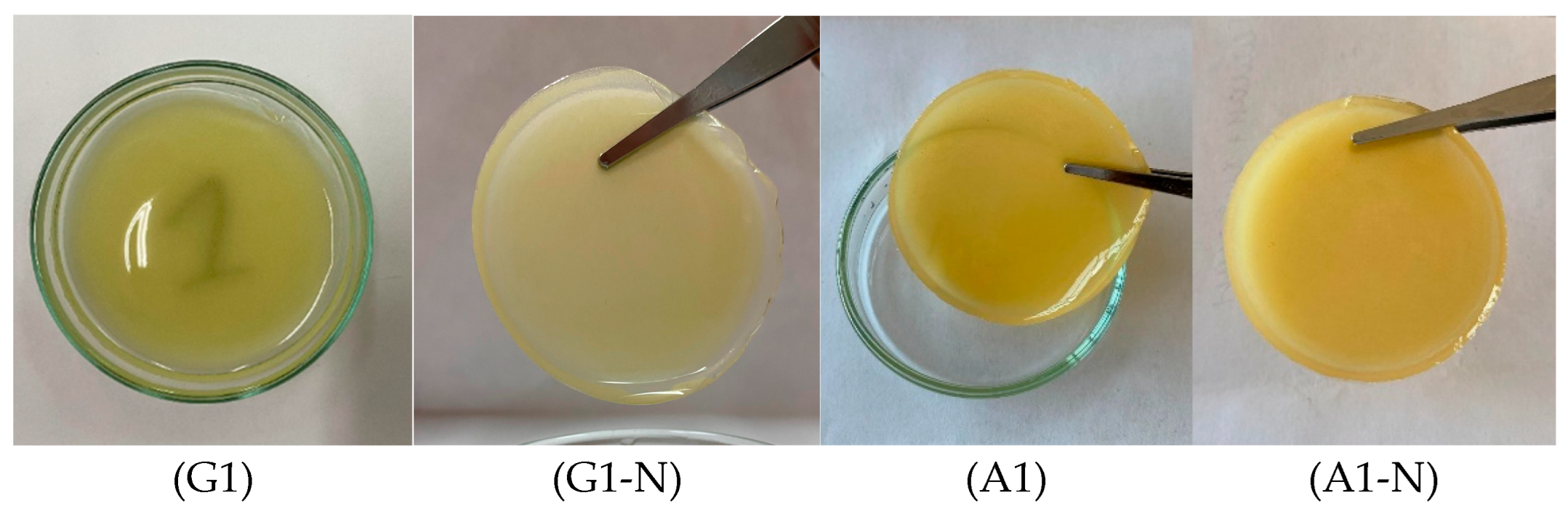
Figure 2.
Fourier-transform infrared (FTIR) spectroscopy.
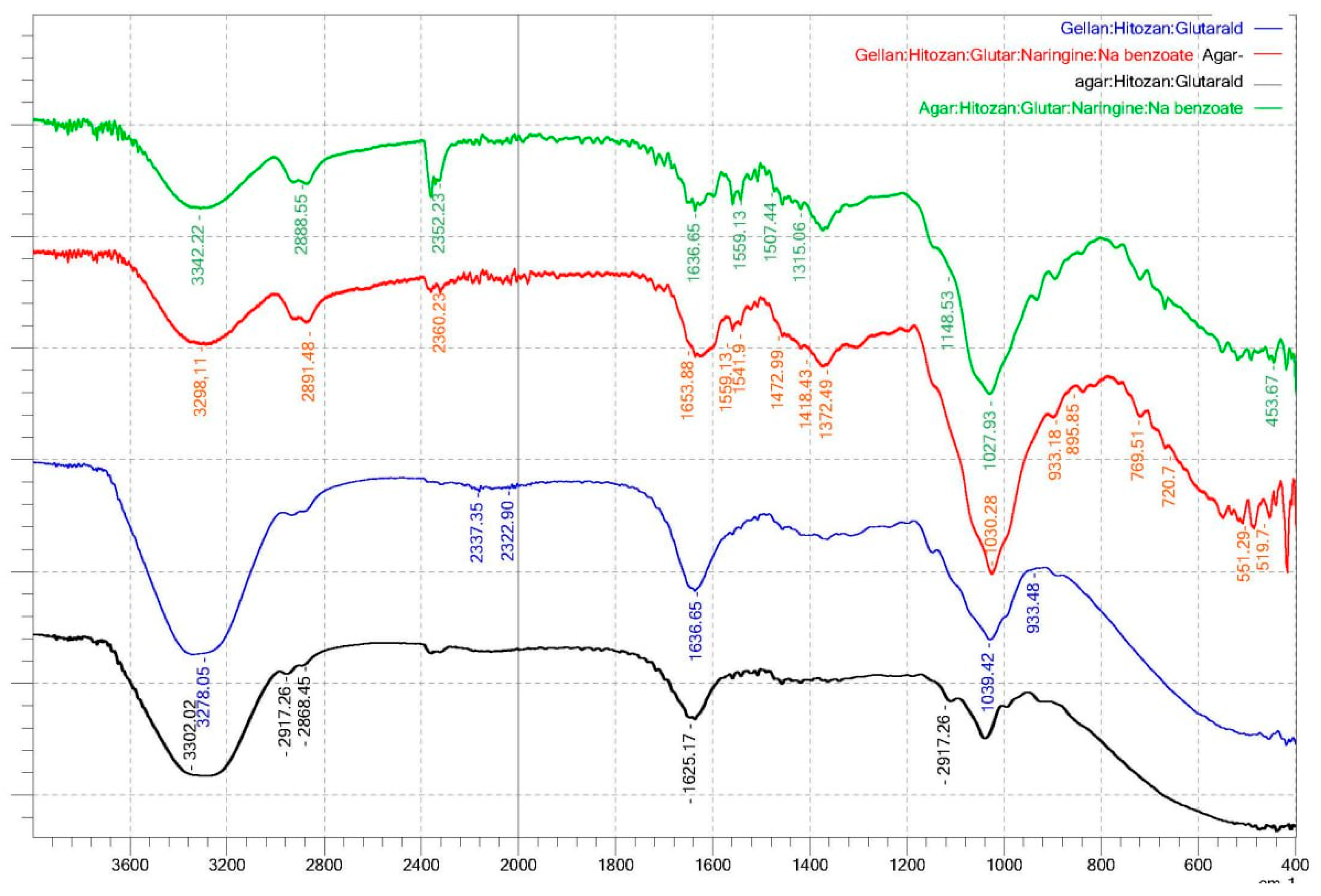
Figure 3.
TG and DSC curves of the representative agar–chitosan–glutaraldehyde patch.
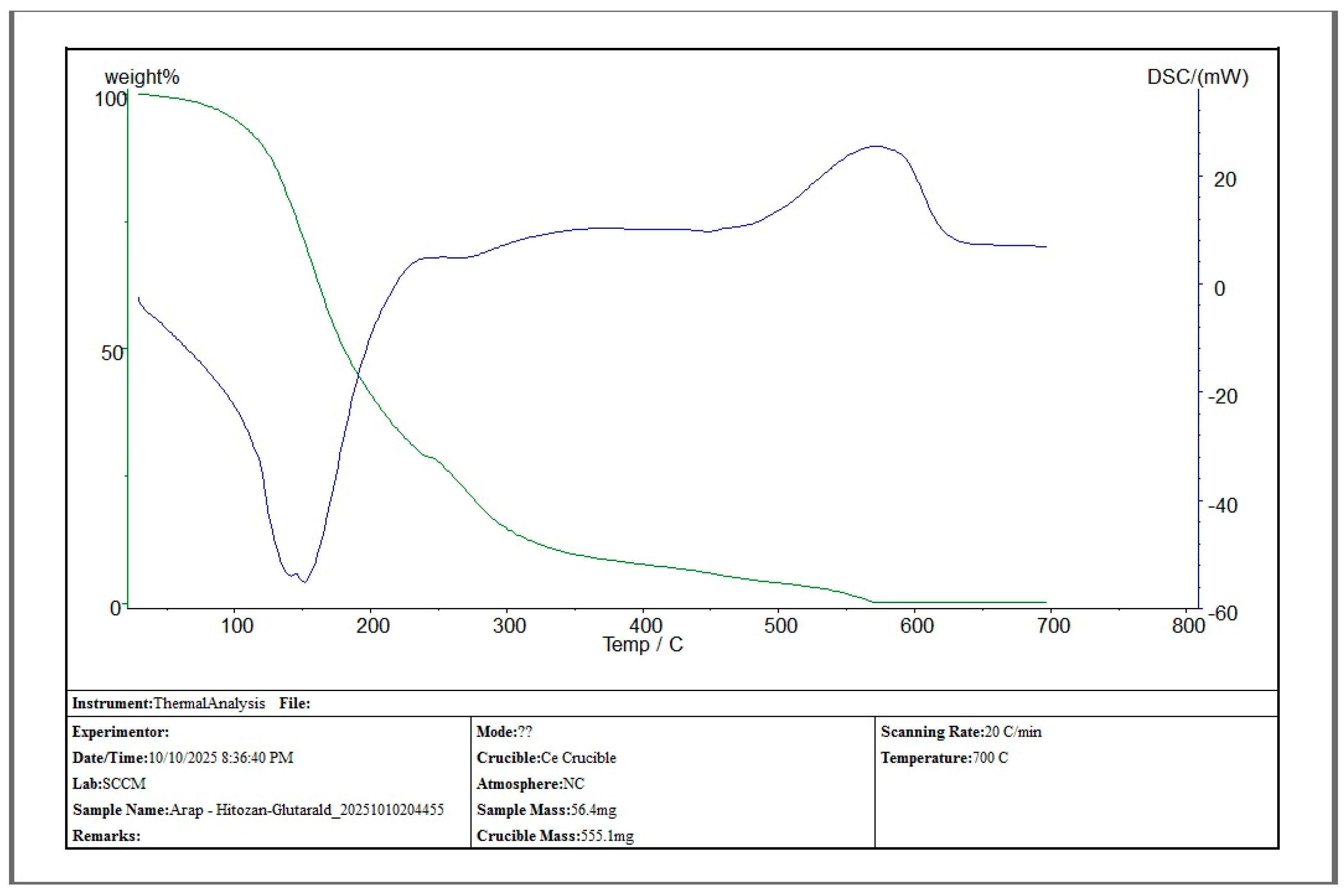
Figure 4.
Effect of diclofenac (1) and naringin (2) on λ-carrageenan-induced paw edema in rats.
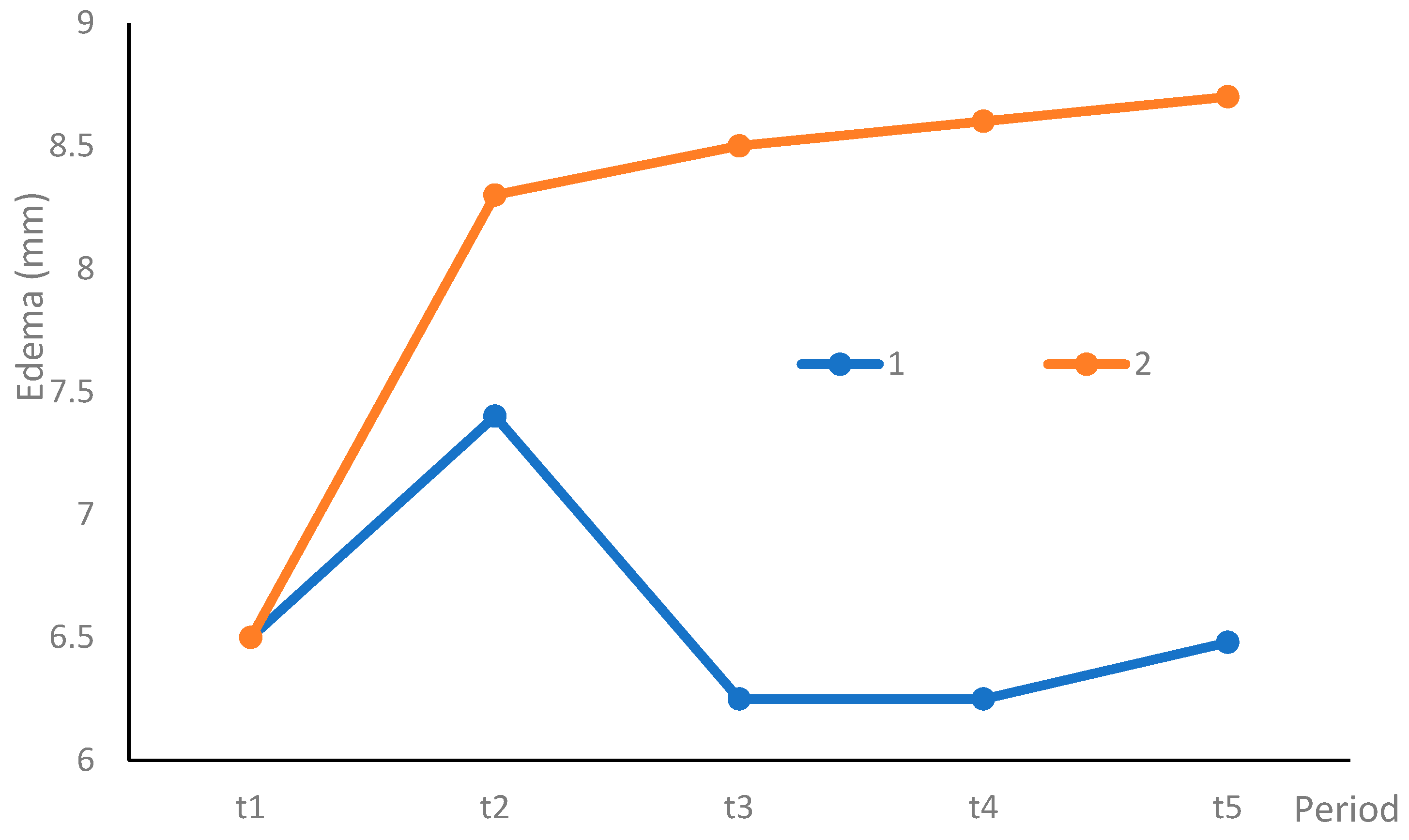
Figure 5.
Assessment of skin reaction after 72 hours.
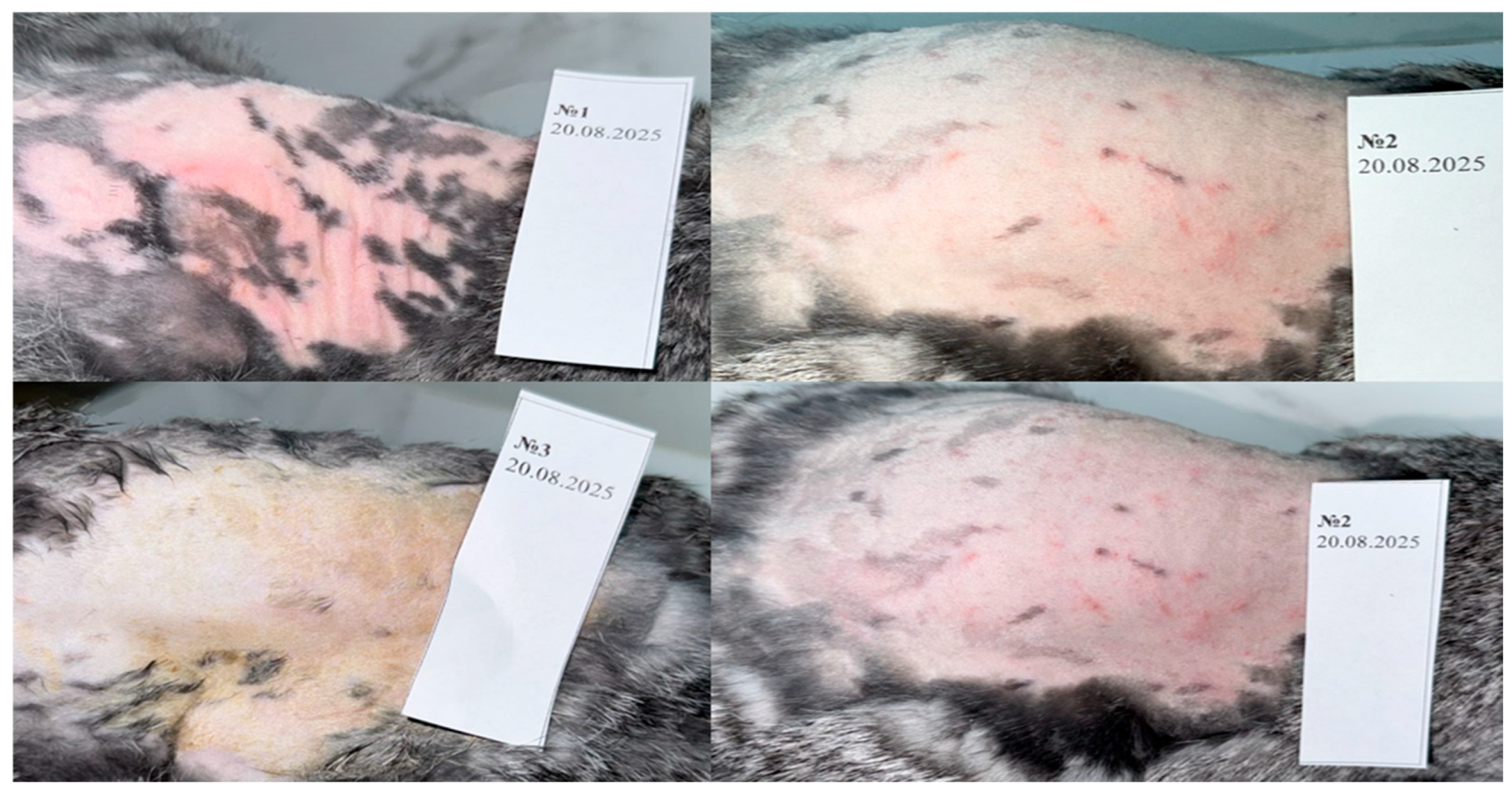
Figure 6.
Antimicrobial activity of naringin-loaded agar–chitosan patches against Staphylococcus aureus ATCC 33591: (a) Sample A (high chitosan/glutaraldehyde), (b) Sample B (low chitosan/glutaraldehyde).
Figure 6.
Antimicrobial activity of naringin-loaded agar–chitosan patches against Staphylococcus aureus ATCC 33591: (a) Sample A (high chitosan/glutaraldehyde), (b) Sample B (low chitosan/glutaraldehyde).
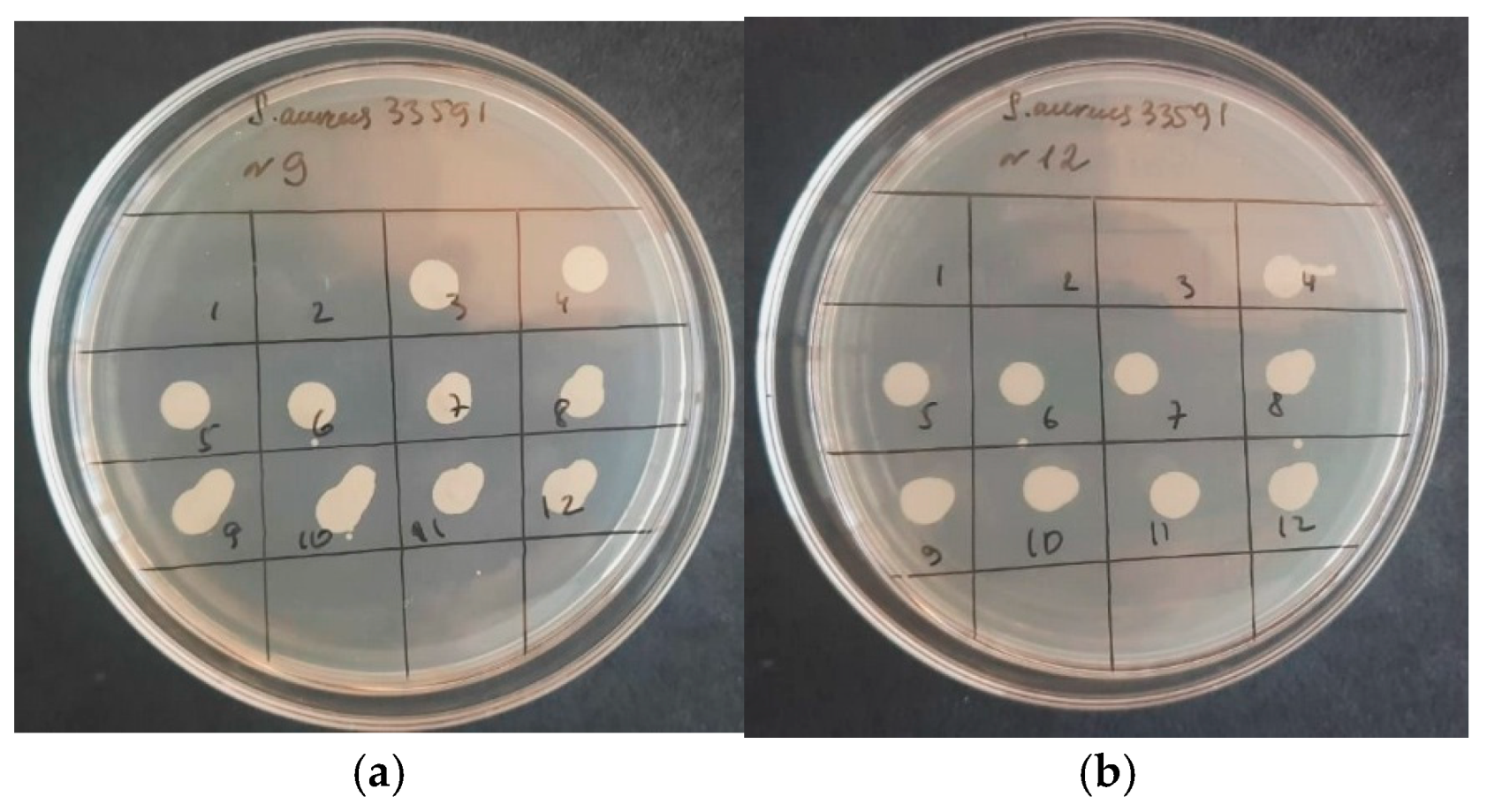
Figure 7.
Evaluation of the antimicrobial activity of naringin-loaded agar–chitosan films against Staphylococcus aureus ATCC 33591: (a) Sample A (high chitosan/glutaraldehyde), (b) Sample B (low chitosan/glutaraldehyde).
Figure 7.
Evaluation of the antimicrobial activity of naringin-loaded agar–chitosan films against Staphylococcus aureus ATCC 33591: (a) Sample A (high chitosan/glutaraldehyde), (b) Sample B (low chitosan/glutaraldehyde).
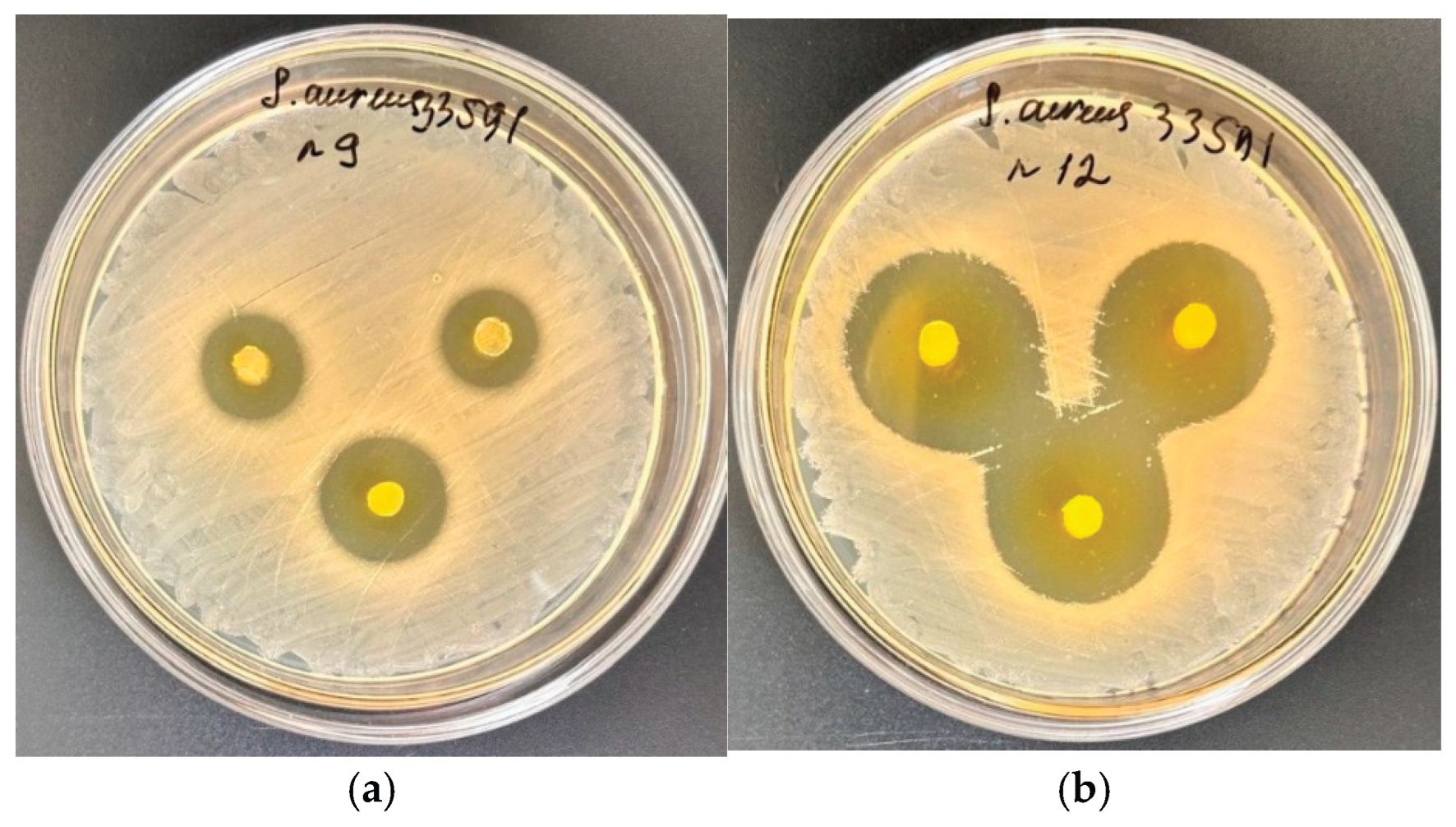

Table 1.
Composition of formulations with different feed ratios.
| Samples | Gellan Gum, (g) | Chitosan, (g) | Agar, (g) | Glutaraldehyde (ml) |
Naringine | Na benzoate |
|---|---|---|---|---|---|---|
| G1 | 1 | 0.5 | - | 5 | - | - |
| A1 | - | 0.5 | 1 | 5 | - | - |
| G1-N | 1 | 0.5 | - | 5 | 0.25 | 0.25 |
| A1-N | - | 0.5 | 1 | 5 | 0.25 | 0.25 |
Table 2.
Antimicrobial activity of the samples.
| Sample | Test strain | MIC (mg/mL) |
|---|---|---|
| Sample А | ||
| Staphylococcus aureus ATCC 33591 | 25 | |
| Sample В | ||
| Staphylococcus aureus ATCC 33591 | 12.5 |
Table 3.
Growth inhibition zones of S. aureus ATCC 33591 by the samples (mm).
| Sample | 1st replicate | 2nd replicate | 3rd replicate | Mean ± SD |
|---|---|---|---|---|
| Sample А | ||||
| 18.0 | 15.0 | 15.0 | 16.0 ± 1.73 | |
| Sample В | ||||
| 27.0 | 28.0 | 28.0 | 27.67 ± 0.58 |
Disclaimer/Publisher’s Note: The statements, opinions and data contained in all publications are solely those of the individual author(s) and contributor(s) and not of MDPI and/or the editor(s). MDPI and/or the editor(s) disclaim responsibility for any injury to people or property resulting from any ideas, methods, instructions or products referred to in the content. |
© 2026 by the authors. Licensee MDPI, Basel, Switzerland. This article is an open access article distributed under the terms and conditions of the Creative Commons Attribution (CC BY) license (http://creativecommons.org/licenses/by/4.0/).
Copyright: This open access article is published under a Creative Commons CC BY 4.0 license, which permit the free download, distribution, and reuse, provided that the author and preprint are cited in any reuse.


