

Submitted:
14 March 2026
Posted:
17 March 2026
You are already at the latest version
Abstract
Annually, global crop harvest significantly declines due to various pest attacks. Their effective management is crucial for sustainable agricultural productivity. Native entomopathogenic fungi (EPF) have been recognized as the most promising microbiological control agents against these pests. The present study aimed to isolate locally occurring entomopathogenic fungi and assess their efficacy against the serious noctuid pest, H. armigera, under laboratory conditions. EPF was explored in cultivated soil from crops of two distinct agro-ecological zones (plains and foothills) in Khyber Pakhtunkhwa province, Pakistan. Using the Galleria baiting technique, fungal isolates were recovered from collected soil samples. Upon identification, these isolates belonged to 4 different EPF species, viz., Nomuraea rileyi, Aspergillus parasiticus, A. niger, and A. flavus. Results revealed that soils from the foothills exhibited a comparatively higher percentage distribution of isolates than those from the plains. Aspergillus niger was the most abundant fungal species in various localities and crops. The pathogenicity of four isolated species was assessed against H. armigera at three concentrations (1x10⁶, 1x10⁷ and 1x10⁸ conidia/mL). Results revealed that the H. armigera larvae were found to be susceptible to all tested EPF species, particularly at high concentration levels. M. rileyi was the most effective, causing the highest percent mortality and exhibiting the lowest percentage of pupal recovery and adult emergence, followed by Aspergillus species. Probit analysis showed that M. rileyi was highly virulent, with the lowest LC50 and LT50 values. This study reveals the potential of M. rileyi to serve as an effective biocontrol agent in integrated pest management strategies against H. armigera, and as a promising candidate for bio-pesticide product development. The use of EPF agents will ensure the production of healthier organic crops by eliminating insecticide residue and resistance problems.
Keywords:
Helicoverpa armigera
; microbial control
; entomopathogenic fungi
; distribution
; Galleria mellonella
1. Introduction
The tomato fruit worm, Helicoverpa armigera (Hubner) (Lepidoptera: Noctuidae), is a highly destructive and cosmopolitan pest (Kriticos et al. 2015, Dinesh et al. 2017, Chen et al. 2018, Fathipour et al. 2020). Its larval stage is highly voracious and infests over 181 host plant species belonging to more than 47 families (Bird 2017, Mishra and Omkar 2021). This pest successfully adapts to various agro-ecosystems due to its polyphagous nature, facultative diapause, high reproductive capacity, and migratory potential (Chaitanya et al. 2014, Jones et al. 2019, Katsikis et al. 2020, Riaz et al. 2021). In Pakistan, from the late 20th century to the early 21st century, this pest was identified as a significant factor in yield reduction and threatening major field crops (Karim 2000).
Tomatoes, Lycopersicon esculentum (Mill.) are among the valuable crops targeted by H. armigera. In Pakistan, tomatoes are the second most produced crop in the horticultural sector (Chohan and Ahmad 2008). The initial instars of H. armigera feed on green shoots and foliage, while subsequent stages target buds, inflorescences, and fruiting bodies, resulting in serious damage to post-harvest produce (Wang and Li 1984, Czepak et al. 2013, Pratissoli et al. 2015). This noctuid pest is estimated to cause around 53% fruit loss in tomatoes (Saljoqi et al. 2022). Farmers in Pakistan and around the world mainly rely on chemical applications to control this pest (Shaheen 2008, Fite et al. 2019). However, the excessive use of broad-spectrum insecticides has raised serious concerns about their harmful effects on human health, the environment, non-target species, disturbs ecological balance and leads to pest resurgence and the development of pest resistance (David 2008, Shah et al. 2013, Sun et al. 2019, Riaz et al. 2021). According to the Arthropod Pesticide Resistance Database (APRD) (http://www.pesticideresistance.org/DB/), this pest has become resistant to over 40 active ingredients. This situation has increased interest in finding more eco-friendly alternatives to reduce the harmful impacts of insect pests and support sustainable farming (Sezen and Demirbag 2006).
One such approach is biological control with insect-invading pathogens (Ai et al. 2018). Entomopathogenic fungi (EPF) are eco-friendly microbial agents naturally found in various terrestrial habitats (Sanchez-Peña 2000, Sevim et al. 2010, Mahankuda and Bhatt 2019); widely recognized worldwide in integrated pest management due to their broader host range, ability to cause lethal mycosis in insect pests through cuticle penetration, and capability to control different developmental stages more effectively than other strategies (Vega et al., 2012; Maina et al., 2018). Moreover, EPF strains promote long-term environmental sustainability by germinating on insect cadavers, thereby enhancing their inoculum density and disseminating their network throughout the ecosystem (Moore et al. 2012).
Metarhizium spp. are frequently used or tested as eco-friendly microbiological agents because they are easy to produce on a large scale (Greenfield et al. 2015). Metarhizium rileyi (Farl.), formerly known as Nomuraea rileyi (Kepler et al. 2014), is a potential EPF that can cause lethal epizootics in various insects, including noctuid pests (Jaronski 2014, Ramos et al. 2024). Various studies have reported the potential of M. rileyi for developing a microbial pesticide against lepidopterous pests (Vega-Aquino et al. 2010, Hatting et al. 2012). M. rileyi is widely used in control strategies for H. armigera (Yuan and Yong 2010, Inglie et al. 2017) due to its primary features, including environmental friendliness and host specificity (Sinha et al. 2016). Aspergillus is another important genus within Ascomycota, encompassing more than 250 species (Kotta-Loizou 2021). Some of these species have been identified as entomopathogenic, such as A. niger (Kaur et al. 2016), A. parasiticus (Nnakumusana 1985, Khan et al. 2025), and A. flavus (Askar et al. 2024). Aspergillus spp. employ a unique infection method by initiating lipid peroxidation, followed by a series of events that ultimately compromise the host’s immunity. They release toxic compounds that cause gut tissue leakage and induce septicemia, leading to the death of the host insect (Karthi et al. 2024).
Mensah et al. (2015) reported the effective control of H. armigera through the use of local Aspergillus sp. (BC 639), which also had a minimal impact on beneficial organisms. Similarly, Sebayang et al. (2021) explored native EPF species as microbial agents against H. armigera and isolated A. flavus and other EPF species from infected H. armigera larvae. These species have been utilized as microbial agents against other agricultural pests, including Oligonychus coffeae (Mazid et al. 2015), Dysdercus koenigii (Kumari et al. 2019), Spodoptera frugiperda (Idrees et al. 2021), and Spodoptera litura (Kaur et al. 2016, Kaur et al. 2025). However, in Pakistan, the potential of these entomopathogens viz., M. rileyi, A. niger, A. parasiticus, and A. flavus has never been investigated against the noctuid pest, H. armigera.
Moreover, understanding the composition and distribution of indigenous species is vital for preserving fungal strains in soil, which is necessary for effectively managing local pest populations in agro-ecosystems (Meyling and Eilenberg 2006, Hussein et al. 2010). Additionally, laboratory evaluations are crucial to determine effective concentration levels, ensuring the success and safety of future field applications against this pest. The study’s objectives were to explore indigenous EPF strains in cultivated soils of KP province and evaluate their potential against the local pest, H. armigera, using the topical inoculation method under laboratory conditions. The main parameters examined included the comparative distribution of fungal isolates in plain areas versus foothills and between agronomic versus horticultural crops, along with first mortality, total mortality (%), pupal recovery (%), adult emergence (%), and the determination of LC50 and LT50.
2. Materials and Methods
2.1. Study Area
Isolation of entomopathogenic fungi and pathogenicity bioassays were performed in the Biocontrol and Plant Pathology laboratories of Nuclear Institute for Food Agriculture (NIFA), Peshawar. The morphological identification of isolated EPF species was done in the Vector Biology Laboratory of the Institute of Zoological Sciences, University of Peshawar.
2.2. Collection of Soil Samples
Soil samples were collected from four agronomic (rice, maize, sugarcane, mustard) and four horticultural crops (tomato, potato, guava, peach) from distinct geographical terrains in Khyber Pakhtunkhwa province (Plains: Peshawar and Charsadda and Foothills: Abbottabad and Haripur) during 2023-24. The details regarding the geographic coordinates of surveyed regions are given in Figure 1.
From each locality, five soil samples (~200 g each) were collected from a depth of 5-10 cm at five random points by using a hand shovel with three replicates per point and stored in sterile zip-lock bags (28×20 cm) at 4 °C in a refrigerator until used (Mantzoukas et al. 2022).. The samples from each site were mixed to get a unit sample and sieved through a 16 mm mesh to remove roots, stones, litter, etc. Soil samples were then spread on rectangular trays and kept open to remove excessive moisture to avoid nematode infestation as suggested by Quesada-Moraga et al. (2007).
2.3. Isolation of Entomopathogenic Fungi
Galleria bait method was used for isolating the entomopathogenic fungi from collected soil samples (Zimmerman 1986). The wax moth larvae, Galleria mellonella (Lepidoptera: Pyralidae), were originally collected from infested bee combs acquired from local beekeepers. The G. mellonella culture was sustained on a suitable diet, specifically bee wax, and kept in rectangular trays within insect rearing cages (60 x 60 x 60 cm) under controlled conditions i.e., 26 ± 2℃ temp., 65±5% R.H. and continuous darkness (Sevim et al. 2010). The dry soil samples were first moistened to field capacity (Quesada-Moraga et al. 2007), and then, after thorough mixing, from each unit sample, five sub-samples were taken into autoclaved glass vials. At the top of the soil, about 1 cm space was left and vial lids were provided with needle holes for proper aeration. Five healthy 3rd instar larvae were added to each vial using sterile forceps and incubated at 26 ± 2℃ for ten days. The vials were inverted daily to ensure regular larval movement through the soil. After incubation, the soil was examined, and the bait larvae were removed. The larval cadavers were first surface sterilized in 3% sodium hypochlorite (disinfectant) for 3 min, then washed with sterile distilled water for 3 min as suggested by Sookar et al. (2008) and individually incubated at 26 ± 2℃ on wet filter paper in sterile glass petri plates for three days to enhance pathogen sporulation.
The cadavers with symptoms of fungal infection were transferred to Sabouraud Dextrose Yeast Agar (SDAY) plates comprising 10 g dextrose, 2.5 g peptone, 2.5 g yeast extract and 20 g agar in 1 litre of distilled water (supplemented with antibiotics 100 mg/l to inhibit bacterial growth) (Sevim et al. 2010) inside a laminar flow cabinet in Plant Pathology Laboratory, NIFA. They were kept at 26 ± 2℃ temperature, 60±5% relative humidity in complete darkness till the growth of fungal mycelium. The culture obtained from an infected bait larvae was considered an isolate. The name code for isolates were based according to crop: Maize (M), Sugarcane (S), Mustard (Mu), Rice (R), Potato (P), Tomato (T), Guava (G) and Peach (P); replication (R1-R3) and sample number within crop (S1-S5) and thus samples were labeled as MR1S1, RR2S5, etc.
2.4. Identification of EPF Isolates
The fungal isolates were identified based on morphological traits, such as colony appearance, spore size and shape, etc., using a taxonomic key in Vector Biology Laboratory of the Institute of Zoological Sciences, University of Peshawar (Humber 2005). Pure culture plates of each fungal isolate were then submitted to the First Fungal Culture Bank of Lahore, Pakistan (FCBP) for confirmation. The identified fungal cultures were deposited in the Biocontrol laboratory of Nuclear Institute for Food Agriculture (NIFA), Peshawar, and Vector Biology Laboratory of the Institute of Zoological Sciences, University of Peshawar.
2.5. Insect Rearing
H. armigera larvae were collected from the NIFA field area and initially reared on a natural diet (peas) in plastic cups. Pupae were collected and transferred to glass vials for adult emergence. The emerged adults were coupled, kept in 2.5 L plastic jars covered with muslin cloth as a substrate for oviposition, and provided with a 10% sugar solution. The muslin cloth with eggs was changed daily and shifted to plastic boxes, with an artificial diet for hatchlings, comprising of chickpea powder (79.6%), scorbic acid (1%), methyl para hydroxyl benzoate (0.8%), ascorbic acid (0.3%), streptomycin (0.3%), yeast (12.7%), agar (0.1%) and vitamin B12 (0.0001%) by weight in distilled water (1000 ml). After hatching, the third instars of the F1 generation were used in bioassays. All developmental stages of H. armigera were kept under controlled conditions of 26 ± 2℃ temperature, 65±5% relative humidity, and L14: D10 hr photoperiod.
2.6. Pathogenicity of Entomopathogenic Fungi on H. armigera
Bioassays were performed in the Biocontrol laboratory of NIFA to evaluate the pathogenicity of isolated EPF species against H. armigera. Conidial suspensions were prepared from 2-3 weeks old pure EPF cultures in 10 ml of distilled water with Tween-80 (0.1%) in sterile 15 ml tubes and quantified using a Hemocytometer (Sorathiya et al. 2023). The desired concentrations of each fungal strain, i.e., 1×10⁸, 1×10⁷, and1×106 conidia/ml, were adjusted through serial dilution. Three replicates were used per treatment and each replicate contained nine 3rd instar of H. armigera, which were topically inoculated using a micropipette with a volume of 10 microliter of conidial suspensions. In a control treatment, the larvae were treated similarly, using only distilled water. The bioassay was repeated twice and during the experimental period, the larvae were provided with artificial diet and adults were fed with 10% sugar solution.
2.7. Parameters to Be Studied
2.7.1. Percentage Diversity of Soil-Dwelling EPF
To calculate the percentage diversity of a particular identified EPF strain (x), the following formula was used:
% Diversity of ‘x’ = × 100
2.7.2. Concentration-Response Bioassay
Concentration-response tests were conducted for different parameters. In each treatment, as noted above, nine healthy third instars were placed individually in petri plates and topically inoculated with conidial suspension and in the control group, treated with distilled water. The first larval mortality data for each treatment’s replication were recorded for 5 days following the inoculation of EPFs. The larvae showing no indication of movement were considered dead. The total mortality and median lethal concentration (LC50) for each fungal treatment were determined at different post-inoculation intervals: total mortality after 7 and 14 days, LC50 after 3, 7, and 14 days. The effect of different concentrations of EPFs on the pupal period and adult emergence of H. armigera was also assessed. The median lethal time (LT50) was also estimated for each fungal concentration.
2.8. Research Design
A Completely Randomized Design (CRD) was followed, with 3x replicates. The aspect used was the conidial concentration treatments (T) with the following levels for each fungal species: 1×10⁶, 1×10⁷, and 1×10⁸ conidia/ml. The bioassay was conducted twice, comprising a total of thirteen treatments, including a control group.
2.9. Statistical Analysis
The bioassay data (percent mortality, pupal recovery and adult emergence) were analyzed using one-way ANOVA with Statistix version 8.1 software to determine means and different parameter values for tested fungal treatments. The means of significant treatments were compared with Tukey’s HSD (Honestly Significant Difference) test at a significance level of α = 0.05. To estimate LC50 and LT50 and their associated P values, degrees of freedom, chi-square and slopes of tested EPF species, probit analysis was performed on bioassay data using SPSS v16.
3. Results
3.1. Isolation and Identification of EPF Isolates
A total of 209 fungal isolates were recovered from baited wax moth larvae. Based on morphological traits identified using a taxonomic key (Humber 2005) and confirmed by the Fungal Culture Bank of Pakistan (FCBP), fungal isolates were classified into four different EPF species: Nomuraea rileyi, Aspergillus parasiticus, Aspergillus flavus, and Aspergillus niger. Their morphological details are presented in Figure 2.
3.2. Comparative Distribution of Fungal Isolates in Different Agro-Ecological Zones of KP Province
The comparative distribution of EPF isolates was determined in cultivated soil from diverse agro-ecological zones, including plains and foothills of KP Province. Of the total 209 isolates, 133 were obtained from cultivated soils in the plain area districts, i.e., Peshawar and Charsadda, while the remaining 76 isolates came from the foothills districts, i.e., Haripur and Abbottabad. Our results revealed that the comparative distribution of all isolated EPF species was higher in the soil of the foothills than in the plain areas (Figure 3). Overall, fungal species composition was uniform throughout, with the highest percentage distribution of Aspergillus niger i.e., 48% in the foothills and 37% in the plain regions, while Nomuraea rileyi had the lowest i.e., 15% in the foothills and 11% in the plain areas.
3.3. Comparative Distribution of EPF Isolates in Different Cropping Systems
The percent distribution of fungal isolates was compared across different cropping systems viz., agronomic and horticultural crops of Plains and Foothills in KP Province. Of 209 isolates, the highest number (119) was found in various horticultural crops. The percent distribution of nearly all fungal isolates in horticultural crops was relatively higher than in different agronomic crops (Table 1). Overall, the highest percent distribution was recorded for A. niger i.e., 43% in horticultural crops and 39% in agronomic crops, while A. parasiticus had the lowest percent distribution with 6% in horticultural and 5% in agronomic crops. (Table 1).
3.4. Concentration-Response Bioassays
1. First larval mortality of H. armigera exposed to different EPF concentrations
First mortality is the duration in which different EPF concentrations caused the first larval death to be recorded over 5 days. Results showed that at relatively high concentration levels (1 × 10⁸, 1 × 10⁷ conidia/ml), the first larval mortality in all fungal treatments occurred in a minimum time i.e., within 2 days. Nomuraea rileyi was found to be the most effective, causing the first mortality in the minimum time (Table 2).
2. Total Percent Mortality of H. armigera exposed to different EPF concentrations at three post-inoculation intervals
The total mortality for each treatment was recorded at two post-inoculation intervals (PII): 7, and 14 days against the third instar of H. armigera. The recorded data were analyzed using ANOVA to assess the differences among treatments and the group means were compared with Tukey’s HSD (Honestly Significant Difference) test at a significance level of α = 0.05. Our findings revealed that at 7d PII, N. rileyi exhibited the highest mortality percentage in the third instar at 1×10⁸ conidia/ml followed by A. niger at the same conidial concentration, while the lowest mortality was recorded in control group (F=13.1, P=0.000). At 14d PII, the highest mortality against the third instar was recorded with higher concentrations of tested EPF and no mortality occurred in the control treatment (F=10.1, P=0.000) (Table 3). Among the tested EPF species, N. rileyi demonstrated the highest total mortality with 1×10⁸ conidia/ml at different post-inoculation intervals.
3. Effect of different EPF concentrations on Pupal Recovery (%) and Adult Emergence (%) of H. armigera
The statistical analysis revealed that different conidial concentrations of N. rileyi significantly reduced the percent pupal recovery and adult emergence of previously treated H. armigera larvae (Table 4). The highest percent pupal recovery was recorded in the control group, which significantly decreased with increasing concentration levels and reached its lowest at higher concentrations of 1×10⁸, 1×10⁷ conidia/ml of N. rileyi, and 1×10⁸ conidia/ml of other tested species (F=13.1, P=0.000). Similarly, the lowest percent emergence was observed in higher concentrations of the tested EPF species. While the highest percent adult emergence was recorded in the control group (F=3.01, P=0.00) (Table 4).
4. LC50 and LT50 Values of the Tested EPF Species Against H. armigera
Using SPSS v16 and a probit analysis on mortality data, the LC50 and LT50 values were calculated for the EPF species, setting P<0.05 as the significance level. We measured LC50 values at three post-inoculation intervals: 3, 7, and 14 days, against the third instar of H. armigera. Our findings showed that the LC50 values of the tested EPF species were time-dependent and decreased significantly as the post-inoculation interval increased. At 3d, the lowest LC50 was recorded for N. rileyi (1.36×10⁸ spores/ml), followed by A. niger, A. flavus (1.15×10⁹ spores/ml) and Aspergillus parasiticus (1.66×10⁹ spores/ml) (Table 5). At 7d, N. rileyi was the most virulent, with the lowest LC50 (2.40×10⁶ spores/ml), followed by A. parasiticus (3.14×10⁶ spores/ml) and A. niger (8.06×10⁶ spores/ml), while A. flavus was the least effective, showing the highest LC50 (3.18×10⁷ spores/ml) (Table 6). At 14d, the lowest LC50 was recorded for A. flavus (4.00×10⁵ spores/ml) followed by N. rileyi (7.19×10⁵ spores/ml), A. parasiticus (8.05×10⁵ spores/ml) and A. niger (1.88×10⁶ spores/ml) (Table 7).
Median Lethal Time (LT50)
Median lethal time (LT50) was also estimated for each fungal concentration, i.e., 1×10⁶, 1×10⁷, and 1×10⁸ conidia/ml. At 1×10⁶ conidia/ml, the lowest LT50 was observed in A. parasiticus (8.77 days), followed by A. flavus (9.62 days), M. rileyi (9.72 days), and A. niger (12.9 days) (Figure 4 a-c). At 1×10⁷ conidia/ml, M. rileyi showed the lowest LT50, followed by A. flavus and A. parasiticus, with A. niger having the highest LT50 (10.6 days) (Figure 4 b). Similarly, at 1×10⁸ conidia/ml, M. rileyi was the most virulent with the lowest LT50 (5.45 days), followed by A. niger (8.25 days) and A. parasiticus (8.49 days), while the highest LT50 was recorded for A. flavus (8.55 days) (Figure 4 c).
4. Discussion
Many studies have reported the isolation and identification of fungal entomopathogens in different habitats (Sookar et al. 2008, Tkaczuk et al. 2014, Gorczyca et al. 2018). However, in Pakistan, due to limited knowledge about the occurrence and distribution of native fungal species, no microbial pesticide has been registered or made commercially available to farmers for local pest control (Iqbal et al. 2021). This study confirms the presence of potential EPF in cultivated soils. Our results revealed that the distribution percentage of fungal isolates was higher in the soil of the foothills compared to the plains, indicating a significant presence in the soils of the higher altitude districts (Haripur and Abbottabad). These findings align with those of Wakil et al. (2013), who evaluated the occurrence of fungal entomopathogens in different regions of Punjab province and reported the highest distribution of fungal isolates in soil from higher altitudes (above 600 m). While Liu et al. (2021) identified ultraviolet exposure as a major factor negatively affecting the occurrence and persistence of EPF species in soil, which contradicts our findings, as foothill soils, being at higher altitudes, are more exposed to ultraviolet radiation than those in plain areas. The difference may be due to variations in the organic content and soil texture that significantly influence the occurrence of EPF in soil habitats (Uzman et al. 2019).
The comparative distribution of fungal isolates was higher in different horticultural crops than in agronomic fields. Our results are in partial agreement with Qayyum et al. (2021), who reported higher fungal distribution frequency in fruits (52.50%) and vegetables (42.50%) than in field crops (37.50%). Similarly, Sookar et al. (2008) also observed that the occurrence and distribution of EPF were significantly influenced by habitat type. They recovered a larger number of Metarhizium anisopliae isolates from the vegetable soil than from other plantations. Notably, in our results, Aspergillus was the most prevalent genus, with Aspergillus niger found as the most abundant EPF species among the fungal isolates, followed by A. flavus. Our results are supported by Qayyum et al. (2021), who reported A. niger as the most abundant fungal strain with a distribution frequency of 27.50% followed by A. flavus with 22.50% occurrence in sampled soil. This is because various ecological and environmental factors influence the distribution and abundance of EPF in the soil habitat (Tkaczuk et al. 2014). Similarly, Wakil et al. (2013) recovered Aspergillus as the most common genus from soil samples.
The virulence of isolated EPF species, identified as N. rileyi, A. parasiticus, A. niger, and A. flavus was evaluated in bioassays against the third instar of H. armigera. The larvae were found susceptible to all tested fungal entomopathogens, resulting in significant mortality, especially at their highest concentration 1×10⁸ conidia/ml. Our results showed a dose-dependent mortality response, with N. rileyi as the most effective treatment, causing the highest percentage mortality, followed by Aspergillus species. These findings are partly consistent with those of Hazarika et al. (2016), who reported concentration-dependent mortality with N. rileyi and identified it as a promising biocontrol agent, causing 86% mortality in H. armigera at a concentration of 1 × 10⁹ spores/mL. The difference in the maximum mortality recorded in the present study and Hazarika et al. (2016) is attributed to variations in strains and the concentrations assessed in both studies. Our results are highly consistent with those of Dev et al. (2021), who found M. rileyi to be highly virulent against H. armigera, with the highest mortality observed in the third instar at 1×10⁸ conidia/ml. M. rileyi causes host-preferential epizootics in susceptible larvae mainly by blocking respiratory structures, leading to host death (Sabbour and Abdel-Rahman 2013). Similarly, Ramos et al. (2024) recorded an effective mortality rate (70 to 98.7%) in Spodoptera frugiperda larvae when treated with 24 different isolates of M. rileyi in bioassays.
Several studies have reported the entomopathogenic potential of Aspergillus species against various insect pests, including lepidopterans (Fitriana et al. 2021), with limited research focused on H. armigera. Mensah et al. (2015) assessed the efficacy of Aspergillus sp. (BC 639) against Helicoverpa spp. and predatory insects both in vitro and in cotton fields. They reported effective pest control using Aspergillus spp. with minimal effects on beneficial organisms, maintaining crop yield. Similarly, Kaur et al. (2016) reported a 63% larval mortality in Spodoptera litura using ethyl acetate extract of A. niger compared to 3% in the control group.
The pupal recovery and adult emergence of treated H. armigera larvae were significantly reduced with increasing conidial concentration. The lowest percent pupal recovery and percent emergence were observed at different concentrations of N. rileyi, followed by Aspergillus species. These findings partially agree with those of Mantzoukas (2019), who reported concentration-dependent pupation and emergence when exposing H. armigera larvae to different concentrations of Metarhizium robertsii, with the lowest pupation and emergence observed at the highest concentration (1 × 10⁷ conidia/ml). However, Shanthakumar et al. (2010) found no significant effect of EPF concentration on pupation and recorded 90% pupal recovery in S. litura at both lower and higher concentrations of N. rileyi (104 and 107 conidia/ml). Similarly, Hatting et al. (2012) observed accelerated pupation in H. armigera after treating the larvae with N. rileyi using both topical and oral inoculation methods. The observed discrepancies in pupal recovery results may be attributed to the genetic makeup of fungal strains isolated from different geographical regions (Bidochka et al. 2000, Couceiro et al. 2022). Additionally, variations in methodology, including inoculation techniques and the susceptibility of targeted pests to fungal infections, also explain the contrasting outcomes.
Probit analysis revealed that the estimated LC50 values of the tested EPF species were time-dependent and significantly decreased as the PII increased. N. rileyi was found to be most virulent, exhibiting the lowest LC50 at 7d PII, followed by A. parasiticus, A. niger and A. flavus. These results are in accordance with those of Liu et al. (2019), who reported an LC50 of 6.24×10⁶ conidia/ml for M. rileyi against third-instar S. litura. Similarly, Ramos et al. (2024) documented the LC50 range (2.04×10⁵ to 1.05×10⁶ conidia/mL) of 5 different N. rileyi isolates against S. frugiperda larvae. However, LC50 results for N. rileyi are in partial agreement with those of Dev et al. (2021), who determined the LC50 of 2.81×10⁵ spores/ml for M. rileyi against H. armigera third instar. This partial variation in the findings may be attributed to the genotypic variation, related to their adaptation to different native environments (Bidochka et al. 2000, Couceiro et al. 2022).
LT50 values of almost all fungal treatments (except A. parasiticus) were dose-dependent and significantly decreased with increasing conidial concentrations. These findings are supported by Yang et al. (2024), who also observed concentration-dependent LT50 values of M. rileyi against S. frugiperda larvae. Contrary to these results, Ramos et al. (2024) recorded LT50 values for 1×10⁸ conidia/ml concentration of five M. rileyi isolates ranging from 7.04 days to 9.46 days against the second instar of S. frugiperda. The observed discrepancies in the LT50 results may be attributed to experimental conditions and targeted lepidopterous species.
Based on our findings, the distribution of entomopathogenic fungi in the different agro-ecological zones and cropping systems was not uniform throughout the soil habitat. EPF species viz., N. rileyi, A. parasiticus, A. flavus and A. niger, isolated from cultivated soil in Khyber Pakhtunkhwa province of Pakistan, effectively managed the local pest, H. armigera in laboratory conditions. Among all the fungal species tested, N. rileyi showed the most promising control, followed by Aspergillus species. N. rileyi caused deadly mycosis in H. armigera and showed a detrimental impact on its biological parameters as well. Hence, it is potentially suitable for the eco-friendly management of this pest and would be a sustainable alternative to synthetic insecticides. Naturally occurring EPF causes deadly mycosis in insect pests, with the potential to infect all their life stages. Their incorporation into IPM strategies will ensure the production of healthier organic crops by addressing the insecticide residue and resistance issues. Further, field trials using the extracts of isolated EPF species against H. armigera are needed.
Author Contributions
Zainab Saeed (Conceptualization [equal], Writing—original draft [equal], Formal—analysis and data curation [equal], Methodology [equal], Project Management, Writing—review and editing [equal]), Usman Khalique (Investigation, Formal analysis [equal], Writing—review and editing [equal], Resources, Software [equal]), Farrah Zaidi (Supervision, Formal analysis [equal], Writing—review and editing [equal], Resources [equal]), Muhammad Zahid (Writing—review and editing [equal]), Bibi Hajra (Writing—review and editing [equal]), Khush Bakht Latif (Writing—review and editing [equal]), Syeda Hira Fatima (Writing—review and editing, [equal], Map—Assistance), and Syed Jawad Ahmad Shah (Supervision, Writing—review and editing [equal], Resources [equal]).
Data Availability Statement
All data supporting the findings of this study are included in the manuscript. The raw data can be made available by the corresponding author upon reasonable request.
Acknowledgments
The authors would like to thank the Nuclear Institute for Food and Agriculture (NIFA), Peshawar and the Institute of Zoological Sciences, University of Peshawar for their support and facilitation of this research.
Conflicts of Interest
All authors declare no conflict of interest.
References
- Ai, X; Wei, Y; Huang, L; et al. Developmental control of Helicoverpa armigera by ingestion of bacteria expressing dsRNA targeting an arginine kinase gene. Biocontrol Sci. Technol. 2018, 28(3), 253–267. [Google Scholar] [CrossRef]
- Askar, M; Chen, C; Borham, A; et al. First activity of Aspergillus flavus as entomopathogen infecting Diaphania indica and control efficacy across different developmental stages. Horticulturae 2024, 10(12), 1315. [Google Scholar] [CrossRef]
- Bidochka, M.J.; Kamp, A.M.; Lavender, T.M.; Dekoning, J.; De Croos, J.N.A. Habitat association in two genetic groups of the insect-pathogenic fungus Metarhizium anisopliae: Uncovering cryptic species. Appl. Environ. Microbiol. 2001, 67, 1335–1342. [Google Scholar] [CrossRef]
- Bing, DS; Xing, ZL. Occurrence and diversity of insect-associated fungi in natural soils in China. Appl. Soil Ecol. 2008, 39, 100–108. [Google Scholar] [CrossRef]
- Bird, LJ. Genetics, cross-resistance and synergism of indoxacarb resistance in Helicoverpa armigera (Lepidoptera: Noctuidae). Pest Manag. Sci. 2017, 73, 575–581. [Google Scholar] [CrossRef]
- Chaitanya, T; Sreedevi, K; Krishna, T; et al. Biology and population dynamics of Helicoverpa armigera (Hubner) in Cajanus cajan (L.) Millsp. Ann. Pl. Protec. Sci. 2014, 22, 287–290. [Google Scholar]
- Chen, C; Han, P; Yan, W; et al. Uptake of quercetin reduces larval sensitivity to lambda-cyhalothrin in Helicoverpa armigera. J. Pest Sci. 2018, 91(1), 919–926. [Google Scholar] [CrossRef]
- Chohan, TZ; Ahmad, S. An assessment of tomato production practices in Danna Katchely, Azad Jammu Kashmir. Pak J Life Soc. Sci. 2008, 6, 96–102. [Google Scholar]
- Couceiro, J.C.; De Fine Licht, H.H.; Delalibera, I., Jr.; Meyling, N.V. Comparative gene expression and genomics reflect geographical divergence in the plant symbiotic and entomopathogenic fungal genus Metarhizium. Fungal Ecol. 2022, 60, 101190. [Google Scholar] [CrossRef]
- Czepak, C; Albernaz, KC; Vivan, LM. First reported occurrence of Helicoverpa armigera (Hubner) (Lepidoptera: Noctuidae) in Brazil. Pesqui. Agropecu. Trop. 2013, 43, 110–113. [Google Scholar] [CrossRef]
- David, BV. Biotechnological approaches in IPM and their impact on environment. J. Biopestic. 2008, 1(1), 3–5. [Google Scholar] [CrossRef]
- Dev, B; Verma, SC; Sharma, P.L; et al. Evaluation of Metarhizium rileyi Farlow (Samson) impregnated with azadirachtin and indoxacarb against Helicoverpa armigera (Hubner). Egypt J Biol Pest Control 2021, 31, 142. [Google Scholar] [CrossRef]
- Dinesh, K; Anusha, S; Singh, RB; et al. Estimation of avoidable yield losses caused by Helicoverpa armigera (Hubner) on chickpea. J. Entomol. Zool. Stud. 2017, 5, 1476–1478. [Google Scholar]
- Fathipour, Y; Baghery, F; Bagheri, A; et al. Development, reproduction and life table parameters of Helicoverpa armigera (Lepidoptera: Noctuidae) on five main host plants. J. Crop Prot. 2020, 9(4), 551–561. Available from: http://jcp.modares.ac.ir/article-3-38609-en.html.
- Fite, T; Tefera, T; Negeri, M; et al. Farmer’s status, knowledge & management practices on major chickpea insect pests in some selected zones of Ethiopia. J. Agric. Sci. 2019, 11(1), 31–46. [Google Scholar] [CrossRef]
- Fitriana, Y; Suharjo, R; Swibawa1, IG; et al. Aspergillus oryzae and Beauveria bassiana as entomopathogenic fungi of Spodoptera litura Fabricius (Lepidoptera: Noctuidae) infesting corn in Lampung, Indonesia. Egypt. J. Biol. Pest. Control. 2021, 31, 127. [Google Scholar] [CrossRef]
- Gorczyca, A; Galon, A; Tatoj, A; et al. Occurrence of entomopathogenic fungi in agricultural and natural soils in south-eastern Poland. J. Res. Appl. Agric. Eng. 2018, 63(2), 63–67. [Google Scholar]
- Greenfeld, BP; Peace, A; Evans, H; et al. Identification of Metarhizium strains highly effective against Aedes, Anopheles, and Culex larvae. Biocontrol Sci. Technol. 2015, 25, 487–502. [Google Scholar] [CrossRef]
- Khan, HAA; Khan, T; Iqbal, N. Biocontrol potential of isolates of Aspergillus flavus and Aspergillus parasiticus against Rhyzopertha dominica, Trogoderma granarium, and Tribolium castaneum. J. Stored Prod. Res. 2025, 114, 102799. [Google Scholar] [CrossRef]
- Hatting, JL. Comparison of three entomopathogenic fungi against the bollworm, Helicoverpa armigera (Hübner) (Lepidoptera: Noctuidae), employing topical vs per os inoculation techniques. Afr. Entomol. 2012, 20(1), 91–100. [Google Scholar] [CrossRef]
- Hazarika, S; Patgiri, P; Dutta, P; et al. Efficacy of local isolate of Nomuraea rileyi (Farlow) Sampson against Helicoverpa armigera (Hubner). J. Entomol. Zool. Stud. 2016, 4(3), 167–169. [Google Scholar]
- Humber, RA. Entomopathogenic Fungal Identification. November 2005; pp. 1–32. [Google Scholar]
- Hussein, KA; Abdel-Rahman, MAA; Abdel-Mallek, AY; et al. Climatic factors interference with the occurrence of Beauveria bassiana and Metarhizium anisopliae in cultivated soil. Afr. J. Biotechnol. 2010, 9, 7674–7682. [Google Scholar]
- Idrees, A; Qadir, ZA; Akutse, KS; et al. Effectiveness of entomopathogenic fungi on immature stages and feeding performance of fall armyworm, Spodoptera frugiperda (Lepidoptera: Noctuidae) larvae. Insects 2021, 12, 1044. [Google Scholar] [CrossRef]
- Ingle, Y; Sable, Y; Parate, R. Pathogenic and extracellular enzymes variability in entomopathogenic fungus Nomuraea rileyi (Farlow) Samson. The Bioscan 2017, 12, 1475–1478. [Google Scholar]
- Iqbal, M; Gogi, MD; Atta, B; et al. Assessment of pathogenicity of Beauveria bassiana, Metarhizium anisopliae, Verticillium lecanii and Bacillus thuringiensis var. kurstaki against Bactrocera cucurbitae Coquillett (Diptera: Tephritidae) via diet-bioassay technique under controlled conditions. Int. J. Trop. Insect Sci. 2021, 41, 1129–1145. [Google Scholar] [CrossRef]
- Jaronski, ST. Ecological factors in the inundative use of fungal entomopathogens. Biocontrol 2010, 55(1), 159–185. [Google Scholar] [CrossRef]
- Jones, CM; Parry, H; Tay, WT; et al. Movement ecology of pest Helicoverpa: implications for ongoing spread. Annu. Rev. Entomol. 2019, 64, 277–295. [Google Scholar] [CrossRef]
- Karim, S. Management of Helicoverpa armigera: a review and prospectus for Pakistan. Pak. J. Biol. Sci. 2000, 3(8), 1213–1222. [Google Scholar] [CrossRef]
- Karthi, S; Vasantha-Srinivasan, P; Senthil-Nathan, S; et al. Entomopathogenic fungi promising biocontrol agents for managing lepidopteran pests: Review of current knowledge. Biocatal. Agric. Biotechnol. 2024, 58, 103146. [Google Scholar] [CrossRef]
- Katsikis, CI; Wang, P; Zalucki, MP. Life history traits of a key agricultural pest, Helicoverpa armigera (Lepidoptera: Noctuidae): are laboratory settings appropriate. Austral. Entomol. 2020, 59(1), 189–201. [Google Scholar] [CrossRef]
- Kaur, T; Datta, R; Mahajan, A; et al. Endophytic colonization of cauliflower by Aspergillus flavus and Aspergillus niger reduces performance and host preference in tobacco caterpillar, Spodoptera litura. Entomol. Exp. Appl. 2025. [Google Scholar] [CrossRef]
- Kaur, T; Kaur, J; Kaur, A; et al. Larvicidal and growth inhibitory effects of endophytic Aspergillus niger on a polyphagous pest, Spodoptera litura. Phytoparasitica 2016, 44, 465–476. [Google Scholar] [CrossRef]
- Kepler, RM; Humber, RA; Bischof, JF; et al. Clarification of generic “ans” species boundaries for Metarhizium and related fungi through multigene phylogenetics. Mycologia 2014, 106, 824. [Google Scholar] [CrossRef] [PubMed]
- Kotta-Loizou, I. Diversity of mycoviruses in Aspergilli. In Encyclopedia of Virology (Fourth Edition); Dennis, H, Bamford, Zuckerman, M., Eds.; Academic Press, 2021; pp. 450–456. [Google Scholar] [CrossRef]
- Kriticos, DJ; Ota, N; Hutchison, WD; et al. The Potential Distribution of Invading Helicoverpa armigera in North America: Is It Just a Matter of Time? PLoS ONE 2015, 10(3), e0119618. [Google Scholar] [CrossRef]
- Kumari, S; Verma, D; Kumar, D. Evaluation of Aspergillus niger as a biocontrol Agent in the insect pest management of red cotton bug, Dysdercus koenigii (Heteroptera: Pyrrhocoridae). J. Sci. Res. 2019, 11(2), 235–247. [Google Scholar] [CrossRef]
- Liu, YC; Ni, NT; Chang, JC; et al. Isolation and selection of entomopathogenic fungi from soil samples and evaluation of fungal virulence against insect pests. J. Vis. Exp. 2021, 175, e62882. [Google Scholar] [CrossRef]
- Liu, S.; Xu, Z.; Wang, X.; Zhao, L.; Wang, G.; Li, X.; Zhang, L. Pathogenicity and in vivo development of Metarhizium rileyi against Spodoptera litura (Lepidoptera: Noctuidae) larvae. Journal of Economic Entomology 2019, 112(4), 1598–1603. [Google Scholar] [CrossRef]
- Mahankuda, B; Bhatt, B. Potentialities entomopathogenic fungus Beauveria bassiana as a biocontrol agent: A review. J. Entomol. Zool. Stud. 2019, 7(5), 870–874. [Google Scholar]
- Maina, UM; Galadima, IB; Gambo, FM; et al. A review on the use of entomopathogenic fungi in the management of insect pests of field crops. J. Entomol Zool Stud. 2018, 6(1), 27–32. [Google Scholar]
- Mantzoukas, S; Kitsiou, F; Lagogiannis, I; et al. Potential use of Fusarium isolates as a biological control agent against H. armigera (Hubner) (Lepidoptera: Noctuidae) case study. Appl. Sci. 2022, 12, 8918. [Google Scholar] [CrossRef]
- Mantzoukas, S. The effect of Metarhizium robertsii and Bacillus thuringiensis against Helicoverpa armigera (Hübner) (Lepidoptera: Noctuidae). Adv. Ecol. Environ. Res. 2019, 4, 136–146. [Google Scholar]
- Mazid, S; Rajkhowa, RC; Kalita, JC. Pathogenicity of Aspergillus Niger and Aspergillus flavus on red spider mite (Oligonychus coffeae Nietner), a serious pest of tea. J. Entomol Zool Stud. 2015, 3(3), 11–13. [Google Scholar]
- Mensah, RK; Young, A; Rood-England, L. Development of a Microbial-Based Integrated Pest Management Program for Helicoverpa spp. (Lepidoptera: Noctuidae) and Beneficial Insects on Conventional Cotton Crops in Australia. Insects 2015, 6(2), 333–351. [Google Scholar] [CrossRef] [PubMed]
- Meyling, NV; Eilenberg, J. Occurrence and distribution of soil borne entomopathogenic fungi within a single organic agroecosystem. Agr. Ecosyst. Environ. 2006, 113(1-4), 336–341. [Google Scholar] [CrossRef]
- Mishra, G; Omkar. Gram pod borer (Helicoverpa armigera). In polyphagous pests of crops; Springer: Singapore, 2021; pp. 311–348. [Google Scholar]
- Moore, D; Lord, JC; Smith, SM. Pathogens. In Alternatives to pesticides in stored-product IPM; Subramanyam, B, Hagstrum, DW., Kluwer, Eds.; Academic Press: Dordrecht, The Netherlands, 2012; pp. 193–227. [Google Scholar]
- Nnakumusana, ES. Laboratory infection of mosquito larvae by entomopathogenic fungi with particular reference to Aspergillus parasiticus and its effects on fecundity and longevity of mosquitoes exposed to conidial infections in larval stages. Current Science 1985, 54(23), 1221–1228. Available from: http://www.jstor.org/stable/24088546.
- Pratissoli, D; Pirovani, VD; Lima, WL. Occurrence of Helicoverpa armigera (Lepidoptera: Noctuidae) on tomato in the Espírito Santo state. Hortic. Bras. 2015, 33, 101–105. [Google Scholar] [CrossRef]
- Qayyum, MA; Saeed, S; Wakil, W; et al. Diversity and correlation of entomopathogenic and associated fungi with soil factors. J. King Saud Univ. Sci. 2021, 33(1), 101520. [Google Scholar] [CrossRef]
- Quesada-Moraga, E; Navas-Cortes, JA; Maranhao, EAA; et al. Factors affecting the occurrence and distribution of entomopathogenic fungi in natural and cultivated soils. Mycol. Res. 2007, 111, 947–966. [Google Scholar] [CrossRef]
- Ramos, Y; Pineda-Guillermo, S; Tamez-Guerra, P; et al. Natural prevalence, molecular characteristics, and biological activity of Metarhizium rileyi (Farlow) isolated from Spodoptera frugiperda (J. E. Smith) larvae in Mexico. J. Fungi. 2024, 10, 416. [Google Scholar] [CrossRef]
- Riaz, S; Johnson, JB; Ahmad, M; et al. A review on biological interactions and management of the cotton bollworm, Helicoverpa armigera (Lepidoptera: Noctuidae). J. Appl. Entomol. 2021, 145, 467–498. [Google Scholar] [CrossRef]
- Sabbour, MM; Abdel-Rahman, A. Efficacy of isolated Nomuraea rileyi and Spinosad against corn pests under laboratory and field conditions in Egypt. Annu. Rev. Res. Biol. 2013, 3(4), 903–912. [Google Scholar]
- Saljoqi, AUR; Amin, S; Salim, M; et al. Pesticide residue analysis of three different pesticides used against Helicoverpa armigera (Hubner) in tomato crop. Sarhad J. Agric. 2022, 38(2), 448–455. [Google Scholar] [CrossRef]
- Sanchez-Peña, SR. Entomopathogens from two Chihuahuan desert localities in Mexico. BioControl. 2000, 45, 63–78. [Google Scholar] [CrossRef]
- Sebayang, A; Tenrirawe, A; Mirsam, H. Exploration of entomopathogenic fungi as potential biocontrol of corn earworm Helicoverpa armigera (Hübner). IOP Conf. Ser..: Earth Environ. Sci. 2021, 911, 012064. [Google Scholar] [CrossRef]
- Sevim, A; Demir, I; Ho¨fte, M; et al. Isolation and characterization of entomopathogenic fungi from hazelnut-growing region of Turkey. BioControl 2010, 55, 279 297. [Google Scholar] [CrossRef]
- Sezen, K; Demirbag, Z. A new isolate of Melolontha melolontha entomopoxvirus in Turkey: morphology, infectivity and prevalence in the field. Appl. Entomol. Zool 2006, 41, 471–477. [Google Scholar] [CrossRef]
- Shah, JA; Inayatullah, M; Sohail, K; et al. Efficacy of botanical extracts and a chemical pesticide against tomato fruit worm, Helicoverpa Shaheen, N. Is organic farming a suitable solution for Pakistan? SDPI Res. News Bull. 2008, 15, 78–81. [Google Scholar]
- Shanthakumar, SP; Murali, PD; Malarvannan, S; et al. Laboratory evaluation on the potential of entomopathogenic fungi, Nomuraea rileyi, against tobacco caterpillar, Spodoptera litura Fabricius (Noctuidae: Lepidoptera) and its safety to Trichogramma sp. J. Biopestic. 2010, 3(1), 132–137. [Google Scholar]
- Sinha, KK; Choudhary, AK; Kumari, P. Eco-friendly pest management for food security: entomopathogenic fungi; Academic Press, 2016; pp. 475–505. [Google Scholar] [CrossRef]
- Sookar, P; Bhagwant, S; Ouna, EA. Isolation of entomopathogenic fungi from the soil and their pathogenicity to two fruit fly species (Diptera: Tephritidae). J. Appl. Entomol. 2008, 132, 778–788. [Google Scholar] [CrossRef]
- Sorathiya, K; Kalariya, S; Patel, L. Metarhizium anisopliae as an entomopathogenic fungi: optimization of mass production with diverse grain substrates. IJMCER. 2023, 5(4), 87–95. [Google Scholar]
- Sun, Z; Xu, C; Chen, S; et al. Exposure to herbicides prime P450-mediated detoxification of Helicoverpa armigera against insecticide and fungal toxin. Insects 2019, 10(1), 28. [Google Scholar] [CrossRef] [PubMed]
- Tkaczuk, C; Król, A; Majchrowska-Safaryan, A; et al. The occurrence of entomopathogenic fungi in soils from fields cultivated in a conventional and organic system. J. Ecol. Eng. 2014, 15(4), 137–144. [Google Scholar] [CrossRef]
- Uzman, D; Pliester, J; Leyer, I; et al. Drivers of entomopathogenic fungi in organic and conventional vineyard soils. Appl. Soil. Ecol. 2019, 133, 89–97. [Google Scholar] [CrossRef]
- Vega, FE; Goettel, MS; Blackwell, M; et al. Fungal entomopathogens: New insights on their ecology. Fungal Ecol. 2009, 2(4), 149–159. [Google Scholar] [CrossRef]
- Vega, FE; Meyling, NV; Luangsa-ard, JJ; et al. Fungal entomopathogens. Insect Pathol. 2012, 2, 171–220. [Google Scholar]
- Vega-Aquino, P; Sanchez-Peña, S.; Blanco, CA. Activity of oil-formulated conidia of the fungal entomopathogens Nomuraea rileyi and Isaria tenuipes against lepidopterous larvae. J. Invertebr. Pathol. 2010, 103, 145–149. [Google Scholar] [CrossRef]
- Wakil, W; Ghazanfar, MU; Riasat, T; et al. Occurrence and diversity of entomopathogenic fungi in cultivated and uncultivated soils in Pakistan. Entomol. Res. 2013, 43, 70–78. [Google Scholar] [CrossRef]
- Wang, NC; Li, ZH. Studies on the biology of cotton bollworm (Heliothis armigera Hübner) and tobacco budworm (Heliothis assulta Quenee)”. J. Shandong Agr. Univ. 1984, 1-2(1), 13–25. [Google Scholar]
- Yang, X.; Zhang, Y.; Zhou, J.; et al. Pathogenicity, infection process, physiological and biochemical effects of Metarhizium rileyi against Spodoptera frugiperda (J.E. Smith) (Lepidoptera: Noctuidae) larvae. Egypt J Biol Pest Control 2024, 34(19), 1–9. [Google Scholar] [CrossRef]
- Yuan, Yong S. Infection effect of Nomuraea riley MZ060806-XW against Helicoverpa armigera larvae. J. Anhui. Agri. Sci. 2010, 22, 11918–11999. [Google Scholar]
- Zimmermann, G. The “Galleria bait method” for detection of entomopathogenic fungi in soil. J.Appl. Entomol. 1986, 102, 213–215. [Google Scholar] [CrossRef]
Figure 1.
Map of different agro-ecological zones of Khyber Pakhtunkhwa (KP) province, Pakistan showing soil sampling sites for entomopathogenic fungi isolation in 4 districts. The values on the X-axis present longitudinal coordinates and values on the Y-axis present latitudinal coordinates.
Figure 1.
Map of different agro-ecological zones of Khyber Pakhtunkhwa (KP) province, Pakistan showing soil sampling sites for entomopathogenic fungi isolation in 4 districts. The values on the X-axis present longitudinal coordinates and values on the Y-axis present latitudinal coordinates.
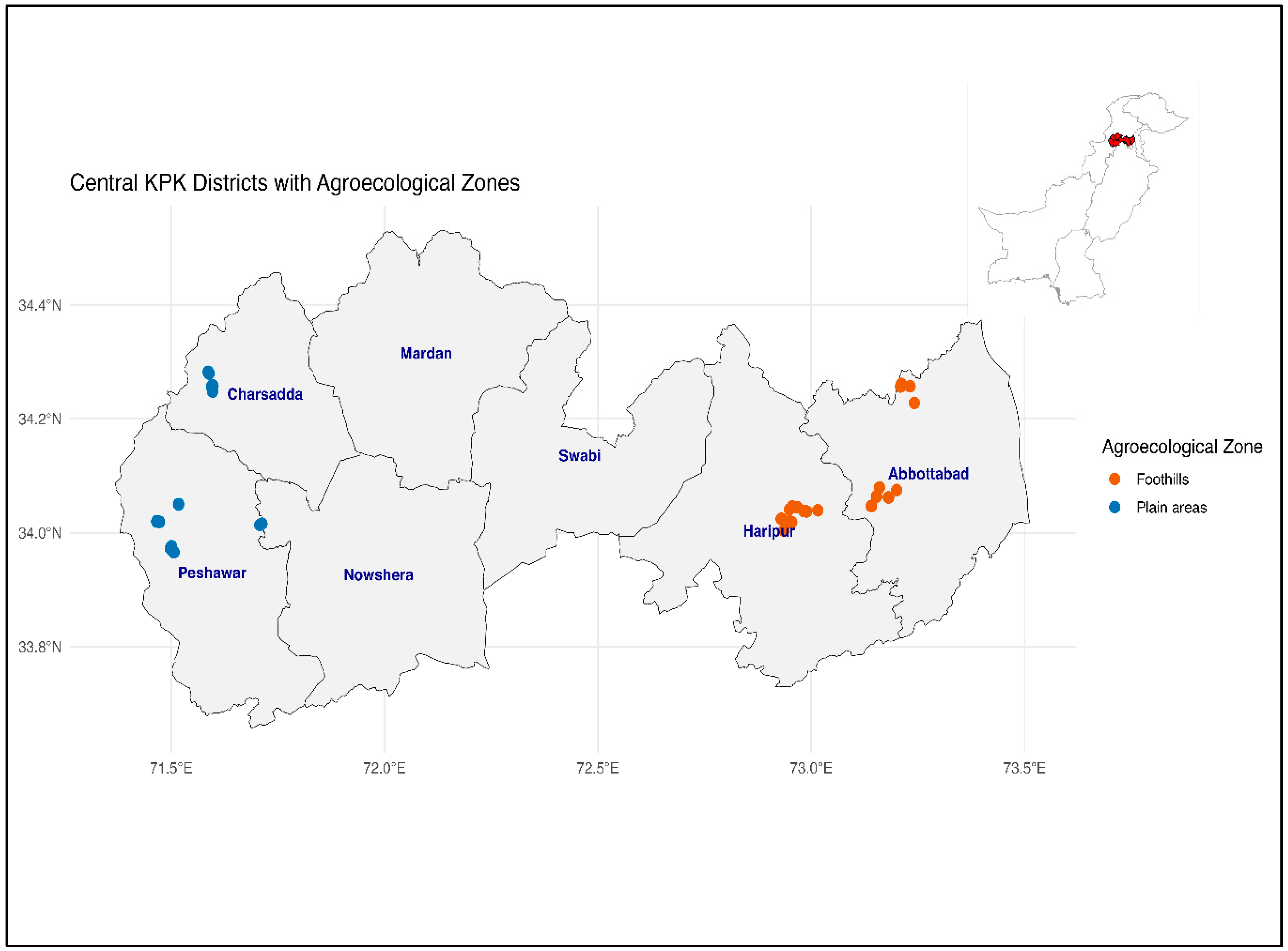
Figure 2.
Colony visuals and microscopic view of identified EPF species (a) Nomuraea rileyi (b) Aspergillus parasiticus (c) Aspergillus flavus (d) Aspergillus niger.
Figure 2.
Colony visuals and microscopic view of identified EPF species (a) Nomuraea rileyi (b) Aspergillus parasiticus (c) Aspergillus flavus (d) Aspergillus niger.
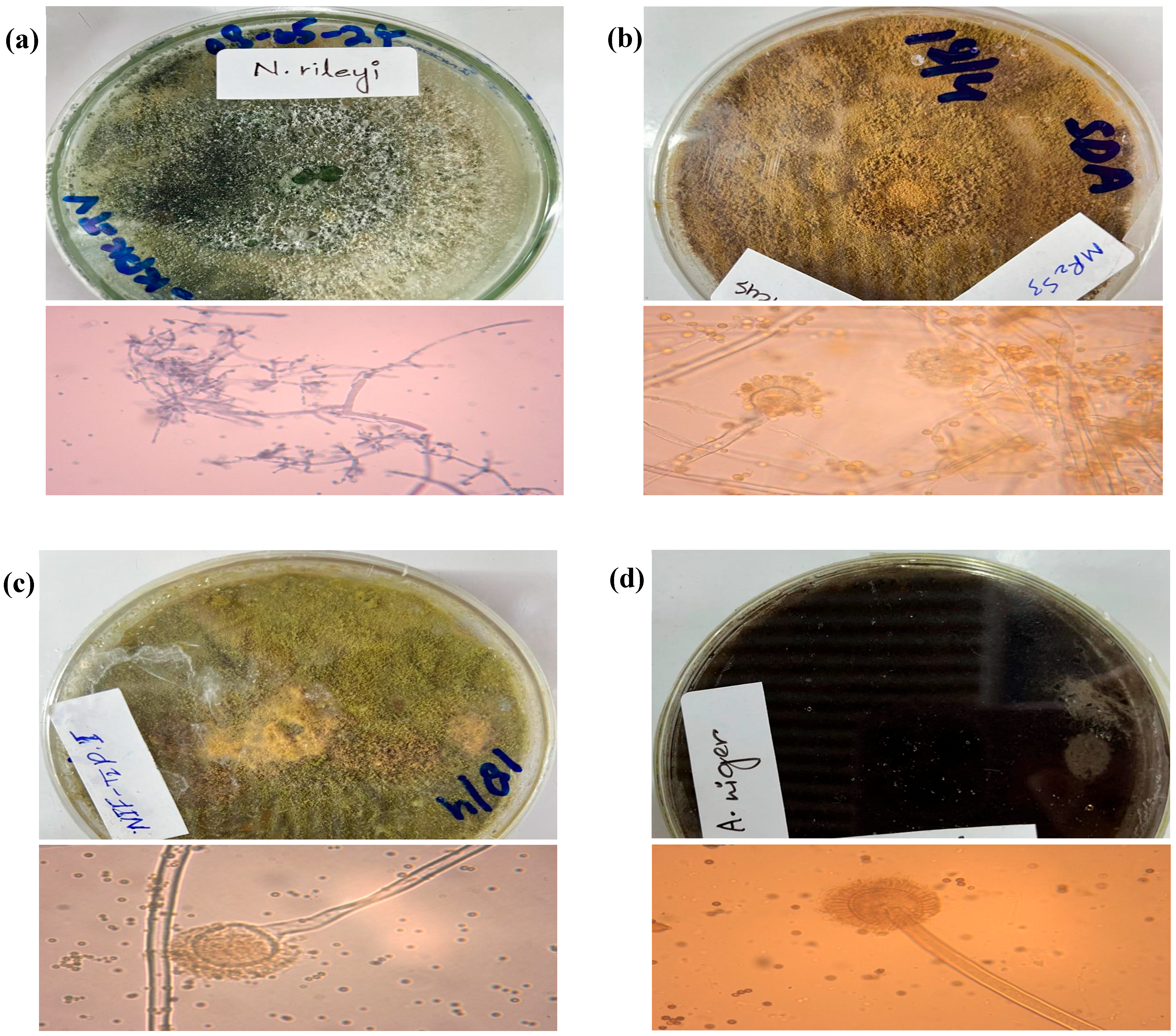
Figure 3.
illustrates the percent distribution of entomopathogenic fungi (EPF) isolates in plains vs foothills soil of Khyber Pakhtunkhwa province. The findings suggest that the comparative distribution of all EPF isolates was higher in the soil of the foothills than in the plain areas. Overall, fungal species composition was uniform throughout, with the highest percentage distribution of Aspergillus niger, followed by Aspergillus flavus, Aspergillus parasiticus and Nomuraea rileyi.
Figure 3.
illustrates the percent distribution of entomopathogenic fungi (EPF) isolates in plains vs foothills soil of Khyber Pakhtunkhwa province. The findings suggest that the comparative distribution of all EPF isolates was higher in the soil of the foothills than in the plain areas. Overall, fungal species composition was uniform throughout, with the highest percentage distribution of Aspergillus niger, followed by Aspergillus flavus, Aspergillus parasiticus and Nomuraea rileyi.
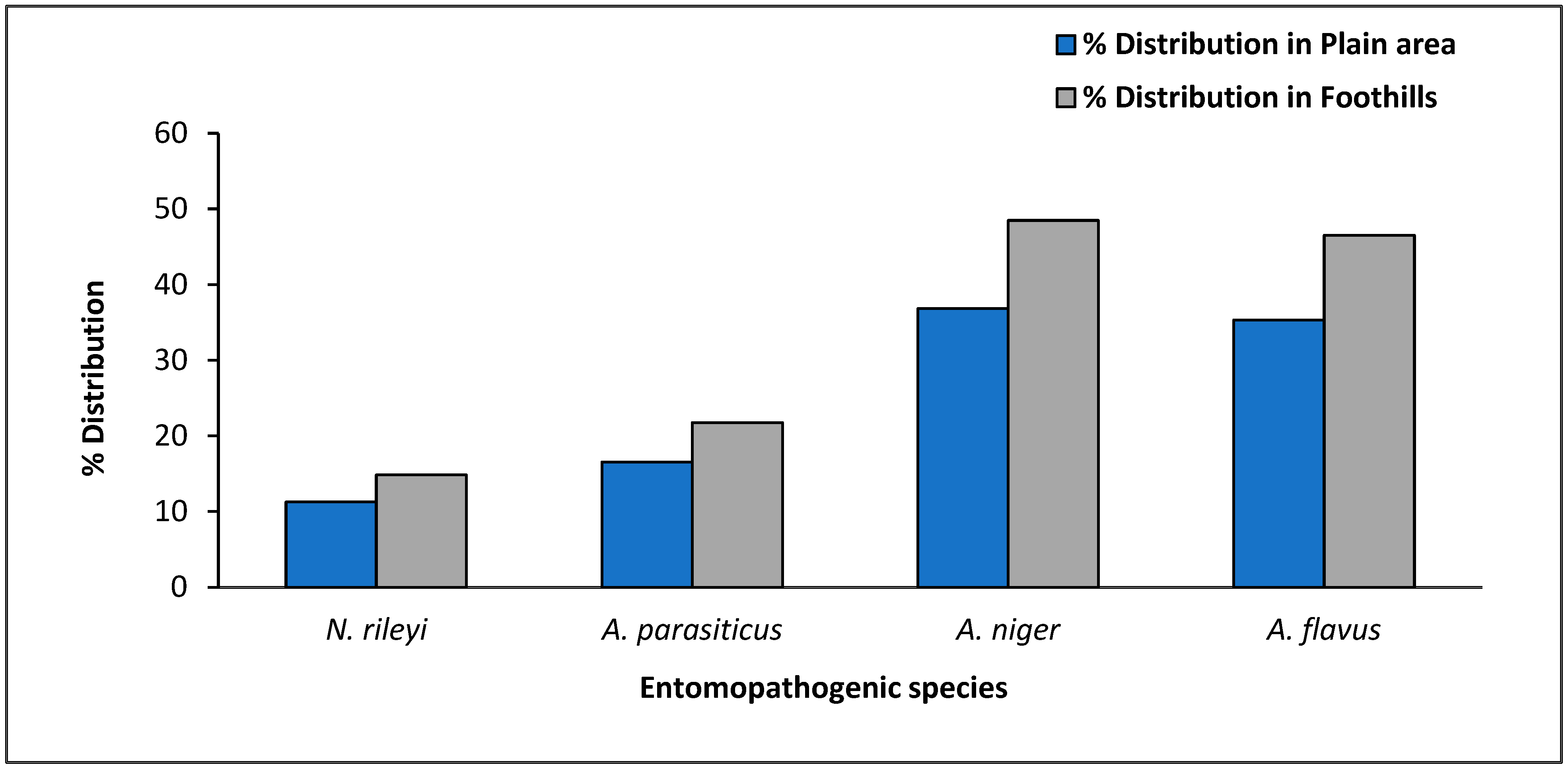
Figure 4.
a-c: LT50 (days) at three conidial concentrations (a) 1 × 10⁶ conidia/ml (b) 1 × 10⁷ conidia/ml (c) 1 × 10⁸ conidia/ml of entomopathogenic fungi (EPF) to kill 50% population of the exposed H. armigera larvae. The results suggest that with increasing conidial concentration of EPF species (except A. parasiticus), the LT50 values significantly decrease, with the minimum values recorded at 1×10⁸ conidia/mL of tested EPF species.
Figure 4.
a-c: LT50 (days) at three conidial concentrations (a) 1 × 10⁶ conidia/ml (b) 1 × 10⁷ conidia/ml (c) 1 × 10⁸ conidia/ml of entomopathogenic fungi (EPF) to kill 50% population of the exposed H. armigera larvae. The results suggest that with increasing conidial concentration of EPF species (except A. parasiticus), the LT50 values significantly decrease, with the minimum values recorded at 1×10⁸ conidia/mL of tested EPF species.
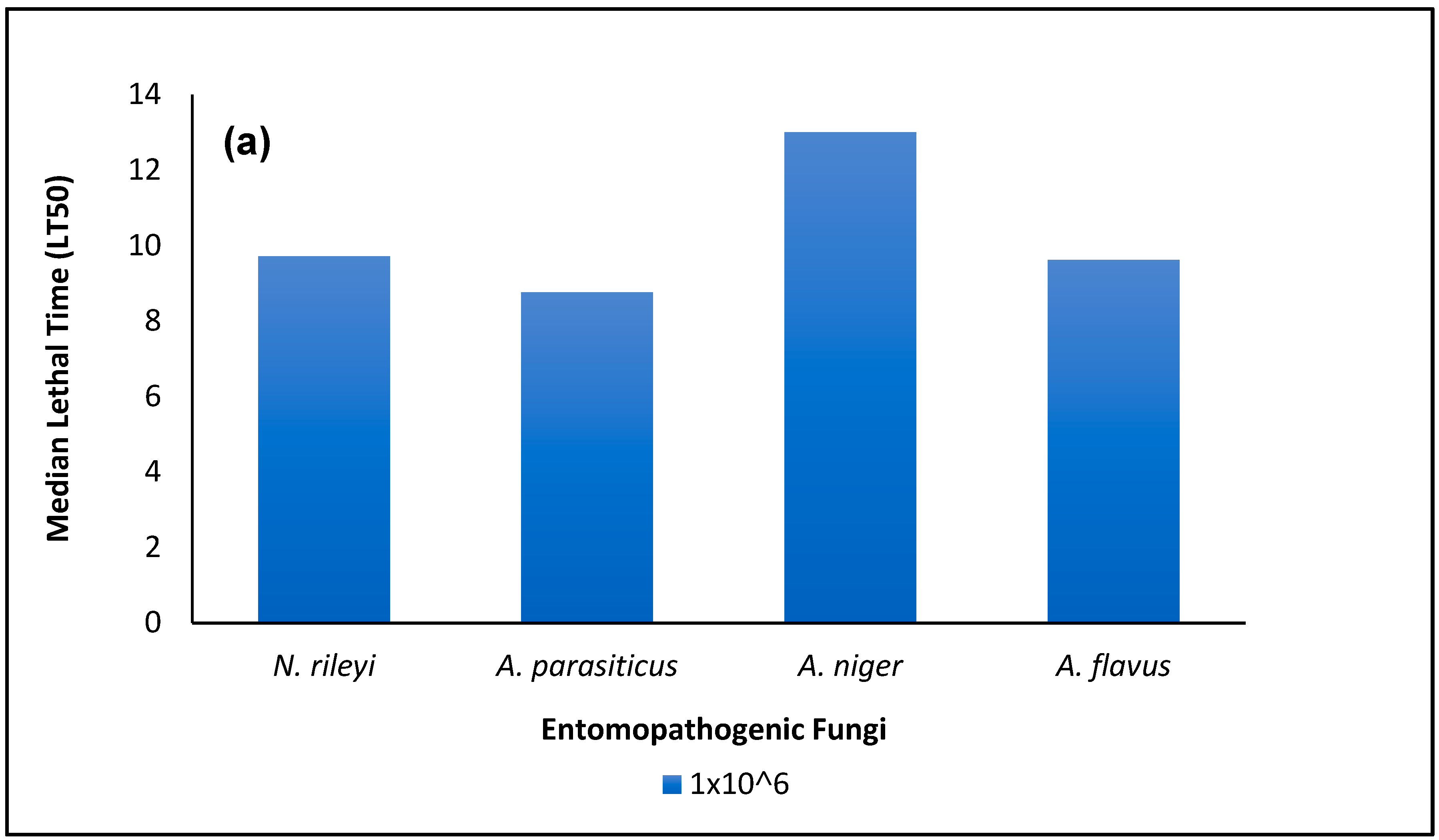
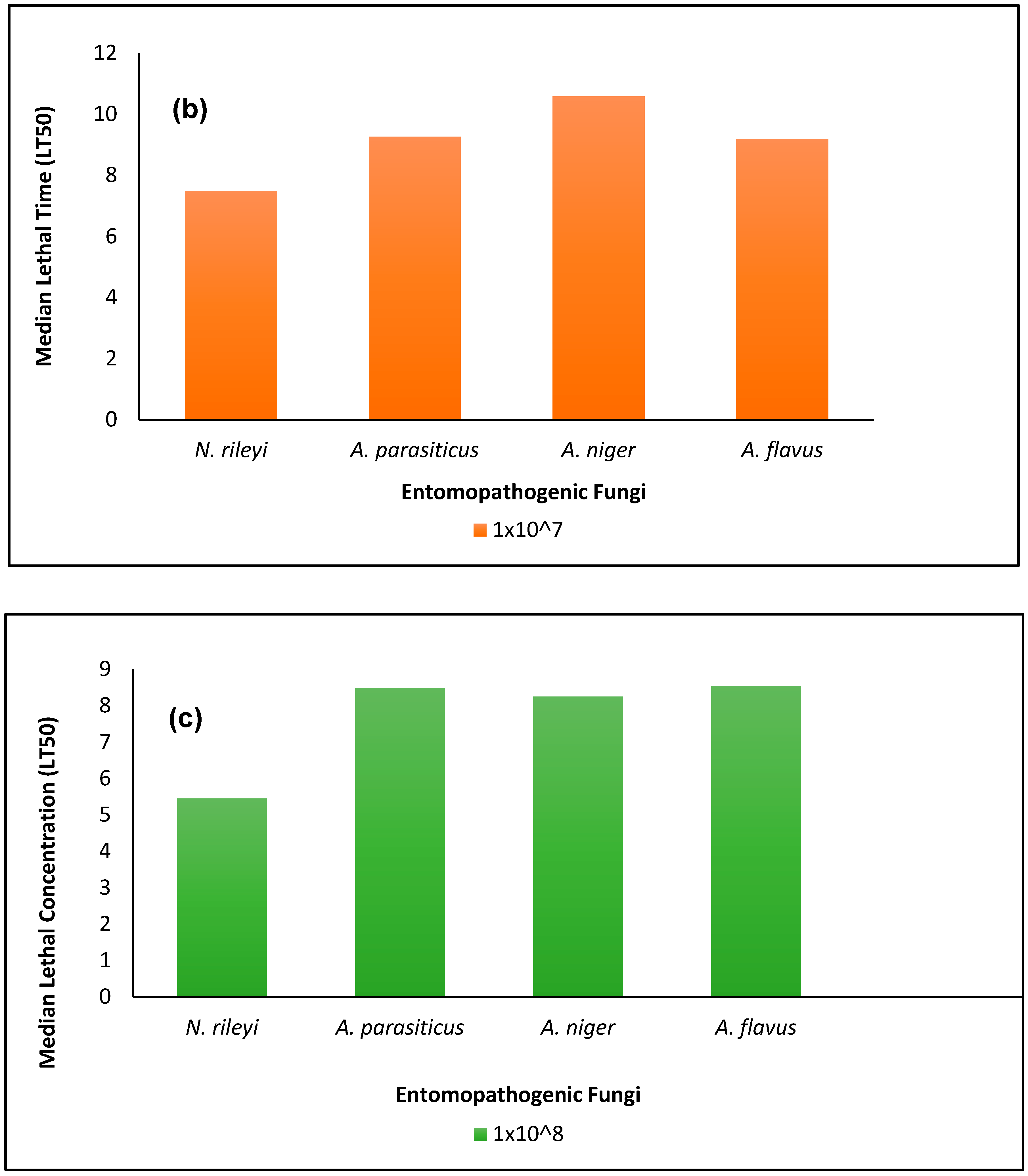

Table 1.
Effect of various cropping categories (agronomic vs horticultural) on % distribution of EPF species. The values presented reflects the number of isolates of each EPF species and its % distribution frequency.
Table 1.
Effect of various cropping categories (agronomic vs horticultural) on % distribution of EPF species. The values presented reflects the number of isolates of each EPF species and its % distribution frequency.
| Fungal Species | Isolates in Agronomic Crops | % distribution | Isolates in Horticultural Crops | % distribution |
|---|---|---|---|---|
| Nomuraea rileyi | 18 | 20 | 10 | 8 |
| Aspergillus parasiticus | 5 | 6 | 25 | 21 |
| Aspergillus niger | 39 | 43 | 43 | 36 |
| Aspergillus flavus | 28 | 31 | 41 | 34 |
Table 2.
First mortality of H. armigera after being exposed to different concentrations of the tested EPF species. The sign (+) represents the first death of H. armigera and the sign (-) represents no death over 5 days of fungal exposure.
Table 2.
First mortality of H. armigera after being exposed to different concentrations of the tested EPF species. The sign (+) represents the first death of H. armigera and the sign (-) represents no death over 5 days of fungal exposure.
| Treatmentsa | First Mortality of H. armigera (in days) | ||||
|---|---|---|---|---|---|
| 1 day | 2 days | 3 days | 4 days | 5 days | |
| Nomuraea rileyi | |||||
| 1×10⁶ | - | - | - | + | - |
| 1×10⁷ | - | + | - | - | - |
| 1×10⁸ | + | - | - | - | - |
| Aspergillus parasiticus | |||||
| 1×10⁶ | - | - | - | - | + |
| 1×10⁷ | - | + | - | - | - |
| 1×10⁸ | - | + | - | - | - |
| Aspergillus niger | |||||
| 1×10⁶ | - | - | - | - | + |
| 1×10⁷ | - | + | - | - | - |
| 1×10⁸ | - | + | - | - | - |
| Aspergillus flavus | |||||
| 1×10⁶ | - | - | - | - | + |
| 1×10⁷ | - | - | - | + | - |
| 1×10⁸ | - | + | - | - | - |
| Control (water) | - | - | - | - | - |
Table 3.
Total Mortality (%) of third instar of H. armigera after being treated with different concentrations of the tested EPF species at two post-inoculation intervals. The values presented reflect means (±SE), and different letters indicate statistically significant differences (P≤0.05, Tukey HSD test).
Table 3.
Total Mortality (%) of third instar of H. armigera after being treated with different concentrations of the tested EPF species at two post-inoculation intervals. The values presented reflect means (±SE), and different letters indicate statistically significant differences (P≤0.05, Tukey HSD test).
| Treatments | Mortality after 7 days | Mortality after 14 days |
|---|---|---|
| Nomuraea rileyi | ||
| 1×10⁶ | 44.4 BC | 66.7 ABC |
| 1×10⁷ | 55.6 BC | 100.0 A |
| 1×10⁸ | 100.0 A | 100.0 A |
| Aspergillus parasiticus | ||
| 1×10⁶ | 44.4 BC | 55.6 BC |
| 1×10⁷ | 66.7 ABC | 88.9 AB |
| 1×10⁸ | 55.6 BC | 100.0 A |
| Aspergillus niger | ||
| 1×10⁶ | 33.3 CD | 44.4 C |
| 1×10⁷ | 44.4 BC | 66.7 ABC |
| 1×10⁸ | 77.8 AB | 100.0 A |
| Aspergillus flavus | ||
| 1×10⁶ | 66.7 ABC | 66.7 ABC |
| 1×10⁷ | 66.7 ABC | 77.8 ABC |
| 1×10⁸ | 66.7 ABC | 100.0 A |
| Control | ||
| Water | 0.0 D | 0.0 D |
| Sig. Level | P=0.000 | P=0.000 |
Table 4.
Effect of different concentrations of tested EPF species on % pupal recovery and % adult emergence of H. armigera. The values presented reflect means (±SE), and different letters indicate statistically significant differences (P≤0.05, Tukey HSD test).
Table 4.
Effect of different concentrations of tested EPF species on % pupal recovery and % adult emergence of H. armigera. The values presented reflect means (±SE), and different letters indicate statistically significant differences (P≤0.05, Tukey HSD test).
| Treatments | Pupal recovery (%) | Adult emergence (%) |
|---|---|---|
| Nomuraea rileyi | ||
| 1×10⁶ | 33.3 BCD | 50.0 A |
| 1×10⁷ | 0.0 D | 0.0 A |
| 1×10⁸ | 0.0 D | 0.0 A |
| Aspergillus parasiticus | ||
| 1×10⁶ | 44.4 BC | 50.0 A |
| 1×10⁷ | 11.1 CD | 33.3 A |
| 1×10⁸ | 0.0 D | 0.0 A |
| Aspergillus niger | ||
| 1×10⁶ | 55.6 B | 50.0 A |
| 1×10⁷ | 33.3 BCD | 33.3 A |
| 1×10⁸ | 0.0 D | 0.0 A |
| Aspergillus flavus | ||
| 1×10⁶ | 33.3 BCD | 100.0 A |
| 1×10⁷ | 22.2 BCD | 66.7 A |
| 1×10⁸ | 0.0 D | 0.0 A |
| Control | ||
| Water | 100.0 A | 100.0 A |
Table 5.
LC50 values (conidia/ml) of entomopathogenic fungi against third instar of H. armigera after 3 days.
Table 5.
LC50 values (conidia/ml) of entomopathogenic fungi against third instar of H. armigera after 3 days.
| Fungal Species | N | LC50* (conidia/mL) |
Slope ± SE | Intercept | X2 (df=1) | P |
|---|---|---|---|---|---|---|
| Nomuraea rileyi | 27 | 1.36×10⁸ | 0.52 ± 0.34 | -4.20 | 0.20 | 0.65b |
| Aspergillus parasiticus | 27 | 1.66×10⁹ | 0.43 ± 0.36 | -3.94 | 0.36 | 0.55b |
| Aspergillus niger | 27 | 1.15×10⁹ | 0.39 ± 0.34 | -3.53 | 0.01 | 0.92b |
| Aspergillus flavus | 27 | 1.15×10⁹ | 0.39 ± 0.34 | -3.53 | 0.01 | 0.92b |
N=number of treated insects, SE=Standard error, X2 =Chi square value, df=degree of freedom, P=Probability value.
Table 6.
LC50 values (conidia/ml) of entomopathogenic fungi against third instar of H. armigera after 7 days.
Table 6.
LC50 values (conidia/ml) of entomopathogenic fungi against third instar of H. armigera after 7 days.
| Fungal Species | N | LC50* (conidia/mL) |
Slope ± SE | Intercept | X2 (df=1) | P |
|---|---|---|---|---|---|---|
| Nomuraea rileyi | 27 | 2.40×10⁶ | 0.94 ± 0.39 | -5.96 | 2.08 | 0.15b |
| Aspergillus parasiticus | 27 | 3.14×10⁶ | 0.28 ± 0.30 | -1.85 | 0.00 | 0.99b |
| Aspergillus niger | 27 | 8.06×10⁶ | 0.59 ± 0.32 | -4.08 | 0.34 | 0.56b |
| Aspergillus flavus | 27 | 3.18×10⁷ | 0.28 ± 0.30 | -2.14 | 0.00 | 0.99b |
N=number of treated insects, SE=Standard error, X2 =Chi square value, df=degree of freedom, P=Probability value.
Table 7.
LC50 values (conidia/ml) of entomopathogenic fungi against third instar of H. armigera after 14 days.
Table 7.
LC50 values (conidia/ml) of entomopathogenic fungi against third instar of H. armigera after 14 days.
| Fungal Species | N | LC50* (conidia/mL) |
Slope ± SE | Intercept | X2 (df=1) | P |
|---|---|---|---|---|---|---|
| Nomuraea rileyi | 27 | 7.19×10⁵ | 2.97 ± 5.10 | -17.38 | 0.00 | 0.95b |
| Aspergillus parasiticus | 27 | 8.05×10⁵ | 1.20 ± 0.58 | -7.10 | 0.08 | 0.77b |
| Aspergillus niger | 27 | 1.88×10⁶ | 1.02 ± 0.42 | -6.40 | 0.02 | 0.31b |
| Aspergillus flavus | 27 | 4.00×10⁵ | 0.77 ± 0.44 | -4.31 | 0.86 | 0.35b |
N=number of treated insects, SE=Standard error, X2 =Chi square value, df=degree of freedom, P=Probability value.
Disclaimer/Publisher’s Note: The statements, opinions and data contained in all publications are solely those of the individual author(s) and contributor(s) and not of MDPI and/or the editor(s). MDPI and/or the editor(s) disclaim responsibility for any injury to people or property resulting from any ideas, methods, instructions or products referred to in the content. |
© 2026 by the authors. Licensee MDPI, Basel, Switzerland. This article is an open access article distributed under the terms and conditions of the Creative Commons Attribution (CC BY) license.
Copyright: This open access article is published under a Creative Commons CC BY 4.0 license, which permit the free download, distribution, and reuse, provided that the author and preprint are cited in any reuse.


