Submitted:
13 March 2026
Posted:
17 March 2026
You are already at the latest version
Abstract
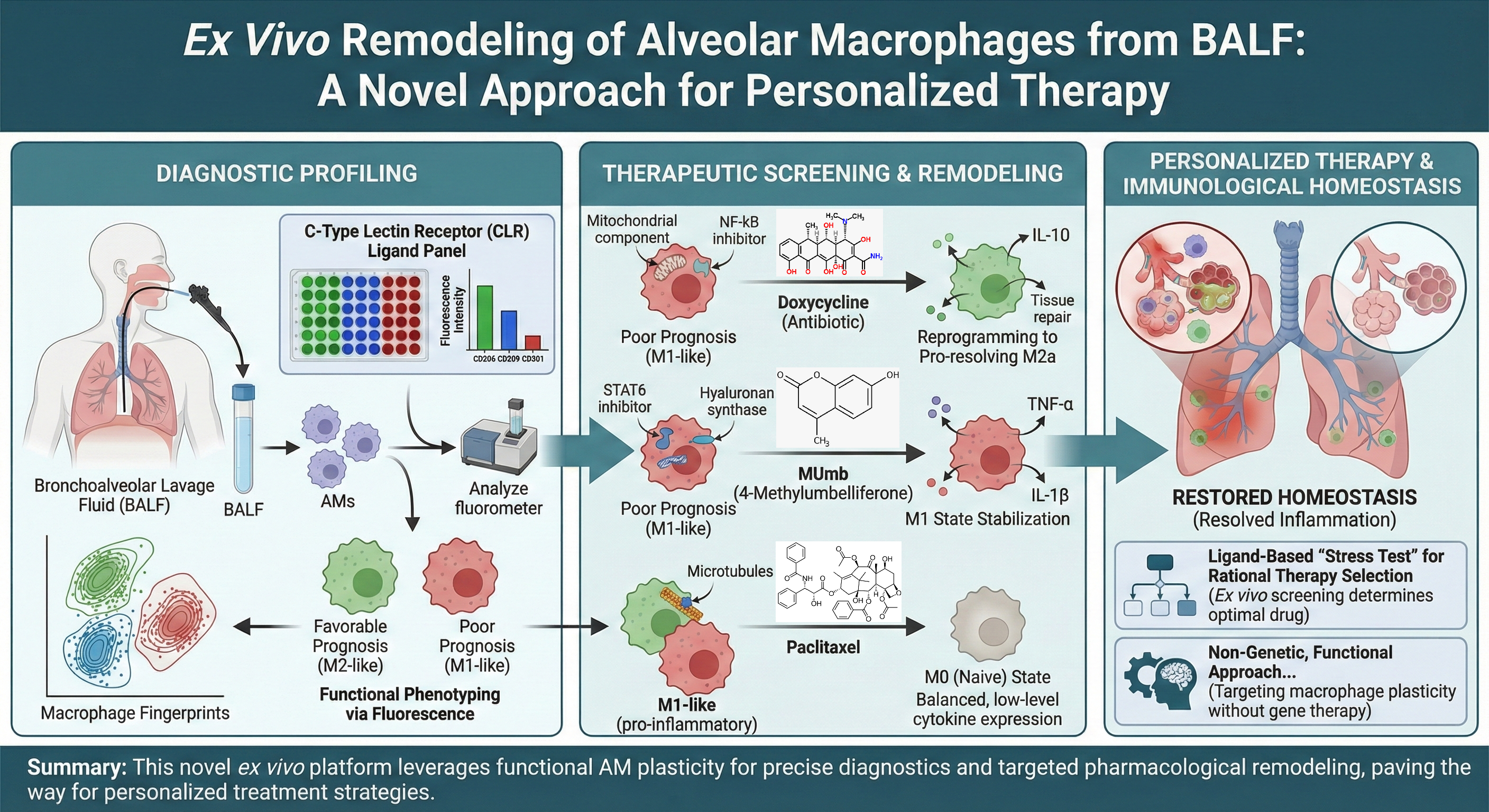
The secondary immunomodulatory effects of conventional therapeutics, such as antibiotics and cytostatics, are frequently overlooked despite their significant clinical implications. Building on our previous findings that drugs like paclitaxel and doxorubicin heavily influence macrophage polarization—potentially driving metastasis or inflammation—this study systematically evaluates the secondary immune-modulating actions of standard drugs and natural adjuvants. Using patient-derived bronchoalveolar lavage (BAL) fluid (ex vivo alveolar macrophages), we developed an analytical platform using synthetic carbohydrate-functionalized fluorescent ligands targeting key receptors (CD206, CD209, CD280, CD301). Integrating ligand-binding profiles with Linear Discriminant Analysis (LDA) yielded quantitative immune-state vectors capable of differentiating between favorable prognostic signatures and imbalanced immune states. Profiling samples across heterogeneous respiratory conditions revealed highly context-dependent responses. While some treatments synergistically corrected imbalanced profiles, others provoked dysregulation. Notably, in pneumonia or bronchitis with an asthma-prone M2-dominant profile, specific antibiotic regimens are critical; doxycycline, for instance, may exacerbate patient deterioration by further driving M2a polarization. Crucially, we identified that natural adjuvants (e.g., curcumin, coumarins, polyphenols) exhibit potent properties capable of correcting these adverse secondary drug effects. Ultimately, this profiling platform highlights the necessity of evaluating patient-specific secondary drug effects, offering a functional blueprint for precision immunotherapy and the rational design of adjuvant-enhanced treatments.