
Submitted:
13 March 2026
Posted:
13 March 2026
You are already at the latest version
Abstract
Research on adaptive strategies in extreme environments is crucial for understanding the resilience of human survival wisdom. This study integrates multidisciplinary evidence from archaeology, zooarchaeology, archaeobotany, isotopic, and geochemical analysis to reassess the role of fishing, hunting, and gathering economies in prehistoric arid Xinjiang, northwestern China. Our findings reveal that, spatially, fishing concentrated in the Lop Nur region of the Tarim Basin, with potential activities extending to the surrounding river basins across the Altai, Tianshan, Pamir, and Kunlun mountains; hunting was more developed in Northern Xinjiang (focusing on deer and bovids) while practiced on a smaller scale in Southern Xinjiang (targeting hares); gathering also exhibited north–south divergence in plant utilization. Temporally, these economies declined from a dominant Paleolithic strategy to a supplementary role in the Bronze and Early Iron Ages. However, resilient local adaptations persisted—notably at Lop Nur (fishing), Xiaxingguang cemetery (specialized hare hunting), and the Eastern Tianshan region (high-proportion gathering). Beyond subsistence, these practices were deeply embedded in spiritual life, reflected in totemic symbols and shamanic ritual paraphernalia.This study re-evaluates prehistoric extractive economies, providing critical insights into human adaptation strategies in arid to semi-arid environments.
Keywords:
Xinjiang
; prehistoric period
; fishing
; hunting and gathering economy
; zooarchaeology
; archaeobotany
; stable isotope
1. Introduction
Since ancient times, human societies have sustained themselves through two fundamental economic strategies: one is the extractive economy, such as fishing, hunting, and gathering; the other is the productive economy, which includes agriculture and animal husbandry. In traditional research, agriculture and animal husbandry have often received greater scholarly attention because of their capacity to support large populations and facilitate the rise of cities and civilizations [1]. However, throughout a much longer span of human history—from the Paleolithic through the Neolithic and into the Early Iron Age—fishing, hunting, and gathering economies in fact played a foundational and enduring role in food supply and social development [2,3], a fact that has often been underestimated. Systematic research on ancient subsistence economies based on fishing, hunting, and gathering not only helps us understand diverse human adaptive strategies and livelihood choices across different environments [4,5], but also sheds light on the dynamic evolution of early socioeconomic models. Furthermore, it offers a diachronic perspective and theoretical foundation for establishing a broad food concept and constructing a diversified food supply system in modern societies [6].
Xinjiang, located in the arid interior of Asia, is characterized by a generally fragile ecological environment. Nevertheless, its diverse geomorphological units—including mountains, basins, deserts, oases, rivers, and lakes—have fostered a variety of plant and animal resources, creating conditions for the survival and development of ancient human populations. To adapt to this arid and semi-arid environment, local communities developed diversified livelihood strategies and made extensive use of available biological resources. These strategies included both productive economies, represented by crop cultivation and livestock rearing, and extractive economies based on fishing, hunting, and gathering [7,8,9].
Previous research has focused much more on productive economies such as nomadic pastoralism and oasis agriculture in prehistoric Xinjiang [10,11,12], revealing that from the Bronze Age onward (ca. 4000 years ago), agriculture and pastoralism flourished in the region, with Northern Xinjiang characterized by the emergence of nomadic pastoralism and Southern Xinjiang developing a mixed farming-herding economy [13,14]. These findings have established a critical foundation for understanding ancient subsistence patterns in Xinjiang. However, systematic research on extractive practices, including fishing, hunting, and gathering, is still lacking. Consequently, our understanding of how prehistoric populations adapted their resource strategies to the region’s varied environments remains incomplete.
In recent years, significant progress has been made in the archaeology of prehistoric Xinjiang. Scientific methods such as zooarchaeology, archaeobotany, isotopic bioarchaeology, and trace element analysis have been widely applied to the study of archaeological sites, providing important data for in-depth exploration of extractive economies in the region. Building on this foundation, this study adopts a multidisciplinary approach to systematically reexamine the role of fishing, hunting, and gathering economies in prehistoric Xinjiang, with the aim of deepening our understanding of livelihood diversity and human-environment interactions in this ancient landscape.
2. Materials and Methods
2.1. Archaeology
Archaeological materials include artifacts related to fishing, hunting, and gathering—such as fishing gear and hunting tools—as well as decorative objects (e.g., fish-shaped headwear) and iconographic representations such as fish-pattern tattoos and petroglyphs.
2.2. Zooarchaeology
Zooarchaeological data, documenting the taxonomic composition and quantity of wild animal remains, have been systematically collected from prehistoric sites in Xinjiang. By calculating the proportion of wild fauna relative to domesticates, we assess the composition of hunted species and its role in local economies.
2.3. Archaeobotany
Archaeobotanical data comprise both macro-botanical remains and micro-botanical fossils. We systematically collected and quantitatively analyzed macro-remains of wild plants recovered through flotation at Xinjiang archaeological sites to identify the types, quantities, and potential functions of gathered plants. In addition, micro-botanical analysis—primarily of starch grains and phytoliths extracted from ancient dental calculus and residues on processing tools—provides further insight into wild plant species that were consumed or processed by humans.
2.4. Isotopic and Trace Element Analysis
Scientific methods involving trace elements and stable isotopes measured in human skeletal remains allow for the reconstruction of ancient dietary composition. Specifically, zinc (Zn) concentration and nitrogen isotope (δ¹⁵N) values in bones can help evaluate the consumption of high-protein, zinc-rich foods such as fish.
Zinc content in bone is linked to dietary protein intake; carnivores exhibit significantly higher zinc levels than herbivores [16], and fish are particularly rich in zinc [17]. By comparing zinc levels among populations engaged in different subsistence economies—such as coastal fisher communities and mixed agropastoral groups in northern Xinjiang—we can assess the contribution of aquatic resources to the local diet.
Nitrogen isotope analysis of human bone collagen further elucidates the intake of animal resources, including fish. Compared with terrestrial ecosystems, aquatic food webs generally contain more trophic levels, leading to higher δ¹⁵N values in freshwater fish than in terrestrial animals at similar trophic positions [18]. Consequently, individuals who consumed freshwater fish typically display elevated δ¹⁵N values compared to those relying mainly on terrestrial herbivores such as cattle and sheep.
Figure 1.
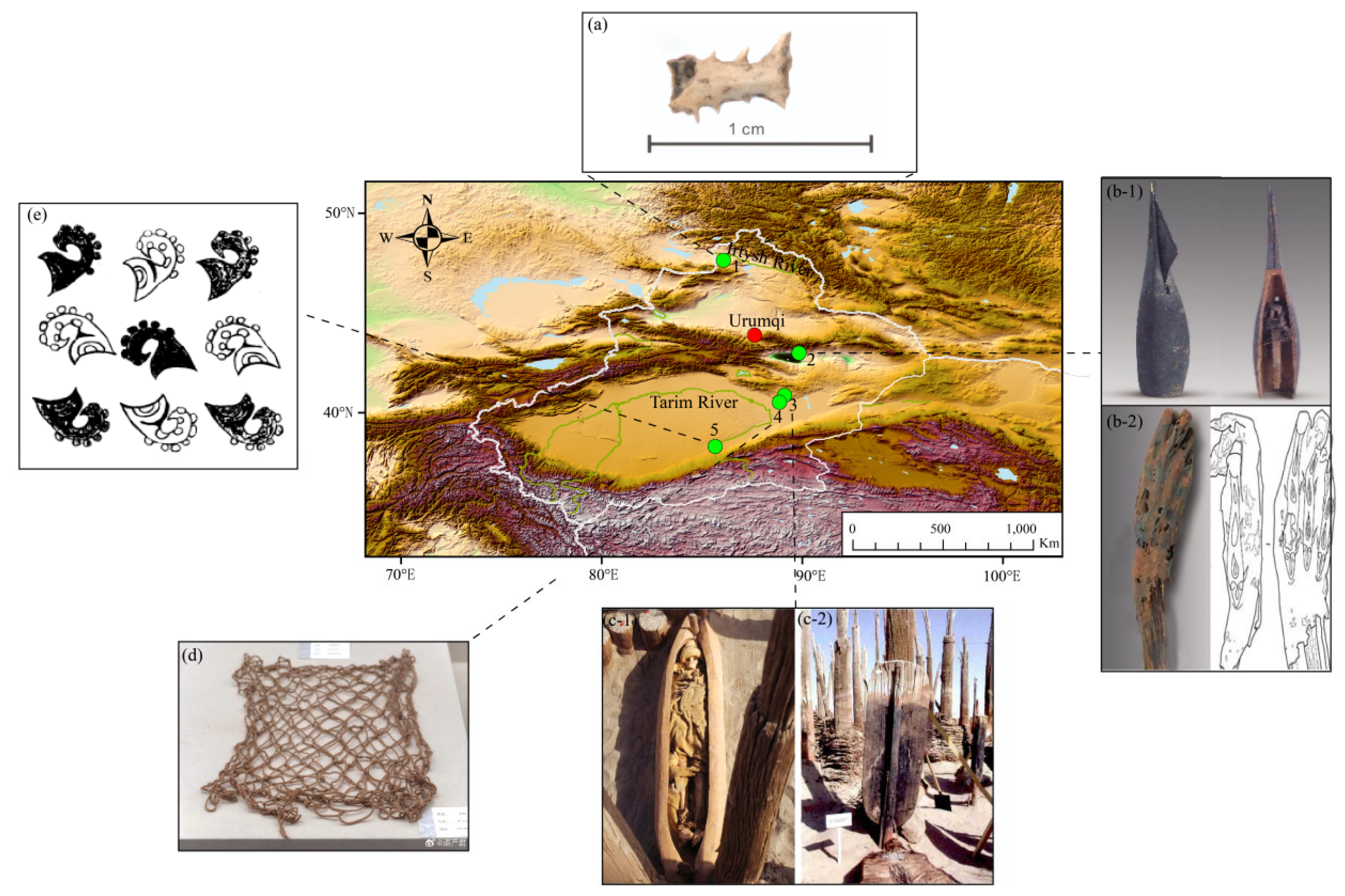
Archaeological sites and materials associated with fishing in prehistoric Xinjiang. Tongtiandong Cave Site; 2. Yanghai Cemetery; 3. Xiaohe Cemetery; 4. Gumugou Cemetery; 5. Zaghunluq Cemetery. a. Fish bones unearthed from the Tongtiandong Cave Site [13]; b. Conical fish-shaped headwear from Yanghai Cemetery (b-1) [19], human bone with fish-pattern tattoo from Tomb M80 at Yanghai (b-2)[19]; c. Boat-shaped wooden coffin from Xiaohe Cemetery (c-1) [20], oar-shaped wooden post placed in front of a male burial at Xiaohe Cemetery (c-2) [21]; d. Fishing net from Gumugou Cemetery [22]; e. Fish motif depicted on painted woolen textile from Zaghunluq [23].
Figure 1.
Archaeological sites and materials associated with fishing in prehistoric Xinjiang. Tongtiandong Cave Site; 2. Yanghai Cemetery; 3. Xiaohe Cemetery; 4. Gumugou Cemetery; 5. Zaghunluq Cemetery. a. Fish bones unearthed from the Tongtiandong Cave Site [13]; b. Conical fish-shaped headwear from Yanghai Cemetery (b-1) [19], human bone with fish-pattern tattoo from Tomb M80 at Yanghai (b-2)[19]; c. Boat-shaped wooden coffin from Xiaohe Cemetery (c-1) [20], oar-shaped wooden post placed in front of a male burial at Xiaohe Cemetery (c-2) [21]; d. Fishing net from Gumugou Cemetery [22]; e. Fish motif depicted on painted woolen textile from Zaghunluq [23].
3. Results
3.1. Fisheries Evidence
3.1.1. Fish Bone Remains
Early fish bone remains in Xinjiang, dating to the Bronze Age, have been identified at sites in the southern foothills of the Altai Mountains and the eastern part of the Tarim Basin. At the Tongtian Cave site on the southern slope of the Altai Mountains, fish bones were recovered through flotation from layers dated to 5200–3000 BP (Figure 1-a) [13]. At the Tieban River Delta, located at the northern edge of Lop Nur, a set of small fish bones was unearthed as grave goods from Bronze Age tombs [24]. In addition, a single fish bone was collected from the surface of the Yuansha ancient city site on the eastern bank of the Keriya River, dating to approximately 2200 BP [25].
According to a survey of vertebrates from the lower reaches of the Keriya River, this fish bone likely belongs to one of four species: common carp (Cyprinus carpio), crucian carp (Carassius auratus), Yarkand loach (Paracobitis erhaiensis), or the extinct Xinjiang bighead fish (Aspiorhynchus laticeps) [26]. Furthermore, the Sino-French joint archaeological team reported numerous animal bones, including fish remains, scattered across the surface of the same site [27], indicating a relatively intensive use of fish resources in the Keriya River Basin.3.2. Figures, Tables and Schemes
3.1.2. Fishing Tools
Archaeological discoveries and documentary evidence jointly indicate that nets served as the primary fishing tool in the economy of prehistoric Xinjiang. During the Neolithic period, a small fragment of a broken net was unearthed at the Gumugou Cemetery in the lower reaches of the Konqi River within the Lop Nur region [28] (Figure 1-d). This artifact represents the earliest physical evidence of fishing nets discovered in Xinjiang to date, confirming that net-weaving technology existed in the lower Tarim River basin approximately 4000 years ago.
Although no fishing gear was directly recovered from the Xiaohe Cemetery (Bronze Age), the presence of boat-shaped coffins and oar-shaped wooden posts placed in front of the coffins suggests the use of canoe-like watercraft (Figure 1-c). Combined with the observation by Swedish archaeologist Folke Bergman that this population “was likely engaged in agriculture, animal husbandry, and to some extent, fishing and hunting” [29], it can be inferred that these oars may have been used for net fishing or spear fishing.
3.1.3. Fish Consumption
Analysis of trace elements in human bones from the Bronze Age Gumugou Cemetery in the Lop Nur region provides important bioarchaeological evidence regarding the role of fish in the diets of prehistoric inhabitants in Xinjiang. The results indicate a notably high zinc content of 204.22 μg/g in the bones from this site. This value is significantly higher than those observed in populations from the Chawuhu Goukou No. 4 Cemetery and the Ganguya Cemetery, which relied primarily on pastoral and mixed agro-pastoral economies, respectively. It is close to that of the population from the Chongtang site in Guangxi, which practiced a mixed economy of gathering and fishing, but lower than that of the population from the Guangfulin site in Shanghai, which engaged in a mixed economy of agriculture and fishing (Table 1). Based on these findings, we infer that the diet of the ancient inhabitants of Lop Nur included not only animal foods such as sheep and cattle and plant foods such as wheat, but also some fish resources—though likely not to the same extent as in the southeastern coastal regions of China.
Furthermore, by comparing the nitrogen isotope values of human and herbivore bones from prehistoric sites in Xinjiang, we observe elevated δ¹⁵N values in a small number of individuals (Figure 2). Considering the local ecological settings, we speculate that the consumption of freshwater fish may explain these high values. For example, in the Altay region, the Irtysh River and its tributaries—the Burqin and Haba rivers—form an extensive network of rivers, lakes, and wetlands that support abundant fish populations. This likely provided the populations buried at the Ayituohan and Tuoganbai cemeteries in Habahe County with access to freshwater fish, which we suggest contributed to their elevated nitrogen isotope values [36]. Similarly, a small number of individuals with notably high nitrogen isotope values have been identified at the Gumugou Cemetery in the Lop Nur area, the Shihuyao cemetery in the Manas River Basin, the Xiabandi cemetery in the lower reaches of the Tashkurgan River, and the Yanghai cemetery in the Turpan Basin (Figure 2).
3.1.4. Fish-Shaped Crowns and Tattoos
Archaeological finds from the Turpan-Hami Basin in prehistoric Xinjiang include distinctive fish-shaped crowns and fish-pattern tattoos, indicating both symbolic and ritual uses of aquatic resources (Figure 1-b). Tall fish-shaped crowns, discovered mainly on male remains at the Yanghai (Figure 1-b1) and Shengjindian cemeteries, were crafted from hollowed wood and thin planks. Their design—square base, bulging midsection, and tapered top—creates an abstract fish silhouette [19]. These crowns are unusually tall and rigid, suggesting ceremonial rather than practical use. The clear effort invested in their production, contrasted with their lack of everyday function, implies they served as markers of social or ritual status, possibly worn during ceremonies, funerals, or communal gatherings.
In addition, a female burial from Yanghai (M80) displays four blue-black fish tattoos on the left hand and thumb (Figure 1-b2), oriented headfirst toward the wrist, the largest measuring 13.5 cm by 1.9 cm. Such permanent body art likely surpassed simple adornment. Cross-cultural analogies—such as human-animal motifs on Shang and Zhou bronzes and their spiritual symbolism—suggest these tattoos expressed deeply held beliefs, possibly linked to concepts of water, vitality, or rebirth. Through tattoos, the Yanghai community may have sought to unite human and natural realms, pursuing spiritual connection or divine favor.
3.1.5. Fish Motif Decorations
Among the hand-painted woolen textiles unearthed at the Zaghunluq site in Qiemo, five feature animal patterns. One of these is a fish-patterned wool fabric on an ocher-yellow background, with the designs arranged horizontally in rows and preserved intact (Figure 1-e). A blanket painted on both sides displays four rows of fish motifs, in which the orientation of the fish heads and bodies alternates between adjacent rows. The fish in the upper and lower rows are depicted either back-to-back or head-to-head. The painted fish are stylized, with large heads and open mouths. Their bodies and tails are curved, the abdomens bulge downward, and the scales are rendered as continuous arcs. Similar arched patterns on the back may represent dorsal fins or scales. The fish vary in size; the largest measures 14 cm in length and 8 cm in width, while the smallest is 11 cm by 6 cm [23]. In terms of color, the outlines of the fish are drawn in red. Some figures are left unfilled, while others are filled with purplish-crimson pigment. These two color schemes are arranged alternately. The deliberate geometric composition and stylization of the fish suggest that they served a purpose beyond mere decoration. Together with the tiger and camel motifs found on contemporaneous wool textiles, they may have formed part of a broader symbolic system, reflecting a cultural belief in the abundance of water resources in the arid Tarim Basin.
Figure 3.
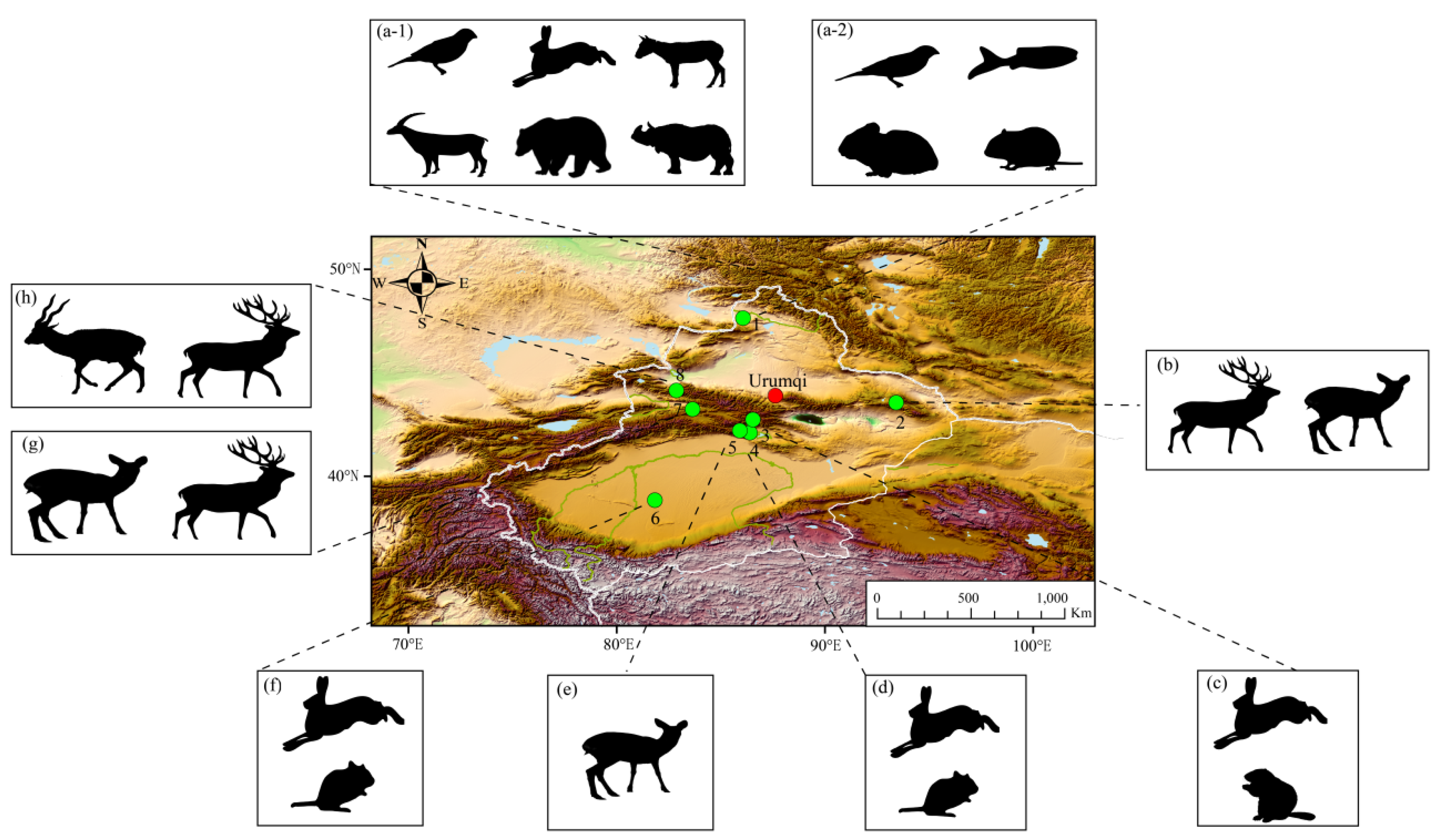
Zooarchaeological sites and main unearthed wild animal remains in prehistoric Xinjiang. 1. Tongtiandong cave site; 2. Shirenzigou site; 3. Naba cemetery; 4. Xiaxingguang cemetery; 5. Chawuhu Goukou No. 1 cemetery; 6. Yuansha ancient city site; 7. Halehaxite site; 8. Gaotai remains, Jirentaigoukou Site. a Faunal remains from Tongtiandong cave site: (a-1) birds, hare, wild ass, wild caprines, brown bear (Ursus arctos), and rhinoceros (Rhinoceros unicornis) from Paleolithic layers [57]; (a-2) birds, fish, pika (Ochotona sp.), and root vole (Microtus oeconomus) from Bronze Age layers [13]. b Deer and roe deer remains from Shirenzigou site [58]. c Wild hare and marmot remains from Naba cemetery [59]. d Wild hare and rodent remains from Xiaxingguang cemetery [60]. e Small cervid remains from Chawuhu Goukou No. 1 cemetery [61]. f Wild hare and midday jird (Meriones meridianus) remains from Yuansha ancient city site [25]. g Medium and large deer remains from Halehaxite site [62]. h Antelope (Gazella sp.) and cervid remains from the Gaotai remains, Jirentaigoukou site [63].
Figure 3.
Zooarchaeological sites and main unearthed wild animal remains in prehistoric Xinjiang. 1. Tongtiandong cave site; 2. Shirenzigou site; 3. Naba cemetery; 4. Xiaxingguang cemetery; 5. Chawuhu Goukou No. 1 cemetery; 6. Yuansha ancient city site; 7. Halehaxite site; 8. Gaotai remains, Jirentaigoukou Site. a Faunal remains from Tongtiandong cave site: (a-1) birds, hare, wild ass, wild caprines, brown bear (Ursus arctos), and rhinoceros (Rhinoceros unicornis) from Paleolithic layers [57]; (a-2) birds, fish, pika (Ochotona sp.), and root vole (Microtus oeconomus) from Bronze Age layers [13]. b Deer and roe deer remains from Shirenzigou site [58]. c Wild hare and marmot remains from Naba cemetery [59]. d Wild hare and rodent remains from Xiaxingguang cemetery [60]. e Small cervid remains from Chawuhu Goukou No. 1 cemetery [61]. f Wild hare and midday jird (Meriones meridianus) remains from Yuansha ancient city site [25]. g Medium and large deer remains from Halehaxite site [62]. h Antelope (Gazella sp.) and cervid remains from the Gaotai remains, Jirentaigoukou site [63].
3.2. Hunting Economy Evidence
3.2.1. Wild Animal Skeletons Remains
Zooarchaeological studies of prehistoric sites in Xinjiang provide key evidence for understanding the hunting economy in the region (Figure 3, Figure 4, Supplementary Table 1). At the Tongtiandong cave site, Paleolithic layers (ca. 45,000 BP) yielded remains of rhinoceros, bear, carnivores, hare, bovids, equids, and birds (Figure 3-a1). Some bones display clear cut marks, burning, and percussion damage, indicating anthropogenic processing. In the Bronze Age layers of the same site, flotation recovered remains of small wild animals such as birds, rodents, and fish (Figure 3-a2). However, since these were only identified through flotation, they may not fully represent the spectrum of animal resource use at the site. In contrast, the Gaotai remains at the Jirentaigoukou site and the Halehaxite site—both dating to the Bronze Age (ca. 4000–3000 BP)—yielded a wide variety of wild animal bones, including bovids, cervids, canids, rodents, lagomorphs, suids, and birds. Although the two sites share similar wild taxa, the composition of the main hunted species differs: at Jirentaigoukou, antelope (Gazella sp.) and cervid remains dominate (Figure 3-h), while Halehaxite is characterized mainly by medium and large deer (Figure 3-g). The contemporary Naba cemetery yielded only rodent remains (marmots). Given that rodents may have entered the context post-depositionally, and in the absence of direct radiometric dating, these remains are not included in the current analysis. During the Bronze Age, hunting contributed approximately 3%–11% of the animal-based diet for inhabitants of Xinjiang (Figure 4). In the Early Iron Age (3000–2200 BP), animal remains from the Shirenzigou site in the northern foothills of the eastern Tianshan Mountains were dominated by cervids (Figure 3-b), with additional birds, rodents, and hare. At southern Tianshan foothill sites, with the exception of a single cervid specimen from Chawuhu Goukou No. 1 Cemetery (Figure 3-e), hare constituted the primary wild resource at other locations (Figure 3-c,d,f), supplemented by minor occurrences of rodents, birds, and deer. During this period, the contribution of hunted animals generally fell below 2% (Figure 4). An exception is the Xiaxingguang Cemetery in Hejing County, where wild animals account for a striking 30% of the total number of identified specimens (Figure 4).
3.2.2. Hunting Tools
Petroglyphs in Xinjiang depict ancient hunting scenes, while archaeological artifacts provide physical evidence of the tools used. Hunting equipment in prehistoric Xinjiang evolved from early stone projectiles to later bows and arrows. For example, rock carvings at Baozidong Xiaokuzibayi in Wensu County show hunters striking animals with stone balls [64], and over 20 such stone balls have been excavated at the Sidaogou site in Mulei County [65]. Although stone balls could be used for hunting, they were less efficient than bows and arrows. Numerous Xinjiang petroglyphs record scenes of ancient bow-and-arrow hunting. Variations in bow size are evident across regions: at Kepujiayi in Tuoxun County, bows are depicted as taller than the archer; at Dushanzi Village in Miquan County, bows are shown as equal in height to the hunter; while in most other regional rock art, bows are shorter than the users. This progression suggests a technological evolution from larger to smaller, more manageable bows [64]. Arrowheads, being more durable than shafts or bowstrings, are well represented in the archaeological record. Based on period and material, they can be categorized into stone, bone, bronze, and iron types [66]. For instance, more than 20 stone arrowheads were recovered from the Astana site in Turpan [67]. Bone arrowheads are even more widespread, with over 170 specimens identified across more than 40 sites and cemeteries [68]. Bronze and iron arrowheads are also documented, with approximately 50 bronze and 60 iron specimens recorded in Xinjiang. From the Bronze Age to the Early Iron Age, their forms evolved sequentially: from bronze arrowheads with two wings, to flat bronze arrowheads, and finally to round-tanged iron arrowheads [69].
3.2.3. Animal Totems
The rock art at Baldakur in Yumin County illustrates a symbolic relationship between cattle and humans. The composition is divided into three tiers: at the top is a calf; in the middle, a large bull with prominent horns and erect genitals, beneath which lies a supine woman with her abdomen oriented toward the bull; below them, an archer faces the bull’s genitals with his left hand and bow. The bottom tier depicts a large cow without visible genitalia. This scene likely reflects totemic practices among the local clan residing in the Baldakur Mountains, who may have regarded cattle as ancestral beings. The depiction of the hunter pointing his bow toward the bull’s genitals may symbolize a ritual act performed before hunting—seeking protection and success in the hunt through symbolic interaction with the clan’s totemic animal [64].
3.3. Gathering Economy
3.3.1. Composition of Wild Plant Remains
The composition of wild plant remains varies between settlement sites and burial areas in prehistoric Xinjiang (Supplementary Table 2). At habitation sites, the main wild plants utilized included Chenopodiaceae (Figure 5 a1-a3), three-horned bedstraw (Galium tricornutum), sedges (Carex sp.), Indian mock strawberry/cinquefoil (Duchesnea indica/Potentilla sp.), milkvetch (Astragalus sp.), wild oat (Avena fatua), knotweed (Polygonum sp.), tickseed (Corispermum sp.), alfalfa (Medicago sp.), field pennycress (Thlaspi arvense), sweetclover (Melilotus sp.), and catchweed bedstraw (Galium aparine). During the Early–Middle Bronze Age (ca. 5200–3200 BP), wild plants accounted for 79.7% of all plant remains at the Tongtiandong site (Figure 6), dominated by Chenopodiaceae and catchweed bedstraw (Galium aparine) (Figure 7). During the Middle to Late Bronze Age (ca. 3300–2800 BP), the proportion of wild plant remains varied considerably among sites in Xinjiang (Figure 6 and Figure 7). The Haiziyan site yielded the lowest proportion, at 13%, dominated by plants of the Chenopodiaceae. At the early Shirenzigou site, wild plants accounted for 38.6%, primarily three-horned bedstraw (Galium tricornutum). The Yanchi site showed a gathering-related proportion of 54.7%, mainly represented by sedges (Carex sp.). At the Tuobeiliang south hill site, gathered plants constituted 55.4%, again largely consisting of Chenopodiaceae. During the Early Iron Age, the proportion of wild plant remains among all botanical finds increased significantly, reaching 60–86% (Figure 6). Sites from this period were consistently dominated by plants of the Chenopodiaceae (Figure 7), supplemented by three-horned bedstraw (Galium tricornutum) at the Hongshankou site, sedges (Carex sp.) at Kuola, and Indian mock strawberry/cinquefoil (Duchesnea indica/Potentilla sp.) at late Shirenzigou.
In contrast, burial areas yielded a different spectrum of wild plants, including common reed (Phragmites australis) (Figure 5, b1–b3), black-fruited wolfberry (Lycium ruthenicum), ephedra (Ephedra sp.), Euphrates poplar (Populus euphratica), willow (Salix sp.), cattail (Typha sp.), foxtail-like sophora (Sophora alopecuroides), small aeluropus (Aeluropus pungens), and tamarisk (Tamarix sp.). Common reed was the most frequently encountered taxon across burial contexts.
3.3.2. Consumption of Wild Plants
Starch grain analysis of dental calculus residues indicates that, during the Late Bronze Age to Early Iron Age, the plant-based diet of the Jiayi population not only included domesticated cereals and legumes but also incorporated gathered plants, such as minor amounts of root and tuber species as well as nuts [75] (Figure 5, c1–c3).
3.3.3. Processing of Wild Plants
In prehistoric Xinjiang, stone tools such as milling slabs, rollers, and pestles were commonly used for processing plant materials—potentially including gathered wild plants. Starch grain analysis of a grinding slab from the central Lop Nur Basin (ca. 13,000–11,000 BP) revealed remains from the Triticeae tribe and tuber species [82]. Residue analysis of five stone artifacts (including grinding slabs, mortars, and abraders) from the Saensayi Cemetery (ca. 3800–3500 BP) yielded starch grains from legumes and tubers [83]. At the Jirentaigoukou site in the Ili River Valley (ca. 3600–3000 BP), starch and phytolith analyses of a long grinding slab, a pestle, and a discoid stone tool detected traces of Triticeae grasses and root/tuber plants. In addition, the pestle preserved phytoliths and plant tissue from the fruit rind of Trichosanthes sp [77] (Figure 5, e1–e3). Finally, a fragmented grinding slab and two broken stone hammers from the Luanzagangzi site in the northern Tianshan foothills (ca. 3300–2900 BP) yielded starch grains of desert broomrape (Cistanche deserticola) [84].
3.3.4. Non-Utilitarian Uses of Wild Plants
Beyond practical functions such as dietary supplementation, fodder, weaving material, dye, and medicine, wild plants likely played significant roles in the spiritual and belief systems of ancient Xinjiang. For instance, well-preserved and ground cannabis remains were discovered in a small basket and a wooden basin from Tomb M90 at the Yanghai Cemetery (ca. 2800–2400 BP) [85]. Given the shamanic identity of the tomb occupant and the overall assemblage of burial goods, these cannabis remains are interpreted as having been used as a psychoactive agent to facilitate communication between humans and deities. A similar case was found in Tomb M231 at the Jiayi Cemetery (ca. 2800–2500 BP), where the body was neatly covered with 13 completely preserved cannabis plants. In addition, fragmented cannabis was also identified inside pottery vessels from three other tombs at the same cemetery [86]. Based on the associated grave goods, the individual in M231 is also believed to have been a shaman, and the cannabis covering the body is regarded as a form of “shroud” intended for use by the deceased on their journey to the afterlife. Furthermore, a more direct scene of cannabis use in ritual contexts is evident at the Jierzhankale Cemetery (ca. 2500 BP). Archaeological evidence indicates that cannabis was burned in wooden braziers as part of funerary ceremonies [76] (Figure 5, d1–d2). This practice further confirms the ritual function of cannabis in ancient spiritual activities, highlighting its cultural and religious significance beyond everyday use.
4. Discussion
4.1. Spatial Distribution Characteristics of the Fishing, Hunting and Gathering Economy in Prehistoric Xinjiang
Multiple lines of evidence for fishing activities—including fish bones, fishing nets, oar-shaped wooden posts, and high zinc content as well as elevated nitrogen isotope values in human bones—have been identified in the Lop Nur area of the Tarim Basin. This suggests that Lop Nur likely served as a core area for the fishery economy among prehistoric populations in Xinjiang. Beyond Lop Nur, limited fishing activities may also have occurred in several other regions, including the southern Altai foothills (attested by fish bones and human nitrogen isotope data), the Manas river basin and Turpan oasis in the northern and southern Tianshan foothills respectively, the lower Tashkurgan river area in the northeastern Pamir plateau (human nitrogen isotope evidence), the Turpan–Hami basin (fish-shaped crowns and tattoos), and the northern Kunlun Mountains foothills (fish-pattern decorations).
During the prehistoric period, hunting activities were primarily concentrated in the grasslands and river valleys of the Altai and Tianshan Mountains, such as the Ili River Valley. Significant regional variation is observed in the composition of hunted animals between northern and southern Xinjiang. Northern Xinjiang, particularly the Ili River Valley, featured a rich diversity of game, dominated by medium- to large-sized cervids and bovids. In contrast, hunting in southern Xinjiang was more limited in scale and focused mainly on small animals such as hare.
Evidence for plant gathering is widely documented across the southern Altai foothills, eastern Tianshan regions, and the Turpan–Hami and Tarim Basins. At settlement sites in the northern Tianshan foothills (e.g., Tongtiandong in the southern Altai and several sites in the eastern Tianshan), wild plant remains are dominated by the Chenopodiaceae. In burial areas of the southern Tianshan foothills (including the Turpan Basin, Hami Basin, and Tarim Basin), common reed (Phragmites australis) frequently appears among the recovered wild plant remains.
In summary, the spatial distribution of fishing, hunting, and gathering economies in prehistoric Xinjiang reveals clear regional patterns. Fisheries were concentrated in the Lop Nur area at the eastern end of the Tarim Basin, with potential activities extending to the surrounding river basins of the Altai, Tianshan, Pamir, and Kunlun mountains. Northern Xinjiang featured a more diverse hunting economy targeting medium and large deer and bovids, whereas in southern Xinjiang, hunting was predominantly focused on small game, particularly hare. A north–south divergence is also seen in gathering: in northern Tianshan foothill settlements, Chenopodiaceae plants were gathered primarily for food (seeds and edible shoots) and fuel; in southern burial areas, reeds were most common and were used for crafting (mats, baskets) and construction.
4.2. Diachronic Evolution Characteristics of the Fishing, Hunting and Gathering Economy in Prehistoric Xinjiang
Fishing activities in Xinjiang’s Lop Nur area can be traced back no later than the Bronze Age (ca. 4000 BP), as evidenced by early fishing practices among populations in the Tarim Basin. Later discoveries—such as boat burials on the northern shore of Lop Nur dating to the Han period [87], abundant fish bones from Han–Jin era Loulan on the western shore, robust fishing nets from the Tang dynasty Milan site [88], and numerous fish remains from early modern Luobu fishing villages [89]—collectively attest to the continuity of fishing in the Lop Nur region from antiquity into modern times [90]. Beyond Lop Nur, human nitrogen isotope data from multiple Xinjiang sites also indicate sustained consumption of high-protein aquatic resources by some individuals residing near rivers from the Bronze Age through the Early Iron Age.
Hunting of terrestrial wildlife in Xinjiang traces back to the Paleolithic (ca. 45,000 BP), with early communities targeting large animals such as rhinoceros and brown bear. By the Bronze Age, however, these megafauna are no longer found in archaeological contexts, and the game spectrum shifted toward medium-sized bovids (e.g., antelope and argali) and cervids. The contribution of hunting to the overall animal diet also declined markedly during this period, falling to just 3–11%. By the Early Iron Age, hunted resources accounted for less than 2% of animal remains at most sites. A notable exception is the Xiaxingguang Cemetery in Hejing, where hunted animals—especially hare—comprise up to 30% of identified specimens, indicating a distinct, persistent reliance on wild resources at this location.
The processing and use of wild plants—including Triticeae grasses and tuber species—emerged in the Lop Nur area during the terminal Paleolithic to Neolithic transition (ca. 13,000–11,000 BP). At the Tongtiandong site in the southern Altai foothills, during the Early–Middle Bronze Age (5200–3200 BP), gathered plants—mainly Chenopodiaceae and catchweed bedstraw—made up nearly 80% of all plant remains, underscoring the dominant role of broad-spectrum gathering in local subsistence. During the Middle–Late Bronze Age (3600–2800 BP), the proportion of gathered plants at sites in the eastern Tianshan northern foothills was considerably lower, ranging from 13% to 55%. By the Early Iron Age (2800–2200 BP), wild plant remains again rose significantly (60–86%) in the same region. The abundance of species such as Chenopodiaceae and Sedge (Carex sp.)—suitable for fodder—also implies a growing emphasis on animal husbandry. During this period, the multipurpose use of wild plants—for food, fodder, weaving, dyeing, and medicine—reached a new level of sophistication, developing in parallel with agricultural practices.
In summary, the fishing, hunting, and gathering economy in Xinjiang transitioned gradually from a dominant subsistence strategy during the Paleolithic–Neolithic to a supplementary role alongside agriculture and pastoralism from the Bronze Age into the Early Iron Age. Despite this overall trend, certain localities maintained specialized practices, such as the continuous exploitation of fish resources in the Lop Nur area, the prominent hunting of hare at the Xiaxingguang Cemetery and a high-proportion gathering economy in the Eastern Tianshan region.
4.3. Duality of Function and Belief: Characteristics of the Fishing, Hunting and Gathering Economy in Prehistoric Xinjiang
4.3.1. Economic Function
With the introduction of agriculture and pastoralism during the Bronze Age, the role of fishing, hunting, and gathering in the subsistence system of ancient Xinjiang shifted from dominant to supplementary. These activities compensated for seasonal shortages in agricultural and pastoral products, supplied high-quality fodder, and provided raw materials for handicrafts.
Fisheries, concentrated in stable water bodies such as Lop Nur, offered a stable protein source for certain populations. Hunting continued to supply high-quality animal protein and fur, particularly in mountainous and grassland environments, serving as a supplementary source of meat and secondary products. Beyond serving as a direct food supplement for humans, wild plant resources also became an important fodder source for livestock—for instance, plants of the Chenopodiaceae could be used as forage [91], thereby supporting the expansion of pastoral economies. Additionally, wild plants were processed into dyes (e.g., from plants such as three-horned bedstraw), medicines (e.g., Cistanche species used for medicinal purposes), and crucial weaving materials (e.g., widely utilized common reed for making mats, baskets, and other containers).
4.3.2. Spiritual Beliefs and Symbolism
The fishing, hunting, and gathering economy not only supported material subsistence but was also deeply embedded in the spiritual life of prehistoric Xinjiang populations. Fish-shaped tall crowns (Yanghai Cemetery), fish-pattern tattoos, and fish-motif painted woolen textiles (Zaghunluq) likely functioned as ritual symbols or totemic beliefs associated with water, abundance, and regeneration. Male desiccated remains at the Yanghai and Shengjindian cemeteries in the Turpan-Hami Basin were found wearing fish-shaped tall crowns. Although these wooden carvings—depicting fish bellies and snouts—served no practical purpose, they highlighted the wearer’s special role in rituals such as sacrifices and funerals. Tattoos of fish on women’s hands permanently inscribed fish-like patterns, expressing reverence and a desire for supernatural protection through the symbolic fusion of human and piscine forms. On woolen textiles from the Zaghunluq cemetery, fish motifs were arranged in alternating red and purple hues. Their geometric layout transcends mere decoration, metaphorically expressing a belief in water sources within an arid environment. Meanwhile, the bovine totem depicted in the Baldakur rock art of Yumin County illustrates a special spiritual connection between hunting communities and animals. Psychoactive wild plants such as cannabis were intentionally used in shamanic rituals (e.g., at Yanghai and Jiayi cemeteries) and burial activities (e.g., Jierzankale Cemetery). Their hallucinogenic properties were likely employed to facilitate communication between humans and deities.
5. Conclusions
This study integrates multidisciplinary evidence to systematically reconstruct and reexamine the role of fishing, hunting, and gathering activities in prehistoric Xinjiang, NW China. The principal conclusions are as follows:
(1) These extractive economies exhibited clear spatial differentiation: fishing was concentrated in the Lop Nur area at the eastern end of the Tarim Basin, with only scattered evidence from other regions. Hunting was more developed in northern Xinjiang, focusing on medium and large cervids and bovids, while in southern Xinjiang it was limited in scale and centered on small animals such as hares. Plant gathering also showed a north–south divergence, reflected in the types and uses of wild plants.
(2) Diachronically, fishing, hunting, and gathering shifted from a dominant subsistence strategy during the Paleolithic–Neolithic to a supplementary role alongside agriculture and pastoralism from the Bronze Age into the Early Iron Age.
(3) Resilient local adaptations persisted, as exemplified by the persistent fishing at Lop Nur, the specialized hare hunting at the Xiaxingguang cemetery in the southern Tianshan Mountains, and the high-proportion gathering economy in the Eastern Tianshan region.
(4) In prehistoric Xinjiang, extractive economies functioned not only as a supplement to subsistence but also as vital elements of spiritual and symbolic practice within ancient livelihood systems.
Supplementary Materials
The following supporting information can be downloaded at the website of this paper posted on Preprints.org”, Table S1: Information on wild faunal bones unearthed in prehistoric Xinjiang; Table S2:Wild plant remains unearthed from various regional sites/tombs in prehistoric Xinjiang.
Author Contributions
Conceptualization, W.W.; formal analysis, J.R.X and W.W.; project administration, W.W.; writing—original draft preparation, J.R.X and W.W.; writing—review and editing, J.R.X and W.W.. All authors have read and agreed to the published version of the manuscript.
Funding
This research was funded by the National Natural Science Foundation of China (Grant Nos. 42201169), Shandong Key Laboratory of Cultural Heritage Conservation and Archaeological Sciences (Project No. SKLCHCAS202301), the Open Foundation of Research Base for Scientific Cognition and Protection of Cultural Heritage, Nanjing University of Information Science and Technology, Jiangsu Province and the Startup Foundation for Introducing Talent of NUIST.
Data Availability Statement
Data is contained within the article or supplementary material.
Acknowledgments
During the preparation of this manuscript, the authors used [DeepSeek, V3.2] for the purposes of language polishing. The authors have reviewed and edited the output and take full responsibility for the content of this publication.
Conflicts of Interest
The authors declare no conflicts of interest.
References
- Childe, V.G. The Urban Revolution. Town Plan. Rev. 1950, 21, 3–17. [Google Scholar] [CrossRef]
- Smith, B.D. Low-Level Food Production. J. Archaeol. Res. 2001, 9, 1–43. [Google Scholar] [CrossRef]
- Binford, L.R. Post-Pleistocene Adaptations. In Archeology in Cultural Systems; Routledge: New York, NY, USA, 2017; pp. 313–341. [Google Scholar]
- Zeder, M.A. The Broad Spectrum Revolution at 40: Resource Diversity, Intensification, and an Alternative to Optimal Foraging Explanations. J. Anthropol. Archaeol. 2012, 31, 241–264. [Google Scholar] [CrossRef]
- Roberts, P.; Hunt, C.; Arroyo-Kalin, M.; et al. The Deep Human Prehistory of Global Tropical Forests and Its Relevance for Modern Conservation. Nat. Plants 2017, 3, 1–9. [Google Scholar] [CrossRef]
- The State Council of the People’s Republic of China. Zhongguo de Liangshi Anquan Baipishu (The White Paper on China’s Food Security); The State Council: Beijing, China, (In Chinese). 2022. [Google Scholar]
- Wu, Z. Hunting and Nomadic Economy in the Prehistoric Xinjiang Region. West. Reg. Stud. 1996, 3, 29–35. (In Chinese) [Google Scholar]
- Zhang, Y.Z. An Overview of the Archaeology of Hunting and Animal Husbandry in Xinjiang. Agric. Archaeol. 1989, 1, 325–339. (In Chinese) [Google Scholar]
- He, J.L. A Preliminary Study on the Diet Culture of Ancient Inhabitants in Xinjiang from Prehistoric Archaeology. Agric. Hist. China 2007, 3, 3–10. (In Chinese) [Google Scholar]
- Jia, W.M. Archaeological Observations on Prehistoric Nomadic Livelihood: Analysis of Prehistoric Settlements in the Western Tianshan Mountains, Xinjiang. West. Reg. Stud. 2018, 3, 63–75+145. (In Chinese) [Google Scholar]
- Zhou, X.; Yu, J.; Spengler, R.N.; Shen, H.; Zhao, K.; Ge, J.; Li, X. 5,200-Year-Old Cereal Grains from the Eastern Altai Mountains Redate the Trans-Eurasian Crop Exchange. Nat. Plants 2020, 6, 78–87. [Google Scholar] [CrossRef]
- Li, Y. Agriculture and Palaeoeconomy in Prehistoric Xinjiang, China (3000–200 BC). Veg. Hist. Archaeobot 2021, 30, 287–303. [Google Scholar] [CrossRef]
- An, C.B.; Wang, W.; Liu, Y.; et al. Holocene Environmental Changes and Prehistoric Cultural Exchanges in Xinjiang. Sci. China Earth Sci. 2020, 50, 677–687. [Google Scholar]
- An, C.B.; Zhang, M.; Wang, W.; et al. Geographical Environmental Characteristics of Xinjiang and the Formation of Agricultural and Pastoral Patterns. Sci. China Earth Sci. 2020, 50, 295–304. [Google Scholar]
- Li, D. Wild Animals of Xinjiang, China; Xinjiang Science and Technology Press: Xinjiang, China, 2000. (In Chinese) [Google Scholar]
- Gilbert, R.L., Jr. Trace Elemental Analysis of Trace Skeleton Amerindian Populations at Dickinson Mounds. Ph.D. Dissertation, University of Massachusetts, Amherst, MA, USA, 1975. [Google Scholar]
- Underwood, E.J. Trace Elements in Human and Animal Nutrition; Elsevier: Amsterdam, The Netherlands, 2012. [Google Scholar]
- Schoeninger, M.J. Stable Isotope Analyses and the Evolution of Human Diets. Annu. Rev. Anthropol. 2014, 43, 413–430. [Google Scholar] [CrossRef]
- Liu, Y.X. Research on Clothing and Adornment in the Turpan-Hami Basin of Xinjiang from the Bronze Age to the Early Iron Age. Master’s Thesis, Northwest University, Xi’an, China, 2022. (In Chinese) [Google Scholar]
- Li, W.Y.; Liu, Y.S.; Liu, G.R. The Mystery Deep in the Desert: The Xiaohe Cemetery. Discov. Nat. 2011, 10, 11–22+10. (In Chinese) [Google Scholar]
- Yidilis, A.; Li, W.Y. In Search of the Vanished Civilization: Major Archaeological Discoveries at Xiaohe. Public Archaeol. 2014, 4, 24–32. (In Chinese) [Google Scholar]
- Image Source: Weibo User @Yichanjun. Available online: https://cj.sina.com.cn/articles/view/3960624673/pec125621027017xma.
- Xin, X.Y. Research on Prehistoric Clothing in Xinjiang from 2000 BC to 200 BC. Ph.D. Dissertation, Donghua University, Shanghai, China, 2016. (In Chinese) [Google Scholar]
- Mu, Y.Y. A Brief Report on the Excavation of the Ancient Loulan Cemetery. In Compilation of Research Papers on Loulan Culture; Mu, Y.Y., Zhang, P., Eds.; Xinjiang People’s Publishing House: Urumqi, China, 1995; p. 126. (In Chinese) [Google Scholar]
- Huang, Y.P. Faunal Analysis from the Yuansha Gucheng Site on the Keriya River, Yutian County, Xinjiang. Archaeol. Res. 2008, 00, 532–540. (In Chinese) [Google Scholar]
- Ma, M.; Liu, G.R. Vertebrate Survey Records from the Lower Reaches of the Keriya River and the Yuansha Ancient City. Arid. Land Geogr. 2005, 28, 638–641. (In Chinese) [Google Scholar]
- Xinjiang Institute of Cultural Relics and Archaeology. French National Center for Scientific Research (CNRS) UMR 3157; Sino-French Keriya River Archaeological Team. An Overview of the Archaeological Survey in the Keriya River Basin, Xinjiang. Archaeology 1998, 2, 28–37. (In Chinese) [Google Scholar]
- Wang, B.H. Excavation and Preliminary Research of the Gumugou Cemetery on the Kongque River; Xinjiang People’s Publishing House: Urumqi, China, 2008; p. 23. (In Chinese) [Google Scholar]
- Bergman, F. Archaeological Researches in Sinkiang; Bokförlags aktiebolaget Thule: Stockholm, Sweden, 1939. [Google Scholar]
- Zhang, Q.C.; Zhu, H.; Jin, H.Y. Preliminary Study on Trace Elements of Human Bones from the Gumugou Bronze Age Cemetery in Lop Nur, Xinjiang. Archaeol. Cult. Relics 2006, 6, 99–103. (In Chinese) [Google Scholar]
- Zhang, Q.C.; Wang, M.H.; Jin, H.Y.; et al. Analysis of Chemical Element Content in Human Bones from the Chawuhugoukou Cemetery IV in Hejing County, Xinjiang. Acta Anthropol. Sin. 2005, 24, 328–333. (In Chinese) [Google Scholar]
- Zheng, X.Y. Analysis of Chemical Elements in Femurs of Bronze Age Humans from Jiuquan, Gansu, China. Acta Anthropol. Sin. 1993, 12, 241–250. (In Chinese) [Google Scholar]
- Zhang, Q.C.; Wang, Y.; Zhai, Y. Preliminary Study on Trace Elements of Human Bones from the Guangfulin Site (Liangzhu Period) in Songjiang District, Shanghai. Southeast Cult. 2010, 1, 31–36. (In Chinese) [Google Scholar]
- Wei, B.Y.; Zhu, W.; Zhong, E.S.; et al. Preliminary Study on Trace Elements of Human Bones from the Chongtang Neolithic Site in Chongzuo County, Guangxi. Acta Anthropol. Sin. 1994, 13, 260–264. (In Chinese) [Google Scholar]
- Qu, Y.; Hu, X.; Wang, T.; et al. Early Interaction of Agropastoralism in Eurasia: New Evidence from Millet-Based Food Consumption of Afanasyevo Humans in the Southern Altai Mountains, Xinjiang, China. Archaeol. Anthropol. Sci. 2020, 12, 195. [Google Scholar] [CrossRef]
- Dong, W.M.; An, C.B.; Yu, J.J.; Chen, X.L. Research on Subsistence Strategies of Residents in the Altay Region of Xinjiang during the Bronze Age-Early Iron Age: Evidence from Bone Isotopes. West. Reg. Stud. 2022, 1, 45–54+170. (In Chinese) [Google Scholar]
- Zhang, Q.C.; Zhu, H. Stable Isotope Analysis of Human Bones from the Gumugou Cemetery in Xinjiang: A Preliminary Study on the Diet of the Early Lop Nur Inhabitants. West. Reg. Stud. 2011, 3, 91–96+142. (In Chinese) [Google Scholar]
- Qu, Y.T.; Yang, Y.M.; Hu, Y.W.; Wang, C.S. Extraction of Hair Keratin and Carbon and Nitrogen Stable Isotope Analysis from Human Remains at the Gumugou Cemetery, Xinjiang. Geochimica 2013, 42, 447–453. (In Chinese) [Google Scholar]
- Zhang, Q.C.; Chang, X.E.; Liu, G.R. Stable Isotope Analysis of Human Bones from the Tianshanbeilu Cemetery in Hami, Xinjiang. West. Reg. Stud. 2010, 2, 38–43+122-123. (In Chinese) [Google Scholar]
- Wang, T.; Wei, D.; Chang, X.; et al. Tianshanbeilu and the Isotopic Millet Road: Reviewing the Late Neolithic/Bronze Age Radiation of Human Millet Consumption from North China to Europe. Natl. Sci. Rev. 2019, 6, 1024–1039. [Google Scholar] [CrossRef]
- Qu, Y.; Hu, Y.; Rao, H.; et al. Diverse Lifestyles and Populations in the Xiaohe Culture of the Lop Nur Region, Xinjiang, China. Archaeol. Anthropol. Sci. 2018, 10, 2005–2014. [Google Scholar] [CrossRef]
- Wang, W.; Liu, Y.; Duan, F.; et al. A Comprehensive Investigation of Bronze Age Human Dietary Strategies from Different Altitudinal Environments in the Inner Asian Mountain Corridor. J. Archaeol. Sci. 2020, 121, 105201. [Google Scholar] [CrossRef]
- Zhang, X.Y.; Wei, D.; Wu, Y.; Nie, Y.; Hu, Y.W. C and N Stable Isotope Analysis of Human Bones from the Xiabandi Cemetery in Xinjiang: Implications for Cultural Exchange 3500 Years Ago. Chin. Sci. Bull. 2016, 61, 3509–3519. (In Chinese) [Google Scholar] [CrossRef]
- Wang, W.; Wang, Y.; An, C.; et al. Human Diet and Subsistence Strategies from the Late Bronze Age to Historic Times at Goukou, Xinjiang, NW China. Holocene 2018, 28, 640–650. [Google Scholar] [CrossRef]
- Dong, W.; An, C.B.; Wang, Y.; et al. Bone Collagen Stable Isotope Analysis of a Bronze Age Site of Liushugou and Its Implication for Subsistence Strategy in Arid Northwest China. Holocene 2021, 31, 194–202. [Google Scholar] [CrossRef]
- Si, Y.; Lv, E.G.; Li, X.; Jiang, H.E.; Hu, Y.W.; Wang, C.S. Exploration of the Dietary Structure and Population Composition of the Ancient Inhabitants of the Yanghai Cemetery in Xinjiang. Chin. Sci. Bull. 2013, 58, 1422–1429. (In Chinese) [Google Scholar]
- Dong, W.M.; An, C.B.; Zhang, T.N.; Alifujiang, N. Subsistence Patterns of the Chawuhu Culture Population in the Central Southern Foot of the Tianshan Mountains Revealed by Bone Isotopes: A Case Study from the Mohuchahan Site in Hejing County. Quat. Sci. 2022, 42, 80–91. (In Chinese) [Google Scholar]
- Zhang, Q.C.; Li, S.Y. Analysis of the Dietary Structure of the Ancient Inhabitants of the Qiongkeke No.1 Cemetery in Nileke County, Xinjiang. West. Reg. Stud. 2006, 4, 78–81+118. (In Chinese) [Google Scholar]
- Zhang, X.L.; Qiu, S.H.; Zhang, J.; Guo, W. Carbon and Nitrogen Stable Isotope Analysis of Human Bones from the Duogang Cemetery in Xinjiang. South. Cult. Relics 2014, 3, 79–91+59. (In Chinese) [Google Scholar]
- Chen, X.L.; Yu, J.J.; You, Y. Horse Burial Customs at the Kalasu Cemetery in Xinjiang Seen from Carbon and Nitrogen Stable Isotopes. West. Reg. Stud. 2017, 4, 89–98+143. (In Chinese) [Google Scholar]
- Guo, Y.; Lou, J.; Xie, S.; et al. Isotopic Reconstruction of Human Diet in the Ji’erzankale Site, Xinjiang Uyghur Autonomous Region, China. Int. J. Osteoarchaeol. 2020, 30, 65–72. [Google Scholar] [CrossRef]
- Ling, X.; Chen, X.; Wang, J.X.; Chen, L.; Ma, J.; Ren, M.; Xi, T.Y. Carbon and Nitrogen Isotope Analysis of Human Bones from the Dongheigou Site in Barkol, Xinjiang. Acta Anthropol. Sin. 2013, 32, 219–225. (In Chinese) [Google Scholar]
- Wang, X.; Shang, X.; Smith, C.; et al. Paleodiet Reconstruction of Human and Animal Bones at the Dalujiao Cemetery in Early Iron Age Xinjiang, China. Int. J. Osteoarchaeol. 2022, 32, 258–266. [Google Scholar] [CrossRef]
- Zhang, Q.C.; Chang, X.E.; Liu, G.R. Dietary Analysis of Human Bones from the Heigouliang Cemetery in Barkol County, Xinjiang. West. Reg. Stud. 2009, 3, 45–49+136-137. (In Chinese) [Google Scholar]
- Wang, T.T.; Fuller, B.T.; Wei, D.; et al. Investigating Dietary Patterns with Stable Isotope Ratios of Collagen and Starch Grain Analysis of Dental Calculus at the Iron Age Cemetery Site of Heigouliang, Xinjiang, China. Int. J. Osteoarchaeol. 2016, 26, 693–704. [Google Scholar] [CrossRef]
- Sheng, P.; Storozum, M.; Tian, X.; et al. Foodways on the Han Dynasty’s Western Frontier: Archeobotanical and Isotopic Investigations at Shichengzi, Xinjiang, China. Holocene 2020, 30, 1174–1185. [Google Scholar] [CrossRef]
- Yu, J.J.; Wang, Y.P.; He, J.N.; et al. The Tongtiandong Site in Jeminay County, Xinjiang. Archaeology 2018, 7, 3–14+2. (In Chinese) [Google Scholar]
- You, Y. Research on Animal Bones Unearthed from the Dongheigou Site in Xinjiang. Ph.D. Dissertation, (In Chinese) Chinese Academy of Social Sciences, Beijing, China, 2012. [Google Scholar]
- Yan, Z.; Du, L.; Alipujiang, N.; et al. Spatio-Temporal Changes of Prehistoric Human Activities and Subsistence in Relation to Trans-Eurasian Exchange in the Inner Asian Mountain Corridor. J. Geogr. Sci. 2025, 35, 1667–1682. [Google Scholar] [CrossRef]
- Cheng, R.X.; Xu, Y.C.; Liu, H.; et al. Research on Animal Remains from the Xiaxingguang Cemetery in Hejing, Xinjiang. West. Reg. Stud. 2025, 3, 137–146+172. (In Chinese) [Google Scholar]
- An, J.Y.; Yuan, J. Research Report on Animal Bones from Chawuhugoukou Cemeteries No. 1 and 3 in Hejing County, Xinjiang. Archaeology 1998, 7, 63–68. (In Chinese) [Google Scholar]
- Yu, C.; You, Y.; Luo, J.; et al. The Late Bronze Age Pastoralist Settlement at Halehaxite in the Tianshan Mountains, Xinjiang, China, a Zooarchaeological Perspective. J. Archaeol. Sci. Rep. 2022, 45, 103595. [Google Scholar] [CrossRef]
- Qiu, M.H. Prehistoric Human Resource Utilization and Living Environment Background in Ili, Xinjiang. Ph.D. Dissertation, (In Chinese) Lanzhou University, Lanzhou, China, 2024. [Google Scholar]
- Su, B.H. Xinjiang Rock Art; (In Chinese). Xinjiang Fine Arts and Photography Publishing House: Urumqi, China, 1994. [Google Scholar]
- Yang, Y.Y. The Sidaogou Site in Mulei County, Xinjiang. Archaeology 1982, 2, 113–120. (In Chinese) [Google Scholar]
- Yao, J.T.; Xia, H.; Li, T.; et al. The Evolution of Prehistoric Arrowheads in Northern China and Its Influencing Factors. Sci. China Earth Sci. 2023, 53, 2139–2154. (In Chinese) [Google Scholar]
- Wu, Z. Hunting and Nomadic Economy in the Prehistoric Xinjiang Region. West. Reg. Stud. 1996, 3, 29–35. (In Chinese) [Google Scholar]
- Areayi, T. Analysis of Bone Arrowheads in Xinjiang from Archaeological Materials. Grassl. Cult. Relics 2018, 1, 77–84. (In Chinese) [Google Scholar]
- Tanaka, Y. On the Bronze Arrowheads from the Bronze Age to the Early Iron Age Unearthed in Xinjiang. In Proceedings of the Third International Symposium on Turpanology and the Origin and Migration of Eurasian Nomads, (In Chinese) 2008; pp. 99–106. [Google Scholar]
- Tian, D. Archaeobotanical Research on the Eastern Tianshan Region of Xinjiang in the First Millennium BC. Ph.D. Dissertation, (In Chinese) Northwest University, Xi’an, China, 2018. [Google Scholar]
- Tian, D.; Ma, J.; Ren, M.; et al. Early Barley Production in Xinjiang: Evidence from Plant Remains at the Shirenzigou Site on the Northern Slope of the Tianshan Mountains. Agric. Hist. China 2021, 40, 44–55. (In Chinese) [Google Scholar]
- Jiang, H.; Wu, Y.; Wang, H.; et al. Ancient Plant Use at the Site of Yuergou, Xinjiang, China: Implications from Desiccated and Charred Plant Remains. Veg. Hist. Archaeobot 2013, 22, 129–140. [Google Scholar] [CrossRef]
- Jiang, H.; Zhang, Y.; Lü, E.; et al. Archaeobotanical Evidence of Plant Utilization in the Ancient Turpan of Xinjiang, China: A Case Study at the Shengjindian Cemetery. Veg. Hist. Archaeobot 2015, 24, 165–177. [Google Scholar] [CrossRef]
- Zhang, G.; Wang, S.; Ferguson, D.K.; et al. Ancient Plant Use and Palaeoenvironmental Analysis at the Gumugou Cemetery, Xinjiang, China: Implication from Desiccated Plant Remains. Archaeol. Anthropol. Sci. 2017, 9, 145–152. [Google Scholar] [CrossRef]
- You, S.; Wang, L.; Olsen, J.W.; et al. Starch Remains from Human Teeth Reveal the Bronze and Early Iron Ages Vegetal Diet of Xinjiang, Northwest China. Int. J. Osteoarchaeol. 2023, 33, 94–113. [Google Scholar] [CrossRef]
- Ren, M.; Tang, Z.H.; Wu, X.H.; et al. The Origins of Cannabis Smoking: Chemical Residue Evidence from the First Millennium BCE in the Pamirs. Sci. Adv. 2019, 5, eaaw1391. [Google Scholar] [CrossRef] [PubMed]
- Wang, Q.; Ma, Z.K.; Chen, Q.H.; Ma, Y.C.; Ruan, Q.R.; Wang, Y.Q.; Han, J.Y.; Yang, X.Y. Functional Analysis of Stone Tools from the Jirentaigoukou Site in Nileke County, Xinjiang: Evidence from Plant Microremains. Quat. Sci. 2020, 40, 450–461. (In Chinese) [Google Scholar]
- Jiang, H.E. The Relationship between Plant Remains from the Yanghai Cemetery in Turpan and the Ancient Yanghai People and Their Environment. Ph.D. Dissertation, (In Chinese) Graduate University of Chinese Academy of Sciences, Beijing, China, 2006. [Google Scholar]
- Zhao, M.; Jiang, H.; Grassa, C.J. Archaeobotanical Studies of the Yanghai Cemetery in Turpan, Xinjiang, China. Archaeol. Anthropol. Sci. 2019, 11, 1143–1153. [Google Scholar] [CrossRef]
- Zhang, G.; Wang, Y.; Spate, M.; et al. Investigation of the Diverse Plant Uses at the South Aisikexiaer Cemetery (~ 2700–2400 years bp) in the Hami Basin of Xinjiang, Northwest China. Archaeol. Anthropol. Sci. 2019, 11, 699–711. [Google Scholar] [CrossRef]
- Yang, R.; Yang, Y.; Li, W.; et al. Investigation of Cereal Remains at the Xiaohe Cemetery in Xinjiang, China. J. Archaeol. Sci. 2014, 49, 42–47. [Google Scholar] [CrossRef]
- Sun, H.F.; Liu, X.T. Exploration on the Prehistoric Agricultural Remains and Their Value in the Loulan Region. Agric. Archaeol. 2025, 1, 26–34. (In Chinese) [Google Scholar]
- Xinjiang Institute of Cultural Relics and Archaeology. The Saensayi Cemetery in Xinjiang; (In Chinese). Cultural Relics Press: Beijing, China, 2013; pp. 224–235. [Google Scholar]
- Jia, P.W.; Betts, A.; Wu, X. New Evidence for Bronze Age Agricultural Settlements in the Zhunge’er (Junggar) Basin, China. J. Field Archaeol. 2011, 36, 269–280. [Google Scholar] [CrossRef]
- Jiang, H.E.; Li, X.; Zhao, Y.X.; et al. A New Insight into Cannabis sativa (Cannabaceae) Utilization from 2500-Year-Old Yanghai Tombs, Xinjiang, China. J. Ethnopharmacol. 2006, 108, 414–422. [Google Scholar] [CrossRef]
- Jiang, H.; Wang, L.; Merlin, M.D.; et al. Ancient Cannabis Burial Shroud in a Central Eurasian Cemetery. Econ. Bot. 2016, 70, 213–221. [Google Scholar] [CrossRef]
- Huang, W.B. Archaeological Record of Lop Nur; (In Chinese). National Peking University Publishing Department: Beijing, China, 1948; p. 99. [Google Scholar]
- Stein, A.; Xiao, X.Y.; Wu, X.H. On Ancient Central-Asian Tracks: Brief Narrative of Three Expeditions in Innermost Asia and North-Western China; The Commercial Press: Beijing, China, 2000. [Google Scholar]
- Aili, A. The Fishing and Hunting Culture of the Lop People and Its Changes. Tangut Res. 2011, 1, 112–118. (In Chinese) [Google Scholar]
- Aikelaimu, S. A Preliminary Exploration of the Fishing and Hunting Culture of the Lop People. Heilongjiang Hist. Chron. 2014, 5, 274–275. (In Chinese) [Google Scholar]
- Nuerguli, A. Taxonomic Study of Chenopodiaceae in Xinjiang. Ph.D. Dissertation, (In Chinese) Xinjiang University, Urumqi, China, 2013. [Google Scholar]
Figure 2.
Diachronic variation in human bone nitrogen isotope values in prehistoric Xinjiang. 1. Ayituohan [35]; 2. Tuoganbai [36];3. Gumugou [37,38]; 4. Tianshanbeilu [39,40]; 5. Xiaohe [41]; 6. Tangbalesayi [42]; 7. Xiabandi [43]; 8. Shihuyao [42]; 9. Jirentaigoukou [42,44]; 10. Liushugou [45]; 11. Wubao [42]; 12. Yanghai [46]; 13. Mohuchahan [47]; 14. Qiongkeke [48]; 15. Duogang [49]; 16. Kalasu [36,50]; 17. Jierzankale [51]; 18. Tuwaxincun [36]; 19. Dongheigou [52]; 20. Dalujiao [53]; 21. Heigouliang [54,55]; 22. Shichengzi [56]. Note: Values falling within the gray shaded area indicate that animal protein in the diet was mainly derived from herbivores, while values above the gray area suggest possible consumption of high-protein animal resources, such as freshwater fish).
Figure 2.
Diachronic variation in human bone nitrogen isotope values in prehistoric Xinjiang. 1. Ayituohan [35]; 2. Tuoganbai [36];3. Gumugou [37,38]; 4. Tianshanbeilu [39,40]; 5. Xiaohe [41]; 6. Tangbalesayi [42]; 7. Xiabandi [43]; 8. Shihuyao [42]; 9. Jirentaigoukou [42,44]; 10. Liushugou [45]; 11. Wubao [42]; 12. Yanghai [46]; 13. Mohuchahan [47]; 14. Qiongkeke [48]; 15. Duogang [49]; 16. Kalasu [36,50]; 17. Jierzankale [51]; 18. Tuwaxincun [36]; 19. Dongheigou [52]; 20. Dalujiao [53]; 21. Heigouliang [54,55]; 22. Shichengzi [56]. Note: Values falling within the gray shaded area indicate that animal protein in the diet was mainly derived from herbivores, while values above the gray area suggest possible consumption of high-protein animal resources, such as freshwater fish).
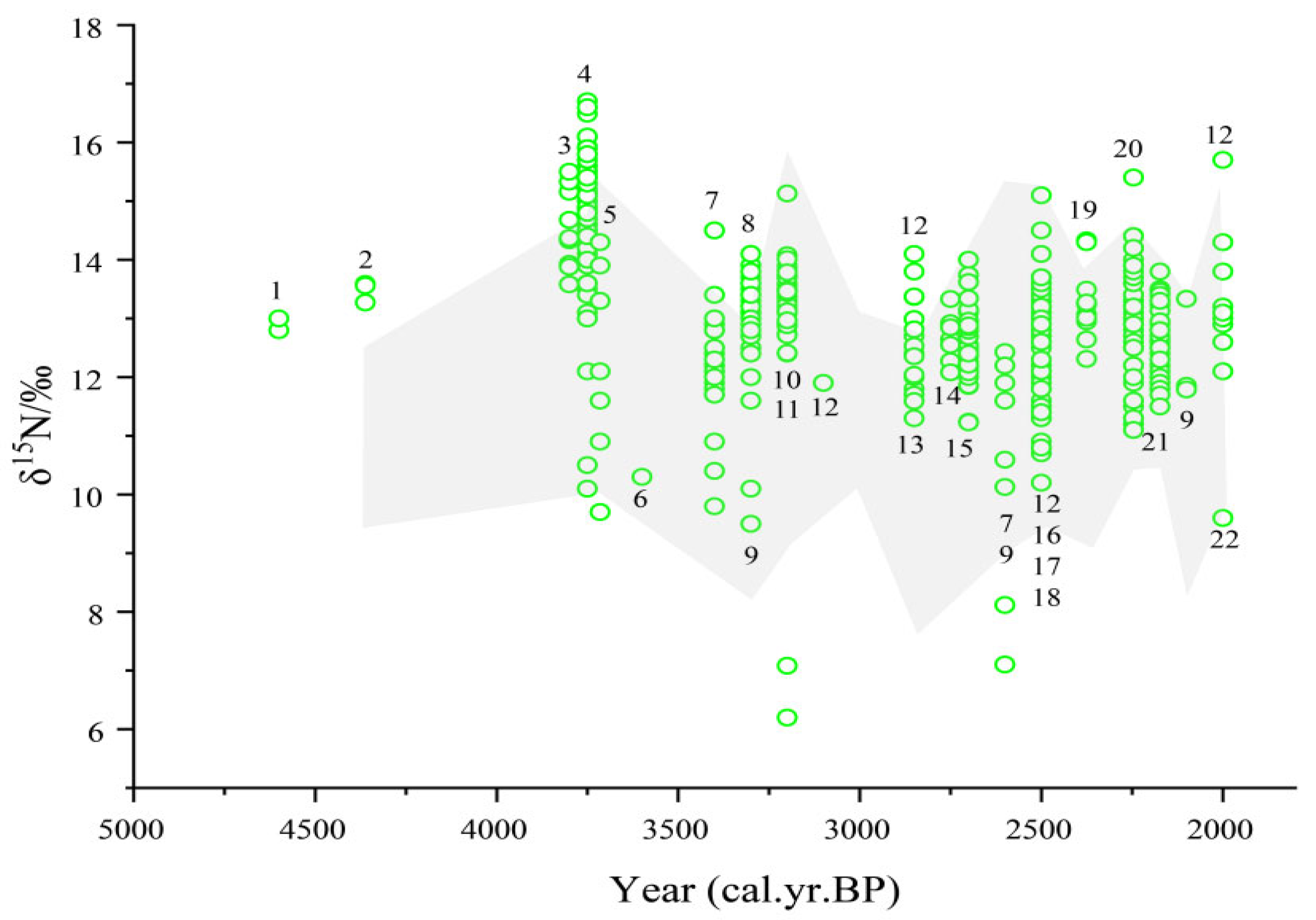
Figure 4.
Changes in the proportion of wild animal remains at archaeological sites from the Paleolithic to the Early Iron Age in Xinjiang.
Figure 4.
Changes in the proportion of wild animal remains at archaeological sites from the Paleolithic to the Early Iron Age in Xinjiang.
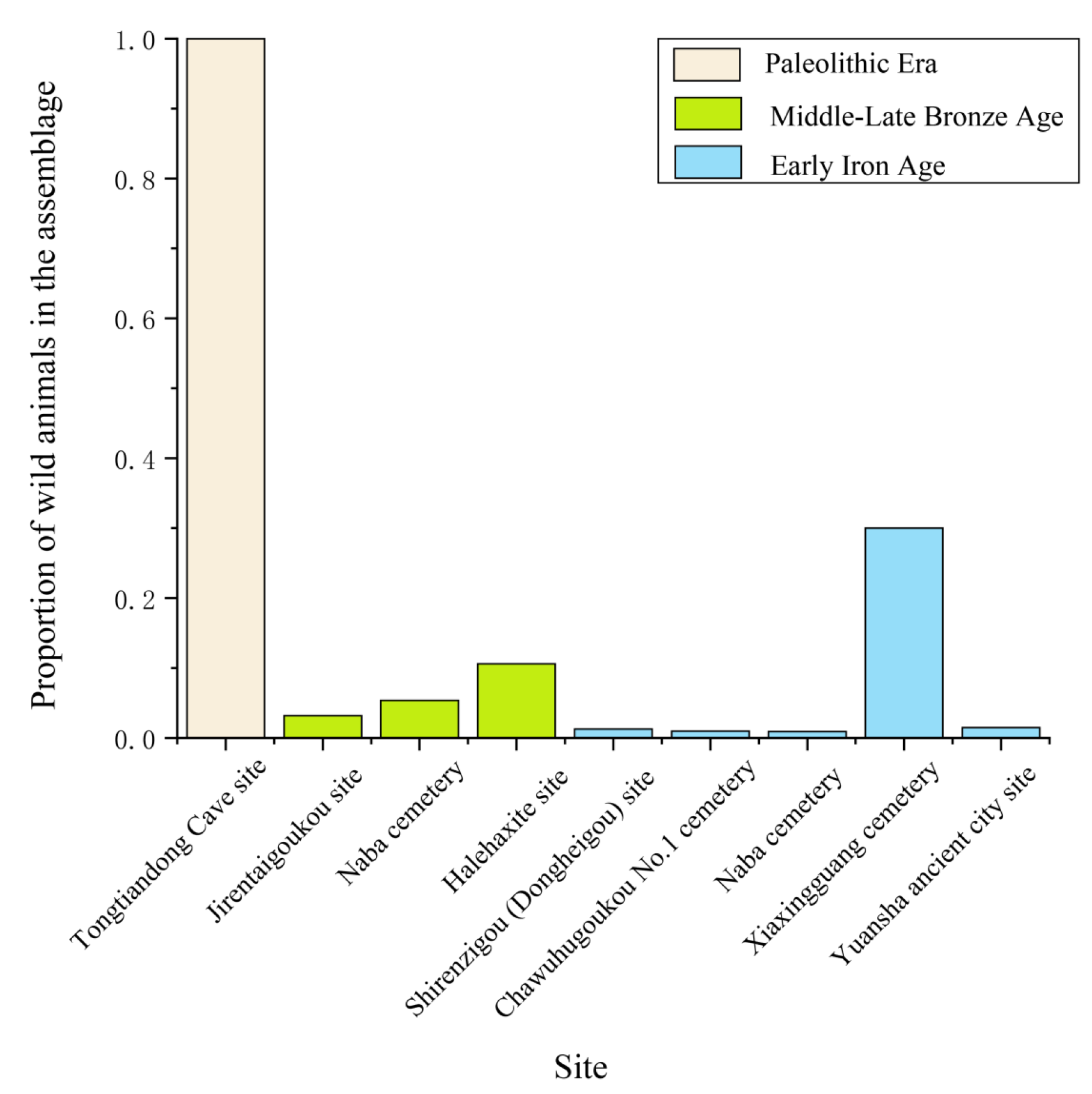
Figure 5.
Archaeological sites and evidence related to gathering activities in prehistoric Xinjiang. 1. Tongtiandong Cave; 2. Haiziyan; 3. Shirenzigou; 4. Yu’ergou; 5. Shengjindian; 6. Gumugou; 7. Jiayi; 8. Jierzankale; 9. Jirentaigoukou. a-1 Chenopodiaceae seeds from Tongtiandong Cave [13]; a-2 Chenopodiaceae seeds from Haiziyan [70]; a-3 Chenopodiaceae seeds from Shirenzigou [71]; b-1 Reed florets from Yu’ergou [72]; b-2 Reed stems from Shengjindian [73]; b-3 Reed rope from Gumugou [74]; c-1 Left lateral view of mandible from Tomb M76, Jiayi Cemetery; c-2 Starch grains from nuts extracted from dental calculus of M76; c-3 Starch grains from roots/tubers extracted from dental calculus of M76 [75]; d-1 Wooden brazier from Tomb M25, Jierzankale Cemetery; d-2 TIC chromatogram of charred residues from wooden brazier M25:2, showing cannabinol (CBN), cannabidiol (CBD), and cannabicyclol (CBL) [76]; e-1 Stone tool selected for analysis from Jirentaigoukou; e-2 Starch grains from roots/tubers recovered from the stone tool surface; e-3 Phytolith of Trichosanthes sp. identified on the stone tool surface [77].
Figure 5.
Archaeological sites and evidence related to gathering activities in prehistoric Xinjiang. 1. Tongtiandong Cave; 2. Haiziyan; 3. Shirenzigou; 4. Yu’ergou; 5. Shengjindian; 6. Gumugou; 7. Jiayi; 8. Jierzankale; 9. Jirentaigoukou. a-1 Chenopodiaceae seeds from Tongtiandong Cave [13]; a-2 Chenopodiaceae seeds from Haiziyan [70]; a-3 Chenopodiaceae seeds from Shirenzigou [71]; b-1 Reed florets from Yu’ergou [72]; b-2 Reed stems from Shengjindian [73]; b-3 Reed rope from Gumugou [74]; c-1 Left lateral view of mandible from Tomb M76, Jiayi Cemetery; c-2 Starch grains from nuts extracted from dental calculus of M76; c-3 Starch grains from roots/tubers extracted from dental calculus of M76 [75]; d-1 Wooden brazier from Tomb M25, Jierzankale Cemetery; d-2 TIC chromatogram of charred residues from wooden brazier M25:2, showing cannabinol (CBN), cannabidiol (CBD), and cannabicyclol (CBL) [76]; e-1 Stone tool selected for analysis from Jirentaigoukou; e-2 Starch grains from roots/tubers recovered from the stone tool surface; e-3 Phytolith of Trichosanthes sp. identified on the stone tool surface [77].
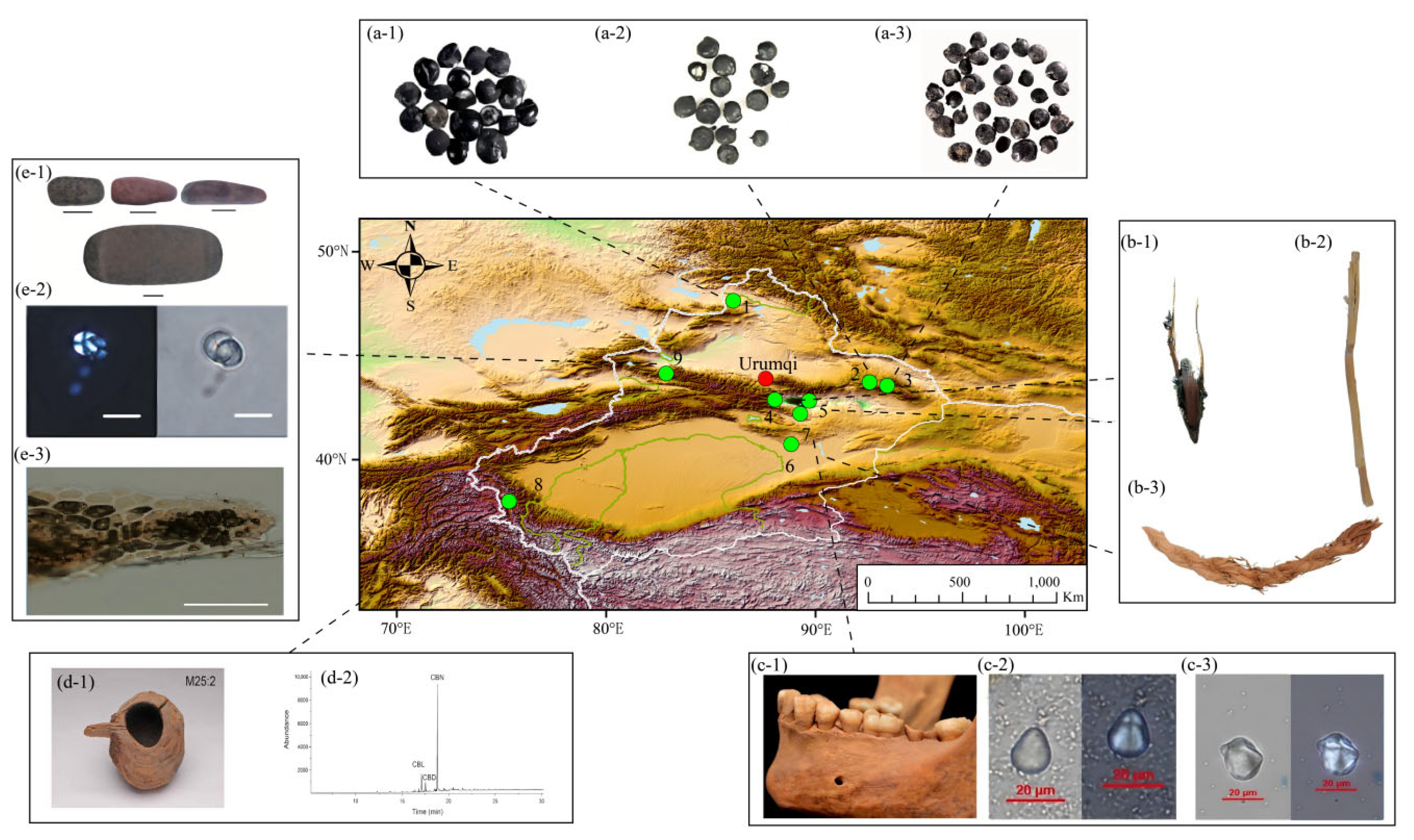
Figure 6.
Changes in the proportion of wild plant remains at archaeological sites from the Bronze Age to the Early Iron Age in Xinjiang.
Figure 6.
Changes in the proportion of wild plant remains at archaeological sites from the Bronze Age to the Early Iron Age in Xinjiang.
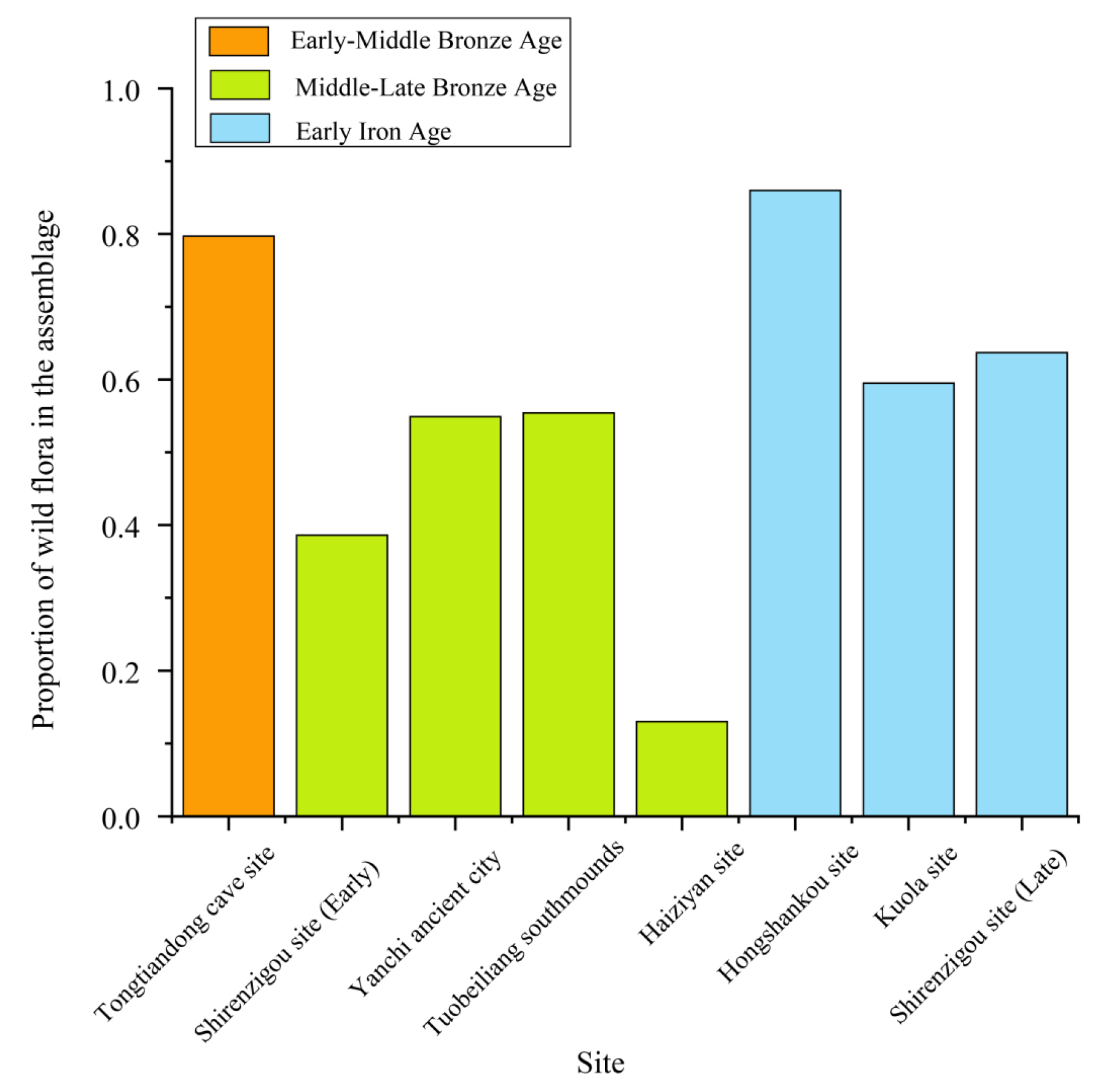
Figure 7.
Changes in the proportion of major wild plant remains unearthed at Bronze Age to Iron Age sites in Xinjiang.
Figure 7.
Changes in the proportion of major wild plant remains unearthed at Bronze Age to Iron Age sites in Xinjiang.
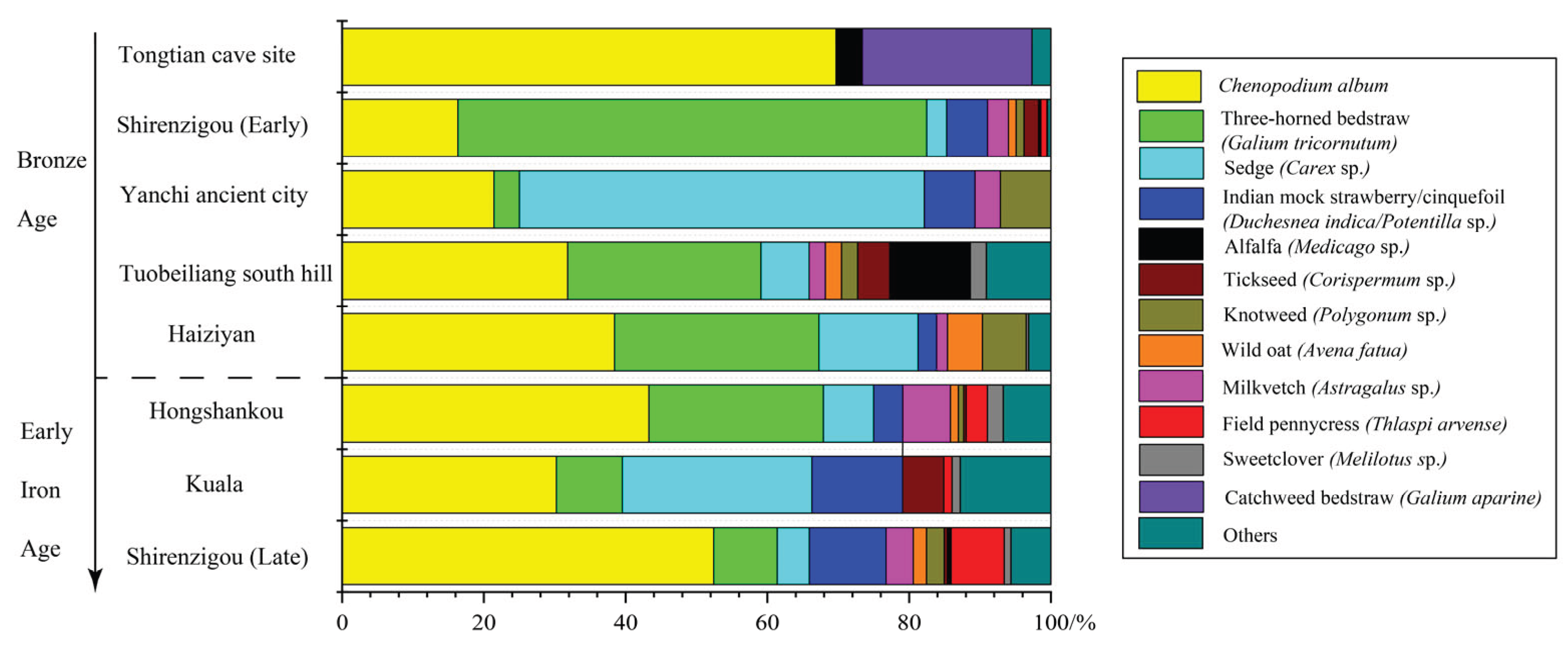

Table 1.
Zinc content in human bone from the prehistoric Xinjiang and comparison with other regions of China.
Table 1.
Zinc content in human bone from the prehistoric Xinjiang and comparison with other regions of China.
| Region | Site | Period/Year | Livelihood economy | Zinc content (ug/g) | References |
|---|---|---|---|---|---|
| Xinjiang | Ancient Cemetery, Lop Nur | Bronze Age (3800 BP) |
Pastoralism dominant, supplemented by agriculture, fishing & hunting | 204.22 (n=10) |
30 |
| Xinjiang | Chawuhu Goukou No. 4 Cemetery | Bronze to Early Iron Age (3000-2500BP) |
Pastoralism dominant, supplemented by agriculture | 174.29 (n=7) |
31 |
| Gansu | Ganguya | Bronze Age (3840-3600BP) |
Mixed agriculture and pastoralism | 113.27 (n=24) |
32 |
| Shanghai | Guangfulin site | Bronze Age (5300-4300 BP) |
Mixed agriculture and fishing | 350.87 (n=7) |
33 |
| Guangxi | Chongtang Site | Neolithic (6700-6300 BP) |
Mixed foraging and fishing | 265.94 (n=3) |
34 |
Disclaimer/Publisher’s Note: The statements, opinions and data contained in all publications are solely those of the individual author(s) and contributor(s) and not of MDPI and/or the editor(s). MDPI and/or the editor(s) disclaim responsibility for any injury to people or property resulting from any ideas, methods, instructions or products referred to in the content. |
© 2026 by the authors. Licensee MDPI, Basel, Switzerland. This article is an open access article distributed under the terms and conditions of the Creative Commons Attribution (CC BY) license (http://creativecommons.org/licenses/by/4.0/).
Copyright: This open access article is published under a Creative Commons CC BY 4.0 license, which permit the free download, distribution, and reuse, provided that the author and preprint are cited in any reuse.


