

Submitted:
11 March 2026
Posted:
12 March 2026
You are already at the latest version
Abstract
Black pepper (Piper nigrum L.) faces challenges related to irregular flowering, which compromises crop productivity. Gibberellic acid (GA₃) is a plant growth regulator known for its role in inducing reproductive processes, although its effects on this species are not yet fully understood. This study aimed to evaluate the influence of different GA₃ doses on flowering and vegetative growth in black pepper plants. The experiment was conducted with black pepper seedlings of the Bragantina cultivar in a randomized block design, with four doses of GA₃ (0, 10, 20, and 30 mg L⁻¹) and six replications, using eight-month-old plants grown in pots under full sun. GA₃ applications were performed in two floral induction cycles. Variables related to flowering, chlorophyll a fluorescence, vegetative growth, biomass allocation, and carbohydrate distribution were evaluated. The data were subjected to analysis of variance, regression, mean grouping test, and principal component analysis. The results showed that inter-mediate doses (10 and 20 mg L⁻¹) significantly stimulated flowering at early developmental stages, whereas the 30 mg L⁻¹ dose enhanced vegetative growth while reducing floral induction. Additionally, GA₃ affected physiological parameters by increasing photosynthetic efficiency and altering carbohydrate balance, with higher accumulation of soluble sugars in leaves and reduced starch content in roots. It is concluded that GA₃ application is a promising strategy to modulate reproductive transition in black pepper, with 10 to 20 mg L⁻¹ doses recommended to promote flowering without compromising plant development.
Keywords:
biomass
; carbohydrates
; flowering
; growth
; phytohormones
; Piper nigrum
1. Introduction
Black pepper (Piper nigrum L.) is one of the most traded spices in the world, with Brazil ranking second in global production [1]. Espírito Santo stands out as the largest national producer, accounting for approximately 60% of the country’s production [2]. Despite its economic importance, the crop faces challenges, such as uneven fruiting [3].
Black pepper flowering is a fundamental process for crop productivity and is influenced by several environmental and physiological factors [4,5]. Factors such as plant age, environmental conditions, genetic characteristics, and morphological traits are the main key factors in crop flowering. [6,7]. Therefore, floral modulation strategies can contribute to optimizing species production [3].
Among the alternatives for modulating flowering, the use of gibberellin (GA3) stands out, a phytohormone that regulates several processes related to plant growth and development. In some species, GA3 has been widely used to influence plant development and reproduction, its main action being to promote cell elongation and induce flowering, enabling a more efficient reproductive cycle [8,9,10]. In several crops, GA3 application has been associated with earlier flowering and increased yield, with dosages varying according to the species and environmental conditions [11,12,13,14].
In addition to flowering, gibberellin (GA3) can significantly impact other morphophysiological variables of the plant. Studies in different crops indicate that its application can modify photochemical parameters and carbohydrate allocation in different plant organs [15].
Furthermore, gibberellic acid (GA₃) has been widely used for its ability to stimulate vegetative growth, promoting an increase in leaf number, leaf area, and shoot dry matter [16]. It also promotes shoot elongation and biomass accumulation in the stem, although it reduces robustness. Conversely, it can compromise root development, reducing specific root length and the fraction of mass allocated to the root system [17,18,19,20].
Although gibberellin (GA3) has been studied in several crops of economic interest, its effects on black pepper remain poorly understood. Elucidating its influence can aid in the development of more efficient management techniques by enabling the definition of appropriate concentrations, ideal application times, and potential desirable physiological responses, such as flowering uniformity and increased productivity. Therefore, this study sought to evaluate the effects of GA3 on modulating black pepper flowering, analyzing its impact on vegetative development, photochemical efficiency, biomass allocation, and carbohydrate metabolism. The hypothesis is that the application of gibberellic acid (GA₃) at different concentrations can influence black pepper flowering, inducing morphophysiological changes whose effect—positive or negative—depends directly on the dosage used.
2. Results
2.1. Flowering and Phenological Classification
The number of inflorescences was significantly influenced by the interaction between gibberellic acid (GA₃) doses and flower development stages (Figure 1). The highlight was the 20 mg L⁻¹ dose, which promoted a significant increase in the number of inflorescences at the E1 stage, reaching an average of over 15 inflorescences per plant, a significantly higher value compared to the other stages at the same dose and the other treatments. In contrast, this same dose resulted in one of the lowest numbers of inflorescences at the E3 stage. The application of 10 mg L⁻¹ reduced flower production at the E2 and E3 stages, a behavior similar to that observed at the 30 mg L⁻¹ dose for the E2 stage. In the control (0 mg L⁻¹), all stages showed low flower formation, with no significant differences between them.
2.2. Chlorophyll a Fluorescence
The application of GA₃ resulted in significant changes in chlorophyll a fluorescence parameters in leaves of black pepper, cultivar Bragantina, with variations between application cycles (Figure 2). In the first cycle, there was an increase in the efficiency of light energy capture and transport observed by the increases in ABS/CS₀ (A), DI₀/CS₀ (B), RE₀/CS₀ (D), and TR₀/CS₀ (E) values with increasing GA₃ doses, while in the second cycle there was a reduction or stabilization of these parameters. Adjustments in the electron transport chain flux were observed in the second cycle with an increase in quantum yields (ΦP₀ and ΦE₀) compared to the first cycle.
GA₃ application significantly influenced chlorophyll a fluorescence over time (Figure 3). The absorption (ABS/CS₀) and energy dissipation (DI₀/CS₀) fluxes increased up to 56 days after application, with a subsequent reduction at 70 days (Figure 3A,B). Energy capture (TR₀/CS₀) showed a similar pattern (Figure 3E), while electron transport (ET₀/CS₀) decreased up to 42 days, followed by recovery at 70 days (Figure 3C). The quantum yields ΦP₀ (primary photochemistry) and ΦE₀ (electron transport) decreased up to 42 days after application, with a subsequent increase (Figure 3F,G). This behavior was more evident in plants treated with 10 and 20 mg L⁻¹ of GA₃, which showed greater efficiency in the use of light energy compared to the control and the 30 mg L⁻¹ dose. Furthermore, differences between doses were evident at certain evaluation times. For the QR₀ parameter, variations between treatments can be observed at 42 and 56 days after application (Figure 3H).
2.3. Chlorophyll Index
The application of GA₃ resulted in variations in chlorophyll indices over time and between the evaluated cycles (Figure 4). In cycle I, the values of chlorophyll a, chlorophyll b, and total chlorophyll were higher compared to cycle II, regardless of the applied doses. Chlorophyll concentrations fluctuated in response to GA₃ doses, with a reduction observed at the 30 mg L⁻¹ dose in cycle II. In cycle I, the application of GA₃ did not affect chlorophyll levels.
Over the days following application, chlorophyll A, B, and total chloro.phyll levels fluctuated in both evaluation cycles, with no clear trend toward continuous decline (Figure 5). In cycle I, levels were consistently higher than in cycle II at virtually all time points analyzed, with statistically significant differences. Chlorophyll B was the pigment that showed the greatest variation, especially in cycle I, with an increase at 42 days. In cycle II, values remained lower and relatively stable over time. Total chlorophyll followed a similar pattern to chlorophyll A and B, reflecting the predominance of higher values in cycle I. The letters indicate significant interactions between cycles and time points, highlighting the superiority of cycle I, especially at 28 and 42 days after application.
2.4. Growth and Biomass Allocation Analyses
Treatments with gibberellic acid positively influenced the morphological variables evaluated (Figure 6). An increase in total leaf area (Figure 6A), leaf mass fraction (Figure 6B), Dickson quality index (Figure 6C), leaf dry mass (Figure 6D), shoot dry mass (Figure 6E), and leaf number (Figure 6F) was observed in plants treated with 30 mg L⁻¹ of GA₃, which presented the highest values compared to the control. Unit leaf area did not show a significant difference.
The variables related to stem growth were significantly influenced by the gibberellic acid doses (Figure 7). An increase in shoot length (Figure 7A), robustness index (Figure 7B), stem length (Figure 7C), stem mass fraction (Figure 7D), stem dry mass (Figure 7E) and total dry mass (Figure 7F) was observed, with emphasis on the dose of 30 mg L⁻¹, which provided the highest values. The other variables, such as cutting length and specific stem length, did not present significant differences between the treatments.
Gibberellic acid (GA₃) application stimulated black pepper root growth, especially at doses of 10 and 30 mg L⁻¹ (Figure 8). At these concentrations, increases in root mass fraction (Figure 8b) and root dry mass (Figure 8d) were observed compared to the control. Furthermore, the 30 mg L⁻¹ dose significantly reduced the shoot dry mass to root dry mass ratio (Figure 8c), indicating greater investment in root system growth. On the other hand, specific root length (Figure 8a) did not show significant differences among most treatments. The number of roots, root length, root fineness, root volume, and root tissue density did not show significant differences among treatments.
The correlation matrix indicated significant correlation patterns between the variables evaluated in plants treated with GA3 (Figure 9). The correlation between leaf number and leaf dry mass (0.99), total leaf area (0.96), and the Dickson quality index (0.97) was strongly positive. leaf dry mass also correlated positively with leaf area (0.93) and DQI (0.96). Stem length correlated strongly with shoot length (0.99) and DQI (0.98). Root mass fraction correlated negatively with the shoot dry mass to root dry mass ratio (SDM/RDM) (-0.99) and with specific root length (-0.92). Furthermore, leaf area correlated negatively with stem mass fraction (-0.77) and SRL (-0.57). shoot length also correlated negatively with specific root length (-0.86).
Principal component analysis (PCA) (Figure 10) showed that the first two axes explained 60.9% of the total data variability, with 42.7% attributed to the first principal component (PC1) and 18.2% to the second principal component (PC2). The analyzed variables were categorized into three groups: shoot (green), root system (red), and whole plant (blue).
The variables associated with the shoot were most closely related and contributed most to the variation in PC1. Among these variables, the following stand out: number of leaves (NL), leaf dry mass (LDM), leaf area (LA), and stem length (SL). The variables related to the root system showed less influence on the separation of components, with shorter vectors distributed closer to the origin.
The variables related to the whole plant presented longer vectors, indicating a greater influence in explaining the data variability. The root efficiency coefficient (SRL) and root mass fraction (RMF) were the variables most associated with this group. The distribution of vectors shows the relationship between the variables and their contribution to the differentiation of the principal components.
2.5. Non-Structural Carbohydrates
The application of gibberellic acid GA3 influenced the levels of soluble sugars (fructose, glucose, and sucrose) in different vegetative organs (Figure 11). Starch content varied significantly among the different plant organs in response to GA₃ doses. The stem showed the highest starch accumulation at the 30 mg L⁻¹ dose, with a statistical difference compared to the other treatments and organs. In the leaves, starch levels remained relatively stable between doses, with a slight increase at the 10 and 20 mg L⁻¹ concentrations, but a reduction at the highest dose. In the roots, starch content increased significantly at the 10 mg L⁻¹ dose, presenting the highest values for this organ, followed by a decrease at the 20 and 30 mg L⁻¹ doses.
Glucose and fructose levels showed similar patterns within each organ. In leaves, both sugars decreased at doses of 10 and 20 mg L⁻¹, with a subsequent increase at 30 mg L⁻¹, which resulted in the highest values. In stems, levels decreased progressively with increasing GA₃ doses, being highest in the control (0 mg L⁻¹) and lowest at 30 mg L⁻¹. In roots, both glucose and fructose increased at 10 mg L⁻¹ but decreased at subsequent doses.
Sucrose showed distinct patterns among organs. In leaves and roots, levels increased at doses of 10 and 20 mg L⁻¹, followed by a decrease at the highest dose (30 mg L⁻¹). In stems, however, sucrose accumulation was greatest at doses of 20 and 30 mg L⁻¹, with levels higher than those observed in the control, although lower than those of the other carbohydrates.
In black pepper leaves, non-structural carbohydrate contents were influenced by different GA3 doses, as demonstrated by principal component analysis (Figure 12). PCA analysis showed that the 10 mg L⁻¹ dose presented a distinct metabolic profile, located alone in the positive quadrant of PC1, with less association with the evaluated carbohydrates, while the 20 mg L⁻¹ dose was associated with greater sucrose accumulation. The 30 mg L⁻¹ dose was related to higher concentrations of glucose, fructose, and starch. The control treatment (0 mg L⁻¹) formed a separate cluster, indicating a differentiated pattern in carbohydrate allocation. The separation between treatments along the principal axes indicated significant variations in the distribution and metabolism of leaf carbohydrates in response to GA3.
In the stem, carbohydrate content analysis also revealed marked differences between GA3 treatments (Figure 13). PCA revealed a clear separation between groups, with sucrose and starch more associated with plants treated with 30 mg L⁻¹, while glucose and fructose were more associated with plants without GA₃ application (0 mg L⁻¹). Furthermore, plants subjected to the 10 mg L⁻¹ dose formed a distinct cluster, suggesting an intermediate carbohydrate profile in this organ.
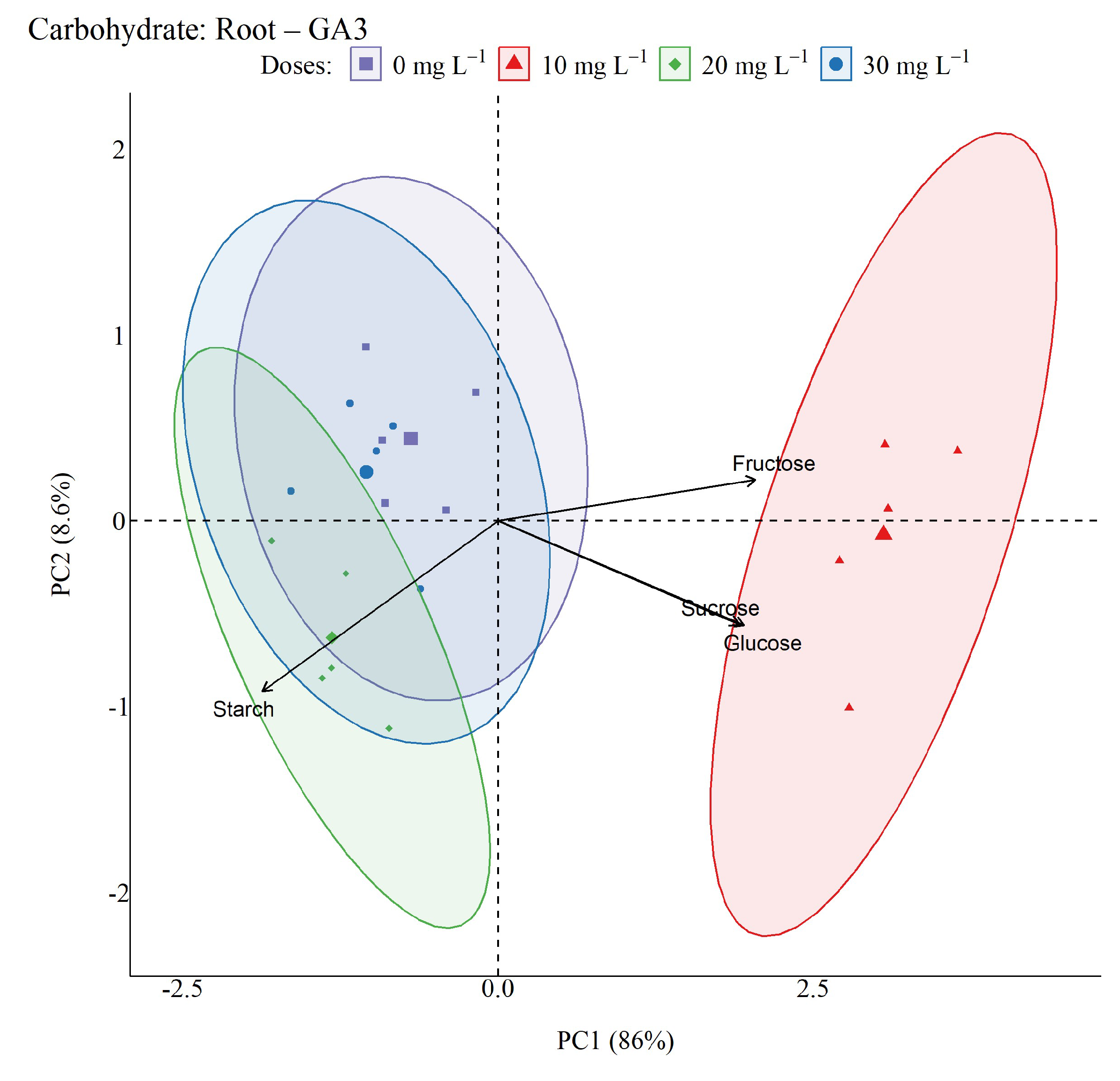
PCA analysis (Figure 14) of carbohydrate contents in black pepper roots under different GA3 doses revealed a distinction between treatments along the first principal component (PC1), which explained 86% of the data variability, while the second principal component (PC2) accounted for 8.6%. The 10 mg L⁻¹ dose stood out from the other treatments in the graph, showing greater proximity to soluble carbohydrates (glucose, fructose, and sucrose), while the 0 mg L⁻¹ and 20 mg L⁻¹ doses clustered in a region associated with starch. The 30 mg L⁻¹ dose occupied an intermediate position between the groups. These results indicate variations in the carbohydrate profile of roots in response to GA3 application.
3. Discussion
The response of black pepper to GA₃ application depended on the floral development stage, with greater inflorescence production observed at stage E1, while at stage E4 there was no significant increase in floral emission. The low inflorescence production in the absence of GA₃ suggests that, during the analyzed period, floral development occurred only limitedly, which may indicate a lower endogenous efficiency in inducing flowering or a delay in the onset of this process. This behavior is in line with the known role of GA₃ in regulating flowering, acting on molecular pathways that control the meristematic transition and promote the activation of genes specific to the reproductive phase [21].
The greater efficiency of the 20 mg L⁻¹ dose at the E1 stage may be related to the greater sensitivity of vegetative buds in the early stages to hormonal stimulation, favoring their transition to reproductive buds under the influence of GA₃. Research has shown that the application of GA₃ at early stages of plant development promotes greater floral differentiation, while at more advanced stages, the effect may be reduced or even inhibited [22,23]. At early stages of plant development, buds still maintain high physiological plasticity and are more sensitive to hormonal signaling, favoring the activation of flowering-related genes, such as those in the LEAFY and APETALA families [24,25].
However, at the E4 stage, GA₃ doses did not result in a significant increase in the number of inflorescences, which may be related to the lower responsiveness of floral buds at this stage. Research indicates that, in the more advanced stages of black pepper, the action of GA₃ may be limited by the predominance of other growth regulators, such as abscisic acid and cytokinins, which are involved in the regulation of fruit growth and ripening [3].
In the first cycle, the higher values of ABS/CS₀, TR₀/CS₀, and ET₀/CS₀, especially at the 10 mg L⁻¹ dose, suggest an increase in the efficiency of light energy capture and transport, possibly associated with the regulation of photosystem II by GA3. Similar responses were found by Fu et al. [26] in corn. In the second cycle, most parameters showed a reduction, which may indicate a physiological adaptation mechanism or a residual effect of the growth regulator.
DI₀/CS₀ remained relatively constant, suggesting that energy dissipation did not undergo major changes, which may be related to the maintenance of photochemical protection mechanisms even in the face of variations in light absorption [27]. Furthermore, the quantum yields ΦP₀ and ΦE₀ were higher in the first cycle but decreased in the second. On the other hand, ΦR₀ showed a slight increase in this second cycle. This response may indicate an adjustment in electron flow in the transport chain as an adaptive mechanism in the face of potential environmental stress. This behavior suggests partial photoinhibition or a physiological adaptation aimed at optimizing energy production under less favorable conditions [28].
The temporal response of chlorophyll a fluorescence also followed a dynamic pattern, with increased absorption and energy capture up to 56 days after GA3 application, followed by a reduction at 70 days. Similar findings were observed by [29] in sugarcane, suggesting that GA3 promotes an initial activation of photosynthesis, but that this effect may be temporary due to endogenous plant regulation. The reduction in quantum yields ΦP₀ and ΦE₀ up to 42 days, followed by subsequent recovery, reinforces the hypothesis of a physiological adjustment period to the hormone application. Doses of 10 and 20 mg L⁻¹ demonstrated greater efficiency in the use of light energy, while 30 mg L⁻¹ did not provide additional benefits, indicating a possible saturation in the response to GA3, as already observed in studies on the regulation of photosynthesis by plant hormones [30].
The application of GA₃ influenced the levels of chlorophyll a, chlorophyll b, and total chlorophyll, with variations over time and between the evaluated cycles, with higher values in cycle I compared to cycle II, regardless of the dose. Furthermore, the 30 mg L⁻¹ dose in cycle II resulted in the greatest reduction in chlorophyll, suggesting a possible inhibitory effect at high concentrations, potentially associated with the induction of leaf senescence. Chlorophyll b showed greater variation over time, which may indicate greater sensitivity of this pigment to the action of GA₃, directly reflecting the reduction in total chlorophyll. Similar results were found by Monge et al. [31] in peach trees and by Cruciol et al. [32] in soybean.
The application of GA3 significantly influenced the development of black pepper, promoting greater growth of shoots, stems, and roots. The increase in leaf number, leaf area, and leaf dry matter indicates greater photosynthetic efficiency and seedling vigor. In the stem, GA3 favored growth and robustness, as well as cutting length. In the root system, there was an increase in root dry matter, but no effect on root number or length. The findings of this study corroborate the literature; as observed by Boyers et al. [33], GA3 spraying increased vegetative growth, including shoot number and length.
Principal component analysis (PCA) highlighted a greater influence of shoot variables on the total data variability, indicating that GA3 acts primarily on aboveground growth, indirectly modulating the root system. This effect may be beneficial for accelerating early seedling development. However, disproportionate growth between roots and shoots can affect the plant’s water and nutrient absorption capacity, compromising its adaptation in the field. The differentiated response of the analyzed variables suggests that GA3 acts primarily to allocate biomass to the shoot, promoting more significant growth in leaves and stems compared to the root system [34].
The application of GA3 significantly influenced the distribution of non-structural carbohydrates in different organs of black pepper, highlighting its regulatory role in plant energy metabolism. Previous studies indicate that GA3 can modulate carbon allocation by stimulating the translocation and accumulation of carbohydrates in different plant tissues [35,36,37].
In the leaves, fructose showed the highest levels, while glucose and sucrose levels varied according to the GA3 dose, with sucrose accumulation highlighted at 20 mg L⁻¹ and glucose and starch at 30 mg L⁻¹. These findings are in line with the observations of Murcia et al. (2016), who reported an increase in the accumulation of non-structural carbohydrates in grapevine leaves in response to GA₃, promoting phloem efficiency and the expression of sugar transporters, which may favor energy supply for reproductive processes such as flowering and initial fruit development. In the stem, a progressive reduction in fructose and glucose contents was observed as the dose increased, while sucrose remained unchanged. Principal component analysis (PCA) indicated that the 30 mg L⁻¹ dose favored the accumulation of starch and sucrose in the stem, suggesting a redistribution of carbohydrates in this organ. Similar results were described by Moreno et al. [36], who verified the role of GA₃ in promoting carbohydrate storage in grapevine stems and roots, favoring the plant’s energy reserve.
In the roots, fructose was the predominant carbohydrate at all doses, with the highest levels recorded at 10 and 20 mg L⁻¹, while glucose showed a slight reduction with increasing GA3 concentration. This pattern may be related to the fact that GA3 promotes the allocation of carbohydrates to underground organs, as demonstrated by Moreno et al. (2011), who reported an increase in carbon partitioning for grapevine roots under the influence of the hormone. Furthermore, PCA revealed that the 10 mg L⁻¹ dose was more associated with the presence of soluble sugars, while higher doses favored the accumulation of starch, suggesting a possible redirection of carbohydrates for energy storage, a phenomenon also observed in other crops under the action of growth regulators [38].
4. Materials and Methods
4.1. Experimental Area, Design, and Growing Conditions
The experiment was conducted at the Capixaba Institute for Research, Technical Assistance, and Rural Extension (INCAPER) in Linhares, Espírito Santo (south latitude: 19º23’28”, west longitude: 40º04’20”, and altitude of 33 meters). The climate is classified as Aw, tropical rainy, with a dry season in winter. The average temperature of the coldest month is above 18 °C, and the average precipitation of the driest month is less than 60 mm [39].
Monthly data for temperature (minimum, maximum, and average) in °C, precipitation (mm), and relative humidity (%) for the period from December 2023 to June 2024 were obtained from the Linhares-ES Automatic Meteorological Station, respectively. These data were obtained from the National Institute of Meteorology (INMET) and are presented in Figure A1.
Black pepper seedlings of the Bragantina cultivar, internationally known as ‘Panniyur-1’ [40], were used. The seedlings were obtained from local commercial nurseries and propagated by cuttings. Five months after staking, the seedlings were transplanted into 7-L plastic pots containing a commercial substrate (tropstrate HT) and thirty grams of osmocote, releasing the seeds every 5–6 months per pot, as recommended by Alexandre et al. [41]. When symptoms of nutritional deficiency were detected, diagnosed through leaf analysis, microscopy, and visual analysis, foliar fertilization was performed with Captan SC nutrient solution (480 g/L of captan), formulated by Adama Brasil S.A., as recommended by nurserymen producing this crop seedling. The plants were grown in full sun under micro-sprinkler irrigation and maintained in this same environment throughout the experiment.
Floral induction occurred in two cycles: the first cycle began three months after transplanting the seedlings (8-month-old plants), and the second cycle began six months after transplanting (11-month-old plants) (Table A1). Gibberellic acid (GA3) P.A. (ACS Científica) was applied according to Amaro (2017), with dose adjustments. Four concentrations of GA3 (0, 28.9, 57.8, and 86.6 µM) were analyzed, applied via foliar application (approximately 59 mL per pot). The experiment was conducted in a randomized complete block design with six replicates of 56 seedlings, totaling 336 plants. Applications were made at the end of the day using a 20-liter handheld backpack sprayer.
4.2. Flowering and Phenological Classification
Flowering monitoring was carried out using the same procedures as those used by Silva et al. [42], which consisted of visual observations of inflorescence emergence using a magnifying glass. Assessments were made weekly two weeks after GA3 application. Phenological classification occurred at the end of each cycle, when the inflorescences were removed and classified according to their respective phenological stage, as per Lekha et al. [43] (Figure A2).
4.3. Chlorophyll a Fluorescence
During the experiment, chlorophyll a fluorescence assessments were performed from 8:00 to 10:30 a.m. using a Pocket-PEA fluorometer (Hansatech, UK), following the guidelines of Strasser et al. (2004). Two fully expanded leaves were dark-acclimated using leaf clips for 30 minutes to ensure complete photosystem oxidation. Then, a saturating light pulse of 3000 μmol m-2 s-1 of photons, lasting 1 second, was applied, and the parameters were subjected to the JIP Test (Table A2).
4.4. Chlorophyll Index
Chlorophyll index measurements were performed biweekly after GA3 application, using an electronic chlorophyll meter (ClorofiLOG, model CFL 1030) to determine chlorophyll a, b, and total chlorophyll indices (Falker 2009). These measurements were taken on a fully expanded leaf from the middle third of the plant, located on the portion facing the morning sun. Measurements were taken between 8:00 and 10:00 a.m., using the same leaf previously marked for chlorophyll fluorescence measurements.
4.5. Growth and Biomass Allocation Analysis
Seven months after the first product application, measurements were taken of stem diameter using a digital caliper, stem and root length, leaf number, leaf area using a LI-COR 3100 meter, and root volume using water displacement in a test tube. The dry mass of vegetative and reproductive organs was determined using a precision analytical balance after drying in an oven with forced air circulation at 65 °C, until a constant dry mass was obtained.
From these data, we calculated the specific leaf area (SLA: fresh leaf area divided by leaf dry mass – SLA = LA/LDM). Stem mass fraction (SLM: stem dry mass divided by total plant dry mass – SLM = STDM/TDM), expressed in g g⁻¹, according to Poorter et al. [44]. Root mass fraction (RMF: root dry mass divided by total plant dry mass – RMF = RDM/TDM), was calculated according to Poorter et al. [44], with the results expressed in g g⁻¹. Specific root length (SRL: root length divided by root dry mass – SRL = RL/RDM), expressed in m g⁻¹, according to Kramer-Walter et al. [45]. Root tissue density (RTD: root dry mass divided by fresh root volume – RTD = RDM/FRV), as described by Kramer-Walter et al. [45], with values expressed in g cm⁻³. Robustness index (RI: stem length divided by stem diameter – RI = SL/SD). Dickson quality index (DQI: ratio between total dry mass and the sum of two proportions – DQI = TDM/ [(SL/SD) + (SDM/RDM)]). The specific shoot length (SSL) was calculated from the ratio between the stem length and the stem dry mass (SSL = SL/STDM), with the result expressed in m g⁻¹, as described by Poorter et al. [44].
4.6. Non-structural Carbohydrates
To analyze soluble carbohydrate and starch contents, leaf, stem, and root samples were microwaved at 600 watts for approximately 90 seconds (Popp et al. 1996). The samples were then dried in a forced-air oven at 65 °C until a constant mass was obtained, followed by pulverization in a ball mill (model TE-350, TECNAL, São Paulo, Brazil) for 3 min. This process was repeated for an additional 3 min, totaling approximately 6 minutes, depending on the hardness of the material.
The extraction of soluble carbohydrates followed the method described by Pollock (1986), performed through four extractions using 80% ethanol. In the first step, 1.5 mL of 80% ethanol was added to the tube containing the previously weighed samples. The mixture was then homogenized using a vortex. For the aforementioned analysis, a High Performance Anion Exchange Chromatography (HPLC) system was used on a Shimadzu SIL-10AF chromatograph (Kyoto, Japan). Separation was performed with a Shim-Pack® SPR-Pb column (250 × 7.8 mm) using ultrapure water as the mobile phase, at a flow rate of 0.6 mL/min, a column temperature maintained at 80 °C, and detection by refractive index. Sugar identification and quantification were based on commercial standards from Sigma-Aldrich®.
Starch quantification was performed using an enzymatic method, as described by Amaral et al. (2007). For enzyme preparation, α-amylase was diluted in MOPS buffer at a concentration of 120 U/mL, while amyloglucosidase was diluted in sodium acetate buffer at a concentration of 30 U/mL. To the dried precipitate of the samples, 0.5 mL of the α-amylase solution was initially added, followed by incubation in a water bath at 75 °C for 30 minutes. Then, another 0.2 mL of the same enzyme was added, with a further incubation for 30 min at 75 °C. After the enzymatic step, the samples were read on an ELISA plate to quantify the sugars.
4.7. Statistical Analysis
The data were subjected to the Shapiro-Wilk normality test to assess the distribution of variables. Data transformations were performed according to Box et al. [47], using the cubic root (cbrt), inverse, logarithmic (log), and square root (sqrt) functions, as needed, to adjust the distribution.
Analysis of variance was performed for normally distributed data, and the Scott-Knott test (p < 0.05) was applied to variables that showed a significant difference using the F test. The Student’s t-test (p ≤ 0.05) was used for chlorophyll a fluorescence parameters. Principal component analysis (PCA) was used for variables related to growth and non-structural carbohydrates. Statistical analyses were performed using R statistical software, version 4.0.2, and R Studio 3.0.1.
For non-structural carbohydrates, a randomized block design was adopted, organized in a triple factorial scheme (4 × 3 × 4). The first factor corresponds to the doses (0; 28.9; 57.8; 86.6 µM), the second factor to the plant organs (leaf, stem and root) and the third factor to the types of carbohydrates analyzed (starch, fructose, glucose and sucrose).
5. Conclusions
The application of gibberellic acid (GA₃) significantly influenced the flowering, physiology, growth, and metabolism of black pepper. Intermediate doses (10 and 20 mg L⁻¹) favored floral induction in early stages, increased photochemical efficiency, and stimulated the production of soluble carbohydrates, while the 30 mg L⁻¹ dose promoted greater vegetative growth, with biomass accumulation in shoots and roots. Chlorophyll levels and chlorophyll a fluorescence parameters indicated improved photosynthetic activity in the early stages after application, especially in the first cycle. Furthermore, GA₃ modulated the distribution of sugars between tissues, particularly the accumulation of sucrose in leaves and starch in stems and roots. These results reinforce that the appropriate definition of the dose and time of application is essential to enhance the desired effects on flowering and the physiological and productive performance of the crop.
Author Contributions
Conceptualization, M.A.C.D., F.G.H. and V.d.S.O.; methodology, M.A.C.D., F.G.H. and V.d.S.O.; software, M.A.C.D., F.G.H. and V.d.S.O.; validation, A.J.C.J.M., J.S.B.P. and F.B.C.S.; formal analysis, A.J.C.J.M., J.S.B.P. and F.B.C.S.; investigation, A.J.C.J.M., J.S.B.P. and F.B.C.S.; resources, B.M.B., G.R.F.C. and C.d.S.D.; data curation, B.M.B., G.R.F.C. and C.d.S.D.; writing—original draft preparation, B.M.B., G.R.F.C. and C.d.S.D.; writing—review and editing, L.d.O.A., E.R.S. and S.D.-A.; visualization, L.d.O.A., E.R.S. and S.D.-A.; supervision, L.d.O.A., E.R.S. and S.D.-A.; project administration, V.d.S.O. and S.D.-A.; funding acquisition, V.d.S.O. and S.D.-A. All authors have read and agreed to the published version of the manuscript.
Funding
This research was funded by Fundação de Amparo à Pesquisa e Inovação do Espírito Santo— FAPES.
Data Availability Statement
The original contributions presented in this study are included in the article. Further inquiries can be directed to the corresponding authors.
Conflicts of Interest
The authors declare no conflicts of interest.
Abbreviations
The following abbreviations are used in this manuscript:
| ABS/CS0 | Energy absorption per reaction center |
| DI0/CS0 | Energy dissipation per reaction center |
| TR0/CS0 | Energy capture by the reaction center |
| ET0/CS0 | Electron transport rate beyond QA⁻ |
| RE0/CS0 | Reduction of final acceptors in the electron transport chain |
| φP0 | Quantum efficiency of primary photochemistry |
| φE0 | Quantum efficiency of electron transport |
| NL | Number of leaves |
| LDM | Leaf dry mass |
| LA | Leaf area |
| SL | Stem length |
| STL | Shoot length |
| IQD | Dickson quality index |
| RDM | Root dry mass |
| TDM | Total dry mass |
| SDM | Shoot dry mass |
| STDM | Stem dry mass |
| RMF | Root mass fraction |
| LMF | Leaf mass fraction |
| SRL | Specific root length |
| SD | Stem diameter |
| SLA | Specific leaf area |
| SLM | Stem mass fraction |
| RMF | Root mass fraction |
| SRL | Specific root length |
| RL | Root length |
| RTD | Root tissue density |
| FRV | Fresh root volume |
| RI | Robustness index |
| SSL | The specific shoot length |
Appendix A
Appendix A.1
Figure A1.
Total precipitation (mm), relative humidity (%), and maximum, average, and minimum air temperatures recorded at the Linhares-ES meteorological station, from December 2023 to June 2024.
Figure A1.
Total precipitation (mm), relative humidity (%), and maximum, average, and minimum air temperatures recorded at the Linhares-ES meteorological station, from December 2023 to June 2024.
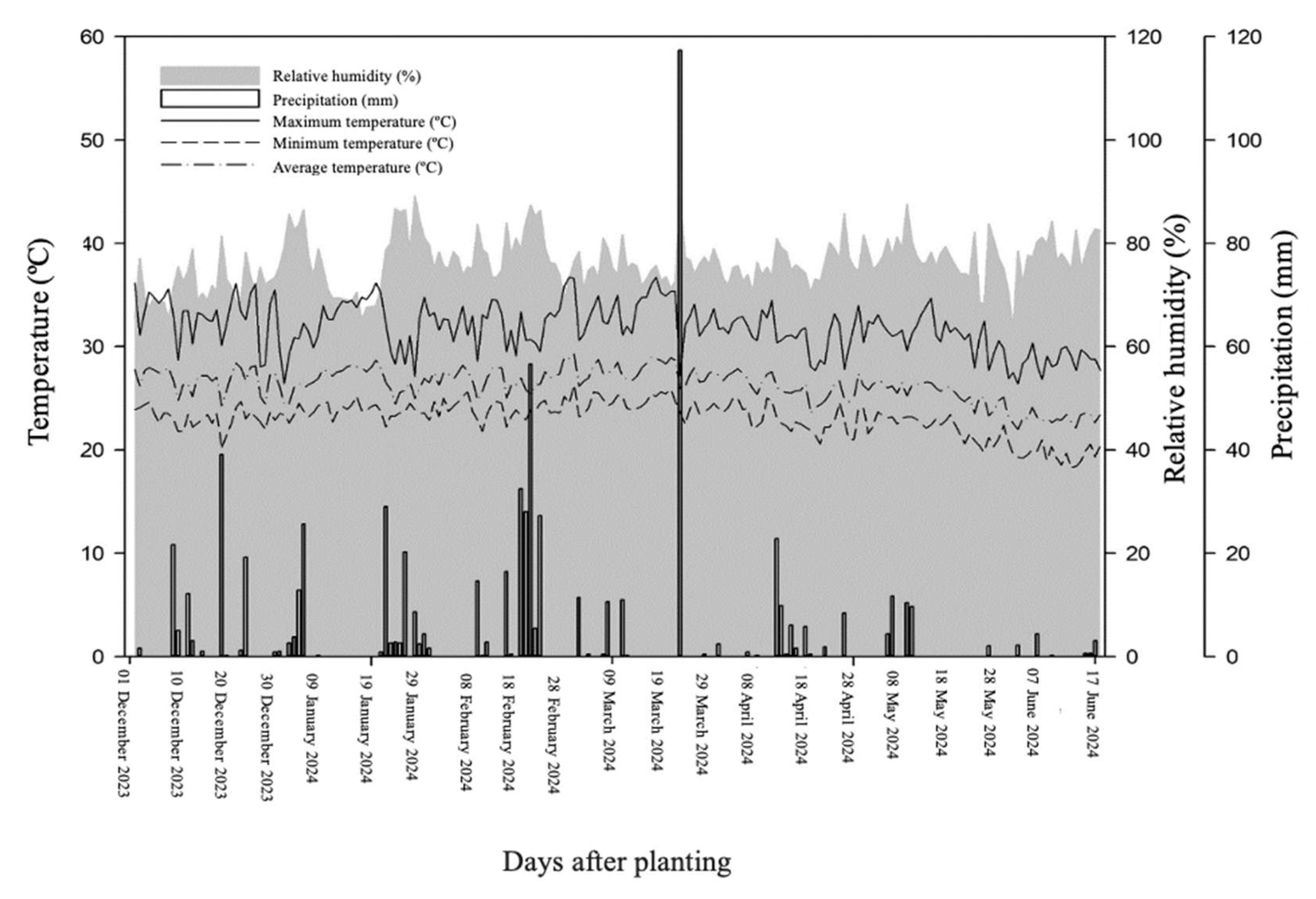

Table A1.
Evaluation period, cycle duration and number of gibberellin (GA3) applications on black pepper cv. Bragantina.
Table A1.
Evaluation period, cycle duration and number of gibberellin (GA3) applications on black pepper cv. Bragantina.
| Months of evaluation | Cycle duration | Number of applications | ||
| Start | End | |||
| 1 | December to February | 01/12/2023 | 17/02/2024 | 1 |
| 2 | February to May | 18/02/2024 | a 18/05/2024 | 1 |
Figure A2.
Phenological classification scale of black pepper inflorescences.
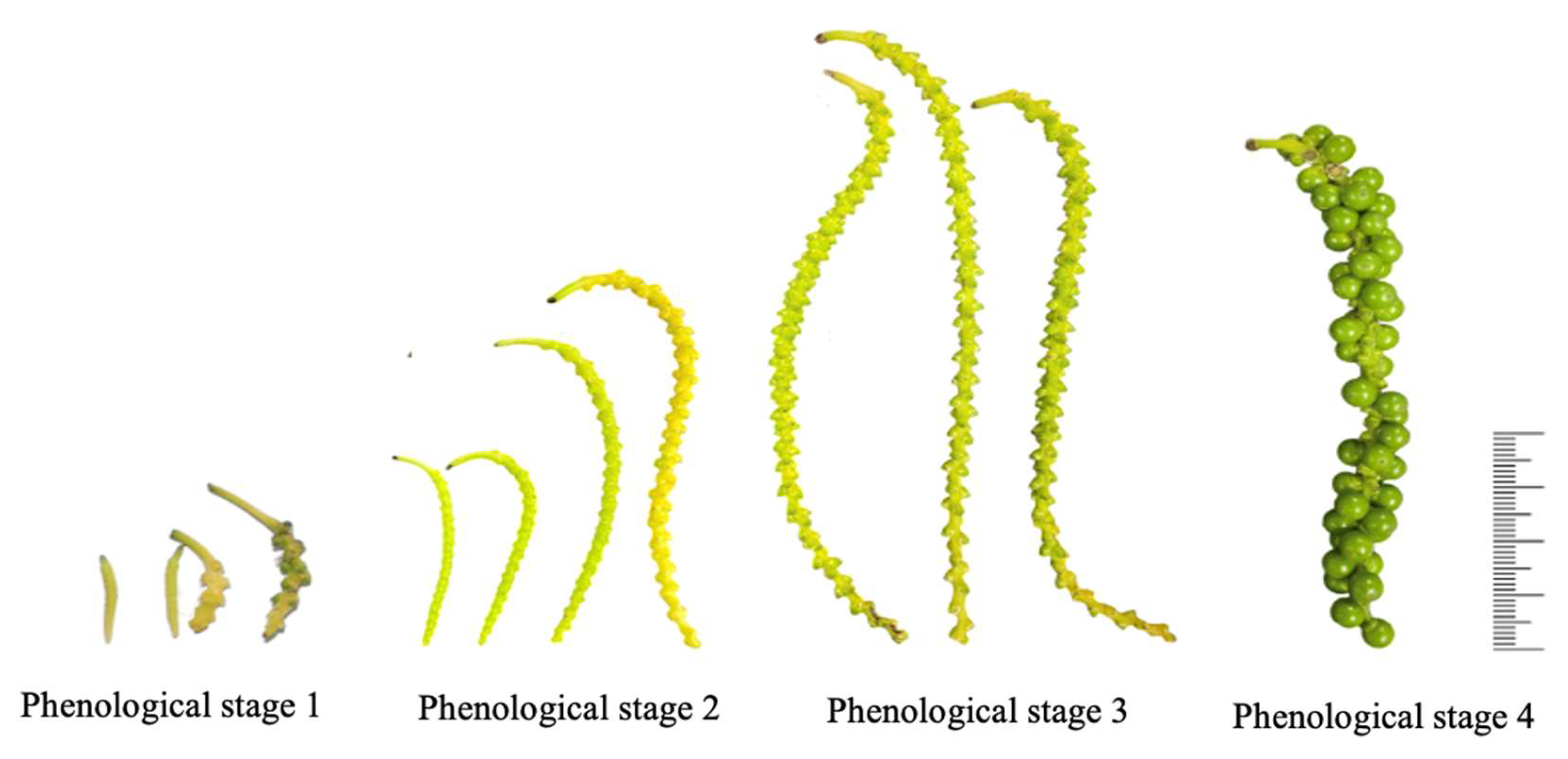
Table A2.
Parameter abbreviations, formulas, and description of data derived from chlorophyll a fluorescence transients.
Table A2.
Parameter abbreviations, formulas, and description of data derived from chlorophyll a fluorescence transients.
| Parameter | Formulas | Description |
| ABS/CS0 | Chl/CS | Energy absorption per reaction center |
| DI0/CS0 | ABS/RC – TR0/RC | Energy dissipation per reaction center |
| TR0/CS0 | ϕP0 (ABS/CS) | Energy capture by the reaction center |
| ET0/CS0 | ϕP0*Ψ0*(ABS/CS) | Electron transport rate beyond QA⁻ |
| RE0/CS0 | (RE0/ET0) – ET0/CS0) | Reduction of final acceptors in the electron transport chain |
| φP0 | TR0/ABS = [1 − (F0/Fm)] = FV/Fm | Quantum efficiency of primary photochemistry |
| φE0 | ET0/ABS = [1 – (F0/Fm)] ψ0 | Quantum efficiency of electron transport |
References
- Fao; Food and Agriculture Organization of the United Nations. FAOSTAT: Statistical Database. 2023. Available online: https://www.fao.org/faostat/en/ (accessed on 28 January 2025).
- Ibge. Produção Agrícola Municipal. Available online: https://sidra.ibge.gov.br/pesquisa/pam/tabelas (accessed on 04 February 2025).
- Khew, C.-Y.; Mori, I.C.; Matsuura, T.; Hirayama, T.; Harikrishna, J.A.; Lau, E-T.; Mercer, Z.J.A.; Hwang, S-S. Hormonal and transcriptional analyses of fruit development and ripening in different varieties of black pepper (Piper nigrum). J Plant Res. 2020, 133. [Google Scholar] [CrossRef] [PubMed]
- Teles, G.C.; Medici, L.O.; Valença, D.C.; Cruz, E.S.; Carvalho, D.F. Morphophysiological changes in black pepper under different water supplies. Acta Sci.-Agron. 2023, 45. [Google Scholar] [CrossRef]
- Wahyuni, S.; Susilawati, M.; Sirait, N.; Bermawie, N. Floral Morphological Variation in Black Pepper (Piper nigrum L.) Varieties and Hybrid Lines. Planta Tropika: Jurnal Agrosains. 2024, 12, 2. [Google Scholar] [CrossRef]
- Verma, V.M. Black Pepper: Health enefits, In Vitro Multiplication, and Commercial Cultivation; Springer: Cham, 2019. [Google Scholar] [CrossRef]
- Krishnamurthy, K.S.; Ankegowda, S.J.; Umadevi, P.; George, J.K. Black pepper and water stress; Springer: New Delhi, 2016; p. 2. [Google Scholar] [CrossRef]
- Zhang, J.; Cao, Y.; Tang, J.; He, X.; Li, M.; Li, C.; Ren, X.; Ding, Y. Physiology and Application of Gibberellins in Postharvest Horticultural Crops. Horticulturae 2023, 9, 6. [Google Scholar] [CrossRef]
- Shah, S.Z.H.; Kumar, R.; Bakshi, P.; Bhat, D.J.; Sinha, B.K.; Sharma, M.; Sharma, R. Influence of Gibberellic Acid on Fruit Crops: A Review. International Journal of Enviornment and Climate Change. 2023, 13, 8. [Google Scholar] [CrossRef]
- Singh, R.K.; Meena, M.L.; Verma, S.; Vilas, R.; Saurabh, V.; Mauriya, S.K.; Maurya, R.K.; Kumar, M. A review on performance of gibberellic acid on African marigold. Journal of Pharmacognosy and Phytochemistry. 2019, 8, 5. Available online: https://www.phytojournal.com/archives/2019.v8.i5.9521/a-review-on-performance-of-gibberellic-acid-on-african-marigold.
- Li, W.-F.; Zhou, Q.; Ma, Z.; Zuo, C.-W.; Chu, M.-Y.; Mao, J.; Chen, B. Regulatory mechanism of GA3 application on grape (Vitis vinifera L.) berry size. Plant Physiology and Biochemistry. 2024, 210, 108543. [Google Scholar] [CrossRef]
- Sharma, A.; Dilta, B.; Sharma, C.L.; Kumar, M.; Sharma, S. Effect of Foliar Application of Gibberellic Acid on Plant Growth, Flowering and Yield Attributes in Pansy (Viola × wittrockiana Gams.). International Journal of Plant and Soil Science. 2023, 35, 17. [Google Scholar] [CrossRef]
- Prodhan, Md.M.H.; Sarker, U.; Hoque, Md. A.; Biswas, Md. S.; Ercisli, S.; Assouguem, A.; Ullah, R.; Almutairi, M.; Hamad Mohamed, H.R.; Najda, A. Foliar Application of GA3 Stimulates Seed Production in Cauliflower. Agronomy. 2022, 12, 6. [Google Scholar] [CrossRef]
- Haifaa, M.D.I.; Moses, C.K. Effects of Foliar and Soil Application of Gibberellic Acid (GA3) at Different Growth Stages on Agronomic Traits and Yield of Rice (Oryza sativa L.). Journal of Agricultural Science. 2022, 14, 6. [Google Scholar] [CrossRef]
- Murcia, G.; Pontin, M.; Pontin, M.; Reinoso, H.; Baraldi, R.; Bertazza, G.; Gomez-Talquenca, S.; Bottini, R.; Piccoli, P. ABA and GA3 increase carbon allocation in different organs of grapevine plants by inducing accumulation of non-structural carbohydrates in leaves, enhancement of phloem area and expression of sugar transporters. Physiologia Plantarum. 2016, 156, 3. [Google Scholar] [CrossRef]
- Hui, J.-A.; Zhou, Y.-J. Effect of GA₃ spraying on the physiological and biochemical indexes of Aglaonema under drought treatment. HortScience. 2024. [Google Scholar] [CrossRef]
- Kahraman, N.D.; Okumus, O. Role of Gibberellic Acid (GA3) in Improving Salt Stress Tolerance of Wheat (Triticum aestivum). Erciyes Tarım ve Hayvan Bilimleri Dergisi. 2024. [Google Scholar] [CrossRef]
- Luo, J.; Wang, X.; Pang, W.; Jiang, J. GA₃-induced SlXTH19 expression enhances cell wall remodeling and plant height in tomatoes. Plants. 2024, 13, 24. [Google Scholar] [CrossRef]
- Pawar, S.S.; Gawankar, M.S.; Gajbhiye, R.; Dhopavkar, R.V.; Dalvi, N.V. Effect of GA₃ and nutrient sprays on growth of kokum (Garcinia indica Choisy) seedlings. Asian Research Journal of Agriculture. 2024, 17, 4. [Google Scholar] [CrossRef]
- Sari, Ö. Determination of the effect of GA₃ applications on plant development, nutrient content change and analysis of root architectural features using ML artificial neural network modelling in Tulipa saxatilis. Folia Horticulturae. 2024. [Google Scholar] [CrossRef]
- Pradeepkumar, C.M.; Chandrashekar, S.Y.; Kavana, G.B.; Supriya, B.V. A review on role and use of gibberellic acid (GA3) in flower production. International Journal of Chemical Studies. 2020. [Google Scholar] [CrossRef]
- Qu, Y.; Chen, X.-L.; Mao, X.; Huang, P.-Z.; Fu, X. Transcriptome Analysis Reveals the Role of GA3 in Regulating the Asynchronism of Floral Bud Differentiation and Development in Heterodichogamous Cyclocarya paliurus (Batal.) Iljinskaja. International Journal of Molecular Sciences. 2022, 23, 12. [Google Scholar] [CrossRef] [PubMed]
- Qi, X.; Zhao, Y.; Cai, N.; Guan, J.; Liu, Z.; Liu, Z.; Feng, H.; Zhang, Y. Characterization and Transcriptome Analysis Reveal Exogenous GA3 Inhibited Rosette Branching via Altering Auxin Approach in Flowering Chinese Cabbage. Agronomy. 2024, 14, 4. [Google Scholar] [CrossRef]
- Lamb, R.S.; Hill, T.A.; Tan, Q.K.G.; Irish, V.F. Regulation of APETALA3 floral homeotic gene expression by meristem identity genes. Development. 2002, 129, 9. [Google Scholar] [CrossRef]
- Peña, L.; Martín-Trillo, M.; Juárez, J.; Pina, J. A.; Navarro, L.; Martínez-Zapater, J.M. Constitutive expression of Arabidopsis LEAFY or APETALA1 genes in citrus reduces their generation time. Nature biotechnology 2001, 19, 3. [Google Scholar] [CrossRef] [PubMed]
- Fu, J.J.; Li, L.; Wang, S.; Yu, N.; Shan, H.-S.; Shi, Z.; Li, F.H.; Zhong, X.M. Effect of gibberellic acid on photosynthesis and oxidative stress response in maize under weak light conditions. Frontiers in Plant Science 2023, 14. [Google Scholar] [CrossRef] [PubMed]
- Bassi, R.; Dall’osto, L. Dissipation of light energy absorbed in excess: the molecular mechanisms. Annual review of plant biology 2021, 72, 1. [Google Scholar] [CrossRef]
- Yang, G.; Tatara, G. A quantum picture of light-suppressed photosynthetic charge transfer. Chem. Phys. Lett. 2024. [Google Scholar] [CrossRef]
- Qiu, L.; Rongfa, C.; Hanmin, L.; Yegeng, F.; Huang, X.; Junxian, L.; Faqian, X.; Huiwen, Z.; Chongkun, G.; Jianming, W.; Li, Y.-R. Effects of Exogenous GA3 and DPC Treatments on Levels of Endogenous Hormone and Expression of Key Gibberellin Biosynthesis Pathway Genes During Stem Elongation in Sugarcane. Sugar Tech. 2019, 21, 6. [Google Scholar] [CrossRef]
- Müller, M.; Munné-Bosch, S. Hormonal impact on photosynthesis and photoprotection in plants. Plant Physiology 2021, 185, 4. [Google Scholar] [CrossRef]
- Monge, E.; Aguirre, R.; Blanco, A. Application of paclobutrazol and GA3 to adult peach trees: Effects on nutritional status and photosynthetic pigments. Journal of Plant Growth Regulation 1994, 13, 1. [Google Scholar] [CrossRef]
- Cruciol, G.C.D.; Koyanagui, M.T.; Batista, T.B.; Da Silva Binotti, F.F.; Costa, M.L.N. Aplicação de ácido giberélico e paclobutrazol na cultura da soja. Revista de Agricultura Neotropical 2014, 1, 2. [Google Scholar] [CrossRef]
- Boyers, R.E.; Costa, G.; Vizzotto, E.G. Desbaste de flores e frutos de Peach e outros Prunus. J Amer Soci Hort Sci. 2003, 28. [Google Scholar]
- Taiz, L.; Zeiger, E.; Moller, I.M.; Murphy, A. Fisiologia e Desenvolvimento Vegetal, 6 ed.; ArtMed: Porto Alegre, 2017. [Google Scholar]
- Ghorbani, J. M.; Hoseinifard, M.; Allahdadi, I.; Soltani, E. Hormonal priming with BAP and GA₃ induces improving yield and quality of saffron flower through promotion of carbohydrate accumulation in corm. Journal of Plant Growth Regulation 2021, 41. [Google Scholar] [CrossRef]
- Moreno, D.; Berli, F.J.; Piccoli, P.; Bottini, R. Gibberellins and Abscisic Acid Promote Carbon Allocation in Roots and Berries of Grapevines. Journal of Plant Growth Regulation 2011, 30, 2. [Google Scholar] [CrossRef]
- Chandra, A.; Roopendra, K.; Verma, I. Transcriptome analysis of the effect of GA₃ in sugarcane culm. 3 Biotech. 2019, 9, 10. [Google Scholar] [CrossRef]
- Koch, F.; Aisenberg, G.R.; Monteiro, M.A.; Pedó, T.; Zimmer, P.D.; Villela, F.A.; Aumonde, T.Z. Growth of wheat plants submitted to the application of the growth regulator trinexapac-ethyl and vigor of the produced seeds. Agrociencia Uruguay 2017, 21, 1. [Google Scholar] [CrossRef]
- Alvares, C.A.; Stape, J.L.; Sentelhas, P.C.; Gonçalves, J.L.M.; Sparovek, G. Köppen’s climate classification map for Brazil. Meteorologische Zeitschrift 2014, 22, 6. [Google Scholar] [CrossRef] [PubMed]
- Ferrari, W.R.; Cerri Neto, B.; Crasque, J.; Ferreira, T.R.; Souza, T.C.; Falqueto, A.R.; Arantes, L.O.; Dousseau-Arantes, S. Black pepper grafting in Piper wild species. Bragantia 2023, 82, e20230105. [Google Scholar] [CrossRef]
- Alexandre, R.S.; Giles, J.A.D.; Siqueira, A.L.; Rodrigues, J.P.; Araujo, C.P.; Mello, T.; Rosa, T.L.M.; Lopes, J.C. Production of clonal seedlings of black pepper cv. Bragantina under doses of controlled-release fertilizer. Comunicata Scientiae 2022, 13, e3639. [Google Scholar] [CrossRef]
- Silva, T.R.G.; Costa, M.L.A.; Farias, L.R.A.; Santos, M.A.; Rocha, J.J.L.; Silva, J.V. Abiotic factors in plant growth and flowering. Pesquisa, sociedade e desenvolvimento 2021, 10, 4. [Google Scholar] [CrossRef]
- Lekha, S. Molecular analysis of floral meristem identity genes in black pepper (Piper nigrum L.). Tese (Doutorado em Biotecnologia Vegetal) – Department of Plant Biotechnology, College of Agriculture: Vellayani, 2014. Available online: http://14.139.185.57:8080/jspui/bitstream/123456789/1681/1/173351.pdf.
- Poorter, H.; Niklas, K.J.; Reich, P.B.; Oleksyn, J.; Poot, P.; Mommer, L. Biomass allocation to leaves, stems and roots: meta-analyses of interspecific variation and environmental control. New Phytologist 2011, 193, 1. [Google Scholar] [CrossRef]
- Kramer--Walter, K. R.; Bellingham, J.; Millar, T.R.; Smissen, R.D.; Richardson, S.J.; Laughlin, D.C. Root traits are multidimensional: specific root length is independent of root tissue density and plant economy spectrum. Ecology 2016, 104, 5. [Google Scholar] [CrossRef]
- Popp, M.; Lied, W.; Meyer, A. J.; Richter, A.; Schiller, P.; Schwitte, H. Sample pres ervation fordetermination of organic compounds: microwave versusfreeze-drying. J. Exp. Bot. 1996, 47, 303. [Google Scholar] [CrossRef]
- Box, G.E.P.; Hunter, J.S.; Hunter, W.G. Statistics for experimenters: design, innovation, and discovery; John Wiley & Sons, 2005. [Google Scholar]
Figure 1.
Influence of different doses of gibberellic acid (GA3) on the number of black pepper inflorescences at four flower development stages (E1, E2, E3, and E4). Bars indicate the standard error of the mean of 6 replicates of 14 plants. Capital letters compare GA doses within each development stage, while lowercase letters compare development stages within each dose. Equal letters indicate no significant differences by the Scott-Knott test (p ≤ 0.05).
Figure 1.
Influence of different doses of gibberellic acid (GA3) on the number of black pepper inflorescences at four flower development stages (E1, E2, E3, and E4). Bars indicate the standard error of the mean of 6 replicates of 14 plants. Capital letters compare GA doses within each development stage, while lowercase letters compare development stages within each dose. Equal letters indicate no significant differences by the Scott-Knott test (p ≤ 0.05).
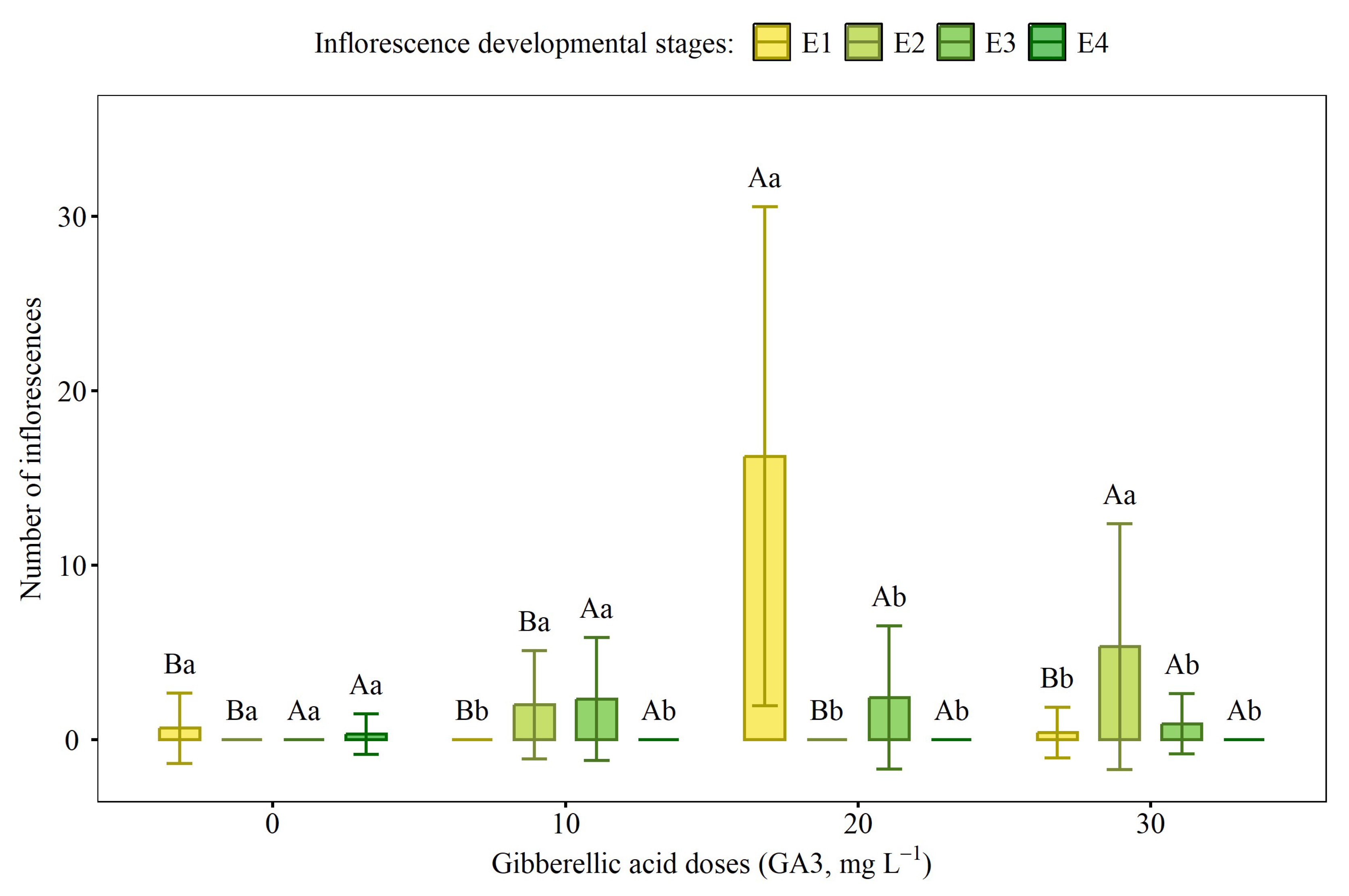
Figure 2.
Effects of different doses of GA₃ on chlorophyll a fluorescence parameters in black pepper leaves (Piper nigrum L.), cultivar Bragantina, evaluated in two application cycles. The variables analyzed were: (A) ABS/CS₀ (energy absorption by reaction center), (B) DI₀/CS₀ (energy dissipation), (C) ET₀/CS₀ (electron transport rate), (D) RE₀/CS₀ (final reduction in the electron transport chain), (E) TR₀/CS₀ (energy capture by the reaction center), (F) ΦE₀ (electron transport efficiency to plastoquinone), (G) ΦP₀ (quantum efficiency of photosystem II), and (H) ΦR₀ (reduction efficiency of final acceptors in the electron transport chain). The curves represent the first (●) and second (◆) application cycle, at doses of 0, 10, 20 and 30 mg L⁻¹ of GA₃. Error bars indicate the standard error of the mean. Asterisks indicate statistically significant differences between doses within each cycle, as per Student’s t-test (p ≤ 0.05).
Figure 2.
Effects of different doses of GA₃ on chlorophyll a fluorescence parameters in black pepper leaves (Piper nigrum L.), cultivar Bragantina, evaluated in two application cycles. The variables analyzed were: (A) ABS/CS₀ (energy absorption by reaction center), (B) DI₀/CS₀ (energy dissipation), (C) ET₀/CS₀ (electron transport rate), (D) RE₀/CS₀ (final reduction in the electron transport chain), (E) TR₀/CS₀ (energy capture by the reaction center), (F) ΦE₀ (electron transport efficiency to plastoquinone), (G) ΦP₀ (quantum efficiency of photosystem II), and (H) ΦR₀ (reduction efficiency of final acceptors in the electron transport chain). The curves represent the first (●) and second (◆) application cycle, at doses of 0, 10, 20 and 30 mg L⁻¹ of GA₃. Error bars indicate the standard error of the mean. Asterisks indicate statistically significant differences between doses within each cycle, as per Student’s t-test (p ≤ 0.05).
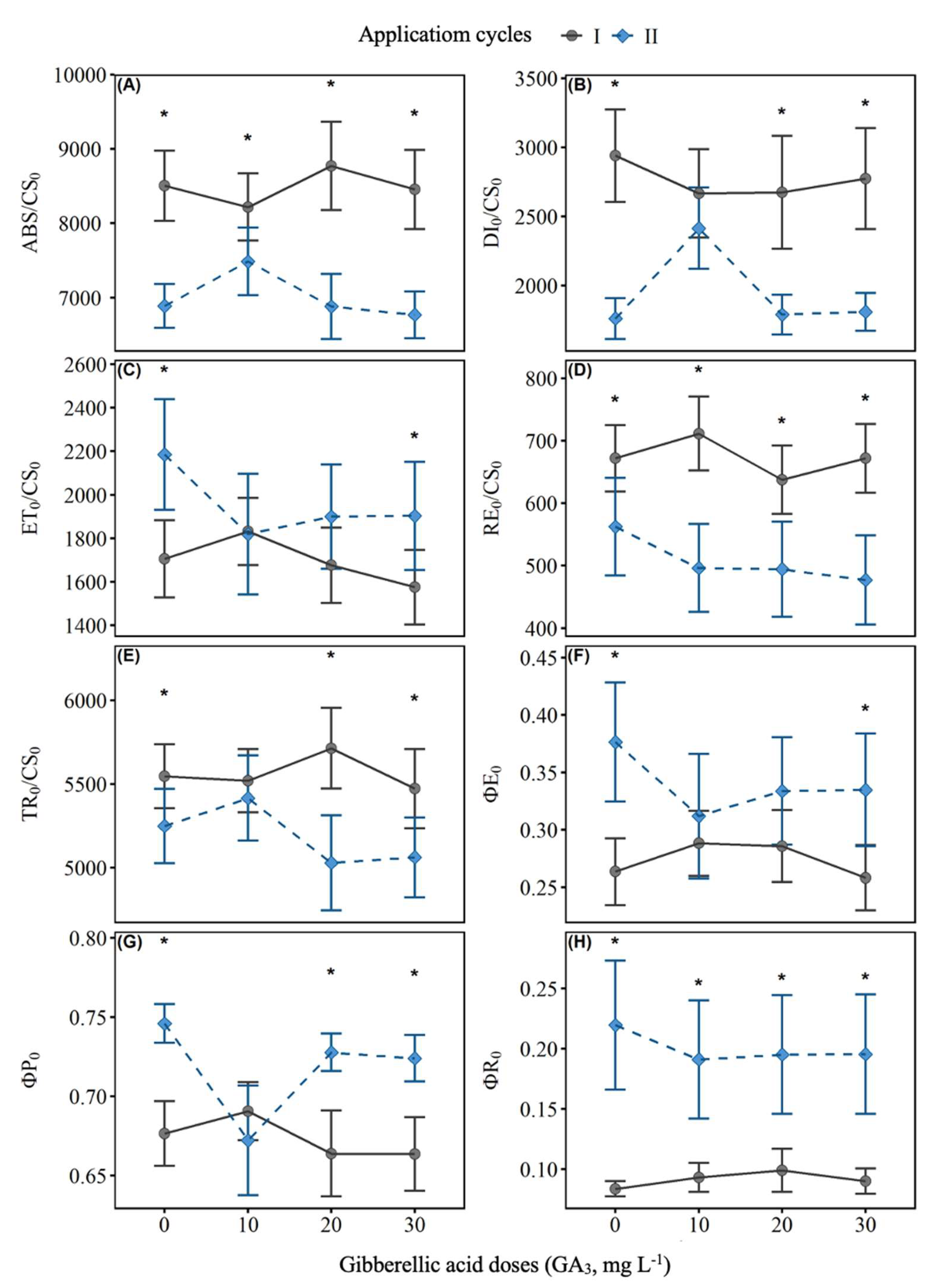
Figure 3.
Effects of different doses of gibberellic acid (GA₃) on chlorophyll a fluorescence parameters in black pepper leaves (Piper nigrum L.), cultivar Bragantina, evaluated over time. The variables analyzed were: (A) ABS/CS₀ (energy absorption per reaction center), (B) DI₀/CS₀ (energy dissipation per reaction center), (C) ET₀/CS₀ (electron transport rate beyond QA⁻), (D) RE₀/CS₀ (reduction of final acceptors in the electron transport chain), (E) TR₀/CS₀ (energy capture by the reaction center), (F) φE₀ (quantum efficiency of electron transport), (G) φP₀ (quantum efficiency of primary photochemistry), and (H) QR₀ (proportion of active reaction centers). The curves represent the doses of 0, 10, 20, and 30 mg L⁻¹ of GA₃, evaluated at 14, 28, 42, 56, and 70 days after application. Error bars indicate the standard error of the mean. Asterisks indicate statistically significant differences between the doses within each evaluation time point, according to Student’s t-test (p ≤ 0.05).
Figure 3.
Effects of different doses of gibberellic acid (GA₃) on chlorophyll a fluorescence parameters in black pepper leaves (Piper nigrum L.), cultivar Bragantina, evaluated over time. The variables analyzed were: (A) ABS/CS₀ (energy absorption per reaction center), (B) DI₀/CS₀ (energy dissipation per reaction center), (C) ET₀/CS₀ (electron transport rate beyond QA⁻), (D) RE₀/CS₀ (reduction of final acceptors in the electron transport chain), (E) TR₀/CS₀ (energy capture by the reaction center), (F) φE₀ (quantum efficiency of electron transport), (G) φP₀ (quantum efficiency of primary photochemistry), and (H) QR₀ (proportion of active reaction centers). The curves represent the doses of 0, 10, 20, and 30 mg L⁻¹ of GA₃, evaluated at 14, 28, 42, 56, and 70 days after application. Error bars indicate the standard error of the mean. Asterisks indicate statistically significant differences between the doses within each evaluation time point, according to Student’s t-test (p ≤ 0.05).
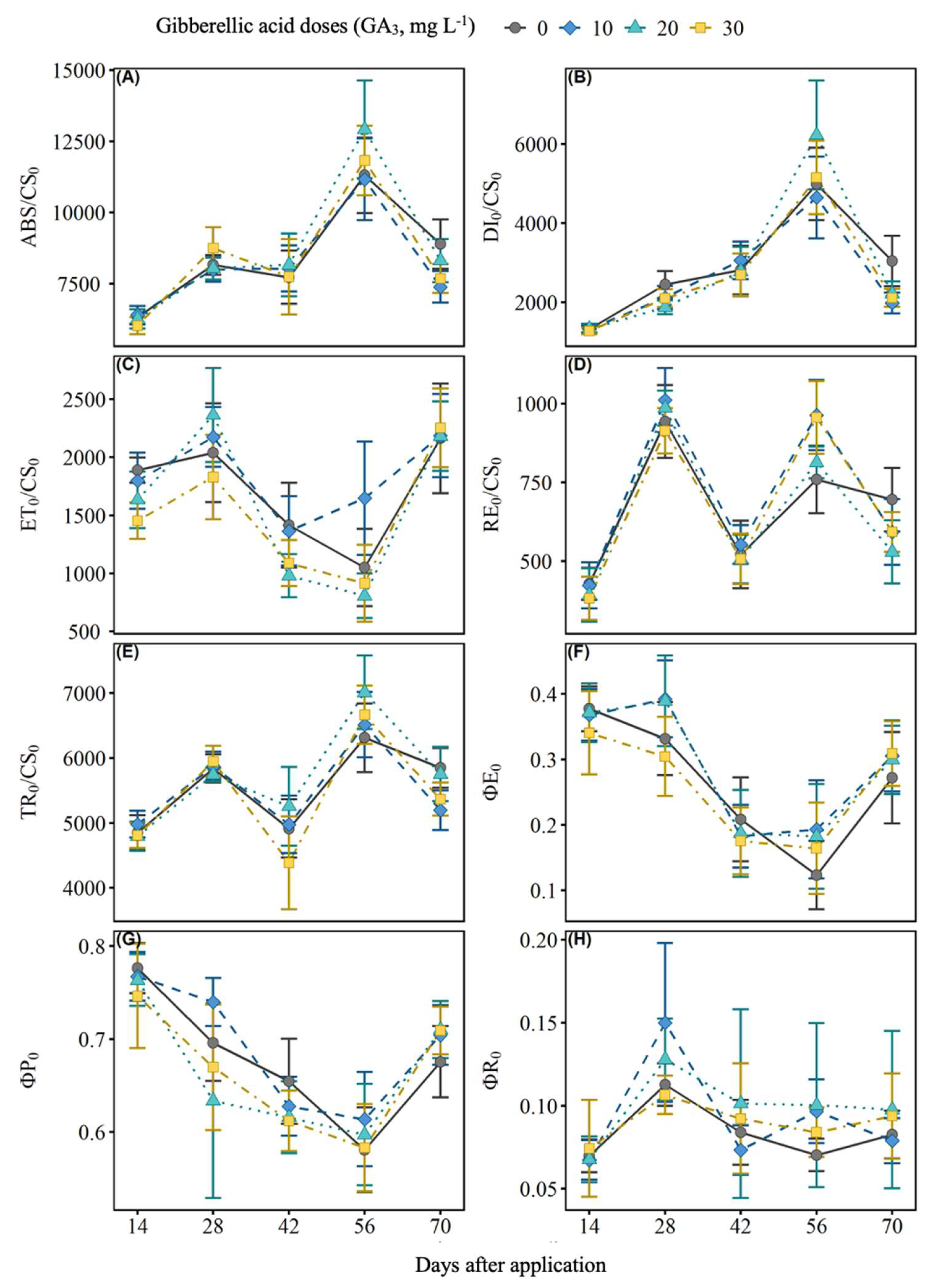
Figure 4.
Chlorophyll a, chlorophyll b, and total chlorophyll concentrations in response to different doses of gibberellic acid (GA₃) in cycles I and II. Bars represent standard error. Capital letters compare doses between cycles, while lowercase letters compare doses within each cycle. Means followed by the same letter do not differ from each other by the Scott-Knott test (p ≤ 0.05)
Figure 4.
Chlorophyll a, chlorophyll b, and total chlorophyll concentrations in response to different doses of gibberellic acid (GA₃) in cycles I and II. Bars represent standard error. Capital letters compare doses between cycles, while lowercase letters compare doses within each cycle. Means followed by the same letter do not differ from each other by the Scott-Knott test (p ≤ 0.05)
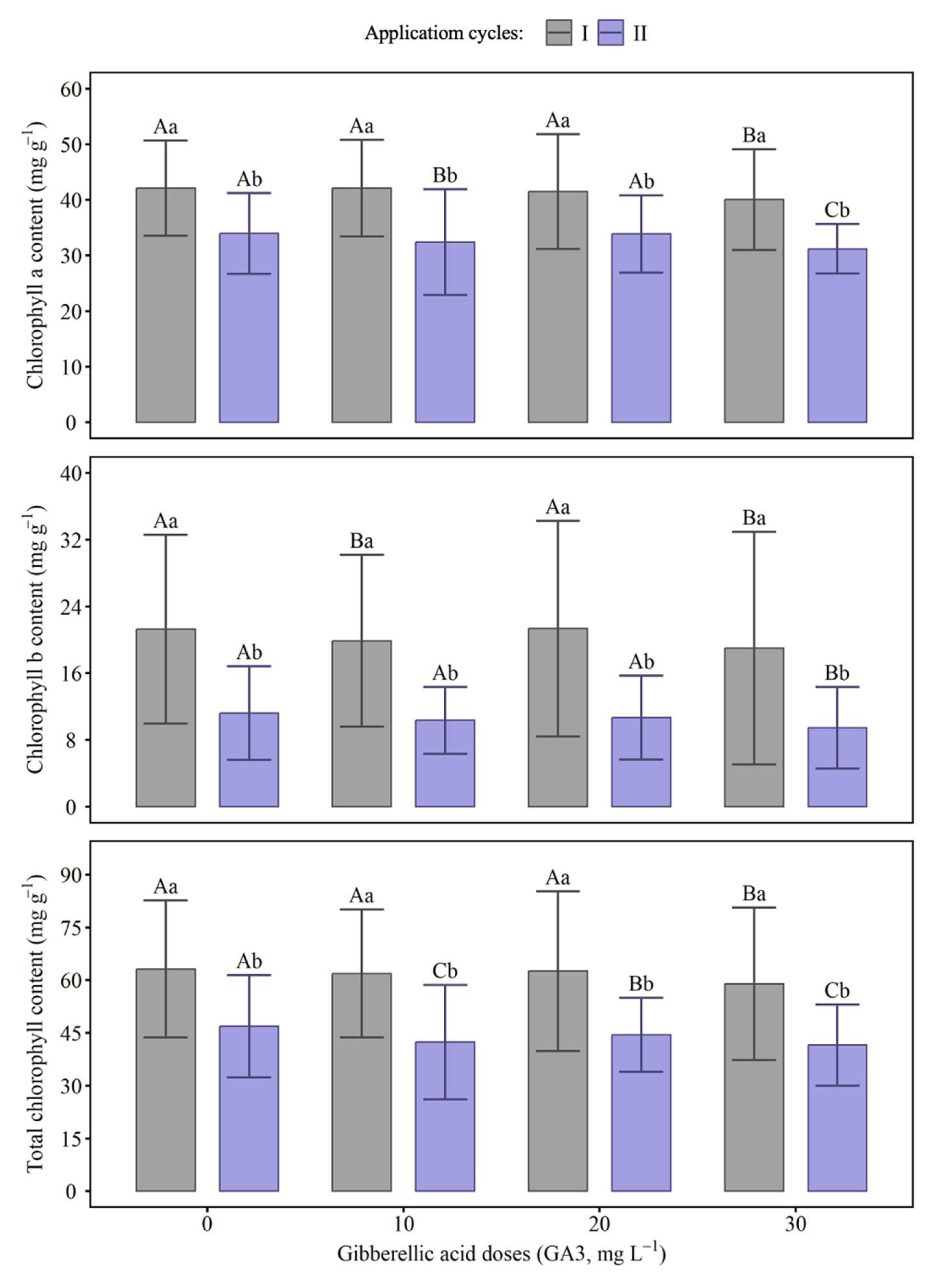
Figure 5.
Chlorophyll a, chlorophyll b, total chlorophyll concentrations, and SPAD index on different days after gibberellic acid (GA₃) application in cycles I and II. Bars represent standard error. Capital letters compare cycles within each day after application, while lowercase letters compare days within each cycle. Means followed by the same letter do not differ from each other by the Scott-Knott test (p ≤ 0.05).
Figure 5.
Chlorophyll a, chlorophyll b, total chlorophyll concentrations, and SPAD index on different days after gibberellic acid (GA₃) application in cycles I and II. Bars represent standard error. Capital letters compare cycles within each day after application, while lowercase letters compare days within each cycle. Means followed by the same letter do not differ from each other by the Scott-Knott test (p ≤ 0.05).
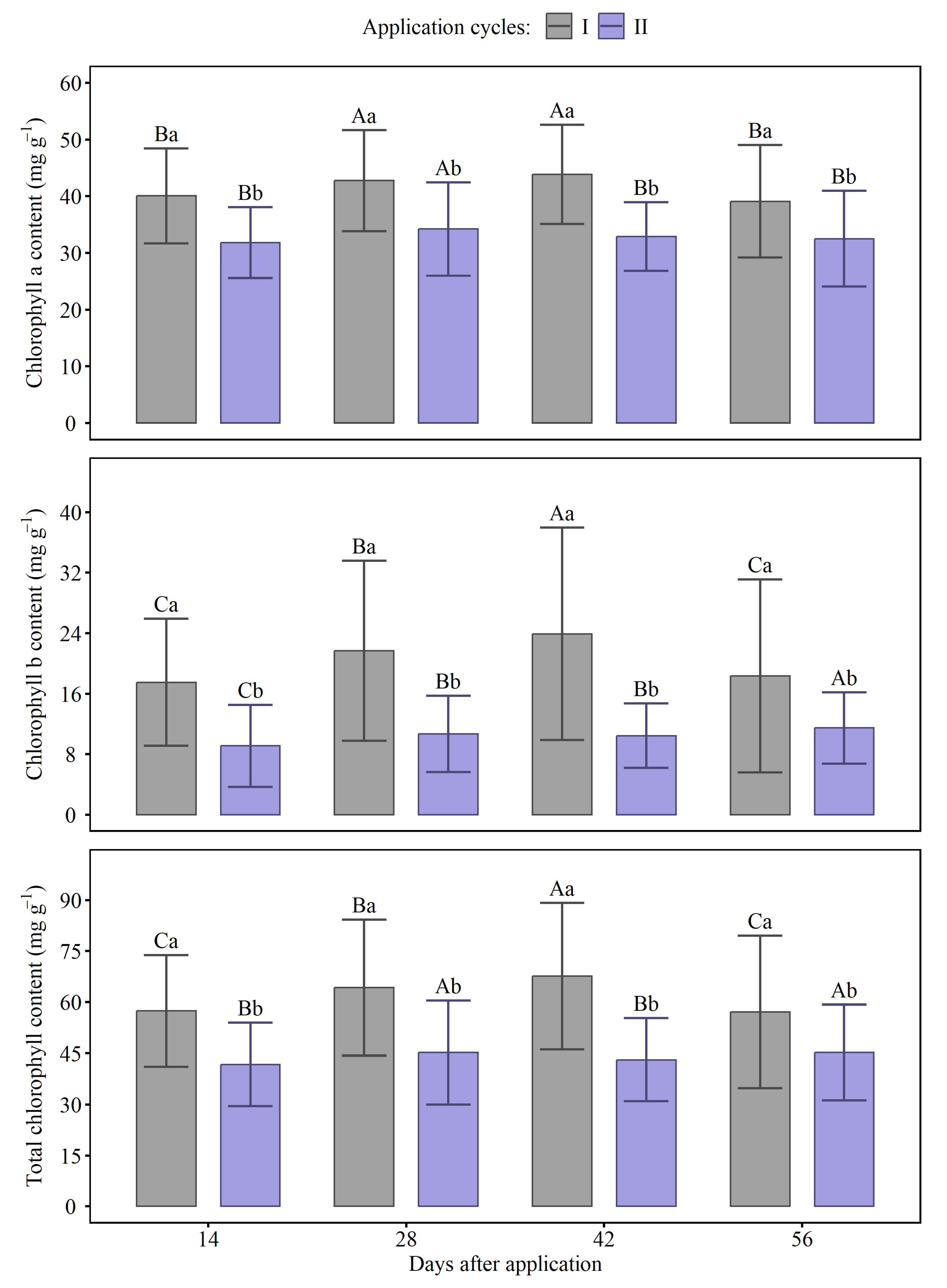
Figure 6.
Effects of different doses of gibberellic acid (GA3) on leaf characteristics of black pepper cv. Bragantina. (a) Leaf area, (b) Leaf mass fraction, (c) Dickson quality index, (d) Leaf dry mass, (e) Shoot dry mass, and (f) Number of leaves. Means followed by distinct letters indicate significant differences between treatments by the Scott-Knott test (p < 0.05). Error bars represent the standard deviation.
Figure 6.
Effects of different doses of gibberellic acid (GA3) on leaf characteristics of black pepper cv. Bragantina. (a) Leaf area, (b) Leaf mass fraction, (c) Dickson quality index, (d) Leaf dry mass, (e) Shoot dry mass, and (f) Number of leaves. Means followed by distinct letters indicate significant differences between treatments by the Scott-Knott test (p < 0.05). Error bars represent the standard deviation.
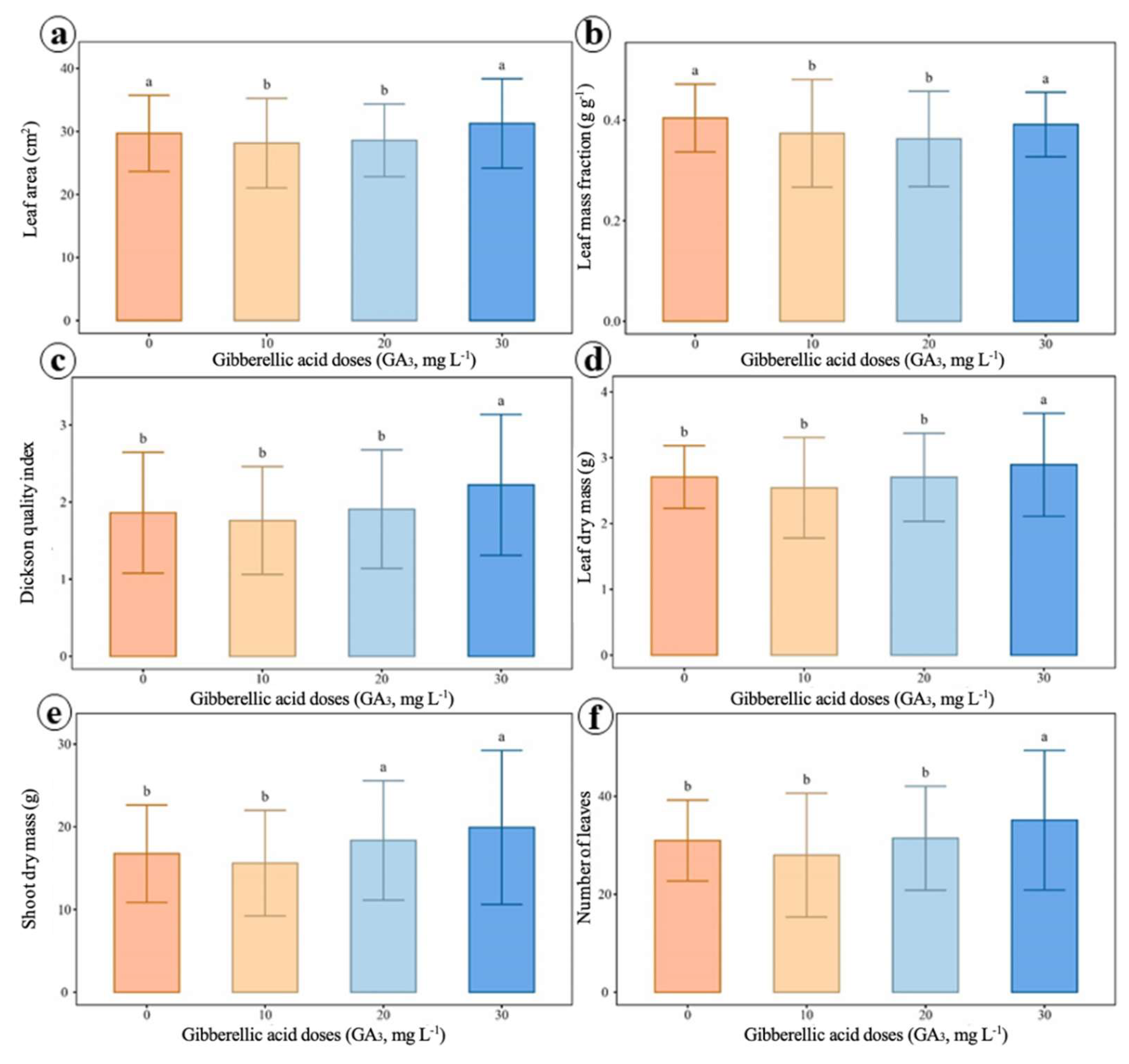
Figure 7.
Effects of different doses of gibberellic acid (GA) on growth characteristics of black pepper cv. Bragantina. (a) Shoot length, (b) Robustness index, (c) Stem length, (d) Stem mass fraction, (e) Stem dry mass, and (f) Total dry mass. Means followed by distinct letters indicate significant differences between treatments by the Scott-Knott test (p < 0.05). Error bars represent the standard deviation.
Figure 7.
Effects of different doses of gibberellic acid (GA) on growth characteristics of black pepper cv. Bragantina. (a) Shoot length, (b) Robustness index, (c) Stem length, (d) Stem mass fraction, (e) Stem dry mass, and (f) Total dry mass. Means followed by distinct letters indicate significant differences between treatments by the Scott-Knott test (p < 0.05). Error bars represent the standard deviation.
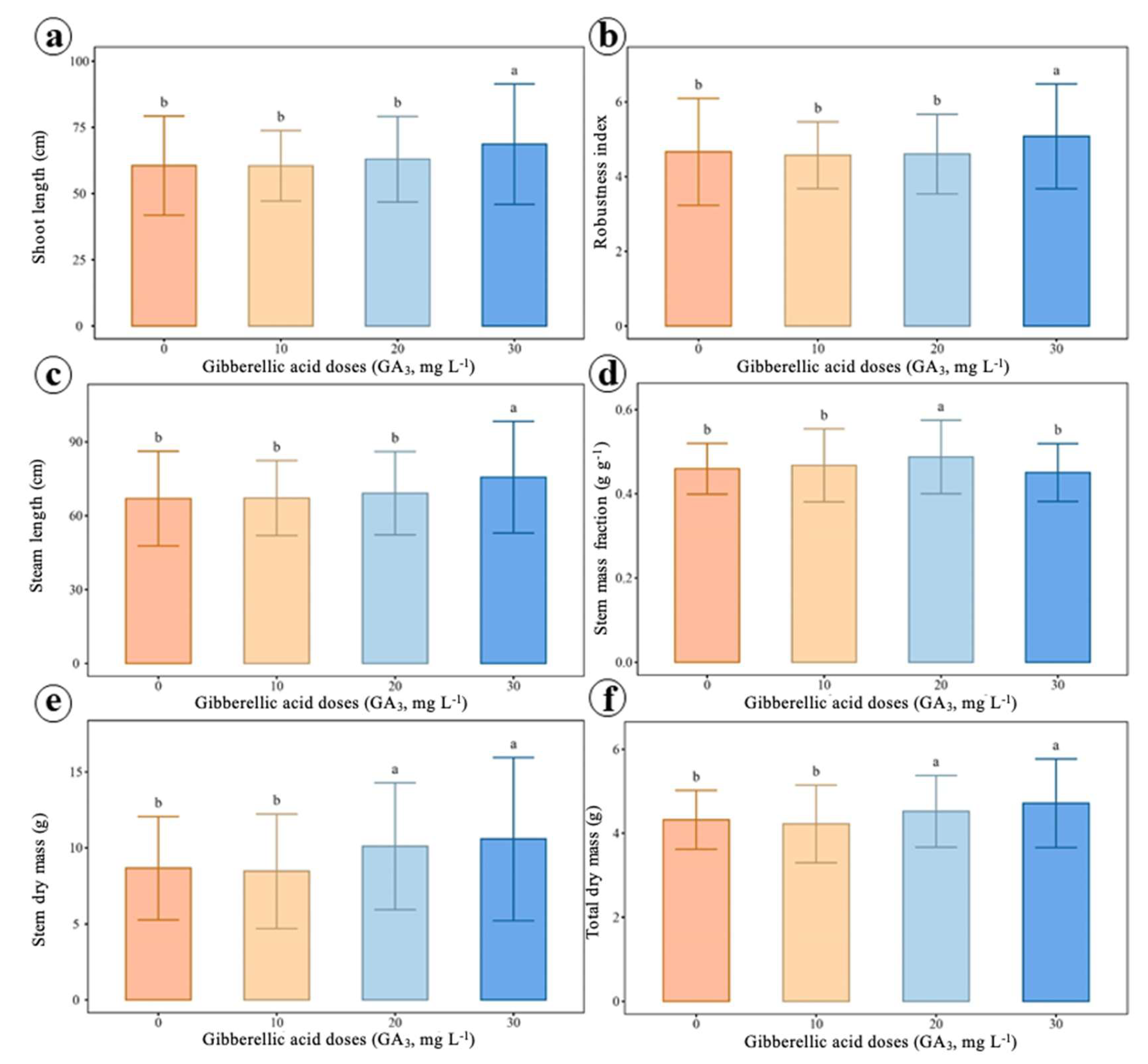
Figure 8.
Effects of different doses of gibberellic acid (GA3) on root characteristics of black pepper cv. Bragantina. (a) Specific root length, (b) Root mass fraction, (c) Dry mass ratio, and (d) Root dry mass. Means followed by distinct letters indicate significant differences between treatments by the Scott-Knott test (p < 0.05). Error bars represent the standard deviation.
Figure 8.
Effects of different doses of gibberellic acid (GA3) on root characteristics of black pepper cv. Bragantina. (a) Specific root length, (b) Root mass fraction, (c) Dry mass ratio, and (d) Root dry mass. Means followed by distinct letters indicate significant differences between treatments by the Scott-Knott test (p < 0.05). Error bars represent the standard deviation.
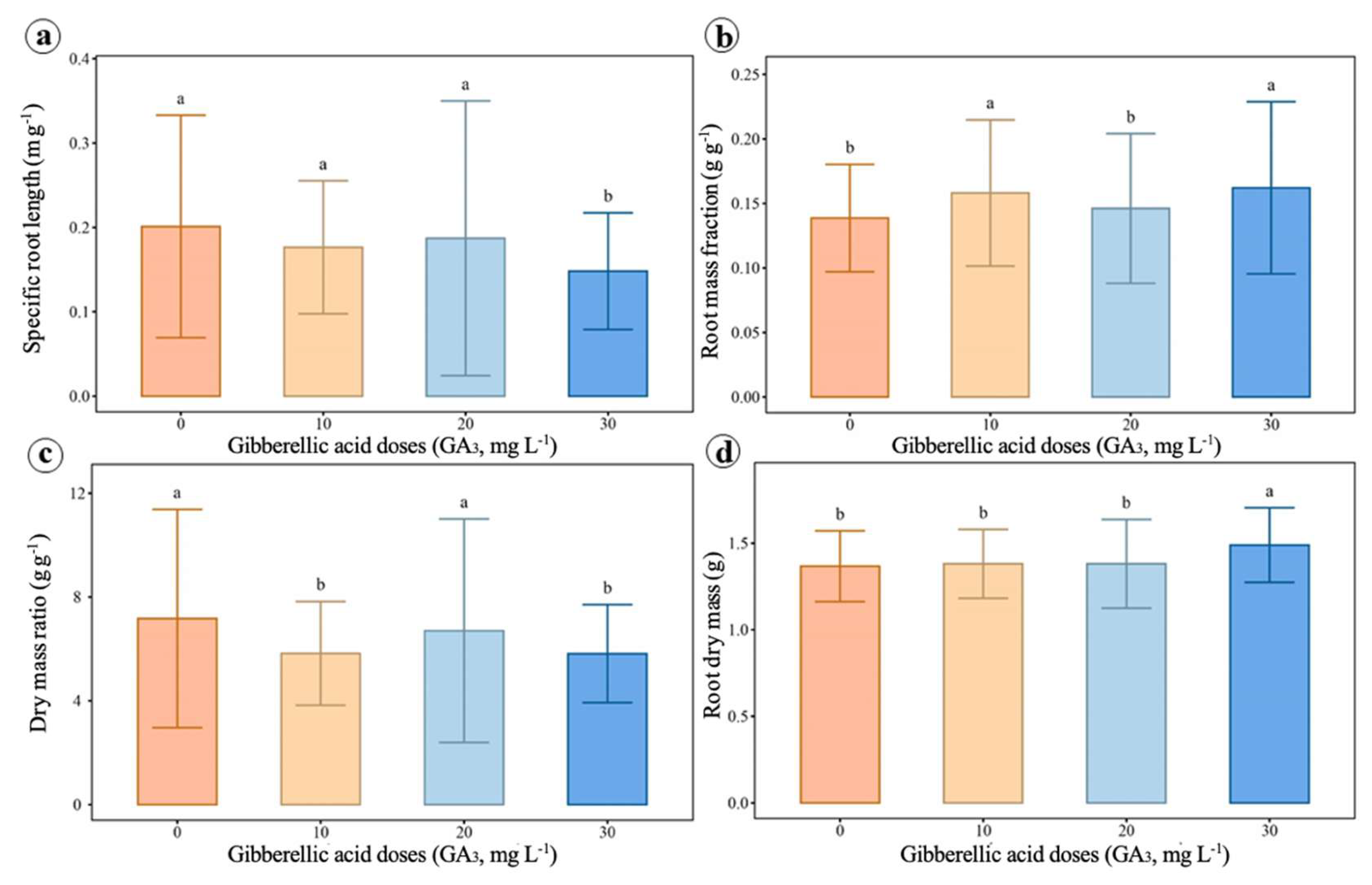
Figure 9.
Correlation matrix between variables related to functional and structural characteristics of plants treated with GA3. The analyzed variables include: number of leaves (NL), leaf dry mass (LDM), leaf area (LA), stem length (SL), shoot length (STL), Dickson quality index (DQI), root dry mass (RDM), total dry mass (TDM), shoot dry mass (SDM), stem dry mass (STDM), root mass fraction (RMF), leaf mass fraction (LMF), SDM/RDM, stem mass fraction (SLM) and specific root length (SRL). Correlation values are represented by a color scale, where shades of blue indicate positive correlations and shades of orange indicate negative correlations.
Figure 9.
Correlation matrix between variables related to functional and structural characteristics of plants treated with GA3. The analyzed variables include: number of leaves (NL), leaf dry mass (LDM), leaf area (LA), stem length (SL), shoot length (STL), Dickson quality index (DQI), root dry mass (RDM), total dry mass (TDM), shoot dry mass (SDM), stem dry mass (STDM), root mass fraction (RMF), leaf mass fraction (LMF), SDM/RDM, stem mass fraction (SLM) and specific root length (SRL). Correlation values are represented by a color scale, where shades of blue indicate positive correlations and shades of orange indicate negative correlations.
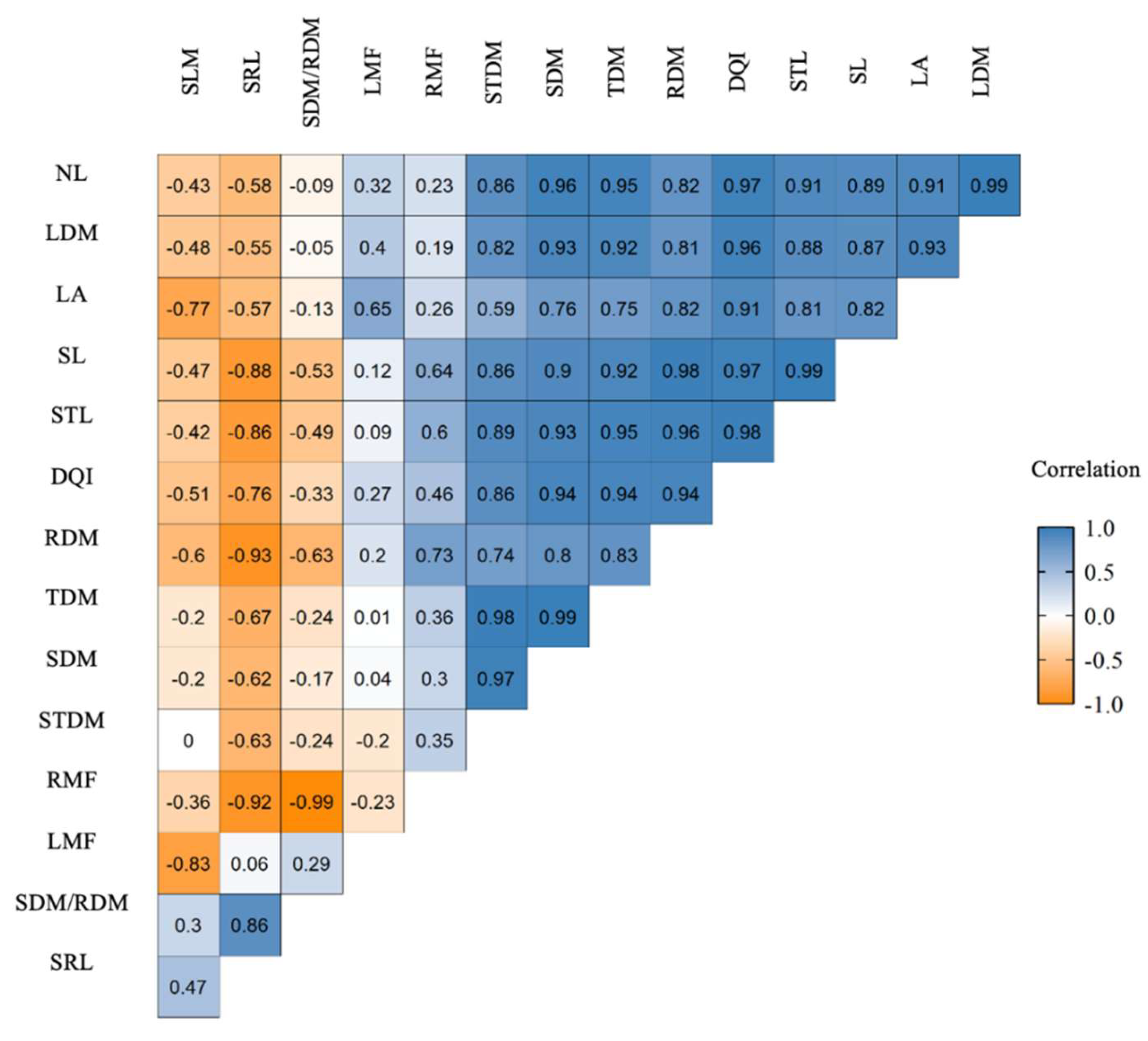
Figure 10.
Principal Component Analysis (PCA) representing the relationships between variables associated with the shoot, root system, and the plant as a whole in plants treated with GA3. The PC1 (42.7%) and PC2 (18.2%) axes represent the explained variance. The arrows indicate the evaluated variables: number of leaves (NL), leaf dry mass (LDM), leaf area (LA), stem length (SL), shoot length (STL), Dickson quality index (DQI), root dry mass (RDM), total dry mass (TDM), shoot dry mass (SDM), stem dry mass (STDM), root mass fraction (RMF), leaf mass fraction (LMF), stem mass fraction (SLM), SDM/RDM ratio, and specific root length (SRL). The direction and length of the arrows reflect the contribution of the variables to the principal components.
Figure 10.
Principal Component Analysis (PCA) representing the relationships between variables associated with the shoot, root system, and the plant as a whole in plants treated with GA3. The PC1 (42.7%) and PC2 (18.2%) axes represent the explained variance. The arrows indicate the evaluated variables: number of leaves (NL), leaf dry mass (LDM), leaf area (LA), stem length (SL), shoot length (STL), Dickson quality index (DQI), root dry mass (RDM), total dry mass (TDM), shoot dry mass (SDM), stem dry mass (STDM), root mass fraction (RMF), leaf mass fraction (LMF), stem mass fraction (SLM), SDM/RDM ratio, and specific root length (SRL). The direction and length of the arrows reflect the contribution of the variables to the principal components.
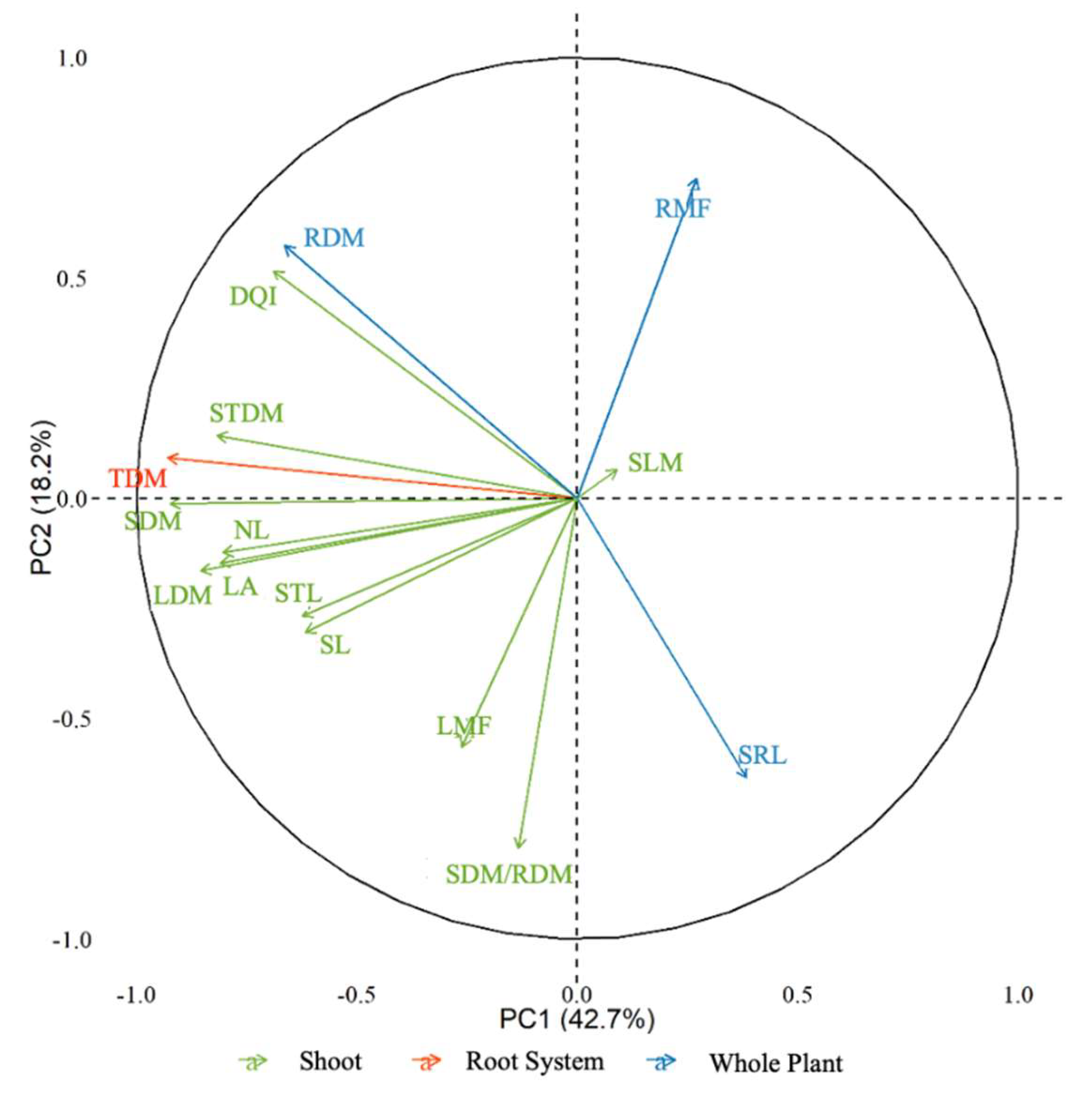
Figure 11.
Starch, fructose, glucose, and sucrose contents in leaves, stems, and roots of plants treated with increasing doses of gibberellic acid GA3. Bars indicate the 95% confidence interval. Capital letters compare tissues between doses, while lowercase letters compare tissues within each dose. Identical letters indicate no statistical difference by the Scott-Knott test (p ≤ 0.05).
Figure 11.
Starch, fructose, glucose, and sucrose contents in leaves, stems, and roots of plants treated with increasing doses of gibberellic acid GA3. Bars indicate the 95% confidence interval. Capital letters compare tissues between doses, while lowercase letters compare tissues within each dose. Identical letters indicate no statistical difference by the Scott-Knott test (p ≤ 0.05).
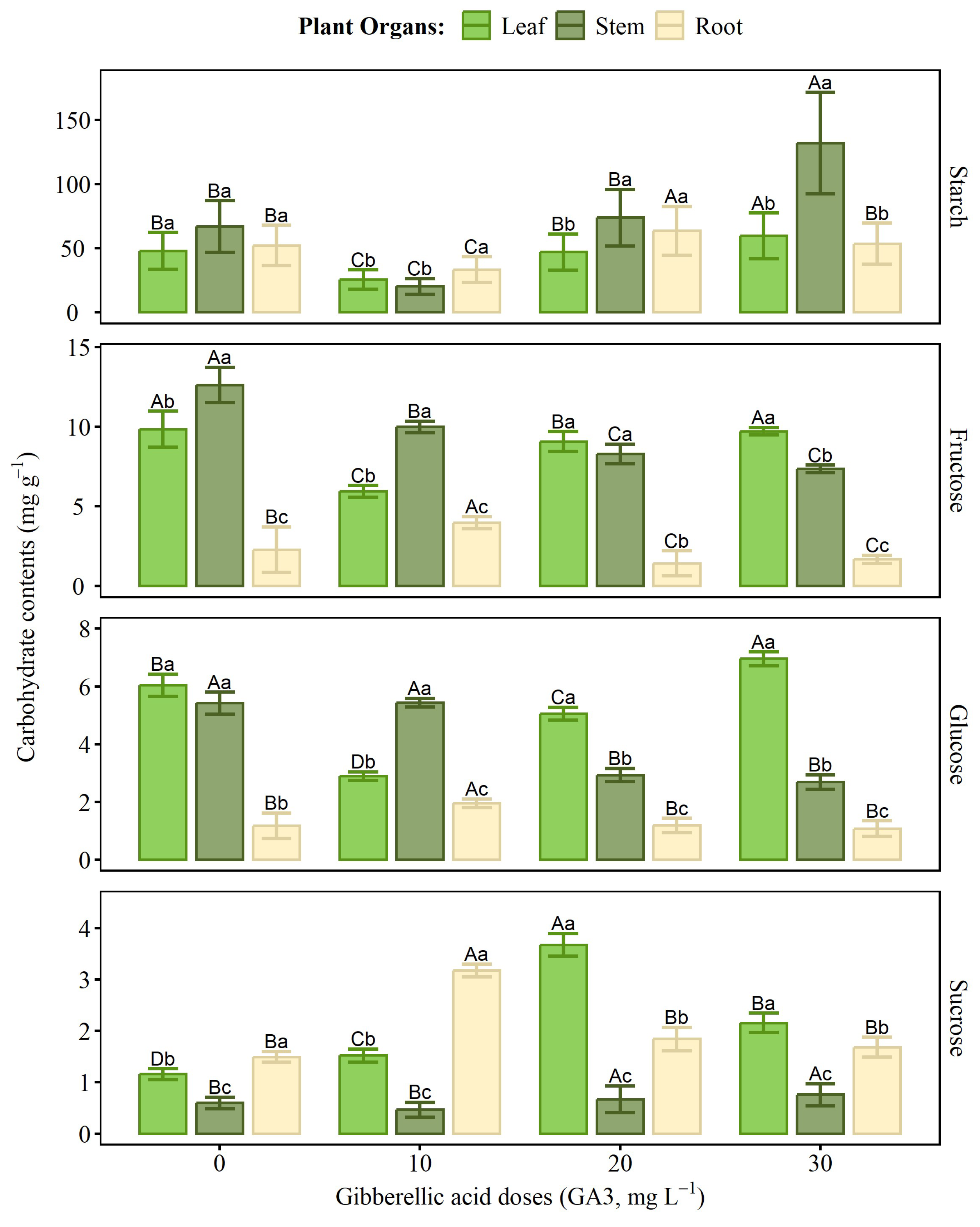
Figure 12.
Distribution of carbohydrate levels in black pepper leaves under different gibberellin (GA₃) doses, according to principal component analysis (PCA). The symbols represent the applied doses: 0 mg L⁻¹ (purple squares), 10 mg L⁻¹ (red triangles), 20 mg L⁻¹ (green diamonds), and 30 mg L⁻¹ (blue circles). The ellipses indicate the dispersion of the treatments, while the arrows represent the correlation of carbohydrates (sucrose, glucose, fructose, and starch) with the principal components (PC1 and PC2).
Figure 12.
Distribution of carbohydrate levels in black pepper leaves under different gibberellin (GA₃) doses, according to principal component analysis (PCA). The symbols represent the applied doses: 0 mg L⁻¹ (purple squares), 10 mg L⁻¹ (red triangles), 20 mg L⁻¹ (green diamonds), and 30 mg L⁻¹ (blue circles). The ellipses indicate the dispersion of the treatments, while the arrows represent the correlation of carbohydrates (sucrose, glucose, fructose, and starch) with the principal components (PC1 and PC2).
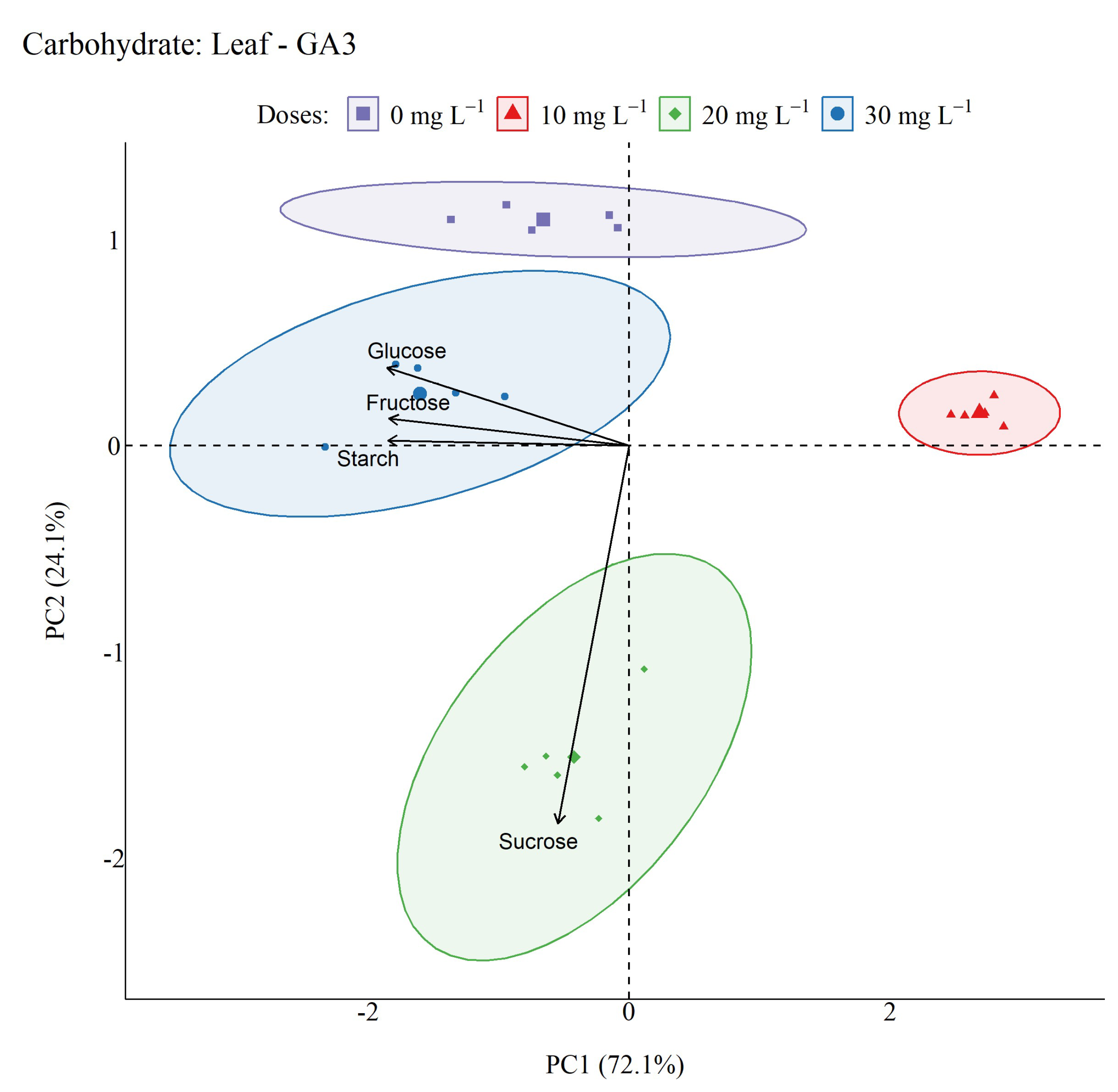
Figure 13.
Distribution of carbohydrate levels in black pepper stems under different gibberellin (GA3) doses, according to principal component analysis (PCA). The symbols represent the applied doses: 0 mg L⁻¹ (purple squares), 10 mg L⁻¹ (red triangles), 20 mg L⁻¹ (green diamonds), and 30 mg L⁻¹ (blue circles). The ellipses indicate the dispersion of the treatments, while the arrows represent the correlation of carbohydrates (sucrose, glucose, fructose, and starch) with the principal components (PC1 and PC2).
Figure 13.
Distribution of carbohydrate levels in black pepper stems under different gibberellin (GA3) doses, according to principal component analysis (PCA). The symbols represent the applied doses: 0 mg L⁻¹ (purple squares), 10 mg L⁻¹ (red triangles), 20 mg L⁻¹ (green diamonds), and 30 mg L⁻¹ (blue circles). The ellipses indicate the dispersion of the treatments, while the arrows represent the correlation of carbohydrates (sucrose, glucose, fructose, and starch) with the principal components (PC1 and PC2).
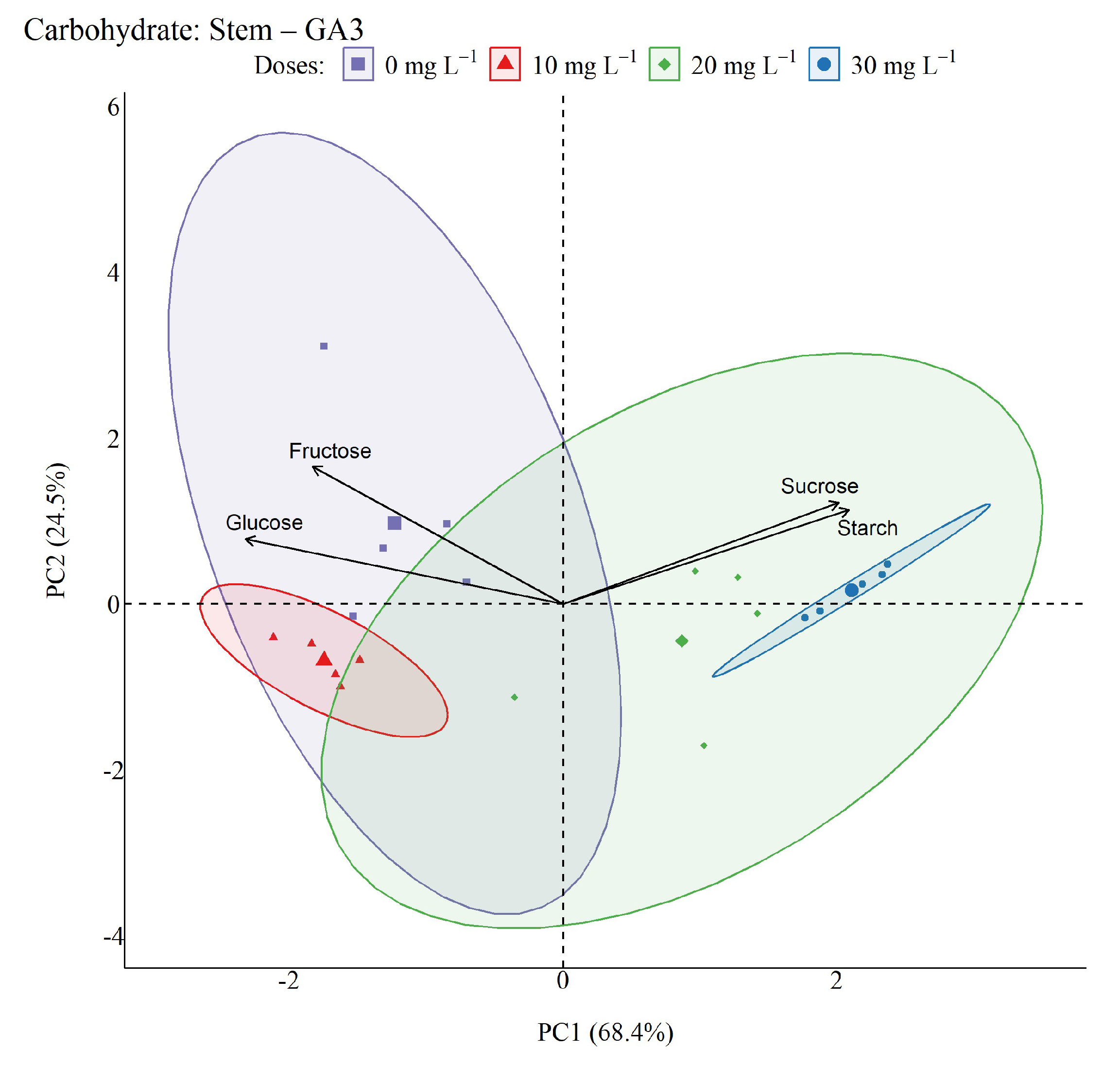
Figure 14.
Distribution of carbohydrate levels in black pepper roots under different gibberellin (GA3) doses, according to principal component analysis (PCA). The symbols represent the applied doses: 0 mg L⁻¹ (purple squares), 10 mg L⁻¹ (red triangles), 20 mg L⁻¹ (green diamonds), and 30 mg L⁻¹ (blue circles). The ellipses indicate the dispersion of the treatments, while the arrows represent the correlation of carbohydrates (sucrose, glucose, fructose, and starch) with the principal components (PC1 and PC2).
Figure 14.
Distribution of carbohydrate levels in black pepper roots under different gibberellin (GA3) doses, according to principal component analysis (PCA). The symbols represent the applied doses: 0 mg L⁻¹ (purple squares), 10 mg L⁻¹ (red triangles), 20 mg L⁻¹ (green diamonds), and 30 mg L⁻¹ (blue circles). The ellipses indicate the dispersion of the treatments, while the arrows represent the correlation of carbohydrates (sucrose, glucose, fructose, and starch) with the principal components (PC1 and PC2).
Disclaimer/Publisher’s Note: The statements, opinions and data contained in all publications are solely those of the individual author(s) and contributor(s) and not of MDPI and/or the editor(s). MDPI and/or the editor(s) disclaim responsibility for any injury to people or property resulting from any ideas, methods, instructions or products referred to in the content. |
© 2026 by the authors. Licensee MDPI, Basel, Switzerland. This article is an open access article distributed under the terms and conditions of the Creative Commons Attribution (CC BY) license.
Copyright: This open access article is published under a Creative Commons CC BY 4.0 license, which permit the free download, distribution, and reuse, provided that the author and preprint are cited in any reuse.


