

Submitted:
12 March 2026
Posted:
13 March 2026
Read the latest preprint version here
Abstract
Background/Objectives: Rapid Eye Movement (REM) Sleep Behavior Disorder (RBD) is characterized by dream enactment due to reduced physiological muscle atonia during REM sleep and is clinically relevant as a potential prodromal marker for neurodegenerative disorders. This study aims to evaluate whether normalized beta-band power extracted from poly-somnographic signals can differentiate RBD subjects from healthy controls, and to compare the discriminative behavior of C4–A1 EEG versus EMG1–EMG2 channels during REM sleep. Methods: Polysomnographic recordings were obtained from the PhysioNet CAP Sleep Data-base. One-minute epochs were analyzed across sleep stages, with emphasis on REM. Signals were preprocessed to remove DC offset and were windowed with overlap prior to spectral estimation. Short time–frequency analysis of power spectral density (PSD) was applied to compute band-limited power in standard EEG frequency ranges (delta, theta, alpha, beta). Band power values were normalized by total spectral power to derive nor-malized indices. Comparative feature analysis was performed for C4–A1 and EMG1–EMG2 channels. Results: Normalized beta-band power during REM sleep showed clear separation between healthy subjects and RBD patients. In the C4–A1 channel, normalized beta power was higher in RBD than controls (controls: 0.0010–0.0049; RBD: 0.0076–0.014). In the EMG1–EMG2 channel, the difference was more pronounced (controls: 0.0020–0.0089; RBD: 0.053–0.0791). Conclusions: Normalized beta-band power, particularly during REM sleep, is a promising, low-complexity marker for RBD detection. The stronger separation in EMG1–EMG2 sug-gests that targeted channel selection may enhance practical screening pipelines for sleep disorder assessment.
Keywords:
EEG
; normalized spectral power
; REM sleep behavior disorder (RBD)
; sleep disorder detection
; polysomnography (PSG)
; biomedical signal processing
1. Introduction
REM sleep is an important phase of the human sleep cycle that correlates with vivid dreaming and increased cognitive activity. During normal, healthy conditions REM sleep is characterized via muscle atonia. Disruption of this protective atonia produces abnormal dream enacting activities, as observed in Rapid Eye Movement Sleep Behavior Disorder (RBD). RBD has attracted considerable clinical interest because of its robust relationship to neurodegenerative diseases, notably PD, and it is now broadly considered a prodromal feature of α-synucleinopathies. Thus, timely diagnosis and intervention are needed for the efficacious management of patients and monitoring the disease [1,2,3,4].
The objective of the present review is to be able to offer a summary of all available methodologies and techniques that have been or are currently in use for detecting RBD. Signal modalities, algorithmic methods, and diagnostic performance are presented and a discussion of the pros and cons is provided. Ethical and societal implications connected to at the early-stage detection of neurodegenerative disorders is also discussed.
Electroencephalography (EEG) reflects a basic tool for the polysomnographic (PSG) investigation of sleep disturbances. An example of an EEG recording and monitoring systems for clinical applications is shown in Figure 1.
In addition to reuse of the existing data sets, modern diagnostically systems are also increasingly required to improve clinical decision support with more intelligent data processing and human–computer interaction. These systems ought to easily integrate into standard clinical practice and accommodate all forms of medical data, such as,
Textual records, values and measurements, bio signals and medical images that may play a role in diagnosing neurological pathologies [5,6,7,8].Ethical and legal issues must be fully considered in line with international standards and regulations when creating and implementing digital healthcare products. This includes making and to provide evidence-based information for clinicians and patients [9].
The use of such digitalized diagnostic platforms could have several benefits in the context of neurological diseases, for example:
- Better diagnosis and treatment planning: Spiro digital EEG monitoring allows for highly accurate detection and management of neurological disorders.
- Reduction of health economics costs: Improving diagnostic accuracy reduces misdiagnosis and subsequent incorrect treatment, which in turn lowers drug-related side effects and the corresponding costs.
- Better access to health care: Digital EEG systems provide easy remote data retrieval and analysis, thereby enhancing health service accessibility for those living in rural or less served parts of Oman.
- Improved patient outcome: Early and accurate diagnosis enables the appropriate intervention when required, resulting in better clinical outcomes and quality of life.
2. Literature Review
Recent literature on REM Sleep Behavior Disorder (RBD) has been leaning toward automated, data-driven, and clinically adaptable diagnostic strategies. With the growing application of signal processing, machine learning and deep learning that has enabled better detection of REM sleep without atonia (RSWA), this continues to be regarded as the prime neurophysiological feature underpinning RBD. This paper surveys peer-reviewed journal articles, from 2020 to 2025, with an focus on reported validated techniques, data and diagnostic measures.
2.1. Automated and Machine-Learning-Based RBD Detection
Cooray et al. (2021) presented an automated RBD detection system based on benchmark features with minimal sensors of EOG, EMG and optional ECG recording. For sleep staging and RBD distinction, a Random Forest decision was used to measure both, showing an overall classification performance of nearly 90%. Our study exhibits that a dependable RBD screening test can be accomplished using an incomplete polysomnography which could enable scaling and cost effective clinics use.
Röthenbacher et al. 21) have recently released RBDtector, an opensource software which estimates REM sleep without atonia according to SINBAR visual scoring parameters. With chin and limb EMG channels, the system achieved 96% reported sensitivity and 100% specificity on validated data sets. Study novelty and contribution
2.2. Deep Learning and Automated Sleep Staging
Perslev et al. (2021) presented U-Sleep, a deep learning model for fully automatic sleep staging based on EEG and EOG recordings. The model, which was trained on a broad and diverse set of clinical data from more than 15,000 participants, performed as well as expert human scorers. While U-Sleep is not primarily intended for RBD confirmation, it forms a strong upstream input tool for automated RBD pipelines-particularly when combined with RSWA evaluation.
More recently, Xu et al. (2024) studied probabilistic prediction approaches for real-time detection of neurological events from EEG signals. Their method showed lower detection delay and high accuracy, indicating the potential of probabilistic and predictive modeling for time-critical neurological disease detection, including sleep-related disorders.
2.3. Clinical Reviews and Standardization Efforts
Puligheddu et al. (2023) presented a comprehensive overview of RSWA scoring methods, including inter-scorer discordance, quantitative thresholds and algorithmic implementations. The authors highlighted the importance of collecting scoring criteria and cut-off values to harmonize clinical and automated systems. This review is of particular interest for algorithm creators and physicians aiming to match detection systems with definite diagnostic criteria.
Postuma et al. (2020) carried out longitudinal investigations verifying idiopathic RBD as one of the most powerful prodromal markers for PD and other α-synucleinopathies. Their results lend further support to the clinical significance of early identification of RBD, and a strong argument in favor for implementing population-based screening methods and tools.
2.4. Summary of Reviewed Studies (2020–2025)
Table 1 provides an overview of selected peer-reviewed publications in the period of 2020–2025, including datasets used, methods developed and diagnostic performance.
The reported studies show an average classification accuracy of around 90%, reflecting high capability for mass screening purposes. Deep learning–based methods have performance that is like expert human scorers and are broadly generalizable across large, and diverse datasets. RSWA-targeted techniques have high diagnostic reliability, in fact up to 96% reported sensitivity and 100% specificity (23), supporting its role for RBD detection. Longitudinal studies support idiopathic RBD as a prodromal marker of Parkinson’s disease and thus its clinical importance in the context of early neurodegenerative risk prediction. 20) Comprehensive reviews agree on the importance of harmonization and standardization of RSWA scoring protocols to enhance inter-study comparability. What is more, contemporary stochastic models can allow for low detection delays at high prediction accuracy, making their application in clinical routine potentially real-time possible.
2.5. Critical Analysis and Research Gaps
Together, studies between 2020 and 2025 reflect an evident transition to automation, decreased reliance on sensors and machine-learning-assisted diagnostics. Although deep-learning models and systems based on automated PSG have shown good performance, the problem of disease heterogeneity still exists, especially in RBD associated with Parkinson’s disease. Additionally, wearable technologies hold potential for longitudinal surveillance as they lack the necessary specificity to be considered independent diagnostic means.
Overall, the literature highlights the need for clinically proven, automated and ethically sound RBD detection systems that trade-off accuracy with accessibility and scalability. These results are directly driving the development of better methods for early diagnosis and long-term monitoring in digital health systems.
3. Materials and Methods
This section explains the systematic approach followed in this work to maintain rigorous analysis, result reproducibility and scientific quality. The procedure framework complies with the accepted research way including data acquisition, preprocessing, signal analysis and interpretation message of result. A pre-defined methodological process was adopted to ensure study uniformity, transparency and reliability of all findings.
3.1. Clinical Assessment of REM Sleep Behavior Disorder
EEG signal analysis in a quantitative fashion is still difficult to accomplish because of complex inter- and intra-brain processes that control EEG dynamics. On the short time scales (10–20 s), non-stationary EEG signals can successfully be described using SS properties of the signal after high-pass filtering. Under these premises, the spectrum of the EEG may be described as a set of stationarity random processes with defined statistics suitable for estimation.
Polysomnography (PSG): Polysomnography is considered as the gold standard in diagnosing sleep disorders which records multiple physiological signals overnight such as EEG, electrooculography (EOG), and electromyography (EMG). PSG is especially useful for the diagnosis of REM sleep behavior disorder (RBD) and in differentiating RBD from other parasomnias. PSG has been shown to be effective in the detection of REMA and related motor symptoms [22,23].
Clinical History and Questionnaires: The clinical history, with validated screening questionnaires, is still a mandatory part of the diagnosis for RBD. Structured interviews and standardized questionnaires have shown acceptable sensitivity for early or progressive symptoms of RBD and are often considered as first-line screening methods before confirming with PSG [24,25,26].
Actigraphy: Actigraphy recording, which is commonly performed with wrist-worn accelerometer-based devices, has become a practical method to assess sleep–wake patterns. This technique provides a non-invasive, low-cost way to monitor sleep long-term and has shown promise in the detection of abnormal motor activity for RBD during routine clinical practice [27,28,29].
Video Monitoring and Home Sleep Studies: New developments in the field of video surveillance and home sleep studies make it possible to detect RBD more easily if one can offer patients cheap permselective alternatives. These methods for continuous behavioral monitoring during natural sleep can serve as a partial substitute for laboratory-based PSG, especially in large-scale screening studies [30,31].
3.2. Processing of Cyclic Alternating Pattern (CAP) EEG Data
EEG signal processing was performed with MATLAB (MathWorks, Natick, MA, USA). After the basic processing steps, the power spectral density (PSD) was estimated for all sleep stages (S0-S4 and REM). One-minute segments of EEG data for each stage were cropped after removing DC offset to prevent baseline drift. The filtered signals were windowed by using Hanning window with 50% overlap before the spectral estimation [32].
Summation power for normalization, and average spectral power was achieved by utilizing the trapezoidal integration. The normalized power values further exposed separate spectral windows of differences between healthy subjects and different sleep-disorder groups. This investigation was performed with a subject database of the National Institute of General Medical Sciences (NIGMS), USA and the National Institute of Biomedical Imaging and Bioengineering (NIBIB), USA under NIH grant number 2R01GM104987-09 [19].
The set of recordings that belong to the Physio Bank database was used, which consists of 108 polysomnography recordings. All these datasets provided extensive subject metadata and full-night EEGs. There were 16 records of healthy participants who were not taking any medication and had no neurological problem. The other 92 recordings correspond to pathological cases (NFLE, RBD, PLM, insomnia, narcolepsy and SDB), ABR detection of bruxism. Periodic CAP features were applied to characterize EEG activity during non-REM sleep.
3.3. EEG Data Acquisition
Continuous overnight electroencephalogram (EEG) recordings were obtained using a standard polysomnography (PSG) system configured according to the international 10–20 electrode placement system. Signals were digitized at a sampling frequency of 256 Hz, ensuring adequate temporal resolution for accurate characterization of EEG rhythms up to the gamma band[33,34].
Demonstrate the feasibility of identifying multiple neurological conditions, including RBD, insomnia, and sleep-disordered breathing, using the proposed algorithmic framework. The overall detection process implemented in this study is summarized in Figure 2
Recordings included multiple bipolar derivations (e.g., Fp2–F4, C4–A1, ROC–LOC). Sleep stages were manually annotated according to the American Academy of Sleep Medicine (AASM).
EEG datasets included recordings from both healthy participants and patients clinically diagnosed with sleep-related disorders, including REM Sleep Behavior Disorder (RBD), insomnia, and sleep-disordered breathing.
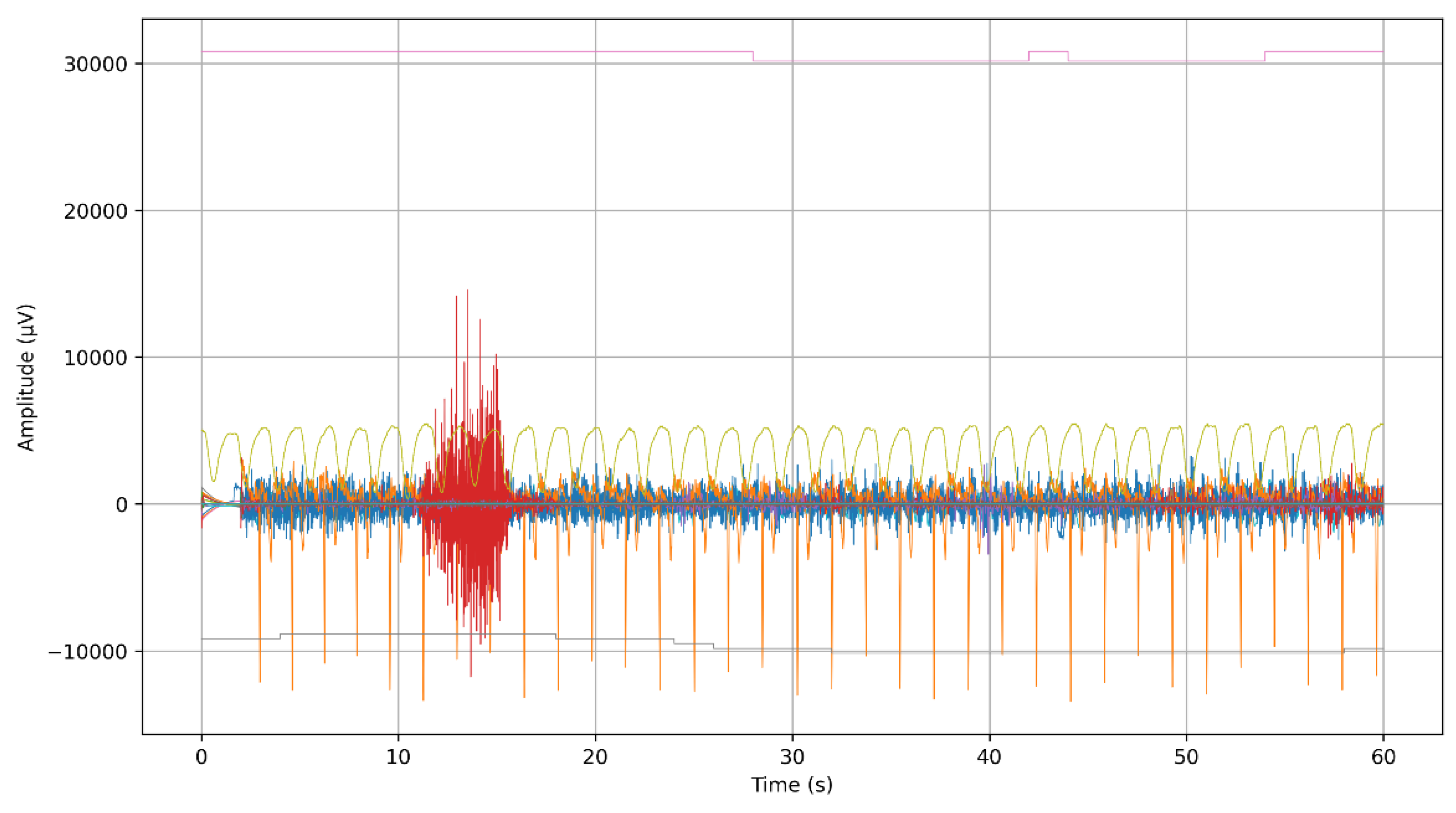
Figure 2.
Multichannel Recording of RBD2 for S0 Stage.
3.4. Signal Preprocessing
Let denote the discrete-time EEG signal sampled at frequency . The preprocessing pipeline was designed to ensure signal integrity prior to spectral analysis.
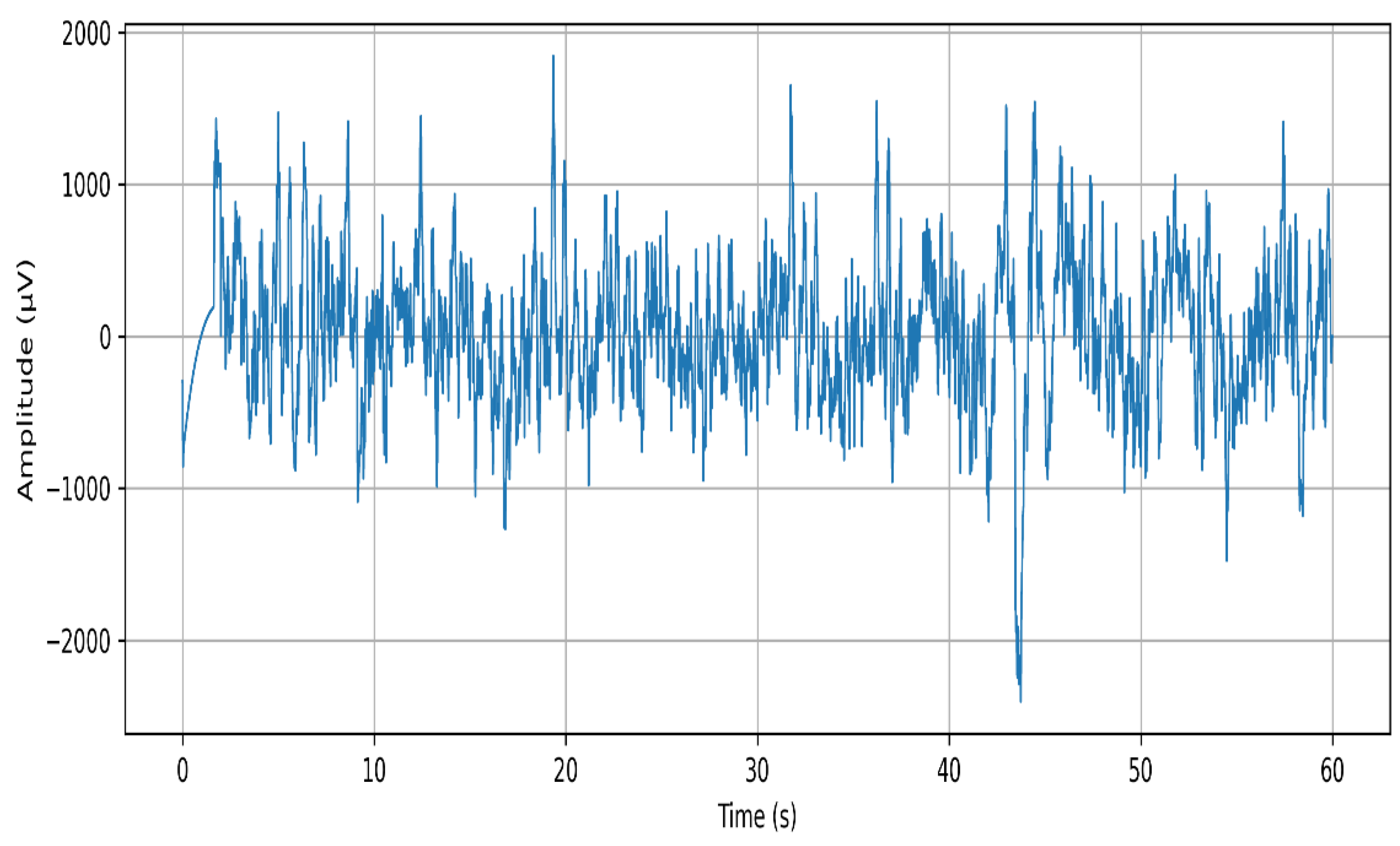
Figure 3.
Extraction of EEG Channel (C4-A1).
3.4.1. Band-Pass Filtering
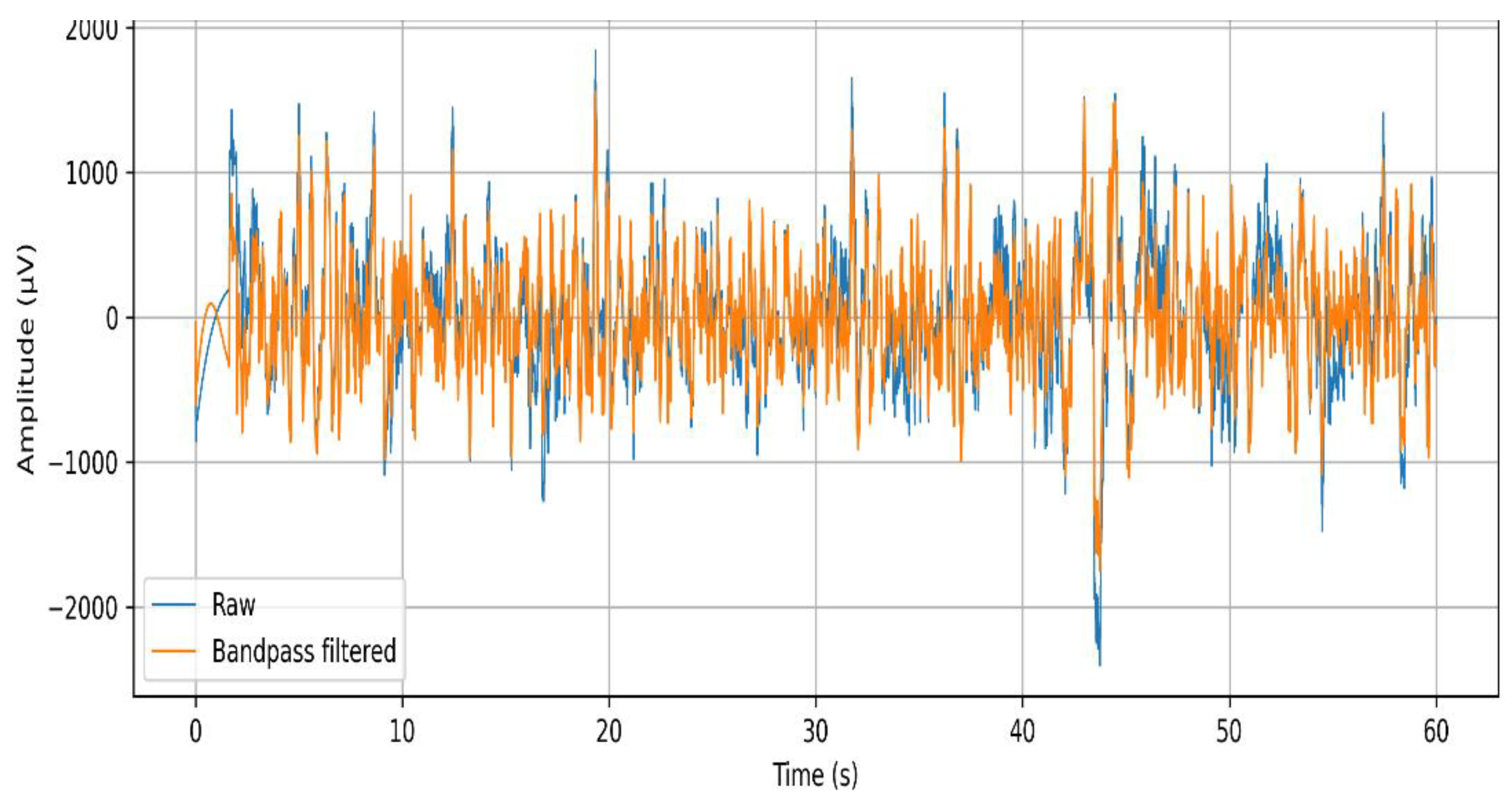
A zero-phase Butterworth band-pass filter (0.5–45 Hz) was applied to remove baseline drift and high-frequency noise:
where is the impulse response of the band-pass filter.
The magnitude response of the Butterworth filter is:
Forward–backward filtering was implemented to eliminate phase distortion.
Figure 4.
Band pass Filtering (0.5 -45HZ).
3.4.2. Notch Filtering
To suppress power-line interference (50 Hz), a digital notch filter was applied:
with transfer function:
where .
3.4.3. Epoch Segmentation and Artifact Rejection
Filtered signals were segmented into 30-second epochs according to AASM scoring. Artifact rejection was performed using:
- Amplitude thresholding (|x[n]| > 100 μV)
- Variance-based abnormality detection
- Visual inspection
Only artifact-free epochs were retained for analysis.
3.5. Channel Selection and REM Stage Justification
The C4–A1 derivation was selected for detailed analysis due to its strong clinical relevance in sleep staging and reduced contamination from ocular artifacts compared to frontal leads.
REM sleep was selected for focused investigation due to its distinctive neurophysiological characteristics. REM exhibits low-amplitude, mixed-frequency EEG activity resembling wakefulness and is strongly associated with neurological regulation. Importantly, REM abnormalities are linked to conditions such as RBD and neurodegenerative disorders, making it clinically significant for healthcare-based EEG analysis. From a signal-processing perspective, REM provides rich spectral variability, enhancing sensitivity to pathological deviations.
3.6. Power Spectral Density Estimation
For each sleep stage, one-minute EEG segments were analyzed using Welch’s method.
After removal of DC offset:
PSD was estimated using a Hamming window with 50% overlap:
where:
- is the Hamming window,
- is the segment length,
- is the number of overlapping segments,
- is the normalization factor.
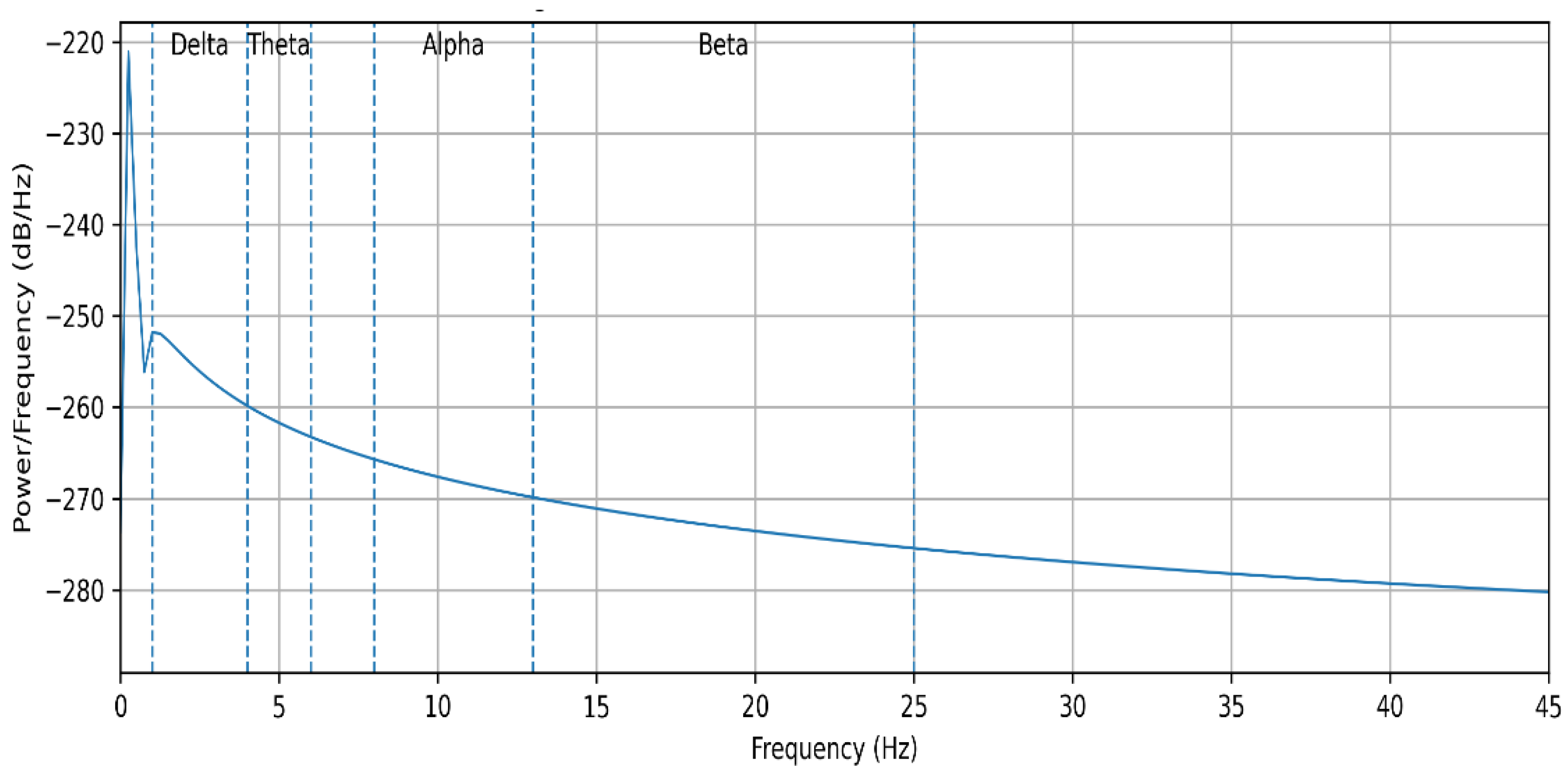
Figure 5.
PSD(Weltch Method) With EEG Signal.
3.7. Spectral Feature Extraction
Band power was computed via trapezoidal integration:
The analyzed frequency bands were:
| Band | Frequency Range (Hz) | Clinical Relevance |
| Delta | 1–4 | Deep sleep activity |
| Theta | 4–6 | REM and transitional sleep |
| Alpha | 8–13 | Relaxed wakefulness |
| Beta | 13–25 | Cortical activation |
Relative power was calculated as:
Mean and standard deviation were computed to characterize spectral variability.
3.8. Normalization and Disorder Detection Algorithm
An automated detection algorithm was implemented in MATLAB. Normalized band power was computed using healthy control statistics:
A deviation-based threshold criterion was applied:
where represents the decision threshold.
Disorders were identified based on characteristic spectral deviations:
- Elevated beta activity during REM → RBD
- Altered theta–alpha ratios → Insomnia
- Spectral instability and delta suppression → Sleep-disordered breathing
An automated algorithm for the detection of sleep disorders was developed and implemented in MATLAB, alongside the conceptual design of a prototype EEG recording system [35,36,37]. EEG data were collected from healthy participants as well as patients diagnosed with various sleep disorders [38,39,40]. Following preprocessing, normalized power ranges were established using data from healthy subjects and subsequently employed as reference thresholds for disorder identification.
For each sleep stage, the PSD was computed using one-minute EEG segments extracted from relevant channels [41,42,43,44]. After removal of DC offsets, signals were filtered and processed using a Hamming window with 50% overlap. Average power and standard deviation were calculated using the trapezoidal integration method [45].
Spectral features were extracted from standard EEG frequency bands: Delta (1–4 Hz), Theta (4–6 Hz), Alpha (8–13 Hz), and Beta (13–25 Hz) [46]. The normalized and average power values of these frequency bands were used to assess the likelihood of various neurological and sleep-related disorders [47]. This approach enables efficient analysis of large EEG datasets, providing accurate PSD estimates across different sleep stages.
4. Results
Across both investigated channels, RBD patients consistently exhibit higher beta activity compared to healthy controls, indicating systematic rather than random variation between the two groups. Figure 5 illustrates discernible differences in normalized power between normal patients and those experiencing RBD Disorder
Figure 5.
The Beta wave_EEG Signal (Normalized Power) for both the normal subject and the RBD patient, focusing on the C4-A1 channel during the REM stage.
Figure 5.
The Beta wave_EEG Signal (Normalized Power) for both the normal subject and the RBD patient, focusing on the C4-A1 channel during the REM stage.
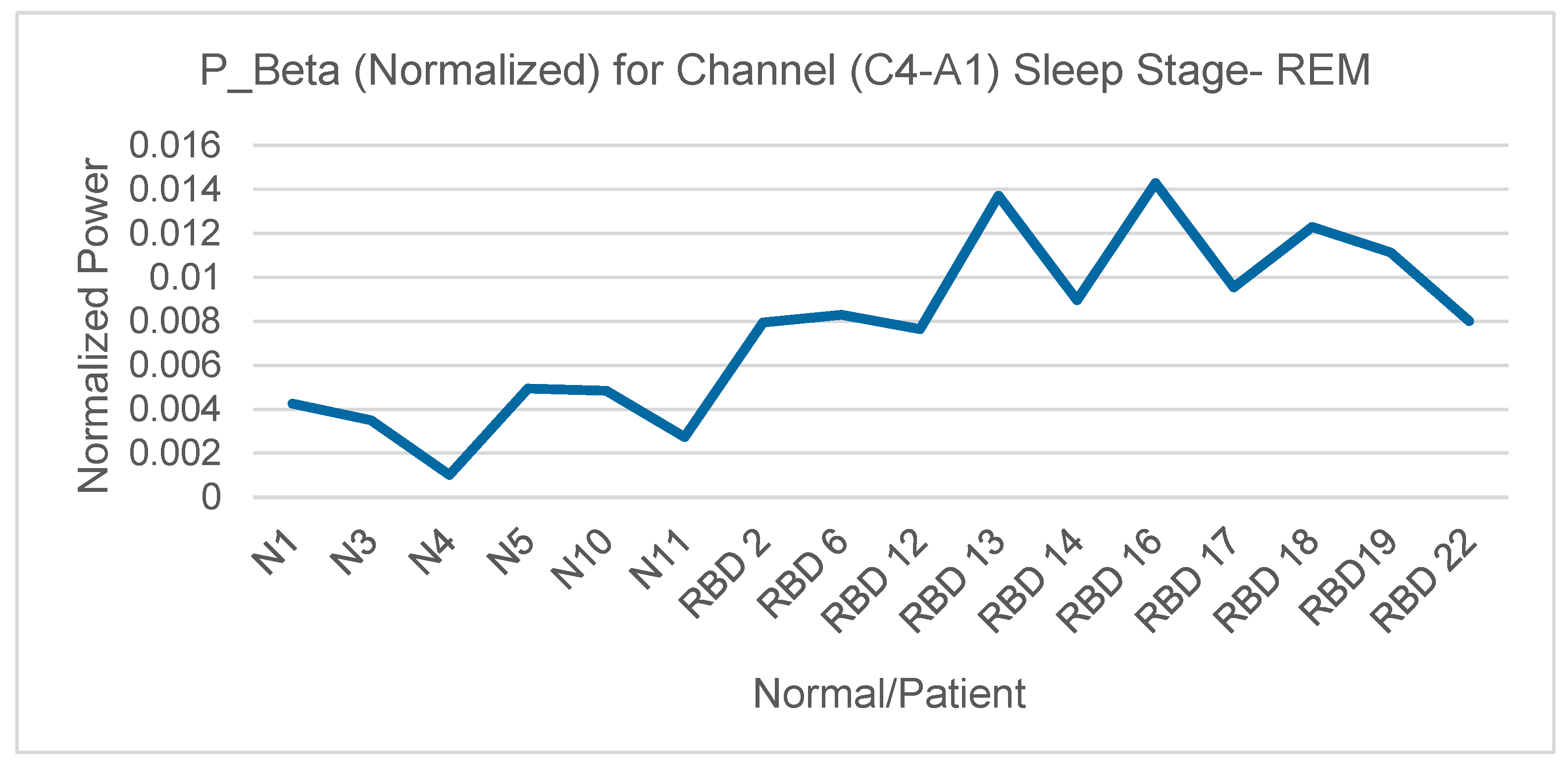
This distinction in beta wave normalized power between normal subjects and those with Rapid Eye Movement Behavior Disorder (RBD) underscores a noteworthy pattern. In normal RBD the range is relatively higher, in between 0.0010 to 0.0049, whereas it remained significantly lower than the one of RBD: (from 0.0076 to 014). These differences in normalized power values indicate a possible connection between the beta wave activity and whether RBD is present. Additional examination and interpretation of these findings will help in enhancing the comprehension of the neurophysiology related to REM behavior disorder.
Figure 5.
The Beta wave_EEG Signal (Normalized Power) for both the normal subject and the RBD patient, focusing on the EMG1-EMG2 channel during the REM stage.
Figure 5.
The Beta wave_EEG Signal (Normalized Power) for both the normal subject and the RBD patient, focusing on the EMG1-EMG2 channel during the REM stage.
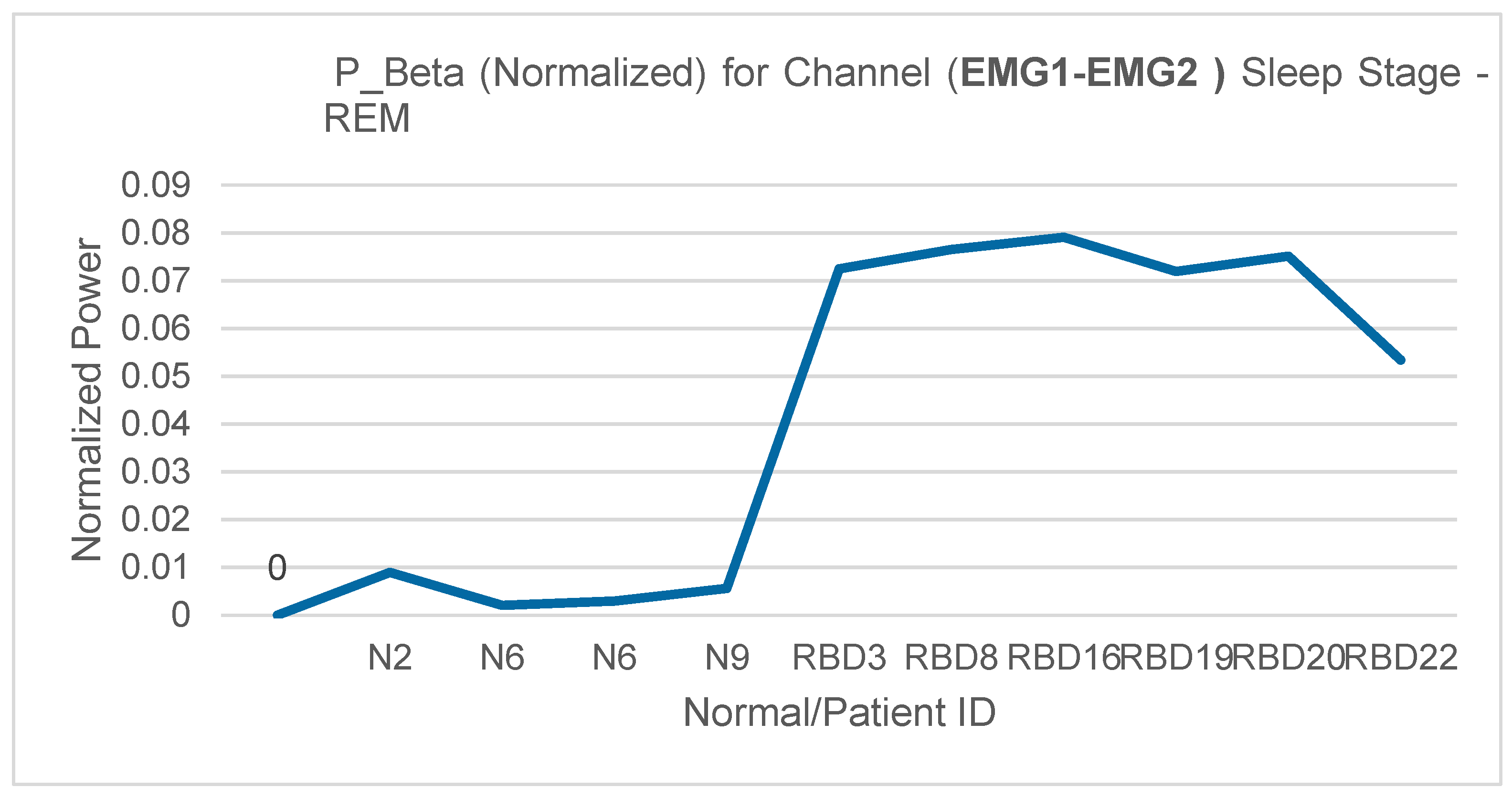
Moreover, the difference shown in Figure 5 in observed disparity in beta wave normalized power not only points to a quantitative difference but also suggests potential clinical significance. The normal range of 0.0020-0.0089 for healthy subjects reflects an accustomed and typical pattern, while the markedly higher order of magnitude at 0.053-0.0791 in RBD patients indicates deviation from this standard tendency. Interestingly the targeted study of the EEG signal in the REM stage, especially at C4-A1 and EMG1-EMG2 channels, appears as a key in these results. The normalized power of beta wave is further confirmed as a unique index, evidencing its effectiveness in discriminating between normal- and Rapid Eye Movement Behavior Disorder sufferers.
The significance of examiner the individual channels and EEG features in the diagnosis workup of sleep disorder is highlighted, with the normalized power of beta wave demonstrating its potency as a discriminative factor. Additional studies and validation may improve precision and reliability on how to use these results in the clinical setting.
5. Conclusion
This study investigated the effectiveness of normalized power spectral density (PSD) features in distinguishing normal subjects from individuals affected by sleep disorders, particularly Rapid Eye Movement Behavior Disorder. Reference values were established using data from subjects without sleep-related abnormalities and compared against pathologically impaired individuals.
The analysis primarily focused on S0, S1, and REM sleep stages, with emphasis on the ROC–LOC, C4–A1, and EMG1–EMG2 channels selected from a standard 21-channel EEG configuration. Normalized power was computed as the ratio of individual frequency-band power to the total signal power, enabling meaningful inter-subject comparison.
The results indicate that PSD-based normalized power features provide superior discriminative capability compared to direct average power measurements of EEG activity. Clear separation between normal and RBD subjects was achieved, particularly in the beta frequency band during REM sleep, highlighting its diagnostic relevance.
The proposed methodology offers a cost-effective and computationally efficient alternative to conventional visual scoring techniques, reducing reliance on continuous expert intervention. Its implementation requires only basic computer proficiency, making it accessible for wider clinical and research use. With further validation, this approach may contribute to automated and objective screening tools for sleep disorder assessment.
Supplementary Materials
https://physionet.org/content/capslpdb/1.0.0/ , all the database sleep disorder are available here and also for other diseases database is available.
Funding
This research received no external funding.
Institutional Review Board Statement
Not applicable.
Informed Consent Statement
Not applicable.
References
- Al-Dhahir, R.S.; Osorio, R.S.; O’Rourke, M.A. Machine learning for the diagnosis of neurological disorders using electroencephalography. J. Neural Eng. 2021, 18, 036006. [CrossRef]
- O’Rourke, M.A.; Osorio, R.S.; Bronzino, J.A. Artificial intelligence in medical imaging: Current status and future directions. IEEE J. Biomed. Health Inform. 2022, 26, 1178–1189. [CrossRef]
- Kostopoulos, D.K.; Georgopoulos, A.P. Machine learning in the diagnosis and management of neurological disorders. Nat. Rev. Neurol. 2021, 17, 221–234. [CrossRef]
- Chaudhary, R.A.; Osorio, R.S. Deep learning in neuroimaging: Current perspectives and future directions. NeuroImage 2020, 222, 116871. [CrossRef]
- Tzallas, A.T.; Tsipouras, M.G.; Fotiadis, D.I. Epileptic seizure detection in EEGs using time–frequency analysis. IEEE Trans. Inf. Technol. Biomed. 2009, 13, 703–710. [CrossRef]
- Bronzino, J.A.; Osorio, R.S. Artificial intelligence in neurology: Current status and future directions. Lancet Neurol. 2021, 20, 687–699. [CrossRef]
- Gómez, J.C.; del Río, M.A. Deep learning in neurological disorders: Current status and future directions. J. Clin. Med. 2021, 10, 1026. [CrossRef]
- Cooray, N.; Angelini, E.; Mace, M.; et al. Detection of REM sleep behaviour disorder by automated polysomnography analysis. Clin. Neurophysiol. 2019, 130, 505–514. [CrossRef]
- Cooray, N.; Beniczky, S.; Linne, M.; et al. Screening for REM sleep behaviour disorder with a minimal set of sensors. Clin. Neurophysiol. 2021, 132, 904–913. [CrossRef]
- Röthenbacher, A.; Cesari, M.; Doppler, C.E.J.; et al. RBDtector: An open-source software to detect REM sleep without atonia according to visual scoring criteria. Sci. Rep. 2022, 12, 25163. [CrossRef]
- Perslev, M.; Darkner, S.; Kempfner, L.; et al. U-Sleep: Resilient high-frequency sleep staging. npj Digit. Med. 2021, 4, 72. [CrossRef]
- Högl, B.; Stefani, A.; Videnovic, A. Idiopathic REM sleep behaviour disorder and neurodegeneration—An update. Nat. Rev. Neurol. 2018, 14, 40–55. [CrossRef]
- Postuma, R.B.; Arnulf, I.; Högl, B.; et al. Risk and predictors of dementia and parkinsonism in idiopathic REM sleep behaviour disorder. Brain 2019, 142, 744–759. [CrossRef]
- Frauscher, B.; Iranzo, A.; Gaig, C.; et al. Quantification of electromyographic activity during REM sleep in REM sleep behaviour disorder. Sleep 2008, 31, 1149–1159. [CrossRef]
- Sasai-Sakuma, T.; Inoue, Y.; et al. Quantitative assessment of isolated REM sleep without atonia. Sleep 2014, 37, 297–306. [CrossRef]
- Puligheddu, M.; Figorilli, M.; et al. Quantification of REM sleep without atonia: A review of scoring methods. Sleep Med. Rev. 2023, 67, 101708. [CrossRef]
- Jo, H.G.; Park, J.Y.; Lee, C.K.; An, S.K.; Yoo, S.K. Genetic fuzzy classifier for sleep stage identification. Comput. Biol. Med. 2010, 40, 629–634. [CrossRef]
- Bigan, C.; Woolfson, M.S. Time–frequency analysis of short segments of biomedical data. IEE Proc. Sci. Meas. Technol. 2000, 147, 368–373. [CrossRef]
- Goldberger, A.L.; Amaral, L.A.N.; Glass, L.; et al. PhysioBank, PhysioToolkit, and PhysioNet. Circulation 2000, 101, e215–e220. [CrossRef]
- Ebrahimi, F.; Mikaeili, M.; Estrada, E.; Nazeran, H. Automatic sleep stage classification using EEG and neural networks. In Proc. IEEE EMBS; 2008, 1151–1154. [CrossRef]
- Garcia-Molina, G.; Bellesi, M.; Pastoor, S.; et al. Online single-channel EEG-based automatic sleep staging. In Eng. Psychol. Cogn. Ergon.; Springer, 2013, 333–342. [CrossRef]
- Iranzo, A.; Santamaría, J.; Tolosa, E. The clinical and pathophysiological relevance of REM sleep behavior disorder. Sleep Med. Rev. 2009, 13, 385–401. [CrossRef]
- Schenck, C.H.; Boeve, B.F.; Mahowald, M.W. Delayed emergence of parkinsonism or dementia in idiopathic RBD. Neurology 2003, 60, 1134–1140. [CrossRef]
- Ferri, R.; Manconi, M.; Plazzi, G.; et al. Quantitative EMG analysis during REM sleep in RBD. J. Sleep Res. 2008, 17, 89–100. [CrossRef]
- Sors, A.; Bonnet, S.; Mirek, E.; Vercueil, L.; Payen, J.F. CNN-based sleep stage scoring from single-channel EEG. Biomed. Signal Process. Control 2018, 42, 107–114. [CrossRef]
- Phan, H.; Andreotti, F.; Cooray, N.; et al. Joint classification and prediction framework for sleep staging. IEEE Trans. Biomed. Eng. 2019, 66, 1285–1296. [CrossRef]
- Stephansen, J.B.; Olesen, A.N.; Olsen, M.; et al. Neural network analysis enables efficient diagnosis of narcolepsy. Nat. Commun. 2018, 9, 5229. [CrossRef]
- Kempfner, J.; Jennum, P.; Sørensen, H.B.D. Automatic detection of REM sleep behaviour disorder based on EMG. Clin. Neurophysiol. 2014, 125, 2328–2336. [CrossRef]
- Cesari, M.; Stefani, A.; Figorilli, M.; et al. Video-polysomnographic criteria for RBD. Sleep Med. 2018, 52, 22–29. [CrossRef]
- Xu, Y.; Yang, J.; Ming, W.; Wang, S.; Sawan, M. Probabilistic real-time EEG-based detection with reduced latency. Expert Syst. Appl. 2024, 236, 121359. [CrossRef]
- Sors, A.; Bonnet, S.; Mirek, S.; Vercueil, L.; Payen, J.F. A convolutional neural network for sleep stage scoring from raw EEG signals. Physiol. Meas. 2018, 39, 124005. [CrossRef]
- Yildirim, O.; Baloglu, U.B.; Acharya, U.R. A deep learning model for automated sleep stage classification using PSG signals. Int. J. Environ. Res. Public Health 2019, 16, 599. [CrossRef]
- Phan, H.; Tran, M.C.; Koch, P.; Mertins, A. Towards more accurate automatic sleep staging via deep transfer learning. IEEE Trans. Biomed. Eng. 2021, 68, 1787–1798. [CrossRef]
- Aljalal, M.; Alshammari, T.; Alshammari, A.; Alturki, F. Sleep stage classification using EEG signal analysis based on empirical mode decomposition and deep learning. Sensors 2021, 21, 722. [CrossRef]
- Li, Y.; Pan, W.; Wang, F.; Wang, J. A hybrid deep learning model for sleep stage classification based on EEG signals. IEEE Access 2020, 8, 118772–118781. [CrossRef]
- Zhu, T.; Luo, W.; Yu, F.; Zhang, C. Sleep stage classification based on multi-scale feature fusion using EEG signals. Biomed. Signal Process. Control 2021, 70, 102968. [CrossRef]
- Boashash, B. Time–Frequency Signal Analysis and Processing: A Comprehensive Reference; Academic Press: Oxford, UK, 2015. [CrossRef]
- Mallat, S. A Wavelet Tour of Signal Processing: The Sparse Way, 3rd ed.; Academic Press: Burlington, MA, USA, 2009. [CrossRef]
- Cohen, L. Time–Frequency Analysis; Prentice Hall: Englewood Cliffs, NJ, USA, 1995.
- Boashash, B.; Khan, N.A.; Ben-Jabeur, T. Time–frequency features for pattern recognition using high-resolution distributions. IEEE Signal Process. Mag. 2015, 32, 79–93. [CrossRef]
- Acharya, U.R.; Oh, S.L.; Hagiwara, Y.; Tan, J.H.; Adam, M.; Gertych, A.; Tan, R.S. Deep convolutional neural network for the automated detection and diagnosis of seizure using EEG signals. Comput. Biol. Med. 2018, 100, 270–278. [CrossRef]
- Dauwels, J.; Vialatte, F.; Musha, T.; Cichocki, A. A comparative study of synchrony measures for the early diagnosis of Alzheimer’s disease based on EEG. NeuroImage 2010, 49, 668–693. [CrossRef]
- Sharma, M.; Pachori, R.B.; Acharya, U.R. Automated sleep stage classification based on iterative filtering of EEG signals. Neural Comput. Appl. 2019, 31, 6759–6773. [CrossRef]
- Okano, K.; Kaczmarzyk, J.R.; Dave, N.; et al. Sleep quality, duration, and consistency are associated with better academic performance in college students. NPJ Sci. Learn. 2019, 4, 16. [CrossRef]
- Mindell, J.A.; Meltzer, L.J.; Carskadon, M.A.; et al. Developmental aspects of sleep hygiene: Findings from the 2004 National Sleep Foundation Sleep in America Poll. Sleep Med. 2009, 10, 771–779. [CrossRef]
- Berry, R.B.; Brooks, R.; Gamaldo, C.; et al. AASM scoring manual updates for 2017 (Version 2.4). J. Clin. Sleep Med. 2017, 13, 665–666. [CrossRef]
- Rechichi, I.; Iadarola, A.; Zibetti, M.; et al. Assessing REM sleep behaviour disorder: From machine learning classification to the definition of a continuous dissociation index. Int. J. Environ. Res. Public Health 2022, 19, 248. [CrossRef]
Figure 1.
EEG recording procedure and monitoring system used for sleep analysis.
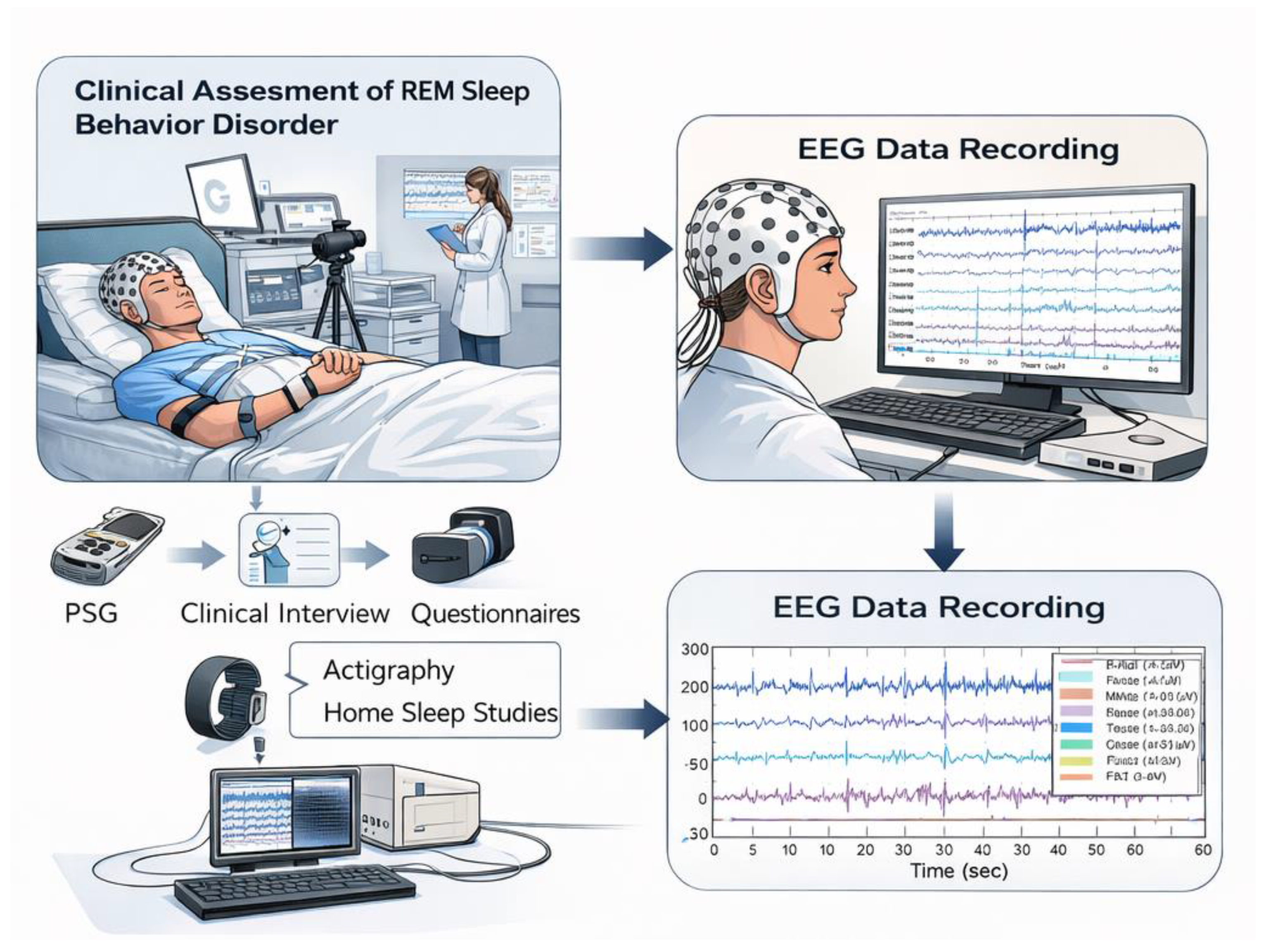
Figure 2.
Flowchart of the proposed algorithm for sleep disorder detection.
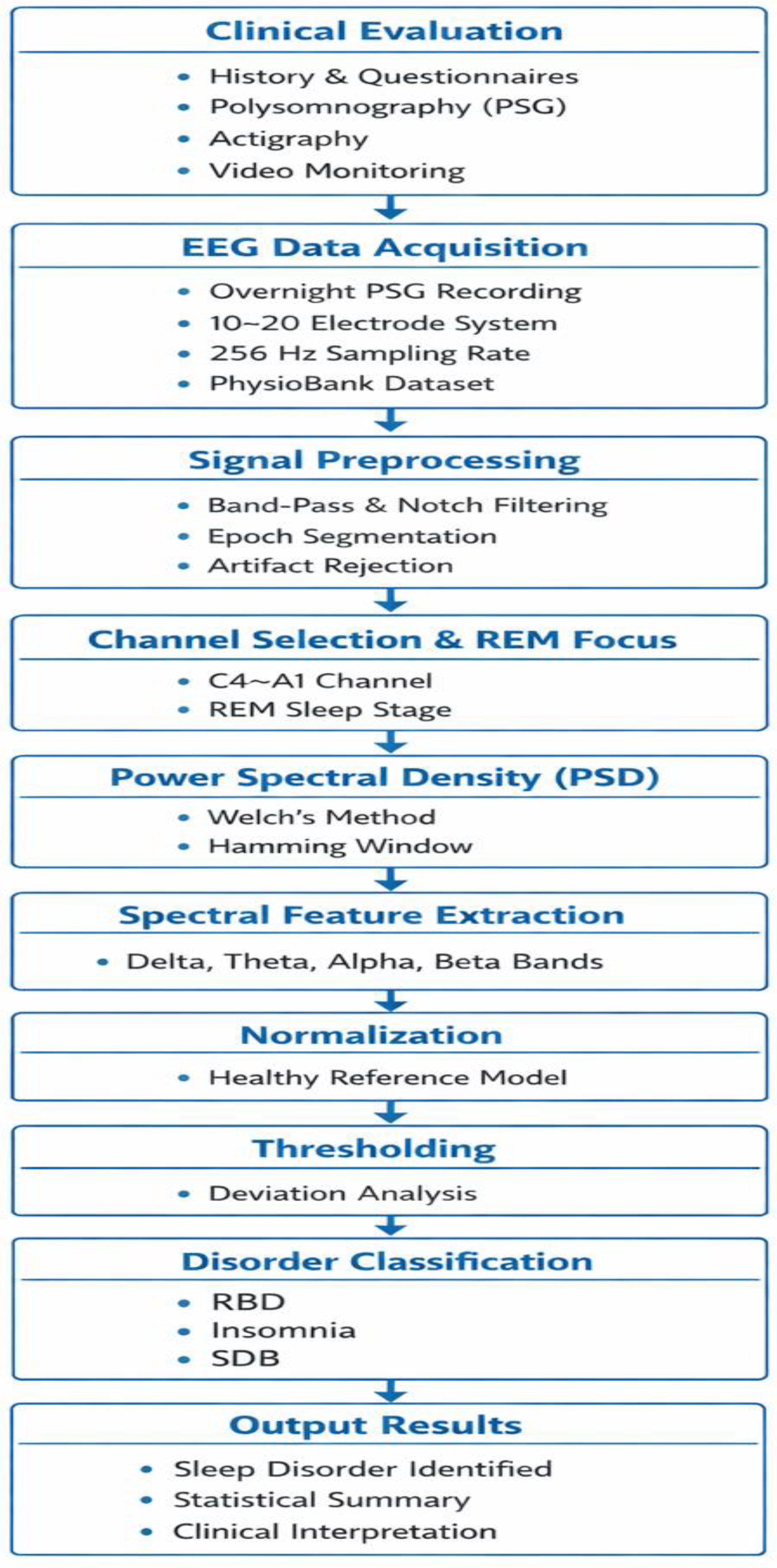

Table 1.
Previous studies on RBD detection (2020–2025).
| Study (Year) | Source | Dataset / Sample | Method / Sensors | Key Findings |
|---|---|---|---|---|
| Cooray et al., 2021 | Clinical Neurophysiology | Minimal-sensor screening cohort (RBD vs controls) | Minimal sensors (EOG + EMG; optional ECG) + classical ML (e.g., Random Forest) | Demonstrated strong screening capability using a reduced sensor set; suitable for scalable screening. |
| Perslev et al., 2021 | npj Digital Medicine | 15,660 PSG recordings | Deep learning–based automated sleep staging (U-Sleep) | Performance comparable to expert scorers; robust and generalizable across large datasets. |
| Röthenbacher et al., 2022 | Scientific Reports | RSWA/RBD detection cohort (software validation) | SINBAR-based RSWA scoring (RBDtector, open-source) | Reported high diagnostic performance for RSWA detection; supports reproducible RBD/RWA screening. |
| Postuma et al., 2019 | Brain | Longitudinal idiopathic RBD cohort | Clinical follow-up with neurodegenerative outcome tracking | Confirmed iRBD as a strong prodromal marker for Parkinsonism/dementia with quantified risk predictors. |
| Puligheddu et al., 2023 | Sleep Medicine Reviews | Review of RSWA quantification literature | Comparative scoring and methodology review | Emphasized the need for harmonization and standardization of RSWA scoring methods. |
| Xu et al., 2024 | Expert Systems with Applications | EEG-based datasets | Probabilistic real-time detection framework | Reduced detection latency with high predictive performance; supports real-time clinical decision workflows. |
Disclaimer/Publisher’s Note: The statements, opinions and data contained in all publications are solely those of the individual author(s) and contributor(s) and not of MDPI and/or the editor(s). MDPI and/or the editor(s) disclaim responsibility for any injury to people or property resulting from any ideas, methods, instructions or products referred to in the content. |
© 2026 by the authors. Licensee MDPI, Basel, Switzerland. This article is an open access article distributed under the terms and conditions of the Creative Commons Attribution (CC BY) license (http://creativecommons.org/licenses/by/4.0/).
Copyright: This open access article is published under a Creative Commons CC BY 4.0 license, which permit the free download, distribution, and reuse, provided that the author and preprint are cited in any reuse.