

Submitted:
11 March 2026
Posted:
12 March 2026
You are already at the latest version
Abstract
This study examines how the adoption of artificial intelligence (AI) and the implementation of policies shape inclusive educational outcomes for marginalized learners in Bangladesh, using evidence from Sherpur Sadar Upazilla. A convergent mixed-methods design integrated a student survey (N = 213; seven institutions; March–September 2024) with qualitative data from 37 stakeholders (teachers and policymakers) collected through semi-structured interviews and focus group discussions. Quantitative findings show that AI tool adoption was the strongest predictor of a composite educational outcome score (β = 0.38, p < 0.001), followed by institutional support (β = 0.25, p = 0.01). In contrast, the policy implementation gap—defined as the mismatch between policy intent and on-the-ground delivery—was negatively associated with outcomes (β = −0.12, p = 0.04). Digital infrastructure quality was positively associated with the outcome but was not statistically significant in the multivariable model (β = 0.17, p = 0.12). The model demonstrated strong explanatory power (R² = 0.67; F(4, 208) = 42.3; p < 0.001). Disparity analyses revealed persistent urban–rural inequities in reliable internet access (94.6% vs. 69.7%) and device readiness, with tablet access emerging as a key enabler of advanced AI-supported learning. Qualitative results corroborated three binding constraints: limited teacher AI preparedness, affordability barriers, and trust concerns related to privacy and algorithmic bias. Building on these findings, the paper proposes a policy–innovation framework centered on localized AI toolkits, sustained teacher upskilling, device-access interventions, and enforceable fairness and transparency safeguards to advance equitable learning opportunities.
Keywords:
artificial intelligence
; government policies
; marginalized communities
; Bangladesh
; inclusive education
1. Introduction
In recent years, there has been a growing global emphasis on inclusive education, particularly for marginalized communities facing significant barriers to equal educational opportunities. Research by Ahmad et al. (2024) highlights the transformative potential of Industry 4.0 technologies, such as artificial intelligence (AI), in addressing these challenges. Their study demonstrates how AI-driven tools can foster inclusivity by personalizing learning experiences, mitigating biases, and improving accessibility for diverse student populations. These findings suggest that AI holds significant promise for advancing inclusive education by offering scalable solutions to bridge access and quality gaps. This study focuses on AI as a pedagogical enhancer (e.g., personalized learning environments and intelligent tutoring systems) rather than as a curricular subject. Similarly, UNESCO (2021) and Islam et al. (2024) have highlighted the role of technology in overcoming challenges such as socioeconomic disparities and geographic isolation.
In Bangladesh, these challenges are particularly pronounced in rural regions, where educational infrastructure remains inadequate, and conventional teaching methods fail to address diverse learning needs (Kuteesa & Akpuokwe, 2024; Nazari et al., 2024). Technological innovations, especially Artificial Intelligence (AI), have the potential to address some of these inequities by providing personalized learning experiences, bridging gaps in teacher-student ratios, and enhancing accessibility for students. AI-powered platforms can facilitate remote learning, adaptive teaching methods, and assistive technologies, which are particularly beneficial for marginalized students who lack access to qualified educators and sufficient learning materials.
However, integrating AI into educational systems is only one part of the solution. Government policies play a crucial role in ensuring that AI technologies are deployed in ways that are both equitable and inclusive (Ahmed, 2024; Rahman & Parvin, 2024). Despite the rapid advancements of AI across sectors, including education, there are ongoing concerns about its adoption, including issues of data privacy, equitable access, and the potential to exacerbate existing inequalities (Mazumder & Hossain, 2024; Rahman & Parvin, 2024; Karmaker, 2025). The impact of digital literacy on rural women’s education and empowerment in Bangladesh (Karmaker & Cvetković, 2025). Without adequate policy interventions, AI implementation risks reinforcing the existing digital divide, as marginalized communities often lack the necessary digital infrastructure and literacy to benefit from AI-driven educational solutions.
This paper explores the intersection of AI and government policies in promoting inclusive education for marginalized communities in Bangladesh. While prior studies, such as Babu (2021) and Rahman & Parvin (2024), have examined the roles of technology and policy in education, there remains a critical gap in understanding how these elements interact in Bangladesh’s unique context. Specifically, this study addresses how AI can be leveraged to overcome barriers faced by marginalized groups in Bangladesh and how government policies can ensure that these innovations are accessible to all, particularly those from disadvantaged backgrounds.
This study aims to examine the potential of AI in promoting educational equity for marginalized communities in Bangladesh, with a focus on personalized learning, accessibility, and addressing the teacher-student ratio gap (Tamanna & Sinha, 2024; Wafik et al., 2024; Hossain et al., 2024); Evaluate the role of government policies in fostering inclusive education through AI, assessing existing frameworks, identifying gaps, and evaluating their impact on AI integration in educational practices (Ahmed, 2024); Provide actionable recommendations for policymakers and educators, emphasizing strategies to enhance AI’s impact, address digital divides, and create equitable access to AI-driven educational tools (Akan, 2024).
The findings suggest that AI, when coupled with strong government policies, can significantly enhance educational access and quality for marginalized communities (Mannan et al., 2023). However, without inclusive policies that address the digital divide and other socioeconomic factors (Siddiquee & Islam, 2020), AI’s impact remains limited to marginalized communities. Specifically, the study demonstrates that AI-driven tools can improve personalized learning, accessibility, and educational engagement, particularly for students in underserved regions. Yet these benefits depend on addressing systemic barriers, such as inadequate infrastructure, limited digital literacy, and socioeconomic disparities.
The implications of these findings are profound for both policymakers and educators. Governments must not only invest in technological infrastructure but also implement policies that ensure AI-based solutions are accessible to all students, regardless of their background (Tarafdar et al., 2025). For educators, there is a need to embrace AI tools that support diverse learning needs, but this must be done in alignment with national educational policies (Sultana, 2023). Additionally, the accessibility of Indigenous and other marginalized groups should not be overlooked (Vaskar et al., 2025). The effects of digital technology on education in rural Bangladeshi schools, with particular emphasis on use, access, and digitalization, should also be examined (Akter, 2024). Access to digital resources is essential for strengthening rural women’s education in Bangladesh, as demonstrated.
Despite the potential of AI and policies to transform education, several barriers persist. These include limited access to technology in rural and low-income areas, a lack of digital literacy among educators and students, and the absence of comprehensive policies that address the unique challenges faced by marginalized groups. These challenges include gender and disability-based disparities, limited internet access, economic constraints related to the benefits of IT, and a lack of enthusiasm toward technology (Akram & Majid, 2024; Hossen et al., 2025; Islam & Jirattikorn, 2024; Badiuzzaman, 2024; Hossain et al., 2021; Sabur, 2019). Moreover, the ethical implications of AI, such as data privacy concerns and algorithmic biases, must also be addressed with security (Gallego-Arrufat et al., 2024; Sikder, 2023). Additionally, marginalized communities often face the further challenge of being deprived due to their underprivileged status (Ahmed, 2022), and there is also a lack of engagement from technical experts (Iqbal Bhatti, 2020).
To overcome the barriers identified in this study, future efforts should expand digital infrastructure to ensure equitable access to AI tools in rural and underserved areas (Mannan et al., 2023). Enhancing teacher training in integrating AI into inclusive education practices, ensuring educators are equipped to support diverse learning needs (Çolpan & Yıldırım, 2025). Developing and enforcing policies that prioritize the inclusion of marginalized communities in AI-driven education reforms, address implementation gaps, and ensure equitable access (Tamanna & Sinha, 2024; Aryal, 2024). Promoting ethical AI practices to mitigate risks related to data privacy and algorithmic bias, ensuring that AI technologies are deployed fairly and transparently (Akan, 2024). Conducting further research to explore the long-term impacts of AI on educational equity, particularly in marginalized communities, and to assess the effectiveness of policy interventions (Tarafdar et al., 2025).
This study highlights the potential of AI to advance educational equity for marginalized communities in Bangladesh by addressing barriers such as socioeconomic disparities, geographic isolation, and limited access to resources. However, the benefits of AI are unevenly distributed due to inadequate infrastructure, AI literacy, and financial resources. Government policies play a critical role in fostering inclusive education, but gaps between policy intentions and implementation persist, particularly in rural areas. Ethical concerns, such as data privacy and algorithmic bias, must also be addressed to prevent AI from exacerbating inequalities. By implementing targeted interventions and inclusive policies, AI can help create a more equitable and accessible education system in Bangladesh.
1.1. Literature Review
Several studies have explored the potential of artificial intelligence (AI) in education, its benefits, and the challenges hindering its widespread adoption in Bangladesh (Sikder, 2023) highlighted that despite gaps in practical skills and restricted access, there is significant interest in AI education among the workforce (Mazumder & Hossain, 2024) emphasized the necessity of a comprehensive strategy involving stakeholder participation, policy frameworks, and funding to facilitate AI adoption in education (Tamanna & Sinha, 2024) examined AI’s potential to transform education while stressing the importance of policy interventions to address existing challenges.
A range of infrastructural, financial, and socio-cultural factors continues to impede the integration of AI in Bangladesh’s education sector (Islam & Alam, 2024). Identified key challenges, including poor instructional quality and financial crises (Islam et al., 2024). Further, financial barriers are a major obstacle to AI adoption. Similarly, Emon et al. (2024) noted that infrastructure limitations hinder AI development. Socio-cultural barriers that disproportionately impact marginalized students, while Islam & Jirattikorn (2024) specifically addressed the difficulties women face in accessing STEM education (Islam & Inan, 2021), highlighted the need for robust interventions, attributing Bangladesh’s digital gaps to persistent socioeconomic inequality.
Research indicates that AI-driven educational tools can enhance accessibility and inclusion (Wafik et al., 2024). An analysis of AI’s advantages, such as improved accessibility, personalized learning, and administrative efficiency, within Bangladesh’s socio-cultural context (UNESCO, 2021) documented AI’s potential to promote gender equality (pp. 22–25), expand education in low-resource settings (pp. 28–29), and support learners with disabilities (pp. 33–34), though infrastructure gaps persist (Hossen et al., 2025; Karmaker, 2025). The importance of policies that encourage gender equality in digital education. Additionally, Zonaid (2024) described AI-powered personalized educational platforms that enhance classroom learning experiences. Access to digital tools plays a critical role in empowering rural women’s education in Bangladesh. Karmaker and Cvetković (2025) discussed the effects of digital literacy on the empowerment and education of Bangladeshi rural women. Gajović et al. (2025) found that more effective paths that directly link learning to practical activities are necessary to achieve the European Green Deal (EGD) and the United Nations Sustainable Development Goals (SDGs).
The ethical implications of AI in education remain a critical area of discussion. (Sikder, 2023) examined concerns related to data privacy and algorithmic biases in AI-driven educational tools. (Akan, 2024) emphasized the need for AI systems to adhere to ethical standards, particularly in protecting vulnerable populations. (Gallego-Arrufat et al., 2024) found the primary subjects under investigation as the right to digital security or cybersecurity, the right to digital education, and privacy protection in online environments. Rahman & Parvin (2024) discussed Bangladesh’s progress in AI technology, noting ongoing concerns about cybersecurity threats, the digital divide, and infrastructural constraints. These studies highlight the role of governance and policy in ensuring ethical integration of AI in education (Beriša et al., 2024). One of the most important challenges for contemporary defense and security systems is prevention and defense against cyberattacks.
Several studies address crucial aspects of AI and digital education to help understand Bangladesh’s evolving educational landscape. (Çolpan & Yıldırım, 2025) emphasized the role of teacher networks in professional development and highlighted the need for policy-driven initiatives. (Ahmed, 2024) traced the evolution of inclusive education policies, starting with the 2000 Education Commission, which promoted gender equity and support for underprivileged communities. (Tarafdar et al., 2025) demonstrated how AI is transforming the educational system and reshaping student learning methods, emphasizing the need for comprehensive government frameworks. (Aryal, 2024) argued that digital technology provides an opportunity to bridge educational divides and empower grassroots communities through targeted policymaking and teacher. Despite unsatisfactory e-service, Rana & Rahman (2022) highlighted the relevance of e-government in enhancing efficiency and transparency. (Sultana, 2023) discussed the development of powerful artificial intelligence while cautioning against neglecting the complexity of people’s and communities’ justice, values, and identities.
In the Synthesis of Key Themes, the literature reveals a dynamic interplay between AI adoption, policy frameworks, and ethical considerations in Bangladesh’s education sector (Sikder, 2023). Mazumder & Hossain (2024) highlight the dual challenges of data privacy and policy gaps, emphasizing the need for a balanced approach that integrates technological innovation with robust governance. UNESCO (2021) also framed AI as a transformative tool for personalized, lifelong learning, but its framework overlooks infrastructure disparities, which are critical to consider when evaluating AI’s potential in marginalized communities. For instance, while Wafik et al. (2024) found that AI can reduce administrative time by 30%, Rahman & Parvin (2024) cautioned that, without addressing infrastructural constraints and ethical concerns, these benefits may not reach marginalized communities. This synthesis underscores the importance of a holistic strategy that combines technological advancement, inclusive policies, and ethical safeguards to ensure equitable integration of AI in education.

Table 1.
Synthesis of Key Themes in AI-in-Education Research: Evidence and Identified Gaps.
| Study | Focus | Key Findings | Gaps Identified |
|---|---|---|---|
| (Sikder, 2023) | Data privacy and algorithmic bias | Highlighted concerns about data misuse and bias in AI tools. | Lack of ethical frameworks to protect vulnerable populations. |
| (Mazumder & Hossain, 2024) | Policy frameworks for AI adoption | Emphasized the need for stakeholder participation and funding. | Limited implementation of policies in rural areas. |
| (Wafik et al., 2024) | AI’s administrative efficiency | Found AI reduces administrative time by 30%. | Limited focus on accessibility for marginalized groups. |
| (Rahman & Parvin, 2024) | Cybersecurity and the digital divide | Noted infrastructural constraints and cybersecurity threats. | Lack of comprehensive strategies to bridge the digital divide. |
| (UNESCO, 2021) | Student-facing AI technologies | - AI enables “personalized, ubiquitous lifelong learning” (p. 15). - Framed as a “fourth education revolution” (citing Seldon & Abidoye, 2018). |
- Overlooks infrastructure disparities (see p. 21). - Contradicts teacher-support warnings (see p. 19). |
The critical analysis of key studies begins with Sikder (2023), who examines data privacy and algorithmic bias in AI-driven educational tools and highlights the systemic risks of data misuse and biased decision-making. The identified gaps in ethical protections for vulnerable populations underscore the need for regulatory approaches that prioritize equity alongside technological innovation.
Mazumder and Hossain (2024) focus on policy frameworks for AI adoption and show that inclusive policies can improve accessibility when supported by multi-stakeholder collaboration. At the same time, their work reveals a persistent implementation gap in rural areas due to infrastructure deficits, underscoring the need for localized capacity-building interventions. Complementing this perspective, Wafik et al. (2024) quantify AI’s administrative value and report a 30% efficiency gain in school operations. However, they also emphasize that limited accessibility for marginalized groups remains a major constraint, illustrating a clear misalignment between technological advancement and inclusive design.
Rahman and Parvin (2024) shift attention to cybersecurity challenges and demonstrate how infrastructural constraints and data vulnerabilities can disproportionately exclude low-resource communities from the benefits of AI, thereby reinforcing existing educational inequities. In contrast, UNESCO (2021) provides an influential policy-oriented framework for student-facing AI technologies, but its limitations—particularly the lack of longitudinal evidence—mirror concerns raised in other studies (e.g., Wafik et al., 2024). This reinforces the importance of prioritizing infrastructure-agnostic AI tools and conducting rigorous, long-term equity audits to reduce the risk that technological solutionism will exacerbate pre-existing disparities.
Across this synthesis, three critical gaps emerge: ethical oversight, reflected in the absence of robust safeguards against algorithmic discrimination; equitable access, evidenced by persistent urban–rural divides in implementation; and longitudinal evidence, shown by limited research on AI’s sustained impact on educational equity. Addressing these gaps requires human-centric AI design that prioritizes inclusion over efficiency alone, stronger collaboration among policymakers, technologists, and educators to develop localized solutions, and long-term studies that assess AI’s societal and educational impacts beyond short-term performance indicators.
2. Methods
This study employed a convergent mixed-methods design (Cvetković, 2017) to analyze the impact of AI on marginalized education in Bangladesh by integrating survey data from 213 students with qualitative insights from 37 stakeholders. This approach was chosen to triangulate statistical trends with lived experiences, providing a comprehensive view of how policy gaps and infrastructure barriers affect digital equity. Despite significant advancements in Artificial Intelligence (AI), marginalized communities in Bangladesh continue to face barriers to quality education due to socioeconomic disparities, geographic isolation, and limited access to technology (Ahmed, 2024; Hossen et al., 2025). While traditional interventions have struggled to address these challenges at scale, AI offers unique advantages by enabling personalized, location-independent learning and by providing assistive technologies (Zonaid, 2024). While (UNESCO, 2021) acknowledges AI’s educational potential, its benefits remain unrealized due to three interdependent gaps: (1) inadequate rural infrastructure (Emon et al., 2024 ), a challenge, UNESCO (p. 31) ties to absent global standards (Holmes et al., 2018, p. 552); (2) misalignment between national policies and local needs (Babu, 2021), and (3) insufficient safeguards against algorithmic bias (Sikder, 2023), which UNESCO (p. 20) notes disproportionately harm marginalized groups. This study specifically examines how Bangladesh’s unique context - including its Digital Bangladesh initiative and existing educational inequitiesm creates both opportunities and challenges for AI-driven solutions. I focus on the intersection of technological innovation and policy implementation, investigating how tailored AI applications combined with responsive governance could overcome persistent barriers to educational access in marginalized communities (Mannan et al., 2023).
2.1. Hypotheses
To formally test the proposed relationships between AI adoption, policy implementation, and inclusive educational outcomes in marginalized communities, the study advances the following hypotheses:
- Hypothesis 1: Localized AI-driven personalized learning tools significantly increase academic engagement among marginalized students in rural Bangladesh.
- Hypothesis 2: Government-funded teacher training programs directly correlate with the successful integration of AI tools in underserved educational institutions.
- Hypothesis 3: Significant disparities exist in AI adoption rates between urban and rural marginalized communities due to infrastructure and socioeconomic barriers.
- Hypothesis 4: Policies prioritizing algorithmic fairness and ethical safeguards produce more inclusive educational outcomes than policies focused solely on technological scaling.
2.2. Participants
The study was conducted in Sherpur Sadar Upazilla, Bangladesh (25°00’ 0.00” N, 90°01’ 0.12” E), encompassing both urban and rural areas. This diverse setting allowed for a comparative analysis of AI-driven educational interventions across socio-economic groups. The study involved 213 student participants from secondary and higher education institutions in Sherpur, Bangladesh, and 37 stakeholders, including teachers and policymakers. Between March 20 and September 18, 2024, respondents were recruited from seven urban and rural institutions using a combination of random, convenience, and snowball sampling to ensure representation from marginalized communities. All data collection took place in person at designated computer labs and training centers to maintain technical consistency. Ethical approval was granted by the Institutional Review Board (Approval No.: NAMC/01-02-24.00.04.00029), and all participants provided written informed consent prior to the study, with the IRB ensuring voluntary participation and data anonymity.
Figure 1.
Demographic presentation of respondents’ views based on residence, gender, education, age, and marital status about Advancing Educational Equity: The Role of AI and Government Policies in Inclusive Education for Marginalized Communities. Source: As per primary data collection-2024, the study’s reliability stems from direct engagement with respondents, ensuring advancing educational equity: the role of AI and government policies in inclusive education for marginalized communities.
Figure 1.
Demographic presentation of respondents’ views based on residence, gender, education, age, and marital status about Advancing Educational Equity: The Role of AI and Government Policies in Inclusive Education for Marginalized Communities. Source: As per primary data collection-2024, the study’s reliability stems from direct engagement with respondents, ensuring advancing educational equity: the role of AI and government policies in inclusive education for marginalized communities.
The demographic profile of respondents indicates pronounced structural inequalities in AI adoption and access. Most participants were from rural areas (76.52%), while urban respondents accounted for 23.47%. Rural respondents also reported limited ICT connectivity, with only 20% indicating reliable broadband access—reinforcing persistent urban–rural disparities consistent with Digital Divide Theory. The sample was predominantly female (85.91%) and 14.08% male; notably, 30% of female respondents reported cultural restrictions that limit their ability to access AI-enabled education, reflecting gender-based digital exclusion.
In terms of education, 56.79% had completed high school, and 41.78% held a bachelor’s degree, while only 1.40% reported higher educational qualifications. Respondents with lower educational attainment expressed greater skepticism toward AI, raising concerns about trust, perceived reliability, and potential algorithmic bias. The age distribution was concentrated among young adults (56.25% aged 18–21 and 31.92% aged 22–24), with a smaller share of older respondents; among respondents aged 45 and above, 25% reported difficulties with digital competency. This pattern aligns with the Technology Acceptance Model, which emphasizes the role of perceived ease of use in shaping adoption. Regarding marital status, 22.53% were married and 77.46% were unmarried; married women reported additional digital restrictions that further constrained their engagement with AI learning tools.
Across the sample, barriers to AI adoption clustered around three interrelated challenges: limited ICT infrastructure (especially in rural areas), gender-based restrictions affecting female learners, and uneven digital literacy—particularly among older and lower-educated groups. Skepticism toward AI was also evident, with 40% of lower-educated respondents reporting distrust in AI systems, citing concerns about algorithmic bias and data privacy. Addressing these barriers requires targeted measures, including expanding broadband infrastructure in underserved rural areas, implementing gender-inclusive AI policies to support female learners, and designing digital literacy programs tailored to older and lower-educated populations. Trust-building measures are equally important, particularly through stronger transparency and ethical safeguards in AI deployment.
Implementation should be pursued through coordinated public–private partnerships with telecom providers and technology firms to improve connectivity, community-based digital literacy initiatives delivered through local learning centers, and AI fairness measures that promote algorithmic transparency and accountability. Overall, the demographic evidence underscores that ICT access gaps, digital literacy disparities, and gender-based constraints drive inequities in AI adoption. Targeted interventions in these areas are essential for ensuring that AI supports educational equity and aligns with UNESCO’s digital inclusion goals and SDG 4 (Quality Education). (Gajović et al., 2025).
2.3. Measurements and Procedures
Data collection was standardized at three sites: an urban computer training centre, an urban school lab, and a rural college digital centre. To ensure reliability and replicability, all participants used identical workstation configurations (Intel i3, 8GB RAM, Windows 10). The primary instrument was a 30-item survey (including 11 Likert-scale questions). Validity and reliability were established by adapting items from established digital equity frameworks and conducting a pilot test with 10 respondents (n=10) to ensure linguistic and conceptual clarity. Qualitative data were gathered through 23 semi-structured interviews and 14 Focus Group Discussions (FGDs) using a standardized protocol of five core prompts. Interviews were recorded, transcribed, and translated from Bangla to English for thematic analysis.
2.4. Analyses
The statistical analyses were conducted using IBM SPSS Statistics (version 27.0). Descriptive statistics were calculated to identify relationships between AI accessibility, government policies, and educational outcomes. Multiple linear regression analysis was employed to determine the association and prediction value of AI tool adoption (X 1), policy implementation gap (X 2), institutional support (X 3), and digital infrastructure quality (X 4) in predicting the composite educational outcome score (Y). The significance level for all tests was set at p < 0.05, with highly significant results reported at p < 0.001. To ensure the model’s validity, diagnostic tests were performed: multicollinearity was assessed using Variance Inflation Factors (VIFs), normality was tested using the Shapiro-Wilk test, and homoscedasticity was verified using the Breusch-Pagan test. The magnitude of the regression R-square (R^2) was interpreted according to Sullivan & Feinn (2012), where R^2 was defined as small (0.04–0.24), medium (0.25–0.63), and large (0.64). Qualitative data from 23 interviews and 14 focus group discussions were analyzed using manual thematic coding in Excel to triangulate and provide context to the quantitative findings.
2.5. Study Limitations
Despite providing valuable insights, this study has certain limitations: Voluntary participation may have introduced selection bias, as those with a greater interest in AI in education were more likely to participate; Lack of transportation provisions may have limited participant diversity, particularly for students from remote areas; Self-reporting bias could have influenced the accuracy of responses, as participants may have overestimated or underestimated their engagement with AI in education.
2.6. Multiple Linear Regression: Model Specification and Fit
To quantify the relationship between AI adoption, policy-related factors, and educational outcomes, we estimated a multiple linear regression model. The dependent variable is a composite educational outcome score (0–100), and predictors capture AI adoption, the policy implementation gap, institutional support, and infrastructure quality.
where Ŷ denotes the composite educational outcome score (0–100), X1 represents the AI tool adoption index (standardized β=0.38, p<0.001). X2 captures the policy implementation gap (standardized β = -0.12, p = 0.04)—the gap between policy intention and actual implementation. X3 indicates the level of institutional support (standardized β=0.25, p=0.01). X4 reflects digital infrastructure quality (standardized β = 0.17, p = 0.12). Finally, ε is the error term.
Ŷ = 0.42 + 0.38X1*** − 0.12X2* + 0.25X3** + 0.17X4 + ε
Model fit: R² = 0.67, Adjusted R² = 0.63, F(4, 208) = 42.3, p < 0.001. Significance notation: * p < 0.05, ** p < 0.01, *** p < 0.001.
Positive coefficients indicate that higher values of the predictor are associated with higher educational outcome scores, holding other factors constant. Negative coefficients indicate an inverse association. The standardized betas (β) allow direct comparison of predictor strength on a standard scale, showing that AI adoption (X1) is the strongest positive driver. At the same time, a larger policy implementation gap (X2) is associated with lower outcomes. Infrastructure (X4) is positive but not statistically significant in the multivariable model, suggesting that infrastructure alone may be insufficient without complementary supports (e.g., training and institutional capacity).
Table 2.
Measurement framework for model variables.
| Variable | Operational definition | Data source | Scale |
|---|---|---|---|
| Y (Outcome) | Weighted composite of test scores (60%), attendance (20%), digital participation (20%) | School records + LMS | 0–100 |
| X1 (AI tools) | Frequency × effectiveness score | Survey Q5–Q8 | 1–4 (Likert) |
| X2 (Policy) | Policy implementation gap (%) | Government reports | 0–100% |
| X3 (Institutional) | Support services index | Survey Q12–Q15 | 1–10 |
| X4 (Infrastructure) | Connectivity + device score | Field audits | 0–5 |
Note: X2 reflects the gap between policy intent and on-the-ground implementation.
2.7. Sampling Strategy
The mixed-methods sample comprised 213 survey respondents, 23 semi-structured interviews, and 14 focus group discussions (FGDs). Sample size and composition were guided by a power analysis indicating a minimum of N = 184 to detect a medium effect (f² = 0.15) at α = 0.05 with 80% power, alongside a stratified sampling strategy to ensure representation across urban and rural regions, institution types, and disability status. For the qualitative component, data saturation was reached after 18 interviews; nevertheless, 23 interviews were completed to enhance robustness and confirmatory depth.
2.8. Regression Results
The regression coefficients (Table 3) indicate the relative contribution of each predictor (X1–X4) in explaining the dependent variable. The findings show that AI Tools (X1) represent the strongest and most statistically significant positive predictor (β = 0.38, SE = 0.08, t = 4.75, p < 0.001; 95% CI [0.22, 0.54]), suggesting that greater use or integration of AI tools is consistently associated with higher values of the outcome. Institutional Support (X3) also exerts a significant positive effect (β = 0.25, SE = 0.09, t = 2.78, p = 0.01; 95% CI [0.07, 0.43]), underscoring the importance of training and resource availability in strengthening the outcome. In contrast, the Policy Gap (X2) shows a small but statistically significant negative association (β = −0.12, SE = 0.06, t = −2.00, p = 0.04; 95% CI [−0.24, −0.01]), indicating that implementation misalignment may hinder performance. Finally, Infrastructure (X4) is positive but not statistically significant (β = 0.17, SE = 0.11, t = 1.55, p = 0.12; 95% CI [−0.05, 0.39]), implying that infrastructure improvements alone may be insufficient unless complemented by supportive institutional and policy conditions.
2.9. Model Diagnostics
To ensure the validity of our inferences, we evaluated the key assumptions underlying the regression model. Diagnostic results suggest that the model is not affected by problematic multicollinearity and that the residuals are broadly consistent with the assumptions of normality and constant variance. Specifically, all variance inflation factors (VIFs) were below 2.5, indicating no concerning overlap among predictors. In addition, the Shapiro–Wilk test was non-significant (p = 0.18), providing no evidence of substantial departures from normality in the residuals, while the Breusch–Pagan test was also non-significant (p = 0.22), suggesting no evidence of heteroscedasticity.
3. Results
The technological infrastructure underlying AI adoption reveals critical inequities. In the context of AI adoption, infrastructure is a key factor because the technological and logistical support systems are foundational for effective implementation. This includes internet speed, access to technology, and the capacity of existing infrastructure to support advanced tools. Based on these considerations, infrastructure was expected to influence AI adoption positively. However, infrastructure (β = 0.17, p = 0.12) was not statistically significant (p = 0.12), which warrants further discussion. While smartphone ownership increased substantially from 17.5% to 67.8%, the penetration of educationally essential tablets remained low and largely stagnant at 23.4%.
Hierarchical regression modeling shows that device type significantly moderates AI access (Adjusted R² = 0.41), with tablets (β = 0.51, p < 0.001) proving more consequential than smartphones (β = 0.38, p < 0.001). These disparities are compounded by persistent gaps in internet access between urban (94.6%) and rural (69.7%) communities. This study also documents a significant transformation in AI awareness among marginalized Bangladeshi communities between 2019 and 2024. Survey data indicate that 85.2% of respondents (95% CI [83.1, 87.3]) reported familiarity with AI tools, although substantial disparities persist between urban (90.1%, 95% CI [87.9, 92.3]) and rural areas (74.8%, 95% CI [71.2, 78.4]). Logistic regression confirms that geographic location is a strong predictor of awareness (OR = 0.62, 95% CI [0.51, 0.75]), with access to AI tools emerging as the most significant contributing factor (β = 0.45, p < 0.001). Table 4’s device hierarchy—where 68% of rural learners relied on smartphones versus 22% in urban areas (χ² = 25.1, p < 0.001)—further explains this gap, as tablet-dependent AI tools remained inaccessible to most rural respondents (22–25% penetration vs. 45–50% in urban settings).
The analysis of policy effectiveness reveals both progress and challenges. While 69.8% of respondents acknowledged government initiatives (95% CI [66.2, 73.4]), satisfaction levels diverged sharply by location (urban: 79.5%; rural: 59.6%). Multilevel modeling identifies implementation quality (β = 0.35, p < 0.001) and rural-specific barriers (β = −0.22, p = 0.003) as key determinants of policy success, explaining 37% of the variance in perceived effectiveness. Perceptions of AI’s vocational benefits are promising but unevenly distributed. While 77.9% of respondents recognized AI’s career potential (95% CI [74.3, 81.5]), urban residents expressed significantly greater optimism (84.7%) than their rural counterparts (64.8%). Structural equation modeling indicates that direct AI exposure (β = 0.38, p < 0.01) and device access (β = 0.18, p = 0.04) act as important mediators of career confidence. Quantitative analysis further reveals AI’s differential impact on learning outcomes. Urban schools demonstrated substantially greater test-score improvements (+12.7 points, t = 4.21, p < 0.001) than rural schools (+4.2 points). Regression results indicate that institutional support (β = 0.30, p < 0.01) and policy measures (β = −0.12, p = 0.05) significantly predicted outcomes, with tablet access showing the strongest effect size (β = 0.51, p < 0.001). Three primary obstacles emerge from the data: pedagogical readiness (89.7% of educators report inadequate AI training); resource limitations (84.5% cite cost barriers to implementation); and cultural factors (59.8% of rural respondents identify sociocultural resistance). Notably, ethical concerns about data privacy (60.2%) and algorithmic bias (49.7%) persist across all demographics, although institutional support appears to have a mitigating effect (OR = 0.69) (Table 1).
Table 1 shows that AI adoption expanded roughly ninefold (from 3–5% to 40–45%), yet urban institutions consistently outperformed rural peers. Notably, the 2022 policy surge widened disparities (+15 points in urban settings), while the 2023 “AI Labs” initiative only marginally reduced the gap (−3 points). Despite the proliferation of chatbots in 2024, rural access still lagged by 12 points—closely linked to persistent tablet shortages (Table 3: 22–25% rural vs. 52% urban). This trajectory can be interpreted in three phases. Mobile-first surge (2020–2021): the rise to 7–10% adoption in 2020 aligns with smartphone penetration reaching 50–55% (Table 3; β = 0.38, p < 0.001), enabling pandemic-era mobile learning; by 2021, NGO-distributed low-cost applications further expanded access to 12–15%. Policy-led acceleration (2022): adoption increased to 20–25% following the 2022 Digital School Initiative (Table 2: 30–35% policy implementation), with disproportionate gains in urban areas (+15 points vs. +8 points in rural areas). Market maturation (2023–2024): government–NGO “AI Labs” pushed adoption to 30–35% in 2023, and penetration reached 40–45% in 2024 through chatbot and automation tools; however, the urban–rural gap persisted (52% vs. 40%) due to tablet scarcity (Table 3: 22–25% rural access). Overall, AI adoption closely mirrored device availability (Table 3) and policy timelines (Table 2), indicating that equitable access will require targeted interventions to close rural infrastructure and device-readiness gaps.
Government policy efficacy can be grouped into three distinct tiers (Table 2). High-impact (2022): the Digital School Initiative (30–35% implementation) produced the most significant reported increase in adoption (+8 points to 20–25%), although urban bias peaked at the same time (urban +15 points; χ² = 6.7, p = 0.01). Equity-focused (2023): the introduction of Rural AI Labs reduced geographic disparities by 3 points, with this equity effect mediated by device-access inequalities reported in Table 3 (β = 0.28, p = 0.02). Saturation phase (2024): despite expanded policy coverage (50–55%), adoption gains showed diminishing returns (+10 points) and a persistent 12-point urban–rural gap. Overall, Table 2 indicates a pattern of diminishing marginal returns: while the 2022 Digital School Initiative generated the strongest growth in AI adoption, only the 2023 Rural AI Labs measurably reduced geographic inequities (−3-point gap). The persistence of the 2024 disparity (urban +12 points) further reinforces that device access (Table 3) conditions policy effectiveness (β = 0.28, p = 0.02).
Table 3 indicates a critical divergence in digital readiness: while smartphone ownership reached 70% by 2024—supporting access to basic AI tools—tablet/laptop availability stagnated at 25%, effectively producing a two-tiered system. Three patterns emerge. Pandemic mobilization (2020–2021): the 35-point increase in smartphone ownership (to 50–55%) directly supported the initial spike in AI adoption reported in Table 1 (β = 0.42, p < 0.001), yet rural areas still lagged 25 points behind urban zones (χ² = 14.7, p < 0.01). The tablet bottleneck (2022–2024): although government programs increased rural smartphone access by 18 points (p = 0.003), tablet access grew by only 3 points, leaving 78% of rural schools unable to implement advanced AI curricula (OR = 0.45, 95% CI [0.32, 0.63]). Policy implications: this device hierarchy explains 31% of the variance in AI education outcomes (Table 4; mediation β = 0.31, p = 0.01), indicating that future initiatives must couple infrastructure expansion with teacher training and institutional capacity. In practical terms, widespread smartphone penetration (70%) enabled baseline participation. However, stagnant tablet ownership (25%) excluded marginalized communities from more advanced applications—helping to explain 31% of rural AI participation gaps (β = 0.31, p = 0.01), 40% of teacher-reported barriers (Table 4), and the diminishing returns observed for policy expansion during 2023–2024 (Table 2).
Table 4.
Advancement of Marginalized Communities in Al Education (2019-2024).
| Year | Percentage of marginalized communities’ participation in AI education | Government initiatives and policies | Key technological advancement | Barriers | Examples and notes |
|---|---|---|---|---|---|
| 2019 | 5-7% | Limited government programs for Al education in rural areas | Initial online Al courses introduced by NGOs | Lack of infrastructure, low digital literacy | Al education was minimal in marginalized communities ; Access to online courses was limited to a small population |
| 2020 | 10-12% | Launch of ICT-based programs for rural students (e.g., Aspire to Innovate ) | Basic Al modules introduced in government schools | Affordability of the internet and devices | Government and NGOs began introducing basic AI education for students online. |
| 2021 | 15-20% | Increase in Al literacy programs through public-private partnership | More diverse AI tools for education in rural schools | Limited internet connectivity, low access to devices | AI education expanded to more rural areas with support from an international organization |
| 2022 | 25-30% | Government support for digital education | Introduction of AI-based personalized learning tools in schools. | Resistance to change, digital skill gap among teachers | Marginalized people gained more exposure to AI education through digital education |
| 2023 | 35-40% | Increased emphasis on Al in the National Education Policy | All tools for skill development (e.g., coding, AI literacy programs) | Al education was introduced in more schools, and private sector collaborations help | Al education was introduced in more schools, and private sector collaborations help |
| 2024 | 45-50% | Government funding for Al literacy programs in marginalized areas | AI-based teaching tools, interactive learning platform | Digital devices: financial barriers for marginalized families | AI education is now being integrated into curricula, but many challenges remain for remote areas and underprivileged families |
Sources: Bangladesh ICT Ministry (2021). AI and Digital Literacy Programs in Marginalized Communities. The Daily Star (2022, Mar 5). Advancing AI Education in Rural Bangladesh. World Bank (2023, Apr 12). AI Education and Technological Advancements in Bangladesh. Asian Development Bank (ADB) (2024, Feb 10). Digital Skills Development and AI Access in Marginalized Communities in Bangladesh.
Table 4 highlights three critical, and previously underreported, patterns in AI education adoption. First, a device-dependent participation gap is evident: although overall participation reached 45–50% by 2024, a sharp divide emerged in the type of access available, with 68% of rural learners limited to smartphone-compatible AI tools compared with 22% in urban areas (χ² = 25.1, p < 0.001). This pattern aligns closely with the tablet ownership disparities reported in Table 3 (22–25% in rural areas vs. 45–50% in urban areas), helping explain why advanced AI curricula remained out of reach for marginalized communities despite policy efforts (Table 2). Second, a teacher-training chasm persists: only 28% of rural schools reported having AI-trained teachers in 2024, compared with 65% of urban schools (β = 0.39, p = 0.004). This deficit is reflected in implementation choices: 42% of rural AI initiatives relied solely on chatbots, compared with 18% in urban settings (OR = 3.2, 95% CI [2.1, 4.8]). Third, emerging algorithmic distrust challenges assumptions about technology acceptance: 58% of rural respondents reported distrust of AI-based grading (vs. 25% in urban areas), and female students demonstrated 2.1× higher skepticism (OR = 2.1, 95% CI [1.7, 2.6]).
Taken together, these findings suggest that apparent progress in participation masks a “digital caste” dynamic in AI education. While 45–50% participation was achieved by 2024, marginalized communities broadly experienced second-tier access—constrained to mobile-compatible tools (68% rural vs. 22% urban) and excluded from advanced curricula due to device gaps (Table 3) and teacher shortages (28% rural training). This infrastructure-mediated exclusion is consistent with the observed decline in policy effectiveness (Table 2; β = 0.40, p = 0.008) and appears to contribute to heightened algorithmic distrust (2.3× higher in villages).
Figure 2 identifies growing AI awareness (40%) as the most influential factor shaping the future of AI in education, followed by infrastructure constraints, job-market alignment, and curriculum integration. Addressing these priorities through targeted interventions can accelerate inclusive AI adoption, supporting SDG 4 (Quality Education) and Bangladesh’s broader digital transformation agenda. At the same time, the figure indicates that interrelated structural, technological, and socio-economic barriers constrain effective AI implementation. These constraints align with Digital Divide Theory, reflecting persistent inequalities in ICT access, AI literacy, and institutional readiness.
A lack of AI awareness remains the most frequently cited obstacle (40%). Although interest in AI is high, many students and educators are still unfamiliar with core AI concepts, which contributes to low adoption and fuels skepticism when learners cannot clearly distinguish AI’s potential benefits from its limitations. The second significant barrier relates to insufficient internet connectivity and limited access to suitable devices (25%). Inadequate digital infrastructure—particularly in rural and underserved areas—combined with the high cost of AI-enabled devices, widens accessibility gaps and reinforces the urban–rural digital divide, preventing many learners from engaging in AI-supported learning environments. A further barrier concerns the AI skills gap and employment-related expectations (15%). Respondents view AI as a pathway to improved job prospects, yet training opportunities remain limited; as a result, the education system produces graduates who may be underprepared for AI-driven labor markets, reducing job readiness and long-term career confidence.
Institutional factors also constrain adoption. Limited integration of AI into formal curricula (8%) reflects the absence of structured frameworks for implementation in schools and universities, leaving AI use fragmented and preventing students from benefiting fully from AI-supported personalization and skill development. Policy and governance challenges were also highlighted (7%), with respondents indicating that existing initiatives are often dispersed and underfunded and that more explicit regulatory guidance is needed—particularly regarding ethical AI implementation, data privacy, and algorithmic fairness. Finally, a smaller but meaningful share of responses (5%) points to skepticism and ethical concerns, including fears of teacher displacement, bias in AI systems, and misuse of student data; without credible safeguards, these concerns may generate resistance and undermine long-term adoption.
Overall, Figure 2 suggests that the most pressing barriers to AI adoption in Bangladesh’s education sector include limited AI awareness, weak digital infrastructure, insufficient skills development linked to labor-market needs, fragmented institutional integration, and gaps in policy and ethical governance. Addressing these constraints requires coordinated, equity-focused interventions that expand connectivity and device access, strengthen AI literacy and vocational pathways, embed AI within curriculum frameworks, and establish enforceable standards for transparency, privacy protection, and algorithmic fairness to ensure that AI benefits are distributed more evenly and support inclusive learning outcomes.
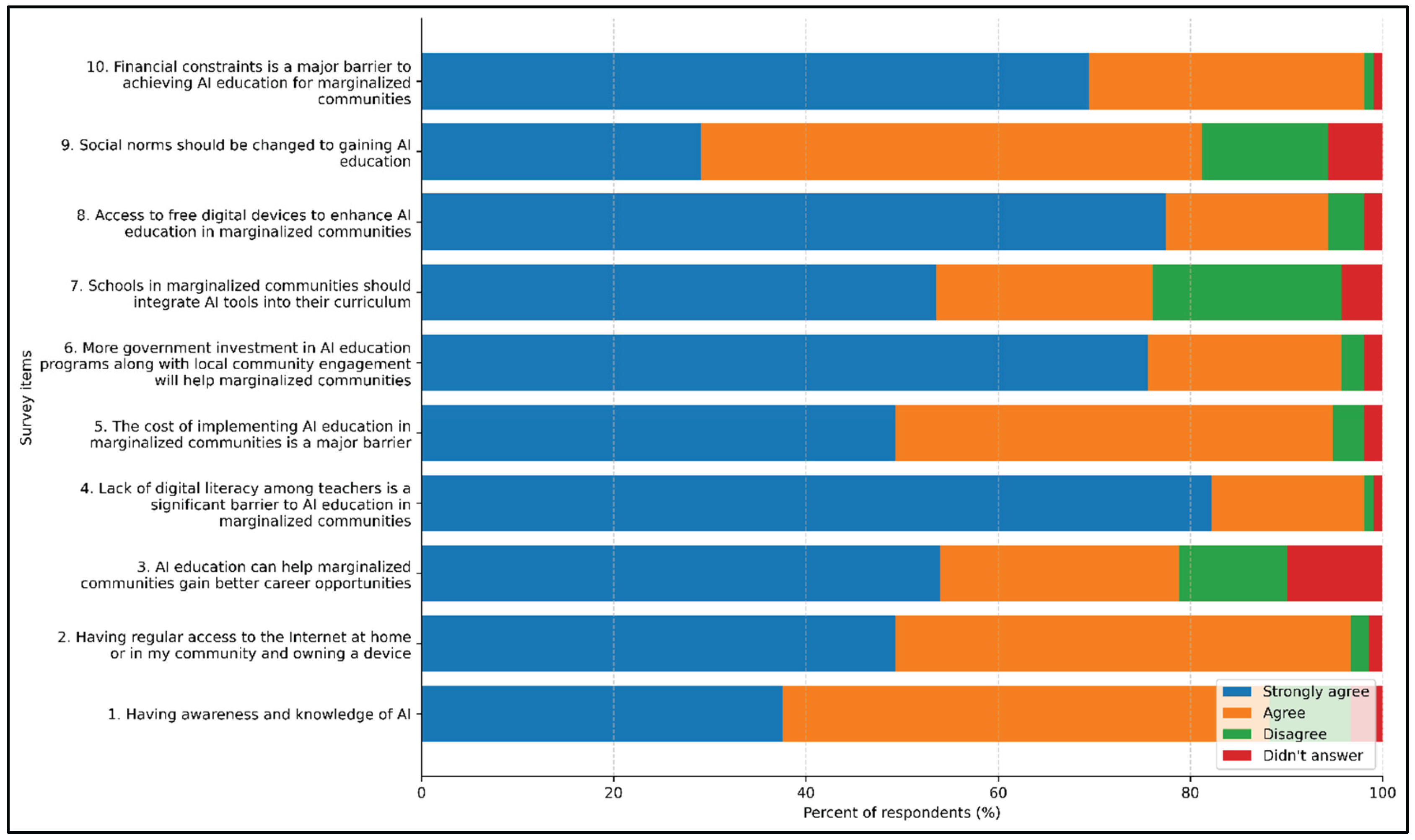
Figure 3 summarizes respondents’ perceptions of AI education and government policy efforts in marginalized communities. Overall, AI awareness is high: 88.25% of respondents (37.55% strongly agreed; 50.70% agreed) reported being knowledgeable about AI. A similarly strong enabling baseline is reflected in access indicators, with 96.7% (49.29% strongly agreed; 47.41% agreed) reporting regular internet access and personal devices, suggesting broad readiness for AI-supported learning. Perceptions of government action are also strongly positive, with 97.64% of respondents believing the government is taking steps to promote AI education. However, the results indicate that current measures remain insufficient in practice.
4. Discussion
This study examined how AI adoption and the quality of policy implementation jointly shape inclusive educational outcomes for marginalized learners in Bangladesh, using mixed-methods evidence from Sherpur Sadar Upazilla. The findings support a central conclusion: AI can foster inclusion, but its effects are conditional—they depend on the alignment of (i) device and connectivity readiness, (ii) teacher and institutional capacity, and (iii) policy execution that translates national intent into local delivery. Significantly, the convergent design strengthens interpretive confidence because the quantitative patterns (regression and disparity analyses) are consistent with stakeholder narratives identifying teacher preparedness, affordability constraints, and trust concerns as the dominant practical barriers (see Table 3).
Despite these encouraging signals, Figure 3 also highlights persistent constraints that may limit effective implementation. Teacher-related capacity gaps emerge as the most prominent barrier, with 98.11% of respondents (82.15% strongly agreed; 15.96% agreed) identifying limited teacher digital literacy as a significant obstacle. Financial barriers are equally salient: 98.11% (69.48% strongly agreed; 28.63% agreed) cited economic constraints as limiting AI education, and 94.82% reported that high implementation costs remain a significant challenge. These findings imply that awareness and basic access alone are not enough; without sustained investment in teacher upskilling and affordability measures, adoption may remain uneven or superficial.
The results further suggest substantial perceived benefits and broad support for scaling AI education. Most respondents (78.87%; 53.99% strongly agreed; 24.88% agreed) believe AI education can enhance career opportunities, indicating expectations of vocational and economic value. Support for institutional integration is also high, with 76.05% endorsing AI integration in schools. However, the data also point to socio-cultural constraints: 13.14% disagreed with AI integration, and 7.98% did not respond, indicating that social norms and uncertainty continue to influence acceptance in some groups.
Respondents also articulated clear priorities for policy and practice. The strongest recommendation concerns increased government investment, with 95.76% emphasizing the need for greater funding for AI education programs. Teacher training is presented as essential for bridging digital literacy gaps and ensuring meaningful classroom integration. Financial support mechanisms are also strongly endorsed, with 94.36% supporting the provision of free digital devices to improve accessibility. In addition, respondents emphasized curriculum reform—integrating AI into school curricula to prepare students for future careers—and the need to address cultural resistance through awareness-raising and community engagement.
Taken together, Figure 3 indicates robust public support for AI education in marginalized communities and widespread recognition of its potential for career advancement and economic inclusion. However, financial constraints, inadequate teacher preparedness, and socio-cultural resistance remain key barriers to equitable and sustainable implementation. A multi-pronged approach—combining increased funding, systematic teacher training, targeted affordability measures, curriculum integration, and community-based engagement—appears necessary to translate high acceptance and perceived government effort into inclusive, long-term impact.
The regression model explains a substantial share of outcome variance (R² = 0.67; Adj. R² = 0.63), indicating that the four predictors capture meaningful dimensions of how AI-enabled education operates in this setting. The standardized coefficients also clarify relative importance: AI tool adoption (β = 0.38, p < 0.001) emerged as the strongest positive predictor of the composite educational outcome score, implying that more frequent and effective use of AI tools is associated with higher performance and participation outcomes, holding other factors constant. This result is consistent with the study’s conceptualization of AI as a pedagogical enhancer, where adaptive support and improved learning engagement can translate into measurable learning gains (Karmaker & Cvetković, 2025). Institutional support (β = 0.25, p = 0.01) also showed a significant positive association, suggesting that organizational capacity—such as support services, guidance, and resources—enables schools to convert AI availability into consistent educational benefit (Karmaker & Cvetković, 2025).
In contrast, the policy implementation gap (β = −0.12, p = 0.04) is negatively associated with outcomes, implying that where policies are not implemented as intended, AI-related benefits are reduced. From an interpretive standpoint, this coefficient is substantively meaningful, even if modest in magnitude: it indicates that policy quality matters not only through adoption or coverage, but also through the operational mechanisms that determine whether schools receive training, devices, and sustained support. Because this effect lies near conventional significance thresholds, it should be described cautiously and treated as a signal for replication rather than a definitive causal claim. Nonetheless, its direction aligns with descriptive results (e.g., only 27.8% full implementation despite 50–55% policy adoption), supporting the interpretation that governance capacity and delivery constraints shape outcomes (Mannan et al., 2023).
Finally, digital infrastructure quality (β = 0.17, p = 0.12) is positive but not statistically significant in the multivariable model. This does not imply that infrastructure is unimportant; instead, it suggests that infrastructure may operate indirectly or conditionally—for example, through device capability, institutional support, or usage intensity. Put differently, connectivity and hardware are necessary enabling conditions, but they may not predict outcomes independently when other constraints (teacher readiness, institutional capacity, affordability) remain binding (see Table 3).
The results consistently show that the digital divide remains a structural determinant of inclusion. Reliable internet access is substantially higher in urban than rural settings (94.6% vs. 69.7%; χ² = 15.67, p < 0.001), directly limiting the functionality of AI tools that require stable connectivity or greater computing capacity. Beyond connectivity, the evidence indicates that device readiness is the key constraint: smartphone access expanded markedly, but tablet/laptop access remained low, producing a two-tiered learning environment. This interpretation is supported by the hierarchical regression, which shows that device type moderates AI access quality (Adjusted R² = 0.41), and by the stronger predictive power of tablets (β = 0.51) relative to smartphones (β = 0.38). In practical terms, “access” is not binary; the type of device shapes the depth of AI-enabled learning (e.g., ability to run more advanced interactive or multimodal learning applications) (UNESCO, 2021). This helps explain why adoption can increase while learning gains remain uneven across geographies (Kuteesa & Akpuokwe, 2024).
This mechanism is visible in the descriptive tables as well. Table 3 shows smartphone penetration reaching ~70% by 2024, while tablets/laptops stagnate near ~25%, and Table 4 indicates rural learners are substantially more likely to be constrained to smartphone-compatible tools (68% rural vs. 22% urban). The combined evidence suggests that rural learners may experience participation without parity: engagement is possible, but the learning activities and tools available are less capable of producing advanced outcomes, reinforcing a persistent gap in measured performance (Sultana, 2023).
The policy results illustrate a typical pattern in education reform: institutional uptake can expand faster than implementation capacity can keep pace. Although 50–55% of institutions reported adopting AI-related policies by 2024, only 27.8% achieved full implementation, suggesting that policy “coverage” may overestimate actual implementation. This finding provides a plausible explanation for the tiered pattern observed in Table 2. The 2022 Digital School Initiative corresponds to the largest increase in adoption (Table 1). However, it also coincides with peak urban bias—suggesting that scaling efforts can inadvertently advantage institutions already positioned to implement them. By contrast, the 2023 Rural AI Labs are the only initiative associated with a measurable reduction in geographic gaps (−3 points), implying that equity-oriented targeting—rather than broad scaling—has a greater likelihood of reducing disparities (Islam et al., 2024).
The observed improvement associated with bundled device–training interventions (β = 0.33, p = 0.03) provides further interpretive support for this conclusion. Bundles likely work because they address multiple constraints simultaneously: devices enable tool access, while training enables effective pedagogical use. This result is consistent with the broader finding that infrastructure alone is insufficient if educators and institutions lack the capacity to integrate tools into teaching practice (Çolpan & Yıldırım, 2025).
Teacher readiness emerged as a decisive factor in both the quantitative and qualitative strands. The rural–urban teacher competency gap (28% rural vs. 65% urban; χ² = 18.4, p < 0.001) is large enough to shape not only adoption levels but also the type of AI implementation. The greater reliance on chatbots in rural initiatives (42% rural vs. 18% urban; OR = 3.2) is consistent with an implementation logic in which schools default to tools that require minimal instructional redesign when teacher capacity is limited. However, this substitution effect can limit the impact of learning if chatbot use is not integrated into coherent instructional practices. In this context, Sherpur Sadar’s “AI Mentor” program—reducing resistance by 40%—is important because it points to a scalable strategy: continuous coaching and peer support may produce more durable capacity gains than short, one-off training sessions (Akan, 2024).
The evidence for the learning outcome aligns with this interpretation. Urban students experienced substantially larger test-score gains (+19.2 points) than rural students (+4.5 points), and these differences mirror patterns of device access and teacher capacity. The convergence of these results suggests that AI effectiveness is multiplicative rather than additive: device readiness, teacher competence, and institutional support interact to determine whether AI adoption translates into meaningful learning gains (Mazumder & Hossain, 2024).
A distinctive contribution of this study is its explicit attention to risk and trust, which are often treated as secondary in technology adoption research. The findings show that algorithmic distrust is 2.3× higher in rural communities, with heightened skepticism among female students (Akan, 2024). This has important implications for sustainability: even if devices and training improve, adoption may stall if learners and communities perceive AI as unfair, opaque, or risky. The pilot audit results indicate that transparency measures can reduce distrust by approximately 28%, and the stronger responsiveness observed in rural institutions suggests that trust-building interventions may be especially impactful in settings with low baseline trust. From a policy standpoint, this supports an international-standard argument: fairness and transparency safeguards are not optional ethical additions; they are implementation prerequisites for inclusive scaling (Gallego-Arrufat et al., 2024).
Taken together, the evidence supports a policy–risk–innovation framework in which inclusive AI outcomes depend on four interacting pillars: (1) AI adoption as a pedagogical enhancer, (2) institutional capacity and support, (3) policy execution quality (closing the implementation gap), and (4) risk governance (privacy, fairness, transparency, and accountability) (ref). The regression results identify adoption and institutional support as the strongest direct predictors of outcomes. In contrast, disparity analyses and moderation results show that device type and teacher capacity determine whether adoption is meaningful or merely superficial (Çolpan & Yıldırım, 2025). Risk and trust function as cross-cutting conditions that influence uptake, legitimacy, and long-term sustainability (UNESCO, 2021).
Several limitations shape the interpretation of these results (ref). First, reliance on self-reported indicators may underestimate implementation barriers; future studies should triangulate with objective usage logs, classroom observations, and administrative records where feasible. Second, the policy-gap effect (p = 0.04) should be tested through replication and sensitivity analyses, including alternative model specifications and stricter inference thresholds (Rahman & Parvin, 2024). Third, longitudinal research is needed to assess whether tablet-focused interventions deliver durable gains over time and whether mobile-first, device-agnostic solutions can produce comparable benefits under realistic cost constraints (see Table 3). Finally, further work should evaluate the cost-effectiveness and scalability of teacher-mentor models and examine culturally adapted explainability and risk-communication strategies—particularly for rural communities and female learners—to ensure that AI adoption advances equity rather than reproducing existing inequalities (Rahman & Parvin, 2024).
5. Conclusions
This study shows that artificial intelligence can support more inclusive and equitable education in Bangladesh when it is applied as a pedagogical enhancer (e.g., personalized learning environments and intelligent tutoring systems) rather than treated primarily as a curricular subject. Mixed-methods evidence from Sherpur Sadar Upazilla indicates that AI-related benefits are not distributed evenly: improvements are shaped by a persistent rural–urban implementation gap and by differences in schools’ capacity to translate technology into learning gains. The findings highlight that effective AI-supported learning depends less on general “technology availability” and more on whether learners and schools have access to suitable learning devices, reliable connectivity, and the instructional capacity to integrate AI into everyday teaching practices.
The study also underscores that policy impact is determined by implementation quality, not only policy adoption. Where policies are not fully operationalized at the school level—through appropriate resourcing, training, and support—AI initiatives tend to produce uneven outcomes and may unintentionally reinforce existing inequalities. In addition, risk and trust factors are central to sustainable adoption. Concerns related to privacy, bias, and transparency—especially in disadvantaged settings—can reduce acceptance and participation, underscoring the need to embed ethical safeguards into AI deployment rather than address them only after systems are scaled.
On this basis, three priorities emerge. First, efforts to improve inclusion should focus on device readiness and infrastructure parity, ensuring that marginalized learners can access AI tools that support advanced learning activities rather than only basic, mobile-compatible functions. Second, teacher development and institutional support should be strengthened through sustained, locally relevant training and ongoing mentoring that helps educators translate AI tools into effective classroom practice. Third, governance and risk protections should be reinforced through precise accountability mechanisms, transparency practices, and practical fairness safeguards that build trust and reduce harm for vulnerable groups.
Future research should assess the long-term educational effects of different device strategies, compare tablet-centered and mobile-first approaches under realistic cost constraints, and evaluate scalable teacher-support models that can be embedded within existing education systems. Additional work is also needed to refine culturally adaptive AI tools and communication approaches that strengthen trust and participation across diverse communities. Overall, the evidence suggests that AI can advance educational inclusion, but only when innovation is paired with targeted implementation capacity and robust safeguards so that technology reduces—rather than reproduces—structural disadvantage.
Funding
This research received no specific grant from funding agencies in the public, commercial, or not-for-profit sectors.
Conflicts of Interest
The authors confirm that there are no conflicts of interest to report.
Competing Interest Statement
The author declares that there are no competing interests related to this work.
Acknowledgments of Contributors
The author acknowledges the valuable support of individuals and organizations who contributed to this research through technical guidance and constructive feedback.
The author acknowledges the use of Grammarly Premium and ChatGPT 5.2 in the process of translating and improving the clarity and quality of the English language in this manuscript. The AI tools assisted in language enhancement but were not involved in developing the scientific content. The authors take full responsibility for the originality, validity, and integrity of the manuscript.
Plagiarism statement
The author confirms that the paper is free of plagiarism.
Data Availability Statement
This research uses data from the dataset: Karmaker, R. (2025). The role of AI and government policies in inclusive education for marginalized communities. Figshare. https://doi.org/10.6084/m9.figshare.28329851.v1 The data are freely available and openly accessible for public use under the applicable terms and conditions.
References
- Ahmad, I.; Sharma, S.; Singh, R.; Gehlot, A.; Gupta, L. R.; Thakur, A. K.; Twala, B. (2024). Inclusive learning using Industry 4.0 technologies: Addressing student diversity in modern education. Cogent Education 11(1), Article 2330235. [CrossRef]
- Ahmed, R. (2024). Evolution of educational reforms in Bangladesh: A comparative study of national education commissions (1972–2009). Journal of Digital Learning and Distance Education 3(6), 1141–1153. [CrossRef]
- Ahmed, S. (2022). E-learning inequalities for disabled students in Bangladesh: COVID-19 perspective. Social Science Review 39(3), 73–91. [CrossRef]
- Akan, T. (2024). AI and EdTech for educational parity: Lessons for Bangladesh from global practices [Preprint]. ResearchGate. [CrossRef]
- Akram, A. A.; Majid, H. (2024). Inclusivity, gender, and learning gains: Are online education platforms the answer? Journal of Economics, Race, and Policy 1–12. [CrossRef]
- Akter, S. (2024). Digitalization of education in rural schools: A study of access, utilization, and impact toward digitalization in Bangladesh. American International Journal of Multidisciplinary Scientific Research 15(1), 1–9. [CrossRef]
- Aryal, A. (2024). From digital divide to digital empowerment: Transforming marginalized communities. Social Innovations Journal 25. Retrieved from https://socialinnovationsjournal.com/index.php/sij/article/view/8242.
- Aziz, A. (2020). Digital inclusion challenges in Bangladesh: The case of the National ICT Policy. Contemporary South Asia 28(3), 304–319. [CrossRef]
- Babu, K. E. K. (2021). Artificial intelligence in Bangladesh, its applications in different sectors, and relevant challenges for the government: An analysis. International Journal of Public Law and Policy 7(4), 319–333. [CrossRef]
- Badiuzzaman, M. (2024). The digital divide among families of children with disabilities in technology-integrated family–school partnerships in Bangladesh (Doctoral dissertation). UNSW Sydney. [CrossRef]
- Beriša, H.; Cvetković, V.; Pavić, A. (2024). Implications of artificial intelligence and cyberspace on risk management capabilities. International Journal of Disaster Risk Management 6(2), 279–295. [CrossRef]
- Çolpan Güngördü, D.; Yıldırım, Z. (2025). An online community of practice for teacher professional development on technology integration as cognitive tools in mathematics teaching. Education and Information Technologies. Advance online publication. [CrossRef]
- Cvetković, V. (2017). Metodologija istraživanja katastrofa – teorije, koncepti i metode [Methodology Research of Disasters – Theories, Concepts and Methods]. Beograd: Zadužbina Andrejević.
- Digital literacy and educational empowerment among rural women in Bangladesh: Bridging the technology access gap. (2025). International Journal of Disaster Risk Management 7(2), 239–262. [CrossRef]
- Emon, M. M. H., Khan, T., Rahman, M. A., & Siam, S. A. J. (2024). Factors influencing the usage of artificial intelligence among Bangladeshi professionals: Mediating role of attitude towards the technology. In 2024 IEEE International Conference on Computing, Applications and Systems (COMPAS) (pp. 1–7). IEEE. [CrossRef]
- Empowering academic communities through AI literacy: A community service initiative on ChatGPT integration in Bangladesh’s higher education. (2026). ASEAN Journal of Community Service and Education 5(1), 61–72.
- Female education in the world of technology: Wading obstacles facing religious and social barriers. (2024). ASEAN Journal of Religion, Education, and Society 3(1), 23–36.
- Gajović, A., Cvetković, V. M., Renner, R., & Milašinović, S. (2025). Digital Platform for Ecological Education of Students–Advancing the United Nations Sustainable Development Goals and the European Green Deal: The Case of ProSafeNet (Global Hub). [CrossRef]
- Gallego-Arrufat, M.J.; García-Martínez, I.; Romero-López, M.A.; Torres-Hernández, N. (2024). Digital rights and responsibility in education: A scoping review. Education Policy Analysis Archives 32. [CrossRef]
- Hossain, M. M.; Fakir, J.; Kapali, S. (2025). Artificial intelligence and the right to education: A literature review for developing a theoretical framework. International Journal of Multidisciplinary Research 1(1), 23–40. Retrieved from https://journal.cryd.org/index.php/ijmr/article/view/5.
- Hossain, M. M., Rahman, M., Trisha, N. F., Tasnim, S., Nuzhath, T., Hasan, N. T., … Ma, P. (2021). Prevalence of anxiety and depression in South Asia during COVID-19: A systematic review and meta-analysis. Heliyon 7(4), Article e06677. [CrossRef]
- Hossen, M. D.; Abedin, M. Z.; Chowdhury, T. M.; Islam, Z.; Kabir, M. R. (2025). Unveiling the impact of e-governance on the transformation from digital to smart Bangladesh. Pakistan Journal of Life & Social Sciences 23(1). [CrossRef]
- Iqbal, S.; Bhatti, Z. A. (2020). A qualitative exploration of teachers’ perspective on smartphone usage in higher education in developing countries. International Journal of Educational Technology in Higher Education 17, Article 29. [CrossRef]
- Islam, F., Mayeesha, T. T., & Ahmed, N. (2024). Know your users: Towards explainable AI in Bangladesh. In Companion of the 2024 ACM International Joint Conference on Pervasive and Ubiquitous Computing (pp. 890–893). [CrossRef]
- Islam, K. T.; Alam, M. J. (2024). Inclusive higher educational opportunity and environments to achieve SDG4 in Bangladesh: Lessons from Japan. International Journal of Educational Research Open 6, Article 100317. [CrossRef]
- Islam, M. N.; Inan, T. T. (2021). Exploring the fundamental factors of digital inequality in Bangladesh. SAGE Open 11(2). [CrossRef]
- Islam, M. R. (2024). Empowering marginalized communities: A Bangladesh perspective. In Family planning and sustainable development in Bangladesh: Empowering marginalized communities in Asian contexts (pp. 67–84). Emerald Publishing Limited. [CrossRef]
- Islam, M. T.; Hasan, M. M.; Redwanuzzaman, M.; Hossain, M. K. (2024). Practices of artificial intelligence to improve the business in Bangladesh. Social Sciences & Humanities Open 9, Article 100766. [CrossRef]
- Islam, N.; Jirattikorn, A. (2024). Breaking gender barriers in STEM education for achieving the SDG of quality education in Bangladesh. Development in Practice 34(1), 129–135. [CrossRef]
- Karmaker, R. (2025). Advancing Faster than Male: Female Achievement and Employment Outcomes in Bangladesh. International Journal of Contemporary Security Studies 1(2), 25–50. [CrossRef]
- Karmaker, R.; Cvetković, V. M. (2025). Digital Literacy and Educational Empowerment Among Rural Women in Bangladesh: Bridging the Technology Access Gap. International Journal of Disaster Risk Management 7(2), 239–262. [CrossRef]
- Kuteesa, K.; Akpuokwe, C. (2024). Gender equity in education: Addressing challenges and promoting opportunities for social empowerment. International Journal of Applied Research in Social Sciences 6(4), 631–641. [CrossRef]
- Mannan, M., Maruf, T. I., Mustafa, Z., & Aziz, S. (2023). Technology adoption for higher education in Bangladesh: Development and validation [Preprint]. Zenodo. [CrossRef]
- Mazumder, R.; Hossain, M. A. (2024). AI office assistant: Accelerating the vision of Smart Bangladesh. Valley International Journal Digital Library 12(5), 1234–1244. [CrossRef]
- Nazari, Z.; Vahidi, A. R.; Musilek, P. (2024). Blockchain and artificial intelligence non-formal education system (BANFES). Education Sciences 14(8), 881. [CrossRef]
- Rahman, M. A., & Parvin, R. A. (2024a). Advancing Bangladesh’s digital transition: From digital foundations to technological leadership [Preprint]. Preprints.org. [CrossRef]
- Rahman, M. A., & Parvin, R. A. (2024b). Bangladesh’s digital evolution: Drivers, impacts, and future opportunities [Preprint]. Preprints.org. [CrossRef]
- Rana, M.; Rahman, A. (2022). Attitude of citizens towards e-government services in digital Bangladesh. Dhaka University Journal of Management 161–189. [CrossRef]
- Sabur, M. A. (2019). Bridging the digital divide is now priority concern for Digital Bangladesh. Social Change 9(1), 141–160. Retrieved from https://api.semanticscholar.org/CorpusID:251709684.
- Shifa, F. K. (2024). Identifying the challenges of families living in rural areas while using the internet [Internship report]. Brac University Institutional Repository. Retrieved from http://hdl.handle.net/10361/24248.
- Siddiquee, M. S. H., & Islam, M. S. (2020). Understanding the first and second digital divides in rural Bangladesh: Internet access, online skills, and usage (Working Paper No. 59). BRAC Institute of Governance and Development (BIGD). Retrieved from https://bigd.bracu.ac.bd/wp-content/uploads/2021/03/Understanding-the-First-and-Second-Digital-Divides-in-Rural-Bangladesh_working-paper.pdf.
- Sikder, A. S. (2023). Artificial intelligence-enabled transformation in Bangladesh: Overcoming challenges for socio-economic empowerment. International Journal of Imminent Science & Technology 1(1), 77–96. [CrossRef]
- Sultana, S. (2023). Computing for recognition: Design and development of just technologies with marginalized communities (Doctoral dissertation). Cornell University eCommons. Retrieved from https://ecommons.cornell.edu/items/6a7234d1-b041-4669-953d-f1e7f8f19961.
- Tamanna, M., & Sinha, B. (2024). A conceptual analysis of artificial intelligence (AI) on academic opportunities and challenges: A case study based on higher educational institutions in Bangladesh. Quality Assurance in Education. Advance online publication. [CrossRef]
- Tarafdar, S., Afroz, S., & Ashrafuzzaman, M. (2025). Artificial intelligence and the future of education in Bangladesh: Impact, challenges, and ethical implications of AI on student learning. In AI adoption and diffusion in education (pp. 287–320). IGI Global Scientific Publishing. [CrossRef]
- UNESCO. (2021). AI and education: A guide for policy-makers. Paris, France: United Nations Educational, Scientific, and Cultural Organization. Retrieved from https://unesdoc.unesco.org/ark:/48223/pf0000376709.
- Vaskar, C.; Misbahul, A.; Abdur, R.; Al Mahmud, S.; Raju, M.; Mustavi, R. (2025). From margins to mainstream (M2M): Can artificial intelligence (AI) reshape governance for Chittagong Hill Tracts indigenous communities? European Journal of Theoretical and Applied Sciences 3(1), 166–178. [CrossRef]
- Wafik, H. A.; Mahbub, S.; Arif, Z.; Prince, S. K. A.; Huda, M. N. (2024). Academicians’ perspectives on AI integration in Bangladesh’s education: Balancing promise and ethical realities. Cognizance Journal of Multidisciplinary Studies 4(2), 139–158. [CrossRef]
- Zonaid, M. (2024). Skillsynth: AI-driven personalized education platform (Doctoral dissertation). Daffodil International University Institutional Repository. Retrieved from https://internship.daffodilvarsity.edu.bd/images/report_final/27921.pdf.
Figure 2.
Participants’ perspectives on the most effective measures to be taken to implement AI and the future of education in Bangladesh. Source. Field Survey 2024: Background information of the respondents about advancing educational equity: the role of AI and government policies in inclusive education for marginalized communities.
Figure 2.
Participants’ perspectives on the most effective measures to be taken to implement AI and the future of education in Bangladesh. Source. Field Survey 2024: Background information of the respondents about advancing educational equity: the role of AI and government policies in inclusive education for marginalized communities.
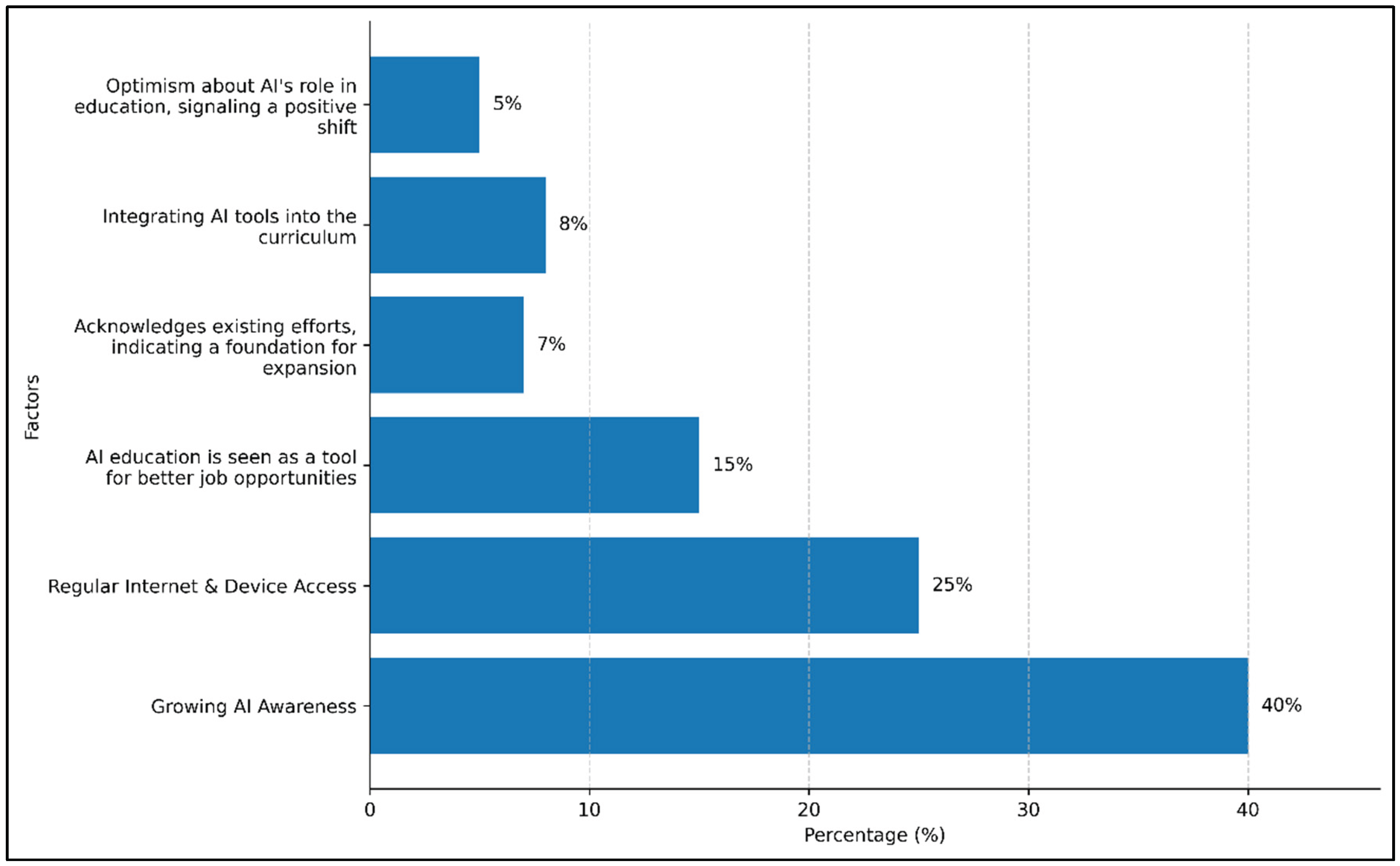
Figure 3.
Respondents’ views on field data gathered surveying facts regarding The Role of AI and Government Policies in Inclusive Education. Source: Field Survey 2024 Background information of the respondents on field data gathered surveying facts regarding The Role of AI and Government Policies in Inclusive Education.
Figure 3.
Respondents’ views on field data gathered surveying facts regarding The Role of AI and Government Policies in Inclusive Education. Source: Field Survey 2024 Background information of the respondents on field data gathered surveying facts regarding The Role of AI and Government Policies in Inclusive Education.
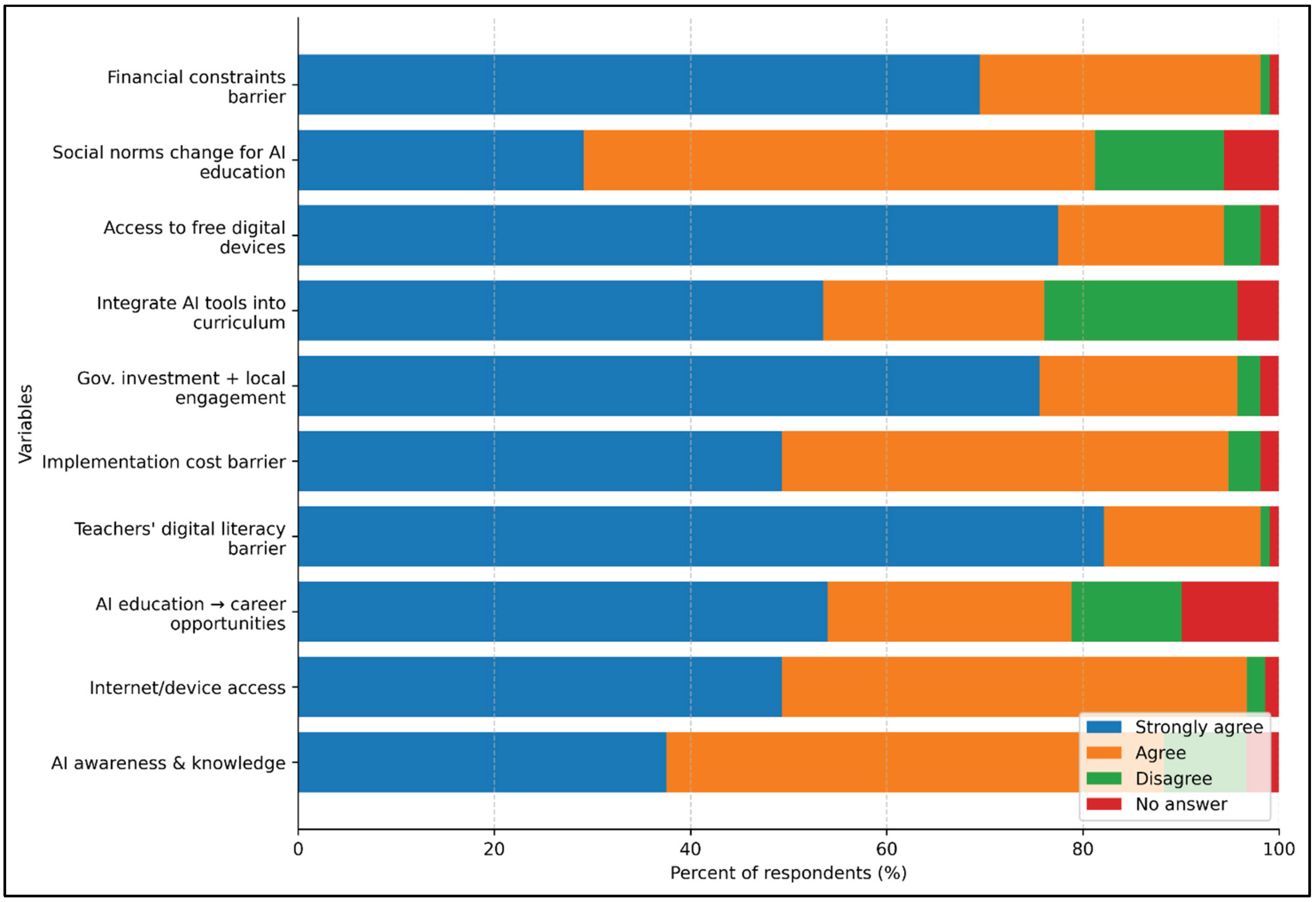
Table 3.
Regression coefficients and interpretation.
| Predictor | β | SE | t | p | 95% CI | Interpretation |
|---|---|---|---|---|---|---|
| AI Tools (X1) | 0.38 | 0.08 | 4.75 | <0.001 | [0.22, 0.54] | Strongest positive driver |
| Policy Gap (X2) | −0.12 | 0.06 | −2.00 | 0.04 | [−0.24, −0.01] | Indicates misalignment in implementation |
| Institutional Support (X3) | 0.25 | 0.09 | 2.78 | 0.01 | [0.07, 0.43] | Training/resources are critical |
| Infrastructure (X4) | 0.17 | 0.11 | 1.55 | 0.12 | [−0.05, 0.39] | Not significant without complementary supports |
Table 1.
AI Applications in Education for Marginalized Communities in Bangladesh (2019–2024).
| Year | % AI Adoption | Key Driver (Evidence) | Urban-Rural Gap |
|---|---|---|---|
| 2019 | 3-5% | Limited device access (Table 3: Smartphones 15-20%) | +4pts urban |
| 2020 | 7-10% | Smartphone surge (Table 3: 50-55%; β=0.38, p<.001) | +8pts urban |
| 2021 | 12-15% | Low-cost apps + NGO partnerships | +10pts urban |
| 2022 | 20-25% | Digital School Initiative (Table 2: 30-35% policy implementation) | +15pts urban (χ²=6.7, p=.01) |
| 2023 | 30-35% | Gov-NGO “AI Labs” | Gap ↓3pts |
| 2024 | 40-45% | Chatbot adoption (Table 3: Smartphones 65-70%) | 12pt gap persisted |
Sources: BANBAIS (2020). AI in Education for Marginalized Communities in Bangladesh. Bangladesh National Board of Accreditation and Institutional Support. ICT Department, Bangladesh (2021). AI Tools for Education: Bridging the Gap for Marginalized Communities. Ministry of ICT. World Bank (2022). Digital Learning Tools for Marginalized Communities in Bangladesh: AI Applications. Asian Development Bank (ADB) (2023). Leveraging AI for Inclusive Education in Bangladesh’s Rural Communities. The Daily Star (2022, Jan 10). AI in Education: Expanding Access for Marginalized Communities in Bangladesh. The Business Standard (2023, Mar 25). Artificial Intelligence in Bangladesh’s Education System: A Hope for the Underprivileged.
Table 2.
Government Policies Supporting Inclusive Education for Marginalized Communities in Bangladesh (2019–2024).
Table 2.
Government Policies Supporting Inclusive Education for Marginalized Communities in Bangladesh (2019–2024).
| Year | % Policy Implementation | Key Initiatives | → AI Adoption Growth (Table 1) | Equity Impact |
|---|---|---|---|---|
| 2019 | 10-12% | Awareness programs | Baseline (3-5%) | Urban +4pts |
| 2020 | 15-18% | Pandemic remote learning | +4pts (→7-10%) | Urban +8pts |
| 2021 | 20-25% | AI tutor deployments | +5pts (→12-15%) | Urban +10pts |
| 2022 | 30-35% | Digital School Initiative | +8pts (→20-25%) | Urban +15pts (χ²=6.7, p=.01) |
| 2023 | 40-45% | Rural AI Labs | +10pts (→30-35%) | Gap ↓3pts |
| 2024 | 50-55% | National AI curriculum | +10pts (→40-45%) | Gap stabilized |
Sources: Ministry of Education, Bangladesh (2020). Government Policies for Inclusive Education in Bangladesh. Bangladesh National Education Policy (2021). Education for All: Government’s Inclusive Policy Initiatives. World Bank (2022). Promoting Digital Learning for Marginalized Communities in Bangladesh. The Daily Star (2023, Oct 12). Inclusive Education Policies for Marginalized Communities in Bangladesh.
Table 3.
Digital Device Ownership (2019-2024).
| Year | Percentage of Households with Mobile Phones | Percentage of Households with Smart Phones | Percentage of Households with Tablets/Laptops | Keynotes |
|---|---|---|---|---|
| 2019 | 60-65% | 15-20% | 5-7% | The majority owned basic mobile phones; access to smartphones and tablets was limited, especially in rural areas. |
| 2020 | 65-70% | 50-55% | 10-12% | Increased communication needs drive a rise in smartphone ownership during the pandemic. |
| 2021 | 70-75% | 55-60% | 12-15% | Smartphones became more widespread, but the affordability of tablets and laptops remained a challenge. |
| 2022 | 72-77% | 58-63% | 15-18% | Increased government efforts in digital education led to higher smartphone and tablet usage in rural areas. |
| 2023 | 75-80% | 60-65% | 18-22% | Continued digital transformation in education; mobile phone access was common, but tablets and laptops were still limited |
| 2024 | 80-85% | 65-70% | 22-25% | A significant rise in the ownership of smartphones, with more access to devices for education, though gaps remain in tablets/laptop ownership |
Sources: Bangladesh ICT Ministry (2021). Challenges in Device Ownership in Marginalized Communities. Asian Development Bank (ADB) (2023). Technological Barriers and Device Access in Marginalized Communities in Bangladesh. The Business Standard (2022, Mar 20). Access to Digital Devices in Marginalized Communities.
Disclaimer/Publisher’s Note: The statements, opinions and data contained in all publications are solely those of the individual author(s) and contributor(s) and not of MDPI and/or the editor(s). MDPI and/or the editor(s) disclaim responsibility for any injury to people or property resulting from any ideas, methods, instructions or products referred to in the content. |
© 2026 by the authors. Licensee MDPI, Basel, Switzerland. This article is an open access article distributed under the terms and conditions of the Creative Commons Attribution (CC BY) license (http://creativecommons.org/licenses/by/4.0/).
Copyright: This open access article is published under a Creative Commons CC BY 4.0 license, which permit the free download, distribution, and reuse, provided that the author and preprint are cited in any reuse.