

Submitted:
09 March 2026
Posted:
10 March 2026
You are already at the latest version
Abstract
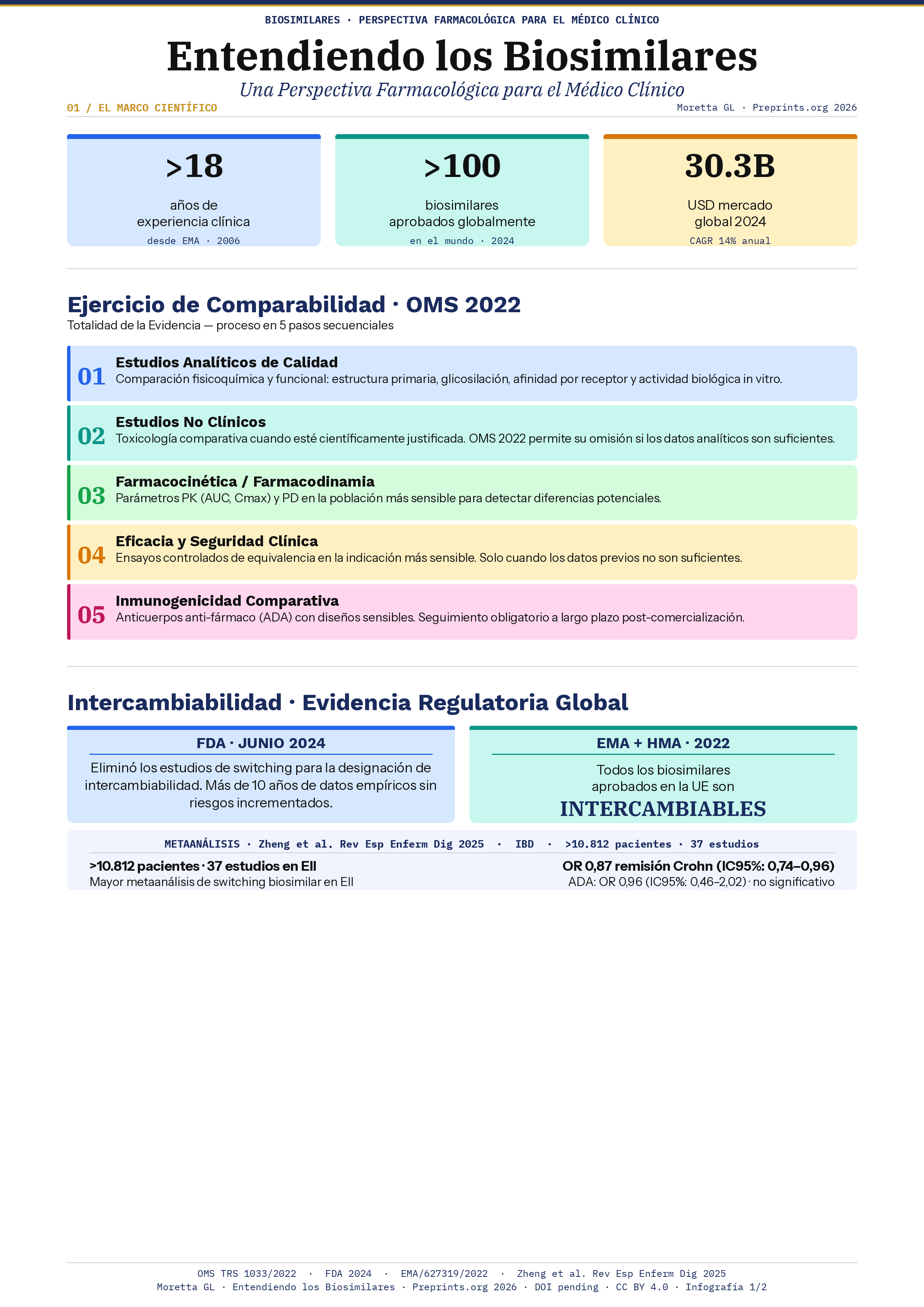
Background: Biosimilars represent a paradigm shift in access to biological therapies, yet physician understanding of their pharmacological basis, regulatory framework, and clinical implications remains heterogeneous. This review addresses the knowledge gap from a pharmacological perspective relevant to internists and clinical specialists. Objective: To provide a comprehensive, evidence-based narrative review of biosimilars for clinical physicians, covering definitions, the comparability exercise, interchangeability, therapeutic applications, global development, pharmacovigilance considerations, and the Latin American regulatory landscape. Methods: A narrative review was conducted using PubMed, WHO technical reports, FDA and EMA regulatory documents, and IQVIA market data. Studies published between 2009 and 2025 were included, with emphasis on systematic reviews, meta-analyses, WHO guidelines, and regional regulatory analyses. Results: The totality-of-evidence approach demonstrates that biosimilars exhibit no clinically meaningful differences from reference products in efficacy, safety, or immunogenicity. Meta-analyses of switching studies (>10,800 patients) confirm comparable outcomes. The FDA (2024) eliminated switching study requirements for interchangeability designation, while the EMA declared universal interchangeability in 2022. The global market reached USD 30.3 billion in 2024. In Latin America, regulatory heterogeneity, limited technical capacity, and prescriber misconceptions remain barriers despite advancing frameworks in Brazil, Argentina, Mexico, and Colombia. Conclusions: Biosimilars are pharmacologically and clinically equivalent therapeutic alternatives supported by robust evidence. Clinical physicians should integrate biosimilars into their prescribing decisions with confidence, while advocating for strengthened pharmacovigilance systems and regulatory harmonization in their regions.
Keywords:
biosimilares
; ejercicio de comparabilidad
; intercambiabilidad
; farmacovigilancia
; América Latina
; terapia biológica
Copyright: This open access article is published under a Creative Commons CC BY 4.0 license, which permit the free download, distribution, and reuse, provided that the author and preprint are cited in any reuse.


