

Submitted:
06 March 2026
Posted:
09 March 2026
Read the latest preprint version here
Abstract
Reliable and resilient communication systems are essential for first responders, enabling quick coordination and effective emergency responses. However, traditional communication networks often encounter congestion, interoperability problems, and failures during large-scale disasters. To address these challenges, specialized networks like FirstNet have been developed, leveraging advancements in LTE and 5G, as well as priority access mechanisms, to enhance reliability and coverage. This paper examines the technological advancements in first-responder communication systems, highlighting the limitations of legacy networks and the enhancements offered by modern solutions. We examine key components, including network prioritization, spectrum allocation, and integration with AI-driven traffic management. Additionally, this study assesses the role of digital twins in bolstering network resilience and fault tolerance for emergency communications. By synthesizing recent advancements, this research provides insights into future developments and policy considerations necessary to ensure a seamless and robust communication infrastructure for first responders.
Keywords:
first responder communication
; FirstNet
; network operations
; telecommunications
; network optimization
1. Introduction
Reliable and resilient communication systems form the backbone of effective emergency response, yet traditional networks have repeatedly demonstrated vulnerabilities in large-scale disaster scenarios [1]. As emergencies become increasingly complex and demand faster, more coordinated responses, the evolution of first-responder communication systems has emerged as a critical area of research and development. Historically, legacy communication infrastructures have supported emergency services, but issues such as network congestion, interoperability challenges among disparate agencies, and infrastructural failures during crises have underscored the urgent need for more robust solutions [2]. This paper examines the technological evolution from conventional systems to modern innovations that leverage advancements in LTE, 5G, and specialized public safety networks, such as FirstNet.
Modern communication solutions are now designed to provide enhanced reliability, greater coverage, and superior performance under extreme conditions. FirstNet, for instance, is a dedicated public safety network developed to ensure that first responders receive priority access even during peak network congestion. This system utilizes advanced features, including spectrum allocation and network prioritization, to ensure that critical voice and data transmissions are maintained when needed most. Such capabilities represent a significant leap forward from traditional systems, which were often limited by their reliance on shared commercial networks and the use of incompatible technologies across different emergency agencies [3].
In parallel with these developments, integrating artificial intelligence (AI) and machine learning (ML) into emergency communication systems is revolutionizing how networks manage data traffic and allocate resources [4]. AI-driven traffic management systems can predict network load in real-time and dynamically optimize communication channels to reduce latency. This ensures that vital information, such as location tracking, biometric data, and live video feeds is transmitted without delay, enhancing situational awareness and decision-making capabilities during critical incidents. Additionally, digital twin technology is being deployed to create virtual replicas of communication networks [5], allowing engineers and planners to simulate various disaster scenarios, identify potential vulnerabilities, and test the resilience of network infrastructures before actual emergencies occur.
Despite these significant advancements, several challenges remain that must be addressed to realize the full potential of next-generation communication systems [6]. Interoperability remains a persistent issue, as first responders from different agencies and regions often rely on varied technologies that do not always integrate seamlessly. There is also a pressing need to secure the vast amounts of sensitive data transmitted over these networks, with cybersecurity threats posing a constant risk. Moreover, ensuring reliable connectivity in rural or disaster-affected areas is a complex challenge [7], necessitating ongoing research into alternative communication methods such as satellite integration and mesh networking.
The anticipated emergence of 6G networks by the 2030s presents promising new avenues for further enhancing first responder communications. Expected to provide unprecedented speed, ultra-low latency, and advanced AI-driven capabilities, 6G could enable innovations like holographic and extended reality (XR) communication, terahertz frequency utilization for high-bandwidth data transmission, and satellite-integrated networks for maintaining connectivity in the most remote or devastated areas [8]. However, successfully implementing these technologies will require coordinated international efforts, the establishment of standardized protocols, and robust regulatory frameworks to address ethical issues surrounding data privacy and security.
This paper synthesizes recent technological advancements and evaluates the persistent challenges in emergency communication, providing a comprehensive roadmap for future developments. It offers insights into how modern solutions can bridge the gap between current limitations and the pressing demands of increasingly complex emergency scenarios, ultimately guiding policymakers, emergency management professionals, and technologists in their efforts to build a seamless and robust communication infrastructure that empowers first responders to save lives and protect communities.
2. Background
Advancing First Responder Communication: Challenges, Innovations, and Future Directions
2.1. Importance of Communication in Emergency Response
Effective communication is the backbone of emergency response, allowing first responders to coordinate actions, allocate resources, and make real-time decisions in critical situations [9]. In natural disasters, terrorist attacks, or large-scale accidents, the ability of emergency personnel to communicate seamlessly can mean the difference between life and death. Emergency response teams, firefighters, police officers, and medical personnel must exchange information quickly to assess threats, provide medical aid, and ensure public safety [10].
However, traditional communication infrastructures often fail during emergencies due to network congestion, a lack of interoperability between agencies, or physical damage [11]. These challenges underscore the need for resilient, dedicated communication networks specifically designed for first responders.
2.2. Historical Evolution of First Responder Communication Systems
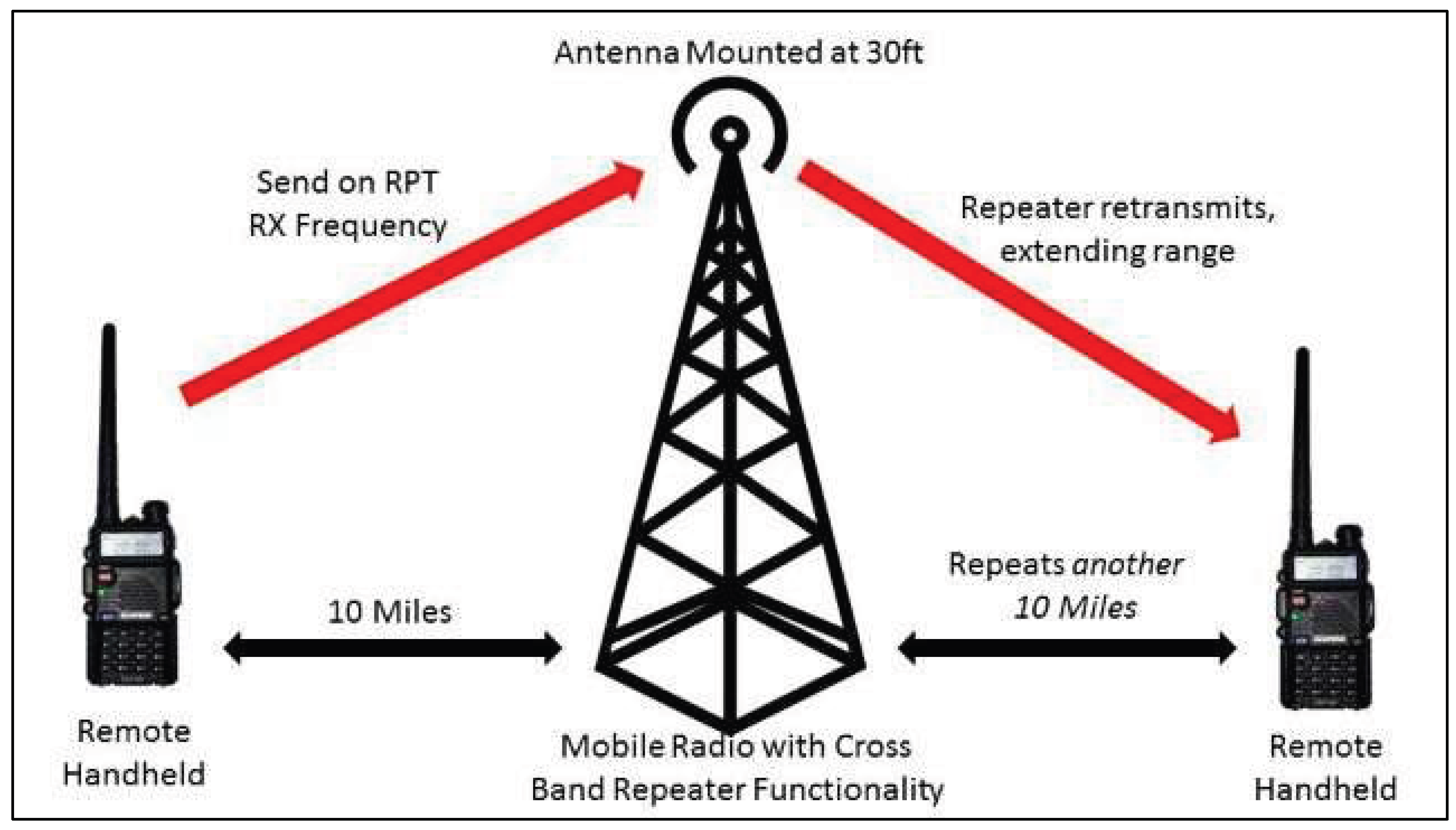
The history of first responder communication systems dates back to the early 20th century when police and fire departments relied on landline telephones and two-way radios, see figure. 1 [12]. In the 1930s and 1940s, radio-based communication gained prominence, allowing emergency personnel to exchange information more efficiently. The development of dedicated public safety radio networks in the 1970s and 1980s marked a significant step forward, but these systems were often fragmented and lacked standardization across agencies [13].
Figure 1.
Two-way radio system, Source: Multicom Communications.
The 1990s and early 2000s saw the introduction of digital trunked radio systems, as shown in Figure 2 [14], which improved spectrum efficiency and interoperability to some extent. However, major disasters, such as the September 11 attacks in 2001, exposed severe limitations in public safety communication [15]. Responders from different agencies struggled to communicate due to incompatible radio systems. This event underscored the need for a unified, nationwide public safety network.
2.3. Overview of FirstNet and Its Role in Public Safety Communication
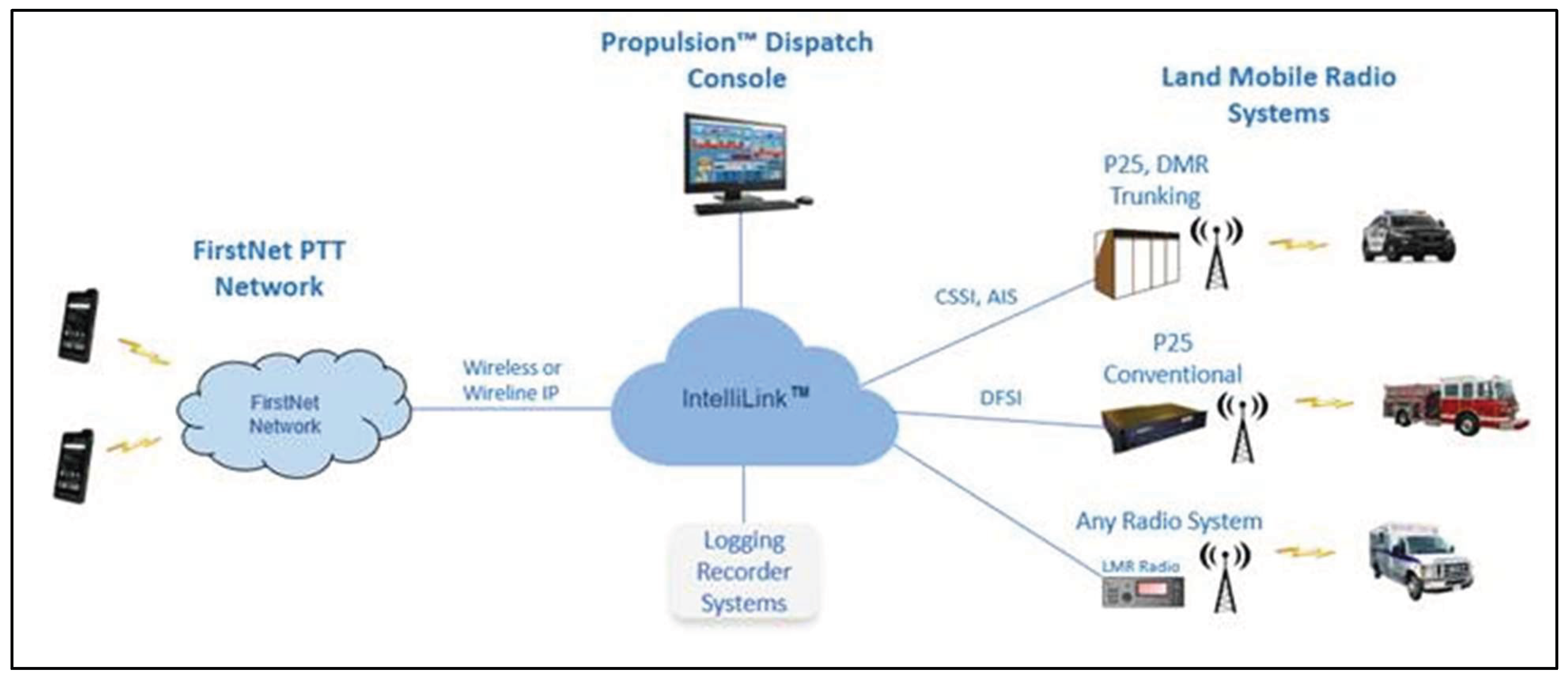
In response to these challenges, the U.S. government established FirstNet (First Responder Network Authority) in 2012 [16], following the recommendations of the 9/11 Commission. FirstNet is a nationwide, high-speed broadband network dedicated to first responders, designed to enhance communication reliability, interoperability, and security, see figure. 3 [17]. Operating on a dedicated portion of the 700 MHz spectrum, it provides prioritized access to emergency personnel even during network congestion. FirstNet offers several key advantages over traditional public safety communication systems, including priority and preemption, ensuring first responders receive priority access to the network and remain connected even in high-traffic situations. It extends nationwide coverage to rural and remote areas where commercial networks are unreliable, enables seamless communication across different jurisdictions through interoperability, and ensures resilience and security with hardened infrastructure, encryption, and cybersecurity measures. With continuous advancements, FirstNet is evolving to integrate emerging technologies such as 5G, AI-driven traffic management, and digital twin modeling for real-time network monitoring and optimization.
Figure 3.
FirstNet Architecture.
2.4. Challenges in Existing Systems
Despite advancements in first responder communication networks, several challenges remain. Interoperability issues persist as many local and state agencies continue to operate on disparate communication systems, making cross-agency coordination difficult. Reliability concerns arise from potential disruptions caused by natural disasters, cyberattacks, and infrastructure failures, hindering responders’ ability to coordinate efforts effectively. Coverage limitations in remote and rural areas further exacerbate connectivity challenges, preventing responders from maintaining reliable communication. Latency in data transmission also poses a challenge, as real-time data sharing, including video streaming and sensor-based monitoring, requires low-latency networks that are not always available in current public safety systems [18]. Additionally, cybersecurity threats continue to grow as public safety communication becomes more digital, necessitating stronger security measures to protect sensitive data from cyberattacks.
2.5. Emerging Threats and the Need for Modern, Resilient Communication Networks
As threats become more complex, first responders require advanced communication networks that adapt to dynamic situations, addressing challenges posed by cyber threats, climate change-induced disasters, and evolving terrorism tactics. Next-generation public safety networks must integrate several key technologies to build a resilient and intelligent emergency response infrastructure [19]. Implementing 5G and edge computing enables ultra-fast connectivity and localized data processing, significantly improving response times and decision-making in critical scenarios. Artificial intelligence (AI) plays a crucial role in network optimization, with AI-driven monitoring systems predicting congestion and dynamically allocating resources to ensure seamless communication. Digital twin technology further enhances preparedness by creating virtual replicas of physical communication infrastructure, allowing agencies to simulate real-time scenarios and proactively mitigate potential failures [20]. Additionally, satellite connectivity provides a vital layer of redundancy, ensuring uninterrupted communication in remote locations and during terrestrial network outages. By leveraging these advanced technologies, future public safety networks can offer excellent reliability, efficiency, and adaptability in crisis situations.
This paper aims to:
1. Analyze the current state of first responder communication systems, focusing on the role of FirstNet and other emergency communication networks.
2. Identify persistent challenges, including interoperability, reliability, coverage gaps, latency, and cybersecurity vulnerabilities.
3. Discuss recent innovations such as AI, 5G, digital twins, and satellite-based communication that can enhance first responder communication.
4. Explore potential future directions, including policy recommendations, infrastructure investments, and technological advancements needed to create a truly resilient public safety communication system.
3. Importance of Reliable Communication in Emergency Response
Effective communication is a cornerstone of emergency response, ensuring that first responders—police, firefighters, emergency medical services (EMS), and other relevant agencies—can coordinate their efforts seamlessly [21]. Rapid and accurate information exchange is essential for mitigating risks, saving lives, and minimizing property damage in life-critical scenarios. Reliable communication networks enable responders to operate efficiently, even in high-stress environments such as natural disasters, terrorist attacks, and large-scale accidents.
However, communication failures can have devastating consequences, leading to delays, confusion, and even death. A robust and resilient emergency communication system is not just necessary but fundamental for public safety.
3.1. Role of Communication Systems in Emergency Response
Effective emergency response relies on seamless coordination between multiple agencies, ensuring that threats are contained, medical assistance is provided, and normalcy is restored as quickly as possible [22]. Police departments require instant updates from dispatch centers and other first responders to assess threats and manage law enforcement actions effectively. Fire departments depend on immediate situational awareness to deploy resources efficiently, ensuring firefighters reach affected areas with the right equipment. Emergency Medical Services (EMS) must maintain seamless communication with hospitals, allowing medical teams to prepare for incoming patients and provide necessary care upon arrival [23]. Without a unified communication network, agencies may struggle with interoperability issues, leading to delays and inefficiencies in response efforts.
Emergencies evolve rapidly, requiring responders to adapt to changing situations in real time. Live updates from the field help decision-makers allocate resources effectively, while the transmission of critical data, such as location coordinates, injury reports, and hazardous material assessments, ensures that teams on the ground can make informed decisions. Modern technologies, including video streaming from body cameras and drone feeds, further enhance situational awareness. In mass casualty incidents, effective communication is essential for triaging patients and transporting them to appropriate medical facilities, as even a few minutes of delay in information transmission can result in preventable fatalities.
Beyond immediate response efforts, communication plays a crucial role in long-term disaster management and recovery [24]. Following major incidents such as hurricanes, earthquakes, or wildfires, authorities must coordinate large-scale relief operations, deploy emergency shelters, and restore essential services. Government agencies rely on reliable networks to disseminate public safety alerts and evacuation orders, while relief organizations use communication channels to distribute aid efficiently. First responders and local authorities must work together to assess damage, restore utilities, and ensure public safety. A robust communication infrastructure not only supports first responders but also aids the broader community in recovering from crises.
3.2. Consequences of Communication Failures
Despite technological advancements, communication failures continue to pose significant risks in emergency response scenarios across the United States [25]. These failures can result from overloaded networks, equipment malfunctions, lack of interoperability between agencies, or cyberattacks on critical infrastructure, all of which hinder the ability of first responders to coordinate effectively. When communication networks fail, emergency responders may struggle to receive or relay crucial information, leading to delays in dispatching rescue teams, identifying hazardous areas, or requesting additional resources [9]. Such delays can worsen the impact of an emergency, as seen during Hurricane Katrina in 2005 when breakdowns between federal, state, and local agencies resulted in a slow and disorganized response. The lack of interoperable systems made coordinating search and rescue efforts difficult, exacerbating the humanitarian crisis.
Every second counts in emergency response and communication failures can lead to increased casualties and property damage. A breakdown in real-time updates can prevent timely medical intervention, hinder the rapid deployment of firefighters and law enforcement, and cause confusion among responding agencies [26]. In large-scale fires, for example, miscommunication between firefighters and emergency dispatchers can lead to improper resource allocation, allowing flames to spread uncontrollably. Similarly, in active shooter situations or natural disasters, delays in relaying critical updates can mean the difference between life and death for those in immediate danger.
Beyond physical consequences, failures in emergency communication systems can erode public trust in authorities [27]. When communities perceive response efforts as slow or inadequate due to poor communication, they may lose faith in government institutions and public safety organizations. Misinformation and panic can spread in the absence of timely and accurate updates, leading to increased chaos during crises. Additionally, distrust in emergency services may discourage individuals from following official instructions in future emergencies, further complicating disaster management. In some cases, such failures have resulted in legal and political repercussions, with agencies facing scrutiny over their preparedness and response capabilities.
Reliable communication systems are the foundation of effective emergency response, enabling seamless coordination between agencies, real-time information sharing, and efficient disaster management. However, challenges such as network failures, interoperability issues, and cybersecurity threats continue to pose risks. Strengthening emergency communication infrastructure, investing in advanced technologies, and implementing standardized protocols can ensure that first responders have the tools necessary to save lives and protect communities. In an era of increasingly complex emergencies, the importance of resilient communication systems cannot be overstated.
4. Overview of First Responder Communication Systems
First-responder communication systems have evolved significantly over the years, transitioning from basic radio-based methods to advanced, high-speed networks that integrate modern technologies. Reliable and efficient communication tools are crucial for emergency response, enabling real-time coordination, data sharing, and situational awareness among police, firefighters, and emergency medical services (EMS). These systems must be resilient to disruptions, ensuring seamless connectivity even in extreme conditions such as natural disasters, terrorist attacks, or large-scale emergencies.
4.1. Traditional Systems
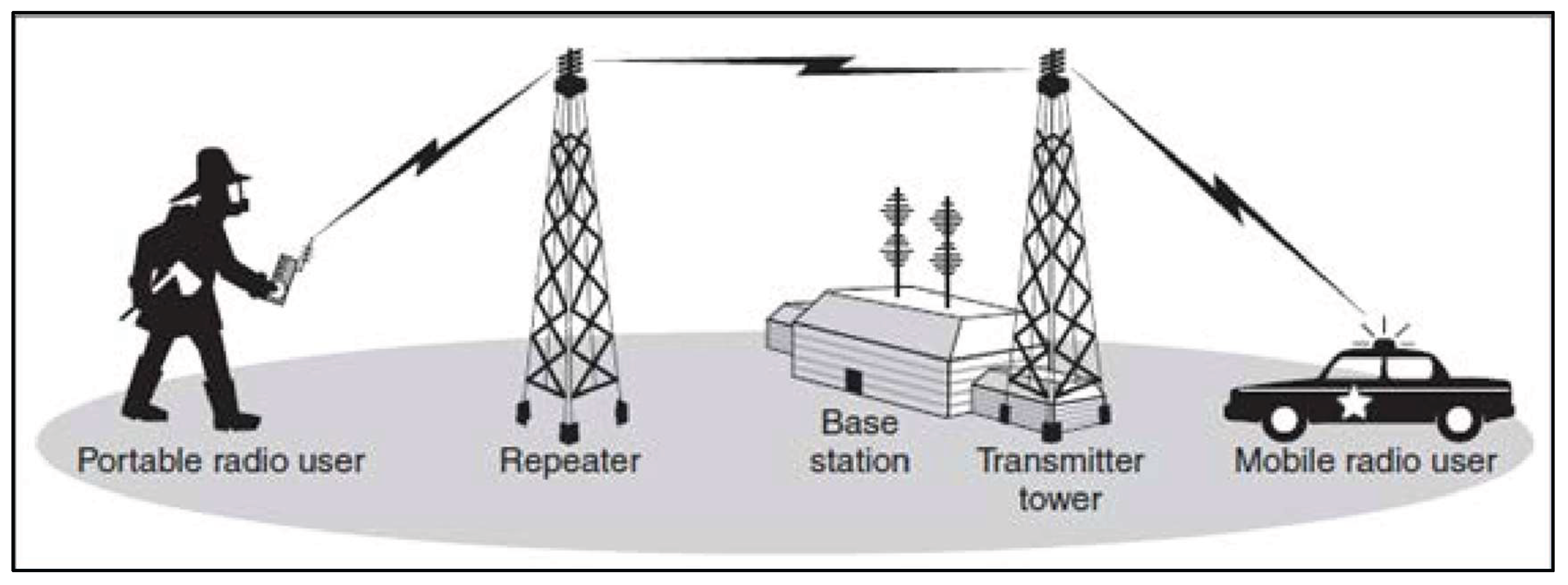
Land Mobile Radio (LMR) systems, as depicted in Figure 4, have long been the backbone of first responder communication, providing dedicated, secure, and mission-critical voice communications [28]. Operating on specific frequency bands such as VHF (Very High Frequency) and UHF (Ultra High Frequency), LMR networks enable emergency personnel to communicate over long distances, independent of commercial cellular networks. These systems are highly reliable in emergencies, resistant to interference, and offer a secure communication channel for first responders. However, LMR technology has limitations, including restricted data transmission capabilities, interoperability challenges between different agencies, and coverage gaps, particularly in rural or disaster-prone areas. Despite these challenges, LMR systems remain essential to emergency communication and often serve as a reliable fallback when modern communication networks fail.
Paging systems have also played a historical role in emergency communications, particularly for fire departments and EMS personnel who rely on pagers to receive real-time alerts and callouts [29]. These systems are valued for their simplicity, low power consumption, and long battery life, making them practical for one-way communication in emergency situations. However, the lack of two-way communication and dependence on telephone infrastructure present significant drawbacks, especially during large-scale disasters when telecommunication networks are compromised. Similarly, basic telephony, including landlines and early mobile phones, has been utilized in emergency response, though its reliability is limited in crisis scenarios where traditional infrastructure is disrupted.
As emergency communication continues to evolve, LMR and paging systems remain foundational technologies, providing first responders with essential communication tools. While newer technologies offer enhanced capabilities, these legacy systems remain critical in ensuring reliable communication during emergencies, particularly when modern networks face disruptions.
4.2. Modern Innovations
The advent of cellular networks and LTE (Long-Term Evolution) technology has revolutionized first responder communication by providing high-speed data transmission and enabling advanced applications such as real-time video streaming, GIS mapping, and automated emergency response systems [26]. LTE offers faster and more reliable communication, nationwide coverage, and enhanced situational awareness through mobile applications and video feeds compared to traditional radio systems [30]. As 5G technology expands, first responders gain access to even greater connectivity and efficiency. However, reliance on commercial cellular networks presents challenges, particularly during emergencies when network congestion can hinder communication [31].
The United States established FirstNet (First Responder Network Authority), a nationwide high-speed broadband network dedicated exclusively to public safety agencies to address these issues [32]. FirstNet enhances communication and interoperability among first responders while ensuring priority access to critical communications, even in high-traffic situations. It provides a dedicated communication network with priority access and preemption features, guaranteeing uninterrupted service for emergency personnel during peak demand. Operating on Band 14, a frequency reserved for public safety, FirstNet ensures enhanced security through encrypted data transmission and cybersecurity protections, safeguarding emergency communications from potential threats [33]. Additionally, it expands connectivity in rural and underserved areas, addressing gaps where traditional networks may be inadequate.
By offering a robust and secure communication infrastructure tailored to the needs of emergency responders, FirstNet represents a significant advancement in public safety communication. It mitigates many of the limitations associated with commercial cellular networks and reinforces the ability of first responders to coordinate effectively during critical situations.
4.3. IoT and Its Integration with First Responder Systems
The Internet of Things (IoT) has transformed first-responder communication by integrating smart devices, sensors, and automated systems to enhance situational awareness and decision-making. Wearable devices, such as smart helmets, biometric sensors, and body-worn cameras, provide real-time health monitoring and environmental data, ensuring responder safety [34]. Drones assist in aerial surveillance, search and rescue operations, and live video streaming, improving response efficiency in disaster-stricken areas [35]. Additionally, smart sensors deployed in hazardous environments detect toxic gases, structural instability, and extreme temperatures, sending early warnings to emergency personnel [36]. By leveraging IoT technology, first responders can make data-driven decisions in real-time, improving coordination, reducing risks, and ultimately saving lives.
4.4. Satellite-Based Communication Systems
In remote or disaster-affected regions where cellular networks and traditional radio systems are unavailable, satellite-based communication systems provide a critical backup for first responders [37]. These systems enable connectivity in areas where infrastructure has been destroyed, support emergency teams in rural or offshore locations, and facilitate the coordination of disaster relief efforts across large geographic areas. With global coverage and resilience to extreme weather and natural disasters, satellite communication ensures uninterrupted connectivity when terrestrial networks fail [38]. However, challenges such as high deployment and maintenance costs and potential latency issues remain obstacles to widespread adoption. Despite these limitations, satellite communication is indispensable to modern emergency response, ensuring that first responders can maintain reliable communication even in the most challenging environments.
5. Key Challenges in First Responder Communication
Effective communication is critical for first responders, enabling coordination, rapid decision-making, and efficient disaster management. However, several challenges persist in ensuring seamless, secure, and reliable communication across emergency response agencies. These challenges stem from issues related to interoperability, network reliability, data security, and the scalability of communication systems. Addressing these issues is essential to building a robust emergency response infrastructure that can withstand increasing demands and emerging threats.
Interoperability remains one of the most significant challenges, as emergency response agencies—including law enforcement, fire departments, emergency medical services (EMS), and federal agencies—often operate on different communication systems [39]. Each agency typically utilizes its own set of communication devices, frequency bands, and proprietary technologies, leading to fragmented communication, delayed response times, and inefficiencies in multi-agency operations. Additionally, disasters frequently extend beyond local jurisdictions, requiring seamless coordination between local, state, and federal agencies [40]. However, interoperability issues create confusion, redundancy, and reliance on manual relay systems for information transfer. Standardized communication protocols, nationwide emergency networks like FirstNet, and advanced digital communication platforms aim to bridge these gaps and enable real-time collaboration.
Reliability and coverage are critical concerns, as communication systems must function effectively under all conditions, including extreme weather, power outages, and large-scale disasters. Many rural and remote locations suffer from weak or nonexistent network coverage, leaving first responders without reliable communication. Natural disasters can further exacerbate these issues by damaging communication infrastructure, causing network blackouts, and limiting backup solutions [41]. Satellite communication systems, deployable mobile networks, and mesh network technologies are being explored to enhance coverage in these challenging environments. Additionally, during large-scale incidents such as mass evacuations or terrorist attacks, commercial networks experience a surge in traffic, leading to congestion and call failures. First responders must compete with public users for bandwidth without priority access, delaying critical data transmission [9]. FirstNet addresses this issue by providing priority and preemption capabilities, ensuring that emergency personnel have uninterrupted communication even during peak traffic conditions.
With the increasing digitization of emergency communication, protecting sensitive information from cyber threats has become a growing concern [42]. First responder networks are attractive targets for cybercriminals and hostile entities, facing risks such as ransomware attacks, denial-of-service (DoS) disruptions, and unauthorized interception of classified emergency communications. Ensuring the secure sharing of personally identifiable information (PII), medical records, and classified data is essential to protect victims, responders, and ongoing investigations [43]. Many legacy systems lack strong encryption, making them vulnerable to interception, while unauthorized access to communication networks can lead to misinformation and operational chaos [44]. To mitigate these risks, agencies are implementing end-to-end encryption, multi-factor authentication, and AI-driven cybersecurity protocols to safeguard critical communications.
As urban populations grow and climate-related disasters become more frequent, first-responder communication networks must be able to scale efficiently to meet rising demands. The high population density in metropolitan areas necessitates high-capacity networks to support emergency operations, while frequent natural disasters place additional strain on existing infrastructure. Integrating emerging technologies such as 5G, ultra-reliable low-latency communication (URLLC), edge computing, and network slicing offers new opportunities to enhance first responder communication. These advancements enable faster data exchange, real-time decision-making, and dedicated virtual networks separate from public traffic. However, adopting these technologies requires substantial investment, policy coordination, and training to ensure that first responders can fully leverage their capabilities.
By addressing these challenges—interoperability, reliability, security, and scalability—emergency communication systems can be significantly improved, ensuring that first responders have the tools they need to protect lives and property efficiently.
6. Technological Innovations and Solutions
The evolution of communication technology is crucial in enhancing first responder capabilities. As emergencies become more complex and demand faster response times, cutting-edge solutions such as 5G, artificial intelligence (AI), machine learning (ML), digital twins, and edge computing are revolutionizing how first responders communicate, coordinate, and execute their operations. Additionally, future advancements in 6G promise to further expand the capabilities of emergency communication systems, improving reliability, efficiency, and situational awareness.
The rollout of 5G networks has introduced a transformative shift in first responder communication by providing ultra-reliable low-latency communication (URLLC), high-speed data transmission, and enhanced connectivity [45]. First responders rely on real-time data exchange to make quick decisions during emergencies, and 5G ensures minimal delay in transmitting critical information such as location tracking, biometric data, and video feeds [46]. The ability of 5G networks to handle congestion during large-scale incidents like natural disasters or public gatherings makes them indispensable. Furthermore, low latency enables real-time control of drones, robots, and autonomous vehicles in hazardous environments. One of the most significant innovations of 5G is network slicing, which allows service providers to create dedicated virtual networks for specific applications, such as first responder communication [47]. This guarantees bandwidth for emergency services, ensuring that responders are not affected by network congestion during crises. Additionally, it enables different agencies to have specialized communication channels with optimized performance for voice, video, and sensor data.
The integration of AI and ML in first responder communication enhances predictive capabilities, optimizes resource allocation, and improves decision-making. AI-driven models analyze historical disaster data and environmental conditions to forecast emergencies such as wildfires, floods, and earthquakes. This facilitates proactive emergency planning, where AI can suggest evacuation routes and pre-deploy resources before a disaster occurs. AI-powered surveillance systems also play a role in automated threat detection by identifying potential security threats and alerting law enforcement. Additionally, AI optimizes traffic flow and resource allocation dynamically during emergencies, enabling smart routing for emergency vehicles by analyzing traffic patterns and suggesting the fastest route for ambulances and fire trucks. It also predicts which areas require the most resources based on real-time incident reports, improving the overall efficiency of emergency response operations.
Digital twin technology creates virtual simulations of real-world systems, allowing first responders to model and test emergency scenarios before they occur [48]. By using real-time data from IoT sensors, digital twins enable emergency planners to test network resilience by simulating disasters such as earthquakes or power outages to evaluate how communication systems respond. They also optimize infrastructure placement by identifying weak coverage areas and suggesting locations for additional cell towers or satellite stations. Moreover, digital twins provide immersive training exercises for first responders by recreating disaster scenarios in virtual environments, enhancing their preparedness for real-life emergencies.
Edge computing reduces the dependency on centralized cloud servers by processing data closer to the source, significantly improving response times and enhancing decision-making in emergency situations. Faster data processing at the scene allows edge computing devices, such as body-worn sensors and IoT hubs, to analyze data locally, reducing delays. By processing data at the edge, only essential information is sent to cloud servers, freeing up bandwidth for critical communications and reducing network congestion. Additionally, edge computing enables autonomous operations in remote areas, allowing first responders to access real-time data even when disconnected from central networks, ensuring continuous situational awareness.
While 6G is still in the research phase, it is expected to introduce groundbreaking capabilities that will further revolutionize first responder communication. Features like holographic communication may support 3D holographic video calls, enabling lifelike remote collaboration between responders, medical personnel, and emergency coordinators [49]. Terahertz (THz) communication is expected to offer speeds 100 times faster than 5G, allowing instantaneous transmission of ultra-high-definition video and sensor data. Additionally, AI-driven adaptive networks will likely be a key feature of 6G, where AI continuously optimizes communication settings based on environmental conditions, ensuring seamless connectivity in dynamic emergency scenarios.
As these technological innovations evolve, first responder communication systems will become more resilient, intelligent, and efficient, ultimately improving emergency response and public safety.
7. Case Studies and Real-World Applications
Effective communication is the backbone of emergency response, and real-world case studies provide valuable insights into the successes and challenges of first-responder communication systems. By examining FirstNet’s impact, global initiatives, and major disaster scenarios, we can gain a deeper understanding of how modern communication networks enhance public safety and emergency coordination.
FirstNet, the U.S. public safety broadband network, has played a pivotal role in enhancing emergency response across various incidents. With features like priority access, dedicated Band 14 spectrum, and interoperable communication, FirstNet has enabled seamless coordination among first responders.
FirstNet has played a pivotal role in enhancing emergency communication, enabling real-time coordination among first responders during critical incidents. During Hurricane Harvey in 2017, FirstNet ensured uninterrupted communication between police, fire, and emergency medical services (EMS) in Texas by providing priority network access, preventing congestion issues that commonly disrupt commercial networks in disaster situations [50]. In the California Wildfires of 2020-2021 and the ongoing 2024-2025 fire seasons, FirstNet improved situational awareness for firefighters through drone-based aerial imaging, sensor data integration, and robust voice and data services, even in areas with damaged infrastructure [51]. At the 2019 Boston Marathon, FirstNet supported secure communication and crowd monitoring, allowing law enforcement to coordinate responses efficiently during the high-profile event [52]. These cases underscore how FirstNet’s dedicated public safety features enhance response times, improve coordination, and ensure reliable communication in both large-scale emergencies and major public gatherings.
Beyond the U.S., other countries have developed similar initiatives to improve first-responder communication. The United Kingdom’s Emergency Services Network (ESN) is designed to replace the aging TETRA-based Airwave system with a modern LTE-based solution comparable to FirstNet [53]. ESN offers enhanced data-sharing capabilities, enabling first responders to transmit real-time video, images, and GPS locations. However, its deployment has faced delays, and concerns remain about network reliability in remote regions. The European Union’s SafeNet initiative focuses on cross-border emergency communication, ensuring seamless coordination between nations during disasters [54]. Key features include encrypted communication, satellite backup, and IoT-enabled public safety tools. SafeNet highlights the importance of standardized protocols to ensure interoperability between national emergency networks. These global initiatives underscore the crucial need for consistent coverage, reliable infrastructure, and advanced data-sharing capabilities to enhance emergency response worldwide.
Real-world disaster scenarios provide valuable insights into the strengths and weaknesses of emergency communication systems. Hurricane Katrina in 2005 serves as a stark case study of communication failure, where infrastructure collapse left responders without reliable networks, and interoperability issues between agencies led to miscommunication and delays [55]. The disaster underscored the necessity of hardened infrastructure, satellite backups, and nationwide interoperability solutions, such as FirstNet. In contrast, California’s wildfires from 2020 onward have demonstrated the effectiveness of advanced communication technologies. Firefighters benefited from FirstNet’s priority network access, ensuring uninterrupted communication even during periods of network congestion. Using drones and IoT sensors enabled real-time fire mapping and smoke analysis, significantly improving situational awareness. These cases emphasize the importance of continuous investment in next-generation networks, AI-driven analytics, and resilient infrastructure to enhance disaster response capabilities.
8. Future Research Directions
As technology evolves, first-responder communication systems must adapt to address new challenges and improve emergency response capabilities. Future research should prioritize integrating next-generation technologies, ensuring global interoperability, enhancing resilience in extreme environments, and addressing ethical concerns in emergency communications. The introduction of 6G networks, expected by the 2030s, promises to revolutionize public safety communication with ultra-fast speeds, ultra-low latency, and AI-driven capabilities [56]. Key areas of focus include holographic communication for real-time situational awareness, terahertz frequency utilization for high-bandwidth data transmission, AI-powered network optimization for dynamic resource allocation, and satellite-integrated 6G networks for uninterrupted connectivity in remote or disaster-affected regions. Additionally, global emergencies often require cross-border coordination among emergency response teams, but fragmented communication systems present significant interoperability challenges. Future research should explore standardized communication protocols, AI-based real-time language translation, blockchain for secure data sharing, and interoperable IoT devices to ensure seamless network cooperation [57]. Moreover, first responders frequently operate in extreme environments like collapsed buildings, underground tunnels, or underwater, and research should focus on building resilient communication systems capable of functioning in these conditions. Innovations like mesh networking for underground communication, underwater acoustic communication, AI-driven disaster resilience models, and energy-efficient communication systems will help maintain reliable communication in harsh environments. As AI, IoT, and cloud-based systems become more integral to emergency response, addressing ethical considerations around data privacy, cybersecurity, and transparency is vital. Future research must focus on developing privacy-preserving AI models, strengthening cybersecurity in emergency networks, establishing clear regulatory frameworks for data governance, and ensuring public trust by making AI-driven decisions explainable and unbiased. Addressing these challenges will ensure the long-term success of next-generation emergency communication systems.
9. Conclusion
Effective communication is the lifeline of emergency response, ensuring coordination, real-time information sharing, and rapid decision-making. This paper examines the historical evolution of first responder communication, explores modern advancements such as FirstNet, and identifies key challenges, including interoperability, coverage, reliability, and security risks.
The rapid emergence of 5G, AI-driven analytics, IoT, digital twins, and edge computing is transforming public safety communication by enabling faster response times, more intelligent decision-making, and resilient networks. Case studies, including FirstNet’s impact on U.S. emergency response and global initiatives like ESN (UK) and SafeNet (EU), highlight the importance of dedicated broadband networks for first responders.
However, challenges remain. Interoperability gaps, cybersecurity threats, and network resilience in extreme environments continue to pose obstacles. Future research should focus on 6G networks, cross-border communication protocols, disaster-proof infrastructure, and ethical AI frameworks to future-proof first responder communication systems.
By addressing these issues, emergency communication networks will evolve into intelligent, adaptive, and globally interconnected systems, ensuring that first responders always have secure, reliable, and efficient communication, regardless of the crisis they face.
Funding
The authors declare that no funds, grants, or other support were received during the preparation of this manuscript.
References
- Deepak, G.; et al. An overview of post-disaster emergency communication systems in the future networks. IEEE Wireless Communications 2019, 26(6), 132–139. [Google Scholar] [CrossRef]
- Daousis, S.; et al. Overview of protocols and standards for wireless sensor networks in critical infrastructures. Future Internet 2024, 16(1), 33. [Google Scholar] [CrossRef]
- Kang, S.; et al. Cellular wireless networks in the upper mid-band. IEEE Open Journal of the Communications Society 2024. [Google Scholar] [CrossRef]
- El-Hajj, M. Enhancing Communication Networks in the New Era with Artificial Intelligence: Techniques, Applications, and Future Directions. Network 2025. 5, 1, 1. [Google Scholar] [CrossRef]
- del Campo, G.; et al. Virtual reality and internet of things based digital twin for smart city cross-domain interoperability. Applied Sciences 2024, 14(7), 2747. [Google Scholar] [CrossRef]
- Shafique, K.; et al. Internet of things (IoT) for next-generation smart systems: A review of current challenges, future trends and prospects for emerging 5G-IoT scenarios. IEEE access 2020. 8, 23022–23040. [Google Scholar] [CrossRef]
- Matracia, M.; et al. Post-disaster communications: Enabling technologies, architectures, and open challenges. IEEE Open Journal of the Communications Society 2022. 3, 1177–1205. [Google Scholar]
- Shvetsov, A.V.; Alsamhi, S.H. When Holographic Communication Meets Metaverse: Applications, Challenges and Future Trends. IEEE Access, 2024. [Google Scholar]
- Carreras-Coch, A.; et al. Communication technologies in emergency situations. Electronics 2022, 11(7), 1155. [Google Scholar] [CrossRef]
- Lorincz, K.; et al. Sensor networks for emergency response: challenges and opportunities. IEEE pervasive Computing 2004, 3(4), 16–23. [Google Scholar]
- Ali, K.; et al. Disaster management communication networks: Challenges and architecture design. 2015 IEEE International Conference on Pervasive Computing and Communication Workshops (PerCom Workshops), 2015; IEEE. [Google Scholar]
- Perritt, H.H., Jr. The Internet Adopts Two-Way Radio. Hastings Sci. & Tech. LJ 2019, 10, 147. [Google Scholar]
- Goldsmith, S.; Eggers, W.D. Governing by network: The new shape of the public sector; Rowman & Littlefield, 2005. [Google Scholar]
- Hainbuchner, C.M. Technology acceptance of complex products and systems. The case of Terrestrial Trunked Radio (TETRA). 2005.
- Seifert, J.W. The effects of September 11, 2001, terrorist attacks on public and private information infrastructures: a preliminary assessment of lessons learned. Government Information Quarterly 2002, 19(3), 225–242. [Google Scholar] [CrossRef]
- Moore, L.K. The first responder network (FirstNet) and next-generation communications for public safety: Issues for congress; Congressional Research Service, 2016. [Google Scholar]
- Franklin, J.M.; et al. Security Analysis of First Responder.
- Pocovi, G.; et al. Achieving ultra-reliable low-latency communications: Challenges and envisioned system enhancements. IEEE Network 2018, 32(2), 8–15. [Google Scholar] [CrossRef]
- Ali, K.; et al. Review and implementation of resilient public safety networks: 5G, IoT, and emerging technologies. IEEE network 2021, 35(2), 18–25. [Google Scholar] [CrossRef]
- Brucherseifer, E.; et al. Digital Twin conceptual framework for improving critical infrastructure resilience. at-Automatisierungstechnik 2021, 69(12), 1062–1080. [Google Scholar] [CrossRef]
- Mwandembo, F. Navigating the Storm; Effective Crisis Communication Strategies. International Journal of Innovative Science and Research Technology (IJISRT) 2024, 2685–2697. [Google Scholar] [CrossRef]
- Mahon, S.E.; Rifino, J.J. Role of emergency medical services in disaster management and preparedness, in Ciottone’s Disaster Medicine; Elsevier, 2024; pp. 12–18. [Google Scholar]
- Basnawi, A. Addressing challenges in EMS Department operations: a comprehensive analysis of key issues and solution. Emergency Care and Medicine 2023, 1(1), 11–23. [Google Scholar] [CrossRef]
- Liu, W.; Ni, L. Relationship matters: How government organization-public relationship impacts disaster recovery outcomes among multiethnic communities. Public relations review 2021, 47(3), p. 102047. [Google Scholar] [CrossRef]
- Khan, A.; Gupta, S.; Gupta, S.K. Emerging UAV technology for disaster detection, mitigation, response, and preparedness. Journal of Field Robotics 2022, 39(6), 905–955. [Google Scholar] [CrossRef]
- Damaševičius, R.; Bacanin, N.; Misra, S. From sensors to safety: Internet of Emergency Services (IoES) for emergency response and disaster management. Journal of Sensor and Actuator Networks 2023, 12(3), 41. [Google Scholar] [CrossRef]
- Otal, H.T.; Stern, E.; Canbaz, M.A. Llm-assisted crisis management: Building advanced llm platforms for effective emergency response and public collaboration. 2024 IEEE Conference on Artificial Intelligence (CAI), 2024; IEEE. [Google Scholar]
- Niringiye, G.; Oteyo, I.N.; Bulega, T. Spectrum sensing for cognitive vhf land mobile radio communication networks using energy sensing techniques. 2021 IEEE AFRICON, 2021; IEEE. [Google Scholar]
- Wang, Q.; et al. An overview of emergency communication networks. Remote Sensing 2023, 15(6), 1595. [Google Scholar] [CrossRef]
- Freire, D.V.C. Mission-Critical Communications from LMR to 5G: A Technology Assessment Approach for Smart City Scenarios; Universidade NOVA de Lisboa (Portugal), 2023. [Google Scholar]
- Debnath, S.; et al. A comprehensive survey of emergency communication network and management. Wireless Personal Communications, 2022. [Google Scholar]
- Network, S.B.; Kheng, L. Knowledge Management Data. In Cases on Enhancing Business Sustainability Through Knowledge Management Systems; 2023; p. 63. [Google Scholar]
- Li, J.; et al. Toward Providing Connectivity When and Where It Counts: An Overview of Deployable 5G Networks. IEEE Communications Standards Magazine 2023, 6(4), 56–64. [Google Scholar] [CrossRef]
- Betts, S.A. The internet of things (iot) in disaster response.; Naval Postgraduate School Monterey: Califórnia, 2022. [Google Scholar]
- Papyan, N.; et al. Ai-based drone assisted human rescue in disaster environments: Challenges and opportunities. Pattern Recognition and Image Analysis 2024, 34(1), 169–186. [Google Scholar] [CrossRef]
- Lyu, J.; et al. Intelligent-Technology-Empowered Active Emergency Command Strategy for Urban Hazardous Chemical Disaster Management. Sustainability 2023, 15(19), 14369. [Google Scholar] [CrossRef]
- Sciddurlo, G. Architecting advanced IoT services: from communication to social perspective. 2024.
- Kagai, F.; et al. Rapidly Deployable Satellite-Based Emergency Communications Infrastructure. IEEE Access, 2024. [Google Scholar]
- DeVito, M.J.; Wood, E.; Frazier, T. Standardization and interoperability of small unmanned aircraft systems (sUAS) for disaster management. Journal of Homeland Security and Emergency Management 2022, 19(2), 175–203. [Google Scholar] [CrossRef]
- Kapucu, N.; Dougherty, R.B.; Hu, Q. Network governance for coordinated disaster response. Public administration quarterly 2022, 46(4), 309–333. [Google Scholar] [CrossRef]
- Rajkumar, V.S.; et al. Cyber attacks on power grids: Causes and propagation of cascading failures. IEEE Access 2023, 11, 103154–103176. [Google Scholar] [CrossRef]
- Yoon, J.; et al. Evaluating the readiness of cyber first responders responsible for critical infrastructure protection. International Journal of Critical Infrastructure Protection 2016, 13, 19–27. [Google Scholar] [CrossRef]
- Poyraz, O.I.; et al. Cyber assets at risk: monetary impact of US personally identifiable information mega data breaches. The Geneva Papers on Risk and Insurance-Issues and Practice 2020, 45, 616–638. [Google Scholar] [CrossRef]
- de Carnavalet, X.d.C.; Mannan, M. Killed by proxy: Analyzing client-end TLS interception software. Network and Distributed System Security Symposium, 2016. [Google Scholar]
- Nuriev, M.; et al. The 5G revolution transforming connectivity and powering innovations. E3S Web of Conferences, 2024; EDP Sciences. [Google Scholar]
- Câmara, D.; Nikaein, N. Wireless public safety networks. : overview and challenges 2015, volume 1. [Google Scholar]
- Carlberg, K.; Burger, E.W.; Jover, R.P. Dynamic 5G network slicing for first responders. In in 2019 principles, systems and applications of IP telecommunications (IPTComm); IEEE, 2019. [Google Scholar]
- Wang, Y.; et al. Digital twin approach for enhancing urban resilience: A cycle between virtual space and the real world. Resilient Cities and Structures 2024, 3(2), 34–45. [Google Scholar] [CrossRef]
- Munavalli, J.R.; Deshpande, R.R.; Oli, J.M. AI Techniques for 6G Applications. Development of 6G Networks and Technology 2024, 29–55. [Google Scholar]
- Barnett, D.J.; et al. An analysis of after action reports from Texas hurricanes in 2005 and 2017. Journal of public health management and practice 2021, 27(2), E71–E78. [Google Scholar] [CrossRef]
- Burns, A.J.; et al. High Altitude Platform System (HAPS) Communication Support for Wildland Firefighting; 2023. [Google Scholar]
- LaLone, N.; Dugas, P.O.; Semaan, B. The crisis of designing for disaster: how to help emergency management during the technology crisis we created. In Proceedings of the International ISCRAM Conference, 2023. [Google Scholar]
- Yarali, A. Public safety networks from LTE to 5G; John Wiley & Sons, 2020. [Google Scholar]
- Neto, F.; Granjal, J.; Pereira, V. A survey on security approaches on PPDR systems toward 5G and beyond. IEEE Access 2022, 10, 117118–117140. [Google Scholar] [CrossRef]
- Canton, L.G. Emergency management: Concepts and strategies for effective programs; John Wiley & Sons, 2019. [Google Scholar]
- Kumar, R.; et al. From efficiency to sustainability: Exploring the potential of 6G for a greener future. Sustainability 2023, 15(23), 16387. [Google Scholar] [CrossRef]
- Bhumichai, D.; et al. The convergence of artificial intelligence and blockchain: The state of play and the road ahead. Information 2024, 15(5), 268. [Google Scholar] [CrossRef]
Figure 2.
Trunked Systems, Source: RadioDepot.
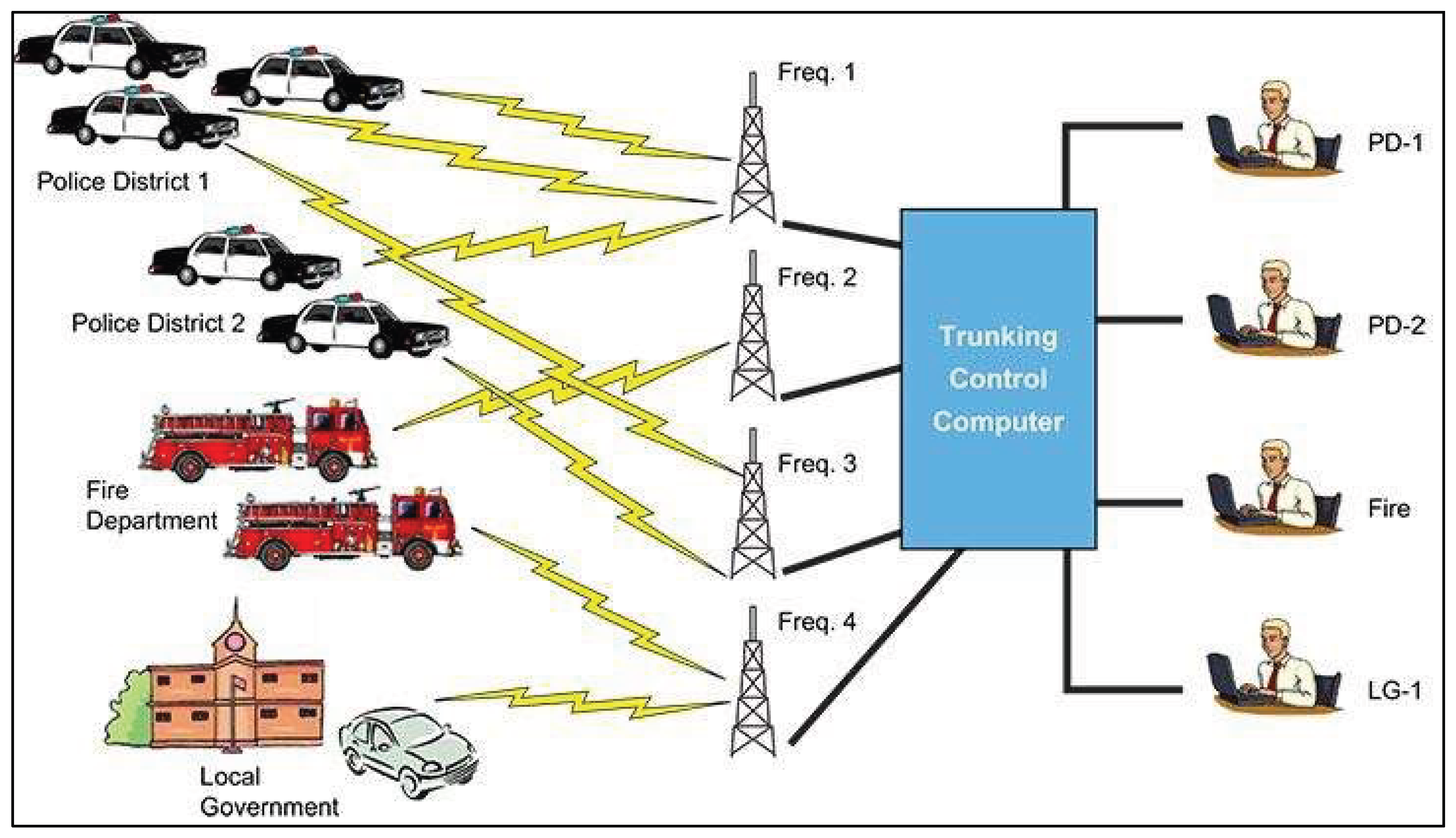
Figure 4.
Land Mobile Radio Systems.
Disclaimer/Publisher’s Note: The statements, opinions and data contained in all publications are solely those of the individual author(s) and contributor(s) and not of MDPI and/or the editor(s). MDPI and/or the editor(s) disclaim responsibility for any injury to people or property resulting from any ideas, methods, instructions or products referred to in the content. |
© 2026 by the authors. Licensee MDPI, Basel, Switzerland. This article is an open access article distributed under the terms and conditions of the Creative Commons Attribution (CC BY) license (http://creativecommons.org/licenses/by/4.0/).
Copyright: This open access article is published under a Creative Commons CC BY 4.0 license, which permit the free download, distribution, and reuse, provided that the author and preprint are cited in any reuse.


