

Submitted:
05 March 2026
Posted:
06 March 2026
You are already at the latest version
Abstract
The Neotropical genus Inga (Fabaceae) is a dominant component of tropical forests and plays important ecological and functional roles; however, its diversity patterns and environmental controls across Andean landscapes remain poorly documented under increasing deforestation pressure. This study quantified the diversity, distribution, and environmental determinants of Inga species in the Imbabura Province, northern Ecuador, by integrating field surveys along five elevational transects, herbarium records, and Geographic Information Systems (GIS)-based analyses of climatic and edaphic variables. We recorded 17 species, nearly tripling previous regional findings. Species richness and occurrence were strongly structured by altitude, temperature, and soil properties. Ten species showed narrow altitudinal range and limited thermal tolerance (<2 °C), indicating habitat specialization, whereas I. densiflora and I. insignis exhibited broader niche breadths and generalist behavior. Edaphically, most species were associated with sandy loam soils, particularly Mollisols and Inceptisols. These results indicate that environmental gradients and soil conditions act as primary filters shaping Inga assemblages in heterogeneous montane landscapes. The high level of specialization observed suggests elevated vulnerability to land-use change and highlights the need for habitat-specific conservation strategies in Andean forests.
Keywords:
Inga
; Andean forests
; environmental gradients
; niche specialization
; soil–climate interactions
; species distribution modeling
; montane biodiversity
Highlights
- Seventeen Inga species documented in Imbabura, northern Ecuador.
- Species distributions are structured by altitude and soil properties.
- Ten species exhibit narrow thermal and altitudinal specialization, others are generalists.
- Uplift and volcanic substrates generate fine-scale edaphic mosaics.
- Geodiversity likely amplifies ecological filtering in Andean forests.
1. Introduction
Tree diversity is critical to the health of the global ecosystem. While South America is home to remarkable richness with approximately 16,880 tree species, compared to 1,873 in North America, 3,529 in Africa, and 4,560 in Oceania, this biodiversity faces critical threats [1]. Ecuador, distinguished by its high biodiversity, is home to approximately 2,500 recognized tree species [2]. However, the country faces a critical environmental challenge: deforestation. Between 1990 and 2000, the average deforestation rate was approximately 89,944 ha·year⁻¹ (-0.71%), and although this rate decreased to 44,497 ha·year⁻¹ (-0.37%) between 2008 and 2014, the continued loss of forest cover represents a major challenge for the conservation of biodiversity and the sustainability of ecosystems. [3].
In this context, the genus Inga Mill. (Fabaceae) is particularly relevant. It is a diverse group of legumes common in neotropical forests with important socioeconomic value [4]. The genus includes around 300 species distributed from Mexico to northern Argentina, with the highest diversity in the Andes of Peru, Ecuador and Colombia [4]. In Ecuador, publications such as Trees of Ecuador describe representative species [5], while the fundamental work of Pennington and Revelo reports 75 species for the country. However, historically only six species have been reported for the province of Imbabura [6], a figure that contrasts with the heterogeneous relief and the potential for numerous ecological niches of the region. The presence and development of Inga species are conditioned by ecological factors such as altitude, precipitation, temperature and life zones [7]. However, anthropogenic factors also play a crucial role. Human occupation in South America has driven the domestication of plants for millennia, modifying landscapes since pre-Columbian times [8,9]. Human activities, such as the consumption of Inga fruits (guabas), influence dispersion, with humans acting as vectors along roads and trails. This phenomenon contrasts with the behavior of wild species, which tend to remain confined to forest remains [6]. This duality suggests that the distribution of Inga in Imbabura is driven by a complex interaction between natural ecological filters and anthropogenic history.
Therefore, it is necessary to deepen the knowledge of the distribution and ecology of Inga species in this Andean region to improve their conservation and sustainable use. The objective of this study is to determine the geographic distribution of Inga species in the province of Imbabura-Ecuador by evaluating their presence in different ecosystems and analyzing key environmental factors such as altitude, temperature, precipitation and soil type.
2. Materials and Methods
2.1. Study Area
The study was carried out in the province of Imbabura, located in the northern inter-Andean region of Ecuador, covering the western foothills of the Royal and Western mountain ranges. The region is characterized by a heterogeneous relief composed of slopes, hills and plateaus, shaped by drainage networks and tectonic processes. This geomorphological complexity creates a mosaic of environmental conditions that favor high plant diversity and provides differentiated ecological niches for the Inga genus.
2.2. Data Collection and Sampling Strategy
The research methodology was divided into two phases: field sampling and laboratory analysis. For the field sampling phase, five strategic routes were defined to cover the floral diversity of the province:
- 1)
- Ibarra–Lita (73.13 km) and San Gerónimo–Buenos Aires (22.77 km);
- 2)
- Ibarra–Pimampiro (51 km);
- 3)
- Ibarra–Otavalo–Cajas (37.88 km);
- 4)
- Otavalo-Intag (116.7 km);
- 5)
- Las Golondrinas (19.53 km).
In total, the exploration route covered 321 km. Imbabura has an area of 4785 km2 (Figure 1).
Sampling was conducted on adult individuals located within a 50 m buffer zone on each side of the road. Collection protocols followed the standards of the Herbarium of the Universidad Técnica del Norte (HUTN). Field data were recorded using the KoBoToolbox application [45], parameterized to capture variables specific to the genus Inga.
In addition to primary data, secondary data from the Global Biodiversity Information Facility (GBIF) [21,22] and national herbarium databases (QCNE, MO, AAU, F, HUTN) were compiled to identify historical records of Inga in Imbabura. Sites with historical records of species were reviewed for verification. This study was carried out under research permit No. MAATE-ARSFC-2023-0036, granted by the Ministry of Environment, Water and Ecological Transition of Ecuador (MAATE). [23]
2.3. Taxonomic Identification
Botanical samples were processed using traditional phytaxonomic techniques. Taxonomic identification was carried out using specialized keys for the genus, specifically those proposed by Pennington & Revelo [6] and Pennington [12], and validated through consultation with specialists (Eng. Nixon Revelo). Valid specimens for 12 species (including duplicates) were deposited in the HUTN herbarium. The identification of the four remaining species was confirmed through consultation with the National Biodiversity Institute (INABIO) and digital herbaria (Tropicos, WFO).
2.4. Geospatial and Ecological Analysis
Geospatial analysis was performed using ArcGIS Pro-3. The precise location of each specimen was integrated with the provincial and cantonal administrative limits [13]. To determine the ecological zoning of Inga species, point data overlaid with geopedological shapefiles containing the following variables:
Data sources included the Ministry of Agriculture and Livestock (MAG) (SIGTIERRAS), the Ministry of the Environment (MAATE) and the National Institute of Meteorology and Hydrology (INAMHI). These variables were analyzed to generate distribution maps and determine the specific ecological niche for each species.
3. Results
3.1. Floristic Composition and Diversity
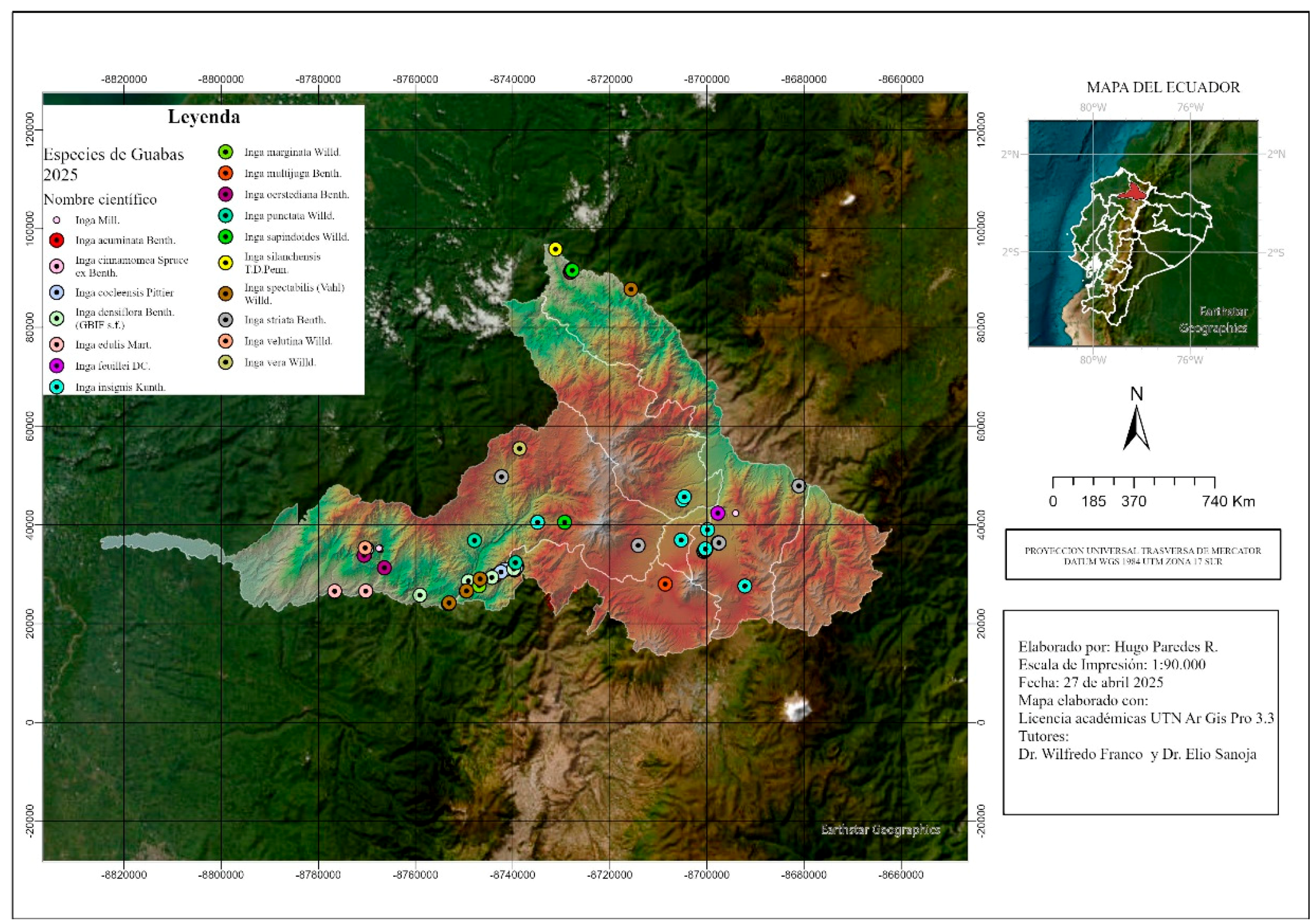
The review of national and international herbaria databases (QCNE, MO, AAU, F, HUTN), combined with field expeditions, confirmed the presence of 17 species of the genus Inga in the province of Imbabura [21,22]. A total of 52 samples were collected and identified. Confirmed species include Inga acuminata Benth., I. cinnamomea Spruce ex Benth., I. cocleensis Pittier, I. densiflora Benth., I. edulis Mart., I. feuillei DC., I. insignis Kunth, I. marginata Kunth, I. multijuga (Benth.) Kuntze, I. oerstediana Benth., I. punctata Wi-lld., I. sapindoides Willd., I. silanchensis T.D.Penn., I. spectabilis (Vahl) Willd., I. striata Benth., I. velutina Willd. and I. vera Willd. [Table A1. A1].
Figure 2.
Species of the genus Inga in Imbabura.
3.2. Thermal and Altitudinal Distribution Patterns
The analysis of the altitudinal distribution reveals two different ecological behaviors among the identified species [Table 1].
- Specialized species: A group of species, including I. cinnamomea, I. silanchensis, I. edulis, I. spectabilis, I. marginata, I. punctata, I. velutina and I. feuillei, occupy narrow altitudinal ranges with variations of less than 500 m. These species are restricted to specific microhabitats [Table 1; Figure A2].
- Generalist species: In contrast, I. sapindoides, I. oerstediana, I. densiflora, I. insignis and I. striata exhibit extensive plasticity and thrive across broad elevation gradients [Figure 3]. For example, I. densiflora was recorded between 800 and 2,075 m a.s.l., and I. sapindoides between 600 and 2,800 m a.s.l. [Table 1; Figure 3].
Regarding thermal niches, 70.6% of the species (12 species) inhabit areas with narrow thermal fluctuations (average annual variation <2 °C) [Table 1]. On the contrary, species such as I. oerstediana and I. insignis tolerate broader thermal ranges (variation from 5 to 11 °C), which correlates with their broader altitudinal distribution [Table 1].
3.3. Soil Preferences and Precipitation Regimes
Among the variables related to soil categories, a marked preference for specific soil conditions is indicated. The distribution of species according to soil order and texture is summarized in Table 1.
- Soil texture: Most species prefer sandy loam soils. I. feuillei, I. marginata and I. punctata were predominantly found in these textures, while I. densiflora showed adaptation to sandy clay soils.
- Soil taxonomy: The genus in Imbabura is mainly associated with Inceptisols and Mollisols. I. edulis and I. striata are notably associated with Mollisols, while I. multijuga and I. silanchensis are restricted to Inceptisols.
- pH tolerance: most species (approx. 94%) thrive in neutral to slightly acidic soils (pH ≈ 6.5–7.0). However, I. insignis and I. silanchensis tolerate acidic conditions, while I. feuillei was the only species recorded in alkaline soils.
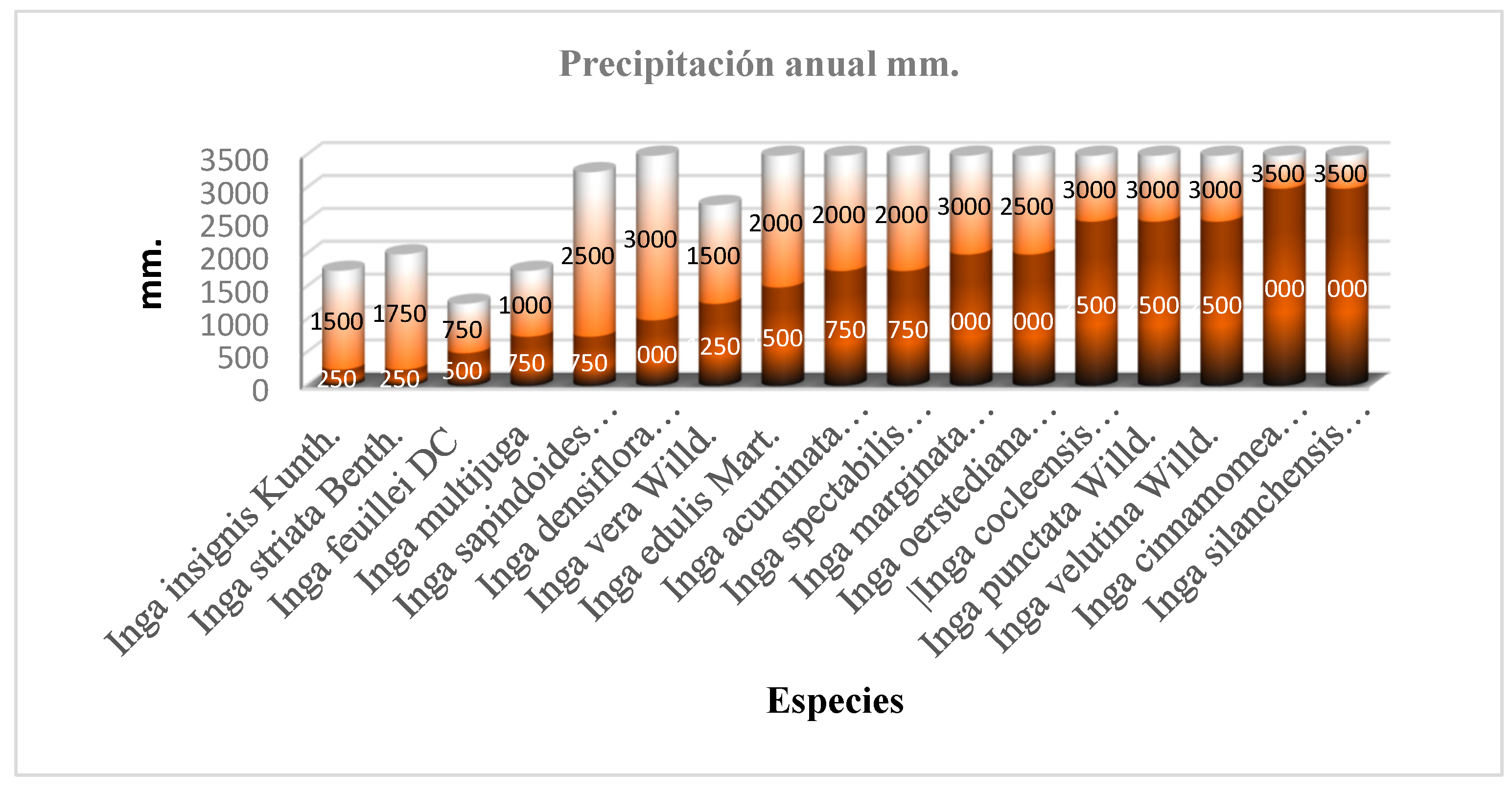
Regarding precipitation, I. feuillei and I. multijuga demonstrate resistance to dry conditions (500–750 mm/year), while most of the genus species requires humid regimes ranging between 1250 and 3000 mm/year. [Figure A2].
4. Discussion
4.1. Ecological Filters: Altitude and Climate Differentiation
The high local richness of Inga spp. recorded in Imbabura (17 species within ~4,800 km²) can be framed primarily within the Humboldtian perspective of plant geography, where climatic gradients act as primary ecological filters. We identify two different adaptive strategies:
- Specialists: 58.8% of the species occupy restricted altitudinal floors. This pattern supports recent findings in Andean tropical forests, where the rate of thermal gradient restricts the distribution of trees to specific thermal floors [45]. These limited-range species are particularly susceptible to biotic attrition driven by climate change [30].
- Generalists and Distribution Changes: Species such as I. densiflora and I. sapindoides exhibited extensive plasticity. Notably, our data show that I. densiflora reaches 2075 m a.s.l., an altitude higher than the limit of 1900 m reported in Peru [12]. This upward extension could indicate thermophilization of Andean forests, where lowland species migrate upslope in response to increasing temperatures, a phenomenon widely documented in the tropical Andes [31,32]. Conversely, ecotonal barriers could be preventing the migration of less adaptable species, creating strong barriers to distribution [33].
4.2. Edaphic Influence, Nitrogen Fixation and Functional Traits
Edaphic factors play a fundamental role in the distribution of Inga. While traditional lite-rature often describes Inga habitats generally, our study correlates specific species with soil texture and taxonomy (Mollisols/Inceptisols). As nitrogen-fixing legumes, Inga species present a competitive advantage in nitrogen-poor soils [34]; however, its distribution in montane forests could be more strongly limited by soil phosphorus (P) availability or acidity than by nitrogen [35,36]. The specificity of I. insignis for acidic soils and of I. feuillei for alkaline conditions supports the habitat filtering hypothesis. Additionally, the balance between growth and defense is crucial in this genre. Species that invest heavily in chemical defenses (saponins, phenolics) tend to be specialists in resource-poor environments, while fast-growing generalists may invest less in defense [42,43].
4.3. Geological and Evolutionary Multi-Scale Drivers of Local Inga Richness in Imbabura
Our results lead us to relate the high diversity found in the genus Inga spp. in Imbabura to multiple geological and climatic drivers in the last 10 million years. Those that have generated exceptional topographic and edaphic heterogeneity in a relatively small area.
At the macroevolutionary scale, Miocene–Pliocene uplift of the northern Andes established steep elevational gradients, reorganized drainage, and reshaped precipitation regimes, creating juxtaposed montane, cloud-forest, and inter-Andean environments over short distances [1,2]. Phylogenetic evidence indicates that much of Inga’s species-level diversification is relatively recent (late Neogene–Quaternary), consistent with rapid radiations unfolding within landscapes already structured by Andean orogeny [3,4]. Superimposed on this tectonic template, Neogene–Quaternary climatic oscillations repeatedly shifted vegetation belts upslope and downslope, modulating population connectivity along elevation and potentially producing cycles of isolation and secondary contact that can reinforce lineage divergence [5]. Finally, persistent volcanism in northern Ecuador adds a disturbance–renewal dynamic: eruptions periodically restructure forests and, through repeated tephra inputs, create stratified soils and buried paleosols that increase fine-scale soil mosaics over time [6,7]. Together, these nested processes provide a coherent framework for understanding why present-day ecological filters alone are unlikely to explain the documented richness.
Elevation, climate, and connectivity under Quaternary dynamics are another determinants of diversity. Across the tropical Andes, elevational gradients impose strong thermal and moisture constraints on tree distributions, and specialized communities can show limited capacity to track warming compared with more generalist assemblages [8,9]. In this context, glacial–interglacial oscillations likely acted as recurrent “connectivity switches” for montane populations: cooler phases displaced forest belts downslope, while warmer interglacials promoted upslope expansion and compression of montane habitats [5]. Such repeated belt shifts can fragment populations along steep gradients and later reconnect them, increasing genetic structuring and creating opportunities for ecological divergence. Modern observations of upslope compositional change (“thermophilization”) and elevational migration of Andean trees further support the plausibility of strong, elevation-linked demographic dynamics that can operate on ecological timescales and accumulate over Quaternary times [8,10]. For Inga in Imbabura, the coexistence of narrow-range taxa and broader-elevation generalists is consistent with a landscape in which connectivity has fluctuated repeatedly, and where dispersal and establishment have been filtered by both climate and habitat discontinuities.
Volcanism, edaphic mosaics, and niche partitioning likely contributed to diversification and coexistence via two non-exclusive mechanisms: (i) episodic disturbance that resets forest structure and creates spatial discontinuities, and (ii) long-term generation of edaphic heterogeneity through tephra deposition and soil profile stratification. Ecuadorian volcanism has been persistent from the Late Pliocene to the present, with repeated explosive activity capable of producing extensive tephra blankets and geomorphic disturbance [6]. In northern Ecuador, tephra stratigraphy studies show that volcanic ash soils can comprise multiple discrete tephra units and exhibit strong vertical and lateral variation in physical and chemical properties [7]. Such variability is particularly relevant for nutrient dynamics in volcanic and strongly weathered tropical soils, where phosphorus availability and fixation processes can strongly constrain plant distributions [11,12]. Fine-scale edaphic mosaics can therefore promote habitat specialization and local-scale niche partitioning, especially where soil differences interact with biotic pressures such as herbivory [13]. Although our dataset does not include phylogeographic or tephrostratigraphic tests, the observed coexistence of specialist and generalist Inga species across heterogeneous substrates is compatible with long-term landscape renewal and soil-driven ecological divergence.
4.4. Biotic Interactions and Human-Mediated Landscapes
Within this geodynamic context, biotic interactions and anthropogenic landscapes can further shape realized distributions. Inga is well known for strong biotic interactions (e.g., herbivory pressures and defense syndromes), and diversification in the genus has been linked to trait divergence associated with species coexistence and niche differences [4,14,15]. In addition, Neotropical forests are increasingly recognized as historically influenced by human management and landscape domestication, which can alter local abundance patterns and dispersal opportunities for useful taxa [16,17].
Many Inga species (including cultivated or managed forms) are prominent in agroforestry systems, where they provide shade, biomass inputs, and soil fertility services; these systems can act as semi-natural habitat networks that maintain gene flow and facilitate persistence across fragmented landscapes [18,19,20]. The predominance of I. edulis (local name: guaba) in agricultural mosaics in Imbabura confirms its status as a domesticated or semi-domesticated species, widely dispersed by humans for its fruit pulp [37,38]. This species, along with I. insignis, plays a vital role in local agroforestry systems [39,40]. Unlike wild species confined to forest remnants (I. oerstediana), these "anthropogenic" species benefit from human disturbances. Recognizing this dual function—ecological keystones in forests and productive assets on farms—is essential for landscape-scale conservation [41].
5. Conclusions
This study increases the documented richness of Inga in Imbabura from six to seventeen species, revealing exceptionally high local diversity in a relatively small but environmentally heterogeneous Andean landscape. The geographical distribution of the genus Inga in Imbabura is driven by a complex interaction of altitudinal gradients, precipitation patterns and specific edaphic properties, particularly soil texture and pH. This environmental heterogeneity supports a significantly higher species richness (17 species) than previously recorded, organized in a discontinuous pattern where specialist species are restricted to specific microhabitats while generalists occupy broader ranges.
We interpret this richness as emerging from the interaction of (i) Miocene–Pliocene Andean uplift that generated steep climatic and topographic gradients [1,2], (ii) late Neogene–Quaternary climatic oscillations that repeatedly altered elevational connectivity and demographic structure [5,8,10], and (iii) persistent volcanism that periodically reset forest structure while producing long-term edaphic mosaics via tephra stratification and soil profile complexity [6,7]. These drivers likely amplified ecological filtering and niche partitioning, consistent with the observed coexistence of elevational and edaphic specialists alongside broad-tolerance generalists.
These findings highlight the vulnerability of specialized populations to habitat fragmentation and climate change. Therefore, conservation strategies must be tailored to protect these critical ecological niches rather than applying generic forest management policies. From a conservation and management perspective, maintaining Inga diversity in Imbabura will likely require protecting elevational corridors and microrefugia across soil mosaics, while also accounting for ongoing climate-driven compositional shifts in Andean forests [8,10]. Because several Inga species are integral to agroforestry and restoration systems, strengthening landscape connectivity through well-managed shade-tree networks may provide complementary benefits for biodiversity persistence and ecosystem services [18,19,20,21].
Finally, given the observed presence of domesticated species in agricultural mosaics, future research should integrate ethnobotanical approaches to quantify the role of local human communities in the conservation and dispersal of Inga species in the Andean region.
Author Contributions
Conceptualization, H.P.-R.; Methodology, H.P.-R.; Validation, W.F.; Formal Analysis, H.P.-R. and W.F. Research, H.P.-R.; Resources, HP-R.; Data Curation, HP-R.; Writing: preparation of original draft, H.P.-R., W.F and E.S..; Review and Editing, W.F. Visualization, HP-R.; Supervision W.F. and E.S. All authors have read and accepted the published version of the manuscript.
Funding
This research did not receive external funding. Logistical and laboratory support was provided by the Technical University of the North (UTN) and the Forest Sciences Research Group (GICFOR); The publication costs cover the UTN.
Expressions of gratitude
The authors express their gratitude to Eng. Nixon Revelo, specialist of the Inga genus in Ecuador, for his motivation and expert guidance. We thank the Technical University of the North (UTN) for allowing us access to the HUTN Herbarium and the Forest Engineering laboratories. The main author appreciates the recognition by SENESCYT as a researcher (Registration No. REGINV-21-05398). This study was carried out under research permit No. MAATE-ARSFC-2023-0036, granted by the Ministry of Environment, Water and Ecological Transition of Ecuador.
Conflicts of interest
The authors declare that they have no conflict of interest.
Appendix A
The MaxEnt program was used to generate models for each species of the genus Inga in the province of Imbabura. The results will be presented in a new article.
- A1.- Herbariums reviewed in their databases and contained information on the genus Inga in Imbabura.
Inga cocleensis: 11/8/1990; Rubio y Quelal, 1]; 604 (MO); Inga densiflora: 11/8/1990 y 15/6/2025; Rubio, Quelal, Vargas, Defas y Reyes, 2]; 563 y 6284 (MO; QCNE); Inga feuillei: 1988; Madsen, 1]; 84308 (AAU); Inga insignis: 15/8/1949, 3/11/1986, 18/4/1988, 21/4/1993 y 8/3/2002; Jaramillo, Caranqui, Acosta Solís, Pennington, Vargas y Zak, 5]; 577, 13869, 3655, 9244 y 13368 (F, MO, QCNE); Inga marginata: 15/1/1992 y 31/5/2009; Tipaz, Quelal, Edwards y Palacios, 2]; 608 y 16792 (MO, QCNE); Inga multijuga: 14/5/2009; Palacios, 1]; 16736 (QCNE), Inga oerstediana: 1992 y 15/3/2012; Medina, Cardona, Rojas, Viancha, Vega, Prieto, Herrera y Pennington, 4]; 13967, 11966, 11965 y 11964 (MO); Inga punctata: 11/8/1990; Rubio y Quelal, 1]; 579 (MO); Inga sapindoides: 30/5/1949; Acosta Solís, 1]; 12637 (F); Inga striata: 8/12/1990 y 14/1/1991; Cerón, Montesdeoca y Palacios, 2]; 12576 y 6797 (MO); Inga velutina: 27/10/2005; Vargas, Defas y Reyes, 1]; 6290 (QCNE), Inga vera: 18/2/2007; Palacios, 1]; 17536 (MO).
QCNE Instituto Nacional de Biodiversidad del Ecuador
MO Trópicos
AAU Herbario de la Universidad de Aarhus
F Herbario SQF

Table A1.
Field verification and sample collection for the herbarium of the Technical University of the North.
Table A1.
Field verification and sample collection for the herbarium of the Technical University of the North.
| Species | Number of samples | Collection date |
|---|---|---|
| Inga acuminata Benth. | 2 | 2 025 |
| Inga coclensis | 7 | 2 025 |
| Inga densiflora Benth. (GBIF s.f.) | 10 | 2 025 |
| Inga edulis Mart. | 4 | 2 024; 2 025 |
| Inga insignis Kunth. | 18 | 2 025 |
| Inga oerstediana Benth. | 3 | 2 024 |
| Inga sapindoides Willd. | 2 | 2 024 |
| Inga spectabilis (Vahl) Willd. | 3 | 2 025 |
| Inga striata Benth. | 2 | 2 025 |
| Inga punctata Willd. | 1 | 2 025 |
HUTN Herbário Universidad Técnica del Norte
Appendix B
Figure A1.
Species of the genus Inga in the cantons of Imbabura.
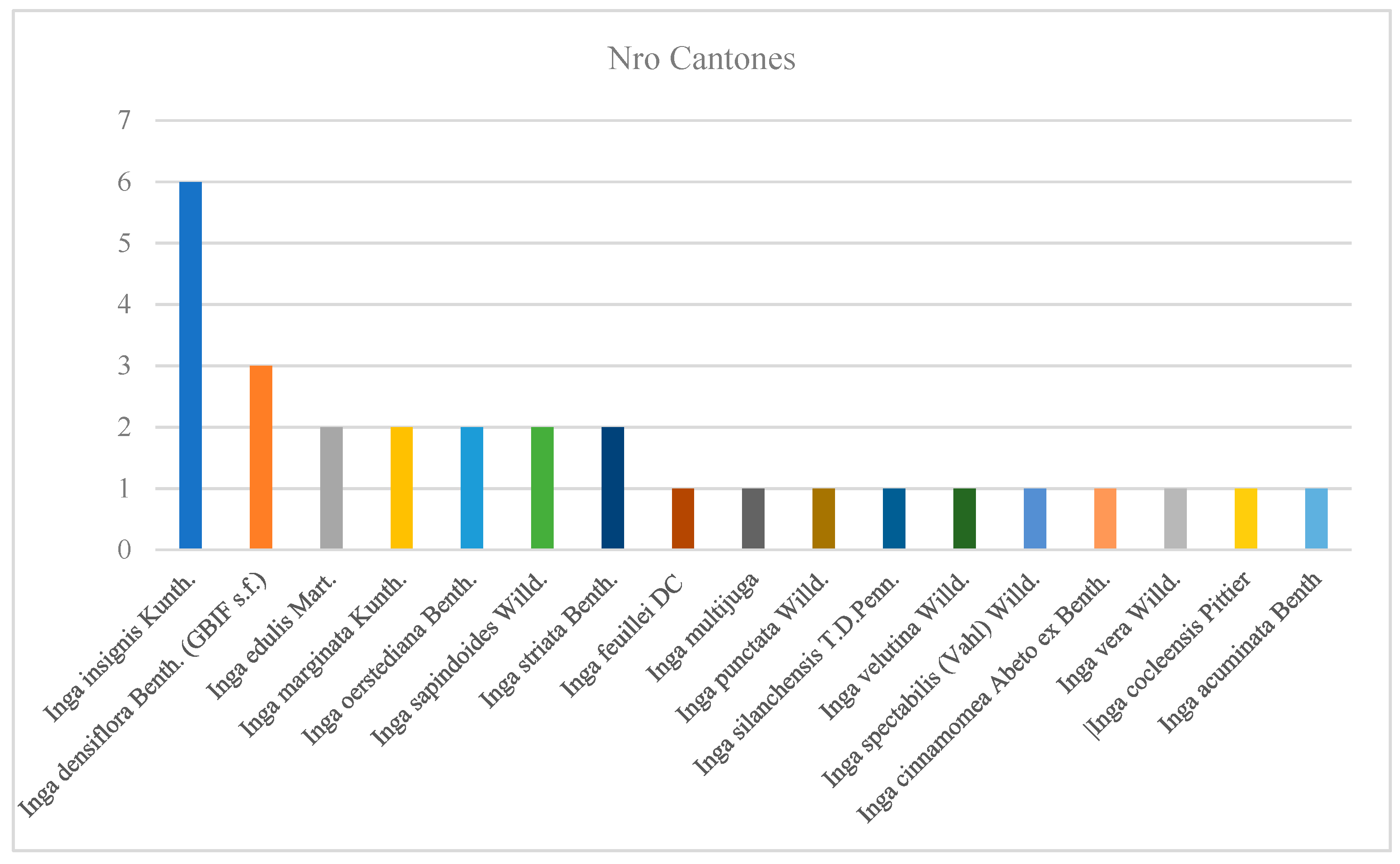
Figure A2.
Distribution ranges of species of the genus Inga in Imbabura.
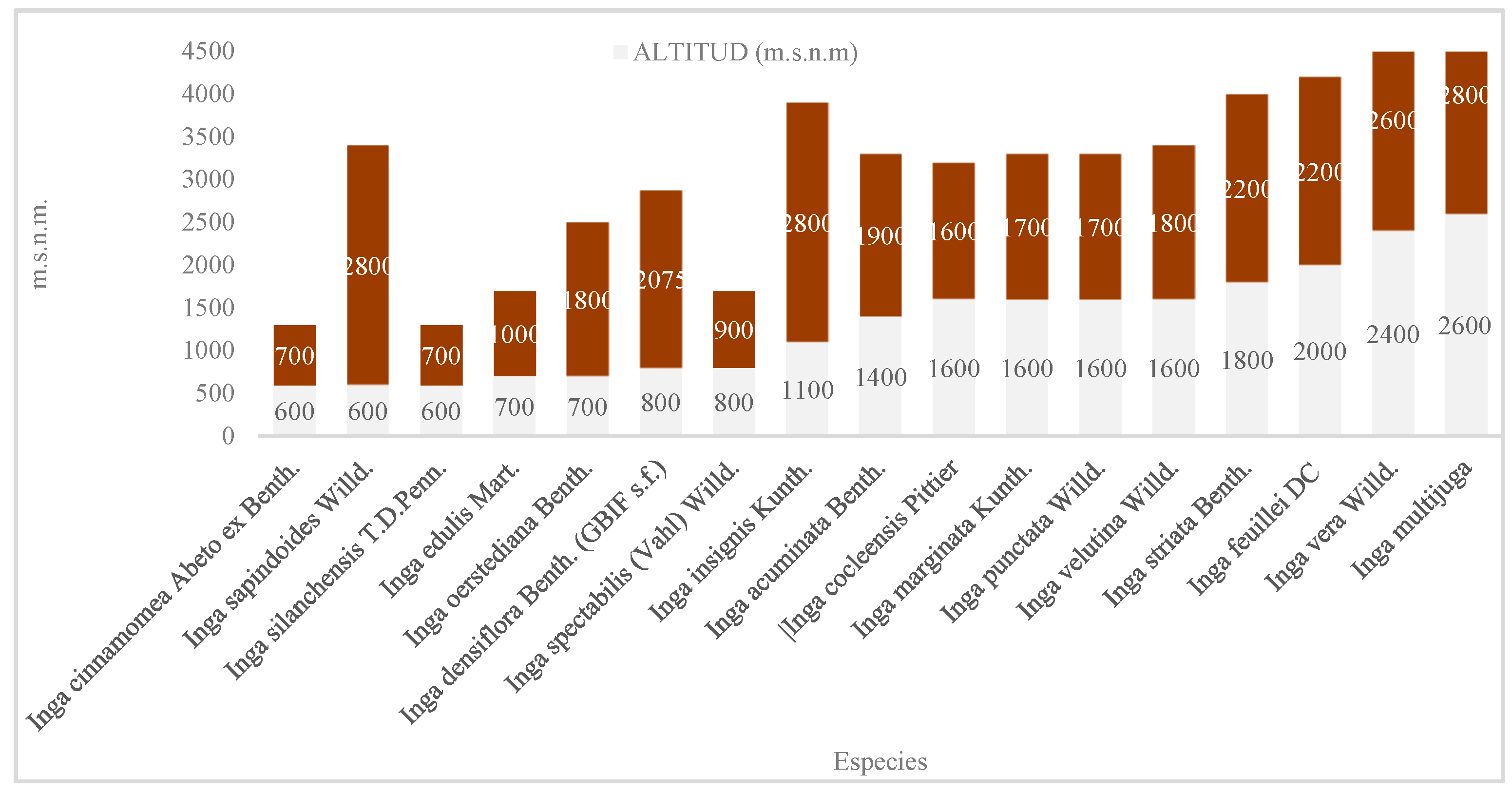
Figure A3.
Precipitation ranges of species of the genus Inga in Imbabura.
References
- Tomaseili, M. Introducción a la dendrocronología: Anatomía de la madera en los trópicos. In Proceedings of the II Curso Internacional: Anatomía y dendrocronología tropical, Huancayo, Peru, 2023; p. 5. [Google Scholar]
- Neill, D. La evolución de las especies en el Ecuador: Las Magnoliaceae. In Proceedings of the V Congreso de Bosques de la Amazonía Ecuatoriana; Universidad Estatal Amazónica: Puyo, Ecuador, 2019; p. 5. [Google Scholar]
- Ministerio del Ambiente del Ecuador (MAE). Deforestación del Ecuador continental 2014-2016; MAE: Quito, Ecuador, 2017. [Google Scholar]
- Bruneau, A.; de Queiroz, L.P.; Ringelberg, J.; Borges, L. Advances in Legume Systematics 14. Classification of Caesalpinioideae. Part 2: Higher-level classification. PhytoKeys 2024, 239, 1–552. [Google Scholar] [CrossRef]
- Palacios, W. Árboles del Ecuador: Familias y géneros; Universidad Técnica del Norte: Ibarra, Ecuador, 2016. [Google Scholar]
- Pennington, T.D.; Revelo, N. El género Inga en el Ecuador: Morfología, distribución y usos; Herbario Nacional del Ecuador: Quito, Ecuador, 1997. [Google Scholar]
- Gutiérrez, E. Efecto del cambio climático en la distribución potencial de cinco especies arbóreas de bosque templado en México. Rev. Mex. Biodivers. 2014, 85, 52–55. [Google Scholar] [CrossRef]
- Denevan, W.M. The Pristine Myth: The Landscape of the Americas in 1492. Ann. Assoc. Am. Geogr. 1992, 82, 369–385. [Google Scholar] [CrossRef]
- Sánchez-Albornoz, N. The Population of Latin America: A History; University of California Press: Berkeley, CA, USA, 1984. [Google Scholar]
- Paredes, H.; Rosales, O.; Varela, G.; Carvajal, G.; León, M. Herbario Universidad Técnica del Norte (HUTN), un laboratorio para conocer la diversidad de especies forestales del Ecuador. Ciencia Latina 2023, 7, 1167–1184. [Google Scholar] [CrossRef]
- Paredes, H. KoBoToolbox. Available online: https://kf.kobotoolbox.org/#/projects/home (accessed on 4 May 2024).
- Pennington, T.D. Flora ilustrada peruana – Inga (Leguminosas): Guabas y pacáes del Perú. Rev. For. Perú 2024, 39, 5–453. [Google Scholar] [CrossRef]
- INEC. Límites provinciales y cantonales; Instituto Nacional de Estadística y Censos: Quito, Ecuador, 2024. [Google Scholar]
- MAGAP. Mapa de fertilidad de suelos del Ecuador; Jiménez, J., Ed.; Ministerio de Agricultura, Ganadería, Acuacultura y Pesca: Quito, Ecuador, 2012. [Google Scholar]
- MAATE. Mapa interactivo del Ecuador. Available online: http://ide.ambiente.gob.ec/mapainteractivo/ (accessed on 10 January 2025).
- INAMHI. Visor climático. Available online: http://www.inamhi.gob.ec/visor/ (accessed on 20 April 2025).
- GBIF. Genus Inga. Available online: https://www.gbif.org/species/2965936 (accessed on 28 August 2023).
- Murga, H.; Coronado, M.F.; Abanto-Rodríguez, C.; De Almeida-Lobo, F. Gradiente altitudinal y su influencia en las características edafoclimáticas de los bosques tropicales. Madera Bosques 2021, 27, e271211. [Google Scholar]
- Castro, A. Biogeografía y modelos de distribución de especies. WorldClim 2020. [Google Scholar]
- Maciel, E.A.; Oliveira-Filho, A.T.; Eisenlohr, P.V. Distribution of Inga species in South America. J. Biogeogr. 2015, 42, 1–12. [Google Scholar]
- GBIF. Genus Inga. 2023. Available online: https://www.gbif.org/species/2965936.
- GBIF. Género Inga en Imbabura [Conjunto de datos] 2025. [CrossRef]
- Antonelli, A.; Nylander, J.A.A.; Persson, C.; Sanmartín, I. Tracing the impact of Andean uplift on Neotropical plant evolution. Proc. Natl. Acad. Sci. USA 2009, 106, 9749–9754. [Google Scholar] [CrossRef]
- Hoorn, C.; Wesselingh, F.P.; Ter Steege, H.; et al. Amazonia through time: Andean uplift, climate change, and biodiversity. Science 2010, 330, 927–931. [Google Scholar] [CrossRef] [PubMed]
- Hall, M.L.; Mothes, P. Volcanic history of the Ecuadorian Andes. J. Volcanol. Geotherm. Res. 2008, 176, 1–17. [Google Scholar] [CrossRef]
- Robin, C.; et al. Late Pleistocene volcanic activity in northern Ecuador. Bull. Volcanol. 2009, 71, 1043–1061. [Google Scholar]
- Vitousek, P.M.; Porder, S.; Houlton, B.Z.; Chadwick, O.A. Terrestrial phosphorus cycling: Regional variations and global disparities. Biogeochemistry 2010, 100, 227–239. [Google Scholar]
- Permiso de investigación No. MAATE-ARSFC-2023-0036, otorgado por el Ministerio de Ambiente, Agua y Transición Ecológica del Ecuador (MAATE).
- Richardson, J. E.; et al. Rapid diversification of a species-rich genus of neotropical rain forest trees. In Science; 2001. [Google Scholar]
- Kursar, T.A.; Dexter, K.G.; Lokvam, J.; Pennington, R.T.; Richardson, J.E.; Weber, M.G.; Murakami, E.T.; Drake, S.T.; McGregor, R.; Coley, P.D. The evolution of antiherbivore defenses and their role in binary risk of herbivory in Inga. Proc. Natl. Acad. Sci. USA 2009, 106, 18073–18078. [Google Scholar] [CrossRef]
- Dexter, K.G.; Terborgh, J.W.; Cunningham, C.W. Convergence in habitat specialization in Inga (Fabaceae). Systematics and Biodiversity 2012, 10, 235–244. [Google Scholar]
- Dexter, K.G.; Chave, J. Evolutionary patterns of range size, niche breadth and species survival in Inga. J. Biogeogr. 2010, 37, 2011–2020. [Google Scholar]
- Schley, R.J.; de la Estrella, M.; Pérez-Escobar, O.A.; Bruneau, A.; Barraclough, T.G.; Forest, F.; Klitgård, B.B. The genome sequence of Inga oerstediana Benth., a nitrogen-fixing tree used in agroforestry. Wellcome Open Res. 2024. [Google Scholar] [CrossRef]
- Nichols, J.D.; Carpenter, F.L. Interplanting Inga edulis with Terminalia amazonia in Costa Rica. Agrofor. Syst. 2006, 66, 1–7. [Google Scholar]
- Colwell, R.K.; Brehm, G.; Cardelús, C.L.; Gilman, A.C.; Longino, J.T. Global warming, elevational range shifts, and lowland biotic attrition. Science 2008, 322, 258–261. [Google Scholar] [CrossRef]
- Feeley, K.J.; Silman, M.R.; Bush, M.B.; Farfan, W.; Garcia, K.G.; Malhi, Y.; Meir, P.; Revilla, N.S.; Quispe, M.N.R.; Miles, L. Upslope migration of Andean trees. J. Biogeogr. 2011, 38, 783–791. [Google Scholar] [CrossRef]
- Fadrique, B.; Homeier, J.; Baez, S.; Duque, A.; Tello, J.S.; Renner, S.S.; Feeley, K.J. Widespread but heterogeneous responses of Andean forests to climate change. Nature 2018, 564, 407–411. [Google Scholar] [CrossRef] [PubMed]
- Lutz, D.A.; Powell, R.L.; Silman, M.R. Andean timberline migration and biodiversity loss with optimization of land management. PLoS ONE 2013, 8, e76101. [Google Scholar] [CrossRef] [PubMed]
- Gehring, C.; Vlek, P.L.G.; de Souza, L.A.G.; Denich, M. Biological nitrogen fixation in secondary regrowth in the central Amazon. Agric. Ecosyst. Environ. 2005, 111, 239–252. [Google Scholar] [CrossRef]
- Condit, R.; Engelbrecht, B.M.J.; Pino, D.; Pérez, R.; Turner, B.L. Species distributions in response to individual soil nutrients and seasonal drought across a tropical forest landscape. Proc. Natl. Acad. Sci. USA 2013, 110, 5064–5068. [Google Scholar] [CrossRef]
- Vitousek, P.M.; Porder, S.; Houlton, B.Z.; Chadwick, O.A. Terrestrial phosphorus cyclying: Regional variations and global disparities. Biogeochemistry 2010, 100, 227–239. [Google Scholar]
- Clement, C.R. 1492 and the loss of Amazonian crop genetic resources. I. The relation between domestication and population decline. Econ. Bot. 1999, 53, 188–202. [Google Scholar] [CrossRef]
- Lojka, B.; Dumas, L.; Preininger, D.; Polesny, Z.; Banout, J. The use and integration of Inga edulis in agroforestry systems in the Peruvian Amazon. Agrofor. Syst. 2011, 83, 67–81. [Google Scholar]
- Beer, J.; Muschler, R.; Kass, D.; Somarriba, E. Shade management in coffee and cacao plantations. Agrofor. Syst. 1998, 38, 139–164. [Google Scholar] [CrossRef]
- Somarriba, E.; Harvey, C.A.; Samper, M.; Anthony, F.; González, J.; Staver, C.; Rice, R.A. Biodiversity conservation in neotropical coffee (Coffea arabica) plantations. In Agroforestry and Biodiversity Conservation in Tropical Landscapes; Schroth, G., Ed.; Island Press: Washington, DC, USA, 2004; pp. 198–226. [Google Scholar]
- Holl, K.D.; Aide, T.M. When and where to actively restore ecosystems? For. Ecol. Manag. 2011, 261, 1558–1563. [Google Scholar] [CrossRef]
- Coley, P.D.; Lokvam, J.; Rudolph, K.; Pruitt, K.; Seger, J.; Kursar, T.A. Divergent defensive strategies of young leaves in two species of Inga. Ecology 2005, 86, 2633–2643. [Google Scholar] [CrossRef]
- Endara, M.J.; Weinhold, A.; Cox, J.E.; Wiggins, N.L.; Coley, P.D.; Kursar, T.A. Coevolutionary arms race versus host defense chase in a tropical herbivore–plant system. Proc. Natl. Acad. Sci. USA 2015, 112, E4569–E4576. [Google Scholar] [CrossRef]
- Duque, A.; Stevenson, P.R.; Feeley, K.J. Thermophilization of adult and juvenile tree communities in the northern Tropical Andes. Proc. Natl. Acad. Sci. USA 2015, 112, 10744–10749. [Google Scholar] [CrossRef]
- KoboToolbox. Available online: https://www.kobotoolbox.org/ (accessed on 23 January 2026).
Figure 1.
Sampling areas in the province of Imbabura.
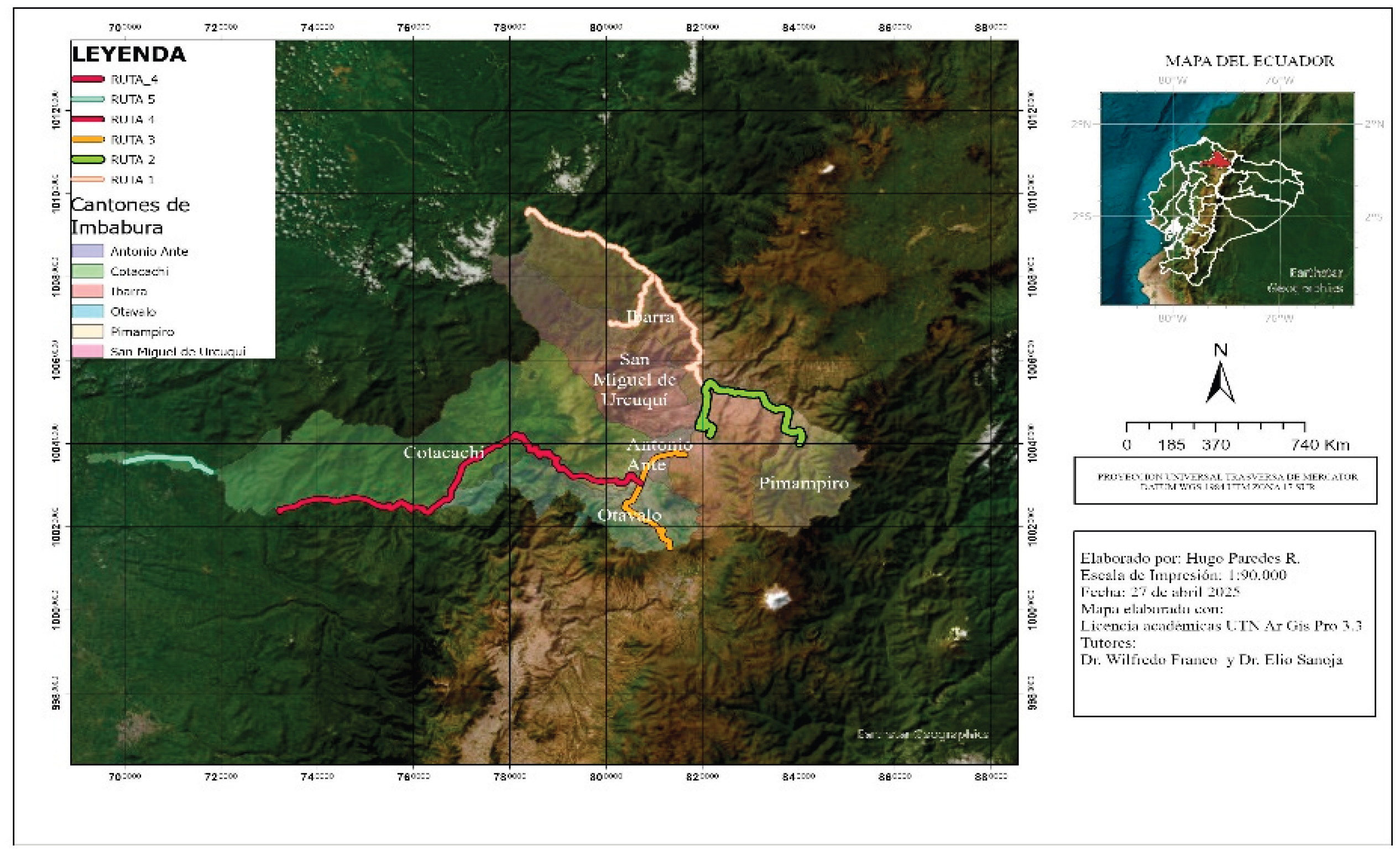
Table 1.
Edaphoclimatic characteristics of the Inga species in Imbabura.
| Species | Altitude (m a.s.l.) | Temp. (°C) | Precip. (mm) | Soil Order | Soil Texture | pH |
|---|---|---|---|---|---|---|
| I. edulis | 700–1000 | 21–22 | 1500–2000 | Mollisol | Clay-Loam | Slightly Acidic |
| I. feuillei | 2000–2200 | 15–16 | 500–750 | Mollisol | Sandy Loam | Alkaline |
| I. multijuga | 2600–2800 | 12–13 | 750–1000 | Inceptisol | Loam | Neutral |
| I. marginata | 1600–1700 | 17–19 | 1750–3000 | Inceptisol | Sandy Loam | Neutral |
| I. oerstediana | 700–1800 | 18–23 | 2000–2500 | Incept.+Entisol | Loam | Med. Acidic |
| I. insignis | 1100–2800 | 11–21 | 500–1500 | Incept.+Mollisol | Loam/Sandy | Variable |
| I. sapindoides | 600–2800 | 12–23 | 750–2500 | Inceptisol | Clay-Loam | Slightly Acidic |
| I. striata | 1800–2200 | 15–17 | 250–1750 | Incept.+Mollisol | Sandy Loam | Neutral |
| I. silanchensis | 600–700 | 22–23 | 3000–3500 | Inceptisol | Loam | Acidic |
| I. spectabilis | 800–900 | 21–22 | 1750–2000 | Mollisol | N/A | N/A |
| I. densiflora | 800–2075 | 14–21 | 1000–3000 | Incept.+Mollisol | Clay-Sandy | Slightly Acidic |
| I. cinnamomea | 600 | 22–23 | 3000–3500 | Inceptisol | Loam | Acidic |
| I. vera | 2400–2600 | 13–14 | 1250–1500 | Incept.+Entisol | Clay-Loam | Slightly Acidic |
| I. cocleensis | 1600 | 17–18 | 2500–3000 | Inceptisol | Sandy Loam | Neutral |
| I. acuminata | 1400–1900 | 16–18 | 1750–2000 | Incept.+Entisol | Sandy Loam | Med. Acidic |
| I. velutina | 1600-1800 | 17-18 | 2500-3000 | Incept.+Entisol | Clay-Loam | Slightly Acidic |
| I. punctata | 1600-1700 | 17-18 | 2500-3000 | Inceptisol | Sandy Loam | Neutral |
Disclaimer/Publisher’s Note: The statements, opinions and data contained in all publications are solely those of the individual author(s) and contributor(s) and not of MDPI and/or the editor(s). MDPI and/or the editor(s) disclaim responsibility for any injury to people or property resulting from any ideas, methods, instructions or products referred to in the content. |
© 2026 by the authors. Licensee MDPI, Basel, Switzerland. This article is an open access article distributed under the terms and conditions of the Creative Commons Attribution (CC BY) license (http://creativecommons.org/licenses/by/4.0/).
Copyright: This open access article is published under a Creative Commons CC BY 4.0 license, which permit the free download, distribution, and reuse, provided that the author and preprint are cited in any reuse.


