

Submitted:
05 March 2026
Posted:
06 March 2026
You are already at the latest version
Abstract
The main aim of this study was to investigate the association between areas of work life and engagement in the development of burnout syndrome in self-employed and sub-ordinate psychologists. Using a cross-sectional approach with quantitative and qualitative elements, three scales validated for the Brazilian population were applied: Burnout Assessment Tool (BAT), Areas of Worklife Survey (AWS) and Utrecht Work Engagement Scale (UWES). 180 psychology professionals took part, with a predominance of females (88.3%) and a majority aged between 24 and 29. The results revealed a strong negative correlation between the BAT domains and aspects assessed by the UWES, confirming the inverse association between engagement and burnout. In addition, the positive associa-tion between areas of work life and engagement was confirmed. However, there was no confirmation of the negative association between areas of work life and burnout, and no evidence was found that these areas act as mediators in the relation between engagement and burnout. Thus, although the areas of work life have been shown to influence en-gagement and burnout independently, their role as mediators in this relationship has not been confirmed. Although some hypotheses were confirmed and significant associations were found, the research also encountered unexpected results and limitations that deserve to be considered in future investigations such as this one.
Keywords:
areas of work life
; engagement
; burnout
; psychologists
1. Introduction
Historically, work was conceived primarily as a means of survival, associated with the guarantee of subsistence. Over time, however, it has assumed a central role in the organization of social life and in the constitution of subjectivity. Beyond an activity performed in exchange for remuneration, work has become a space for meaning-making, identity construction, and social recognition [1,2] (pp101-111).
From the perspective of work psychodynamics, work is not limited to material exchange but deeply involves the subjective sphere. Dejours emphasizes that through work individuals construct fundamental aspects of their identity and psychic functioning, in a process that is inseparable from the body and lived experience [3] (pp45-62). When work restricts the power to act, recognition, or interpersonal bonds, it may become a significant source of psychological suffering [1].
Discussions regarding work-related suffering gained greater relevance in the post-industrial period, when mental illness began to be recognized as a possible consequence of working conditions and work organization. With the advancement of capitalism and broader social transformations, work increasingly incorporated moral, intellectual, and subjective dimensions, thereby intensifying the demands placed on workers [1].
Within this context, several authors have sought to understand emerging forms of occupational suffering. Ehrenberg introduced the concept of the pathology of performance, suggesting that the inability to meet idealized standards of success and achievement may lead to feelings of incompetence, anguish, and frustration. Similarly, studies have identified stress, lack of interpersonal bonds, insufficient recognition, and moral harassment as significant contributors to psychological distress at work [1].
These transformations are embedded in a broader social shift from disciplinary societies to performance-oriented societies. While disciplinary societies were grounded in repression, punishment, and strict norms, performance societies are sustained by a discourse of autonomy, freedom, and self-realization shaped by neoliberal logic [4]. According to Han, this transition produces a more subtle form of coercion, in which performance demands are internalized and individuals perceive themselves as solely responsible for their success or failure [5,6].
In performance-oriented societies, individuals increasingly become entrepreneurs of themselves, assuming ever-higher goals and subjecting themselves to constant productivity demands [7,8]. Fear of external punishment is replaced by the anxiety of not meeting one’s own expectations, which may generate persistent states of fatigue, anguish, and exhaustion. This dynamic is further intensified by social media, which amplifies exposure, comparison, and pressure for professional success and visibility [9].
Previous research in healthcare settings has highlighted the relevance of organizational and relational resources for workers’ well-being. For instance, studies conducted in the health sector have shown that authentic leadership is positively associated with both structural empowerment and workplace civility, suggesting that access to empowering structures and a respectful work environment plays a central role in occupational health outcomes [10]
Within this scenario, burnout emerges as one of the most prominent expressions of work-related psychological suffering. Unlike classical forms of occupational illness associated with repression, burnout has been linked to excess demands, intensified performance, and exaggerated positivity [5]. Burnout has been widely investigated in the field of occupational health, particularly in professions characterized by high emotional and relational demands.
Studies shows that negative interactions at work, like incivility, increase burnout. For example, a study conducted with Portuguese hotel employees found that experiences of disrespect and incivility were significantly related to burnout symptoms, highlighting the role of the work environment in occupational exhaustion [11]
Despite advances in the literature, studies that jointly examine work engagement, professional life areas, and burnout remain limited, particularly among psychologists. This professional group is frequently exposed to high emotional demands, ethical responsibility, and intense interpersonal involvement, which may increase vulnerability to psychological distress and occupational burnout.
Therefore, the present study aims to investigate the influence of professional life areas and work engagement on burnout syndrome among psychologists, considering both autonomous and subordinate professionals. Specifically, this study seeks to assess levels of work engagement, identify congruences and incongruences in professional life areas, and analyze their relationship with burnout symptoms. The findings are expected to contribute to a better understanding of occupational health risks among psychologists and to support the development of strategies aimed at promoting well-being and sustainable professional practice.
Burnout is recognized as a syndrome resulting from chronic, unmanageable work-related stress, particularly among health professionals [12,13,14]. Currently, it is classified by the WHO as an occupational phenomenon with symptoms such as exhaustion, mental distancing, and low efficacy [15].
Risk factors include work overload, negative feedback, resource scarcity, problematic interpersonal relationships, pressure, lack of autonomy, and lack of reciprocity [16,17]. Factors such as age, marital status, and educational level also influence susceptibility to burnout [17].
Burnout is distinguished from other conditions, such as depression, by its physical symptoms and its origin in the work environment, without underlying psychopathology [16,18,19]. The impostor syndrome may intensify with burnout [20].
Burnout measurement has traditionally relied on the Maslach Burnout Inventory (MBI), which assesses emotional exhaustion, disbelief, and professional efficacy [13,21]. (However, criticisms of the MBI led to the development of the Burnout Assessment Tool (BAT), which offers a more precise and multidimensional evaluation [22,23].
Protective factors include mindfulness practices, physical exercise, cognitive-behavioral therapy, psychological flexibility, and resilience [24,25,26,27].
The concept of areas of work life was developed by Maslach and Leiter in 1997, encompassing workload, control, reward, community, fairness, and values [17,28]. Congruence in these areas reduces the risk of burnout, while imbalances increase vulnerability [29,30].
Each area exerts a distinct influence: excessive workload leads to overload and frustration; Reward involves financial and social recognition [31]; control is linked to autonomy and satisfaction; community refers to social support and belonging; fairness relates to organizational justice and values concern the alignment between personal and organizational values [30].
International studies show that incongruence in these areas is associated with higher emotional exhaustion and burnout [29,32,33,34]. Interventions can be individual (behavioral change) or organizational (improving working conditions) [31].
Engagement is a positive state of dedication, vigor, and absorption at work, a concept that gained prominence from the 1990s onward [35](pp15-35). It is related to the availability of resources in the work environment, such as autonomy, feedback, social support, and development opportunities [36,37,38].
Engagement is considered the opposite of burnout in many theoretical models [39,40]. However, the absence of burnout does not automatically imply the presence of engagement [41]. Measurement is performed using the Utrecht Work Engagement Scale (UWES), which assesses dedication, vigor, and absorption [42].
High levels of engagement are associated with less psychological distress, better physical health, and higher performance [43]. Engagement is influenced by work resources, which act as buffers against negative factors [37,44]. Personal life and social support also impact engagement and burnout [45].
Burnout is prevalent among health professionals, especially in countries with fewer resources, and is more common among younger and early-career professionals [19,46]. Factors such as overload, lack of support, conflicts, and high expectations contribute to the development of the syndrome [16,47].
Among psychologists, burnout is associated with low personal accomplishment, psychological discomfort, and strain, especially for those working directly with patients [48]. Self-employed psychologists tend to have a lower risk of burnout, but individual and contextual factors are also determinants [49,50,51].
The COVID-19 pandemic has aggravated the scenario, increasing symptoms of exhaustion and requiring adaptation to remote work [52,53,54,55].The topic of burnout among psychologists remains underrepresented in the literature, indicating the need for further research and preventive strategies [20,56,57].
This study is designed as an intervention inspired by the Humanistic Theory of the Person-Centered Approach, proposed by Carl Rogers, and is part of the project “Promoting the quality of interpersonal relationships, health and well-being among health professionals”, developed at Universidade Autónoma de Lisboa. Within this framework, the present research aims to contribute to a deeper understanding of the relationships between work engagement, areas of worklife, and burnout in the context of psychology professionals [58].
2. Materials and Methods
This study aimed to examine the association between work engagement, areas of worklife, and burnout among Psychology professionals.
A cross-sectional study design was adopted, using a quantitative approach with a comparative perspective. The investigation focused on analyzing how work engagement and areas of worklife are associated with burnout among self-employed psychologists and those working under institutional employment.
Based on the literature, burnout is negatively associated with work engagement [59] and positively associated with workaholism [22]. Furthermore, higher congruence between individuals and their work environment across areas of worklife is associated with lower levels of burnout and higher levels of engagement [60]. In this framework, areas of worklife are conceptualized as a potential mediating variable between engagement and burnout.
Figure 1 presents the conceptual model guiding this investigation, illustrating the proposed relationships between areas of worklife, engagement, and burnout.
The following hypotheses were formulated: H1: Areas of worklife are negatively associated with burnout. H2: Work engagement is negatively associated with burnout. H3: Areas of worklife are positively associated with work engagement. H4: Areas of worklife mediate the relationship between work engagement and burnout.
The sample consisted of 180 Psychology professionals. Participants were recruited through the dissemination of a digital questionnaire in WhatsApp groups for Psychology professionals and via Instagram. Inclusion criteria were being a practicing psychologist and having internet access to complete the questionnaire.
Data collection was concluded upon reaching 180 valid responses, due to licensing restrictions of one of the instruments used in the study. Participation was voluntary and anonymous, and no financial compensation was offered.
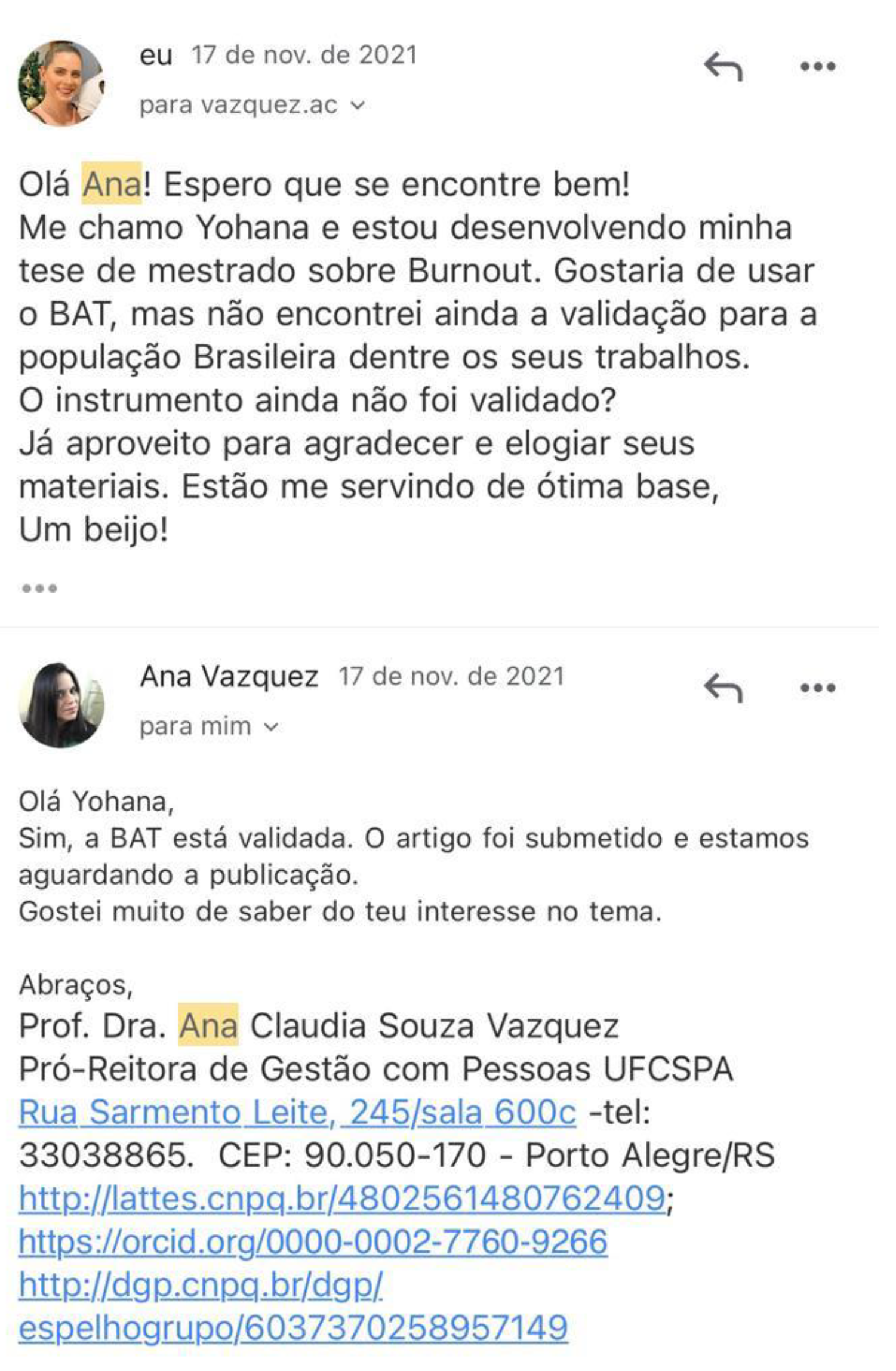
Burnout was assessed using the Burnout Assessment Tool (BAT), work-related version. The instrument was translated into Portuguese and validated for the Brazilian population [60]. Authorization for its use was obtained from the authors (see Appendix A1).
The BAT consists of 33 items assessing primary symptoms (exhaustion, mental distance, cognitive control impairment, and emotional control impairment) and secondary symptoms (psychological and psychosomatic complaints). Items are rated on a 5-point Likert scale, ranging from 1 (never) to 5 (always).
The BAT has demonstrated strong psychometric properties and cross-national measurement invariance across multiple countries, including Brazil and Portugal [23,61].
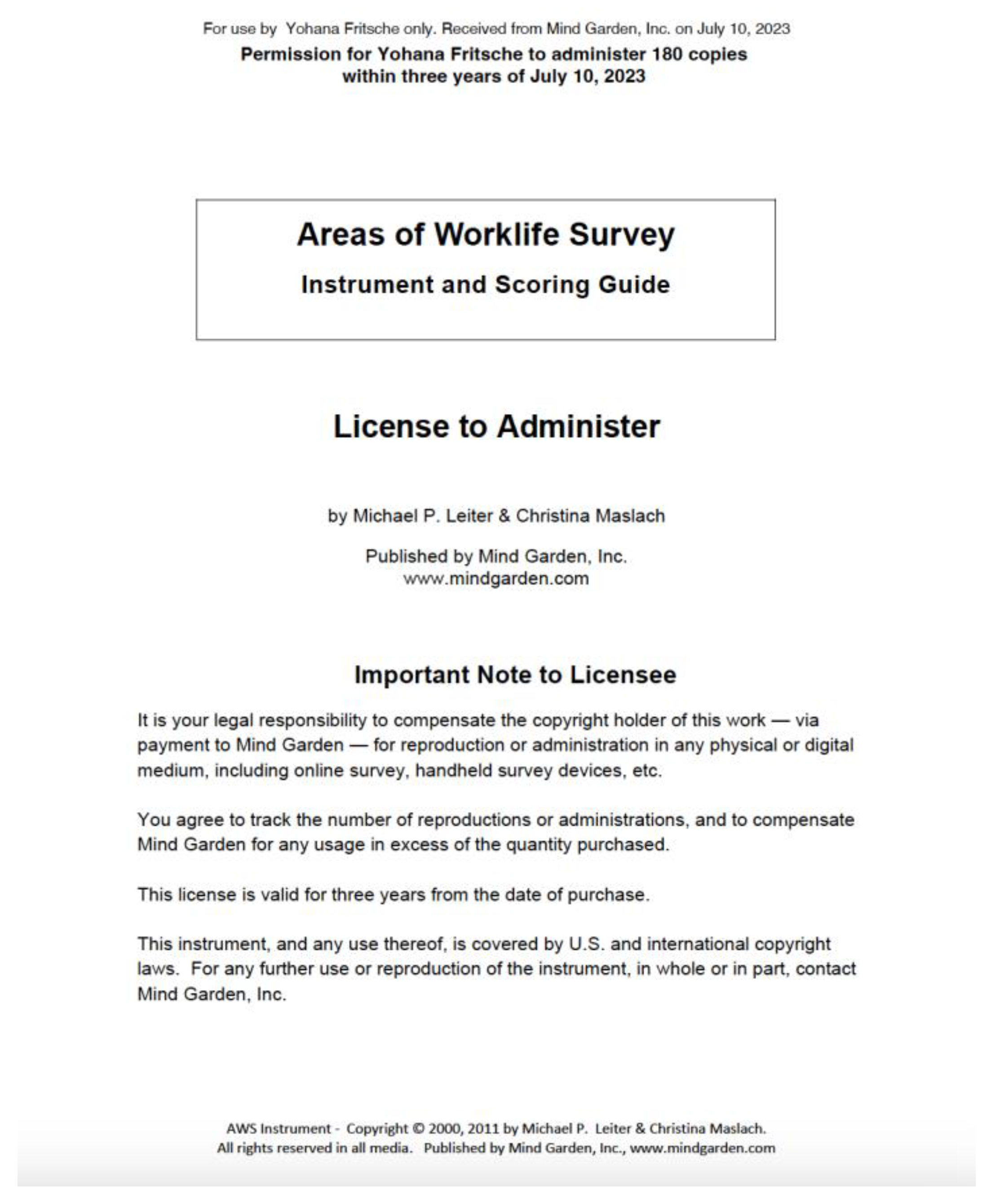
Areas of worklife were assessed using the Areas of Worklife Survey (AWS), obtained through a licensed agreement with MindGarden (see Appendix A2). The license authorized data collection from up to 180 participants.
The AWS consists of 28 items assessing six areas of worklife: workload, control, reward, community, fairness, and values. Items are answered on a 5-point Likert scale, ranging from strongly disagree (1) to strongly agree (5).
The Brazilian version of the AWS was validated by Porto demonstrating adequate internal consistency across its dimensions [28].
Work engagement was measured using the Utrecht Work Engagement Scale (UWES), developed by Schaufeli and Bakker. The instrument assesses three dimensions of engagement: vigor, dedication, and absorption [62].
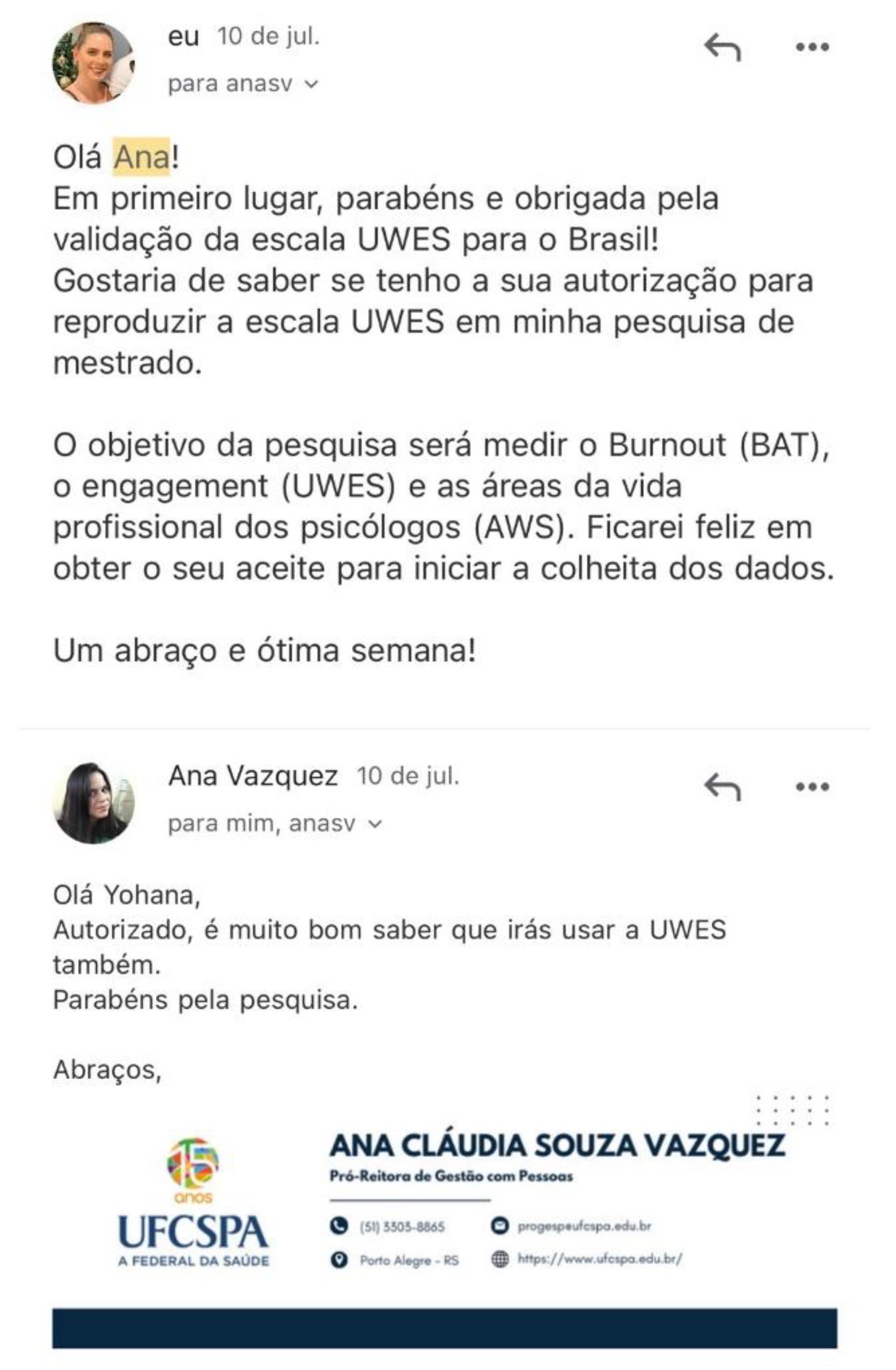
The Brazilian version of the UWES was validated by Vazquez and consists of 17 items, rated on a 7-point frequency scale ranging from 0 (never) to 6 (always). The instrument has demonstrated high reliability in Brazilian samples [63].
Authorization for use of the UWES was obtained from the authors (see Appendix A3).
Data were collected between August and December 2023 using an online questionnaire created in Google Forms, which included the sociodemographic questionnaire and the three psychometric instruments.
Participants provided informed consent prior to participation. Responses were collected anonymously, and no identifying information was recorded, in accordance with ethical and confidentiality guidelines.
Data analysis was conducted using descriptive and inferential statistical techniques. Preliminary analyses included assessment of data distribution and assumptions for multivariate modeling.
To test the hypothesized relationships among work engagement, areas of worklife, and burnout, Structural Equation Modeling (SEM) was employed. The model included three latent variables corresponding to UWES, AWS, and BAT. Model estimation was performed using the maximum likelihood method, with a significance level set at α = 0.05.
Generative artificial intelligence tools were used to support language refinement and structural organization of the manuscript. No AI tools were used for data generation, data analysis, or interpretation of results.
3. Results
3.1. Summary of Results
3.1.1. Statistical Report
In this investigation, data from a sample of n = 180 participants were analyzed in order to examine the relationship between work engagement, areas of work life, and burnout among self-employed and subordinate psychologists.
The sample presented a strong predominance of female participants, representing 88.3% of the total, while only 11.7% were male (p < 0.0001). Regarding age group, most participants were between 24 and 29 years old, accounting for 47.8% of the sample (p < 0.0001). Concerning marital status, a significant trend was observed for the category “single,” which comprised 48.9% of participants (p < 0.0001).
With respect to professional characteristics, the analysis revealed that the majority of participants were self-employed professionals, with 52.2% responding “yes, exclusively” to the question regarding autonomous professional practice (p < 0.0001). In addition, most participants also worked for an institution or company, with 56.7% answering “yes” to this question (p = 0.0174). Regarding parenthood, the prevailing category was “no children,” encompassing 70.0% of the participants (p < 0.0001).
In terms of educational level, a predominance of participants with postgraduate education was observed, representing 67.8% of the sample (p < 0.0001). Finally, regarding approximate monthly income, the results indicated a significant trend toward the range “three to five minimum wages,” reported by 37.2% of participants (p = 0.0003).
3.1.2. Burnout Assessment Tool (BAT)
In the Exhaustion domain, values ranged from 9.4 to 96.9, with a median of 56.3 and a mean of 54.4 ± 17.7. Approximately 25% of participants presented levels below 40.6, while 25% reported levels above 65.6.
For the Mental Distance domain, values ranged from 0.0 to 90.0, with a median of 25.0 and a mean of 30.4 ± 20.2. The Cognitive Control Decline domain ranged from 0.0 to 93.8, with a median of 37.5 and a mean of 41.5 ± 19.5. The Emotional Control Decline domain ranged from 0.0 to 95.0, with a median of 35.0 and a mean of 35.0 ± 18.2.
Additionally, the Psychological and Psychosomatic Complaints domains, which assess secondary symptoms, showed considerable variation, with medians of 45.0 and 35.0, respectively, and means of 45.9 ± 19.6 and 38.7 ± 18.2 (Table 1).
Normality tests indicated that the Exhaustion, Cognitive Control Decline, Psychological Complaints, and Psychosomatic Complaints domains followed a normal distribution, with p-values of 0.5953, 0.1262, 0.4207, and 0.2010, respectively. However, the Mental Distance and Emotional Control Decline domains showed non-Gaussian distributions, with p-values of 0.0170 and 0.0026, respectively.
3.1.3. Areas of Worklife Survey (AWS)
In the Workload domain, scores ranged from 36.0 to 88.0, with a median of 60.0 and a mean of 61.4 ± 10.8. Approximately 25% of participants scored below 52.0, while 25% scored above 68.0.
For the Control domain, scores ranged from 20.0 to 100.0, with a median of 75.0 and a mean of 74.0 ± 18.2. In the Community domain, scores ranged from 20.0 to 100.0, with a median of 65.0 and a mean of 63.7 ± 10.6. The Reward domain showed scores ranging from 20.0 to 96.0, with a median of 60.0 and a mean of 60.0 ± 14.0.
In the Fairness domain, scores ranged from 20.0 to 93.3, with a median of 60.0 and a mean of 56.2 ± 12.2. Finally, the Values domain ranged from 20.0 to 100.0, with a median of 65.0 and a mean of 66.6 ± 20.3 (Table 2).
Normality tests revealed that the Workload, Control, Reward, and Values domains followed a normal distribution, with p-values of 0.5789, 0.1424, 0.5982, and 0.3984, respectively. In contrast, the Community and Fairness domains showed non-Gaussian distributions, with p-values < 0.0001 and 0.0029, respectively.
3.1.4. Utrecht Work Engagement Scale (UWES)
The analysis of the Utrecht Work Engagement Scale (UWES) revealed a wide range of scores across the evaluated domains (Table 3).
In the Dedication domain, which reflects a sense of significance, enthusiasm, inspiration, pride, and challenge at work, scores ranged from 1.0 (minimum) to 6.0 (maximum), with a median of 4.5. According to the UWES manual classification [41]. This median indicates a moderate level of dedication. The mean score of 4.2 with a standard deviation of 1.1 suggests that, although most participants demonstrated good levels of dedication, there was considerable variability. Specifically, 25% of participants showed dedication levels below 3.6, while 25% scored above 5.0, indicating high to very high engagement. Normality testing for Dedication yielded a p-value of 0.0162, indicating a non-Gaussian distribution.
Regarding Vigor, characterized by energy and mental and physical effort at work [41], scores also ranged from 1.0 to 6.0, with a median of 4.5, reflecting a moderate level of vigor. The mean of 4.3 with a standard deviation of 1.1 confirms that most participants felt energized and capable of investing effort in their work, although with substantial variability. This dispersion is reflected by 25% of participants scoring below 3.7 and another 25% scoring above 5.0. The data suggested a non-Gaussian distribution for Vigor, with a p-value of 0.0012.
Finally, the Absorption subscale, which describes concentration and full immersion in work, showed scores ranging from 1.0 to 6.0, with a median of 4.2. According to UWES criteria [41], this result places absorption at a moderate level. The mean score was 4.1 with a standard deviation of 0.9, indicating that participants tended to be fairly focused and absorbed in their work, with less variability compared to the other two subscales. In this domain, 25% of participants scored below 3.7, while 25% scored above 4.7. Normality analysis for Absorption confirmed a non-Gaussian distribution, with a p-value of 0.0155.
3.1.5. Pearson Correlation—Burnout, Areas of Worklife, and Engagement
The analysis revealed an interconnection between burnout, measured by the Burnout Assessment Tool (BAT), areas of work life, assessed by the Areas of Worklife Survey (AWS), and engagement, evaluated using the Utrecht Work Engagement Scale (UWES). This relationship was examined using Pearson correlation coefficients, which provide a quantitative assessment of the associations between these variables, as shown in Table 4.
A strong negative correlation was identified between several BAT domains and dimensions assessed by the UWES and AWS. Specifically, the Exhaustion domain (BAT) showed significant negative correlations with the Workload, Control, Reward, and Fairness domains of the AWS, as well as with Absorption from the UWES. Similarly, the Mental Distance domain (BAT) exhibited negative correlations with the Workload, Control, Community, Fairness, and Values domains of the AWS, in addition to a negative correlation with Absorption in the UWES.
The Cognitive and Emotional Control Decline domains (BAT) were negatively correlated with Workload, Control, and Fairness in the AWS; however, only Emotional Control Decline showed a negative correlation with Absorption in the UWES. Finally, the Psychological and Psychosomatic Complaints dimensions (BAT) also showed negative correlations with Workload, Control, and Fairness in the AWS, although only Psychological Complaints were negatively correlated with Absorption in the UWES.
Overall, Pearson correlation coefficients between BAT, UWES, and AWS illustrate a complex network of interactions. Strong (classified as “A”) and moderate (classified as “B”) negative correlations were statistically significant and highlight critical areas where burnout significantly impacts work perceptions and professional engagement. Weaker correlations, although statistically significant (classified as “C”), indicate more moderate relationships between these variables.
3.1.6. Structural Equation Model: Evaluation of the Relationship Between AWS, UWES, and BAT
To evaluate the relationship between the Areas of Worklife Survey (AWS), the Utrecht Work Engagement Scale (UWES), and the Burnout Assessment Tool (BAT), a Structural Equation Model (SEM) was constructed to investigate whether AWS acts as a moderator in the relationship between engagement and burnout among psychology professionals. The model demonstrated excellent performance, with an R² coefficient of 96.29%.
Initially, when analyzing the model including all variables, the direct relationship between UWES and BAT was highly significant, with a path coefficient of −0.7021 and a p-value < 0.0001. However, the direct relationship between AWS and BAT was not statistically significant, with a path coefficient of −0.0249 and a p-value of 0.7900. Conversely, the relationship between UWES and AWS was statistically significant, with a path coefficient of 0.6124 and a p-value < 0.0001.
Regarding direct effects, the direct effect of UWES on BAT was highly significant, with a value of −9.0735 and a p-value < 0.0001. In contrast, the direct effect of AWS on BAT was not statistically significant (−0.0936; p = 0.7900). Concerning indirect effects, the inclusion of AWS in the model did not significantly reduce the relationship between UWES and BAT, with an indirect effect of −0.2014 and a p-value of 0.7900.
Analysis of total effects showed that the total effect of UWES on BAT was highly significant (−9.4749; p < 0.0001). However, the total effect of AWS on BAT was not significant (−0.0936; p = 0.7900).
3.1.7. Reliability of Indicators
In the confirmatory factor analysis (CFA) implemented within the Structural Equation Model (SEM), the indicators of reliability included:
- a)
- Factor loadings, which represent the relationship between observed indicators and latent factors in the SEM. High and significant factor loadings indicate a strong association between indicators and the latent constructs they represent.
- b)
- Cronbach’s alpha, where higher values indicate greater internal consistency. Values between 0.60 and 0.69 are considered marginally acceptable, while values above 0.70 or 0.80 are considered good. In the present study, the AWS showed a Cronbach’s alpha of 0.6767, indicating marginally acceptable reliability. The BAT presented a Cronbach’s alpha of 0.8869, indicating good reliability. The UWES showed a Cronbach’s alpha of 0.7655, also indicating good reliability.
- c)
- Extracted variance, represented by the R² coefficient, which reflects the proportion of variance in each indicator explained by the model. Higher values suggest stronger associations between indicators and their respective latent constructs.
- d)
- Measurement errors, also referred to as residuals, which should be low in confirmatory factor analysis. Large residuals may indicate that indicators do not fully capture the underlying construct or that there are issues with model specification. These errors provide an estimate of the standard error of the model parameters, obtained using maximum likelihood inference with the observed information matrix. Lower standard error values indicate greater precision of parameter estimates.
4. Discussion
Based on the established criteria and the results obtained in this investigation, not all of the initially proposed hypotheses were confirmed.
The first hypothesis of this study, H1 (areas of worklife are negatively associated with burnout), was not confirmed. Although the results did not support this hypothesis, it is important to consider that the literature consistently indicates that areas of worklife play a crucial role in the development of burnout syndrome. Even though a negative association between areas of worklife and burnout was not identified in this specific investigation, previous studies contribute substantially to the understanding of this phenomenon. According to authors [28,30], incongruences or imbalances in areas of worklife are associated with the development of burnout. When individuals experience inconsistencies or a lack of balance in their professional domains, they may become more vulnerable to burnout. This suggests that a relationship between these variables exists and that incongruences in worklife areas may increase the risk of burnout. Additionally, authors such as Leiter and Maslach [60] emphasize the relevance of the six areas of worklife as critical sources influencing burnout, arguing that mismatches in any of these areas may contribute to the development of the syndrome. Therefore, even though H1 was not supported by the findings of this study, the relevance of areas of worklife remains essential in discussions surrounding burnout.
Regarding the second hypothesis, H2 (engagement is negatively associated with burnout), the results supported its confirmation. This finding is consistent with theoretical frameworks that conceptualize engagement as a construct opposite to burnout. As observed, work engagement is closely related to the availability of resources in the work environment. The greater the availability of resources such as autonomy, vigor, sense of belonging, and competence, the higher the likelihood that individuals will experience positive work-related emotions and the lower their risk of developing exhaustion, as their basic psychological needs are met [38]. This relationship between engagement and job resources is widely discussed in the literature. Bakker and Leiter [66] emphasize that engagement results from a strong identification with work, characterized by vigor and dedication, whereas burnout is associated with emotional exhaustion and cynicism. These constructs are often considered opposites, reinforcing the importance of analyzing them independently [41]. Furthermore, studies indicate that engagement and burnout are opposing constructs, with the core dimensions of engagement (vigor and dedication) contrasting with the central dimensions of burnout (exhaustion and cynicism) [40]. These findings suggest that highly engaged individuals tend to experience fewer burnout symptoms, while those with lower engagement levels are more susceptible to professional exhaustion. Thus, the results of this study reinforce the understanding that work engagement is inversely associated with burnout, highlighting the importance of promoting job resources to foster engagement and prevent burnout.
The third hypothesis, H3 (areas of worklife are positively associated with engagement), was also confirmed, corroborating the findings of Leiter and Maslach [60]. According to these authors, the greater the consistency experienced by individuals in relation to areas of worklife, the higher the likelihood of their engagement with work. This understanding is further supported by Cho [67], who observed that balanced areas of worklife are closely associated with lower levels of emotional exhaustion and, consequently, higher organizational commitment. This positive association between areas of worklife and engagement underscores the importance of considering not only negative aspects, such as imbalance or incongruence, but also factors that promote consistency and harmony across these areas. Individuals who perceive greater alignment within their professional domains tend to be more engaged at work and experience lower levels of emotional exhaustion, indicating that investing in work environments that foster such alignment may be an effective strategy to promote professional well-being.
The fourth and final hypothesis, H4 (areas of worklife positively mediate the relationship between engagement and burnout), was not supported by the findings of this study. This suggests that, according to the established criteria and obtained results, areas of worklife did not play a significant mediating role in the relationship between engagement and burnout. As outlined by Leiter and Maslach [60], inadequate areas of worklife increase the risk of burnout within organizations. However, despite the strong associations between areas of worklife and burnout identified in previous studies, the present investigation did not find evidence supporting a mediating effect of these areas between engagement and burnout. One possible explanation for this finding lies in the complexity of the relationship between engagement and burnout. While engagement is characterized by energy, involvement, and professional efficacy, burnout is conceptualized as its opposite, marked by exhaustion, cynicism, and reduced professional efficacy [16]. Although some models suggest that engagement and burnout represent opposite poles of a single continuum, others argue that they are relatively distinct constructs [62]. This conceptual complexity may have influenced the absence of mediation effects in the present study. Additionally, Maslach [16] emphasize the importance of considering burnout antecedents, including both situational and individual factors. While situational factors such as job characteristics and organizational context play a significant role in burnout development, individual factors such as personality traits are also relevant [68]. Therefore, the present study may have underestimated the role of individual factors in the relationship between engagement and burnout, which may have contributed to the lack of support for H4.
Despite the methodological rigor of this investigation, some limitations must be acknowledged. First, the scarcity of studies specifically focused on psychologists and self-employed professionals limited the availability of directly comparable literature. This gap may have influenced both hypothesis formulation and the interpretation of the findings.
Additionally, the predominance of research conducted in formal organizational settings may restrict the generalizability of the present results. Psychologists working as employees or self-employed professionals may experience distinct work dynamics compared to corporate populations, which could affect patterns of burnout and engagement.
Another limitation relates to the use of online data collection. Although this method facilitated broader geographic reach and accessibility, the absence of direct supervision may have resulted in response bias, including inconsistent or socially desirable answers. Finally, the lack of control over individual factors (e.g., personality traits, coping strategies) and situational variables not included in the model may have limited the identification of mediating mechanisms between engagement and burnout.
This study contributes to the literature by examining burnout and engagement specifically among psychology professionals, including both institutionally employed and self-employed individuals. This focus addresses an important gap and provides a more nuanced understanding of occupational well-being in this professional group.
The findings reinforce theoretical models that distinguish engagement and burnout as opposing constructs and highlight the relevance of work resources and alignment across areas of worklife in promoting engagement. Moreover, the methodological approach enabled access to a diverse sample, strengthening the robustness and applicability of the findings.
Future studies are encouraged to adopt the short version of the Burnout Assessment Tool (BAT), given its high correlation with the full version and its potential to reduce respondent fatigue [23].
Further research should also expand the scope to include entrepreneurs and business owners, allowing for comparative analyses between employees, self-employed professionals, and entrepreneurs across different organizational contexts. Additionally, greater attention should be given to individual factors—such as personality traits, coping strategies, and social support—that may influence the relationship between engagement and burnout.
Finally, future investigations should explore the impact of remote and flexible work arrangements, particularly in post-pandemic contexts. Understanding how digital work environments affect burnout and engagement among psychology professionals may inform more effective preventive and intervention strategies.
5. Conclusions
The results of this study highlight the complexity of the relationship between work engagement, areas of worklife, and burnout among psychology professionals, including both those working in formal institutions and self-employed practitioners. While some hypotheses were confirmed, the findings also revealed unexpected results that contribute to a deeper theoretical discussion of these variables.
No direct association was identified between areas of worklife and burnout, contrary to part of the existing literature. This finding suggests that the influence of these areas on professional exhaustion may occur indirectly or depend on specific contextual dynamics, reinforcing the need for further investigation.
Conversely, a negative association between engagement and burnout was confirmed, supporting theoretical models that conceptualize these constructs as opposites. This result underscores the protective role of work engagement and highlights the importance of job resources—such as autonomy, recognition, and skill development—in promoting professional well-being.
In addition, a positive association was observed between areas of worklife and engagement, indicating that greater balance and congruence in these areas are related to higher levels of work engagement. This finding points to the relevance of organizational strategies that foster work environments aligned with professionals’ needs and values.
No evidence was found to support the mediating role of areas of worklife in the relationship between engagement and burnout, suggesting that other variables not examined in this study may play a more central role in this dynamic.
These findings reinforce the notion that access to organizational resources and positive interpersonal climates may function as protective factors against occupational strain, supporting theoretical models that link work resources to engagement and lower levels of burnout [10].
In addition, broader discussions presented in international scientific forums have also highlighted concerns related to work environments and professional well-being in healthcare settings, reinforcing the relevance of investigating occupational health and psychosocial factors among healthcare professionals [69].
6. Limitations and Implications for Future Research and Practice
Despite the relevance of the findings, several limitations should be acknowledged, which also inform directions for future research and have important implications for organizational practice and occupational health policies.
First, the cross-sectional design limits the ability to establish causal relationships between work engagement, areas of worklife, and burnout. Although structural equation modeling was used to test theoretically grounded associations, the absence of temporal sequencing precludes conclusions regarding directionality or reciprocal effects. From a practical and policy perspective, this limitation highlights the need for longitudinal monitoring systems within organizations to track changes in employee well-being over time and to evaluate the effectiveness of preventive interventions. Future research employing longitudinal and prospective designs would provide stronger evidence to inform sustainable occupational health strategies.
Second, the reliance on a non-probabilistic convenience sample, recruited primarily through digital platforms, may have introduced self-selection bias. The predominance of young, early-career psychologists further limits the generalizability of the findings to more experienced professionals and diverse organizational contexts. For organizations and policymakers, this underscores the importance of developing occupational health initiatives that are sensitive to career stage, employment conditions, and organizational diversity. Future studies should include more heterogeneous samples to better inform inclusive and targeted workplace health policies.
Another limitation concerns the pronounced gender imbalance in the sample. While this reflects the feminization of the psychology profession, it restricts the examination of gender-specific patterns of burnout and work engagement. From a policy and organizational standpoint, this finding reinforces the need for gender-sensitive occupational health frameworks that consider differential exposure to psychosocial risks and unequal work–life demands. Future research with more balanced samples would support the development of more equitable and responsive workplace health interventions.
With respect to measurement, the marginal internal consistency observed for the Areas of Worklife Survey (AWS) suggests potential heterogeneity across its dimensions or cultural specificities not fully captured by the instrument. In addition, the exclusive use of self-report measures raises concerns about common method variance and response bias. For applied occupational health practice, these limitations highlight the importance of combining self-report tools with objective indicators (e.g., workload metrics, absenteeism, turnover) and multi-source assessments when diagnosing psychosocial risks and designing interventions. Future research adopting multimethod approaches would enhance the translational value of scientific findings.
From an analytical perspective, although the structural equation model demonstrated excellent fit indices and explained a substantial proportion of variance, the very high coefficient of determination raises concerns about potential construct overlap between burnout and work engagement when assessed via self-report measures. For practitioners and decision-makers, this suggests the need for caution when interpreting these indicators in organizational assessments and for using multiple complementary metrics to guide intervention planning. Future research should further refine theoretical models and measurement strategies to better differentiate between core dimensions of occupational well-being.
Finally, the absence of individual (e.g., personality traits, coping strategies, psychological flexibility) and organizational variables (e.g., workload, perceived organizational support, job security) limits the understanding of more complex mechanisms underlying burnout and engagement. From a practical and policy-oriented perspective, this points to the necessity of comprehensive occupational health models that integrate individual, organizational, and systemic factors. Future research incorporating these variables would provide more actionable evidence to inform organizational policies, prevention programs, and mental health promotion strategies in the workplace.
Taken together, these limitations underscore the need for future research employing longitudinal designs, diverse and representative samples, multimethod assessment strategies, and theoretically refined models to support evidence-based organizational practices and occupational health policies aimed at promoting sustainable employee well-being.
Author Contributions
Conceptualization, H, J.; methodology, L, T.; investigation, A, S.; writing—original draft preparation, H, J.; formal analysis, S. Y writing—review and editing, L, T., H, J., A, S. All authors have read and agreed to the published version of the manuscript.
Funding
This research received no external funding.
Institutional Review Board Statement
The study was conducted in accordance with the Declaration of Helsinki and approved by the Universidade Autónoma de Lisboa (06/04/2022).
Informed Consent Statement
Informed consent was obtained from all subjects involved in the study.
Data Availability Statement
The datasets generated and analyzed during the current study are not publicly available due to ethical and privacy considerations. Data were collected anonymously from human participants, and access is restricted to protect participant confidentiality. The data may be made available by the corresponding author upon reasonable request.
Acknowledgments
The authors would like to acknowledge the institutional support provided by Universidade Autónoma de Lisboa. During the preparation of this manuscript, the authors used ChatGPT (OpenAI) for purposes of language revision and translation. The authors have reviewed and edited the output and take full responsibility for the content of this publication.
Conflicts of Interest
The authors declare no conflicts of interest.
Abbreviations
The following abbreviations are used in this manuscript:
| H1, H2, H3, H4. | Hypotheses |
| BAT | Burnout Assessment Tool |
| AWS | Areas of Worklife Survey |
| UWES | Utrecht Work Engagement Scale |
Appendix A
Appendix A.1
Appendix A.2
Appendix A.3
References
- Bendassolli, P. F. Mal estar no trabalho: do sofrimento ao poder de agir.
- De Vries, M. F. R. K Creating Authentizotic Organizations: Well-Functioning Individuals in Vibrant Companies. Hum Relat. 2001, 54(1), 101–111. [Google Scholar] [CrossRef]
- Dejours, C. Subjectivity, Work, and Action. Published online 2004. [CrossRef]
- Foucault, M. Nascimento Da Biopolítica; 1978. [Google Scholar]
- Han, B. Psicopolítica: O Neoliberalismo e as Novas Técnicas de Poder; Âyiné, 2018. [Google Scholar]
- Han, B. Sociedade Do Cansaço.; Vozes; Vol 2.
- Boltanski, L.; Chiapello, E. O Novo Espírito Do Capitalismo.; Martin Fontes.
- Mocellim, A. D. Psicopolítica e mal-estar da contemporaneidade. Civ Rev Ciênc Sociais 2021, 21(1), 94–107. [Google Scholar] [CrossRef]
- Han, B. Sociedade Da Transparência; Vozes, 2017. [Google Scholar]
- Ribeiro, L.; Laneiro, T.; Kulari, G.; Osatuke, K.; Mouta, I. Studying the relationships between authentic leadership, structural empowerment, and civility in the palliative care sector in Portugal. Leadersh Health Serv. 2022, 35(3), 355–371. [Google Scholar] [CrossRef]
- Laneiro, T.; Ribeiro, L.; Nitzsche, M.; Hipólito, J.; Queiróz, S.; Jesus, S. Workplace incivility and burnout among Portuguese healthcare professionals. May 2017. Available online: http://hdl.handle.net/11144/3046 (accessed on 9 February 2026).
- Murcho, N. A. C.; Pacheco, J. E. P. Caracterização do Burnout em profissionais de saúde em Portugal: um artigo de revisão. Psique 2021, XVI, 1. [Google Scholar] [CrossRef]
- Leiter, M. P.; Maslach, C.; Frame, K. Burnout. In The Encyclopedia of Clinical Psychology; John Wiley & Sons, Ltd, 2015; pp. 1–7. [Google Scholar] [CrossRef]
- Bendassoli, P. F.; Borges-Andrade, J. E. Dicionário de Psicologia Do Trabalho e Das Organizações; Casa do Psicólogo, 2015. [Google Scholar]
- Burn-out an “occupational phenomenon”: International Classification of Diseases. World Health Organization. 2019. Available online: https://www.who.int/news/item/28-05-2019-burn-out-an-occupational-phenomenon-international-classification-of-diseases (accessed on 9 February 2026).
- Maslach, C.; Schaufeli, W. B.; Leiter, M.P. Job Burnout. Annu Rev Psychol. 2001, 52((Volume 52), 397–422. [Google Scholar] [CrossRef] [PubMed]
- Leiter, M. P. Key worklife areas contributing to health care burnout: Reflections on the ORCAB project. Br J Health Psychol. 2015, 20(2), 223–227. [Google Scholar] [CrossRef]
- Hammen, C. Stress and Depression. Annu Rev Clin Psychol. 2005, 1((Volume 1), 293–319. [Google Scholar] [CrossRef]
- Verkuilen, J.; Bianchi, R.; Schonfeld, I. S.; Laurent, E. Burnout–Depression Overlap: Exploratory Structural Equation Modeling Bifactor Analysis and Network Analysis. Assessment 2021, 28(6), 1583–1600. [Google Scholar] [CrossRef]
- Clark, P.; Holden, C.; Russell, M.; Downs, H. The Impostor Phenomenon in Mental Health Professionals: Relationships Among Compassion Fatigue, Burnout, and Compassion Satisfaction. Contemp Fam Ther. 2022, 44(2), 185–197. [Google Scholar] [CrossRef]
- Maslach, C.; Goldberg, J. Prevention of burnout: New perspectives. Appl Prev Psychol. 1998, 7(1), 63–74. [Google Scholar] [CrossRef]
- Schaufeli, W. B.; Desart, S.; Witte, H. D. Burnout Assessment Tool (BAT)—Development, Validity, and Reliability. Int J Environ Res Public Health 2020, 17(24). [Google Scholar] [CrossRef]
- Sinval, J.; Vazquez, A. C. S.; Hutz, C. S.; Schaufeli, W. B.; Silva, S. Burnout Assessment Tool (BAT): Validity Evidence from Brazil and Portugal. Int J Environ Res Public Health 2022, 19(3). [Google Scholar] [CrossRef]
- Reed, B. N.; Lebovitz, L.; Layson-Wolf, C. How Resilience and Wellness Behaviors Affected Burnout and Academic Performance of First-Year Pharmacy Students During COVID-19. Am J Pharm Educ. 2023, 87(2). [Google Scholar] [CrossRef]
- Nash, C. Team Mindfulness in Online Academic Meetings to Reduce Burnout. Challenges 2023, 14(1). [Google Scholar] [CrossRef]
- Romani, M.; Ashkar, K. Burnout among physicians. Libyan J Med. 2014, 9(1), 23556. [Google Scholar] [CrossRef]
- Ortiz-Fune, C.; Kanter, J. W.; Arias, M. F. Burnout in Mental Health Professionals: The Roles of Psychological Flexibility, Awareness, Courage, and Love. Clin Health 2020, 31(2), 85–90. [Google Scholar] [CrossRef]
- Porto, A. Áreas da vida no trabalho como preditoras da síndrome de burnout: tradução, adaptação transcultural e validação do modelo AWS-MBIGS. Tese. Universidade Federal de Santa Maria. 2019. Available online: http://repositorio.ufsm.br/handle/1/19532 (accessed on 9 February 2026).
- El-Ibiary, S. Y.; Salib, M.; Lee, K. C. Assessment of Areas of Worklife Among Pharmacy Educators. Am J Pharm Educ. 2022, 86(7), 8671. [Google Scholar] [CrossRef]
- Brom, S. S.; Buruck, G.; Horváth, I.; Richter, P.; Leiter, M. P. Areas of worklife as predictors of occupational health – A validation study in two German samples. Burn Res. 2015, 2(2-3), 60–70. [Google Scholar] [CrossRef]
- Maslach, C.; Leiter, M. P. New insights into burnout and health care: Strategies for improving civility and alleviating burnout. Med Teach. 2017, 39(2), 160–163. [Google Scholar] [CrossRef]
- Karapinar, P. B.; Camgoz, S. M.; Ekmekci, O. T. The Mediating Effect of Organizational Trust on the Link between the Areas of Work Life and Emotional Exhaustion. Educ Sci Theory Pract. Published online 2016, 1947–1980. [Google Scholar] [CrossRef]
- Chudzicka-Czupała, A.; Stasiła-Sieradzka, M.; Rachwaniec-Szczecińska, Ż.; Grabowski, D. The severity of work-related stress and an assessment of the areas of worklife in the service sector. Int J Occup Med Environ Health 2019, 32(4), 569–584. [Google Scholar] [CrossRef]
- Coetzee, J. F.; Kluyts. Burnout and areas of work-life among anaesthetists in South Africa Part 2: areas of work-life. Southern African Journal of Anaesthesia and Analgesia. Accessed. (accessed on 9 February 2026). [CrossRef]
- Employee Engagement in Theory and Practice, 0 ed.; Truss, C., Alfes, K., Delbridge, R., Shantz, A., Soane, E., Eds.; Routledge, 2013. [Google Scholar] [CrossRef]
- Schaufeli, W. B.; Bakker, A. B. Defining and measuring work engagement: Bringing clarity to the concept.
- Bakker, A. B. Daily Fluctuations in Work Engagement: An Overview and Current Directions. Eur Psychol. 2014, 19(4), 227–236. [Google Scholar] [CrossRef]
- Van Den Broeck, A.; Vansteenkiste, M.; De Witte, H.; Lens, W. Explaining the relationships between job characteristics, burnout, and engagement: The role of basic psychological need satisfaction. Work Stress. 2008, 22(3), 277–294. [Google Scholar] [CrossRef]
- Bakker, A. B.; Schaufeli, W. B.; Leiter, M. P.; Taris, T. W. Work engagement: An emerging concept in occupational health psychology. Work Stress. 2008, 22(3), 187–200. [Google Scholar] [CrossRef]
- González-Romá, V.; Schaufeli, W. B.; Bakker, A. B.; Lloret, S. Burnout and work engagement: Independent factors or opposite poles? J Vocat Behav. 2006, 68(1), 165–174. [Google Scholar] [CrossRef]
- Martins, J. N. C. Validação da versão Portuguesa do questionário Utrecht Work Engagement para medir o engagement no trabalho nos profissionais dos cuidados de saúde primários. masterThesis. 2013. Available online: https://repositorio.iscte-iul.pt/handle/10071/6322 (accessed on 9 February 2026).
- Magnan, E. D. S.; Vazquez, A. C. S.; Pacico, J. C.; Hutz, C. S. Normatization of the Brazilian Utrecht Work Engagement Scale. Rev Aval Psicológica 2016, 15(2), 133–140. [Google Scholar] [CrossRef]
- Seppälä, P.; Mauno, S.; Kinnunen, M. L.; et al. Is work engagement related to healthy cardiac autonomic activity? Evidence from a field study among Finnish women workers. J Posit Psychol. 2012, 7(2), 95–106. [Google Scholar] [CrossRef]
- Bakker, A. B.; Hakanen, J. J.; Demerouti, E.; Xanthopoulou, D. Job resources boost work engagement, particularly when job demands are high. J Educ Psychol. 2007, 99(2), 274–284. [Google Scholar] [CrossRef]
- Chambel, M. J.; Carvalho, V. S.; Cesário, F.; Lopes, S. The work-to-life conflict mediation between job characteristics and well-being at work: Part-time vs full-time employees. Career Dev Int. 2017, 22(2), 142–164. [Google Scholar] [CrossRef]
- Wright, T.; Mughal, F.; Babatunde, O.; Dikomitis, L.; Mallen, C.; Helliwell, T. Burnout among primary health-care professionals in low- and middle-income countries: systematic review and meta-analysis. Bull World Health Organ. 2022, 100(06), 385–401A. [Google Scholar] [CrossRef]
- Almeida, D. Regulação emocional, funcionamento familiar e burnout em cuidadores informais de pessoas com demência. 18 December 2020. Available online: http://hdl.handle.net/11144/5055 (accessed on 9 February 2026).
- Gómez, A.; Sierra Barón, W.; Vinaccia, A. S.; Clavijo, B. M. E.; Salcedo, K.; Andrade, Y. F. Evaluación del Burnout en Psicólogos de la Ciudad de Neiva, Colombia. Psicol Desde El Caribe 2023, 39(01), 40–58. [Google Scholar] [CrossRef]
- Emery, S.; Wade, T. D.; McLean, S. Associations Among Therapist Beliefs, Personal Resources and Burnout in Clinical Psychologists. Behav Change 2009, 26(2), 83–96. [Google Scholar] [CrossRef]
- Lasalvia, A.; Bonetto, C.; Bertani, M.; et al. Influence of perceived organisational factors on job burnout: survey of community mental health staff. Br J Psychiatry 2009, 195(6), 537–544. [Google Scholar] [CrossRef] [PubMed]
- Rupert, P. A.; Morgan, D. J. Work Setting and Burnout Among Professional Psychologists. Prof Psychol Res Pract. 2005, 36(5), 544–550. [Google Scholar] [CrossRef]
- Franc-Guimond, J.; Hogues, V. Burnout among caregivers in the era of the COVID-19 pandemic: Insights and challenges. Can Urol Assoc J 2021, 15(6S1), S16–9. [Google Scholar] [CrossRef]
- Northwood, K.; Siskind, D.; Suetani, S.; McArdle, P. An assessment of psychological distress and professional burnout in mental health professionals in Australia during the COVID-19 pandemic. Australas Psychiatry 2021, 29(6), 628–634. [Google Scholar] [CrossRef]
- Mat Rifin, H.; Danaee, M. Association between Burnout, Job Dissatisfaction and Intention to Leave among Medical Researchers in a Research Organisation in Malaysia during the COVID-19 Pandemic. Int J Environ Res Public Health 2022, 19(16), 10017. [Google Scholar] [CrossRef]
- Alkhamees, A A.; Assiri, H.; Alharbi, H. Y.; Nasser, A.; Alkhamees, M. A. Burnout and depression among psychiatry residents during COVID-19 pandemic. Hum Resour Health 2021, 19(1), 46. [Google Scholar] [CrossRef]
- Rodriguez, S. Y.; Marques, V.; Taube, M. E.; Carlotto, M. S. Síndrome de Burnout em Psicólogos: Revisão Sistemática da Literatura. Context Clínicos 2021, 13(3), 967–991. [Google Scholar] [CrossRef]
- Sadusky, A.; Spinks, J. Psychologists’ engagement in reflective practice and experiences of burnout: a correlational analysis. Reflective Pract. 2022, 23(5), 593–606. [Google Scholar] [CrossRef]
- Laneiro, T.; Ribeiro, L.; Nitzsche, M.; Magalhães, J. Promoção da Qualidade das Relações Interpessoais, da Saúde e do Bem-estar dos Profissionais de Saúde. Presented at: III Simpósio Ibérico de Riscos Psicossociais, 2018; Escola Superior de Tecnologia da Saúde Coimbra. [Google Scholar]
- Schaufeli, W.; De Witte, H. Outlook Work Engagement: Real and Redundant! Burn Res. 2017, 5, 58–60. [Google Scholar] [CrossRef]
- Leiter, M.; Maslach, C. Areas of Worklife: A Structured Approach to Organizational Predictors of Job Burnout. Research in Occupational Stress and Well-Being Vol 3. 2004, 91–134. [CrossRef]
- de Beer, L. T.; Schaufeli, W. B.; De Witte, H.; et al. Measurement Invariance of the Burnout Assessment Tool (BAT) Across Seven Cross-National Representative Samples. Int J Environ Res Public Health 2020, 17(15), 5604. [Google Scholar] [CrossRef]
- Schaufeli, W. B.; Bakker, A. B. UWES – Utrecht Work Engagement Scale: Preliminary Manual. Published online. 2003.
- Vazquez, A. C. S.; Magnan, E. D. S.; Pacico, J. C.; Hutz, C. S.; Schaufeli, W. B. Adaptation and Validation of the Brazilian Version of the Utrecht Work Engagement Scale. Psico-USF 2015, 20(2), 207–217. [Google Scholar] [CrossRef]
- Ayres, M.; Ayres, D. L.; Santos, A. A. S. Bioestat v.5.3. Aplicações estatísticas nas áreas das ciências biológicas e médicas – ScienceOpen. Available online: https://www.scienceopen.com/book?vid=485fe6d7-7c13-4d78-ac5e-2b0bb735b26c (accessed on 9 February 2026).
- StataCorp. Stata Statistical Software. Published online 2021.
- Leiter, M. Work Engagement: A Handbook of Essential Theory and Research edited by Arnold B. Bakker and Michael P. Leiter. Pers Psychol 2012, 65. [Google Scholar] [CrossRef]
- Cho, J.; Spence Laschinger, H.; Wong, C. Workplace Empowerment, Work Engagement and Organizational Commitment of New Graduate Nurses. Nurs Leadersh. 2006, 19(3), 43–60. [Google Scholar] [CrossRef]
- Mojsa-Kaja, J.; Golonka, K.; Marek, T. Job burnout and engagement among teachers – Worklife areas and personality traits as predictors of relationships with work. Int J Occup Med Environ Health Published online February 28, 2015. 102–119. [CrossRef]
- Laneiro, T. CISBETI 2019 - International Congress of Health, Well-Being, Technology and Innovation: Foz de Iguaçu, Brazil. 4-6 April 2019. BMC Health Serv Res. 2019, 19(S1), 448, s12913-019-4213-z. [Google Scholar] [CrossRef]
Figure 1.
Research Model: association between areas of professional life, engagement and burnout.
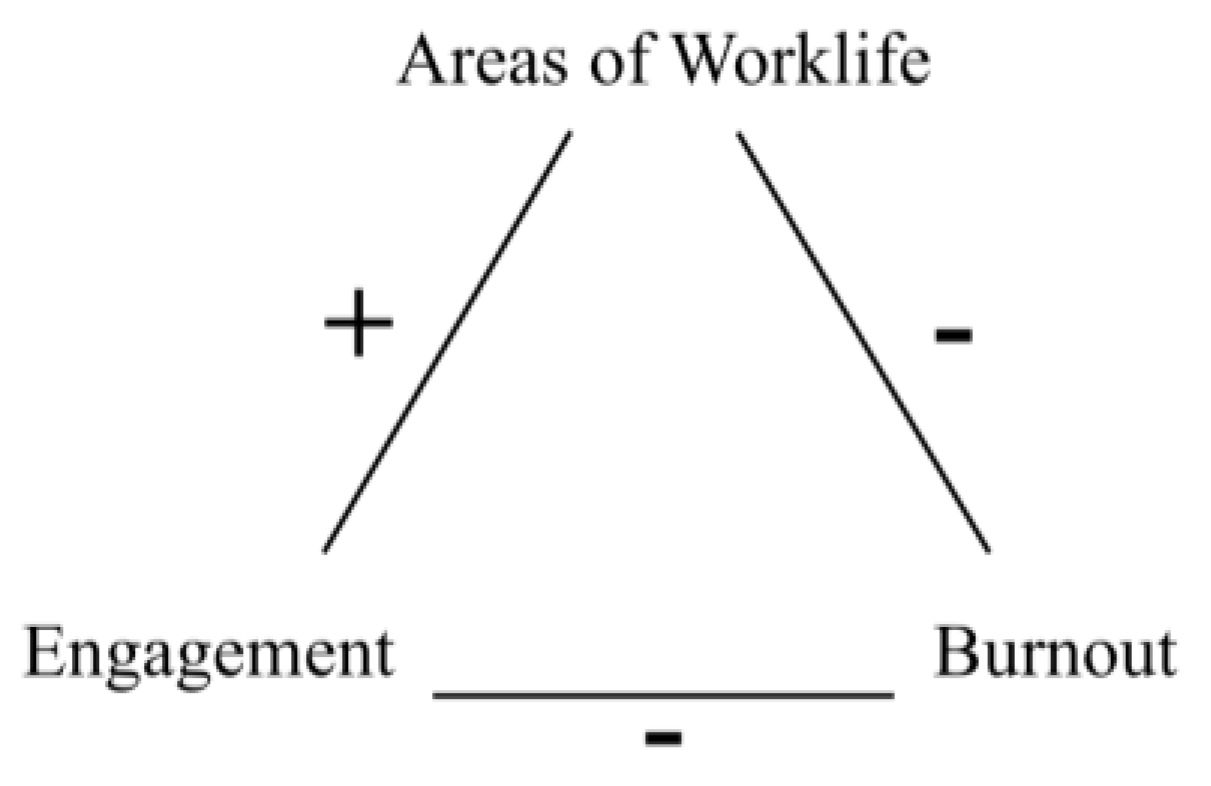

Table 1.
BAT domains.
| BAT domains | Minimum | Maximum | Median | Mean | SD |
|---|---|---|---|---|---|
| Exhaustion | 9.4 | 96.9 | 56.3 | 54.4 | 17.7 |
| Mental distance | 0.0 | 90.0 | 25.0 | 30.4 | 20.2 |
| Cognitive Control Decline | 0.0 | 93.8 | 37.5 | 41.5 | 19.5 |
| Emotional Control Decline | 0.0 | 95.0 | 35.0 | 35.0 | 18.2 |
| Psychological Complaints | 0.0 | 100.0 | 45.0 | 45.9 | 19.6 |
| Psychosomatic Complaints | 5.0 | 90.0 | 35.0 | 38.7 | 18.2 |
Table 2.
AWS domains.
| AWS domains | Minimum | Maximum | Median | Mean | SD |
|---|---|---|---|---|---|
| Workload | 36.0 | 88.0 | 60.0 | 61.4 | 10.8 |
| Control | 20.0 | 100.0 | 75.0 | 74.0 | 18.2 |
| Community | 20.0 | 100.0 | 65.0 | 63.7 | 10.6 |
| Reward | 20.0 | 96.0 | 60.0 | 60.0 | 14.0 |
| Fairness | 20.0 | 93.3 | 60.0 | 56.2 | 12.2 |
| Values | 20.0 | 100.0 | 65.0 | 66.6 | 20.3 |
Table 3.
UWES domains.
| UWES domains | Minimum | Maximum | Median | AVG | SD |
|---|---|---|---|---|---|
| Dedication | 1.0 | 6.0 | 4.5 | 4.2 | 1.1 |
| Vigor | 1.0 | 6.0 | 4.5 | 4.3 | 1.1 |
| Absorption | 1.0 | 6.0 | 4.2 | 4.1 | 0.9 |
Table 4.
Pearson Correlation.
| BAT Domains | |||||||
|---|---|---|---|---|---|---|---|
| EXH | MENTALD | COGNCD | EMOTCD | PSYCHOLC | PSYCHOSC | ||
| AWS_WOR | -0.5472 B | -0.7315A | -0.4815B | -0.4539B | -0.4416B | -0.3975C | |
| AWS_CT | -0.5380 B | -0.7325A | -0.5077B | -0.4686B | -0.4316B | -0.3986C | |
| AWS | AWS_COM | -0.1454 | -0.3167C | -0.1799 | -0.2114C | -0.0550 | -0.1153 |
| AWS_REW | 0.2444C | 0.1013 | 0.1261 | 0.0636 | 0.1430 | 0.1541 | |
| AWS_FAI | -0.4338 B | -0.4764B | -0.2833C | -0.3363C | -0.2954C | -0.3491C | |
| AWS_VAL | -0.1472 | -0.2769C | -0.1989 | -0.1045 | -0.1793 | -0.1496 | |
| UWES_DE | -0.1612 | -0.1688 | -0.0870 | -0.1080 | -0.1069 | -0.0991 | |
| UWES | UWES_VI | -0.1171 | -0.1504 | -0.0296 | -0.0422 | -0.0751 | -0.1216 |
| UWES_AB | -0.2686C | -0.3729C | -0.1883 | -0.2468C | -0.2091C | -0.1674 | |
Disclaimer/Publisher’s Note: The statements, opinions and data contained in all publications are solely those of the individual author(s) and contributor(s) and not of MDPI and/or the editor(s). MDPI and/or the editor(s) disclaim responsibility for any injury to people or property resulting from any ideas, methods, instructions or products referred to in the content. |
© 2026 by the authors. Licensee MDPI, Basel, Switzerland. This article is an open access article distributed under the terms and conditions of the Creative Commons Attribution (CC BY) license (http://creativecommons.org/licenses/by/4.0/).
Copyright: This open access article is published under a Creative Commons CC BY 4.0 license, which permit the free download, distribution, and reuse, provided that the author and preprint are cited in any reuse.


