

Submitted:
04 March 2026
Posted:
05 March 2026
You are already at the latest version
Abstract
Microplastics (MPs) are emerging pollutants of global concern, posing significant ecological and human health risks. They are frequently detected in stormwater systems, with urban runoff serving as a major transport pathway into the environment. Green stormwater infrastructure, particularly bioretention systems (BRS), offers a promising approach to mitigate these risks by filtering and retaining various contaminants. However, the occurrence of MPs in BRS and their capacity in retaining these pollutants remain largely unexplored in the literature, despite being critical for stormwater management and water quality protection. Therefore, this study attempted to examine the occurrence, vertical distribution, and retention of MPs within field-installed BRS, potentially emphasizing their role in reducing MPs transport. Therefore, field samples were collected at depths of 2, 12, and 24 inches below the surface and processed in the laboratory for MP detection and quantification. The results revealed an average concentration of 1,095 particles per kg of dried sediment, with fragments (microplastics shape) accounting for 78.54% of total MPs. Although no clear vertical distribution pattern was observed, initial findings showed that MPs mostly retained at 24 inches, potentially indicating their transport through the media and the retention capacity of BRS (surface and mid layer) in capturing microplastics from stormwater environments. However, there is no direct evidence to explain the mechanisms driving the observed concentrations at greater depths. Integrating BRS into urban stormwater infrastructure provides dual benefits: improved stormwater management and reduced plastic pollution. The preliminary findings of this study highlight the importance of optimizing bioretention design and media composition to improve the removal efficiency of MPs.
Keywords:
microplastics
; bioretention systems
; abundance and distribution
; soil media
; retention efficiency
1. Introduction
Microplastics (MPs), commonly defined as the size is smaller than 5,000 μm (micrometer), have become an emerging environmental concern because of their prevalence and persistence in several environmental matrices worldwide, including freshwater [1,2,3,4,5], marine [6], terrestrial ecosystems [7,8], and the negative impacts on biota and ecosystem functionality [9,10]. Their ubiquitous presence and long-term persistence make them a pressing issue for environmental water quality management, including stormwater. Detection of MPs in stormwater runoff has received significant attention in recent environmental research [11,12,13,14]. Reported MPs concentration in stormwater runoff ranges from 66 to 191 particles per liter (L) [15]. Moreover, urban stormwater runoff is widely recognized as a significant pathway and major source of MPs pollution in aquatic environments [15,16,17].
Plastic sources in urban stormwater runoff include tire and road abrasion, road paints, industrial waste, construction materials, trash collection spills, and synthetic textiles [11,14,18]. A study by Järlskog et al. [11] in Gothenburg, Sweden, found higher concentrations of tire and road wear particles (also categorized as MPs) in highway stormwater runoff, with up to 3 particles/L for sizes ≥100 μm and up to 5900 particles/L for sizes ≥ 20 μm, highlighting their importance as a source of MPs. Moreover, these smaller particles can infiltrate bioretention media, commonly used in stormwater management. Recent studies suggest that bioretention cells offer a sustainable solution for retaining various pollutants, including MPs, from urban stormwater [19].
Bioretention Systems (BRS) are designed to temporarily detain and filter stormwater while promoting groundwater recharge through infiltration. The size and design of each bioretention cell are highly variable and customized based on the land-use characteristics, such as drainage area and the soil type in which it is constructed [20]. BRS offer numerous ecological benefits, including flood reduction, pollutant remediation, wildlife habitat provision, water conservation, micro-climate regulation, and atmospheric carbon dioxide capture and storage [9]. BRS, widely adopted across the United States (US) and globally, play a vital role in effectively preserving and restoring predevelopment hydrologic conditions in urban watersheds [21]. Additionally to enhancing water quality, BRS contribute to flood mitigation by capturing surface runoff and promoting its infiltration through underlying soil layers [20].
Earlier investigations have shown that BRS are able to effectively retain particulate matter, dissolved pollutants, phosphorus, and heavy metals from stormwater runoff and reduce the rate and volume of stormwater discharge [9,20,22,23]. For instance, multiyear field studies of bioretention cells in Vaughan, Ontario, Canada, reported significant improvements in water quality parameters, including reductions in total suspended solids, metals, and phosphorus levels between the inflow and outflow of the BRS [24]. MPs have also been detected in Australian BRS, with concentrations ranging from 10 to 500 particles/kg of soil (average 55±42.85 particles/kg), alongside contributions from polymer liners and larger plastic particles [9]. Several studies have provided substantial evidence of the effectiveness of BRS in removing MPs (<5mm) and mesoplastics (5mm ‒25mm) through filtration [9,12,23,25]. A two-year-long field study in Vaughan, Ontario, Canada, by Smyth et al. [25] found that BRS reduced more than 80% of mean microplastic concentrations for particles sized 106‒5,000 μm. Microplastic levels ranged from below detection limits to 704 items/L. Similarly, a study in Sweden reported substantial removal of small-sized MPs (20‒100 μm) at a highway site, with concentrations decreasing from 326 particles/L to 26.5 particles/L, demonstrating effective reduction despite minimal sedimentation within a large pollutant trap [26]. Stormwater treatment in BRS is facilitated through various physical, chemical, and biological processes such as sedimentation, filtration, sorption, reduction, vegetative uptake, and microbial biomass assimilation [9,20,22,23,27]. The removal efficiency of BRS may vary depending on the design of the filtration media and the characteristics of the MPs.
As discussed earlier, the accumulation and retention of MPs within BRS exacerbate ecological concerns and pose potential environmental risks. Despite the increasing use of BRS as a sustainable stormwater management solution, research on their capacity in capturing and retaining MPs remains limited [28]. While several studies have focused on quantifying MPs in stormwater runoff, very few have investigated their presence within the bioretention media itself, resulting in a significant knowledge gap to guide effective stormwater infrastructure management [9]. Therefore, the current study addresses this gap by investigating the presence of MPs in urban bioretention basins, with a unique emphasis on size- and shape-based analysis. Specifically, the present study analyzed five distinct microplastic size ranges (25‒2000 μm) to provide a granular understanding of how MPs of different sizes behave and are retained within bioretention media. This focus on size-based investigation offers insights that are not broadly discussed in the current literature and is critical for assessing the efficiency of bioretention systems in mitigating microplastic pollution. Additionally, understanding the vertical distribution pattern within the media profile is critical because it provides insights into the transport and retention mechanisms of MPs, including filtration, sedimentation, adsorption, and biofilm interaction, which are depth dependent. Moreover, it informs the design and maintenance strategies for bioretention systems, especially concerning media replacement or revival cycles. Without knowledge of where MPs accumulate vertically, practitioners lack a scientific basis to optimize media configurations or predict system lifespan in relation to microplastic pollution. Thus, exploring the depth-wise behavior of MPs is essential to improving our understanding of their fate in green stormwater infrastructure, supporting more effective long-term pollution control solutions, and informing policy decisions for urban runoff management. Therefore, the specific objectives of this study are to 1) quantify and characterize MPs within bioretention media, 2) examine the vertical distribution of MPs in BRS soil samples, and 3) evaluate bioretention media as a sustainable solution for mitigating microplastic pollution in urban environments. This research strengthens our understanding of MP dynamics in stormwater infrastructure by addressing these objectives and providing practical data to support sustainable urban water management.
2. Materials and Methods
2.1. Study Sites
This research investigated two BRS within the metro Chattanooga area, Tennessee, USA. The first site is located in Renaissance Park, Chattanooga. The park is located off the bank of a portion of the Tennessee River that flows through Chattanooga, surrounded by many urban land-use types. Renaissance Park BRS is located at 35°03’40.48” N 85°18’33.24” W. The BRS that was chosen is located in the middle of a medium-sized parking lot, specifically designed to effectively handle stormwater runoff from this parking area (Figure 1a). Two different sampling locations were selected at the Renaissance Park BRS. Location #1 (S1) was in the corner of the cell, approximately 80 inches from both edges of the parking lot, and Location #2 (S2) was about 10 inches from the overflow drainage structure in the center of the bioretention. Renaissance Park is an open recreational park that includes wetlands, native grasses, hiking/biking trails, and a covered pavilion. It also attracts many tourists and local people to the refreshments.
The second study site is in Warner Park, Chattanooga. The park is situated in the urban center of Chattanooga and is considered one of the most historic places, with a total land area of 13 acres. It is an open-access recreational park for all classes of people in the city. On one side, it provides a variety of recreational facilities, including tennis courts, pools, ball fields, and therapeutic recreation services for the public, while on the other hand, it has ample areas for public parking facilities with bioretention systems within the park. The geographical coordinates of the selected study cell are 35°2’37.642” N 85°16'56.377” W. The bioretention cells collect stormwater runoffs originating from both sides of non-permeable parking lot areas (Figure 1b). BRS are rectangular, and the vegetation within the system is native plants, including grass, wildflowers, and ground covers. Plants are fully developed but do not affect surface water infiltration during rainfall. Two different points in the Warner Park BRS were selected for sampling. Both location #1 (S3) and location #2 (S4) were approximately 45” from the edge of the parking lot. These points are located several feet apart from one another. S2 and S4 were near to outfall of the BRS media.
2.2. Field Samplings
Bioretention cell sediment samples were collected once during dry weather conditions, defined as there was no rain in the three days before sampling. Three distinct depth samples from two sampling points in the BRS, each 15 meters apart, were collected from the two BRS study sites. Samples were taken from 0-2" depth, 12-14", and 24-26" below the top surface layer of biofiltration media. According to USEPA, bioretention media depth in public, commercial, and residential properties is usually 2 feet or more, depending on pollutants of concern and vegetation rooting needs [29]. Therefore, the sampling depths of 2 inches, 12 inches, and 24 inches were selected to represent key functional zones within the bioretention media profile. The 2-inch depth captures the surface layer where initial microplastic deposition and large debris accumulation or trapping are expected due to direct exposure to incoming stormwater. Therefore, this layer does provide stable and long-term filtration because of fast flow and the possibility of limited microbial activity compared to deeper depths. The 12-inch depth represents the mid-layer, where most filtration, sedimentation, and potential biological interactions with microplastics may occur. It is also acknowledged that microbial community composition and functional activity may vary with soil depth and can be influenced by changes in soil physicochemical properties such as nutrient content, carbon availability, and oxygen diffusion [30,31,32]. The media mainly consists of sand (>70% coarse materials), is moderately compacted and a region where flow becomes slow and more vertical. The 24-inch depth corresponds to the lower portion of the media, may contain lower microbial activity, and may contain coarser sands to promote drainage (higher hydraulic conductivity), allowing assessment of deeper transport and accumulation. A metallic hand auger was used at the site for sediment sample collection (Figure 2a). At each sampling point and depth, approximately 200 grams of sediment were collected, resulting in three distinct samples per location for subsequent analysis. To avoid any background contamination, all pre-cleaned and washed glass was closed tightly with metal lids during sampling, and no plastic materials were used for sample collection (Figure 2b). All bottle jars were labeled correctly for each sampling to avoid any error in sample misplacement. In addition, a separate open glass jar (field blank) was placed near the sampling location during sampling time to monitor possible atmospheric contamination. Nitrile hand gloves were used during samplings. All the samples were collected in a clean place and then immediately transferred to the University of Tennessee at Chattanooga (UTC) Chemical and Environmental Engineering laboratory and stored at 4°C in the fridge until further analysis.
2.3. Extraction of MPs
Laboratory safety procedures adhered to ASTM E1391-03 guidelines [33] to ensure compliance and minimize potential contamination. To prevent sample interference, all glassware was rigorously cleaned with ultrapure Milli-Q water (MilliporeSigma™ Milli-Q™ Reference Ultrapure Water Purification System), systematically labeled for analysis, and carefully handled to avoid contact with plastic materials. Microplastics extraction and detection protocols for BRS soil samples were adapted from the methods outlined by the National Oceanic and Atmospheric Administration (NOAA) [34], with necessary modifications to align with the specific objectives of this study.
First, samples were initially dried at 90°C for 24 to 48 hours to achieve complete dryness. Following this, 50 grams of the dried sediment were mechanically sieved using a series of stainless-steel sieves, categorizing particles into five size fractions of 25‒75 μm, 75‒300 μm, 300‒600 μm, 600‒1,000 μm, and >1,000 μm (1000‒2,000 μm). Separated fractions were transferred and dried overnight at 90°C and subjected to a two-step density separation using a saturated Sodium Chloride (NaCl) solution.
The first density separation step involved allowing the samples to settle undisturbed for 72 hours to enhance the sedimentation of non-plastic and heavier organic materials. Post-separation, samples were dried at 90°C and prepared for wet peroxide oxidation (WPO) to eliminate natural organic matter. This procedure included adding an aqueous Fe (II) solution and 30% hydrogen peroxide (H₂O₂) to the dried samples, followed by heating the mixture at 75°C in a hotplate and incrementally introducing H₂O₂ at a rate of 20 ml at 30 minutes intervals until the organic reaction was observed. After WPO, 6g salt per 20 ml was added to increase the solution density, followed by heating to 75⁰C. Once the salt was fully dissolved, the solution was placed in a conical glass funnel for 24 to 48 hours to allow non-plastic materials to settle. The settled particles were then carefully drained, and the supernatant was passed through a very fine mesh screen (10 microns mesh opening), thoroughly rinsed with ultrapure Milli-Q water, and dried in an incubator at 55⁰C. The dried weight was then recorded as the total MP content of the sample, after which the samples were subjected to microscopic analysis. A fluorescence microscopy (Leica DM6 B Microscope, Camera Leica DMC 4500) to characterize MPs (i.e., number, size, shape) was performed at UTC's Geobiology and Microplastics Laboratory. Fourier transform infrared (FTIR) spectroscopy (Bruker Alpha II) was also performed on randomly selected MPs to identify a few polymer types.
2.4. Nile Red Dye Procedure
The use of fluorescence-based techniques employing Nile Red (NR) dyes has recently gained prominence as an effective microplastic detection and identification method [35]. Nile Red is highly valued in microplastic research due to its hydrophobicity, metachromatic properties, and photochemical stability [36]. This analytical approach enables clear differentiation of MPs from organic matter and mineral particles in samples while also reducing the time (some cases few hours only) required for their identification and detection [37]. Moreover, NR reduces the cost of advanced identification tools for MPs detection. Furthermore, it exhibits slower staining of natural organic matter compared to synthetic polymers, which helps minimize false-positive identification in environmental samples [38]. These characteristics make it a suitable dye for affordable, field-deployable microplastic detection, offering straightforward visual interpretation while also providing useful indications of polymeric composition [38].
In this study, sediment samples were processed using the NR dye technique. Initial preparation involved following the NOAA protocol to reduce foreign materials and organic matter. Afterward, each size fraction of the sediment samples was vacuum-filtered using a 0.2-µm black polycarbonate filter. The polycarbonate filters containing the filtered materials were transferred to clean 50 mm glass Petri dishes and incubated at 55°C overnight prior to staining with NR dye.
Selecting a suitable solvent for the NR dye was critical to ensure effective staining without degrading the integrity of the black polycarbonate filter, which serves as the substrate for microplastics identification under fluorescence microscopy. N-hexane was chosen as the solvent due to its compatibility with the filter material and minimal degradation effects [39,40]. Nile Red solutions were prepared using a combination of NR dye, acetone, and n-hexane. Specifically, 50 mg of NR dye was dissolved in acetone in a 10 mL volumetric flask to create a stock solution with a concentration of 5 mg/ml. From this stock, 50 µL was diluted with n-hexane to produce a working solution at a final concentration of 5 mg/L [39,40]. The solution was stored in an amber glass container, tightly sealed, and kept at 4°C, protected from light.
For staining, the NR dye was applied directly to the polycarbonate filter in a petri dish (47 µm) via using micropipettes (adjustable volume single channel pipettors) under a fume hood, ensuring full saturation. The petri dish was then covered with lids and incubated at 55°C. Fluorescence microscopy analysis was conducted within 24–72 hours of NR dye application and then analyzed under a fluorescence microscope (Leica DM6 B Microscope, Camera Leica DMC 4500) with 1.0x magnification. The excitation and emission wavelengths of the fluorescence microscope were set 440 nanometers (nm) and 450 nm, respectively.
2.5. Fourier transform Infrared Spectroscopy Procedure
Fourier transform infrared spectroscopy was performed to random MPs (from few sediment samples) to identify a few plastic polymers. Microplastic particles isolated from the samples were dried and transferred into clean glass slides using stainless-steel micro precision tweezers. Before handling each particle, the micro precision tweezers were cleaned with 70% ethanol and wiped with a lint-free tissue to minimize contamination. The FTIR sample holder and crystal were also cleaned with 70% ethanol before each measurement [41,42].
Chemical identification of the particles was performed using a FTIR spectrometer (Bruker ALPHA II) operated in transmission mode. Individual particles were carefully placed onto the sample holder using the cleaned needle. Spectra were recorded in the range of 4000–400 cm⁻¹ at a resolution of 4 cm⁻¹ using the instrument’s standard settings [41,43]. A background spectrum was collected prior to each batch of samples to account for environmental and instrument-related variations.
Spectral processing and polymer identification were conducted using OPUS software with baseline correction applied. Sample spectra were compared with the Bruker polymer reference library, and identifications were accepted based on the recommended match quality threshold (spectral quality match ≥70%) [41,43]. All tools and instrument surfaces were cleaned with ethanol between samples to prevent cross-contamination.
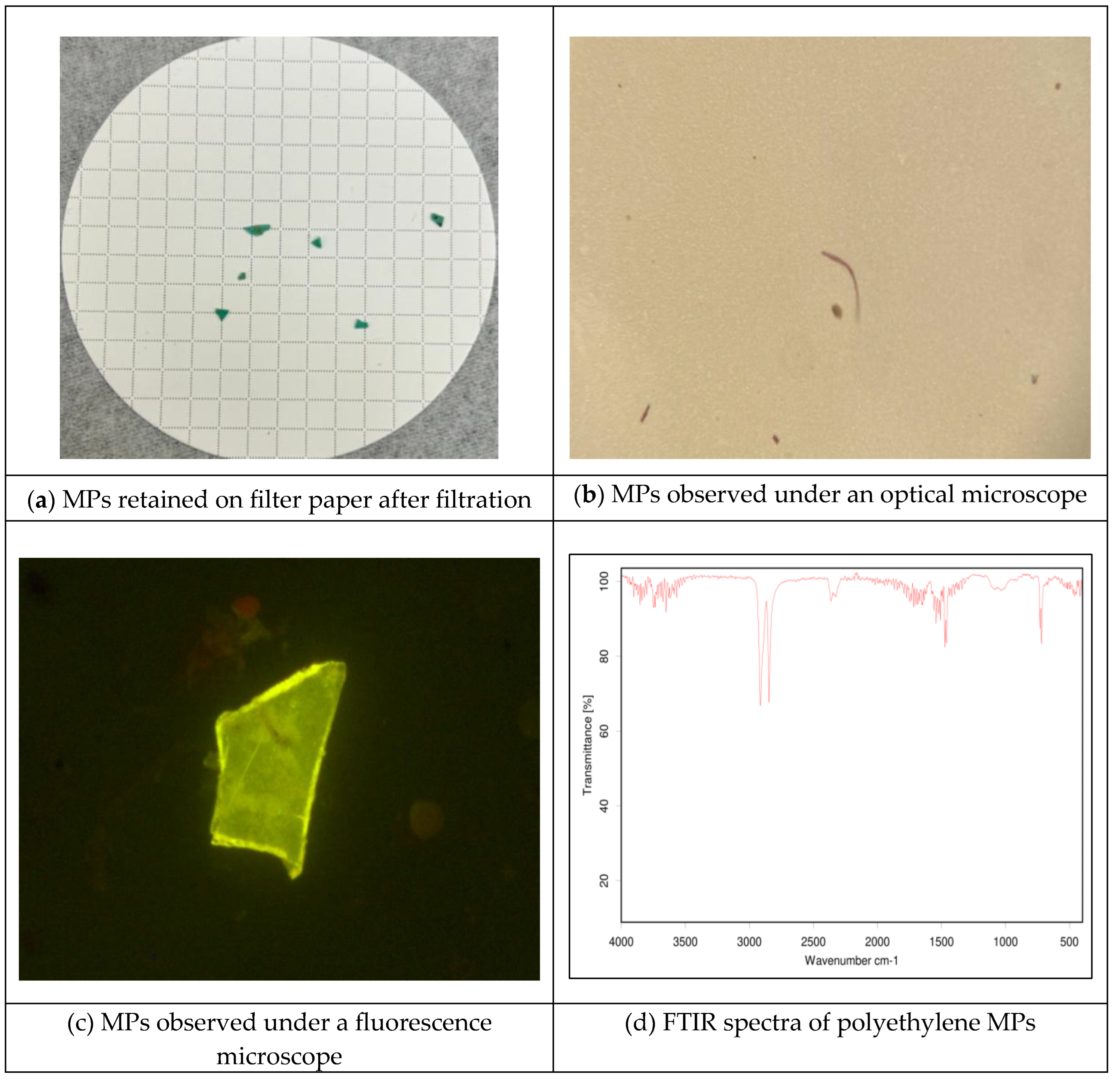
FTIR analysis provided chemical confirmation of polymer types by comparing the characteristic absorption bands of randomly selected MPs (one-tenth of each examined sample) with reference spectra. Polyethylene (PE) MPs were identified based on prominent spectral peaks at approximately ~3000 cm⁻¹ (C–H stretching), ~1475 cm⁻¹ (–CH₂ bending), and ~720 cm⁻¹ ((CH₂)n rocking), which are diagnostic of long-chain polyethylene.
2.6. Detection and Identification of MPs
Microplastic shapes were classified based on visual morphology under stereomicroscopic and spectroscopic observation following commonly used criteria. Fibers were identified as elongated particles with a length-to-width (aspect) ratio ≥ 5:1; fragments were irregular, angular particles without a defined shape; films were thin, flat, and flexible with smooth or wrinkled surfaces; and foams were characterized by a porous, sponge-like structure with visible cellular voids [44,45,46,47].
2.7. Quality Control and Quality Assurance
Strict precautions were implemented throughout the sampling, handling, and processing stages to minimize the risk of environmental contamination. To ensure the accuracy and reliability of results, both field and laboratory blanks were incorporated into the collection and analysis process [48]. The methodology for field blanks, outlined in the laboratory processing section, replicated the handling, storage, and analytical procedures applied to primary bioretention media samples. Similarly, laboratory blanks were subjected to the same protocols as sediment samples.
In the laboratory, contamination prevention measures included the consistent use of cotton lab coats and nitrile gloves. Before and after conducting laboratory procedures, including sample preparation, treatment, and MP extraction, all equipment (e.g., breakers, containers, filtration units) and work surfaces were thoroughly cleaned with soap, triple-rinsed with ultrapure Milli-Q water, and subsequently wiped with 70% ethanol. Laboratory equipment composed of metal and glass was utilized throughout the experiment. A fume hood was employed during the sample digestion process, and aluminum foil was used to cover samples during experimental procedures. Ultrapure Milli-Q water, used for rinsing and cleaning in the laboratory, was tested following the similar digestion, filtration, and microscopic procedures applied to the sediment matrices, and no MPs were detected. However, the limit of detection (LOD) for MPs was determined using field and laboratory blanks. MPs detected in blanks (field blank: 4 MPs; laboratory blank: 3 MPs) represent the background contamination, and the LOD was considered as the highest blank count (4 MPs). All sediment sample counts were adjusted for background contamination by accounting for MPs observed in blanks. The use of protective equipment, even a single item such as disposable gloves, may introduce a small amount of microplastics into the sample, and one study has shown that this can interfere with accurate quantification. Therefore, it is assumed that single-use items in the laboratory might be the potential sources of airborne contaminants in lab blanks [49]. Lastly, doors and windows remained closed whenever feasible to limit external contamination.
2.8. Statistical Analysis
For each sampling point, concentrations were measured at multiple depths from the same media sample core. While these depth samples are not fully independent, they were treated as subsamples to examine vertical distribution patterns. Statistical analyses considered each core as an independent replicate, and depth-specific results are interpreted accordingly. Statistical data analysis was performed using Microsoft Excel 2016 (Version 2408) and Python (Version 3.12.0). The significance level was set at 0.05 for all statistical analysis. Spearman’s rank correlation was selected to evaluate the relationship between MP concentration and depth due to the small sample size and the absence of evidence for a linear relationship.
3. Results
3.1. MPs Concentration in BRS Media
MPs were detected in all examined bioretention samples from Renaissance and Warner Park (Figure 3), exhibiting substantial concentrations. The average concentration of MPs in BRS was 1095 ± 539.2 (mean ± standard deviation (SD)) per kg of dried weight (dw) sediments. MPs abundance in BRS ranged from 400 to 1780 particles/kg dw. The highest number of MPs were found in Renaissance Park (maximum = 1780 items/kg dw, minimum = 1180 items/kg dw), while the lowest was in Warner Park (maximum = 1480 items/kg dw, minimum = 400 items/kg dw). The average number of MPs was more than double in Renaissance Park (1496.6 ± 305 particles/kg dw) than in Warner Park (693.4 ± 399.2 particles/kg dw). Moreover, the greatest variation in MPs concentrations was observed in the Warner Park bioretention samples as shown in Figure 3.
3.2. Size and Shape of MPs in BRS Media
The smallest size fraction (25‒75 μm) contributed the highest proportion of MPs, accounting for one-third of the total MPs, while the largest particles (1000‒2000 μm) were the least abundant, representing around 10% of total MPs (Figure 4). Over 90% of the total MPs were smaller than 1000 μm. An average of 486.67 ± 315.89 items/kg dw (≥600 μm) were identified in the Renaissance Park bioretention samples, whereas 250 ± 149.53 items/kg dw items of similar size were recovered from the Warner Park media. For the smaller MPs size fraction (25–75 μm), Renaissance Park also exhibited a higher count, with 576.67 ± 254.06 items/kg dw compared to 143.33 ± 183.33 items/kg dw detected in the Warner Park samples.
MPs in bioretention systems samples have a broad range of irregular shapes, including fragments, fibers, foams, and films. Figure 5 shows the percentage of different shapes of MPs from Bioretention media samples. Fragments accounted for 78.54% of total MPs and were the dominant types, followed by fibers (9.59%), films (8.37%), and foams (3.50%). Fragments constituted more than 70% of MPs at each site. However, no foams were detected in Warner Park systems, and only minimal amounts were detected in Renaissance Park samples. The concentration of fibers was comparable between the two sites, with average counts of 133.33 ± 45.0 items/kg dw in Renaissance Park and 96.67 ± 169.43 items/kg dw in Warner Park. In contrast, fragment concentrations were higher in Renaissance Park, averaging 1183.33 ± 312.78 items, nearly twice the 536.67 ± 222.86 items/kg dw observed in Warner Park samples. Within the Renaissance Park locations, R1 contained 153.33 ± 50.33 items/kg dw plastic film items, while R2 had an average of 50.33 ± 30.51 items/kg dw. More fragments were found at a greater depth (24”) compared to the surface level (2”) and at 12” below the surface level in BRS. At a depth of 12” below the surface, Renaissance Park BRS recorded a higher number of microplastic fibers, whereas Warner Park BRS captured a greater number of microplastic fibers at a depth of 24”. Seven colors were observed: black, blue, green, light yellow, red, transparent, and white, with black fragments being the most common across all BRS samples. These results indicate that fragments are the dominant shape of MPs in the parks, typically produced by physical abrasions or chemical weathering.
3.3. Vertical Distribution of MPs in BRS Media
Samples were collected from various depths within bioretention systems, and MPs were detected at all depths. The highest concentration of MPs (total counts) was recorded at a depth of 24” below the surface level, while the lowest concentration was detected at the surface level of the BRS. Total percentages of MPs were 42.31, 31.66, and 26.03 at a depth of 24”, 12” and 2” below the bioretention surface level, respectively (Figure 6). The initial examination suggested a possible trend towards increasing MPs abundance with depth. However, the correlation between depth and MP quantity was not statistically significant (Spearman’s, p = 0.074>0.05).
MP concentration was variable. For example, at site S3, almost 60% of MPs were in the 24” depth while almost 40% of MPs (maximum) were found at 24” depth in other sampling points. On the other hand, consistent microplastic concentrations were observed at site S4, ranging from 500 particles/kg dw to 540 particles/kg dw. The average concentration of MPs from each site was also predominant at a depth of 24” below the surface. The highest number of MPs were recorded in the S1 and S2 sites at a depth of 24” below the surface layer of filter media, and the concentration was 1780 particles/kg dw, while the S3 site retained the lowest number of MPs at a depth of 2”, with a concentration of 400 particles/kg dw. At site S4, MPs concentration in the 2” and 12” layer of sediments was 27.3%, and 48.65% of that in the bottommost of 24” layer sediments. MPs abundance ranged from 400 to 1280 particles per kg dw at the surface layer (2” depth), while it varied between 540 and 1780 particles per kg dw at a depth of 24”. The distribution of MPs at varied depths at each sampling point and of various sizes is shown in Figure 7 and Figure 8, respectively.
As discussed earlier, MPs were analyzed particularly under optical microscopes, shown in figure 9a and 9b. Additionally, fluorescence-based MP is shown in figure 9c, and the recovery rate of fluorescence-based tested MPs was also very high with NR, spiked with colors [50]. In FTIR analysis, plastic polymers are identified by comparing their spectral peaks. However, minor spectral alterations (polyethylene) indicative of environmental weathering was observed, suggesting partial breakdown of MPs through physical abrasion, photo-oxidation, or chemical aging. These processes can modify surface chemistry and fragment larger plastics into smaller particles without completely eliminating the characteristic polymer backbone.
Figure 9.
Detection and identification of microplastics (MPs) using visual inspection and various microscopy and spectroscopic techniques: (a) MPs retained on filter paper after sample filtration, (b) optical microscopy image, (c) fluorescence microscopy image, and (d) representative FTIR spectrum for polymer identification.
Figure 9.
Detection and identification of microplastics (MPs) using visual inspection and various microscopy and spectroscopic techniques: (a) MPs retained on filter paper after sample filtration, (b) optical microscopy image, (c) fluorescence microscopy image, and (d) representative FTIR spectrum for polymer identification.
4. Discussion
4.1. Occurrence and Vertical Distribution of MPs in BRS Media
A substantial number of MPs were found in the BRS, with an average concentration of 1095 items per kg dw, ranging from 400 to 1780 items per kg dw. In the current study, the average concentration of MPs found in the bioretention media was within the range reported in the literature. The mean concentration of MPs in stormwater control measures (SCMs) observed in the current study was lower than those reported in other studies. For instance, Koutnik et al. [51]conducted a study in Los Angeles, California, where 14 samples were collected both inside and outside SCMs during the dry season. Their findings showed substantial MPs retention, with concentrations ranging from 0 to 2784 particles/g. Outside the SCM, mean MP concentrations were 283 items/g at the surface and 82 particles/g below the surface. Inside the SCM, the mean concentrations were 472 particles/g at the surface and 149 particles/g in subsurface samples.
The mean concentration of MPs in Renaissance Park samples (S1, S2) was nearly twice as high as in Warner Park samples (S3, S4). Although both sites are publicly accessible, Renaissance Park attracts more visitors and experiences higher foot traffic due to its proximity to the Tennessee River. Previous studies have shown that increased tourist activity contributes significantly to plastic waste generation, leading to MP pollution in environmental matrices [52]. Another potential factor is the greater volume of runoff and a larger effective parking lot area. Sites S1 and S2, which have more extensive parking areas, receive higher volumes of urban runoff, likely carrying MPs from the surrounding environments into the site.
While Koutnik et al. [51] recorded the highest number of MPs at the top about 2 inches of the surface layer, the current study found the highest number of MPs at a depth of 24 inches below the surface at all sites except site S4. Over 30% of total MPs identified in the current study were in the 25‒75 μm size range, likely because smaller MPs can more easily infiltrate the BRS. The differences in concentration at different sites at a depth of 24 inches in the current study may be due to the proximity of sampling points to the outfall of the BRS, which was believed to result in lower and more consistent MP concentrations across depths. Although apparently, MPs abundance increased from the surface downward with few exceptions, with most MPs concentrated within the 24-inch layer, no statistical correlation was observed between depth and MPs concentration. This indicates that MPs migrated downward within the media and were retained at depth through filtration and percolation mechanisms as the bioretention media is composed mostly of sand than other materials including, silt and compost. However, the authors acknowledge that there is no direct evidence for mechanisms driving such patterns at deeper depths. Another possible reason might be sampling media itself. Koutnik et al. [51] observed that some sampling points were impenetrable beyond the top layer due to rocks of rocks or hard-packed soils, which reduced the number of smaller particles penetrate to the deeper layers, resulting in smaller concentration. In the composition study, some sampling points were impenetrable, and as a result, they were only able to collect surface-layer samples at those points. This restricted their evaluation primarily to surface conditions and limited their ability to assess vertical microplastic distribution. Consequently, their results showed higher MP concentrations near the surface. It is inferred that their media itself is not typical media composition.
Koutnik et al. [51] also observed higher MP concentrations on plant leaves, increasing with plant height, with MPs abundance ranging from 0 to 66 items/cm2. However, no samples were collected directly from the native plants in the present study. Koutnik et al. [51] estimated the retardation coefficient based on the assumption that MP concentrations in biofiltration media decrease exponentially with depth. In the current study, retardation coefficients were not considered for vertical MP distributions. Similarly, Xun et al. [53] conducted a laboratory study on the migration of polypropylene (PP) MPs in bioretention filter media and observed a progressive decrease in MPs with depth. Specifically, the concentration in the upper layer (5 cm below the surface) was 1.3–4.4 times higher than in the middle layer (20 cm below the surface) and 3.4–4.2 times higher than in the lower layer (35 cm below the surface). These differences between the previous and present studies may be due to bioretention media compositions.
According to the Tennessee Department of Conservation and Environment (TDEC) and Minnesota Pollution Control Agency (MPCA), the recommended bioretention soil mixture is generally classified as loamy sand on the United States Department of Agriculture (USDA) soil texture triangle, comprising 85-88% sand, 8-12% soil fines, and 3-5% organic matter based on site-specific requirements [54,55,56]. Similarly, the North Carolina Department of Environmental Quality (NCDEQ) recommends that the filter media should be a homogeneous, engineered soil mixture consisting of approximately 75–85% medium to coarse washed sand, 8–15% fines (silt and clay), and 5–10% organic matter, such as pine bark fines. In Canada, the guideline suggests that bioretention cell media should consist of 75–90% sand, 7–22% silt, and 3–12% clay to meet site-specific infiltration goals [25]. The media depth generally ranges from 24 inches to 36 inches for infiltration [29,55,57]. Given the minimal variation in BRS design guidelines, the findings from this study may be applicable to other conventionally designed cells. For enhanced organic content, filter media with 50% sand, 30% topsoil, and 20% approved leaf compost for mulch cover and tree planting areas is recommended. MPs can infiltrate the predominant topsoil and penetrate deeper into the subsurface media. According to verbal communication with the City of Chattanooga's green infrastructure maintenance team, BRS are typically designed with sandy soils to enhance infiltration, offering higher permeability compared to other fine-grained soils. Moreover, this aligns with findings by Kuoppamäki et al. [58], who observed that microplastic beads infiltrated to depths of 8–12 cm in vegetated systems compared to 4–6 cm in non-vegetated systems, indicating higher MPs infiltration in vegetated systems. The current study sites contain dense native vegetation, which may contribute to higher microplastic infiltration into the media, aligning with findings from previous studies.
Over time, pore size distribution in bioretention media may change as fine and coarse particles accumulate. As discussed earlier typical composition of bioretention media, it is evident that bioretention media is primarily composed of sand particles (>70% sand), having higher porosity, and microplastics can infiltrate into the deeper media layer with stormwater runoff. Moreover, BRS age can play a key role, as older systems experience different weathering cycles, which may influence MPs accumulation in deeper layers. According to verbal communication with the City of Chattanooga’s green infrastructure maintenance team, bioretention media has been operational for more than 10 years, likely leading to more significant microplastic accumulations at higher depths compared to surface and mid layers as bioretention media primarily receive a greater volume of water in wet seasons. Surface layers in bioretention systems are often subject to periodic disturbance, maintenance activities, or media replacement, which can either remove or redistribute accumulated MPs. In contrast, deeper layers tend to experience less disturbance, allowing MPs to be transported downward through percolation processes to accumulate more persistently. As previously noted, bioretention media typically consist of more than 70% sand, resulting in relatively high porosity. The coarse media, porous structure facilitates the infiltration of MPs into the media layer along with stormwater runoff. The subsurface soil in these systems may undergo repeated dry-wet and freeze-thaw cycles, with recent studies indicating that such dry-wet and freeze-thaw cycles, along with macropores and preferential flow paths created by plants, further enhance downward MPs migration in porous media [51,58,59,60,61,62]. There is also potential for MPs to migrate over time to greater depths, especially during intermittent high-flood events that might push MPs downward. MPs’ microscopic size, toxicity, and bio-accumulative nature can disrupt soil properties, negatively impacting plants, microbes, and soil-dwelling organisms in BRS. These lead to reduced metabolic activity and potential long-term toxicity. A study reported that long-term accumulation of MPs disrupts microbial diversity, depletes soil nutrients, inhibits plant growth, and reduces metabolic activity, leading to potential toxicity [63]. Therefore, further investigation should focus on the long-term effects of MPs distribution on BRS performance to guide future stormwater infrastructure management.
Stormwater runoff is a primary pathway for MPs entering urban stormwater environments [51]. BRS predominantly receive stormwater runoff, making them a significant accumulation point of MPs in these systems [25,64,65]. Although direct sampling of stormwater inflow and outflow at the study sites was not possible due to site constraints, runoff from surrounding parking areas was assumed to be the primary source of MPs. For instance, Smyth et al. [65] found an average concentration of 324 ± 284 particles/L in runoff from a 265 m² parking lot in Ontario, Canada, which eventually entered bioretention systems. In this study, bioretention cells located in larger parking lot areas at Renaissance Park and Warner Park demonstrated an average retention of 1095 ± 539.2 particles/kg dw in sediments. The observed variations in microplastic concentrations across sites may be influenced by differences in area, public accessibility, and associated recreational activities. For example, Renaissance Park, which also provides access to natural attractions like the Tennessee River trail and wetlands, exhibited a mean concentration of 1496 ± 305 particles/kg dw. Similar studies, such as one conducted in Buenos Aires, Argentina, identified tourism and recreational activities as key contributors to microplastic pollution [66]. Additionally, atmospheric deposition is recognized as a potential microplastic source in urban environments [51,67]. Future research should investigate the long-term atmospheric deposition of MPs around BRS to enhance measurement precision and understanding.
Over 40% of total MPs in the 25–75-micron size range were retained at a depth of 24 inches in the bioretention cells (Figure 8), highlighting the potential for MPs transport through soil media. Smaller MPs (25–75 µm) and larger MPs (600–1000 µm) increase with depth, while the other size ranges do not follow any clear trend. The increasing pattern of larger particles (600–1000 µm) with depth may be due to the gross count. One possible explanation for the increase in larger particles (600–1000 µm) with depth is the presence of preferential flow paths or macropores in the media, which may allow larger particles to bypass surface filtration and migrate to deeper layers, particularly during prolonged runoff events or changes in water flow dynamics. As apparently, both small- (25–75 µm) and large-sized (600–1000 µm) particles (total counts) increased with the depth, suggesting that multiple processes may be operating; however, further research is required to identify and quantify the dominant mechanisms involved. Moreover, the findings of the current study align with established research on particle mobility in subsurface soils. A laboratory experiment on 21 different MPs demonstrated that smaller particle diameters resulted in greater infiltration depth within glass spheres, which were used as analogs for natural sediments [68]. Their study also found that thin MP fibers infiltrated deeper than fragments, although smaller fragments were more prevalent in the current study. Waldschläger and Schüttrumpf [68] assumed that angular fragments, such as those from tire abrasion, may experience restricted infiltration due to particle entanglement. Supporting evidence comes from Fan et al. [69], who analyzed sediment cores from the Pearl River streambed in China. They observed higher microplastic concentrations at the surface, but finer particles (size < 0.45 mm) were more abundant at greater depths, suggesting downward movement through static percolation in the sediment matrix. It is likely that the larger MPs are breaking down into smaller particles and subsequently settling into the lower layers of the bioretention media. Moreover, surface-accumulated MPs can fragment over time due to ultraviolet radiation, breaking down into nano-plastics that are subsequently released into the environment [70,71]. Larger MPs, particularly fibers (300 microns and above), were predominantly retained in the surface layers of BRS. This surface accumulation may be attributed to the enhanced retention of MPs by plants, where root channels and leaves play a significant role. Microfibers were the second most dominant shape, with 22 fibers recorded at a depth of 24 inches at site S4. A few polymer liners also were observed during sampling at the same depth. Synthetic fabrics, both permeable and impermeable, are commonly used in bioretention design to stabilize the media, separate soil and aggregate materials, and prevent stormwater migration to groundwater or adjacent infrastructures [29]. The presence of synthetic fibers installed at the bottom layer of the bioretention media may be linked to initial contamination from plastic sources. During sampling, the current study also observed the presence of comparable synthetic fibers within the bioretention media. Moreover, this aligns with findings by Mbachu et al. [9] in Queensland, Australia, where dominant plastic sheets originated from bioretention liners, with FTIR analysis confirming the presence of polypropylene polymer. Additionally, higher concentrations and smaller-sized MPs at deeper depths in the bioretention media may be linked to the nature and source of the incoming particles. In this case, stormwater runoff from nearby parking lots and road surfaces is a likely source, where tire wear and vehicle-related debris primarily generate smaller-sized MPs. These fine particles are more mobile and can more easily infiltrate through the bioretention media. Over time, preferential flow paths or changes in media structure such as compaction or pore connectivity, could facilitate deeper movement of particles, especially smaller or denser MPs. These factors, combined with prolonged exposure to runoff, likely contributed to the unexpected accumulation of MPs in the lower depths. The physical properties of MPs, combined with various environmental chemical conditions, significantly influence their fate and transport. Therefore, future studies should focus on investigating how these physical and chemical factors affect microplastic mobility within the stormwater infrastructure.
4.2. Field-Installed BRS Media for Trapping MPs from Urban Stormwater
Bioretention systems are widely used in urban areas as a runoff management practice, effectively removing various organic and inorganic pollutants from stormwater [72]. Recent studies also highlight the high efficiency of BRS in retaining MPs. For instance, Smyth et al. [25] reported an 84% reduction in median MP concentrations and a total load reduction exceeding 92% over two years. Similarly, a study in the San Francisco Bay area, California, USA, demonstrated that a bioretention rain garden reduced MP concentrations by an average of 91%, decreasing from 16 particles/L at the inlet to 0.16 particles/L at the outlet [73]. In another study, Smyth et al. [65] examined 11 pairs of stormwater runoff samples collected from the inlet and outlet of bioretention systems in Toronto and Region Conservation Authority’s Kortright Center in Vaughan, Ontario, Canada. The results indicated a reduction in median MP concentrations from 227 particles/L to 66.5 particles/L, further confirming the retention capacity of BRS in mitigating MPs. Although the current study could not analyze stormwater inflow and outflow samples due to access limitations, verbal confirmation from the City of Chattanooga’s green infrastructure maintenance team indicated that stormwater runoff from parking lot areas is primarily absorbed by bioretention cells. The findings of the present study further validate that BRS effectively retain and reduce a significant portion of urban stormwater MPs.
BRS demonstrated significant efficacy in trapping MPs from stormwater runoff, with concentrations in media ranging from 400 to 1780 particles per kg dw, indicating higher MPs retention compared to other studies. For example, Mbachu et al. [9] analyzed BRS in Southeast Queensland, Australia, and reported MP concentrations ranging from 0 to 180 particles/kg dw soil, with sizes between 0.072 mm and 4.938 mm. Average MP concentrations in Ipswich, Logan, and Gold Coast were 78 ± 28.6, 32 ± 21.6, and 27 ± 19.4 particles/kd dw, respectively. In comparison, this study recorded MP concentrations of 1496 ± 305 items/kg dw in Renaissance Park and 693.4 ± 399.2 particles/kg dw in Warner Park, respectively, with MP sizes ranging from 25 to 2000 µm. The observed variation in MPs occurrence and distribution may be attributed to differences in particle size. While this study recorded MPs as small as 25 µm, Mbachu et al. [9] documented a minimum MPs size of 75 µm. The current study found that 32.88% of MPs retained were within the 25–75 µm range, aligning with findings by Smyth et al. [65], who reported 33% of inlet runoff MPs in the 25–100 µm size range. These results emphasize the importance of BRS in capturing small-sized MPs and controlling their spread, which is crucial for mitigating downstream contamination in urban environments [25].
This study identified various MP types—fragments, films, fibers, and foams—consistent with findings from prior research [25]. Fragments were the most abundant, constituting 78.54% of all MPs, with an average retention rate exceeding 70% across sampling sites. Similarly, Mbachu et al. [9] reported fragments comprising 84% of MPs in bioretention media soils. Black fragments dominated the samples (71.45%), ranging from 43% to 78% across sites, with the highest concentration observed at S1 and the lowest at S4. Lange et al. [64] found black particles in 28 out of 33 bioretention media samples, accounting for 6% to 59%. Smyth et al. [25] suggested that bioretention cells effectively capture rubber fragments, primarily from tire erosion and recycled tire surfaces in drainage zones. The same study also observed a higher percentage of black particles at the bioretention cell inlet compared to the outlet, suggesting that these systems enhance the retention of black particles.
The higher MP concentrations at S1 likely reflect moderate traffic and frequent pedestrian use. Urban sources such as tire wear, road markings, surfaces, and brake wear are significant contributors to MP pollution [74,75]. For example, Järlskog et al. [76] reported substantial tire particles in roadside stormwater sediments, ranging from 3.5‒9.3 g/kg in coarser fractions and 21.4‒71 g/kg in finer fractions. Similarly, another study observed tire and wear particles in Denmark's road and parking lot samples, ranging from 0 to 2.87 g/kg [77].
A key drawback of fluorescence-based analysis is its tendency to produce erroneous signals, primarily due to naturally occurring polymers that fluoresce strongly upon Nile Red staining [78]. A hydrogen peroxide pretreatment was applied prior to fluorescent staining to minimize potential false-positive signals [37]. This limitation has been recognized in the previous studies and has been addressed through the use of hydrogen peroxide digestion [79]. This study also investigated FTIR analysis of randomly selected MPs and identified various polymers, including polyester (PES), polyethylene (PE), polypropylene (PP), nylon, and rubbers. Random MPs selection, without following any specific proportion, was conducted primarily on a few samples collected from selected sampling points for the FTIR examination. These findings align with previous studies. For instance, Smyth et al. [65] detected PE, PES, and PP in bioretention inlet and outlet samples. Similarly, Lange et al. [64] identified these polymers in bioretention samples, while Mbachu et al. [9] reported low-density polyethylene and polypropylene as the most prevalent types. Lange et al [26,64] also observed the presence of rubber particles in bioretention media receiving highway runoff. Common sources of MPs in bioretention cells may include synthetic textiles, vehicle tires, rubbers, food packaging, and accessories [25]. Despite these observations, this study could not identify all polymers present. Future studies should aim to investigate various polymer types in greater detail including a certain proportion of sub samples, examine relationships between polymers and morphological shapes, and pinpoint their sources. Further studies should incorporate other spectroscopes including Raman spectroscopy to validate the spectral values with FTIR and Fluorescence microscopes.
The study was constrained by having only two sampling sites, which limit the ability to capture the full variability of microplastic occurrence and transport within bioretention systems. With only two sites, the findings may not fully represent the broader range of bioretention configurations or environmental conditions, reducing the generalizability of the results. Additional sites would strengthen statistical robustness and provide a more comprehensive understanding of spatial variability in MPs retention and transport. Microplastic analysis was based solely on sediment samples, without accompanying stormwater inflow or outflow data, limiting our ability to assess the mass balance or flux estimation of MP retention. Additionally, sampling was conducted at a single time point without temporal replication, which may not capture variability across storm events or seasons. Therefore, future studies should examine the inflow and outflow of bioretention systems and consider temporal or seasonal variations to better capture long-term performance and removal mechanisms. Bioretention media have shown significant potential for trapping MPs from urban stormwater, acting as an effective filtration system to capture a wide range of plastics. Bioretention media not only mitigate microplastic pollution from stormwater but also reduce the transport of associated pollutants that adhere to plastic surfaces. These findings underscore the importance of optimizing bioretention media to enhance microplastic retention and reduction, while also accounting for cost, maintenance requirements, and long-term performance.
5. Conclusions
This study provides initial insights into the overall abundance, vertical distribution, size distribution, polymer types, and retention of MPs within urban bioretention systems, putting an effort in addressing a critical knowledge gap in stormwater infrastructure research. The preliminary results indicate that MPs are prevalent within bioretention media, reflecting the potential role of stormwater runoff as a primary pathway for their introduction into urban green infrastructure. The average concentration of MPs in bioretention media was approximately 1095 ± 593.2 particles/kg dw. Notably, smaller-sized MPs (25–75 µm) were the most abundant and were predominantly retained at deeper layers (24 inches), suggesting infiltration and retention potential of bioretention media for fine microplastic particles. Although the initial findings suggest that most MPs (total number) were found at deeper depths within the bioretention media, other exhibited uniform or irregular distribution with depth. As a result, no systematic or statistically supported trend of increasing MP concentration with depth was identified across the studied basins. Similarly, although MPs were detected throughout the soil profiles, the results do not provide direct evidence of specific retention or transport mechanisms governing MP distribution within the bioretention media. Moreover, the lack of correlation suggests that MPs are potentially influenced by factors such as media design, particle size, flow dynamics, and site-specific hydrologic condition rather than depth alone. Furthermore, such mechanisms cannot be directly inferred from the present dataset. The occurrence of MPs in the media suggests that while BRS are effective for trapping MPs, continued monitoring and maintenance are essential to ensure their sustained performance over time. Further research is recommended to explore the influence of media composition, hydraulic flow patterns, and operational factors on MP retention efficiency. This study highlights the urgent need for integrating bioretention systems into urban stormwater management strategies as a proactive measure to mitigate MP pollution and enhance the resilience of urban water environments.
Author Contributions
Mithu Chanda: Conceptualization; Data curation; Formal analysis; Investigation; Methodology; Resources; Software; Validation; Visualization; Writing - original draft; Writing - review & editing. Abul Basar M. Baki: Writing - review & editing. Jejal Reddy Bathi: Conceptualization; Funding acquisition; Investigation; Methodology; Resources; Supervision; Validation; Writing - review & editing. All authors have read and agreed to the published version of the manuscript.
Funding
This research was partially funded by Tennessee Water Resources Research Center and the United States Geological Survey (USGS) 104b Program, grant number #G21AP10627-02.
Institutional Review Board Statement
Not applicable.
Data Availability Statement
All data used in this study are included within the article.
Acknowledgments
The authors greatly appreciate Christopher Frishcosy (UTC), Laura Wright (UTC), and Meggie Woody (UTC) for their field and laboratory support. We also thank Dr. Stephanie DeVries (Former UTC faculty), and Dr. Ashley Manning-Berg (Former UTC faculty) for providing the Fluorescence microscopy support. .
Conflicts of Interest
The authors declare no known competing interests.
Abbreviations
The following abbreviations are used in this manuscript:
| MP | Microplastic |
| MPs | Microplastics |
| BRS | Bioretention Systems |
| US | United States |
| USEPA | United States Environmental Protection Agency |
| UTC | The University of Tennessee at Chattanooga |
| ASTM | American Standard Testing and Materials |
| NOAA | National Oceanic and Atmospheric Administration |
| NaCl | Sodium Chloride |
| Fe (II) | Aqueous Ferrous Solution |
| H2O2 | Hydrogen Peroxide |
| WPO | Wet Peroxide Oxidation |
| FTIR | Fourier Transform Infra-red |
| NR | Nile Red |
| ANOVA | Analysis of Variance |
| HSD | Honestly Significant Difference |
| SCMs | Stormwater Control Measures |
| TDEC | Tennessee Department of Environment and Conservation |
| MPCA | Minnesota Pollution Control Agency (MPCA) |
| USDA | United States Department of Agriculture |
| NCDEQ | North Carolina Department of Environmental Quality |
| PP | Polypropylene |
| PES | Polyester |
| PE | Polyethylene |
References
- Bhatt, V.; Chauhan, J. S. Microplastic in freshwater ecosystem: bioaccumulation, trophic transfer, and biomagnification. Environ. Sci. Pollut. Res. 2023, Vol. 30, 9389–9400. [Google Scholar] [CrossRef]
- Haque, A.; Holsen, T. M.; Baki, A. B. Distribution and risk assessment of microplastic pollution in a rural river system near a wastewater treatment plant, hydro-dam, and river confluence. Sci. Rep. 2024, Vol. 14, pp. 6006. [Google Scholar] [CrossRef]
- Nisha, N.; Rafizul, I. A CASE STUDY OF AN EDUCATIONAL INSTITUTION INVESTIGATING THE DETERMINANTS OF PEOPLE’S PERCEPTION OF PLASTIC CONSUMPTION.
- Das, T.; Das, N.; Zuthi, M. F. R.; Pal, S. K.; Kraft, E.; Haupt, T.; Kuehlewindt, S. Plastic Waste in Marine Ecosystems: Identification Techniques and Policy Interventions. Water Air Soil Pollut. 2025, Vol. 236, pp. 478. [Google Scholar] [CrossRef]
- Chanda, M.; Bathi, J. R. Transport and Retention of Polyethylene Microplastics in Saturated Porous Media: Effect of Physicochemical Properties. Environmental Pollution and Management 2025, 5. [Google Scholar] [CrossRef]
- Narayanan, M. Origination, fate, accumulation, impact, of microplastics in a marine ecosystem and bio/technological approach for remediation: a review. Process Saf. Environ. Prot 2023, 6. [Google Scholar] [CrossRef]
- Chanda, M.; Bathi, J. R.; Khan, E.; Katyal, D.; Danquah, M. Microplastics in ecosystems: Critical review of occurrence, distribution, toxicity, fate, transport, and advances in experimental and computational studies in surface and subsurface water. J. Environ. Manage. 2024, Vol. 370, pp. 122492. [Google Scholar] [CrossRef]
- Tasnim, N.; Das, N.; Khan, F.; Zuthi, M.; Masum, M. M.; Das, T. ADDRESSING THE CHALLENGES IN TRANSITIONING AWAY FROM PLASTIC: INSIGHTS FROM OUTREACH EVENTS AND WORKSHOPS. In Proceedings of the 7th International Conference on Advances in Civil Engineering (ICACE), Chattogram, Bangladesh, 2024. [Google Scholar]
- Mbachu, O.; Kaparaju, P.; Pratt, C. Plastic pollution risks in bioretention systems: a case study. Environ. Technol. 2023, Vol. 44, 2525–2538. [Google Scholar] [CrossRef] [PubMed]
- Chanda, M. Microplastics in Urban Environments: Distribution, Fate, and Transport. 2025, 10. [Google Scholar]
- Järlskog, I.; Strömvall, A.-M.; Magnusson, K.; Gustafsson, M.; Polukarova, M.; Galfi, H.; Aronsson, M.; Andersson-Sköld, Y. Occurrence of tire and bitumen wear microplastics on urban streets and in sweepsand and washwater. Sci. Total Environ. 2020, Vol. 729, pp. 138950. [Google Scholar] [CrossRef]
- Österlund, H.; Blecken, G.; Lange, K.; Marsalek, J.; Gopinath, K.; Viklander, M. Microplastics in urban catchments: Review of sources, pathways, and entry into stormwater. Sci. Total Environ. 2023, Vol. 858, pp. 159781. [Google Scholar] [CrossRef]
- Shruti, V.; Pérez-Guevara, F.; Elizalde-Martínez, I.; Kutralam-Muniasamy, G. Current trends and analytical methods for evaluation of microplastics in stormwater. Trends Environ. Anal. Chem. 2021, Vol. 30, pp. e00123. [Google Scholar] [CrossRef]
- Wang, C.; O'Connor, D.; Wang, L.; Wu, W.-M.; Luo, J.; Hou, D. Microplastics in urban runoff: Global occurrence and fate. Water Res. 2022, Vol. 225, pp. 119129. [Google Scholar] [CrossRef] [PubMed]
- de Jesus Piñon-Colin, T.; Rodriguez-Jimenez, R.; Rogel-Hernandez, E.; Alvarez-Andrade, A.; Wakida, F. T. Microplastics in stormwater runoff in a semiarid region, Tijuana, Mexico. Sci. Total Environ. 2020, Vol. 704, pp. 135411. [Google Scholar] [CrossRef]
- Werbowski, L. M.; Gilbreath, A. N.; Munno, K.; Zhu, X.; Grbic, J.; Wu, T.; Sutton, R.; Sedlak, M. D.; Deshpande, A. D.; Rochman, C. M. Urban stormwater runoff: a major pathway for anthropogenic particles, black rubbery fragments, and other types of microplastics to urban receiving waters. ACS ES&T Water 2021, Vol. 1, 1420–1428. [Google Scholar] [CrossRef]
- Ahmad, T.; Gul, S.; Peng, L.; Mehmood, T.; Huang, Q.; Ahmad, A.; Ali, H.; Ali, W.; Souissi, S.; Zinck, P. Microplastic mitigation in urban stormwater using green infrastructure: a review. Environ. Chem. Lett. 2025, 1–26. [Google Scholar] [CrossRef]
- Sulistyowati, L.; Riani, E.; Cordova, M. R. The occurrence and abundance of microplastics in surface water of the midstream and downstream of the Cisadane River, Indonesia. Chemosphere 2022, Vol. 291, pp. 133071. [Google Scholar] [CrossRef]
- Stang, C.; Mohamed, B. A.; Li, L. Y. Microplastic removal from urban stormwater: Current treatments and research gaps. J. Environ. Manage. 2022, Vol. 317, pp. 115510. [Google Scholar] [CrossRef] [PubMed]
- Roy-Poirier, A.; Champagne, P.; Filion, Y. Review of bioretention system research and design: past, present, and future. J. Environ. Eng. 2010, Vol. 136, 878–889. [Google Scholar] [CrossRef]
- Davis, A. P.; Hunt, W. F.; Traver, R. G.; Clar, M. Bioretention technology: Overview of current practice and future needs. J. Environ. Eng. 2009, Vol. 135, 109–117. [Google Scholar] [CrossRef]
- Jiang, C.; Li, J.; Li, H.; Li, Y. An improved approach to design bioretention system media. Ecol. Eng. 2019, Vol. 136, 125–133. [Google Scholar] [CrossRef]
- Laurenson, G.; Laurenson, S.; Bolan, N.; Beecham, S.; Clark, I. The role of bioretention systems in the treatment of stormwater. Adv. Agron. 2013, Vol. 120, 223–274. [Google Scholar]
- Spraakman, S.; Van Seters, T.; Drake, J.; Passeport, E. How has it changed? A comparative field evaluation of bioretention infiltration and treatment performance post-construction and at maturity. Ecol. Eng. 2020, Vol. 158, pp. 106036. [Google Scholar] [CrossRef]
- Smyth, K.; Drake, J.; Li, Y.; Rochman, C.; Van Seters, T.; Passeport, E. Bioretention cells remove microplastics from urban stormwater. Water Res. 2021, Vol. 191, pp. 116785. [Google Scholar] [CrossRef]
- Lange, K.; Österlund, H.; Viklander, M.; Blecken, G.-T. Occurrence and concentration of 20–100 μm sized microplastic in highway runoff and its removal in a gross pollutant trap–Bioretention and sand filter stormwater treatment train. Sci. Total Environ. 2022, Vol. 809, pp. 151151. [Google Scholar] [CrossRef]
- Hathaway, J. M.; Brown, R. A.; Fu, J. S.; Hunt, W. F. Bioretention function under climate change scenarios in North Carolina, USA. J. Hydrol. 2014, Vol. 519, 503–511. [Google Scholar] [CrossRef]
- Lange, K.; Magnusson, K.; Viklander, M.; Blecken, G.-T. Removal of rubber, bitumen and other microplastic particles from stormwater by a gross pollutant trap-bioretention treatment train. Water Res. 2021, Vol. 202, pp. 117457. [Google Scholar] [CrossRef] [PubMed]
- USEPA. BIORETENTION DESIGN HANDBOOK Designing Holistic Bioretention for Performance and Longevity. USEPA, Washington, DC, 2023. [Google Scholar]
- Naylor, D.; McClure, R.; Jansson, J. Trends in microbial community composition and function by soil depth. Microorganisms 2022, Vol. 10, pp. 540. [Google Scholar] [CrossRef] [PubMed]
- Fierer, N.; Schimel, J. P.; Holden, P. A. Variations in microbial community composition through two soil depth profiles. Soil Biol. Biochem. 2003, Vol. 35, 167–176. [Google Scholar] [CrossRef]
- Gelsomino, A.; Azzellino, A. Multivariate analysis of soils: microbial biomass, metabolic activity, and bacterial-community structure and their relationships with soil depth and type. J. Plant Nutr. Soil Sci. 2011, Vol. 174, 381–394. [Google Scholar] [CrossRef]
- ASTM, I. Standard guide for collection, storage, characterization, and manipulation of sediments for toxicological testing. Annual Book of ASTM Standards; ASTM International: West Conshohocken, PA, 2014; Volume 11, pp. 79–85. [Google Scholar]
- Masura, J.; Baker, J. E.; Foster, G. D.; Arthur, C.; Herring, C. Laboratory methods for the analysis of microplastics in the marine environment: recommendations for quantifying synthetic particles in waters and sediments. 2015. [Google Scholar]
- Zhu, Y.; Li, Y.; Huang, J.; Zhang, Y.; Ho, Y. W.; Fang, J. K. H.; Lam, E. Y. Advanced optical imaging technologies for microplastics identification: progress and challenges. Adv. Photonics Res. 2024, Vol. 5, pp. 2400038. [Google Scholar] [CrossRef]
- Shruti, V.; Pérez-Guevara, F.; Roy, P. D.; Kutralam-Muniasamy, G. Analyzing microplastics with Nile Red: Emerging trends, challenges, and prospects. J. Hazard. Mater. 2022, Vol. 423, pp. 127171. [Google Scholar] [CrossRef]
- Sturm, M. T.; Korzin, A.; Ronsse, P.; Myers, E.; Zernikel, O.; Schober, D.; Schuhen, K. Reliable River Microplastic Monitoring Using Innovative Fluorescence Dyes—A Case Study. Microplastics 2025, Vol. 4, pp. 63. [Google Scholar] [CrossRef]
- Prasad, S.; Bennett, A.; Triantafyllou, M. Characterization of Nile red-stained microplastics through fluorescence spectroscopy. J. Mar. Sci. Eng. 2024, Vol. 12, pp. 1403. [Google Scholar] [CrossRef]
- Shim, W. J.; Song, Y. K.; Hong, S. H.; Jang, M. Identification and quantification of microplastics using Nile Red staining. Mar Pollut Bull 2016, Vol. 113, 469–476. [Google Scholar] [CrossRef]
- Shim, W. J.; Song, Y. K.; Hong, S. H.; Jang, M. Identification and quantification of microplastics using Nile Red staining. Mar. Pollut. Bull. 2016, Vol. 113, 469–476. [Google Scholar] [CrossRef]
- Szkudlarek, M.; Najbar, B.; Jankowiak, Ł. Variation in microplastic characteristics among amphibian larvae: a comparative study across different species and the influence of human activity. Sci. Rep. 2024, Vol. 14, pp. 13574. [Google Scholar] [CrossRef]
- Sheriff, I.; Awang, N. A.; Halim, H. B.; Ikechukwu, O. S.; Jusoh, A. F. Extraction and analytical methods of microplastics in wastewater treatment plants: Isolation patterns, quantification, and size characterization techniques. Desalination and Water Treatment 2024, Vol. 318, pp. 100399. [Google Scholar] [CrossRef]
- Yong, M. M. H.; Leistenschneider, C.; Miranda, J. A.; Paler, M. K.; Legaspi, C.; Germanov, E.; Araujo, G.; Burkhardt-Holm, P.; Erni-Cassola, G. Microplastics in fecal samples of whale sharks (Rhincodon typus) and from surface water in the Philippines. Microplast. Nanoplast. 2021, Vol. 1, pp. 17. [Google Scholar] [CrossRef] [PubMed]
- Vdovchenko, A.; Resmini, M. Mapping microplastics in humans: analysis of polymer types, and shapes in food and drinking water—a systematic review. Int. J. Mol. Sci. 2024, Vol. 25, pp. 7074. [Google Scholar] [CrossRef] [PubMed]
- Lozano, Y. M.; Lehnert, T.; Linck, L. T.; Lehmann, A.; Rillig, M. C. Microplastic shape, polymer type, and concentration affect soil properties and plant biomass. Front. Plant Sci. 2021, Vol. 12, pp. 616645. [Google Scholar] [CrossRef]
- Fiore, L.; Serranti, S.; Mazziotti, C.; Riccardi, E.; Benzi, M.; Bonifazi, G. Classification and distribution of freshwater microplastics along the Italian Po river by hyperspectral imaging. Environ. Sci. Pollut. Res. 2022, Vol. 29, 48588–48606. [Google Scholar] [CrossRef] [PubMed]
- Chanda, M.; Wright, L.; Manning-Berg, A.; Bhattacharyya, D.; Bathi, J. R. Microplastics pollution in urban freshwater sediments: A descriptive assessment of land-use categories. Sci. Total Environ. 2026, Vol. 1014, pp. 181351. [Google Scholar] [CrossRef]
- Lin, L.; Zuo, L. Z.; Peng, J. P.; Cai, L. Q.; Fok, L.; Yan, Y.; Li, H. X.; Xu, X. R. Occurrence and distribution of microplastics in an urban river: A case study in the Pearl River along Guangzhou City, China. Sci Total Environ 2018, Vol. 644, 375–381. [Google Scholar] [CrossRef]
- Witzig, C. S.; Földi, C.; Wörle, K.; Habermehl, P.; Pittroff, M.; Müller, Y. K.; Lauschke, T.; Fiener, P.; Dierkes, G.; Freier, K. P. When good intentions go bad—false positive microplastic detection caused by disposable gloves. Environ. Sci. Technol. 2020, Vol. 54, 12164–12172. [Google Scholar] [CrossRef]
- Sturm, M. T.; Myers, E.; Korzin, A.; Polierer, S.; Schober, D.; Schuhen, K. Fast Forward: Optimized Sample Preparation and Fluorescent Staining for Microplastic Detection. Microplastics 2023, Vol. 2, 334–349. [Google Scholar] [CrossRef]
- Koutnik, V. S.; Leonard, J.; Glasman, J.; Brar, J.; Koydemir, H. C.; Novoselov, A.; Bertel, R.; Tseng, D.; Ozcan, A.; Ravi, S. Microplastics retained in stormwater control measures: Where do they come from and where do they go? Water Res. 2022, Vol. 210, pp. 118008. [Google Scholar] [CrossRef]
- Banik, P.; Hossain, M. B.; Nur, A.-A. U.; Choudhury, T. R.; Liba, S. I.; Yu, J.; Noman, M. A.; Sun, J. Microplastics in sediment of Kuakata Beach, Bangladesh: occurrence, spatial distribution, and risk assessment. Front. Mar. Sci. 2022, Vol. 9, pp. 860989. [Google Scholar] [CrossRef]
- Xun, F.; Zhou, J.; Xiong, J.; Hu, T.; Xia, Q. Migration characteristics of polypropylene (PP) microplastics and effects on pollutants removal performance of bioretention cells. J. Environ. Chem. Eng. 2024, Vol. 12, pp. 113833. [Google Scholar] [CrossRef]
- MPCA, Design criteria for bioretention - Minnesota Stormwater Manual, Minnesota 2021.
- TDEC, Tennessee Permanent Stormwater Management and Design Guidance Manual, Tennessee. 2014.
- Waagen, E. N. Quantifying Pollutant Removal Rates of Bioretention Basins as a Stormwater Best Management Practice; Master of Science, Civil & Environmental Engineering, Old Dominion University, ODU Digital Commons, 2017. [Google Scholar]
- NCDEQ, Bioretention Cell, North Carolina Department of Environmental Quality Stormwater Design Manual, North Carolina. 2018.
- Kuoppamäki, K.; Pflugmacher Lima, S.; Scopetani, C.; Setälä, H. The ability of selected filter materials in removing nutrients, metals, and microplastics from stormwater in biofilter structures; Wiley Online Library, 2021; pp. 0047–2425. [Google Scholar]
- Koutnik, V. S.; Leonard, J.; Brar, J.; Cao, S.; Glasman, J. B.; Cowger, W.; Ravi, S.; Mohanty, S. K. Transport of microplastics in stormwater treatment systems under freeze-thaw cycles: Critical role of plastic density. Water Res. 2022, Vol. 222, pp. 118950. [Google Scholar] [CrossRef]
- Gunther, H. J.; Das, T. K.; Leonard, J.; Koutnik, V. S.; El Rassi, L. A.; Tang, Z.; Mohanty, S. K. UV exposure to PET microplastics increases their downward mobility in stormwater biofilters undergoing freeze–thaw cycles. Environ. Sci. Water Res. Technol. 2023, Vol. 9, 3136–3145. [Google Scholar] [CrossRef]
- O'Connor, D.; Pan, S.; Shen, Z.; Song, Y.; Jin, Y.; Wu, W.-M.; Hou, D. Microplastics undergo accelerated vertical migration in sand soil due to small size and wet-dry cycles. Environ. Pollut. 2019, Vol. 249, 527–534. [Google Scholar] [CrossRef]
- Li, M.; He, L.; Hsieh, L.; Rong, H.; Tong, M. Transport of plastic particles in natural porous media under freeze–thaw treatment: Effects of porous media property. J. Hazard. Mater. 2023, Vol. 442, pp. 130084. [Google Scholar] [CrossRef] [PubMed]
- Xun, F.; Zhou, J.; Xiong, J.; Hu, T.; Xia, Q. Migration characteristics of polypropylene (PP) microplastics and effects on pollutants removal performance of bioretention cells. Journal of Environmental Chemical Engineering 2024, pp. 113833. [Google Scholar] [CrossRef]
- Lange, K.; Furén, R.; Österlund, H.; Winston, R.; Tirpak, R. A.; Nordqvist, K.; Smith, J.; Dorsey, J.; Viklander, M.; Blecken, G.-T. Abundance, distribution, and composition of microplastics in the filter media of nine aged stormwater bioretention systems. Chemosphere 2023, Vol. 320, pp. 138103. [Google Scholar] [CrossRef] [PubMed]
- Smyth, K.; Tan, S.; Van Seters, T.; Gasperi, J.; Dris, R.; Drake, J.; Passeport, E. Small-Size Microplastics in Urban Stormwater Runoff are Efficiently Trapped in a Bioretention Cell. ACS ES&T Water 2024, Vol. 4, 2522–2531. [Google Scholar] [CrossRef]
- Ronda, A. C.; Menéndez, M. C.; Tombesi, N.; Álvarez, M.; Tomba, J. P.; Silva, L. I.; Arias, A. H. Microplastic levels on sandy beaches: are the effects of tourism and coastal recreation really important? Chemosphere 2023, Vol. 316, pp. 137842. [Google Scholar] [CrossRef]
- Sun, H.; Zhou, S.; Jiang, Y.; Qin, Z.; Fei, J.; Sun, Y.; Wang, J.; Yin, X. Effect of cationic, anionic and non-ionic surfactants on transport of microplastics: role of adhesion of surfactants on the polyethylene surface. J. Hydrol. 2022, Vol. 612, pp. 128051. [Google Scholar] [CrossRef]
- Waldschläger, K.; Schüttrumpf, H. Infiltration behavior of microplastic particles with different densities, sizes, and shapes—from glass spheres to natural sediments. Environmental science & technology 2020, Vol. 54, 9366–9373. [Google Scholar]
- Fan, Y.; Zheng, K.; Zhu, Z.; Chen, G.; Peng, X. Distribution, sedimentary record, and persistence of microplastics in the Pearl River catchment, China. Environmental Pollution 2019, Vol. 251, 862–870. [Google Scholar] [CrossRef]
- Hernandez, L. M.; Grant, J.; Fard, P. S.; Farner, J. M.; Tufenkji, N. Analysis of ultraviolet and thermal degradations of four common microplastics and evidence of nanoparticle release. Journal of Hazardous Materials Letters 2023, Vol. 4, pp. 100078. [Google Scholar] [CrossRef]
- González-Pleiter, M.; Tamayo-Belda, M.; Pulido-Reyes, G.; Amariei, G.; Leganés, F.; Rosal, R.; Fernández-Piñas, F. Secondary nanoplastics released from a biodegradable microplastic severely impact freshwater environments. In Environmental Science: Nano; 2019; Vol. 6, pp. 1382–1392. [Google Scholar]
- Vijayaraghavan, K.; Biswal, B. K.; Adam, M. G.; Soh, S. H.; Tsen-Tieng, D. L.; Davis, A. P.; Chew, S. H.; Tan, P. Y.; Babovic, V.; Balasubramanian, R. Bioretention systems for stormwater management: Recent advances and future prospects. J Environ Manage 2021, Vol. 292, pp. 112766. [Google Scholar] [CrossRef]
- Gilbreath, A.; McKee, L.; Shimabuku, I.; Lin, D.; Werbowski, L. M.; Zhu, X.; Grbic, J.; Rochman, C. Multiyear water quality performance and mass accumulation of PCBs, mercury, methylmercury, copper, and microplastics in a bioretention rain garden. J. Sustainable Water Built Environ. 2019, Vol. 5, pp. 04019004. [Google Scholar] [CrossRef]
- Järlskog, I.; Strömvall, A.-M.; Magnusson, K.; Galfi, H.; Björklund, K.; Polukarova, M.; Garção, R.; Markiewicz, A.; Aronsson, M.; Gustafsson, M. Traffic-related microplastic particles, metals, and organic pollutants in an urban area under reconstruction. Sci. Total Environ. 2021, Vol. 774, pp. 145503. [Google Scholar] [CrossRef]
- Johansson, G.; Fedje, K. K.; Modin, O.; Haeger-Eugensson, M.; Uhl, W.; Andersson-Sköld, Y.; Strömvall, A.-M. Removal and release of microplastics and other environmental pollutants during the start-up of bioretention filters treating stormwater. J. Hazard. Mater. 2024, Vol. 468, pp. 133532. [Google Scholar] [CrossRef] [PubMed]
- Järlskog, I.; Jaramillo-Vogel, D.; Rausch, J.; Gustafsson, M.; Strömvall, A.-M.; Andersson-Sköld, Y. Concentrations of tire wear microplastics and other traffic-derived non-exhaust particles in the road environment. Environ. Int. 2022, Vol. 170, pp. 107618. [Google Scholar] [CrossRef] [PubMed]
- Rasmussen, L. A.; Lykkemark, J.; Andersen, T. R.; Vollertsen, J. Permeable pavements: A possible sink for tyre wear particles and other microplastics? Sci. Total Environ. 2023, Vol. 869, pp. 161770. [Google Scholar] [CrossRef] [PubMed]
- Sturm, M. T.; Myers, E.; Schober, D.; Korzin, A.; Schuhen, K. Development of an inexpensive and comparable microplastic detection method using fluorescent staining with novel nile red derivatives. Analytica 2023, Vol. 4, 27–44. [Google Scholar] [CrossRef]
- Erni-Cassola, G.; Gibson, M. I.; Thompson, R. C.; Christie-Oleza, J. A. Lost, but found with Nile red: a novel method for detecting and quantifying small microplastics (1 mm to 20 μm) in environmental samples. Environ. Sci. Technol. 2017, Vol. 51, 13641–13648. [Google Scholar] [CrossRef]
Figure 1.
Bioretention media with native plants (a) Renaissance Park (b) Warner Park.
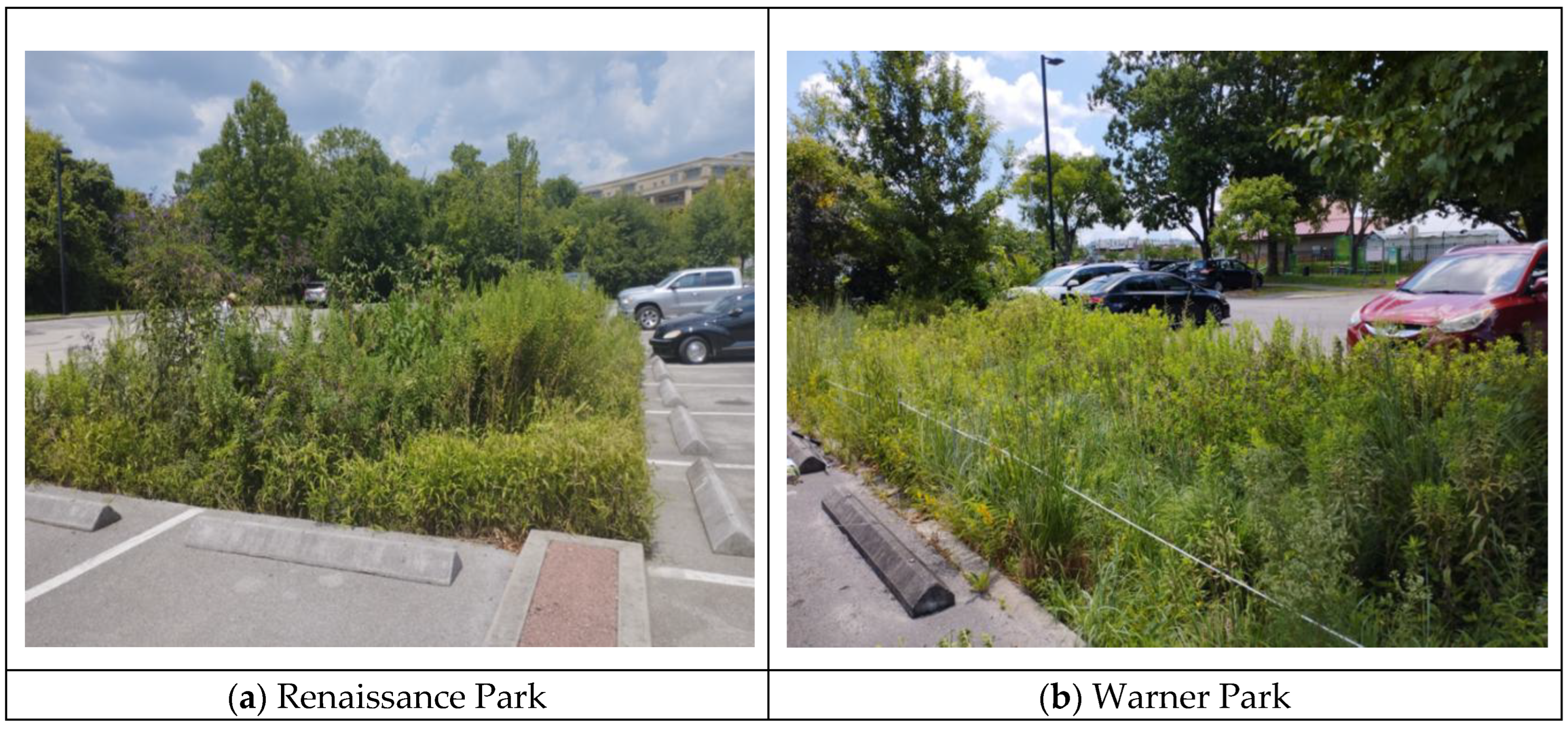
Figure 2.
Bioretention media sampling tools (a) metal hand auger (b) glass jars.
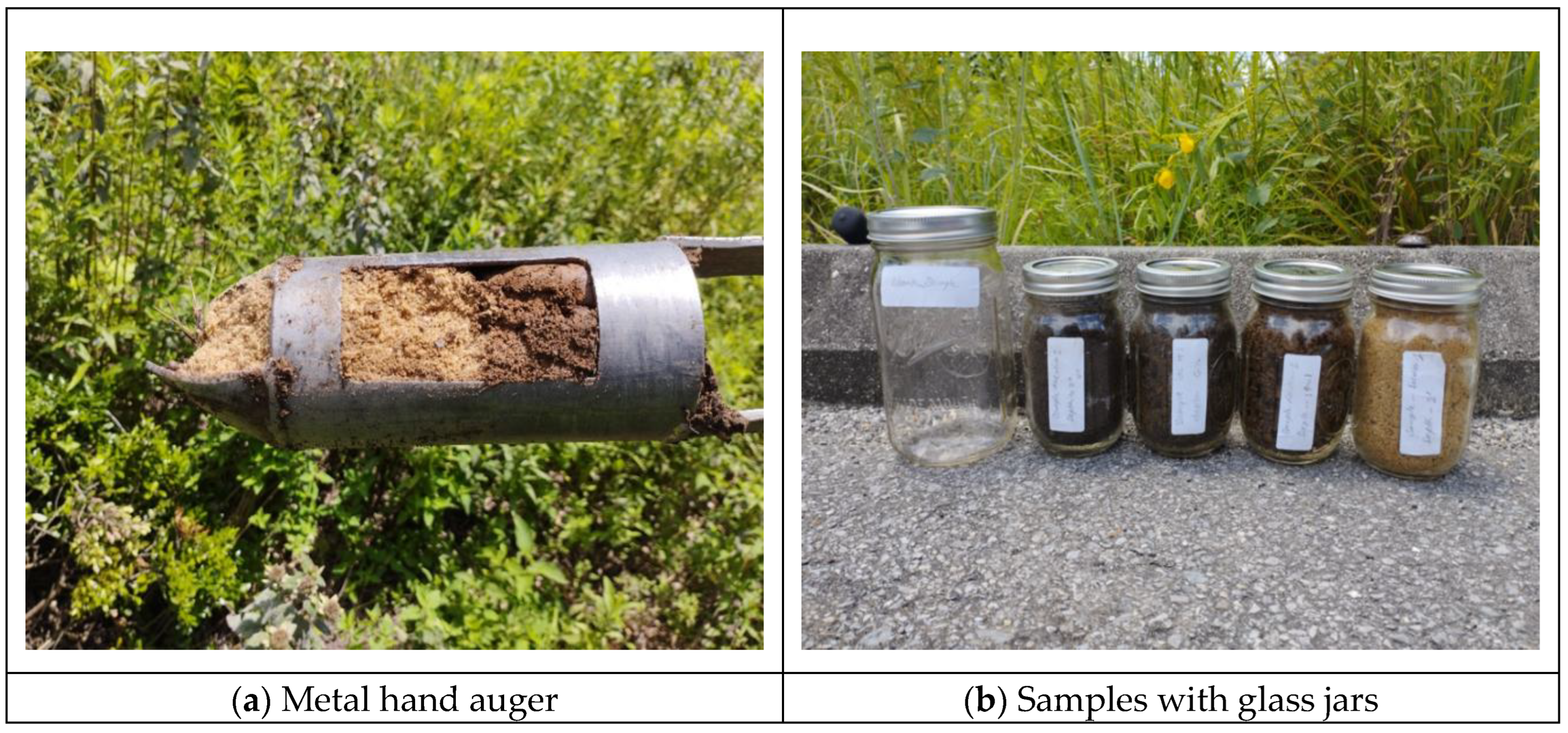
Figure 3.
Distribution of MPs in bioretention media among different sampling points.
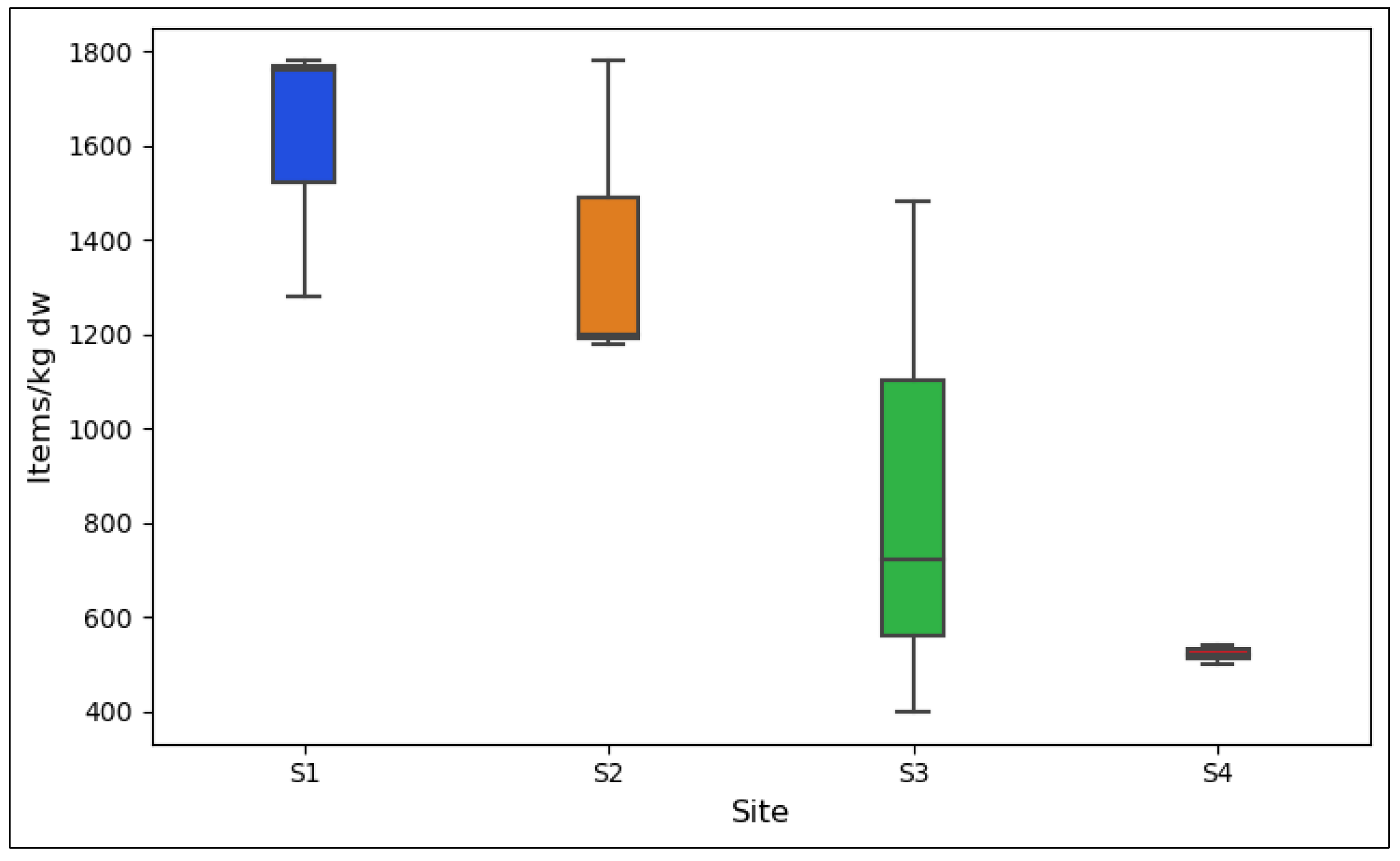
Figure 4.
Size distribution of MPs (total counts) across all sites.
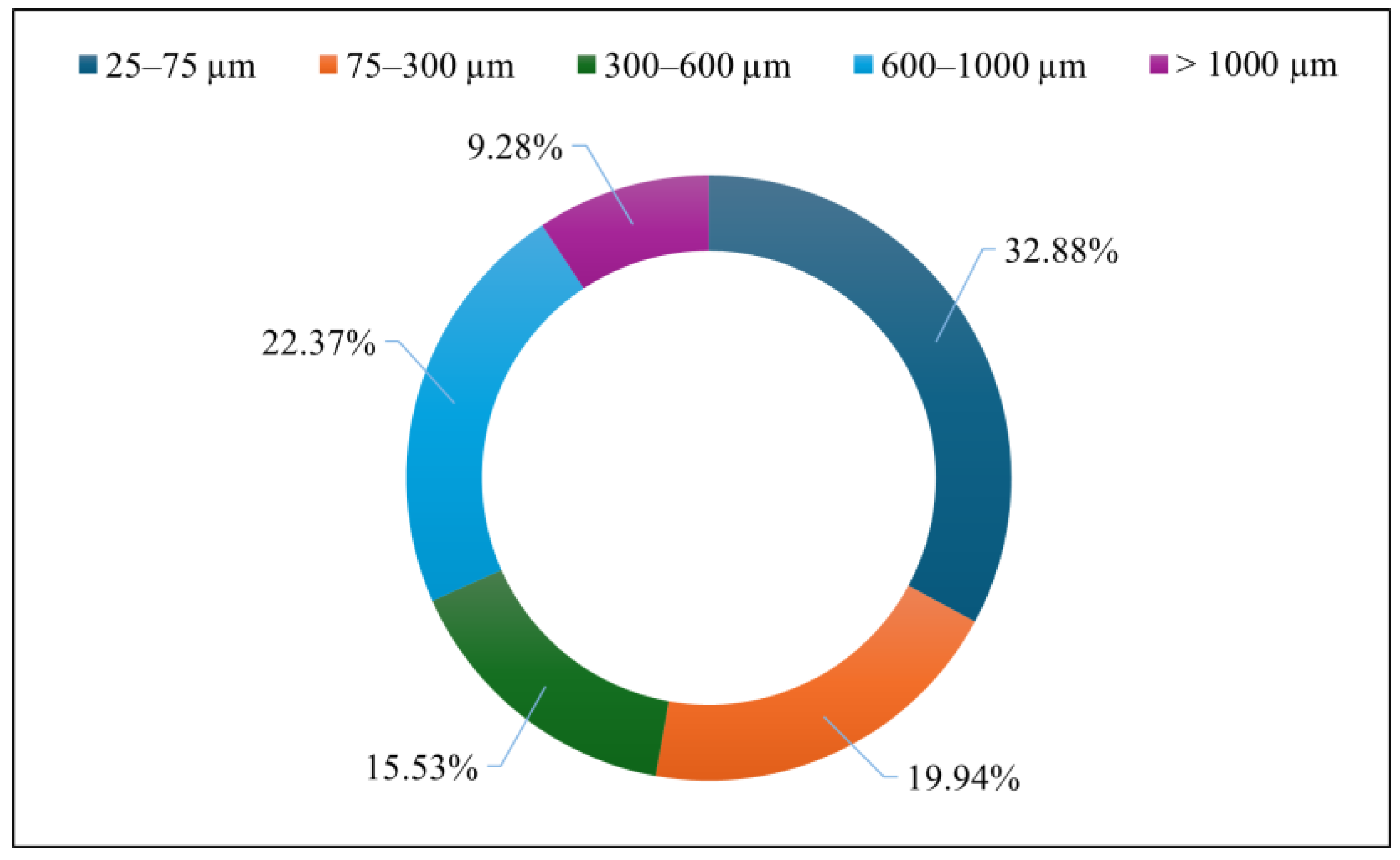
Figure 5.
Shape distribution of total MPs in bioretention media.
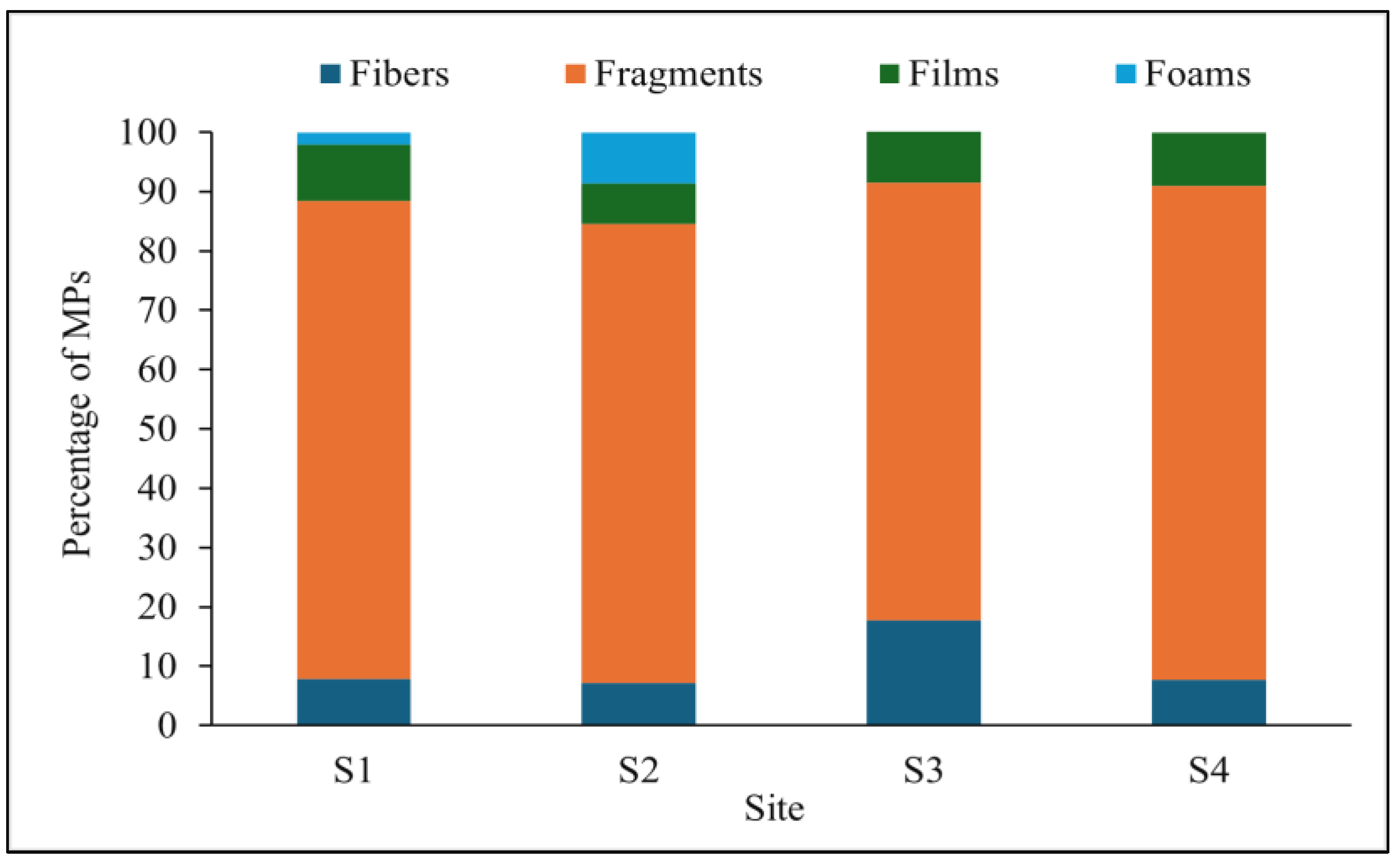
Figure 6.
Vertical distribution of MPs (total counts) across all sites.
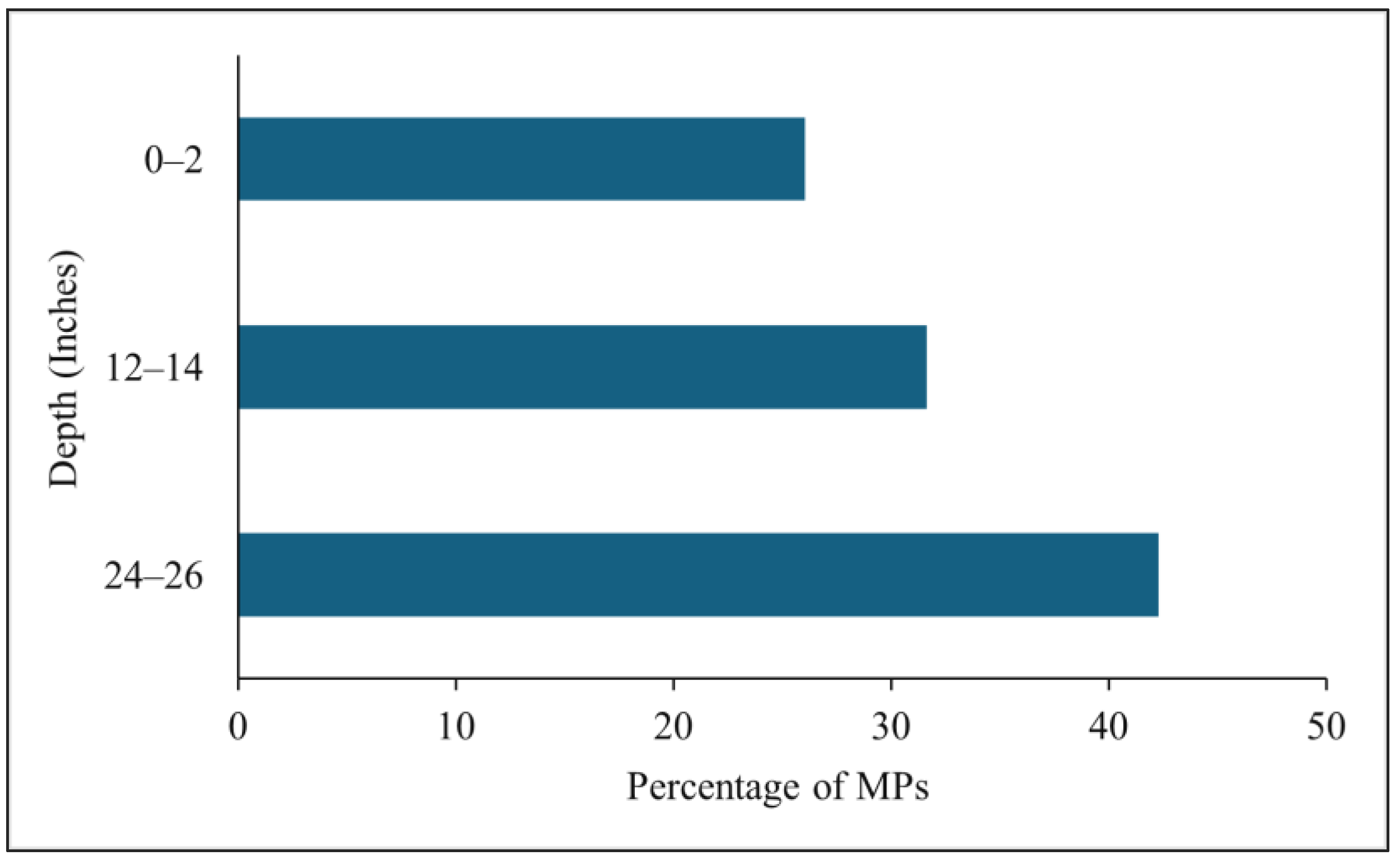
Figure 7.
Vertical distribution of total MPs across depths at different sampling points.
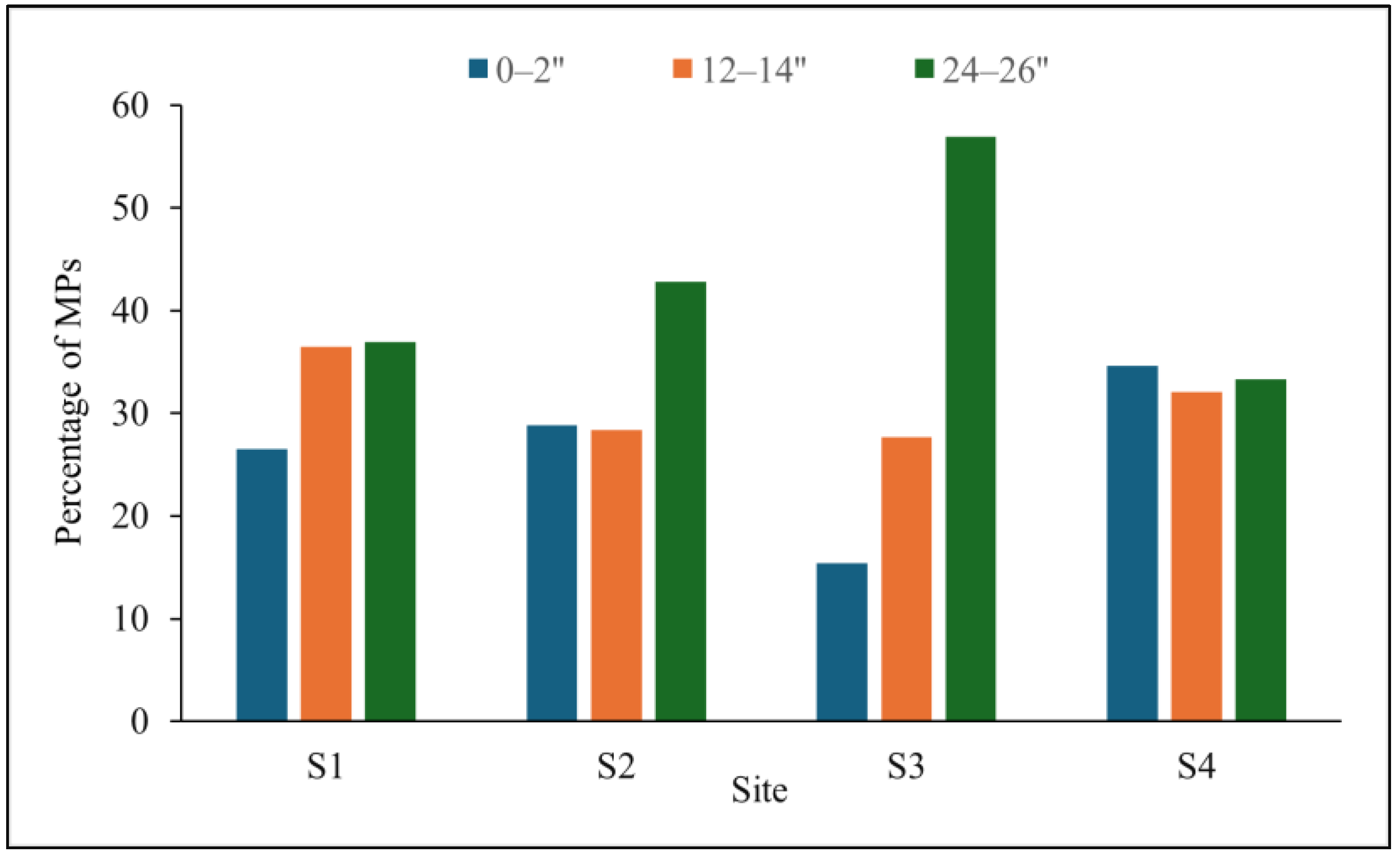
Figure 8.
Vertical distribution of microplastics size fractions (total counts) at different depths across all sites.
Figure 8.
Vertical distribution of microplastics size fractions (total counts) at different depths across all sites.
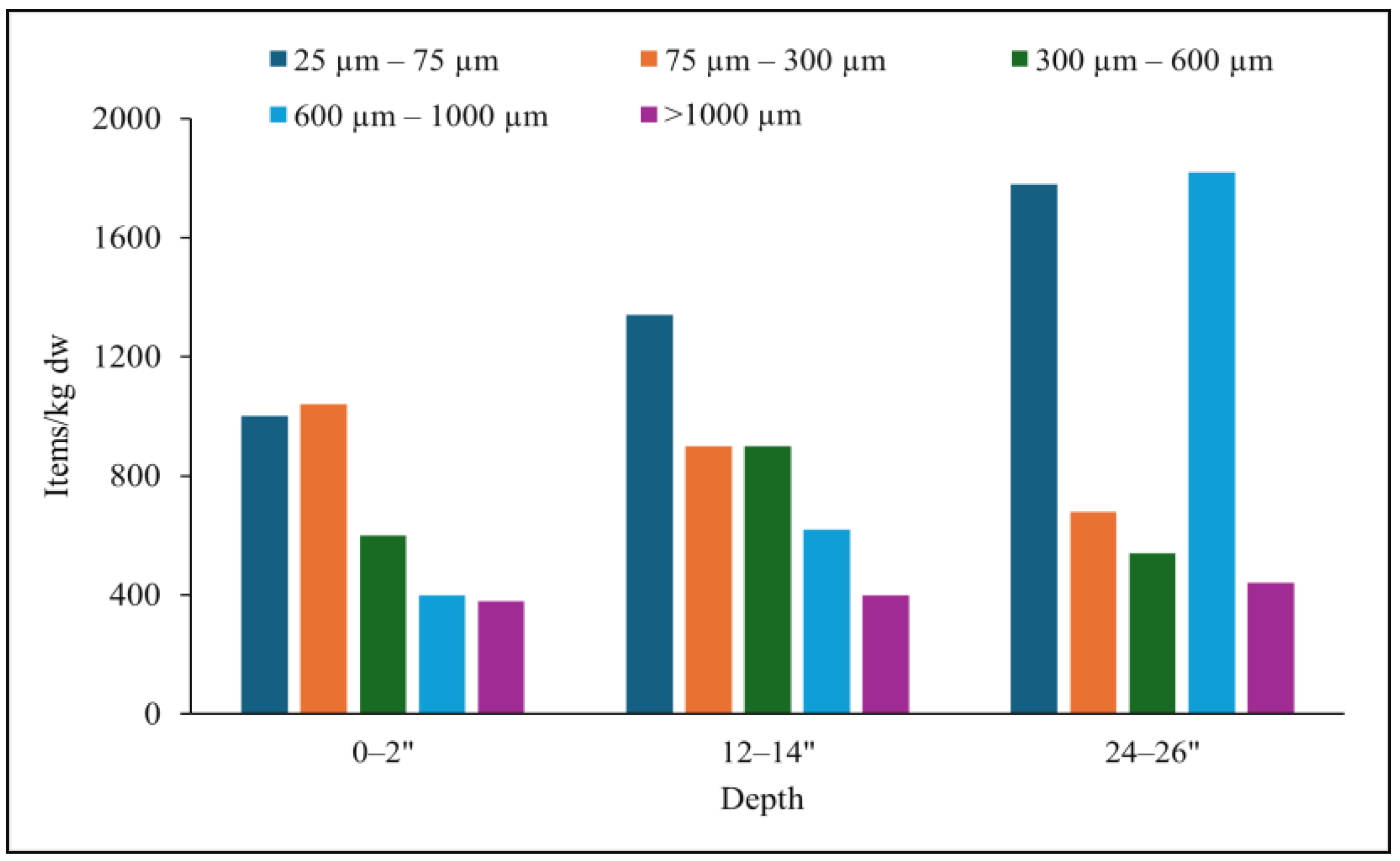
Disclaimer/Publisher’s Note: The statements, opinions and data contained in all publications are solely those of the individual author(s) and contributor(s) and not of MDPI and/or the editor(s). MDPI and/or the editor(s) disclaim responsibility for any injury to people or property resulting from any ideas, methods, instructions or products referred to in the content. |
© 2026 by the authors. Licensee MDPI, Basel, Switzerland. This article is an open access article distributed under the terms and conditions of the Creative Commons Attribution (CC BY) license (http://creativecommons.org/licenses/by/4.0/).
Copyright: This open access article is published under a Creative Commons CC BY 4.0 license, which permit the free download, distribution, and reuse, provided that the author and preprint are cited in any reuse.


