

Submitted:
28 February 2026
Posted:
05 March 2026
You are already at the latest version
Abstract
Background: Alzheimer’s disease (AD) is a progressive neurodegenerative disorder and the leading cause of dementia worldwide. Its hallmarks are extracellular amyloid-beta (Aβ) plaques and intracellular hyperphosphorylated tau forming neurofibrillary tangles, leading to synaptic dysfunction and neuronal loss. Despite extensive research, the mechanisms driving these proteinopathies and the contribution of genetic, molecular, and environmental factors remain unclear. Objective: This review summarizes the molecular mechanisms underlying AD and the factors influencing its onset and progression. Methods: A narrative review of peer-reviewed studies from PubMed, Scopus, and Web of Science was conducted. Relevant articles on neuropathology, molecular pathways, genetic susceptibility, oxidative stress, mitochondrial dysfunction, neuroinflammation, and metabolic and lifestyle risk factors were analyzed. Results: AD is marked by Aβ accumulation and tau pathology, causing synaptic and neuronal loss. Key mechanisms include abnormal amyloid precursor protein processing, tau hyperphosphorylation, oxidative stress, mitochondrial dysfunction, neuroinflammation, and calcium dysregulation. Genetic variants (APP, PSEN1, PSEN2, APOE ε4) increase risk, while aging, cardiovascular disease, diabetes, and lifestyle factors further influence disease onset and progression. Conclusion: AD arises from complex interactions among molecular and environmental factors. Understanding these pathways is essential for developing preventive strategies and effective therapies, with personalized approaches offering future promise.
Keywords:
Alzheimer’s disease
; inflammation
; risk gene mutation
; microglial over-activation
; oxidative stress
; diets
Introduction
1.1. Background
Alzheimer’s disease (AD) is one of the most prevalent chronic, progressive, and irreversible neurodegenerative disorders, characterized by a gradual decline in learning and memory, language and speech abilities, and motor function [1,2,3,4]. The pathological hallmarks of AD include the extracellular accumulation of amyloid-beta (Aβ) peptides and intracellular aggregation of hyperphosphorylated tau proteins forming neurofibrillary tangles (NFTs) [5,6,7,8,9]. These pathological changes result either from excessive production or impaired clearance of these proteins and typically begin several years before the appearance of clinical manifestations [7]. In addition to amyloid and tau pathology, neuroinflammation and oxidative stress (OS) are central contributors to disease progression, leading to plaque formation, synaptic loss, neuronal degeneration, and ultimately neuronal death [6,10,11,12].
AD is the most common cause of dementia, accounting for approximately 60–80% of cases worldwide [7,12,13]. The disease usually begins with mild cognitive impairment and nutritional disturbances and progresses to severe disability, multiorgan complications, and death [14]. Globally, AD is the fifth leading cause of death, typically occurring 4–8 years after diagnosis, and remains the leading cause of dementia [5,15]. Early-onset AD (EOAD), which develops before 65 years of age, is predominantly familial and accounts for less than 5% of cases [16,17,18,19]. In contrast, late-onset AD (LOAD), which represents more than 95% of cases, is largely sporadic and arises from complex interactions between genetic susceptibility and environmental factors [20,21,22].
Limited understanding of the multifactorial mechanisms underlying AD has hindered the development of effective disease-modifying therapies [23]. Although several drugs have been developed based on the amyloid hypothesis, most provide only symptomatic relief and do not significantly alter disease progression [24,25,26,27]. Therefore, comprehensive evaluation of disease mechanisms, identification of research gaps, and clarification of inconsistent findings are essential for developing effective preventive and therapeutic strategies. This review aims to discuss the mechanisms and contributing factors involved in the development and progression of AD.
2. Stages of AD
The staging of AD is determined by disease severity and the specific brain regions affected [27]. Amyloid deposition typically begins in the neocortex during the preclinical stage. Neuropathological changes may start 15–20 years before clinical symptoms become evident [7]. Disease progression ranges from an asymptomatic pathological phase to symptomatic stages characterized by cognitive decline, organ dysfunction, and eventual failure. Broadly, patients progress from normal cognitive function (preclinical stage) to subtle impairments and then to overt dementia [13].
2.1. Preclinical Stage
The preclinical stage is characterized by the accumulation of Aβ in the brain, which may precede clinical dementia by 15 to 20 years [7,27]. During this phase, individuals remain cognitively normal despite ongoing pathological changes [22,28]. Biomarkers include early histopathological alterations and elevated levels of Aβ, total tau (T-tau), phosphorylated tau (P-tau), and inflammatory cytokines [24,28]. This prolonged and silent phase underscores the importance of biomarker-based early detection strategies [23,25].
2.2. Clinical Stage
The clinical stage is marked by progressive accumulation of misfolded proteins and neuronal degeneration, leading to cognitive and functional impairment. This stage is subdivided according to severity.
2.2.1. Prodromal Stage
The prodromal stage corresponds to mild cognitive impairment (MCI), during which individuals experience subtle memory deficits, reduced attention, and difficulty concentrating, while still maintaining independence in daily activities [8,27,28]. Disease duration and progression are influenced by age, sex, and the presence of the APOE ε4 allele [28]. Cerebrospinal fluid biomarkers and amyloid PET imaging are often positive during this stage [27].
2.2.2. AD Dementia Stage
The dementia stage is characterized by marked impairment in memory, thinking, social functioning, and independence [27]. It includes mild, moderate, and severe phases. In the mild stage, individuals retain partial independence but experience noticeable memory loss, misplacement of objects, missed appointments, and word-finding difficulties [27].
In the moderate stage, cognitive deficits intensify, and patients may forget significant aspects of their personal history [24]. In the severe stage, profound memory loss is accompanied by impaired communication, visuospatial dysfunction, motor impairment, and loss of reflexes, as summarized in Table 1 [13,24].
3. Magnitude and Burden of AD
The global prevalence of AD is rising and represents a major public health concern [30,31]. Currently, an estimated 50–55 million individuals worldwide live with AD or related dementias, and this number is expected to double within the next two decades [15,23,32,33,34]. Approximately 10 million new cases are diagnosed annually [35]. In the United States, 6.08 million individuals were living with AD in 2017, and projections estimate this number will reach 15 million by 2060 [36]. Globally, more than 75% of cases remain undiagnosed, particularly in low- and middle-income countries [15]. In Africa, 2.76 million people aged 50 years and older were living with dementia in 2010, with the highest proportion in Sub-Saharan Africa [37]. In Ethiopia, 8,316 deaths were attributed to AD and dementia in 2016 [38].
The socioeconomic burden of AD increases with disease severity [39]. Annual per capita costs range from US$468.28 in mild AD to US$171,283.80 in severe AD [39]. In the United States, the annual cost of care was US$28,078 in 2016 and is projected to reach US$1.4 trillion [40]. Globally, the economic burden is expected to reach US$4.7 trillion in 2030, US$8.5 trillion in 2040, and US$16.9 trillion in 2050, with 65% of the burden occurring in low- and middle-income countries [39].
4. Alzheimer’s Disease Risk Factors
Although Aβ plaques and NFTs define AD pathology, multiple modifiable and non-modifiable risk factors contribute to disease development [6,17]. Aging, genetic susceptibility, environmental exposures, blood–brain barrier (BBB) dysfunction, traumatic brain injury, vascular disorders, chronic diseases, inflammation, oxidative stress, sleep disturbances, impaired autophagy, anxiety, stress, unhealthy lifestyle, dietary habits, and physical inactivity are among the major contributors [17,42,43,44,45,46,47,48,49,50,51].
Aging is associated with increased histone deacetylase activity, reduced synaptic density, diminished astrocytic support, decreased melatonin secretion, increased oxidative stress, and heightened inflammation, all of which increase vulnerability to AD [53,54,55]. Environmental factors such as air pollution, heavy metals, pesticides, smoking, obesity, chronic stress, infection, and sedentary behavior further elevate risk [17,18,42]. Importantly, the combined effects of these factors often exceed their individual contributions [6,17].
5. Diagnosis of AD
Early diagnosis is crucial for initiating appropriate management and slowing disease progression [56,57]. Diagnosis relies on combined clinical evaluation, imaging techniques, and neurochemical biomarker analysis.
5.1. Imaging Techniques
Neuroanatomical changes are detectable 10–20 years before clinical symptoms emerge [34,58]. Non-invasive imaging modalities such as magnetic resonance imaging (MRI), optical coherence tomography (OCT), and optical coherence tomography angiography (OCTA) are used to detect Aβ deposition and structural brain alterations [59]. Retinal Aβ accumulation and thinning of the retinal nerve fiber layer can also be detected using OCT [59].
5.2. Clinical Manifestations
Structural and functional brain changes result in progressive cognitive impairment, language deficits, behavioral changes, and motor dysfunction [5,26]. Cortical thinning, ventricular enlargement, and regional brain atrophy are key diagnostic features [56,58,60,61]. Early Aβ deposition occurs in the frontal, parietal, and temporal lobes, including the hippocampus and entorhinal cortex [56,62], and later spreads to additional regions such as the basal ganglia and brainstem [63]. Common clinical manifestations include memory loss, difficulty performing daily tasks, depression, irritability, aggression, social withdrawal, and sleep disturbances [14,20,25].
5.3. Neurochemical Analysis
Biomarker analysis enables early detection before symptom onset [57]. Elevated pro-inflammatory cytokines (IL-1, IL-6, TNF-α, NF-κB) and reduced anti-inflammatory cytokines (IL-4, IL-10) are commonly observed [46,64,65]. CSF and serum levels of Aβ42, Aβ40, T-tau, P-tau, oxidative stress markers, and neurotransmitters support diagnosis and disease monitoring [66]. Combined clinical, imaging, and laboratory assessments improve diagnostic accuracy [6,67].
Amyloid-β and Tau Accumulation
Amyloidosis refers to the accumulation of amyloid-β (Aβ) in tissues [70]. In Alzheimer’s disease (AD), Aβ accumulates in the brain parenchyma and cerebral vessels [71]. Extracellular insoluble Aβ plaques and intracellular neurofibrillary tangles (NFTs) composed of hyperphosphorylated tau are the pathological hallmarks of AD [5,8,72]. Aβ plaques, derived from amyloid precursor protein (APP), typically form earlier than NFTs [15]. APP, encoded on chromosome 21 (21q21.2–3), is a membrane protein involved in neurogenesis, neuroprotection, and synaptic plasticity [72,73]. Mutations in APP enhance amyloidogenic processing and are linked to early-onset AD (EOAD) [74].
In the amyloidogenic pathway, APP is cleaved by β-secretase (BACE1), generating soluble APPβ and C-terminal fragment β (C99), which is subsequently cleaved by γ-secretase to produce Aβ peptides (mainly Aβ40 and Aβ42) and AICD. Aβ42 is more aggregation-prone and strongly associated with plaque formation [22,75,82]. In contrast, the non-amyloidogenic pathway involves α-secretase cleavage within the Aβ region, producing neuroprotective sAPPα [75,76,77,78,79].
PSEN-1 (chromosome 14q24.2) and PSEN-2 (chromosome 1q42.1) encode presenilin proteins, essential γ-secretase subunits [80]. Mutations in these genes increase Aβ production and are strongly associated with EOAD [6,23,75,78]. APP gene duplication, as seen in Down syndrome, further accelerates Aβ accumulation [85,86].
The APOE gene on chromosome 19q13.32 is the strongest genetic risk factor for late-onset AD (LOAD) [6,17,88]. APOE has three isoforms: APOE2, APOE3, and APOE4 [89]. APOE4 increases Aβ and tau accumulation, neuroinflammation, oxidative stress (OS), and synaptic dysfunction [23,77,88,91], whereas APOE2 promotes Aβ clearance and exerts neuroprotective effects [90,91,92]. Elevated cholesterol enhances γ-secretase activity and amyloidogenesis [93,96]. APOE polymorphisms, therefore, serve as important genetic biomarkers in LOAD [94].
Tau proteins stabilize microtubules, supporting neuronal structure and transport [99]. However, Aβ accumulation, ROS, mitochondrial dysfunction, calcium dysregulation, and kinase activation (GSK3β, Cdk5) induce tau hyperphosphorylation and NFT formation [67,100]. These aggregates disrupt microtubules and impair synaptic function [34]. Mutations in the MAPT gene (chromosome 17q21) increase tau deposition and familial AD risk [75,101].
Environmental factors such as diet, chronic stress, infection, smoking, and metabolic disorders interact with AD risk genes, promoting plaque and tangle accumulation, glial activation, oxidative stress, and neurodegeneration [6,11,99]. Major AD-related genes include BACE1, APP, PSEN-1, PSEN-2, MAPT, and APOE.
6.2. Neuroinflammation and Microglia Over-Activation
Beyond plaques and tangles, neuroinflammation is a central feature of AD [67]. Astrocytes and microglia normally maintain homeostasis and defend against injury [5,63,102,103,104,105]. However, chronic activation transforms microglia from resting (M0) to pro-inflammatory (M1) phenotypes, releasing cytokines that exacerbate pathology [33] (Figure 1).
BBB disruption permits infiltration of peripheral cytokines and immune cells, amplifying glial activation and promoting Aβ deposition [33,106]. Although early microglial activation facilitates Aβ clearance, sustained inflammation impairs phagocytosis and enhances plaque and NFT formation [82,108] in such a way that there is bidirectional relationship between Aβ accumulation and neuroinflammation (Figure 2).
Calcium dysregulation further amplifies inflammatory cascades by activating calcineurin and promoting cytokine release [66,110]. Microglial receptors TREM2 and CX3CR1 regulate phagocytosis of Aβ and tau (Figure 3). Wild-type TREM2 supports microglial survival, migration, and anti-inflammatory polarization [112,113,114], whereas TREM2 mutations impair Aβ clearance and increase AD risk [111,118,124]. Alterations in CX3CL1/CX3CR1 signaling similarly aggravate amyloid and tau pathology [125]. Neuroinflammation is therefore both an early and progressive contributor to AD [33,126].
6.3. Oxidative Stress
Oxidative stress (OS), resulting from an imbalance between ROS and antioxidants, precedes and promotes amyloid and tau pathology [129]. Aβ induces ROS production through mitochondrial dysfunction, NADPH oxidase activation, and NMDA receptor overstimulation [99,128]. Conversely, OS enhances β-secretase activity, cholesterol accumulation, inflammatory signaling, and amyloidogenic APP processing [21,130].
Chronic stress activates the HPA axis, elevating cortisol, reducing neurogenesis, shrinking hippocampal volume, and promoting Aβ and tau pathology [17,127,133,134]. Mitochondrial impairment and cytochrome oxidase dysfunction further increase ROS [5,78,135]. OS therefore contributes to both initiation and progression of AD (Figure 4).
6.4. Neurochemical Imbalance
Neurotransmitter imbalance underlies cognitive and behavioral symptoms in AD [136].
6.4.1. Dopamine
6.4.2. Serotonin
6.4.3. Acetylcholine
6.4.4. GABA
6.4.5. Glutamate
6.4.6. Noradrenalin
Degeneration of locus coeruleus neurons reduces noradrenergic modulation of neuroinflammation and BBB integrity [19].
6.4.7. Melatonin
6.4.8. Cortisol
6.4.9. Quinolinic Acid
The kynurenine pathway shifts toward neurotoxic metabolites such as quinolinic acid (QA), promoting NMDA-mediated excitotoxicity and tau phosphorylation [175,176,177,178]. Reduced serotonin and melatonin further exacerbate pathology (Figure 6).
Figure 6.
Roles of the Kynurenine pathway and its metabolites in the development of Alzheimer’s disease. Tryptophan conversion to serotonin and then to melatonin, and production of KYNA from astrocytes, prevent AD development. AA: Anthranilic acid, Aβ: Amyloid beta, AD: Alzheimer’s disease, CRP: C-reactive protein, Glut: Glutamate, 3-HK: 3-Hydroxykynurenine, 5-HT: 5-Hydroxy tryptophan, HAO: 3-hydroxy anthranilate 3, 4-dioxygenase, IDO: Indoleamine 2, 3-dioxygenase, IFNγ: Interphone, IL: Interleukins, KAT: Kynurenine Aminotransferase, KF: Kynurenin formylase, KMO: Kynurenine 3-monooxygenase, KYNA: Kynurenine Acid, NAT: N-acetyltransferase, NMDR: N-methylene D-aspartate receptor, ROS: Reactive oxygen species, TDO: Tryptophan 2, 3-dioxygenase, TNFα: Tumor necrosis factor-alpha, and TPH: Tryptophan hydroxylase.
Figure 6.
Roles of the Kynurenine pathway and its metabolites in the development of Alzheimer’s disease. Tryptophan conversion to serotonin and then to melatonin, and production of KYNA from astrocytes, prevent AD development. AA: Anthranilic acid, Aβ: Amyloid beta, AD: Alzheimer’s disease, CRP: C-reactive protein, Glut: Glutamate, 3-HK: 3-Hydroxykynurenine, 5-HT: 5-Hydroxy tryptophan, HAO: 3-hydroxy anthranilate 3, 4-dioxygenase, IDO: Indoleamine 2, 3-dioxygenase, IFNγ: Interphone, IL: Interleukins, KAT: Kynurenine Aminotransferase, KF: Kynurenin formylase, KMO: Kynurenine 3-monooxygenase, KYNA: Kynurenine Acid, NAT: N-acetyltransferase, NMDR: N-methylene D-aspartate receptor, ROS: Reactive oxygen species, TDO: Tryptophan 2, 3-dioxygenase, TNFα: Tumor necrosis factor-alpha, and TPH: Tryptophan hydroxylase.
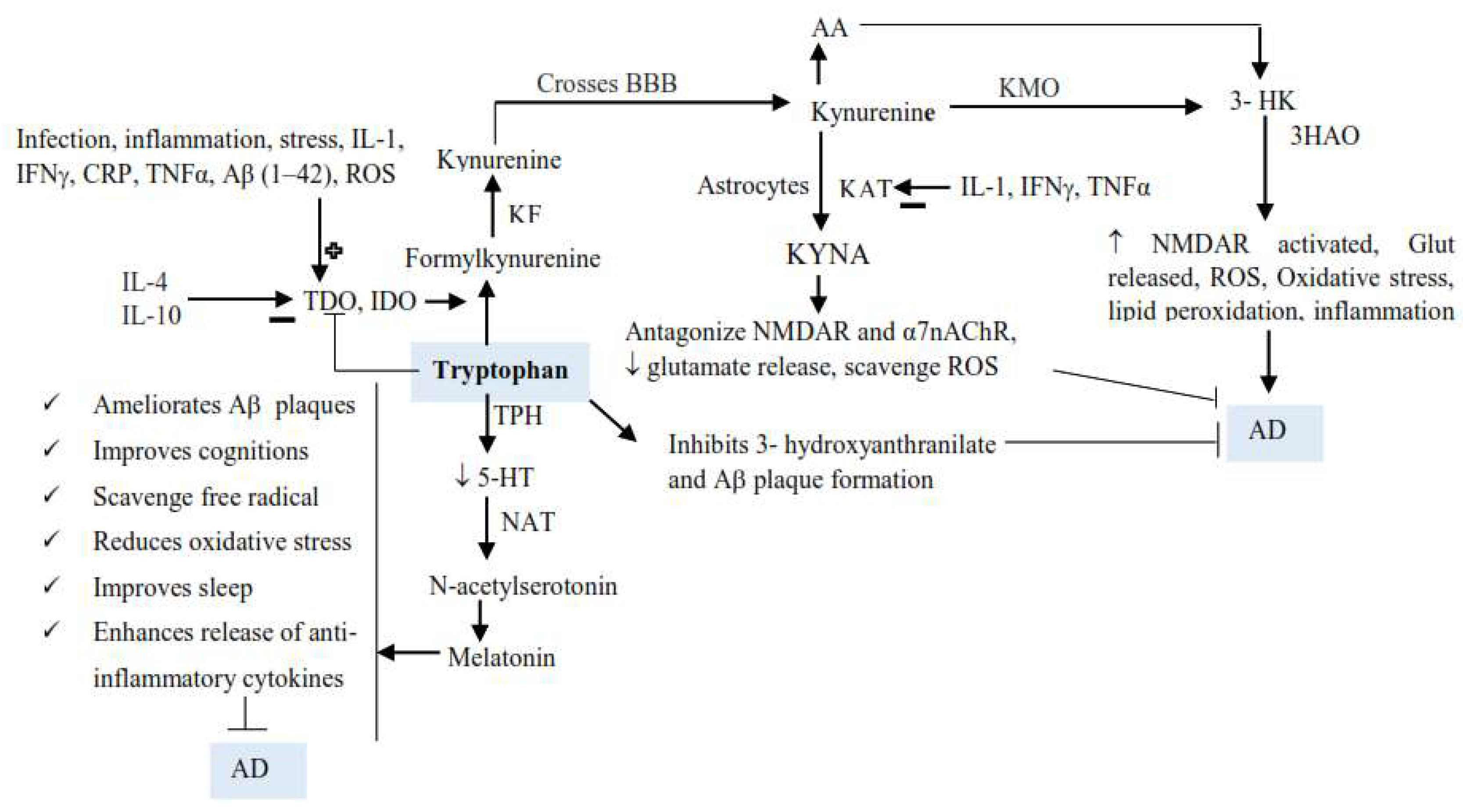

Table 2.
summarizes major neurotransmitter alterations in AD.
| Neurotransmitter | Alteration | Citation |
| Acetylcholine | Decreased | [70,100,138] |
| Dopamine | decreased | [126,129,138,139] |
| Cortisol | Increased | [167,168,170] |
| Glutamate | Increased | [70] |
| GABA | Decreased | [70,138] |
| Tryptophan | Decreased | [179] |
| Neurotoxin kynurenine pathway metabolites | Increased | [175,179,181] |
| Brain cholesterol level | Increased | [93,179] |
| Melatonin, serotonin, and noradrenaline | Decreased | [19,126,129,157] |
6.5. Roles of Diets in the Pathogenesis and Progression of AD
Diet is a major modifiable risk factor [184]. Diets high in saturated fats, sugar, cholesterol, TMAO, and homocysteine increase neuroinflammation, OS, tau phosphorylation, and Aβ aggregation [184,185,186,187,188,189]. Elevated cholesterol and APOE4 impair cholesterol transport and enhance amyloidogenesis [92,193].
Conversely, Mediterranean-style diets rich in antioxidants, omega-3 fatty acids, vitamins, and fiber reduce inflammation and OS [3,46,194,195,196,197,198]. Dietary components exert epigenetic effects on AD-related genes [6,199,200]. Mechanisms are illustrated in Figure 7.
Honey, produced by Apis mellifera [203], contains sugars, phenolics, flavonoids, vitamins, and bioactive compounds with antioxidant and anti-inflammatory properties [53,204]. Honey reduces Aβ accumulation, tau phosphorylation, neuroinflammation, OS, and acetylcholinesterase activity while enhancing antioxidant gene expression via Nrf2 [64,208,209,210,211]. Its mechanisms are summarized in Figure 8.
Interactions between honey, cannabinoids, orexin, and histamine pathways further modulate inflammation and sleep-related Aβ clearance [213,214,215,216,217,218,219,220,221,222,223,224,225,226,227,228]. Although findings are sometimes contradictory, honey demonstrates potential as a complementary strategy in AD prevention.
6. Conclusion
Aβ plaques and NFTs result from genetic mutations, epigenetic changes, neuroinflammation, oxidative stress, chronic stress, infection, unhealthy diets, and neurotransmitter imbalance (Figure 9). Aβ40 and Aβ42 are key plaque components formed through β- and γ-secretase cleavage of APP. Neurotransmitter dysregulation contributes significantly to cognitive decline. Diets rich in antioxidants and anti-inflammatory compounds, including honey, may delay disease progression.
Generally, unlike previous reviews that primarily focus on amyloid or tau pathology independently, the current review integrates genetic, neurochemical, inflammatory, metabolic, and lifestyle-related contributors into a unified molecular framework. It further highlights the bidirectional interactions among oxidative stress, mitochondrial dysfunction, neurotransmitter imbalance, and dietary factors, providing a comprehensive systems-level perspective of Alzheimer’s disease pathogenesis.
7. Future Research Directions
Future investigations should explore genetic and pharmacologic modulation of neurotransmitter receptors, inflammatory cytokines, lipid metabolism, vascular factors, and hormonal regulation. The roles of MAPT, BACE1, ADAM10, APOE, Cdk5, GSK3β, CYP46A1, NFE2L2, SOD, GPX-1, catalase, and HO-1 under chronic stress and dietary influences require deeper evaluation. Identification of early biomarkers in serum, CSF, saliva, urine, ocular fluids, and brain tissue remains essential. The molecular mechanisms through which honey and other dietary components influence gene expression and AD progression also warrant further research.
Author Contributions
Abebaye Aragaw Leminie (BSc, MSc, Ph.D.) conceived and designed the review; performed the literature search and data collection; critically analyzed and synthesized the findings; prepared all figures and tables; wrote the original draft of the manuscript; revised and edited the manuscript for intellectual content; and is responsible for the final submission and correspondence. All work, interpretation, and writing were conducted solely by the author.
Article Funding
No Funding was available for this article.
Consent to Publish
Not applicable.
Ethics and Consent to Participate
Not applicable.
Data Availability
not applicable.
Acknowledgments
The author acknowledges the staff of the Department of Medical Physiology, College of Health Sciences, Addis Ababa University, for their support, and Professor Nigussie Dyessa (University of Global Health Equity, Rwanda) for manuscript review. Appreciation is extended to the author’s family for their encouragement.
Abbreviations
ADAM10/17: a disintegrin metalloproteinase 10/17, AICD: AβPP intracellular domain, Aβ: Amyloid beta, AA: Anthranilic acid, AD: Alzheimer’s disease, AGEPs: Advanced glycation end products, Amy: Amygdala, APEO: Apolipoprotein E (Apo-E), APP: Amyloid precursor protein, BACE1: β-site APP cleaving enzyme 1, BBB: Blood-brain barrier, CAT: Catalase, CRP: C-reactive protein, CX3CR1: Chemokine (C-X3-C motif) receptor 1, DAGEPs: Dietary advanced glycation end products,DAMPs: Damaged associated molecular patterns, FRs: Free radicals, Glut: Glutamate, GSH-pX: Glutathione peroxidase, HAO: 3-hydroxyanthranilate 3, 4-dioxygenase, hAPP: Human amyloid precursor protein, Hip: hippocampus, 3-HK: 3-Hydroxykynurenine, HPR: Hyperphosphorylation, IDO: Indoleamine 2, 3-dioxygenase, IFNγ: Interferon, IL: Interleukin, Inflame cyto: Inflammatory cytokines , KAT: Kynurenine Aminotransferase, KF: Kynurenin formylase, Ki: Kinase, KMO: Kynurenine 3-monooxygenase, KYNA: Kynurenine Acid, LPs: Lipopolysaccharides, MAP1: Microtubule-associated protein-1, MC: Mitochondria, MD: Mitochondrial dysfunction, MTs: Microtubules , nAchRs : Nicotine acetylcholine receptors, NAT:N-acetyltransferase, NFTs: Neurofibrillary tangles, NMDR: N-methylene D-aspartate receptor, NTs: Neurotransmitters, oAβ: Oligomeized amyloid beta, OLBME: Overloaded biogenic metallic elements, OS: Oxidative stress, PAMPs: Pathogen associated molecular pattern, PFC: Prefrontal cortex, Phosp: Phosphatase, PRRs: Pattern recognition receptors, PSEN-1: Presenilins-1, PSEN-2: Presenilins-2, P-tau: phosphorylated tau, QA: Quinolinic acid, RNS: Reactive nitrogen specious, ROS: Reactive oxygen species, SOD: Superoxide dismutase, sAPPβ: Soluble APP β, SORL1: sortilin-related receptor-one,sTREM-2: Soluble triggering receptor expressed on myeloid cells 2, Tau: Tubulin associated unit, TDO: Tryptophan 2, 3-dioxygenase, TGF-β: Transforming growth factor-beta, TLRs: Toll-like receptors, TNFα: tumor necrosis factor-alpha, TPH: Tryptophan hydroxylase, TREM-2: triggering receptor expressed on myeloid cells 2, and T-tau: Total tau protein.
References
- Khoury, R; Ghossoub, E. Diagnostic biomarkers of Alzheimer’s disease: A state-of-the-art review. Biomarkers in neuropsychiatry 2019, 1, 1–6. [Google Scholar] [CrossRef]
- Onyango, IG; Jauregui, GV; Carna, M; Bennett, JP; Stokin, GB. Neuro-inflammation in Alzheimer’s disease. Biomedicines 2021, 9(524), 1–38. [Google Scholar] [CrossRef]
- Sliwińska, S.; Jeziorek, M. The role of nutrition in Alzheimer’s disease. Rocz Panstw Zakl Hig. 2021, 72(1), 29–39. [Google Scholar] [CrossRef]
- Zhu, D; Montagne, A; Zhao, Z. Alzheimer’s Pathogenic Mechanisms and Underlying Sex Difference. Cell Mol Life Sci. 2021, 78(11), 4907–4920. [Google Scholar] [CrossRef]
- Alzheimer’s disease facts and figures. Alzheimer’s Dement. 2023, 19(4), 1598–1695. [CrossRef]
- Castillo-Ordoñez, WO; Cajas-Salazar, N; Velasco-Reyes, MA. Genetic and epigenetic targets of natural dietary compounds as anti-Alzheimer’s agents. Neural Regen Res. 2024, 19(4), 846–854. Available online: https://orcid.org/0000-0001-9138-1248. [CrossRef]
- Porsteinsson, AP; Isaacson, RS; Knox, S; Sabbagh, MN; Rubino, I. Diagnosis of Early Alzheimer’s disease: Clinical Practice in 2021. J Prev Alz Dis. 2021, 3(8), 371–386. [Google Scholar] [CrossRef] [PubMed]
- García-Morales, V; González-Acedo, A; Melguizo Rodríguez, L; Pardo-Moreno, T; Costela-Ruiz, VJ; Montiel-Troya, M; Ramos-Rodríguez, JJ. Current Understanding of the Physiopathology, Diagnosis, and Therapeutic Approach to Alzheimer’s disease. Biomedicines 2021, 9(1910), 1–16. [Google Scholar] [CrossRef]
- Novoa, C; Zolezzi, JM; Salazar, P; Cisternas, P; Gherardelli, C; Vera-Salazar, R; Inestrosa, NC. Inflammation context of inflammation in Alzheimer’s disease, a relationship is intricate to define. Biological Research 2022, 55(39), 1–18. [Google Scholar] [CrossRef] [PubMed]
- Sy, M; Kitazawa, M; Medeiros, R; Whitman, L; Cheng, D; Lane, TE; LaFerla, FM. Inflammation Induced by Infection Potentiates Tau Pathological Features in Transgenic Mice. The American Journal of Pathology 2011, 178(6), 2811–2822. [Google Scholar] [CrossRef] [PubMed]
- Minter, MR; Tylor, JM; Krack, PG. The contribution of neuroinflammation to amyloid toxicity in Alzheimer’s disease. J.Neurochem. 2016, 136, 457–474. [Google Scholar] [CrossRef]
- Raskin, J; Cummings, J; Hardy, J; Schuh, K; Dean. RANeurobiology of Alzheimer’s disease: Integrated Molecular, Physiological, Anatomical, Biomarker, and Cognitive Dimensions. Current Alzheimer Research 2015, 12, 712–722. [Google Scholar] [CrossRef]
- GoldeTE. Alzheimer’s disease – the journey of a healthy brain into organ failure. Molecular Neurodegeneration 2022, 17, 18. [Google Scholar] [CrossRef]
- Zhang, Y; Kiryu, H. Identification of oxidative stress-related genes differentially expressed in Alzheimer’s disease and construction of a hub gene-based diagnostic model. Scientific Reports 13(6817), 2023; 1–15. [CrossRef]
- Gratuze, M; Leyns, CEG; Holtzman, DM. New insights into the role of TREM2 in Alzheimer’s disease. Molecular Neurodegeneration 2018, 13, 66. [Google Scholar] [CrossRef]
- Wolfe, CM; Fitz, NF; Nam, KN; Lefterov, I; Koldamova, R. The Role of APOE and TREM2 in Alzheimer’s disease—Current Understanding and Perspectives. Int. J. Mol. Sci. 2019, 2(81), 1–20. [Google Scholar] [CrossRef]
- Juszczyk, G; Mikulska, J; Kasperek, K; Pietrzak, D; Mrozek, W; Herbet, M. Chronic Stress and Oxidative Stress as Common Factors of the Pathogenesis of Depression and Alzheimer’s disease: The Role of Antioxidants in Prevention and Treatment. Antioxidants 2021, 10(1439), 1–31. [Google Scholar] [CrossRef] [PubMed]
- Edwards, GA, III; Gamez, N; Escobedo, G; Calderon, O; Moreno-Gonzalez, I. Modifiable Risk Factors for Alzheimer’s disease. Front. Aging Neurosci. 2019, 11(146), 1–18. [Google Scholar] [CrossRef] [PubMed]
- Simic, G; Leko, MB; Wray, S; Harrington, C; Delalle, I; Jovanov-Milošević, N; Bažadona, D; Buée, L; Silva, RD; Giovanni, GD; Wischik, C; Ho, PR. Monoaminergic Neuropathology in Alzheimer’s disease. Prog Neurobiol. 2017, 151, 101–138. [Google Scholar] [CrossRef]
- Martinez, L; Ribeiro, OV; Loureiro, J; Fernandez, R; Valiengo, L; Canineu, P; Stella, F; Talib, L; Marcia Radanovic, M; Forlenza, OV. Early diagnosis and treatment of Alzheimer’s disease: new definitions and challenges. Braz J Psychiatry 2020, 42(4), 431–441. [Google Scholar] [CrossRef]
- Tamagno, E; Guglielmotto, M; Vasciaveo, V. Tabaton MOxidative Stress and Beta Amyloid in Alzheimer’s disease. Which Comes First: The Chicken or the Egg? Antioxidants 2021, 10(1479), 1–15. [Google Scholar] [CrossRef]
- Deture, MA; Dickson, DW. The neuropathological diagnosis of Alzheimer’s disease. Molecular Neurodegeneration 2019, 14(32), 1–18. [Google Scholar] [CrossRef] [PubMed]
- Pais, M; Martinez, L; Ribeiro, O; Loureiro, J; Fernandez, R; Valiengo, L; Canineu, P; Stella, F; Talib, L; Radanovic, M; Forlenza, OV. Early diagnosis and treatment of Alzheimer’s disease: new definitions and challenges. Braz J Psychiatry 2020, 42, 431–441. [Google Scholar] [CrossRef]
- Breijyeh, Z; Karaman, R. Comprehensive Review on Alzheimer’s disease: Causes and Treatment. Molecules 2020, 25(5789), 1–28. [Google Scholar] [CrossRef]
- Reiss, AB; Muhieddine, D; Jacob, B; Mesbah, M; Pinkhasov, A; Gomolin, IH; Stecker, MM; Wisniewski, T; De Leon, J. Alzheimer’s disease Treatment: The Search for a Breakthrough. Medicina 2023, 59((1084), 1–32. [Google Scholar] [CrossRef]
- Zhang, Y; Chen, H; Li, R; Sterling, K; Song, W. Amyloid β-based therapy for Alzheimer’s disease: challenges, successes and future. Signal Transduction and Targeted Therapy 2023, 8(248), 1–26. [Google Scholar] [CrossRef]
- Parnetti, L; Chipi, E; Salvadori, N; D’Andrea, K; Euseb, P. Prevalence and risk of progression of preclinical Alzheimer’s disease stages: a systematic review and meta-analysis. Alzheimer’s Research & Therap 2019, 11(7), 1–13. [Google Scholar] [CrossRef]
- Vermunt, L; Sikkes, SAM; Van, A; Handels, R; Bos, I; Van der Flier, WM; Kern, S; Ousset, PJ; Maruff, P; Skoo, I; Verhey, FRJ; Freund-Levi, Y; Tsolaki, M; Wallin, A K; Rikkert, MO; Soininen, H; Spiru, L; Zetterberg, H; Blennow, K. Duration of preclinical, prodromal, and dementia stages of Alzheimer’s disease about age, sex, and APOE genotype. Alzheimer’s & Dementia 2019, 15(7), 888–898. [Google Scholar] [CrossRef]
- GBD 2016 Dementia Collaborators. Global, regional, and national burden of Alzheimer’s disease and other dementias, 1990-2016: a systematic analysis for the Global Burden of Disease Study 2016. Lancet Neurology 18(1), 88–106. Available online: www.thelancet.com/neurology. [CrossRef]
- Xu, L; Liu, R; Qin, Y; Wan, T. Brain metabolism in Alzheimer’s disease: biological mechanisms of exercise. Translational Neurodegeneration 2023, 12(33), 1–21. [Google Scholar] [CrossRef]
- Tiwari, S; Atluri, V; Kaushik, A; Yndart, A. Nair MAlzheimer’s disease: pathogenesis, diagnostics, and therapeutics. International Journal of Nanomedicine 2019, 14, 5541–5554. [Google Scholar] [CrossRef]
- Yiannopoulou, KG; Papageorgiou, SG. Current and Future Treatments in Alzheimer Disease: An Update. Journal of Central Nervous System Disease 2020, 12, 1–12. [Google Scholar] [CrossRef]
- Simic, G; Spanic, E; Langer, HL; Hof, PR. Role of Microglial Cells in Alzheimer’s Disease Tau Propagation. Front. Aging Neurosci. 2019, 11(271), 1–10. [Google Scholar] [CrossRef]
- Zolezzi, JM; Novoa, C; Salazar, P; Cisternas, P; Gherardelli, C; Vera-Salazar, R; Inestrosa, NC. In the context of Alzheimer’s disease, a relationship is intricate to define. Biological Research 2022, 55(39), 1–18. [Google Scholar] [CrossRef] [PubMed]
- Rasmussen, J; Angerman, H. Alzheimer’s disease –Why We Need Early Diagnosis. Degenerative Neurological and Neuromuscular Disease 2019, 24(9), 123–130. [Google Scholar] [CrossRef] [PubMed]
- George-Carey, R; Adeloye, D; Chan, K; Paul, A; Kolc, I; Campbell, H; Rudan, I. An estimate of the prevalence of dementia in Africa: A systematic analysis. Journal of global health 2012, 2(2), 1–13. [Google Scholar] [CrossRef]
- Dessu, S; Girum1, T; Geremew, M; Zelek, B. The burden of disease and cause of mortality in Ethiopia, 2000–2016: findings from the Global Burden of Disease Study and Global Health Estimates. Medical Studies/Studia Medyczne 2020, 36(4), 246–255. [Google Scholar] [CrossRef]
- Abbas, A; Monfared, T; Byrnes, MJ; White, LA; Zhang, Q. Alzheimer’s disease: Epidemiology and Clinical Progression. Neuron Ther. 2022, 11, 553–569. [Google Scholar] [CrossRef]
- Lyn, XT; Siew, CO; Lynn, JT; Trecia, N; Thaigarajan, P. Economic Burden of Alzheimer’s disease: A Systematic Review. Value in Health Regional Issues 2024, 40(2212-1099), 1–12. [Google Scholar] [CrossRef]
- Nandi, A; Counts, N; Bröker, J; Malik, S; Chen, S; Han, R; Klusty, J; Seligman, B; Tortorice, D; Vigo, D; Bloom, DE. Cost of care for Alzheimer’s disease and related dementias in the United States: 2016 to 2060. Npj Aging 2024, 10, 13. [Google Scholar] [CrossRef] [PubMed]
- Zhu, YP; Feng, Y; Liu, T; Wu, Y. Epigenetic Modification and Its Role in Alzheimer ’s disease. Integer Med Int. 2015, 2, 63–72. [Google Scholar] [CrossRef]
- Lee, S; Varvel, NH; Konerth, ME; Xu, G; Cardona, AE; Ransohoff, RM; Lamb, BT. CX3CR1 Deficiency Alters Microglial Activation and Reduces Beta-Amyloid Deposition in Two Alzheimer’s Disease Mouse Models. The American Journal of Pathology 2010, 177(5), 1–14. [Google Scholar] [CrossRef] [PubMed]
- Zhou, Y; Gao, X; Chen, Q; Yao, H; Tan, J; Liu, Z; Zou, Z. Epigenetics in Alzheimer’s disease. Front. Aging Neurosci. 2022, 14(911635), 1–13. [Google Scholar] [CrossRef]
- Ramos-Cejudo, J; Wisniewski, T; Marmar, C; Zetterberg, H; Blennow, K; Leon, MJD; Fossati, S.; Ramos-Cejudo, J. Traumatic Brain Injury and Alzheimer’s disease: The Cerebrovascular Link. / EBioMedicine 2018, 28, 21–30. [Google Scholar] [CrossRef]
- Twarowski, B; Herbet, M. Inflammatory Processes in Alzheimer’s disease— Pathomechanism, Diagnosis and Treatment: A Review. Int. J. Mol. Sci. 2023, 24(6518), 1–28. [Google Scholar] [CrossRef]
- Hayden, KM; Duggan, MR; Butler, L; Peng, Z; Daya, GN; Moghekar, A; An, Y; Rapp, SR; Sullivan, K; Shadyab, AH; Natale, G; Liu, L; Snetselaar, L; Moaddel, R; Rebholz, CM; Ballantyne, CM; Resnick, SM; Ferrucci, L; Walker, KA. Plasma proteins related to inflammatory diet predict future cognitive impairment. Molecular Psychiatry 2023, 28, 1599–1609. [Google Scholar] [CrossRef]
- Uddin, MS; Stachowiak, A; Mamun, AA; Tzvetkov, NT; Takeda, S; Atanasov, AG; Bergantin, LB; Abdel-Daim, MM; Stankiewicz, AM. Autophagy and Alzheimer’s disease: From Molecular Mechanisms to Therapeutic Implications. Front. Aging Neurosci. 2018, 10(4), 1–18. [Google Scholar] [CrossRef] [PubMed]
- Zhigang, Z; Xifei, Y; You-Qiang, S; Jie, T. Autophagy in Alzheimer’s disease pathogenesis: Therapeutic potential and future perspective. Ageing Research Reviews 2021, 72(101464), 1568–1637. [Google Scholar] [CrossRef]
- Kurowska, A; Ziemichód, W; Herbet, M; Piatkowska-Chmiel, I. The Role of Diet as a Modulator of the Inflammatory Process in the Neurological Diseases. Nutrients 2023, 15(1436), 1–33. [Google Scholar] [CrossRef]
- Weaver, DF. Risk Factors for Alzheimer’s disease: Unified by a Common Neuroimmune–Neuroinflammation Mechanism. Brain Sci. 2024, 14(41), 1–25. [Google Scholar] [CrossRef]
- Scheltens, P; Strooper, BD; Kivipelto, M; Holstege, H; Chételat, G; Teunissen, CE; Cummings, J; Wiesje, M; Flier, WMV. Alzheimer’s Diseases. Lancet 2021, 97(10284), 1577–1590. [Google Scholar] [CrossRef] [PubMed]
- Shukla, M; Govitrapong, P; Boontem, P; Reiter, RJ; Satayavivad, J. Mechanisms of Melatonin in Alleviating Alzheimer’s Disease Current Neuropharmacology. 2017, 15, 1010–1031. [Google Scholar] [CrossRef]
- Fadzil, M; Mustar, S; Rashed, AA. The Potential Use of Honey as a Neuroprotective Agent for the Management of Neurodegenerative Diseases. Nutrients 2023, 15(1558), 1–29. [Google Scholar] [CrossRef] [PubMed]
- Roy, J; Tsui, KC; Ng, J; Fung, ML; Lim, LW. Regulation of Melatonin and Neurotransmission in Alzheimer’s disease. Int. J. Mol. Sci. 2021, 22, 1–17. [Google Scholar] [CrossRef]
- Vanoostveen, W.M.; de Lange, E.C.M. Imaging Techniques in Alzheimer’s disease: A Review of Applications in Early Diagnosis and Longitudinal Monitoring. Int. J. Mol. Sci. 2021, 22(2110), 1–3. [Google Scholar] [CrossRef]
- Dubois, B; Villain, N; Frisoni, GB; Rabinovici, GD; Sabbagh, M; Cappa, S; Bejanin, A; Bombois, S; Epelbaum, S; Teichmann, M; Habert, M; Nordberg, A; Blennow, K; Galasko, D; Stern, Y; Rowe, CC; Salloway, S; Schneider, LS; Cummings, JL; Feldman, HH. Clinical diagnosis of Alzheimer’s disease: recommendations of the International Working GroupLancet Neurol. 2021, 20(6), 484–496. [Google Scholar] [CrossRef] [PubMed]
- Torso, M; Ridgway, GR; Valotti, M; Hardingham, I; Chance, SA. In vivo, cortical difusion imaging relates to Alzheimer’s disease neuropathology. Alzheimer’s Research & Therapy 2023, 15, 165. [Google Scholar] [CrossRef]
- Ganotr, R; Gupta, S. Role of Neuroimaging in Diagnosis of Alzheimer’s disease Proceedings of the Advancement in Electronics & Communication Engineering; Raj Kumar Goel Institute of Technology: Ghaziabad, 2022; pp. 755–759. [Google Scholar] [CrossRef]
- Prasath, P; Sumathi, V. Identification of Alzheimer’s disease by Imaging: A Comprehensive Review. Int J Environ Res Public Health 2023, 20(2), 1273. [Google Scholar] [CrossRef]
- Kim, J; Jeong, M; Stiles, WR; Choi, HS. Neuroimaging Modalities in Alzheimer’s disease: Diagnosis and Clinical Features. Int J Mol Sci. 2022, 23(11), 6079. [Google Scholar] [CrossRef]
- Blanco-Hinojo, L; Pujol, J; Fenoll, R; Ribas-Vidal, N; Martínez-Vilavella, G; Esteba-Castillo, S; García-Alba, J; Deus, J; NeuroImage, RN. A longitudinal study of brain anatomy changes preceding dementia in Down syndrome. Clinical 2018, 18, 160–166htt. [Google Scholar] [CrossRef]
- Hampel, H; Hardy, J; Blennow, K; Chen, C; Perry, G; Kim, SH; Villemagne, VL; Aisen, P; Vendruscolo, M; Iwatsubo, T; Masters, CL; Cho, M; Lannfelt, L; Cummings, JL; Vergallo, A. The Amyloid-β Pathway in Alzheimer’s disease. Molecular Psychiatry 2021, 26, 5481–5503. [Google Scholar] [CrossRef]
- Cai, Y; Liu, J; Wang, B; Sun, M; Yang, H. Microglia in the Neuroinflammatory Pathogenesis of Alzheimer’s disease and Related Therapeutic Targets. Front. Immunol. 2022, 13(856376), 1–19. [Google Scholar] [CrossRef]
- Shaikh, A; Ahmad, F; Teoh, SL; Kumar, J; Yahaya, MF. Honey and Alzheimer’s disease—Current Understanding and Future Prospects. Antioxidants 2023, 12(427), 1–33. [Google Scholar] [CrossRef]
- Tsantzali, I; Boufidou, F; Sideri, E; Mavromatos, A; Papaioannou, MG; Foska, A; Tollos, I; Paraskevas, SG; Bonakis, A; Voumvourakis, KI. From Cerebrospinal Fluid Neurochemistry to Clinical Diagnosis of Alzheimer’s disease in the Era of Anti-Amyloid Treatments. Report of Four Patients. Biomedicines 2021, 9(1376), 1–14. [Google Scholar] [CrossRef]
- Dibenedetto, G.; Burgaletto, C.; Bellanca, C.M.; Munafò, A.; Bernardini, R.; Cantarella, G. Role of Microglia and Astrocytes in Alzheimer’s disease: From Neuroinflammation to Ca2+ Homeostasis Dysregulation. Cells 2022, 11(2728), 1–17. [Google Scholar] [CrossRef]
- Ferrari, C; Sorb, S. The complexity of Alzheimer’s disease: an evolving Puzzle. Physiology Rev. 2021, 101, 1047–1081. [Google Scholar] [CrossRef]
- Xiao, X; Liu, H; Zhou, L; Liu, X; Xu, T; Zhu, Y; Yang, Q; Hao, X; Liu, Y; Zhang, W; Zhou, Y; Wang, J; Li, J; Jiao, B; Shen, L; Liao, X. The associations of APP, PSEN1, and PSEN2 genes with Alzheimer’s disease: A large case-control study in Chinese population. CNS Neurosci Ther. 2023, 29(1), 122–128. [Google Scholar] [CrossRef]
- Senecal, JB; Abou-Akl, R; Allevato, P; Mazzetti, I; Hamm, C; Parikh, R; Woldie, I. Amyloidosis: a case series and review of the literature. Journal of Medical Case Reports 2023, 17(184), 1–9. [Google Scholar] [CrossRef] [PubMed]
- Kandimalla, R; Redd, PH. Therapeutics of Neurotransmitters in Alzheimer’s disease. J Alzheimers Dis. 2017, 57(4), 1049–1069. [Google Scholar] [CrossRef] [PubMed]
- Nguyen, KV. β-Amyloid precursor protein (APP) and human diseases. AIMS Neurosci. 2019, 6(4), 273–281. [Google Scholar] [CrossRef] [PubMed]
- Saunders, AM. Gene identification in Alzheimer’s disease. Pharmacogenomics 2001, 2(3), 239–49. [Google Scholar] [CrossRef]
- Suzuki, R; Takahashi, H; Yoshida, C; Hidaka, M; Ogawa, T; Futai, E. Specific Mutations near the Amyloid Precursor Protein Cleavage Site Increase γ-Secretase Sensitivity and Modulate Amyloid-β Production. Int. J. Mol. Sci. 2023, 24(3970), 1–19. [Google Scholar] [CrossRef]
- LM, Yu, C-E; Bird, TD; Tsuang, DW. Genetics of Alzheimer’s disease. J Geriatr Psychiatry Neurol. 2010, 23(4), 213–227. [Google Scholar] [CrossRef]
- Malekzadeh, S; Edalatmanesh, MA; Mehrabani, D; Shariat, M. Drugs Induced Alzheimer’s disease in Animal Model. GMJ. 2017, 6(3), 185–96. [Google Scholar] [CrossRef]
- Hampel, H; Mesulam, M; Cuello, M; Farlow, M; Giacobin, E. The cholinergic system in the pathophysiology and treatment of Alzheimer’s disease. Brain Journal of Neurology 2018, 141, 1917–1933. [Google Scholar] [CrossRef]
- Xiao, X; Liu, H; Liu, X; Zhanog, W; Zhang, S; Jiao, B. APP, PSEN1, and PSEN2 Variants in Alzheimer’s disease: Systematic Re-evaluation According to ACMG Guidelines. Front. Aging Neurosci. 2021, 13(695808), 1–9. [Google Scholar] [CrossRef] [PubMed]
- Siddappaji, K; Gopal, S. Molecular mechanisms in Alzheimer’s disease and the impact of physical exercise with advancements in therapeutic approaches. AIMS Neuroscience 2021, 8(3), 357–389. [Google Scholar] [CrossRef] [PubMed]
- Mir, A; Kamran, Z; Iqbal, W. Orchestration of Genetic Alterations in PSEN1 and PSEN2 Genes in Development of Alzheimer’s Disease through Computational Analysis. Global Medical Genetics 2024, 11(1). [Google Scholar] [CrossRef] [PubMed]
- Hu, JY. γ-Secretase in Alzheimer’s disease. Experimental & Molecular Medicine 2022, 54, 433–446. [Google Scholar] [CrossRef]
- Atkins, ER; Panegyres, PK. The clinical utility of gene testing for Alzheimer’s disease. Neurology International 2011, 3, 1–3. [Google Scholar] [CrossRef]
- Hernández-Sapiéns; Reza-Zaldívar, EE; Márquez-Aguirre, AL; Gómez-Pinedo, UG; Matias-Guiu, J; Cevallos, RR; Mateos-Díaz, JC; Sánchez-González, VJ; Canales-Aguirre, AA. Presenilin mutations and their impact on neuronal differentiation in Alzheimer’s disease.
- Husain, MA; Laurent, B; Plourde, M. APOE and Alzheimer’s disease: From Lipid Transport to Physiopathology and Therapeutics. Front. Neurosci. 2021, 15(630502), 1–15. [Google Scholar] [CrossRef]
- Guo, T; Zhang, D; Zeng, Y; Huang, TY; Xu, H; Zhao, Y. Molecular and cellular mechanisms underlying the pathogenesis of Alzheimer’s disease. Molecular Neurodegeneration 2020, 15(40), 1–37. [Google Scholar] [CrossRef]
- Raulin, AC; Doss, SV; Trottier, ZA; Ikezu, TC; Bu, G; Chia-Chen Liu, CC. ApoE in Alzheimer’s disease: pathophysiology and therapeutic strategies. Mol Neurodegeneration 2022, 17(72), 1–26. [Google Scholar] [CrossRef]
- Gomez, W; Morales, R; Maracaja-Coutinho, V; Parra, V; Nassif, M. Down syndrome and Alzheimer’s disease: common molecular traits beyond the amyloid precursor protein. AGING 2020, 12(1), 1011–1033. [Google Scholar] [CrossRef]
- Gao, Y; Pimplika, SW. The γ-secretase-cleaved C-terminal fragment of amyloid precursor protein mediates signaling to the nucleus. PNAS 2001, 98(26), 14979–14984. [Google Scholar] [CrossRef] [PubMed]
- Hurley, EM; Mozolewski, P; Dobrowolski, R; Hsieh, J. Familial Alzheimer’s disease-associated PSEN1 mutations affect neurodevelopment through increased Notch signaling. Stem Cell Reports 2023, 18(7). [Google Scholar] [CrossRef] [PubMed]
- Sun, JH; Yu, JT; Tan, L. The Role of Cholesterol Metabolism in Alzheimer ’s disease. Mol Neurobiol. 2015, 51, 947–965. [Google Scholar] [CrossRef]
- Troutwine, BR; Hamid, L; Lysaker, CR; Strope, TA; Wilkins, HM. Apolipoprotein E and Alzheimer’s disease. Acta Pharmaceutica Sinica B 2022, 12(2), 496–510. [Google Scholar] [CrossRef]
- Chen, Y; Li, HY; Zeng, F; Chen, L; Zhou, FY; Peng, ZY; Yang, H; Zhou, HD; Wang, YJ; Li, L. LincRNA Plays a Role in the Effect of CYP46A1 Polymorphism in Alzheimer’s Disease-RelatedPathology. Front Aging Neurosci. 2020, 11, 381. [Google Scholar] [CrossRef]
- Xiong, H; Callaghan, D; Jones, A; Walker, DG; Lue, LF; Beach, TG; Sue, LI; Woulfe, J; Xu, H; Stanimirovic, DB; Zhang, W. Cholesterol retention in Alzheimer’s brain is responsible for high beta- and gamma-secretase activities and Abeta production. Neurobiol Dis. 2008, 29(3), 422–37. [Google Scholar] [CrossRef]
- Wang, H; Kulas, JA; Wang, C; Holtzman, DM; Ferris, HA; Hansen, SB. Regulation of beta-amyloid production in neurons by astrocyte-derived cholesterol. Proc Natl Acad Sci. 2021, 118(33), e2102191118. [Google Scholar] [CrossRef] [PubMed]
- Vitali, C; Wellington, CL; Calabresi, L. HDL and cholesterol handling in the brain. Cardiovascular Research 2014, 103, 405–413. [Google Scholar] [CrossRef]
- Rudajev, V; Novotny, J. Cholesterol-dependent amyloid β production: space for multifarious interactions between amyloid precursor protein, secretases, and cholesterol. Cell & Bioscience 2023, 13, 171. [Google Scholar] [CrossRef] [PubMed]
- Huang, W; Huang, J; Huang, N; Luo, Y. The role of TREM2 in Alzheimer’s disease: from the perspective of Tau. Front Cell Dev Biol. 2023, 11(1280257), 1–8. [Google Scholar] [CrossRef]
- Norwitz, NG; Saif, N; Ariza, IE; Isaacson, RS. Precision Nutrition for Alzheimer’s Prevention in ApoE4 Carriers. Nutrients 2021, 13((1362)), 1–24. [Google Scholar] [CrossRef]
- Chen, Y; Yu, Y. Tau and neuroinflamamtion in Alzheimer’s disease: interplay mechanisms and clinical translation. Journal of neuroinflamamtion 2023, 20(165), 1–21. [Google Scholar] [CrossRef]
- Razaul, H; Uddin, SN; Amir Hossain, A. Amyloid Beta (Aβ) and Oxidative Stress: Progression of Alzheimer’s disease. Adv Biotech & Micro 2018, 11(1), 1–10. [Google Scholar] [CrossRef]
- Chen, L; Niu, X; Wang, Y; Lv, S; Zhou, X; Yang, Z; Peng, D. Plasma tau proteins for the diagnosis of mild cognitive impairment and Alzheimer’s disease: A systematic review and meta-analysis. Front. Aging Neurosci. 2022, 14(942629), 1–10. [Google Scholar] [CrossRef]
- Rodríguez-Giraldo, M; González-Reyes, RE; RamírezGuerrero, S; Bonilla-Trilleras, CE; Guardo-Maya, S; Nava-Mesa, MO. Astrocytes as a Therapeutic Target in Alzheimer’s Disease–Comprehensive Review and Recent Developments. Int. J. Mol. Sci. 2022, 23(13630), 1–43. [Google Scholar] [CrossRef]
- Singh, D. Astrocytes and microglial cells as the modulators of neuroinflamamtion in Alzheimer’s disease. Journal of neuroinflamamtion 2022, 19(206), 1–15. [Google Scholar] [CrossRef]
- Verkhratsky, A; Butt, A; Li, B; Illes, P; Zorec, R; Semyanov, A; Tang, Y; Sofroniew, MV. Astrocytes in human central nervous system diseases: a frontier for new therapie. Signal Transduction and Targeted Therapy 2023, 8(396), 1–37. [Google Scholar] [CrossRef]
- Liu, J; Han, X; Zhang, T; Tian, K; Li, Z; Luo, F. Reactive oxygen species (ROS) scavenging biomaterials for anti-infammatory diseases: from mechanism to therapy. Journal of Hematology & Oncology 2023, 16(116), 1–34. [Google Scholar] [CrossRef]
- Kwon, HS; Koh, SH. Neuroinflammation in neurodegenerative disorders: the roles of microglia and astrocytes. Translational Neurodegeneration 2020, 9(42), 1–12. [Google Scholar] [CrossRef]
- Zolezzi, JM; Novoa, C; Salazar, P; Cisternas, P; Gherardelli, C; Vera-Salazar, R; Inestrosa, NC. Inflammation context in Alzheimer’s disease, a relationship intricate to define. Biological Research 2022, 55(39), 1–18. [Google Scholar] [CrossRef]
- Sy, M; Kitazawa, M; Medeiros, R; Whitman, L; Cheng, D; Lane, TE; LaFerla, FM. Inflammation Induced by Infection Potentiates Tau Pathological Features in Transgenic Mice. The American Journal of Pathology 2011, 178(6), 2811–2822. [Google Scholar] [CrossRef]
- Denver, P; McClean, PL. Distinguishing normal brain aging from the development of Alzheimer’s disease: inflammation, insulin signaling, and cognition. Neural Regen. Res. 2018, 13, 1719–1730. [Google Scholar] [CrossRef]
- Koenigsknecht-Talboo, J; Landreth, GE. Microglial Phagocytosis Induced by Fibrillar β-Amyloid and IgGs Are Differentially Regulated by Proinflammatory Cytokines. J Neurosci. 2005, 25(36), 8240–8249. [Google Scholar] [CrossRef]
- Hopp, SC; DAngelo, HM; Royer, SE; Kaercher, RM; Crockett, AM; Adzovic, L; Wenk, GL. Calcium dysregulation via L-type voltagedependent calcium channels and ryanodine receptors underlies memory deficits and synaptic dysfunction during chronic neuroinflammation. Journal of Neuroinflammation 2015, 12(56), 1–14. [Google Scholar] [CrossRef]
- Vilalta, A; Zhou, Y; Sevalle, J; Griffin, JK; Satoh, K; Allendorf, DH; De, S; Puigdellívol, M; Bruzas, A; Burguillos, MA; Dodd, RB; Chen, F; Zhang, Y; Flagmeier, P; Needham, LM; Enomoto, M; Qamar, S; Henderson, J; Walter, J; Fraser, PE; Klenerman, D; Lee, SF; George-Hyslop, PS; Brown, GC. Wild-type sTREM2 blocks Aβ aggregation and neurotoxicity, but the Alzheimer’s R47H mutant increases Aβ aggregation. J. Biol. Chem. 2021, 296(100631), 1–13. [Google Scholar] [CrossRef] [PubMed]
- Allcock, RJN; Barrow, AD; Forbes, S; Beck, S; Trowsdale, J. The human TREM gene cluster at 6p21.1 encodes both activating and inhibitory single IgV domain receptors and includes NKp44. Eur. J. Immunol. 2003, 33, 567–577. Available online: https://onlinelibrary.wiley.com/doi/pdf/10.1002/immu.200310033. [CrossRef]
- Gorenjak, V; Arguinano, AAA; Dadé, S; Stathopoulou, MG; Vance, DR; Masson, C; Visvikis-Siest, S. The polymorphism rs6918289 located in the downstream region of the TREM2 gene is associated with TNF-α levels and IMT-F. Sci Rep. 2018, 8, 7160. [Google Scholar] [CrossRef]
- Li, Yueran; Xu, Huifang; Wang, Huifang; Yang, Kui; Luan, Jiajie; Sheng, W. TREM2: Potential therapeutic targeting of microglia for Alzheimer’s disease. Biomedicine & Pharmacotherapy 2023, 165, 115218. [Google Scholar] [CrossRef]
- Lichtenthaler, SF; Tschirner, SK; Steiner, H. Secretases in Alzheimer’s disease: Novel insights into proteolysis of APP and TREM2. Curr Opin Neurobiol. 2022, 72, 101–110. [Google Scholar] [CrossRef] [PubMed]
- Vidal, PM; Lemmens, E; Avila, A; Vangansewinkel, T; Chalaris, A; Rose-John, S; S Hendrix, S. ADAM17 is a survival factor for microglial cells in vitro and in vivo after spinal cord injury in mice. Cell Death and Disease 2013, 4, e954. [Google Scholar] [CrossRef] [PubMed]
- Hershkovits, AS; Gelley, S; Hanna, R; Kleifeld, O; Shulman, A; Fishman, A. Shifting the balance: soluble ADAM10 as a potential treatment for Alzheimer’s disease. Front. Aging Neurosci. 2023, 15(1171123), 1–20. [Google Scholar] [CrossRef]
- Zhao, Y; Wu, X; Li, X; Jiang, LL; Gui, X; Liu, Y; Sun, Y; Zhu, B; Pina-Crespo, JC; Zhang, M; Zhang, N; Chen, X; Bu, G; An, Z; Huang, TY; Xu, H. TREM2 is a receptor for β-amyloid which mediates microglial. functionNeuron 2018, 97(5), 1023–1031.e7. [Google Scholar] [CrossRef]
- Larosa, F; Agostini, S; Piancone, F; Marventano, I; Hernis, A; Fenoglio, C; Galimberti, D; Scarpini, E; Saresella, M; Clerici, M. TREM2 Expression and Amyloid-Beta Phagocytosis in Alzheimer’s disease. Int. J. Mol. Sci. 2023, 24(8626), 1–15. [Google Scholar] [CrossRef]
- Hou, J; Chen, Y; Grajales-Reyes, G; Colonna, M. TREM2 dependent and independent functions of microglia in Alzheimer’s disease. Molecular Neurodegeneration 2022, 17, 84. [Google Scholar] [CrossRef]
- Yamamoto, M; Kiyota, T; Walsh, SM; Liu, J; Kipnis, J; Ikezu, T. Cytokine-mediated inhibition of fibrillar amyloid-β peptide degradation by human mononuclear phagocytes. J Immunol. 2008, 181(6), 3877–3886. [Google Scholar] [CrossRef] [PubMed]
- Leissring MAAβ-degrading proteases: therapeutic potential in Alzheimer disease. CNS Drugs 2016, 30(8), 667–675. [CrossRef]
- Cristina, D; Isabel, B; Vicente, RA; Elisabet, BC; Montserrat, M; Albert, M; Anna, C. Oxidative inactivation of amyloid beta-degrading proteases by cholesterol-enhanced mitochondrial stress. Redox Biology 2019, 26, 101283. [Google Scholar] [CrossRef]
- Li, JT; Zhang, Y. TREM2 regulates innate immunity in Alzheimer’s disease. J Neuroinflammation 2018, 15, 107. [Google Scholar] [CrossRef]
- Suresh, P; Phasuk, S; Liu, IY. Modulation of microglial activation and Alzheimer’s disease: CX3 chemokine ligand 1/CX3CR and P2X7R signaling. Tzu Chi Med J 2021, 33(1), 1–6. [Google Scholar] [CrossRef] [PubMed]
- Ceyzeriat, K; Gloria, Y; Tsartsalis, S; Fossey, C; Cailly, T; Fabis, F; Millet, P; Tournier, BB. Alterations in dopamine system and its connectivity with serotonin in a rat model of Alzheimer’s disease. BRAIN COMMUNICATIONS 2021, 3(2), 1–16. [Google Scholar] [CrossRef] [PubMed]
- Kline, SA; Mega, MS. Disease & Other Dementias Stress-Induced Neurodegeneration: The Potential for Coping as Neuroprotective Therapy. American Journal of Alzheimer’s 2020, 35, 1–13DOI. [Google Scholar] [CrossRef]
- Renren, B; Jianan, G; Xiang-Yang, Y; Yuanyuan, X; Tian, X. Oxidative stress: The core pathogenesis and mechanism of Alzheimer’s disease. Ageing Research Reviews 2022, 77, 101619. [Google Scholar] [CrossRef]
- Roy, RG; Mandal, PK.; Maroon, JC. Oxidative Stress Occurs Before Amyloid Aβ Plaque Formation and Tau Phosphorylation in Alzheimer’s Disease: Role of Glutathione and Metal IonsACS Chem Neurosci. 2023, 4(17), 2944–2954. [Google Scholar] [CrossRef]
- Guglielmotto, M; Giliberto, L; Tamagno, E; Tabaton, M. Oxidative stress mediates the pathogenic effect of different Alzheimer’s disease risk factors. Frontiers in Aging Neuroscience 2010, 2(3), 1–8. [Google Scholar] [CrossRef]
- Somin, S; Kulasiri, D; Sandhya Samarasinghe, S. Alleviating the unwanted effects of oxidative stress on Aβ clearance: a review of related concepts and strategies for the development of computational modelling. Translational Neurodegeneration 2023, 12(11), 1–20. [Google Scholar] [CrossRef]
- Bartolome, F; Carro, E; Alquezar, C. Oxidative Stress in Tauopathies: From Cause to Therapy. Antioxidants 2022, 11((1421)), 1–23. [Google Scholar] [CrossRef] [PubMed]
- Ávila-Villanueva, M; Gómez-Ramírez, J; Maestú, F; Venero, C; Ávila, J; Fernández-Blázquez, MA. The Role of Chronic Stress as a Trigger for the Alzheimer’s Disease Continuum. Front. Aging Neurosci. 2020, 12(561504), 1–5. [Google Scholar] [CrossRef]
- Wallensten, J; Ljunggren, G; Nager, A; Wachtler, C; Bogdanovic, N; Petrovic, P; Carlsson, AC. Stress, depression, and risk of dementia – a cohort study in the total population between 18 and 65 years old in Region Stockholm. Alzheimer’s Research & Therapy 2023, 15(161), 1–13. [Google Scholar] [CrossRef]
- Rezayof, A; Sardari, M; Hashemizadeh, S. Cellular and molecular mechanisms of stress-induced memory impairment. Exploration of Neuroscience 2022, 1, 100–19. [Google Scholar] [CrossRef]
- Snowden, SG; Ebshiana, AA; Hye, A; Pletnikova, O; O’Brien, R; Yang, A; Troncoso, J; Legido-Quigley, C; Thambisetty, M. Neurotransmitter Imbalance in the Brain and Alzheimer’s Disease Pathology. J Alzheimers Dis. 2019, 72(1), 35–43. [Google Scholar] [CrossRef]
- Yang, Z; Zou, Y; Wang, L. Neurotransmitters in Prevention and Treatment of Alzheimer’s disease. Int. J. Mol. Sci. 2023, 24(3841), 1–16. [Google Scholar] [CrossRef]
- Kaur, S; Dasgupta, G; Singh, S. Altered Neurochemistry in Alzheimer’s Disease: Targeting Neurotransmitter Receptor Mechanisms and Therapeutic Strategy. Neurophysiology 2019, 51(4), 293–309. [Google Scholar] [CrossRef]
- Pan, X; Kaminga, AC; Wen, SW; Wu, X; Acheampong, K; Liu, A. Dopamine and Dopamine Receptors in Alzheimer’s disease: Systematic Review and Network Meta-Analysis. Front. Aging Neurosci. 2019, 11(175), 1–14. [Google Scholar] [CrossRef] [PubMed]
- Pimpinella, D; Mastrorilli, V; Giorgi, C; Coemans, S; Lecca, S; Lalive, AL; Ostermann, H; Fuchs, EC; Monyer, H; Mele, A; Cherubini, E; Griguoli, M. Septal cholinergic input to CA2 hippocampal region controls social novelty discrimination via nicotinic receptor-mediated disinhibition. eLife 2021, 10, e65580. [Google Scholar] [CrossRef]
- Fani, K; Uwe, M. The multiple roles of the α7 nicotinic acetylcholine receptor in modulating glutamatergic systems in the normal and diseased nervous system. Biochemical Pharmacology 97(4), 378–387. [CrossRef] [PubMed]
- Takata, K; Kimura, H; Yanagisawa, D; Harada, K; Nishimura, K; Kitamura, Y; Shimoham, S; Tooyama, I. Nicotinic Acetylcholine Receptors and Microglia as Therapeutic and Imaging Targets in Alzheimer’s Disease. Molecules 2022, 27(2780), 1–29. [Google Scholar] [CrossRef] [PubMed]
- Lanctot, KL; Khan, LR; Herrmann, N; Mazzotta, P; Ingber, N. GABAergic Function in Alzheimer’s disease: Evidence for Dysfunction and Potential as a Therapeutic Target for the Treatment of Behavioural and Psychological Symptoms of Dementia. Can J Psychiatry 2004, 49(7), 439–453. [Google Scholar] [CrossRef] [PubMed]
- Esposito, Z; Belli, L; Toniolo, S; Sancesario, G; Bianconi, C; Martorana, A. CNS Neuroscience & Therapeutics 2013, 19, 549–555. [CrossRef]
- Conwa, ME. Alzheimer’s disease: targeting the glutamatergic system. Biogerontology 2020, 21, 257–274. [Google Scholar] [CrossRef]
- Sears, SM; Hewett, SJ. Influence of glutamate and GABA transport on brain excitatory/inhibitory balance. Exp Biol Med (Maywood) 2021, 246(9), 1069–1083. [Google Scholar] [CrossRef]
- Targa Dias Anastacio, H.; Matosin, N.; Ooi, L. Neuronal hyperexcitability in Alzheimer’s disease: what are the drivers behind this aberrant phenotype? Transl Psychiatry 2022, 12, 257. [Google Scholar] [CrossRef]
- Chami M, C.F. Alterations of the Endoplasmic Reticulum (ER) Calcium Signaling Molecular Components in Alzheimer’s disease. Cells 2020, 9(12), 2577. [Google Scholar] [CrossRef] [PubMed]
- Popugaeva, E; Bezprozvanny, I. Role of endoplasmic reticulum Ca2+ signaling in the pathogenesis of Alzheimer’s disease. Frontiers in Molecular Neurosciences 2013, 6(29), 1–7. [Google Scholar] [CrossRef]
- Martinsson, I; Quintino, L; Garcia, MG; Konings, SC; Torres-Garcia, L; Svanbergsson, A; Stange, O; England, R; Deierborg, T; Li, JY; Lundberg, C; Gouras, GK. Aβ/Amyloid Precursor Protein-Induced Hyperexcitability and Dysregulation of Homeostatic Synaptic Plasticity in Neuron Models of Alzheimer’s Disease. Front Aging Neurosci. 2022, 14(946297), 1–14. [Google Scholar] [CrossRef]
- Wang, R; Reddy, PH. Role of Glutamate and NMDA Receptors in Alzheimer’s disease. J Alzheimers Dis. 2017, 57(4), 1041–1048. [Google Scholar] [CrossRef]
- Niraula, S; Yan, SS; Subramanian, J. Amyloid pathology impairs experience-dependent inhibitory synaptic plasticity. Update in: J Neurosci. 2024, 44(5), e0702232023. [Google Scholar] [CrossRef]
- Bukke, VN; Wawrzyniak, A; Archana, M; Villani, R; Romano, AD; Serviddio, G; Balawender, K; Orkisz, S; Beggiato, S; Cassano, T. The Dual Role of Glutamatergic Neurotransmission in Alzheimer’s disease: From Pathophysiology to Pharmacotherapy. Int. J. Mol. Sci. 2020, 21(7452), 1–28. [Google Scholar] [CrossRef]
- Benedikt, Z; Arthur, K. Impairments of glutamatergic synaptic transmission in Alzheimer’s disease. Seminars in Cell & Developmental Biology 2023, 139, 24–34. [Google Scholar] [CrossRef]
- Madeira, C; Vargas-Lopes, C; Brandão, CO; Reis, T; Laks, J; Panizzutti, R; Ferreira, ST. Elevated Glutamate and Glutamine Levels in the Cerebrospinal Fluid of Patients with Probable Alzheimer’s Disease and Depression. Front. Psychiatry 2018, 9(561), 1–8. [Google Scholar] [CrossRef] [PubMed]
- Lin, L; Tian, Q; Huang, QX; Yang, SS; Chu, J; Wang, JZ. Melatonin in Alzheimer’s disease. Int. J. Mol. Sci. 2013, 14, 14575–14593. [Google Scholar] [CrossRef] [PubMed]
- Meftah, S; Gan, J. Alzheimer’s disease as a synaptopathy: Evidence for dysfunction of synapses during disease progression. Front Synaptic Neurosci. 2023, 15(1129036), 1–19. [Google Scholar] [CrossRef]
- L’esperance, OJ; McGhee, J; Davidson, G; Niraula, S; Smith, AS; Sosunov, A; Yan, SS; Subramanian, J. Functional connectivity favors aberrant visual network c-Fos expression accompanied by cortical synapse loss in a mouse model of Alzheimer’s disease. BioRxiv 2024, 9, 2023.01.05.522900. [Google Scholar] [CrossRef]
- Jessica, G.; Seth G.N., G. Synapse pathology in Alzheimer’s disease. Seminars in Cell & Developmental Biology 2023, 139, 13–23. [Google Scholar] [CrossRef]
- Colom-Cadena, M; Spires-Jones, T; Zetterberg, H; Blennow, K; Caggiano, A; DeKosky, ST; Fillit, H; Harrison, JE; Schneider, LS; Scheltens, P; Haan, WD; Grundman, M; Dyck, CH; Izzo, N; Catalano, SM; SHEWG. The clinical promise of synapse damage or loss biomarkers in Alzheimer’s disease. Alzheimer’s Research & Therapy 2020, 12(21), 1–12. [Google Scholar] [CrossRef]
- Kashyap, G.; Bapat, D.; Das, D.; Gowaikar, R.; Amritkar, R.E.; Rangarajan, G.; Ravindranath, V.; Ambika, G. Synapse loss and progress of Alzheimer’s disease -A network model. Sci Rep. 2019, 9(6555), 1–9. [Google Scholar] [CrossRef]
- Hardeland, R. Aging, Melatonin, and the Pro- and Anti-Inflammatory. Networks Int. J. Mol. Sci. 2019, 20 1223, 1–33. [Google Scholar] [CrossRef]
- Nous, A; Engelborghs, S; Smolders, I. Melatonin levels in the Alzheimer’s disease continuum: a systematic review. Alzheimer’s Research & Therapy 2021, 13, 52. [Google Scholar] [CrossRef]
- Fang, J; Li, YH; Li, XH; Chen, WW; HE, J. Effects of melatonin on expressions of β-amyloid protein and S100β in rats with senile dementia. European Review for Medical and Pharmacological Sciences 2018, 22, 7526–7532. [Google Scholar] [CrossRef]
- Hilal, M; Mahino, A; Amal, F; Mondal, C. Role of Hypothalamic-Pituitary-Adrenal Axis, Hypothalamic-Pituitary-Gonadal Axis, and Insulin Signaling in the Pathophysiology of Alzheimer’s Disease. Neuropsychobiology 2019, 77, 197–205. [Google Scholar] [CrossRef]
- Dronse, J; Ohndorf, A; Richter, N; Bischof, GN; Fassbender, R; Behfar, Q; Gramespacher, H; Dillen, K; Jacobs, HIL; Kukolja, J; Fink, GR; Onur, OA. Serum cortisol is negatively related to hippocampal volume, brain structure, and memory performance in healthy aging and Alzheimer’s disease. Front. Aging Neurosci. 2023, 15(1154112), 1–14. [Google Scholar] [CrossRef]
- Bozyel, R; Barut, BO; Madenci, OC. The relationship between the diagnostic value of salivary cortisol levels and behavioral symptoms in patients with Alzheimer’s disease. Dusunen Adam J Psychiatr Neurol Sci. 2024, 37, 34–43. [Google Scholar] [CrossRef]
- Ouanes, S; Popp, J. High Cortisol and the Risk of Dementia and Alzheimer’s Disease: A Review of the Literature. Front. Aging Neurosci. 2019, 11(43), 1–11. [Google Scholar] [CrossRef]
- White, S; Mauer, R; Lange, C; Klimecki, O; Huijbers, W; Wirth, M. The effect of plasma cortisol on hippocampal atrophy and clinical progression in mild cognitive impairment. Alzheimer’s Dement. 2023, 15(e12463), 1–10. [Google Scholar] [CrossRef]
- Ouanes, S; Rabl, M; Clark, C; Kirschbaum, C; Popp, J. Persisting neuropsychiatric symptoms, Alzheimer’s disease, and cerebrospinal fluid cortisol and dehydroepiandrosterone sulfate. Alzheimer’s Research & Therapy 2022, 14(190), 1–12. [Google Scholar] [CrossRef]
- Murialdo, G; Barreca, A; Nobili, F; Rollero, A; Timossi, G; Gianelli, MV; Copello, F; Rodriguez, G; Poller, A. Dexamethasone effects on cortisol secretion in Alzheimer’s disease: Some clinical and hormonal features in suppressor and nonsuppressor patients. J. Endocrinol. Invest. 2000, 23, 178–186. [Google Scholar] [CrossRef] [PubMed]
- Mor, A; Tankiewicz-Kwedlo, A; Krupa, A; Pawlak, D. Role of Kynurenine Pathway in Oxidative Stress during Neurodegenerative Disorders. Cells 2021, 10(1603), 1–30. [Google Scholar] [CrossRef]
- Martos, D; Tuka, B; Tanaka, M; Vécsei, L; Telegdy, G. Memory Enhancement with Kynurenic Acid and Its Mechanisms in Neurotransmission. Biomedicines 2022, 10(849), 1–18. [Google Scholar] [CrossRef]
- Hestad, K; Alexander, J; Rootwelt, H; Aaseth, JO. The Role of Tryptophan Dysmetabolism and Quinolinic Acid in Depressive and Neurodegenerative Diseases. Biomolecules 2022, 12(998), 1–13. [Google Scholar] [CrossRef]
- Ofarrell, K; Harkin, A. Stress-related regulation of the kynurenine pathway: Relevance to neuropsychiatric and degenerative disorders. Neuropharmacology 2017, 112, 307–323. [Google Scholar] [CrossRef]
- Rahman, A; Ting, K; Cullen, KM; Braidy, N; Brew, BJ; Guillemin, GJ. The Excitotoxin Quinolinic Acid Induces Tau Phosphorylation in Human Neurons. PLoS ONE 2009, 4(7), e6344. [Google Scholar] [CrossRef] [PubMed]
- Hughes, TD; Güner, OF; Iradukunda, EC; Phillips, RS; Bowen, J.P. The Kynurenine Pathway and Kynurenine 3-Monooxygenase Inhibitors. Molecules 2022, 27(273), 1–2. [Google Scholar] [CrossRef]
- Fernandes, BS; Inam, ME; Enduru, N; Quevedo, J; Zhao, Z. The kynurenine pathway in Alzheimer’s disease: a meta-analysis of central and peripheral levels. Braz J Psychiatry 2023, 45(3), 286–297. [Google Scholar] [CrossRef]
- Knapskog, AB; Aksnes, M; HoltEdwinT; Ueland, P; Ulvik, A; FeiFang, E; Eldholm, RS; Halaas, NB; Saltvedt, I; Giil, LM; Watne, LO. Higher concentrations of kynurenic acid in CSF are associated with the slower clinical progression of Alzheimer’s disease. Jurnal of Health Association 2023, 19, 5573–5581. [Google Scholar] [CrossRef] [PubMed]
- Ostapiuk, A; Urbanska, EM. Kynurenic acid in neurodegenerative disorders—unique neuroprotection or double-edged sword? CNS Neurosci Ther. 2022, 28, 19–35. [Google Scholar] [CrossRef]
- Höglund, E; Øverli, Ø; Winberg, S. Tryptophan Metabolic Pathways and Brain Serotonergic Activity: A Comparative Review. Front Endocrinol (Lausanne) 2019, 10, 158. [Google Scholar] [CrossRef] [PubMed] [PubMed Central]
- Savonije, K; Weaver, DF. The Role of Tryptophan Metabolism in Alzheimer’s disease. Brain Sci. 2023, 13(292), 1–12. [Google Scholar] [CrossRef]
- Granta, WB; Blake, SM. Diet’s Role in Modifying Risk of Alzheimer’s Disease: History and Present Understanding. Journal of Alzheimer ’s disease 2023, 96, 1353–1382. [Google Scholar] [CrossRef]
- Varshney, KK; Gupta, JK; Mujwar, S. Homocysteine-Induced Neurological Dysfunctions: A Link to Neurodegenerative Disorders. International Journal of Medical Research & Health Sciences 2019, 8(4), 135–146. [Google Scholar]
- Quan, W; Qiao, CM; Niu, GY; Wu, J; Zhao, LP; Cui, C; Zhao, WJ; Shen, YQ. Trimethylamine N-Oxide Exacerbates Neuroinflammation and Motor Dysfunction in an Acute MPTP Mice Model of Parkinson’s Disease. Brain Sci. 2023, 13(790), 1–14. [Google Scholar] [CrossRef]
- Dolkar, P; Deyang, T; Anand, N; Rathipriya, AG; Hediyal, TA; Chandrasekaran, V; Krishnamoorthy, NK; Gorantla, VR; Bishir, M; Rashan, L; Chang, LL; Sakharkar, MK; Yang, J; Chidambaram, SB. Trimethylamine-N-oxide and cerebral stroke risk: A review. Neurobiology of Disease 2024, 192, 106423. [Google Scholar] [CrossRef]
- Smith, AD; Smith, SM; Jager, CA; Whitbread, P; Johnston, C; Agacinski, G; Oulhaj, A; Bradley, KM; Jacoby, R; Refsum, H. Homocysteine-Lowering by B Vitamins Slows the Rate of Accelerated Brain Atrophy in Mild Cognitive Impairment: A Randomized Controlled Trial. PLoS ONE 2010, 5(9), e12244. [Google Scholar] [CrossRef]
- Luzzi, S; Cherubini, V; Falsetti, L; Viticchi, G; Silvestrini, M; Toraldo, A. Homocysteine, Cognitive Functions, and Degenerative Dementias: State of the Art. Biomedicines 2022, 10(2741), 1–24. [Google Scholar] [CrossRef] [PubMed]
- Faraci, FM; Lentz, SR. Hyperhomocysteinemia, Oxidative Stress, and Cerebral Vascular Dysfunction. Stroke 2004, 35(1), 345–347. [Google Scholar] [CrossRef] [PubMed]
- Wood, WG; Li, L; Muller, WE; Eckert, GP. Cholesterol as a Causative Factor in AD: A Debatable Hypothesis. Journal of Neurochemistry 2014, 129, 559–572. [Google Scholar] [CrossRef]
- Feringa, FM; van der Kant, R. Cholesterol and Alzheimer’s disease; From Risk Genes to Pathological Effects. Front. Aging Neurosci. 2021, 13(690372), 1–17. [Google Scholar] [CrossRef] [PubMed]
- Jeong, W; Lee, H; Cho, S; Seo, J. ApoE4-Induced Cholesterol Dysregulation and Its Brain Cell Type-Specific Implications in the Pathogenesis of Alzheimer’s Disease. Mol. Cells 2019, 42(11), 739–746 739. a. [Google Scholar] [CrossRef]
- McGrattan, AM; McGuinness, B; McKinley, MC; Kee, F; Passmore, P; Woodside, JV; McEvoy, CT. Diet and Inflammation in Cognitive Ageing and Alzheimer’s disease. Curr Nutr Rep. 2019, 8(2), 53–65. [Google Scholar] [CrossRef]
- Moradi, S; Moloudi, J; Moradinazar, M; Sarokhani, D; Nachvak, SM; Samadi, M. Adherence to Healthy Diet Can Delay Alzheimer’s Diseases Development: A Systematic Review and Meta-analysis. Prev. Nutr. Food Sci. 2020, 25(4), 325–337. [Google Scholar] [CrossRef]
- Deledda, A; Annunziata, G; Tenore, GC; Palmas, V; Manzin, A; Velluzzi, F. Diet-Derived Antioxidants and Their Role in Inflammation, Obesity and Gut Microbiota Modulation. Antioxidants 2021, 10(708), 1–22. [Google Scholar] [CrossRef] [PubMed]
- Stefaniak, O; Dobrzynska, M; Drzymała-Czyz, S; Przysławski, J. Diet in the Prevention of Alzheimer’s disease: Current Knowledge and Future Research Requirements. Nutrients 2022, 14(4564), 1–20. [Google Scholar] [CrossRef] [PubMed]
- Lakhan, SE; Vieira, KF. Nutritional therapies for mental disorders. Nutrition Journal 2008, 7(2), 1–8. [Google Scholar] [CrossRef] [PubMed]
- Hasan, K; Bhuiyan, NZ; Mahmud, Z; Hossain, S; Rahman, A. Prevention of Alzheimer’s disease through diet: An exploratory review. Metabolism Open 2023, 20, 100257. [Google Scholar] [CrossRef]
- Choi, SW; Friso, S. Epigenetics: A New Bridge between Nutrition and Health. Advances in Nutrition 2010, 1(1), 8–16. [Google Scholar] [CrossRef]
- Sharifi-Rad, J; Rapposelli, S; Sestito, S; Herrera-Bravo, J; Arancibia-Dia, A; Salazar, LA; Yeskaliyeva, B; Beyatli, A; Leyva-Gómez, G; González-Contreras, C. Multi-Target Mechanisms of Phytochemicals in Alzheimer’s disease: Effects on Oxidative Stress, Neuroinflammation and Protein Aggregation. J. Pers. Med. 2022, 12(1515), 1–25. [Google Scholar] [CrossRef]
- Xu Lou, I; Ali, K; Chen, Q. Effect of nutrition in Alzheimer’s disease: A systematic review. Front. Neurosci. 2023, 17(1147177), 1–11. [Google Scholar] [CrossRef]
- Ranneh, Y; Akim, A; Hamid, H; Khazaai, H; Fadel, A; Zakaria, Z; Albujja, M; Bakar, M. Honey and its nutritional and anti-inflammatory value. BMC Complementary Medicine and Therapies 2021, 21(30), 1–17. [Google Scholar] [CrossRef] [PubMed]
- Iftikhar, A; Nausheen, R; Muzaffar, H; Naeem, MA; Farooq, M; Khurshid, M; Almatroudi, A; Alrumaihi, F; Allemailem, KS; Anwar, H. Potential Therapeutic Benefits of Honey in Neurological Disorders: The Role of Polyphenols. Molecules 2022, 27(3297), 1–28. [Google Scholar] [CrossRef] [PubMed]
- Azman, KF; Zakaria, R. Honey as an antioxidant therapy to reduce cognitive aging. Iran J Basic Med Sci. 2019, 22(12), 1368–1377. [Google Scholar] [CrossRef]
- Rodríguez-Giraldo, M; González-Reyes, RE; RamírezGuerrero, S; Bonilla-Trilleras, CE; Guardo-Maya, S; Nava-Mesa, MO. Astrocytes as a Therapeutic Target in Alzheimer’s Disease–Comprehensive Review and Recent Developments. Int. J. Mol. Sci. 2022, 23(13630), 1–43. [Google Scholar] [CrossRef]
- Naqvi, F; Dastagir, N; Jabeen, A. Honey proteins regulate oxidative stress, inflammation and ameliorate hyperglycemia in streptozotocin-induced diabetic rats. BMC Complementary Medicine and Therapies 2023, 23(14), 1–14. [Google Scholar] [CrossRef]
- Navarro-Hortal, MD; Romero-Márquez, JM; Muñoz-Ollero, P; Jiménez-Trigo, V; Esteban-Muñoz, A; Tutusaus, K; Giampieri, F; Battino, M; Sánchez-González, C; Rivas-García, L; Llopis, J; Forbes-Hernández, TY; Quile, JL. Amyloid β-but not Tau-induced neurotoxicity is suppressed by Manuka honey via HSP-16.2 and SKN-1/Nrf2 pathways in an in vivo model of Alzheimer’s disease. Food Funct. 2022, 13, 11185–11199. [Google Scholar] [CrossRef]
- Ma, Q. Role of Nrf2 in Oxidative Stress and Toxicity. Annu Rev Pharmacol Toxicol. 2015, 53, 401–426. [Google Scholar] [CrossRef]
- Mars, GS; Sergey, VG. Peroxiredoxin 1 - Multifunctional antioxidant enzyme, protects from oxidative damage and increases the survival rate of mice exposed to total body irradiation. Archives of Biochemistry and Biophysics 2021, 69, 108671. [Google Scholar] [CrossRef]
- Ryter, SW. Heme Oxygenase-1: An Anti-Inflammatory Effector in Cardiovascular, Lung, and Related Metabolic Disorders. Antioxidants 2022, 11(555), 1–26. [Google Scholar] [CrossRef]
- Kousha, A; Gorabi, AM; Forouzesh, M; Hosseini, M; Alexander, M; Imani, D; Razi, B; Mousavi, MJ; Aslani, S; Mikaeil, H. Interleukin 4 gene polymorphism (−589C/T) and the risk of asthma: a meta-analysis and meta-regression based on 55 studies. BMC Immunology 2020, 21(55), 1–16. [Google Scholar] [CrossRef] [PubMed]
- Omoyinmi, E; Forabosco, P; Hamaoui, R; Bryant, A; Hinks, A; et al. Association of the IL-10 Gene Family Locus on Chromosome 1 with Juvenile Idiopathic Arthritis (JIA). PLoS ONE 2012, 7(10), 1–11. [Google Scholar] [CrossRef]
- Graczyk, M; Lewandowska, AA; Dzierżanowski, T. The Therapeutic Potential of Cannabis in Counteracting Oxidative Stress and Inflammation. Molecules 2021, 26(15), 4551. [Google Scholar] [CrossRef] [PubMed]
- Anil, SM; Peeri, H; Koltai, H. Medical Cannabis Activity against Inflammation: Active Compounds and Modes of Action. Front Pharmacol. 2022, 9((13) 13), 1–9 908198. [Google Scholar] [CrossRef] [PubMed]
- Magno, A; Marinho, DN; Wagner, R; Silva-Neto, G. Anti-inflammatory effects of cannabinoids. BrJP. São Paulo 2023, 6(1), S31–7. [Google Scholar] [CrossRef]
- Raja, A; Ahmadi, S; Costa, F; Li, N; Kerman, K. Attenuation of Oxidative Stress by Cannabinoids and Cannabis Extracts in Differentiated Neuronal Cells. Pharmaceuticals 2020, 13(328), 1–16do. [Google Scholar] [CrossRef]
- Li, S; Huang, Y; Yu, L; Ji, X; Wu, J. Impact of the Cannabinoid System in Alzheimer’s Disease. Curr Neuropharmacol. 2023, 21(3), 715–726. [Google Scholar] [CrossRef]
- Kamaruzzaman, MA; Romli, MH; Abas, R; Vidyadaran, S; Hidayat Baharuldin, MT; Nasaruddin, ML; Thirupathirao, V; Sura, S; Warsito, K; Mohd Nor, NH; Azwaruddin, MA; Alshawsh, MA; Mohd Moklas, MA. Regulatory role of the endocannabinoid system on glial cells toward cognitive function in Alzheimer’s disease: A systematic review and metaanalysis of animal studies. Front. Pharmacol. 2023, 14(1053680), 1–35. [Google Scholar] [CrossRef]
- Zhou, M; Tang, S. Effect of a dual orexin receptor antagonist on Alzheimer’s disease: Sleep disorders and cognition. Front Med. 2023, 9, 984227. [Google Scholar] [CrossRef] [PubMed]
- Fan, G; Tao, L; Miao, T; Song, C. The role of orexin in Alzheimer’s disease: From sleep-wake disturbance to therapeutic target. Neuroscience Letters 2021, 765, 136247. [Google Scholar] [CrossRef]
- Dauvilliersa, Y. Hypocretin/Orexin, Sleep and Alzheimer’s disease. Front Neurol Neurosci. 2021, 45, 139–149. [Google Scholar] [CrossRef]
- Couvineau, A; Voisin, T; Nicole, P; Gratio, V; Abad, C; Tan, YV. Orexins as Novel Therapeutic Targets in Inflammatory and Neurodegenerative Diseases. Front Endocrinol (Lausanne) 2019, 10(709), 1–14. [Google Scholar] [CrossRef]
- Wang, C; Wang, Q; Ji, B; Pan, Y; Xu, C; Cheng, B; Bai, B; Chen, J. The Orexin/Receptor System: Molecular Mechanism and Therapeutic Potential for Neurological Diseases. Front. Mol. Neurosci. 2018, 11(220), 1–16. [Google Scholar] [CrossRef]
- Song, J; Kim, E; Kim, CH; Song, HT; Lee, JE. The role of orexin in post-stroke inflammation, cognitive decline, and depression. Molecular Brain 2015, 16, 1–9. [Google Scholar] [CrossRef]
- Latorre, ME; Villano, I; Monda, M; Messina, A; Cibelli, G; Valenzano, A; Pisanelli, D; Panaro, MA; Tartaglia, N; Ambrosi, A. Role of Vitamin E and the Orexin System in Neuroprotection. Brain Sci. 2021, 11(1098), 1–14. [Google Scholar] [CrossRef]
- Kaur, KK; GN, A; Singh, M. Targeting Orexin Neurons for Treatment of Obesity is It Feasible in Human Being-A Systematic Review. Journal of Neurology Research Reviews & Reports. SRC/JNRRR 2019, 1(1), 1–9. [Google Scholar] [CrossRef]
- Naddafi, F; Mirshafiey, A. The Neglected Role of Histamine in Alzheimer’s disease. American Journal of Alzheimer’s Disease & Other Dementias 2013, 28(4), 327–336. [Google Scholar] [CrossRef]
- Satpati, A; Neylan, T; Grinberg, LT. Histaminergic neurotransmission in aging and Alzheimer’s disease: A review of therapeutic opportunities and gaps. Alzheimers Dement. 2023, 9(2), e12379. [Google Scholar] [CrossRef] [PubMed]
- Liu, Y; Fu, X; Huang, H; Fan, J; Zhou, H; Deng, J; Tan, B. High Dietary Histamine Induces Digestive Tract Oxidative Damage in Juvenile Striped Catfish (Pangasianodon hypophthalmus). Antioxidants 2022, 11(2276), 1–15. [Google Scholar] [CrossRef] [PubMed]
- Rocha, S.M.; Saraiva, T.; Cristóvão, A.C.; et al. Histamine induces microglia activation and dopaminergic neuronal toxicity via H1 receptor activation. J Neuroinflammation 2016, 13(137), 1–16. [Google Scholar] [CrossRef]
Figure 1.
Normal Functions of Neuroglia and Their Roles in the Pathogenesis of AD. The yellow lines indicate that BBB disruption and other conditions induced by neuroglia over-activation cause AD-like pathologies. Aβ: Amyloid beta, AD: Alzheimer’s disease, AGEPs: Advanced glycation end products, DAMPs: Damage-associated molecular pattern, IL: Interleukin, INF: Interferon, PAMPs: Pathogen-associated molecular pattern, TLR: Toll-like receptor, TNF: Tumor necrosis factor.
Figure 1.
Normal Functions of Neuroglia and Their Roles in the Pathogenesis of AD. The yellow lines indicate that BBB disruption and other conditions induced by neuroglia over-activation cause AD-like pathologies. Aβ: Amyloid beta, AD: Alzheimer’s disease, AGEPs: Advanced glycation end products, DAMPs: Damage-associated molecular pattern, IL: Interleukin, INF: Interferon, PAMPs: Pathogen-associated molecular pattern, TLR: Toll-like receptor, TNF: Tumor necrosis factor.
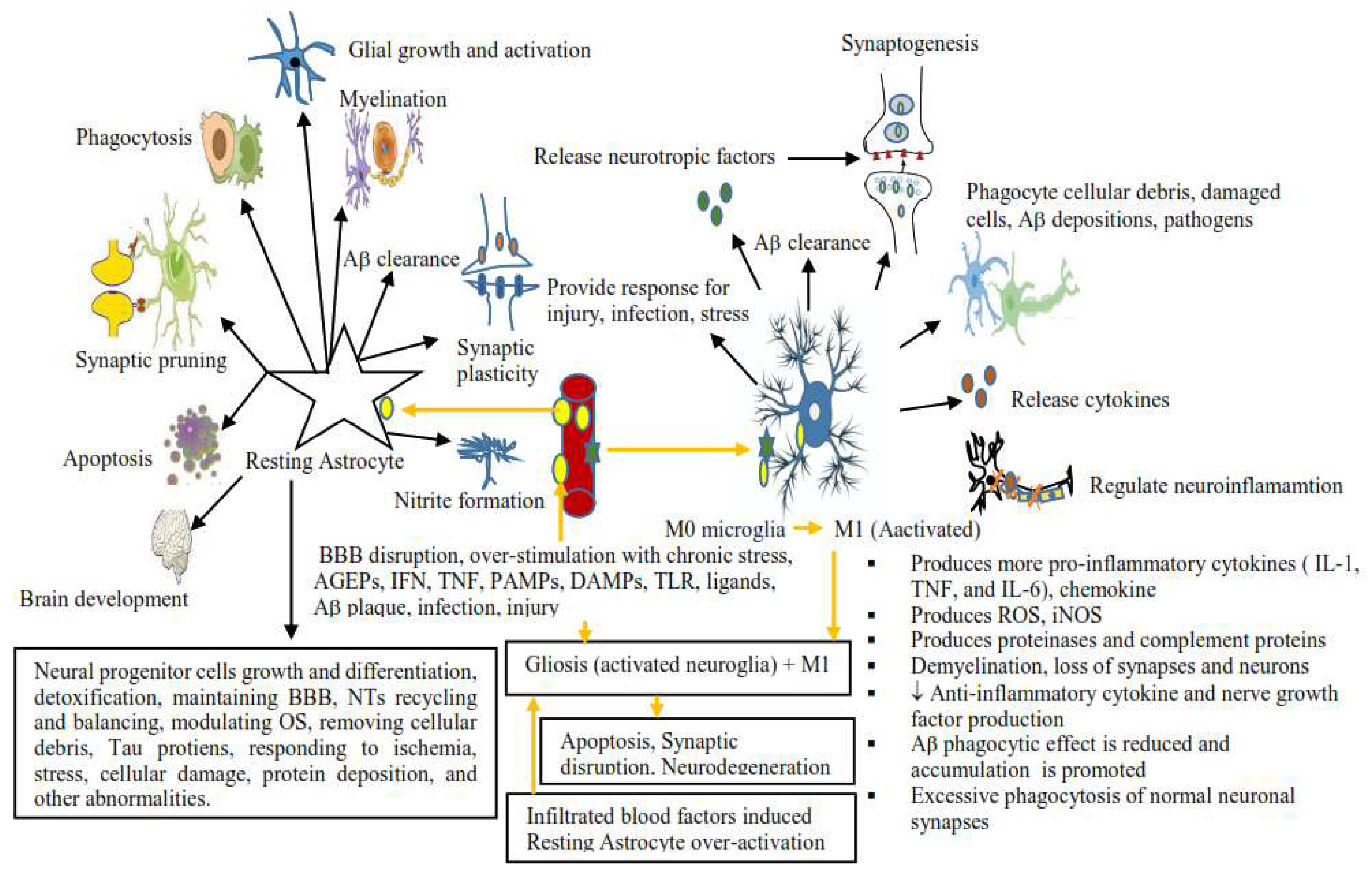
Figure 2.
Multidirectional Linkage between Aβ Plaque, NFTs Formation, and Neuroglia Over-activation in Chronic Neuro-inflammation and AD Development. Aβ: Amyloid beta, AD: Alzheimer’s disease, APP: Amyloid precursor protein, BBB: Blood-brain barrier, NFTs: Neurofibrillary tangles, OS: Oxidative stress, ROS: Reactive oxygen species, Tau: Tubulin-associated Unit.
Figure 2.
Multidirectional Linkage between Aβ Plaque, NFTs Formation, and Neuroglia Over-activation in Chronic Neuro-inflammation and AD Development. Aβ: Amyloid beta, AD: Alzheimer’s disease, APP: Amyloid precursor protein, BBB: Blood-brain barrier, NFTs: Neurofibrillary tangles, OS: Oxidative stress, ROS: Reactive oxygen species, Tau: Tubulin-associated Unit.
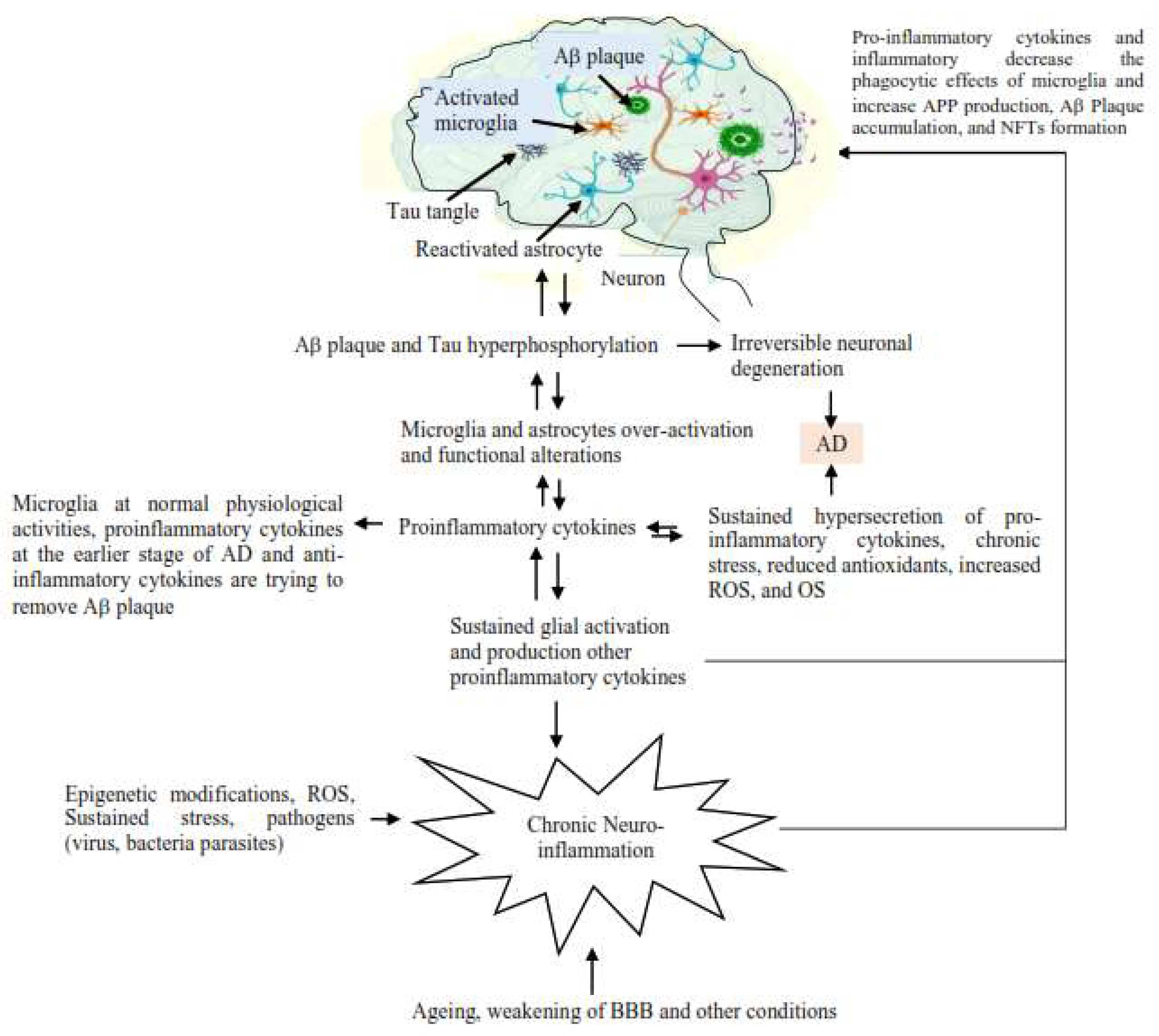
Figure 3.
Roles of TREM2 and CX3CR1 in the Aβ and Tau Proteins Phagocytosis Effects of Microglia.AD: Alzheimer’s disease, ADAM 17: a disintegrin metalloprotease 17, ADAM10: a disintegrin metalloprotease 10, BACE1: β-site APP cleaving enzyme 1, CX3CR1: Chemokine (C-X3-C motif) receptor 1, DAMPs: Damaged associated molecular patterns, IL: Interleukin, LPs: Lipopolysaccharides, oAβ: Oligomeized amyloid beta, OS: oxidative stress, PAMPs: Pathogen associated molecular patterns, sTREM-2: Soluble triggering receptor expressed on myeloid cells 2, TREM-2: Triggering receptor expressed on myeloid cells 2.
Figure 3.
Roles of TREM2 and CX3CR1 in the Aβ and Tau Proteins Phagocytosis Effects of Microglia.AD: Alzheimer’s disease, ADAM 17: a disintegrin metalloprotease 17, ADAM10: a disintegrin metalloprotease 10, BACE1: β-site APP cleaving enzyme 1, CX3CR1: Chemokine (C-X3-C motif) receptor 1, DAMPs: Damaged associated molecular patterns, IL: Interleukin, LPs: Lipopolysaccharides, oAβ: Oligomeized amyloid beta, OS: oxidative stress, PAMPs: Pathogen associated molecular patterns, sTREM-2: Soluble triggering receptor expressed on myeloid cells 2, TREM-2: Triggering receptor expressed on myeloid cells 2.
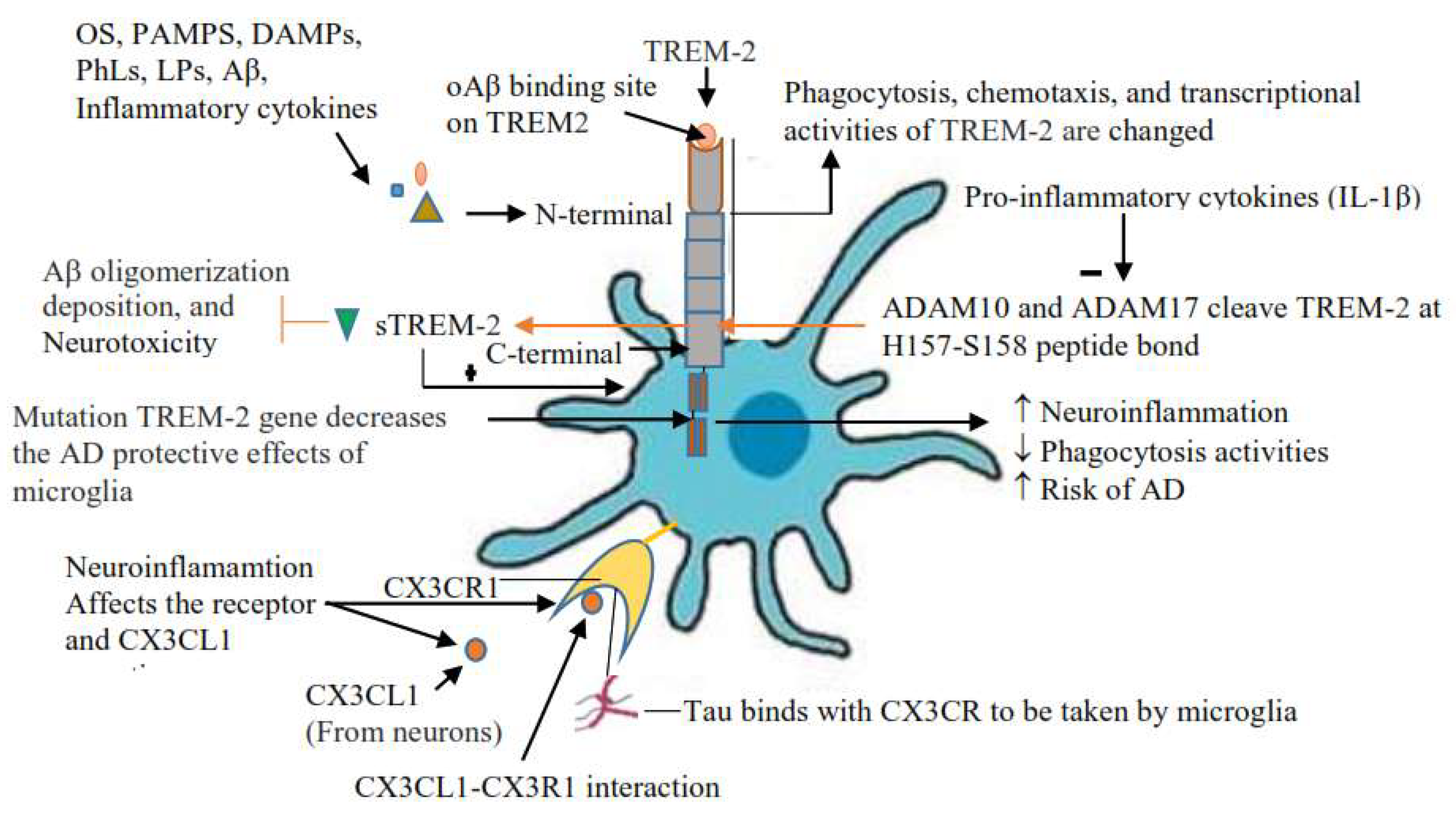
Figure 4.
Roles of Oxidative Stress in the AD Pathogenesis. Oxidative stress uses different mechanisms in the Aβ and NFTs formation, which causes AD. AD: Alzheimer’s disease, Aβ: Amyloid beta, APP: Amyloid precursor protein, CU: Copper, Fe: Iron, NFTs: neurofibrillary tangles, Tau: Tubulin associated unit, UV: ultraviolet, and Zn: Zinc.
Figure 4.
Roles of Oxidative Stress in the AD Pathogenesis. Oxidative stress uses different mechanisms in the Aβ and NFTs formation, which causes AD. AD: Alzheimer’s disease, Aβ: Amyloid beta, APP: Amyloid precursor protein, CU: Copper, Fe: Iron, NFTs: neurofibrillary tangles, Tau: Tubulin associated unit, UV: ultraviolet, and Zn: Zinc.
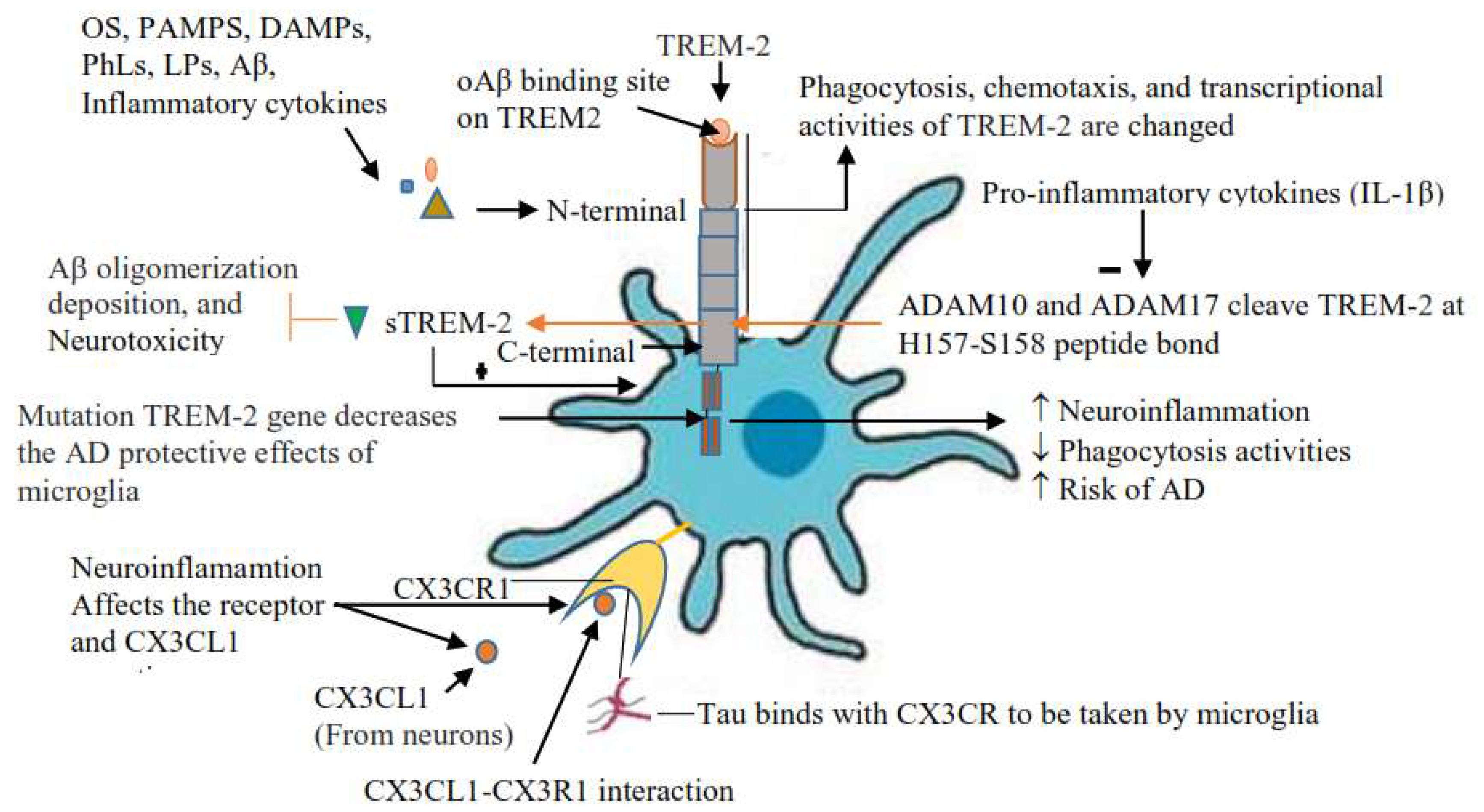
Figure 5.
Neuronal hyperactivity-induced neuroplasticity and cognition Impairments. Aβ: Amyloid beta, AD: Alzheimer’s disease, AMPAR:α-amino-3-hydroxy-5-methyl-4-isoxazole propionic acid receptor, APP: Amyloid precursor protein, EAAT: Excitatory amino acid transporters, EC: Extracellular, Glut: Glutamate, Hip: Hippocampus, LRP1: Low-density lipoprotein receptor-related protein 1, LTP: Long-term potentiation, NFT: neurofibrillary tangle, NMDAR: N-methyl- D-Aspartate receptor, RNS: Reactive nitrogen species, ROS: Reactive oxygen species, VGCC: Voltage-gated calcium channel.
Figure 5.
Neuronal hyperactivity-induced neuroplasticity and cognition Impairments. Aβ: Amyloid beta, AD: Alzheimer’s disease, AMPAR:α-amino-3-hydroxy-5-methyl-4-isoxazole propionic acid receptor, APP: Amyloid precursor protein, EAAT: Excitatory amino acid transporters, EC: Extracellular, Glut: Glutamate, Hip: Hippocampus, LRP1: Low-density lipoprotein receptor-related protein 1, LTP: Long-term potentiation, NFT: neurofibrillary tangle, NMDAR: N-methyl- D-Aspartate receptor, RNS: Reactive nitrogen species, ROS: Reactive oxygen species, VGCC: Voltage-gated calcium channel.
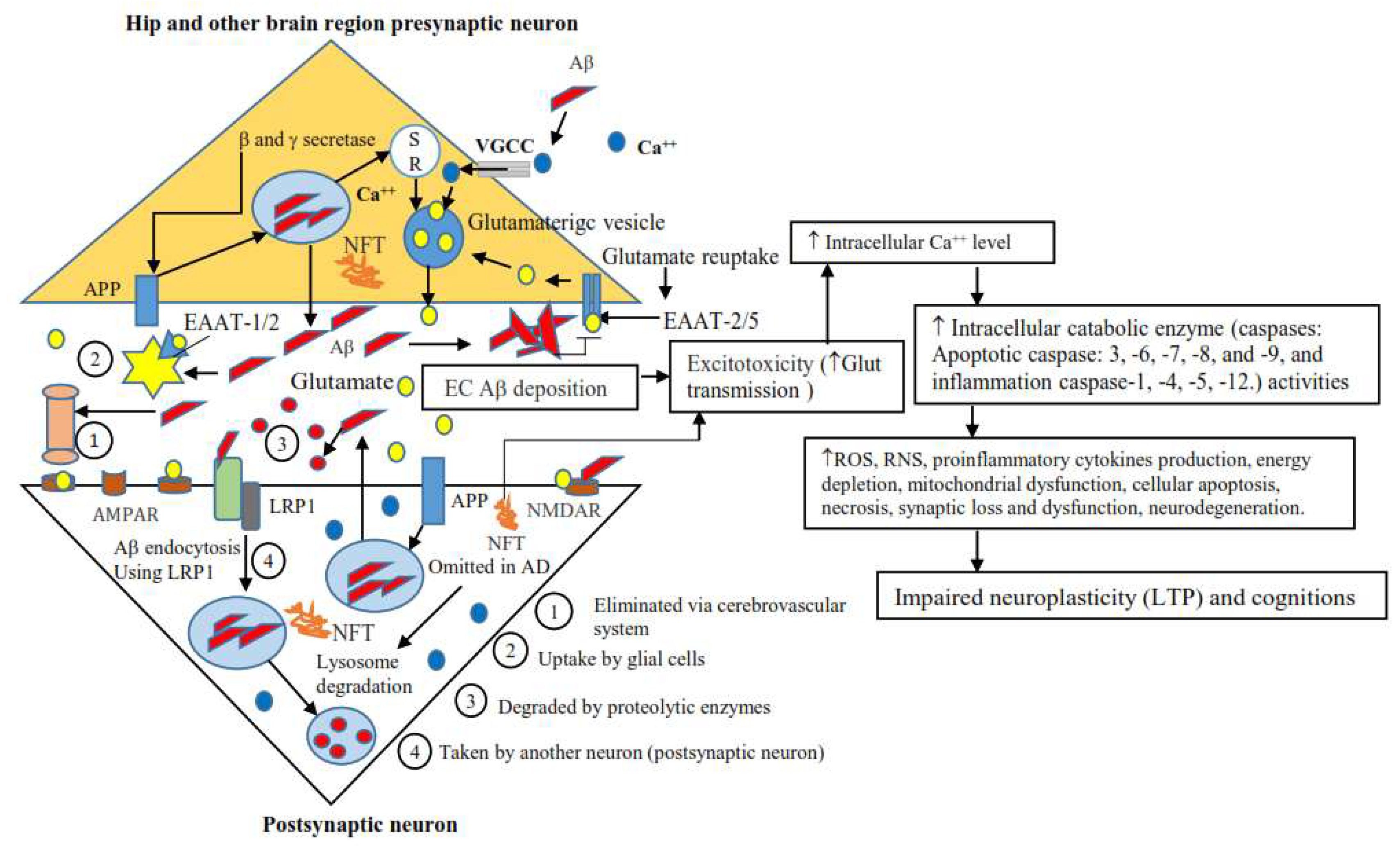
Figure 7.
Roles of Diets and their Mechanisms in AD Development. Diets affect oxidative stress and inflammatory responses, ROS production, and finally affect Tau hyperphosphorylation, amyloid-beta accumulation, and neuronal deaths though they modify the effects of AD risk genes and other conditions. CAT: Catalase, CRP: C-reactive protein, DAGEPs: Dietary advanced end products, GSH-pX: Glutathione peroxidase, IL: Interleukin, OS: Oxidative stress, ROS: Reactive oxygen species, SOD: Superoxide dismutase and TNF: Tumor necrosis factor.
Figure 7.
Roles of Diets and their Mechanisms in AD Development. Diets affect oxidative stress and inflammatory responses, ROS production, and finally affect Tau hyperphosphorylation, amyloid-beta accumulation, and neuronal deaths though they modify the effects of AD risk genes and other conditions. CAT: Catalase, CRP: C-reactive protein, DAGEPs: Dietary advanced end products, GSH-pX: Glutathione peroxidase, IL: Interleukin, OS: Oxidative stress, ROS: Reactive oxygen species, SOD: Superoxide dismutase and TNF: Tumor necrosis factor.
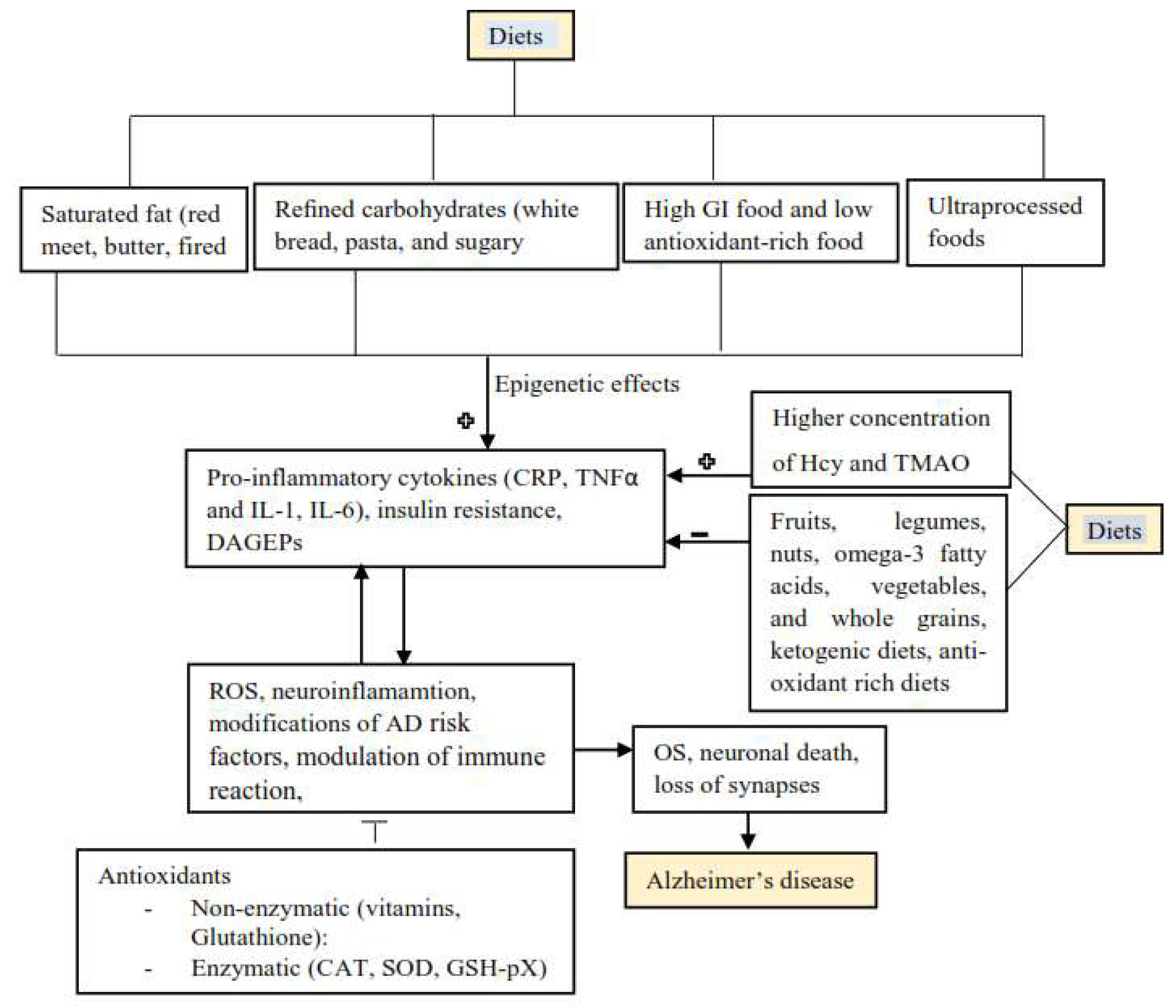
Figure 8.
Mechanism of Actions of Honey in AD Development and Progression. Honey uses its different effects on conditions involved in the pathogenesis of AD. AChE: Acetylcholinesterase, Aβ: amyloid beta, BACE1: β-site APP cleaving enzyme, CAT: Catalase, COX-2: Cyclooxygenase-2, 5-HT; Five hydroxyl tryptophan, GSH: Glutathione, HO-1: Heme oxygenase-1, IL: Interleukin, INFγ: Interferon-gamma, L-DOPA: L-3,4-dihydroxyphenylalanine, MD: mitochondrial dysfunction, Mel: melatonin, Nrf2: Nuclear factor erythroid 2-related factor 2, NTs: Neruotransmetters, ROS: reactive oxygen species, SOD: superoxide dismutase, Tau: Tubulin associated unit, TLR: Toll-like receptor, and Vit: Vitamin.
Figure 8.
Mechanism of Actions of Honey in AD Development and Progression. Honey uses its different effects on conditions involved in the pathogenesis of AD. AChE: Acetylcholinesterase, Aβ: amyloid beta, BACE1: β-site APP cleaving enzyme, CAT: Catalase, COX-2: Cyclooxygenase-2, 5-HT; Five hydroxyl tryptophan, GSH: Glutathione, HO-1: Heme oxygenase-1, IL: Interleukin, INFγ: Interferon-gamma, L-DOPA: L-3,4-dihydroxyphenylalanine, MD: mitochondrial dysfunction, Mel: melatonin, Nrf2: Nuclear factor erythroid 2-related factor 2, NTs: Neruotransmetters, ROS: reactive oxygen species, SOD: superoxide dismutase, Tau: Tubulin associated unit, TLR: Toll-like receptor, and Vit: Vitamin.
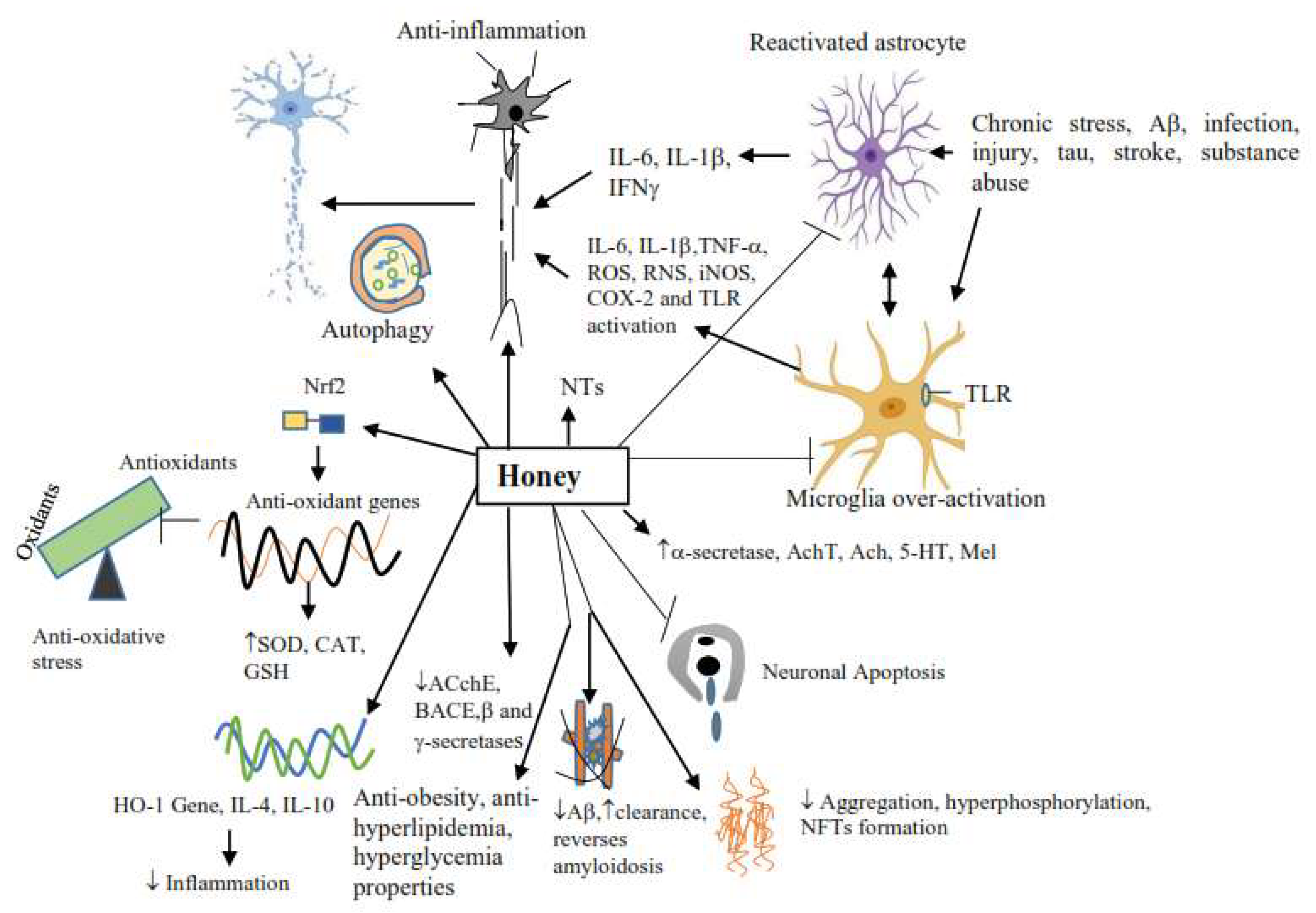
Figure 9.
Summary of Amyloid precursor protein processing and amyloid-beta plaque and NFTS formation and factors involved. a disintegrin metalloproteinase 10 (ADAM10), Aβ: Amyloid beta, AICD: AβPP intracellular domain, AD: Alzheimer’s disease, APP: Amyloid precursor protein, CTF: C-terminal fragmentβ, FRs: Free radicals, hAPP: Human amyloid precursor protein, HPR: Hyperphosphorylation, IL: Interleukin, Ki: Kinase, MAP1: Microtubule-associated protein-1, MC: Mitochondria, MD: Mitochondrial dysfunction, MTs: Microtubules, NFTs: Neurofibrillary tangles, OLBME: Overloaded biogenic metallic elements, OS: Oxidative stress, Phosp: Phosphatase, PRRs: Pattern recognition receptors, RNS: Reactive nitrogen species, ROS: Reactive oxygen species, sAPPβ: N-terminal soluble APPβ, SORL1: Sortilin-related receptor-one, Tau: Tubulin associated unit, TGF-β: Transforming growth factor-beta, TLRs: Toll-like receptors, TNFα: Tumor necrosis factor-alpha, TREM2: Triggering receptor expressed on myeloid cells.
Figure 9.
Summary of Amyloid precursor protein processing and amyloid-beta plaque and NFTS formation and factors involved. a disintegrin metalloproteinase 10 (ADAM10), Aβ: Amyloid beta, AICD: AβPP intracellular domain, AD: Alzheimer’s disease, APP: Amyloid precursor protein, CTF: C-terminal fragmentβ, FRs: Free radicals, hAPP: Human amyloid precursor protein, HPR: Hyperphosphorylation, IL: Interleukin, Ki: Kinase, MAP1: Microtubule-associated protein-1, MC: Mitochondria, MD: Mitochondrial dysfunction, MTs: Microtubules, NFTs: Neurofibrillary tangles, OLBME: Overloaded biogenic metallic elements, OS: Oxidative stress, Phosp: Phosphatase, PRRs: Pattern recognition receptors, RNS: Reactive nitrogen species, ROS: Reactive oxygen species, sAPPβ: N-terminal soluble APPβ, SORL1: Sortilin-related receptor-one, Tau: Tubulin associated unit, TGF-β: Transforming growth factor-beta, TLRs: Toll-like receptors, TNFα: Tumor necrosis factor-alpha, TREM2: Triggering receptor expressed on myeloid cells.
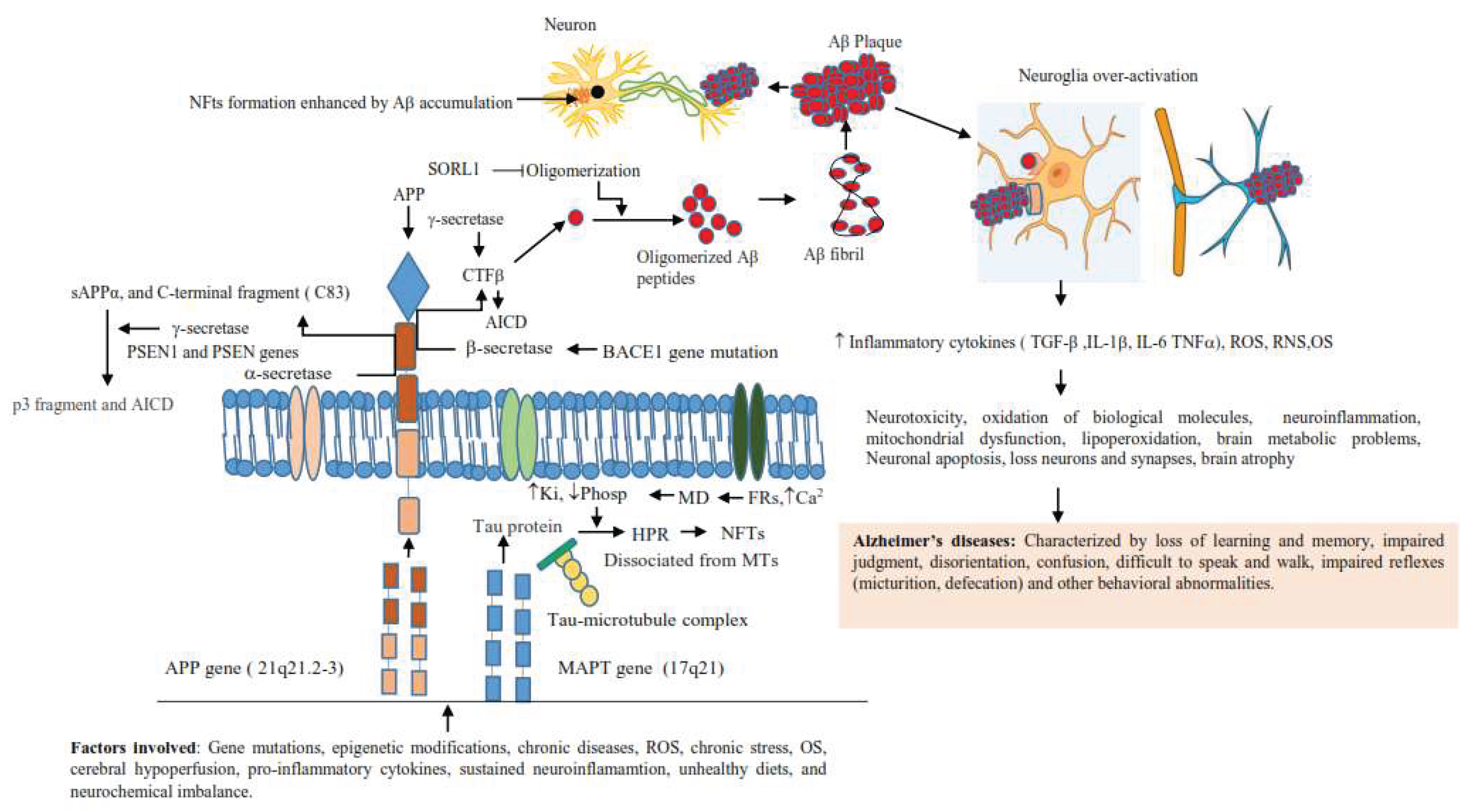
Table 1.
Stages and Manifestations of AD.
| Stage | Manifestations | Citation | |
|---|---|---|---|
| Preclinical | One | No memory loss, but PET imaging or CSF analysis identified amyloidosis in the entorhinal region and hippocampus. It is an asymptomatic phase and lasts for about 6–10 years before progressing to the clinical stages. Age, sex, Apo E status, and other factors determine the duration of this stage | [7,22,27,28] |
| Clinical Prodromal Dementia Mild Sever |
Two | In this stage, amyloidosis occurs in the entorhinal region, and the hippocampus is associated with forgetting names and misplacing objects. It is AD with VMML | [7,8,22] |
| Three | Amyloidosis spreads to more areas in the brain, including the temporal, frontal, and parietal cortices, cerebrovascular problems, increasing forgetfulness, loss of concentration, decreased work performance, getting lost, and difficulty in finding the right words for objects or places. It is AD with MCI | [8,22,27] | |
| Four | Significant impairment in individual, social, and occupational functioning, loss of independence to perform activities. Amyloidosis spreads to more areas of the brain, causing cerebrovascular problems, concentration difficulties, and forgetting recent events. It is AD with MD. | [7,27] | |
| Five | In this stage, amyloidosis spreads to the entire cortex, including sensory, motor, and other brain areas. Cerebrovascular problems and major memory deficiencies are also observed. Needing assistance, forgetting details like address or phone number, not knowing the time, and inability to know places are also manifested. It is AD with MSD | [27] | |
| Six | Neuritic plaques and NFTs are severely accumulated in the entire brain area. Forgetting names/family members, recent events, urine incontinence, difficulty in speaking and eating, anxiety, depression, and delusions are common. It is AD with SD | [24] | |
| Seven | The problem is getting more severe, characterized by the inability to speak or walk. Loss of motor skills (apraxia), perception (agnosia), and bladder reflex. It is nearing death and is AD with VSD | [13,24] | |
ApoE: Apolipoprotein E; CSF: Cerebrospinal fluid; MCI: Mild cognitive impairment; MD: Moderate dementia; MSD: Moderately severe dementia; NFTs: Neurofibrillary tangles; PET: Positron emission tomography; SD: Severe dementia; VMML: Very mild memory loss; VSD: Very severe dementia.
Disclaimer/Publisher’s Note: The statements, opinions and data contained in all publications are solely those of the individual author(s) and contributor(s) and not of MDPI and/or the editor(s). MDPI and/or the editor(s) disclaim responsibility for any injury to people or property resulting from any ideas, methods, instructions or products referred to in the content. |
© 2026 by the authors. Licensee MDPI, Basel, Switzerland. This article is an open access article distributed under the terms and conditions of the Creative Commons Attribution (CC BY) license (http://creativecommons.org/licenses/by/4.0/).
Copyright: This open access article is published under a Creative Commons CC BY 4.0 license, which permit the free download, distribution, and reuse, provided that the author and preprint are cited in any reuse.


