
Submitted:
05 March 2026
Posted:
05 March 2026
You are already at the latest version
Abstract
The mutually reinforcing synergy between the development of the new energy industry and comprehensive land remediation is crucial for integrating ecologically fragile areas into the national "dual carbon" goals and supporting regional high-quality development. Based on an analysis of the challenges and opportunities facing the new energy industry in ecologically fragile areas, as well as the mechanisms for mutual promotion between new energy industry development and land remediation, this paper explores pathways for comprehensive land remediation coordinated with new energy development. Drawing on local practices, it further distills five typical models. The results show that: 1) The development of the new energy industry in ecologically fragile areas faces multiple challenges, including a fragile ecological environment, inadequate infrastructure, a mismatch between resource supply and demand, and land use conflicts. Against the backdrop of the energy transition, breakthroughs in key technologies, and the guidance of territorial spatial planning, the value of wind and solar resources in these areas is becoming increasingly prominent, offering broad prospects for the new energy industry. 2) The development of the new energy industry and comprehensive land remediation in ecologically fragile areas are mutually reinforcing. Factors such as resource endowment, ecological (environmental) constraints, new quality productive forces, and investment and financing mechanisms interact and integrate, leading to differentiated pathways for synergy. 3) Based on the focus of new energy industry development and the primary objectives of remediation, five remediation models are identified: ecological restoration-led land reclamation model, resource development-led land consolidation model, industry collaboration-led land consolidation model, technology innovation-led land consolidation model and integrated development model. Each model has distinct priorities and applicable scenarios. This study will provide a reference for new energy development and sustainable development in ecologically fragile areas, including desertified and Gobi desert areas, coal mining subsidence areas, and areas rich in wind, solar, and hydro energy resources.
Keywords:
ecologically fragile areas
; comprehensive land remediation
; new energy industry
; "dual carbon" goals
; mechanism
; model
1. Introduction
The development of the new energy industry has become a major strategic decision for the global energy transition and the fight against climate change [1,2], representing a concrete measure to ensure national energy security and contribute to the goals of peaking carbon emissions and achieving carbon neutrality[3,4]. According to the Action Plan for Peaking Carbon Emissions Before 2030 (Guo Fa [2021] No. 23), the share of non-fossil energy in China’s primary energy consumption will reach around 25% by 2030. Furthermore, the Implementation Plan for Promoting the High-Quality Development of the New Energy Industry in the New Era, issued by the National Development and Reform Commission (NDRC) and the National Energy Administration (NEA) with the endorsement of the General Office of the State Council (Guo Ban Han [2022] No. 39), explicitly calls for innovating models for new energy development and utilization, securing the necessary spatial requirements for new energy expansion, and fully leveraging the ecological and environmental benefits of new energy. More recently, the Guiding Opinions on Vigorously Implementing Renewable Energy Substitution Actions (NDRC Energy [2024] No. 1537), issued by the NDRC and other departments, proposes promoting cross-sectoral integration between renewable energy and industries such as manufacturing, transportation, construction, agriculture, and forestry. It also encourages deep, multi-dimensional development models such as photovoltaic (PV) installations for desert control, PV corridors, and marine ranching. Ecologically fragile areas in China are predominantly located in the western region. They are characterized by extensive distribution, complex terrain, diverse types of fragile ecosystems, and abundant wind and solar resources. These areas typically experience arid climates, water scarcity, frequent natural disasters, and ecosystem degradation. However, they hold a strategically important position in national strategies concerning both ecological and energy security[5,6]. Against the backdrop of concurrent ecological civilization advancement and energy transition, the increasing value of wind and solar resources can provide new momentum for comprehensive land remediation in these ecologically fragile regions. Synthesizing the mechanisms and models of comprehensive land remediation that are coordinated with the development of the new energy industry is therefore of great significance for promoting the high-quality development of the new energy sector and optimizing the territorial spatial development and protection patterns in these vulnerable areas.
Amidst China’s high-quality, leapfrog development of the new energy sector, large-scale development, integration, and long-distance transmission of new energy have emerged as pivotal pathways for new energy construction[7]. Concurrent with the rapid expansion of the new energy industry, and considering the resource endowments, ecological characteristics, and unique industrial conditions of ecologically fragile areas, scholars are actively exploring comprehensive land remediation models that yield integrated benefits. For instance, Guo Caiyun et al. [8] systematically reviewed models implemented in the Kubuqi Desert, including combined vegetation-engineering sand control, integrated shelterbelt forest protection, and the photovoltaic (PV) industry. Sui Xin et al. [9] developed an “ecological PV” model tailored for vulnerable regions under the “dual carbon” goals by integrating an ecosystem process model with the InVEST benefit accounting model. Furthermore, the “PV + mine ecological restoration” model for energy-oriented mine site remediation helps alleviate land use constraints for PV development, restores abandoned mine lands, and achieves the dual benefits of carbon reduction and increased carbon sinks[10]. Synergistic models, such as the “PV + ecology + grass-animal husbandry” symbiosis and the “enterprise + ecology + energy storage/energy-consuming industries” coordinated development model[11], provide robust support for enhancing grassland ecological functions and promoting efficient PV operations in the “Three-North” project area (a major shelterbelt forest program covering northern, northwest, and northeast China). With the increasing annual proportion of intermittent new energy in the total power capacity, establishing distributed multi-energy complementary systems within large power grids, developing new energy storage solutions, and advancing optimal control technologies for multi-power-source complementarity to facilitate new energy integration have become research hotspots[12]. Xiao Jianhua et al.[13] constructed an ecosphere structural model incorporating elements such as desert control, ecological restoration, rural revitalization, energy construction, and economic development, proposing a new model for the coordinated development of energy, economy, and environment in desert areas. Overall, domestic and international scholars have conducted research on the pathways and models for new energy development and comprehensive land remediation, yielding a set of exemplary case studies that offer valuable references for the synergistic development of new energy industries and land remediation in ecologically fragile areas. However, certain gaps remain: 1) While provinces like Qinghai and Inner Mongolia have implemented productive practices integrating new energy development and land remediation, a systematic analysis of the interaction mechanisms between the two is lacking. Existing models tend to be simple combinations of new energy projects with single remediation objectives, indicating a need for richer and more diversified approaches. 2) Current models often inadequately account for regional specificities, including new energy resource endowments, ecological-environmental complexity, socio-economic contexts, and technological applicability, significantly limiting their wider adoption and transferability. Therefore, in light of the new opportunities and demands for comprehensive land remediation in ecologically fragile areas, it is imperative to draw upon new perspectives on resources, industries, and spatial planning. Deepening the application of the “lucid waters and lush mountains are invaluable assets” philosophy is crucial for constructing mechanisms and models for comprehensive land remediation that are coordinated with new energy industry development, thereby fostering the synergistic advancement of both in these ecologically vulnerable regions.
2. Mechanisms for Mutual Promotion Between New Energy Industry Development and Comprehensive Land Remediation in Ecologically Fragile Areas
2.1. Challenges and Opportunities for New Energy Industry Development in Ecologically Fragile Areas
Most ecologically fragile areas in China feature flat terrain and abundant wind and solar resources, making them suitable for large-scale development of new energy sources such as wind and PV power, and positioning them as critical regions for both new energy industry expansion and ecological restoration[14]. However, these areas generally have a weak industrial base and limited local capacity for energy integration. Compounding this, the absence of dedicated spatial planning for new energy deployment, coupled with inadequate infrastructure for supporting power grids and energy storage[18], means that grid infrastructure lags behind the pace of installed capacity growth. This spatial mismatch between new energy supply and demand has led to inefficiencies in resource utilization, including some degree of curtailment of wind and solar power. Furthermore, most new energy sources are characterized by randomness, intermittency, and volatility, with low energy density, large land occupation, and dispersed distribution[15]. Given the inherent instability of ecosystems in these fragile areas, the construction of new energy bases can easily trigger issues such as land degradation and biodiversity loss[16,17], compounded by insufficient optimization of system operations[7]. Additionally, the siting of new energy projects has often been approached primarily from an energy utilization perspective, with limited integration with energy-intensive industries, agriculture, or forestry. This frequently leads to spatial conflicts with cultivated land protection and ecological red line regulations, subjecting new energy development to multiple constraints related to territorial space, ecological environment, and land use conflicts[18].
Currently, the advent of a green, low-carbon era centered on new energy presents broad prospects for industry development. As highlighted in the white paper China’s Energy Transition, the country has established a relatively complete industrial and supply chain for new energy sources like wind and PV power. Breakthroughs in key technologies, including smart grids and new distribution technologies, efficient and safe energy storage systems, ultra-high voltage (UHV) transmission, and carbon capture, utilization, and storage (CCUS)[19,20], have significantly enhanced the stability, resilience, and resource efficiency of new energy supply, while rapidly driving down costs. Concurrently, advancements in planning concepts, such as territorial space use regulation and the intensive and efficient utilization of land resources, coupled with technological progress, are fostering the integration of new energy resource development with energy-intensive industries, agriculture, forestry, and animal husbandry. This facilitates the full utilization of spatial resources and enables multi-dimensional development.
2.2. Interaction Mechanisms Between New Energy Industry Development and Comprehensive Land Remediation
Compared with traditional fossil energy sources, the resource elements of new energy sources such as wind and solar power, along with their development environments, exhibit significant spatiotemporal heterogeneity under the influence of factors including atmospheric circulation, solar radiation, and underlying surface conditions[17]. Therefore, based on regional territorial characteristics, resource endowments, and development realities, it is of considerable theoretical value and practical significance to carefully weigh the construction of new energy bases against ecological environment protection and restoration in ecologically fragile areas. This involves exploring comprehensive land remediation models that align with regional characteristics and are coordinated with new energy industry development, thereby enhancing the scale and quality of resource and product supply[6]. The development of the new energy industry and comprehensive land remediation in ecologically fragile areas are mutually reinforcing and interdependent. On one hand, ecologically fragile areas are not only important regions for new energy development but also key areas for land remediation and ecological governance. A sound ecological environment serves as the foundation for the efficient and sustainable operation of new energy bases. Consequently, when siting and planning new energy bases, full consideration must be given to the current state of regional ecosystems, with efforts to avoid ecologically sensitive areas wherever possible to minimize disturbance and impact on the ecological environment. During the construction and operational phases of new energy bases, systematic and holistic approaches to protection and restoration should be adopted. This involves deploying various remediation technologies in coordination to restore the ecological environment, optimize vegetation types and structure, and enhance ecosystem functions and stability. On the other hand, promoting the integrated development of the new energy industry with other sectors can, while fostering competitive industrial clusters and facilitating industrial transformation and upgrading, also provide financial support for regional comprehensive land remediation and ensure the sustained and stable operation of ecological restoration projects. This helps address challenges such as excessive reliance on state financial investment and the limited comprehensive benefits often associated with land remediation efforts[21], thereby achieving a virtuous interaction between the new energy industry and comprehensive land remediation.
2.3. Coordinated Pathways for New Energy Industry Development and Comprehensive Land Remediation
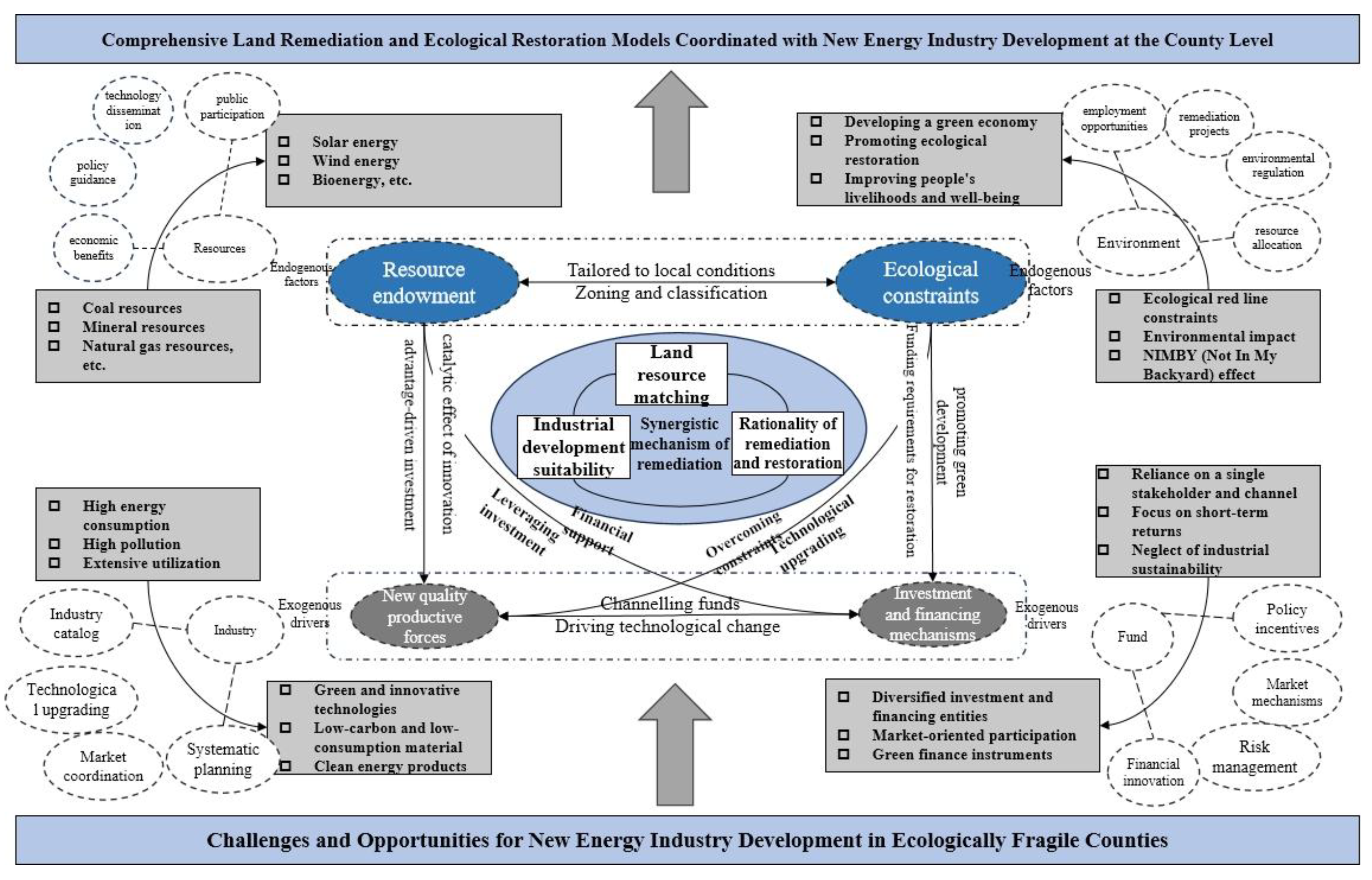
The core logic underlying the coordinated pathways for new energy industry development and comprehensive land remediation lies in treating resource endowment and ecological constraints as the endogenous foundation, and new quality productive forces and investment and financing mechanisms as exogenous drivers. By systematically coupling these four categories of elements, a sustainable paradigm can be constructed for ecologically fragile areas, one that “uses energy development to finance ecological restoration while enabling land remediation to support industrial implementation” (Figure 1). Specifically, resource endowment determines the development potential and industrial scale of new energy in a given region; the abundance and spatial distribution of resources such as wind and solar directly define the siting and sequencing of base construction, enabling land remediation to allocate land elements precisely around energy corridors. Ecological constraints, meanwhile, delineate development boundaries and remediation pathways, compelling new energy siting to be deeply integrated with ecological carrying capacity assessments and environmental access permitting lists. This has promoted the adoption of spatially integrated remediation models such as “photovoltaics + desert control” and “wind power + soil improvement” as mainstream approaches[22]. New quality productive forces achieve breakthroughs in remediation efficacy through technological advancement, transforming new energy facilities from “environmental disturbance sources” into “ecological restoration carriers.” Green finance instruments, through financial innovation, market mechanisms, and policy incentives, create pathways for value conversion. This enables ecologically fragile areas to reduce their dependence on fiscal transfers. An endogenous cycle of “remediation investment, energy output, asset appreciation, and reinvestment” is thereby formed, leading to a win-win scenario for ecological protection and energy development[23].
3. Typical Models of Comprehensive Land Remediation Coordinated with New Energy Industry Development
Based on an analysis of the interaction mechanisms and practical experiences of new energy industry development and land remediation in ecologically fragile areas, this study identifies five typical models of coordinated remediation. These are classified according to the primary objectives of new energy development and the dominant remediation goals: ecologically oriented, resource-development oriented, industry-synergy oriented, technological-innovation oriented, and integrated development oriented.
3.1. Ecological Restoration-Led Land Reclamation Model
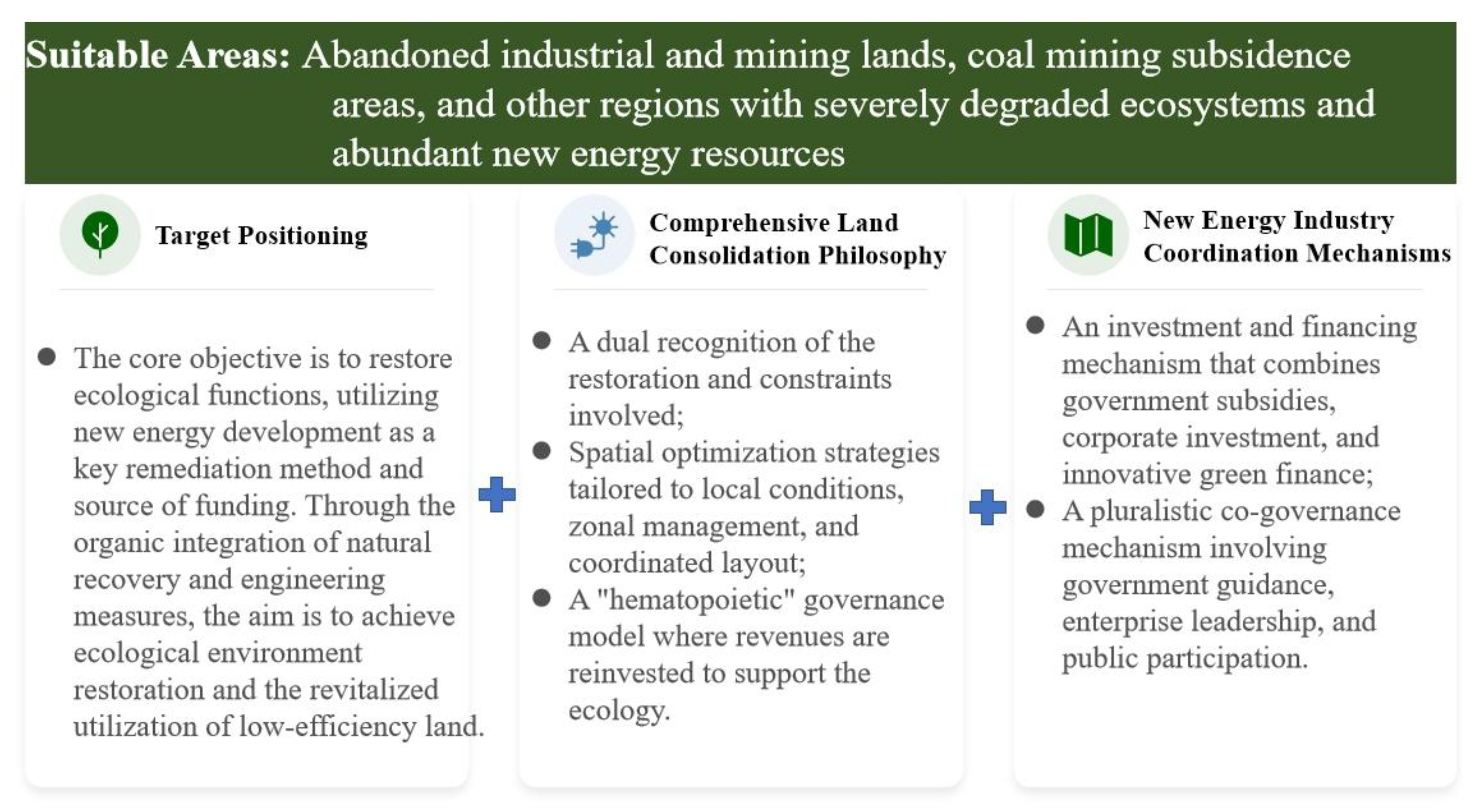
The ecological restoration-led land reclamation model primarily targets areas with severely degraded ecosystems yet relatively superior new energy resource endowments, such as abandoned industrial and mining lands and coal mining subsidence areas. Its core objective is to restore regional ecological functions, utilizing new energy development as both a key remediation measure and a funding source. Through the organic integration of natural recovery and engineering interventions, this model aims to remediate and restore fragile ecological environments while revitalizing underutilized land. This approach treats the vulnerable ecological baseline simultaneously as the object of restoration and a constraining condition. Grounded in resource endowment and underpinned by innovative investment and financing mechanisms, it channels a portion of the economic returns from new energy development into supplementary funding for comprehensive land remediation. Spatially, based on the principle of “implementing measures tailored to local conditions and zoning remediation,” wind power and photovoltaic facilities are strategically sited and developed in coordination with vegetation restoration, soil and water conservation, and other engineering measures to achieve the goals of restoring degraded ecosystems and improving habitat quality. Furthermore, a multi-stakeholder governance mechanism characterized by “government guidance, enterprise leadership, and public participation” is refined, with funding channels for restoration expanded through mechanisms such as reinvestment of ecological asset returns. For instance, in coal mining subsidence areas such as Datong in Shanxi Province and Wuhai in Inner Mongolia, comprehensive land remediation has been systematically implemented to address issues including land collapse and fragmentation, poor soil and water conservation capacity, and ecological degradation, thereby restoring fragile ecosystems. Concurrently, based on resource endowment, new energy bases are sited in geologically stable areas rich in new energy resources. A portion of the revenues generated from new energy is then continuously reinvested to advance comprehensive land remediation, achieving synergistic gains for both ecology and the economy[24,25].
Figure 2.
Ecological restoration-led land reclamation model.
3.2. Resource Development-Led Land Consolidation Model
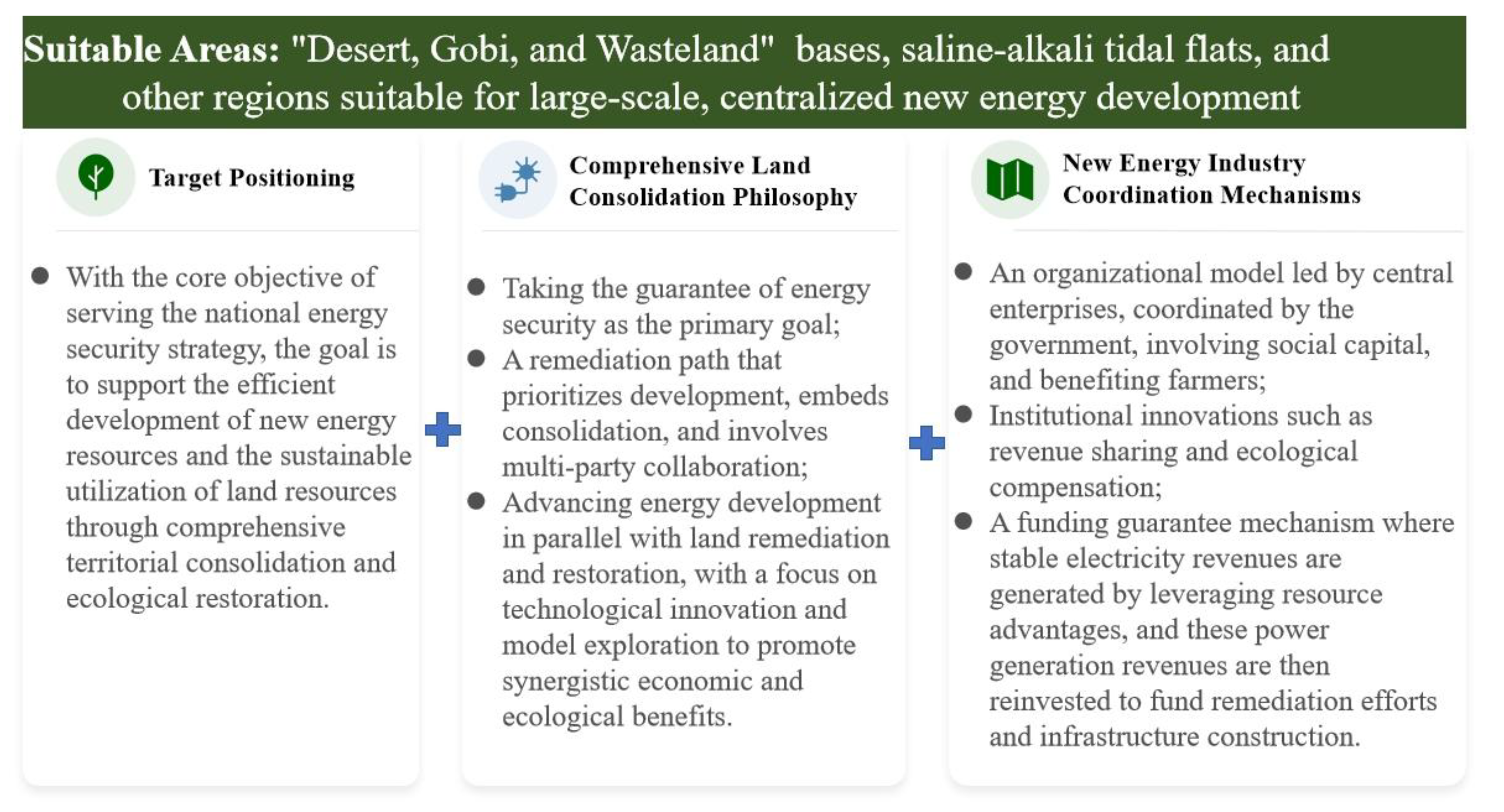
The resource Development-led land consolidation model primarily targets areas with abundant new energy resources, vast land areas, and relatively strong ecological environment carrying capacity, such as “desertified, Gobi, and barren land” bases and saline-alkali tidal flats. Centered on serving the national energy security strategy, this model focuses on the efficient utilization of new energy resources and land assets. Through large-scale, centralized development of wind and solar power, it creates opportunities for regional land remediation and ecological restoration, establishing a remediation framework characterized by “development prioritization, remediation integration, and multi-stakeholder collaboration.” In terms of spatial governance, the construction of new energy facilities is integrated with regional ecological management projects. Technological innovations and process improvements are leveraged to optimize microclimatic conditions, curb land degradation, and enhance land use efficiency through multi-functional utilization[26]. Regarding institutional design, mechanisms such as ecological compensation and benefit-sharing are established to foster a multi-stakeholder collaboration pathway involving central enterprises taking the lead, local governments providing support, social capital participating, and rural communities benefiting. Relying on national-level energy projects or policy support for “desertified, Gobi, and barren land” remediation, institutional innovations drive a transition from resource endowment-driven approaches toward coordinated institution-mechanism frameworks, ensuring orderly and standardized remediation processes. In terms of funding sources, the advantages of new energy resources solidify the economic foundation for remediation implementation, while the stable electricity revenues from new energy projects provide long-term financial support for ecological governance and public service improvements. For example, Qinghai Province has seized the national opportunity to construct large-scale new energy bases in desertified, Gobi, and barren lands, vigorously promoting centralized photovoltaic base construction to establish clean energy hubs[27]. It has actively explored three-dimensional land utilization models such as “power generation on panels, grass planting under panels, and grazing among grass,” effectively mitigating wind erosion while enhancing grassland productivity. Revenues generated from photovoltaic power are reinvested in grassland restoration and infrastructure development, giving rise to a remediation organization mechanism characterized by “enterprise investment, local government coordination, and public participation.” Furthermore, in areas abundant in both fossil fuels and new energy resources, new models for coordinated development are being explored through integrated multi-energy complementarity combining mining, wind/solar power, thermal power, and energy storage.
Figure 3.
Resource development-led land consolidation model.
3.3. Industry Collaboration-Led Land Consolidation Model
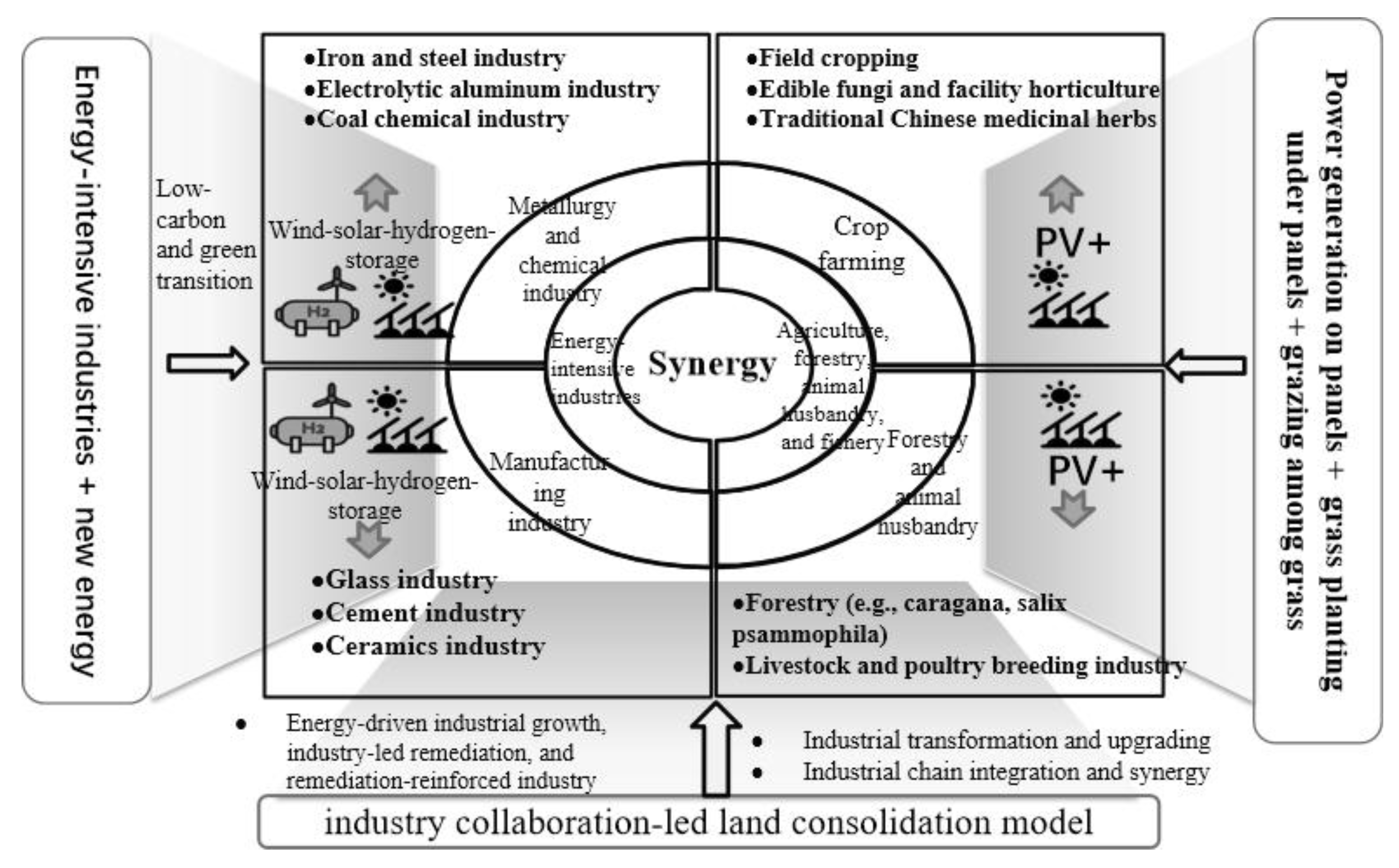
The industry collaboration-led land consolidation model primarily targets regions with relatively robust industrial foundations, urgent transition needs, and abundant new energy resources. Through the organic integration of new energy development with energy-intensive industries, agriculture, forestry, animal husbandry, and fisheries, this model promotes the extension of regional industrial chains, elevation of value chains, and functional restructuring of spatial configurations, thereby achieving the objectives of “using energy to promote industry, leveraging industry to drive remediation, and strengthening industry through remediation.” This approach employs new energy development as a means, with industrial transformation and upgrading as the core objective. Through industrial planning led by local governments and the extension and restructuring of the entire new energy industrial chain, it achieves dual economic and ecological gains. The model’s emphasis lies in precise industrial chain construction and scientific spatial layout. Taking resource endowment and ecological carrying capacity as primary constraints, it coordinates the spatial configuration of wind and solar resources with traditional industries, strengthening spatial support while ensuring ecological red lines are not breached. Supported by new quality productive forces and investment and financing mechanisms, it introduces low-carbon technologies and green finance instruments to establish a paradigm for coordinated industry-energy-land development. For instance, in provinces and autonomous regions such as Inner Mongolia and Qinghai, areas endowed with abundant mineral resources, well-developed infrastructure, concentrated metallurgical and processing industries, and rich wind, solar, hydrogen, and energy storage resources, dedicated green power supply networks have been planned and constructed to meet the green electricity demands of energy-intensive industries such as steel and electrolytic aluminum[28],promoting the coordinated development of “new energy + energy-intensive industries.” In locations like Ningdong, Ningxia, green hydrogen production projects utilizing wind and solar power have been implemented to integrate renewable hydrogen into synthetic ammonia production lines within the modern coal chemical industry, achieving green substitution of chemical feedstocks[29] and enabling large-scale application of new energy in local energy-intensive industries. Furthermore, various regions are actively exploring the integration of new energy with agriculture, forestry, animal husbandry, and fisheries, forming distinctive models such as “agrivoltaics” and “pastoral photovoltaics.” These approaches expand the singular new energy industry into a composite industrial ecosystem integrating agriculture, forestry, animal husbandry, and solar power generation.
Figure 4.
Industry collaboration-led land consolidation model.
3.4. Technology Innovation-Led Land Consolidation Model
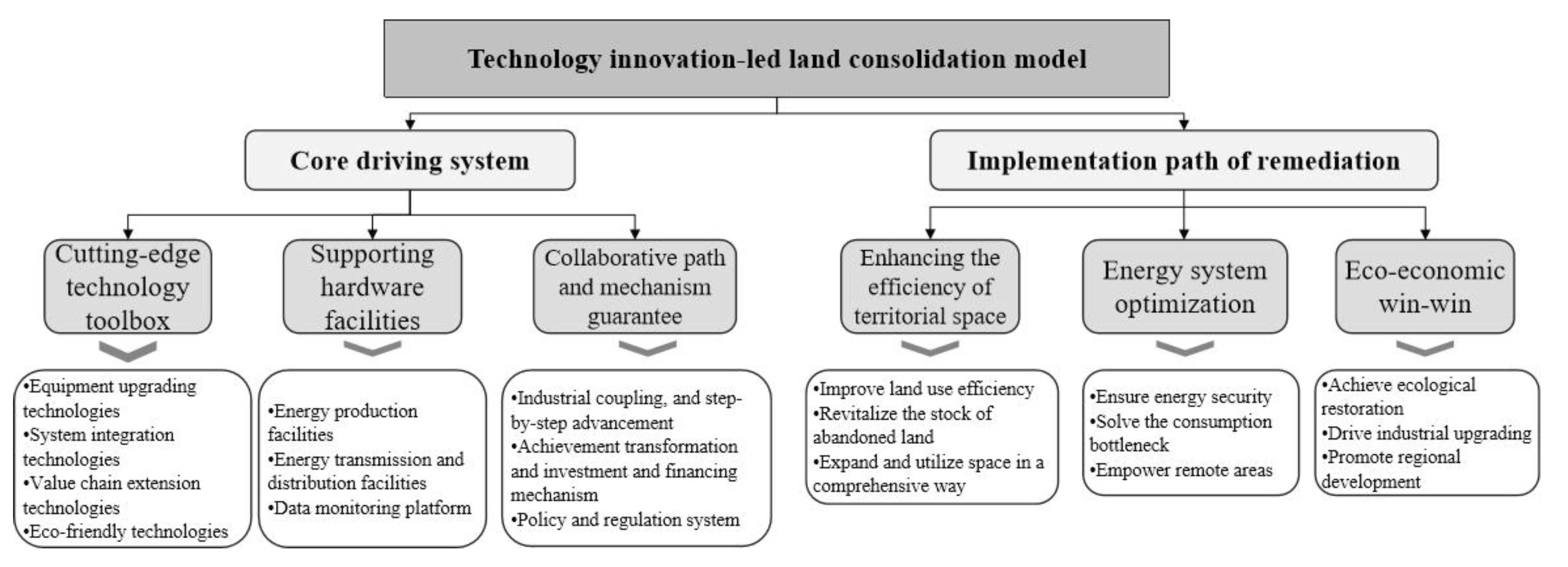
The technology innovation-led land consolidation model primarily targets two types of regions. The first encompasses areas with complex topographical and geomorphological conditions, extreme and variable climates, and frequent geological disasters—such as southwestern Sichuan and southeastern Xizang—where high-altitude photovoltaic technologies are needed to overcome natural environmental constraints. The second includes energy-rich regions with limited local absorption capacity, such as the desertified, Gobi, and barren lands in northwest China or areas with high new energy installation rates. Guided by breakthroughs in new energy technologies, this model focuses on key dimensions including equipment intelligence, technological sophistication, smart supervision, and industrial ecologization, systematically addressing challenges related to energy development, cross-regional transmission, and consumption. The core characteristic is the “reconfiguration of multiple elements centered on technology”. Specifically, equipment upgrades such as larger and lighter wind turbines and high-efficiency photovoltaic modules directly reduce land occupation, while derivative models such as “photovoltaic/wind power/hydrogen + energy storage”[30] and “photovoltaic + microgrid”[31] transform energy development activities into processes of land value recreation. Consequently, the focus of remediation shifts from traditional land leveling toward the reshaping of territorial spatial functions through technological mediation [32]. In terms of spatial layout, low-disturbance technologies such as screw pile foundations and slope-adaptive siting are emphasized to achieve intensive, efficient land utilization and three-dimensional composite development. Regarding energy system construction, efforts focus on developing integrated energy hubs and cultivating “green power+” industrial chains, promoting self-consistent energy systems and value chain extension. From an ecological asset perspective, full life-cycle environmental management is implemented, with development actively contributing to ecological restoration. On marginal lands such as deserts, Gobi, and mining subsidence areas, new energy bases characterized by high efficiency, high added value, and low environmental impact are constructed. Within this model, new quality productive forces and investment and financing mechanisms jointly constitute critical support for land remediation[33], primarily manifested through technology adaptation and remediation adaptability design under constrained conditions. For instance, drawing on cases such as the “hydro-wind-solar-storage” multi-energy complementary integration optimization in Hainan Prefecture, Qinghai Province, and the “green power + green hydrogen” coupling project at the Ningdong Energy and Chemical Industry Base in Ningxia [29], new quality productive forces including ultra-high voltage transmission, large-scale energy storage, and hydrogen production through water electrolysis utilizing curtailed wind and solar power [34,35] have effectively addressed bottlenecks in local conversion, efficient storage, and long-distance transmission of new energy.
Figure 5.
Technology innovation-led land consolidation model.
3.5. Integrated Development Model
The integrated development model primarily targets regions where ecological restoration and new energy development are equally imperative, such as the soil erosion areas in the upper and middle reaches of the Yellow River, the ecological barrier zones along rivers in southwestern China, and the upper reaches of the Yangtze River. These areas are characterized by moderate new energy resource endowments, relatively high ecological sensitivity, and diverse industry types. This model can be regarded as an effective integration of the four preceding models. By coordinating regional resource endowments, ecological constraints, and industrial foundations, and supported by new technologies, it synergistically advances energy development, land remediation, ecological protection, and industrial development. This achieves the coupling and utilization of multi-functional spaces, multi-stakeholder collaborative governance in remediation, and the multi-dimensional extension and transformation of comprehensive benefits[36,37]. The remediation focus lies in coordinating the implementation of new energy base construction with agricultural space integration, ecological restoration, and functional enhancement through the aligned deployment of rural revitalization, regional development planning, and new energy projects, thereby maximizing the systemic benefits of land remediation. In terms of organizational models, an enterprise-led approach under government guidance, combined with market-oriented operations and broad social capital participation, establishes a multi-stakeholder collaborative framework for investment, financing, and project operation. Resource endowment and ecological constraints serve as preconditions ensuring spatial coordination and functional alignment, while new quality productive forces and investment and financing mechanisms provide the driving force.
4. Conclusion and Discussion
In the process of developing new energy industries in China’s ecologically fragile areas, multiple challenges have emerged, including a fragile ecological environment, inadequate infrastructure, a mismatch between resource supply and demand, and land use conflicts. However, with the advancement of the “dual carbon” goals and continuous breakthroughs in key technologies, these ecologically fragile areas are poised to embrace broad development opportunities, with the value of new energy resources such as wind and solar becoming increasingly prominent. The development of the new energy industry and comprehensive land remediation are mutually reinforcing, with factors such as resource endowment, ecological (environmental) constraints, new quality productive forces, and investment and financing mechanisms interacting and integrating to form differentiated pathways for synergy.
Based on an analysis of concrete practices and classified according to the primary objectives of new energy development and the dominant remediation goals, five remediation models have been identified. Among these, the ecological restoration-led land reclamation model centers on ecological restoration, pursuing moderate new energy development on the basis of enhancing ecosystem quality and stability. The resource development-led land consolidation model aims to maximize the comprehensive benefits of regional resources such as wind, solar, and land. By regulating new energy enterprise access and land use standards, it achieves efficient development of new energy resources while essentially avoiding damage to—or even improving—the ecological environment. The industry collaboration-led land consolidation model is driven by existing or planned regional industrial chain demands, utilizing new energy development as a lever to undertake and extend industrial chains, thereby facilitating regional industrial transformation and upgrading. The technology innovation-led land consolidation model takes new quality productive forces as its core, leveraging land remediation to elevate the “development ceiling” of regional resources and the environment. The integrated development model, through the coordinated organization of factors including resource endowment, ecological (environmental) constraints, new quality productive forces, and investment and financing mechanisms, synergistically advances energy development, land remediation, and industrial development. In practice, local governments, tailoring approaches to their specific resource endowments, ecological baselines, and development stages, often apply a “packaged” combination of multiple models, forming a policy toolkit that balances the multidimensional objectives of energy development, ecological protection, and industrial advancement.
This study enhances the understanding of the synergistic mechanisms between the new energy industry and comprehensive land remediation. Based on an in-depth analysis of coordinated pathways involving resource endowment, ecological constraints, and investment and financing mechanisms, it proposes five differentiated remediation models. These provide valuable references for large-scale new energy development in ecologically fragile areas, including desertified, Gobi, and barren lands, coal mining subsidence areas, and regions rich in wind, solar, and hydro energy resources.
However, certain limitations remain. While the synergistic development pathways encompass core elements such as resource endowment, ecological baselines, technology, and investment and financing, quantitative assessments concerning the specification of different model pathways, the improvement of supporting policy systems, and social acceptance remain insufficient. Furthermore, this study is primarily based on theoretical analysis and typical case studies, lacking long-term monitoring of model implementation effects and feedback mechanisms. Future research could be strengthened in areas such as the optimization of synergistic pathways and models, comprehensive monitoring and effect evaluation of typical models, and multi-stakeholder coordination mechanisms. This would effectively support the coordinated advancement of new energy development and comprehensive land remediation in ecologically fragile areas.
Author Contributions
Conceptualization, Y.R. and Y.L.; methodology, Y.R., L.T. and Y.L.; data curation, L.T., Z.W., and L.Y.; writing – original draft, Y.R. and Z.W.; writing – review & editing, L.T. and Y.L.; investigation, Y.R., L.Y., and Z.W.; funding acquisition, Y.L. All authors have read and agreed to the published version of the manuscript.
Funding
This research was funded by the National Key Research and Development Program of China (2022YFC3802805).
Data Availability Statement
All data and materials are available upon request.
Acknowledgments
We would like to thank the reviewers for their thoughtful comments that helped improve the quality of this work.
Conflicts of Interest
The authors declare no conflicts of interest.
References
- Guo, J; Fast, V; Teri, P; et al. Integrating land-use and renewable energy planning decisions: A technical mapping guide for local government. ISPRS International Journal of Geo-Information 2020, 9, 324. [Google Scholar] [CrossRef]
- Ahmad, M; Zeeshan, M; Khan, J A. Life cycle multi-objective (geospatial, techno-economic, and environmental) feasibility and potential assessment of utility scale photovoltaic power plants. Energy Conversion and Management 2023, 291, 117260. [Google Scholar] [CrossRef]
- Chen, Q; Chi, H M; Ding, W; et al. Theory and strategies for vegetation conservation and ecological restoration in a large-scale photovoltaic power station in the southern Tengger Desert. Journal of Desert Research 2024, 44, 123–132. (in Chinese). [Google Scholar]
- Zou, C.; Chen, Y; Xiong, B.; et al. Mission of new energy under carbon neutrality goal in China. Bulletin of Chinese Academy of Sciences 2023, 38, 48–58. (in Chinese). [Google Scholar]
- Yan, J; Zhao, Y. Research hotspot and prospect of ecologically vulnerable area in China in the past three decades. Journal of Nanjing Normal University (Natural Science Edition) 2020, 43, 74–85. (in Chinese). [Google Scholar]
- Wang, C; Wu, X; Fu, B.; et al. Ecological restoration in the key ecologically vulnerable regions: Current situation and development direction. Acta Ecologica Sinica 2019, 39, 7333–7343. (in Chinese). [Google Scholar] [CrossRef]
- Zhang, W; Bai, K; Lu, Z.; et al. Analysis of the challenges and future morphological evolution of super large-scale renewable energy base. Journal of Global Energy Interconnection 2023, 6, 10–25. (in Chinese). [Google Scholar]
- Guo, C.; Han, Z.; Li, A.; et al. The typical models of ecological management and development and utilization in the Hobq Desert. Journal of Northwest Normal University (Natural Science) 2017, 53, 112–118. (in Chinese). [Google Scholar]
- Sui, X; Wei, Y; Luo, X.; et al. Emergence of a new pattern of ecological solar photovoltaics (Eco-PV) in ecologically fragile areas driven by carbon peak and neutrality targets in China. Acta Energiae Solaris Sinica 2022, 43, 56–63. (in Chinese). [Google Scholar]
- Zhong, R; Wang, J.; Xu, T.; et al. Assessment of carbon reduction and sink enhancement potential of photovoltaic + mining ecological restoration model. Chinese Journal of Applied Ecology 2024, 35, 1379–1387. (in Chinese). [Google Scholar]
- Liu, Y.; Yang, Q; Su, J.; et al. Analysis of coordinated development of photovoltaic power generation and “Three-North” project construction. Chinese Journal of Grassland 2024, 46, 122–129. (in Chinese). [Google Scholar]
- Jin, Y; Ma, J.; Zhu, S.; et al. Renewable energy development and multi-energy complementation, taking Qinghai as an example. Journal of Tsinghua University (Science and Technology) 2022, 62, 1357–1365. (in Chinese). [Google Scholar]
- Xiao, J.; Si, J.; Liu, C; et al. Concept, connotation and development model of desert energy ecosphere. Journal of Desert Research 2021, 41, 11–20. (in Chinese). [Google Scholar]
- Li, Y.; Kong, L. Developing solar and wind power generation technology to accelerate China’s energy transformation. Bulletin of Chinese Academy of Sciences 2019, 34, 426–433. (in Chinese). [Google Scholar]
- Yan, Q; Chen, Y.; Wang, A.; et al. Development obstacles of new energies in China and countermeasures: A review on global current situation. Acta Geoscientica Sinica 2010, 31, 759–767. (in Chinese). [Google Scholar]
- Chen, Y; Li, Y.; Wang, X.; et al. Risk and countermeasures of global change in ecologically vulnerable regions of China. Journal of Desert Research 2022, 42, 148–158. (in Chinese). [Google Scholar]
- Li, S.; Zhang, Y.; Wang, Z; et al. Some ideas on the development of new energy geography. Acta Scientiarum Naturalium Universitatis Pekinensis 2025, 1–19. (in Chinese). [Google Scholar]
- Liu, M. Land use dilemmas of implementing renewable energy development plans under the ‘dual carbon’ goals and their countermeasures. China Population, Resources and Environment 2022, 32, 21–30. (in Chinese). [Google Scholar]
- Chen, H.; Li, H; Xu, Y.; et al. Research progress on energy storage technology in 2024. Energy Storage Science and Technology 2025, 14, 2149–2192. (in Chinese). [Google Scholar]
- Zhao, T.; Liu, Q; Chen, Y.; et al. Development trend and prospect of green hydrogen production from renewable energy power generation. Acta Energiae Solaris Sinica 2025, 46, 39–48. (in Chinese). [Google Scholar]
- Xu, C.; Liu, W; Song, W; et al. Thoughts on differentially carrying out land ecological restoration. Journal of Natural Resources 2021, 36, 384–394. (in Chinese). [Google Scholar] [CrossRef]
- Wang, Y.; Wang, X.; Zhu, Z. Reflections on the evolutionary direction of new-quality productive forces, renewable energy, and national spatial planning: A discussion focused on wind and solar energy. Urban Planning Forum 2024, 1–9. (in Chinese). [Google Scholar]
- Yu, J.; Liu, S.; Shi, X.; et al. The theoretical logic, business model and experience enlightenment of enterprise participation in desertification control under the multi-governance model. Journal of Desert Research 2024, 44, 244–252. (in Chinese). [Google Scholar]
- Huang, P.; Yang, H.; Zhang, K; et al. Research on development of “PV + coal mining subsidence area” mode in China. Solar Energy 2024, 7–14. (in Chinese). [Google Scholar]
- Hu, Z.; Zhao, Y. Principle and technology of coordinated control of eco-environment of mining areas and river sediments in Yellow River watershed. Journal of China Coal Society 2022, 47, 438–448. (in Chinese). [Google Scholar]
- Li, S; Zhao, J.; Li, Z.; et al. Research progress on ecological impacts of photovoltaic systems in deserts, Gobi and desertification lands. Journal of Environmental Engineering Technology 2025, 15, 709–716. (in Chinese). [Google Scholar]
- Han, J. Unused land development expands new space for new energy industry: Taking Ningxia, Qinghai and Shaanxi as examples. China Land 2016, 44–45. (in Chinese). [Google Scholar]
- Zhang, L; Liu, Q; Zhao, X.; et al. Research on renewable energy penetration in wind and solar resource-intensive areas from the perspective of power demand growth and load flexibility enhancement. Global Energy Interconnection 2024, 7, 454–462. (in Chinese). [Google Scholar]
- National Energy Administration. China Hydrogen Industry Development Report (2025). 2025-04-30. (in Chinese).
- Zhang, C; Hu, P.; Yin, G.; et al. Comprehensive review and future trend outlook on energy utilization technologies in low-carbon energy systems. Strategic Study of CAE 2024, 26, 164–175. (in Chinese). [Google Scholar] [CrossRef]
- Liu, C; Zhuo, J.; Zhao, D.; et al. A review on the utilization of energy storage system for the flexible and safe operation of renewable energy microgrids. Proceedings of the CSEE 2020, 40, 1–18. (in Chinese). [Google Scholar]
- Institute for Carbon Neutrality, Tsinghua University. Technology outlook on wind and solar power toward China’s carbon neutrality goal. Beijing: Institute for Carbon Neutrality, Tsinghua University, 2024. (in Chinese).
- Shi, D; Shi, K. The role of new energy in developing new quality productivity. China Energy 2024, 46, 5–12. (in Chinese). [Google Scholar]
- Ren, S.; Bao, R.; Gao, Z. Arrival of distant power: The impact of ultra-high voltage transmission projects on energy structure in China. Energy 2025, 316, 134527. [Google Scholar] [CrossRef]
- Li, J.; Wei, Y.; Liu, L. Hydrogen production potential from wind power in China by 2060. Resources, Conservation and Recycling 2025, 222, 108492. [Google Scholar] [CrossRef]
- Song, C.; Guo, Z.; Liu, Z.; et al. Application of photovoltaics on different types of land in China: Opportunities, status and challenges. Renewable and Sustainable Energy Reviews 2024, 191, 114146. [Google Scholar] [CrossRef]
- Lyv, F.; Wu, J.; Yu, Z.; et al. Quantifying the potential triple benefits of photovoltaic energy development in reducing emissions, restoring ecological resource, and alleviating poverty in China. Resources, Conservation and Recycling 2025, 215, 108110. [Google Scholar]
Figure 1.
Coordinated pathways for new energy development and comprehensive land consolidation.
Disclaimer/Publisher’s Note: The statements, opinions and data contained in all publications are solely those of the individual author(s) and contributor(s) and not of MDPI and/or the editor(s). MDPI and/or the editor(s) disclaim responsibility for any injury to people or property resulting from any ideas, methods, instructions or products referred to in the content. |
© 2026 by the authors. Licensee MDPI, Basel, Switzerland. This article is an open access article distributed under the terms and conditions of the Creative Commons Attribution (CC BY) license (http://creativecommons.org/licenses/by/4.0/).
Copyright: This open access article is published under a Creative Commons CC BY 4.0 license, which permit the free download, distribution, and reuse, provided that the author and preprint are cited in any reuse.


