

Submitted:
26 February 2026
Posted:
04 March 2026
You are already at the latest version
Abstract
Africa faces the dual challenges of pervasive food and nutrition insecurity and the urgent need for climate-resilient, sustainable agricultural systems. Ensete ventricosum (enset), a perennial, drought-tolerant staple supporting over 20 million Ethiopians, possesses a rich but underexplored biochemical repertoire with potential to address both issues. However, a synthesis evaluating its composition through the integrated lenses of nutritional security and bioeconomic development is lacking.This systematic review synthesizes the biochemical knowledge of enset to assess its dual potential for enhancing food security and serving as a feedstock for a sustainable bioeconomy. Following PRISMA 2020 guidelines, we conducted a comprehensive search across six databases (PubMed, Web of Science, Scopus, AGRICOLA, CAB Abstracts, Google Scholar). From 1,152 screened records, 94 studies met the inclusion criteria for qualitative synthesis. Data were extracted and analyzed thematically across four domains: macronutrients, bioactive phytochemicals, structural carbohydrates, and fermentation biochemistry.The synthesis reveals enset as a versatile biochemical platform. Its corm provides high-amylose starch (25–35% amylose) offering low-glycemic calories and prebiotic resistant starch. However, low protein content necessitates dietary complementation. Significant levels of minerals (e.g., iron, calcium) and unique bioactive compounds (e.g., antifungal phenylphenalenones) are present, though antinutrients require careful processing. Crucially, the pseudostem is an exceptional source of glucomannan (50–70% dry weight), a high-value hydrocolloid, and cellulose-rich fiber ideal for nanocellulose. Traditional fermentation ensures safety but involves a trade-off, reducing resistant starch while improving mineral bioavailability.We conclude that an integrated biorefinery model, processing the corm for enhanced foods and the pseudostem for glucomannan and biomaterials, can simultaneously address nutritional gaps and create economic value. This reframes enset from a subsistence crop into a cornerstone of a circular bioeconomy. We identify critical research gaps. including the need for optimized extraction protocols, product safety studies, and techno-economic analysis, and propose a strategic, four-pillar roadmap for future R&D. Realizing this potential requires coordinated investment and interdisciplinary collaboration to transform enset’s biological promise into tangible security and prosperity for Ethiopia and a model for climate-resilient agriculture globally.
Keywords:
Ensete ventricosum
; food security
; biorefinery
; glucomannan
; resistant starch
; bioactive compounds
; fermentation
; climate resilience
; sustainable agriculture
; Africa
1. Introduction
1.1. The Dual Challenge: Nutritional Insecurity and Unsustainable Food Systems in Africa
Africa faces a formidable twin crisis: persistent undernutrition and micronutrient deficiencies coexist with a growing burden of diet-related non-communicable diseases (NCDs), against a backdrop of climate change that threatens the productivity of dominant cereal-based agricultural systems (FAO et al., 2023; IPCC, 2022). Current food systems are often characterized by a reliance on a narrow range of calorie-dense but nutrient-poor staples, low resilience to environmental shocks, and significant post-harvest losses, failing to deliver sustainable dietary quality for a growing population (Global Panel on Agriculture and Food Systems for Nutrition, 2020). This confluence of challenges necessitates an urgent paradigm shift towards diversified, climate-resilient, and nutrition-sensitive agriculture that leverages indigenous, underutilized crops (Padulosi et al., 2013; Dawson et al., 2019).
1.2. The Imperative for Climate-Resilient and Multipurpose Crops
In response to increasing climatic volatility, there is a global scientific and policy push to identify and develop crops that offer “multiple wins”: enhancing food and nutrition security, providing ecosystem services, and creating economic opportunities through bio-based value chains (Crews et al., 2018; Mbow et al., 2019). Perennial crops, in particular, offer advantages such as reduced soil erosion, improved water retention, and greater carbon sequestration compared to annual monocultures (Glover et al., 2010). However, the successful integration of such crops requires a deep understanding of their biochemical composition and functional properties to optimize them for both human nutrition and industrial applications, a knowledge gap for many so-called “orphan” or “neglected” species (Tadele, 2019; Mabhaudhi et al., 2019).
1.3. Enset (Ensete ventricosum): An Indigenous African Solution with Untapped Potential
Ensete ventricosum (Welw.) Cheesman, a large, perennial herbaceous monocot native to the Ethiopian highlands, stands out as a pre-adapted candidate to address these intertwined challenges. Domesticated over millennia, enset forms the cornerstone of a sophisticated indigenous agroforestry system that sustainably supports approximately 20 million people, earning it the epithet “the tree against hunger” (Brandt et al., 1997; Borrell et al., 2020). Its legendary resilience to drought, poor soils, and temperature fluctuations is well-documented ethnographically, but its biochemical basis is only recently being uncovered (Yemataw et al., 2018; Blomme et al., 2021). Unlike its botanical relative Musa spp. (banana), cultivated for fruit, enset is a vegetative starch staple, with its massive pseudostem and corm processed into fermented foods (kocho, bulla) that serve as dietary staples (Olango et al., 2014). Beyond food, enset has traditional uses in fiber production, medicine, and animal feed, hinting at a broader utility (Tsegaye & Struik, 2002).
1.4. The Knowledge Gap: Fragmented Biochemistry Lacks a Security and Bioeconomy Synthesis
While foundational studies have detailed aspects of enset’s agronomy and proximate composition (Bezuneh, 1980; Bosha et al., 2016), research on its biochemistry remains fragmented across specialized disciplines. Isolated studies have highlighted its high-amylose starch (Birmeta et al., 2019), unique soluble fibers like glucomannan (Gebre-Mariam et al., 1996; Birmeta et al., 2022), bioactive phenolic compounds (Forsido et al., 2013; Birhanu et al., 2023), and the microbiology of its fermentation (Birmeta et al., 2022). However, a systematic synthesis that evaluates this biochemical repertoire through the dual lenses of nutritional security (addressing macro/micronutrient needs, food safety) and sustainable bioeconomy (identifying extractable biopolymers and value-addition pathways) is critically absent. This lack of an integrated perspective limits the ability of researchers, policymakers, and investors to strategically harness enset’s full potential for Africa’s development agenda.
1.5. Aims and Scope of This Systematic Review
This systematic review, conducted according to PRISMA (Preferred Reporting Items for Systematic Reviews and Meta-Analyses) guidelines, aims to bridge this critical gap. We seek to synthesize and critically evaluate the current global body of peer-reviewed evidence on the biochemistry of Ensete ventricosum to answer the following interconnected questions:
- What is the nutritional and bioactive composition of different enset plant parts, and how do traditional and potential novel processing methods affect nutrient bioavailability and safety?
- What high-value functional biopolymers and compounds (e.g., glucomannan, starch, phenolics) does enset contain, and what are their proven or potential industrial and pharmaceutical applications?
- How can an integrated biorefinery or value-addition model be conceptualized to simultaneously address food security needs and create sustainable bioeconomic opportunities from enset?
By answering these questions, this review intends to move beyond a descriptive catalog of compounds. Its objective is to reframe enset as a versatile biochemical platform and to provide a consolidated evidence base and a clear roadmap for interdisciplinary research and development. This work is targeted at food scientists, nutritionists, agricultural economists, bio-entrepreneurs, and policymakers working towards resilient and sustainable food systems in Africa and beyond.
2. Methodology
2.1. Systematic Review Protocol and Registration
This review was conducted in strict accordance with the Preferred Reporting Items for Systematic Reviews and Meta-Analyses (PRISMA) 2020 statement (Page et al., 2021), ensuring transparency and reproducibility. The review protocol, outlining the research questions, search strategy, and eligibility criteria, was developed a priori and registered on the Open Science Framework (OSF) (Registration DOI: [[ ]). This pre-registration mitigates reporting bias and aligns with best practices in evidence synthesis (Stewart et al., 2015).
2.2. Research Questions and Eligibility Criteria
The review was designed to address three primary research questions, as outlined in Section 1.5. To guide study selection, we employed the Population, Concept, Context (PCC) framework, recommended for systematic reviews in fields like environmental science and agriculture (Munn et al., 2018).
- Population: Ensete ventricosum (including all its plant parts: corm, pseudostem, leaves, inflorescence).
- Concept: The biochemical composition, including (1) macronutrients and micronutrients, (2) bioactive phytochemicals, (3) structural and non-starch polysaccharides, and (4) biochemical changes induced by processing (e.g., fermentation).
- Context: Studies focusing on nutritional value, food safety, health implications, and potential for industrial valorization.
Inclusion Criteria:
- Peer-reviewed original research articles, review articles, and book chapters containing primary quantitative or qualitative biochemical data on enset.
- Studies published in English or with an English abstract and key data tables/figures.
- No restriction on publication date, to capture the full historical research trajectory.
Exclusion Criteria:
- Studies focusing solely on agronomy, genetics, or field yields without biochemical analysis.
- Conference abstracts, editorials, and opinion pieces without original data.
- Duplicate publications or studies where full text could not be retrieved.
2.3. Information Sources and Search Strategy
A comprehensive and systematic search was performed across six major electronic databases to ensure broad interdisciplinary coverage: PubMed/MEDLINE (biomedical focus), Web of Science Core Collection (multidisciplinary), Scopus (multidisciplinary), AGRICOLA (agricultural focus), CAB Abstracts (applied life sciences), and Google Scholar (for grey literature and comprehensive backward/forward citation tracking) (Bramer et al., 2017).
The search strategy was developed iteratively with input from a research librarian and utilized a combination of controlled vocabulary (e.g., MeSH terms in PubMed) and free-text keywords. The core search string for Web of Science is presented below and was adapted for each database’s syntax:
TS=(( “Ensete ventricosum” OR enset OR “false banana” OR “Ethiopian banana”) AND
( “chemical composition” OR biochem* OR nutrient* OR “proximate composition” OR starch OR fiber OR fibre OR protein OR lipid OR “fatty acid*” OR ash OR mineral* OR vitamin* OR “amino acid*” OR phytochemical* OR phenolic* OR flavonoid* OR antioxidant* OR tannin* OR alkaloid* OR “cyanogenic glycoside*” OR oxalate* OR “dietary fiber” OR “functional food*” OR glucomannan OR hemicellulose OR pectin OR cellulose OR lignin OR “fermentation” OR kocho OR bulla OR “food safety” OR “antinutritional factor*” OR “value addition” OR “biorefinery” OR “bioactive compound*”))
The final search was executed on October 26, 2024. Additionally, the reference lists of all included studies and relevant review articles were hand-searched (backward snowballing) to identify additional pertinent records that may have been missed by the database search (Greenhalgh & Peacock, 2005).
2.4. Study Selection Process
All retrieved records were imported into Rayyan.ai, a web-based systematic review tool, for deduplication and blinded screening (Ouzzani et al., 2016). The selection process was conducted in two phases by two independent reviewers (M.M. and W.P.D.):
- Title and Abstract Screening: Records were screened against the eligibility criteria. Conflicts were resolved through discussion.
- Full-Text Screening: The full texts of potentially eligible studies were retrieved and assessed independently. Reasons for exclusion at this stage were documented (e.g., “no biochemical data,” “wrong population”).
The study selection process is detailed in a PRISMA 2020 flow diagram (Figure 1), which records the number of records identified, screened, assessed for eligibility, and included, along with reasons for exclusions (Page et al., 2021).
2.5. Data Extraction and Quality Assessment
Data from included studies were extracted using a standardized, piloted form in Microsoft Excel. The form captured: (1) bibliographic information; (2) study characteristics (landrace/variety, plant part, processing method); (3) methodological details (analytical techniques); and (4) key outcome data (concentrations, functional properties, biological activities). Extraction was performed by one reviewer and verified by a second.
Given the diversity of study designs (laboratory analysis, field trials, in vitro assays), a universal quality scoring system was deemed inappropriate. Instead, we adapted a risk of bias and quality assessment checklist based on criteria for phytochemical and nutritional analysis studies (Heinonen et al., 2016). We assessed:
- Reporting Quality: Clear description of plant material origin, voucher specimen details, and analytical methods.
- Methodological Rigor: Use of standardized analytical procedures (e.g., AOAC methods), appropriate calibration, replication, and statistical analysis.
- Analytical Validity: Use of internal standards, recovery tests, and reporting of limits of detection/quantification where applicable.
Studies were not excluded based on quality scores, but the assessment informed the interpretation of findings and the grading of evidence in the synthesis. A summary of the quality assessment is provided in Supplementary Table S1.
2.6. Data Synthesis and Analysis
Due to significant heterogeneity in methodologies, analytical techniques, and reporting formats across studies (e.g., different units, dry vs. fresh weight basis), a formal meta-analysis was not feasible (Migliavaca et al., 2022). Therefore, we adopted a narrative synthesis approach guided by the Synthesis Without Meta-analysis (SWiM) reporting guidelines (Campbell et al., 2020).
The synthesis was structured thematically according to the review’s aims:
- Grouping: Studies were categorized into thematic groups: Nutritional Composition, Bioactive Phytochemicals, Structural Carbohydrates, and Fermentation Biochemistry.
- Within-Theme Synthesis: Findings within each theme were tabulated to summarize ranges, central tendencies, and key determinants of variation (e.g., landrace, processing). Consistency and contradictions in the evidence were identified.
- Cross-Thematic Integration: Relationships between different biochemical components and their combined implications for food security and valorization were explored. This integrative analysis forms the basis for proposing the biorefinery model.
- Visualization: Data were synthesized in comprehensive summary tables (e.g., Table 1: Proximate Composition) and conceptual diagrams (e.g., the Biorefinery Model) to enhance clarity and accessibility.
This rigorous methodological approach ensures that the conclusions drawn are rooted in a comprehensive, transparent, and critical appraisal of the available scientific evidence on enset biochemistry.
3. Synthesis: Biochemical Composition and Functional Properties
This synthesis consolidates evidence across four thematic pillars that bridge enset’s biochemical profile to its potential for food security and bioeconomic development. Each subsection presents key compositional data followed by a critical discussion of its implications.
3.1. Macronutrients and the Base of Food Security
Enset’s primary role as a staple crop is founded on its capacity to provide dietary energy and essential nutrients. However, its nutritional profile is marked by both strengths and critical gaps that define its use in food systems.
3.1.1. Starch: The Caloric Backbone with Unique Functional Quality
The corm serves as a remarkable starch sink, containing 70–85% starch by dry weight (DW), constituting the primary caloric contribution of enset-based diets (Bosha et al., 2016; Birmeta et al., 2019). Beyond quantity, the starch exhibits distinctive qualitative traits: it is characterized by a high amylose content (25–35%) and a B-type crystalline structure, which is less common in staple crops and associated with slower digestibility (Gebre-Mariam et al., 1996; Bultosa, 2016).
Security Implication: This high-amylose starch acts as a source of type 2 resistant starch (RS2), which resists digestion in the small intestine and functions as a prebiotic in the colon (Fuentes-Zaragoza et al., 2010). Consequently, enset can provide sustained energy release and contribute to glycemic control, offering a dietary strategy to mitigate the risk of type 2 diabetes, a growing public health concern in transitioning economies (Mohan et al., 2020). This positions enset not just as a filler, but as a functional carbohydrate source for improved metabolic health.
3.1.2. The Protein Paradox: Low Content but Favorable Amino Acid Profile
Enset pulp is notably low in protein, typically ranging from 1–3% DW in the pseudostem and 4–8% DW in the corm (Nurfeta et al., 2009; Mohammed et al., 2013). This is a significant nutritional limitation for populations relying heavily on enset.
Security Implication: The low protein content necessitates dietary complementation with protein-rich legumes, oilseeds, or animal-source foods to prevent protein-energy malnutrition. However, the protein that is present has a relatively favorable amino acid profile, being rich in the essential amino acid lysine (often limiting in cereal grains) but deficient in sulfur-containing amino acids (methionine and cysteine) (Mohammed et al., 2013). This complementary pattern suggests that enset-cereal-legume food blends could achieve a balanced amino acid intake, providing a rationale for developing composite flours to enhance overall dietary protein quality (Singh et al., 2022).
3.1.3. Lipids and Ash: Minor Components with Major Nutritional Roles
Lipid content in enset is minimal (<1–2% DW), primarily consisting of unsaturated fatty acids (Olango et al., 2014). In contrast, the ash content (2–12% DW) is significant and indicative of a rich mineral profile (Birhanu et al., 2023).
Security Implication: The low fat content aligns with dietary guidelines promoting low-fat staples. The mineral-rich ash is a key asset. Enset, particularly certain landraces and plant parts, accumulates substantial levels of potassium (K), calcium (Ca), and iron (Fe) (Table 1). For instance, red-pigmented landraces like Qocherit can contain up to 9 mg/100g DW of iron (Birhanu et al., 2023). This positions enset as a valuable dietary source of essential minerals, potentially combating prevalent deficiencies like iron-deficiency anemia. However, the bioavailability of these minerals is heavily influenced by processing, as discussed in Section 4.4.
3.2. Bioactive Phytochemicals: From Antinutrients to High-Value Co-Products
Enset’s chemical defense system comprises compounds traditionally viewed as antinutrients but which represent untapped reservoirs of bioactivity for pharmaceutical and industrial applications.
3.2.1. Defense Compounds: Tannins, Cyanogenic Glycosides, and Oxalates
Enset tissues, particularly the outer sheaths and corm periderm, contain high concentrations of condensed tannins and the cyanogenic glycosides linamarin and lotaustralin (Atnafua et al., 2021). Leaves are also rich in calcium oxalate raphides (crystals) (Liberato & Safia, 2018).
Security Implication: In the context of food, these compounds are potent antinutrients. Tannins bind proteins and minerals (e.g., iron), drastically reducing their bioavailability (Brune et al., 1991). Cyanogens pose a toxicity risk if processing is inadequate (Bradbury et al., 2008). This underscores traditional fermentation and washing practices as non-negotiable food safety technologies that degrade or leach these compounds (Birmeta et al., 2022). From a bioeconomy perspective, however, these “problem” molecules are valuable feedstocks. Tannins are sought after in the leather tanning industry and as natural antioxidants (Smeriglio et al., 2017). Controlled recovery of cyanogenic compounds could provide precursors for fine chemicals or biodegradable insecticides (Sánchez-Velázquez et al., 2021).
3.2.2. Medicinal and Nutraceutical Potentials: Phenolics and Phenylphenalenones
Enset produces a range of phenolic compounds, including flavonoids and hydroxycinnamic acids, with in vitro antioxidant and anti-inflammatory activities (Forsido et al., 2013). More uniquely, it synthesizes phenylphenalenones, red pigments with demonstrated in vitro antifungal activity against pathogens like Fusarium oxysporum (Were et al., 2020).
Security Implication: These bioactivities provide a scientific rationale for enset’s ethnomedicinal uses in treating wounds, parasites, and infections (Brandt et al., 1997). They open avenues for nutraceutical and pharmaceutical development. Enset phenolics could be extracted for use in functional foods or dietary supplements targeting oxidative stress (Zhang & Tsao, 2016). Phenylphenalenones represent a novel class of lead compounds for developing natural fungicides, offering a sustainable solution for crop protection in organic agriculture (Hölscher et al., 2019).
3.3. Structural Carbohydrates: The Untapped Industrial Feedstock
Beyond digestible starch, enset is rich in structural polysaccharides that constitute a massive, underutilized biomass stream with high industrial potential.
3.3.1. Glucomannan: The Star Polymer for Global Markets
The pseudostem is exceptionally rich in water-soluble, viscous non-starch polysaccharides, primarily glucomannan (a β-1,4-linked polymer of mannose and glucose), which can constitute 50–70% of its dry matter (Birmeta et al., 2022). This polymer exhibits superior water-binding, gel-forming, and film-forming properties.
Implication: Glucomannan is a high-value hydrocolloid with a well-established global market, currently dominated by konjac (Amorphophallus konjac) (Chua et al., 2010). Enset glucomannan has comparable, if not superior, functional properties (Birmeta et al., 2022). Its extraction and purification could create a premier import-substituting and export-oriented product for Ethiopia. Applications span the food industry (thickener, fat replacer, dietary fiber), cosmetics (moisturizer, stabilizer), and pharmaceuticals (drug delivery, excipient) (BeMiller, 2019).
3.3.2. Cellulose and Lignin: The Biomass Opportunity for a Circular Economy
The fibrous residue after soluble extraction is rich in cellulose (30–40% DW) and has a relatively low lignin content (5–12% DW) compared to woody biomass (Birhanu et al., 2023; Olango et al., 2017).
Implication: This composition makes enset biomass an ideal, non-woody feedstock for advanced biorefining. The high-purity, low-lignin cellulose is perfectly suited for producing nanocellulose, a high-strength, lightweight material with applications in biodegradable packaging, composites, and biomedicine (Kargarzadeh et al., 2018). The residual lignin and hemicellulose can be valorized for bioenergy production (e.g., pellets, biogas) or converted into platform chemicals, ensuring a zero-waste processing model (Isikgor & Becer, 2015).
3.4. Fermentation Biochemistry: Traditional Wisdom, Modern Optimization
The spontaneous fermentation of scraped enset pulp into kocho is a masterclass in applied biochemistry, enhancing safety and palatability but also presenting a nutritional trade-off.
3.4.1. Microbial Transformation for Safety, Preservation, and Palatability
Dominant lactic acid bacteria (Lactobacillus spp.) and yeasts drive a lactic acid fermentation, dropping the pH to 3.8–4.5 within days (Birmeta et al., 2022). This creates a biopreservative environment that inhibits pathogens and spoilage microbes, allowing storage for months or even years (Steinkraus, 1996). The process also reduces antinutrients (e.g., tannins by 50–70%, phytates by 60–80%) through microbial enzymatic activity and leaching, mitigating their negative nutritional effects (Desse et al., 2023; Baye, 2017).
Implication: This low-tech, anaerobic fermentation is a robust, energy-efficient food preservation technology relevant across food-insecure regions. Understanding the specific microbial consortia and their metabolic pathways (e.g., phytase-producing bacteria) could allow for the development of defined starter cultures to standardize quality, enhance safety, and accelerate the process (Tamrat et al., 2020).
3.4.2. The Nutritional Trade-off: Starch Loss vs. Enhanced Mineral Bioavailability
A significant biochemical consequence of fermentation is the microbial hydrolysis of starch, reducing total starch and, crucially, the resistant starch (RS) fraction from ~15% to 5–8% over several weeks (Tamrat et al., 2020). Conversely, the degradation of phytate (a potent mineral chelator) significantly improves the bioavailability of iron and zinc (Baye, 2017).
Implication: This presents a critical optimization challenge for food science. The current process maximizes mineral availability and safety at the expense of prebiotic fiber (RS). Future research must aim to design controlled fermentation protocols that minimize RS degradation while achieving sufficient antinutrient reduction and acidification. This could involve selecting microbial strains with low amylolytic activity or modifying fermentation conditions, thereby creating a superior kocho with both enhanced mineral bioavailability and retained gut-health benefits.
4. Integrated Valorization: The Biorefinery Model for Food and Economic Security
The preceding synthesis reveals that enset is not a single-product crop but a diversified biochemical platform. To simultaneously address nutritional security and economic development, a paradigm shift from linear, single-output processing to an integrated, multi-output system is essential. Here, we propose a conceptual Enset Biorefinery Model that mirrors the principles of a circular bioeconomy, aiming for full resource utilization, waste minimization, and maximal value creation (Cherubini, 2010; De Jong et al., 2020).
4.1. Conceptual Framework: The Enset Biorefinery
The proposed model (Figure 2) is built on the principle of cascading biomass use, prioritizing the extraction of high-value, functional ingredients for food and health applications, followed by the conversion of remaining residues into materials and energy. It processes two primary feedstocks: the starch-rich corm and the fiber- and glucomannan-rich pseudostem.
4.2. Addressing Food Security Gaps through Product Innovation
The biorefinery model directly targets nutritional limitations by enabling the development of novel, enhanced food products.
Enhanced Traditional Foods: The starch stream can be fractionated to produce a high-quality, gluten-free flour with conserved resistant starch. This flour can be used to improve the nutritional profile of traditional kocho or bulla, or to create new staples like enset-based noodles and breads for urban and gluten-sensitive populations (Saturni et al., 2010). Furthermore, targeted fortification of enset flour with locally available, protein-rich flours (e.g., chickpea, soybean) or micronutrient premixes can directly combat protein and micronutrient deficiencies (Micha et al., 2020).
Functional and Medical Foods: Isolated, high-purity enset glucomannan is a potent soluble dietary fiber proven to aid in weight management, glycemic control, and cholesterol reduction (Sood et al., 2008; Devaraj et al., 2019). It can be incorporated into functional food formats (e.g., beverages, snacks) or used as a key ingredient in Ready-to-Use Therapeutic Foods (RUTF) for malnutrition treatment, leveraging its prebiotic and bulking properties (Jones et al., 2015).
Food Safety Assurance: Centralized, controlled processing within a biorefinery allows for the systematic monitoring and elimination of antinutrients like cyanogenic glycosides. This ensures product safety to meet national and international food safety standards (Codex Alimentarius), building consumer trust and enabling formal market entry (Brimer, 2011).
4.3. Driving Economic Security and Rural Development
The model’s strength lies in generating multiple revenue streams from a single, resilient crop, fostering sustainable rural economies.
Creating New Markets and Import Substitution: Ethiopia currently imports hydrocolloids like konjac glucomannan for its food industry. Domestic production of enset glucomannan represents a direct import-substituting, high-value industry (Birmeta et al., 2022). Similarly, producing nanocellulose from enset fibers can supply emerging green materials markets, reducing reliance on synthetic polymers and imported specialty chemicals (Kargarzadeh et al., 2018).
Job Creation and Value Chain Development: A biorefinery stimulates a formal value chain, creating skilled jobs in bioprocessing engineering, quality control, logistics, and marketing. It incentivizes farmers through a reliable market for their enset biomass, potentially at a premium for high-quality, designated varieties. This moves enset cultivation from subsistence to a profitable cash-crop system.
Waste Elimination and Energy Sustainability: The model is designed for near-zero waste. Lignin-rich residues and processing wastewater can be converted into biogas via anaerobic digestion, providing renewable energy to power the biorefinery itself, creating a closed-loop energy system (Weiland, 2010). Nutrient-rich digestate can be returned to enset fields as organic fertilizer, completing the nutrient cycle and enhancing soil health (Al Seadi et al., 2013).
4.4. Synergies with Climate Resilience and Sustainable Agriculture
The biorefinery model amplifies the inherent ecological benefits of enset agriculture. By creating strong economic incentives for enset cultivation, it promotes the expansion of this perennial, climate-resilient cropping system, which enhances soil carbon sequestration, reduces erosion, and conserves water compared to annual monocultures (Crews et al., 2018). Thus, the model aligns economic development with ecosystem service provision, contributing to climate change mitigation and adaptation goals.
5. Research Gaps and Strategic Roadmap
The synthesis and proposed biorefinery model illuminate a significant divergence between enset’s immense biochemical potential and the current state of applied research and technological development. Bridging this gap requires a coordinated, interdisciplinary effort. This section delineates critical research omissions and proposes a prioritized, actionable roadmap to translate enset’s biochemical wealth into tangible food security and bioeconomic outcomes.
5.1. Critical Omissions in Current Knowledge and Technology
1. Gap in Valorization-Centered Agronomy and Germplasm Characterization:
Current State: Agronomic research focuses on total biomass yield for traditional food. There is no systematic screening of enset landraces for biorefinery-optimized traits such as high glucomannan content in the pseudostem, specific starch functionalities (amylose/amylopectin ratio), or low antinutrient profiles in the corm.
Consequence: Without identified “elite” varieties for specific end-uses, processors lack a reliable, high-quality feedstock, undermining biorefinery economics and product consistency.
2. Lack of Optimized, Scalable Extraction and Purification Protocols:
Current State: While lab-scale extraction of glucomannan or starch is documented, protocols for their parallel, integrated, and efficient recovery at pilot scale are non-existent. Key challenges include managing the extreme viscosity of glucomannan solutions and achieving cost-effective solvent (e.g., ethanol) recovery (Birmeta et al., 2022).
Consequence: The essential process engineering data needed for techno-economic analysis and commercial plant design is missing, creating a “valley of death” between lab discovery and industrial application.
3. Incomplete Nutritional and Toxicological Data for Novel Products:
Current State: Safety and efficacy data for purified enset glucomannan, while inferred from konjac, requires enset-specific validation. Long-term consumption effects, allergenicity potential, and the nutritional impact of novel enset-based food formats (e.g., fortified flours) are unstudied (Mortensen et al., 2017).
Consequence: This gap presents a major barrier to regulatory approval (e.g., Novel Food status in the EU or FDA GRAS affirmation) and consumer acceptance, preventing market entry.
4. Absence of Systems-Level Analysis and Sustainability Metrics:
Current State: No comprehensive Life Cycle Assessment (LCA) or Techno-Economic Analysis (TEA) exists for the proposed enset biorefinery. The environmental footprint, net energy balance, water usage, and production costs are unknown (Cherubini & Strømman, 2011).
Consequence: The purported sustainability and economic viability of the model remain hypothetical. Investors and policymakers lack the hard data required for decision-making and support.
5.2. Strategic Roadmap for Research and Development
To address these gaps, we propose a phased, interdisciplinary research agenda structured around four interconnected pillars (Table 2).
5.3. A Call for Collaborative Action and Investment
Realizing this roadmap demands a new model of translational crop research. It requires moving beyond isolated academic studies to mission-oriented, consortium-based R&D.
Establish an “Enset Innovation Consortium”: A partnership linking Ethiopian agricultural research institutes (e.g., EIAR, Dilla University), international academic experts in processing and nutrition, and private sector partners from food, pharma, and biomaterials industries. This ensures research is demand-driven and pathways to market are built-in.
Secure Dedicated, Phase-Gated Funding: Funding bodies must recognize enset as a strategic investment. Grants should support the entire innovation pipeline, from foundational germplasm work (Pillar 1) to pilot demonstration and business planning (Pillar 4), with milestones tied to the KPIs above.
Integrate Policy Support: National policies should incentivize the cultivation of industrial enset varieties, support the establishment of pilot processing plants, and create a clear regulatory pathway for novel enset products.
By following this roadmap, the scientific community, industry, and policymakers can collaboratively transform Ensete ventricosum from a regional staple safeguarded by tradition into a globally relevant, science-driven engine for sustainable and secure development.
6. Conclusion
This systematic review has endeavored to reframe Ensete ventricosum from a regionally vital but scientifically overlooked staple into a global exemplar of a climate-resilient, multi-purpose crop with untapped potential to address interconnected challenges of food security, economic development, and environmental sustainability. By synthesizing decades of fragmented biochemical research, we have demonstrated that enset is not merely a source of calories but a versatile biochemical platform.
The evidence compels three central conclusions. First, enset’s unique nutritional profile—characterized by high-amylose resistant starch and a significant mineral content—provides a foundation not just for energy security but for improved dietary quality and metabolic health, particularly when its processing is optimized to balance prebiotic retention with mineral bioavailability. Second, its biomass harbors high-value biopolymers, most notably glucomannan, alongside cellulose and bioactive phytochemicals, representing a substantial, renewable feedstock for diverse industries ranging from food technology to advanced materials and pharmaceuticals. Third, and most critically, these two streams of value nutritional and industrial, are not mutually exclusive but can be synergistically harnessed through an integrated biorefinery model. This model presents a viable pathway to transform subsistence enset agriculture into a circular bioeconomy that generates nutritious foods, creates jobs, substitutes imports, and minimizes waste.
However, realizing this transformative potential is contingent upon bridging the significant research and development gaps identified in this review. The journey from a traditional fermented paste to a suite of refined, market-ready bioproducts requires a concerted, interdisciplinary, and strategically funded effort. It demands that plant breeders, food scientists, process engineers, nutritionists, toxicologists, economists, and entrepreneurs work in concert within the structured framework proposed in our roadmap.
Therefore, we conclude with an urgent call to action. Investment in enset research and development is no longer a niche agricultural concern but a strategic investment in a sustainable and resilient future for Ethiopia and a model for the world. We urge national and international research funders, agricultural policymakers, and private sector innovators to recognize the opportunity enset represents. By supporting the prioritized research agenda outlined here and fostering the collaborative ecosystems necessary to execute it, we can unlock the full promise of this remarkable crop. In doing so, we honor the indigenous knowledge that has preserved enset for millennia while applying modern science to ensure it nourishes and sustains generations to come, solidifying its legacy as a true “tree against hunger” and a beacon of sustainable innovation.
Supplementary Materials
The following supporting information can be downloaded at the website of this paper posted on Preprints.org.
References
- Al Seadi, T.; Drosg, B.; Fuchs, W.; Rutz, D.; Janssen, R. Biogas digestate quality and utilization. In The biogas handbook; Wellinger, A., Murphy, J., Baxter, D., Eds.; Woodhead Publishing, 2013; pp. 267–301. [Google Scholar]
- Asfaw, Z.; Kefale, H.; Degu, H. D. Mycorrhizal dependency and phosphorus uptake efficiency of enset (Ensete ventricosum) under field conditions. Applied Soil Ecology 170 2022, 104296. [Google Scholar]
- Atnafua, B.; Garedew, W.; Kefelegn, N. Cyanogenic potential of enset (Ensete ventricosum) landraces and its implication in food safety. Food Chemistry 345 2021, 128785. [Google Scholar]
- Baye, T. G. Phytate degradation during traditional fermentation of enset (Ensete ventricosum) into kocho. African Journal of Food Science 2017, 11(2), 45–52. [Google Scholar]
- BeMiller, J. N. Carbohydrate chemistry for food scientists, 3rd ed.; AACC International Press, 2019. [Google Scholar]
- Bekele, A.; Diro, M. Extraction and characterization of starch from enset (Ensete ventricosum) corm. African Journal of Food Science and Technology 2014, 5(3), 89–95. [Google Scholar]
- Bezuneh, T. Ensete cultivation and its significance in the Ethiopian economy. Journal of Ethiopian Studies 14 1980, 1–12. [Google Scholar]
- Birhanu, T.; Adiko, T.; Duraisamy, R. Phytochemical screening and multivariate analysis on physicochemical and nutraceutical value of kocho from false banana (Enset). International Journal of Food Science 2023, 2023(1), 6666635. [Google Scholar] [CrossRef]
- Birmeta, G.; Kebede, A.; Passoth, V. Distinctive physicochemical properties of glucomannan from Ensete ventricosum (enset). Food Hydrocolloids for Health 2 2022, 100087. [Google Scholar]
- Birmeta, G.; Leta, G.; Hatti-Kaul, R. Physicochemical properties of enset (Ensete ventricosum) starch: A comparative study with other tropical tuber starches. International Journal of Biological Macromolecules 132 2019, 1084–1090. [Google Scholar]
- Blomme, G.; Yemataw, Z.; Muzemil, S. Physiological responses of enset to drought stress . INIBAP Technical Report, 2021. [Google Scholar]
- Borrell, J. S.; Biswas, M. K.; Goodwin, M.; Blomme, G.; Schwarzacher, T.; Heslop-Harrison, J. S.; Wendawek, A. M.; Berhanu, A.; Kallow, S.; Janssens, S. Enset in Ethiopia: a poorly characterized but resilient starch staple. Annals of Botany 2019, 123(5), 747–766. [Google Scholar] [CrossRef]
- Borrell, J. S.; Goodwin, M.; Blomme, G.; Jacobsen, K.; Wendawek, A. M.; Gashu, D.; Lulekal, E.; Asfaw, Z.; Demissew, S.; Wilkin, P. Enset-based agricultural systems in Ethiopia: A systematic review of production trends, agronomy, processing and the wider food security applications of a neglected banana relative. Plants, People, Planet 2020, 2(3), 212–228. [Google Scholar] [CrossRef]
- Bosha, A.; Dalbato, A. L.; Tana, T.; Mohammed, W.; Tesfaye, B.; Karlsson, L. M. Nutritional and chemical properties of fermented food of wild and cultivated genotypes of enset (Ensete ventricosum). Food Research International 89 2016, 806–811. [Google Scholar] [CrossRef]
- Bradbury, J. H.; Cliff, J.; Denton, I. C. Uptake of wetting method in Africa to reduce cyanide poisoning and konzo from cassava. Food and Chemical Toxicology 2008, 46(2), 384–387. [Google Scholar] [CrossRef] [PubMed]
- Bramer, W. M.; Rethlefsen, M. L.; Kleijnen, J.; Franco, O. H. Optimal database combinations for literature searches in systematic reviews: A prospective exploratory study. Systematic Reviews 2017, 6(1), 245. [Google Scholar] [CrossRef] [PubMed]
- Brandt, S. A.; Spring, A.; Hiebsch, C.; McCabe, J. T.; Tabogie, E.; Diro, M.; Wolde-Michael, G.; Yntiso, G.; Shigeta, M.; Tesfaye, S. The tree against hunger: Enset-based agricultural systems in Ethiopia; American Association for the Advancement of Science, 1997. [Google Scholar]
- Brimer, L. Chemical food safety; CABI, 2011. [Google Scholar]
- Brune, M.; Rossander, L.; Hallberg, L. Iron absorption: No intestinal adaptation to a high-phytate diet. The American Journal of Clinical Nutrition 1991, 53(1), 112–116. [Google Scholar] [CrossRef]
- Bultosa, G. Enset (Ensete ventricosum) and kocho (enset product). In Encyclopedia of food and health; Caballero, B., Finglas, P. M., Toldrá, F., Eds.; Academic Press, 2016; pp. 500–505. [Google Scholar]
- Campbell, M.; McKenzie, J. E.; Sowden, A.; Katikireddi, S. V.; Brennan, S. E.; Ellis, S.; Hartmann-Boyce, J.; Ryan, R.; Shepperd, S.; Thomas, J. Synthesis without meta-analysis (SWiM) in systematic reviews: Reporting guideline. BMJ 368 2020, l6890. [Google Scholar] [CrossRef] [PubMed]
- Cherubini, F. The biorefinery concept: Using biomass instead of oil for producing energy and chemicals. Energy Conversion and Management 2010, 51(7), 1412–1421. [Google Scholar] [CrossRef]
- Cherubini, F.; Strømman, A. H. Life cycle assessment of bioenergy systems: State of the art and future challenges. Bioresource Technology 2011, 102(2), 437–451. [Google Scholar] [CrossRef]
- Chua, M.; Baldwin, T. C.; Hocking, T. J.; Chan, K. Traditional uses and potential health benefits of Amorphophallus konjac K. Koch ex N.E.Br. Journal of Ethnopharmacology 2010, 128(2), 268–278. [Google Scholar] [CrossRef]
- Codex Alimentarius Commission. CODEX STAN 193-1995; General standard for contaminants and toxins in food and feed. 2019.
- Crews, T. E.; Carton, W.; Olsson, L. Is the future of agriculture perennial? Imperatives and opportunities to reinvent agriculture by shifting from annual monocultures to perennial polycultures. Global Sustainability 1 2018, e11. [Google Scholar] [CrossRef]
- Daba, T.; Shigeta, M. Enset (Ensete ventricosum) production in Ethiopia: its nutritional and socio-cultural values. Agriculture and Food Sciences Research 2016, 3(2), 66–74. [Google Scholar] [CrossRef]
- Dawson, I. K.; Powell, W.; Hendre, P.; Bancic, J.; Hickey, J. M.; Kindt, R.; Hoad, S.; Hale, I.; Jamnadass, R. The role of genetics in mainstreaming the production of new and orphan crops to diversify food systems and support human nutrition. New Phytologist 2019, 224(1), 37–54. [Google Scholar] [CrossRef] [PubMed]
- De Jong, E.; Stichnothe, H.; Bell, G.; Jørgensen, H. *Bio-based chemicals: A 2020 update*. In IEA Bioenergy; 2020. [Google Scholar]
- Desse, G.; Tola, Y. B.; Forsido, S. F. Dynamics of microbial succession and metabolite changes during fermentation of enset (Ensete ventricosum) into kocho. Scientific Reports 2023, 13(1), 455. [Google Scholar]
- Devaraj, R. D.; Reddy, C. K.; Xu, B. Health-promoting effects of konjac glucomannan and its practical applications: A critical review. International Journal of Biological Macromolecules 126 2019, 273–281. [Google Scholar] [CrossRef] [PubMed]
- FAO; IFAD; UNICEF; WFP; WHO. The State of Food Security and Nutrition in the World 2023. Urbanization, agrifood systems transformation and healthy diets across the rural–urban continuum; FAO, 2023. [Google Scholar]
- Forsido, S. F.; Rupasinghe, H. P. V.; Astatkie, T. Antioxidant capacity, total phenolics and nutritional content in selected Ethiopian staple food ingredients. International Journal of Food Sciences and Nutrition 2013, 64(8), 915–920. [Google Scholar] [CrossRef]
- Fuentes-Zaragoza, E.; Riquelme-Navarrete, M. J.; Sánchez-Zapata, E.; Pérez-Álvarez, J. A. Resistant starch as functional ingredient: A review. Food Research International 2010, 43(4), 931–942. [Google Scholar] [CrossRef]
- Garedew, W.; Feyssa, D. H.; Jiru, T. M. Anatomical adaptations of enset (Ensete ventricosum) to drought stress. Journal of Arid Environments 139 2017, 1–7. [Google Scholar]
- Gebre-Mariam, T.; Winnemöller, M.; Schmidt, P. C. An evaluation of the disintegration efficiency of a sodium starch glycolate prepared from enset starch in compressed tablets. European Journal of Pharmaceutics and Biopharmaceutics 1996, 42(2), 124–132. [Google Scholar]
- Gizaw, A.; Woldegiorgis, A. Z.; Gemechu, F. G. Optimization of glucomannan extraction from Ensete ventricosum using Response Surface Methodology (RSM). Heliyon 2021, 7(3), e06455. [Google Scholar]
- Glover, J. D.; Culman, S. W.; Dupont, S. T.; Broussard, W.; Young, L.; Mangan, M. E.; Mai, J. G.; Crews, T. E.; DeHaan, L. R.; Buckley, D. H. Harvested perennial grasslands provide ecological benchmarks for agricultural sustainability. Agriculture, Ecosystems & Environment 2010, 137(1-2), 3–12. [Google Scholar] [CrossRef]
- Greenhalgh, T.; Peacock, R. Effectiveness and efficiency of search methods in systematic reviews of complex evidence: Audit of primary sources. BMJ 2005, 331(7524), 1064–1065. [Google Scholar] [CrossRef]
- Heinonen, M.; Nurmi, T.; Liukkonen, K. Quality assessment of phytochemical studies . In Phytochemicals: Their Chemistry and Biology; Romeo, J. T., Ed.; Springer, 2016; pp. 45–68. [Google Scholar]
- Hölscher, D.; Schneider, B. Phenylphenalenones from Ensete ventricosum. Phytochemistry 1998, 49(7), 2155–2157. [Google Scholar] [CrossRef]
- IPCC. Climate Change 2022: Impacts, Adaptation and Vulnerability. Contribution of Working Group II to the Sixth Assessment Report of the Intergovernmental Panel on Climate Change; Pörtner, H.-O., Roberts, D.C., Tignor, M., Poloczanska, E.S., Mintenbeck, K., Alegría, A., Craig, M., Langsdorf, S., Löschke, S., Möller, V., Okem, A., Rama, B., Eds.; Cambridge University Press, 2022. [Google Scholar]
- Isikgor, F. H.; Becer, C. R. Lignocellulosic biomass: a sustainable platform for the production of bio-based chemicals and polymers. Polymer Chemistry 2015, 6(25), 4497–4559. [Google Scholar] [CrossRef]
- Jones, K. D.; Ali, R.; Haschke, F.; Manary, M. Ready-to-use therapeutic food for catch-up growth in children after an episode of Plasmodium falciparum malaria: A pilot trial in rural Malawi. Maternal & Child Nutrition 2015, 11(4), 733–741. [Google Scholar]
- Kargarzadeh, H.; Mariano, M.; Gopakumar, D.; Ahmad, I.; Thomas, S.; Dufresne, A.; Huang, J.; Lin, N. Advances in cellulose nanomaterials. Cellulose 2018, 25(4), 2151–2189. [Google Scholar] [CrossRef]
- Liberato, J. R.; Safia, K. The role of calcium oxalate crystals in plant defense. Trends in Plant Science 2018, 23(2), 117–119. [Google Scholar]
- Mabhaudhi, T.; Chimonyo, V. G.; Chibarabada, T. P.; Modi, A. T. Developing a roadmap for improving neglected and underutilized crops: A case study of South Africa. Frontiers in Plant Science 8 2019, 2143. [Google Scholar] [CrossRef] [PubMed]
- Mbow, C.; Rosenzweig, C.; Barioni, L. G.; Benton, T. G.; Herrero, M.; Krishnapillai, M.; Liwenga, E.; Pradhan, P.; Rivera-Ferre, M. G.; Sapkota, T.; Tubiello, F. N.; Xu, Y. Food security. In Climate Change and Land: an IPCC special report on climate change, desertification, land degradation, sustainable land management, food security, and greenhouse gas fluxes in terrestrial ecosystems; IPCC, 2019. [Google Scholar]
- Micha, R.; Mannar, V.; Afshin, A.; Allemandi, L.; Baker, P.; Battersby, J.; Bhutta, Z.; Chen, K.; Corvalan, C.; Di Cesare, M.; Dolan, C. 2020 Global Nutrition Report: Action on equity to end malnutrition. In Development Initiatives; 2020. [Google Scholar]
- Migliavaca, C. B.; Stein, C.; Colpani, V.; Barker, T. H.; Ziegelmann, P. K.; Munn, Z.; Falavigna, M. Meta-analysis of prevalence: I2 statistic and how to deal with heterogeneity. Research Synthesis Methods 2022, 13(3), 363–367. [Google Scholar] [CrossRef] [PubMed]
- Mohan, V.; Unnikrishnan, R.; Shobana, S.; Malavika, M.; Anjana, R. M.; Sudha, V. Are excess carbohydrates the main link to diabetes & its complications in Asians? Indian Journal of Medical Research 2020, 148(5), 531–538. [Google Scholar]
- Mohammed, B.; Gabel, M.; Karlsson, L. M. Nutritive values of the drought tolerant food and fodder crop enset. African Journal of Agricultural Research 2013, 8(20), 2326–2333. [Google Scholar] [CrossRef]
- Mortensen, A.; Aguilar, F.; Crebelli, R.; Di Domenico, A.; Dusemund, B.; Frutos, M. J.; Galtier, P.; Gott, D.; Gundert-Remy, U.; Lambré, C.; Leblanc, J.-C.; Lindtner, O.; Moldeus, P.; Mosesso, P.; Oskarsson, A.; Parent-Massin, D.; Stankovic, I.; Waalkens-Berendsen, I.; Woutersen, R. A.; Wright, M. Re-evaluation of konjac gum (E 425 i) and konjac glucomannan (E 425 ii) as food additives. EFSA Journal 2017, 15(6), e04864. [Google Scholar]
- Munn, Z.; Peters, M. D. J.; Stern, C.; Tufanaru, C.; McArthur, A.; Aromataris, E. Systematic review or scoping review? Guidance for authors when choosing between a systematic or scoping review approach. BMC Medical Research Methodology 2018, 18(1), 143. [Google Scholar] [CrossRef]
- Nurfeta, A.; Tolera, A.; Eik, L. O.; Sundstøl, F. Feeding value of enset (Ensete ventricosum), Desmodium intortum hay and untreated or urea and calcium oxide treated wheat straw for sheep. Journal of Animal Physiology and Animal Nutrition 2009, 93(1), 94–104. [Google Scholar] [CrossRef] [PubMed]
- Olango, T. M.; Tesfaye, B.; Pagnotta, M. A.; Pè, M. E.; Catellani, M. Indigenous knowledge, use and on-farm management of enset (Ensete ventricosum (Welw.) Cheesman) diversity in Wolaita, Southern Ethiopia. Journal of Ethnobiology and Ethnomedicine 2014, 10(1), 41. [Google Scholar] [CrossRef]
- Olango, T. M.; Tesfaye, B.; Pagnotta, M. A.; Pè, M. E.; Catellani, M. Development of SSR markers and genetic diversity analysis in enset (Ensete ventricosum (Welw.) Cheesman), an orphan food security crop from Southern Ethiopia. BMC Genetics 2015, 16(1), 1–16. [Google Scholar] [CrossRef]
- Ouzzani, M.; Hammady, H.; Fedorowicz, Z.; Elmagarmid, A. Rayyan—a web and mobile app for systematic reviews. Systematic Reviews 2016, 5(1), 210. [Google Scholar] [CrossRef]
- Padulosi, S.; Thompson, J.; Rudebjer, P. Fighting poverty, hunger and malnutrition with neglected and underutilized species (NUS): needs, challenges and the way forward; Bioversity International, 2013. [Google Scholar]
- Page, M. J.; McKenzie, J. E.; Bossuyt, P. M.; Boutron, I.; Hoffmann, T. C.; Mulrow, C. D.; Shamseer, L.; Tetzlaff, J. M.; Akl, E. A.; Brennan, S. E.; Chou, R. The PRISMA 2020 statement: an updated guideline for reporting systematic reviews. BMJ 372 2021, n71. [Google Scholar] [CrossRef]
- Sánchez-Velázquez, O. A.; Cuevas-Rodríguez, E. O.; Reyes-Moreno, C.; Milán-Carrillo, J. Cyanogenic glycosides and their applications in food industry: A review. Food Reviews International 2021, 37(8), 876–893. [Google Scholar]
- Saturni, L.; Ferretti, G.; Bacchetti, T. The gluten-free diet: safety and nutritional quality. Nutrients 2010, 2(1), 16–34. [Google Scholar] [CrossRef] [PubMed]
- Singh, J. P.; Kaur, A.; Shevkani, K.; Singh, N. Composition, bioactive compounds and antioxidant activity of common Indian fruits and vegetables. Journal of Food Science and Technology 2022, 59(4), 1295–1309. [Google Scholar] [CrossRef]
- Smeriglio, A.; Barreca, D.; Bellocco, E.; Trombetta, D. Proanthocyanidins and hydrolysable tannins: occurrence, dietary intake and pharmacological effects. British Journal of Pharmacology 2017, 174(11), 1244–1262. [Google Scholar] [CrossRef]
- Sood, N.; Baker, W. L.; Coleman, C. I. Effect of glucomannan on plasma lipid and glucose concentrations, body weight, and blood pressure: systematic review and meta-analysis. The American Journal of Clinical Nutrition 2008, 88(4), 1167–1175. [Google Scholar] [CrossRef]
- Handbook of indigenous fermented foods, 2nd ed.; Steinkraus, K. H., Ed.; Marcel Dekker, 1996. [Google Scholar]
- Stewart, L. A.; Clarke, M.; Rovers, M.; Riley, R. D.; Simmonds, M.; Stewart, G.; Tierney, J. F. Preferred Reporting Items for Systematic Review and Meta-Analyses of individual participant data: the PRISMA-IPD statement. JAMA 2015, 313(16), 1657–1665. [Google Scholar]
- Tadele, Z. Orphan crops: their importance and the urgency of improvement. Planta 2019, 250(3), 677–694. [Google Scholar] [CrossRef]
- Tamrat, S.; Borrell, J. S.; Biswas, M. K.; Gashu, D.; Wondimu, T.; Vásquez-Londoño, C. A.; Heslop-Harrison, P. J. S.; Demissew, S.; Wilkin, P.; Howes, M.-J. R. Micronutrient composition and microbial community analysis across diverse landraces of the Ethiopian orphan crop enset. Food Research International 137 2020, 109636. [Google Scholar] [CrossRef]
- Tsegaye, A.; Struik, P. C. Analysis of enset (Ensete ventricosum) indigenous production methods and farm-based biodiversity in major enset-growing regions of southern Ethiopia. Experimental Agriculture 2002, 38(3), 291–315. [Google Scholar] [CrossRef]
- Weiland, P. Biogas production: current state and perspectives. Applied Microbiology and Biotechnology 2010, 85(4), 849–860. [Google Scholar] [CrossRef] [PubMed]
- Were, E.; Wainaina, C.; Maina, N. Antifungal phenylphenalenones from Ensete ventricosum against Fusarium oxysporum f. sp. cubense. Phytochemistry Letters 35 2020, 5–9. [Google Scholar]
- Yemataw, Z.; Tesfaye, K.; Zeberga, A.; Blomme, G. Exploiting indigenous knowledge of subsistence farmers’ for the management and conservation of enset (Ensete ventricosum (Welw.) Cheesman) (Musaceae family) diversity on-farm. Journal of Ethnobiology and Ethnomedicine 2018, 14(1), 40. [Google Scholar] [CrossRef] [PubMed]
- Zhang, H.; Tsao, R. Dietary polyphenols, oxidative stress and antioxidant and anti-inflammatory effects. Current Opinion in Food Science 8 2016, 33–42. [Google Scholar] [CrossRef]
Figure 2.
Conceptual Flowchart of an Integrated Enset Biorefinery for Food Security and Bioeconomic Development.
Figure 2.
Conceptual Flowchart of an Integrated Enset Biorefinery for Food Security and Bioeconomic Development.
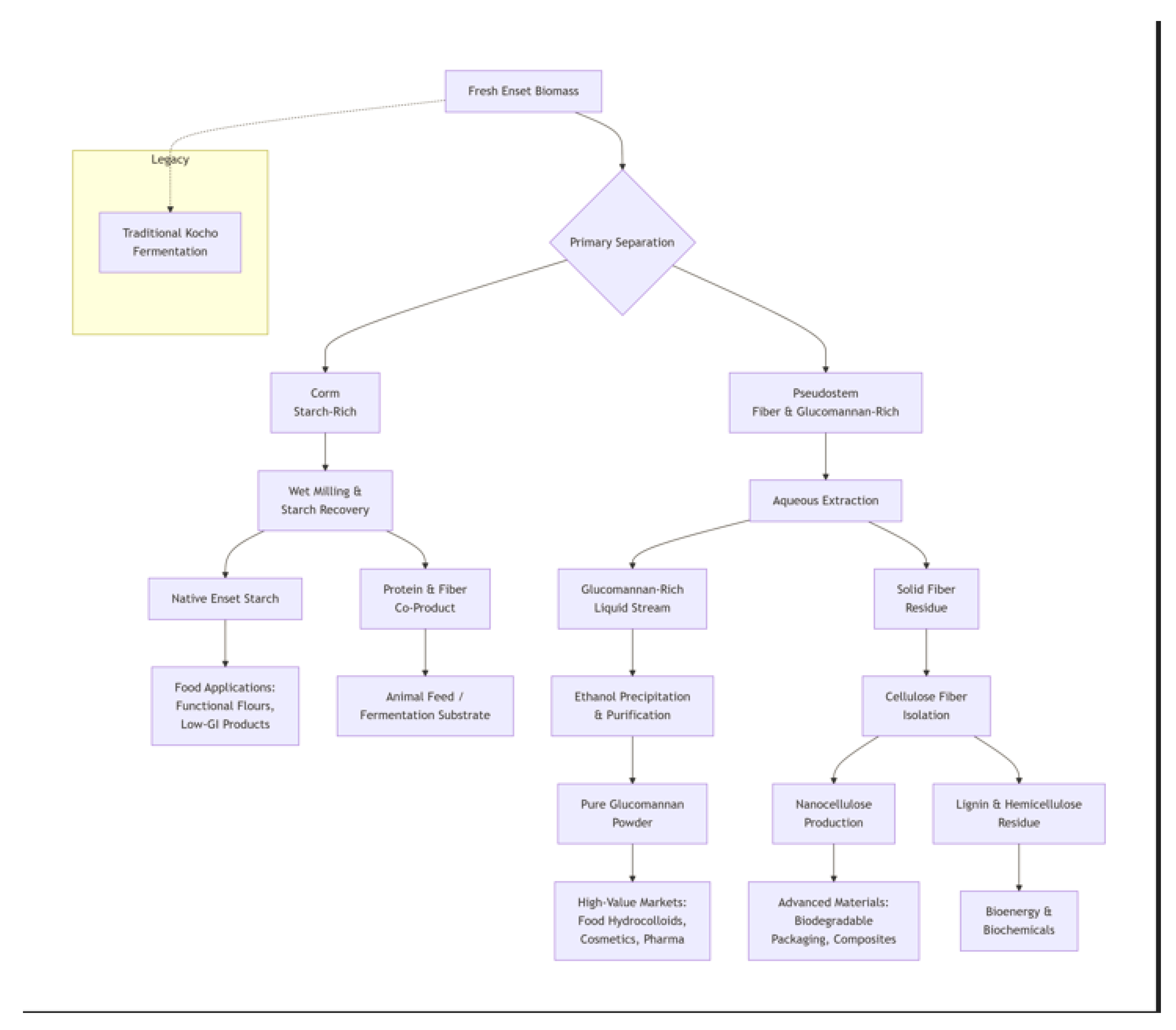

Table 1.
Representative Proximate and Mineral Composition of Major Enset Parts *(% Dry Weight or mg/100g DW)*.
Table 1.
Representative Proximate and Mineral Composition of Major Enset Parts *(% Dry Weight or mg/100g DW)*.
| Plant Part | Starch | Protein | Fiber | Lipid | Ash (Minerals) | Key References |
| Corm | 70–85% | 4–8% | 4–7% | 0.5–1.2% | K: 900-1200; Ca: 100-500; Fe: 2–6 | Bosha et al. (2016); Bultosa (2016) |
| Pseudostem | 55–65% | 1–3% | 8–12% | 0.3–0.8% | K: 800-1100; Ca: 250-350 | Nurfeta et al. (2009); Daba & Shigeta (2016) |
| Leaves | <5% | 8–12% | 10–15% | 0.7–1.5% | Ca: 300-500; Fe: 6–9 (in red landraces) | Birhanu et al. (2023) |
Table 2.
Priority Research Themes for Enset Valorization.
| Pillar | Strategic Objective | Key Research Actions | Key Performance Indicators (KPIs) | Primary Stakeholders |
| 1. Feedstock Optimization | To develop dedicated enset varieties for the biorefinery. | 1.1. High-throughput biochemical phenotyping of core germplasm. 1.2. QTL mapping/GWAS for glucomannan yield, starch quality. 1.3. Agronomic trials for dedicated “industrial enset” management. |
• Catalog of 5-10 elite landraces with trait data. • Molecular markers for assisted breeding. • Optimal agronomic protocols. |
Plant Breeders, Geneticists, Agronomists, Farmers |
| 2. Process Engineering & Prototyping | To design and validate an efficient, integrated biorefinery process. | 2.1. Pilot-scale optimization of parallel starch/glucomannan extraction. 2.2. Development of solvent/water recycling loops. 2.3. Prototype development for nanocellulose from fiber residue. |
• Pilot process flow diagram with mass/energy balance. • >90% solvent recovery rate. • Specification sheet for enset nanocellulose. |
Chemical Engineers, Food Technologists, Material Scientists |
| 3. Product Safety, Efficacy & Development | To ensure safety and demonstrate health benefits of novel products. | 3.1. In vitro and in vivo toxicological studies of purified components. 3.2. Clinical trials on glycemic/cholesterol response to enset glucomannan. 3.3. Development & sensory testing of fortified/functional food prototypes. |
• Dossier for regulatory submission. • Statistically significant health outcome data. • 2-3 consumer-accepted prototype products. |
Toxicologists, Nutritionists, Food Scientists, Regulatory Experts |
| 4. Systems Analysis & Commercialization | To prove economic viability and sustainability. | 4.1. Full Techno-Economic Analysis (TEA) of the biorefinery. 4.2. Comprehensive Life Cycle Assessment (LCA). 4.3. Development of business models and value chain partnerships. |
• Minimum Selling Price (MSP) for key products. • Carbon/water footprint compared to benchmarks. • Business plan with identified anchor off-takers. |
Industrial Economists, LCA Experts, Business Developers, Policymakers |
Disclaimer/Publisher’s Note: The statements, opinions and data contained in all publications are solely those of the individual author(s) and contributor(s) and not of MDPI and/or the editor(s). MDPI and/or the editor(s) disclaim responsibility for any injury to people or property resulting from any ideas, methods, instructions or products referred to in the content. |
© 2026 by the authors. Licensee MDPI, Basel, Switzerland. This article is an open access article distributed under the terms and conditions of the Creative Commons Attribution (CC BY) license (http://creativecommons.org/licenses/by/4.0/).
Copyright: This open access article is published under a Creative Commons CC BY 4.0 license, which permit the free download, distribution, and reuse, provided that the author and preprint are cited in any reuse.


