

Submitted:
02 March 2026
Posted:
04 March 2026
You are already at the latest version
Abstract
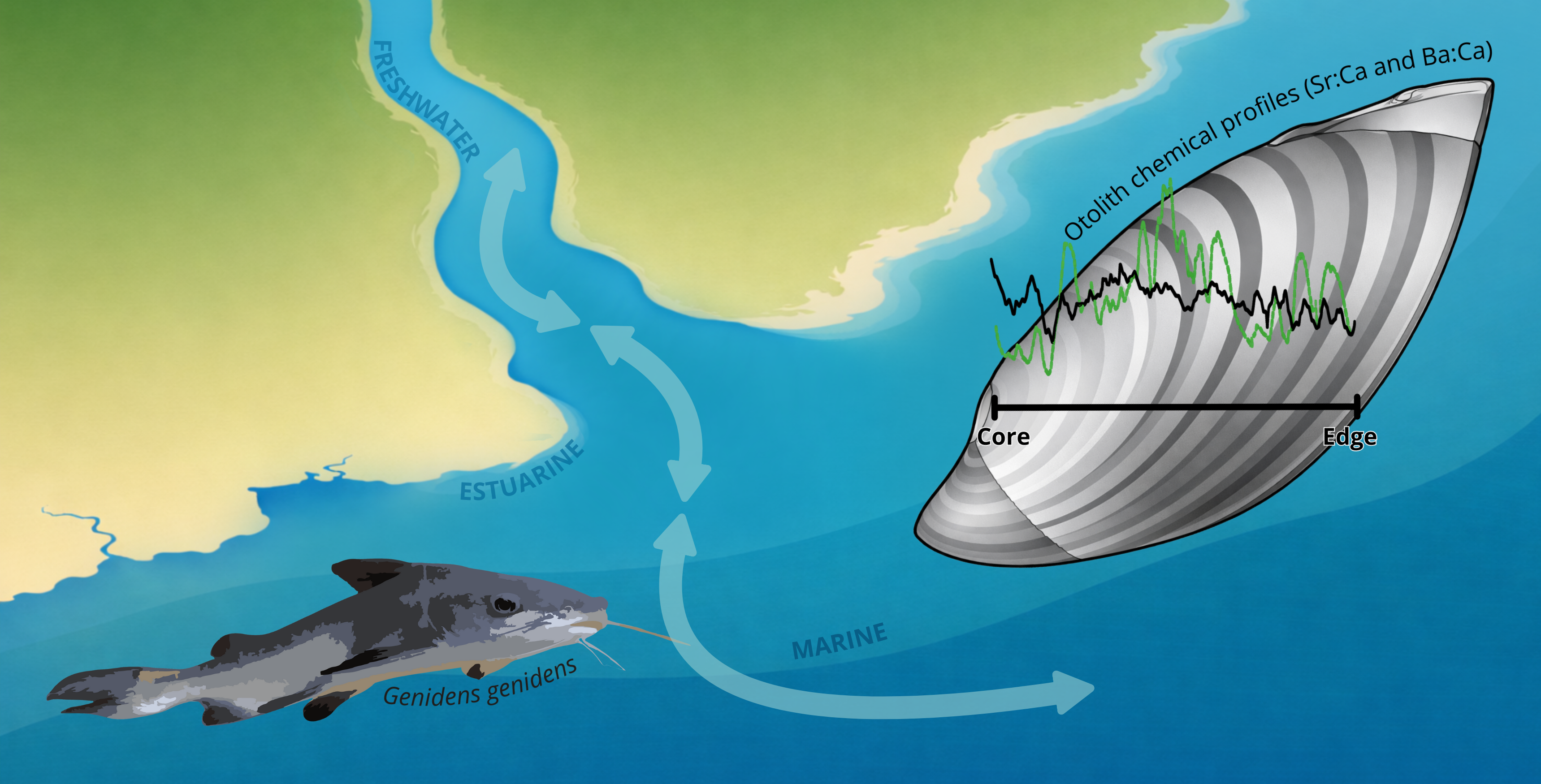
Otolith microchemistry was used to investigate habitat use and connectivity of the estuarine catfish Genidens genidens across three estuaries in southeastern Brazil. A total of 58 individuals were analyzed using laser ablation inductively coupled plasma mass spectrometry, focusing on strontium-to-calcium (Sr:Ca) and barium-to-calcium (Ba:Ca) ratios. Variations in elemental ratios along otolith transects allowed the reconstruction of individual ontogenetic trajectories along the estuarine–marine gradient. Most individuals exhibited combined use of estuarine and marine environments, while trajectories restricted to freshwater were rare. The complexity of chemical profiles increased with age, indicating more frequent habitat shifts throughout ontogeny. These patterns reveal high ecological plasticity and partial migration within populations of G. genidens. Strontium-to-calcium ratios were effective indicators of salinity-related habitat transitions, whereas Ba:Ca ratios provided complementary information associated with continental influence. Overall, this study demonstrates the applicability of otolith microchemistry to infer individual life-history pathways and highlights the role of estuaries as key habitats for feeding, growth, and recruitment in G. genidens.
Keywords:
estuarine connectivity
; ontogenetic habitat use
; partial migration
; elemental ratios
; Sr:Ca
; Ba:Ca
; estuarine–marine gradient
; fish ecology
1. Introduction
Estuaries are highly productive and dynamic coastal ecosystems characterized by strong spatial and temporal variation in physical and chemical variables, such as salinity, temperature, and pH, resulting from the interaction between continental inputs and marine waters [1,2]. This environmental heterogeneity creates a wide diversity of ecological niches, making estuaries particularly important for aquatic biodiversity, especially for fish communities [3,4]. These environments provide shelter and feeding areas for juvenile stages and support multiple phases of fish life cycles, contributing to the high biomass and productivity commonly observed in estuarine systems [5,6]. In addition, estuaries function as ecological corridors that connect freshwater and marine environments, facilitating movements of organisms across salinity gradients [7,1]. Because of these characteristics, estuaries are considered priority environments for conservation, particularly for estuarine and marine-dependent fish species. Consequently, understanding habitat use patterns and connectivity among aquatic ecosystems is essential for effective management, especially for species that undergo ontogenetic migrations or exploit multiple environments throughout their life cycle [8].
In this context, natural chemical tracers have been widely applied to investigate patterns of movement and environmental connectivity in fishes, with otolith microchemistry being one of the most commonly used approaches [9,10,11]. Otoliths are calcified structures located in the inner ear of fishes that grow through the continuous deposition of calcium carbonate and incorporate trace elements from the surrounding environment, thereby recording information on environmental history [12]. Elemental incorporation into the otolith matrix occurs via the endolymph and is generally related to environmental availability, although it may be modulated by factors such as temperature and salinity [13,14,15]. Among the elements most frequently used, strontium-to-calcium (Sr:Ca) and barium-to-calcium (Ba:Ca) ratios have been widely applied as proxies for salinity gradients and environmental connectivity, as these elements show contrasting patterns of incorporation between marine and freshwater environments [16,17]. Species that experience environmental shifts throughout their life cycle are therefore particularly suitable for otolith-based reconstructions of habitat use. This has been demonstrated by studies reporting contrasting migratory strategies in Amazonian fishes, ranging from sedentary to long-distance migrants (e.g., Arapaima spp., Prochilodus nigricans, Brachyplatystoma spp.) [18], in salmonids exhibiting partial anadromous migration (e.g., Salvelinus confluentus) [19], and in estuarine and euryhaline catfishes (e.g., Genidens barbus) [20].
Marine and estuarine catfishes (Ariidae) have frequently been investigated using otolith chemistry to elucidate patterns of habitat use, migratory behavior, and population connectivity, either through elemental ratios (e.g., Sr:Ca, Ba:Ca) or multielemental signatures [21,22]. Such information is essential to assess the degree of estuarine dependence of species, as different ecological groups—anadromous, catadromous, euryhaline, and estuarine-dependent fishes—exhibit distinct strategies for migration and use of salinity gradients throughout their life cycle [23]. Along the South American coast, ariid catfishes play an important ecological and socio-economic role, supporting artisanal fisheries and showing spatially variable patterns of movement, stock differentiation, and habitat use [24,25].
Among South American estuarine catfishes, the guri catfish Genidens genidens (Cuvier, 1829) stands out due to its wide distribution in the southwestern Atlantic, from southeastern Brazil to northern Argentina, its ecological and fishing importance, and its recognized potential as a bioindicator of environmental impacts [26,27]. This estuarine-resident ariid is euryhaline and highly tolerant of salinity variations, exhibiting pronounced plasticity in habitat use. Populations may occupy riverine, estuarine, and coastal environments and display regionally variable patterns of partial migration between waters of contrasting salinity [28,29]. Previous studies have addressed ecological and population aspects of G. genidens along the southeastern coast of Brazil. Daros et al. [27] used otolith microchemistry to assess elemental variation among estuaries with different levels of anthropogenic impact, highlighting the species’ potential as a bioindicator. Maciel et al. [30] investigated population structure and connectivity between tropical and subtropical regions of the southwestern Atlantic, while Condini et al. [28] documented habitat-use plasticity, including records of estuarine-resident individuals in freshwater environments. However, comparative analyses integrating ontogenetic habitat use across multiple estuaries remain limited.
In this study, we applied otolith microchemistry in a comparative framework across three contrasting estuaries on the southeastern coast of Brazil to characterize spatial and ontogenetic patterns of habitat use in G. genidens. Specifically, we aimed to reconstruct individual life-history pathways using Sr:Ca and Ba:Ca ratios along otolith transects and to assess estuarine–marine connectivity across spatial and ontogenetic scales.
2. Materials and Methods
2.1. Study Area
We conducted sampling on the southeastern coast of Brazil, within the Eastern Brazilian Marine Ecoregion [31], in three representative estuaries of the region: Rio Doce (RD), Ipiranga (IP), and São Mateus rivers (SM) (Figure 1). The study area includes important conservation units, such as the Conceição da Barra Environmental Protection Area (APA) and the Foz do Rio Doce APA, which encompass critical sectors for maintaining the connectivity and ecological integrity of these systems.
The estuaries of the Ipiranga and São Mateus rivers are characterized by extensive mangrove forests typical of the southeastern Brazilian coast [32,33] and exhibit a microtidal regime with semidiurnal tides, favoring the mixing of freshwater and marine waters [34,35]. In contrast, the Doce River estuary is predominantly oligohaline, with fluvial vegetation and limited marine intrusion, forming a submerged deltaic system primarily controlled by river discharge and wave action [36].
The regional climate is humid tropical, with a rainy season from October to March and a dry season from April to September. Annual precipitation varies between 900 and 1500 mm, concentrated in the wet season, and mean air temperatures remain above 18 °C throughout the year [37]. The estuaries are microtidal and drain basins of contrasting sizes and levels of anthropogenic influence [38,39]. The Doce River basin is large and presents deltaic morphology influenced by erosive and depositional processes associated with human impacts [38]. In contrast, the Ipiranga and São Mateus estuaries are located in coastal plains with extensive mangroves, tidal channels, and floodplains, ensuring high connectivity among riverine, estuarine, and coastal environments [39].
2.2. Local Environmental Conditions
Salinity is a key factor modulating physical, chemical, and biological processes in estuarine systems, influencing the mobility of metals and metalloids in sediments and shaping aquatic community composition [37]. Along the southeastern Brazilian coast, estuaries display contrasting gradients of marine influence driven by the interaction among tides, river discharge, and wave regime [40], resulting in environments ranging from freshwater zones to sectors under strong marine intrusion.
According to Condini et al. [38] and Oliveira et al. [39], the estuaries of the Doce, Ipiranga, and São Mateus rivers exhibit distinct salinity regimes. The Doce River is predominantly freshwater, with salinities below 1 throughout most of the year and reduced saline wedge penetration, representing the estuary with the lowest average salinity among the three systems [38,39]. The Ipiranga River shows intermediate salinity values, generally ranging from 5 to 25, reflecting alternation between river discharge and marine intrusion [39]. The São Mateus River is the most strongly influenced by marine waters, with mean salinity values around 16 ± 6 and a range between 5 and 28, decreasing during the rainy season [38]. These contrasts define the regional environmental gradient considered in this study and formed the basis for the sampling design and interpretation of otolith chemical signatures.
2.3. Sampling and Sample Processing
A total of 58 individuals were collected between January and April 2019 using bottom trawls equipped with an otter trawl net measuring 10.25 m along the footrope and 8.37 m along the headrope, with mesh sizes of 13 mm in the body and 5 mm in the codend. Sampling followed the methodology described by Vilar et al. [41] and subsequently applied by Condini et al. [38] and Oliveira et al. [39]. At each sampling location, three daytime trawls of five minutes each were conducted during quadrature tides, covering estuarine areas of the Doce, Ipiranga, and São Mateus rivers. Specimens were stored on ice in the field and subsequently frozen at −20 °C until laboratory processing.
In the laboratory, total length (TL, mm) was measured for each specimen, and lapilli otoliths were removed by dissection. Otoliths were cleaned in an ultrasonic bath with ultrapure water, embedded in transparent epoxy resin, and sectioned transversely into slices around 1 mm thick using a low-speed precision saw.
2.4. Microchemical Analysis
Elemental analyses were performed using laser ablation coupled with high-resolution inductively coupled plasma mass spectrometry (LA-HR-ICP-MS) at the ICP-MS Laboratory of the Department of Geology (IGCE, UNESP—Rio Claro, Brazil). Continuous transects from the core to the edge of each otolith were analyzed using a Photon Machines Analyte G2 laser ablation system coupled to an Element 2 HR-ICP-MS (Thermo Scientific), measuring the isotopes ⁴³Ca, ⁸⁶Sr, and ¹³⁸Ba.
Analytical conditions included a spot diameter of 50 µm, laser fluence of 10 J cm⁻², repetition rate of 10 Hz, and scanning speed of 10 µm s⁻¹. To remove potential surface contamination, a pre-ablation was conducted prior to each analysis using a spot diameter of 65 µm and a scanning speed of 50 µm s⁻¹. Calcium (⁴³Ca) was used as an internal standard to correct for variations in ablation yield [9]. External calibration was performed using the MACS-3 reference material (United States Geological Survey), analyzed at the beginning of each analytical session and after every ten otoliths, following the procedures recommended by Webb, Woodcock & Gillanders [42] and Sirot et al. [43].
Limits of detection (LODs, cps s⁻¹), calculated as three times the standard deviation of the baseline signal during blank gas intervals, were 479.6 for ⁸⁶Sr and 178 for ¹³⁸Ba. Elemental ratios were expressed as mmol·mol⁻¹ for Sr:Ca and Ba:Ca. Cross sections were photographed under a transmitted-light microscope equipped with a 5 MP Opticam camera (OPT5000 Power) at 40× magnification. Transect lengths were measured using ImageJ software, and ablation time was converted into distance from the otolith core to the edge based on the initial and final laser positions.
2.5. Age Estimation
Age was estimated using the same lapilli otolith sections analyzed for microchemistry. Growth rings were read under a transmitted-light microscope at 40× magnification, based on alternating opaque and hyaline zones, which correspond to two growth rings per year in G. genidens, as validated by Maciel et al. [26]. Three experienced readers independently performed age readings without prior knowledge of fish length. Final age estimates were obtained by consensus, and precision was evaluated using the Average Percentage Error (APE) following Campana & Thorrold [12].
2.6. Data Analysis
Elemental ratios (Sr:Ca and Ba:Ca) were obtained along continuous ablation profiles from the core to the edge of each otolith. The core region was represented by the mean of the first three measurements along the transect, corresponding to material deposited during early developmental stages. The edge was represented by the mean of the last three measurements, corresponding to the final segment of the transect. Although the laser configuration used a 50 µm spot and a scanning speed of 10 µm s⁻¹, the effective distance represented by each measurement depends on laser residence time; therefore, the edge region corresponded to the final 50–70 µm of the transect, reflecting material deposited during the days to weeks preceding capture [44].
Mean edge elemental ratios, total length, and age were compared among estuaries using the Kruskal–Wallis test after verification of normality and homoscedasticity assumptions. When significant differences were detected, Dunn’s post hoc test (p < 0.05) was applied using the pgirmess package [45] in the R environment [46].
Given the contrasting salinity regimes among estuaries, the Doce River was considered the system with the lowest marine influence and used as the oligohaline reference for defining environmental thresholds. Sr:Ca ratios at the otolith edge were used to estimate lower and upper thresholds associated with the salinity gradient, following commonly applied methodologies. Threshold values of 3.06 and 8.87 mmol·mol⁻¹ were used to classify Sr:Ca values into ranges associated with freshwater/oligohaline, estuarine, and marine conditions. These classifications were interpreted with caution, recognizing that Sr:Ca ratios may also be influenced by physiological and ontogenetic factors [14,8].
The chemical signal at the otolith edge was interpreted as representing recent environmental conditions corresponding to the last days or weeks prior to capture, depending on otolith growth rate and the length sampled along the transect. Accordingly, the edge signal does not necessarily reflect the exact capture location, as it may integrate tidal movements, incursions into more saline sectors, or residence in deeper layers under the influence of a saline wedge [15].
Intraindividual variation along otolith profiles was explored with particular emphasis on Ba:Ca ratios. Peaks were identified and classified according to their relative position within the otolith (core, middle, or edge), and this approach was used descriptively to characterize individual patterns without extrapolating uncertain environmental interpretations [16,17].
The relationship between age and total length was evaluated using analysis of covariance (ANCOVA), with age as a covariate and estuary as a fixed factor. Linearity was verified using Pearson’s correlation, and residuals were used to remove the effect of somatic growth, following the approach described by Campana [9].
Individual Sr:Ca profiles were examined using Change-Point Analysis (CPA) implemented in the changepoint (CP) package [47] in the R environment. Based on changes detected along longitudinal Sr:Ca profiles, individuals were grouped into categories representing ontogenetic trajectories of habitat use. Classification was based on the number, relative position, and temporal sequence of CPs in relation to predefined environmental thresholds, allowing synthesis of patterns of estuarine–marine gradient use throughout development. These categories were used solely as a descriptive framework for organizing and interpreting results, without assuming fixed or exclusive life-history trajectories. Operational definitions of each ontogenetic pattern are presented in Table 1.
3. Results
3.1. General Description of the Sample
A total of 58 specimens of G. genidens were analyzed, with a mean total length (TL) of 255.36 ± 36.16 mm and a mean age of 3.79 ± 1.04 years. Most individuals (95%) were between 3 and 5 years old. The precision of age estimates derived from otolith readings was considered acceptable, with an Average Percentage Error (APE) of 9.63%. Mean values of TL, age, and Sr:Ca and Ba:Ca ratios at the otolith edge differed among estuaries (Table 2; Figure 2), with significant differences detected by the Kruskal–Wallis test (TL: χ² = 39.50; age: χ² = 21.08; Sr:Ca: χ² = 25.25; Ba:Ca: χ² = 43.38; df = 2; p < 0.05).
Specimens from the Rio Doce showed the highest mean total length (289.7 ± 18.2 mm) and age (4.5 ± 0.9 years), followed by individuals from the Ipiranga River (252.8 ± 33.3 mm; 3.9 ± 0.8 years). Fish from the São Mateus River were smaller and younger on average (222.2 ± 16.5 mm; 2.9 ± 0.7 years) (Table 2).
3.2. Environmental Classification Based on Sr:Ca Ratios
Based on Sr:Ca reference values, we estimated the environments of origin and recent habitat use of G. genidens individuals in the three estuaries. The central region of the otolith was represented by the mean of the first three readings of each transect, which reflect chemical conditions associated with the earliest developmental stages. Because these readings may include the period of buccal incubation and therefore not directly represent external environmental conditions, the interpretation of initial habitat use considered only the chemical signal following the primary core. Recent habitat use was represented by the mean of the last three readings at the otolith edge, corresponding to environmental conditions experienced in the weeks preceding capture.
Differences between the core-related and edge-related signals allowed the identification of shifts in habitat use along the estuarine gradient throughout development. The proportional distribution of individuals among environmental classes is shown in Figure 3. In the Doce River, no individuals were classified as freshwater in the initial region of the otolith, and all individuals were classified as estuarine at the edge. In contrast, individuals from the Ipiranga and São Mateus rivers exhibited combinations of estuarine and marine classifications in both the initial region and the otolith edge (Figure 3).
3.3. Individual Sr:Ca Profiles and Ontogenetic Habitat-Use Patterns
Analysis of longitudinal Sr:Ca profiles from the core to the edge of otoliths revealed five distinct ontogenetic patterns of habitat use (Figure 4; Table 1 and Table 3). These patterns represent different trajectories along the estuarine–marine gradient and were grouped into five symbolic categories: FE (Freshwater → Estuarine), EM (Estuarine → Marine), EME (Estuarine → Marine → Estuarine), ME (Marine → Estuarine), and MEM (Marine → Estuarine → Marine). Each category reflects the sequence of environments inferred from Sr:Ca values and the position of CPs detected along individual profiles.
Individuals from the Doce River exhibited relatively homogeneous profiles, with a predominance of the EME pattern. In the Ipiranga River, all five ontogenetic patterns were observed, indicating a higher diversity of habitat-use trajectories. In the São Mateus River, the ME and EME patterns were the most frequent. The FE pattern was rare and was recorded for a single individual from the Ipiranga River (Table 3).
3.4. Relationship Between Age, Length, and Chemical Patterns
Total length increased significantly with age (r = 0.72; p < 0.001), confirming a linear relationship between these variables. Analysis of covariance (ANCOVA) revealed significant effects of estuary (F₂,86 = 12.03; p < 0.001) and age (F₁,86 = 13.44; p < 0.001). Mean total length differed among estuaries, being highest in the Doce River (279 ± 42 mm), intermediate in the Ipiranga River (252 ± 39 mm), and lowest in the São Mateus River (234 ± 41 mm), according to Tukey’s post hoc test (p < 0.05) (Supplementary Figure S1).
Age distributions also differed among ontogenetic habitat-use patterns and estuaries (Figure 5). In the Doce River, individuals classified as EME and ME predominated and were mainly between 4 and 5 years old. In the Ipiranga River, the EM, EME, ME, and MEM patterns occurred sequentially with increasing age, with MEM individuals reaching up to six years. In the São Mateus River, EME and ME patterns were most common, with individuals predominantly around four years of age.
Before applying the correction proposed by Campana [9], the number of detected change points (CPs) increased with age, indicating an influence of body growth on the detection of habitat transitions. After applying the correction, this relationship was no longer observed (r ≈ 0; p = 1.00), demonstrating effective removal of size-related bias. ANCOVA confirmed this pattern, with age showing a significant effect before correction (F₁,86 = 7.62; p = 0.008) but not after correction (F₁,86 = 1.23; p = 0.274). The estuary factor remained marginally non-significant in both cases. Adjusted mean CP values did not differ among estuaries (p > 0.05), indicating similar frequencies of habitat transitions across regions (Supplementary Figure S2). Descriptively, mean CP values increased progressively from simpler habitat-use patterns (FE and EM) to more complex patterns (ME and MEM) (Supplementary Figure S3).
3.5. Differences in Ba:Ca Profiles Among Estuaries
Ba:Ca profiles differed among estuaries, with significant differences in value ranges detected by the Kruskal–Wallis test (p < 0.001) (Figure 6). In the Doce River, some individuals exhibited relatively constant Ba:Ca values along the transect, whereas others showed pronounced peaks during early developmental stages. In the São Mateus River, Ba:Ca signals were mainly concentrated in early stages, while in the Ipiranga River, peaks tended to be of lower amplitude and shorter duration. Although exploratory, these results indicate inter-estuarine variation in barium incorporation and support the use of Ba:Ca as a complementary tracer to Sr:Ca for environmental differentiation of G. genidens.
4. Discussion
4.1. General Characteristics of the Sample and Environmental Context
The G. genidens individuals analyzed showed clear differences among estuaries in total length, age, and otolith elemental composition (Sr:Ca and Ba:Ca), reflecting contrasting environmental conditions and the functional role of each system in the species’ life cycle. This spatial gradient follows the regional salinity continuum, ranging from the predominantly freshwater and hydrodynamically variable Doce River to the more marine-influenced and hydrologically stable São Mateus River. In G. genidens, individuals inhabiting systems with lower exposure to salinity fluctuations tend to exhibit greater growth and longevity, as previously reported by Condini et al. [28], indicating that population performance is closely linked to local environmental stability and productivity.
Chemical differentiation among estuaries further supports this pattern. Mean Sr:Ca values increased from the Doce River to the Ipiranga River, while Ba:Ca values were markedly higher in the Doce River compared to the other estuaries. These differences are consistent with the geochemical behavior of strontium and barium, with higher Sr incorporation in systems under stronger marine influence and elevated Ba associated with continental inputs. Similar ranges of Sr:Ca and Ba:Ca values have been reported for G. genidens in other regions [28,29], reinforcing the validity of these elemental ratios as indicators of environmental gradients.
In the Doce River, elevated Ba:Ca values are consistent with strong continental influence and may be further intensified by anthropogenic inputs. Daros et al. [27] reported increased Ba concentrations in otoliths following the Fundão dam collapse, corroborated by environmental records indicating enhanced barium availability in the estuary [48]. Together, these findings reinforce the complementary use of Sr:Ca and Ba:Ca ratios to characterize spatial variability and support subsequent interpretations of otolith chemical profiles.
4.2. Spatial Variation in Sr:Ca and Environmental Use
The predominance of estuarine and marine Sr:Ca signatures in both the core and edge of otoliths indicates that G. genidens primarily exploits intermediate to high salinity environments throughout its life cycle. Freshwater signatures were rare, suggesting limited long-term residence in strictly freshwater habitats. This pattern reinforces the central role of estuaries as areas of growth, residence, and connectivity, in agreement with previous studies on G. genidens populations from southeastern Brazil [28,29].
At the otolith edge, Sr:Ca values remained high even for individuals captured in estuaries under strong continental influence, indicating recent use of estuarine–marine environments. Similar patterns have been reported for other coastal fishes, such as Lutjanus jocu and Centropomus parallelus, in which partial residence along salinity gradients represents an adaptive strategy to cope with environmental variability [17,49].
In the Doce River, Sr:Ca values did not fall within the freshwater/oligohaline range despite low surface salinities for most of the year. This apparent discrepancy likely reflects the integrative nature of otolith chemical signals, which represent environmental exposure over days to weeks rather than instantaneous conditions [8,15]. Additionally, the vertical structure of the estuary, characterized by saline wedge intrusion and strong stratification, may expose fish to higher salinities in subsurface layers even when surface waters remain fresh [50]. Therefore, the Sr:Ca signatures observed in the Doce River likely reflect fish mobility and estuarine heterogeneity rather than limitations of the environmental thresholds applied.
4.3. Ontogenetic Patterns of Habitat Use and Partial Migration
The identification of five ontogenetic habitat-use patterns (FE, EM, EME, ME, and MEM) highlights the pronounced ecological plasticity of G. genidens and confirms the coexistence of multiple life-history trajectories along the estuarine–marine gradient. The predominance of EME and ME patterns, coupled with frequent alternations across salinity thresholds, indicates recurrent movements between estuarine and marine environments throughout development.
These results are consistent with previous studies describing flexible habitat use in G. genidens. Maciel et al. [29] reported similar variability in South Atlantic estuaries, ranging from prolonged estuarine residence to deeper marine incursions, while Condini et al. [28] documented estuarine origins followed by ontogenetic migrations. Together, these findings support the interpretation that recurrent alternation between intermediate and high salinities represents the dominant strategy for the species.
Comparative studies on Genidens barbus have reported a diversity of migratory behaviors, including amphidromous cycles and estuarine or freshwater residence [20,51]. This functional convergence within the genus suggests that local hydrological and salinity regimes strongly influence migratory strategies, reinforcing the concept of partial migration as a key ecological trait among ariid catfishes.
4.4. Ontogenetic Changes in Mobility and Profile Complexity
The relationship between age, body size, and chemical profile complexity suggests a progressive increase in mobility throughout ontogeny. Older individuals exhibited more complex Sr:Ca profiles, reflecting a greater number of transitions between environments. This pattern is consistent with expectations for opportunistic estuarine species, in which increasing locomotor capacity, physiological tolerance, and energetic demands promote expansion of habitat use with age [8,14].
Differences in growth patterns among estuaries, with larger and older individuals in the Doce River and smaller individuals in the São Mateus River, likely reflect local variation in productivity, environmental stability, and resource availability. The increase in the number of CPs along ontogenetic trajectories supports the interpretation that fragmented chemical profiles represent more frequent alternation between estuarine and marine compartments, consistent with partial migration observed in several coastal teleosts.
4.5. Regional Variation in Ba:Ca and Continental Influence
Spatial differences in Ba:Ca profiles revealed marked contrasts in the magnitude and persistence of the signal among estuaries. In the Doce River, elevated Ba:Ca values often persisted toward the otolith edge, whereas in the Ipiranga and São Mateus rivers, barium enrichment was largely restricted to early life stages. This pattern aligns with the geochemical behavior of barium, which tends to be more available in low-salinity, turbid waters under strong continental influence [14].
In G. genidens, the pronounced Ba:Ca signal observed in the Doce River may reflect both natural fluvial processes and anthropogenic disturbances associated with increased sediment and metal inputs following the Fundão dam collapse [27]. Although Ba:Ca was treated as a complementary tracer in this study, the observed patterns reinforce its potential as a qualitative indicator of continental influence and estuarine heterogeneity when interpreted alongside Sr:Ca ratios.
4.6. Ecological Implications, Management Considerations, and Future Directions
The coexistence of multiple ontogenetic strategies in G. genidens represents an adaptive advantage but poses challenges for fisheries management. Individuals following different habitat-use trajectories may respond unevenly to environmental degradation and fishing pressure, emphasizing the need for estuary-specific management strategies. Protection of critical estuarine habitats, particularly those supporting prolonged residence, is essential for recruitment and stock maintenance.
The diversity of trajectories observed supports the concept of partial migration as a key mechanism underlying population resilience. Incorporating otolith microchemistry into monitoring programs can improve the delineation of management units and contribute to ecosystem-based fisheries management, in line with FAO recommendations and the UN 2030 Agenda.
Limitations of this study include the absence of simultaneous environmental measurements during sampling and the lack of controlled experimental calibration for G. genidens. Future studies integrating environmental monitoring, experimental validation, and expanded temporal sampling would enhance interpretation of otolith chemical signatures and further strengthen the application of microchemistry to coastal conservation and management.
5. Conclusions
The otolith microchemistry (Sr:Ca and Ba:Ca) of G. genidens revealed significant ontogenetic plasticity and partial migration, with five main trajectories along the estuarine–marine gradient. The Doce River showed the least diversity in migration strategies, while the Ipiranga River exhibited the greatest variety, and the São Mateus River displayed a predominance of trajectories associated with marine and estuarine environments. The complexity of Sr:Ca and Ba:Ca profiles increased with age, underscoring the value of the individual-based approach for inferring mobility and connectivity. The observed differences in trajectory diversity among estuaries have important implications for management strategies, suggesting that systems where the species uses a more restricted set of habitats may be more sensitive to environmental impacts. This hypothesis warrants further evaluation through comprehensive environmental data and extended sampling efforts.
Supplementary Materials
The following supporting information can be downloaded at the website of this paper posted on Preprints.org.
Author Contributions
MPG, MVC, MHS and FAD: Conceptualization, Investigation, Sample processing, Data curation, Formal analysis, Methodology, Visualization, Writing – original draft, Supervision.
Funding
This research was developed under the Aquatic BiodiversityMonitoring Program, Environmental Area I, established by the Technical-Scientific Cooperation Agreement n° 30/2018 between Espírito Santo Foundation of Technology (FEST) and Renova Foundation, published in Brazil's Official Gazette (Diário Oficial da União).
Institutional Review Board Statement
Not applicable.
Informed Consent Statement
Not applicable.
Acknowledgments
The authors would like to thank Laboratório de Ecologia de Peixes Marinhos - LEPMAR staff for their help in realizing the field activity, and Dr. DF de Godoy for helping to carry out the analyzes in LA-ICP-MS. MPG thanks fellowship provided by CAPES (Proc. 88887.080485/2024-00) by PPGBAC, CLP UNESP. FAD and MVC thanks to the research fellowship provided by FEST. MHS thanks research fellowship provided by CNPq (Proc. 312278/2017-9). The authors wish to thank the anonymous reviewers and the editor for providing useful comments on the manuscript.
Conflicts: of Interest The funders had no role in the design of the study; in the collection, analyses, or interpretation of data; in the writing of the manuscript; or in the decision to publish the results.
Abbreviations
The following abbreviations are used in this manuscript:
| ANCOVA | Analysis of Covariance |
| APE | Average Percentage Error |
| Ba:Ca | Barium-to-calcium ratio |
| CP | Change point |
| CPA | Change-point analysis |
| IP | Ipiranga River estuary |
| LA-HR-ICP-MS | Laser ablation high-resolution inductively coupled plasma mass spectrometry |
| RD | Rio Doce estuary |
| SM | São Mateus River estuary |
| Sr:Ca | Strontium-to-calcium ratio |
| TL | Total length |
References
- Potter, I.C.; Warwick, R.M.; Hall, N.G.; Tweedley, J.R. The physico-chemical characteristics, biota and fisheries of estuaries. In: Freshwater Fisheries Ecology, Craig, J.F., Ed.; John Wiley & Sons: Chichester, UK, 2015; Chapter 5. [CrossRef]
- Cabral, H.N.; Arevalo, E.; Carassou, L. Estuaries: Patterns and trends on ecosystem structure and functioning under global changes. In: Marine Ecology—An Ecosystemic View of Anthropogenic Impacts, Molina, J.M., Blassina, G.E., Eds.; CRC Press: Boca Raton, FL, USA, 2025; Volume 2, pp. 165–200. [CrossRef]
- Gillanders, B.M.; McMillan, M.N.; Reis-Santos, P.; Baumgartner, L.J.; Brown, L.R.; Conallin, J.; Feyrer, F.V.; Henriques, S.; James, N.C.; Jaureguizar, A.J.; Pessanha, A.L.M.; Vasconcelos, R.P.; Vu, A.V.; Walther, B.; Wibowo, A. Climate Change and Fishes in Estuaries. In: Fish and Fisheries in Estuaries, Whitfield, A.K., Able, K.W., Blaber, S.J.M., Elliott, M., Eds.; John Wiley & Sons: Hoboken, NJ, USA, 2022; Volume 1, pp. 380–457. [CrossRef]
- Whitfield, A.K.; Able, K.W.; Blaber, S.J.M.; Elliott, M. Fish and Fisheries in Estuaries: A Global Perspective; John Wiley & Sons: Hoboken, NJ, USA, 2022. [CrossRef]
- Peterson, M.S. A conceptual view of environment-habitat-production linkages in tidal river estuaries. Rev. Fish. Sci. 2003, 11, 291–313. [CrossRef]
- Sheaves, M.; Baker, R.; Nagelkerken, I. et al. True value of estuarine and coastal nurseries for fish: incorporating complexity and dynamics. Estuaries Coasts 2015, 38, 401–414. [CrossRef]
- Elliott, M.; Whitfield, A.K.; Potter, I.C.; Blaber, S.J.M.; Cyrus, D.P.; Nordlie, F.G.; Harrison, T.D. The guild approach to categorizing estuarine fish assemblages: a global review. Fish Fish. 2007, 8, 241–268. [CrossRef]
- Elsdon, T.S.; Gillanders, B.M.; Campana, S.E.; Jones, C.M.; Kerr, L.A.; Secor, D.H.; Thorrold, S.R.; Walther, B.D. Otolith chemistry to describe movements and life-history parameters of fishes: hypotheses, assumptions, limitations and inferences. In: Oceanography and Marine Biology: An Annual Review, Gibson, R.N., Atkinson, R.J.A., Gordon, J.D.M., Eds.; CRC Press: Boca Raton, FL, USA, 2008; Volume 46, pp. 297–330. [CrossRef]
- Campana, S.E. Chemistry and composition of fish otoliths: pathways, mechanisms and applications. Mar. Ecol. Prog. Ser. 1999, 188, 263–297. [CrossRef]
- Gillanders, B.M. Using elemental chemistry of fish otoliths to determine connectivity between estuarine and coastal habitats. Estuar. Coast. Shelf Sci. 2005, 64, 47–57. [CrossRef]
- Walther, B.D.; Limburg, K.E.; Jones, C.M.; Schaffler, J.J. Frontiers in otolith chemistry: insights, advances and applications. J. Fish Biol. 2017, 90, 473–479. [CrossRef]
- Campana, S.E.; Thorrold, S.R. Otoliths, increments, and elements: keys to a comprehensive understanding of fish populations? Can. J. Fish. Aquat. Sci. 2001, 58, 30–38. [CrossRef]
- Elsdon, T.S.; Gillanders, B.M. Interactive effects of temperature and salinity on otolith chemistry: challenges for determining environmental histories of fish. Can. J. Fish. Aquat. Sci. 2002, 59, 1796–1808. [CrossRef]
- Sturrock, A.M.; Trueman, C.N.; Darnaude, A.M.; Hunter, E. Can otolith elemental chemistry retrospectively track migrations in fully marine fishes? J. Fish Biol. 2012, 81, 766–795. [CrossRef]
- Walther, B.D.; Limburg, K.E. The use of otolith chemistry to characterize diadromous migrations. J. Fish Biol. 2012, 81, 796–825. [CrossRef]
- Soeth, M.; Spach, H.L.; Daros, F.A.; Castro, J.P.; Correia, A.T. Use of otolith elemental signatures to unravel lifetime movement patterns of Atlantic spadefish, Chaetodipterus faber, in the Southwest Atlantic Ocean. J. Sea Res. 2020, 158, 101873. [CrossRef]
- Menezes, R.; Moura, P.E.; Santos, A.C.; Moraes, L.E.; Condini, M.V.; Rosa, R.S.; Albuquerque, C.Q. Habitat use plasticity by the dog snapper (Lutjanus jocu) across the Abrolhos Bank shelf, eastern Brazil, inferred from otolith chemistry. Estuar. Coast. Shelf Sci. 2021, 263, 107637. [CrossRef]
- Hermann, T.W.; Stewart, D.J.; Limburg, K.E.; Castello, L. Unravelling the life history of Amazonian fishes through otolith microchemistry. R. Soc. Open Sci. 2016, 3, 160206. [CrossRef]
- Austin, C.S.; Bond, M.H.; Smith, J.M.; Lowery, E.D.; Quinn, T.P. Otolith microchemistry reveals partial migration and life history variation in a facultatively anadromous, iteroparous salmonid, bull trout (Salvelinus confluentus). Environ. Biol. Fishes 2019, 102, 95–104. [CrossRef]
- Avigliano, E.; Carvalho, B.; Velasco, G.; Tripodi, P.; Vianna, M.; Volpedo, A.V. Nursery areas and connectivity of the adults anadromous catfish (Genidens barbus) revealed by otolith-core microchemistry in the south-western Atlantic Ocean. Mar. Freshw. Res. 2017, 68, 931–940. [CrossRef]
- Zydlewski, J.; Wilkie, M.P. Freshwater to seawater transitions in migratory fishes. In: Fish Physiology, McCormick, S.D., Farrell, A.P., Brauner, C.J., Eds.; Academic Press: San Diego, CA, USA, 2012; Volume 32, pp. 253–326. [CrossRef]
- Nazir, A.; Khan, M.A. Using otoliths for fish stock discrimination: Status and challenges. Acta Ichthyol. Piscat. 2021, 51, 199–218. [CrossRef]
- Whitfield, A.K.; Able, K.W.; Barletta, M.; Blaber, S.J.M.; Harrison, T.D. Life-history guilds of fishes associated with estuaries: opportunism versus dependency. Estuar. Coast. Shelf Sci. 2023, 292, 108456. [CrossRef]
- Avigliano, E.; Volpedo, A.V. A review of the application of otolith microchemistry toward the study of Latin American fishes. Rev. Fish. Sci. Aquac. 2016, 24, 369–384. [CrossRef]
- Ceni, G.; Fontoura, N.F.; Cabral, H.N. The freshwater artisanal fishery of Patos Lagoon. J. Fish Biol. 2016, 89, 337–354. [CrossRef]
- Maciel, T.R.; Vaz-dos-Santos, A.M.; Caramaschi, E.P.; Vianna, M. Management proposal based on the timing of oral incubation of eggs and juveniles in the sentinel species Genidens genidens (Siluriformes: Ariidae) in a tropical estuary. Neotrop. Ichthyol. 2018, 16, e170119. [CrossRef]
- Daros, F.A.; Condini, M.V.; Altafin, J.P.; de Oliveira Ferreira, F.; Hostim-Silva, M. Fish otolith microchemistry as a biomarker of the world's largest mining disaster. Sci. Total Environ. 2022, 807*, 151780. [CrossRef]
- Condini, M.V.; Pereyra, P.E.R.; Garcia, A.M.; Saint’Pierre, T.D.; Ceni, G.; Lugo, R.; Fontoura, N.F.; Vieira, J.P.; Albuquerque, C.Q. Use of fresh water by an estuarine-resident marine catfish: evidence from gonadal and otolith chemistry analyses. J. Mar. Biol. Assoc. U. K. 2019, 99*, 1667–1674. [CrossRef]
- Maciel, T.R.; Moreno, E.; Maichak de Carvalho, B.; Miller, N.; Vianna, M.; Avigliano, E. High-salinity water use of euryhaline catfish Genidens genidens revealed by otolith microchemistry. Austral Ecol. 2024, 49*, e13573. [CrossRef]
- Maciel, T.R.; Avigliano, E.; de Carvalho, B.M.; Miller, N.; Vianna, M. Population structure and habitat connectivity of Genidens genidens (Siluriformes) in tropical and subtropical coasts from Southwestern Atlantic. Estuar. Coast. Shelf Sci. 2020, 242*, 106839. [CrossRef]
- Spalding, M.D.; Fox, H.E.; Allen, G.R.; Davidson, N.; Ferdaña, Z.A.; Finlayson, M.; Halpern, B.S.; Jorge, M.A.; Lombana, A.; Lourie, S.A.; Martin, K.D.; McManus, E.; Molnar, J.; Recchia, C.A.; Robertson, J. Marine Ecoregions of the World: A Bioregionalization of Coastal and Shelf Areas. BioScience 2007, 57, 573–583. [CrossRef]
- Silva, M.A.B.D.; Bernini, E.; Carmo, T.M.S.D. Características estruturais de bosques de mangue do estuário do rio São Mateus, ES, Brasil. Acta Bot. Bras. 2005, 19, 465–471. [CrossRef]
- Tognella, M.M.P.; Falqueto, A.R.; Espinoza, H.D.C.F.; Gontijo, I.; Gontijo, A.B.P.L.; Fernandes, A.A.; Schmidtl, E.R.; Soares, M.L.G.; Chaves, F.O.; Schmidt, A.J.; Lopes, D.M.S.; Barcelos, U.D.; d’Addazio, V.; Lima, K.O.O.; Pascoalini, S.S.; Paris, J.O.; Brites Júnior, N.V.; Porto, L.A.; Almeida Filho, E.; Oliveira, C.P.; Leopoldo, R.V.S.; Leite, S.; Berribilli, M.P.; Vieiras, S.F.R.; Rosa, M.B.; Sá, F.; Rodrigues Neto, R.; Ghisolfi, R.D.; Castro, M.S.M.; Rigo, D.; Tosta, V.C.; Albino, J. Mangroves as traps for environmental damage to metals: The case study of the Fundão Dam. Sci. Total Environ. 2022, 806*, 150452. [CrossRef]
- Bernini, E.; da Silva, M.A.; Carmo, T.; Cuzzuol, G.R. Spatial and temporal variation of the nutrients in the sediment and leaves of two Brazilian mangrove species and their role in the retention of environmental heavy metals. Braz. J. Plant Physiol. 2010, 22, 177–187. [CrossRef]
- Bolzan, M.S.; Andrades, R.; Spach, H.L.; Hostim-Silva, M. The influence of selected environmental parameters and habitat mosaics on fish assemblages in a South American estuary. J. Mar. Biol. Assoc. U. K. 2018, 99*, 249–257. [CrossRef]
- Castro, D.F.; Rossetti, D.F.; Cohen, M.C.L.; Pessenda, L.C.R.; Lorente, F.L. The growth of the Doce River Delta in northeastern Brazil indicated by sedimentary facies and diatoms. Diatom Res. 2013, 28, 455–466. [CrossRef]
- Kütter, V.T.; Martins, G.S.; Brandini, N.; Cordeiro, R.C.; Almeida, J.P.A.; Marques, E.D. Impacts of a tailings dam failure on water quality in the Doce River: The largest environmental disaster in Brazil. J. Trace Elem. Miner. 2023, 5, 100084. [CrossRef]
- Condini, M.V.; Pichler, H.A.; Oliveira-Filho, R.R.; Cattani, A.P.; Andrades, R.; Vilar, C.C.; Joyeux, J.-C.; Soeth, M.; de Biasi, J.B.; Eggertsen, L.; Dias, R.; Hackradt, C.W.; Félix-Hackradt, F.C.; Chiquieri, J.; Garcia, A.M.; Hostim-Silva, M. Marine fish assemblages of Eastern Brazil: An update after the world’s largest mining disaster and suggestions of functional groups for biomonitoring long-lasting effects. Sci. Total Environ. 2022, 807*, 150987. [CrossRef]
- Oliveira, R.L.; Camara, E.M.; Condini, M.V.; Oliveira-Filho, R.R.; Pichler, H.A.; Andrades, R.; Vilar, C.C.; Spach, H.L.; Joyeux, J.-C.; Hostim-Silva, M. Ecological uniqueness of fish assemblages in tropical estuarine and coastal systems: Assessing environmental and spatial drivers. Estuar. Coast. Shelf Sci. 2025, 313, 109111. [CrossRef]
- Schettini, C.A.F.; Hatje, V. The Suspended Sediment and Metals Load from the Mariana’s Tailing Dam Failure to the Coastal Sea. Integr. Environ. Assess. Manag. 2020, 16, 661–668. [CrossRef]
- Vilar, C.C.; Andrades, R.; Szab lak, F.T.; Guabiroba, H.C.; Pichler, H.A.; Bastos, K.V.; Lima, L.R.S.; Bastos, P.G.P.; Martins, R.F.; Rodrigues, V.L.A.; Hostim-Silva, M.; Joyeux, J.-C. Variability in nearshore fish biodiversity indicators after a mining disaster in eastern Brazil. Mar. Environ. Res. 2022, 175, 105565. [CrossRef]
- Webb, S.D.; Woodcock, S.H.; Gillanders, B.M. Sources of otolith barium and strontium in estuarine fish and the influence of salinity and temperature. Mar. Ecol. Prog. Ser. 2012, 453, 189–199. [CrossRef]
- Sirot, C.; Ferraton, F.; Panfili, J.; Childs, A.-R.; Guilhaumon, F.; Darnaude, A.M. elementr: An R package for reducing elemental data from LA-ICPMS analysis of biological calcified structures. Methods Ecol. Evol. 2017, 8, 1659–1667. [CrossRef]
- Ferreira, I.; Daros, F.A.; Moreira, C.; Feijó, D.; Rocha, A.; Mendez-Vicente, A.; Pisonero, J.; Correia, A.T. Is Chelidonichthys lucerna (Linnaeus, 1758) a Marine Estuarine-Dependent Fish? Insights from Saccular Otolith Microchemistry. Fishes 2023, 8, 383. [CrossRef]
- Giraudoux, P.; Antonietti, J.P.; Beale, C.; Pleydell, D.; Treglia, M. pgirmess: Spatial analysis and data mining for field ecologists. R package version 1.9.678, 2018.
- R Core Team. R: A Language and Environment for Statistical Computing; R Foundation for Statistical Computing: Vienna, Austria, 2025. Available online: https://www.R-project.org/.
- Killick, R.; Eckley, I.A. changepoint: An R Package for Changepoint Analysis. J. Stat. Softw. 2014, 58, 1–19. [CrossRef]
- Gomes, L.E.de O.; Correa, L.B.; Sá, F.; Neto, R.R.; Bernardino, A.F. The impacts of the Samarco mine tailing spill on the Rio Doce estuary, Eastern Brazil. Mar. Pollut. Bull. 2017, 120*, 28–36. [CrossRef]
- Daros, F.A.; Spach, H.L.; Correia, A.T. Habitat residency and movement patterns of Centropomus parallelus juveniles in a subtropical estuarine complex. J. Fish Biol. 2016, 88, 1796–1810. [CrossRef]
- Quaresma, V.D.S.; Catabriga, G.; Bourguignon, S.N.; Godinho, E.; Bastos, A.C. Modern sedimentary processes along the Doce river adjacent continental shelf. Braz. J. Geol. 2015, 45, 635–644. [CrossRef]
- Avigliano, E.; Velasco, G.; Volpedo, A.V. Use of lapillus otolith microchemistry as an indicator of the habitat of Genidens barbus from different estuarine environments in the southwestern Atlantic Ocean. Environ. Biol. Fishes 2015, 98, 1623–1632. [CrossRef]
Figure 1.
Map of the study area showing the location of the three estuaries analyzed in the southwestern Atlantic region (Rio Doce, Ipiranga River, and São Mateus River). Bathymetry is represented by depth classes using a blue color gradient, with lighter tones indicating shallower areas and darker tones indicating deeper waters. Cartographic base from Natural Earth (2023), GADM (2023), and IBGE (2023); watercourses from GEOBASES (2025); bathymetric data from CPRM–ANP (2013), derived from the GEBCO global bathymetric model (925 m resolution). Datum: SIRGAS 2000.
Figure 1.
Map of the study area showing the location of the three estuaries analyzed in the southwestern Atlantic region (Rio Doce, Ipiranga River, and São Mateus River). Bathymetry is represented by depth classes using a blue color gradient, with lighter tones indicating shallower areas and darker tones indicating deeper waters. Cartographic base from Natural Earth (2023), GADM (2023), and IBGE (2023); watercourses from GEOBASES (2025); bathymetric data from CPRM–ANP (2013), derived from the GEBCO global bathymetric model (925 m resolution). Datum: SIRGAS 2000.
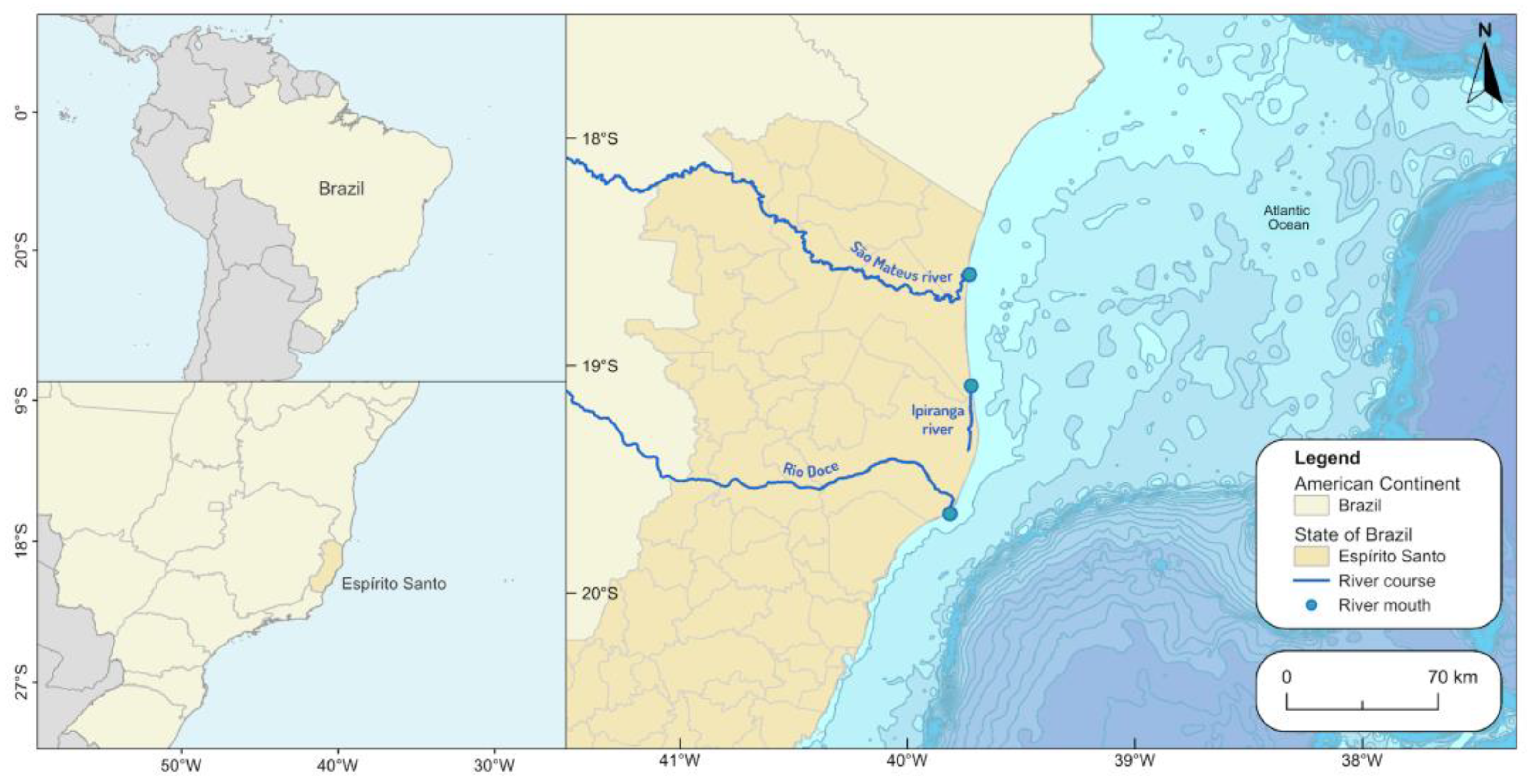
Figure 2.
Mean ± standard deviation of elemental ratios at the otolith edge of G. genidens collected in three estuaries. (a) Sr:Ca (mmol·mol⁻¹; teal bars, left axis) and Ba:Ca (mmol·mol⁻¹; sand bars, right axis) ratios for the Rio Doce, Ipiranga, and São Mateus river estuaries. (b) Detail of Ba:Ca ratios (mmol·mol⁻¹) for the Ipiranga and São Mateus river estuaries to highlight differences at lower concentration ranges. Identical letters within the same variable indicate no statistical differences among estuaries (p > 0.05), whereas different letters indicate significant differences (p < 0.05).
Figure 2.
Mean ± standard deviation of elemental ratios at the otolith edge of G. genidens collected in three estuaries. (a) Sr:Ca (mmol·mol⁻¹; teal bars, left axis) and Ba:Ca (mmol·mol⁻¹; sand bars, right axis) ratios for the Rio Doce, Ipiranga, and São Mateus river estuaries. (b) Detail of Ba:Ca ratios (mmol·mol⁻¹) for the Ipiranga and São Mateus river estuaries to highlight differences at lower concentration ranges. Identical letters within the same variable indicate no statistical differences among estuaries (p > 0.05), whereas different letters indicate significant differences (p < 0.05).
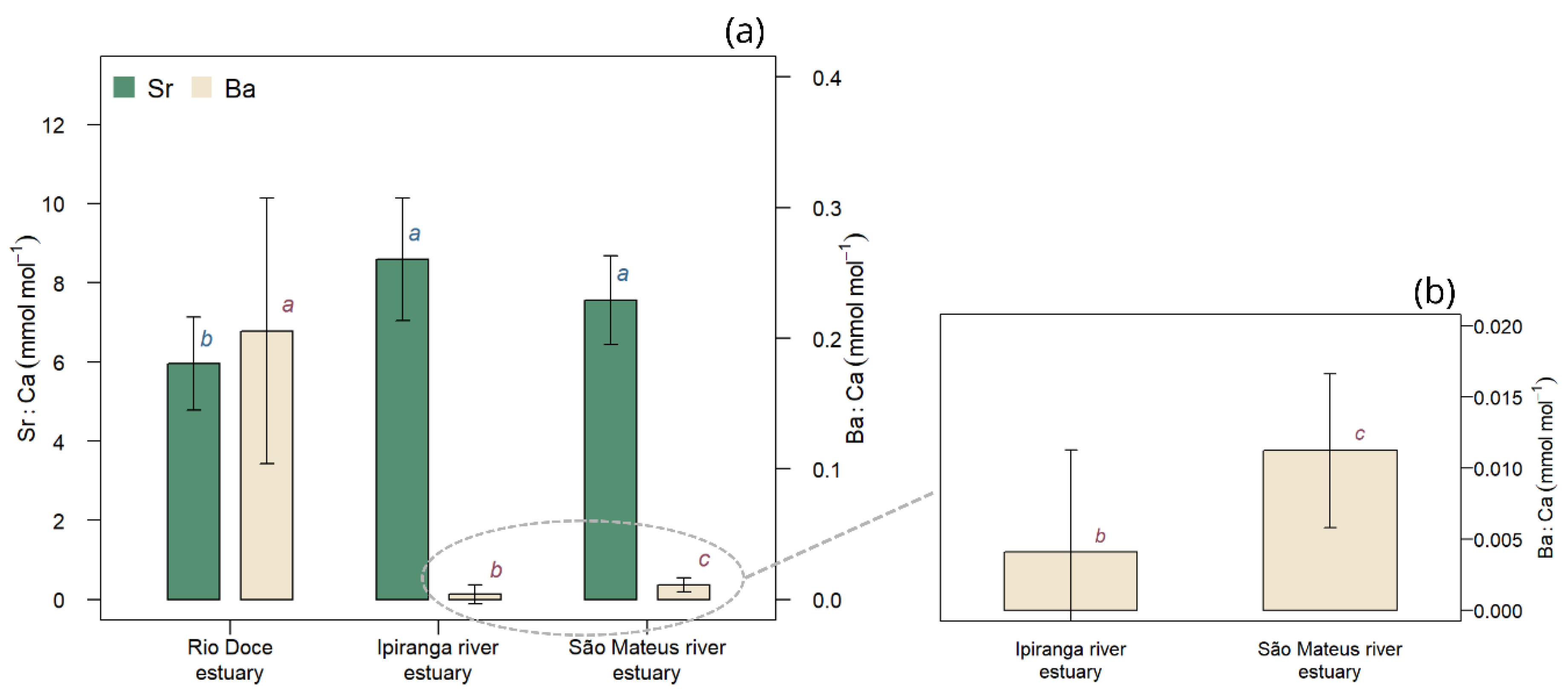
Figure 3.
Proportional distribution of G. genidens individuals classified according to Sr:Ca-based environmental use at the otolith core (environment of origin) and edge (pre-capture environment) in three estuaries: RD, IP and SM. Panels correspond to estuaries, and values are expressed as percentages, with absolute counts shown in parentheses. Colors indicate estuaries: RD (beige), IP (blue), and SM (green).
Figure 3.
Proportional distribution of G. genidens individuals classified according to Sr:Ca-based environmental use at the otolith core (environment of origin) and edge (pre-capture environment) in three estuaries: RD, IP and SM. Panels correspond to estuaries, and values are expressed as percentages, with absolute counts shown in parentheses. Colors indicate estuaries: RD (beige), IP (blue), and SM (green).
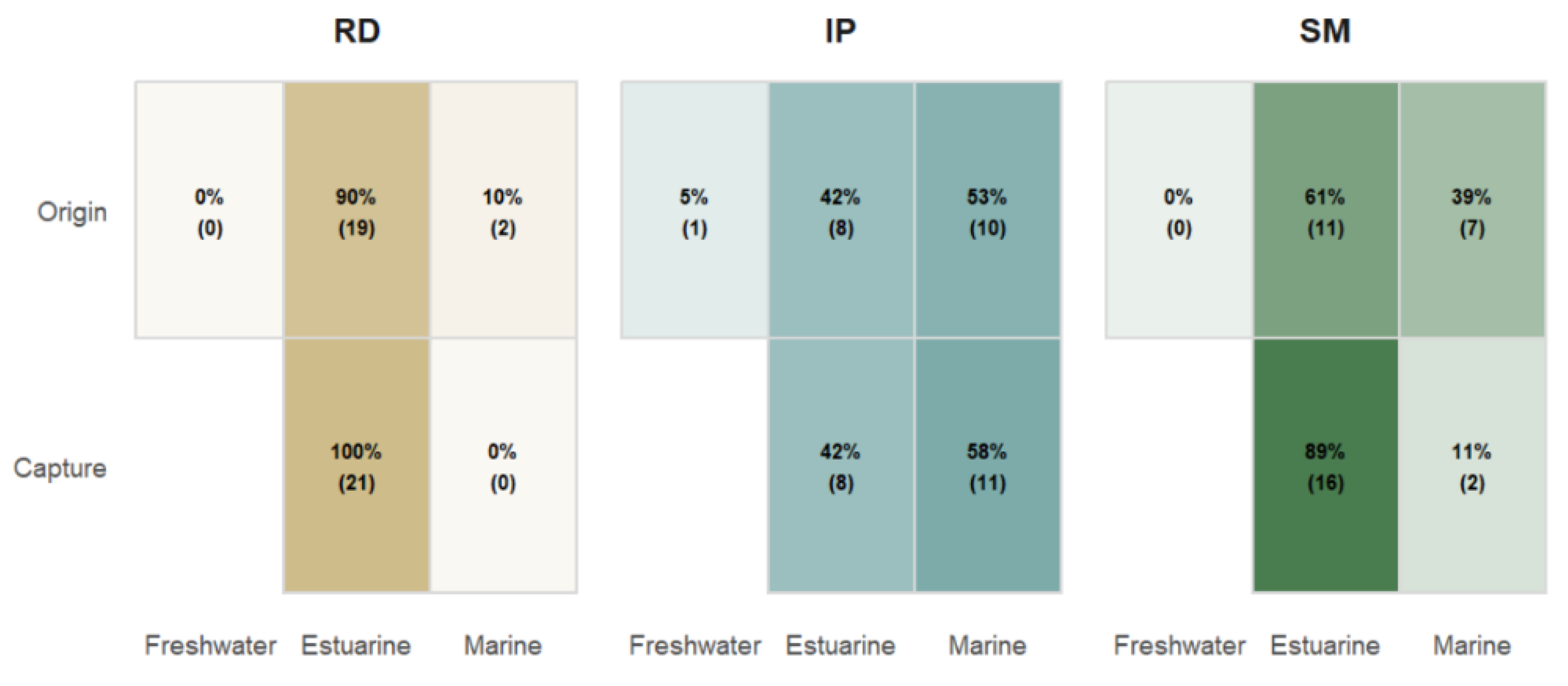
Figure 4.
Sr:Ca profiles (mmol·mol⁻¹) along the otolith from core to edge for the five ontogenetic habitat-use patterns of G. genidens (Types I–V). Thin black lines represent individual profiles, the teal line indicates the mean profile, and the teal shaded band corresponds to the standard deviation. Horizontal dashed lines represent the Sr:Ca thresholds used to classify freshwater, brackish, and marine environmental segments.
Figure 4.
Sr:Ca profiles (mmol·mol⁻¹) along the otolith from core to edge for the five ontogenetic habitat-use patterns of G. genidens (Types I–V). Thin black lines represent individual profiles, the teal line indicates the mean profile, and the teal shaded band corresponds to the standard deviation. Horizontal dashed lines represent the Sr:Ca thresholds used to classify freshwater, brackish, and marine environmental segments.
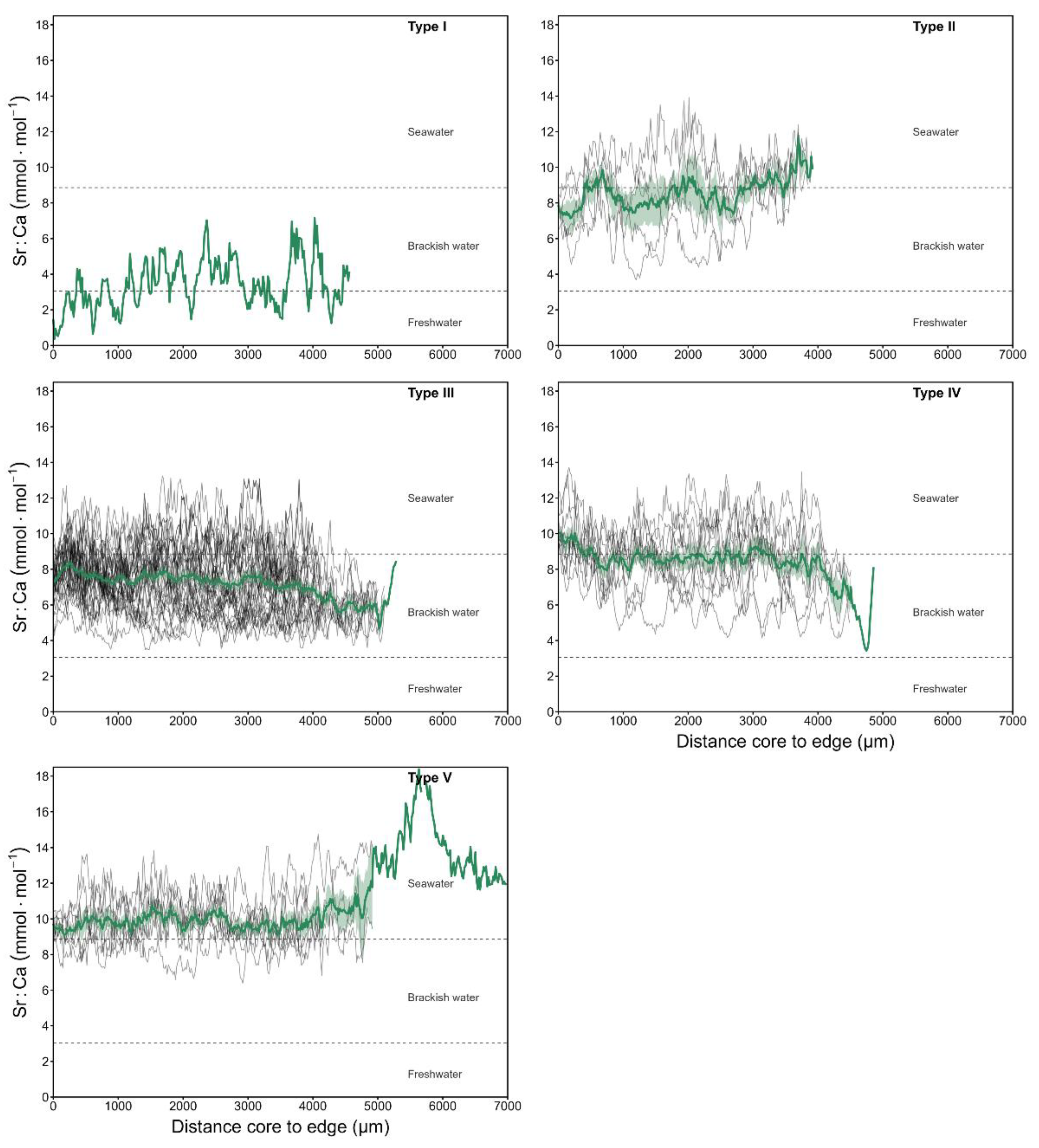
Figure 5.
Age distribution (years) of G. genidens individuals by habitat-use pattern (FE, EM, EME, ME, MEM) in each estuary. Boxplots represent the median and interquartile range, whiskers indicate the data range, and points correspond to individual fish. Colors indicate estuaries: Doce River (RD, beige), Ipiranga River (IP, blue), and São Mateus River (SM, green). Numbers above each box denote the number of individuals per habitat-use pattern within each estuary.
Figure 5.
Age distribution (years) of G. genidens individuals by habitat-use pattern (FE, EM, EME, ME, MEM) in each estuary. Boxplots represent the median and interquartile range, whiskers indicate the data range, and points correspond to individual fish. Colors indicate estuaries: Doce River (RD, beige), Ipiranga River (IP, blue), and São Mateus River (SM, green). Numbers above each box denote the number of individuals per habitat-use pattern within each estuary.
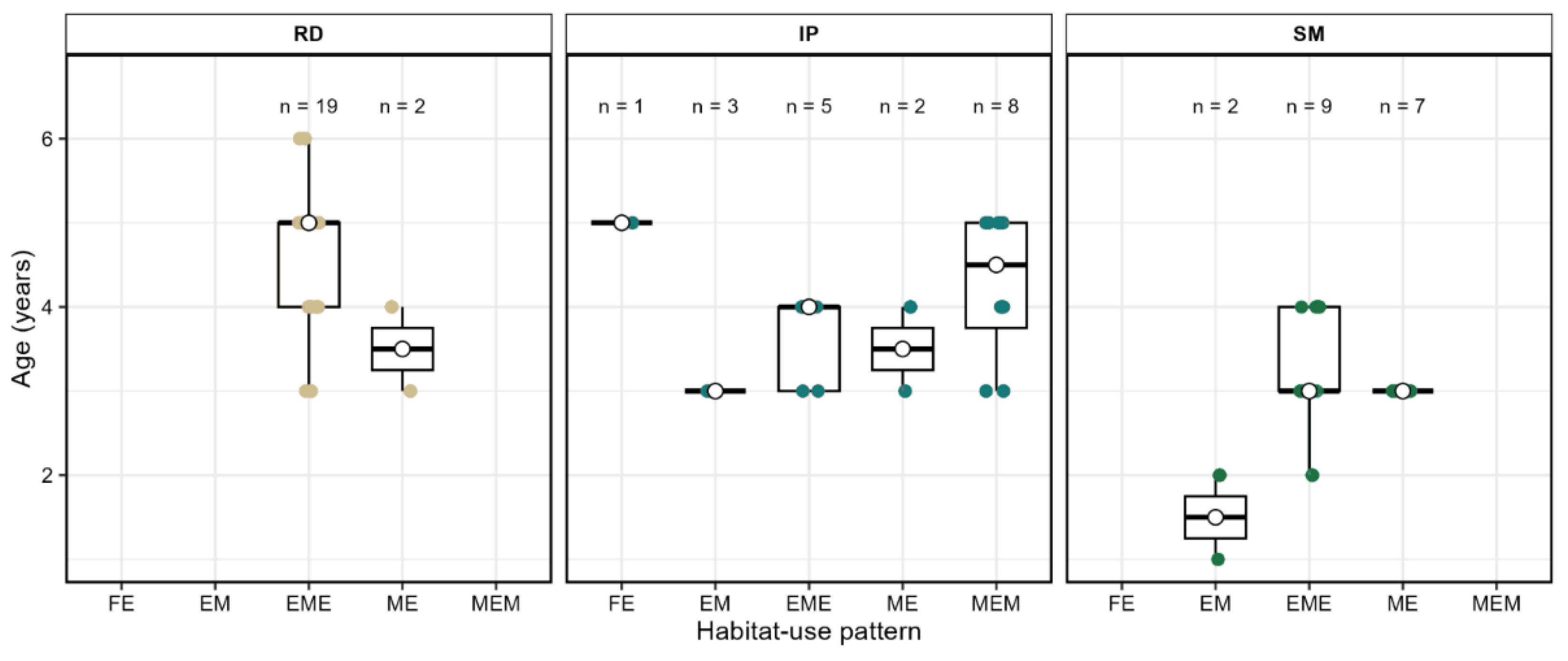
Figure 6.
Profiles of elemental ratios along the otolith from core to edge for the five ontogenetic habitat-use patterns of G. genidens. Sr:Ca ratios (mmol·mol⁻¹; teal line, left axis) and Ba:Ca ratios (mmol·mol⁻¹; sand-colored line, right axis) are shown for representative individuals of each pattern. Gray dashed horizontal lines indicate the Sr:Ca thresholds used to classify freshwater (< 3.06 mmol·mol⁻¹), brackish, and marine (> 8.87 mmol·mol⁻¹) environments.
Figure 6.
Profiles of elemental ratios along the otolith from core to edge for the five ontogenetic habitat-use patterns of G. genidens. Sr:Ca ratios (mmol·mol⁻¹; teal line, left axis) and Ba:Ca ratios (mmol·mol⁻¹; sand-colored line, right axis) are shown for representative individuals of each pattern. Gray dashed horizontal lines indicate the Sr:Ca thresholds used to classify freshwater (< 3.06 mmol·mol⁻¹), brackish, and marine (> 8.87 mmol·mol⁻¹) environments.
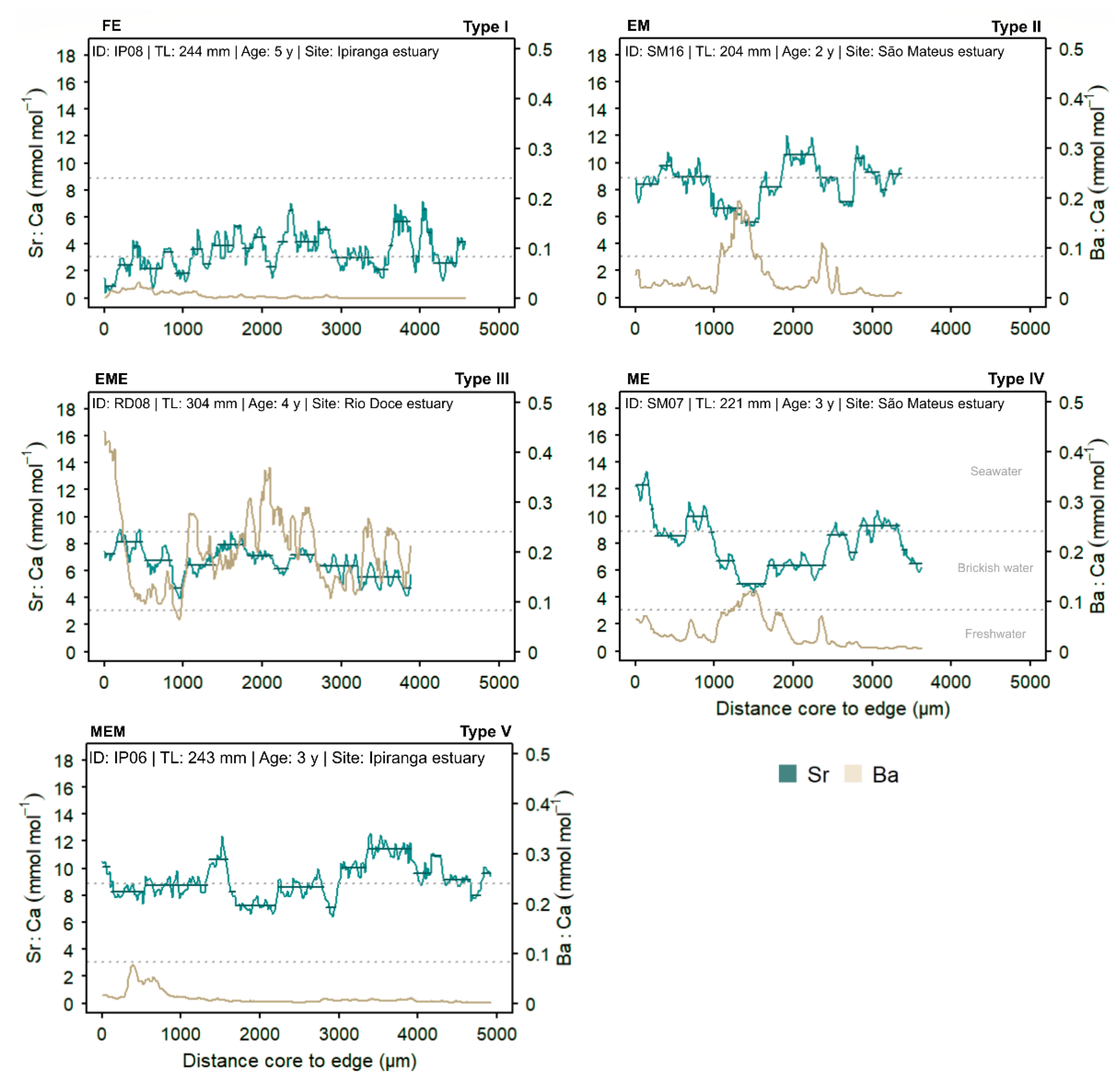

Table 1.
Ontogenetic patterns of habitat use by G. genidens identified from Sr:Ca longitudinal profiles.
Table 1.
Ontogenetic patterns of habitat use by G. genidens identified from Sr:Ca longitudinal profiles.
| Type | Symbol | Trajectory | Description |
| I | FE | Freshwater → Estuarine | Individuals born in freshwater that migrate to the estuary. |
| II | EM | Estuarine → Marine | Born in estuarine waters and moved to the marine environment. |
| III | EME | Estuarine → Marine → Estuarine | Origin and pre-capture in estuary, with intermediate incursions into marine waters. |
| IV | ME | Marine → Estuarine | Individuals of marine origin that enter the estuary during growth. |
| V | MEM | Marine → Estuarine → Marine | Fish of marine origin that made temporary movements to the estuary and later returned to the sea. |
Table 2.
Total number (n) of G. genidens individuals sampled at the three estuarine sites, mean values ± SD and range (minimum-maximum) of total length (TL), age, and Element:Ca ratio of the otolith rim.
Table 2.
Total number (n) of G. genidens individuals sampled at the three estuarine sites, mean values ± SD and range (minimum-maximum) of total length (TL), age, and Element:Ca ratio of the otolith rim.
| Site | n | TL (mm) | Age (Years) | Ba:Ca (mmol mol-1) | Sr:Ca (mmol mol-1) |
| Rio Doce estuary | 21 | 289.7 ± 18.2a (250 – 315) |
4.5 ± 0.9a (3 - 6) |
0.21 ± 0.11a (0.000009 - 0.75) |
6.62 ± 1.57b (0.0044 – 13.1) |
| Ipiranga estuary | 19 | 252.8 ± 33.3b (232 – 382) |
3.9 ± 0.8a (3 - 5) |
0.02 ± 0.05b (0.000001 - 0.91) |
9.12 ± 2.28a (0.0044 – 18.9) |
| São Mateus estuary | 18 | 222.2 ± 16.5c (199 - 251) |
2.9 ± 0.7b (1 - 4) |
0.03 ± 0.03c (0.000008 - 0.24) |
8.43 ± 1.75a (0.0054 – 13.7) |
* Identical letters within the same variable indicate no statistical differences between estuaries (p > 0.05), and different letters within the same variable indicate significant differences (p < 0.05).
Table 3.
Absolute count (n) and percentage (%) of G. genidens individuals classified into the five ontogenetic habitat use patterns, according to individual Sr:Ca profiles, by estuary.
Table 3.
Absolute count (n) and percentage (%) of G. genidens individuals classified into the five ontogenetic habitat use patterns, according to individual Sr:Ca profiles, by estuary.
| Site | n | Type I (FE) | Type II (EM) | Type III (EME) | Type IV (ME) | Type V (MEM) |
| Rio Doce estuary | 21 | 0 | 0 | 19 (90.5%) | 2 (9.52%) | 0 |
| Ipiranga estuary | 19 | 1 (5.3%) | 3 (15.8%) | 3 (15.8%) | 2 (10.5%) | 8 (42.1%) |
| São Mateus estuary | 18 | 0 | 1 (5.6%) | 9 (50.0%) | 7 (38.9%) | 1 (5.6%) |
| Total | 58 | 1 (1.7%) | 5 (8.6%) | 31 (56.9%) | 11 (19.0%) | 8 (13.8%) |
Disclaimer/Publisher’s Note: The statements, opinions and data contained in all publications are solely those of the individual author(s) and contributor(s) and not of MDPI and/or the editor(s). MDPI and/or the editor(s) disclaim responsibility for any injury to people or property resulting from any ideas, methods, instructions or products referred to in the content. |
© 2026 by the authors. Licensee MDPI, Basel, Switzerland. This article is an open access article distributed under the terms and conditions of the Creative Commons Attribution (CC BY) license (http://creativecommons.org/licenses/by/4.0/).
Copyright: This open access article is published under a Creative Commons CC BY 4.0 license, which permit the free download, distribution, and reuse, provided that the author and preprint are cited in any reuse.


