

Submitted:
02 March 2026
Posted:
03 March 2026
You are already at the latest version
Abstract
Deubiquitinases or DUBs have emerged as pivotal regulators in cellular homeostasis, coordinating the delicate balance of protein ubiquitination and deubiquitination. Their versatile roles span from controlling protein turnover to modulating signal transduction pathways, thereby influencing diverse cellular processes such as DNA damage repair, apoptosis, and immune responses. This review comprehensively explores the current understanding of DUBs, elucidating their structural diversity, catalytic mechanisms, physiological functions, and implications in human diseases. Moreover, we discuss the therapeutic potential of targeting DUBs in various pathological conditions, highlighting recent advancements and challenges in developing DUB-specific inhibitors.
Keywords:
deubiquitinase
; cysteine protease
; cancer
; neurodegenerative disease
; small-molecule inhibitors
; PROTACs
; DUBTACs
1. Introduction
The ubiquitin–proteasome system (UPS) is a finely tuned intracellular mechanism that orchestrates selective protein degradation and plays a pivotal role in regulating diverse cellular processes[1,2](Figure 1). It maintains cellular homeostasis by eliminating unwanted or damaged proteins[3], thereby ensuring proper cell function[4]. This intricate system is fundamental to numerous biological pathways, including cell cycle progression[4], signal transduction[5,6], and immune responses[7,8]. At the heart of the UPS lies ubiquitination, a process in which the small, highly conserved protein ubiquitin is covalently attached to target proteins[9]. This modification serves as a molecular tag that marks substrates for destruction by the proteasome, a process known as proteasomal degradation.
Ubiquitination is a multistep enzymatic cascade involving ubiquitin-activating enzymes (E1), ubiquitin-conjugating enzymes (E2), and ubiquitin ligases (E3)[10,11,12]. E1 enzymes activate ubiquitin in an ATP-dependent manner and transfer it to E2 enzymes, which subsequently cooperate with E3 ligases to attach ubiquitin to specific substrate proteins. Importantly, E3 ligases confer substrate specificity by recognizing distinct degradation signals, including protein misfolding, DNA damage, or regulatory post-translational modifications[13,14,15]. Polyubiquitinated proteins are then recognized and degraded by the proteasome, a large barrel-shaped proteolytic complex[16,17]. The proteasome functions as the cell’s primary protein quality-control machinery, degrading ubiquitin-tagged substrates into short peptides that can be recycled for new protein synthesis.
The UPS is tightly regulated to ensure balanced protein turnover and cellular homeostasis[18]. Regulation occurs at multiple levels, including ubiquitin availability, E3 ligase activity, and substrate accessibility to the degradation machinery. In addition to protein quality control, the UPS plays a central role in cellular signaling by selectively degrading key regulatory proteins, thereby modulating pathways involved in cell growth, differentiation, and apoptosis[19,20]. Dysregulation of the UPS has been implicated in numerous diseases, including cancer, neurodegenerative disorders, and immune-related conditions[19,20,21,22,23].
Protein homeostasis is further regulated by the removal of ubiquitin chains through a process known as deubiquitination. Deubiquitinases (DUBs) are specialized proteases that catalyze the cleavage of ubiquitin from substrate proteins, thereby fine-tuning ubiquitin-dependent signaling pathways and maintaining cellular equilibrium[24,25]. The discovery and classification of DUB families have revealed their diverse and essential roles in cellular physiology and disease.
1. Structural Diversity and Catalytic Mechanisms of DUBs
The journey of DUB discovery traces back to early studies exploring the enzymatic machinery responsible for ubiquitin removal from proteins. Initial investigations revealed the existence of enzymes capable of cleaving ubiquitin chains, thereby uncovering deubiquitinating activity within cells[24]. Subsequent efforts focused on isolating and characterizing these enzymes, leading to the identification of the first DUBs. Pioneering studies in the late 20th century unveiled the first members of the DUB family, such as Ubiquitin C-terminal Hydrolases (UCHs)[24] and Ubiquitin-specific Proteases (USPs)[26]. These discoveries laid the foundation for further exploration into the diversity and functional significance of DUBs in cellular processes. The exponential growth of DUB research has since revealed a vast array of enzymes with distinct structural and functional properties. To navigate this complexity, DUBs are primarily classified into two major groups based on their catalytic mechanisms[27] (Figure 2).
A. Cysteine Protease DUBs:
Cysteine-based deubiquitinases (DUBs) represent a prominent and well-studied subset of the DUB family. These enzymes are characterized by the presence of a conserved cysteine residue within their catalytic domain. The catalytic site typically comprises a cysteine (Cys), a histidine (His), and an aspartate (Asp) or asparagine (Asn) residue, which act together to mediate the hydrolysis of ubiquitin-protein bonds[24,26]. Mechanistically analogous hydrolytic cleavage is also performed by enzymes such as peptidyl-tRNA hydrolases (Pths), which, although lacking a catalytic cysteine, facilitate the release of peptides from stalled tRNAs[28,29,30,31]. Cysteine in DUBs functions as the nucleophile during deubiquitination reaction, forming a transient covalent bond with the C-terminal glycine of ubiquitin, thereby facilitating hydrolysis of the isopeptide bond and the release of ubiquitin from substrate proteins[32]. The catalytic activity of cysteine DUBs is finely regulated, with individual enzymes exhibiting distinct substrate specificities and regulatory mechanisms[33].
Beyond the catalytic domain, cysteine DUBs often contain additional domains or motifs that contribute to substrate recognition, enzyme regulation, or protein-protein interactions, expanding their functional repertoire within the cellular context[34,35,36]. By cleaving ubiquitin chains of various lengths and linkages, cysteine DUBs exert precise control over ubiquitination dynamics, thereby influencing protein stability, localization, and function. This class of DUBs can also be modulated by reactive oxygen species (ROS) during oxidative stress due to the reactivity of the catalytic cysteine[32,37,38].
Cysteine DUBs participate in a wide range of cellular processes, including protein quality control, signal transduction, DNA repair, and immune responses[26,27]. By reversing protein ubiquitination, they regulate the turnover of key signaling molecules, modulate transcription factor activation, and fine-tune cellular responses to environmental stimuli[34]. This family is further subdivided into six subfamilies—UCH, USP, OTU, MJD, MINDY, and ZUFSP—based on amino acid sequence and domain architecture[39].
a. Ubiquitin C-terminal hydrolase (UCH) family: The UCH family represents one of the most well-characterized and largest subsets of cysteine-based DUBs, defined by a conserved catalytic domain known as the UCH domain, typically comprising approximately 230 amino acids[40]. This domain adopts a β-grasp fold, with a central β-sheet flanked by α-helices, forming a compact globular structure. Structural studies have revealed remarkable flexibility within the UCH domain, which facilitates substrate recognition and catalysis[41]. UCH enzymes generally exhibit high specificity for cleaving ubiquitin from small peptide adducts or the C-terminus of proteins rather than processing long polyubiquitin chains, which limits their linkage specificity compared to other DUB families[42,43].
Some UCH enzymes also possess auxiliary domains or motifs that contribute to substrate specificity or subcellular localization, expanding their functional repertoire. Representative members of this family include UCH-L1 (Ubiquitin C-Terminal Hydrolase L1), UCH-L3, and UCH37. UCH-L1 and UCH-L3 feature an additional C-terminal ubiquitin-like (UBL) domain that mediates protein–protein interactions[44]. UCH-L1 is predominantly expressed in neurons and has been implicated in neurodegenerative disorders, including Parkinson’s and Alzheimer’s disease, whereas UCH-L3 is ubiquitously expressed and participates in DNA repair, protein turnover, and cell cycle regulation[45,46,47]. In contrast, UCH37 is a component of the 26S proteasome regulatory complex and contains an N-terminal extension that facilitates interactions with other proteasome components, enabling its incorporation into the regulatory machinery[48,49,50].
b. Ubiquitin-specific protease (USP) family: The hallmark feature of USP family members is the presence of a conserved catalytic domain known as the USP domain, typically spanning approximately 350–400 amino acids[51]. Structurally, the USP domain adopts a characteristic right-hand fold comprising a palm domain that harbors the catalytic triad, along with flanking fingers and thumb regions that contribute to substrate recognition and binding[52,53,54]. Beyond the catalytic core, USP enzymes often contain accessory domains or motifs that confer substrate specificity, regulate enzymatic activity, or facilitate protein–protein interactions, thereby expanding their functional repertoire within the cellular context[55,56,57].
Notable examples of USP family members include USP7, USP8, and USP14. USP7 features a catalytic USP domain flanked by auxiliary domains such as the TRAF domain and a ubiquitin-like (UBL) domain[58], which aid in substrate recognition and interaction with binding partners. USP7 regulates a broad spectrum of substrates, including tumor suppressors such as p53 and PTEN, and oncogenic proteins such as Mdm2 and β-catenin, thereby modulating cellular homeostasis, DNA damage response, chromatin remodeling, and protein stability[59,60]. USP8 is involved in controlling the turnover and trafficking of cell surface receptors, including receptor tyrosine kinases (RTKs) such as EGFR[61]. Structurally, USP8 comprises a catalytic USP domain and a C-terminal MIT (Microtubule Interacting and Trafficking) domain that mediates interactions with endosomal proteins and subcellular localization[62]. Through deubiquitination of key endocytic machinery components, USP8 fine-tunes receptor signaling, impacting cellular processes such as proliferation and differentiation.
USP14 is associated with the proteasome regulatory complex and regulates the efficiency and fidelity of protein degradation by modulating the ubiquitin landscape of proteasomal substrates. It features a catalytic USP domain coupled with an N-terminal UBL domain that facilitates proteasome association. By trimming ubiquitin chains from substrates prior to their degradation, USP14 prevents premature proteolysis and ensures selective degradation of protein targets, thereby maintaining proteostasis within the cell[63,64].
c. Ovarian Tumor (OTU) family: Members of the Ovarian Tumor (OTU) deubiquitinase family are defined by a conserved OTU catalytic domain, originally identified in ovarian tumor antigens. This domain adopts a characteristic fold comprising a central twisted β-sheet flanked by α-helices, which facilitates the cleavage of ubiquitin moieties from protein substrates[27]. Among OTU family members, OTUD1 and OTUD5 have emerged as important regulators of immune signaling and genomic maintenance.
OTUD1 modulates innate immune pathways by targeting components of the NF-κB signaling axis and cytokine regulatory networks. It contains an N-terminal domain that mediates interactions with signaling partners, along with a central OTU catalytic core that fine-tunes the ubiquitination status of key intermediates, thereby adjusting the intensity and duration of immune responses[65].
OTUD5, also known as Deubiquitinase A (DUBA), plays a dual role in genomic stability and transcriptional regulation. Phosphorylation of OTUD5 at multiple serine residues within its C-terminal region—mediated by kinases such as CK2 and ATM—enhances enzymatic activity and substrate selectivity in response to genotoxic stress, supporting DNA damage repair and cell survival[66,67]. Structural and mechanistic studies indicate that OTUD5 exhibits conformational flexibility that is important for substrate recognition and catalytic function. Phosphorylation shifts the conformational equilibrium toward an active state, promoting efficient substrate processing[68,69,70,71]. Together, these findings highlight OTUD5 as a dynamic, context-dependent deubiquitinase operating at the intersection of ubiquitin signaling, genome stability, and transcriptional regulation. Its activity, shaped by post-translational modifications and conformational adaptability, underscores its potential as a therapeutic target in diseases associated with dysregulated ubiquitin-dependent signaling pathways.
OTULIN (OTU Deubiquitinase with Linear Linkage Specificity) is another member in this family and is notable for its specificity towards linear ubiquitin chains, a unique modification involved in immune signaling and inflammation, making it a promising therapeutic target for inflammatory diseases[72,73].
d. Machado-Josephin domain (MJD) family: Members of the MJD family are defined by a conserved catalytic domain of ~180 amino acids known as the Josephin domain, named after its identification in the MJD1 protein associated with Machado-Joseph Disease[74,75]. Structurally, the Josephin domain adopts a distinctive fold featuring a mixed α/β topology with a central β-sheet flanked by α-helices, which supports its catalytic function[76,77]. Ataxin-3 (ATXN3) serves as the prototypical member of the MJD family and provides critical insights into the molecular mechanisms underlying neurodegeneration[76]. Expansion of a polyglutamine (polyQ) tract within Ataxin-3 leads to protein misfolding and aggregation, ultimately causing neuronal dysfunction and degeneration characteristic of Machado-Joseph Disease[78]. Another member, Josephin-1 (JOSD1), regulates cell motility, membrane dynamics, and endocytosis[79].
e. Motif-Interacting with Ubiquitin Domains (MINDY) domain family: This family of deubiquitinating enzymes (DUBs) represents a fascinating group of proteins with unique structural features and diverse functional roles in cellular regulation. Members of the MINDY family are characterized by the presence of one or more ubiquitin-binding domains, often referred to as MIND domains, which mediate specific interactions with ubiquitin or ubiquitin-like proteins[80,81]. Structurally, MIND domains adopt a compact fold comprising a series of α-helices and β-strands arranged in a characteristic topology, with key residues forming complementary interactions with the hydrophobic surface of ubiquitin to facilitate high-affinity binding[81]. The integration of ubiquitin-binding and catalytic domains enables MINDY enzymes to recognize ubiquitinated substrates and modulate their ubiquitin modifications.
The first two members of this family, MINDY-1 and MINDY-2, regulate diverse cellular processes, including protein degradation, DNA repair, and signal transduction, and exert broad effects on cellular physiology through their deubiquitinating activity toward multiple ubiquitin chain types[81].
f. Zinc finger-containing Ubiquitin-Specific Protease (ZUFSP) family: The ZUFSP family represents a distinct and recently characterized class of cysteine deubiquitinating enzymes (DUBs) with specialized roles in ubiquitin signaling and genome maintenance[82,83,84]. Members of this family are defined by a ZUFSP catalytic domain, which adopts a papain-like fold and operates via a cysteine–histidine–aspartate catalytic triad[83]. Structurally, ZUFSP proteins are unique in that they combine the catalytic domain with multiple ubiquitin-binding modules, including zinc finger motifs and ubiquitin-interacting elements, which together confer high specificity toward K63-linked polyubiquitin chains[82,83]. These auxiliary domains engage ubiquitin through complementary interactions with its hydrophobic surface, enabling precise recognition of ubiquitinated substrates.
Functionally, the sole human member ZUP1 (also known as ZUFSP) plays a critical role in the DNA damage response by regulating ubiquitin-dependent signaling at sites of DNA lesions. By selectively removing K63-linked ubiquitin chains, ZUFSP modulates the recruitment and turnover of DNA repair factors, thereby maintaining genome stability[82]. The unique structural organization and linkage selectivity of ZUFSP distinguish this family from other cysteine DUBs and underscore its importance in fine-tuning ubiquitin-mediated signaling pathways.
B. Metalloprotease DUBs: Metalloprotease deubiquitinases (DUBs) utilize a metal ion, typically zinc, for catalysis rather than the cysteine-dependent mechanism observed in cysteine protease DUBs[85]. These enzymes belong to the JAB1/MPN/Mov34 metalloenzyme (JAMM) family and play critical roles in protein homeostasis, cell cycle regulation, and signal transduction by cleaving ubiquitin chains from target proteins[86].
JAMM DUBs employ a zinc-dependent hydrolysis mechanism in which a zinc ion is coordinated by essential histidine and aspartate residues within the JAMM domain. The zinc ion activates a water molecule, enabling it to act as a nucleophile that attacks the isopeptide bond linking ubiquitin to its substrate. This catalytic process releases ubiquitin and facilitates subsequent substrate processing[87,88]. The JAMM family includes several key members involved in diverse cellular processes:
RPN11: RPN11 (Regulatory particle subunit number 11) or POH1 (Pad-One- Homologue1) or PSMD14 (Proteasome 26S subunit, non-ATPase 14) is a component of the regulatory subunit (19S) of 26S proteasome that located in the outer part or lid region. RPN11 is the only deubiquitinase that is structurally linked to proteasome. It cleaves ubiquitin chains to facilitate substrate degradation and hence essential for proteasome-mediated protein turnover[89,90].
JAB1: JAB1 (c-Jun activation domain-binding protein-1) is the fifth member of the COP9 (constitutive photomorphogenic-9) signalosome (CSN) complex that regulates Cullin-RING ubiquitin ligases (CRLs) by removing NEDD8 (Neural cell expressed developmentally down-regulated protein 8) modifications. It controls protein stability in signaling pathways[91,92].
AMSH: AMSH (Associated Molecule with the SH3 Domain of STAM) regulates endosomal trafficking by deubiquitinating proteins such as EGFR (epidermal growth factor receptor) and prevents lysosomal degradation of membrane receptors[93,94].
BRCC36: BRCC36 or BRCA1/BRCA2-containing Complex Subunit 36, enhances DNA repair through the BRCA1-A complex. It functions in DNA damage response by removing ubiquitin from H2A and H2AX histones[95,96].
MYSM1: MYSM1 (Myb-Like, SWIRM, and MPN Domains 1) involved in epigenetic regulation by deubiquitinating histone H2A. It plays a very crucial role in immune system development[97,98].
In brief, Metalloprotease DUBs are critical regulators of cellular homeostasis. Their functions extend beyond ubiquitin removal by affecting protein degradation and recycling[90], cell signaling regulation (CSN5 in the COP9 complex)[92], DNA repair and chromatin remodeling (BRCC36 and MYSM1)[96,98], and endosomal trafficking and receptor fate (AMSH in EGFR signaling)[93]. Given their roles in fundamental biological processes, dysregulation of metalloprotease DUBs has been linked to cancer, neurodegenerative diseases, and immune disorders.
2. Physiological Functions of Deubiquitinating Enzymes (DUBs)
Deubiquitinating enzymes (DUBs) are crucial regulators of cellular homeostasis, playing key roles in multiple physiological processes by reversing protein ubiquitination. This process is essential for maintaining protein stability, controlling signaling pathways, and modulating immune responses[26,32]. The major physiological functions of DUBs include protein quality control, DNA damage repair, cellular signaling, immune regulation, autophagy, and development (Table 1)[24,34,35].
A. Protein Quality Control: DUBs maintain protein homeostasis by rescuing misfolded or essential proteins from proteasomal degradation. The ubiquitin–proteasome system (UPS) targets misfolded or damaged proteins for degradation, and DUBs counterbalance this by removing ubiquitin chains, thereby stabilizing specific proteins. For example, USP14 interacts with the proteasome and regulates the degradation rate of ubiquitinated USP14 proteins by trimming ubiquitin chains before substrate degradation, allowing proper protein folding and function[64]. Another important DUB, UCHL1, is highly expressed in neurons and regulates the degradation of synaptic proteins, supporting neuronal health[46].
B. DNA Damage Repair: DUBs modulate the DNA damage response (DDR) by regulating the ubiquitination status of repair proteins, ensuring efficient repair and genome stability. USP1 regulates the Fanconi anemia pathway by deubiquitinating FANCD2, a critical factor in interstrand crosslink repair[99]. BRCC36 (BRCC3), part of the BRCA1-A complex, contributes to homologous recombination repair by deubiquitinating histones at sites of DNA damage[95,96]. Proper DDR regulation by DUBs prevents mutations that could lead to cancer.
C. Cellular Signaling: DUBs influence multiple signaling pathways by controlling the ubiquitination status of key proteins. In the NF-κB pathway, CYLD removes K63-linked ubiquitin chains from TRAF2 and NEMO, acting as a negative regulator to inhibit inflammatory responses[100,101]. A20 functions as a dual-activity enzyme with both DUB and E3 ligase activity, terminating inflammatory signals to prevent chronic inflammation[102]. USP7 regulates the tumor suppressor p53 by deubiquitinating MDM2, stabilizing p53, and promoting cell cycle arrest in response to stress[58].
D. Immune Responses: DUBs regulate both innate and adaptive immunity by modulating receptor signaling, cytokine production, and antigen presentation. USP18 negatively regulates interferon signaling by deubiquitinating and stabilizing ISG15, a ubiquitin-like protein involved in antiviral responses[103]. OTULIN hydrolyzes linear ubiquitin chains on immune signaling proteins such as LUBAC (Linear UBiquitin chain Assembly Complex), preventing excessive inflammation and autoimmune disorders[104]. USP21 has been shown to modulate T-cell activation by deubiquitinating STAT3, a transcription factor critical for immune cell differentiation[105].
E. Autophagy Regulation: DUBs also influence autophagy, a process essential for cellular homeostasis and stress adaptation. USP36 regulates nucleolar autophagy by deubiquitinating autophagy-related proteins and maintaining nucleolar integrity[106]. ATXN3 modulates autophagic flux by interacting with regulators such as Beclin-1, ensuring proper clearance of protein aggregates; disruptions in autophagy-related DUBs contribute to neurodegeneration and cancer[107].
F. Development and Differentiation: DUBs regulate embryonic development and cellular differentiation by modulating key developmental signaling pathways. USP9X is critical for brain development, stabilizing proteins involved in neuronal differentiation[108]. OTUB1 influences TGF-β signaling, which is essential for embryogenesis and stem cell differentiation[109]. Precise regulation of these pathways by DUBs ensures proper tissue formation and function.
3. Dysregulation of DUBs in Human Diseases
Deubiquitinases (DUBs) are crucial enzymes within the ubiquitin-proteasome system that remove ubiquitin moieties from substrate proteins, thereby regulating essential cellular processes such as protein degradation, DNA repair, immune signaling, and apoptosis. Any disruption in DUB activity—caused by genetic mutations, aberrant expression, or post-translational modifications—can compromise cellular homeostasis and contribute to the onset and progression of a variety of human diseases, including cancer, neurodegenerative disorders, inflammatory conditions, and viral infections (Table 2) [24,26,35].
In cancer, dysregulated DUB activity frequently promotes tumor development by either stabilizing oncoproteins or enhancing the degradation of tumor suppressors[35,110]. For example, USP7 (also known as HAUSP) deubiquitinates and stabilizes MDM2 and MDMX, both of which are inhibitors of the tumor suppressor protein p53. Overexpression of USP7, therefore, reduces p53 levels, impairing its tumor-suppressive functions and contributing to the progression of leukemia, prostate, and colorectal cancers. Similarly, USP28 enhances tumor progression by stabilizing oncogenic transcription factors such as c-Myc and c-Jun, particularly in lung and colorectal malignancies[111]. In contrast, certain DUBs like CYLD function as tumor suppressors by negatively regulating the NF-κB signaling pathway through the removal of K63-linked ubiquitin chains from TRAF2 and NEMO[101]. Loss-of-function mutations in CYLD have been implicated in various skin tumors and hematological malignancies, due to increased inflammatory and proliferative signaling (Duffy et al., 2019). Another important DUB, RPN11 (PSMD14), is a subunit of the 19S regulatory particle of the proteasome and plays a pivotal role in substrate deubiquitination during proteasomal degradation[90]. Overexpression of RPN11 has been identified in breast cancer and is considered a potential target for proteasome-based therapies[112].
DUB dysfunction is also intimately connected with neurodegenerative disorders. These diseases are often marked by the accumulation of misfolded or aggregated proteins. DUBs such as USP14 and UCHL1 are essential for the proteasomal degradation of these proteins, and their impairment leads to pathological aggregation, contributing to diseases like Alzheimer’s and Parkinson’s[46,63]. Ataxin-3 (ATXN3), which belongs to the Josephin family of DUBs, is mutated in Spinocerebellar Ataxia Type 3 (SCA3). This mutation leads to the expansion of a polyglutamine (polyQ) tract, resulting in toxic protein aggregation and neuronal dysfunction[78,113]. USP8 is known to regulate the E3 ubiquitin ligase Parkin, which is critical for mitochondrial quality control via mitophagy. Mutations in USP8 disrupt this pathway, contributing to Parkinson’s disease pathogenesis[114]. As protein aggregation is central to many neurodegenerative diseases, pharmacological modulation of DUB activity—either to enhance proteasomal degradation or autophagy—has emerged as a viable therapeutic strategy.
In the immune system, DUBs regulate key signaling pathways, especially those involving NF-κB and type I interferons. Dysregulation of these enzymes can trigger chronic inflammatory responses, playing a role in diseases such as rheumatoid arthritis, inflammatory bowel disease (IBD), and psoriasis[115,116,117]. CYLD, as noted, serves as a negative regulator of NF-κB, and its deficiency has been observed in several inflammatory conditions[101]. Another critical regulator, A20 (TNFAIP3), deubiquitinates and inactivates TRAF6 and RIPK1, thereby attenuating NF-κB signaling. Deficiencies or mutations in A20 have been associated with autoimmune disorders including systemic lupus erythematosus (SLE) and Crohn’s disease[118,119]. USP18 is instrumental in downregulating type I interferon signaling, and its dysfunction is linked to autoimmune encephalopathies and chronic inflammation[103]. Thus, therapeutic targeting of DUBs implicated in these pathways holds significant promise for treating chronic inflammatory and autoimmune diseases.
Viruses have evolved mechanisms to exploit host DUBs to evade immune detection and enhance replication. SARS-CoV-2, the virus responsible for COVID-19, encodes a papain-like protease (PLpro) with deubiquitinating and deISGylating activity, which helps suppress type I interferon responses and facilitates immune evasion[120,121]. Herpes Simplex Virus (HSV) encodes VP1/2, a viral DUB that impairs STING-mediated innate immune signaling through deubiquitination, thereby diminishing antiviral responses[122]. HIV-1 employs its accessory protein Vpr to recruit USP7, leading to the stabilization of viral proteins and further promoting immune evasion[123]. Targeting these viral DUBs or their interactions with host enzymes offers a novel approach to antiviral therapy, especially for emerging pathogens like coronaviruses and flaviviruses.
Beyond cancer, neurodegeneration, inflammation, and viral infections, DUB dysregulation is increasingly recognized in metabolic and cardiovascular diseases. USP2 and USP10 are involved in the regulation of insulin receptor signaling and glucose homeostasis. Their impairment has been linked to metabolic disorders including type 2 diabetes and metabolic syndrome[124,125]. USP9X plays a vital role in cardiac muscle function, and its dysregulation is associated with cardiac fibrosis and heart failure[126]. Moreover, mutations in OTULIN, a linear deubiquitinase, are associated with severe autoinflammatory syndromes due to unrestrained NF-κB signaling in immune cells[72].
In summary, DUBs play indispensable roles in maintaining cellular function and immune balance. Their dysregulation underpins a wide array of pathological states, from oncogenesis to neurodegeneration and autoimmunity. Ongoing research into the molecular mechanisms of specific DUBs and their disease associations continues to reveal new avenues for therapeutic development.
4. Therapeutic Targeting of DUBs
Deubiquitinases (DUBs) have emerged as promising therapeutic targets due to their critical roles in cancer, neurodegenerative diseases, and inflammatory disorders. Aberrant DUB activity contributes to disease progression, making them attractive drug targets. Small-molecule inhibitors and other strategies to modulate DUB function are actively being explored for clinical applications (Table 3).
A. Small-molecule inhibitors: Small-molecule inhibitors represent the most extensively explored strategy for targeting deubiquitinating enzymes (DUBs). These compounds suppress DUB activity, resulting in the accumulation of ubiquitinated proteins and disruption of disease-associated signaling pathways[33]. Early efforts largely focused on inhibitors that interfere directly with catalytic function, leading to the development of agents with therapeutic potential across multiple disease contexts. For example, USP7 inhibitors such as FT671 and XL177A destabilize the MDM2–p53 interaction, restoring p53-mediated tumor suppressor activity and producing robust anti-cancer effects[127,128]. USP30 inhibitors (USP30i-37 and USP30i-3) have been explored for modulating mitochondrial quality control and mitophagy, with therapeutic relevance for mitochondrial disorders and neurodegenerative diseases such as Parkinson’s disease[129]. Inhibitors targeting CYLD (Subquinocin, PR-619) have been explored for modulation of NF-κB signaling in inflammatory diseases and cancers by altering K63-linked ubiquitin signaling[130,131,132], while RPN11 inhibitors disrupt proteasome-associated deubiquitination, impair protein degradation, and induce apoptosis in cancer cells[133,134].
More recent advances have expanded DUB drug discovery beyond direct catalytic inhibition to include allosteric modulation, in which small molecules bind regulatory regions outside the active site and alter enzymatic activity through conformational effects. This strategy can offer enhanced selectivity and reduced off-target toxicity, as allosteric sites are often less conserved than catalytic cores. USP14 allosteric inhibitors, such as IU1 and its optimized analog IU1-248, inhibit proteasome-associated USP14 by sterically hindering ubiquitin access and altering substrate processing without directly modifying the catalytic cysteine[135,136]. In addition, USP7 allosteric modulator MS-8 bind regulatory sites distal to the active site, resulting in activation through long-range conformational control of the catalytic domain[137]. Complementary computational and molecular dynamics studies have further identified cryptic allosteric pockets in USP7, expanding opportunities for selective pharmacological modulation of DUB activity[138]
B. PROTACs (Proteolysis-Targeting Chimeras): PROTACs have emerged as an innovative strategy for targeting DUBs by inducing their degradation rather than merely inhibiting catalytic activity. These bifunctional molecules recruit DUBs to E3 ubiquitin ligases, thereby harnessing the cell’s endogenous ubiquitin–proteasome system to promote selective polyubiquitination and proteasomal degradation of the target protein. Compared with conventional small-molecule inhibitors, PROTACs can achieve more sustained and complete target suppression, including elimination of non-catalytic scaffolding functions[139].
USP7-directed PROTACs have demonstrated robust anti-cancer activity in preclinical models by inducing efficient degradation of USP7, leading to destabilization of MDM2 and reactivation of p53-dependent tumor suppressor pathways[140,141]. Similarly, PROTACs targeting USP28 have been developed to suppress oncogenic signaling by degrading USP28 and destabilizing transcription factors such as c-MYC, thereby inhibiting tumor progression in colorectal and breast cancer models[142,143]. Collectively, these studies highlight PROTAC-mediated DUB degradation as a promising therapeutic paradigm with the potential to overcome limitations associated with reversible DUB inhibition.
C. DUBTACs (Deubiquitinase-targeting chimeras): This class of molecules stabilize DUBs rather than inhibiting or degrading them. DUBTACs are heterobifunctional molecules that recruit a deubiquitinase (DUB) to a protein of interest, facilitating deubiquitination and protecting the protein from proteasomal degradation[144]. The first-generation DUBTACs utilized covalent recruitment of OTUB1 to stabilize ΔF508-CFTR, demonstrating robust rescue of mutant CFTR levels and function in cellular models, as well as stabilization of the tumor suppressor kinase WEE1[145]. Subsequent studies have expanded the DUBTAC toolbox to include non-covalent USP7 recruiters, which effectively stabilize ΔF508-CFTR and AMPK isoforms, illustrating the versatility of DUBTACs in modulating multiple cellular pathways[146]. Additional DUBTACs employing USP1 and USP28 have been developed to stabilize tumor suppressors and immune regulators, highlighting their potential applications in cancer therapy and innate immunity[147]. Moreover, PRO-DUBTACs, which combine E3 ligase and DUB recruitment, have been reported to stabilize tumor-suppressive E3 ligases such as VHL and KEAP1, further extending the therapeutic utility of targeted protein stabilization[148]. Collectively, these studies position DUBTACs as a promising and rapidly evolving modality for rescuing disease-associated proteins that are otherwise challenging to target with conventional inhibition or degradation strategies[149].
D. RNA-Based Therapies: RNA interference (RNAi) and antisense oligonucleotides (ASOs) are being explored as strategies to selectively suppress deubiquitinating enzyme (DUB) expression at the mRNA level, offering an alternative to small-molecule inhibition by reducing protein abundance directly. This approach is particularly attractive for targeting DUBs that are considered “undruggable,” where conventional inhibitors show limited selectivity or efficacy. For example, RNAi-mediated silencing of USP9X has demonstrated anti-tumor activity in breast and lung cancer models by impairing tumor cell survival and proliferation[150,151]. Similarly, knockdown of OTULIN has been investigated for modulating dysregulated linear ubiquitin signaling in autoimmune and autoinflammatory diseases, including rheumatoid arthritis and systemic lupus erythematosus, where aberrant immune activation is driven by excessive NF-κB signaling[72].
E. Covalent Inhibitors: Covalent inhibitors form irreversible bonds with the catalytic cysteine residues of cysteine protease DUBs, resulting in sustained and potent inhibition. This strategy is particularly advantageous for disease-associated DUBs or for targets with shallow, highly conserved active sites, where non-covalent inhibitors often suffer from limited potency or selectivity. Representative examples include VLX1570, a covalent inhibitor of USP14, which induces the accumulation of polyubiquitinated proteins and promotes apoptosis in multiple myeloma cells, and b-AP15, which targets both USP14 and UCHL5 within the proteasome to disrupt protein degradation and induce cancer cell death[152,153]. Notably, some clinically approved drugs, such as Vismodegib, although developed primarily to inhibit the Smoothened (SMO) receptor in basal cell carcinoma, have been shown to influence ubiquitin-dependent and proteostasis-related pathways, underscoring the broader relevance of covalent mechanisms in disease modulation[154].
5. Challenges in Targeting DUBs
Despite the promising potential of deubiquitinase (DUB) inhibition as a therapeutic strategy, several challenges remain in effectively targeting these enzymes. DUBs are highly conserved and structurally diverse enzymes, often functioning within multi-protein complexes, which complicates drug design. Off-target inhibition can result in unintended toxicity, disruption of normal cellular processes, and compensatory pathway activation, all of which limit the clinical utility of DUB-targeted therapies[155,156].
A. Catalytic Domain Conservation and Selectivity Challenges
The catalytic domains of DUBs are highly conserved, particularly among cysteine protease DUB families such as USP and UCH, which complicates the development of selective inhibitors. Structural similarity between family members increases the risk of off-target inhibition, which can perturb normal cellular protein homeostasis and lead to cytotoxicity. For example, inhibitors designed against USP14 or USP7 must avoid unintended activity against closely related USPs, as non-specific inhibition can disrupt critical processes such as proteasomal degradation, DNA repair, and immune signaling. Achieving specificity often requires detailed structural knowledge of DUB active sites and adjacent regulatory motifs to exploit subtle differences between homologous enzymes[27].
B. Structural Complexity and Conformational Flexibility
DUBs exhibit significant structural complexity and flexibility, which poses challenges for inhibitor design. Many DUBs, such as OTU-family members and USPs, can adopt multiple conformations depending on substrate binding, post-translational modifications, or interactions with other proteins[27,40]. This dynamic behavior can reduce the affinity and efficacy of small-molecule inhibitors, particularly those designed to bind a single conformational state. Computational studies and NMR analyses have highlighted the need for inhibitors capable of accommodating conformational plasticity, or for strategies that stabilize specific conformations to enhance potency[68,70,71].
C. Multi-Protein Complexes and Binding Complexity
Many DUBs function as components of larger multi-protein complexes, such as RPN11 within the 26S proteasome or JAB1/CSN5 in the COP9 signalosome[90,91]. In these contexts, the DUB catalytic site may be partially occluded or stabilized by protein-protein interactions, making inhibitor access more challenging. Designing drugs that can effectively inhibit DUBs in their native complex requires consideration of both protein interfaces and potential allosteric effects. Failure to account for complex-mediated conformational constraints can result in poor inhibitor efficacy in cellular or in vivo models, even if biochemical inhibition is observed in vitro.
D. Reversible Binding and Transient Inhibition
Many small-molecule DUB inhibitors are reversible, leading to transient suppression of enzymatic activity. In diseases such as cancer, continuous inhibition of DUBs may be necessary to maintain therapeutic efficacy, as transient inhibition may allow compensatory cellular pathways to restore protein homeostasis. Covalent inhibitors and PROTAC-based degraders have been explored to overcome this limitation, providing sustained suppression of DUB function and prolonged cellular effects.
E. Resistance to DUB Inhibitors and Compensatory Pathways
Resistance is another critical challenge in DUB-targeted therapy. Cancer cells, for example, can activate compensatory signaling networks or upregulate alternative DUBs to bypass the inhibited pathway, reducing therapeutic efficacy over time. This has been observed in preclinical models with USP7 and USP14 inhibitors, where prolonged exposure triggered adaptive responses in proteostasis and DNA repair pathways[157]. Combination therapies targeting multiple DUBs or intersecting pathways, such as combining USP1–UAF1 inhibition with DNA-damaging agents, have been proposed to overcome resistance[158].
F. Pharmacokinetic Challenges
Finally, many DUB inhibitors face pharmacokinetic limitations, including poor solubility, low metabolic stability, and rapid clearance in vivo, which hinder their clinical translation. Strategies to improve bioavailability include chemical modifications to enhance solubility and stability, encapsulation in nanoparticle carriers, and the development of PROTACs or covalent inhibitors that increase target residence time. Such approaches aim to maximize inhibitor exposure while maintaining selectivity and minimizing off-target toxicity.
Future Perspectives and Concluding Remarks
As our understanding of DUB biology advances, the potential for targeting these enzymes therapeutically continues to grow. Research in this field is rapidly expanding, uncovering novel molecular mechanisms governing protein homeostasis and disease progression. Given the critical involvement of DUBs in cancer, neurodegenerative disorders, and immune dysregulation, there is increasing interest in designing selective inhibitors and activators for clinical applications. Advances in structural biology, high-throughput screening, and chemical biology are accelerating the identification of precise modulators tailored to specific DUBs.
Furthermore, the integration of omics technologies, including proteomics and transcriptomics, is enhancing our ability to map DUB substrates and interaction networks, leading to a more detailed understanding of their physiological functions. Future research should focus on unraveling the context-dependent roles of DUBs and their interplay with other post-translational modifications, such as phosphorylation and SUMOylation.
In summary, DUBs play indispensable roles in cellular regulation and offer significant therapeutic potential. Continued exploration of their molecular mechanisms and the development of pharmacological modulators will open new avenues for targeted therapies against diseases linked to ubiquitin system dysfunction. The future of DUB-targeted therapies is promising, with implications for precision medicine and novel drug development. Overcoming current challenges, including substrate specificity and inhibitor selectivity, will be critical for translating these discoveries into effective treatments. Ultimately, further investigations into DUB biology will provide deeper insights into cellular homeostasis and pave the way for groundbreaking therapeutic innovations.
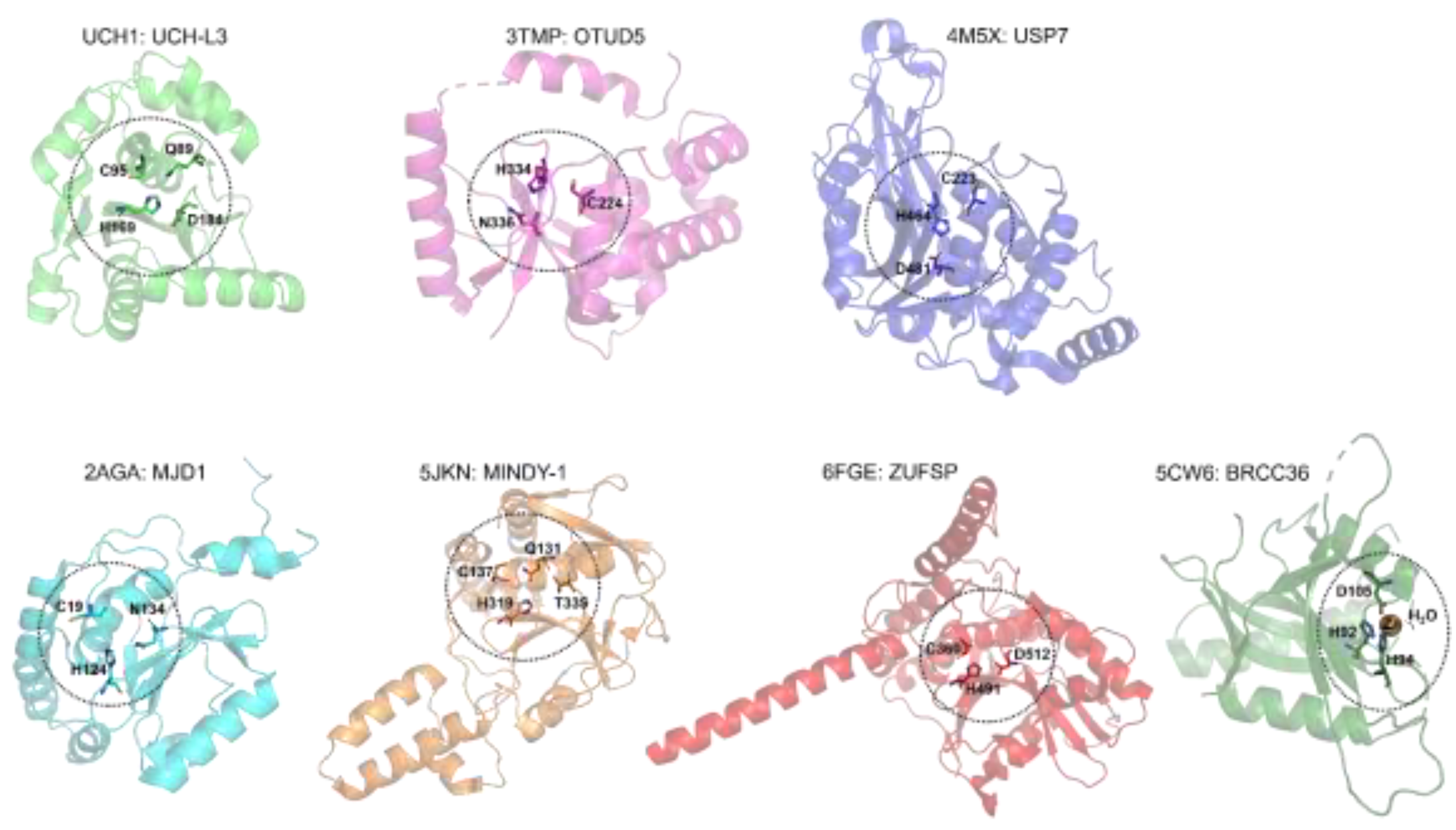
Figure 3.
Structures of representative members from each deubiquitinase family. Residues forming the catalytic center are labeled and circled. UCH-L3, OTUD5, USP7, MJD1, MINDY-1, and ZUFSP are cysteine proteases, whereas BRCC36 is a metalloprotease in which a Zn2+ ion mediates catalytic activity. The Zn2+ ion is coordinated by one water molecule, two histidine residues, and one aspartate residue.
Figure 3.
Structures of representative members from each deubiquitinase family. Residues forming the catalytic center are labeled and circled. UCH-L3, OTUD5, USP7, MJD1, MINDY-1, and ZUFSP are cysteine proteases, whereas BRCC36 is a metalloprotease in which a Zn2+ ion mediates catalytic activity. The Zn2+ ion is coordinated by one water molecule, two histidine residues, and one aspartate residue.
Funding
This research received no external funding.
Conflicts of Interest
The author declares no conflict of interest.
References
- Hershko, A.; Ciechanover, A. The ubiquitin system. Annu. Rev. Biochem. 1998, 67, 425–479. [Google Scholar] [CrossRef]
- Ciechanover, A. The ubiquitin-proteasome pathway: On protein death and cell life. EMBO J. 1998, 17, 7151–7160. [Google Scholar] [CrossRef]
- Goldberg, A.L. Protein degradation and protection against misfolded or damaged proteins. Nature 2003, 426, 895–899. [Google Scholar] [CrossRef]
- Pickart, C.M.; Eddins, M.J. Ubiquitin: Structures, functions, mechanisms. Biochim. Biophys. Acta Mol. Cell Res. 2004, 1695, 55–72. [Google Scholar] [CrossRef]
- Mani, A.; Gelmann, E.P. The ubiquitin-proteasome pathway and its role in cancer. J. Clin. Oncol. 2005, 23, 4776–4789. [Google Scholar] [CrossRef]
- Mukhopadhyay, D.; Riezman, H. Proteasome-independent functions of ubiquitin in endocytosis and signaling. Science 2007, 315, 201–205. [Google Scholar] [CrossRef]
- Rock, K.L.; Goldberg, A.L. Degradation of cell proteins and the generation of MHC class I-presented peptides. Annu. Rev. Immunol. 1999, 17, 739–779. [Google Scholar] [CrossRef]
- Kloetzel, P.M. Antigen processing by the proteasome. Nat. Rev. Mol. Cell Biol. 2001, 2, 179–187. [Google Scholar] [CrossRef] [PubMed]
- Wilkinson, K.D. Ubiquitin-dependent signaling: The role of ubiquitination in the response of cells to their environment. J. Nutr. 1999, 129, 1933–1936. [Google Scholar] [CrossRef]
- Schulman, B.A.; Harper, J.W. Ubiquitin-like protein activation by E1 enzymes: The apex for downstream signalling pathways. Nat. Rev. Mol. Cell Biol. 2009, 10, 319–331. [Google Scholar] [CrossRef] [PubMed]
- Ye, Y.; Rape, M. Building ubiquitin chains: E2 enzymes at work. Nat. Rev. Mol. Cell Biol. 2009, 10, 755–764. [Google Scholar] [CrossRef] [PubMed]
- Deshaies, R.J.; Joazeiro, C.A.P. RING domain E3 ubiquitin ligases. Annu. Rev. Biochem. 2009, 78, 399–434. [Google Scholar] [CrossRef] [PubMed]
- Varshavsky, A. The N-end rule pathway of protein degradation. Genes Cells 1997, 2, 13–28. [Google Scholar] [CrossRef] [PubMed]
- Glickman, M.H.; Ciechanover, A. The ubiquitin-proteasome proteolytic pathway: Destruction for the sake of construction. Physiol. Rev. 2002, 82, 373–428. [Google Scholar] [CrossRef]
- Finley, D. Recognition and processing of ubiquitin-protein conjugates by the proteasome. Annu. Rev. Biochem. 2009, 78, 477–513. [Google Scholar] [CrossRef]
- Voges, D.; Zwickl, P.; Baumeister, W. The 26S proteasome: A molecular machine designed for controlled proteolysis. Annu. Rev. Biochem. 1999, 68, 1015–1068. [Google Scholar] [CrossRef]
- Tanaka, K. The proteasome: Overview of structure and functions. Proc. Jpn. Acad. Ser. B Phys. Biol. Sci. 2009, 85, 12–36. [Google Scholar] [CrossRef] [PubMed]
- Ravid, T.; Hochstrasser, M. Diversity of degradation signals in the ubiquitin-proteasome system. Nat. Rev. Mol. Cell Biol. 2008, 9, 679–690. [Google Scholar] [CrossRef]
- Nalepa, G.; Rolfe, M.; Harper, J.W. Drug discovery in the ubiquitin-proteasome system. Nat. Rev. Drug Discov. 2006, 5, 596–613. [Google Scholar] [CrossRef]
- Hoeller, D.; Hecker, C.-M.; Dikic, I. Ubiquitin and ubiquitin-like proteins in cancer pathogenesis. Nat. Rev. Cancer 2006, 6, 776–788. [Google Scholar] [CrossRef]
- Bedford, L.; Lowe, J.; Dick, L.R.; Mayer, R.J.; Brownell, J.E. Ubiquitin-like protein conjugation and the ubiquitin-proteasome system as drug targets. Nat. Rev. Drug Discov. 2011, 10, 29–46. [Google Scholar] [CrossRef]
- Rubinsztein, D.C. The roles of intracellular protein-degradation pathways in neurodegeneration. Nature 2006, 443, 780–786. [Google Scholar] [CrossRef] [PubMed]
- Schwartz, A.L.; Ciechanover, A. Targeting proteins for destruction by the ubiquitin system: Implications for human pathobiology. Annu. Rev. Pharmacol. Toxicol. 2009, 49, 73–96. [Google Scholar] [CrossRef]
- Amerik, A.Y.; Hochstrasser, M. Mechanism and function of deubiquitinating enzymes. Biochim. Biophys. Acta 2004, 1695, 189–207. [Google Scholar] [CrossRef] [PubMed]
- Kabra, A.; Li, Y. Conformational Dynamics of Deubiquitinase A and Functional Implications. Biochemistry 2021, 60, 201–209. [Google Scholar] [CrossRef]
- Wilkinson, K.D. DUBs at a glance. J. Cell Sci. 2009, 122, 2325–2329. [Google Scholar] [CrossRef] [PubMed]
- Komander, D.; Clague, M.J.; Urbé, S. Breaking the chains: Structure and function of the deubiquitinases. Nat. Rev. Mol. Cell Biol. 2009, 10, 550–563. [Google Scholar] [CrossRef]
- Kabra, A.; et al. Structural characterization of peptidyl-tRNA hydrolase from Mycobacterium smegmatis by NMR spectroscopy. Biochim. Biophys. Acta 2016, 1864, 1304–1314. [Google Scholar] [CrossRef]
- Kabra, A.; et al. Unraveling the stereochemical and dynamic aspects of the catalytic site of bacterial peptidyl-tRNA hydrolase. RNA 2017, 23, 202–216. [Google Scholar] [CrossRef]
- Shahid, S.; et al. Role of methionine 71 in substrate recognition and structural integrity of bacterial peptidyl-tRNA hydrolase. Biochim. Biophys. Acta Proteins Proteom. 2018, 1866, 865–874. [Google Scholar] [CrossRef]
- Mundra, S.; Kabra, A. Unveiling the Druggable Landscape of Bacterial Peptidyl tRNA Hydrolase: Insights into Structure, Function, and Therapeutic Potential. Biomolecules 2024, 14. [Google Scholar] [CrossRef]
- Snyder, N.A.; Silva, G.M. Deubiquitinating enzymes (DUBs): Regulation, homeostasis, and oxidative stress response. J. Biol. Chem. 2021, 297, 101077. [Google Scholar] [CrossRef]
- Lange, S.M.; Armstrong, L.A.; Kulathu, Y. Deubiquitinases: From mechanisms to their inhibition by small molecules. Mol. Cell 2022, 82, 15–29. [Google Scholar] [CrossRef]
- Estavoyer, B.; et al. Mechanisms orchestrating the enzymatic activity and cellular functions of deubiquitinases. J. Biol. Chem. 2022, 298, 102198. [Google Scholar] [CrossRef] [PubMed]
- Ren, J.; et al. Deubiquitylating Enzymes in Cancer and Immunity. Adv. Sci. (Weinh). 2023, 10, e2303807. [Google Scholar] [CrossRef] [PubMed]
- Sahtoe, D.D.; Sixma, T.K. Layers of DUB regulation. Trends Biochem. Sci. 2015, 40, 456–467. [Google Scholar] [CrossRef] [PubMed]
- Snyder, N.A.; Silva, G.M. Deubiquitinating enzymes (DUBs): Regulation, homeostasis, and oxidative stress response. J. Biol. Chem. 2021, 297, 101077. [Google Scholar] [CrossRef]
- Cotto-Rios, X.M.; Békés, M.; Chapman, J.; Ueberheide, B.; Huang, T.T. Deubiquitinases as a signaling target of oxidative stress. Cell Rep. 2012, 2, 1475–1484. [Google Scholar] [CrossRef]
- Kumar, P.; Kumar, P.; Mandal, D.; Velayutham, R. The emerging role of Deubiquitinases (DUBs) in parasites: A foresight review. Front. Cell. Infect. Microbiol. 2022, 12, 985178. [Google Scholar] [CrossRef]
- Suresh, H.G.; Pascoe, N.; Andrews, B. The structure and function of deubiquitinases: Lessons from budding yeast. Open Biol. 2020, 10, 200279. [Google Scholar] [CrossRef]
- Hafez, N.; Modather El-Awadly, Z.; Arafa, R.K. UCH-L3 structure and function: Insights about a promising drug target. Eur. J. Med. Chem. 2022, 227, 113970. [Google Scholar] [CrossRef]
- McGouran, J.F.; Gaertner, S.R.; Altun, M.; Kramer, H.B.; Kessler, B.M. Deubiquitinating enzyme specificity for ubiquitin chain topology profiled by di-ubiquitin activity probes. Chem. Biol. 2013, 20, 1447–1455. [Google Scholar] [CrossRef]
- Hewings, D.S.; Flygare, J.A.; Bogyo, M.; Wertz, I.E. Activity-based probes for the ubiquitin conjugation-deconjugation machinery: New chemistries, new tools, and new insights. FEBS J. 2017, 284, 1555–1576. [Google Scholar] [CrossRef]
- Puri, S.; Hsu, S.-T.D. Functional dynamics of human ubiquitin C-terminal hydrolases. Frontiers in Biophysics 2024, 2. [Google Scholar] [CrossRef]
- Porchietto, E.; et al. UCH-L1 in Alzheimer’s Disease: A Crucial Player in Dementia-Associated Mechanisms. Int. J. Mol. Sci. 2025, 26. [Google Scholar] [CrossRef]
- Mi, Z.; Graham, S.H. Role of UCHL1 in the pathogenesis of neurodegenerative diseases and brain injury. Ageing Res. Rev. 2023, 86, 101856. [Google Scholar] [CrossRef]
- Setsuie, R.; Wada, K. The functions of UCH-L1 and its relation to neurodegenerative diseases. Neurochem. Int. 2007, 51, 105–111. [Google Scholar] [CrossRef]
- Jacobson, A.D.; MacFadden, A.; Wu, Z.; Peng, J.; Liu, C.-W. Autoregulation of the 26S proteasome by in situ ubiquitination. Mol. Biol. Cell 2014, 25, 1824–1835. [Google Scholar] [CrossRef]
- VanderLinden, R.T.; et al. Structural Basis for the Activation and Inhibition of the UCH37 Deubiquitylase. Mol. Cell 2016, 61, 487. [Google Scholar] [CrossRef] [PubMed]
- Yao, T.; et al. Distinct modes of regulation of the Uch37 deubiquitinating enzyme in the proteasome and in the Ino80 chromatin-remodeling complex. Mol. Cell 2008, 31, 909–917. [Google Scholar] [CrossRef] [PubMed]
- Gersch, M.; et al. Distinct USP25 and USP28 Oligomerization States Regulate Deubiquitinating Activity. Mol. Cell 2019, 74, 436–451.e7. [Google Scholar] [CrossRef]
- Maurer, S.K.; et al. Ubiquitin-specific protease 11 structure in complex with an engineered substrate mimetic reveals a molecular feature for deubiquitination selectivity. J. Biol. Chem. 2023, 299, 105300. [Google Scholar] [CrossRef] [PubMed]
- Paudel, P.; et al. Crystal structure and activity-based labeling reveal the mechanisms for linkage-specific substrate recognition by deubiquitinase USP9X. Proceedings of the National Academy of Sciences 2019, 116, 7288–7297. [Google Scholar] [CrossRef] [PubMed]
- Ward, S.J.; et al. The structure of the deubiquitinase USP15 reveals a misaligned catalytic triad and an open ubiquitin-binding channel. J. Biol. Chem. 2018, 293, 17362–17374. [Google Scholar] [CrossRef] [PubMed]
- Devi, U.; Shukla, P.K. The structural, functional, and regulatory insight of deubiquitinating enzyme—USP22. Int. J. Biol. Macromol. 2025, 318, 145164. [Google Scholar] [CrossRef]
- Clague, M.J.; et al. Deubiquitylases From Genes to Organism. Physiol. Rev. 2013, 93, 1289–1315. [Google Scholar] [CrossRef]
- Wu, Y.; et al. Deubiquitinating enzymes in parkinson’s disease: Molecular mechanisms and therapeutic potential. Mol. Med. 2025, 31, 329. [Google Scholar] [CrossRef]
- Pozhidaeva, A.; Bezsonova, I. USP7: Structure, substrate specificity, and inhibition. DNA Repair (Amst). 2019, 76, 30–39. [Google Scholar] [CrossRef]
- Valles, G.J.; Bezsonova, I.; Woodgate, R.; Ashton, N.W. USP7 Is a Master Regulator of Genome Stability. Front. Cell Dev. Biol. 2020, 8, 717. [Google Scholar] [CrossRef]
- Song, Y.; et al. Ubiquitin-Specific Protease 7 (USP7) as a Promising Therapeutic Target for Drug Discovery: From Mechanisms to Therapies. J. Med. Chem. 2025, 68, 7914–7931. [Google Scholar] [CrossRef]
- Berlin, I.; Higginbotham, K.M.; Dise, R.S.; Sierra, M.I.; Nash, P.D. The deubiquitinating enzyme USP8 promotes trafficking and degradation of the chemokine receptor 4 at the sorting endosome. J. Biol. Chem. 2010, 285, 37895–37908. [Google Scholar] [CrossRef] [PubMed]
- Dufner, A.; Knobeloch, K.-P. Ubiquitin-specific protease 8 (USP8/UBPy): A prototypic multidomain deubiquitinating enzyme with pleiotropic functions. Biochem. Soc. Trans. 2019, 47, 1867–1879. [Google Scholar] [CrossRef]
- Srinivasan, V.; et al. USP14 is crucial for proteostasis regulation and α-synuclein degradation in human SH-SY5Y dopaminergic cells. Heliyon 2025, 11, e42031. [Google Scholar] [CrossRef]
- Wang, F.; Ning, S.; Yu, B.; Wang, Y. USP14: Structure, Function, and Target Inhibition. Front. Pharmacol. 2021, 12, 801328. [Google Scholar] [CrossRef]
- Oikawa, D.; et al. OTUD1 deubiquitinase regulates NF-κB- and KEAP1-mediated inflammatory responses and reactive oxygen species-associated cell death pathways. Cell Death Dis. 2022, 13, 694. [Google Scholar] [CrossRef]
- Fu, L.; Lu, K.; Jiao, Q.; Chen, X.; Jia, F. The Regulation and Double-Edged Roles of the Deubiquitinase OTUD5. Cells 2023, 12. [Google Scholar] [CrossRef]
- Li, F.; et al. The deubiquitinase OTUD5 regulates Ku80 stability and non-homologous end joining. Cell. Mol. Life Sci. 2019, 76, 3861–3873. [Google Scholar] [CrossRef]
- Kabra, A.; Benson, C.A.; Li, Y. Backbone 1H, 13C, and 15N resonance assignments of deubiquitinase A in non-phosphorylated and phosphorylated forms. Biomol. NMR Assign. 2019, 13, 37–42. [Google Scholar] [CrossRef]
- Kabra, A.; Rumpa, E.; Li, Y. Observation of Arginine Side-Chain Motions Coupled to the Global Conformational Exchange Process in Deubiquitinase A. ACS Omega 2022, 7, 9936–9943. [Google Scholar] [CrossRef] [PubMed]
- Kabra, A.; Li, Y. Conformational Dynamics of Deubiquitinase A and Functional Implications. Biochemistry 2021, 60, 201–209. [Google Scholar] [CrossRef] [PubMed]
- Kabra, A.; Rumpa, E.; Li, Y. Modulation of conformational equilibrium by phosphorylation underlies the activation of deubiquitinase A. Journal of Biological Chemistry 2020, 295, 3945–3951. [Google Scholar] [CrossRef]
- Lork, M.; Verhelst, K.; Beyaert, R. CYLD, A20 and OTULIN deubiquitinases in NF-κB signaling and cell death: So similar, yet so different. Cell Death Differ. 2017, 24, 1172–1183. [Google Scholar] [CrossRef]
- Weinelt, N.; van Wijk, S.J.L. Ubiquitin-dependent and -independent functions of OTULIN in cell fate control and beyond. Cell Death Differ. 2021, 28, 493–504. [Google Scholar] [CrossRef]
- Bettencourt, C.; Lima, M. Machado-Joseph Disease: From first descriptions to new perspectives. Orphanet J. Rare Dis. 2011, 6, 35. [Google Scholar] [CrossRef]
- Zeng, C.; et al. Machado-Joseph Deubiquitinases: From Cellular Functions to Potential Therapy Targets. Front. Pharmacol. 2020, 11, 1311. [Google Scholar] [CrossRef]
- Weeks, S.D.; Grasty, K.C.; Hernandez-Cuebas, L.; Loll, P.J. Crystal structure of a Josephin-ubiquitin complex: Evolutionary restraints on ataxin-3 deubiquitinating activity. J. Biol. Chem. 2011, 286, 4555–4565. [Google Scholar] [CrossRef]
- Grasty, K.C.; Weeks, S.D.; Loll, P.J. Structural insights into the activity and regulation of human Josephin-2. J. Struct. Biol. X 2019, 3, 100011. [Google Scholar] [CrossRef]
- Yang, H.; et al. Aggregation of polyglutamine-expanded ataxin-3 sequesters its specific interacting partners into inclusions: Implication in a loss-of-function pathology. Sci. Rep. 2014, 4, 6410. [Google Scholar] [CrossRef] [PubMed]
- Seki, T.; et al. JosD1, a membrane-targeted deubiquitinating enzyme, is activated by ubiquitination and regulates membrane dynamics, cell motility, and endocytosis. J. Biol. Chem. 2013, 288, 17145–17155. [Google Scholar] [CrossRef]
- Abdul Rehman, S.A.; et al. MINDY-1 Is a Member of an Evolutionarily Conserved and Structurally Distinct New Family of Deubiquitinating Enzymes. Mol. Cell 2016, 63, 146–155. [Google Scholar] [CrossRef] [PubMed]
- Abdul Rehman, S.A.; et al. Mechanism of activation and regulation of deubiquitinase activity in MINDY1 and MINDY2. Mol. Cell 2021, 81, 4176–4190.e6. [Google Scholar] [CrossRef] [PubMed]
- Haahr, P.; et al. ZUFSP Deubiquitylates K63-Linked Polyubiquitin Chains to Promote Genome Stability. Mol. Cell 2018, 70, 165–174.e6. [Google Scholar] [CrossRef] [PubMed]
- Hermanns, T.; Pichlo, C.; Baumann, U.; Hofmann, K. A structural basis for the diverse linkage specificities within the ZUFSP deubiquitinase family. Nat. Commun. 2022, 13, 401. [Google Scholar] [CrossRef] [PubMed]
- Kwasna, D.; et al. Discovery and Characterization of ZUFSP/ZUP1, a Distinct Deubiquitinase Class Important for Genome Stability. Mol. Cell 2018, 70, 150–164.e6. [Google Scholar] [CrossRef]
- Hameed, D.S.; et al. Development of Ubiquitin-Based Probe for Metalloprotease Deubiquitinases. Angew. Chem. Int. Ed Engl. 2019, 58, 14477–14482. [Google Scholar] [CrossRef]
- Pan, X.; et al. Structural and Functional Basis of JAMM Deubiquitinating Enzymes in Disease. Biomolecules 2022, 12. [Google Scholar] [CrossRef]
- Guo, Y.; et al. Structural and functional characterization of ubiquitin variant inhibitors for the JAMM-family deubiquitinases STAMBP and STAMBPL1. Journal of Biological Chemistry 2021, 297, 101107. [Google Scholar] [CrossRef]
- Shrestha, R.K.; et al. Insights into the mechanism of deubiquitination by JAMM deubiquitinases from cocrystal structures of the enzyme with the substrate and product. Biochemistry 2014, 53, 3199–3217. [Google Scholar] [CrossRef]
- Spataro, V.; Buetti-Dinh, A. POH1/Rpn11/PSMD14: A journey from basic research in fission yeast to a prognostic marker and a druggable target in cancer cells. Br. J. Cancer 2022, 127, 788–799. [Google Scholar] [CrossRef]
- Htet, Z.M.; Dong, K.C.; Martin, A. The deubiquitinase Rpn11 functions as an allosteric ubiquitin sensor to promote substrate engagement by the 26S proteasome. Cell Rep. 2025, 44, 115736. [Google Scholar] [CrossRef]
- Echalier, A.; et al. Insights into the regulation of the human COP9 signalosome catalytic subunit, CSN5/Jab1. Proceedings of the National Academy of Sciences 2013, 110, 1273–1278. [Google Scholar] [CrossRef]
- Muromoto, R.; et al. Jun activation domain-binding protein 1 (JAB1) is required for the optimal response to interferons. J. Biol. Chem. 2013, 288, 30969–30979. [Google Scholar] [CrossRef]
- McCullough, J.; Clague, M.J.; Urbé, S. AMSH is an endosome-associated ubiquitin isopeptidase. J. Cell Biol. 2004, 166, 487–492. [Google Scholar] [CrossRef]
- Agromayor, M.; Martin-Serrano, J. Interaction of AMSH with ESCRT-III and Deubiquitination of Endosomal Cargo. Journal of Biological Chemistry 2006, 281, 23083–23091. [Google Scholar] [CrossRef] [PubMed]
- Ng, H.-M.; Wei, L.; Lan, L.; Huen, M.S.Y. The Lys63-deubiquitylating Enzyme BRCC36 Limits DNA Break Processing and Repair. J. Biol. Chem. 2016, 291, 16197–16207. [Google Scholar] [CrossRef] [PubMed]
- Rabl, J.; et al. Structural Basis of BRCC36 Function in DNA Repair and Immune Regulation. Mol. Cell 2019, 75, 483–497.e9. [Google Scholar] [CrossRef]
- Jiang, X.-X.; et al. Epigenetic Regulation of Antibody Responses by the Histone H2A Deubiquitinase MYSM1. Sci. Rep. 2015, 5, 13755. [Google Scholar] [CrossRef] [PubMed]
- Nandakumar, V.; Chou, Y.; Zang, L.; Huang, X.F.; Chen, S.-Y. Epigenetic control of natural killer cell maturation by histone H2A deubiquitinase, MYSM1. Proc. Natl. Acad. Sci. USA 2013, 110, E3927–E3936. [Google Scholar] [CrossRef]
- Nijman, S.M.B.; et al. The Deubiquitinating Enzyme USP1 Regulates the Fanconi Anemia Pathway. Mol. Cell 2005, 17, 331–339. [Google Scholar] [CrossRef]
- Lee, B.-C.; Miyata, M.; Lim, J.H.; Li, J.-D. Deubiquitinase CYLD acts as a negative regulator for bacterium NTHi-induced inflammation by suppressing K63-linked ubiquitination of MyD88. Proceedings of the National Academy of Sciences 2016, 113. [Google Scholar] [CrossRef]
- Sun, S.-C. CYLD: A tumor suppressor deubiquitinase regulating NF-kappaB activation and diverse biological processes. Cell Death Differ. 2010, 17, 25–34. [Google Scholar] [CrossRef]
- Ning, S.; Pagano, J.S. The A20 Deubiquitinase Activity Negatively Regulates LMP1 Activation of IRF7. J. Virol. 2010, 84, 6130–6138. [Google Scholar] [CrossRef]
- Ketscher, L.; et al. Selective inactivation of USP18 isopeptidase activity in vivo enhances ISG15 conjugation and viral resistance. Proceedings of the National Academy of Sciences 2015, 112, 1577–1582. [Google Scholar] [CrossRef] [PubMed]
- Elliott, P.R.; et al. Molecular Basis and Regulation of OTULIN-LUBAC Interaction. Mol. Cell 2014, 54, 335–348. [Google Scholar] [CrossRef] [PubMed]
- Wu, Y.; Guo, Y.; Wang, Q. USP21 accelerates the proliferation and glycolysis of esophageal cancer cells by regulating the STAT3/FOXO1 pathway. Tissue Cell 2022, 79, 101916. [Google Scholar] [CrossRef] [PubMed]
- Sun, X.-X.; et al. The nucleolar ubiquitin-specific protease USP36 deubiquitinates and stabilizes c-Myc. Proceedings of the National Academy of Sciences 2015, 112, 3734–3739. [Google Scholar] [CrossRef]
- Ashkenazi, A.; et al. Polyglutamine tracts regulate beclin 1-dependent autophagy. Nature 2017, 545, 108–111. [Google Scholar] [CrossRef]
- Bridges, C.R.; et al. USP9X deubiquitylating enzyme maintains RAPTOR protein levels, mTORC1 signalling and proliferation in neural progenitors. Sci. Rep. 2017, 7, 391. [Google Scholar] [CrossRef]
- Herhaus, L.; Al-Salihi, M.; Macartney, T.; Weidlich, S.; Sapkota, G.P. OTUB1 enhances TGFβ signalling by inhibiting the ubiquitylation and degradation of active SMAD2/3. Nat. Commun. 2013, 4, 2519. [Google Scholar] [CrossRef]
- Qi, S.-M.; et al. Targeting USP7-Mediated Deubiquitination of MDM2/MDMX-p53 Pathway for Cancer Therapy: Are We There Yet? Front. Cell Dev. Biol. 2020, 8. [Google Scholar] [CrossRef]
- Popov, N.; et al. The ubiquitin-specific protease USP28 is required for MYC stability. Nat. Cell Biol. 2007, 9, 765–774. [Google Scholar] [CrossRef] [PubMed]
- Luo, G.; Hu, N.; Xia, X.; Zhou, J.; Ye, C. RPN11 deubiquitinase promotes proliferation and migration of breast cancer cells. Mol. Med. Rep. 2017, 16, 331–338. [Google Scholar] [CrossRef]
- Rybarikova, M.; et al. Gene editing for Spinocerebellar ataxia type 3 taking advantage of the human ATXN3L paralog as replacement gene. Gene Ther. 2025, 32, 462–474. [Google Scholar] [CrossRef] [PubMed]
- Durcan, T.M.; et al. USP8 regulates mitophagy by removing K6-linked ubiquitin conjugates from parkin. EMBO J. 2014, 33, 2473–2491. [Google Scholar] [CrossRef] [PubMed]
- Wang, F.; Liu, J.; Wen, J.; Sun, Y.; He, M. Exploring the ubiquitination regulatory network: Opening new perspectives for rheumatoid arthritis therapy. Ann. Med. 2025, 57. [Google Scholar] [CrossRef]
- Watanabe, T.; Kudo, M. Roles of Deubiquitinases OTUD3 and OTUD5 in Inflammatory Bowel Diseases. Int. J. Mol. Sci. 2025, 26, 9924. [Google Scholar] [CrossRef]
- Wang, N.; et al. USP16 drives psoriasis progression by deubiquitinating and stabilizing NLRP3 in keratinocytes. JCI Insight 2026. [Google Scholar] [CrossRef]
- Wu, Y.; He, X.; Huang, N.; Yu, J.; Shao, B. A20: A master regulator of arthritis. Arthritis Res. Ther. 2020, 22, 220. [Google Scholar] [CrossRef]
- Yu, H.; Lin, L.; Zhang, Z.; Zhang, H.; Hu, H. Targeting NF-κB pathway for the therapy of diseases: Mechanism and clinical study. Signal Transduct. Target. Ther. 2020, 5, 209. [Google Scholar] [CrossRef]
- Cao, D.; et al. The SARS-CoV-2 papain-like protease suppresses type I interferon responses by deubiquitinating STING. Sci. Signal. 2023, 16. [Google Scholar] [CrossRef] [PubMed]
- Yang, M.; et al. SARS-CoV-2 papain-like protease plays multiple roles in regulating cellular proteins in the endoplasmic reticulum. Journal of Biological Chemistry 2023, 299, 105346. [Google Scholar] [CrossRef]
- Bodda, C.; et al. HSV1 VP1-2 deubiquitinates STING to block type I interferon expression and promote brain infection. Journal of Experimental Medicine 2020, 217. [Google Scholar] [CrossRef]
- Gao, W.; et al. Specific Deubiquitinating Enzymes Promote Host Restriction Factors Against HIV/SIV Viruses. Front. Immunol. 2021, 12. [Google Scholar] [CrossRef]
- Molusky, M.M.; Li, S.; Ma, D.; Yu, L.; Lin, J.D. Ubiquitin-Specific Protease 2 Regulates Hepatic Gluconeogenesis and Diurnal Glucose Metabolism Through 11β-Hydroxysteroid Dehydrogenase 1. Diabetes 2012, 61, 1025–1035. [Google Scholar] [CrossRef] [PubMed]
- Kitamura, H. Ubiquitin-Specific Proteases (USPs) and Metabolic Disorders. Int. J. Mol. Sci. 2023, 24, 3219. [Google Scholar] [CrossRef]
- Li, X.; et al. Ubiquitin Specific Protease 9X Regulates the Activation of ARK5 and Promotes Progression of Fibrotic Remodeling. JACC Basic Transl. Sci. 2025, 10, 101255. [Google Scholar] [CrossRef] [PubMed]
- Schauer, N.J.; et al. Selective USP7 inhibition elicits cancer cell killing through a p53-dependent mechanism. Sci. Rep. 2020, 10, 5324. [Google Scholar] [CrossRef]
- Nie, L.; et al. USP7 substrates identified by proteomics analysis reveal the specificity of USP7. Genes Dev. 2022, 36, 1016–1030. [Google Scholar] [CrossRef]
- Okarmus, J.; et al. USP30 inhibition induces mitophagy and reduces oxidative stress in parkin-deficient human neurons. Cell Death Dis. 2024, 15, 52. [Google Scholar] [CrossRef]
- Huang, Z.; Tan, Y. The Potential of Cylindromatosis (CYLD) as a Therapeutic Target in Oxidative Stress-Associated Pathologies: A Comprehensive Evaluation. Int. J. Mol. Sci. 2023, 24. [Google Scholar] [CrossRef]
- Mathis, B.J.; Lai, Y.; Qu, C.; Janicki, J.S.; Cui, T. CYLD-mediated signaling and diseases. Curr. Drug Targets 2015, 16, 284–294. [Google Scholar] [CrossRef]
- Yamanaka, S.; et al. Subquinocin, a small molecule inhibitor of CYLD and USP-family deubiquitinating enzymes, promotes NF-κB signaling. Biochem. Biophys. Res. Commun. 2020, 524, 1–7. [Google Scholar] [CrossRef] [PubMed]
- Li, J.; et al. Capzimin is a potent and specific inhibitor of proteasome isopeptidase Rpn11. Nat. Chem. Biol. 2017, 13, 486–493. [Google Scholar] [CrossRef]
- Perez, C.; et al. Discovery of an Inhibitor of the Proteasome Subunit Rpn11. J. Med. Chem. 2017, 60, 1343–1361. [Google Scholar] [CrossRef]
- Boselli, M.; et al. An inhibitor of the proteasomal deubiquitinating enzyme USP14 induces tau elimination in cultured neurons. Journal of Biological Chemistry 2017, 292, 19209–19225. [Google Scholar] [CrossRef]
- Wang, Y.; et al. Small molecule inhibitors reveal allosteric regulation of USP14 via steric blockade. Cell Res. 2018, 28, 1186–1194. [Google Scholar] [CrossRef]
- Jaen Maisonet, I.; et al. Small-molecule allosteric activator of ubiquitin-specific protease 7 (USP7). Proceedings of the National Academy of Sciences 2025, 122. [Google Scholar] [CrossRef]
- Wang, X.; Liu, N.; Li, N.; Lu, S.; Chai, Z. Mechanistic Insights into the Mechanism of Allosteric Inhibition of Ubiquitin-Specific Protease 7 (USP7). Biomolecules 2025, 15. [Google Scholar] [CrossRef] [PubMed]
- Cremer, A.; Stegmaier, K. Targeting DUBs to degrade oncogenic proteins. Br. J. Cancer 2020, 122, 1121–1123. [Google Scholar] [CrossRef]
- Murgai, A.; et al. Targeting the deubiquitinase USP7 for degradation with PROTACs. Chemical Communications 2022, 58, 8858–8861. [Google Scholar] [CrossRef]
- Ma, X.b.; et al. Synthesis and identification of a novel selective USP7 degrader that inhibits the migration of upper gastrointestinal cancer cells without affecting proliferation. Eur. J. Med. Chem. 2026, 304, 118488. [Google Scholar] [CrossRef]
- Diefenbacher, M.E.; et al. The deubiquitinase USP28 controls intestinal homeostasis and promotes colorectal cancer. Journal of Clinical Investigation 2014, 124, 3407–3418. [Google Scholar] [CrossRef]
- Wang, J.; et al. The deubiquitinase USP28 stabilizes the expression of RecQ family helicases and maintains the viability of triple negative breast cancer cells. J. Biol. Chem. 2022, 298, 101443. [Google Scholar] [CrossRef]
- Ma, Z.; Zhou, M.; Chen, H.; Shen, Q.; Zhou, J. Deubiquitinase-Targeting Chimeras (DUBTACs) as a Potential Paradigm-Shifting Drug Discovery Approach. J. Med. Chem. 2025, 68, 6897–6915. [Google Scholar] [CrossRef] [PubMed]
- Henning, N.J.; et al. Deubiquitinase-targeting chimeras for targeted protein stabilization. Nat. Chem. Biol. 2022, 18, 412–421. [Google Scholar] [CrossRef]
- Liu, J.; et al. USP7-Based Deubiquitinase-Targeting Chimeras Stabilize AMPK. J. Am. Chem. Soc. 2024. [Google Scholar] [CrossRef]
- Wang, Z.; et al. USP28-Based Deubiquitinase-Targeting Chimeras for Cancer Treatment. J. Am. Chem. Soc. 2025, 147, 13754–13763. [Google Scholar] [CrossRef]
- Chen, L.; et al. Deubiquitinase-Targeting Chimeras Mediated Stabilization of Tumor Suppressive E3 Ligase Proteins as a Strategy for Cancer Therapy. J. Am. Chem. Soc. 2025, 147, 29875–29883. [Google Scholar] [CrossRef]
- Ma, Z.; Zhou, M.; Chen, H.; Shen, Q.; Zhou, J. Deubiquitinase-Targeting Chimeras (DUBTACs) as a Potential Paradigm-Shifting Drug Discovery Approach. J. Med. Chem. 2025, 68, 6897–6915. [Google Scholar] [CrossRef]
- Opferman, J.T.; Green, D.R. DUB-le Trouble for Cell Survival. Cancer Cell 2010, 17, 117–119. [Google Scholar] [CrossRef] [PubMed]
- HU, H.; et al. Reduced ubiquitin-specific protease 9X expression induced by RNA interference inhibits the bioactivity of hepatocellular carcinoma cells. Oncol. Lett. 2015, 10, 268–272. [Google Scholar] [CrossRef]
- D’Arcy, P.; et al. Inhibition of proteasome deubiquitinating activity as a new cancer therapy. Nat. Med. 2011, 17, 1636–1640. [Google Scholar] [CrossRef]
- Wang, X.; et al. The proteasome deubiquitinase inhibitor VLX1570 shows selectivity for ubiquitin-specific protease-14 and induces apoptosis of multiple myeloma cells. Sci. Rep. 2016, 6, 26979. [Google Scholar] [CrossRef]
- Wang, H.; et al. USP28 and USP25 are downregulated by Vismodegib in vitro and in colorectal cancer cell lines. FEBS J. 2021, 288, 1325–1342. [Google Scholar] [CrossRef] [PubMed]
- Hu, X.; Wu, Y.; Yao, M.; Chen, Z.; Li, Q. The other side of the coin: Protein deubiquitination by Ubiquitin-Specific Protease 1 in cancer progression and therapy. Future Med. Chem. 2025, 17, 329–345. [Google Scholar] [CrossRef] [PubMed]
- Pauzaite, T.; Nathan, J.A. A closer look at the role of deubiquitinating enzymes in the Hypoxia Inducible Factor pathway. Biochem. Soc. Trans. 2024, 52, 2253–2265. [Google Scholar] [CrossRef] [PubMed]
- Guo, D.; Peng, Y.; Yu, Y. The proteostasis paradox: From systemic collapse in aging to pathway-specific addiction in prostate cancer. Front. Cell Dev. Biol. 2026, 14. [Google Scholar] [CrossRef]
- Liang, Q.; et al. A selective USP1–UAF1 inhibitor links deubiquitination to DNA damage responses. Nat. Chem. Biol. 2014, 10, 298–304. [Google Scholar] [CrossRef]
Figure 1.
Schematic illustration of the key components of the Ubiquitin-proteasome system (UPS) and their respective roles in protein ubiquitination, degradation and deubiquitination.
Figure 1.
Schematic illustration of the key components of the Ubiquitin-proteasome system (UPS) and their respective roles in protein ubiquitination, degradation and deubiquitination.
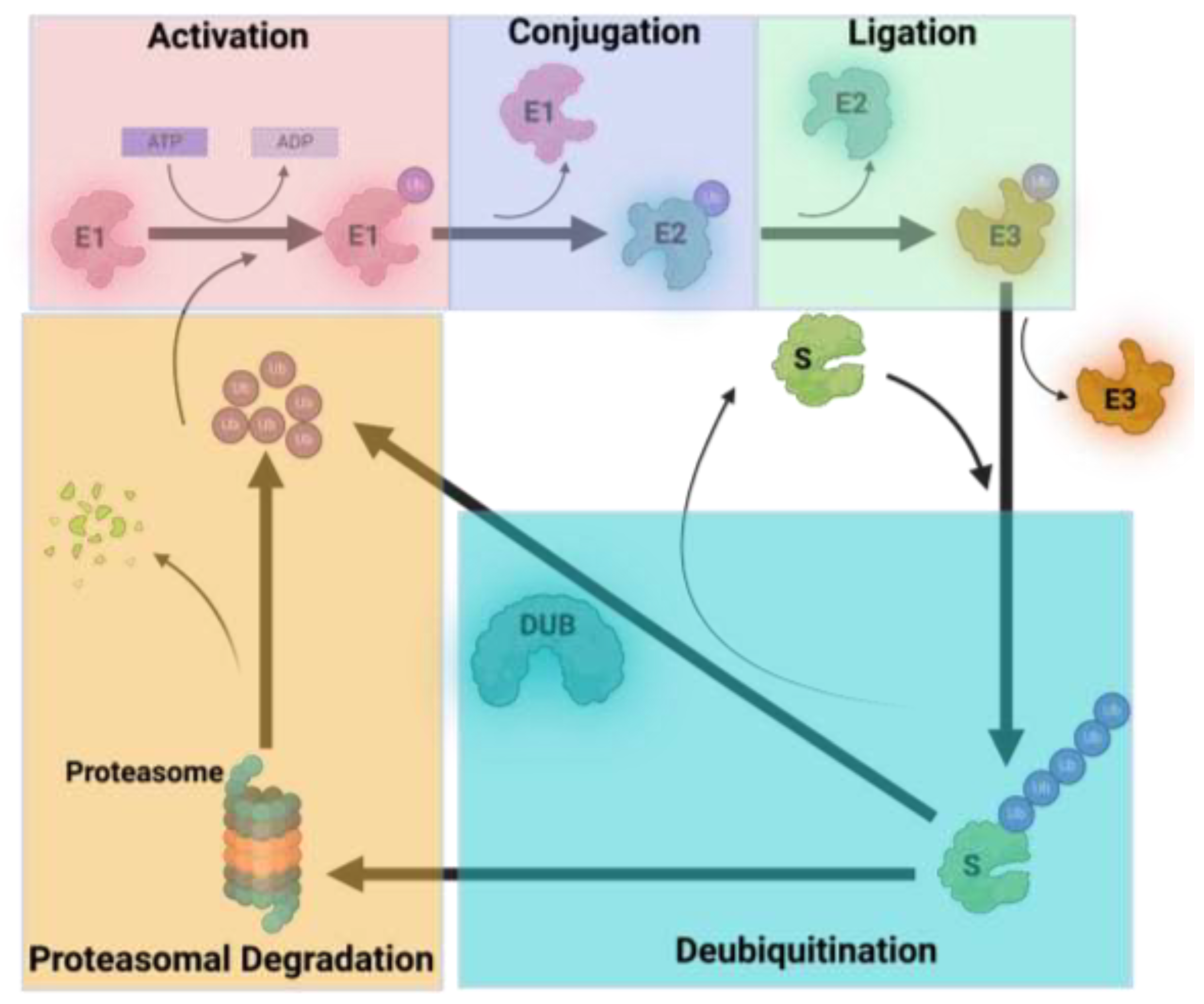
Figure 2.
Overview of the classification of deubiquitinases (DUBs), illustrating the major DUB families defined by distinct catalytic mechanisms and highlighting representative enzymes within each group.
Figure 2.
Overview of the classification of deubiquitinases (DUBs), illustrating the major DUB families defined by distinct catalytic mechanisms and highlighting representative enzymes within each group.
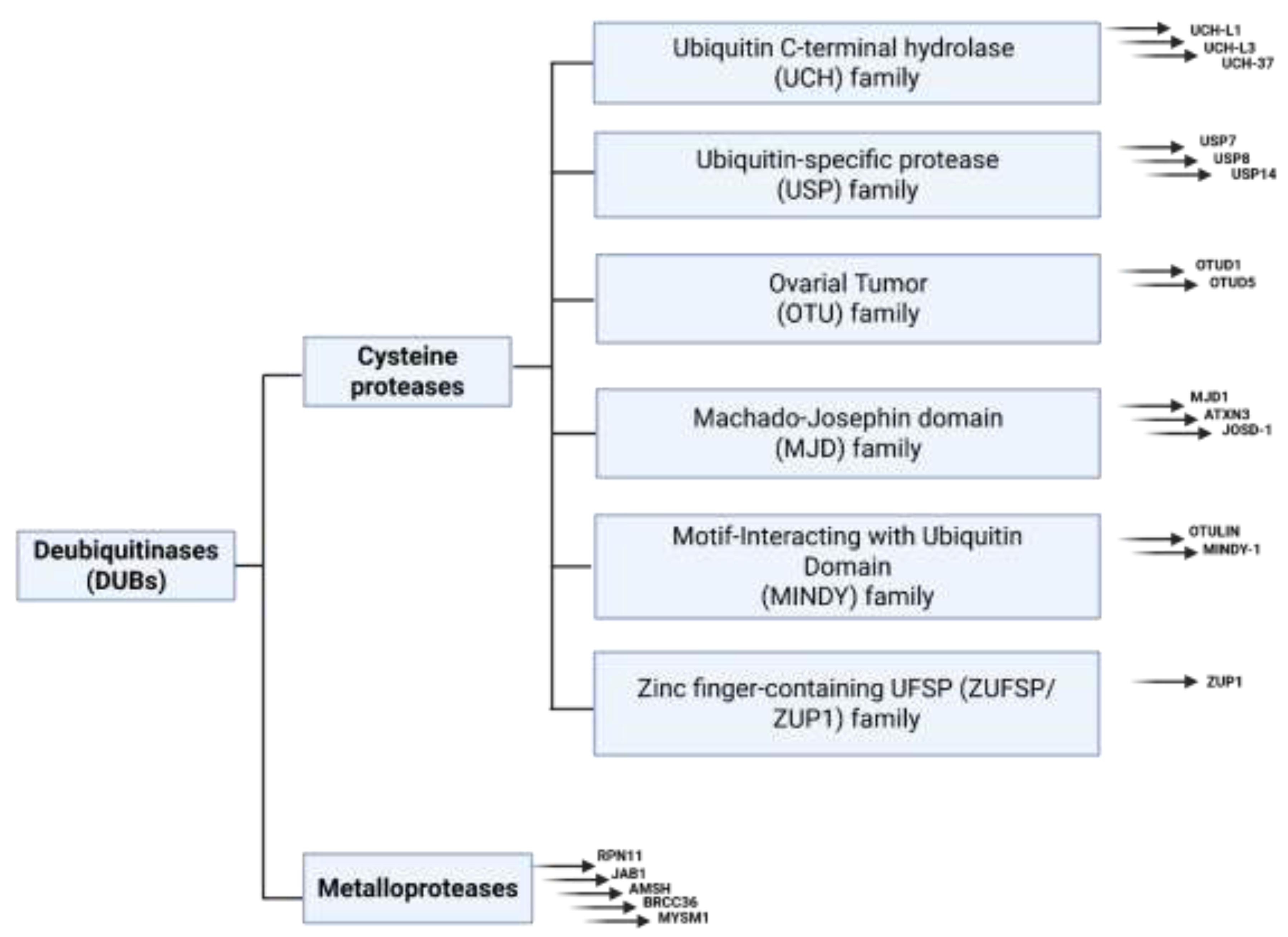

Table 1.
Physiological Functions of DUBs: A table listing various cellular processes regulated by DUBs (e.g., protein quality control, DNA damage repair, immune responses) along with specific DUBs implicated in each process and their known substrates.
Table 1.
Physiological Functions of DUBs: A table listing various cellular processes regulated by DUBs (e.g., protein quality control, DNA damage repair, immune responses) along with specific DUBs implicated in each process and their known substrates.
| Cellular Process | Specific DUBs | Known Substrates/Targets |
| Protein Quality Control | USP7, USP14, UCH-L1, USP9X, ZUFSP | Misfolded proteins, proteasome components, Chaperones |
| DNA Damage Repair | OTUB1, Ataxin-3 (ATXN3), USP28 | DNA repair factors (e.g., FANCD2, PCNA), chromatin-associated proteins, replication stress regulators |
| Immune Responses | AMSH, USP18, USP30, CYLD, OTULIN | Immune signaling proteins (e.g., TRAF6, STING, NF-κB components), cytokine receptors, interferon pathway proteins |
| Transcriptional Regulation | USP22, USP7, USP9X, USP21 | Transcription factors (e.g., c-Myc, p53), histones, RNA Pol II, chromatin modifiers |
| Membrane Traffic | AMSH, USP8, USP30 | Endocytic vesicles, membrane receptors (e.g., EGFR), mitophagy regulators, vesicle trafficking proteins |
| Cell Cycle & Apoptosis | USP7, USP9X, CYLD, USP28 | Cyclins, checkpoint proteins (e.g., p53, MDM2), apoptotic regulators (Bcl-2 family) |
| Signal Transduction | USP7, USP21, CYLD, OTULIN | Kinases, ubiquitin ligases, NF-κB, Wnt/β-catenin pathway proteins, MAPK signaling components |
| Autophagy & Mitophagy | USP30, USP10, USP15, USP13 | Parkin substrates, mitochondrial proteins, autophagy regulators (LC3, Beclin1) |
Table 2.
Dysregulation of DUBs in Human Diseases: A table highlighting examples of human diseases where dysregulation of specific DUBs has been implicated, including cancer, neurodegenerative disorders, inflammatory diseases, and viral infections, along with the associated mechanisms and consequences.
Table 2.
Dysregulation of DUBs in Human Diseases: A table highlighting examples of human diseases where dysregulation of specific DUBs has been implicated, including cancer, neurodegenerative disorders, inflammatory diseases, and viral infections, along with the associated mechanisms and consequences.
| Disease | Dysregulated DUBs | Mechanisms and Consequences |
| Cancer | USP7, USP14, USP22, UCH-L1, USP9X, CYLD, OTUD7B | Altered protein stability, cell proliferation, impaired apoptosis, Oncogene stabilization, modulation of NF-κB and p53 pathway |
| Neurodegenerative Disorders | Ataxin-3 (ATXN3), USP14, USP7, USP30, USP9X | Aggregation of misfolded proteins, impaired proteostasis. Defective mitophagy, neuronal death |
| Inflammatory Diseases | AMSH, USP18, USP30, CYLD, OTULIN | Dysregulation of immune signaling pathways, abnormal cytokine production, chronic inflammation |
| Viral Infections | USP7, USP14, USP30, USP21 | Promoting Viral replication, immune evasion, inhibition of host antiviral response, modulation of interferon signaling |
| Cardiovascular Diseases | USP10, USP2, USP20 | Regulation of cardiac hypertrophy, endothelial dysfunction, inflammation, and atherosclerosis via modulation of NF-κB and MAPK pathways |
| Metabolic Disorders | USP2, USP14, USP19 | Dysregulation of lipid metabolism, glucose homeostasis, insulin signaling, contributing to obesity, diabetes, and metabolic syndrome |
| Fibrotic Diseases | USP4, USP15, CYLD | Enhanced TGF-β signaling, fibroblast activation, extracellular matrix accumulation, promoting organ fibrosis (liver, lung, kidney) |
Table 3.
DUB Inhibitors: A table summarizing small-molecule inhibitors targeting DUBs, targeted DUBs, and therapeutic potential.
Table 3.
DUB Inhibitors: A table summarizing small-molecule inhibitors targeting DUBs, targeted DUBs, and therapeutic potential.
| Inhibitor | Target DUBs | Therapeutic potential |
| IU1 | USP14 | Neurogenerative diseases |
| Capzimin | RPN11 | Cancer therapy |
| VLX1570 | USP14 | Multiple myeloma |
| G9 | USP7 | Cancer therapy |
| P22077 | USP7 | Cancer therapy |
| WP1130 | USP5, USP14, USP9x, UCH37 | Multiple Myeloma |
| b-AP15 | USP14, UCHL5 | Cancer therapy |
| FT671 | USP7 | Cancer therapy |
| PR-619 | Multiple DUBs (Broad spectrum DUB inhibitor) | Neurogenerative diseases |
| GSK2643943A | USP30 | Neurogenerative diseases |
| USP7-1 | USP7 | Cancer therapy |
| USP30-2 | USP30 | Mitochondrial disorders & Parkinsons disease |
| USP8i | USP8 | Cushing’s disease, cancer |
| DUB-IN-1 | Multiple DUBs (Broad spectrum DUB inhibitor) | Cancer therapy |
| USP9x-1 | USP9X | Cancer therapy |
Disclaimer/Publisher’s Note: The statements, opinions and data contained in all publications are solely those of the individual author(s) and contributor(s) and not of MDPI and/or the editor(s). MDPI and/or the editor(s) disclaim responsibility for any injury to people or property resulting from any ideas, methods, instructions or products referred to in the content. |
© 2026 by the authors. Licensee MDPI, Basel, Switzerland. This article is an open access article distributed under the terms and conditions of the Creative Commons Attribution (CC BY) license (http://creativecommons.org/licenses/by/4.0/).
Copyright: This open access article is published under a Creative Commons CC BY 4.0 license, which permit the free download, distribution, and reuse, provided that the author and preprint are cited in any reuse.


