

Submitted:
26 February 2026
Posted:
03 March 2026
You are already at the latest version
Abstract
This study conducts an economic evaluation of urban water demand and supply in a South African municipal water management system, using smart water meter technology and map-based analysis to identify spatial and economic patterns of water scarcity. Using purposive sampling and secondary data from municipal billing records, the study integrates water meter datasets with geographic information system (GIS) tools to analyse consumption behaviour, tariff payments, and geographic disparities in water access. The findings reveal distinct areas within the municipal distribution network where households experience both reduced water availability and tariff payment deficiencies, indicating heightened vulnerability to water insecurity and financial strain. Spatial patterns demonstrate that these shortfalls are unevenly distributed across income groups and geographic zones, providing a critical evidence base for targeted water management interventions. The economic assessment highlights the relationship between water tariffs, consumption levels, and affordability constraints, offering insights into the financial sustainability of the current water management framework. Overall, the study demonstrates the value of combining GIS-based techniques with water meter technologies to diagnose systemic weaknesses and to support more equitable and sustainable urban water management. The results provide actionable guidance for policymakers seeking to improve tariff design, strengthen demand management, and address the persistent socio-economic inequalities underpinning water access in Cape Town and similar urban contexts.
Keywords:
economic assessment
; water demand
; water supply
; map-based analysis
; water meter technology
; urban water management
1. INTRODUCTION
The consequences of drought are particularly severe in underdeveloped and developing countries, where constrained economic resources and weak institutional capacity limit effective water management responses. Poor economic governance in the water sector often exacerbates existing inequalities in water demand, availability, and affordability, intensifying the socio-economic impacts of prolonged drought (Calow & Mason 2020; Rodina 2019). Targeted demand-side management has therefore become a critical strategy for mitigating drought impacts without incurring substantial capital expenditure. This is especially relevant in cities facing rapid urbanization and climate-driven hydrological variability (Aboelnga et al. 2019; Conway et al. 2021). Cape Town’s recent drought illustrates these challenges sharply. Since 2015, the Western Cape region experienced the most severe drought of the 20th and early 21st centuries, affecting approximately 3.7 million residents (Sousa et al. 2018). By late 2017, dam levels had reached critically low thresholds, prompting the City of Cape Town (CCT) to warn that most municipal water supply systems could be shut down by mid-January 2018, an event widely publicized as “Day Zero.” The drought was driven largely by an unprecedented three-year rainfall deficit (Burls et al. 2019), and projections suggested that several other South African municipalities faced similar risks (Pascale et al. 2020; IPCC 2022). In response, the CCT implemented progressively stringent water restrictions, culminating in Level 6B restrictions. These measures were accompanied by punitive fines, elevated tariffs, and enhanced monitoring technologies, including automated water management devices to enforce compliance (Ziervogel 2019). Public communication campaigns, via traditional and social media, sought to lower consumption rapidly across all sectors. Although effective in reducing total demand, these measures imposed significant financial and behavioural pressures on households, especially in higher-income groups unaccustomed to severe reductions in water use (Brühl & Visser 2021; Cook et al. 2021). For low-income communities, the drought amplified long-standing water access inequities, demonstrating how affordability, income, and consumption are tightly interlinked under conditions of scarcity (Enqvist & Ziervogel 2020; Wutich et al. 2022). To strengthen demand management and enhance billing accuracy, the CCT expanded the deployment of smart water meter devices as a municipal management tool. Smart metering enables remote monitoring, rapid leak detection, and automated flow restrictions. However, challenges in consistent bill collection and affordability constraints often led to water disconnections, particularly among middle- and low-income households (Dippenaar et al. 2023). These dynamics underscored the urgent need for improved economic evaluation of water demand and supply, especially in cities where drought threatens not only water security but also household financial stability. This study therefore contributes to the literature by examining the economic implications of water shortages through a map-based assessment of water meter technologies within a South African urban water management context.
Water, as an economic and public good, is heterogeneous, spatially variable, and socially embedded. Its management is complicated by its unique characteristics: water is non-standardized, non-substitutable, and essential for both domestic and productive uses. As Wutich et al. (2022) argue, water pricing can function as a corrective or adaptive mechanism, but it must reflect local demand conditions, affordability thresholds, and equity considerations. Zhu (2015) further notes that two core principles underpin water pricing: non-excludability, meaning all individuals should have equitable access, and non-rivalry, meaning one person’s use should not diminish availability for others. In practice, however, increasing demand, deteriorating infrastructure, and environmental change undermine these principles. Water scarcity today is driven not only by climatic forces but also by population growth, economic expansion, and escalating competition for limited water resources (UN Water 2020; Gain et al. 2021). Water quantity challenges arise when demand exceeds supply, while water quality challenges stem from contamination, pollution, and other negative externalities that impose additional burdens on consumers and municipalities (Hoekstra et al. 2018). Economics therefore plays a critical role in managing both dimensions, offering mechanisms including pricing, markets, subsidies, and demand management tools, to allocate scarce water resources more efficiently (Grafton et al. 2020; Olmstead 2021). A persistent challenge in urban systems is the proportion of water that remains unaccounted for. Losses from leakage, unmetered consumption, billing errors, and non-payment contribute to substantial discrepancies between supplied and billed volumes (Farley & Trow 2021). Such inefficiencies not only reduce municipal revenue but also distort economic signals intended to influence consumer behaviour, potentially driving households into water poverty or coercing emergency interventions such as flow restrictions (Makaya et al. 2022). Historically, water resource management focused primarily on augmenting supply through dams, reservoirs, and large-scale engineering. However, from the 1970s onward, governments increasingly embraced demand-side strategies, such as voluntary water transfers, water markets, conservation incentives, and increasingly sophisticated water pricing models (Gilmour et al. 2019; Griffin 2016). This paradigm shift helped establish water economics as a central subfield within environmental and resource economics, emphasizing optimal allocation, efficiency, equity, and resilience under conditions of scarcity
1.1. The Water Routes
Understanding the route that water follows from its source to its final destination is fundamental to evaluating the efficiency and integrity of an urban water supply system. Internationally recognized water balance frameworks, such as those outlined by the International Water Association (IWA), emphasize the decomposition of demand into clearly defined components that distinguish between authorized consumption, real losses, and apparent losses (Lambert & Hirner 2020; Farley & Trow 2021). As illustrated in Figure 1, discrepancies in flow measurements often reveal sections of the network where losses are most likely to occur, including transmission mains, distribution pipelines, and household service connections. Operational use, which includes net process water and on-site consumption at water treatment facilities, constitutes a measurable portion of the raw water diverted for municipal supply and must be accounted for when assessing system efficiency (Vairavamoorthy et al. 2020). For reliable water demand forecasting and long-term supply planning, both upstream and downstream elements of the water distribution system must be understood and measured. Depending on the availability and quality of data, various methodological approaches may be applied to quantify these components of water demand (Alegre et al. 2016; Mutikanga et al. 2019). In practice, utilities rely on several key data sources to construct an accurate and comprehensive water balance. These typically include production data from abstraction and treatment facilities, consumer billing records that capture detailed usage information, flow data from district metered areas that illustrate diurnal consumption patterns, and leakage-control zone measurements that assist in estimating real water losses. Additional data, such as bulk imports and exports between systems, minimum night flow records for leak detection, and process water consumption at treatment works, contribute to a more granular understanding of water movement through the network (Puust et al. 2018; Kanakoudis & Gonelas 2021). Together, these datasets enable utilities to develop a robust, standardized water balance, providing essential insights for system monitoring, leak detection, asset management, and strategic urban water resource planning (González-Gómez et al. 2022).
1.3. Study Area
Cape Town earned prominence in the international media as a major global city on the verge of running out of municipal water in 2017 because of one of the worst droughts the Western Cape had seen since 1904 due to the drought. The City Council gave the possibility of dry taps the dramatic designation Day Zero. The City of Cape Town gradually introduced six levels of water restrictions, ranging from Level 3 to Level 6B, from November 2016 to February 2018 to reduce consumption. To keep many people living in the impacted areas from experiencing water poverty. Cities in southern Africa, where climate change and urbanization are anticipated to proceed more quickly than in most other regions, face a significant problem regarding water security, which includes both the provision of potable water and protection from water-related disasters (Grasham, Korzenevica, & Charles, 2019; Nagendra, Bai, Brondizio, & Lwasa, 2018). However, the rate at which the supply was diminishing and the amount that was being consumed made the situation acute on a global scale in 2018 (Mario, 2017). The problem of declining water availability and rising demand is not unique to Cape Town.
The Western Cape, the fourth largest of South Africa's nine provinces and the country's southernmost point, is shown in Figure 1. Along with the Atlantic and Indian seas in the west and south, the province also has shared borders with the provinces of the Northern Cape and Eastern Cape in the north and east, respectively. It is important to consider historical events as well as local elements that have influenced the current water situation in Cape Town (Oliver, 2018). According to Wilkinson (2000), water availability has been a determining factor in the Cape Peninsula's circumstances for both long- and short-term human occupation for millennia.
1.4. Socio-Economic Background
Before the establishment of Cape Town, the San, Strandloper, and Khoikhoi communities relied extensively on the region’s natural water sources, which supported grazing lands, wild fauna, and edible plant species essential for their subsistence (Brown & Magoba 2009). The climate of the Cape is typically described as Mediterranean, characterised by hot, dry summers and cool, rainy winters accompanied by strong south-easterly winds. This climatic pattern is shaped by the region’s complex topography, particularly the Table Mountain massif, which generates diverse microclimates and significant spatial variation in rainfall. Annual precipitation ranges from approximately 400 mm on the exposed Cape Flats to more than 1,000 mm on the wetter, vegetated mountain slopes around Constantia and the surrounding highlands (Brown & Magoba 2009; Engelbrecht & Monteiro 2021). The interior parts of the Western Cape also experience a Mediterranean climate, though with colder winters, often below freezing, and hotter, drier summers. Precipitation across the province varies markedly, falling into three dominant rainfall regimes: winter rainfall, late-summer rainfall, and a bimodal or continuous rainfall zone (Reason & Smart 2022). The Peninsula and Boland regions are strongly influenced by the winter rainfall regime, receiving most of their precipitation from mid-latitude cyclones during June–August, while areas along the south coast experience rainfall throughout the year due to their exposure to both westerly systems and cut-off lows (Malherbe et al. 2020). In contrast, the semi-arid Great Karoo is influenced primarily by convective summer thunderstorms, resulting in sporadic but intense downpours typical of the region’s interior climate. This climatic heterogeneity has long shaped ecological patterns, settlement distribution, land-use practices, and water availability across the Western Cape.
2. Methods and Materials
The research methodology employed a multi-component approach to data collection in order to address the study’s objectives comprehensively. The primary analytical technique consisted of a trend analysis of household water consumption across six selected suburbs within Cape Town (see Figure 2). This approach relied exclusively on secondary data sources, encompassing both quantitative records, such as monthly billing and meter readings, and qualitative contextual information relating to socio-economic conditions and municipal water management practices. The use of secondary data facilitated the identification of temporal patterns in water use as well as insights into consumer behaviour and attitudes toward water demand management.
Figure 2 illustrates the population density and income classifications of the six study areas, namely Bellville CBD, Mowbray, Athlone, Manenberg, and Heathfield. These data were obtained from the City of Cape Town’s publicly accessible administrative datasets, which provide neighbourhood-level demographic, socio-economic, and infrastructural indicators widely used in spatial assessments of urban services (City of Cape Town 2021; Matsebula & Brent 2020). To enhance analytical precision, data categories were systematically developed to organize and interpret information associated with the targeted population in a manner consistent with established approaches in socio-spatial water research (Simpson et al. 2019). The six suburbs were intentionally selected to represent three distinct income tiers within the metropolitan region. This stratified sampling strategy aligns with best practices for analysing household water consumption across heterogeneous socio-economic groups (Gawusu et al. 2022; Renata & Giné-Garriga 2021). It allowed the study to capture variations in water use across income categories while simultaneously accounting for environmental factors, such as microclimates, population density, and settlement forms, that are known to influence household water consumption patterns (Pasquini & Cowling 2015; Wolski et al. 2021). As shown in Figure 2, the selected suburbs differ not only in income level but also in spatial configuration, density gradients, and proximity to differing rainfall zones. These characteristics make them ideal for assessing how socio-economic attributes interact with geographic and climatic factors to shape household water demand. Such a design strengthens the study’s capacity to explain the combined effects of social inequality, environmental variability, and spatial development patterns on urban water use in Cape Town (Enqvist & Ziervogel 2019; Koop & van Leeuwen 2020).
2.1. Sample Survey Methodology
A stratified random sampling approach was employed to select residential suburbs that were representative of the different income categories within the Cape Town metropolitan area. Stratification allowed the study population to be divided into mutually exclusive, non-overlapping income-based strata, from which simple random samples were independently drawn. This method is widely recognised for improving the precision of parameter estimates and ensuring that subgroup differences relevant to the research objectives are adequately captured (Etikan & Bala 2017; Cochran 2019). The use of stratification was particularly important for this study, as it facilitated the identification of variations in household water consumption across socio-economic groups and enhanced the comparability of the selected residential areas (Renata & Giné-Garriga 2021; Simpson et al. 2019). The primary aim of the sampling strategy was to detect trends in household water use within each predetermined income category, thereby enabling a robust assessment of how socio-economic conditions influence consumption patterns. Sample size determination was carried out to ensure that each stratum was proportionally represented relative to its size in the broader population, increasing the likelihood that the sample reflected the true distribution of household characteristics in the study area. This ensured that every household within a given stratum had a known and non-zero probability of selection, thereby strengthening the validity and representativeness of the findings (Battaglia 2011; Hoddinott et al. 2020). The sampling procedure was designed to align the characteristics of the sample with those of the larger metropolitan population, thereby enhancing the reliability of inferences drawn from the analysis. The formula used to determine the optimal sample size for each stratum is presented below:
Based on the applied sample size formula, the results indicate that a minimum of 61 respondents per suburb is required to achieve a 95% confidence level, ensuring that the sample estimate falls within ±10% of the true population value, assuming an expected response proportion of approximately 80%. This level of precision is consistent with recommended parameters for household-level environmental and service-delivery studies, where variability in behavioural responses must be adequately captured (Cochran 2019; Singh & Masuku 2014). Stratified sampling was selected as the most appropriate approach because it enhances representativeness by ensuring that each socio-economic subgroup is proportionally reflected in the sample. Furthermore, stratification reduces sampling error, increases statistical power, and improves the accuracy of parameter estimates, particularly in heterogeneous urban populations where water use behaviours vary significantly across demographic and spatial categories (Etikan & Bala 2017; Renata & Giné-Garriga 2021; Hoddinott et al. 2020). By enabling targeted comparisons between income groups, settlement forms, and demographic clusters, the stratified design also strengthens the study’s capacity to conduct meaningful subgroup analyses, which are essential in understanding how socio-economic and spatial differentiation influence household water demand (Simpson et al. 2019).
2.3. Required Datasets
Billing records constitute one of the most critical sources of information for analysing household and commercial water demand. These records typically contain detailed data on the volume of water consumed by each property between meter readings, which generally occur at intervals ranging from one to six months (González-Gómez et al. 2022). They also classify consumer types, such as domestic, commercial, and industrial users, and include spatial identifiers such as meter block numbers, meter book references, or geographic location codes that support the spatial analysis of consumption (Mutikanga et al. 2019; Arbués & Villanúa 2020). When combined, these data enable researchers and utilities to identify consumption characteristics across different customer segments and to estimate variations in water demand with improved accuracy. Such information is essential for producing regional water demand projections and for supporting water balance modelling used to assess the requirements of interconnected supply zones (Alegre et al. 2016; Lambert & Hirner 2020). In many instances, the integration of multiple billing periods is necessary to compute reliable annual averages, particularly where seasonal fluctuations occur or where meter-reading intervals vary across distribution areas (Kanakoudis & Gonelas 2021; Farley & Trow 2021).
3. RESULTS AND DISCUSSION
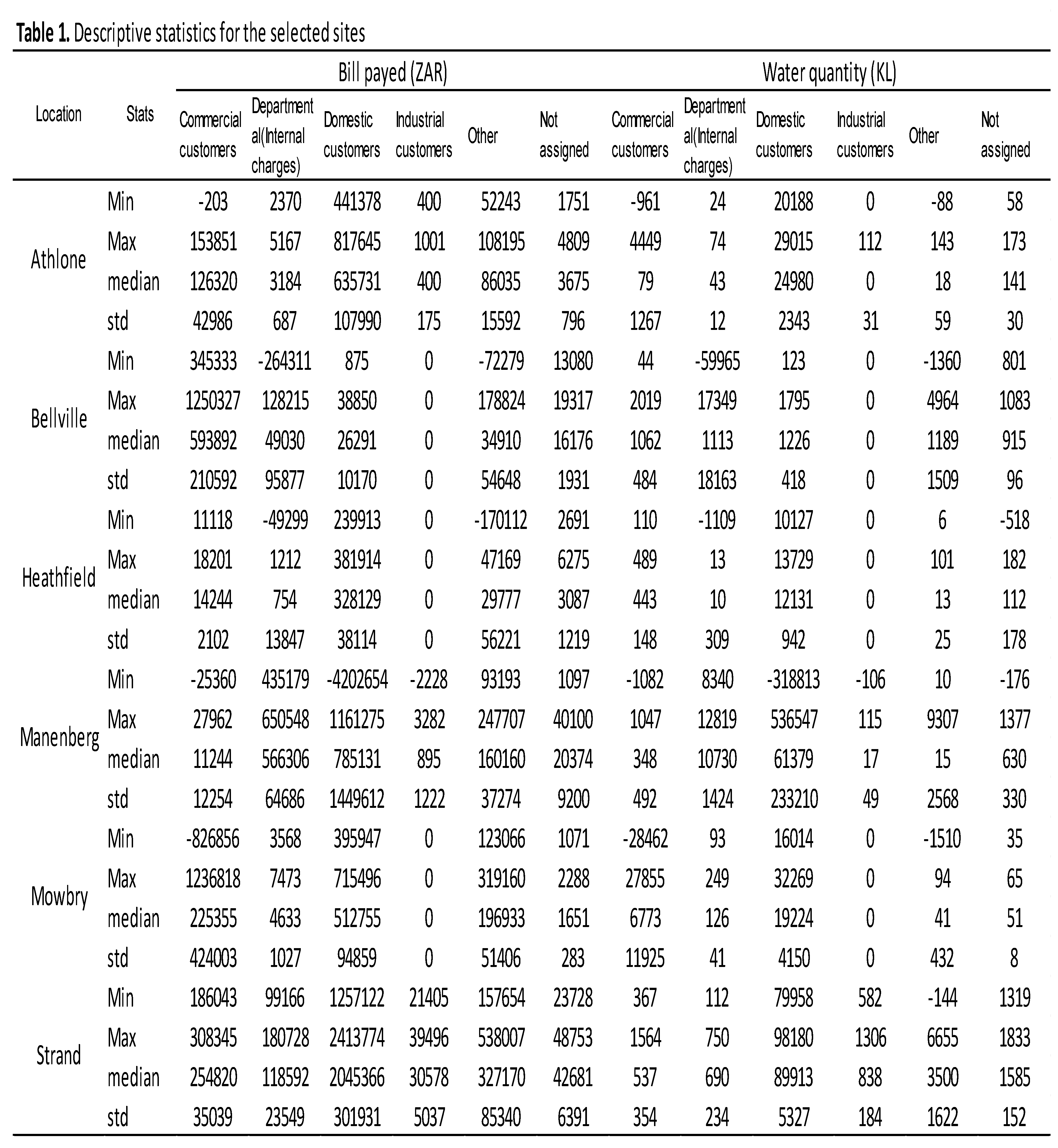
Table 1 presents the descriptive statistics for the six study areas, Athlone, Bellville, Heathfield, Manenberg, Mowbray, and the Strand, using two variables of interest: monetary remuneration (ZAR) and water volume consumed (kL). For each area, the minimum, maximum, mean, and standard deviation of the variable Bill Paid (ZAR) are reported to illustrate variation in household and commercial expenditure on water services. In Athlone, for example, payments range from a minimum of ZAR –203 to a maximum of ZAR 153,851, with an average value of ZAR 126,320 and a previous mean of ZAR 42,986 recorded under earlier tariff cycles. Comparable trends are observed across the other suburbs, reflecting notable heterogeneity in billing outcomes among consumer groups. Descriptive statistics for the variable Water Volume (kL) similarly highlight the variability in demand. In Athlone, commercial consumption ranges from –961 kL to a maximum of 4,449 kL, with an average consumption of 79 kL and a mean of 1,267 kL, indicating the presence of extreme usage cases and potential anomalies in consumption or billing records. Equivalent assessments across the other suburbs reveal substantial differences in both water prices and consumption levels, shaped by local demographic, socio-economic, and infrastructural factors (Gawusu et al. 2022; Arbués & Villanúa 2020).
Comparison across regions shows pronounced disparities in maximum charges and consumption volumes. For commercial consumers, the highest charges range from ZAR 153,851 in Athlone to ZAR 1,250,327 in Bellville, illustrating the influence of business scale, operational water needs, and tariff structures on billing differences. Similarly, maximum commercial water consumption varies substantially, from 4,449 kL in Athlone to 20,019 kL in Bellville. The mean values and associated standard deviations provide insight into the distribution and variability of water use and costs within each area, supporting a more nuanced understanding of demand patterns and financial exposure across consumer categories (González-Gómez et al. 2022; Farley & Trow 2021). Such descriptive statistical analysis is widely recognised as a foundational step in urban water demand research, as it enables researchers to identify anomalies, detect outliers, compare behavioural trends, and inform subsequent modelling and policy interpretations (Olmstead 2021; Mutikanga et al. 2019).
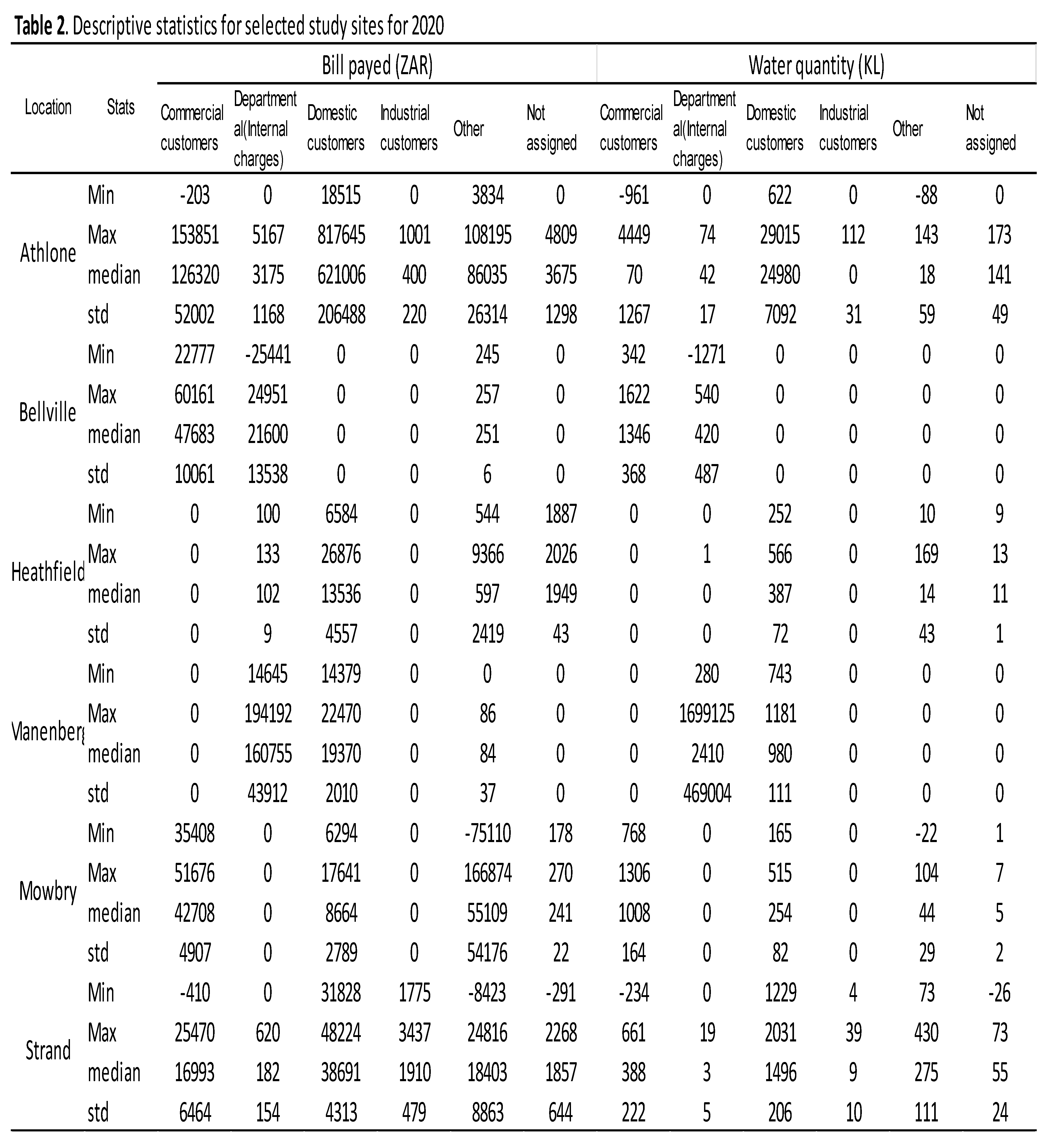
Table 2 presents the descriptive statistics for the selected research areas for the year 2020, focusing on two key variables: monetary fee (ZAR) and water volume consumed (kL). The table reports the minimum, maximum, mean, and standard deviation for multiple customer categories across the study areas. For the variable Bill Paid (ZAR), Athlone displays a minimum value of –203 ZAR, which likely reflects an account adjustment or credit balance carried forward. In contrast, the maximum value of 153,851 ZAR indicates the presence of high-consumption or large commercial clients. The mean expenditure of 126,320 ZAR, together with a standard deviation of 52,002 ZAR, demonstrates considerable variability in billing amounts among commercial, industrial, domestic, departmental, and other user groups within the suburb.
For the variable Water Volume (kL), Athlone shows a minimum recorded volume of 0 kL across customer categories, consistent with inactive meters or zero-use accounts. The maximum commercial consumption reaches 4,449 kL, reflecting substantial operational water requirements among high-demand users. The mean volume of 70 kL and the large standard deviation of 1,267 kL further highlight the heterogeneous nature of consumption patterns, characterised by a small number of heavy users and a majority of moderate- or low-use accounts. Comparable trends arise in other suburbs, although with varying degrees of dispersion.
In Bellville, for example, the maximum billing value is 60,161 ZAR, accompanied by a standard deviation of 10,061 ZAR, indicating a more stable billing distribution relative to Athlone. Notably, the recorded total water volume for Bellville is 0 kL during the specified period, which may reflect missing meter data, delayed uploads, or an administrative anomaly rather than an absence of water use. Other study areas—Heathfield, Manenberg, Mowbray, and Strand—exhibit similar patterns of variation across billing levels and water consumption volumes, underscoring the influence of local demographic, economic, and operational factors on water demand.
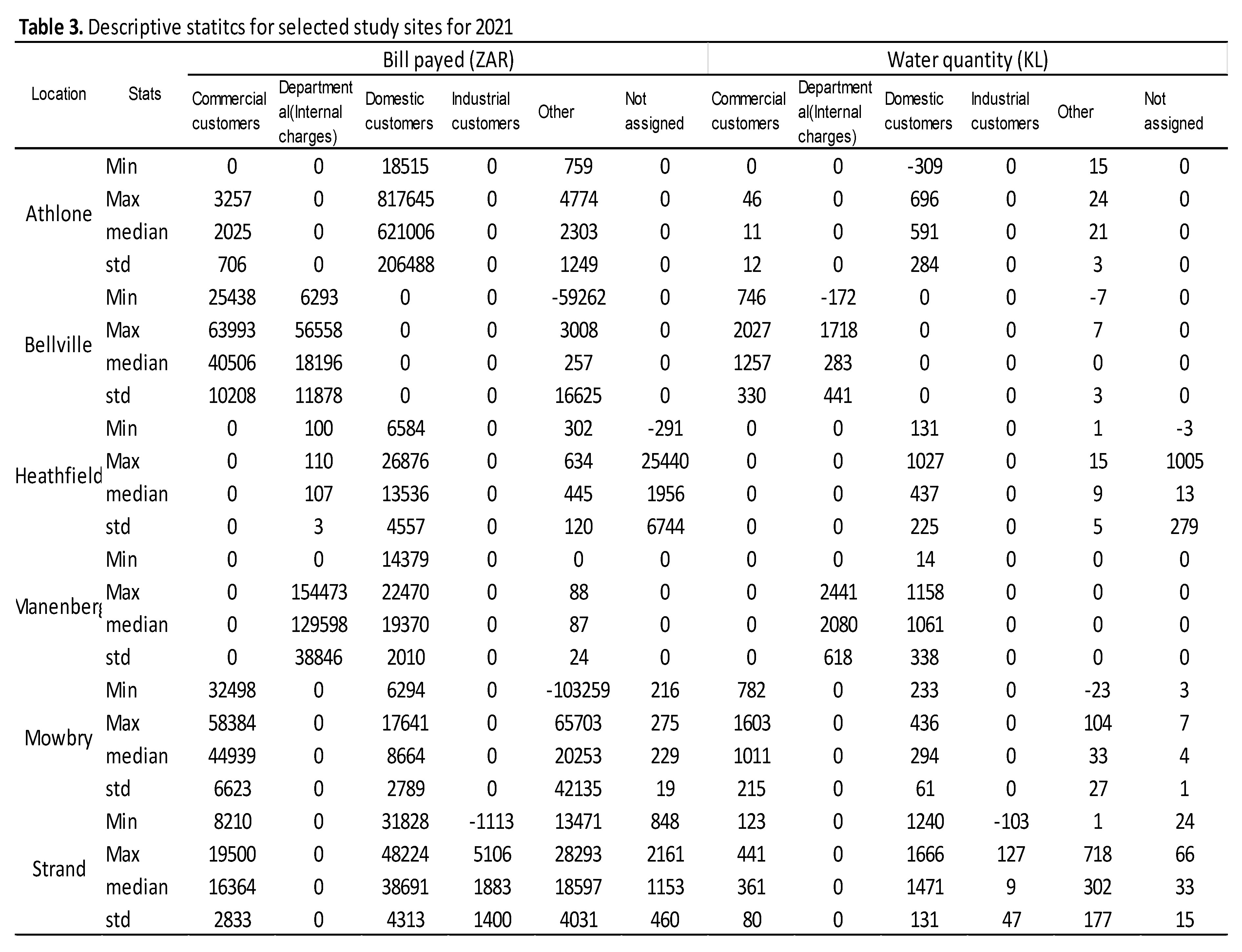
Table 3 presents descriptive data for the chosen research areas in 2021, with an emphasis on two variables: "monetary payments" in ZAR (South African rand) and "water volume" in KL (kiloliter); in the research areas Athlone, Belleville, Heathfield, Manenberg, Mowbray, and Strand were recorded. The minimum values for department/internal charges, domestic clients, and commercial purchases are zero in all study areas when we look at the "bill paid" variable, showing that there are some unpaid transactions. The research locations' maximum prices differ, with Athlone's ZAR 817,645 being the highest amount domestic consumers have ever spent. consumer's median payments also differ among study areas, with high values of substantial variability and ranging from ZAR 2,025 for business customers in Athlone to ZAR 621,006 for household consumers in Athlone. We can observe a similar pattern when we look at the variable "Water quantity." At all the sites under study, the minimum water levels were zero, indicating instances in which no water was used. The maximum amount of water that may be used varies by location, with domestic customers using 1,666 KL at Strand. Rates vary as well; in Athlone, commercial clients pay 11 KL, while household customers in the Strand pay 1,471 KL.
Higher values indicate greater variability in the data, while the standard deviation reflects the degree to which water-use patterns differ across research areas and customer categories. Collectively, the descriptive statistics in Table 3 provide a comprehensive summary of the range, mean, and dispersion of both billing fees and water consumption volumes, offering insight into the heterogeneity of consumer behaviour across the study sites.
3.1. Description on Components of Unaccounted for Water
Figure 3 illustrates the key components of unaccounted-for water (UFW), defined as the difference between the total volume of water supplied—whether raw or treated—and the total volume measured or billed as consumption. In well-metered systems, most delivered water is recorded; however, discrepancies arise due to physical losses, metering inaccuracies, billing anomalies, and unauthorized consumption (Lambert & Hirner 2020; Farley & Trow 2021). Because consumer behaviour, usage patterns, and demand growth vary across socio-economic and functional groups, it is standard practice to classify water demand into distinct categories. These typically include residential use within households; commercial use in industries, factories, and port operations; business use in shops, offices, hotels, and restaurants; and institutional use by educational, governmental, military, and health facilities (Alegre et al. 2016; Mutikanga et al. 2019). Accurate demand forecasting requires a clear definition of the measurement point within the supply system to which the forecast applies. This is frequently situated immediately upstream of the distribution network, as depicted in Figure 3. Maintaining this boundary reinforces the long-standing distinction in the water sector between “supply”—which includes abstraction, treatment, and transmission—and “distribution,” which encompasses the conveyance of water to end users (Kanakoudis & Gonelas 2021; Puust et al. 2018). Establishing this separation is essential for understanding system performance, quantifying real and apparent losses, and undertaking effective water balance modelling.
3.2. Water Billing for the Selected Sites for 2019
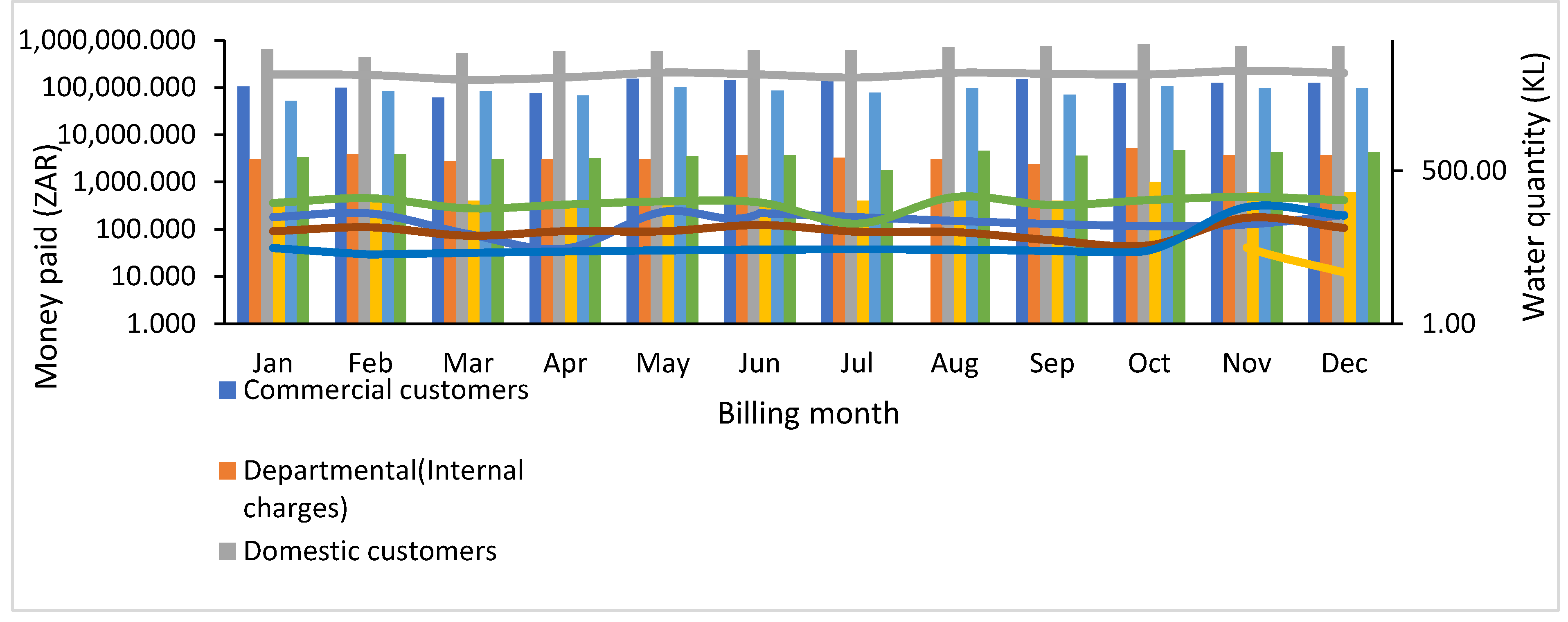
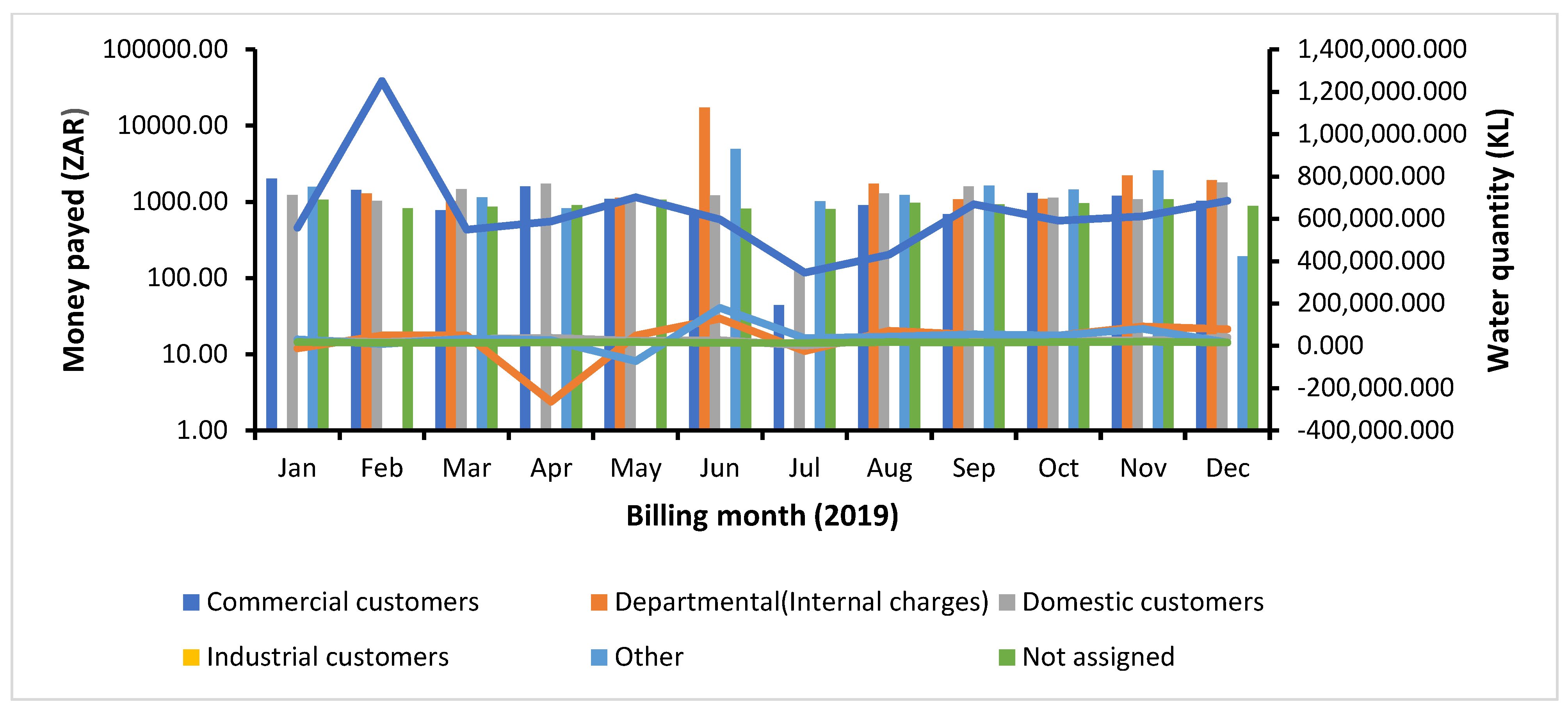
The diagram presents monthly water billing amounts, expressed in South African Rands (ZAR), for various customer categories from January to December. Annual billing for commercial clients shows substantial variability, ranging from R61,430.29 in March to a peak of R153,851.07 in May, reflecting fluctuations in operational demand and associated charges. Internal departmental accounts record more modest billing patterns, with values between R2,728.84 in March and R5,166.99 in September. Domestic customers exhibit the highest overall billing totals across the year, with monthly amounts ranging from R441,377.94 in February to R817,645.16 in October, indicating seasonal shifts in household consumption. Industrial customer billing remains relatively stable at approximately R400 per month, apart from a notable increase to R1,001.04 in October. Other customer categories show moderate variation, with billing amounts spanning from R68,253.05 in April to R108,195.24 in September. Unassigned or miscellaneous accounts also display fluctuations, with monthly values ranging from R3,020.59 in March to R4,809.29 in October.
The secondary y-axis illustrates the corresponding monthly water consumption, measured in kilolitres (kL). Commercial customers display a wide consumption range, with volumes reaching a maximum of 4,449 kL in July and an anomalous minimum of –961 kL in August. Such negative values are physically implausible and indicate errors in data recording, meter malfunction, or administrative inconsistencies in the billing system. Internal departmental consumption remains comparatively stable, varying between 29.69 kL in September and 73.80 kL in November. Domestic users exhibit significant seasonal variation, with consumption ranging from 20,188.02 kL in March to 29,014.73 kL in November. Industrial consumption is consistently zero for most of the year except for October, when it increases to 112 kL, suggesting episodic operational water use. Other customer categories show sporadic fluctuations, with values between –88.10 kL in April and 142.72 kL in June. Unassigned customers also display variability, with consumption levels ranging from 58.28 kL in July to 173.00 kL in November. Overall, the presence of negative consumption values in the commercial and other customer datasets strongly suggests data anomalies, either due to measurement errors, meter recalibration events, system resets, or incorrect manual data entry. In practical terms, negative water consumption is impossible and therefore indicates the need for data validation procedures prior to analysis.
Figure 4.
Water billing for selected months for the designated study areas.
Commercial consumers have the greatest water billing amounts throughout the year, ranging from R557,029.31 in January to R685,547.39 in December. Each month, these customers' water bills are different.
Figure 5: 2019 water bills and prices for Athlone
Commercial consumers have the greatest water billing amounts throughout the year, ranging from R557,029.31 in January to R685,547.39 in December. Each month, these customers' water bills are different.
Internal charge billing amounts fluctuate from month to month, with negative values in certain periods, such as –11,455.01 ZAR in January and –264,310.93 ZAR in April, indicating credit adjustments, refunds, or corrections to previously issued invoices. Such negative entries typically arise when earlier billing errors are rectified or when departments receive reimbursements for overestimated charges. Domestic consumers exhibit relatively stable billing patterns, with monthly amounts ranging from R26,413.05 in January to R38,849.54 in December. These values remain substantially lower than those of commercial customers, reflecting generally lower household consumption and tariff categories.
Figure 5 further illustrates that industrial clients show no annual billing activity. This absence may indicate that there are no industrial users within the study area or that their water use is not separately metered and is therefore captured under alternative categories. Customers grouped under “Other” display high variability, with both positive and negative billing values, suggesting irregular consumption patterns or frequent administrative adjustments. Similarly, departmental charges include negative values, such as –72,279.09 ZAR in May, reflecting credit offsets or interdepartmental reconciliations. Water use that cannot be linked to a specific customer category is captured under the “Not Assigned” classification, with billing amounts ranging from R17,376.94 in January to R19,317.41 in November.
The secondary y-axis of Figure 5 displays monthly water consumption in kiloliters (kL). Commercial users show substantial variation, with consumption ranging from 777.98 kL in March to 1,439.50 kL in February. As expected in many municipal billing systems, water volume and billing totals are not always directly proportional due to the influence of tiered tariff structures, fixed charges, and billing adjustments. Consistent with the billing data, industrial clients register no recorded consumption throughout the year, further supporting the likelihood of either non-existence or non-separate metering of industrial accounts in the dataset. Water consumption for “Other” customers shows both positive and negative values, such as –1,360.00 kL in May, which most likely result from meter rollovers, data entry errors, or reconciliation adjustments rather than true water use. Monthly volumes attributed to “Not Assigned” accounts reflect consumption that could not be classified under a defined customer type, further underscoring the need for improved data categorisation and validation procedures.
Figure 6.
Water tariffs for Bellville CBD suburbs for the year 2019.
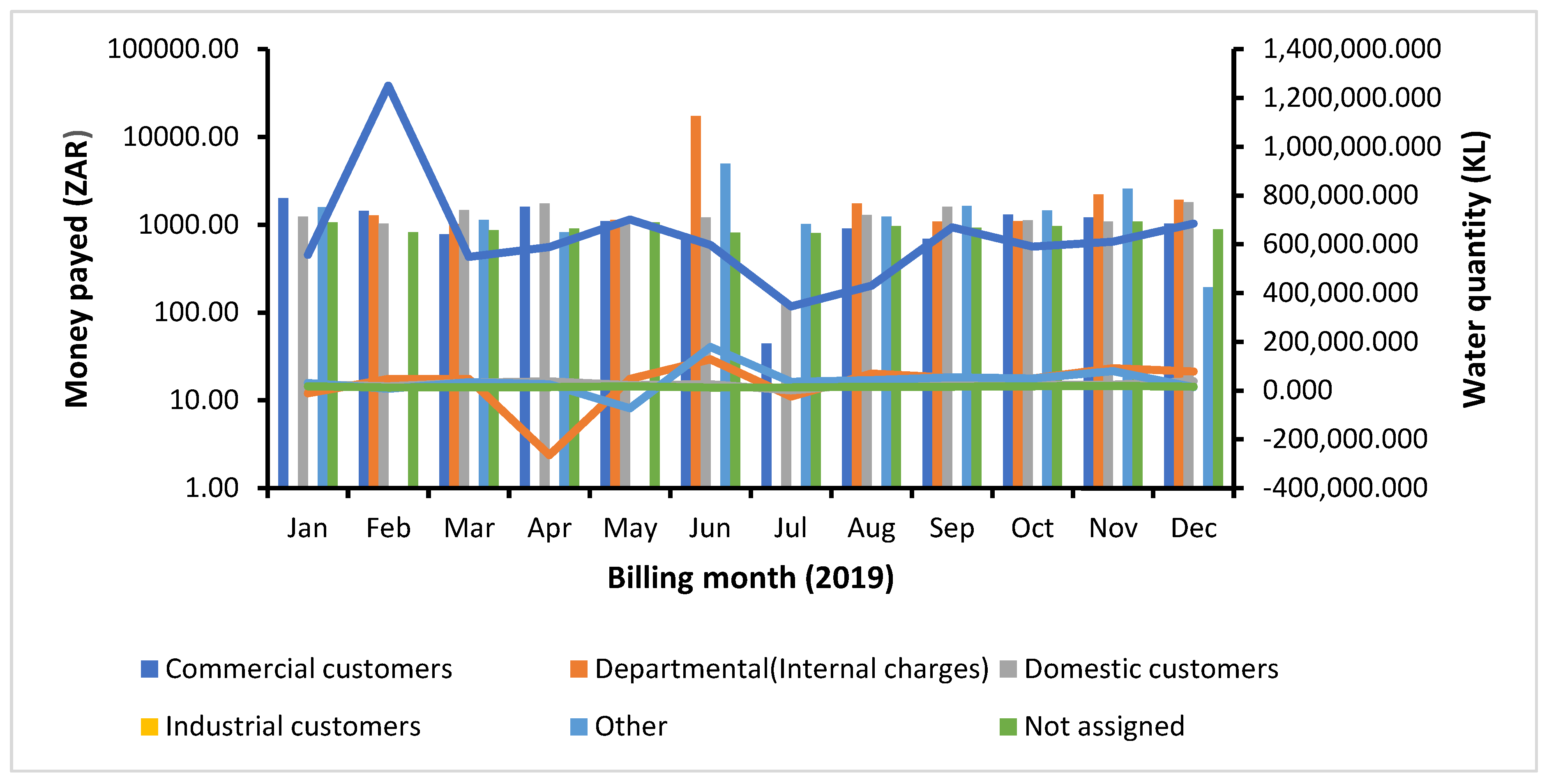
Figure 7.
Water tariffs for Heathfield suburbs for the year 2019.
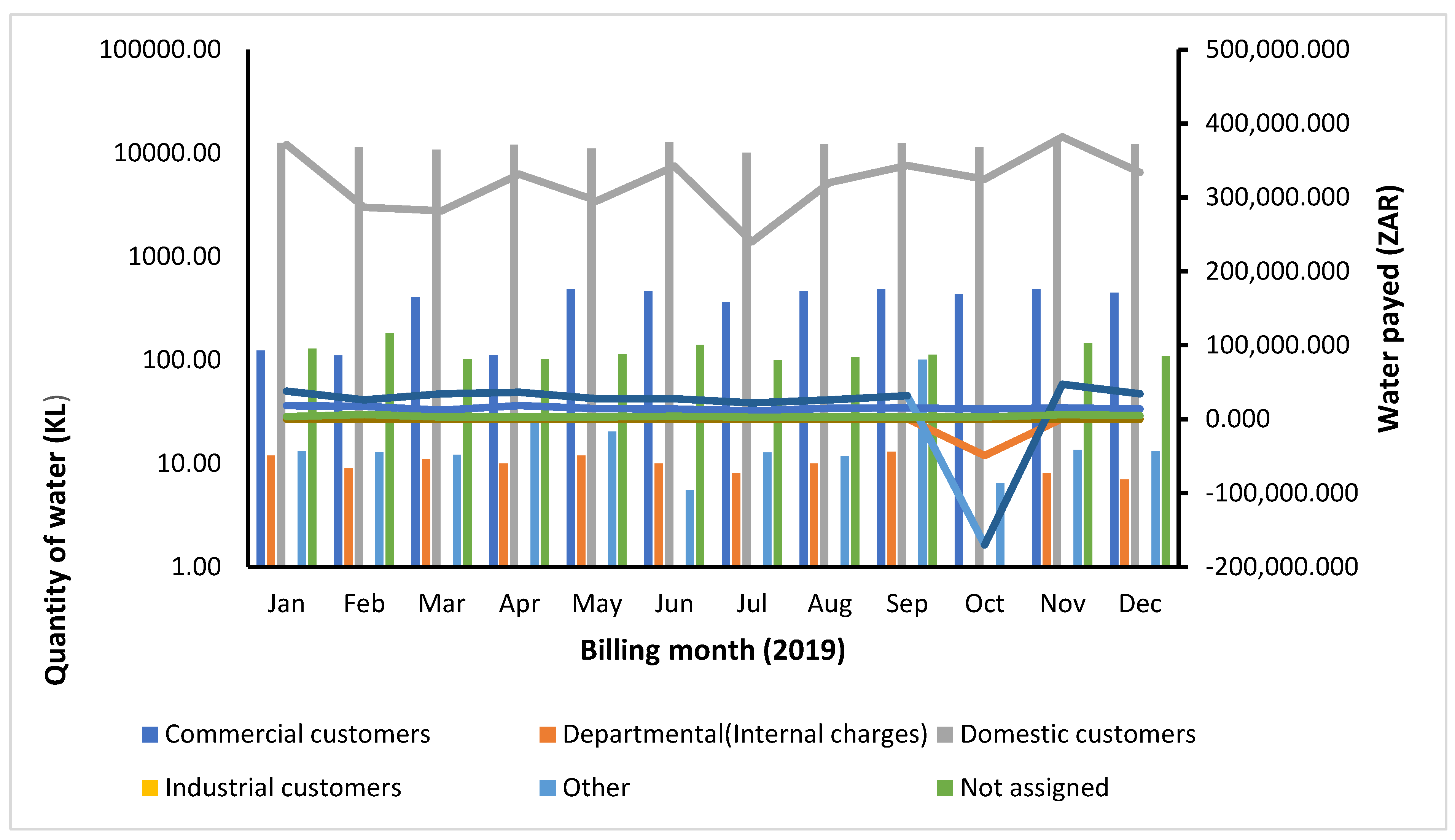
Figure 8.
Water tariffs for Manenberg suburbs for the year 2019.
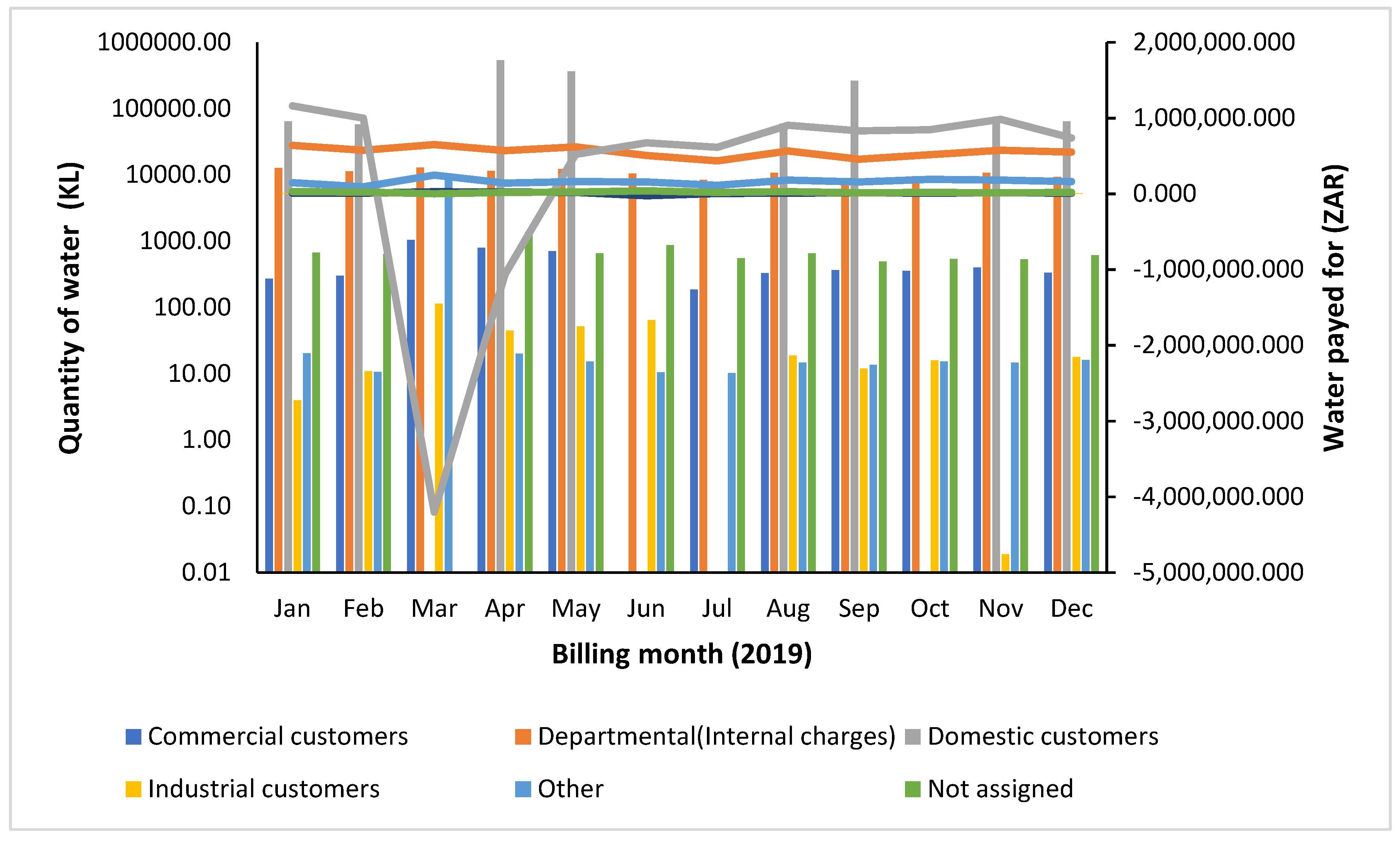
Figure 9.
Water tariffs for Mowbray suburbs for the year 2019.
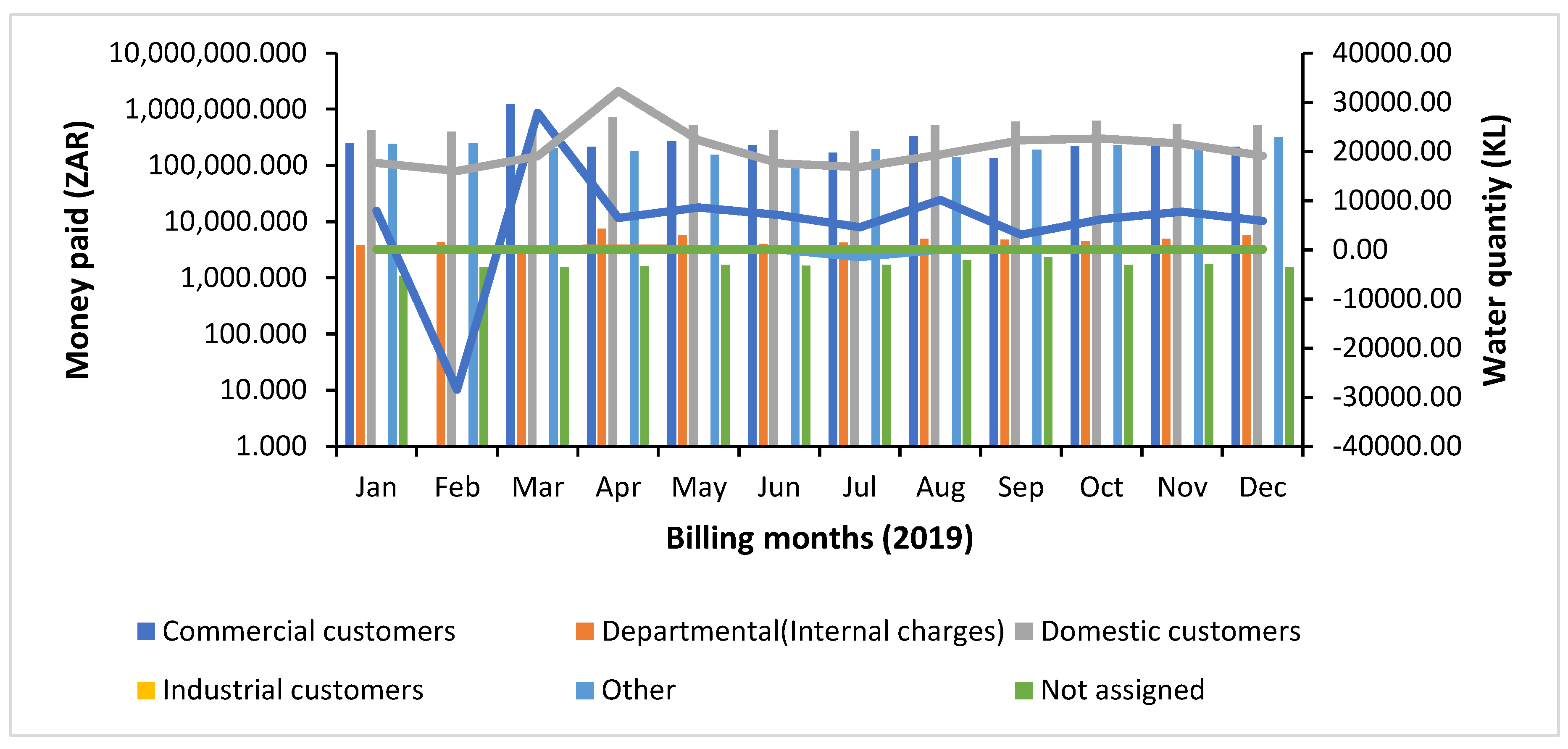
Figure 10.
Water tariffs for Strand suburbs for the year 2019.
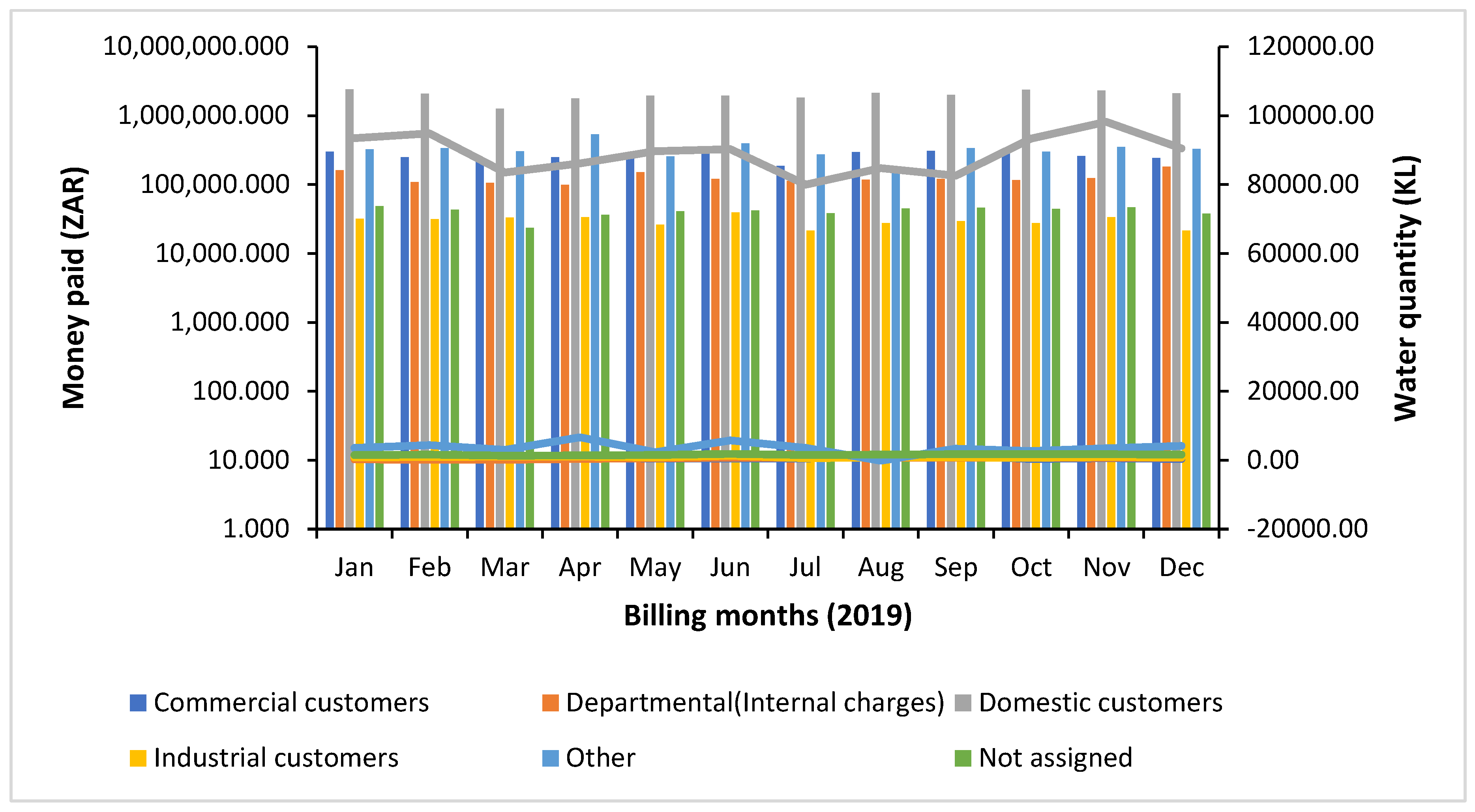
Figure 11.
Water tariffs for Athlone suburbs for the year 2020.
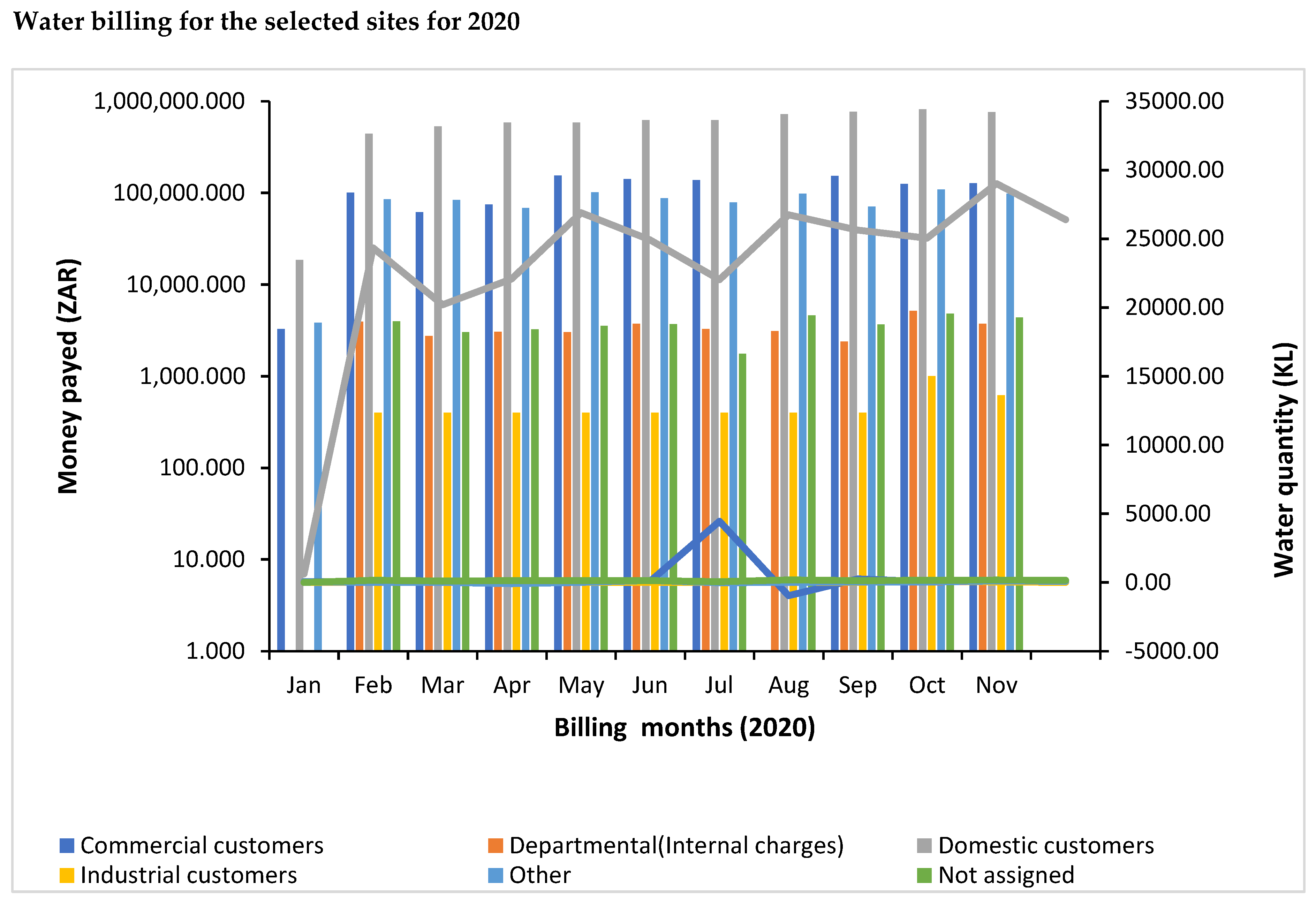
Figure 12.
Water tariffs for Bellville CBD suburbs for the year 2020.
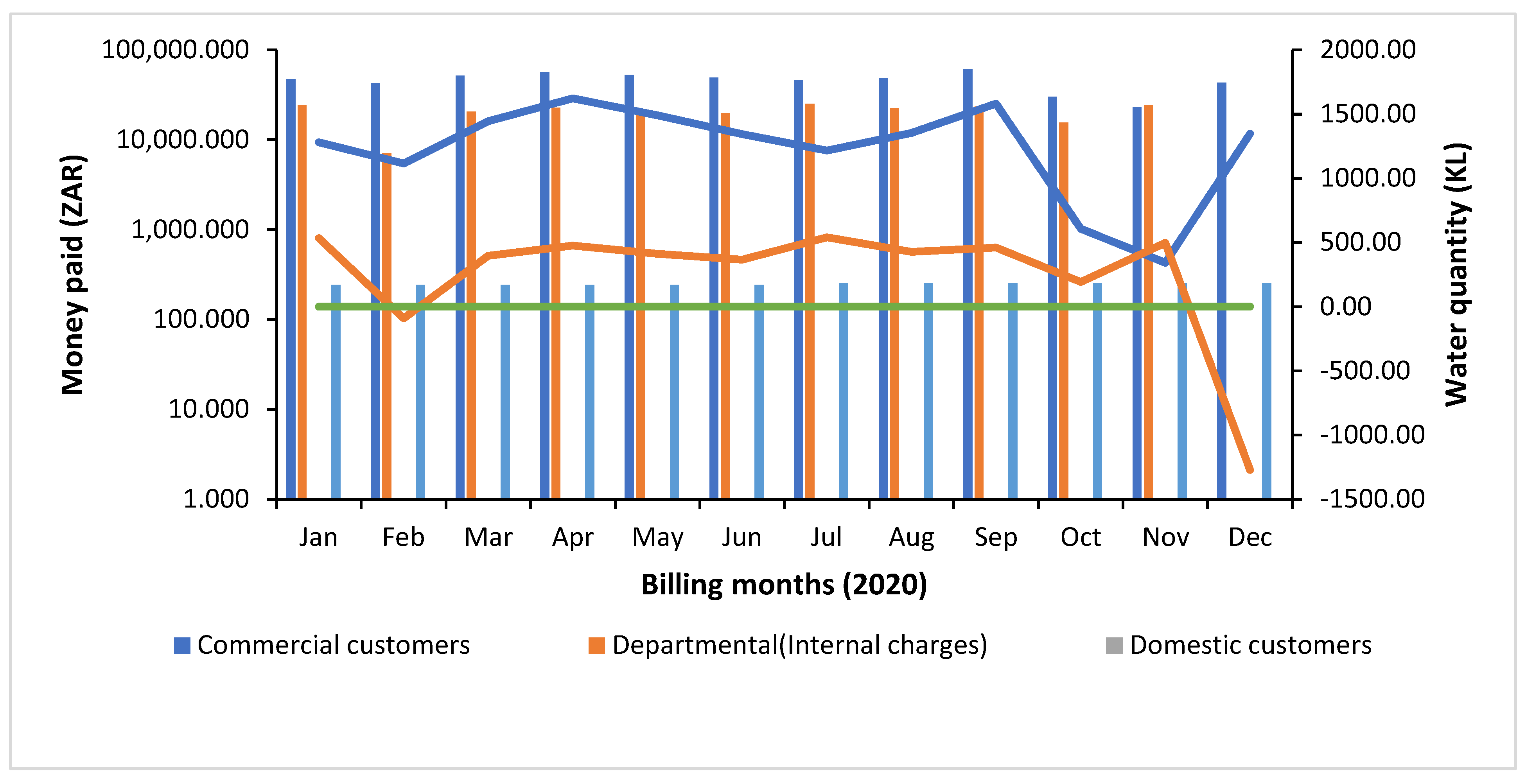
Figure 13.
Water tariffs for Heathfield suburbs for the year 2020.
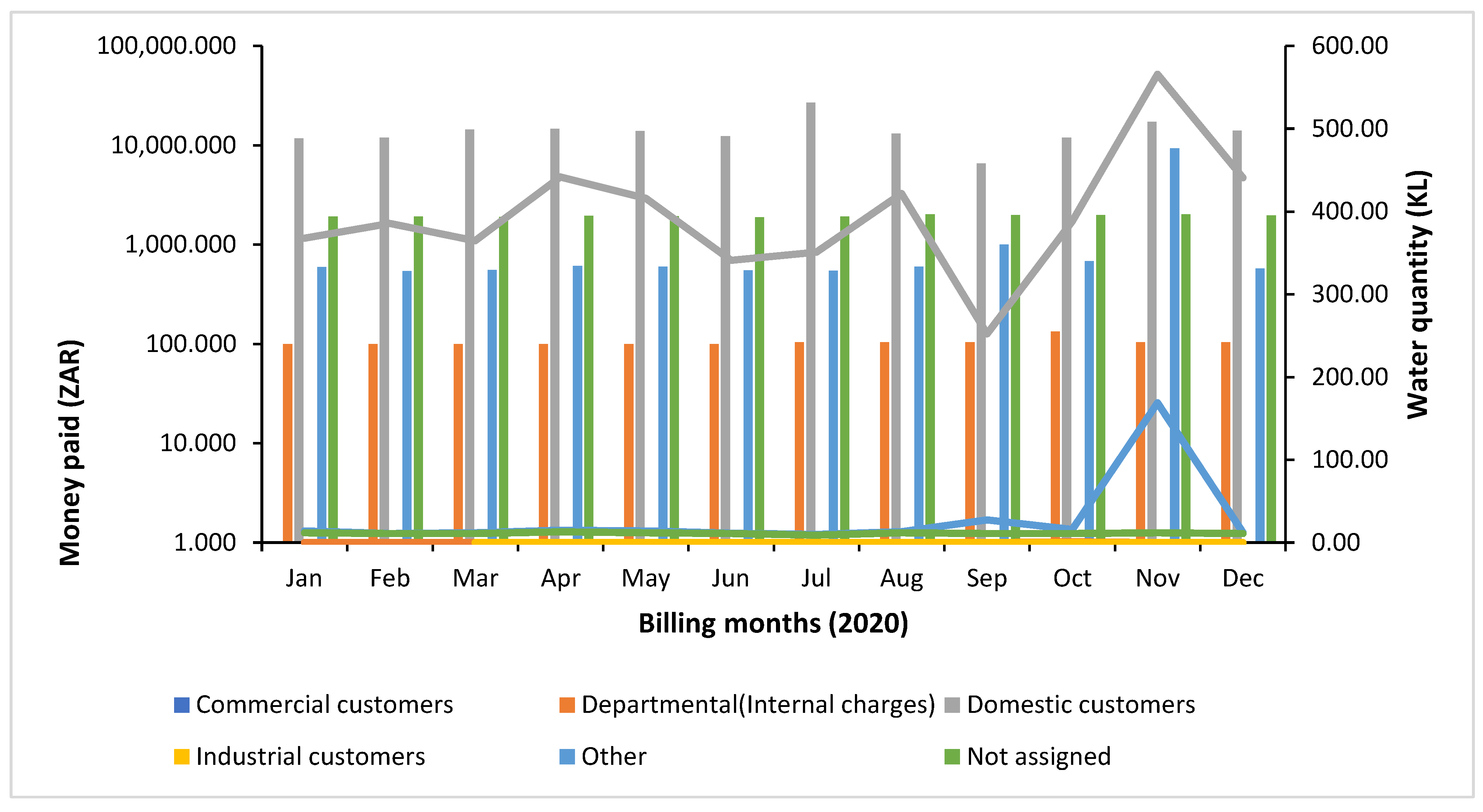
Figure 14.
Water tariffs for Manenberg suburbs for the year 2020.
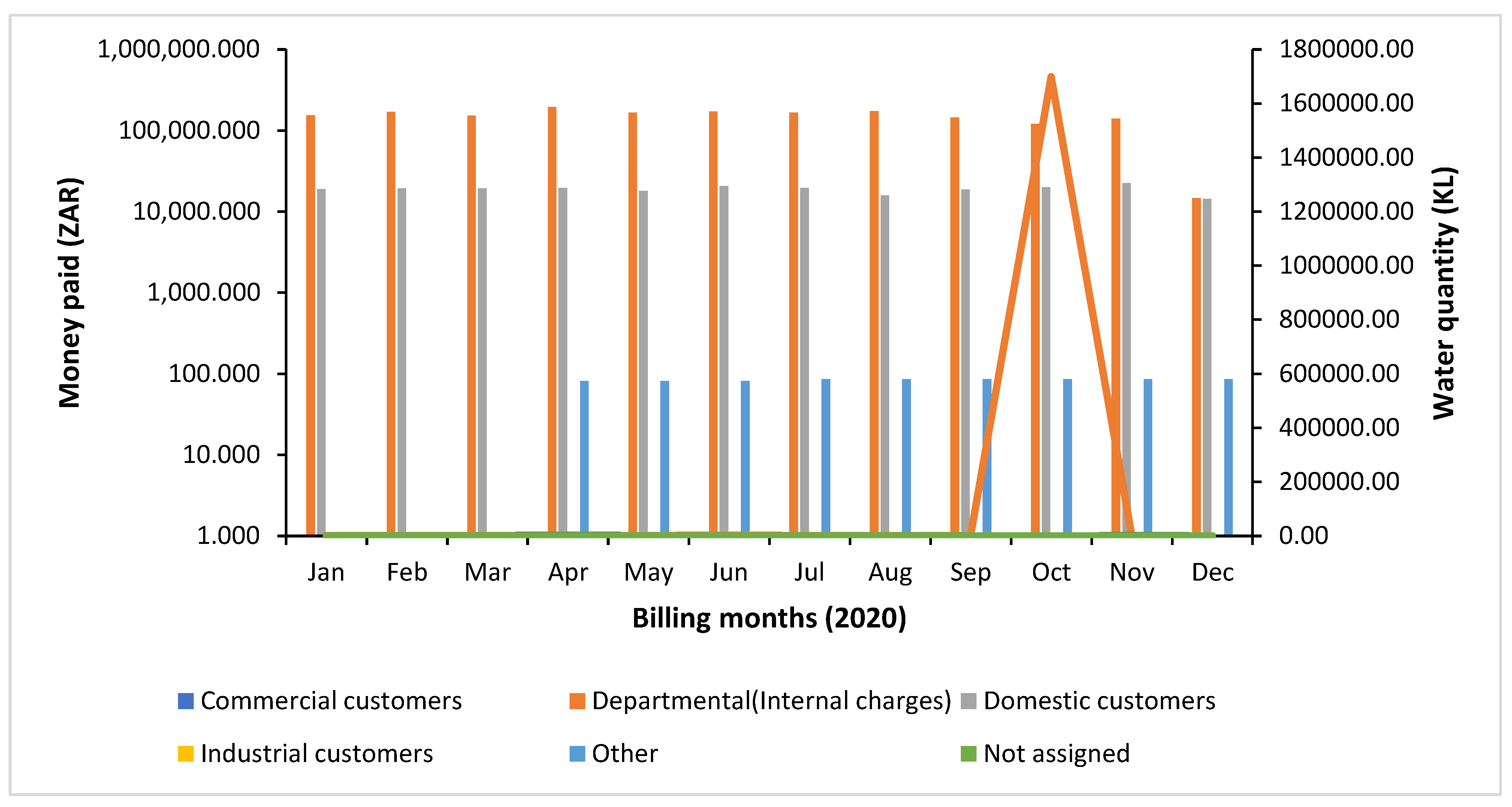
Figure 15.
Water tariffs for Mowbray suburbs for the year 2020.
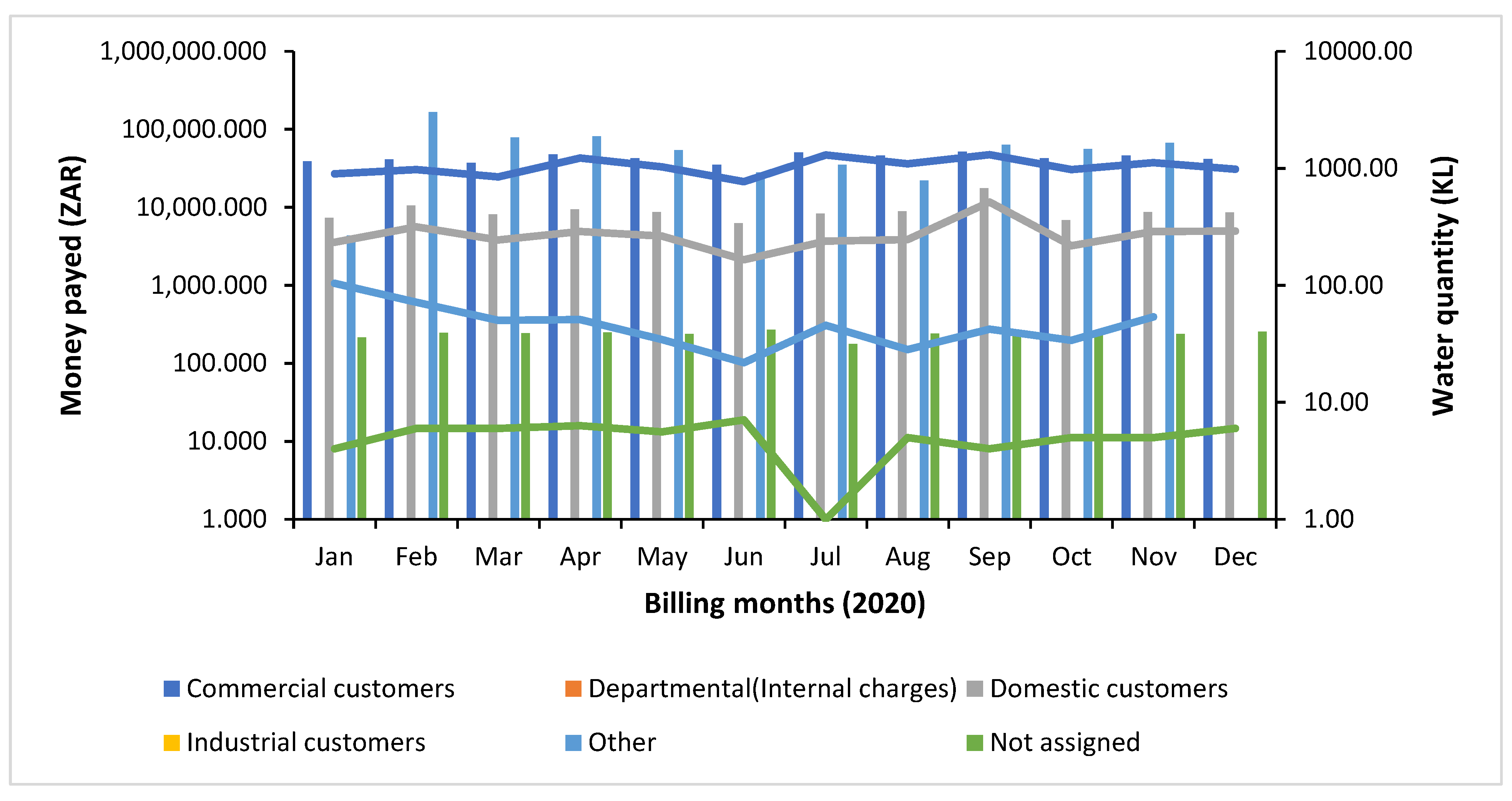
Figure 16.
Water tariffs for Strand suburbs for the year 2020.
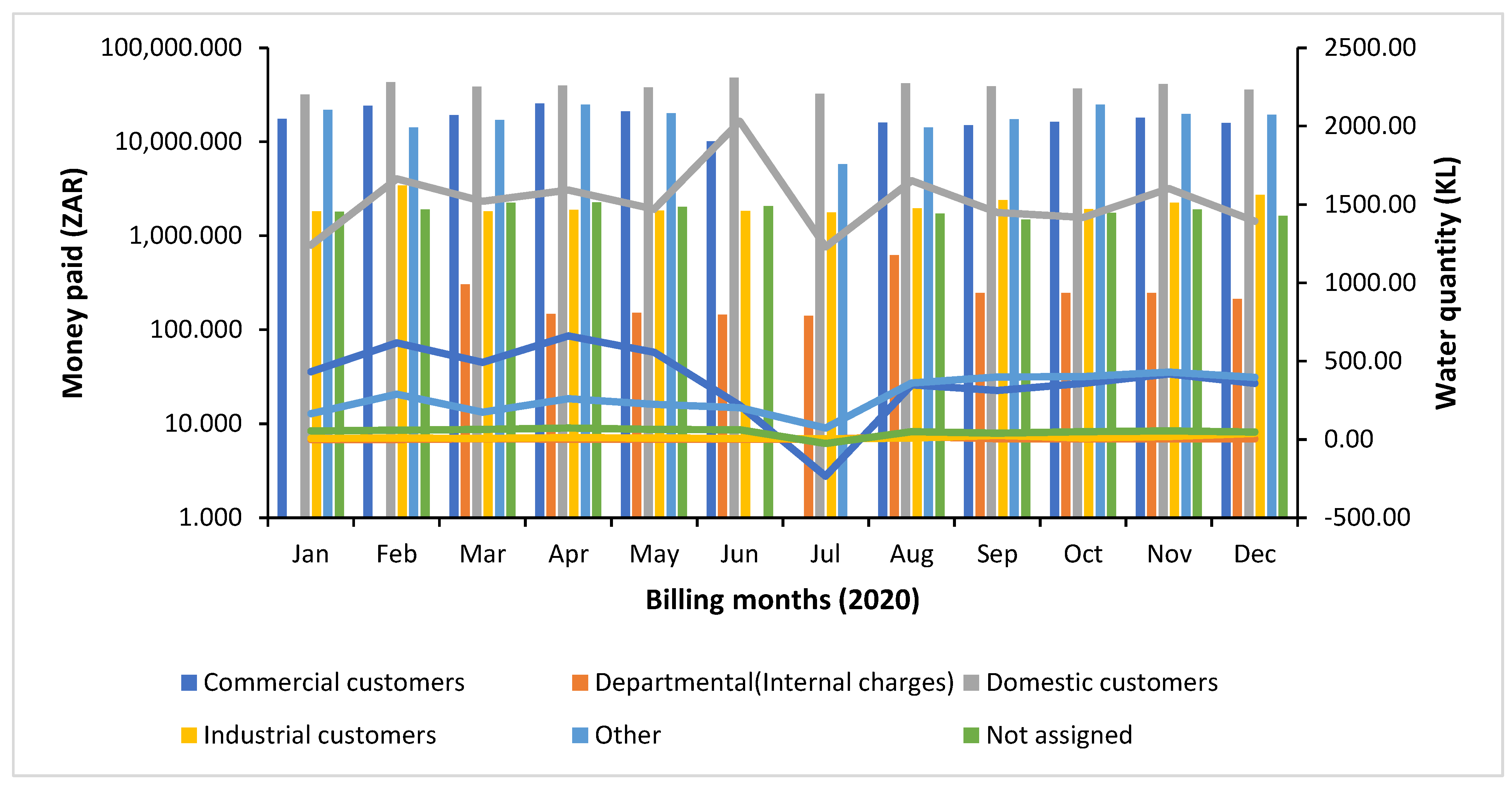
Figure 17.
Water tariffs for Athlone suburbs for the year 2021.
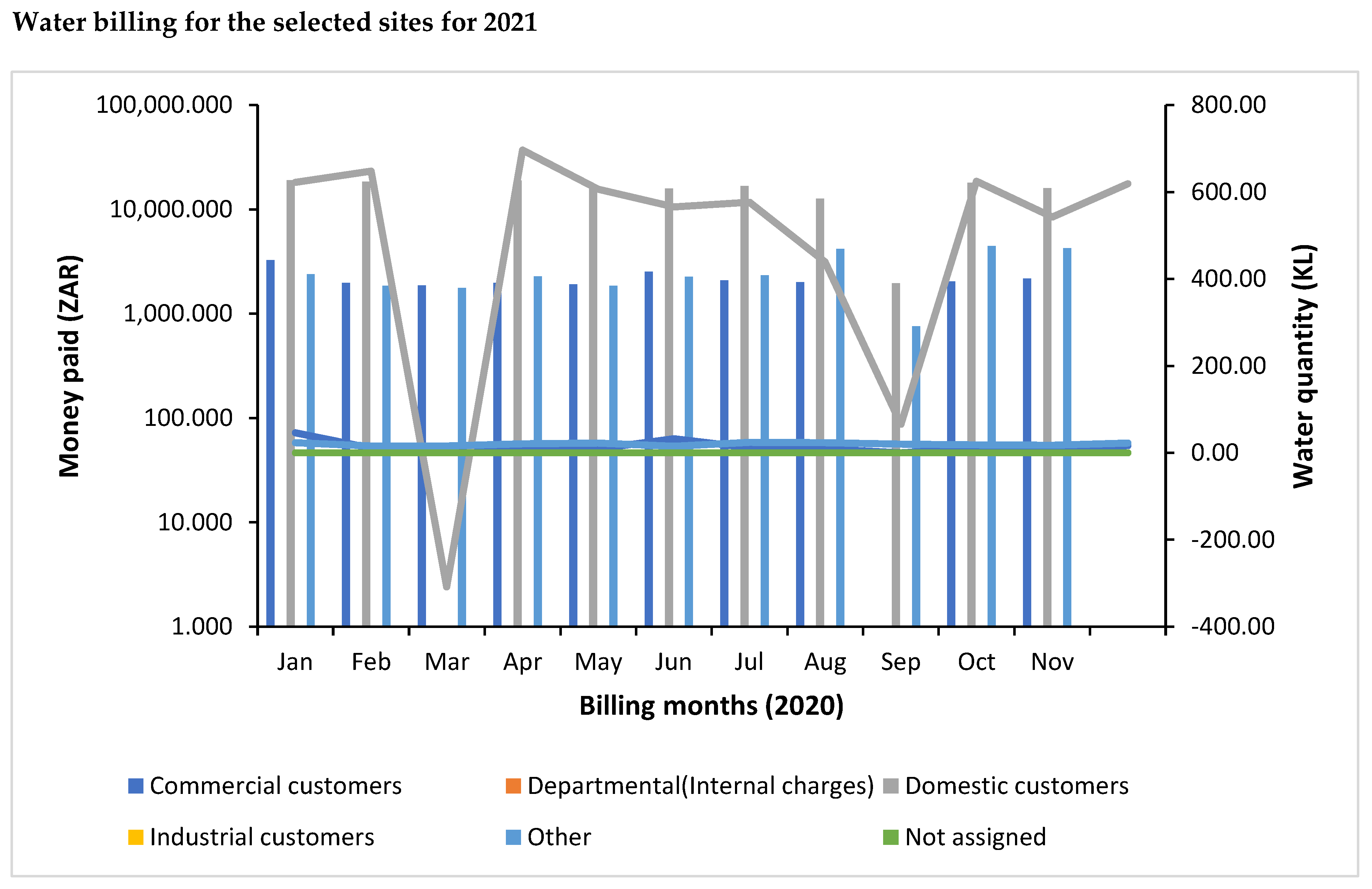
Figure 18.
Water tariffs for Bellville CBD suburbs for the year 2021.
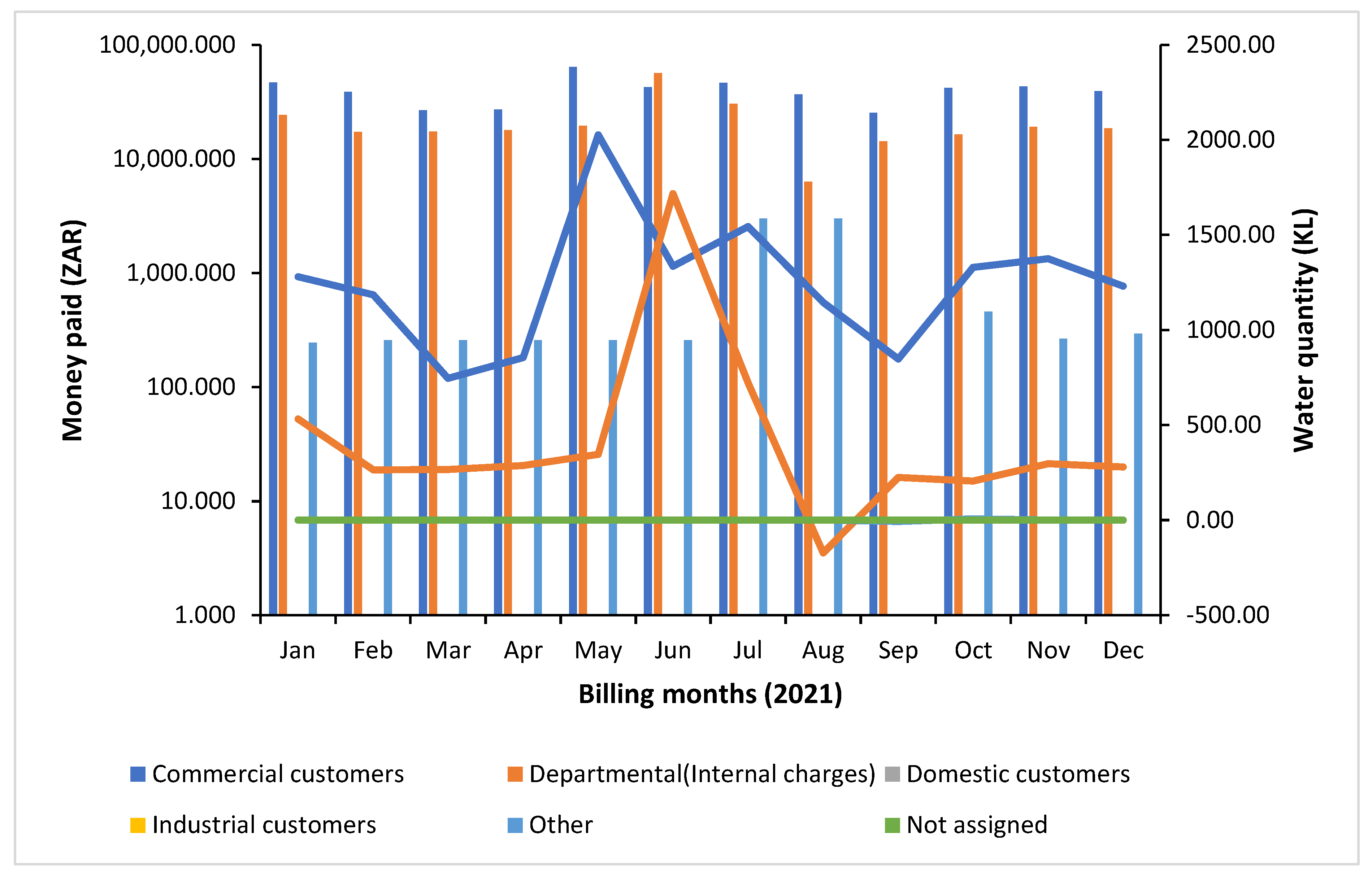
Figure 19.
Water tariffs for Heathfield suburbs for the year 2021.
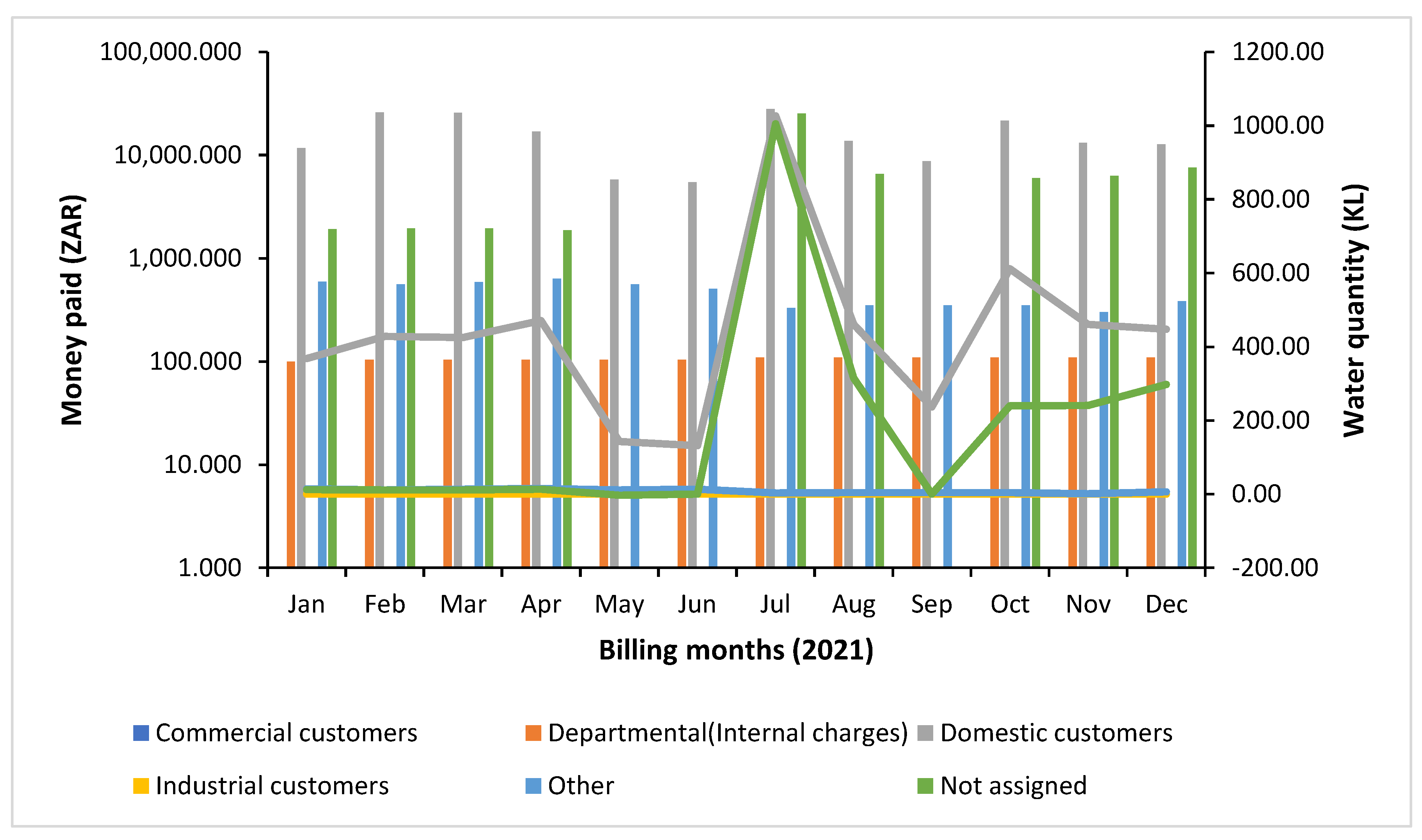
Figure 20.
Water tariffs for Manenberg suburbs for the year 2021.
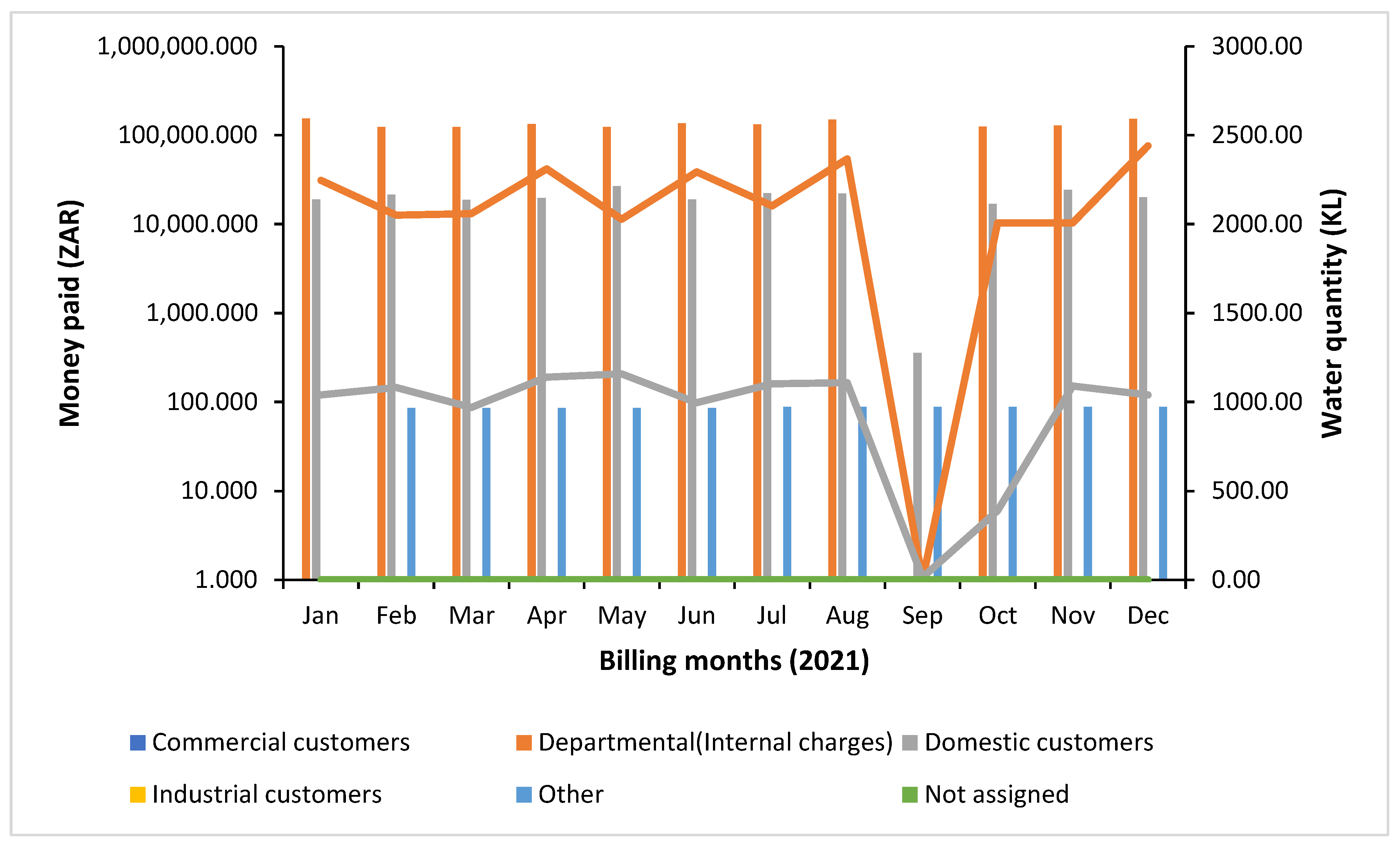
Figure 21.
Water tariffs for Mowbray suburbs for the year 2021.
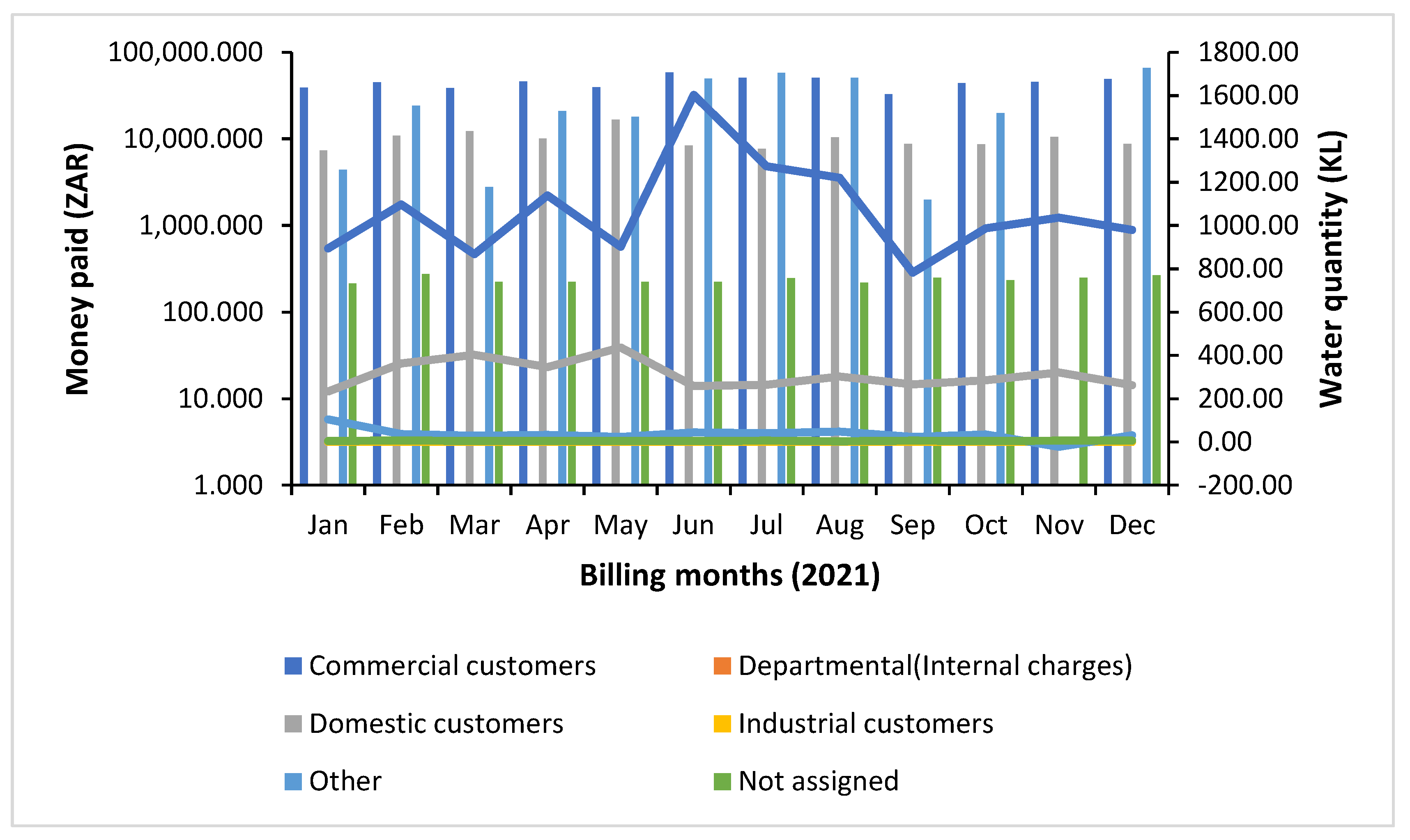
Figure 22.
Water tariffs for Strand suburbs for the year 2021.
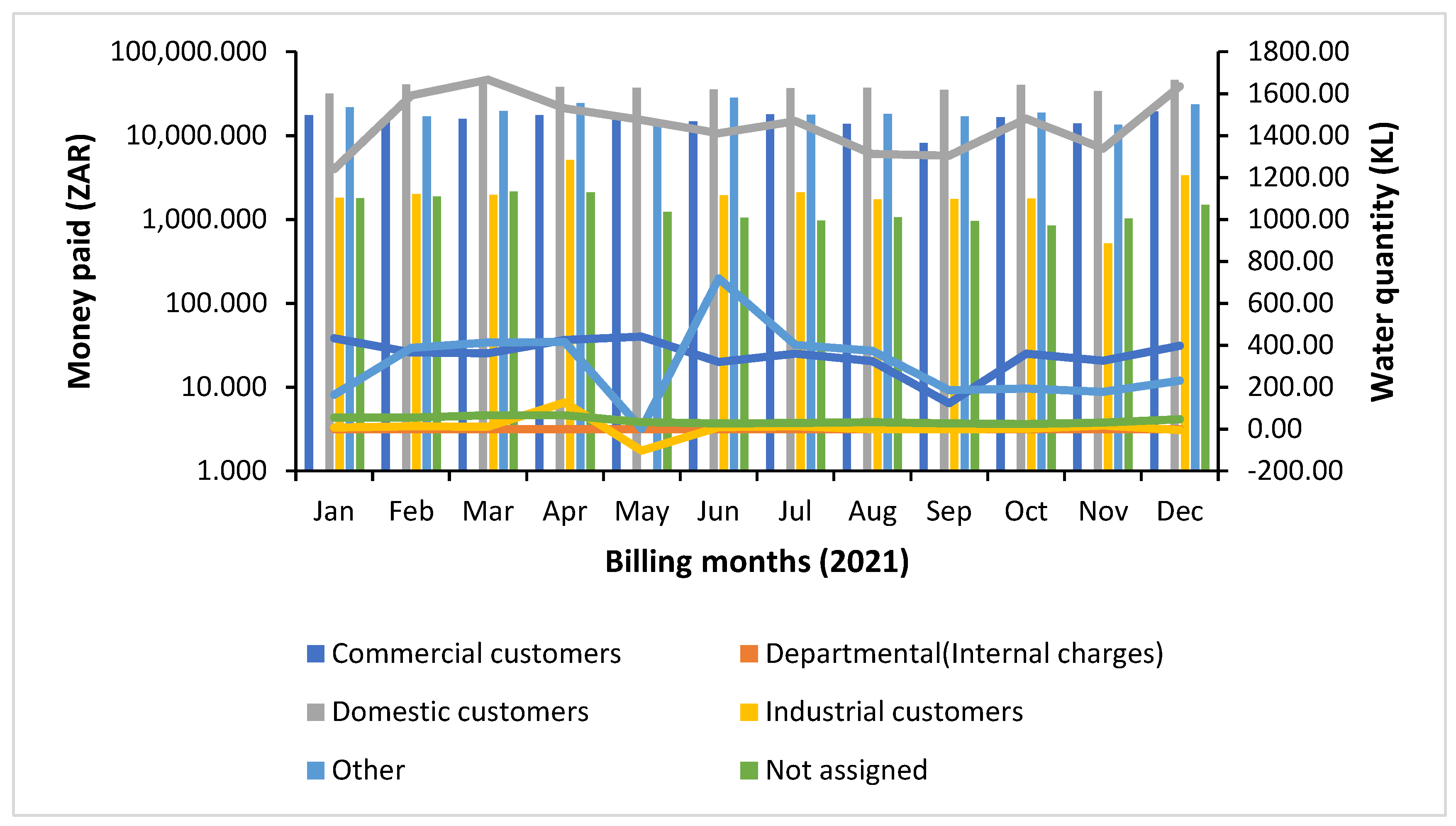
Implication of the results
The negative values on the graph represent a difference between the water that was allotted and the water that was used. A deficit is indicated by negative figures, which indicate that the users have used more water than their allotted limits. This may happen for several reasons, including water leakage, poor use, or unlawful use. Negative values have worrying implications for future water allocation or supply. They show that water usage exceeds the allocation or supply that is available, which may result in future water shortages and potential water stress. To provide a reliable water supply for the suburb, negative values point to the necessity for water management strategies such as leak identification, water conservation initiatives, and stricter water usage rules.
4. Conclusion and Recommendations
Understanding how households utilise water and respond to scarcity during drought periods is fundamental to shaping policies that can effectively minimise the impacts of future water crises. As climate projections indicate that drought events will become increasingly prolonged, severe, and spatially widespread, the need for comprehensive and adaptive water management strategies is more pressing than ever (Conway et al. 2021; IPCC 2022). Household behaviour remains a critical determinant of urban water security, particularly in contexts where supply options are constrained and where rapid population growth places additional pressure on aging infrastructure. A central insight from recent research is that technical solutions alone, such as desalination plants, aquifer recharge systems, and digital metering, are necessary but insufficient in isolation (Grafton et al. 2020; Olmstead 2021). Their effectiveness is often undermined by deeper socio-economic realities, including persistent inequalities, variable affordability, institutional capacity constraints, and psychosocial stresses that shape how households interpret and respond to water-related risks (Ziervogel 2019; Enqvist & Ziervogel 2020). These structural factors influence not only the ability of households to adopt water-efficient technologies but also their capacity to reduce consumption during crises. For low-income households and municipalities with limited financial resources, major investments in supply-side infrastructure often remain out of reach. Communities already burdened by unemployment, insecure housing, or inadequate services are far less able to participate in costly adaptation measures such as rainwater harvesting, greywater systems, or private boreholes. Similarly, cash-strapped municipalities face challenges in financing new infrastructure, maintaining existing assets, or implementing full cost-recovery billing strategies. This fiscal vulnerability weakens both preventative and emergency responses to drought, increasing dependence on behavioural interventions and tariff reforms.
Behavioural and economic interventions, such as targeted awareness campaigns, real-time consumption feedback, tiered pricing, and volumetric restrictions, offer a more feasible and often highly effective pathway for reducing demand in these contexts (Gawusu et al. 2022; Wutich et al. 2022). When designed inclusively, these interventions can shift consumption norms, foster long-term water-saving habits, and improve equity by protecting vulnerable groups from punitive financial impacts. However, without strategic investment in the economic governance of water systems, urban authorities will continue to face escalating difficulty in meeting growing demand. Failure to do so risks disproportionately harming marginalised populations, potentially heightening social tensions, eroding trust in public institutions, and exacerbating existing inequalities. Cities are particularly vulnerable because they concentrate large and growing populations, intensifying competition for limited water resources. Wealthier nations and cities often have greater institutional capacity and fiscal resilience, enabling them to rapidly deploy capital-intensive mitigation measures, such as major infrastructure upgrades or alternative water supply schemes. By contrast, cities in developing regions are frequently limited to demand-side measures due to affordability constraints, inequitable service delivery legacies, and competing developmental priorities.
This study contributes to these debates by evaluating the economic management of water demand and supply using a spatially grounded, map-based assessment of smart water metering technology within a South African urban water management system. Although extensive research has been conducted on behavioural and socio-economic responses to drought in highly industrialised settings, far less is known about how such responses operate in complex, unequal, and rapidly urbanising contexts such as Cape Town. By conceptualising water as a heterogeneous and spatially variable economic good, the study foregrounds how socio-economic disparities, infrastructural fragmentation, and environmental variability intersect to shape consumption patterns and adaptation strategies. The findings emphasise the importance of integrated approaches that combine proactive (anticipatory) and reactive (crisis-responsive) strategies to improve urban resilience. Proactive strategies may include long-term investment in metering technologies, leakage reduction, climate-resilient infrastructure, and public education initiatives. Reactive strategies, implemented during acute drought periods, may include temporary restrictions, emergency tariff adjustments, or targeted support for vulnerable households. As Buurman, Mens, and Dahm (2017) argue, adaptive governance frameworks that blend both approaches, supported by robust data, clear communication, and inclusive decision-making, are essential for managing the complexity and uncertainty associated with climate-induced water scarcity.
Finally, the South African context highlights the need for equity-centred water governance. Given the history of unequal access to services in South Africa’s cities, ensuring universal and reliable access to water remains both a constitutional obligation and a practical necessity for maintaining social stability. Managing water supplies is not solely about preventing service interruptions during drought; it also involves securing everyday hygiene needs, protecting public health, and reducing exposure to climate-related hazards such as flooding. Addressing these challenges requires a holistic approach that integrates technical, economic, social, behavioural, and institutional dimensions to create long-term, inclusive, and sustainable water security for all residents.
Funding
This research received no external funding.
Data Availability Statement
No new data were created or analyzed in this study.
Conflicts of Interest
The authors declare no conflict of interest.
References
- Alegre, H.; Baptista, J.M.; Cabrera, E.; Cubillo, F.; Duarte, P.; Hirner, W.; Merkel, W.; Parena, R. Performance Indicators for Water Supply Services; IWA Publishing: London, UK, 2016. [Google Scholar]
- Arbués, F.; Villanúa, I. Urban Water Demand Modelling and the Role of Consumer Segmentation. Water Resour. Manag. 2020, 34, 101–116. [Google Scholar]
- Battaglia, M. Nonprobability Sampling. In Encyclopedia of Survey Research Methods; Sage: Thousand Oaks, CA, USA, 2011. [Google Scholar]
- Brown, C.; Magoba, R. Integrated Catchment Management: The Western Cape Experience; Water Research Commission: Pretoria, South Africa, 2009. [Google Scholar]
- Burls, N.; Blamey, R.; James, R.; Slivinski, L. The Cape Town “Day Zero” Drought: Attribution and Lessons for Global Water Security. Clim. Dyn. 2019, 53, 1–17. [Google Scholar]
- Buurman, J.; Mens, M.; Dahm, R. Strategies for Managing Drought Risk under Climate Change. Water Resour. Manag. 2017, 31, 3303–3317. [Google Scholar]
- City of Cape Town. Open Data Portal: Demographic and Socio-Economic Indicators; City of Cape Town Government: Cape Town, South Africa, 2021.
- Cochran, W.G. Sampling Techniques, 4th ed.; Wiley: New York, NY, USA, 2019. [Google Scholar]
- Conway, D.; Strzepek, K.; Ewbank, R.; Gannon, K. Climate Risks to Water Security in Southern Africa. WIREs Water 2021, 8, e1503. [Google Scholar]
- Cook, C.; Mehta, L.; Zwarteveen, M. Contested Waters: Drought, Inequality, and Governance in Cape Town. Geoforum 2021, 118, 90–100. [Google Scholar]
- Engelbrecht, F.; Monteiro, P. Climate Change Projections for Southern Africa. S. Afr. J. Sci. 2021, 117, 1–9. [Google Scholar]
- Enqvist, J.; Ziervogel, G. Water Governance and Justice in Cape Town. WIREs Water 2019, 6, e1354. [Google Scholar] [CrossRef]
- Etikan, I.; Bala, K. Sampling and Sampling Methods. Biostat. Biom. Open Access J. 2017, 5, 1–3. [Google Scholar] [CrossRef]
- Farley, M.; Trow, S. Losses in Water Distribution Networks; IWA Publishing: London, UK, 2021. [Google Scholar]
- Gawusu, S.; Acheampong, E.; Luginaah, I. Household Water Consumption and Socio-Economic Inequality in Developing Cities. Water Policy 2022, 24, 785–803. [Google Scholar]
- González-Gómez, F.; García-Rubio, M.; Guardiola, J. Urban Water Distribution Efficiency and Consumption Analysis. Utilities Policy 2022, 78, 101447. [Google Scholar]
- Grafton, R.Q.; Chu, L.; Kompas, T.; et al. Water Scarcity, Behavioural Change, and Demand Management. Nat. Clim. Change 2020, 10, 101–109. [Google Scholar]
- Hoddinott, J.; Rose, E.; Himaz, R. Challenges of Representative Sampling in Developing Contexts. World Dev. 2020, 127, 104742. [Google Scholar]
- IPCC. Sixth Assessment Report: Impacts, Adaptation and Vulnerability; IPCC: Geneva, Switzerland, 2022. [Google Scholar]
- Kanakoudis, V.; Gonelas, K. Minimum Night Flow Analysis and Leakage Estimation in District Metered Areas. Water Supply 2021, 21, 1652–1664. [Google Scholar]
- Koop, S.; van Leeuwen, K. Urban Water Security Frameworks for Cities in Transition. Water Res. 2020, 186, 116297. [Google Scholar]
- Lambert, A.; Hirner, W. Standard Water Balance Terminology and Performance Indicators. Water Sci. Technol. Water Supply 2020, 20, 2978–2989. [Google Scholar]
- Malherbe, J.; Engelbrecht, C.; Landman, W. Rainfall Variability Patterns in South Africa. Theor. Appl. Climatol. 2020, 141, 1101–1117. [Google Scholar]
- Matsebula, N.; Brent, A. Socio-Spatial Inequality and Water Access in South African Cities. Dev. South. Afr. 2020, 37, 389–405. [Google Scholar]
- Mutikanga, H.E.; Sharma, S.; Vairavamoorthy, K. Water Loss Assessment and Demand Estimation Techniques in Urban Utilities. Water Resour. Manag. 2019, 33, 3205–3221. [Google Scholar]
- Olmstead, S. Price Elasticity and Urban Water Demand Management. Annu. Rev. Resour. Econ. 2021, 13, 225–245. [Google Scholar]
- Pasquini, L.; Cowling, R. Household Resource Use under Climatic Stress in Cape Town. Environ. Sci. Policy 2015, 45, 75–85. [Google Scholar]
- Puust, R.; Kapelan, Z.; Savic, D.; Koppel, T. Leak Detection and Localization in Water Distribution Systems. Water Res. 2018, 139, 46–55. [Google Scholar]
- Reason, C.; Smart, S. Seasonal Rainfall Regimes of the Western Cape. Clim. Dyn. 2022, 58, 1121–1138. [Google Scholar]
- Renata, S.; Giné-Garriga, R. Stratified Sampling Approaches in Urban Water Demand Studies. J. Water Resour. Plan. Manag. 2021, 147, 04021039. [Google Scholar]
- Simpson, N.; et al. Social and Spatial Drivers of Water Demand in Climate-Stressed Cities. Environ. Res. Lett. 2019, 14, 085007. [Google Scholar]
- Sousa, P.; Ramos, A.; Nieto, R.; Trigo, R.; et al. The 2015–2017 Cape Town Drought. Climate Research 2018, 75, 1–16. [Google Scholar]
- Wolski, P.; Winter, K.; Jack, C. Multi-Decadal Rainfall Variability in Cape Town. Clim. Dyn. 2021, 56, 1801–1818. [Google Scholar]
- Wutich, A.; Beresford, M.; Carvajal, C. Water as a Complex Social Good. WIREs Water 2022, 9, e1593. [Google Scholar]
- Ziervogel, G. Unpacking the Cape Town Drought: Lessons for Urban Climate Adaptation. S. Afr. Geogr. J. 2019, 101, 1–20. [Google Scholar]
Figure 1.
Study area of the 6 focus areas. Map generated in GIS -A. Xaza 2022.
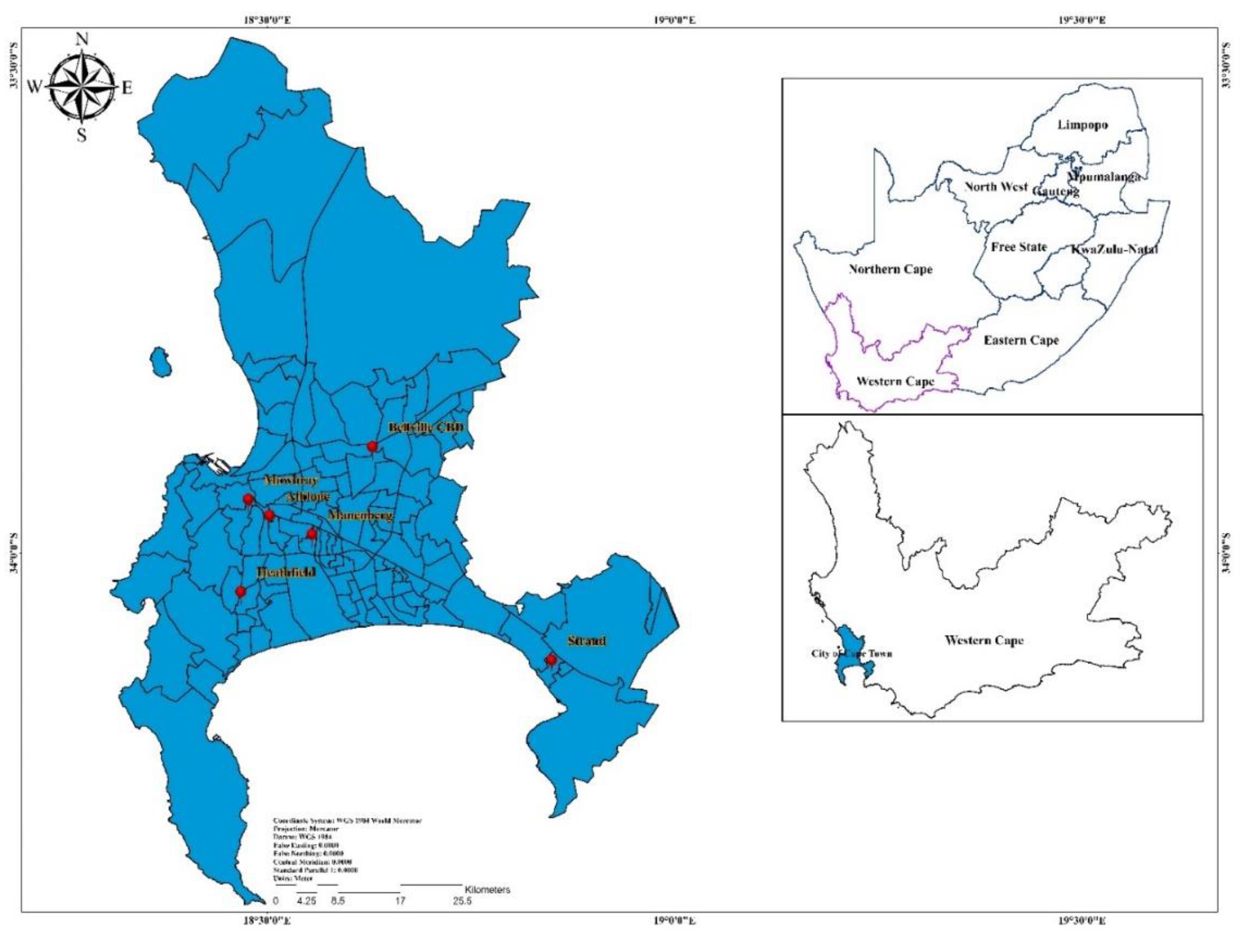
Figure 2.
Depicts the Population Density and Economic income bracket for Bellville CBD; Mowbray; Athlone; Manenberg and Heathfield, Cape Town, Western Cape Region.
Figure 2.
Depicts the Population Density and Economic income bracket for Bellville CBD; Mowbray; Athlone; Manenberg and Heathfield, Cape Town, Western Cape Region.
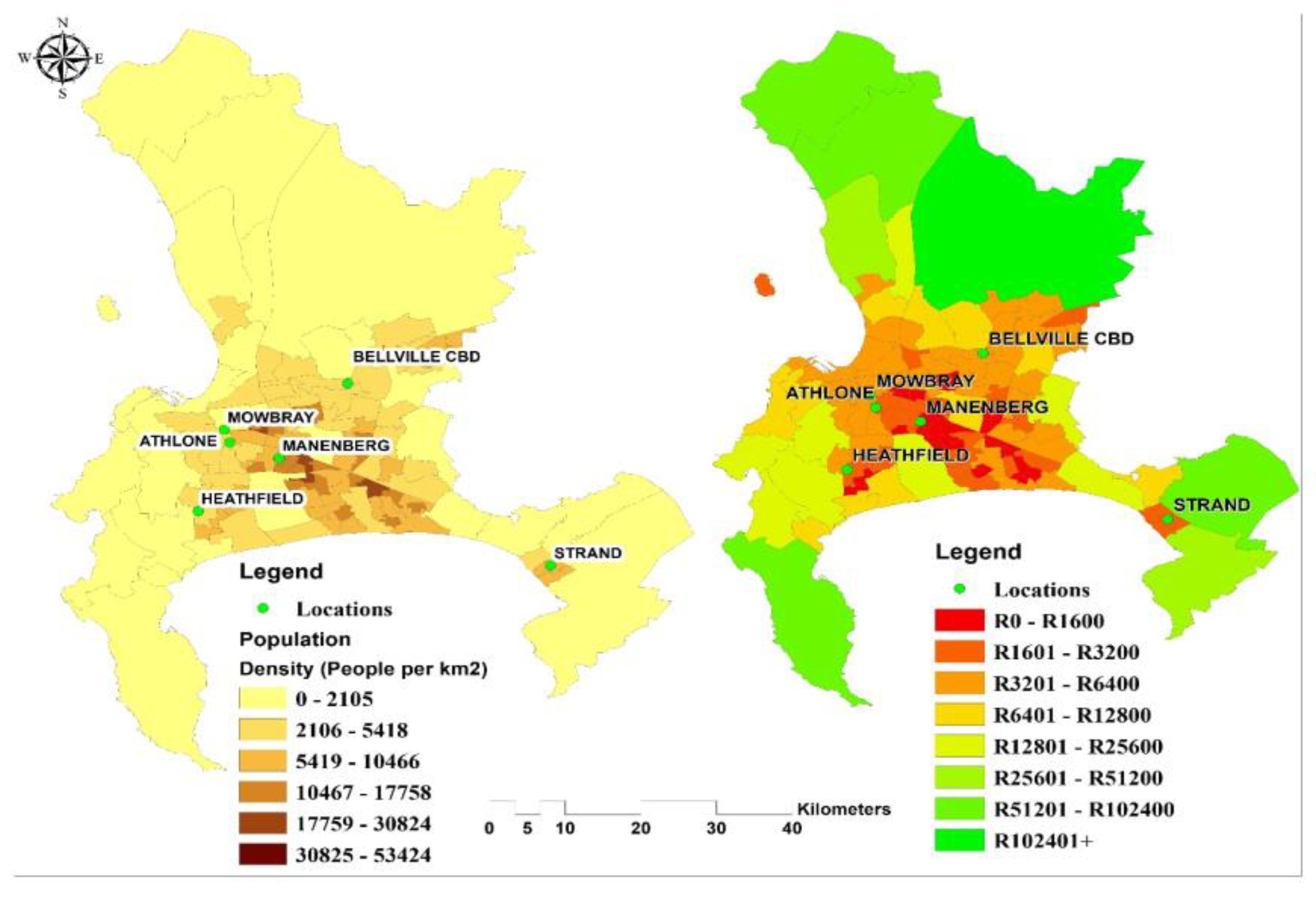
Figure 3.
Unaccounted for Water Component.
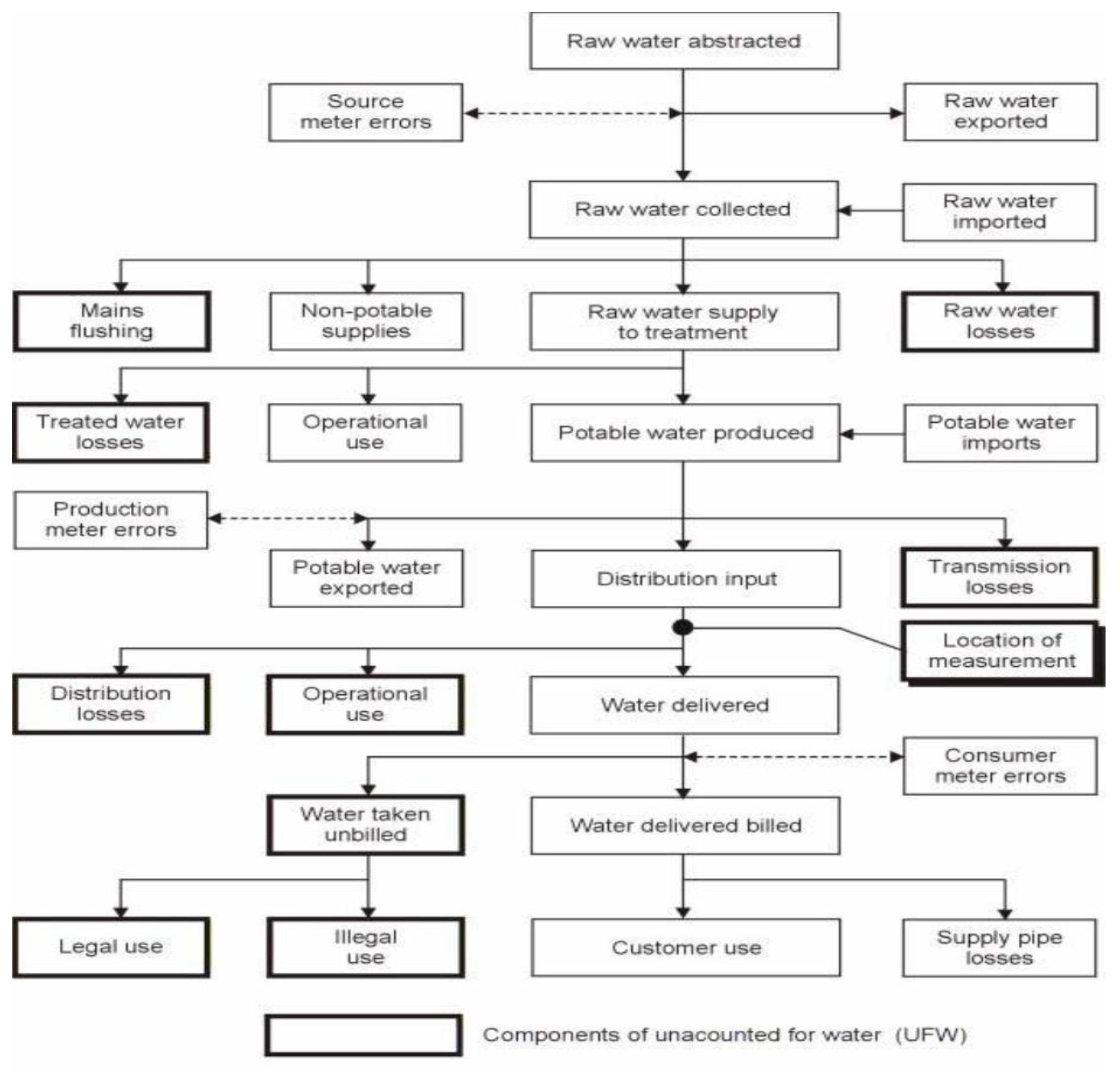
Figure 5.
Water tariffs for Athlone suburbs for the year 2019.

 |
 |
 |
Disclaimer/Publisher’s Note: The statements, opinions and data contained in all publications are solely those of the individual author(s) and contributor(s) and not of MDPI and/or the editor(s). MDPI and/or the editor(s) disclaim responsibility for any injury to people or property resulting from any ideas, methods, instructions or products referred to in the content. |
© 2026 by the authors. Licensee MDPI, Basel, Switzerland. This article is an open access article distributed under the terms and conditions of the Creative Commons Attribution (CC BY) license (http://creativecommons.org/licenses/by/4.0/).
Copyright: This open access article is published under a Creative Commons CC BY 4.0 license, which permit the free download, distribution, and reuse, provided that the author and preprint are cited in any reuse.


