

Submitted:
27 February 2026
Posted:
02 March 2026
You are already at the latest version
Abstract
Rationale: The escalating volume of solid waste generated globally poses significant environmental and public health challenges, particularly in developing countries like Nigeria. Effective solid waste management planning relies on the quantification and characterization of waste streams. However, in Nigerian universities, critical processes such as waste collection, transportation, characterization, and disposal remain significantly under-investigated and poorly implemented, limiting evidence-based policy development. Objectives: This study assessed the quantity, composition, spatial distribution, temporal variation, and resource recovery potential of solid waste at the Federal University of Health Sciences, Ila-Orangun (FUHSI), aiming to propose actionable recommendations for sustainable waste management aligned with circular economy principles. Methods: A six-month prospective waste segregation and collection study was conducted across eight strategic locations on campus, including the Faculty of Allied Health Sciences (FAHS), Senate Building (SB), Faculty of Science (FS), Former Administrative Building (FAB), Faculty of Basic Medical Sciences (FBM), Faculty of Health Sciences (FHS), Nursing Science (NS), and Library and ICT complex (LI). Waste was segregated at source, transported to the mini–Material Recovery Facility (m-MRF), and measured weekly. Statistical analyses, including one-way ANOVA, were employed to examine spatial variations in waste composition. Results: Over the monitoring period, a cumulative 1,846.4 kg of waste was recorded, with an overall mean of 9.62 kg per week per collection point. FAHS contributed the largest share (17.87%; average 13.75 kg/week), followed by SB (12.65%) and FS (12.55%). Temporal analysis revealed a gradual decline from 513.3 kg in Week 1 to 413.6 kg in Week 4, suggesting operational intensity patterns. Waste composition analysis demonstrated food waste as the dominant fraction (~600 kg; 32.7%), substantially exceeding plastics (~320 kg; 17.3%) and papers (~310 kg; 16.8%). Intermediate quantities were observed for carton/cardboard (~270 kg) and polythene nylons (~240 kg), with smaller proportions for metals/cans (~50 kg), styrofoam (~40 kg), and glass bottles (<10 kg). One-way ANOVA revealed statistically significant spatial variations across locations for food waste (p < 0.001), plastic waste (p < 0.001), polythene nylon (p < 0.001), and paper (p < 0.001), while glass bottles showed uniform distribution (p = 0.272). Recovery assessment documented 603.8 kg of food waste composted (averaging 25.16 kg weekly), 320 kg of plastics recycled, and substantial paper (310.2 kg) and carton (272.6 kg) recovery. Over 80% of the waste stream was identified as either biodegradable or recyclable.Conclusion: FUHSI generates substantial waste with significant spatial and compositional variability, yet exhibits remarkable potential for resource recovery through composting and recycling interventions. Recommendations: The university should implement extensive source segregation programs, conduct awareness campaigns, establish infrastructure for organic waste composting, and develop plastic and paper recycling partnerships to advance circular economy principles. Health Significance Statement: Improper waste management directly threatens campus community health through occupational exposures, environmental contamination, and increased disease transmission risks. Implementing sustainable waste management systems is essential for protecting population health, reducing environmental hazards, and fostering institutional sustainability.
Keywords:
solid waste quantification
; waste characterization
; resource recovery
; circular economy
; university campus
; Nigeria
; composting potential
; recycling
; spatial variation
; sustainable waste management
1. Introduction
The accelerating growth of municipal solid waste has emerged as one of the defining environmental challenges of the twenty-first century, driven by urbanization, population expansion, and changing consumption patterns. Globally, waste generation is projected to rise substantially, placing mounting pressure on environmental systems and public health infrastructures, particularly in low and middle-income countries where management capacity remains uneven (Hoornweg & Bhada-Tata, 2012; Kaza et al., 2018). In many African cities, weak institutional coordination, limited financing, and inadequate infrastructure continue to constrain effective waste governance, reinforcing cycles of pollution and environmental inequality (Wilson et al., 2012; Wilson et al., 2015; UNEP, 2018; Morufu et al., 2021). Nigeria exemplifies these systemic challenges, where rapid urban growth has outpaced waste service provision, leading to widespread open dumping, environmental contamination, and associated health risks (Giri et al., 2024; Rauf & Raimi, 2023). Moreover, poor waste handling practices have been linked to occupational hazards among waste workers and nearby communities, highlighting the intersection between environmental management and public health outcomes (Sawyerr et al., 2016; Yusuf et al., 2023). Within this broader landscape, higher education institutions represent micro-urban systems with concentrated populations, diverse waste streams, and strong innovation potential (Omoyajowo et al., 2024; Raimi and Raimi, 2025; Morufu, 2025; Abdulsalam et al., 2025; Adenike et al., 2025; Akayinaboderi et al., 2025; Aziba-anyam et al., 2025a, b, c; Christopher et al., 2025a, b, c; Digha et al., 2025; Enetimi and Morufu, 2025; Ilemi et al., 2025; Teddy et al., 2025; Seiyaboh and Morufu, 2026). Their operational scale and research capacity position them as living laboratories for sustainable waste solutions that can be replicated in wider society (Pires et al., 2011; Wilson et al., 2015). Yet despite increasing global attention to circular economy principles that emphasize waste reduction, reuse, and resource recovery, implementation across institutional settings remains inconsistent (Ghisellini et al., 2016; UNEP, 2018). Consequently, strengthening empirical evidence on waste generation dynamics within universities is essential for designing context-specific strategies that align environmental stewardship with operational efficiency. By situating this study within global sustainability discourse, the introduction underscores that understanding institutional waste systems is not merely a local administrative concern but a critical component of broader transitions toward resource-efficient and low-carbon development pathways (Kaza et al., 2018; Giri et al., 2024). Building on this global perspective, universities have increasingly been recognized as critical intervention points because their waste profiles mirror those of small cities while remaining more manageable for targeted experimentation. Empirical studies consistently show that campus environments generate substantial amounts of heterogeneous waste from academic, residential, and commercial activities (Adeniyi et al., 2022; Erhabor, 2024). For example, investigations in institutional markets have revealed that food-related activities dominate waste streams, with organic materials accounting for the largest fraction, thereby presenting opportunities for composting and resource recovery (Adeniyi et al., 2022; Mensah et al., 2015). Complementary research highlights the behavioral dimension of waste management, demonstrating that environmental awareness and education significantly influence segregation practices and recycling participation among students (Chen & Chai, 2010; Erhabor, 2024). These findings align with broader evidence that institutional culture and stakeholder engagement are pivotal determinants of sustainable waste outcomes (Wilson et al., 2015; UNEP, 2018; Elemuwa et al., 2024; Teddy et al., 2025). Furthermore, the circular economy framework provides a conceptual lens through which universities can transition from linear disposal models toward regenerative systems that valorize waste as a resource (Ghisellini et al., 2016; Liu et al., 2020). However, despite growing recognition of these opportunities, many campuses in developing contexts still lack comprehensive baseline data on waste quantities and composition, limiting their ability to design effective interventions or monitor progress (Pires et al., 2011; Giri et al., 2024). Overall, the literature indicates that while universities possess strong potential to model sustainable practices, realizing this potential requires robust, context-specific assessments that integrate behavioral, technical, and institutional dimensions of waste management (Adeniyi et al., 2022; Erhabor, 2024; Wilson et al., 2015).
Despite the expanding body of research, significant knowledge gaps persist regarding how waste generation patterns vary spatially within campuses and how these variations influence recovery potential. Waste characterization studies demonstrate that organic fractions often exceed half of total waste volumes, yet the proportion of recyclables such as plastics and paper can differ markedly depending on local consumption patterns and service availability (Mensah et al., 2015; Adeniyi et al., 2022). In many developing-country institutions, insufficient segregation infrastructure and limited stakeholder participation hinder the translation of characterization data into actionable resource recovery programs (Yusuf et al., 2022; Giri et al., 2024). Moreover, informal waste activities, while contributing to material recovery, often operate under unsafe conditions, raising concerns about occupational health and social inclusion (Gutberlet, 2017; Yusuf et al., 2023). Emerging research also links poorly managed waste streams to broader environmental externalities, including air quality degradation and greenhouse gas emissions, reinforcing the urgency of integrated management approaches (Raimi et al., 2018, b; UNEP, 2018; Raimi et al., 2020; Raimi et al., 2021; Clinton-Ezekwe et al., 2022; Morufu et al., 2021b, c; Sarah et al., 2024). While policy frameworks increasingly advocate for circularity and inclusive recycling systems, empirical campus-level evidence from Nigeria remains fragmented, particularly for specialized institutions such as health sciences university’s, where waste streams may exhibit unique characteristics (Ghisellini et al., 2016; Giri et al., 2024). Consequently, there is limited understanding of how waste composition varies across functional zones, such as academic buildings, commercial areas, and administrative units, and how these variations shape opportunities for composting, recycling, and other recovery pathways (Pires et al., 2011; Wilson et al., 2015). Addressing this gap is critical because granular data not only informs infrastructure planning but also supports behavioral interventions and policy alignment. Thus, a systematic assessment that integrates quantification, characterization, and recovery analysis is necessary to advance both institutional sustainability and evidence-based decision-making within the Nigerian higher education sector (Adeniyi et al., 2022; Yusuf et al., 2022). Against this backdrop, the present study situates itself within the sustainability transition discourse by focusing on Federal University of Health Sciences Ila-Orangun as a representative institutional setting where waste management improvements can yield environmental, educational, and operational benefits. By examining waste flows across strategically selected high-traffic zones, the study responds directly to calls for localized evidence capable of informing practical interventions and resource recovery initiatives (Wilson et al., 2015; UNEP, 2018). The approach aligns with circular economy thinking, emphasizing the transformation of waste from an environmental burden into a valuable input for new production cycles (Ghisellini et al., 2016; Liu et al., 2020). Furthermore, generating reliable baseline data will support institutional planning, enhance environmental awareness, and contribute to national sustainability goals by demonstrating scalable best practices (Giri et al., 2024; Yusuf et al., 2022). In doing so, the study also addresses the persistent disconnect between policy aspirations and operational realities that characterizes waste management in many developing-country universities (Pires et al., 2011; Wilson et al., 2012). Therefore, this research is both timely and necessary, providing empirical insights that can inform infrastructure design, stakeholder engagement strategies, and resource recovery initiatives within and beyond the campus environment. Accordingly, the study aims to assess the quantity of daily solid waste generated at designated segregation points, determine the composition and characterization of the waste streams, compare variations across collection locations, and develop actionable recommendations for sustainable waste management and resource recovery within the university context.
2. Methodology
2.1. Study Area
The study was carried out at Federal University of Health Sciences Ila-Orangun, located in Ila-Orangun, within the Ila Local Government Area of Osun State. The town lies at approximately 8.019116° N and 4.901962° E. At the time of the study, the university operated across both a temporary campus (within the Osun State College of Education premises) and a developing permanent campus designed under a master plan covering about 471.88 hectares. The assessment focused on major functional zones of the institution, including academic buildings, administrative complexes, and commercial activity points (mini-markets), while student hostels were excluded to maintain consistency in institutional waste characteristics. To facilitate source segregation, three color-coded and clearly labeled waste receptacles (organic, plastic, and paper) were deployed across selected high-traffic locations such as lecture halls, faculty buildings, administrative offices, and service areas. A mini material recovery facility (MRF) was established in a secure location behind the Nursing Department to enable secondary sorting of mixed waste and temporary storage of recyclable materials prior to downstream handling. This spatial configuration ensured that the sampled waste streams reflected routine operational activities and provided representative coverage of the institutional environment.
2.2. Study Design, Sampling Strategy, and Data Collection
A longitudinal observational design was adopted to quantify and characterize solid waste generation patterns across the campus. Waste sampling was conducted weekly over six months to capture temporal variations associated with academic schedules and operational cycles. Eight sampling points were purposively selected based on functional diversity and intensity of human activity: Faculty of Basic Medical Sciences, Faculty of Health Sciences, Faculty of Allied Health Sciences, Faculty of Science, Senate Building, Library and ICT complex, and other key service locations. The sampling duration and site selection were justified on the basis that they collectively represent the principal waste-generating nodes of the university and provide sufficient temporal coverage for reliable estimation of generation rates. At each site, wastes deposited in the designated receptacles were collected and manually sorted into standardized categories: food/organic waste, plastics, paper, cartons/cardboard, polythene (nylon), metals, glass bottles, and styrofoam. Weights were measured using calibrated standing digital scales. Gross weights (container plus contents) were recorded and the tare weight of the empty container subtracted to obtain net waste mass in kilograms. Weekly totals were converted into daily averages to estimate per-site generation rates, while material composition percentages were calculated relative to total waste mass. Standard handling procedures, including the use of protective equipment and consistent sorting protocols, were applied throughout the sampling period to maintain data integrity.
2.3. Quality Assurance and Quality Control (QA/QC)
Several measures were implemented to ensure the reliability and accuracy of the measurements. All weighing scales were calibrated before the commencement of data collection and periodically checked throughout the study. Duplicate measurements were conducted randomly for selected samples to verify consistency, and discrepancies exceeding predefined tolerance thresholds were re-measured. Field personnel received standardized training on waste sorting categories and measurement procedures to minimize observer bias. Data sheets were reviewed at the end of each sampling day to detect recording errors, and electronic data entry included cross-validation checks to prevent transcription mistakes. The categorization framework and sampling procedures followed internationally recognized waste assessment protocols developed by the United Nations Environment Programme, ensuring comparability with similar institutional waste characterization studies.
2.4. Data Management and Statistical Analysis
All collected data were coded and entered into a structured database for cleaning and analysis. Descriptive statistics (means, standard deviations, and percentage composition) were used to summarize waste generation and material distribution across sampling locations. Comparative analyses were conducted to examine spatial variations in waste quantities and composition between different functional zones of the campus. Statistical analysis was performed using SPSS version 22.0 (IBM Corp.). Results were presented in tables and charts to facilitate interpretation and support evidence-based recommendations for sustainable waste management and resource recovery within the institution.
3. Results
Table 1 and Figure 1 present the distribution of solid waste generation across eight segregation points at Federal University of Health Sciences, Ila-Orangun. Over the monitoring period, a cumulative 1,846.4 kg of waste was recorded, corresponding to an overall mean of 9.62 kg per week per collection point. Waste production was unevenly distributed spatially. The Faculty of Allied Health Sciences (FAHS) contributed the largest share, accounting for 17.87% of total waste with an average weekly generation of 13.75 kg, followed by the Senate Building (SB) (12.65%) and the Faculty of Science (FS) (12.55%). Other locations, including the Former Administrative Building (FAB), Faculty of Basic Medical Sciences (FBM), Faculty of Health Sciences (FHS), Nursing Science (NS), and Library and ICT (LI), each contributed between approximately 10.95% and 11.88%, indicating relatively comparable waste loads across multiple operational zones. Overall, the narrow spread in average weekly values (8.42-13.75 kg) suggests broadly similar waste generation intensity across campus functions, despite localized peaks linked to higher activity areas. The key insight from Table 1 is that institutional waste pressure at the university is system-wide rather than confined to a single hotspot, underscoring the need for coordinated, campus-wide waste management strategies rather than isolated interventions. The prominence of FAHS and other high-traffic facilities highlights how academic and administrative density directly shapes waste profiles, reinforcing the importance of targeted resource allocation, bin optimization, and behavior-change initiatives in these zones. From a broader perspective, the relatively uniform distribution of waste across sites suggests that current segregation practices may not yet be sufficiently embedded to produce distinct material flow patterns, pointing to opportunities for strengthening awareness and operational controls. These findings are significant because they provide an empirical baseline for planning infrastructure, such as collection frequency, recycling capacity, and material recovery investments. In real-world terms, the evidence can guide university administrators and sustainability planners in prioritizing high-yield intervention points, designing data-driven waste policies, and establishing performance benchmarks that support long-term resource efficiency and environmental stewardship within rapidly expanding tertiary institutions.
Table 1: Spatial distribution of solid waste generated across eight segregation points during the study period. Values represent cumulative measured waste mass and mean weekly generation per collection point. *Overall mean weekly waste per site.
Table 2 and Figure 2 summarises the temporal distribution of solid waste generation across eight segregation points at Federal University of Health Sciences Ila-Orangun over the six-month monitoring period. The dataset shows a cumulative total of 1,846.4 kg, with weekly aggregated totals declining gradually from 513.3 kg in Week 1 to 413.6 kg in Week 4, indicating moderate intra-monthly variability. Spatially, the Faculty of Allied Health Sciences (FAHS) recorded the highest cumulative waste (330.0 kg), followed by the Senate Building (233.5 kg) and the Faculty of Science (231.8 kg), while the Library and ICT complex (202.1 kg) generated the lowest total. Across most locations, Week 1 consistently exhibited the highest waste loads, suggesting a pattern linked to operational intensity at the start of academic cycles. Despite these fluctuations, the relatively close range of totals among locations reinforces the observation that waste generation is broadly distributed across functional zones rather than concentrated in a single unit. The central insight from Table 2 is that waste generation at the institution demonstrates both temporal sensitivity and spatial consistency, meaning that while weekly volumes fluctuate with activity levels, the institutional waste burden remains structurally embedded across campus operations. This finding is significant because it highlights the necessity for adaptive waste management systems that can respond to peak periods without neglecting routine baseline loads. From a practical standpoint, the evidence supports optimizing collection schedules, scaling recycling logistics during high-generation weeks, and prioritizing behavioral interventions in consistently high-yield facilities such as FAHS and administrative hubs. More broadly, the table provides an empirical foundation for forecasting waste infrastructure needs, informing resource allocation, and designing data-driven sustainability policies that can be replicated in other emerging universities seeking to integrate resource recovery into campus environmental management frameworks.
Table 2: Weekly totals aggregated across the six-month sampling period showing temporal variability in waste generation at each segregation point. Values represent cumulative measured waste mass (kg). Monthly sub-totals are reported in the Supplementary Dataset to maintain table readability.
Figure 3 illustrates the composition of total solid waste generated during the study period at Federal University of Health Sciences Ila-Orangun, highlighting clear differences among material streams. Organic (food) waste constitutes the dominant fraction at approximately 600 kg, substantially exceeding all other categories. This is followed by plastics (~320 kg) and papers (~310 kg), which together represent the principal recyclable components of the waste stream. Intermediate quantities were observed for carton/cardboard (~270 kg) and polythene nylons (~240 kg), while relatively small proportions were recorded for controlled metals/cans (~50 kg), styrofoam (~40 kg), and glass bottles (less than 10 kg). Overall, the distribution demonstrates a typical institutional waste profile characterized by a high biodegradable fraction alongside significant recyclable materials. The key takeaway from Figure 3 is that the university’s waste stream is predominantly organic but with considerable recovery potential, particularly from plastics, paper, and packaging materials. This finding is significant for the overall study because it directly informs the feasibility of targeted interventions such as composting programs for biodegradable waste and strengthened recycling systems for dry fractions. In practical terms, prioritizing organic waste diversion could substantially reduce landfill dependence and associated emissions, while improving segregation of recyclables could enhance resource recovery efficiency and generate economic value. More broadly, the figure provides evidence to guide infrastructure planning, such as compost units and material recovery expansion, and supports the development of integrated campus sustainability policies that align waste management practices with circular economy principles in rapidly growing tertiary institutions.
Table 3 and Figure 4 present the distribution of waste generation across various segregation points at the Federal University of Health Sciences, Ila-Orangun (FAHS). The table reveals that FAHS is the highest contributor to solid waste, accounting for 17.87% of the total waste generated, with an average weekly generation of 13.75 kg. Other locations such as SB, FS, and FAB contribute significantly to the overall waste generation, with each accounting for more than 11% of the total waste. Conversely, LI recorded the lowest contribution. Despite this variation, waste generation remained relatively consistent across different locations, highlighting that solid waste production is a widespread issue on campus rather than being concentrated in one specific area. The key takeaway from Table 3 and Figure 4 is that solid waste generation at FAHS is a campus-wide concern, with waste being produced uniformly across several segregation points. This finding is significant because it suggests that effective waste management strategies need to be implemented universally across the campus rather than focusing on specific high-generation areas. From a real-world perspective, this research underscores the need for university-wide policies on waste reduction and recycling. By understanding the distribution of waste, the university can target interventions more effectively, ensuring that waste management systems are optimized to handle the volume and types of waste produced. Furthermore, the study can help inform sustainable campus practices, contributing to broader environmental sustainability goals and potentially reducing the university's ecological footprint.
Table 4 and Figure 5 present a comparison of waste composition across various segregation points at the Federal University of Health Sciences, Ila-Orangun, using a one-way ANOVA. The analysis shows statistically significant differences in the generation of food waste, plastic waste, carton/cardboard waste, polythene nylon, paper, cans/metal scrap, and styrofoam, with p-values less than 0.05. In contrast, glass bottles did not exhibit a significant variation across segregation points, as indicated by the p-value of 0.272, which is above the typical threshold for significance. These results suggest that while some waste types, such as food waste and plastics, vary significantly across the campus, others, like glass bottles, are more uniformly distributed. The key takeaway from Table 4 and Figure 5 is that waste generation patterns for most types of waste show significant spatial variation across different segregation points, with food waste, plastic waste, and polythene nylon displaying the largest differences. This highlights the need for targeted waste management strategies that are tailored to the specific needs of high-generating areas. For instance, locations with more food services or commercial activity may require more robust systems for managing organic and plastic waste. The absence of significant variation in glass bottle generation suggests that this waste type can be managed with a more uniform approach across the campus. These findings emphasize the importance of understanding local waste generation behaviors to develop more effective and sustainable waste management practices in institutional settings.
Table 5 and Figure 6 provide an overview of the total waste recovered from various waste types at the Federal University of Health Sciences, Ila-Orangun, along with average weekly and daily recovery figures. The highest total waste recovery was observed for food waste, with 603.8 kg recovered through composting, averaging 25.16 kg weekly and 3.59 kg daily. Plastic waste recovery, which totaled 320 kg, also showed a significant contribution, with recycling, reuse, and repurposing efforts recovering an average of 13.33 kg per week and 1.90 kg daily. Other waste types, such as carton/cardboard (272.6 kg), paper (310.2 kg), and polythene nylon (239.7 kg), also demonstrated strong recovery rates, with recycling and reuse programs in place. In contrast, recovery for cans/metal scrap (49.6 kg) and glass bottles (9 kg) was lower, while styrofoam, which has limited recycling options, had the least recovery, totaling 41.5 kg. The key takeaway from Table 5 and Figure 6 is that while most waste types, particularly food, plastic, and paper, have high recovery potential, certain materials, such as styrofoam and glass bottles, face significant recovery challenges due to limited recycling options. This highlights the importance of focusing on improving recovery systems for materials like styrofoam and increasing the efficiency of recycling programs. The significance of these findings lies in their practical implications for sustainable waste management. By identifying which waste streams offer the greatest potential for recovery, institutions can allocate resources more effectively to maximize environmental benefits. Moreover, these findings can inform policies that promote the development of comprehensive waste management systems at educational institutions, potentially contributing to broader sustainability goals, reducing landfill waste, and minimizing the environmental impact of the campus community.
4. Discussion
The quantification of solid waste generation across eight segregation points at the Federal University of Health Sciences, Ila-Orangun, revealed a cumulative total of 1,846.4 kg, with an average of 9.62 kg per week per collection point. Notably, the Faculty of Allied Health Sciences (FAHS) contributed the largest share (17.87%), followed by the Senate Building (SB) and Faculty of Science (FS), while other functional units exhibited similar contributions ranging from 10.95% to 11.88%. These findings indicate that waste production is spatially heterogeneous yet broadly distributed across campus activities, suggesting that management interventions must consider both high-generation hotspots and uniformly producing zones. Comparable patterns have been reported in institutional contexts within developing countries, where operational intensity and student traffic strongly influence waste quantities (Adeniyi et al., 2022; Alhdert et al., 2015; Hoornweg & Bhada-Tata, 2012; Kaza et al., 2018; Mensah et al., 2015; Rauf & Raimi, 2023; Wilson et al., 2012; Yusuf et al., 2023). These results underscore the need for activity-based planning and optimized collection scheduling to prevent overflow and ensure timely waste removal. Building on this, the characterization of the waste streams demonstrated that organic waste constituted the largest fraction (~600 kg), followed by plastics (~320 kg), paper (~310 kg), carton/cardboard (~270 kg), and polythene nylon (~240 kg), with metals, styrofoam, and glass forming minor components. This composition aligns with previously documented institutional waste profiles, which commonly show high biodegradable content alongside recoverable materials (Adeniyi et al., 2022; Mensah et al., 2015; Kofoworola, 2007; Hoornweg & Bhada-Tata, 2012; Ghisellini et al., 2016; Babatunde et al., 2025; Liu et al., 2020; Erhabor, 2024). The presence of substantial recyclable fractions suggests opportunities for resource recovery and circular economy strategies, corroborating observations from both local and international studies (Wilson et al., 2015; Gutberlet, 2017; Ojeda-Benítez et al., 2017; Giri et al., 2024; Pires et al., 2011; Sarah et al., 2024; Rauf & Raimi, 2023; Chen & Chai, 2010). Consequently, this mixed waste profile emphasizes the importance of combining composting, recycling, and policy-driven interventions to maximize sustainability outcomes. Moreover, the statistical comparison of waste composition across segregation points revealed significant spatial variation for most waste types, including food waste, plastics, carton/cardboard, polythene nylon, paper, metals, and styrofoam, while glass bottle generation remained relatively uniform (p = 0.272). These findings reflect behavioral and operational differences across campus zones, where high-traffic or commercial activity areas contribute disproportionately to certain waste streams (Adeniyi et al., 2022; Mensah et al., 2015; Hoornweg & Bhada-Tata, 2012; Kaza et al., 2018; Yusuf et al., 2023; Wilson et al., 2015; Babatunde et al., 2025; Erhabor, 2024). Similar spatial heterogeneity has been documented in institutional and urban settings, indicating that generalized collection strategies may overlook localized peaks in waste generation (Gutberlet, 2017; Ojeda-Benítez et al., 2017; Kofoworola, 2007; Rauf & Raimi, 2023; Liu et al., 2020; Alhdert et al., 2015; Giri et al., 2024; Sarah et al., 2024). Therefore, targeted interventions based on activity intensity and material type are essential for efficient and sustainable waste management. In terms of waste recovery, the study revealed that food waste contributed the largest recoverable fraction (603.8 kg), followed by plastics (320 kg), paper (310.2 kg), carton/cardboard (272.6 kg), and polythene nylon (239.7 kg). Recovery rates for metals, glass, and styrofoam were considerably lower due to either low volume or limited recycling options. These results align with previous reports emphasizing that organic and recyclable materials form the backbone of resource recovery initiatives, while certain waste types, like styrofoam, remain challenging to manage (Liu et al., 2020; Ghisellini et al., 2016; Kofoworola, 2007; Pires et al., 2011; Wilson et al., 2012; Ojeda-Benítez et al., 2017; Babatunde et al., 2025; Rauf & Raimi, 2023). Consequently, prioritizing interventions toward high-volume, recoverable streams is both environmentally and economically justified, reinforcing the need for institutional composting and recycling programs.
Furthermore, the combination of spatial distribution and waste composition results underscores the importance of location-specific recovery strategies. For instance, polythene, nylon, and plastics showed strong spatial variation, suggesting that certain areas contribute disproportionately to non-biodegradable waste. Comparable studies have highlighted that adaptive waste collection schedules and segregation protocols can enhance recycling efficiency and reduce operational costs (Hoornweg & Bhada-Tata, 2012; Kaza et al., 2018; Wilson et al., 2015; Gutberlet, 2017; Ojeda-Benítez et al., 2017; Rauf & Raimi, 2023; Babatunde et al., 2025; Giri et al., 2024). The observed uniformity in glass bottle generation indicates that some waste streams can be addressed using standardized strategies, highlighting the necessity for differentiated management approaches based on material type and spatial distribution. Importantly, these findings hold significant implications for sustainability and circular economy practices within institutional contexts. By emphasizing composting for organic waste and recycling for plastics, paper, and carton/cardboard, the study demonstrates that operational and policy-driven interventions can recover substantial material value while reducing landfill dependence. Such approaches are consistent with circular economy frameworks that seek to balance environmental stewardship with resource efficiency (Ghisellini et al., 2016; Liu et al., 2020; Wilson et al., 2015; Babatunde et al., 2025; Ojeda-Benítez et al., 2017; Rauf & Raimi, 2023; Erhabor, 2024; Giri et al., 2024). Moreover, integrating education and awareness initiatives can further enhance source segregation and recovery efficiency, echoing previous evidence on the role of behavioral interventions in institutional waste management (Erhabor, 2024; Chen & Chai, 2010; Sarah et al., 2024; Alhdert et al., 2015; Wilson et al., 2012; Babatunde et al., 2025; Yusuf et al., 2023; Ghisellini et al., 2016). Taken together, the cumulative findings highlight that solid waste management in a university setting is inherently multifaceted, requiring a combination of quantitative monitoring, waste characterization, spatial analysis, and recovery planning. The observed patterns of heterogeneous generation, high recoverable fractions, and spatially variable waste streams are consistent with reports from other institutional and urban studies (Adeniyi et al., 2022; Mensah et al., 2015; Kofoworola, 2007; Hoornweg & Bhada-Tata, 2012; Ghisellini et al., 2016; Babatunde et al., 2025; Wilson et al., 2015; Giri et al., 2024). Consequently, evidence-based policy interventions that integrate location-specific collection, targeted recycling, and organic waste composting are likely to maximize sustainability outcomes, reduce environmental impacts, and serve as replicable models for other higher education institutions in developing contexts. Finally, this study emphasizes the broader real-world implications of institutional waste management, linking operational findings to environmental, economic, and health outcomes. By quantifying and characterizing waste streams, highlighting recovery potentials, and demonstrating spatial heterogeneity, the research provides actionable insights for policymakers, campus managers, and sustainability practitioners. It further reinforces the necessity for integrated waste management systems that align with global sustainable development objectives, particularly circular economy principles, while addressing local constraints such as limited recycling infrastructure and behavioral factors (Liu et al., 2020; Ghisellini et al., 2016; Ojeda-Benítez et al., 2017; Rauf & Raimi, 2023; Wilson et al., 2015; Babatunde et al., 2025; Erhabor, 2024; Giri et al., 2024). In this way, the study not only contributes to local knowledge but also provides a replicable framework for sustainable waste governance in higher education institutions worldwide.
5. Implications for Policy and Interventions
The results of this study have significant implications for waste management policies and institutional interventions at the Federal University of Health Sciences, Ila-Orangun. The uneven distribution of solid waste across campus, with FAHS, SB, and FS emerging as hotspots, indicates that blanket approaches to waste collection are insufficient. Policy measures should therefore emphasize location-specific collection schedules, prioritizing high-generation points to prevent accumulation, minimize operational inefficiencies, and reduce potential environmental and health risks associated with unmanaged waste. Moreover, integrating digital monitoring systems could enhance tracking of weekly and daily waste outputs, providing a data-driven foundation for policy refinement and resource allocation. In addition, the predominance of organic waste and recyclable materials such as plastics, paper, and carton/cardboard presents a clear opportunity for targeted resource recovery interventions. Policies should encourage on-site composting of food waste, coupled with robust recycling and reuse programs for plastics and papers, to align institutional waste management with circular economy principles. Additionally, areas generating high quantities of polythene, nylon, and styrofoam require behavioral and regulatory interventions, such as awareness campaigns and the introduction of eco-friendly alternatives, to reduce reliance on non-biodegradable packaging. Such multi-tiered strategies not only promote sustainability but also offer cost-effective solutions by reducing landfill dependence and creating potential revenue streams from recycled materials. Furthermore, the findings suggest that a combination of policy, education, and infrastructural upgrades is essential for long-term impact. Environmental education initiatives targeted at students, staff, and vendors can enhance segregation practices and improve recovery efficiency, as observed in previous studies where awareness interventions significantly increased participation in recycling programs. Moreover, collaboration with local recycling and composting facilities can ensure that recovered materials are effectively processed, creating a model framework for institutional sustainability that can be replicated in other higher education settings within developing countries.
6. Summary of the Findings
This study provides a comprehensive assessment of solid waste generation, characterization, and recovery potential at the Federal University of Health Sciences, Ila-Orangun. Over the monitoring period, a cumulative 1,846.4 kg of waste was recorded, with FAHS, SB, and FS contributing the largest shares. Spatial analysis revealed that while some locations produced significantly more waste, overall generation was relatively uniform across the campus, reflecting widespread operational activity rather than isolated hotspots. This suggests that interventions must balance high-generation points with campus-wide strategies to optimize waste collection and management. The characterization of waste streams highlighted the dominance of organic materials (~600 kg), followed by plastics, paper, carton/cardboard, and polythene nylon, with smaller contributions from metals, glass, and styrofoam. Statistical analysis revealed significant variation in the generation of most waste types across segregation points, with glass being the only relatively uniform category. These observations underscore the need for material-specific management strategies, including composting for organic waste and targeted recycling for plastics, paper, and cartons, reflecting both environmental and economic opportunities within campus operations. Finally, the study demonstrated substantial recovery potential, with food waste, plastics, paper, and cartons leading in total recoverable quantities. Styrofoam and glass, however, showed limited recovery due to either low volume or infrastructural constraints. These findings collectively indicate that the university has a viable opportunity to implement circular economy approaches, integrating composting, recycling, and behavioral interventions for sustainable campus waste management. The evidence provides actionable guidance for administrators, policymakers, and sustainability practitioners aiming to achieve environmental, economic, and social benefits through informed and targeted interventions.
7. Study Limitations
While this study provides comprehensive insights into solid waste generation, characterization, and recovery at the Federal University of Health Sciences, Ila-Orangun, certain limitations should be acknowledged. First, the monitoring period, although sufficient to capture trends, was limited to six months, which may not fully account for seasonal variations in waste generation, such as fluctuations linked to academic calendars, examination periods, or campus events. Consequently, long-term patterns and potential peak loads may be underrepresented, potentially affecting the generalizability of weekly and daily averages. Second, the study focused exclusively on segregated solid waste at designated collection points, without incorporating informal waste generation such as littering, illegal dumping, or off-campus sources. This may underestimate the true magnitude and composition of waste streams on campus, as informal disposal has been reported to contribute significantly to institutional and urban waste loads in similar contexts. Finally, while recovery rates were quantified, the study did not evaluate the economic feasibility or logistical efficiency of large-scale implementation of composting and recycling programs. In practice, challenges such as limited recycling infrastructure, labor constraints, and fluctuating market demand for recyclables may influence the success of proposed interventions. Acknowledging these limitations provides context for interpreting the results and highlights areas for future research.
8. Conclusion
This study demonstrates that solid waste generation at the Federal University of Health Sciences, Ila-Orangun, is both substantial and spatially heterogeneous, with FAHS, SB, and FS contributing the largest shares. Organic waste, plastics, paper, and carton/cardboard dominate the waste stream, indicating high recovery potential and opportunities for sustainable interventions. Statistical analyses confirmed significant variation in most waste types across segregation points, emphasizing the need for material- and location-specific management strategies. The study highlights that effective waste management requires a multi-pronged approach combining composting for organic fractions, targeted recycling for plastics and papers, and behavioral interventions to reduce non-recoverable materials such as styrofoam. These strategies align with circular economy principles and provide tangible environmental, economic, and operational benefits for institutional settings. Ultimately, the findings offer actionable insights for policymakers, campus administrators, and sustainability practitioners, providing a model for replicable, evidence-based interventions in higher education institutions. By integrating spatial analysis, waste characterization, and recovery planning, this study lays the groundwork for sustainable campus waste management, bridging the gap between research evidence and practical, real-world implementation.
9. Recommendations
Short-Term Interventions (0-12 months)
- Implement mandatory waste segregation at source by providing color-coded bins and clear disposal guidelines across all campus locations.
- Launch awareness campaigns, workshops, and training sessions for students, staff, and vendors to promote proper waste handling and recycling practices.
- Establish location-specific waste collection schedules to prioritize high-generation areas while maintaining regular monitoring in other zones.
Mid-Term Interventions (1-3 years)
- Develop and expand on-campus composting facilities for organic waste to reduce landfill dependency and convert waste into useful resources.
- Introduce structured recycling programs for plastics, papers, carton/cardboard, and polythene materials, including partnerships with local recycling facilities.
- Design incentive-based schemes such as rewards, discounts, or recognition programs to encourage active participation in recycling and proper waste management.
Long-Term Interventions (3+ years)
- Promote circular economy initiatives by establishing waste-to-resource facilities and expanding the material recovery infrastructure to maximize resource recovery.
- Explore eco-friendly alternatives to non-biodegradable materials such as styrofoam and polythene packaging across campus operations.
- Integrate digital monitoring and tracking systems for waste generation and recovery to optimize operational efficiency and inform policy adjustments over time.
Health Significance
The health implications of effective solid waste management on campus are substantial, given the direct and indirect exposure pathways associated with improper waste handling. Accumulated waste provides breeding grounds for disease vectors such as mosquitoes, flies, and rodents, which can contribute to the transmission of vector-borne and gastrointestinal diseases. By implementing targeted recovery and segregation strategies, the campus can significantly reduce the risk of pathogen proliferation, improving environmental hygiene and public health outcomes. Furthermore, the recovery of organic and recyclable materials not only mitigates environmental pollution but also minimizes exposure to hazardous substances such as plastics, metals, and styrofoam. These materials, if improperly disposed, can release toxicants into the air, soil, or water, posing long-term health risks to students, staff, and surrounding communities. The study’s findings thus reinforce the notion that effective waste management is not only an operational or environmental necessity but also a critical determinant of campus public health. Finally, actionable interventions, such as composting organic waste, structured recycling programs, and behavioral campaigns, can directly contribute to reducing occupational and community health risks associated with waste handling. By aligning institutional practices with global waste management and circular economy standards, the university can serve as a model for safe, sustainable, and health-conscious campus environments. Thus, graphically it is represented (Figure 7 below).
Acknowledgments
The authors gratefully acknowledge the financial support provided by the Tertiary Education Trust Fund (TETFUND) Institutional-Based Research (IBR) grant for this research work. This funding played a pivotal role in facilitating the successful execution of the study, enabling comprehensive data collection, analysis, and dissemination of findings. The support from TETFUND IBR is deeply appreciated, as it contributes to advancing knowledge and fostering sustainable solutions in the areas of waste management and environmental sustainability.
References
- Abdulsalam RR; Ayibatonyo MN; Emmanuel GE; Karibi EI; Morufu OR (2025) Enhancing Agricultural Sustainability Through Biotechnology and Biodiversity Conservation. Oral Presentation Presented at the 1st International Conference of the Faculty of Science, Federal University Otuoke, Bayelsa State on the theme: Revolutionizing a Sustainable Tomorrow: Harnessing Science, Innovation and Community Power to Drive Circular Economy Solutions, Climate Resilience, and a Thriving Green Economy, which held Tuesday, 4th – Friday 7th March, 2025. Pp. 76.
- Adenike, B. A., Fubara, G. E., Esther, O. A., & Raimi, M. O. (2025). Circular economy and polyethylene waste management in Nigeria [Oral presentation]. 1st International Conference of the Faculty of Science, Federal University Otuoke, Bayelsa State on the theme: Revolutionizing a Sustainable Tomorrow: Harnessing Science, Innovation and Community Power to Drive Circular Economy Solutions, Climate Resilience, and a Thriving Green Economy, which held Tuesday, 4th – Friday 7th March, 2025. Pp. 71.
- Adeniyi, L. A., Afon, A. O., & Bolukale, O. A. (2022). Assessment of solid waste generation among the different stall operators in a typical institutional market of developing countries. FUOYE Journal of Pure and Applied Sciences, 7(3), 1–12.
- Akayinaboderi AE; Igoniama EG; Morufu OR (2025) Microplastic Contamination in Nigerian Coastal Waters: Implications for Marine Biodiversity and Human Health. Oral Presentation Presented at the 1st International Conference of the Faculty of Science, Federal University Otuoke, Bayelsa State on the theme: Revolutionizing a Sustainable Tomorrow: Harnessing Science, Innovation and Community Power to Drive Circular Economy Solutions, Climate Resilience, and a Thriving Green Economy, which held Tuesday, 4th – Friday 7th March, 2025. Pp. 63.
- Alhdert, N. A. M., Purwanto, P., & Sumoko, H. R. (2015). Impacts of four seasons in municipal solid waste in Al-Khums City. Science Journal of Environmental Research. [CrossRef]
- Aziba-anyam GR; Hembafan PO; Funmilayo AA; Viola NN; Morufu OR (2025a) Advancing Green Jobs Through Circular Economy Strategies in Nigeria’s Rural Economy. Oral Presentation Presented at the 1st International Conference of the Faculty of Science, Federal University Otuoke, Bayelsa State on the theme: Revolutionizing a Sustainable Tomorrow: Harnessing Science, Innovation and Community Power to Drive Circular Economy Solutions, Climate Resilience, and a Thriving Green Economy, which held Tuesday, 4th – Friday 7th March, 2025. Pp. 69.
- Aziba-anyam GR; Funmilayo AA; Morufu OR (2025b) Science and Innovation as Catalysts for a Thriving Green Economy in Sub-Saharan Africa. Oral Presentation Presented at the 1st International Conference of the Faculty of Science, Federal University Otuoke, Bayelsa State on the theme: Revolutionizing a Sustainable Tomorrow: Harnessing Science, Innovation and Community Power to Drive Circular Economy Solutions, Climate Resilience, and a Thriving Green Economy, which held Tuesday, 4th – Friday 7th March, 2025. Pp. 70.
- Chen, T. B., & Chai, L. T. (2010). Attitude towards the environment and green products: Consumers’ perspective. Management Science and Engineering, 4(2), 27–39.
- Christopher OE; Morufu OR; Teddy CA; Uchenna GE (2025a) Biotechnology, Agriculture, and Biodiversity: A Tripartite Approach to Achieving Sustainable Development Goals in Nigeria. Oral Presentation Presented at the 1st International Conference of the Faculty of Science, Federal University Otuoke, Bayelsa State on the theme: Revolutionizing a Sustainable Tomorrow: Harnessing Science, Innovation and Community Power to Drive Circular Economy Solutions, Climate Resilience, and a Thriving Green Economy, which held Tuesday, 4th – Friday 7th March, 2025. Pp. 23.
- Christopher OE; Morufu OR; Teddy CA; Uchenna GE (2025b) Impact of Climate Change on Public Health in Rural Areas of the South-South Region of Nigeria and the Digital Citizen Science Observatories Laboratory Intervention. Oral Presentation Presented at the 1st International Conference of the Faculty of Science, Federal University Otuoke, Bayelsa State on the theme: Revolutionizing a Sustainable Tomorrow: Harnessing Science, Innovation and Community Power to Drive Circular Economy Solutions, Climate Resilience, and a Thriving Green Economy, which held Tuesday, 4th – Friday 7th March, 2025. Pp. 62.
- Christopher OE; Teddy CA; Uchenna GE; Aziba-anyam GR; Morufu OR (2025c) Digital Science Observatory (DSO) Web Application: Advancing Data Science for Sustainability. Oral Presentation Presented at the 1st International Conference of the Faculty of Science, Federal University Otuoke, Bayelsa State on the theme: Revolutionizing a Sustainable Tomorrow: Harnessing Science, Innovation and Community Power to Drive Circular Economy Solutions, Climate Resilience, and a Thriving Green Economy, which held Tuesday, 4th – Friday 7th March, 2025. Pp. 21.
- Clinton-Ezekwe IC, Osu IC, Ezekwe IC, Raimi MO (2022). Slow death from pollution: potential health hazards from air quality in the mgbede oil fields of south-south Nigeria. Open Access J Sci. 2022;5(1):61‒69. [CrossRef]
- Digha, O. N., Ogunyemi, B. T., & Raimi, M. O. (2025). Artificial intelligence (AI) and data science for sustainable plastic waste management in Nigeria [Oral presentation]. 1st International Conference of the Faculty of Science, Federal University Otuoke, Bayelsa State on the theme: Revolutionizing a Sustainable Tomorrow: Harnessing Science, Innovation and Community Power to Drive Circular Economy Solutions, Climate Resilience, and a Thriving Green Economy, which held Tuesday, 4th – Friday 7th March, 2025. Pp. 72.
- Elemuwa CO, Ainu M, Adias TC, Sunday OA, Ufuoma RS, Elemuwa UG, Christopher O, Raimi MO, Oginifolunnia OC, Oweibia M, Ozoemena OV, Daniel ET (2024) Boosting community engagement: Leveraging the ward health system approach for enhanced HPV vaccination acceptance in Nigeria. [version 1; peer review: awaiting peer review]. F1000Research 2024, 13:1392. [CrossRef]
- Enetimi IS; Morufu OR (2025) Leveraging Science, Innovation, and Policy for Climate Resilience. Oral Presentation Presented at the 1st International Conference of the Faculty of Science, Federal University Otuoke, Bayelsa State on the theme: Revolutionizing a Sustainable Tomorrow: Harnessing Science, Innovation and Community Power to Drive Circular Economy Solutions, Climate Resilience, and a Thriving Green Economy, which held Tuesday, 4th – Friday 7th March, 2025. Pp. 73.
- Erhabor, N. I. (2024). Unveiling the impact of environmental education: Enhancing waste segregation practices among university students. ASRIC Journal on Health Sciences, 4(1), 1–9.
- Ghisellini, P., Cialani, C., & Ulgiati, S. (2016). A review on circular economy: The expected transition to a balanced interplay of environmental and economic systems. Journal of Cleaner Production, 114, 11–32. [CrossRef]
- Giri, S., Khanal, A., Raimi, M. O., Ikyapa, T. P., & Khanal, A. (2024). Solid waste management in underdeveloped countries: Study of Nigeria and Nepal for achieving circularity and sustainable development goals. Journal of Environmental Informatics Letters. [CrossRef]
- Gutberlet, J. (2017). Informal waste picking and extended producer responsibility in Brazil: Challenges and opportunities for inclusive recycling. Resources, Conservation and Recycling, 126, 104–113. [CrossRef]
- Hoornweg, D., & Bhada-Tata, P. (2012). What a waste: A global review of solid waste management. Urban Development Series Knowledge Papers, 15. World Bank.
- Ilemi, J. S., Okoro, E., & Raimi, M. O. (2025). Rethinking plastic waste in Nigeria: Community-driven approaches for a circular economy [Oral presentation]. 1st International Conference of the Faculty of Science, Federal University Otuoke, Bayelsa State on the theme: Revolutionizing a Sustainable Tomorrow: Harnessing Science, Innovation and Community Power to Drive Circular Economy Solutions, Climate Resilience, and a Thriving Green Economy, which held Tuesday, 4th – Friday 7th March, 2025. Pp. 74.
- Kader, S., Jaufer, L., Bashir, O., & Raimi, M. O. (2023). Comparative study on the stormwater retention of organic waste substrates biochar, sawdust and wood bark retrieved from Psidium guajava L. species. Agriculture and Forestry, 69(1), 105–112. [CrossRef]
- Kaza, S., Yao, L., Bhada-Tata, P., & Van Woerden, F. (2018). What a waste 2.0: A global snapshot of solid waste management to 2050. World Bank.
- Kofoworola, O. F. (2007). Recovery and recycling practices in municipal solid waste management in Lagos, Nigeria. Waste Management, 27(9), 1139–1143. [CrossRef]
- Liu, Y., Liu, H., Zhang, X., & Wang, J. (2020). Composting as a sustainable waste management strategy: A review. Journal of Cleaner Production, 252, Article 119890. [CrossRef]
- Mensah, K., Abiri-Dauso, K., Kadar, Z., Fein-Baffoe, B., & Menzah, M. Y. (2015). Municipal solid waste characterization and quantification as a measure towards effective waste management in Ghana. Waste Management, 46, 15–27.
- Morufu OR (2025) Persistent Plastic Pollution and the Need for a Global Convention. Oral Presentation Presented at the 1st International Conference of the Faculty of Science, Federal University Otuoke, Bayelsa State on the theme: Revolutionizing a Sustainable Tomorrow: Harnessing Science, Innovation and Community Power to Drive Circular Economy Solutions, Climate Resilience, and a Thriving Green Economy, which held Tuesday, 4th – Friday 7th March, 2025. Pp. 74.
- Morufu OR, Ebikapaye O, Tuebi M, Aziba-anyam GR, Adedoyin OO, Aishat FA, Mariam OR, Beatrice OJ (2021) Do Weak Institutions Prolong Crises? [#ENDSARs] in the Light of the Challenges and opportunities beyond COVID-19 Pandemic and the Next Normal in Nigeria. Communication, Society and Media. ISSN 2576-5388 (Print) ISSN 2576-5396 (Online) Vol. 4, No. 2. http://www.scholink.org/ojs/index.php/csm/article/view/3790. [CrossRef]
- Morufu R, Timothy KS, Ajayi BS et al (2021b). Air of Uncertainty from pollution profiteers: Status of ambient air quality of sawmill industry in Ilorin Metropolis, Kwara State, Nigeria, 25 February 2021, PREPRINT (Version 1) available at Research Square. [CrossRef]
- Morufu OR, Tonye VO & Adedoyin OO (2021c) Creating the Healthiest Nation: Climate Change and Environmental Health Impacts in Nigeria: A Narrative Review. Scholink Sustainability in Environment. ISSN 2470-637X (Print) ISSN 2470-6388 (Online) Vol. 6, No. 1, 2021 www.scholink.org/ojs/index.php/se. URL: http://www.scholink.org/ojs/index.php/se/article/view/3684. [CrossRef]
- Ogunyemi, B. T., Ariyo, A. B., & Raimi, M. O. (2025). Toxic legacies and missed opportunities: Waste mismanagement, public health risks, and circular economy solutions in Nigeria [Oral presentation]. ACS-FUO Conference of the Faculty of Science, Federal University Otuoke, Bayelsa State, Nigeria.
- Ojeda-Benítez, S., Cruz-Sotelo, S. E., Jáuregui Sesma, J., Velázquez-Victorica, K. I., Santillán-Soto, N., García-Cueto, O. R., ... & Alcántara, C. (2017). E-waste supply chain in Mexico: Challenges and opportunities for sustainable management. Sustainability, 9(4), Article 503. [CrossRef]
- Omoyajowo, K.; Ogunyebi, A.; Ogunkanmi, A.; Njoku, K.; Omoyajowo, K.; Oludoye, O.; Gupta, J.; Raimi, M (2024). Empirical Study of Ecological Innovation and Occupational Health Hazard among Nigerian Paddy Rice Farmers: Response to Potential Field Contamination and Climate Risks. Preprints, 2024080683. [CrossRef]
- Pires, A., Martinho, G., & Chang, N. B. (2011). Solid waste management in European countries: A review of systems analysis techniques. Journal of Environmental Management, 92, 1033–1050. [CrossRef]
- Raimi Aziba-anyam Gift, Raimi Morufu Olalekan (2025) AI-Driven Synthesis of Personalized ECG Signals for Privacy-Preserving Healthcare Innovation in Nigeria: Toward Sustainable and Ethical Medical Data Generation. Oral Presentation Presented at the ACS-FUO Conference of the Faculty of Science, Federal University Otuoke, Bayelsa State on the theme: Harnessing Green Chemistry & Artificial Intelligence for Sustainable Development, which held Tuesday, 4th - Thursday 7th November, 2025. Pg. 139.
- Raimi, OM., Samson, TK., Sunday, AB., Olalekan, AZ., Emmanuel, OO., & Jide, OT. (2021). Air of Uncertainty from Pollution Profiteers: Status of Ambient Air Quality of Sawmill Industry in Ilorin Metropolis, Kwara State, Nigeria. Research Journal of Ecology and Environmental Sciences, 1(1), 17–38. Retrieved from https://www.scipublications.com/journal/index.php/rjees/article/view/60. [CrossRef]
- Raimi MO, Adio ZO, Odipe OE, Timothy KS, Ajayi BS & Ogunleye Temitope J (2020) Impact of Sawmill Industry on Ambient Air Quality: A Case Study of Ilorin Metropolis, Kwara State, Nigeria. Energy and Earth Science Vol. 3, No. 1, 2020. URL: www.scholink.org/ojs/index.php/ees ISSN 2578-1359 (Print) ISSN 2578-1367 (Online). [CrossRef]
- Raimi MO, Adeolu AT, Enabulele CE, Awogbami SO (2018) Assessment of Air Quality Indices and its Health Impacts in Ilorin Metropolis, Kwara State, Nigeria. Science Park Journals of Scientific Research and Impact Vol. 4(4), pp. 060-074, September 2018 ISSN 2315-5396.http://www.scienceparkjournals.org/sri/pdf/2018/September/Olalekan_et_al.pdf.http://www.scienceparkjournals.org/sri/Content/2018/September/2018.htm. [CrossRef]
- Raimi MO, Tonye VO, Omidiji AO, Oluwaseun EO (2018b) Environmental Health and Climate Change in Nigeria. World Congress on Global Warming. Valencia, Spain. December 06-07, 2018.
- Rauf, Y. O., & Raimi, M. O. (2023). Wastes, wastes, everywhere not a place to breathe: Redressing and undressing Ilorin and Yenagoa city. AfricArXiv. [CrossRef]
- Sarah, S. J., Raimi, M. O., & Josephine, D. K. (2024). Assessing air quality at waste dump site of Plateau State University, Bokkos, Nigeria: Evaluating socio-economic and health implications for the community. Authorea. [CrossRef]
- Sawyerr, H. O., Yusuf, O. R., & Adeolu, A. T. (2016). Risk factors of hepatitis B virus infection among municipal waste management workers and scavengers in Ilorin, Kwara State, Nigeria. Journal of Health & Pollution, 6(12).
- Seiyaboh, E. & Morufu, R. (2026). Leading for Impact: Strengthening University Research Management Systems for Academic Excellence, Innovation, and Societal Development. Global Journal of Environmental Science & Sustainability, 2(2), 59-76. [CrossRef]
- Teddy CA; Christopher OE; Morufu OR (2025) Community Engagement and Social Innovation for Environmental Justice in Sub-Saharan Africa. Oral Presentation Presented at the 1st International Conference of the Faculty of Science, Federal University Otuoke, Bayelsa State on the theme: Revolutionizing a Sustainable Tomorrow: Harnessing Science, Innovation and Community Power to Drive Circular Economy Solutions, Climate Resilience, and a Thriving Green Economy, which held Tuesday, 4th – Friday 7th March, 2025. Pp. 75.
- United Nations Environment Programme (UNEP). (2018). Guidelines for national waste management strategies: Moving towards environmentally sound waste management. UNEP.
- Wilson, D. C., Rodic, L., Cowing, M. J., Velis, C. A., Whiteman, A. D., Scheinberg, A., & Oelz, B. (2015). ‘Wasteaware’ benchmark indicators for integrated sustainable waste management in cities. Waste Management, 35, 329–342. [CrossRef]
- Wilson, D. C., Rodic, L., Scheinberg, A., Velis, C. A., & Alabaster, G. (2012). Comparative analysis of solid waste management in 20 cities. Waste Management & Research, 30(3), 237–254. [CrossRef]
- Yusuf, O. R., Adewoye, S. O., & Sawyerr, H. O. (2022). Residents’ perception on central storage of solid wastes in Ilorin Metropolis, Kwara State. medRxiv. [CrossRef]
- Yusuf, O. R., Opasola, O. A., Adewoye, S. O., Raimi, M. O., & Balogun, E. M. (2023). Assessment of occupational risks of waste scavenging in Ilorin metropolis. Journal of Agriculture, Earth & Environmental Sciences, 2(3), 01–08.
Figure 1.
Solid Waste Generation by Segregation Point at Federal University of Health Sciences ila-Orangun. The bars represent the total waste generated at each location, while the red line shows the mean weekly waste for each location.
Figure 1.
Solid Waste Generation by Segregation Point at Federal University of Health Sciences ila-Orangun. The bars represent the total waste generated at each location, while the red line shows the mean weekly waste for each location.
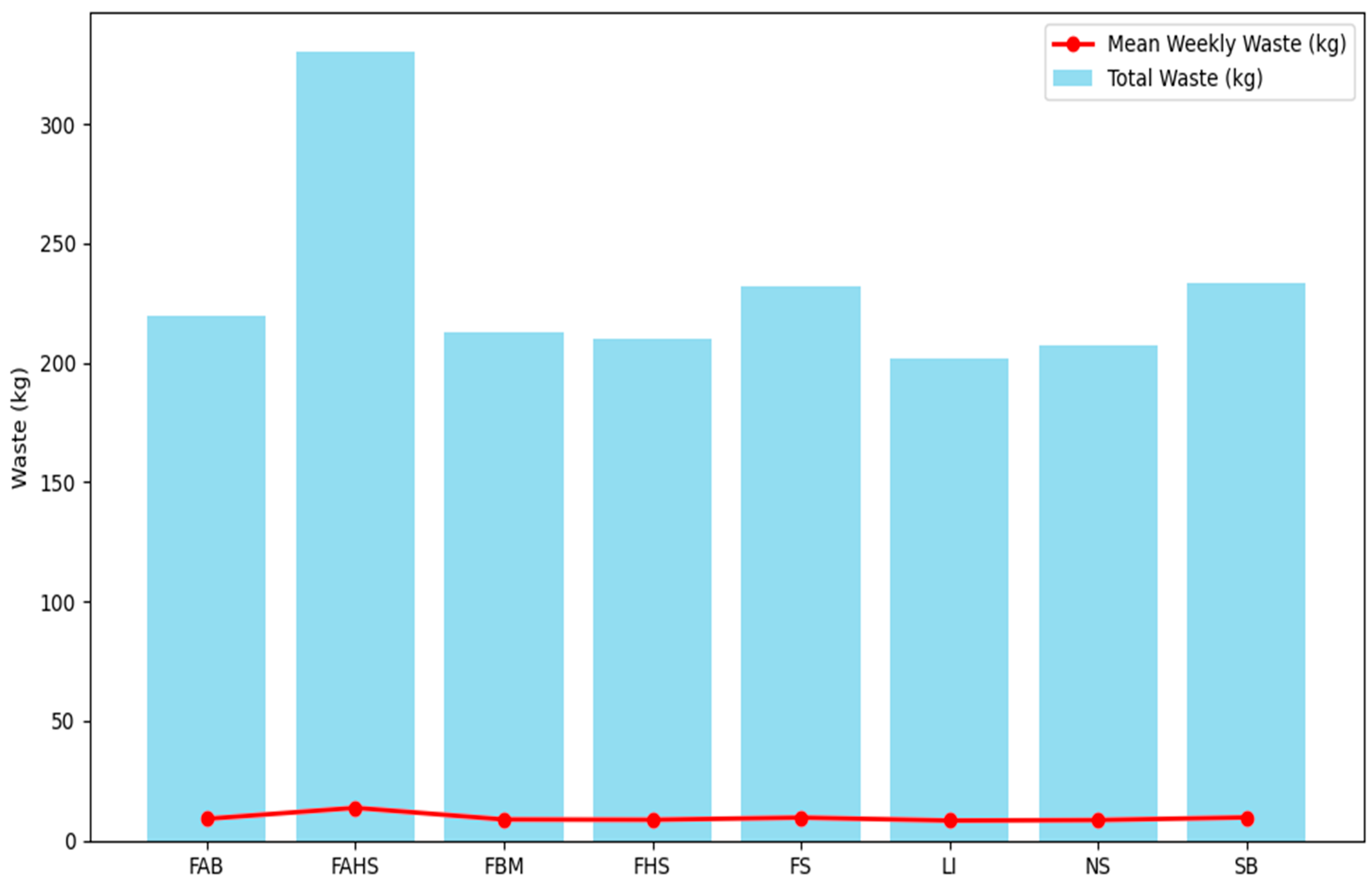
Figure 2.
Monthly and weekly distribution of solid waste generation across segregation points at the Federal University of Health Sciences, Ila-Orangun. Each color represents a different week, making it easy to compare the waste generation across the four weeks for each location.
Figure 2.
Monthly and weekly distribution of solid waste generation across segregation points at the Federal University of Health Sciences, Ila-Orangun. Each color represents a different week, making it easy to compare the waste generation across the four weeks for each location.
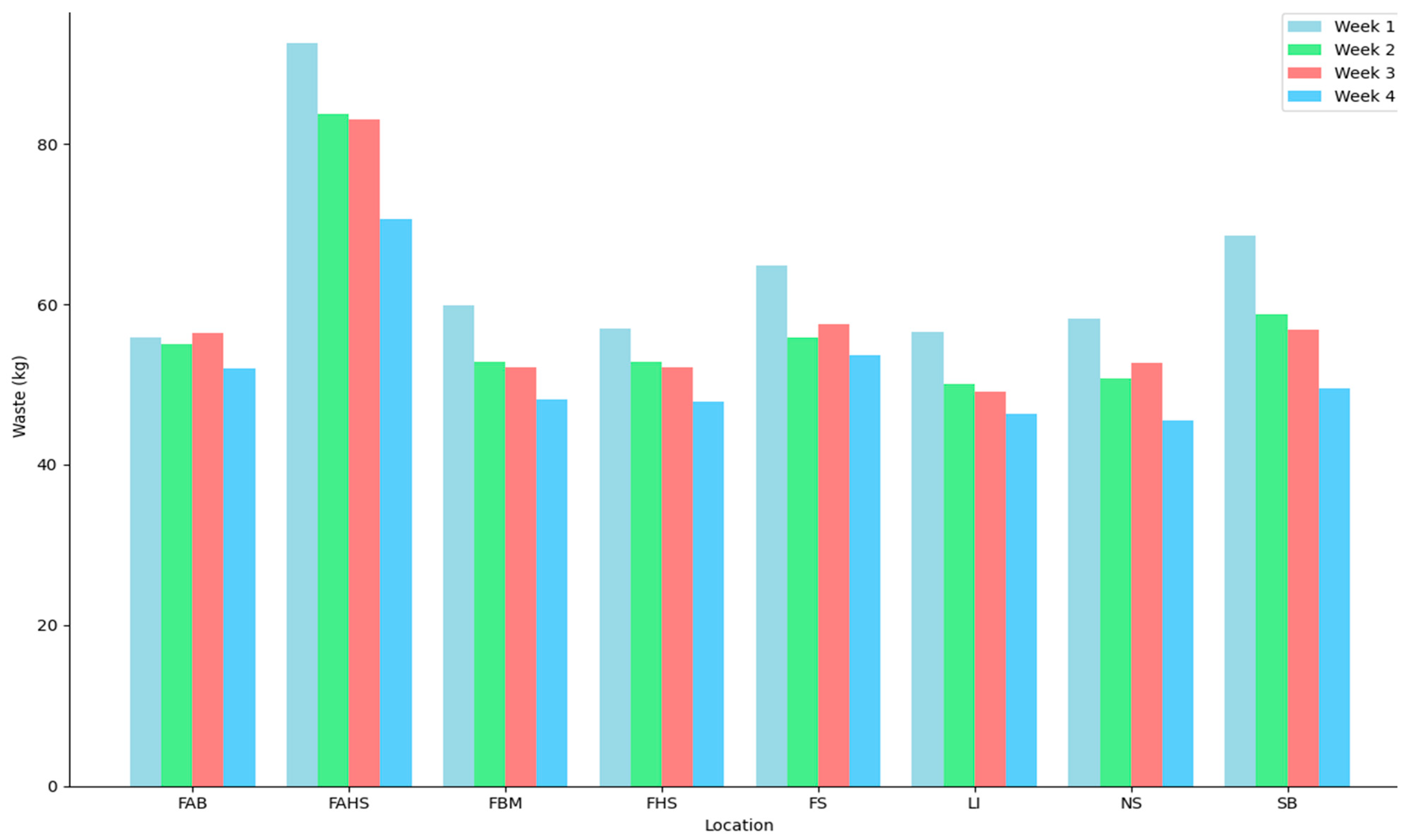
Figure 3.
Waste composition and quantification.
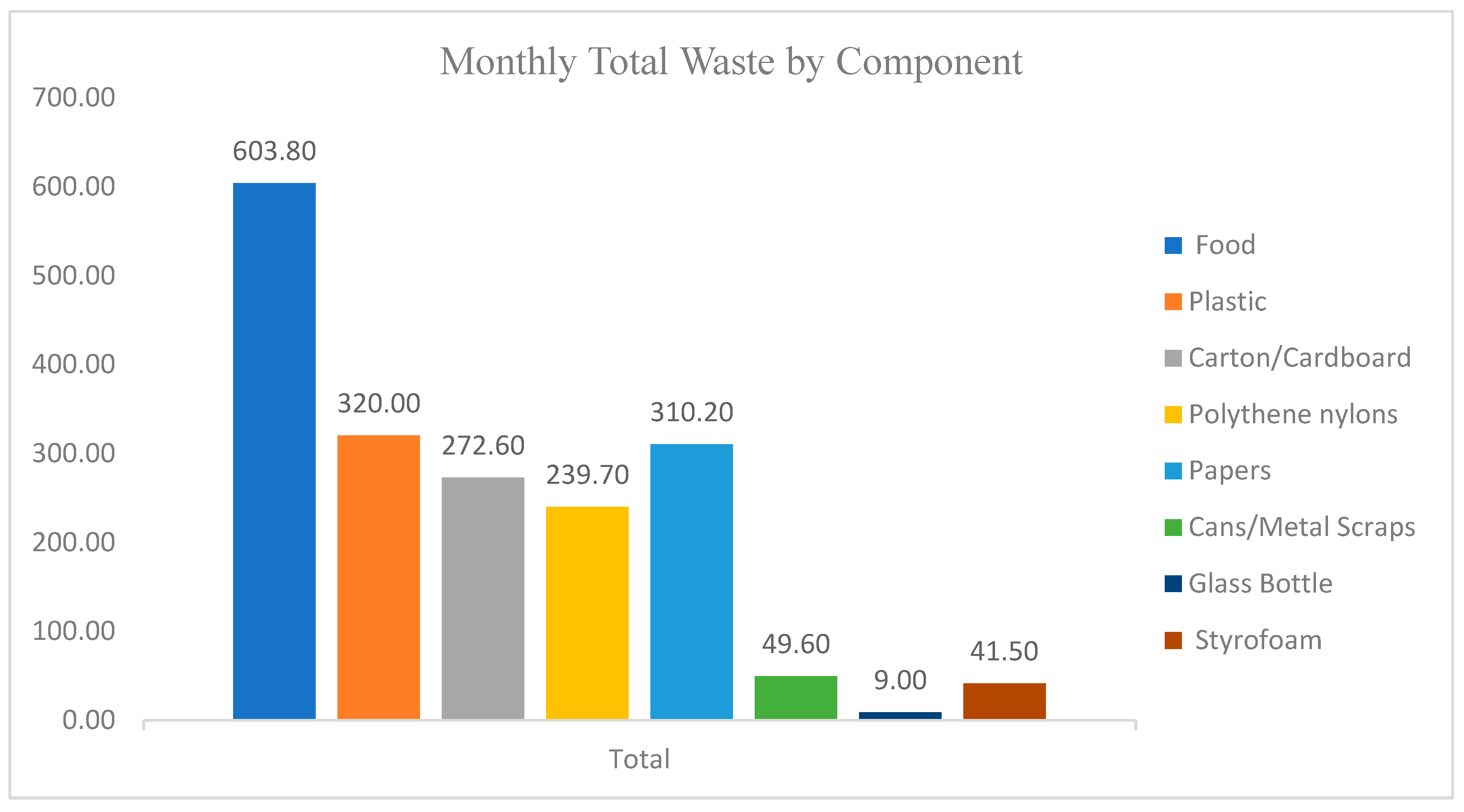
Figure 4.
Distribution of waste across segregation centers. The bars represent the total waste contribution (%) for each segregation point, while the lines show the average weekly and daily waste generation (kg) for each location.
Figure 4.
Distribution of waste across segregation centers. The bars represent the total waste contribution (%) for each segregation point, while the lines show the average weekly and daily waste generation (kg) for each location.
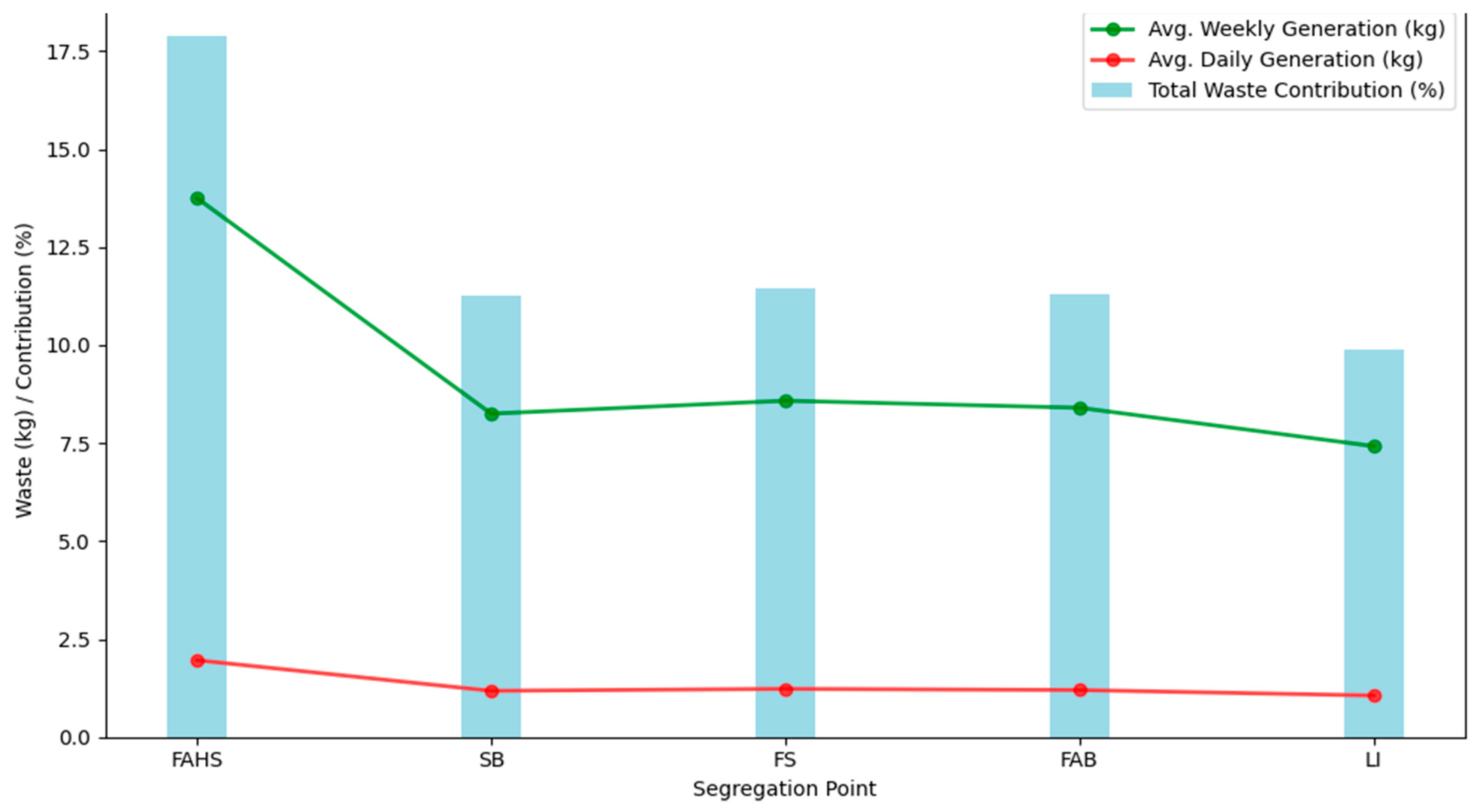
Figure 5.
Comparison of Waste Composition Across Segregation Points.
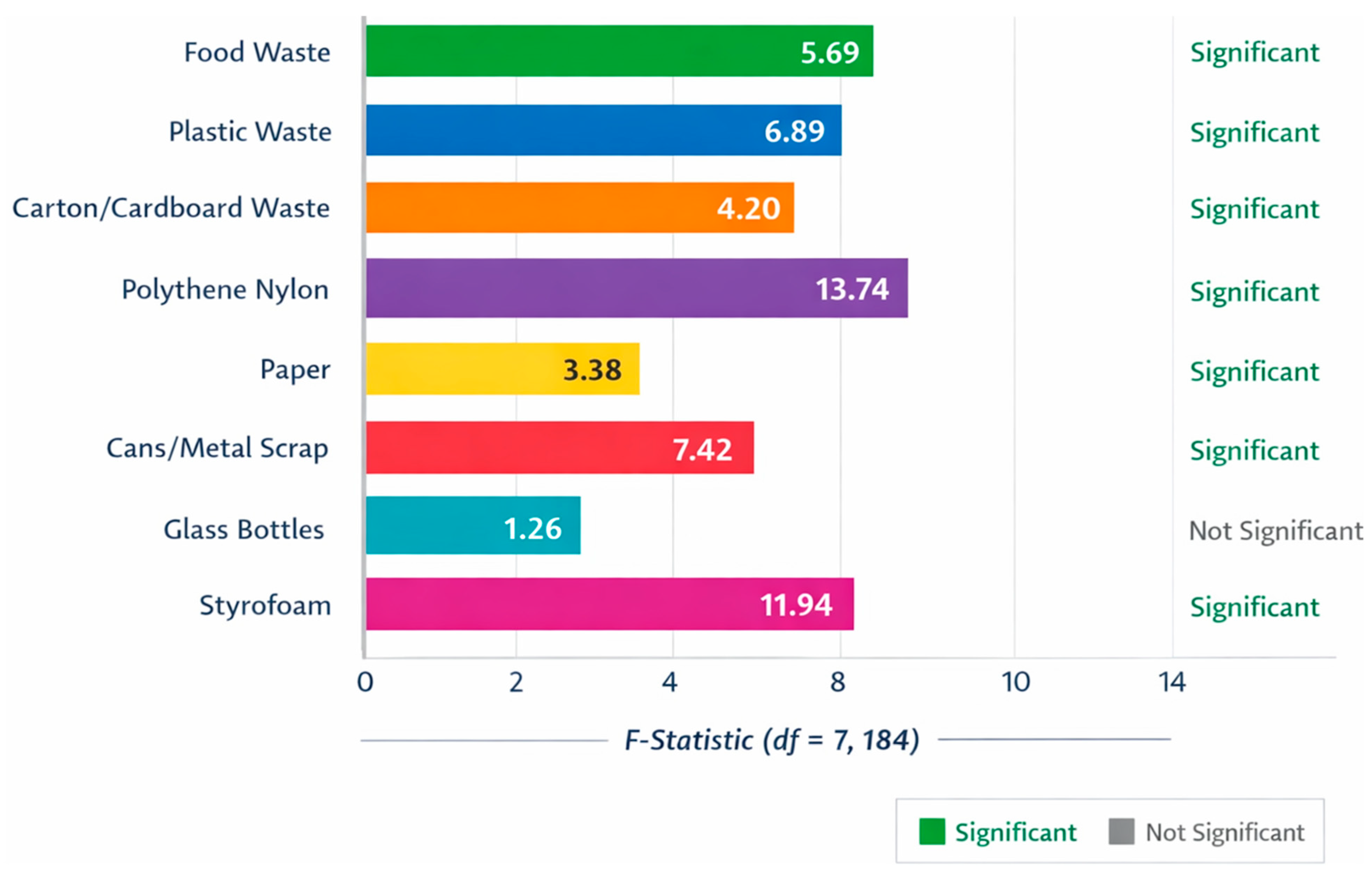
Figure 6.
Waste Recovery by Waste Type and Recovery Option.
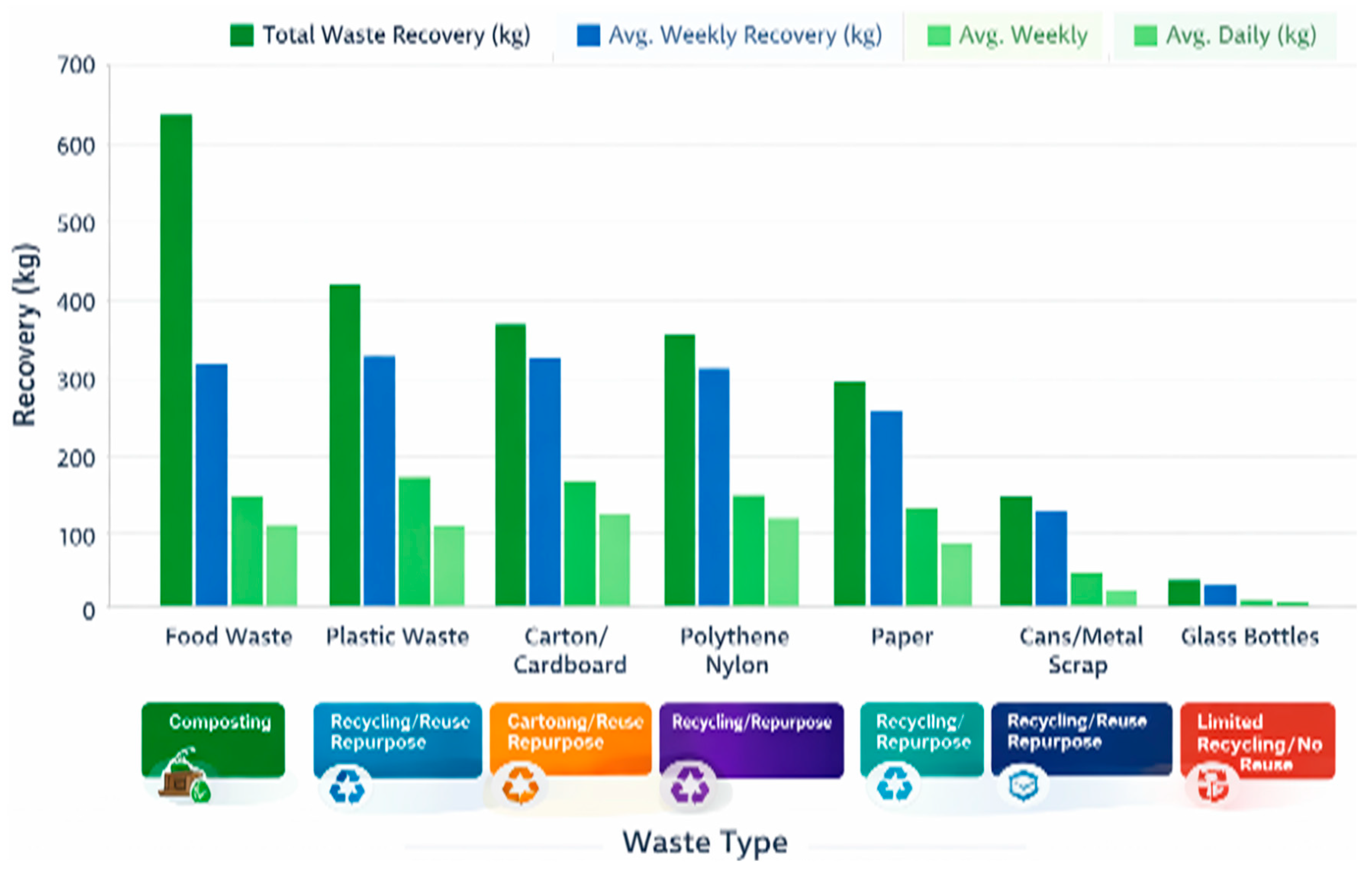
Figure 7.
Health Implications of Effective Solid Waste Management on Campus. Source: Author Design, 2026
Figure 7.
Health Implications of Effective Solid Waste Management on Campus. Source: Author Design, 2026
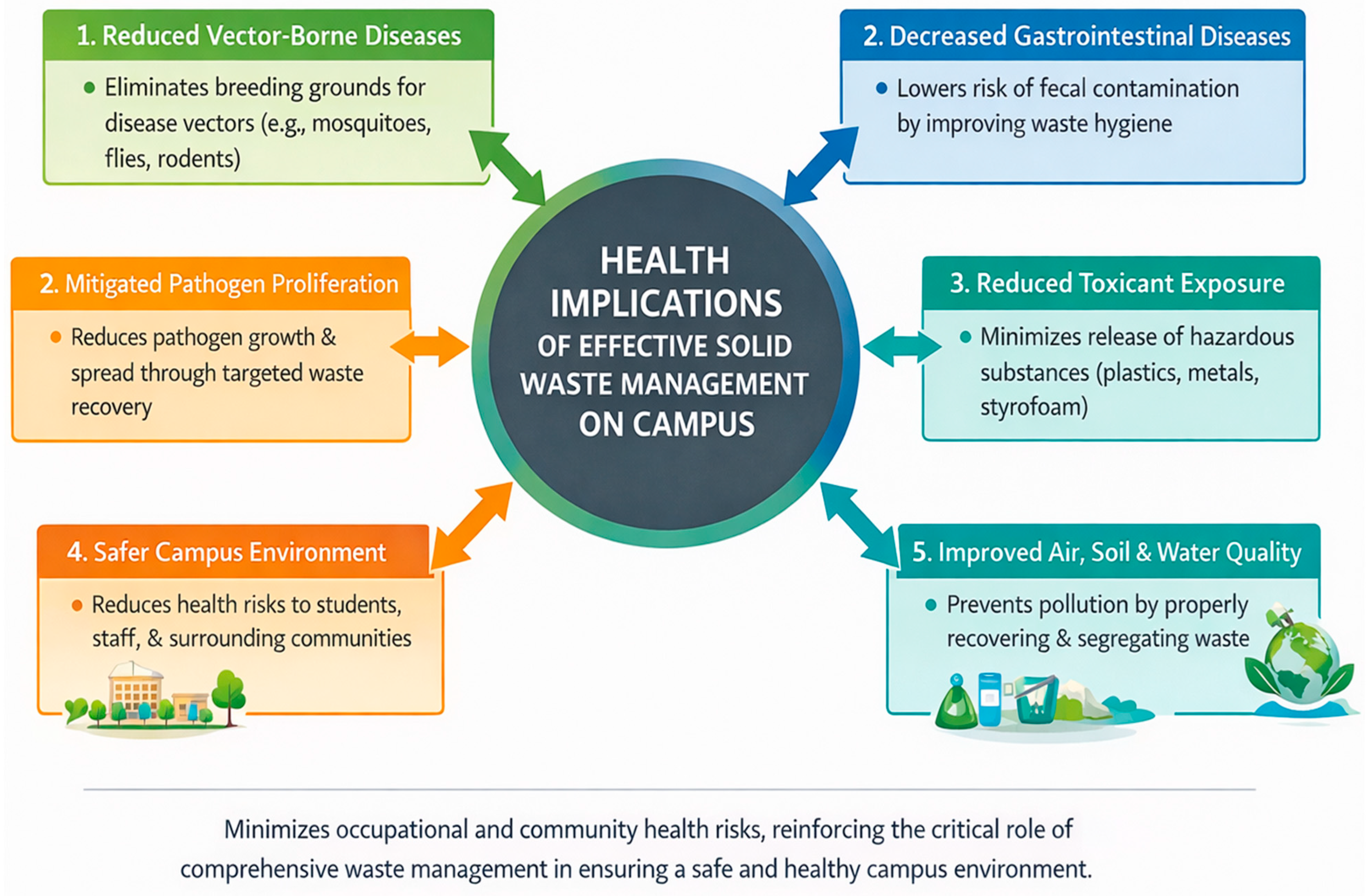

Table 1.
Solid waste generation by segregation point at Federal University of Health Sciences Ila-Orangun.
Table 1.
Solid waste generation by segregation point at Federal University of Health Sciences Ila-Orangun.
| Location | Total waste (kg) | Mean weekly waste (kg) | Share of total (%) |
| FAB | 219.30 | 9.14 | 11.88 |
| FAHS | 330.00 | 13.75 | 17.87 |
| FBM | 212.80 | 8.87 | 11.53 |
| FHS | 209.80 | 8.74 | 11.36 |
| FS | 231.80 | 9.66 | 12.55 |
| LI | 202.10 | 8.42 | 10.95 |
| NS | 207.10 | 8.63 | 11.22 |
| SB | 233.50 | 9.73 | 12.65 |
| Total | 1,846.40 | 9.62* | 100 |
Table 2.
Monthly and weekly distribution of solid waste generation across segregation points at Federal University of Health Sciences, Ila-Orangun.
Table 2.
Monthly and weekly distribution of solid waste generation across segregation points at Federal University of Health Sciences, Ila-Orangun.
| Location | Week 1 (kg) | Week 2 (kg) | Week 3 (kg) | Week 4 (kg) | Total (kg) |
| FAB | 55.8 | 55.1 | 56.4 | 52.0 | 219.3 |
| FAHS | 92.6 | 83.8 | 83.0 | 70.6 | 330.0 |
| FBM | 59.8 | 52.8 | 52.1 | 48.1 | 212.8 |
| FHS | 57.0 | 52.8 | 52.1 | 47.9 | 209.8 |
| FS | 64.9 | 55.8 | 57.5 | 53.6 | 231.8 |
| LI | 56.5 | 50.1 | 49.1 | 46.4 | 202.1 |
| NS | 58.2 | 50.7 | 52.7 | 45.5 | 207.1 |
| SB | 68.5 | 58.7 | 56.8 | 49.5 | 233.5 |
| Total | 513.3 | 459.8 | 459.7 | 413.6 | 1,846.4 |
Table 3.
Distribution of Waste Across Segregation Centers.
| Segregation Point | Total Waste Contribution (%) | Avg. Weekly Generation (kg) | Avg. Daily Generation (kg) |
| FAHS | 17.87 | 13.75 | 1.96 |
| SB | 11.25 | 8.25 | 1.18 |
| FS | 11.45 | 8.58 | 1.23 |
| FAB | 11.30 | 8.40 | 1.20 |
| LI | 9.90 | 7.42 | 1.06 |
Waste generation at each point was measured across multiple weeks to estimate the weekly and daily averages.
Table 4.
Comparison of Waste Composition Across Segregation Points.
| Waste Type | F-Statistic (df = 7, 184) | p-value | Significance |
| Food Waste | 5.69 | < 0.001 | Significant |
| Plastic Waste | 6.89 | < 0.001 | Significant |
| Carton/Cardboard Waste | 4.20 | < 0.001 | Significant |
| Polythene Nylon | 13.74 | < 0.001 | Significant |
| Paper | 3.38 | 0.002 | Significant |
| Cans/Metal Scrap | 7.42 | < 0.001 | Significant |
| Glass Bottles | 1.26 | 0.272 | Not Significant |
| Styrofoam | 11.94 | < 0.001 | Significant |
Statistical analysis (One-way ANOVA) shows significant variations for most waste types across locations, with the exception of glass bottles.
Table 5.
Recovery of Waste Types and Recovery Options.
| Waste Type | Recovery Option | Total Waste Recovery (kg) | Avg. Weekly Recovery (kg) | Avg. Daily Recovery (kg) |
| Food Waste | Composting | 603.8 | 25.16 | 3.59 |
| Plastic Waste | Recycling/Reuse/Repurpose | 320 | 13.33 | 1.90 |
| Carton/Cardboard Waste | Recycling/Reuse/Repurpose | 272.6 | 11.36 | 1.62 |
| Polythene Nylon | Recycling/Repurpose | 239.7 | 9.99 | 1.43 |
| Paper | Recycling/Reuse/Repurpose | 310.2 | 12.93 | 1.85 |
| Cans/Metal Scrap | Recycling/Reuse/Repurpose | 49.6 | 2.07 | 0.30 |
| Glass Bottles | Recycling/Reuse | 9 | 0.38 | 0.05 |
| Styrofoam | Limited Recycling/No Reuse | 41.5 | 1.73 | 0.25 |
The recovery figures indicate significant potential for recycling of most waste types, with food and plastic waste representing the largest recoverable fractions.
Disclaimer/Publisher’s Note: The statements, opinions and data contained in all publications are solely those of the individual author(s) and contributor(s) and not of MDPI and/or the editor(s). MDPI and/or the editor(s) disclaim responsibility for any injury to people or property resulting from any ideas, methods, instructions or products referred to in the content. |
© 2026 by the authors. Licensee MDPI, Basel, Switzerland. This article is an open access article distributed under the terms and conditions of the Creative Commons Attribution (CC BY) license (http://creativecommons.org/licenses/by/4.0/).
Copyright: This open access article is published under a Creative Commons CC BY 4.0 license, which permit the free download, distribution, and reuse, provided that the author and preprint are cited in any reuse.


